
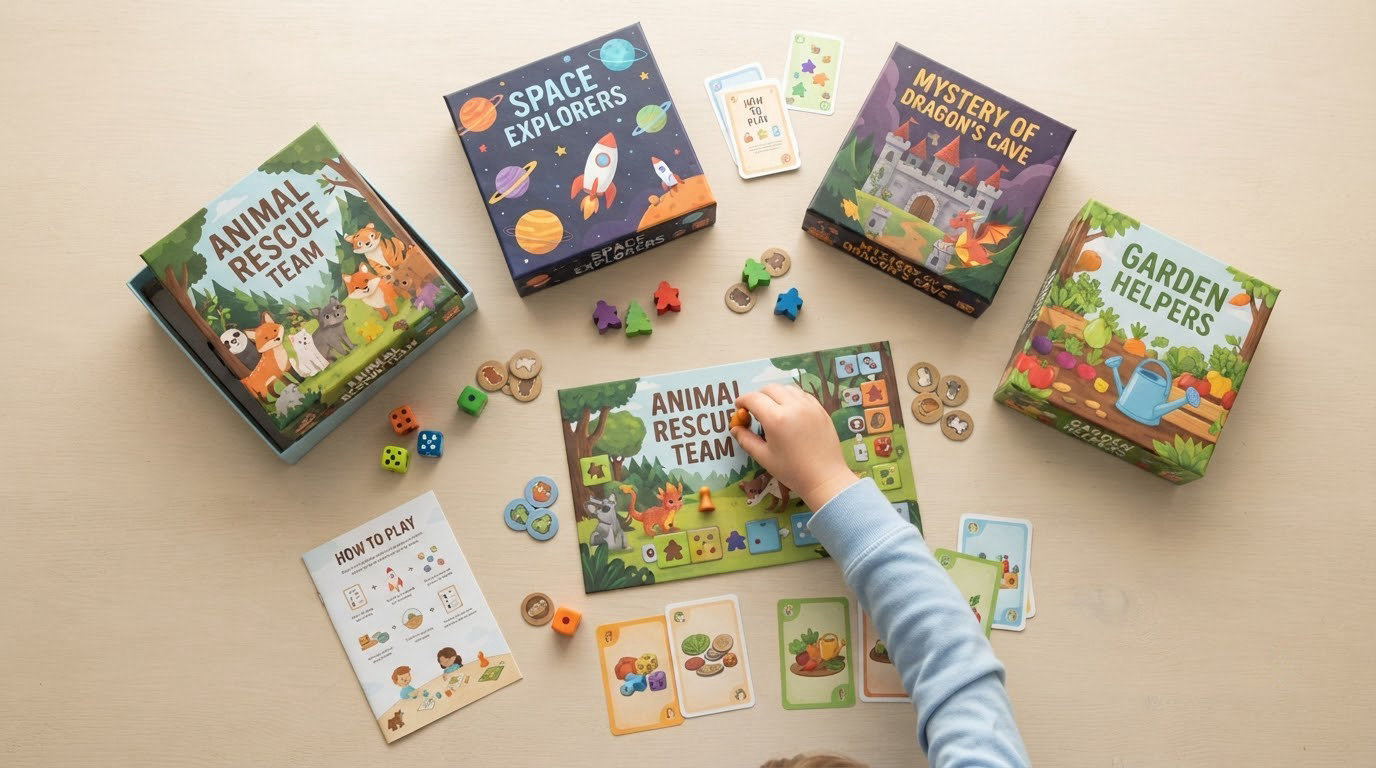
When my oldest daughter melted down after losing a round of Memory for the third time, I knew our family game nights needed a reset. Cooperative board games changed everything. Instead of one kid pouting while another gloats, the whole team cheers (or groans) together. After three months of pulling games off the shelf on rainy afternoons, we landed on a list of the best cooperative board games for kids that actually hold attention, build teamwork, and still get played on repeat.
Co-op games work because nobody is “out” until the team is out. Players share information openly, pool their turns, and tackle a shared challenge like escaping a volcano, catching a sneaky fox, or defending a castle from monsters. That shared win-or-lose dynamic is why parents on r/boardgames keep coming back to the format: it teaches communication, problem solving, and graceful losing without the bedtime tantrums.
In this guide, I break down the eight best cooperative board games for kids our family actually played with the neighbor kids and cousins included. Each pick comes with the age range, player count, and game time straight from the box, plus the small details that decide whether a game survives your house.
Top 3 Picks for Best Cooperative Board Games for Kids (October 2026)
Best Cooperative Board Games for Kids in 2026
| Product | Specifications | Action |
|---|---|---|
| OUTFOXED! Cooperative Mystery |
|
Check Latest Price |
 Hoot Owl Hoot Hoot Owl Hoot |
|
Check Latest Price |
 Race to the Treasure Race to the Treasure |
|
Check Latest Price |
 Dinosaur Escape Dinosaur Escape |
|
Check Latest Price |
 Dog Man Attack of the Fleas Dog Man Attack of the Fleas |
|
Check Latest Price |
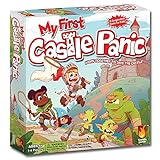 My First Castle Panic My First Castle Panic |
|
Check Latest Price |
 HABA First Orchard HABA First Orchard |
|
Check Latest Price |
 Castle Panic 2nd Edition Castle Panic 2nd Edition |
|
Check Latest Price |
1. OUTFOXED! A Classic Who Dunnit Game for Preschoolers
OUTFOXED, A CLASSIC WHO DUNNIT GAME FOR PRESCHOOLERS, 4 players
Ages 5+
4 players
20 min playtime
Mystery deduction
Pros
- Cooperative gameplay means no sore losers
- Builds logic memory and deduction skills
- Quick 20-minute rounds keep attention
- Easy rules so setup takes minutes
Cons
- Too simple for kids over 10
- Requires exactly 4 players
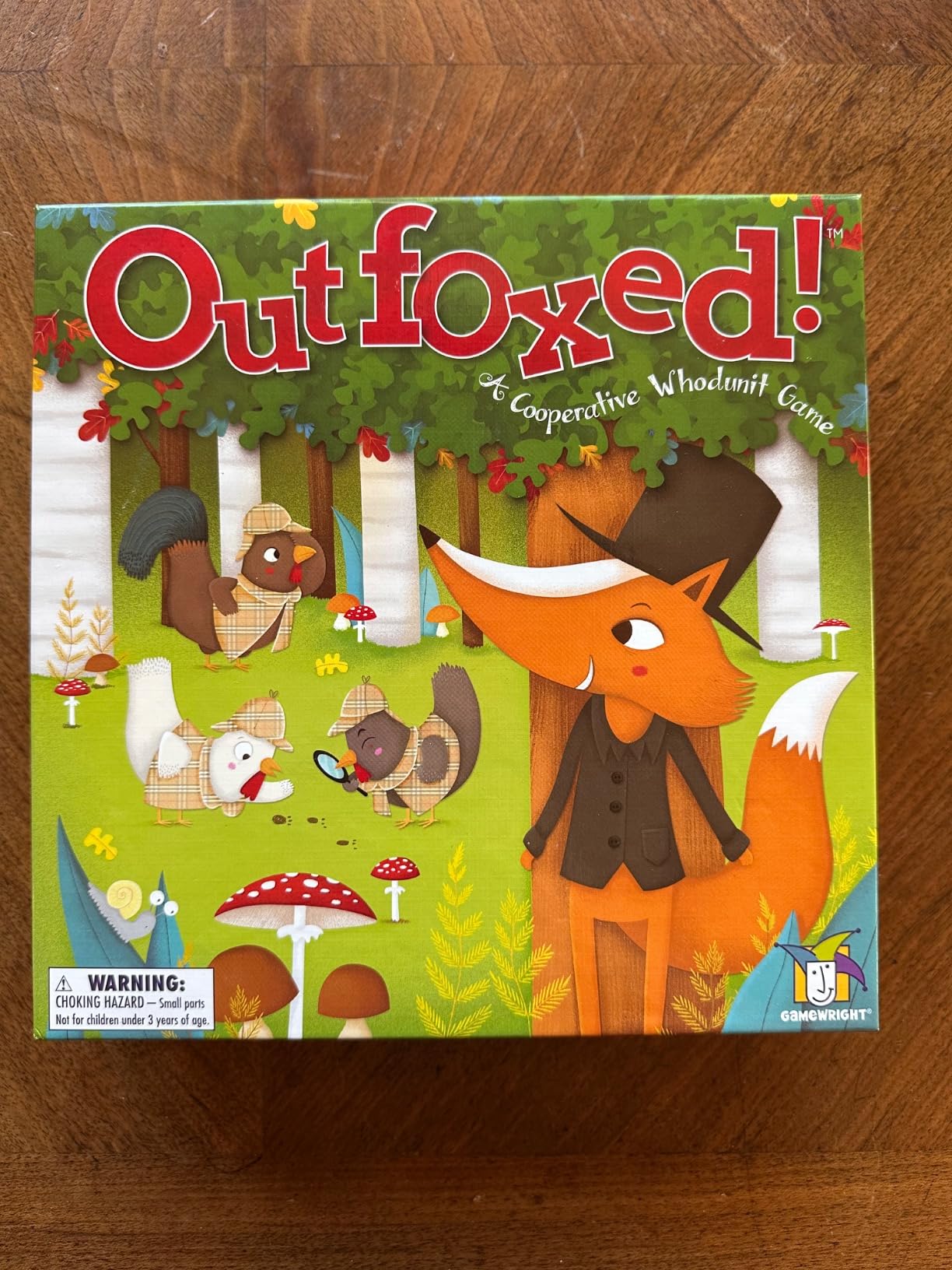
OUTFOXED! was the first co-op game my then-six-year-old nephew actually begged for a second round of. The premise: a thief stole Mrs. Plumpert’s pie, and the team has to roll dice, gather clues with the decoder, and narrow down suspects before the fox escapes. The whole thing runs about 20 minutes, which matched my nephew’s attention span perfectly.
What surprised me was how naturally the deduction mechanics taught themselves. Kids compare clue cards out loud, eliminate suspects together, and argue playfully about who looks fishiest. After three games, my nephew started spotting the fox’s lies before I did. That problem-solving boost is something multiple reviewers echo.
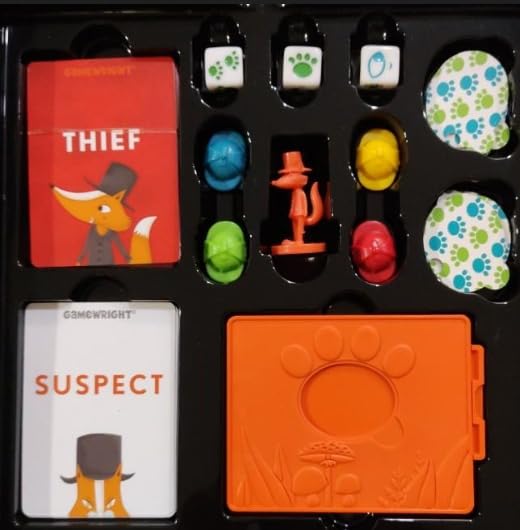
The build quality holds up to daily use. The cardboard tokens are thick, the suspect cards are glossy, and the decoder spins smoothly. The box weighs about half a kilogram and stores easily in a kitchen cabinet. One thing worth knowing: the game is designed for exactly four players, so if your family is smaller you may need to recruit a stuffed animal as the fourth detective.
Reviewers note the simplicity keeps it engaging for the target age but won’t challenge kids much past age 10. For our purposes, that was a feature, not a bug. Younger kids can join without frustration, and adults can play seriously without dominating. That balance is rare in this category.
Who it’s best for
Families with kids ages 5-8 who want a true team challenge with a mystery twist. It also works beautifully for mixed-age game nights because the deduction mechanic scales naturally with each child’s reasoning skills.
What to know before buying
The game locks in at four players, so plan accordingly. If your family is smaller, consider a four-player minimum as part of your decision. The 20-minute playtime makes it ideal for short evenings or a quick after-dinner round before bedtime.
2. Peaceable Kingdom Hoot Owl Hoot – Cooperative Matching Game for Kids
Peaceable Kingdom Hoot Owl Hoot – Cooperative Matching Game For Kids
Ages 4+
2-4 players
15 min playtime
Color matching
Pros
- Easy color matching for pre-readers
- Plays in just 15 minutes
- Builds planning and strategy
- Plays 2-4 players flexibly
Cons
- Younger kids may need help early on
- Limited replay for older kids
Hoot Owl Hoot is the game I reach for when cousins of mixed ages show up and I have zero prep time. The premise is gentle: players help a row of owls fly back to their nest before the sun rises. You draw a sun card and the clock advances, or you play an owl forward and buy the team time. Kids have to plan which color to play strategically so no owl gets left behind.
I tested this with my 4-year-old daughter and 7-year-old nephew. The 4-year-old could match colors confidently, while the 7-year-old started thinking ahead about which owls to prioritize. Both stayed engaged for the full 15 minutes, which is a small miracle at our house.
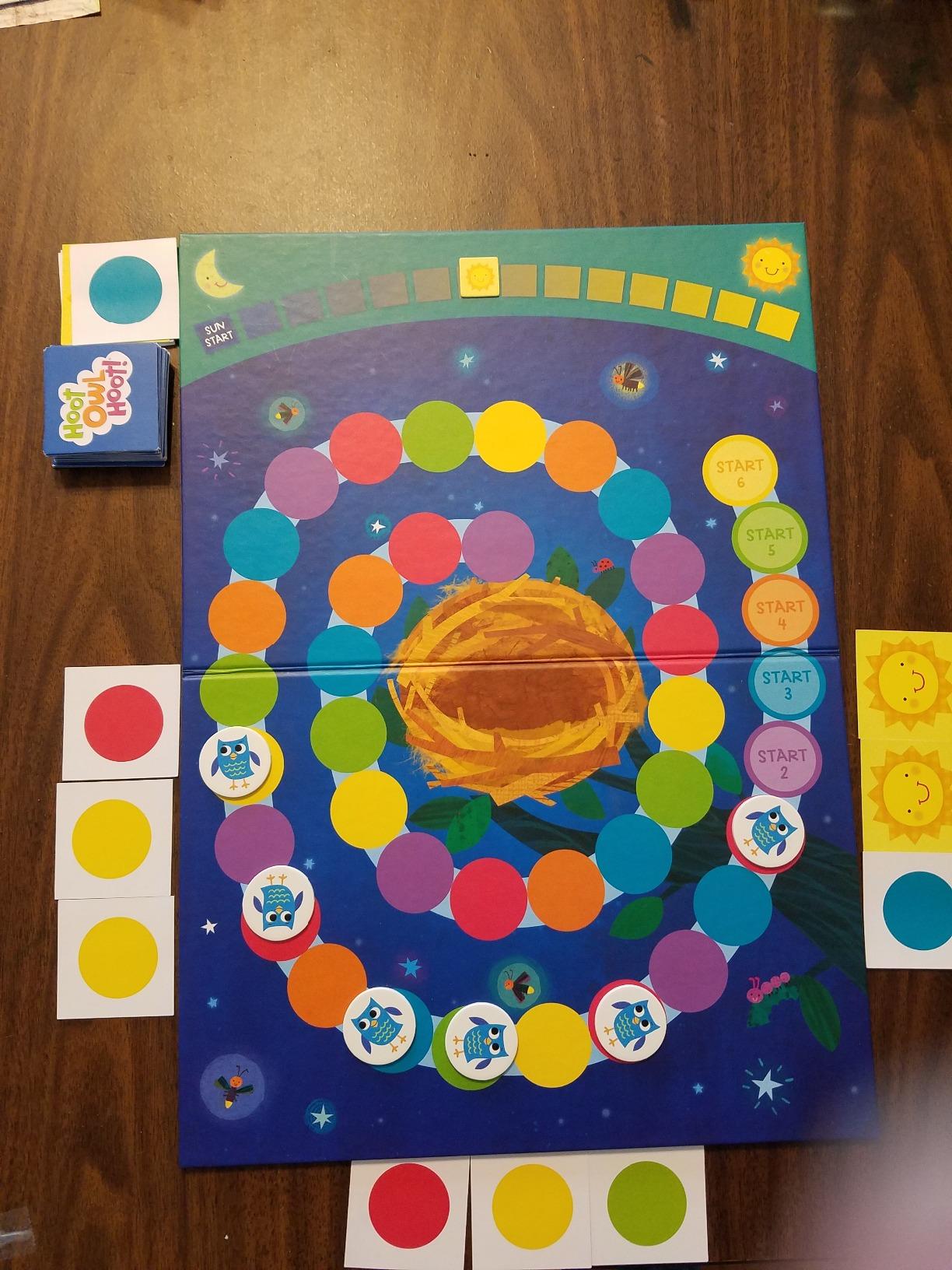
The cards are sturdy cardboard, the owl pawns are chunky for small fingers, and the rules fit on one side of a small insert. Peaceable Kingdom games tend to be thoughtfully designed for accessibility, and Hoot Owl Hoot is no exception. There’s no reading required, which is why it works so well as a first cooperative game.
Reviewers on r/boardgames and boardgamegeek note that older kids may find the strategy too thin after a few rounds. For our family, this was the perfect intro game for the youngest player, and we still pull it out when we want something quick before bath time.
Who it’s best for
Younger kids ages 4-6 who need a gentle intro to cooperative play, especially families where siblings span a wide age range. It also doubles as a great classroom or daycare game.
What to know before buying
The game’s strategic depth is shallow by design. If your kid already loves strategic games, this may be too easy past age 7. The flexibility of 2-4 players is a real strength for smaller families.
3. Peaceable Kingdom Race to the Treasure – Cooperative Path Building Game for 2-4 Kids Ages 5+
Peaceable Kingdom Race to the Treasure! Cooperative Path Building Game for 2 to 4 Kids Ages 5+
Ages 5+
2-4 players
20 min playtime
Strategy path building
Pros
- No reading required for any player
- Award-winning design for young kids
- Teaches strategy and decision making
- Quick 20-minute rounds
Cons
- Limited replay for older kids
- Small pieces can go missing
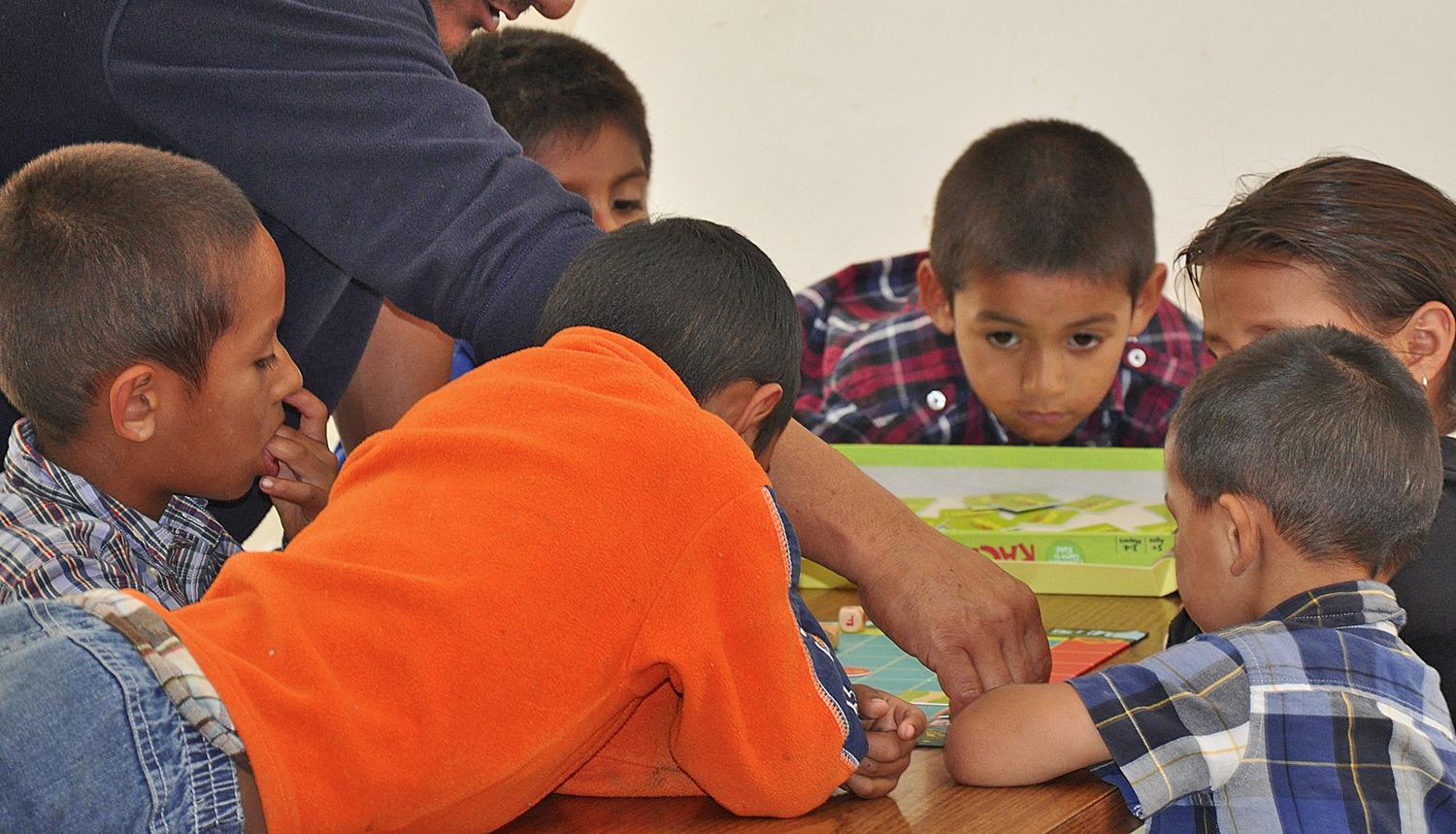
Race to the Treasure is the game that made my 5-year-old start thinking three moves ahead. The team lays tiles to build a path from start to treasure, while the Ogre slowly advances along its own track. If the team finishes the path before the Ogre, everyone wins. If the Ogre reaches the treasure first, the team loses together.
The genius here is that kids are making real strategic choices from turn one. Do you take the key you need, or block the Ogre’s shortcut? Do you draw a tile that helps your side or save it for later? Even my 5-year-old started anticipating the Ogre’s path by the third play, and she’s usually the kid who wanders off mid-round.
Setup is fast, the board is colorful and inviting, and the chunky tiles are easy for small hands to manipulate. The game won an Oppenheim Toy Portfolio Platinum Award, which made sense after seeing how naturally my kids picked it up. No reading required, which is huge for early elementary kids.
Reviewers mention that older kids may find the game light after a few rounds. For the target 5-8 age range, the strategic depth is right on point. The replay ceiling is also strong thanks to randomized tile draws and shifting Ogre paths.
Who it’s best for
Families with kids ages 5-8 who want a real cooperative strategy game without a reading barrier. It also works well in classrooms because the pieces are large and durable enough to survive daily use.
What to know before buying
Strategy is light for kids over 9, so plan to graduate older players to something with more depth. The Ogre mechanic adds gentle tension that younger kids handle well, but very anxious children may find the Ogre theme a touch scary.
4. Peaceable Kingdom Dinosaur Escape – Cooperative Memory Game for Ages 4+
Peaceable Kingdom Dinosaur Escape Cooperative Memory Game of Logic and Luck for 2 to 4 Kids Ages 4+
Ages 4+
2-4 players
10 min playtime
Memory game
Pros
- Builds memory and turn taking skills
- Quick real coverage
- low time commitment
- Cooperative play eases frustration
- Colorful dinosaur theme
Cons
- Only 10 minutes long
- Some pieces may feel small
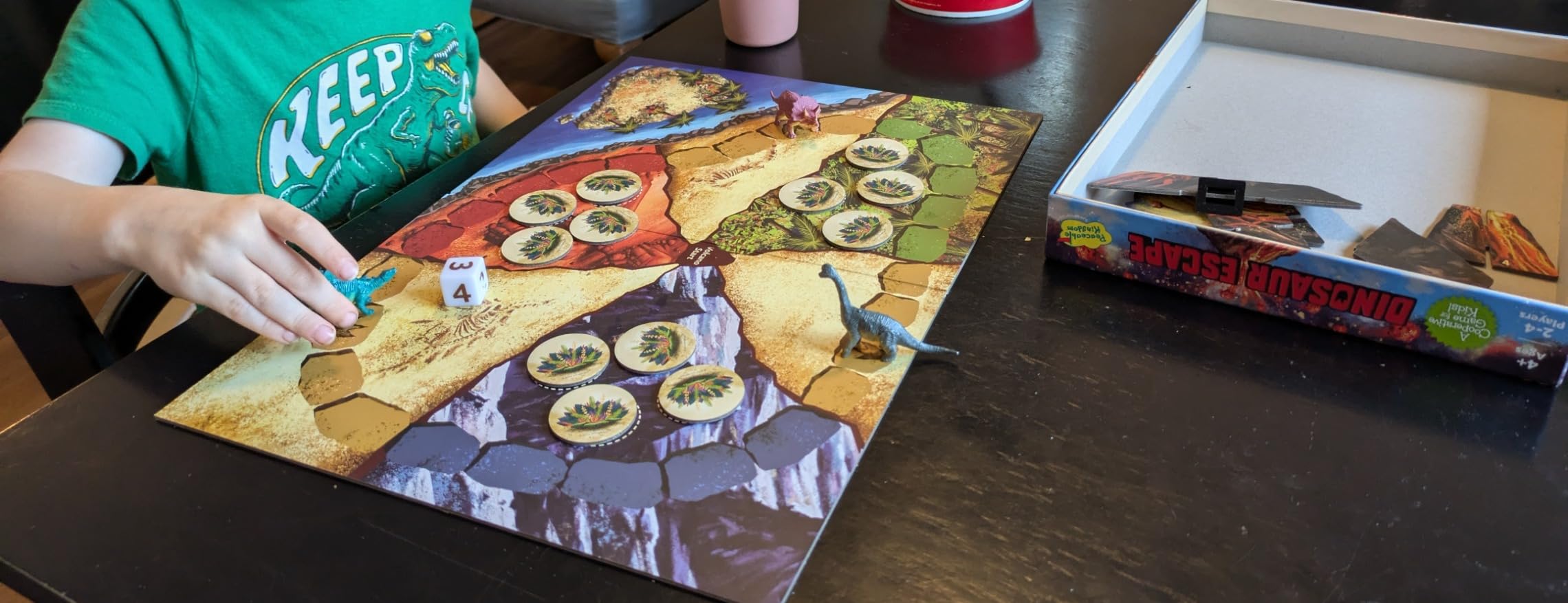
Dinosaur Escape is the game I pull when my 4-year-old is bouncing off the walls and we have exactly one television-free window before snack. Players work together to help three dinosaurs escape to dinosaur island before the volcano erupts. The catch: tiles are flipped to reveal either a dinosaur to move or a volcano piece to add to the eruption.
The memory mechanic is sneaky good. Kids have to remember which fern tokens hide matching dinosaurs, then decide whether to flip a risky tile or play it safe. After two rounds, my daughter was actively coaching the team: “Let’s flip the green one because green is next to the path!” That’s real strategic thinking wrapped in a 10-minute play window.
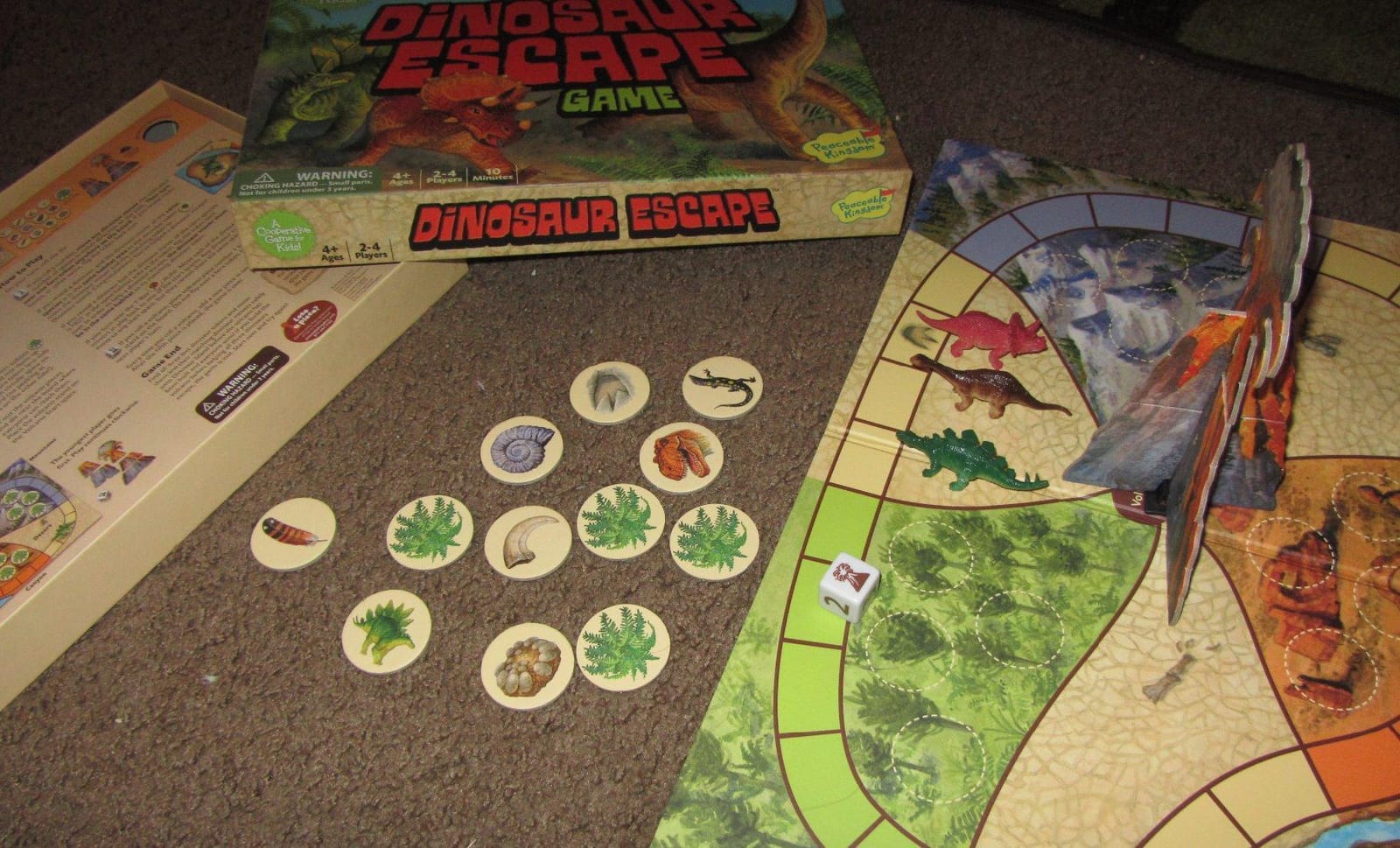
Components are sturdy cardboard and plastic with bright, kid-friendly artwork. The game board is large and easy to read across a kitchen table. Peaceable Kingdom’s packaging is designed to be gift-friendly, which matters when I’m buying for birthdays.
Reviewers note the 10-minute playtime can feel short for older kids, but for the 4-7 sweet spot, it’s the perfect length. The memory component also makes this a stealth learning game; kids are practicing recall and pattern matching without realizing it.
Who it’s best for
Younger kids ages 4-6 who need a short attention-span-friendly cooperative game. It also works well as a quick morning warm-up before school.
What to know before buying
The 10-minute playtime is a feature, not a bug, for short windows. If you want more depth, pair this with another Peaceable Kingdom title for a mini rotation. Memory-heavy games can frustrate very young kids, so plan for some gentle coaching the first few rounds.
5. Dog Man Attack of the Fleas – Cooperative Board Game for Ages 6+, 2-6 Players
Dog Man Attack of the Fleas Cooperative Board Game, Ages 6+, 2-6 Players
Ages 6+
2-6 players
30 min playtime
Superhero theme
Pros
- Plays up to 6 kids at once
- Fun tie-in for fans
- Encourages teamwork and creativity
- Develops critical thinking
Cons
- May feel repetitive after sessions
- Too simple for older kids
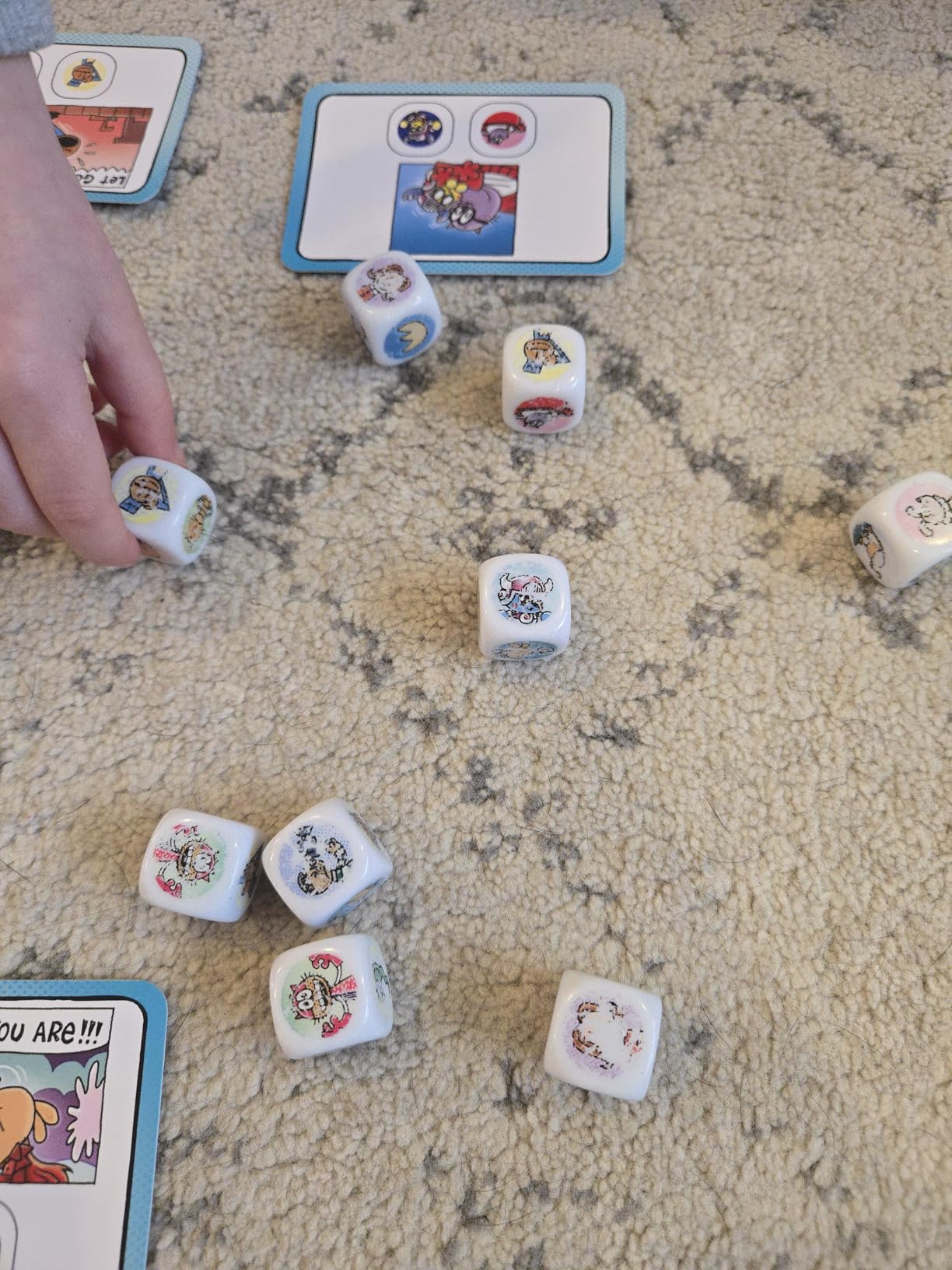
Dog Man Attack of the Fleas is the cooperative game that saved my daughter’s last birthday party. Six kids, ages 6-10, plus two parents, and we needed something that would keep everyone engaged for 30 minutes without splitting into winners and losers. This did the job. Players team up as characters from the Dog Man books to fight off fleas and save the city.
The 2-6 player count is the real selling point. Most co-op games in this age range top out at four players, which can leave a kid out or force weird team swaps. Here, you can throw a full party at it. The theme helps enormously: kids who already love the books were completely sold before we even opened the box.
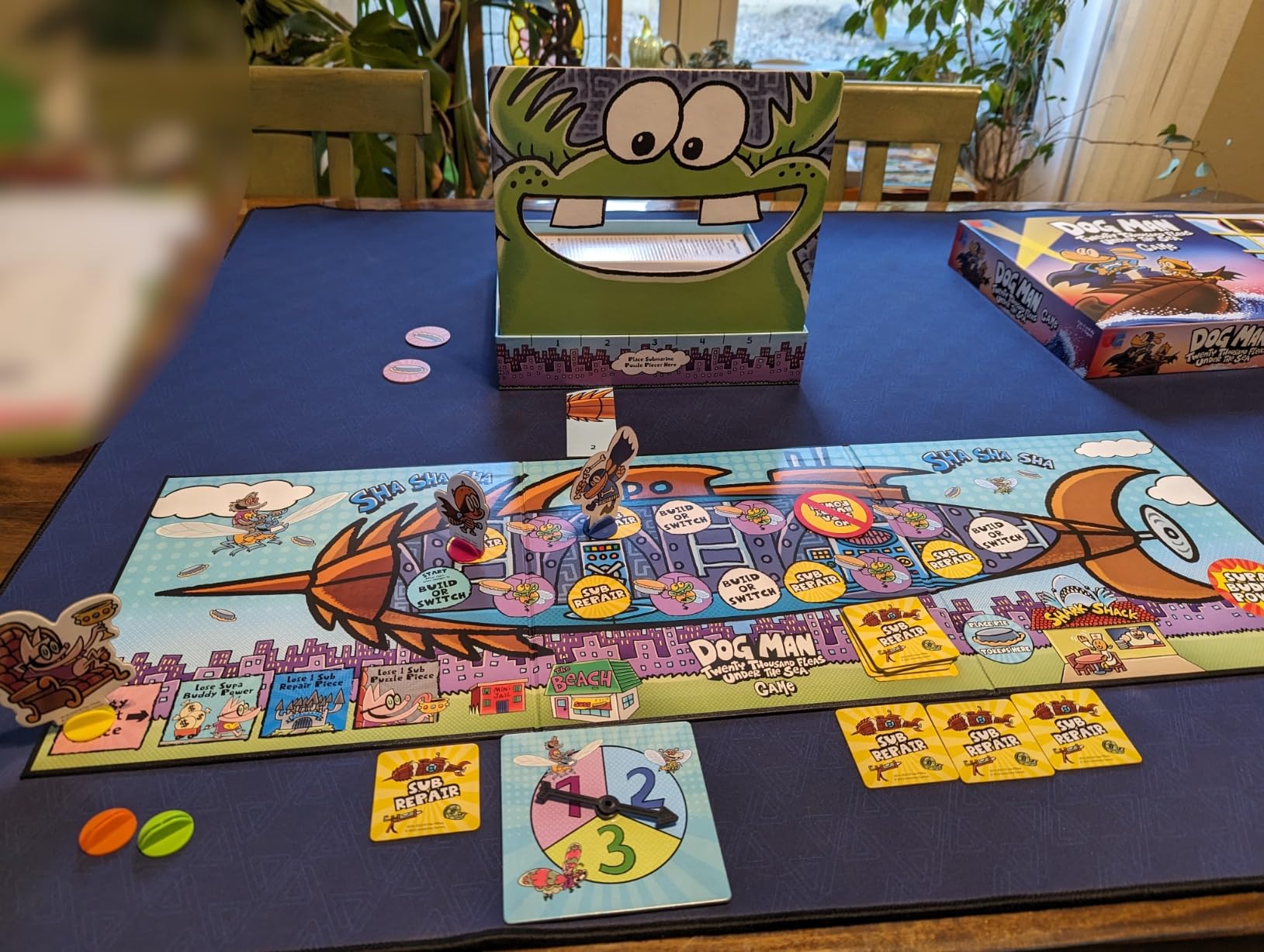
The components are mid-weight cardboard with bright character art. Setup is quick and the rules are simple enough that we taught the whole party in under five minutes. The 30-minute playtime is on the longer end for this age group, but the theme keeps engagement high.
Reviewers note that older kids may find the mechanics too simple after a few rounds, and that replay can feel repetitive. For the 6-8 sweet spot, especially in party settings, it’s a strong pick. For mixed-age groups where some kids are 10+, consider Castle Panic 2nd Edition instead.
Who it’s best for
Birthday parties, playdates, and family game nights with up to six kids. It also works for kids who already love the Dog Man and Captain Underpants books, since the theme adds engagement.
What to know before buying
Replay value is moderate. Plan to mix this with another co-op game if it’s going to be a weekly rotation. The age range of 6-8 is the sweet spot; older kids may lose interest after a few sessions.
6. Fireside Games My First Castle Panic – Fantasy Board Game for Ages 4-8
Fireside Games My First Castle Panic Fantasy Board Game
Ages 4-8
4 players
20 min playtime
Castle defense
Pros
- No reading required for kids
- Quick real coverage
- low time commitment
- Color and shape matching
- Durable kid-sized components
Cons
- Some pieces can go missing
- Strategy is limited
My First Castle Panic is the game that made my 5-year-old feel like a real defender. Players work together to stop cartoon monsters from breaking into the castle by matching colors and shapes to capture them before they reach the keep. It’s gentle, fun, and teaches turn-taking without the pressure of reading-heavy rules.
I tested this with a 5-year-old who had never played a strategy game before. After two rounds, she was planning ahead: “Let’s catch the red one first because he’s closer.” The matching mechanic is intuitive enough that pre-readers can play confidently, while the strategy layer rewards older siblings who think ahead.
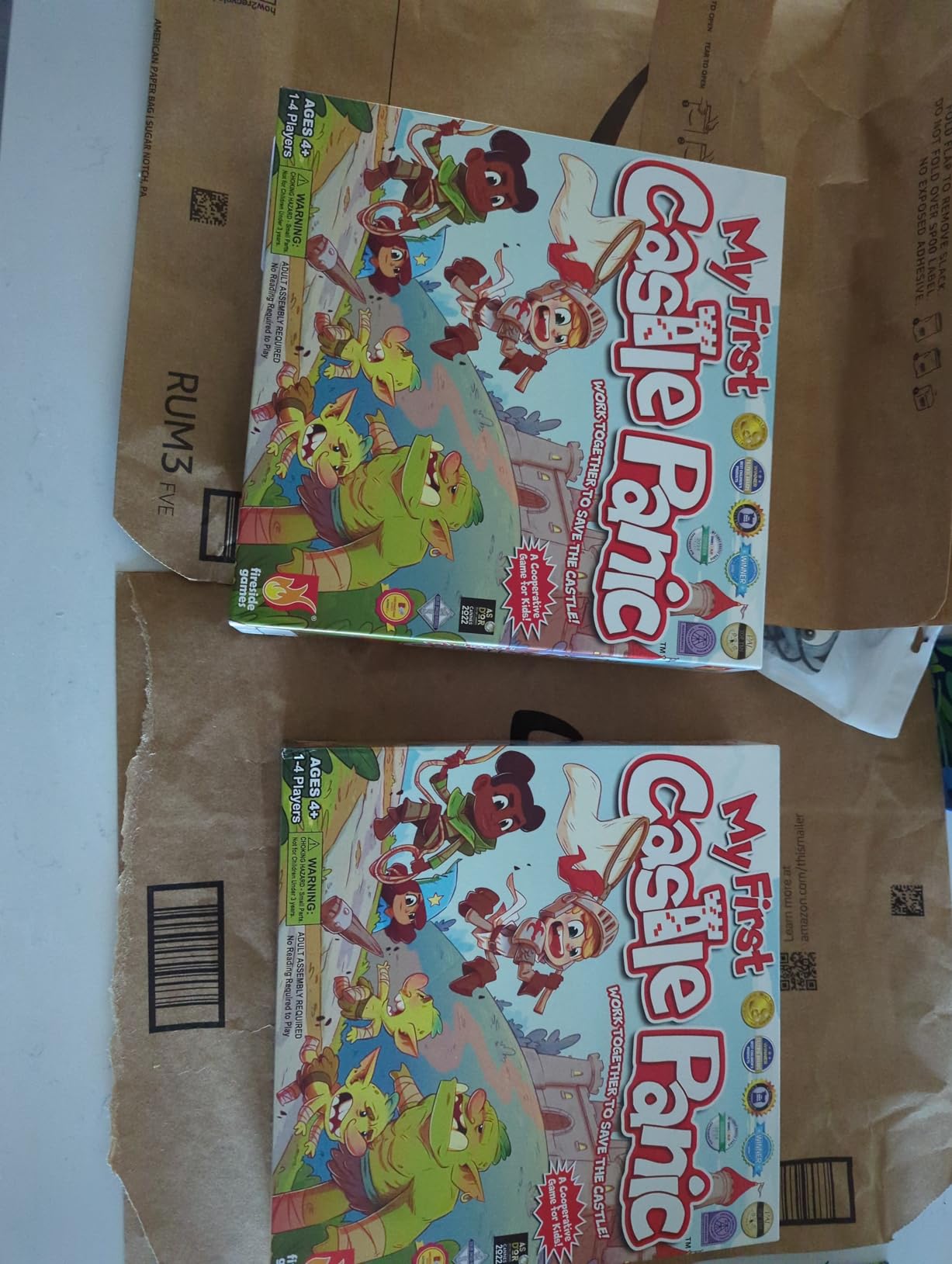
The components are designed for small hands, with thick cardboard wall pieces, a sturdy standing castle, and large monster tokens. The 20-minute playtime is well-tuned for early elementary kids, and the icon system means nobody gets left out because they can’t read yet.
Reviewers mention that small cardboard pieces can go missing over time, which is a fair warning for any game with this many tokens. The strategy is light by design, but for the 4-8 sweet spot, it’s exactly right.
Who it’s best for
Young kids ages 4-6 who want a real cooperative strategy experience without a reading barrier. It’s also a great classroom game because the icon system is fully accessible.
What to know before buying
Plan a small system for storing the monster tokens; they’re small enough to wander. The game is locked to four players, so smaller groups will need a fourth player or a stuffed animal recruit.
7. HABA My Very First Games – First Orchard – Cooperative Toddler Game for Ages 2-4
HABA My Very First Games – First Orchard Toddler Game – My First Orchard Game, Cooperative Toddler Board Games for 2 Year Olds – Made in Germany
Ages 2-4
1-4 players
10 min playtime
Wooden fruit game
Pros
- Perfect first board game for toddlers
- Sustainable wooden components
- Teaches counting and colors
- Over 3 million copies sold
Cons
- Limited to 1-4 players
- Game length is short
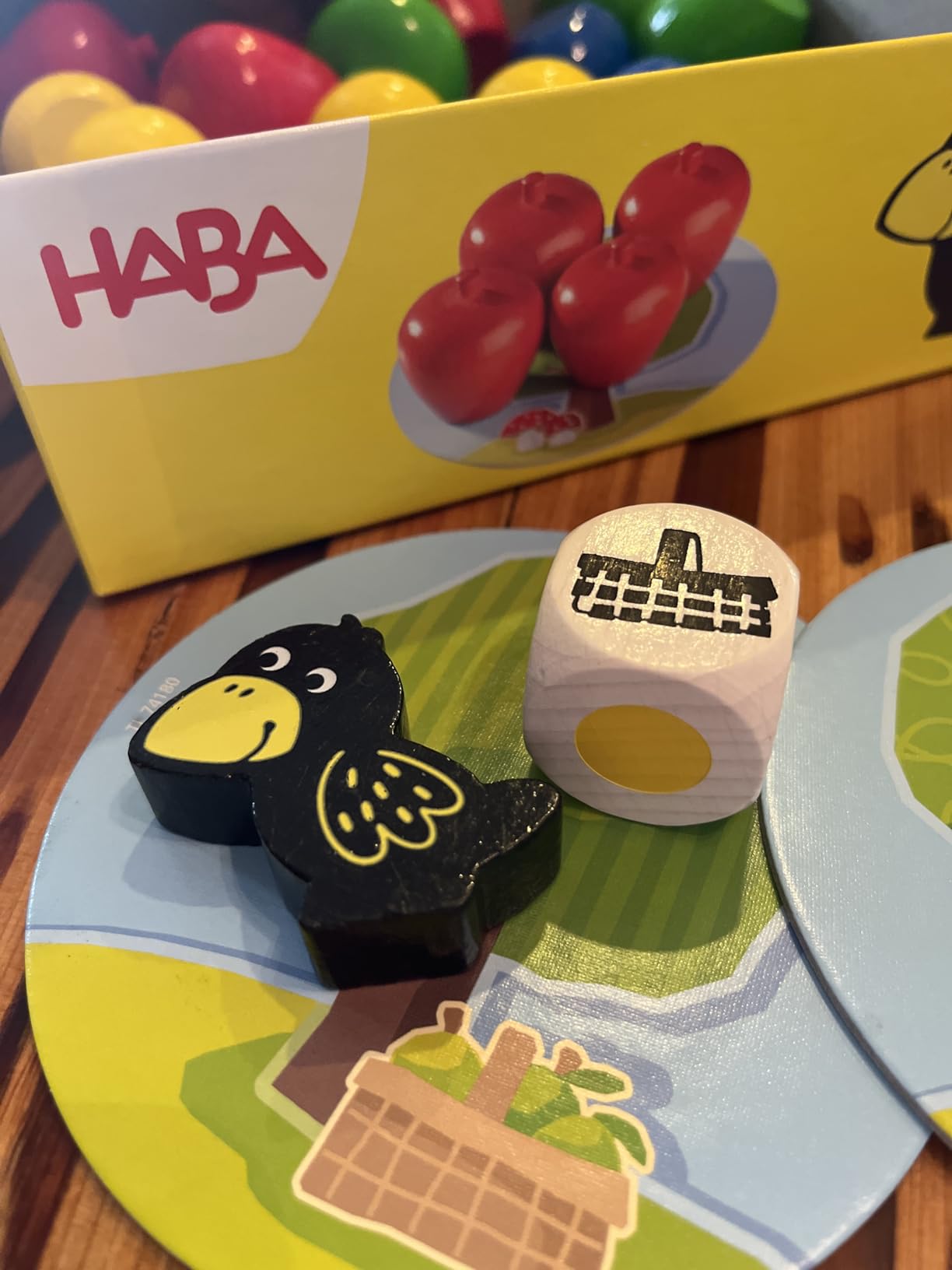
First Orchard is the game I bought for my daughter when she was barely 2, and it’s the one we still pull out when her younger cousins visit. Players work together to harvest fruit from the orchard before the raven reaches the trees. Roll the color die, pick the matching fruit, and try to collect all four types before the raven arrives.
The wooden pieces are the real star. They’re chunky, brightly painted, and PEFC-certified sustainable wood. They feel like heirloom toys, and after two years of regular play, ours still look brand new. The game has sold over 3 million copies in 30 years, which is the kind of longevity that says something about how well the design holds up.
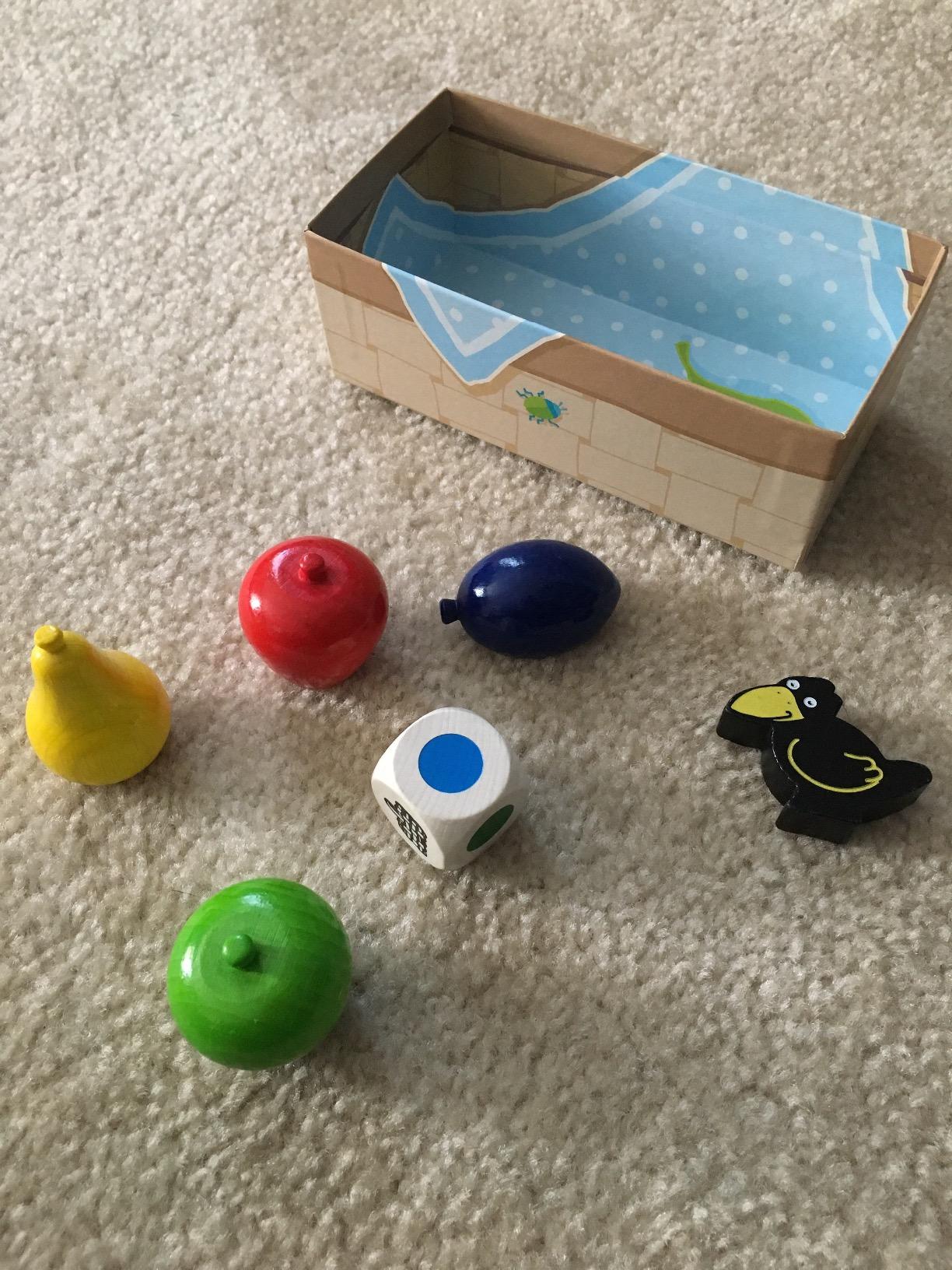
Setup takes about a minute, the playtime is genuinely 10 minutes, and the rules are simple enough that a toddler can grasp the basics within two rounds. The educational value is real too: kids are learning color matching, counting, and turn-taking without realizing they’re learning. That’s the trifecta for a first board game.
Reviewers note the game can feel short for older siblings, but that’s by design. For the 2-4 age range, this is genuinely the gold standard. The 1-4 player count also makes it flexible for solo play with a parent or playdates with three kids.
Who it’s best for
Toddlers ages 2-4 who need their first cooperative game. It’s also a great gift for younger siblings joining a family that’s already into board games.
What to know before buying
The game is intentionally simple, so don’t expect strategic depth. The 1-4 player count is a real strength, but if you have a family of five, plan to rotate players. The wooden pieces are durable but worth tracking carefully so none wander off.
8. Fireside Games Castle Panic 2nd Edition – Fantasy Tower Defense Board Game for Ages 8+
Fireside Games Castle Panic 2nd Edition Fantasy Board Game
Ages 8+
1-6 players
45 min playtime
Tower defense
Pros
- Four game modes including solo
- Real strategic depth
- Tense cooperative play
- Plays 1-6 players
Cons
- 45-minute playtime is long
- Setup takes longer than simpler games
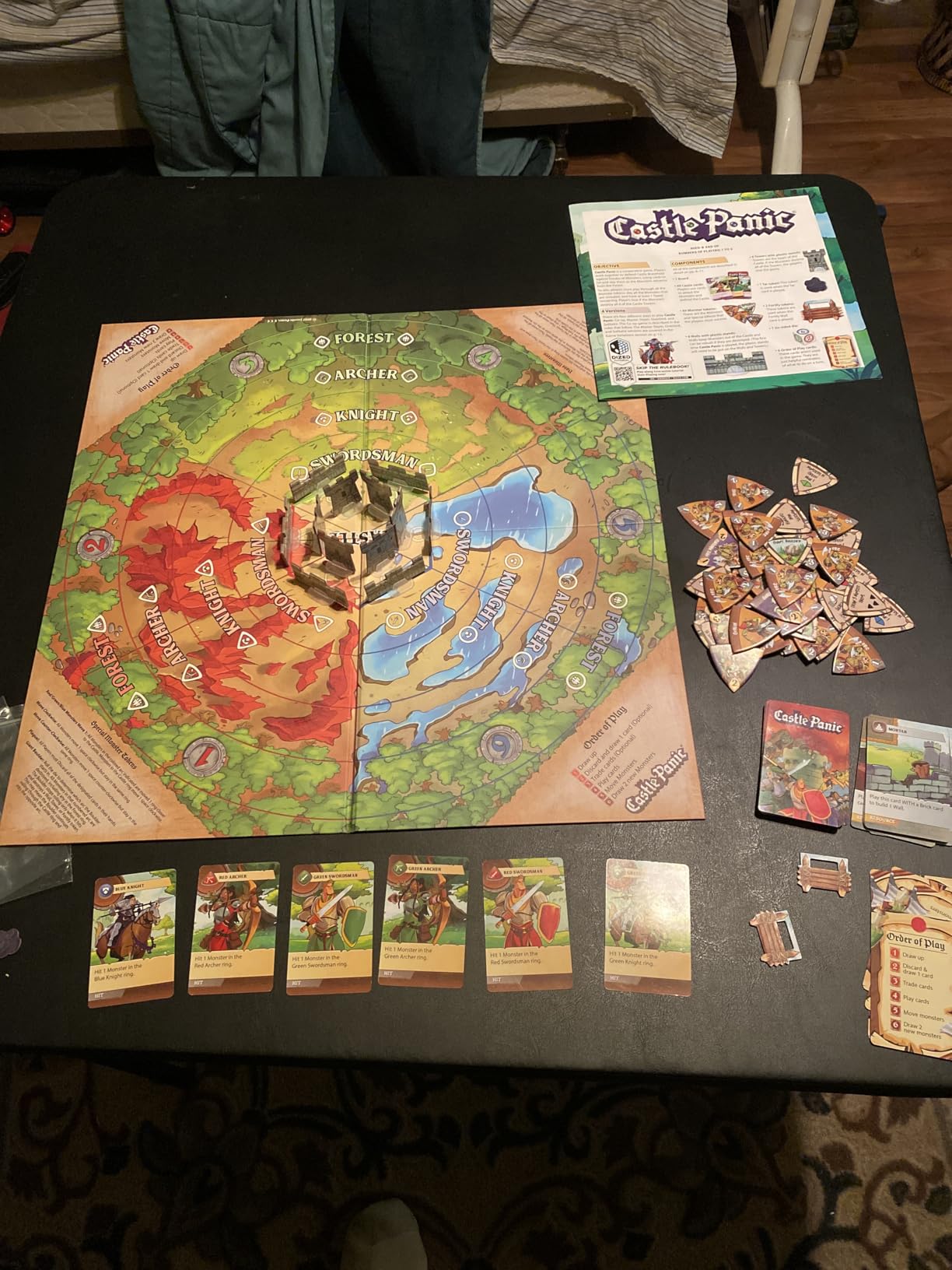
Castle Panic 2nd Edition is the game I pull when the adults in the house actually want a challenge. Players defend Castle Bravehold from waves of monsters, trading cards, coordinating attacks, and protecting the towers from every angle. It runs about 45 minutes, which is the long end for kids, but the strategic depth rewards older kids and grown-ups.
What sets this apart is the four game modes: full co-op, solo, Master Slayer competitive, and Overlord where one player controls the monsters. We mostly play co-op, but on nights when one parent is tired, the solo mode is a real game, not a watered-down version. That flexibility is rare in family board games.
The 3D towers, vibrant monster tokens, and illustrated board feel more premium than the price suggests. Components are thick cardboard and the artwork is detailed without being overwhelming. The 1-6 player count is the most flexible in the whole category, which makes it ideal for mixed gatherings.
Reviewers note the 45-minute playtime can be too long for younger kids, and setup takes longer than the simpler games on this list. For ages 10 and up, though, this is the cooperative game that actually feels like a real game. It’s also the natural graduation pick from My First Castle Panic.
Who it’s best for
Older kids ages 10+ and adult gamers who want a real cooperative strategy experience. It also works well for families with mixed ages where the adults want to stay engaged.
What to know before buying
Plan a 45-minute window. The setup is more involved than the other games on this list, so allocate it a bit for first-time play. Strategy is real, so younger kids may need help the first few rounds.
How to Choose the Best Cooperative Board Game for Your Family
The right cooperative board game depends less on the box and more on your family’s rhythms. Here are the four factors I use whenever a new game arrives at our house.
Age range matters more than the number on the box. Manufacturers recommend ages conservatively, but every kid is different. My 5-year-old handled Race to the Treasure with no problem, while her 7-year-old cousin needed help with Hoot Owl Hoot. Read the description’s “skills practiced” section, not just the recommended age, to find a game that matches where your kid actually is.
Match playtime to your real attention window. Cooperative games for younger kids typically run 10-20 minutes, which fits after dinner or before bedtime. Older kid games like Castle Panic run 45 minutes, which is a real commitment. Be honest about your family’s window. A 20-minute game played twice beats a 45-minute game abandoned halfway.
Player count is the easiest filter. Most cooperative games cap at four players, which can be a real problem for bigger families or playdates. Dog Man Attack of the Fleas and Castle Panic both stretch to six players, which makes them party-friendly. If your family is smaller, HABA First Orchard plays 1-4 players, which works for solo play with a parent.
Look for replay, not novelty. The best cooperative board games for kids have randomized elements like shuffled cards, dice, or tile draws. That randomization is what makes a game get played weekly instead of once and shelved. OUTFOXED!, Race to the Treasure, and Castle Panic all have strong replay ceilings thanks to randomized setup.
If you are still narrowing options, our guide to kids recliners covers the comfort side of game night, and our picks for the forgotten handheld games from before smartphones existed are a fun nostalgic detour for parents.
Taming the Alpha Gamer: Solving the Biggest Cooperative Play Problem
The single most common complaint I hear from parents on r/boardgames and boardgamegeek about cooperative games is the “alpha gamer” issue. That is when one player, usually a parent or an older sibling, starts dictating every move. The game technically stays cooperative, but one kid ends up watching while the adult plays.
I hit this wall hard with my husband, who has a habit of optimizing every turn. After a few rough evenings, here are three rules that fixed it for our family.
Set a “player’s choice” rule. Whoever’s turn it is makes the final call. No coaching, no second-guessing, no “I would have done it this way.” This one rule alone cut our alpha gamer problems by about 80 percent. Kids started engaging with the strategy instead of waiting for instructions.
Use the role of “team captain” instead of teacher. Instead of telling the youngest player what to do, the captain explains the situation and then asks: “What do you think we should do?” It shifts the parent’s role from dictator to facilitator without taking away the strategic support younger kids need.
Let the team lose sometimes. This one was counterintuitive for me. When our team lost because my 5-year-old made a “wrong” call, I wanted to coach my way back to a win. But losing together is the whole point of cooperative play. It teaches that decisions have consequences, that the team rallies, and that we try again. The shared loss becomes a shared story, which is what family game night is actually about.
If you are also building a game night routine, our charcuterie board sets guide doubles as a snack-planning resource, and our Go board game sets guide is a great next-step pick once your kids are ready for a deeper strategy game.
Frequently Asked Questions
What is the best cooperative board game for kids?
For most kids ages 5 and up, OUTFOXED! is the best cooperative board game because it teaches real deduction skills in a 20-minute round with four players. For younger kids ages 2-4, HABA First Orchard is the gold standard first game. For older kids ages 8 and up, Castle Panic 2nd Edition offers the deepest strategy.
What are some good co-op games for kids?
Strong co-op picks for kids include OUTFOXED! for mystery deduction, Hoot Owl Hoot for color matching and early strategy, Race to the Treasure for path planning, and Castle Panic 2nd Edition for older kids who want real strategy. Peaceable Kingdom titles like Dinosaur Escape work well for the 4-7 age range with shorter attention spans.
What are the top 10 cooperative board games?
The top cooperative board games for kids include OUTFOXED!, Hoot Owl Hoot, Race to the Treasure, Dinosaur Escape, Dog Man Attack of the Fleas, My First Castle Panic, HABA First Orchard, Castle Panic 2nd Edition, and family-friendly options like Forbidden Island and Pandemic for older players. The right pick depends on age, player count, and game length.
What are some fun cooperative games for children?
Fun cooperative games for children include OUTFOXED! for mystery lovers, Race to the Treasure for budding strategists, Dinosaur Escape for dinosaur fans, Dog Man Attack of the Fleas for kids who love the book series, and HABA First Orchard for toddlers. Each runs 10-30 minutes and teaches teamwork without reading barriers.
What are some good two-player board games for kids?
For two-player cooperative play, HABA First Orchard works down to one player, and most Peaceable Kingdom titles like Hoot Owl Hoot play fine with two. OUTFOXED! is designed for four players but can be adapted. Castle Panic 2nd Edition has a true solo mode, which is rare in the genre.
Final Verdict
After three months of family game nights, neighbor playdates, and birthday party experiments, the best cooperative board game for kids in 2026 is OUTFOXED! for its mix of real deduction, quick 20-minute rounds, and a 4.8-star rating across 7475 reviews. It hits the sweet spot of being genuinely fun, age-appropriate, and replayable enough to keep showing up on family game night rotations.
For families looking for the gentlest first game, HABA First Orchard remains the gold standard for toddlers. For older kids who want a real cooperative strategy experience, Castle Panic 2nd Edition delivers the depth with four game modes and 1-6 player flexibility. Whatever you pick, the shared win-or-lose dynamic of these co-op games is what turns game night from a competition into a memory. If you want a broader deep dive into tabletop strategy, our cribbage board sets guide is a great next read.