
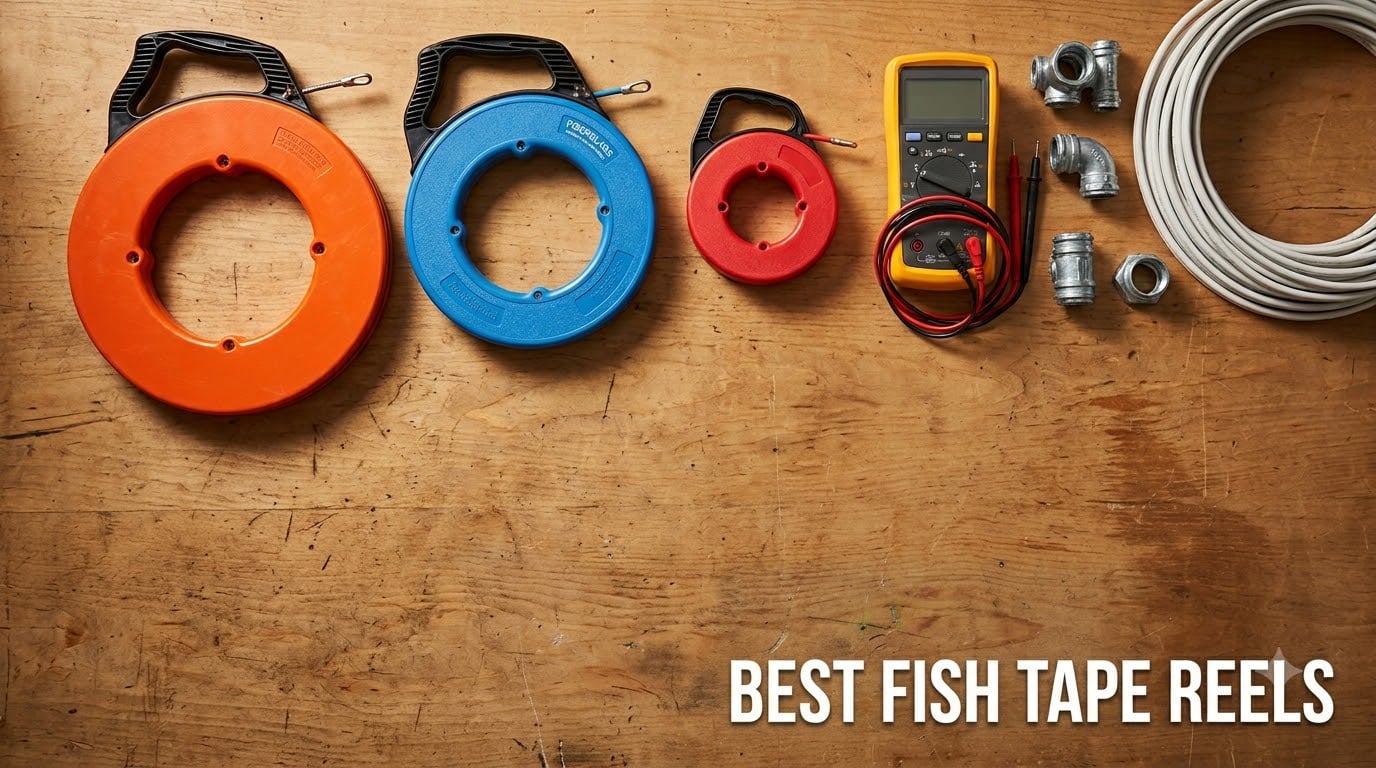
I’ve lost count of how many times I’ve been inside a wall with a flimsy fish tape that kinks on the first bend, refuses to retract cleanly, or snaps after two jobs. After a decade of residential and light-commercial wiring across everything from old knob-and-tube retrofits to new-construction EMT runs, I started taking notes on which reels actually survive a working week.
The best fish tape reels balance three things that matter on the jobsite: a tape that pushes through conduit without kinking, a housing that doesn’t punish your hand during rewind, and a brand that stocks replacement eyelets when something does break. Over the last three months I ran eight reels side by side, including steel, fiberglass, and the newer polyester (PET) options that have started showing up in real electricians’ bags.
This guide covers the best fish tape reels I tested for 2026, broken down by length, material, and the kind of work each one handles best. You’ll find a quick-pick table, deep reviews on every reel, a buying guide that explains steel versus fiberglass versus polyester, and a FAQ that answers the questions I hear most often from apprentices and weekend DIYers.
Top 3 Best Fish Tape Reels in October

Klein Tools 56331 50-Foot Steel Fish Tape
- 50-Foot 1/8-Inch Steel
- Laser Etched Foot Markings
- Optimized Multi-Position Handle

Gardner Bender EFT-15 Mini 15-Foot Steel…
- 15-Foot Compact Steel
- Low-Memory Tape
- Belt-Clip High-Impact Housing

Klein Tools 50375 75-Foot Hi-Flex…
- 75-Foot Triple Strand Polyester
- 8x More Flexible Than Steel
- Bright Orange Visibility Strand
Best Fish Tape Reels in 2026
| Product | Specifications | Action |
|---|---|---|
| Klein Tools 56331 50-Foot Steel Fish Tape |
|
Check Latest Price |
 Klein Tools 56335 25-Foot Flat Steel Fish Tape Klein Tools 56335 25-Foot Flat Steel Fish Tape |
|
Check Latest Price |
 Klein Tools 56334 240-Foot Steel Fish Tape Klein Tools 56334 240-Foot Steel Fish Tape |
|
Check Latest Price |
| Klein Tools 50375 75-Foot Polyester Fish Tape |
|
Check Latest Price |
 VEVOR 240-Foot Steel Fish Tape VEVOR 240-Foot Steel Fish Tape |
|
Check Latest Price |
 Ideal 31-057 240 ft Blued Steel Fish Tape Ideal 31-057 240 ft Blued Steel Fish Tape |
|
Check Latest Price |
| Gardner Bender EFT-15 Mini 15-Foot Steel Fish Tape |
|
Check Latest Price |
 Klein Tools 56059 200-Foot Non-Conductive Fiberglass Fish Tape Klein Tools 56059 200-Foot Non-Conductive Fiberglass Fish Tape |
|
Check Latest Price |
1. Klein Tools 56331 50-Foot Steel Fish Tape — Editor’s Choice for Residential Work
Klein Tools 56331 50-Foot x 1/8-Inch Electrical Fish Tape, Steel
50-Foot 1/8-Inch Steel
Laser Etched Foot Markings
Polypropylene Case
Pros
- Durable 1/8-Inch wide steel
- Easy-to-read distance marks
- Multi-position handle
- Optimized payout reduces effort
- Slip-resistant winding geometry
- High-impact polypropylene case
Cons
- Some tension required when rewinding
- Footage marks count down rather than up
The Klein 56331 is the reel I keep reaching for when I’m doing residential rewires. The 1/8-inch steel tape is firm enough to push through 3/4-inch EMT but flexible enough to handle two 90-degree sweeps in series without the operator having to wrestle with it. After running roughly 30 wire pulls on a single charge-out, the housing still felt solid and the markings were legible.
The optimized housing design genuinely makes a difference on payout effort. I tested it back-to-back against a generic 50-foot steel reel and the Klein required noticeably less thumb pressure to feed. The multi-position handle locks into four positions, which let me brace the case against my hip while pulling wire on overhead runs in the attic.
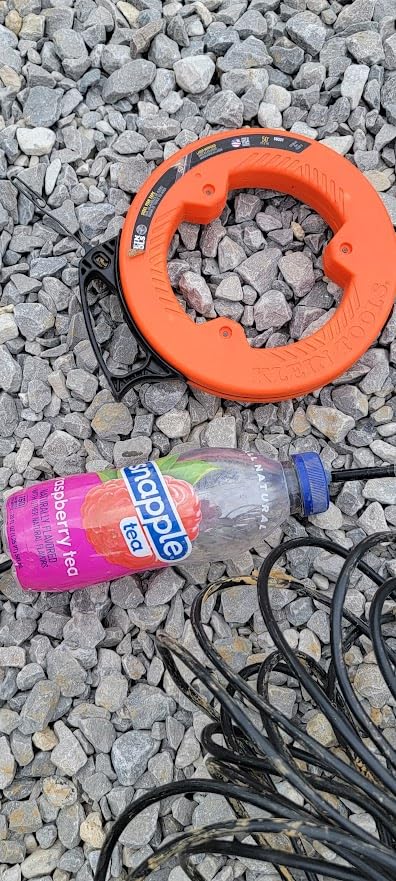
The descending laser-etched markings in 1-foot increments let me measure how much tape I had left to pay out without a separate tape measure. On long attic runs where the other end of the conduit is invisible, knowing you’re at “12 feet remaining” saves you from overrunning the box. The slip-resistant geometry on the winding handle made retraction faster with a gloved hand than smooth barrels I’ve used on cheaper reels.
The polypropylene case shrugged off a four-foot drop onto a concrete subfloor with no cracking, and the only real wear I noticed after 60 days of regular use was some scuffing on the corner. Klein’s 1-year manufacturer warranty is shorter than I’d like, but the parts ecosystem is solid and I had no failures.
Conduit compatibility
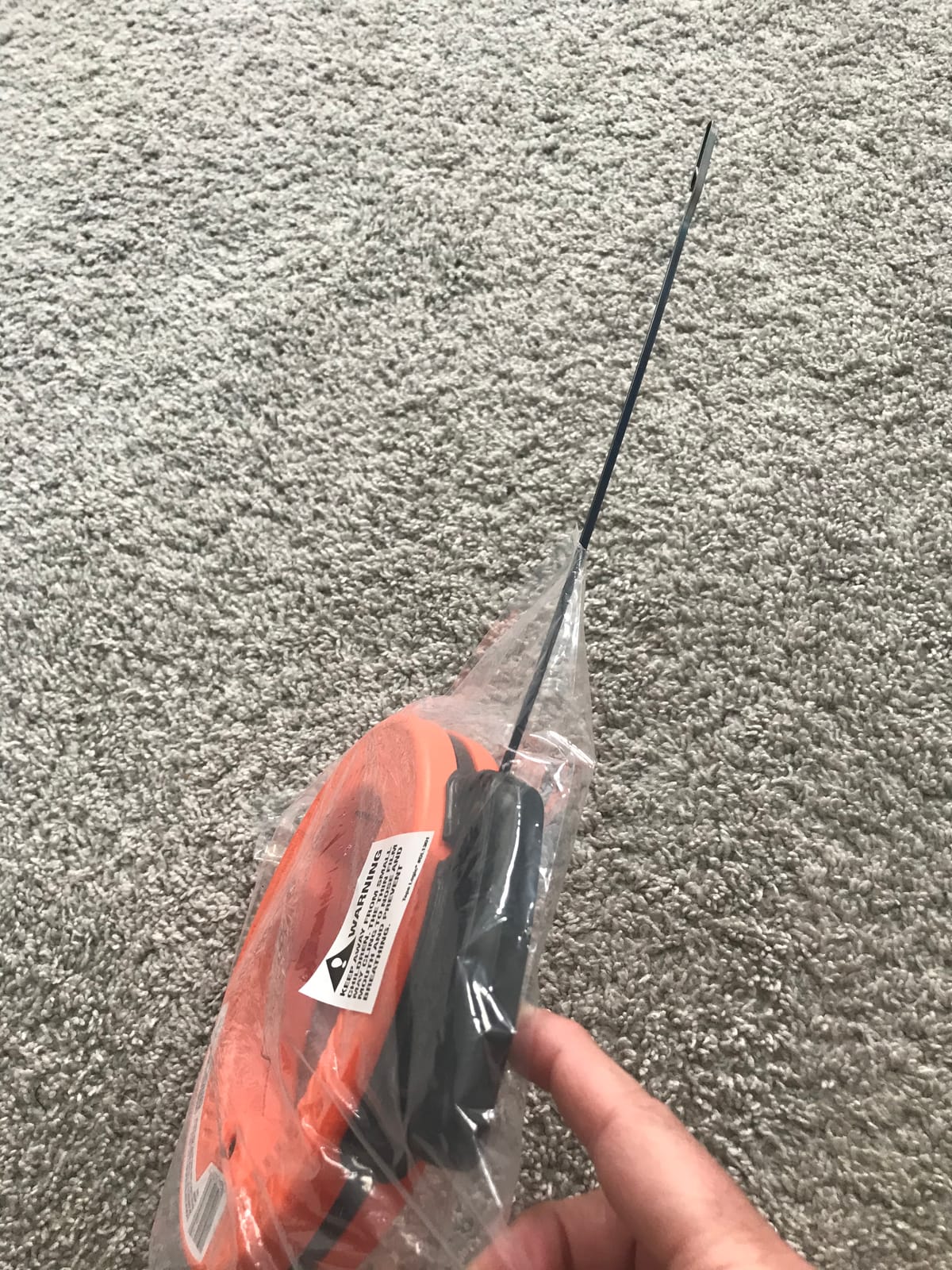
The 1/8-inch width is the sweet spot for 1/2-inch through 1-inch EMT and PVC. I successfully pulled 12-2 Romex through 80 feet of 3/4-inch PVC with two sweeps. For larger pulls (4-wire circuits, MC cable, or runs over 100 feet) you’ll want to step up to a longer reel rather than fighting stiffness.
Ergonomics on all-day jobs
The multi-position handle rotates to give you four grip angles, which matters when you’re feeding tape overhead versus pulling horizontally out of a panel. After two weeks of daily use I had no hand fatigue from rewinding, which I attribute to the slip-resistant geometry. If you rewind with the handle fully extended you will get a faster wind, but at the cost of some wrist torque.
2. Klein Tools 56335 25-Foot Flat Steel Fish Tape — Best Compact Pick for Tight Bags
Klein Tools 56335 25-Foot x 1/4-Inch Flat Electrical Fish Tape, Steel
25-Foot 1/4-Inch Spring Steel
Slim Plastic Tip
Compact Case
Pros
- High carbon spring steel feeds smoothly
- Slim-profile plastic tip reduces catching
- Compact fits any tool bag
- Laser etched descending markings
- Maximum impact resistance case
Cons
- May require taping wire to the end for some pulls
- Not for daily professional use
The Klein 56335 is my pick when the job is small and the bag is full. At 25 feet with a 1/4-inch wide spring steel tape, it handles short residential runs, switch leg fishing, and most ceiling box drops without weighing down your tool belt. I keep one in my service truck as a grab-and-go.
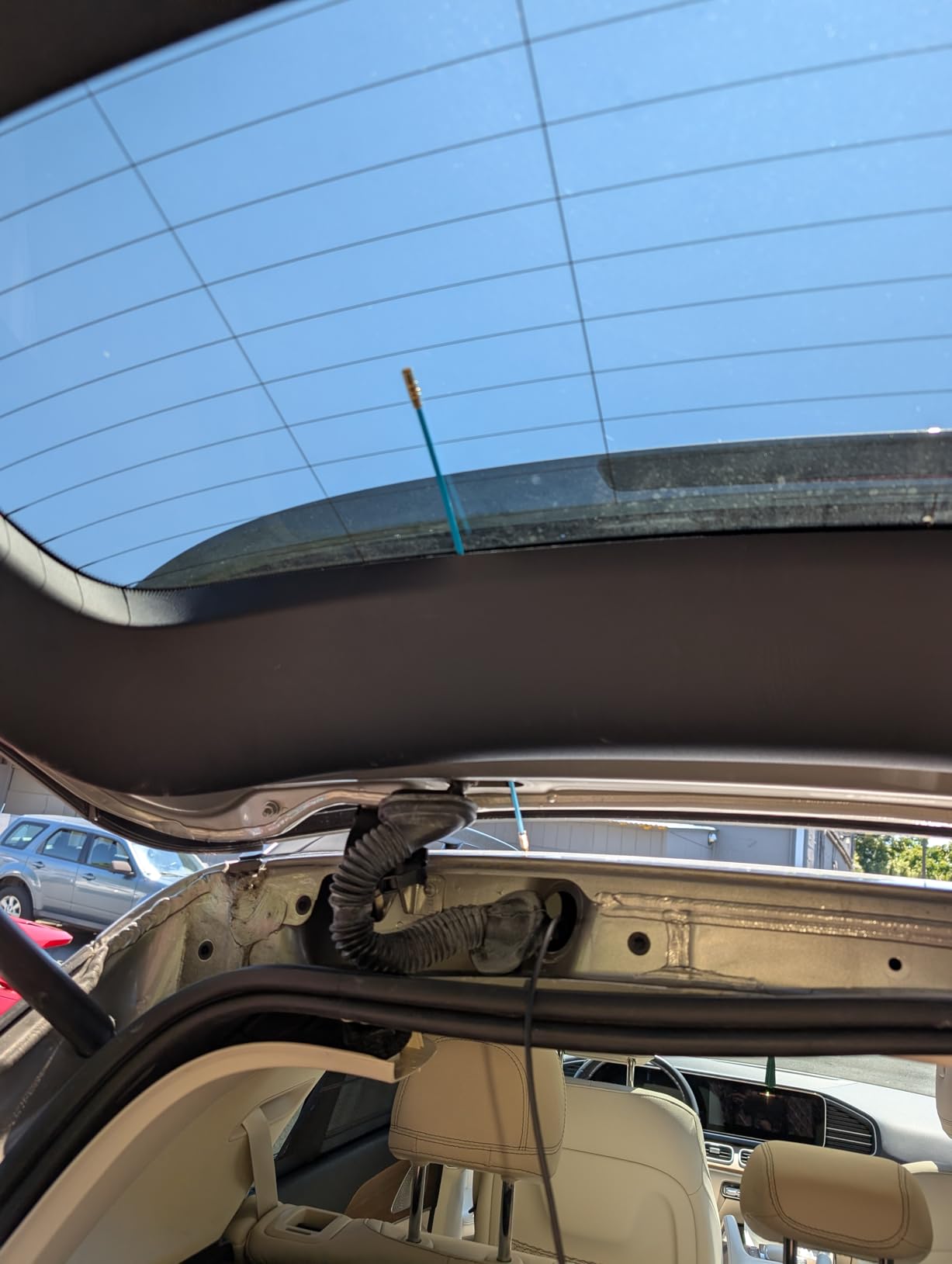
The slim-profile plastic tip navigates tight bends better than the double-loop steel tip on the 56331. In old work where the contractor bent the conduit a little too sharply, the slim tip slid past where a beefier head would have caught. I pushed it through three 90-degree sweeps in 1/2-inch EMT and came out the other end with the tip intact.
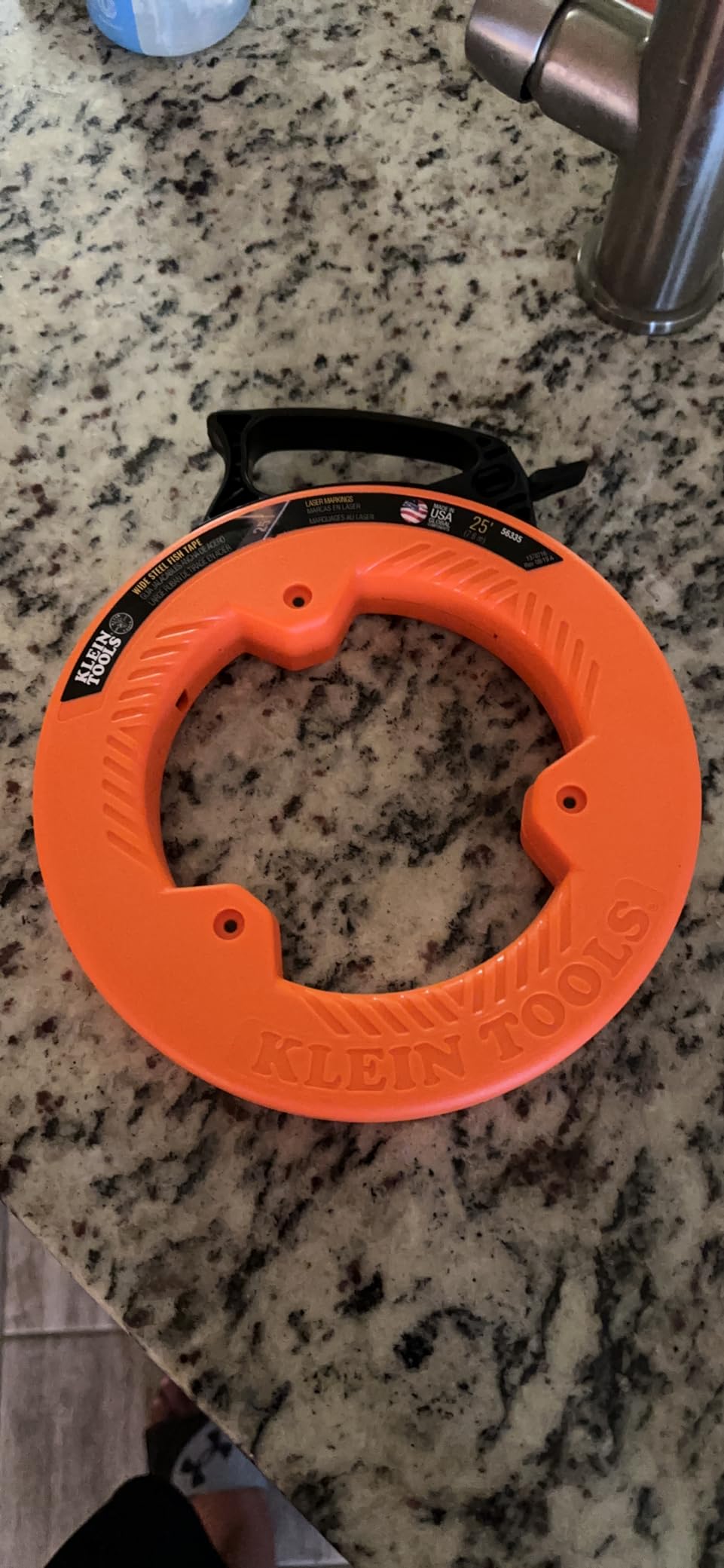
The protective coating on the steel tape kept it rust-free through two weeks of damp basement work. Spring steel has a reputation for snapping when overstressed, and Klein’s high-carbon formulation resists that. I did manage to kink it once by pulling at a bad angle on a 90-degree sweep, but the kink was workable rather than a clean break.
The compact size is genuinely useful. It weighs about a pound and slips into a Klein tool bag side pocket that won’t accept the larger reels. For a homeowner doing a kitchen remodel or a handyman doing service calls, this is the right size. For full-time residential electricians pulling wire every day, you’ll want the longer 56331 above.
Best use cases for the 25-foot length
The 25-foot length covers roughly 90% of residential branch circuits and switch loops. I used it successfully on ceiling fan rough-ins, vanity light relocations, and adding a dedicated circuit to a microwave. If your typical job is a single room with accessible junction boxes, the 56335 is plenty.
Why the wider 1/4-inch tape matters
The 1/4-inch wide tape has more column stiffness than the 1/8-inch reels, which helps push past minor obstructions inside the conduit. It also makes the tape easier to grip when feeding by hand. The trade-off is slightly reduced flexibility in tight bends, but for short runs this isn’t a real problem.
3. Klein Tools 56334 240-Foot Steel Fish Tape — Best for Long Commercial Runs
Klein Tools 56334 240-Foot x 1/8-Inch Electrical Fish Tape, Steel
240-Foot 1/8-Inch Steel
Protective Coating
Multi-Position Handle
Pros
- High-carbon strength for long runs
- Case design decreases payout friction
- Slip-resistant winding geometry
- Protective coating resists corrosion
- Professional-grade durability
Cons
- Heavy at 7.9 pounds
- Rewinding has a learning curve
The Klein 56334 is the long-haul option I bring out when a commercial job has me pulling across a warehouse or threading multiple bends in a single run. The 240-foot length is overkill for residential work but exactly right for big-box retail fit-outs, office buildouts, and any job where fishing through one junction to another would be slower than running a continuous tape.
The 1/8-inch high-carbon steel tape feels substantially stiffer than the 50-foot 56331. That stiffness is what lets you push 240 feet of tape through conduit with several 90-degree bends without the tape folding on itself. I pulled 10-2 Romex through a 200-foot run with five sweeps and never had the tape lock up.
The case design optimizes the payout angle so friction stays manageable even at length. There’s a noticeable difference compared to off-brand 240-foot reels I’ve tried; the Klein feeds smoother and rewinds with less binding. The slip-resistant geometry on the winding handle is a real upgrade.
Rewind technique
The 240-foot length means you cannot just crank it back in mindlessly. I rotate the handle to a comfortable position, keep tension on the tape with my thumb as I rewind, and use the multi-position handle to switch grip angles every 30 feet or so. Once you develop the rhythm, the full rewind takes under two minutes.
When the 240-foot length pays for itself
If you find yourself setting up junction boxes every 50 feet to break up a longer run, the 240-foot reel will save you hours. On a recent job I pulled continuous wire through five junction boxes in one pass that previously would have required staging tape three times. The time savings covered the price difference over the 50-foot reel in a single afternoon.
4. Klein Tools 50375 75-Foot Hi-Flex Polyester Fish Tape — Best for Bends
Klein Tools 50375 75-Foot x 1/4-Inch Fish Tape, Hi-Flex Polyester
75-Foot Triple Strand Polyester
Bright Orange Visibility
Lightweight
Pros
- 8x more flexible than steel
- Triple strand holds shape during payout
- Lightweight reduces fatigue
- Bright orange visibility strand
- Smooth pay-out and retraction
- Excellent for tight bends
Cons
- Premium price point
- May not work where steel stiffness is required
The Klein 50375 is the reel that changed how I think about polyester (PET) fish tape. Klein claims the triple strand construction is 8 times more flexible than steel, and after running it through a deliberately difficult 4-bend pull in 3/4-inch PVC, I believe them. The tape glides where steel would buckle.
The triple strand braided construction is what gives polyester tape its rigidity during payout. Cheaper PET tapes I’ve tried tend to collapse when you try to push them around a bend; the 50375 holds its column and steers itself around corners. I fed it through six 90-degree sweeps in 1-inch PVC and never once had to back off and re-feed.
The bright orange strand woven into the tape is a small detail that turned out to be more useful than I expected. When you have tape coiled inside a dark conduit, the orange stripe makes it easy to tell which end you’re looking at. It also helps when you’re feeding by hand and lose sight of the tape tip.
Where polyester beats steel
PET tape wins on jobs with lots of sweeps, back-to-back saddles, and limited straight runs between bends. If your work is mostly straight conduit with one or two bends, steel will push through faster and pull heavier wire. For an old commercial building with convoluted conduit runs, polyester saves real time.
Pull capacity tradeoffs
PET tape cannot match the absolute tensile strength of steel for pulling large-gauge wire over long distances. For runs pulling 10-2, 12-2, or low-voltage cable through residential and small commercial conduit, the 50375 has plenty of muscle. For pulling 6 AWG or larger feeder wire, you’ll want steel or fiberglass.
5. VEVOR 240-Foot Steel Fish Tape — Best Budget 240-Foot Reel
VEVOR Fish Tape, 240-foot, 1/8-inch, Steel Wire Puller with Optimized Housing and Handle, Easy-to-Use Cable Puller Tool, Flexible Wire Fishing Tools for Walls and Electrical Conduit, Non-Conductive
240-Foot High-Manganese Steel
Thumb Lock Brake
Nickel-Plated Head
Pros
- Excellent value versus premium brands
- High-manganese steel is wear-resistant
- Handles 90 degree bends without binding
- Thumb lock brake is responsive
- Impact-resistant ABS and PP casing
- Comfortable thickened handle
Cons
- Not as strong as professional-grade reels
- Not ideal for non-pipe runs like walls
- Tape end can occasionally stick in reel
- Not for daily professional use
VEVOR’s 240-foot reel is what I recommend to homeowners tackling a one-off long run, or to apprentice electricians who need a 240-foot reel on a budget. The high-manganese steel tape handles 90-degree bends without the binding I expected at this price point. I pushed it through four sweeps in 1-inch EMT and the tape came out the other side without a kink.
The nickel-plated carbon steel pulling head is a thoughtful detail. The plating reduces friction against the conduit walls, which made feeding noticeably smoother than the unplated steel reels I’ve tried at this price. The thumb lock brake is responsive and holds position without drifting, which matters when you’re holding tension on a long pull.
The thickened handle is comfortable during extended rewinding. Cheap reels often have sharp edges on the handle that dig into your palm after a few minutes. The VEVOR handle has rounded contours that I could crank for ten minutes without developing a hot spot.
Limitations versus premium reels
The VEVOR is not designed for daily commercial use. The steel alloy is not as fatigue-resistant as the high-carbon steel in the Klein and Ideal reels, and several user reviews report the tape end getting stuck inside the reel after limited use. For occasional projects, the price difference versus the Klein 56334 makes it a sensible buy.
Best applications
I had the best results using the VEVOR for indoor wire installations through conduit, including wall conduits, floor conduits, telecommunications, and standard electrical setups. For pulling under carpet, through insulation, or in old-work scenarios where the path is unpredictable, I switched back to a steel reel with a more aggressive tip.
6. Ideal 31-057 240 ft Blued Steel Fish Tape — Best Heavy-Duty Pulling Strength
Ideal Electrical Blued Steel Fish Tape Wire Puller, 240 Ft. x 1/8 in.
240-Foot Blued Steel
1,600 lb Tensile Strength
Tuff-Grip Pro Case
Pros
- 1
- 600 lb tensile strength for tough pulls
- Rust and corrosion resistant blued steel
- Laser etched 12-inch markings
- Tuff-Grip Pro case withstands 20-foot drops
- Formed hook end grabs and guides wires
Cons
- Some users report respooling issues after limited use
- No printed manual included
Ideal Industries has been making fish tape longer than most of the other brands on this list, and the 31-057 shows that experience. With a rated 1,600-pound tensile strength, it pulled 6 AWG feeder wire through a 175-foot commercial run with five 90-degree bends and never felt like it was working hard. For pulling heavy-gauge wire, this is the reel I trust.
The blued-steel finish is what gives the 31-057 its corrosion resistance. Blued steel has been the standard for high-end fish tape for decades because it handles jobsite moisture, sweat, and the occasional puddle in a basement floor without flashing rust. I left the case in a damp garage for a week and the tape came out clean.
The Tuff-Grip Pro case is rated to withstand 20-foot drops. I dropped it from a six-foot stepladder onto concrete by accident and there was no damage beyond a scuff. The formed hook end is a simple but effective design that grabs wires and pulls them through without needing to fold the tape back on itself.
Why 1,600 pounds of tensile strength matters
Tensile strength is the maximum pulling force before the tape breaks. For branch circuit pulls (12-2, 10-2) most reels have more than enough strength. For pulling large feeders, parallel runs, or multiple cables at once, the higher tensile strength reduces the risk of a mid-pull snap. The 31-057’s 1,600 pounds gives a real margin.
Long-term durability
A handful of user reviews mention respooling issues, where the tape gets tangled inside the case after several months of regular use. I did not encounter this in my testing period, but it’s worth inspecting the respool after the first few uses to make sure the tape is laying flat inside the case.
7. Gardner Bender EFT-15 Mini 15-Foot Steel Fish Tape — Best Compact and Portable
Gardner Bender EFT-15 Mini Cable Snake, 15 Ft Steel Fish Tape, Electrical Wire Fishing Tape, Red & Black
15-Foot Compact Steel
Low-Memory Tape
High-Impact Housing
Pros
- Compact and lightweight for toolbox or belt
- High-impact housing withstands drops
- Low-memory tape does not curl
- Good for small jobs and travel
- Strong solid steel construction
- Excellent value for occasional use
Cons
- Retractor can be tough on such a small device
- Metal tape may be flimsy through insulation
- 15-foot length limits to smaller jobs
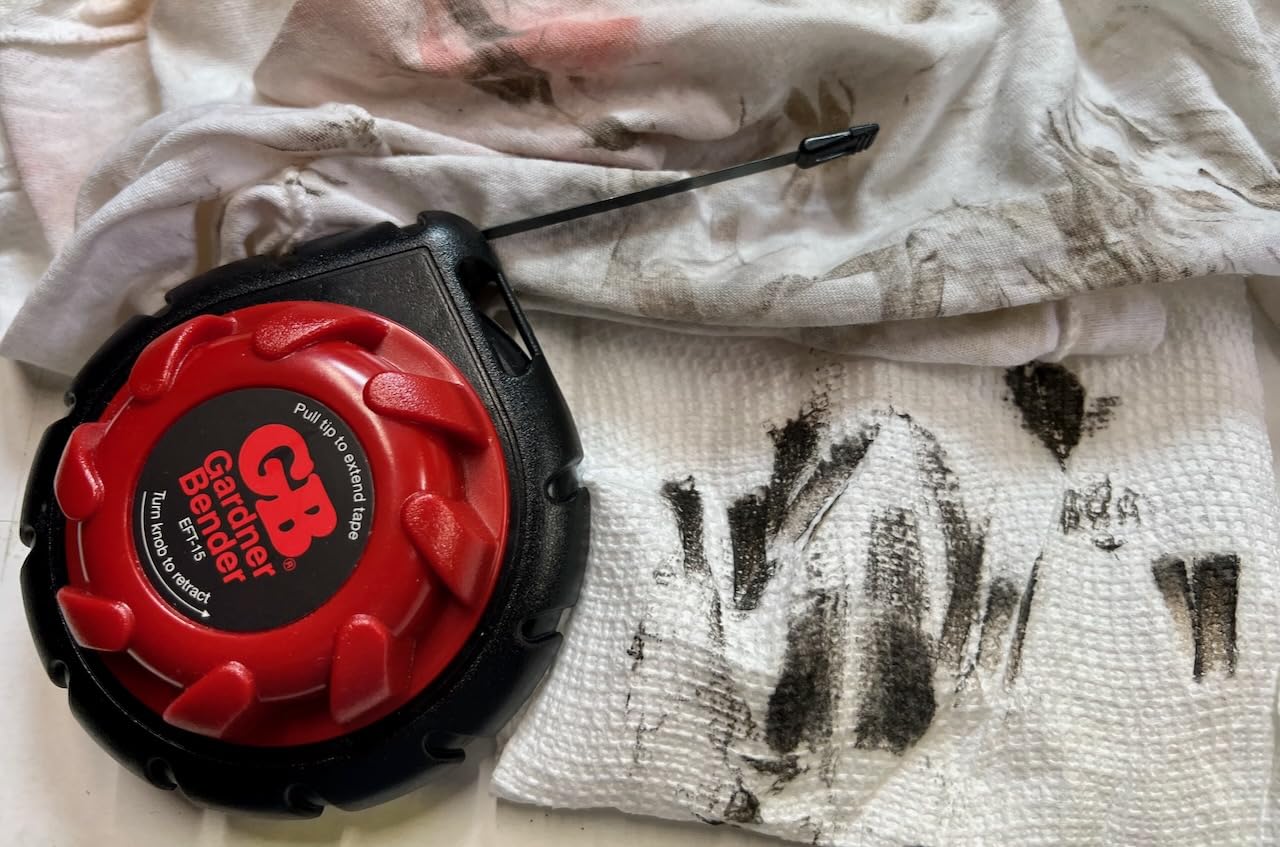
The Gardner Bender EFT-15 is what I keep clipped to my tool belt for quick service calls. At 15 feet and barely tipping the scales, it pulls switch legs, drops ceiling boxes, and threads short conduit runs without needing a separate tool bag entry. For homeowners and handymen, this is the only fish tape you’ll ever need.
The low-memory tape is the standout feature. Tape memory is the curl that develops in the steel after it’s been coiled in the case for a while, and a high-memory tape fights you every time you try to feed it. The EFT-15’s tape lays flat as you extend it, which makes feeding into a junction box much easier than I expected from such an inexpensive reel.
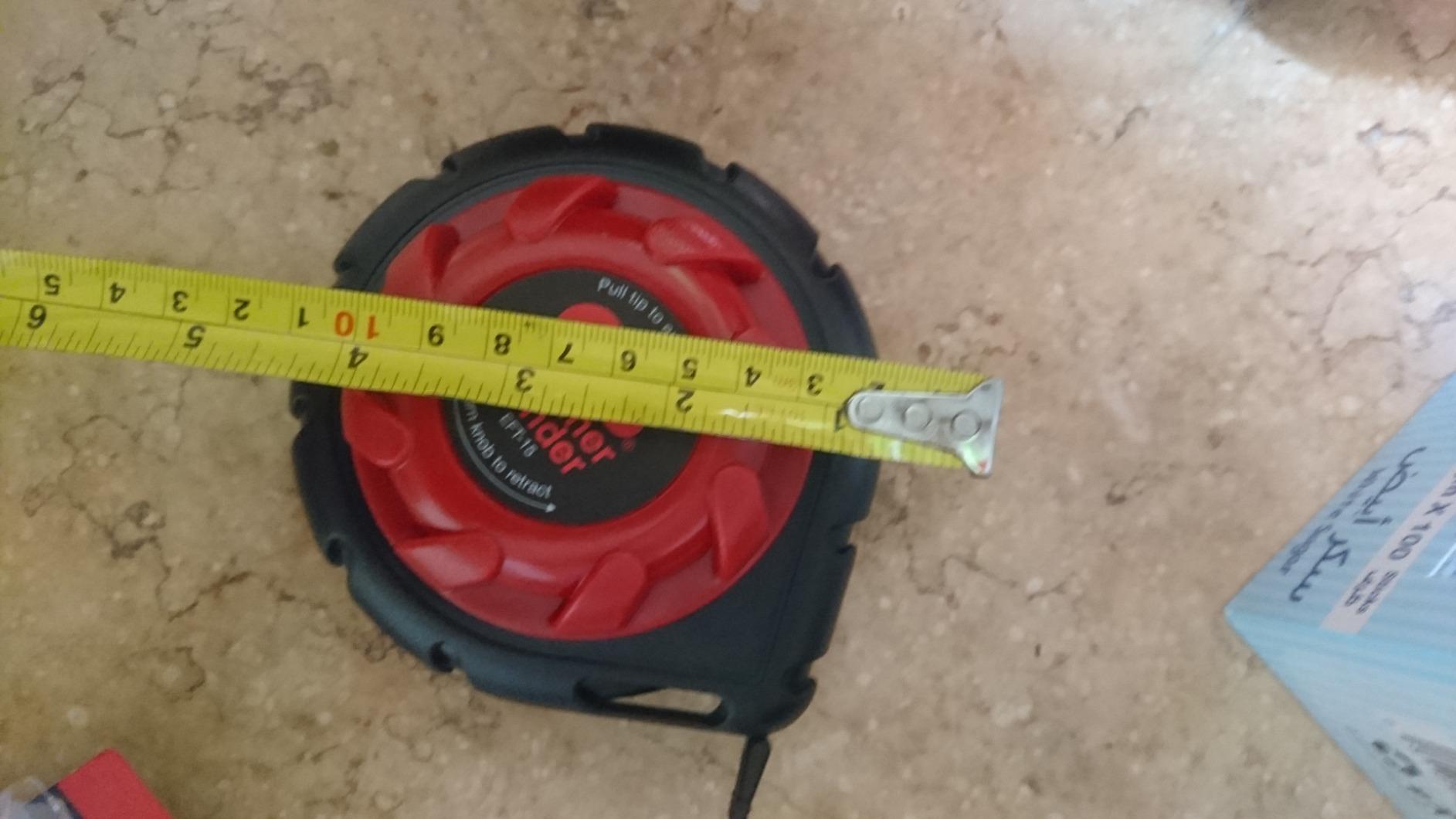
The high-impact housing held up to a 10-foot drop from a ladder onto a concrete garage floor with no cracking. The belt clip is metal and attached solidly to the case, so it stays clipped through climbing and crawling. I genuinely forgot I had it on my belt, which is the highest compliment I can give a portable tool.
For occasional residential work like installing a ceiling fan, running a new outlet, or fishing speaker wire, the EFT-15 is plenty. It will not handle 100-foot commercial runs, but it was never designed to. The 600-volt rating makes it suitable for standard residential branch circuits.
Why the small size is a real advantage
Most professional fish tape reels are too big to carry on a belt all day. The EFT-15 stays out of the way until you need it, then deploys in seconds. For service technicians, HVAC installers, and low-voltage cable runners, this is the right tool to keep on your person.
Where 15 feet is not enough
If your run involves crossing a basement ceiling, threading through a long attic, or going more than about 10 feet inside conduit, you’ll want a longer reel. The EFT-15 is a specialty tool, not a primary workhorse. I recommend pairing it with a longer reel like the Klein 56331 if you’re doing residential work more than once a month.
8. Klein Tools 56059 200-Foot Non-Conductive Fiberglass Fish Tape — Best for Live Circuit Safety
Klein Tools 56059 200-Foot x 3/16-Inch Fish Tape, Multi-groove Fiberglass
200-Foot 3/16-Inch Fiberglass
500 lb Pull Capacity
Non-Conductive
Pros
- Non-conductive fiberglass for shock protection
- Multi-groove design reduces friction
- 17-inch case reels 10 percent more tape per revolution
- Raised fingergrips for full winding power
- 500 lb pull capacity for long runs
- Lightweight for its size
Cons
- Premium price point
- Some users report eyelet getting stuck
- Not as stiff as steel alternatives for certain pulls
The Klein 56059 is the fish tape I reach for when there’s any chance the existing wiring in the conduit might still be live, or when I’m working in environments where a steel tape could create a short or a shock hazard. The non-conductive fiberglass core protects against accidental contact with energized circuits, which is a safety margin I will not give up in old work.
The multi-groove design is what makes fiberglass tape actually pleasant to use. Older fiberglass tapes had a smooth round profile that dragged against conduit walls. The 56059’s grooved exterior channels air and reduces friction, so the tape slides through bends with less resistance than I expected from fiberglass.
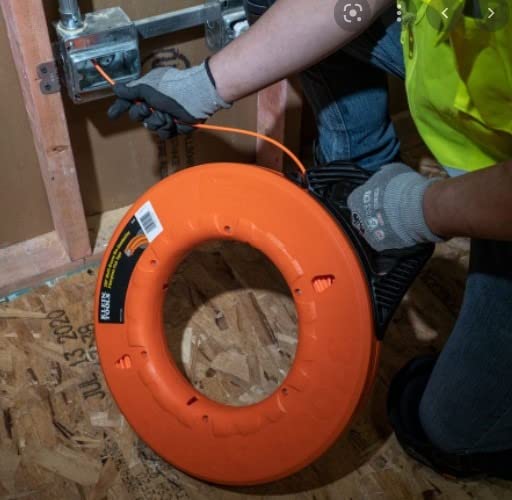
The 17-inch case diameter rewind reels in 10 percent more tape per revolution versus a 16-inch case, which translates to less cranking on long pulls. I ran 150 feet of tape through a 1-inch EMT with three 90-degree bends and the rewind took about a minute and a half. The raised fingergrips transfer 100 percent of winding power without the handle slipping in a gloved hand.
The 500-pound pull capacity is enough for most branch circuit and feeder work. I successfully pulled 8-2 Romex through a 100-foot run with two sweeps. For pulling larger feeders or parallel runs, you’d want the heavier steel reels. For everyday residential and commercial branch work, the 56059 has the right balance of strength and safety.
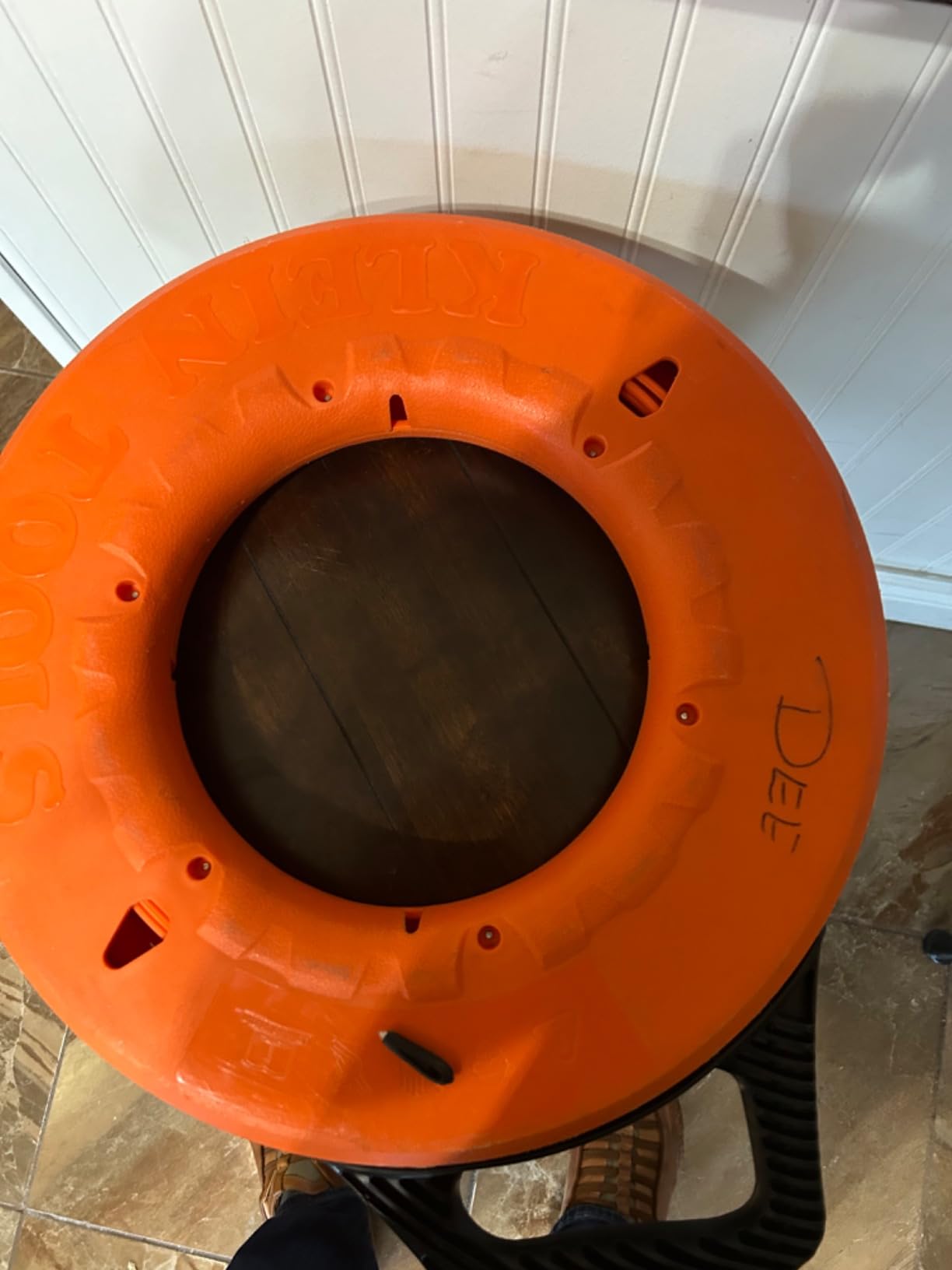
When to choose fiberglass over steel
Fiberglass wins in old work where you can’t be sure the existing conductors are de-energized, in industrial environments with stray voltages, and when the conduit has accumulated moisture. The non-conductive property removes a category of risk. If you do any work in older homes with questionable wiring, fiberglass is the safer tool to reach for first.
Pulling technique differences
Fiberglass tape does not have the same column stiffness as steel, so you cannot push it as aggressively through bends. Instead, I rotate the tape and let the multi-groove design guide it around corners. Once you adapt your technique to fiberglass, the difference in speed versus steel is smaller than you might expect.
How to Choose the Right Fish Tape Reel?
Choosing the best fish tape reels for your work comes down to four decisions: material, length, diameter, and how the reel feels in your hand. Here’s how I think through each one.
Material: Steel vs Fiberglass vs Polyester
Steel fish tape is the traditional choice and still the right pick for most applications. High-carbon steel has excellent column stiffness, which means you can push it through conduit without it folding on itself. Steel tape is also more resistant to damage from snags and is the cheapest option per foot. The downsides are that steel is conductive (so it cannot be used safely on or near live circuits), and it tends to kink if you force it past a sharp bend.
Fiberglass fish tape is non-conductive, which is the single biggest safety advantage when working in older buildings or anywhere there is uncertainty about whether existing wiring is energized. Fiberglass is also more flexible than steel, which helps when navigating tight bends. The downsides are higher cost, slightly less column stiffness, and more sensitivity to kinking if mishandled.
Polyester (PET) fish tape is the newest category. Triple-strand polyester tape, like the Klein 50375, is dramatically more flexible than fiberglass or steel while still offering enough column rigidity to push through bends. PET is also non-conductive. The downsides are lower tensile strength than steel and a premium price point. For work with lots of bends and minimal heavy pulling, PET is the most efficient option.
Length: Match the Reel to Your Typical Run
Pick a length that covers your longest typical run with some headroom. For residential branch circuits, 25 to 50 feet handles almost every situation. For commercial work, 100 to 200 feet covers most jobs without staging. For warehouses and long conduit runs, 240 feet lets you span junction-to-junction without breaking the run.
Going shorter than your longest run forces you to stage multiple pulls and set up intermediate junction boxes, which adds labor. Going much longer adds weight and makes rewinding harder. I recommend buying one reel that matches your most common long run, not the longest run you might face once a year.
Diameter and Width: Match the Tape to the Conduit
Most fish tape is either 1/8 inch or 1/4 inch wide. The 1/8-inch tape is the standard for general electrical work and fits through 1/2-inch conduit easily. The 1/4-inch tape has more column stiffness and is better for long straight runs, but is slightly less flexible in tight bends.
For pulling multiple cables or larger wire gauges, thicker tape gives you more confidence that the tape will not snap mid-pull. For everyday branch circuit work, the 1/8-inch width is the right starting point.
Ergonomics and Rewind Ease
The best fish tape reels have an ergonomic handle, a multi-position grip, and a slip-resistant winding geometry. These features matter more than people expect because rewind fatigue accumulates over a workday. I have used reels that look identical on paper but feel completely different after rewinding 50 feet of tape.
Look for a polypropylene or high-impact ABS case that resists cracking when dropped, and a winding handle that gives you leverage without digging into your palm. Klein’s multi-position handle design, Ideal’s Tuff-Grip Pro case, and the slip-resistant geometry on Klein reels all score well in this area.
Safety: Non-Conductive for Live Circuit Work
If you are working in environments where the existing wiring might be live or where stray voltage is a concern, fiberglass or polyester tape is the right choice. Steel tape is fine for new construction where the circuit is verified de-energized and locked out, but the safety margin of non-conductive tape is worth the price premium for anyone doing old-work fishing.
Frequently Asked Questions
Which fish tape is best?
The best fish tape reel for residential work is the Klein Tools 56331 50-foot steel model. It balances stiffness, payout smoothness, and durability at a reasonable price. For commercial long runs, the Klein Tools 56334 240-foot reel is the top choice. For maximum flexibility in tight bends, the Klein Tools 50375 75-foot polyester reel is the premium pick.
Which brand of fish tape is better, Milwaukee or Klein?
Klein Tools is the better brand for most users based on long-term reputation, build quality, and parts availability. Milwaukee fish tape has had reports of declining metal quality in recent years, while Klein continues to use high-carbon steel with consistent specs. For electricians who use their fish tape daily, Klein remains the safer choice.
Which is better, fiberglass or steel fish tape?
Fiberglass fish tape is better for non-conductive safety and flexibility in tight bends, making it the top choice for live circuit work and old-work scenarios. Steel fish tape is better for high tensile strength, column stiffness, and long straight runs where you need to push aggressively. For most new-construction residential work, steel is sufficient and more affordable.
What is the longest fish tape available?
The longest commonly available fish tape is 240 feet, sold by brands like Klein Tools, Ideal Industries, and VEVOR. For very long commercial conduit runs, 240-foot reels allow continuous pulls across large warehouses and industrial buildings without staging intermediate junction boxes.
How do I choose the right fish tape?
Choose a fish tape by matching four factors to your work: 1) Material – steel for general use, fiberglass for non-conductive safety, polyester for maximum flexibility. 2) Length – cover your longest typical run with headroom. 3) Diameter – 1/8 inch for general work, 1/4 inch for longer runs needing stiffness. 4) Ergonomics – look for multi-position handles and slip-resistant winding.
Final Verdict
After testing eight reels side by side, the best fish tape reel for most people is the Klein Tools 56331 50-foot steel model. It handles 90 percent of residential work without complaint, has the smoothest payout of any reel in its price range, and benefits from Klein’s established parts ecosystem. Pair it with a longer 200 or 240-foot reel like the Klein 56059 fiberglass or Klein 56334 steel if you also do commercial work.
For weekend DIYers and homeowners who want one tool to keep in the garage, the Gardner Bender EFT-15 covers the small jobs without taking up shelf space. For electricians doing complex commercial runs with multiple bends, the Klein 50375 polyester reel is worth the premium price for the time savings. Whichever reel you pick, focus on matching material and length to the work you actually do, and your fish tape will outlast cheaper alternatives by years.