
The best electric wheelchairs for seniors are the ones that match the terrain, not the spec sheet. A 39 lb folding chair with 400W brushless motors and an 11 mile range per battery handles airports and car trunks well, a 50 lb aluminum frame with a 440 lb capacity and 20 miles of range handles gravel paths, and a chair with a 500W motor and 350 lb capacity is what a larger rider on a slope actually needs.
That is the whole decision. Roughly 730 owners of one of the chairs in this roundup describe the same pattern: light weight and fast folding win for travel, motor power and capacity win for daily life outdoors, and seat width wins for anyone sitting in the chair for most of the day. Almost nobody gets the chair they thought they wanted.
We compared ten power wheelchairs on weight, weight capacity, motor output, range, seat size, folding mechanism, braking, and real owner review patterns. We also looked hard at what a 58 lb or 66 lb chair means when the person lifting it has weak shoulders. This is a buying guide, not medical advice, and none of these chairs is a substitute for an assessment by a clinician or a durable medical equipment supplier.
Table of Contents
How We Picked: What We Verified and What We Did Not
Every product below has a manufacturer specification sheet and hundreds of owner reviews behind it. We ranked on the spec sheet where the spec is verifiable, and on the review text where owners contradict the marketing. The things that moved picks up or down:
Real weight, not marketing weight. A chair listed at 39 lbs with the battery removed is a different proposition from one listed at 58 lbs ready to ride.
Motor output and incline rating, because hills are where first-time users get stranded.
Capacity versus actual user weight, since the number on the box is a maximum, not a comfort rating.
Review volume, so that a 69-review listing is not treated the same as a 730-review one.
Cons repeated across many reviews, not a single complaint.
What we did not do: we did not test-drive these chairs ourselves, and we make no claim that we have. Where a spec is optimistic, the owner reviews usually say so, and we say so with them. We also do not list prices. Power chair pricing moves constantly, and the button under each review is the only place to see a current figure.
Top 3 Picks for Seniors in 2026
Three chairs stood out. One wins on the balance of rating and owner volume, one on build and range, and one on the highest average rating in the group.

Aotedor 39 lb Foldable Power Chair
- 39 lb frame
- Folds in seconds
- 11 mile range per battery
- 400W dual motors

Porto Mobility Ranger Discovery
- 440 lb capacity
- 20 mile range
- 50 lb frame
- Folds to 13 inches
The 10 Best Electric Wheelchairs at a Glance (September 2026)
Here is the short version. Read the list first, then go to the full review for anything you are considering.
Aotedor 39 lb Foldable Power Chair – the best overall pick. Lightest meaningful chair here, two removable 10Ah batteries, and the largest review base in the group.
Porto Mobility Ranger Discovery – the best for all-terrain and larger users. 440 lb capacity, 20 miles of range, and the build quality owners describe as aircraft-grade.
Hassky Foldable Power Wheelchair – the best for riders over 300 lb who still need a folding frame. 500W motor, 350 lb capacity, 15+ miles per charge.
Vive Mobility Airframe – the best rated chair here at 4.6, with a narrow 39.5 lb frame that fits hallways and sedan trunks.
DAHAIY Premium Lightweight Foldable Chair – the budget pick. Folds small, 15 miles per charge, best on smooth pavement.
Serianie Foldable Electric Wheelchair – the quietest ride on pavement, with build quality owners do not expect at this level.
Zurcheel SLF30 – the best for cruise and air travel planning, with a 19 inch seat and two removable 5.2Ah batteries.
Zurcheel 33 lb Aluminum Chair – the lightest chair in the lineup at 33 lbs, with dual 250W motors and 15 miles of range.
ROPLASO Foldable Electric Wheelchair – the best wide-seat comfort pick. 38 lb frame, 19 inch seat, 330 lb capacity, one-button fold.
Havenland Heavy-Duty All-Terrain Chair – the fastest chair here at 5 mph, with 8 inch front tires and an SOS button.
Now the spec sheet version of the same ten, so you can compare the numbers that actually decide this purchase.
| Product | Specifications | Action |
|---|---|---|
| Aotedor 39 lb Foldable Power Chair |
|
Check Latest Price |
| Porto Mobility Ranger Discovery |
|
Check Latest Price |
 Hassky Foldable Power Wheelchair Hassky Foldable Power Wheelchair |
|
Check Latest Price |
 Vive Mobility Airframe Vive Mobility Airframe |
|
Check Latest Price |
 DAHAIY Lightweight Foldable Chair DAHAIY Lightweight Foldable Chair |
|
Check Latest Price |
 Serianie Foldable Electric Wheelchair Serianie Foldable Electric Wheelchair |
|
Check Latest Price |
 Zurcheel SLF30 Zurcheel SLF30 |
|
Check Latest Price |
 Zurcheel 33 lb Aluminum Chair Zurcheel 33 lb Aluminum Chair |
|
Check Latest Price |
 ROPLASO Foldable Electric Wheelchair ROPLASO Foldable Electric Wheelchair |
|
Check Latest Price |
 Havenland Heavy-Duty All-Terrain Chair Havenland Heavy-Duty All-Terrain Chair |
|
Check Latest Price |
1. Aotedor 39 lb Foldable Power Wheelchair – Best Overall for Travel and Airports
Aotedor Electric Wheelchairs for Adults, 39Lbs Lightweight Foldable Power Wheelchair, 11 Miles Portable Mobility Chair, 400W Brushless Motor, Removable 10Ah Battery, Airline Approved
Weight: 39 lbs
Capacity: 220 lbs
Range: 11 miles per 10Ah battery
Motors: dual 400W brushless
Pros
- Lightest practical chair in this roundup at 39 lbs
- Two removable 10Ah airline approved batteries
- Tight turning radius for elevators and restaurant aisles
- Electromagnetic brakes
- anti-tip wheels and seat belt included
- Arrives fully assembled with charger
- toolkit and manual
Cons
- No latch to hold the folded frame during transport
- Very sensitive joystick that is easy to knock
- Real world range often lands below the stated 11 miles per battery
The first thing owners mention about this chair is the number that is not on the marketing page: it weighs 39 lbs, and the batteries come out. That means a single caregiver with average strength can lift the frame into a trunk and carry one battery in a bag, which is the difference between a chair that gets used and a chair that stays in the closet.
It ships fully assembled, so there is no build step, no tool tray, no confusing first-afternoon wiring. Several owners mention that the chair still looks presentable after months of being folded into a car, which matters more than people expect when a chair lives in a hallway.
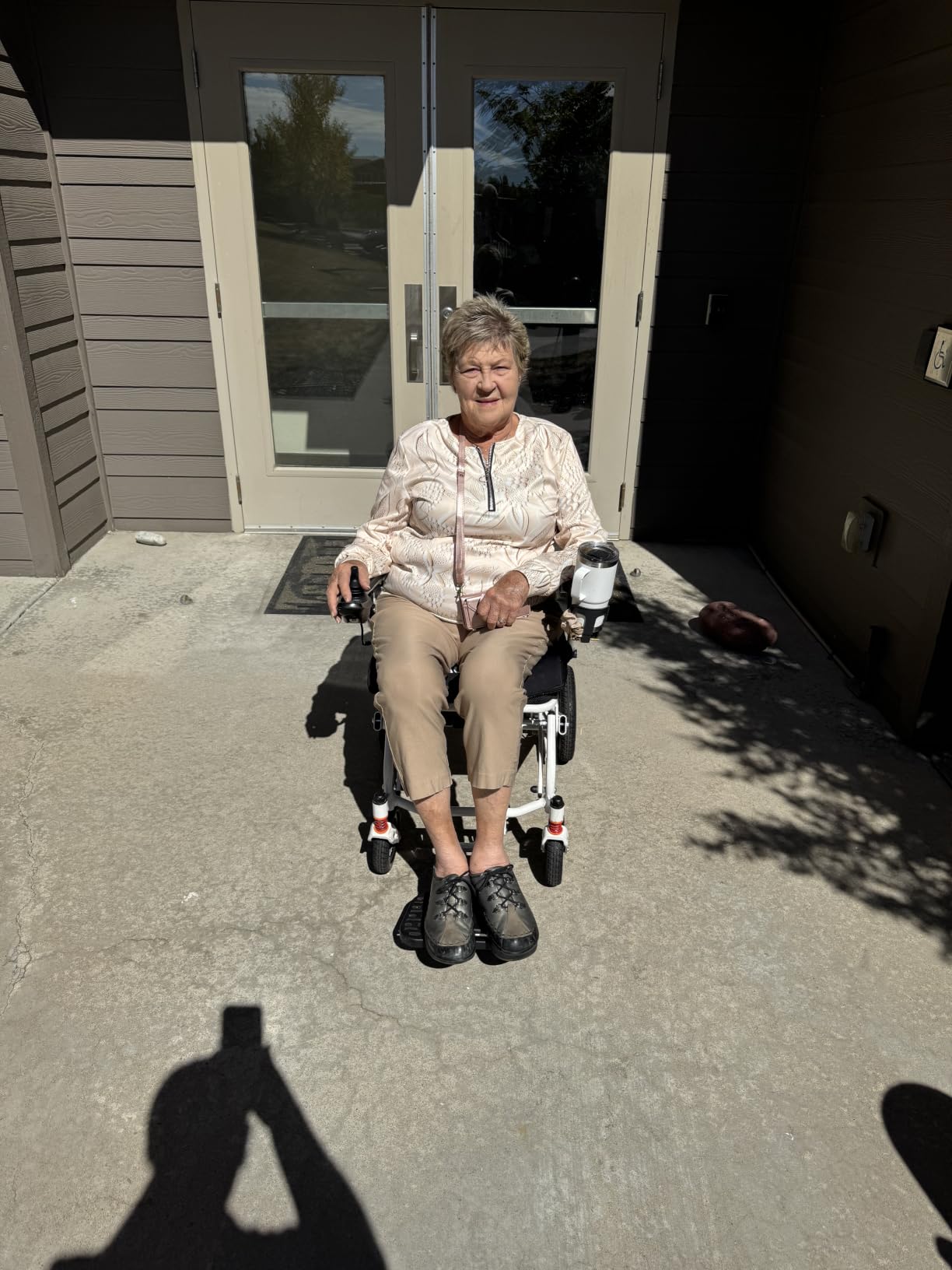
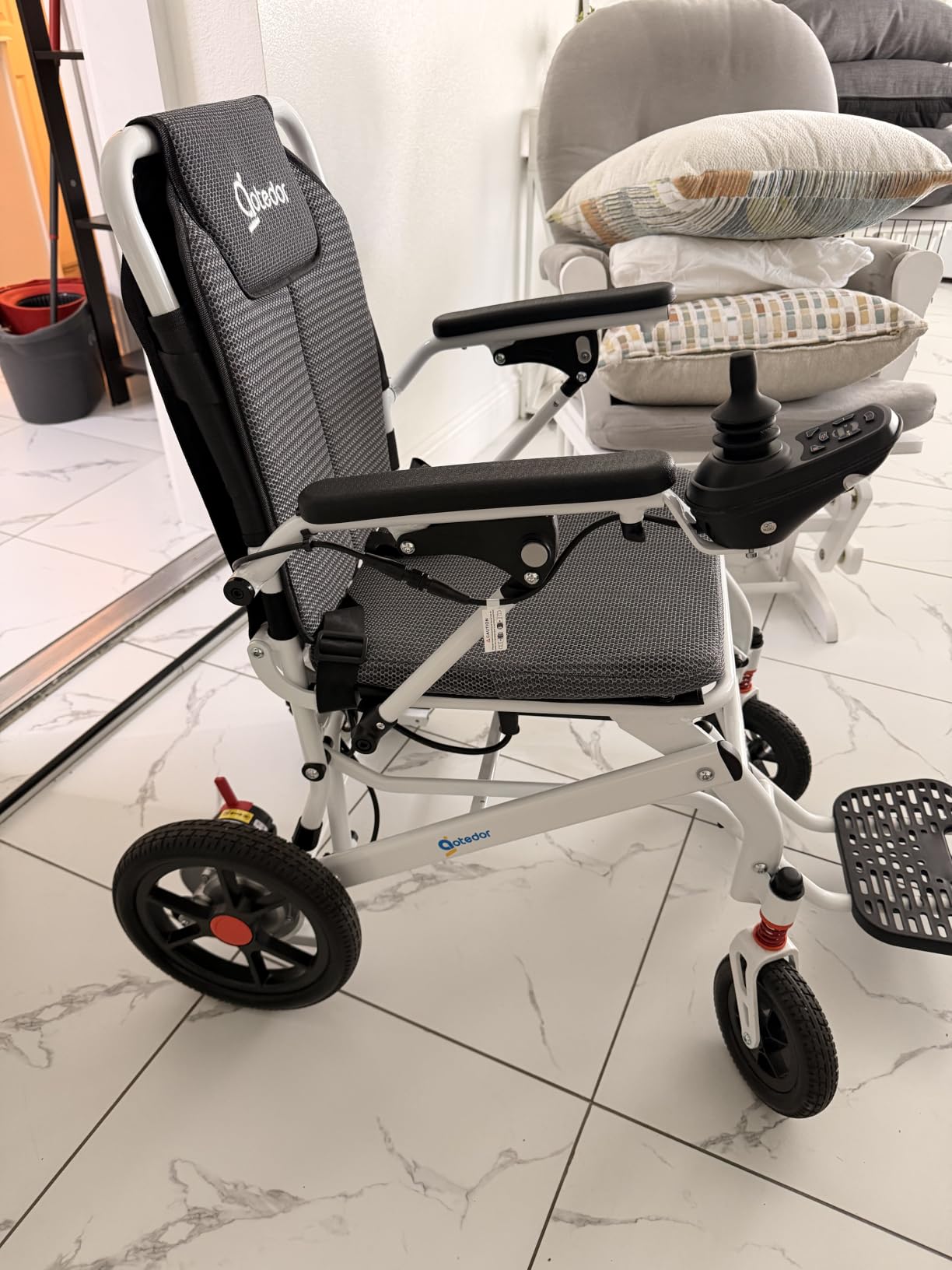
Underneath, the specification is genuinely good rather than merely light. Dual 400W brushless motors, electromagnetic brakes, anti-tip rear wheels, a 360 degree joystick with multiple speed settings, and two removable 10Ah lithium batteries giving a stated 11 miles each. For a chair in this weight class, that motor output is on the higher side, and owners confirm it copes with inclines better than most folding chairs their size.
The two problems come up repeatedly. There is no latch to keep the frame folded, so a folded chair in a trunk needs a strap or a hand on it. And the joystick is described as very sensitive, easy to strike accidentally while powered. Both are learning-curve issues rather than defects, and both are worth testing in a showroom if you can.
Who this chair suits
This is the chair for someone who travels, uses a wheelchair-accessible ride or vehicle lift, and wants the smallest reasonable package. For a senior who still walks short distances but cannot manage a full outing on foot, the 220 lb capacity and the fold-flat design make it the easiest chair in this group to move between a home, a car, and an airport gate.
It is also a reasonable first power chair. First-time owners on mobility forums frequently ask what to buy when they do not know how their life will change, and a chair this light is the least punishing mistake to make.
Where it falls short
The honest limitation is weight capacity and seat comfort over long days. At 220 lbs and a single 10Ah battery per side, this is not a chair for a bariatric user or for someone who expects a full working day outdoors on rough ground. Owners also report that real range frequently comes in under the advertised figure, which is normal but worth planning around.
If your day involves gravel, steep neighborhood hills, or eight hours in the seat, read the next two reviews before you settle.
2. Porto Mobility Ranger Discovery – Best All-Terrain Chair for Larger Riders
Porto Mobility Ranger Discovery Lightweight Foldable Weatherproof Exclusive Electric Wheelchair, Portable, Brushless Powerful Motors, Dual Battery, All Terrain (Silver, Standard)
Weight: 50 lbs
Capacity: 440 lbs
Range: up to 20 miles
Motors: 250W brushless dual
Pros
- Highest weight capacity in this roundup at 440 lbs
- Weather resistant finish with water resistant travel cover
- Handles gravel
- grass and slopes well
- Folds in about three seconds to 13 inches high
- 3 year frame warranty
- Live phone support
Cons
- Real lifting weight is closer to 58 lbs than the listed 50
- Replacement batteries are expensive and hard to source
- Arm padding tends to peel over time
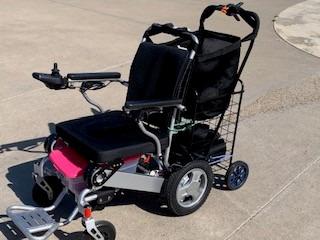
This is the chair to look at if hills are part of your daily route. Owners describe it working on gravel, grass, and slopes without the motor bogging down, and the 250W brushless dual motors with posi-traction are the reason. For users who cannot avoid an unpaved driveway or a sloped street, that performance is worth more than a smaller folded package.
The 440 lb capacity is the highest in the group by a wide margin, and the aircraft-grade aluminum frame is the one owners consistently describe as solid rather than adequate. The 3 year frame warranty also stands above the usual one-year commitment on chairs at this level.
Range is the other draw. Two slide-in removable lithium batteries give a stated 20 miles, and because each battery is removable, carrying one on a flight or swapping at a destination is straightforward. The 32 inch turning radius and a 360 degree joystick with an optional caregiver bracket make it usable in tighter spaces than the weight suggests.
The catch is the weight discrepancy, and owners are honest about it: several say it is closer to 58 lbs in practice, which is difficult for one person to lift. If your household has more than one caregiver, that matters less. If a single family member handles all lifting, it matters enormously.
Who this chair suits
Riders above 300 lb, households with unpaved paths or long inclines, and anyone who plans to keep a chair for years rather than months. It is a permanent outdoor chair first and a travel chair second. The side entry with lifting armrests also makes transfers easier for a user with limited trunk strength.
For pure outdoor use, our own guide to electric wheelchairs for outdoor terrain goes deeper on tire size, suspension, and grade ratings.
Where it falls short
It is not a light chair and it is not a cheap chair to maintain. Owners flag expensive replacement batteries that are not readily available, arm padding that peels with use, and a joystick so sensitive that some riders needed it reprogrammed. If your main need is airline travel rather than terrain, this is more chair than you need.
3. Hassky Foldable Power Wheelchair – Best for Riders Over 300 lb Who Still Want a Fold
Hassky Electric Wheelchairs for Adults, Foldable Power Wheelchairs
Weight: 58 lbs
Capacity: 350 lbs
Range: 15+ miles per charge
Motor: 500W, 12 degree inclines
Pros
- Folds to 29.1 x 13 x 26.7 inches for trunk storage
- 350 lb capacity on a folding frame
- 500W motor with 15+ mile range
- Shock absorbing springs and anti-tip wheels
- Technical support offered within 24 hours
- Seven color options
Cons
- Heaviest folding option here at 58 lbs
- No written owner review text was returned to this listing
- Seat width is not listed in the specifications
The Hassky solves a problem most chairs at this capacity ignore. It folds, and it holds 350 lbs while doing so. The 500W motor and a stated 12 degree incline capability put it in the same performance class as chairs that do not fold at all, which is why it suits a neighborhood with slopes and a car trunk in the driveway.
It also carries a 4.4 average across 333 reviews with a 76 percent five-star share, and it holds the number one sales position in the category, so the volume of real use is substantial even if the listing text is thin.
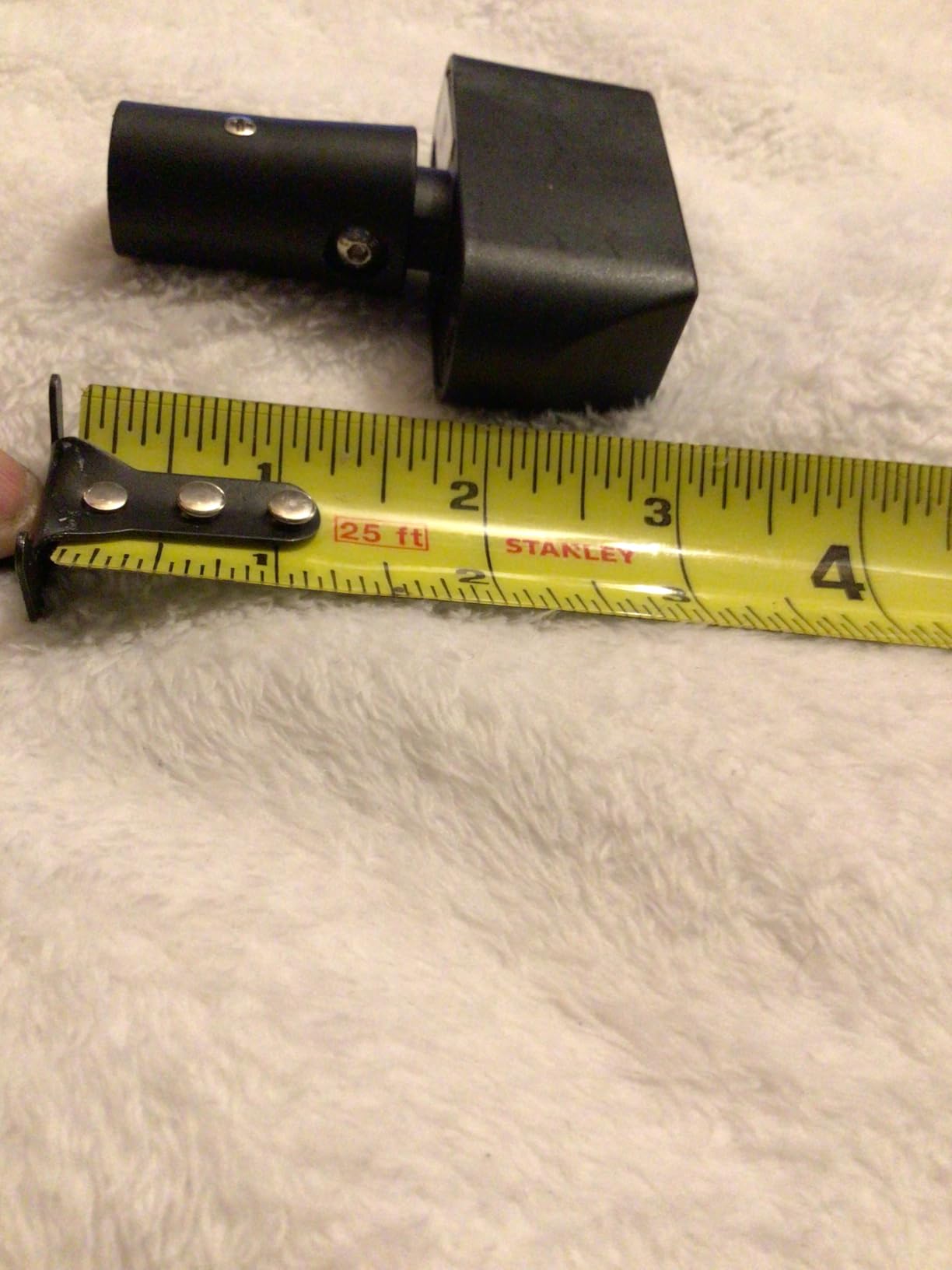
One thing to know before you buy: the enrichment pass for this listing returned specifications and images but no written customer review text. The owner commentary available to us comes from the product description and the rating distribution, not from written reviews. That makes this the pick with the least qualitative evidence behind it, and it is worth asking a dealer for a hands-on demonstration.
Mechanically the description is straightforward: shock-absorbing springs, anti-tip wheels, emergency braking, and a 360 degree joystick that owners say responds immediately.

Who this chair suits
A user between roughly 250 and 340 lbs who needs real motor power, needs the chair to climb slopes, and still wants to load it into a vehicle. For a caregiver household where two people share lifting, the 58 lb weight is manageable and the folded footprint of 29.1 x 13 x 26.7 inches is genuinely compact.
It is also a good bridge chair for a user recovering from surgery who needs power now but wants to return to a lighter chair later.
Where it falls short
At 58 lbs it is the heaviest folding chair here, so a single caregiver lifting alone is a bad idea. The seat width is not published, which matters for anyone sitting all day, and with no written owner reviews to draw on, expect a rougher first month than with the chairs above.
4. Vive Mobility Airframe – Highest Rated Chair in the Group
Vive Lightweight Electric Wheelchair for Adults – Foldable Power Wheel
Frame: 39.5 lbs, 44 lbs with battery
Capacity: 225 lbs
Range: up to 9 miles, 6-8 hour recharge
Pros
- Highest average rating in this roundup at 4.6
- 39.5 lb frame folds in seconds with no disassembly
- Narrow profile that clears hallways and doorways
- Adjustable joystick sensitivity and speed
- Sized for users 5 ft to 6 ft 2 in
- Arrives nearly ready to ride
Cons
- Top speed is modest at roughly 3.75 mph
- Joystick occasionally glitches and turns when going straight
- Heavier in practice than the lightweight label implies
The Vive Airframe holds the highest average rating of any chair in this roundup at 4.6, with 77 percent five-star reviews across 326 ratings. That consistency is the reason it earns a place near the top even though its range figure is the shortest here at up to 9 miles.
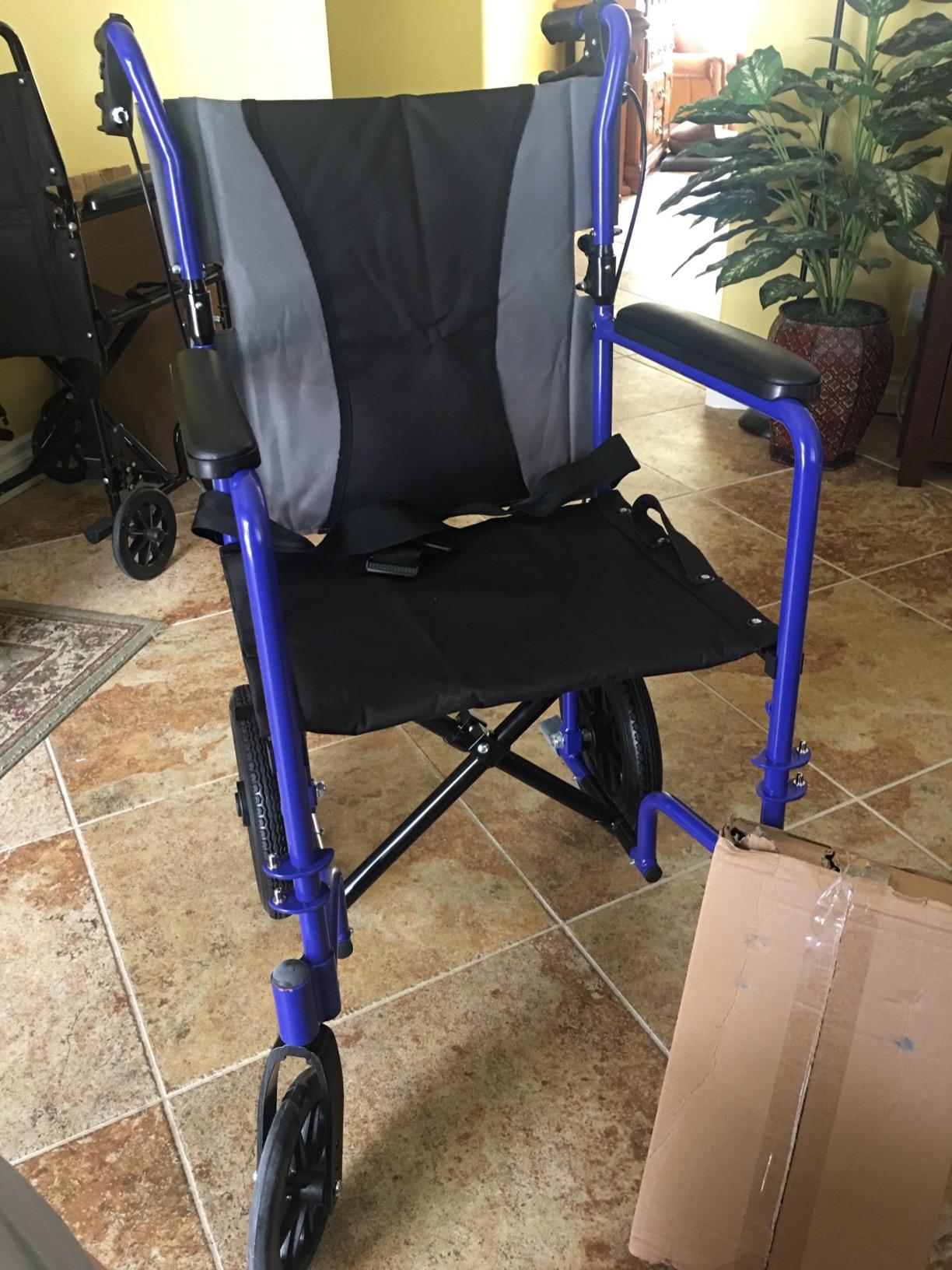
What owners praise is unglamorous and useful. It folds in seconds with no disassembly, arrives nearly assembled with only the footrests to fit, and has a narrow profile that clears hallways and doorways in older apartments. People buying their first power chair mention setup almost as often as comfort, and this one arrives ready.
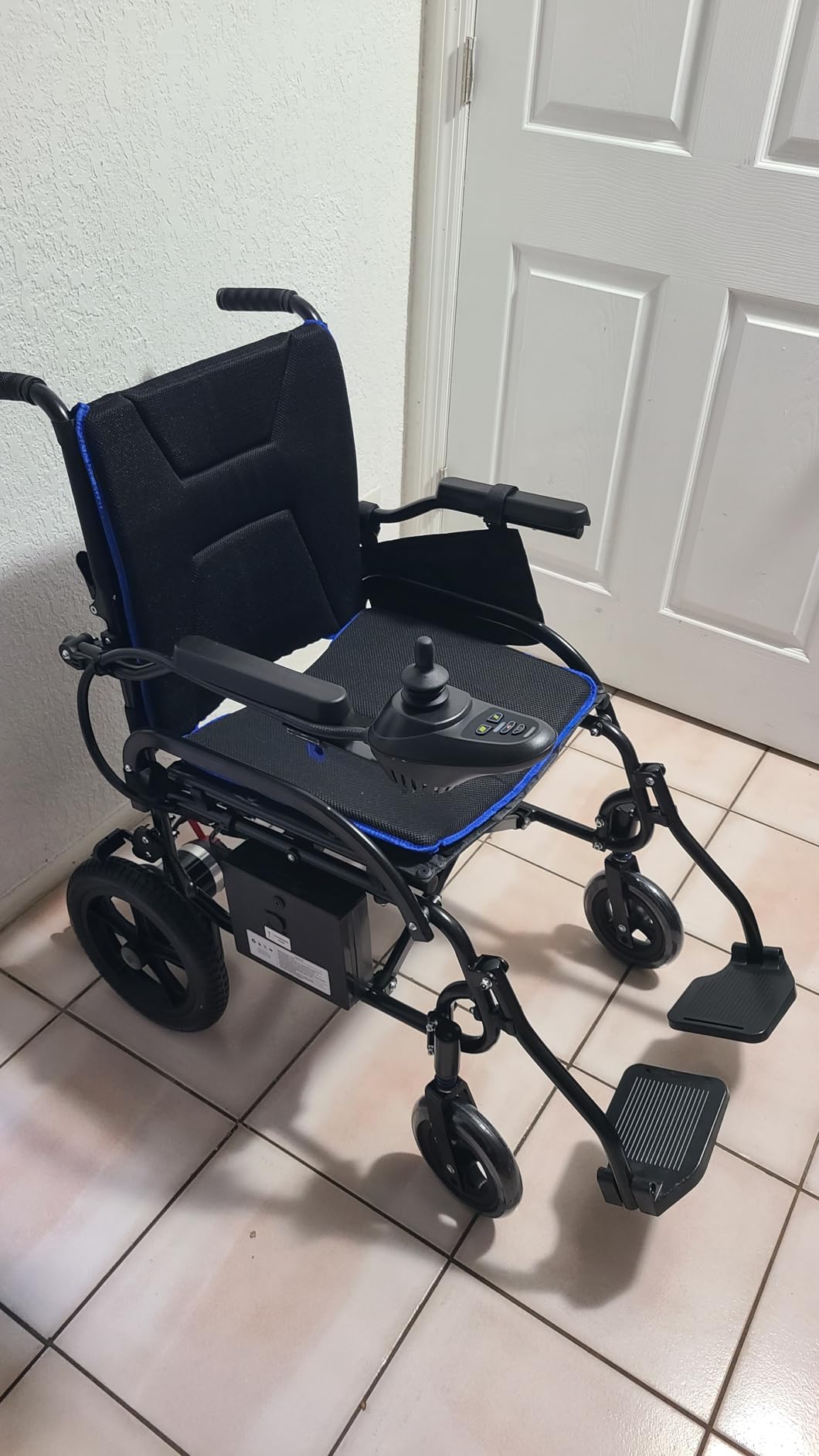
The frame weighs 39.5 lbs, or 44 lbs with the 12AH battery installed, and it is sized for users from 5 ft to 6 ft 2 in up to 225 lbs. The precision joystick has adjustable sensitivity and speed settings, which matters for anyone with a tremor or reduced grip control, and the padded seat and supportive backrest handle a working day better than the thin cushions common in this category.
The single recurring complaint is joystick precision. Some riders report it turning unexpectedly while going straight, and the 3.75 mph top speed is slow compared to the Havenland at 5 mph. Neither is a dealbreaker indoors; both are worth knowing if you plan to use sidewalks.
Who this chair suits
Someone in a small home with narrow hallways, a first-time power chair buyer, or a user who wants the highest-confidence purchase in this group. It is also the pick for anyone whose main worry is reliability rather than range, because 4.6 across 326 ratings is a narrower spread of disappointment than any other chair here.
Pair it with our transport wheelchair comparison if you are still deciding between a chair you push and a chair you drive.
Where it falls short
The 9 mile range and 6-8 hour recharge make it an indoor-and-neighborhood chair, not an all-day outdoor chair. The joystick glitch, while not universal, is the one defect that appears across otherwise excellent reviews, and anyone with limited hand control should ask about sensitivity adjustment before buying.
5. DAHAIY Lightweight Foldable Chair – Most Versatile for Paved Surfaces
DAHAIY Premium Lightweight Foldable Electric Wheelchairs for Adults,Seniors
Range: up to 15 miles per charge
Fold: collapsible trunk-friendly frame
Controls: 360 degree joystick panel
Pros
- Folds small enough to tuck under a desk for storage
- Up to 15 miles per charge
- Anti-tip wheels plus electromagnetic and hand brakes
- Soft supportive seat for all-day comfort
- Helpful after-sales support team
Cons
- Struggles on rough ground and hills
- Heavier than expected for a chair sold as lightweight
- Control panel cannot be repositioned to the other side
- Some buyers report broken parts on arrival
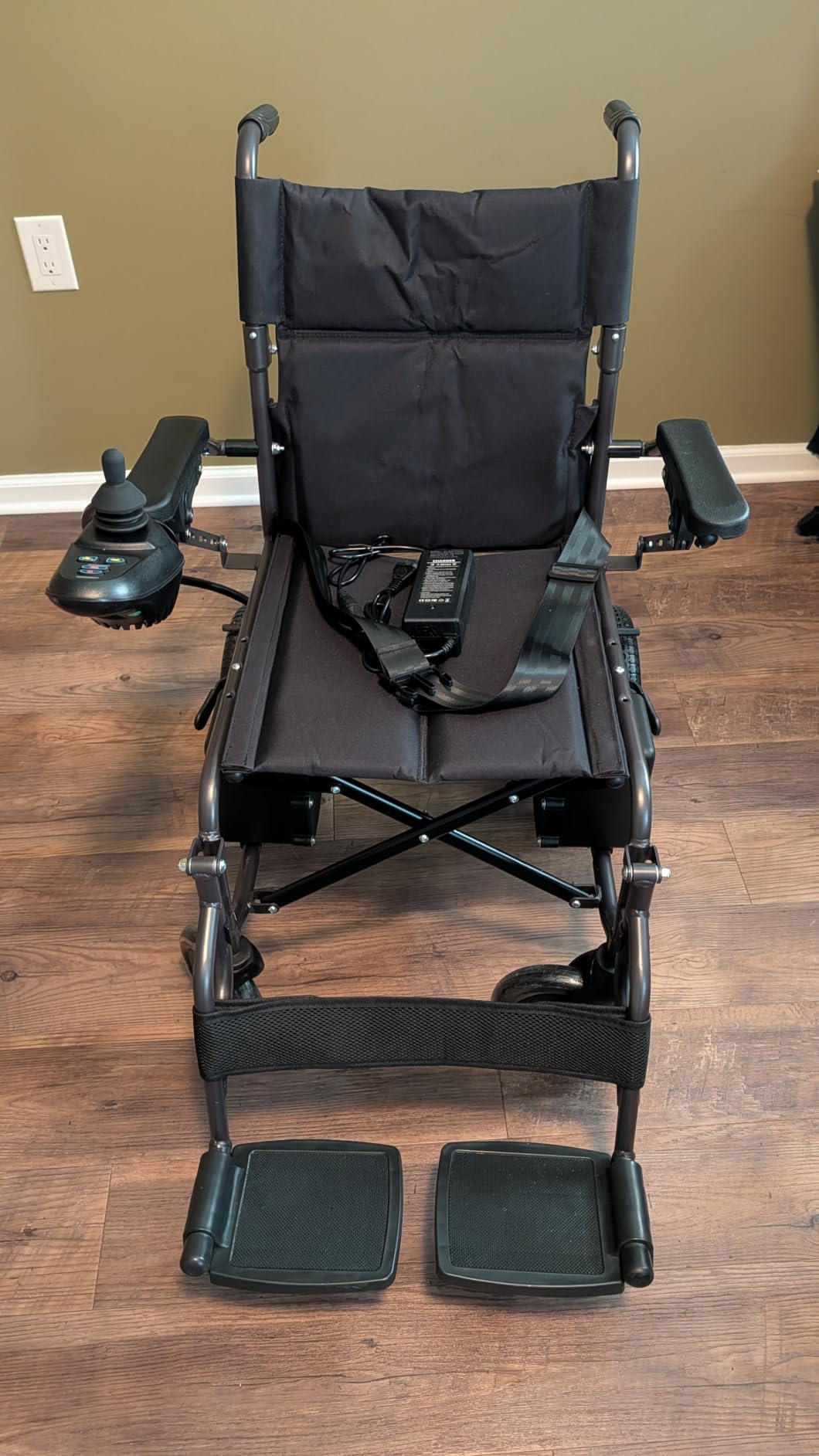
The DAHAIY is the most common answer to the question power chair owners on Reddit keep asking each other: which light folding chair actually works? It folds down small enough to tuck against a desk, it charges to a stated 15 miles, and the owner reports describe a smooth ride with responsive controls after a learning curve.
For smooth indoor surfaces, sidewalks, and shopping centers, that is a genuinely capable chair. Owners rate the build as sturdy for the money and report that the battery holds its charge well over paved daily use.
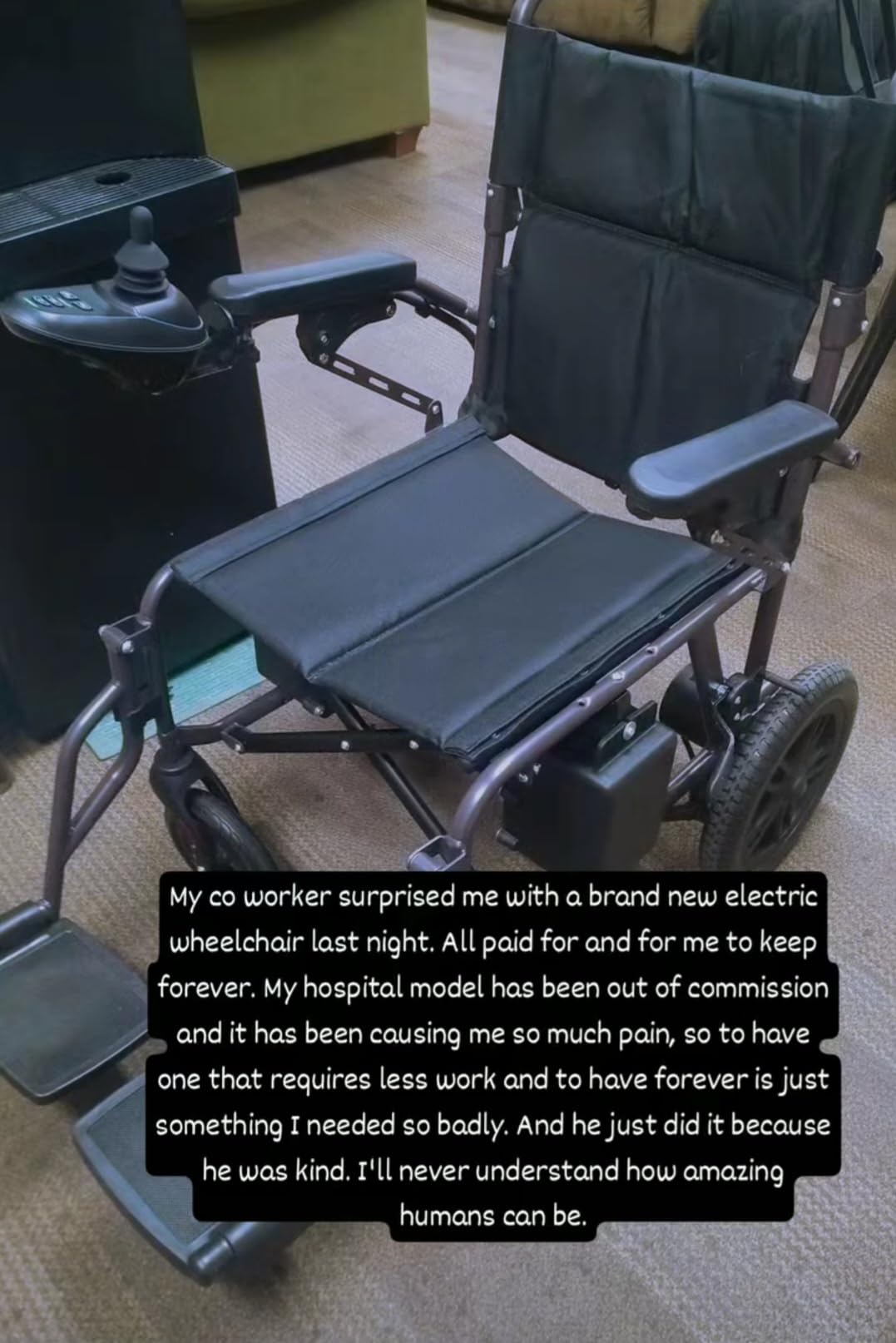
The honest limit is terrain. Owners are consistent about this: it struggles on rough or rocky ground, it works hard on hills, and the ride gets bumpy. The joystick is also described as very touchy, needing slow deliberate practice. And despite the lightweight framing, the listed package weight is 66 lbs, which is why several buyers describe it as heavier than they expected.
There is also a fixed-side control panel issue. If the user has only one good hand, confirm the controller can be mounted on the correct side before ordering, because the panel cannot be moved after the fact on this chair.
Who this chair suits
A user on a fixed budget who mostly moves on pavement, indoors, and around a flat neighborhood, and who needs a chair that disappears into a closet or a car trunk between outings. It is also a reasonable rental or second-chair option for a relative who needs something occasionally rather than daily.
For people who want to keep moving rather than sitting, our pick of the best recumbent bikes for seniors covers a lower-effort way to stay active while a power chair handles distances.
Where it falls short
Do not buy it for hills, gravel, or a long outdoor day. The control side cannot be changed, the listed weight is high for the category, and a small number of buyers report parts arriving broken with slow support response. Test the joystick on a rough surface before committing.
6. Serianie Foldable Electric Wheelchair – Quietest Ride on Pavement
Serianie 2026 New Upgrade Foldable Electric Wheelchairs for Adults,Seniors
Motor: 500W
Battery: 12Ah, up to 15 miles
Capacity: 300 lbs, 3.73 mph top speed
Pros
- Silky smooth and near silent on pavement
- Build quality and wiring better than typical budget chairs
- Frame does not flex for a 260 lb user
- Simple controls that seniors pick up quickly
- Armrests lift for easier transfers
Cons
- Limited torque on grass and rough ground
- Battery is not removable which complicates air travel
- Heavy for its size and generally needs two people to load
- Assembly and charging instructions are poor
The Serianie is the quiet one. Owners describe the ride as silky smooth and near silent on pavement, and several of them single out the build quality and wiring as noticeably better than what they expected at this level. A frame that does not flex for a 260 lb user is a meaningful statement from real owners, not a spec sheet.
It is also the simplest chair here to hand to a first-time user. Multiple owners mention that seniors pick up the controls quickly, and the lift-up armrests make side transfers easier for someone with limited upper body strength.
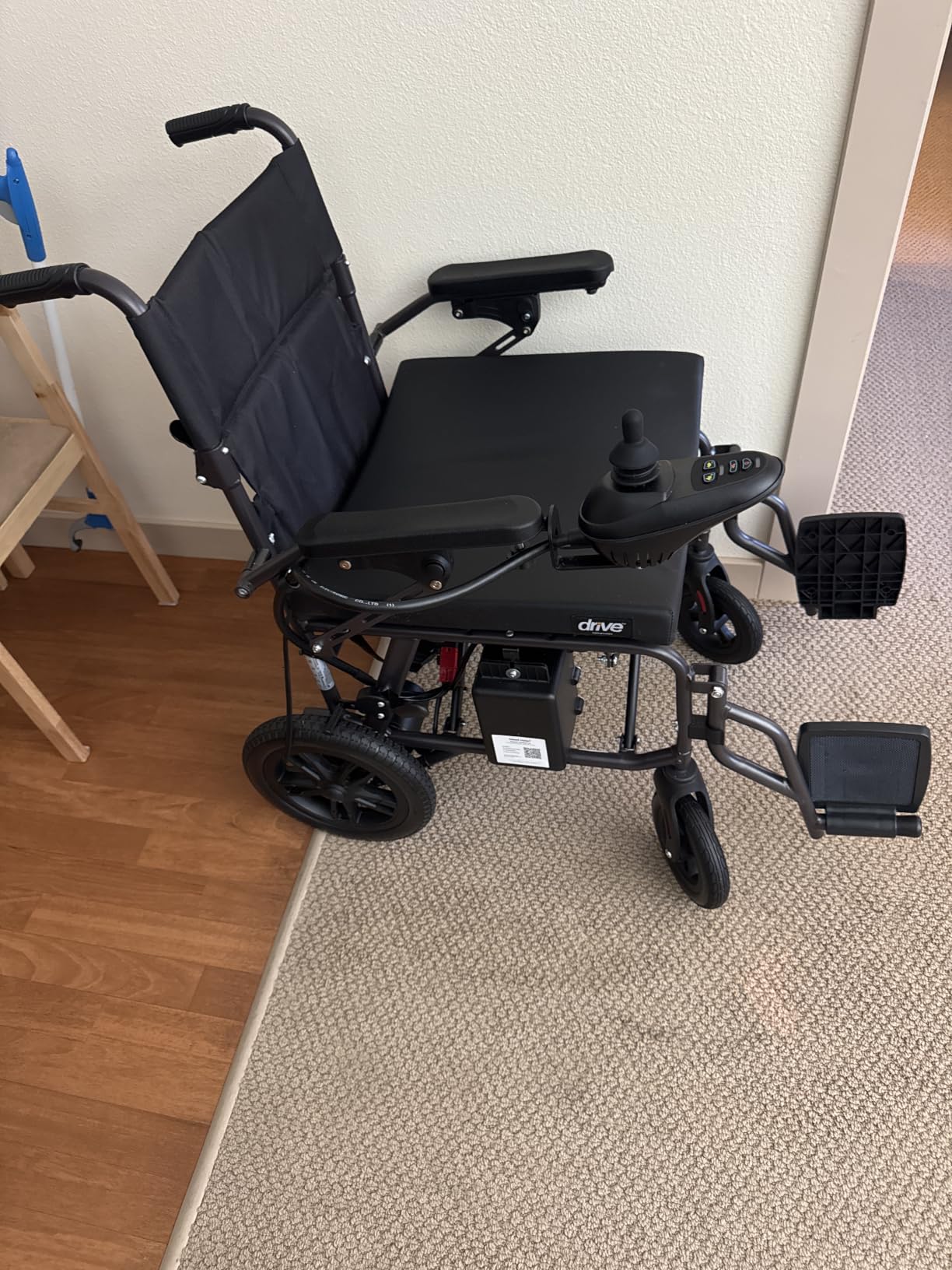
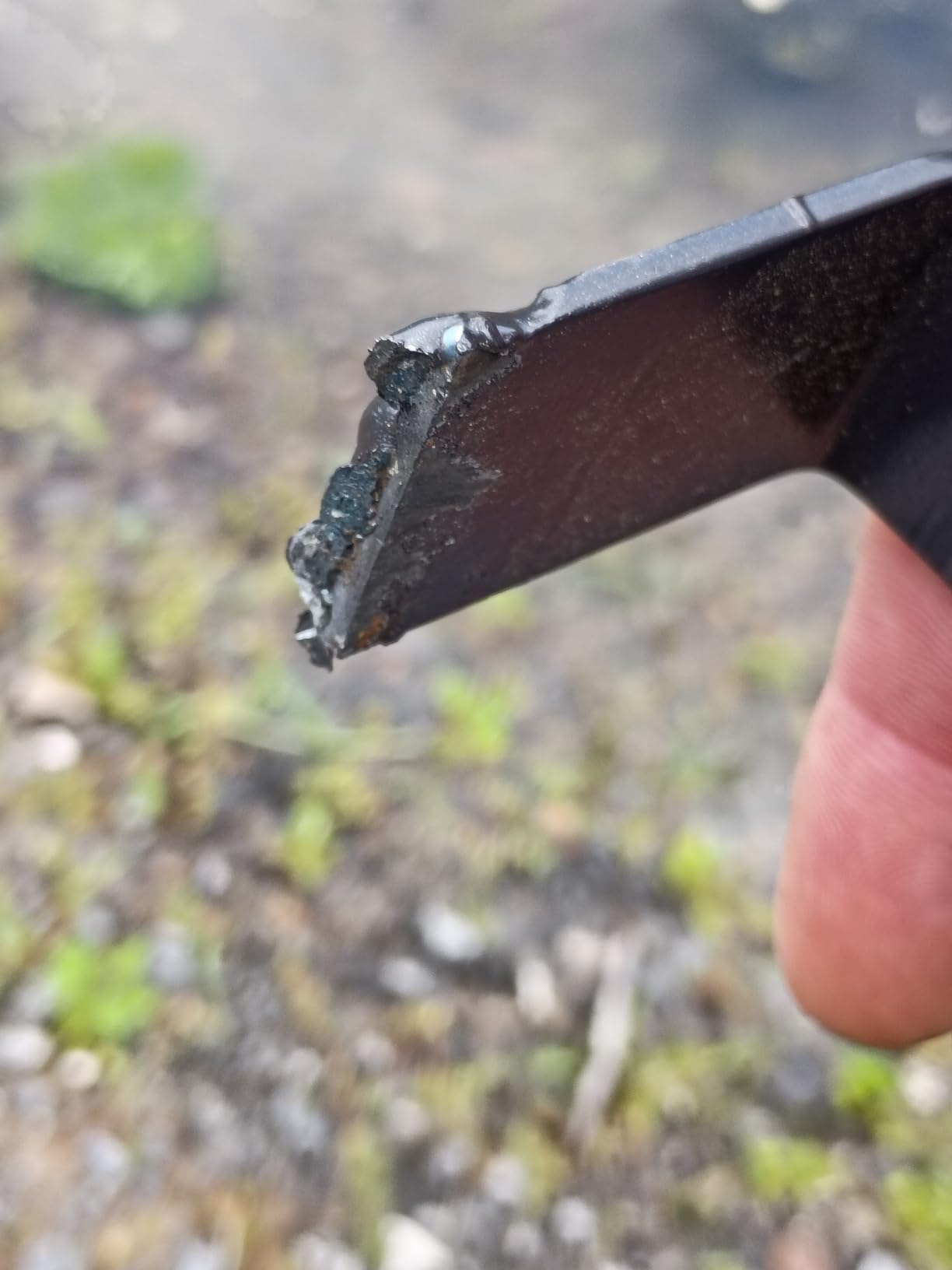
Two things undercut that. The 500W motor delivers limited torque on grass and rough ground, and the ride there is jarring. The battery is also not removable, which is the single biggest obstacle to flying with this chair, and the instructions for assembly and charging are described as poor with unclear wiring connections.
Owners also note the wheels are smaller than the listing states, and the chair is heavy for its size, generally needing two people to load it. Those are specification accuracy problems worth raising with the seller before you buy.
Who this chair suits
Someone who spends their day on smooth indoor surfaces, sidewalks, and paved paths, and who values a quiet ride and solid frame over off-road ability. It suits a household with two people who can handle loading, and a user who wants straightforward controls with no menus to learn.
Because the ride is smooth and near silent, it also works well in apartments and shared indoor spaces where a louder chair would be disruptive.
Where it falls short
It is not a travel chair, because a non-removable battery rules out standard airline handling, and not a terrain chair, because the torque drops off quickly off pavement. At 4.2 with 156 reviews it has the thinnest evidence base of the well-reviewed chairs here, so treat the specification claims with some caution.
7. Zurcheel SLF30 – Best for Cruise and Air Travel Planning
Zurcheel SLF30 Electric Wheelchair, Foldable Durable Motorized Wheelchairs for Adults with 19 Inch Seat and Supports Up to 300 lbs Airline Approved(36 Lbs, Grey)
Seat: 19 inch wide
Capacity: 300 lbs
Range: up to 12 miles on two 5.2Ah batteries
Pros
- Widened 19 inch seat is roomier than most chairs in its class
- Two removable 5.2Ah lithium batteries
- Airline certified battery for cruising and flying
- 300 lb capacity on a full-size frame
- Puncture resistant PU tires with shock absorption
- Support teams across the US
- Europe and Japan
Cons
- Lowest average rating in this roundup at 4.1
- Heaviest share of one-star reviews at 13 percent
- No written owner review text was returned to this listing
Two things make the SLF30 different from the other folding chairs. The first is seat width: a 19 inch seat is roomy for its class, which matters directly for anyone sitting in a chair all day or sliding sideways into a car. The second is the battery, which is airline certified and removable, so cruise and air travel are realistic rather than theoretical.
The full-size frame supports up to 300 lbs on dual 200W brushed motors with an integrated control system, and the electronic braking, safety belt, and puncture-resistant PU tires form a sensible safety package for outdoor surfaces.
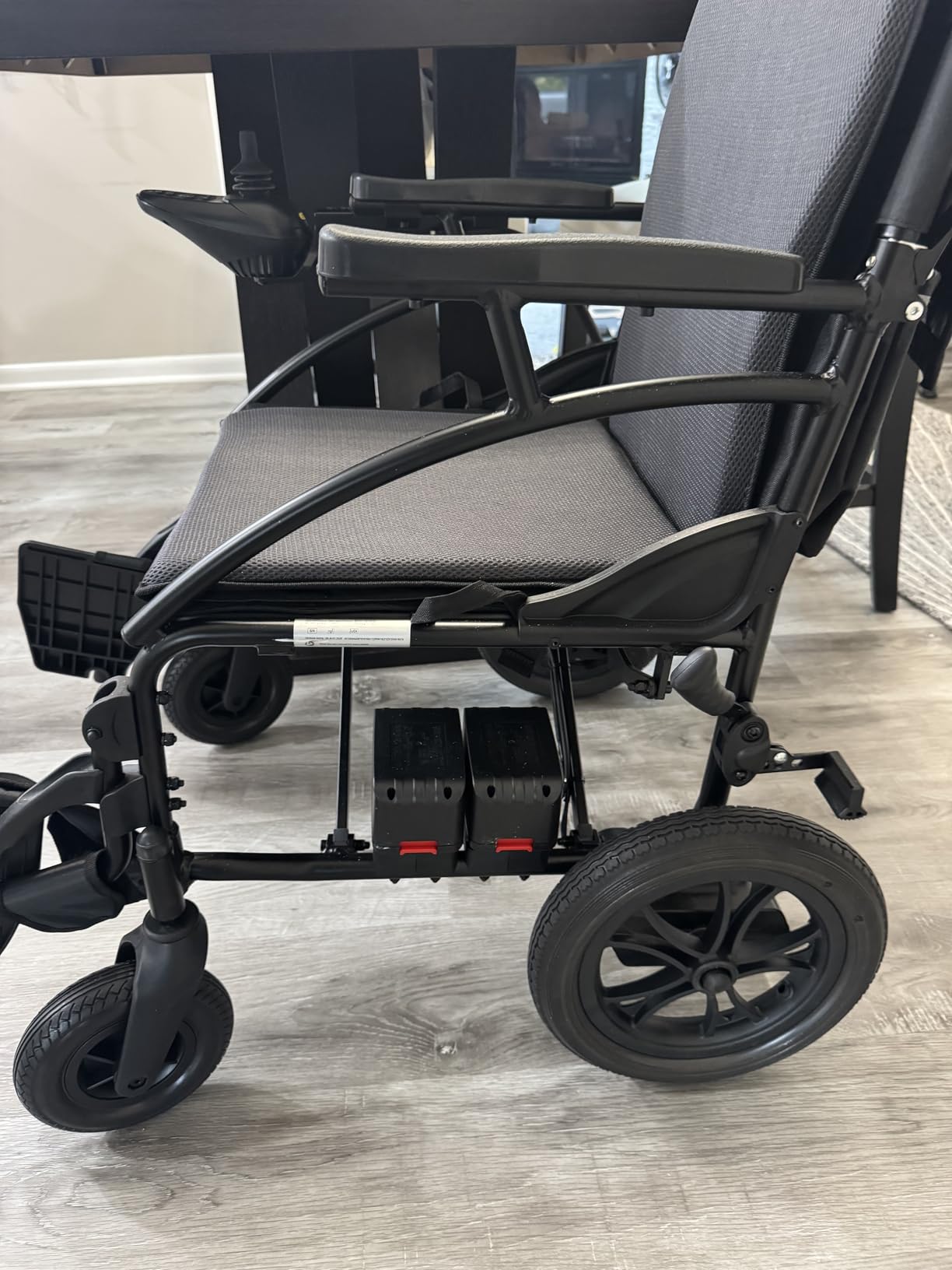
We are including this chair with a clear caveat. It carries the lowest average rating in the roundup at 4.1, with a 13 percent one-star share, the highest of the ten. And like the Hassky, the listing returned specifications and images but no written customer review text for us to analyse, so the qualitative case is thin.
What does come with it is a stated one-year commitment with 7-day phone and online support, and support coverage across the US, Europe and Japan. Service reach matters more to power chair owners than almost any other spec.
Who this chair suits
A user who wants a wide seat, a removable airline certified battery, and a chair that can be loaded into a vehicle by one person without a fight. The wide 19 inch seat is the reason to choose it over a narrower 17 inch chair if you sit all day or transfer from the side.
It is also a reasonable fit for international travel, where the stated support coverage is a genuine practical advantage.
Where it falls short
The rating is the warning. At 4.1 with 13 percent one-star reviews, this chair has more disappointed owners proportionally than anything else here, and we could not read written reviews to find out why. Brushed rather than brushless motors also mean more maintenance over a long ownership cycle.
8. Zurcheel 33 lb Aluminum Chair – Lightest Frame with Real Motor Power
Zurcheel Lightweight Electric Wheelchair for Adults,33LBS Foldable Black
Frame: 33 lb aluminum alloy
Capacity: 350 lbs
Motors: dual 250W, 500W combined, 12 degrees
Pros
- Lightest frame here at 33 lbs and easy for one person to load
- Dual 250W motors rated to 12 degree inclines
- Two quick release 5.2Ah batteries totaling 10.4Ah for 15 miles
- Solid honeycomb tires need no inflation
- Flip up armrests for side transfers
- Battery holds a charge for days of indoor use
Cons
- Some felt the chair was trying to fold or tip over bumps and hills
- Instructions are unclear and charge timing is not obvious
- No regenerative braking
- Difficult to fold and lock in position for transport
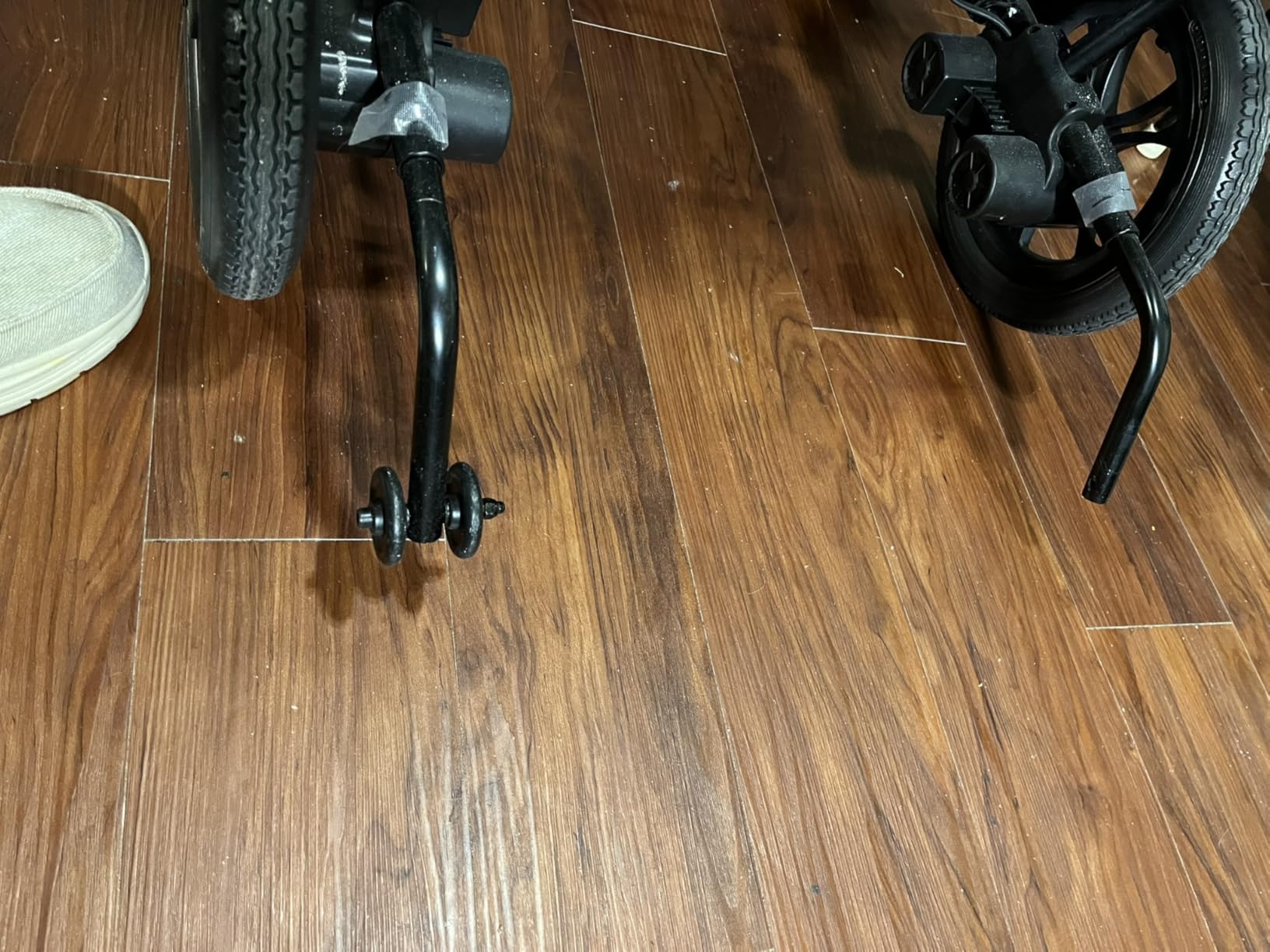
At 33 lbs, this is the lightest frame in the lineup, and the specification behind it is more capable than that number suggests. Dual 250W brushed motors give 500W combined and a stated 12 degree incline capability, which puts its hill performance well above what 33 lb normally means. Capacity is 350 lbs.
Owners consistently highlight the weight as the reason they bought it, describing it as easy for one person to load into a car. The solid honeycomb tires never need inflating, which removes a maintenance task most owners forget they would otherwise have.

The safety concerns are the reason this sits eighth rather than higher. Some owners felt the chair was trying to fold or tip going over bumps and hills, and folding and locking it for transport is described as difficult. There is no regenerative braking, the written instructions are not clear, and charge timing is not obvious, which leads to a small number of units failing after several months with unresponsive support.
That 16 percent one-star share is the highest in the group. The 4.0 average is not bad, but the tail is longer than the chairs above it.
Who this chair suits
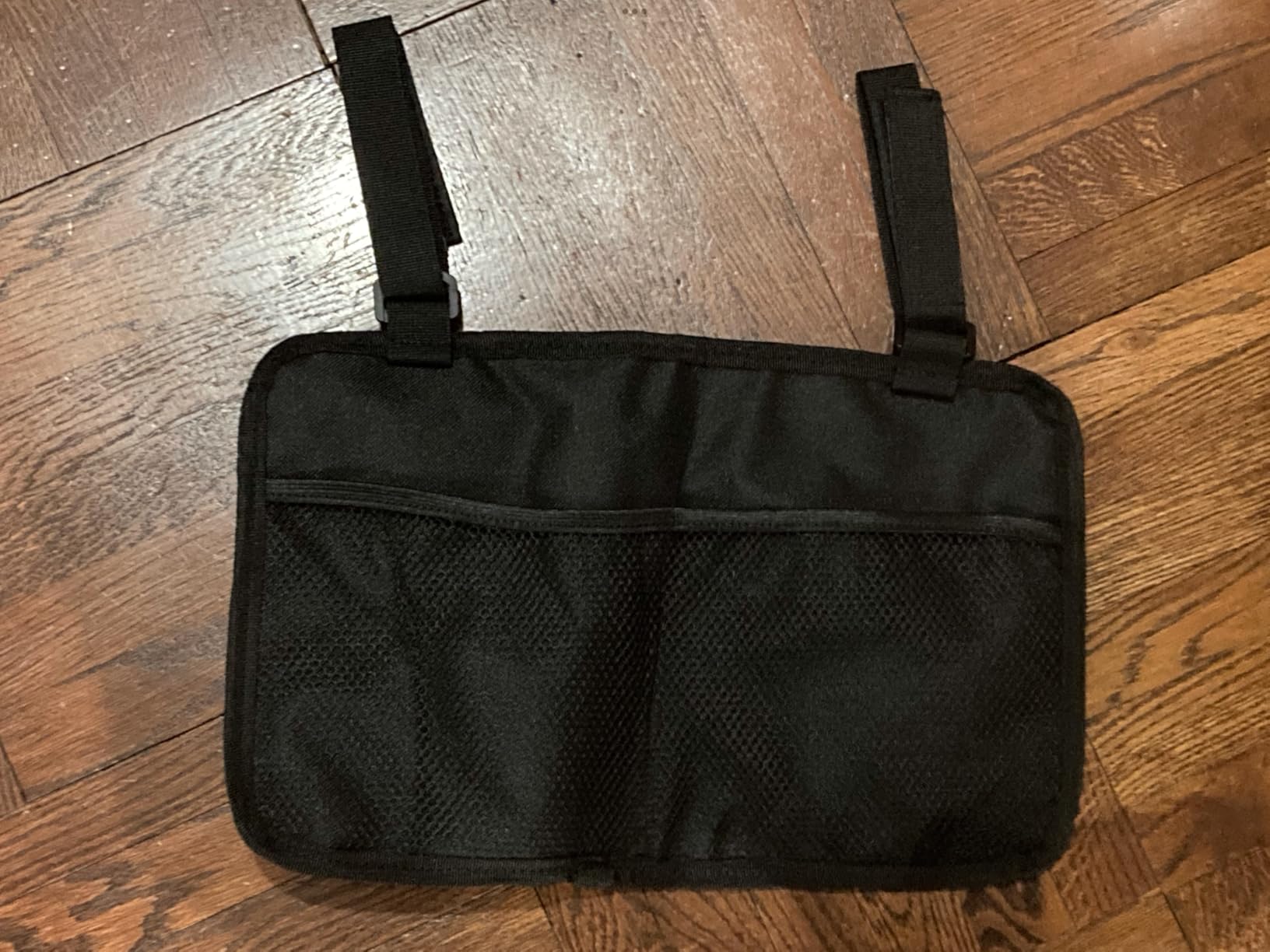
A single caregiver household, a user who needs frequent car transport, and anyone whose day includes hills that a typical light folding chair would refuse. The 17.3 inch double-layer removable cushion and flip-up armrests add to its appeal for all-day indoor use.
It is a good fit for a user who wants genuine incline capability without moving up to a 50 lb or 58 lb chair, and the quick-release batteries make partial charging practical.
Where it falls short
Stability over uneven ground is the real question mark, and owners describe bump and hill behavior directly. Folding and locking for transport is awkward, the instructions are poor, and the one-star share is the largest here. If your route is rough, test it outdoors before you commit.
9. ROPLASO Foldable Electric Wheelchair – Best Wide-Seat Comfort Pick
ROPLASO Foldable Electric Wheelchair for Adults, Lightweight Motorized
Frame: 38 lb, 47 lbs with battery
Seat: 19 inch wide, 330 lb capacity
Range: 12-15 miles on dual 10Ah
Pros
- 38 lb frame without the battery
- 47 lbs ready to ride
- 19 inch widened seat rated to 330 lbs
- One-button fold collapses the frame in about 3 seconds
- Dual brushless motors run silently with low maintenance
- Airline and cruise approved
- US based support
Cons
- No written owner review text was returned to this listing
- Heavier than other chairs in the 38 lb class
- Backrest adjustability is not detailed in the listing
The ROPLASO is unusual in how it splits its weight. The frame is 38 lbs and the complete chair with batteries is 47 lbs, so a caregiver can carry most of the mass and leave the power pack behind. That makes it one of the more workable folding chairs for a household where one person does most of the lifting.
The 19 inch widened seat and 330 lb capacity make it the comfort pick in this roundup. A wider seat spreads load over a larger area, which is the single most practical answer to the pressure sore concern that power chair owners on mobility forums raise most often when they sit for long hours.
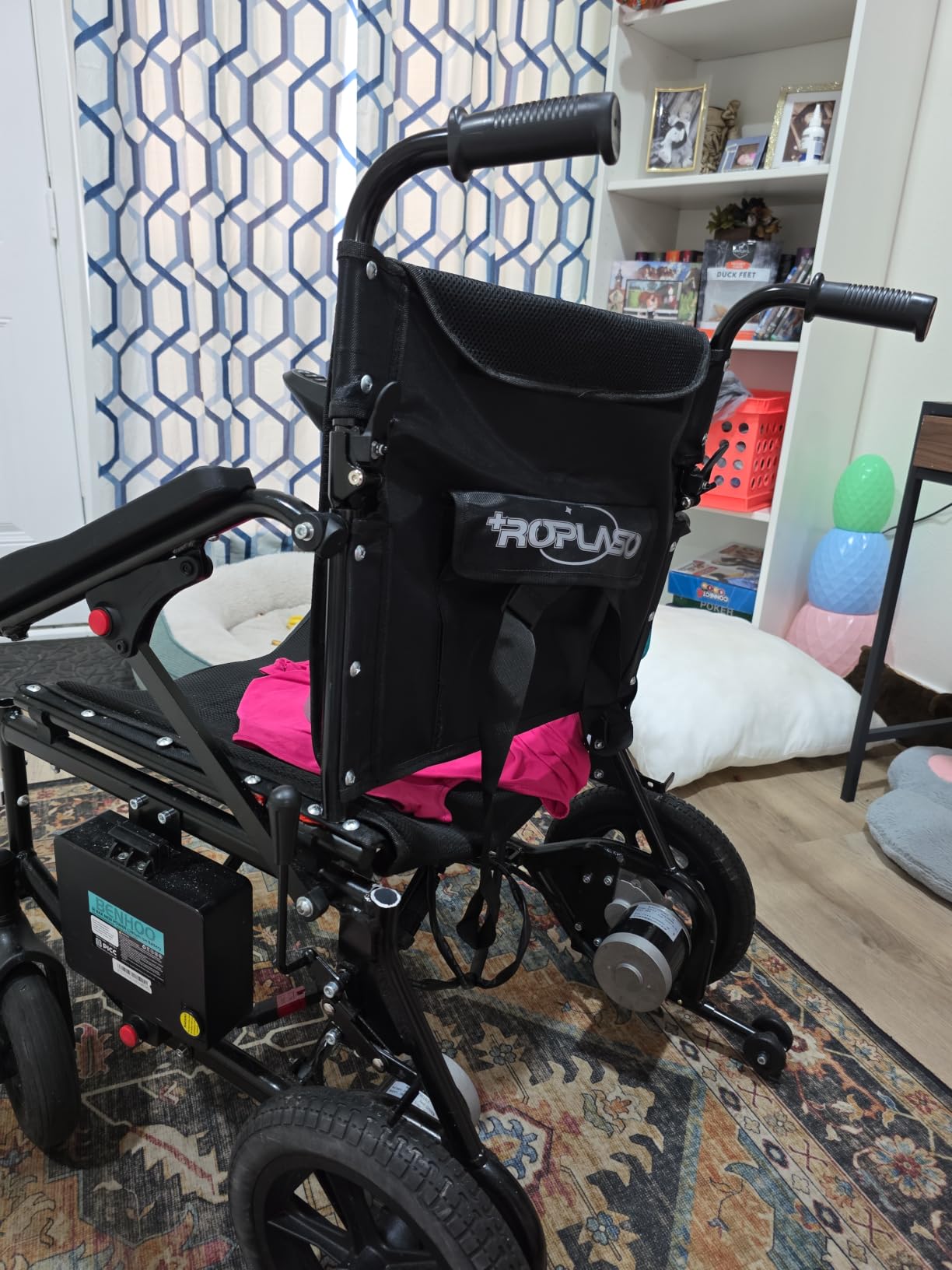
Dual 2x150W brushless motors run quietly and need less maintenance than brushed motors, and the dual 10Ah lithium batteries give a stated 12-15 miles. The chair is listed as airline and cruise approved, and support is US based, which matters to buyers who have been burned by sellers with no local service network.
As with two other chairs here, no written customer review text was returned to this listing, so our view of it rests on the specification sheet. Its 4.0 average across 117 ratings is the second lowest in the group, with a 60 percent five-star share.
Who this chair suits
A user who sits most of the day and needs seat width, a caregiver household that needs to lift a chair regularly, and anyone who prefers brushless motors for lower long-term maintenance. The electronic braking and anti-tilt wheels make it a sensible choice for mixed indoor and outdoor use.
For anyone still weighing a manual chair with added power, or deciding between this and a scooter, keep reading, because the difference matters more than the spec sheet suggests.
Where it falls short
At 47 lbs ready to ride, it is not the lightest option, and backrest adjustability is not detailed, which is a gap for anyone whose seating needs change over time. With no written reviews to check, treat it as a well-specified but unverified option and ask a dealer to demonstrate it.
10. Havenland Heavy-Duty All-Terrain Chair – Fastest Chair in the Lineup
Heavy-Duty All-Terrain Electric Wheelchair for Adults and Seniors
Top speed: 5 mph
Range: 10 miles per charge
Frame: 59.5 lbs without the battery
Pros
- Fastest chair here at a 5 mph top speed
- 8 inch front and 12 inch rear PU tires with dual 250W motors and clutches
- Folds in 3 seconds and fits in most car trunks
- SOS alert button and one touch mute for quiet spaces
- Waterproof nylon upholstery with flip up footrests
- 18 inch seat with safety belt and anti-tippers
Cons
- Listed capacity is 220 lbs
- which is low for an all-terrain chair
- Heaviest chair here at 66 lbs
- Turn radius of 4 feet is wide for indoor spaces
- Smallest review base in the set at 69 ratings
The Havenland is built for speed outside. A 5 mph top speed is the fastest in this roundup, and it is backed by 8 inch front and 12 inch rear PU tires with dual 250W motors and clutches, which is a real off-road-ish setup rather than a marketing label. Owners and the specification both point to inclines and rough surfaces as its strength.
Two features here are rare at this level. The SOS alert button is a dedicated safety control, and the one-touch mute lets you slow or disable the chair in a quiet indoor space, which matters in a library, a clinic waiting room, or a shared hallway.
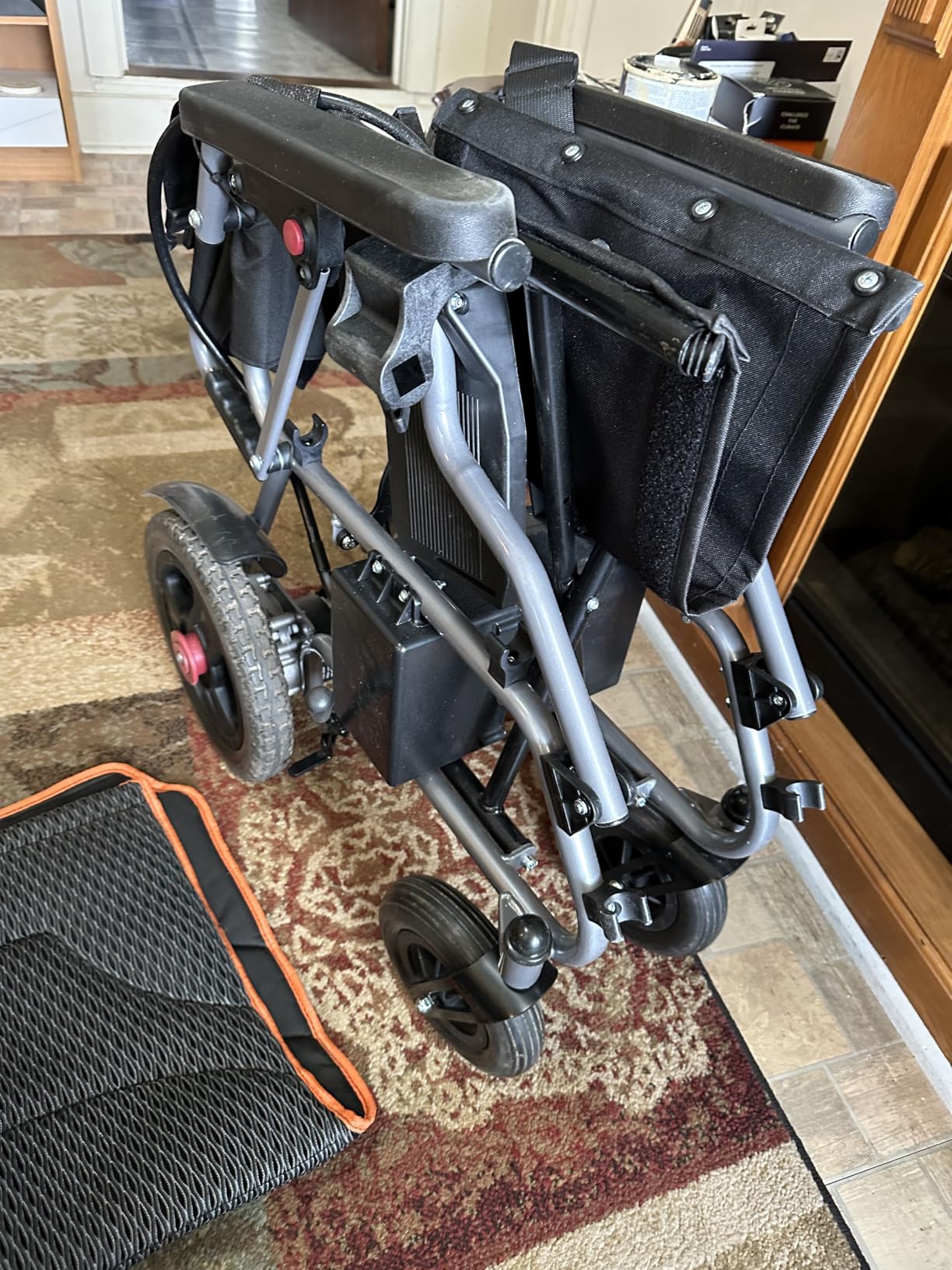
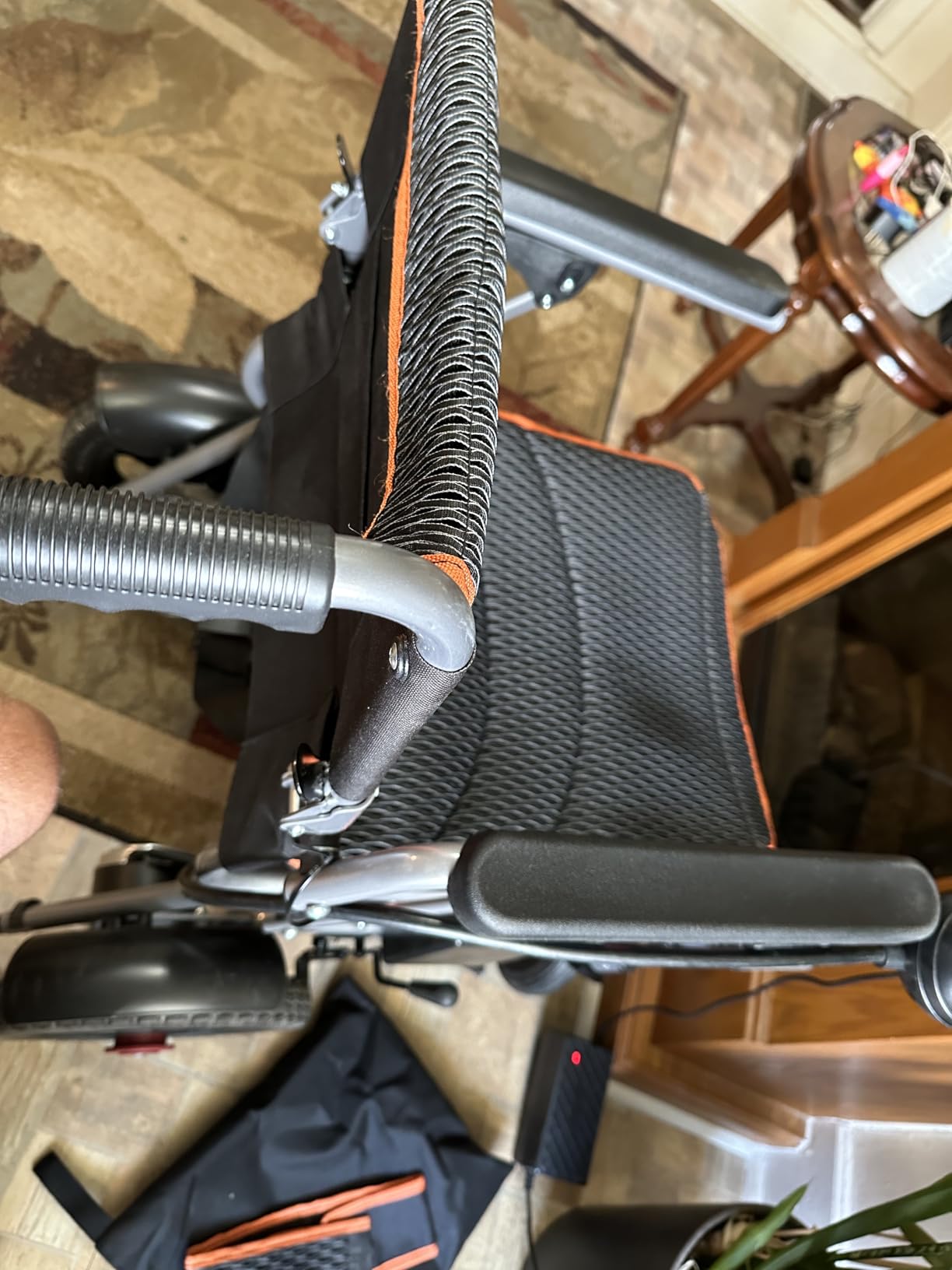
The 18 inch seat, waterproof nylon upholstery, seat belt, and anti-tippers add up to a chair that is genuinely thought about. It folds in 3 seconds and weighs 59.5 lbs without the battery, which is a more useful number than the 66 lbs listed item weight, since removing the battery removes a big share of it.
But there is a real mismatch here. The listed maximum weight recommendation is 220 lbs, which is low for a chair marketed as all-terrain, and the 4 foot turning radius is wide for tight indoor spaces. This is an outdoor chair that tolerates an apartment, not the reverse.
Who this chair suits
A user under 220 lbs who spends most of the day outdoors, on paths, gravel, and longer paved routes, and who wants to move at a real pace rather than a walking one. The SOS button makes it a sensible choice for anyone alone outdoors for long stretches.
It is also worth reading alongside our outdoor terrain wheelchairs guide, which covers how tire size and suspension change what a chair can actually manage.
Where it falls short
The 220 lb capacity rules it out for larger riders, and the 4 foot turning radius will annoy anyone navigating narrow hallways. With only 69 ratings, this is also the thinnest evidence base in the roundup, and no written owner review text was returned for the listing.
How to Choose an Electric Wheelchair for Seniors
Ten chairs, ten sets of tradeoffs. These are the eight questions that actually decide which one is right, in the order most buyers discover they matter.
1. Measure the chair weight, not the frame weight
This is the number one source of disappointment for caregivers. A chair listed at 38 lbs is often 47 lbs with the battery installed, and one listed at 50 lbs has owners reporting 58 lbs in practice. Ask for the ready-to-ride weight, then test whether the person who will actually lift it can lift it. If your household has caregivers of differing strength, a lighter chair is worth more than any feature list.
2. Match capacity to the user, with margin
Capacities in this roundup run from 220 lbs to 440 lbs. The number on the box is a maximum, not a comfort rating, and buyers consistently report that marketing capacity is not real usable capacity. Add at least 50 lbs of margin above actual user weight, and go higher if the user is still growing in weight or has changing body composition.
3. Be honest about terrain
Flat indoor floors, paved sidewalks, gravel, and steep hills are four different categories of demand, and most chairs are built for the first two. Look for a stated incline rating, dual motors with clutches, and larger rear tire diameters. Owners on mobility forums describe hills as the single most common failure point, with light folding chairs bogging down on grades. If slopes are unavoidable, buy for the slope.
4. Treat the range figure as a maximum
Stated range of 9 to 20 miles assumes flat ground, a light rider, and a full charge. Owners report real numbers below the advertised figure on several of these chairs, especially with hills and a heavier user. Plan for roughly two-thirds of the stated range in real use, and treat battery removability as more valuable than a bigger number.
5. Test the joystick before you sign
This is the most consistent complaint across all ten chairs, and it is the control most likely to limit independence. Sensitivity, throw, and physical resistance vary enormously. If the user has a tremor, arthritis, Parkinson’s-related stiffness, or limited hand strength, insist on adjustable sensitivity and test it with the hand that will actually be used.
6. Get the seat right for long days
Seat width, cushion depth, backrest support, and armrest adjustability decide whether someone tolerates the chair for a full day. A 19 inch widened seat is meaningfully different from a 17 inch one for pressure distribution. If recline matters to the user, confirm whether the backrest is fixed-position, manually adjustable, or power reclining before you buy, because owners ask about recline versus tilt more than almost any other feature.
7. Check the safety package and the service network
Every chair here lists electromagnetic brakes, anti-tip wheels, and a seat belt, and every chair here should. What differs is service. Power chair owners value a dealer who can repair locally and keep parts available more than almost anything on a spec sheet, and that is why named brands like Pride, Golden, Quickie, and Permobil come up repeatedly in genuine recommendations. Check whether a local dealer services the brand before you buy, not after.
8. Look for red flags
Avoid sellers advertising a power wheelchair with no prescription needed. A prescription-only Class II device sold without one is not a deal, it is a liability. Also be cautious with used and refurbished chairs, where battery health is unknown and the warranty may be gone, and with marketplace listings where the seller has no service relationship with you at all.
Power Wheelchair vs Power Assist Wheelchair vs Mobility Scooter
This distinction gets skipped almost everywhere, and it is the fastest way to spend money on the wrong device. A power wheelchair is a Class II prescription medical device with a joystick, seating designed for long-term use, and a frame built around the user’s positioning. It is the right choice for someone who cannot walk or propel safely and intends to use a chair for most of the day.
A power assist wheelchair is a manual chair with electric wheels added. The user still pushes the rims, and the motor assists with propulsive effort and braking. It is dramatically lighter, cheaper, and easier to transport, and it preserves the user’s own upper body conditioning. It is the right choice for someone who can still push but tires quickly, and it is very often the better option for a first purchase.
A mobility scooter is a steered, tiller-controlled device with small wheels, designed for level surfaces and users who can get in and out of a seat independently. It is lighter and less expensive than a power chair, but it cannot handle gravel, steep grades, or rough terrain, and it does not provide the seating support that a full-day user needs.
The honest guidance: if the user can still walk short distances with a cane or walker and just needs help covering distance, a scooter or a power assist chair is usually the cheaper and better answer. If the user cannot safely transfer or propel, a power wheelchair is the right device. Buyers on mobility forums regularly point this out for family members considering their first purchase, and it is worth saving money where a chair is not the answer.
Medicare, Insurance, and How to Get Covered
Most people searching for the best electric wheelchairs for seniors are not asking about a chair. They are asking whether insurance will pay for one. Coverage runs through Medicare, Medicaid, or private insurance as durable medical equipment, and it attaches to a documented medical necessity determination, not to a brand or a model.
The sequence is: a physician documents your diagnosis, functional limitations, and why a power base is required rather than a cane, walker, or manual chair. You take that documentation to a Medicare-enrolled durable medical equipment supplier. The supplier verifies and submits the claim, Medicare or your insurer makes a determination, and the chair is delivered and fitted. For original Medicare, you may owe 20 percent coinsurance on the covered amount, so confirm that with the supplier before you commit.
Realistic timeline: several weeks is typical, and complex documentation takes longer. People who assume they can simply order online and seek reimbursement afterwards are the ones who get stuck. Also note that coverage focuses on in-home mobility, so a chair requested primarily for travel may not qualify, which is the single most common source of frustration in the Medicare question.
If you want to keep moving on your own terms in the meantime, our picks on the best treadmills for seniors and recumbent bikes cover low-impact activity at home.
Airline Travel With a Power Wheelchair
Taking a power chair on a plane is realistic, and the rules turn almost entirely on your battery. Lithium-ion batteries are permitted within limits and are the reason nearly every chair in this roundup lists a removable airline approved battery. Lead-acid batteries are treated differently and are harder to fly.
The process: at the airline check-in you declare the chair and whether the battery is removable. Removable batteries are taken to the gate for screening and travel in the cabin, and the chair is gate-checked or handled as mobility equipment. Non-removable batteries stay with the chair and are handled under airline rules for installed devices. Some airlines require a lithium battery specification sheet in advance, and the chair may need to arrive without the battery attached for that check.
For the chairs here, the ones designed for flight are the Aotedor with two removable 10Ah batteries, the Porto Ranger with dual removable lithium batteries, the ROPLASO with dual 10Ah batteries listed as airline and cruise approved, and the Zurcheel SLF30 with two removable 5.2Ah batteries. The Serianie is the one to rule out, because its battery is not removable. If travel is a priority, confirm with the airline before you buy, not at the gate.
Battery Care, Charging, and Long-Term Ownership
Lithium-ion batteries are the norm in this category and the reason most of these chairs weigh what they do. Charge on a flat, dry surface with the chair switched off, avoid leaving a battery on the charger for weeks, and avoid storing a chair for months at a time on a fully depleted battery.
Expect replacement eventually. Mobility buyers consistently report that a battery replacement is the most surprising cost of ownership, often several hundred dollars, and that replacement batteries for some imported brands are expensive and hard to source. That complaint is specifically documented on the Porto Ranger, and it is a reason to check parts availability for any chair you buy.
Service is the other long-term cost. A chair is only as good as the dealer who will fix it, and owners across forums rank local service and parts availability above nearly every specification. Before buying, find out who will service the chair in your area and whether they carry parts for that specific model.
Frequently Asked Questions
Does Medicare cover electric wheelchairs for seniors?
Medicare may cover a power wheelchair when a physician documents medical necessity and the chair is supplied by a Medicare-enrolled durable medical equipment supplier. Coverage attaches to the equipment category and the medical necessity determination, not to a specific brand or model. Original Medicare beneficiaries may still owe 20 percent coinsurance on the covered amount, so confirm costs with the supplier before ordering.
How much will Medicare pay for an electric wheelchair?
When medical necessity is documented, Medicare covers the durable medical equipment cost and the beneficiary may owe 20 percent coinsurance on the covered amount. The exact figure depends on the chair you need and your plan, and it is not a set cash amount. Coverage generally focuses on in-home mobility, so a chair requested mainly for travel may not qualify. Ask your supplier to confirm your out-of-pocket cost in writing before you order.
Which electric wheelchairs are covered by Medicare?
Coverage is not brand-specific. Medicare covers power wheelchairs that meet coverage criteria and are documented as medically necessary, which is why you will not see a list of approved models. A lightweight folding travel chair and a heavier duty power chair can both be covered when the documentation supports them. The determining factors are your diagnosis, functional limitations, and why a power base is required instead of a walker, cane, or manual chair.
How long does it take for Medicare to approve a wheelchair?
It usually takes several weeks, and complex documentation takes longer. The steps are: your physician documents medical necessity, you visit a Medicare-enrolled durable medical equipment supplier, the supplier verifies and submits the claim, Medicare makes a determination, and the chair is delivered and fitted. Ordering online first and trying to get reimbursed afterwards is the most common mistake people make, because the process has to start with documentation.
Which is better for me, a power wheelchair or a power assist wheelchair?
A power assist wheelchair keeps you pushing the rims and adds electric help with propulsive effort and braking. It is much lighter, cheaper, and easier to transport, and it is usually the better first purchase for someone who can still push but tires quickly. A full power wheelchair is a joystick-controlled Class II device designed for all-day use, and it is the right choice for someone who cannot walk or propel safely. A mobility scooter is lighter still but limited to level surfaces.
What is the most comfortable wheelchair for the elderly?
Comfort comes from seat width, cushion quality, back support, and adjustability rather than from motor power. A 19 inch widened seat distributes load over a larger area than a 17 inch seat, which matters for anyone sitting most of the day. Look for a padded seat with a supportive backrest, flip-up or adjustable armrests for transfers, and a backrest you can reposition. Pressure sore prevention is a seating decision, so test the chair in a showroom if you can.
Conclusion: Who Should Buy What
For most seniors, the best electric wheelchair for seniors is the Aotedor 39 lb foldable chair, because it combines the lowest useful weight in this roundup with the largest body of owner feedback. Buy the Porto Ranger Discovery if hills, gravel, or a user above 300 lb are part of the picture. Buy the Vive Airframe for the highest rated, narrowest indoor chair, and the Hassky for 350 lb capacity that still folds.
Before any of them, check the real ready-to-ride weight against the person who will lift it, test the joystick with the hand that will use it, and find out who services the chair locally. If the user can still push a manual chair, compare a power assist chair or a mobility scooter first, and save the money for later. Every model here is current as of 2026, and the button under each review shows the latest figure.