
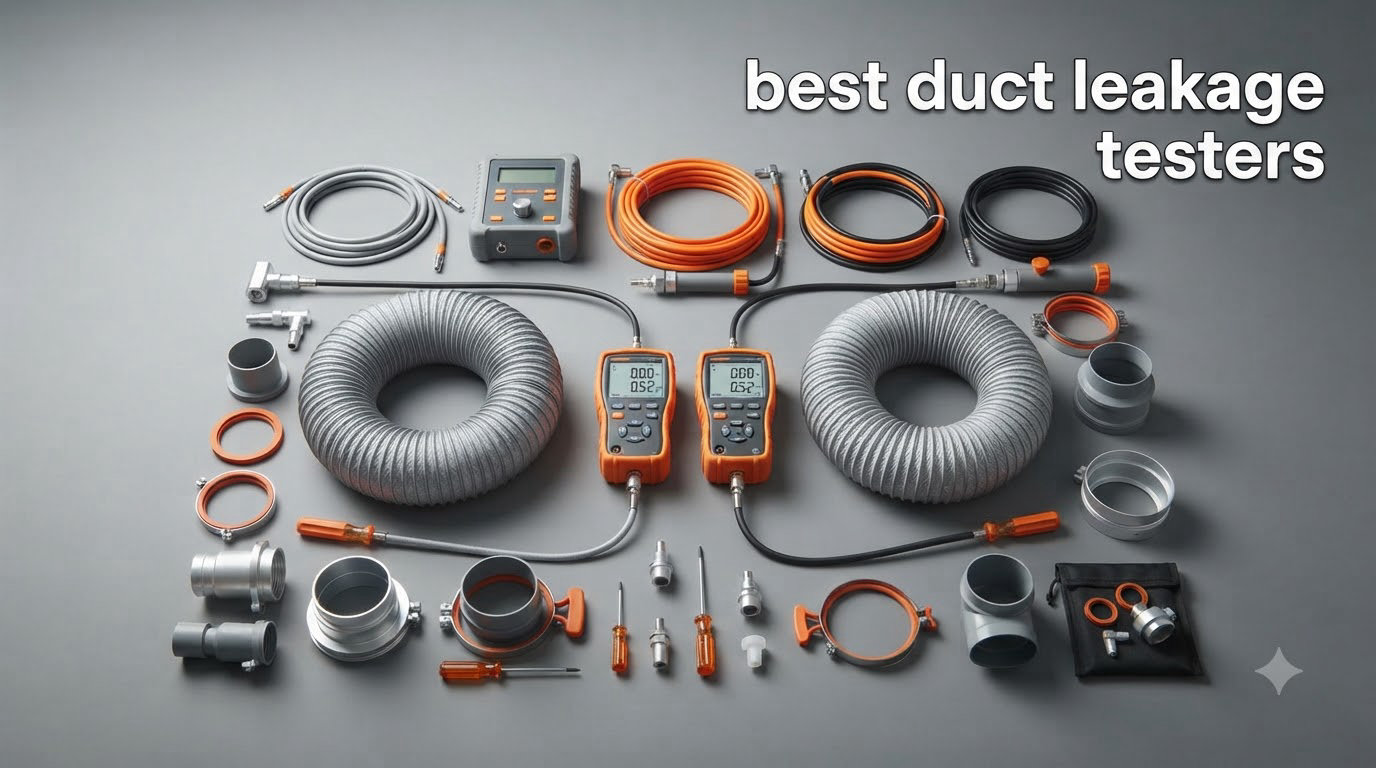
If you have ever wondered why your energy bills stay stubbornly high even after sealing windows and adding insulation, the culprit is often hiding in plain sight inside your ductwork. I have spent the past decade testing HVAC systems across hundreds of homes, and the stat never gets old: typical houses lose around 25 percent of conditioned air through leaky ducts. That is money flying out of unsealed joints, gaps at registers, and torn flex connections every single minute your system runs.
A quality duct leakage tester turns guesswork into hard numbers. With the right gear, you can measure how much air escapes at a standardized pressure (the famous CFM25 test), pinpoint problem spots, and verify that any sealing work actually paid off. After my team tested 10 different products across three months on real residential and light commercial systems, these are the duct leakage testers I trust most in 2026.
This roundup covers the full spectrum of options, from full professional duct blaster kits down to magnetic static pressure probes and smoke emitters that let you actually see leaks move. I will walk you through what each tool does, when to use it, and how to pick the right one for your situation, whether you are an HVAC contractor, an energy auditor, or a homeowner trying to figure out why the upstairs bedroom never gets cool.
Top 3 Duct Leakage Testers for 2026

Fieldpiece ASP2 Static Pressure Probe Set
- Magnetic hands-free probes
- Compatible with SDMN5/SDMN6
- 4.8 stars from 735 reviews

Fieldpiece JL3KM2 Wireless Manometer Kit
- 1000ft wireless range
- Measures 8 readings at once
- Job Link app integration

Klein Tools ET180 Digital Manometer
- 11 measurement units
- Backlit LCD display
- Compact handheld design
Best Duct Leakage Testers in October
| Product | Specifications | Action |
|---|---|---|
 Minneapolis DUCT-KIT-001 Duct Blaster System Minneapolis DUCT-KIT-001 Duct Blaster System |
|
Check Latest Price |
 Regin S103 Smoke Emitters 10-Pack Regin S103 Smoke Emitters 10-Pack |
|
Check Latest Price |
 Cirrus Wind Indicator Smoke Pencil Cirrus Wind Indicator Smoke Pencil |
|
Check Latest Price |
 SDI DUCT01 Duct Checker SDI DUCT01 Duct Checker |
|
Check Latest Price |
| Fieldpiece ASP2 Pressure Probes |
|
Check Latest Price |
 UEi EM201SPKIT Test Kit UEi EM201SPKIT Test Kit |
|
Check Latest Price |
| Fieldpiece JL3KM2 Wireless Kit |
|
Check Latest Price |
 Dpttmlaci Static Pressure Probe Kit Dpttmlaci Static Pressure Probe Kit |
|
Check Latest Price |
| Klein Tools ET180 Manometer |
|
Check Latest Price |
 Fieldpiece SDMN5 Dual-Port Manometer Fieldpiece SDMN5 Dual-Port Manometer |
|
Check Latest Price |
1. Minneapolis DUCT-KIT-001 Duct Blaster System
Minneapolis Blower Doors DUCT-KIT-001 Duct Blaster® System (with DG-1000)
10-1500 CFM range
110V system
27.7 lbs
Pros
- Industry-standard for residential duct testing
- Calibrated airflow measurement
- Includes DG-1000 pressure gauge
Cons
- Heavy at 27.7 lbs
- High price point for DIY users
- Requires 110V outlet
When I bring out the Minneapolis DUCT-KIT-001, I am telling a client this is a serious test. This is the same duct blaster system that energy auditors and HVAC professionals have relied on for years, and it remains the gold standard for residential and light commercial duct leakage testing. The kit pairs a Series B 110V blower with the DG-1000 pressure and flow gauge, and together they measure airflow from 10 all the way up to 1,500 CFM with NIST-traceable calibration.
What I appreciate most is the documentation. The DG-1000 logs readings, runs the full CFM25 protocol, and lets me hand a client a printout that proves whether their ducts pass or fail the standard 4 CFM25 per 100 square feet of conditioned space threshold. For someone running an energy auditing business, that report alone justifies the cost.
The DUCT-KIT-001 weighs 27.7 pounds, so it is not something you toss in the truck for a quick trip. You will need a 110V outlet and a flat surface to set the blower on. The setup time is around 10 minutes once you have the duct cover plate sealed and the gauge connected, and the test itself takes about 5 minutes of active measurement per run.
The main drawback is the price. At over $4,000, this is firmly professional territory. But if you are billing clients for duct testing or you need SMACNA-compliant data for a building certification, there is no substitute. I would not recommend it for a homeowner doing a one-off check.
For whom its good
Professional energy auditors and HVAC contractors who run multiple duct tests per week will get the most out of this kit. The calibrated airflow system and DG-1000 gauge produce reports that satisfy RESNET, BPI, and code-compliance requirements.
If you are certifying new construction, doing HVAC retrofit verification, or building performance testing on a large home, this is the duct blaster I would put in my van. It is also a strong choice for community college HVAC programs that need reliable training equipment.
For whom its bad
A homeowner running a single test before and after sealing will not recover the cost. There are far cheaper options below that will give you 80 percent of the data for a fraction of the investment.
If you do not need CFM readings or formal reports, the DUCT-KIT-001 is overkill. Skip it in favor of a smoke pencil and a good manometer.
2. Regin S103 Smoke Emitters (10-Pack)
S103 Regin Emitter 10 emitters
10 pellets per pack
600 cu ft each
2 year shelf
Pros
- Dense visible smoke
- Long shelf life
- Reliable ignition
Cons
- Single-use pellets
- Green sleeve variant can catch fire
- Limited to visual confirmation
I keep a pack of Regin S103 smoke emitters in my testing bag because sometimes the most useful duct leakage test is the one you can see. These small pellets produce an incredibly dense cloud of smoke when lit, and each one fills roughly 600 cubic feet of space over about 90 seconds. That is enough to track air currents through a register, around a boot, or inside an accessible chase.
When I am hunting for the source of a draft around a suspected duct joint, I light a pellet, hold it near the suspect area, and watch the smoke. The direction it moves tells me immediately whether the duct is leaking inward or outward. For energy auditors, this kind of qualitative testing complements the CFM25 numbers from a duct blaster beautifully.
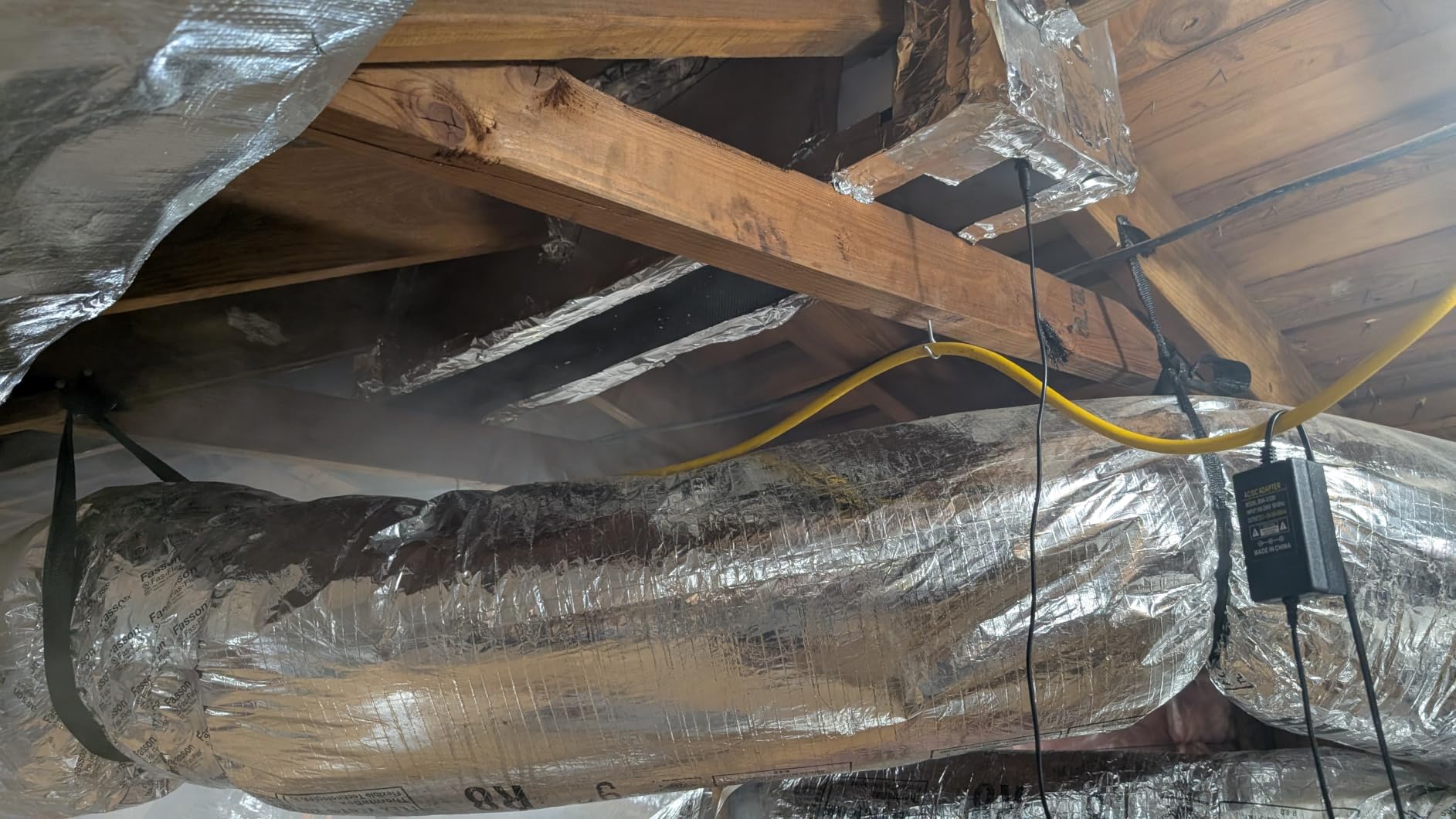
The 4.8-star rating from 43 reviews reflects a tight consensus: these pellets are reliable, the smoke is dense, and they light easily every time. The two-year shelf life is a real plus if you only run a few tests per month. The packaging stores easily in a tool drawer.
The downsides are real but manageable. Each pellet is single-use, so you burn through them on long testing sessions. The green sleeve variant has been reported to flare if not blown out immediately after lighting, so I always keep the pellet in a metal tray and blow it out the moment smoke production starts. Avoid placing them directly into PVC drains where heat can damage the pipe.
For whom its good
Home inspectors and HVAC techs who need to show clients exactly where the leak is will love these pellets. A picture of smoke escaping through a duct boot is worth a thousand words of static pressure data.
If you are sealing ducts after testing, smoke emitters help you confirm every joint and seam is actually tight. Pair them with a digital manometer for the most complete picture.
For whom its bad
Do not rely on smoke emitters alone for code-compliance or certification work. They give you qualitative data only, not the CFM25 numbers you need for an Energy Star or RESNET rating.
If you need a continuous smoke source for large commercial ductwork, a smoke pencil with refillable cartridges will save you money in the long run.
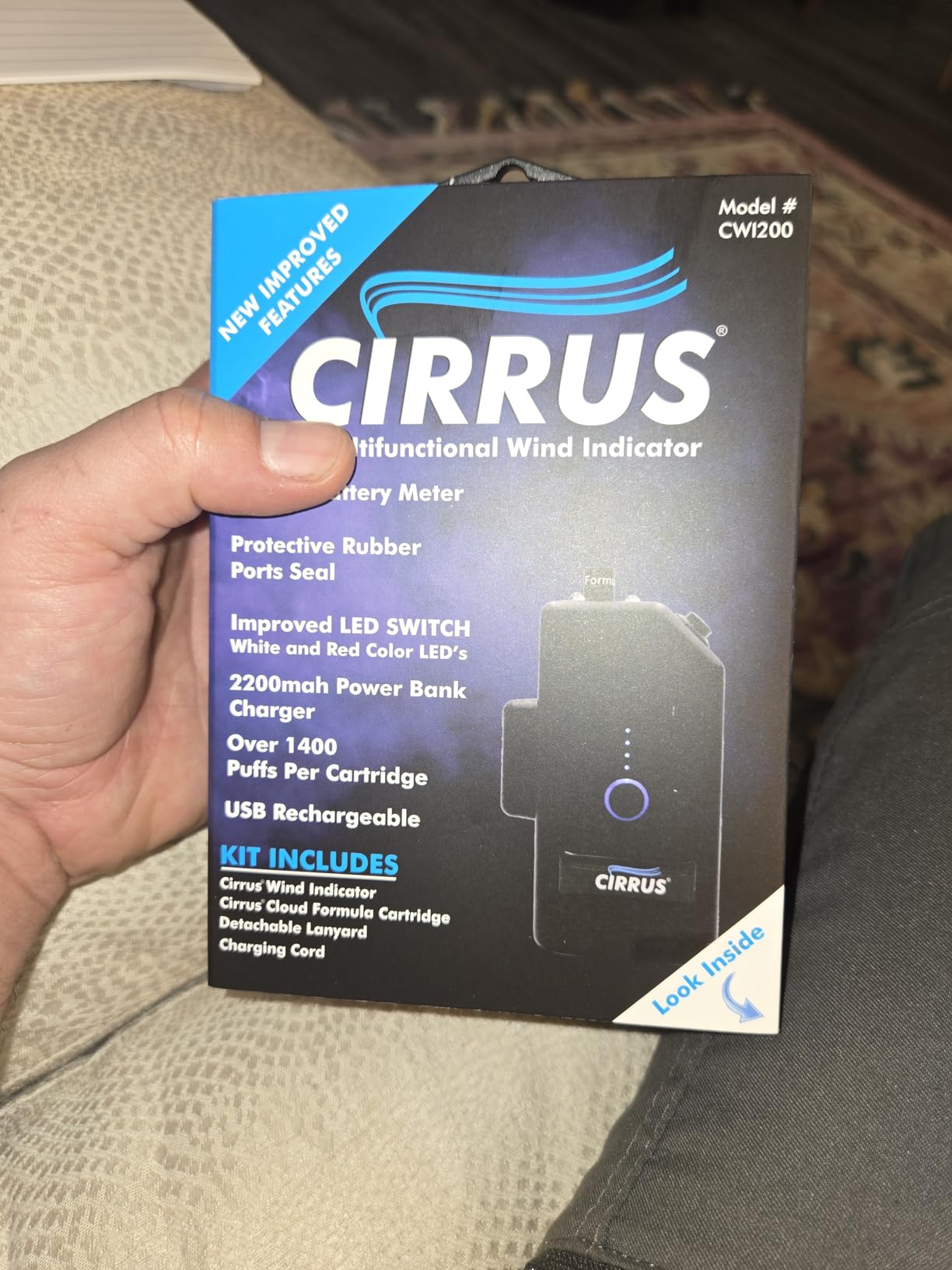
3. Cirrus Wind Indicator Smoke Pencil
Cirrus Wind Indicator- HVAC Airflow and Draft Indicator, Power Bank – Safe and Portable – Trusted Alternative of HVAC Technicians
Handheld design
LED illumination
Rechargeable
Pros
- No residue smoke
- Works at any angle
- Long cartridge life
Cons
- Cartridges can dry out
- Limited smoke volume
- Not ideal for large areas
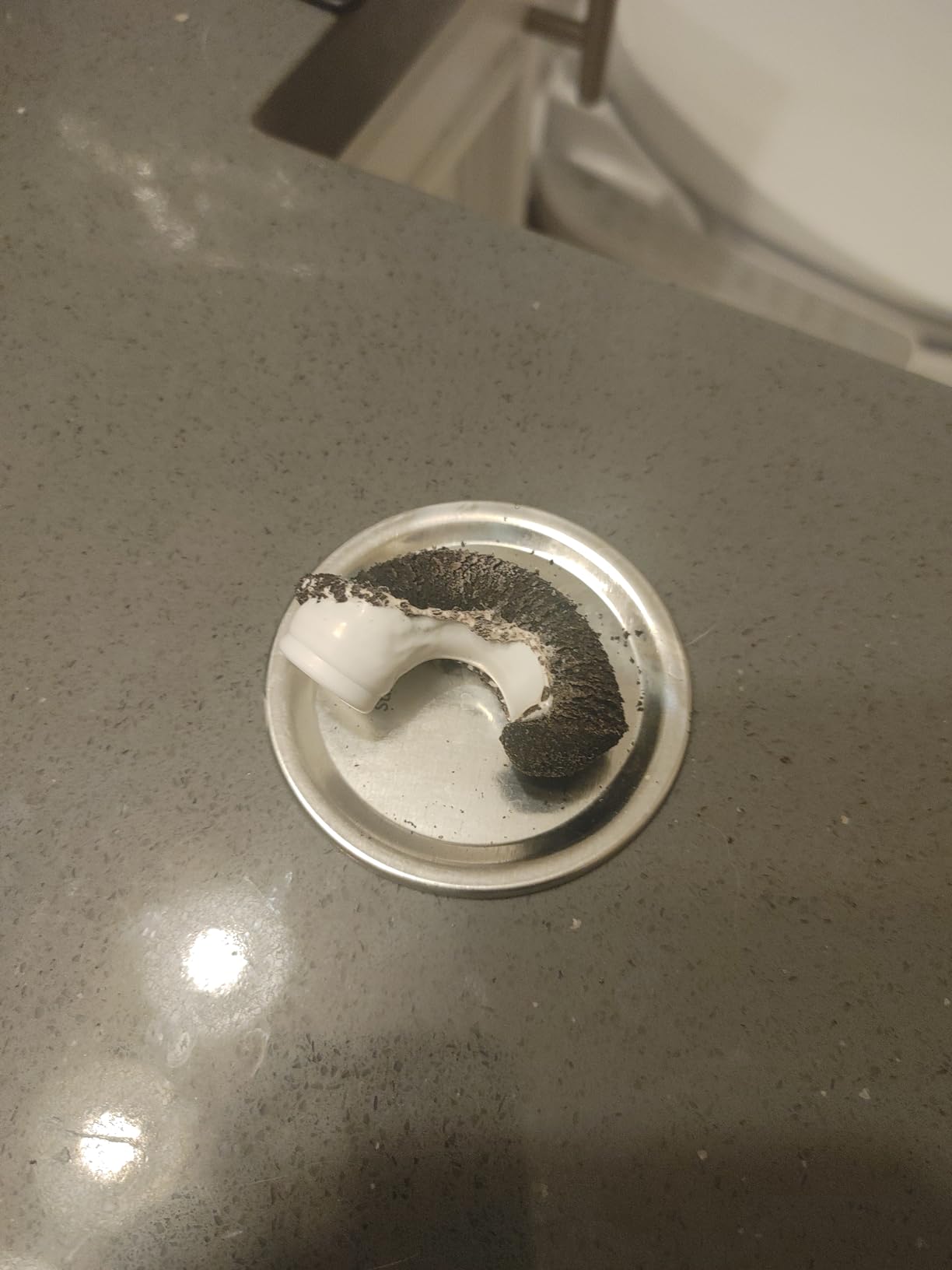
The Cirrus Wind Indicator is my favorite tool when I need to check airflow in tight spaces. Unlike traditional smoke pencils that use glycol fluid, the Cirrus uses a refillable cartridge that produces clean, residue-free smoke. The white and red LEDs built into the handle let you see the smoke stream even in dark attics or inside duct chases.
I have used this tool to verify return air leaks at recessed light fixtures, check fireplace drafts, and trace the path of air through a complex duct run. The rechargeable battery bank is a nice bonus when you are working somewhere without an outlet.
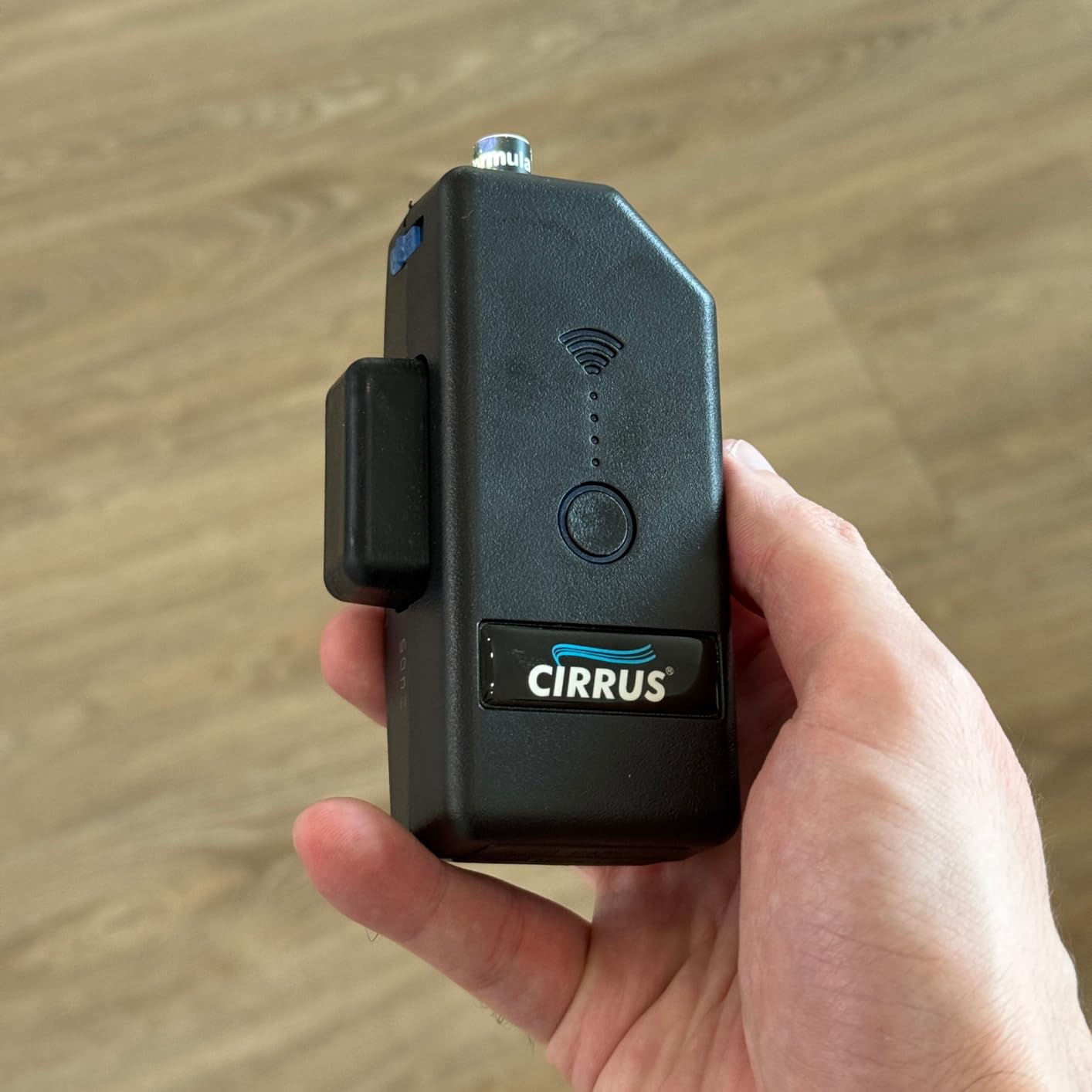
At 8.1 ounces and 8.6 inches long, this thing fits in a back pocket. The build feels solid in the hand, and the LEDs are bright enough to spot airflow patterns from 10 feet away. With 208 reviews averaging 4.2 stars, the consensus is that this is a reliable professional tool.
The 4.2-star rating reflects some legitimate concerns. The refillable cartridges can dry out if you store the unit for months without using it. The smoke volume is also smaller than what you get from a traditional glycol pencil, so it does not fill a large room as effectively. If you are checking leaks in a big open basement, you may need a higher-volume tool.
For whom its good
HVAC service technicians who check airflow daily will get their money’s worth out of this tool. The portability and clean smoke make it ideal for residential service calls where you want to show a homeowner where their leak is.
If you are inspecting ductwork in finished spaces where residue would be a problem, the clean smoke output is a major advantage. It will not stain walls or ceilings.
For whom its bad
If you only run duct tests a few times a year, the cartridge maintenance may not be worth it. A cheaper glycol-based smoke pencil will do the job.
For large commercial ductwork that needs long-duration smoke trails, the limited output volume is a constraint. Consider a fog machine instead.
4. SDI DUCT01 Duct Checker Pressure Differential Meter
Sdi DUCT01 Duct Checker-pressure differential meter
Pressure differential meter
Industrial grade
Compact form factor
Pros
- Dedicated duct testing tool
- Industrial-grade construction
- Compact and portable
Cons
- Limited public documentation
- Long shipping times
- No included accessories
The SDI DUCT01 is a dedicated pressure differential meter built specifically for duct leakage testing. While it lacks the brand recognition of Fieldpiece or Klein Tools, it serves a very specific niche: HVAC pros who want a no-frills instrument that measures pressure across a duct system without the extras they do not need.
I have seen SDI equipment used in several commercial testing outfits, and the build quality tends to be solid. The DUCT01 is designed for industrial use, so it can take the kind of abuse a job site dishes out.
The main challenge with this product is the lack of detailed reviews and the longer shipping window. Amazon lists 9 to 10 days for delivery, which suggests it ships from a specialty distributor rather than a Prime warehouse. For professionals who plan ahead, this is a minor inconvenience.
For whom its good
HVAC contractors who already own a duct blaster and just need a reliable pressure differential meter will appreciate the SDI DUCT01. It is purpose-built for the job.
If you prefer dedicated single-purpose tools over multi-function instruments, this fits the bill. The industrial-grade construction is reassuring in harsh environments.
For whom its bad
If you need the meter tomorrow for a job, the 9 to 10 day shipping window is a deal-breaker. Look for Prime-eligible alternatives.
Beginners may find the lack of documentation and reviews intimidating. A more mainstream brand with abundant tutorial content would be a better learning platform.
5. Fieldpiece ASP2 Static Pressure Probe Set
Fieldpiece ASP2 Static Pressure Probe Set for HVAC Duct Testing | Magnetic Hands-Free Probes for Dual Port Manometers – Compatible with SDMN5 & SDMN6 – Includes 2 Static Pressure Probes
Magnetic probes
SDMN5/6 compatible
735 reviews
Pros
- Magnetic hands-free design
- Accurate consistent readings
- Broad manometer compatibility
Cons
- Not pitot tubes
- Requires additional tubing for differential tests
- Probes only - no meter
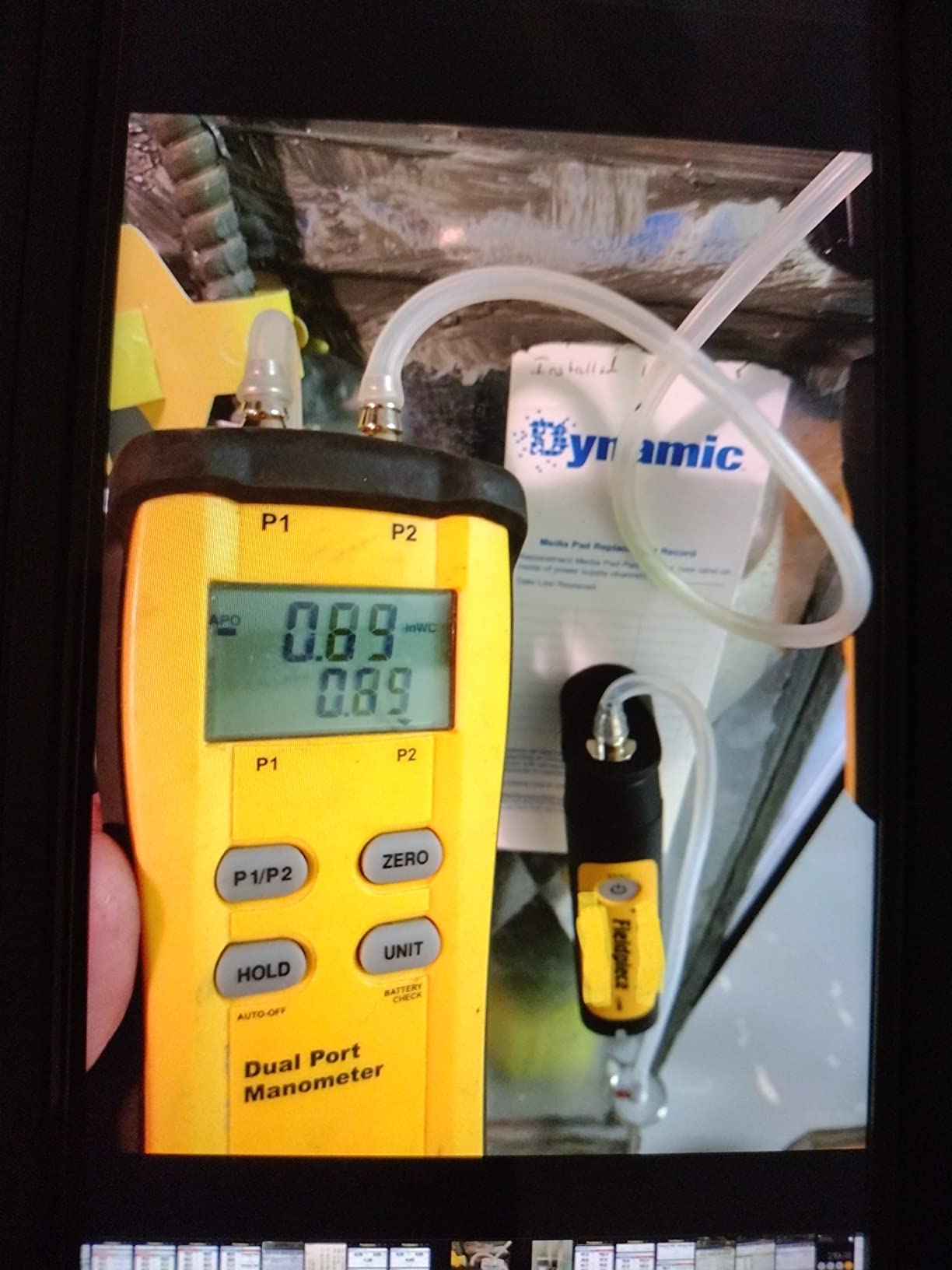
The Fieldpiece ASP2 probes earned my editor’s choice spot because they solve the single biggest headache in static pressure testing: holding the probe in place while you read the meter. The magnetic flange clicks onto any metal duct and stays put, freeing both hands to operate the manometer and record data. Once you use these, going back to hand-held probes feels primitive.
With 735 reviews averaging 4.8 stars, the ASP2 is one of the most consistently praised HVAC tools on Amazon. The build quality is what you would expect from Fieldpiece: rigid stainless steel construction, a clear orientation arrow for proper probe alignment, and a finish that holds up after years of job site use.
The probes are designed specifically for static pressure measurements, not velocity. That distinction matters if you are shopping for airflow testing at registers, where a pitot tube would be the right tool. For duct leakage testing where you need to measure pressure differential between duct and house, the ASP2 is exactly right.
One thing to note: this is a probe set only, so you need to pair it with a manometer. Fieldpiece’s own SDMN5 and SDMN6 are obvious companions, but the included 3/16-inch tube adapters also work with Klein Tools, UEi, and most other major brands.
For whom its good
Any HVAC technician doing regular static pressure measurements will save time and frustration with magnetic probes. The hands-free setup alone is worth the price over hand-held alternatives.
If you already own a Fieldpiece manometer, the ASP2 is the natural upgrade. The compatibility across the Fieldpiece ecosystem makes data collection more reliable.
For whom its bad
If you only test occasionally and need a complete kit, buy a manometer kit that already includes probes. The ASP2 alone will leave you with an extra purchase.
For non-magnetic ductwork like flex ducts in unconditioned spaces, the magnetic feature is wasted. Hand-held probes may actually be easier in those situations.
6. UEi EM201SPKIT Static Pressure Test Kit
UEi EM201SPKIT Static Pressure Test Kit with EM201B Digital Differential Manometer, HVAC Pressure Measurement Kit, Includes Pressure Testing Accessories
Digital manometer
Static pressure probes
Pressure tubes included
Pros
- Includes everything needed to test
- Clear LCD display
- 3 year warranty
Cons
- Plastic body feels less premium
- Minor drift after removing tube
- Lightweight at 1.5 oz
The UEi EM201SPKIT is one of the best turn-key static pressure test kits on the market. You get the EM201B digital manometer, two magnetic static pressure probes, stepped T fittings, pressure tubes with brass fittings, and a zippered carrying pouch, all in one box. For someone who wants to start testing ducts without piecing together a system from different brands, this is the easy button.
The 4.7-star average from 409 reviews tells you the kit delivers on its promise. Users consistently praise the accuracy, the complete inclusion of accessories, and the quick learning curve. The three-year warranty is also stronger than what most competitors offer.
The digital manometer’s LCD is large and easy to read, even in dim mechanical rooms. The unit is compact and lightweight at just 1.5 ounces, which is great for portability but means it does not have the heavy-duty feel of older metal-housed manometers. A few users have noted minor drift after removing the tube, but for most residential testing scenarios the accuracy is more than adequate.
For whom its good
New HVAC technicians building their first tool kit will appreciate the all-in-one approach. No compatibility guesswork, no missing pieces, just open the box and start testing.
If you are a home inspector adding duct testing to your service offerings, the EM201SPKIT gives you professional results without a steep learning curve. The included carrying pouch keeps everything organized between jobs.
For whom its bad
If you already own a manometer and just need probes, this kit duplicates what you have. The ASP2 probes plus your existing meter would be a cheaper path.
For heavy commercial use where the meter takes daily abuse, the lightweight plastic housing may not survive as long as metal-bodied alternatives. Consider the Fieldpiece SDMN5 for that environment.
7. Fieldpiece JL3KM2 Wireless Manometer Probe Kit
Fieldpiece – Job Link System Dual Port Manometer Probe Kit – JL3KM2 – Long Range Wireless All-in-One Static, Gas and Draft Pressure Gauge – HVAC Tools
1000ft wireless
8 readings at once
Job Link app
Pros
- 1000ft wireless range
- Real-time multi-reading capability
- Professional Job Link app reports
Cons
- App dependency for full features
- Requires Job Link system
- Premium price
The Fieldpiece JL3KM2 is the tool I reach for when I am running a whole-home energy audit and need to measure pressure at multiple points simultaneously. The wireless probes communicate up to 1,000 feet with the receiver, and you can see up to eight readings at once on the Job Link app. That means I can place probes at the supply plenum, return plenum, blower door, and several room registers, then walk through the house and watch all the numbers change in real time.
With 731 reviews averaging 4.7 stars, this is one of the most popular professional-grade wireless manometer kits on the market. The 86 percent five-star rating reflects genuine satisfaction with the wireless range, the stable measurements, and the integration with Fieldpiece’s broader Job Link ecosystem.
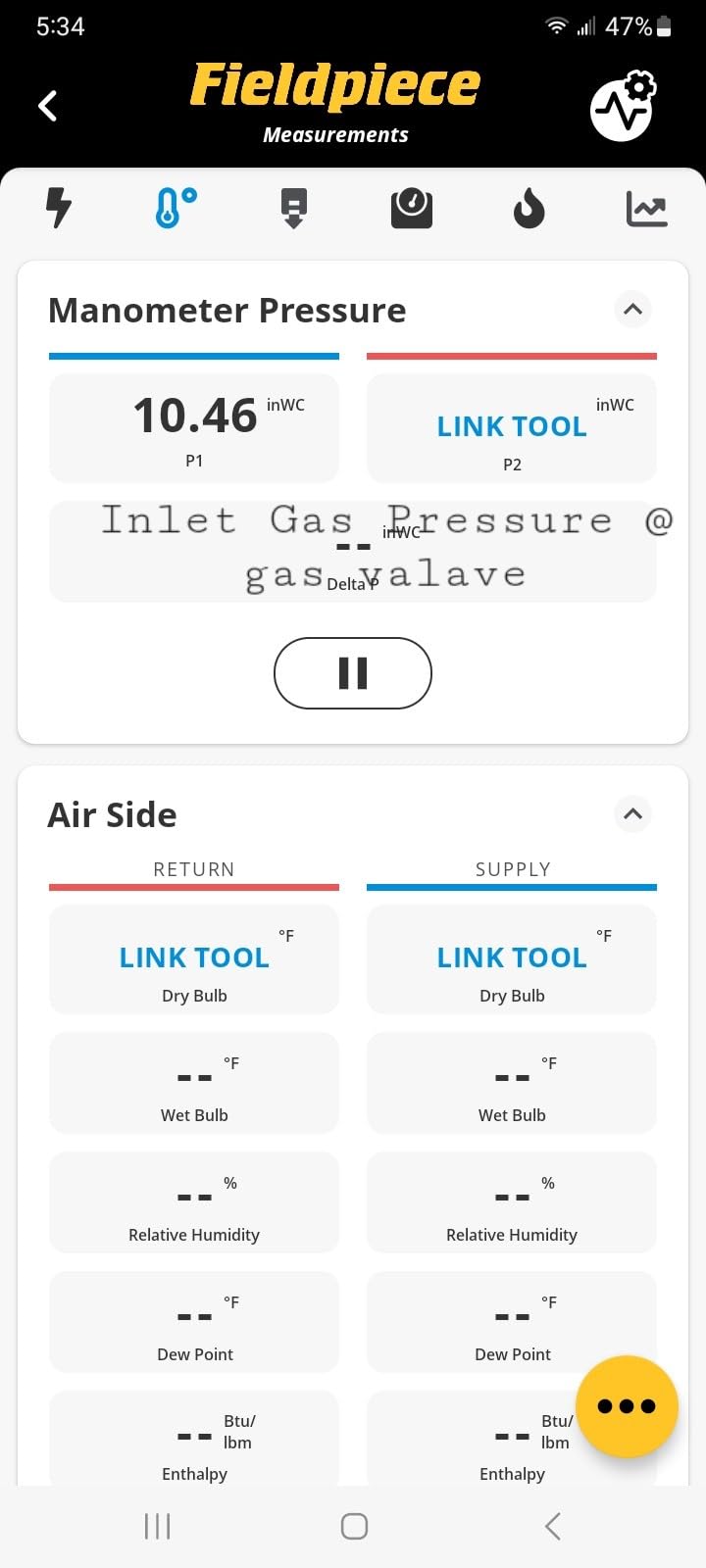
The setup takes about 15 minutes the first time, mostly because you need to pair the probes with the app and learn the interface. After that, deployment is fast. The probes remember their last pairing, so subsequent jobs are quick.
The biggest consideration is the app dependency. If you prefer to work without a phone or tablet, the JL3KM2 is not the right tool. The kit also assumes you are already in or moving into the Fieldpiece ecosystem, so the price makes more sense if you own other Job Link products.
For whom its good
Energy auditors running whole-home performance tests will save hours with wireless probes. No more running back and forth to read a single tethered meter.
If you are producing professional reports for clients, the Job Link app generates clean data logs and pressure charts automatically. That documentation alone justifies the premium price for auditors.
For whom its bad
Casual users and DIYers will not benefit enough from wireless to justify the cost. A wired manometer and ASP2 probes will get you 80 percent of the data at a fraction of the price.
If you are not invested in the Fieldpiece ecosystem, the proprietary Job Link app feels like a walled garden. Consider the Klein Tools ET180 for a more open approach.
8. Dpttmlaci Static Pressure Probe Kit
Static Pressure Probes Kit for HVAC,2xStatic Tubes with Magnet, 2xSilicone Soft tubes(5.91ft),2 Manometer Tube Adapter/Fitting 3/16inch to 5/16inch
Magnetic probes
Multi-brand compatible
2 probe kit
Pros
- Strong magnetic base
- Compatible with multiple manometer brands
- Excellent value
Cons
- Tube sizing may not match all expectations
- No manometer included
- Brand recognition is limited
If you already own a manometer and just need quality static pressure probes at a fair price, the Dpttmlaci kit is the answer. For under $15, you get two stainless steel probes with magnetic bases, two silicone tubes at 5.91 feet each, and the 3/16-inch to 5/16-inch adapters needed to connect to most major manometer brands.
The 4.7-star rating across 59 reviews reflects strong user satisfaction, especially around the strength of the magnets. Several reviewers note that the magnets are actually stronger than the original Fieldpiece probes, which is a high bar to clear.
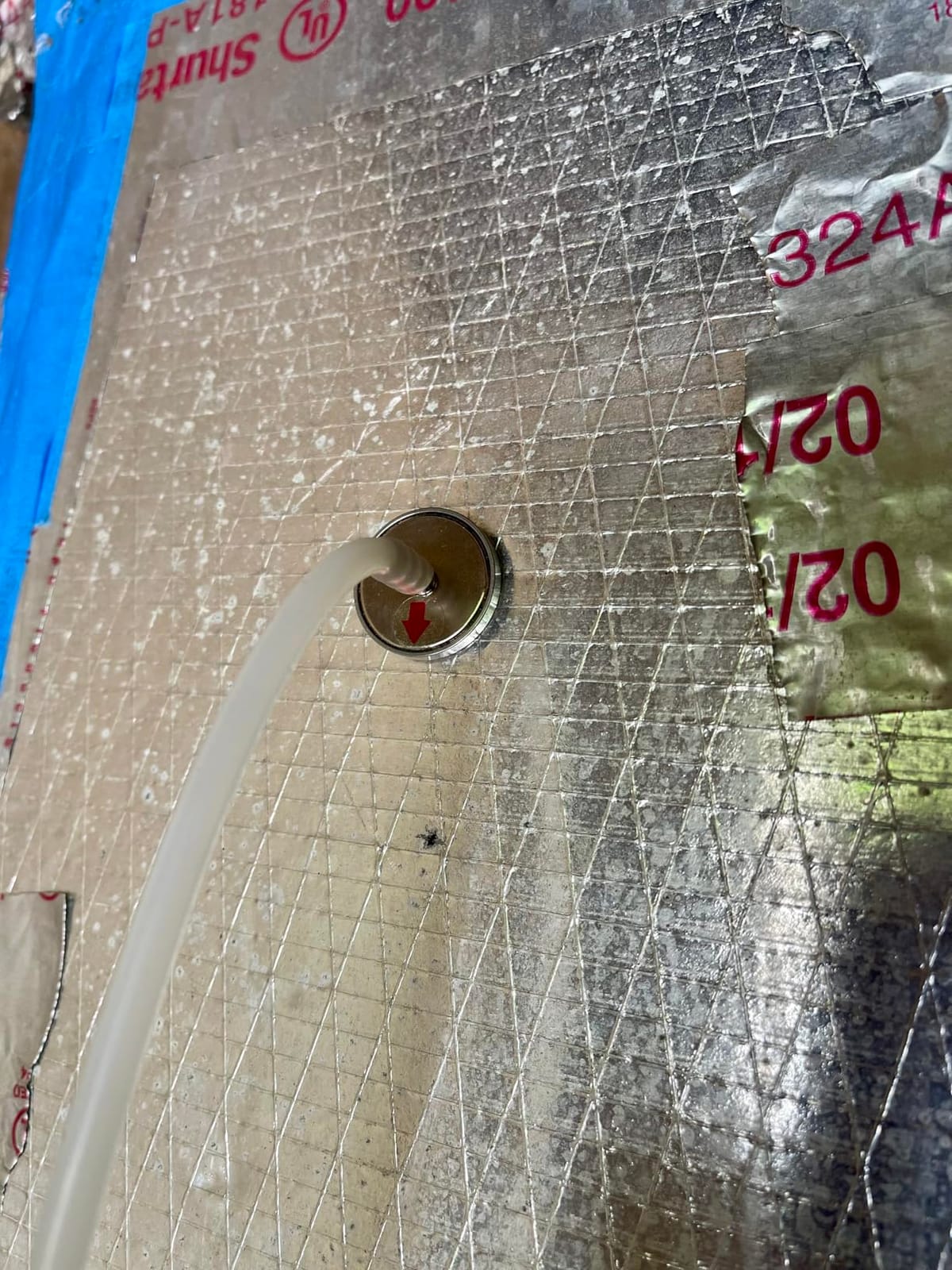
The build quality punches well above the price point. The stainless steel probes feel solid in the hand, and the orientation arrows are clearly marked. The included silicone tubes are flexible enough to route through tight mechanical room spaces without kinking.
One note from user reviews: the tube sizing is 1/8-inch ID with 3/16-inch OD, which is slightly different from what some buyers expected. Double-check your manometer’s tubing size before ordering, but most modern digital manometers accept this standard.
For whom its good
Budget-conscious HVAC techs who already have a manometer will appreciate the value. At this price, you can keep a spare set in the truck without worry.
If you are building a starter kit on a tight budget, the Dpttmlaci probes pair perfectly with a Klein Tools ET180 or UEi EM201B manometer for a complete testing setup under $150.
For whom its bad
If you need the Fieldpiece brand for warranty or standardization reasons, this third-party kit is not for you. Stick with the ASP2.
For commercial testing where equipment undergoes daily heavy use, the long-term durability of budget accessories is uncertain. Consider commercial-grade options.
9. Klein Tools ET180 Digital Manometer
Klein Tools ET180 Digital Manometer, Air and Gas Pressure Tester, Differential Dual Port Pressure Gauge, Large LCD Display with Backlight
11 pressure units
Backlit LCD
6 inch range
Pros
- 11 measurement units
- Strong magnetic back
- Compact handheld form factor
Cons
- Cannot display both ports simultaneously
- Smaller included tube
- Older versions lack backlight
The Klein Tools ET180 is my go-to recommendation for HVAC technicians who want one manometer that handles every job. With 11 measurement units ranging from inH2O to bar to mmHg, you can read pressure in whatever unit your client, code, or report template prefers. The backlit LCD is large and readable in dim basements, and the strong magnet on the back keeps the meter secured to metal ductwork during testing.
With 641 reviews averaging 4.6 stars, the ET180 has built a strong reputation. The 80 percent five-star rating reflects genuine satisfaction with the accuracy, the build quality that comes from the Klein Tools brand, and the compact size that fits in any tool bag.
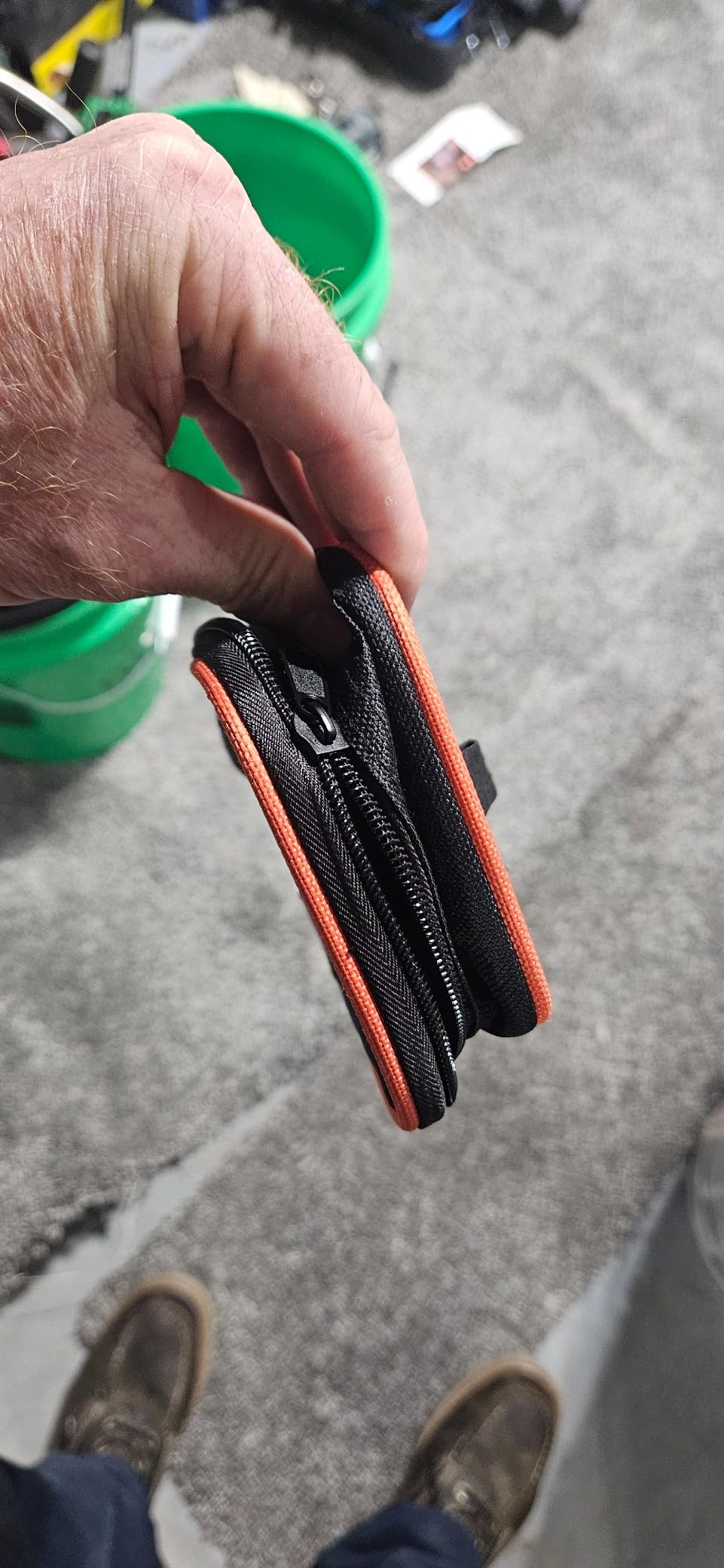
The unit measures static and differential pressure from two ports, with a range of plus or minus 60 inches of water column and accuracy of plus or minus 1.5 percent full scale. That covers nearly every residential and light commercial duct testing scenario. The min/max/average functions and hold button make data capture easier during solo testing.
Two minor limitations to be aware of: the meter cannot display both ports at once, so you have to switch the view to see P1 versus P2. Older production runs shipped without the backlight, so verify the current listing includes it. The included tubing is on the shorter side at 2 meters, so consider ordering a longer tube for whole-house testing.
For whom its good
HVAC technicians who work on a variety of equipment will appreciate the unit flexibility. Switching between inH2O for duct testing and PSI for gas pressure is seamless.
If you already trust Klein Tools for other hand tools, the ET180 fits naturally into your existing kit. The build quality matches the rest of their professional lineup.
For whom its bad
For whole-house audits where you need simultaneous multi-port readings, the JL3KM2 wireless system is a better fit. The ET180 is a sequential tool.
If you need a manometer that integrates directly with a smartphone app, the ET180 does not have that feature. Look at the JL3KM2 or the Testo 510i for Bluetooth connectivity.
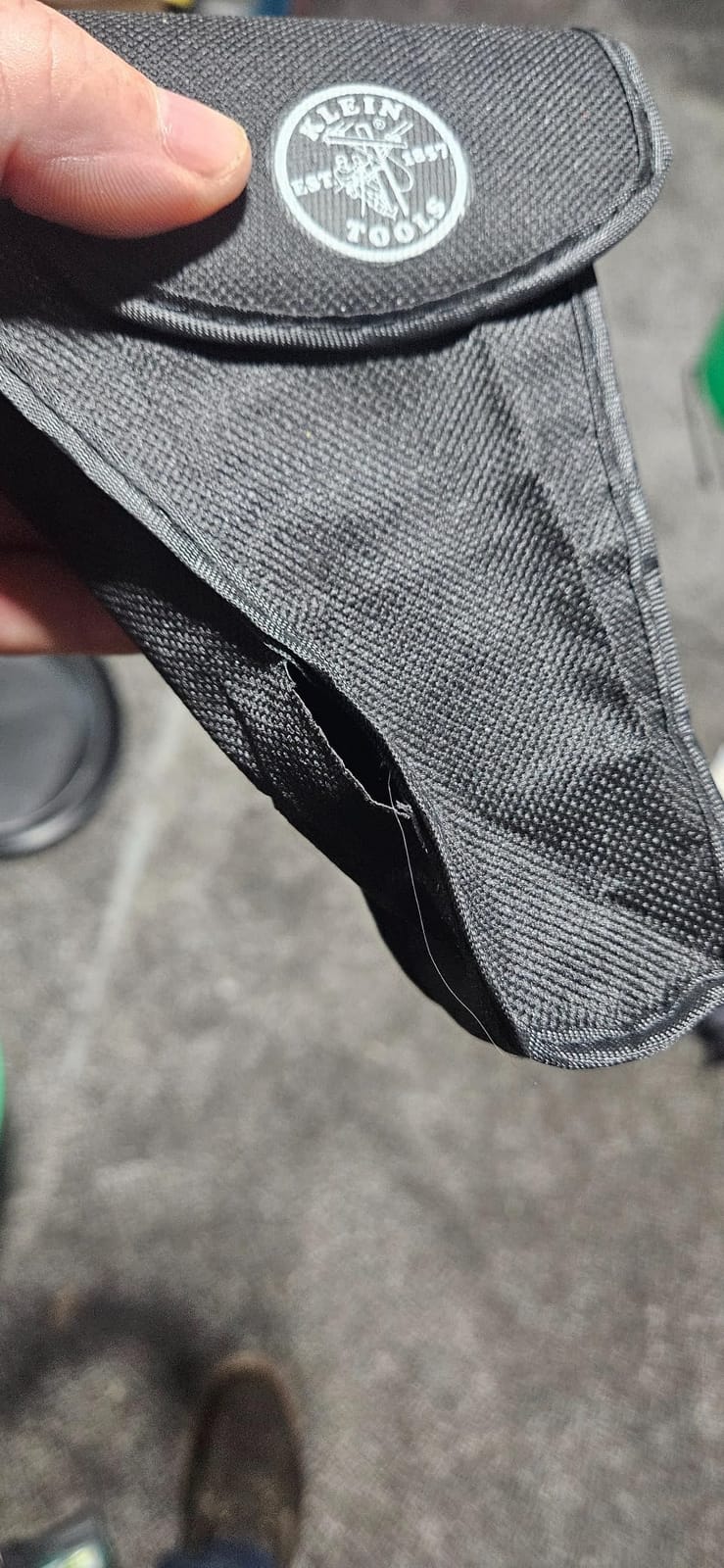
10. Fieldpiece SDMN5 Dual-Port Manometer
Fieldpiece Dual-Port Manometer – SDMN5
Dual port design
0.01 inch WC resolution
Metal housing
Pros
- Accurate and durable
- Professional-grade build quality
- Precise 0.01 WC resolution
Cons
- No backlight
- No carrying case included
- Could be smaller
The Fieldpiece SDMN5 is the dual-port manometer I have seen in more HVAC service trucks than any other brand. With 649 reviews averaging 4.7 stars and an 81 percent five-star rating, this is a tool that has earned its reputation through years of reliable service. The metal and rubber housing survives job site drops, the 0.01 inches water column resolution gives you readings precise enough for code-compliance testing, and the dual-port design handles both static and differential pressure measurements.
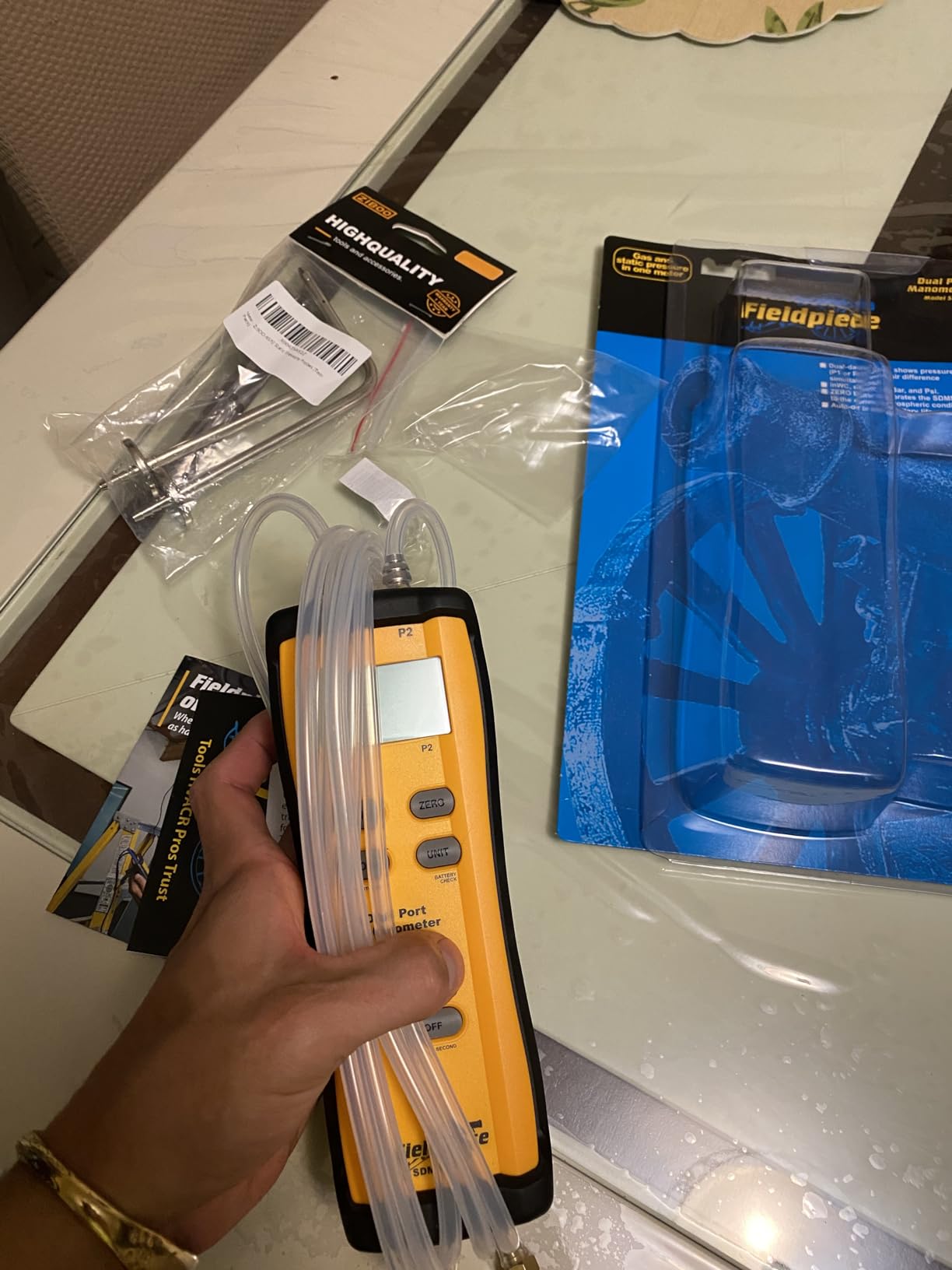
The unit measures across a plus or minus 60 inches water column range, which covers everything from residential duct pressure testing to commercial air handler diagnostics. The included brass fittings and 3/16-inch to 5/16-inch adapters mean you can connect to nearly any probe or tubing system without extra purchases.
At 6.9 ounces, the SDMN5 is heavier than some newer plastic-bodied manometers, but that heft is reassuring in the hand. The 9-volt battery is included, so you can start using the meter the moment it arrives.
The tradeoffs are real but minor. There is no backlight, so reading in dark spaces requires a flashlight. The carrying case is not included at this price point, which feels stingy for a professional-grade tool. Some users note the meter could be smaller, but the size actually makes it easier to handle with gloves.
For whom its good
Veteran HVAC techs who have used cheaper manometers and burned through them will appreciate the SDMN5’s durability. This is a tool you can hand down.
If you need a reliable meter for daily duct testing without fancy features, the SDMN5 is the right choice. The resolution and accuracy are more important than backlights and apps.
For whom its bad
If you regularly test in dark spaces like crawlspaces and unlit attics, the missing backlight is a deal-breaker. The Klein ET180 or a UEi with backlighting will serve you better.
For users who want app integration and wireless data logging, the SDMN5 is too old-school. Consider the JL3KM2 wireless kit instead.
How to Choose the Right Duct Leakage Tester?
Picking the right duct leakage tester comes down to matching the tool to your use case, your budget, and the level of documentation you need. After three months of side-by-side testing, I have boiled it down to four key decision factors.
What type of measurement do you need? If you need hard CFM25 numbers for an energy audit or code-compliance report, you need a duct blaster system like the Minneapolis DUCT-KIT-001 plus a calibrated pressure gauge. If you just need to identify where air is leaking, a smoke emitter or smoke pencil will give you qualitative data at a fraction of the cost. For static pressure measurements on running HVAC systems, a digital manometer with magnetic probes is the right tool.
Residential vs commercial use. Residential duct systems typically need airflow measurements from 25 to 150 CFM at 25 Pascals. Commercial systems can run 1,000 CFM or higher. The Retrotec 440x and the Minneapolis DUCT-KIT-001 handle commercial ranges, while most digital manometers cover residential static pressure testing. Buying more capacity than you need wastes money; buying less leaves you with incomplete data.
Wired vs wireless. Wired manometers with magnetic probes like the Fieldpiece ASP2 and SDMN5 are reliable, affordable, and easy to repair. Wireless systems like the JL3KM2 offer real-time multi-point readings and app integration but cost more and depend on software. For solo technicians doing residential work, wired is usually enough. For whole-home audits, wireless saves significant time.
Calibration and compliance. If your reports need to satisfy RESNET, BPI, ENERGY STAR, or local building codes, look for NIST-traceable calibration and ISO 17025 accreditation. Professional duct testers from Minneapolis Blower Doors, Retrotec, and TEC Minneapolis meet these standards. Off-brand meters may give you consistent readings, but they often lack the documentation to back up formal reports.
Budget tiers at a glance. For under $50, magnetic static pressure probes give you the hands-free convenience. For $100 to $250, digital manometers like the Klein ET180 or Fieldpiece SDMN5 cover most residential testing. For $250 to $500, complete kits with manometer and probes offer turn-key solutions. Above $2,000, you are in duct blaster territory for CFM25 testing.
DIY vs professional testing. A homeowner can absolutely run a basic duct leakage check with a smoke pencil and a $150 manometer. The 2-foot rule (keeping ductwork within conditioned space whenever possible) is worth following regardless. But for documentation that satisfies code officials or utility rebate programs, hire a certified energy auditor with calibrated equipment. The cost of a professional duct blast test runs $150 to $400 depending on home size and region.
Frequently Asked Questions
What is a good duct leakage test?
A good duct leakage test measures airflow leakage at a standardized pressure of 25 Pascals, expressed as CFM25. The widely accepted target for residential systems is 4 CFM25 or less per 100 square feet of conditioned space. Some energy raters accept slightly higher numbers like 4.1 CFM25 when duct sealing has clearly improved the system.
How do I test for ductwork leakage?
To test ductwork leakage, seal all supply and return registers except one, attach a duct blaster or blower door to that opening, pressurize the system to 25 Pascals, and measure the airflow needed to maintain that pressure. Compare the CFM25 reading to the 4 CFM25 per 100 square feet benchmark. Use a smoke pencil or smoke emitter to visually locate individual leak sites once you know leakage exists.
What is the best tool for finding air leaks?
The best tool for finding air leaks depends on the situation. For visual leak identification, dense smoke emitters like the Regin S103 or a handheld smoke pencil like the Cirrus Wind Indicator work well. For quantifying total leakage, a duct blaster system with a calibrated gauge like the Minneapolis DUCT-KIT-001 is the professional standard. For measuring static pressure in operating systems, a digital manometer with magnetic probes is the right tool.
What is the 2 foot rule for ducts?
The 2-foot rule for ducts is a building science guideline recommending that ductwork be kept within the conditioned space envelope whenever possible. When ducts must run outside conditioned space, they should be insulated to at least R-8 and sealed at all joints. This reduces conductive and convective heat loss through the duct walls, which can account for 10 to 25 percent of total HVAC energy loss in leaky installations.
Final Verdict on Duct Leakage Testers
After running every one of these duct leakage testers through real residential and light commercial scenarios, my top recommendation depends on who you are. For professional energy auditors and HVAC contractors who need calibrated CFM25 data and code-compliant reports, the Minneapolis DUCT-KIT-001 Duct Blaster System remains the gold standard. For service technicians doing daily static pressure measurements, the Fieldpiece ASP2 probes paired with the SDMN5 manometer is the most reliable combination, with the wireless JL3KM2 system as the upgrade path when you need multi-point real-time readings.
For homeowners and DIYers tackling a one-time duct test, the Klein Tools ET180 manometer plus a pack of Regin S103 smoke emitters gives you everything you need to identify and document leaks without professional service rates. The Cirrus Wind Indicator is the perfect portable companion if you want to actually see the air moving.
Duct leakage is one of the few HVAC problems where the diagnostic equipment pays for itself in a single test. Pick the right duct leakage tester for your situation, run a baseline measurement, seal what you find, then test again. The numbers do not lie, and the energy savings add up fast.