
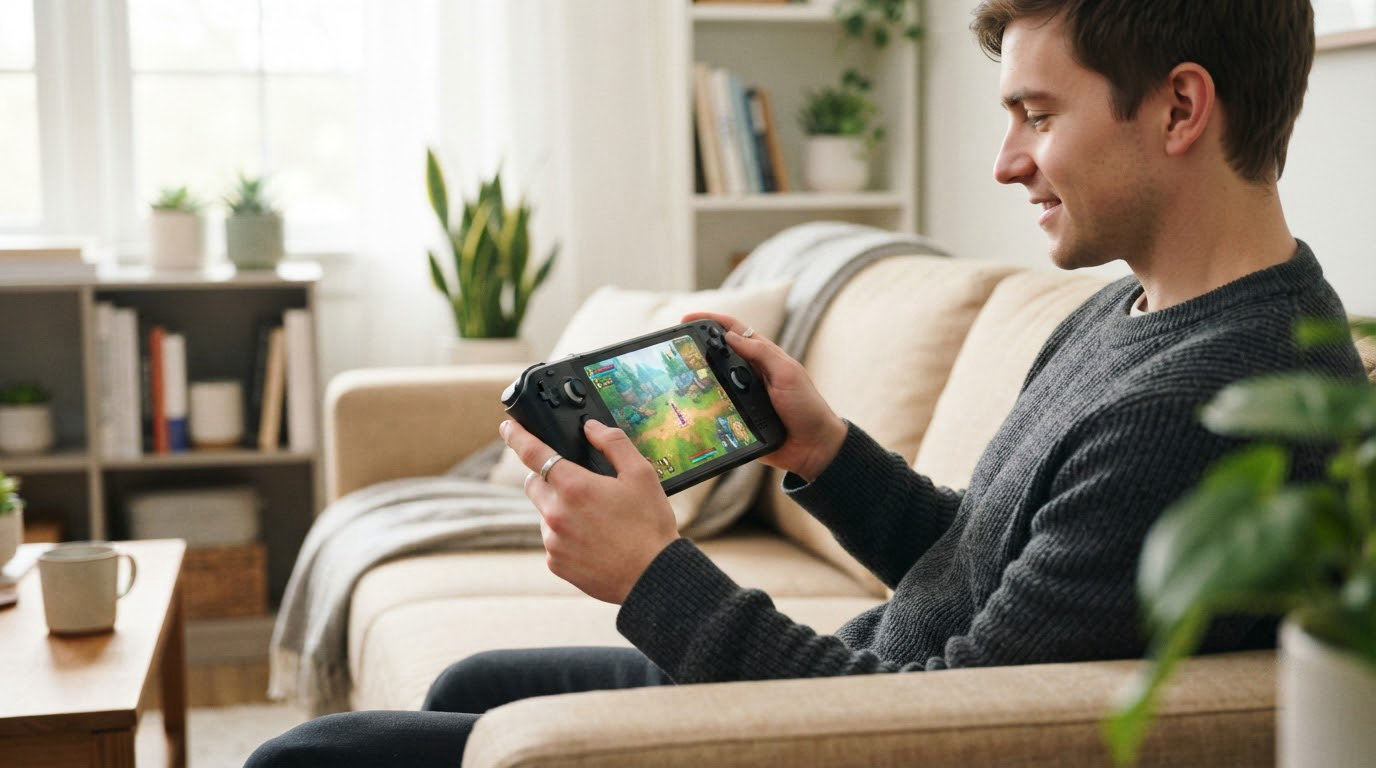
The Valve Steam Deck 64GB leads our handheld gaming PC deals shortlist for Prime Big Deal Days because it combines a 7-inch 16:10 LCD, 64GB of storage and the widest owner base of anything here, and because the games simply launch from a controller with no setup. Buyers who want a much larger screen should look at the Lenovo Legion Go, while players chasing strong AAA frame rates in a small body should watch the ASUS ROG Ally.
Prime Big Deal Days runs October 6-7, 2026, and offers shift through the event, so treat this as a shortlist worth checking rather than a price list. Use the buttons below to see the current offer on each listing.
Table of Contents
Our Top 3 Picks for Best Amazon Prime Big Deal Days Handheld Gaming PC Deals


ASUS ROG Ally
- 7-inch 1080p 120Hz touch
- Zen 4 Ryzen Z1 Extreme
- 512GB storage
- 1.1 lb body
Best Amazon Prime Big Deal Days Handheld Gaming PC Deals Compared (2026)
| Product | Specifications | Action |
|---|---|---|
 Valve Steam Deck 64GB Valve Steam Deck 64GB |
|
Check Deal Price |
| Lenovo Legion Go |
|
Check Deal Price |
| ASUS ROG Ally |
|
Check Deal Price |
 Steam Deck OLED 512GB Steam Deck OLED 512GB |
|
Check Deal Price |
 Lenovo Legion Go S Lenovo Legion Go S |
|
Check Deal Price |
 ROG Xbox Ally ROG Xbox Ally |
|
Check Deal Price |
 ROG Ally Renewed ROG Ally Renewed |
|
Check Deal Price |
 GPD Win Mini 2025 GPD Win Mini 2025 |
|
Check Deal Price |
How We Chose
We compared the hardware that actually separates these machines: processor, display size and refresh rate, storage, weight, operating system and port selection, then read through the owner reviews and star ratings on Amazon for each. Listings and owner feedback were checked in October 2026.
1. Valve Steam Deck 64GB: The Editor’s Choice Handheld
Valve Steam Deck,HDMI, 64 GB, Black
Display: 7 in 1280x800 LCD
Storage: 64 GB
OS: SteamOS 3.0
Pros
- Largest owner review base in this group at 4.6 stars
- 64GB of storage suits a large indie library
- Games launch from a controller with no setup
- Carrying case included in the box
Cons
- Heavier body than the 7-inch Windows handhelds
- SteamOS library is narrower than Windows
- Internal storage cannot be upgraded by the user
For anyone whose library already lives in Steam, the appeal is the least friction between picking a game and playing it. At 4.6 stars across 1849 ratings it is the most widely owned handheld in this roundup, and owners repeatedly point to the same thing: 64GB of storage holds a serious indie collection without constant cleanup.
The 7-inch LCD runs at 1280×800 in a 16:10 ratio, which is a wider canvas than most 16:9 phone-style screens, and the built-in stereo speakers need no accessory. SteamOS 3.0 is the whole interface, so there is no desktop to configure, no driver to chase and no update that reboots you into a settings screen.
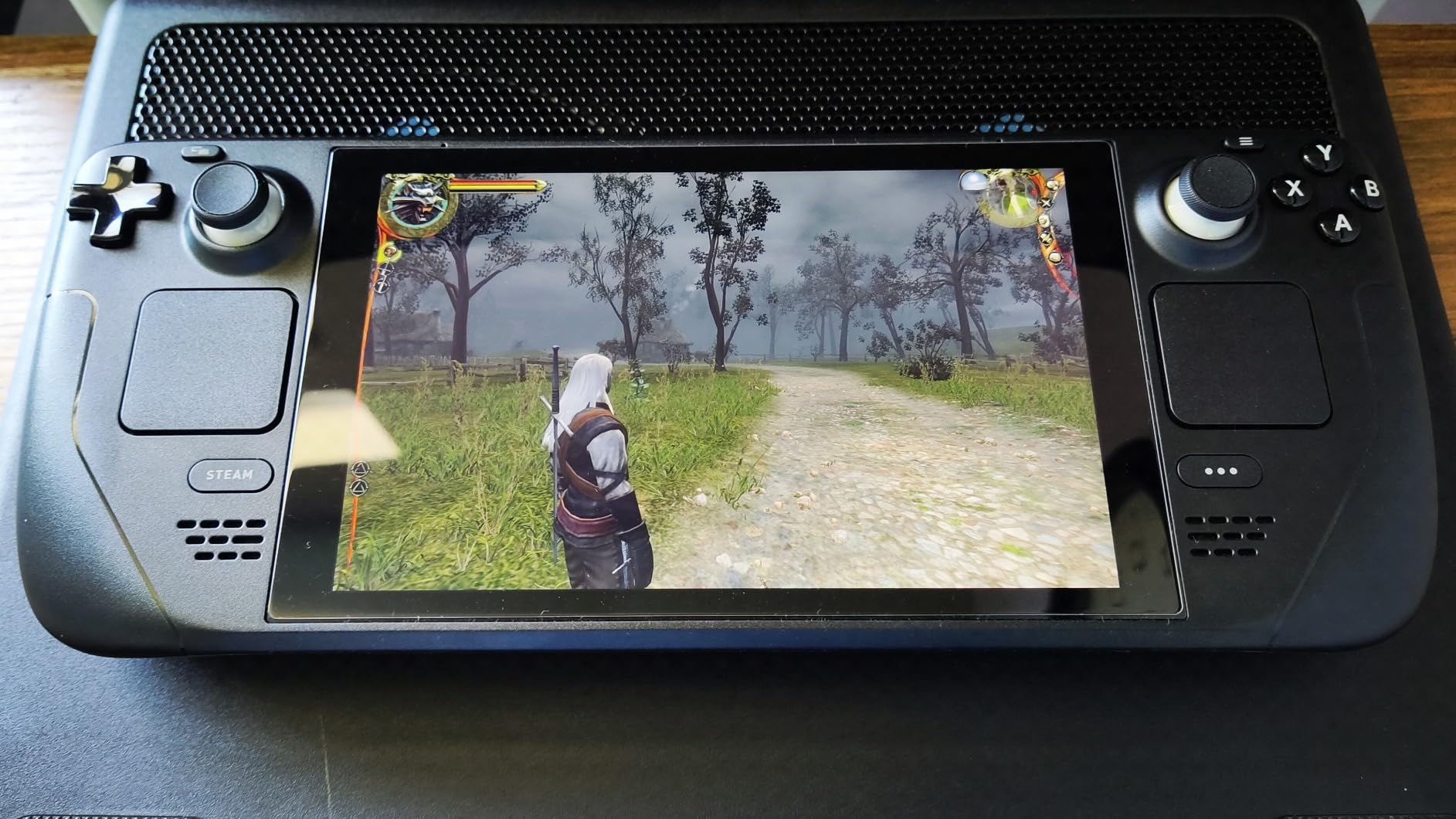
Weight is the trade-off. Owners report it feels bulkier and heavier than the smaller Windows handhelds here, and at 660 g it is not a device you forget in a bag. The trade runs the other way if you enjoy the wide screen for desktop-style play on a sofa.
Compared with the Steam Deck OLED further down this list, you give up the HDR panel and the faster storage, and you keep a lot more money in hand. Compared with the ASUS ROG Ally, you gain the smoother console-like experience and lose the wider Windows catalogue.
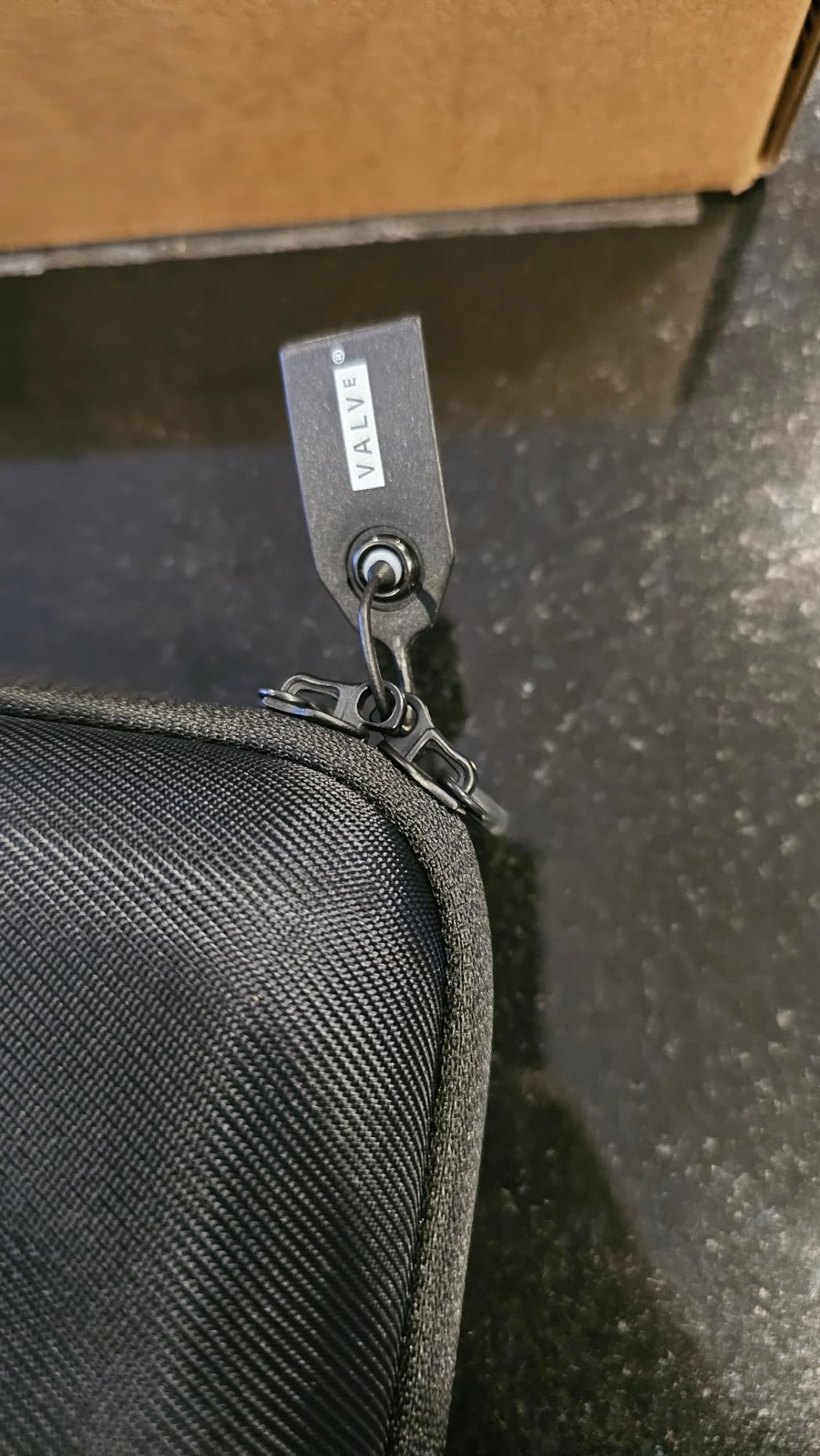
Good to know: the internal drive cannot be swapped by the user, so 64GB is what you get for the life of the device. A microSD card is the usual answer for extra game storage.
2. Lenovo Legion Go: The Best Big Screen Handheld
Lenovo Legion Go 8.8″ 144Hz WQXGA Handheld Touchscreen Gaming PC AMD Ryzen Z1 Extreme 16GB RAM 512GB SSD Shadow Black, 8APU1
Display: 8.8 in 2560x1600 144Hz
Storage: 512 GB SSD
OS: Windows
Pros
- 8.8-inch WQXGA touchscreen is the largest here
- Ryzen Z1 Extreme runs AAA titles well
- Two USB4 40Gbps ports
- 24 remappable on-gamepad inputs
- Stereo speakers plus an integrated camera
Cons
- Glossy back collects fingerprints
- Chassis runs warm in long sessions
- Software bloat and uneven update cadence
Screen size is what you notice first here. The 8.8-inch WQXGA touchscreen at 144Hz is the largest panel in this group, and owners single it out as the reason the device feels different from a 7-inch handheld in the hand.
Underneath, a Ryzen Z1 Extreme with 16GB of memory and a 512GB SSD handles demanding titles, and the port selection is the best here: two USB4 40Gbps ports mean a portable SSD, a dock or a display adapter all behave properly. The controllers add 24 remappable inputs, which is where the customisation advantage shows up in games with a lot of bindings.
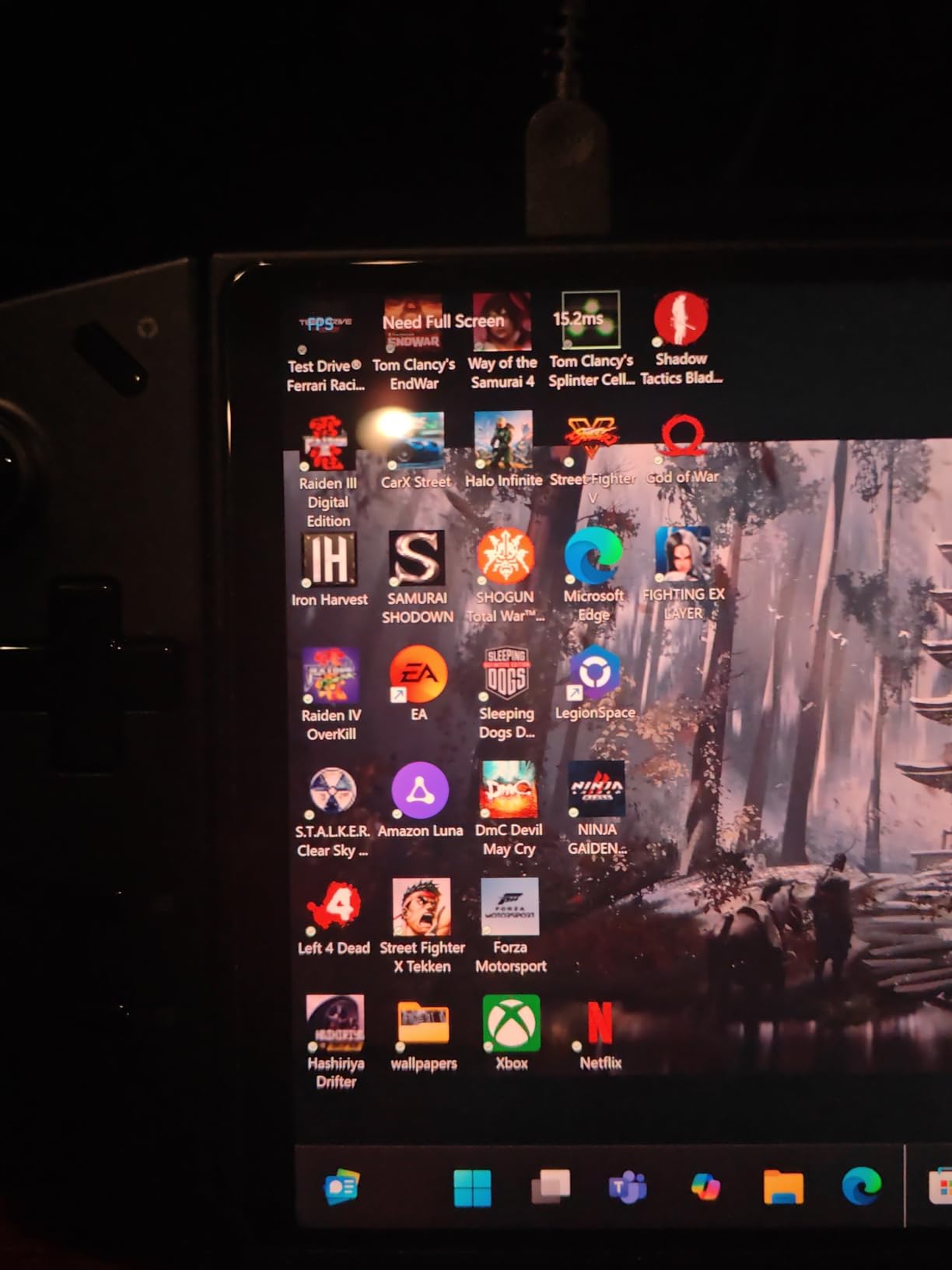
Owners report the chassis runs warm during longer sessions and that the glossy back picks up fingerprints quickly. Lenovo’s software layer is also a recurring theme in reviews, with complaints about bloat and an uneven update cadence, so expect some housekeeping time after setup.
Worth knowing before you commit: the touchscreen is a genuine 10-point panel rather than a token, and the integrated camera makes it usable for quick voice calls with friends, which matters if you play co-op away from a desk.
Skip it if the larger body and the warm chassis put you off, or if you want a device you can hold one-handed on a train. The ASUS ROG Ally is the compact alternative in this roundup.
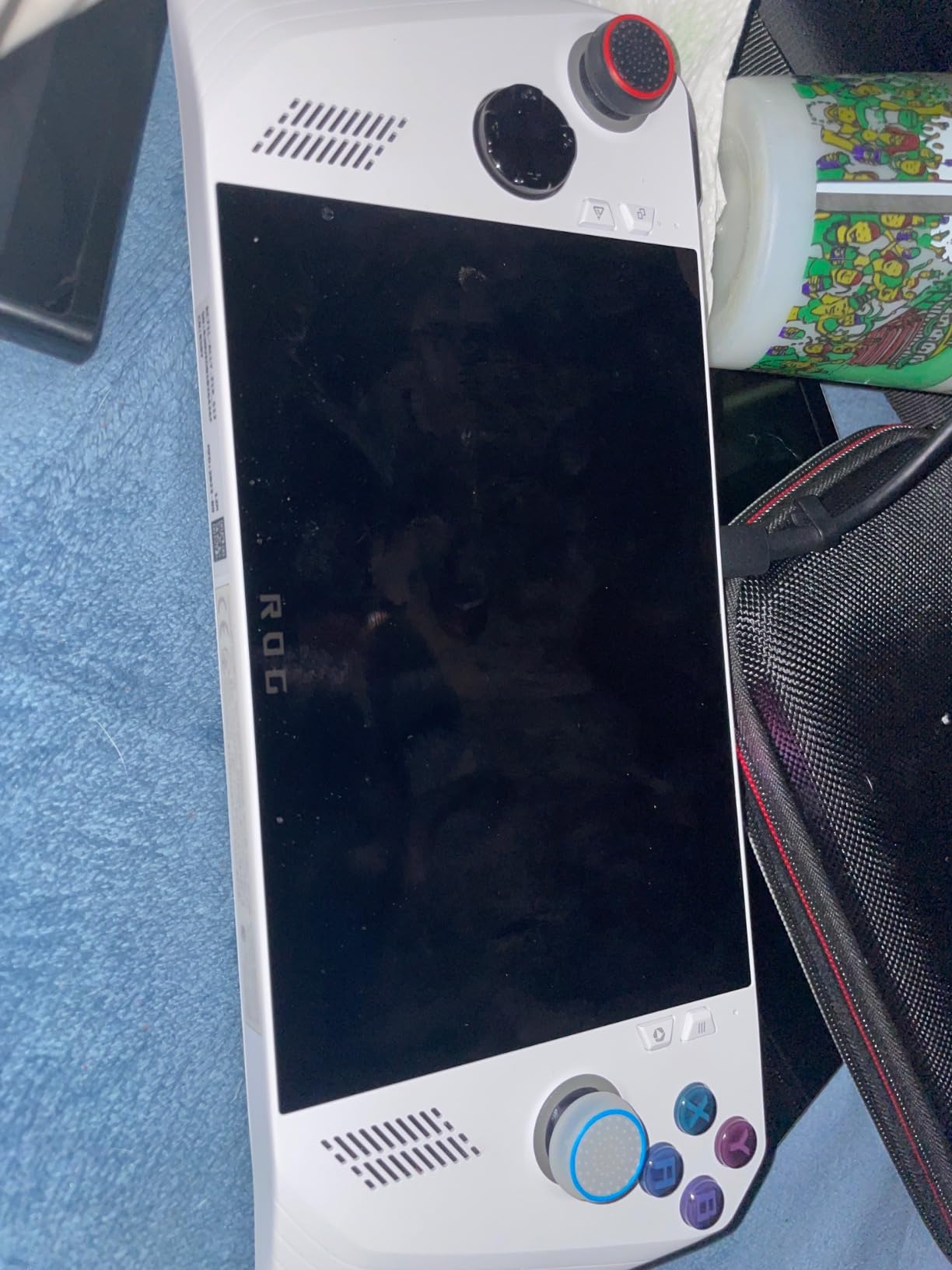
3. ASUS ROG Ally: The Best Compact Pick for AAA Titles
ASUS ROG Ally 7″ 120Hz FHD 1080p Gaming Handheld Touchscreen AMD Ryzen Z1 Extreme 16GB RAM 512GB White
Display: 7 in 1080p 120Hz
Storage: 512 GB
OS: Windows 11 Home
Pros
- Sharp 7-inch 1080p 120Hz display in a 1.1 lb body
- Zen 4 Ryzen Z1 Extreme handles modern AAA titles
- Windows 11 opens a far wider library than SteamOS
- Front-firing stereo speakers
- Good stick feel for the size
Cons
- Shorter battery life than larger handhelds
- Fan noise is audible under sustained load
- Battery modes are aggressive out of the box
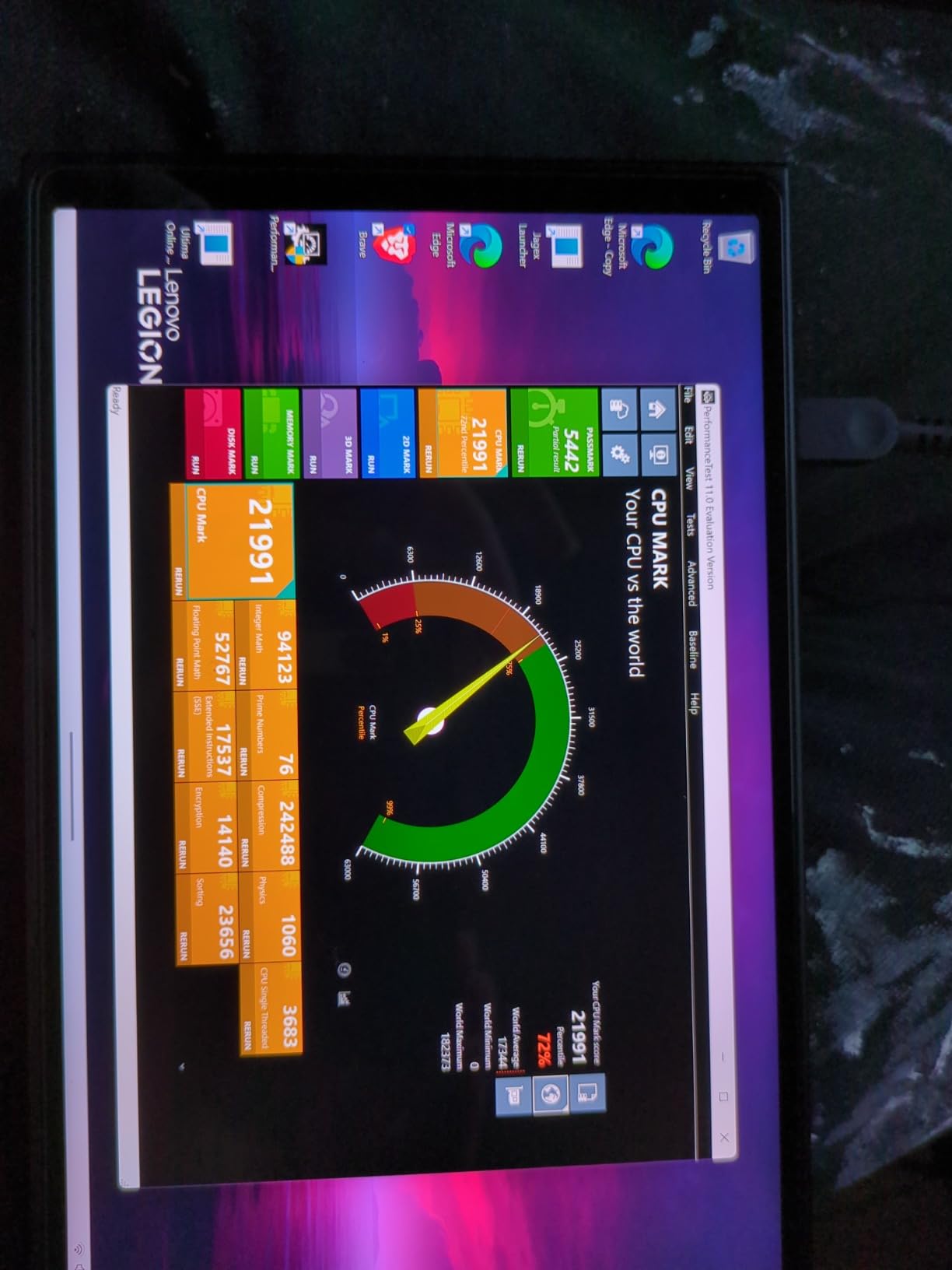
Windows in the lightest body here, at 1.1 pounds. The 7-inch 1080p touchscreen running at 120Hz gives you a denser picture than the 1280×800 panels used by the Steam Deck models, and the Zen 4 Ryzen Z1 Extreme with 16GB of RAM and 512GB of storage is the same silicon family as the costlier Windows handhelds.
Reviewers report it coping with modern AAA titles at sensible settings, and Windows 11 Home is the real argument for the device: a much larger catalogue than SteamOS, including anything outside Steam.
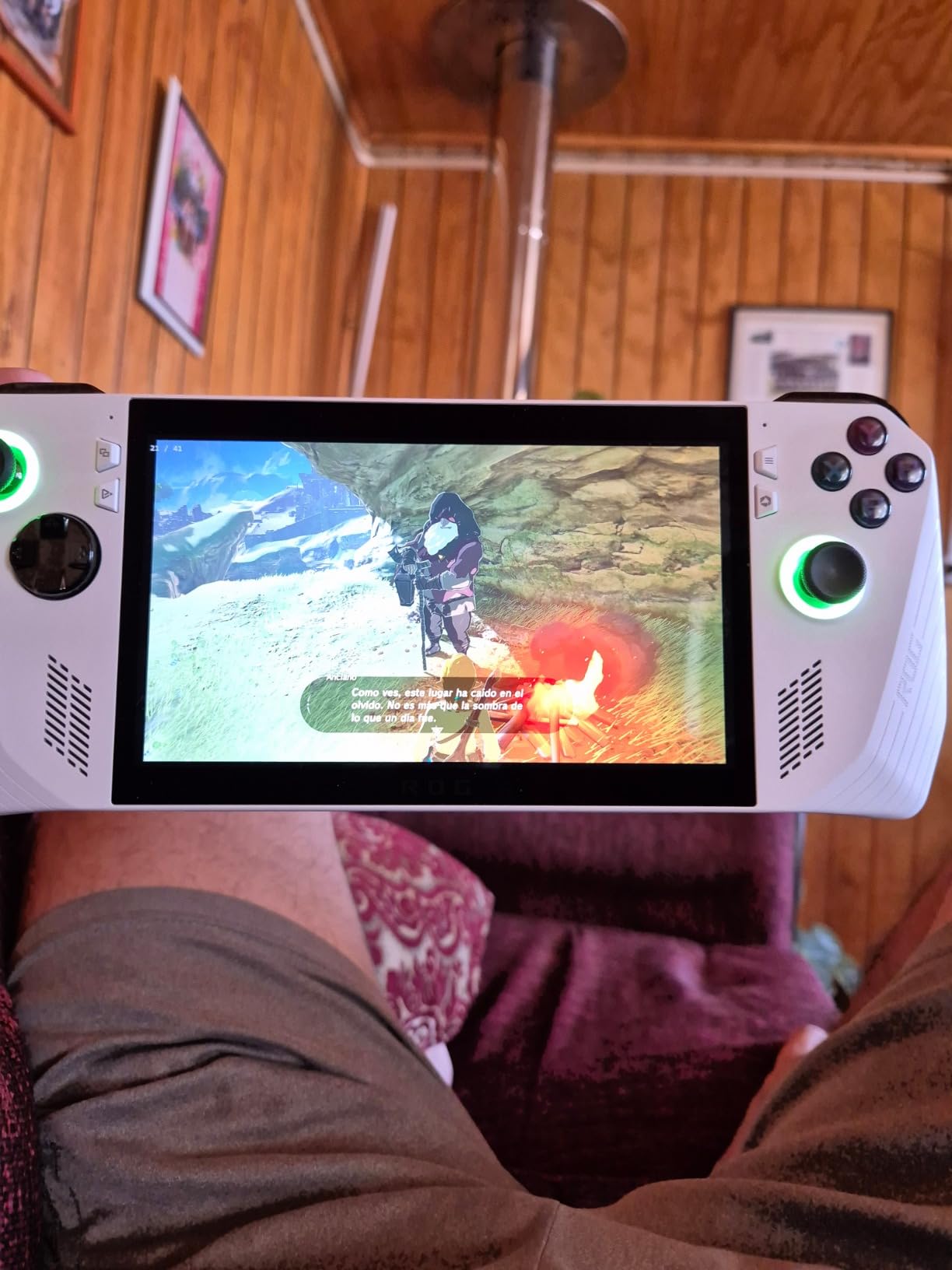
The main complaint owners raise is battery life, which is short for the class, especially on demanding games. Fan noise becomes audible under sustained load, and several reviews mention the battery performance modes being aggressive straight out of the box until you set your own profile.
That pairs with the small screen. If your sessions are long and away from a socket, the Steam Deck 64GB lasts longer between charges. If your sessions are short and you want the widest game library, this is the better buy.
The renewed ROG Ally later in this list is the same platform with cosmetic risk and a shorter warranty attached. The ROG Xbox Ally adds the console-style boot but a larger body, and the light chassis is what you give up in exchange.
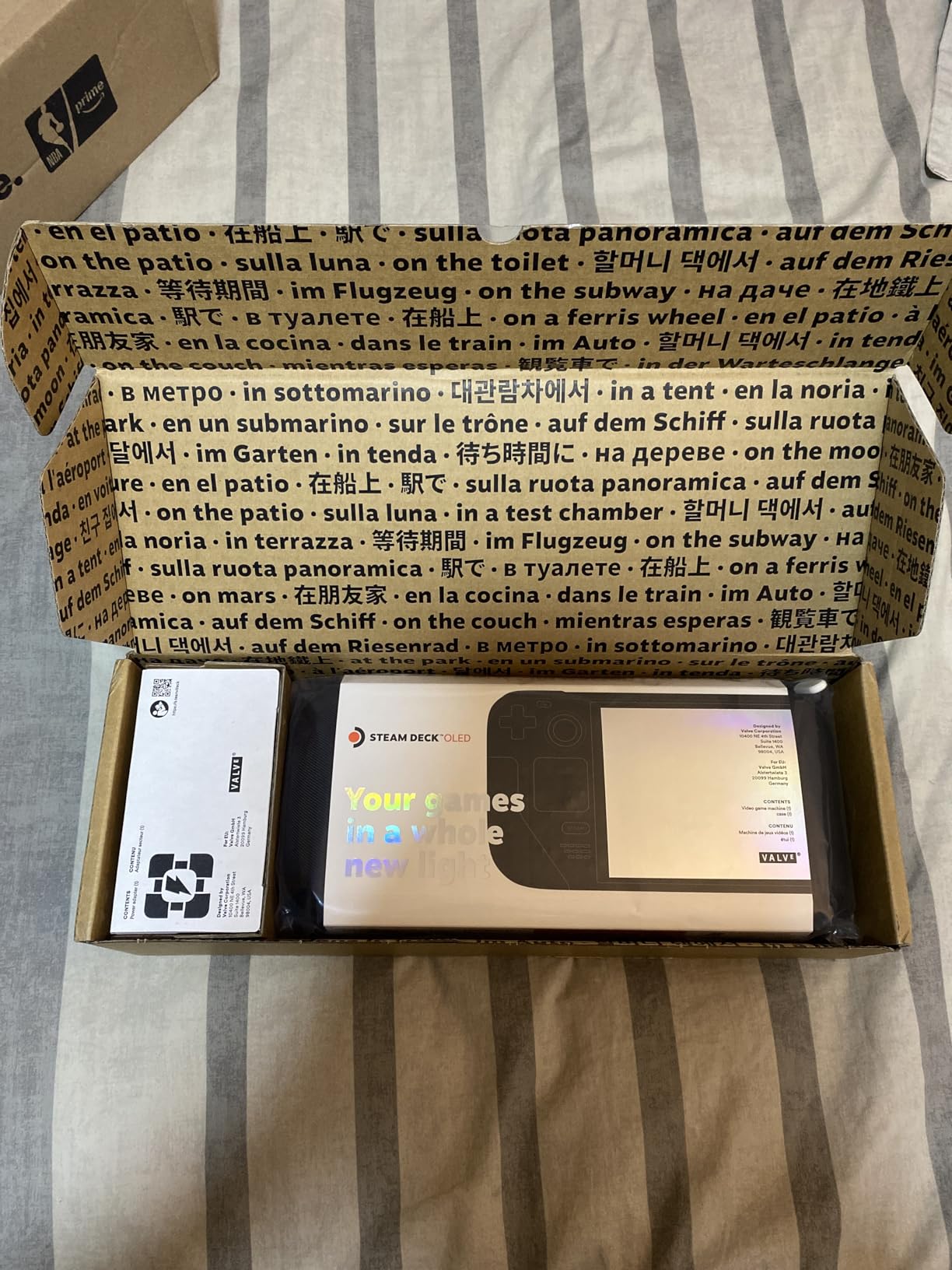
4. Steam Deck OLED 512GB: The Best Pick for Picture Quality
Valve Steam Deck OLED 512GB Handheld Gaming Console – Featuring A High Dynamic Range Screen, A Longer-lasting Battery, Faster Downloads, And Much More
Display: 7 in 1280x800 HDR OLED
Storage: 512 GB
OS: SteamOS
Pros
- Excellent HDR OLED panel with vivid colour and deep blacks
- Battery holds up better than the LCD model
- Faster storage means quicker game loads
- Interface suits players who are not technical
Cons
- Costs more than comparable Windows handhelds
- SteamOS library is narrower than Windows
- Fingerprints are obvious on the glossy screen
The screen is the reason to pay more here. Owners consistently describe the HDR OLED panel as vivid with deep blacks, and it is the visible difference between this and the LCD Deck at the start of the list, particularly in dim rooms where the black level matters.
Two other upgrades travel with the panel. Battery life improves over the LCD model, and faster storage cuts the wait from pressing play to loading a game, which is the friction that makes long handheld sessions feel tiring. At 4.5 stars from 297 ratings it is well regarded.
Owners also report the glossy screen shows fingerprints very easily, which is the practical cost of the OLED finish. Keep a cloth in the case.
A clue about who it suits: this is a player who mostly stays inside Steam and plays in the evening. The trade-offs are the higher outlay, a narrower library than any Windows handheld here, and 512GB of storage that fills quickly with modern titles. The internal drive is not user-upgradeable.
If picture quality is not the deciding factor for you, the Steam Deck 64GB at the top of this list gives you a similar software experience for less, and the Lenovo Legion Go S below gives you a user-replaceable drive.
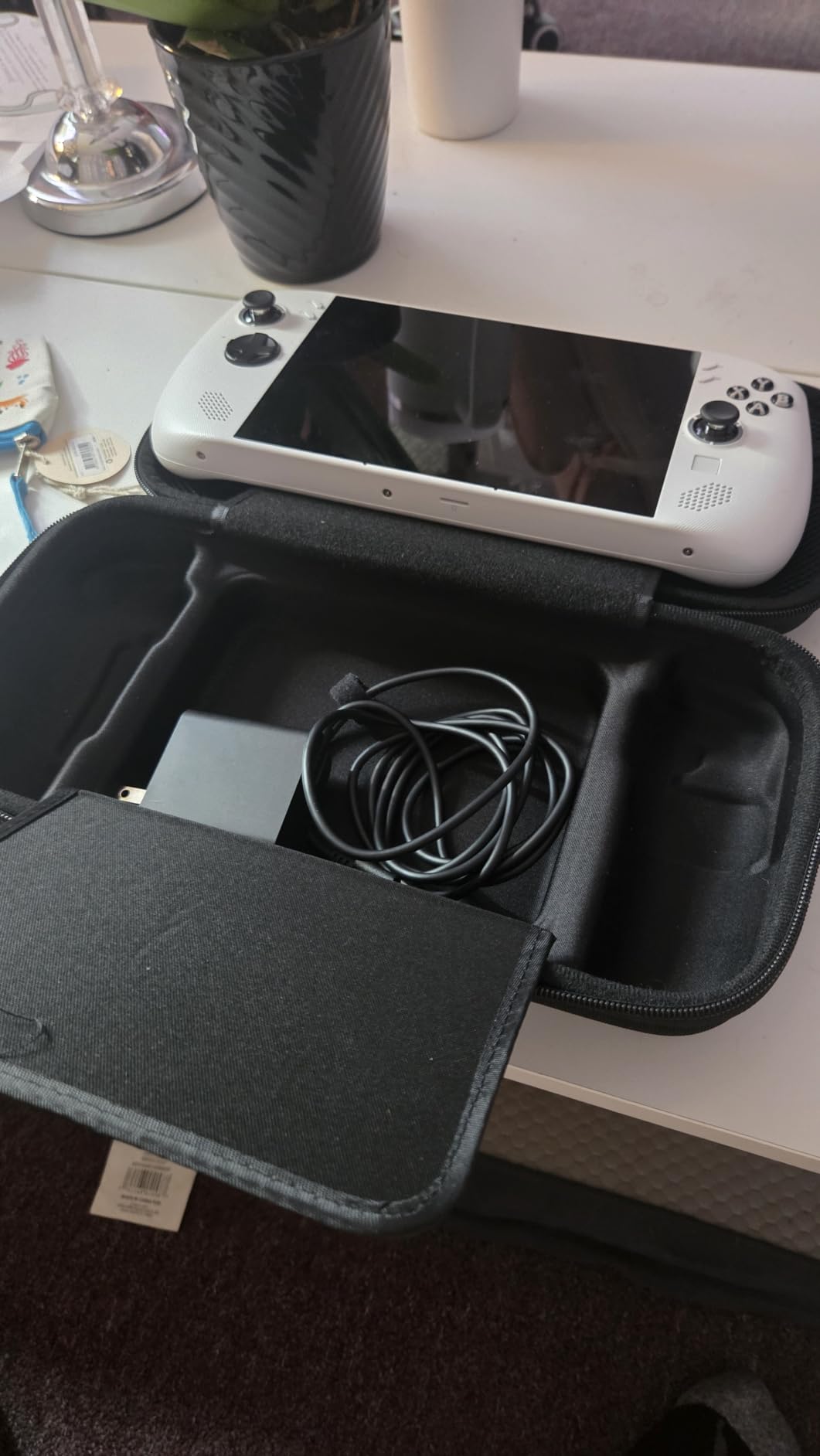
5. Lenovo Legion Go S: The Best Pick for Upgrades
Lenovo Legion Go S – 2025 – Mobile Gaming Console – AMD Radeon graphics – 8″ PureSight IPS Display – 120Hz – AMD Ryzen™ Z2 Go – 16GB Memory – 512GB Storage – Glacier White – Free PC Game Pass
Display: 8 in 120Hz IPS 500 nits
Storage: 512 GB SSD
OS: Windows 11 Home
Pros
- Sharp 8-inch 120Hz PureSight IPS at 500 nits and 100% sRGB
- User-replaceable M.2 SSD
- Ryzen Z2 Go with Radeon graphics runs demanding titles
- Cooling keeps performance steady
- Three months of PC Game Pass and EA Play included
Cons
- Short battery life under load
- Adjacent USB-C ports allow only one accessory at a time
- Windows setup takes about an hour
Open it up. The user-replaceable M.2 SSD is the practical reason this one earns a place on the list. Along with the renewed ROG Ally further down, it is one of only two devices here where swapping the drive for a larger one is a routine job rather than a project.
The 8-inch PureSight IPS touchscreen at 120Hz and 500 nits with 100% sRGB is bright enough for a room with daylight, and reviewers rate the anti-slip TrueStrike controllers as some of the most comfortable here. It ships with three months of PC Game Pass and EA Play included, which is a genuine add-on for a new buyer.
Owners report the strongest criticism is battery life under load, typically in the region of a couple of hours of demanding play on a charge. The two USB-C ports sit close enough together that only one accessory works at a time, which is an easy thing to overlook until you need a drive and power together.
The 16GB of memory is shared between system and graphics, so it is not all available to either. Windows setup is reported to take about an hour with the occasional glitch, so allow time before a trip rather than the night before.
Where it beats the Legion Go: a replaceable drive and a 500-nit panel that holds up in a bright room. Where it loses: a 4.0-star owner rating against the Legion Go’s 4.4, and a shorter battery life under load.
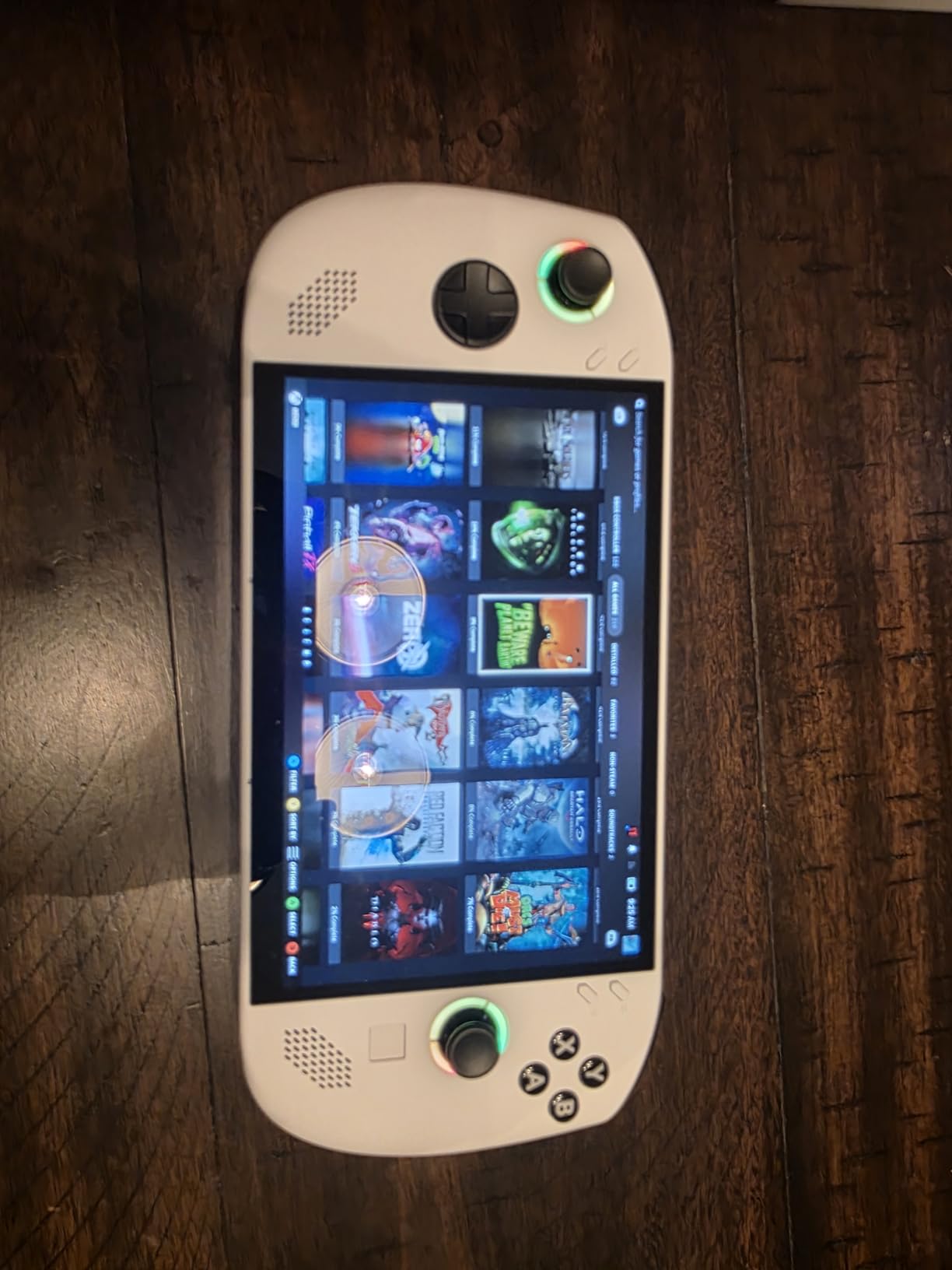
6. ROG Xbox Ally: The Best Pick for Console-Style Booting
ASUS ROG Xbox Ally Gaming Handheld 7″ 120Hz, AMD Ryzen Z2 A, 16GB / 512GB
Display: 7 in 120Hz IPS 500 nits
Storage: 512 GB
OS: Windows 11 Home
Pros
- Boots into the Xbox experience with Game Bar integration
- Performs well and the screen beats the Steam Deck at similar money
- Contoured grips with a balanced weight distribution
- Fast charging reaches about 50% in 30 minutes
- Fingerprint reader and Gorilla Glass touch
Cons
- Roughly one-and-a-half to two hours of battery
- Very hot in turbo mode
- Only offered in white
Nothing to configure if console behaviour is what you want. Owners report booting straight into the Xbox experience with Game Bar integration, so launching a game is one tap rather than a trip through a desktop.
Its screen beats the Steam Deck at similar money, and that is the hardware reason it is worth a look next to the other Windows picks here: a 7-inch 120Hz IPS touchscreen at 500 nits with FreeSync Premium VRR and Gorilla Glass, plus 16GB of LPDDR5X at 6400MHz and a 512GB SSD.
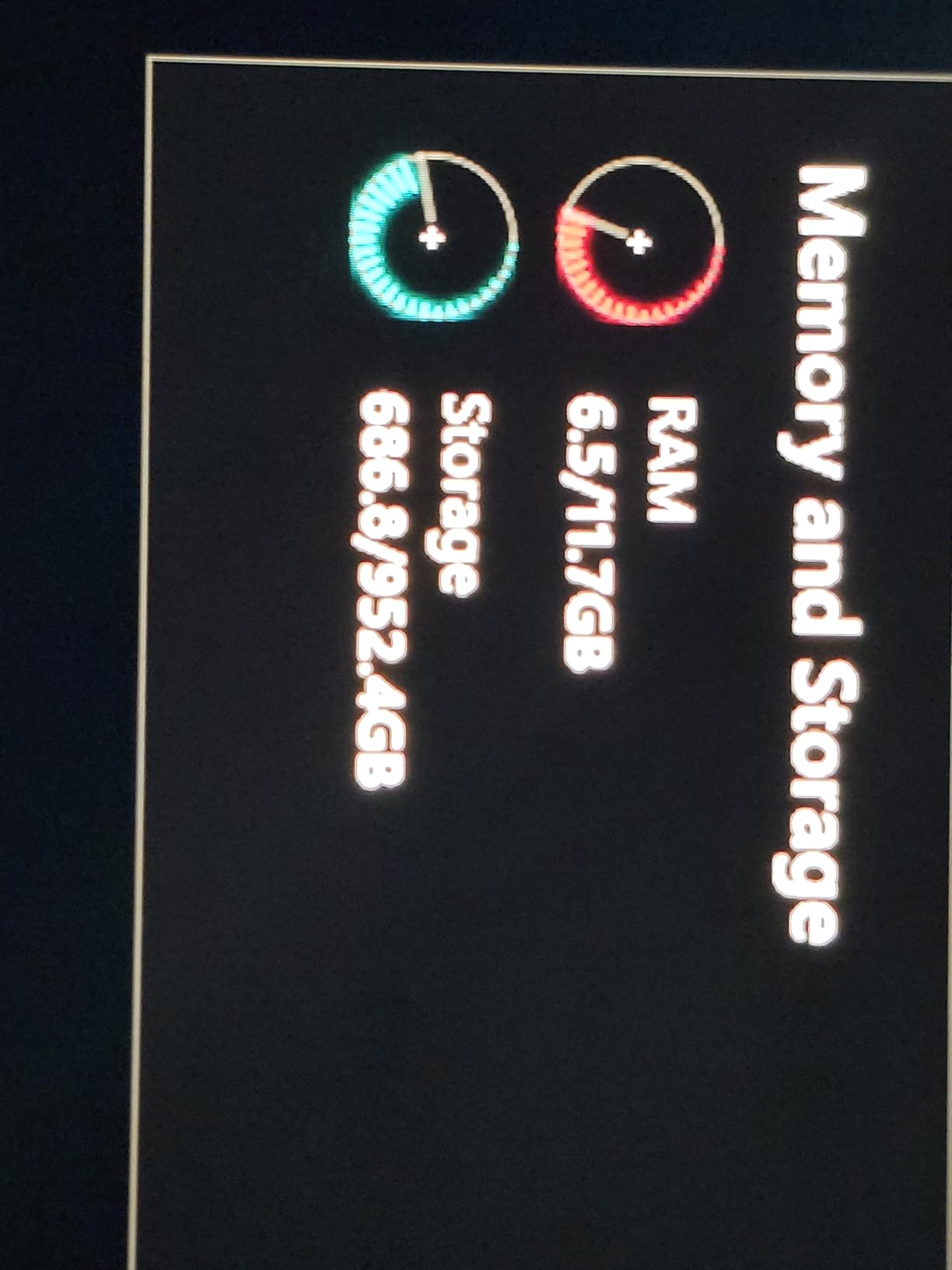
The complaints are consistent: roughly one-and-a-half to two hours of battery, and a device that runs very hot in turbo mode. Windows also needs some initial configuration before it reaches full performance, which is a real hour of your evening.
Skip it if you need it to survive a long flight untethered, or if a single colour option is a problem. It is offered in white only.
The trade against the original ASUS ROG Ally is body size: you give up the more compact 1.1-pound chassis and get a more console-like first run plus a larger battery with fast charging.
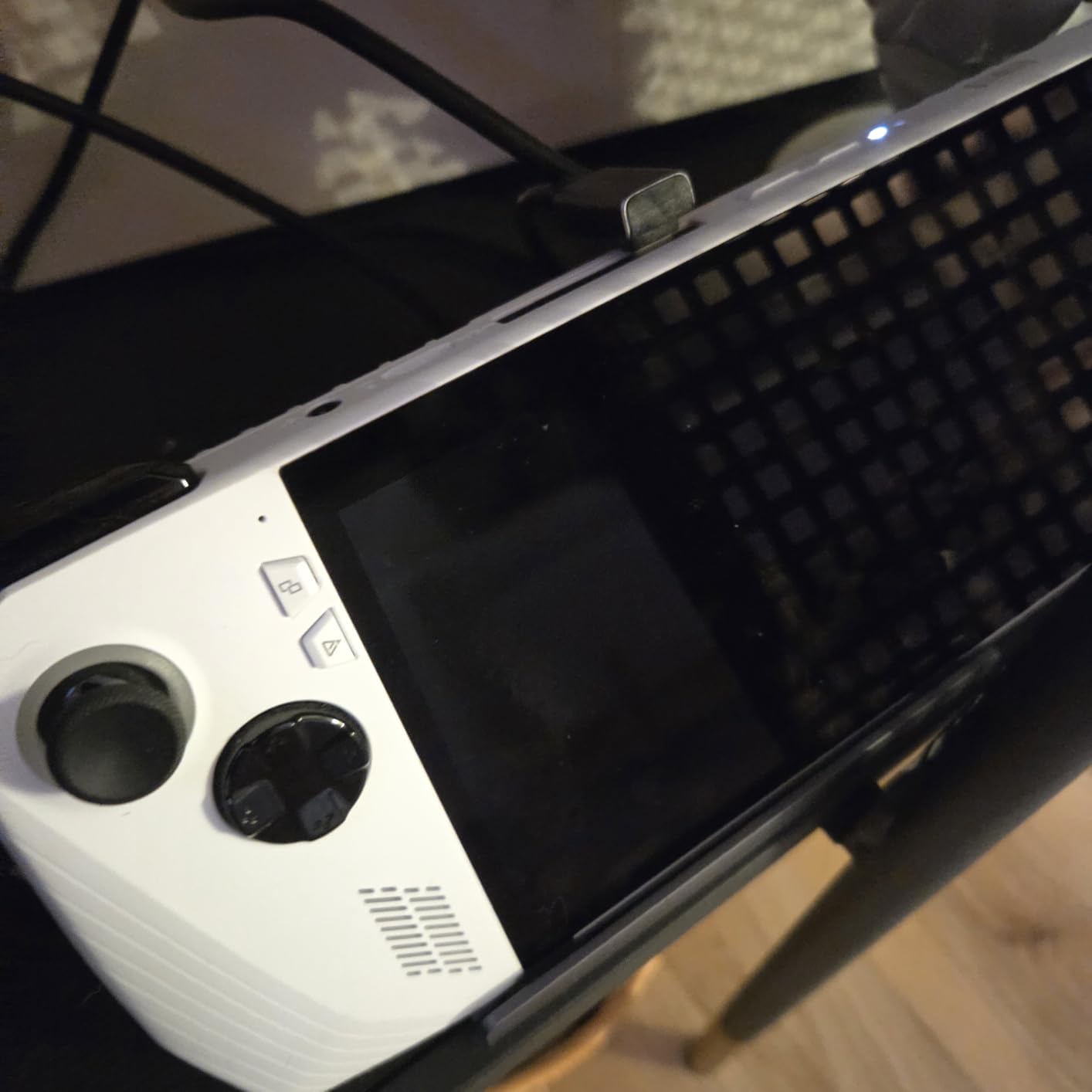
7. ROG Ally Renewed: The Best Renewed Route
ASUS ROG Ally Gaming & Entertainment Laptop (AMD Ryzen Z1 Extreme 8-Core, 16GB LPDDR5X 6400MHz RAM, 512GB M.2 2242 PCIe SSD, AMD Radeon, 7″ 120 Hz Touch Win 11 Home) (Renewed)
Display: 7 in 1080p 120Hz touch
Storage: 512 GB SSD
OS: Windows 11 Home
Pros
- Renewed pricing sits well below new for the same Zen 4 platform
- 16GB LPDDR5X at 6400MHz with a user-replaceable 2242 M.2 drive
- 7-inch 1080p 120Hz touchscreen works for gaming and desktop tasks
- Fingerprint reader and Windows 11 Home included
Cons
- Renewed condition means cosmetic wear and less remaining warranty
- Only 74 ratings so a thin owner sample
- Fan noise under sustained load
The lowest entry outlay in this list, for anyone who wants the Zen 4 platform rather than the newest silicon. Owners point to the price gap against a new unit of the same type as the entire reason for choosing it, and the 2242 M.2 drive is user-replaceable for a larger capacity later.
Under the renewed label you still get a 7-inch 1080p 120Hz touchscreen, 16GB of LPDDR5X at 6400MHz, a 512GB M.2 2242 PCIe SSD, a fingerprint reader and Windows 11 Home. The screen works for desktop tasks as well as games, which is handy for a device that doubles as a small travel PC.
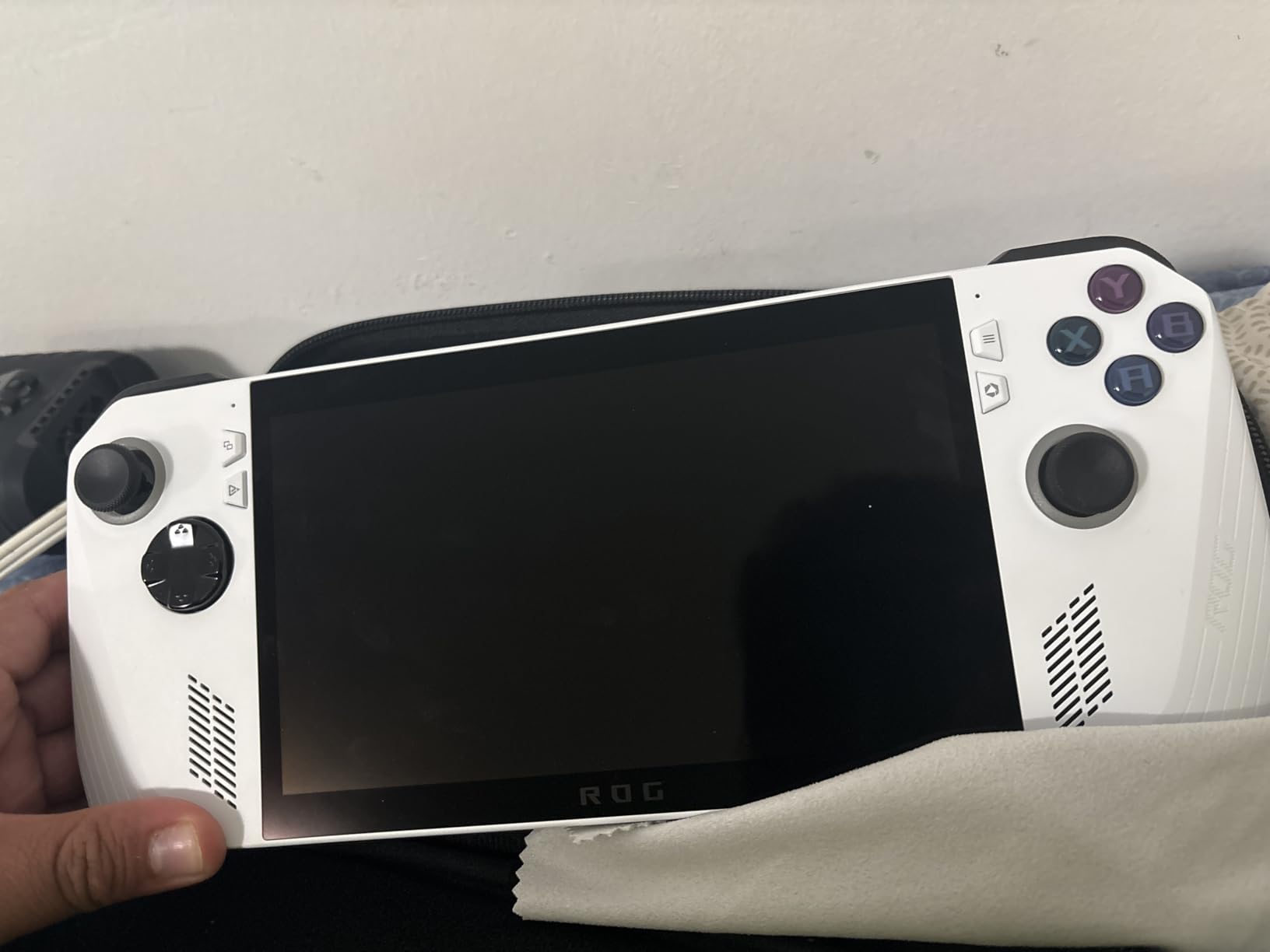
The honest trade-off is condition. Renewed means possible cosmetic wear and a shorter remaining warranty, and the 4.0-star average comes from 74 ratings rather than the hundreds the new models carry.
Battery endurance is typical of the original design rather than improved, and fan noise appears under sustained load. Treat it as a value purchase, not a bargain with no caveats.
If you want the same platform without the wear question, the ASUS ROG Ally earlier in this list is the new-unit version of this device.
8. GPD Win Mini 2025: The Best Pick for Tiny Pockets
LANRUO GPD Win Mini 2025 [AMD AI 370-32GB+2TB] 7 Inches Mini Handheld Win 11 PC Game Console Gameplayer 1920X1080 Touchscreen Laptop Tablet PC (Black, AI 370-32GB+2TB)
Display: 7 in 1080p 120Hz IPS
Storage: 2 TB SSD
OS: Windows 11 Home
Pros
- Ryzen AI 9 HX 370 with 32GB LPDDR5 and 2TB of storage
- 530 g and 27 mm thick
- Hall sensor sticks and a 6-axis gyroscope
- 7-inch 1080p 120Hz IPS at 500 nits with Gorilla Glass 6
- DTS:X Ultra stereo audio
Cons
- 28 Wh battery limits real play time
- One USB port plus HDMI
- Only 18 ratings so limited owner feedback
Size is the whole argument here. At 530 g and 27 mm thick it is the smallest device in this roundup by a wide margin, and it genuinely fits a coat pocket rather than a small bag.
Nothing is cut from the specification sheet to get there. A Ryzen AI 9 HX 370 with 12 cores, 32GB of LPDDR5 and 2TB of storage sits behind a 7-inch 1920×1080 IPS touchscreen at 500 nits with Gorilla Glass 6 and DC dimming. Hall sensor sticks have no dead zone, and the 6-axis IMU suits emulation and motion controls.
The 28 Wh battery is the real limitation, and it caps practical play time well below what the larger batteries in this list manage. There is also a single USB port alongside HDMI, so docks and external drives are awkward.
Skip it if you travel long distances without a charger, or if you want a body of owner feedback behind the rating. The 4.1-star average rests on 18 ratings, which is a very small sample compared with the 1849 behind the Steam Deck.
Compared with the ASUS ROG Ally, the processor tier and storage are several steps higher and the footprint is dramatically smaller. That combination is exactly why the outlay lands where it does.
How to Choose Handheld Gaming PCs During Prime Big Deal Days
Performance for the Games You Play
Look at the processor generation rather than the badge, because the same chip appears across several models here. A Zen 4 Ryzen Z1 Extreme class chip, as used in the ASUS ROG Ally and the Lenovo Legion Go, is a sensible floor for mainstream AAA titles at 720p or 1280×800, while a Ryzen AI 9 HX 370 class chip, as in the GPD Win Mini 2025, sits well above it.
Cooling decides how long that performance holds. Owners of the larger models report sustained-load heat and fan noise, so if you plan long sessions, expect a profile that settles rather than one that boosts flat out. Memory matters too: 16GB is the common floor in this group, and shared memory on some models means graphics and system do not each get the full amount.
Portability, Weight and Build Quality
Weight is the single most personal factor. The GPD Win Mini 2025 at 530 g and the ASUS ROG Ally at 1.1 pounds travel easily; the Legion Go S at 1.6 pounds is comfortable but noticeable; the Steam Deck at 660 g and the ROG Xbox Ally at 2 pounds are the heaviest in the group. A quick test with both hands settles this faster than any spec sheet.
If you are choosing between a handheld and something with more power but no portability, the honest comparison is against affordable gaming laptops for desk-bound play, or against mini PCs for small desks if you want maximum performance for a monitor. A handheld trades raw power for the ability to sit on a sofa or a train with a controller in your hands.
Display, Controls and Audio
Panel size matters more than resolution for most people. The 8.8-inch WQXGA screen in the Legion Go and the 8-inch panel in the Legion Go S are visibly roomier than any 7-inch device here, while 1280×800 on a 7-inch OLED gives you sharper text but a smaller canvas. A 500-nit brightness and a full sRGB gamut, listed for the Legion Go S, the ROG Xbox Ally and the GPD Win Mini 2025, make a screen easier to read near a window.
Controls decide how a long session feels. Hall sensor sticks, listed on the GPD Win Mini 2025, remove the drift worry that owners of stick-based models raise. Remappable inputs, as on the Legion Go, let you put the important bindings somewhere your thumbs naturally land. Front-firing speakers, listed on the ROG Ally, carry further than downward-facing ones when the device rests on a table.
Battery Life and Game Library Support
Read battery claims sceptically. Owners report roughly one-and-a-half to two hours for the ROG Xbox Ally under load, and much shorter sessions for the Legion Go S under the same kind of pressure, while the Steam Deck OLED is repeatedly described as holding up better than the LCD model. A power bank remains a reasonable workaround for anyone who plays away from a socket.
Storage is the second half of that decision. 512GB is the common figure here and it fills quickly with modern titles; only the Legion Go S and the renewed ROG Ally give you a user-replaceable drive, and the two Steam Deck models are fixed. For the game library itself, SteamOS opens Steam cleanly and nothing else, Windows 11 handhelds cover a much wider catalogue, and SteamOS can be installed on compatible Windows handhelds for buyers who want both.
How to Shop Handheld Gaming PC Deals During the Sale
Check the exact model code before you commit, because these manufacturers reuse similar names across generations, and the Z1 Extreme appears in two listings in this roundup with different bodies. Confirm whether the storage is the bundled capacity or an upgraded one, since a few listings note a seller modification, and check what is in the box: the Steam Deck listing includes a carrying case, while the Windows handheld listings do not list one.
Look at who sells and who ships the unit, and check whether the condition is new or renewed, as on the ROG Ally Renewed entry above. Most Prime Big Deal Days offers need a Prime membership, and a free trial counts. Offers change through the event, so confirm the price on the live listing at the moment you buy.
- Match the processor to the games you actually own, not the model year.
- Decide between a 7-inch and an 8-inch screen by where you will actually play.
- Treat the stated battery figures as load-dependent and plan a charger.
- Check whether the drive can be upgraded later.
- Confirm the storage capacity and whether the seller modified it.
- Verify new or renewed condition and who handles the return.
Frequently Asked Questions
Is Amazon Prime membership required for Prime Big Deal Days handheld gaming PC offers?
Most Prime Big Deal Days offers require a Prime membership, and a free trial counts for the length of the trial. A small number of listings run without Prime, so check the Prime badge on the product page before you assume. Prime Big Deal Days runs October 6-7, 2026.
When does Amazon Prime Big Deal Days run in 2026?
Amazon Prime Big Deal Days runs October 6-7, 2026, and the offers tied to it last only as long as that window is open. Handheld prices can also change outside those dates, so treat any figure you see beforehand as a reference and confirm the current offer on the live listing before buying.
Do handheld gaming PCs run the same games as a gaming PC?
Mostly. They run PC games on a lower-power processor, so settings and resolution are lower, but the catalogue is the same on Windows machines. Some anti-cheat titles are not supported at all. If you prefer playing on a bigger screen, our picks for portable gaming monitors pair well with any of these devices.
Can handheld gaming PCs play games from libraries such as Steam?
Yes, and that is their main purpose. SteamOS devices launch Steam titles with a controller and nothing else, while Windows 11 handhelds cover Steam, Epic, GOG and Game Pass. SteamOS can also be installed on compatible Windows handhelds, which suits buyers who want the console-like interface and a wider catalogue.
How much storage does a handheld gaming PC need?
At least 512GB is a sensible starting point for modern titles, and 64GB only works if you lean on a microSD card or an external drive. Because most modern games run tens of gigabytes each, a 512GB drive fills within a year or two of steady play, so a user-replaceable M.2 slot is worth paying for if you can find one.
SteamOS or Windows 11 on a handheld, which should you choose?
Choose SteamOS for a console-like experience, better battery behaviour and a controller-first interface. Choose Windows 11 for a wider library including anything outside Steam, plus the Xbox-style launcher. The Legion Go S is the pick here that can run either, which makes it a safe choice if you are still undecided.
Final Verdict: Best Amazon Prime Big Deal Days Handheld Gaming PC Deals
Buy the Valve Steam Deck 64GB if your games live in Steam and you want the shortest path from picking a title to playing it. The 7-inch 16:10 LCD, the 64GB drive and 1849 ratings behind a 4.6-star average make it the safest pick to watch during the sale.
Buy the Steam Deck OLED 512GB if picture quality is what you are paying for, and the Lenovo Legion Go if you want the largest screen and the best port selection in the group. The ASUS ROG Ally serves players who want Windows in the lightest body, the ROG Xbox Ally suits anyone who prefers a console-style boot, and the Legion Go S is the one to buy if you intend to upgrade the drive yourself.
The ROG Ally Renewed is the route to the same Zen 4 platform for less, with wear and warranty trade-offs, and the GPD Win Mini 2025 is for buyers who care most about a 530 g footprint. Check the live listing for the current offer before the event window closes.