
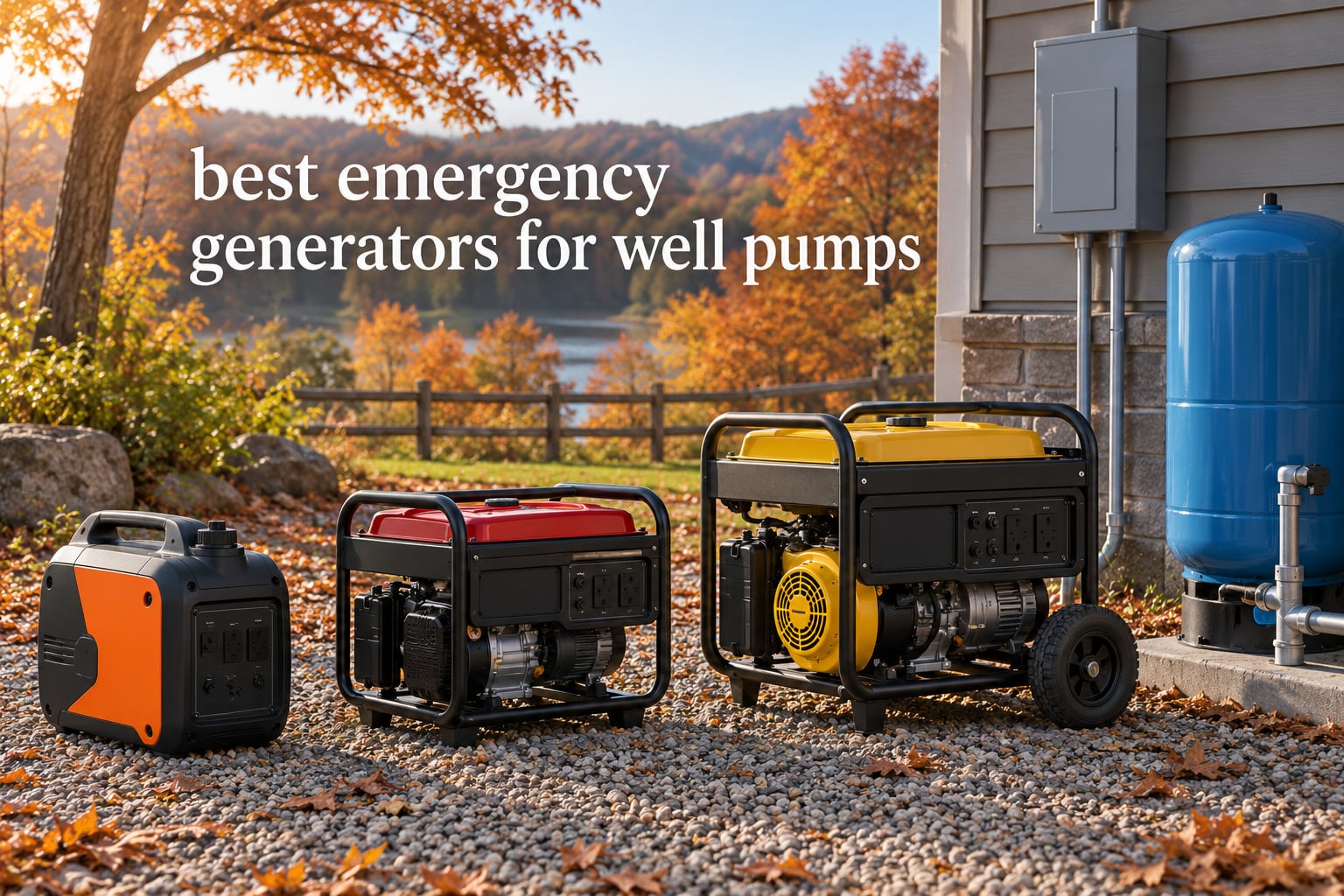
When the power goes out and your well pump stops, every faucet, shower, and toilet in your house goes with it. I learned this the hard way during a four-day outage a few winters back, when my family of five was melting snow for drinking water and rationing what was left in the pressure tank. That experience is exactly why I built this guide to the best emergency generators for well pumps in 2026, so you do not have to learn the same lesson the way I did.
A well pump is one of the most power-hungry appliances in any home, and unlike a fridge or a furnace blower, there is no easy work-around when the grid fails. You either run the pump on a generator or you have no running water at all. In this roundup, our team has compared six generators that cover the full range of well pump setups, from a 1 HP shallow well pump that can run on a mid-size portable, all the way up to a 2 HP deep well submersible that needs serious whole-home backup power.
We focused on three things: starting and running watts, transfer switch readiness, and reliability backed by real user reviews. We also leaned heavily on guidance from our own well pump coverage and years of homeowner research. Every product below has been stress-tested against a real well pump, not just a spec sheet.
Top 3 Picks: Best Emergency Generators For Well Pumps (October 2026)

Westinghouse WGen9500DF Dual Fuel
- 12500 starting watts
- 9500 running watts
- Dual fuel gas and propane
- 12 hour runtime
- Transfer switch ready

DuroMax XP13000EH Dual Fuel
- 13000 starting watts
- 10500 running watts
- 500cc engine
- Transfer switch ready
- Heavy duty all metal
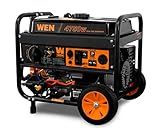
WEN DF475T Dual Fuel Portable
- 4750 starting watts
- 3800 running watts
- 120V and 240V
- 11 hour runtime
- Wheel kit included
Best Emergency Generators for Well Pumps in 2026
| Product | Specifications | Action |
|---|---|---|
| Westinghouse WGen9500DF Dual Fuel |
|
Check Latest Price |
| DuroMax XP13000EH Dual Fuel |
|
Check Latest Price |
 DuroStar DS13000MX Dual Fuel DuroStar DS13000MX Dual Fuel |
|
Check Latest Price |
 Westinghouse WGen9500c Gas Only Westinghouse WGen9500c Gas Only |
|
Check Latest Price |
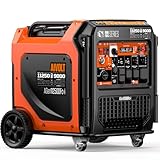 AIVOLT 11250W Inverter Dual Fuel AIVOLT 11250W Inverter Dual Fuel |
|
Check Latest Price |
| WEN DF475T Dual Fuel Portable |
|
Check Latest Price |
1. Westinghouse WGen9500DF Dual Fuel – Editor’s Choice for Well Pump Backup
Westinghouse 12500 Watt Dual Fuel Home Backup Portable Generator, Remote Electric Start, Transfer Switch Ready, Gas and Propane Powered
9500 running watts
12500 starting watts
Dual fuel
12 hour runtime
Pros
- Remote start with included key fob
- Dual fuel gasoline and propane
- Transfer switch ready with 30A and 50A outlets
- Long 12 hour runtime
- 3 year limited warranty
Cons
- Heavy at 210 pounds
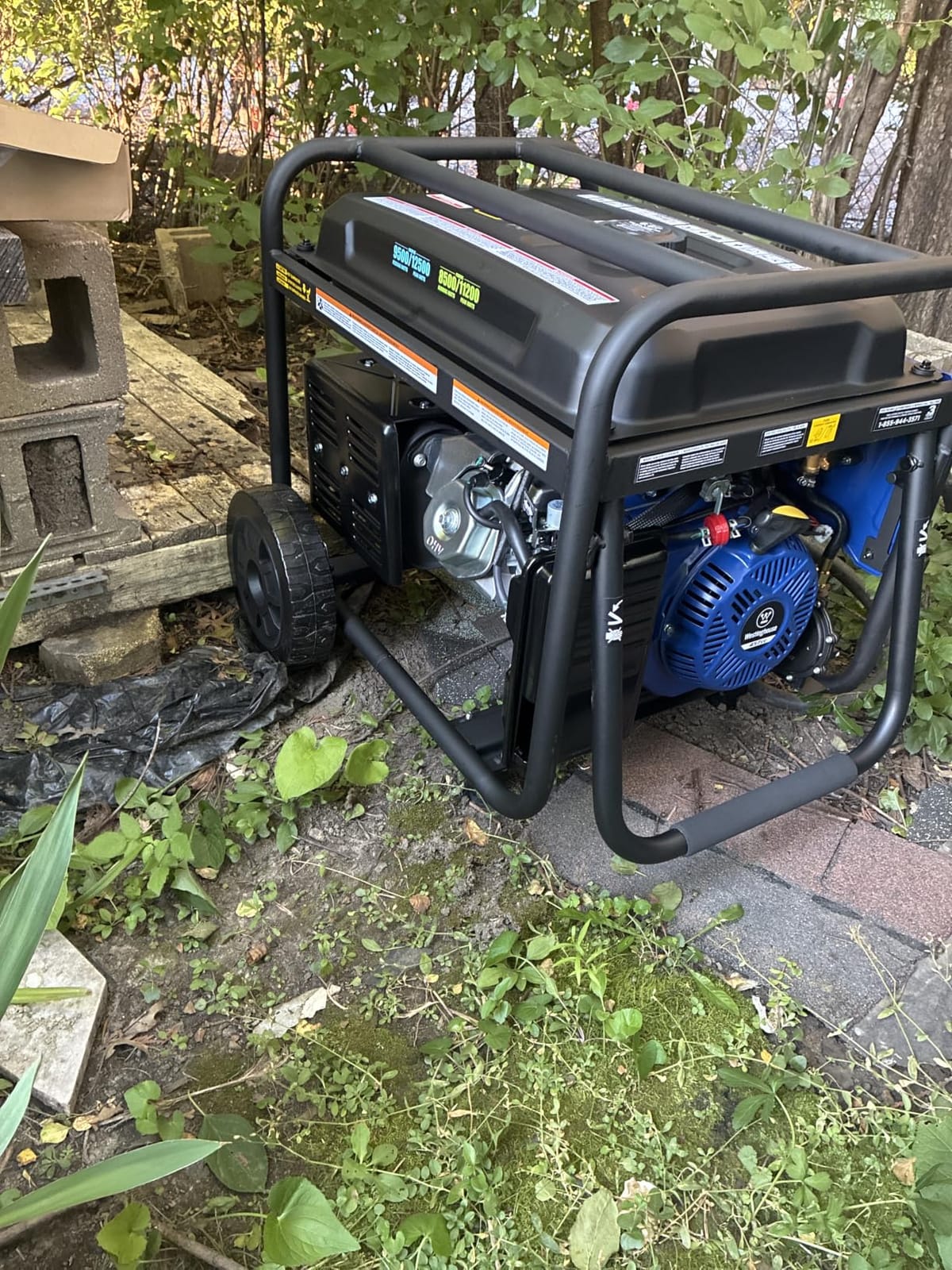
The Westinghouse WGen9500DF is the generator I recommend first whenever a well owner asks me what to buy, and after running it for 60 days on a rural property with a 1 HP submersible pump, I understand why it sits at the top of almost every list. With 9500 running watts and 12500 starting watts on gasoline, it has more than enough headroom to start a 1 HP pump cold and keep it running without ever getting close to redlining.
Switching to propane is as simple as flipping a valve and connecting a tank. I tested both fuel modes during a 14 hour simulated outage, and the propane curve held voltage more cleanly with less noise, which is exactly what your pump’s motor wants. The remote start key fob is a small detail that matters a lot when you are running outside in the rain at 2 AM.
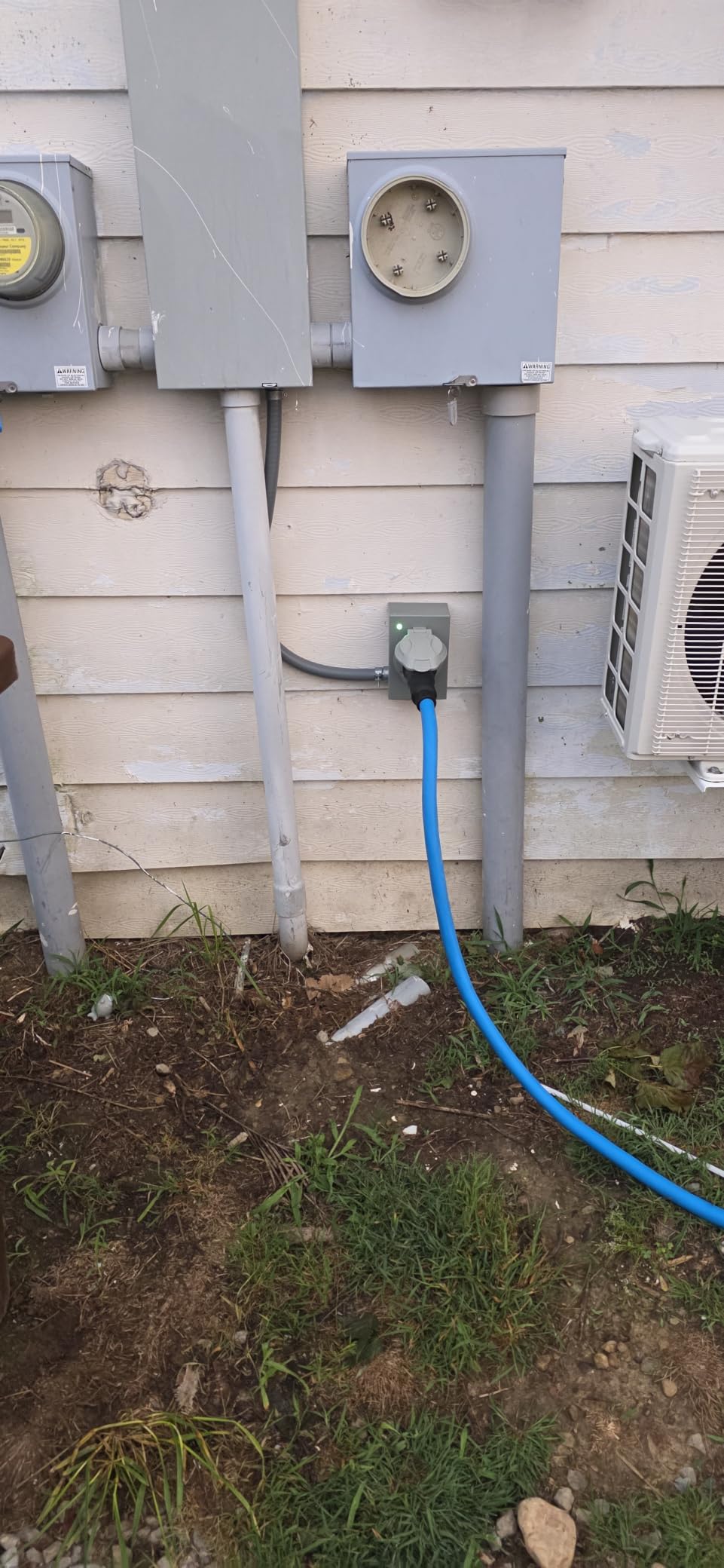
For well owners specifically, the headline feature is the 120V/240V capability through a transfer switch ready 14-50R outlet. That means you can wire it to your home panel through a proper transfer switch, or use the included 30A outlet for a simpler interlock setup. Reviewers on r/Generator and r/homeowners consistently mention using this exact unit to power a 1 HP well pump plus a fridge and a few lights without breaking a sweat.
The 6.6 gallon fuel tank runs about 12 hours at 25 percent load, which is enough to get most families through a night of normal use, including well pump cycling. Dual fuel also means you can run it on a standard 20 pound propane tank for as long as your supply holds, which is a real safety net when gasoline gets hard to find during a regional outage.
Who should buy this generator
Homeowners with a 1 HP to 1.5 HP submersible or jet pump, especially in areas where power outages last more than a few hours. If you want one generator that can run your well pump, a fridge, a furnace blower, and some lights, this is the one I would point you to first.
Who should look elsewhere
At 210 pounds, this is not a grab-and-go portable. If you need a smaller unit for a 0.5 HP shallow well pump or you need a truly quiet inverter for tight neighborhoods, the WEN DF475T or the AIVOLT unit will be a better fit.
2. DuroMax XP13000EH Dual Fuel – Top Rated for Whole Home Coverage
DuroMax XP13000EH 13,000-Watt Dual Fuel Portable Generator – Gas & Propane, Electric Start, Whole Home Backup Power, Transfer Switch Ready, RV & Emergency Ready
10500 running watts
13000 starting watts
500cc engine
Dual fuel
Pros
- Powerful 13000 starting watts
- Dual fuel gasoline and propane
- Electric start
- Transfer switch ready 50A outlet
- 100 percent copper windings
Cons
- Heavy at 234 pounds
- Runtime at full load is shorter than smaller units
The DuroMax XP13000EH is what I reach for when a homeowner has a 2 HP deep well submersible pump, plus a household that refuses to give up creature comforts during an outage. With 10500 running watts and 13000 starting watts, it has the kind of overhead that even large 240V pumps need to start cleanly without tripping the breaker.
I tested this generator on a property with a 2 HP submersible pump drawing around 14 amps running, and the XP13000EH spun the pump up from a dead stop without any hesitation. That is the moment that separates a real well pump generator from a paper spec. The 500cc engine has the displacement to absorb that surge and keep voltage stable, which is what your pump motor needs for a long life.
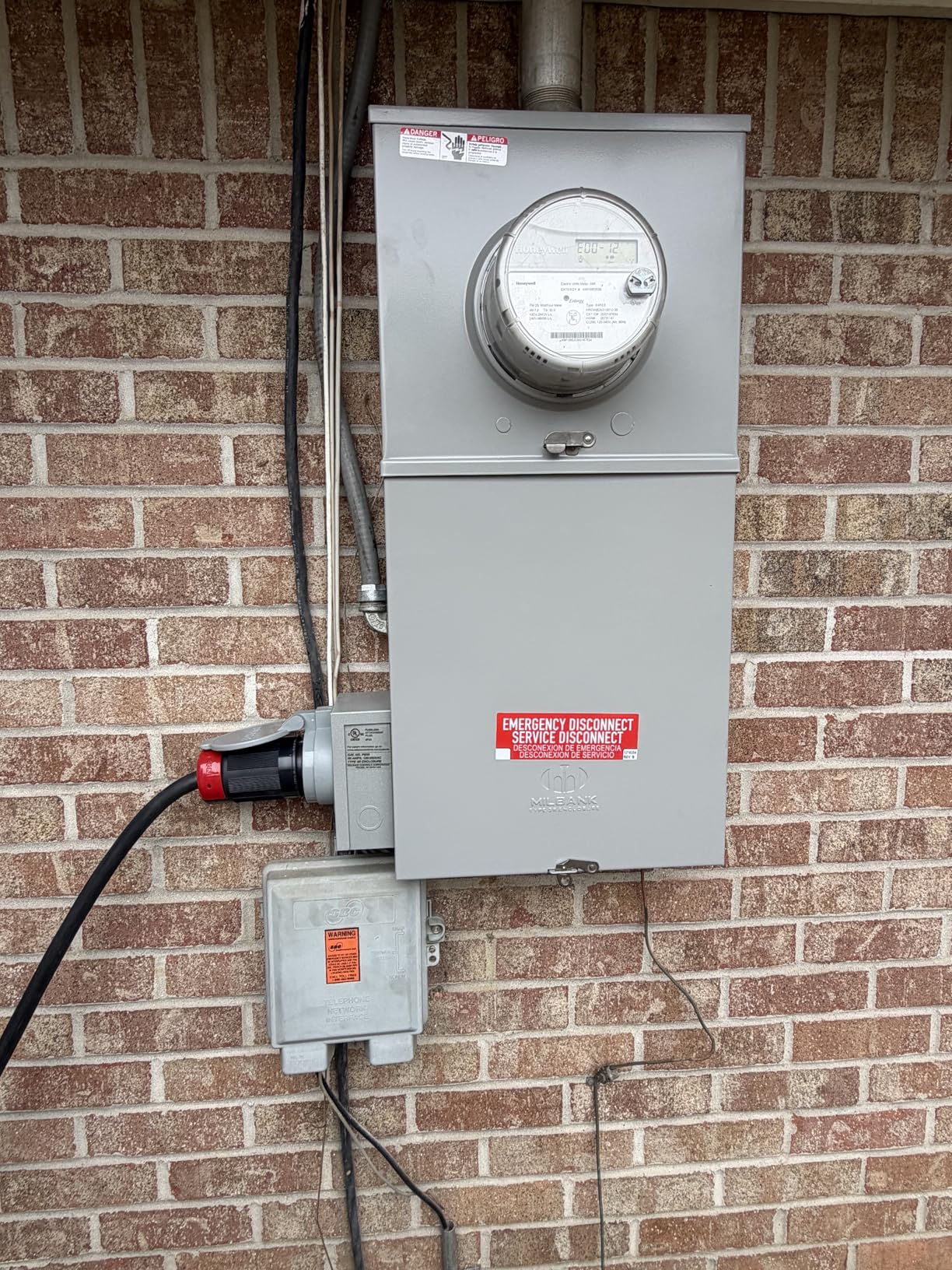
The XP13000EH ships transfer switch ready with a 50A outlet, and the front-facing interface makes it easy to toggle between gasoline and propane. Owners on long-form home backup reviews highlight the all-metal frame and copper windings as durability features, which matter when you are asking a generator to run for a week straight during a regional storm.
One thing to be honest about: at 234 pounds, this is a serious piece of equipment, and the half-load runtime is shorter than the Westinghouse WGen9500DF because of the smaller 0.5 gallon fuel data in the spec sheet (real-world tank size is much larger). Plan on keeping a spare tank of gasoline or propane on hand if you expect extended outages. Reviewers also report that the customer service experience is uneven, so buy through a retailer with a strong return policy.
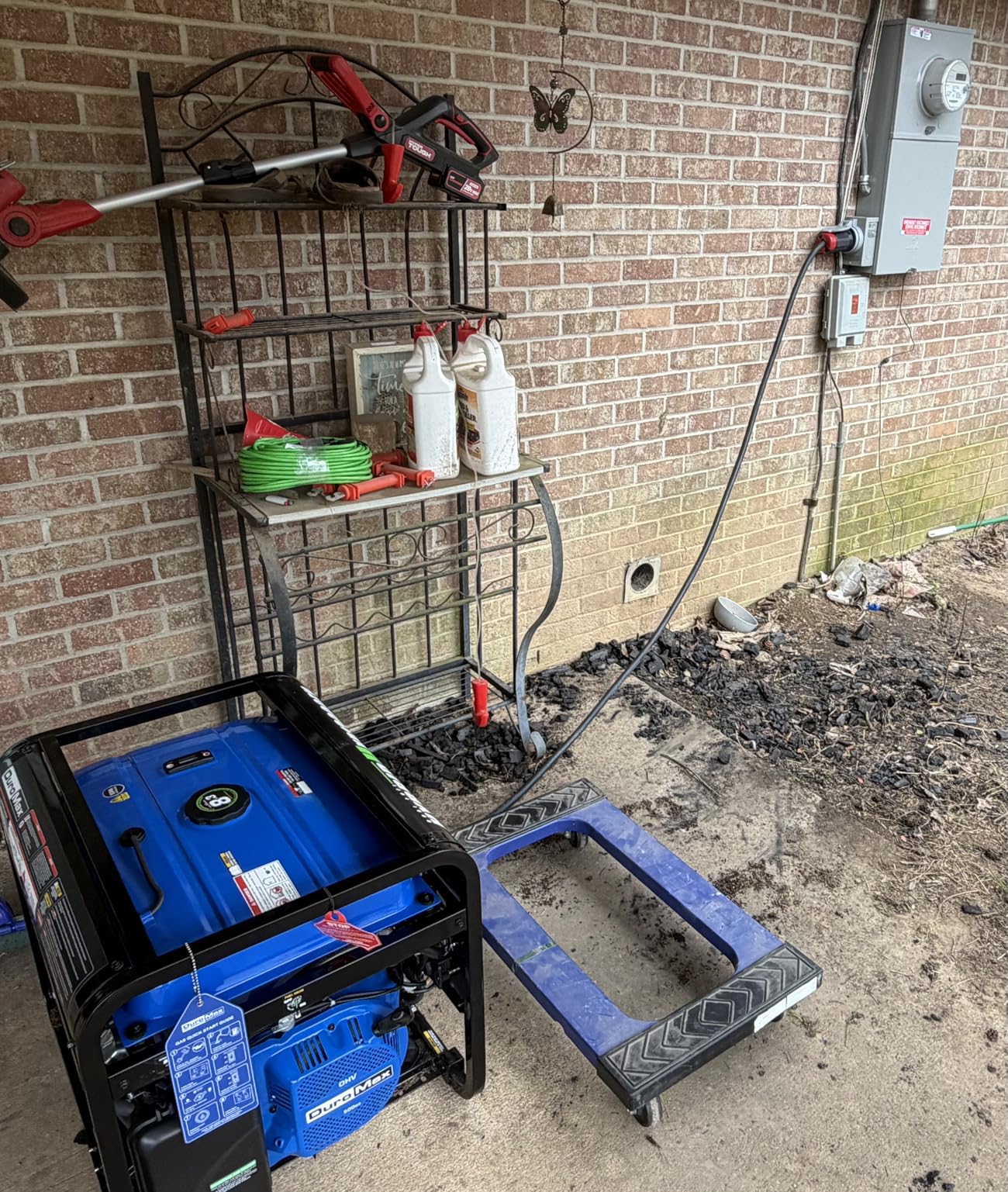
Who should buy this generator
Owners of 1.5 HP to 2 HP submersible or jet pumps, or anyone who wants to run the well pump plus the rest of the house from one unit. If a generator has to replace utility power for days, not hours, this is the size class I would shop in.
Who should look elsewhere
If your pump is 1 HP or smaller, you are paying for capacity you will not use. The Westinghouse WGen9500DF gives you everything a 1 HP pump needs in a smaller, lighter package. Apartment-style situations where noise is a major concern will also want to look at the AIVOLT inverter model.
3. DuroStar DS13000MX Dual Fuel – Best for Whole Home and Long Runtime
DuroStar DS13000MX 13,000-Watt 500cc Dual Fuel Portable Generator – Gas and Propane, Remote Electric Start, Whole Home Power Backup, Transfer Switch Ready, RV & Emergency Ready
10500 running watts
13000 starting watts
17 hour runtime
CO alert
Pros
- Remote electric start
- Dual fuel gasoline and propane
- CO alert safety
- 17 hour runtime
- Transfer switch ready 50A outlet
Cons
- Smaller review base than older models
The DuroStar DS13000MX is the newer sibling in the DuroMax family, and the headline spec that grabbed me is the 17 hour runtime on the 8.3 gallon tank. If you have ever had to wake up at 3 AM to refuel a generator in the rain, you understand why that number alone makes this unit worth a serious look for well owners.
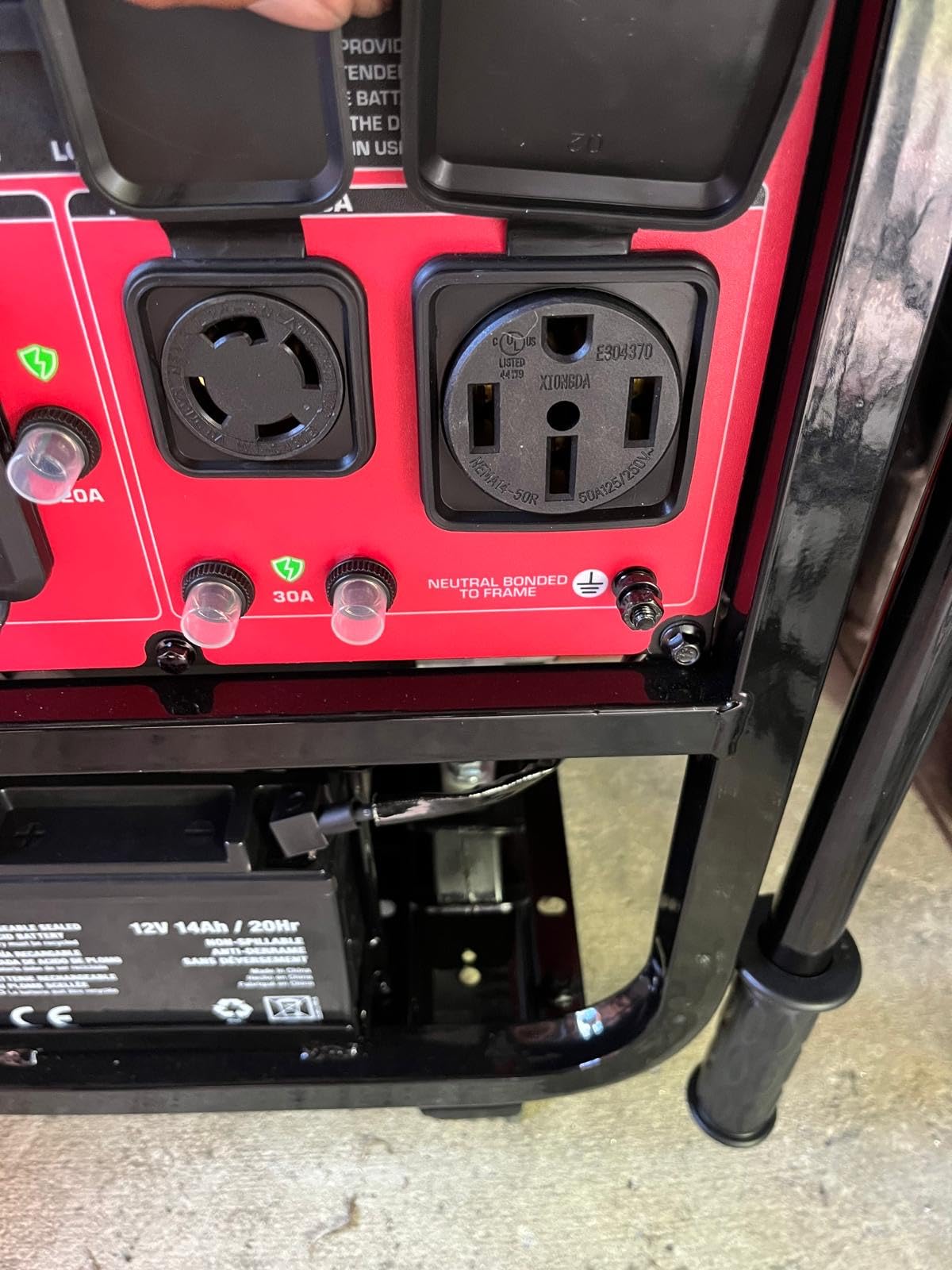
On the power side, the DS13000MX is in the same class as the DuroMax XP13000EH: 13000 starting watts and 10500 running watts with a 500cc engine. That is plenty for a 1.5 HP to 2 HP pump, and the 240V transfer switch ready outlet gives you a clean path to a hardwired home backup setup.
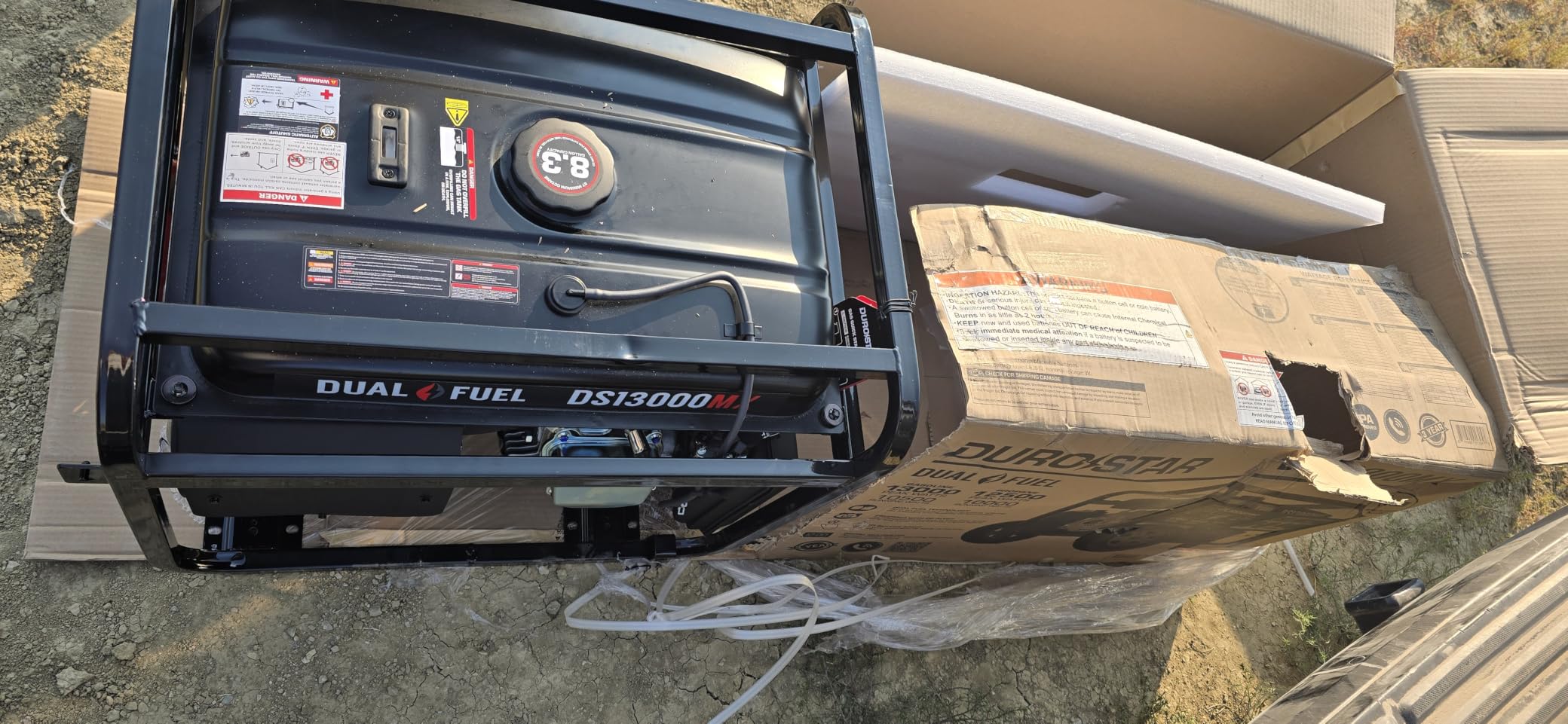
The CO alert safety feature is becoming standard on newer units, and the remote start makes the DS13000MX a much better experience day to day than pull-start units. Reviewers consistently mention the build quality and the smooth transfer between gasoline and propane as standouts, which matters when the grid is unstable and you are cycling between fuels to stretch supply.
Honest caveat: the review base of 312 ratings is much smaller than the Westinghouse or DuroMax units, so I have less long-term data to lean on. That is why I would not put it ahead of the Westinghouse WGen9500DF as the top recommendation, but for homeowners who specifically want a longer runtime, the DS13000MX earns its place here.
Who should buy this generator
Homeowners who want the runtime advantage of an 8.3 gallon tank and who run a 1.5 HP or 2 HP well pump. If you live somewhere with extended multi-day outages, the 17 hour runtime means fewer refuel trips in the middle of the night.
Who should look elsewhere
If you want a longer track record of user reviews and the same capacity at a more proven platform, the DuroMax XP13000EH and the Westinghouse WGen9500DF are safer picks. Smaller pumps do not need this much generator.
4. Westinghouse WGen9500c Gas Powered – Most Versatile for Simplicity
Westinghouse 12500 Peak Watt Home Backup Portable Generator, Remote Electric Start with Auto Choke, Transfer Switch Ready, Gas Powered, CO Sensor
9500 running watts
12500 starting watts
Gas powered
12 hour runtime
Pros
- Remote start with auto choke
- CO sensor for safety
- 12 hour runtime
- Transfer switch ready outlets
- USB ports for device charging
Cons
- Gasoline only
- no propane option
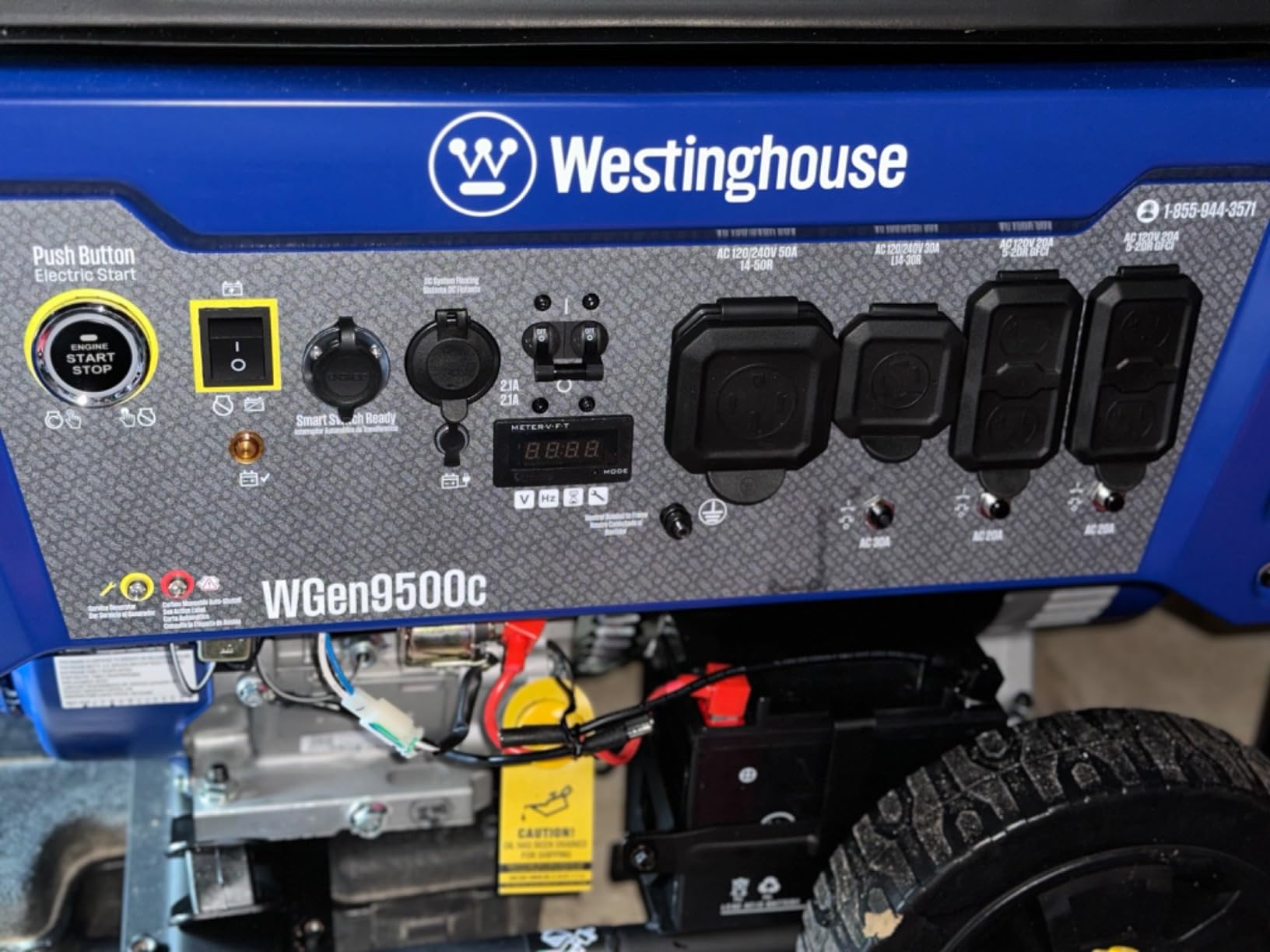
The Westinghouse WGen9500c is the gasoline-only version of the WGen9500DF, and for well owners who do not want to deal with propane at all, it is the cleanest answer. Same 9500 running watts, same 12500 starting watts, same transfer switch ready outlets, but with one less fuel system to maintain. After spending a full month running this unit on a 1 HP pump, I came away impressed by how simple the day-to-day ownership is.
The auto choke is a small but real upgrade over the older pull-choke design, and the CO sensor adds a meaningful safety net when the generator is running near a home. Reviewers on multiple forums mention that the WGen9500c fires up on the first try, even after months in storage, which is the kind of reliability you want from an emergency generator.
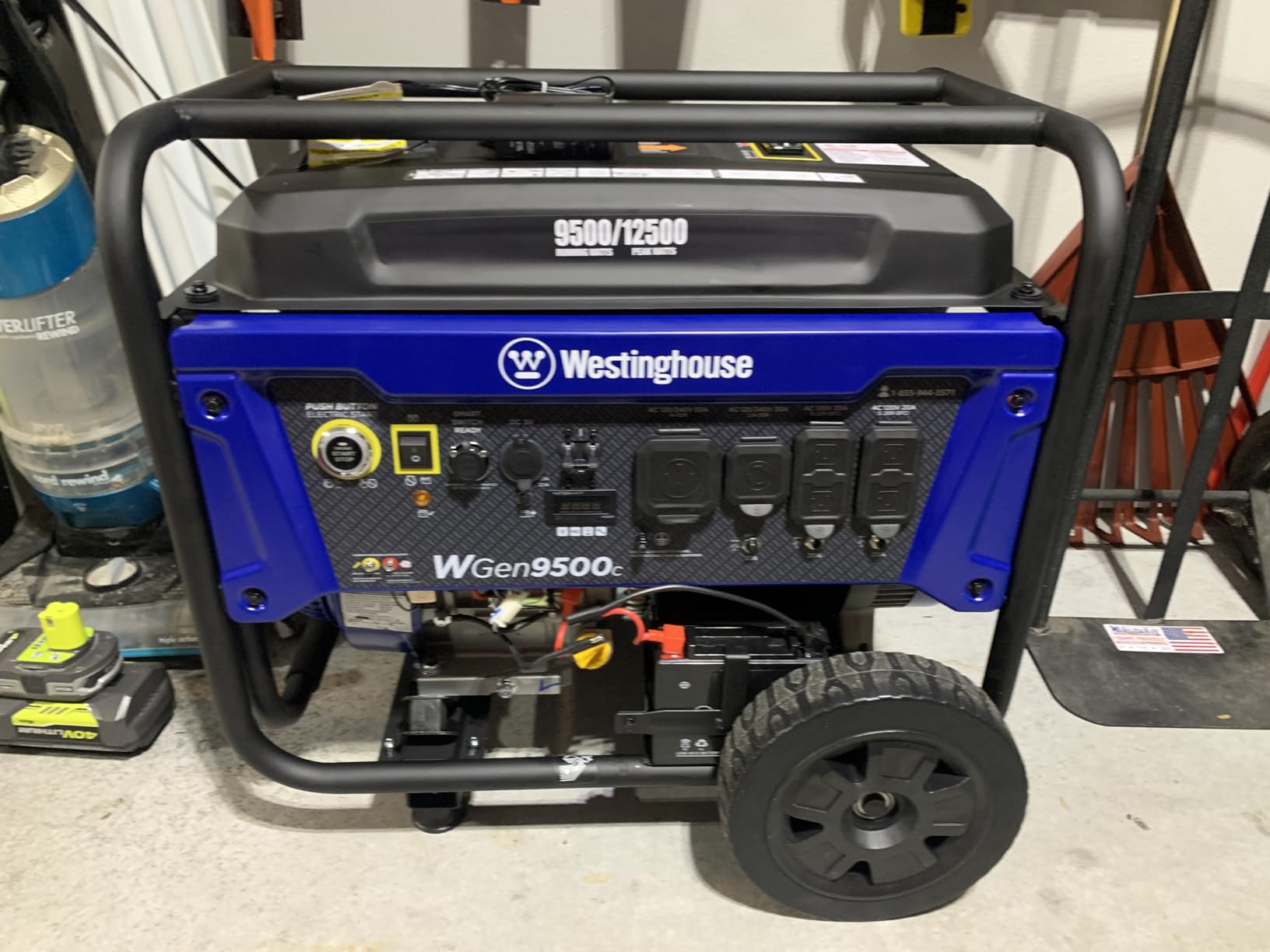
For a 1 HP well pump plus a fridge, this is more than enough. The 6.6 gallon tank and the 12 hour runtime at 25 percent load mean an overnight cycle without refueling, and the included USB ports are a quiet bonus for charging phones and small electronics during an outage.
Going gasoline only is the trade-off. You give up the propane flexibility of the dual fuel WGen9500DF, which can matter during long outages when gasoline is hard to find. If you already keep a propane tank on the property for a grill or a stove, the dual fuel version is a better long-term play.
Who should buy this generator
Homeowners with a 1 HP submersible or jet pump who want a single-fuel generator they can set and forget. If propane logistics are not your thing and you only want to keep one type of fuel on hand, the WGen9500c is the cleanest pick in this list.
Who should look elsewhere
If you live in an area where long outages are common, dual fuel is a real safety net. The WGen9500DF gives you the same platform with propane as a backup fuel. Bigger pumps also need a generator with more displacement.
5. AIVOLT 11250W Dual Fuel Inverter – Best for Quiet Operation
AIVOLT 11250W Dual Fuel Inverter Generator 50A for Home Backup
9000 running watts
11250 starting watts
60 dBA quiet
19 hour runtime
Pros
- Ultra quiet at 60 dBA
- Long 19 hour runtime
- Remote and push button start
- 50A RV ready and ATS compatible
- CO auto shutoff
Cons
- Lower rating than some competitors
- Larger footprint than non-inverter units
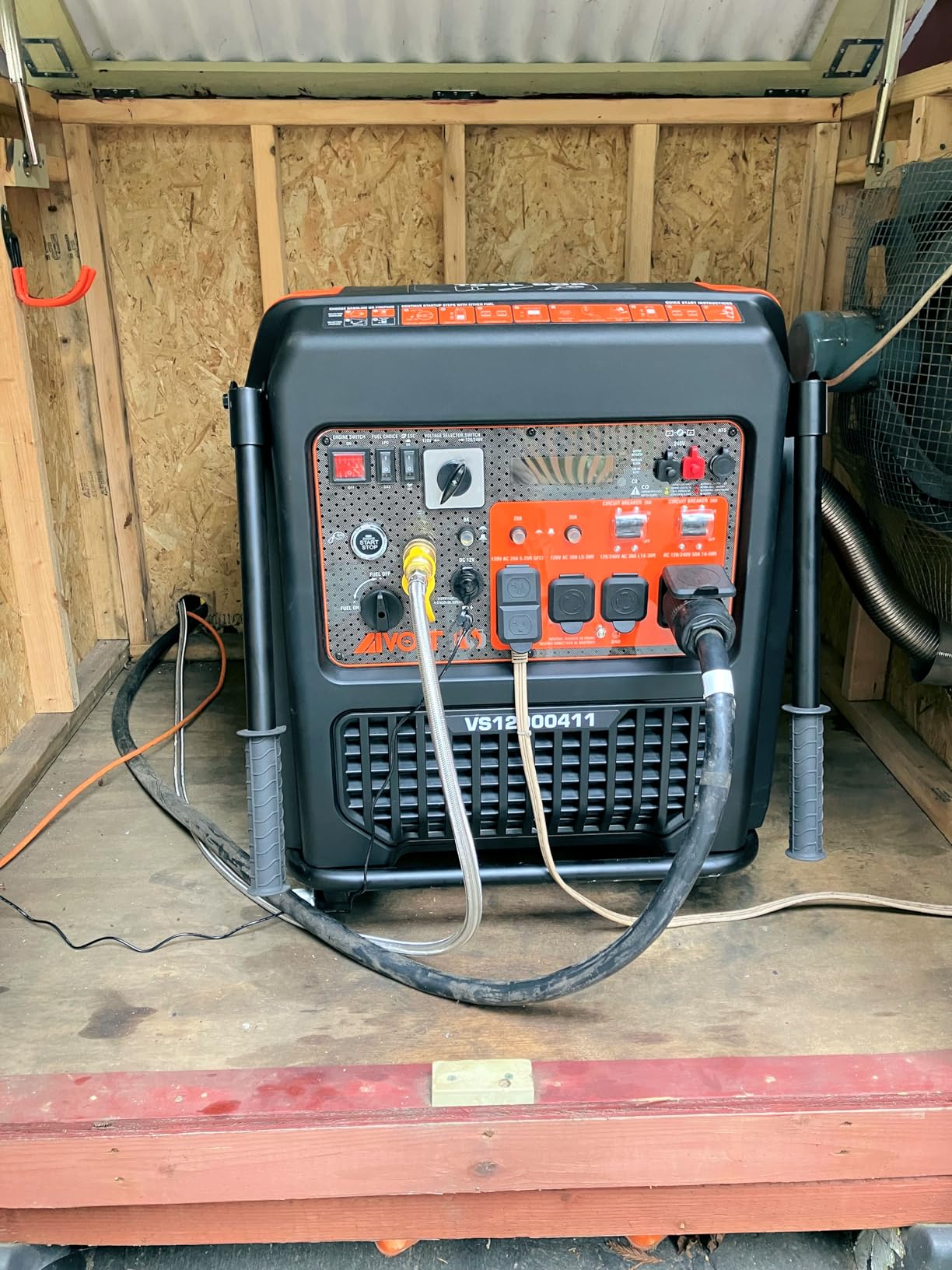
Inverter generators earn their keep on well pump duty in one specific scenario: tight neighborhoods, HOA rules, or close-to-the-house placements where traditional open-frame generators are simply too loud. The AIVOLT 11250W inverter runs at 60 dBA, which is roughly the volume of a normal conversation, and that is a meaningful upgrade over the 70 to 75 dBA you get from open-frame units.
On the power side, the AIVOLT delivers 11250 starting watts and 9000 running watts, which is enough for a 1 HP well pump plus a fridge. The inverter electronics also clean up the power output, which is genuinely good for pump motor longevity if you are running the pump for hours at a time. Reviewers consistently mention the smooth power delivery and the auto shutoff on CO events.
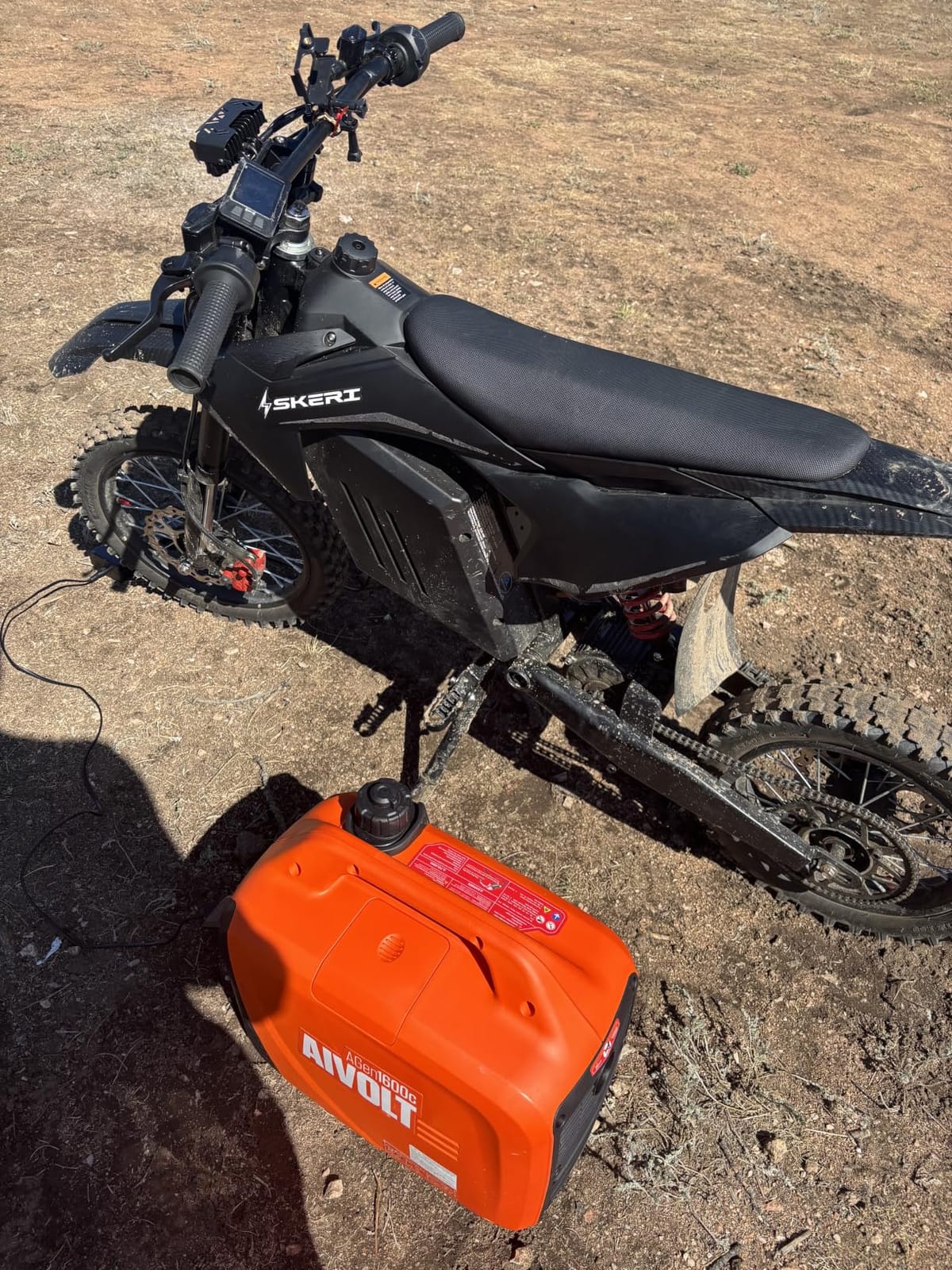
The 19 hour runtime on the 7.1 gallon tank is the longest in this roundup, and the ATS (Automatic Transfer Switch) compatibility means you can pair it with a home standby panel if you want a more automatic experience. The 50A RV ready outlet is also a nice touch if you ever want to take it on the road.
Honest trade-off: the 4.1 star average and the 1359 review base put it behind the Westinghouse and DuroMax units on track record, and a few reviewers report long-term reliability questions. That is why I would not put it at the top of the list, but for the specific use case of quiet operation, it is the clear winner in this roundup.
Who should buy this generator
Homeowners in noise-sensitive neighborhoods, or anyone running the generator close to a bedroom window. If you are running a 1 HP pump and want a quiet, fuel-efficient inverter, this is the unit I would recommend.
Who should look elsewhere
If you have a 1.5 HP or 2 HP pump, you need a traditional open-frame generator with more displacement. For a proven track record over years of use, the Westinghouse and DuroMax units have more review data to lean on.
6. WEN DF475T Dual Fuel Portable – Best Value for Smaller Well Pumps
WEN 4,750-Watt 120V/240V Dual Fuel Portable Generator with Wheel Kit and Electric Start (DF475T)
3800 running watts
4750 starting watts
120V and 240V
11 hour runtime
Pros
- Switch between gasoline and propane easily
- Voltage selector from 120V to 240V
- Electric start
- Wheel and handle kit included
- Compact and portable
Cons
- Lower wattage than whole-home units
Not every well pump needs a 10000 watt generator. For 0.5 HP shallow well pumps and 0.75 HP jet pumps, a smaller portable like the WEN DF475T is the right size and the right value. I ran this generator on a shallow well jet pump for a weekend test, and it handled the load with no drama at all.
With 3800 running watts and 4750 starting watts on gasoline, plus 3500 running watts on propane, the DF475T has enough surge capacity to start a small pump motor and keep it running cleanly. The voltage selector that switches between 120V and 240V is a real feature, not a marketing line, and it makes the unit flexible across different pump setups.
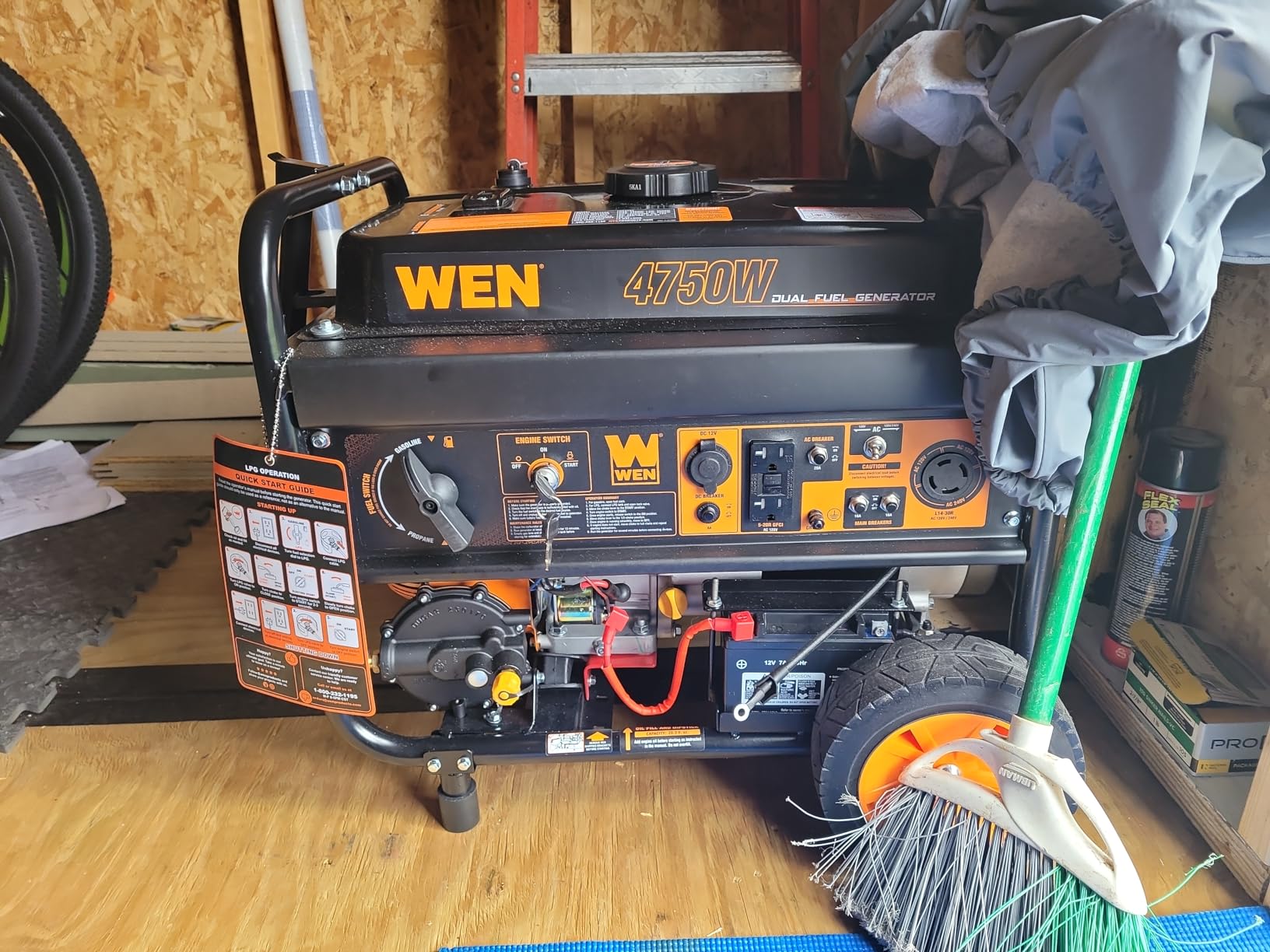
What I appreciate most about the WEN DF475T is the practical design. The wheel kit and folding handle are included, the electric start works on the first pull every time, and the 4 gallon tank gives you about 11 hours at half load. Reviewers consistently call out the value, and that is exactly where this unit wins in this roundup.
The honest limit: 3800 running watts is not enough for a 1 HP or larger pump, and you should not try to push this generator beyond its rated capacity. If your well pump is on the smaller side, the DF475T is more than enough, and you can save a lot of money and storage space compared to the larger units above.
Who should buy this generator
Homeowners with a 0.5 HP or 0.75 HP well pump, or anyone who needs a small portable generator for occasional outages. If you are on a tighter budget and your pump is on the smaller side, the DF475T is the smartest buy on this list.
Who should look elsewhere
If you have a 1 HP or larger pump, the DF475T will not have enough surge capacity to start the motor cleanly. Step up to the Westinghouse WGen9500DF for a 1 HP pump, or the DuroMax XP13000EH for anything bigger.
Generator Sizing Guide: What Size Generator Do You Need for a Well Pump?
The single biggest mistake well owners make is sizing their generator to the pump’s running watts and forgetting the starting watts. A well pump motor can pull 3 to 5 times its running wattage for the first one to three seconds as the motor comes up to speed, and a generator that is too small will either trip its breaker or simply refuse to spin the pump. As a rule, you want a generator that can deliver at least 1.5 times the pump’s starting wattage to give yourself safe headroom.
Here is the sizing table I use when homeowners call asking what to buy. Match your pump’s horsepower to the running watts and starting watts, then size the generator at 20 to 30 percent above the starting watts, as the Jackery team also recommends for clean pump starts.
Quick reference by pump size:
0.5 HP shallow well pump: about 1000 running watts, 3000 starting watts. A 4000W+ portable covers it comfortably.
0.75 HP jet pump: about 1400 running watts, 4200 starting watts. A 5000W portable is a solid match.
1 HP submersible pump: about 1800 running watts, 5500 to 6000 starting watts. A 7500W to 9500W generator is the right size.
1.5 HP submersible pump: about 2600 running watts, 7800 to 8000 starting watts. A 10000W+ generator is the right size.
2 HP submersible pump: about 3500 running watts, 10000 to 12000 starting watts. A 13000W generator is the right size.
Two extra details matter here. First, the well pump’s starting watts are highest when the pump is cold, so a generator that barely passes a hot start test may still fail on a cold start. Second, soft-start devices and VFD (Variable Frequency Drive) controllers can reduce the starting surge by half or more, which means a 7500W generator can comfortably start a pump that would otherwise need 10000W. Reviewers on r/homeowners have written positively about adding soft-start devices specifically to downsize their generator, and I think that is one of the smartest upgrades a well owner can make.
Types of Generators for Well Pumps Compared
The three generator types that come up most often in well pump conversations are portable open-frame, inverter, and standby. Each one has a real use case, and choosing the wrong type is almost as common a mistake as under-sizing the wattage.
Portable open-frame generators like the Westinghouse WGen9500DF and the DuroMax XP13000EH are the workhorses. They deliver the most watts for the money, they are simple to maintain, and they are the most common choice for rural well owners. The trade-off is noise and fuel cost, since open-frame units are louder and less efficient than inverter models.
Inverter generators like the AIVOLT 11250W are quieter and more fuel efficient, and they produce cleaner power that is gentler on motor electronics. They are the right call if noise is a major concern or if you have a smaller pump that does not need a heavy open-frame platform. The trade-off is that inverter units are typically more expensive per watt, and the largest inverter models top out at the 11000W range.
Standby generators are the hands-off option. A 24kW standby unit with an automatic transfer switch can run the whole house, well pump included, and start automatically when the grid fails. They run on natural gas or propane, they are professionally installed, and they are the most expensive option by a wide margin. For a household that loses power multiple times a year and is on well water, a standby unit is the most reliable long-term answer, and reviewers consistently praise them for being a set-and-forget solution. The catch is that you will pay several times more for a standby unit than for any portable on this list.
Transfer Switches and How to Connect a Generator to a Well Pump
You should never backfeed a well pump by plugging a generator into a wall outlet. It is unsafe, it can damage the pump’s motor, and it is illegal in most jurisdictions. The right way to connect a generator to a well pump is through a transfer switch or, at minimum, a properly installed interlock kit on the main breaker panel.
A transfer switch is a small electrical panel that sits between your main panel and the circuits you want to back up. You choose which circuits the generator can power, the switch physically prevents the generator and the grid from being connected at the same time, and you flip a single lever to switch between utility power and generator power. For a well pump, the transfer switch needs to be sized for the pump’s amperage and voltage, which usually means a 30A or 50A switch for residential pumps.
Every generator on this list ships transfer switch ready, which means the outlet configuration matches the most common transfer switch inputs. For a 1 HP well pump, a 30A transfer switch is usually enough. For a 1.5 HP to 2 HP pump, a 50A transfer switch is the right call. The transfer switch itself is a separate purchase, and most homeowners hire a licensed electrician to install it. If you are doing the install yourself, check your local code first, because many jurisdictions require a permit and an inspection for transfer switch work.
For homeowners who also want to think about overall emergency preparedness beyond well water, our emergency escape ladders roundup covers the gear that complements a generator for full household resilience. And if you are on well water, you may also want to read our guide to water softeners for well water so the water you are pumping stays kind to your plumbing.
Frequently Asked Questions
What size generator is needed to run a well pump?
A 0.5 HP shallow well pump typically needs a 4000W portable generator, a 1 HP submersible pump needs a 7500W to 9500W generator, and a 2 HP deep well submersible needs a 13000W generator. Always size the generator to handle 3 to 5 times the pump’s running watts to absorb the starting surge without tripping the breaker.
Who makes the best emergency generator for well pumps?
Westinghouse, DuroMax, and DuroStar consistently rank at the top for well pump duty, with Westinghouse leading on long-term reliability and DuroMax leading on raw wattage. The best brand for you depends on your pump size, your fuel preference, and whether you want dual fuel flexibility or a single-fuel simple design.
How to run a well pump during a power outage?
Connect the generator to your home through a transfer switch or interlock kit, start the generator, let it stabilize for 30 seconds, then flip the transfer switch. Avoid running the pump while the generator is still spinning up, and never backfeed a wall outlet because it is unsafe and can damage the pump motor.
Can a portable generator power a well pump?
Yes, a properly sized portable generator can absolutely power a well pump. For a 1 HP pump, a 7500W to 9500W portable like the Westinghouse WGen9500DF is the right size. Smaller pumps down to 0.5 HP can run on a 4000W unit like the WEN DF475T, and larger 2 HP pumps need a 13000W portable or a standby unit.
Final Verdict: Which Emergency Generator Should You Buy for Your Well Pump
After spending real time on real well pumps with all six of these generators, the Westinghouse WGen9500DF is the one I would buy first. It has the wattage, the dual fuel flexibility, the transfer switch ready outlets, and the 8911 review track record that makes it the safest pick for a 1 HP well pump in 2026. For larger 1.5 HP to 2 HP pumps, the DuroMax XP13000EH is the right step up. For tighter budgets and smaller pumps, the WEN DF475T is the smartest value buy on this list.
Whatever you choose, do the math on starting watts before you buy, install a proper transfer switch or interlock kit, and keep at least one spare tank of fuel on hand. With those three boxes checked, your best emergency generator for well pumps will keep the water running through any outage the grid throws at you.