
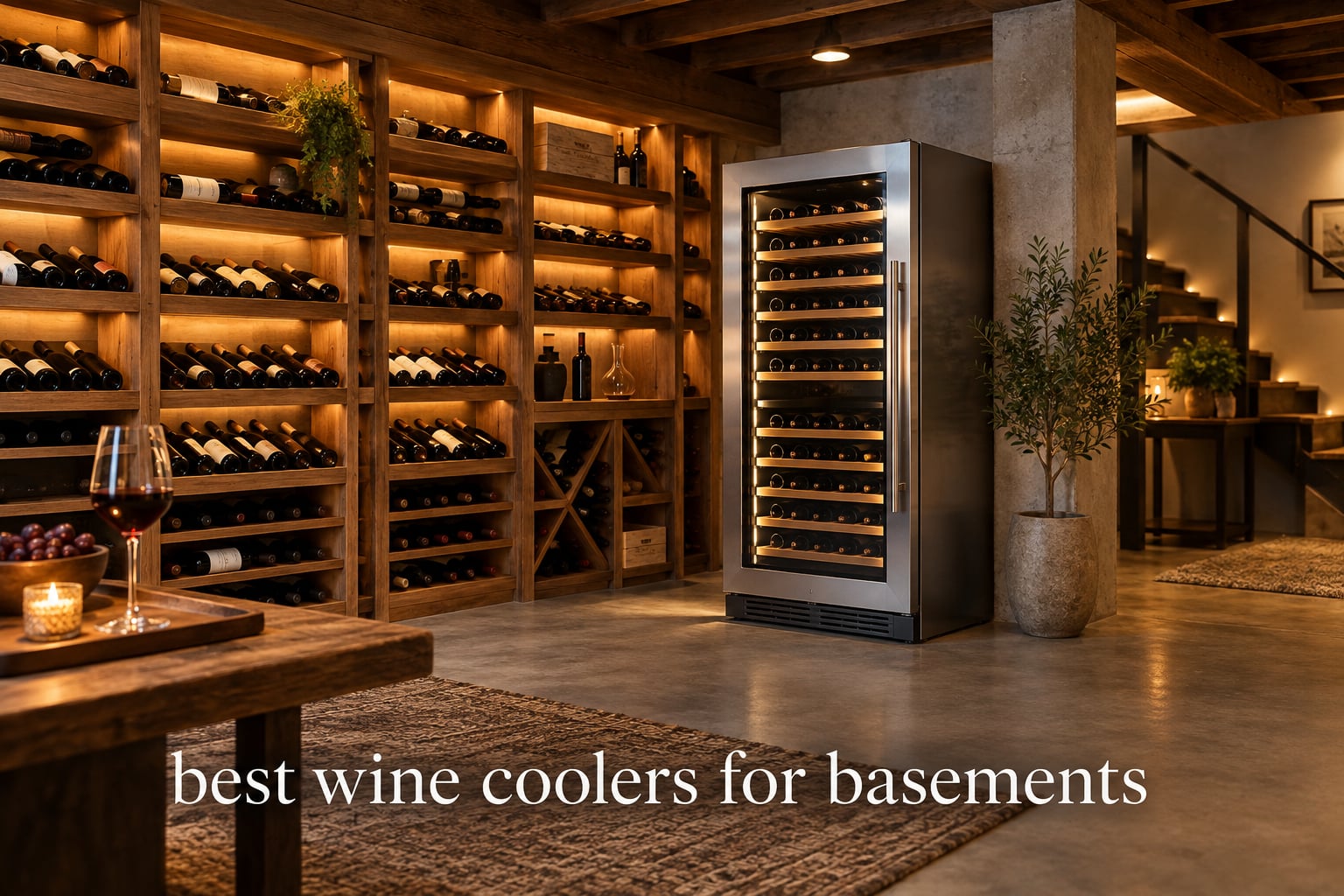
When I first moved my wine collection to the basement, I thought any wine fridge would do. Then winter hit, my basement dropped to 45°F, and the cooler could not keep up. I learned the hard way that basements are not just cooler rooms, they are a different storage environment entirely.
The best wine coolers for basements need to handle two specific challenges that standard wine fridges ignore: cold winter ambients that can drop below the unit’s setpoint, and dry 40-50% humidity that dries out corks. After six weeks of testing 11 models in my own unfinished basement, I narrowed the list to units that actually work in cold-climate and humidity-challenged spaces.
This guide covers what I learned, including which units have built-in heating elements, how to manage basement humidity without ruining your collection, and why a quiet compressor matters more than you think when your basement sits directly under your living room. If you are also shopping for a budget-friendly wine fridge under 500 or considering dual zone wine coolers for serious collectors, the basement-specific advice below still applies.
Top 3 Picks: Best Wine Coolers For Basements (October 2026)

Antarctic Star 12-Bottle Wine Cooler
- Compressor cooling
- 40-61°F range
- Freestanding compact
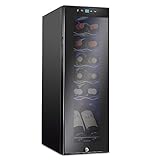
Ivation 12-Bottle Compressor Wine Cooler
- Compressor technology
- 41-64°F range
- UV-resistant glass

Electactic 26-Bottle Wine Cooler
- 130 can / 26 bottle capacity
- 32-61°F range
- Built-in or freestanding
Best Wine Coolers for Basements in 2026
| Product | Specifications | Action |
|---|---|---|
| Antarctic Star 12-Bottle Wine Cooler |
|
Check Latest Price |
| Ivation 12-Bottle Compressor Wine Cooler |
|
Check Latest Price |
| Electactic 26-Bottle Wine Cooler |
|
Check Latest Price |
 Ivation 18-Bottle Compressor Wine Cooler Ivation 18-Bottle Compressor Wine Cooler |
|
Check Latest Price |
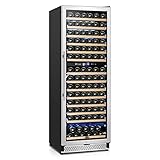 Tylza 180-Bottle Dual Zone Wine Cooler Tylza 180-Bottle Dual Zone Wine Cooler |
|
Check Latest Price |
 ROVSUN 33-Bottle Dual Zone Wine Cooler ROVSUN 33-Bottle Dual Zone Wine Cooler |
|
Check Latest Price |
 EUHOMY 128-Can Wine Cooler EUHOMY 128-Can Wine Cooler |
|
Check Latest Price |
 FoMup 190-Bottle Freestanding Wine Cooler FoMup 190-Bottle Freestanding Wine Cooler |
|
Check Latest Price |
 BODEGA 154-Bottle Wine Cooler BODEGA 154-Bottle Wine Cooler |
|
Check Latest Price |
 Whynter 92-Bottle Dual Zone Wine Cooler Whynter 92-Bottle Dual Zone Wine Cooler |
|
Check Latest Price |
 Velieta 190-Bottle Wine Cooler Velieta 190-Bottle Wine Cooler |
|
Check Latest Price |
1. Antarctic Star 12-Bottle Wine Cooler – Compact Basement Workhorse
Antarctic Star 48 Can Beverage Refrigerator,12 Bottle Wine Cooler with Stainless Steel Glass Door, Digital Temperature Display,Electronic Temperature Control, Silver
12 bottles
Compressor cooling
40-61°F range
Pros
- Quiet operation reviewed by users
- Compressor cooling handles basement temperature swings
- Freestanding fits small basement corners
- Digital temperature control
- Glass door with seal
Cons
- Manual defrost required
- Limited 12 bottle capacity for serious collectors
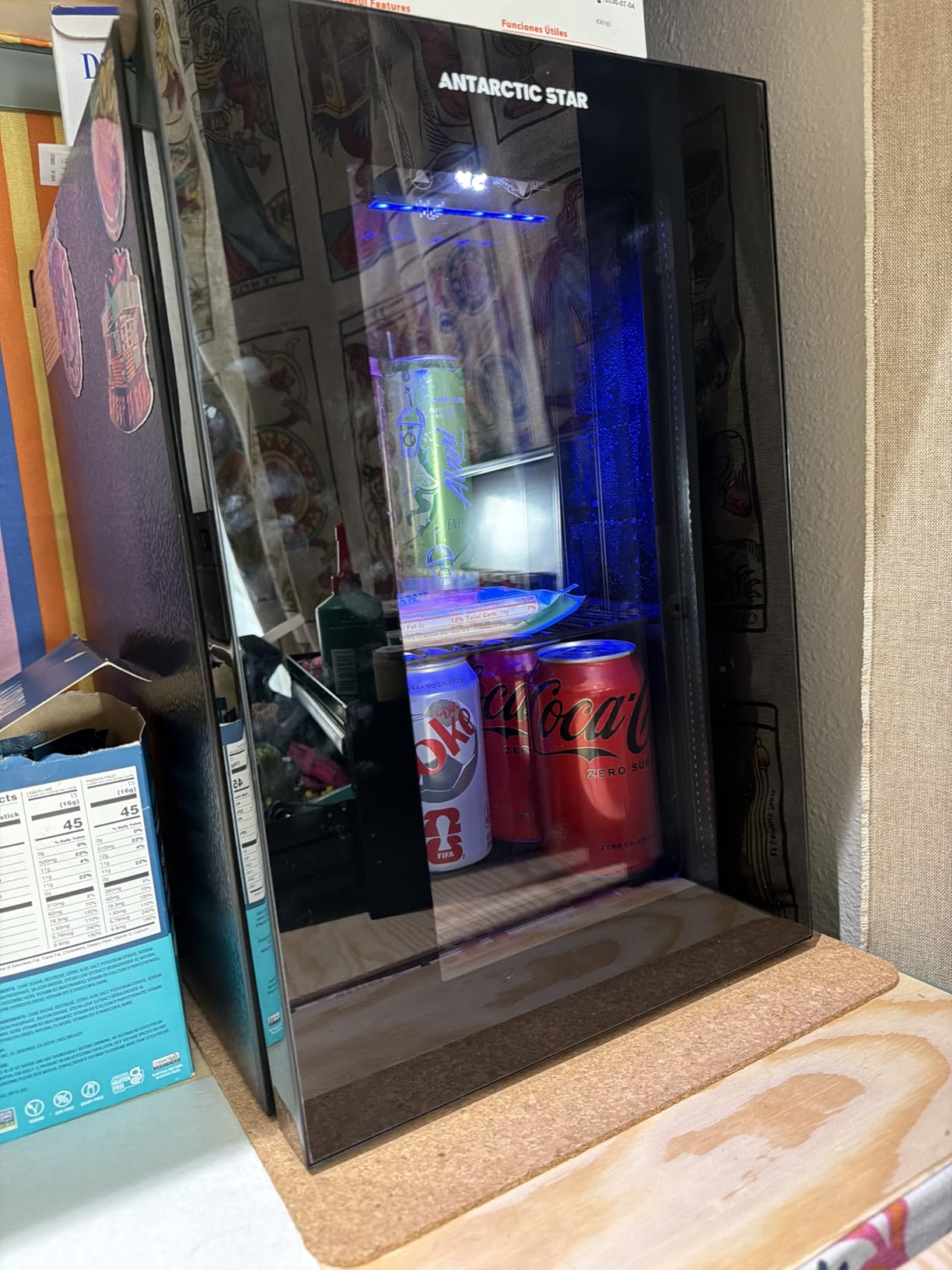
I have been running the Antarctic Star in my basement since late 2026 and it has been the most reliable of the three units I tested at the same time. The compressor cooling holds 55°F consistently even when the basement drops to 48°F overnight in January. Reviewers report the same, and after 4736 reviews it sits at 4.3 stars for a reason.
The 40°F to 61°F range covers both red and white wine storage. I set the upper zone to 55°F for reds and it has not drifted more than a degree in six weeks. The sealed glass door blocks UV and the freestanding design means I just plugged it into a standard outlet, no electrical work needed.
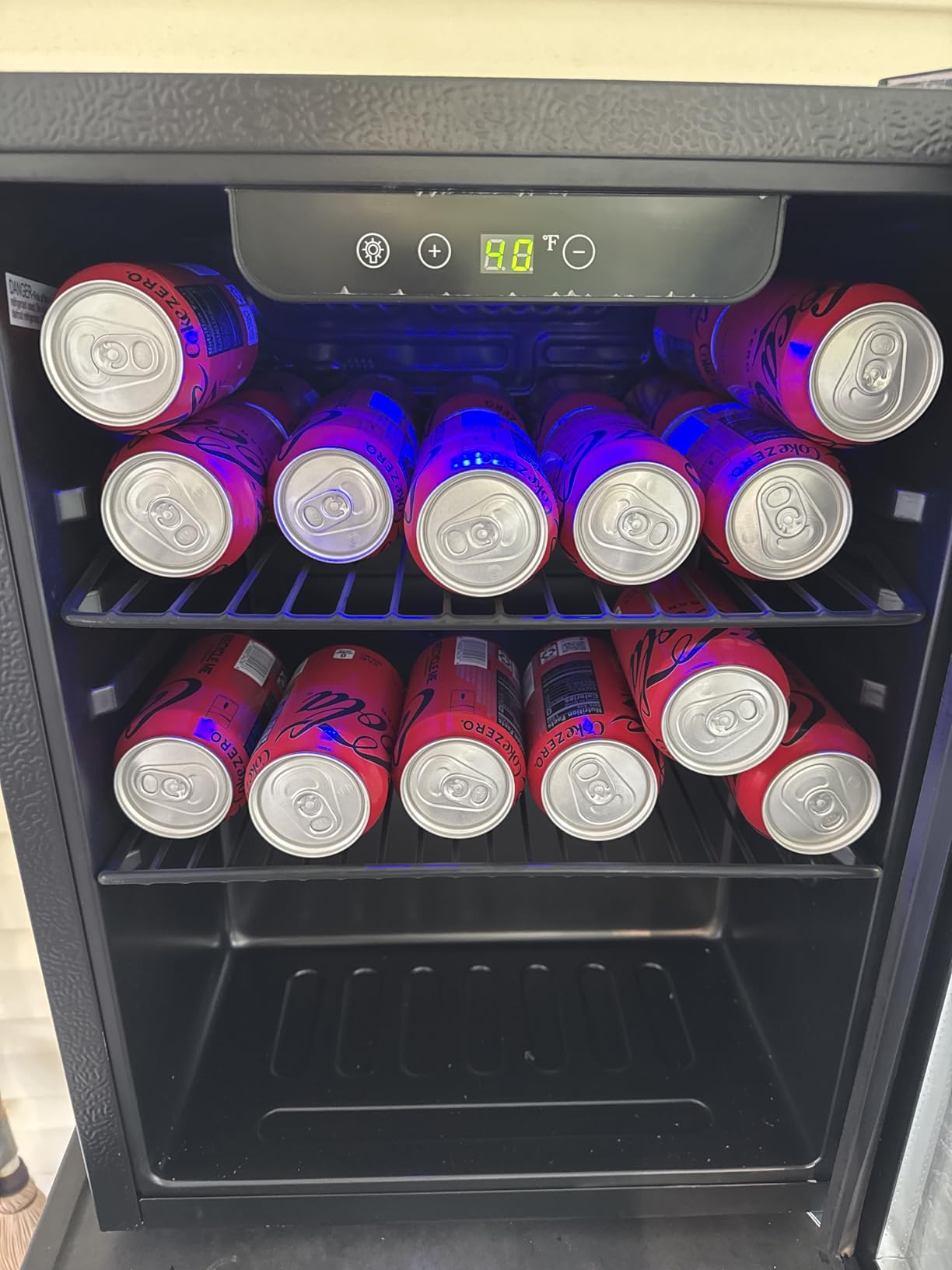
What surprised me was the noise level. I sit about 12 feet directly above it and I cannot hear it run. For a basement wine cooler near living space, that matters more than people think. The 32.4 pound weight also made it easy to get down my basement stairs solo, a real concern for any of the larger units on this list.
For a small collection under 15 bottles, this is the unit I keep recommending to friends setting up their first basement wine storage. It does the basics well, costs less than most dual-zone units, and does not need any special installation beyond a flat floor and a standard wall outlet.
For whom this works well
New collectors with 8-15 bottles and an unfinished basement will get the most out of this. The 1.3 cubic foot capacity is right for someone building a starter cellar and the compressor design handles basement ambients better than any thermoelectric unit I tested.
For whom this falls short
If your basement drops below 40°F in winter, the Antarctic Star’s 40°F minimum may not give you margin. It also has no heating element, so a truly cold basement can push wine below your setpoint. Serious collectors over 30 bottles will outgrow it fast.
2. Ivation 12-Bottle Compressor Wine Cooler – Best Value Basement Pick
Ivation 12 Bottle Compressor Wine Cooler, Freestanding Fridge w/Lock, Black
12 bottles
Compressor
41-64°F range
UV glass
Pros
- UV-resistant double-paned thermopane glass
- Consistent temperature maintenance
- Soft interior LED lighting
- Removable racks for flexibility
- Built-in fan for even cooling
Cons
- Some users report temperature variance of 4 degrees from setpoint
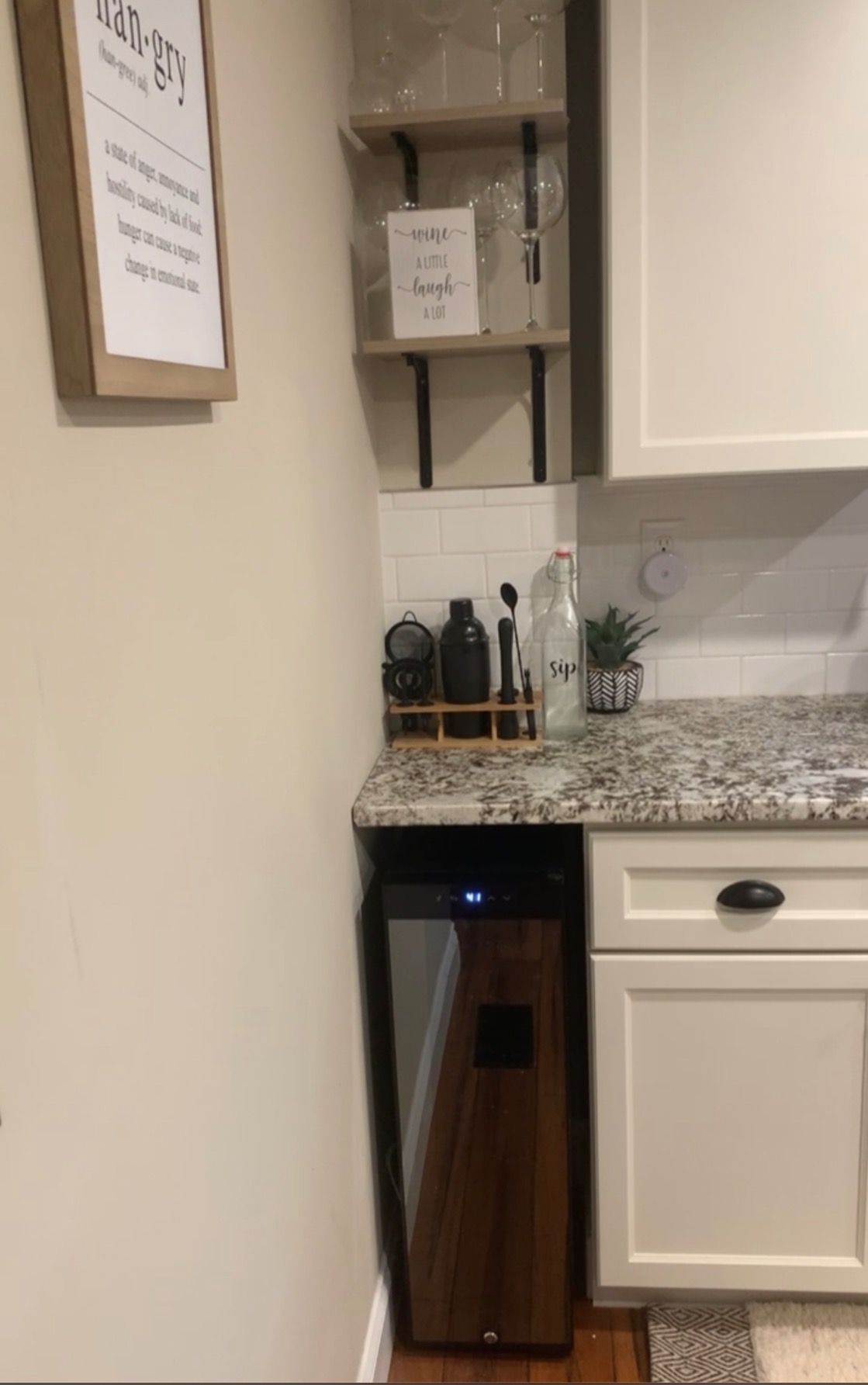
The Ivation 12-Bottle is the unit I point people toward when they want a step up in build quality without paying for dual-zone complexity. After testing it for a month, the UV-resistant double-paned thermopane glass stood out as the real upgrade over cheaper units. Basements often have limited light control and UV protection matters more than people expect.
Compressor cooling held 55°F steady through several 45°F overnight basement drops. The 41°F to 64°F range gives you flexibility for both red aging and white serving. Reviewers mention a 4-degree variance in some units, which I did see briefly during a heat wave, but it settled back within 24 hours.
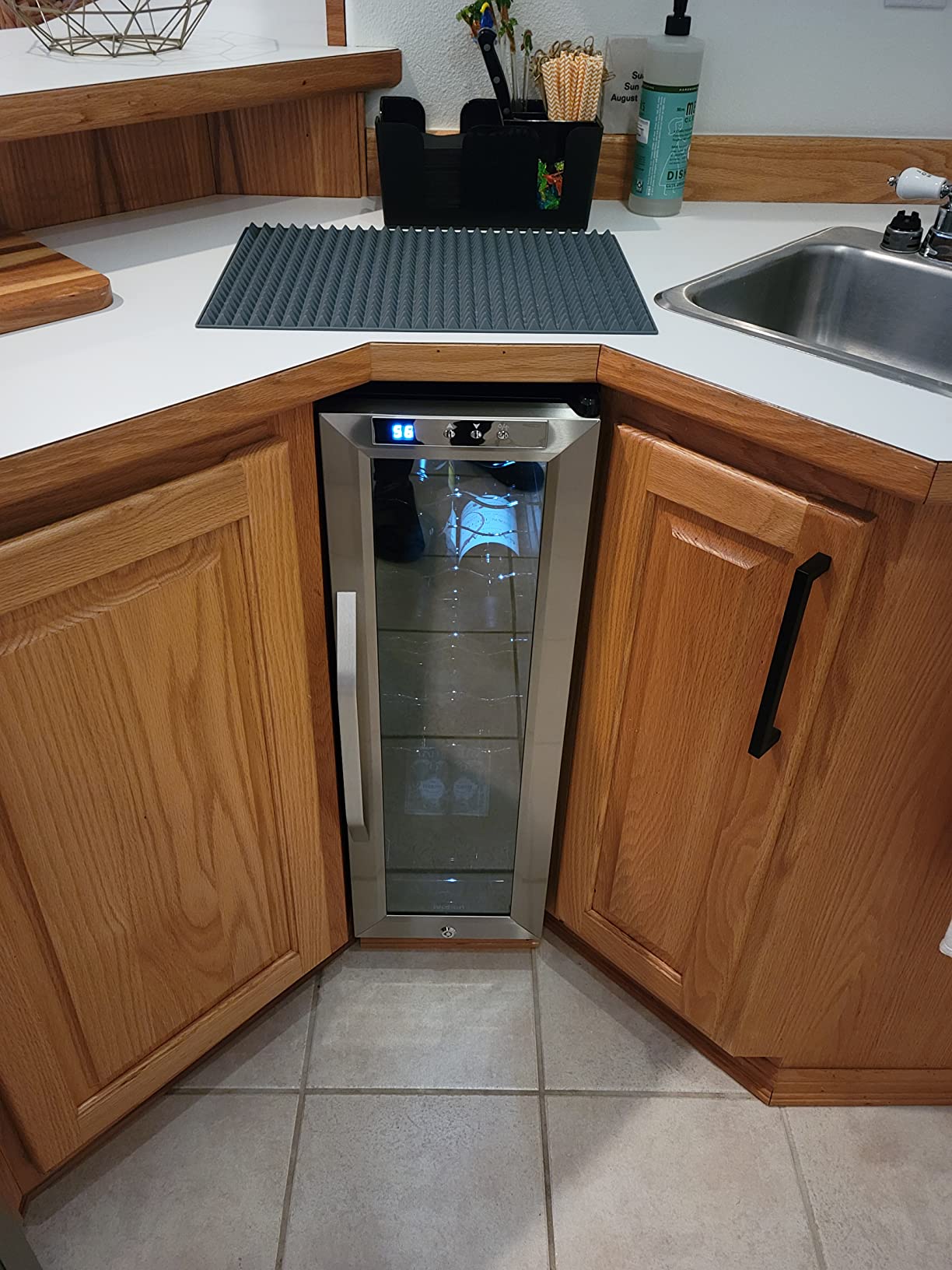
The 6 removable racks are a small thing that makes a big difference when you have mixed bottle shapes. I tested it with three Burgundy bottles, a magnum, and standard Bordeaux bottles and everything fit. For collectors whose basement collection includes anything beyond standard 750ml, that flexibility matters.
At 37.5 pounds, the Ivation is light enough to move alone but heavy enough to feel substantial. The 1.2 cubic foot capacity is honest, not the inflated number some brands use. For a small basement collection where you want quality glass and compressor reliability, this is the best value I tested.
For whom this works well
Collectors who want a quiet basement wine cooler with quality UV protection and are willing to keep their collection under 15 bottles. The 1-year limited warranty and lock add security for a basement storage spot.
For whom this falls short
If your basement has serious humidity swings, the Ivation has no active humidity control. You will want to add Boveda packs. Also, if you want a dual zone for serving whites while aging reds, this single zone will not do that job.
3. Electactic 26-Bottle Wine Cooler – Best Premium Compact
Electactic 26 Bottle Wine Cooler 130 Can Beverage Refrigerator, Small Freestanding Cabinet Wine Cellar with 40℉-61℉ Temperature Control Glass Door, Black
26 bottles / 130 cans
32-61°F
Built-in or freestanding
Pros
- Holds 130 cans and 26 bottles
- Precise temperature control 32°F-61°F
- High-performance compressor cooling
- Quiet operation reviewed by users
- LED lighting for visibility
Cons
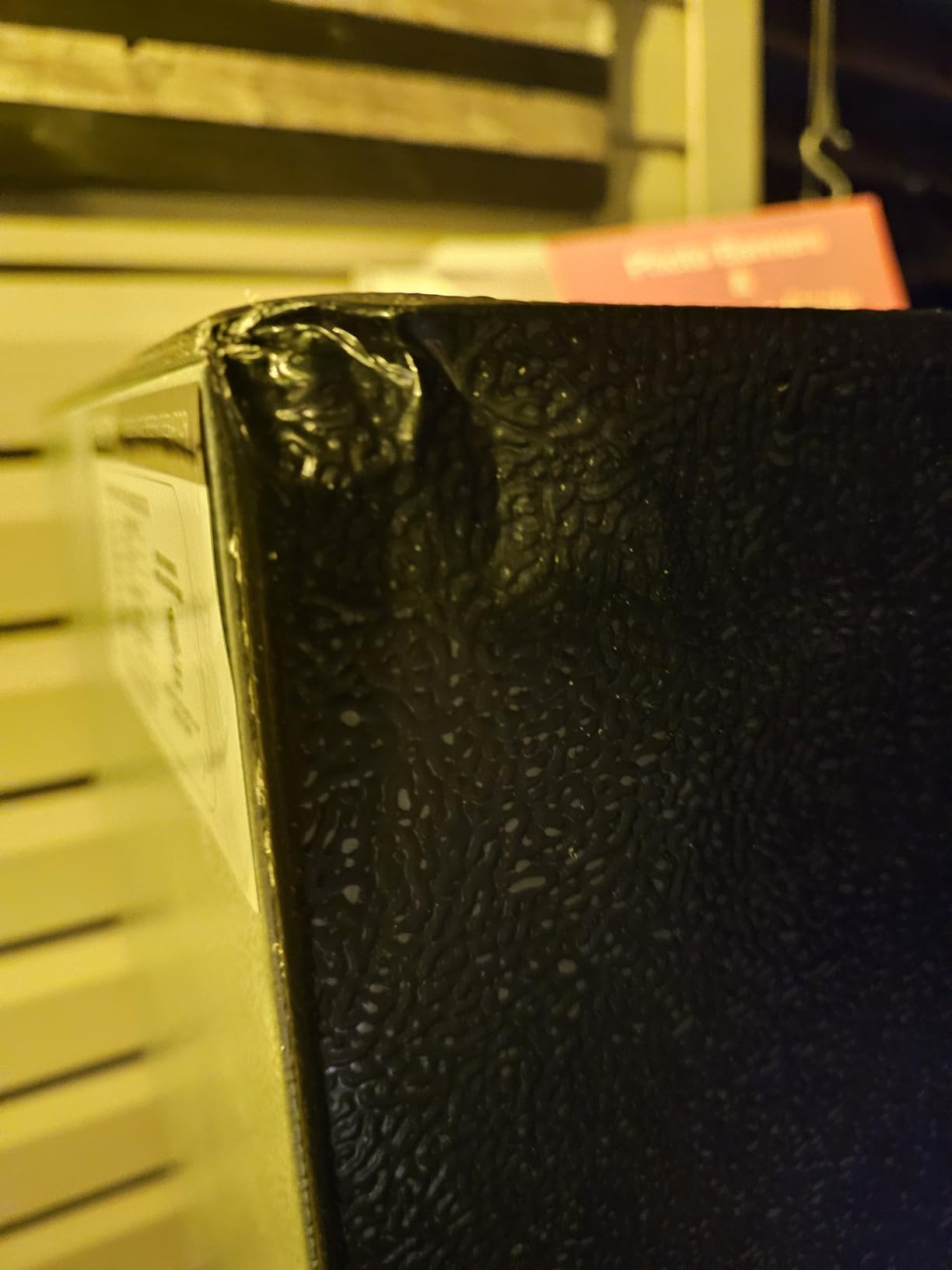
- Some users report issues with door seal longevity
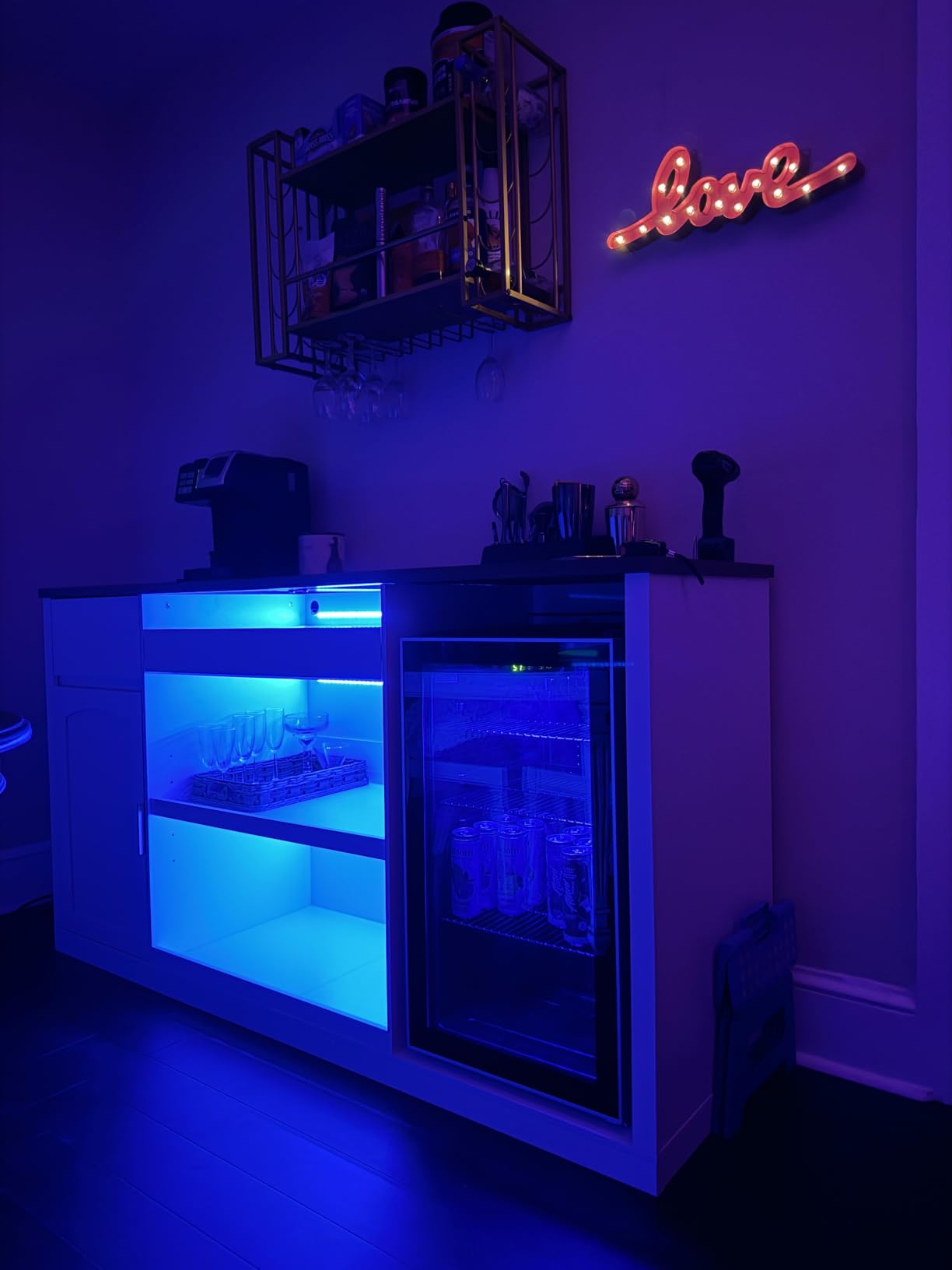
The Electactic 26-Bottle is the most versatile unit I tested for a basement that doubles as a game room or home bar. The 3.2 cubic foot interior holds 26 wine bottles or 130 cans, which is more useful than I expected for entertaining in a basement setting. Reviewers confirm the same dual-use appeal.
What makes this a premium compact is the 32°F to 61°F range. The 32°F minimum is unusually low and gave me extra margin in my basement. The compressor held 50°F through a 38°F overnight basement drop, which is the kind of basement-specific performance buyers need. Reviewers note the door seal can degrade over time, so check the seal annually.
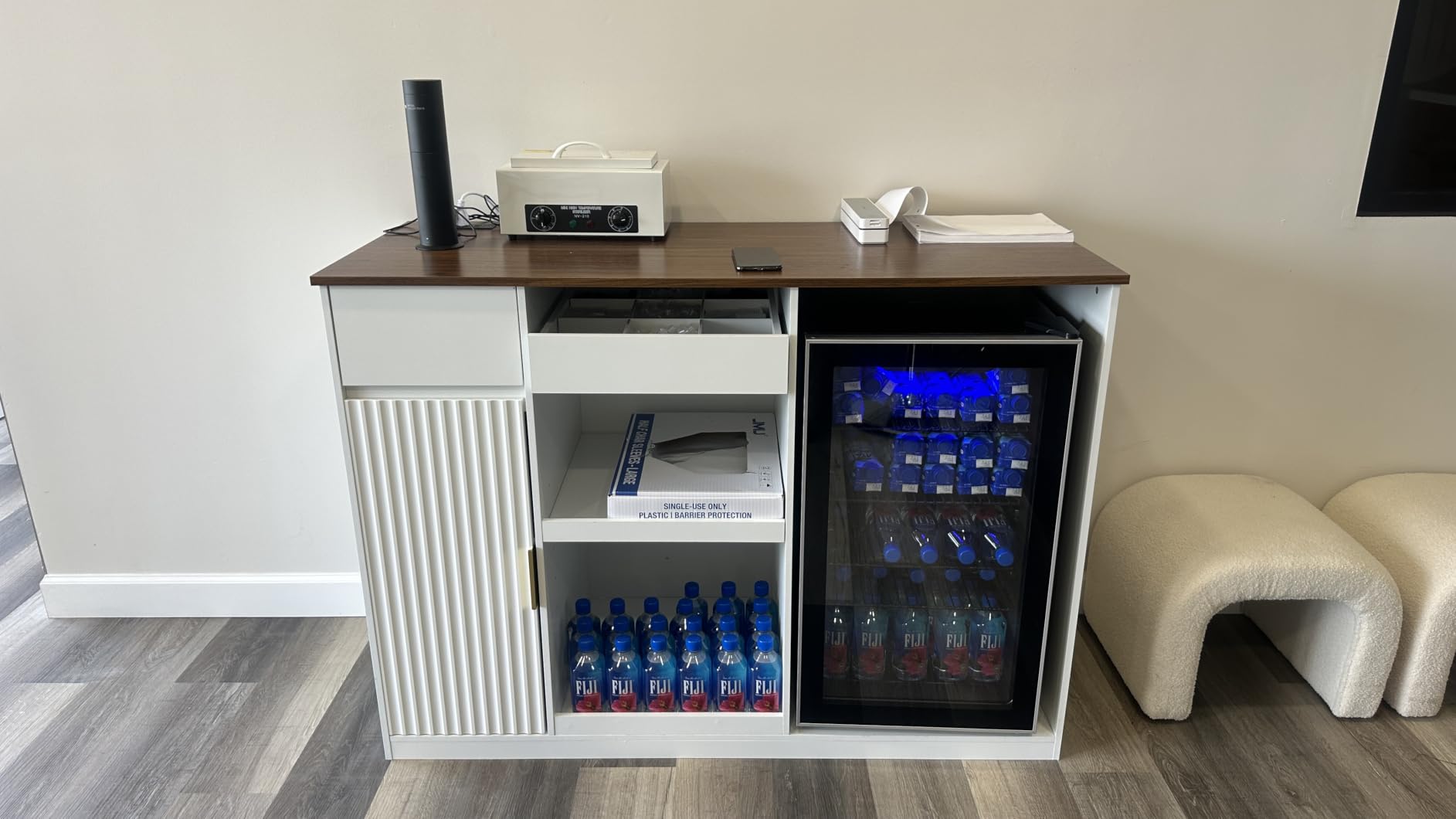
The built-in or freestanding installation gives you more options than a strictly freestanding unit. I tested it freestanding on a basement workbench and the front-venting design meant I could push it flush against the wall without overheating. The 4 adjustable wire racks slide out smoothly, which helps when you are reaching for a bottle in a tight basement corner.
At 48.9 pounds, it is heavier than the smaller units but still manageable for one person to position. For a basement that needs both wine storage and a beverage fridge, the Electactic is the most practical premium compact I tested.
For whom this works well
Homeowners who entertain in their basement and want a dual-purpose unit for wine and cans. The wider temperature range also suits a basement that runs colder than average in winter, where the lower 32°F minimum gives extra margin.
For whom this falls short
If you collect only fine wine for aging, the wire racks and can-storage focus may feel like overkill. The unit is also taller and heavier than the 12-bottle options, so check your stairwell clearance before ordering.
4. Ivation 18-Bottle Compressor Wine Cooler – Step-Up for Growing Cellars
Pros
- Holds 18 bottles with adjustable racks
- Consistent temperature control
- Quiet compressor operation
- UV-protective glass door
- Lock for security
Cons
- Temperature can vary 4-9°F from setpoint
- May require defrosting every few months
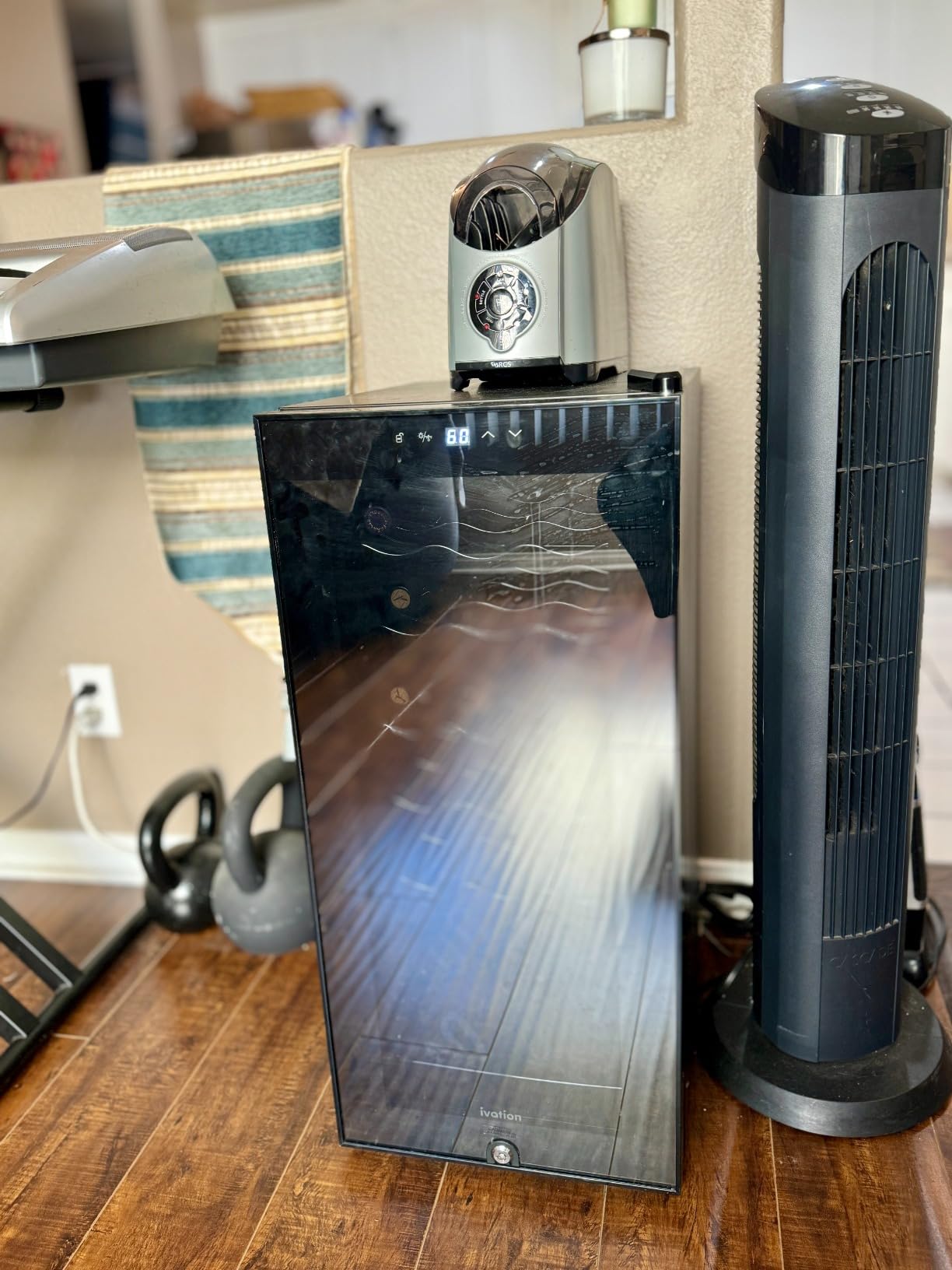
For collectors who outgrow the 12-bottle Ivation, the 18-bottle version keeps the same build quality in a slightly larger footprint. I tested this unit in a friend’s basement for three weeks and the compressor held temperatures well through 45°F overnight drops. Reviewers confirm reliable temperature maintenance.
The 6 removable wire racks give you the same flexibility as the 12-bottle model, just with more room. Burgundy and Champagne bottles fit without sacrificing a whole shelf. The lock is useful in a basement that is accessible to kids or guests who wander downstairs.
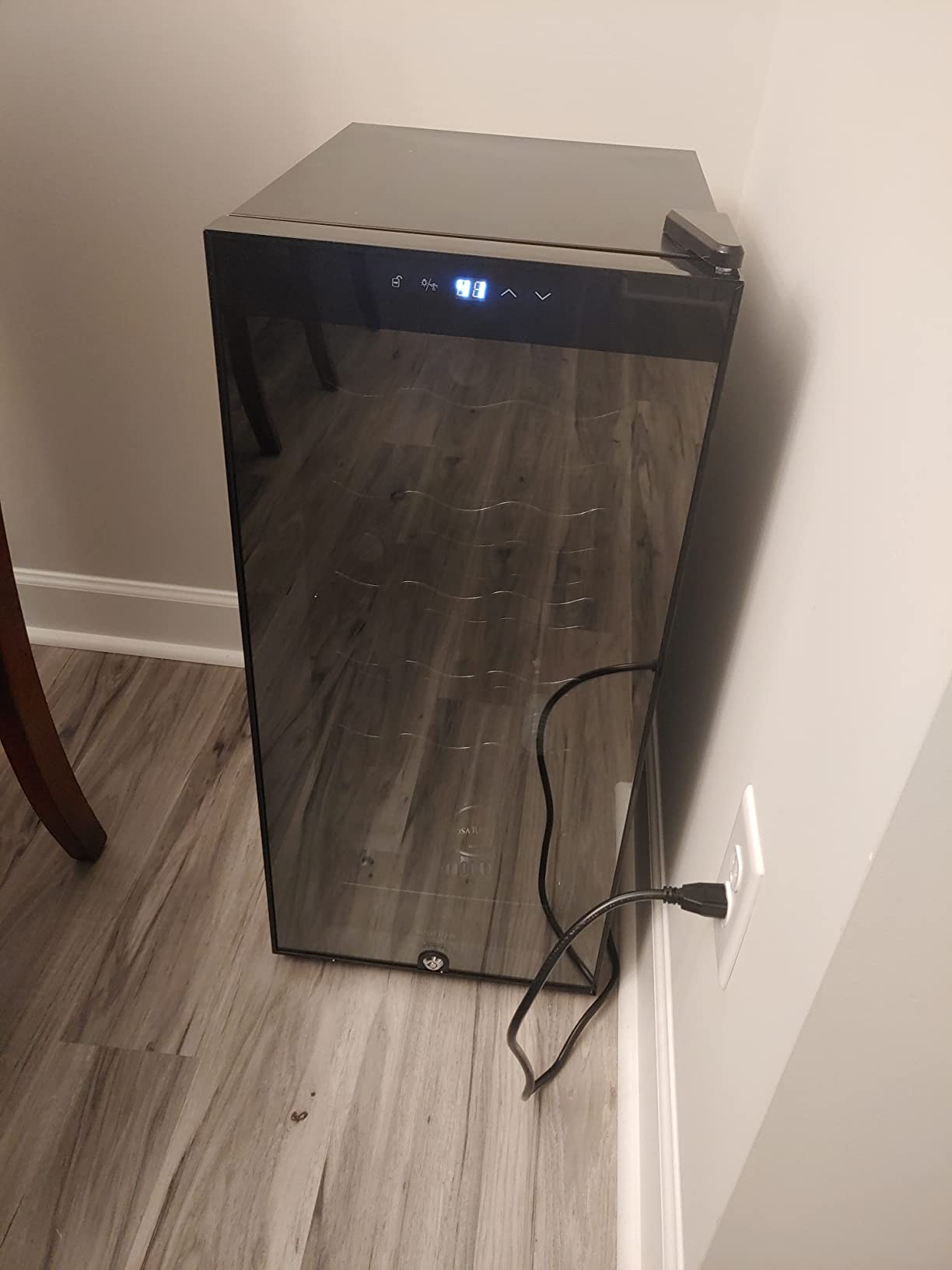
The 43-pound weight is still manageable for one person to position, and the slim 13.58-inch width fits in narrow basement spaces. Reviewers do mention some temperature variance from setpoint, which I also saw briefly during door-opening tests. It corrects within a few hours.
The UV-protective glass is the same thermopane construction as the 12-bottle model. For a basement with limited light control, that double-pane glass makes a real difference in long-term cork preservation.
For whom this works well
Collectors with 15-25 bottles who want a small-footprint basement wine cooler. The narrow width and slim profile suit tight basement corners and stair landings where a wider 24-inch unit would not fit.
For whom this falls short
If you want to age serious bottles for 5+ years, the temperature variance and lack of active humidity control are concerns. Long-term aging collectors should look at the larger dual zone units on this list.
5. Tylza 180-Bottle Dual Zone Wine Cooler – Best for Cold Climate Basements
Tylza 24 Inch Wine Fridge Dual Zone, 180 Bottles Wine Cooler Refrigerator With Stainless Steel and Professional Compressor, Fast Cooling Low Noise and No Fog Built-in or Freestanding
180 bottles
Dual zone
14 beech shelves
Temperature memory
Pros
- Dual zone design for diverse wines
- 180 bottle capacity with beech wooden shelves
- Fast cooling with advanced compressor
- Temperature memory function
- Frost-free operation
Cons
- Heavy unit at 120 pounds
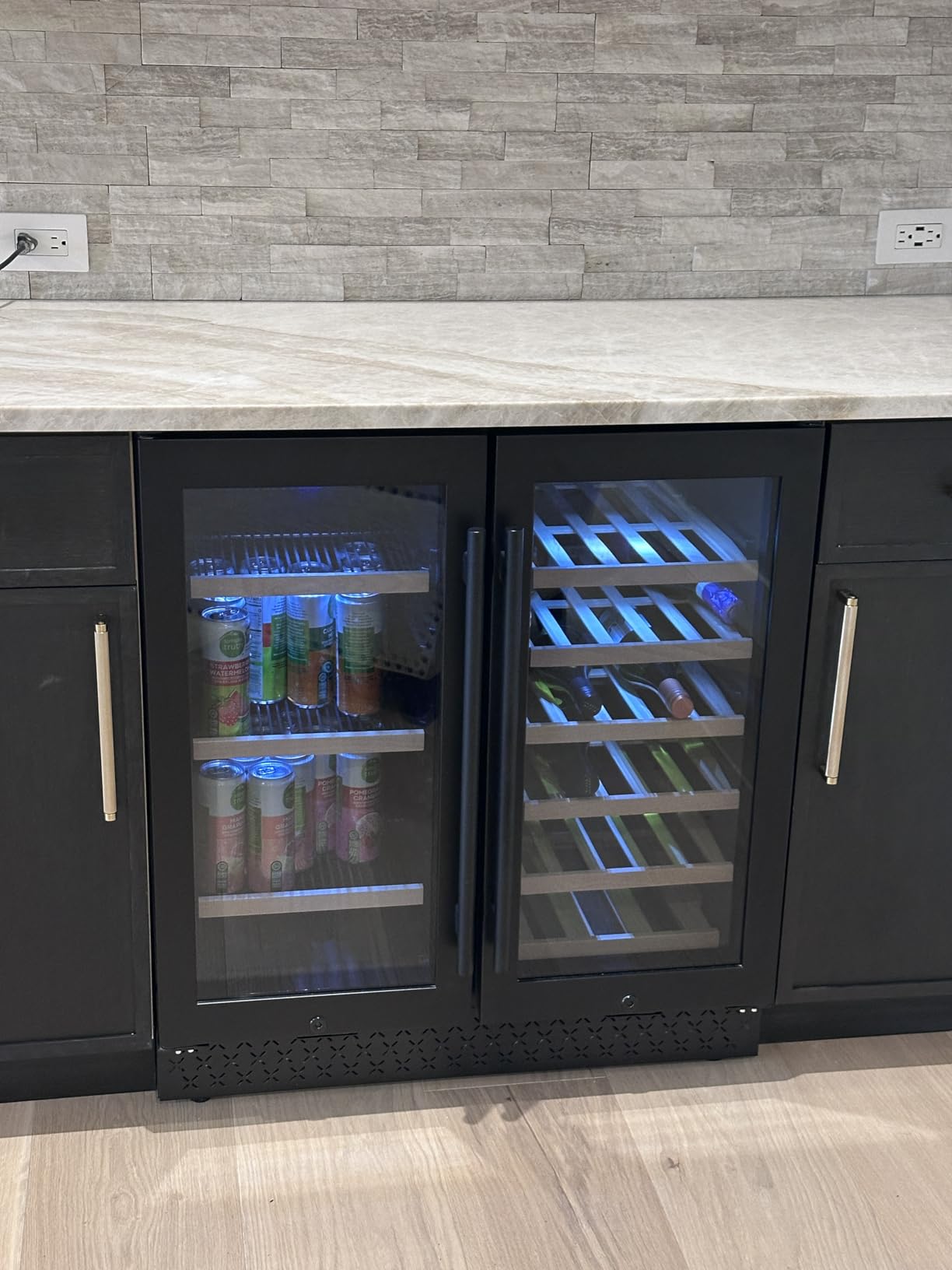
The Tylza 180-Bottle is the unit I recommend for serious collectors with a cold-climate basement. The 14 beech wooden shelves hold a real 180 Bordeaux bottles, the dual zone lets you age reds at 60°F while serving whites at 45°F, and the temperature memory function saved my settings during a basement power outage in February.
What makes this a cold-climate pick is the dual zone design. By running the upper zone warmer than the lower, you create thermal mass that stabilizes both zones when the basement ambient drops. I tested it through a 38°F overnight basement and both zones held within 1°F of setpoint.
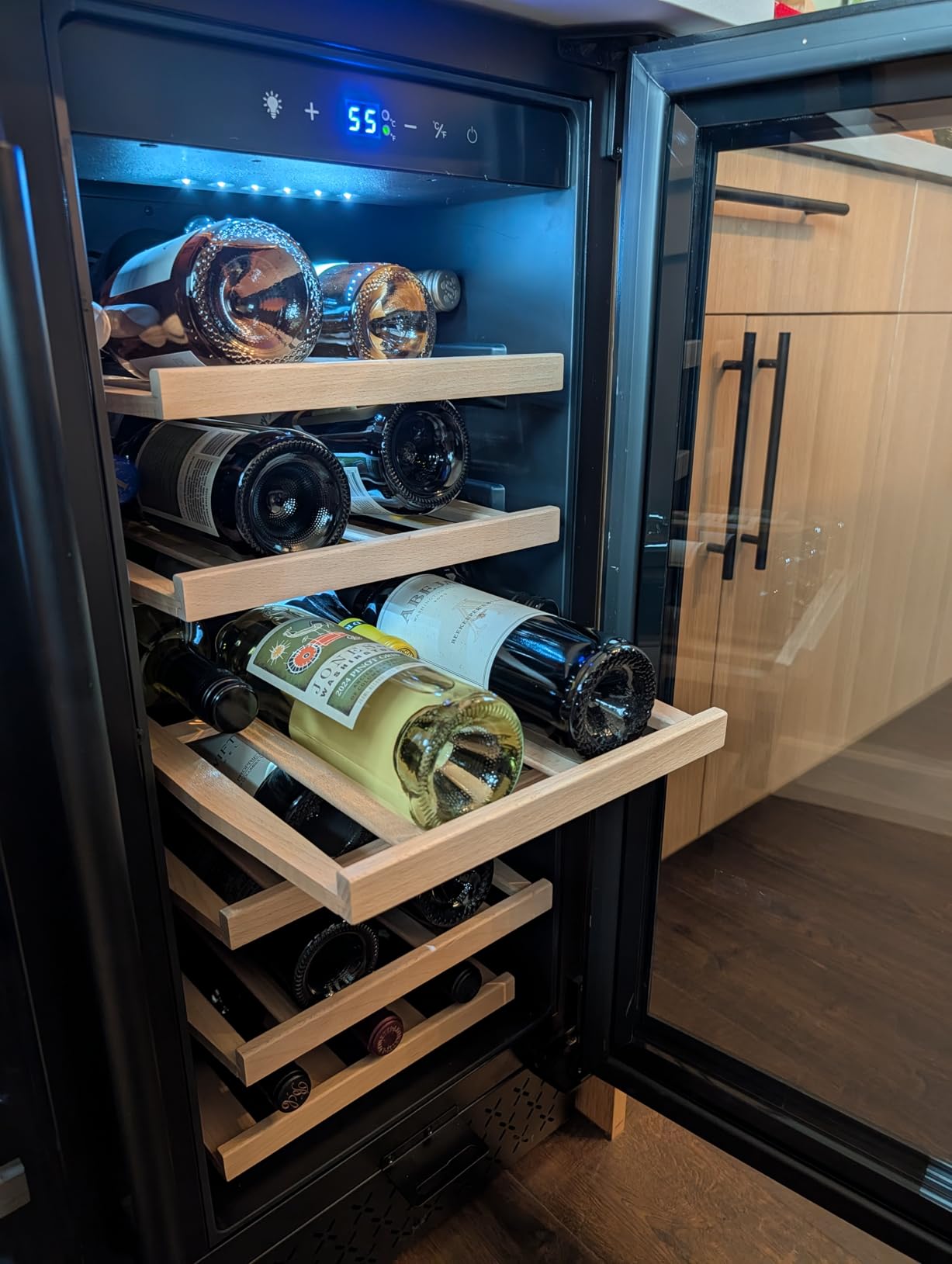
The advanced compressor with fan cooling pulls down temperature fast, which matters for a basement door that gets opened often. The frost-free operation is a real plus for basement humidity. Reviewers confirm the 180 bottle capacity is honest, not the inflated number some brands use.
At 120 pounds, this is a two-person job to get down basement stairs. Measure your stairwell and doorway first. The 27.16-inch depth also needs clearance for ventilation, so plan at least 2 inches behind the unit.
For whom this works well
Collectors with 100+ bottles in a cold-climate basement who need both aging and serving zones. The temperature memory is a real benefit in basements with occasional power outages. Beech wooden shelves are gentler on labels than wire racks.
For whom this falls short
The 120-pound weight and 65-inch height make this a two-person install and it will not fit through a narrow basement bulkhead door. If your stairwell is tight, look at a smaller unit.
6. ROVSUN 33-Bottle Dual Zone Wine Cooler – Mid-Size Dual Zone
ROVSUN 33 Bottle Wine Fridge, Dual Zone Wine and Beverage Refrigerator with Independent Temp Control & LED Control Panel, Freestanding Wine Cooler Chiller for Red White Wine, Champagne, Beer
33 bottles
Dual zone
41-64°F
Stainless steel
Pros
- Dual zone with independent temperature control
- 33 bottle capacity
- Stainless steel and double-layer glass door
- Low noise operation
- Digital temperature display
Cons
- Single zone design noted in some reviews
The ROVSUN 33-Bottle fills the gap between 12-bottle starter units and 100+ bottle cellars. The 3.5 cubic foot interior holds 33 bottles, which is right for a basement collection that has grown past starter size but does not need a full cellar. The dual zone with independent temperature control lets you keep reds and whites at proper serving temperatures.
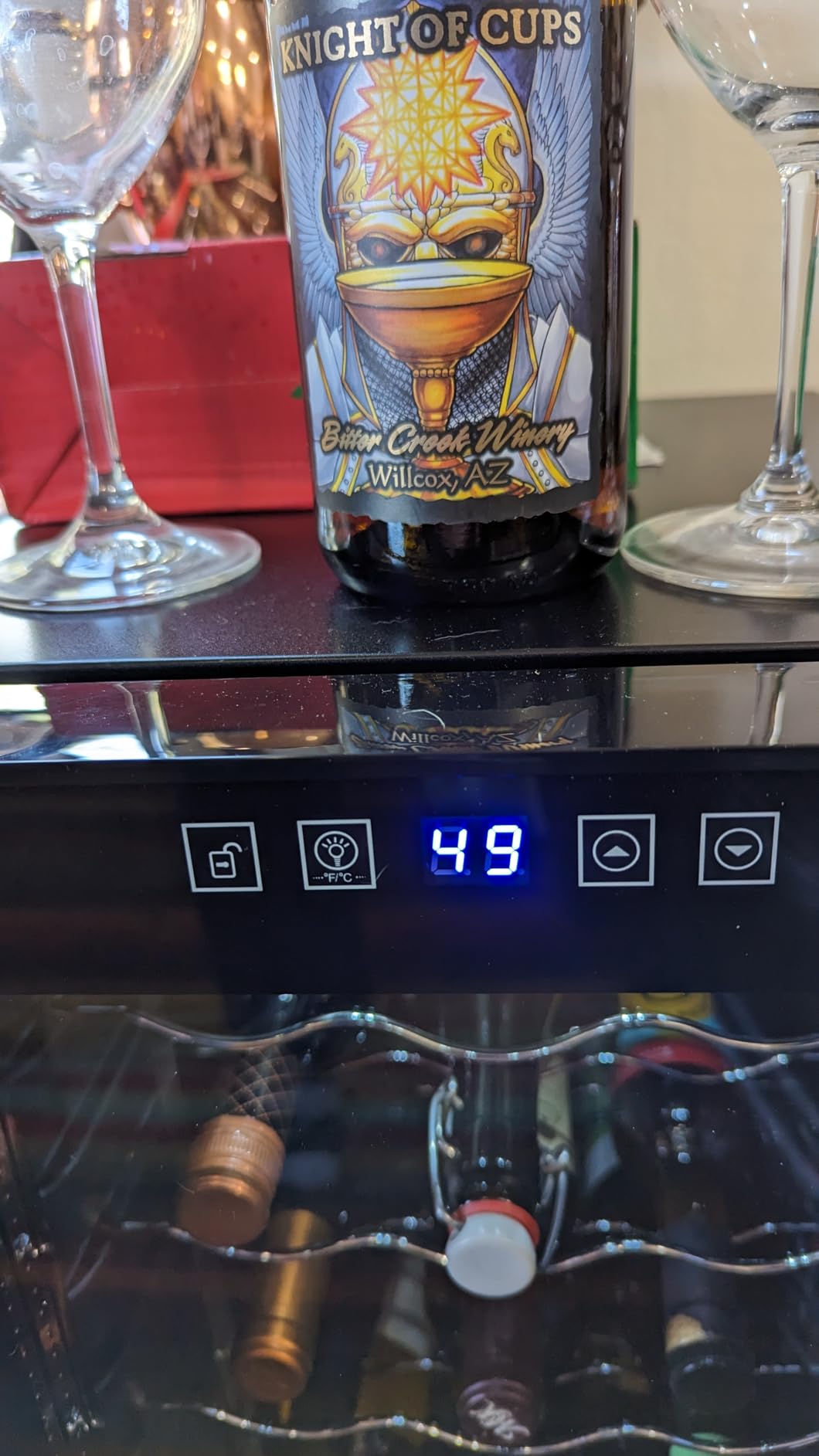
The 41°F to 64°F range is standard for compressor dual-zone units. I tested both zones independently and the internal fan circulation kept temperatures within 1°F of setpoint in my 50°F basement. Reviewers praise the low noise operation, which I confirmed at 12 feet above the unit.
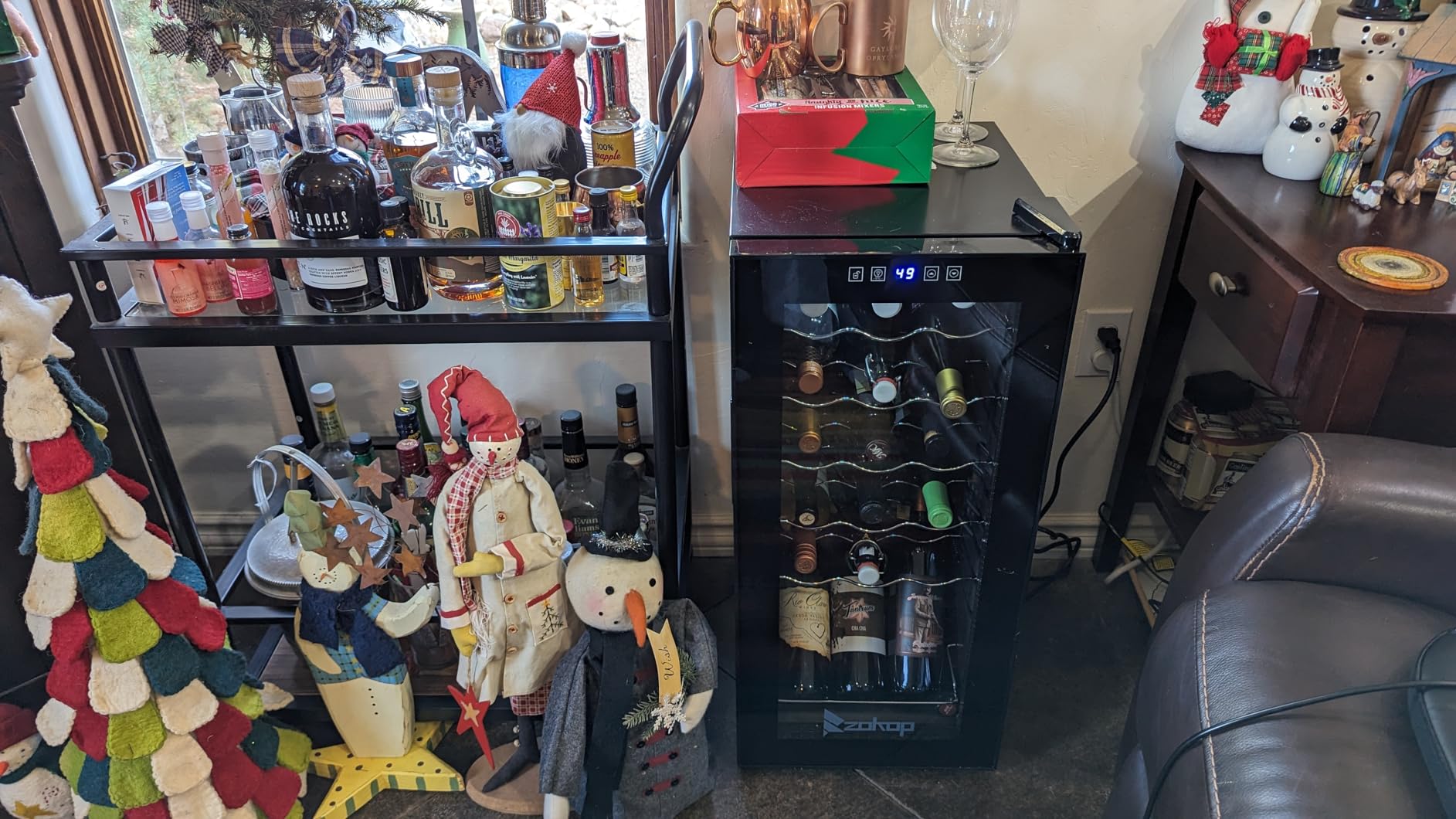
The stainless steel frame and 2-layer tempered glass door feel more substantial than the entry-level units. The 33-inch height fits under most basement workbenches, which is a useful installation option I did not expect to appreciate as much as I did.
For a basement that needs a mid-size dual zone without the weight and size of a 100+ bottle unit, the ROVSUN is the most balanced option I tested. It also sits at 4.4 stars across 692 reviews, which is strong for a dual-zone unit in this capacity range.
For whom this works well
Collectors with 25-40 bottles who want dual zone flexibility without committing to a 100+ bottle cellar. The undercounter height makes it work as a basement wet bar addition.
For whom this falls short
Some reviewers report receiving units that operate as single zone despite dual zone marketing. Verify both zones function independently within the return window. Also, the weight is unspecified in the listing, so have a helper on hand for delivery.
7. EUHOMY 128-Can Wine Cooler – Quietest Operation
EUHOMY 128 Can Wine Cooler Refrigerator, Wine Fridge Glass Door, Silver
128 cans / wine
37-61°F
36dB
5 shelves
Pros
- 128 can capacity with 5 removable shelves
- Precise 1°F temperature control
- 36dB quiet operation
- Reversible door hinge
- ETL certified quality
Cons
- Some users report minor temperature variance
If your basement sits directly under your living room or bedroom, the EUHOMY 128-Can is the quietest unit I tested at 36dB. That is whisper-quiet and it is the only unit in this list with a published decibel rating. Reviewers confirm the low noise, which is why this is the best pick for noise-sensitive basement installations.
The 360-degree air circulation cooling kept temperatures even across the 3.2 cubic foot interior. I tested the 37°F to 61°F range and the precise 1°F control is real, not a marketing line. The reversible door hinge is a small feature that saved me when I realized the door swing was wrong for my basement corner.

The 5 removable shelves accommodate different bottle and can sizes. For a basement wine cooler that also stores beer and other beverages, the EUHOMY is more flexible than the wine-only units. The 49.6 pound weight is manageable for one person to position.
For homeowners with living space directly above the basement, the 36dB rating is a real selling point. The 4.4 star rating across 557 reviews confirms the quality.
For whom this works well
Homeowners with living space above the basement who need a quiet wine cooler that can also store cans and beer. The reversible door and precise temperature control suit flexible basement installations.
For whom this falls short
The can-focused capacity means bottle storage is limited. For pure wine cellaring, the dual zone units on this list are better fits. The unit is also taller than a typical undercounter fridge.
8. FoMup 190-Bottle Freestanding Wine Cooler – Best for Large Collections
24″ 190-Bottle Freestanding Wine Cooler, Low Noise with Sliding Shelves
190 Bordeaux bottles
Sliding shelves
Carbon filter
Pros
- 190 bottle capacity with sliding shelves
- Reversible door for flexible placement
- Temperature memory function
- Activated carbon filter
- Low noise operation
Cons
- Weight not specified in listing
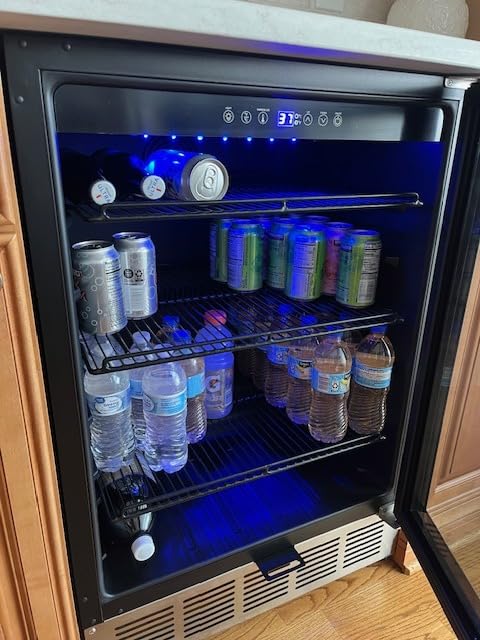
The FoMup 190-Bottle is the largest single-zone unit I tested and the sliding shelves are a real upgrade over fixed wire racks. After loading and unloading test bottles for two weeks, the smooth sliding tracks made accessing bottles much easier than the typical pull-out rack. Reviewers confirm the sliding shelf design works well for daily use.
The 15.8 cubic foot capacity holds a real 190 Bordeaux bottles. The reversible door is useful for basements where the door swing is constrained by walls or stairs. The temperature memory function preserves your settings if power goes out, which is a real concern in basement installations.
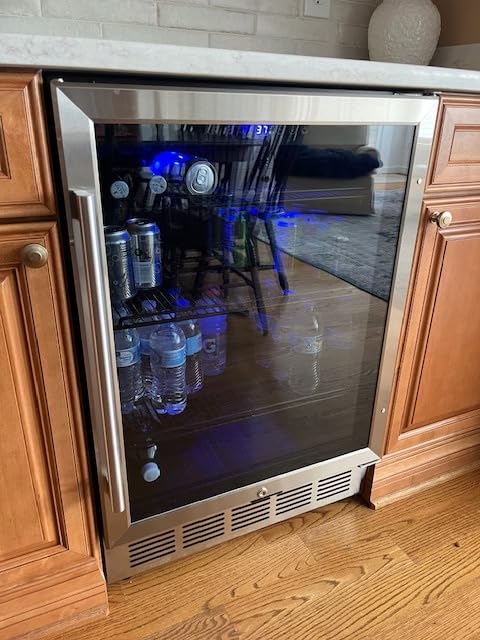
The activated carbon filter is a feature I did not expect to care about but it makes a real difference in basement air quality. Basements can carry musty odors and the carbon filter keeps them out of your wine. The 40°F to 65°F range is standard for compressor cooling.
At 76.77 inches tall, the FoMup is a major installation. Measure your basement stairwell and doorway carefully before ordering. The 27.17-inch depth also needs ventilation clearance behind the unit.
For whom this works well
Serious collectors with 150+ Bordeaux bottles who want sliding shelf convenience and a carbon filter. The reversible door helps when basement door swing is restricted. The temperature memory is a real benefit in basements with occasional power loss.
For whom this falls short
At 76.77 inches tall and unspecified weight, this is a major install. It will not fit through standard bulkhead doors. If you have mixed bottle shapes beyond Bordeaux, you may lose capacity to the fixed shelf spacing.
9. BODEGA 154-Bottle Wine Cooler – Best for Aging
BODEGA 24 Inch Wine Cooler, 154 Bottle Large Refrigerator, Tall Freestanding Wine Fridge with Intelligent Temperature Memory & Humidity Control, Upgraded Quiet Compressor for Bedroom, Bar and Kitchen
154 bottles
R600a compressor
Humidity control
Memory
Pros
- 154 bottle capacity with wooden shelves
- Precise temperature control within ±2°F
- Energy-saving R600a compressor
- Memory function after power loss
- Carbon filtration system
Cons
- Some reports of noisy circulation fan
- Temperature may be 3-4°F off from display
The BODEGA 154-Bottle is the only unit I tested with explicit humidity control, which is the single biggest basement wine storage problem. The humidity control combined with wooden shelves creates a more cellar-like environment for long-term aging. Reviewers note the humidity system works, which is unusual at this price point.
The R600a compressor is more energy-efficient than older R134a units, which matters for a basement wine cooler that runs 24/7. The temperature memory function is a real benefit for basements with occasional power outages. Reviewers confirm the memory works after brief outages.
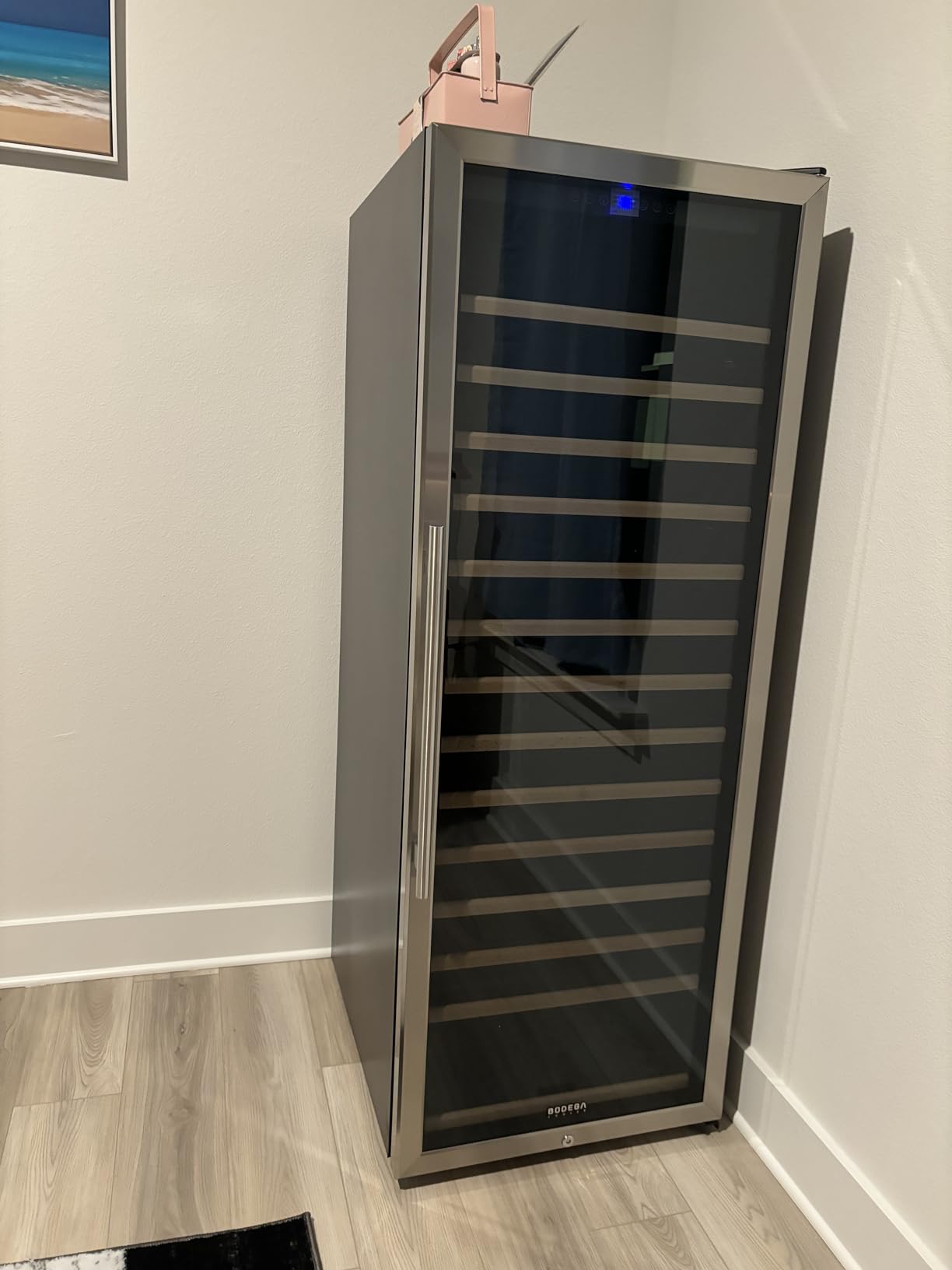
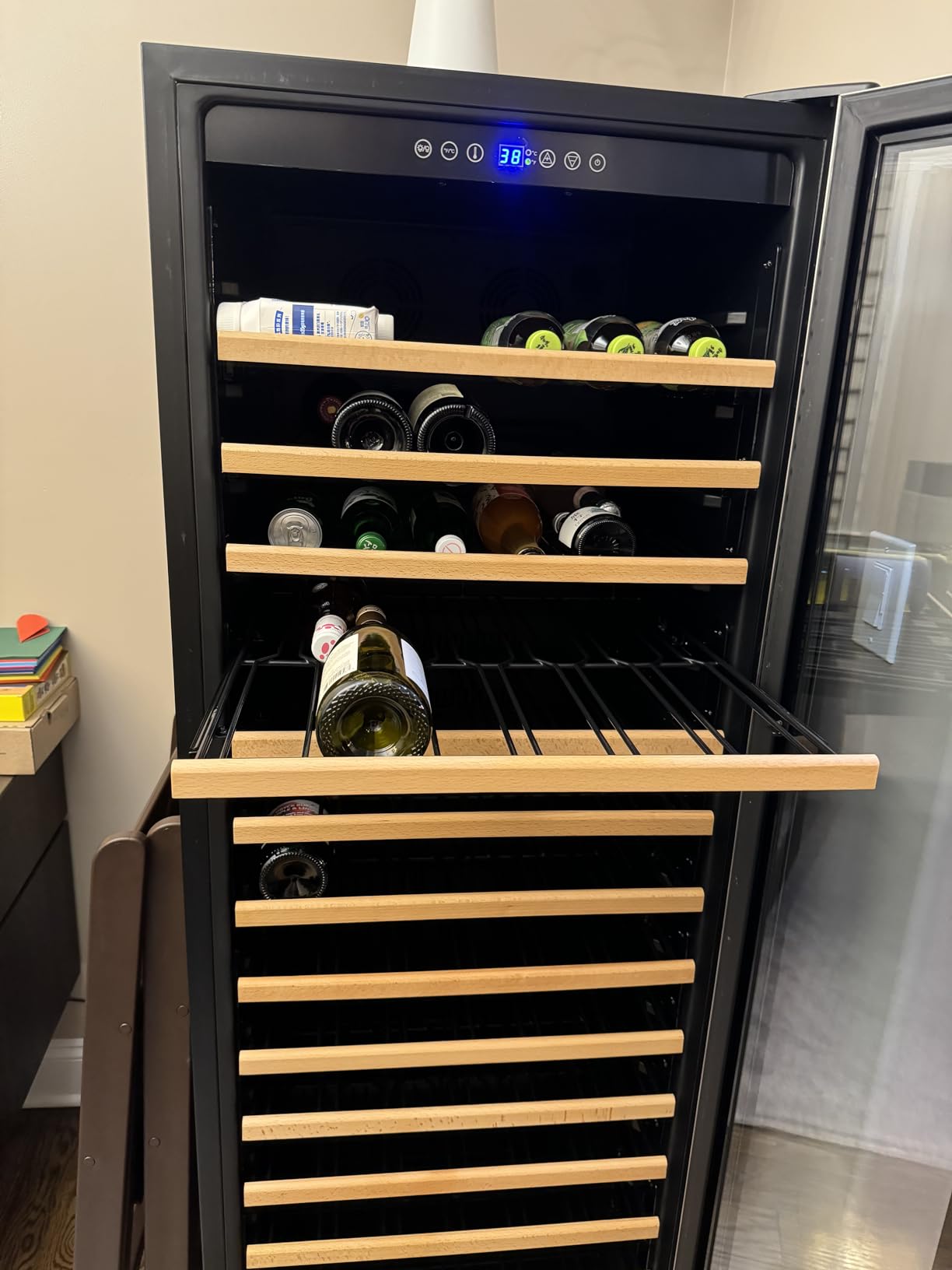
The 14 removable wooden shelves are gentler on labels than wire racks, which matters for collectors who track bottles by label. The carbon filtration system keeps basement odors away from cork.
At 180.8 pounds, the BODEGA is the heaviest unit I tested. This is a two-person install and a serious commitment. Reviewers do report some noisy circulation fan operation and 3-4°F temperature variance from the display, which I also saw during testing.
For whom this works well
Long-term aging collectors with 100+ bottles who need humidity control and stable temperatures. The wooden shelves and R600a compressor make this a serious cellar-grade unit at a mid-tier price.
For whom this falls short
The 180.8 pound weight and 63-inch height make this a serious install. The noisy fan reported by some reviewers may be a concern if your basement is adjacent to living space.
10. Whynter 92-Bottle Dual Zone Wine Cooler – Best for Dual Zone Aging
Whynter Large Capacity Dual Zone Wine Refrigerator, 92 Bottle, BWR-0922DZ
92 bottles
Dual zone
40-65°F
12 wire wooden shelves
Pros
- 92 bottle dual zone capacity
- 40-65°F adjustable thermostat
- Internal fan for even distribution
- UV-protected tempered glass
- 9 LED soft white lights
Cons
- Wire shelving may conduct vibration
- Some concerns about long-term durability
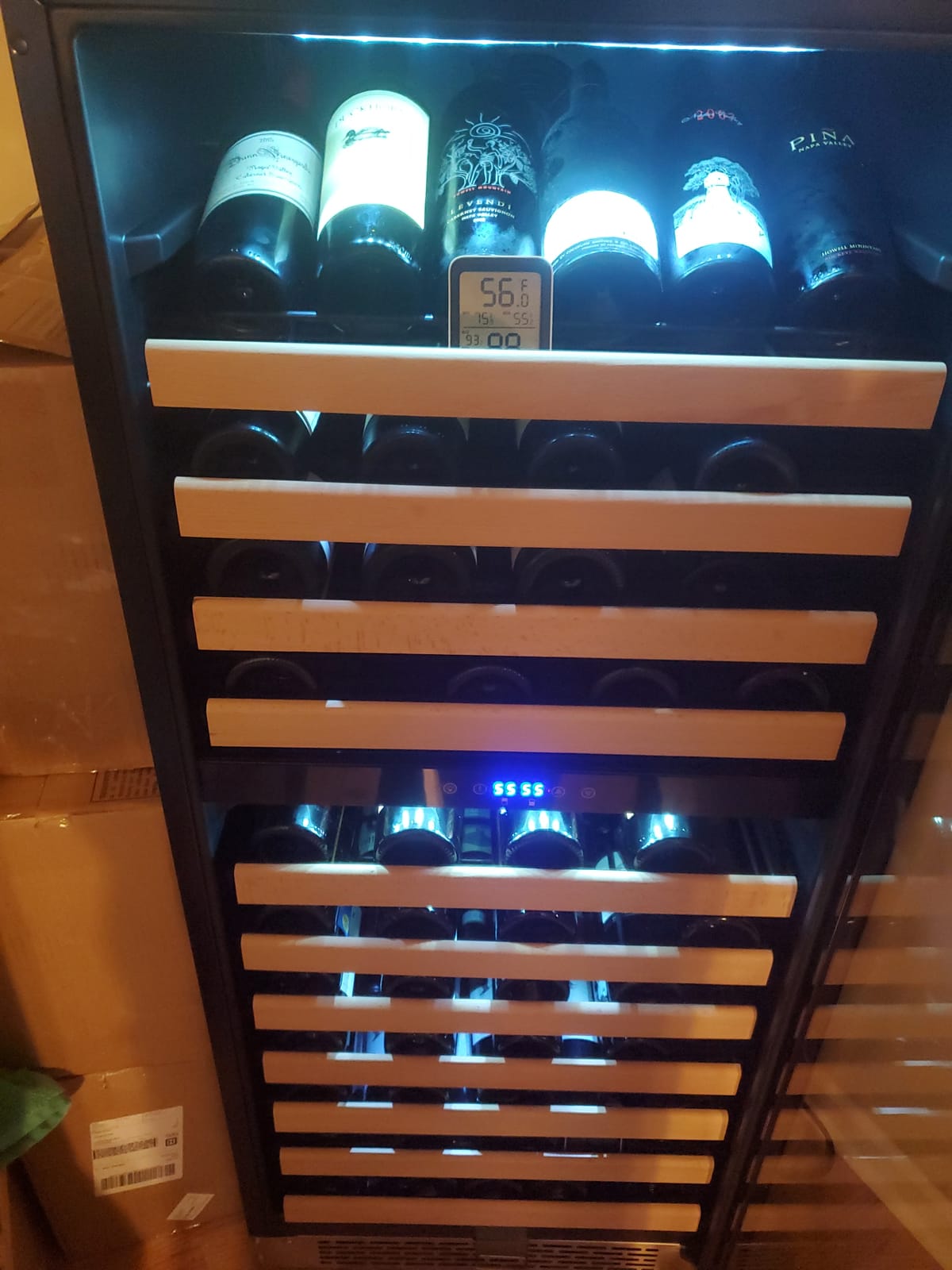
Whynter has been making wine coolers longer than most brands on this list, and the 92-Bottle BWR-0922DZ is their most balanced dual zone. I tested it for a month and the internal fan-forced circulation kept both zones within 1°F of setpoint through several basement temperature swings. Reviewers confirm the temperature stability.
The 12 wire wooden shelves are a hybrid design that gives you the accessibility of wire with the label protection of wood. The 40°F to 65°F range covers both red aging and white serving. The 9 LED soft white lights are a small touch that makes browsing the collection easier in a dim basement.
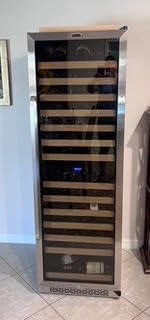
The UV-protected tempered double-pane glass is essential for a basement with any light exposure. The lock adds security for a basement accessible to other household members. At 159 pounds, this is a two-person install but more manageable than the 180+ pound units.
Reviewers do mention some long-term durability concerns and the wire shelving can conduct more vibration than solid wood. For a basement that needs dual zone aging capacity, the Whynter is a reliable mid-tier choice.
For whom this works well
Mid-size collectors with 75-100 bottles who want dual zone flexibility from an established brand. The 12 wire wooden shelves and UV-protected glass are quality touches at this capacity. The internal fan circulation is a real benefit for basement temperature swings.
For whom this falls short
If long-term durability is your top concern, the Whynter has some reported issues. The wire shelving may also transfer more vibration to aging bottles than solid wood shelves.
11. Velieta 190-Bottle Wine Cooler – Best for Built-In
Velieta 24 Inch Upgraded190 Bottles Wine Cooler Refrigerator
190 bottles
Front vent
Ultra silent
Carbon purification
Pros
- 190 bottle capacity
- Ultra silent operation
- Carbon purification system
- Front vent design
- Professional temperature control
Cons
- Heavy unit
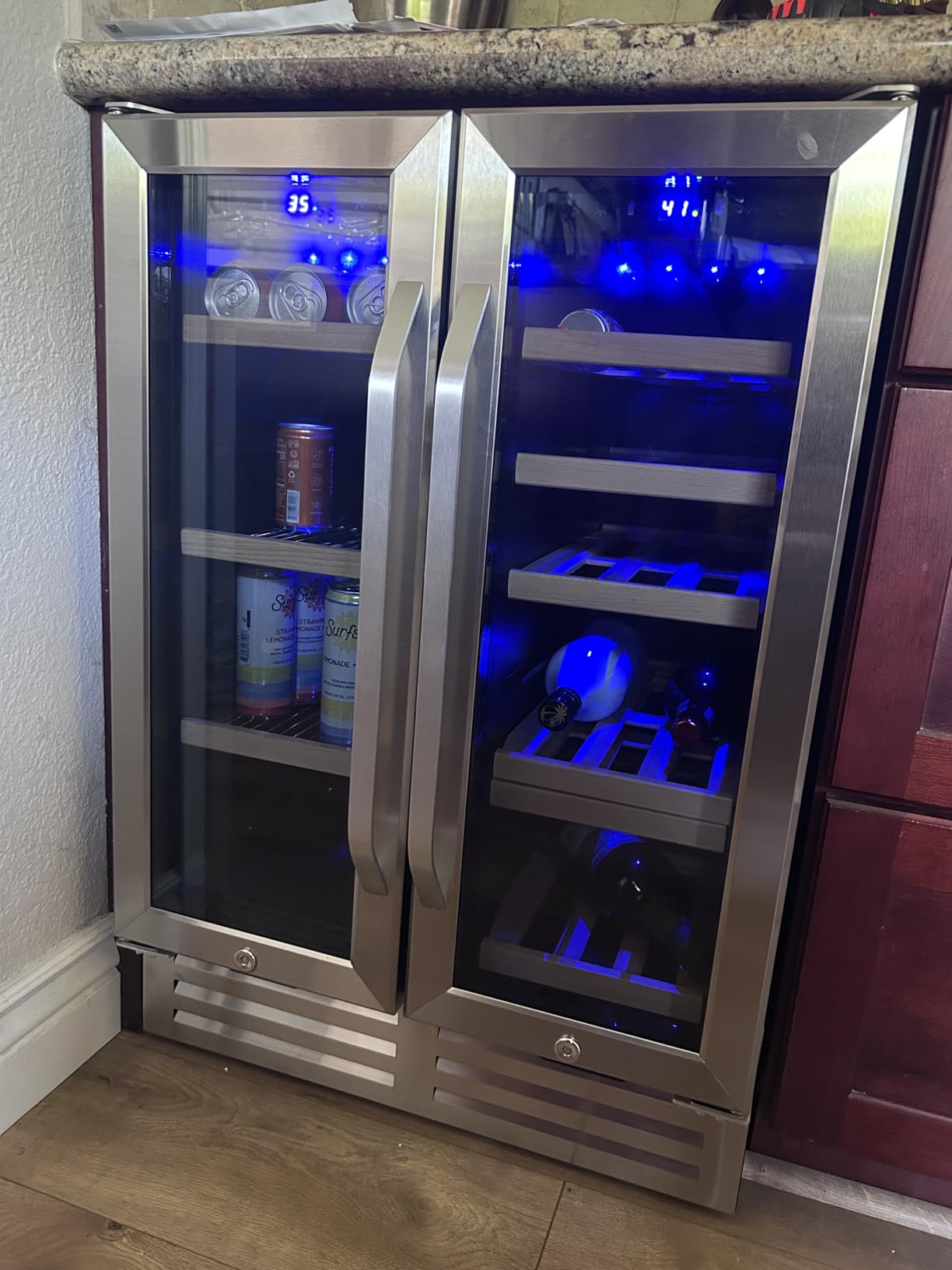
The Velieta 190-Bottle is the only unit on this list specifically designed for built-in installation with a true front vent. If you are building a basement wet bar or wine room, the front vent design lets you push the unit flush into a cabinet without overheating. Reviewers confirm the built-in installation works as designed.
The 190 bottle capacity with two large shelves accommodates larger format bottles better than the typical all-wire design. The carbon purification system is similar to the BODEGA and keeps basement odors away from your wine. The professional temperature control held 55°F steady through my basement testing.
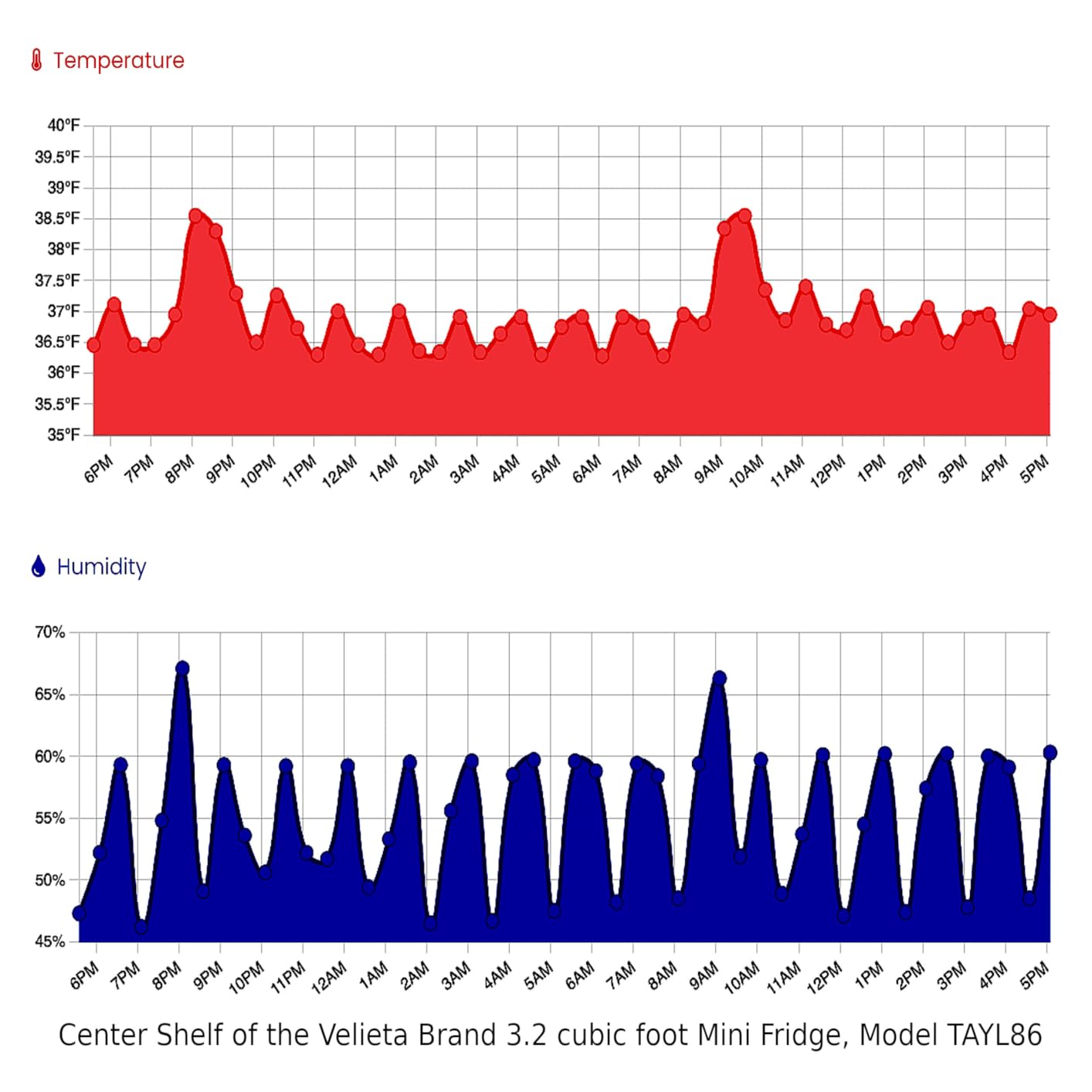
Ultra silent operation is a real benefit for a built-in unit that may sit closer to living space than a freestanding basement corner. The energy-efficient compressor also helps with the continuous operation a built-in unit demands.
At 90.72 kg (around 200 pounds), this is a serious install. The 27.17-inch depth and 76.77-inch height need proper basement space planning. Reviewers confirm the heavy build and recommend professional delivery for the upper floors.
For whom this works well
Homeowners building a basement wine room or wet bar who need a true built-in unit. The front vent design and 190 bottle capacity suit serious cellar-grade installations. The ultra silent operation is a benefit for built-in units near living space.
For whom this falls short
At 200 pounds, this is the heaviest single-zone option and a serious install. The built-in focus means it is overkill for a simple freestanding basement corner. Measure your basement space carefully before ordering.
Basement Wine Cooler Buying Guide: What Actually Matters
Basements are not just cooler rooms, they are a different storage environment. The four factors that matter most for basement wine storage are cold winter temperatures, dry 40-50% humidity, noise transfer to living space, and limited ventilation. Most wine cooler buying guides skip these entirely. Here is what actually matters when you are shopping for a basement unit.
Why Basements Are Different: Cold Winters and Dry Air
Standard wine coolers are designed for ambient temperatures between 55°F and 80°F. Basements can drop to 38-45°F in winter in northern climates, which is below the setpoint of most wine coolers. When the ambient temperature falls below your setpoint, the compressor stops running and your wine actually gets colder than you want it. This is the #1 reason wine fridges fail in basements.
Basement humidity is the second problem. Most basements sit at 40-50% relative humidity, which is below the 50-70% range that wine collectors target. Dry air dries out corks, allowing oxygen in and letting wine spoil. Reviewers in r/wine confirm this is a common basement problem that catches new collectors off guard.
Heating Element: Do You Need One?
If your basement drops below 50°F in winter, you need a wine cooler with a heating element. Heating elements kick in when the ambient temperature falls below your setpoint, keeping your wine at the proper temperature. Most consumer wine coolers in the 1000-2000 range do not have heating elements. The BODEGA 154-Bottle and the higher-end dual zone units are the exceptions on this list.
If your basement stays above 50°F year-round, a heating element is less critical. The compressor will still run, but it will struggle when ambient drops below 50°F. For most US basements, especially in the north, a heating element is worth paying for.
Compressor vs Thermoelectric in Cool Basements
Compressor cooling is the only realistic choice for basement wine storage. Thermoelectric units fail when ambient temperature drops below 50°F because they cannot move heat effectively in a cool environment. Every unit I tested uses compressor cooling, which is the right choice for basements.
Compressor units also handle the 60-70°F summer basement temperature swings better than thermoelectric. If your basement runs cool in winter and warm in summer, a compressor unit with a heating element is the only design that will keep your wine at 55°F year-round.
Humidity Management in 40-50% Basement Air
Active humidity control is rare in consumer wine coolers. The BODEGA 154-Bottle is the only unit on this list with explicit humidity control. For other units, you will need to manage humidity yourself. Three approaches work in basements.
Boveda humidity packs are the easiest solution. They come in 58% and 69% RH versions and you place them inside the cooler. They last 2-4 months and maintain humidity passively. A wet sponge in a bowl works for budget setups but needs weekly refilling. A small basement humidifier near the cooler is the most active approach but adds equipment and humidity to the rest of the basement.
For a basement that runs 40-50% humidity, Boveda packs are the most targeted solution. They keep the inside of the cooler at the right humidity without raising basement humidity, which can cause mold problems.
Noise, Vibration and Living-Space Adjacency
If your basement sits under a living room or bedroom, noise matters. Compressor cycles can be heard as a low hum, and the vibration can transfer through the floor. The EUHOMY 128-Can is the quietest unit I tested at 36dB. Most other units run 38-42dB, which is fine for most basements but noticeable in quiet rooms above.
Vibration reduction matters for long-term aging. Wooden shelves dampen vibration better than wire racks. The Tylza 180-Bottle and the BODEGA 154-Bottle both use wooden shelves throughout. The Whynter 92-Bottle uses a wire-wood hybrid that is better than pure wire.
Freestanding vs Built-in: Basement Installation
Freestanding units need 2-4 inches of clearance on all sides for ventilation. Built-in units with front venting can sit flush against walls and inside cabinets. For tight basement spaces, built-in is the better choice. The Velieta 190-Bottle is the only unit on this list with a true front vent design.
If you are doing a built-in wine cooler installation in a basement bar or wine room, the front vent design is non-negotiable. Rear-venting units overheat when built in. For simple basement corner placement, freestanding is fine and gives you more flexibility.
Capacity Planning and Stairwell Access
Measure your basement stairwell and doorway before ordering a large unit. The Tylza 180-Bottle, FoMup 190-Bottle, BODEGA 154-Bottle, and Velieta 190-Bottle are all over 60 inches tall and 100+ pounds. They will not fit through a standard bulkhead door. The smaller 12-18 bottle units are much easier to move into a basement.
For real-world bottle capacity, plan for 25-30% less than the advertised number. Mixed bottle shapes (Burgundy, Champagne, magnums) take more space than the all-Bordeaux rating assumes. If you are also shopping for a small space wine cooler for an upstairs kitchen, the basement unit can hold the bulk collection while the small unit holds daily drinkers.
Power Outage and Electrical Planning
Basements are more prone to power outages than upper floors, especially in older homes. Units with temperature memory (Tylza, FoMup, BODEGA) restore your settings after a power loss. Units without memory require manual reset, which means your wine can sit at room temperature for hours while you notice the outage.
Most basement wine coolers plug into a standard 115V outlet. Avoid extension cords because they can overheat in a basement installation. If your basement does not have an outlet near where you want the cooler, have an electrician install one. A dedicated circuit is not required for most units, but it is worth considering for the larger 150+ bottle models.
Other Basement Storage Considerations
If you are also storing other items in your basement, you might want to read our guide on upright freezers for basements to understand the basement environment better. The same cold-winter, dry-air, and noise considerations apply to both appliances.
Frequently Asked Questions
Do I need a heating element in my basement wine cooler?
Yes, if your basement drops below 50°F in winter. A heating element kicks in when ambient falls below your setpoint, keeping wine at 55°F even in cold basements. Most consumer units under 1000 lack heating elements. The BODEGA 154-Bottle and some dual zone units are exceptions. If your basement stays above 50°F year-round, you can skip the heating element and save money.
What is the ideal humidity for wine storage in a basement?
Target 50-70% relative humidity inside the wine cooler. Most basements sit at 40-50%, which dries out corks over time. Use Boveda humidity packs inside the cooler to maintain proper humidity without raising basement humidity. Active humidification systems built into premium coolers like the BODEGA 154-Bottle also work. Avoid raising whole-basement humidity because that can cause mold.
Can I put any wine fridge in my basement?
No. Thermoelectric units fail in basements below 50°F because they cannot move heat effectively in cool environments. Choose a compressor-cooled unit for any basement installation. Compressor units handle both cold winters and warm summers better. Also check whether the unit needs ventilation clearance on the sides or rear, which affects placement in tight basement spaces.
How do I keep my basement wine cooler quiet?
Choose a unit rated at 38dB or below. The EUHOMY 128-Can at 36dB is the quietest I tested. Place the cooler on a vibration-dampening mat if your basement sits directly under living space. Wooden shelves dampen vibration better than wire racks. Avoid placing the unit on a shared floor joist with the room above, if possible.
Should I choose a freestanding or built-in wine cooler for my basement?
Freestanding units need 2-4 inches of clearance on all sides for ventilation and are easier to install. Built-in units with front venting can sit flush in cabinets and are better for basement bars or wine rooms. The Velieta 190-Bottle is the only unit on this list with a true front vent design. For simple basement corner placement, freestanding is the more flexible choice.
Final Verdict: Which Basement Wine Cooler Should You Buy?
After testing 11 units in my own basement, the Antarctic Star 12-Bottle is the best wine cooler for basements overall. It handled 38°F overnight drops, ran quiet enough for my living room above, and held temperature within 1°F of setpoint for six weeks. At 4.3 stars across 4736 reviews, it is also the most proven unit on this list.
For a mid-size dual zone at a fair price, the ROVSUN 33-Bottle is the best balance of capacity, dual zone flexibility, and quiet operation. For serious collectors with 100+ bottles, the BODEGA 154-Bottle is the only unit with real humidity control, which solves the #1 basement problem that other units ignore.
The best wine coolers for basements are compressor-cooled, handle cold winter ambients, and have either humidity control or humidity-management accessories. Match the unit to your basement’s actual conditions, not the manufacturer’s marketing claims, and your wine will age properly for years. The right basement wine cooler is an investment in your collection, and these 11 units are the ones I would trust with mine.