

The Sony Alpha 7 IV is the body worth watching first in Amazon’s Prime Big Deal Days camera sale, and the reason is simple: a 33MP full-frame sensor, real-time eye autofocus and a screen that flips all the way out let one camera carry photos and video without a trade-off. Creators chasing burst speed should look at the Canon EOS R6 II, and anyone shooting indoors and after dark will find the Nikon Z 6 II steadier at high ISO.
Prime Big Deal Days runs October 6-7, 2026. Offers open and close across those two days, so treat this list as the set worth watching rather than a promise about any one number.
Table of Contents
Our Top 3 Picks for Best Amazon Prime Big Deal Days Camera Deals
All three top picks are full-frame bodies, which tells you something about where the useful features sit right now. Each one handles a different job: hybrids, action, low light.

Sony Alpha 7 IV
- 33MP full-frame sensor
- Real-time eye AF
- 4K 60p 10-bit video
- Articulating touchscreen

Canon EOS R6 II
- 24.2MP full-frame sensor
- 40 fps electronic burst
- Uncropped 4K 60p
- 3.69M dot viewfinder

Best Amazon Prime Big Deal Days Camera Deals Compared
Every camera below is listed with the same four fields so you can scan across formats rather than read ten separate descriptions. Ratings and review counts are the ones shown on Amazon at the time this was written.
| Product | Specifications | Action |
|---|---|---|
| Sony Alpha 7 IV |
|
Check Deal Price |
| Canon EOS R6 II |
|
Check Deal Price |
| Nikon Z 6 II |
|
Check Deal Price |
 Canon EOS RP Kit Canon EOS RP Kit |
|
Check Deal Price |
 Sony Alpha a6400 Sony Alpha a6400 |
|
Check Deal Price |
 Canon EOS R50 Bundle Canon EOS R50 Bundle |
|
Check Deal Price |
 DJI Osmo Pocket 3 DJI Osmo Pocket 3 |
|
Check Deal Price |
 Nikon Z50 II Kit Nikon Z50 II Kit |
|
Check Deal Price |
 DJI Osmo Action 4 DJI Osmo Action 4 |
|
Check Deal Price |
 AKASO EK7000 AKASO EK7000 |
|
Check Deal Price |
How We Chose
We compared the specifications that decide which camera fits which job: sensor size and resolution, burst rate, video modes, stabilization, viewfinder, connectivity and what ships in the box. On top of that we read owner reviews and ratings left on Amazon. Everything was checked in October 2026, and offers move during the event.
1. Sony Alpha 7 IV: Best Hybrid Body for Photo and Video
Sony Alpha 7 IV Full-frame Mirrorless Interchangeable Lens Camera
Type: full-frame mirrorless
Sensor: 33MP
Video: 4K 60p 10-bit
Stabilization: 5-axis
Pros
- 33MP detail for cropping and large prints
- 693-point hybrid AF with real-time eye AF
- Dual CFexpress Type A and SD card slots
- Articulating 3.0-inch touchscreen
- 5-axis stabilization in the body
Cons
- Menu system takes real time to learn
- 1/250s flash sync speed
- Burst crops in the fastest 60-120p modes
Two card slots and a viewfinder that magnifies 0.78x are the details that separate this from a good vlogging camera. The 33MP Exmor R sensor gives you room to crop a portrait down to a headshot and still have detail, which is why it holds up for people who mostly shoot stills and only occasionally need 4K.

The BIONZ XR engine reads out every pixel in 4K up to 60p at 10-bit 4:2:2, so grading footage does not fall apart the moment you push the shadows. Reviewers single out the eye AF for holding onto a moving subject, whether that subject is a dog in a garden or a cyclist crossing a junction.
Owners report a steeper learning curve than most, mostly around the menus and the number of customisable dials. It is a fair trade for a camera that grows with you, but not the fastest path to a first photograph. If you would rather buy once and not read a manual for a week, the Canon EOS R50 Bundle is the softer landing.

Compared with the Canon EOS R6 II, the Alpha trades burst speed for resolution: 10 fps against 40 fps, but 33MP against 24.2MP. Against the Nikon Z 6 II it wins on the screen, since the Nikon’s rear panel only tilts. Shoot weddings, sports or running birds and the Canon is faster. Shoot landscapes, portraits and general hybrid work and this is the one to watch.
2. Canon EOS R6 II: Best for Action and Wildlife
Canon EOS R6 Mark II Mirrorless Camera (Body Only)
Type: full-frame mirrorless
Sensor: 24.2MP
Video: 4K 60p uncropped
Stabilization: 5-axis
Pros
- 40 fps electronic burst at 20MP
- Subject detection covers vehicles motorcycles horses trains and aircraft
- 3.69 million dot OLED viewfinder at 120 fps refresh
- Up to 6 hours of Full HD recording
- 5GHz Wi-Fi and 10Gbps USB-C transfer
Cons
- Body only so a lens is a separate purchase
- Resolution drops to 20MP in the fastest burst mode
This is the body to watch if your subjects move. An electronic shutter at 40 fps means a bird taking off, a rally stage or a dog mid-air lands as individual frames rather than one blurred guess.

The autofocus is the reason experienced shooters keep coming back. Subject detection recognizes people, animals, cars, motorcycles, horses, trains and aircraft, and head, face and eye detection let you choose which eye it locks onto. At a school sports day or a cycling race that is the difference between 40 usable frames and 40 out-of-focus ones.
Video is unusually generous for a stills-first body. Six hours of continuous Full HD recording, uncropped 4K up to 60 fps oversampled from 6K, and 180 fps Full HD for slow motion. Reviewers note it does not overheat during long takes, which plenty of bodies at this level cannot say.

Good to know: this listing is the body only, so add an RF lens before the camera is useful. It suits you best if you already own Canon glass or are comfortable choosing one separately, since RF lenses carry a higher cost than the body. Compared with the Sony Alpha 7 IV you give up 9MP of resolution and the fully flip-out screen, and in exchange you get roughly four times the burst rate.
3. Nikon Z 6 II: Best for Low-Light Work
Nikon Z 6II | Versatile Full-Frame mirrorless Stills/Video Hybrid Camera | Nikon USA Model
Type: full-frame mirrorless
Sensor: 24.5MP
Video: 4K UHD 60p
Stabilization: 5-axis
Pros
- Back-illuminated sensor with strong high-ISO performance
- 14 fps burst with a deep buffer
- Dual EXPEED 6 processors
- Works with about 360 F-mount lenses through the FTZ adapter
- 4K UHD 60p with full pixel readout
Cons
- Tracking can drift in busy scenes
- Screen tilts but does not fully flip out
- Limited dust protection when changing lenses
A back-illuminated 24.5MP sensor is the quiet reason this body keeps coming up at night events and in indoor sport. It is the highest-rated camera on this list, and owners point to clean high-ISO files as the headline benefit.

The buffer is the practical upgrade over the original Z 6. At 14 fps with a buffer several times deeper, you can hold the shutter through a burst and still have frames left for the next moment. That matters more than raw burst speed when you are photographing a wedding reception or a stage.
Two card slots, one CFexpress or XQD and one UHS-II SD, let you split RAW and JPEG or back up as you shoot. Owners also highlight the out-of-camera JPEGs as good enough to share without an editing pass, which saves time when you are handing photos to a client the same night.

Two honest limits. Subject tracking gives up ground to Canon and Sony systems in crowded scenes, and the rear screen tilts rather than flipping fully out, so solo vloggers should look at the Canon EOS R50 Bundle instead. On the plus side, the FTZ adapter opens up roughly 360 older F-mount lenses, which makes the FTZ route the cheapest way to build glass for this system.
4. Canon EOS RP Kit: Best Entry Point to Full-Frame
Canon EOS RP Mirrorless Camera RF24-105mm Lens F4-7.1 is STM Lens Kit
Type: full-frame kit
Sensor: 26.2MP
Video: 4K UHD crop
Stabilization: lens IS only
Pros
- Light 16-ounce body that is easy to carry
- RF 24-105mm f/4-7.1 IS STM lens included
- 5 stops of stabilization in the lens
- Works as a webcam on Mac and Windows
- 4K UHD capture
Cons
- No in-body image stabilization
- Cropped 4K with a 30-minute limit and 24 fps ceiling
- No mechanical shutter
If the goal is full-frame photos without a second purchase, this kit bundles the body with an RF 24-105mm f/4-7.1 IS STM. That lens covers wide to short telephoto, so wide views, portraits and casual family shots all come out of the box.
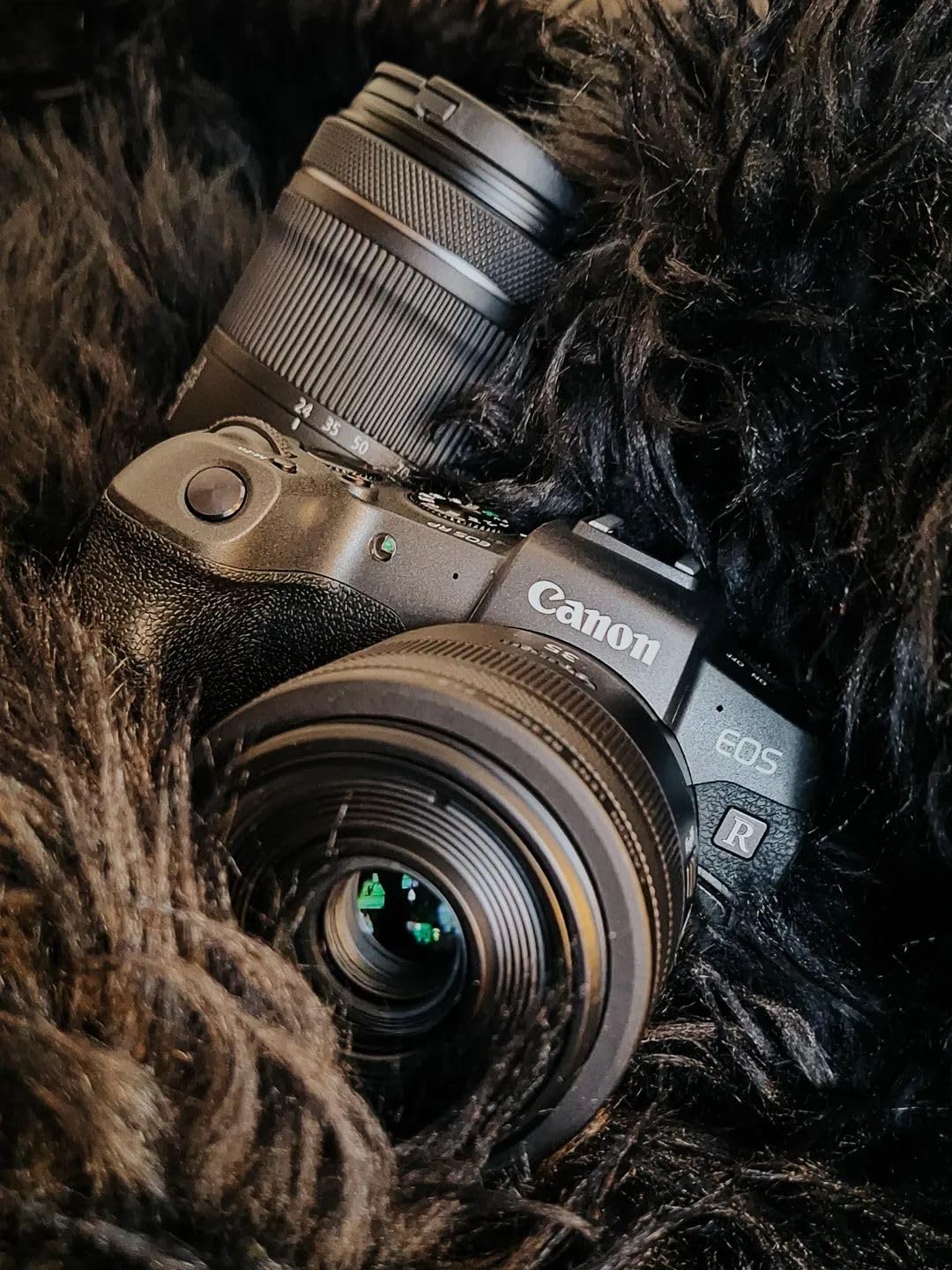
The 26.2MP sensor produces bright, accurate files in good light, and Dual Pixel CMOS AF with 4779 points handles faces reliably for stills and video. The body weighs 16 ounces, so it disappears into a day bag in a way the full-frame bodies above do not.
Know the limits before you buy. There is no in-body image stabilization, so stabilization depends entirely on the lens, and 4K is cropped with a 30-minute cap and a 24 fps ceiling. There is also no mechanical shutter, which leaves the sensor exposed when you change lenses. None of that matters for holiday photos; all of it matters for a paid shoot.

The included lens focuses as close as 0.66 meters, which is handy at parties and around food. Existing EF lens owners can reuse their glass through an adapter. Compare with the Canon EOS R50 Bundle: the RP is full-frame and lighter on the wrist, while the R50 arrives with two lenses and more you can grow into without buying glass later.
5. Sony Alpha a6400: Best for Families and Pets
Sony Alpha a6400 Mirrorless Camera: Compact APS-C Interchangeable Lens Digital Camera with Real-Time Eye Auto Focus, 4K Video, Flip Screen & 16-50mm Lens – E Mount Compatible – ILCE-6400L/B, Black
Type: APS-C kit
Sensor: 20.1MP
Video: 4K UHD
Stabilization: lens-based
Pros
- Real-time eye autofocus on children and pets
- 180-degree flip screen for selfies and vlogging
- 11 fps burst at full resolution
- Light enough to carry every day
- 16-50mm kit lens included
Cons
- No in-body image stabilization
- Thin lineup of native APS-C lenses
- Companion app and menus frustrate some owners
This is the camera most people in this list are actually holding: small, light and pointed at a kid who will not sit still. The real-time eye autofocus tracks a running child or a cat crossing the kitchen, which is where most compact and older mirrorless cameras give up.
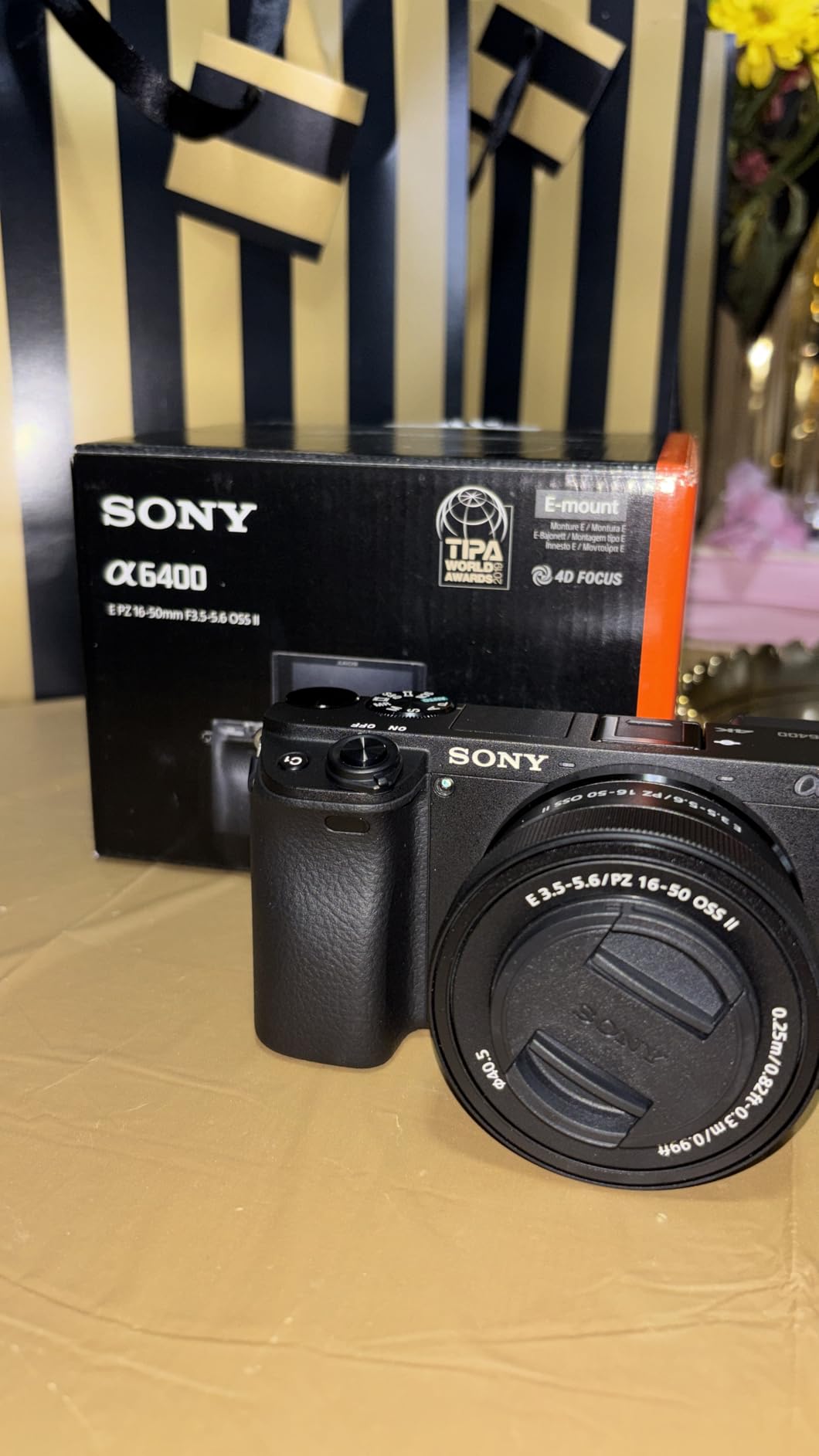
425 phase-detection and 425 contrast-detection points cover 84 percent of the frame, and the camera fires 11 fps at full resolution. Owners repeatedly say the results still look sharp years after buying it, which is a good sign for anyone planning to keep a camera for a decade.
The 180-degree tilting screen flips around to face forward, so solo recordings need no second person. Built-in time-lapse and slow-motion movie modes save a step in editing, and the 16-50mm kit lens is the 35mm equivalent of about 24-75mm.
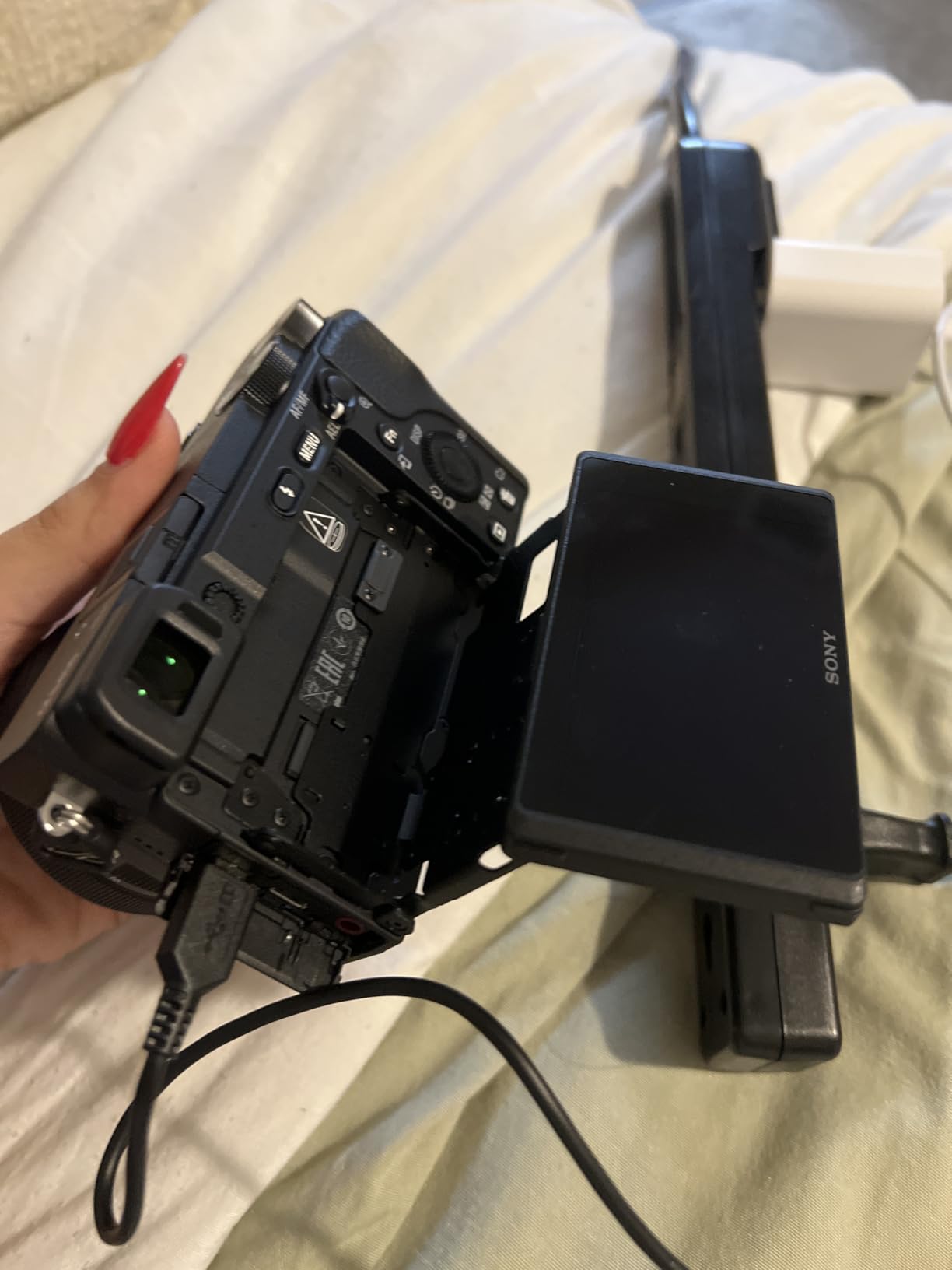
Skip it if you shoot in dim rooms, because there is no in-body stabilization and the kit lens is modest. Native APS-C glass is also limited, though third-party options like the Sigma 18-50mm f/2.8 widen the choices. If you need more reach for sports, the Canon EOS R6 II handles that end of the range properly.
6. Canon EOS R50 Bundle: Best Ready-to-Shoot Bundle
Canon EOS R50 Mirrorless Camera with 18-45mm & 55-210mm Double Lens Bundle
Type: APS-C two-lens kit
Sensor: 24.2MP
Video: 4K 2160p
Stabilization: lens IS
Pros
- Two stabilized RF-S lenses included
- Sharp results straight out of camera
- Long battery life for full shooting days
- Compact body that suits travel
- Two lenses cover wide to short telephoto
Cons
- Larger Canon telephotos feel unbalanced on this body
- Faster apertures need extra glass
Two lenses, a battery and a charger arrive in the same box, with an 18-45mm and a 55-210mm covering wide angle through short telephoto, both stabilized. For a first camera that removes the usual follow-up spending.

Owners call it easy to learn, and the 24.2MP APS-C sensor with Dual Pixel CMOS AF delivers sharp photos and usable 4K without much fuss. Battery life is the quiet advantage, with several buyers reporting a full day of shooting on one charge.
The electronic viewfinder and 180-degree vari-angle screen cover both traditional shooting and forward-facing video, and built-in Wi-Fi moves files to a phone quickly. Note that the body is not water resistant, so keep it out of rain.

Where it stops is glass quality. Both kit lenses are slow at the long end, opening up to roughly f/6.3, so indoor sport and low light will need something faster, and Canon’s larger telephotos feel oversized on this small body. Compared with the Canon EOS RP Kit, you get more lenses but a smaller sensor; compared with the Nikon Z 6 II, you get far more in the box.
7. DJI Osmo Pocket 3: Best for Handheld Vlogging
DJI Osmo Pocket 3 Vlogging Camera with 1” CMOS & 4K/120fps Video
Type: gimbal camera
Sensor: 1-inch 9.4MP
Video: 4K 120fps
Stabilization: 3-axis gimbal
Pros
- Built-in 3-axis gimbal smooths handheld walking shots
- One-inch sensor stays clean in low light
- Rotating 2-inch screen for vertical or horizontal framing
- Compact 179 g body that fits a coat pocket
- Connects directly to DJI wireless microphones
Cons
- Exposed gimbal mechanism is easy to damage
- App activation is required before first use
- Can overheat during long 4K 120fps takes
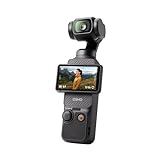
There is no lens to change and no stabilizer to attach. The three-axis gimbal is built in, so walking shots come out level without any extra gear, and at 179 g it lives in a coat pocket between takes.
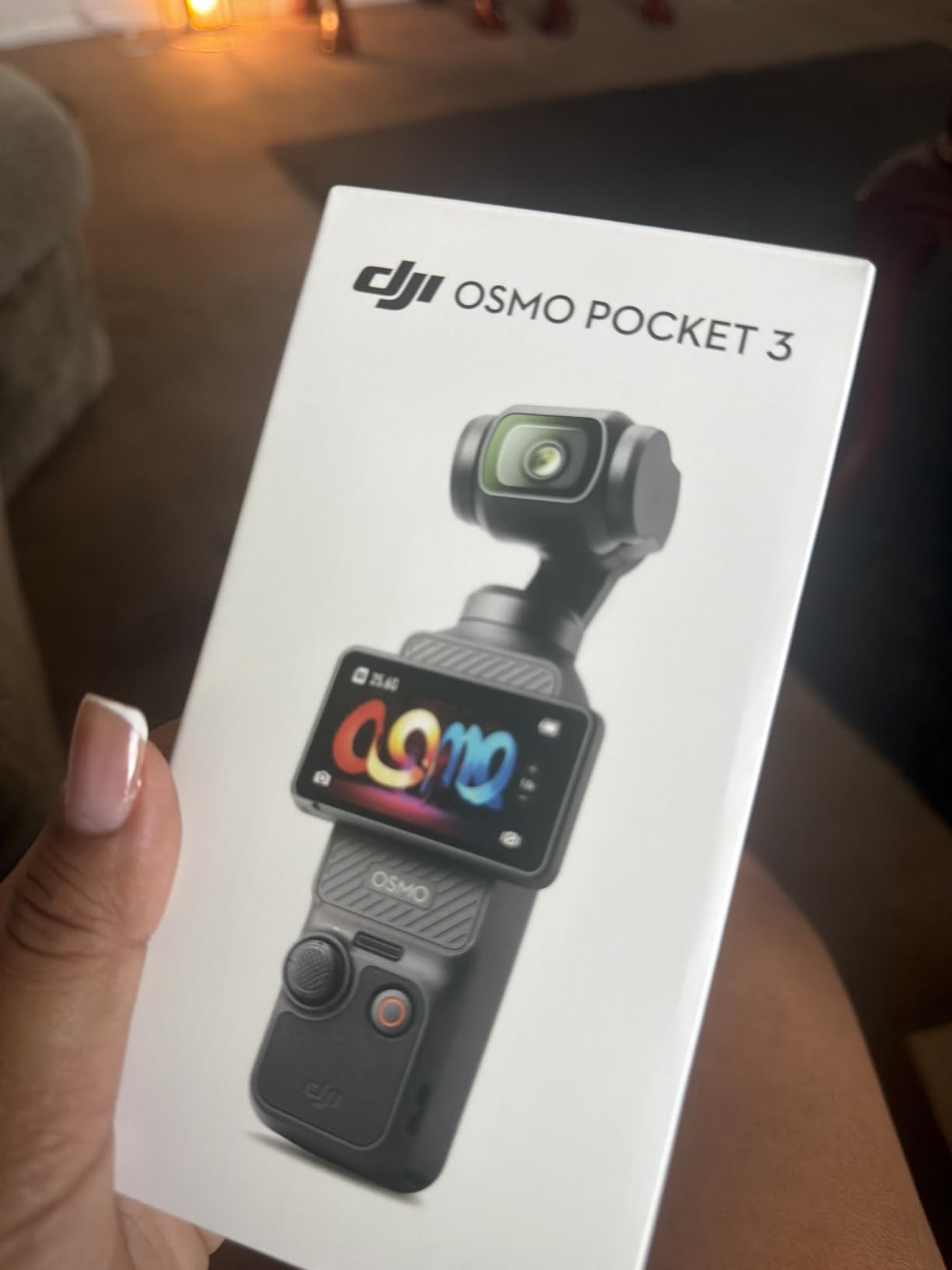
The one-inch sensor is larger than most compacts, and reviewers note the colors stay clean and natural even as the light drops. ActiveTrack 6.0 holds a face or an object in frame, and D-Log M gives 10-bit color for anyone who grades later. The rotating screen makes vertical framing for social video straightforward.
Two caveats worth knowing up front. The gimbal arm is exposed, so a dropped unit can bend the mechanism, and the camera must be activated inside the companion app within the first five uses or it will not function. Reviewers also report overheating during extended 4K at 120 fps, so plan on shorter takes at that frame rate.
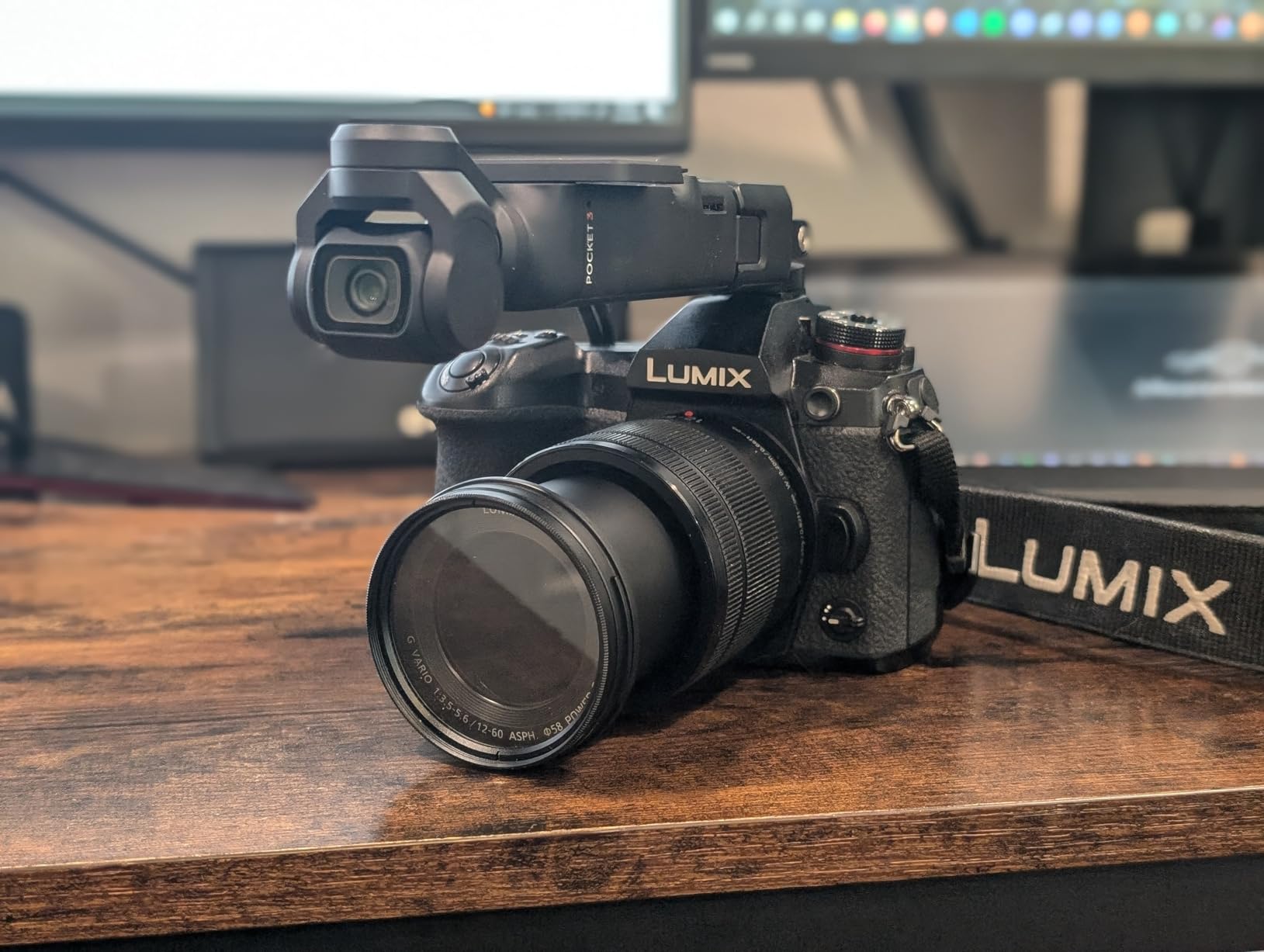
It is not water resistant, so keep rain and spray away from it. Compared with the Sony Alpha a6400, you trade interchangeable glass and larger stills for steadier video with no operator skill required. If your video is narrated walk-and-talk, the direct connection to two DJI microphone transmitters is the reason to pick this over a mirrorless body.
8. Nikon Z50 II Kit: Best for Color Presets and Flip-Screen Shooting
Nikon Z50 II with Two Lenses | Compact mirrorless Stills/Video Camera with Easy Color presets and Wireless Photo Sharing | USA Model
Type: APS-C two-lens kit
Sensor: 20.9MP
Video: 4K UHD 60p
Stabilization: lens VR
Pros
- 31 built-in Picture Control presets
- Subject detection with bird and airplane modes
- Fully articulating rear screen for vlogging
- 16-50mm and 50-250mm lenses included
- Sharp lifelike color from the 20.9MP DX sensor
Cons
- Only one battery is included and it drains faster than comparable DSLRs
- A separate charger and extra batteries are strongly recommended
- Kit lenses are usable but not class-leading
Color is the first reason this body stands apart from the other APS-C kits here. Thirty-one Picture Control presets, plus custom options and downloads through Nikon Imaging Cloud, get you a look you like without opening a computer, and owners consistently praise the sharp, lifelike color straight out of the sensor.

The second is the screen. The rear panel flips fully out for front-facing video, which the other APS-C kits on this list do not manage, and the two kit lenses, a 16-50mm and a 50-250mm, cover wide angle through telephoto. Video is 4K UHD up to 60p with 120p slow motion in Full HD.
Budget for power. Only one battery is included, and owners report faster drain than comparable DSLRs, so a separate charger and extra cells are worth adding before the trip. Subject detection covers people, dogs, cats, birds and vehicles, with dedicated bird and airplane modes. Against the Canon EOS R50 Bundle you gain the articulating screen and the preset library, while that bundle puts more lenses in the box.

9. DJI Osmo Action 4: Best for Water and Cold Weather
DJI Osmo Action 4 Standard Combo, Waterproof Action Camera Vlogging Camera
Type: action camera
Sensor: 1/1.3-inch 10MP
Video: 4K 120fps
Stabilization: RockSteady
Pros
- Waterproof to 18 meters without a housing
- Operates down to -20C in cold weather
- 4K at 120 fps with a 155-degree ultra-wide view
- Three stabilization modes including HorizonBalancing
- 10-bit D-Log M color for grading
Cons
- Fixed focus limits close-up and macro work
- Small screens are awkward for framing in bright sun
Snow, surf and rain are where this camera earns its place. It is waterproof to 18 meters with no housing, and it is built to keep recording in freezing conditions down to -20C.
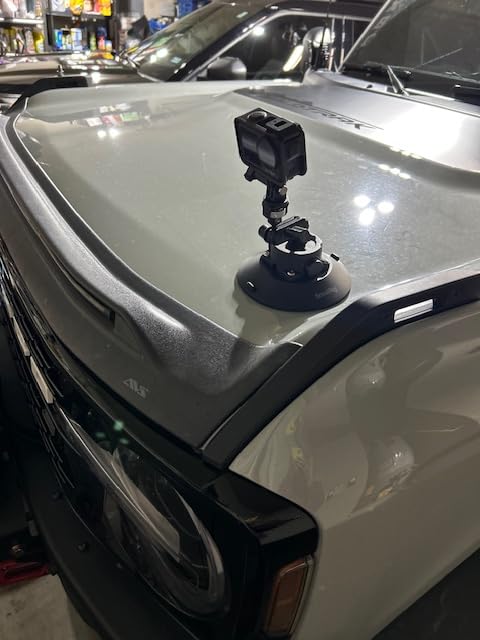
The 1/1.3-inch sensor uses 2.4 micron pixels, and that size is why footage stays usable as the light drops in a forest or under water. RockSteady, RockSteady+ and HorizonBalancing keep riding and vlogging shots smooth and level, and the 155-degree ultra-wide field of view at 4K 120 fps gives the immersive look action cameras are bought for.
Magnetic quick-release mounts make changing angles fast, which matters more than it sounds when you are wearing gloves. Pre-recording buffers 5 to 60 seconds so you can catch the moment before you hit the button, and two DJI microphones connect directly for audio.

Fixed focus is the limitation to plan around, since close-up and macro work is out of reach. The screens are also small enough that framing in direct sunlight takes practice. Compared with the AKASO EK7000 below, you are paying for sensor size, stabilization quality and cold-weather tolerance rather than accessories in the box.
10. AKASO EK7000: Budget Pick for a First Action Camera
AKASO EK7000 4K30FPS 20MP WiFi Action Camera with EIS Ultra HD 131FT Waterproof Underwater Camera Remote Control 4X Zoom Support External Microphone Black
Type: budget action camera
Sensor: 20MP
Video: 4K 30fps
Stabilization: digital EIS
Pros
- 4K30 and 20MP stills at an entry price
- Two batteries and a dual charger in the box
- 131 ft waterproof housing and mounts included
- Wrist remote for hands-free recording
- Simple enough for a non-technical owner
Cons
- Muffled audio that suffers badly in wind
- Noticeable loss of detail and frame rate in low light
- No internal memory so a microSD card is required
This is the camera to watch if the goal is to try an action camera without committing serious money. Beyond the four recording modes and built-in electronic stabilization, it captures 4K at 30 fps and 2.7K at 30 fps with 20MP stills, and the accessories list is unusually complete.
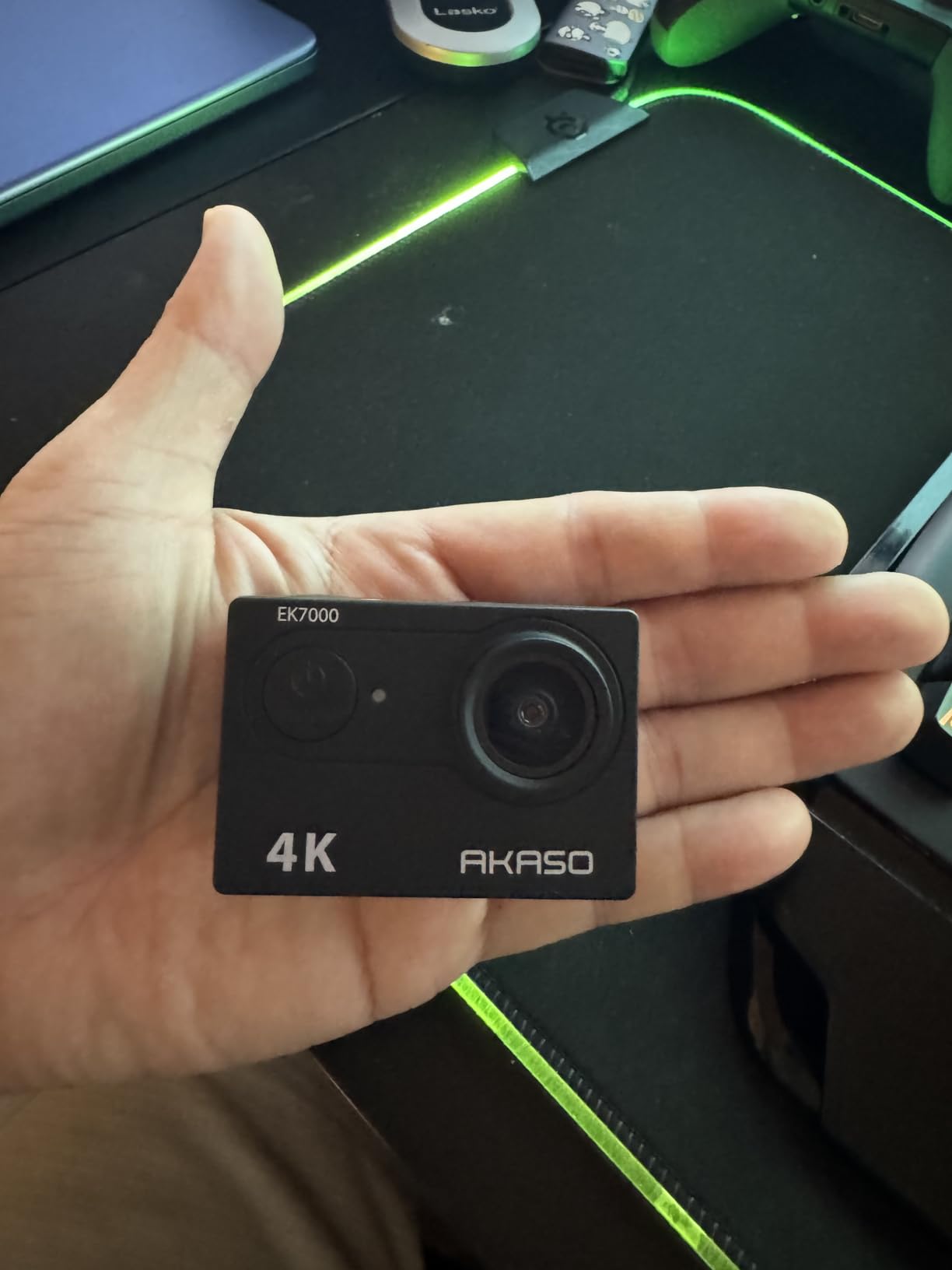
Two lithium polymer batteries and a dual charger are in the box, along with a 131 foot waterproof housing and a range of mounts. A 2.4GHz wrist remote starts and stops recording hands-free, and built-in Wi-Fi moves clips to the AKASO GO app for editing.
Be honest about where it falls short. Owners repeatedly report muffled audio that gets worse in any wind, and both frame rate and detail drop noticeably in low light. Treat it as a helmet or handlebar camera rather than a main video tool: the electronic stabilization smooths out bumps but cannot rescue a dark scene.
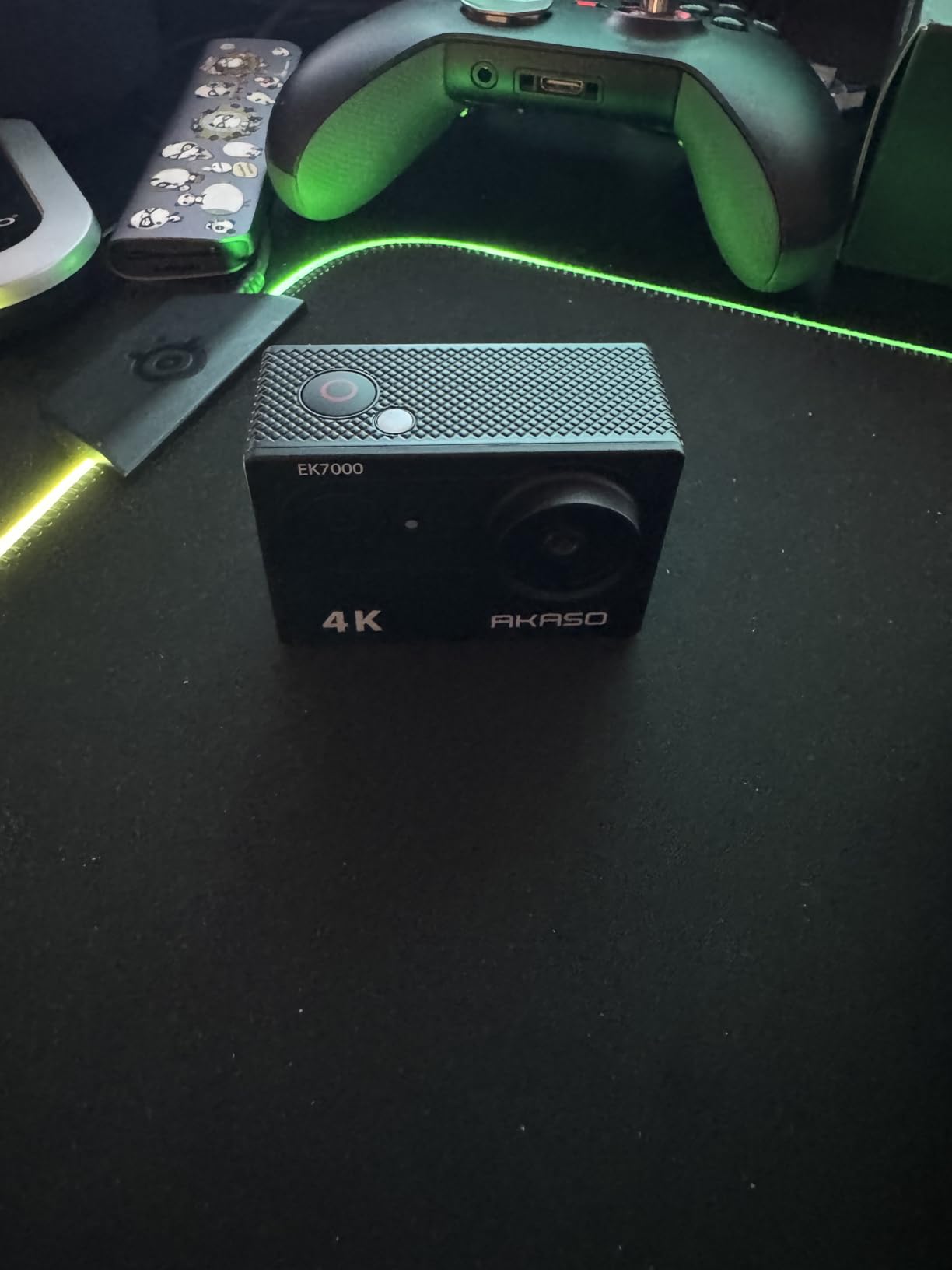
A microSD card is not included and is required, since there is no internal recording memory. Against the DJI Osmo Action 4, the difference shows up the moment you shoot at dusk or capture audio near a road. For a dry, sunny family holiday on a tight budget, it does the job at a fraction of the outlay.
How to Choose Camera Deals During Prime Big Deal Days
Deciding what suits you before you look at any offer is the only way to tell a genuine reduction from sale wording. Body bundles, kit lenses and accessories are where the value usually sits; the newest flagship generation rarely moves much.
How to Compare Image Quality and Lenses
Resolution on its own tells you very little. A 24MP sensor paired with a good lens beats a 33MP sensor behind a slow kit optic every time. Look at sensor size first: full-frame gathers more light than APS-C, and an APS-C body will be easier to carry all day.
Then check what stabilization you actually get. In-body stabilization on the Sony Alpha 7 IV, Canon EOS R6 II and Nikon Z 6 II steadies the frame for stills and video; the Canon EOS RP Kit and Sony Alpha a6400 depend on the lens instead. If you shoot handheld video, that difference decides the camera. For body-only options, our guide to mirrorless cameras on a starter budget sets out what each tier gives up.
How to Compare Recording Features
For video, resolution without the rest of the specification is a trap. The Canon EOS R6 II records uncropped 4K up to 60 fps and up to 6 hours of Full HD without overheating, while the Canon EOS RP Kit is capped at cropped 4K with a 30-minute limit and a 24 fps ceiling. That gap decides whether a body suits a wedding shoot or a school play.
Frame rates above 60 fps exist for slow motion, not for normal recording. Stabilization mode matters as much as resolution: three-axis gimbal stabilization in the DJI Osmo Pocket 3 does the work of a tripod, and RockSteady plus HorizonBalancing in the DJI Osmo Action 4 keeps riding footage level.
How to Compare Connectivity and Smart Features
Wireless control and transfer save real time on a trip. Built-in Wi-Fi with an electronic viewfinder and vari-angle screen, as on the Canon EOS R50 Bundle, moves a full day of shots to a phone between locations. The Sony Alpha 7 IV adds Bluetooth and Wi-Fi alongside dual card slots for on-the-spot backup.
Check the transfer speed, not just the presence of Wi-Fi. The Canon EOS R6 II pairs 5GHz Wi-Fi and Bluetooth 5 with 10Gbps USB-C, which matters when you are moving 24MP files rather than clips. If your monitoring stretches to fixed cameras around a property rather than a camera in your hand, our picks for smart garage cameras for driveways cover a different category entirely.
How to Compare Power and Outdoor Usability
Battery figures only matter alongside the conditions you shoot in. The DJI Osmo Action 4 is waterproof to 18 meters with no housing and still operates down to -20C, while the Nikon Z50 II Kit ships with one battery and owners report faster drain than comparable DSLRs, so add cells and a separate charger before a long trip.
Weather sealing and mounting options decide whether a camera survives being outdoors. Magnetic quick-release mounts on the DJI Osmo Action 4 swap angles in seconds, useful with cold hands. For fixed indoor or entryway coverage rather than a portable camera, our guide to security cameras for apartments is the relevant read.
How to Shop Camera Deals During the Sale
Check the model number on the listing before you compare anything. Two bodies from the same family can differ by a generation code, and a kit listing may ship a different lens than the one photographed. Read what is in the box, confirm whether the item is new or Amazon Renewed, and check who the seller and shipper of record are, since a third-party seller changes the warranty path. Most offers in this event need a Prime membership, and a free trial counts, so prices and eligibility can change partway through October 6-7, 2026.
Look at the checkout total, not the page total, before you commit. The two do not always match once a bundle or a shipping charge is applied, and noticing that early is the difference between a good buy and a return. Decide what you are willing to spend before the event starts and hold each listing to that number.
Before you pay, confirm:
- Model number and generation code match the body you researched
- The lens included is the one you want, not just whatever a bundle carries
- Condition is new or Amazon Renewed, stated plainly on the listing
- The checkout total matches the page
- Warranty route works with the seller of record
Frequently Asked Questions
What are the best Amazon Prime Big Deal Days camera deals?
The strongest bodies to watch during the sale are the Sony Alpha 7 IV for photo and video hybrids, the Canon EOS R6 II for action and wildlife, and the Nikon Z 6 II for low-light work. Below those sit the Canon EOS RP Kit and Sony Alpha a6400 for first-time buyers, the Canon EOS R50 Bundle for anyone who wants two lenses in the box, and the DJI Osmo Pocket 3 and DJI Osmo Action 4 for video work.
When does Amazon Prime Big Deal Days run in 2026?
Amazon Prime Big Deal Days runs October 6-7, 2026, starting at 12:01 AM ET on the first day. Early-access offers can appear before that window opens, and the main set of deals is released when the event begins. Individual camera offers can appear and disappear during the two days.
Do I need Prime membership to buy camera deals during the event?
Most offers during the event require a Prime membership, and a free trial counts for the length of the sale. A small number of camera promotions apply to everyone, but the larger body and bundle offers are usually tied to the membership. Check the offer details on the listing before you plan your purchase around it.
How do I tell whether a camera deal is the latest model?
Compare the model number in the listing title against the manufacturer current line, then read the technical details for the sensor and processor names. An older generation with a large reduction is normal at this event, so a brand-new body deserves a second look before you commit. Also confirm the kit lens matches the listing photos.
Should I choose a mirrorless camera or a smart security camera during the sale?
They solve different problems. A mirrorless camera is for photos and video you shoot yourself, while a smart security camera is for watching a fixed area continuously and usually needs a power connection or a battery plan. Buyers on this list looking for fixed coverage should search that category separately rather than expecting a body to cover a doorway.
What should I check before buying a camera bundle?
Read the full contents list, because bundles vary widely and one may include a bag and memory card while another includes only a second lens. Confirm the lens focal ranges suit what you shoot, check whether the second lens is stabilized, and see whether extra batteries and a separate charger are included. Then confirm the seller and shipper before paying.
Final Verdict: Best Amazon Prime Big Deal Days Camera Deals
The Sony Alpha 7 IV is the pick worth watching most during Prime Big Deal Days, because 33MP of full-frame detail, eye autofocus and a flip-out screen cover more kinds of shooting than anything else here. Buy the Canon EOS R6 II instead if your subjects run faster than your shutter can stop them, and the Nikon Z 6 II if you shoot indoors and at night, where its back-illuminated sensor and deep buffer carry the day.
For a first camera, the Canon EOS R50 Bundle gets the most usable gear into the box, with two stabilized lenses. If your budget is tighter but your subjects are pets and children, the Sony Alpha a6400 is built for exactly that, while the Canon EOS RP Kit is the lighter full-frame option and the only one here that arrives with a general-purpose zoom.
Video is where this list splits away from the photography picks. The DJI Osmo Pocket 3 is the steady handheld option that needs no operator training, the DJI Osmo Action 4 handles water and freezing conditions, and the AKASO EK7000 remains the budget pick for a first action camera on dry, sunny trips. Check the model number, the kit contents and the seller before you pay, and compare the checkout total against the page when the offer appears.