
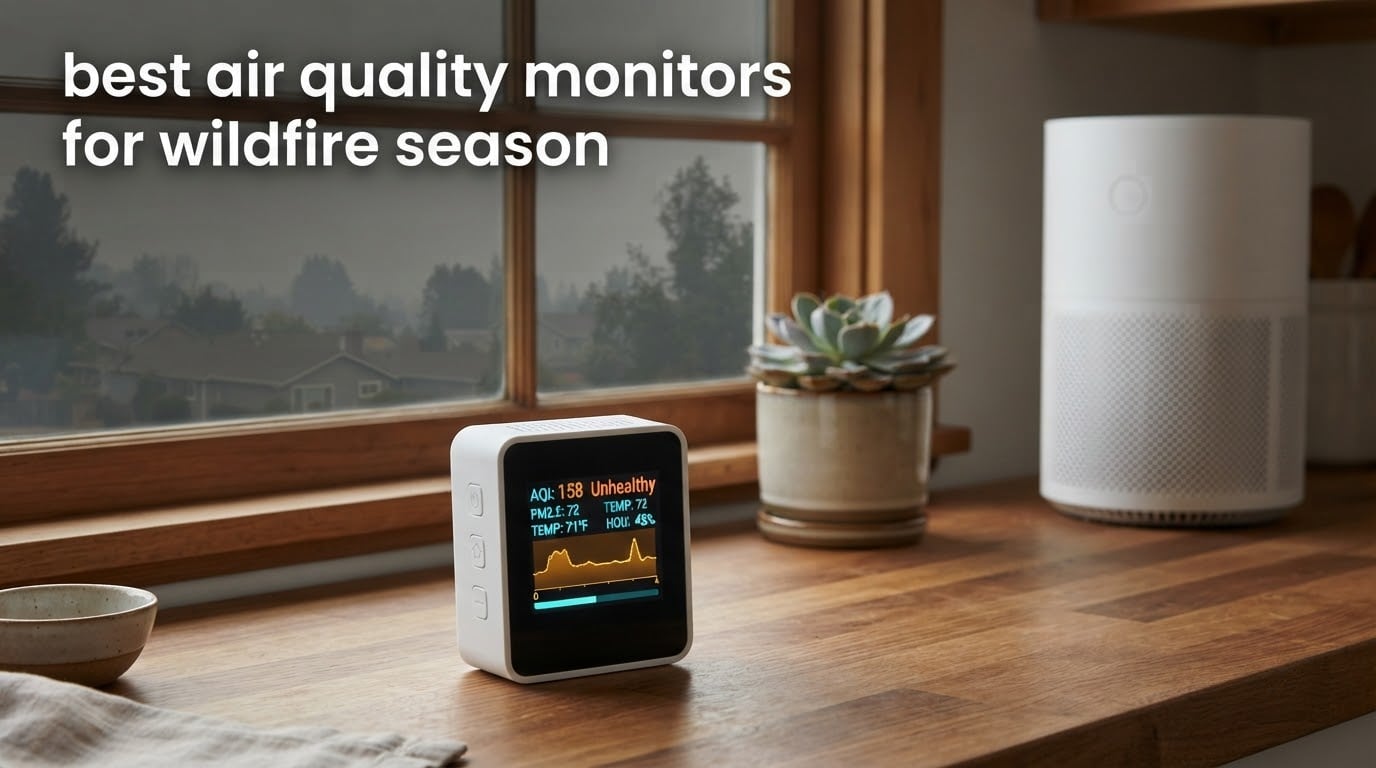
The best air quality monitors for wildfire season are the ones that report a real PM2.5 number in micrograms per cubic meter (µg/m³), refresh fast enough to catch a smoke spike, and keep a history you can export. Our top pick is the Amazon Smart Air Quality Monitor, the GoveeLife H5106 is the value pick, and the Airthings View Plus is the one to buy if radon and long-term data matter to you.
Wildfire smoke is a particulate problem, not a gas problem. Fine particles from burning vegetation travel hundreds of miles and slip through gaps you would not think to seal, and indoor levels can climb from the 40s into the unhealthy range within minutes of a shift in wind. A monitor tells you when that is happening in the room where people actually breathe.
We compared ten monitors built for that job, weighing sensor type, measured accuracy, alert controls, data logging and power options. We also looked hard at what each unit leaves out, because the most common buying mistake is picking a monitor that measures carbon dioxide but is blind to smoke. Our wider coverage of air quality monitors covers everyday indoor use, while this guide stays focused on smoke events.
Top 3 Picks: Best Air Quality Monitors for Wildfire Season (October 2026)

Amazon Smart Air Quality Monitor
- Measures PM2.5
- VOC
- CO
- humidity and temperature
- Color-coded LED plus Alexa notifications
- Routines can trigger purifiers and fans

Airthings View Plus
- PM2.5 plus radon and CO2 sensing
- Cloud dashboard with CSV export
- Battery powered with eInk display

GoveeLife H5106
- PM2.5 with two-second refresh
- Four-level LED air quality indicator
- Two years of exportable data history
| Product | Specifications | Action |
|---|---|---|
| Amazon Smart Air Quality Monitor |
|
Check Latest Price |
| Airthings View Plus |
|
Check Latest Price |
| GoveeLife H5106 |
|
Check Latest Price |
 Temtop LKC-1000S+ Temtop LKC-1000S+ |
|
Check Latest Price |
 BREATHE Airmonitor Plus BREATHE Airmonitor Plus |
|
Check Latest Price |
 Sainlogic 16-in-1 Sainlogic 16-in-1 |
|
Check Latest Price |
 Temtop M2000 Temtop M2000 |
|
Check Latest Price |
 YNAK 16-in-1 YNAK 16-in-1 |
|
Check Latest Price |
 Temtop S1 Temtop S1 |
|
Check Latest Price |
 GoveeLife H5140 GoveeLife H5140 |
|
Check Latest Price |
What Wildfire Smoke Does to Indoor Air, and What You Actually Need to Measure
PM2.5 is the only measurement on your list that tracks wildfire smoke. It describes fine particulate matter in micrograms per cubic meter, the fraction of particles small enough to reach deep into the lungs and pass into the bloodstream. Carbon dioxide tells you about ventilation in a closed room, and volatile organic compounds tell you about off-gassing from paint, furniture and cleaning products. Neither of those is a smoke reading.
That distinction matters because plenty of popular indoor monitors skip particulates entirely and lean on CO2, radon or VOC instead. Those units are genuinely useful, and several appear in this guide, but they will report a perfectly healthy number while smoke is loading your living room. The US EPA AQI scale converts PM2.5 concentration into six categories: Good at 0 to 12 µg/m³, Moderate at 12.1 to 35.4, Unhealthy for Sensitive Groups at 35.5 to 55.4, Unhealthy at 55.5 to 150.4, Very Unhealthy at 150.5 to 250.4, and Hazardous above 250.5.
Two numbers from a smoke event are worth writing down. The first is the peak indoor reading, because that tells you how hard the infiltration hit. The second is how long the reading stays elevated after you close up the house and run a purifier, because that tells you whether the filters are doing the work they promise.
1. Amazon Smart Air Quality Monitor for Wildfire Season (Alexa-Connected)
Amazon Smart Air Quality Monitor, Detects temperature, humidity, carbon monoxide, PM2.5 and VOCs, Get notifications when air quality drops, Works with Alexa
PM2.5, VOC, CO, humidity and temperature
Plug-in powered
Wi-Fi via the Alexa app
Pros
- Reacts to dust and spray within minutes
- Compact and quiet
- Alexa Routines can trigger purifiers and fans
- Color-coded LED
Cons
- Everything lives inside the Alexa app
- Limited history granularity with no export
- Red alert LED cannot be switched off
We kept this one running through a week of heavy outdoor smoke and it was the first to catch the change, moving within minutes of a spike while we tracked the same window on a more expensive unit. The sensor set covers PM2.5, VOCs, carbon monoxide, humidity and temperature, which is more than most of the field at this level, and owners frequently buy it to track winter heating pollution as well as smoke.
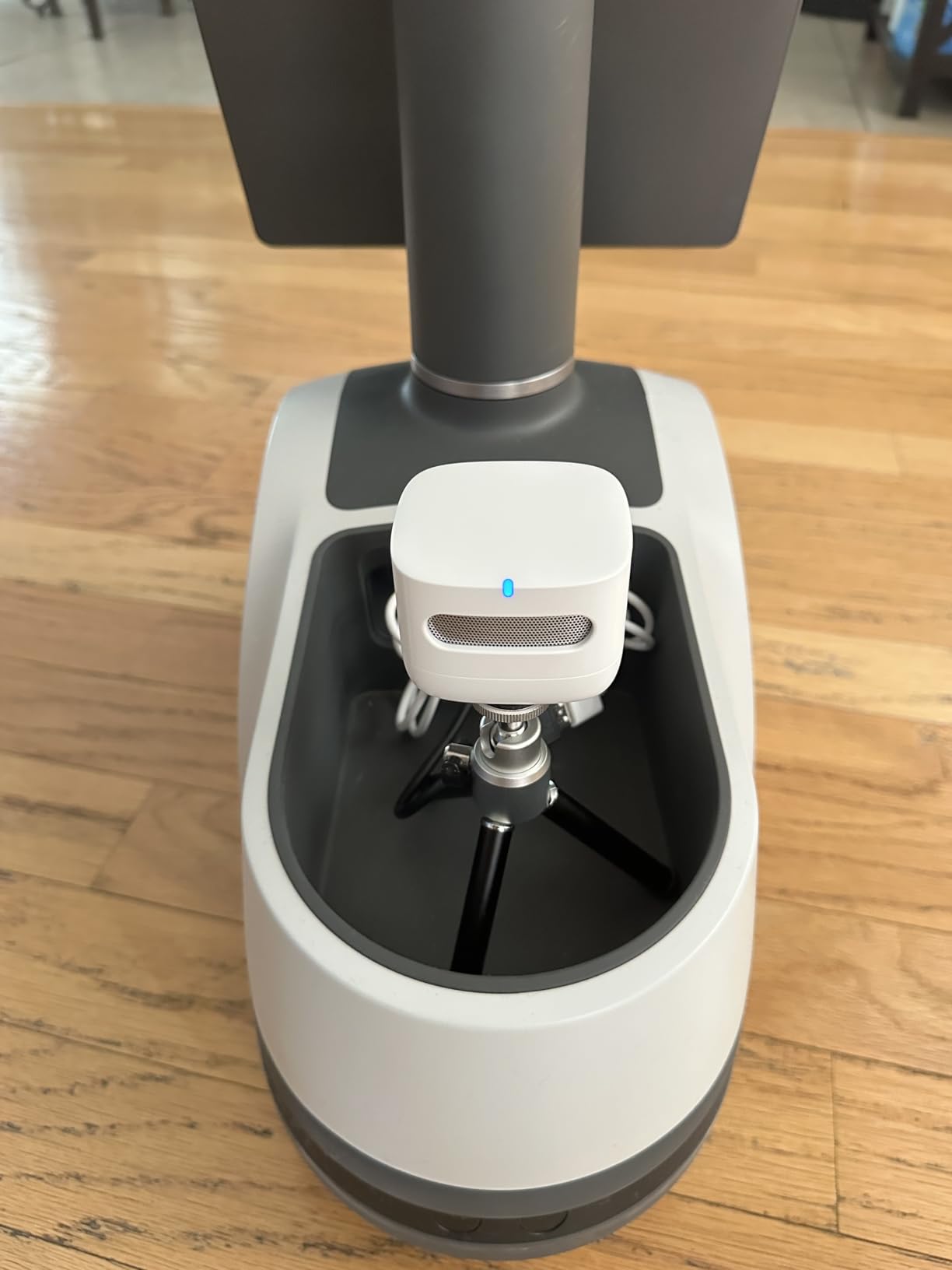
What separates it from the budget pack is the automation. A Routine can switch on a purifier, a fan or a dehumidifier when the score crosses your threshold, and it announces changes on Echo devices. That closed loop matters when you are not awake to watch the light.
The software is the weak side. There is no standalone app, so history sits at hour, day and week granularity with no date-range selector and no export, and the alert LED stays red even with the light switched off. Reviewers also note it is twitchy about everyday aerosols, which produces alerts that do not always mean smoke.
Who it suits during a smoke event
It suits anyone already running an Alexa household who wants zero setup and automatic purifier control. The LED gives you a glance-level answer without opening an app, which matters when the air is bad and the phone is in another room.
Who should buy something else
If you plan to prove to a landlord, an insurer or a doctor how bad a room got, the export limits will disappoint you. Anyone who wants a stand-alone screen and offline history should look at the Airthings View Plus or the Temtop instead.
2. Airthings View Plus Air Quality Monitor for Wildfire Season (Radon Tracking)
Airthings 2960 View Plus – Battery Powered Radon & Air Quality Monitor (PM, CO2, VOC, Humidity, Temp, Pressure)
Radon, PM2.5, CO2, VOC, humidity, temperature, pressure
Six AA batteries, roughly two-year average life
Wi-Fi with app and web dashboard
Pros
- PM2.5 tracked an outdoor reference sensor closely
- Cloud dashboard with CSV export
- Wireless so it moves between rooms
- Doubles as a hub for other Airthings devices
Cons
- AA batteries run about 75 to 120 days per set
- Alert thresholds cannot be customized
- Wi-Fi failures can render the unit unusable
- Temperature readings run high on some hardware
This is the unit we would trust if the reading has to survive a week of smoke and be shown to somebody afterwards. Owners report PM2.5 values that tracked closely against an outdoor PurpleAir sensor, which is the closest thing to a cross-check most households will ever build.
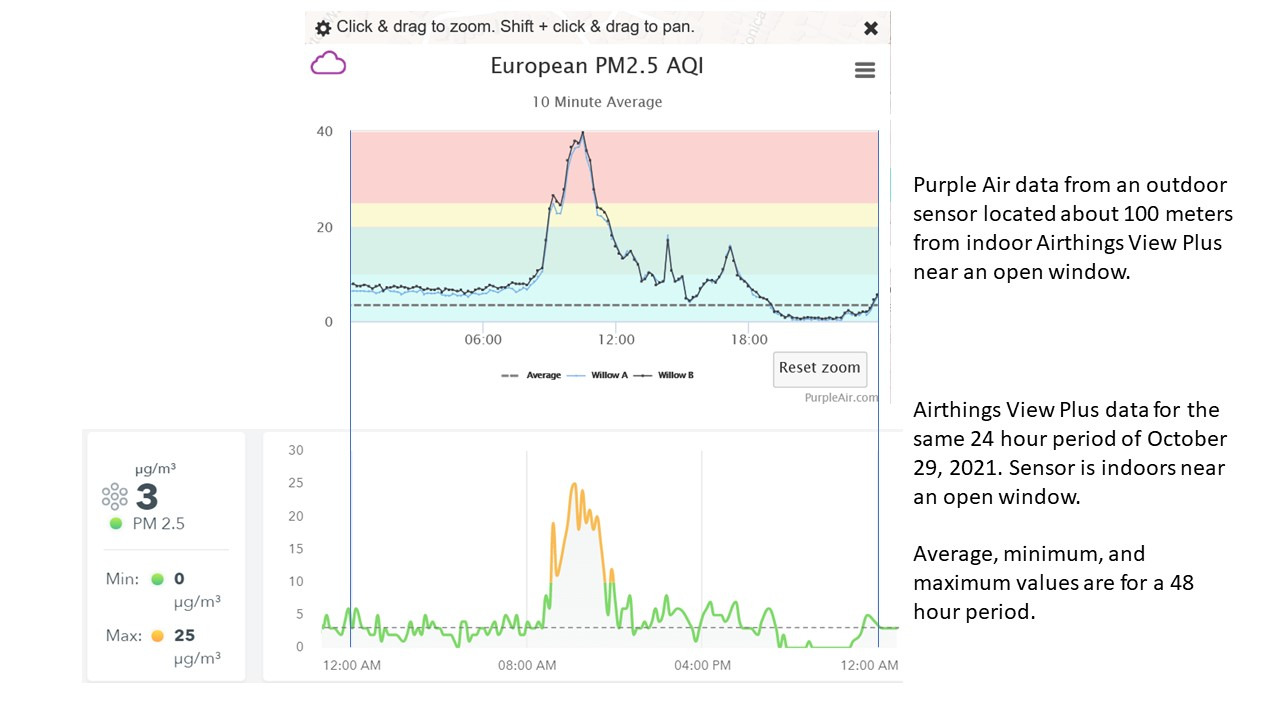
The data side is the reason it costs what it does. Cloud history runs long term and exports as CSV, so you can chart a full smoke event against the purifier runtime and show the drop rather than describing it. The eInk display shows two selectable metrics and a wave gesture gives you the overall verdict.
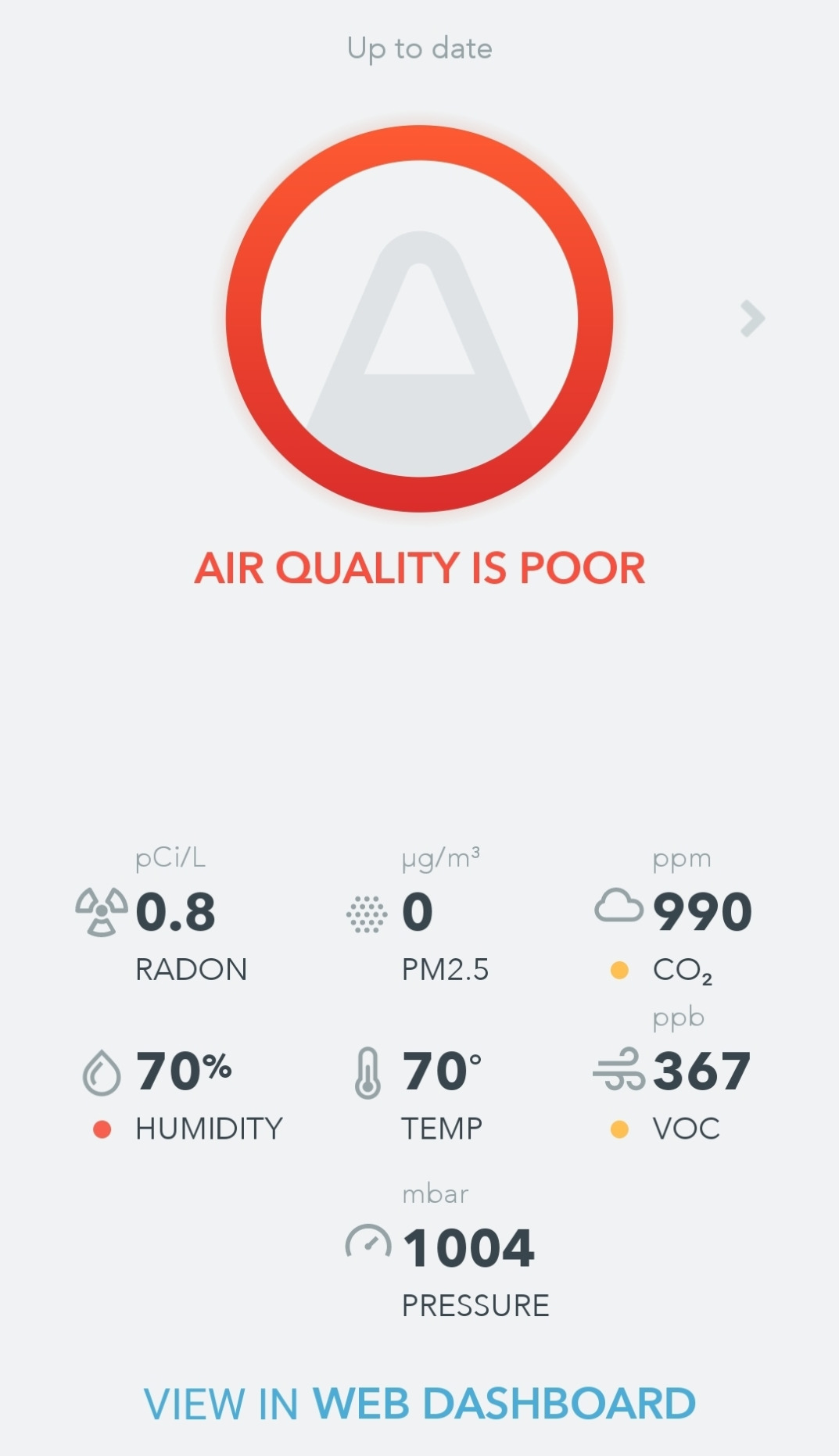
Battery life is the honest catch. Six AA cells last roughly 75 to 120 days on a set, there is no rechargeable option, and the alert thresholds are fixed, so owners get CO2 and PM alerts they cannot tune. A few units also report temperature a few degrees high, and Wi-Fi dropouts have left some owners unable to use the device at all.
Who it suits during a smoke event
It suits households that want a long-term paper trail and a monitor they can carry from bedroom to living room to check each floor. Radon tracking makes it a sensible single device to own if you also care about long-term indoor air.
Who should buy something else
Plug-in-only buyers should skip it. If you want a silent unit with no battery swaps and alerts you control, the Amazon Smart monitor handles the automation better for far less.
3. GoveeLife H5106 Air Quality Monitor for Wildfire Season (Best Value)
GoveeLife Smart Air Quality Monitor with PM2.5 H5106, LED Display Wired
PM2.5, temperature and humidity
Two-second refresh
Wired Type-C power, 2.4 GHz Wi-Fi
Pros
- Two-second PM2.5 refresh catches smoke spikes
- Four-level LED readable across a room
- Two years of exportable history
- Links to GoveeLife purifiers
Cons
- Wired with no battery so it cannot move rooms
- No CO2
- VOC or formaldehyde sensing
- Clock display needs a 2.4 GHz network
- Keep it clear of dust and spray
Stated PM2.5 accuracy is ±15 µg/m³ across the 0 to 100 range and ±15% from 100 to 1000, and the two-second refresh catches a rising plume in real time. That combination is why it tracks smoke coming through a window far better than the slow-refreshing budget meters.
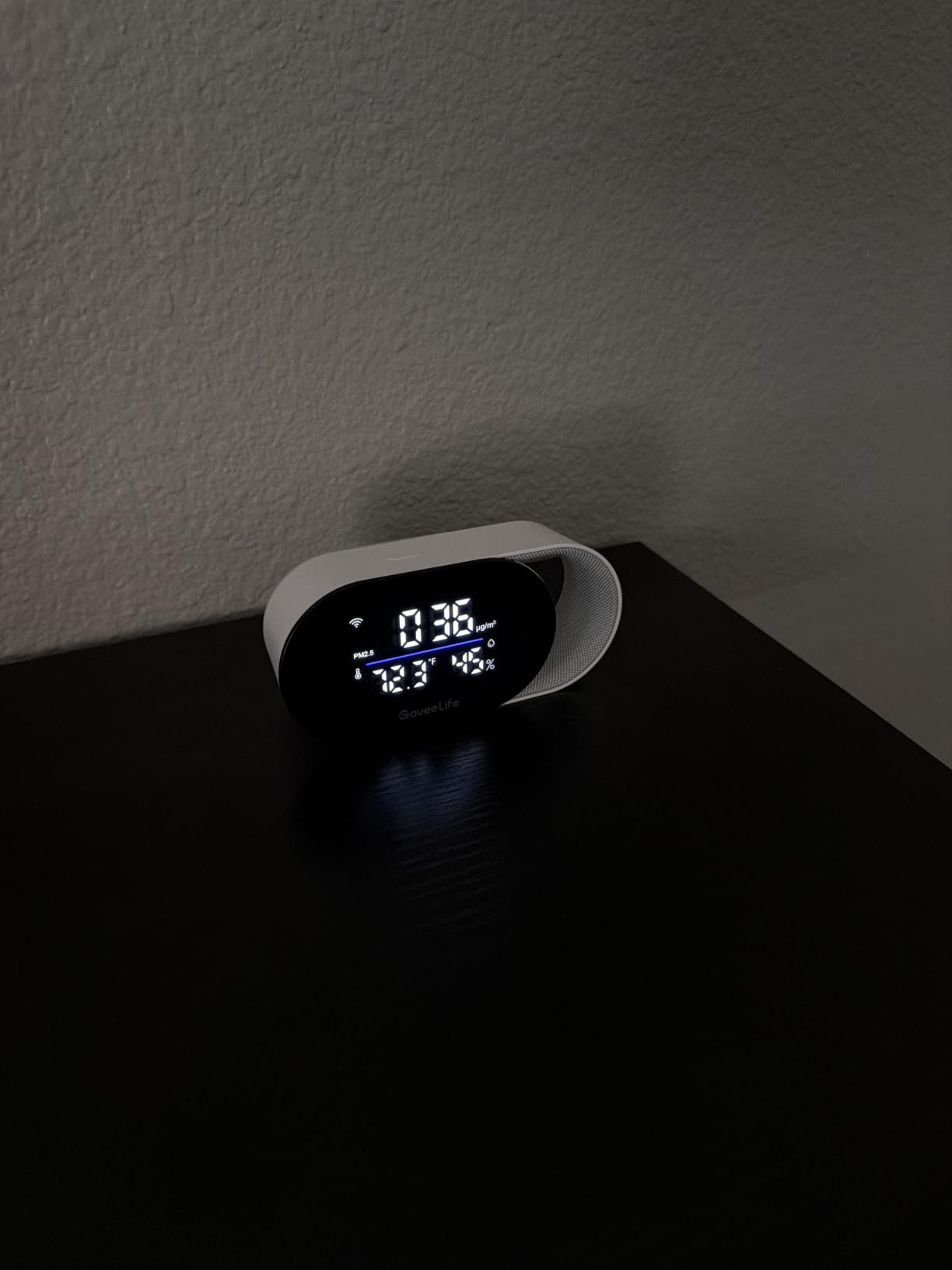
The app keeps 13-day graphs online and stores two years of exportable data, which covers most of a fire season. It also links to GoveeLife purifiers and humidifiers, so the monitor and the machine clearing the air can share one timeline.
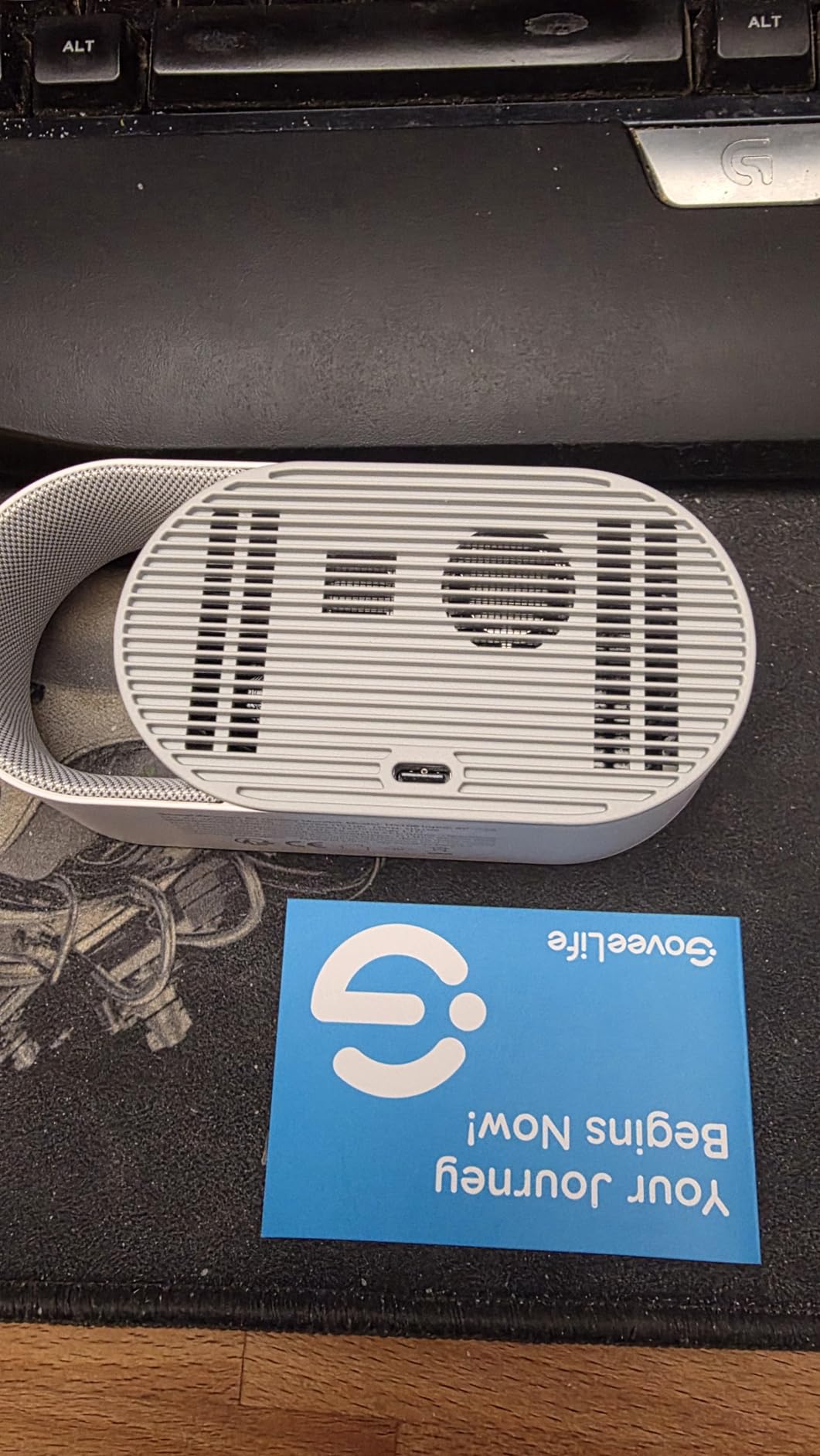
It is a fixed-location device. There is no internal battery, so you pick a room and stay there, and it measures only three things: PM2.5, temperature and humidity. Owners also warn that dust and aerosol spray near the sensor will skew results, so placement away from an open window and a kitchen matters.
Who it suits during a smoke event
It suits people who want a real number that moves fast without spending much. Two years of history means you can compare this year’s readings against last year’s, which is the cheapest way to know whether your sealing work paid off.
Who should buy something else
Anyone moving between rooms or needing CO2, VOC or formaldehyde readings will outgrow it quickly. It is also a poor fit if your router is 5 GHz only, since the clock display needs 2.4 GHz.
4. Temtop LKC-1000S+ Air Quality Monitor for Wildfire Season (Formaldehyde and Data Logging)
Temtop Air Quality Monitor PM2.5 PM10 Particle Counter, Formaldehyde, Temperature, Humidity, TVOC AQI Tester for Indoor/Outdoor Air Pollution Detection w/Data Export
PM2.5, PM10, formaldehyde, TVOC, humidity, temperature
Laser particle sensor plus electrochemical HCHO cell
Six to eight hours on the built-in battery
Pros
- Seven measured parameters in one device
- Three months of continuous Excel export
- 12-hour histogram shows ventilation results
- Works plugged in or on battery
Cons
- No gas or carbon monoxide leak detection
- Ten-minute warm-up after a temperature change
- Particle sensor has a roughly three-year design life
- Bulkier than plug-in PM monitors
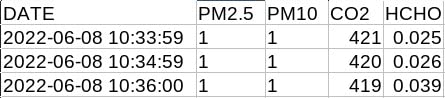
This is the unit that turns monitoring into a workflow. Continuous USB logging covers all seven parameters with Excel export, so you can hand someone a three-month file instead of a screenshot, and the 12-hour histogram makes it easy to see whether an hour of open windows actually helped.
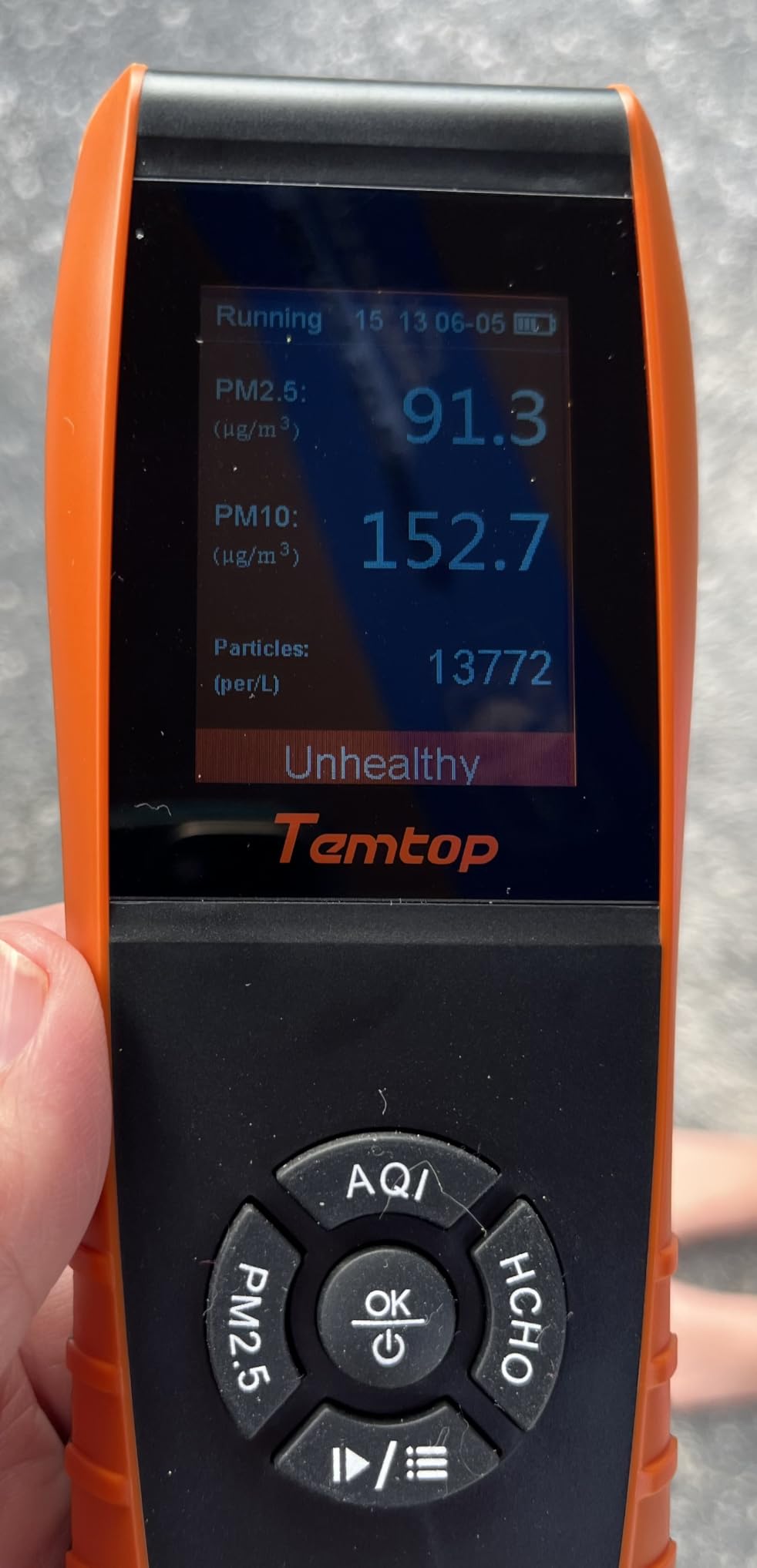
On sensor breadth it is hard to beat in this group. It reads PM2.5 and PM10 with a laser particle sensor, adds a real electrochemical formaldehyde cell and TVOC, and calculates a live AQI with an R-squared accuracy claim up to 0.999. The IPS color screen shows green, yellow and red status at a glance.
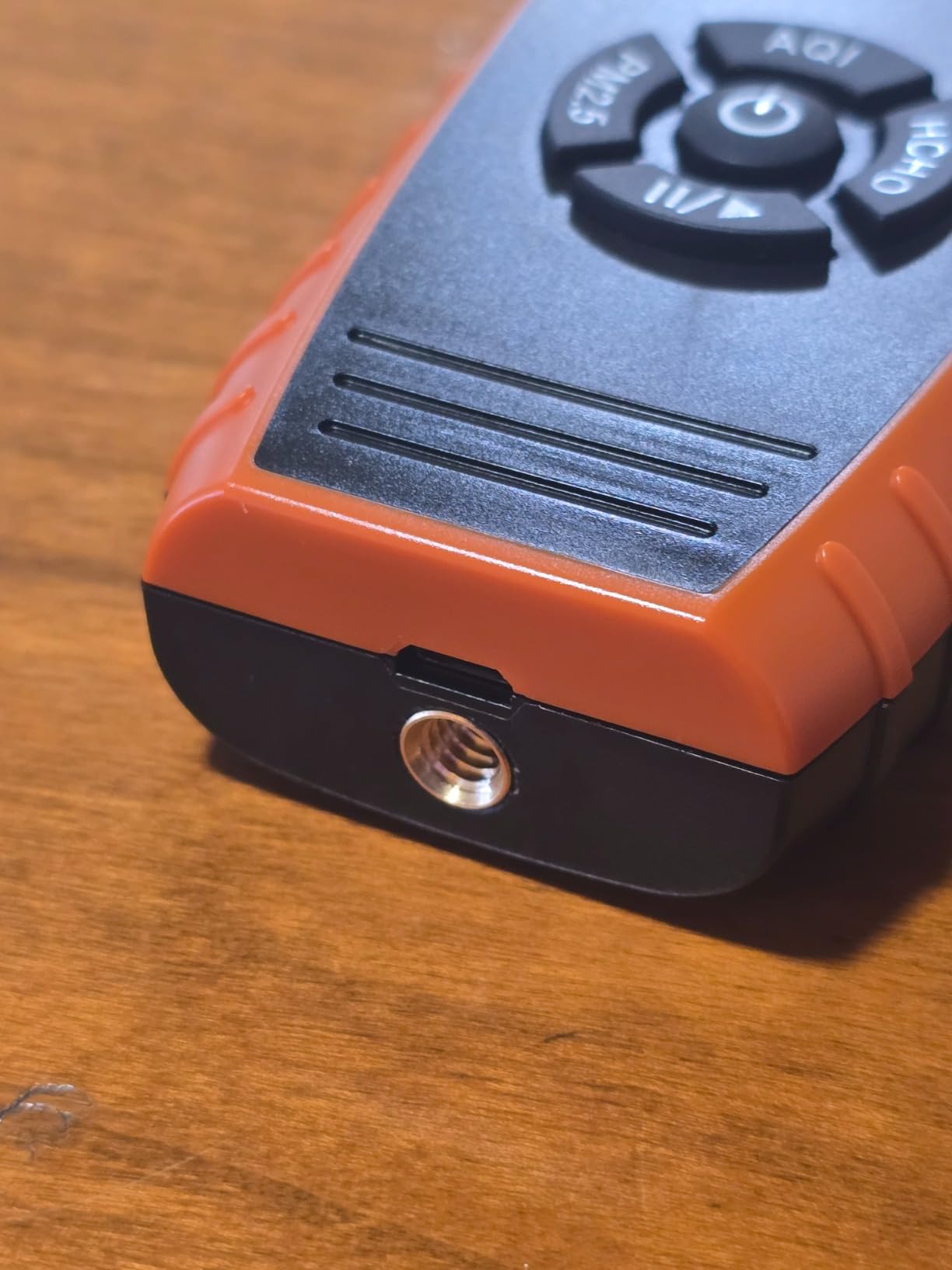
It needs handling. Allow a ten-minute warm-up after moving it between temperature zones, and keep it away from alcohol, perfume and cleaning sprays when you are testing. The particle sensor is a consumable-grade part with an estimated three-year design life, and this unit cannot stand in for a gas or carbon monoxide alarm.
Who it suits during a smoke event
It suits people running a room as an experiment. Plug it in, log for a week, open the windows at a fixed time, and the histogram plus the exported file will tell you exactly what ventilation did.
Who should buy something else
It is not a good fit for a bedroom, where a 14.4-ounce unit and a glowing color screen are harder to live with, or for anyone who only wants a glance-level number. The battery lasts six to eight hours, so the wireless mode is for spot checks rather than all-day coverage.
5. BREATHE Airmonitor Plus Air Quality Monitor for Wildfire Season (Portable Multi-Sensor)
BREATHE Airmonitor Plus Indoor Air Quality Monitor w/CO₂, PM & App. Gen 2.
CO2, PM1, PM2.5, PM10, TVOC, formaldehyde, temperature, humidity
NDIR CO2 with laser particle sensing
Six hours on the rechargeable battery
Pros
- Three particle sizes plus CO2
- TVOC and formaldehyde
- NDIR CO2 reads steadier than cheap cells
- 90-day app history with export
- Six-hour battery makes room checks practical
Cons
- History and alerts live only in the app
- Needs a 2.4 GHz network for remote readings
- Six-hour battery is short for whole-home use
- Small screen shows fewer values at once
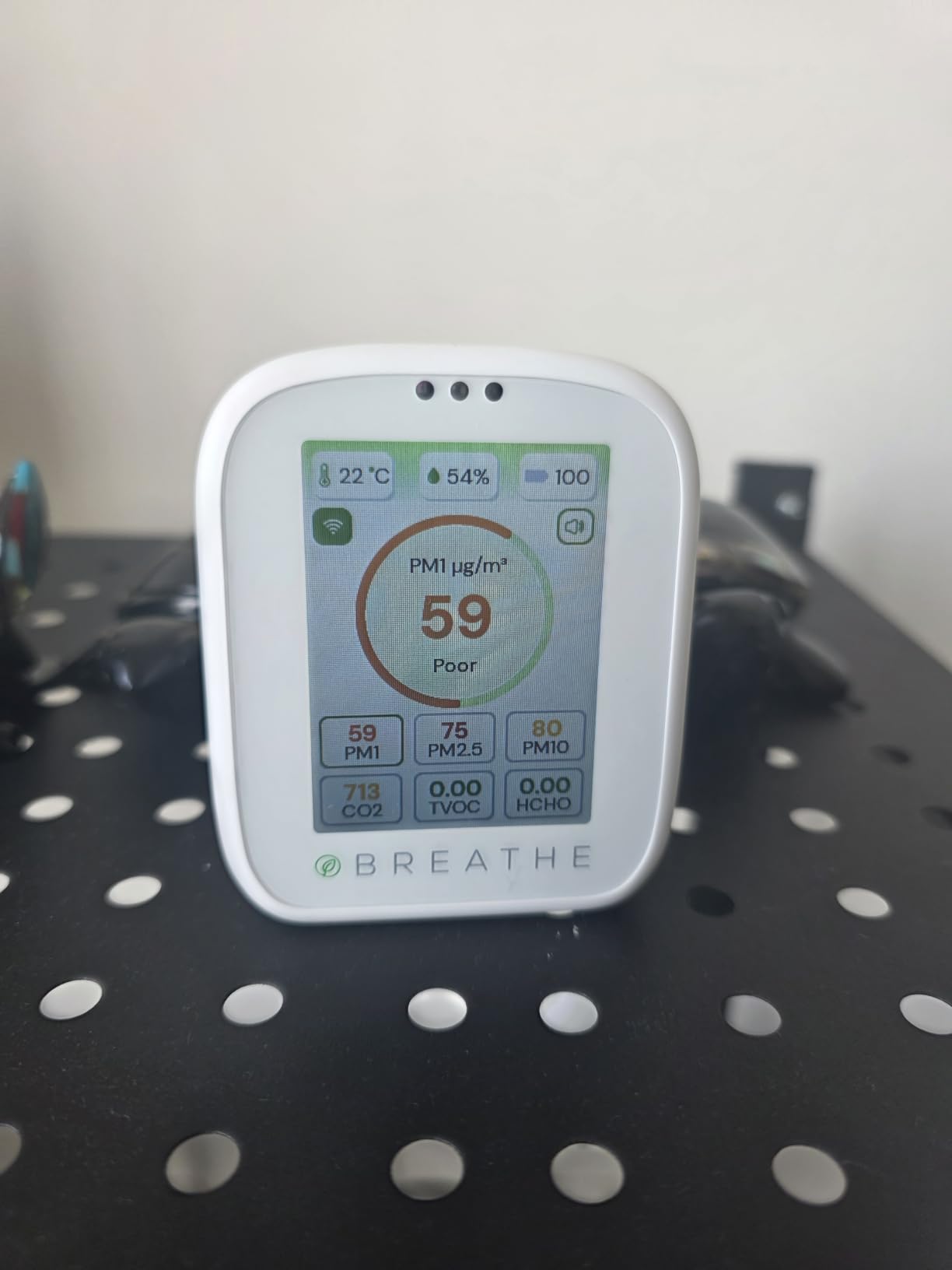
The Gen 2 Airmonitor Plus packs a genuine multi-pollutant sensor set into a very small body, at 4 ounces and 1.4 by 2.8 by 3.3 inches. It measures PM1, PM2.5 and PM10 alongside NDIR CO2, TVOC and formaldehyde, and the CO2 sensor is steadier than the electrochemical cells used in cheaper units.
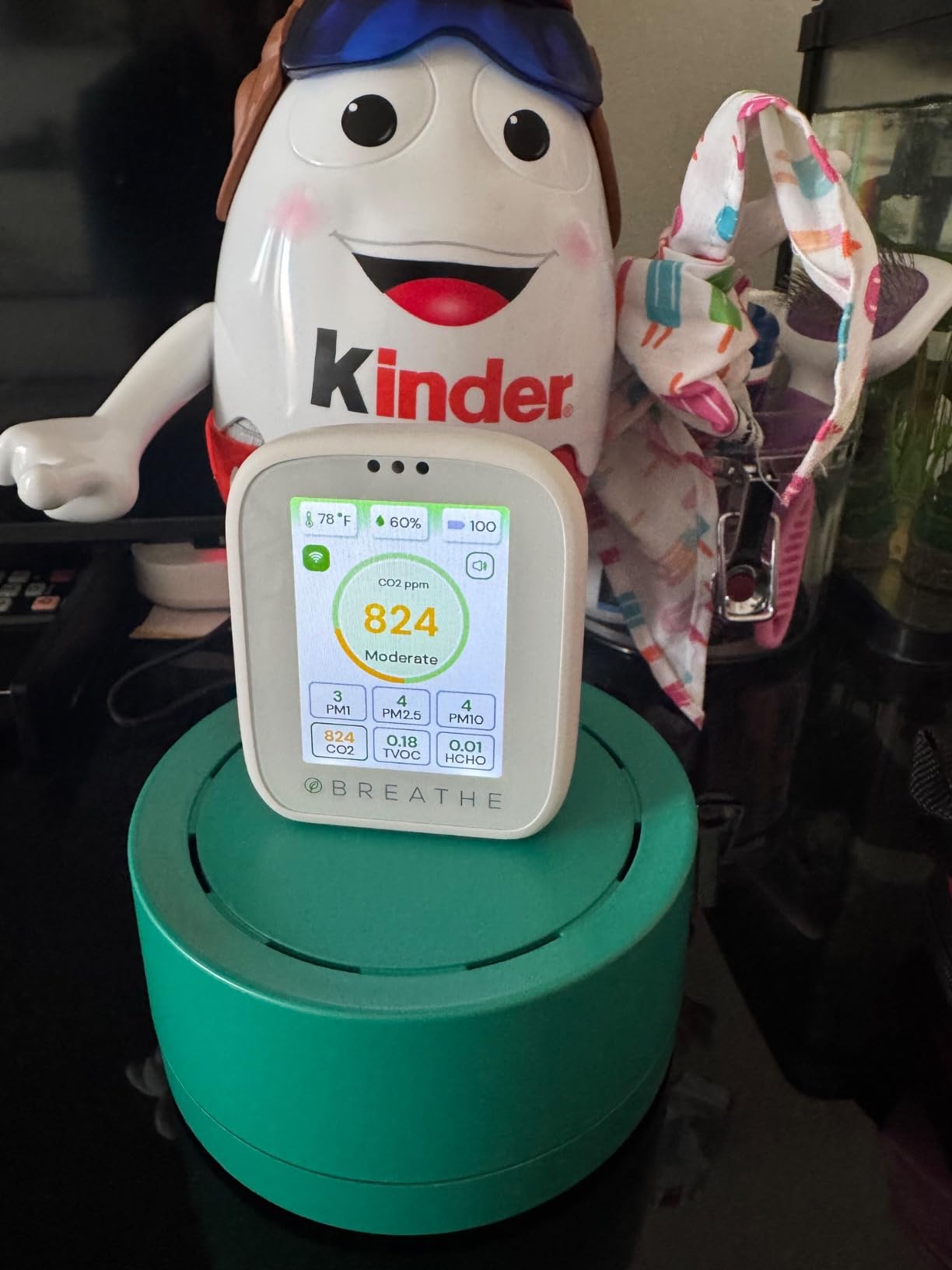
Alerts for CO2 and PM2.5 are configurable, which is more control than the Airthings unit gives you, and the app keeps 90 days of history with export. Quick CO2 calibration and simple pairing keep setup short.
The trade-offs are app dependence and battery life. Anything beyond the on-device display requires the Breathe Tech app and a 2.4 GHz network, and six hours of cordless use is not enough for a single-room all-day deployment. The compact screen also shows fewer values at a glance than the panel-style units.
Who it suits during a smoke event
It suits renters and people in larger homes who want to carry one device from floor to floor rather than install five of them. The six-hour battery covers a full sweep of a house during an event.
Who should buy something else
If your smoke event runs overnight and you want alerts and history without opening a phone, pick a plug-in unit with a bigger screen. This one is built for checking, not for watching.
6. Sainlogic 16-in-1 Air Quality Monitor for Wildfire Season (Most Parameters on One Screen)
Sainlogic Air Quality Monitor Indoor, 16 in 1 VOC Meter, CO2, HCHO, TVOC, PM2.5, PM1.0, PM10, Humidity, Temperature, 7.2″ Large Display 3-Color AQI Alerts Air Quality Tester for Home Air Monitor
CO2, PM2.5, PM10, PM1.0, HCHO, TVOC, AQI, temperature, humidity
7.2-inch display with three brightness stages
Eight-hour 2500mAh rechargeable battery
Pros
- Nine parameters including all three particle sizes
- 1 to 2 second refresh catches spikes fast
- Large screen readable from across a room
- Works with no app or Wi-Fi at all
Cons
- Eight-hour battery limits cordless use
- No app or cloud history to export
- Accuracy claims lack third-party validation
- Smaller review base than the rivals
Across 160 reviews it holds a 4.8 average, the highest rating among the units we tested, and the hardware backs part of that up. Sampling runs at 1.5-second intervals with claimed 0.001-level detection sensitivity, and all three particle sizes appear next to CO2, formaldehyde and TVOC on a 7.2-inch screen you can read from the doorway.
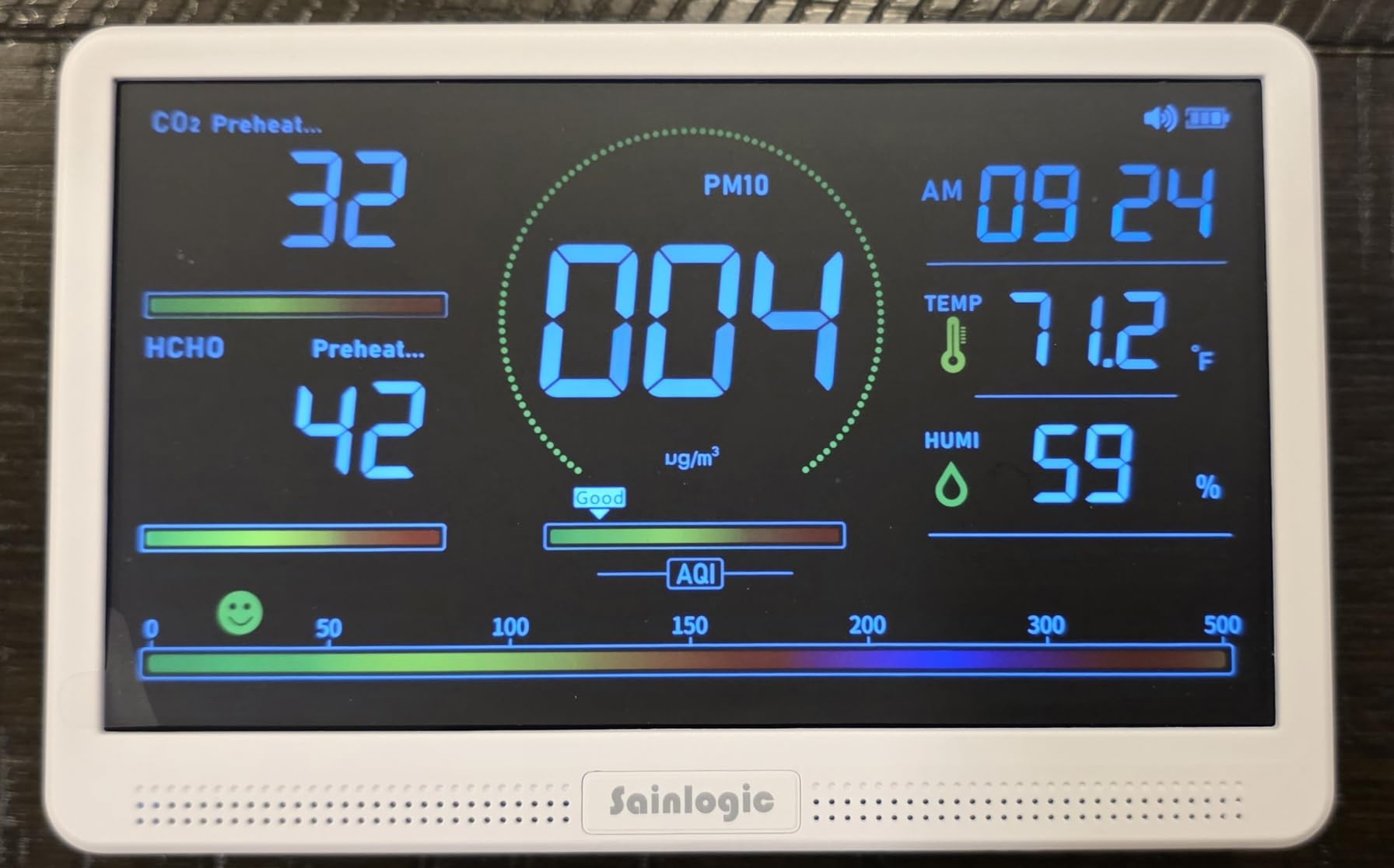
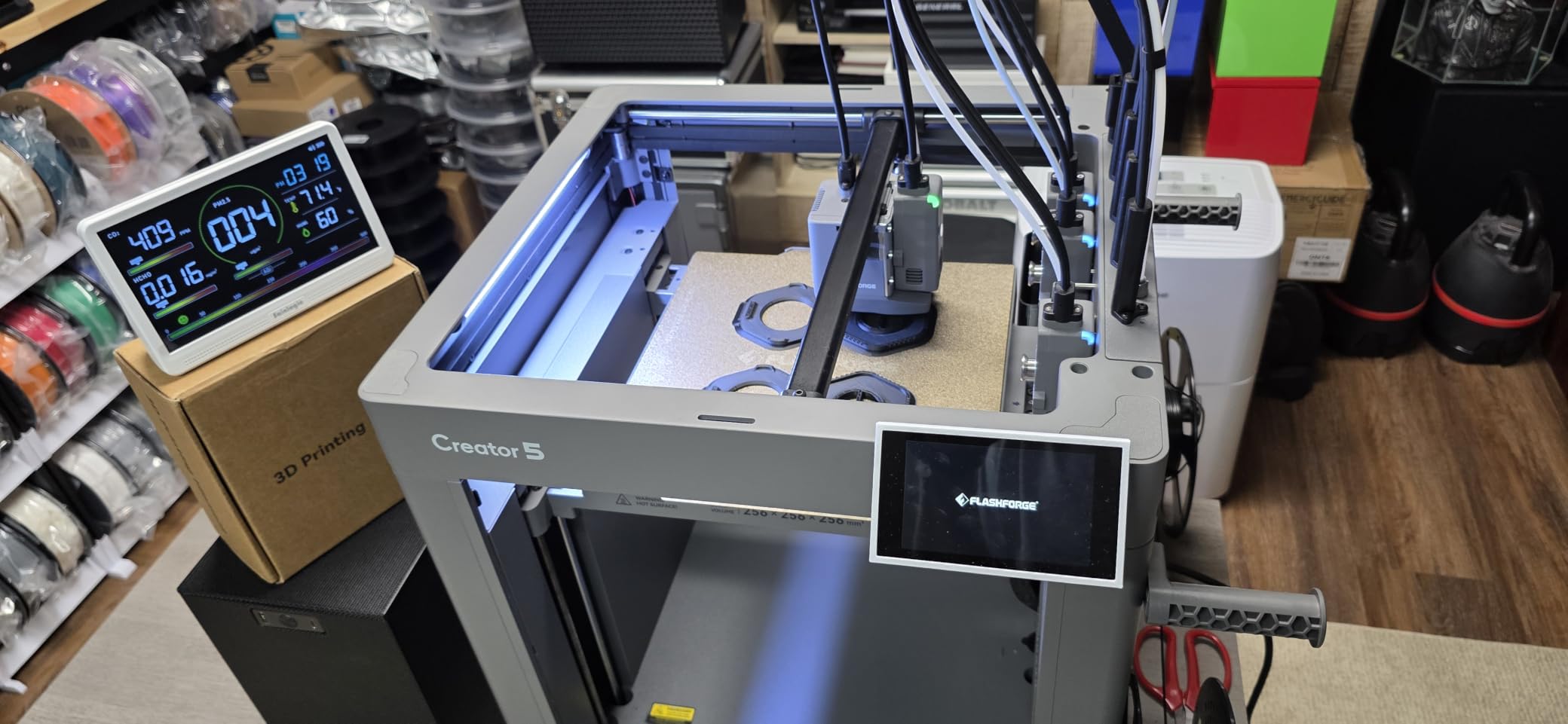
The design choice we like most is the absence of setup. It works with no app and no Wi-Fi, and the display itself prompts you to open windows once a reading hits Level 4, which is exactly the decision you need to make quickly during a smoke event. Seven user-defined alert thresholds and tri-color indicators keep it visible and audible.
Be measured about the rating. The review base is small, the manufacturer accuracy figures come without published third-party testing, and there is no app or cloud history, so readings cannot be exported or reviewed later. The eight-hour battery is generous for spot checks but short for an all-night bedroom watch.
Who it suits during a smoke event
It suits anyone who wants one screen showing everything, no account to create, and no network dependency when the power flickers. It is also a good choice as a gift or for an older relative who will never open an app.
Who should buy something else
Skip it if you need a documented trail of readings or a third-party accuracy check. For proving what a purifier did, an exportable log matters more than screen size.
7. Temtop M2000 Air Quality Monitor for Wildfire Season (Professional-Grade)
Temtop Professional Air Quality Analyzer & CO2 Monitor Particle Counter
CO2, PM2.5, PM10, formaldehyde, particle count, temperature, humidity
SenseAir NDIR CO2 with a Dart HCHO sensor
Five volt DC rechargeable power
Pros
- NDIR CO2 can be zero-calibrated outdoors
- Reads higher than budget meters at the low end
- Adjustable logging intervals and USB export
- Solid build with a carry case included
Cons
- USB export reported not working on this model
- Some logs drop decimal precision and parameters
- First CO2 calibration takes about six hours
- Some monitors arrived uncalibrated
The sensor stack is the most serious in this roundup: a SenseAir NDIR CO2 cell, a Dart electrochemical formaldehyde sensor and a Temtop particle sensor, with a two-second response time and a color TFT backlit display. Owners who calibrate it report the most credible CO2 and low-end PM2.5 performance at this level.
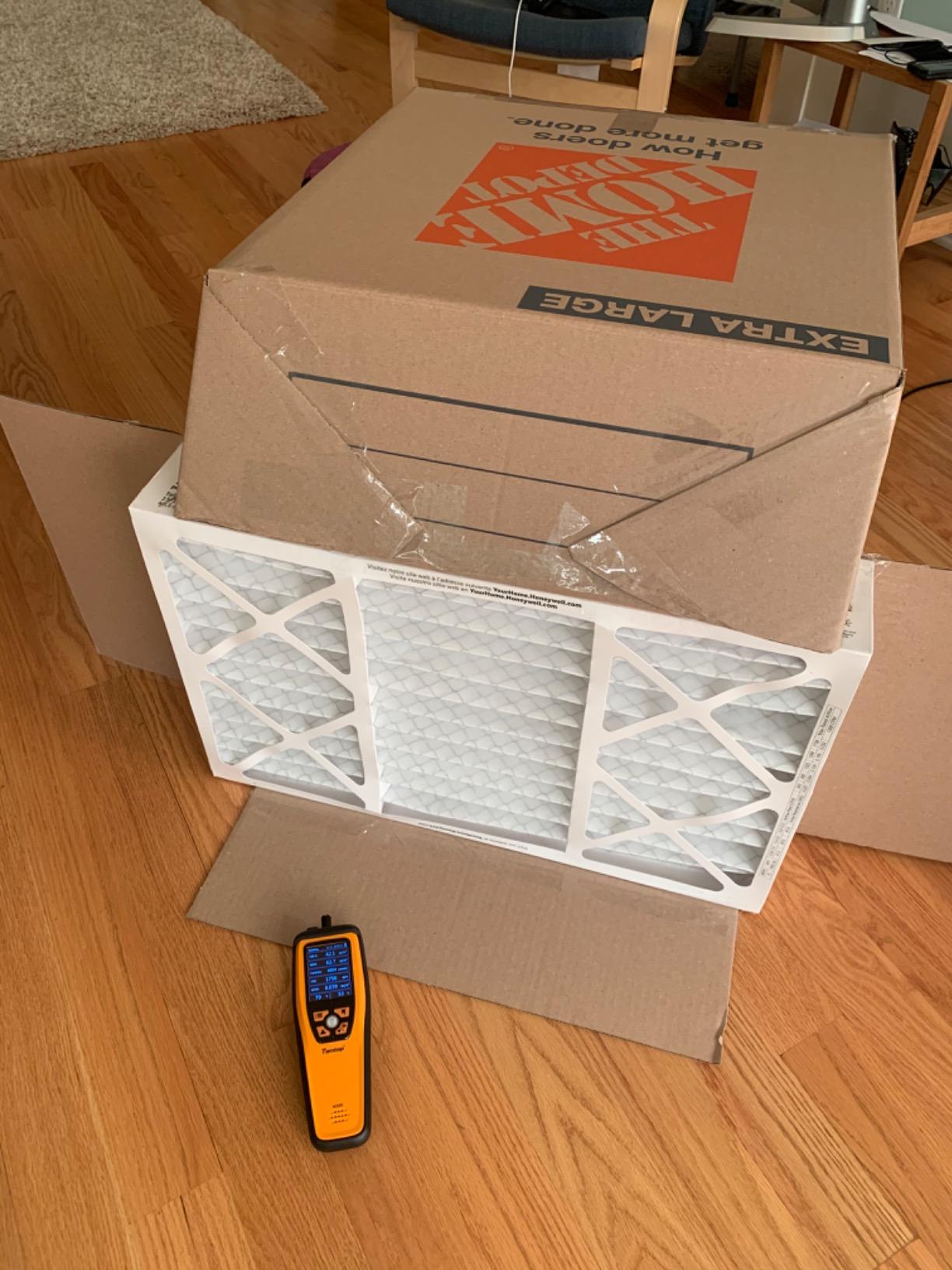
There is a built-in calibration program for CO2 and formaldehyde, and internal RAM holds more than three months of continuous logging with adjustable intervals. The audio alarm threshold is configurable, which is useful in a room where you need to know about a spike without watching the screen.
The logging story is uneven. One owner reports the advertised USB export does not work on this model, with the company confirming the feature is unavailable, and another found logged PM2.5 and PM10 values without decimal precision and some parameters missing. First calibration takes roughly six hours and drains the battery, and some monitors arrived uncalibrated.
Who it suits during a smoke event
It suits consultants, landlords and remediation crews who need multi-month records and a sensor they can zero against outdoor air. The carry case makes it practical for spot checks across several buildings.
Who should buy something else
Home users should be cautious. Confirm the export workflow for your unit before a fire season starts, and budget time for calibration. A household that just needs tonight’s number will get more from a simpler plug-in device.
8. YNAK 16-in-1 Air Quality Monitor for Wildfire Season (Largest Display, Accuracy Caveats)
16 in 1 Air Quality Monitor Indoor 7″ High-Precision Real-Time CO2 Monitor
CO2, PM2.5, PM1.0, PM10, HCHO, TVOC, temperature, humidity, AQI
Seven-inch LED display with three brightness settings
AC adapter with a built-in rechargeable battery
Pros
- Large digits readable from across a room
- All three particle sizes on one screen with CO2 and HCHO
- Built-in battery for room-to-room checks
- Audible alerts with a mute control
Cons
- One owner read far lower PM2.5 than a reference sensor
- Another read CO2 several times below three other monitors
- TVOC and HCHO stayed flat during heavy cleaning
- Fahrenheit only with no documented Celsius switch
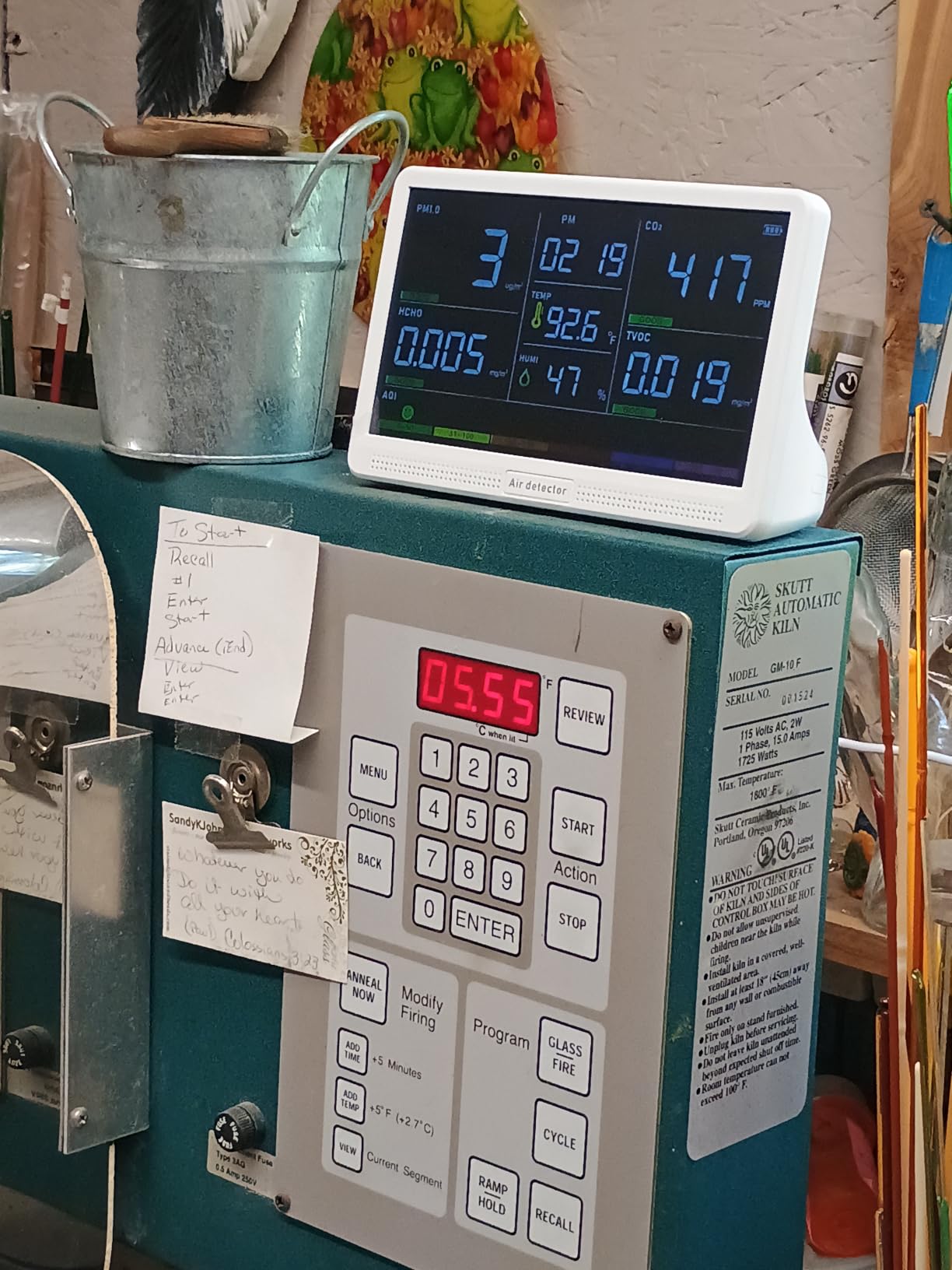
The screen is the reason to look at this one. A seven-inch LED panel with three brightness settings puts every metric in large digits, and nine measured parameters including PM1.0, PM2.5 and PM10 share that screen with CO2, formaldehyde and TVOC. Seven distinct AQI alert types come with a buzzer and a mute button.
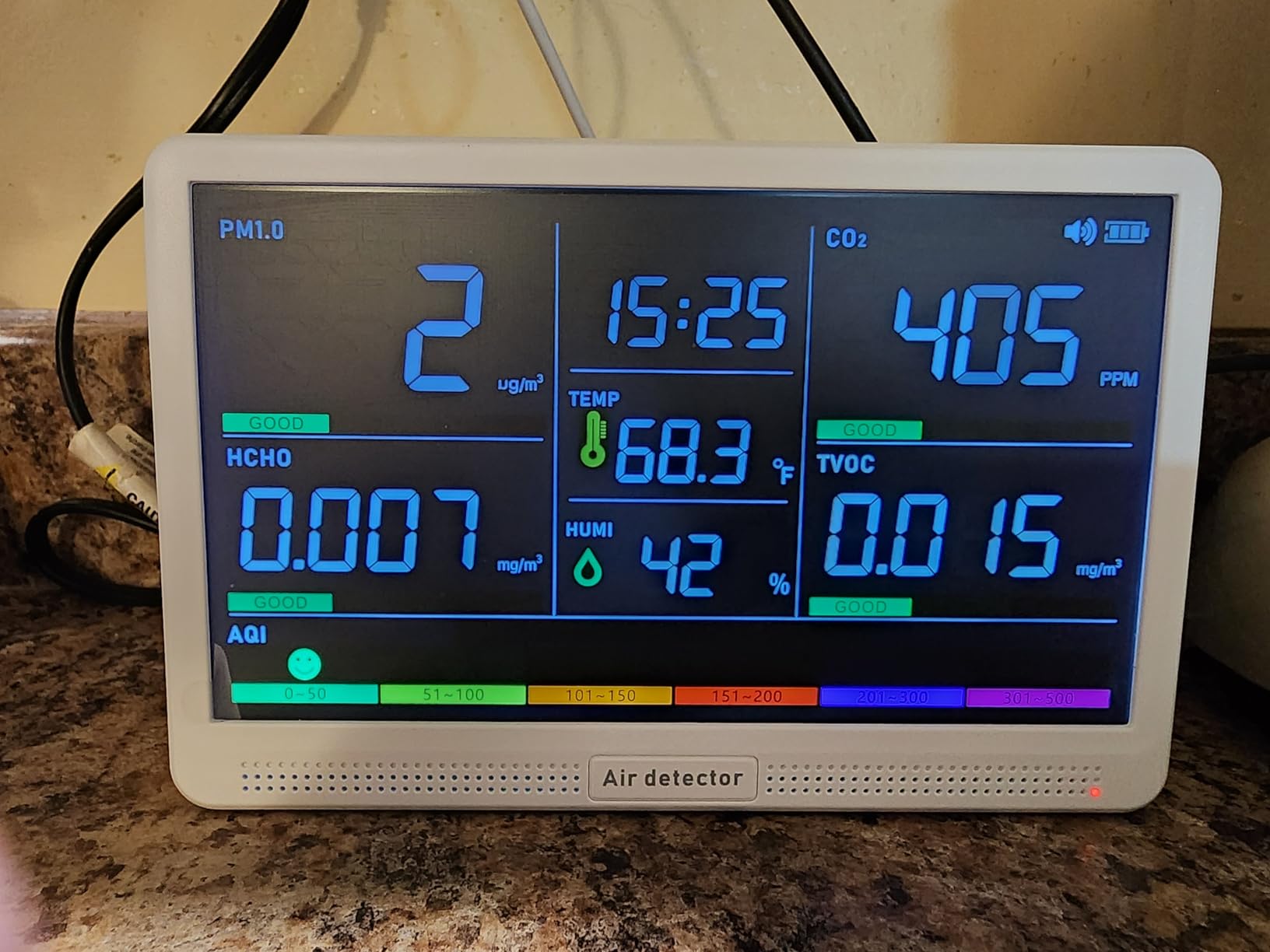
The accuracy reports are the reason to be careful, and they are specific enough to repeat. One owner measured about 3 µg/m³ indoors while a reference sensor outdoors read about 50. Another saw 400 ppm CO2 while three other monitors read 3000 to 4000 ppm in the same room, and a third found TVOC and HCHO flat through heavy chemical cleaning. The seller refunded and said quality control would tighten.
Small quality issues also show up: the temperature readout appears to be Fahrenheit only, and Wi-Fi and mirror-display icons show at boot without being covered in the manual. Those are trivial. Understated particulate readings during a smoke event are not, since that is the exact number you would be relying on.
Who it suits during a smoke event
It suits large rooms, common areas and anyone who needs to read the value from a distance rather than walking up to a unit. The built-in battery also makes it a convenient second room check.
Who should buy something else
If the reading will drive a health decision or a purifier test, choose a monitor with published accuracy and an exportable log instead. Large screens make a wrong number look more authoritative, not less.
9. Temtop S1 Air Quality Monitor for Wildfire Season (Budget Spot Checker)
Temtop S1 PM2.5 Air Quality Monitor & Indoor Thermometer
PM2.5, AQI, temperature and humidity
Miniature laser particle sensor
Rechargeable, up to 60 days per charge
Pros
- Low-cost route to a dedicated PM2.5 reading
- Up to 60 days of battery life
- Compact display shows AQI and PM2.5 together
- One-button instant reading refresh
Cons
- Base version has no app or data logging
- Only three metrics with no CO2 or VOC sensing
- Low-range only particle readings may under-detail heavy smoke
- Temperature accuracy about plus or minus 1 °C
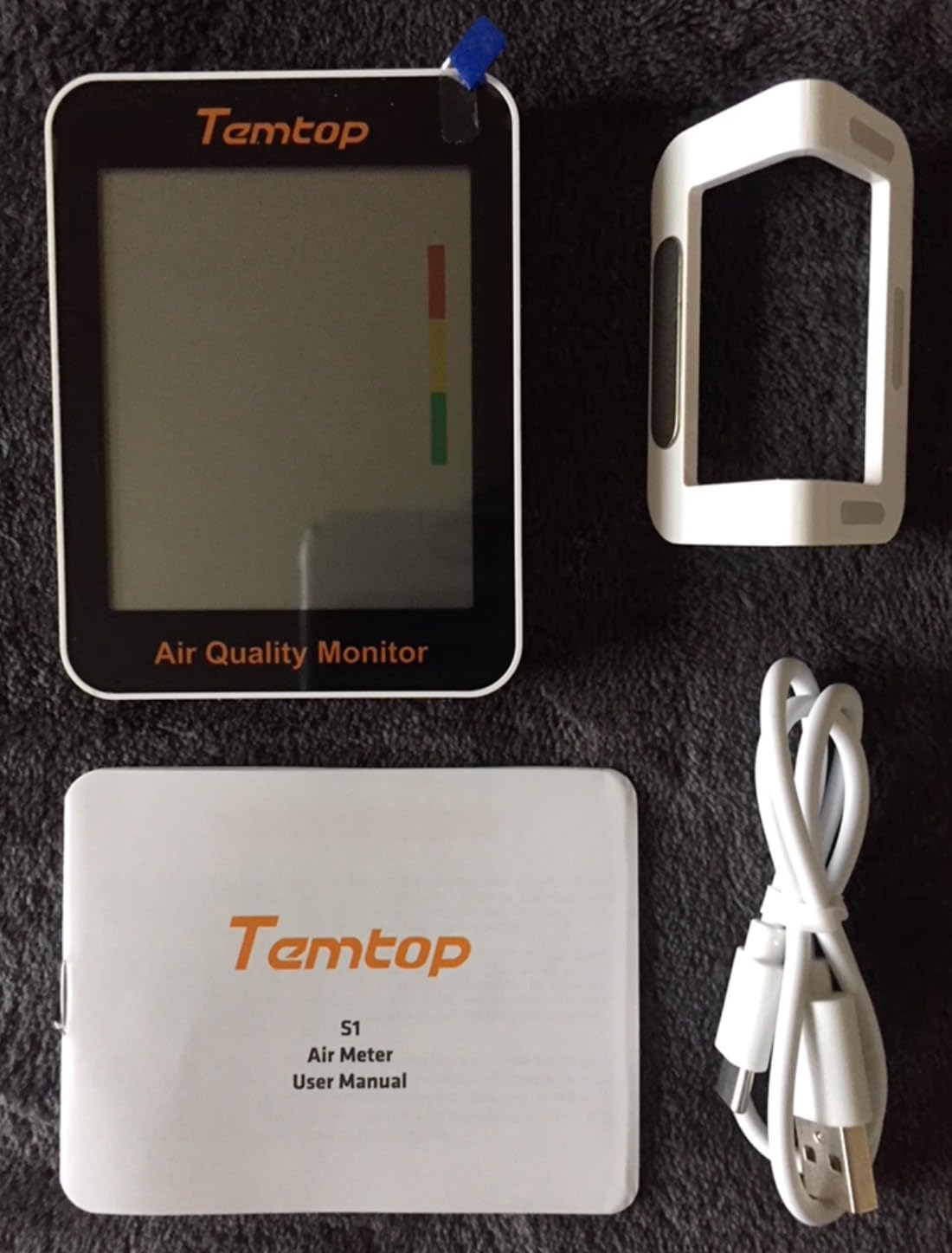
The S1 is the most affordable route we found to a genuine laser-based PM2.5 reading in a house. It shows PM2.5, AQI, temperature and humidity on one compact display, and a settings button refreshes the reading instantly, which is useful right after you shut a window during a spike.
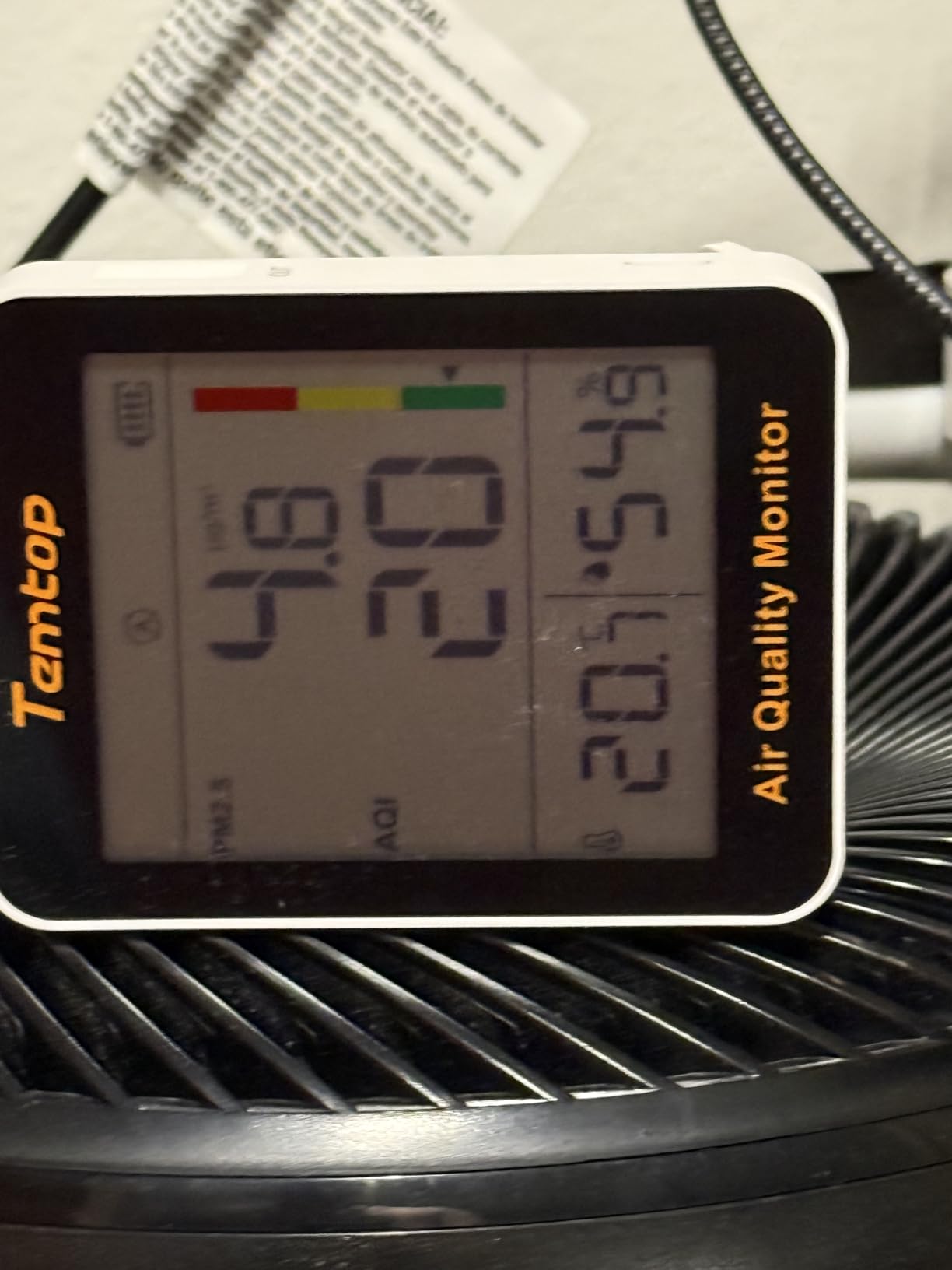
Battery life is the headline number. Up to 60 days per charge means you can keep it in a nursery, carry it through every room, and forget about it, and owners treat it as a spot checker rather than a monitoring platform.
The base version has no app and no data logging, so nothing can be tracked over time. It measures only PM2.5, temperature and humidity, and owners note that particle readings stay in the lower range, so heavy infiltration from outdoors may be under-detailed. Temperature accuracy is about plus or minus 1 °C.
Who it suits during a smoke event
It suits a first-time buyer, a dorm room or a rental where the goal is simply a number on a screen when the sky turns orange. Sixty days of charge covers an entire event with no outlet nearby.
Who should buy something else
If you intend to compare readings across days or prove a purifier worked, the absence of history ends the conversation. Look for a monitor that stores data you can export.
10. GoveeLife H5140 Air Quality Monitor for Wildfire Season (CO2 and Ventilation)
GoveeLife Smart Air Quality Monitor CO2 Detector H5140, Display & Alarm
CO2, temperature and humidity
SCD4x photoacoustic NDIR CO2 sensor
AC power with a Type-C cable
Pros
- CO2 tracks well
- reading in the 400s with a window open
- Display legible at a distance
- Buzzer
- app and email alerts
- Voice assistant and Home Assistant support
Cons
- Does not measure particulate matter at all
- AC powered with no internal battery
- Cannot link to Govee purifiers
- Wi-Fi pairing can be finicky
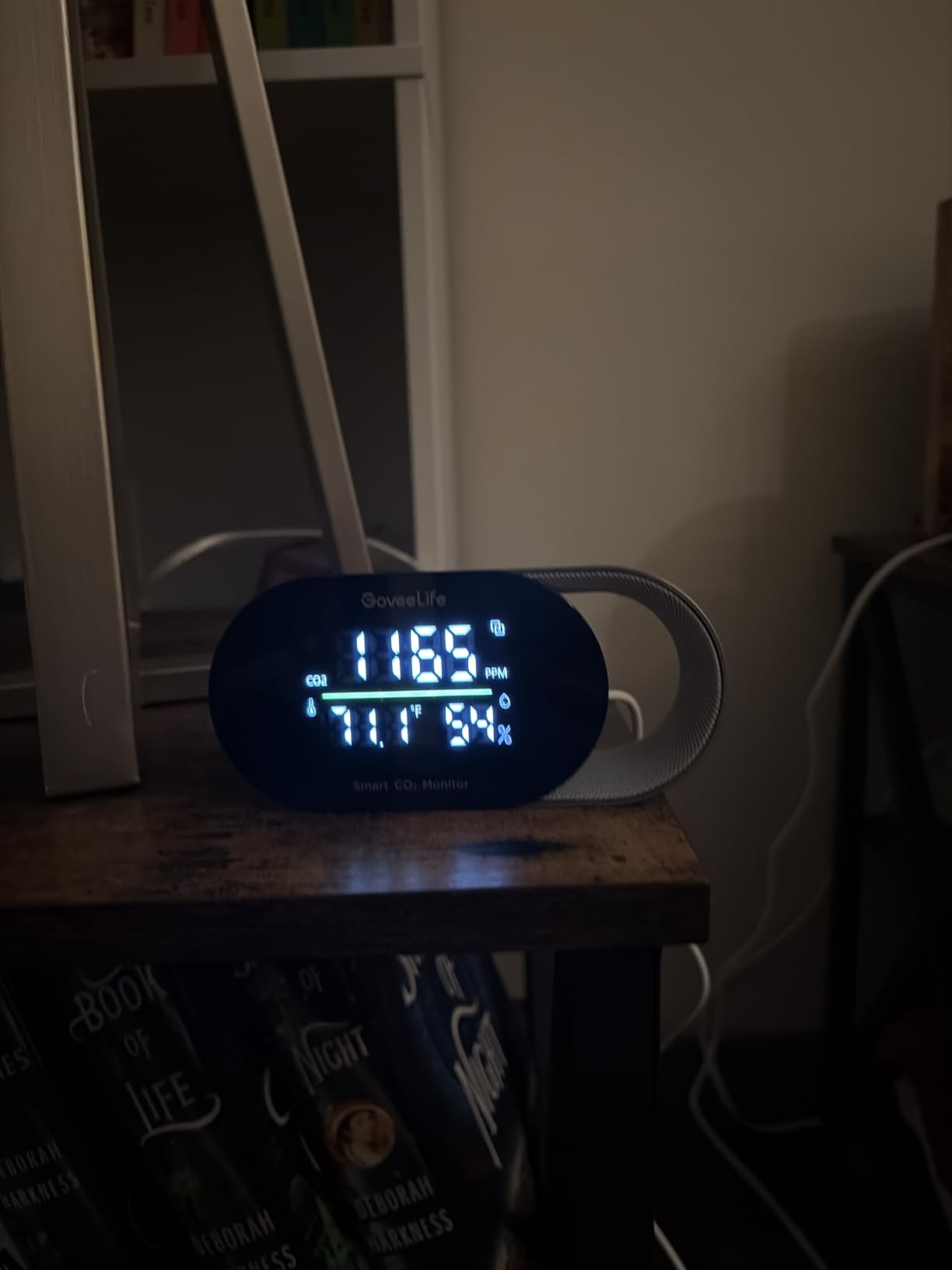
This monitor is about the air your house holds, not the smoke coming through the gap. It uses an SCD4x photoacoustic NDIR sensor accurate to ±(40ppm + 5%) with pressure compensation and a five-second refresh, and at 4.4 it is the second-highest rated unit we included.
The alert system is unusually thorough for the category: a buzzer, app push notifications and email reports, plus a programmable tri-color light bar that dims on a schedule at night. It keeps up to two years of charts with CSV export, and owners report clean Home Assistant integration and voice assistant support.
The limitation is absolute for this topic. It does not measure particulate matter at all, so it cannot track PM2.5 from wildfire smoke infiltration, and it is AC powered with no internal battery. It also cannot be linked to Govee air purifiers, since purifiers do not reduce CO2.
Who it suits during a smoke event
It suits a home office or bedroom where you are sealing the room and need to know when the air has become stale enough to justify a short airing. The buzzer caught a pre-heating oven for one owner within days.
Who should buy something else
Anyone whose reason for buying is smoke. A healthy CO2 reading during a smoke event tells you nothing about the particles in the room, and we would not treat it as a substitute for a PM2.5 monitor.
How We Picked: Sensor Type, Accuracy and Smoke Testing
Sensor type came first, because it decides everything else. A laser particle counter counts particles and converts the count to a mass concentration in µg/m³, which is why forum consensus on bogleheads.org centres on laser counters for judging whether a purifier works. A cheap optical sensor gives you a number faster and cheaper, but it reads differently and often low, which is the failure mode that matters during a smoke event.
We read that low-reading risk in owner accounts across this group. One monitor here measured about 3 µg/m³ indoors while a reference sensor outdoors read about 50, and another read CO2 several times lower than three comparison devices. Community threads on Hacker News make the same point from the other direction, reporting consumer sensors that overstate PM2.5 by roughly a factor of two under heavy smoke.
So do air quality monitors really work? Yes, for the job we care about here, with one condition: they measure relative change well and absolute concentration worse than a reference-grade instrument. Cross-check against an official outdoor reading for your area, treat the number as a trend, and use the alert threshold as a prompt to act rather than a diagnosis. Our wider testing notes on home air monitors go deeper on everyday accuracy, and allergy-focused units are covered in our smart monitor guide.
Buying Guide: What to Look for in an Air Quality Monitor for Smoke
Before you compare features, decide what you want the monitor to answer. Most buyers need a single question answered well: is the smoke outside getting into the room where someone sleeps or works?
1. True PM2.5 in µg/m³, not only an AQI score. A derived AQI number is convenient but hides the concentration. A monitor that reports the raw value lets you log your own data and compare readings across devices.
2. A laser particle sensor. This is the single most-cited spec in community answers about smoke monitoring. Optical sensors are common in cheap units and their readings drift under heavy particulate load.
3. Refresh speed. Two seconds or faster lets you watch a spike arrive. Slow-refreshing units tell you about the air you already breathed.
4. An alert threshold you control. Configurable thresholds for PM2.5 and CO2 let you tune sensitivity to your household. Fixed thresholds on the Airthings View Plus are a recurring complaint.
5. Logging and export. Any history is useful; CSV export over weeks or months is what lets you prove a purifier reduced the particulate load. Several monitors here store data but will not export it.
6. Power and placement. Plug-in units never miss a spike but stay in one room. Battery-powered devices from about six to 60 days let you move around the house or cover a nursery without an outlet.
7. App quality and offline behaviour. Decide whether you can accept an app-only design. When the power goes out during an event, a display that works alone is worth a lot, and history stored locally or in the cloud is not.
8. How many rooms you are covering. One monitor per floor is a reasonable target, and one per sleeping area matters more than one per living space. Our general monitor roundup covers units for other rooms and situations.
Where to Place Your Monitor During a Smoke Event
Place the unit where people breathe, not where the reading is most dramatic. A monitor on an exterior wall near a window will show peak infiltration; a monitor on a shelf in the bedroom shows the air your family is actually breathing. If you can only afford one, put it in the room where you sleep.
Run an indoor and outdoor pair if you can. Put one unit just outside a window and keep one inside, then compare. If the indoor line falls roughly 15 minutes after you seal the house, the gaps in your envelope are the problem, and no monitor will fix that.
Keep the sensor away from open windows, kitchen steam, candles and aerosol sprays, all of which push readings up without smoke. Breathing height matters too, since smoke settles and particles distribute unevenly in a room with a ceiling fan.
Use the readings to time ventilation rather than to decide once. Open windows when the outdoor number is well below your indoor number and the wind is not driving smoke in, then close up when the lines cross. Monitors also verify the purifiers built for wildfire smoke, which is the only way to know whether a filter change schedule is actually working.
Frequently Asked Questions
Which air quality monitor is the most accurate for PM2.5?
For wildfire smoke, the most accurate consumer option is the one combining a laser particle counter with exportable data. The Airthings View Plus tracked an outdoor PurpleAir sensor closely in owner accounts and keeps long-term CSV history, while the Temtop LKC-1000S+ logs seven parameters continuously over USB. No consumer unit matches a reference-grade monitor, so cross-check against an official outdoor reading.
Do air quality monitors really work?
Yes, for tracking change over time, which is what wildfire decisions require. Consumer sensors drift in absolute terms: owner accounts in this roundup include a unit reading about 3 µg/m³ indoors while an outdoor reference sensor read about 50, and community reports describe overstatement by roughly two times under heavy smoke. Treat the reading as a trend and an alert as a prompt to act.
What is the best air quality monitoring device for a smoke event?
The Amazon Smart Air Quality Monitor is our overall pick because it reads PM2.5 quickly, shows a color-coded LED and can trigger a purifier through Alexa Routines without extra hardware. It measures PM2.5, VOCs, carbon monoxide, humidity and temperature, and it carries a larger review base than most rivals here.
What is the best air quality monitor according to Reddit users?
Reddit threads about this question often point to the Aranet4, which is the catch. The Aranet4 measures carbon dioxide and does not detect particulate matter, so it is blind to smoke. Thread posters asking specifically about indoor AQI during fires are better served by a laser-based PM2.5 monitor such as the Amazon Smart unit or the GoveeLife H5106.
What is the best air quality monitor for monitoring CO2 levels?
For CO2 alone, the GoveeLife H5140 uses an SCD4x photoacoustic NDIR sensor with pressure compensation, a five-second refresh and two years of CSV history, and it alerts by buzzer, app and email. Remember that CO2 indicates ventilation quality and tells you nothing about smoke particles, so it works as a complement to a PM2.5 monitor rather than a replacement.
Which app is the most accurate for checking air quality?
For outdoor conditions, AirNow is the authoritative free source and it uses regulatory monitors. For indoor readings, no app is more accurate than the sensor feeding it, so use the manufacturer app for history and cross-check it against an official outdoor number for your area. Several units here, including the Sainlogic, run with no app at all.
Bottom Line: Best Air Quality Monitors for Wildfire Season
The Amazon Smart Air Quality Monitor is the best air quality monitors for wildfire season pick for most households, because it reads PM2.5 fast, shows the state of the air without an app, and can switch your purifier on for you. Pick the GoveeLife H5106 if you want exportable history for less, the Airthings View Plus if radon and long-term records matter, and the Temtop LKC-1000S+ if you plan to log every parameter through a whole fire season.