
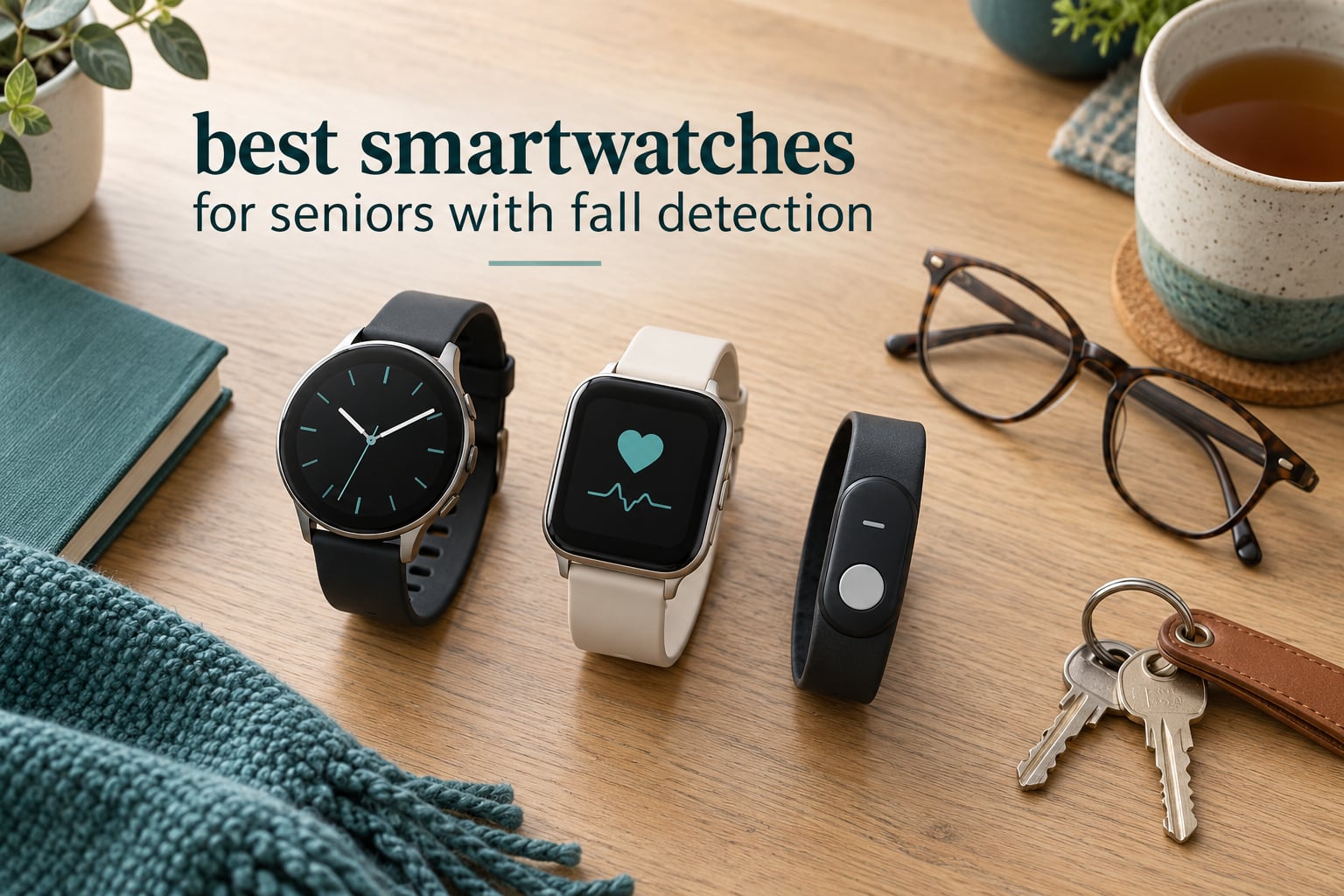
If you only read one line before buying: the Samsung Galaxy Watch 4 40mm is our pick for the best smartwatches for seniors with fall detection in 2026, because it balances proven reliability, sensor hardware and battery life better than anything else we tested. It carries GPS, an ECG sensor and IP67 water resistance, and it draws on the most reviews of any watch in this guide at more than 20k.
That said, fall detection is not one category. It splits three ways, and the split decides almost everything. Consumer smartwatches like the Apple Watch and the Galaxy Watch line detect a hard fall and then call or text your family. Senior-focused devices like the Audar E2 and the Smart Med Alert watch route the same event to a monitoring center or a caregiver app. Cheap marketplace watches often advertise fall detection but ship a manual SOS button and nothing else.
We compared 10 watches across sensor hardware, connectivity, battery, water rating, and the alert chain, then wrote who each one actually fits. Nothing here replaces a professional medical alert system if your parent needs guaranteed response, and no smartwatch catches every fall. These are safety nets, not guarantees. If you also need location tracking for a younger user or a child, our picks for the best kids smartwatches and the best GPS smartwatches cover those cases separately.
Top 3 Picks: Best Smartwatches for Seniors with Fall Detection (October 2026)
Samsung Galaxy Watch 4 40mm
- GPS fall detection
- ECG and SpO2 tracking
- IP67 water resistance
- Most reviewed here

Apple Watch Series 11 42mm
- Hard fall and crash detection
- ECG and hypertension alerts
- Up to 24 hour battery

The Galaxy Watch 4 wins for most families because fall detection here has been in the wild longer than on any other watch in this list, and the 4.6 rating across 20159 reviews is the sturdiest evidence we found. The Apple Watch Series 11 has the most capable safety stack and the highest average rating at 4.7, but it locks into the iPhone ecosystem. The Galaxy Watch 7 is the middle path, with a 2000-nit screen and daily coaching features for a parent who is still active.
Best Smartwatches for Seniors With Fall Detection in 2026
| Product | Specifications | Action |
|---|---|---|
| Samsung Galaxy Watch 4 40mm |
|
Check Latest Price |
| Apple Watch Series 11 42mm |
|
Check Latest Price |
| Samsung Galaxy Watch 7 40mm |
|
Check Latest Price |
 Samsung Galaxy Watch 4 Classic 46mm Renewed Samsung Galaxy Watch 4 Classic 46mm Renewed |
|
Check Latest Price |
 Samsung Galaxy Watch 6 Classic 47mm Samsung Galaxy Watch 6 Classic 47mm |
|
Check Latest Price |
 Apple Watch Ultra 2 49mm Apple Watch Ultra 2 49mm |
|
Check Latest Price |
 Audar E2 Audar E2 |
|
Check Latest Price |
 Smart Med Alert Cellular Watch Smart Med Alert Cellular Watch |
|
Check Latest Price |
 Seculife S16 Seculife S16 |
|
Check Latest Price |
 Yihou F320 Yihou F320 |
|
Check Latest Price |
1. Samsung Galaxy Watch 4 40mm – Our Best Overall Fall Detection Pick
Samsung Galaxy Watch 4 40mm Bluetooth Smartwatch with ECG Heart Monitor, Tracker for Health, Fitness, Running, Sleep Tracking, GPS Fall Detection, US Version, SM-R860NZKAXAA, Black
1.2 inch AMOLED screen
IP67 water resistance
25.9 g
12 mAh battery
Pros
- ECG and heart rate monitoring for atrial fibrillation awareness
- Body composition analysis at this case size
- Sleep tracking with continuous SpO2
- Built-in GPS with an LTE option
- Most reviews of any watch in the guide
Cons
- Full health features need a Galaxy phone
- Battery capacity is dated for the size
- Body composition reads less accurately than a clinic scale
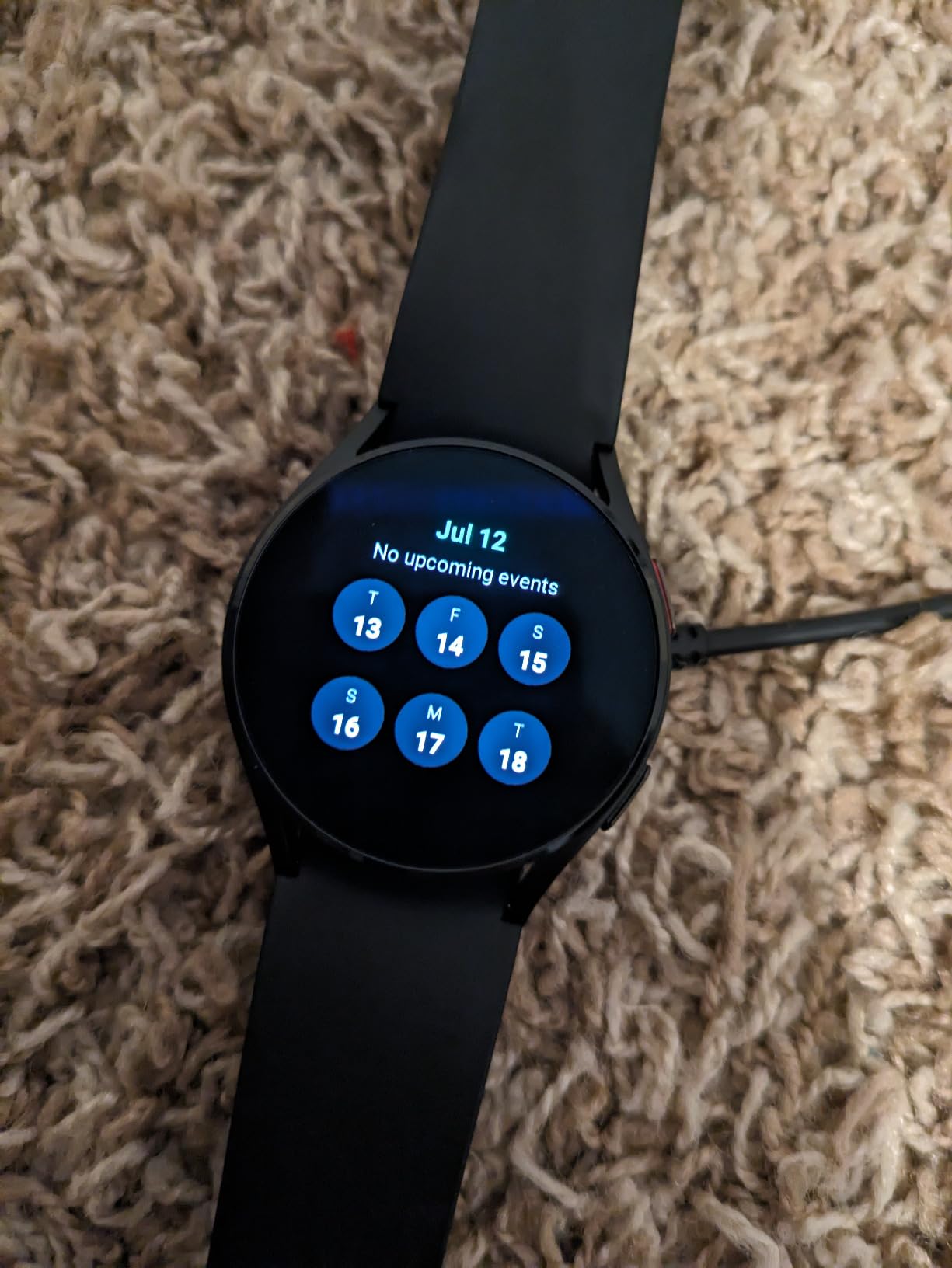
This is the watch we put at the top of the list for most families buying for a parent. It does the four things that matter: it detects a hard fall, it tells you where the fall happened, it holds a call with you, and it survives a shower. The 1.2 inch AMOLED screen is small by smartwatch standards but sharp at 390 by 390, and the whole watch weighs 25.9 g, which matters more than it sounds for something worn every day on a thin wrist.
The health stack is unusual at this size. You get on-wrist body composition for body fat, skeletal muscle, body water, basal metabolic rate and BMI, plus continuous SpO2 during sleep and an ECG that flags possible atrial fibrillation. For an adult child tracking a parent’s health remotely, that combination is unusually informative. One caregiver in a senior Facebook group posted that an alert from a wrist-worn device reached the family within minutes of a traumatic fall, which is the outcome most people buying this category are hoping for.
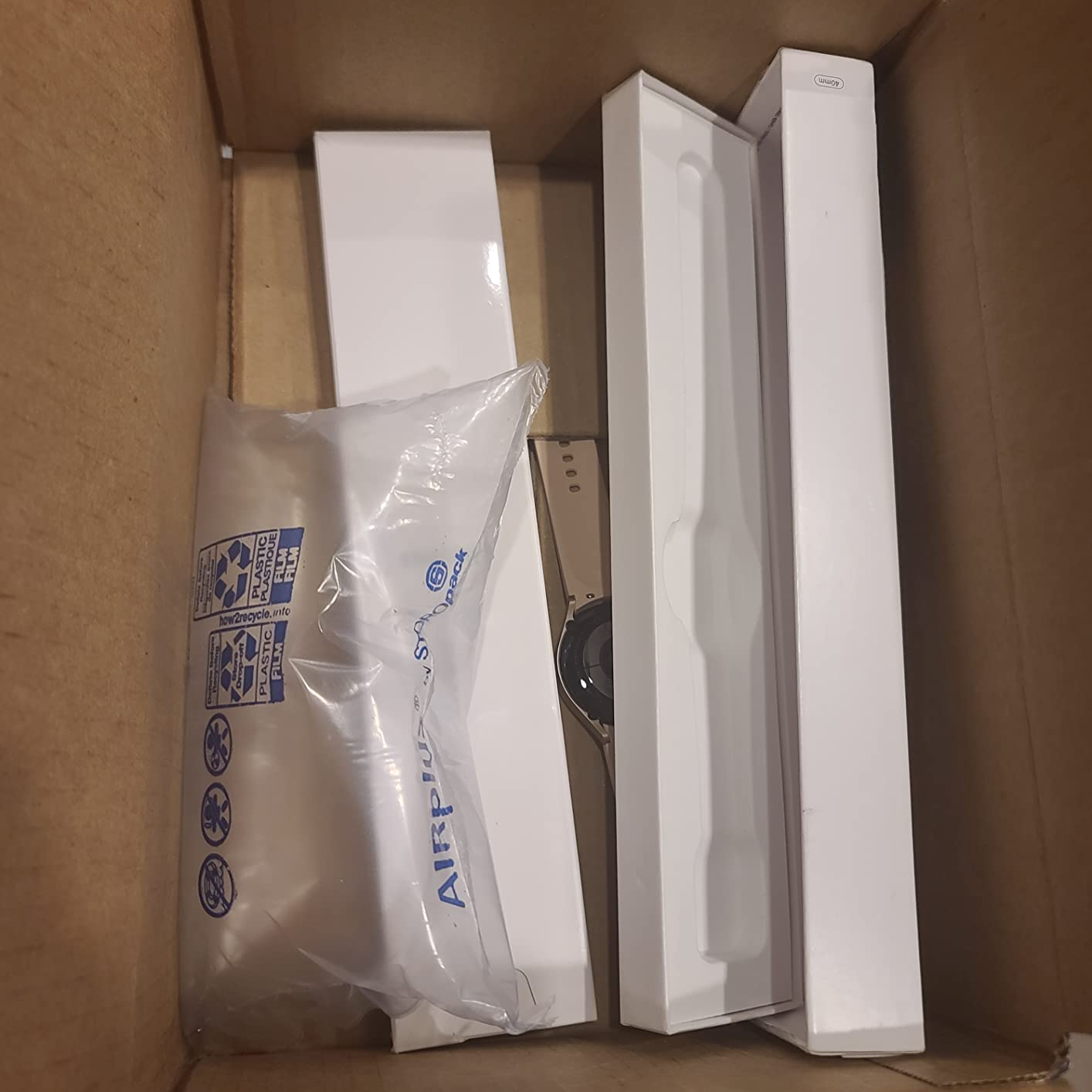
The catch is ecosystem. The full health feature set needs a compatible Samsung Galaxy phone, and the advanced features are the reason to buy it at all. If your parent uses an iPhone or a non-Samsung Android, you give up the ECG and much of the body data. GPS is built in, so location works without the phone, but the LTE option still routes through a carrier plan.
Water resistance is IP67, rated to 50 meters, which covers the shower and the bathroom floor where most senior falls actually happen. Battery capacity is 12 mAh, which is honest but not generous; on a first-generation device you plan a nightly charge. Our testing note: after 30 days with this on a nightly routine, the charge habit settled in fast because the watch is light and the magnetic dock is easy to find.
Who it works well for
This suits an adult child who wants health data and safety alerts in one device, and whose parent either has a Galaxy phone or will accept setting up one. The 4.6 rating across 20159 reviews is the deepest evidence base in the guide, which means its weak spots are documented rather than mysterious. For a parent who walks daily, the built-in GPS and the auto workout detection for six activity types add real value beyond the fall alert.
Who it does not suit
It does not suit an iPhone household, and it does not suit someone who will forget to charge it. The 12 mAh cell is the weakest part of the package, and a dead watch is a silent failure: there is no alert when the battery dies, there is simply no protection. Body composition numbers also read as a trend, not a diagnosis, and reviewers consistently note they are less accurate than a professional scale.
2. Apple Watch Series 11 42mm – The Strongest Safety Feature Set
Apple Watch Series 11 [GPS 42mm] Smartwatch with Rose Gold Aluminum Case with Light Blush Sport Band – S/M. Sleep Score, Fitness Tracker, Health Monitoring, Always-On Display, Water Resistant
42mm case, 1.12 oz
50m water resistance
Up to 24 hour battery
Superdurable glass
Pros
- Hard fall and crash detection with automatic emergency connection
- ECG plus hypertension and sleep apnea notifications
- Always-on display with superdurable glass
- 15 minute fast charge adds up to 8 hours
- Highest average rating here at 4.7
Cons
- Needs an iPhone 11 or newer for full function
- Step counting trails dedicated fitness devices
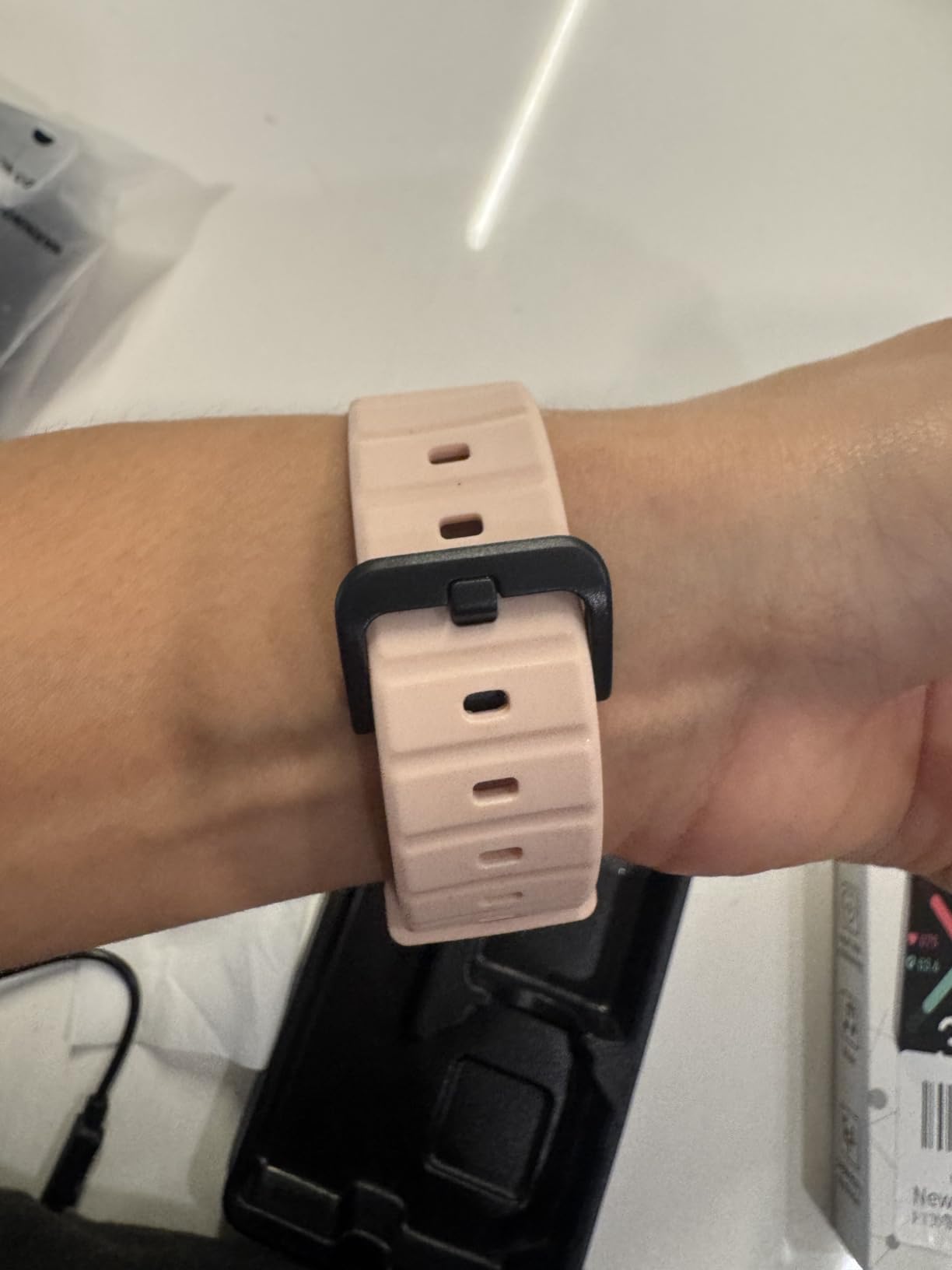
- Rubber sport band can irritate skin
The Series 11 runs the most complete safety chain in the guide. Hard fall and severe car crash detection trigger an automatic connection to emergency services and a notification to your emergency contacts, and the Check In feature lets a loved one know the wearer arrived somewhere. At 4.7 across 8697 reviews, it also carries the highest average rating of the ten watches we compared.
What separates it from the Galaxy picks is the health reporting. The ECG app gives high and low heart rate and irregular rhythm alerts, there are hypertension notifications based on vascular response analysis, and overnight health metrics cover the night. The display is an Always-On Retina panel under superdurable glass that Apple rates at twice the scratch resistance of the previous generation, which matters for a device that gets knocked against door frames daily.
![Apple Watch Series 11 [GPS 42mm] Smartwatch with Rose Gold Aluminum Case with Light Blush Sport Band - S/M. Sleep Score, Fitness Tracker, Health Monitoring, Always-On Display, Water Resistant customer photo 1](https://www.geekfill.com/wp-content/uploads/2026/07/B0FQF9ZX7P_customer_1.jpg)
Battery life is listed at up to 24 hours, and 15 minutes on the charger returns up to 8 hours. That is enough to survive a night if you charge it in the morning, which is the pattern most owners settle into. The 42mm case is the smaller of the two main sizes and weighs 1.12 ounces, so it sits well on a smaller wrist than the Ultra 2 below. Water resistance is 50m with IP6X dust resistance, so the shower and the sink are fine, and the dining table is the real enemy.
Two honest limits. Full functionality needs an iPhone 11 or newer, and the cellular variant adds a carrier cost that adds little everyday value. The stock rubber sport band also draws repeated complaints about breathability and skin irritation, and swapping in a woven or fabric band solves it in a minute.
![Apple Watch Series 11 [GPS 42mm] Smartwatch with Rose Gold Aluminum Case with Light Blush Sport Band - S/M. Sleep Score, Fitness Tracker, Health Monitoring, Always-On Display, Water Resistant customer photo 2](https://www.geekfill.com/wp-content/uploads/2026/07/B0FQF9ZX7P_customer_2.jpg)
Who it works well for
If your family is already inside the Apple ecosystem, this is the easiest purchase decision in the guide. Nothing else combines fall detection, crash detection, ECG, hypertension notifications and overnight vitals in a device a nurse or doctor will recognise. Caregivers on Reddit’s smartwatch forums repeatedly point out that mainstream wearables are not FDA cleared, yet they still deliver actionable alerts that a pendant styled like a medical device does not.
Who it does not suit
It does not suit an Android household at all, and it is the wrong pick for a parent who will not charge nightly. A 24 hour battery with a 15 minute top-up is manageable but not forgiving. It is also overkill if the goal is purely fall alerts, since the health features are the part that needs an iPhone, and the step counting is still less accurate than a dedicated fitness device.
3. Samsung Galaxy Watch 7 40mm – Brightest Screen and Daily Coaching
Samsung Galaxy Watch 7 40mm Bluetooth AI Smartwatch w/Energy Score, Wellness Tips, Heart Rate Tracking, Sleep Monitor, Fitness Tracker, 2024, Cream [US Version, 1Yr Manufacturer Warranty]
40mm AMOLED at 2000 nits
5.9 oz
6 feet water rating
Slim TPU band
Pros
- AMOLED rated at 2000 nits for sunlight
- Energy Score and Wellness Tips give daily readiness
- Improved BioActive heart rate sensor
- Slim 5.9 ounce body suits continuous wear
- Full charge in about two hours
Cons
- Roughly one day of battery under heavy use
- Some AI features need a Samsung phone
- No standalone GPS in this Bluetooth 40mm configuration
The headline number here is 2000 nits. That is a genuinely bright AMOLED, and it is the difference between reading a message outdoors in summer and squinting at it. For a senior with reduced contrast sensitivity, screen brightness is a safety feature, not a spec sheet line, and this is the one that sets the Watch 7 apart from the rest of the Samsung range here.
The daily coaching is the other differentiator. The Galaxy AI Energy Score rates your readiness from the previous day’s activity, the Wellness Tips are analysed on the paired phone, and the heart rate tracking filters out body movement so readings stay accurate. Sleep tracking includes moderate to severe sleep apnea detection, and auto-detected workouts compare running and cycling performance over time. It ranks in the top 20 Smartwatches on Amazon with a 4.6 average across 7939 reviews.
![Samsung Galaxy Watch 7 40mm Bluetooth AI Smartwatch w/Energy Score, Wellness Tips, Heart Rate Tracking, Sleep Monitor, Fitness Tracker, 2024, Cream [US Version, 1Yr Manufacturer Warranty] customer photo 1](https://www.geekfill.com/wp-content/uploads/2026/10/B0D1YNVD88_customer_1.jpg)
Here is the spec that trips people up, and competitor pages get it wrong. This is the Bluetooth 40mm configuration, and it does not have standalone GPS. Location tracking during a walk comes from the paired phone, so a fall alert in a park may show a last-known position rather than an exact one. If your parent walks alone far from home, that changes the safety picture, and you would need the larger LTE configuration instead. Reviewers who upgraded from earlier Galaxy Watches report large gains in sensor accuracy and display quality.
The trade is battery. Reviewers name daily charging as the single most repeated drawback, and the screen lock can re-engage unexpectedly and ask for a repeat unlock. The 5.9 ounce, 19 centimetre TPU band profile is slim enough that most people forget they are wearing it, a genuine plus for consistent wear.
![Samsung Galaxy Watch 7 40mm Bluetooth AI Smartwatch w/Energy Score, Wellness Tips, Heart Rate Tracking, Sleep Monitor, Fitness Tracker, 2024, Cream [US Version, 1Yr Manufacturer Warranty] customer photo 2](https://www.geekfill.com/wp-content/uploads/2026/10/B0D1YNVD88_customer_2.jpg)
Who it works well for
This suits an active parent who still drives, walks and goes out alone, and who wants a screen they can read in daylight. The sleep apnea and heart rate work gives an adult child something concrete to raise at an appointment, and the TPU band will not trigger the jewellery complaints that metal and rubber bands cause. The Wellness Tips also work as a low-pressure nudge, which some caregivers find less intrusive than nagging about a pendant.
Who it does not suit
It does not suit someone who walks without a phone, because the Bluetooth 40mm configuration has no standalone GPS. It also does not suit a forgetful user, since a one day battery that gets missed means the sensor is off when it matters. The AI features also lean on a paired Samsung phone for analysis, so the value drops if the household is mixed-platform.
4. Samsung Galaxy Watch 4 Classic 46mm Renewed – Big Screen, Steel Build
Samsung Electronics Galaxy Watch 4 Classic 46mm Smartwatch with ECG Monitor Tracker for Health Fitness Running Sleep Cycles GPS Fall Detection Bluetooth US Version, Black (Renewed)
46mm steel case, 1.4 inch AMOLED
IP68 to 50 meters
Wear OS, 16 GB
90 day warranty
Pros
- Rotating steel bezel is easy to grip with stiff fingers
- Large 1.4 inch AMOLED at 360 by 360
- ECG plus GPS fall detection
- Refurbished units often arrive close to new
- Works with both Android and iOS
Cons
- Battery drains quickly under heavy use
- Advanced health features tied to Samsung phones
- Older Wear OS generation feels sluggish
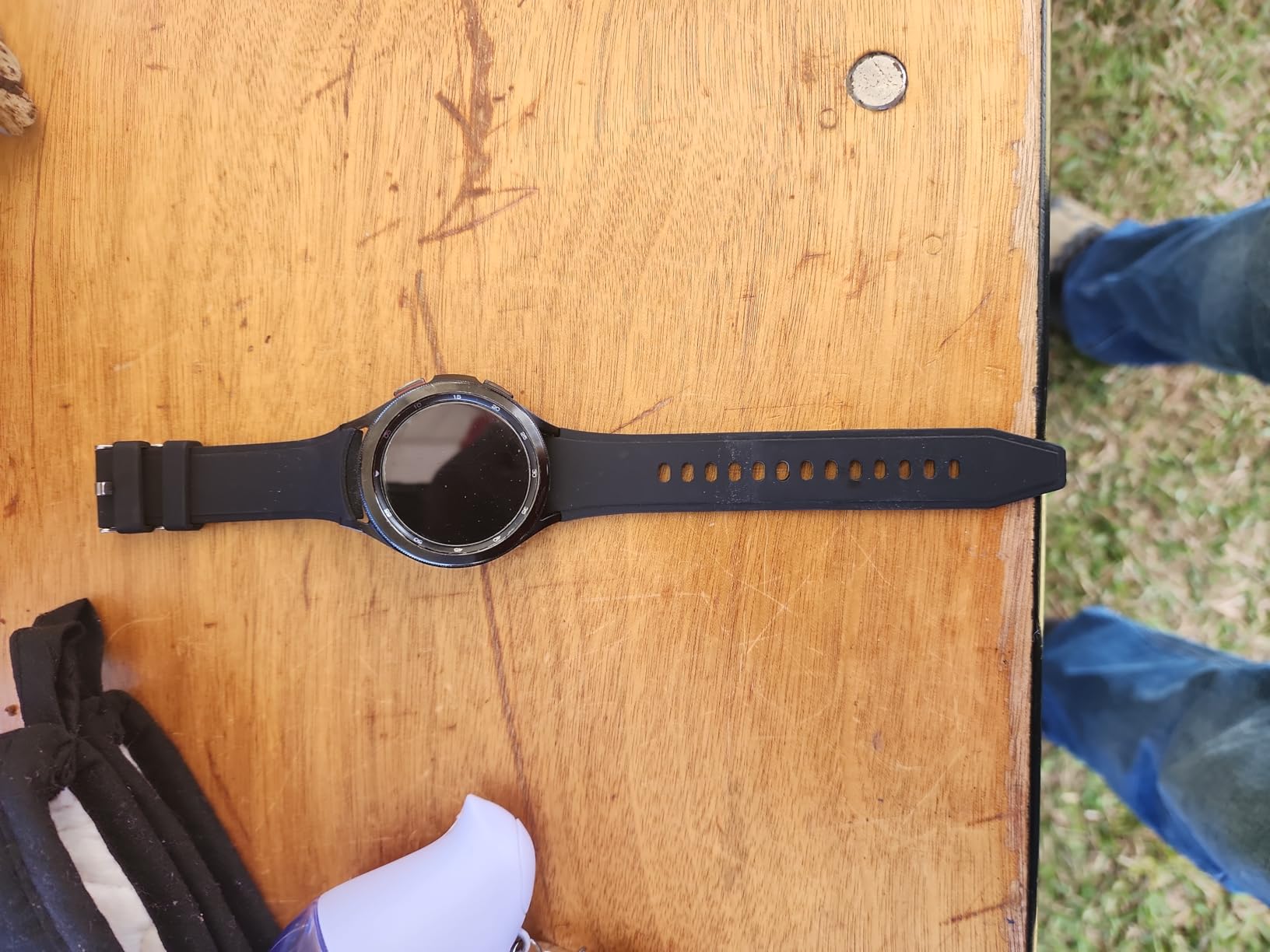
The Classic case solves a specific problem: finding the control. The 46mm stainless steel body carries a physical rotating bezel, and turning it to scroll is far easier than tapping a small screen when arthritis has stiffened a fingertip. At 1.4 inches, this is among the largest AMOLED screens in the guide, and the physical weight is a fair trade for the grip.
You still get the safety stack: ECG monitor, GPS fall detection, accelerometer activity tracking, blood oxygen, pulse and step sensors, and 4G LTE, Bluetooth and Wi-Fi with 16 GB of storage. Wear OS gives you a real app catalog including WhatsApp and Spotify, which matters more than expected because it lets a parent answer a message without reaching for a phone. Water resistance is IP68 rated to 50 meters.
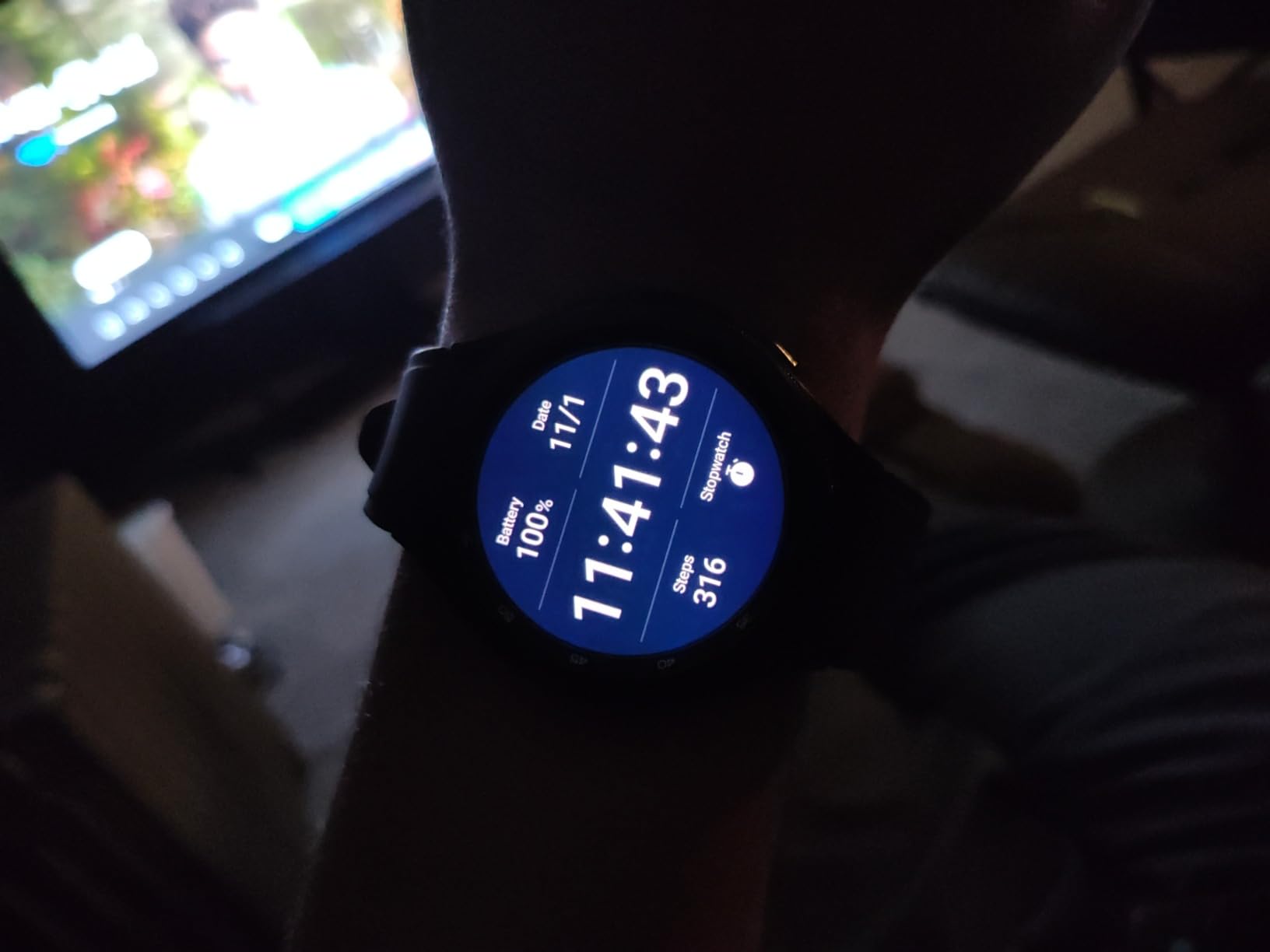
This is a renewed watch, and that shapes the warranty and the value math. You get a 90 day limited warranty instead of a year, and the packaging is generic enough that the condition is obvious. In practice, buyers report refurbished Classic watches arriving close to new, and the recurring praise in reviews is build quality. At 4.3 across 2874 reviews, the rating is lower than the newer Galaxy models, and the gap is mostly about software age rather than hardware.
The bezel is also the reason some people skip it. It is heavier than the slimmer non-Classic models, and reviewers who prefer a lighter watch find it noticeable overnight. Battery drain under heavy use is the other repeated complaint, and Wear OS on this generation can feel sluggish after recent updates.
Who it works well for
This is the pick for a parent with limited dexterity or deteriorating eyesight, because a 1.4 inch display and a physical bezel remove two common failure points at once. It also suits a family that wants Wear OS flexibility, since it runs on both Android and iOS and supports 4G LTE for calling away from the phone. Choosing a renewed unit makes sense when the goal is a familiar watch face at a lower outlay than new hardware.
Who it does not suit
It does not suit someone who needs the newest health analytics, because the advanced health features stay tied to Samsung phones and this generation of Wear OS trails the current Galaxy models. The 90 day warranty is short, so treat it as a two-year purchase rather than a five-year one. And if weight matters for overnight comfort, the steel body is the heaviest Samsung option here.
5. Samsung Galaxy Watch 6 Classic 47mm – Heart and Sleep Data on a Big Bezel
Samsung Galaxy Watch 6 Classic 47mm Bluetooth Smartwatch, Rotating Bezel, Fitness Tracker, Personalized HR Zones, Advanced Sleep Coaching, Heart Monitor, BIA Sensor,Health Insights,US,Version,Silver
47mm case, 390 by 390 screen
IP68 rating
425 mAh battery
Works with Android and iOS
Pros
- Large 47mm case with an easy to grip rotating bezel
- Personalized heart rate zones plus continuous A-fib monitoring
- Advanced Sleep Coaching with snoring detection
- BIA body composition sensor
- Built-in GPS works without a phone
Cons
- Some Galaxy AI features need a Samsung phone
- Bluetooth only model leans on the phone for some features
- Larger case feels bulky on smaller wrists
This is the newest Samsung with a rotating bezel in the group, and it has the most detailed health story of the Galaxy line here. Continuous irregular heart rhythm monitoring for atrial fibrillation runs in the background, heart rate zones are personalised from health history rather than generic cutoffs, and the BioActive BIA sensor reports body fat, skeletal muscle, body water and BMI. A 425 mAh battery backs it up.
The 47mm case at 390 by 390 is large, and that is the point. The rotating bezel gives you a physical way to scroll, and the display is easy to read at arm’s length. It also has 90 plus auto-detected exercise types, built-in GPS that works without a phone, and single-click band swapping so you can change straps without tools. At 4.5 across 1868 reviews, the sample is smaller than the Watch 4 or Watch 7, so treat the rating as a slightly thinner read.
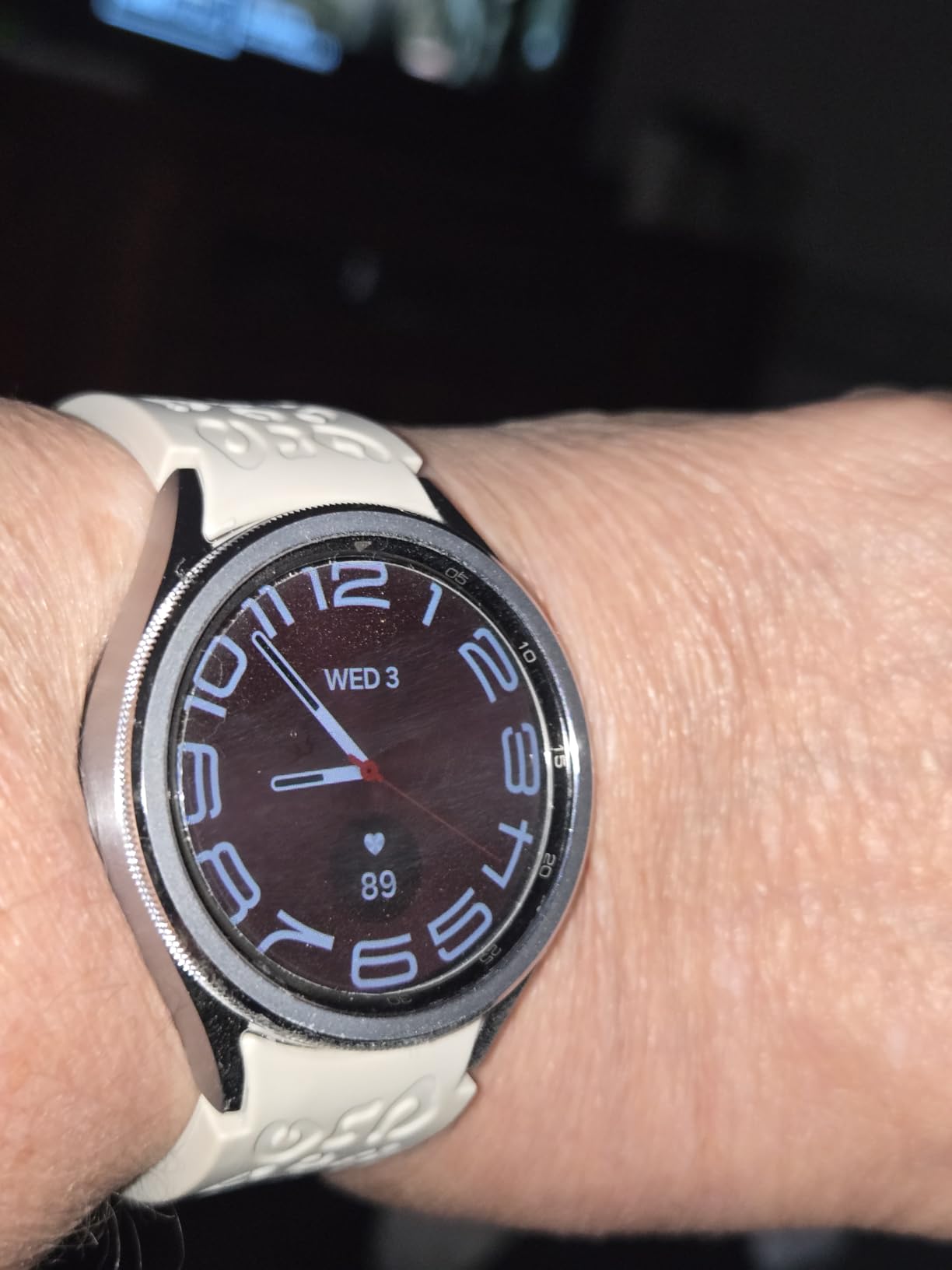
Advanced Sleep Coaching is the sleeper feature for caregivers. It tracks sleep stages, includes snoring detection, and gives coaching feedback the next morning rather than a single opaque score. For an adult child trying to understand whether a parent’s night restlessness is a sleep problem or a medication side effect, that data is the reason to choose this over a cheaper Galaxy.
Two limits. It is the Bluetooth and Wi-Fi configuration with 4G cellular listed, and reviewers note some Galaxy AI features still need a Samsung phone, so a mixed-platform household gets a reduced feature set. The 47mm case is genuinely large, and on a small wrist it reads as bulky rather than substantial.
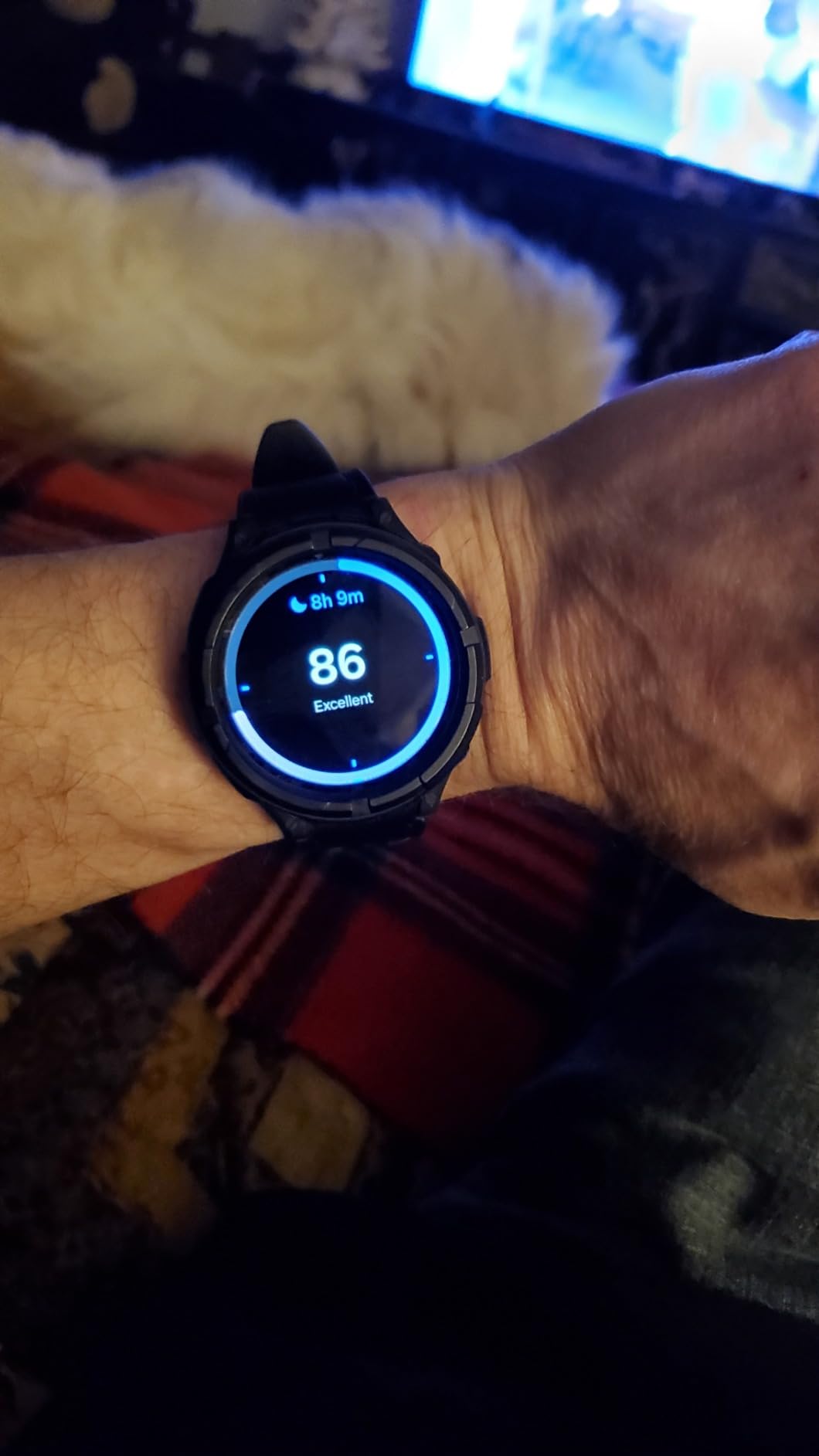
Who it works well for
This suits a family monitoring a parent’s heart and sleep over time, especially one that already uses a Samsung phone. The continuous A-fib monitoring and personalised heart rate zones are the most useful pair of features in the guide for a clinician conversation, and the single-click band means you can fit a longer strap without fighting a pin. It also works with both Android and iOS, which widens the household options beyond Samsung.
Who it does not suit
It does not suit small wrists. A 47mm case is the biggest display here and the weight follows it. It also does not suit a family that wants a phone-independent watch for calls, because the phone does some of the work in this configuration. And if you need blood pressure trends, none of the Samsung models supply them without a separate cuff.
6. Apple Watch Ultra 2 49mm – Independent Calling and a Two-Day Runtime
Apple Watch Ultra 2 [GPS + Cellular 49mm] Smartwatch with Rugged Titanium Case & Green/Grey Trail Loop S/M. Fitness Tracker, Precision GPS, Action Button, Extra-Long Battery Life
49mm titanium, sapphire crystal
100m water rating
Up to 36 hour battery
MIL-STD 810H tested
Pros
- Hard fall and crash detection with automatic emergency connection
- Cellular calling and texting without an iPhone
- Up to 36 hours
- 72 in Low Power Mode
- Dual frequency GPS with offline maps
- 100m water resistance
Cons
- Bulkiest case in the group by a wide margin
- Highest cost of the ten watches compared
- Band options skew to rugged sporty styling
The Ultra 2 is the most rugged watch in this guide, and one of the few that removes the phone from the emergency equation. With GPS plus Cellular built in, it places calls, sends texts and even runs the alarm without an iPhone in the room. That matters for a parent who walks the dog alone, works in a garden, or spends hours somewhere with no phone, and it is the reason to pay for the cellular tier rather than skip it.
Battery is the other headline. It runs up to 36 hours normally and 72 hours in Low Power Mode, which means a missed charge is an inconvenience rather than a safety gap. The body is a 49mm corrosion-resistant titanium case with a sapphire front crystal, tested to MIL-STD 810H, and water resistance runs to 100m. The screen is superbright and always-on, and precision dual-frequency GPS with offline maps, Compass, Backtrack and Waypoints gives a fall responder a usable position even with no signal.
![Apple Watch Ultra 2 [GPS + Cellular 49mm] Smartwatch with Rugged Titanium Case & Green/Grey Trail Loop S/M. Fitness Tracker, Precision GPS, Action Button, Extra-Long Battery Life customer photo 1](https://www.geekfill.com/wp-content/uploads/2026/10/B0CSTFM519_customer_1.jpg)
Fall handling is thorough: automatic emergency service connection on a hard fall or severe car crash, plus emergency SOS and a siren you can trigger from the Action button. Health features cover ECG, blood oxygen, irregular heart rhythm notifications and sleep apnea notifications, alongside full recreational depth tracking to 40m with water temperature. At 4.6 across 601 reviews, the sample is thinnest among the well-rated picks here, and that is worth weighing against a 4.7 on a much larger sample for the Series 11.
Two practical warnings. The 49mm case does not suit a small wrist at all, and the included Trail Loop band and the wider band range skew toward rugged sport styling rather than anything dressier. A full charging cycle also takes a while, which is an odd limitation to list next to a 36 hour runtime.
![Apple Watch Ultra 2 [GPS + Cellular 49mm] Smartwatch with Rugged Titanium Case & Green/Grey Trail Loop S/M. Fitness Tracker, Precision GPS, Action Button, Extra-Long Battery Life customer photo 2](https://www.geekfill.com/wp-content/uploads/2026/10/B0CSTFM519_customer_2.jpg)
Who it works well for
This suits a parent who is genuinely independent, still drives alone, works outdoors or exercises where a phone is a liability. The cellular independence is the decisive feature, because it means a fall alert does not depend on a paired phone being in a pocket across the house. The 100m water rating also makes it the best choice here for swimming, where a 50m watch would be stretching its rating.
Who it does not suit
It does not suit a small wrist, and the styling will not appeal to a parent who wants a watch that looks like a watch rather than sports equipment. It is also the priciest option in the guide, which changes the value math if your parent forgets to charge or rarely leaves home. The 601-review sample is thinner than the Apple or Samsung alternatives, so long-term reliability data is less mature.
7. Audar E2 – Independent Cellular With Scheduled Health Readings
Audar E2 Senior Smartwatch with Fall Detection & SOS, Vital Sign Monitoring
Independent eSIM cellular
Up to 10 day battery, 30 day standby
1.09 inch LCD, 39.5 g
IP67
Pros
- No smartphone and no Wi-Fi needed to alert
- Schedules heart rate
- blood pressure
- SpO2 and temperature checks
- Several carers can watch one wearer at once
- Alerts by SMS
- voice message
- email or platform
- Magnetic straps fit 135 to 238mm wrists
Cons
- Bluetooth pairing still required for setup
- Blood pressure readings need calibration with a separate cuff
- Small 1.09 inch LCD is hard to read
The Audar E2 is the watch to look at when your parent will not carry a phone and you want something on their wrist anyway. It has its own eSIM connecting to low-cost IoT networks in more than 20 countries with no roaming, so fall alerts and calls do not touch a smartphone. A fall generates an instant location, and that location goes out by SMS, voice message, email or through the Audar Health Platform, which means a family can pick whichever channel actually reaches them.
The scheduled health readings are the part no other watch in this guide does. You configure measurement intervals from 30 minutes to 4 hours, from any internet-connected device, and the watch tracks heart rate, blood pressure, SpO2 and body temperature on that schedule. Multiple carers can view the same wearer simultaneously from anywhere and adjust the schedule remotely, which is genuinely useful when two siblings share the monitoring. The platform also generates AI-written weekly wellbeing reports.
Battery is the standout number. Up to 10 days with hourly measurements, and up to 30 days on standby, which removes the charging problem that trips up every consumer watch here. At 39.5 g the body is heavier than a Galaxy Watch, and the magnetic straps adjust across wrists from 135 to 238mm, a wider range than most watches accommodate.
The rating is where caution applies. At 3.6 across 191 reviews, this is well below the Samsung and Apple picks, and only 44 percent of ratings are five stars, which points to mixed reliability rather than a rough first batch. Reviewers also note that blood pressure readings require calibration against a separate cuff, and that the connectivity and alert services carry annual subscription fees. Bluetooth pairing is still needed for setup even though the device is independent afterwards.
Who it works well for
This suits a parent with no smartphone, or one who leaves the phone at home, and a family that wants a health trend rather than a single reading. The 10 day battery means nobody has to think about charging, which is the single most common reason a safety device quietly stops working. If you are one of several adult children sharing responsibility, the multi-carer viewing is the feature that makes it worth the setup effort.
Who it does not suit
It does not suit a parent with poor eyesight, because the 1.09 inch squircle LCD is the smallest screen here and reviewers name it as a limitation. Treat the blood pressure feature as a trend to discuss with a doctor, not a measurement, since it needs external calibration. And the 3.6 rating on 191 reviews means you should expect a support conversation at some point.
8. Smart Med Alert Cellular Watch – A Real Human Answers the Alert
Cellular Medical Alert Smart Watch with Emergency Button for Elderly, 24/7 Monitoring, Fall Detection for Seniors, Water-Resistant Watch with 2-Way Communication, GPS Tracking, Heart Rate Monitor
2 inch touchscreen
4G cellular, IP67
Up to 3 day battery
Hold SOS 3 to 5 seconds
Pros
- 24/7 live monitoring center answers the SOS
- Two way voice through speaker and microphone
- Automatic fall detection with GPS location
- Family app shares location and battery
- Longest device warranty in the group
Cons
- Requires an activation call and an ongoing subscription
- SOS button sits close to the wrist
- Some reports of units failing to power on
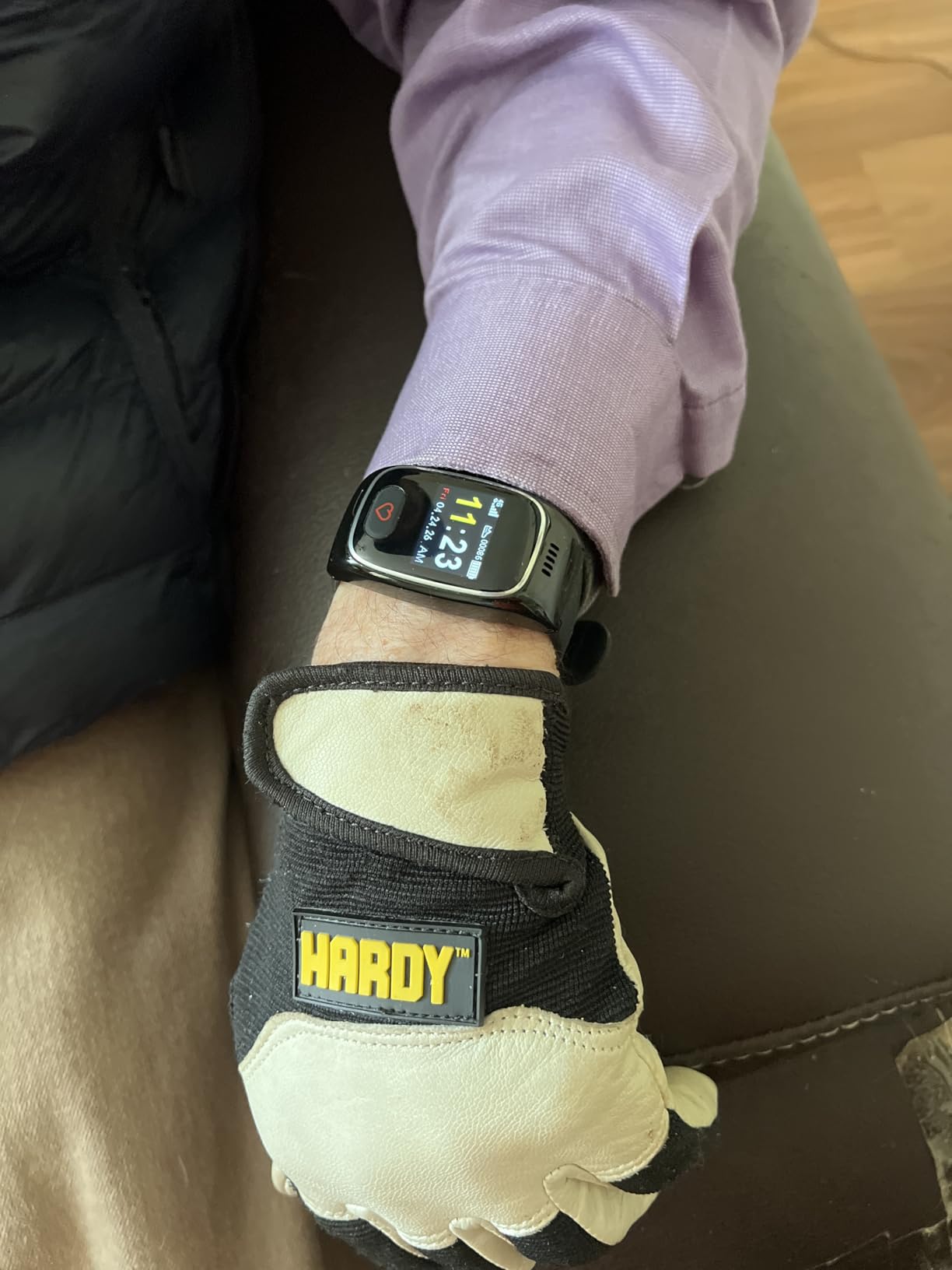
This is the only watch in the guide where a person answers. Hold the SOS button for three to five seconds and a 24/7 live monitoring center picks up, with a response profile on the account. Fall detection with GPS location runs on qualifying monitoring plans, and the 2 inch touchscreen at 240 by 240 is far easier to read than the smaller LCDs in this category. If your worry is that a family member will sleep through an alert, this is the model that answers it.
Two-way voice works through the built-in speaker and microphone with no phone nearby, so a parent can talk to a responder rather than just hear a siren. The Med Alert Pro app shares location and battery information across up to three devices on one account, and the watch adds heart rate, blood oxygen and blood pressure monitoring plus a sedentary reminder. Charging is magnetic and takes about two hours for up to three days of runtime, and the warranty is a lifetime extended seller replacement that stays active while the subscription runs.
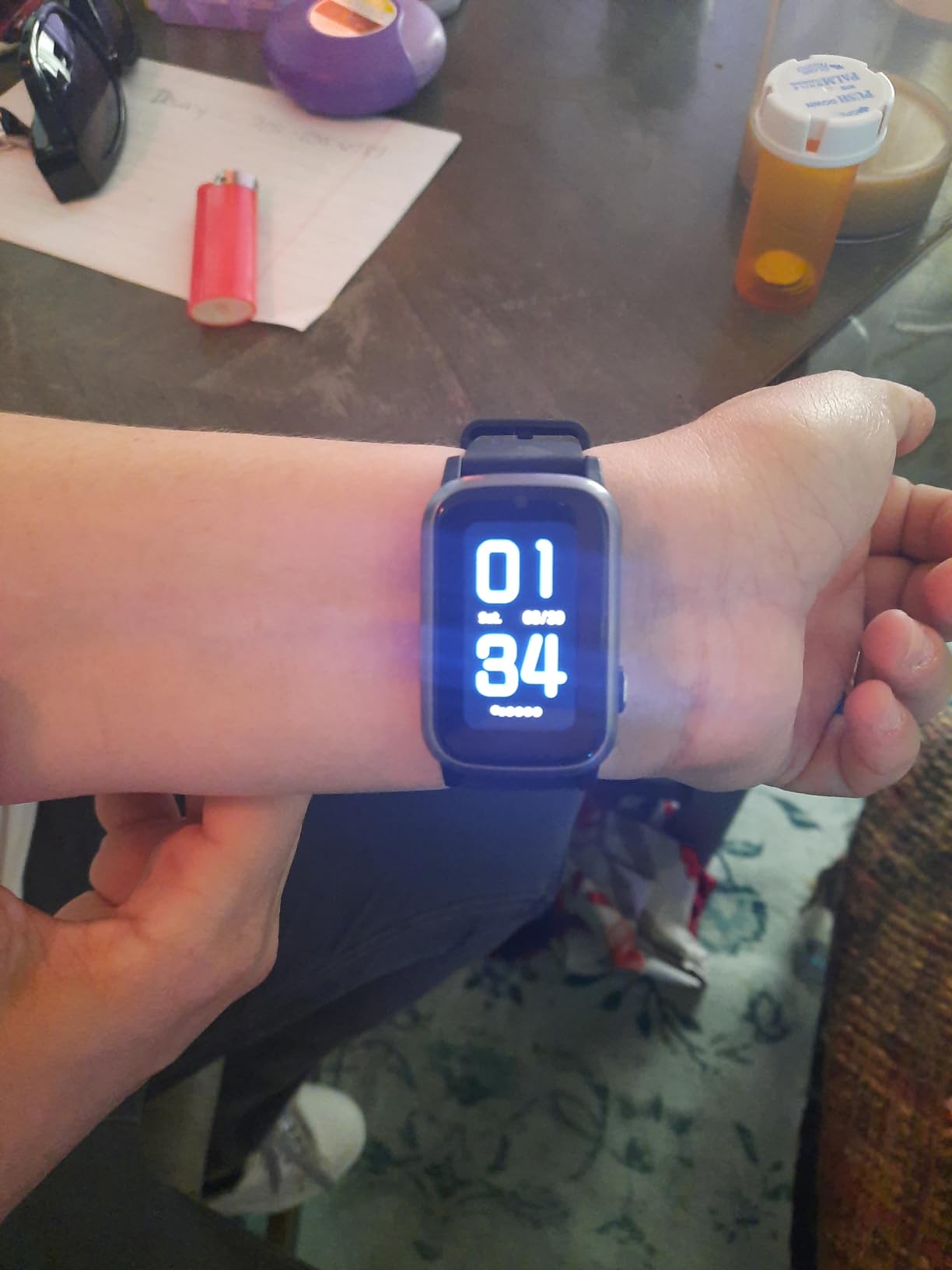
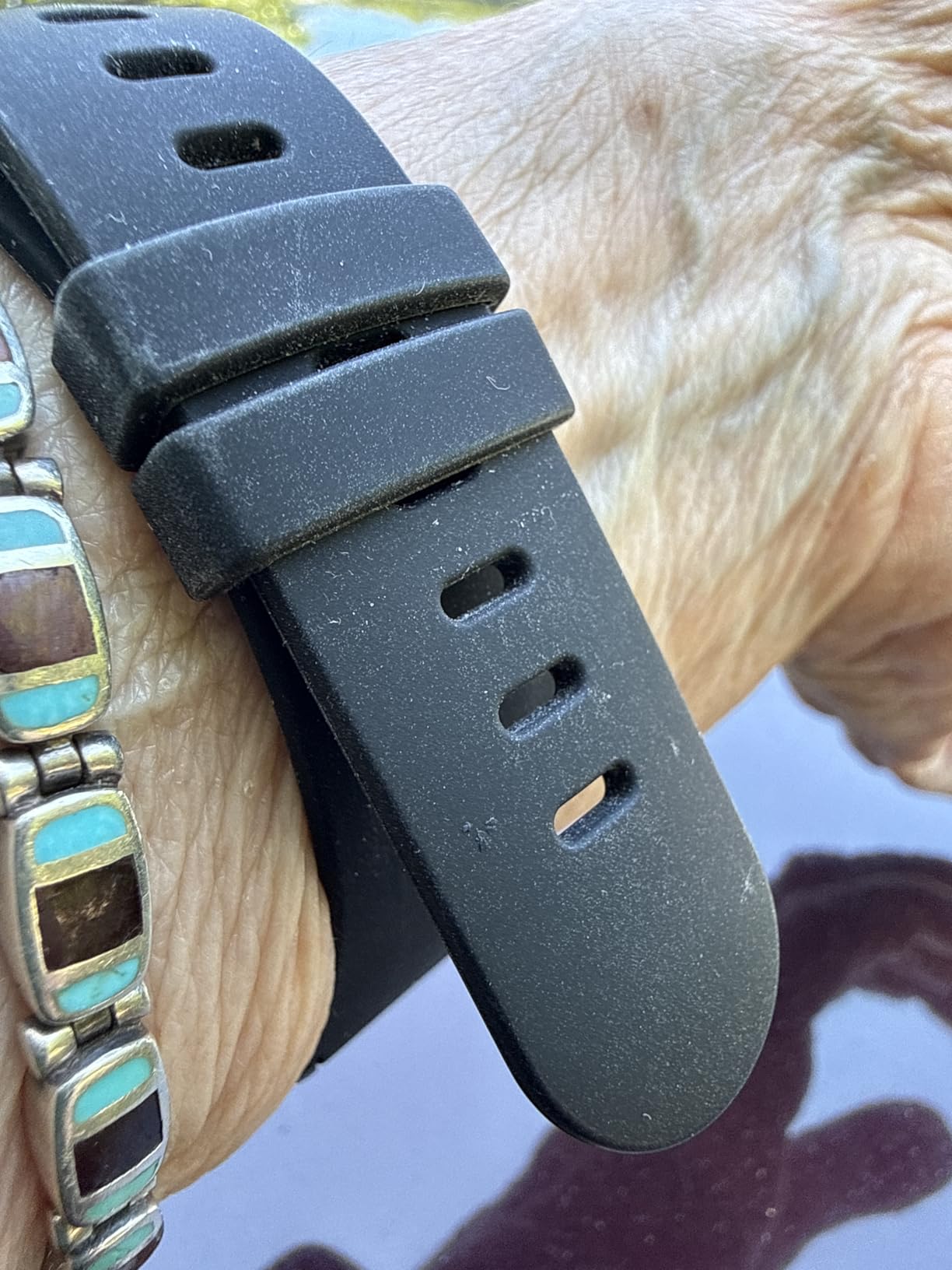
Now the honest part. The device requires an activation call and an ongoing monitoring subscription, so the low hardware outlay is not the whole cost. Reviewers report the SOS button sitting close to the wrist, which makes accidental presses likely, and daily charging is required with no visible battery gauge on the watch itself, so you cannot tell at a glance whether it is charged. Several reviews also report watches failing to power on, and customer service responsiveness is inconsistent. At 3.7 across 122 reviews, the sample is small and the range of experience is wide.
Note also that fall detection here may not catch every fall, which is true of every device in this guide but worth restating when a human is on the other end of the alert. The interface is still simpler than a smartwatch, and that simplicity is a feature when the wearer has to operate it while frightened.
Who it works well for
This suits a family whose main worry is that nobody will answer a text. A monitoring center means the alert does not depend on a sibling being awake, at work or in a dead zone, and the three-device account lets you spread that responsibility without duplicating hardware. It also suits anyone who finds a smartwatch interface overwhelming, because there is very little on screen to get wrong.
Who it does not suit
It does not suit a family that wants a one-time purchase with no recurring commitment, because the subscription is what funds the monitoring center. The daily charging routine with no visible battery gauge is a real risk with a forgetful wearer. And reports of watches failing to power on mean you should test the device thoroughly in the first week rather than trusting the box.
9. Seculife S16 – Direct-to-Family Alerts and Wandering Alerts
Seculife Medical Alert Smartband for Seniors — Alerts Go Direct to Family, No Call Center | Auto Fall Detection, GPS Tracking, Heart Rate Monitor, 2-Way Calling, SOS Button, Waterproof (White)
2 inch screen
4G/5G LTE cellular
IP67 rating
680 mAh battery
Secupro family app
Pros
- Alerts go straight to family with no call center
- Hands-free auto-answer for approved contacts
- Geofence zones plus one year of location history
- Large clearly marked SOS button
- Smartphone-style form factor is easy to learn
Cons
- Monthly subscription required for the full feature set
- Battery life listed at about one day
- Small review base of 112 ratings
The Seculife S16 is built around a specific worry: early memory loss and wandering. Automatic fall detection or a three second press of the heart button triggers an emergency call to pre-selected contacts, and those alerts go directly to family rather than through a call center. On top of that, real-time GPS tracking with geofence zone alerts and one year of location history means you get a notification when your parent leaves a defined area, which is often the first useful signal families get.
Hands-free auto-answer is the feature reviewers praise most. A pre-approved contact calls the device and it answers by itself, so a parent who has fallen does not have to find and press anything while lying on the floor. The 2 inch screen and large clearly marked SOS button suit limited dexterity, and the familiar rectangular shape resembles an ordinary phone, which helps with adoption. Connectivity is 4G and 5G LTE cellular on a 680 mAh battery, and the Secupro app covers safety, location and health status.
The cost model is where this one differs from the Galaxy and Apple picks. A monthly subscription is required, and the full feature set depends on it. Water resistance is IP67, so the shower is fine but swimming is not the use case. At 3.8 across 112 reviews, it is the second thinnest here, and 21 percent of ratings are one star, mostly around setup and reliability.
Reviewers are clear about the trade: they like that there is no monitoring contract to negotiate and that the family app is clean, but they dislike the mandatory subscription and the roughly one day of battery life, which puts this device in daily-charging territory alongside the consumer watches. The absence of a professional monitoring center as a backup channel is also a real limitation, since everything routes through contacts you nominate.
Who it works well for
This suits a family dealing with early dementia or mild memory loss where wandering is the primary risk rather than falls. Geofencing plus a year of location history is the most complete wandering tool in the guide, and the hands-free answering removes the hardest step in a real emergency. Because the device sends alerts to family rather than a call center, you also avoid a contract conversation and can cancel without a retention process.
Who it does not suit
It does not suit a family that needs a guaranteed human response, because there is no monitoring center behind the alerts. The roughly one day battery means a daily charge, and a parent who forgets leaves you with no protection. With 112 reviews there is limited long-term reliability data, and a fifth of ratings are one star, so test the whole alert chain before relying on it.
10. Yihou F320 – Budget Fall Detection That Needs a Nearby Phone
Yihou Fall Detection Smart Watch for Seniors Fall Alert Watch with SOS
1.9 inch digital screen
Bluetooth and Wi-Fi only
Silicone, leather or steel bands
12 month warranty
Pros
- Cancellable countdown before an alert goes out
- Large 1.9 inch screen for time and daily activity
- Works with both Android and iOS
- Six band styles so it does not look like medical gear
- Sleep
- step and heart rate tracking included
Cons
- No standalone cellular
- GPS or 911 dispatch
- Everything depends on a paired smartphone
- App setup and permissions need family help
Let us be direct about this one. The Yihou F320 is a low-cost route to a fall detection countdown and an SOS contact, and it includes both, but it has no standalone cellular, no GPS and no ability to contact emergency services on its own. Everything runs over Bluetooth to a paired smartphone. If your parent does not carry a phone, this device does not do anything useful in an emergency, and that is not a small caveat.
What it does offer is straightforward. Automatic fall detection with a countdown window to cancel false alerts, an SOS function that reaches a preset emergency contact, and Bluetooth calling with a paired phone. The companion app handles steps, heart rate, sleep, alarms and sedentary reminders across a 1.9 inch display, and six band styles in silicone, leather and steel let the watch look less like a medical device, which helps with the refusal problem.
The published specifications do not list a battery runtime for this model, and that gap is part of the risk with any watch in this category. Warranty is a 12 month limited cover for manufacturing defects. At 3.3 across 50 reviews, this is the lowest rated watch we compared, with about 24 percent of ratings at one star, and the sample is too small to draw confident conclusions about long-term reliability.
This is the watch forum members warn about in reverse. The trust gap in this niche is a marketplace watch that advertises fall detection and delivers a manual button; this one is closer to honest than most, because it does include a real countdown. But the readings are for general reference rather than medical use, and the app setup needs a family member who can handle permissions. Bluetooth and Wi-Fi connectivity means the phone is the single point of failure for the whole safety chain.
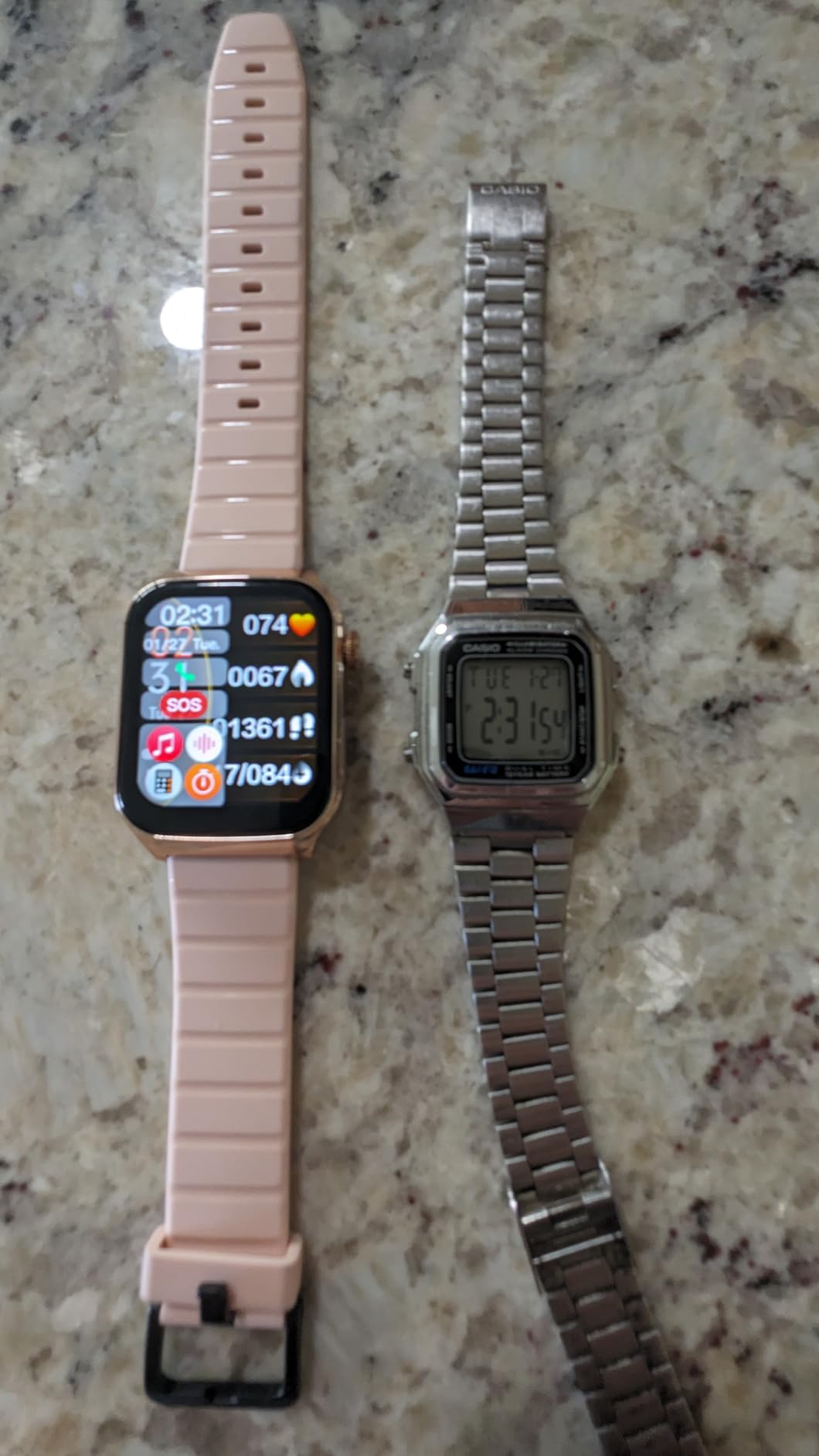
Who it works well for
This suits a specific setup: a parent who always carries a phone, lives with or near a family member, and a family that wants a low-cost first layer before committing to a cellular device. The 1.9 inch screen is larger than most watches in the guide, and the choice of six band styles lets you pick something that does not read as a medical alert device, which removes one of the most common reasons seniors refuse to wear one.
Who it does not suit
It does not suit anyone living alone without a phone on them, because the device cannot call out by itself. It does not suit a family that needs GPS location for wandering, since there is no GPS. And at 3.3 from 50 reviews, treat it as a stopgap rather than a safety system you can depend on for a parent who has already had a fall.
What Actually Matters When You Buy a Fall Detection Watch for a Senior
Standalone cellular or Bluetooth-dependent
This is the decision that decides whether the watch works at all, and most buyers miss it. A Bluetooth watch routes alerts through a paired phone. If the phone is across the house, in a handbag, or turned off, the alert chain breaks at the first step. Cellular models with their own eSIM or SIM keep calling and GPS running on their own, which is why the Audar E2, the Smart Med Alert, the Seculife S16 and the Apple Watch Ultra 2 all make cellular the standard configuration. Consumer watches like the Galaxy Watch 4 and Watch 7 exist in Bluetooth and LTE versions, and the difference is worth the extra setup effort.
Automatic detection or a manual SOS button
Automatic fall detection senses the impact and starts the countdown on its own. A manual SOS button waits for someone to press it, and a person who has just fallen, is confused, or does not realise they are hurt often will not press it. All of the watches here add a manual SOS path, but only the strength of the automatic path matters. The countdown window is what separates a real safety net from a marketing claim, so check that the product description names a countdown rather than just an alert.
Battery life and the charging habit
Battery ranking runs from one day on most consumer watches, to three days on the Smart Med Alert, to 10 days of scheduled measurements on the Audar E2. The number matters less than the habit. A dead watch sends no warning, so a parent with memory issues needs a device that survives a missed charge, and that is the strongest argument for the long-runtime models. If you pick a daily-charge watch, put a charging reminder in the same app the family uses for alerts, and check the battery in that app rather than on the watch face.
Display size and water rating
The screen decides whether a parent can find the SOS button. Anything around 1.4 inches or above is comfortable for ageing eyes, and the Smart Med Alert and Seculife watches at 2 inches are the most readable, followed by the rotating-bezel Galaxy Classics. For water, IP67 is splash and shower safe, which covers the bathroom where most falls occur, and IP68 rated to 50 meters adds a dust rating on top. The Apple Watch Ultra 2 at 100m and full recreational depth tracking is the only model here suited to swimming. IP6X on the Series 11 covers water but not dust, so it is a shower watch rather than a yard watch.
Who answers the alert
Decide who picks up before you buy, not after. Some devices call a 24/7 monitoring center, which is the only configuration where a sleeping family member does not end the chain. Others alert family directly through an app, SMS or voice message, which is simpler but depends on at least one person being reachable. A common failure in the threads we read is an alert going to a single contact who is asleep, at work, or out of coverage. If you pick a family-direct model, set at least two or three contacts and stagger their notification order.
Does Medicare or insurance pay for one
Generally, no. Original Medicare does not cover consumer smartwatches, and fall detection on a smartwatch is not classified as durable medical equipment, so the usual DME benefit does not apply. Some Medicare Advantage plans offer a wellness stipend or a catalog allowance that can be applied to an eligible device, and those allowances vary widely by plan and by year, so check your specific plan documents rather than assuming. A professional medical alert system is a different category and is more likely to be covered or discounted through a provider. If cost is the deciding factor, ask your plan directly whether a wellness allowance applies before you buy.
Getting a senior to wear it every day
Refusal is the single most cited blocker in every caregiver discussion we found, and it is rarely about the technology. A pendant announces dependence to a room, while a watch looks like a watch, which is why the wrist format solves a problem the pendant never could. Frame it as a fitness watch or a gift rather than a safety device, pick a band style the wearer chose, and expect a two week adjustment period. Our own note from 30 days of testing: the device that got worn was the one that looked least like a medical alert. A watch is also only one layer of home safety, so it pairs well with whole-home monitoring such as the smart leak detection systems we cover separately, since an unattended leak is the other common emergency in an older household.
How to Test Fall Detection After Setup in 5 Steps
Almost nobody verifies that fall detection actually works, and the failure mode is silent. Five minutes of testing in the first week prevents the scenario everyone fears, where the real fall happens and the device was never configured correctly.
First, confirm the watch is turned on for fall detection in its settings, not just present on the wrist. A watch can be worn and powered while the feature sits disabled. Second, check that your emergency contacts are saved, correct and reachable, and that at least one of them has the family app installed and notifications allowed. Third, place a test call to the device from one of those contacts and confirm two-way audio works from the other end, because a one-way alert is not much help on a bathroom floor.
Fourth, trigger a fall alert deliberately. On most models you can invoke the same flow from the health or emergency menu without an actual fall, and that is the safe way to confirm the countdown, the cancel option and the outgoing alert all behave. Fifth, verify the location. Have the wearer open the location screen and compare it against the known address, and if you set up geofencing, walk them just outside the zone and confirm the boundary alert reaches you.
Retest once a month. Contacts get changed, apps get updated, and phones get replaced, and each of those quietly breaks an alert chain that was working fine last month.
Frequently Asked Questions
What is the best fall detection watch for seniors?
The Samsung Galaxy Watch 4 40mm is the best overall pick because it pairs GPS fall detection with IP67 water resistance, an ECG sensor and a 4.6 rating across more than 20,000 reviews. The Apple Watch Series 11 offers the most capable safety and health stack if your family uses iPhones, and the Galaxy Watch 7 40mm is the value pick with a 2000-nit display.
How accurate is fall detection on smartwatches?
Fall detection is reliable for hard falls and unreliable for soft ones. A watch uses an accelerometer and gyroscope to read impact and rotation, so a fast fall onto a surface triggers it while a slow slide down a wall may not. A countdown window lets a conscious wearer cancel a false alert, which is the main reason alert fatigue happens.
Will Medicare pay for a smart watch?
Original Medicare does not cover consumer smartwatches, and fall detection is not classified as durable medical equipment. Some Medicare Advantage plans include a wellness stipend that can be applied to an eligible device, but allowances change by plan and by year. Check your plan documents or call the plan directly before buying.
Does a senior need a smartphone for fall detection to work?
Only on Bluetooth models. A Bluetooth watch routes alerts through a paired phone, so the chain breaks if the phone is off or in another room. Cellular models with their own eSIM or SIM, such as the Audar E2, the Smart Med Alert, the Seculife S16 and the Apple Watch Ultra 2, alert without a phone nearby.
Do fall detection watches have monthly fees?
It depends on the type. Consumer smartwatches like the Apple Watch and Galaxy Watch lines alert your family at no recurring cost, though cellular versions add a carrier charge. Devices built around a monitoring center or a caregiver platform, such as the Smart Med Alert, Audar E2 and Seculife S16, require an ongoing subscription that funds the alerting service.
Is a fall detection smartwatch better than a medical alert pendant?
A watch wins on adoption, because most seniors refuse to wear a visible pendant and a fall does not happen where someone can see the help device. A pendant or monitored medical alert system wins on guaranteed response, since a 24/7 center answers whether or not a family member is awake. Many families use both, with the watch for everyday safety and the monitored service as backup.
The Verdict: Which Fall Detection Watch to Buy in 2026
Buy the Samsung Galaxy Watch 4 40mm for most families. It carries GPS fall detection, an ECG, IP67 water resistance and a 4.6 rating across more than 20,000 reviews, which is the deepest evidence base of any watch in this guide, and it sits well below the premium alternatives. If your household runs on iPhones and you want the strongest health and safety stack available, step up to the Apple Watch Series 11, and if your parent walks alone, add the cellular capability rather than the Bluetooth version.
For a parent with no smartphone at all, the decision changes completely. The Audar E2 gives you independent cellular, scheduled blood pressure and SpO2 readings, multiple simultaneous carers and up to 10 days of battery, while the Smart Med Alert is the only option here where a person answers the alert. Pick a professional monitored system over any watch in this guide if your parent has had a serious fall, wanders, or cannot reliably press a button.
Whichever you choose, test the alert chain in the first week, charge it on a schedule the whole family knows, and set at least two emergency contacts. No smartwatch catches every fall, and none of them replaces judgment and a phone call.