
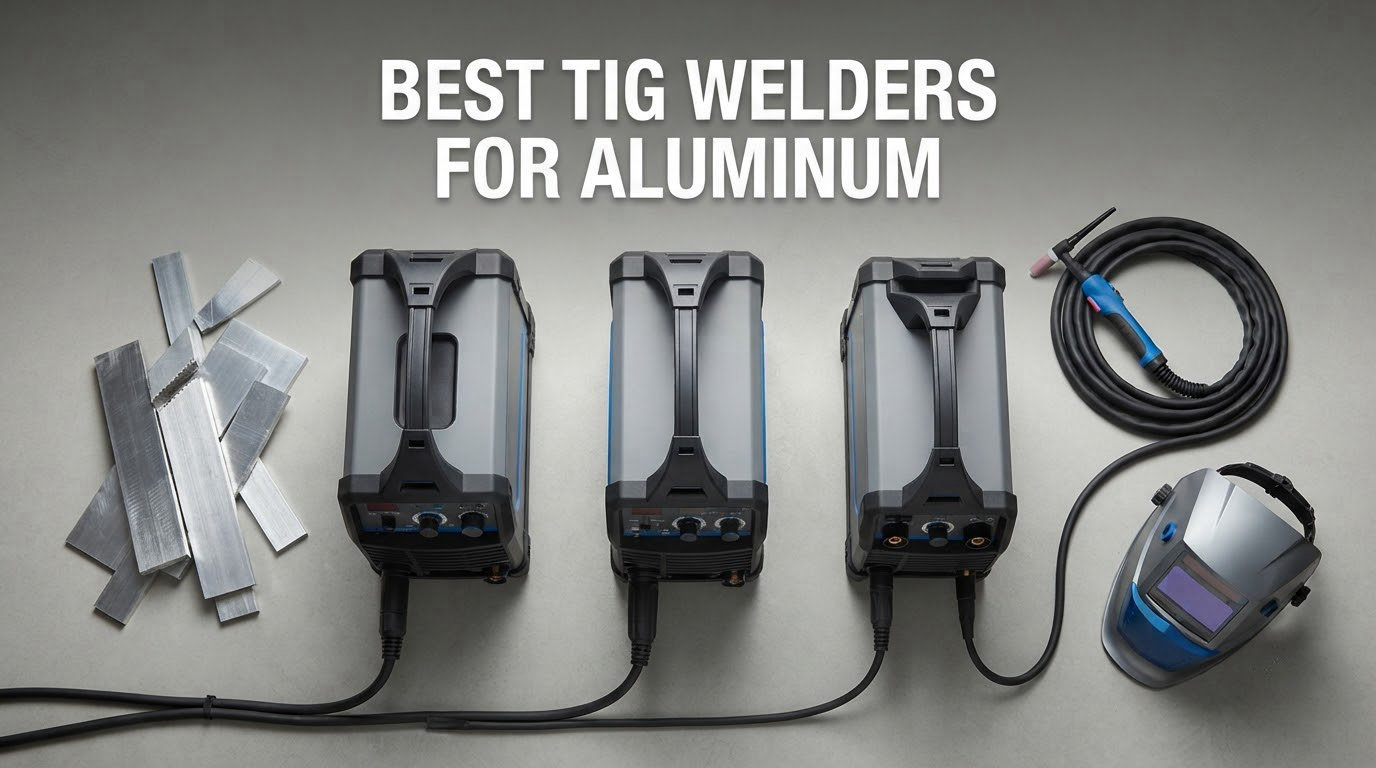
Aluminum will not weld with DC current alone, because the oxide layer on its surface reforms instantly and the arc collapses. A machine can only weld aluminum if it puts out alternating current, which breaks that oxide apart on one half of each cycle and drives heat into the metal on the other. That single requirement rules out a surprising number of TIG welders sold as general-purpose machines. We evaluated 10 of them for this roundup and ranked them on how well they handle aluminum specifically, not on sticker amperage.
The best TIG welders for aluminum all share three features, and you should not compromise on any of them:
AC output. Not AC/DC marketing language, but a working alternating current TIG mode with adjustable balance and frequency.
High-frequency arc start. HF start fires the arc without touching the tungsten to the work, which is what stops you from contaminating the electrode every time you strike up on aluminum.
Pulse control. Aluminum moves heat several times faster than steel. Pulse gives you a way to keep the puddle small on thin sheet instead of watching it collapse.
Everything else in this guide — amperage, duty cycle, input voltage, torch quality — is secondary to those three. We spent several weeks reading owner reviews and comparing spec sheets across the 10 machines below, and the differences that actually show up in the bead come down to arc control and how the machine behaves on a dirty or poorly prepared aluminum surface.
Top 3 Picks for Aluminum TIG Welding (October 2026)

PRIMEWELD TIG225X
- 225A AC/DC TIG and stick with pulse
- Handles 1/4 inch aluminum and 3/8 inch mild steel
- CK Worldwide Superflex torch included
- 110/220V dual voltage

Weldpro 200A 5-in-1
- AC balance and frequency adjustment
- 0.5-200 Hz pulse with upslope and downslope
- 40 percent duty cycle at 200A
- Foot pedal and torch included
AHP AlphaTIG 203Xi
- AC/DC TIG and stick with pulse
- Welds 1/4 inch aluminum and 3/8 inch mild steel
- Electronic HV start with no point gap
- 3-year warranty
Our default pick is the PRIMEWELD TIG225X. It carries the highest owner rating and by far the largest review volume in this group, and its 225 amp AC output with pulse and adjustable AC frequency is exactly the combination that handles both 1/4 inch plate and thin cast aluminum. If you want more granular control over the AC cycle and the pulse ramp, the Weldpro 200A goes further, with separate upslope, downslope, peak and base current settings. If you plan to weld steel as much as aluminum, the AHP AlphaTIG 203Xi has the strongest reputation for stick performance in its class.
Best TIG Welders for Aluminum in 2026
| Product | Specifications | Action |
|---|---|---|
| PRIMEWELD TIG225X |
|
Check Latest Price |
| Weldpro 200A 5-in-1 |
|
Check Latest Price |
| AHP AlphaTIG 203Xi |
|
Check Latest Price |
 LOTOS TIG200ACDC LOTOS TIG200ACDC |
|
Check Latest Price |
 ARCCAPTAIN TIG200P 7-in-1 ARCCAPTAIN TIG200P 7-in-1 |
|
Check Latest Price |
 Lincoln Square Wave TIG 200 Lincoln Square Wave TIG 200 |
|
Check Latest Price |
 Sunstac TIG-250 Sunstac TIG-250 |
|
Check Latest Price |
 Everlast PowerTIG 200DV Everlast PowerTIG 200DV |
|
Check Latest Price |
 Everlast PowerTIG 185DV Everlast PowerTIG 185DV |
|
Check Latest Price |
 ARCCAPTAIN TIG 205P Pro ARCCAPTAIN TIG 205P Pro |
|
Check Latest Price |
One row in that table needs an upfront explanation. The ARCCAPTAIN TIG 205P Pro is a capable DC TIG machine, but the manufacturer states plainly that it has no AC function and is not suitable for aluminum welding. It appears in this list because it is part of the set we evaluated, and it is genuinely the lightest and most app-connected machine here. It simply does not belong on a shortlist of aluminum welders, and we will not pretend otherwise.
How We Picked These Machines
We built this list around aluminum capability first and everything else second. Every machine that survived the first cut had to produce alternating current with adjustable balance, or at minimum a working AC mode, and had to start an arc without striking the tungsten against the work.
From there we compared four things. Amps and duty cycle determined real-world material thickness, and we weighted the duty cycle heavily because a 225 amp machine that stalls after two minutes of work is worth less than a 200 amp machine you can run all afternoon. Control granularity decided how much of the AC cycle and pulse profile you can actually shape, which matters on cast aluminum with a stubborn oxide layer. Support and warranty told us how buyers handle a machine that arrives with a damaged part. And owner review volume told us which of the spec sheets reflect what people actually experience.
That last point is why the PrimeWeld ranks where it does. Its 1,426 reviews give us a much clearer picture of long-term behavior than any lab test would, and the pattern in those reviews is unusually consistent: stable AC arcs on aluminum, straightforward controls, responsive support.
1. PRIMEWELD TIG225X — The Best All-Round Aluminum TIG Welder
PRIMEWELD TIG225X 225 Amp IGBT AC DC Tig/Stick Welder with Pulse CK17 Flex Torch and Cable
225A AC/DC TIG and stick
1/4 inch aluminum capacity
200 Hz pulse, adjustable AC frequency
110/220V dual voltage
Pros
- AC output runs long aluminum seams without balking
- Analog knob controls are simple to learn
- Includes a CK Worldwide Superflex TIG torch and 57-page manual
- Responsive warranty and customer support
- Excellent adjustability on cast aluminum
Cons
- Dial labels hard to read in low light
- Main power switch is on the rear panel
- Cooling fans run continuously and are audible
- Heavy unit not meant for frequent transport
This is the machine I would put in a home shop without hesitating. The TIG225X puts out 225 amps of AC and DC TIG with a pulse function running at 200 Hz and adjustable AC frequency, and the published capacity is 1/4 inch aluminum and 3/8 inch mild steel. In practice, the AC arc is stable enough that a long seam on an aluminum trailer rail will not wander out of the puddle the way cheaper square-wave-only machines tend to.
What I like most is the control layout. These are real knobs, not a menu system, and that matters more for a machine you will use on a mix of aluminum and steel. You can reach for amperage and adjust balance without remembering a button sequence, which is the single biggest reason beginners stall out on digital panels.
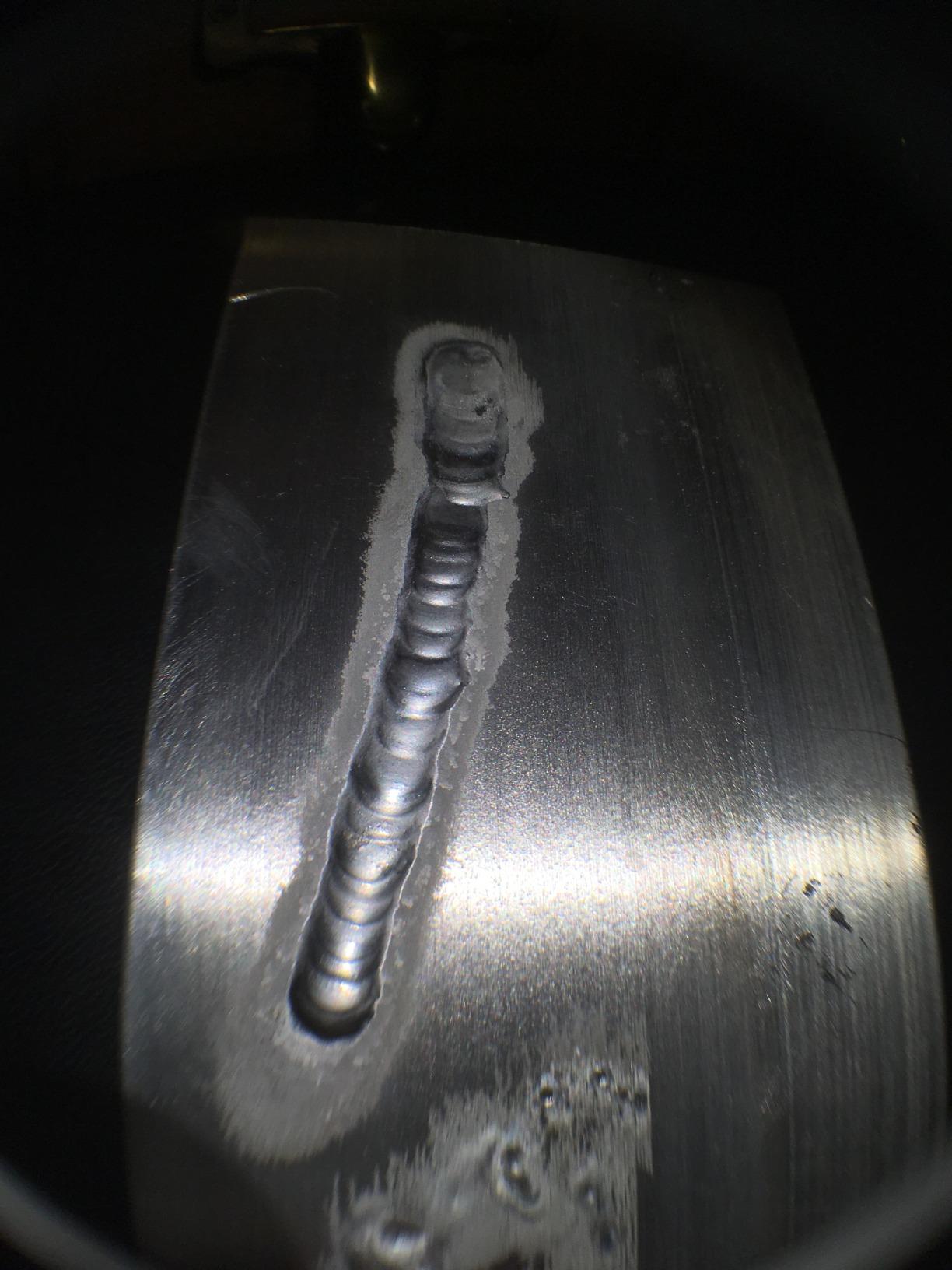
The torch is the other quiet advantage. A CK Worldwide 17 Series Superflex with a flex head and Superflex hose is included, and that is a real torch rather than a thin-wall generic. It matters on aluminum because you spend a lot of time holding an angle and repositioning, and a stiff torch fights you. The 57-page manual is also unusually thorough for a machine in this class.
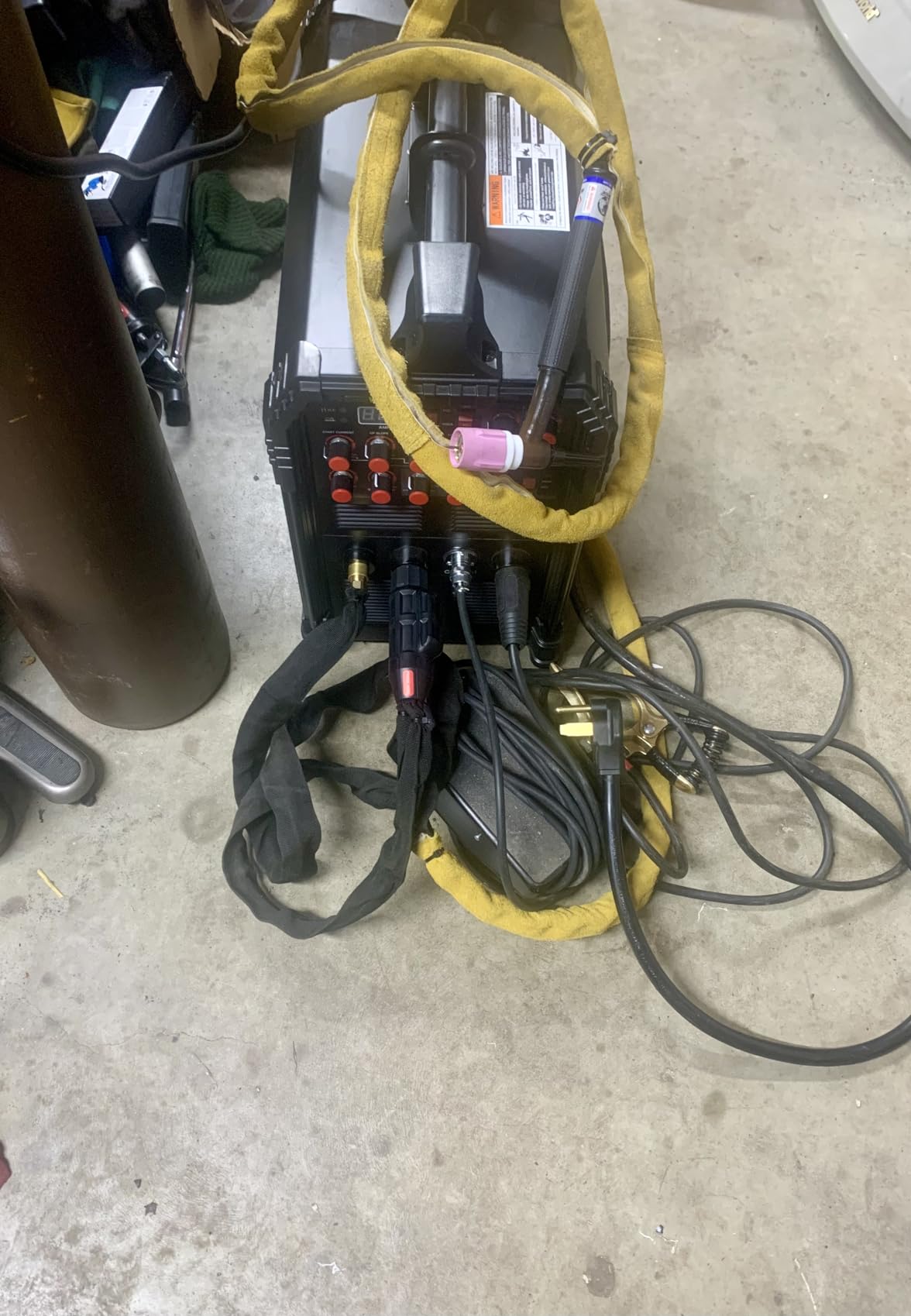
The complaints are all minor and mostly cosmetic. The dial labels and markings are hard to read in low light, the main power switch sits on the rear of the chassis rather than the front, and the cooling fans run continuously and are audible in a quiet garage. Several owners also replaced the included argon regulator over a pinched O-ring and an out-of-round hose fitting. Budget a few dollars for a better regulator on day one and none of this matters.
What thickness of aluminum it handles well
Published capacity is 1/4 inch aluminum, and that is a realistic number rather than a marketing stretch. Owners report good results on trailer rail, on 3/16 inch plate, and on cast aluminum trim that has a thick oxide layer. Below that, down to sheet gauge, the 200 Hz pulse gives you enough control to avoid burn-through if you keep your amperage in the low end.
Where it will disappoint you
The unit is heavy, at roughly 90 pounds, and that is a real drawback for a unit you might want to carry to a job site. More importantly, it is TIG and stick only. There is no MIG mode here, so if you also need to weld steel fabrication quickly, you are buying a second machine or living with stick for the heavy work. For a garage doing aluminum, that tradeoff is usually worth it.
2. Weldpro 200A 5-in-1 — Best for Deep AC and Pulse Adjustment
Weldpro 200A AC/DC TIG Welder with Pulse, 110V/220V Dual Voltage Aluminum TIG Welder, AC TIG/DC TIG/AC PULSE TIG/DC PULSE TIG/Stick 5 in 1 Multiprocess Welding Machine with TIG Torch & Foot Pedal
200A AC/DC 5-in-1 multiprocess
Fully adjustable AC balance and frequency
0.5-200 Hz pulse with ramps
40 percent duty cycle at 200A
Pros
- Full AC balance and frequency adjustment with separate pulse ramps
- High-contrast HD LED display
- Rocker foot pedal included
- Full accessory kit with flow meter and consumables
- Automatic 110V and 220V switching
Cons
- At 61.8 pounds it is a heavy unit to move
- Multi-process panel takes a short learning curve
- Parameter menus are slower to work through than analog knobs
This is the machine to buy if you want to shape the AC waveform rather than just turn it on. The Weldpro gives you adjustable AC balance and frequency for aluminum, magnesium and other non-ferrous metals, plus a pulse frequency range from 0.5 to 200 Hz with separately adjustable peak amperage and upslope and downslope. No other machine in this roundup lets you ramp the current in and out that independently.
For aluminum specifically, that control is what lets you manage heat on work that varies in thickness, like a trailer skin that tapers into a heavier frame rail. A fixed machine forces you to stop and readjust. This one lets you dial in a ramp and keep moving.
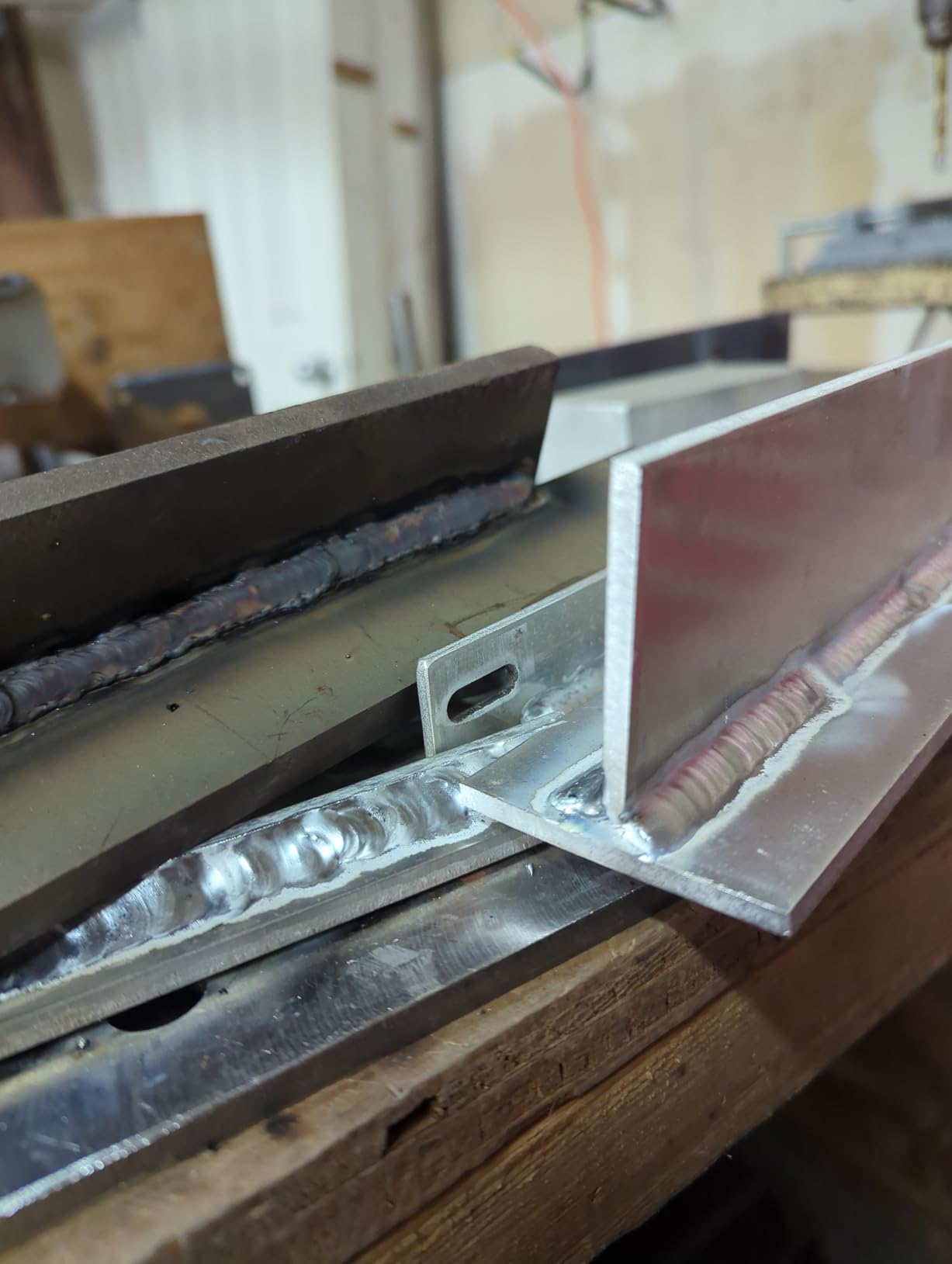
The kit is complete enough to start with only gas and filler rod. You get the TIG torch, foot pedal, ground clamp, stick holder, gas hose, flow meter, tungsten, nozzles and collets, with automatic 110V and 220V switching so one machine covers a household circuit and a shop circuit. The HD LED display is readable in bright garage light and in low light, which the analog machines in this list are not.
It is a 5-in-1 machine: AC TIG, DC TIG, AC pulse TIG, DC pulse TIG and MMA stick. That is genuinely useful if you also weld steel exhaust work or trailer frames, though it is not a MIG machine. The listed duty cycle is 40 percent at full 200 amp output, so plan on stepping down for long structural welds.
Why the control depth matters on aluminum
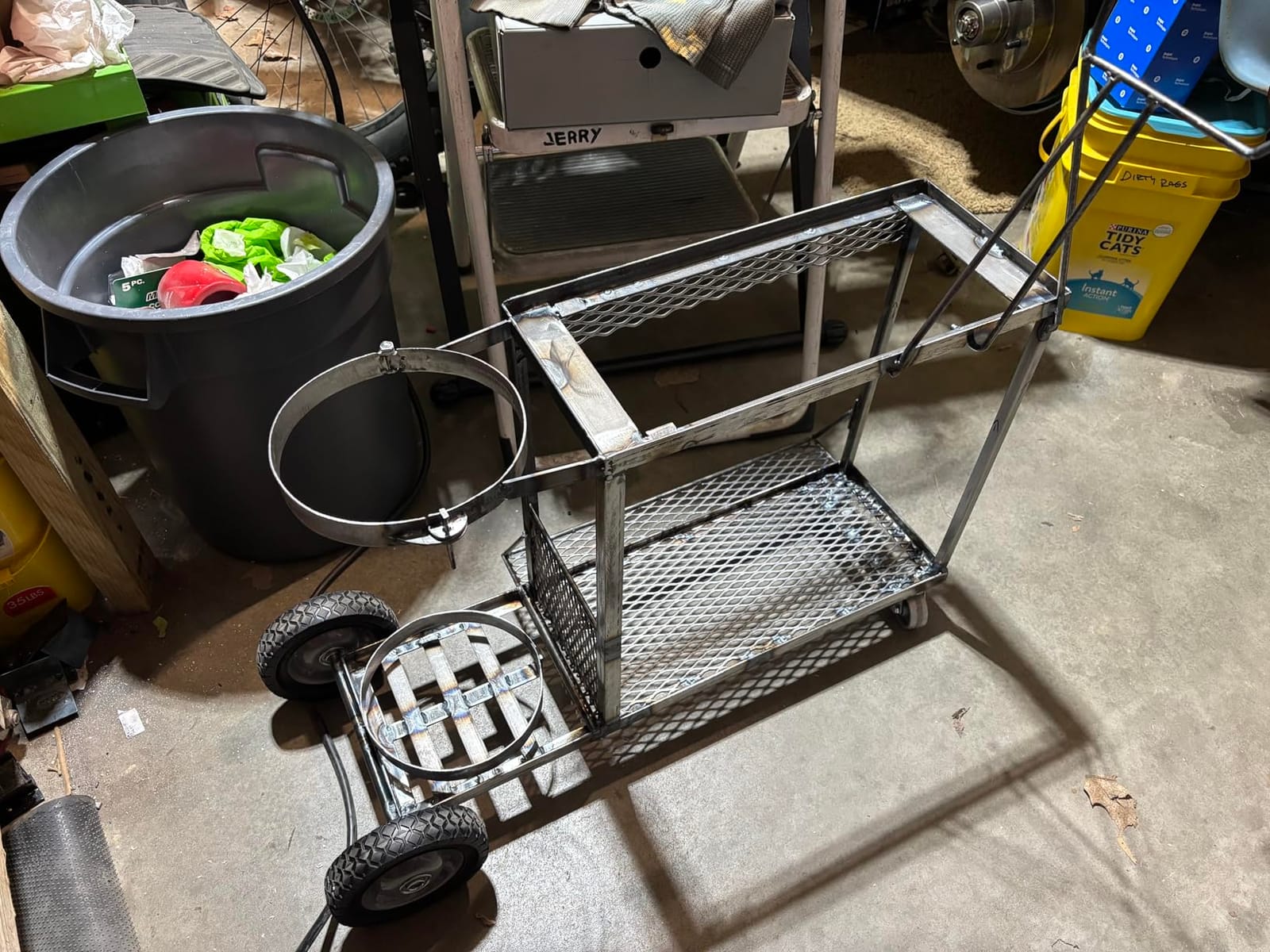
AC balance controls how much of each half-cycle goes to cleaning versus penetration. On dirty or oxidized aluminum you push toward cleaning. On thicker material where you want the arc to reach in, you push toward penetration. Having that as a live adjustment rather than a factory setting is the difference between fighting a weld and adjusting for it.
What to weigh before buying
At 61.8 pounds this is one of the heavier machines in the lineup, and the digital panel has more depth than a first-time welder needs. If you are buying your first TIG and plan to stick to aluminum, the PrimeWeld or the AHP give you the same core capability with less to learn. Buy this one if you already know what you are doing and want the control.
3. AHP AlphaTIG 203Xi — Best for Shops That Weld Steel Too
NEW 2024 AHP AlphaTIG 203Xi Amp IGBT AC DC Tig/Stick Welder with PULSE 110/220v 3 YEARS WARRANTY
AC/DC TIG and stick with pulse
Welds 1/4 inch aluminum and 3/8 inch steel
Electronic HV start, no point gap
3-year warranty
Pros
- Owners single out a duty cycle that outlasts machines in its price class
- Stick mode described as smooth and easy to start
- Simple knob controls with no parameter menus
- AC balance and AC hertz adjustment for aluminum
- Support replies within hours
Cons
- 10 amp minimum output is restrictive on ultra thin material
- Digital readout disagrees with the knob on 120V
- Included ground clamp and flow meter are low quality
- Foot pedal is heavy and scoots on the floor
The AlphaTIG 203Xi is the one we would pick for a working shop rather than a hobby corner. Long-term owners describe it as the most dependable home-shop TIG available at this level, and the standout attribute across reviews is duty cycle. It keeps running when the budget machines start complaining about heat, which on aluminum matters because aluminum work in particular tends to be slow and steady rather than short and punchy.
The current generation model replaced the older point-gap start with an electronic HV start, which simulates high-frequency start electronically. In practice that means no point gap to maintain on the torch and a more reliable strike on aluminum. The published capacity is 1/4 inch aluminum and 3/8 inch mild steel, and AC balance plus adjustable AC hertz give you control over bead profile and oxide cleaning.
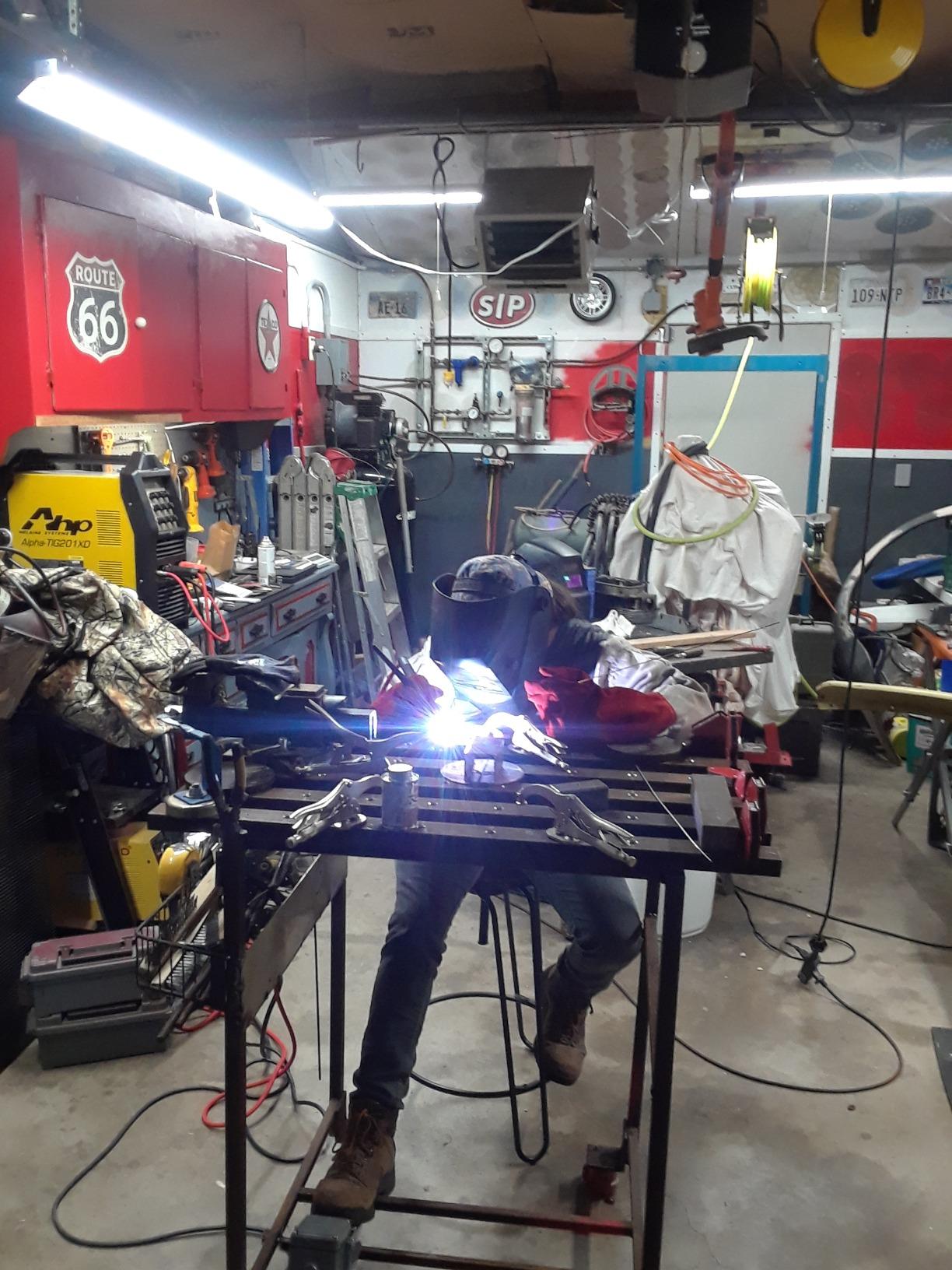
It also comes with a serious accessory package: a Nova Rotaflex 9/17 TIG torch with a 9 mm quick connect, a floating ball type brass argon regulator, a Nova foot pedal on a 25 foot cord, a 250 amp electrode holder, a work clamp and a 240V to 120V adapter. The Rotaflex torch is light and flexible and is well regarded by owners, which is a nice change from the stiff torches that come with cheaper machines.
There is a warranty to note as well. AHP backs this one with three years, which is longer than most of the import machines in this roundup and the kind of thing that matters if you are buying it as a shop tool.
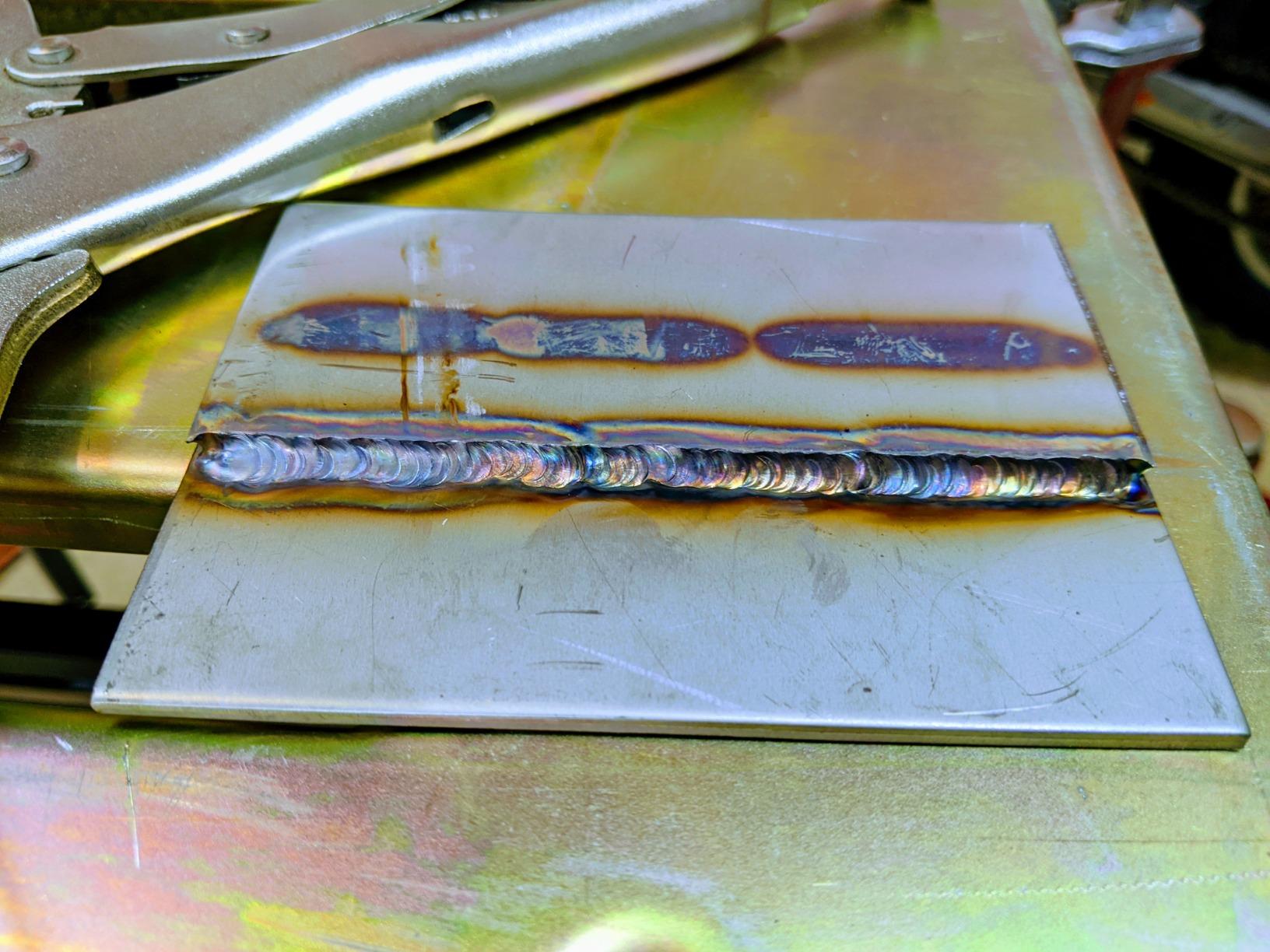
Where the 10 amp floor bites
The minimum TIG output is 10 amps, and owners returning to welding after years away notice it on foil-thin aluminum. Pulse helps you work in that range, but if you routinely weld material thinner than 1/32 inch, the Everlast PowerTIG 200DV with its 5 amp DC start is the better fit for that specific job.
The 120V caveat you should know about
On 120V the digital readout and the actual output do not agree, and the machine is not current-capped. Owners who run it on a household circuit with a heavy extension cord report this directly. If you plan to do real aluminum work, run it on 220V where the ratings hold. The NEMA adapter is included, so both circuits are supported.
4. LOTOS TIG200ACDC — Best Budget Pick for Aluminum
LOTOS TIG200ACDC 200A AC/DC Aluminum Tig Welder with DC Stick/Arc Welder, Square Wave Inverter with Foot Pedal and Argon Regulator 110/220V Dual Voltage Brown
200A AC square wave inverter
10-200A AC/DC TIG output
Automatic 110/120V and 220/240V
Foot pedal and regulator included
Pros
- Purpose-built 200A AC square wave output for aluminum
- Automatic dual voltage and dual frequency covers house and shop circuits
- Foot pedal
- argon regulator and consumables in the box
- Lowest cost among the AC-capable machines in this list
- USA-based phone and email support
Cons
- No pulse TIG function on this base model
- Output ceiling is below the 200-250A pulsed machines in this list
- Extended warranty requires registration
This is the least expensive route to a real AC TIG arc on aluminum among the machines in this roundup, and it does the thing that matters without frills. The TIG200ACDC puts out 200 amps of AC square wave, which is exactly the waveform you want for cleaning aluminum oxide, alongside 10-200 amp AC and DC TIG output and 15-200 amp DC stick output. HF start on the hand torch plus foot pedal heat control give you arc initiation and amperage modulation.
It also handles the power problem better than most of its class. Automatic dual voltage and dual frequency covers 110 and 120V as well as 220 and 240V at 50 and 60 Hz, so it moves between a household circuit and a shop circuit without a settings change. Power efficiency is rated at 80 percent, and the cooling system keeps the output stable.
The box includes the power supply, TIG torch, MMA clamp, foot pedal, argon regulator, converter pigtail, consumables and a manual. Lotos also runs USA-based phone and email support with a warranty registration process, and backs the machine with a 30-day money-back guarantee, a 1-year replacement policy and a 3-year limited warranty.
The catch is the one that matters for thin work. There is no pulse TIG function on this base model, and that is the feature that keeps heat in check on thin sheet aluminum. On 1/8 inch and heavier material you will not miss it. On thin sheet you will be relying on foot pedal control alone, which works but asks more of you.
What thickness it handles well
Plan on 1/8 inch to 1/4 inch aluminum as the sweet spot. The 200 amp square wave AC output is genuinely capable on plate, and the foot pedal gives you enough control to walk the heat back when you start into a fillet. If your work is mostly trailer and fabrication plate, this is the value pick in the roundup.
When to spend more instead
Step up if you weld a lot of thin sheet, if you want to weld magnesium, or if you plan to do production work where you need the machine to run long sessions. The Lotos sits at the low end of the 4.4 star range in this group, and the reviews point consistently at the missing pulse function as the reason. Register the warranty on purchase to get the extended coverage.
5. ARCCAPTAIN TIG200P — Best for Thin Sheet and Cast Aluminum
ARCCAPTAIN TIG Welder AC/DC 200A with Pulse 7 in 1 Aluminum Welding Machine
7-in-1 with square and triangular AC pulse
Welds 0.5-5mm aluminum
Full sequence control including crater current
26.5 lb
Pros
- Seven operating modes covering square and triangular AC pulse waveforms
- On-demand cooling fan stops when idle instead of running endlessly
- AC balance and frequency give clean aluminum welds
- Light at 26.5 lb with a compact footprint
- Large LED display that beginners find approachable
Cons
- Foot pedal not included and uses a proprietary connector
- Some machines arrived with a sliced power cord or cracked gas connection
- Ground clamp runs hot and its wire lug can melt the casing
- Warranty and support responses reported as slow
The ARCCAPTAIN TIG200P is the only machine here with both square and triangular AC pulse waveforms, and that distinction is not marketing filler. The square wave switches polarity rapidly and drives oxide cleaning hard, which is what you want on cast aluminum with a thick, stubborn surface layer. The triangular wave softens the cycle and cuts heat input, which is what you want on thin sheet where burn-through is the risk.
Published capacity is 0.5 to 5 mm of aluminum, or 0.02 to 0.20 inch, and up to 10 mm on other metals. So the honest framing is that this is a thin-to-medium machine. It is excellent on gauge aluminum and light plate and it is not the tool for 1/4 inch structural work.
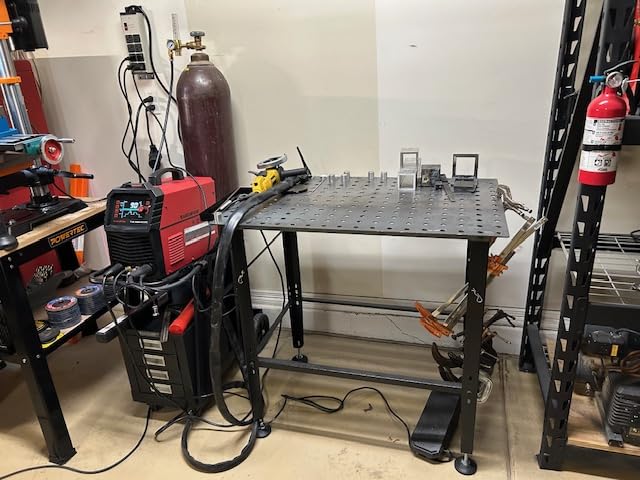
Control depth is the other strength. The MCU digital control exposes pre-flow, initial current, upslope, peak current, base current, downslope, crater current, post-flow, pulse duty, AC frequency, AC balance and pulse frequency. Crater current in particular is a nice touch, because filling the crater at reduced amperage is the difference between a clean cap and a crater crack on aluminum.
Beginner feedback is encouraging here. Owners report laying down clean aluminum beads within a few sessions, and the fan stopping on demand instead of running endlessly is a small quality-of-life improvement you notice in a quiet garage. The machine weighs 12 kg, or 26.5 lb, putting it in the lightest group alongside the DC-only Arccaptain below.
The foot pedal situation
The pedal is not included, and that is a real cost when heat control on aluminum is the point. It also uses a proprietary XS12 aviation connector, so you are not simply plugging in a generic pedal from another brand. Budget for it up front. Trigger control does offer 2T, 4T and spot modes, so you can work without one, but a pedal is better.
Quality control is inconsistent
This is where the 4.3 rating comes from. There are reports of machines arriving with a sliced power cord or a cracked gas connection, a ground clamp that runs hot enough for its wire lug to melt the casing, and slow warranty responses. Check everything the day it arrives. The machine itself is capable; the packing and the accessories are the weak points.
6. Lincoln Square Wave TIG 200 — Premium Pick for Professional Aluminum Work
Lincoln Electric Square Wave TIG 200 TIG Welder K5126-1
AC frequency and AC balance control
Pulse rhythm for filler deposition
Runs on 120V or 230V
46 lb
Pros
- AC frequency and balance give precise control of bead width and penetration
- Pulse helps new welders build a consistent filler deposition rhythm
- Simple setup interface reduces configuration time
- Runs on a standard 120V circuit when full output is not needed
- Portable at 46 lb
- Backed by a major heavy-equipment manufacturer
Cons
- Most expensive unit in this roundup by a wide margin
- About 12 percent of ratings are 1 star
- Pulse and sequence options are less granular than the digital machines
The Lincoln Square Wave TIG 200 is the professional end of this list, and it earns the place for one reason: the AC controls. AC frequency control lets you widen or tighten the bead on aluminum, and AC balance adjustment moves the machine between more cleaning action on dirty aluminum and maximum penetration on thick material. On production aluminum work where every weld has to look the same, that is worth more than a longer feature list.
The pulse function is designed around a different problem than pulse on the import machines. It provides a drumbeat-like rhythm for filler metal deposition, which helps a welder who is still developing the hand motion to lay filler consistently. Experienced TIG operators tend to ignore pulse, but as a training feature it is genuinely clever.
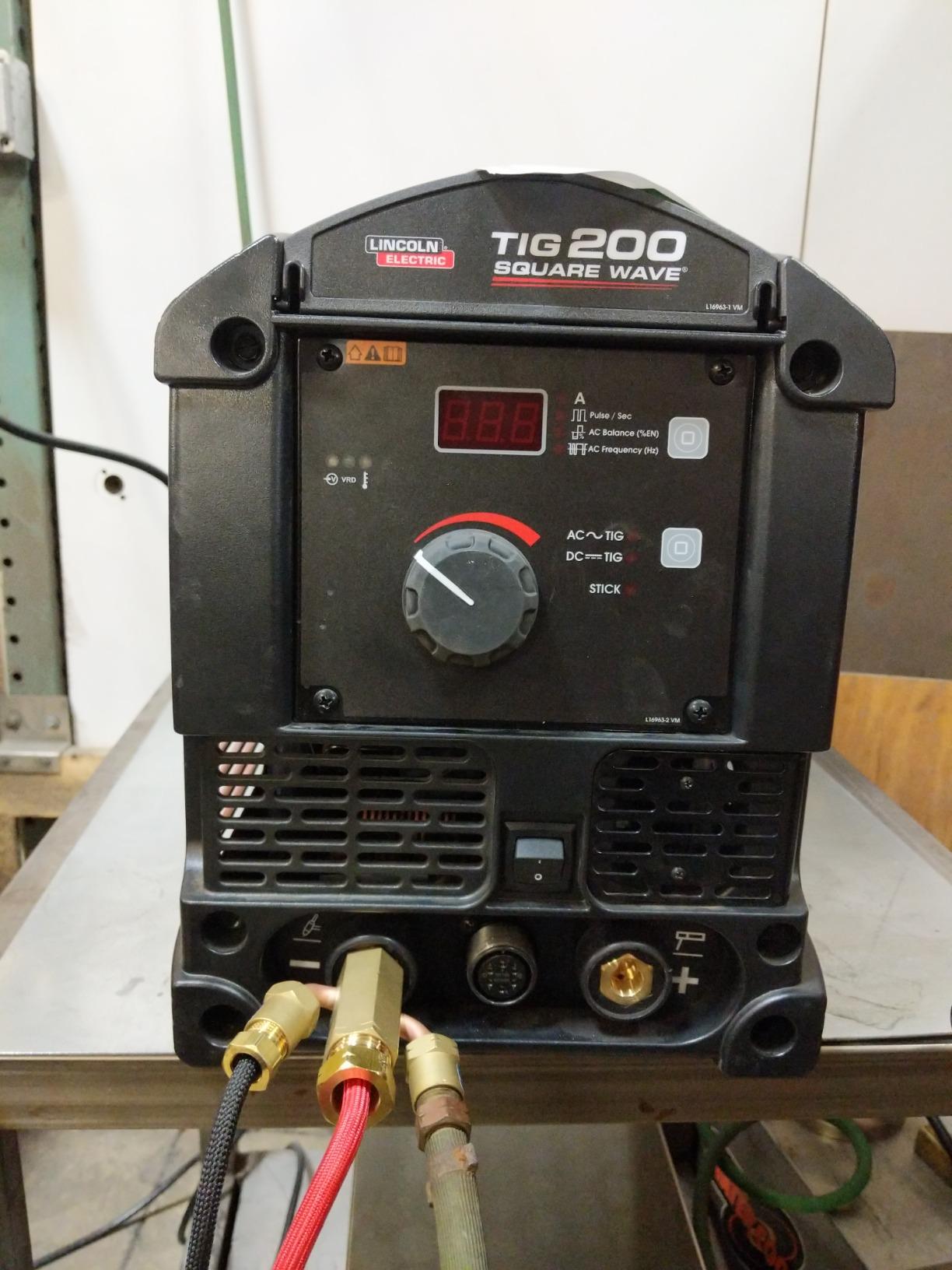
Portability is a real strength at 46 pounds for a shop-grade machine, and it runs on a standard 120V circuit when you do not need full output, or 230V when you do. That dual-circuit flexibility is unusual in a professional unit and useful for field work. It is a TIG and stick machine from a single power source.
Be clear-eyed about the compromises. This is by a wide margin the priciest machine we evaluated, and 12 percent of its ratings are 1 star, which points to some combination of build and service complaints rather than a marketing dispute. Its pulse and sequence options are also less granular than what the digital import machines offer, so a welder who wants fine-grained control of upslope and downslope will find less here.
When the premium tier actually pays off
Buy this if you are welding aluminum for work that has to pass inspection, if you are doing repair work on customer property where a service failure costs you the job, or if the machine will be used daily for years. Community forums have long recommended this machine as an entry point into professional TIG, and the 200 amp square wave output is proven on plate work.
When it is the wrong call
It is the wrong call for a weekend hobbyist. The same aluminum capability is available from machines costing a fraction as much, and the controls you would actually use are a menu away. The Lincoln premium buys support, build confidence and analog-style AC control, not a fundamentally different welding result.
7. Sunstac TIG-250 — Best for Maximum Amperage in a Light Package
Sunstac 250A Aluminum TIG Welder with Pulse ACDC Foot Pedal Control
250A AC/DC pulsed TIG
Aluminum capacity 4mm at 110V and 6mm at 220V
29.8 lb
LCD readable through a helmet
Pros
- 250A AC/DC pulsed TIG output for a modest outlay
- Light at 29.8 lb
- Parameter memory restores your last settings after a power cycle
- Spot TIG mode covers reinforcement welds
- Works across aluminum
- alloy steel
- copper
- stainless and carbon steel
Cons
- Lowest average rating here at 4.1 with 15 percent one-star reviews
- AC mode current measurement is inaccurate
- Foot pedal is not included despite being in the product name
- Some arrived without a screen protector or info decals
On paper the Sunstac TIG-250 pairs a high amperage rating with a low weight. It outputs up to 250 amps across high-frequency AC, high-frequency DC, pulsed AC, pulsed DC, AC spot, DC spot and stick modes on 110 and 220V dual voltage. Published aluminum capacity is 5/32 inch, or 4 mm, at 110V and 6 mm at 220V, and at 29.8 pounds it is one of the lighter AC/DC machines in this roundup.
Two details make it pleasant to use. The LCD screen replaced an older LED display and is legible through a welding helmet, which removes an annoyance you cannot work around. And the intelligent parameter saving restores your previous welding settings after a power cycle, so if the breaker trips mid-project you are not starting over from factory defaults.
It also supports 2T, 4T and spot TIG modes with foot pedal remote control, and if a pedal is connected it reverts to pedal mode automatically after a restart. The work clamp and electrode holder cables are 118 inches and rated 300A, which is longer than most of the leads in this group.
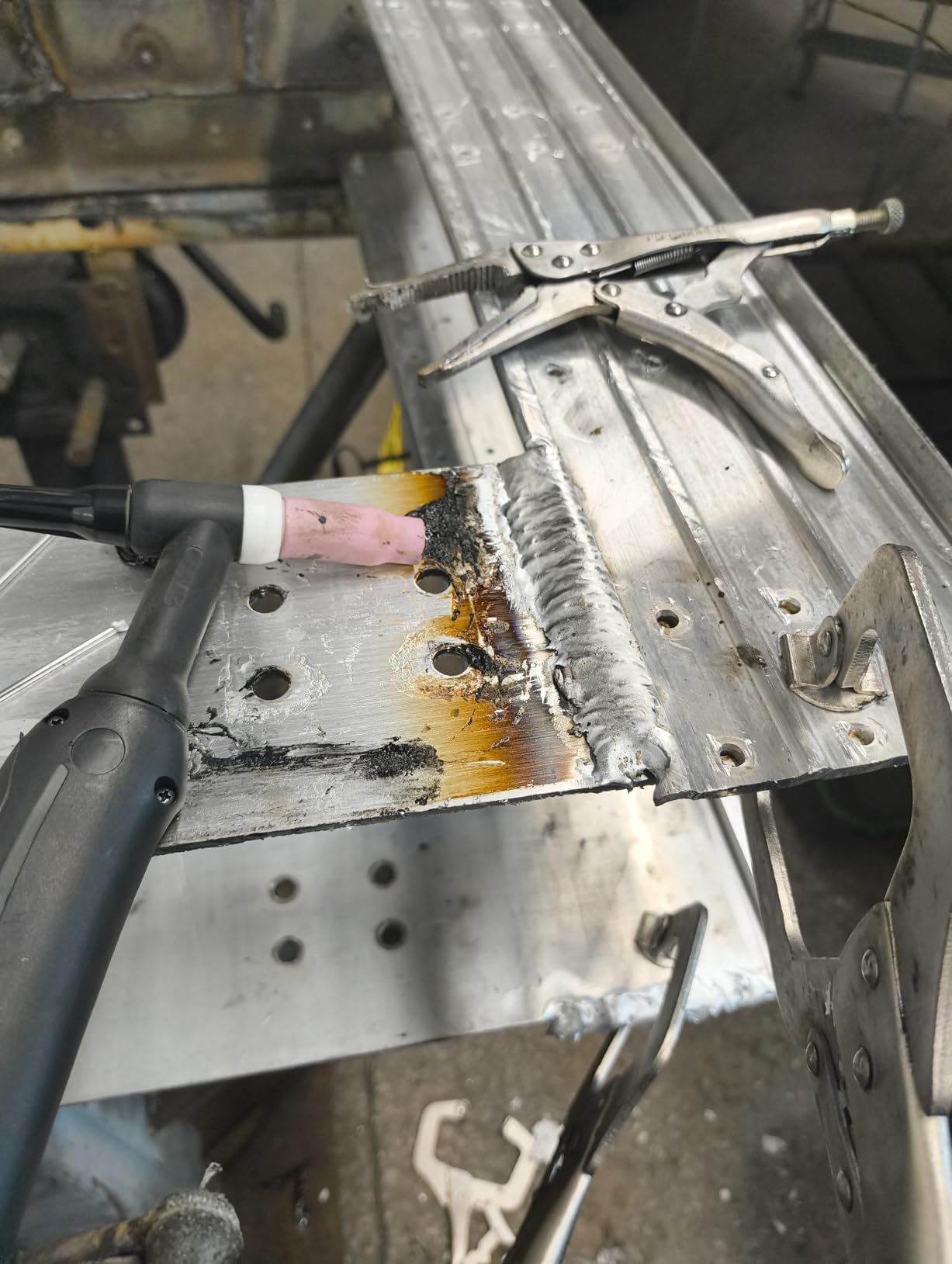
The problem is measurement accuracy, and for aluminum it is a meaningful one. Owners report that the current reading in AC mode is inaccurate, which makes it hard to reproduce a known-good setting. If you weld the same aluminum part repeatedly, that is an annoyance. If you weld a variety of jobs, it is tolerable. Just expect to verify heat by feel rather than by the display.
250 amps, but with a caveat
The headline amperage is real for output, but the AC accuracy issue means you should treat the number as a ceiling rather than a dial you can trust. The 4mm and 6mm aluminum capacity figures are the more honest guide to what it will do. At 29.8 pounds it moves between the shop and a job site without much effort.
The 4.1 rating explained
This is the lowest-rated machine in the group, with 15 percent one-star reviews, and the pattern points to packaging and quality control on arrival rather than welding performance. Some machines arrived without a screen protector or side-panel welding information decals. Inspect before you plug it in. The foot pedal is also not included despite appearing in the product name.
8. Everlast PowerTIG 200DV — Best for Very Thin Aluminum
New Everlast PowerTIG 200DV 110/220 Dual Voltage 200amp Pulse ACDC Welder
200A pulsed AC/DC TIG
Start current down to 5A DC and 20A AC
Lift start plus HF ignition
120V/240V dual voltage
Pros
- Very low start amperage of 5A in DC TIG for delicate thin material
- Lift start offers an alternative to high-frequency ignition
- Pre and post flow gas control plus Arc Force manage spatter
- Reliable IGBT inverter holds a steady arc
- Dual voltage covers shop and field circuits
- Large installed parts base
Cons
- Weighs 60 pounds
- Premium pricing for the 200A class
- Product listing breaks out few accessory details
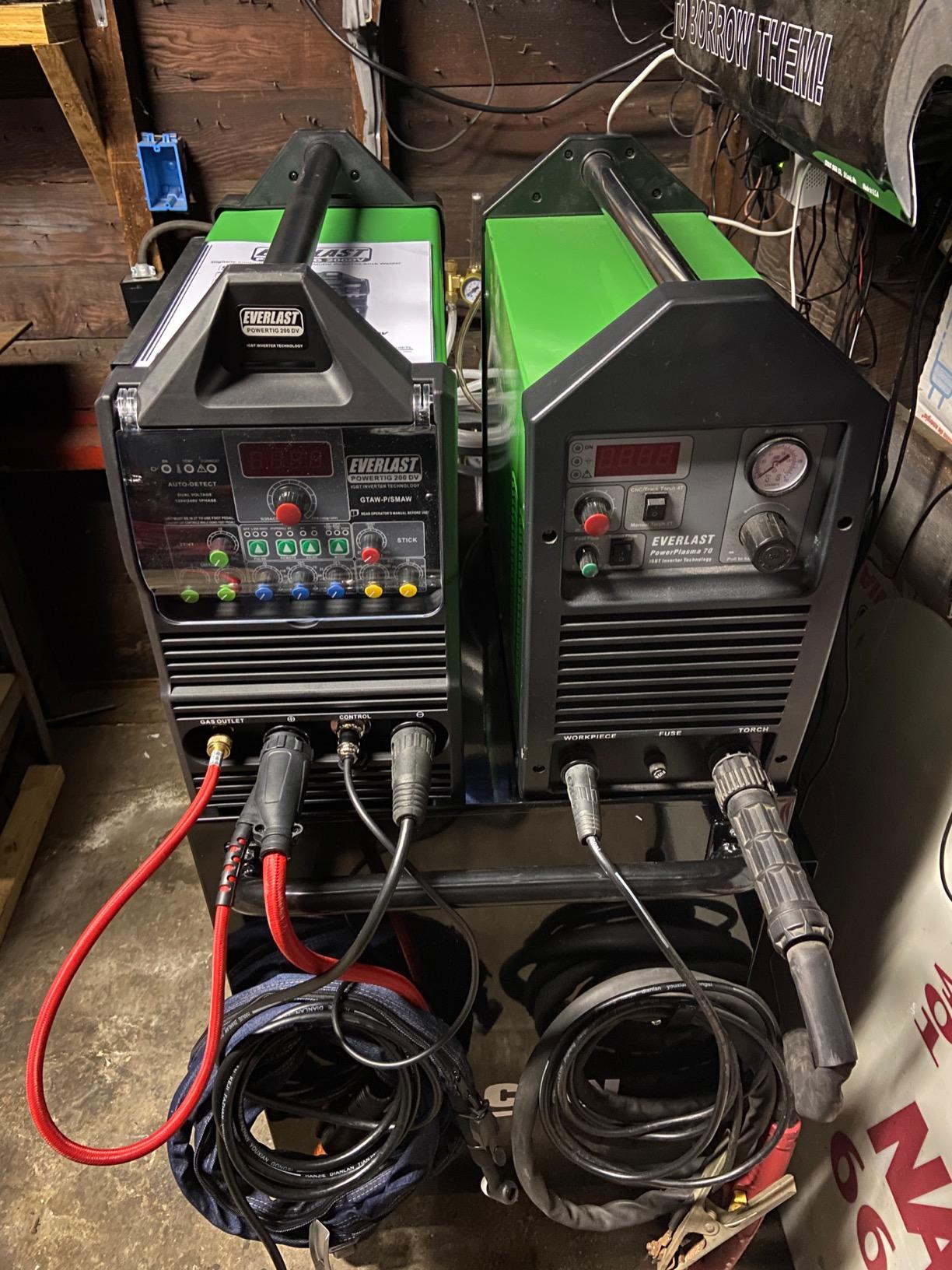
The PowerTIG 200DV solves a specific problem that the 10 amp minimum on the AHP creates. It starts as low as 5 amps in DC TIG and 20 amps in AC, which opens up very thin aluminum and magnesium work that other machines in this list cannot touch without pulsing all the way down and hoping.
It is a 200 amp pulsed AC and DC TIG built around a reliable IGBT inverter, with 120V and 240V dual voltage, a digital display, pre and post flow gas control and Arc Force, which is the DIG setting welders know from stick work and which reduces spatter on aluminum. It is also the only AC-capable machine here with a true lift start function, letting you ignite without high-frequency start on sensitive work.
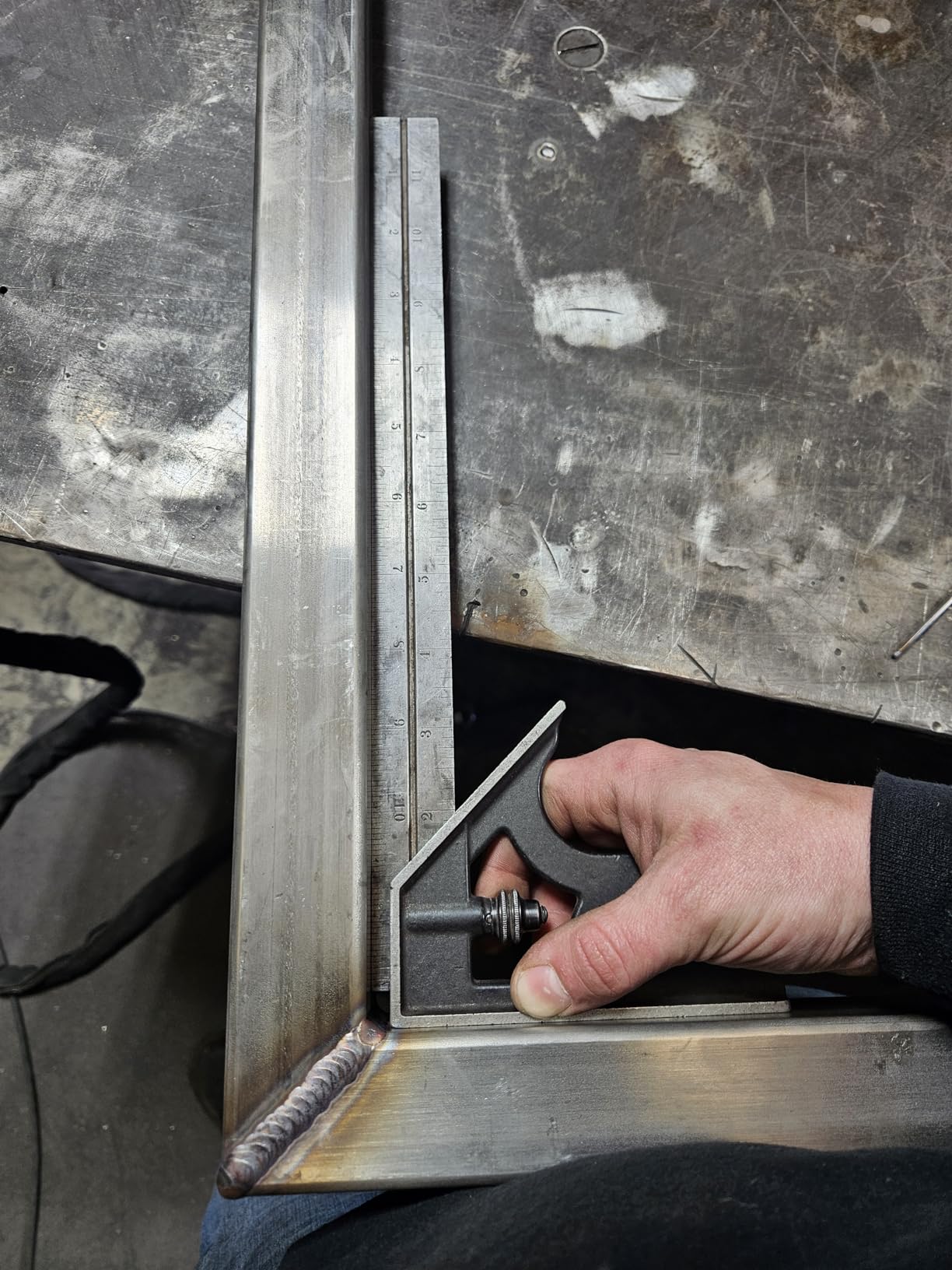
That combination matters more than it sounds. HF start is convenient but some setups do not want the electromagnetic field near sensitive electronics or coated surfaces, and lift start gives you an alternative ignition method. Pre and post flow gas control protects the tungsten and keeps the puddle clean at the start and end of a bead, both of which reduce porosity in aluminum.
Buyer sentiment is strong here. The 4.6 average carries a large share of 5-star ratings, and the recurring theme is that the low start amperage and the choice between HF and lift start are what separate it from cheaper imports. If you have an established brand preference and want parts availability years from now, that is worth paying for.
Where the thin-gauge advantage applies
Think 20 to 32 gauge aluminum, thin trim, and delicate non-ferrous work where a 10 amp floor would already be too hot. Combine the low start current with the foot pedal and you can creep along a thin edge without melting through. This is the machine to buy if your aluminum is mostly sheet rather than plate.
The weight problem
At 60 pounds it is one of the two heaviest machines in this roundup, and that is a real drawback for a machine that otherwise does everything right. If you are welding in place in a shop, it does not matter. If you are chasing a job across town, look at the Sunstac or the ARCCAPTAIN TIG200P first, both of which are under 30 pounds.
9. Everlast PowerTIG 185DV — Best First Machine With a Pedal Included
2021 Everlast PowerTIG 185DV AC/DC TIG Stick Welder 110/220 Volt Inverter-Based Dual Voltage 185Amp with Pedal Package
185A AC/DC TIG and stick
110V/220V dual voltage
Two preset pulse rates
Pedal package, 40 lb
Pros
- Simple two-preset pulse layout keeps the interface readable
- Analog-style settings adjust quickly without menus
- Sold as a pedal package so the foot control is included
- Digitally controlled IGBT inverter holds a smooth steady arc
- Lighter at 40 pounds than the 200DV
- Strong duty cycle
Cons
- 185A output ceiling is below the 200A and 250A machines here
- Only two fixed pulse rates with no fine frequency adjustment
- LED display rather than a full LCD parameter readout
The PowerTIG 185DV is a 185 amp AC and DC TIG and stick welder on 110V and 220V dual voltage, and it arrives as a pedal package. For a first machine that matters, because a foot pedal is the natural way to control amperage on aluminum and several machines in this roundup make you buy one separately.
The pulse function offers two pre-programmed settings at 1 Hz and 50 Hz. That is not adjustable pulse, and it is worth being blunt about. It is also the single feature owners praise as often as they criticize, because it keeps the interface down to a couple of dials you can read at a glance rather than a parameter menu.
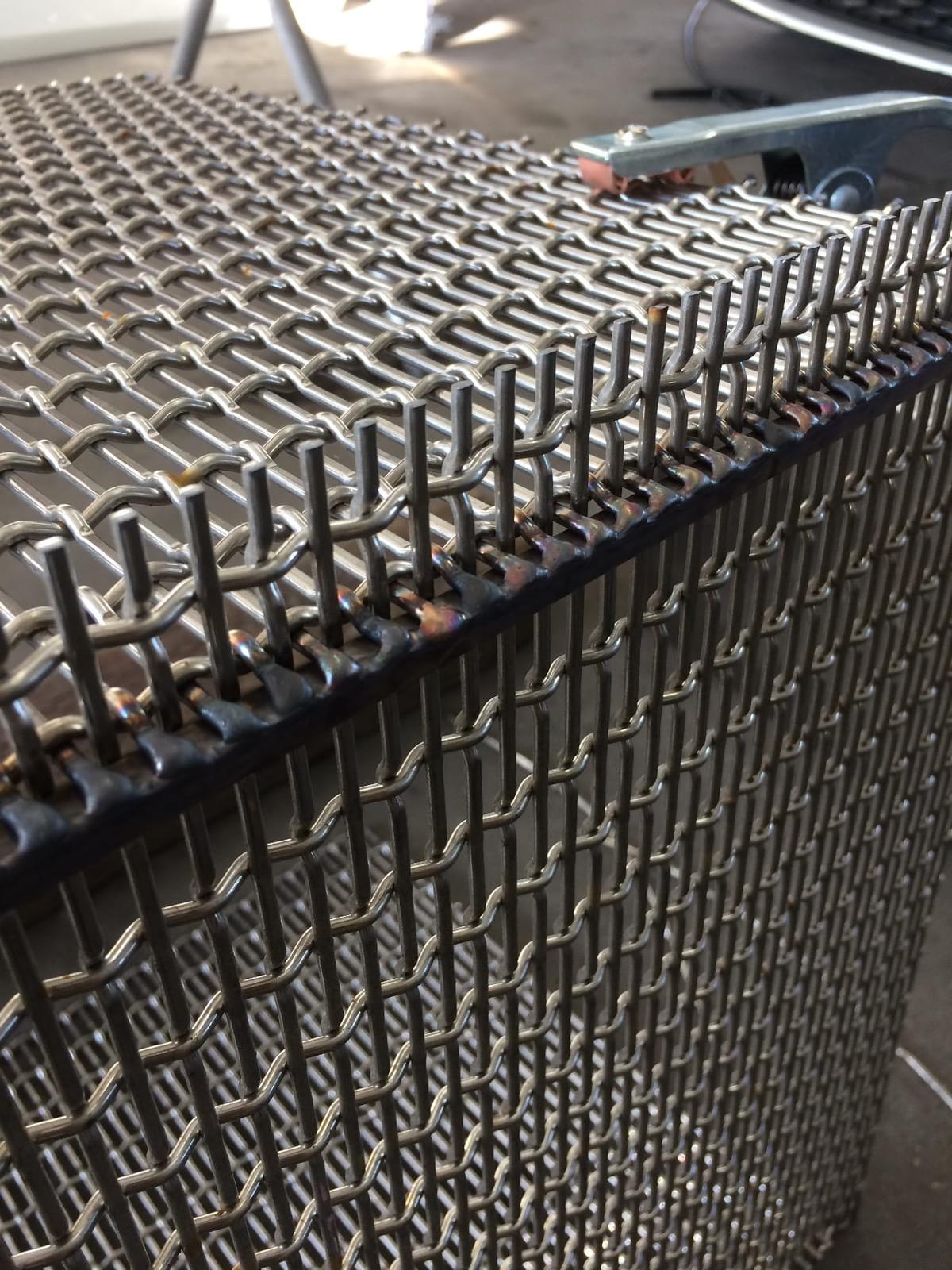
For a welder learning aluminum, that simplicity is arguably more valuable than fine pulse tuning. You cannot easily overwhelm yourself with settings, and the analog-style dials let you make a change mid-bead without taking your helmet off. The digitally controlled IGBT inverter holds a smooth, steady arc, and the wide adjustment range and duty cycle are strong for the class.
Satisfaction runs high at 4.5 stars, with three quarters of ratings at 5 stars. The consistent theme is no-nonsense control layout plus the included pedal. It is also 40 pounds, which makes it easier to move than the 60-pound Everlast above.
Is 185 amps enough for aluminum?
For plate work up to about 1/8 inch and typical fabrication, yes. It falls short of the 1/4 inch capacity the PrimeWeld and AHP claim, and the lower ceiling shows up on thick sections where you need sustained high amperage with good penetration. If your aluminum is mostly 1/8 inch and below, the 185 amps is not your limiting factor.
Where the fixed pulse settings hurt
On thin sheet where you need to tune the pulse frequency to control heat, 1 Hz and 50 Hz are not enough. You are left with foot pedal control alone. If thin-gauge aluminum is a regular part of your work, the PowerTIG 200DV above or one of the digitally controlled machines is a better fit. For mixed work, this one is fine.
10. ARCCAPTAIN TIG 205P Pro — Capable on Steel, Not an Aluminum Machine
ARCCAPTAIN TIG 205P Pro Pulse Welder, 5 In 1 Welding Machine, 120V/240V
5-in-1 DC TIG, pulse, lift, spot and MMA
DC output only, no AC function
22.8 lb
120V/240V dual voltage
Pros
- Lightest machine in the roundup at 22.8 lb
- App control by barcode scan for monitoring and preset recall
- MCU control yields a high arc start success rate with minimal spatter
- Runs on 120V or 240V and performs well on a generator
- 3-year warranty with lifetime technical support
Cons
- DC output only with no AC function so it cannot weld aluminum
- Included torch is bulky and heavy with many owners upgrading to a CK17
- No pre-flow setting on the machine
- Included ground clamp and leads are entry-level quality
I want to be direct about this one rather than bury it: this machine cannot weld aluminum. The manufacturer states it plainly. The ARCCAPTAIN TIG 205P Pro is a 5-in-1 with DC TIG, pulse TIG, lift TIG, spot TIG and MMA, and its DC output has no AC function, which makes the aluminum oxide on the surface impossible to clear. On aluminum, it will not weld. Period.
What it is, is a very good compact DC TIG machine for steel and stainless. Owners returning to TIG after years away report clean, quick arc starts and usable beads from thin sheet up to 1/4 inch plate on 120V, and they like the companion app for parameter changes and preset recall. The MCU precision control produces a very high arc-start success rate with minimal spatter, and it works acceptably on a generator.
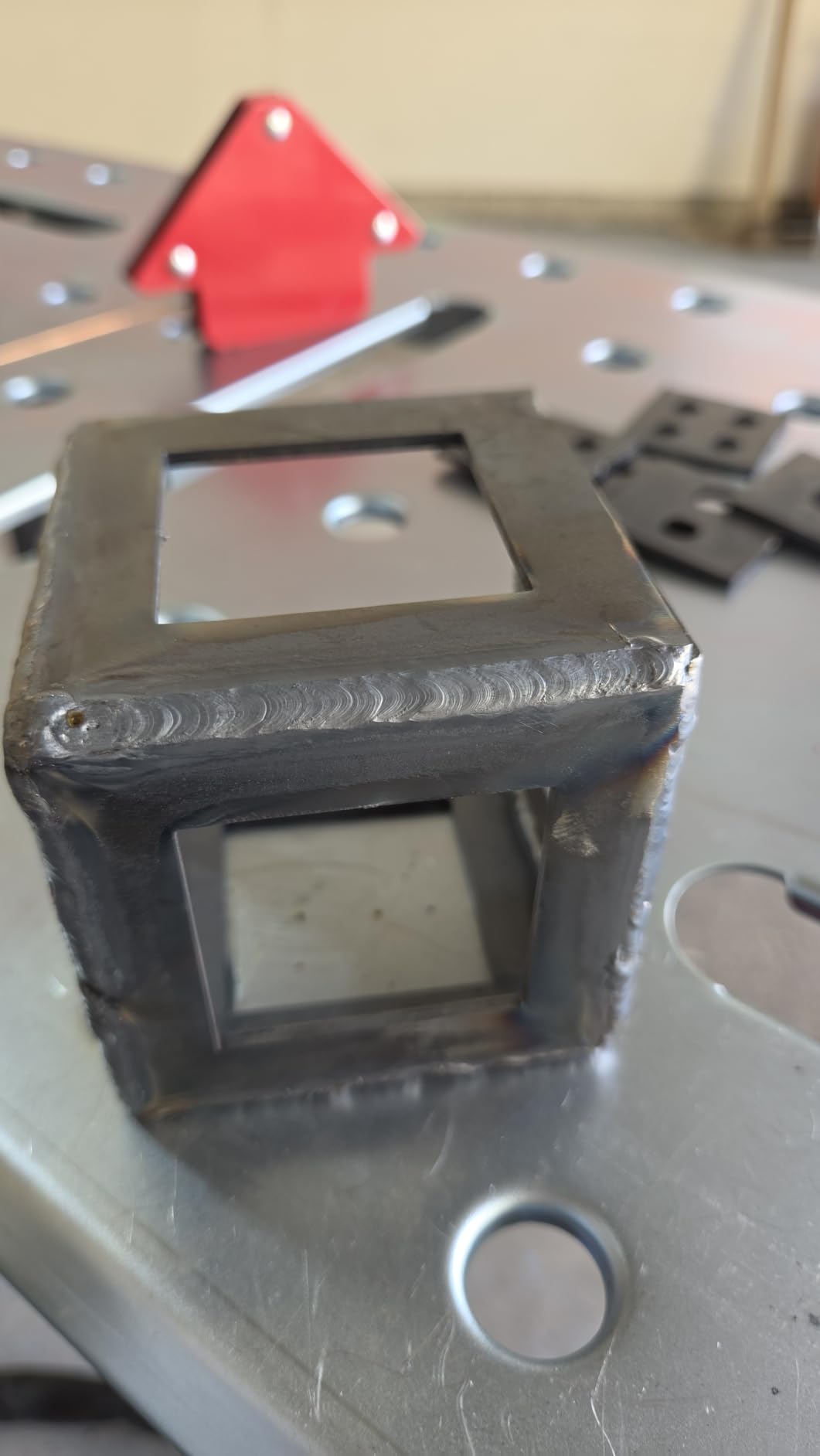
At 22.8 pounds it is the lightest machine here, and it is compact enough for a small shop or a mobile setup. The 3-year warranty with lifetime technical support is better than most of the imports in this roundup, and it accepts the ARCCAPTAIN 5-pin foot pedal for hands-free current control on steel work.
There is one consistency note worth including, because it affects anyone reading this as a steel buying guide. The most common upgrade path is replacing the bulky included torch with a CK17, and the ground clamp and leads are entry-level quality. There is also no pre-flow setting on the machine, and the stick function is not suited to 6010 electrodes.
Should you buy it for aluminum anyway
No. If aluminum is your goal, the nine machines above all produce AC output and this one does not. There is no setting, no tungsten choice and no technique that fixes a missing AC half-cycle. If you weld steel and stainless only and want the lightest machine in this group, it is a strong pick on its own terms.
What it tells you about the brand
ARCCAPTAIN makes two different machines in this roundup and the contrast is instructive. The TIG200P above is a full AC and DC unit with square and triangular waveforms, and the TIG205P Pro is DC only. Check the current model number carefully when buying, because the brand name and the marketing are identical and the aluminum capability is not.
How to Choose a TIG Welder for Aluminum
Start with the three non-negotiables, then work through the secondary specs in this order. If you want a broader look at general TIG options rather than aluminum specifically, our guide to the best TIG welders overall covers the steel and multiprocess side. Torch selection matters more than most buyers expect, and the best TIG torch kits roundup covers that separately.
AC capability is the whole ballgame
Aluminum forms an oxide layer that reforms the instant it is exposed to air. AC current alternates polarity, and the electrode-negative half of the cycle strips that oxide while the electrode-positive half drives heat into the workpiece. A DC-only TIG welder simply cannot do it, no matter how good the arc is on steel. Verify that the machine has an AC TIG mode before anything else.
Beyond the mode itself, look at AC balance and AC frequency. Balance shifts the ratio between cleaning and penetration, and frequency changes how fast the polarity switches. The Lincoln Square Wave TIG 200, the PrimeWeld TIG225X, the Weldpro 200A and the AHP AlphaTIG all give you live adjustment on at least one of these. The LOTOS gives you AC but fewer controls over the cycle.
High-frequency start versus lift TIG
HF start fires the arc without touching the tungsten to the work. That is the standard on aluminum, because a contact start contaminates the electrode and, on some machines, the workpiece. Lift TIG strikes the arc by lifting the electrode off the work, which is slower and rougher but produces no high-frequency field. Most buyers in this roundup need HF. The Everlast PowerTIG 200DV is the one that gives you both, which matters in shops welding near sensitive electronics.
Pulse control and heat on thin metal
Aluminum conducts heat far faster than steel, so the puddle runs away from you on thin material. Pulse cycles the current rapidly between a peak and a base value, letting you average down the heat without stopping to readjust. The Weldpro runs up to 200 Hz with separate upslope and downslope settings, the ARCCAPTAIN TIG200P adds triangular and square waveforms, and the Lincoln uses pulse to create a filler deposition rhythm. The LOTOS has no pulse function at all and the Everlast 185DV offers two fixed rates, which is why they sit lower for thin-sheet work.
Amps versus aluminum thickness
Here is the reference that answers the question forum posters ask constantly. The published capacity figures from the machines in this roundup give a useful picture, but the nameplate is not the limit — duty cycle and heat sinking are.
Up to 0.03 inch (0.8 mm) foil and thin trim: you need 5 amps of starting current. The Everlast PowerTIG 200DV is the only machine here rated that low. Everything else wants 10 amps or more and needs pulse to hold it together.
0.03 to 0.06 inch sheet: roughly 20 to 60 amps of AC. The ARCCAPTAIN TIG200P handles this range down to 0.5 mm, and the pulse on the PrimeWeld, Weldpro and AHP makes it forgiving.
1/8 inch plate: roughly 70 to 100 amps. This is where most machines in the lineup sit comfortably, including the Everlast 185DV at the lower end and the Sunstac at the upper end.
3/16 to 1/4 inch plate: roughly 110 to 160 amps of AC. The PRIMEWELD TIG225X, the AHP AlphaTIG 203Xi and the Lincoln Square Wave 200 all publish 1/4 inch aluminum capacity. The Sunstac publishes 6 mm, or roughly 1/4 inch, at 220V.
Above 1/4 inch: you are in structural territory. Use a 220V circuit, respect the duty cycle, and consider whether MIG with a spool gun is the better tool for the job.
Two real-world modifiers sit on top of that chart. Continuous duty matters more than peak amps, because a machine that stalls after two minutes cannot finish a long seam. And aluminum’s heat conductivity means a workpiece that has not been cleaned will fight you no matter what the machine outputs, so a dedicated stainless brush on the joint is not optional.
110V versus 220V
Most machines here are dual voltage, which solves the problem for many buyers. Where it does not solve the problem is output. Running 200 amps of capability off a 120V household circuit does not give you 200 amps. The Sunstac publishes the difference plainly: 4 mm of aluminum at 110V and 6 mm at 220V, on the same machine. That is a real reduction in capability, not a rounding difference.
My rule is simple. If you have a 220V circuit available, use it for anything over 1/8 inch. Use 110V for thin sheet work and for learning. The AHP has a specific 120V quirk worth knowing, since its digital readout and the actual output disagree there and it is not current-capped.
TIG versus MIG with a spool gun
Aluminum has two main routes: TIG with AC, and MIG with either a spool gun or a push-pull gun. They are not competitors in every situation, and community consensus has been consistent for years that MIG with a spool gun becomes the better tool above roughly 1/8 inch. It lays metal faster, handles thicker stock more easily, and does not require managing filler rod by hand.
So when does TIG win? On thin sheet and on anything where appearance and heat control matter. Aluminum window frames, sheet metal panels, cast aluminum repairs, and any joint where a burn-through would ruin the part. TIG also handles magnesium and other non-ferrous alloys that push-pull MIG setups handle less gracefully. If you only ever weld aluminum thicker than 1/8 inch in volume, a multiprocess MIG machine with a spool gun will serve you better and cost less than a good TIG.
Brand reputation and value tiers
Owners consistently trust the established names. Lincoln, Miller, Hobart and ESAB carry reputations for machines that still work years later, and community discussion has recommended the Lincoln Square Wave TIG 200 as an entry point into professional TIG for a long time. The theme across forums is that people keep machines for decades, and the oldest, most-upvoted comments are about machines that have lasted.
Against that, the marketplace and import brands in this roundup have a real tension. The PRIMEWELD TIG225X holds a 4.8 average across more than 1,400 reviews, the highest owner rating and the largest review base in this group. The Weldpro 200A and the AHP AlphaTIG follow with several hundred reviews each at 4.6. Buyers asking whether Harbor Freight and VEVOR machines are any good are really asking whether the review volume is large enough to trust, and the general pattern in these forums is that the answer depends heavily on the model rather than the badge on the front.
Warranty length is a real differentiator. The AHP AlphaTIG carries a 3-year warranty, the LOTOS backs its machine with a 3-year limited policy that you must register to receive in full, and the ARCCAPTAIN units carry 3 years as well. The Everlast machines come from a brand with a large installed parts base, which is its own form of long-term cover. A longer warranty is not proof of quality, but it does tell you how confident a manufacturer is about the parts most likely to fail.
Consumables and the real running cost
The machine is a fraction of what it costs to actually weld aluminum. You need lanthanated tungsten, not pure, because the thoriated type is best avoided around aluminum work. You need pure argon, and you need a flow meter that actually reads correctly, since an inaccurate one leads you to run too little shielding gas and get porosity you will blame on the welder. And you need a dedicated stainless brush for cleaning the joint, plus a good chipping tool.
Torches are the consumable that surprises first-timers. A CK17 flex torch handles aluminum far better than a cheap fixed-head torch, and several owners in this roundup replaced an included torch within weeks. Gas and tungsten are consumable running costs, but a proper torch is a one-time purchase that changes how the work feels. We cover the options in our TIG torch kit roundup.
Frequently Asked Questions
What is the best TIG welding machine for aluminum?
The PRIMEWELD TIG225X is our top pick. It delivers 225 amps of AC and DC TIG with a 200 Hz pulse function and adjustable AC frequency, handles up to 1/4 inch aluminum, runs on 110V or 220V, and includes a CK Worldwide Superflex torch. It holds a 4.8 average across more than 1,400 owner reviews, the largest verified base in this roundup.
Do you need AC to weld aluminum?
Yes, AC output is a hard requirement. Aluminum forms an oxide layer that reforms instantly, and only the electrode-negative half of an AC cycle strips it away. A DC-only TIG welder cannot establish a stable arc on aluminum no matter how good the machine is on steel. Check for an AC TIG mode before buying anything for aluminum work.
How thick can a 200 amp TIG weld aluminum?
A 200 amp TIG welder realistically handles aluminum from about 1/8 inch up to 1/4 inch plate, and goes thinner with pulse control. Roughly 20 to 60 amps covers sheet metal from 0.03 to 0.06 inch, 70 to 100 amps covers 1/8 inch, and 110 to 160 amps covers 3/16 to 1/4 inch. Duty cycle and heat sinking limit you long before nameplate amperage does, and very thin work needs a machine with a low start current.
Is TIG better than MIG for aluminum?
It depends on thickness. MIG with a spool gun becomes the better tool above roughly 1/8 inch, because it lays metal faster and handles thicker stock more easily. TIG with AC wins on thin sheet and on any joint where appearance and heat control matter, such as window frames, sheet panels and cast aluminum repairs. Many fabricators end up owning both.
What’s a good starter TIG welder?
For a first machine focused on aluminum, the PRIMEWELD TIG225X is the strongest all-round choice because it includes a quality torch and simple analog controls. If you want to spend less, the LOTOS TIG200ACDC gives you a genuine 200 amp AC square wave with a foot pedal and regulator in the box. Do not compromise on AC output, high-frequency start, or dual voltage when choosing a first machine.
What tungsten and gas do I need for aluminum TIG?
Use lanthanated tungsten rather than pure or thoriated, and size it for your amperage range. You also need pure argon as the shielding gas, plus a flow meter that reads accurately, because running too little gas causes porosity that gets blamed on the machine. A dedicated stainless brush for cleaning the joint is essential, since aluminum oxide reforms instantly and a dirty joint will fight any power source.
Final Verdict: The PRIMEWELD TIG225X
After working through all ten, the PRIMEWELD TIG225X is the machine we would put in a home shop and forget about. It has the AC output, the 200 Hz pulse, the adjustable AC frequency and the 1/4 inch aluminum capacity that aluminum work demands, and it ships with a torch you would otherwise spend extra to buy. More than 1,400 owner reviews averaging 4.8 stars give you more confidence than any spec sheet can.
Buy the Weldpro 200A instead if you want to shape the AC cycle and the pulse ramp in detail. Buy the AHP AlphaTIG 203Xi if you weld steel as much as aluminum and need a serious stick mode and a high duty cycle. Buy the LOTOS TIG200ACDC if you are working in 1/8 inch plate and heavier and want a proven square wave AC arc without the extra cost of pulse. And keep an eye on the model number when shopping, because DC-only machines carry the same marketing language as the ones that can actually weld aluminum.
Whichever one you choose, the three things that decide whether you succeed are unchanged in 2026: alternating current, high-frequency start, and pulse for heat control. Get those right and the brand matters far less.