
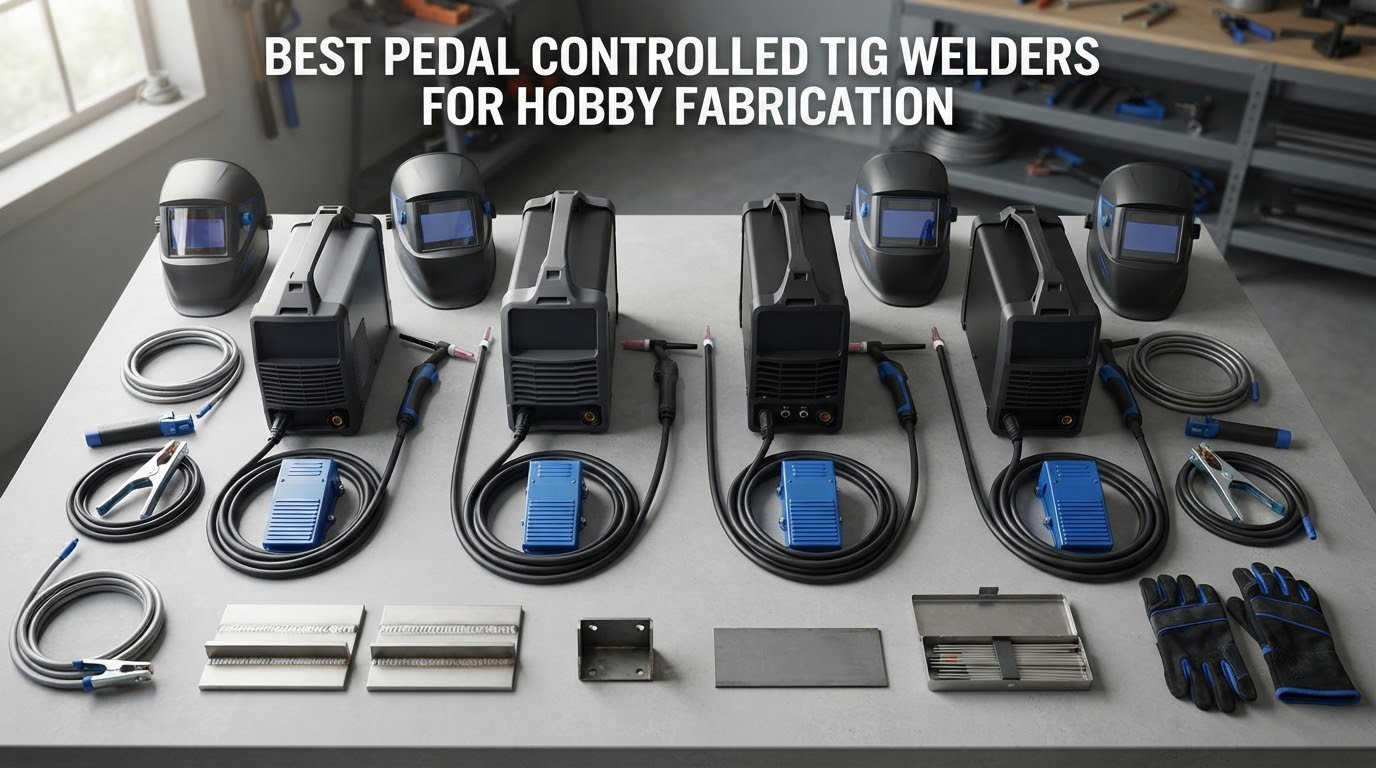
Yes, a foot pedal is worth it for a hobbyist, but only for a specific kind of work. If you weld at a bench or a stand, on thin sheet, tubing, aluminum or stainless, pedal control gives you a proportional amperage dial under your foot while both hands stay on the torch and the filler rod. If your projects are mostly under a car body, up on a ladder or inside a chassis, the pedal is dead weight and the torch rocker switch is the better control.
That distinction is the whole reason we wrote this guide. Most roundups on this topic are spec sheets with a shopping link attached, and a surprising number of them spend half their slots on bare foot pedals instead of welders. We spent our eight slots on machines only, and instead of guessing about pedals we verified who bundles one, who sells it separately, and what the connector actually is.
We looked at eight pedal controlled TIG welders in the hobby and garage class, from a budget square-wave AC/DC unit to a shop-grade dual-voltage inverter. For each one we read the amperage range, the pulse controls, the gas management, the pedal situation, and the owner complaints that do not make it onto the spec list. We also mapped the connector standards that decide whether a pedal you already own will even plug in.
Everything here was verified in 2026. Weights, duty cycles, output figures and review data come straight from the manufacturer listings and the owner review record for each machine, and where a number was not published we say so rather than estimating it.
Before you read further, if you are still building out a bench, our general TIG welder roundup covers machines without a pedal focus, and our TIG torch kit picks cover the consumables side that any pedal machine needs.
Top 3 Picks: Pedal Controlled TIG Welders for Hobby Fabrication (October 2026)
Our three headline picks reflect three different answers to the same question. The first is the most complete all-rounder we found, the second is the strongest balance of output and included hardware, and the third is the cheapest way to get genuine proportional foot control out of the box.

PrimeWeld TIG225X 225A AC/DC
- 225A AC/DC with pulse
- CK Worldwide Superflex torch
- 110/220V
- 40 percent duty cycle
AHP AlphaTIG 203Xi AC/DC Pulse
- 60 percent duty cycle
- LCD readout
- included foot pedal
- 110/220V

LOTOS TIG200ACDC 200A
- 200A AC square wave
- foot pedal and regulator in the box
- automatic 110/220V
Best Pedal Controlled TIG Welders Compared in 2026
The table below is the fastest way to see the difference that matters most on this topic: whether a foot pedal is in the box or has to be bought separately. Three of these eight include a pedal in the package, and two of those three state it in the official product description. The rest are pedal-ready machines where the accessory is a separate purchase.
| Product | Specifications | Action |
|---|---|---|
| PrimeWeld TIG225X 225A AC/DC TIG and Stick |
|
Check Latest Price |
| AHP AlphaTIG 203Xi AC/DC Pulse TIG |
|
Check Latest Price |
| LOTOS TIG200ACDC 200A AC/DC TIG |
|
Check Latest Price |
 ARCCAPTAIN TIG200P AC/DC 200A 7 in 1 ARCCAPTAIN TIG200P AC/DC 200A 7 in 1 |
|
Check Latest Price |
 Sunstac TIG-250 TP ACDC 250A Sunstac TIG-250 TP ACDC 250A |
|
Check Latest Price |
 Everlast PowerTIG 200DV 200A Pulse ACDC Everlast PowerTIG 200DV 200A Pulse ACDC |
|
Check Latest Price |
 Everlast PowerTIG 185DV 185A Pedal Package Everlast PowerTIG 185DV 185A Pedal Package |
|
Check Latest Price |
 AHP Alpha-TIG 225Xi 225A AC/DC Pulse AHP Alpha-TIG 225Xi 225A AC/DC Pulse |
|
Check Latest Price |
Do You Actually Need a Foot Pedal?
You need a foot pedal if your right hand is already busy. TIG is a two-hand process once you start adding filler rod, and the torch finger rocker switch forces you to choose between controlling heat and feeding the rod. A pedal removes that choice, because amperage then lives under your foot and your hand stays free for rod placement and torch angle.
Beginners report the pedal as the single biggest step change in their welding. One hobbyist on mig-welding.co.uk described it plainly: plugging the pedal in and learning to ease off it made the biggest improvement to their welds of any change they made. That matches what we see in owner reviews, where pedal feel and linearity come up more often than raw amperage.
Here is the honest caveat. A foot pedal is a bench tool. One DoItYourself.com thread put it well, noting that foot control works for bench welding and becomes useless once you are crawling in or under a car body. WeldingWeb users report the same from the other direction, describing welding on their back with the pedal wedged between their knees. If that describes your projects, buy for torch switch control and a smooth 2T mode instead.
There is also a value trap worth naming. Cheap aftermarket pedals sometimes do nothing more than make and break contact, giving you an on and off switch rather than proportional amperage. A pedal is only useful if current rises smoothly as you press, which is a pot-based control rather than a contact switch.
How to Feather a Foot Pedal Without Cratering
The mental model that makes a pedal click is short enough to fit in one sentence: more amps moves faster, less amps moves slower. Travel speed is your heat control, and the pedal is your heat control. When the puddle gets ahead of the puddle, press. When it catches up, ease off.
Here is the sequence we would practice on coupons before touching a real part.
Set your amperage with the machine knob first, then use the pedal as a trim control above that ceiling rather than your only control.
Strike the arc with a light press, not a full stomp, so the puddle starts at the amperage you chose rather than at maximum.
Loop the torch cable around your forearm in a spiral so the harness carries the torch weight and your wrist stays relaxed. The index finger then sits in the same place it sits on the torch rocker switch, which makes the transition effortless.
Add filler rod from your free hand, keeping the torch angle steady, since any pedal benefit disappears if the hand is fighting the cable.
Watch the puddle, not the amperage readout, and feather to hold a consistent bead width.
To end the bead, press in to fill the crater, then break the arc with the torch switch in 2T mode.
For 4T work, set start and end amperage on the machine so the machine itself ramps down for you at the end of the cycle.
Practise on clean coupons. Forum beginners note that a black, oxidized coupon makes learning harder than the skill deserves, so grind a fresh face before you decide the machine is at fault.
1. PrimeWeld TIG225X – Best All-Round Pedal Machine for a Home Shop
PRIMEWELD TIG225X 225 Amp IGBT AC DC Tig/Stick Welder with Pulse CK17 Flex Torch and Cable
225A AC/DC TIG and stick with pulse
CK Worldwide 17 Series Superflex torch
200 Hz pulse, adjustable AC frequency
110/220V dual voltage, 40 percent duty cycle
Pros
- Handles aluminum
- stainless and thin metals with a very controllable arc
- CK Worldwide Superflex torch and CK Superflex hose
- USA-made CK DINSE connector
- analog knobs that are easy to learn
- 57-page instruction manual in plain English
- responsive customer support
Cons
- Front panel labels are hard to read in low light
- cooling fans run continuously with no temperature shutoff
- power switch is on the rear
- included argon regulator had a fitting and vent O-ring problem
This is the machine we keep coming back to, and the review record backs it up. Across 1426 owner reviews the average sits at 4.8, with roughly 90 percent five-star and 8 percent four-star. That is the deepest and strongest review base of any pedal controlled TIG welder in this group, and it is why we picked it rather than a machine with a longer feature list.
What you get for that is a 225 amp AC/DC TIG and stick inverter with pulse. It runs on 110 or 220 volts, welds 1/4 inch aluminum and 3/8 inch mild steel according to the manufacturer, handles 7018 and 6013 electrodes in stick mode, and covers 1/4 inch aluminum work without a separate machine.
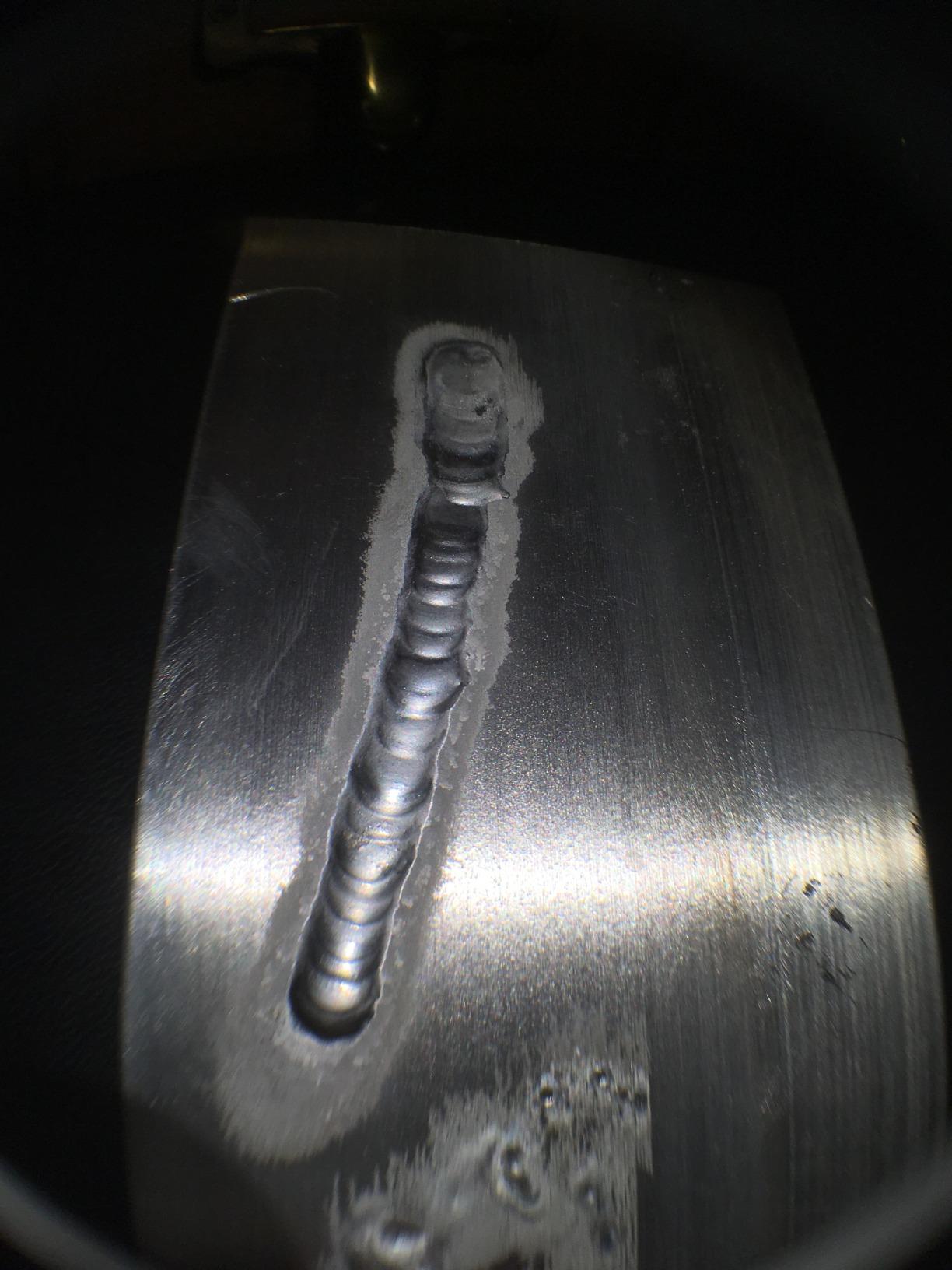
The torch is the quiet hero here. A CK Worldwide 17 Series Superflex torch with a flex head, CK Superflex hose and a USA-made CK DINSE connector is a torch you would normally buy separately, and it is the part of this package most likely to affect how your welding feels. The 200 Hz pulse frequency and adjustable AC frequency give you real control over aluminum bead shape, and the HF start plus pre- and post-gas-flow settings are the settings that keep a bead consistent from start to finish.
Owners repeatedly call the foot pedal on this machine smooth, and at a 40 percent duty cycle it has headroom for long garage sessions. The IGBT inverter with pulse width modulation is the platform underneath, which is the reason the arc behaves rather than hunting.
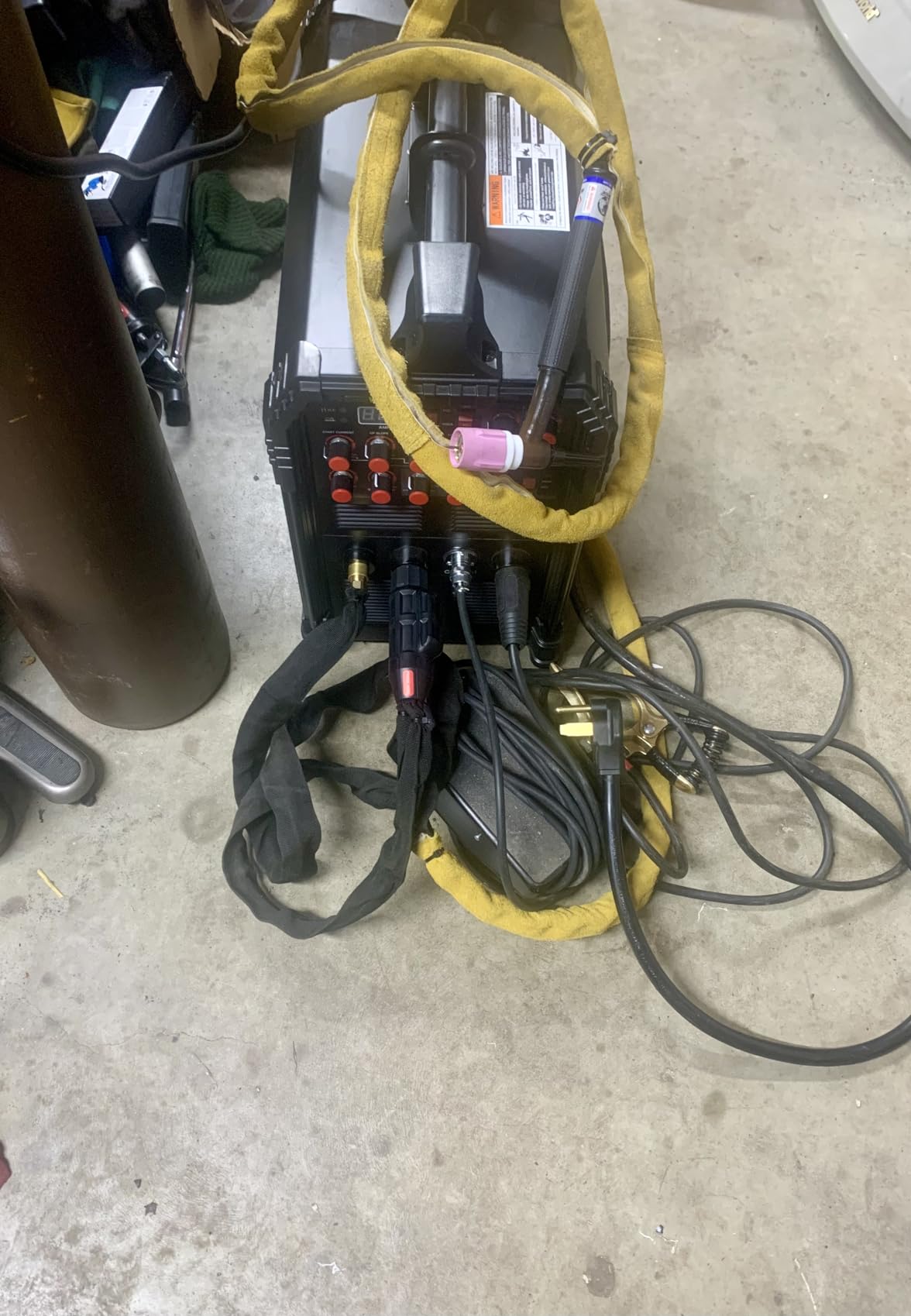
What you get that the spec sheet undersells
The instruction manual runs 57 pages and is written in plain English, which sounds like a small thing until you have just bought your first inverter. A lot of budget machines ship with a folded sheet of symbols, and that is where a lot of first projects die.
The analog knob layout is also a real advantage here. There is no menu to navigate with a helmet on, and you can set amperage by feel with a gloved hand. Owners who came from digital machines frequently call the knobs easier to learn.
Where it falls short for a hobbyist
The complaints are consistent but all cosmetic or minor. The dial markings are hard to read in low light, the cooling fans run continuously and are noticeably loud with no temperature-based shutoff, and the main power switch is on the back of the unit rather than the front.
The included argon regulator drew more criticism than anything else, with owners reporting an out-of-round hose fitting and a vent O-ring that leaked. Budget for a replacement regulator rather than assuming the one in the box is finished. The CK17 heat shields are also CK-only parts, and owners report they cost more than aftermarket equivalents.
2. AHP AlphaTIG 203Xi – Best Value With a Pedal in the Box
NEW 2024 AHP AlphaTIG 203Xi Amp IGBT AC DC Tig/Stick Welder with PULSE 110/220v 3 YEARS WARRANTY
AC/DC TIG and stick with pulse
60 percent duty cycle at rated output
High visibility LCD screen
Nova foot pedal with 25 ft cord included
Pros
- 60 percent duty cycle is high for the class
- LCD readout plus simple knobs
- stick mode is smooth and forgiving of arc length
- AC frequency adjustable from stick mode to correct arc blow
- light flexible torch hose and adjustable head
- support answered a question within about four hours
Cons
- On 120V the readout and the knob setting do not match
- machine is not power limited in 120V mode so it can trip a breaker
- 10 amp minimum output is restrictive on very thin material
- included ground clamp is cheaply built and its copper connection loosened quickly
This is the pick if pedal control on day one matters more than maximum amperage. The package list is unusually complete: a 250A stick electrode holder, a floating ball type brass argon regulator, a Nova foot pedal with a 25 foot cord, a Nova Rotaflex 9/17 TIG torch, a work clamp and a 240V to 120V adapter. You can run a first project the same afternoon.
Across 603 reviews the average is 4.6, with about 80 percent five-star. Long-term owners rate it as capable and dependable, and stick mode gets particular praise, which matters if you plan to do repairs and not just clean TIG fabrication. The 60 percent duty cycle at rated output is the highest published figure in this group, and it is a genuine advantage when you are on a roll and do not want the machine protecting itself.
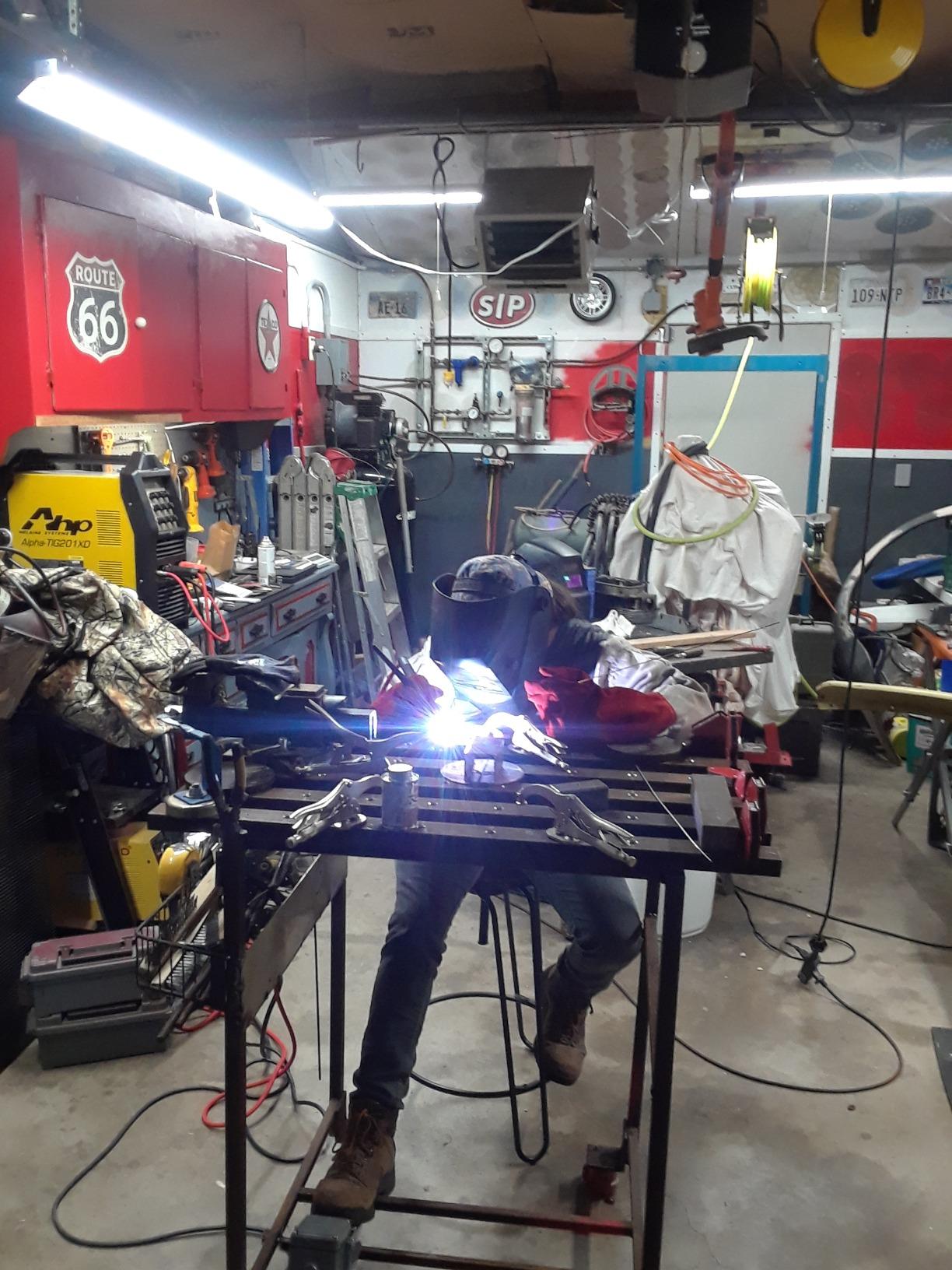
The 203Xi uses an IGBT inverter with pulse width modulation and welds 1/4 inch aluminum and 3/8 inch mild steel on 110 or 220 volts, with 7018 and 6013 electrode support. The current-generation model adds HV start, described as an electronic solid-state simulated high frequency start with no point gap to manage, alongside the HF start TIG mode the included pedal controls.
That combination of a high visibility LCD screen and simple knobs is a good middle ground for a beginner. The screen tells you what is happening while the knob tells you what to change, and the AC frequency adjustment is usable even from stick mode, which owners use to correct arc blow on stainless.
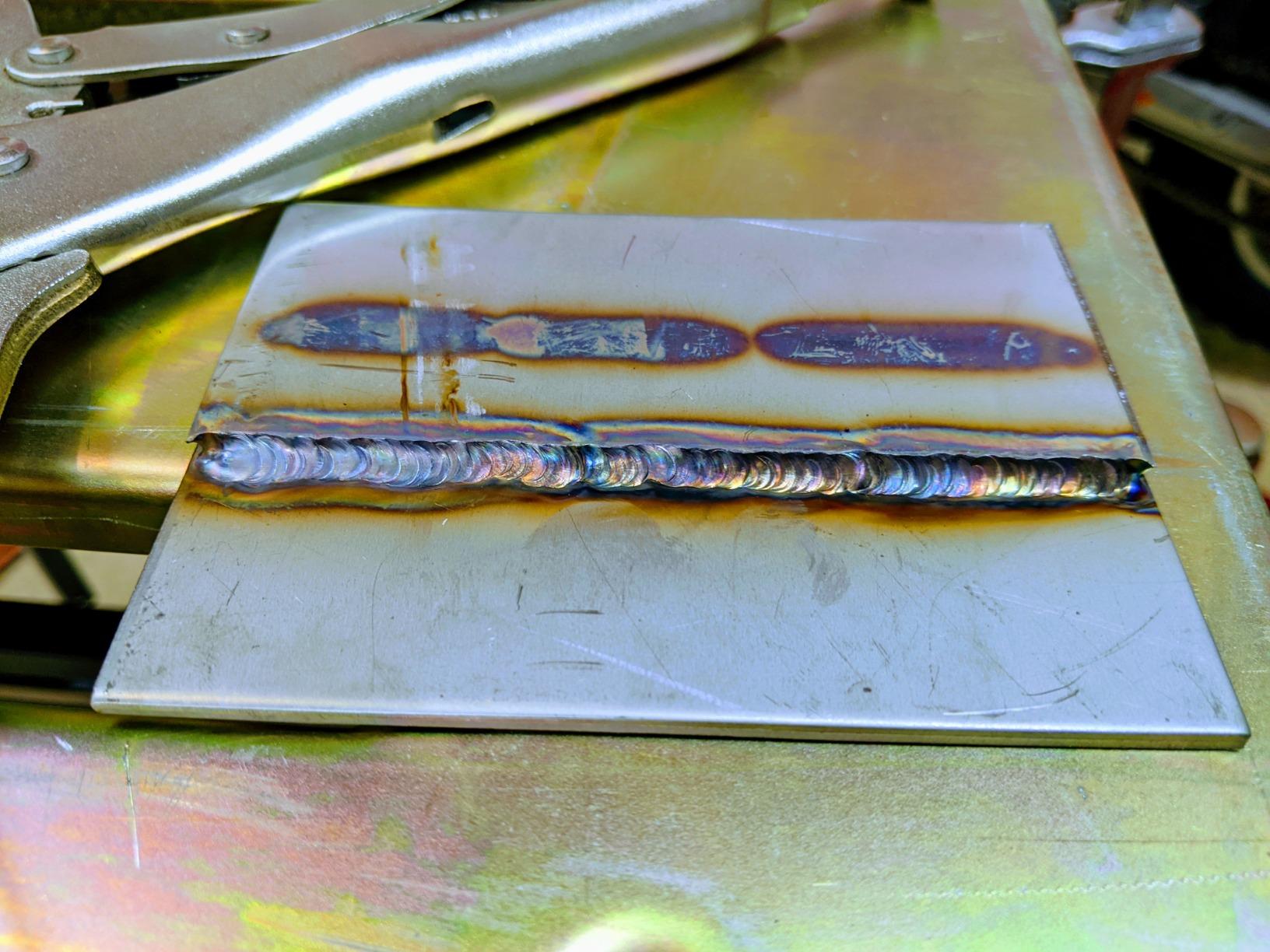
Why the included pedal and 25 foot cord matter
Pedal cord length is not a trivial specification. A 25 foot cord means you can set the machine under the bench and still reach the work, and Nova is one of the connector families hobby shops actually stock replacement pedals for, which is a practical advantage over a proprietary connector.
Several owners buy an aftermarket pedal or a stubby gas lens kit as their first upgrade, which tells you the machine has headroom once you know what you want from it. Support is also worth noting, with one owner reporting an answer in about four hours.
Where the 120V behaviour will frustrate you
The most repeated criticism is on 120 volts: the digital readout and the actual knob setting do not match. Owners also note the machine is not power limited in 120V mode, so running it very hot can trip a breaker. Neither is dangerous, but both are confusing when you are learning to trust a readout.
The 10 amp minimum output is the second limitation, and it is real on very thin material such as .20mm stainless. The included ground clamp is also the weakest part of the package, with owners reporting the copper connection loosening quickly, and the included flow meter gauge is inaccurate enough that many owners replace it or recalibrate by eye. The instruction manual is sparse on the pulse feature, so treat the pulse settings as something you will learn from practice rather than from the book.
3. LOTOS TIG200ACDC – Cheapest Complete Package With a Working Pedal
LOTOS TIG200ACDC 200A AC/DC Aluminum Tig Welder with DC Stick/Arc Welder, Square Wave Inverter with Foot Pedal and Argon Regulator 110/220V Dual Voltage Brown
200A AC square wave for aluminum
10-200A AC/DC TIG output
Foot pedal and argon regulator in the box
Automatic 110/120V and 220/240V switching
Pros
- AC square wave delivers clean aluminum welding at a budget level
- foot pedal included so amperage control works immediately
- runs on 110V and 220V with automatic switching
- complete package with torch
- regulator and ground clamp
- 80 percent power efficiency and IGBT cooling
Cons
- AC and pulse feature set is more basic than premium multi-process machines
- no pulse function listed among the headline capabilities
- smaller published owner review base than the AHP and Everlast machines
If the question is what is the cheapest way to get a real proportional pedal into a garage, this is the machine. The package includes the power supply, TIG torch, MMA clamp, foot pedal, argon regulator, a 220V to 110V converter pigtail, ground clamp, a consumable set and a manual, which is a complete bench rather than a machine that needs accessorizing.
Owner feedback is positive on value and on aluminum performance specifically. The 200 amp AC square wave inverter is built for the job hobbyists care about most, and 278 reviews at a 4.4 average puts it in credible territory even though the sample is smaller than the machines above it.
Output is 10 to 200 amps for TIG in both AC and DC, and 15 to 200 amps DC for stick with adjustable hot striking arc current. The AC square wave is what keeps aluminum beads clean, and the automatic dual voltage and dual frequency switching across 110/120V and 220/240V at 50/60Hz means you can move it between the garage and a small shop without a converter. It weighs 37 pounds, so carrying it up a set of stairs is realistic.
HF start hand torch control and foot pedal heat control are both specified, and that combination is the entire point here. A 30 day money back guarantee with 1 year replacement and a 3 year limited warranty on registration gives some protection on an entry machine.
What this budget tier gives you and takes away
You get 200 amps of AC square wave, which covers aluminum and stainless work, plus a foot pedal that is in the box rather than on a wish list. For a hobby fabricator making hardware, brackets or small aluminum parts, that is the part of the spec sheet that actually gets used.
What you give up is the parameter menu. The AC and pulse feature set here is more basic than the multi-process machines above, and no pulse function is listed among its headline capabilities. If you want to dial a frequency for thin-gauge heat control, you will be setting that somewhere else on the dial or on another machine.
Who should look past this one
If aluminum is more than occasional, the 200 amp ceiling and the simpler control set will be the first things you notice. The 80 percent power efficiency and IGBT cooling system are good engineering for the class, but they do not add features.
The honest comparison point is the Everlast PowerTIG 185DV later in this list, which is a lower output number but a far more established brand and a machine WeldingWeb members recommend for home fabrication by name. Choose the Lotos for the included pedal and the low entry cost, and choose the Everlast for a machine you might keep for a decade.
4. ARCCAPTAIN TIG200P – Best Waveform Control for Aluminum
ARCCAPTAIN TIG Welder AC/DC 200A with Pulse 7 in 1 Aluminum Welding Machine
7 in 1 including DC TIG, AC TIG and pulse
Square and triangular AC waveforms
12 adjustable parameters via MCU control
26.5 lb chassis with on-demand fan
Pros
- Seven welding modes in one machine including square and triangular AC waveforms
- large LED display readable in a welding helmet
- AC balance and frequency controls make aluminum clean
- fan runs only when needed so it is quiet at idle
- light enough at 26.5 lb to move around the shop
- wide parameter menu that stays approachable
Cons
- Foot pedal is not included and must be purchased separately
- proprietary XS12 aviation connector makes third-party pedals hard to source
- customer support was unresponsive to a warranty claim and to a pedal replacement request
- no settings chart on the machine body
This is the most capable machine per pound in the group, and also the one with the biggest pedal caveat. Seven modes are packed into it: DC TIG, DC pulse TIG, AC TIG, AC pulse TIG, AC pulse TIG square wave, AC pulse TIG triangular wave, stick and spot TIG. The waveform options are the reason it is worth a second look if aluminum is your priority.
At 242 reviews and a 4.3 average, it sits in the middle of this group on satisfaction. Owner feedback repeatedly praises the large LED display for legibility through a welding helmet, the AC balance and frequency controls for producing surprisingly clean aluminum, and the on-demand fan, which stays quiet at idle instead of running constantly.
The MCU digital control exposes 12 adjustable parameters, including pre-flow, initial current, up-slope, peak current, base current, down-slope, crater current, post-flow, pulse duty, AC frequency, AC balance and pulse frequency. That is a deeper menu than machines three times its size, and it welds 0.5 to 5mm aluminum and 0.5 to 10mm of other metals. 2T, 4T and spot torch control modes are supported alongside foot pedal remote control.
It is also the lightest machine with real feature depth here at 26.5 lb, so moving it between a bench and a project is not a two-person job. Professional welders who tested it cited it as the best budget unit they had used, which is not a small compliment from people who buy commercial machines.
Check the pedal connector before you commit
The foot pedal is not included, and the pedal interface uses an XS12 series aviation connector. That is the single most important fact on this page if you are considering this machine. A proprietary aviation plug is harder to source third-party than the 5-pin and Nova families hobby shops carry, so confirm the replacement pedal for your specific model exists before you buy the machine.
This is the connector mismatch problem in its clearest form, and it is why we put the compatibility section below. If you already own a pedal, do not assume it fits.
Quality control is the real weakness
Several reviewers report arriving damage rather than functional faults. One owner received a unit with the power cord sliced by the machine own case during shipping, and another reported a ground clamp that overheated and melted its wire casing in their hands. In both cases a replacement was involved, and in at least one the customer support response to a warranty claim and to a foot pedal replacement request was slow or unhelpful.
No settings chart is printed on the machine body and some units arrive without a screen protector, so photograph the parameter menu when you get it set up. A 3 year quality service is offered, but the owner-reported response times are the thing to factor in.
5. Sunstac TIG-250 TP ACDC – Most Amps for the Entry Tier
Sunstac 250A Aluminum TIG Welder with Pulse ACDC Foot Pedal Control
Up to 250A output on 110/220V
Seven modes including pulsed AC and DC
LCD screen with intelligent parameter saving
2T, 4T and spot plus pedal remote control
Pros
- High 250A output for the entry tier
- full LCD screen easier to read than older LED versions even through a helmet
- intelligent parameter saving restores previous settings after a restart
- supports pedal plus 2T
- 4T and spot modes and auto-detects a plugged pedal after restart
- at 29.8 lb it is one of the lighter machines in this class
Cons
- Foot pedal is not included in the package despite the pedal control feature
- manufacturer states AC mode current measurement is not accurate
- inconsistent AC balance can cause measured current to fluctuate
- 15 percent one-star reviews is the highest share in this group
The Sunstac is the amp number answer. It is specified to put out up to 250 amps on 110 or 220 volts, which is the highest published output among the entry-level machines here, and it does it at 29.8 pounds. The power exists, in other words, whether the rest of the package keeps up is a separate question.
At 145 reviews and a 4.1 average, it carries the lowest average rating of the eight, with about 15 percent one-star reviews. That is worth taking seriously rather than averaging away, especially since the top-rated machines here are only modestly more expensive to buy.
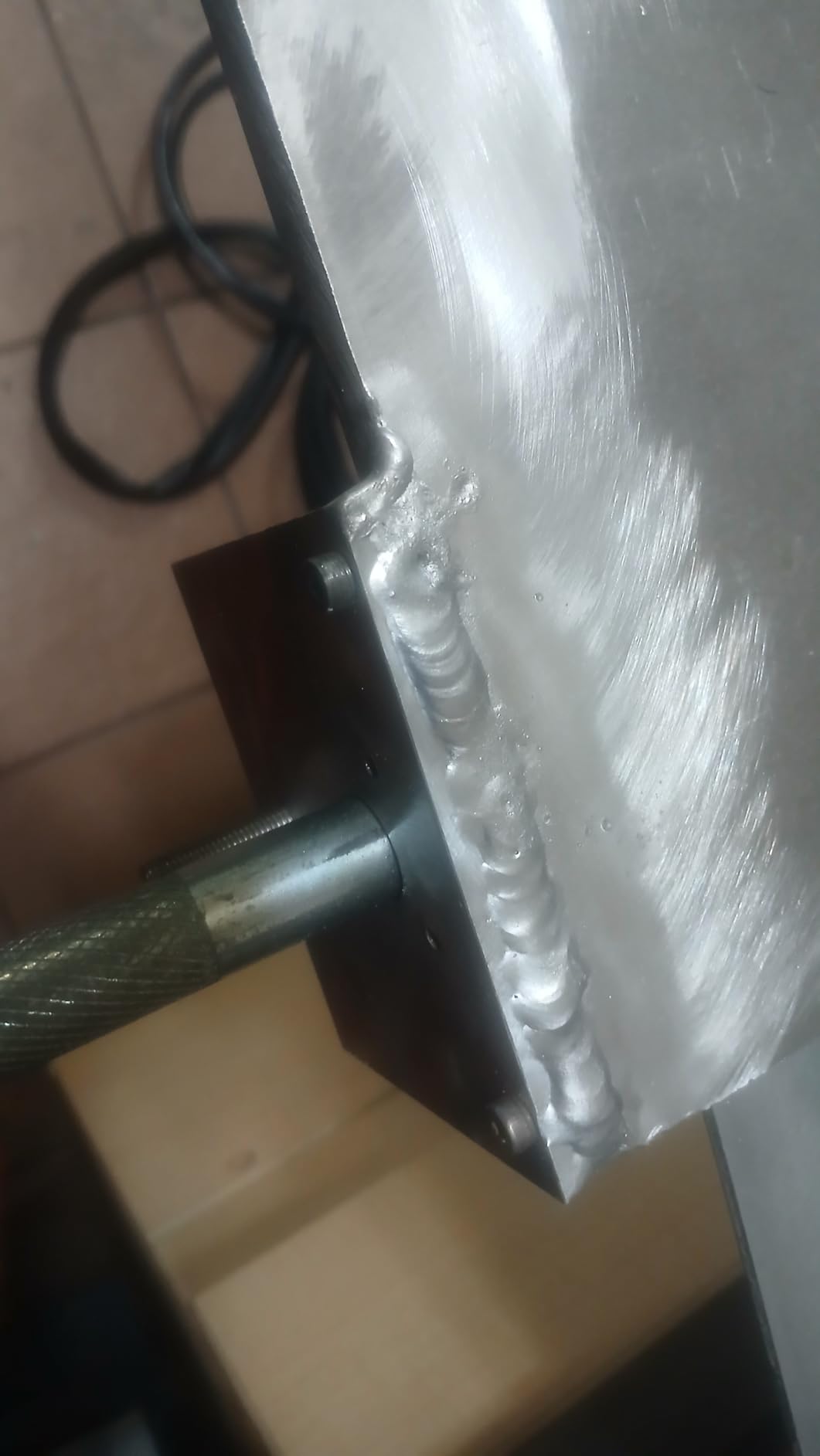
What it does well is the screen and the memory. The newer LCD replaces an older LED display and shows voltage, current and settings legibly while wearing a helmet, which sounds ordinary until you have squinted at a four-digit LED through a dark filter. The intelligent parameter saving restores previous welding settings after a restart, and the machine automatically returns to foot pedal mode after a restart if a pedal is plugged in, with 2T, 4T and spot TIG modes supported.
Seven modes are covered: high-frequency AC, high-frequency DC, pulsed AC, pulsed DC, AC spot, DC spot and stick. It welds aluminum, alloy steel, copper, stainless steel, carbon steel and iron, with an aluminum ceiling of 4mm at 110V and 6mm at 220V, and it comes with 118 inch 300A rated work clamp and electrode holder cables.
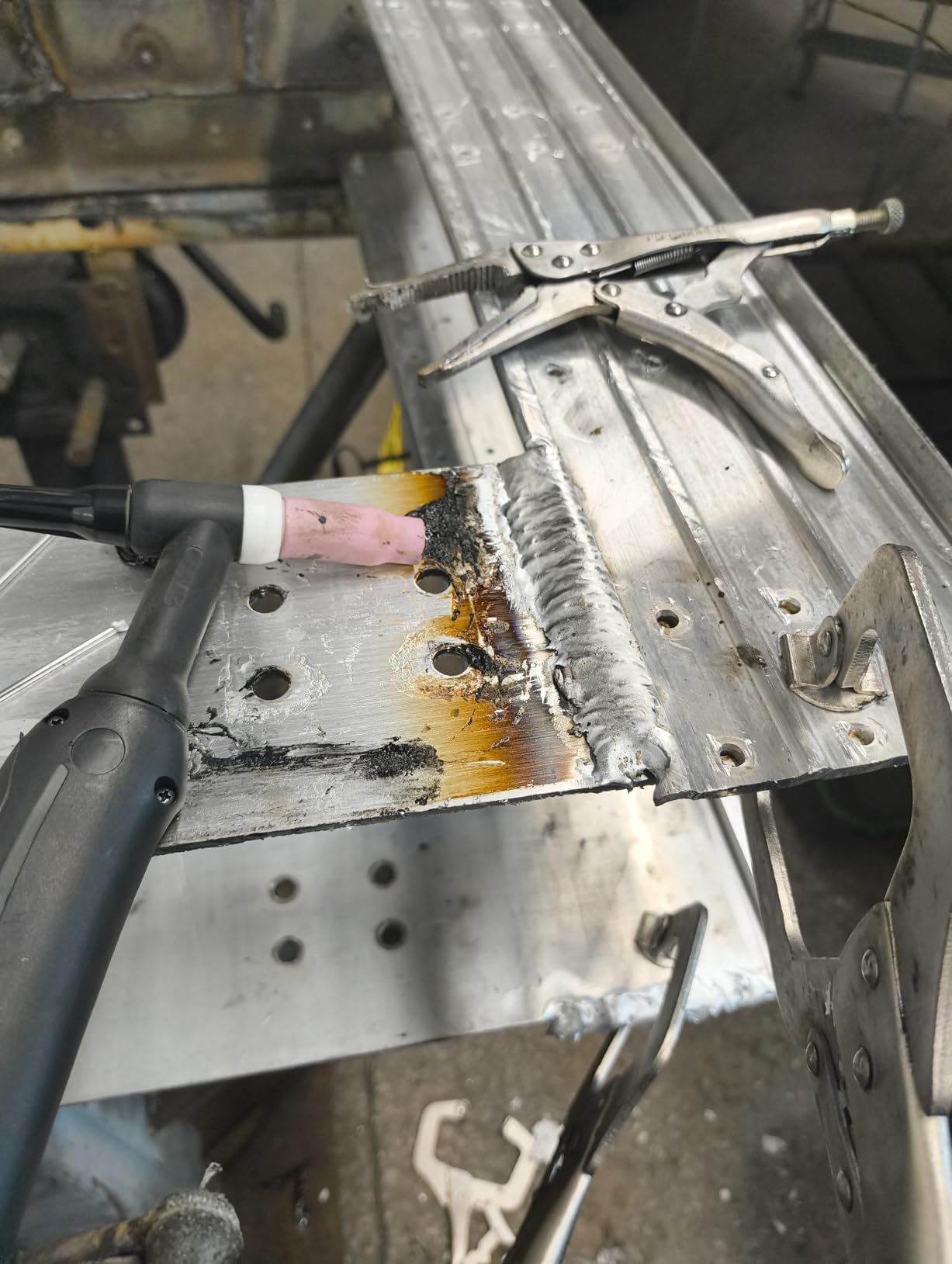
Why parameter memory matters more than it sounds
Setting up 250 amp of machine twice for every project is how people stop welding. The intelligent parameter saving means you dial in a material, a thickness and a current once, and the machine brings it back after a power cycle, which is the difference between a two-minute setup and a ten-minute one on a small job.
Auto-return to pedal mode is the other detail that matters for this topic. Plugging the pedal in and restarting puts the machine straight into pedal control rather than leaving you in torch switch mode wondering why nothing happens.
The AC measurement warning is not small
The manufacturer itself notes that current measurement in AC mode is not accurate, and that inconsistent AC balance can skew the readings. On a machine whose selling point is amps, knowing your display is optimistic on aluminum is something you need to calibrate for with practice rather than trust.
The foot pedal is also sold separately despite the pedal control headline, and the 15 percent one-star share is the highest in this group, so buy from a seller with straightforward returns. The 4mm aluminum ceiling at 110V is a modest limit compared with the machines above it, which matters if your shop is on 120 volts.
6. Everlast PowerTIG 200DV – Lowest Start Amps and Built-In Lift Start
New Everlast PowerTIG 200DV 110/220 Dual Voltage 200amp Pulse ACDC Welder
5A DC and 20A AC minimum start amperage
Lift start function for where HF start is unwanted
Pre-flow and post-flow gas control
Arc Force DIG to reduce spatter
Pros
- Reliable IGBT inverter delivers a stable smooth arc
- very low 5A DC and 20A AC start amperage makes thin-gauge work easier
- lift start option for situations where high-frequency start is unwanted
- pre-flow and post-flow gas control plus Arc Force DIG to reduce spatter
- 120V/240V dual voltage works in almost any environment
- digital display for clear readout
Cons
- Heaviest machine in this group at 60 pounds which limits portability
- highest listing cost here which narrows the budget for torches gas and accessories
- published listing details are sparse and include unrelated camera-style attributes
The 200DV is the machine for someone whose bench does not move. At 60 pounds it is the heaviest here by a wide margin, and that is not a flaw if the welder lives in one corner of a garage and everything else gets carried to it.
Its distinguishing spec is the low start amperage, as low as 5 amps for DC TIG and 20 amps for AC TIG. That range is what lets you strike an arc on thin material without a big machine tearing through it, and it is the closest match in this group to the 5A minimum on the AHP Alpha-TIG 225Xi. Reviewers single it out for thin-gauge work.
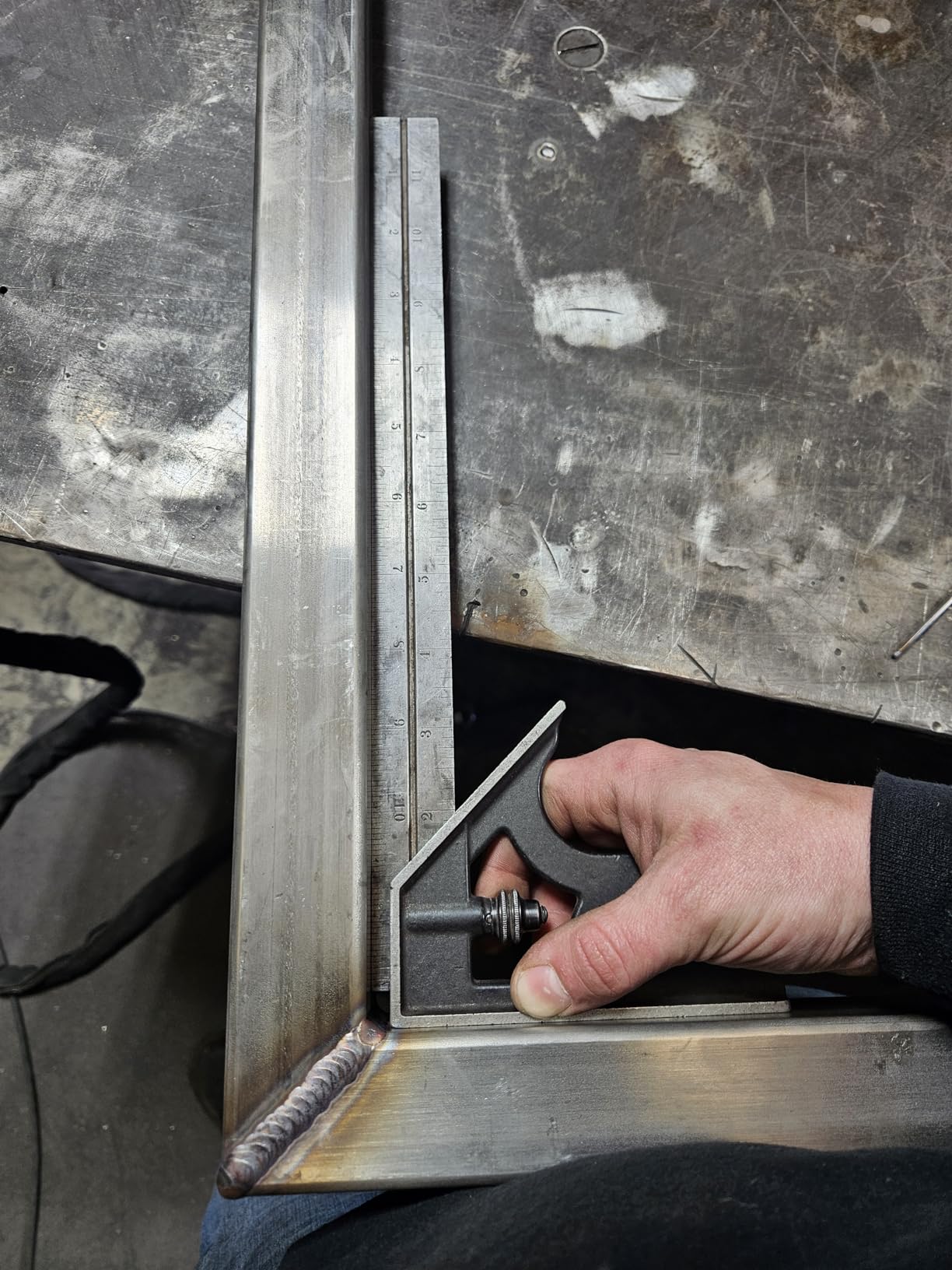
The IGBT inverter is described as reliable, and the 4.6 average across 116 reviews is backed by a rating distribution with 83 percent five-star and no two-star reviews at all, which is an unusually clean spread. Only 6 percent one-star is low for this class.
The gas management is where a lot of real craft lives. Pre-flow and post-flow controls protect the tungsten and let the last of the shielding gas run after the arc ends, and Arc Force DIG improves performance and reduces spatter, which means less grinding to clean a bead. There is also a lift start function for when you do not want a high-frequency start.
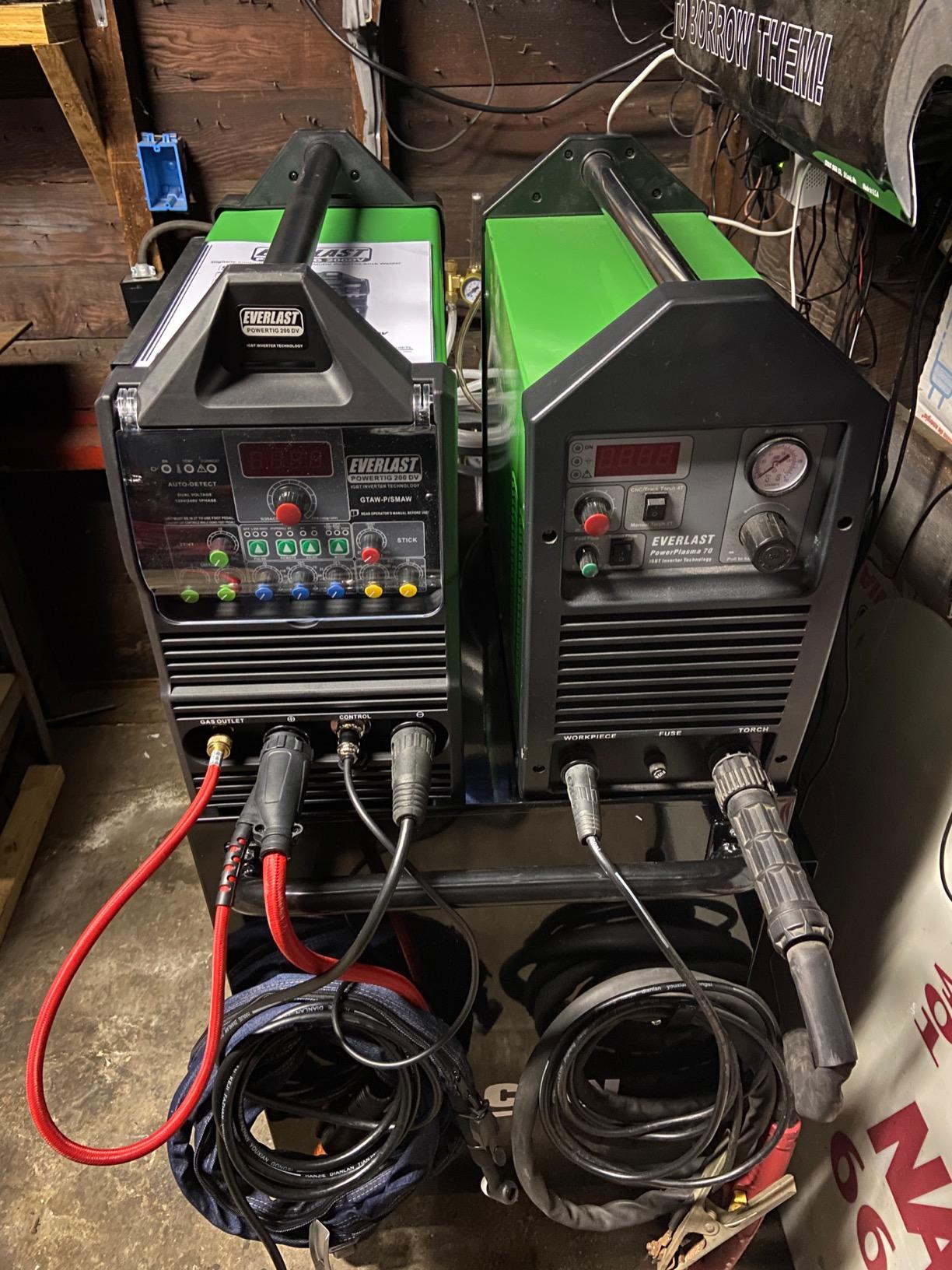
Why lift start matters in a home shop
High-frequency start is convenient but it does impose a small electrical field near the workpiece, and some people prefer not to have it. Lift start gives you conventional ignition where you touch the tungsten to the work and lift, which is slower to initiate but behaves predictably on a large grounded workpiece like a steel table or a vehicle panel.
For a hobbyist working alone in a small space, having the option to choose per job is worth more than having the fastest possible start on every one. It is one of the few features in this roundup that no other machine here offers.
Where the weight and the cost bite
Sixty pounds is the heaviest machine in this group, and it is a shop machine rather than a portable one. If you want to take the welder to a friend’s garage or onto a job, plan around it rather than expecting to carry it.
It is also the most expensive listing in this roundup, which matters more than the number itself because a TIG setup is a system. Money not spent on the machine is money available for a torch, a good regulator, gas, tungsten and a helmet, and those consumables affect every weld you make. Published listing details are also sparse and include some unrelated camera-style attributes, so the spec list above is thinner than the others here.
7. Everlast PowerTIG 185DV – Simplest Pedal Package With an Established Brand
2021 Everlast PowerTIG 185DV AC/DC TIG Stick Welder 110/220 Volt Inverter-Based Dual Voltage 185Amp with Pedal Package
Foot pedal included in the package
AC/DC TIG pulse with two preset frequencies
110/220V dual voltage
40 lb chassis with analog-style dials
Pros
- Smooth steady arc from the digitally controlled IGBT inverter
- foot pedal included so pedal control works immediately
- two pre-programmed pulse settings at 1 Hz and 50 Hz that are simple to select
- analog-style dials quicker to adjust than menu-driven panels
- dual voltage works in a home shop or on the road
Cons
- Only 185 amps
- the lowest output rating among the AC/DC machines here
- only two preset pulse frequencies compared with a full pulse menu
- 40 pounds is portable but not a true job-site lightweight
- smallest review base of the premium-priced machines here
WeldingWeb members mention the Everlast brand by name when they recommend a first machine for home fabrication, and the 185DV pedal package is the version that arrives ready to weld. The foot pedal is included in the box, so the single most important feature for this topic is not an accessory you have to source separately.
At 77 reviews and a 4.5 average, the review base is small, and 15 percent three-star reviews is a little higher than you would like. The 4.5 sits alongside the other 4.6 in this roundup though, and the value proposition is the pedal-inclusive package with a brand that has a real service network.
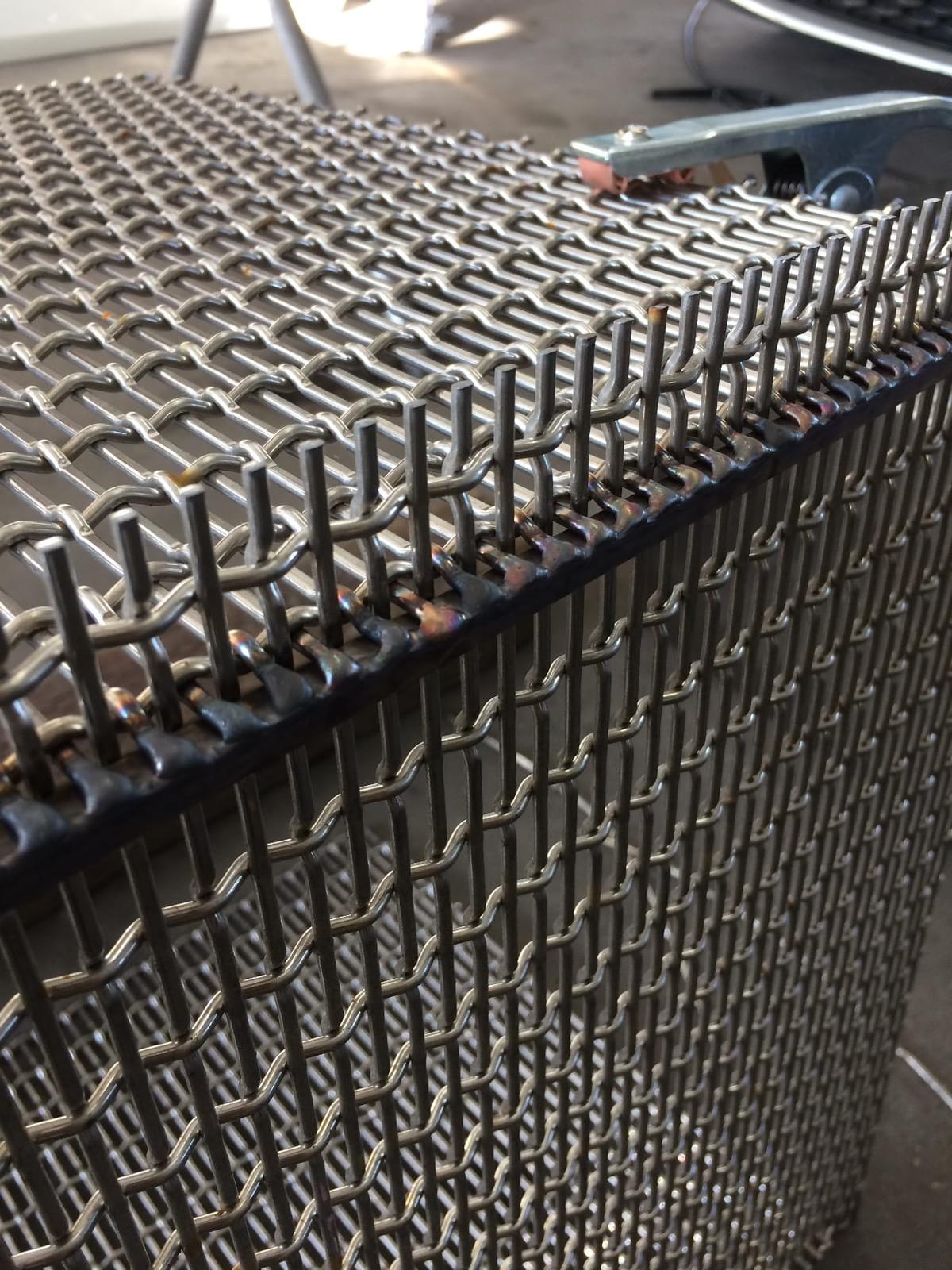
The machine is a digitally controlled IGBT inverter producing a smooth, steady arc, running on 110 or 220 volts. AC and DC TIG pulse comes with two pre-programmed settings, 1 Hz or 50 Hz per second, plus stick welding. The 40 lb chassis is light enough to carry with one hand and stable enough to put on a bench without wobble.
The analog-style settings are the design decision that matters for a first machine. You set amperage by turning a dial that points at a number, with no menu and no confirmation step, which is exactly what you want while learning what a number does to a bead.
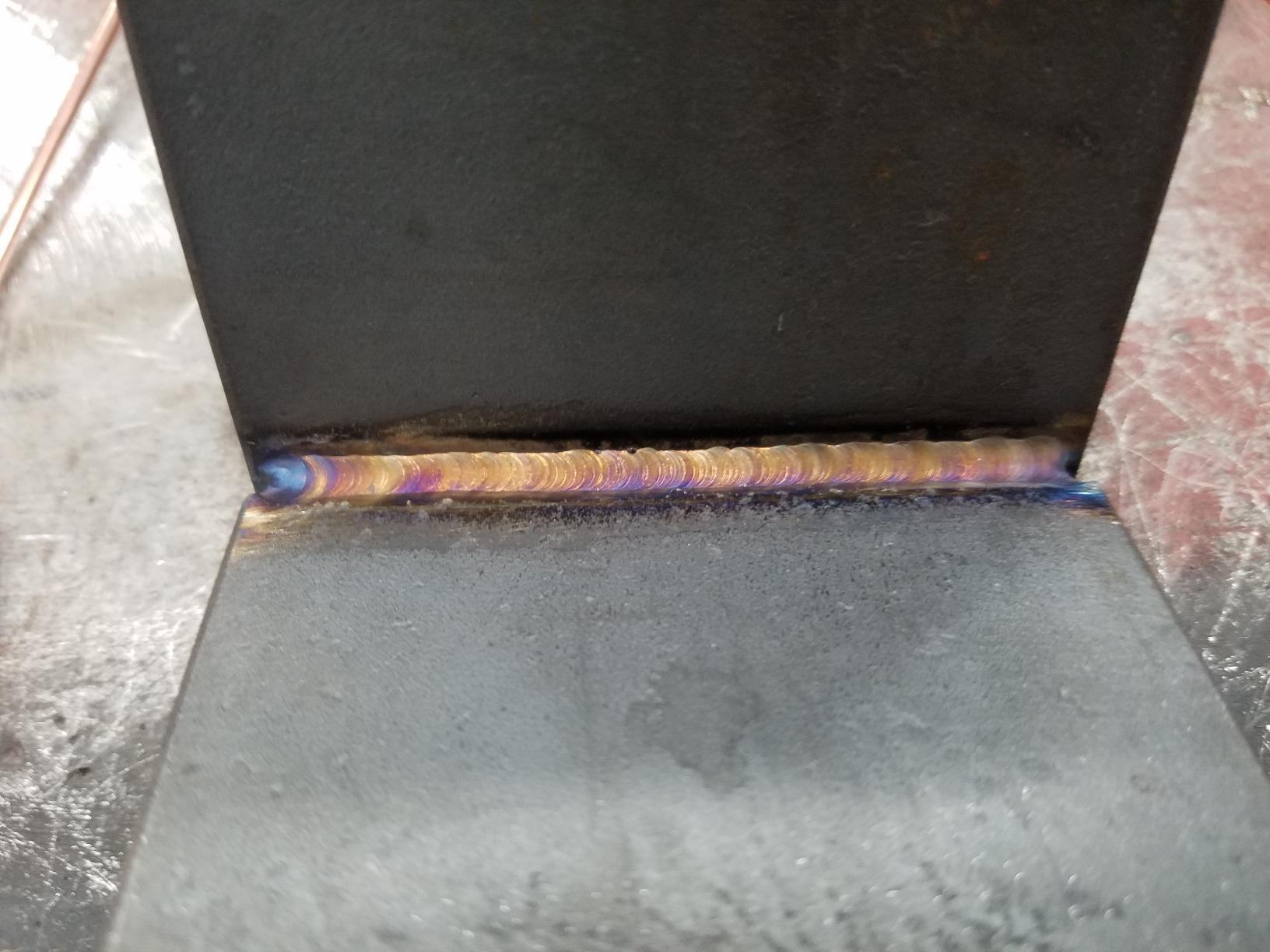
Is 185 amps enough for hobby fabrication
For the work most hobbyists describe, yes. Thin sheet, tubing, small brackets, bicycle and furniture hardware and general repair all sit comfortably inside 185 amps, and the AC capability covers aluminum. The limit shows up on thicker plate, and if you plan to run heavy stainless or structural work regularly you will outgrow it sooner than you expect.
Two preset pulse frequencies is the compromise here. They cover a slow pulsed look at 1 Hz and a fast, cooling-focused pulse at 50 Hz, but if you want to sweep a frequency to find the right value for a specific joint, this machine will not let you.
What you accept by choosing a simpler machine
Owners report a smooth arc and easy adjustment, and Everlast duty cycle and adjustment range are marketed as outperforming similar Miller and Lincoln machines. What you give up is menu depth and headroom, plus a review base thin enough that long-term data is limited at 77 reviews.
At 40 pounds it is portable but not a genuine job-site machine. If you split your time between the garage and someone elses driveway, this is still a manageable lift, just not a one-hand carry for the whole day.
8. AHP Alpha-TIG 225Xi – Best Pulse Range and Lowest Start Current
New 2024 AHP Alpha-TIG 225Xi 200 Amp IGBT AC/DC Pulse TIG/Stick Welder 110v/220v Dual Voltage
Full 225A on 240V and 150A on 120V
Pulse frequency adjustable 0.5 to 200 Hz
5A DC and 20A AC minimum start current
Independent pre-flow, post-flow and down-slope
Pros
- Highest average rating in this group at 4.7 with no 1 or 2 star reviews
- full 225A output on 240V with a usable 150A on 120V
- pulse frequency adjustable from 0.5 to 200 Hz
- very low 5A DC and 20A AC minimum start amperage
- independent pre-flow post-flow and down-slope adjustment
- rear water cooler outlet supports higher-amperage torch setups
Cons
- Smallest review base in this group at 42 reviews so long-term reliability data is thin
- published product detail is thinner than the AlphaTIG 203Xi with no dimensions or weight given
The 225Xi has the best paper specification for thin-gauge hobby work in this roundup, and the highest average rating at 4.7. Its rating distribution is unusual: 77 percent five-star and 15 percent four-star, with 3 percent three-star and no one or two-star reviews at all, which is a satisfaction profile you rarely see.
That profile comes with a 42-review base, the smallest here, and we want to be straight about the limitation. With 42 reviews, long-term durability is not yet well documented, so you are buying a strong specification with limited long-term evidence rather than a machine with a decade of owner reports.
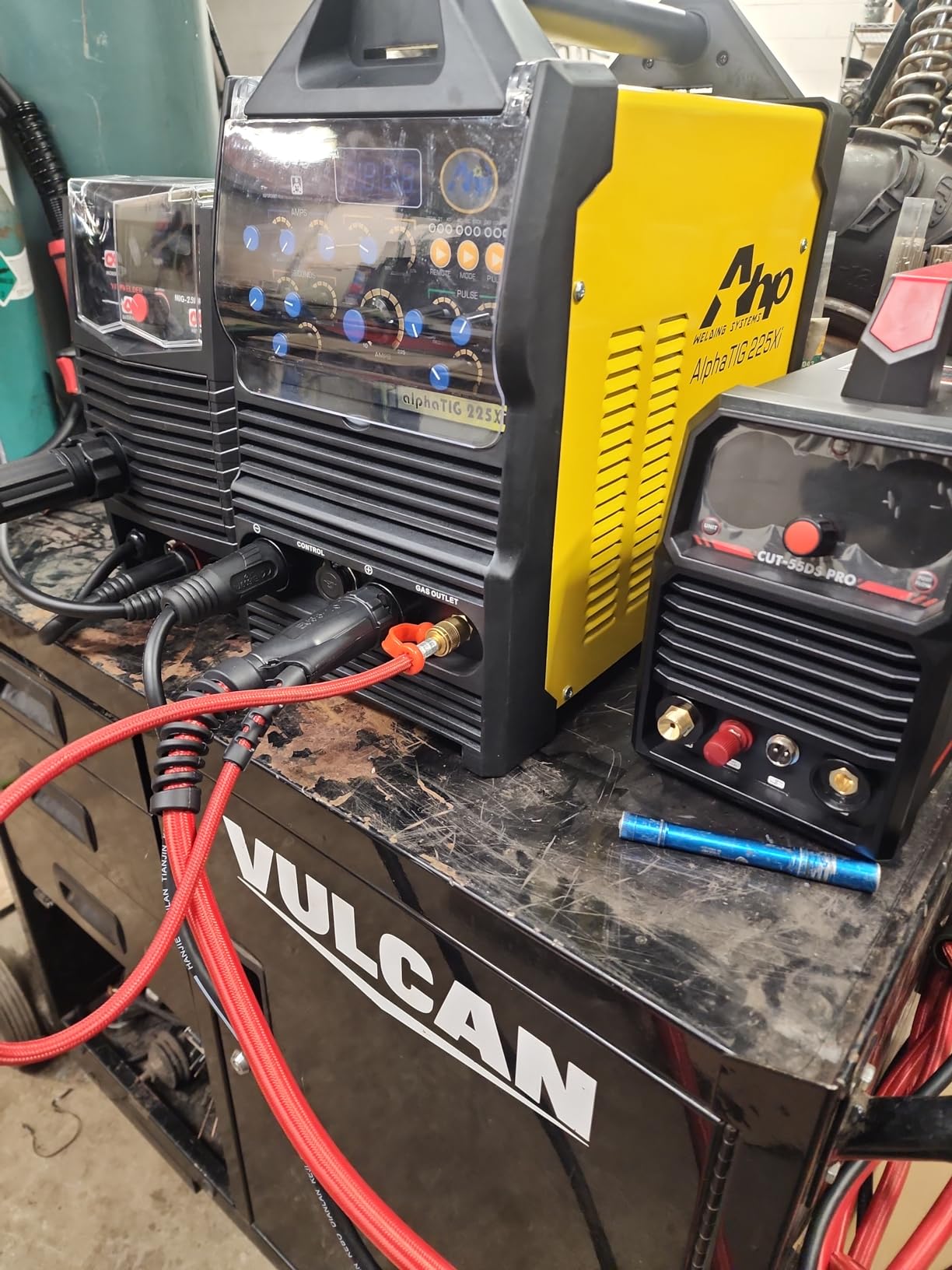
Output is full 225 amps on 240V and 150 amps on 120V, which is an honest 120V figure rather than a headline number. Pulse frequency is adjustable from 0.5 to 200 Hz, the widest published range among these machines, and minimum start amperage is 5A DC and 20A AC, matching the Everlast 200DV for the lowest floor in the group.
Gas control is the other strength. Pre-flow adjustable from 0 to 10 seconds, post-flow adjustable from 0 to 10 seconds, and independent down-slope adjustment give you direct control over how a weld ends, which is precisely the cratering problem a pedal user needs help with. The 2T/4T function with start and end amperage adjustment in 4T mode means the machine ramps the current down for you, so the foot is not the only thing managing the end of a bead.
Why the pulse range beats raw amps for hobby work
More amps is not automatically better for a hobbyist. What you need on thin material is control, and a 0.5 to 200 Hz pulse range lets you dial heat in and out fast enough to keep a puddle consistent on sheet metal that would otherwise burn through in a heartbeat.
The water cooler outlet on the rear panel is also a quietly useful feature. If you ever move to higher-amperage torch setups, a water-cooled torch needs that connection, and having it on the machine avoids a retrofit.
What the thin documentation costs you
There are no published dimensions or weight figures for this model, which is an annoyance when you are planning a bench and need to know whether it fits. Published product detail is thinner overall than for the AlphaTIG 203Xi in this same guide, so you may need to contact support for the missing figures.
The instruction and setup story is not as well trodden either, at 42 reviews, so expect to work the controls out from the machine rather than from other owners. If you want the AHP brand with more published detail and a much larger review base, the 203Xi earlier in this list is the same manufacturer with three times the evidence behind it.
How to Check Pedal Compatibility Before You Buy
Compatibility is where hobby buyers lose money, because pedal connectors are not standardised across the machines in this roundup. A foot pedal is not a universal accessory, and the wrong one either will not physically plug in or will plug in and do nothing useful.
Check these five things before you order anything.
Confirm the connector type. The most common hobby TIG pedal connector is the 5-pin standard, used across a wide group of machines. The Everlast packages here take Nova-family pedals with 25 foot cords, and the ARCCAPTAIN uses an XS12 series aviation connector that is proprietary and harder to source third-party.
Confirm whether a pedal is included. Three of the eight machines in this roundup bundle one: the PrimeWeld TIG225X, the AHP AlphaTIG 203Xi and the Everlast PowerTIG 185DV. The Lotos TIG200ACDC also lists a foot pedal in its package contents. The ARCCAPTAIN, the Sunstac and the AHP 225Xi are pedal-ready with the accessory sold separately.
Confirm the machine has a pedal mode. A machine with a pedal port is not always set up for it. The Sunstac automatically returns to foot pedal mode after a restart if a pedal is connected, and supports 2T, 4T and spot modes. Look for pedal mode or remote amperage in the manual before you blame the pedal.
Check it is proportional, not on and off. Forum users report cheap aftermarket pedals that behave as crude on and off foot switches rather than delivering true proportional amperage control. That is the value trap. A real pedal uses a potentiometer, and the common value is around 10k.
Check the cord length against your shop. The AHP 203Xi includes a 25 foot cord. A short cord with a machine you want to put under a bench is a daily irritation, and one WeldingWeb user described improvising with the pedal between their knees, which is a sign the cord was too short.
One more thing worth knowing before you buy anything at all. Forum users occasionally report wondering whether a foot pedal is actually broken when the machine was simply not in pedal mode, so test the machine with a known-good pedal before you conclude the accessory has failed.
Amp Reference: The Rule of 33 and Material Thickness
The rule of 33 is a starting point, not a law: roughly 1 amp for every 0.001 inch of material thickness on steel. So 0.010 inch material starts around 30 amps, 0.035 inch around 33 amps per thousandths giving a little over 100, and 0.125 inch material lands around 125 amps. It is a rough way to set the ceiling on a machine before you start tuning with a pedal.
Apply it with judgement. Thin material needs heat to move at all, and the practical floor is usually a minimum current the machine can deliver, not the number the rule gives you. Thick material has a maximum, and asking a 185 amp machine to run 0.25 inch plate means constant pauses, a torch that overheats and a duty cycle problem.
Stainless and aluminum behave differently from mild steel. Stainless runs hot and is unforgiving of excess amperage because it conducts heat along the joint, so stay at or below the steel figure. Aluminum is where AC output earns its place, and the Sunstac manufacturer note about AC-mode current measurement being inaccurate is worth remembering while you calibrate your own feel.
Tungsten choice follows from this. A 2.4mm lanthanated tungsten handles DC steel and stainless work well and is the sensible default for a hobby shop, while AC aluminum work runs on a different balance, often zirconiated or ceriated. HF start and start amperage settings matter here, because a high start current on thin aluminum burns a hole before the pedal comes into your control.
How to Choose a Pedal Controlled TIG Welder
Start from the work, not the amperage number. List what you actually intend to weld, and its thickest point, then pick the machine that covers that with a little headroom. A 200 amp class machine handles essentially all hobby sheet metal, tubing and hardware work. You move to 225 amp and above when you want thick plate, heavy stainless or production consistency rather than occasional work.
Then check the four things that change your experience daily.
AC output if aluminum is in the plan. Aluminum will not weld acceptably on DC alone. The PrimeWeld TIG225X, the AHP 203Xi, the Lotos TIG200ACDC, the ARCCAPTAIN, the Sunstac and both Everlast machines here all provide AC. A machine that is DC TIG only will leave you wanting an AC capable unit within a year if aluminum is more than a curiosity.
HF start versus lift start. HF start is a solid-state or high frequency ignition that starts the arc without touching the tungsten to the work, and it is what most hobbyists want. The Everlast 200DV also offers lift start, which is useful when you do not want a high-frequency field near a workpiece.
Pulse range. Pulse TIG rapidly cycles current to manage heat, control warping and keep thin material from burning through. The AHP 225Xi runs 0.5 to 200 Hz, the PrimeWeld runs 200 Hz with adjustable AC frequency, and the ARCCAPTAIN exposes 12 parameters including pulse duty, AC frequency and AC balance. The Everlast 185DV offers two presets, and the Lotos does not list pulse among its headline capabilities. For thin-gauge hobby work, a wide range is worth paying for.
Duty cycle and gas management. Duty cycle is how long you can weld at a given output before the machine needs to cool. The AHP 203Xi publishes 60 percent at rated output, the PrimeWeld lists 40 percent, and the rest do not all publish figures. Pre-flow and post-flow controls, down-slope adjustment, and 2T/4T with start and end amperage are what stop a bead cratering at the end, which is the same problem a pedal is trying to solve from the other end.
Weight and voltage. Every machine here is 110/220V or 120/240V dual voltage except where the listing differs, which means you are not locked to one outlet. Weight is the practical limit: the Sunstac at 29.8 lb and the ARCCAPTAIN at 26.5 lb move easily, the Lotos at 37 lb is a one-hand carry, the Everlast 185DV at 40 lb is manageable, and the Everlast 200DV at 60 lb is a shop machine. If your bench is shared with other tools, weight decides how often you use the thing.
Budget the whole system, not the machine. A TIG setup needs a machine, a torch, a foot pedal if it is not included, a proper argon regulator, shielding gas, tungsten in two or three diameters, a good ground clamp and a helmet. A cheap ground clamp is worth replacing on several machines in this roundup, and the included regulator on the PrimeWeld drew repeated criticism. Budget for a regulator and a clamp as a first upgrade and your money goes further than a larger machine with a bad accessory.
Do not overlook a class night. The most repeated advice across hobby welding forums is to take a class with a good instructor before buying gear. A foot pedal is easy to use and hard to learn, and an hour with someone watching you weld will save you the frustration that makes people blame the machine.
One more setup note for a home garage. Fume management comes up constantly in hobby welding forums, and extraction matters more than people expect. Ventilation, a hose running outside, and keeping the extractor head near the arc are what let you spend an evening welding rather than a ten-minute session.
Once the machine is chosen, our hobby workstation guide covers the bench, torch lead routing and the layout that makes foot pedal positioning possible without a cable fight.
Frequently Asked Questions
Is a pedal necessary for TIG welding?
For bench and stand welding, yes. A foot pedal gives proportional amperage under your foot so your hands stay on the torch and filler rod, which is the difference between a rough bead and a repeatable one on thin material. For under-vehicle, overhead and out-of-position work it is useless, because your foot cannot stay on the pedal. In that case a smooth 2T torch mode matters more.
What is the cheapest TIG welder with a pedal?
The cheapest route to proportional foot control is a machine that bundles the pedal rather than selling it separately. Among the machines we reviewed, the Lotos TIG200ACDC is the lowest-cost complete package and lists a foot pedal, argon regulator, torch and ground clamp in the box. The AHP AlphaTIG 203Xi and the Everlast PowerTIG 185DV also include a pedal at a higher tier.
What is the rule of 33 in TIG welding?
The rule of 33 is a rough starting point of about 1 amp per 0.001 inch of material thickness on steel. So 0.010 inch steel starts near 30 amps and 0.125 inch steel near 125 amps. It sets the ceiling on a machine before you tune with a pedal, and you move below it for stainless because heat conducts along the joint.
What is the best TIG welder for hobbyists?
For a hobbyist working at a bench on aluminum, stainless and thin sheet, the PrimeWeld TIG225X is the strongest all-rounder we found, with 225 amps of AC and DC, pulse at 200 Hz, a CK Worldwide Superflex torch and the deepest review base in the group. If the pedal being in the box on day one is the priority, the AHP AlphaTIG 203Xi pairs a foot pedal with a 60 percent duty cycle.
What is the best TIG welder machine for beginners?
The best beginner machine here is the Everlast PowerTIG 185DV because it arrives with a foot pedal, uses analog dials you set by pointing at a number, and has no menu to navigate with a helmet on. The AHP AlphaTIG 203Xi is the alternative if you want an LCD readout and a 60 percent duty cycle, while the PrimeWeld TIG225X is the choice if you plan to grow into aluminum and pulse work quickly.
What is a good small welder for crafts?
For craft-scale work, what matters is the low end of the amperage range, not the top. A 5 amp DC start current and roughly 20 amps AC minimum is the practical floor for thin jewelry-scale or decorative work, which is why the AHP Alpha-TIG 225Xi and the Everlast PowerTIG 200DV stand out. Check the minimum output before buying, because a 10 amp floor is restrictive on very thin material.
Conclusion
The best pedal controlled TIG welder for hobby fabrication in 2026 is the PrimeWeld TIG225X, because it pairs 225 amps of AC and DC with real pulse control, a torch you would normally buy separately, and the largest owner review base we found, at 4.8 across 1426 reviews. Buy the AHP AlphaTIG 203Xi if a foot pedal in the box and a 60 percent duty cycle matter more than maximum amps, and buy the Lotos TIG200ACDC if getting proportional foot control into a garage at the lowest cost is the goal.
Buy the ARCCAPTAIN TIG200P for the deepest waveform menu, the Sunstac for amps and parameter memory, the Everlast 200DV for a shop bench that never moves, the Everlast 185DV as the simplest first machine, and the AHP Alpha-TIG 225Xi for thin-gauge work with the widest pulse range. Whatever you choose, confirm the pedal connector before you order, and skip the pedal entirely if your work happens under cars and on ladders.