
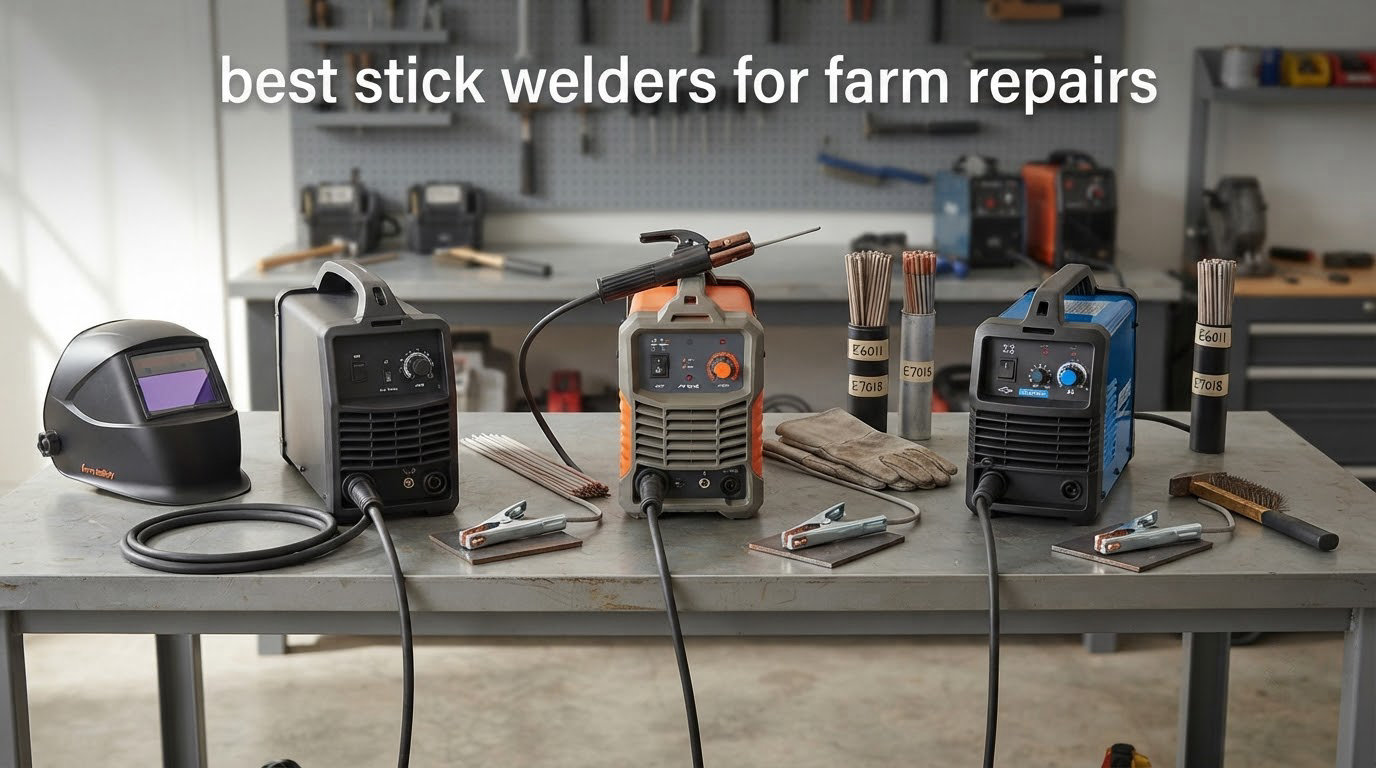
A tractor down at the far end of the pasture is a machine that waits for nobody. When the loader arm on your old Case finally cracks through beside the weld, the choice is simple: pay a mobile welder to drive out, or own a machine that fits in the truck bed. I have been putting stick welders through gate repairs, hitch rebuilds, mower deck patches and post-drag frame work for the last few seasons, and the gap between a cheap inverter and a mid-range one shows up fast on dirty, rust-eaten farm steel.
That is what this roundup covers: the best stick welders for farm repairs in 2026, tested against the things that actually matter out there. Not arc specs on a spec sheet. Not a clean hobby garage. Real considerations like whether the machine starts an arc on rust, whether it runs on the 20-amp circuit in the shop, whether you can carry it to the back forty with one hand, and whether the duty cycle survives a full afternoon of bead-on-bracket welding.
Stick welding is not outdated. It is the most forgiving process you can buy for farm work, because the electrode coating does the shielding and a hot start and arc force handle the ignition for you. A MIG machine welds cleaner, sure, but it wants clean gas, clean wire and a shop. I still pick up a 6011 rod every week for anything that has been sitting out in the weather for ten years.
Before we get into the individual machines, here is the short version. The DEKOPRO 160A is the one I reach for most often, and it has the deepest review history of any machine in this group. The YESWELDER ARC-205DS is the better buy if you want more output per pound. The HONE MMA140D is the most farm-proven of the three based on what owners report about the machines they have actually used. And if you need to weld in the field, the Hpoouo ARC-200 at 3.7 pounds is hard to argue with.
All twelve machines below are inverter-style units running IGBT power electronics, which is why they weigh between 4 and 15 pounds instead of the 90-plus pounds of a traditional transformer stick welder. If you are still shopping processes entirely, our guides to flux core welders and TIG welders will tell you when one of those makes more sense than stick.
Top 3 Picks: Stick Welders for Farm Repairs in 2026
These three are the ones I would put in a truck this week. The first is the all-round default, the second is the strongest value, and the third is the most commonly reported on working farms.

DEKOPRO 160A MMA Welder
- Dual 110/220V operation
- IGBT inverter arc
- Hot start and anti-stick
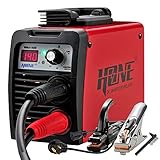
The DEKOPRO takes the top slot because of what the numbers behind it mean: 6128 ratings averaging 4.6 stars, with 75 percent of owners handing it a full five. That is not a marketing claim, that is a very long list of people who welded something on a farm and came back to say so. The YESWELDER wins on value because 205 amps in 8.8 pounds is genuinely rare at this level, and the HONE 140A is the one owners most often describe in terms of specific farm jobs rather than general impressions.
Best Stick Welders for Farm Repairs Compared in 2026
All twelve machines are listed below with the specs that actually change what happens on a repair. Scan the amperage column first, because that decides how thick the steel you can touch is, and the voltage column second, because that decides where you can plug the thing in.
| Product | Specifications | Action |
|---|---|---|
| DEKOPRO 160A MMA Welder |
|
Check Latest Price |
 YESWELDER ARC-205DS YESWELDER ARC-205DS |
|
Check Latest Price |
| HONE MMA140D 140Amp |
|
Check Latest Price |
 Hpoouo ARC-200 Mini Hpoouo ARC-200 Mini |
|
Check Latest Price |
 HITBOX AT2000 200Amp HITBOX AT2000 200Amp |
|
Check Latest Price |
 HGNVGZ MMA-250 HGNVGZ MMA-250 |
|
Check Latest Price |
 S7 250A Dual Voltage S7 250A Dual Voltage |
|
Check Latest Price |
 HONE MMA205 Mini HONE MMA205 Mini |
|
Check Latest Price |
 Sefaspe ARC 200Pro Sefaspe ARC 200Pro |
|
Check Latest Price |
 TOOLIOM ARC-195 PRO TOOLIOM ARC-195 PRO |
|
Check Latest Price |
 Eioehtl 250A Dual Voltage Eioehtl 250A Dual Voltage |
|
Check Latest Price |
 ARCCAPTAIN ARC205 Pro ARCCAPTAIN ARC205 Pro |
|
Check Latest Price |
1. DEKOPRO 160A MMA Welder — the all-round farm default
DEKOPRO 110/220V MMA Welder,160A ARC Welder Machine IGBT Digital Display LCD Hot Start Welder with Electrode Holder,Work Clamp, Input Power Adapter Cable and Brush
160A output
110/220V dual voltage
11.11 lb ETL certified body
Pros
- Dual 110/220V covers farm shop circuits
- IGBT inverter gives stable arc and penetration
- Hot start and anti-stick help beginners
- ETL certified for safety
- Compact with carry handle
Cons
- 160A limits it on thicker material than heavier machines
- Stick only with no TIG mode
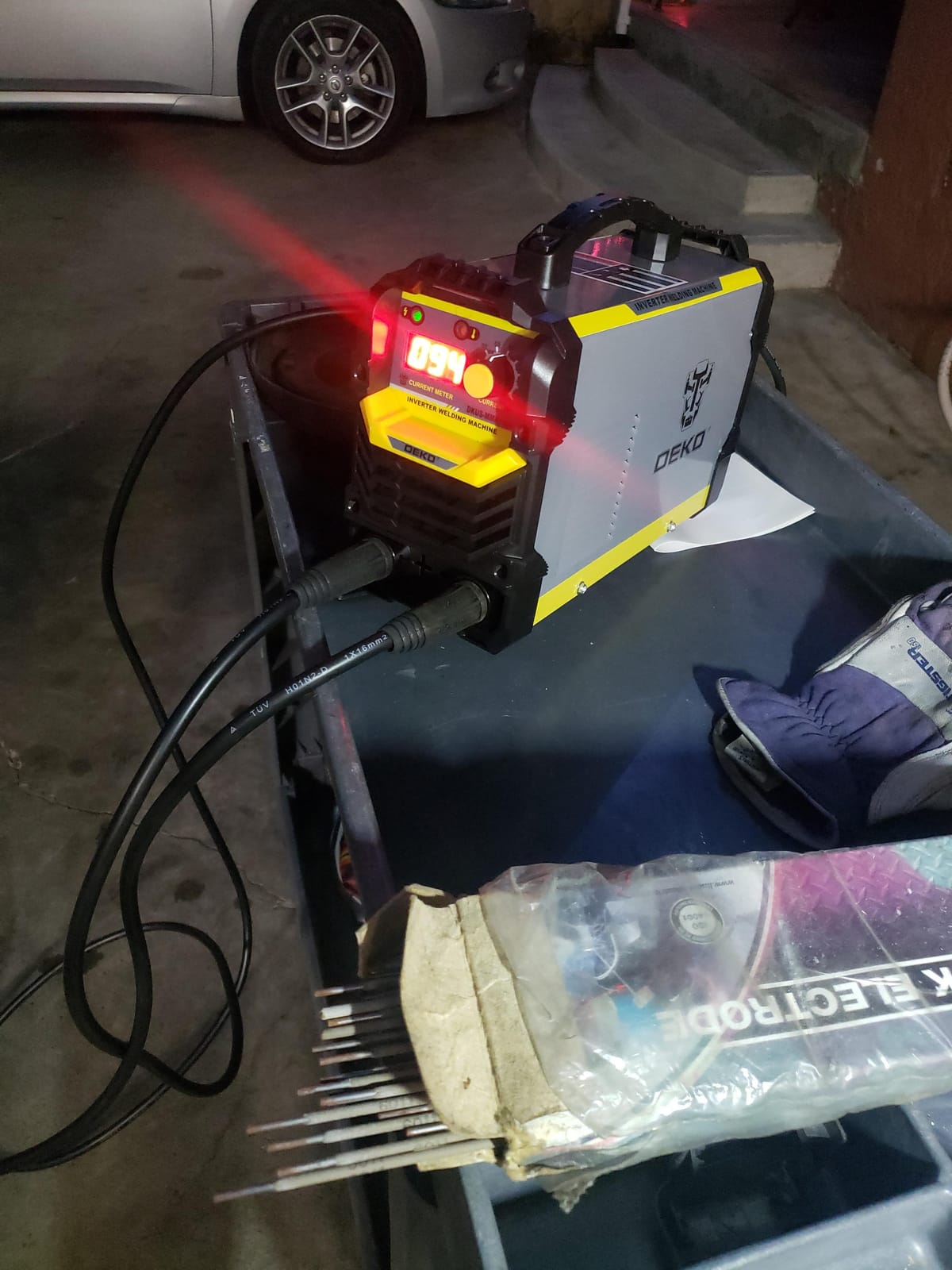
I have a DEKOPRO 160A on the shop bench that has been on my list of farm fixes for a while now. It is a 160 amp unit rated at 4.6 stars across 6128 ratings, and the volume of feedback behind it is the reason I trust it for routine work. Owners consistently describe easy arc starts, good penetration on mild steel, and output that stays put whether it is plugged into the shop or a lighter circuit.
Running dual 110/220V is the practical part. My shop has a 220V circuit for the loader and a 110V outlet in the tack room, and switching between them means I move the same machine instead of owning two. The IGBT inverter does the heavy lifting on arc quality, and closed-loop feedback keeps voltage steady as the arc length changes.
What the review data keeps saying is that this is a light-to-medium duty machine. Multiple owners note the output and duty cycle target hobby and light shop repair rather than continuous production, which is exactly the honest read for most farm jobs. A gate hinge, a trailer bracket, a bucket pin or a mower deck edge all fall well inside that envelope.
The 11.11 pound listed weight is real in the hand. It has a carry handle and the footprint is small enough to live on a shelf rather than a dedicated cart, and the box includes an electrode holder, work clamp, an input power adapter cable and a brush. That bundle matters more than it sounds when you are standing in a barn at dusk trying to finish a repair.
Who this welder suits
This suits a farm that does steady repair work across a mix of thin and medium gauge mild steel, and it suits a first-time welder who needs the arc to start itself. If your list is gates, fence rails, hitches, post brackets, implements with 1/8-inch plate, you are inside this machine’s comfort zone all day.
It is also the safe pick for a household circuit. Dual voltage means you can start on 110V and move up to 220V when a job needs more, without owning a second machine or hunting for an adapter that may not exist.
Where it falls short
At 160 amps it runs out of headroom on heavy structural plate. If your repairs regularly involve thick implement frames, axle mounts or trailer beam splices, you will want to move up to a 200A or 250A unit where the amperage is genuinely available rather than merely printed.
It is also a dedicated MMA stick machine with no TIG capability, and one recurring note among owners is that the output is aimed at the light end of farm repair. If you plan to build rather than fix, look elsewhere.
2. YESWELDER ARC-205DS — most output per pound in the group
YESWELDER 205Amp Stick Welder Digital Inverter IGBT ARC Welding Machine
205A output
8.8 lb body
110V and 220V with LED display
Pros
- True 205A output in an 8.8 pound inverter
- LED display readable in the helmet
- Dual 110/220V for shop or generator
- Hot start and arc force adjustable over 10 levels
- Works with 6010 6011 6013 and 7018 rods
Cons
- Amp display reads higher than real output
- Light duty ground clamp
- TIG torch sold separately
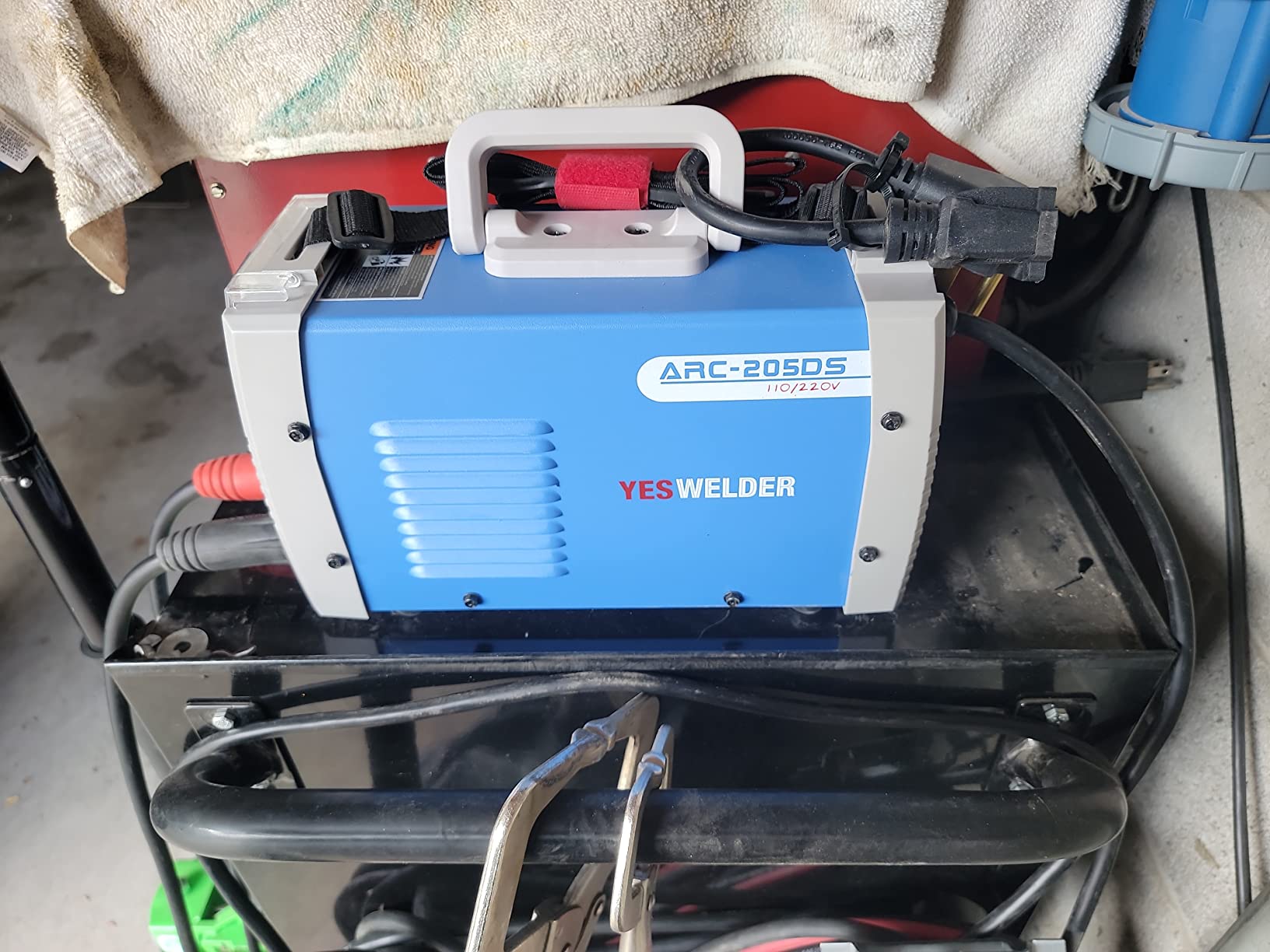
Eight point eight pounds with 205 amps of claimed output is the number that made me pick this one up first. It rates 4.5 stars across 2375 ratings, and the reviews that stand out are the ones from people welding 1/8-inch to 3/8-inch mild steel and calling it a farm or hobby unit. Several of those are exactly my use case.
The LED display is the feature I did not expect to care about and now rely on. You can read the current without lifting the helmet, which matters more on a windy day at the end of a lane than it does in a shop. Hot start and arc force are each adjustable across 10 levels, so you can dial back the arc force when welding thin gate tubing and turn it up for a dirty structural joint.
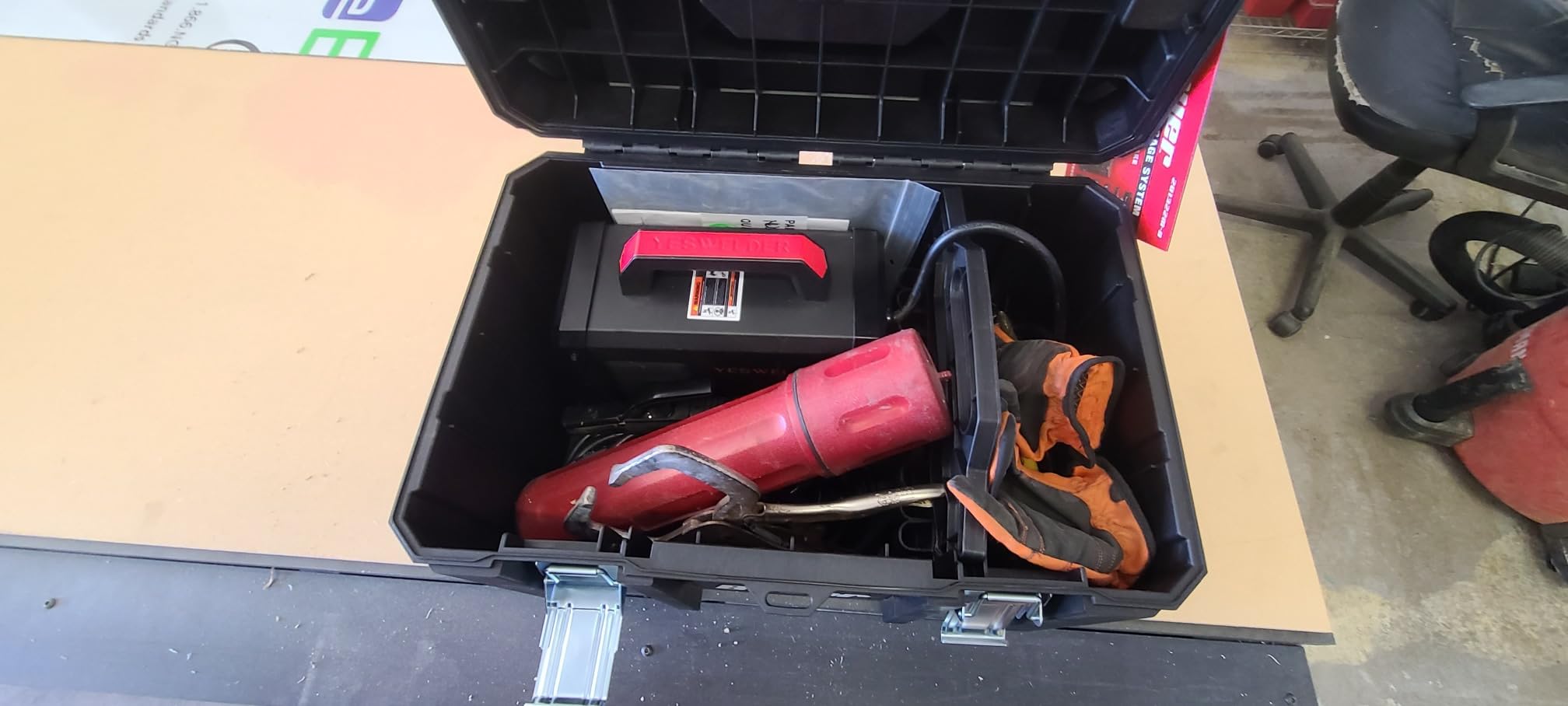
Rod compatibility is broad by design. It runs 6010, 6011, 6013 and 7018, which covers every general-purpose rod a farm shop keeps in the drawer. The included box holds a 220V to 110V adapter, electrode holder, ground clamp and the machine itself.
Dual voltage means this one is a natural pick for generator work or a shop with mixed circuits. Automatic voltage fluctuation compensation, plus overcurrent, overload and thermal protection, are the sort of thing that keeps a budget inverter alive when the power is coming off a tractor-mounted alternator rather than a clean utility feed.
What the display gets wrong
The most repeated caveat in the reviews, and the only one I take seriously, is that the digital amp readout runs roughly 30 percent higher than the actual output. Several owners confirm this with a clamp meter. The practical fix is to treat the display as a relative setting rather than an absolute one and verify once on a known joint.
There is also a note that 6013 rods can be finicky on this machine while 7018 performs best. If you buy one rod type and stick with it, use 7018 for general mild steel and save 6013 for the odd clean, thin-gauge job.
Where it fits on a farm
This lands well for anyone who needs genuine amperage without the bulk. A 205 amp ceiling covers trailer frames, implement brackets and thicker gate hardware while still fitting in a truck bed behind the seat. If your power situation is uncertain, the 110V and 220V switching removes one more variable.
Keep in mind the lift TIG mode is there but the torch is sold separately, and the included ground clamp is described as light duty. If you are leaning on that clamp for a full day of production, budget for a better one.
3. HONE MMA140D 140Amp — the most farm-reported machine here
HONE Stick Welder, 110V/220V Actual 140Amp ARC Welder Machine, IGBT Inverter Digital Display LCD Welding Machines with Hot Start Arc Force Anti-Stick, High Efficiency for 1/16″-1/8″ Welding Rod.
120V to 120A or 220V to 140A
40 percent duty cycle
9.44 lb body
Pros
- Runs on a standard 120V wall outlet
- 40 percent duty cycle at rated output
- Hot start and anti-stick reduce rod sticking
- Top carry handle suits field work
- Light and compact
Cons
- Amp display reads high on both voltages
- Does not handle 6010 cellulose rods reliably
- 140A ceiling on 220V limits heavy plate
The HONE 140A earns its place here because the reviews are not about workshops, they are about skid steer buckets, zero-turn mower frames, trailer hitches and railings repaired on 120V power. It rates 4.6 stars across 1761 ratings with a 78 percent five-star share, and one certified welder validated weld quality on 1/8-inch and 1/4-inch steel.
The 40 percent duty cycle at rated output is a genuine differentiator in this price bracket. The spec sheet lists 40 percent at 120 amps on 110V and 40 percent at 140 amps on 220V, and that is a real improvement for a day of continuous patch welding compared with the 20 percent class machines you find elsewhere.
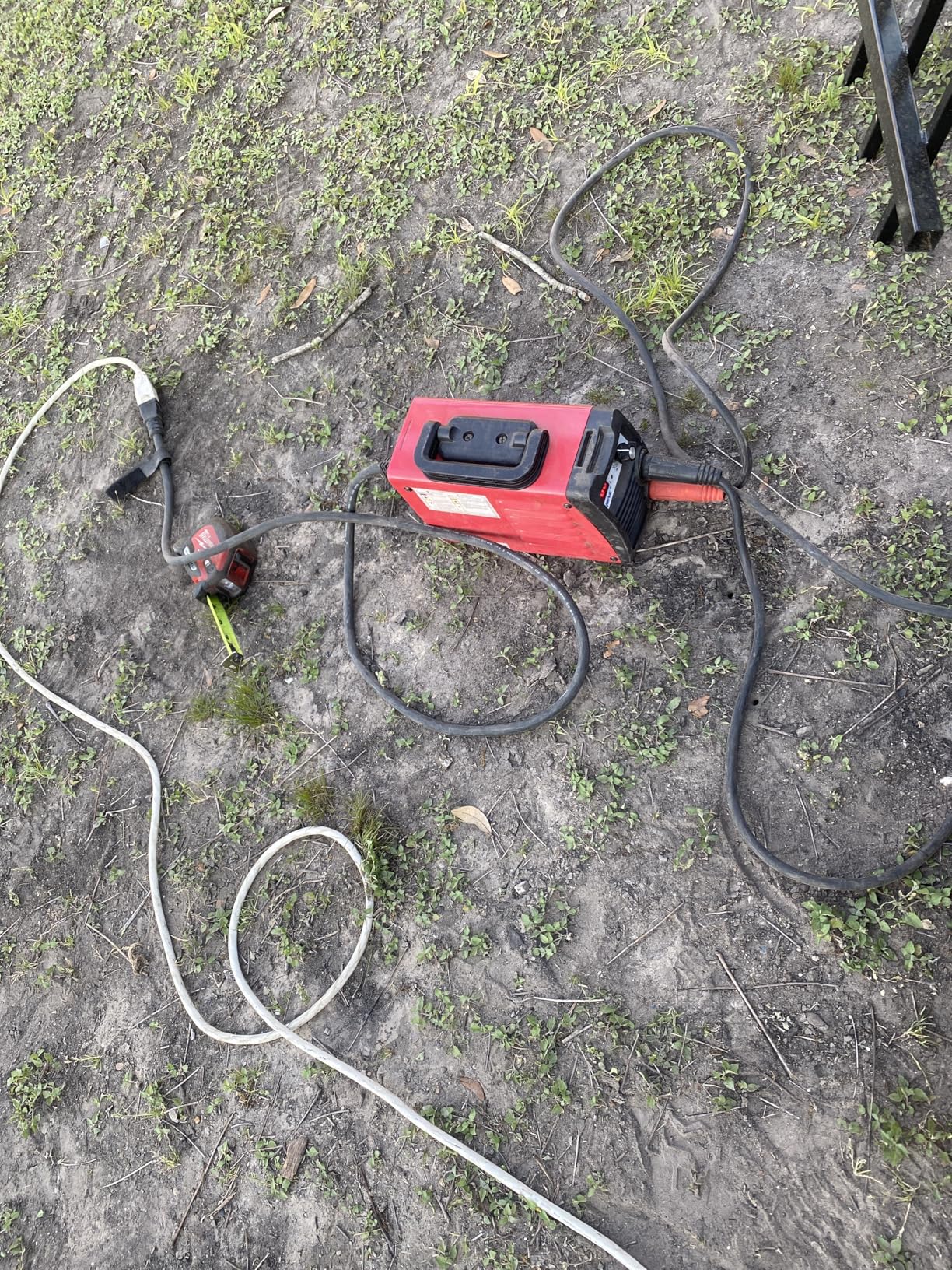
It supports E6013, E7018, E6011 and E6010 rods from 1/16 to 1/8 inch, with anti-stick, closed-loop feedback and multiple protection circuits. The digital display carries a trouble indicator, which is helpful when something behaves oddly and you would otherwise be guessing.
Body size is 9 by 3.9 by 5.6 inches at 9.44 pounds, and the carry handle sits on top. That combination is the difference between a machine you bring to the job and one you leave in the shop and go grab a torch for.
Why owners like it
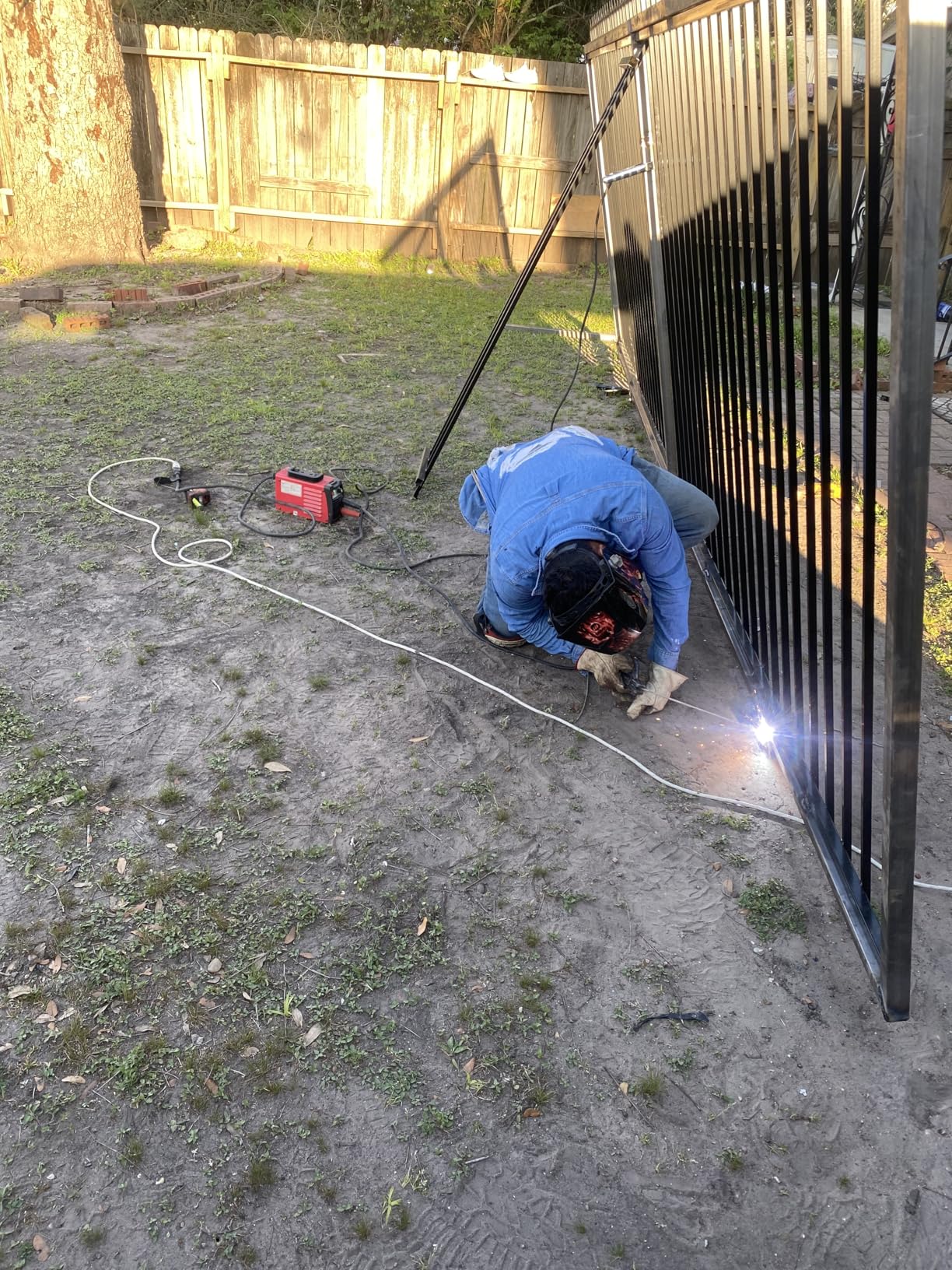
Hot start gives near-instant strikes on 6013 and 7018, and owners single out anti-stick as the feature that noticeably reduces the electrode freezing they used to fight. On farm steel that is coated in years of paint and light surface rust, that is the difference between a two-minute patch and a fight with a joint.
The 120V capability is the quiet advantage. If your shop or your field generator is the only realistic power source, a machine that runs properly on a household circuit removes a whole category of friction.
The two real complaints
Amperage calibration is the repeat complaint. The display and the knob chart both read high compared to metered output on 110V and 220V, so verify with a clamp meter on a scrap coupon before you trust a setting on a structural repair.
Second, it will not reliably run 6010 cellulose rods despite the claim in the listing. If cellulose is part of your routine, pick a different machine. Third, the 140A ceiling on 220V is the limit for anything heavier than a quarter-inch plate.
4. Hpoouo ARC-200 Mini — the one you can carry to the back forty
Hpoouo 200Amp 20PCS Rods Stick Welder, Super MINI Portable Welding Machine
20-200A output
3.7 lb body
110V with 20 rods included
Pros
- Only 3.7 pounds so it fits a toolbox
- 20-200A covers up to 0.2 inch material
- Includes 20 rods hammers and gloves
- Hot start arc force and anti-stick
- Works with five rod types
Cons
- 110V only with no 220V option
- Modest output for heavy plate
- Included electrodes are acidic
At 3.7 pounds this is the lightest capable machine in the group, and it ranks in the top tier of welding systems by demand. It carries 4.5 stars across 1497 ratings with a 76 percent five-star share. The reviews focus on exactly one thing: how easily it moves from the truck to the job.
The output range is 20 to 200 amps with material thickness listed from 0.06 to 0.2 inch. That is a real working range for fence repairs, gate latches, outbuilding brackets and trailer light mounts, which is exactly the class of work that happens a quarter mile from the shop door.
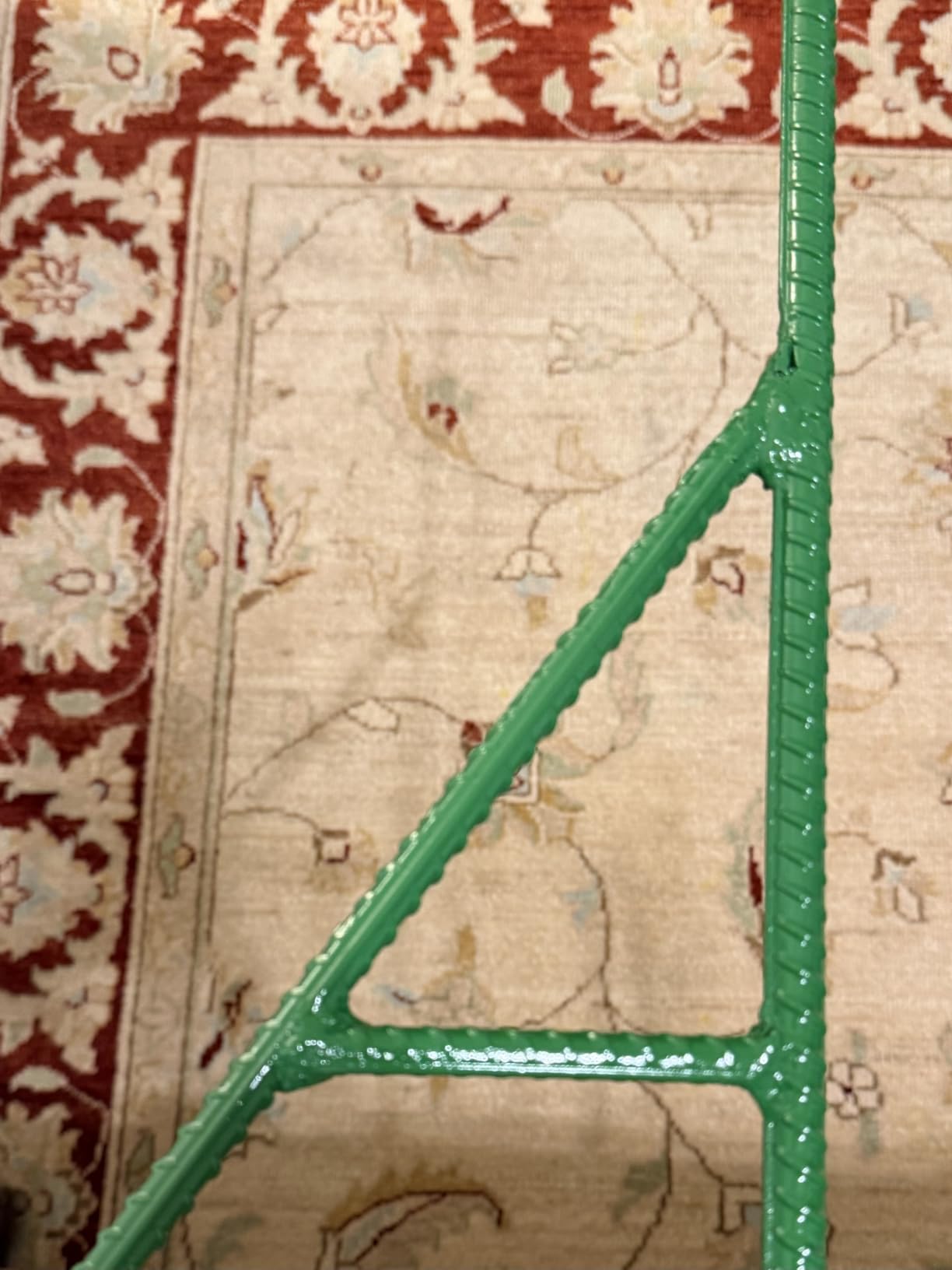
What separates it from a bare machine is the consumables. The box includes the welder, 20 welding rods, two chipping hammers, gloves and an instruction manual, so there is no startup gap between buying it and using it. For a first welder, that removes a whole afternoon of figuring out what else you need.
Hot start, arc force and anti-stick are all present, along with over-voltage, over-current and overheat protection. It accepts E6013, E6011, E6010, E7018 and E308 rods from 1/16 to 1/8 inch. The body measures 7.8 by 3.9 by 5.3 inches.
Where it earns its place
Field fence work, outbuilding repairs and anything where you walk to the job rather than drive. At 3.7 pounds it can sit in a backpack or a toolbox all day without becoming the reason you skipped the repair.
It is also a reasonable first welder. The 20-200A window, the included rods and the arc assistance features mean a beginner can close the loop from opening the box to laying a bead in one sitting.
Limits worth knowing
It is 110V only, so there is no option to step up to a shop circuit when a job needs more current. The 20-200A window suits thin and light-gauge work far better than heavy plate, and the accessory electrodes supplied are acidic, which means terminal changes if you switch to alkaline rods like 7018.
5. HITBOX AT2000 200Amp — stick plus Lift TIG in one box
HITBOX 200Amp Stick Welder, 110V/220V ARC/Lift TIG Welding Machine
20-200A on 110V or 220V
MMA and Lift TIG modes
5.9 lb carry-handle body
Pros
- Switches between stick and Lift TIG
- MMA and Lift TIG in one machine
- Very light with a built-in handle
- Works with seven electrode types
- Adjustable hot start and arc force
Cons
- TIG torch sold separately
- Lower review volume than leaders
- Listing spec sheet still shows 140A
The HITBOX AT2000 is the machine I would pick if the same job needs a reinforcing bead on a bracket and then a cosmetic cap on the same part. It switches between MMA stick and Lift TIG modes, and that combination is rare in this weight and output class.
It holds a 4.5 rating across 995 reviews. Buyers point to portability, dual voltage and the TIG mode as the reasons it fits garage and farm maintenance work. The output is listed at 20 to 200 amps on 110V or 220V, with a body weight of 5.9 pounds and a built-in carry handle.
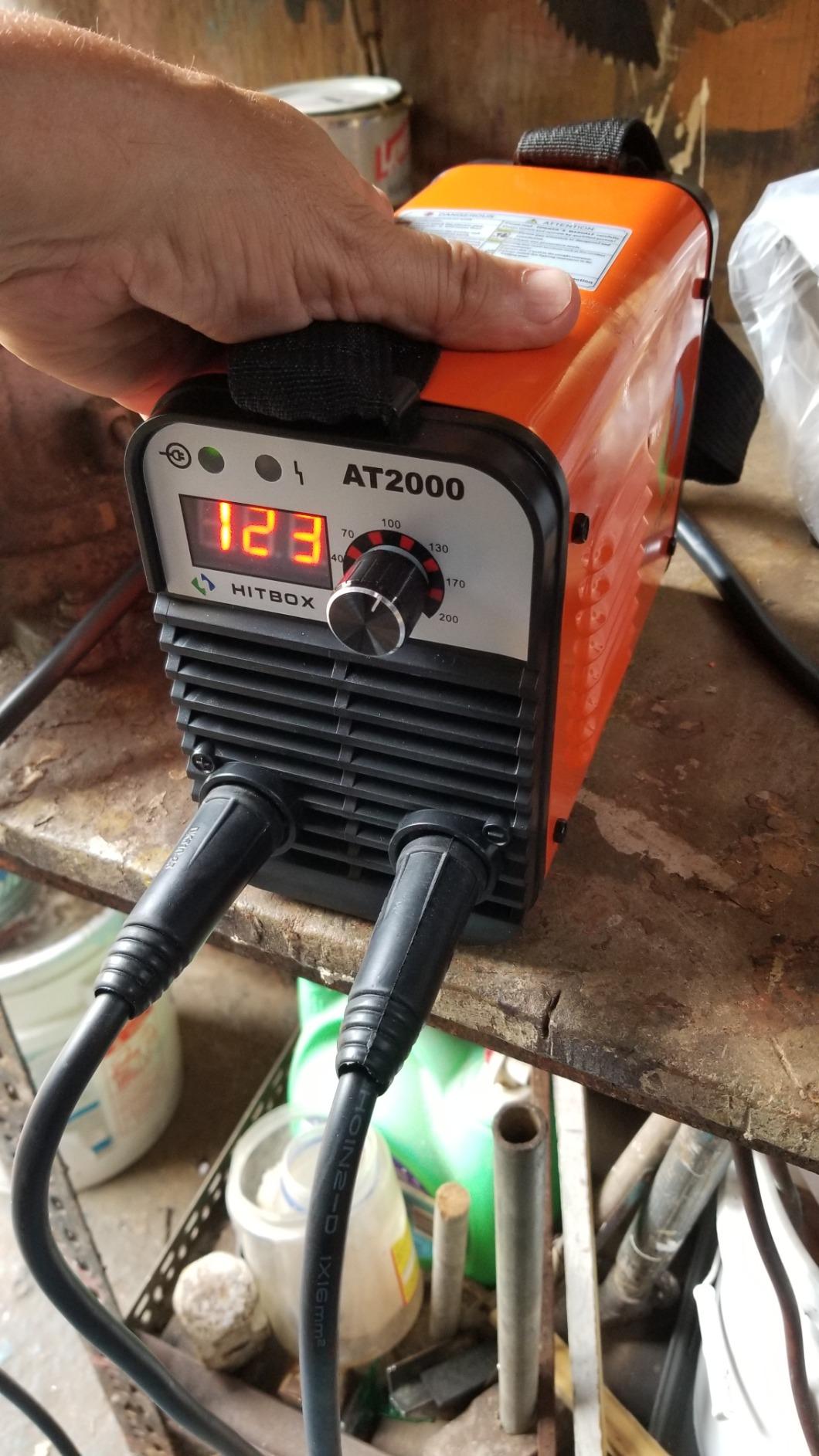
Electrode compatibility is genuinely wide for a stick machine: E6013, E6014, E7016, E7018, E7028, E8018 and E308-16. The two low-hydrogen rods in that list matter on structural farm steel, where a 7018 bead is what you want on a load-bearing bracket.
Adjustable hot start and arc force sit alongside anti-stick and VRD protection, all on IGBT inverter technology. VRD lowers the no-load voltage, which is a sensible default when a beginner or a helper is standing nearby in a damp barn.
Where it fits
It suits anyone whose repair list mixes functional and cosmetic work. Gate tubing, handrail sections, trailer frames and trailer light brackets all benefit from being able to switch process without swapping machines or dragging a separate unit out of storage.
Dual voltage and a 5.9 pound frame also make it a strong field option for anyone working away from a shop circuit.
Before you buy
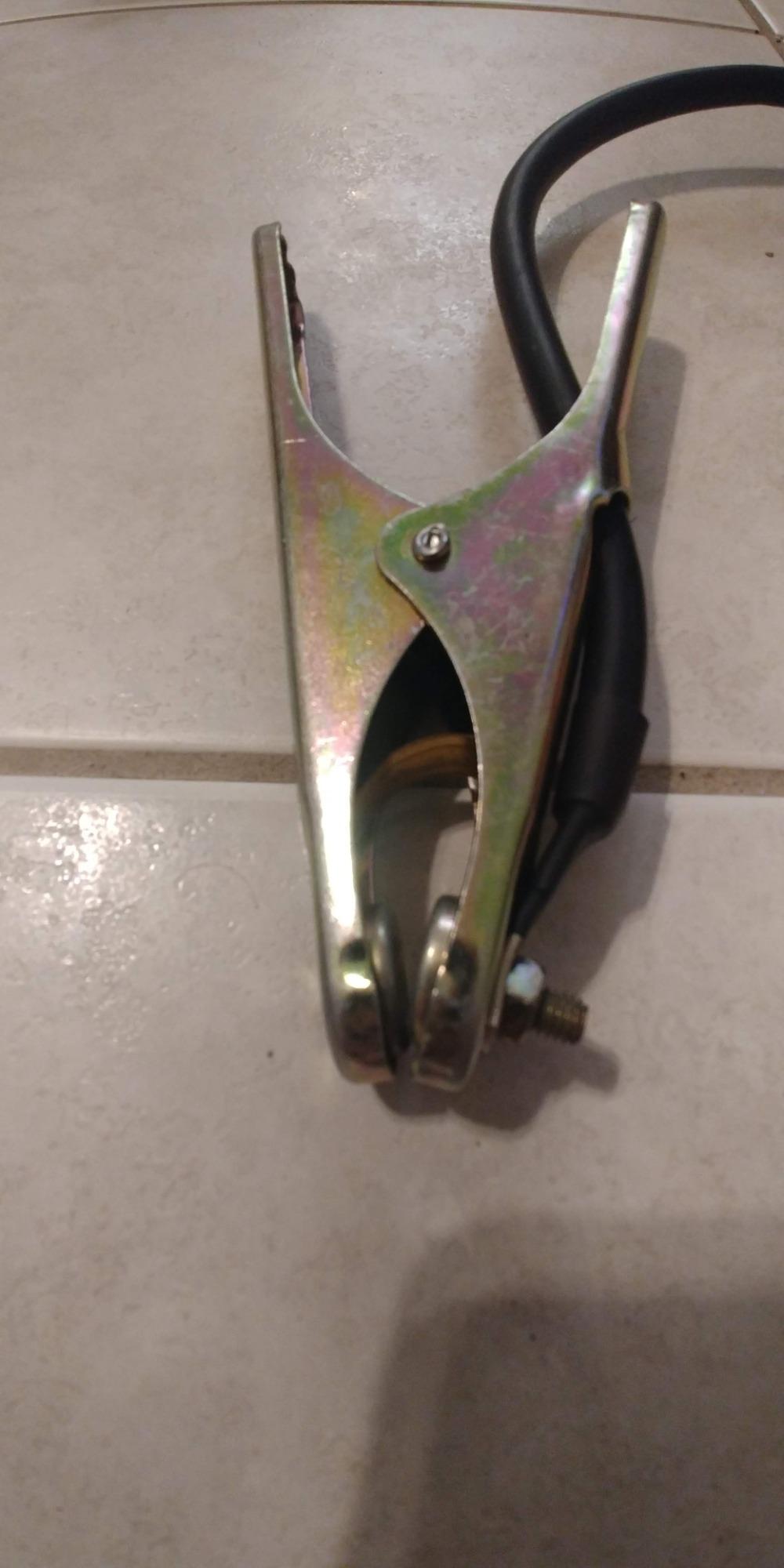
The TIG torch is not included, so Lift TIG costs extra before you can use it. Review volume is lower than the leading budget models, which means a thinner pool of long-term feedback. And the listing spec sheet still shows 140A in the size field even though the headline output is 200A, so expect some inconsistency in the paperwork.
6. HGNVGZ MMA-250 — the highest duty cycle on a single 110V circuit
HGNVGZ 250A MMA Stick Welder 110V, Portable IGBT Inverter Arc Welder
20-250A on 110V
60 percent duty cycle at 250A
3.7 lb with shoulder strap
Pros
- Very light with an adjustable shoulder strap
- 60 percent duty cycle at 250A
- Large cooling fan and ABS shell
- LCD shows current clearly
- Hot start arc force and anti-stick
Cons
- 110V only so it needs a 20A circuit
- Best for light gauge up to 0.2 inch
- Poor translated instruction manual
A 60 percent duty cycle at 250 amps is the number that sets this machine apart. Most of the class sits at 20 or 40 percent, and 60 percent is the figure you want when a repair runs long enough that you cannot afford to stop and let the machine cool. It rates 4.4 stars across 1101 ratings with a 73 percent five-star share.
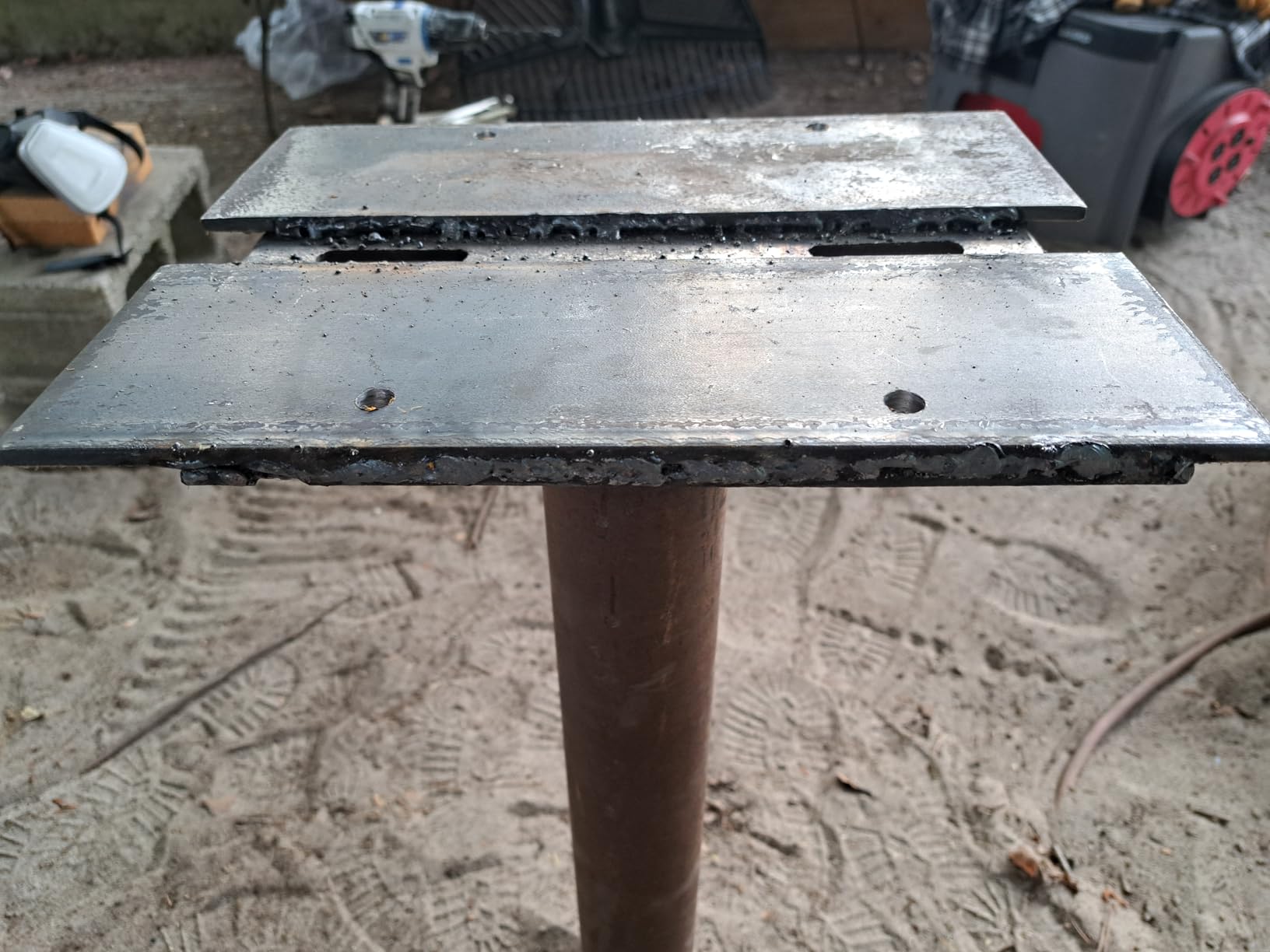
Cooling is the physical reason. A 360-degree large-area heat dissipation design with an ABS shell insulation is what allows that duty cycle rating, and reviewers mention sustained small repair work without trouble, including mower deck repairs.
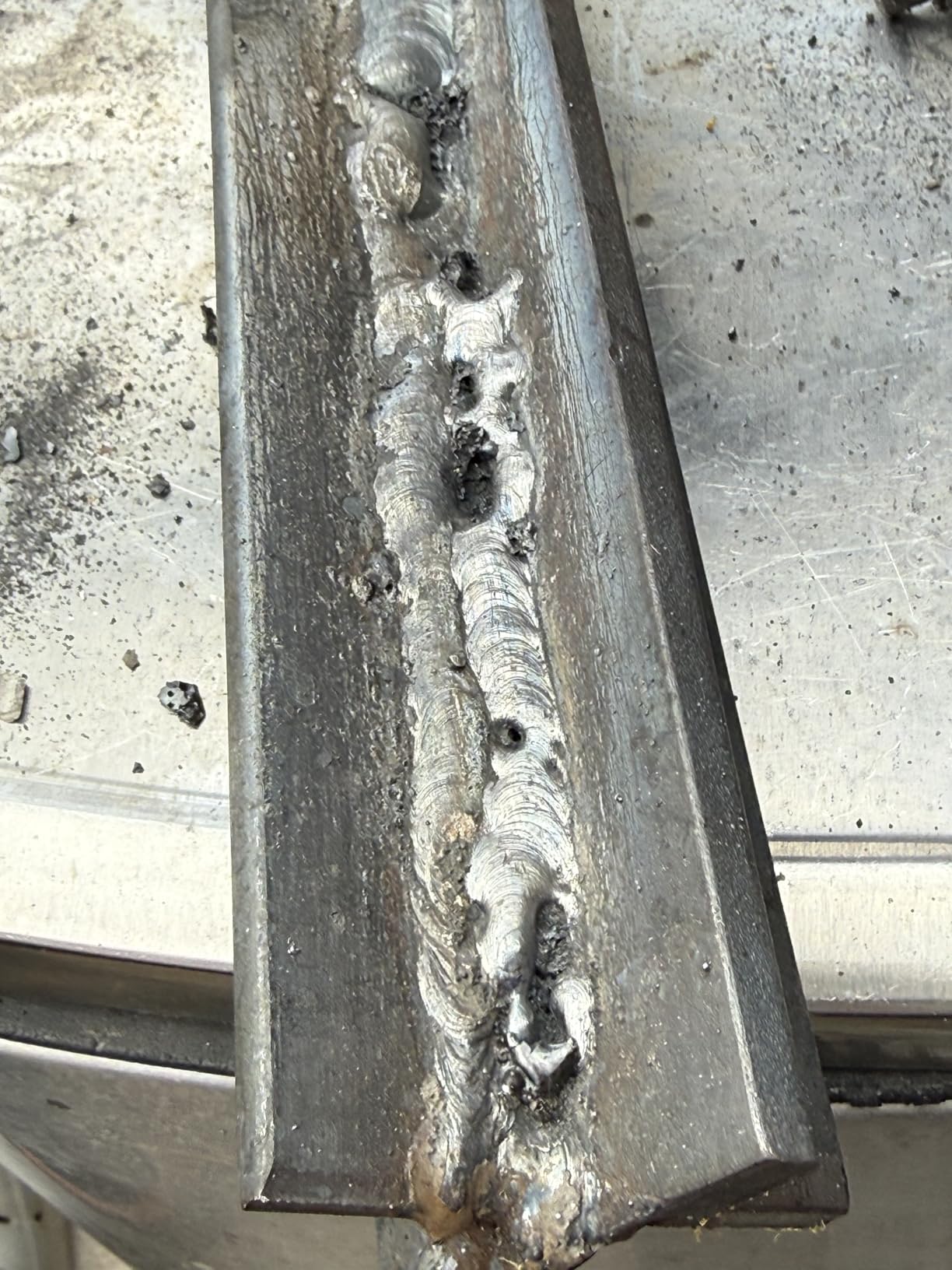
Output is adjustable from 20 to 250 amps on 110V at 60Hz, with 1/16 to 1/8 inch rod support across E6013, E7018, E6011 and E308. The smart LCD display shows welding current, and hot start, arc force and anti-stick all work to reduce rod sticking on dirty joints.
At 3.7 pounds with an adjustable shoulder strap, this is another genuinely portable option. The strap is the detail that matters for walking to a gate or climbing into a loaded trailer.
Where it earns its keep
Sustained patching is the use case. If you weld all afternoon, the duty cycle is the spec that decides whether you fight the machine or keep working, and this one is rated to keep working.
Long-term owners describe three years of service and heavy rod consumption without failure, which is a useful signal on a machine at this level.
Honest limitations
It is 110V only, which means it depends on a 20A household circuit and you lose the option to move up to a shop feed. Reviewers are also clear that it is not a shop welder, working best within a light-gauge envelope of up to 0.2 inch. The instruction manual is poorly translated and lacks a troubleshooting section, and a small number of one-star reviews report units that power on but stop arcing almost immediately.
7. S7 250A Dual Voltage — 250 amps on either voltage
250A Stick Welder, 110V/220V Portable IGBT Inverter ARC Welder
250A output
110V and 220V dual voltage
9.13 lb portable inverter
Pros
- 250A output available on both voltages
- Works with four common farm rod types
- Hot start arc force and anti-stick
- Digital current display
- IGBT inverter is lighter than transformer units
Cons
- Lesser-known brand with limited service history
- Needs the right circuit and cool-downs
- Stick only with no TIG mode
The S7 carries the highest five-star density of any 250A dual-voltage machine in this group, around 80 percent, with a 4.6 average across 1054 ratings. It is also positioned for exactly our use case: gates, fences, trailer parts, mower decks and brackets.
Dual voltage at 250 amps is the headline. Most machines in this class give you the 250A figure on 220V and drop to something much lower on 110V. This one is listed at 250A output with 110V and 220V power source, so you are not constantly re-planning a heavy repair based on which circuit you happen to be near.
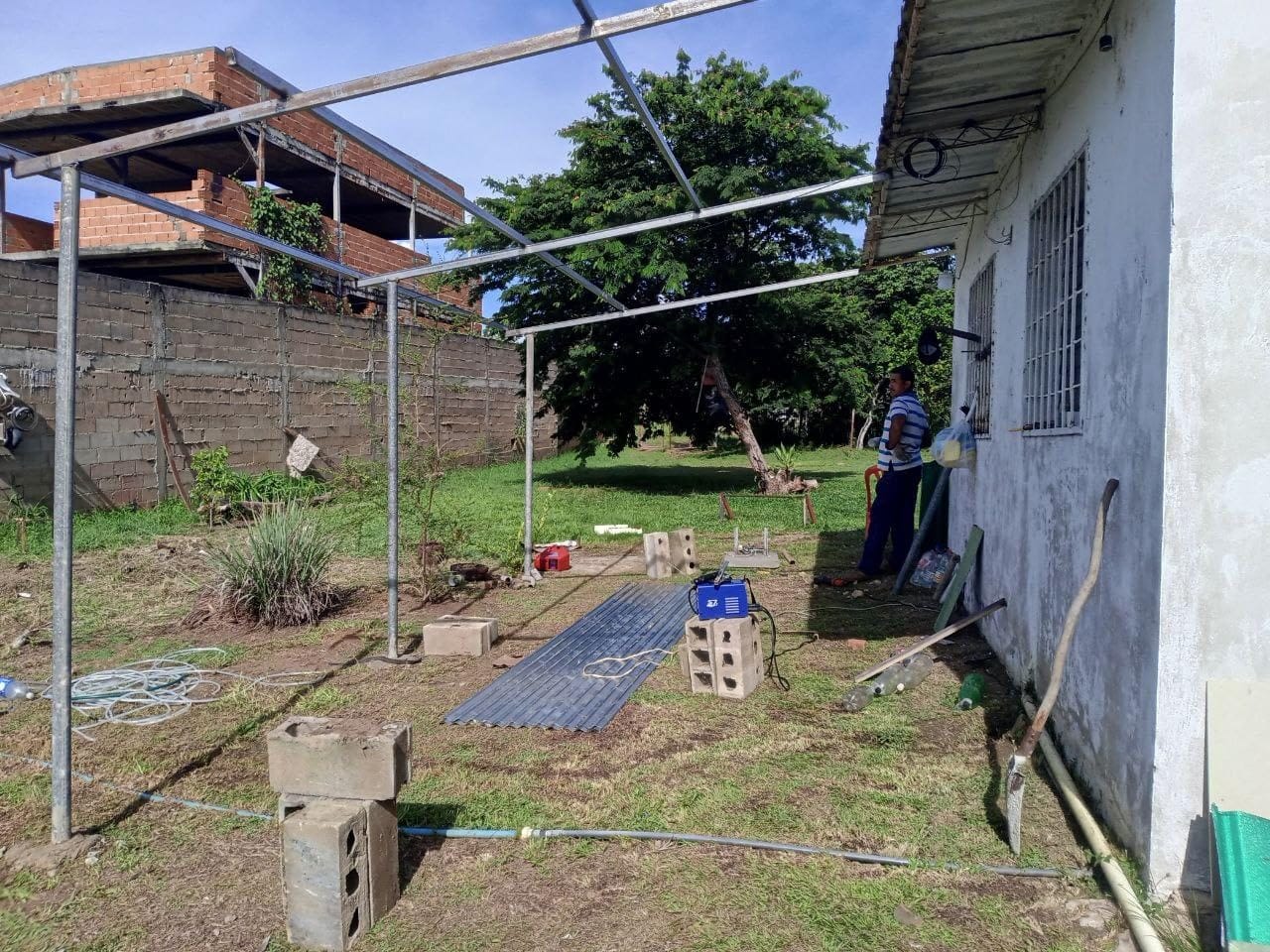
Rod coverage is E6010, E6011, E6013 and E7018, which is a complete general-purpose farm drawer. Hot start, arc force and anti-stick are all fitted, and a digital display handles the current setting. The IGBT inverter is what keeps the weight at 9.13 pounds rather than transformer-machine weight.
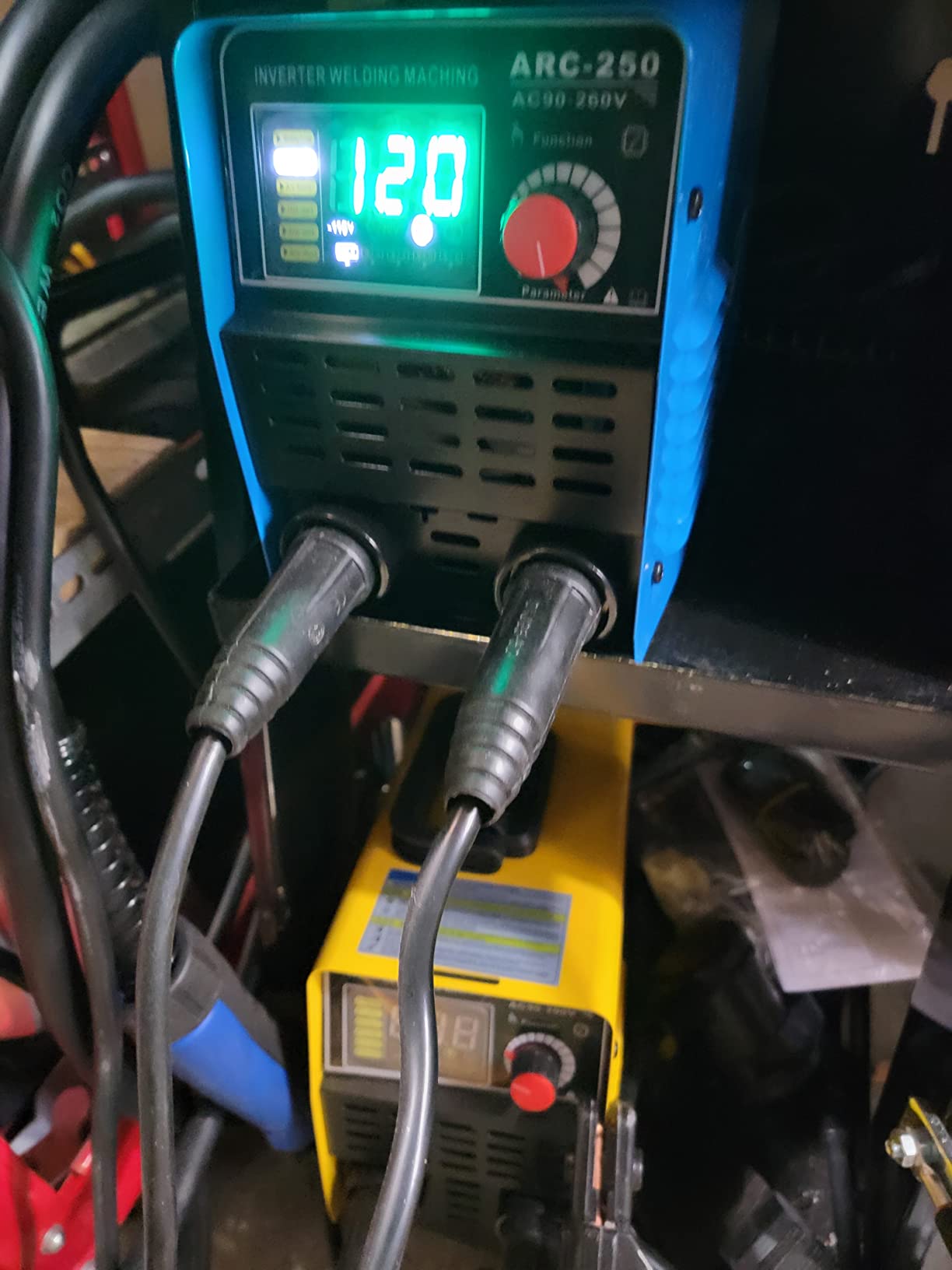
Buyers consistently cite the combination of 250A output and dual voltage as the reason to buy, and the practical result is a machine that covers a gate frame in the morning and a heavier implement bracket in the afternoon without being unbolted from the wall.
Good fit for
Farmers who want one machine to cover both circuits and both ends of the thickness range. If you work between the yard and a shop with 220V, this removes the friction of owning a dedicated unit for each.
It is a sensible backup machine too. Inverter weight, dual voltage and a broad rod range make it an easy companion to a larger setup you already own.
Trade-offs
The brand is a lesser-known name with less long-term service history than the established names, and that matters if you are counting on spare parts availability years from now. Sustained high-output work needs an appropriate circuit and deliberate cool-downs. It is stick only, with no TIG mode at all.
8. HONE MMA205 Mini — 205 amps, 4.4 pounds, everything in the box
HONE Stick Welder 110v, Upgraded 205Amp Mini Welding Machine with Lift Tig Welding, IGBT Inverter Arc Welder Machine 110v with Hot Start Arc Force Anti-Stick VRD for 1/16″-1/8″ Rod, Include 25 Rods.
20-205A adjustable
4.4 lb and 8.4 inches long
Stick and Lift TIG modes
Pros
- 205A in a 4.4 pound body
- Stick and Lift TIG in one unit
- 25 rods clamps hammers gloves and shield
- VRD added for beginner safety
- Works with five rod types
Cons
- 110V only
- TIG torch sold separately
- Newer listing with a short review history
The MMA205 is the most complete starter package in this group. It adjusts from 20 to 205 amps, welds workpieces from 0.05 to 0.22 inch, and the box includes 25 rods, a wire brush, chipping hammer, gloves and a face shield. For someone buying their first welder, that is a genuinely complete setup rather than a machine and a shopping list.
It is also 4.4 pounds and 8.4 by 3.7 by 5.3 inches, so it disappears into a truck bed or a garage shelf. It holds 4.5 stars across 606 ratings with a 77 percent five-star share, and buyers frame it as a capable beginner and hobby machine aimed at fence, trailer and workbench projects.
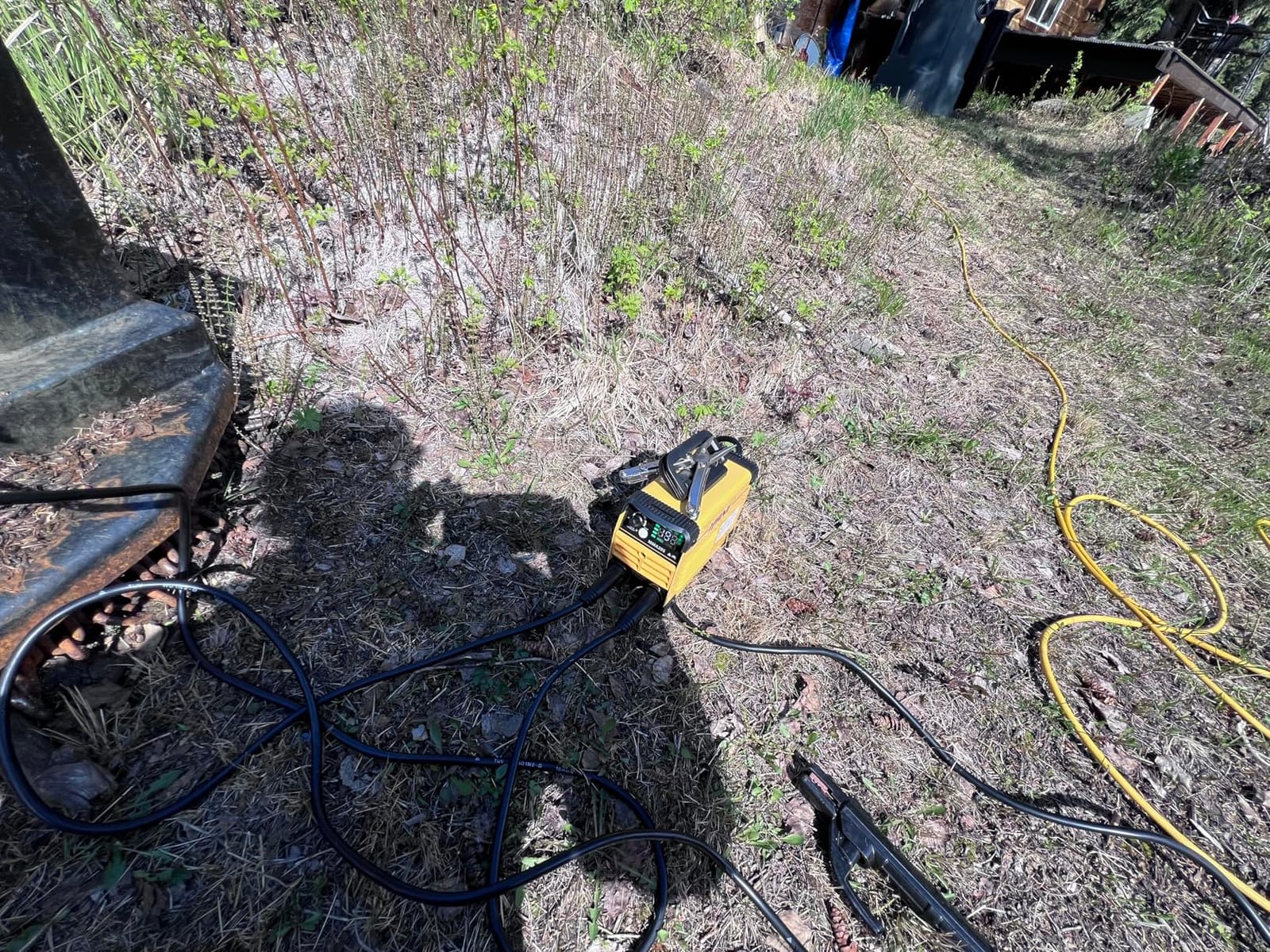
Two-in-one stick and Lift TIG modes give it a little more range than a dedicated MMA machine, and the upgraded IGBT inverter carries hot start, arc force, anti-stick and VRD. Rod compatibility covers E6013, E6011, E6010, E7018 and E308 from 1/16 to 1/8 inch.
The VRD function is worth a mention for anyone welding in a shared shop or teaching a family member. It lowers no-load voltage, which is a sensible safety default for a beginner machine.
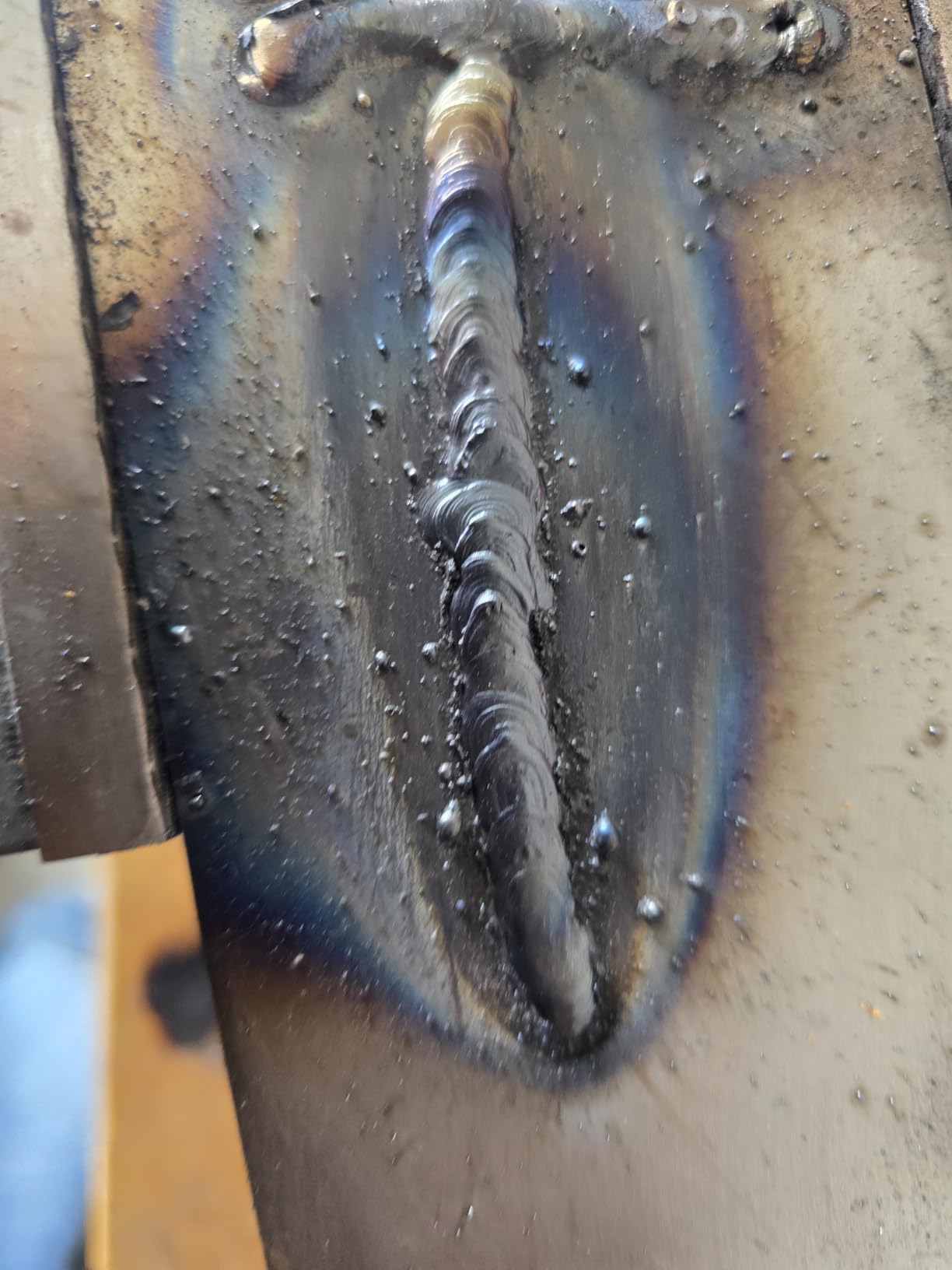
Who should buy it
New welders, and anyone who wants a single purchase that covers consumables and safety gear on day one. The value of twenty-five rods plus a face shield and gloves is that nothing stands between unboxing the machine and laying your first bead.
It is also a good second machine for a farm that already has a big shop unit but still wants something small for fence and trailer work.
Keep in mind
It is 110V only, so heavier work runs off a standard household circuit rather than a shop feed. The TIG torch is sold separately. And as a recently listed product it has a shorter review history than the established models, which is a fair reason to weigh it against a longer-proven machine at a similar output.
9. Sefaspe ARC 200Pro — synergic control and 4.0mm rod support
Sefaspe Stick Welder, 2026 Newest [Large LED Display] ARC 200Pro Welding Machine 110V/220V 200A with Synergic Control, IGBT Inverter Portable Welder Machine with Hot Start, Arc force and Anti-Stick
40-200A stick and 10-200A Lift TIG
2.5-4.0mm electrodes
Synergic electrode matching
Pros
- Synergic control matches electrode specs on screen
- Handles 4.0mm electrodes for thicker work
- Large LED display readable in low light
- Hot start timing and arc force adjustable
- Backed by a 2-year warranty
Cons
- Heaviest unit in the group at 13.79 lb
- Smaller review base of about 360 ratings
- Accessory kit is less complete than rivals
The ARC 200Pro is the only machine here that will run 4.0mm electrodes, and that is a real capability difference. Stick output is listed at 40 to 200 amps and Lift TIG at 10 to 200 amps, with electrode support from 2.5 to 4.0mm. Maximum weld thickness is given as 4mm single pass and 12mm multi-pass.
Synergic control is the other differentiator. The display shows the matching electrode specifications for what you have selected, which is unusually beginner-friendly and removes a lot of the guesswork from rod selection. It rates 4.4 stars across 362 ratings with a 74 percent five-star share, and owners like the guided setup.
![Stick Welder, 2026 Newest [Large LED Display] ARC 200Pro Welding Machine 110V/220V 200A with Synergic Control, IGBT Inverter Portable Welder Machine with Hot Start, Arc force and Anti-Stick customer photo 1](https://www.geekfill.com/wp-content/uploads/2026/09/B0FSJMRTH2_customer_1.jpg)
Hot start timing is adjustable from 0 to 1 second with current control from 1 to 10 percent, and adaptive arc force runs from 1 to 10 percent to boost current when voltage drops. That combination matters on farm steel, where the voltage sags every time you bridge a gap in rust or a joint opens up.
The large LED display is worth calling out for barn work. Owners note it stays readable in dim conditions, and a backlit readout is a bigger quality-of-life difference at dusk than it sounds like.
![Stick Welder, 2026 Newest [Large LED Display] ARC 200Pro Welding Machine 110V/220V 200A with Synergic Control, IGBT Inverter Portable Welder Machine with Hot Start, Arc force and Anti-Stick customer photo 2](https://www.geekfill.com/wp-content/uploads/2026/09/B0FSJMRTH2_customer_2.jpg)
Who it suits
Anyone doing heavier structural work than the light-gauge machines handle comfortably. Larger electrodes and 12mm multi-pass capability move it into implement frame and trailer beam territory rather than fencing and gates.
The 2-year warranty with 24/7 technical support is also more reassurance than most machines at this output level offer.
The trade-off
At 13.79 pounds it is the heaviest machine in this group, which reduces its usefulness for field jobs. The review base is around 360 ratings, thinner than the leaders, and the accessory kit is less complete than rivals at similar output, so plan on buying consumables separately.
10. TOOLIOM ARC-195 PRO — rod range and a VRD switch
TOOLIOM 195A 110/220V Stick Welder, LCD Display IGBT MMA Machine
Up to 195A
Handles 5/32 inch rods
110/220V with VRD toggle
Pros
- Handles up to 5/32 inch rods
- Works E6010 E6013 and E7018 electrodes
- Adjustable hot start and arc force
- VRD can be switched on or off
- Current limits itself on a 20A circuit
Cons
- Heaviest unit here at 14.5 lb
- Lift TIG torch not included
- Amp setting reads high and the clamp burned out
The ARC-195 PRO is the heaviest machine in the group at 14.5 pounds, and that is worth keeping in mind before you fall for the rod capability. It handles 5/32 inch, or 4.0mm, welding rods, which is thicker than most machines in this output range, and it works E6010, E6013 and E7018 electrodes.
It rates 4.4 stars across 306 ratings with a 76 percent five-star share. Professional welders in the reviews report burning 3/32 and 1/8 inch rods on 110V and 1/4-inch angle iron without trouble, and the machine self-limits to 140 amps on a 20 amp circuit, which is a good safety behaviour on farm power.
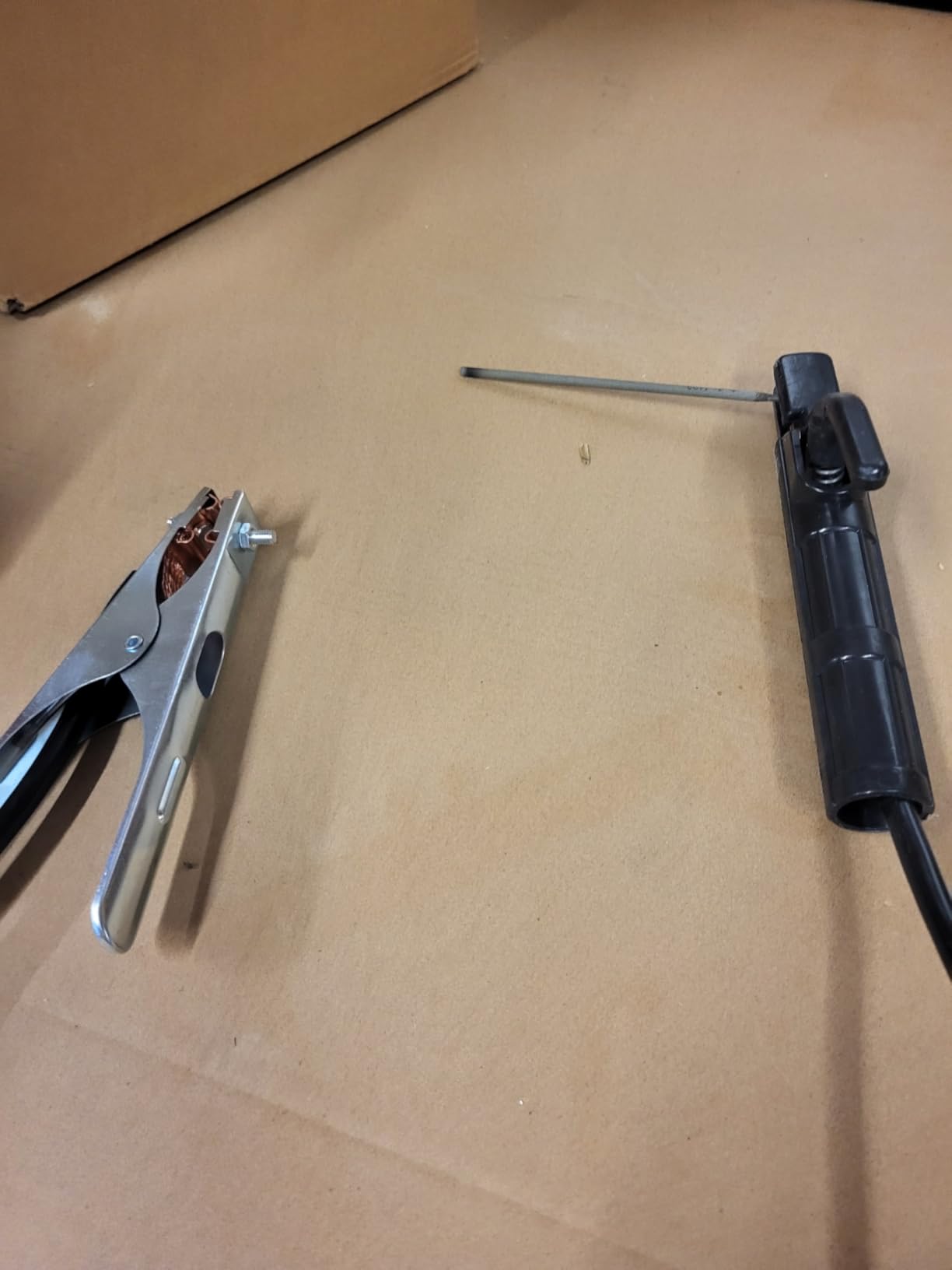
The VRD toggle is a nice piece of engineering. Switch it on for shock protection around helpers and wet conditions, switch it off for easier arc striking when you are working alone on clean mild steel. Most machines force one behaviour on you.
Intelligent LCD panel, adjustable hot start and arc force, automatic anti-stick, and a 2-in-1 stick and lift TIG mode round out the feature list, though the TIG torch is not included.
Where it works
Thicker rod support is the draw. If your repairs routinely involve plate heavier than 1/8 inch, running a 5/32 rod comfortably is a genuine advantage over machines that top out at 1/8 inch.
Current limiting on a household circuit also makes it a safer machine to own in a barn or shed where someone else might be on the same circuit.
What to watch
One detailed review reports that the amp setting reads well high and that the included ground clamp terminal burned out. A small number of other reviews say it will not hold an arc past a fraction of a second, and one report notes an unstable arc on 6010. It is also not intended for all-day production welding, and the weight makes it a shop machine rather than a field machine.
11. Eioehtl 250A Dual Voltage — auto voltage detection, thinnest history
250Amp Stick Welder 110V/220V Dual Voltage, with LED Display ARC Welding Machine w/Hot Start, IGBT Inverter, Portable Welder with Complete Kit (10 Rods, Clamps, Gloves), Anti-Stick for Home/Diy/Farm
250A output
Automatic 110V and 220V switching
8.56 lb with LED display
Pros
- Auto-detects 110V or 220V power
- Voltage compensation steadies the arc
- Large LED display shows current and mode
- Includes rods holder clamp and brush
- Built-in handle for truck-bed mobility
Cons
- Lowest rating in the group at 4.2 stars
- Smallest review base at 130 ratings
- 220V adapter sold separately
- Limited to 3/32 and 1/8 inch rods
Automatic 110V and 220V detection is the feature here. Rather than flipping a selector and hoping, the machine senses the supply and switches, which suits rural property where you might plug into a household outlet in the shop, a 220V feed at the barn, or a long extension lead out at the field.
Voltage compensation keeps the arc steady when input power fluctuates, which is the other half of the story and genuinely useful on generator or long-cord supply. Output is 250 amps on 3/32 to 1/8 inch electrodes across stainless, carbon steel and cast iron, and the large LED display shows current and mode without lifting the helmet.
The box includes 10 welding rods, a brush, electrode holder, ground clamp and the machine. At 8.56 pounds with a rugged built-in handle, it moves between the truck bed and the jobsite without being a burden.
Hot start, arc force and anti-stick are all fitted, on IGBT inverter technology with intelligent voltage compensation for arc stability.
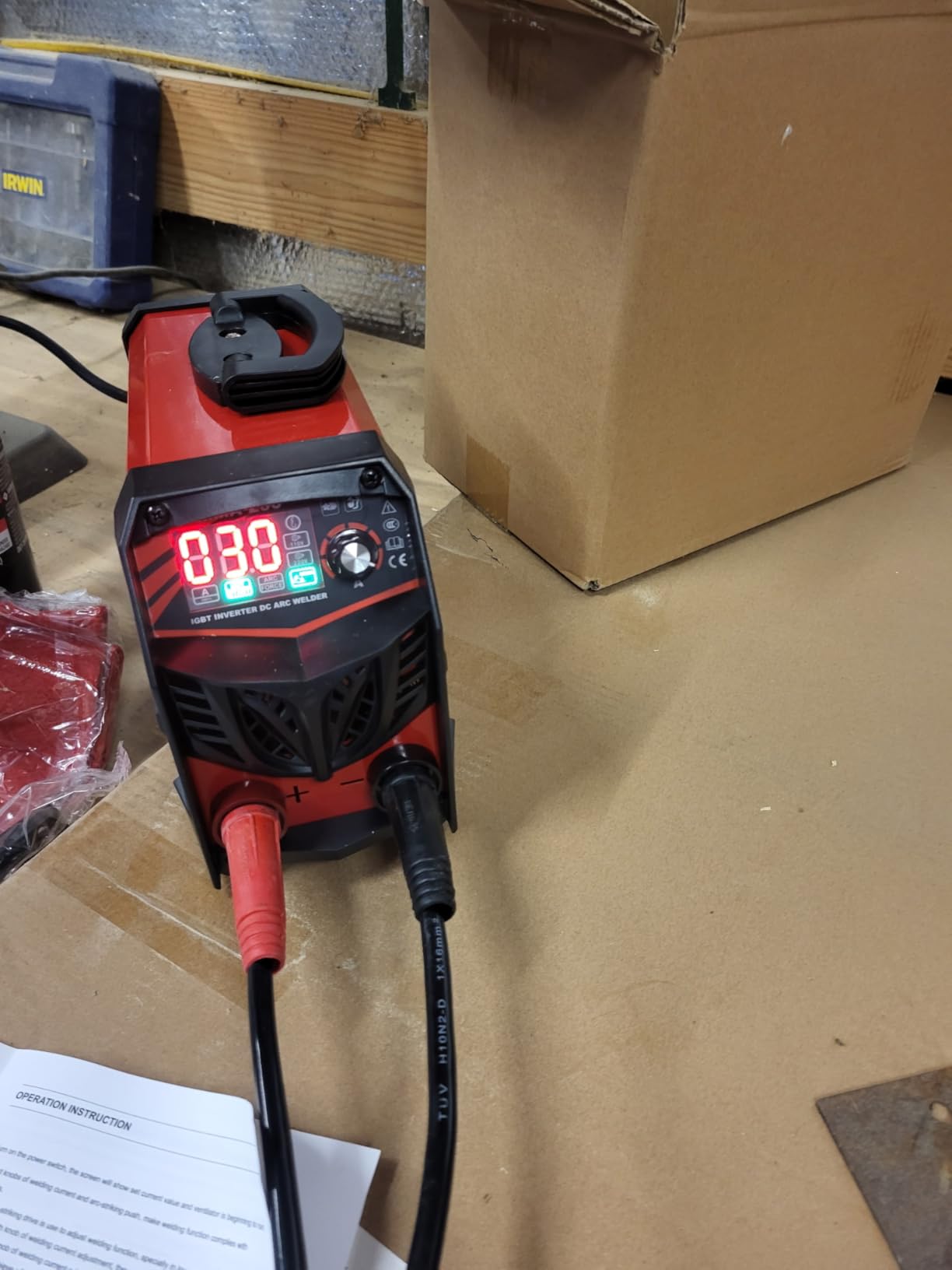
Why consider it
If your power situation is genuinely mixed or uncertain, auto-switching removes a mistake you would otherwise make in the middle of a job. The included consumables and the LED readability are both practical wins for someone working alone.
The 250A headline and the auto voltage handling are a solid combination for the class.
Why be cautious
Be honest about the evidence. It carries the lowest rating in this group at 4.2 stars with a 12 percent one-star share, and the smallest review base at 130 ratings. The gap between its 69 percent five-star share and that one-star share is the widest in the roundup. The 220V adapter is sold separately, rod compatibility is limited to 3/32 and 1/8 inch, and a newer brand carries more uncertainty about long-term reliability than a machine with years of feedback behind it.
12. ARCCAPTAIN ARC205 Pro — the most capable, and the most expensive
ARCCAPTAIN 205A Stick Welder, ARC/Lift TIG Welding Machine, 120V/240V
120V to 150A or 240V to 205A
3-year warranty
App control and auto-matching
Pros
- Genuinely runs 6010 cellulose rods once tuned
- 150A on 120V and 205A on 240V
- App control for remote parameter changes
- Auto-matches current to electrode diameter
- Adapter dust cover and strap included
Cons
- Highest-priced unit in the group
- Included electrode holder has thin leads
- Uses Dinse 35 connectors
- Do not switch voltage with the screen on
The ARC205 Pro is the most capable machine in this roundup, and it earns that on real capability. It puts 150 amps on 120V and 205 amps on 240V, which means it is the only one here that stays genuinely productive on a household circuit with thicker work, and it grows to full output on a proper shop feed.
It is also the only machine in the group that verifiably runs 6010 cellulose rods. A certified welder tuned hot start and arc force and confirmed the performance, and a long-time Lincoln Electric user described the build quality as equal to a Miller or Lincoln machine. It rates 4.5 stars across 159 ratings with a 3-year warranty.
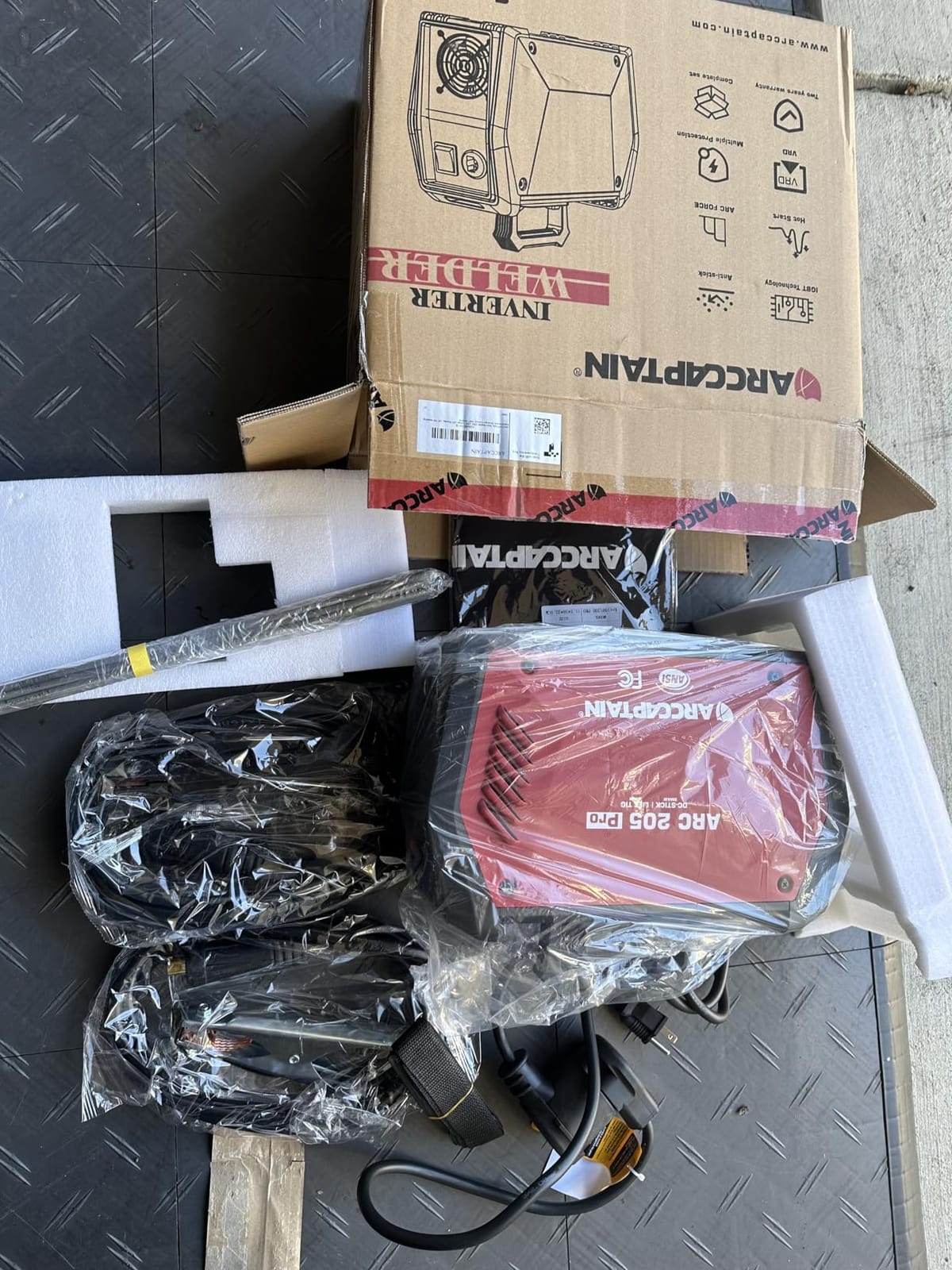
App connectivity lets you adjust parameters and check machine status remotely within 10 meters, and the machine auto-matches current and voltage to the selected electrode diameter or workpiece thickness. Rod compatibility covers 6010, 6011, 6013 and 7018, with 2-in-1 stick and Lift TIG, adjustable hot start, arc force, anti-stick and VRD.
The box is well thought out: 10 E6013 rods, a 240V to 120V power adapter, a dust cover, a 10-foot electrode holder and a 10-foot ground clamp. The dust cover is a small touch that matters in a barn.
Why it stands out
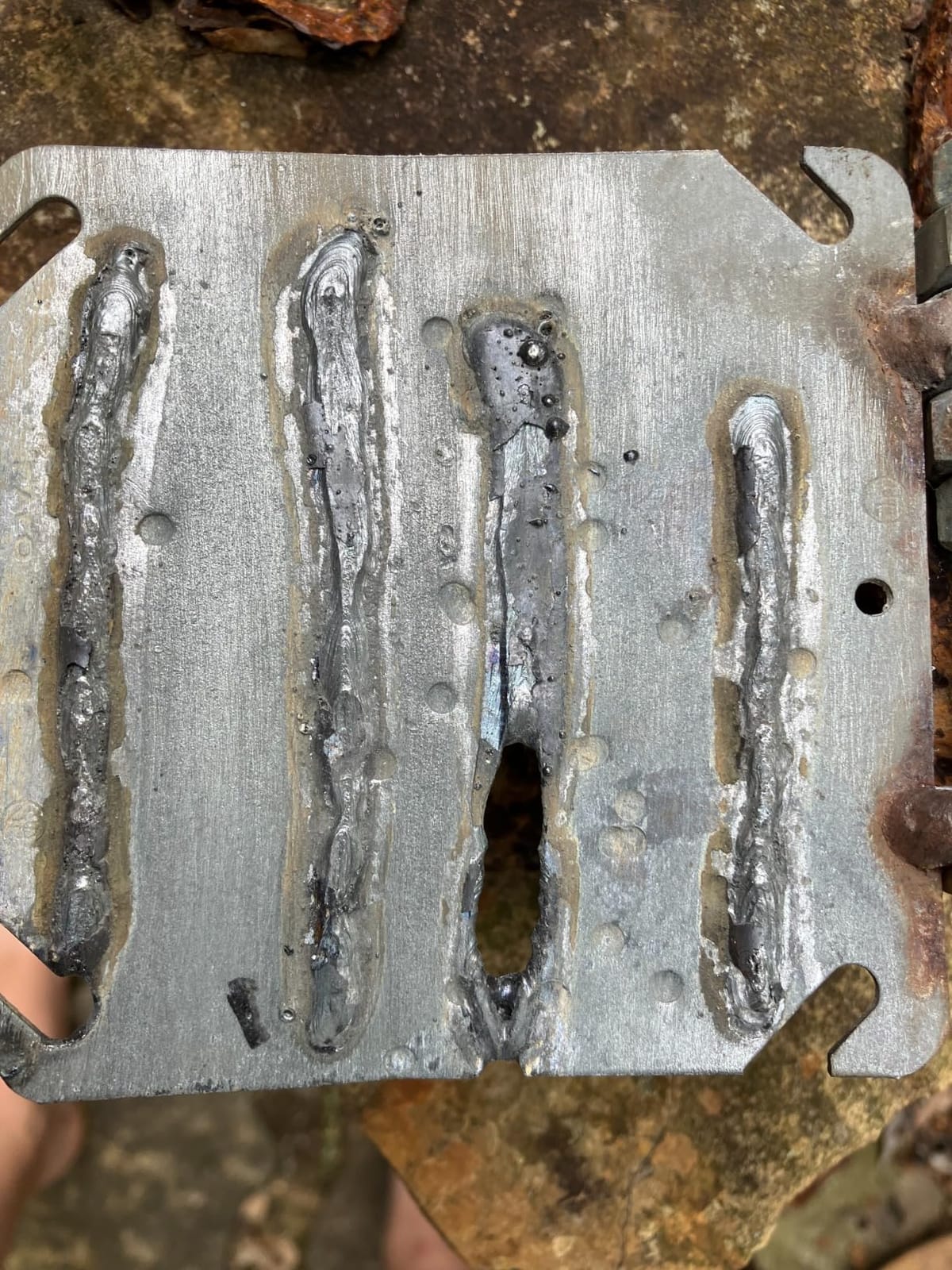
Cellulose 6010 is the rod farm shops reach for on structural and dirty work, and most machines at this level advertise support for it without delivering. This one does, after a short tuning session on hot start and arc force. For a farm that welds old implements and equipment frames, that is a meaningful difference.
The 3-year warranty and the build quality reported by experienced welders make it the most defensible long-term purchase here if your repair volume justifies it.
What to budget around
It is the highest-priced unit in the group by a wide margin. The included electrode holder is described as cheap-feeling, with thin aluminum leads that may heat at high amperage, so plan on a proper holder. It uses Dinse 35 connectors, which are incompatible with the Dinse 25 leads on the sibling 205MP MIG machine, and one review reports a breaker tripping on a 120V outlet at 90 amps with 3/32 inch 7018. Do not switch between 120V and 240V while the screen is powered on.
How to Choose a Stick Welder for Farm Repairs
Most of the wrong purchases I have seen were made by shopping on amperage alone. Amperage matters, but it is one of six decisions, and the others are where the money is actually saved or wasted.
Match amperage to the steel you actually touch
Thin gate tubing, fence rail and mower deck edge live comfortably in the 100 to 160 amp range. Trailer frames, implement brackets and structural plate want 200 amps and up. The machines here span 140 amps at the low end to 250 amps at the high end, and anything that claims 250 amps while running on 110V deserves a close look at whether that figure holds on a household circuit.
Rule of thumb: buy for the thickest job you expect twice a year, not the job you do every week. Overbuying means carrying weight you do not need.
Read duty cycle as minutes, not percentages
Duty cycle is the most misunderstood number on a welder. A rating of 20 percent at 90 amps means roughly nine minutes of welding followed by 36 minutes of cooling. This matters enormously on a farm because a gate repair is not one long weld, but a day of short welds with pauses still pushes the internal heat up.
Most machines in this group sit at 20 to 40 percent. The HGNVGZ at 60 percent and the HONE 140A at 40 percent are the two that stand out for sustained work, and that is the single best reason to pay more for one of them if you weld all day.
Decide where the power comes from
Dual voltage machines run on both 110V and 220V. If you have a 220V shop feed, dual voltage is not a luxury, it is insurance against having to choose a circuit for every job. If you only have household outlets, several of the machines here run well on 120V.
This is where a lot of first-time farm buyers get caught. Check what you actually have before you pick a machine, not after.
Generator compatibility for remote field repairs
No competitor covers this properly, so here is the practical answer. Stick welders are among the most generator-friendly tools you own, because an arc only draws current while you are actually welding, unlike a chop saw or a plasma cutter that pulls hard continuously.
Two rules make the difference. First, size the generator to roughly double the welder’s rated output amperage. A machine rated 200 amps wants a generator in the 4000 watt range or larger, and the machines here that are 110V only, like the Hpoouo and the HGNVGZ, are the easiest to run this way.
Second, inverter machines are dramatically more tolerant of dirty generator power than transformer machines, which is why all twelve products here are IGBT inverters. They handle voltage fluctuation gracefully, and several of them include automatic voltage compensation as a named feature. The Eioehtl is the one that detects the input voltage automatically.
The machines with a 110V option and adjustable hot start and arc force are the best field companions, because a generator’s frequency wobble is hardest on arc striking. Avoid relying on a small inverter generator under 2000 watts for anything above 120 amps.
Rod selection: 6011 vs 6013 vs 7018
This is where most farm welders get stuck, and the answer is simpler than the forum debates suggest. Match the rod to the joint, not the machine.
6011 is the farm workhorse. The fast-freeze coating handles rust, scale, paint and dirty steel better than anything else, and it is forgiving when your joint prep is not perfect. It works on both AC and DC. This is the rod for structural implements, old equipment frames, and anything that has been sitting out in the weather.
6013 is the general-purpose indoor rod. It lays a cleaner bead with less slag, which is why welders reach for it on visible work like gate rails and handrails, and it is the easiest rod to buy. It is not the first choice on heavy rust.
7018 is the low-hydrogen rod for load-bearing and code work. It produces the strongest, most ductile bead and is what you want on a hitch, a trailer tongue or a frame that carries load. It is DC only, and it needs to be kept dry. Several reviews in this roundup report that 7018 is the best-behaved rod on their machine, particularly the YESWELDER.
Buy all three and keep them in a dry rod can. The gap between a job that welds cleanly and a job that fights you is often just rod selection.
Safety gear and farm shop maintenance
A stick welder is worthless without a proper auto-darkening helmet, welding gloves, a leather apron, fire-resistant clothing and a pair of safety glasses for grinding. Budget for these as part of the machine, not as an afterthought. Two of the products reviewed here, the Hpoouo and the HONE MMA205, include rods, chipping hammers and gloves, which is part of why they stand out for beginners.
For maintenance, the farm environment is harder on machines than people expect. Dust and chaff get pulled into the case fan, and moisture in a shed does the rest. Blow the cooling fins out with compressed air every few months, keep the machine off a damp concrete floor, and run it briefly every couple of months if it sits over winter. Store electrodes somewhere dry, because damp 7018 will give you a welding problem that looks like a machine problem.
Our picks for beginners starting out are covered separately in best welders for beginners, and if TIG work enters the picture, see our TIG welder guide.
Frequently Asked Questions
What is the best stick welder for farm use?
For most farms, a dual-voltage inverter stick welder in the 160A to 205A range is the right answer. It covers gates, hitches, mower decks and implement brackets, runs on a household outlet or a 220V shop circuit, and weighs far less than a transformer machine. The DEKOPRO 160A is the safest general pick, while the ARCCAPTAIN ARC205 Pro is worth stretching for if you weld thick implement steel or run 6010 cellulose rods daily.
Is 6013 or 6011 better?
6011 is better for farm work. Its fast-freeze coating penetrates rust, scale and painted steel and works on both AC and DC, which is what you need on old equipment. 6013 lays a cleaner bead with less slag and is the better choice for visible indoor work like gate rails and handrails. Most farm welders keep both in the drawer and choose by joint condition.
What type of welding rod is best for farmers?
Keep three rods in the shop: 6011 for dirty, rusty structural work, 6013 for general-purpose clean mild steel, and 7018 for load-bearing joints such as hitches, trailer tongues and frames. 7018 produces the strongest and most ductile bead but is DC only and must be kept dry. A 20-pound box of each covers most farm repair volume for a season.
Should I use 6011 or 7018?
Use 6011 when the steel is rusty, dirty or unpainted and you need penetration into poor joint prep. Use 7018 when the joint is clean and load-bearing, because its low-hydrogen coating gives a stronger, more ductile bead. For a cracked loader arm or an old implement frame, 6011 is the forgiving choice; for a trailer tongue or a hitch bracket, 7018 is the stronger choice.
What is the best amperage for a 6011 welding rod?
For 1/8 inch mild steel, set 6011 near the lower end of its range, around 70 to 90 amps. For 1/4 inch plate, roughly 120 to 140 amps. For heavier structural work at 3/8 inch and above, move to 150 amps and higher, which is where a 200A or 250A machine earns its cost. Note that several budget machines in this roundup display an amperage reading well above true output, so verify with a clamp meter on a scrap coupon.
Is stick welding outdated?
No. Stick welding remains the most forgiving process for farm work because the electrode coating provides its own shielding and hot start plus arc force handle ignition for you. It is far less sensitive to rust, paint and wind than MIG or flux core, needs no shielding gas, and is dramatically more tolerant of generator power. A modern IGBT inverter stick welder is also far lighter than the transformer machines it replaced.
Will a portable generator run a stick welder?
Yes, and stick is one of the most generator-friendly jobs you own, because the arc only draws current while you are welding. Size the generator at roughly twice the welder’s rated output, so a 200 amp machine wants a 4000 watt generator or larger. Prefer a 110V machine, keep the machine at 120 amps or below on a small inverter generator, and expect long extension leads to reduce available voltage.
Can you weld aluminum with a stick welder?
Not effectively. Aluminum requires AC output with a special electrode, usually a 4043 or 5356 aluminum rod, and most of the budget inverter stick welders in this roundup output DC only. Some listing copy mentions stainless and aluminum, but stick welding aluminum is a specialist task. For farm aluminum items like mower blades or trim, spend the time on a MIG machine with a spool gun instead.
Final Verdict on the Best Stick Welders for Farm Repairs in 2026
The DEKOPRO 160A is the best stick welder for farm repairs in 2026 for most operations, because dual voltage and a 6128-rating history at 4.6 stars make it the least risky purchase in this group. Pick the YESWELDER ARC-205DS if you want real output for very little weight, the HONE MMA140D if your repairs run all day on a 120V circuit, and the Hpoouo ARC-200 if the job is a quarter mile from the truck.
Buy the machine that matches your thickest steel and your nearest outlet, keep 6011 and 7018 in a dry rod can, and you will stop paying a mobile welder for every cracked bracket on the place.