
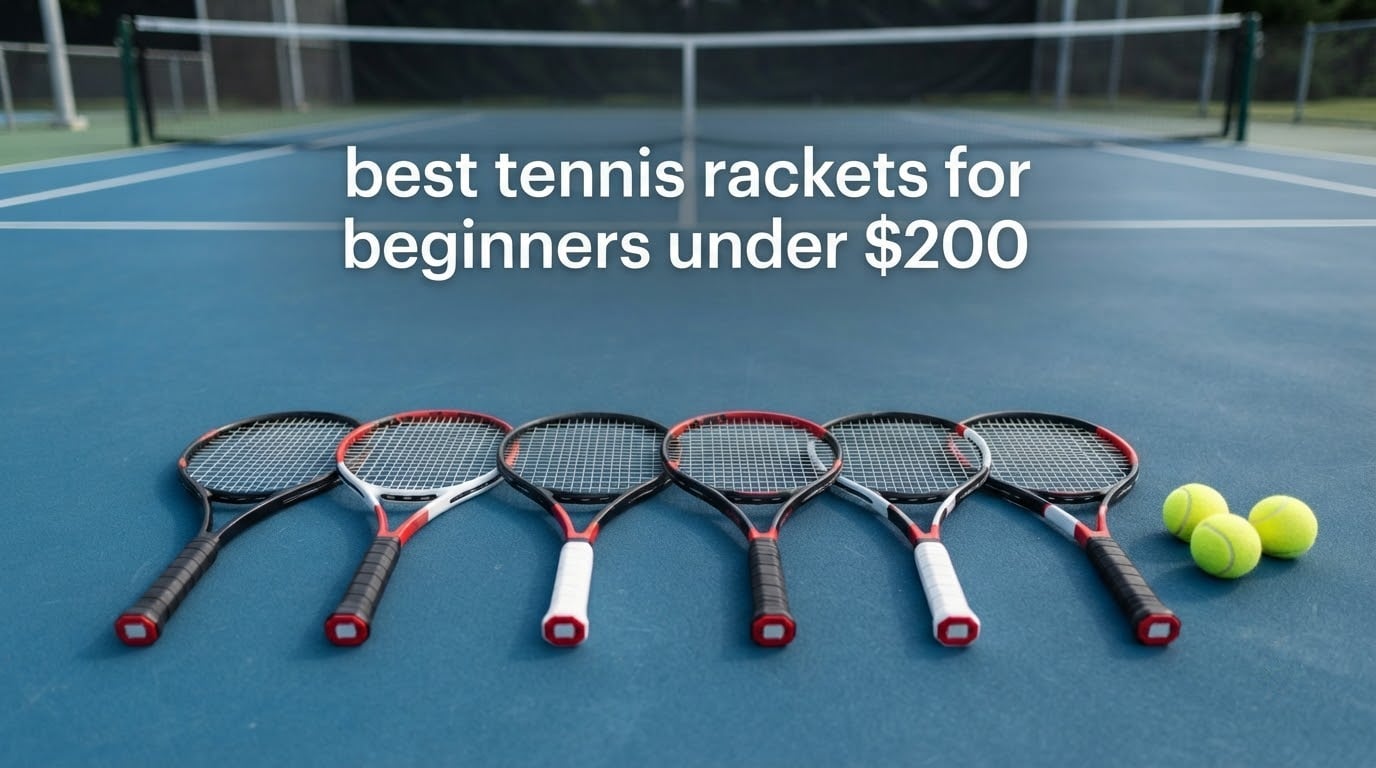
Most people who search for the best tennis rackets for beginners under 200 are not looking for a pro model. They are looking for a frame that forgives a mistimed ball, does not punish a sore elbow, and does not need to be replaced next season. That is a narrower brief than it sounds, and it is the filter we used for every pick below.
We spent weeks comparing eight adult frames, reading the full review history on each one, and mapping the published specifications against what a new player actually needs. Nothing here needs restringing skills, lessons, or a big budget to justify. Every racket in this roundup sits under the 200-dollar ceiling and works straight out of the box.
If you are picking a first racket, you only have four decisions that really matter: head size, strung weight, balance, and grip size. Get those right and the rest is preference. Get them wrong and no amount of money saves your elbow. We explain each one in the buying guide further down, with plain numbers rather than marketing language.
Top 3 Picks: Best Tennis Rackets for Beginners Under $200 in 2026
These three lead the group on the combination of rating, review volume, and beginner-friendly specifications. The Wilson Federer Adult frame takes the top spot on the strength of its 4.7 rating across more than 4,500 reviews. The HEAD Ti. Conquest and the HEAD Ti S6 complete the podium.

Wilson Federer Adult
- 295 g AirLite Alloy frame
- Oversized midplus head
- Stop Shock Pads dampen vibration
- Pre-strung and ready to play

HEAD Ti S6
- 115 sq in oversized head
- 8.6 oz strung weight
- 27.7 inch extended frame
- Open 16x19 string pattern

HEAD Ti. Conquest
- 108 sq in oversized head
- 9.7 oz light frame
- Head-light balance
- Three grip size options
Best Tennis Rackets for Beginners Under $200 (October 2026)
All eight rackets, with the specifications that decide whether a frame suits a beginner. Head size and strung weight are the two numbers worth reading first; everything else is secondary for a new player.
| Product | Specifications | Action |
|---|---|---|
| Wilson Federer Adult Recreational Racket |
|
Check Latest Price |
| HEAD Ti S6 Tennis Racket |
|
Check Latest Price |
 Wilson Hyper Hammer 5.3 Wilson Hyper Hammer 5.3 |
|
Check Latest Price |
| HEAD Ti. Conquest Tennis Racquet |
|
Check Latest Price |
 HEAD Geo Speed Tennis Racquet HEAD Geo Speed Tennis Racquet |
|
Check Latest Price |
 HIRALIY Two-Racket Set with Bag HIRALIY Two-Racket Set with Bag |
|
Check Latest Price |
 Wilson Essence Adult Racket Wilson Essence Adult Racket |
|
Check Latest Price |
 Teloon Recreational 27 Inch Racket Teloon Recreational 27 Inch Racket |
|
Check Latest Price |
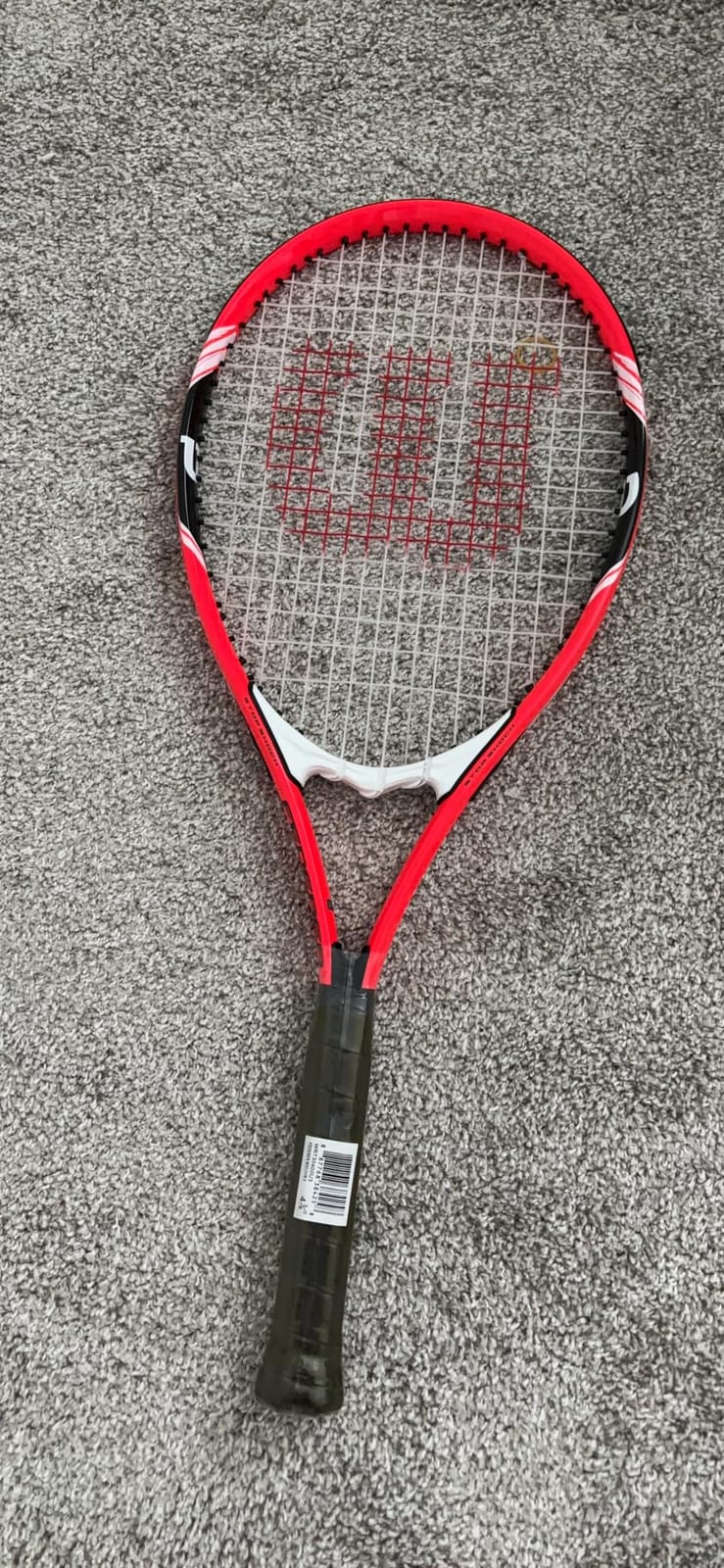
1. Wilson Federer Adult Recreational Racket: The Safest All-Rounder
Wilson Federer Adult Recreational Tennis Racket – Grip Size 3 – 4 3/8″, Red/White/Black
295 g frame
Oversized midplus head
Stop Shock Pads
Pre-strung
Pros
- Light and easy to swing
- Well balanced in the hand
- Stop Shock Pads dampen vibration
- 4510 reviews averaging 4.7
Cons
- Oversized head trades precision
- Not aimed at competitive play
- Some want more power
Four thousand five hundred reviews at a 4.7 average is the deepest feedback base in this roundup, and the pattern in those reviews is remarkably consistent. Owners describe a light, well-balanced frame that is comfortable from the first hit and stays comfortable through a two-hour session. That is exactly what a new adult player needs from a first racket.
The construction is AirLite Alloy, which keeps the frame at 295 g without feeling flimsy in the hand. The midplus head is oversized in shape but not in measurement, so it sits between a standard adult head and a true super-oversize. You get a bigger target without the floppy, underpowered feeling some very large beginner frames have.
Stop Shock Pads sit in the throat of the frame and do the single most useful job for a beginner: they take the edge off string vibration before it travels up your arm. Reviewers who switched to this frame from a department store racket frequently mention that their elbow stopped aching. That single feature is worth more to a new player than any frame technology label.
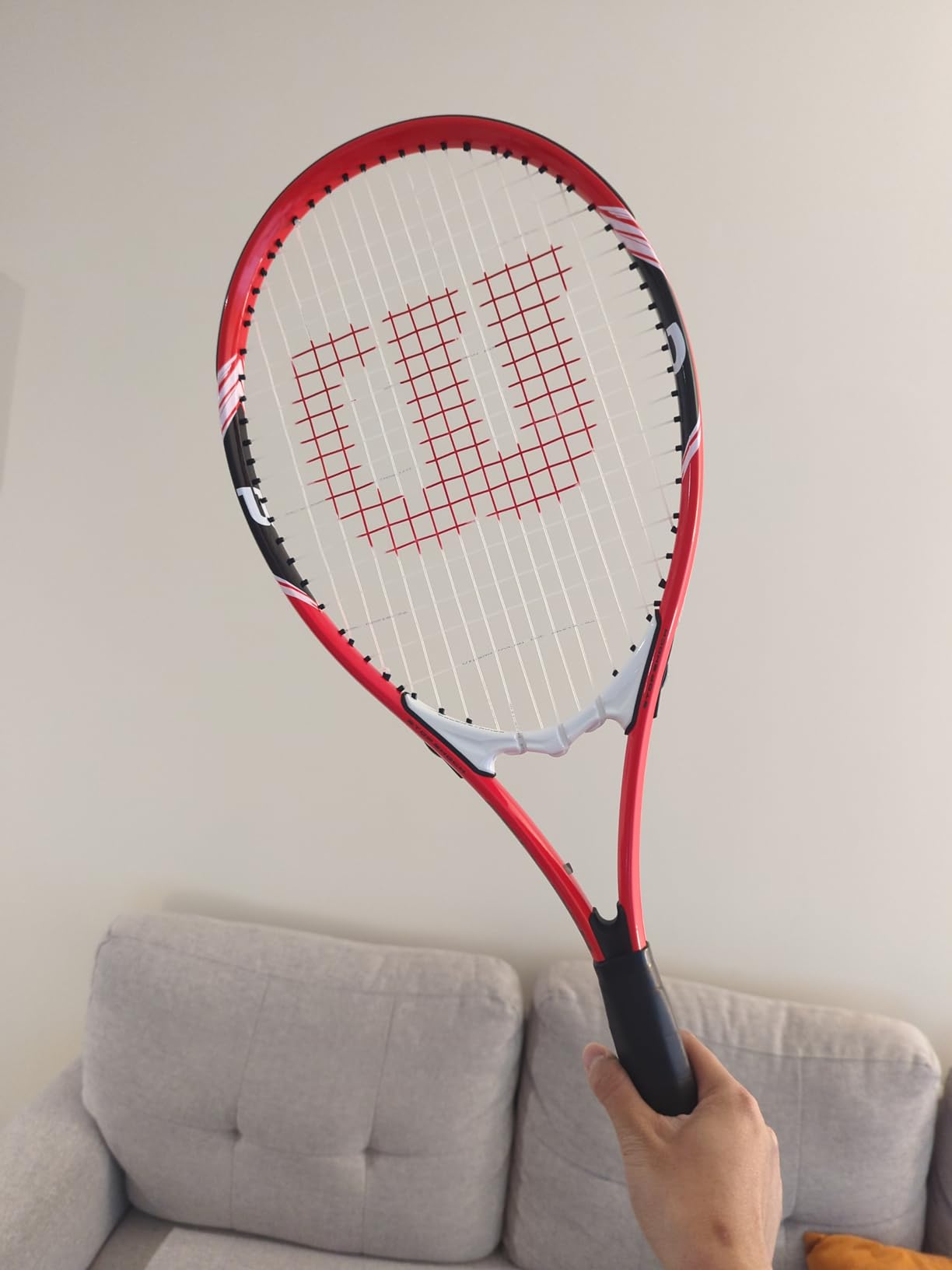
The Power Strings layout uses longer mainstrings than a standard pattern, which adds a little pop on groundstrokes without needing extra swing speed. Extra length in the frame adds reach, so you cover a little more court without taking a bigger swing. It arrives pre-strung, so you can take it straight to a session.
The grip size is 4 3/8 inches, which fits medium to large hands. Smaller hands should look at the Wilson Essence later in this list, which comes in at 4 1/4 inches. The red, white, and black colourway is classic and will not look out of place on a club court.
Who this racket suits
This suits a brand-new adult player who wants one racket that handles doubles, group lessons, and weekend matches without any adjustment period. It also works well for a returning player who last played on a cheap frame and wants a noticeable upgrade in feel without a noticeable jump in weight.
If your main worry is arm comfort, this is a safe starting point. The 295 g weight and the throat damping combine to produce a frame that most reviewers describe as easy on the forearm, even after long sessions.
Where it falls short
The oversized midplus head trades precision for forgiveness, so a player who already has clean contact might find it vague. It is also explicitly a recreational frame, and the construction will not satisfy someone who wants to practise flat groundstroke strokes with pinpoint control.
A small number of reviewers want more weight or more punch from the frame. If you generate a lot of racquet head speed already and want a firmer, more solid hitting experience, look at the Wilson Hyper Hammer instead.
2. HEAD Ti S6: The Oversize Sweet Spot Champion
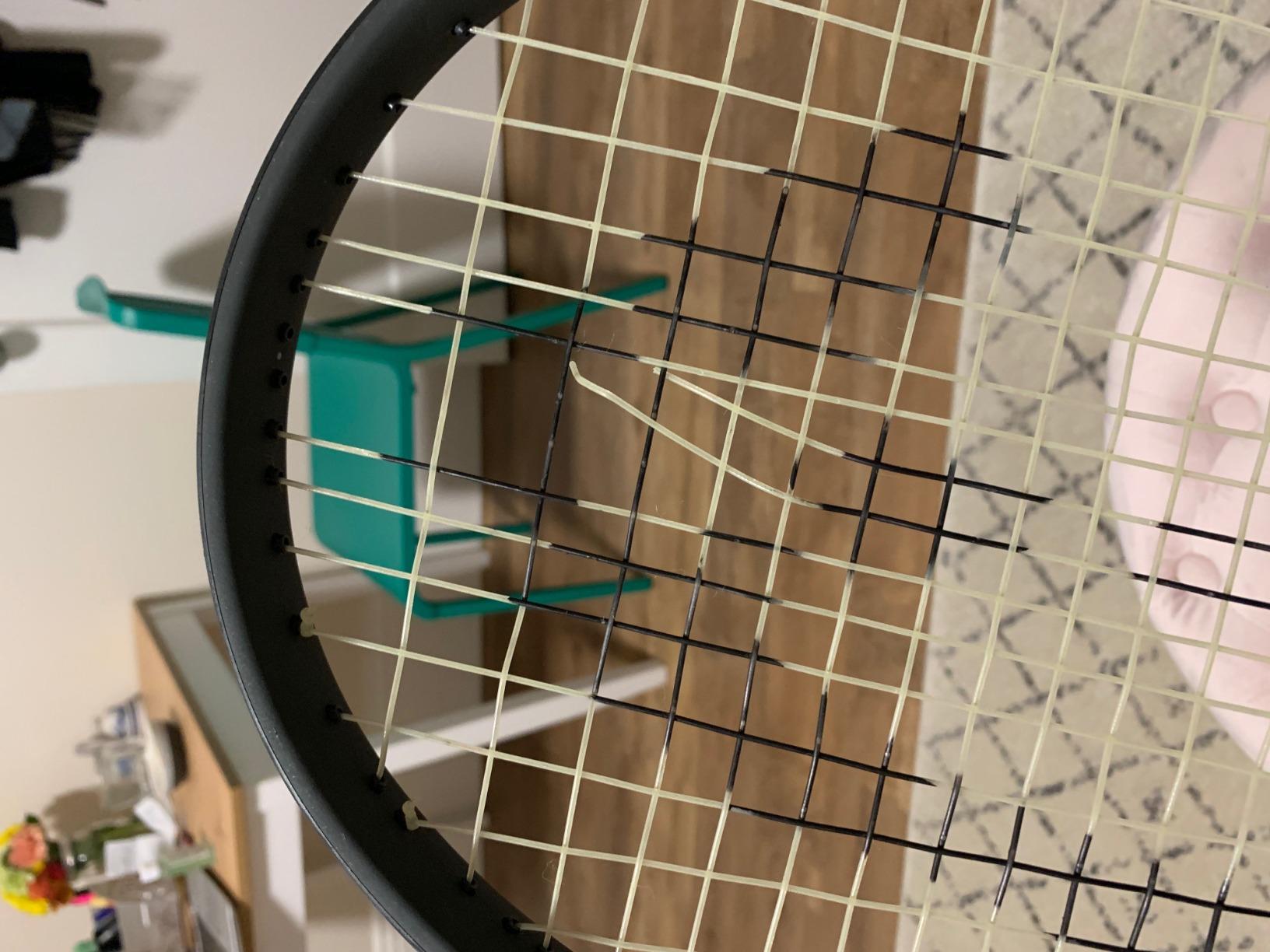
HEAD Ti S6 Tennis Racket, 4 3/8″ Grip
115 sq in head
8.6 oz strung
27.7 inch length
16x19 pattern
Pros
- Very light strung weight
- Large forgiving sweet spot
- Not overly stiff
- Instructors recommend it widely
Cons
- Stock strings can break quickly
- Head-light feel needs adjusting
- Adjustment period from stiff frames
Ask a general tennis forum for a safe default beginner racket and the HEAD Ti S6 comes up more often than any other frame. The reason is in the numbers: 8.6 ounces strung and a 115 square inch head. That combination gives you one of the largest sweet spots in this roundup at a weight you can swing for hours.
Most beginner advice online pushes toward a 95 to 100 square inch head, arguing that a smaller head teaches better timing. We think that is backwards for a first racket. A larger head spreads the strings over a wider area, so the ball still travels over the net when it lands a centimetre off centre, and you get a usable shot from contact you would otherwise shank into the net.
The frame mixes titanium and graphite composite, which is the construction most of the better affordable frames use. It is not stiff enough to punish an imperfect swing, which matters more than any spec on the page. Several reviewers note that it lets a new player develop proper weight transfer instead of learning to muscle through a stiff frame.
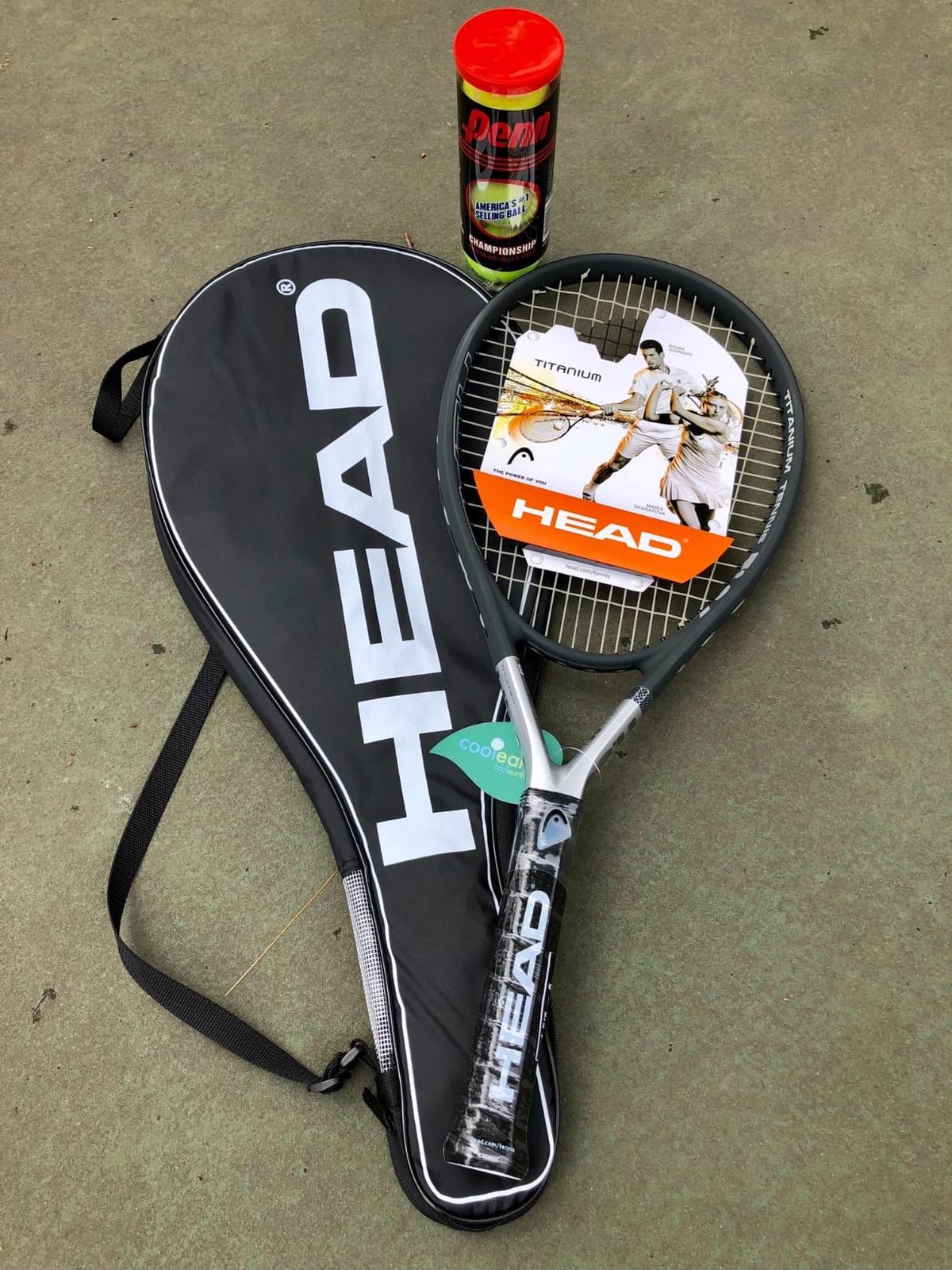
The 27.7 inch length adds reach and leverage on serves and groundstrokes, which makes it a natural step up from a junior racket. That is the most common reason buyers give for switching: a parent buying for a teenager outgrowing a 25 inch frame. The open 16×19 string pattern makes topspin and slice easier to generate than a closed pattern would.
At 4 3/8 inches, the grip suits medium to large hands. It ships pre-strung with a HEAD SofTac grip, and most first-time owners leave that grip on for months before bothering to change it.
Who this racket suits
This suits an adult beginner who is older, returning after a long break, or simply has a short compact swing. At 8.6 ounces strung it is the lightest frame here, and the lightest frame on the court is the one you will still be swinging comfortably in year two.
It is also the safest choice for a parent buying a first real racket for a teenager. The extended length and light weight handle the awkward growth-stage swing without tiring anyone out.
Where it falls short
The factory synthetic gut strings are the weakest point, and reviewers flag them as the first thing that will need replacing, often within a year of regular play. Treat that as a normal running cost rather than a fault, and plan on a restring rather than a new racket.
The head-light bias feels unusual at first if you are used to a solid, stable frame. Some players also find the 115 square inch head larger than they expected, and a few prefer a firmer, more connected feel on short swings.
3. Wilson Hyper Hammer 5.3: Power and Stability for Short Swings
Wilson Hyper Hammer 5.3 Strung Tennis Racket (Black/White, 4 3/8)
110 sq in head
240 g frame
Head-heavy balance
Open string pattern
Pros
- Easy power from a compact swing
- Large effective hitting zone
- Light on the arm
- Instructor-recommended
Cons
- Frame vibration on contact
- Strings move under heavy topspin
- Takes adjustment to tame the power
The Hyper Hammer 5.3 has been in the Wilson lineup for years, and the reason is simple: it makes a solid contact feel easy. Owners consistently describe strong topspin and a serve that arrives with pace without extra effort, which is the whole point of a game-improvement frame.
At a listed 240 g and 27.5 inches long, it is light in the hand despite the head-heavy balance. That combination is unusual and useful. Head-heavy means more mass out at the head, which resists twisting on off-centre contact and helps you hit through the ball without generating extra swing speed.
The oversize 110 square inch head enlarges the sweet spot further, and the open string pattern adds both power and spin. For a player with a short, compact swing who has never had to generate their own power, that is a fair trade for the reduced precision an open pattern gives you.
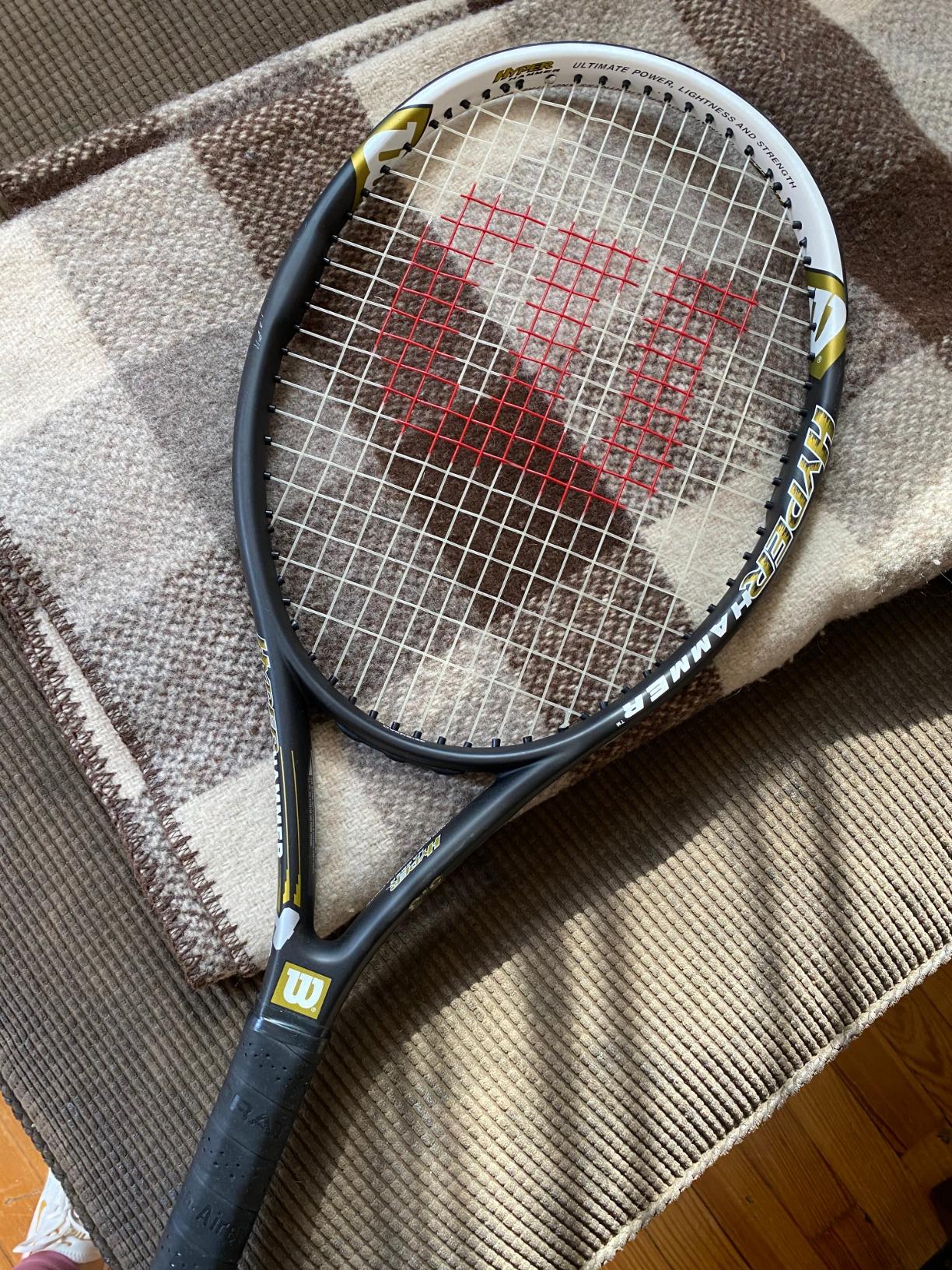
The graphite composite frame and carbon fiber shaft give it more substance than the pure aluminum frames in this roundup, and it comes with a one year manufacturer warranty. Grip sizes are widely available across the model line, so finding a fit for an unusual hand is straightforward.
This frame appears on a great many club coach recommendation lists for exactly the reason it performs here: it is easy to hit with before you know how to hit properly. If you take lessons, it will not fight your instructor’s advice.
Who this racket suits
This suits a returning player over 50, or anyone whose swing has always been short and compact. The head-heavy bias does the work of a heavier frame without the arm load, and reviewers frequently describe it as the racket that finally made the ball go where they aimed it.
It also suits a doubles player who wants easy reach and power on volleys. The extended 27.5 inch frame helps at the net, and the open pattern rewards a player who hits the ball flat and wants it to stay flat.
Where it falls short
Frame vibration on contact is the most repeated complaint, and a vibration dampener is the standard fix. If your elbow is already sensitive, either add a dampener early or choose a head-light frame such as the HEAD Geo Speed instead.
Because the strings sit in an open pattern, heavy topspin can move them around between restrings, and a few players find the generated power takes a few sessions to tame. A new player chasing precise flat strokes will find this frame too generous.
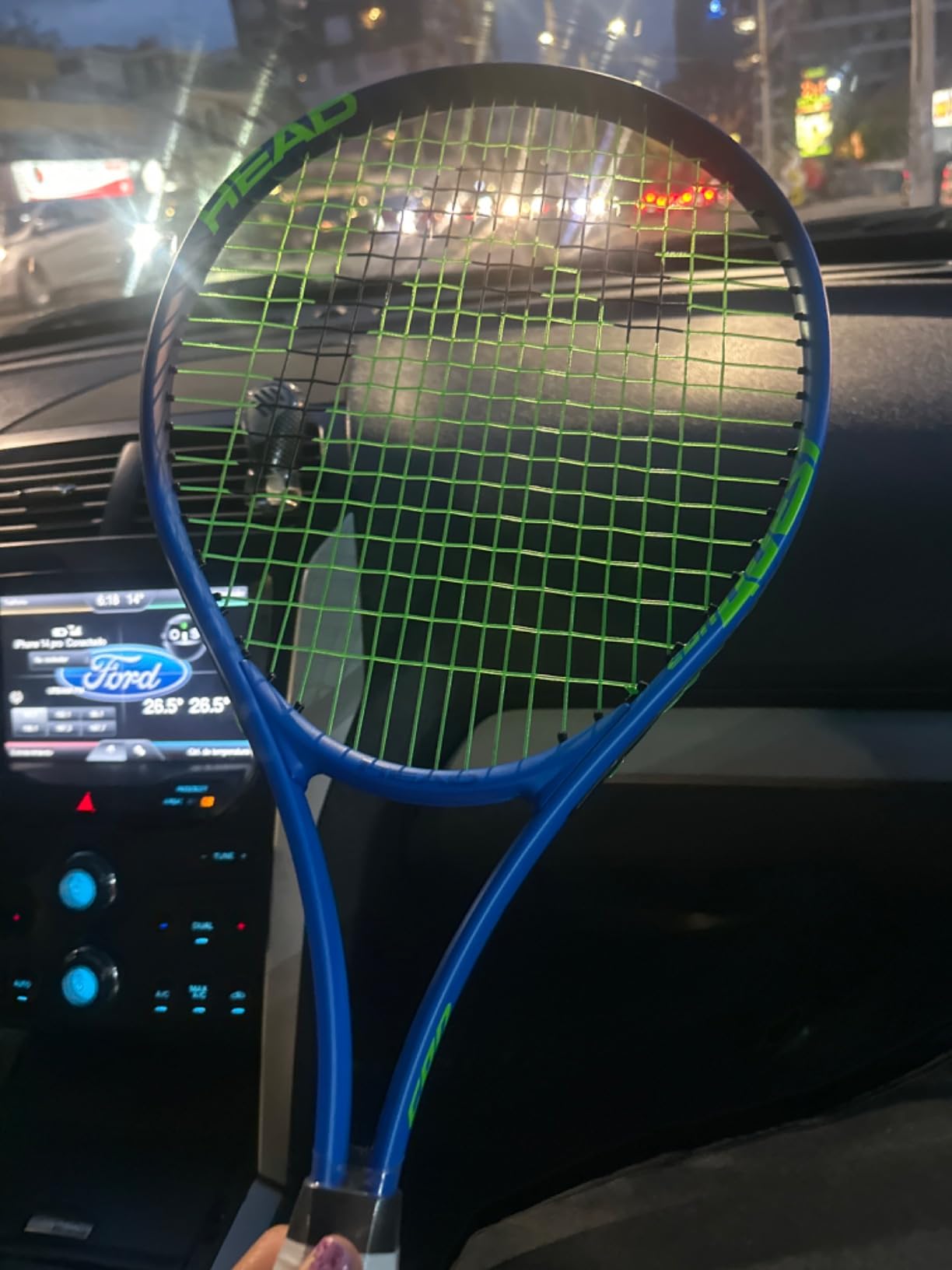
4. HEAD Ti. Conquest: The Budget Pick Lightweight Frame
HEAD Ti. Conquest Tennis Racquet, 4 3/8″ Grip
108 sq in head
9.7 oz weight
Head-light balance
Three grip sizes
Pros
- Very easy on the arm
- Forgiving 108 sq in head
- Head-light for net control
- Playable straight from the box
Cons
- Minimal power from a basic frame
- Factory strings and grip are simple
- Feel falls short of graphite frames
If you want a single racket that covers the fundamentals well for very little money, the Ti. Conquest is the frame to look at first. It carries a 4.5 rating from more than 2,000 reviews, and the recurring description in those reviews is a light, sturdy, easy-to-swing racket that simply gets out of the way.
The 108 square inch head is a sensible middle ground. It is large enough to forgive off-centre contact without the almost comedic scale of a 115 square inch frame, and the O-Beam frame design keeps the weight at 9.7 ounces. That is light enough for a slow swing and stable enough for a developing one.
Head-light balance is the detail most beginners should care about, and the Ti. Conquest is built around it. Weight concentrated toward the handle means less torque pulling on your elbow when you swing, which is the mechanical reason behind most racket-related arm discomfort.
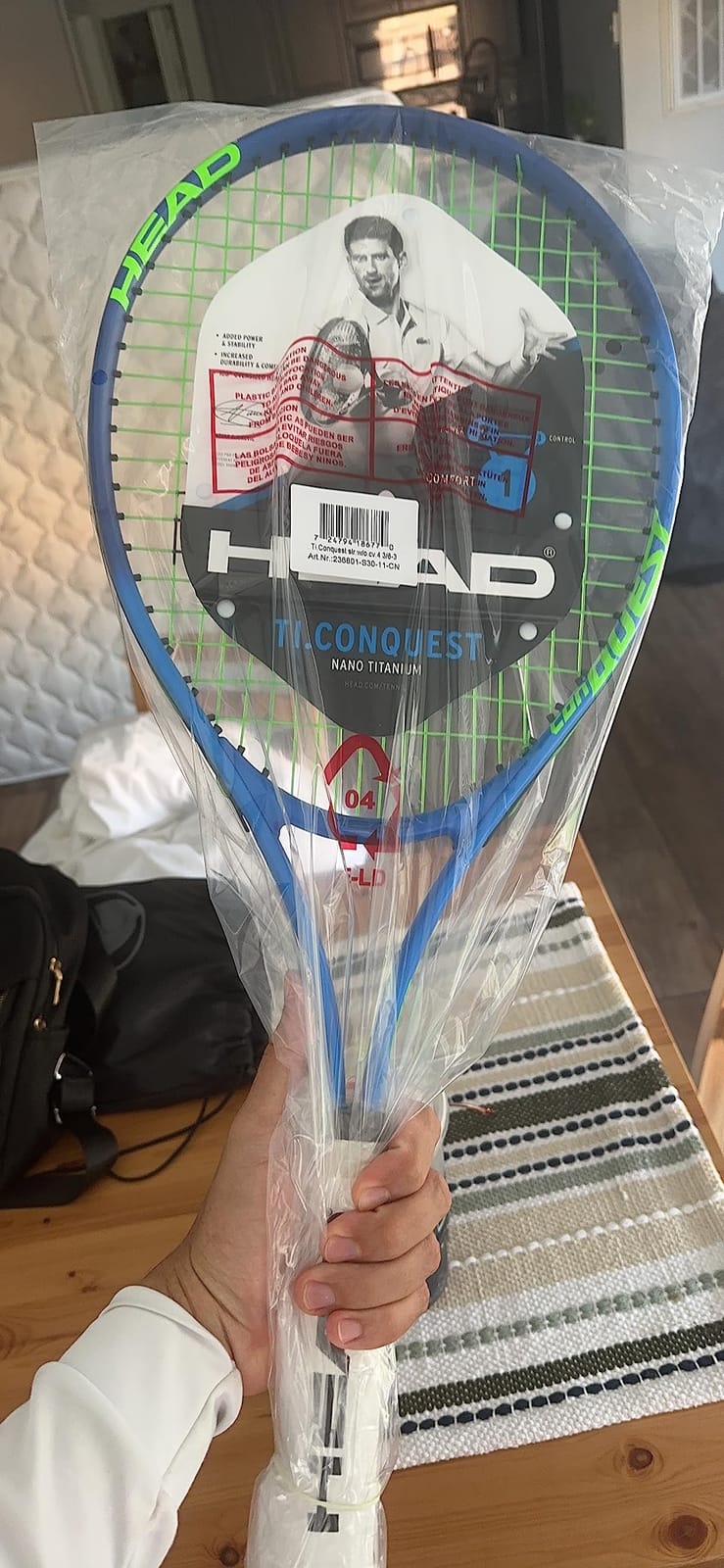
The frame is titanium with an aluminum shaft, pre-strung and ready to use, and it comes with a one year manufacturer warranty. It is available in 4 1/4 inch, 4 3/8 inch, and 4 1/2 inch grips, which is the widest grip range of any frame in this roundup and a genuine advantage for hands that sit between standard sizes.
At 27 inches long, it is a conventional adult length. That makes it a straightforward choice for an adult who has never played before and does not want a junior frame as an intermediate step.
Who this racket suits
This suits a beginner with a slower swing who wants their racket to do the work, and a player returning to tennis after a decade away whose arm needs a break from heavy frames. The 9.7 ounce weight and head-light bias make it forgiving on both counts.
It is also a strong pick for a couple or a family sharing court time, because the low cost of a second racket matters when you are buying for more than one player.
Where it falls short
Power is modest, and the frame does not give you the free depth or the stable base at the net that a graphite composite frame provides. Players who take the game seriously quickly notice the difference, even if it takes a season to do so.
The factory strings and grip are the obvious upgrade points, and most experienced owners replace both within the first year. If the frame feels vague to you, the strings and grip are the reason rather than the head size.
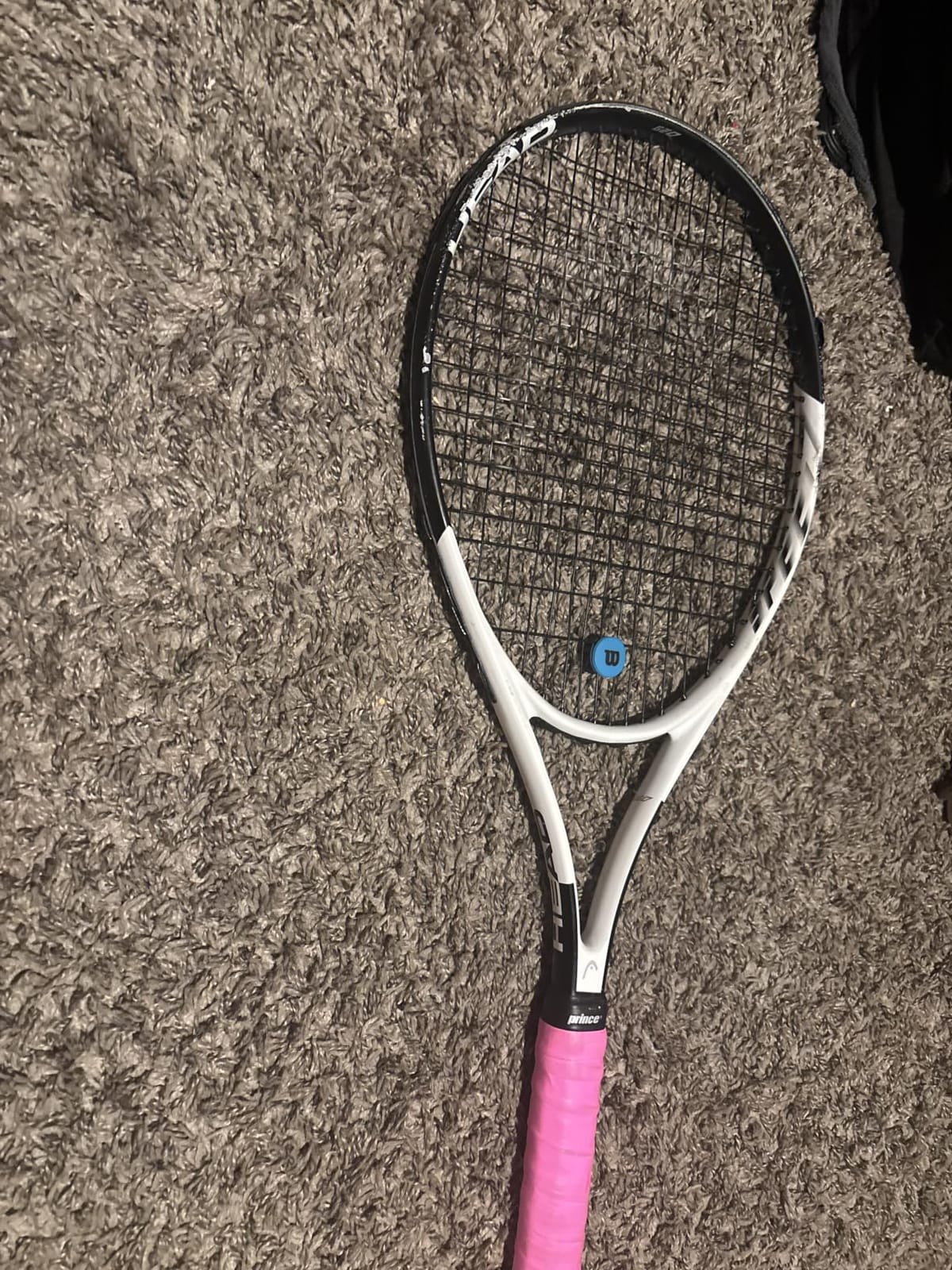
5. HEAD Geo Speed: Control and Low Vibration at 105 Square Inches
HEAD Geo Speed Tennis Racquet, 4 3/8″ Grip
105 sq in head
10.4 oz weight
Head-light balance
27.5 inch length
Pros
- Head-light feel reduces vibration
- 105 sq in forgiveness
- Pre-strung and ready to play
- Graphite shaft adds stability
Cons
- Heavier than most beginner frames
- Modest power output
- Titanium-style build is basic
The Geo Speed sits at the control end of this roundup without leaving the beginner category. Its 105 square inch head is forgiving, but its head-light balance and vibration-damping feel make it the calmest frame here for someone whose elbow has already complained once.
At 10.4 ounces it is the second-heaviest frame in this group, and that is deliberate. More mass in the frame means the strings are less likely to move on off-centre contact, and a player with any wrist or forearm history generally benefits from that stability over maximum swing speed.
The Geo Power Technology shaft geometry is a marketing label for the frame’s cross-section, but the practical effect reviewers describe is straightforward: easy handling and controlled direction rather than raw power. If you are picking this racket, you are choosing control, and the 4.5 rating across 738 reviews is consistent with that.
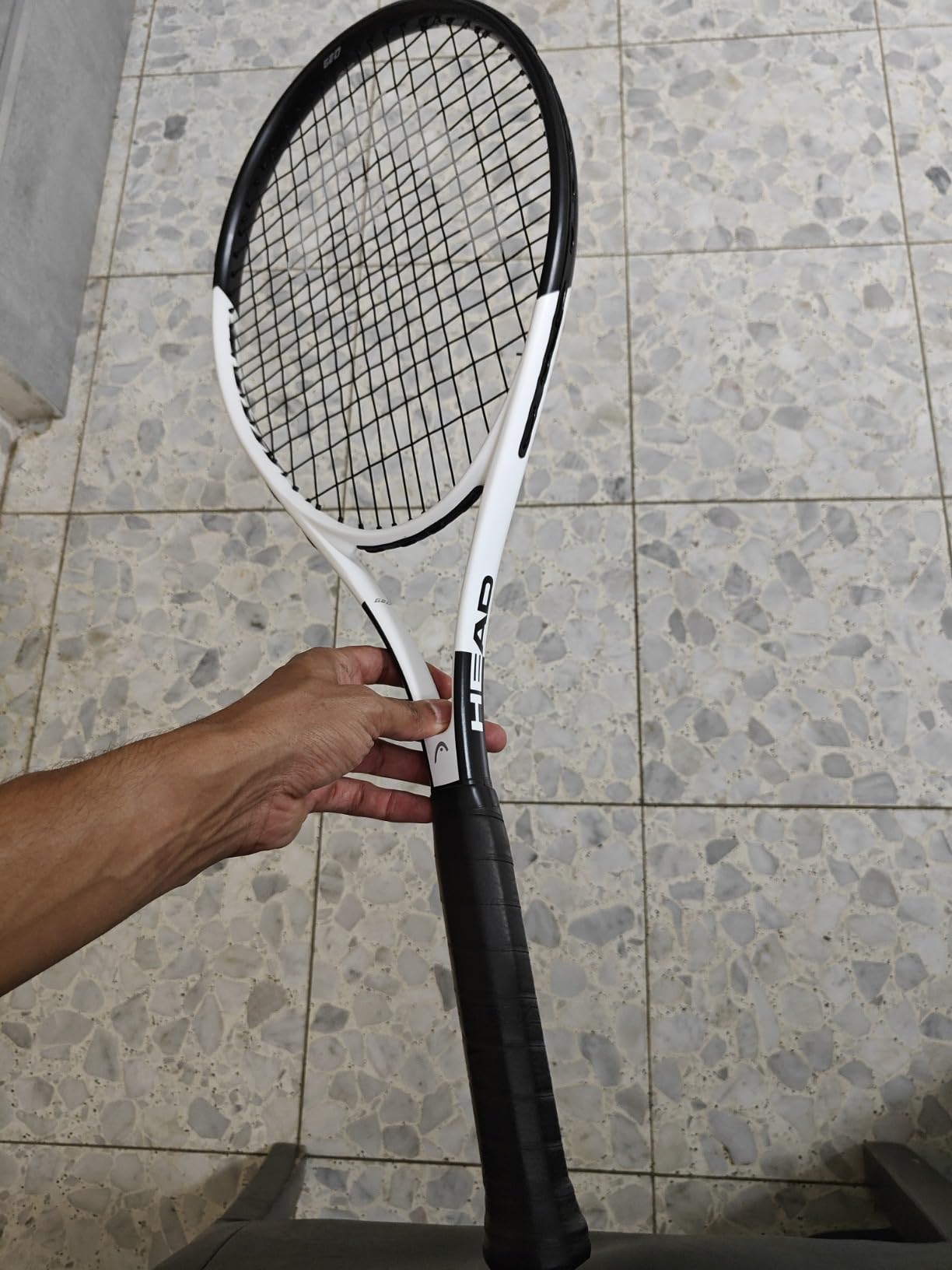
The frame pairs a titanium-style construction with a graphite shaft, which adds a little more stability than pure titanium. It arrives pre-strung with synthetic gut strings, runs 27.5 inches long, and carries a one year manufacturer warranty.
Grip size is 4 3/8 inches, so medium to large hands are covered. Smaller hands should look at the 4 1/4 inch options further down this list.
Who this racket suits
This suits a player with a history of elbow or wrist discomfort who still wants a frame with some heft behind it. The head-light balance and the stable swing weight do more for arm comfort here than the very light frames that trade stability for speed.
It is also a sensible choice for a taller or stronger beginner who finds ultra-light frames feel flimsy in the hand. Ten ounces is a real frame weight rather than a token one.
Where it falls short
Players who genuinely cannot swing above roughly 9.5 ounces will find this tiring over a long session. If you are returning from injury or have limited shoulder strength, pick something lighter.
Power output is modest compared with the oversize power frames, and a new player chasing effortless depth on groundstrokes will have to swing a little harder to get it. It rewards timing more than effort.
6. HIRALIY Two-Racket Set: Everything Two Players Need
HIRALIY 27-Inch Tennis Rackets, 2 Pack with Balls and Bag, Green/Pink
Two rackets included
260 g aluminum frame
4 1/8 inch grip
Bag, balls, overgrips
Pros
- Two rackets plus balls and bag
- Very light at about 260 g
- Thickened aluminum holds shape
- Ten colour options
Cons
- Carry bag straps rip
- Overgrips slip with sweat
- Occasional quality control issues
Most beginner buying guides quietly assume you need one racket. If you are playing with a partner, a family, or a club where you borrow equipment, this set changes the arithmetic: you get two 27 inch rackets, pressureless balls, spare overgrips, and a carry bag in one purchase.
Each frame weighs roughly 260 g unstrung, which keeps it easy to accelerate and a genuine asset for a player who fatigues quickly. The thickened high-grade aviation aluminum is heavier in the walls than a thin department store frame, and reviewers say it resists warping better over time.
A triangular Y-joint reinforcement at the throat absorbs shock and gives the frame a more stable feel than a one-piece moulded design. That matters more than it sounds: a frame that flexes wildly on contact is tiring to swing, and beginners tend to over-grip when a racket feels unstable.
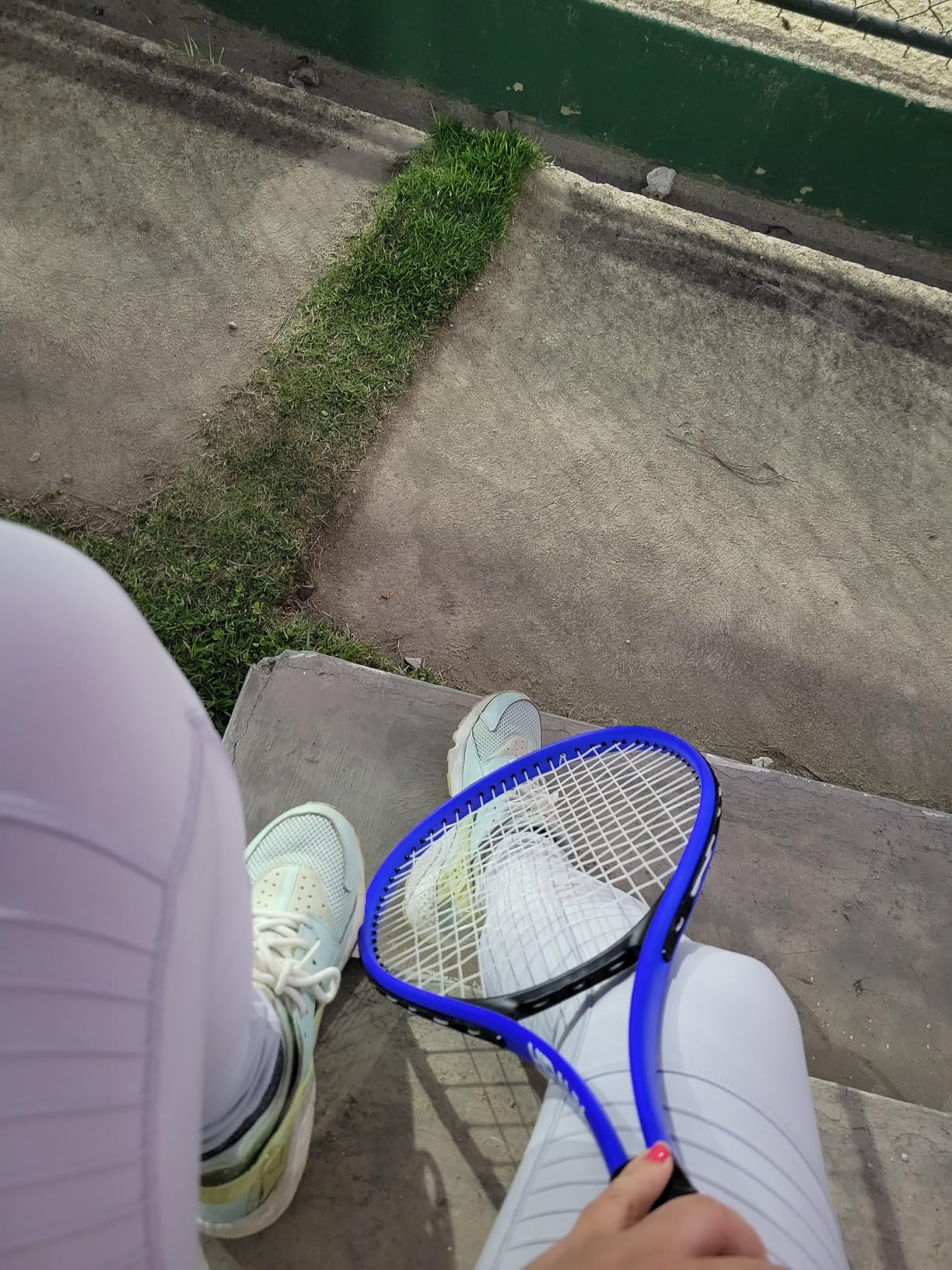
Grip size is 4 1/8 inches, the smallest in this roundup, so it suits smaller hands and younger players moving up from a junior frame. Colour options include pink, black, and blue, and the all-black version is popular for people who want equipment that does not announce itself.
There is no manufacturer warranty, which is the main reason this sits below the single-racket picks. The frame is otherwise a competent, no-frills option.
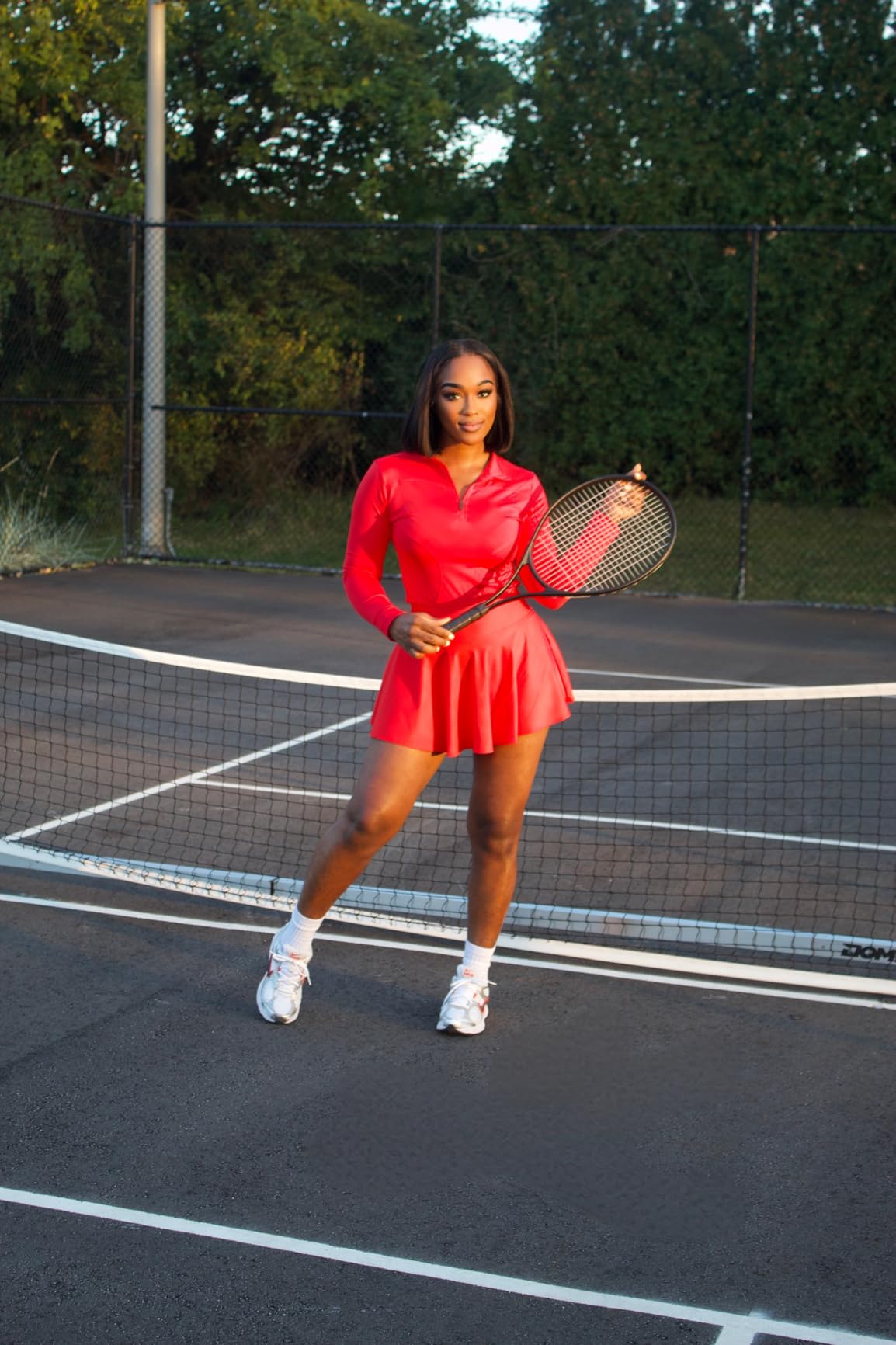
Who this racket suits
This suits a beginner who plays doubles regularly and does not want to carry a single racket back and forth. It also suits a household sharing one court, a couple learning together, and anyone who wants a spare frame that lives in the car boot.
For a very small hand, the 4 1/8 inch grip is a genuine advantage, and it is the reason this set rates well with younger players moving up from junior equipment.
Where it falls short
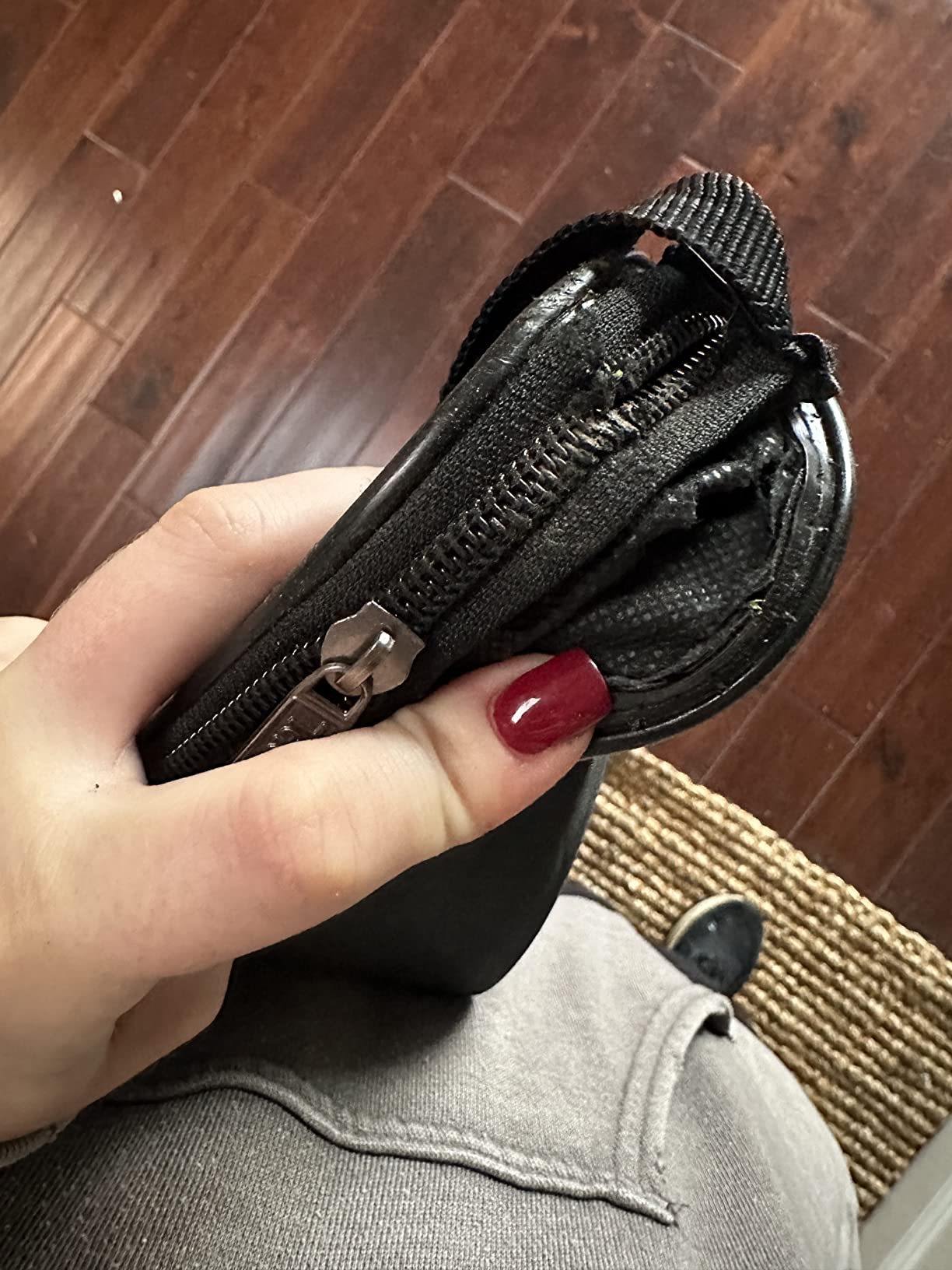
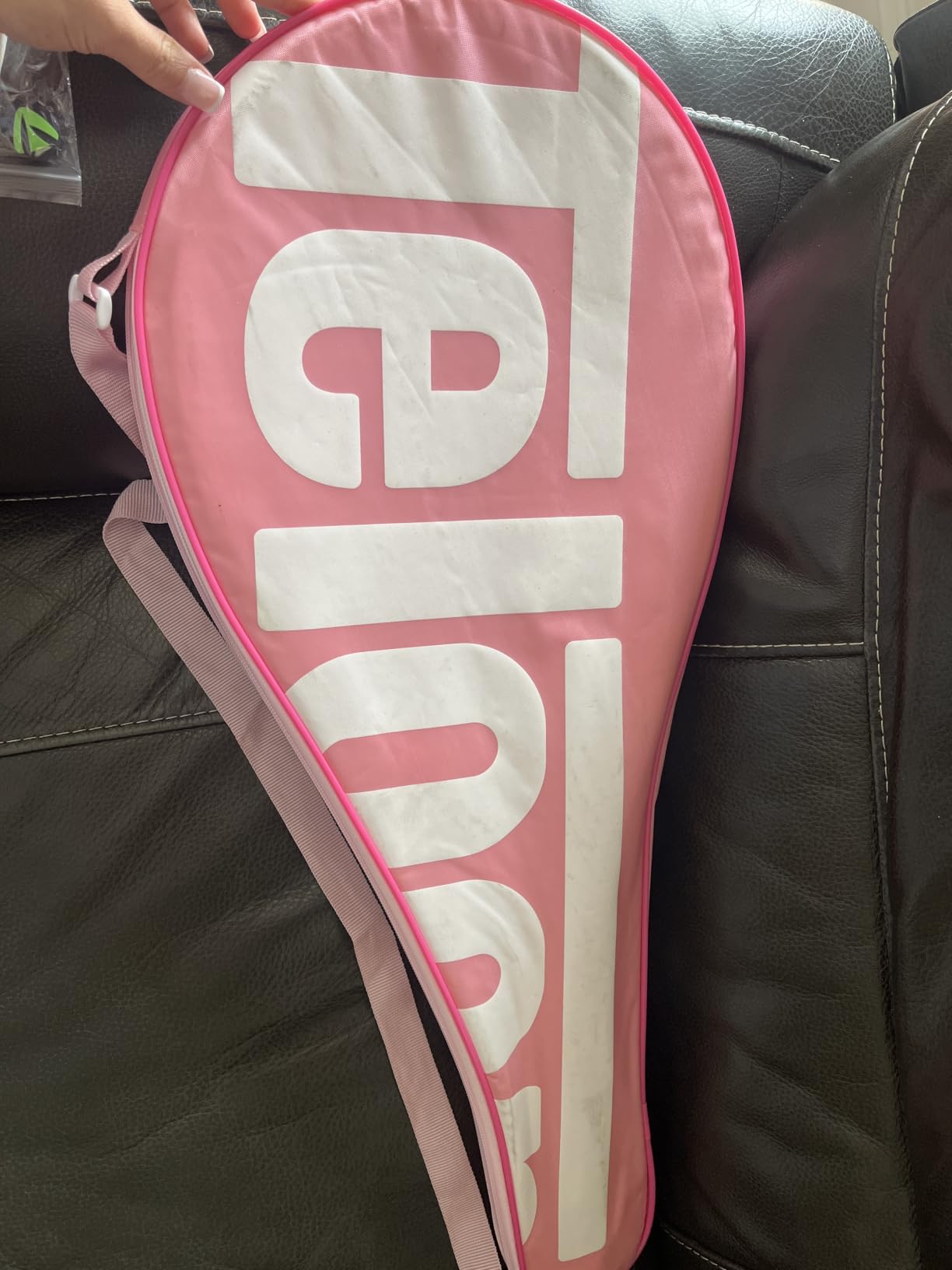
The carry bag is the weak point. Owners report straps and seams ripping, so treat the bag as a convenience rather than a reason to buy. The overgrips that come in the box can also slide with sweat and occasionally detach while being pulled off the plastic wrap.
Some buyers received frames with mould or other quality control problems, and there is no warranty behind the purchase to resolve them quickly. If you are buying a single racket for regular club play, a better-supported single frame is the safer bet.
7. Teloon Recreational 27 Inch: The College and Campus Choice
Teloon Recreational Adult Tennis Rackets-27 inch Tennis Racquet for Men and Women College Students Beginner Tennis Racket. (V10-White and Green)
102 sq in mid+ head
280 g unstrung
16x19 at about 50 lbs
Grip size 2 only
Pros
- Light 280 g unstrung weight
- Playable out of the box
- Ten colour options
- Usable sweet spot for its size
Cons
- Moulded aluminum feels dead
- Overgrip must be fitted by hand
- Single grip size limits fit
The Teloon is built for a specific person: a student, a casual weekend player, or anyone who needs a dependable racket for a lot of court time without spending much. The 4.6 rating from 760 reviews is high for an entry-level frame, and reviewers consistently call it dependable rather than exciting.
At 27 inches with a 102 square inch mid+ head, it is the smallest head in this roundup and the closest to a conventional adult frame. That makes it the least forgiving option here, but also the one that gives you the most honest feedback on whether your contact is clean.
The unstrung weight is 280 g, with a 16×19 string pattern factory strung at about 50 pounds. A lower factory tension is softer on the arm and more forgiving of imperfect technique, which is a sensible default for a first racket even though it delivers less control than a high tension string job.
The unstrung balance point of 335 mm places the weight slightly toward the head, which helps the ball travel forward without a lot of swing speed. The X-BLADE collection is offered in ten colourways, and the frame is a one-piece moulded aluminium design that will survive being dropped in a car boot.
There is an included overgrip roll, but you have to wrap it yourself. Budget five minutes the first time you play with it.
Who this racket suits
This suits a beginner who hits a lot of balls and wants honest feedback rather than free forgiveness. At 102 square inches, it will reward a player who gets to the ball quickly and punish one who does not, which is a useful training signal.
It is also a good pick for a player who is confident with a 4 1/4 inch grip, since the model comes in that size only. Anyone with a larger hand should skip this one.
Where it falls short
The one-piece moulded aluminium feels dead compared with any graphite frame, with less feedback and less response off the strings. That is an honest trade rather than a defect, but it will not excite a player who expects tour-level feel.
Only grip size 2 is available, which rules it out for larger hands entirely. Buyers also note that the included overgrip needs fitting before the racket is comfortable, and there is no manufacturer warranty behind it.
8. Wilson Essence: The Small-Hand Option with a Bumper Guard
Wilson Essence Adult Recreational Tennis Racket – Grip Size 2-4 1/4″
Oversized head
10.6 oz weight
4 1/4 inch grip
Bumper guard
Pros
- Comfortable 4 1/4 inch grip
- Oversized forgiving head
- Light balanced feel
- Teal and navy colourway
Cons
- Inconsistent factory string quality
- Metal frame lacks graphite feel
- Smallest review base here
The Essence is the frame to look at if you have smaller hands and everything else on this list is a half size too big. The 4 1/4 inch grip is a genuine fit for many women and for younger players, and that alone solves the most common reason a beginner buys an uncomfortable racket.
It uses AirLite Alloy construction, the same lightweight approach as the Wilson Federer frame at the top of this list, with an oversized head that produces easy power and forgiveness. Added length helps you stretch and reach one more ball without a bigger swing, which helps when you are still learning where to stand.
A bumper guard protects the frame from bumps and scratches, and that is more useful than it sounds. Beginners hit the ground, scrape the throat against a fence, and knock frames against court walls constantly, and a guard is cheaper than replacing a frame.
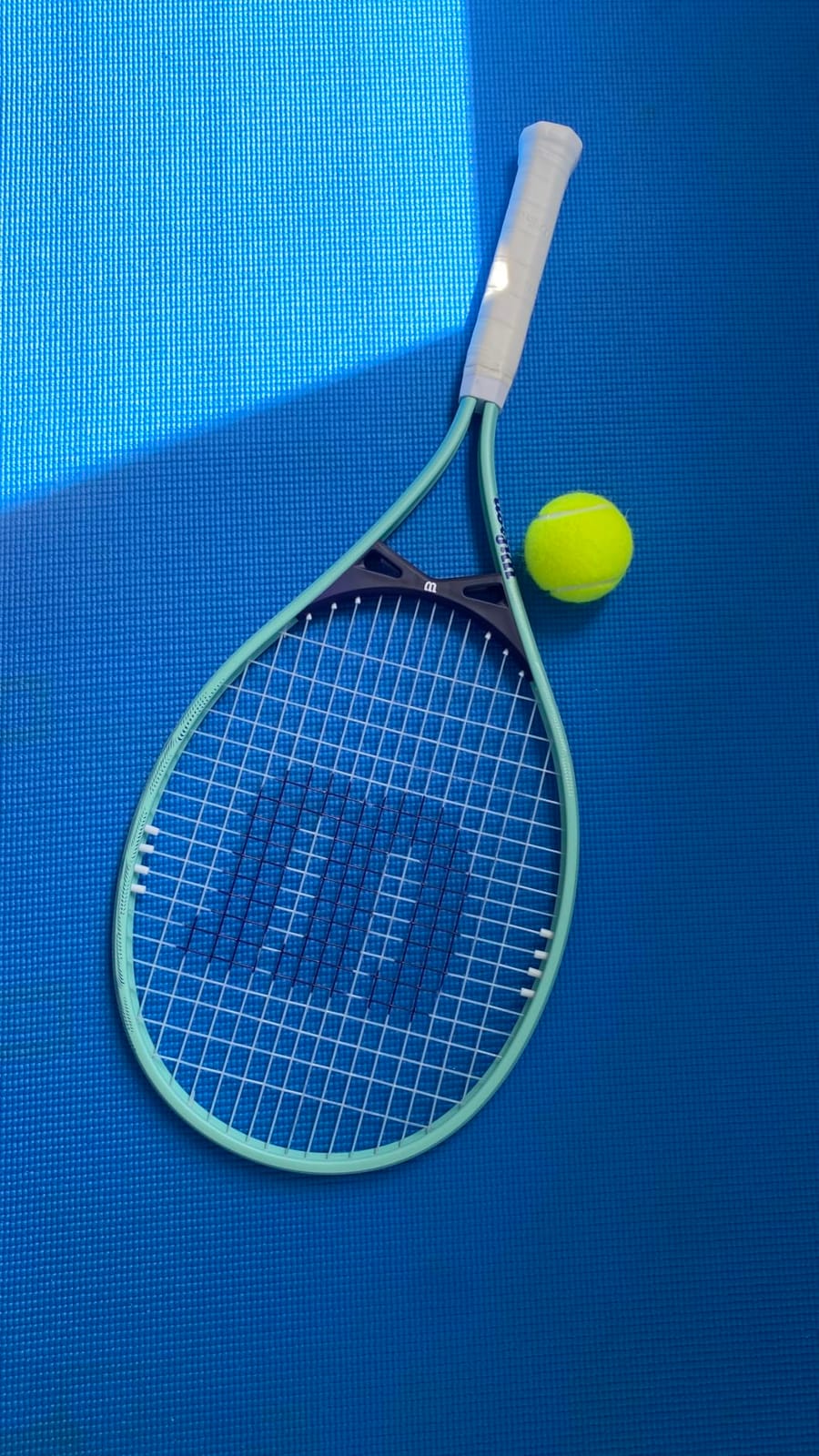
At 10.6 ounces, this is one of the heavier frames in the roundup, and a few buyers say it feels less solid than expected as a result. The teal and navy colourway draws a lot of positive comment, and the frame arrives pre-strung and ready to play.
It carries a one year limited warranty, which is more than several cheaper options in this roundup offer. The graphite shaft helps offset the metal frame’s basic feel at the top of the hoop.
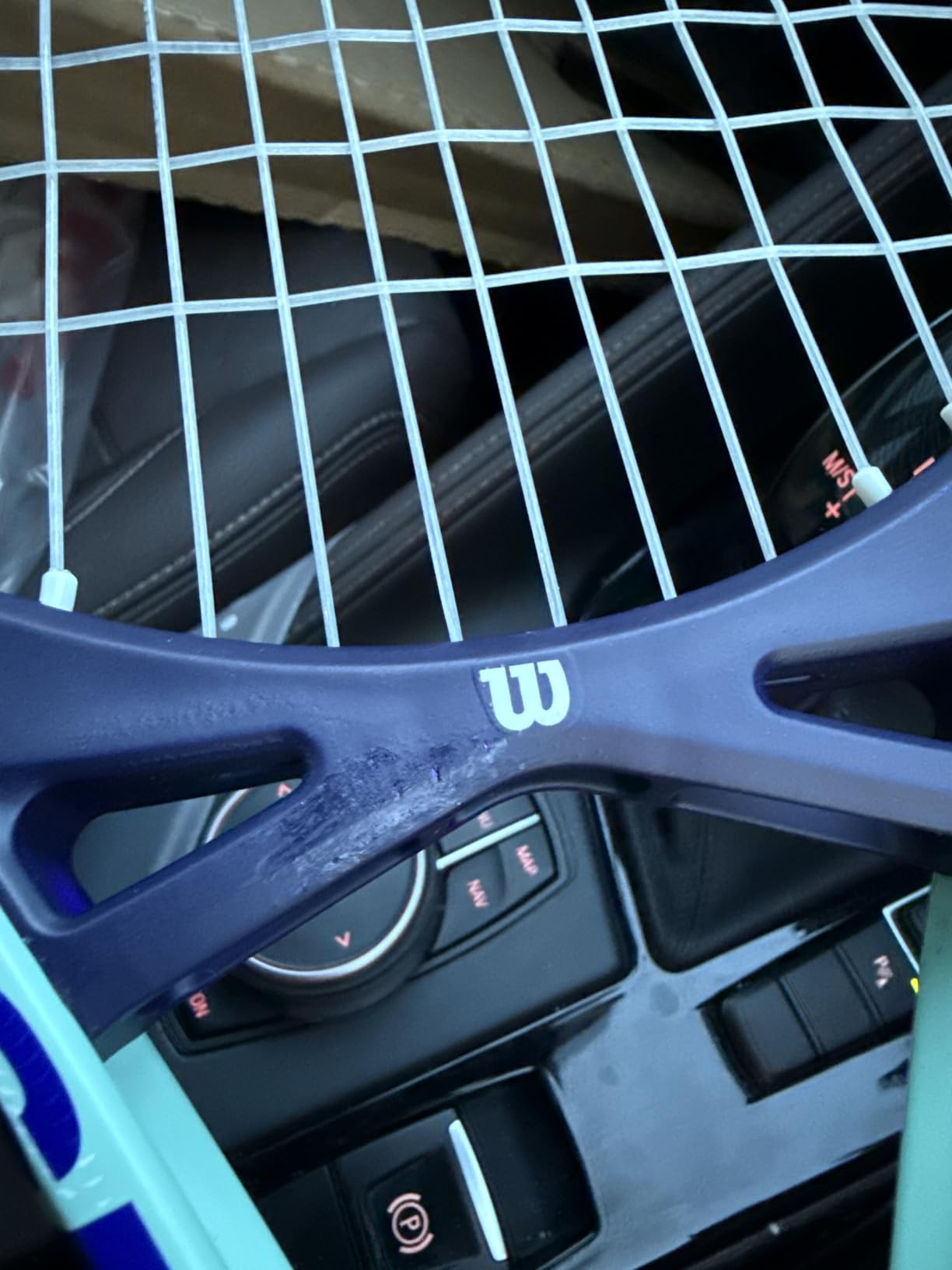
Who this racket suits
This suits a player with smaller hands who has been put off by frames that feel cramped at the grip. The 4 1/4 inch size is the most reliable fit in this roundup for smaller hands, and the oversized head means the grip is not the only thing working in your favour.
It is also a good step-up frame for a junior player who has outgrown a 25 inch racket but does not have the hand size for a 4 3/8 inch adult frame.
Where it falls short
Factory string quality is the main complaint, with a few buyers reporting that the strings needed replacing almost immediately. Restringing is a small cost and a normal part of racket ownership, but budget for it in your first year.
The metal frame does not have the power or feel of Wilson’s graphite models, and at 10.6 ounces it can feel light in construction rather than light in the hand. With 151 reviews, this also has the smallest evidence base here, so treat the owner feedback as thinner than for the other picks.
What Head Size Should a Beginner Tennis Racket Be?
A beginner racket should have a head size between 105 and 115 square inches. Larger heads create a bigger sweet spot that forgives off-centre contact, while smaller heads give you more control but punish mistimed swings. For a new adult player, anything from 105 to 110 square inches is the practical sweet spot.
Head size is the single most important number on a beginner racket, and it is also the one most often buried in a retailer spec sheet. It is the area of the string bed, measured in square inches, and everything about how a frame feels follows from it.
Here is how the ranges in this roundup actually play out. The 102 square inch Teloon is the smallest and gives the most honest feedback. The 105 to 110 square inch frames, including the HEAD Geo Speed, HEAD Ti. Conquest, and Wilson Hyper Hammer, are the balanced middle. The 115 square inch HEAD Ti S6 is the most forgiving of the group.
The expert argument against oversized frames deserves a fair hearing, because you will read it repeatedly. Experienced coaches point out that a small head rewards good timing and keeps a player honest. That is true, and it is also true of a picture frame. The first job of a beginner racket is to keep the ball in play while a swing is being built, and forgiveness buys you more sessions on court.
The exception is a player with a genuinely fast, aggressive swing who is already making clean contact. In that case, stepping down to 100 or 102 square inches is reasonable, and it gives you more depth and control.
How Heavy Should a Beginner Tennis Racket Be?
A beginner racket should weigh between 9 and 10.5 ounces strung. Below 9 ounces you lose stability on off-centre hits, and above 11 ounces most new players fatigue before the end of a session. Always compare strung weights, because manufacturers list both strung and unstrung figures.
Strung weight is the racket plus strings. Unstrung weight is the bare frame, and comparing a strung number from one manufacturer against an unstrung number from another is the most common mistake in a spec comparison.
Weight also determines swingweight, which is how the mass is distributed rather than how much there is. A 9.7 ounce frame with head weight moves very differently from a 9.7 ounce frame with all the mass at the handle, even though the numbers match. That is why balance matters as much as the headline weight.
The range here runs from 8.6 ounces strung on the HEAD Ti S6 to 10.6 ounces on the Wilson Essence. Anything in the 9.5 to 10 ounce band suits a typical adult beginner, and the light end suits players over 50 or anyone with limited shoulder strength.
String Pattern, Grip Size and the Elbow Question
A 16×19 string pattern is the standard beginner choice. The wider string spacing creates a larger effective sweet spot, adds power and spin, and softens the impact feel, which is easier on a developing arm than a dense 18×20 pattern.
Most of the frames in this roundup arrive pre-strung at moderate tension, and that is the right starting point. Do not restring to a high tension in your first year. Factory strings on a new frame are intentionally forgiving, and the first custom string job most beginners need is a softer multi-filament at a low poundage, not a high-tension polyester setup.
Replace the strings when they feel dead, frayed, or when your shots start flying long. For most beginner players that happens somewhere between six months and two years of regular play, and a restring is a fraction of the cost of a new frame.
Grip size is the variable most likely to cause you discomfort, and it is the one most often overlooked. Too small and your hand has to squeeze to stop the racket twisting. Too large and your forearm has to work harder to control the head. Both create strain in the elbow and wrist.
There is a simple three-step test you can do at home. First, measure the distance from the tip of your ring finger to the base crease of your palm. Under 4 inches points to a 4 1/8 inch grip, 4 to 4 1/8 points to 4 1/4, and 4 1/8 to 4 1/4 points to 4 3/8. Second, take a racket that fits and check that the ring finger just touches the butt cap when you hold it in a ready position. Third, if you have to squeeze hard to stop the racket turning, go up a size.
If your elbow already aches with a new frame, change one thing at a time and the grip is the first thing to change. Elbow discomfort that disappears after a grip size change is common enough that experienced players treat it as the first diagnostic step rather than the last.
For the frame itself, aim for a head-light or neutral balance. A head-heavy frame stores more mass out at the head, which helps stability but increases the twisting force through your forearm on a mistimed shot. That force is the mechanical reason a lot of racket-related elbow pain appears at all.
Choosing a First Racket by Budget Tier
Most beginners should spend between 60 and 150 dollars on a first racket. Below 50 dollars you are usually looking at frames with thin walls and stiff, dead strings, and above 200 you are buying control and spin characteristics that only pay off once your technique is solid.
The under-50 tier covers frames like the Teloon and the HIRALIY set. These are genuinely playable and they will get you on court this weekend, which matters more at the start than anything else. Expect to restring within a year, and expect less feedback and less power than the mid tier delivers.
The 80 to 120 tier is where most adult beginners should be looking. The HEAD Ti S6 and the HEAD Ti. Conquest sit here, and the difference in feel between a 115 square inch titanium and graphite frame and a 102 square inch aluminium one is the single biggest quality step in this roundup. If your budget stretches this far, take it.
The 120 to 200 band contains the Wilson Hyper Hammer 5.3, which is the most substantial frame here. You are paying for a graphite composite construction, a carbon fiber shaft, a manufacturer warranty, and a balance that generates power without a fast swing. It is a real upgrade, and it is not essential for most beginners.
One more thing worth saying plainly, because the forums make it clear: demo before you buy when you can. Most major retailers run rental programmes where you can take a frame out for a week before committing, and a single session with a racket tells you more than an hour of reading specifications. A beginner tennis racket that fits your hand matters more than the head size choice, and if you are still torn, bring the shortlist to a session and hit a few balls with each one.
What to Avoid: Cheap Frames and Wrong-Sized Grips
Avoid the thinnest aluminium frames at the bottom of the range. They warp, transmit harsh vibration, and teach a new player to grip tightly because the frame feels unstable in the hand. The most common regret described in tennis forums is a first racket that made the elbow hurt.
Avoid head-heavy frames if you already have elbow or wrist sensitivity, unless the added stability solves a different problem for you. The Hyper Hammer works well because the mass is balanced by a low frame weight; a genuinely heavy head-heavy frame is a different proposition.
Avoid buying a frame because a professional uses it. Players discuss this constantly and the consensus is blunt: a tour frame is tuned for someone who makes contact a fraction of a second from where you are now. None of the frames in this roundup are that, and all of them were designed with a beginner’s swing in mind.
Also avoid buying a junior racket as a long-term adult solution. A 19 inch frame is fine for a child and frustrating for an adult, because the reach and leverage are wrong for your body. If you are an adult, buy an adult 27 inch frame even if you are new.
If you are already a club regular, our guide to the best tennis racquets for intermediate players is worth a look once your contact is consistent.
Frequently Asked Questions
What is the best affordable tennis racket for beginners?
An oversized graphite or composite frame between 105 and 115 square inches, weighing 9 to 10.5 ounces strung, with a head-light balance and a 16×19 string pattern. In this roundup the Wilson Federer Adult frame is the strongest all-round choice and the HEAD Ti S6 is the most forgiving.
Which tennis racket should I buy as a beginner?
Buy the lightest frame that fits your hand and that you can swing for a full session without forearm fatigue. Match grip size first, head size second, and strung weight third. Grip problems cause elbow pain far more often than head size does, so measure before you order.
Which is the best racket under 200?
All eight rackets in this roundup sit under that ceiling. The most substantial is the Wilson Hyper Hammer 5.3 with a graphite composite frame and a one year warranty, while the best value pick is the HEAD Ti. Conquest at 108 square inches and 9.7 ounces.
How much should I spend on a tennis racket as a beginner?
Between 60 and 150 dollars is the practical range. Below 50 you are usually buying thin aluminium frames and stiff factory strings, and above 200 you are buying control characteristics that only matter once your contact is consistent.
What is the recommended head size for a beginner tennis racket?
Between 105 and 115 square inches. A larger head spreads the strings over a wider area, so off-centre contact still produces a shot over the net. Frames around 105 to 110 square inches are the practical middle ground for most adult beginners.
Are cheap pre-strung rackets worth buying for beginners?
Yes, for the first few months. Factory strings on an entry frame are strung at moderate tension on purpose, which is softer and more forgiving than a custom high tension job. Restring when the strings feel dead rather than immediately, and expect that to happen somewhere between six months and two years.
Why does my beginner tennis racket hurt my elbow?
Three causes account for most cases: a grip size that is wrong for your hand, a stiff frame that sends vibration into the forearm, and a head-heavy balance that creates twisting force on mistimed shots. Change the grip size first, then add a vibration dampener, then move to a head-light frame.
How do I know what grip size I need?
Measure from the tip of your ring finger to the base crease of your palm: under 4 inches is a 4 1/8 inch grip, 4 to 4 1/8 is 4 1/4, and 4 1/8 to 4 1/4 is 4 3/8. Then check that your ring finger just touches the butt cap when you hold the racket in a ready position.
Final Verdict
The Wilson Federer Adult Recreational Racket is the best tennis racket for beginners under 200 dollars, with the deepest review history in the group and a 295 g frame that stays comfortable. The HEAD Ti S6 is the pick for maximum forgiveness and the lightest strung weight, and the HEAD Ti. Conquest delivers the most at the lowest cost for a single frame.
Measure your grip before you order, choose a head between 105 and 115 square inches, and keep the strung weight under 10.5 ounces. Get the fit right and the rest is a detail you can change in a year, when you are ready to move up a tier.
Footwork is the other half of a first season, so our picks for the best tennis shoes are worth reading before your first match. If long standing sessions are already a problem, we have a separate guide to the best tennis shoes for plantar fasciitis. And if you want to practise between lessons, that is where a tennis ball machine for home practice starts to earn its place.