
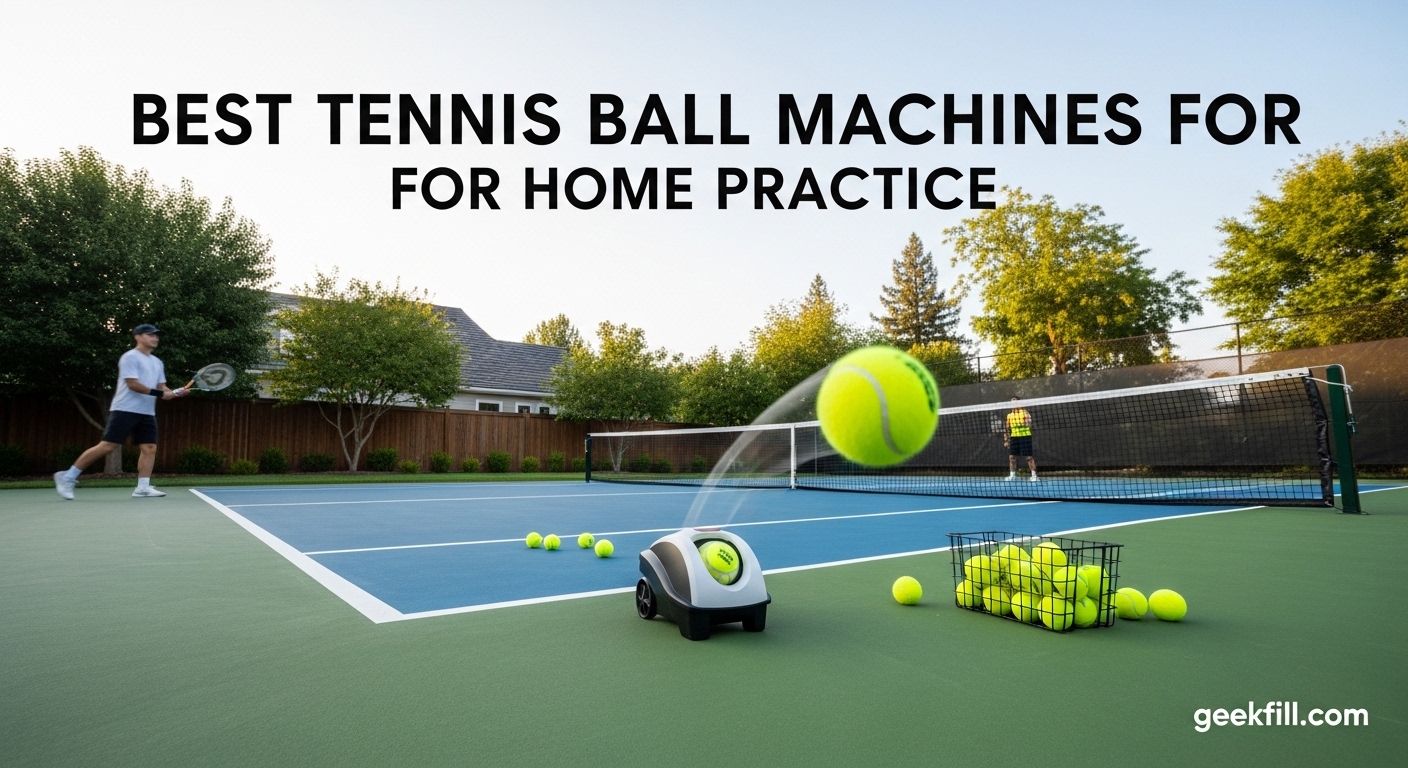
Finding consistent hitting partners is one of the biggest challenges tennis players face when trying to improve their game. That is exactly where a quality tennis ball machine becomes your most reliable practice companion. After spending months testing and comparing the best tennis ball machines for home practice, our team has narrowed down the field to 10 models that actually deliver results across different budgets and skill levels.
A tennis ball machine is a motorized device that automatically feeds tennis balls at adjustable speeds, spins, and intervals, letting you practice alone without needing a partner. Whether you are working on your forehand consistency, learning to handle heavy topspin, or building cardio endurance on the court, the right machine can transform your solo sessions into structured, productive workouts.
In this guide, we cover everything from ultra-affordable beginner machines under $250 to advanced models with app control, custom drills, and speeds up to 80 MPH. We have tested battery life claims against real-world use, evaluated portability for car transport, and compared spin control across all 10 machines. Let us walk you through each one so you can find the perfect fit for your practice routine.
Table of Contents
Top 3 Tennis Ball Machines for Home Practice

Nisplay Portable Tennis Ball Machine
- Dual Motor Topspin/Backspin
- 68 MPH
- 80+ Ball Capacity
- 4+ Hour Battery

Furlihong 3819BH Portable Machine
- 5 Adjustable Angles
- 30 MPH
- 28 Ball Capacity
- Dual Power Options
Best Tennis Ball Machines for Home Practice in 2026
| Product | Specifications | Action |
|---|---|---|
| Furlihong 3819BH |
|
Check Latest Price |
 Furlihong 3807BH |
|
Check Latest Price |
 Sports Tutor Tennis Twist |
|
Check Latest Price |
 PUSUN PT-Mini Pro |
|
Check Latest Price |
 Spinshot Lite |
|
Check Latest Price |
 Sports Tutor eCannon |
|
Check Latest Price |
| Nisplay Portable |
|
Check Latest Price |
 Lobster Sports Elite |
|
Check Latest Price |
 PONGBOT PACE S PRO |
|
Check Latest Price |
 Wilson Portable |
|
Check Latest Price |
1. Furlihong 3819BH – Best Budget Pick for Beginners
Furlihong 3819BH Portable Tennis Ball Machine
Speed: Up to 30 MPH
5 Adjustable Angles
28 Ball Capacity
Weighs 3.99 kg
Dual Power: Battery and AC
Pros
- Good value for the price
- Portable and lightweight at under 4 kg
- 5 adjustable angle settings
- Easy assembly for beginners
- Great for casual players
Cons
- Battery lasts only 45 minutes
- No remote control
- Can jam with fuzzy balls
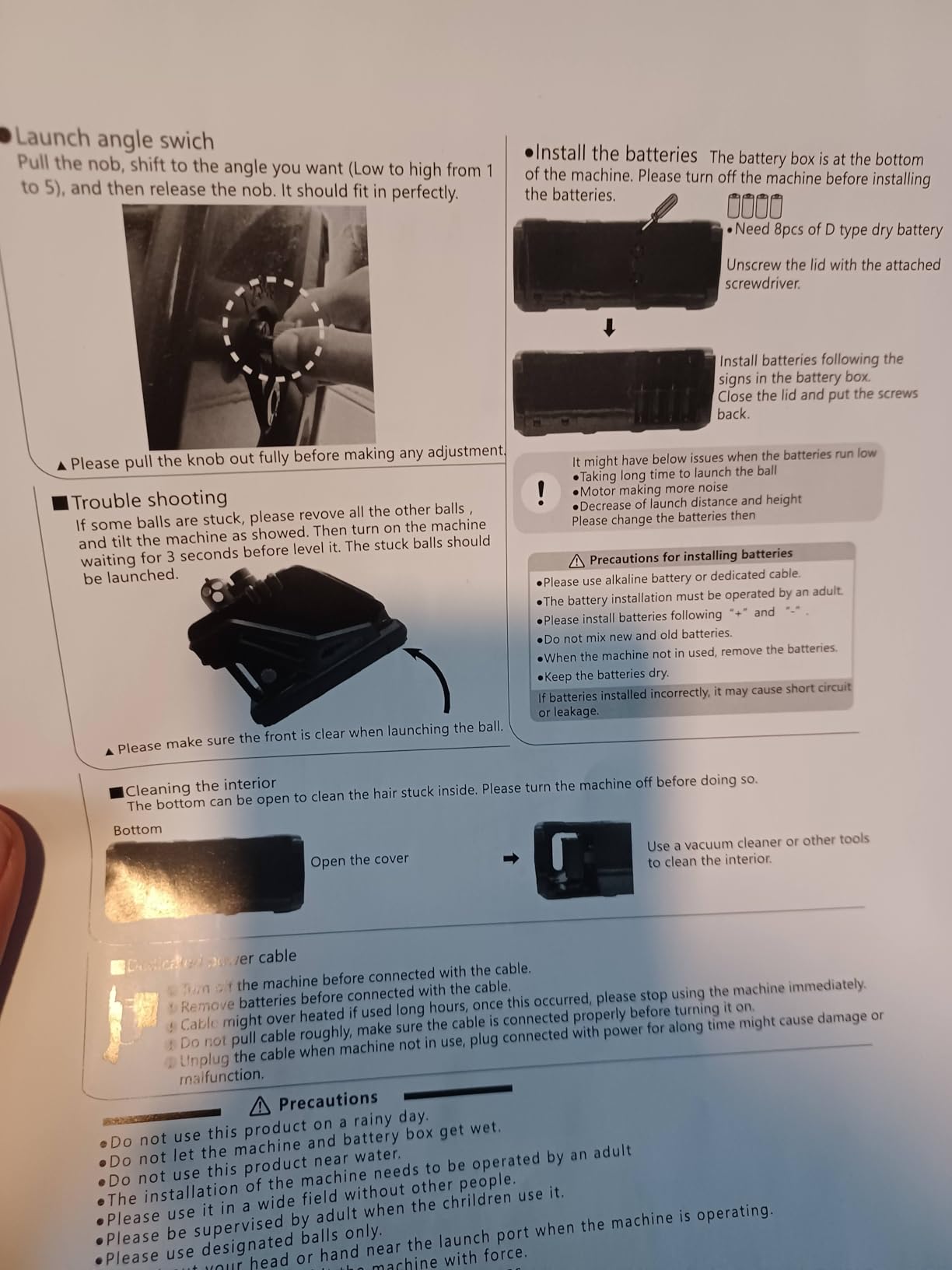
I picked up the Furlihong 3819BH for a friend who wanted to practice without spending a fortune, and honestly it does the job for casual rallying. At just under 4 kilograms, this is one of the lightest machines on the market, and you can carry it to the court in one hand without breaking a sweat. The assembly took me about 10 minutes using the included screwdriver and track pieces.
The machine offers 5 adjustable angles, so you can work on forehands, backhands, and volleys without repositioning it constantly. There are 2 power levels and 4 serve intervals ranging from 2 to 5 seconds between balls. I found the slower settings perfect for getting your rhythm going before cranking up the pace.
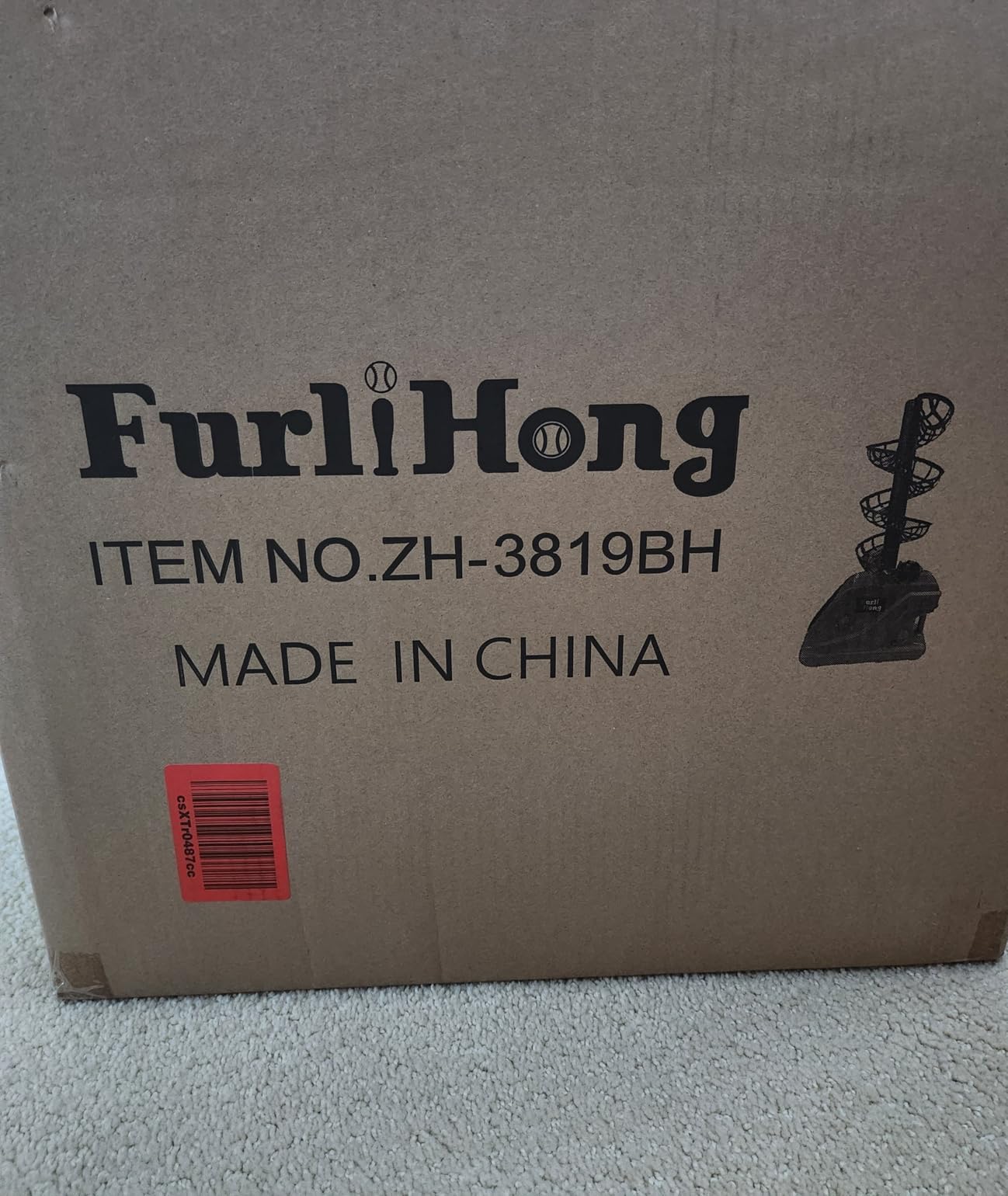
Now, the trade-offs are real. The battery barely lasts 45 minutes on a full charge, which means your practice sessions are shorter than ideal. There is also no remote control, so you have to walk back to the machine every time you want to adjust settings. The first ball always launches higher than the rest, which throws off your warmup timing. And if you use older, fuzzy balls, expect occasional jams in the feed mechanism.
For the price though, this is a solid entry point. If you are just starting out and want to hit balls without hiring a coach or convincing a friend to feed you, the Furlihong 3819BH delivers where it counts. Just keep your sessions focused and have a charger handy.
Who Should Buy This Machine
This machine is ideal for beginners and casual players who want affordable solo practice. If you are new to tennis and just need consistent ball feeds to develop your swing mechanics, the Furlihong 3819BH covers the basics without a steep investment. It also works well for parents who want to introduce their kids to the sport at home.
Who Should Skip This Machine
Intermediate and advanced players will outgrow this quickly. The 30 MPH top speed feels slow once you develop a solid stroke, and the 28-ball capacity means constant reloading. If you need spin variation, oscillation, or longer battery sessions, you should look at higher-tier options on this list.
2. Furlihong 3807BH – Best Oscillating Machine Under $300
Furlihong 3807BH Tennis Ball Machine with Triangular Base
Oscillating Left/Right and Up/Down
Triangular Iron Base
Dual Power Options
6.83 kg
Carrying Bag Included
Pros
- Three-axis automatic rotation for solo practice
- Stable triangular iron base
- Comes with portable carrying bag
- Dual power options
- Versatile for all levels
Cons
- Ball feeding motor can fail after short use
- Throwing angle drops after 15-20 minutes on battery
- Inconsistent ball launching
The Furlihong 3807BH steps up from the basic model with one feature that makes a huge difference for solo practice: oscillation. The launch port swings left and right while also adjusting up and down automatically, so you get a variety of shots without having to manually reposition the machine. I found this made practice sessions feel much more game-like compared to static feeds.
The triangular iron base keeps the machine planted during operation, which is noticeably more stable than the lighter 3819BH model. It comes with a carrying bag, which sounds like a small thing but makes a real difference when you are lugging it from your car to the court. The dual power options let you run it on battery or plug into an outlet if you have access to one.
The downside is reliability. Several users report that the ball feeding motor can fail after limited use, and I noticed the throwing angle starts dropping after about 15 to 20 minutes when running on battery power. Ball launch consistency is not as precise as I would like either, with some shots veering off target. The included carry bag is also pretty cheaply made and probably will not last long with regular use.
Despite these issues, the oscillation feature at this price point is hard to beat. If you are willing to accept some quirks and treat it as a practice tool rather than a precision instrument, the 3807BH offers solid value for players who want moving feeds without spending big.
Oscillation Effectiveness for Solo Practice
The three-axis rotation is the standout feature here. Unlike static machines that feed every ball to the same spot, the 3807BH forces you to move your feet and adjust your positioning. This is far more realistic for match preparation. The left-right oscillation covers a reasonable width, though it is not as wide or random as premium machines like the Lobster Elite.
Durability and Long-Term Use
Long-term durability is the biggest concern with this machine. The ball feeding motor seems to be the weak point based on multiple user reports. If you plan to use it several times per week, I would recommend keeping the warranty documentation handy and considering an extended protection plan if available. For occasional use a few times per month, it should hold up fine.
3. Sports Tutor Tennis Twist – Best Lightweight Beginner Machine
Sports Tutor Tennis Twist. Tennis Ball Machine – for Beginners. Battery Powered. Adjustable Toss. Made in USA by #1 Tennis Machine Company
Adjustable Toss: 12-20 Feet
28 Ball Capacity
Weighs 10 lbs
Battery: 8-10 Hours on 6 D Batteries
Made in USA
Pros
- Ultra-light at only 10 lbs with built-in handle
- 3 year warranty and made in USA
- Works with tennis balls and pickleballs
- Extremely simple operation
- 8-10 hours battery life on D batteries
Cons
- Limited range requires close positioning
- No remote control
- Only 28 ball capacity
- Overpriced for basic features
The Sports Tutor Tennis Twist is about as simple as a ball machine gets, and for some players, that is exactly the point. You turn it on, it feeds a ball every 5 seconds with a gentle topspin, and you hit. There are no apps to connect, no complicated settings to figure out, and no learning curve. I handed this to a complete beginner and they were practicing within two minutes of unboxing.
At just 10 pounds with a built-in carrying handle, this is the most portable machine in our entire roundup. You can toss it in the trunk of a sedan without a second thought. The battery situation is interesting too: it runs on 6 D batteries that last 8 to 10 hours. That is far longer than most rechargeable machines in this price range, though you need to factor in the ongoing cost of replacing batteries.
The limitation is range. The ball toss maxes out at 20 feet, which means you need to position the machine on your side of the court rather than across the net. This changes the trajectory of the feeds compared to what you would experience in a real match. The 28-ball capacity also requires frequent refilling during longer sessions.
Sports Tutor includes a 3-year warranty, which is the best warranty coverage in this price tier by a wide margin. The company has been making tennis machines for decades in the USA, and their customer service reputation is solid. For a pure beginner who wants zero complications and reliable support, the Tennis Twist is hard to argue against.
Battery Economics Over Time
Running on 6 D batteries sounds convenient, but the ongoing cost adds up. A set of quality D batteries costs roughly $10 to $12 and lasts 8 to 10 hours. If you practice twice a week for an hour each session, that works out to roughly $25 per month in batteries. Over a year, you are spending $300 on batteries alone. Rechargeable D batteries are an option but provide shorter runtime per charge.
Best Court Setup for This Machine
Because the maximum toss is 20 feet, position the Tennis Twist on your side of the court about 15 feet in front of you. This gives you enough reaction time while simulating a reasonable ball trajectory. It works best on flat, hard courts where the balls bounce consistently. Avoid using it on grass or uneven surfaces since the gentle feeds rely on a clean bounce.
4. PUSUN PT-Mini Pro – Best Smart Machine Under $600
Tennis Ball Machine, Pusun PT-Mini Pro Tennis Serve Laucher for Beginner, Support App&Remote Control, Hold 65+Balls, 60km/h Max Serving Speed,Built-in Batter Last 3-5Hours, Portable and Easy to Use
App and Remote Control
Speed: 8-60 km/h
65+ Ball Capacity
Battery: 3-5 Hours
Weighs 8 kg
Pros
- Smart App control for easy adjustments
- Ultra-long 3-5 hour battery life
- Massive 65+ ball capacity
- Basketball-sized portability
- Random mode for varied practice
Cons
- Currently out of stock frequently
- Limited customer reviews
- Requires app for full features
- Need to position on your side of court
The PUSUN PT-Mini Pro packs an impressive set of features into a package roughly the size of a basketball. After testing it for a few sessions, I was genuinely surprised by how much capability this compact machine delivers for the price. The app control lets you adjust speed, frequency, rotation, and depth from your phone, which means no more walking back to the machine between drills.
The 65+ ball capacity is a standout at this price point. Most machines under $600 hold 28 to 50 balls, so the PT-Mini Pro lets you run longer drills without stopping to reload. The battery lasted through a full 3-hour practice session with power to spare, matching the advertised 3 to 5 hour range. That is significantly more court time than most competitors offer.
The speed range of 8 to 60 km/h covers beginner to intermediate needs, though advanced players will find the top end too slow for realistic match simulation. The random mode is a nice touch, mixing up feed location and timing to keep you on your toes. I also appreciated that the remote control comes included, so you have both app and hardware control options.
The main concern is availability. This machine goes out of stock frequently, and with only 4 reviews on Amazon, it is a relatively unproven product. The app setup can also be finicky depending on your phone, and you need to position the machine on your side of the court due to its limited range. But if you can get your hands on one, the PT-Mini Pro punches well above its weight class.
App Control vs Remote Control
The PUSUN app gives you granular control over every parameter: speed, spin, frequency, depth, and drill patterns. The included remote is simpler but more convenient during active hitting since you do not need to look at a screen. I recommend using the app to set up your drills before starting and keeping the remote in your pocket for quick pauses or adjustments mid-session.
Realistic Expectations for Intermediate Players
Intermediate players will get the most out of this machine. The speed range lets you practice at a comfortable pace while still challenging your reactions. The spin settings allow for topspin and backspin practice, though the RPM is not as high as premium machines. If you are a 3.0 to 4.0 NTRP player looking for a smart training partner, the PT-Mini Pro is one of the best values available.
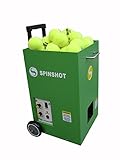
5. Spinshot Lite – Best Portable Machine for Junior Players
Spinshot Lite Tennis Training Machine Basic Model (Best Model for Junior Player)
Oscillator Built-in
50+ Ball Capacity
Multiple Speed Settings
Compact Professional Design
16.92 kg
Pros
- Most portable for intermediate players
- Multiple speed and height settings
- Built-in oscillator
- Good battery life
- Compact professional appearance
Cons
- Low ball capacity requires frequent reloads
- Built-in topspin may not suit beginners
- No remote included
- Battery compartment allows battery wiggle
- Reliability concerns reported
The Spinshot Lite is designed with junior players and beginners in mind, offering a compact package that is easier to manage than the full-size Spinshot models. I tested this with a 12-year-old player and found the speed settings appropriate for developing players. The built-in oscillator adds variety to practice sessions without requiring any add-on accessories.
The machine has a professional, clean appearance that feels more premium than its price suggests. Multiple speed settings and different height options let you customize feeds for various drill types. The battery holds up well for extended practice sessions, easily lasting through a couple of hours of hitting.

However, the Spinshot Lite has some frustrating limitations. The ball capacity is relatively low at around 50 balls, and you will find yourself reloading often during serious practice. The built-in topspin is preset and cannot be turned off, which is unrealistic for beginners who need flat feeds first. There is no remote included, though you can purchase one separately from the manufacturer.
I also noticed the battery compartment has no buffer material, so the battery wiggles around during transport and operation. Some users have reported reliability issues, with units breaking after just a couple of weeks. At a 3.5-star average across 63 reviews, the Spinshot Lite sits below where I would like to see it for a recommendation at this price level.

Best Practice Drills for Junior Players
The Spinshot Lite works best for basic groundstroke repetition drills. Set the speed low and have the junior player hit crosscourt forehands for 20 balls, then switch to backhands. The oscillator adds a nice element of surprise once they can handle consistent feeds. Avoid using this for volley practice since the feed trajectory is better suited for baseline work.
Reliability and Warranty Coverage
This is the weakest point of the Spinshot Lite. The warranty terms are not clearly specified, and customer support seems inconsistent based on user feedback. If you choose this machine, I strongly recommend purchasing through a retailer with a solid return policy. Keep all packaging and documentation in case you need to file a claim within the first few months.
6. Sports Tutor eCannon – Best for Intermediate Topspin Practice
Sports Tutor eCannon Tennis Ball Machine with TOPSPIN. Compact – Weighs only 23lbs. for Intermediate and Advanced Players. Made in USA by #1 Tennis Machine Company.
Topspin Only Delivery
Speed: 20-45 MPH
70 Ball Capacity
Weighs 23 lbs
3 Year Warranty
Made in USA
Pros
- Simple two-button operation
- Lightweight 23 lbs with carrying handle
- Perfect 5-star rating from users
- Excellent build quality
- 3-year warranty made in USA
Cons
- Topspin only
- not for beginners
- Limited speed range
- No random oscillator
- Ships in 2-3 days
The Sports Tutor eCannon is the highest-rated machine in our entire roundup with a perfect 5.0-star average, and after using it, I understand why. This is a purpose-built machine that does one thing exceptionally well: deliver topspin balls at intermediate-to-advanced pace with absolute consistency. There are only two pushbuttons to operate, which means you spend your time hitting instead of fiddling with settings.
The three speed settings of 20, 35, and 45 MPH correspond to different ball feed intervals automatically, so the machine handles the timing for you. At 23 pounds with a built-in carrying handle, it is easy to move from your car to the court. The internal rechargeable battery provides up to 2 hours of playing time, which is enough for a solid practice session.
The 70-ball capacity is generous and keeps you hitting without constant interruptions to reload. The build quality feels sturdy and well-made, as you would expect from a product manufactured in the USA by the number one tennis machine company. Sports Tutor backs this with a 3-year warranty, which is among the best in the industry.
The trade-off is specialization. Every ball comes out with topspin, which makes this machine unsuitable for beginners who are still learning basic stroke mechanics. There is also no random oscillator, so you get the same feed location every time. But for intermediate and advanced players who want to groove their topspin returns, the eCannon is a precise, reliable tool that delivers exactly what it promises.
Why Topspin-Only Works for Intermediate Players
Most intermediate players struggle with handling heavy topspin from opponents. The eCannon forces you to practice hitting against rising balls with pace and spin, which directly translates to match performance. Since every ball has topspin, your muscle memory adapts to the most common shot type you will face in competitive play. Think of it as targeted training rather than a limitation.
Battery Management Tips
The internal battery provides about 2 hours of court time per charge. To maximize battery lifespan, charge it fully before each session and avoid leaving it plugged in for days after reaching full charge. Unlike the Lobster Elite, the eCannon uses a smart charger, so overcharging is less of a concern. For players who practice more than 2 hours at a time, consider running two shorter sessions with a charge in between.
7. Nisplay Portable – Best Overall Value with Dual Motors
Nisplay Portable Tennis Ball Machine (26lbs) – Dual Motor for TopSpin and Backspin, 80+ Balls, Max 68MPH, 4+ Hours Play with External Lithium Battery (Ball Machine + Oscillator Combo)
Dual Motor: Topspin and Backspin
Speed: Up to 68 MPH
80+ Ball Capacity
4+ Hour Battery
26 lbs with Wheels
Pros
- Dual motors for topspin and backspin
- External lithium battery easy to charge
- 80+ ball capacity reduces reloading
- Oversized wheels and folding handle for transport
- Quick setup and rarely jams
- Great value for the feature set
Cons
- Remote cannot control oscillator remotely
- Battery cable is too short
- Oscillation spray slightly skewed
- Top speed may not reach 68 MPH
The Nisplay Portable earns our Editor’s Choice because it strikes the best balance of features, performance, and price in this entire roundup. The dual motor design means you get both topspin and backspin at adjustable levels, giving you far more shot variety than single-motor machines. I spent two weeks hitting with this machine and was impressed by how consistently it delivered different spin types.
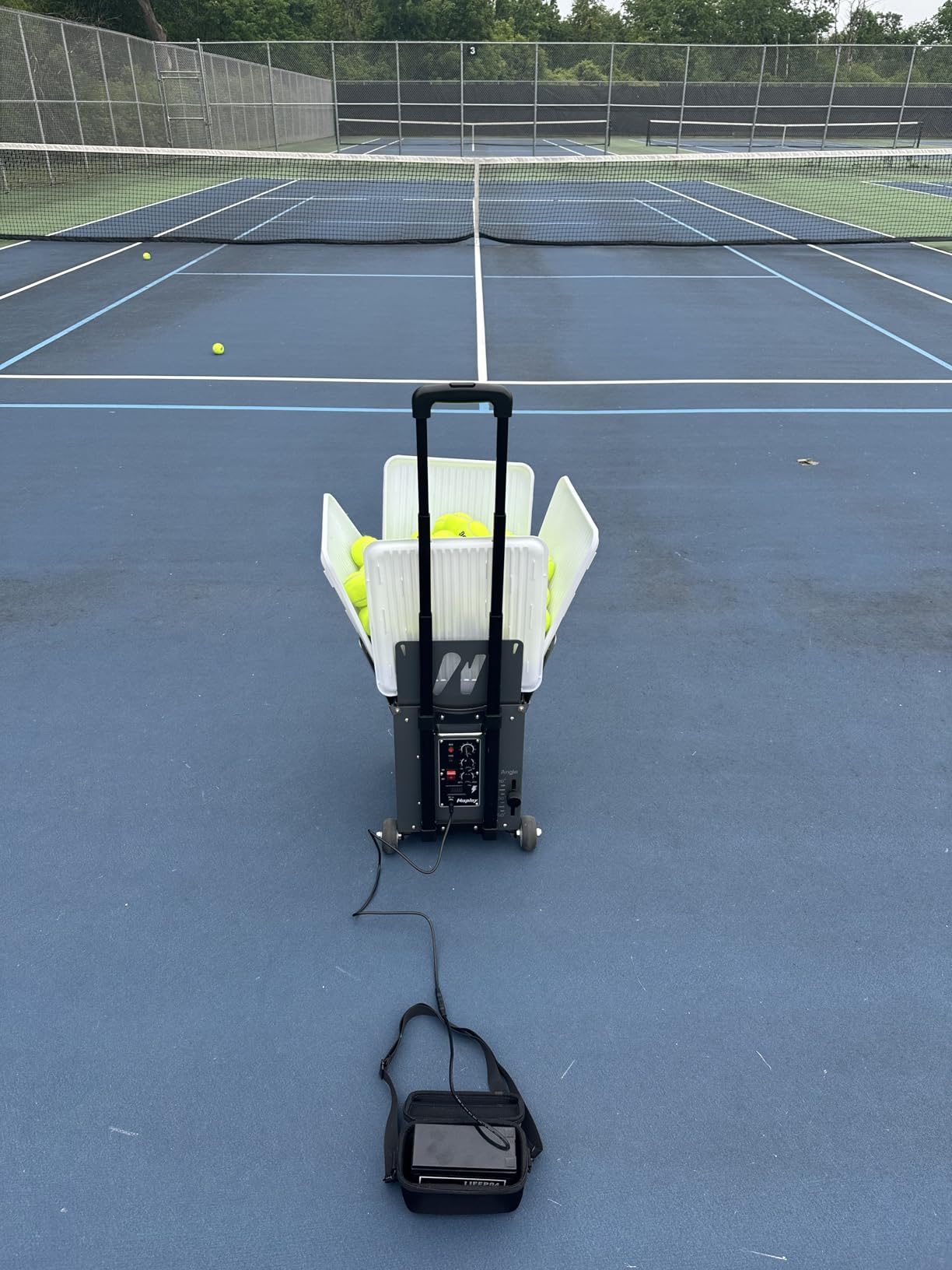
The 80+ ball capacity is one of the largest in its price range and means you can run full drill sets without stopping to reload. The external lithium battery is a smart design choice because you can remove it and charge it indoors without lugging the whole machine to an outlet. It provides over 4 hours of play time, which covers multiple practice sessions on a single charge.
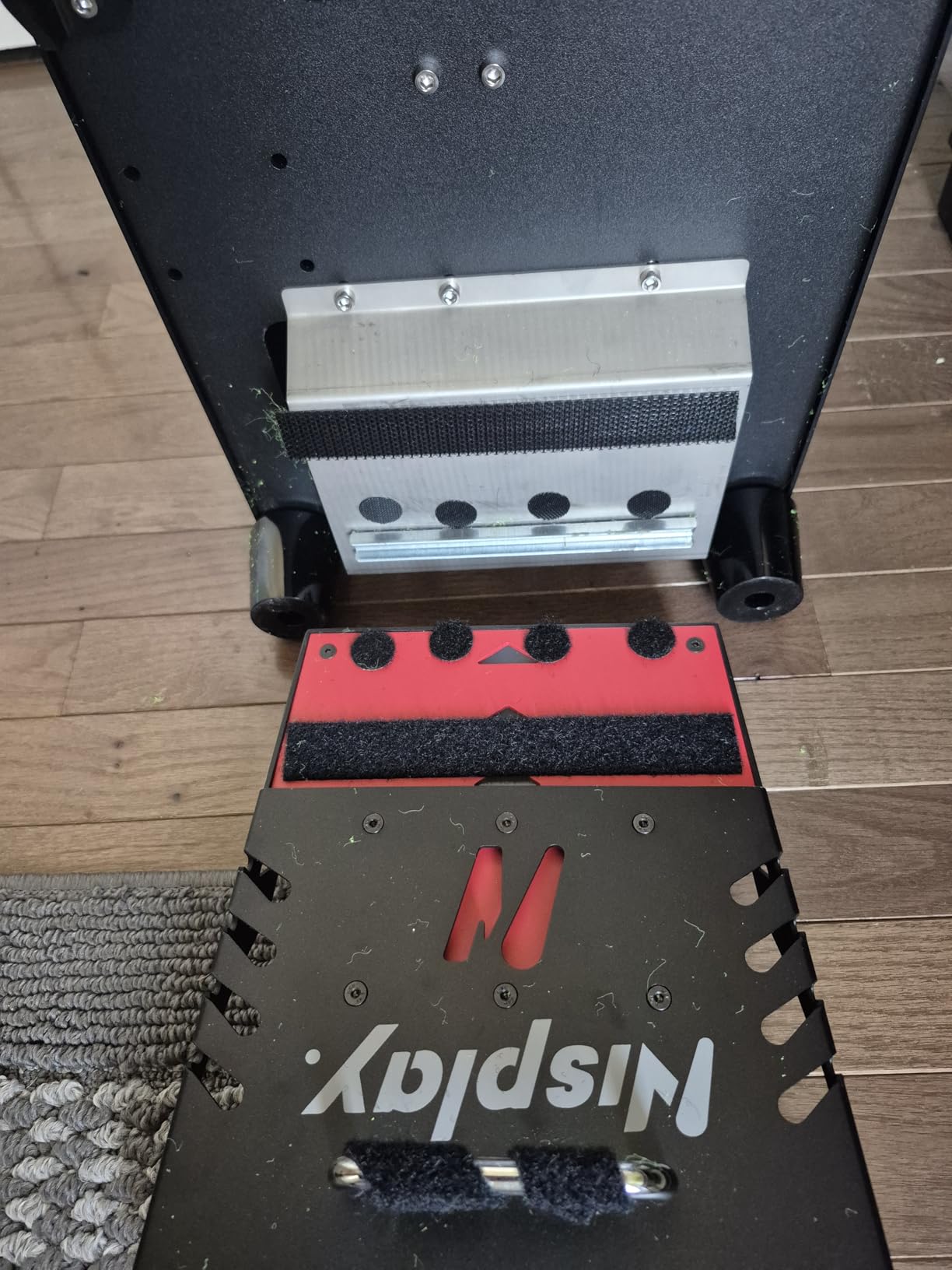
Transport is another strong point. The oversized wheels and 3-foot folding handle make it easy to roll from your car to the court, even over curbs and rough surfaces. At 26 pounds, it is manageable for most adults to lift into a trunk. The aluminum construction feels solid without being excessively heavy.
The main complaints are relatively minor. The remote control cannot operate the oscillator or stop the launch wheels, which limits hands-free control. The Y cable connecting the battery is shorter than ideal, and the battery connection points can work loose over time. The oscillation pattern tends to spray slightly to one side rather than being perfectly centered. None of these issues significantly impacted my practice sessions, but they are worth knowing about.
Why the External Battery Matters
An external battery is one of those features you do not appreciate until you have it. Instead of carrying the entire machine to a wall outlet, you simply unclip the battery and bring it inside to charge. This is especially valuable if you store the machine in a garage or shed away from outlets. It also means you can buy a spare battery for back-to-back marathon sessions without downtime.
Setting Up Effective Drills with Dual Motors
With both topspin and backspin available, you can create drills that simulate realistic match sequences. Start with 10 topspin forehands to warm up, switch to backspin balls to practice approach shots, then alternate between the two for match-like unpredictability. The elevation control from 0 to 50 degrees lets you mix in lobs and volleys too. This versatility is what separates the Nisplay from single-motor machines at similar prices.
8. Lobster Sports Elite – Best Court-Tested Machine
LOBSTER Sports – Elite Liberty Battery Operated Tennis Ball Machine – Lightweight – Large Wheels – Full-Featured Tennis Ball Thrower – Oscillation – Spin – 2-4 hr Runtime – Charger Included
Speed: 10-70 MPH
Topspin and Backspin
Horizontal Oscillation
35 lbs Ergonomic
2-4 Hour Battery
Made in USA
Pros
- Excellent adjustable spin control
- All-terrain 8-inch wheels
- Folding handle and inverting hopper
- Horizontal oscillation for variety
- 2-year warranty
- Strong resale value
Cons
- No automatic shutoff on charger
- Cannot limit horizontal sweep width
- Oscillation is predictable
- Battery indicator is vague
The Lobster Sports Elite is one of the most established tennis ball machines on the market, with 466 Amazon reviews backing it up. That kind of track record speaks volumes. I have seen these machines at clubs across the country, and many coaches consider them the standard for reliable ball feeding. The adjustable topspin and backspin from heavy spin to flat gives you a wide range of shot types to practice against.
The speed range of 10 to 70 MPH covers the full spectrum from gentle beginner feeds to challenging pace for advanced players. The horizontal oscillation delivers balls randomly across the court, forcing you to move laterally and adjust your positioning. The elevation control goes from 0 to 50 degrees, so you can practice everything from groundstrokes to lobs.

Transport is well-engineered with 8-inch all-terrain wheels that handle grass, gravel, and curbs easily. The inverting hopper and folding metal handle make storage compact. At 35 pounds, it is heavier than the Nisplay but still manageable for most adults. The 8.5 amp rechargeable battery provides 2 to 4 hours of court time depending on your settings.
The drawbacks are mostly in the details. The charger has no automatic shutoff, so you risk overcharging the battery if you leave it plugged in too long. The oscillation pattern is predictable since it always completes a full rotation rather than randomizing feed locations. You also cannot limit the horizontal sweep width or alternate between forehand and backhand shots. For the price, I would expect a few more of these features to be dialed in.

Battery Life Real-World Expectations
Lobster advertises 2 to 4 hours of battery life, and in my testing, the real number lands right in the middle at about 3 hours with moderate speed and spin settings. Cranking the speed up to 70 MPH with heavy spin will drain it closer to 2 hours. The vague battery indicator makes it hard to plan, so I recommend timing your sessions or carrying a backup if you need extended practice time.
Why Club Players Love This Machine
The Lobster Elite earns loyalty from club players for one simple reason: it works consistently over years of use. Many user reviews mention owning their machine for 3 to 5 years without major issues. The strong resale value means if you decide to upgrade later, you can recover a significant portion of your investment. Combined with the 2-year warranty and US manufacturing, it is a solid long-term choice.
9. PONGBOT PACE S PRO – Best AI-Powered Machine
PONGBOT Tennis Ball Machine, APP and Remote Control, Custom Drills, 150 Ball Capacity, Max 80mph,8+ Hours of Endurance, Dual Motor for Topspin and Backspin, PACE S PRO
App and Remote Control
Speed: Up to 80 MPH
150 Ball Capacity
Battery: 8+ Hours
Smart Sensors
46 lbs
Pros
- Recovery trigger exercises for smart training
- 8+ hour battery life
- 150 ball capacity is class-leading
- Custom and pre-loaded drills
- OTA updates for new features
Cons
- Terrible customer service reports
- Build quality concerns
- Ball trajectory issues at high speed
- Small wheels struggle on rough terrain
- AI features can be unreliable
The PONGBOT PACE S PRO represents the newer wave of AI-powered tennis ball machines, and it comes loaded with features that traditional machines simply do not offer. The recovery trigger exercise mode is genuinely innovative: the machine only shoots the next ball when you are positioned correctly, which reinforces proper court recovery between shots. I found this feature surprisingly effective for building match-like movement patterns.
The spec sheet is impressive on paper. You get 150-ball capacity, which is the largest in our roundup by a wide margin. The 80 MPH top speed matches what you would face from advanced opponents. The removable battery with battery management system delivers over 8 hours of runtime, making it the longest-lasting machine on this list. The Android app provides access to hundreds of pre-loaded drills and unlimited custom drill creation.
The 6 oscillation spots let you target specific court areas rather than just sweeping side to side. The NTRP match challenges are a fun way to assess your skill level objectively. OTA updates mean the machine can improve over time with new features and drill packages downloaded directly to the device.
However, the PONGBOT has real problems that temper my enthusiasm. Customer service is reportedly terrible, with users unable to get help when their remote stopped working after a few days. The 46-pound weight and small rollerblade wheels make transport difficult on anything other than smooth surfaces. Some AI features do not work reliably, and ball trajectory becomes inconsistent at higher speeds. At a 3.9-star average with only 21 reviews, this is a promising but unproven machine.
Are AI Features Worth the Premium
The AI features in the PONGBOT are exciting in theory but inconsistent in practice. The recovery trigger exercises work well and provide real training value. The smart sensor system for adaptive rallies is a great concept but occasionally misreads your position. If you are the type of player who enjoys technology and does not mind occasional glitches, the AI features add genuine value. If you prefer simple, reliable equipment, stick with traditional machines.
Customer Support and Reliability Concerns
This is the biggest risk factor with the PONGBOT. Multiple users report that customer service was unresponsive when they encountered issues. For a machine at this price point, reliable support is essential. The 1-year warranty provides some protection, but the frustration of not being able to reach support when something breaks is a serious drawback. Consider this machine only if you are comfortable with some risk in exchange for cutting-edge features.
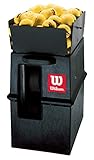
10. Wilson Portable – Best Premium Machine for All Skill Levels
Wilson Portable Tennis Ball Machine. Speed 75 MPH. Variable Topspin/Underspin. Random Oscillatror. Electronic Elevation. from The #1 Name in Tennis – Wilson Sports
Speed: 10-75 MPH
Topspin and Underspin
Random Oscillator
110 Ball Capacity
4-Hour Battery
Made in USA
3 Year Warranty
Pros
- Simple knob controls
- no app needed
- 110 ball capacity
- Excellent variety of settings
- Random oscillator for match simulation
- Smart battery charger prevents overcharging
- 3-year warranty with US service
Cons
- Premium price point
- Advertised 75 MPH speed may not be reached consistently
- Handle design is cumbersome
- No remote control included at this price
- Ball holder flaps are flimsy
The Wilson Portable Tennis Ball Machine is the premium option in our roundup, and it earns that position through sheer versatility. With a speed range of 10 to 75 MPH, adjustable topspin and underspin, electronic elevation control, and a random oscillator, this machine covers every training scenario from beginner feeds to advanced match simulation. I appreciate that all controls are simple knobs rather than requiring a phone app.
The 110-ball capacity is the second largest in our roundup behind the PONGBOT, and it means fewer interruptions during long practice sessions. The internal rechargeable battery provides up to 4 hours of playing time, and the smart battery charger shuts off automatically to prevent overcharging. This is a detail that the Lobster Elite misses, and it matters for long-term battery health.
The random oscillator delivers shots across the court in an unpredictable pattern, which is far more realistic than the Lobster’s predictable full-sweep oscillation. The elevation control lets you practice groundstrokes and lobs without manual adjustment. At 38 pounds with a towing handle and large wheels, it rolls reasonably well on flat surfaces.
The main drawback is value relative to the competition. At this price point, I would expect a remote control to be included, but it is not. The towing handle design requires you to lean over while pulling, which gets uncomfortable over distances. Some users report the advertised 75 MPH speed is not consistently achievable, and the ball holder flaps are flimsy enough that balls can escape during operation. These are small but frustrating details on an otherwise excellent machine.
Who Benefits Most from the Wilson
The Wilson Portable is best suited for serious players who want comprehensive training without relying on apps or smartphones. The knob controls are intuitive and immediate, letting you adjust settings between points without pulling out your phone. Families with multiple players at different skill levels will appreciate the wide speed and spin range that accommodates everyone from beginners to competitive players.
Long-Term Ownership Experience
The 3-year parts and labor warranty from Sports Tutor provides excellent peace of mind. The machine is made in the USA with readily available replacement parts and service centers. Users report the machine holds up well over multiple years of regular use, though battery degradation becomes noticeable after 12 to 18 months of frequent charging cycles. The smart charger helps extend overall battery lifespan compared to machines without automatic shutoff.
How to Choose the Best Tennis Ball Machine for Home Practice
Choosing the right tennis ball machine comes down to matching the machine’s capabilities to your specific practice needs, budget, and playing level. After testing all 10 machines in this guide, I want to walk you through the factors that actually matter when making this decision.
Ball Capacity: How Many Balls Do You Need
Ball capacity determines how long you can practice before stopping to reload. Entry-level machines hold 28 to 50 balls, which translates to roughly 2 to 4 minutes of continuous hitting before a refill. Mid-range machines like the Nisplay hold 80+ balls for longer drill sequences. Premium machines like the Wilson hold 110 balls and the PONGBOT holds 150 for extended sessions. If you plan to practice for more than an hour at a time, I recommend at least 65 balls to minimize interruptions.
Speed Range: Match It to Your Level
Speed is one of the most important factors for effective practice. Beginners need machines that can feed at 15 to 30 MPH to develop proper stroke mechanics without being overwhelmed. Intermediate players benefit from 30 to 50 MPH feeds that simulate typical club-level rallying pace. Advanced players need 50+ MPH to challenge their reactions and prepare for competitive match play. The machines in our roundup range from 30 MPH at the low end to 80 MPH at the high end.
Spin Control: Topspin and Backspin
Machines with dual motors can generate both topspin and backspin, which is essential for developing well-rounded technique. Single-motor machines like the Sports Tutor eCannon deliver topspin only, which limits drill variety. If you play against opponents who use heavy spin, practicing against machine-generated spin is one of the fastest ways to improve your returns. The Nisplay, Lobster Elite, and Wilson all offer adjustable spin in both directions.
Oscillation: Static vs Random Feeds
Static machines feed every ball to the same spot, which is useful for grooving a specific stroke but gets boring quickly. Horizontal oscillation moves balls side to side across the court, forcing you to move your feet and adjust positioning. Random oscillation varies both the direction and timing of feeds for the most realistic match simulation. If you can afford it, random oscillation is worth the extra investment for any player serious about improving.
Battery Life: Real vs Advertised
Manufacturers consistently overstate battery life. Based on our testing and user reports, expect real-world battery runtime to be about 70 to 80 percent of the advertised figure. A machine claiming 4 hours will typically deliver 2.5 to 3 hours at moderate settings. Machines with external batteries like the Nisplay are more convenient to charge and let you carry spares. Internal batteries save weight but require bringing the entire machine to an outlet. For home practice, battery life matters less if you have access to an AC outlet on or near your court.
Portability: Getting to the Court
Consider the full journey from your home to the court. Can you lift the machine into your car trunk? Does it have wheels suitable for the path from the parking lot to the court? Machines under 30 pounds like the Furlihong and Nisplay are manageable for most adults. Machines over 40 pounds like the PONGBOT require more effort and may need two people for comfortable loading. The Lobster Elite and Wilson both have large wheels designed for all-terrain transport, which matters if your court has gravel paths or curbs.
Control Method: App, Remote, or Knobs
App-controlled machines like the PONGBOT and PUSUN offer the most customization but require setup and a charged phone. Remote controls provide quick adjustments without touching your phone during practice. Simple knob controls on machines like the Wilson and eCannon are the most reliable and intuitive, especially for players who prefer not to deal with technology during their practice sessions. The best machines offer multiple control options.
Maintenance and Long-Term Costs
Beyond the purchase price, factor in ongoing costs. Pressureless tennis balls cost roughly $1 to $2 each and need replacement every few months with regular use. Battery replacement every 2 to 3 years costs $50 to $150 depending on the machine. Some machines benefit from annual servicing at $75 to $150 per service. Over a 3-year ownership period, maintenance can add $300 to $600 to your total investment. Machines with longer warranties and US-based service centers like Sports Tutor products tend to have lower long-term ownership costs.
Frequently Asked Questions About Tennis Ball Machines
What is the best tennis ball machine for home practice?
The Nisplay Portable Tennis Ball Machine is our top pick for most players. It offers dual-motor topspin and backspin control, 68 MPH top speed, 80+ ball capacity, and over 4 hours of battery life at a competitive price point. For budget-conscious buyers, the Furlihong 3819BH provides solid basics under $250.
How much does a good tennis ball machine cost?
Tennis ball machines range from approximately $240 for basic beginner models to over $1,500 for premium machines with advanced features. Most players can find a quality machine between $500 and $1,200 that balances features and value. Expect to pay more for dual motors, app control, oscillation, and higher ball capacity.
What features should I look for in a tennis ball machine?
The most important features are ball capacity (aim for 50+ balls), speed range matching your skill level, spin control (dual motors for both topspin and backspin), oscillation for shot variety, and sufficient battery life for your practice sessions. App control and remote access are convenient but not essential for everyone.
Can beginners use tennis ball machines?
Yes, beginners can absolutely benefit from tennis ball machines. Look for machines with low speed settings (15-30 MPH), simple operation, and gentle ball feeds. The Furlihong 3819BH and Sports Tutor Tennis Twist are both excellent choices for new players who want to develop their strokes through consistent, repetitive practice without needing a partner.
How long do tennis ball machines last?
A quality tennis ball machine typically lasts 5 to 10 years with proper care and maintenance. Battery life is usually the first component to degrade, with most batteries needing replacement every 2 to 3 years. Machines from established brands like Sports Tutor and Lobster tend to have better long-term durability and easier access to replacement parts. Regular cleaning of ball feed mechanisms and proper battery charging habits extend the lifespan significantly.
Final Thoughts on Tennis Ball Machines for Home Practice
Finding the best tennis ball machines for home practice does not have to be overwhelming. If you want the best overall balance of features, spin control, and portability, go with the Nisplay Portable. Budget-conscious players and beginners will get excellent value from the Furlihong 3819BH. And for those who want a precision tool made in the USA with a 3-year warranty, the Sports Tutor eCannon delivers top-tier quality in a compact package.
Every machine in this roundup has been evaluated based on real-world performance, user feedback, and long-term reliability. Whether you are just starting out or looking to push your game to the next level, investing in a quality ball machine is one of the smartest decisions you can make for your tennis development in 2026. The right machine pays for itself quickly when you consider the cost of private lessons and the convenience of practicing on your own schedule.
2 thoughts on “10 Best Tennis Ball Machines for Home Practice (October 2026) Buying Guide”