
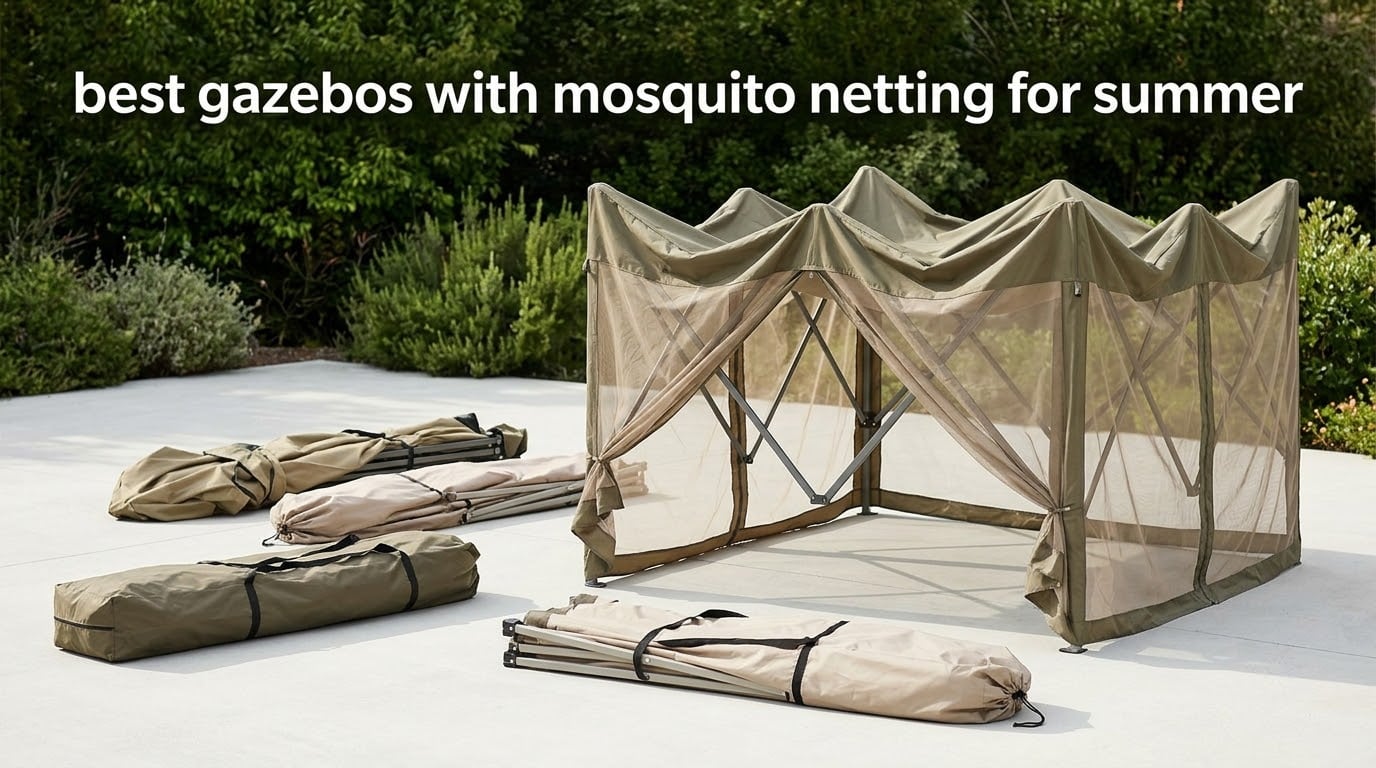
There is a specific kind of summer evening that ruins an outdoor dinner: the one where you spend more time swatting than eating. A gazebo with mosquito netting fixes that problem in a way an umbrella or a patio cover cannot, because the mesh keeps bugs outside while air still moves through the structure. We compared 12 screened gazebos for 2026, weighing netting quality, frame strength, covered square footage, roof venting, and how each one handles wind.
The short answer first: the COOS BAY 11×11 is the best gazebo with mosquito netting overall in 2026, the Alvantor 10×10 is the best value for anyone who needs to carry it, and the LAUSAINT HOME 10×13 is the one to buy if you want netting plus solid privacy curtains as a semi-permanent backyard room. Each of those choices is explained below, and every one of the 12 models is reviewed with its real specifications and owner complaints.
Our evaluation leaned on published specifications for size, frame material, canopy fabric, and netting type, cross-checked against the long owner review record on each product. The things that separated the good gazebos from the disappointing ones were rarely the fabric marketing. They were the mesh count, whether the netting runs floor to ceiling, whether the door zips all the way around, and whether the frame survives being anchored. If you want the broader picture of gazebos first, our backyard gazebo guide covers structures without screens, and our mosquito trap picks handle the yard around the structure rather than the structure itself.
Top 3 Picks for Gazebos with Mosquito Netting in 2026
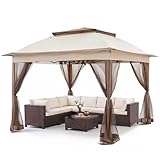
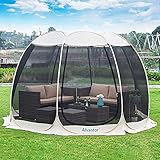
Alvantor 10×10 Pop Up Screen House
- 12 lb fiberglass frame
- Six mesh walls
- UPF 50+
- No assembly

LAUSAINT HOME 10×13 Gazebo
- Netting plus privacy curtains
- Double-tier roof
- 40x40mm steel frame
Those three cover the three real use cases. The COOS BAY is the one you leave set up on a patio through the season. The Alvantor is the one that lives in a closet and comes out for a weekend. The LAUSAINT is the one you anchor to concrete and treat as an outdoor room.
All 12 Best Gazebos with Mosquito Netting in October
| Product | Specifications | Action |
|---|---|---|
| COOS BAY 11×11 Pop Up Gazebo |
|
Check Latest Price |
| Alvantor 10×10 Pop Up Screen House |
|
Check Latest Price |
 CROWN SHADES 10×10 Pop Up Canopy CROWN SHADES 10×10 Pop Up Canopy |
|
Check Latest Price |
 VEVOR 12×12 Pop Up Gazebo VEVOR 12×12 Pop Up Gazebo |
|
Check Latest Price |
 Quictent 10×10 Screened Canopy Quictent 10×10 Screened Canopy |
|
Check Latest Price |
 EAST OAK 10×10 Pop Up Screen Tent EAST OAK 10×10 Pop Up Screen Tent |
|
Check Latest Price |
| LAUSAINT HOME 10×13 Gazebo |
|
Check Latest Price |
 MASTERCANOPY 11×11 Pop Up Gazebo MASTERCANOPY 11×11 Pop Up Gazebo |
|
Check Latest Price |
 CAMPROS CP 13×13 Screen House CAMPROS CP 13×13 Screen House |
|
Check Latest Price |
 COBIZI 10×15 Heavy Duty Canopy COBIZI 10×15 Heavy Duty Canopy |
|
Check Latest Price |
 Werph 12×12 Pop Up Screen Tent Werph 12×12 Pop Up Screen Tent |
|
Check Latest Price |
 Aoxun 12×10 Outdoor Gazebo Aoxun 12×10 Outdoor Gazebo |
|
Check Latest Price |
Two columns in that table are worth reading twice. Covered square footage tells you whether a table plus chairs actually fits, and the frame description tells you whether you are dealing with a seasonal pop-up or something you can anchor down for a full summer.
1. COOS BAY 11×11 Pop Up Gazebo with Netting: Best Overall
COOS BAY 11×11 Pop Up Gazebo with Netting, Canopy Tent, Beige
121 sq ft
Four zippered mesh walls
UPF 50+ Oxford
Alloy steel
42.3 lb
Pros
- No-tool pop-up setup in minutes
- UPF 50+ blocks 99% of UV
- Four zippered mesh sidewalls keep bugs out
- Dual vented top improves airflow
Cons
- Seasonal frame
- not a permanent structure
- Netting only works if anchored and zipped shut
- Needs weight or stakes in breezy weather
This is the gazebo with the deepest owner record in the group, 9044 ratings, and that record is the reason it takes the top spot. It measures 132 inches on each side and 116.4 inches tall, which gives 121 square feet of covered space with an extended roof line. That is enough for a round table and six chairs without everyone touching the legs.
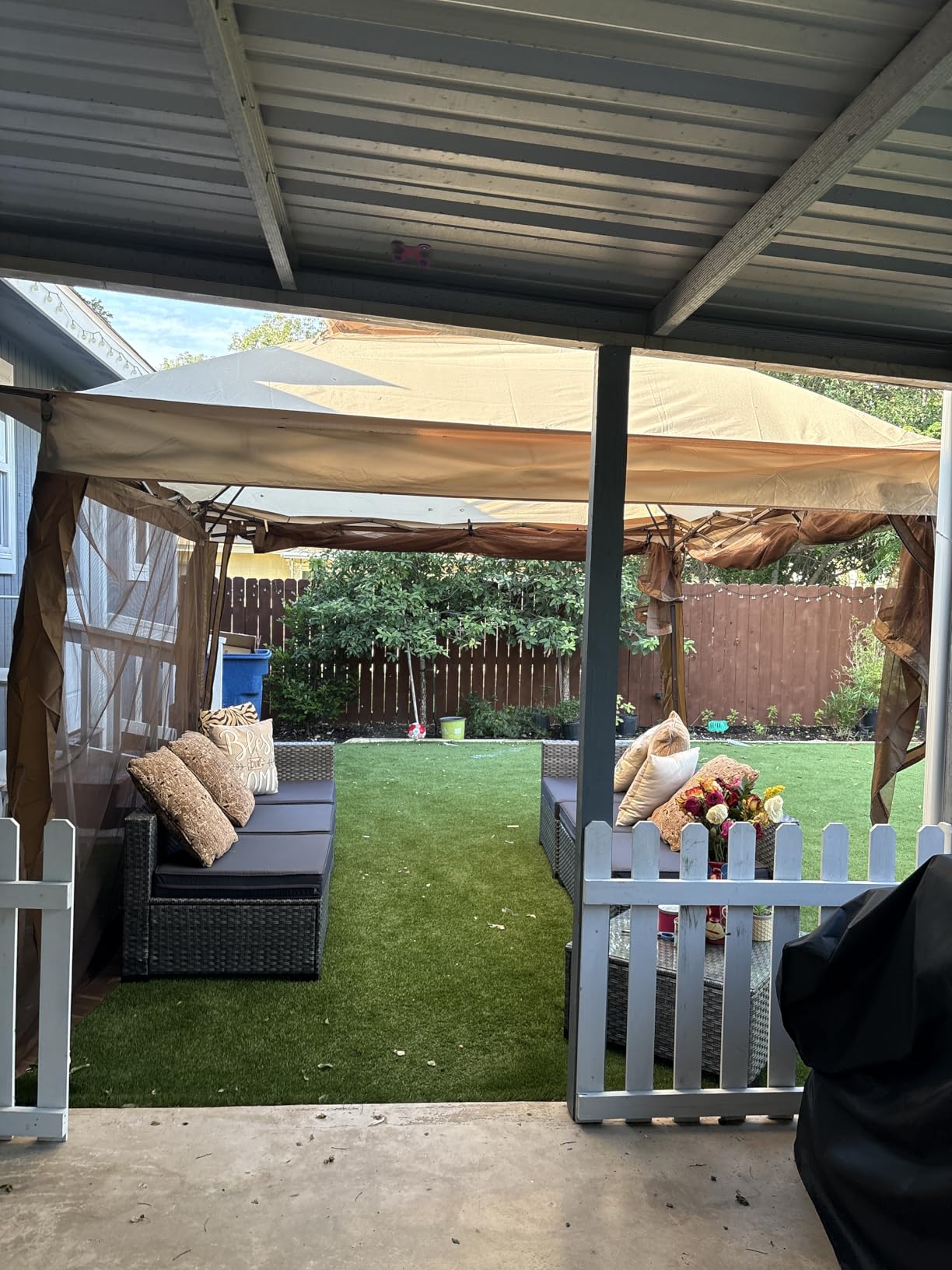
The netting is the reason to buy it. All four sidewalls are mesh with zippers, not half-height curtains that stop halfway down and leave the bottom 18 inches open. Owners repeatedly report that the mesh keeps mosquitoes and even small flies out while still letting a breeze through, which is the balance most pop-ups get wrong. The dual vented top does the other half of the job by letting hot air escape so the interior does not turn into a greenhouse at 4pm.
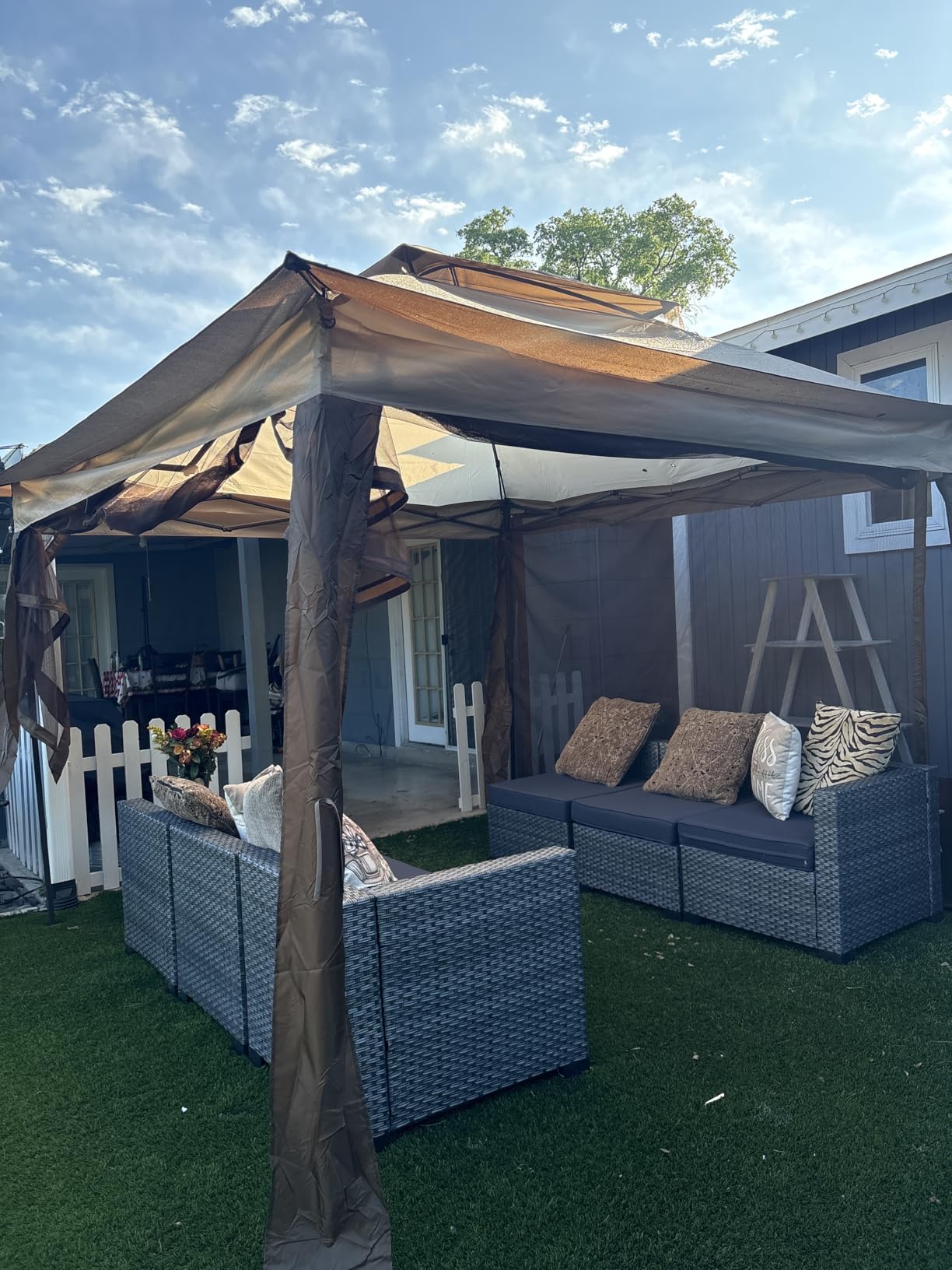
The canopy is Oxford fabric rated UPF 50+ and described as blocking 99% of harmful UV rays, with a water-resistant coating for light rain. The frame is powder-coated alloy steel at 42.3 pounds, which is heavy enough to feel stable on a patio and light enough for two people to reposition. A carrying bag comes in the box, and setup needs no tools at all.
How well does the mesh actually stop mosquitoes?
Better than most, because the mesh panels zip closed on all four sides and run the full height of the wall. Reviewers who bought it for outdoor dining report sitting through a full evening without swatting, which is not something we could say for the half-wall options in this price range.
The one caveat is honest and simple: the mesh has to be zipped. Owners who leave a door panel rolled up get exactly the experience they asked for. It is not a manufacturing flaw, it is a working habit, and it is the same habit that keeps flies out of a screen tent.
Will it hold up through a summer storm?
Only if you anchor it. The frame is a seasonal pop-up design, not a permanent structure, and reviewers are consistent about that. Ground stakes and a couple of sandbags on the leg feet change the outcome completely in a gust.
One owner reported four years with no wind problems on a pop-up gazebo, and anchoring was what made the difference. Manufacturer guidance for this class of canopy is light wind and light rain only, so take the roof down before a serious storm rather than testing it.
2. Alvantor 10×10 Pop Up Screen House: Best Value and Lightest to Carry
Alvantor Screen House Room Camping Tent Outdoor Canopy Pop Up Sun Shade Hexagon Shelter Mesh Walls Not Waterproof 10’x10′ Beige Patent Pending
100 sq ft
Six mesh walls
Fiberglass frame
12 pounds
UPF 50+
Pros
- Only 12 pounds
- roughly a third of comparable screen houses
- Fiberglass frame resists rust
- Six mesh walls for 360-degree airflow
- True automatic pop-up with no assembly
Cons
- Fabric top is sun protection
- not rain protection
- Not recommended above 24-30.8 mph wind
- Floor is a separate accessory
At 12 pounds this is the model that changes how you think about a screened gazebo. The other units in this roundup weigh between 20 and 103 pounds. At 12 pounds you can carry this structure from the garage to the patio alone, set it up before the burgers are ready, and fold it back into a 39.3 inch bag when the weather turns.
The interior measures 120 inches by 120 inches with an 84 inch peak height, giving 100 square feet of screened shade for four to six adults and a patio table. All six walls are mesh, which means ventilation comes from every direction rather than one side. The double-side silicone zipper door is a small detail that matters more than it sounds, because it closes in either direction and holds its seal.
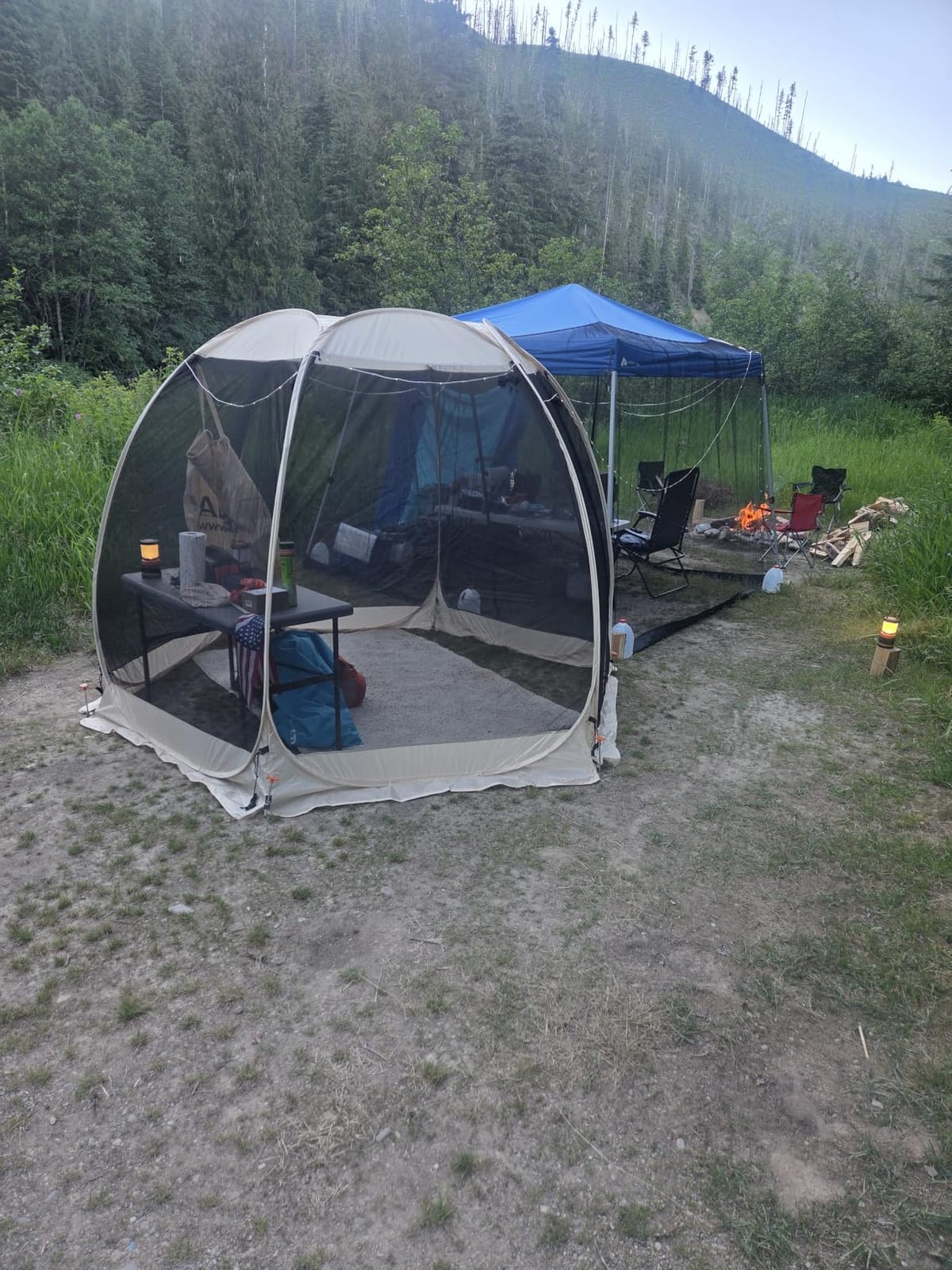
Buyers consistently praise the combination of weight and build quality. The fiberglass frame resists rust, which matters in humid summers, and the UPF 50+ fabric top gives real shade rather than a token layer. The box also includes 6 sandbags, 12 guylines, and 12 metal mounting stakes, so anchoring is not a separate purchase.
Is it strong enough to leave up all summer?
It is light, which is the whole point, and light means wind-sensitive. The manufacturer guidance is to take it down above roughly 24 to 30.8 mph. Anchored with the included guylines and stakes it handles breezy days comfortably, and the fiberglass poles do not corrode the way budget steel poles can.
Owners using it as a backyard dining room report leaving it up for months at a time without incident. Those same owners accept the rule: if a storm is forecast, the structure comes down in about a minute because nothing has to be unbolted.
Can a 12-pound frame feel flimsy?
Not in practice, and reviewers rarely describe it that way. The fiberglass construction is why it weighs so little, and the pop-up hinge design means the legs are pre-attached at fixed angles rather than screwed together, so there is no joint to flex.
The real limitation is the top fabric, which is listed as not water resistant. It blocks sun well and sheds an occasional drizzle, but it is a sun shelter first. If rain is a bigger concern than portability, look at a model with a waterproof canopy.
3. CROWN SHADES 10×10 Pop Up Canopy: Best for Windy Yards
CROWN SHADES Gazebo 10×10 Pop Up Canopy with Mosquito Netting, Beige
100 sq ft
CENTERLOK 4-way frame
UPF 50+ Oxford
45.2 pounds
Pros
- One-push CENTERLOK locks all four legs
- 150D Oxford with silver-coated interior
- Overhanging roofline blocks more sun and rain
- Kit includes 8 stakes and 4 sandbags
Cons
- Cheap mesh snags and tie strings are poorly sewed
- Thin top fabric nicks easily
- Mesh noticeably reduces the breeze
Most pop-up canopies in this list fail at the moment of assembly, when the frame racks and the fabric goes crooked. The 4-way CENTERLOK system on this one is the direct answer to that. A single push locks all four legs at once, so one person can get a level frame without fighting the corners.
Several owners report the canopy holding up through gusts around 50 mph once it is staked, which is far beyond what most budget pop-ups in this roundup claim. The anchoring kit is unusually complete for the category: 8 stakes, 4 sandbags, 4 guy ropes, and a wheeled storage bag.
The canopy is 150D Oxford fabric with a silver-coated interior rated UPF 50+, and it carries CPAI-84 fire resistance. The overhanging roofline throws off more shade and rain than a standard flat pop-up roof, which is a small design choice that makes a visible difference in the afternoon.
Is the mesh worth it, given the complaints about it?
It works. The detachable mesh sidewalls have dual-sided zippers and hook-and-loop straps, so they close cleanly and stay closed. What reviewers do not like is the mesh quality itself. It catches on things and binds, and the screen tie strings are described as poorly sewed, which is an annoyance rather than a failure.
There is also a real trade-off reviewers mention honestly: the mesh is fine enough to noticeably cut the breeze. On a hot day you feel less airflow than you would with open sides. If cooling matters more than bug exclusion, roll the panels up when the mosquitoes are not active.
What should you know about the warranty?
The listing advertises a 2-year parts replacement warranty with full canopy replacement in year one, but some buyers report being treated as though coverage lasted only 1 year. Treat the coverage as closer to one year in practice and register the product on arrival.
The frame itself is the durable part. The bronze-coated steel legs resist corrosion, and the 2-year replacement promise is generous on paper. The thin top fabric is what ages first, particularly around the pole covers, which nick easily during setup if you are not careful.
4. VEVOR 12×12 Pop Up Gazebo Tent: Best for No-See-Ums
VEVOR 12x12ft Pop Up Gazebo Tent with Mosquito Netting, 6 Removable Wind Panels & 2 Mesh Windows, Outdoor Canopy Shelter for Patio, Army Green
144 sq ft
High-density polyester mesh
Six removable wind panels
UPF50+
Pros
- Fine mesh blocks mosquitoes and no-see-ums
- Removable roof panel and roll-up curtains for cooling
- Guylines and luminous stakes hold well when anchored
- Two-person setup and quick fold-down
Cons
- Fiberglass poles can split at the metal sockets
- Roof sags and pools rainwater
- Carry bag is too small for the weight
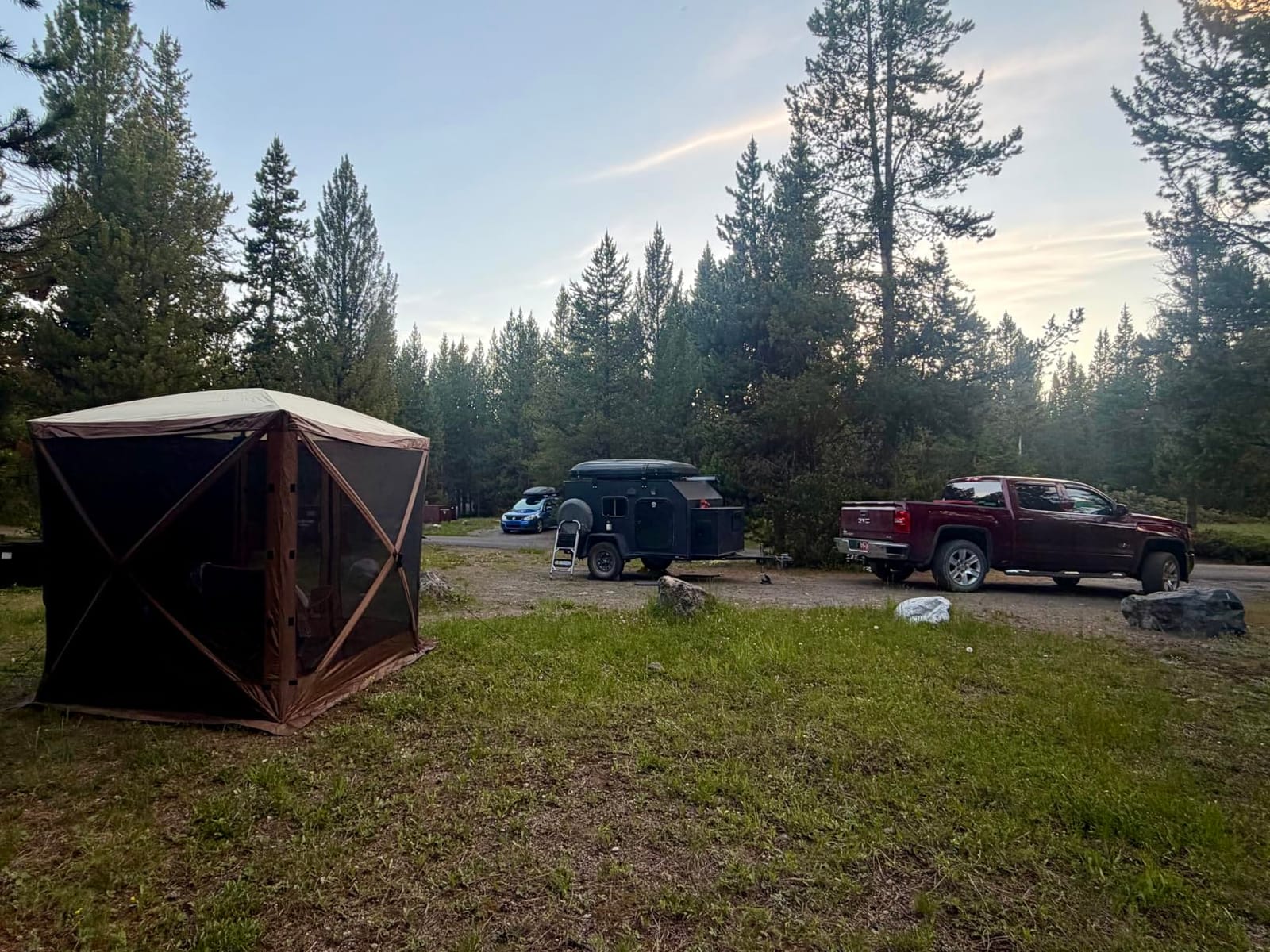
If you live somewhere with no-see-ums, midges, or the tiny biting flies that slip through ordinary insect screen, this is the model to look at first. The high-density polyester mesh is the tightest we saw in this group, and buyers confirm it keeps out even the smallest insects while still letting you see the yard through the walls.
At 144 square feet it is one of the larger pop-ups here, sized for eight people. The dimension is 141.73 inches on each side with a 94.49 inch height, and the ceiling height adjusts from 1.82 meters down to a 2.4 meter maximum. The army green color is a departure from the usual beige, and it blends into a garden setting better than a bright tan.
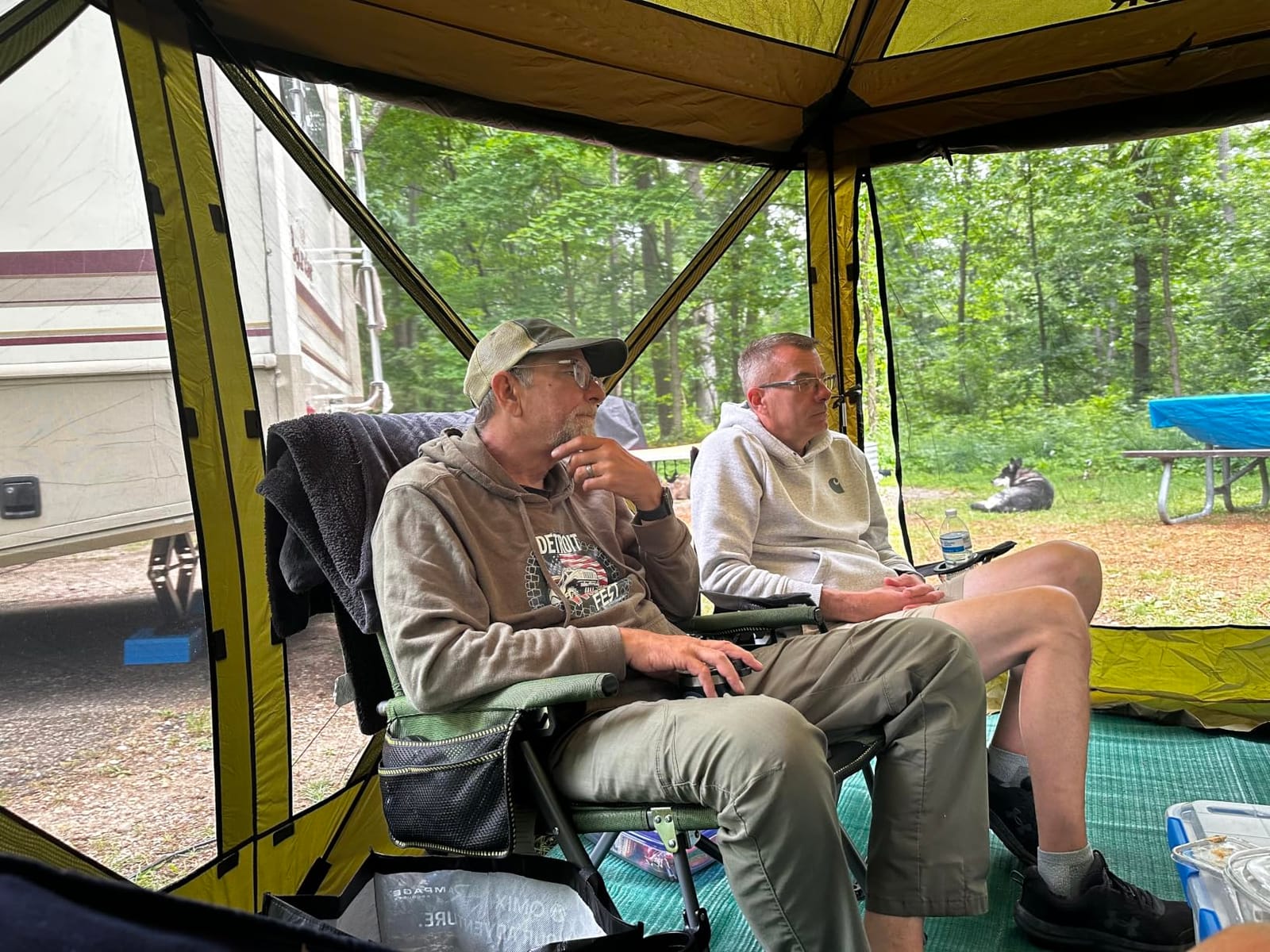
The cooling design is worth calling out. A removable roof panel plus roll-up side curtains means you can strip the structure back to shade-only when the mosquitoes are not biting, which is the opposite trade-off from the very tight mesh. Double-sided zippers make entry easy from either side.
How do the removable wind panels work in practice?
There are six of them, and two of those include mesh windows. You can mix and match them depending on wind direction and how much light you want in, which makes this more adaptable than a fixed four-wall screen house. Five guylines and luminous stakes are included for anchoring, and the luminous stake detail is genuinely useful at dusk.
The catch is that every removable panel is another joint that can loosen. Owners who strip panels back for summer afternoons report that the fit stays snug, but the fine mesh does block a lot of breeze, so the ventilation you gain comes from opening panels rather than airflow through the screen.
What is the most common complaint?
Durability details, and they cluster in one place. The fiberglass poles can split or splinter when slid into the metal sockets, especially if the frame is twisted during setup. Separately, the roof poles are not freestanding, so the roof can sag and cup rainwater after a downpour.
Two smaller issues get repeated mentions: the carry bag is too small and too light for a tent of this weight, and repacking is difficult with the instructions provided. Against that, a number of reviewers specifically praise VEVOR customer service for resolving warranty problems, which is worth something when hardware fails.
5. Quictent 10×10 Screened Canopy Tent: Best Gap-Free Seal
Quictent 10’x10′ Pop up Screened Canopy Tent with Mosquito Netting
100 sq ft
Full Velcro screen design
420D Oxford with PU layer
40 pounds
Pros
- Full Velcro design creates a tight 360-degree seal
- Folds down to duffel-bag size
- 420D Oxford with silver coating resists UV and rain
- 100 sq ft covers 8-10 people
Cons
- Roof poles are unbraced so rain can warp the frame
- Canopy tears at corner stress points over seasons
- Screen walls are finicky to tension
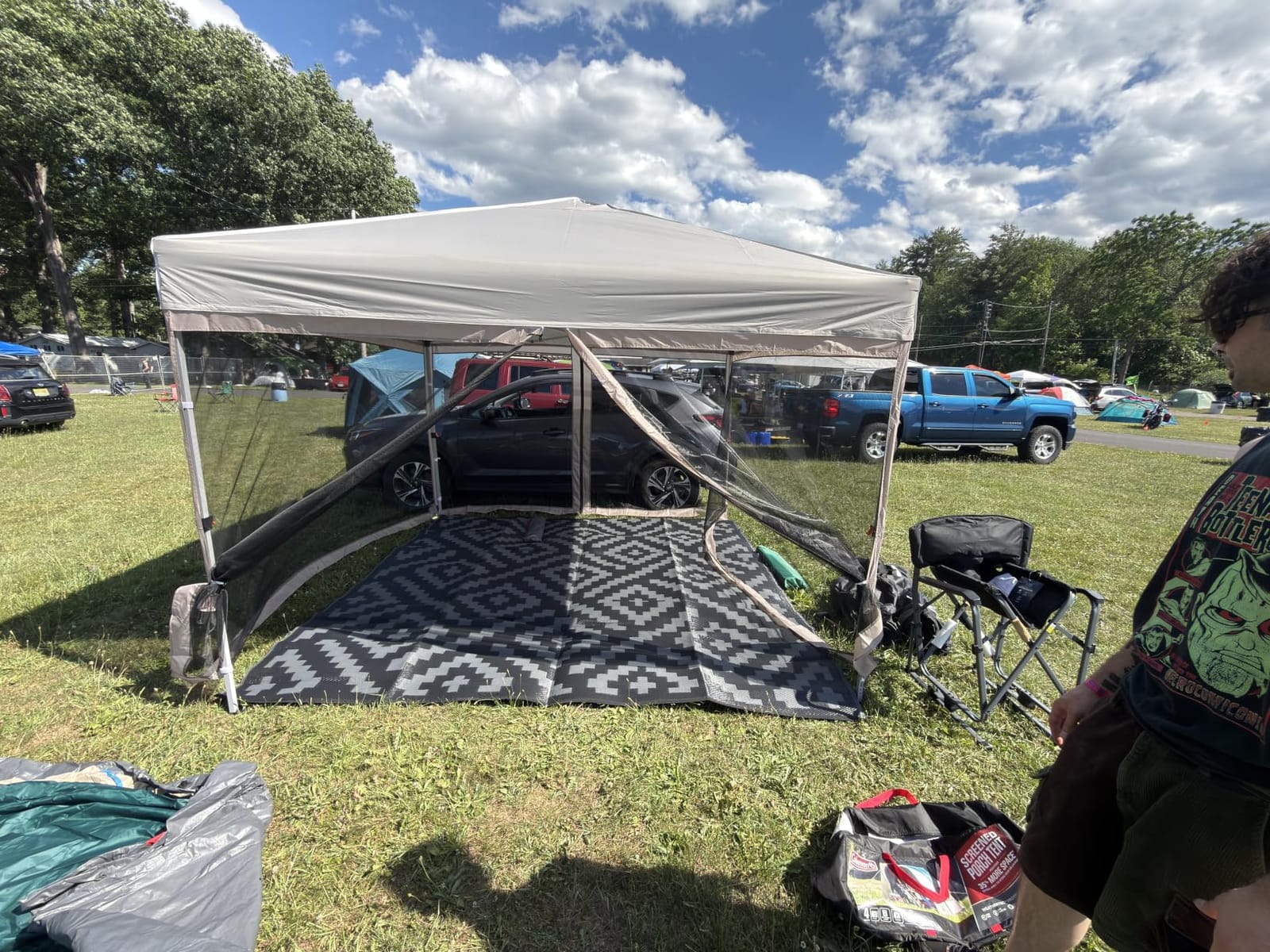
Most screen houses attach their mesh with a zipper or a clip, and both leave a gap somewhere. This one uses a full Velcro design, meaning the screen attaches flat to the frame along its whole edge with no zipper to catch and no hardware to lose. Buyers describe the resulting seal as gap-free around all four sides, which is the most direct fix for mosquitoes sneaking in low.
The other thing this model does well is disappear. It folds to 48.8 inches long and 9.5 inches wide, roughly the size of a large duffel bag, and it comes with a wheeled carry bag. A lot of screen houses in this roundup need two people and a car; this one can live in a closet between summers.
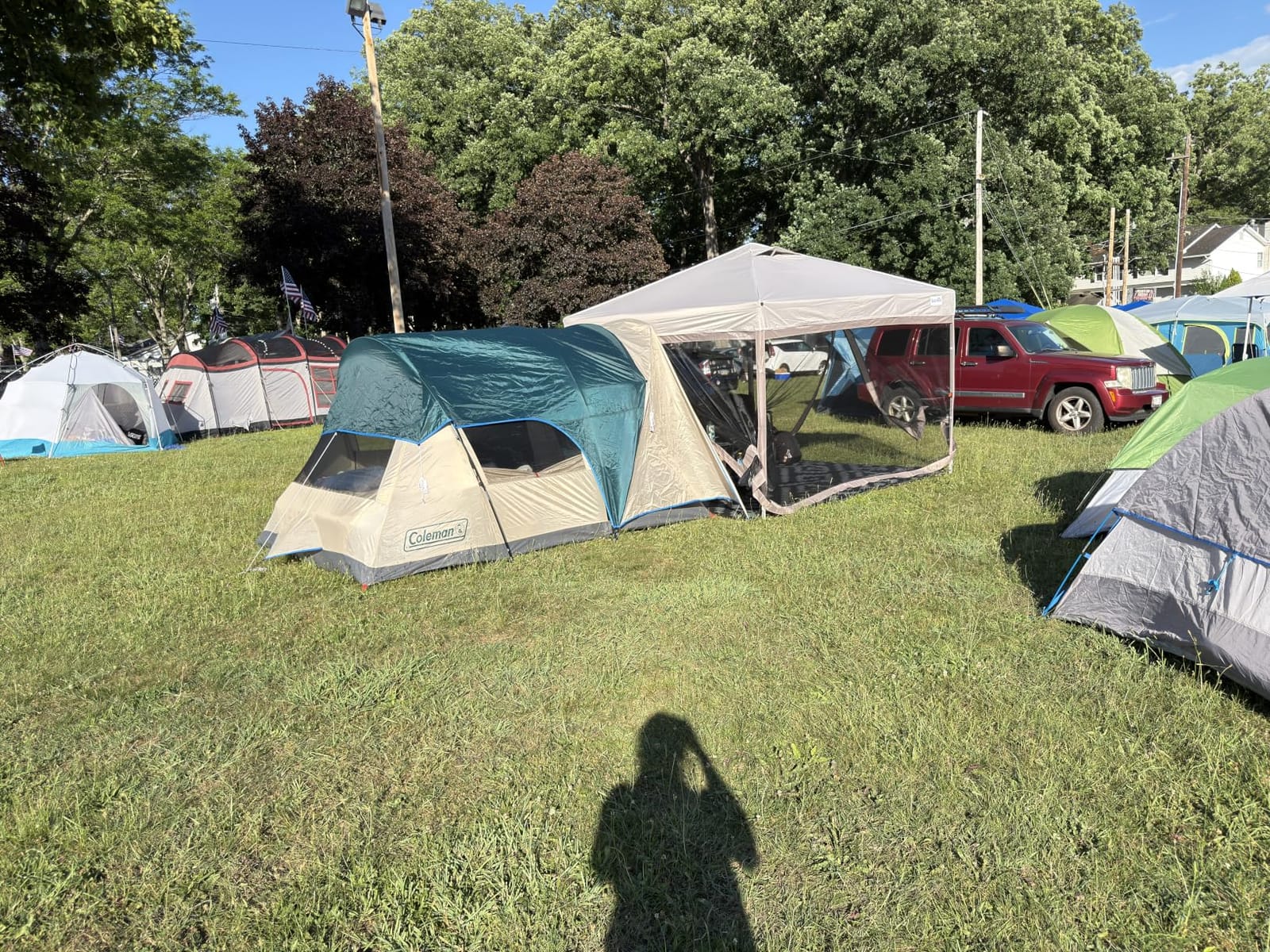
The canopy is a 420D polyester Oxford with a silver coating and a PU waterproof layer, which is a heavier fabric than the 150D and 180D canopies used elsewhere in the list. The frame is alloy steel at 40 pounds, so it is heavier than the fiberglass screen houses but far more stable once it is up.
Is the Velcro screen worth the setup fiddliness?
For bug exclusion, yes, and reviews bear that out. The design means there is no vertical zipper gap to line up and no hook to snap closed in the dark. The cost is tensioning: several reviewers say the screen walls are finicky to get taut and that the Velcro develops loose threads over time.
That trade is worth taking if mosquitoes are your main problem. If your concern is airflow on a hot afternoon, the tight Velcro seal holds more still air than a zipped mesh panel, so plan to roll the lower edges up for ventilation.
What happens in heavy rain?
This is the model’s clear weak point. The roof poles are not braced from the middle, so the canopy can slacken, cup water, and eventually deform the frame. A few buyers also report canopy fabric tearing at the corner stress points, and UV exposure weakens it further over one or two seasons.
Quictent’s replacement support is a genuine offset. Owners repeatedly mention the company sending replacement frames and panels free, which is the kind of thing that matters most with a product that will live outdoors for years.
6. EAST OAK 10×10 Pop Up Screen Tent: Best for Evening Use
East Oak Pop up Screen Tent with Mosquito Netting, Portable Screen House Canopy Shelter, 10 x 10 FT Instant Screen Gazebo & UPF 50+ UV Protection for Patio, Backyard, Deck & Outdoor Activities, Beige
96 sq ft
D33 fine mesh
Lamp hook and light strip edge
23.4 pounds
Pros
- Reinforced steel main frame with fiberglass top
- Four-sided D33 fine mesh blocks bugs and stays airy
- One-person pop-up in under a minute
- UPF 50+ silver-coated Oxford fabric
Cons
- Not recommended above 24 mph wind
- Fabric is not water resistant
- Floor and pendant lights are separate purchases
Most mosquito trouble happens at dusk, which makes lighting the detail that separates a usable evening shelter from a dark tent. This one has a top hook for a lantern and an edge strip that supports a light strip, and reviewers mention both as reasons they use it after dark. The interior is 96 square feet, a little smaller than most, but it holds a table and four chairs comfortably.
It is also the fastest setup in the roundup. One-person pop-up in under a minute, no tools, and it folds to a bag measuring 30.7 by 3.9 by 30.7 inches. At 23.4 pounds it is heavier than the Alvantor and lighter than every steel-framed model here, which puts it in a useful middle ground.
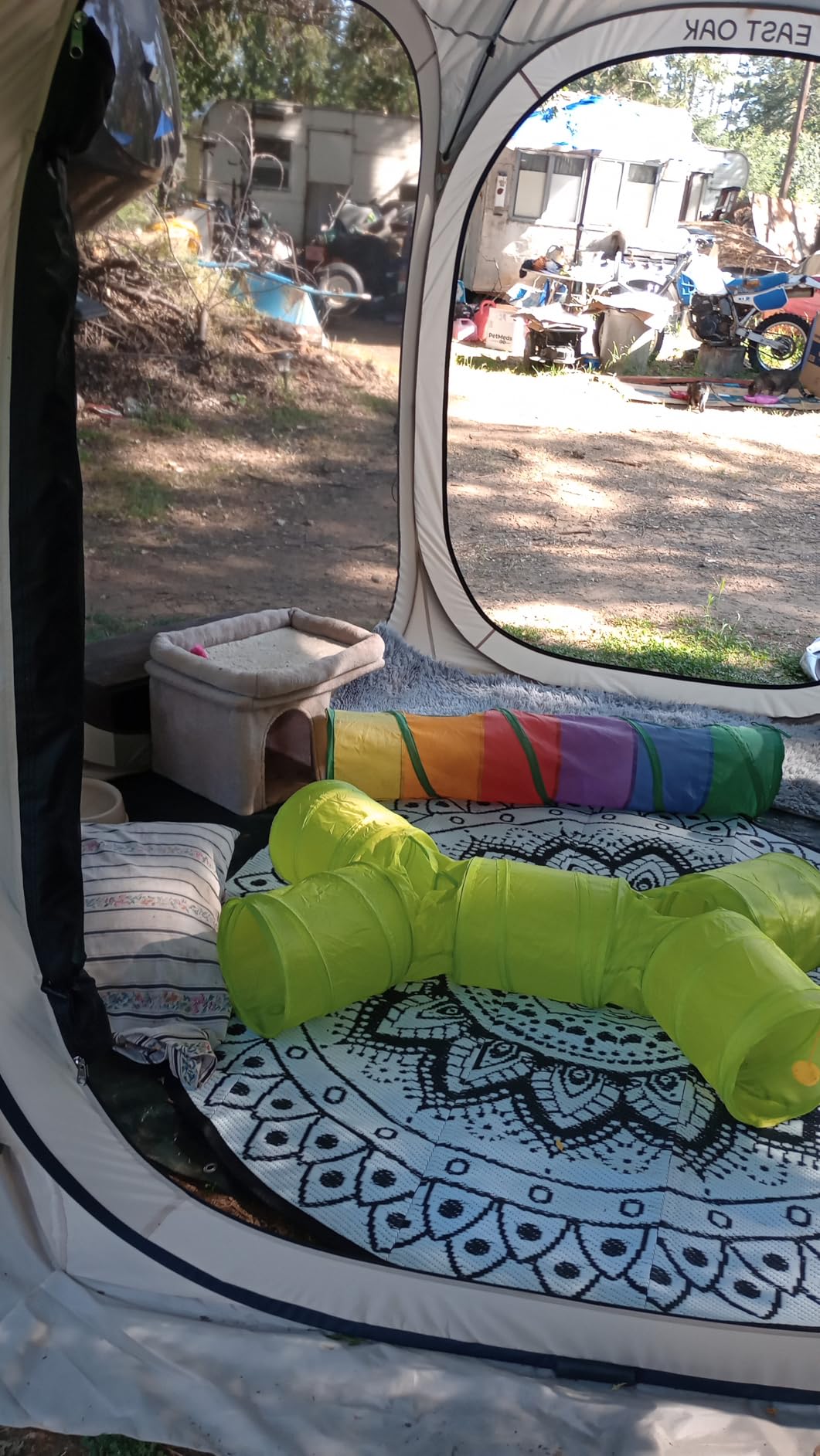
The frame construction is the underrated part. It pairs a reinforced steel main structure with a heavy-duty fiberglass top support, and reviewers repeatedly single that out as stronger than comparable brands at the same size. The D33 fine mesh on all four sides gives 360-degree ventilation while blocking mosquitoes, and the silver-coated Oxford top is rated UPF 50+.
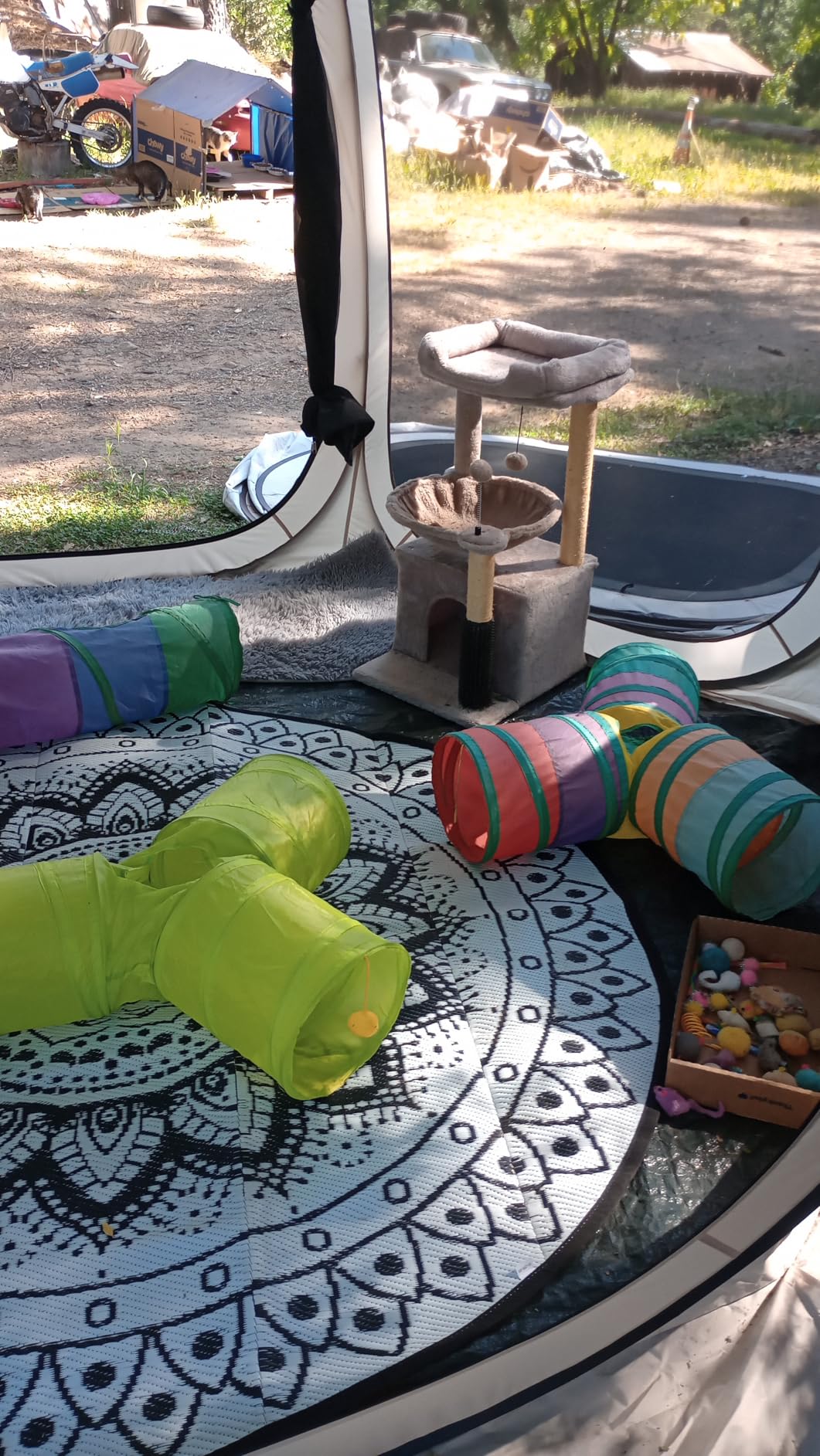
Does the D33 mesh block flies and no-see-ums too?
It is a genuinely fine mesh, and reviewers describe it as keeping bugs out without making the interior feel stuffy, which is the balance you want at dusk when the air stops moving. It is not the tightest mesh in this roundup, but it is noticeably finer than the mesh on typical steel pop-ups.
The 96 square feet of floor area is the trade. It is the smallest covered area among the 12 models here, so a sectional sofa would be tight. A round table with four chairs and some walking room is the realistic use.
Can you use it in the rain?
Not really. The fabric is listed as not water resistant, and the manufacturer advises against use above 24 mph wind. That makes it a summer sun and insect shelter rather than an all-weather structure, and pairing it with a patio umbrella or a nearby covered section is a sensible setup.
The box is well equipped for anchoring: 12 ground stakes, 6 guylines, 6 sandbags, and 3 telescoping poles. The 3-year warranty is the longest in this group, which matters for a product expected to be stored and redeployed each summer.
7. LAUSAINT HOME 10×13 Gazebo with Netting and Curtains: Best as an Outdoor Room
LAUSAINT HOME 10×13 Gazebo Canopy with Netting, Curtains & Double Roof
129.29 sq ft
Netting plus privacy curtains
40x40mm galvanized steel
103.2 pounds
Pros
- Thick 40x40mm columns hold up in high wind
- Netting plus curtains create a private room
- Double-tier roof improves airflow and cooling
- 135G polyester with 1500MM water resistance
Cons
- Canopy tensioning is the hardest assembly step
- Instructions are long and some holes do not line up
- Over 100 pounds and hard to move once assembled
This is the only model in the roundup that solves the evening privacy problem as well as the bug problem. It ships with zippered mosquito netting plus solid privacy curtains, so you can screen everything in and still have the visual and shade cover that pure mesh cannot give. It is the closest thing here to an actual outdoor room.
The frame explains why it weighs 103.2 pounds. The legs are 40×40 millimeter reinforced galvanized steel with a powder-coated finish, which is nearly four times the tube size of a standard pop-up, and the structure is rated for wind up to Level 6 when properly secured. One owner logged gusts above 50 mph with no damage.
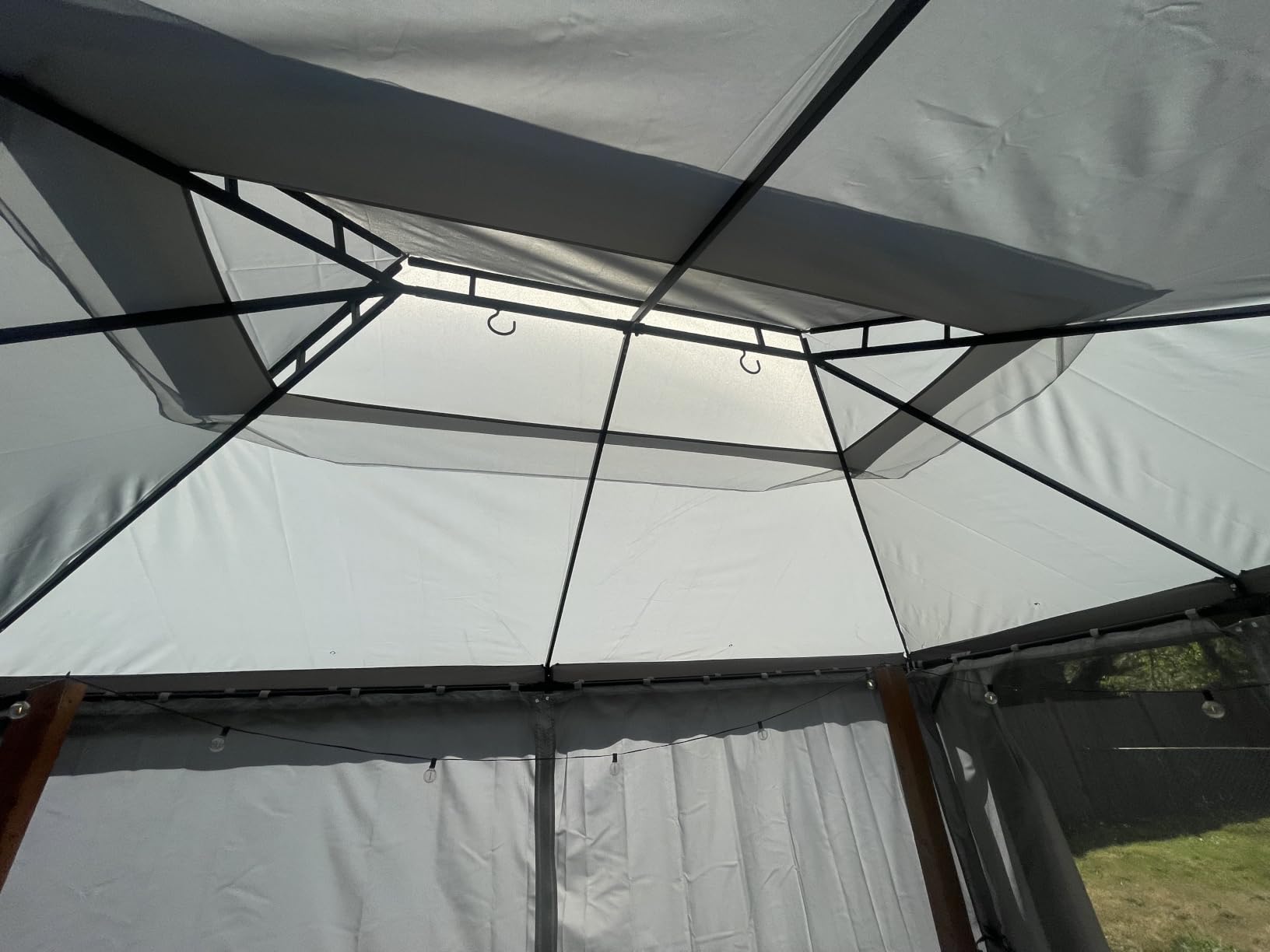
The canopy is 135G polyester with 1500MM water resistance and UPF 50 shading, and the double-tier roof improves airflow while keeping the interior cooler. A center hook and D-rings let you hang a fan or string lights, and the footprint is 156 by 120 inches, so 129.29 square feet fits a full dining set with room to move.
Is assembly realistic for one person?
Budget two to three people and most of a weekend afternoon. Stretching the canopy onto the frame is consistently described as the hardest part of the job, and a few buyers report needing to modify a tube to make it cooperate. The instructions run 22 steps that read more like 45, and some screw holes do not line up perfectly.
That is the honest cost of buying a 103-pound structure with a heavy frame. In exchange you get something that stays put, resists weather, and can be anchored into concrete with the 8 expansion bolts included. Owners treat it as a near-permanent backyard fixture, and several report it weathering wind, rain, and hail over multiple seasons.
Do you need both netting and curtains?
For daytime shade and privacy, curtains alone will do it. For keeping insects out, the netting is what does the work. Running both together is the best use, because the curtains block low sun and wind while the mesh handles the bugs, and the double-track arrangement lets you slide each independently.
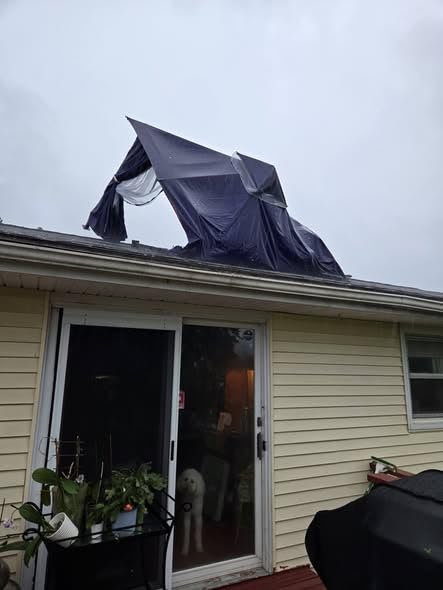
Do anchor it. One owner’s anchored unit was carried off in a tornado, and the manufacturer guidance treats anchoring as a setup step rather than an option. A floor is not included, so plan on a ground cloth or a paved base if you want a sealed base that blocks floor-level bugs.
8. MASTERCANOPY 11×11 Pop Up Gazebo: Best for a Large Patio Set
MASTERCANOPY 11×11 ft Pop Up Gazebo with Netting Screen Walls, Khaki
121 sq ft top coverage
Double-tier 180D roof
Drain holes and UPF 50
Mesh sidewalls
Pros
- 121 sq ft of top coverage fits a sectional
- Mesh walls block bugs while passing a breeze
- Quick two-person setup and fast takedown
- Double-tier roof with drain holes
Cons
- Thin canopy fabric and carry bag
- Steel frame feels flimsy and can fail in wind if unanchored
- Center hub sometimes too long to lock
The size is the reason to shortlist this one. It uses a 10 by 10 foot straight-leg frame with an 11 by 11 foot top, giving 121 square feet of coverage, and that overhang is what lets a sectional sofa and a coffee table fit underneath without everything sitting out in the sun. Overall dimensions are 132 inches square by 116.4 inches tall.
The roof is 180D polyester, double-tiered, with a silver coating rated UPF 50 that blocks 95% of UV rays. Drain holes in the roof help when rain comes, and the double-tier shape lifts the top layer so air can escape. At 45.7 pounds the frame is heavy in the good way, and owners describe it as very stable in breezy weather when weighted.
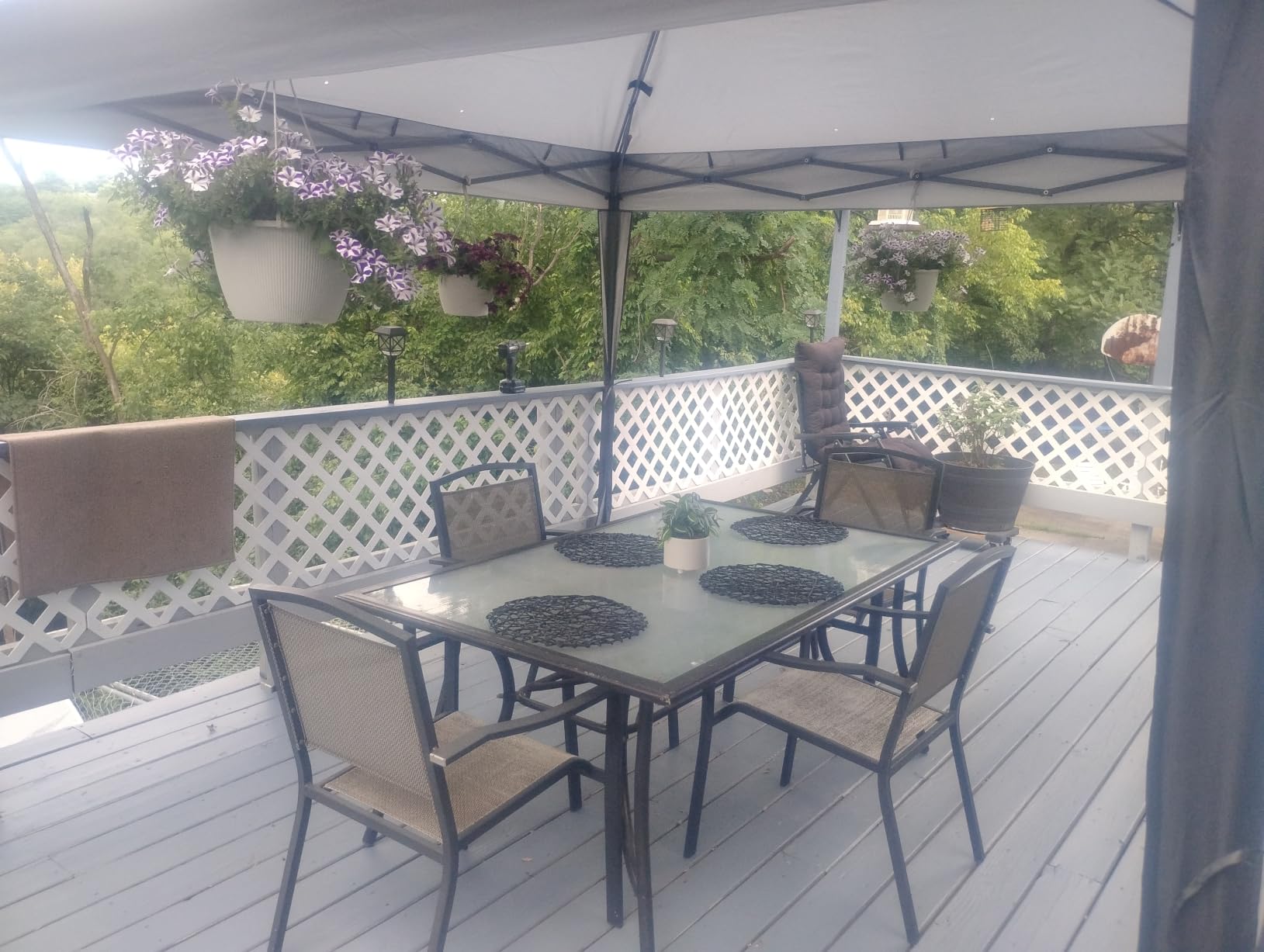
Setup is quick: two people, and a single person can take it down fast. The mesh sidewall netting gives insect protection with airflow, which is the balance buyers highlight most. This is also the least expensive of the steel-framed gazebos in the roundup, and that price position is clearly the reason it has a strong review count at all.
Is the frame solid enough for year-round use?
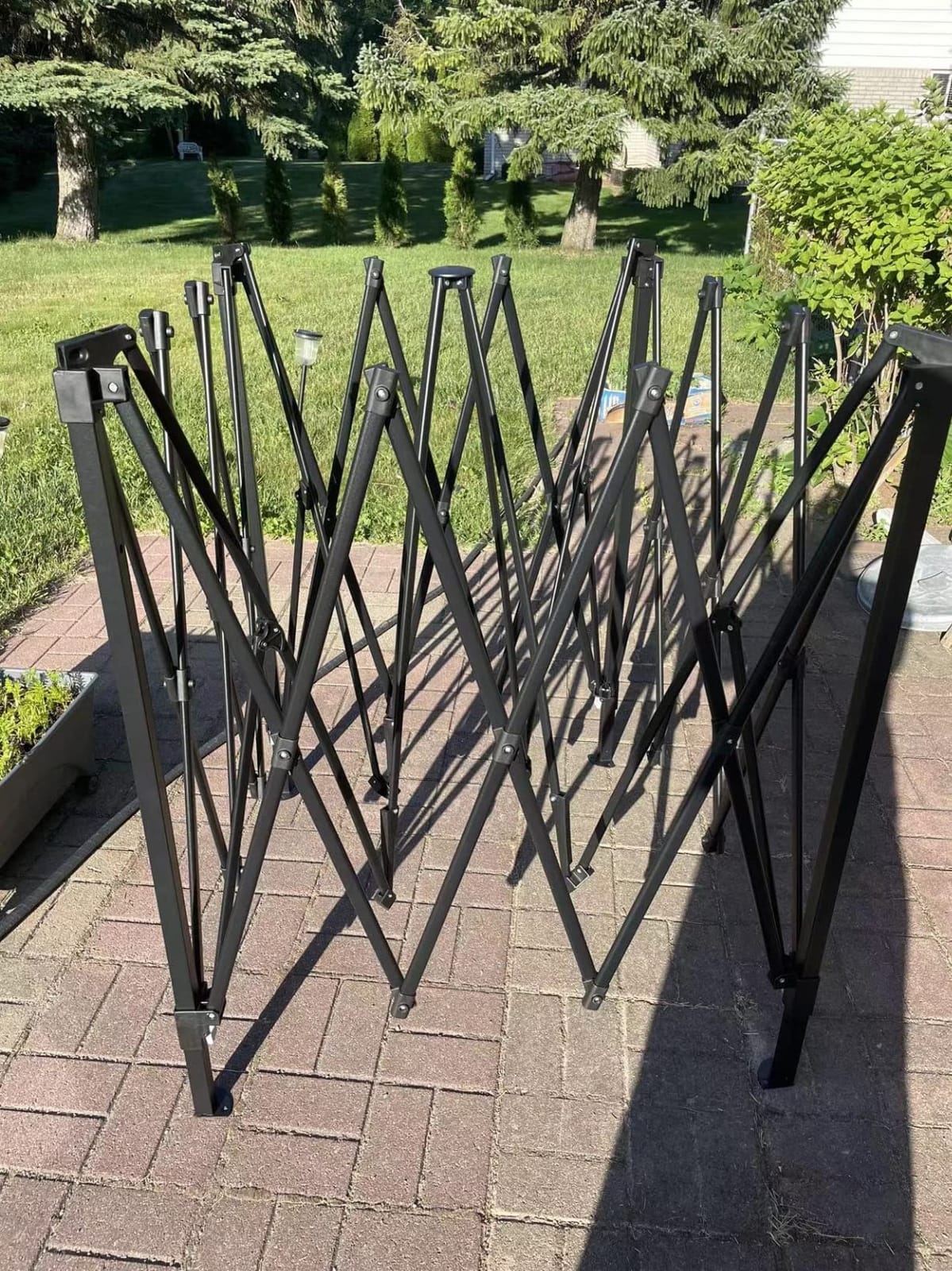
It is heavy, and that is its best and most confusing feature. Buyers like how planted it feels when weighted, but the same reviewers describe the steel as feeling flimsy and note that units can fail in wind if left unanchored. Anchoring is not optional with this one.
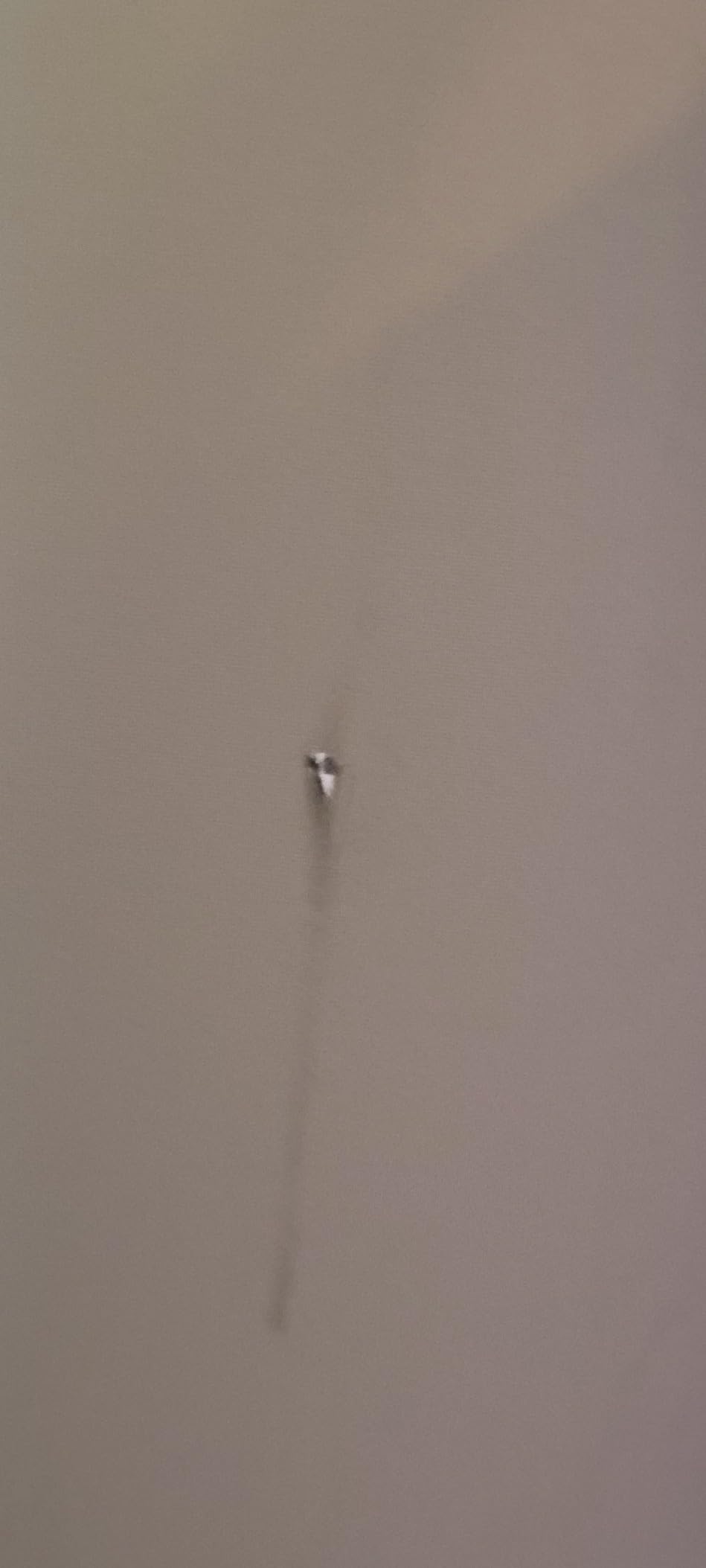
There are also assembly defects worth knowing about. One review reports the middle hub piece was too long and had to be cut to lock in, and some buyers arrived with the leg extension button hole not drilled. Neither is dangerous, but both cost an afternoon.
How long does the fabric last outdoors?
Buyers report roof fabric and frame degradation within two summer seasons in full sun. The canopy and the carry bag are both described as thin compared with similar canopies, and the silver coating on the roof fades with UV exposure over time.
Treat it as a seasonal piece rather than a permanent installation, and store it dry and folded in a shaded space at the end of the season. The warranty covers one year of free frame replacement and six months on other parts, which is on the short side for a structure that lives outdoors.
9. CAMPROS CP 13×13 Screen House: Best Budget Pick
CAMPROS CP Screen House Tent 13 x 13 Ft Screened Mesh Net Wall Canopy
169 sq ft coverage
140 sq ft floor area
Fiberglass frame
190T polyester top
Pros
- Largest footprint in the roundup
- No skills needed and packs into the carry bag
- 190T polyester top with solid UV resistance
- Lowest cost for a screened shelter this size
Cons
- Floor not included
- Three people needed to set up
- Water resistant rather than waterproof
This is the footprint champion. At 13 by 13 feet with 169 square feet of coverage and a 140 square foot floor area, it gives you more room than any other model in this roundup, and it does so at the lowest cost. If you are furnishing a large patio and want a table for eight plus standing room, nothing else here matches it.
Setup is genuinely simple. The fiberglass frame needs no skills and goes up in about ten minutes, though reviewers are clear that you want three people for it. The top is a 190T polyester with UV resistance, the center height is 86 inches, and the whole thing folds back into a carry bag measuring 25 by 9.06 by 9.06 inches.
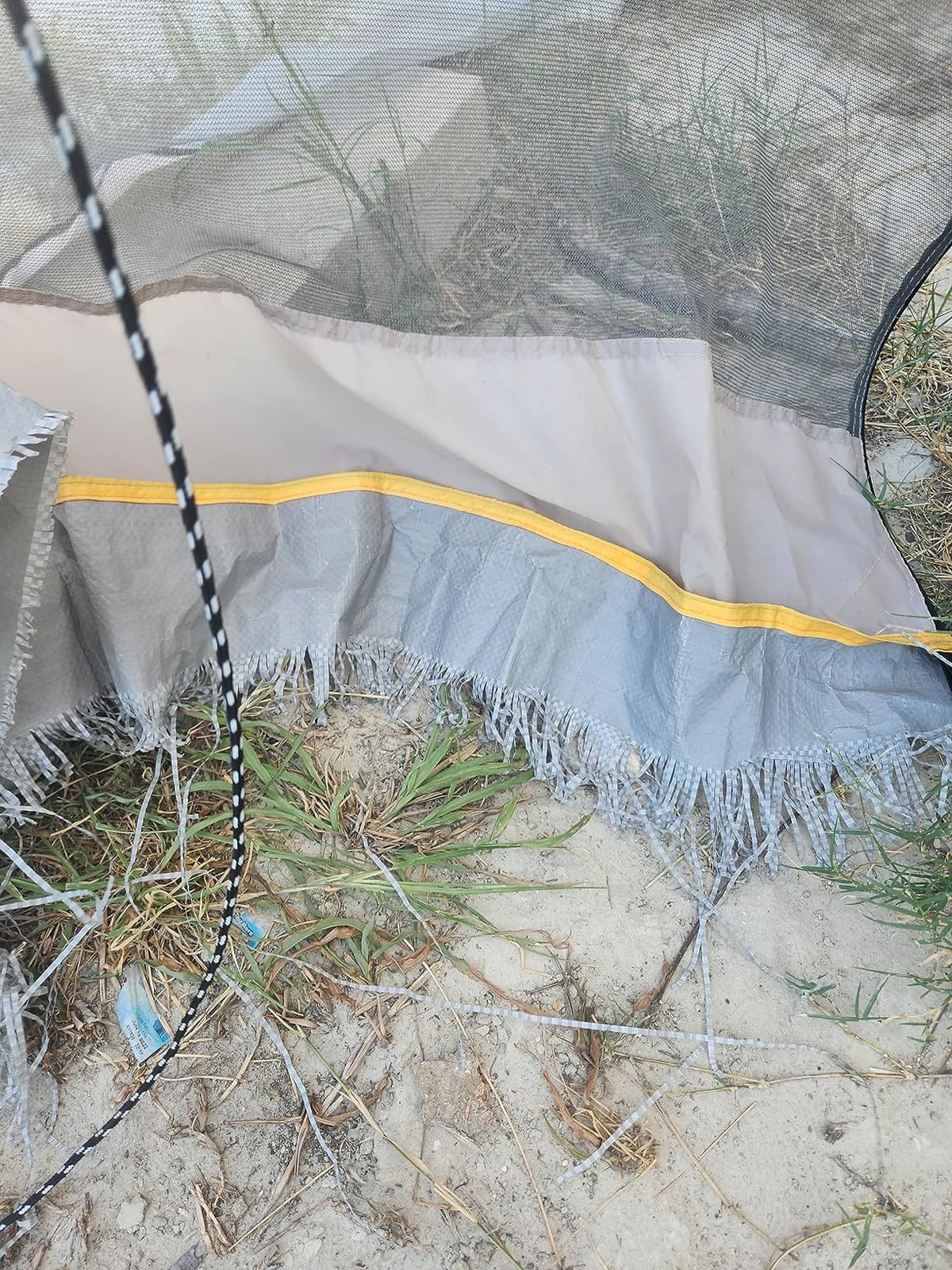
The enclosure is drawstring rather than zippered, which is the one functional step down. It is fine for keeping mosquitoes out once the fabric is tensioned, but it is less convenient than a zipper you can open and close from the outside while standing up. The bottom edge is open, so a ground cloth or a separate floor is needed to fully seal the base.
Is a 13×13 screen house realistic in a normal backyard?
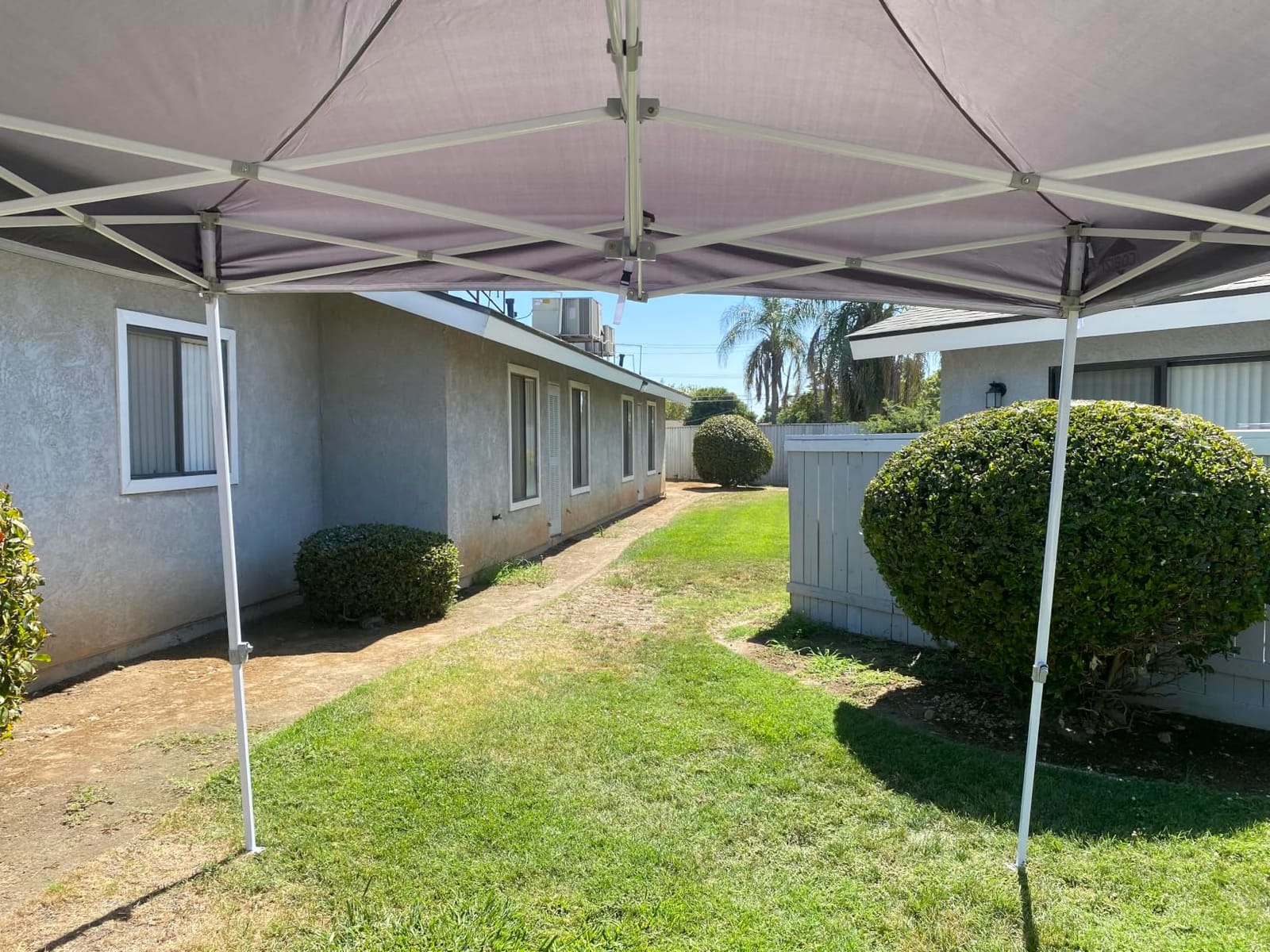
It fits, but barely. At 156 inches square, you need a clear 13 by 13 foot area plus a couple of feet of working room to raise it. That rules out a small patio, and it is worth measuring before you commit, especially with the 88 inch overall height to work around.
Weight is the other consideration. The listed weight is 10.91 kilograms, so roughly 24 pounds, which is light for its size but still awkward for one person to wrestle through a gate or over a step. Budget three people on assembly day.
What do you have to add to make it work?
A floor, essentially. Without one, the drawstring hems sit on grass and mosquitoes come in underneath, which defeats the purpose. Add a ground cloth, and consider a few strips of fabric or magnetic screening around the base to close the gap.
The top is water resistant rather than waterproof, so plan for sunny days with a chance of light rain. The kit includes a carry bag, four guylines, and ground stakes, and a 1-year unconditional quality assurance backs the structure.
10. COBIZI 10×15 Heavy Duty Pop Up Canopy: Best for Large Gatherings
COBIZI 10×15 Heavy Duty Pop Up Canopy Tent with Mosquito Netting Sidewalls
150 sq ft
32mm powder-coated steel
500 lb center pole
66 pounds
Pros
- Full-truss steel frame with 500 lb center support
- Waterproof 420D Oxford with PU coating and taped seams
- Four removable mesh sidewalls keep pests out
- 150 sq ft fits 9-15 people
Cons
- 66 pounds means a two or three person setup
- Take it down and stake it in extreme weather
- Smaller review base than the rest
At 10 by 15 feet this is the long rectangle, and that shape is the point. A 150 square foot footprint with 9 to 15 person capacity is the setup for a family reunion, a graduation party, or a market stall, where a square 10×10 leaves people standing in the sun. The full-truss 32mm powder-coated steel frame is built for that kind of load.
The center pole is rated to 500 pounds, which is a real structural claim rather than marketing, and there are three tool-free height settings at 88, 92, and 96 inches using a thumb-latch system. Reviewers like the audible locking click because it confirms the frame is actually engaged before anyone puts food under it.
The canopy is 420D Oxford with a PU coating and upgraded seam tape, listed as waterproof and blocking 99% of UV. Four removable mesh sidewalls keep pests out while preserving 360-degree airflow, and there are two zippered entry points so you are not funneling everyone through a single door. A 1080D Oxford carry bag is included.
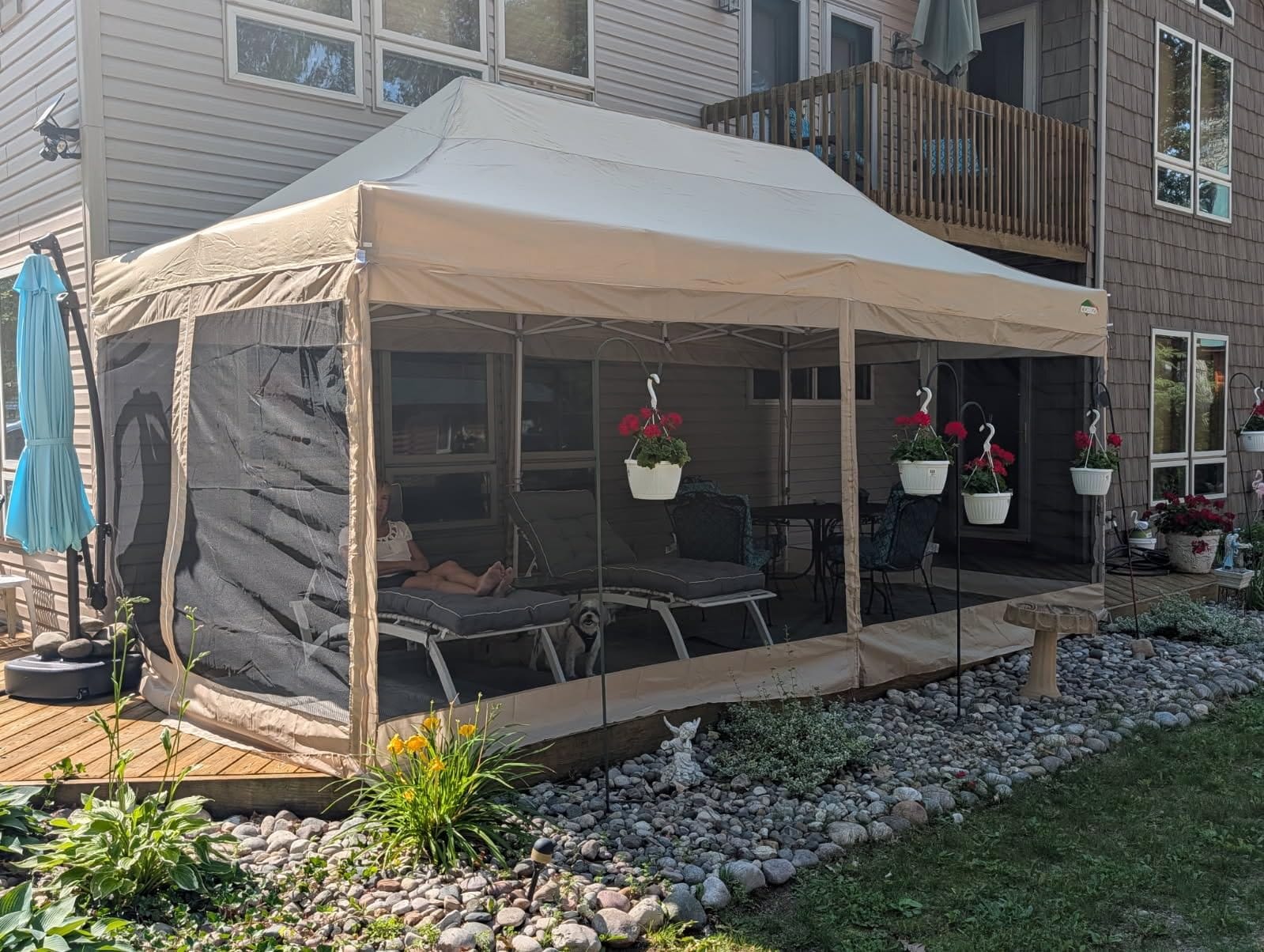
Is it actually heavy duty?
Based on the frame specification, yes. A full-truss layout with 32mm powder-coated tubes and a 500 pound center support is a step above the straight-leg designs in this roundup, and it is why the unit weighs 66 pounds. That weight is also the main drawback, since setup is a two to three person job every time.
Worth noting that the review base is much smaller than most products here, so long-term durability is less well documented. What is documented is consistent: buyers like the frame strength, the waterproof fabric, and the fact that the footprint handles a crowd.
How do you secure it in bad weather?
Stake it with the included stakes and ropes, and take it down for extreme weather. That is the honest guidance, and it applies to every pop-up in this roundup regardless of how heavy the frame looks. The double-track height adjustment makes a tent leg on sloped ground much easier to level.
Anchor the corners rather than just the legs if you plan to leave it up for weeks. A canopy that has been level for a month will have settled, and the guy lines take the guesswork out of re-tensioning it.
11. Werph 12×12 Pop Up Screen Tent: Best for Camping and Backups
Werph 12×12 Pop Up Screen Tent, Mosquito Net Gazebo, UV Resistant, Beige
144 sq ft
6-panel B3 fine mesh
20 pounds
Two zippered doors
Pros
- One-second instant pop-up with no complicated assembly
- B3 fine mesh excludes the smallest insects while passing air
- Fits 8-10 people with room for a table
- Two large zippered doors open from either side
Cons
- Take down or anchor at force level 6 or above
- Water resistant rather than fully waterproof
- UV rating is not independently specified
At 20 pounds with 144 square feet of interior, this is the best of both ends in the roundup: roomy enough for eight to ten people, light enough for one person to move. The one-second pop-up is not marketing language, it is how reviewers describe using it, and that speed is what makes it genuinely useful for camping and tailgating as well as patios.
The B3 fine mesh across six panels is the tightest specification in this group, and it is what stops the smallest biting insects while still passing fresh air. Two large zippered mesh doors open from either side, so you can roll one up for airflow and keep the other sealed, which is a small decision that matters on a warm night.
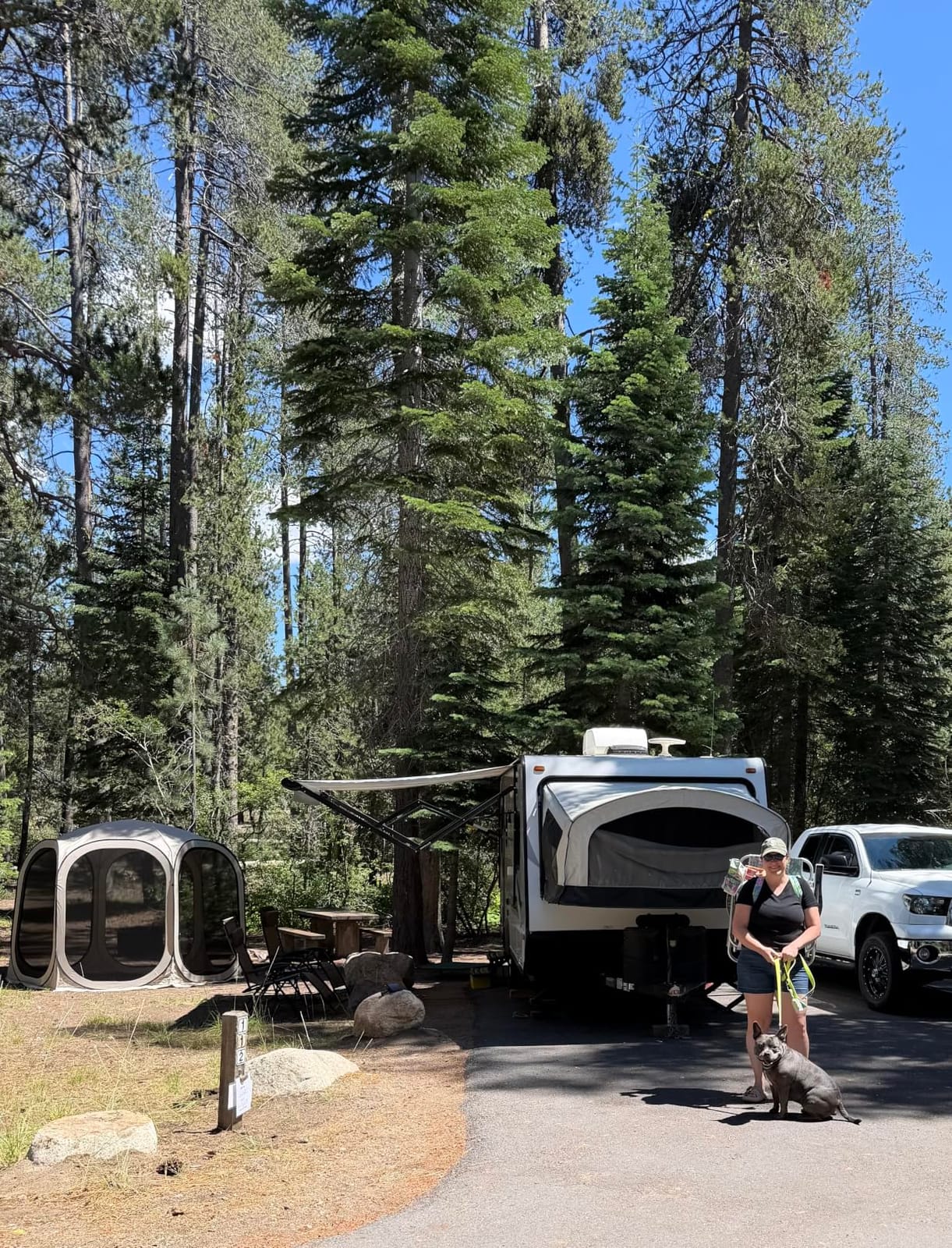
The top is gently sloped, which helps shed rain and adds headroom, and the frame is fiberglass poles in a portable carry bag. For evening use there is a top hook for a camping lantern and a door frame that accepts LED strip lighting, both of which owners mention as the reason the tent is usable after dark.
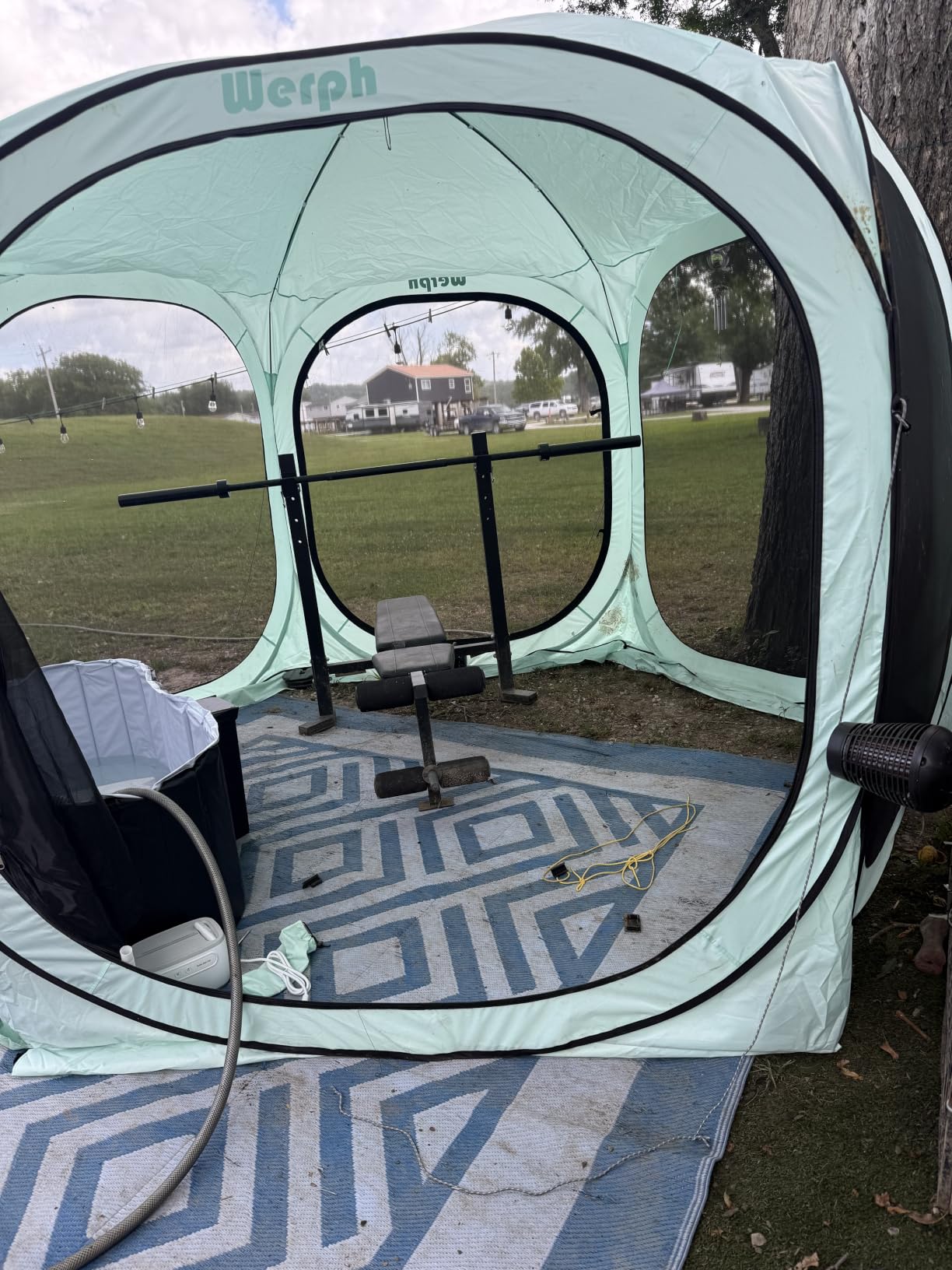
Can it really go up in a second?
Reviewers consistently report a genuine one-second pop-up with no complicated assembly, and the tear-resistant double-stitched zippers add to the sense that it is built for repeated setup rather than a single use. The 20-pound weight means one person can reposition it as the sun moves.
The catch is the wind. Manufacturer guidance advises taking it down or anchoring it at force level 6 and above, which is 10.8 to 13.8 meters per second. For a campsite in an exposed field that is a real limit, so pick a site that offers some natural shelter.
Is it built for the elements?
It is water resistant rather than fully waterproof, and the UV rating is not independently specified, so treat it as a sun shelter first. The one-year manufacturer warranty is standard rather than generous, which is fair for the position in the market.
What it does well is space. At 144 square feet there is room for a folding table, bean bags, or a cot plus gear, and reviewers using it as an outdoor room mention the 12 by 12 footprint as the reason it works for their group.
12. Aoxun 12×10 Outdoor Gazebo with Netting and Double Roof: Best for All-Weather Use
Aoxun 12×10 Outdoor Gazebo with Mosquito Netting & Double Roof, Gray
120 sq ft
50x50mm steel legs
Double roof with 8 drain holes
Netted vent duct
Pros
- 50x50mm powder-coated legs rated to Level 7 wind
- Double roof with 8 drainage holes
- Full-perimeter Velcro-sealed netting
- Top vent duct has its own mosquito-proof net
Cons
- Instructions are unclear and assembly is fiddly
- One roof panel can sit loose and pool water
- Should be secured in strong winds
This is the most wind-capable structure in the roundup on paper, with a Level 7 wind rating, 50×50 millimeter powder-coated steel legs, and reinforced D-rings. The frame supports up to 250 pounds, which matters if you plan to hang a ceiling fan from the center. At 89.3 pounds it is heavy, but that weight is the reason it stays planted.
The netting is full-perimeter with Velcro-sealed edges, so there is no zipper gap anywhere along the sides. The detail that impressed reviewers most is the top ventilation duct, which has its own mosquito-proof net. That is a small engineering choice that stops the most common complaint about gazebos, where you open a roof vent and let the bugs in with the air.
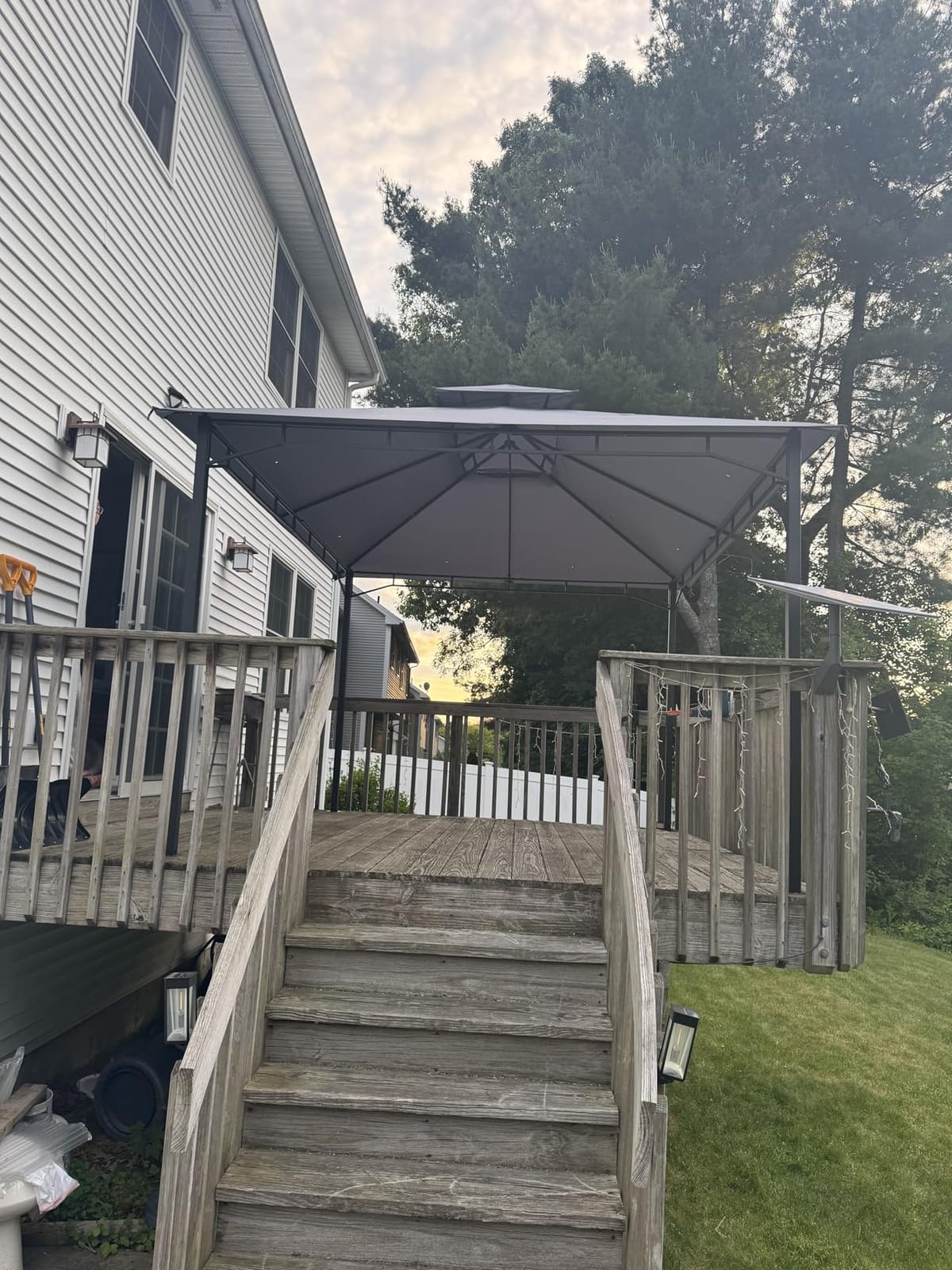
The roof is 160g PU-coated polyester in a double layer with eight drainage holes, listed as waterproof with UPF 50+ protection. The footprint is 140.4 by 117.6 inches, giving 120 square feet, and the installation kit covers every surface: 4 spiral ground stakes, 8 short stakes, 8 expansion bolts, 4 wind ropes, and an S-hook.
Is the assembly as straightforward as the specification suggests?
Not quite. Instructions are described as unclear, and assembly is fiddly, which is the most common complaint in the reviews. Plan to spend a good part of an afternoon with two people rather than an hour with one.
There are also a few quality reports worth factoring in. One roof panel section can sit loose and collect a pool of water, and one buyer reported missing roof poles and parts. Neither is universal, but both are easy to deal with if you inspect the box on arrival and keep the hardware organized.
Do you get privacy curtains with it?
No, and this is the one real gap. It ships in a netting-only configuration, so you get full insect exclusion with clear visibility but no solid shade on the sides for low afternoon sun. Owners like the finished look in the yard, but anyone wanting a private dining corner should budget for separate curtains.
Even so, it is one of the few structures here that combines waterproof fabric, a vented double roof, full-perimeter netting, and a Level 7 wind rating in a single package. Secure it to the ground in strong winds, and it will keep working well past a single summer.
How to Keep Mosquitoes Out of Your Gazebo
The interesting thing about mosquito problems in gazebos is that they almost never come through the mesh. They come through the gaps around it. After reading the owner feedback across these 12 products, the same five fixes came up again and again, and they work on any of the models above.
Seal the floor line first. Mosquitoes enter at ground level far more often than through the screen. A ground cloth or fitted floor under the structure, tucked under the hem on every side, closes the most common entry point in seconds.
Use single-piece screen where you can. Panel screens that meet in the middle leave a vertical seam you have to line up every time you open the door. Continuous netting from floor to roof has no seam to miss.
Keep zippers seated in their tracks. A zipper that rests slightly off its track lets a steady breeze hold the door open a quarter inch. Run every zipper fully to the top before you sit down, and check the mesh-to-zip attachment while you are there.
Close the roof-to-net seam. On vented double roofs, the gap between the top panel and the netting is a real opening. Look for a top vent with its own mesh, and if yours does not have one, add a strip of screening behind the vent flap.
Close the door within minutes of leaving it open. Even well-fitted mesh takes a little time to reseat. Treating the door as a spring rather than a curtain is the single habit that changes the result.
For the yard around the structure, our mosquito trap recommendations handle the populations that land on the netting in the first place. Fewer mosquitoes in the yard means the few that find a gap matter much less.
How to Choose a Gazebo with Mosquito Netting
Check the mesh, not just the word netting
Any product listing that says mosquito netting is telling you the minimum, not the difference. Look for a mesh grade where the maker names it. East Oak calls theirs D33 fine mesh, Werph uses B3 fine mesh, and VEVOR is described as high-density polyester mesh that buyers confirm holds out no-see-ums. Where no grade is listed, assume standard insect screen, which is fine for mosquitoes and useless against biting midges.
Full-height coverage matters more than mesh grade. Walls that stop three-quarters of the way down leave a band of open air at ankle height that bugs find immediately. Every model in this roundup except the drawstring-hem CAMPROS CP runs its netting close to the ground.
Pick a size you can still use when everyone arrives
Covered square footage is the number to plan with, and makers count it differently. The CAMPROS CP lists 169 square feet of coverage against a 140 square foot floor area, while the COOS BAY lists 121 square feet on a 132 inch square frame. Take the floor area as the honest figure and the rest as roof coverage.
As a rule of thumb, 100 square feet suits four to six adults around a table, 120 to 130 suits eight, and 150 or more is for large gatherings. Our general gazebo buying guide covers sizing in more depth if you are fitting one to a specific patio.
Decide how you will manage summer heat
A roof and four mesh walls trap heat, because the mesh blocks wind while letting sun through. The features that solve this are a vented double roof that lets hot air rise out, a light-colored canopy, and panels you can roll up during the hours when mosquitoes are not active.
The COOS BAY, MASTERCANOPY, and LAUSAINT HOME all use double-tier or dual-vented roofs, and the VEVOR goes further with a removable roof panel and roll-up curtains. A frame hook or D-rings for a fan also help, though a fan moves air around rather than cooling it.
Match the frame to how long it will stay up
Fiberglass frames weigh 12 to 24 pounds and never rust. They are the right choice for camping, tailgating, and any structure you will put up and take down regularly. Alloy and galvanized steel frames weigh 40 to 103 pounds, hold their shape better in wind, and suit a structure that will live in one place through the season.
Tube diameter is the number to compare, since it predicts wind resistance better than weight. Anything at 30mm is a seasonal pop-up. The LAUSAINT HOME at 40x40mm and the Aoxun at 50x50mm are built like small permanent structures, and their owners report them accordingly.
Plan your anchoring before you buy
Unanchored pop-up gazebos blowing over is the single most cited complaint across owner discussions of this category. The rule is simple: the surface decides the hardware. On grass, use the included stakes at every leg. On a wooden deck, use deck screws or lag bolts through the foot plates. On concrete or pavers, use expansion bolts, which several models include. On a patio where drilling is not an option, weight every leg with a sandbag and keep the guy lines tensioned.
Soft top gazebos are rated for light wind and light rain only, according to manufacturer guidance. Before a summer storm, taking the canopy down takes minutes and is always the right call over hoping the frame holds.
Think about what happens after summer
Canopy and netting fabric degrade under UV exposure, and reviewers across this group report visible fading and weakening after one to two full seasons in direct sun. Dry the fabric before you fold it, fold it along seams rather than across panels, and store it somewhere shaded and ventilated.
Screen houses with fiberglass frames benefit from a quick frame check each spring, since a cracked pole socket is the failure point most often reported. Wipe the mesh with a damp cloth, pull the zippers a few times, and replace any netting that has torn rather than patching it with tape.
Frequently Asked Questions
Which outdoor gazebo has the best mosquito netting?
Among the 12 we compared, the COOS BAY 11×11 has the best all-round mosquito netting because all four sidewalls are full-height zippered mesh rather than half-height screens, and it comes with the most owner history at over 9000 ratings. If no-see-ums are your problem, the VEVOR 12×12 is tighter. If gaps rather than mesh grade are your issue, the Quictent 10×10 uses a full Velcro screen design with no zipper seam to miss.
How can I keep mosquitoes out of my gazebo?
Seal the floor line first, because mosquitoes enter at ground level far more often than through the screen. Use single-piece netting where possible so there is no centre seam to line up, run every zipper fully to the top before you sit down, and cover the gap between the roof panel and the netting, or choose a vented roof with its own mesh. Finally, close the door within a few minutes of opening it and reseat the mesh along the hem.
How to keep gazebo cool in summer?
A screened gazebo traps heat because the mesh blocks wind while the canopy lets sun through. Choose a vented double roof so hot air escapes, pick a light-coloured canopy such as beige, khaki, or white, and pick a model with roll-up or removable side panels so you can open the structure during daylight hours when mosquitoes are not active. Hanging a fan from the frame hook or D-rings improves circulation but does not lower the actual temperature.
Is there a mosquito-proof gazebo available?
No gazebo is completely mosquito-proof, but a screened structure with full-height netting, sealed floor edges, and a roof vent that has its own mesh will keep essentially all mosquitoes out during normal use. The models in this roundup with the tightest enclosures are the Werph 12×12 with B3 fine mesh, the EAST OAK 10×10 with D33 fine mesh, and the Quictent 10×10 with a gap-free Velcro screen design.
Do I need to anchor a soft top gazebo?
Yes. Unanchored pop-up gazebos blowing over is the most common complaint in this category, and manufacturer guidance treats soft top models as light wind and light rain structures only. On grass use the included stakes at every leg, on a deck use lag bolts through the foot plates, on concrete use expansion bolts, and where drilling is not possible weight each leg with a sandbag. Before a serious storm, take the canopy down rather than relying on the frame alone.
What is the difference between a pop-up gazebo and a fixed gazebo?
A pop-up gazebo uses hinged legs and a folding frame that sets up in minutes, weighs between 12 and 45 pounds, and is meant to be moved and stored. A fixed gazebo uses bolted steel legs, often between 80 and 103 pounds, is anchored to the ground, and is treated as a semi-permanent structure that stays up through multiple seasons. Pop-ups are better for camping and occasional use, while fixed models handle wind and heavy sidewalls far better.
Final Verdict: The Best Gazebos with Mosquito Netting for 2026
After comparing 12 screened gazebos on netting quality, frame strength, covered area, and how they handle a summer gust, the COOS BAY 11×11 is our pick for the best gazebo with mosquito netting in 2026. Four full-height zippered mesh walls, 121 square feet of UPF 50+ shade, a vented top, and the deepest owner record in the group make it the safest all-round choice for a patio that stays up through the season.
Buy the Alvantor 10×10 instead if weight and portability decide it, at 12 pounds it is the one you can carry alone and store in a closet. Pick the LAUSAINT HOME 10×13 when you want netting plus privacy curtains and a galvanized frame you can anchor into concrete for the year.
Whichever you choose, the details that actually decide how bug-free your evenings are are the floor seal, the zipper seating, and the anchoring. Get those three right and any of these 12 will do the job. Anchor it properly, leave the roof vent closed or meshed, and enjoy the table outside again this summer.