
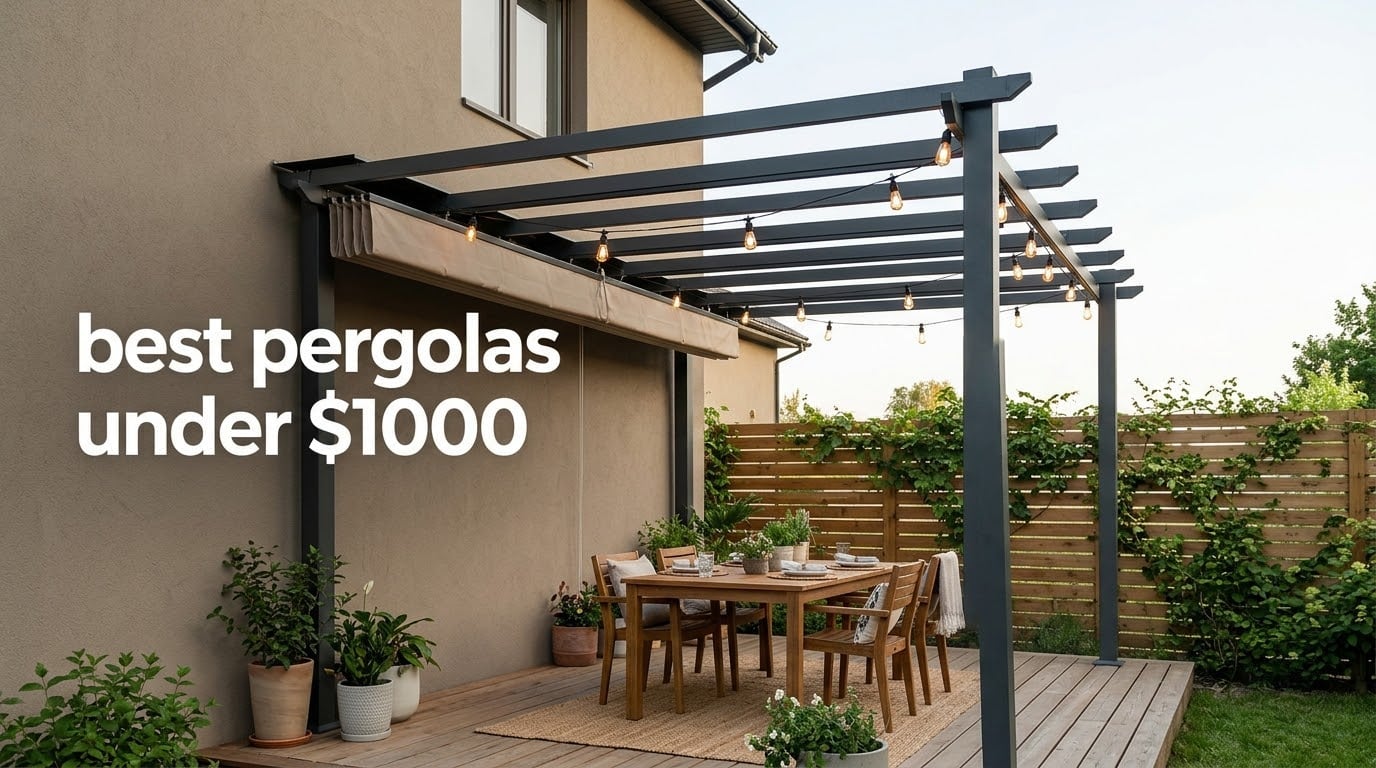
A pergola is the fastest way to turn a bare slab of concrete or a sun-beaten deck into a room you actually want to sit in, and the sub-thousand-dollar tier is where that project becomes realistic for most people. Retail prices for budget frames now start in the low hundreds and top out around the nine-hundred range, so a full-size 10 by 10 or 10 by 12 structure fits inside a fixed ceiling instead of pushing past it.
We spent weeks reading the review data, the spec sheets and the failure reports on every kit in this price class, then narrowed the field to eight. The list covers the whole shape of the market: wall-mounted lean-tos with galvanized steel hardtops, a freestanding louvered pergola with an operable roof, and three retractable-canopy models that fold flat when the wind picks up.
One thing to clear up before the picks: almost nothing at this budget is a full roof. Open-slatted frames block a modest slice of direct sun, and the shade you feel on a hot afternoon comes from the combination of slats, fabric, curtains and vines rather than any single part. If you want solid protection from rain, look at the hardtops below. If you only need relief from glare, a retractable model is cheaper and lighter. Our pergola guide for patios covers the sizing basics in more depth.
Top 3 Picks for the Best Pergolas Under $1,000 (October 2026)

Aoxun 10×12 Lean-To Hardtop
- 110 sq ft shade
- Galvanized steel hardtop
- 100% UV blocking
- Anchors included
PURPLE LEAF 10×13
- Retractable fabric canopy
- Sloped double canopy
- 3.55 inch aluminum posts
- Tool set included

MIRADOR 80S Louvered
- Operable louvered roof
- Water drains through legs
- Galvanized steel
- 440 lb weight
Our short list: the Aoxun 10 by 12 lean-to is the strongest all-rounder because it pairs a UV-blocking galvanized hardtop with included wall and ground anchors. The PURPLE LEAF 10 by 13 is our best value pick, with a sloped double roof protecting the fabric underneath. The MIRADOR 80S is the premium pick, with operable louvers and hidden fasteners.
Best Pergolas Under $1000 (October 2026)
| Product | Specifications | Action |
|---|---|---|
| Aoxun 10×12 Lean-To Hardtop |
|
Check Latest Price |
| PURPLE LEAF 10×13 Retractable |
|
Check Latest Price |
 Domi 8×12 Lean-To Gazebo Domi 8×12 Lean-To Gazebo |
|
Check Latest Price |
 HAPPATIO 10×13 Retractable HAPPATIO 10×13 Retractable |
|
Check Latest Price |
| MIRADOR 80S Louvered 10×10 |
|
Check Latest Price |
 Breezestival 10×20 Lean-To Breezestival 10×20 Lean-To |
|
Check Latest Price |
 MEISSALIVVE 10×14 Lean-To MEISSALIVVE 10×14 Lean-To |
|
Check Latest Price |
 Tangkula 10×13 Retractable Tangkula 10×13 Retractable |
|
Check Latest Price |
Every pick above sits below a thousand dollars and every one is sold as a kit or boxed unit with hardware included. Read the table as a shortlist, then use the individual reviews to see which failure modes you can live with.
1. Aoxun 10 x 12 Lean-To Gazebo Pergola Review
Aoxun 10′ x 12′ Lean to Gazebo Pergola with Sloping Roof for Patio, Black
110 sq ft shade
Galvanized steel hardtop
Blocks 100% of UV
31-38 mph when anchored
Pros
- Hardtop roof outlasts fabric
- Blocks direct sun and sheds light rain
- Anchors for wall and ground included
- Extra screws supplied
- Handles wind and snow once anchored
Cons
- Included screws can strip
- Photo-only instructions need trial and error
- Roof panel holes can miss the brackets
This is the model I keep coming back to. It measures 143 inches long by 111 inches wide by 100 inches high, covers 110 square feet, and is listed for four to six people. At 185 pounds it is a genuine two-person lift rather than a solo job, but it is not the 440-pound monster you will find further down this list.
The roof is a reinforced galvanized steel hardtop that the manufacturer rates for full UV blocking, and the sloping angle is designed to channel rainwater off rather than let it pool on the panels. Buyers consistently describe the shade as the strongest feature: enough to grill under in direct sun, enough to make an outdoor table usable at midday, and light enough to still see the sky through the edges.
Anchoring is where this one earns its place. Wall and ground anchors come in the box, and the frame uses engineered steel pillars, beams and triangular reinforcement at the joints. Rated wind performance is 31 to 38 mph, but that number assumes both the wall and ground fixings are actually used.
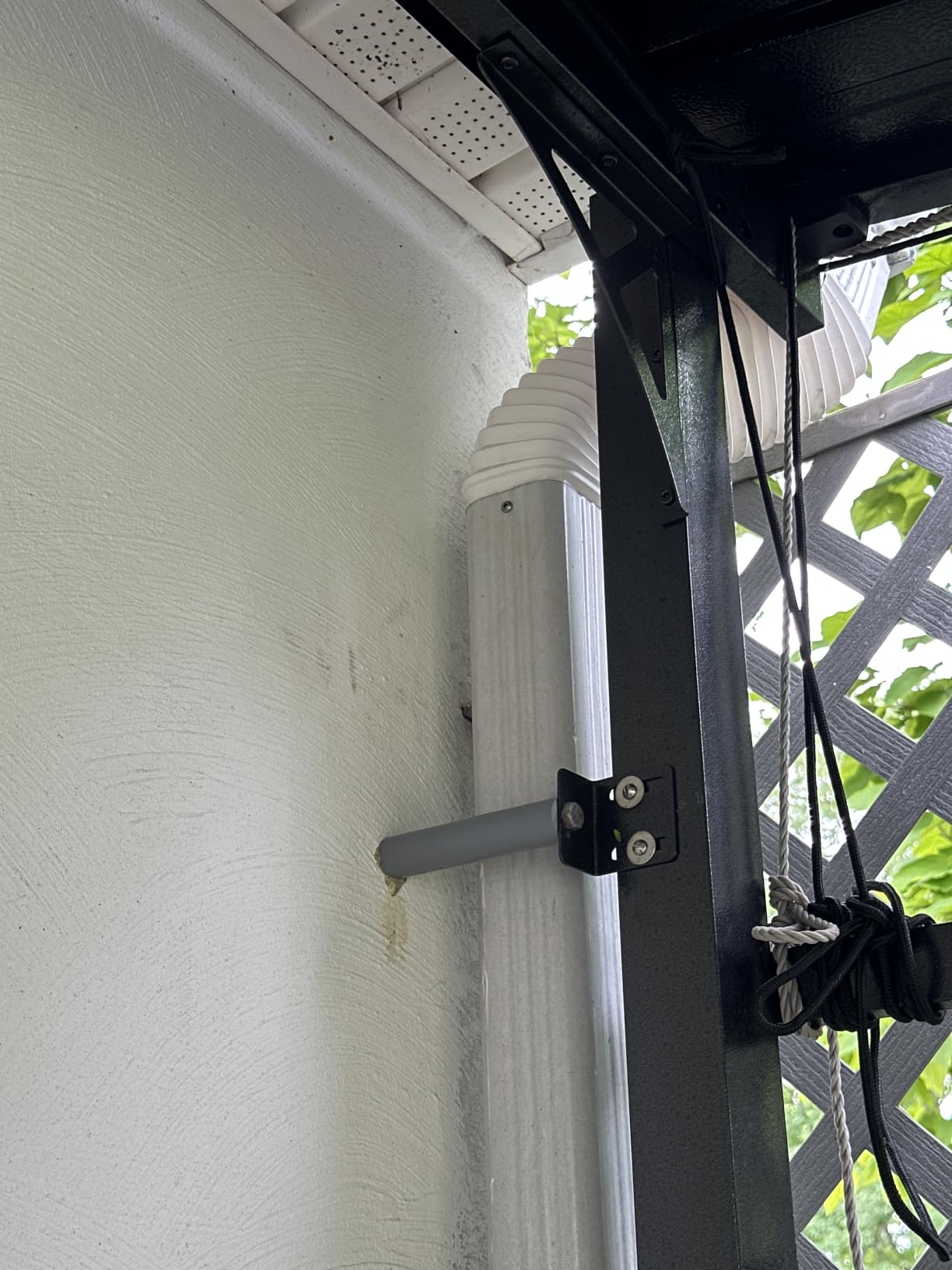
Assembly is the honest weakness. The instructions are largely visual and printed small, and the stated build time of roughly two to four hours assumes two to four people and a clear plan. Multiple owners describe the build taking several evenings rather than one afternoon, especially if you are working alone.
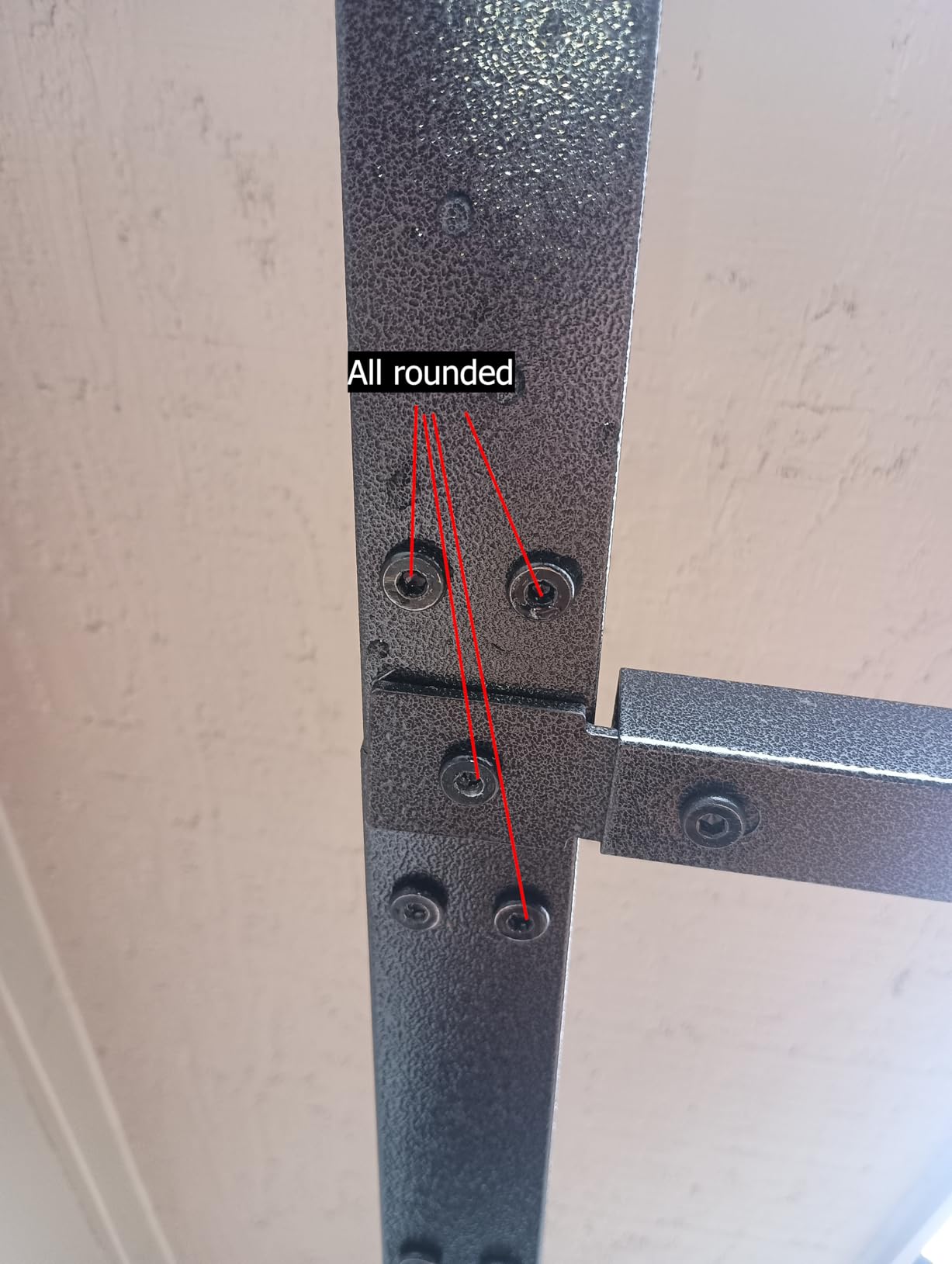
Hardware quality is the second weakness. Reviewers report that the included screws are soft enough to round off, that the post threads may not hold fasteners well, and that roof panel screw holes do not always line up with the brackets. Several owners solved it by swapping in their own structural screws and adding a bead of sealant under the roof panels.
Roof panels can also arrive bent, and the plastic protective film on them is notoriously hard to peel off. Inspect the panels before you start rather than after the frame is standing.
Is 110 Square Feet of Shade Enough for a Dining Set?
Yes, for a rectangular table with four to six chairs and some elbow room, and 110 square feet is the number most quoted by owners who set it up over a patio dining area. The footprint is deeper than it is wide, so plan the orientation around your house wall rather than around the table.
It is a lean-to, which means it needs a solid wall behind it and clear space in front for assembly. Reviewers stress that you cannot build this unit in place. Clear a work area roughly the length of the finished structure before the first box is opened.
What Can Go Wrong After the Build
Wind is the main event. The rating holds only when anchored at both the wall and the ground, and skipping the ground fixings in an open yard is the most common regret in the reviews. There is also no front gutter, so runoff drips at the leading edge rather than being collected.
Rain at the panel seams is the second most reported issue, and again the fix is a small tube of sealant applied during assembly rather than after the first storm. Treat both as part of the build, not as repairs.
2. PURPLE LEAF 10 x 13 Outdoor Pergola Review
PURPLE LEAF Outdoor Pergola 10′ x 13′ White Pergola, Double Canopy, White
3.55 inch aluminum posts
230GSM UV-resistant canopy
Sloped double canopy
134.7in x 95.3in
Pros
- Posts feel solid for the price
- Canopy retracts to escape wind
- Tool set and wrenches included
- Clear instructions
- Several color combinations
Cons
- Photo-only instructions skip some steps
- No hook to latch the pull cord
- Corner post assembly is awkward
This pergola is 134.7 inches long, 95.3 inches wide and 96.4 inches tall, and it is built around 3.55-inch aluminum posts. That post thickness is the number that separates this from the very cheapest frames, and buyers notice the difference immediately after assembly.
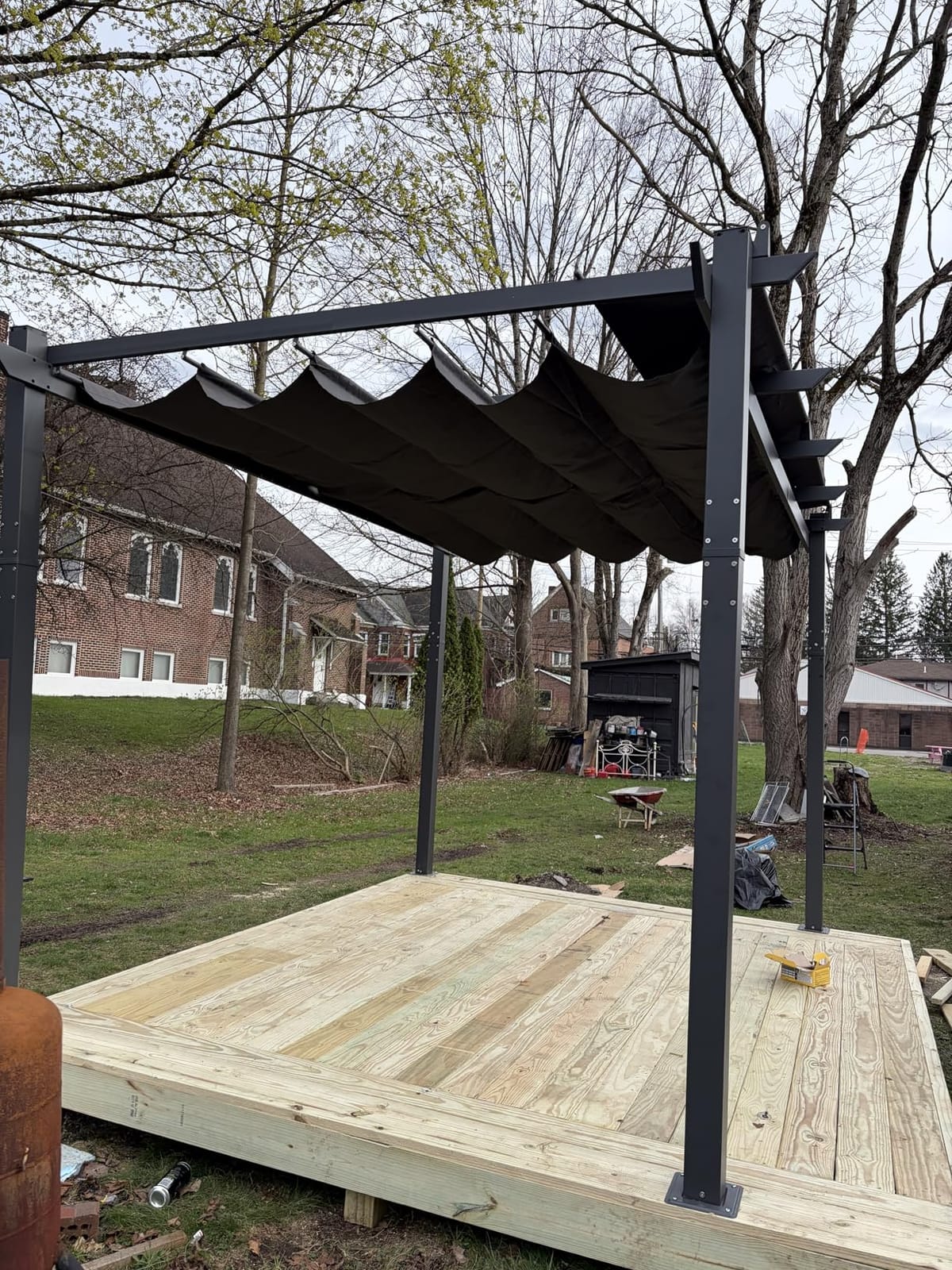
The roof is a two-layer system. A sloped outer canopy sits above the retractable inner canopy, and that arrangement does two useful things: it shields the fabric from direct UV and it lets rainwater run off the outer surface instead of pooling on the lower layer. Rollers run along several tracks including a center row, which is what keeps the canopy from sagging in the middle when it is fully extended.
The canopy fabric is 230GSM and rated UV- and water-resistant. It is not waterproof, so treat it as shade and light-rain cover rather than weather shelter.
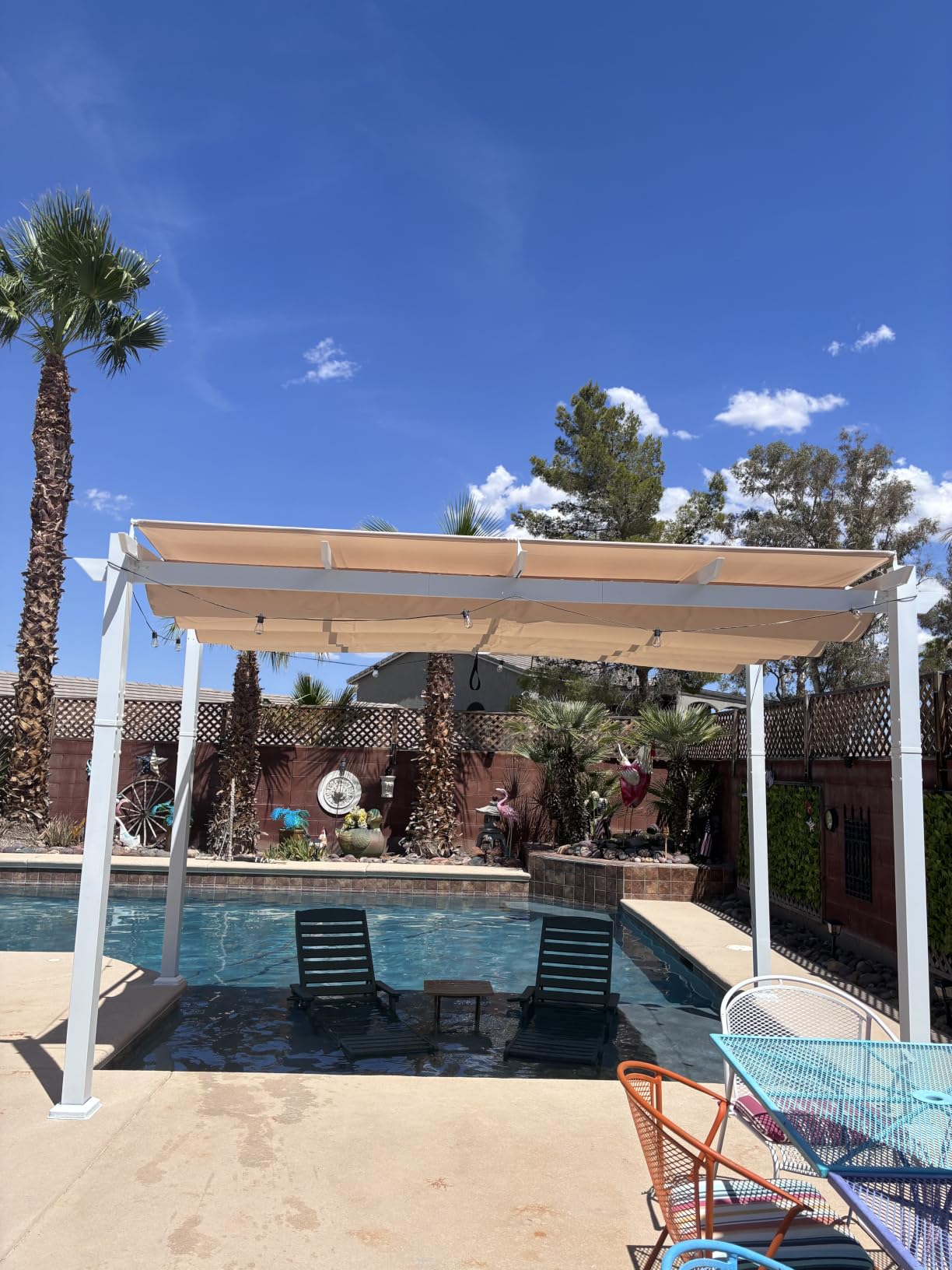
The retractable roof is the real feature here and it is a safety feature as much as a comfort one. Owners in breezy locations pull the canopy back before weather arrives, and that habit is the difference between a structure that lasts a decade and one that ends up with a shredded panel. Multiple reviewers in our data specifically praised the ability to clear the fabric out of the wind.
Anchors for concrete or deck mounting are included, along with a full tool set. The frame suits patios, gardens and courtyards, and it comes in several color combinations including white, grey, khaki and navy.
Assembly is a two-to-three-person job. Owners generally report three to four hours with clear instructions and every wrench, bolt and cover in the carton.
Does the Retractable Canopy Sag or Drift?
The center track row is what prevents sag on this model, and it is the detail that separates it from cheaper single-track canopies. Drift is more of an issue on lighter designs, so check the roller fit at both ends after the first full extension and retract.
One practical gap: there is no built-in hook or latch to hold the pull cord in place. Shorter users say they need a ladder to open and close the roof, so plan a reachable tie-off point or a hook you add yourself.
What Can Go Wrong After the Build
The instructions are mostly pictures and they skip a few steps, including fitting the track wheels before final assembly. That is a ten-minute fix if you know it in advance, which is why it is worth reading the whole booklet first.
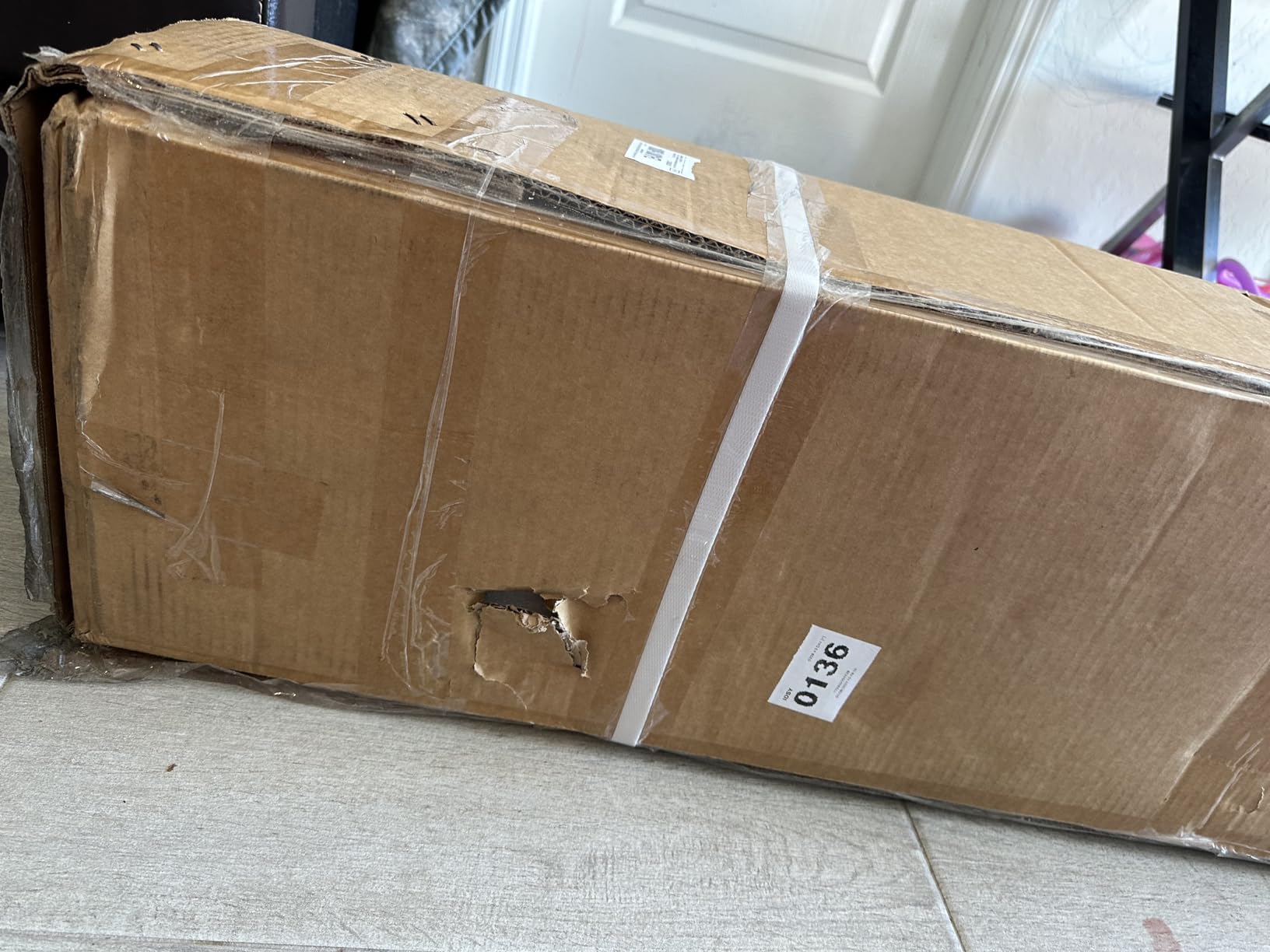
Transit damage does occur. Some pieces arrive with small dings and one owner had to hammer a leg back into shape. Open the boxes and photograph the condition before assembly starts, because that is your evidence if you need a replacement part.
Will It Clear an Existing Covered Deck?
Possibly, but measure first. The height is 96.4 inches at the top of the frame, and reviewers on covered decks report needing to extend the legs to gain full clearance. A low roof or a soffit can make this model a tight fit where a freestanding unit would simply sit on the patio.
3. Domi 8 x 12 Lean to Gazebo Pergola Review
Domi 8x12FT Lean to Gazebo Pergola with Curtains Netting Aluminum Frame
96 sq ft floor area
Steel hardtop with drainage
40 mph rated
225 pounds
Pros
- Steel roof stays leak-free in heavy rain
- Netting and privacy curtains included
- Drains water away from seating
- Holds heavy snow loads
- Fast replacement part support
Cons
- Builds can take 12-16 hours with 4 people
- Protective film is hard to remove
- Velcro screens pull loose in wind
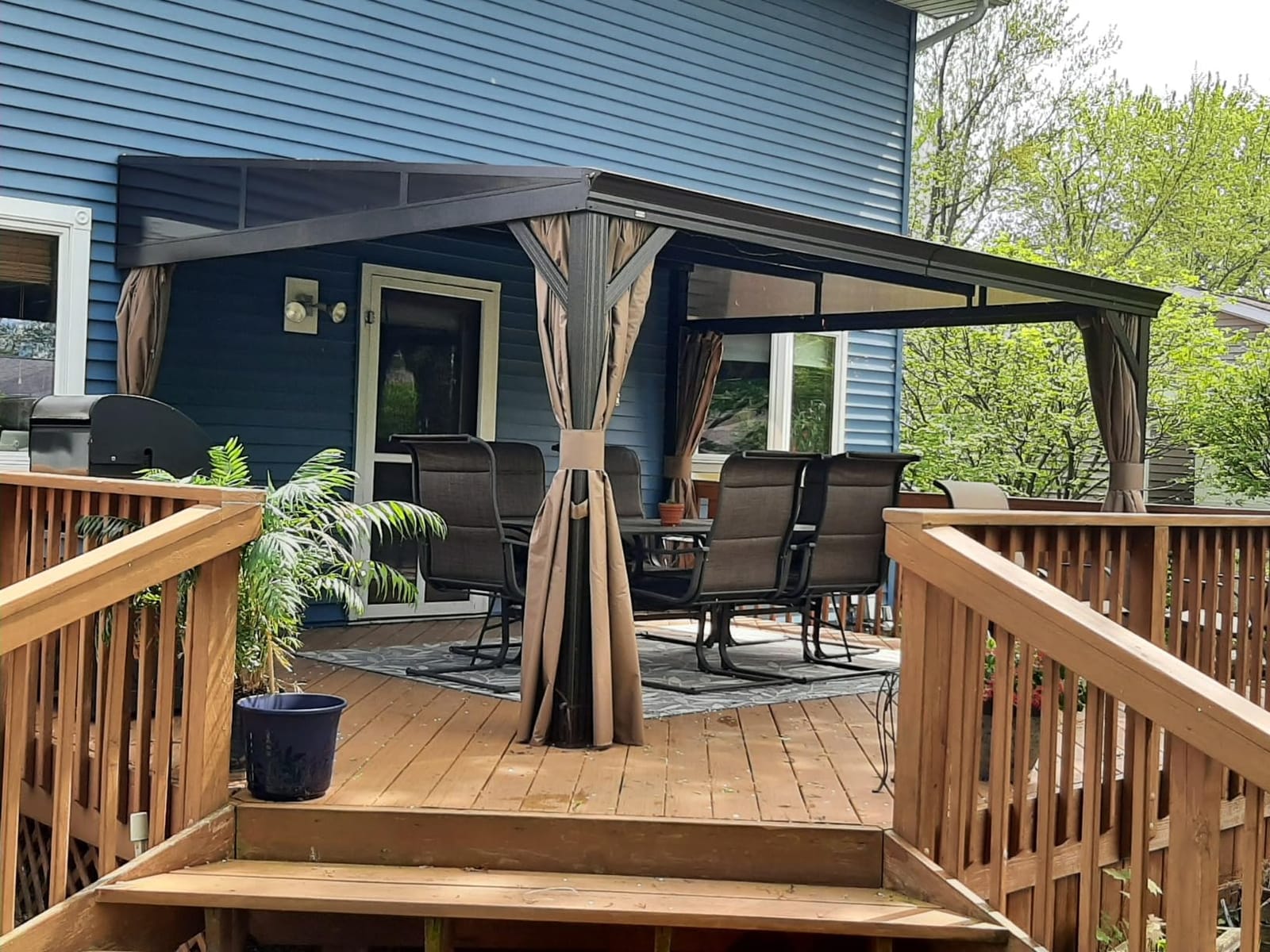
This is the model that behaves most like an outdoor room. It measures 141.77 inches by 93.39 inches by 93.1 inches, covers 96 square feet and weighs 225 pounds. The frame is aluminum, the roof is galvanized steel and the side panels are polycarbonate.
The detail that separates it from the other lean-tos is the built-in drainage system, which routes rainwater away from the seating area instead of letting it run down the posts beside your table. Combined with the steel hardtop, that is why owners report using it through genuinely heavy rain rather than drizzle.
It is also the only pick in this list that ships with a full kit of soft furnishings: removable support poles, mosquito netting and privacy curtains. For a family that wants an insect-free sitting room rather than open shade, that bundle is worth more than any single frame feature.
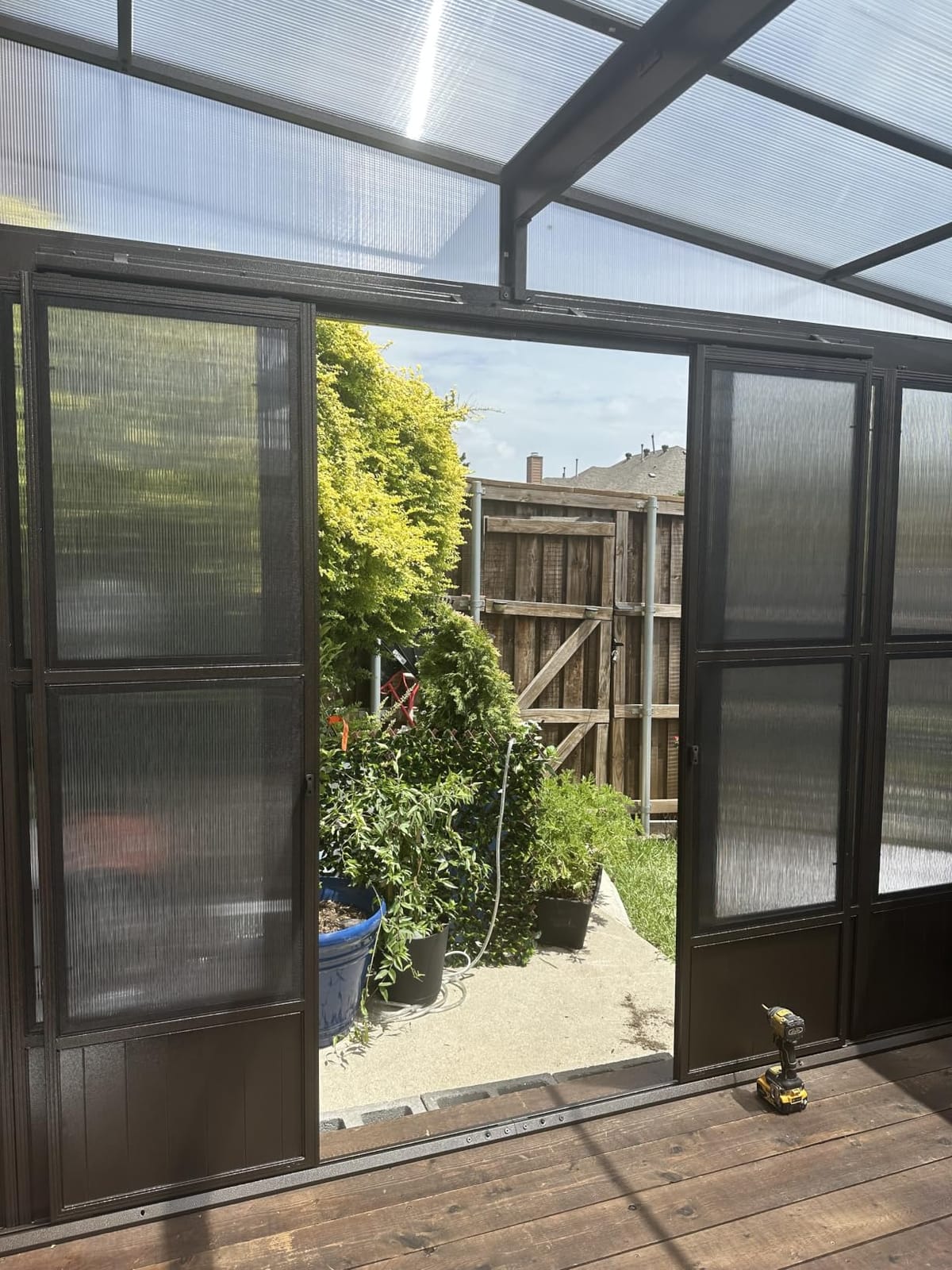
Rated wind resistance is up to 40 mph and weight capacity up to 2500 pounds, and the aluminum frame with steel roof has enough mass to feel solid once the ground anchors go in. Several owners in the reviews describe it as the structure that finally made their deck usable rather than merely decorated.
Fit is the catch. This is a wall-mounted lean-to, so it needs a solid wall behind it and a footprint behind the wall side for assembly. You cannot stand it up in place.
Arriving in three packages means you are hauling a lot of material before the first bolt goes in. Plan the delivery location accordingly.
Is the 12 to 16 Hour Build Realistic?
Yes. Multiple owners independently report builds of 12 to 16 hours with four people, and a few describe spreading the work over several days. The frame is heavy enough that raising it needs a capable crew, and the removable support poles are part of that process rather than an optional extra.
If this timeline is a problem, look at a lighter aluminum lean-to instead. The tradeoff is less mass, which means less wind stability once anchored.
What Can Go Wrong After the Build
The velcro attaching the screens and curtains to the rear posts is weak in wind, and it is the most common post-build complaint. Owners who want the curtains to hold in a gust generally add clips or tie points of their own.
Removable window panels fit loosely in the frame and can let a little water in at the edges, and the protective film on the roof panels is difficult to remove once the structure is up. Missing support poles and bent posts do show up in a minority of shipments, though replacement parts are sent quickly when they do.
4. HAPPATIO 10 x 13 Retractable Canopy Pergola Review
HAPPATIO 10′ X 13′ Retractable Pergola with Sun Shade Canopy, Patio Aluminum Frame Shelter for Backyards, Gardens, Porch, Includes Ground Studs and Expansion Screws (Brown)
141.3in x 102in x 87.7in
73 pounds
Lightweight aluminum
Locking retractable canopy
Pros
- Light enough for two people to build
- Good shade for the cost
- Video instructions help
- Free replacement parts after storm damage
- Several colorways
Cons
- Thin frame flexes during assembly
- Canopy tears if left out in wind
- Flimsy track rollers
- Weak canopy magnets
At 73 pounds this is the structure in the group you can realistically move across a lawn with one person, and that changes who can install it. It measures 141.3 inches long by 102 inches wide and 87.7 inches high, giving a 10 by 13 footprint that is genuinely large for the money.
The canopy is retractable and adjustable, with a safety locking system meant to hold a set position. A small secondary top canopy sits above the main one, so when the fabric folds back it has somewhere protected to rest. A magnet system keeps components aligned when fully extended, and extra straps are included for wind.
Eight ground studs and eight expansion screws are in the box, which is generous for a frame at this weight class and covers both soil and concrete installation.
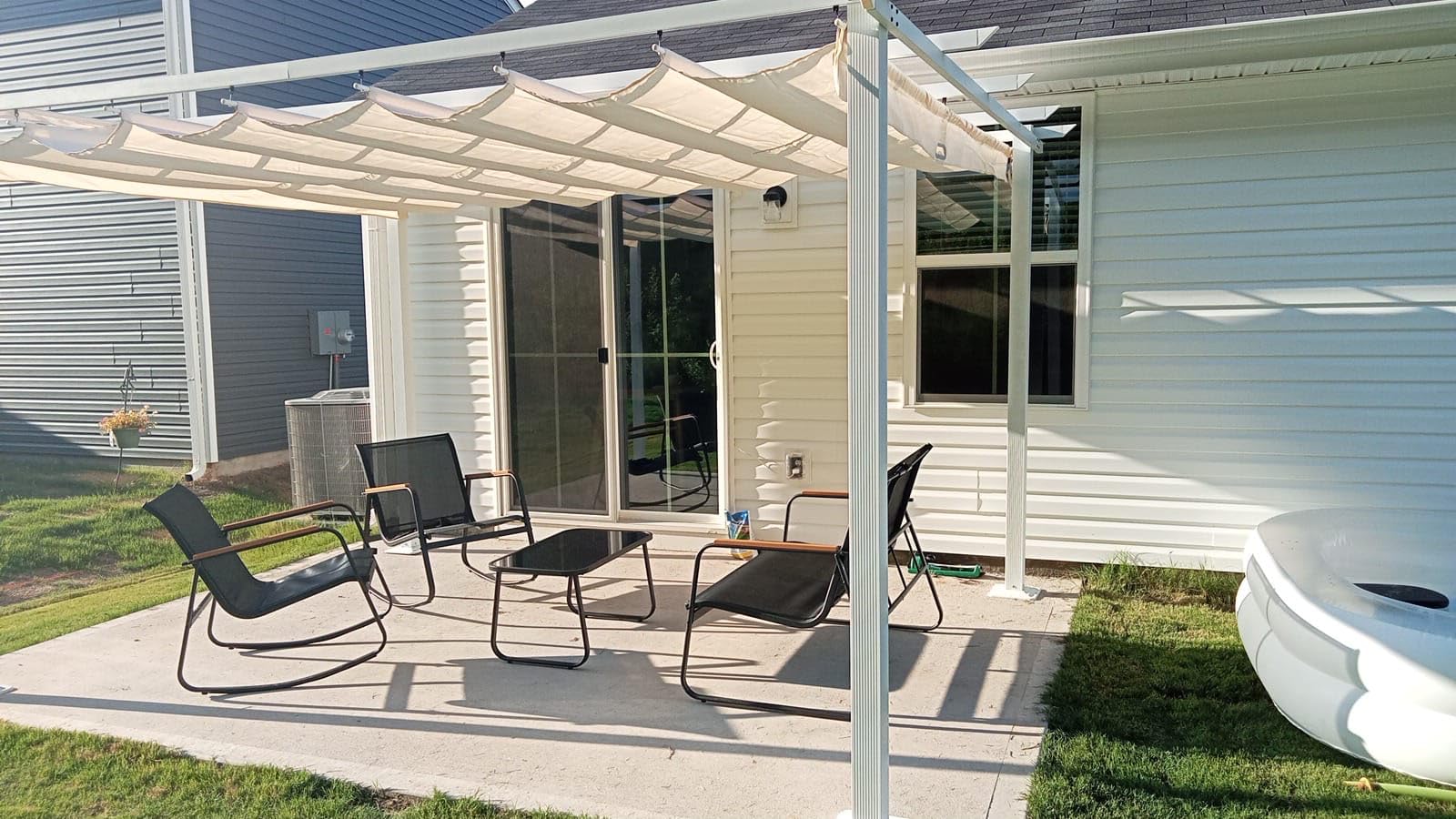
Buyers treat this as a value purchase for sun shade on a patio or in a small yard rather than as a permanent installation. The aluminum frame has a protective coating, and the pieces are light enough to assemble without heavy tools. Video instructions are provided and most people finish in three to six hours with a partner.
Free replacement parts after storm damage get consistent praise, and multiple colorways are offered, including wood-grain finishes for people who want the look of timber without the maintenance.
Because the frame is light, stability is the question rather than weight capacity. This is a freestanding unit, so anchoring it properly matters more here than on a heavier lean-to bolted into a wall.
How Do You Stop a Fabric Canopy From Tearing?
You retract it. Owners report canopy fabric tearing or splitting in strong wind and heavy rain when left extended, and the locking system and straps slow the problem but do not remove it. Retract before storms rather than relying on the hardware.
Track rollers and sliders are the other weak point and some break within a year. Check them every season, because a roller that fails partway through extension is how a canopy ends up in a tree.
Who Should Skip This Model?
Anyone in a coastal or high-wind location. The light aluminum frame flexes during assembly and the canopy magnets that hold the retracted position are weak, so the fabric can drift open or closed in a breeze on its own.
Some owners also report a shorter expected service life, in the range of one to three years, for the fabric and roller components specifically. Buy it for shade and appearance rather than for a decade of weather protection.
5. MIRADOR 80S 10 x 10 Louvered Pergola Review
MIRADOR 80S Louvered Pergola 10′ x 10′, Modern Style with Adjustable Louvers for Outdoor Roof, Garden, Easy Assembly, Durable, Charcoal
100 sq ft coverage
Alloy steel construction
Louvers open to 90 degrees
440 pounds
Pros
- Operable roof gives real control
- Water drains through the legs
- Clean lines with invisible fasteners
- Good instructions and videos
- About 80% five-star reviews
Cons
- Heaviest structure in the group
- Operate louvers with a sling system
- Requires ground anchoring
This is the only true pergola in the group rather than a lean-to gazebo, and the difference shows in the silhouette. It measures 120 inches by 120 inches by 98.4 inches, covers 100 square feet and seats four to six. The frame is galvanized alloy steel in charcoal with a square footprint.
The roof is the reason to buy it. Louvers run on a sling control system and adjust to a 90-degree open position, which means you can go from solid shade to full open sky in seconds without climbing a ladder. Owners use it for evening stargazing as much as for daytime shade.
The louvers also interlock when closed, which creates a weather-tight seal that guides water down through the legs. Reviews single this out as a genuine improvement rather than a marketing line, because it means no dripping onto the seating area.
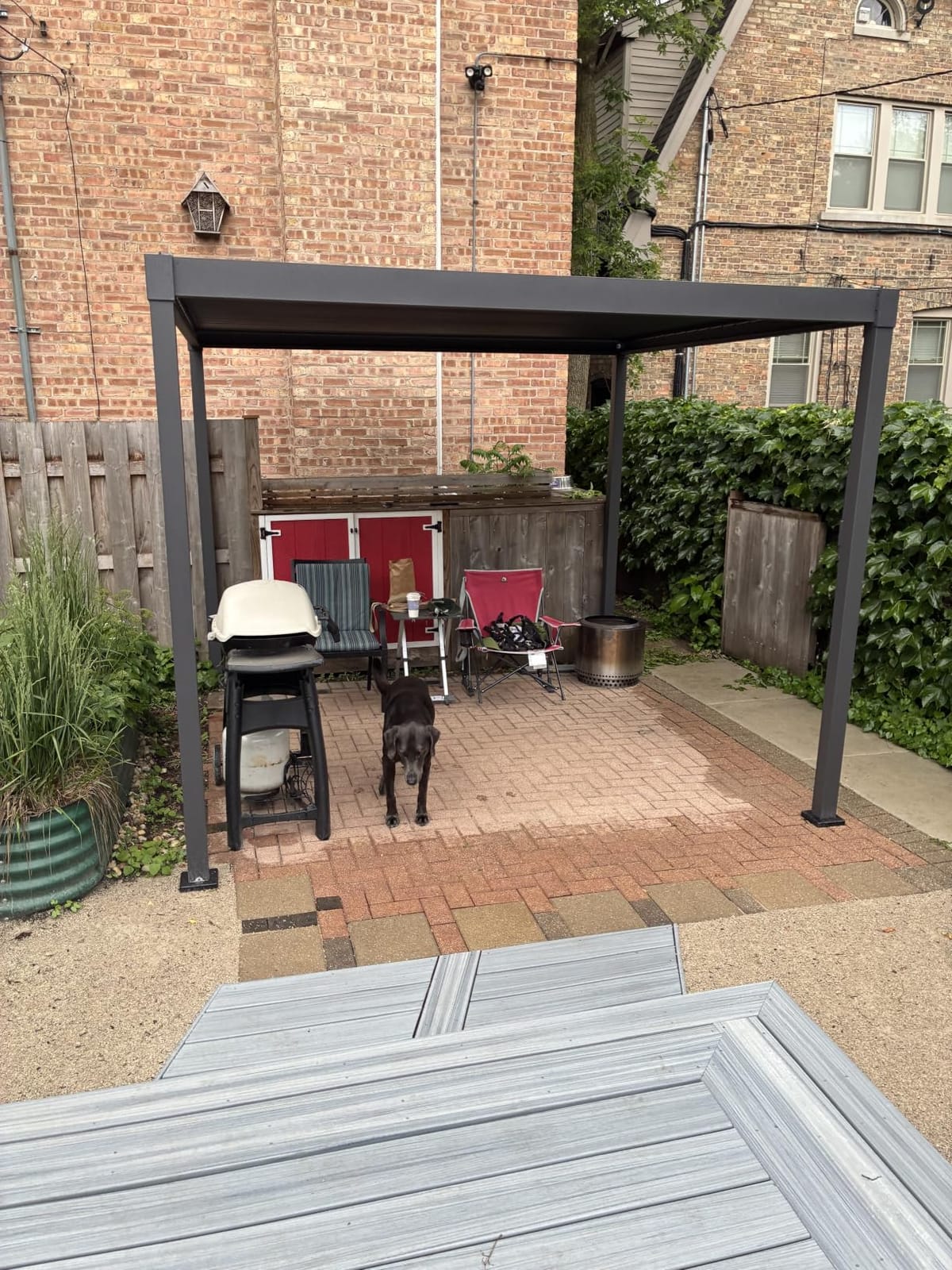
Fasteners are invisible on the assembled frame, which is what gives it the minimalist look. That matters more than it sounds if the structure is going to sit in view of a back door for ten years.
Assembly resources are unusually good for a kit in this class. Written instructions, video tutorials and an organized components box all ship with the unit, and the box organization is something buyers specifically compliment.
It is designed to be anchored to the ground for year-round stability, and the structure is rated to endure wind, rain, snow and sun.
Can You Raise 440 Pounds of Steel Without Help?
No. This is the heaviest structure in the group by a wide margin, and owners consistently note that it needs a capable crew. Budget for three or four people and a full weekend rather than an afternoon.
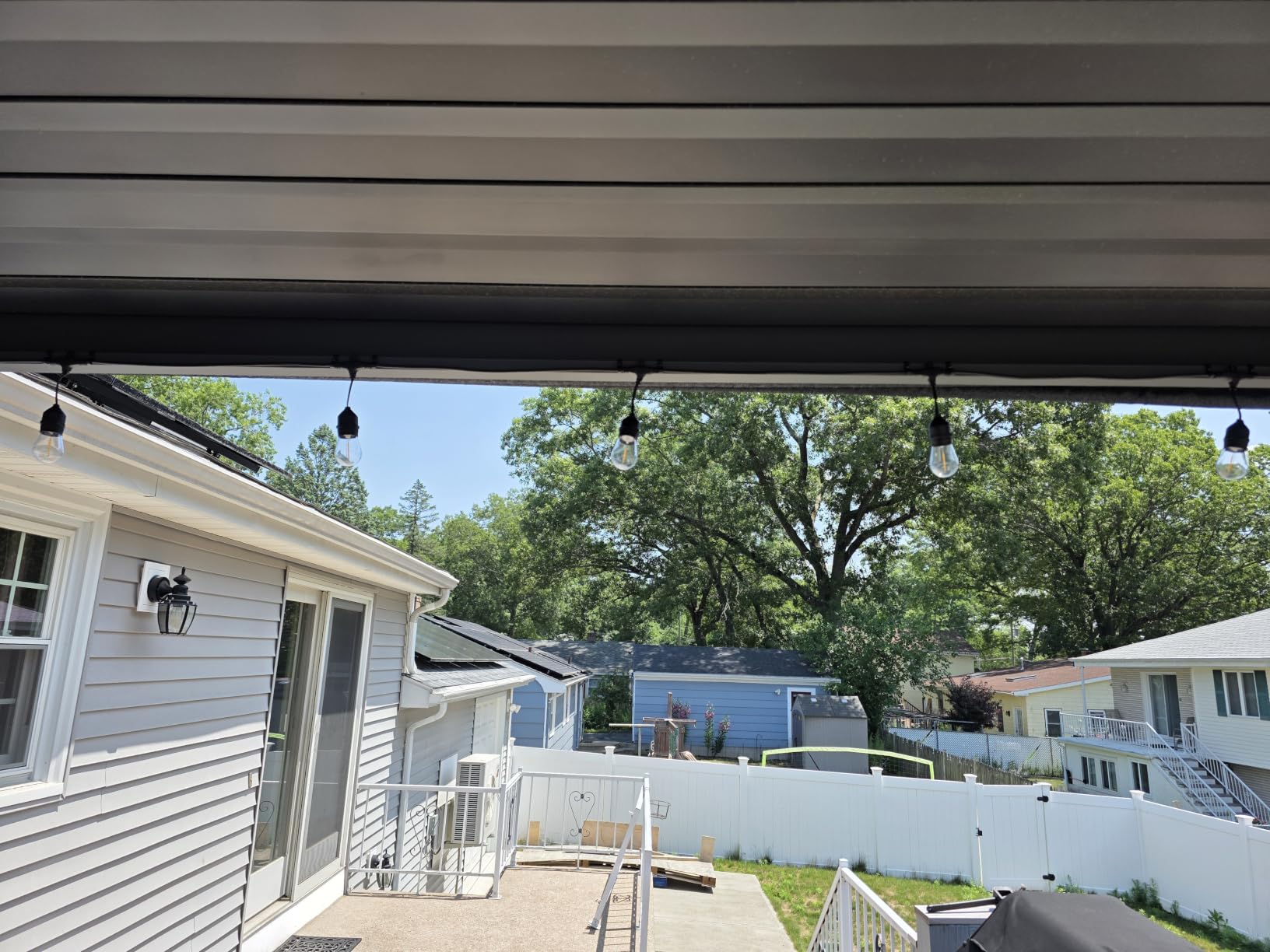
The height of just over 98 inches is worth noting for overhead clearance. If you are planning string lights, a ceiling fan or a hanging plant basket, check the headroom against the closed louver position.
How Does the Sling System Actually Work?
One pull rod runs the length of the roof and drives the louvers together or apart, so all slats move as a single plane. Some users find the operating motion awkward at first, and the louvers are best adjusted with two hands once you know the resistance point.
Because the roof moves, this pergola gives you shade control that the fixed and hardtop models cannot match. That is the trade: weight and assembly effort in exchange for the only adjustable roof in the group.
6. Breezestival 10 x 20 Lean to Gazebo Pergola Review
Breezestival 10′ X 20′ Lean to Gazebo Pergola, Metal Outdoor Gazebos
234.3in x 107.1in x 98.4in
174 sq ft coverage
Polycarbonate roof panels
239 pounds
Pros
- Covers a large deck or patio
- Panels cut heat while passing light
- Leak-free once anchored
- Holes line up when undamaged
- Two units can be paired
Cons
- Arrives in very heavy boxes
- Thin poles bend during assembly
- Included Allen screws strip
- Manuals not labeled by size
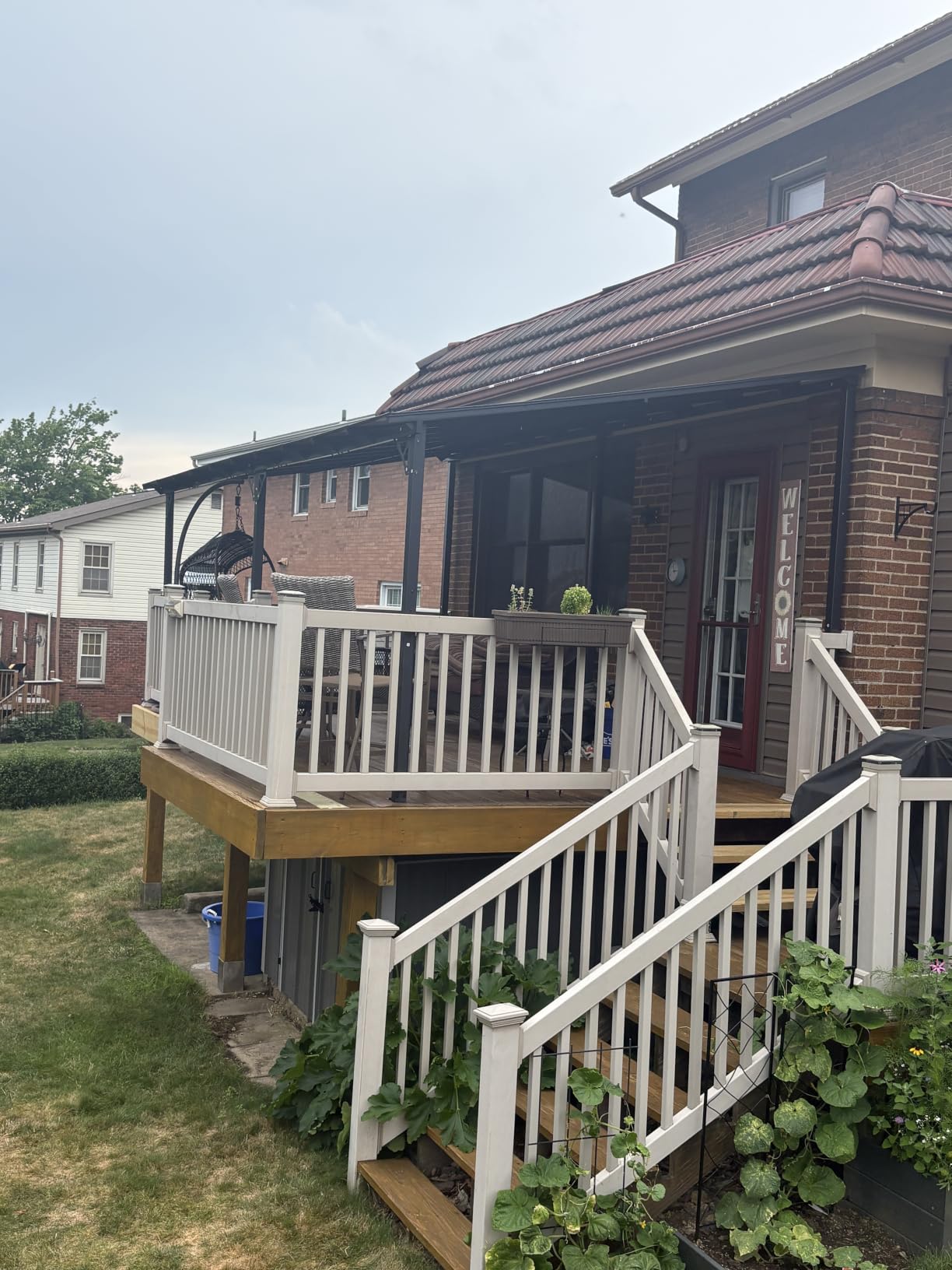
This is the largest covered area of anything in the group. At 234.3 inches long by 107.1 inches wide and 98.4 inches high, it covers 174 square feet and is listed for ten or more people. For a wide deck or a patio that doubles as an outdoor kitchen, the square footage per unit of budget here is hard to beat.
The construction is an aluminum frame with iron support members and polycarbonate roof panels. The polycarbonate point is the interesting one: it passes light through while cutting most of the heat, so the covered area stays bright rather than gloomy. Owners report a noticeable reduction in temperature under the roof compared with fabric covers.
It is a wall-mounted hardtop lean-to, and the roof is a real hardtop rather than fabric, so it holds up in rain once the frame is anchored to the deck and the house.
Buyers also note that two units can be placed side by side for even wider coverage, which makes this a modular buy if you have a long wall.
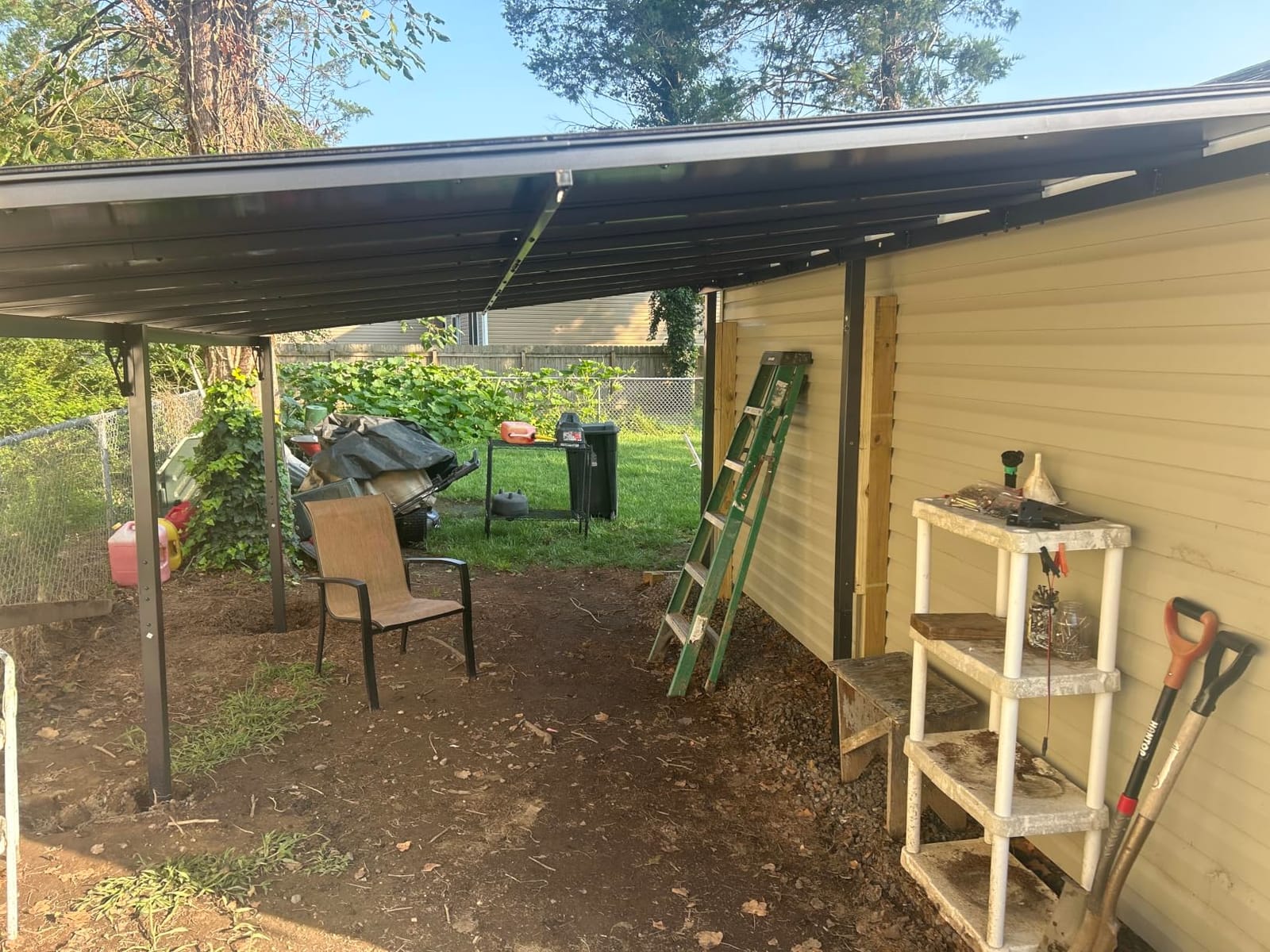
Packaging is the recurring problem. The boxes are extremely heavy, and they need help getting where they are going. Owners describe bent posts, missing screws and missing roof panels arriving in some shipments, so inspect everything on arrival and photograph it.
Assembly organization is the other weak point. The unit comes with multiple assembly booklets for different sizes and the correct one is not clearly labeled, which wastes real time. Find the right size sheet before you start rather than during.
Extra screws are included beyond the standard hardware set, which helps with the missing-hardware problem even though the included Allen screws themselves are prone to stripping. Experienced DIYers steer clear of a power driver on those bolts and finish them by hand.
Is 174 Square Feet Realistic on a Normal Deck?
Only on a large deck or a wide patio. This is a 20-foot-long structure, so it needs a long wall and roughly 8 feet of clear height along the run. On a typical 12 by 16-foot patio it overhangs the space.
It also cannot be assembled in place. Because it is a lean-to, you need to build it away from the wall and then move it into position, so the assembly area matters as much as the final footprint.
What Does the Polycarbonate Roof Actually Do?
It blocks most of the heat while letting daylight through, so you get shade without the amber cast of fabric. The trade is that it is a light-duty roof compared with a solid steel hardtop, and the frame members are thinner than the heavier units in this list.
There is also no top joining panel, so two units placed side by side leave a small gap at the seam. If you plan to pair them, budget for a cover strip.
7. MEISSALIVVE 10 x 14 Lean to Pergola Review
MEISSALIVVE 10′ x 14′ Pergola with Sloped Roof, Lean to Metal Gazebo for Outdoor Patio, Deck, Black
165.4in x 118in x 98in
Polycarbonate roof blocks 95% of UV
160.8 pounds
38 mph when anchored
Pros
- Roof keeps the shaded area cooler
- Numbered parts ease the build
- Anchors well to wall and deck
- Solar light included
- 160.8 pounds is manageable
Cons
- Lighter duty than steel hardtops
- Snow must be cleared regularly
- Wind rating depends on wall anchoring
- Heat builds under the roof
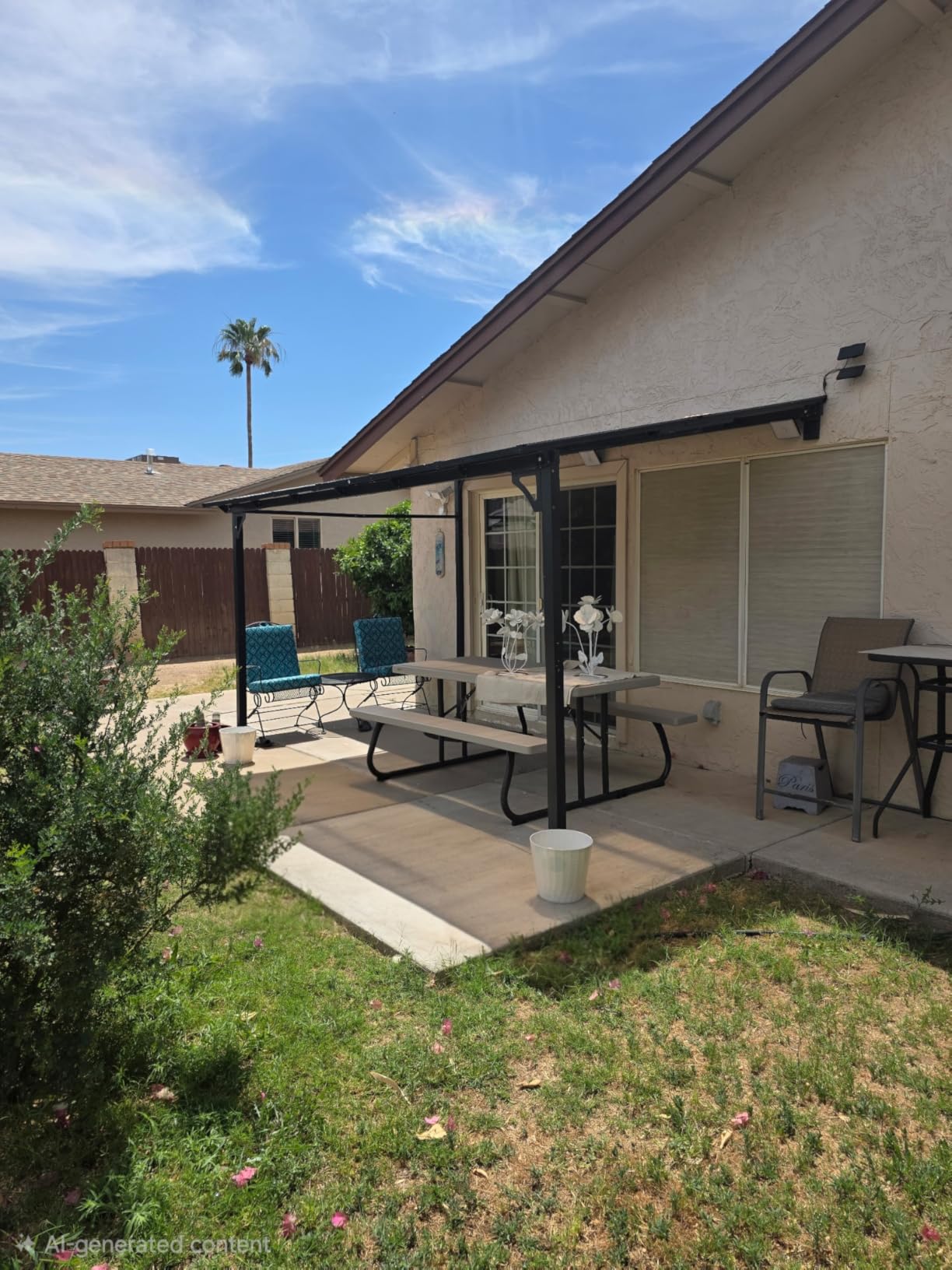
This lean-to covers a 10 by 14 footprint, measuring 165.4 inches by 118 inches by 98 inches, and weighs 160.8 pounds. That weight is the sweet spot in this group: substantial enough to feel stable, light enough for two people to raise without hiring a crew.
The roof is polycarbonate and listed as reflecting 95% of UV rays, which makes this the pick for hot-sun climates where the priority is heat rather than rain. Owners in high-UV regions report the shaded area staying noticeably cooler than under the same footprint with a fabric canopy.
The frame is powder-coated aluminum, described as resistant to fading, rust and corrosion, and it has pre-drilled feet with ground stakes included. A solar light ships in the box, which is a small but genuinely nice touch for evening use.
Rated capacity is up to 60 pounds per square meter with 4-inch snow depth, and wind resistance up to 38 mph when wall- and ground-secured.
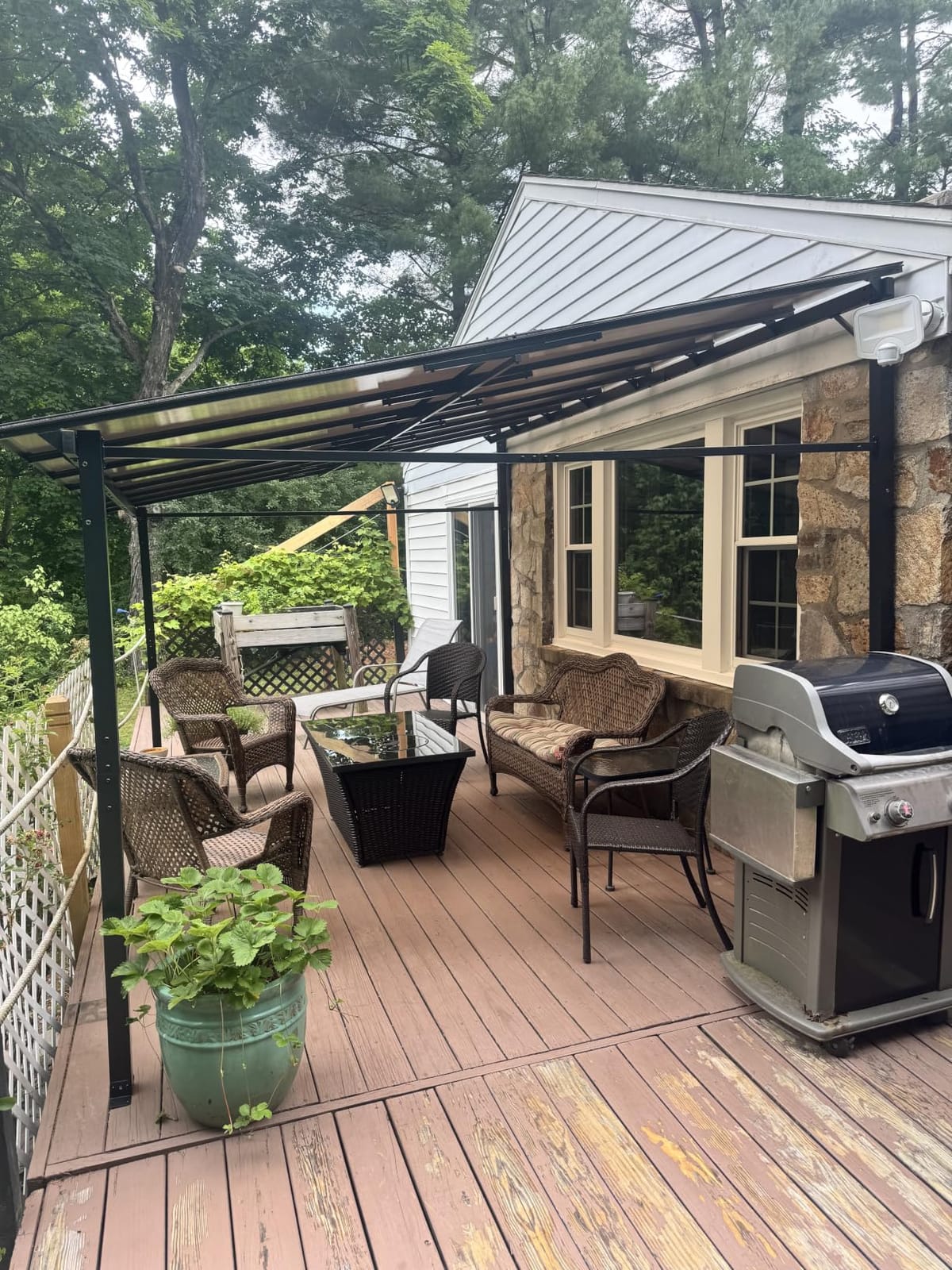
Assembly is straightforward. Parts are numbered, instructions are clear, and the stated install time is two to four hours for two to five people. Expansion screws are advised if you are mounting into concrete rather than soil.
Owners consistently give the same practical advice: anchor it to both the wall and the ground. Buyers who did both report noticeably better stability, and those who only did one describe visible movement in wind.
The 10 by 14 footprint is a good match for a rectangular dining table with clearance on the long sides, and the sloped lean-to design keeps rain running off to the far edge rather than dripping at the seating area.
Does a Polycarbonate Roof Need Snow Clearing?
Yes, and this is the most important operating note for the model. Roof panels and frame hardware are lighter duty than the steel-hardtop competitors, and owners explicitly warn that snow must be cleared regularly to avoid collapse. Four inches is the stated capacity.
If you are in a heavy-snow region, this is not a winter structure. Choose a galvanized steel hardtop instead and clear it anyway.
What Is the Trade-Off for the Low Weight?
The frame is lighter duty overall, and the color can run warm in direct sun beneath the roof because the polycarbonate passes light through. On a very hot afternoon the air under the cover heats up even though direct sun is blocked, which is fine for an evening structure and less comfortable at midday.
None of that matters if you anchor it properly, and the wall-anchored wind rating of 38 mph is competitive. The bigger question is how you use the covered area. Shade and evening dining, yes. A cooking station under a hot roof, think twice.
8. Tangkula 10 x 13 Retractable Canopy Pergola Review
Tangkula 10×13 Ft Outdoor Pergola with Retractable Canopy, Heavy-Duty Aluminum Patio Shelter Pavilion for Deck, Garden, Yard, Beige
156in x 120in x 96in
130 sq ft coverage
88 pounds
Rope loop with hook lock
Pros
- Simple attractive design
- Canopy retracts for open sky
- Four wide pre-drilled feet
- Works as a vine or grape trellis
- Instructions plus assembly video
Cons
- Lowest average rating in the group
- Canopy is water resistant only
- Fabric and rope hardware wear first
- Each foot needs 9.8in of space
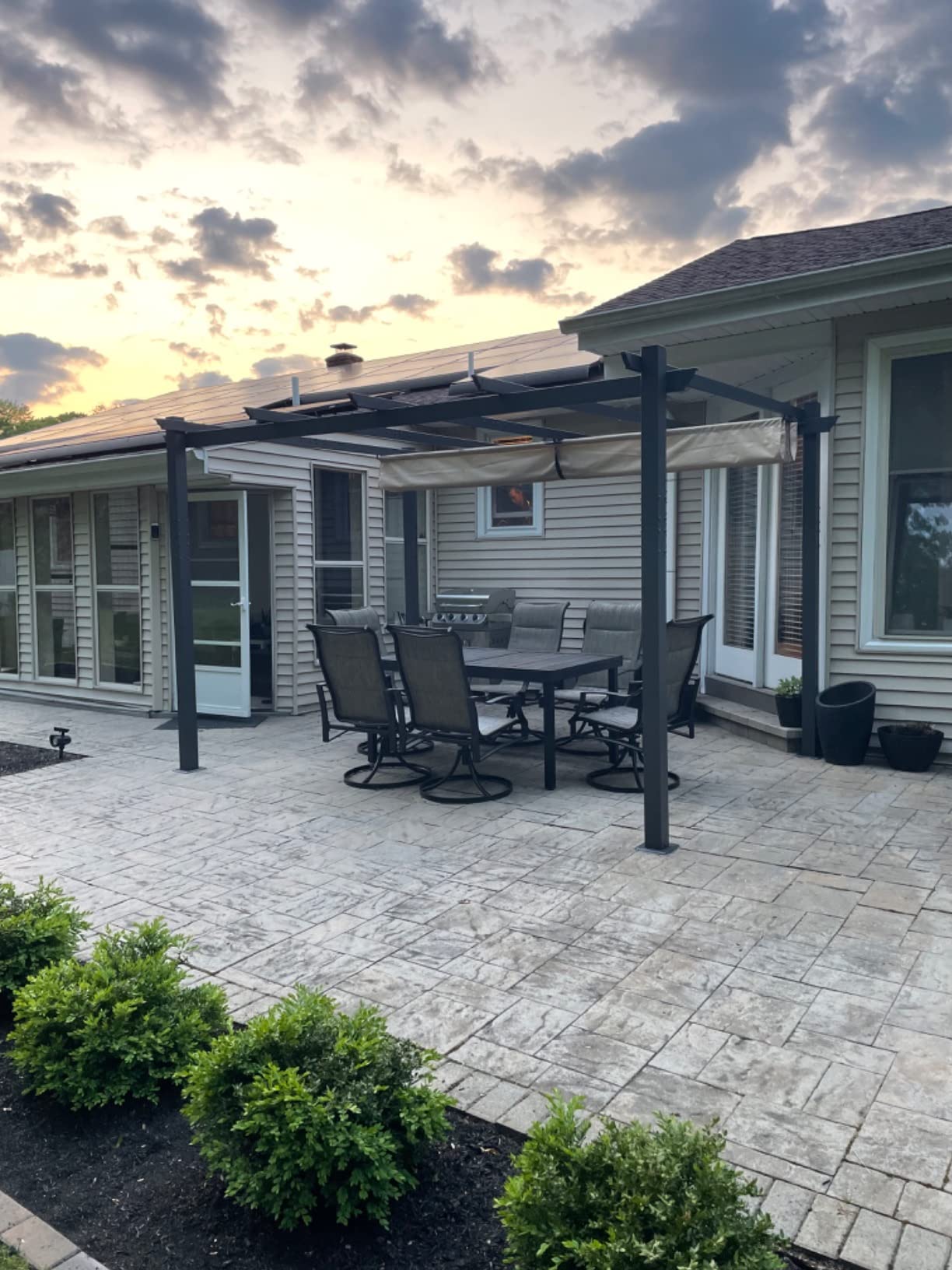
The Tangkula covers 156 inches by 120 inches by 96 inches, giving 130 square feet of space on a powder-coated aluminum frame weighing 88 pounds. The top trellis rails are the detail that makes it different: they are sized and positioned for climbing plants, so grapes, wisteria or clematis can take over the roof in a season or two.
The canopy is retractable and runs on a rope loop with a hook locking system. The fabric is yarn-dyed and described as fade- and tear-resistant, blocking sun and light rain.
Four wide metal feet at 7 inches by 7 inches come with pre-drilled holes, and each foot needs 9.8 inches by 9.8 inches of space. That footprint is bigger than the post itself, so measure the four corners before you order.
Clear instructions and an assembly video are included, and the frame works over gardens, poolside areas, patios and decks.
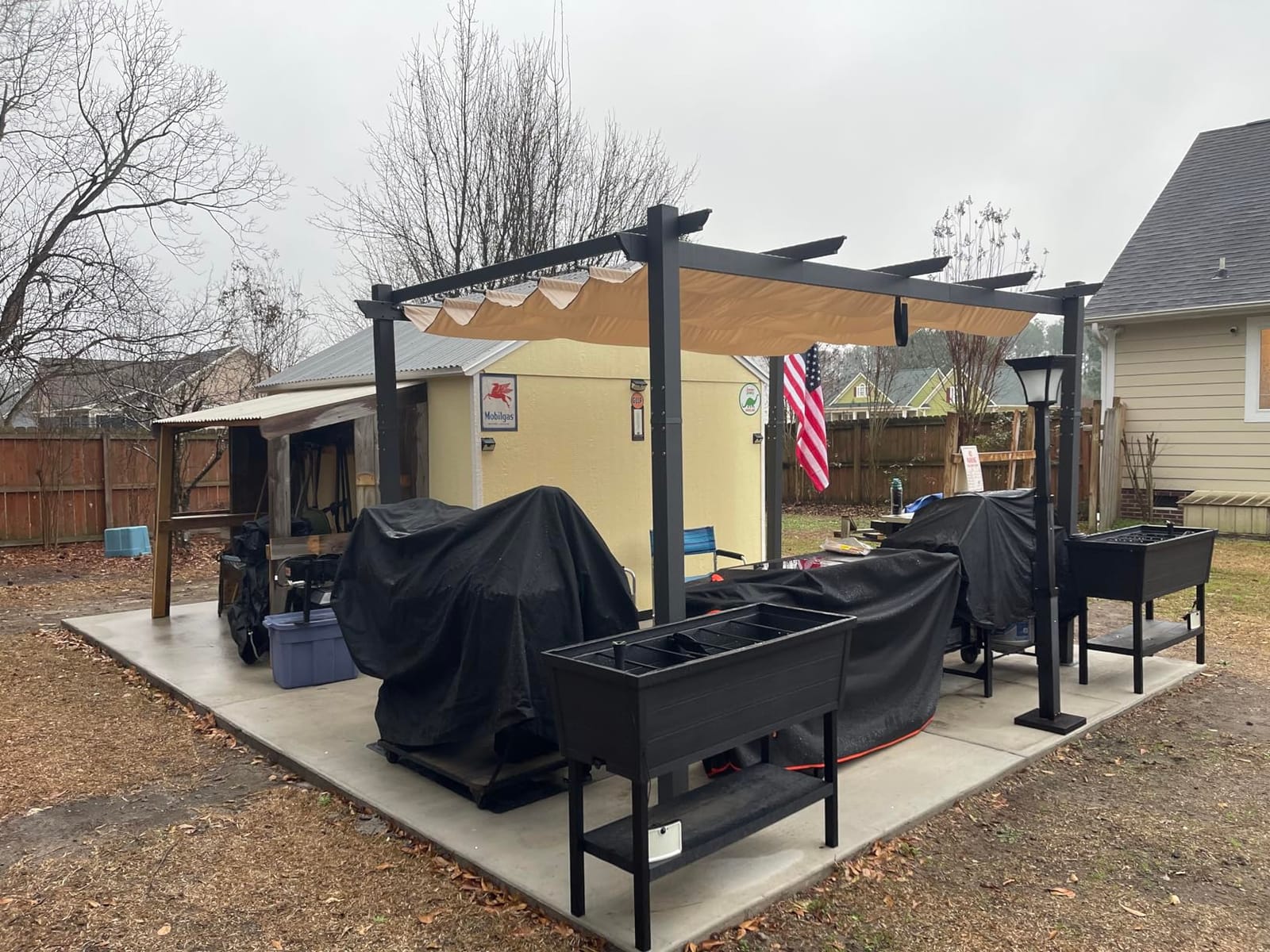
Owners like the look. This is the model in the group most often described as attractive rather than merely functional, and the beige colorway is the one people pick for a garden setting where the structure stays in view.
The retractable canopy is genuinely useful for evening use, since rolling it back turns the same footprint into an open-air dining spot. The wide pre-drilled feet also make anchoring more straightforward than on models with narrow posts.
At 88 pounds with a powder-coated aluminum frame, this is one of the easier builds in the group and most people manage it in an afternoon with one other person.
Is the Canopy Weatherproof?
No. It is water resistant and blocks light rain, and reviewers are direct that it offers limited protection in heavy rain or wind. This is a shade structure with a fabric roof, not a shelter.
The fabric and the rope-loop hardware are the first components to wear, which is the usual failure pattern on this type of canopy. Check the loop tension each spring.
Why Is This Rated Lower Than the Rest?
The rating reflects the composition of its reviews rather than a single defect. Roughly one in five reviews is a one-star, and those center on durability and on the canopy holding up in weather, while the five-star majority is about appearance, price and an easy build.
So the honest framing is this: buy it for shade, looks and a trellis, and accept that the fabric and the hardware are consumable parts rather than long-term components. If you need a roof that survives a storm, choose a hardtop or a louvered model instead.
Buying Guide: How to Spend a 1,000 Dollar Pergola Budget
The biggest mistake with a fixed ceiling is treating it as a filter rather than a plan. A thousand dollars has to cover the structure, the shade, the fixings and whatever you add to make it usable, and the split between those four things decides what you end up with.
Buy vs Build: What the Budget Really Covers
Building your own frame is cheaper in material and more expensive in time. A basic DIY build uses pressure-treated lumber or cedar for posts and beams, plus a roof treatment of slats, lattice, shade cloth or polycarbonate panels. A kit gives you pre-cut and pre-drilled parts, which is exactly what you are paying for.
Working through the cost line items:
Frame and structure. This is the largest line in every scenario, and it is where kits and DIY builds differ least in raw material cost.
Roof or shade treatment. Slats and lattice are the cheapest, shade cloth sits in the middle, polycarbonate panels and hardtops cost the most.
Anchoring hardware. Ground stakes are nearly free, deck lag bolts and expansion anchors are modest, concrete footings with labor are the expensive option.
Assembly labor. A kit that takes two people and a full weekend replaces a paid build that can run into four figures on its own.
Accessories. Curtains, string lights and climbing plants are what turn a frame into a room, and they are the easiest line to cut when the budget is tight.
The honest answer to the build-versus-buy question is that buying usually wins on time and losing on nothing else, provided you anchor it properly. The DIY path only makes sense if you already have the tools and a free weekend you were going to spend on something similar.
Frame Material: Aluminum, Steel, Wood or Vinyl
Aluminum is the sweet spot at this budget. It will not rot, it will not need sealing, and it is light enough for two people to assemble. The two aluminum models in this group run from 3.55-inch posts on the PURPLE LEAF down to thinner tubing on the Tangkula, and the post thickness is the quality signal to check.
Powder-coated steel is heavier and tougher, which matters for wind resistance, and it is what the Aoxun, MIRADOR and Breezestival frames use. The cost is weight: the MIRADOR at 440 pounds is a crew job, while the Aoxun at 185 pounds is a weekend job.
Pressure-treated wood and cedar look better and blend into a garden, and they need annual sealing to stay that way. Vinyl is the rarest option in this price class and generally costs more than the metal frames you would be comparing it to.
Whatever you choose, check the finish. Powder coating on aluminum resists fading, rust and corrosion, and bare or thinly coated steel is where coastal installs start showing orange within a few seasons.
Size and Footprint Math
Pick the size by the furniture underneath, not by the empty space. A round or rectangular dining table for four to six needs roughly 100 to 130 square feet of coverage with clearance on all sides. Larger footprints in this group run 174 square feet and need a long wall.
Two practical rules. Leave two to three feet of clearance on all sides so air can move and you can get a ladder in to anchor it, and measure the height against your house. Anything under 96 inches at the lowest point will feel tight over a table.
For wall-mounted lean-tos specifically, the assembly area is the constraint people forget. The finished structure measures roughly 10 to 20 feet long, and you need comparable clear space behind the wall side to build it before moving it into place.
Anchoring, Wind Ratings and Permits
A wind rating is a conditional promise, not a specification. Every rating in this group assumes both correct anchoring and, for fabric canopies, that the canopy is retracted. A 40 mph rating on an unanchored frame is worth nothing.
Three anchoring options, in ascending order of cost and holding power:
Ground stakes. Adequate for soil installation in mild areas, and the weakest of the three.
Deck lag bolts. Bolted through the decking into the joists, not just into the deck boards, which is the detail most people get wrong.
Concrete footings. The most secure option and the most expensive, with surface-mount anchoring saving several hundred dollars versus poured footings.
Check the bolts twice a year regardless of method, because coatings loosen and timber moves with humidity.
On permits, most jurisdictions exempt non-roofed structures under 120 square feet, which covers most of this list but not the largest footprints. Anchored posts can still trigger local zoning even on a small structure, so a call to your building department before you buy is the cheapest insurance available.
Where to Buy and How to Add Shade on a Budget
Amazon and Walmart carry the widest selection of kits in this class, and the spec data and review counts are easy to compare side by side. Home Depot and Lowes carry more assembled and higher-grade structures but with a narrower budget range. Wayfair leans toward fabric and aluminum designs. Costco is situational rather than universally cheaper, because the membership gate and limited size range mean you often trade selection for price rather than beating the open market outright.
Prices in this category move a lot. The same kit can show a meaningful markdown between seasons, and the listings we reviewed span a wide band, so the number you see on a given day is not a permanent fact.
Whatever you buy, budget for the accessories that make an open frame usable. Waterproof outdoor curtains, string lights for evening, and climbing vines all cost far less than a hardtop upgrade. Our guide to outdoor curtains for pergolas covers the shade-addition options in detail, and it is the cheapest way to close the gap between a frame that blocks 15 to 30 percent of direct sun and one you can sit under at noon.
Renters should note one hard limit. Wall-mounted lean-tos require permanent expansion-bolt mounting into a house wall, so they are not renter options. A freestanding ground-anchored model such as the HAPPATIO or Tangkula is the realistic choice if you may move.
Frequently Asked Questions
What is the best cost-effective pergola?
For most patios and decks, the best cost-effective pergola is a powder-coated aluminum or galvanized steel frame in a 10 by 10 to 10 by 12 footprint. Aluminum resists corrosion and stays light enough for two people to assemble, while galvanized steel adds wind strength at the cost of weight. Pick a hardtop roof if you need rain protection, or a retractable canopy if you only need relief from direct sun. Anchoring is what determines whether it survives a storm, not the frame material alone.
Is it cheaper to buy a pergola or build one?
Building costs less in raw material but more in time. A DIY build needs pressure-treated or cedar lumber plus a roof treatment, while a kit ships pre-cut and pre-drilled. Five cost lines drive the total: the frame and structure, the roof or shade treatment, anchoring hardware, assembly labor, and accessories. Kits usually win on time saved. The most common hidden cost is anchoring, where surface-mount hardware is far cheaper than poured concrete footings.
Who sells the best pergolas?
Amazon and Walmart carry the widest selection of budget pergola kits, with full spec sheets and large review counts that make comparison easy. Home Depot and Lowes carry more assembled and heavier-duty structures but with less choice under a thousand dollars. Wayfair leans toward aluminum and fabric designs. Costco is situational rather than cheaper across the board, since membership and a limited size range narrow the comparison.
Are Costco pergolas cheaper than other stores?
Not consistently. A membership gate and a narrower size range mean Costco is cheaper on selected models rather than cheaper as a category. The same kit is often priced competitively at Amazon, Walmart and Home Depot, and outdoor structures go on sale at other retailers several times a year. Compare the delivered price including anchoring hardware, because a cheaper frame with separate footing costs can end up more expensive overall.
Do I need a permit for a pergola?
Most jurisdictions exempt non-roofed structures under 120 square feet, which covers a typical 10 by 10 or 10 by 12 frame but not the largest footprints in this price class. Anchored posts can still trigger local zoning review even on a small structure, and wall-mounted designs are more likely to require approval than freestanding ones. A short call to your local building department before purchase costs nothing and prevents a forced teardown.
The Bottom Line on Pergolas Under 1,000 Dollars
After comparing all eight, the Aoxun 10 by 12 lean-to remains our pick for the best pergolas under a 1,000 dollar ceiling. It is the only structure in the group that combines a UV-blocking galvanized steel hardtop, 110 square feet of usable coverage and included wall and ground anchors, and the 424-owner review history is the largest evidence base we had to judge it against. Budget your own hardware upgrades and a tube of sealant, and it should be standing for a long time.
Pick the PURPLE LEAF for a retractable fabric roof, the MIRADOR for an operable louvered roof and a modern look, the Domi if rain and insects are the problem, and the HAPPATIO if the number is what matters most. Whatever you choose, anchor it properly before the first storm. If you are still working out how much space you need, start with our pergola picks for patios before committing, and this roundup will be updated through 2026 as new kits land.