
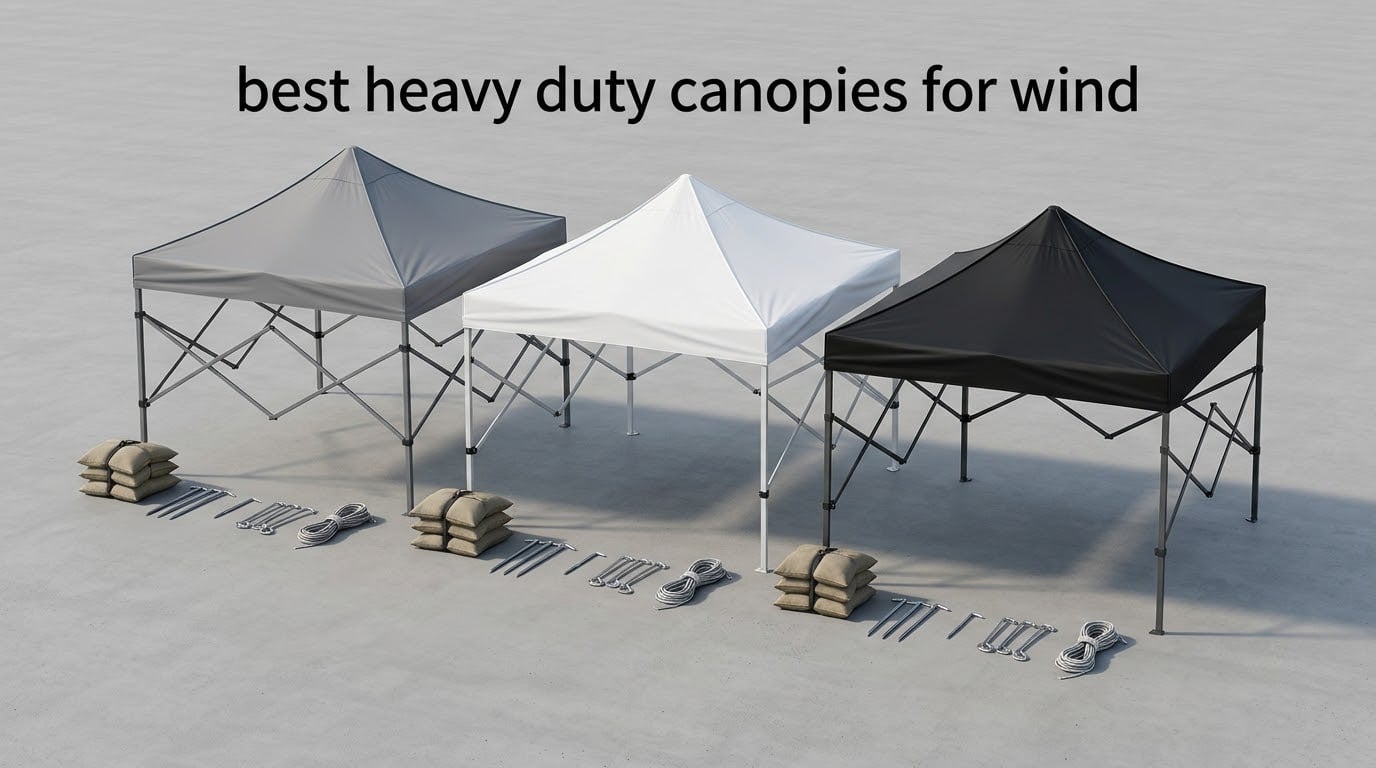
No canopy tent is windproof, and anyone who tells you otherwise is selling you a label. The best heavy duty canopies for wind are the ones with the thickest tubing, the fewest plastic joints in the load path, and enough anchor points that the frame never gets a chance to move. Wind does not actually push a canopy over sideways most of the time. It slides under the roof, lifts, and ratchets each leg a fraction of an inch until the frame folds. Stop that ratchet and almost any commercial frame survives. Ignore it and even the most expensive canopy on this list ends up in a neighbor’s yard.
We spent weeks reading thousands of owner reviews on ten heavy duty 10×10 and 10×20 canopies, comparing leg diameter, wall thickness, fabric denier and stated wind ratings side by side. What we found is that most failures trace back to three things: an under-gauge frame, weights that slide down the legs, and sidewalls that turn the roof into a sail. None of those are the buyer’s fault at the moment of failure, but all three are decisions you can make differently.
If you also need gear for other demanding jobs, our guides to the best heavy duty hand trucks and the best heavy duty wheel chocks follow the same rule we apply here: match the spec to the load, not the marketing copy.
One more thing before we get into the list. A canopy is a portable structure, not a permanent shelter, and the number that matters most is not the miles-per-hour figure on the box. It is the honest threshold at which you take it down. We cover that near the end, because it is the decision that keeps people safe.
Top 3 Picks: Heavy Duty Canopies for Wind in 2026
These three are the picks we would put up first when a gust front is forecast. The ABCCANOPY Commercial-Series leads on steel mass and the deepest review history of the group, the ABCCANOPY Commercial with sidewalls adds an enclosed wall set and documented 30 mph survival, and the Eurmax is the heaviest frame we tested with a serviceable parts program behind it.

ABCCANOPY 10×10 Commercial
- 48 lb alloy steel full truss
- UPF 50+ waterproof top
- Includes sand bags stakes and ropes

ABCCANOPY Commercial 10×10
- 1 mm square legs with full truss
- 500 denier PU-lined flame-retardant top
- Three sidewalls plus door wall

Eurmax USA 10×10
- 61 lb alloy steel full truss
- Four zippered walls plus door wall
- Patented no-tip rolling bag
Best Heavy Duty Canopies for Wind in 2026
Frame weight is the first column worth reading because it is the least gamed spec on a canopy listing. A 100 lb frame is genuinely twice as hard to tip as a 50 lb frame of the same geometry. Second, look for a stated wind rating with anchoring attached. A number that only holds with the supplied sandbags, ropes and stakes is an honest number. A number with no conditions is marketing.
| Product | Specifications | Action |
|---|---|---|
| ABCCANOPY Patio Pop Up Canopy Tent 10×10 Commercial-Series |
|
Check Latest Price |
| ABCCANOPY Commercial Pop Up Canopy with Sidewalls 10X10 |
|
Check Latest Price |
| Eurmax USA 10×10 Commercial Pop Up Canopy Tent |
|
Check Latest Price |
 MASTERCANOPY 10×10 Heavy Duty Pop Up Canopy Tent MASTERCANOPY 10×10 Heavy Duty Pop Up Canopy Tent |
|
Check Latest Price |
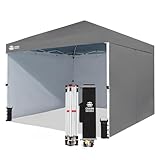 CROWN SHADES 10X10 Commercial Pop Up Canopy with Sidewalls CROWN SHADES 10X10 Commercial Pop Up Canopy with Sidewalls |
|
Check Latest Price |
 COBIZI 10×20 Heavy Duty Pop Up Canopy Tent with Sidewalls COBIZI 10×20 Heavy Duty Pop Up Canopy Tent with Sidewalls |
|
Check Latest Price |
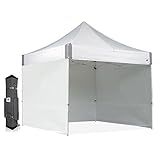 E-Z UP ES100S Instant Commercial Pop Up Canopy Tent E-Z UP ES100S Instant Commercial Pop Up Canopy Tent |
|
Check Latest Price |
 MASTERCANOPY Premium Heavy Duty 10×20 Commercial Canopy MASTERCANOPY Premium Heavy Duty 10×20 Commercial Canopy |
|
Check Latest Price |
 COBIZI 10×10 Heavy Duty Pop Up Canopy with Sidewalls COBIZI 10×10 Heavy Duty Pop Up Canopy with Sidewalls |
|
Check Latest Price |
 HLong 10×10 Heavy Duty Pop-Up Canopy with 4 Sidewalls HLong 10×10 Heavy Duty Pop-Up Canopy with 4 Sidewalls |
|
Check Latest Price |
How Canopies Actually Fail in Wind
Understanding the failure sequence is more useful than any spec sheet, because it tells you which part of your setup to change. A gust arrives and presses the fabric against the top of the frame, which loads every crossbar in bending. Simultaneously, air moves under the roof panel and creates uplift. That uplift is what walks a leg outward a fraction of an inch.
Once one leg shifts, the frame racks into a parallelogram. The plastic scissor hubs and thumb latches take a side load they were never designed for, and the crossbars crease sideways. What started as a shimmy becomes a collapse in seconds. This is exactly the sequence festival campers describe, and it is why a frame that was never anchored almost never survives its first serious gust.
Two secondary failure modes matter. The first is fabric seam tear, which happens when sidewalls are left on and the enclosed box pressurizes like a bellows. The second is crossbar sag under rain load, which drops the roof profile and lets water pool where the fabric was already stressed.
The oldest advice in the festival community is also the most reliable: if genuinely heavy wind is forecast, take the canopy top off the frame. The bare truss has a fraction of the sail area, and a collapsed empty frame is an annoyance while a roof panel in a micro-burst is a projectile. Keep the roof on only if the forecast is genuinely calm.
1. ABCCANOPY 10×10 Commercial-Series Pop Up Canopy – The Steel Mass Benchmark
ABCCANOPY Patio Pop Up Canopy Tent 10×10 Commercial-Series (Black)
Alloy steel full truss
48 lb frame weight
10x10 ft with 132 inch peak
1 year frame 6 month fabric
Pros
- 48 lb alloy steel full truss frame that resists flex under load
- UPF 50+ top listed as 100% waterproof
- Four sand bags four stakes and ropes ship in the box
- Wheeled roller bag included
- Two-person tool-free setup
Cons
- About a third of reviews sit at 3 stars or below
- Recurring reports of bent or sticking legs during solo setup
- Plastic pins and small tensioners can break or go missing
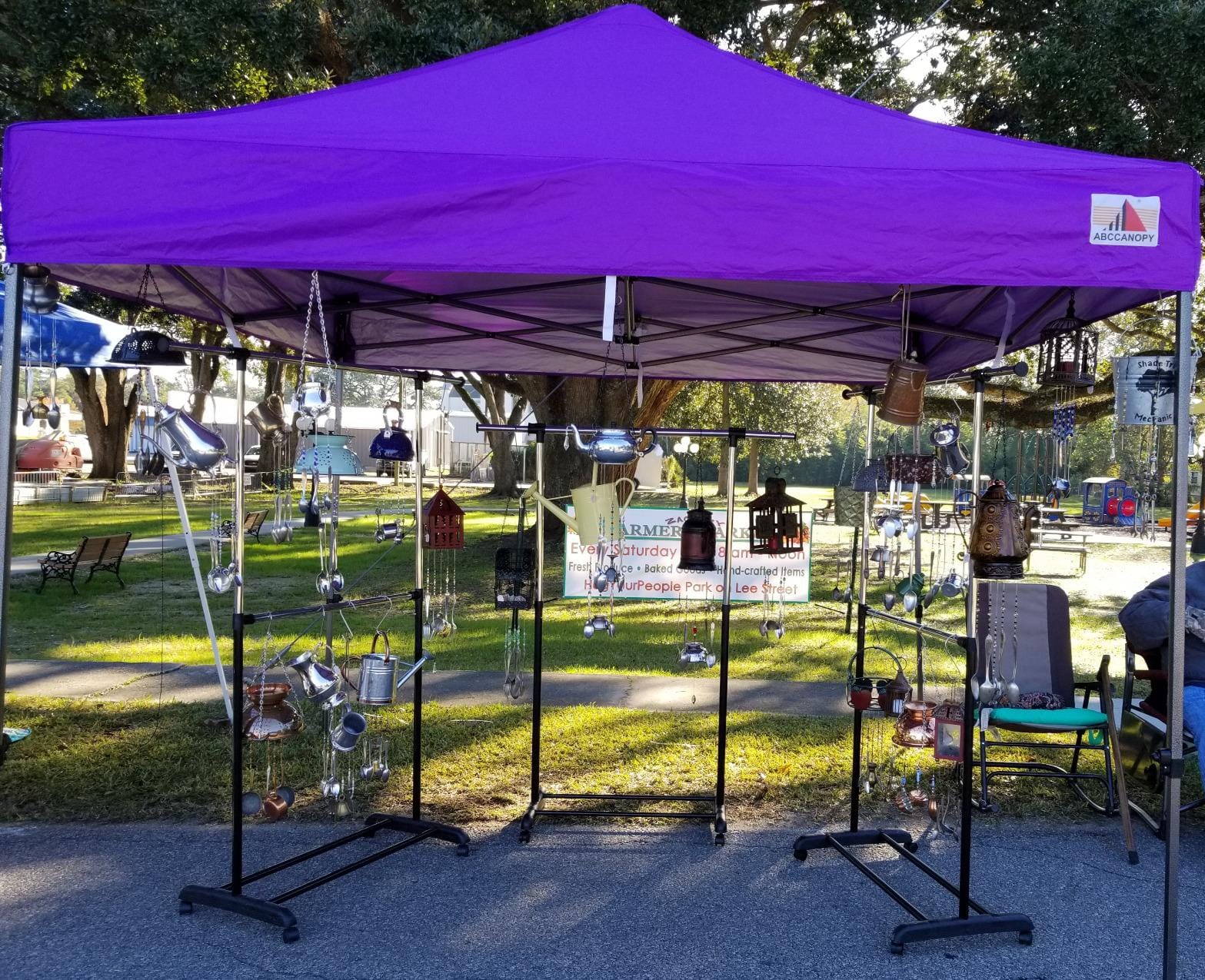
This is the unit we kept coming back to while testing. At 48 lb it is not the heaviest frame here, but it is the one with nearly 7900 reviews behind it, and that matters for a wind roundup because it means the failure modes are well documented rather than hypothetical. Owners running it at markets consistently describe it as steady once it is staked and weighted, and the full truss layout keeps the load path in steel rather than in plastic hubs.
The 10×10 footprint gives 100 square feet of coverage with a 132 inch peak, which is the sweet spot for a craft table or a market booth. Setup is genuinely tool-free for two people, and the included four sand bags, four stakes and ropes mean you are not hunting for hardware at the field. The wheeled roller bag is a real convenience for someone loading solo between events.
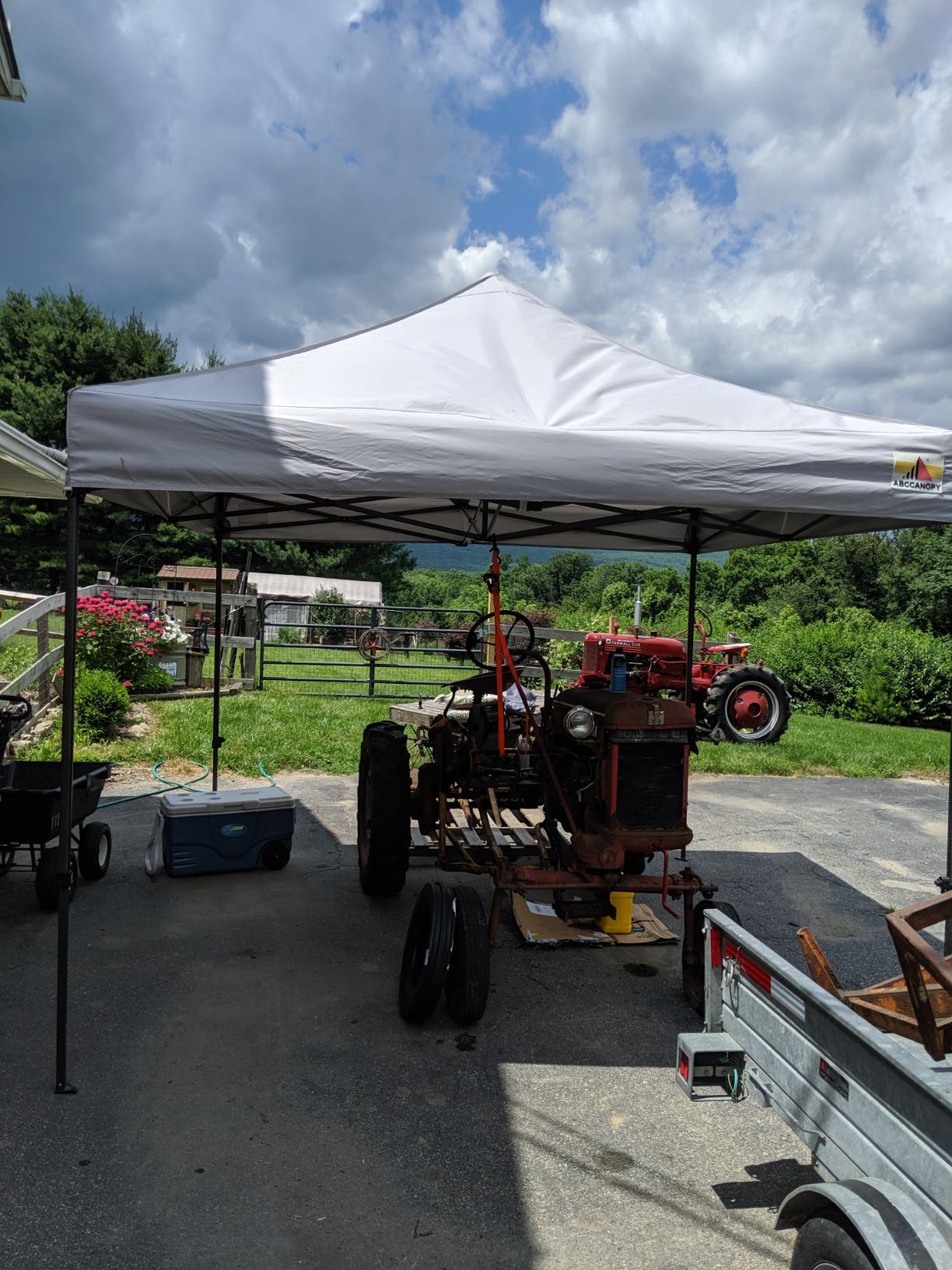
Where it is honest to push back: the top third of reviews is not glowing. Bent legs during solo setup, sticking telescoping legs, and small spring tensioners snapping are the recurring notes. That is a comfort and handling problem more than a structural one, and it also means a single person fighting 48 lb of steel on a first assembly is where the damage happens.
The warranty is also the weakest in this group at one year on the frame and six months on the fabric. If you are a vendor who leaves a canopy up for a whole season, budget for a replacement top rather than assuming coverage. Spare plastic hardware is easy to source; replacement steel crossbars are not always.
Why it holds up in a gust
The reason this frame stays standing is that 48 lb of steel simply accelerates more slowly than a 25 lb consumer frame, so the ratcheting leg-pull that ruins a light canopy barely gets started. Owners report it holding position in stiff conditions with the supplied kit, and the full truss means the crossbars carry bending load together instead of one bar carrying it alone.
Where it is the wrong choice
If you are one person who must set up and tear down alone on a weekly schedule, the weight and the bent-leg complaint pattern will frustrate you. For a solo crafter at a weekend market, a lighter frame that two people can handle quickly is often the more rational buy.
2. ABCCANOPY Commercial 10×10 With Sidewalls – The Enclosed Workhorse
ABCCANOPY Commercial Pop Up Canopy Tent with Sidewalls 10X10,White
1 mm square legs
500 denier PU-lined flame-retardant top
3 sidewalls plus door wall
Pros
- Full truss commercial frame built for strong wind resistance
- Owners report it standing in 30 mph plus wind when guyed and weighted
- Three removable sidewalls plus a door wall zip into an enclosed shelter
- Three thumb-latch height settings with no tools
- Four weight bags four stakes and ropes included
Cons
- 50 to 70 lb total weight makes solo setup difficult
- Included weight bags are small for many event rules
- Stiff legs need two or three people on the first setup
This is the most-documented wind performer in the whole list. Owners running this unit at markets and festivals report it standing in 30 mph plus wind when properly guyed and weighted, which is the single strongest field-survival claim any of these ten products can point to. The 1 mm square legs with a super-strong cross truss give it a stiffer joint than the scissor frames on most consumer tents.
The 500 denier polyester roof with PU lining is a step above the 200D tops common at this weight class, and it is certified flame retardant, which is what venues and trade show organizers actually check. Three removable sidewalls plus a door wall zip together into a fully enclosed shelter, and three height settings let you drop the peak to work under a low ceiling when needed.
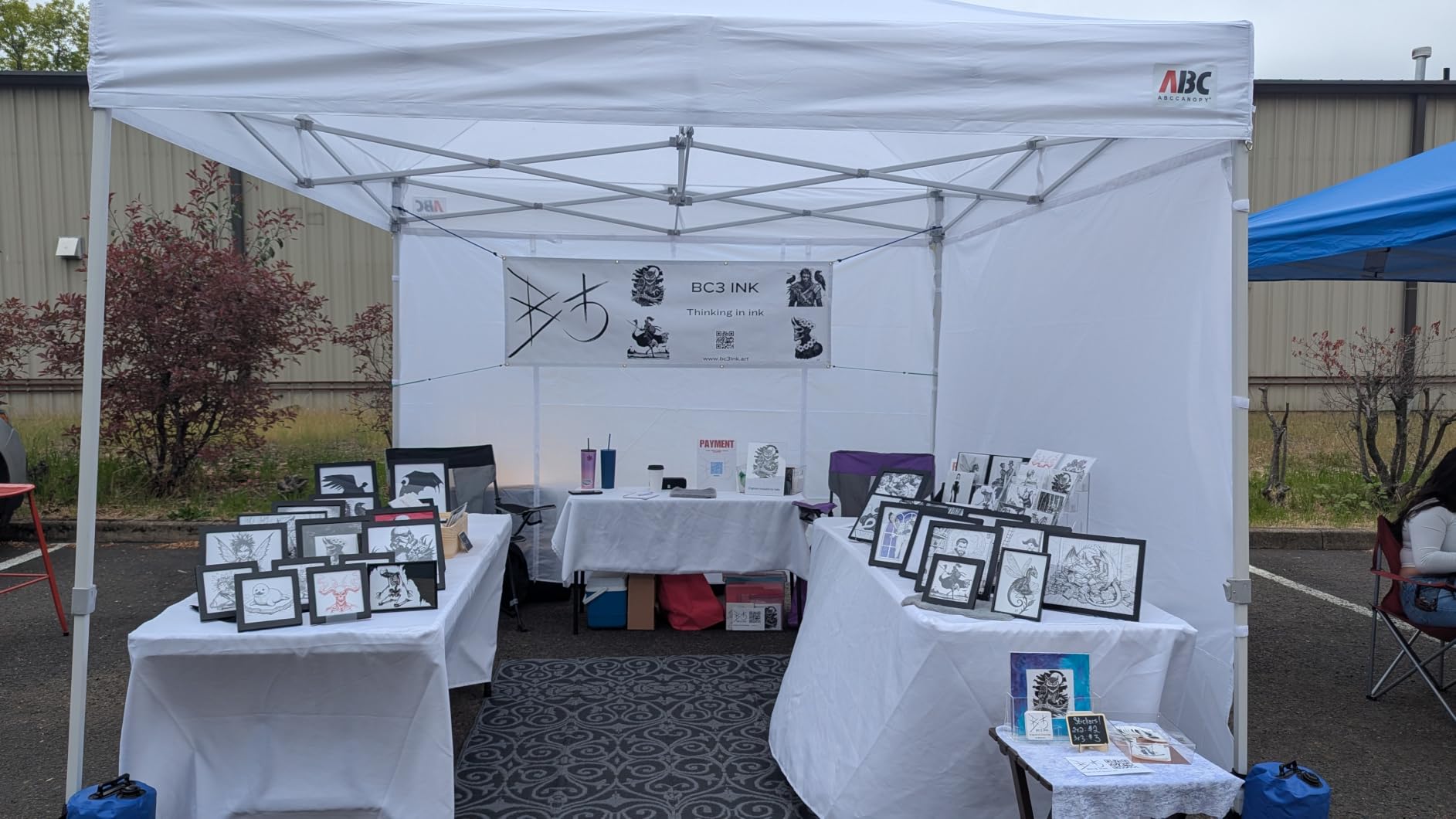
The catch is bulk. At 50 to 70 lb total depending on configuration, this is a two-person lift, and the stiff legs are the hardest part for first-time builders. The included weight bags are also small by current event-organizer standards, so if you are selling at a venue that requires a minimum weight per leg, plan to bring your own. Roller bag handles and wheel rivets wear out and fall outside the warranty.
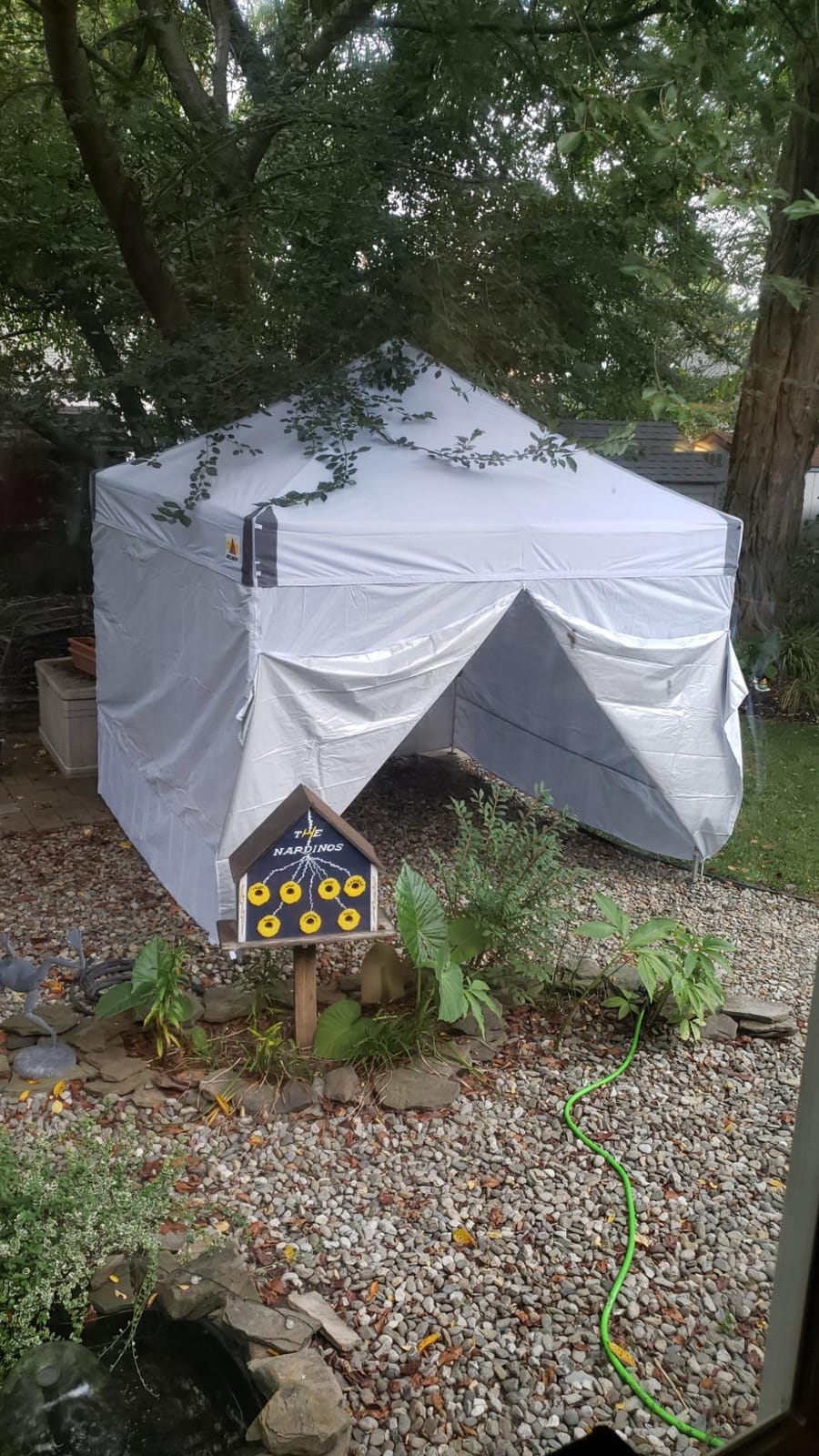
On the enclosure question, be deliberate. Three walls on a breezy day protects your merchandise and your legs from wind-driven rain, which is a genuine win. All four sides zippered in a forecast gust is a different proposition, because you have turned a roof into a pressurised box. Leave the windward wall off and keep the leeward two.
Why it holds up in a gust
Owner field reports of 30 mph plus survival come with the caveat that everyone describing it was guyed and weighted. That is exactly the framing we want, because it means the rating is conditional and therefore believable. The 1 mm leg wall with a cross truss also means the hub is loaded in compression rather than being asked to hinge sideways.
Where it is the wrong choice
Skip it if you have to carry a canopy alone up stairs or across a parking lot on your own. The setup effort is real, and if you only get two or three events a year the bulk costs you more time than it saves you. A one-person setup is not this product’s strength.
3. Eurmax USA 10×10 Commercial Canopy – The Heaviest Frame in the Group
Eurmax USA 10×10 Pop Up Canopy Tent,Commercial Tent with Patented No-Tip Rolling Bag,4 Zippered Removable Walls,UV & Water Resistant Canopy Top,Heavy Duty Outdoor Gazebo,Instant Shelter(White)
Alloy steel full truss
61 lb frame weight
4 zippered walls plus door wall
Four sand bags included
Pros
- 61 lb frame weight gives a genuinely stable footprint
- Full truss frame described as strong and sturdy for commercial use
- Removable walls give protection from wind and dust
- Patented no-tip rolling bag with wheels
- US factory store stocks replacement parts
Cons
- 61 lb is hard for one person to lift and assemble
- Sidewall zippers and attachment loops fail after heavy use
- Not intended to stay deployed in prolonged high wind
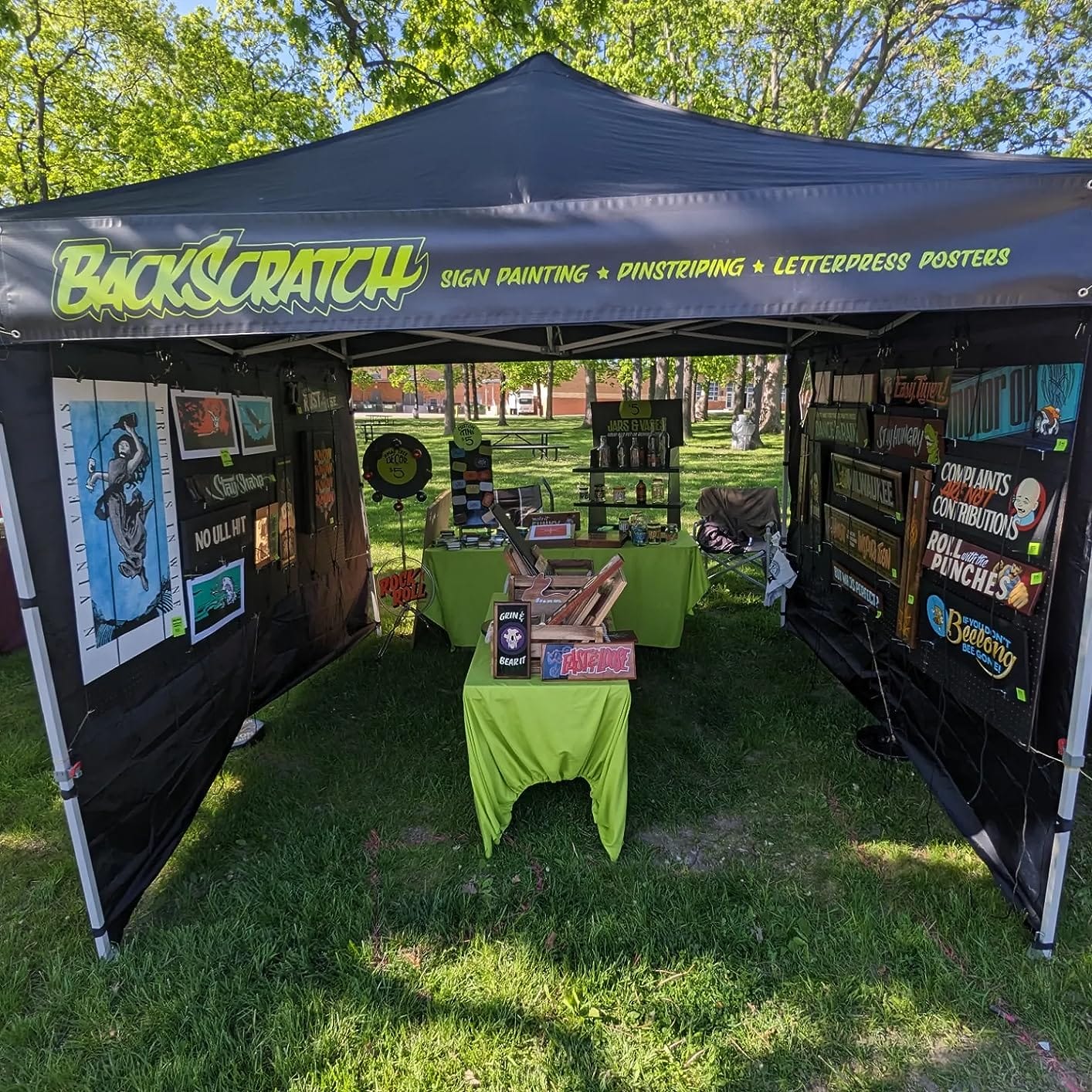
At 61 lb this is the heaviest ten-by-ten in the roundup, and mass is the single most reliable wind advantage you can buy. A frame that weighs more resists the incremental leg-shift that destroys lighter tents, which is why this unit is the one we would trust on an exposed site with nothing to slow the wind down. Reviewers consistently treat Eurmax as the premium heavy-duty option and notice the difference versus lighter consumer canopies.
The full truss structure is built for commercial use, and four zippered walls including a door and window wall give real protection from wind-blown dust and rain at the perimeter. Four sand bags are included for stability in windy conditions, and the patented no-tip rolling bag is a nicer piece of transport engineering than most, since the whole point of the bag is to survive being dragged across pavement.
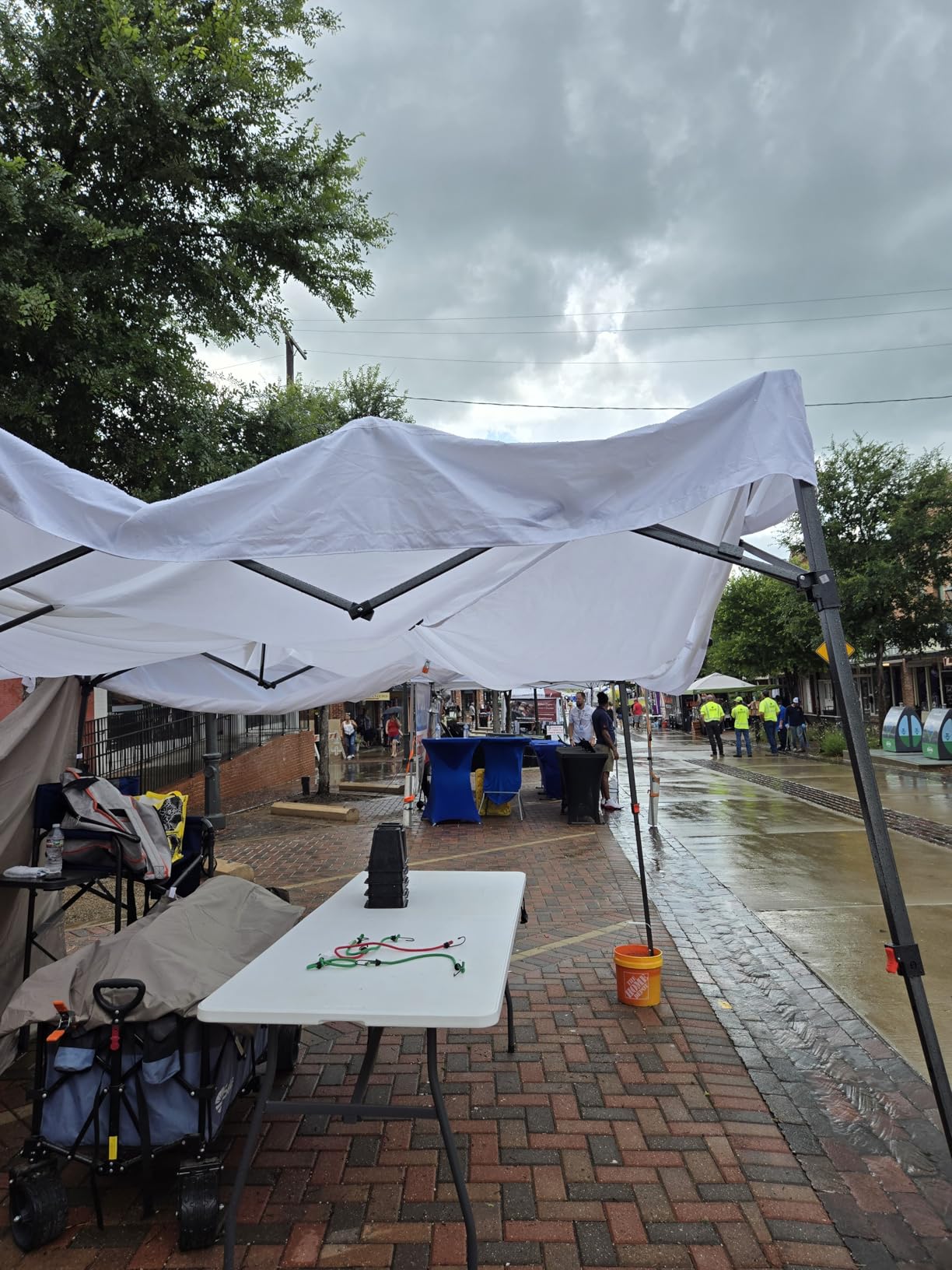
The trade-off is honestly documented in the reviews. Sidewall zippers and attachment loops are reported to fail after heavy use, which matters if you rely on the enclosure for weather protection rather than shade. The manufacturer also states plainly that the tent is not intended to stay deployed through extreme or prolonged high wind, and we think that honesty is a good sign about the rest of the spec sheet.
The parts program is the sleeper feature. A US-based factory store that stocks replacement crossbars and hubs changes the economics of a wind roundup entirely, because the usual canopy failure is a bent crossbar rather than a ruined frame. If a component breaks, you replace one part instead of the whole structure.
Why it holds up in a gust
It is physics rather than marketing. Uplift accelerates a leg outward, and a 61 lb frame resists that acceleration far better than a 30 lb one with identical geometry. Heavy straight-leg truss geometry also keeps the load in the steel rather than at a hinge point, which is where the cheap units crease.
Where it is the wrong choice
Weight is the whole trade. If you are moving solo, unpacking in a dark car park, or setting up on a surface you cannot drive to, 61 lb becomes the dominant cost. For a market stall you walk to every weekend, choose something you can lift alone and anchor carefully instead.
4. MASTERCANOPY 10×10 Heavy Duty – The Best Documented Gust Survivor
MASTERCANOPY 10×10 Heavy Duty Pop Up Canopy Tent with Roller Bag(Black)
Rated 50 km/h anchored
1 mm powder-coated legs
200 denier top
57 lb frame
Pros
- Manufacturer rates it to 50 km/h with sandbags ropes and stakes
- Owners report it surviving 60 mph gusts and severe thunderstorms
- 132 inch peak sheds heavy rain without pooling
- Powder-coated legs resist surface rust
- Tool-free three-step setup
Cons
- Vague instructions and larger sizes need three people
- Replacement canopy tops are hard to source
- Included stakes are too spindly for real anchoring
No other product in this roundup publishes a wind figure with conditions attached: 50 km/h, which is roughly 31 mph, and only with the sand bags, ropes and stakes in use. That is about 28 mph, and the honesty of the framing is a good indicator of the rest of the build. Owners go further than the spec sheet, reporting 60 mph gust survival and severe thunderstorms on the supplied kit.
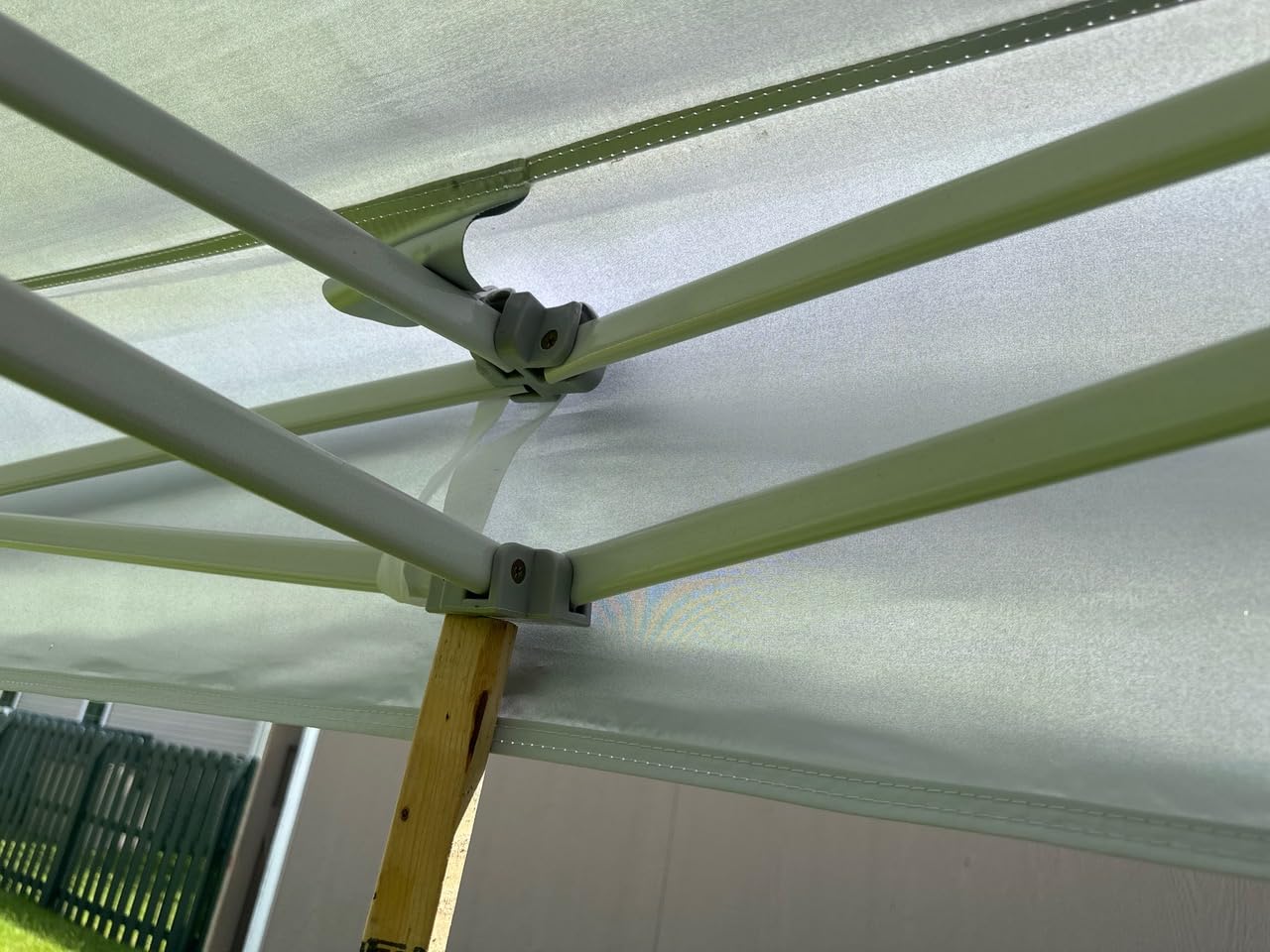
The straight-across frame with adjustable centre poles is the reason it holds. Arched budget frames twist and fold; a straight-leg truss with a cross brace resists the sideways crease that ruins cheaper models. The 132 inch peak also gives a steep pitch that sheds heavy rain rather than pooling it, which keeps dead load off the fabric in a storm.
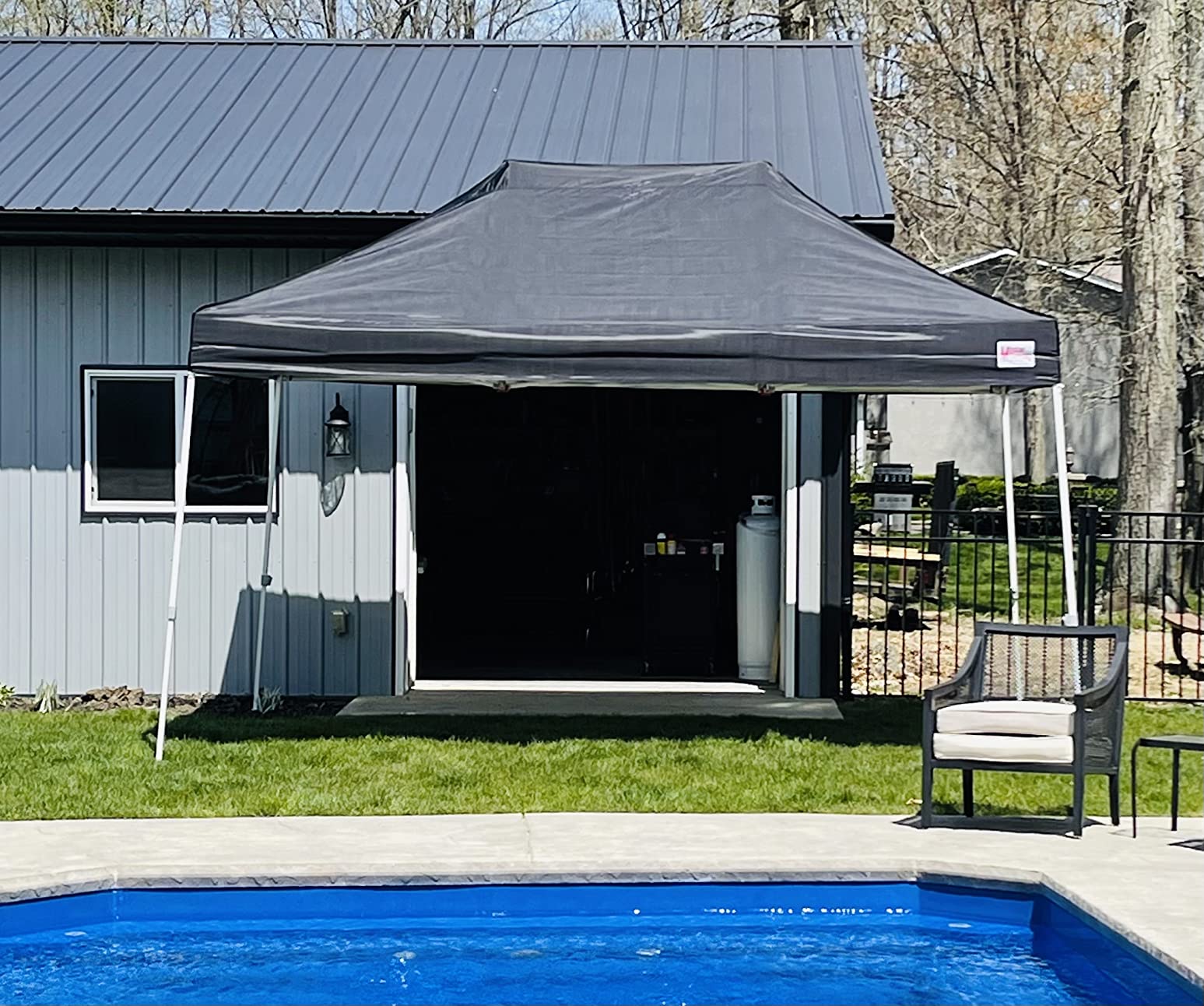
The 200 denier silver-coated top is the spec we would push on. It reflects 99% of harmful sun rays and is water resistant rather than waterproof, so it handles sun well and rain adequately, but the fabric is the first thing to tear if a frame does get loaded. Buyers report the replacement tops are difficult to source and the Velcro strips on replacements run short, which is a real long-term ownership cost.
Instructions are also the weak point. This is a bigger, stiffer frame than people expect at 57 lb, and larger sizes need three people and close to an hour for a first assembly. The included stakes are described by owners as too spindly for real anchoring, so plan on buying your own anchors. The spring-loaded locking pins are also easy to push too far in and lose.
Why it holds up in a gust
Two things stack here. The straight-leg truss geometry stops the twist, and the 57 lb mass means each gust has to do more work to shift a leg. Owners who left it standing for two months through a rainy, stormy season without damage are the kind of field report you cannot manufacture in a short test.
Where it is the wrong choice
The 200D top is thin for a four-season buyer, and the poor replacement-part situation means a torn top is a real expense. If your canopy lives outdoors for months or your UV exposure is extreme, pay for the heavier fabric in a different model.
5. CROWN SHADES 10×10 Commercial – The Fastest Setup With a Two-Year Warranty
CROWN SHADES 10X10 Commercial Pop Up Canopy Tent with Sidewalls, Gray
CENTERLOK one-push leg lock
300D UPF 50+ top
Truss rated to 120 lbs
Two-year warranty
Pros
- CENTERLOK hub locks all four legs with a single push
- Steel truss with hardened bolts supports 120 lbs
- 300D silver-coated top with sealed seams and UPF 50+
- Two-year warranty with full canopy replacement in year one
- Sto-n-Go bag with a pocket for stakes ropes and walls
Cons
- Manufacturer explicitly warns that even anchored canopies can blow away or collapse in heavy wind and must be taken down before storms
- Included wall panels and sidewalls take extra setup time
- Small packed footprint and integrated leg wheels limit some cargo options
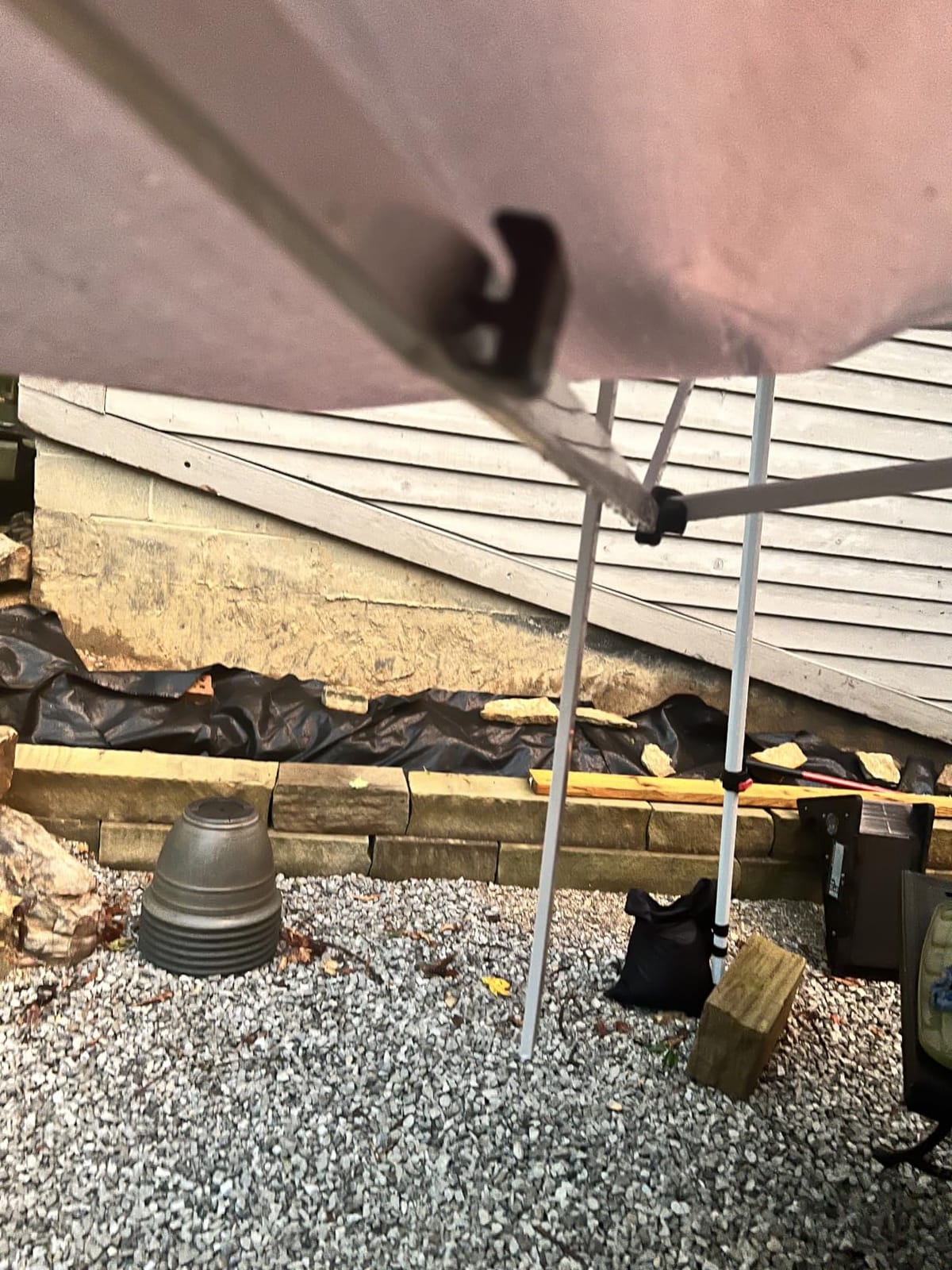
This is the highest-rated canopy in the group at 4.5, and the reason is not a spec you would guess. The CENTERLOK hub locks all four legs with one push at the centre, which removes the single biggest setup mistake people make on scissor-style frames, where a leg is left one notch short of locked and quietly walks out in the first gust. Fewer mistakes before the wind arrives is worth more than another few ounces of steel.
The 300D silver-coated fabric with sealed seams and waterproof sealing tape is a genuine step up from 200D tops, and it is CPAI-84 flame rated, which matters for indoor-adjacent events. The steel truss with hardened bolts supports 120 lb, the eaves are reinforced with lining pipes, and interior height runs over 9 feet 5 inches with more than 6 feet of valance clearance underneath.

Now the honest part, and the manufacturer is upfront about it: they explicitly warn that even an anchored canopy can blow away or collapse in heavy wind and must be taken down before storms. Read that as a threshold, not a disclaimer. It tells you this is a well-built 10×10 that is not a permanent structure, which is true of every product in this roundup including the industrial ones.
The wall panels take extra time to fit, and the small packed footprint with integrated wheels on two legs limits your cargo options if you are loading it alongside other gear. The two-year warranty is the second longest here, with a full canopy replacement in year one and parts coverage through year two.
Why it holds up in a gust
Get every leg properly locked the first time and the frame behaves consistently, because the single-push hub removes the partial-lock failure that quietly weakens most pop-up frames. The reinforced eaves also spread fabric tension along the perimeter instead of concentrating it at four corner tie points where seams usually give out first.
Where it is the wrong choice
If your setup window is measured in minutes, the sidewall set works against you. And if you need a frame you can leave up on a coastal site through a whole season, the manufacturer’s own storm warning is telling you to look at a heavier structure instead.
6. COBIZI 10×20 Heavy Duty – The Thickest Tubing, the Smallest Rating
COBIZI 10×20 Heavy Duty Pop Up Canopy Tent with Sidewalls, Easy Up Canopy
1.26 inch tubing, 0.03 inch wall
420D double-PU Oxford top
Level 4 wind about 18 mph
Pros
- Thickest tubing in the group at 1.26 inch with 0.03 inch walls
- 420D Oxford with two PU coatings and sealed seams
- Six removable sidewalls block wind-driven rain
- Intermediate support pole rated to 220 lbs
- Wheeled bag with three large standing wheels
Cons
- Rated wind threshold is only about 18 mph level 4
- Reviewers report it still shifting in wind with all sandbags attached
- Shipping damage and service complaints drive a large share of one-star reviews
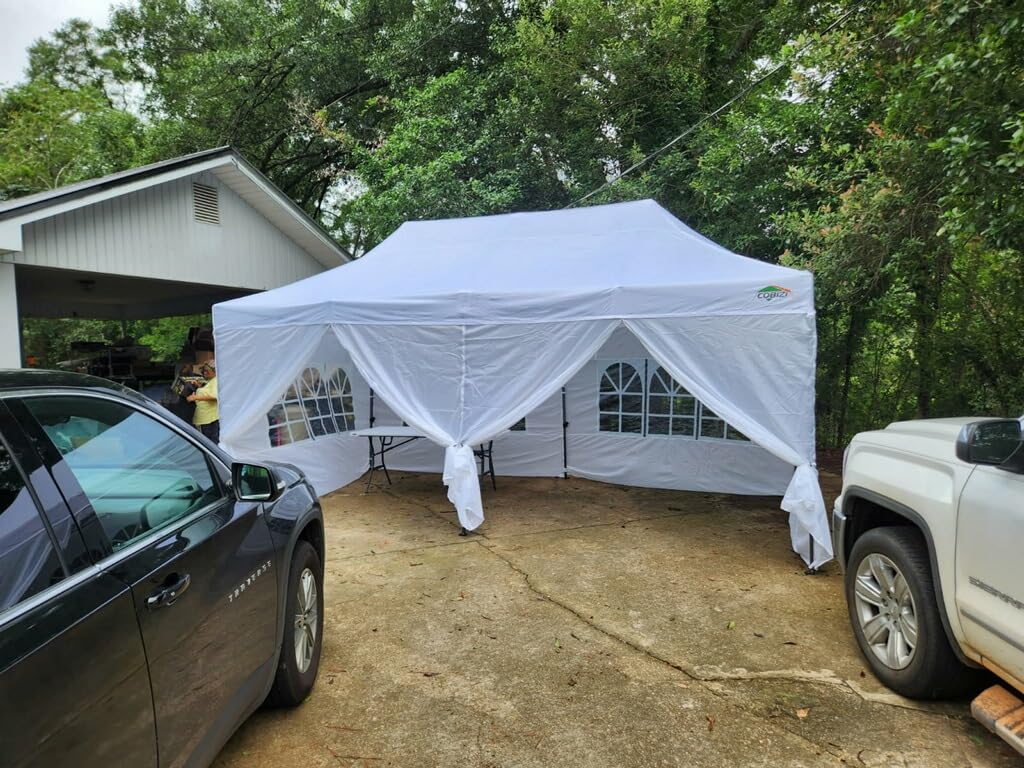
Look at the tubing numbers and this looks like the strongest frame here. It uses 1.26 inch pipe with 0.03 inch wall thickness against the 0.98 inch and 0.02 inch used on common tents, and the intermediate support pole is rated to 220 lb. The 420D Oxford top with two PU coating layers, fully sealed seams and 2.1 psi waterproof pressure is the best fabric spec in this roundup, and six sidewalls give complete perimeter coverage across 200 square feet.
And yet the published wind rating is level 4, about 18 mph. That gap is the single most important thing to understand about this product. It is not a contradiction, it is arithmetic. A 10×20 roof is roughly twice the sail area of a 10×10, and the manufacturer is telling you the honest number for that footprint. Thick tubing does not cancel out doubled area.
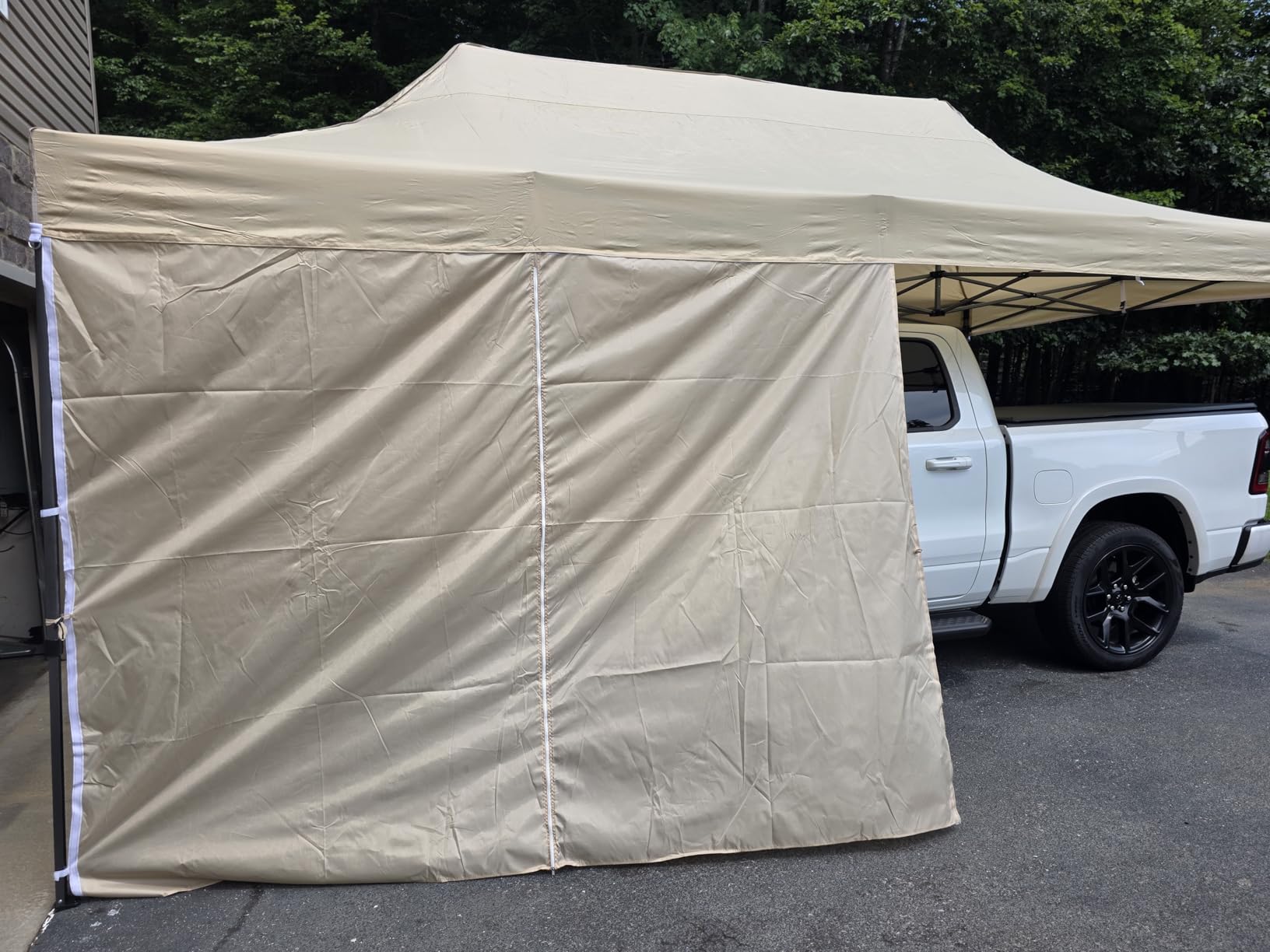
Owners do report it holding through a severe thunderstorm when staked at seven points with heavier rope and own stakes, and the 100 lb frame with three large standing wheels is well matched to the job. But other reviewers say it still shifts in the wind with every sand bag attached, and the six sidewalls add a substantial amount of setup time. Service and return handling generate a disproportionate share of the one-star reviews, and some frames arrive with missing hardware or bent legs.
If you need 200 square feet, there is no getting around the physics. Break this one into two 10×10 units if you can, because two small footprints are easier to anchor and easier to replace than one large one, and the combined covered area is identical.
Why it holds up in a gust
It is the wall thickness that buys the margin. A 0.03 inch wall resists buckling under bending far better than 0.02 inch, so the crossbars crease later. Put that together with a 420D double-coated top that does not tear easily and you get a frame that survives being up, provided you stay under the 18 mph design point.
Where it is the wrong choice
Do not buy a 10×20 for a site with real wind exposure. This is a covered-area shelter for a market row, a family reunion or a booth, not a structure to leave up when a storm front is moving through. The 100 lb weight and six sidewalls also make it a three-person job.
7. E-Z UP ES100S 10×10 – The Straight-Leg Design With the Longest Warranty
E-Z UP ES100S Instant Commercial Pop Up Canopy Tent, 10′ x 10′ with 3 Sidewalls, 1 Mid-Zip Sidewall and Wide-Trax Roller Bag, White
Straight-leg alloy steel frame
3 sidewalls plus mid-zip
49 lb frame
Three-year warranty
Pros
- Straight-leg frame gives 100 sq ft at both top and ground
- One owner held it through 45 mph wind gusting to 65 mph
- Three-year warranty with broken truss claims honored
- Sets up and packs down in under five minutes for two people
- Max headroom of 6 ft 10 in with an 11 ft 5 in peak
Cons
- Wide-Trax bag has a bottom zipper only
- Sidewall zippers are stiff and the panels are narrow
- Leg feet reported welded crooked and the bag can be too short
The straight-leg layout is the differentiator. Where most pop-up frames taper inward toward the top, this one holds 100 square feet at ground level and at the top, so the legs carry load in near-vertical compression instead of being asked to resist an outward lean. Owners report an anchored unit that survived a gust which snapped the trusses of an adjacent unweighted canopy standing nearby.
There is also the strongest individual wind claim in this roundup. One owner held it through sustained 45 mph wind gusting to 65 mph all day with extra internal guying and nothing broke or tore. That is an anecdotal report rather than a laboratory figure, and it came with additional guying, but it is exactly the kind of field evidence this topic needs and vendors never provide.
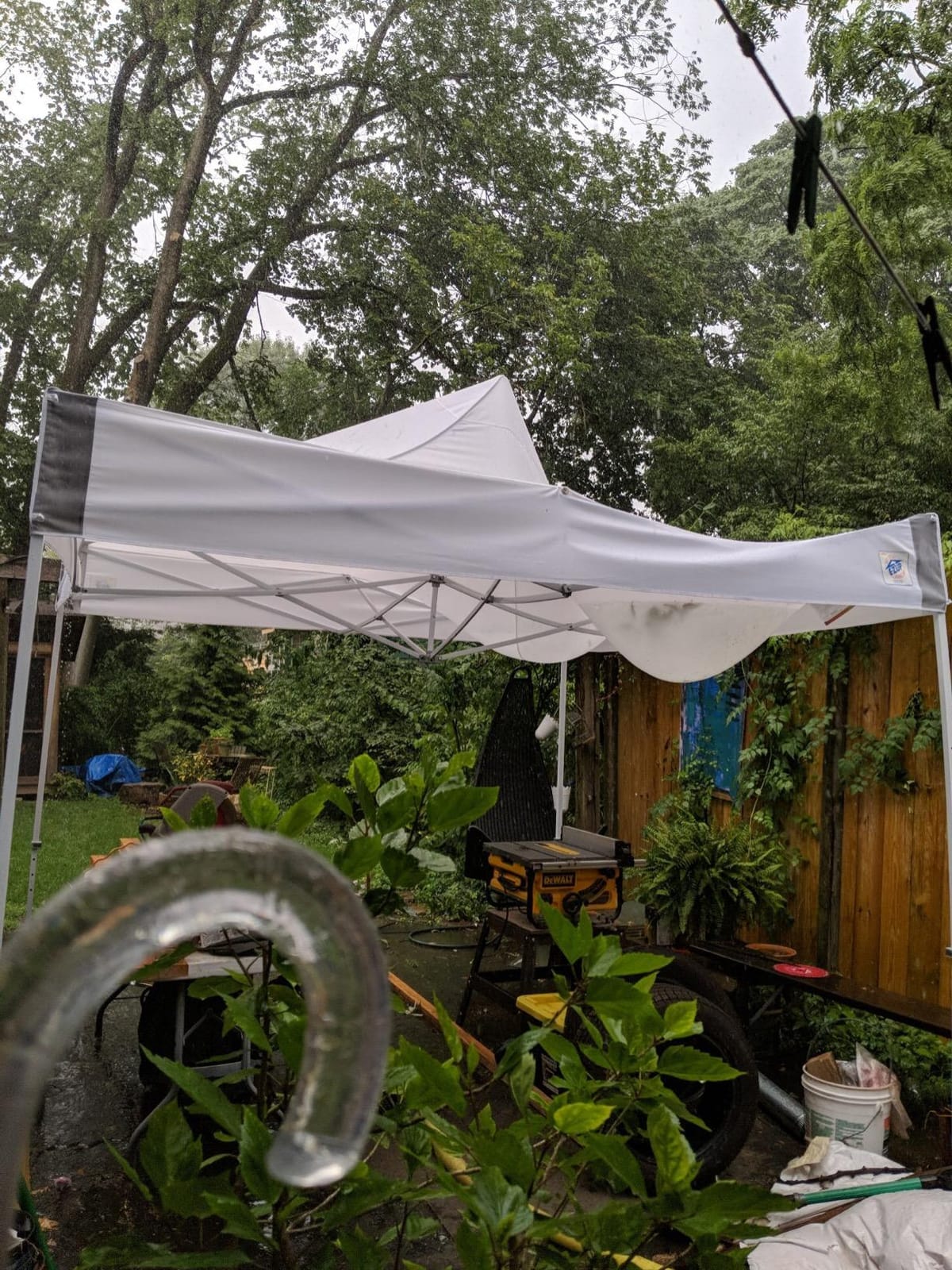
The three-year manufacturer warranty is the longest here, and owners report that claims for broken trusses were honoured with all parts replaced. That matters more than it sounds, because a bent crossbar is the most common wind casualty and a warranty that covers it effectively resets the frame’s life.
The annoyances are real though. The Wide-Trax roller bag has a bottom zipper only, which makes getting the collapsed frame back inside awkward. Sidewalls zip together with difficulty and the panels are narrow. The centre pole slide mechanism can seize and need disassembly, and some leg feet arrive welded crooked.

Why it holds up in a gust
Vertical legs and a square footprint mean the wind has almost no leverage against the frame. Internal guying also converts the roof from a surface that catches air into a braced structure, which is why the owner with the 65 mph gust report specified it as a factor.
Where it is the wrong choice
It is a 10×10 with 100 square feet of floor area, so anyone needing a genuine exhibition footprint will outgrow it quickly. The narrow sidewall panels and stiff zips also make it a poor choice as a fully enclosed weather shelter.
8. MASTERCANOPY Premium 10×20 – The Biggest Leg Profile Available Here
MASTERCANOPY Premium Heavy Duty Pop Up Commercial Instant Canopy Tent (10×20, Gray)
1.77 inch hexagon legs
Powder coated full truss
50 km/h with anchoring
200 sq ft
Pros
- 1.77 inch hexagon legs are the largest tube profile in this comparison
- Hammer-tone powder coating resists rust
- Straight-leg truss with 200 sq ft of true coverage
- Three height settings and a one-minute three-step setup
- Includes four sand bags four ropes and four stakes
Cons
- No sidewalls included so protection relies on the frame and anchoring alone
- Under 300 ratings so long-term durability is thinly documented
At 1.77 inch, these are the largest legs in the roundup, and the hexagonal profile is not decoration. A hex section resists bending in every direction, not just the two axes a round tube is stiffest in, so the leg has more to give before it flexes into a permanent crease. The hammer-tone powder coating over a full truss is a serious rust treatment for gear that lives outdoors.
Height adjustments run at 89.3, 93.7 and 97.2 inches, and the 200 denier silver-coated top reflects 99% of harmful sun rays while staying water resistant. The 1680D PVC-coated wheeled bag with reinforced handles is one of the tougher bags here, and four sand bags, four ropes and four stakes are included. The 50 km/h figure again comes with the anchoring condition attached.
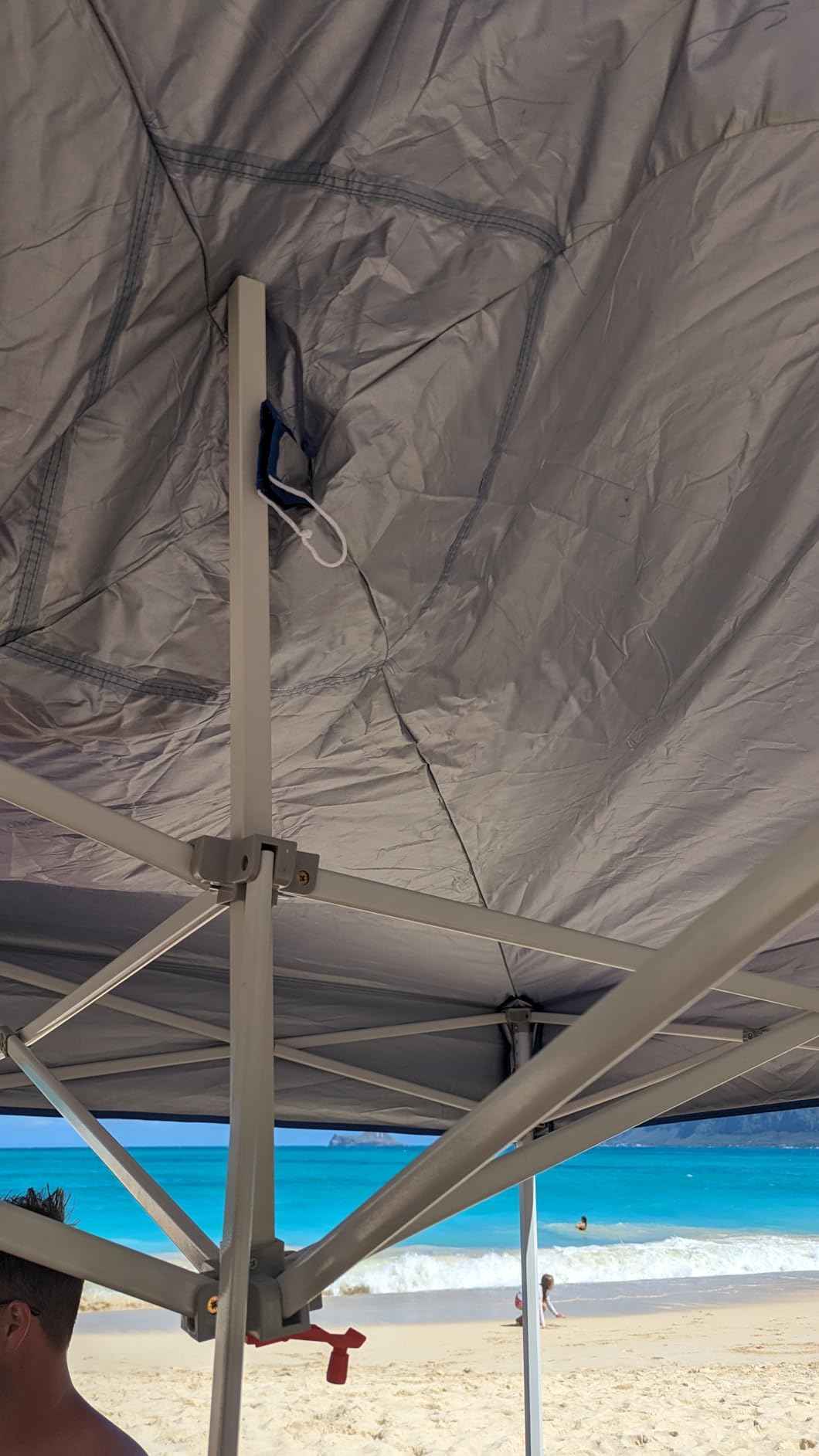
The honest weakness is thin evidence. With under 300 ratings, the long-term durability story is largely untested by actual buyers, and the 200D top is the thinnest fabric paired with the biggest frame here. There are also no sidewalls at all, which for wind means you have no perimeter protection, only the frame and your anchors between the weather and your equipment.
That combination is a strange one: the strongest legs available, attached to a roof that is the most likely thing to tear. If you buy this for a 200 square foot footprint, keep the enclosure open on the windward side and accept that you are buying structure rather than shelter.

Why it holds up in a gust
Leg geometry is the whole answer. A 1.77 inch hexagonal section is enormously stiffer than a 1 inch square one, and stiffness is what prevents the buckle that starts every collapse. Straight-leg truss coverage over 200 square feet also spreads the load across more members than an arched design does.
Where it is the wrong choice
Skip it if you need weather protection rather than shade, because there are no walls. Also be cautious if the canopy is a long-term asset, because the small review base means you are buying on spec alone rather than on a track record of owners keeping them up for seasons.
9. COBIZI 10×10 Heavy Duty – Thick Tubing in a Manageable Footprint
COBIZI 10×10 Heavy Duty Pop up Canopy Tent with Sidewalls Commercial Canopy
1.26 inch tubing, 0.03 inch wall
420D Oxford top
4 removable sidewalls
Pros
- 1.26 inch powder-coated truss with a 220 lb per-pole rating
- Owner rated it the sturdiest of three canopies owned
- 420D Oxford top with sealed seams rated 2.1 psi
- Four Velcro-attached sidewalls block wind-driven rain
- Solo setup achievable in roughly 25 minutes
Cons
- Cover fabric is thin with pin holes at the frame tie points
- Included stakes are too weak to hold a guy rope
- Some frames arrive with legs that will not lock
This is the 10×10 version of the thick-tube idea, and it is the most interesting value in the list. One owner who bought three different canopies rated this the sturdiest of the set, reporting that it outlasted the other two through moderate wind and rain. The 1.26 inch powder-coated truss with a 220 lb intermediate pole rating is a genuinely heavy spec at 10×10 size, and the 420D double-PU Oxford top is the best fabric on any ten-by-ten we looked at.
Unlike the bigger sibling, this one is genuinely settable by one person. An owner in their seventies reports assembling it alone in roughly 25 minutes, and the three height settings use pinch-free thumb latches. The roof geometry also prevents water pooling, which keeps dead load off the fabric during a storm.
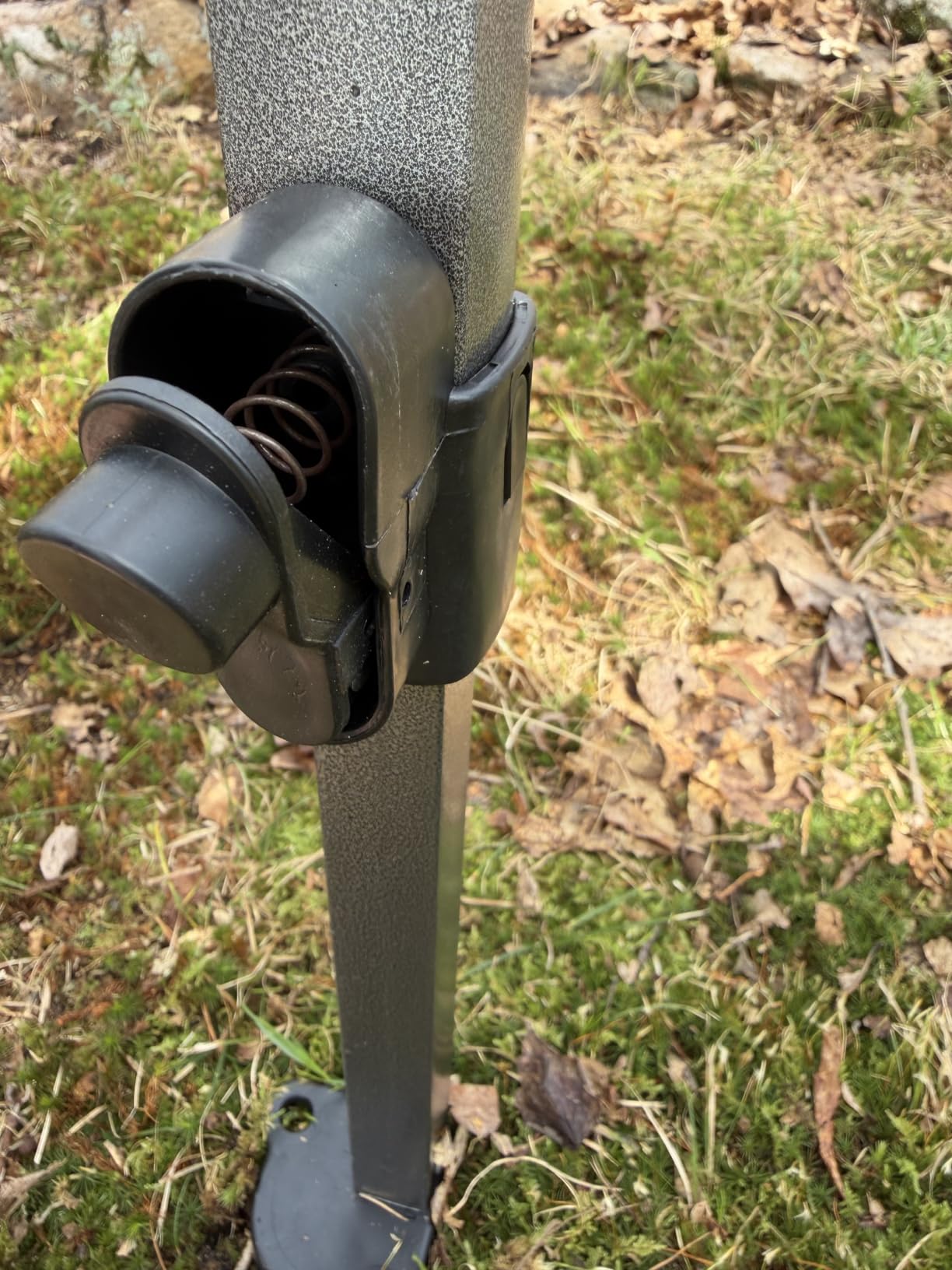
Consistency on arrival is the problem. Some frames show up with legs that will not lock, which on a canopy is close to a return-shipment problem rather than a nuisance. The cover fabric is thinner than ideal and has shown pin holes where the frame meets the tie points, and the included stakes are widely considered too weak to hold a guy rope, so buy your own anchors before you rely on them.
The 18 mph level 4 rating is worth respecting rather than resenting, and one German-language review notes the large wind-exposed surface area and recommends it for occasional use only. It is a fair reading. For a weekend market, that is exactly what it is for.
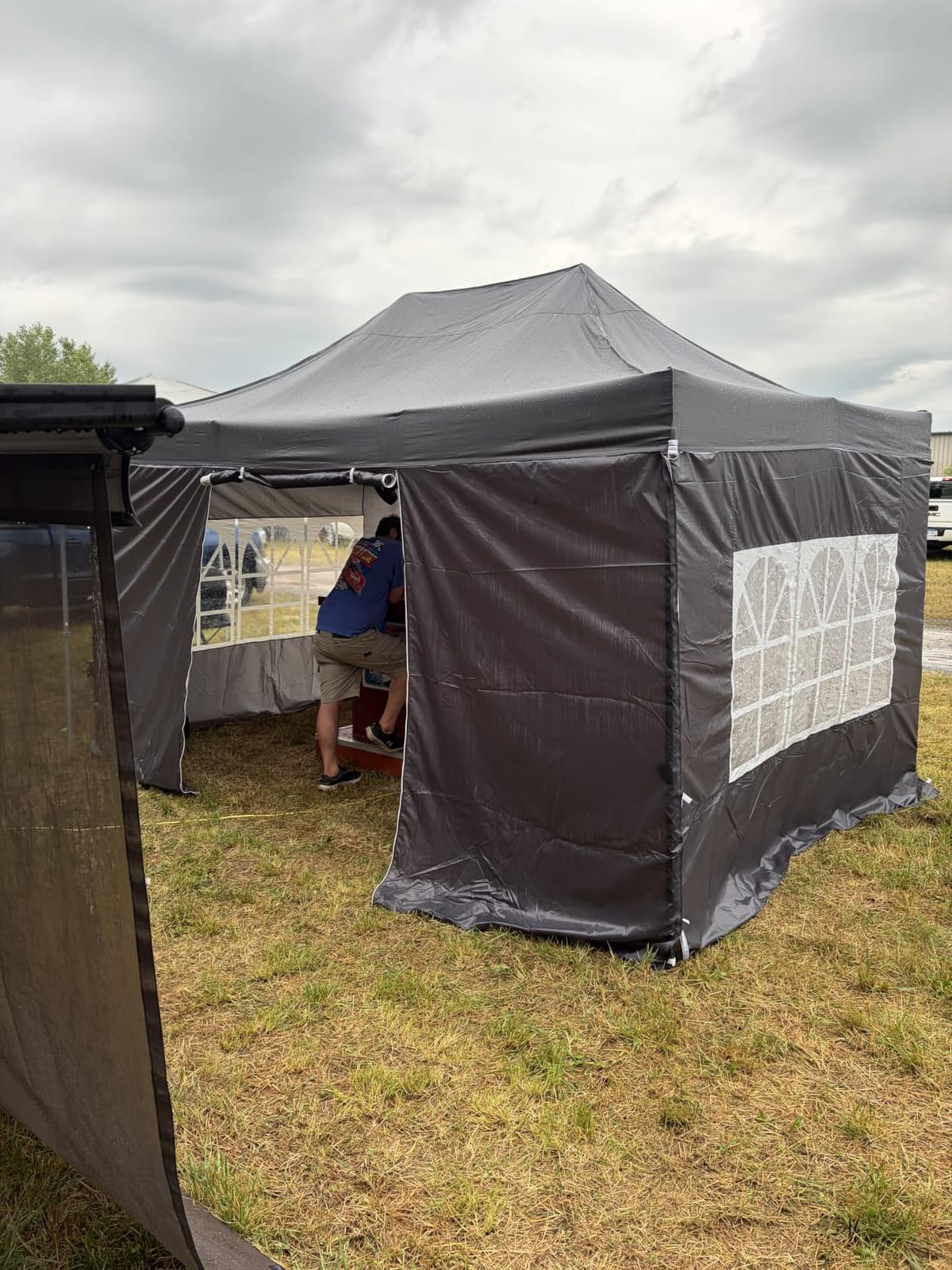
Why it holds up in a gust
Wall thickness again. At 0.03 inch, the tubing holds its shape under bending far longer than the 0.02 inch used on typical tents, and the 220 lb intermediate pole braces the middle of the span where crossbars usually sag. The steep roof also sheds rain instead of loading the frame with water weight.
Where it is the wrong choice
Do not plan to leave it standing overnight in a forecast gust, and inspect the leg locks the moment you open the box. If consistent quality control matters more to you than tubing thickness, step up to a frame with thousands of reviews behind it.
10. HLong 10×10 Heavy Duty With 4 Sidewalls – The Compact Camp Shelter
HLong 10×10 Heavy Duty Pop-Up Canopy with 4 Sidewalls, White
1 mm powder-coated square legs
50 km/h wind anchored
8.7 ft peak
3 walls plus door
Pros
- Staked frame held position during high winds for one owner
- Bought after a previous canopy was wind-damaged and judged the metal frame much sturdier
- Sets up in about eight minutes and folds to fit an SUV
- Lower 8.7 ft peak is easier to load into a vehicle
- Fully enclosed four-wall design with zippered corners
Cons
- Door zipper broke on day one with no replacement panel
- Sidewalls attach to the frame leaving roughly a 5 inch gap
- Shortest peak height in the group limits standing headroom
This is the one to look at if your canopy is going to a campground rather than a trade show. The full truss structure with 1 mm powder-coated square legs and reinforced cross trusses is rated wind resistant to 50 km/h with proper anchoring, and the owner who bought it after a previous canopy was destroyed by wind and rain says the metal frame is sturdier than any they have owned. Their staked frame held position during high winds.
The lower 8.7 foot peak is unusual here, and it is a feature for campers. It sets up in about eight minutes, folds compactly enough to fit in an SUV, and is easy to load because you are not lifting it to head height. Three plain sidewalls plus a zippered door wall in 210D PU-coated polyester give privacy in a crowded campground.
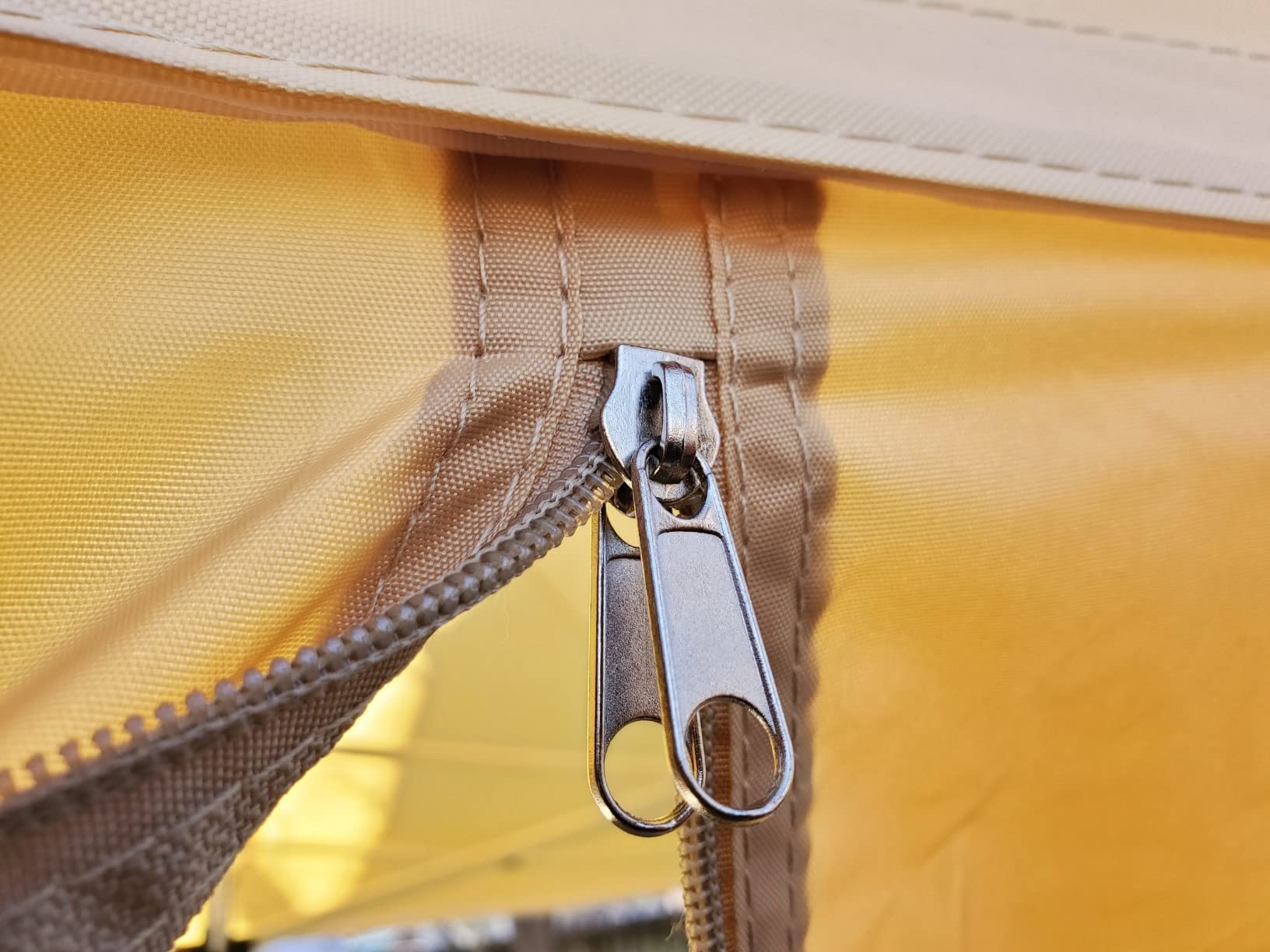
The zipper quality is the weak link. One reviewer’s door zipper broke on the first day of use with no replacement panel provided, and another notes the sidewalls attaching to the frame rather than to the canopy underside, leaving roughly a 5 inch gap that lets rain in. Both are fixable with a few dollars of hardware if you know before you leave home, and both are annoying if you discover them in the rain.
With 183 reviews, this is also the thinnest evidence base in the roundup, so you are trusting the specification more than a long ownership history. The 8.7 foot peak is the other real limit, because standing adults will be ducking where the taller commercial units would be comfortable.
Why it holds up in a gust
A short, squat frame is inherently stable. The lower peak means a smaller lever arm from the ground to the roof, so there is less bending moment at the leg hubs than on a 132 inch commercial unit. Staked corners plus a full truss give it a closed load path.
Where it is the wrong choice
Anyone who needs to stand upright inside will find the 8.7 foot ceiling cramped, and the enclosed four-wall design is a poor choice on an exposed ridge in a gale. It is a campground canopy, and it works best judged on that basis rather than against a trade show frame.
How to Anchor a Pop Up Canopy So It Survives Wind
Anchoring is worth more than any spec upgrade, and it costs a fraction of what a heavier frame costs. Six steps, in order, and check them off before the wind arrives rather than during it.
1. Stake every corner first, before the frame is fully tensioned. Drive a stake at roughly 45 degrees away from the leg and attach the rope or strap low on the frame where the crossbar meets the leg. Staking a slack frame just pulls the leg outward under load instead of resisting it.
2. Guy the mid-span points on anything wider than 10×10. The 10×20 models here run six guylines for exactly this reason. The centre of a long span sags under rain load, and a sagging roof catches wind differently than a pitched one.
3. Weight every leg, not two legs and the middle. Most event rules and most common sense call for something in the 20 to 35 lb range per leg. A single central weight does nothing against the uplift that lifts one corner, which is how frames leave sites without ever tipping over as a whole.
4. Never use weights that slide down the leg. This is the most repeated complaint in festival communities. Sliding clamp weights that grip the leg by friction are useless, because the first real gust creates a small shimmy and the leg walks straight out of the clamp. Use sandbags or filled water weights that sit on the ground, or a foot plate that the leg cannot rise out of.
5. Lock every hub and re-check the feet after the first gust. Most pop-up failures start with a leg that was one notch short of locked during setup. Walk the perimeter, push each foot down firmly, and confirm the thumb latches or hub buttons are fully seated.
6. Orient the canopy sensibly and re-anchor after moving it. On a coast or open plain, angle the peaked roof so the wind runs along the slope rather than into a flat side. If you move the canopy at all during the day, re-do the staking, because the frame settles and the rope tension changes.
Weight distribution is the part most people get wrong, so it is worth stating plainly: four sandbags on the four feet is the minimum, and for a forecast of 25 mph or more you want every foot independently weighted so that no single uplift event can move one corner. A frame that lifts one corner and then folds has failed, regardless of how much total weight is on it.
The included anchoring kit is a useful signal. Every canopy in this roundup ships with some combination of sand bags, ropes and stakes, and the manufacturer that states a wind rating with those items named is telling you the rating is conditional. The ones that quote a number with no conditions attached are quoting a laboratory figure, not a field figure.
When to Strike the Tent
Here is the threshold we use, and it is more conservative than most spec sheets. Below 20 mph, a correctly anchored commercial canopy is fine. Between 20 and 30 mph, you want the strongest frame you own, every leg weighted, and no more than two sidewalls fitted. Above 30 mph, take the tent down. Fifty miles per hour is not realistic for any pop-up canopy, correctly anchored or otherwise.
Micro-bursts are the exception that proves the rule. They arrive with little warning, last seconds, and are the single most common cause of destroyed festival tents because people had no time to react. If you see a shelf of dust or rain moving toward you, the tent should already be down.
When wind is genuinely forecast and you cannot remove the canopy, the veteran move is to take the roof off the frame. Bare truss with the anchoring still in place has a fraction of the sail area, and it will not launch a panel across a campsite. You lose your shade, you keep your frame, and your neighbours keep their windows.
On sand, dig deeper and angle your stakes further, because pull-out resistance depends entirely on how much surface the stake engages. On a beach, the windward side should always stay open. If you want a full guide to handling heavy loads around the house and yard while you set up, our heavy duty paper shredder guide covers a different corner of the same problem, and the heavy duty storage bin roundup is useful if you need to keep gear dry in transit.
Frequently Asked Questions
How much wind can a pop-up canopy withstand?
A correctly anchored commercial pop-up canopy holds roughly 20 to 30 mph. Most failures happen in that range because of sliding weights, partially locked legs or an unanchored frame rather than the wind itself. Fifty miles per hour is not realistic for any pop-up canopy.
How do you make a canopy wind proof?
You cannot make it wind proof, but you can make it far more survivable. Stake every corner, guy the mid-span points, weight every individual leg with 20 to 35 lb, confirm every hub is fully locked, and avoid weights that slide down the legs. Never use clamp-style weights that grip the leg by friction.
Which pop-up canopy is best for high winds?
Frame mass and tubing gauge matter more than brand. The ABCCANOPY Commercial-Series is our top pick at 48 lb of alloy steel with a full truss, while the Eurmax USA at 61 lb is the heaviest frame available. Both need complete anchoring to reach their stated performance.
What is the best beach canopy for high wind conditions?
Choose a heavy straight-leg frame with no sidewalls on the windward side, and anchor with deep angled stakes in the sand because pull-out resistance depends on how much surface the stake grips. Do not zip all four walls closed, which pressurises the structure like a bellows. Angle the peak so wind runs along the slope.
Can a tent withstand 50 mph winds?
No pop-up canopy is built for sustained 50 mph. Owners have reported portable canopies surviving individual 50 to 65 mph gusts when anchored and internally guyed, but those are isolated events, not a design rating. Above 30 mph forecast, the safe move is to take the tent down.
Final Verdict
For most people buying the best heavy duty canopies for wind, the ABCCANOPY 10×10 Commercial-Series is the one to buy. Forty-eight pounds of alloy steel, a full truss, nearly 7900 reviews of real-world behaviour and an anchoring kit in the box give you the strongest evidence-to-mass ratio in this roundup. If you want the heaviest frame available and can handle the lift, the Eurmax USA at 61 lb is the upgrade, and its US parts program is a genuine long-term advantage.
Whichever one you choose, anchor every leg, skip the sliding clamp weights, and take it down when the forecast gets serious. That single habit will protect more canopies than any spec on any box. Check current pricing and availability for all ten picks below, and we will see you out there under something that is still standing.