
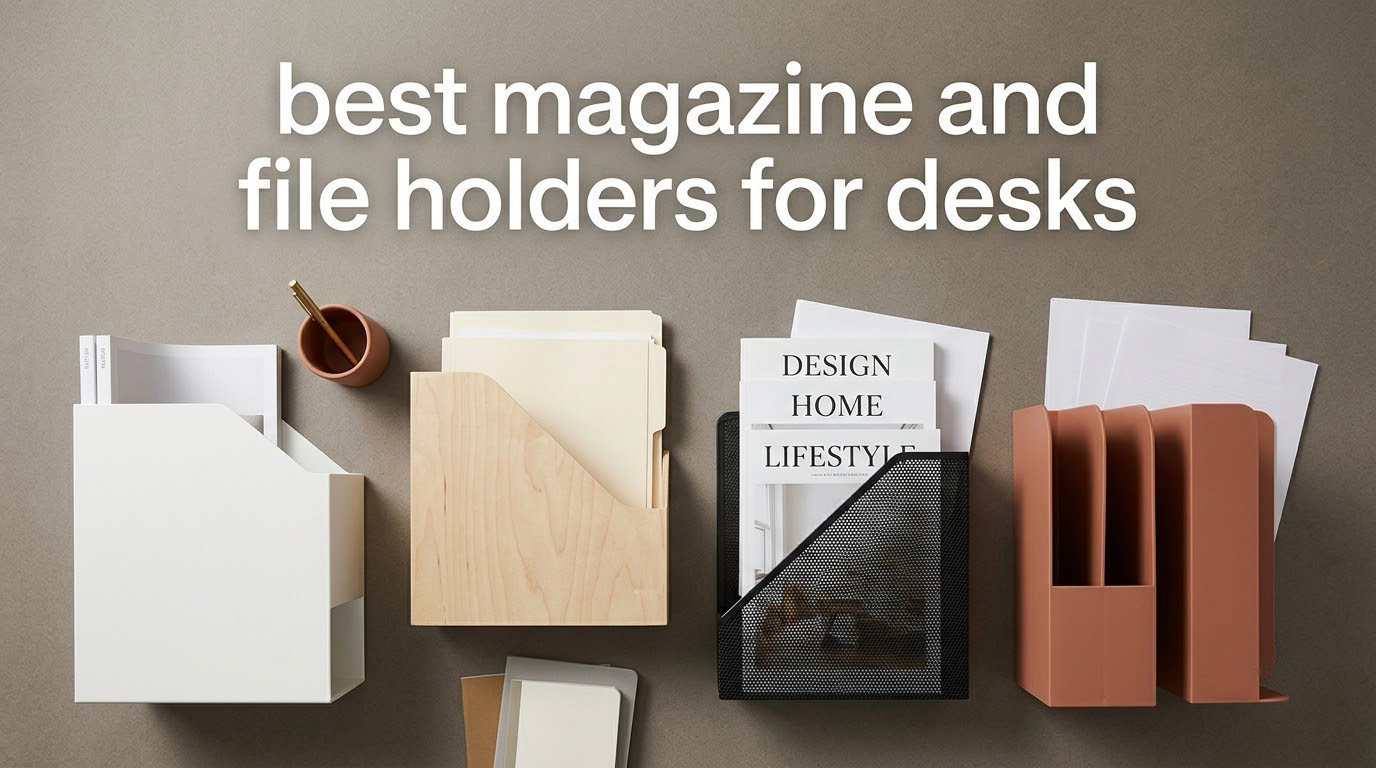
A magazine and file holder for a desk is an upright, open-top container that stores letter-size paper, catalogs, folders, and documents vertically so they stay flat, stay visible, and come out one at a time instead of collapsing into a slumped horizontal pile. If your desk accumulates paper, this is the single highest-leverage accessory you can add. I spent several weeks comparing ten of the best magazine and file holders for desks in 2026 — cardboard, collapsible plastic, wire mesh, and solid metal racks — and the differences in slot count, footprint, and rigidity turned out to matter far more than the finish.
Five form factors dominate the category. Single-slot units hold one category at a time and take up almost no width. Multi-compartment racks fix your categories into numbered bays. Wire and mesh sorters use a triangular footprint to get nine slots out of a small base. Clear acrylic keeps contents visible in shared spaces. And collapsible cardboard or plastic units fold flat when you move. The right pick depends less on taste than on two things: how much paper you actually have, and how wide your desk is.
Our team tested these holders on desks ranging from a compact 24-inch writing surface to a full L-shaped workstation, and we paid attention to the things buyers complain about most: holders that lean when half full, slots too narrow for 8.5×11 cardstock, missing label areas, and feet that do not stay put. We also read through thousands of customer reviews to separate what holds up after a year from what looks good in a photo. The picks below are grouped by use case so you can jump straight to the one that matches your setup, and we note who should skip each one.
Updated for October 2026. We may earn a commission when you buy through links on this page, at no extra cost to you.
Top 3 Picks for Paper-Heavy Desks in 2026
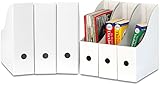
Simple Houseware 6-Pack Cardboard Boxes
- 6 foldable boxes
- 140g cardboard
- Open top with finger hole
- Folds flat for moving
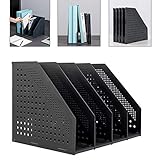
Leven 4-Compartment Collapsible Holder
- 4 adjustable compartments
- No assembly
- Polystyrene
- Collapses when empty

Sooyee 9-Slot Wire Magazine Sorter
- 9 triangular slots
- Electroplated gold finish
- Space-saving footprint
- No assembly
Our Editor’s Choice is the Simple Houseware 6-pack because a single purchase solves the problem for six years of accumulation, at a footprint small enough for a compact desk. The Leven holder earns Best Value for anyone who wants one rigid unit that expands from one to four compartments. The Sooyee sorter is our Top Rated pick: the highest rating in the group and the only one that fits nine categories into a 7-inch-wide base.
Best Magazine and File Holders for Desks in 2026
| Product | Specifications | Action |
|---|---|---|
| Simple Houseware 6-Pack Cardboard File Box |
|
Check Latest Price |
| Leven 4-Compartment Collapsible Holder |
|
Check Latest Price |
| Sooyee 9-Slot Wire Magazine Sorter |
|
Check Latest Price |
 Urban Deco 7-Slot Wire Holder Pair Urban Deco 7-Slot Wire Holder Pair |
|
Check Latest Price |
 SUPEASY 5-Compartment Mesh Rack SUPEASY 5-Compartment Mesh Rack |
|
Check Latest Price |
 U Brands Slim Mesh Magazine Holder U Brands Slim Mesh Magazine Holder |
|
Check Latest Price |
 FRETONBA 2-Compartment Folding Holder FRETONBA 2-Compartment Folding Holder |
|
Check Latest Price |
 SAYEEC 3-Compartment Collapsible Pair SAYEEC 3-Compartment Collapsible Pair |
|
Check Latest Price |
 DALTACK 4-Slot Iron Mesh Rack DALTACK 4-Slot Iron Mesh Rack |
|
Check Latest Price |
 Mind Reader Jumbo Mesh Holder Pair Mind Reader Jumbo Mesh Holder Pair |
|
Check Latest Price |
The table above is the whole lineup at a glance. Slot count is the first filter, because it maps directly to how many categories you can keep separate. The next filter is height, since anything taller than about 10 inches blocks your view of the desk behind it. Material comes third: mesh and iron flex less and hold heavier items, while cardboard and polypropylene move cheaply but need lighter loads. Every holder here stores letter-size 8.5×11 paper, and all but the narrowest slot widths handle A4 documents as well.
1. Simple Houseware 6-Pack Cardboard File Box — Best Overall for Most Desks
Simple Houseware 6-Pack Magazine File Holder Box, Foldable Cardboard Organizer, White
140g cardboard
9.75 inch deep x 3.75 inch wide x 12.25 inch tall
Set of 6
4.8 oz each
Pros
- Six holders in one purchase
- Folds flat when empty
- Open top with finger hole for fast retrieval
- Lightweight and easy to label
Cons
- Cardboard feels flimsier than rigid plastic or metal
- Diagram-only assembly is awkward for some hands
I started using this six-pack on a home office desk that was drowning in curriculum printouts and client paperwork, and the thing that surprised me was how little desk surface six holders actually consume. Each one is only 3.75 inches wide, so a full row of six spans roughly 23 inches — a third of a standard desk — while holding six separate categories. The open top means I pull a document from above without disturbing anything standing next to it.
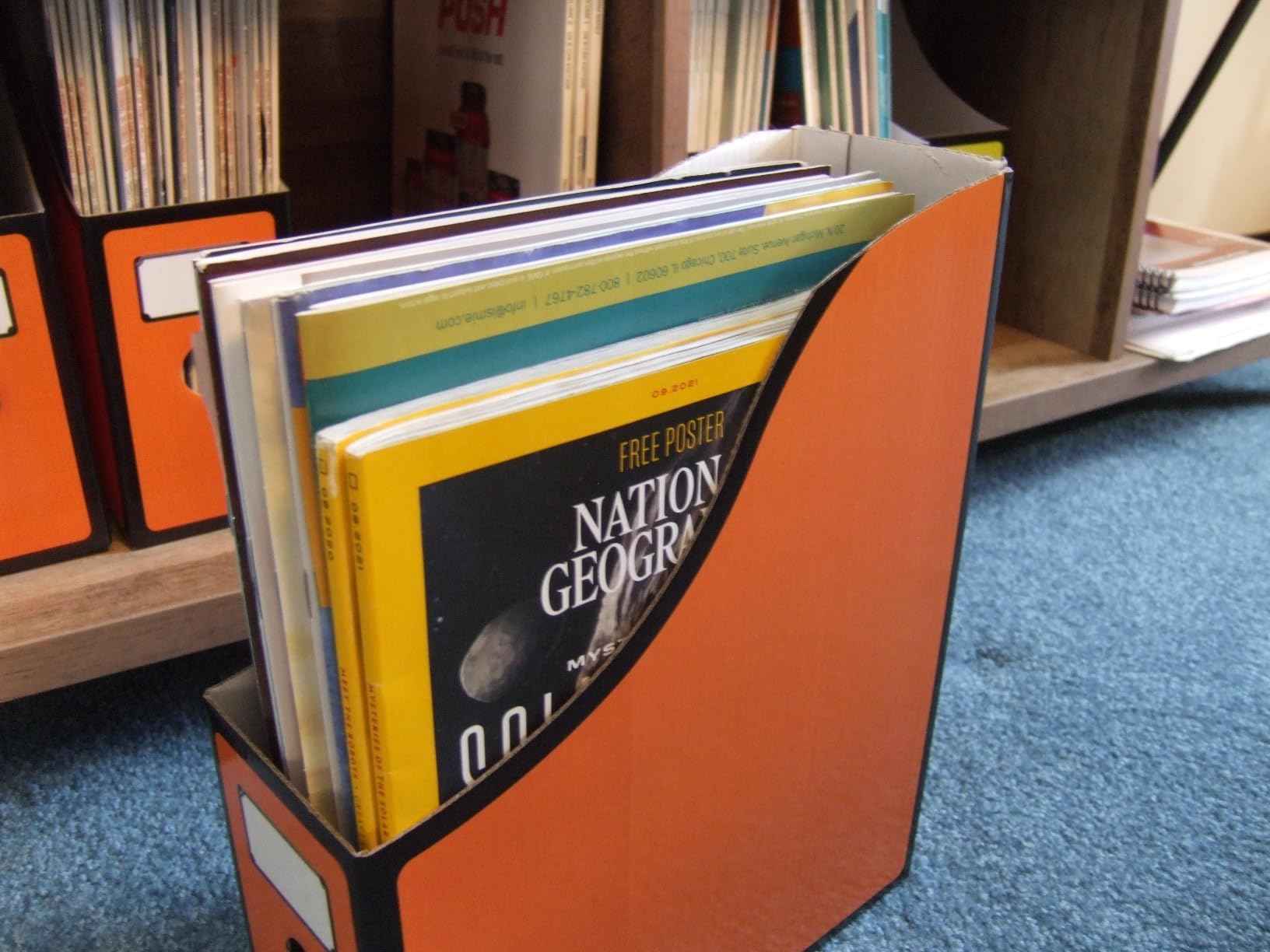
Each unit is built from 140g cardboard with a smooth color coating, and the front cutout doubles as a finger hole so retrieval stays one-handed. The interior is 444.14 cubic inches per box, which comfortably swallowed a stack of letter-size reams, magazines, and a couple of standard folders when I loaded it. I also found the height at 12.25 inches is on the tall side, so it works best at the back edge of a desk rather than beside a monitor.
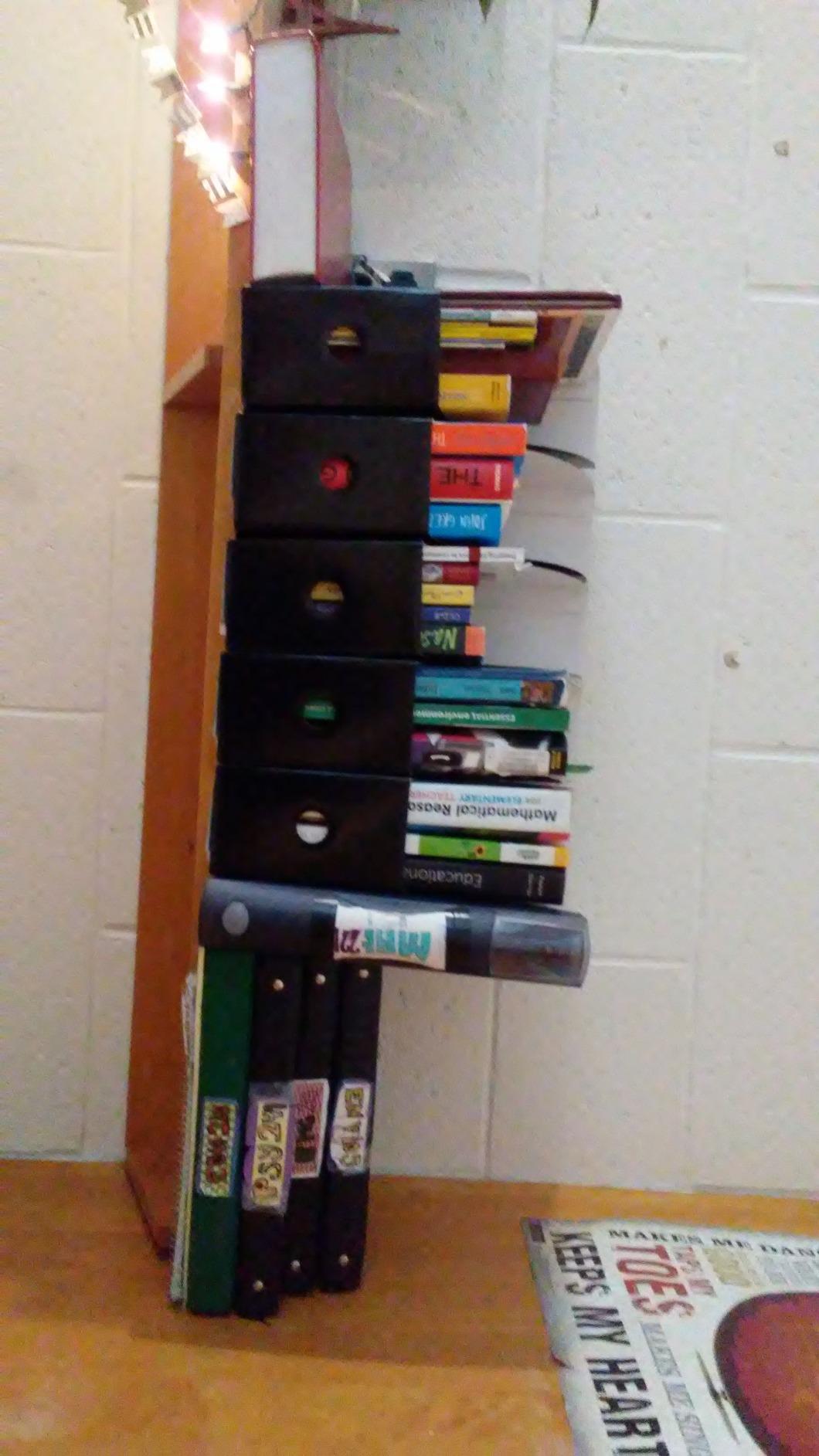
The build is honest about what it is. Cardboard walls are not going to hold a stack of hardback books without bowing, and buyers do report that the material feels thinner than the photographs suggest. The reinforced base is what keeps a loaded unit from going soft, and as long as you fill from the back and pull from the front, these stay upright. Reviewers also point out that assembly is diagrams only with no written guide, which was genuinely frustrating for my mother, who has limited hand dexterity.
What sold me is the fold-flat behavior. When I moved desks, all six collapsed into a stack roughly the thickness of a pizza box and went in a drawer. Organizing communities consistently report the same thing: people who buy multi-packs of matching holders report far more satisfaction than single-unit buyers, because the dimensions match and the shelf still looks deliberate. Over 14,000 reviews at a 4.5 average, that consistency holds.
Who This Holder Works Best For
Anyone moving into a first apartment, dorm, or new job will get more value here than from a single premium unit. Six consistent boxes mean you can split paper by category without buying mismatched pieces over time, which is a common complaint in organizing forums where shelves end up looking accidental. It also folds flat, so it is the safest pick if you rent and expect to relocate.
Craft and scrapbook users are a natural fit, since owners specifically mention using these for cardstock and craft books. Teachers and classroom managers benefit most, because six identical holders are easy to label by subject and cheap enough to replace if one gets crushed. If your paper is mostly light documents, magazines, and folders, this is where you should start.
Who Should Skip It
Skip this if you plan to store heavy hardback books, vinyl albums, or anything that puts real downward force on the walls. Metal mesh or iron racks are the right call there. Cardstock is also worth testing before you commit, because thicker stock sits higher in the slot and repeated leaning can warp the walls over time.
The other reason to pass is aesthetics under load. A white cardboard box looks clean when lightly filled and starts to bow once you jam it full of mixed media. If your desk is design-forward and you want something that stays rigid and presentable for years, look at the metal options further down. If you want the flexibility to rearrange categories without buying anything, check the collapsible plastic pick.
2. Leven 4-Compartment Collapsible Holder — Best Value Adjustable Unit
Leven Collapsible Magazine File Holder/Desk Organizer for Office Organization and Storage with 4 Vertical Compartments
High impact polystyrene
10 inch deep x 13 inch wide x 10.8 inch tall
Adjusts to 1 to 4 bays
2 lb
Pros
- Expands from one bay to four
- No assembly required
- Freestanding base sits flat
- Dark grey finish suits most offices
Cons
- Plastic dividers flex more than wire racks
- Only one unit included
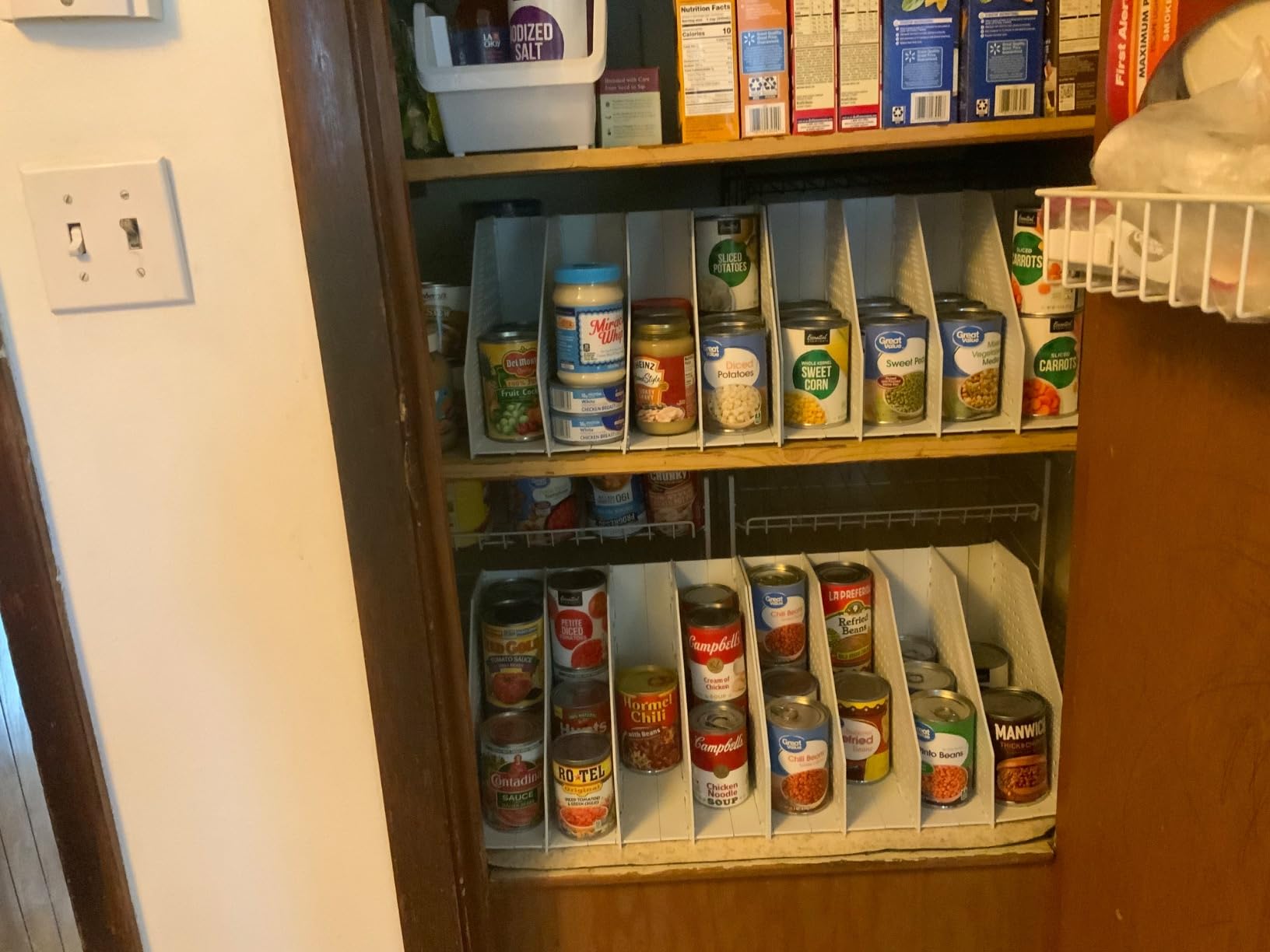
This is the unit I keep coming back to for small desks, because the compartment dividers collapse individually. Start with one bay for active mail, then pull the dividers up as categories accumulate until you are using all four. Nothing is wasted, and the same product covers a two-category need in January and a four-category need in September.
It measures 10 inches deep, 13 inches wide, and 10.8 inches tall, weighing 2 pounds. The 10-inch depth is the useful dimension here, because it means letter-size paper and A4 folders both sit fully inside the frame rather than poking out. The dark grey polystyrene has a polished, Art Deco-leaning finish that does not read as cheap plastic, and it wipes clean with a damp cloth.
Assembly is genuinely zero. It comes out of the box, you set it on the desk, and you pull the dividers up. That matters more than it sounds for anyone setting up a classroom or a reception desk on a Monday, and buyers consistently call the tool-free setup out as a reason to recommend it to others. The freestanding design also means you do not need a wall or a shelf bracket behind it.
The honest limitation is rigidity. Reviewers report the plastic dividers flexing slightly under heavy loads compared with wire or mesh holders, so a bay packed with hardback books will bow a little over time. Light document storage is where this unit is at its best. Its 4.7 average across nearly 4,000 reviews reflects how few complaints a no-assembly, adjustable design generates.
Who This Holder Works Best For
Home office users, reception desks, and shared workspaces benefit most from the adjustability. You can start small and expand, which means you are not committing desk width to four empty bays on day one. For a person who is still working out what their filing system should look like, that flexibility is the actual product.
It is also a good pick for anyone who moves often but does not want cardboard that creases permanently. The holder folds down to a flat panel when emptied and springs back into shape. If you want a matching second unit later, the 13-inch width means two of them sit neatly side by side on a standard 30-inch desk depth.
Who Should Skip It
Skip it if you already know you need eight or nine categories. Four bays is the ceiling, and reviewers of multi-slot sorters consistently note that narrow-slot racks scale better for volume. If your categories are already fixed and numerous, the nine-slot wire sorter later in this list handles more in less desk width.
Also pass if you are storing heavy or bulky items like record albums or boxed craft supplies. The plastic body will flex, and the base is not weighted the way a metal rack is. For heavy binders and albums, the solid iron mesh options are sturdier by a clear margin.
3. Sooyee 9-Slot Wire Magazine Sorter — Top Rated for Maximum Categories
Sooyee 9 Slot Gold Magazine Holder, Desktop File Sorter Organizer
Welded iron wire
10.2 inch deep x 7 inch wide x 6.9 inch tall
9 slots
12.8 oz
Pros
- Nine categories from a 7 inch wide base
- Triangular frame resists tipping
- Electroplated finish wipes clean
- No assembly
Cons
- Very thick books and binders are tight in the slots
- Plating can tarnish after a year of use
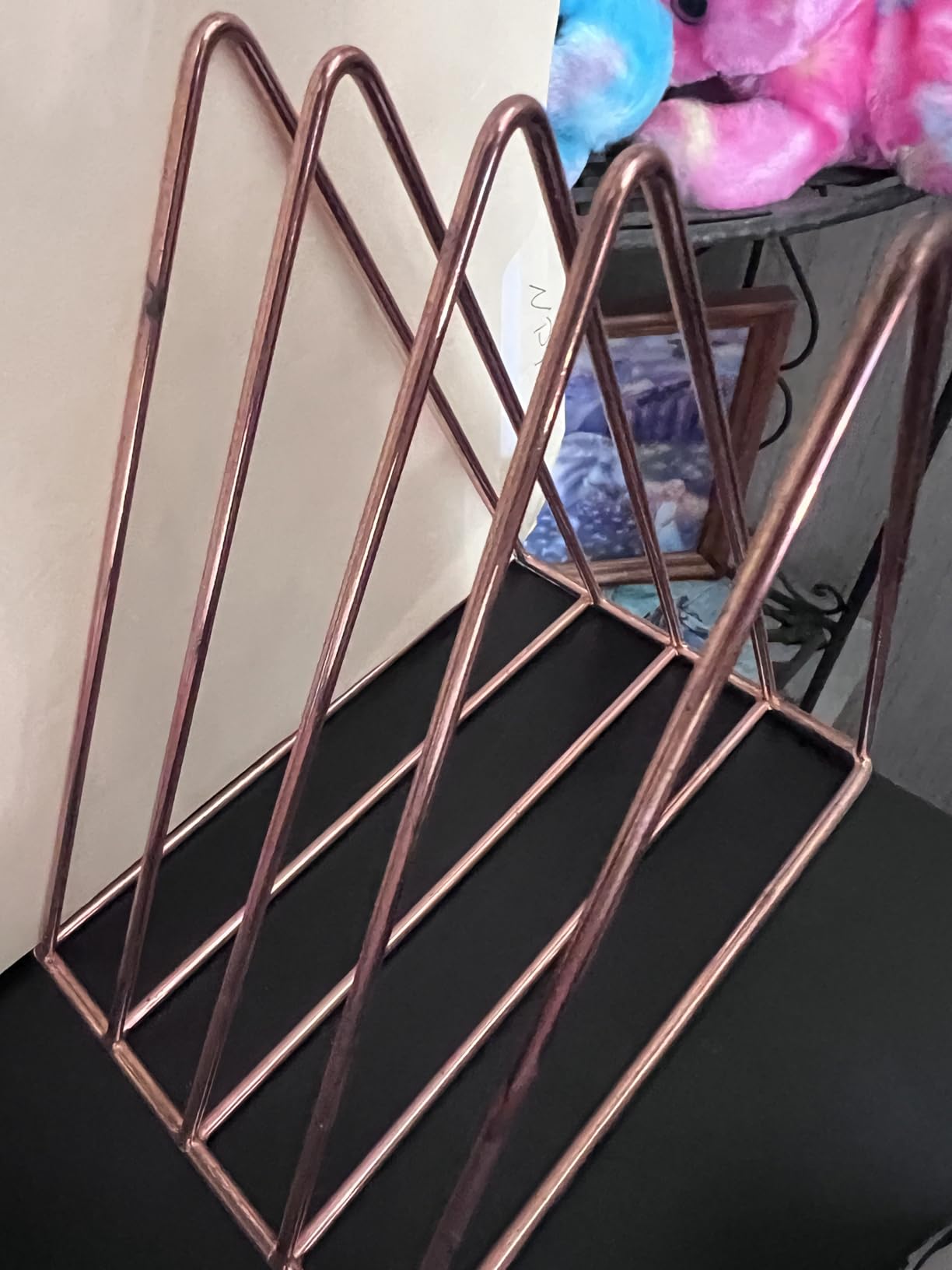
Nothing else in this list solves the volume problem the way this does. Nine upright slots from a base only 7 inches wide and 6.9 inches tall, because the triangular frame lets each slot taper narrower toward the top. It is also the shortest unit we tested, which makes it the rare sorter that does not block your sightline across the desk. If your desk is compact and your categories are many, this is the one.
The frame is welded iron wire with an electroplated, rust-resistant finish in gold. Reviewers frequently mention using it in classrooms for chromebook and tablet storage as well as for folders and magazines, and the triangular shape is specifically cited as the reason it stays upright instead of leaning when partially filled. That stability is the single most requested quality in desk-holder forums.
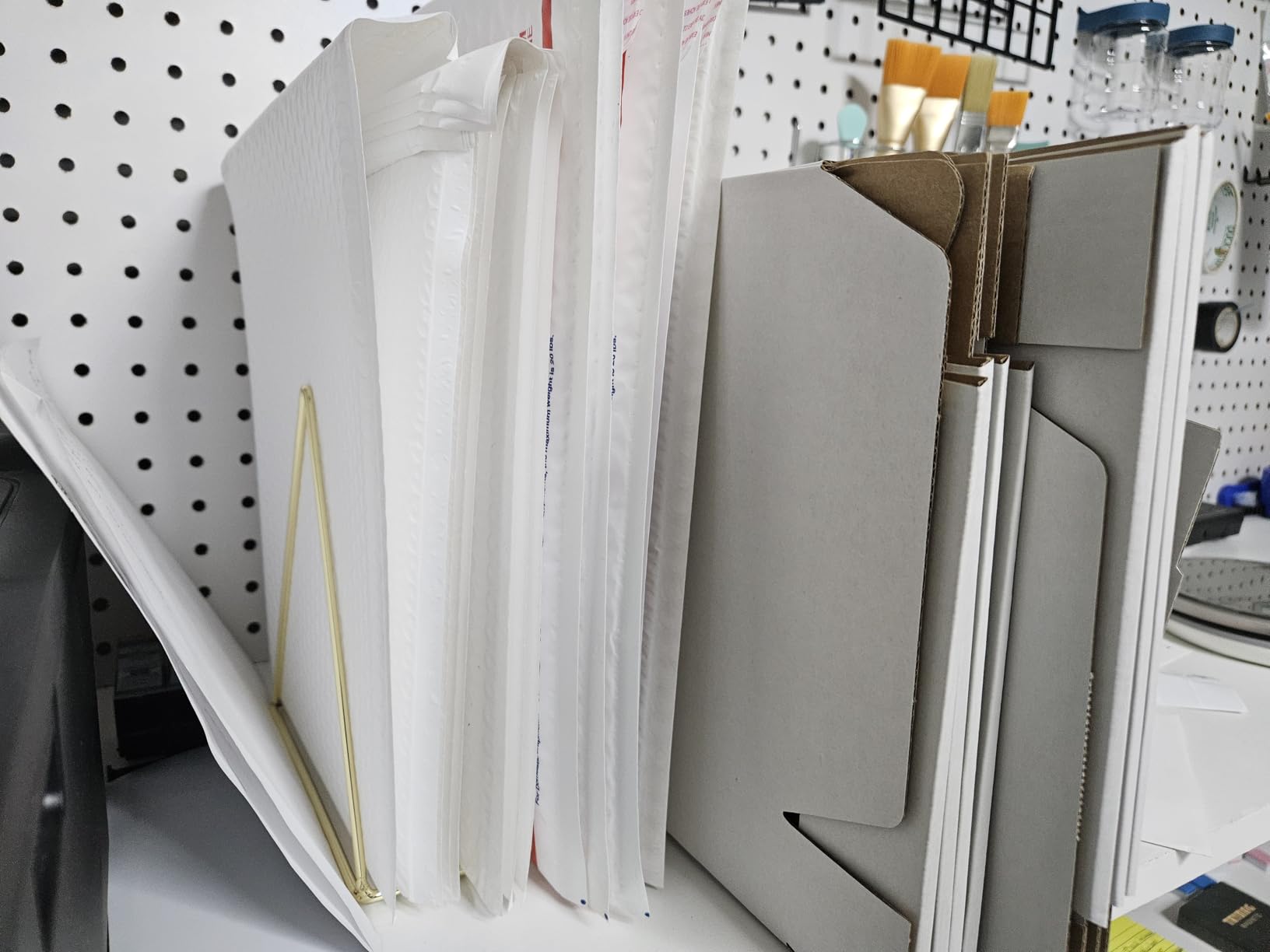
There is no assembly. It arrives as a single welded piece and sits flat. I found the width more accommodating than expected for magazines and standard folders, but owners are candid that very thick volumes crowd the upper part of the frame. A slim 3-ring binder fits at the base; a fat lever-arch binder does not. The open sides also mean items are easy to grab from any angle.
Two complaints recur: the plating can dull over a year or more of handling, and a small number of units have arrived with a detached weld at one spot. Neither affects the 4.8 average, which is the highest rating among the ten products we evaluated. It is also light at 12.8 ounces, so you can move it with one hand while loading.
Who This Holder Works Best For
Classrooms and learning stations are the standout use, because nine labelled bays let a teacher sort by subject, period, or student group and see everything at a glance. Reception and waiting areas benefit for the same reason. For a home office, it works well if you file by client, by month, or by project rather than by document type.
Small desks are the second group that should look here. At 6.9 inches tall, it sits below monitor height, and at 7 inches wide it leaves most of a compact surface free. The same goes for under-desk or shelf placement where height is the limiting factor. Buyers also use it for sorting mail and newspapers during a busy period.
Who Should Skip It
Skip it for thick binders, large vinyl albums, and boxed craft supplies. The tapered slots are the trade-off that buys you nine categories in a small footprint, and bulky items will not sit properly. If your paper is heavy and oversized, the four- and five-bay mesh racks are a better fit.
Also pass if your desk style is strictly minimalist and warm. The gold finish is decorative and does not blend into a neutral or Scandinavian palette the way black mesh does. It is designed to be seen, which is a feature in a waiting area and a drawback in a quiet home office.
4. Urban Deco 7-Slot Wire Holder Pair — Best for Records and Craft Paper
Urban Deco Triangle Desk Organizers Metal Wire Magazine Holder 7 Sections Decorative File Folder Organizer Vinyl Record Storage Office For Desk – Gold Magazine File Holder – Pack of 2
Gold coated metal
8.26 inch deep x 7.4 inch wide x 7.1 inch tall per unit
7 slots each
1.18 inch spacing
Pros
- Two matching racks for a symmetrical setup
- Compact triangular footprint
- Anti-rust coated finish
- Works for records
- tiles and craft paper
Cons
- 1.18 inch slot spacing is tight for larger magazines
- Narrow slots limit bulky binders
Buying these as a pair is the reason this one is on the list. A single 7-slot rack looks like a gap on a shelf; two matching racks side by side read as a deliberate system. Each unit measures 8.26 inches deep, 7.4 inches wide, and 7.1 inches tall, so a matched pair spans about 15 inches of desk width and fourteen usable slots between them.
The slot spacing is the spec that matters most here: 1.18 inches between dividers, measured by the manufacturer. That is the same opening the brand uses for vinyl record storage, and owners report using the racks for craft tile, glass boards, paperwork, and light files. If you are sorting paper only, you will find it serviceable. If you are sorting records or cardstock, you will find it purpose-built.
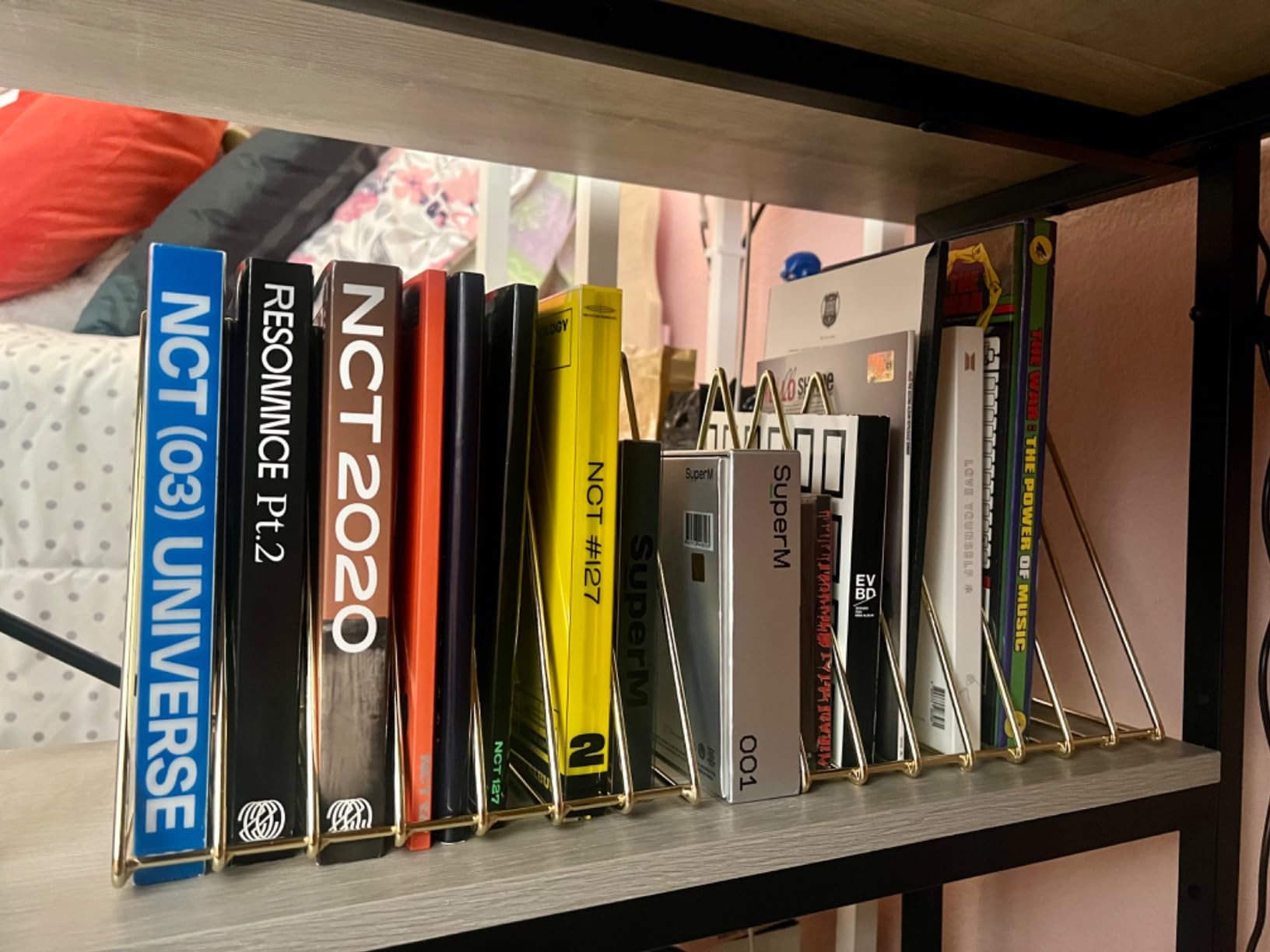
The gold coat finish is described as anti-rust, and I could wipe the surface with a damp cloth and it came away clean. No assembly is needed, and the triangular base is stable enough that neither unit leaned when I loaded only the back two slots. The style is listed as Nordic, which reads as a lighter, warmer look than the black mesh racks elsewhere in this roundup.
Two consistent limitations appear across reviews. The narrow slot spacing limits fit for larger magazines and albums, and the racks are not meant for bulky binders. At a 4.7 average with more than 1,300 reviews, the finish and the two-pack value are what owners highlight most often. The tradeoff is straightforward: you are buying slot width for a specific non-paper use.
Who This Holder Works Best For
Craft and scrapbooking workspaces should look at this pair first. The 1.18 inch spacing is the correct opening for cardstock, paper pads, and craft tile, and two units let you separate in-progress work from finished projects. Scrabookers posting in community forums repeatedly ask about sorting 8.5×11 cardstock specifically, and this is one of the few holders here sized deliberately for that.
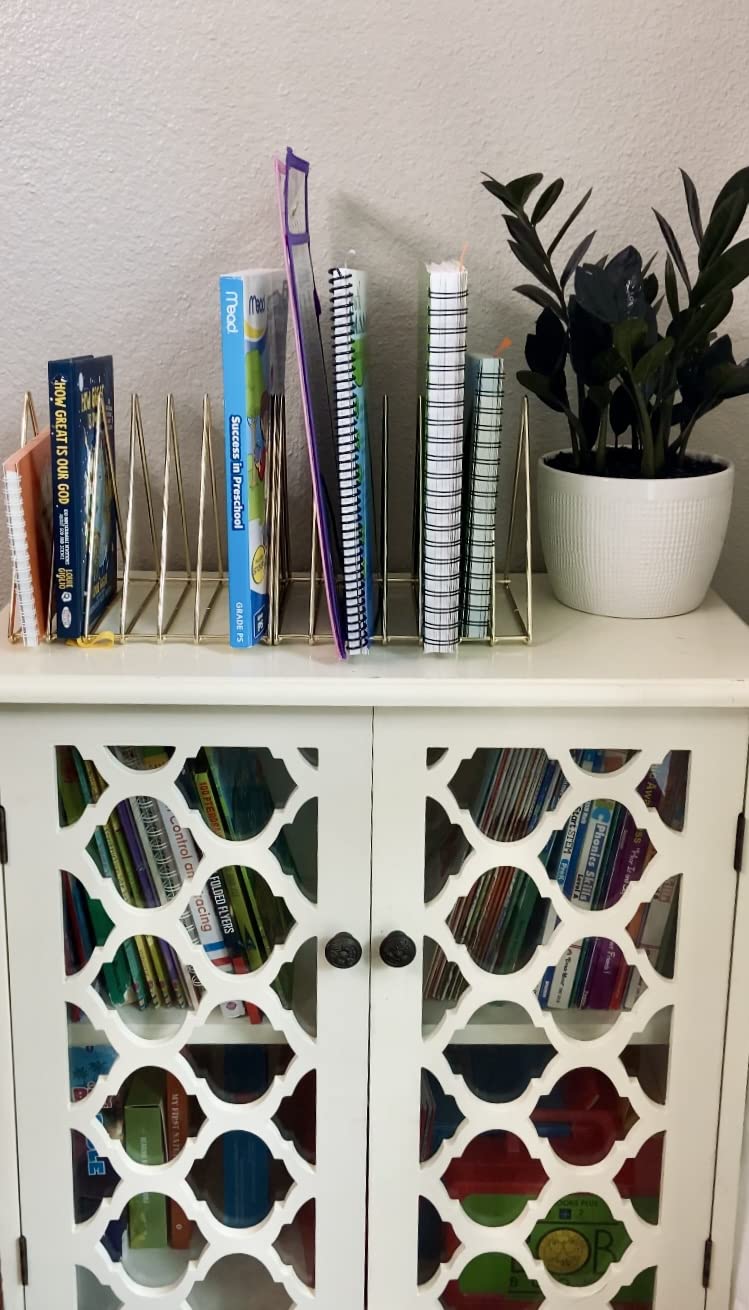
It also suits anyone displaying rather than storing. Light boxes, notebooks, and small binders look good standing in a gold wire frame, so a reception shelf, a reading nook, or a living room console works as well as a desk. If you need symmetry on a shelf, the two-pack removes the guesswork that comes with buying individual units over time.
Who Should Skip It
Skip it if you are building a serious document filing system. Seven narrow slots without label areas means you are relying on memory to find things, and a busy office will outgrow it quickly. For labelled, high-volume filing, a five-bay rack with front label slots is a better investment.
Also pass for oversized paper. Anything wider than a standard magazine or a thin binder will not seat properly, and forcing it will bow the dividers over time. For heavy paperwork, choose an iron mesh rack with a fixed wide bay instead.
5. SUPEASY 5-Compartment Mesh Rack — Best for Labelled Filing
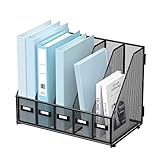
SUPEASY Desk Organizers Metal Desk Magazine File Holder with 5 Vertical Compartments Rack File Organizer for Office Desktop, Classroom, Home Workspace, Black
Black metal mesh
9.84 inch deep x 16.14 inch wide x 12.6 inch tall
5 vertical bays
3.6 lb
Pros
- Front label slot on every bay
- Fits 2 inch binders and card albums
- Mesh takes real weight
- Tool and screws included
Cons
- Wide footprint crowds smaller desks
- Fixed front lip blocks oversized items
- Rubber feet can be loose or missing
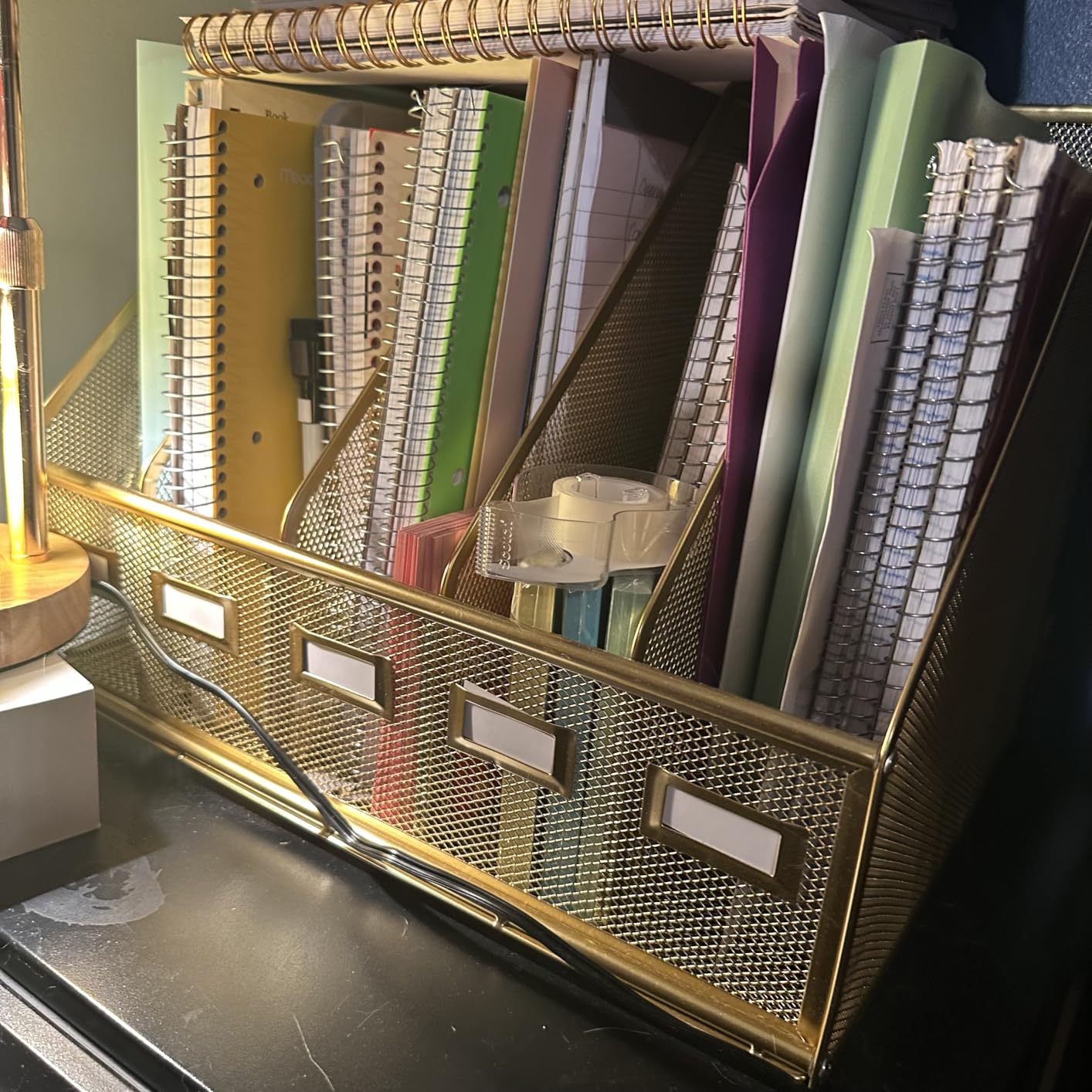
This is the only holder in the lineup where every compartment has a front label slot, and that single feature changes how you use it. Insert a card in each bay and the rack documents itself. For a shared workspace, a classroom, or a home office where more than one person retrieves paper, labelling is worth more than any finish or styling detail.
It is also the largest unit we tested: 16.14 inches wide, 9.84 inches deep, and 12.6 inches tall, at 3.6 pounds. That width is a genuine commitment, and it is the reason this rack does not suit every desk. In exchange, each bay is wide and deep enough for a 2-inch binder, a card album, or a stack of class handouts, which is far beyond what narrow wire sorters will take.

Assembly is screw-together and takes a few minutes with the screwdriver bits included in the box. The metal mesh itself is the sturdiest construction in this roundup for heavy items, and reviewers regularly mention loading it with books, binders, and tablets without sagging. I found it stable enough to pull a binder out of the middle bay without the whole rack shifting.
Three drawbacks come up repeatedly. The front lip is fixed and cannot be removed, so genuinely oversized items may not clear it. The mesh build is less rigid than solid iron, which means very heavy hardback stacks are better stored elsewhere. And the rubber feet are sometimes loose or absent on arrival, so check them before you commit to a load. Its 4.4 average across 1,200-plus reviews reflects those fit-and-finish issues honestly.
Who This Holder Works Best For
Shared and multi-user workspaces are the ideal setting. Everyone can see what belongs in each bay without asking, which is the same reason clear holders are valued in communal spaces. An office manager sorting invoices, an operations lead handling delivery paperwork, and a teacher organising class materials all benefit from the label slot.
It is also a strong pick for anyone storing bulky paper products rather than plain documents. Card albums, 2-inch binders, and tablets all fit, and the depth means items sit fully inside the frame. If you also want matching colour options, this rack is produced in a range of decorative finishes rather than a single black option.
Who Should Skip It
Skip it for compact desks and standard bookshelves. At more than 16 inches wide, it will not sit next to a monitor on a 24-inch surface without crowding the workspace, and reviewers specifically flag that the footprint may not fit a typical bookcase shelf. For tight spaces, a triangular wire sorter gives you more categories in less width.
It is also the wrong choice if you need a no-assembly setup, since the screws need tightening before it will hold a load. And if you are storing oversized flat items like foam boards or large-format paper, the fixed front lip will stop them going in. Measure your largest item against the 9.84 inch depth first.
6. U Brands Slim Mesh Magazine Holder — Best for Under-Desk and Narrow Spaces
U Brands Magazine File Holder, Desk Organizer, Black Mesh Steel Finish, 12.5″ D x 3″ W x 9.8″ H
Black alloy steel mesh
12.5 inch deep x 3 inch wide x 9.8 inch tall
Single slot
14.4 oz
Pros
- Only 3 inches wide
- Durable mesh with a clean finish
- No assembly
- Under-desk friendly
Cons
- Light gauge wire can arrive bent
- One slot means no built-in sorting
When desk space is the binding constraint, width is the number that matters, and this is the narrowest holder we tested. At 3 inches wide it takes up a fraction of the surface of any other unit here, which means you can fit two or three along the back edge of a compact desk, or slide one under the desk entirely. The brand positions it for under-desk placement, and reviewers confirm that works.
It is a single-slot design in black alloy steel mesh, measuring 12.5 inches deep, 3 inches wide, and 9.8 inches tall at 14.4 ounces. That 12.5 inch depth is the useful part: it swallows full magazines, bills, notebooks, and standard folders with room to spare. The mesh construction wipes clean and does not collect dust the way a solid plastic tray does.
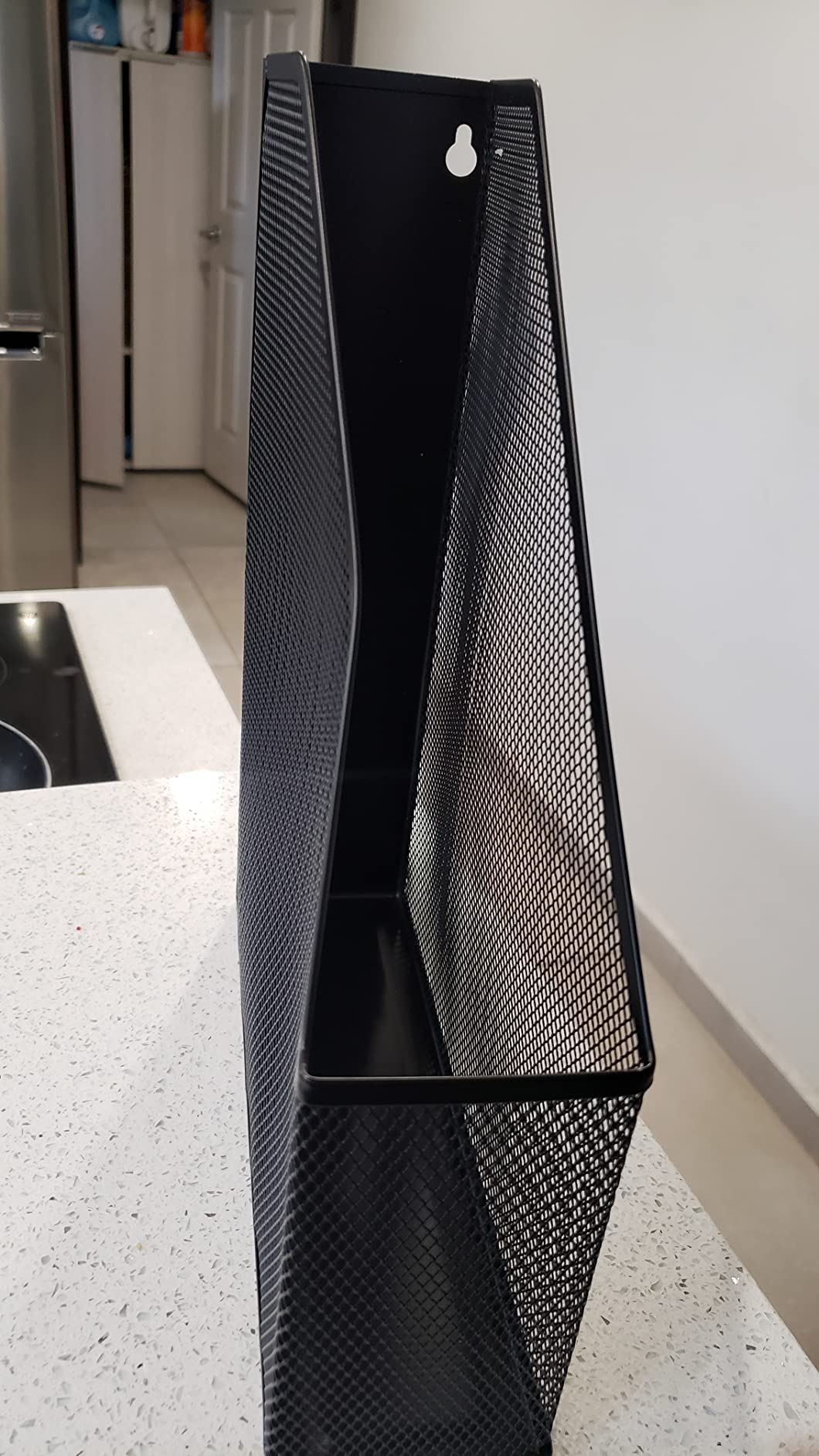
The honest caveat is the wire gauge. It is light enough to flex under a heavy stack, and buyers report that units sometimes arrive bent in transit with crimped joints that are difficult to straighten once damaged. Treat that as a shipping-risk rather than a design flaw, and inspect the frame as soon as it lands. When it arrives intact, owners report it lasting years of daily use.
Sorting is the other limitation. With one open slot, you are making categories by unit rather than by compartment, so a single-desk setup needs two or three of these to divide anything. That is a real trade-off against multi-bay racks, and the 4.6 average across 647 reviews reflects a product people like once they understand it is a one-category tool.
Who This Holder Works Best For
Under-desk storage is the clearest win. Sliding one beneath the desktop keeps the surface completely clear while keeping current magazines, bills, and paperwork within arm’s reach. Apartment desks, dorm rooms, and small writing surfaces benefit most, because 3 inches of width is essentially invisible on a desk.
It also works well for anyone who wants a monochrome, understated look. The black mesh is quiet and modern, and it matches black metal accessories without the decorative gold tone of the wire sorters. One unit per category is a perfectly sensible system for a home office that handles one or two document types at a time.
Who Should Skip It
Skip it if you want a single object to sort many categories. A one-slot holder is not a filing system, and buyers consistently note the lack of labeling or sub-dividing as the main limitation. If you need to keep five document types separate, a multi-bay rack will save you from owning five separate boxes.
It is also the wrong tool for heavy items or anything fragile. Light-gauge wire will bow under weight, and there is no reinforced base to catch a leaning stack. For books, binders, or records, choose a welded iron or mesh rack with a wider base instead.
7. FRETONBA 2-Compartment Folding Holder — Best for Tight Quarters and Small Desks
FRETONBA Collapsible Magazine File Holder, 2 Vertical Compartments
PP plastic
10 inch deep x 6.7 inch wide x 9.6 inch tall
2 folding compartments
0.55 kg
Pros
- Each compartment folds independently
- Width adjusts to different items
- Vented open front for airflow
- Tool-free installation
Cons
- Plastic body is less rigid than mesh under heavy loads
- Utilitarian dark grey finish
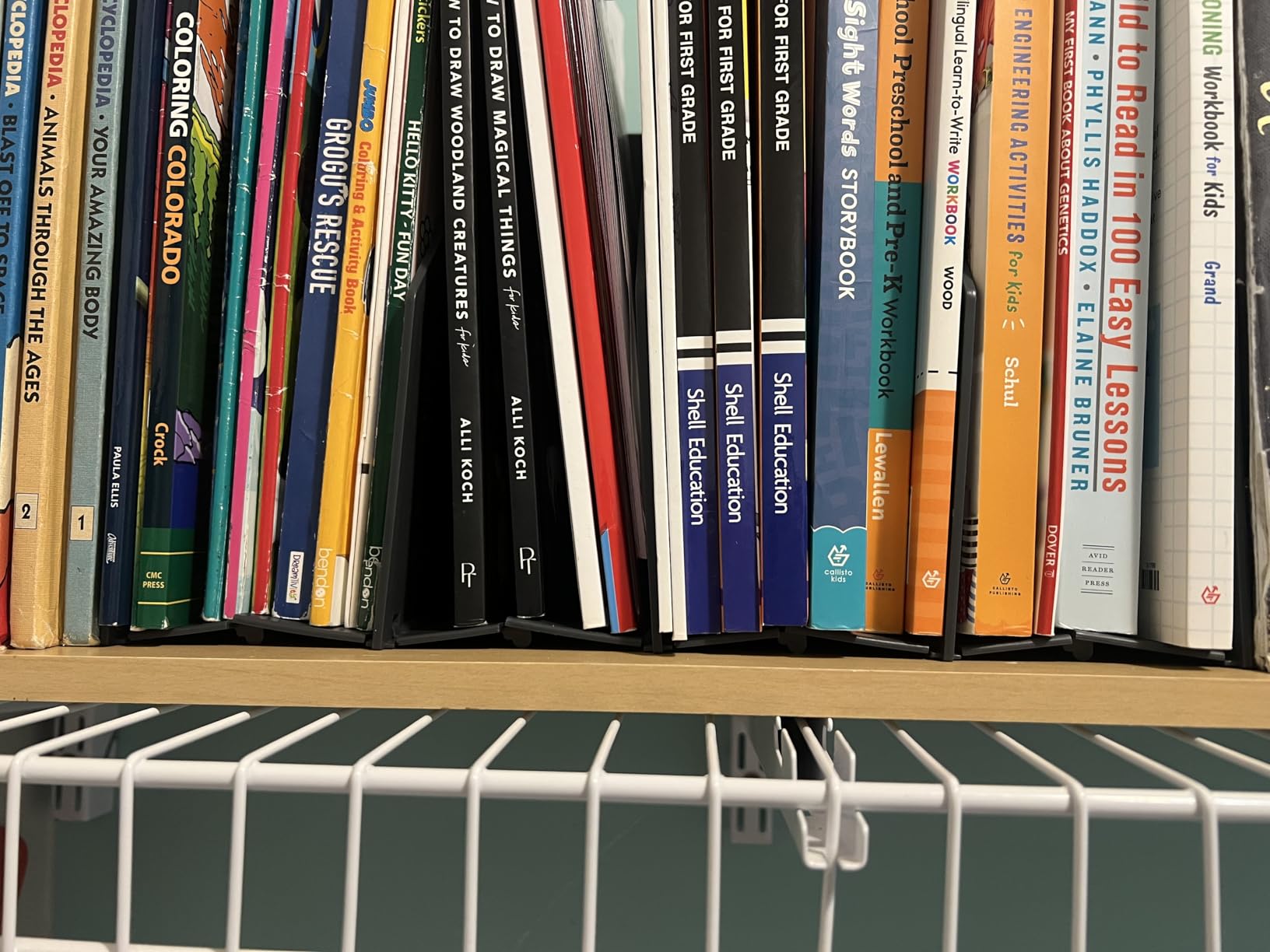
This is the compact answer for anyone whose desk is genuinely small. Each of the two compartments folds individually, so you can run it as a single bay when you are behind on filing and expand to two when the mail piles up. At 6.7 inches wide overall, it takes roughly half the space of a four-bay unit and about twice the space of a single-slot box.
Setup is genuinely tool-free: pull the two edges apart, press the base and back plate, and the width adjusts to whatever you are loading. The whole thing is PP plastic with smooth corners, which matters more than it sounds because a sharp edge on a holder you reach into daily will mark your hands and the paper. It weighs 0.55 kg and includes a one-year manufacturer warranty.
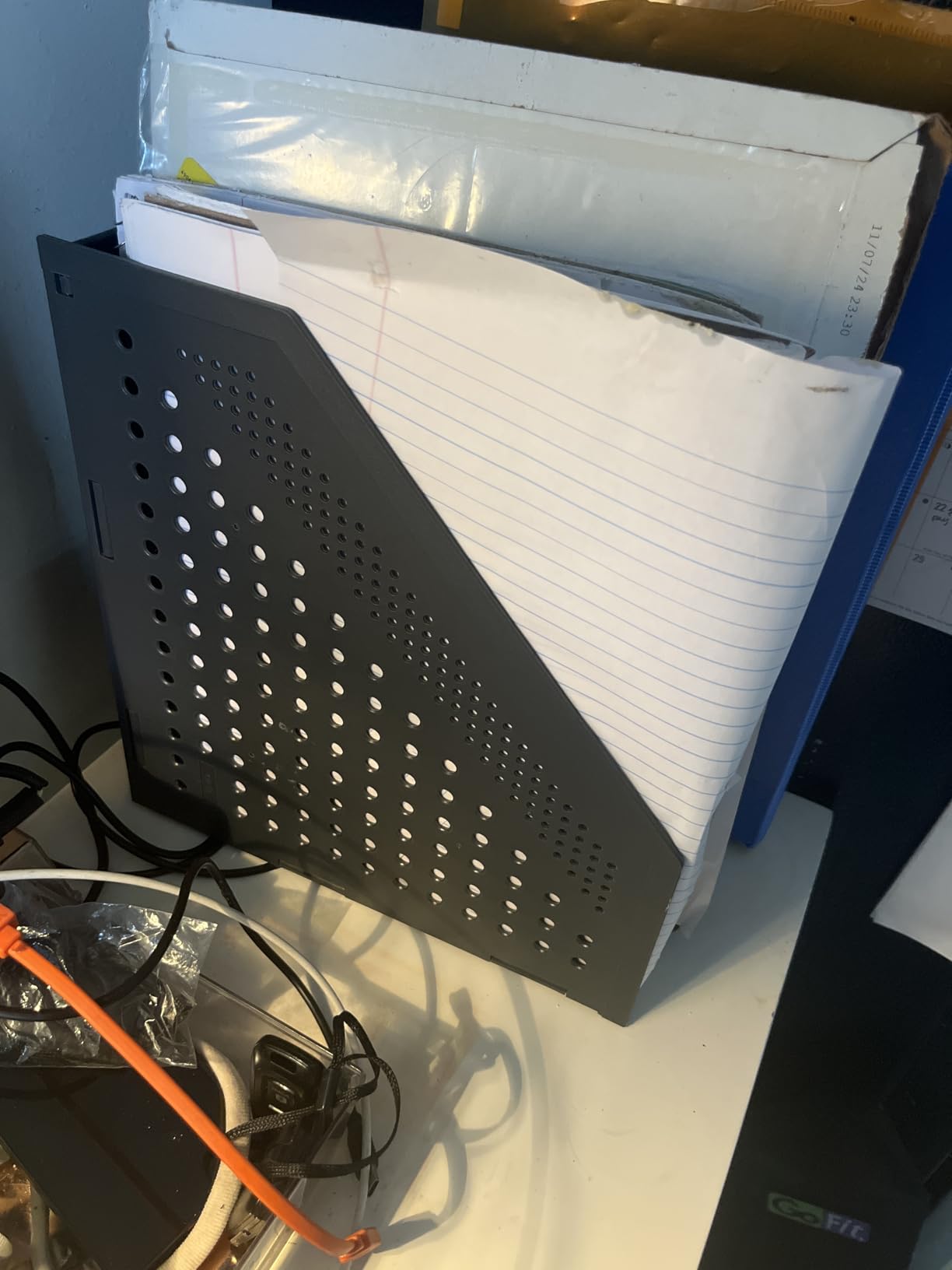
The hollow, ventilated design is a quiet benefit. Air moves through the body rather than trapping moisture against stored paper, and the open front means you pull a document out from the face of the unit. Owners also report using it for cardstock, picture albums, and craft supplies, and that the same model comes in 2, 3, and 4 compartment versions plus a light grey colourway.
Where it falls short is rigidity. The plastic body is noticeably less stiff than mesh, so a bay loaded with heavy books will stress it, and the adjustable width will eventually relax under sustained weight. Reviewers who bought it for studio apartments, RVs, and small home offices like the footprint; buyers storing heavier items preferred mesh for a different look and better load tolerance. The 4.5 average over 592 reviews sits in the middle of the group.
Who This Holder Works Best For
Small-space setups are the reason this unit exists. If you work from a kitchen table, a dorm, a studio apartment, or a shared hot-desk, the adjustable width means you can squeeze it beside a laptop and still open the compartments fully. Students managing coursework between classes get the same benefit.
It is also a good secondary holder in a larger system. One unit on each side of a monitor, or one per desk in a two-person workspace, gives a shared look without buying identical premium racks. The one-year warranty adds a little reassurance for anyone who expects to move it between surfaces regularly.
Who Should Skip It
Skip it for heavy, high-turnover filing. The two-compartment layout tops out quickly on volume, and once both bays are full the plastic walls start to bow. People sorting invoices, mail, or thick binders day after day will be happier with a wider metal rack that can take the load.
It is also not the pick if you want visible contents in a shared space, because the solid dark grey body hides everything inside. For a reception counter or a classroom where several people need to see what is stored, a clear or open-frame holder serves better. And if you want a matching pair, this is a single unit, so you would need to buy two.
8. SAYEEC 3-Compartment Collapsible Pair — Best for A4 and Oversized Binders
SAYEEC 2Pcs Collapsible Plastic Magazine File Holder Vertical Binder Storage Organizer for Desk Sturdy Upright Desktop Magazine Organizer Folder Rack for Office School Home (3 Compartments, Black)
PP plastic with 3 mm dividers
10 inch deep x 9.8 inch wide x 9.5 inch tall per unit
3 inch wide slots
Two units
Pros
- Three inch slots hold soft and oversized binders
- No front flaps so nothing slides out
- Two matching holders
- Snaps together without tools
Cons
- Dividers can bow or crack under very heavy loads
- Small latch parts are easy to lose
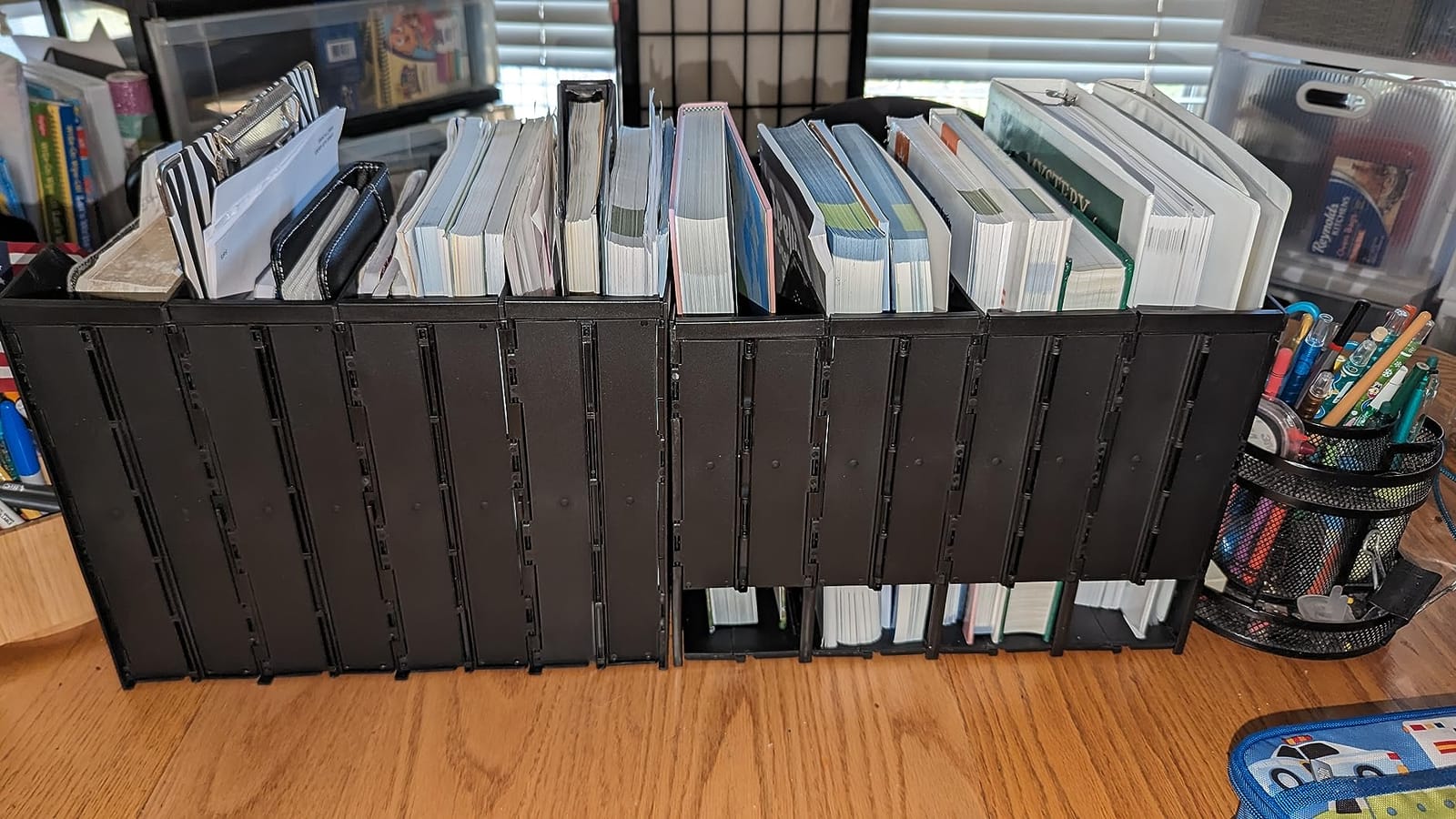
The 3-inch slot width is the reason this pair stands out from the other plastic holders. Most vertical racks are sized for standard letter paper, and a soft A4 binder or an oversized ring binder will lean or slide out of a narrower bay. Owners specifically call out that the open-front design grips flexible softcover and A4-wide binders upright without them slipping forward, which is the failure mode that makes most desk holders look messy after a week.
Each unit measures 10 inches deep, 9.8 inches wide, and 9.5 inches tall, with three compartments per holder and two holders in the pack. The dividers are 3 mm thickened PP, which is at the thicker end for plastic in this category, and the frame flexes outward or folds flat depending on the space you have. Assembly is a matter of stretching the frame and inserting the latches.
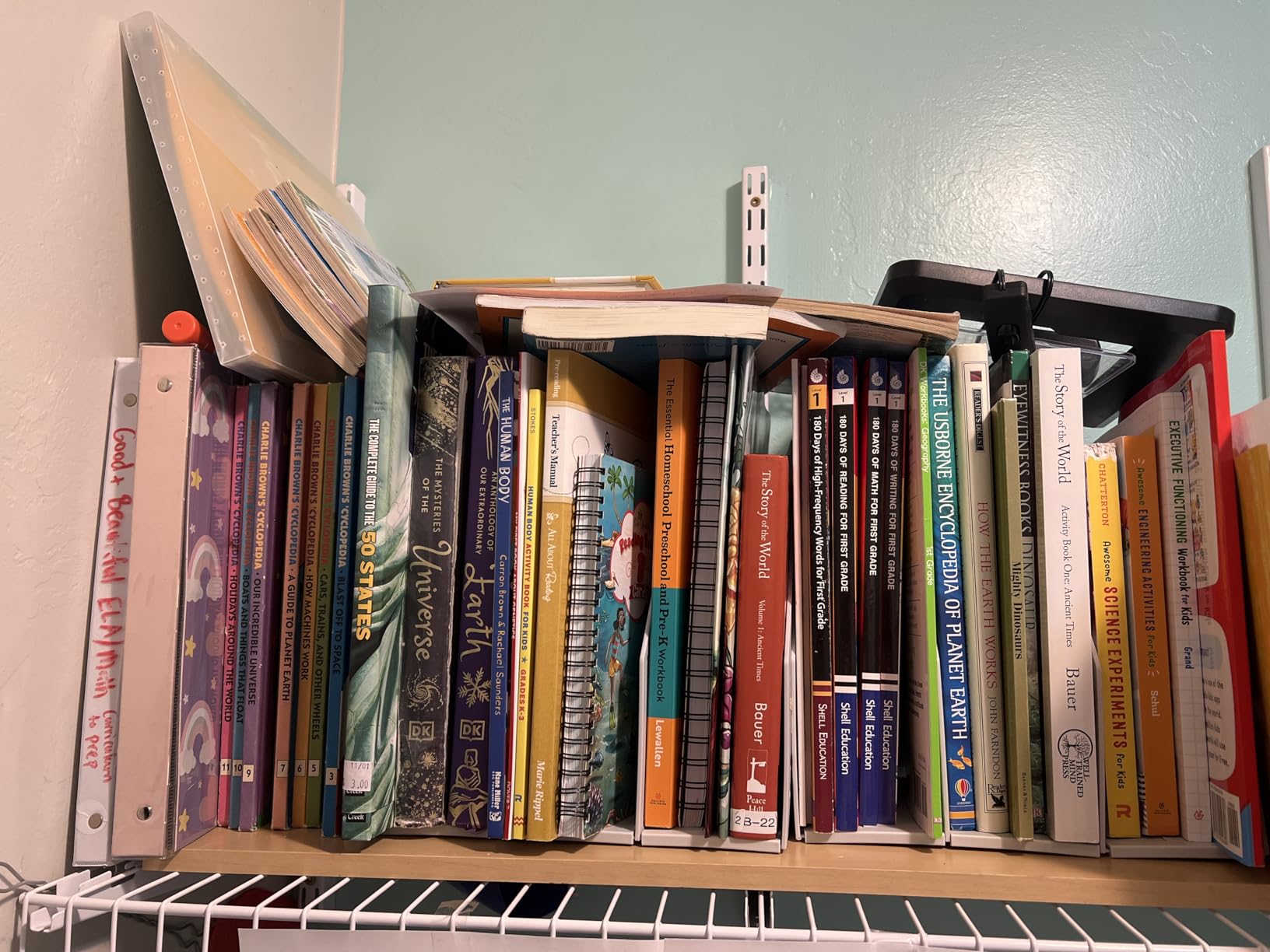
The open front means there are no flaps to lift, so retrieval is a straight pull from the face of the rack. That also means the manufacturer states no strict limit on file size, including A4 and larger. Reviewers who use these in classrooms and shared offices report they noticeably reduce desk clutter, which tracks with the fact that the most common paper-management complaint is a collapsing horizontal stack.
Two caveats show up in reviews. Under heavy loads the plastic dividers can bow, and a small number of buyers report cracked corners. Some units also need something placed inside to keep the shelves straight when lightly loaded. The small plastic latch pieces are also easy to lose, and you need them for reassembly. Across 442 reviews the average holds at 4.6.
Who This Holder Works Best For
Anyone whose paper is not standard letter size should start here. A4 documents, soft-cover coursework folders, and oversized binders are exactly what the 3-inch bay is designed for, and the manufacturer names A4 compatibility directly. For students and researchers working with mixed paper sizes, that flexibility removes the guesswork.
The two-pack format works well for a desk that needs splitting by purpose, such as active work on one side and reference material on the other. It also suits a two-desk or two-person setup, since the holders match. Buyers in organizing communities frequently note that buying in multiples produces a more coherent result than from accumulating single holders over time.
Who Should Skip It
Skip it for genuinely heavy items. Plastic dividers, even 3 mm ones, will not take the same load as iron mesh, and the crack reports are concentrated among users storing books. If your categories hold hardback books or boxed supplies, the metal racks later in this list hold their shape better.
It is also the wrong choice if you need a permanent, no-assembly-looking setup, since the latches can work loose if the frame is bumped. And if you want contents visible at a glance in a shared space, the solid black body will not do that. Choose a clear or open mesh holder for visibility instead.
9. DALTACK 4-Slot Iron Mesh Rack — Best for Heavy Binders
DALTACK 4-Slot Magazine File Holder, Metal Binder Holder, Black
Iron mesh
12 inch deep x 13.2 inch wide x 12.4 inch tall
4 labeled bays
3.8 lb
Pros
- Real weight keeps the rack steady
- Slots sized for 3-ring binders and a workbook
- Labeled compartments
- Anti-slip feet and screwdriver included
Cons
- Bulky footprint demands desk or shelf room
- Screw-together assembly can be fiddly
- Small leveling feet can shift
This is the one to buy if your paper is heavy. At 3.8 pounds, the iron mesh frame has real mass, and users consistently describe it as sturdy enough to hold 3-ring binders and heavy books without sagging or leaning. That weight is also what stops the rack from sliding when you pull a full binder out of a middle bay, which is the problem that pushes people back to stacks.
Dimensions are 12 inches deep, 13.2 inches wide, and 12.4 inches tall across four vertical bays. Each bay is labelled, so you can sort by category and find things without lifting everything out. The manufacturer also notes it works for bulky soft items, and owners mention using it for rolled clothing as well as paperwork, which tells you how much the frame can take.
Assembly is screw-together and the screwdriver bits and an assembly video are included. Four anti-slip feet add stability on a hard desk surface. I found the frame noticeably more rigid than any of the plastic options here, and the finish is a plain black that suits a functional office setup.
The trade-offs are size and setup fiddliness. At 13.2 inches wide and 12.4 inches tall, it is one of the bulkier units, and reviewers flag both the footprint and the confusing instructions. The small leveling feet are also easy to knock out of alignment when the rack gets moved. Even so, the 4.5 average across 479 reviews holds up for a metal rack that is doing exactly what it was designed to do.
Who This Holder Works Best For
Offices, studios, and school rooms where binders and heavy books are the norm should look here. The bay width and depth are sized for standard three-ring binders plus a workbook, and the labeled compartments make it a real filing system rather than a stack holder. It also works well in a shared workspace, since the weight means nobody will accidentally tip it.
Anyone with an L-shaped desk or a dedicated shelf has the room this rack needs. It is a particularly good fit for a home office that also doubles as a shipping or admin station, where cartons and paperwork get handled daily. The anti-slip feet help on laminate and wood surfaces.
Who Should Skip It
Skip it for a compact desk. Twelve and a half inches of height and more than 13 inches of width will dominate a small surface, and it is not going under a desk. If your workspace is limited, a triangular wire sorter or a collapsible plastic holder gives you more categories in less room.
It is also the wrong pick if you want something ready to use with zero assembly, or if you move frequently and want a unit that folds flat. This one is fixed. For a lighter, decorative option with a similar footprint, the wire pair earlier in this roundup folds into the same role without screws.
10. Mind Reader Jumbo Mesh Holder Pair — Best for Two-Desk Setups
Mind Reader Vertical File Organizers, Desktop File Holders for Folders, Magazines, and Paperwork, Workspace Organizer, Metal Mesh, Set of 2, Black
Black metal mesh
10 inch deep x 6.25 inch wide x 12.5 inch tall per unit
Two jumbo holders
2.1 lb
Pros
- Deep 10 inch slot for magazines and folders
- Two units for separate rooms or desks
- Lightweight and wipe clean
- No assembly
Cons
- Single open slot per unit with no labeling
- Front lip limits very bulky items
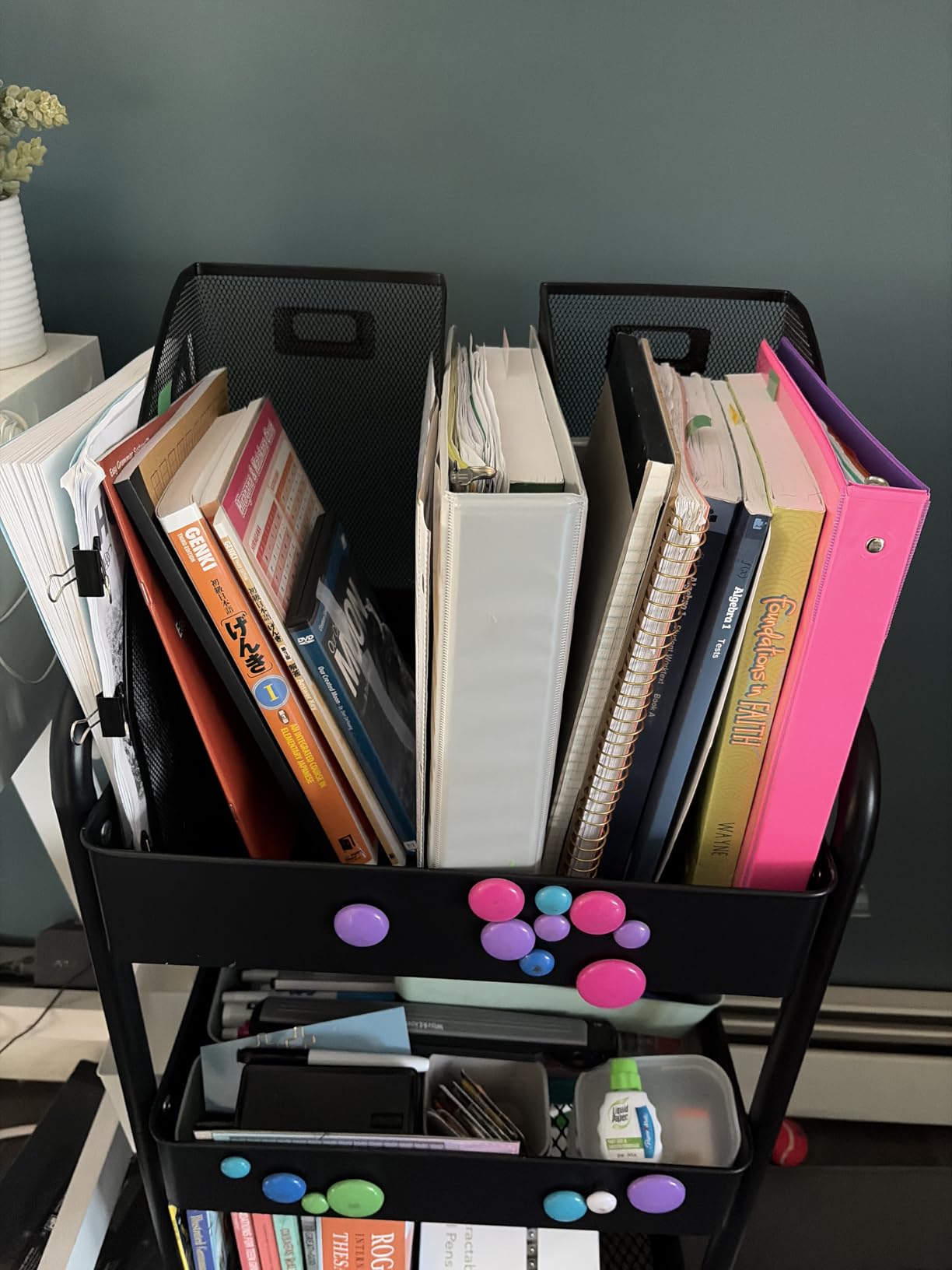
The jumbo depth is the distinguishing feature. At 10 inches deep and 6.25 inches wide, each holder takes a full magazine, a folder, or a stack of paperwork with the item sitting fully inside the frame rather than protruding. The 12.5 inch height gives it the presence of a proper desk-side organizer, which makes it as much a visual anchor as a storage tool.
You get two units in the pack, each 2.1 pounds combined, and they can sit side by side on one desk or be split between a home office and a study. Reviewers use them for folders, magazines, and paperwork and describe the black mesh as giving a clean, professional look. The mesh wipes down easily and does not hold dust, which matters in a high-traffic space.
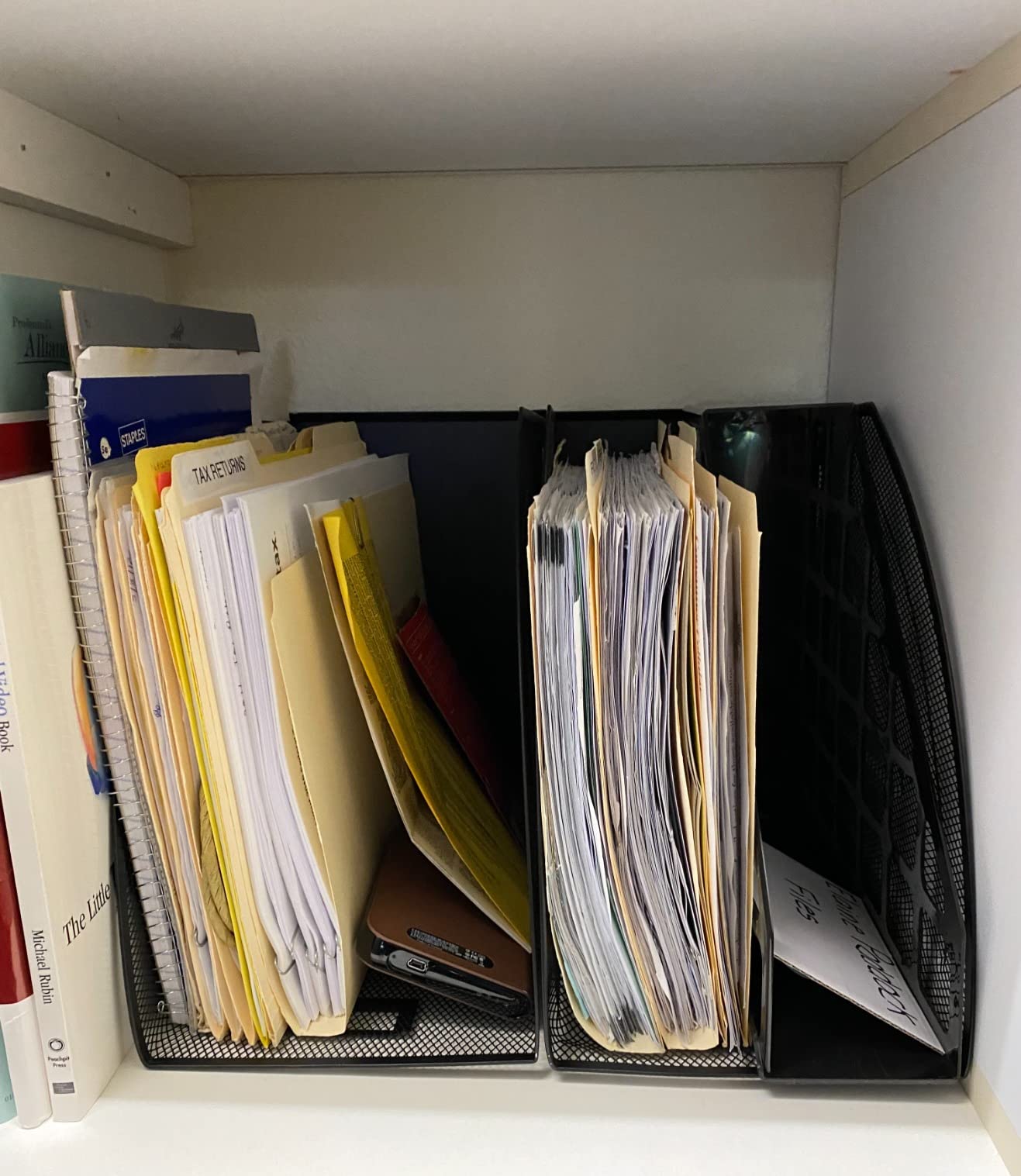
The trade-off is the same one the slim mesh holder makes, just in a larger frame. Each unit is a single open slot with no internal dividers and no label area, so you are sorting by unit rather than by compartment. The front lip also stops very bulky items going all the way in, though a standard binder clears it easily. At a 4.7 average over 447 reviews, buyers are clearly happy with what this design is for.
Who This Holder Works Best For
Two-desk households and shared workspaces get the most from the pack. One holder per desk gives a matched look in two rooms without hunting for a second identical unit later. Home offices that also serve as a shipping station or a mail-sorting point work well, since bulky circular mail and rolled items fit the wide opening.
It is also a good choice for anyone who wants a visible, professional holder rather than a hidden one. The 12.5 inch height makes the contents easy to see from a standing position, and the classic black finish suits a reception counter or a shared studio table. Being lightweight at 2.1 pounds, it moves between rooms without effort.
Who Should Skip It
Skip it if you need multiple categories per holder. With one slot and no label area, you would need four or five of these to build a real system, and the two-pack does not get you there. If sorting is your goal, buy one multi-bay rack instead of several single-slot boxes.
It is also the wrong choice for very bulky items, since the front lip limits how far in they can slide. And if your desk style is warm or decorative, plain black mesh will not complement it the way the gold-finished wire racks do. Pick for the footprint and depth you need, then let the finish follow your existing setup.
How to Choose a Magazine or File Holder for Your Desk?
Before you buy anything, work through these six checks in order. They are the criteria that separated the units that survived our testing from the ones that frustrated us.
Measure your largest item. Your paper is 8.5 x 11 inches. Check that the slot opening and the 10 to 12.5 inch depth clears it, and confirm A4 compatibility if you handle non-US paper.
Pick a material for the load. Cardboard and plastic suit light documents. Welded wire, mesh, and iron hold binders, books, and albums without bowing.
Count slots against categories. One slot equals one category. Three to five bays cover most home systems, and seven to nine cover shared and classroom use.
Check the footprint against your desk. Width decides whether the unit fits at all. Anything over 15 inches wide needs a full desk or a dedicated shelf.
Look for a label area. If more than one person retrieves paper, a front label slot is worth more than colour or finish.
Decide on assembly. Pre-assembled units suit anyone moving rarely. Screw-together or folding units suit renters and shared spaces.
Magazine Holder vs File Folder vs File Holder vs Letter Tray
These four names confuse most buyers, and the difference is orientation. A magazine holder and a vertical file holder are the same object: an open-top, freestanding box that stores paper upright on its edge. A file folder is a flexible manila pocket that you fill flat and then stand inside a holder. A letter tray is horizontal, stacks flat, and is designed for incoming mail rather than long-term filing.
If you want paper stored upright and retrievable from above, you want a magazine holder or vertical file holder. If you need to pull one document at a time from a small stack, you want a tray. Most desks end up needing both.
Material Decision Matrix
Cardboard is the cheapest and lightest option, and it folds flat for moving, but it is the least rigid and will bow under heavy loads. Polypropylene plastic is sturdier than cardboard, wipes clean, and is the most common material in collapsible designs, though dividers can flex under sustained weight.
Welded wire and mesh are the sweet spot for paper-heavy desks: rigid enough for binders, visually light, and easy to wipe. Solid iron is the most rigid of all and the heaviest, which is exactly what you want for heavy binders. Clear acrylic is chosen for visibility in shared spaces rather than for strength. The right call is usually mesh for daily filing, plastic for light paper, and iron when the load is genuinely heavy.
Slot Count Selector
A one-slot holder is for a single category you can name in one phrase, such as current bills. Two to three compartments suit a home office sorting into active, reference, and archive. Four to five bays cover a home office with several projects plus mail. Seven to nine slots belong in classrooms, reception areas, and shared workspaces where volume and visibility both matter.
Beyond about six slots, the trade-off shifts from capacity to width. Narrow wire sorters squeeze many slots into a small base but stop accepting thick items, while wide mesh bays take binders but take up desk space. Decide which constraint you can live with first.
Desk Size Compatibility
On a 24-inch writing surface, keep to holders under about 10 inches wide and prefer lower-profile units. The triangular wire sorters and the collapsible plastic holders fit comfortably here. On a standard desk, a 13-inch four-bay unit sits well beside a monitor.
On an L-shaped desk or a dedicated shelf, the wider mesh racks become practical, and pairs make more sense than singles because you can balance them across two surfaces. For under-desk placement, only the slim 3-inch-wide holder in this roundup is genuinely designed for it. Whatever your desk, check the height too, since most holders run between 7 and 12.5 inches and anything above 10 inches blocks the sightline behind it.
Five Mistakes to Avoid
First, overfilling a bay. Holders that lean are almost always overloaded, and the tilt is a loading problem, not a product problem. Second, ignoring width. Measure the largest item before you buy, and check the slot opening rather than the overall dimensions.
Third, buying singles over time. Mismatched holders accumulated a year apart are the most common source of visual clutter on a shelf, and multi-packs solve it in one purchase. Fourth, storing thick cardstock in a narrow bay. If your paper is heavier than standard copy stock, either test one narrow unit first or buy a holder with wider spacing. Fifth, treating hanging racks as the answer. They create shadows, get bumped, and are harder to reach than open desktop shelving, which is why every pick here is freestanding.
If paper accumulation is part of a larger setup, our guides to file cabinets for document-heavy offices and desks for active work setups cover the surrounding furniture, and passport holders for travel documents covers the small-item side of the same problem.
Frequently Asked Questions
What is the best desk organizer for files?
For most desks, the best organizer for files is a vertical multi-bay holder with rigid metal or solid plastic construction and a front label slot. The Leven four-compartment unit is the strongest all-rounder, and the SUPEASY five-bay mesh rack is the pick if you need label slots and binder capacity. Both keep documents upright, visible, and retrievable one at a time.
What is the best file holder?
The best file holder depends on load and space. A welded wire or mesh sorter holds the most per unit and resists tipping, while a collapsible plastic holder suits small desks and frequent moving. Measure your largest document first, since anything stored upright needs a slot wider than 8.5 by 11 inches to hold letter-size paper flat.
What are the best desk organizers?
The best desk organizers for paper work fall into four groups: multi-bay mesh racks for labelled filing, triangular wire sorters for many categories in a small footprint, collapsible plastic holders for compact desks, and slim single-slot holders for under-desk storage. Pick the group that matches your category count and available width rather than the one with the most features.
Do magazine holders hold letter size paper?
Yes, every magazine holder and vertical file holder in this roundup stores letter-size paper at 8.5 by 11 inches. What differs is the depth and slot width. A 3.75-inch-wide box holds magazines and folders, a 3-inch slot holds A4 and oversized binders, and a 1.18-inch slot spacing suits records and craft paper but not thick binders.
Should I get a magazine holder or a file folder?
Buy a magazine holder for long-term storage and a file folder for documents in transit. A magazine holder stands upright, holds categories steady, and saves desk footprint, while a file folder is a flexible pocket for papers you are still working with. In practice most desks use one holder with several folders standing inside it.
Are metal magazine holders better than plastic ones?
Metal holders are better for heavy or high-turnover filing because welded wire and iron mesh do not flex under binders and books. Plastic is better for small desks, frequent moving, and lower weight, and cardboard is best when you want units that fold flat. The deciding factor is load, not material preference.
How many compartments do I need for desk filing?
Count your categories, not your documents. One slot per named category is the rule. A one-slot holder suits a single category such as bills, two to three bays cover a home office, four to five cover multiple active projects, and seven to nine bays suit classrooms and reception desks where volume and visibility both matter.
Our Verdict on the Best Magazine and File Holders for Desks
For most people, the Simple Houseware six-pack is the right first buy. Six matching holders, a narrow 3.75-inch footprint, and the ability to fold flat for moving solve the accumulation problem for years, and its review history across more than 14,000 ratings is the most established of any holder we looked at. If you want one rigid unit that grows with you, the Leven four-compartment holder is the better value, expanding from a single bay to four as your categories accumulate.
Choose by constraint rather than by appearance. Maximum categories in minimum width means the Sooyee nine-slot wire sorter, whose 6.9-inch height also keeps your desk sightline open. Labelled filing for a shared space means the SUPEASY five-bay rack, provided you have 16 inches of width to give it. Heavy binders and books mean the DALTACK iron mesh rack, where the weight keeps it steady. Compact desks and light paper point to the collapsible plastic holders, and a single category on a narrow surface points to the slim U Brands mesh holder.
Whichever you pick, the fit matters more than the finish. Measure your largest item, count your categories, and check the width against your desk before you order. Paper stacked flat will always slump, and one upright holder is the cheapest fix there is for the best magazine and file holders for desks in 2026. Use the buttons above to check the current listing details, and pick the one that matches your desk rather than the one with the most features.