
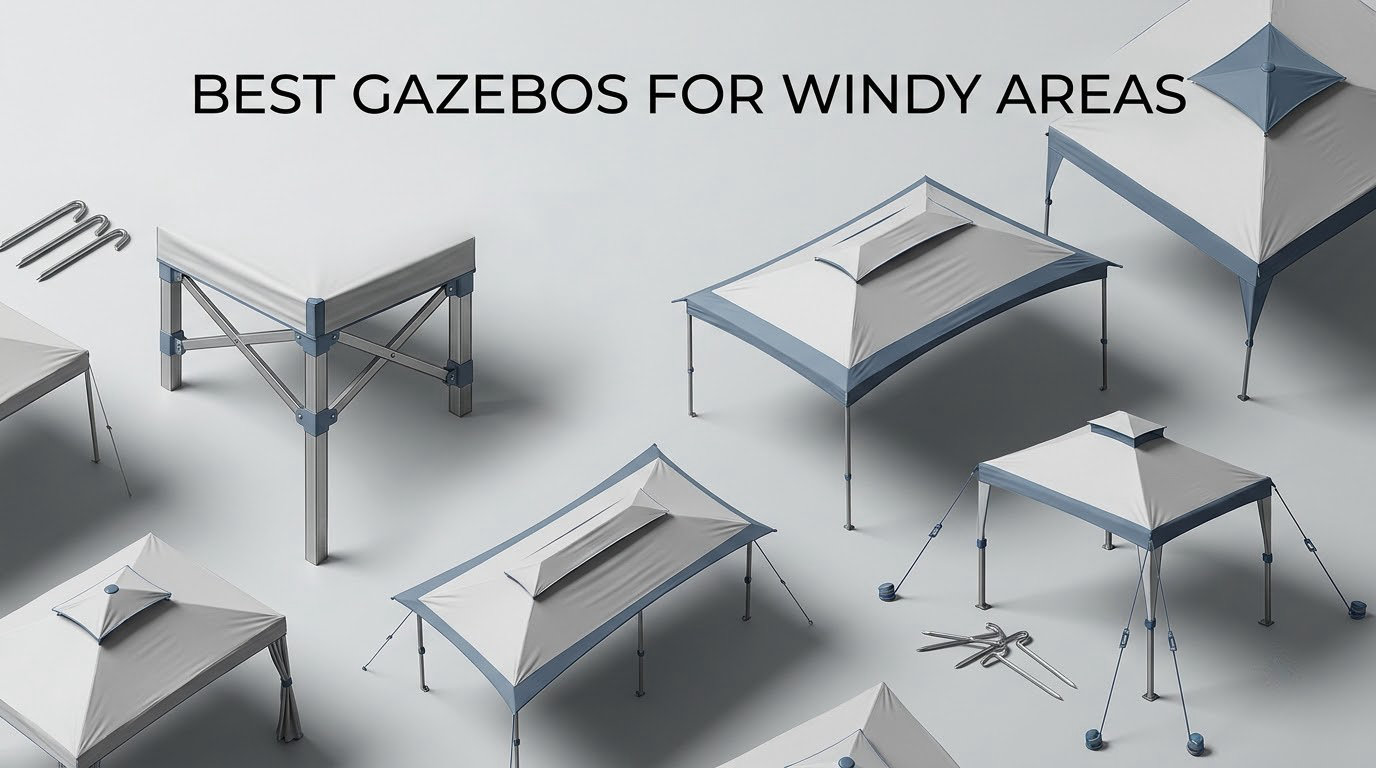
A gazebo that stands up in a windy backyard is not a soft-top canopy with a heavy-duty label. It is a rigid structure with a vented hardtop roof, a braced frame, and hardware that actually transfers the load into the ground. The only gazebos we would trust in a real gust are the ones with a published wind number attached to a stated anchoring method.
Most shoppers start by reading the big number on the box. That is exactly backwards. A 60 MPH rating printed on a hardtop gazebo assumes a specific anchor set into a specific surface, and the same unit sitting on four lumps of lawn in a coastal yard will fail well before that figure. This guide ranks the best gazebos for windy areas by the combination of published wind rating, frame stiffness, roof venting, and how honestly the manufacturer describes what it takes to hold the structure down.
We put ten gazebos side by side, from light pop-up models you can carry to a trunk to permanent aluminum hardtops engineered for coastal lots. Each entry includes the real reviewer feedback, the assembly time people actually spend, and the anchoring hardware that comes in the box. If you are still choosing, our general backyard gazebo guide covers sizing and layout basics first.
Top 3 Picks for Windy Backyards in 2026

Kozyard Alexander 10×14 Hardtop
- 60 MPH rated when anchored
- 2500 lb snow load
- 29-gauge galvanized steel double roof

VEVOR 12×12 Pop Up Gazebo
- 144 sq ft footprint
- 6 removable wind panels
- windproof ropes and luminous stakes
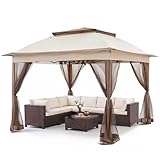
COOS BAY 11×11 Pop Up Gazebo
- Dual vented top for wind resistance
- UPF 50+ fabric
- CPAI-84 flame resistant
All 10 Best Gazebos for Windy Areas in 2026
The table below lists every gazebo in this roundup with the wind-related detail that actually matters. Pop-up models have no published MPH figure because their limit is set by the anchor, not the frame. Hardtop models carry a number, and that number only holds when the stated anchoring is used.
| Product | Specifications | Action |
|---|---|---|
| Kozyard Alexander 10×14 Hardtop Gazebo |
|
Check Latest Price |
| VEVOR 12×12 Pop Up Gazebo with Wind Panels |
|
Check Latest Price |
| COOS BAY 11×11 Pop Up Gazebo |
|
Check Latest Price |
 CROWN SHADES 11×11 Pop Up Gazebo CROWN SHADES 11×11 Pop Up Gazebo |
|
Check Latest Price |
 LAUSAINT HOME 10×12 Gazebo Double Roof LAUSAINT HOME 10×12 Gazebo Double Roof |
|
Check Latest Price |
 YOLENY 12×16 Hardtop Gazebo YOLENY 12×16 Hardtop Gazebo |
|
Check Latest Price |
 EROMMY 10×12 Hardtop Gazebo EROMMY 10×12 Hardtop Gazebo |
|
Check Latest Price |
 PURPLE LEAF 10×12 Hardtop Gazebo PURPLE LEAF 10×12 Hardtop Gazebo |
|
Check Latest Price |
 ABCCANOPY 8×8 Hardtop Gazebo ABCCANOPY 8×8 Hardtop Gazebo |
|
Check Latest Price |
 Modern Shade 10×10 Hardtop Gazebo Modern Shade 10×10 Hardtop Gazebo |
|
Check Latest Price |
1. Kozyard Alexander 10×14 Hardtop Gazebo – The Highest Published Wind Rating in the Group
Kozyard Alexander 10′ x 14′ Hardtop Gazebo, Aluminum Frame
60 MPH rated when anchored
2500 lb snow load
29-gauge galvanized steel roof
Pros
- Highest published wind rating at 60 MPH when anchored
- 2500 lb snow load rating
- Double roof vents wind through instead of catching it
- Integrated gutter drains along the poles
- Five heavy well-packed shipping boxes
Cons
- Assembly runs 8 to 16 hours for two people
- Photo-only instructions with misordered steps
- Roof clips fall off and some pre-drilled holes are misaligned
This is the only gazebo in our list that publishes a 60 MPH wind figure alongside the condition that makes it true: anchored. Kozyard uses 4.7 inch triangular aluminum poles with 5 inch by 4 inch reinforced beams, which is a wider column than most of the hardtops we tested. The frame stiffens noticeably once the hardware is torqued, and reviewers describe the finished structure as heavier than they expected for a 10 by 14 footprint.
The 29-gauge galvanized steel double roof is the piece that changes behavior in a storm. Air passes through the gap between roof layers instead of pressing up against a single plane, which cuts the uplift load that is usually what tears a canopy off. Snow load is rated at 2,500 lb, so the same structure handles winter accumulation without sagging.
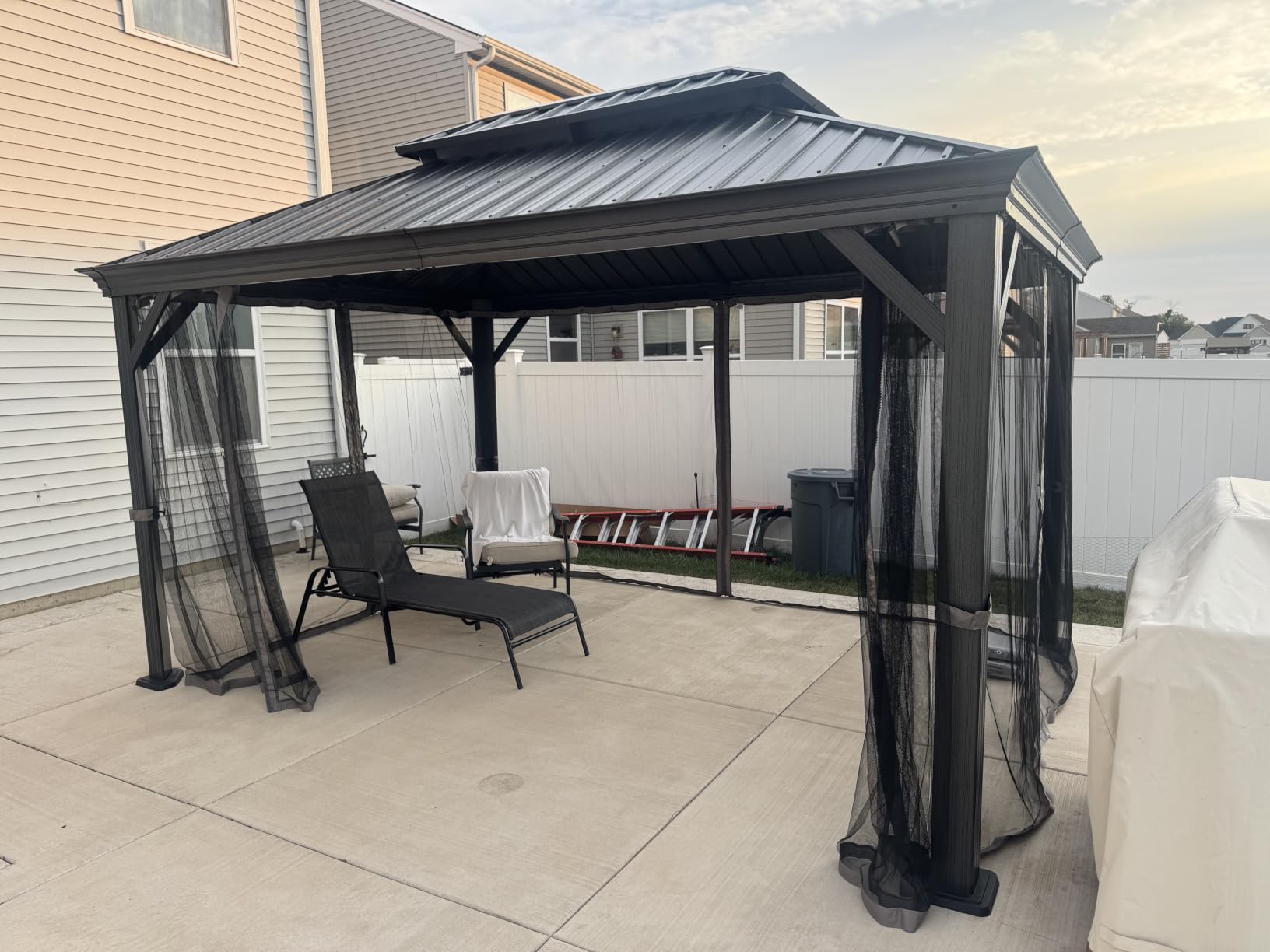
The honest drawback is build time. Across reviews, owners put assembly at 8 to 16 hours for two people, and the instructions are picture-only with a handful of steps that contradict each other. Roof edge clips also have a habit of releasing while panels are being slid into position, and a few buyers report needing to redrill misaligned holes in the roof panels themselves.
Dual-track curtains and mesh netting ship with the unit, and a built-in ceiling hook takes a fan or a light fixture. Netting hooks can pull out of the track once the fabric is under load, which a couple of small blocking screws solves permanently.
Check the anchoring hardware before you order
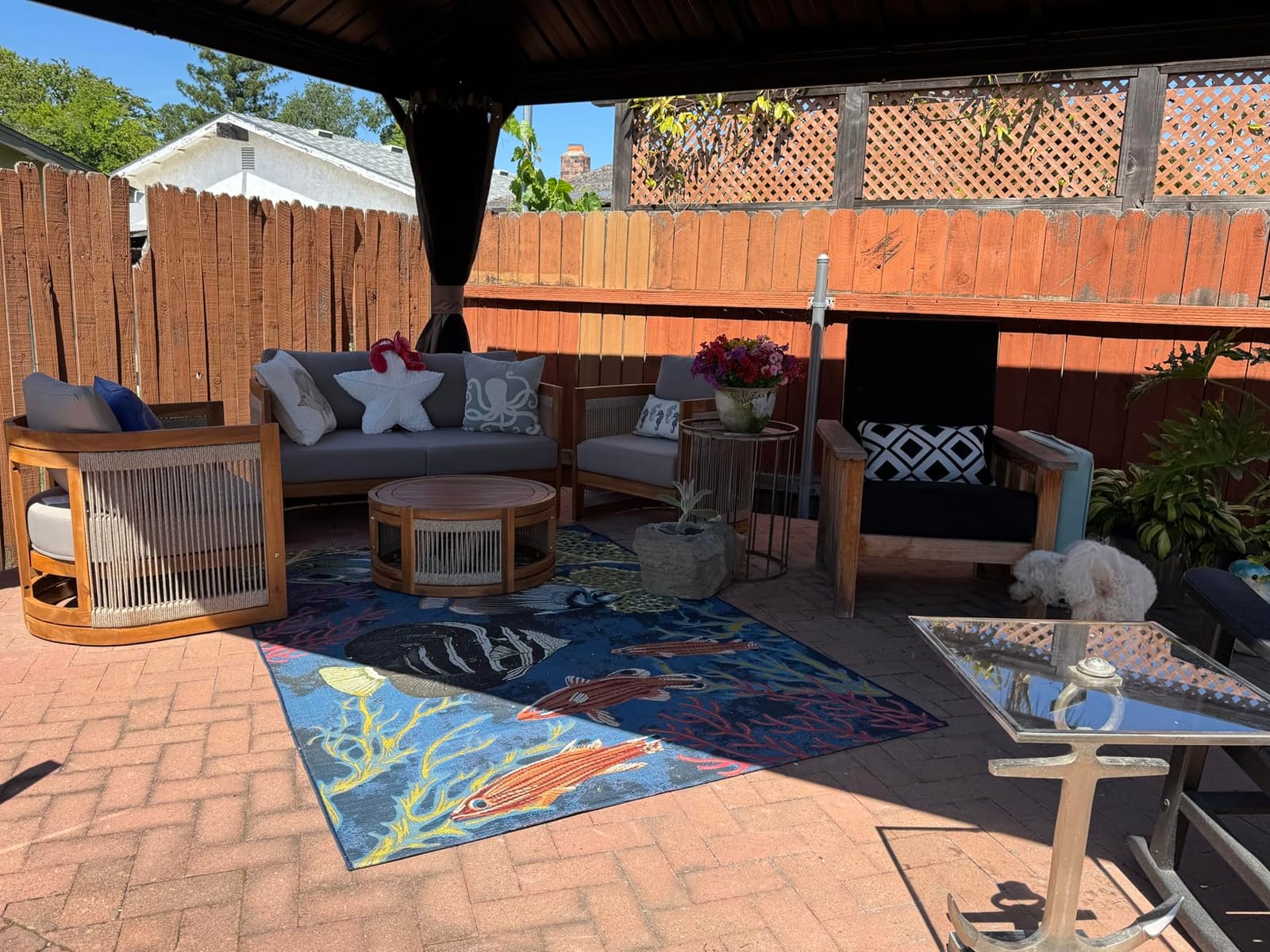
The 60 MPH figure assumes the frame is fixed to a rigid surface rather than staked into turf. Ask the seller exactly which anchor set matches your ground, and confirm whether the supplied feet are pre-drilled for that hardware. A pre-drilled base plate accepts expansion bolts into concrete and lag screws into deck framing without any drilling on site.
If you are installing on a patio, the base plate is the part that decides success. Screwed down with masonry anchors and checked for level before the roof goes on, this frame has very little play left in it. Checked for level after the roof is installed, the same frame will feel loose.
Know when this gazebo is the wrong choice
Skip this one if your build crew is one person on a Saturday afternoon. The part count is in the hundreds of screws, nuts, and bolts, and the two-person, two-day figure is the realistic one. Anyone who budgets a single evening will end up with a half-built frame in the yard.
It is also the wrong pick if you need a set-up-and-move shelter. At 10 by 14 feet with a steel roof, this is a permanent structure. It is built for a wind-exposed lot, not for tailgating or a weekend market stall.
2. VEVOR 12×12 Pop Up Gazebo – Best Portable Shelter That Survives Gusts
VEVOR 12x12ft Pop Up Gazebo Tent with Mosquito Netting, 6 Removable Wind Panels & 2 Mesh Windows, Outdoor Canopy Shelter for Patio, Army Green
144 sq ft floor area
Fiberglass frame
UPF50+ with fine mesh
35.3 lb packed weight
Pros
- Sets up in minutes with no tools
- 6 removable wind panels let you cut wind drag
- Rope tie-down loops at the top of each leg
- Mesh keeps out mosquitoes and no-see-ums
- Carries at 35.3 lb
Cons
- Fiberglass poles can crack at the metal socket joints
- Included stuff sack is too small for the packed tent
- Fine mesh noticeably reduces airflow
There is no MPH number on this tent, and that is honest. A pop-up shelter has no fixed foundation, so its wind limit is decided by what you tie it to. What VEVOR gets right is the tie-down geometry: five guylines, luminous stakes, and windproof ropes that run to the upper loops on the frame, which is where a canopy tent usually fails first.
The 12 by 12 footprint gives 144 square feet rated for a group of eight, with a peak of 94 inches and a high-density polyester mesh that screens out mosquitoes, no-see-ums, and sand fleas. Six removable wind panels mean you can strip fabric off two or three sides before a front rolls through, which is a bigger lever than most owners realize.
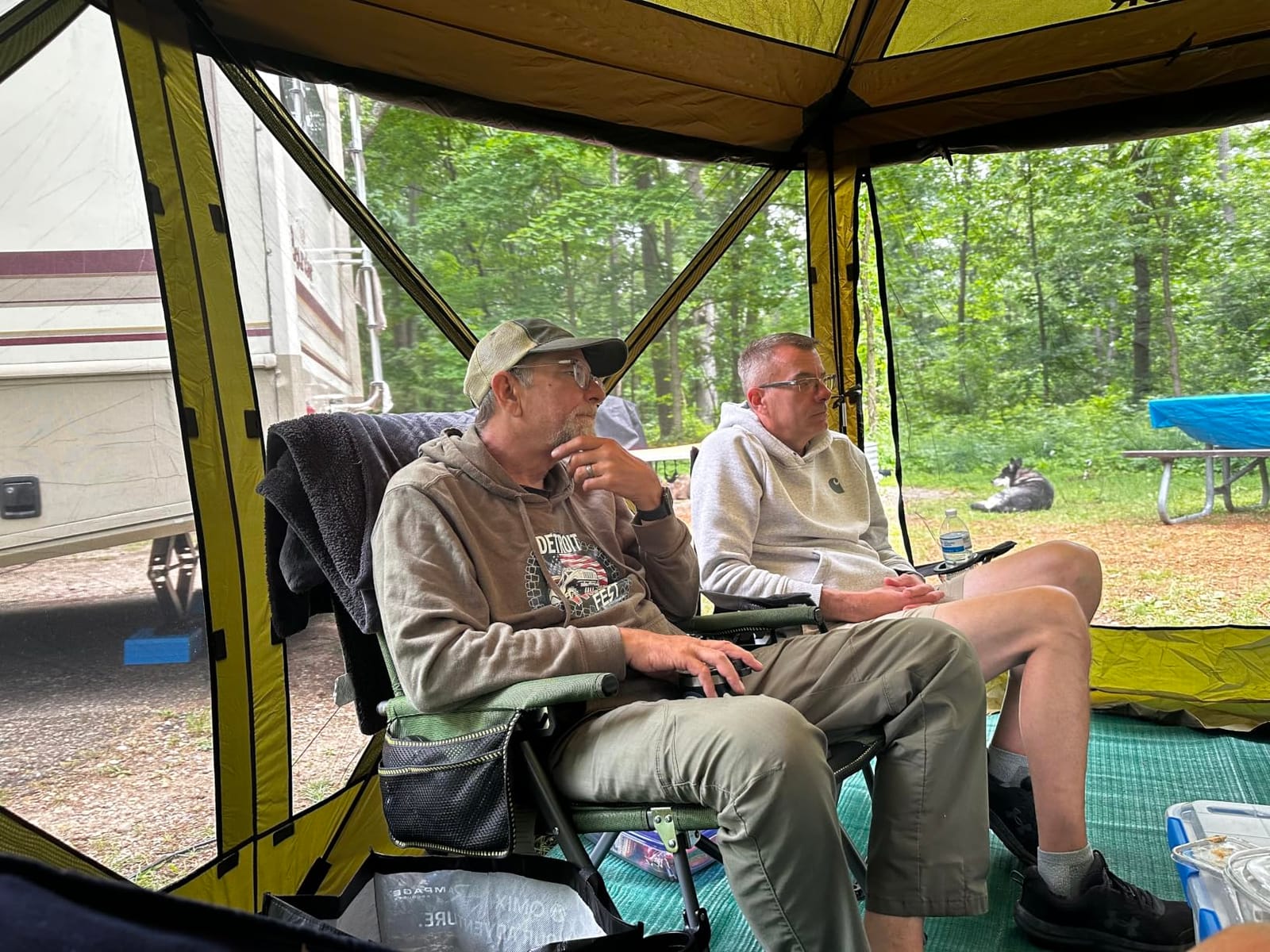
Reviewers report this tent holding up in serious wind when the upper tie-down loops are used, and several describe multi-day rain with no leakage. The repeated complaint is the fiberglass itself. Poles crack or splinter at the socket joints where the metal ferrules meet, and the frame must be refolded along its original creases or the poles take a permanent bend.
Two smaller gripes: the supplied carry sack is too small for the packed tent, and at roughly 35 pounds this is a car-camping shelter rather than something you hike with. Fine mesh also cuts airflow, which matters more in still weather than in a blow.
Where the wind limit actually comes from
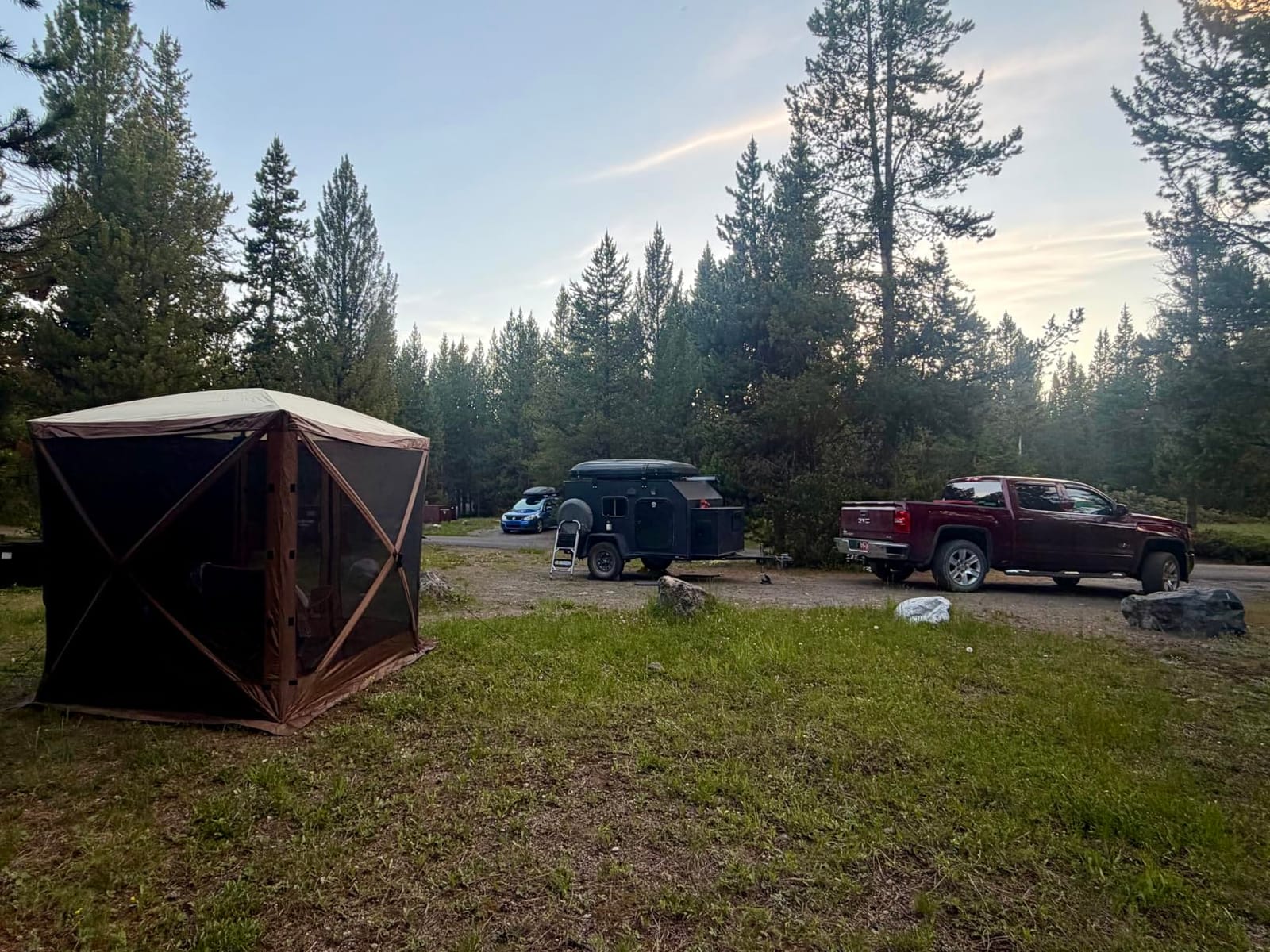
Pop-up gazebos are drag machines. Every panel and every mesh wall is a sail, and the frame is a set of poles pinned at the joints rather than a rigid welded frame. Owners on outdoor forums describe pop-up canopies taking off in 30 mph gusts when they are staked shallowly into dry ground.
Drive the luminous stakes at an angle away from the tent and tension every guyline, including the upper loops. Strip panels you do not need. If you need a structure that stays put with no overnight recovery, this is the wrong category entirely.
Know when this gazebo is the wrong choice
It is the wrong choice for year-round permanent installation. Oxford fabric and fiberglass poles degrade under constant sun and weather, and the frame is not designed to be plumbed to a footing. Treat it as gear you bring out for a gathering and pack away when the forecast turns.
It is also the wrong choice for coastal salt-air exposure. Fiberglass does not corrode, but the hardware does, and the sockets where the poles enter the frame are the first place that shows it.
3. COOS BAY 11×11 Pop Up Gazebo – Most Reviews, Least Drama
COOS BAY 11×11 Pop Up Gazebo with Netting, Canopy Tent, Beige
Dual vented top design
121 sq ft for 6 to 8 people
UPF 50+ Oxford fabric
42.3 lb packed weight
Pros
- Dual vented top reduces wind damage and improves airflow
- Powder-coated steel frame joined with M5 bolts and nylon connectors
- CPAI-84 flame-resistant 200D Oxford fabric
- Four zippered mesh walls
- Tool-free setup and folds for transport
Cons
- Fabric and frame are built for seasonal use
- Steel frame can rust when left exposed
- Mesh netting tears at seams and zippers
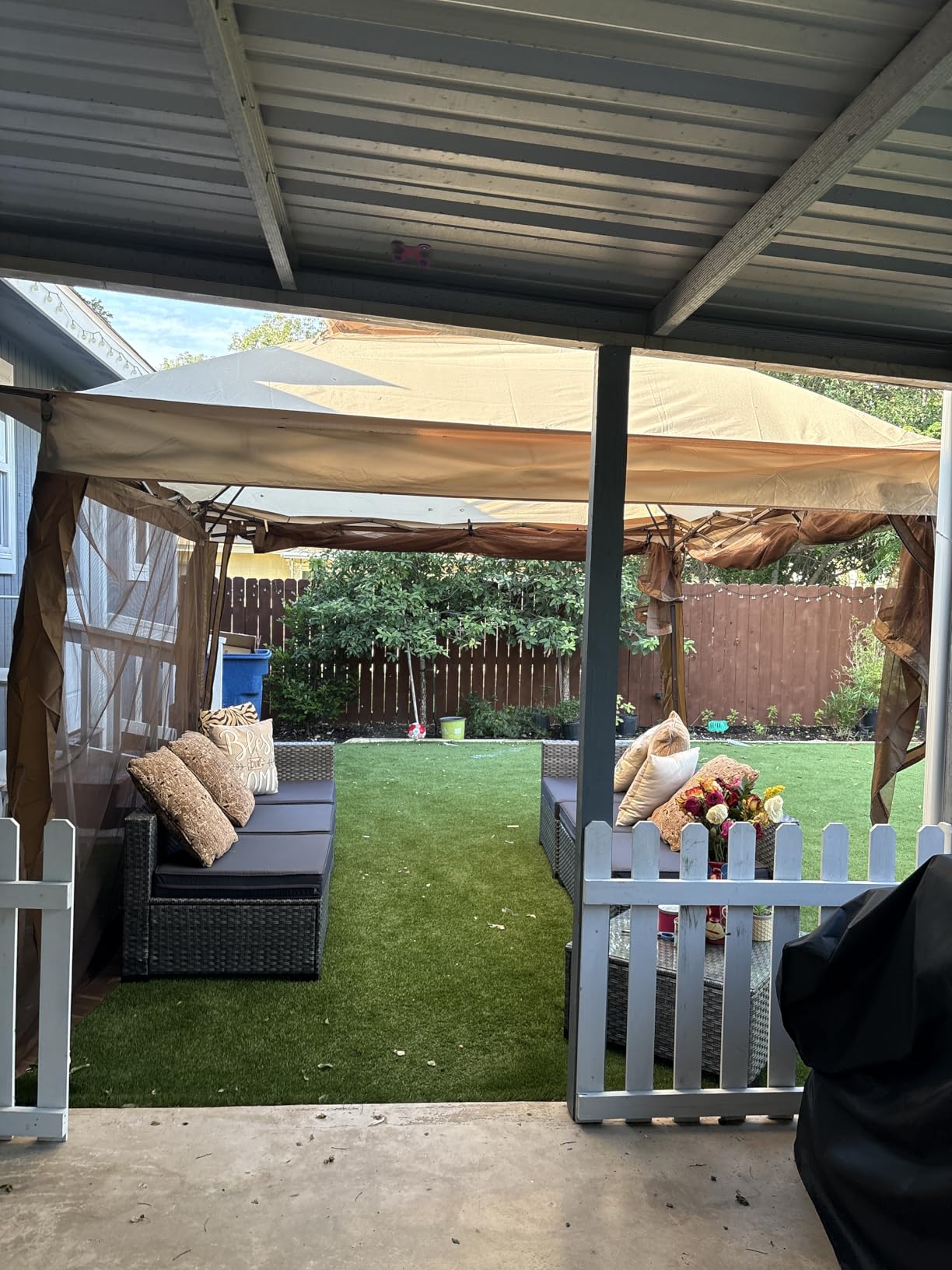
With 9,000-plus reviews, the COOS BAY has more real-world weather data behind it than anything else in this roundup. The dual vented top is the feature that matters most in wind: it lets air escape upward rather than pressing against a single canopy plane, and it also keeps the interior noticeably cooler in direct sun.
The frame is powder-coated alloy steel joined with M5 bolts and nylon connectors, and the fabric is CPAI-84 certified flame-resistant 200D Oxford rated UPF 50+. Four zippered mesh sidewalls keep insects out while preserving airflow, and the extended roof line adds shade past the valance. Setup needs no tools at all.
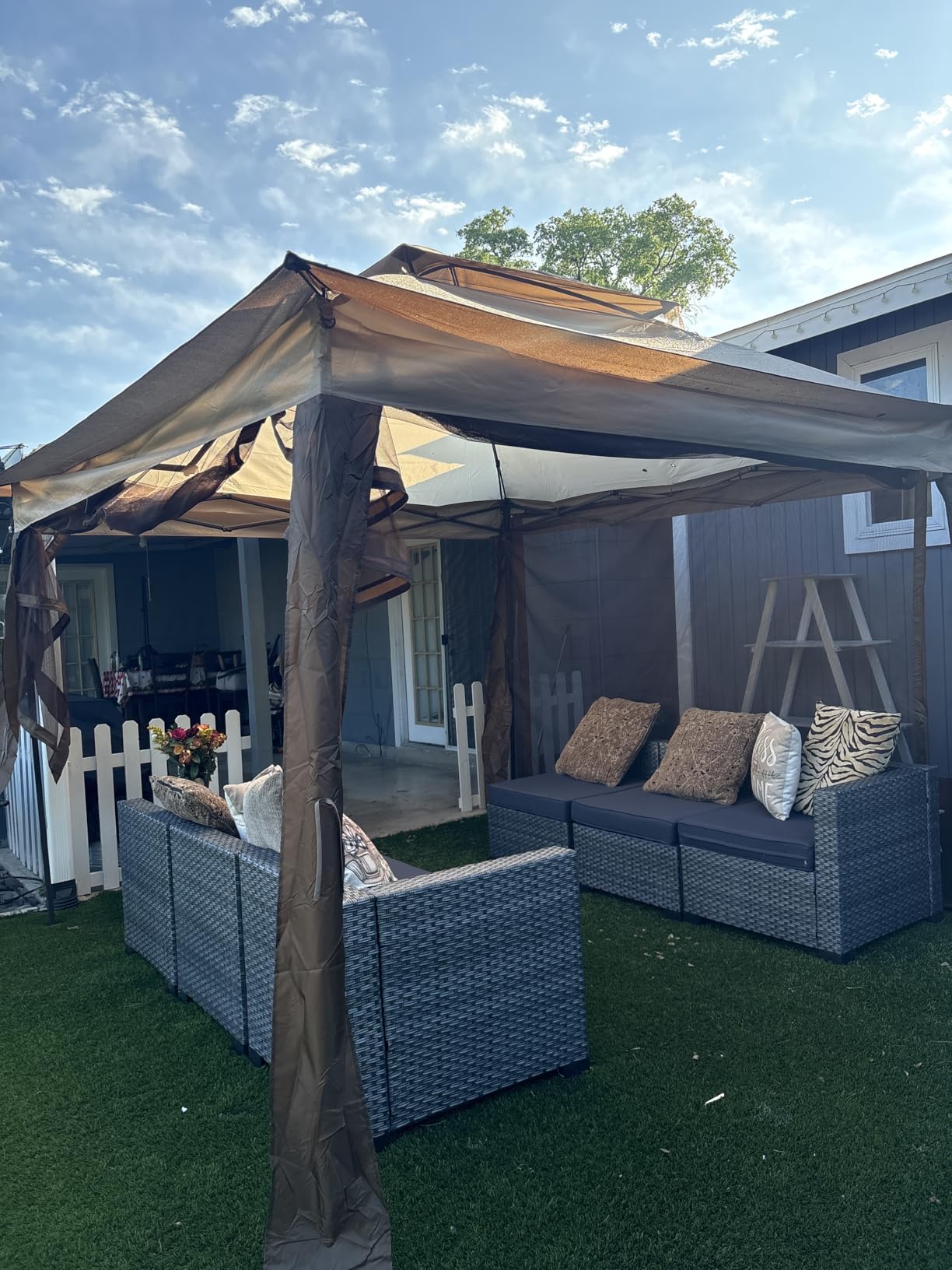
What you are buying is a dependable seasonal shelter, not a permanent installation. Buyers consistently describe the fabric and frame as light-duty by design, and the steel will develop surface rust if it stays outdoors through wet seasons without being dried off. The netting tends to fail first, usually at a seam or a zipper rather than in the fabric itself.
Water resistance is rated for light rain. Standing heavy rain will pool on a flat fabric top and find the seams, so this is not the shelter for a region where summer storms are the norm rather than the exception.
Why the vented top matters more than the fabric
Wind pushes up on a canopy. A single-layer roof catches that pressure across its whole area and the frame absorbs the reaction. A vented roof lets the air pass through, so the pressure equalizes and the load drops. The same feature gives you vertical airflow that reduces heat buildup under the canopy on a still day.
That is why this design holds up better in a blow than single-layer tents of the same weight class. It is also why it stays usable for two people without extra cooling equipment.
Know when this gazebo is the wrong choice
It is the wrong choice if you want a structure to be standing through winter. There is no snow rating, no hardtop, and no permanent anchoring path. Pooling rain and snow load will shorten the life of both fabric and frame considerably.
It is also the wrong choice for a permanently windy coastal lot. The design is sound; the material grade is simply not built to hold year after year of salt-laden air.
4. CROWN SHADES 11×11 Pop Up Gazebo – The Best Anchoring Kit in the Group
CROWN SHADES 11×11 Pop Up Gazebo, Outdoor Canopy Tent, Gray
CENTERLOK one-push hub
Alloy steel truss rated 120 lbs
121 sq ft
Pros
- Center-lock hub sets up the frame in one push
- Includes 8 stakes 4 guy ropes and 4 weight bags
- Pre-assembled corrosion-resistant truss with hardened through bolts
- Owners report surviving 25 to 50 mph gusts when weighted and guyed
- Silver-coated fabric with waterproof sealing tape
Cons
- Mesh netting adds wind drag and snags on the velcro
- Included stakes alone are not enough in strong wind
- Screen tie strings are poorly sewn and rip easily
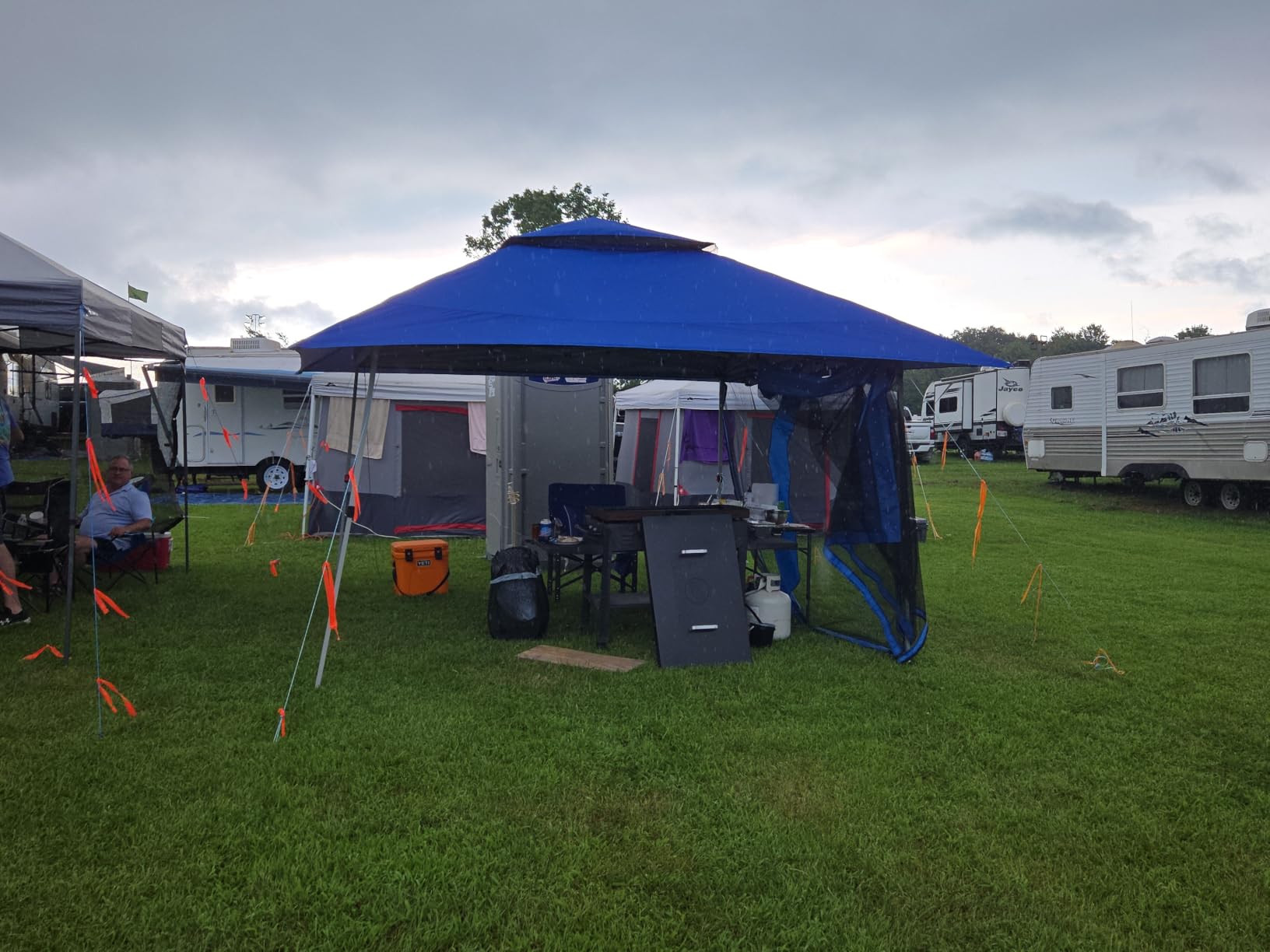
What separates this pop-up from the others is the hardware package. You get eight stakes, four guy ropes, and four weight bags in the box, and owners report the canopy surviving 25 to 50 mph gusts and thunderstorms once it is staked, weighted, and guyed out. That is the most credible real-world wind performance in the roundup for a portable model.
The patented CENTERLOK hub locks all four legs with a single push, which turns a twenty-minute build into a one-motion one. The pre-assembled truss uses hardened through bolts rather than screws, and the whole frame is rated to hold 120 lbs of distributed load. Peak height runs over 9 feet with more than 6 feet of clearance beneath the valance.
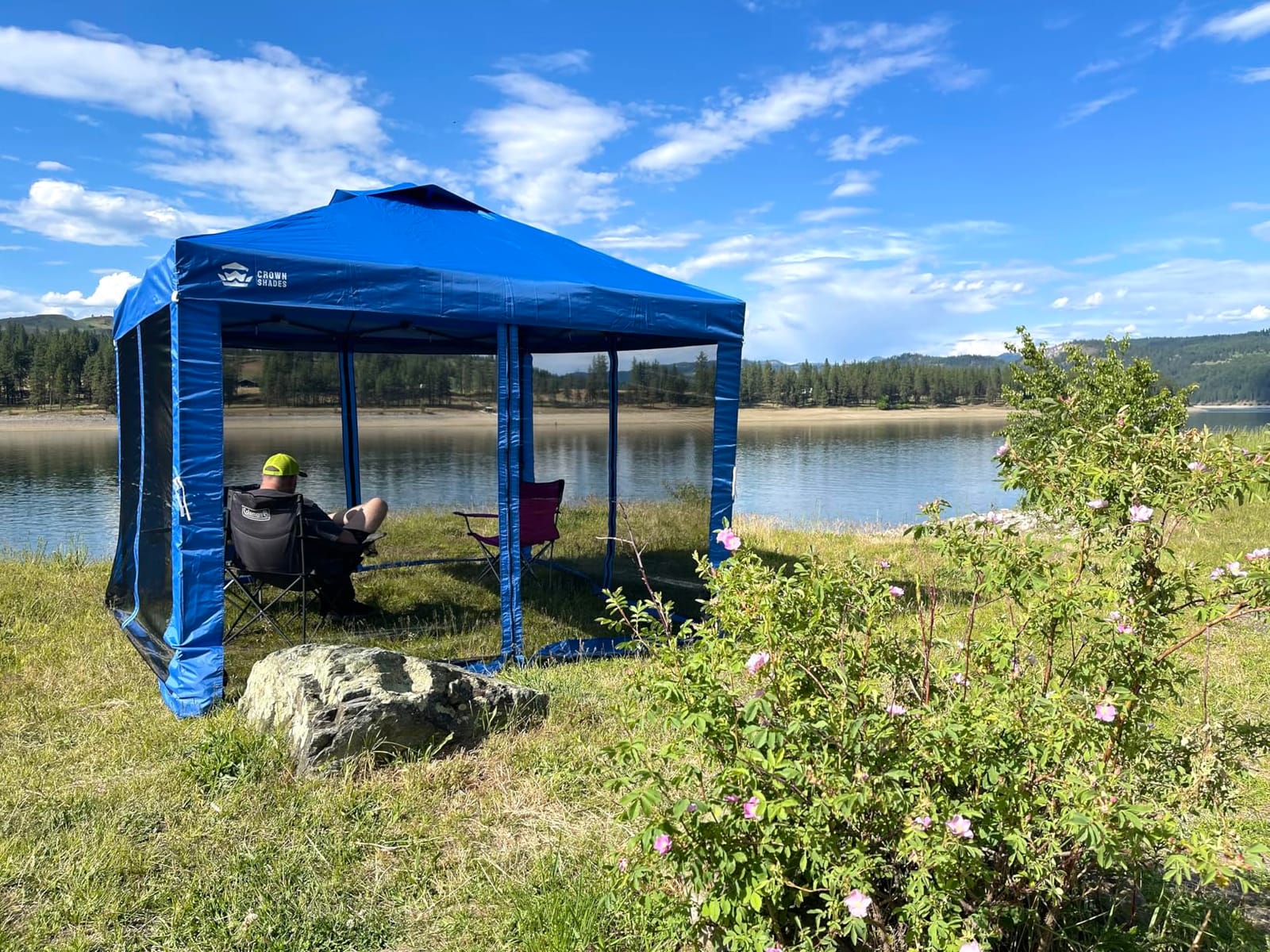
The removable mosquito netting is the most repeated reservation. It adds drag in exactly the conditions where drag hurts, it catches on the velcro attachment, and the tie strings on the screens are poorly sewn and tear easily. Several buyers describe the netting as more trouble than it is worth and leave it off in high wind.
Other complaints are minor: the mesh and the plastic top and pole covers nick easily, and the instructions do a poor job explaining how the screen material attaches. Weight bags matter here. The supplied stakes are adequate for calm weather, not for an exposed lot.
Use the weight bags or do not bother
Four filled weight bags on the base rails change this unit from a tent into something that stays. The stakes handle lift on calm days; the bags handle the sustained lateral push you get when a front arrives. Owners who used both report the difference plainly.
If you cannot weight it and cannot stake it deeply, take the netting off before the wind arrives. Drag on an unattached screen is a pure loss in a gust.
Know when this gazebo is the wrong choice
It is the wrong choice for a permanent backyard structure. The 11 by 11 canopy covers a 10 by 10 base, so the usable shade is smaller than the label suggests, and the frame is a folding truss rather than a rigid structure.
It is also the wrong choice if you plan to hang heavy curtains or equipment from the frame. A 120 lb distributed rating is a load rating for a shelter, not a rigging point.
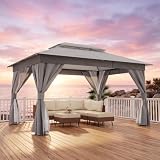
5. LAUSAINT HOME 10×12 Double Roof Gazebo – Anchoring Hardware in the Box
LAUSAINT HOME 10×12 Gazebo Canopy with Netting, Curtains & Double Roof
Rated to Level 6 wind when secured
8 expansion bolts included
40x40mm steel frame
Pros
- Eight expansion bolts ship with the unit for concrete anchoring
- Thicker than average tubing resists bending
- Level 6 wind rating when properly secured
- 1500MM water resistance and UPF 50 canopy
- Survived multiple seasons of wind and hail without rust
Cons
- Fitting the canopy over the frame and small top vent is very difficult
- Some units arrive with misdrilled or missing screw sockets
- 22 advertised steps stretch to roughly 45
This is the model to look at first if you are installing on a slab or a poured pad. Eight expansion bolts are included, and reviewers report anchoring the unit with those bolts or with planters to hold it through serious gusts. Several owners mention the manufacturer replacing a unit destroyed by a tornado.
The frame is 40x40mm galvanized steel with a powder-coated finish, noticeably thicker than the tubing on most gazebos at this level. The rating is Level 6 wind resistance when properly secured, and the double-tier roof moves air through the peak to reduce heat buildup and wind stress. The 135G polyester canopy carries UPF 50 and 1500MM water resistance.
Zippered netting and privacy curtains run on dual tracks, and a center hook with D-rings takes a fan or string lights. This is a genuinely attractive finished structure, not just a weather shell.
Decide how you will anchor before the frame goes up
Because the bolts are in the box, the cost of doing this properly is the drill and the masonry bit. Set the base plate on the slab, mark the holes through the pre-drilled positions, and confirm the frame is plumb before any roof panel goes on. Level at the base is the difference between a structure that feels rigid and one that rattles.
Planter-based anchoring is a legitimate alternative when drilling is not an option. Heavy planters on each leg resist uplift, and several owners report exactly that method working through high gusts.
Know when this gazebo is the wrong choice
It is the wrong choice for a coastal site without a plan for corrosion. The powder coat helps, but salt air on a permanently wet frame will find the joints over time, and the rating does not cover that failure mode.
It is also the wrong choice if you dislike assembly. Pulling the canopy over the frame and fitting the small top vent section is the step buyers single out as most difficult, and manufacturing inconsistencies in drilled holes mean some units need extra work before the build even starts.
6. YOLENY 12×16 Hardtop Gazebo – Heaviest Unit and the Biggest Covered Area
YOLENY 12×16 Gazebo,Outdoor Hardtop Gazebo with Aluminum Frame
192 sq ft covered space
324 lb unit weight
Vented steel double roof
Pros
- Heaviest structure in the group at 324 lb
- Galvanized steel roof shows no rust after extended rain
- Vented double top lets wind pass through and keeps interior cool
- Zero roof leaks reported across full seasons
- UV blocking rated at 99.99 percent
Cons
- Assembly needs 2 to 4 people and several days
- Pictorial instructions with no written steps or support contact
- Curtains on the 16 ft side can fall several inches short
At 192 square feet and 324 pounds, this is the biggest and heaviest structure we tested, and mass is a legitimate wind defense. A frame that takes effort to shift does not flutter, and reviewers describe this unit anchoring well and handling heavy wind without drama. The galvanized steel hardtop shows no rust after extended exposure and no leaks across full seasons.
The ventilated double-top design lets wind pass through the roof cavity rather than pressing against a single plane, which is the same principle that keeps the interior cool. The 4.7 inch powder-coated aluminum poles are rust-resistant, and an eaves drainage design routes rainwater to the ground instead of down the frame.
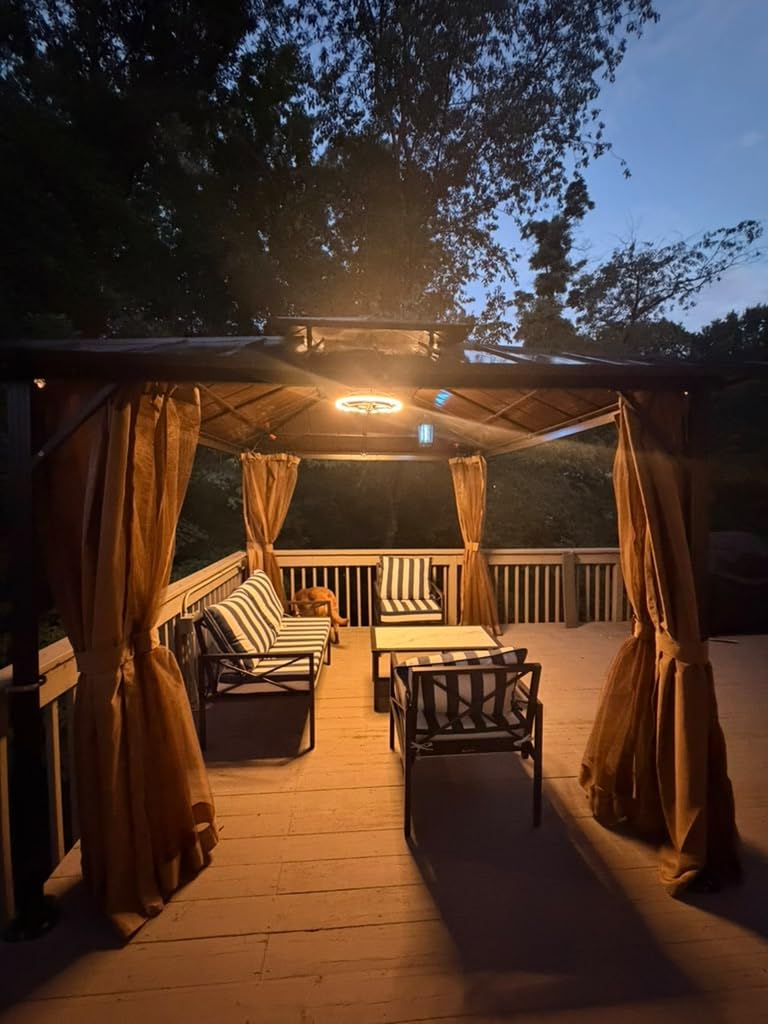
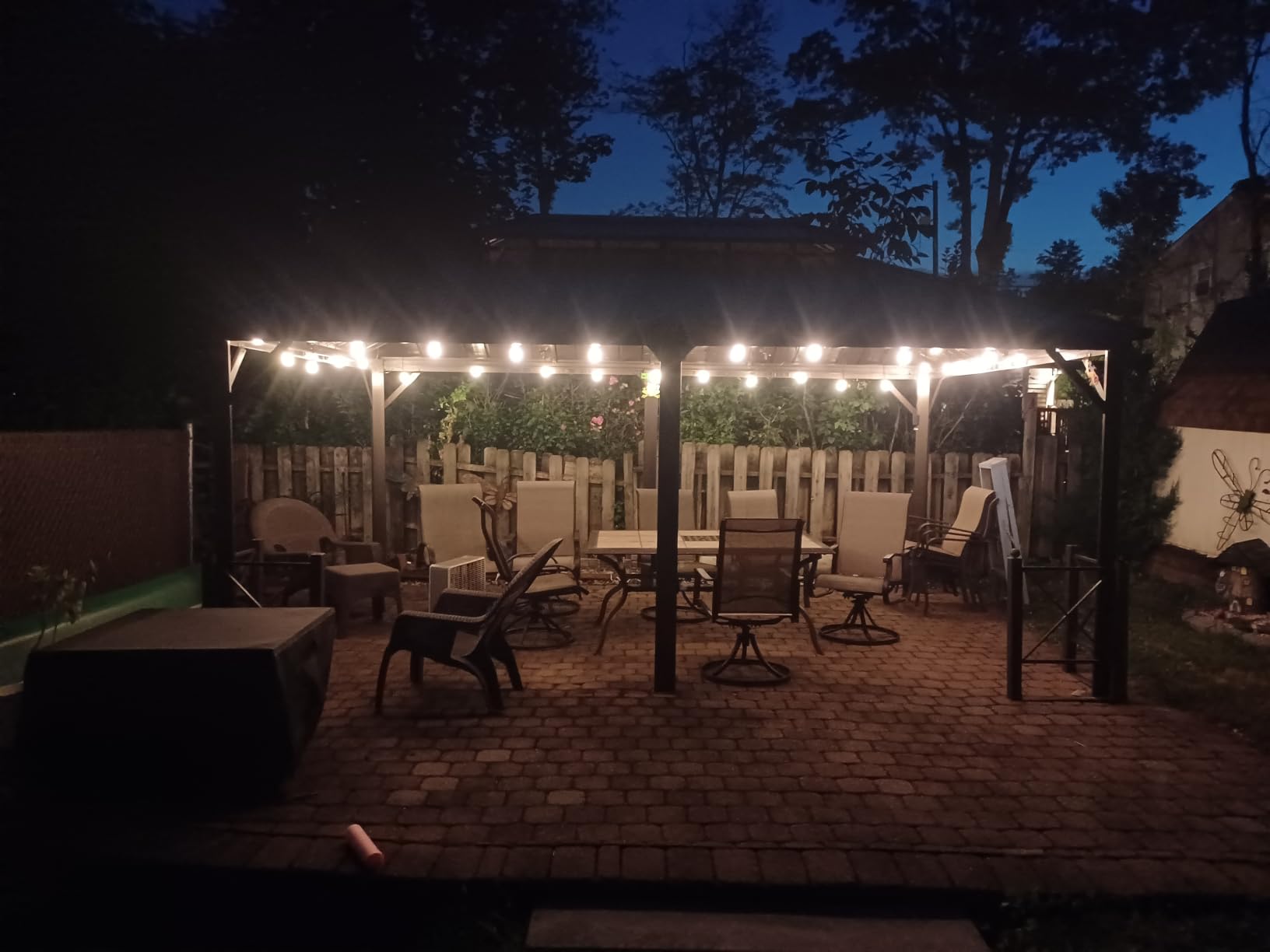
Owners report good performance through New York winters and 50 to 60 mph gusts once the unit is anchored. The rating is held back by build burden: assembly needs two to four people, multiple ladders, and several days, and the instructions are picture-only with no written steps and no customer service contact listed.
Fit issues show up in the fabric. Curtains on the 16 foot side can fall several inches short of meeting, zipper pulls detach and need replacing, and the roof panel Z clips release while panels are being seated. One reviewer reported ten missing frame parts with no replacements available.
Budget the crew, not just the parts
Four people is a reasonable number for a 12 by 16 hardtop with a steel roof, and that is a rare number in this category. Everything about this unit is scaled for a group: 192 square feet of covered space, a full-height frame at 122 inches, and enough post area for a long table.
If you can recruit a crew for a weekend, the size is worth it. If you are building alone, look at the smaller hardtops instead. The weight and span are the reason it needs help, and the reason it holds.
Know when this gazebo is the wrong choice
It is the wrong choice for a small yard. At 192 square feet, the anchor points are far apart and the wind exposure between them is correspondingly wide. It also needs the most anchoring attention because of the span.
It is the wrong choice if the instructions matter to you. Picture-only paperwork with no listed support contact is a real problem when a Z clip will not seat or a curtain will not reach.
7. EROMMY 10×12 Hardtop Gazebo – Best Fit for Decks and Uneven Ground
EROMMY 10′ x 12′ Hardtop Gazebo, Aluminum Frame Gazebos with Galvanized Steel Double Roof, Permanent Outdoor Metal Pavilion with Curtain and Netting for Patio, Lawn, Deck
Galvanized steel hardtop roof
Pre-drilled bases
209 lb unit weight
Pros
- Pre-drilled bases make installation possible on uneven ground
- Powder-coated triangular aluminum frame is more stable than standard models
- Vented double top reduces wind stress and improves cooling
- Galvanized steel roof holds heavy snow
- Top netting and side zippers add insect control
Cons
- Individual parts feel flimsy before the frame is assembled
- Many screws and roof panels make it a two-person job minimum
- Hardware strips if tightened before pieces are aligned
The pre-drilled base is what separates this unit on a deck or a sloped lot. Because the leg plates arrive drilled, you can shim and level the frame without a template, which is otherwise the hardest part of installing a hardtop on anything but a level slab. Reviewers point to this as the reason the gazebo goes up on uneven ground at all.
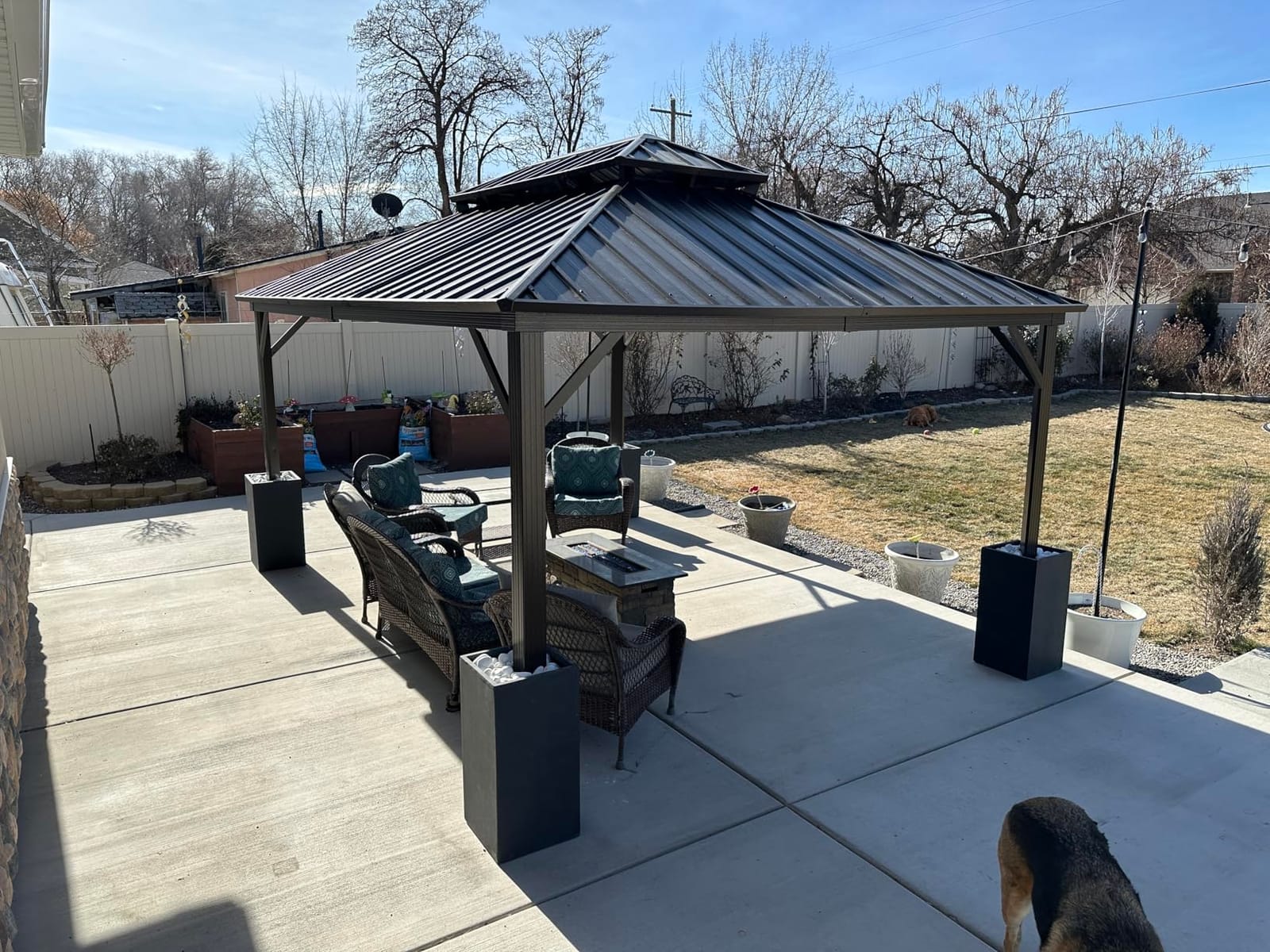
The roof is galvanized steel rather than fabric or polycarbonate, with a ventilated double top that lets wind pass through and reduces stress on the frame. The frame is powder-coated triangular aluminum, and at 209 pounds the assembled unit has enough mass to feel planted rather than light.
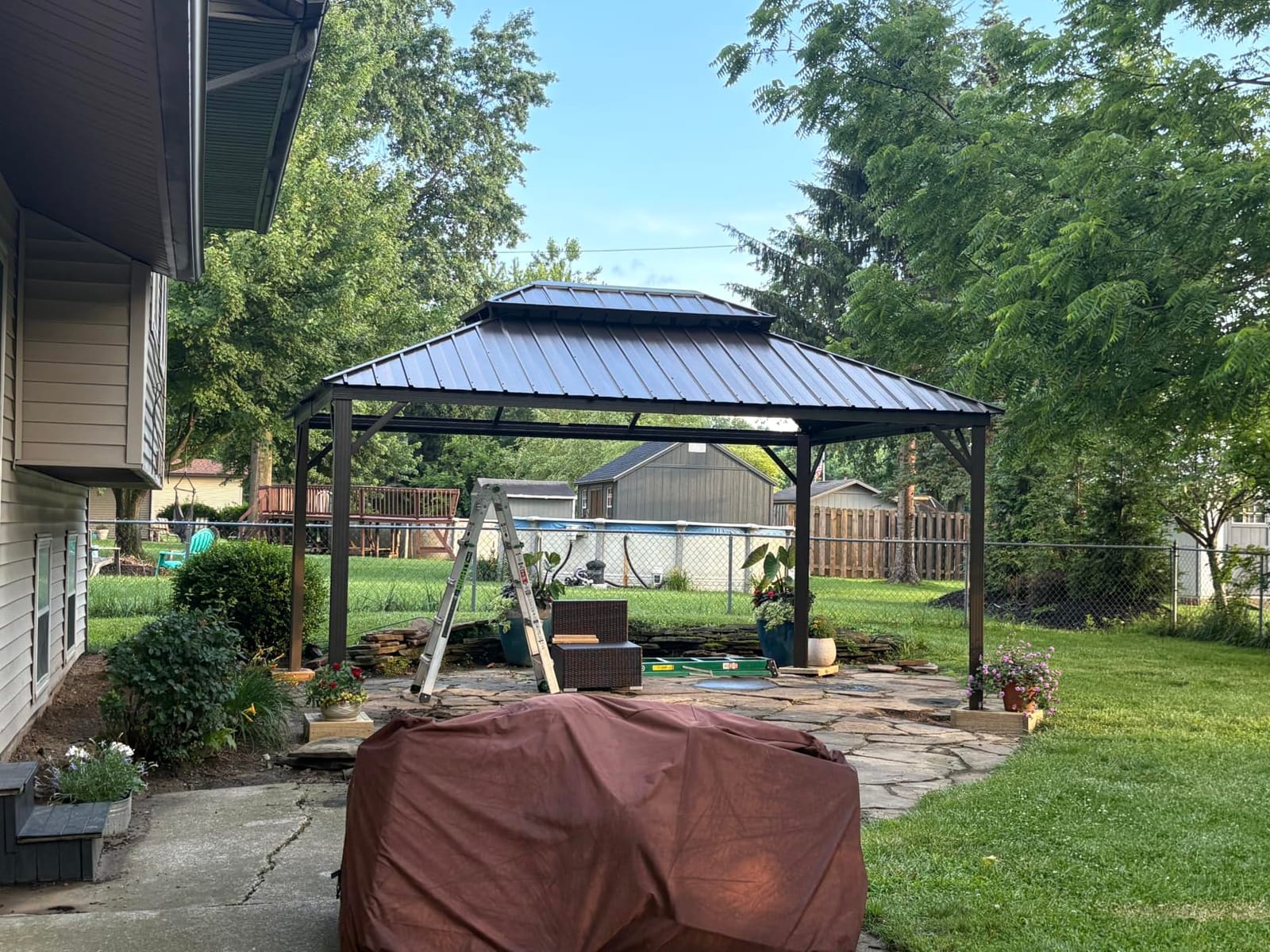
Buyers warn that the components look thin in isolation and stiffen considerably once the frame is complete, so judge the parts on the assembled structure and not on the box. The real pain point is hardware. If bolts are tightened before the pieces are aligned, threads strip, and the frame develops a wobble that never fully resolves.
Assembly needs two people minimum given the screw and panel count, and the instructions give limited guidance on sequencing. Fit each section square before you tighten anything, and the build goes smoothly.
Level the base plates before anything else
The pre-drilled base is only an advantage if the frame is plumb while you bolt it down. Set all four legs, check diagonal measurements, and correct before the first roof panel goes in. Once the roof is on, the frame will not want to move.
On a deck, use structural screws into the joists rather than lag screws into the boards, and check for blocking under the corners. Decks move, and a frame bolted to moving material will work itself loose over a few seasons of wind.
Know when this gazebo is the wrong choice
It is the wrong choice if you need a year-round snow rating in a heavy-snow region. The steel roof is described as holding heavy snow, but there is no published pound figure attached to it, and buyers who need a number should pick a model that prints one.
It is also the wrong choice for someone who expects a finished look straight out of the box. A few buyers report a few parts arriving damaged, and the frame needs a careful square-up before it is cosmetically satisfying.
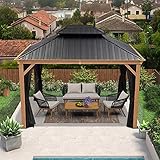
8. PURPLE LEAF 10×12 Hardtop Gazebo – Best Warranty and Best Customer Service
PURPLE LEAF Hardtop Gazebo 10′ x 12′ with Drainage System, Wood Grain Frame
40 MPH rated
2500 lb snow load
Teak-finish aluminum frame
Pros
- 5-year roof 2-year netting and 1-year frame warranty
- Highest customer rating in the roundup at 4.7
- Double-vent galvanized steel roof rated to 40 MPH
- Roof anchor tabs accept tapcon or concrete anchoring
- Proactive support that checks in during the build
Cons
- Assembly takes 12 to 22 hours for two people
- Instructions are largely pictorial with poor part labeling
- Roof panels and hardware can arrive bent or dented
The warranty breakdown is the reason this one stands apart: 5 years on the roof, 2 years on the netting, and 1 year on the frame. Most competitors in this roundup offer a single blanket year, and for a permanent outdoor structure the roof is the part that fails first. Support is also proactive, checking in during the build and shipping replacement parts quickly.
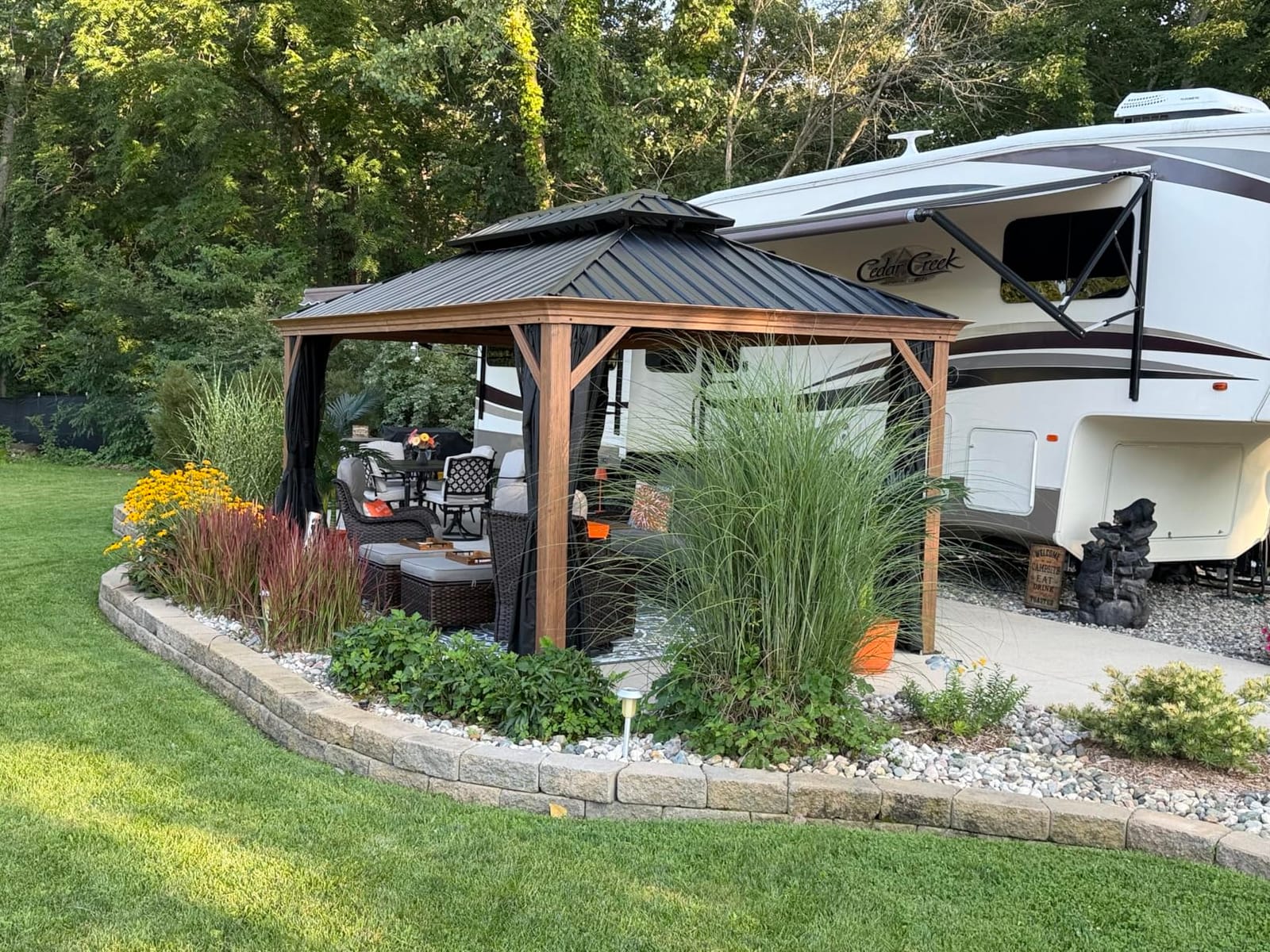
The roof is a double-vent galvanized steel design rated for 40 MPH wind and a 2,500 lb snow load, with an integrated water gutter that drains off the frame and poles. The 4.7 inch reinforced posts carry a teak-finish powder-coated aluminum frame, and at 264.6 pounds the unit has real mass. Roof anchor tabs accept tapcon screws or concrete hardware directly.
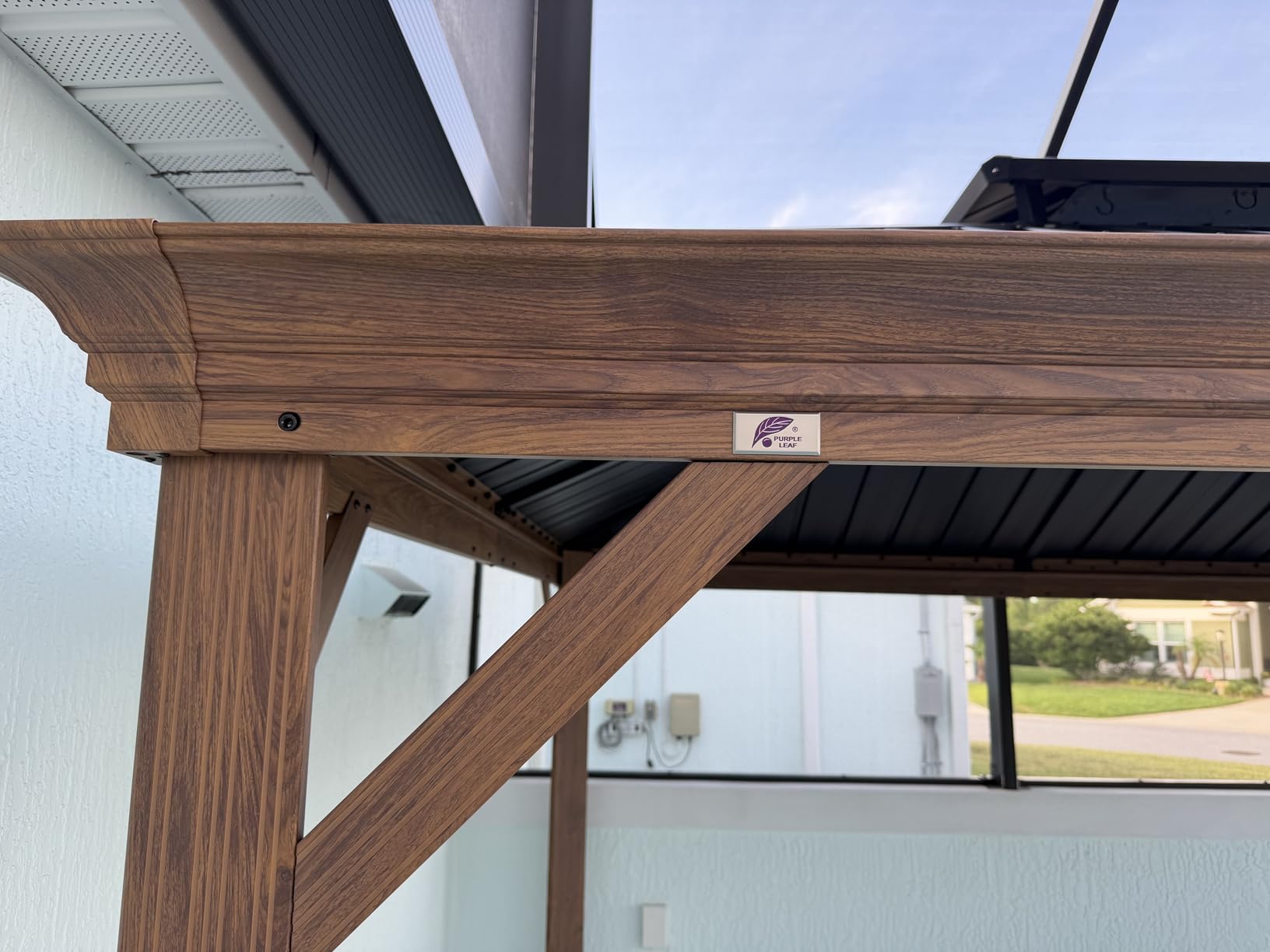
Owners describe this as the sturdiest thing they own in the yard, with no leaks reported across multiple seasons and netting thick enough to feel substantial. The complaint that repeats is the manual. Assembly runs 12 to 22 hours for two people, which is far more than the advertised six, and the paperwork is largely pictorial with weak part labeling.
Packaging quality also draws criticism. Roof panels and hardware can arrive dented, the advertised dimensions do not match installed outside-post measurements, and the silicone sealant tube referenced in the instructions is sometimes missing from the kit. Ask for the sealant if you seal your seams.
Why the roof warranty changes the math
A hardtop roof is the single most expensive replaceable component on a gazebo. A 5-year roof warranty means the first genuine failure point is covered for longer than the frame around it, which is a real advantage when a storm takes the top off rather than a bend in a post.
Compare that to a single-year blanket warranty where a damaged roof panel is out of pocket. Over a ten-year ownership horizon, the difference in coverage on the part most likely to be hit by wind is substantial.
Know when this gazebo is the wrong choice
It is the wrong choice if you are on a tight build schedule. Twelve to 22 hours for two people is a weekend plus evenings, and a bent roof panel on arrival adds rework before you start.
It is also the wrong choice if you need more than 40 MPH of rated capacity. This is a well-built 40 MPH structure; if your local exposure demands more, the aluminum and double roof on the Kozyard is the higher-rated option in this roundup.
9. ABCCANOPY 8×8 Hardtop Gazebo – Smallest Footprint with a Real Hardtop
ABCCANOPY Hardtop Gazebo 8×8 – Outdoor Metal Hard Top Gazebo, Permanent Galvanized Steel Aluminum Framed Pavilion with Netting and Curtain for Patio Backyard Lawn Garden (Double Roof, Gray)
64 sq ft covered area
Galvanized steel hardtop
3 inch aluminum posts
Pros
- Compact 64 sq ft footprint suits a small patio
- Vented double roof reduces wind stress in strong wind
- Pre-drilled post bases anchor well to pavers or concrete
- Anti-fade anti-UV galvanized roof coating
- Dual-track curtains and netting plus a ceiling hook
Cons
- Many pre-drilled holes do not line up and need redrilling
- Instructions are picture-only and pages arrive out of order
- Roof rail clips fall off while sliding panels
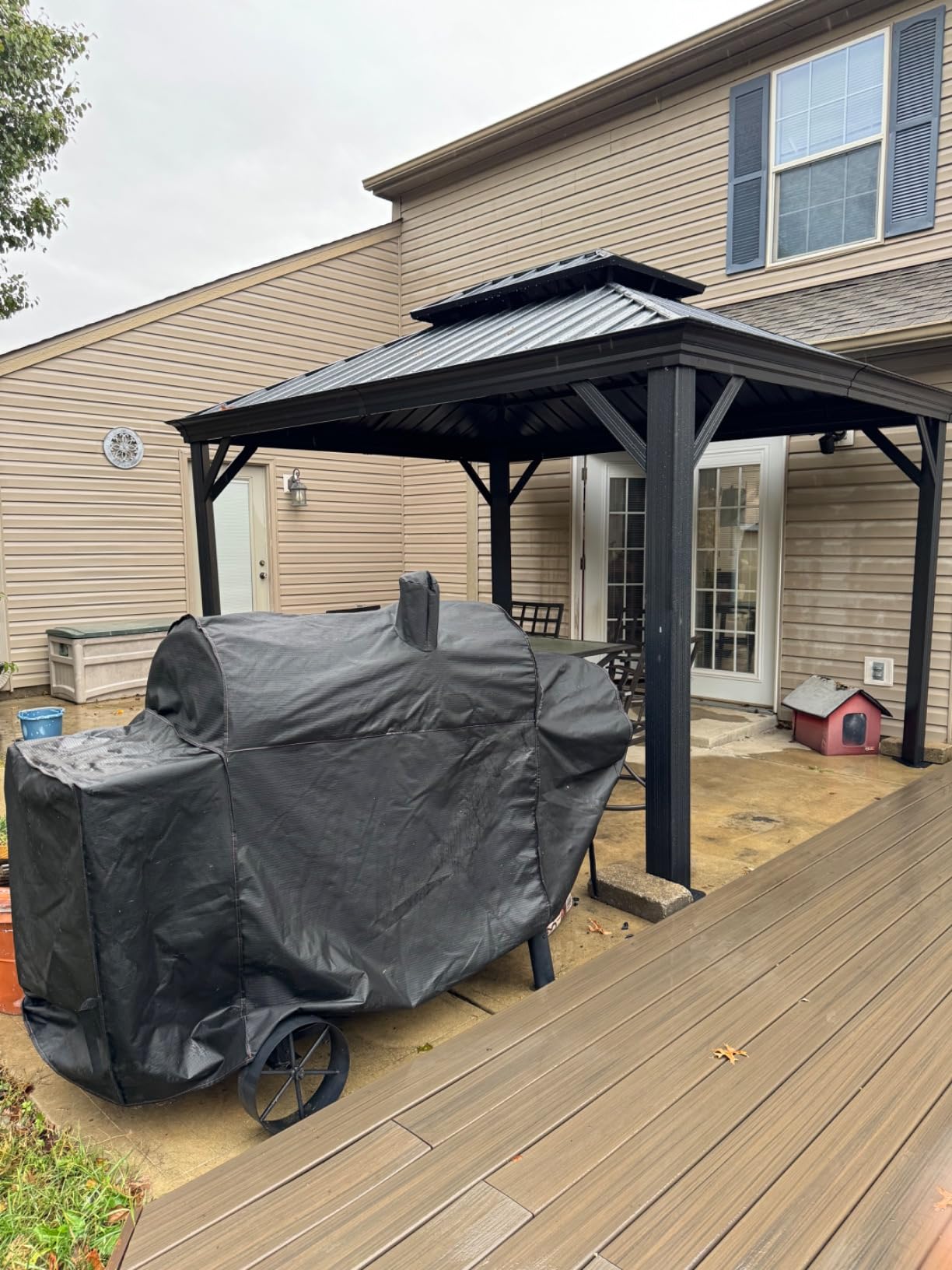
A hardtop at 64 square feet is unusual, and that is the point. Small patios rarely have room for a 10 by 12 footprint, and a soft-top canopy in an exposed corner is exactly the structure that ends up in a neighbor’s yard. The vented double roof here reduces wind stress, and the galvanized steel carries an anti-fade, anti-UV coating that keeps the top from degrading in sun exposure.
The posts are 3 inch triangular aluminum with a powder-coated finish, and the pre-drilled post bases anchor to pavers or concrete with expansion screws. Dual-track curtains and netting give privacy while keeping insects out, and a ceiling hook handles a light or fan.
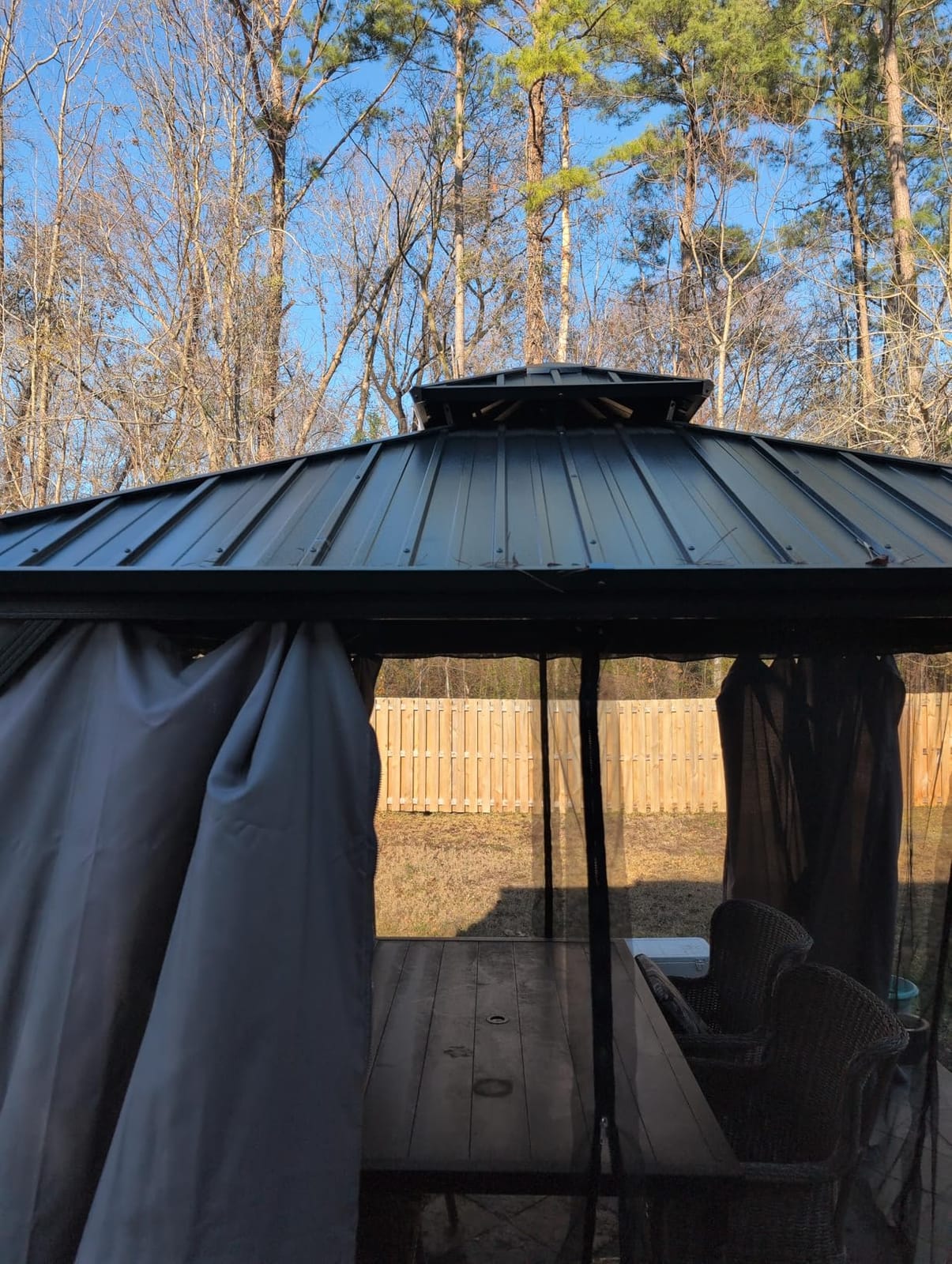
Quality control is the issue. Owners report pre-drilled holes that do not line up and need new drilling, picture-only instructions printed out of order, and roof rail clips that fall off while panels are slid into place. These are all fixable, but they add hours.
Two comfort complaints stand out. The black powder coating absorbs heat and the interior gets hot on a sunny afternoon, and some units arrive with torn mesh netting that has exposed sharp edges. Customer service has replaced missing and damaged parts quickly when buyers reach out.
Small footprint changes the wind math
Wind load scales with the area presented to it. An 8 by 8 roof catches noticeably less pressure than a 12 by 16, and the shorter span between anchor points means less leverage on the frame. In an exposed corner, a small hardtop is often the smarter buy than a large soft-top.
The trade is usable space. 64 square feet comfortably covers a couple of chairs and a side table, which is a different use than hosting a group. Be clear-eyed about that before you order.
Know when this gazebo is the wrong choice
It is the wrong choice for anyone planning to seat a group under it. The stated occupancy is generous, but 64 square feet of actual shade is not a dining space for ten people.
It is also the wrong choice if you are not comfortable drilling. Because many pre-drilled holes are misaligned, expect to redrill, and expect a drill with a proper bit rather than a stubby driver.
10. Modern Shade 10×10 Hardtop Gazebo – The Easiest Build in the Roundup
Modern Shade Hardtop Gazebo 10×10 with 4 LED Lights for Backyard, Black
Galvanized frame with expansion screws
Roof rated for 5 in of snow
Double-layer roof
Pros
- Instructions are thorough well illustrated and easy to follow
- Parts fit together precisely with very few fasteners to undo
- Corrosion-resistant galvanized steel frame with expansion screws
- Dual LED solar lights included
- Responsive support on assembly questions and replacement parts
Cons
- At least two people and three recommended for the main frame
- Roof panels are a tight fit until all panels are placed
- Multiple boxes can arrive on different days
- Some parts are not labeled correctly
Every other hardtop in this roundup comes with picture-only instructions and complaints about mislabeled parts. This one does not. Owners single out the manual as thorough, clearly illustrated, and easy to follow, and several explicitly contrast it with the paperwork that came with gazebos they had owned before.
The frame is corrosion-resistant galvanized steel with base expansion screws, and the roof is a double-layered galvanized steel hardtop rated for up to 5 inches of snow load. The double layer circulates air to keep the interior cooler, and four LED solar lights plus a center hook handle evening use.
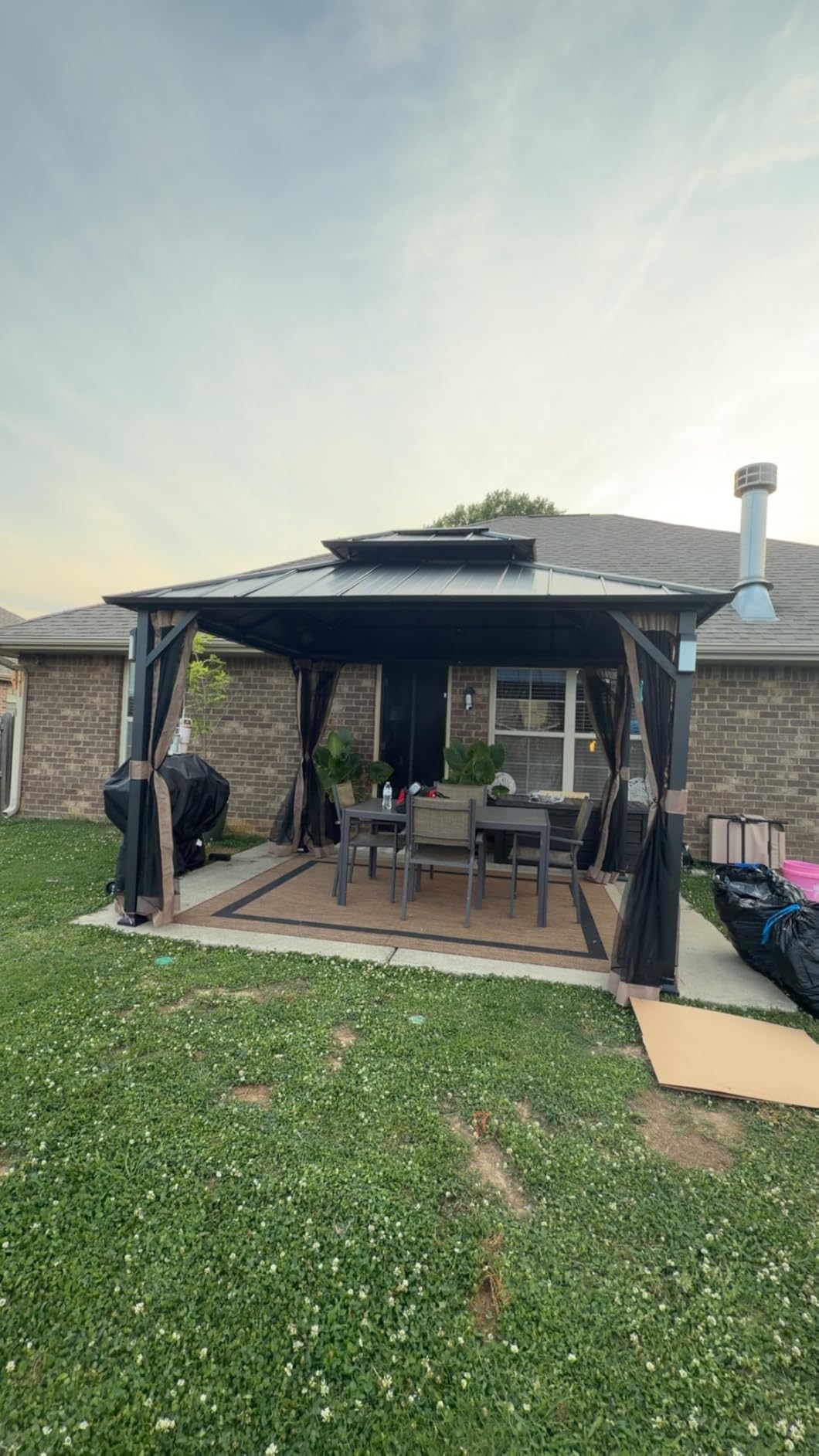
Assembly still takes a crew. At least two people are needed and three are recommended for the main frame, and roof panels are a tight fit, which means every panel has to be placed before any is tightened down. Expect a day to a day and a half for two people.
One practical note that catches people out: the boxes may not arrive on the same day. All of them need to be in hand before the build starts. Some parts also arrive without correct labels, so sort and match hardware before you begin.
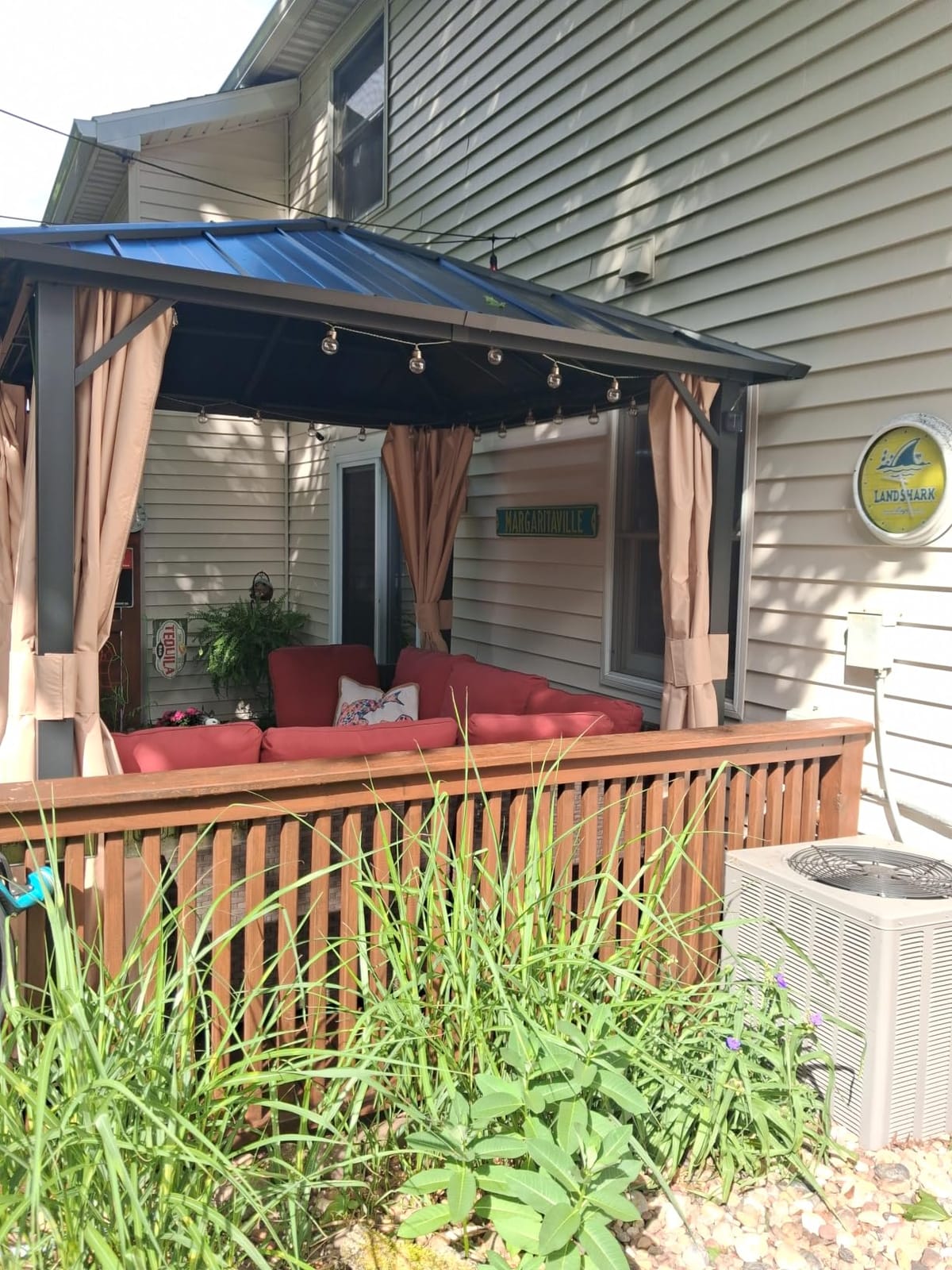
Why good instructions change the wind outcome
A frame assembled to the correct sequence ends up square, and a square frame distributes lateral load evenly across the posts. A frame assembled out of sequence develops a twist, and that twist is where wind gets leverage. The manual quality here is not cosmetic, it is structural.
Follow the sequence literally, square the frame before the roof goes on, and check diagonals twice. The clear paperwork makes that far easier than it is on any other hardtop here.
Know when this gazebo is the wrong choice
It is the wrong choice if you cannot wait for all the boxes to arrive before starting, and it is the wrong choice if only one person is available for assembly day.
No published MPH wind rating is printed for this model, so if you need a number on the box for an insurance or permitting conversation, pick a model that states one. What it does offer is a steel frame with real mass, which is a decent baseline in exposed yards.
Wind Ratings Explained: What Level 6, 40 MPH and 60 MPH Actually Mean
Wind ratings only exist in a conditional form. Every published number on a gazebo assumes a specific installation: anchors of a specific type, driven into a specific surface, at a specific depth. Read a rating as a statement about a properly anchored structure, not about the structure sitting on grass.
Level 6 wind resistance, which the LAUSAINT HOME carries, places a structure in the band of sustained winds that a typical mid-size gazebo frame is engineered for when it is bolted down. Level 7 wind resistance, a term used in this category generally, corresponds to roughly 31 to 38 mph sustained winds. The 40 MPH rating on the PURPLE LEAF hardtop and the 60 MPH rating on the Kozyard sit above that band and reflect heavier frame sections and larger roof spans.
Here is the reality check that matters. The gap between a printed rating and field performance is almost entirely anchoring. Owners on outdoor forums describe expensive structures surviving storms and cheap ones becoming airborne in the same gust, and the difference was how each was held down. A hardtop is a sail with a heavy frame. Anchor it properly and the sail becomes a roof.
Pop-up models in this roundup carry no MPH number at all, and that is not an omission. Their limit is a function of the frame pins, the fabric drag, and the anchor, which vary with every setup. We have listed the ones that perform best when fully weighted and guyed out, which is the best that can be said for the format.
Direction matters as much as speed. The pressure on a wall or a roof panel is highest at a corner or an edge, which is exactly where most canopy frames are weakest. A structure with reinforced corners and triangular bracing moves that concentrated load into the middle of the frame, where the section is deepest, and the whole assembly behaves as one rigid shape instead of a hinge that can fold.
Look at how the roof attaches as well. Roof panels that slide into a rail and lock with clips create a continuous edge that resists lift, while a panel that simply sits on a bolt has a gap that wind can get under. Several models here lost panels or clips during installation for exactly that reason, and the same joint is the first place a storm would find.
How to read a rating before you buy
Look for three things: the number itself, the anchoring condition attached to it, and the frame section size. A rating with no anchoring condition is a marketing line. A rating tied to expansion bolts into concrete, on a frame with 4.7 inch triangular posts, is engineering.
Then check the roof. A vented double roof reduces the uplift pressure that ratings are designed around, which means the same frame rating behaves better with venting than without it. A single-layer roof on the same frame will feel the load the number was calculated for, with no margin.
Frame Material: Steel vs Aluminum in Wind
Steel and aluminum both appear in this roundup, and the honest answer is that neither material wins outright. What matters is the section size and the bracing geometry, not the label on the material.
Aluminum frames dominate the higher-rated units here. The Kozyard uses 4.7 inch triangular aluminum poles with 5 inch by 4 inch reinforced beams, the YOLENY uses 4.7 inch powder-coated poles, and the EROMMY uses powder-coated triangular aluminum with pre-drilled bases. Aluminum does not rust, which matters enormously in coastal and salt-air locations where a steel frame would be on a corrosion clock.
Steel frames show up in two forms. The LAUSAINT HOME uses 40x40mm galvanized steel with a powder-coated finish, and the Modern Shade uses a fully galvanized steel frame. Galvanized steel carries more weight for the same section size, which is a genuine advantage in wind because mass resists the initial push. It is also why both steel models here weigh in the 200-plus pound range.
Corrosion is the failure mode that bypasses the wind rating entirely. A frame that loses section thickness to rust has less strength than its rating assumed, and salt air accelerates that loss dramatically. Powder-coated aluminum is the safest choice near a coast. Galvanized steel holds up well inland and in freshwater exposure, provided the coating is intact.
For anything within a mile of surf, rinse the frame down after every storm season and touch any chips in the coating. Five minutes of maintenance a year is far less work than replacing a frame that has already lost section to corrosion, and it is the difference between a frame that lasts a decade and one that starts failing in year three.
Powder coating is the differentiator to check on any steel frame. A coated frame resists corrosion far longer than bare or zinc-only steel, and on a galvanized model the coating is what keeps the zinc layer from chalking away in sun and rain.
Triangular sections beat square sections
Nearly every hardtop in this roundup uses triangular posts or beams, and the reason is bracing geometry. A triangular section resists bending in multiple directions without adding weight, because the geometry itself distributes the load. A square tube of the same width has unused material in the corners and a weaker section modulus.
Cross-bracing and reinforced corners matter for the same reason. When wind pushes on a panel, the force has to travel from the panel edge to the frame to the base. Every unreinforced joint in that path is a place the structure can rack instead of resist.
Roof Design: Why Vented Double Roofs Reduce Wind Load
Wind does not push a roof straight down. It flows across the surface, separates at the leading edge, and creates an upward pressure over the leeward portion of the roof. That uplift is what actually tears canopies loose, and it is the reason a flat fabric top fails long before its frame does.
A double roof solves this by splitting the surface. Air entering the gap between the lower and upper roof layers equalizes pressure, so the net uplift on the structure drops. The same vent that reduces wind load also moves hot air out of the peak, which is why reviewers repeatedly mention that double-roof gazebos feel cooler underneath.
Nine of the ten gazebos here use a double or ventilated roof. The exceptions are the VEVOR and COOS BAY, which are fabric tents with vented tops rather than hardtops. Every hardtop in the roundup, from the ABCCANOPY to the YOLENY, specifies a vented double top, and that is now the baseline for wind performance in this category.
Roof material follows the same logic. Galvanized steel with an anti-fade, anti-UV coating outlasts fabric because it does not flex, tear, or degrade in sunlight. Polycarbonate sits in between, lighter than steel but prone to yellowing over a few seasons. If your region sees four seasons of weather, the galvanized steel hardtop is the only one of the three that stays unchanged.
Drainage is a wind feature too
A roof that holds water adds weight to the frame and creates a load path the structure was never rated for. Integrated gutters and eaves drainage, which the Kozyard, YOLENY, and PURPLE LEAF all include, move water off the roof and down the poles instead of letting it sit in the corner pans.
Before storm season, clear the gutters and the drainage channels. A blocked drain turns a rated roof into a loaded roof, and the rating on the box assumes the water leaves.
Anchoring Systems: The Step That Decides Survival
Of everything in this roundup, anchoring has the largest effect on whether a gazebo is still standing after a storm. Every rating we quoted above is a rating for an anchored structure. The same units move in 30 mph gusts when they are weighted with a few sandbags.
There are four anchor paths worth knowing, and they map cleanly onto the surface you have available. First, expansion bolts into concrete or a poured slab, which is the standard and the strongest. The LAUSAINT HOME includes eight of them, and the ABCCANOPY and EROMMY ship with pre-drilled post bases sized for exactly this hardware.
Second, structural lag screws or tapcons into deck framing. The PURPLE LEAF has roof anchor tabs that accept tapcon or concrete anchoring directly, which makes a deck install straightforward. Screw into joists, not into deck boards, and check for blocking under the corners because decks move.
Third, ground spikes or stakes driven deep into soil. This works on pop-up models and on light soil, and it is what the CROWN SHADES weight bags and stakes support. Drive stakes at an angle away from the structure and tension every guyline, including the upper tie-down loops on the VEVOR.
Fourth, weighted bases. The CROWN SHADES includes four weight bags, and planters on each leg are the technique several LAUSAINT HOME owners used. Ballast is a legitimate strategy on a slab you cannot drill, though it works best when the base is wide and the ballast sits low.
The failure mode nobody mentions
What actually breaks in a storm is rarely the frame. It is the connection. A post pulled out of its base, a base plate that was set on a shimmed joint, or a frame that was never plumb will fail at the foot while the roof is still fine. A gazebo that leans slightly out of square multiplies the load on every joint and every screw hole in it.
Level the base, square the frame, check both diagonals, and then tighten. Then check the diagonals again. This is the fifteen minutes of work that determines whether the printed rating applies to your gazebo.
Renter-Friendly Anchoring and Seasonal Maintenance
Not everyone has a slab to drill into, and rental rules often rule out masonry work. If that describes your situation, the honest framing is that you are working with a portable shelter, and your wind expectations should match. Portable means you bring it out for a gathering and you take it down before the front arrives.
The two best renter strategies are ballast and distance. Wide bases loaded low, such as the CROWN SHADES weight bags on a rail, resist uplift far better than tall narrow anchors. And a gazebo parked against a fence or a hedge faces wind from two sides, which doubles the effective pressure. Move the shelter to the leeward side of the house and out of any funnel between structures before the season turns.
For a permanent look without permanent hardware, the soft-top models in this roundup with pop-up frames can be set up on a deck for the season and repacked in minutes. Strip removable wind panels and mesh before a storm, and stow the whole unit rather than trying to out-anchor a forecast.
Seasonal maintenance for a wind-exposed gazebo is short. Before storm season, check every anchor point, re-torque the base hardware, and confirm that roof panels are seated and clipped. Clear gutters and drainage paths. Confirm that netting and curtains are fully retracted or properly zipped, since loose fabric is the biggest sail on the structure.
After the season, wipe the frame, especially if you are coastal. Salt settles on powder coating and eats it faster than anything else. Tighten netting hooks that have pulled out of the tracks, and check the roof clips, which are the recurring failure point on nearly every model in this roundup.
An exposed patio under a canopy collects pollen, leaf litter and sunscreen residue faster than a covered floor does, so plan the cleanup alongside the hardware. For anything carpeted beside or under the structure, our carpet cleaners for high-traffic areas guide covers the extraction methods that hold up to that use.
Frequently Asked Questions
What gazebo can withstand wind?
Only an anchored gazebo has a real wind limit. A galvanized steel hardtop on a braced aluminum frame, bolted to concrete with expansion screws, is the most reliable build in a windy area. Published ratings from 40 to 60 MPH apply to properly anchored installations, not to the same structure sitting on grass.
What is the best gazebo for strong wind?
A permanent hardtop gazebo with a galvanized steel double roof, a vented double top, and expansion-bolt anchoring is the best answer. Among the models we ranked, the Kozyard Alexander 10×14 carries the highest published rating at 60 MPH when anchored, and the PURPLE LEAF 10×12 is the sturdiest alternative with a 5-year roof warranty.
What gazebo has a 100 mph wind rating?
None of the ten gazebos we ranked publishes a 100 MPH figure. The highest published rating in this group is 60 MPH when anchored. Household-scale gazebos are not engineered to hurricane-grade uplift loads, so treat any very high claim as a marketing line unless it comes with anchoring conditions and frame section sizes.
How windy is too windy for a gazebo?
For an unanchored pop-up canopy, sustained winds above 30 mph are where structures start becoming airborne. For a properly anchored hardtop, ratings in the 40 to 60 MPH range mean the structure is designed for that load. Beyond its rating, the usual failure point is the base connection rather than the frame.
Do gazebos need to be anchored for wind?
Yes. Anchoring is the single biggest factor in whether a gazebo survives wind. Ratings printed on the box assume a specific anchor type driven into a specific surface. Without anchors, even a heavy hardtop behaves like a sail, and pop-up models lose the roof fabric first and the frame second.
Are steel or aluminum gazebo frames better for wind?
Neither wins outright. Section size and bracing matter more than material. Steel frames carry more mass for the same section size, which resists the initial push and is why steel models here weigh over 200 pounds. Aluminum does not corrode, which makes it the better choice in coastal and salt-air locations.
Final Verdict: Which Gazebo Stays Up in Wind
The best gazebos for windy areas ranking comes down to one variable that most shoppers ignore: the rating is only true when the anchoring is. The Kozyard Alexander 10×14 takes the top spot because it publishes the highest number in the group at 60 MPH, backs it with 4.7 inch triangular aluminum poles, and vents the roof so uplift never builds. The PURPLE LEAF 10×12 is the pick if long-term coverage matters more than raw rating, with a 5-year roof warranty and the highest customer rating we found.
For portable setups, the CROWN SHADES 11×11 survives more real weather than anything else in the pop-up category because the weight bags and guy ropes come in the box. Take the frame and roof seriously, anchor the feet the day the frame is plumb, and any of these will outlast the weather that usually takes them.
For a broader look at layouts and sizing before you commit, revisit our backyard gazebo guide, and pick flooring rated for high-traffic areas that can handle an exposed patio once the structure is standing.