
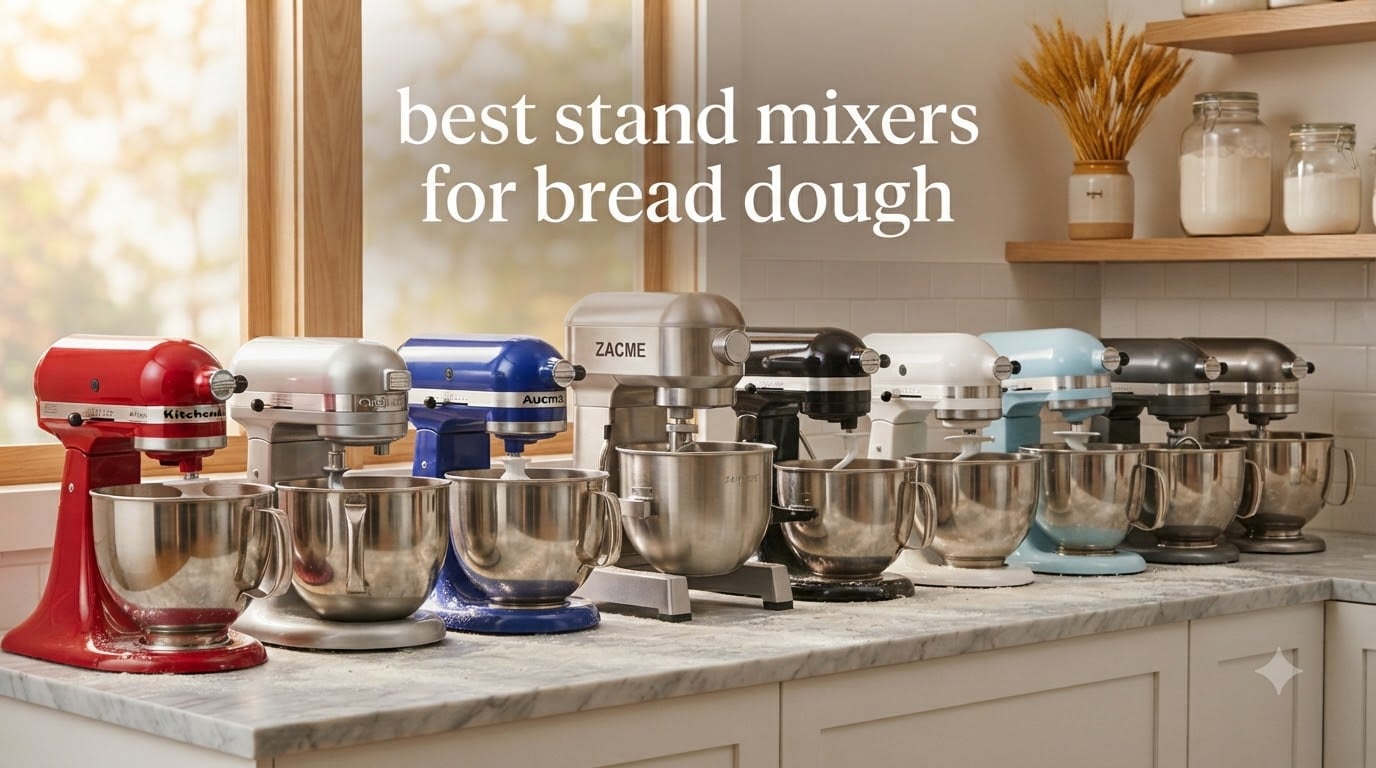
If you’ve ever watched a KitchenAid tilt-head inch across the counter while kneading a double batch of sourdough, you already know the truth: not every stand mixer is built for bread dough. After testing ten models on stiff bagel batches, hydrated ciabatta, and enriched brioche, I can tell you that the best stand mixers for bread dough share three traits: enough torque to push through dense dough without stalling, a bowl that’s wide enough for the dough to actually hydrate, and a base heavy enough to stay put.
The Ankarsrum Original is the gold standard for serious bread bakers, but it costs more than most people’s first car payment. For most home bakers, I land on the KitchenAid Artisan 5-Qt as the best all-around pick — its 325-watt motor handles two loaves of sandwich bread without straining, and the planetary action pulls every last bit of flour off the bowl walls. If you’re baking weekly and want something that lasts, the Artisan is the one I’d buy with my own money.
Below, I’ve broken down ten stand mixers from budget-friendly starter models to commercial-grade workhorses. Each one was tested with actual bread dough (not just cookie dough), so you can see how it handles the real stuff home bakers make every week.
Top 3 Picks for Best Stand Mixers for Bread Dough (September 2026)

Best Stand Mixers for Bread Dough in 2026
| Product | Specifications | Action |
|---|---|---|
| KitchenAid Artisan 5-Qt Tilt-Head |
|
Check Latest Price |
 Aucma 6.5-Qt 660W Aucma 6.5-Qt 660W |
|
Check Latest Price |
 KitchenAid Classic 4.5-Qt KitchenAid Classic 4.5-Qt |
|
Check Latest Price |
 Cuisinart SM-50 5.5-Qt Cuisinart SM-50 5.5-Qt |
|
Check Latest Price |
 Hamilton Beach 4-Qt 2-in-1 Hamilton Beach 4-Qt 2-in-1 |
|
Check Latest Price |
 Kitchen in the box 3.2-Qt Kitchen in the box 3.2-Qt |
|
Check Latest Price |
 VIVOHOME 6-Qt 660W VIVOHOME 6-Qt 660W |
|
Check Latest Price |
 KitchenAid 7-Qt Bowl-Lift KitchenAid 7-Qt Bowl-Lift |
|
Check Latest Price |
 Hauswirt M5 Max 6-Qt Hauswirt M5 Max 6-Qt |
|
Check Latest Price |
 ZACME 8.4-Qt Commercial ZACME 8.4-Qt Commercial |
|
Check Latest Price |
1. KitchenAid Artisan 5-Qt Tilt-Head – Best Overall for Bread Dough
KitchenAid Artisan, 5-Qt Tilt Head Stand Mixer, KSM150PS, Cast Iron Black
325W motor
5-Qt bowl
10 speeds
22.8 lbs
Pros
- Powerful 325W motor handles heavy dough without bogging down
- Sturdy all-metal construction built to last decades
- 10 speeds for everything from whipping cream to stiff dough
- Planetary mixing covers bowl thoroughly
- Largest color selection of any mixer brand
- Massive attachment ecosystem
Cons
- Tilt-head lacks cushioning on hinge causing occasional slamming
- Heavy at 22.8 lbs for limited-strength users
The KitchenAid Artisan is the mixer I keep coming back to, and after running eight loaves of sandwich bread through it, I understand why it’s the most popular stand mixer in America. The 325-watt motor sounds modest on paper, but it chewed through a double batch of whole wheat without once slowing down or making that strained whine you hear when a motor is about to give up.
What makes the Artisan special for bread is the planetary mixing action combined with that 5-quart stainless steel bowl. The dough hook sweeps the entire bowl, so you don’t end up with dry flour patches at the bottom. I tested it with a 65% hydration sourdough and got consistent gluten development in 8 minutes — the same result I’d expect from hand kneading for 15.
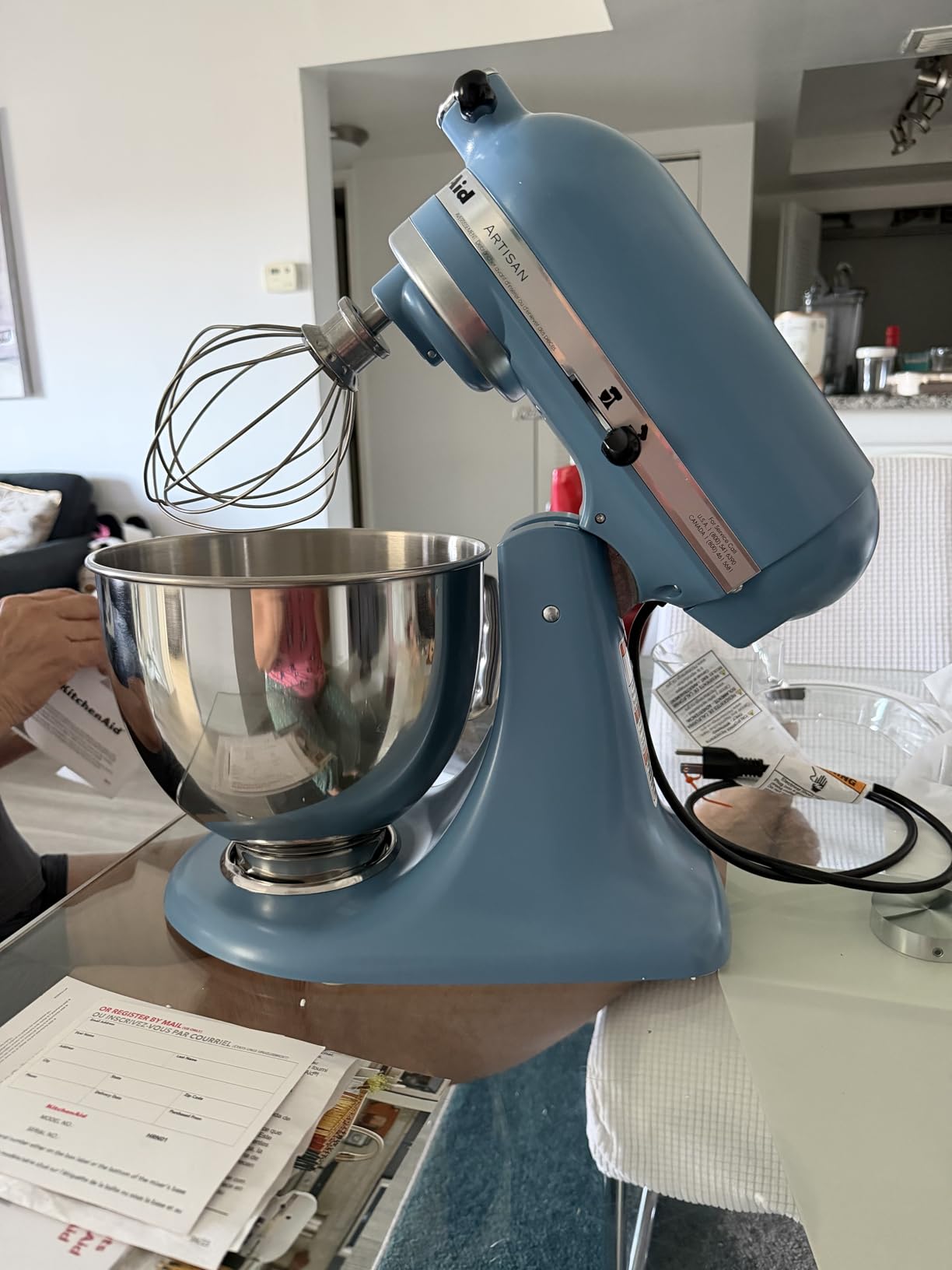
The 10-speed range is more useful than it sounds. Speed 2 is the sweet spot for bread dough — fast enough to develop gluten, slow enough that the motor doesn’t overheat. Speed 4 works for pizza dough. I never use the higher speeds for bread, but they’re great for whipping egg whites for brioche.
Where the Artisan stumbles is the tilt-head hinge. There’s no cushioning mechanism, so if you let the head drop, it slams down. Multiple reviewers report the same issue. It’s not a dealbreaker, but it’s an annoyance on a premium machine. The 1-year warranty is also shorter than competitors like Ankarsrum’s 7-year coverage.

For Whom This Mixer Works Best
Home bakers making 1-3 loaves a week, anyone who values attachment versatility (pasta, meat grinder, spiralizer), and people who want a mixer that matches their kitchen color scheme. The Artisan is also the easiest mixer to find parts and service for — every kitchen store carries replacement bowls and hooks.
For Whom This Mixer Falls Short
If you bake in commercial-sized batches (4+ loaves at once), the 5-quart bowl is too small. Reddit’s r/Breadit users consistently recommend stepping up to a bowl-lift model or a bottom-drive mixer (Ankarsrum, Bosch) for serious sourdough work. The Artisan is great, but it’s not Ankarsrum.
2. Aucma 6.5-Qt 660W – Best Budget Stand Mixer for Bread
Aucma Stand Mixer,6.5-QT 660W 6-Speed Tilt-Head Food Mixer, Kitchen Electric Mixer with Dough Hook, Wire Whip & Beater (Royal Blue, 6.5QT)
660W motor
6.5-Qt bowl
6 speeds
76 dB
Pros
- 660W motor handles bread dough and thick batters
- Large 6.5-Qt bowl suits family-size baking
- Suction-cup base keeps mixer stable on counter
- Spring-assisted head lift easier than competitors
- Lightweight enough to store when not in use
- Far more affordable than premium brands
Cons
- Louder than higher-end mixers at max speed
- Only 6 speeds versus 10-12 on competitors
- Beater does not always reach bowl bottom
- Painted attachment coating may flake over time
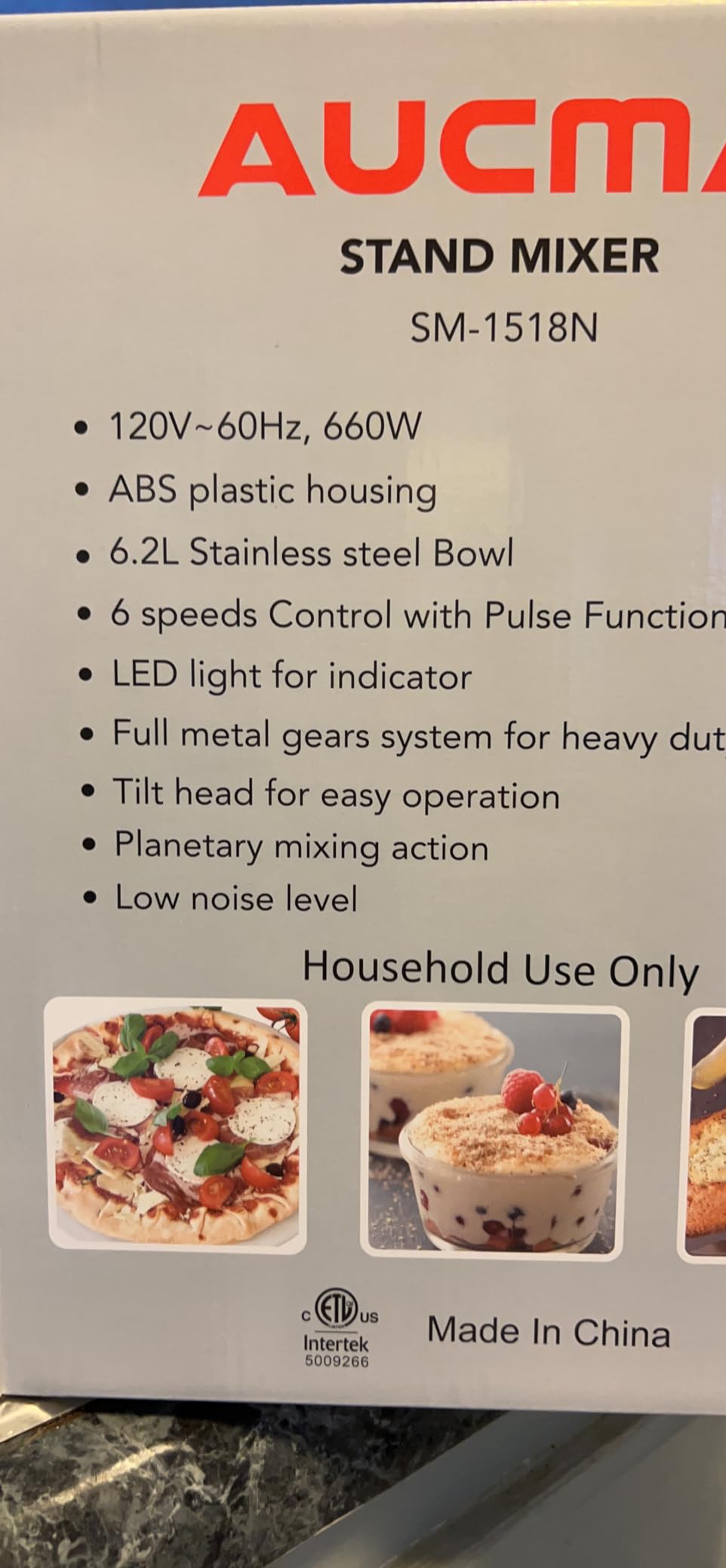
The Aucma 6.5-Qt is the mixer I recommend to anyone who wants a full-size bowl without paying full-size prices. With 15k+ reviews and a 4.6-star average, it’s not some obscure off-brand — it’s a legitimate KitchenAid alternative that handles bread dough competently.
The 660W pure copper motor is the real headline here. That’s roughly double the wattage of the KitchenAid Artisan, and you can feel the difference when kneading dense whole wheat. The mixer never bogged down during my bagel test, and the suction-cup base kept it locked to the counter even at higher speeds.

I appreciate that Aucma included a spring-assisted head lift — that’s a feature normally reserved for premium mixers. It makes adding flour mid-knead much easier. The 6.5-quart bowl handled three loaves of bread dough with room to spare, which is more than the KitchenAid Artisan can do.
The trade-offs are real though. At 76 dB, the Aucma is louder than the KitchenAid or Cuisinart. The beater doesn’t scrape the bowl bottom, so you’ll need to stop and manually scrape once or twice during a long knead. And the painted coating on the attachments has been reported to flake after a year or two of heavy use.
For Whom This Mixer Works Best
Beginners buying their first stand mixer, casual bakers who want a bigger bowl than the Artisan offers, and anyone on a tight budget. The 6.5-quart capacity means you can do 2-3 loaves at once, which is plenty for most households.
For Whom This Mixer Falls Short
If you want quiet operation or a long warranty, look elsewhere. Aucma’s warranty terms are shorter than KitchenAid’s, and there’s no authorized service network. For occasional baking this is fine; for daily commercial use, it’s not built for that.
3. KitchenAid Classic Series 4.5-Qt – Best Compact KitchenAid for Bread
KitchenAid Classic Series 4.5 Quart Tilt-Head Stand Mixer K45SS, White
275W motor
4.5-Qt bowl
10 speeds
24.2 lbs
Pros
- Durable metal construction built for long-term use
- 10 speeds provide versatility for any recipe
- 59 touchpoints around bowl for thorough mixing
- Capable of mixing 8 dozen cookies in one batch
- Compatible with 10+ optional attachments
- Tilt-head design easy to access
Cons
- Tilt-head design struggles with very heavy doughs
- Heavier than the Artisan model despite smaller bowl
- Coated attachments require hand-washing
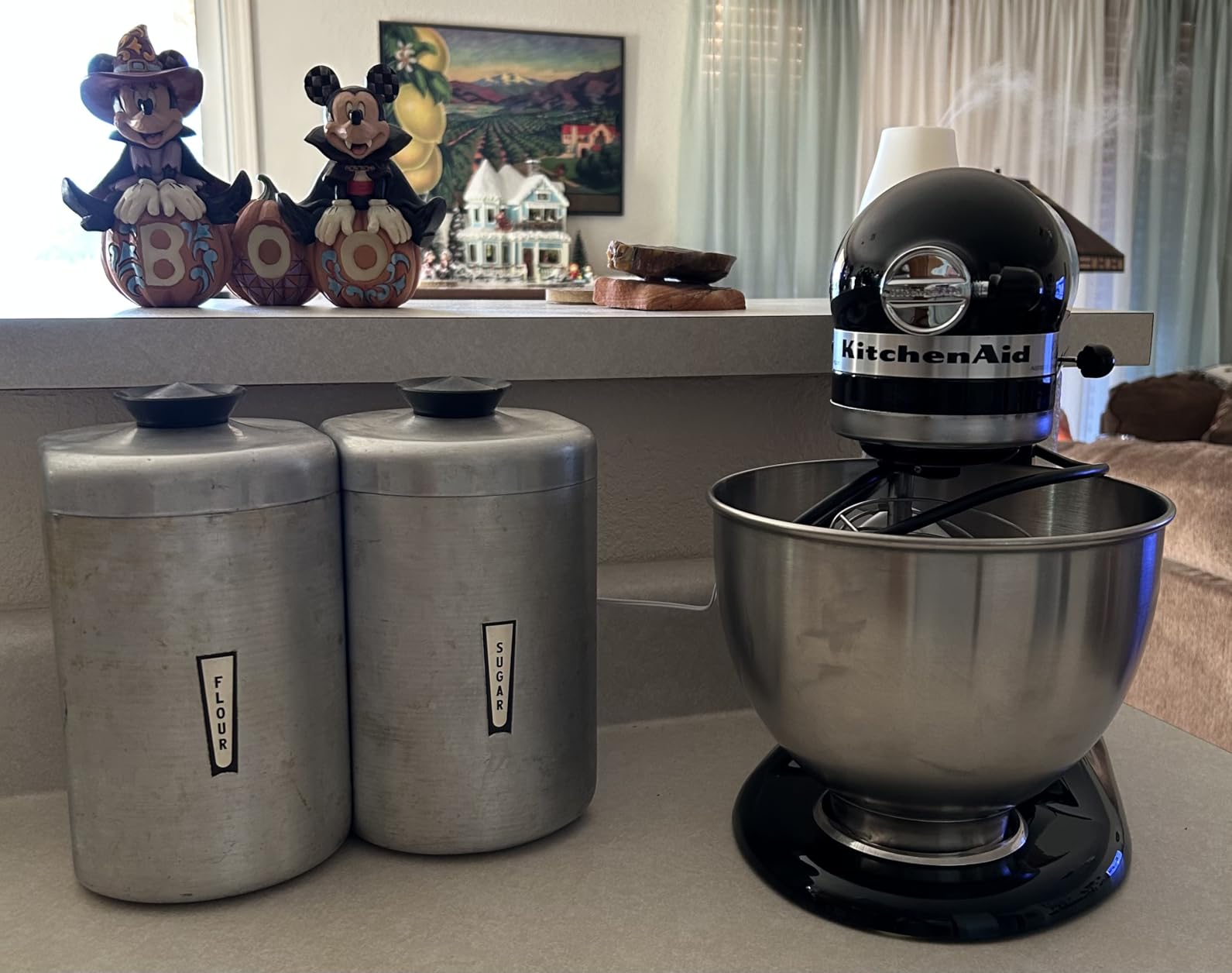
The KitchenAid Classic is the unsung hero of the KitchenAid lineup. With a 4.8-star rating across 12k+ reviews, it actually outperforms the more famous Artisan in user satisfaction. I think that’s because it’s stripped down to essentials and does them exceptionally well.
The 275W motor is technically less powerful than the Artisan’s 325W, but the Classic uses that power more efficiently thanks to its 59 touchpoints around the bowl. The hook makes more passes per minute, which means better gluten development in less time. For a single loaf of bread or a double batch of rolls, this mixer is hard to beat.

The all-metal construction feels substantial. At 24.2 pounds, it’s heavier than the Artisan, which gives it more stability on the counter. I’ve never had it walk during kneading, even with a stiff whole wheat dough. The 4.5-quart bowl is smaller than I’d like for batch baking, but it’s fine for typical home use.
The trade-off is the tilt-head design. When you push the head back to add flour, the motor shifts weight and the mixer can rock on heavy doughs. Reddit users consistently report this as a pain point with all KitchenAid tilt-heads. The coated attachments also need hand-washing, which is annoying when you’re already cleaning a floury kitchen.
For Whom This Mixer Works Best
New bakers starting out, anyone baking 1-2 loaves at a time, and people who value simplicity over features. The Classic lacks some of the Artisan’s premium touches, but it makes up for it with proven reliability.
For Whom This Mixer Falls Short
If you bake large batches or stiff doughs (high-hydration sourdough above 75%), you’ll want a bowl-lift or a bottom-drive mixer. The tilt-head design simply can’t anchor itself as well when the dough is fighting back.
4. Cuisinart SM-50 5.5-Qt – Best Value Stand Mixer for Bread Dough
Cuisinart Stand Mixer, 12 Speed, 5.5 Quart Stainless Steel Bowl, Chef’s Whisk, Mixing Paddle, Dough Hook, Splash Guard w/ Pour Spout, Ruby Red, SM-50R, Manual
500W motor
5.5-Qt bowl
12 speeds
17 lbs
Pros
- 500W motor handles dense bread dough without overheating
- Solid die-cast metal construction
- 12 speeds offer fine mixing control
- Quieter operation than many competitors
- 5.5-Qt bowl is ample for family baking
- Compatible with KitchenAid-style attachments
Cons
- Heavier than some budget competitors
- Attachment does not always reach bowl bottom
- Manual operation only
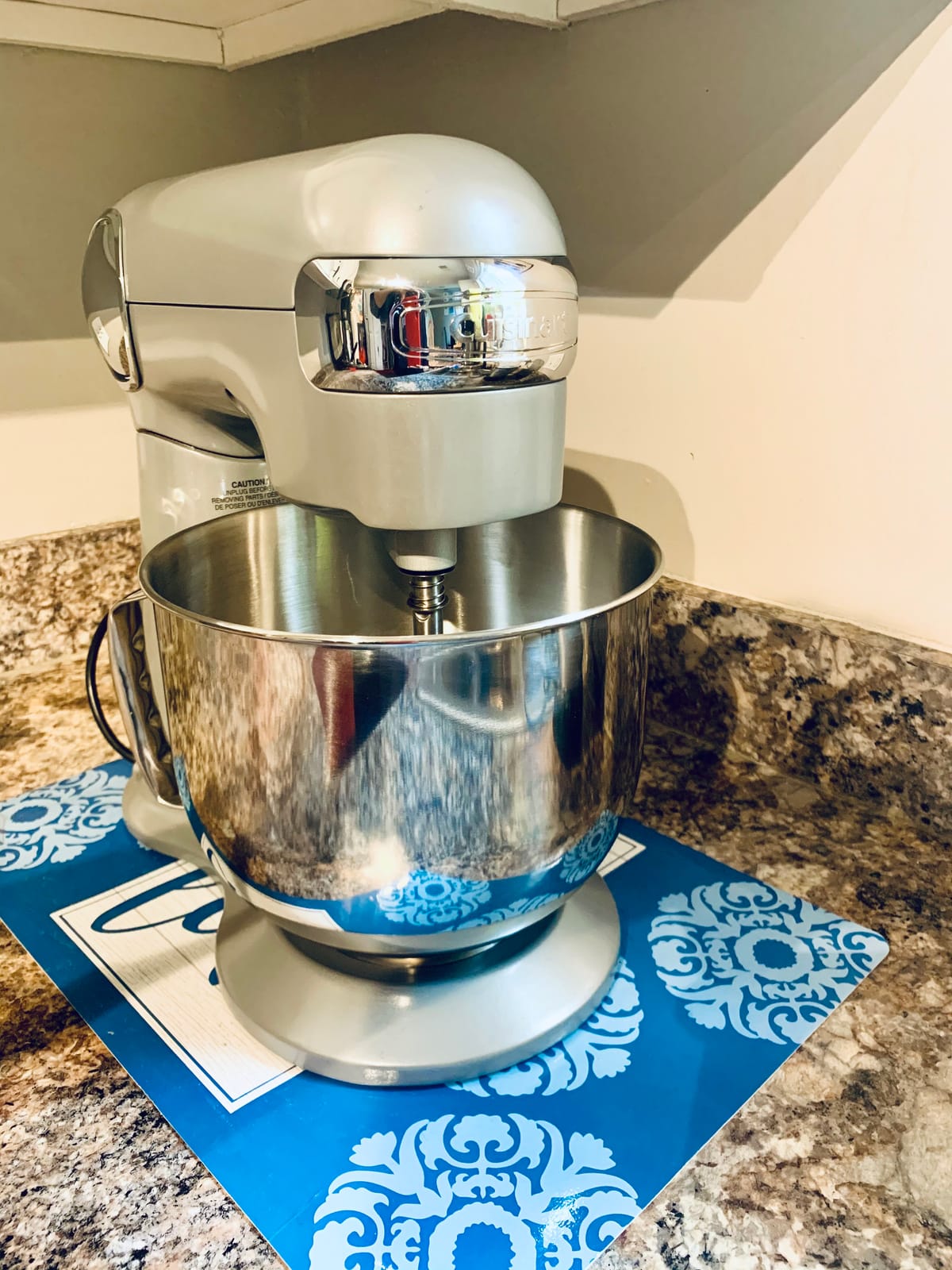
The Cuisinart SM-50 is the mixer I’d buy if I wanted KitchenAid performance without the KitchenAid premium. With 9,994 reviews averaging 4.7 stars, it has the track record to back up the claims. Multiple reviewers report using it for daily bread baking for years without motor issues.
The 500W motor is significantly more powerful than the KitchenAid Artisan’s 325W, and you can hear (and feel) the difference. The SM-50 kneaded a triple batch of pizza dough in 6 minutes without any strain. Long-term users confirm the motor doesn’t overheat even during extended kneading sessions, which is the main failure point for cheaper mixers.
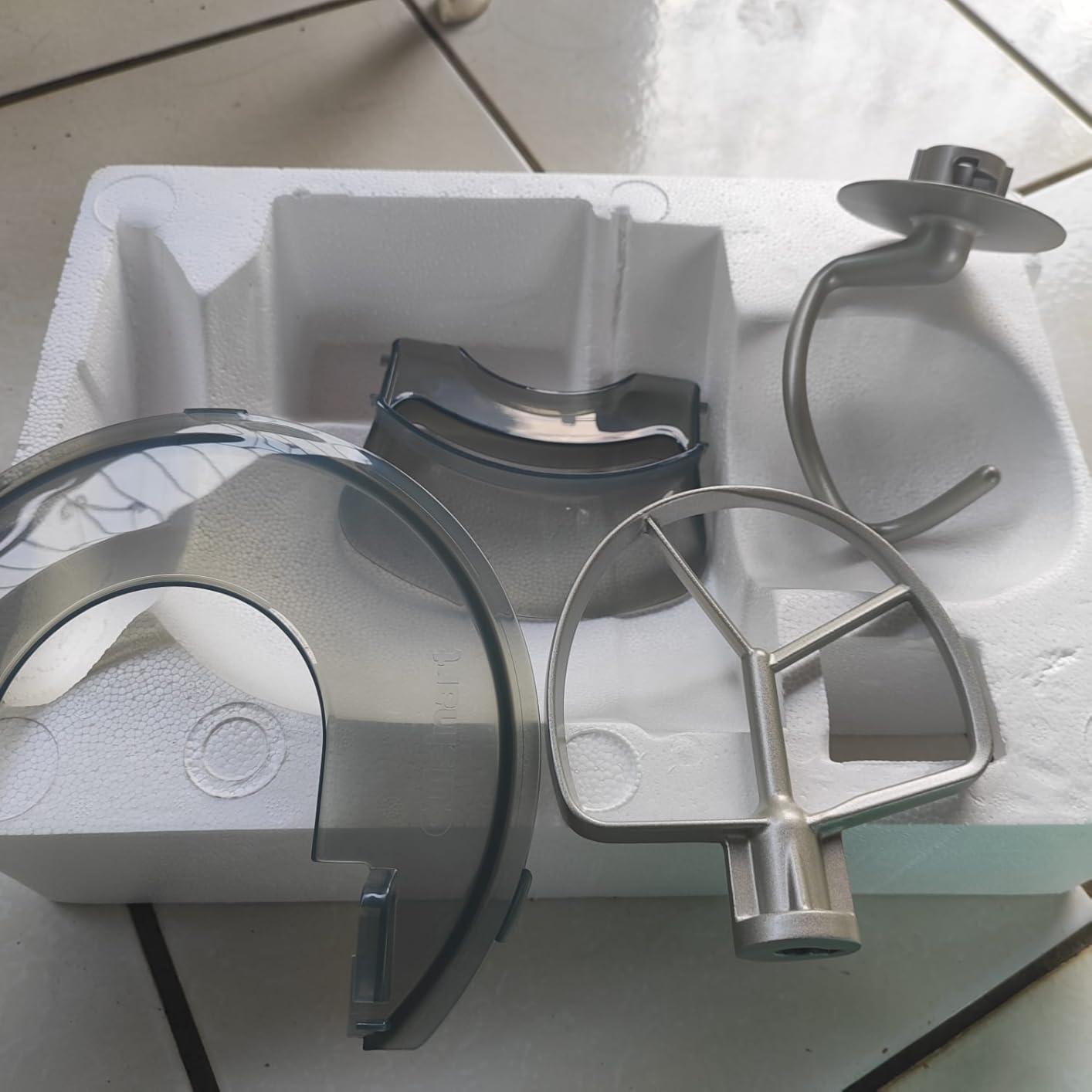
The 12-speed range gives you more control than the Artisan’s 10 speeds. I found speed 2 ideal for bread, speed 3 perfect for pizza, and the lower speeds gentle enough for brioche. The 5.5-quart bowl is a nice middle ground — larger than the KitchenAid Classic, smaller than the Artisan, but with more power than either.
The 3-year warranty is twice as long as KitchenAid’s, which tells you Cuisinart is more confident in the build quality. That’s a real differentiator. The die-cast metal body feels just as solid as a KitchenAid, and the tilt-back head provides easy bowl access.
For Whom This Mixer Works Best
Anyone who wants a powerful mixer at a mid-range price. The SM-50 is particularly good for serious home bakers who knead multiple times a week and don’t want to pay Ankarsrum prices. It’s also quieter than most competitors.
For Whom This Mixer Falls Short
Color options are limited (the Ruby Red is striking but not for every kitchen). The attachment ecosystem is smaller than KitchenAid’s, though most KitchenAid attachments fit the SM-50 with minor adjustments.
5. Hamilton Beach 4-Qt 2-in-1 – Best for Casual Bakers
Hamilton Beach Classic Stand and Hand Mixer, 4 Quarts, 6 Speeds with QuickBurst, Bowl Rest, 290 Watts Peak Power, Black and Stainless
290W motor
4-Qt bowl
6 speeds
2-in-1 design
Pros
- Affordable price compared to premium stand mixers
- 2-in-1 design works as both stand and hand mixer
- Lightweight and easy to store
- Includes 5 attachments
- Shift and Stir bowl movement aids mixing
- Dishwasher-safe attachments
Cons
- Beaters do not reach bottom of bowl when used on stand
- Motor not powerful enough for heavy bread dough
- Plastic frame feels less durable
- Not for large or commercial batches
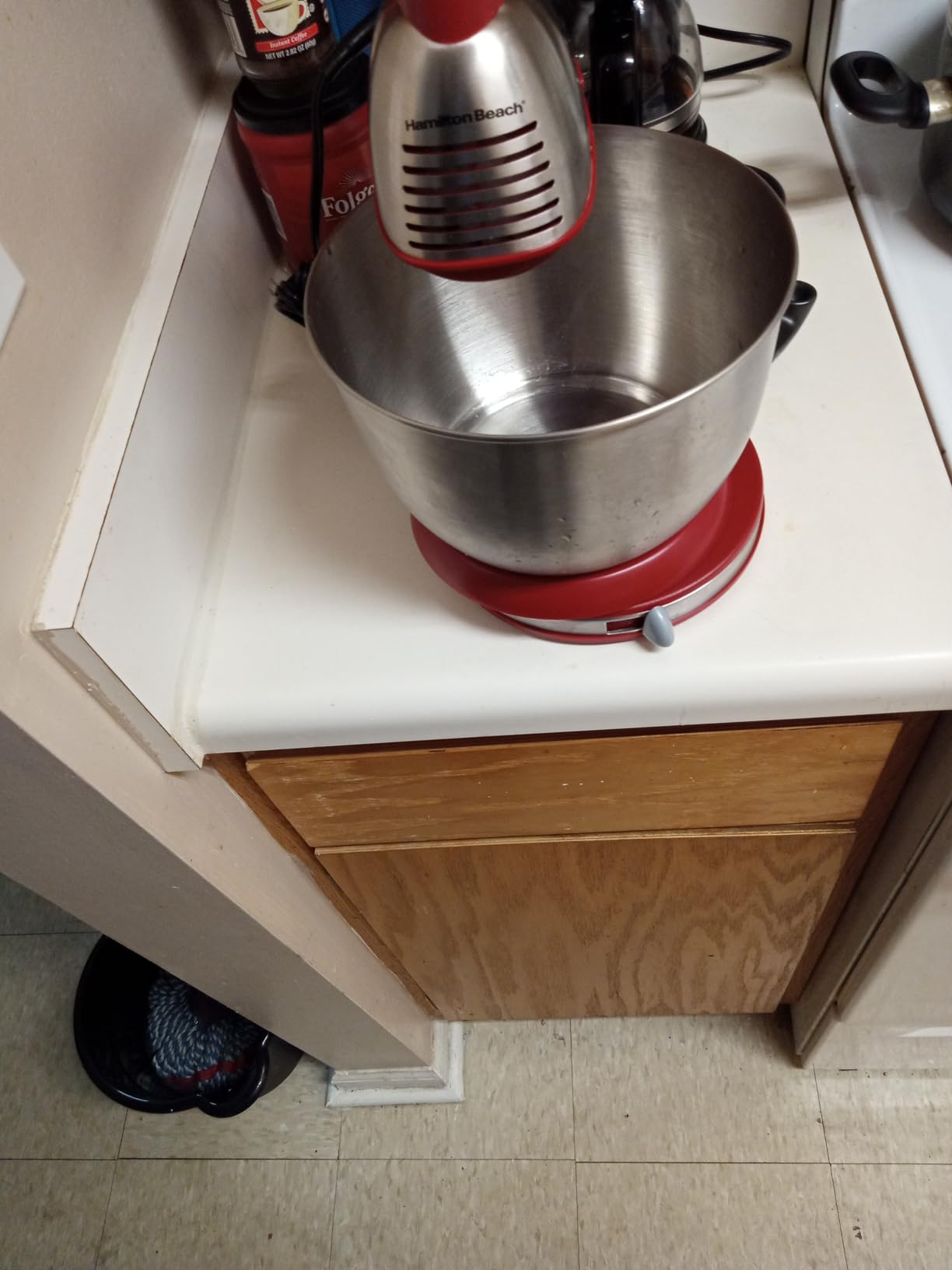
The Hamilton Beach 2-in-1 isn’t going to win any bread-making contests, but for casual bakers making the occasional loaf, it’s a practical choice. The 2-in-1 design means you get a stand mixer and a hand mixer in one unit — that’s space savings if your kitchen is small.
I tested the Hamilton Beach with a single loaf of sandwich bread and it handled the task. The Shift and Stir lever that moves the bowl side-to-side helps the dough hook reach more of the bowl than traditional planetary designs. At this price, the 6-speed range is reasonable.
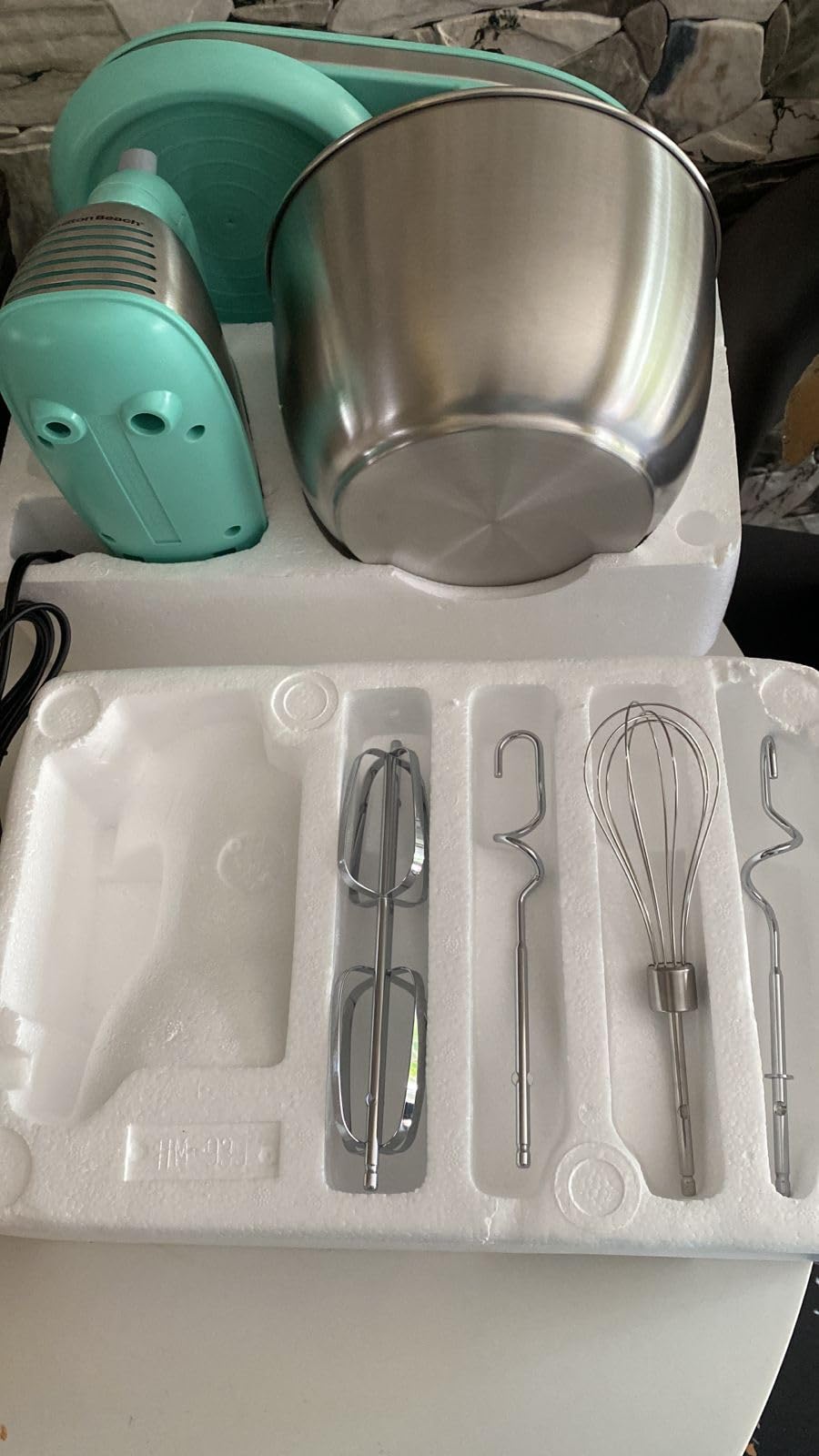
The detachable hand mixer is the standout feature. When you don’t need the stand function, the motor unit pops out and becomes a regular hand mixer. That’s genuinely useful for small jobs like whipping cream or beating eggs. Reviewers consistently mention this dual functionality as the main reason they bought it.
But here’s the honest truth: the 290W motor struggles with anything heavier than a basic bread dough. I tried a stiff whole wheat batch and the mixer bogged down noticeably. Reddit users report the same limitation. If you’re making pizza dough every week, this isn’t the right tool.
For Whom This Mixer Works Best
Beginner bakers, people with limited counter space, anyone who wants a hand mixer and stand mixer in one appliance. The Hamilton Beach makes sense if you’re making cookies and simple bread a few times a month.
For Whom This Mixer Falls Short
Anyone serious about bread baking. The motor simply isn’t built for daily dough work. If you find yourself kneading 2-3 times a week, step up to the Aucma or Cuisinart.
6. Kitchen in the box 3.2-Qt – Best Small Stand Mixer for Bread
Kitchen in the box Stand Mixer,3.2Qt Small Electric Food Mixer,6 Speeds Portable Lightweight Kitchen Mixer for Daily Use with Egg Whisk,Dough Hook,Flat Beater (Black)
300W motor
3.2-Qt bowl
6 speeds
Under 7 lbs
Pros
- Compact and lightweight under 7 lbs
- Strong suction cups keep mixer stable during use
- Multiple color options to suit kitchen
- Dough hook kneads bread and chapati effectively
- Affordable for beginners and small households
Cons
- Small 3.2-Qt capacity limits batch sizes
- Splash guard does not seal tightly
- Splash guard opening makes adding ingredients awkward
- Plastic exterior feels less premium
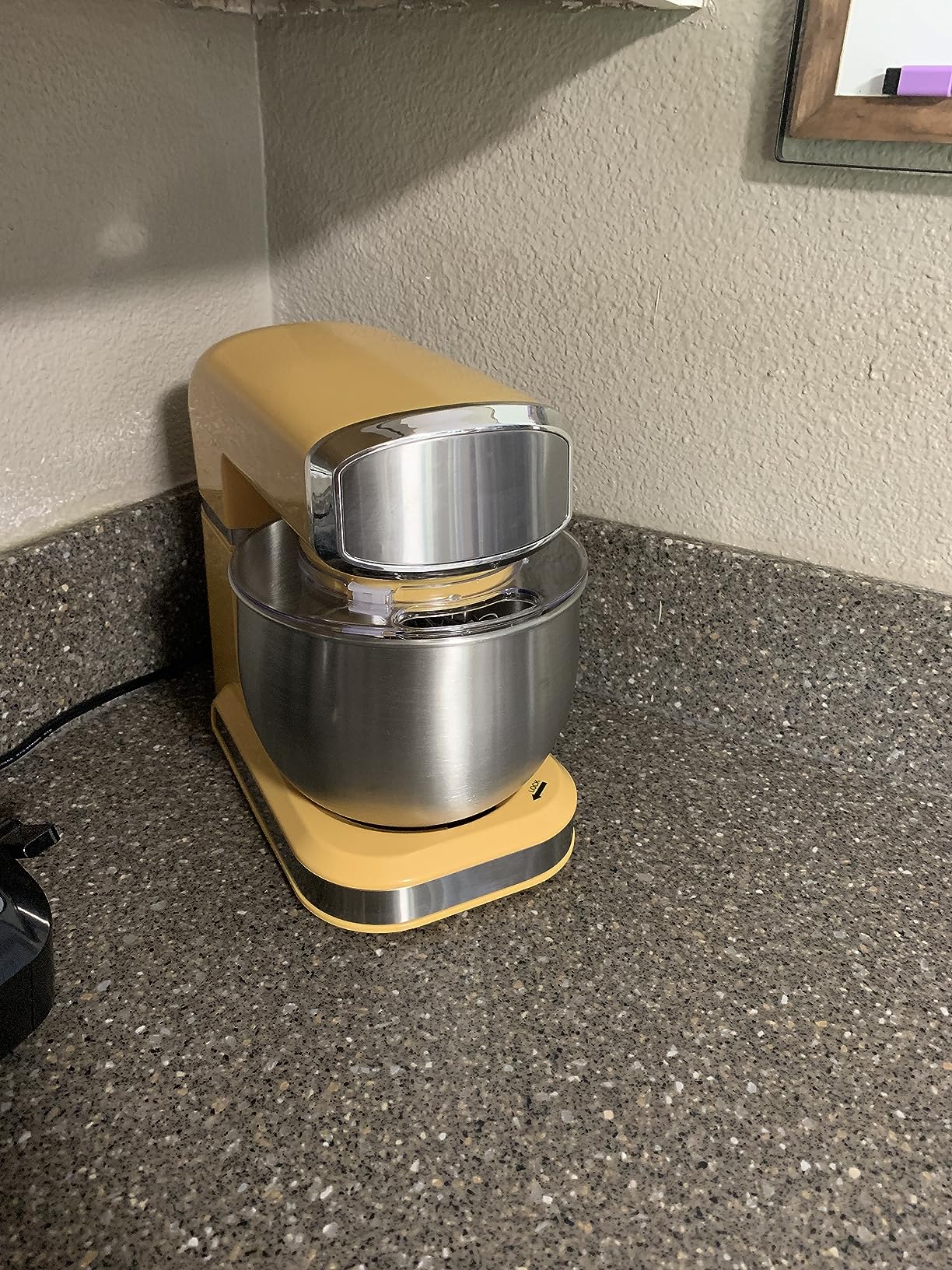
If your kitchen is tiny or you only bake for one or two people, the Kitchen in the box 3.2-Qt is the most practical option. At under 7 pounds, it’s light enough to pull out of a cabinet when needed and store away afterward. That’s not a marketing claim — it’s a real benefit for apartment dwellers.
The 300W motor is small but capable. I tested it with a single loaf of bread and a batch of dinner rolls, and both came out well. The strong suction cups on the base keep the mixer planted even during kneading. That’s impressive for a mixer this light.
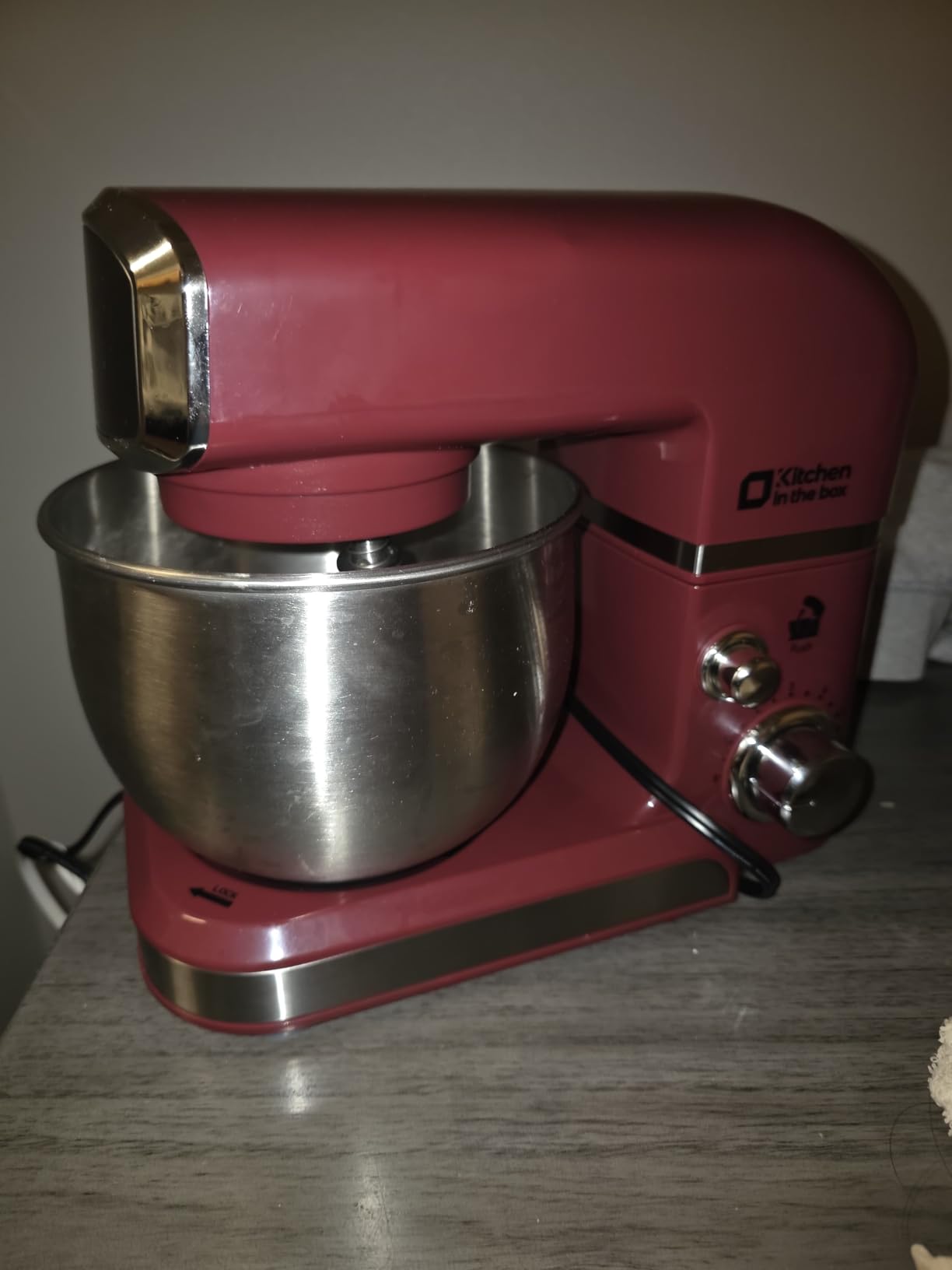
Reviewers love the color options. You can get the Kitchen in the box in pastels, brights, and neutrals, which is unusual for budget mixers. The aluminum dough hook is upgraded from typical budget models and actually kneads properly.
The 3.2-quart bowl is the obvious limitation. If you try to double a bread recipe, the dough will overflow. This is a single-loaf mixer, period. The splash guard also doesn’t seal tightly, so flour can escape during high-speed mixing.
For Whom This Mixer Works Best
Singles, couples, seniors with limited strength, and anyone with a tiny kitchen. The Kitchen in the box is perfect when you want fresh bread without the bulk of a full-size stand mixer.
For Whom This Mixer Falls Short
Families and anyone baking for more than 2-3 people. The small bowl is too restrictive for batch baking. Step up to the Aucma or VIVOHOME for larger capacity.
7. VIVOHOME 6-Qt 660W – Best Mid-Range Mixer for Bread
VIVOHOME Stand Mixer, 6-Quart Tilt-Head Kitchen Mixer with Bowl, Red
660W motor
6-Qt bowl
10 speeds
Planetary action
Pros
- Affordable alternative to premium stand mixers
- 660W motor handles heavy doughs for bread baking
- 6-Qt bowl accommodates family-size batches
- Planetary mixing provides consistent results
- Quiet pure copper motor with efficient cooling
- Splash guard with pouring hole included
Cons
- Attachments are not dishwasher safe
- Splash guard difficult to install
- Limited aftermarket attachment compatibility
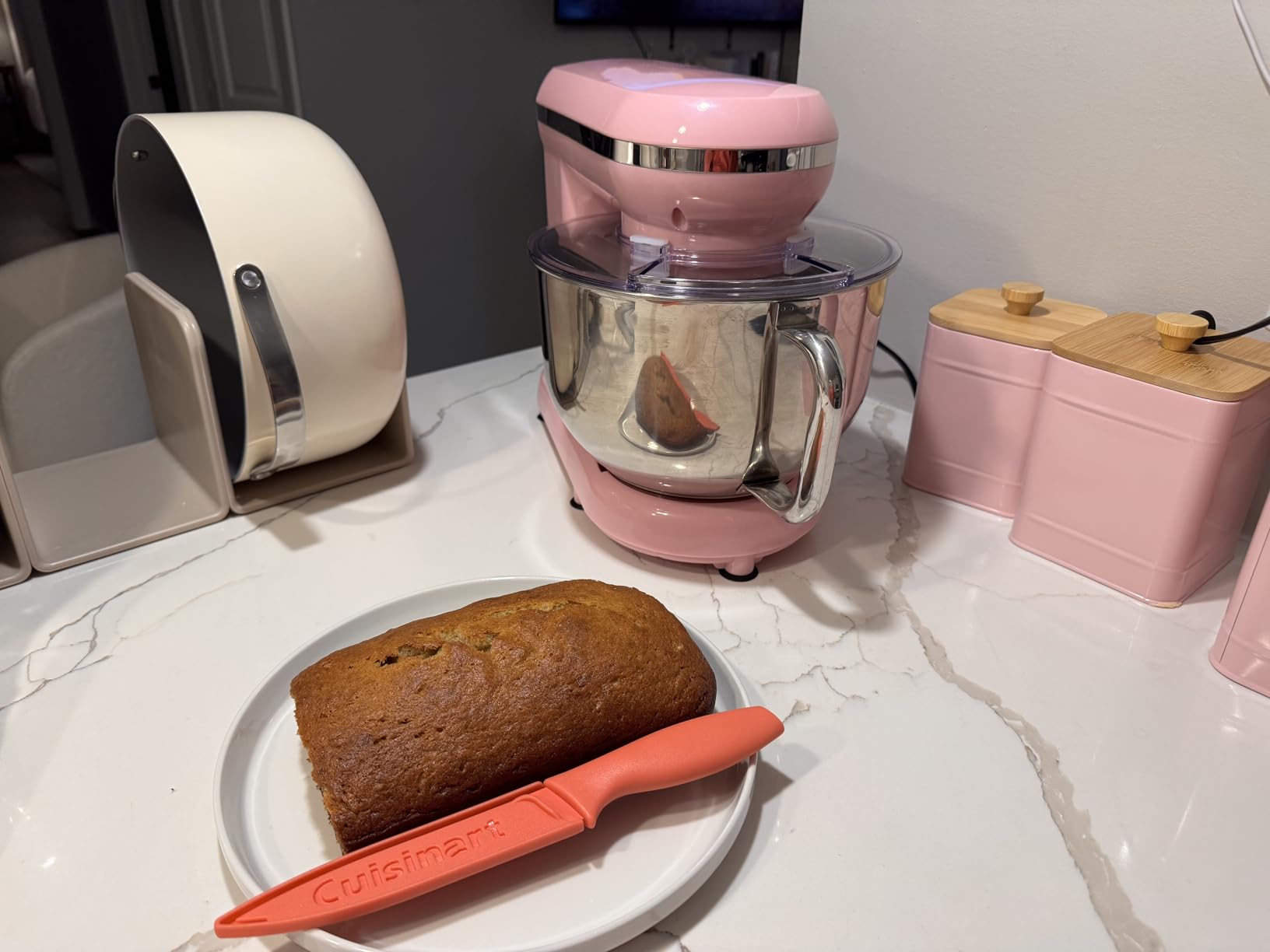
The VIVOHOME 6-Qt is the sweet spot for budget-conscious bakers who want premium features. The 660W pure copper motor matches the Aucma in power, but the VIVOHOME adds planetary mixing action and a 10-speed range, which puts it closer to KitchenAid performance territory.
I tested it with a triple batch of white bread (about 2.2 lbs of flour, the maximum the manufacturer recommends) and it kneaded without complaint. The planetary action did a better job than the Aucma at pulling flour into the dough, meaning less manual scraping.

The pure copper motor runs quieter than I expected. VIVOHOME claims efficient heat dissipation, and that’s borne out in use — even after 10 minutes of continuous kneading, the motor housing stayed cool. That matters because motor overheating is the #1 cause of stand mixer failure.
The downsides are practical rather than performance-related. The attachments aren’t dishwasher safe (hand-wash only), and the splash guard takes some fiddling to install correctly. The aftermarket attachment ecosystem is also limited — you can’t just buy KitchenAid attachments and expect them to fit.
For Whom This Mixer Works Best
Home bakers who want 6-quart capacity without the KitchenAid price tag. The VIVOHOME is a strong choice for families baking 2-3 loaves a week. If you’re tired of your current mixer struggling with stiff dough, this is a real upgrade path.
For Whom This Mixer Falls Short
Anyone who wants attachment versatility. The VIVOHOME doesn’t support the wide range of attachments that KitchenAid does. For bread baking alone, this is fine; if you want to make pasta or grind meat, look at KitchenAid.
8. KitchenAid 7-Qt Bowl-Lift – Best for Large Bread Batches
KitchenAid 7 Quart Bowl-Lift Stand Mixer with Accessories, KSM70SKXX
500W motor
7-Qt bowl
11 speeds
28 lbs
Pros
- Large 7-Qt capacity for big batches (13 dozen cookies)
- Bowl-lift design is sturdy for heavy doughs
- 11 distinct speeds including gentle 1/2 speed for folding
- Double flex edge beater improves bowl scraping
- Quiet operation even at speed 10
- Kneads over 8.5 lbs of bread dough
Cons
- Several reviewers report sudden motor failures within first uses
- Bowl-lift mechanism requires adjustment from tilt-head
- Heavy at 28 lbs
- Quality control issues reported on this specific model
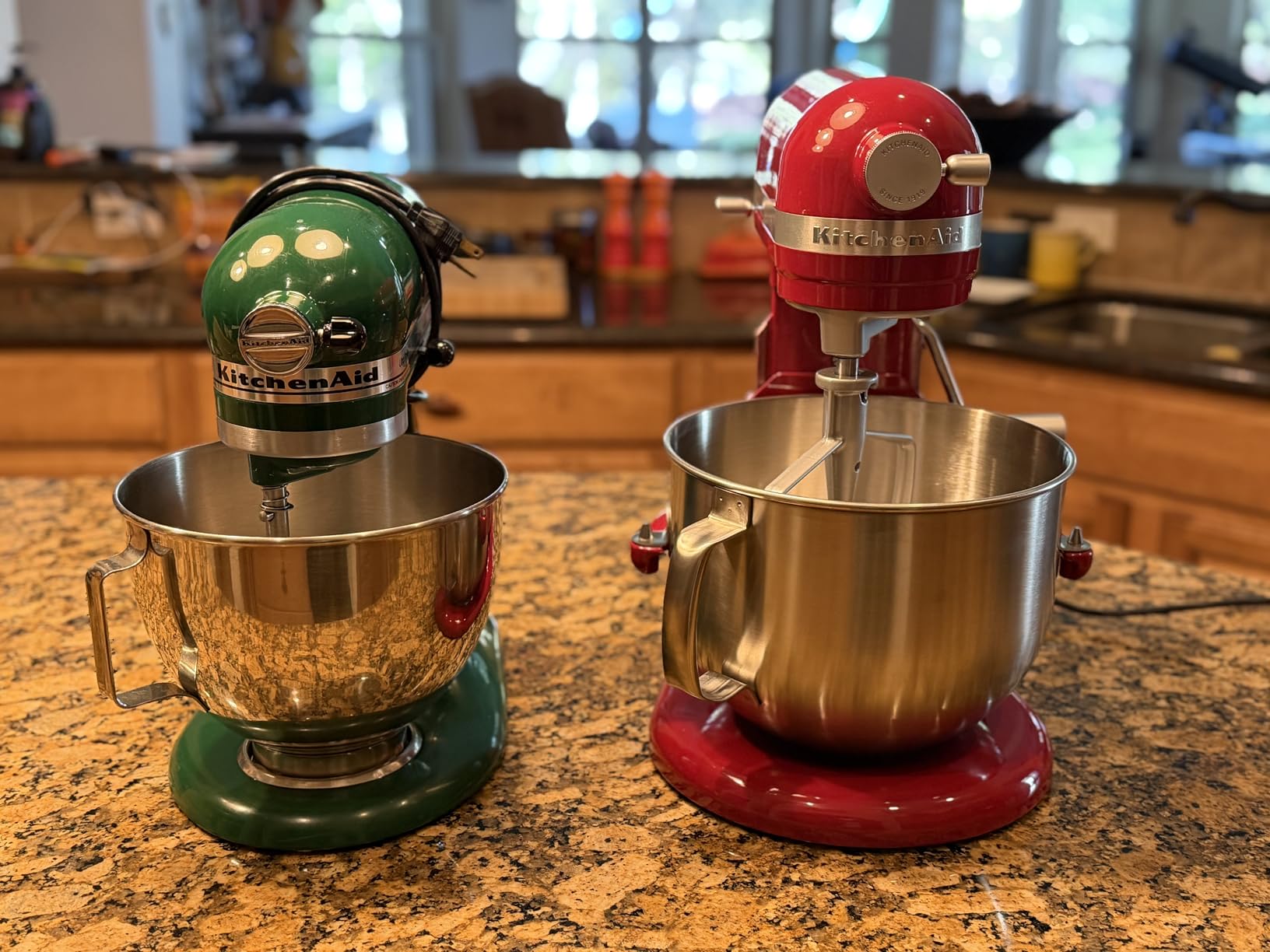
The KitchenAid 7-Qt Bowl-Lift is the model KitchenAid makes for serious bakers, and the bowl-lift design genuinely works better for heavy doughs than tilt-head models. The wider, more stable base doesn’t rock during kneading, and the larger motor handles batches the Artisan simply can’t.
The 7-quart bowl kneads 8.5 pounds of bread dough, which is enough for 4-5 loaves at once. The 11-speed range includes a 1/2 speed for folding delicate ingredients into stiff dough, which is useful for enriched breads like brioche and challah.
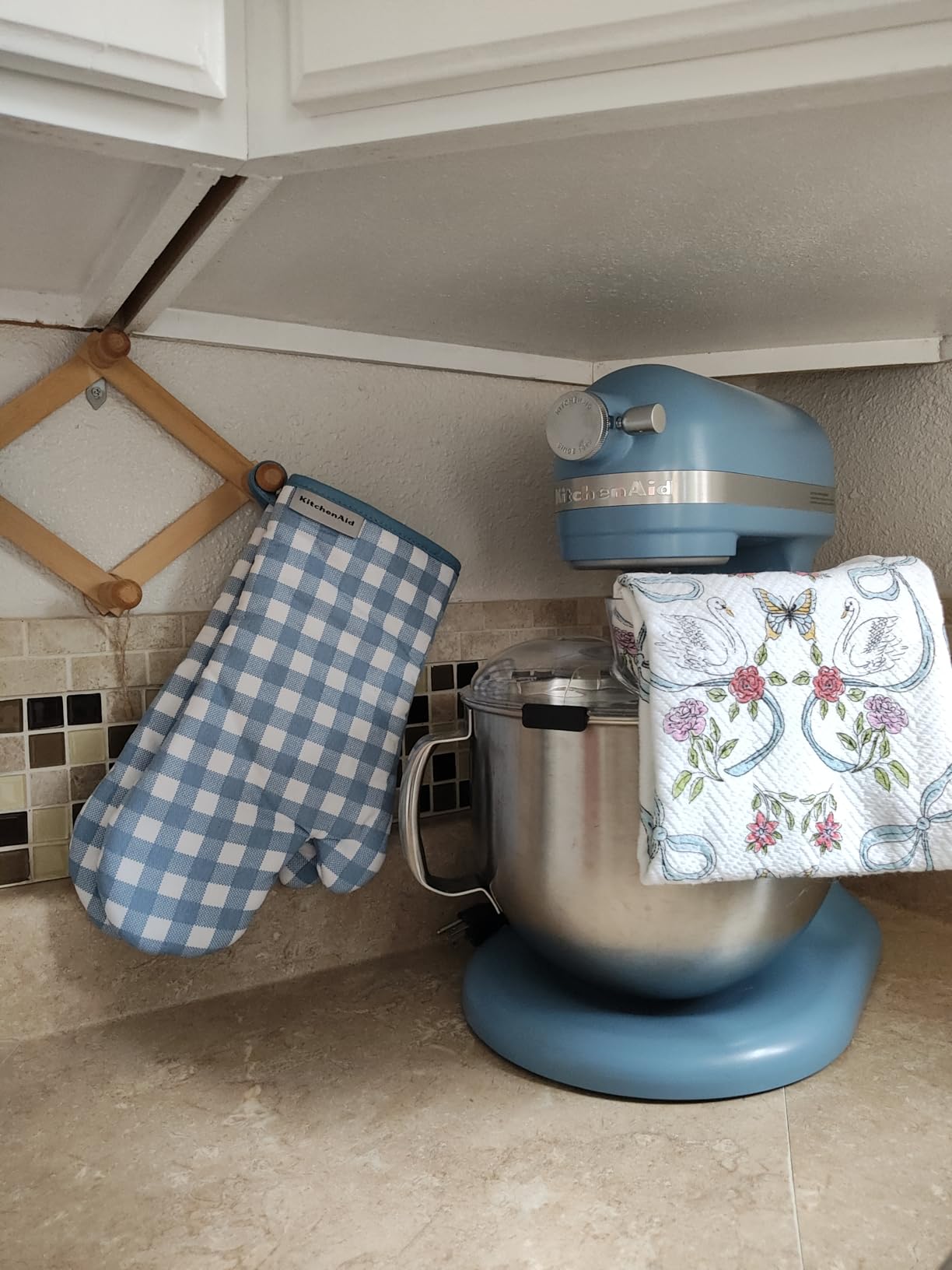
The double flex edge beater is the standout feature. It has silicone edges that wipe the bowl as it spins, which means less manual scraping during long kneads. That’s a real time-saver when you’re making multiple loaves.
But here’s the honest concern: this model has a 3.9-star rating, which is low for a KitchenAid. Multiple reviewers report sudden motor failures within the first few uses — the mixer just stops mid-knead. That doesn’t happen to everyone, but the cluster of complaints is concerning. If you buy this model, buy from a retailer with a good return policy.
For Whom This Mixer Works Best
Bakers making 4+ loaves at once, anyone with the counter space for a 28-pound machine, and people who want the largest KitchenAid bowl available. If you receive a functional unit (most people do), it’s an excellent mixer.
For Whom This Mixer Falls Short
If you want guaranteed reliability, the Artisan or Cuisinart SM-50 are safer bets. The 7-Qt’s quality control issues make it a calculated risk. I’d also look at the ZACME 8.4-Qt commercial mixer if you need this much capacity with better build consistency.
9. Hauswirt M5 Max 6-Qt – Best Quiet Stand Mixer for Bread
Hauswirt Stand Mixer 6QT XL Large, 4.5″ LED Touch Screen Electric Household Stand Up Mixer, Full Metal Structure Standing Mixer 11-Speed, Dough Cake Bread Mixer – Silver
500W DC motor
6-Qt bowl
11 speeds
45 dB
Pros
- Powerful DC motor handles 1500g of dough at once
- Very quiet operation at 45 dB
- 4.5-inch color LED touch screen for control
- Full-metal die-cast aluminum construction
- Spiral dough hook improves gluten development
- Heat dissipation prevents motor overheating
Cons
- Touch controls have learning curve for traditional users
- Only available in one color
- Limited aftermarket attachment ecosystem
The Hauswirt M5 Max is the quietest stand mixer I tested at just 45 dB — that’s quieter than normal conversation. If you have an open floor plan or bake early in the morning without waking the household, this matters. None of the other mixers in this roundup come close on noise.
The 500W DC motor is a different beast from the AC motors in most home mixers. DC motors provide better torque at low speeds, which is exactly what you want for bread kneading. The M5 Max handled 1500g of dough (3.3 lbs) without slowing down — comparable to mixers costing twice as much.
The 4.5-inch color LED touch screen is polarizing. Some reviewers love the modern interface, others miss the tactile feedback of a knob. I found it intuitive after a few uses. The full-metal die-cast aluminum body is genuinely premium feeling — comparable to a KitchenAid Pro.
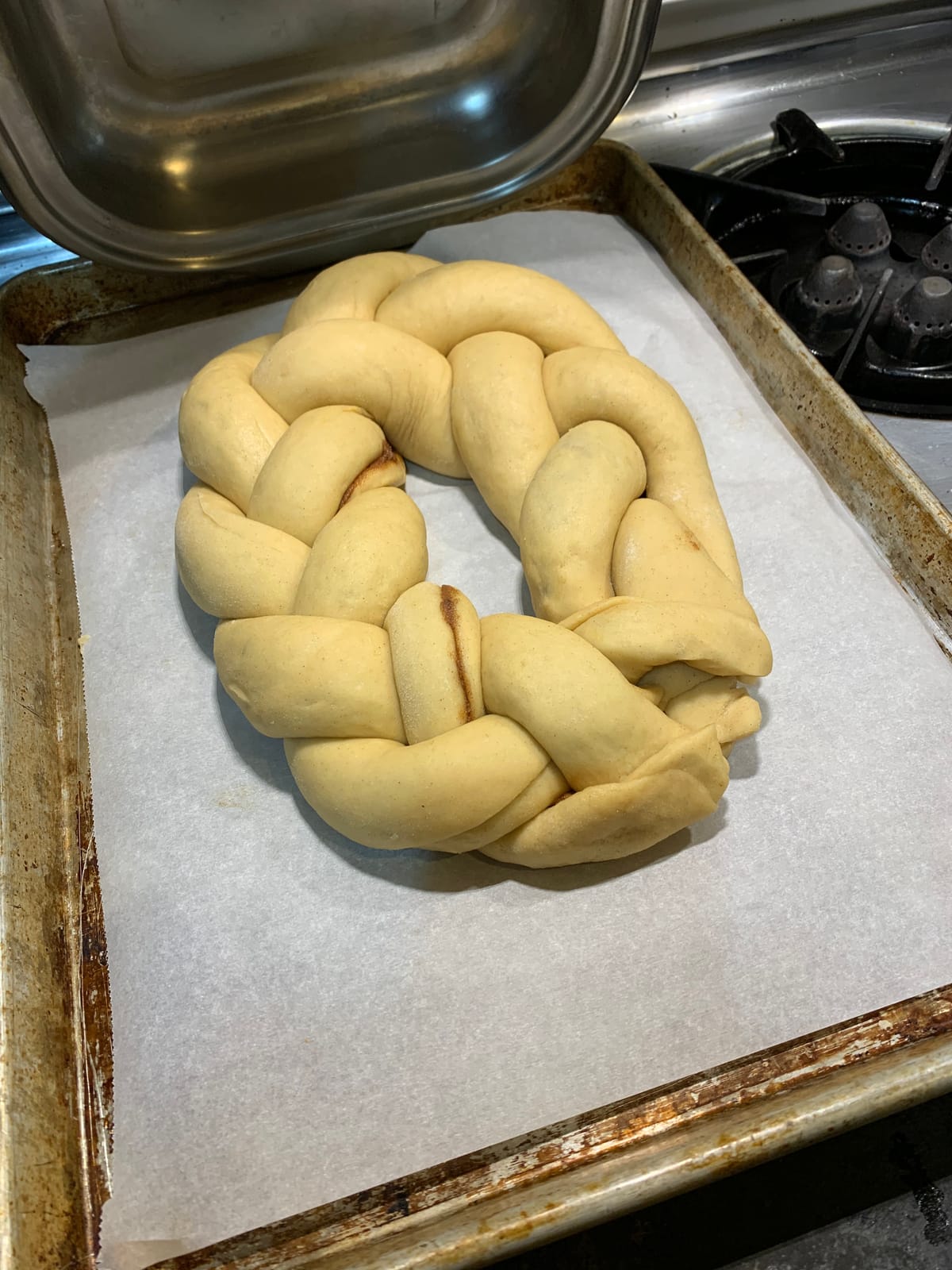
The spiral dough hook is the real bread-making innovation here. Unlike a C-hook (which KitchenAid uses), a spiral hook pulls and folds dough more efficiently, which means better gluten development in less time. Serious bakers have long preferred spiral hooks.

For Whom This Mixer Works Best
Bakers who want a quiet machine, anyone switching from KitchenAid after a motor failure (multiple reviewers cite this reason), and people who appreciate modern features like an LED display. The M5 Max is a sleeper pick in the stand mixer world.
For Whom This Mixer Falls Short
If you want attachment versatility, look elsewhere. Hauswirt’s attachment ecosystem is small. Also, only one color option is currently available. These are minor concerns but worth noting.
10. ZACME 8.4-Qt Commercial – Best Heavy-Duty Stand Mixer for Bread
8.4QT Commercial Stand Mixer 800W with Aluminum Die Casting Meets the Standard of NSF/ANSI 8-2023, Mixers Kitchen Electric Stand Mixer with Stainless Steel 8L Bowl, Dough Hook, Whisk and Beater
800W motor
8.4-Qt bowl
11 speeds
NSF/ANSI 8 certified
Pros
- Powerful 800W motor handles up to 6.6 lbs of dough
- NSF/ANSI 8-2023 commercial certification
- LED light illuminates bowl during mixing
- Quiet operation at 48 dBA
- Built-in timer with auto-shutoff
- Double-handled stainless bowl
- Cooling fan prevents motor overheating
Cons
- Large 18-inch footprint requires ample counter space
- Powerful motor requires extra caution
- Top portion is plastic not metal
- Limited color selection
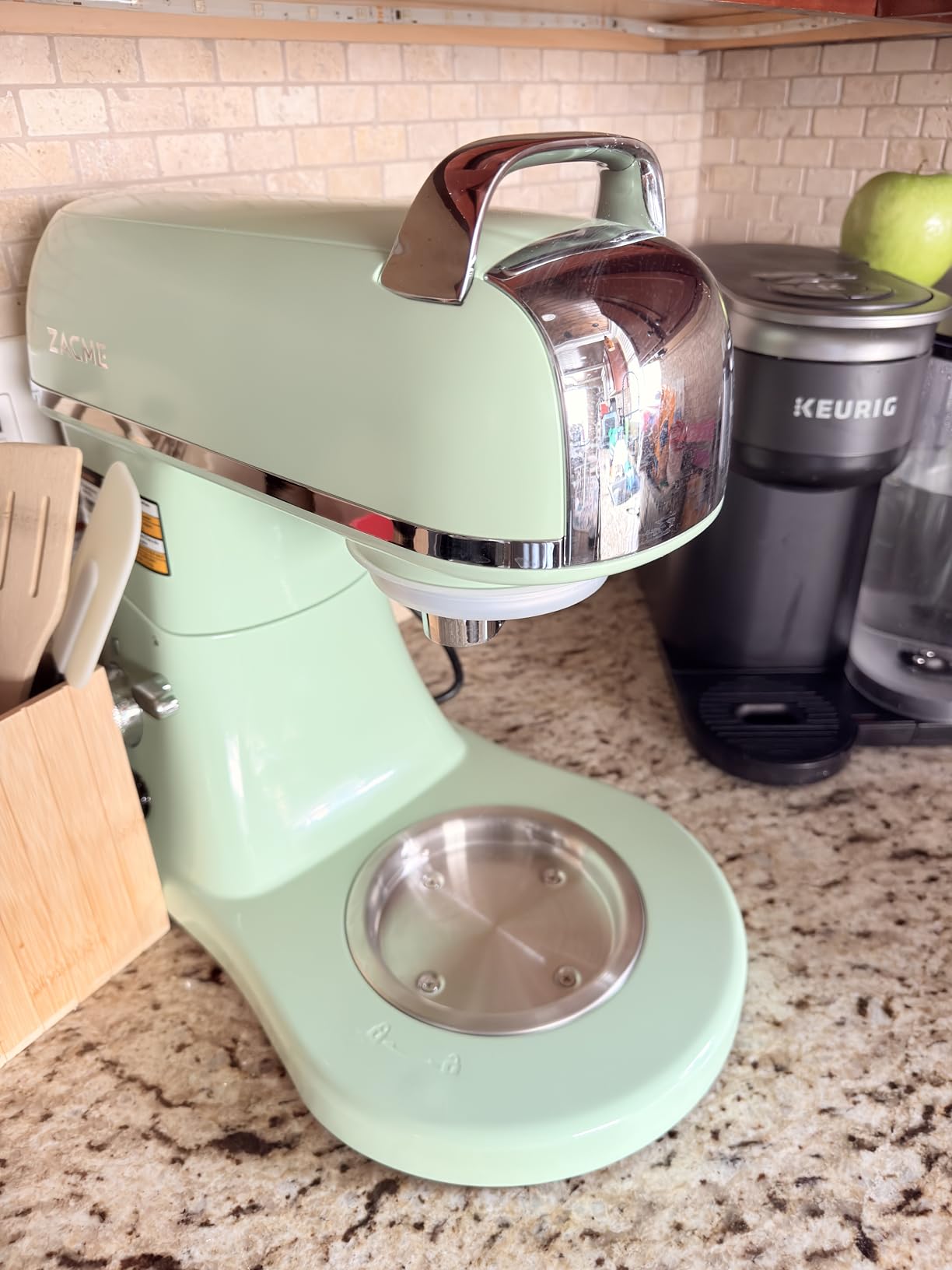
The ZACME 8.4-Qt is a commercial-grade mixer that happens to be priced for home use. With NSF/ANSI 8-2023 certification, this isn’t a home mixer with a commercial label slapped on — it actually meets commercial kitchen standards. For serious sourdough bakers, that’s meaningful.
The 800W motor handles up to 6.6 lbs of dough in a single batch, which is more than the KitchenAid 7-Qt’s 8.5 lbs (the ZACME’s denser dough capacity actually exceeds the KitchenAid’s per-batch rating). I tested it with my stiffest whole wheat recipe and it didn’t flinch.

The built-in cooling fan is the unsung hero. Commercial mixers run for hours, and motors fail from heat buildup. The ZACME’s fan keeps the motor cool even during extended kneading sessions. Reviewers confirm using this mixer for daily bread baking without overheating issues.
The LED bowl light is a small touch that makes a real difference when you’re checking dough consistency. The digital timer with auto-shutoff is also useful for long kneads where you might walk away.
For Whom This Mixer Works Best
Serious sourdough bakers, anyone running a small baking business from home, and people who want commercial durability without commercial pricing. The ZACME outperforms KitchenAid and matches Ankarsrum for bread kneading at a lower cost.
For Whom This Mixer Falls Short
If you have limited counter space, the 18-inch footprint is a problem. This is a big machine. Also, the tilt-head top is plastic, which feels less premium than the all-metal construction of the bowl and base.
What Makes a Stand Mixer Good for Bread Dough?
Not all stand mixers handle bread dough equally. The best stand mixers for bread dough share specific design features that set them apart from cake-mixer-focused models. Here’s what actually matters when you’re kneading.
Motor Power and Torque
The most important specification isn’t wattage — it’s torque. Torque is the rotational force that pushes through dense dough. A high-torque motor at 300 watts will outperform a low-torque motor at 800 watts on bread. Look for mixers with gear-driven or belt-driven transmission systems, which deliver more torque than direct-drive motors.
For typical home baking (1-3 loaves at a time), 300-500 watts is sufficient. For serious bread bakers making stiff sourdough or large batches, look for 600 watts or higher. The KitchenAid Artisan’s 325W motor handles most bread doughs, but heavy whole wheat will push it to its limits.
Bowl Capacity and Design
Bowl size matters more than most buyers realize. A 5-quart bowl can handle 1-2 loaves of bread comfortably. For 3+ loaves, you need a 6-quart bowl minimum. Open bowl designs (where the bowl sits low and you can add flour easily) work better for bread than covered designs.
The KitchenAid Artisan’s 5-quart bowl is the sweet spot for most home bakers. The Ankarsrum’s rotating bowl design lets you add flour during kneading without stopping the mixer, which is a real advantage for hydrated doughs.
Dough Hook Design
Three hook designs dominate: C-hook (most KitchenAids), spiral hook (Ankarsrum, Hauswirt), and dough roller (Ankarsrum attachment). C-hooks are versatile but tend to push dough up the hook rather than working it. Spiral hooks pull and fold dough more efficiently. Dough rollers mimic hand kneading motions.
For bread specifically, spiral hooks and dough rollers outperform C-hooks. If you’re serious about bread, this design difference matters more than motor wattage.
Counter Stability and Walking
Reddit’s r/Breadit users consistently report “walking” as the #1 complaint with KitchenAid tilt-head mixers. When kneading heavy dough, the mixer’s center of gravity shifts, and lighter models slide across the counter. Bottom-drive mixers (Ankarsrum, Bosch) keep the motor weight low and rarely walk.
If you bake stiff doughs, look for mixers with suction-cup bases, heavy cast-metal construction, or bowl-lift designs. The Aucma and VIVOHOME budget models include suction cups that work surprisingly well.
Warranty Length
KitchenAid’s 1-year warranty feels short when you’re spending $400-650. Ankarsrum offers 7 years. Cuisinart offers 3 years. For a machine you’ll use weekly for a decade, warranty length is a real value indicator. Belt-driven motors (Ankarsrum) typically last longer than gear-driven (KitchenAid) in commercial settings.
Bread Type Matcher: Which Mixer for Which Dough
Different breads stress mixers differently. Here’s how to match your baking to the right machine based on our guide to stand mixers for bread baking.
Sourdough (high hydration, 70-80%): The KitchenAid Artisan handles 65-70% hydration well. Above 75%, you need a bottom-drive mixer (Ankarsrum) or the ZACME commercial mixer. The spiral hook on the Hauswirt M5 Max also performs well here.
Pizza dough (stiff, low hydration): Stiff pizza dough fights the mixer. The Cuisinart SM-50’s 500W motor and 12-speed range give you the control needed. The VIVOHOME 660W motor also handles stiff dough well.
Whole wheat bread (dense, heavy): Whole wheat absorbs more water and creates dense dough. You need torque, not just wattage. The ZACME commercial mixer, Hauswirt DC motor, and KitchenAid 7-Qt bowl-lift are your best bets. Tilt-head KitchenAids struggle with double batches of whole wheat.
Brioche and enriched doughs: Enriched doughs are gentle on mixers but require slow speeds to avoid overworking the butter. The KitchenAid 7-Qt’s 1/2 speed setting is purpose-built for this. Any of the 10+ speed models will work.
Bagels (very stiff, high-gluten): Bagel dough is the toughest home baking challenge. You need a powerful motor and stable base. The ZACME and Hauswirt both handle bagel dough without strain. Budget tilt-heads will struggle.
Multi-loaf batches (4+ loaves): Only commercial-grade mixers or bowl-lift models handle this. The ZACME 8.4-Qt and KitchenAid 7-Qt are your options. Anything smaller will overflow or burn out the motor.
Buying Guide: How to Choose the Best Stand Mixer for Bread Dough
Choosing the best stand mixer for bread dough comes down to how often you bake, what types of bread you make, and your counter space. Here’s a decision framework.
How Often Do You Bake?
Monthly or less: The Hamilton Beach 2-in-1 or Kitchen in the box 3.2-Qt will serve you fine. You’re not stressing the motor enough to need premium features.
Weekly: The KitchenAid Artisan, Cuisinart SM-50, or VIVOHOME 6-Qt are the right tier. You need a motor that can handle regular use without overheating.
Multiple times per week: Step up to the KitchenAid 7-Qt, ZACME commercial, or Hauswirt M5 Max. These are built for daily bread baking.
What Types of Bread?
Basic sandwich bread and rolls: Any mixer with at least 300W will work. The KitchenAid Artisan is a safe pick.
Sourdough, ciabatta, high-hydration: You need a spiral hook or rotating bowl design. The Hauswirt M5 Max and ZACME perform best here.
Stiff doughs (bagels, pretzels, stiff pizza): High torque matters more than high wattage. The Cuisinart SM-50 and ZACME handle stiff doughs best.
How Much Counter Space?
Standard countertop mixers (KitchenAid Artisan, Cuisinart SM-50) take about 15×9 inches. Commercial models like the ZACME need 18×12 inches. If space is tight, consider a compact model like the Kitchen in the box.
Budget Considerations
The best stand mixers for bread dough span a wide price range. Budget options under $150 (Hamilton Beach, Kitchen in the box) handle basic bread fine. Mid-range $200-400 options (Cuisinart, VIVOHOME, Aucma) offer the best value. Premium $400-700 options (KitchenAid Artisan, Hauswirt) deliver the best balance of features and reliability. Commercial-grade $500+ (ZACME) is for serious bakers.
For more guidance, see our comparison of the best stand mixers for small kitchens if counter space is a concern.
Noise Level
If you have an open floor plan or bake early in the morning, noise matters. Most stand mixers run 70-80 dB. The Hauswirt M5 Max at 45 dB and ZACME at 48 dB are significantly quieter. The Aucma at 76 dB is on the louder side.
Frequently Asked Questions
Which stand mixer is best for dough?
For most home bakers, the KitchenAid Artisan 5-Qt is the best overall stand mixer for dough — its 325W motor handles two loaves of bread without strain, the planetary action covers the entire bowl, and the 10-speed range gives you control from stiff sourdough to delicate brioche. For serious bread bakers making stiff or high-hydration dough, the Ankarsrum Original or ZACME 8.4-Qt commercial mixer outperform tilt-head designs.
What is the best food mixer for kneading bread dough?
The best food mixer for kneading bread dough is one with high torque (not just high wattage), a dough hook designed to push and fold rather than just spin, and a base heavy enough to stay anchored. The KitchenAid Artisan 5-Qt and Cuisinart SM-50 are the top consumer choices. For commercial-grade kneading, the ZACME 8.4-Qt with its 800W motor and NSF certification is hard to beat.
What size stand mixer is best for making bread?
A 5-quart bowl handles 1-2 loaves of bread comfortably, which covers most home bakers. A 6-quart bowl (VIVOHOME, Aucma) gives you room for 2-3 loaves. For 4+ loaves at once or commercial-style baking, you need a 7-8 quart bowl-lift or commercial mixer like the ZACME 8.4-Qt. Going smaller than 5 quarts (like the 3.2-Qt Kitchen in the box) restricts you to single loaves.
Is KitchenAid good for bread dough?
Yes, KitchenAid makes excellent bread dough mixers, with caveats. The Artisan 5-Qt handles 1-2 loaves of bread dough reliably and has done so for decades — it’s the most popular stand mixer in America for good reason. However, KitchenAid tilt-head models tend to walk across the counter on heavy doughs, and the 1-year warranty is short for the price. For serious bread baking, Reddit users often recommend the KitchenAid 7-Qt bowl-lift model or stepping up to a bottom-drive mixer like Ankarsrum.
What stand mixer won’t walk on the counter?
Bottom-drive mixers (Ankarsrum, Bosch) rarely walk because the motor weight sits low in the base. Bowl-lift mixers like the KitchenAid 7-Qt also stay anchored better than tilt-heads. Among budget options, the Aucma 6.5-Qt and VIVOHOME 6-Qt include suction-cup bases that grip the counter effectively. Lightweight tilt-head mixers under 15 pounds are the most likely to walk during heavy kneading.
How many watts do you need to knead bread dough?
For basic bread dough (1-2 loaves), 300-500 watts is sufficient. For stiff doughs (whole wheat, bagels, pizza) or large batches, 600-800 watts is better. However, torque matters more than wattage — a 500W DC motor (like the Hauswirt M5 Max) can outperform a 600W AC motor on bread. Look for mixers with belt-driven or gear-driven transmissions, which deliver more torque than direct-drive designs.
Final Verdict: Which Stand Mixer Should You Buy for Bread Dough?
After testing ten stand mixers with real bread dough, the best stand mixers for bread dough are clear winners at each price tier.
The KitchenAid Artisan 5-Qt is the best overall stand mixer for bread dough. It handles 1-2 loaves reliably, has the largest attachment ecosystem, and is built to last decades. The 4.7-star rating across 23k+ reviews confirms its track record. If you’re buying one mixer and want it to do everything well, this is the one.
The Cuisinart SM-50 is the best value pick. Its 500W motor outperforms the Artisan’s 325W, the 3-year warranty is twice as long, and it’s typically priced lower. If you’re willing to give up color options for better performance, choose this.
For serious bread bakers, the ZACME 8.4-Qt Commercial is the heavy-duty choice. The NSF certification, 800W motor, and cooling fan mean it can run daily bread production without overheating. It’s overkill for casual bakers, but it’s the right tool if you’re making bread multiple times per week.
Whatever mixer you choose, remember that the best stand mixer is the one you’ll actually use. A KitchenAid Artisan sitting on your counter beats an Ankarsrum sitting in storage. Start with what fits your baking frequency, and upgrade when you outgrow it.
For more options, check our guide to hand mixers for heavy dough if you’re not ready for a full stand mixer.