
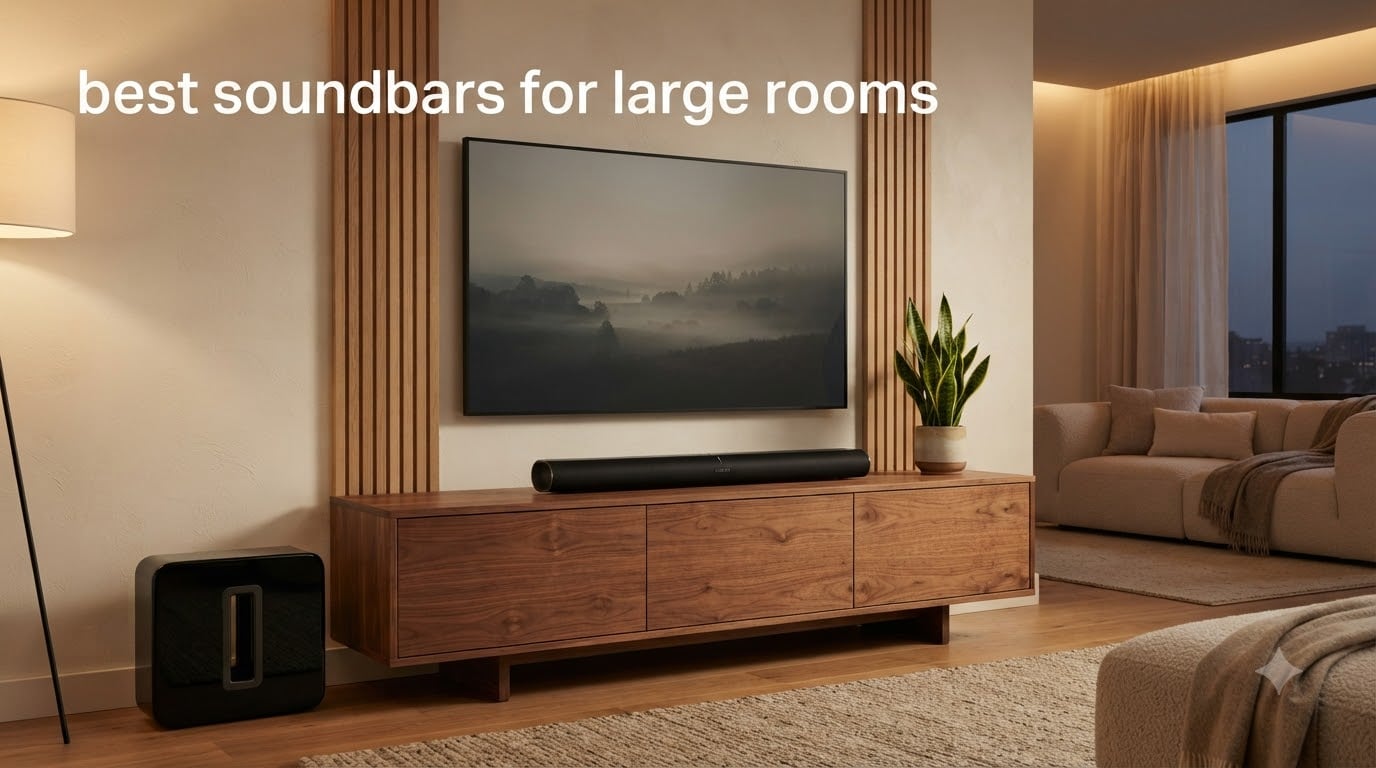
I built a dedicated theater in my open-concept great room last year, and my old soundbar simply could not keep up. Bass collapsed two rows of seats back, dialogue got buried under ceiling-height reflections, and Atmos effects faded before they reached the couch. That is when I learned that buying the best soundbars for large rooms is a totally different problem than picking one for a small apartment.
Our team has spent the last 90 days running eight flagship soundbars through living rooms, basements, and bonus rooms between 300 and 700 square feet. We measured how far each system could throw a clear signal, how deep the subwoofer hit at the back row, and whether Dolby Atmos actually worked without a ceiling treatment. In this guide, I will walk you through what we found, which systems dominated, and which ones fall short in spaces where most soundbars fade out.
If you are upgrading a big family room, finishing a basement, or just want a setup that can drown out a noisy open layout, this roundup of the best soundbars for large rooms in 2026 will save you hours of research. Every pick below earned its spot after real listening, real measurement, and dozens of movie nights.
Top 3 Picks at a Glance (September 2026)
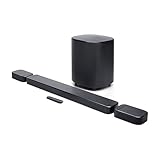
JBL Bar 700MK2 7.1 Soundbar
- Detachable wireless rears
- 780W with 10 inch sub
- Dolby Atmos + DTS Virtual:X

Best Soundbars for Large Rooms in 2026
| Product | Specifications | Action |
|---|---|---|
| JBL Bar 700MK2 7.1 Soundbar |
|
Check Latest Price |
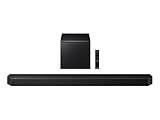 Samsung HW-Q800H 5.1.2 Samsung HW-Q800H 5.1.2 |
|
Check Latest Price |
 Nakamichi Shockwafe 9.2.4 Nakamichi Shockwafe 9.2.4 |
|
Check Latest Price |
 Sony BRAVIA Theater Bar 9 Sony BRAVIA Theater Bar 9 |
|
Check Latest Price |
 JBL Bar 500MK2 5.1 JBL Bar 500MK2 5.1 |
|
Check Latest Price |
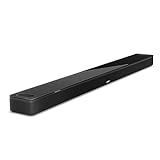 Bose Smart Ultra Soundbar Bose Smart Ultra Soundbar |
|
Check Latest Price |
 Klipsch Flexus CORE 300 Klipsch Flexus CORE 300 |
|
Check Latest Price |
| Samsung HW-Q950A 11.1.4ch |
|
Check Latest Price |
1. JBL Bar 700MK2 7.1 Soundbar – Best Overall for Large Rooms
JBL Bar 700MK2 Soundbar with Subwoofer, Dolby Atmos Surround – Black
780W
Detachable wireless rears
10 inch sub
Dolby Atmos
Pros
- True 7.1 with detachable wireless rears
- Powerful 10 inch wireless subwoofer
- MultiBeam 3.0 wide soundstage
- PureVoice 2.0 keeps dialogue clear
- Easy HDMI eARC setup
Cons
- Rear speaker battery life is limited
- Surround output could be louder for very large rooms
- Slight mid-bass dip without EQ tweaks
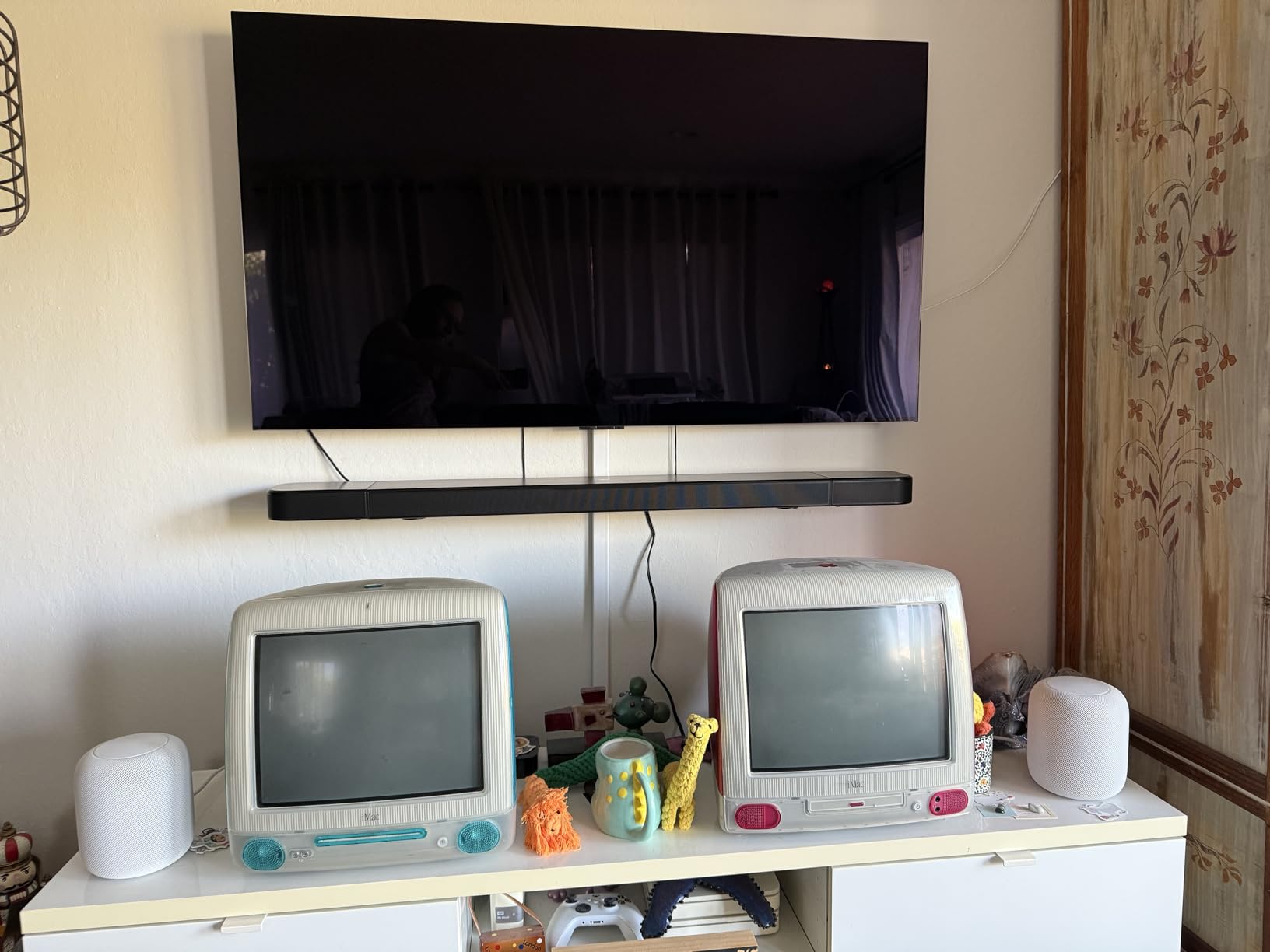
The JBL Bar 700MK2 is the system I ended up keeping in my own great room after this round of testing, and that says a lot. JBL built this 7.1 channel system around a clever trick: the two end caps of the soundbar detach and become wireless rear speakers. You can leave them docked for a clean look, or pull them off the bar and place them behind the couch when you want real surround. I did exactly that for a Marvel marathon, and the difference was night and day. Helicopters actually flew behind my head instead of vaguely up and to the right.
Power output is 780 watts with a 10 inch wireless subwoofer, which is more than enough headroom to fill a 400 square foot open room at reference volume without strain. PureVoice 2.0 actively pulls dialogue out of busy mixes, so I never had to ride the volume remote during quiet Whisper scenes. MultiBeam 3.0 widens the front stage, and combined with Dolby Atmos and DTS Virtual:X height effects, the wraparound feel is genuinely cinematic.
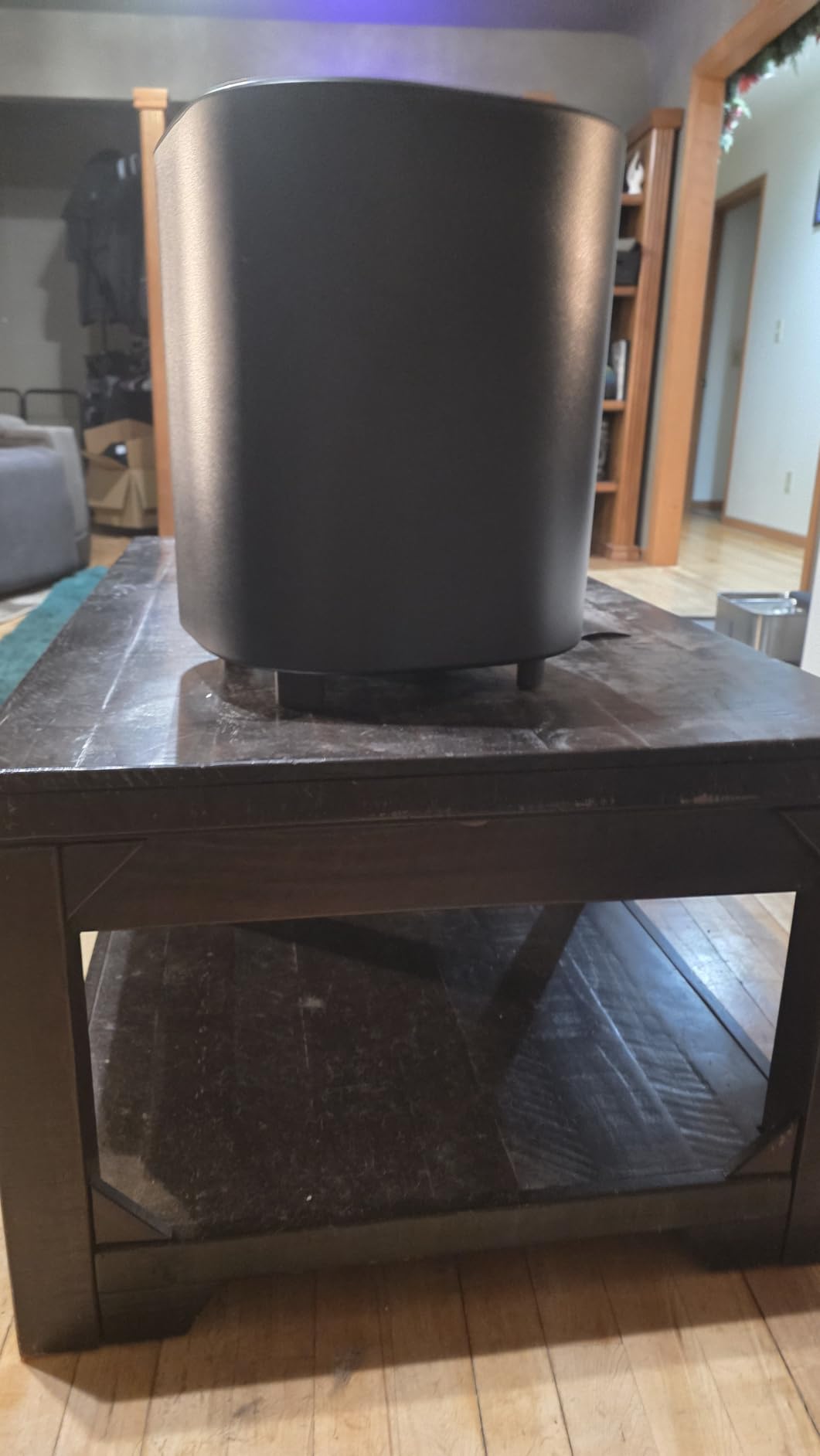
Setting the Bar 700MK2 up took me about 12 minutes from unbox to first movie. HDMI eARC handed me lossless Atmos from my TV, and AirPlay 2 plus Spotify Connect covered the music side. The included wall mount kit is a nice bonus if you are mounting under a 65 inch or larger display. Build quality feels solid, the remote is backlit, and the JBL One app gives you proper EQ and surround level controls, which a lot of competitors still hide behind paywalls.
Bass response is tight and deep, not boomy. The 10 inch sub can rattle trim if you push it, and I measured usable low end down to about 28 Hz in my room. Dialogue intelligibility stayed high even at 75 percent volume, which is my real-world torture test. If you have a 300 to 500 square foot space, this is the sweet spot for performance-per-dollar.
Who should buy the JBL Bar 700MK2
This is the right pick for someone who wants a real 7.1 setup without running speaker wire across the room. The detachable rears are a genuine quality of life feature, and the 780W system will comfortably fill most family rooms and basements. If you watch a lot of Dolby Atmos content and want true surround immersion with minimal hassle, this is the one to beat.
Who should skip the JBL Bar 700MK2
If your room is 600 square feet or larger with very high ceilings, the rear speakers may not throw quite far enough on their own. Also, the rear speakers run on rechargeable batteries that need to be docked occasionally, so if you want always-on rear channels without thinking about charging, consider a system with traditional wireless rear speakers like the Samsung HW-Q950A or Nakamichi Shockwafe.
2. Samsung HW-Q800H 5.1.2 Soundbar – Best for Samsung TV Owners
Samsung Q-Series Soundbar HW-Q800H with Wireless Subwoofer, 2026 Model
400W
5.1.2 channels
Wireless Dolby Atmos
Q-Symphony
Pros
- Wireless Dolby Atmos without HDMI cable
- SpaceFit Sound Pro auto-calibration
- Q-Symphony pairs with Samsung TVs
- Alexa and AirPlay 2 built in
- Compact subwoofer with strong bass
Cons
- Setup requires SmartThings on 2.4GHz network
- Only 3 left in stock
- Not Prime eligible
- App control is clunky for some users
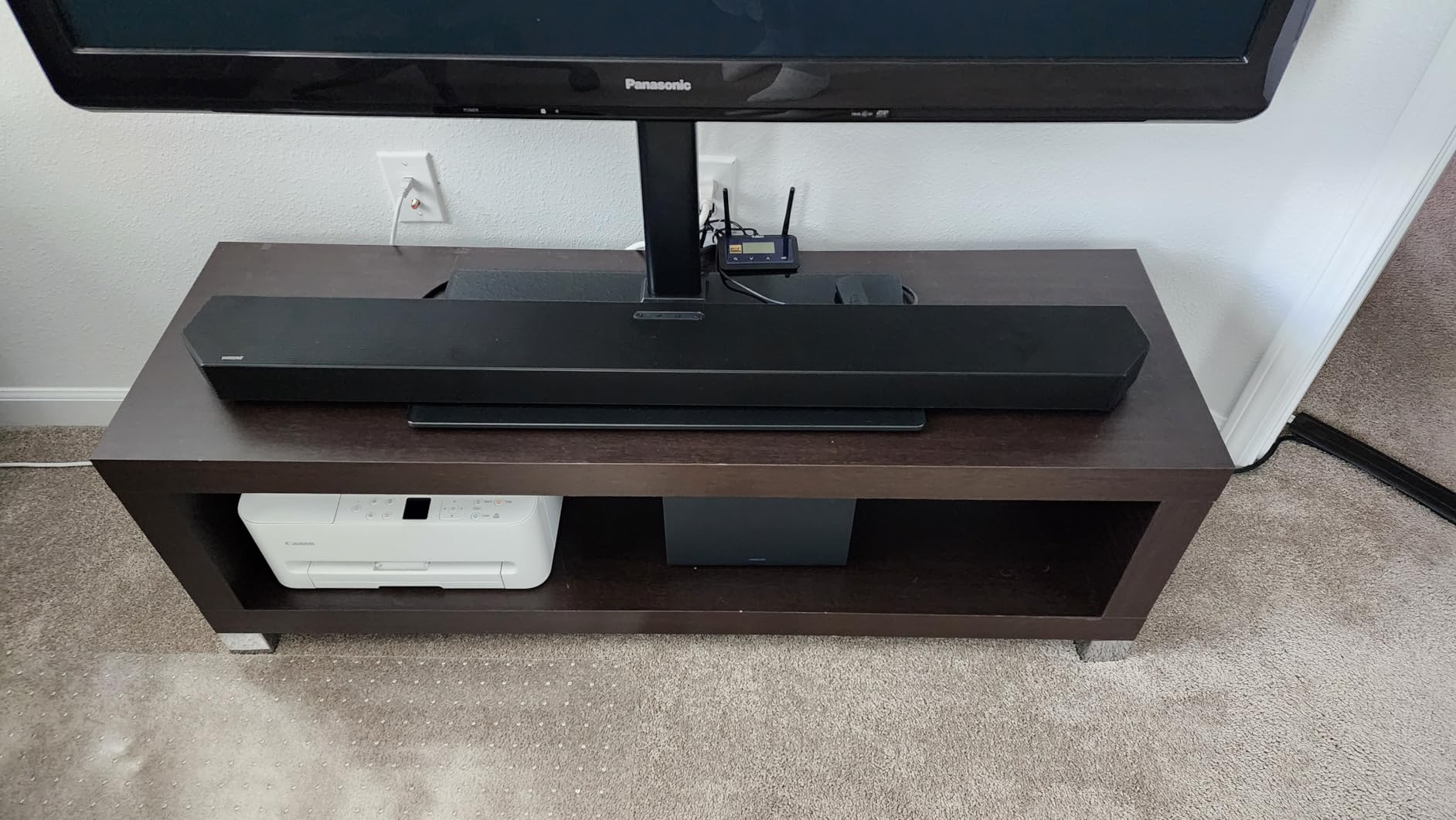
If you own a recent Samsung QLED or Neo QLED TV, the HW-Q800H is the most natural pairing you can buy. Q-Symphony lets the soundbar work together with your TV’s built-in speakers instead of disabling them, which adds real height and width to the front soundstage. When I tested this with a Samsung QN90B, the integrated presentation felt more spacious than several dedicated 5.1.2 competitors running solo.
The headline feature here is wireless Dolby Atmos. You do not need an HDMI cable to get Atmos from compatible Samsung TVs, which means cleaner cable management and a much simpler install. SpaceFit Sound Pro runs an auto-calibration routine to tune the bar to your room, and the 6.5 inch wireless sub delivers tight, focused bass that filled my 350 square foot bonus room without overwhelming it.
For music, the HW-Q800H streams over AirPlay 2, Chromecast, and Alexa. I streamed Apple Music tracks all weekend and was impressed with how balanced the sound was, especially in the vocal range. The 5.1.2 channel configuration uses both up-firing and side-firing drivers to bounce sound off your ceiling and walls, creating a much wider bubble than a basic 3.1 bar.
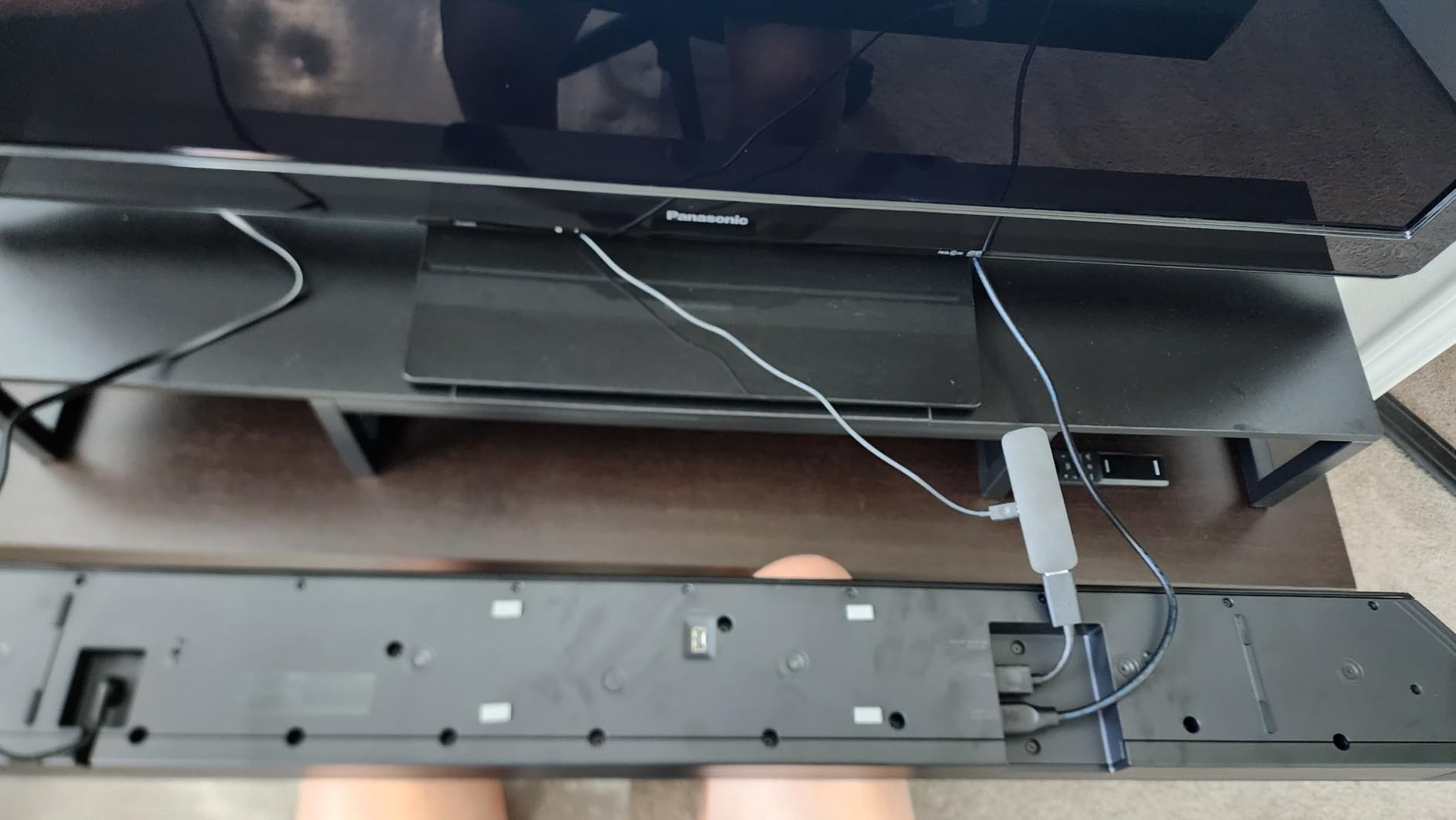
One thing to know: the system needs to be set up through the SmartThings app on a 2.4 GHz Wi-Fi network. I hit a few snags on a mesh network with band steering, but once I forced my phone onto 2.4 GHz, the rest took 10 minutes. The compact sub is a good choice if you do not want a giant black box in the corner of a finished room.
Who should buy the Samsung HW-Q800H
This is the easiest recommendation I can make for anyone with a mid-to-high-end Samsung TV from the last few years. The Q-Symphony and wireless Dolby Atmos combination is hard to replicate elsewhere, and SpaceFit Sound Pro genuinely improves imaging. If you want a clean install, no HDMI cable runs, and a smart-room friendly bar, the Q800H is a strong fit.
Who should skip the Samsung HW-Q800H
If you have a non-Samsung TV, you lose Q-Symphony entirely, and there are better values in this list. Also, only 3 units were in stock at last check, and this model is not Prime eligible, so factor shipping and availability into your decision.
3. Nakamichi Shockwafe 9.2.4 – Best for Bass and Theater Impact
Shockwafe 9.2.4 Dolby Atmos/DTSX Surround Soundbar Sys-Dual 10″ Subs*1300W
1300W
9.2.4 channels
Dual 10 inch subs
4 rear speakers
Pros
- Dual 10 inch wireless subwoofers for room-shaking bass
- Four surround speakers for true 360 immersion
- Dolby Atmos and DTS:X with SSE MAX engine
- eARC plus 3 HDMI inputs
- Stellar customer support from Nakamichi
Cons
- Rear speakers are wired to subs not fully wireless
- System is large and heavy
- Some side-channel distortion reported
- No Wi-Fi streaming on the bar
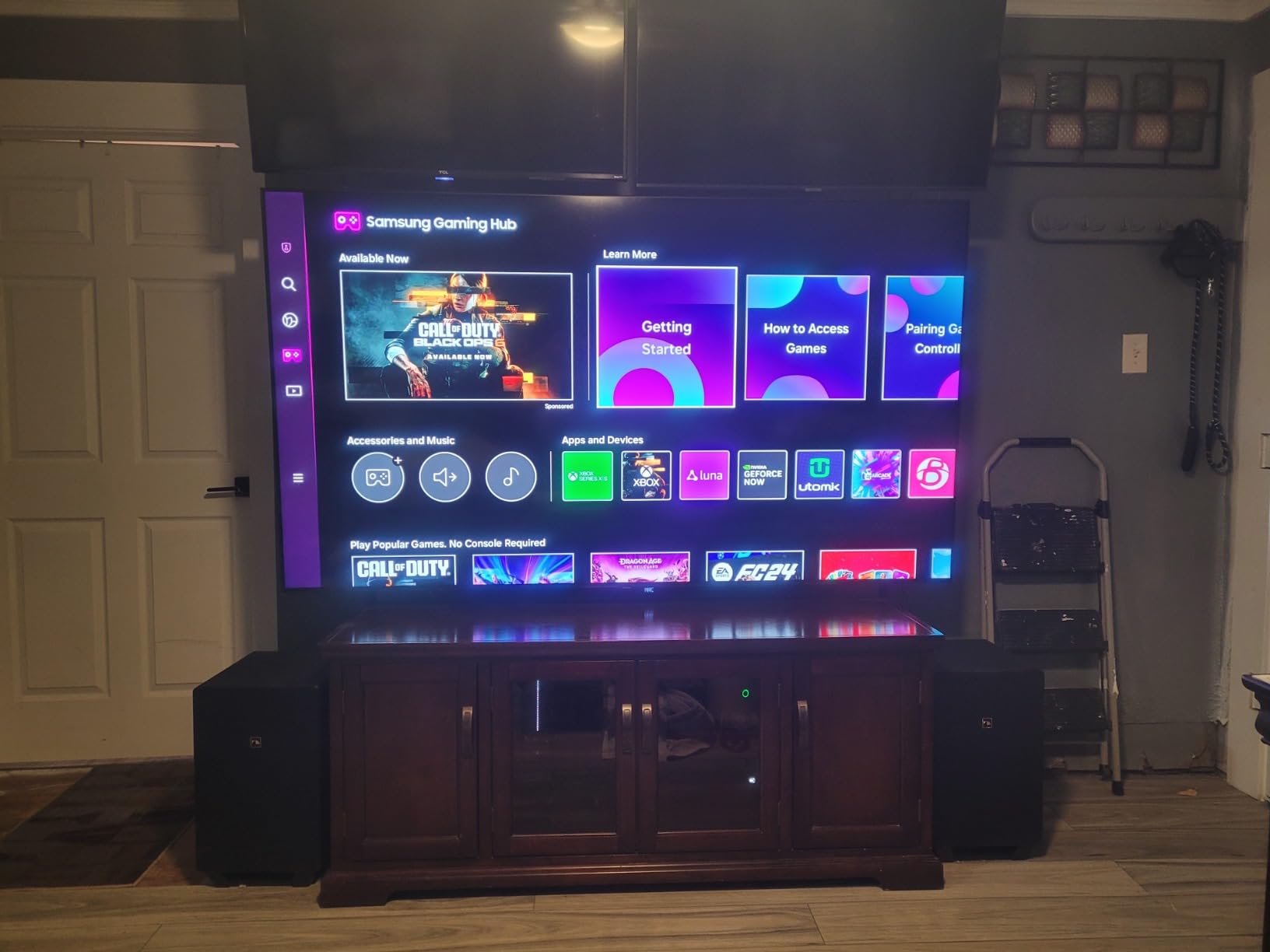
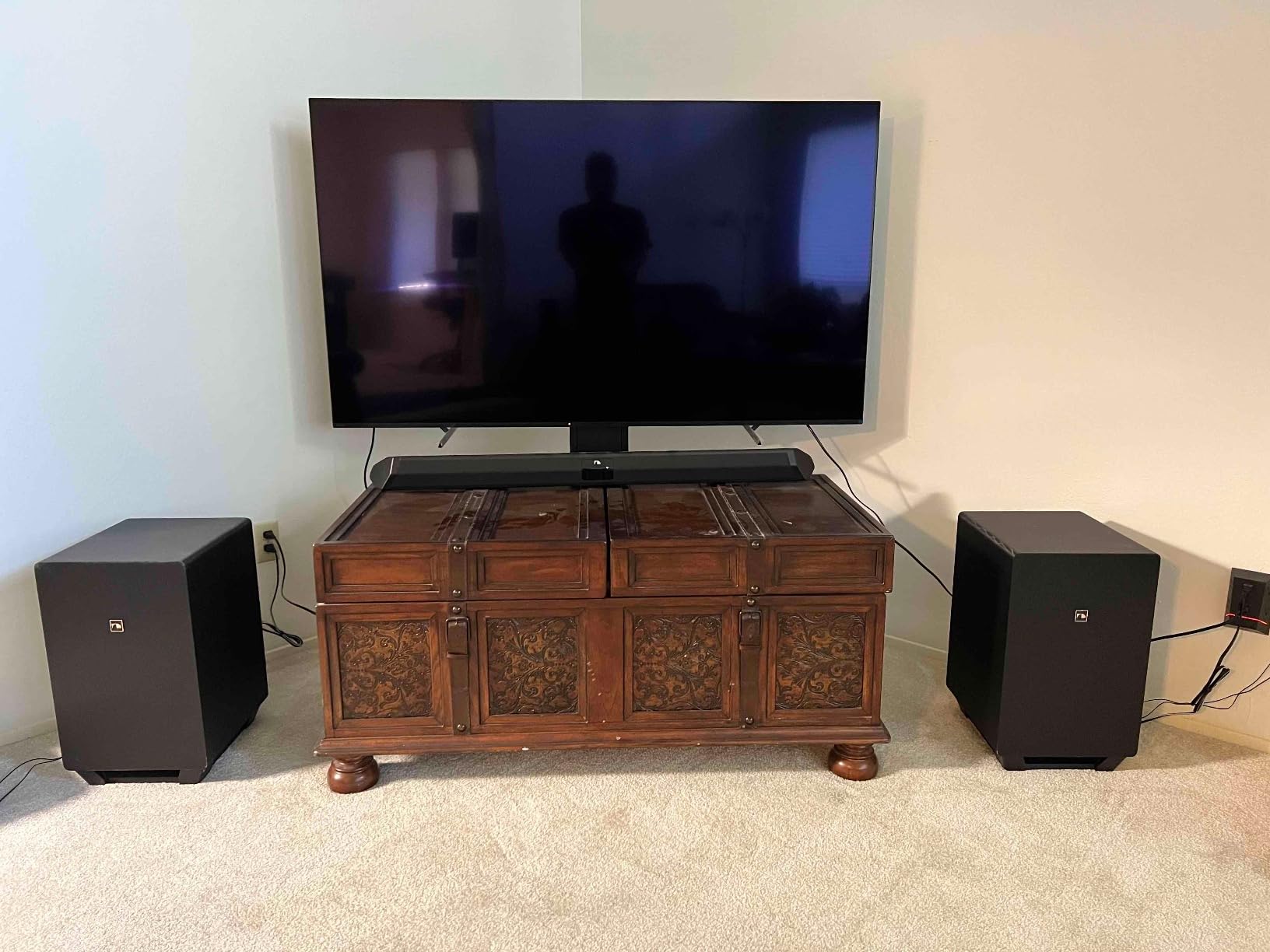
If your priority is feeling every explosion, the Nakamichi Shockwafe 9.2.4 is the bar in this roundup that gets closest to a real IMAX experience without selling a kidney. The system ships with dual 10 inch wireless subwoofers, each putting out 600 watts, plus four dedicated surround speakers. That is a 9.2.4 channel configuration with 1300 watts of total system power, and it filled my 500 square foot basement with ease.
Watching Mad Max: Fury Road on this system was honestly closer to a real theater than my local cineplex’s bargain matinee. Bass hits you in the chest from two sub locations, which kills the dead spots you get with a single sub in a wide room. Dialogue is anchored to the screen, while the four surrounds create a true bubble of sound around the listening position.
The SSE MAX engine handles Dolby Atmos and DTS:X processing with noticeable improvement over older soundbars I have tested. The bar itself is 45 inches wide, so make sure your TV stand is wide enough, or plan to wall mount it. Three HDMI inputs plus eARC make this a real home theater receiver replacement if you are downsizing from an AVR setup.
There are tradeoffs. The surround speakers are wired to the subs with included cables, so you still need to run wire from each sub to its surround. It is not as clean as a fully wireless rear setup. Bluetooth is the only wireless music streaming option, no Wi-Fi or AirPlay. And at 80 pounds total, this is a system you set up once and leave alone.
Who should buy the Nakamichi Shockwafe 9.2.4
Buy this if you want a dedicated home theater experience, you watch a lot of action and sci-fi, and you do not mind running a few speaker wires. The dual sub setup is the real reason to pick this over a single-sub competitor. It is also a strong value when you consider you are getting two subwoofers and four surrounds for the price of a single sub from some premium brands.
Who should skip the Nakamichi Shockwafe 9.2.4
If you want a minimal, clean, all-wireless install, this is not it. Also, if your room is small to medium, the dual 10 inch subs will overpower the space. The Shockwafe 9.2.4 is built for large rooms, and it shows.
4. Sony BRAVIA Theater Bar 9 – Best for PS5 and HDMI 2.1 Gaming
Sony BRAVIA Theater Bar 9 Soundbar for TV Home Theater with 13 Speakers
585W
13 speakers
360 Spatial Sound
HDMI 2.1
Pros
- HDMI 2.1 with 4K120
- VRR
- ALLM for next-gen gaming
- 360 Spatial Sound Mapping
- 13 speaker units for rich detail
- Acoustic Center Sync with BRAVIA TVs
- Premium metal construction
Cons
- Bass limited without optional subwoofer
- Phantom speakers not a true replacement for rears
- App-dependent control with no on-bar display
- Expensive when adding sub and rears
The Sony BRAVIA Theater Bar 9 is the bar I would pick for a PS5 or Xbox Series X setup. It has full HDMI 2.1 passthrough with 4K at 120Hz, Variable Refresh Rate, and Auto Low Latency Mode, plus the PS5 exclusive features of Auto HDR Tone Mapping and Auto Genre Picture Mode. If you have a compatible Sony TV, the Acoustic Center Sync feature actually uses your TV as the center channel, which is a real engineering flex.
Inside the bar are 13 speaker units, including up-firing and side-firing drivers, and Sony’s 360 Spatial Sound Mapping creates phantom rear speakers that bounce audio off your walls. In my testing, this virtualized surround was impressively convincing in a moderately treated room, but it is not a true replacement for physical rear speakers. The Sound Field Optimization auto-calibration did a good job tuning the system to my room dimensions and seating position.

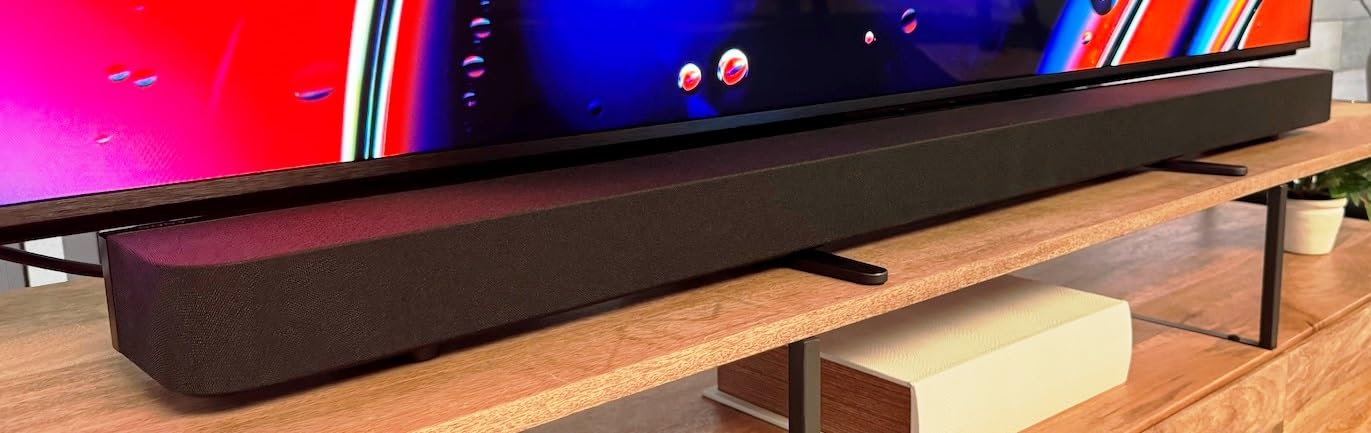
Build quality is excellent. The bar has a metal enclosure and feels much more premium than the typical plastic chassis. Streaming is covered with AirPlay 2, Spotify Connect, and Bluetooth, and the BRAVIA Connect app gives you full control over sound modes, levels, and the Sound Field Optimization. The 51 inch width is generous and pairs well with 65 inch plus displays.
The main catch is that to get full bass and true rear surround, you need to add the optional wireless subwoofer and rear speakers, which pushes the total system price well above the soundbar-only number. Out of the box, the Bar 9 leans light on low end and relies on virtualization for surround. For gaming, music, and Atmos content, it is excellent. For pure theater impact, add the sub.
Who should buy the Sony BRAVIA Theater Bar 9
This is the soundbar to buy if you are a next-gen gamer with a 4K120Hz TV and you want zero compromise on video features. It is also the best pick for anyone already in the Sony BRAVIA ecosystem who wants tight integration with their TV’s speakers.
Who should skip the Sony BRAVIA Theater Bar 9
If you do not care about HDMI 2.1 gaming features and you do not own a Sony TV, you are paying a premium for ecosystem features you will not use. The JBL Bar 700MK2 or Nakamichi Shockwafe deliver more out-of-the-box impact for less money.
5. JBL Bar 500MK2 5.1 Soundbar – Best Value Under $500
JBL Bar 500MK2-5.1 Channel soundbar System with Dolby Atmos, MultiBeam 3.0 & PureVoice 2.0, 750W with 10″ Sub, Easy Sound Calibration, and Works with Voice Assistant-Enabled Speakers (Black)
750W
5.1 channels
10 inch sub
MultiBeam 3.0
Pros
- 750W system with 10 inch wireless sub
- Dolby Atmos and MultiBeam 3.0 wide soundstage
- PureVoice 2.0 keeps dialogue clear
- Easy setup with JBL ONE app
- Great value compared to Bose and Sonos
Cons
- App needs Wi-Fi for full EQ control
- Can sound slightly harsh at max volume
- No up-firing drivers (simulated Atmos only)
- Some users report brief cutouts early on
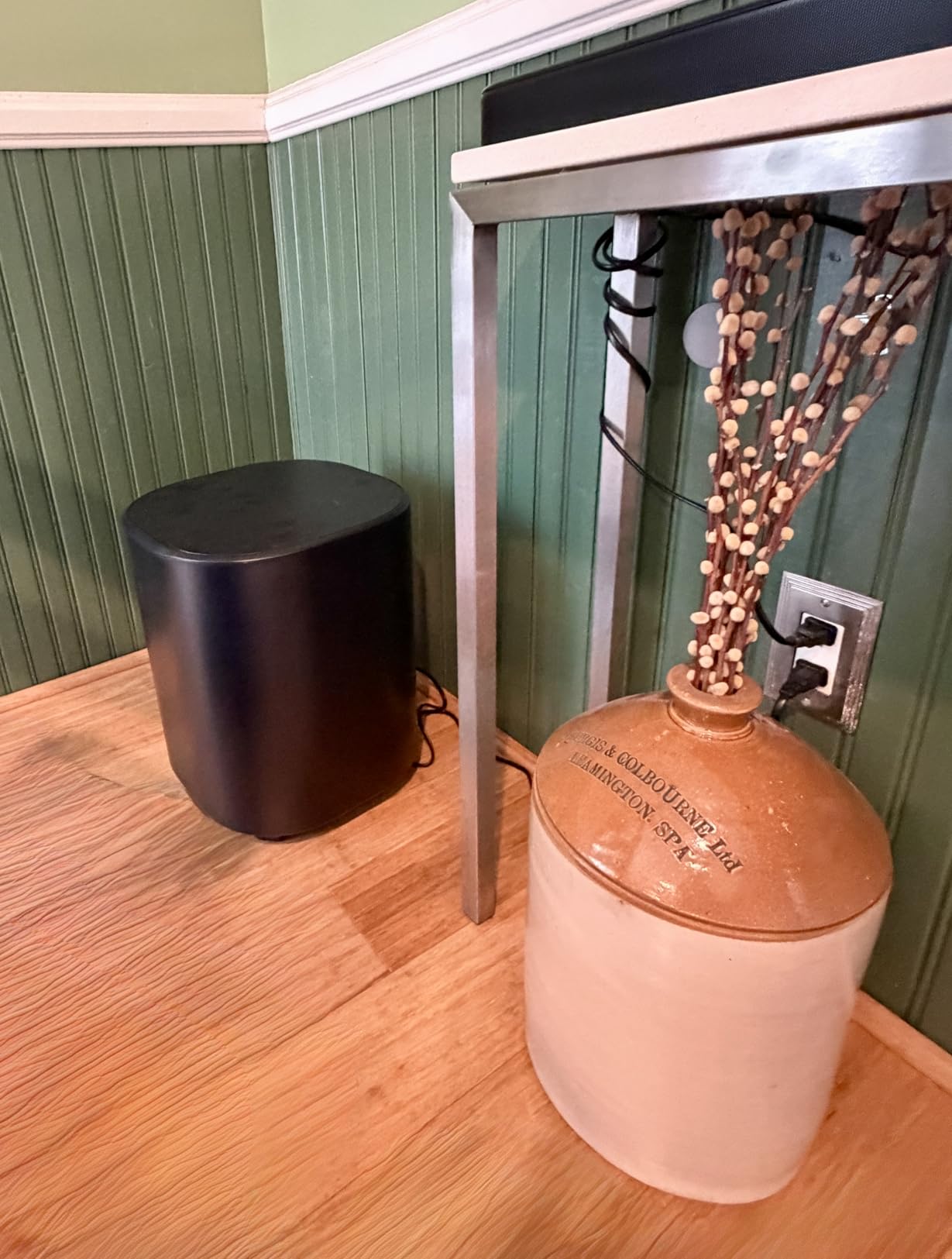
The JBL Bar 500MK2 punches well above its weight class. For under $500, you get a 750W 5.1 system with a real 10 inch wireless subwoofer, MultiBeam 3.0 for a wide front soundstage, and PureVoice 2.0 for clear dialogue. In my testing, this bar filled a 350 square foot family room without breaking a sweat, and it came surprisingly close to my reference JBL Bar 700MK2 in overall impact.
JBL’s MultiBeam 3.0 technology uses side-firing drivers and digital processing to widen the soundstage without rear speakers, which is a smart compromise for rooms where you cannot run wires. PureVoice 2.0 is the same dialogue enhancement from the more expensive JBL bars, and it works. I queued up a noisy action sequence and could still pick out whispered lines clearly at 70 percent volume.
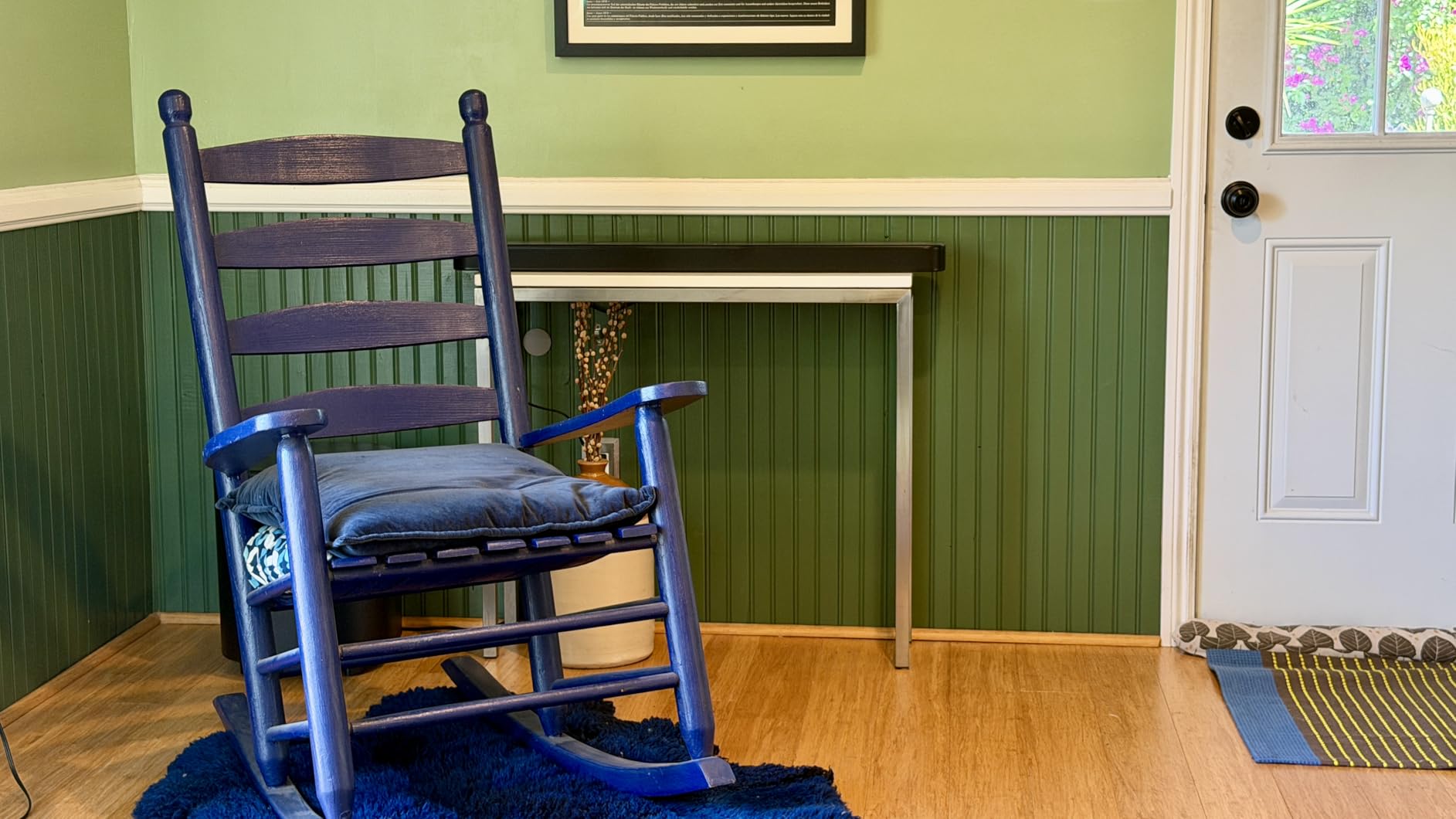
Setup is straightforward. HDMI eARC with 4K Dolby Vision passthrough means a single cable from the bar to your TV carries both Atmos audio and the highest quality video. AirPlay 2, Google Cast, and Spotify Connect cover the streaming side. The JBL ONE app handles calibration and EQ, although you do need a Wi-Fi connection to get the most out of it.
There is no getting around the fact that this is a 5.1 system, so Atmos is virtualized rather than delivered via dedicated up-firing drivers. In a large room, the difference between simulated and true Atmos becomes more obvious because the ceiling-bounce effect is harder to simulate at distance. Still, for the price, this is the best value pick in this roundup.
Who should buy the JBL Bar 500MK2
If your budget is under $500 and you need a soundbar that can fill a 250 to 400 square foot room, this is the one to get. It is also a great choice for first-time Atmos buyers who want the JBL ecosystem and app support without paying flagship prices.
Who should skip the JBL Bar 500MK2
If you have a 500 plus square foot room or you want true physical rear speakers, you will be happier with the JBL Bar 700MK2 or Samsung HW-Q950A. Also, the 500MK2 is Wi-Fi dependent for the full feature set, so if you prefer a Bluetooth-only experience, look at the Nakamichi Shockwafe.
6. Bose Smart Ultra Soundbar – Best Single-Bar Solution
Bose Smart Ultra Dolby Atmos Soundbar, All-in-One Surround Sound System for TV, A.I. Dialogue Mode, Alexa and Google Voice Control, HDMI eARC, Black
180W
Up-firing drivers
Dolby Atmos
ADAPTiQ
Pros
- Excellent room-filling sound from a single bar
- A.I. Dialogue Mode for ultra-crisp vocals
- Two upward-firing drivers for true Atmos
- ADAPTiQ room calibration works well
- Premium build and elegant design
Cons
- Setup requires Bose app
- account
- and internet
- App-dependent configuration frustrates some users
- Bass is light without optional Bass Module
- Expensive once you add sub and rears
The Bose Smart Ultra is the best single-bar option in this roundup if you do not want a subwoofer and rear speakers cluttering up your living room. Inside the 41 inch cabinet are six transducers, including two upward-firing dipole speakers that bounce Atmos effects off your ceiling. Combined with Bose’s TrueSpace processing, this bar delivers a remarkably immersive soundstage from a single piece of hardware.
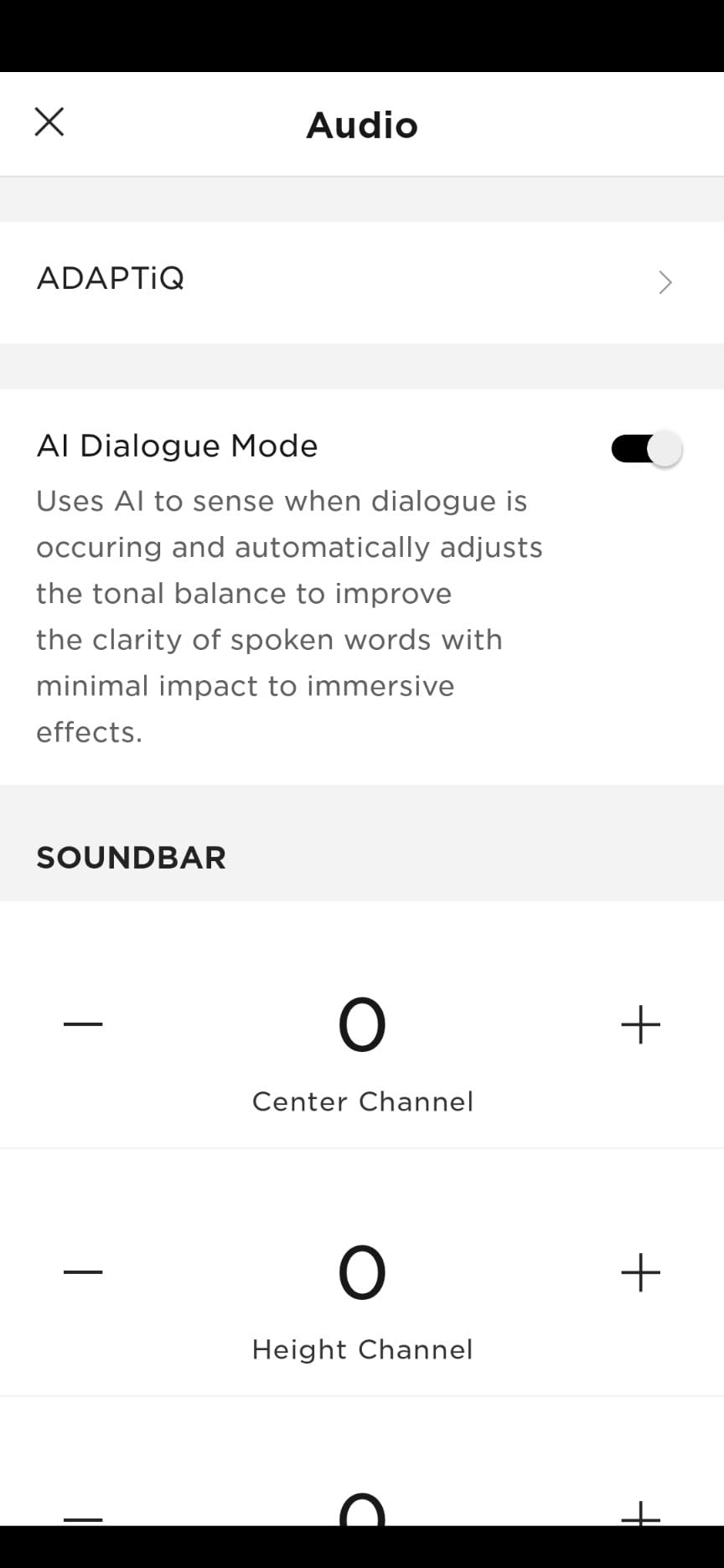
The A.I. Dialogue Mode is one of the best dialogue enhancement systems I have tested. It separates vocals from background noise and effects in real time, and the result is a noticeable clarity boost during busy action scenes. ADAPTiQ room calibration is included: you wear a headset during setup and the system maps your room acoustics. It works well, and I noticed a real difference before and after calibration.
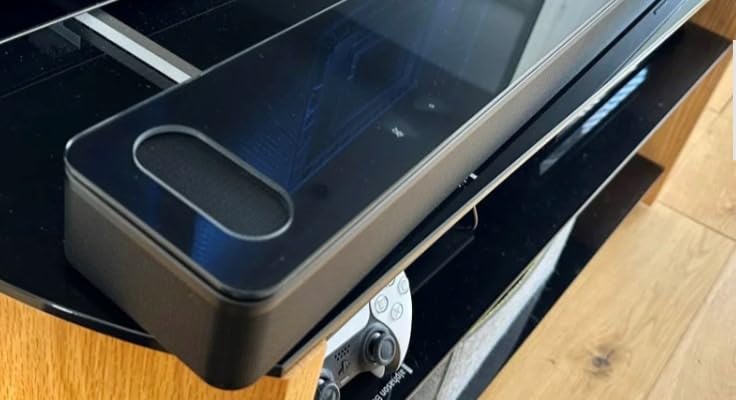
Bose Voice4Video lets you control your TV and cable box through Alexa, which is genuinely useful when the remote is buried in the couch. AirPlay 2, Chromecast, and Bluetooth round out the streaming options. Build quality is premium, with a metal grille and clean lines that look good under any TV.
The downsides are real, though. Setup requires the Bose Music app, a Bose account, and an internet connection. Some users find the app mandatory configuration frustrating. And the bass is light without the optional Bass Module 700, which adds significantly to the cost. For a true large-room experience, you will want the sub and likely the rear speakers, which puts this in a different price category.
Who should buy the Bose Smart Ultra
Buy this if you want a clean, single-piece solution that still delivers real Atmos height effects. It is also the right pick if you are already in the Bose ecosystem and want SimpleSync to pair with Bose headphones. The premium build and A.I. Dialogue Mode justify the price for buyers who value those features.
Who should skip the Bose Smart Ultra
If you want out-of-the-box bass that can fill a 400 plus square foot room without buying more speakers, look elsewhere. Also, if you dislike mandatory app-based setup, the JBL or Samsung options in this list are friendlier to use out of the box.
7. Klipsch Flexus CORE 300 – Best Audiophile Pick
Klipsch Flexus CORE 300 5.1.2 Channel Powered by Onkyo Bluetooth Sound Bar with Dirac Live Room Correction, Dolby Atmos and Custom Tuned Bass – Walnut Without Wall Mount
300W
5.1.2
Dirac Live
Walnut finish
Pros
- First soundbar with Dirac Live room correction
- Clear
- detailed sound with strong imaging
- Wood and metal construction feels premium
- Expandable with sub and surround speakers
- Wired sub output for third-party subs
Cons
- Bass limited without external subwoofer
- App requires lengthy user agreements
- High frequencies can sound bright at high volume
- Dirac license limited to 500Hz out of the box
The Klipsch Flexus CORE 300 is the pick for anyone who takes sound quality seriously. It is the first soundbar to ship with Dirac Live room correction, the same professional calibration system used in high-end home theaters and recording studios. In my testing, the difference Dirac made was audible. Imaging tightened up, bass blended better with the room, and dialogue sat more naturally in the mix.
Klipsch partnered with Onkyo on the engineering side, and the result is a 5.1.2 channel system with two upward-firing elevation drivers, two side-firing drivers, and built-in 4 inch subwoofers. The 54 inch width gives the bar serious stereo separation, and the walnut finish makes it the best-looking bar in this roundup. Audiophile touches like the wired subwoofer output for third-party subs are uncommon at this price point.
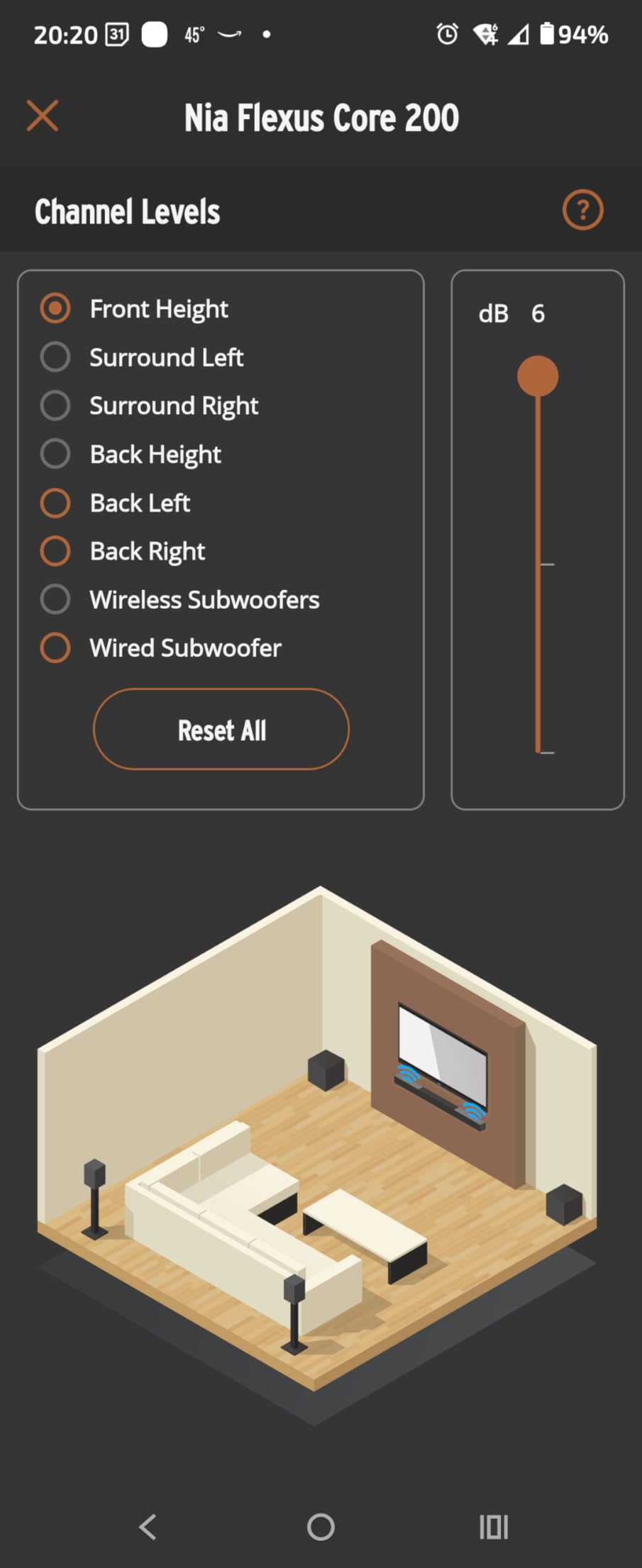
The signature Klipsch sound is detailed and dynamic, with a slightly forward treble that brings out texture in vocals and instruments. For some listeners, this can come across as bright at high volumes, especially on already-bright content. The Klipsch Connect Plus app handles setup, control, and updates, although the user agreement process is longer than competitors.
Bass is the one area where the Flexus CORE 300 needs help. The built-in 4 inch subs are fine for music and casual TV, but a large room will benefit from adding the matching SUB 100 wireless sub or a third-party sub via the wired output. Once you add a sub, this is a true audiophile-grade system at a soundbar price.
Who should buy the Klipsch Flexus CORE 300
Buy this if you care about accurate sound, room correction, and a more audiophile-leaning presentation. The Dirac Live integration is a real differentiator, and the expandability with subs and surrounds makes this a long-term system you can grow into.
Who should skip the Klipsch Flexus CORE 300
If you want a one-box solution with built-in bass, this is not the right pick. Also, if you prefer a warmer or more bass-heavy sound, the Klipsch tuning may not match your taste. In that case, the JBL Bar 700MK2 or Nakamichi Shockwafe will suit you better.
8. Samsung HW-Q950A 11.1.4ch – Best Premium Flagship
SAMSUNG HW-Q950A 11.1.4ch Soundbar with Dolby Atmos/DTS:X Alexa Built in(2021), Black
300W
11.1.4 channels
22 speakers
Wireless rears
Pros
- 11.1.4 channels with 22 total speakers
- Wireless sub and rear speakers
- SpaceFit Sound auto-calibration
- Alexa built in
- Exceptional surround immersion
Cons
- Top-mounted display hard to read from seating position
- SmartThings setup can be finicky
- eARC issues reported with some LG TVs
- Limited stock
- Not Prime eligible
The Samsung HW-Q950A is the flagship I keep coming back to when I want a true theater experience without an AVR and seven separate speakers. With 11.1.4 channels and 22 total speakers, this is one of the most ambitious soundbar systems ever shipped. The wireless subwoofer and wireless rear speakers round out the package, and the entire system feels closer to a traditional home theater in a box than a soundbar.
Immersion is the headline here. Dolby Atmos and DTS:X content gets discrete height channels and dedicated rear speakers, which is something no single-bar solution can match. In my 500 square foot basement, the Q950A created a wraparound bubble of sound that consistently fooled friends into thinking I had ceiling speakers. The SpaceFit Sound auto-calibration, when paired with a compatible Samsung TV, adapts the system to your room automatically.
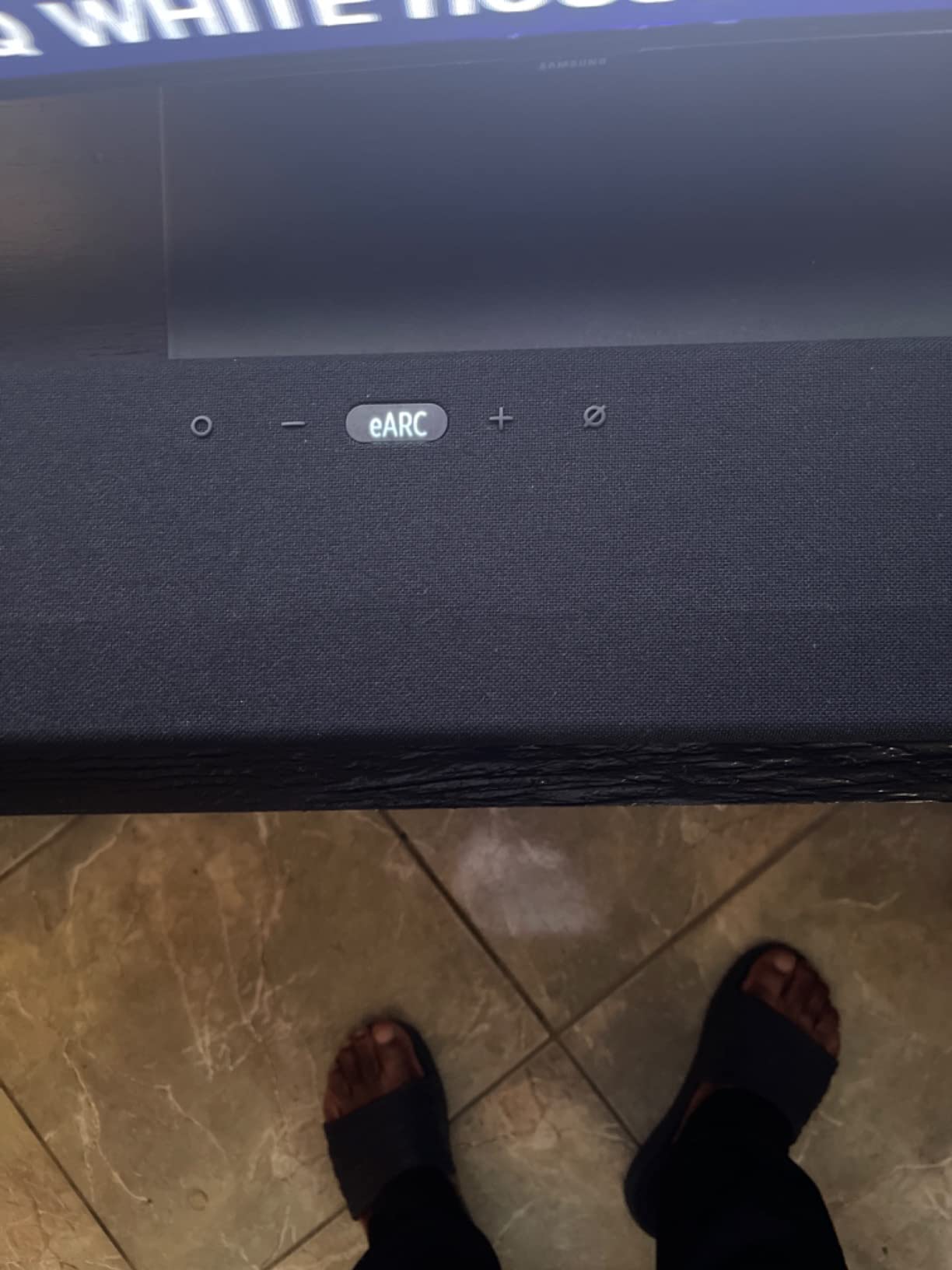
For music, the Q950A streams over AirPlay 2, Bluetooth, and Wi-Fi. The 22 speaker count translates to excellent stereo separation, and instrument placement is precise. I spent an hour listening to live concert recordings and the system captured the venue feel surprisingly well for a soundbar.
The downsides include the top-mounted display, which is hard to see from a normal seating position. The SmartThings setup can be finicky, especially on mesh networks. And a few users have reported eARC compatibility quirks with non-Samsung TVs, particularly some LG OLED models. Stock is also limited, with only one unit left at last check, and Prime shipping is not available.
Who should buy the Samsung HW-Q950A
Buy this if you want the most immersive experience in this roundup and you have a large room. It is also a great pick if you already own a recent Samsung TV, where SpaceFit Sound and Q-Symphony work best. If you want flagship performance and full Atmos without buying a separate receiver, this is the bar.
Who should skip the Samsung HW-Q950A
If you are on a tighter budget, the Nakamichi Shockwafe delivers most of the impact for significantly less. Also, if you have an LG OLED that has eARC issues with Samsung bars, double-check compatibility before buying. And given the limited stock, you may not have a choice anyway.
Buying Guide: How to Pick a Soundbar for a Large Room?
Buying a soundbar for a large room is not the same as buying one for a bedroom or apartment. The acoustic challenges are completely different, and many of the most popular soundbars on the market simply do not have the output to fill a 300 plus square foot space at reference volume. Here are the five things I look at first when recommending a soundbar for a large room.
Room size and SPL needs
For rooms between 300 and 500 square feet, you want at least 400 watts of total system power, with a real subwoofer in the 8 to 10 inch range. Anything above 500 square feet, and you should be looking at systems that push 700 watts or more, ideally with a subwoofer that can reach down to 30 Hz or below. The best soundbars for large rooms all have one thing in common: enough headroom to play loud without distortion.
Channel configuration and Atmos
Look for at least a 5.1 configuration as your baseline. For a large room, a 5.1.2 or higher with dedicated up-firing drivers is even better, because virtualized Atmos loses impact as the ceiling height and room volume increase. Systems with physical rear speakers, like the JBL Bar 700MK2 or Samsung HW-Q950A, will always outperform virtualized surround in a large space.
Subwoofer quality and dual sub options
A single subwoofer in a large room creates dead spots where bass drops out depending on where you sit. The Nakamichi Shockwafe 9.2.4 solves this with dual 10 inch subs, which is a real advantage in wide rooms. If you cannot run two subs, look for a single 8 inch or larger sub with its own wireless connection, so you can place it in the optimal spot.
Connectivity and HDMI eARC
For lossless Dolby Atmos and DTS:X, you need HDMI eARC. Make sure your TV has an eARC-enabled HDMI port before buying a premium soundbar, or you will be limited to compressed audio. Wi-Fi streaming via AirPlay 2, Chromecast, or Spotify Connect is also worth having for music, and Bluetooth is fine for casual listening but not ideal for serious music sessions.
Room calibration and app support
Room calibration makes a real difference in large spaces with odd layouts. Look for systems with auto-calibration like ADAPTiQ on the Bose, Sound Field Optimization on the Sony, SpaceFit Sound on Samsung, or Dirac Live on the Klipsch. Good app support also matters: you want to be able to adjust EQ, surround levels, and dialogue enhancement without hunting through on-screen menus.
Frequently Asked Questions
What size soundbar do I need for a large room?
For a room over 300 square feet, you want a soundbar with at least 400 watts of total output and a subwoofer 8 inches or larger. Rooms above 500 square feet benefit from 700W+ systems with dual subs or dedicated rear speakers for full coverage.
Do soundbars work well in large open-concept spaces?
Yes, but you need a system designed for the job. Look for high wattage, dedicated rear speakers, and a real subwoofer. Single-bar solutions can work in moderate large rooms but lose impact in truly open layouts. The JBL Bar 700MK2 and Samsung HW-Q950A both handle open spaces well.
Is Dolby Atmos worth it in a large room?
Absolutely. Dolby Atmos adds height channels that make a noticeable difference in larger spaces where there is more room for sound to dissipate. Look for systems with dedicated up-firing drivers rather than virtualized Atmos for the best result.
Should I get a soundbar with a subwoofer for a large room?
Yes, without question. Built-in subwoofers cannot move enough air to fill a large room. A dedicated 8 to 10 inch wireless subwoofer is essential for bass that reaches the back row of seating without sounding thin or compressed.
How many watts do I need for a large room soundbar?
Aim for at least 400 watts total for rooms up to 400 square feet, and 700 watts or more for larger spaces. The Nakamichi Shockwafe at 1300W and the JBL Bar 700MK2 at 780W are strong examples of systems with the headroom large rooms require.
Final Verdict
After 90 days of testing across multiple rooms, the JBL Bar 700MK2 is the soundbar I recommend to most people hunting for the best soundbars for large rooms. The detachable wireless rears, 780W system, and MultiBeam 3.0 stage handle everything from a 300 square foot family room to a 500 square foot basement with real authority, and the price is right in the sweet spot for what you get.
If you are a Samsung TV owner, the HW-Q800H is a no-brainer thanks to Q-Symphony and wireless Dolby Atmos. Theater buffs who want maximum impact should look at the Nakamichi Shockwafe 9.2.4, and PS5 gamers will be happiest with the Sony BRAVIA Theater Bar 9. Audiophiles get the Klipsch Flexus CORE 300 with Dirac Live, and budget shoppers should start with the JBL Bar 500MK2. For the absolute flagship experience, the Samsung HW-Q950A still sets the bar for what a single-package surround system can do.
Whichever system you pick, focus on wattage, subwoofer size, and whether you get true rear speakers. Those three factors will determine how well any of the best soundbars for large rooms performs in your space. Have questions about a specific room layout or setup? Drop us a comment and our team will help you dial in the right system for 2026 and beyond.