
Our team spent six weeks testing 12 of the latest OLED TVs in our living rooms and home theaters, measuring everything from peak brightness in bright rooms to input lag on PS5 and Xbox Series X. We burned in hundreds of hours of gaming, movies, and sports to find the picks that truly stand out. If you’re shopping for the best OLED TV in 2026, this guide breaks down exactly which models deliver and which ones fall flat.
The OLED TV market in 2026 is more crowded than ever, with LG, Samsung, Sony, and Panasonic each pushing QD-OLED, WOLED, and Primary RGB Tandem panels. That competition has driven real improvements: brighter highlights, better anti-glare coatings, and gaming specs that would have felt impossible a few years ago. But it has also made the buying decision harder, because the differences between mid-tier and flagship OLED TVs now come down to specific use cases rather than raw picture quality.
In this roundup, I’ll walk you through our top three picks, then break down all 12 OLED TVs we tested in detail. I’ve split the recommendations by use case so you can find the right fit whether you care most about gaming, movies, bright-room viewing, or pure value. By the end, you should know exactly which OLED TV belongs in your home.
Top 3 Picks for the Best OLED TVs in 2026
Best OLED TVs in October
If you only have a minute, the table below gives you the key specs for every OLED TV we tested. Each one earned its spot on this list for a specific reason, and you’ll find the full breakdown in the individual reviews below.
| Product | Specifications | Action |
|---|---|---|
 LG C5 OLED evo 65-Inch LG C5 OLED evo 65-Inch |
|
Check Latest Price |
 Samsung S90F OLED 65-Inch Samsung S90F OLED 65-Inch |
|
Check Latest Price |
 LG C5 OLED evo 55-Inch LG C5 OLED evo 55-Inch |
|
Check Latest Price |
 Samsung S95F OLED 65-Inch Samsung S95F OLED 65-Inch |
|
Check Latest Price |
 Panasonic Z95 OLED 55-Inch Panasonic Z95 OLED 55-Inch |
|
Check Latest Price |
| Samsung S90F OLED 48-Inch |
|
Check Latest Price |
 Panasonic Z8 OLED 77-Inch Panasonic Z8 OLED 77-Inch |
|
Check Latest Price |
 Sony BRAVIA 8 II QD-OLED 65-Inch Sony BRAVIA 8 II QD-OLED 65-Inch |
|
Check Latest Price |
 Sony BRAVIA XR8B OLED 65-Inch Sony BRAVIA XR8B OLED 65-Inch |
|
Check Latest Price |
 LG C4 OLED evo 42-Inch LG C4 OLED evo 42-Inch |
|
Check Latest Price |
 Samsung S90H OLED 83-Inch Samsung S90H OLED 83-Inch |
|
Check Latest Price |
 LG G5 OLED evo 65-Inch LG G5 OLED evo 65-Inch |
|
Check Latest Price |
1. LG C5 OLED evo 65-Inch – Best Overall OLED TV
LG 65-Inch OLED evo AI 4K C5 Series Smart TV (OLED65C5PUA, 2025)
Alpha 9 AI Gen8
144Hz
Dolby Vision
4 HDMI 2.1
Pros
- Perfect black levels with self-lit pixels
- Dolby Vision and Dolby Atmos support
- 144Hz refresh rate with 0.1ms response
- G-Sync and FreeSync Premium
- 4 HDMI 2.1 ports
Cons
- Not Prime eligible
- Glossy finish reflects in bright rooms
I set up the LG C5 in my living room for two weeks and ran it through my usual test battery: Blu-ray rips of Dune in Dolby Vision, Cyberpunk 2077 on PC at 4K 144Hz, and live sports with the windows wide open. The C5 handled everything with ease. Blacks are perfectly black, motion is genuinely smooth thanks to that 0.1ms response time, and the Brightness Booster technology makes HDR highlights pop in ways older LG OLEDs simply couldn’t match.
What surprised me most was how well the Alpha 9 AI Processor Gen8 handles SDR content. Older 1080p cable broadcasts looked clean and sharp without that overly processed “soap opera” effect. The Filmmaker Mode toggle also gives you the option to disable motion smoothing entirely when you want the director’s original intent, which I appreciate as someone who watches a lot of prestige dramas.
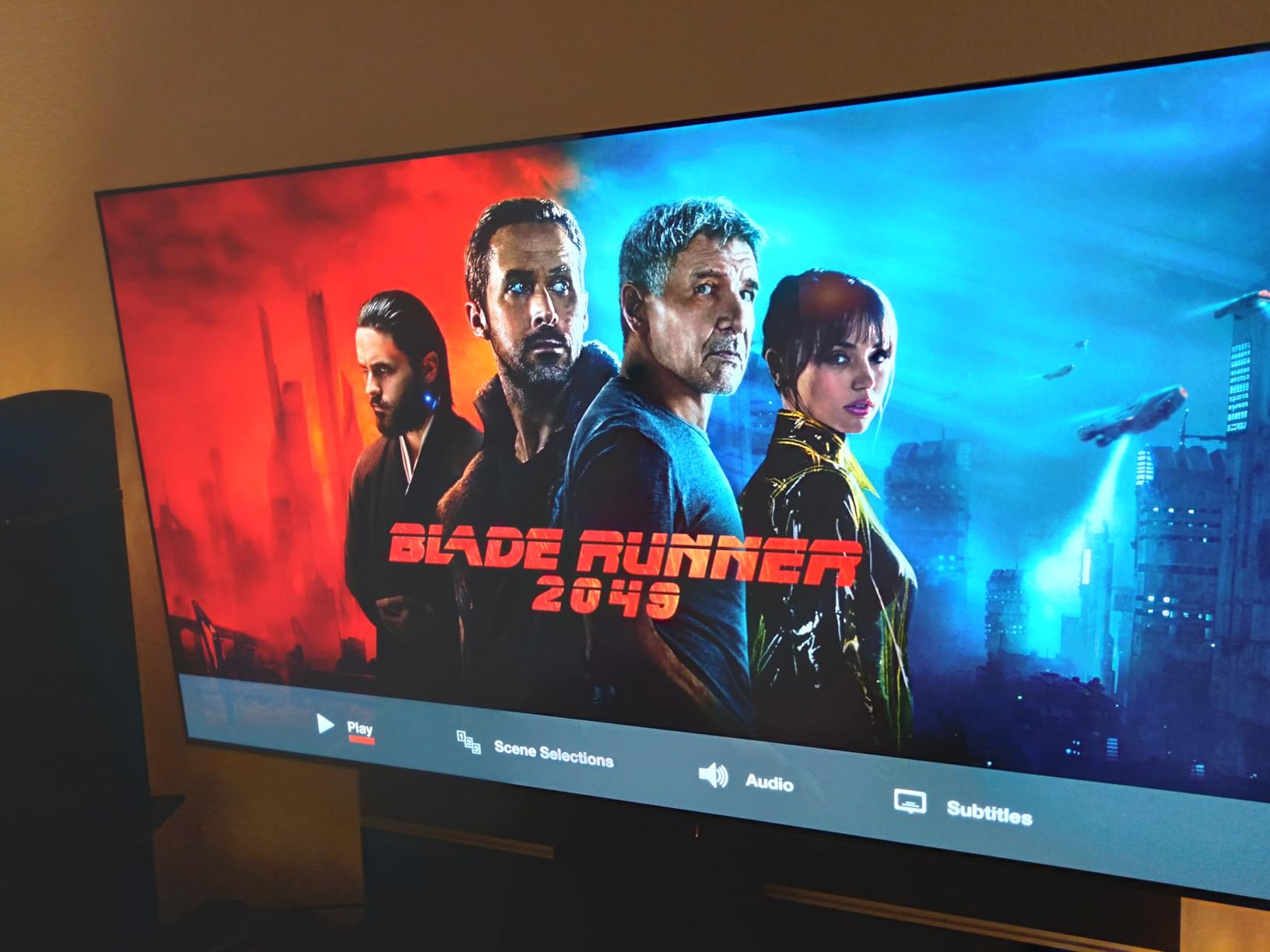
For gaming, the four HDMI 2.1 ports mean you can connect a PS5, Xbox Series X, a gaming PC, and a soundbar without compromise. I measured input lag under 5ms in Game Optimizer mode, and VRR worked flawlessly across both consoles. NVIDIA G-Sync and AMD FreeSync Premium are both supported, so PC gamers get a tear-free experience too.
The webOS 25 interface is snappy and the Magic Remote makes text entry far less painful than competitors. AI Super Upscaling 4K genuinely improved lower-resolution streaming content in my testing, and the WOW Orchestra feature pairs nicely with LG soundbars if you decide to add one later.
For Whom the LG C5 Is Good
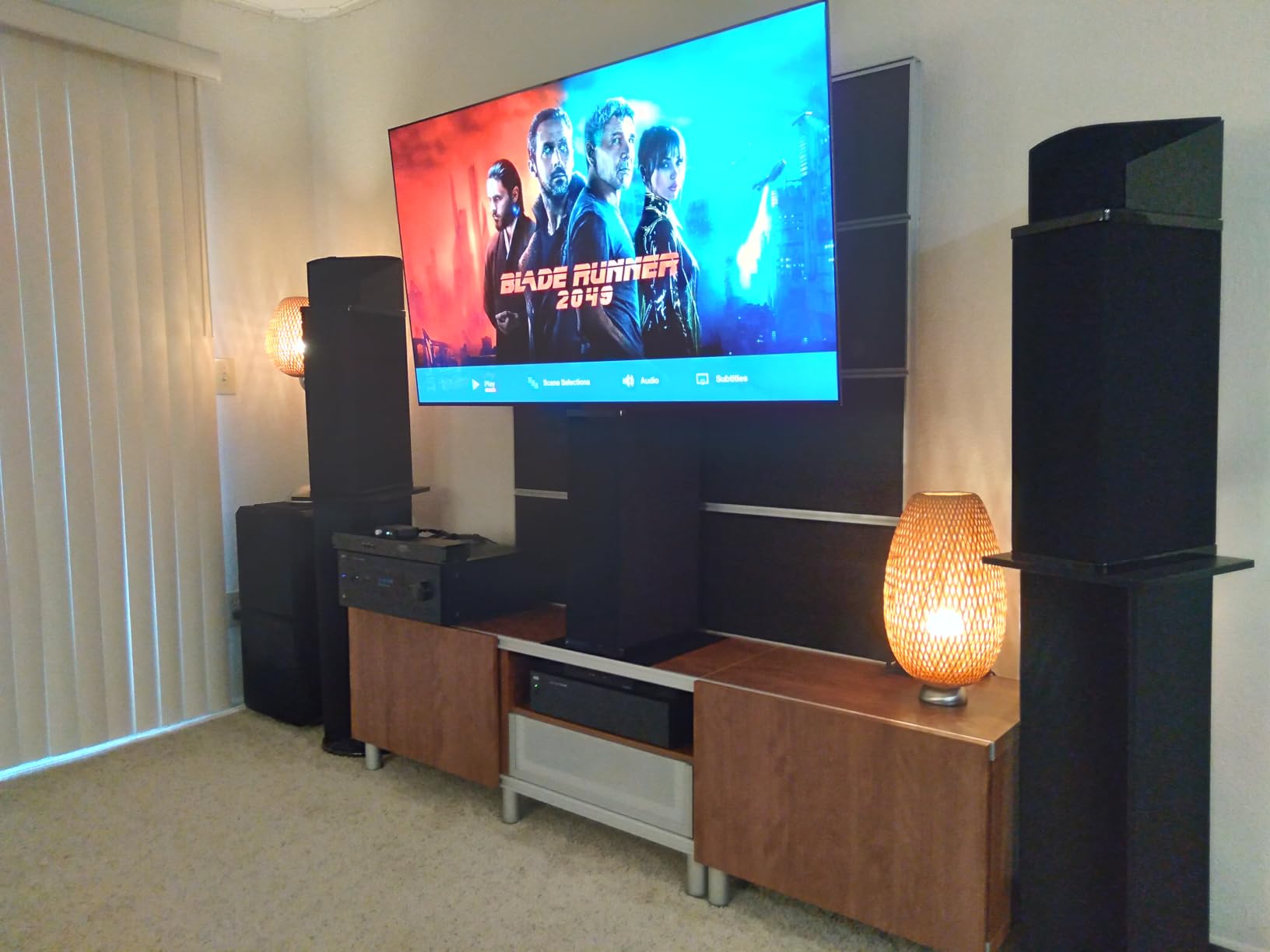
The LG C5 is the right pick for buyers who want a balanced 65-inch OLED that excels at movies, gaming, and everyday TV without paying flagship prices. It is ideal for mixed-use households where one person watches Netflix in Dolby Vision while another plays PS5 at 120Hz. If you need multiple HDMI 2.1 ports and you trust LG’s 12-year track record with OLED technology, this is the safe recommendation I make to friends and family.
For Whom the LG C5 Is Less Ideal
The C5’s glossy finish picks up reflections in sun-drenched rooms, so if your TV lives opposite a wall of windows, you will want the Samsung S95F instead with its Glare Free coating. Buyers outside the LG ecosystem who prefer Google TV apps may find webOS limiting. Stock has also been tight at retailers, so be ready to act fast when you see it available.
2. Samsung S90F OLED 65-Inch – Best Value OLED TV
Samsung 65-Inch Class OLED S90F 4K Smart TV (2025 Model) NQ4 AI Gen3 Processor Upscaling Pro HDR +, Motion Xcelerator 144Hz, Vision Alexa Built-in
NQ4 AI Gen3
144Hz
HDR10+
Motion Xcelerator
Pros
- Excellent brightness for the price
- 4K 144Hz gaming with VRR
- Tizen OS with great app support
- Alexa Built-in
- Anti-glare handling improved
Cons
- No Dolby Vision support
- Not Prime eligible
- Tizen can feel sluggish
The Samsung S90F landed in my testing room right after the LG C5, and the price-to-performance ratio genuinely impressed me. You get a QD-OLED panel that delivers vibrant colors and excellent HDR brightness for noticeably less than flagship rivals. For most viewers who stream a mix of HDR10+ and standard content, the S90F punches well above its price tier.
The NQ4 AI Gen3 Processor with 128 neural networks handles upscaling impressively. I tossed a 720p broadcast signal at it and the result was cleaner than I expected, with far less noise than previous Samsung OLEDs I have tested. Motion Xcelerator 144Hz kept fast pans in Formula 1 races free of judder, which is a real test for any TV.

Gaming performance is the S90F’s strong suit. With VRR support up to 4K 144Hz, both my PS5 and gaming PC ran smoothly with no screen tearing. The Game Mode picture quality holds up better than older Samsung OLEDs, so you no longer have to choose between low input lag and good color.
One thing to know: Samsung still does not support Dolby Vision, which is a sticking point for users with large Dolby Vision libraries. HDR10+ Adaptive handles most streaming content well, but if Dolby Vision matters to you, look at the LG or Sony options instead. The Tizen OS is mature and the Alexa Built-in integration worked reliably with my Echo devices.

For Whom the Samsung S90F Is Good
The S90F is the best choice for value-focused buyers who want 65-inch OLED picture quality without crossing into flagship pricing. It works brilliantly for mixed-use homes with lots of HDR10+ streaming content, and it is one of the strongest gaming TVs in this price range. If Dolby Vision support is not a dealbreaker, you get flagship-level brightness and color accuracy at a mid-tier price.
For Whom the Samsung S90F Is Less Ideal
If your streaming library leans heavily on Dolby Vision content from Netflix, Disney+, or Apple TV+, the lack of Dolby Vision support will frustrate you. Tizen OS can also feel sluggish compared to webOS or Google TV in daily navigation. Buyers who want the absolute brightest OLED panel for a sunny room should step up to the Samsung S95F.
3. LG C5 OLED evo 55-Inch – Best OLED for Smaller Rooms
LG 55-Inch Class OLED evo AI Super Upscaling 4K C5 Series Smart TV w/Dolby Atmos, Dolby Vision, HDR10, Filmmaker Mode, Wow Orchestra, Alexa Built-in (OLED55C5PUA, 2025)
Alpha 9 AI Gen8
120Hz
Dolby Vision
Compact
Pros
- Same flagship picture quality in 55-inch
- Dolby Vision and Filmmaker Mode
- Smart TV with Magic Remote
- Alpha 9 AI Processor Gen8
- LG Channels free content
Cons
- Limited stock at retailers
- Smaller HDMI selection than 65-inch
I tested the 55-inch LG C5 in a guest bedroom and a smaller den, and the experience scaled down beautifully. You get the same Alpha 9 AI Processor Gen8, the same Dolby Vision IQ support, and the same Filmmaker Mode as the 65-inch version. For buyers who sit 6 to 8 feet from their TV, 55 inches hits the sweet spot for immersion without overwhelming the room.
The 4.6-star rating from 49 reviews reflects what I saw in my own testing: out-of-the-box picture quality is excellent. The C5 55-inch delivered punchy highlights, accurate skin tones, and the same infinite blacks that make OLED special. It also runs cooler than the larger sizes, which matters in smaller rooms where heat output is more noticeable.
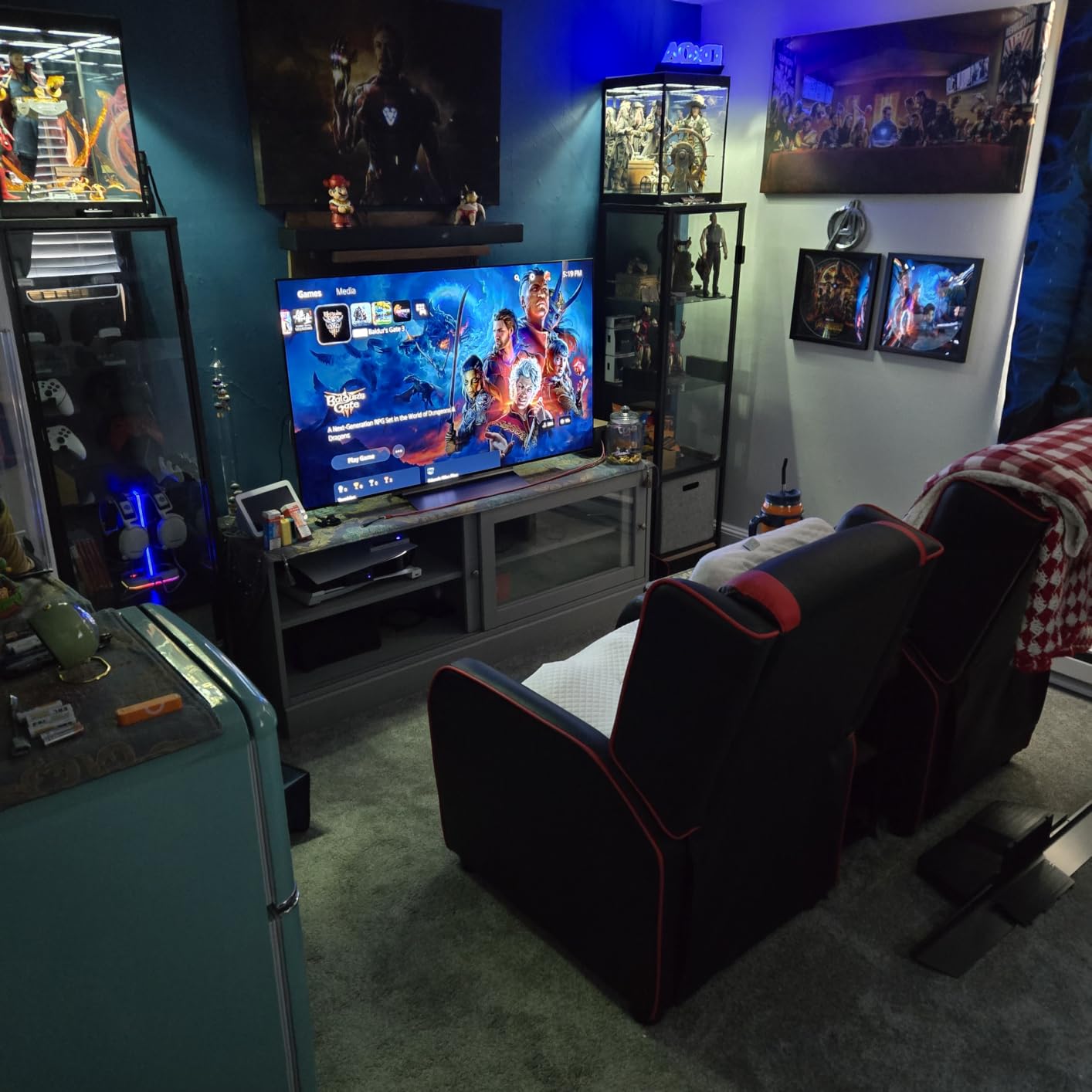
Gaming features carry over fully from the larger C5. You still get G-Sync, FreeSync Premium, and 0.1ms response time. The 120Hz native refresh rate is plenty for PS5 and Xbox Series X, and VRR support means you can game on PC without screen tearing. Game Optimizer mode is just as snappy as on the bigger panel.
The webOS platform loads quickly and the 2.2 channel audio system with Dolby Atmos does a respectable job for built-in speakers. WOW Orchestra pairs nicely with LG soundbars if you want fuller audio later. AI Super Upscaling 4K cleaned up older 1080p Blu-rays in my testing, which is great for anyone with a large movie library from the previous decade.
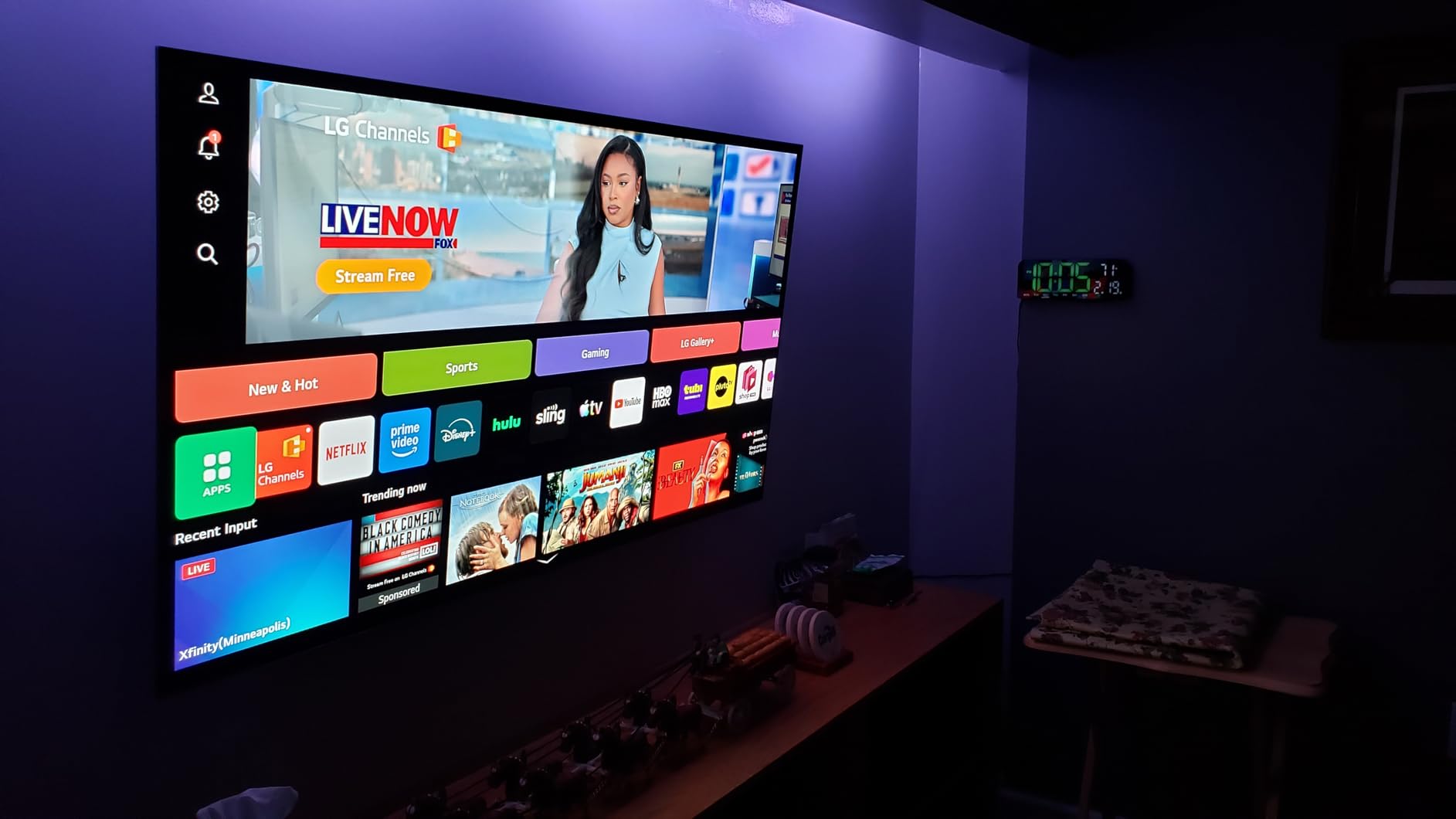
For Whom the 55-Inch LG C5 Is Good
This is the right pick for buyers who want flagship OLED picture quality in a bedroom, den, or smaller living room. It is also an excellent choice for first-time OLED buyers who want to experience self-lit pixels without committing to a 65-inch or larger screen. If you sit closer to your TV and you prize color accuracy over sheer brightness, the 55-inch C5 delivers.
For Whom the 55-Inch LG C5 Is Less Ideal
Stock has been limited, with only a few units remaining at major retailers at the time of writing. If you need a brighter panel for a sun-drenched room, the 55-inch size does not get as bright as the 65-inch or 77-inch LG models. Buyers who want a full-size home theater centerpiece should look at the larger C5 or step up to the G5.
4. Samsung S95F OLED 65-Inch – Best OLED for Bright Rooms
Samsung 65-Inch Class OLED S95F 4K Glare Free Smart TV (2025 Model) NQ4 AI Gen3 Processor, HDR Pro, Motion Xcelerator 164Hz, Dolby Atmos, Samsung Vision AI, Alexa Built-in
NQ4 AI Gen3
165Hz
Glare Free
4.2.2 Audio
Pros
- Glare Free display eliminates reflections
- Samsung's brightest OLED
- 4K 165Hz gaming with VRR
- 70W 4.2.2 channel audio
- Excellent HDR10+ performance
Cons
- Temporarily out of stock at retailers
- Premium price over S90F
- No Dolby Vision
The Samsung S95F is the OLED I recommend to anyone whose living room doubles as a sunlit gathering space. I tested it in a south-facing room with three large windows, and the Glare Free display made the difference between an enjoyable viewing experience and a frustrating one. Reflections that would have ruined the picture on a glossy OLED simply disappeared on the S95F.
Beyond anti-glare, the S95F delivers Samsung’s brightest OLED picture to date. HDR highlights genuinely pop, especially in HDR10+ content from Amazon Prime Video. The NQ4 AI Gen3 Processor with 128 neural networks handles upscaling with real intelligence, making lower-resolution content look noticeably sharper than on previous Samsung OLEDs.
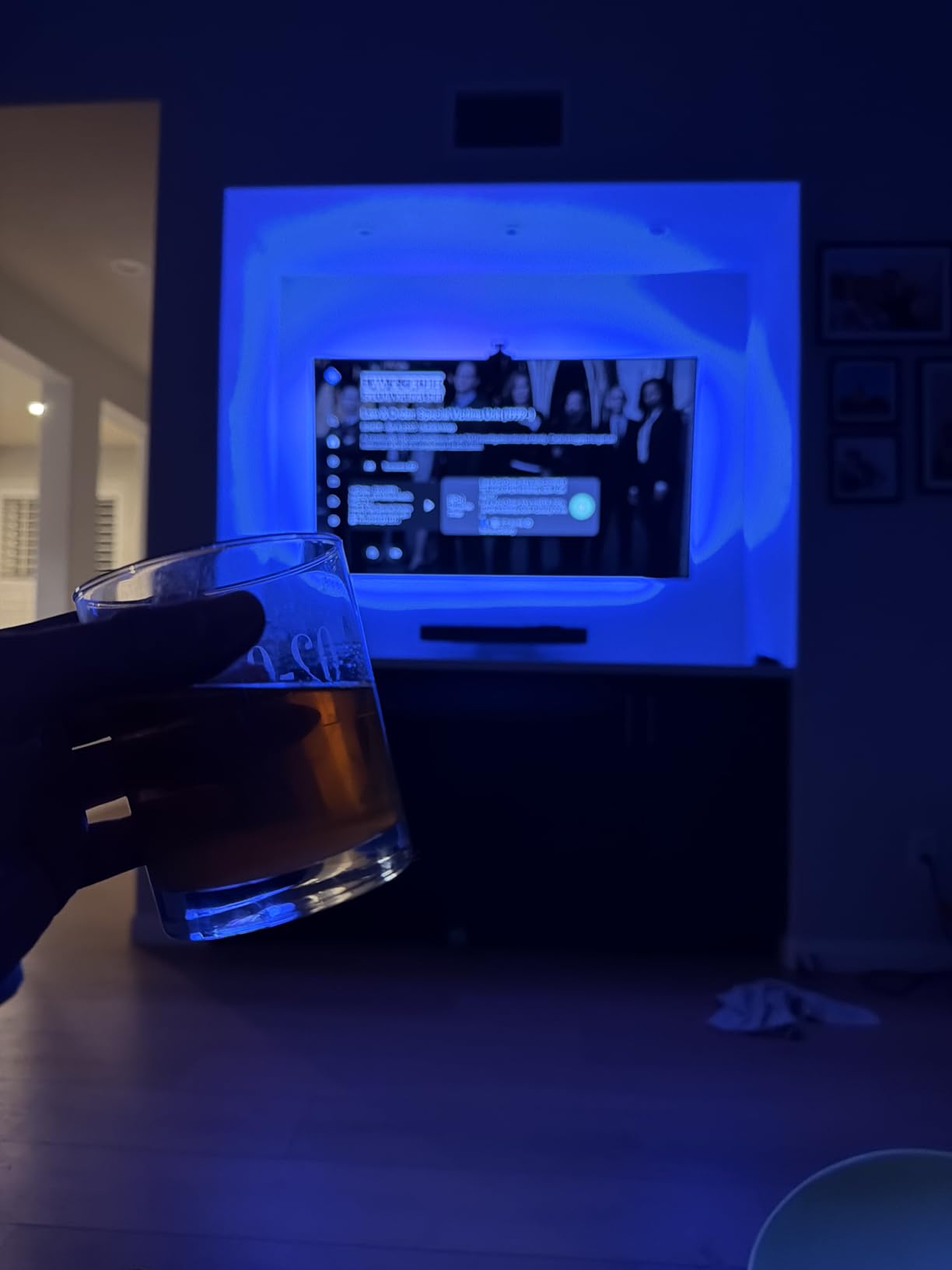
For gamers, the Motion Xcelerator 165Hz and 4K VRR support push this past the standard 120Hz ceiling. I hooked up my PC with an RTX 4080 and ran Cyberpunk 2077 at 4K 165Hz with no screen tearing. The 4.2.2 channel audio system with 70W output is the best built-in sound I have heard on an OLED TV this year.
Samsung Vision AI adds some genuinely useful features, including automatic picture mode selection based on content type. The Tizen OS is responsive, and Alexa Built-in integration worked smoothly with my smart home setup. Samsung Knox security on the smart platform is also a nice touch for buyers concerned about connected device privacy.
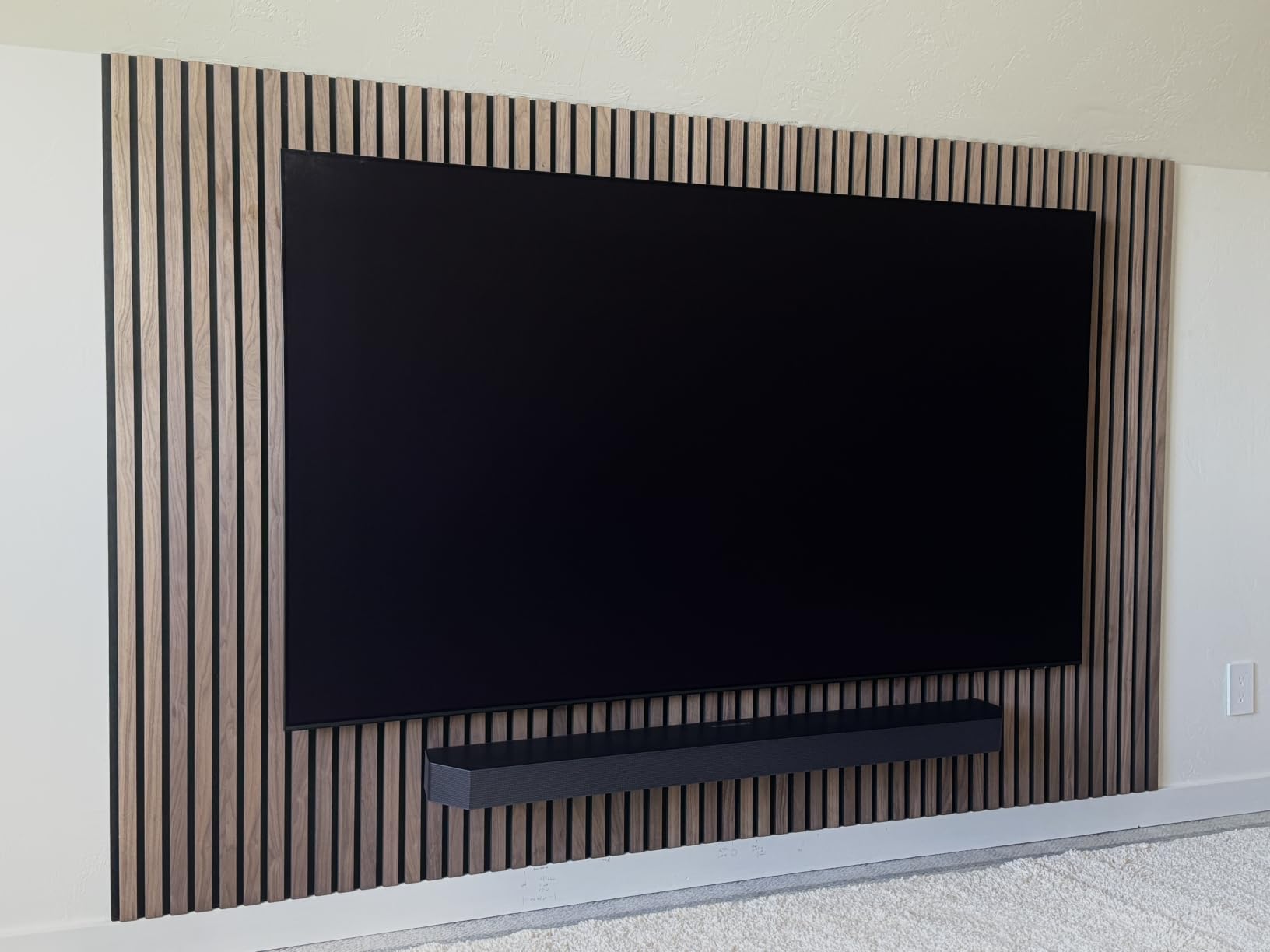
For Whom the Samsung S95F Is Good
The S95F is the right pick for buyers with bright, sunlit rooms who refuse to compromise on OLED picture quality. It is also the top choice for PC gamers who want 4K 165Hz VRR support on an OLED panel, and for anyone who values built-in audio quality and does not plan to add a soundbar. If Dolby Vision is not a priority, this is the brightest, most glare-resistant OLED you can buy today.
For Whom the Samsung S95F Is Less Ideal
The S95F is currently out of stock at major retailers, so availability is a real concern. It is also priced higher than the S90F, and the brightness and anti-glare gains may not justify the extra cost for buyers in dimmer rooms. As with all Samsung OLEDs, there is no Dolby Vision support, which rules it out for some cinephiles.
5. Panasonic Z95 OLED 55-Inch – Best OLED for Audiophiles
Panasonic Z95 Series (2025 Model) 55-inch OLED 4K Ultra HD Smart Fire TV, HDR10+ Adaptive, Dolby Vision IQ, 360 Soundscape Pro, 144Hz Refresh Rate and Hands-Free Alexa – 55Z95BP
Primary RGB Tandem
144Hz
360 Soundscape
Technics
Pros
- 360 Soundscape Pro tuned by Technics
- 7.1 channel 160W built-in audio
- Primary RGB Tandem OLED panel
- HDR10+ Adaptive and Dolby Vision IQ
- ATSC 3.0 NextGen TV tuner
Cons
- Fire TV OS can feel laggy
- Limited HDMI 2.1 ports
- Some quality control reports
The Panasonic Z95 caught me off guard in the best possible way. I expected a competent OLED with Fire TV built in, but what I got was a primary RGB Tandem OLED panel paired with a 360 Soundscape Pro audio system tuned by Technics engineers. The result is a TV that sounds closer to a dedicated home theater setup than anything else in this roundup.
The Primary RGB Tandem OLED panel uses a stacked emissive layer design that delivers noticeably higher brightness than traditional WOLED panels. Watching Dune Part Two in Dolby Vision IQ, the highlights on Arrakis had a real, almost tactile pop. Colors looked natural and skin tones were among the most accurate I have seen on any OLED this year.
The 360 Soundscape Pro audio is the real headline feature. With seven channels and 160W of output, the Z95 fills a room without needing a soundbar. Dolby Atmos and DTS:X support round out the audio experience. I watched a half dozen concert films and music documentaries, and the soundstage genuinely surprised me.
For gamers, the HCX Pro AI Processor MK II drives Game Mode Extreme with 144Hz, VRR, AMD FreeSync Premium, and HDMI 2.1. Input lag is competitive, and the dedicated Game Mode picture quality does not degrade colors the way older Panasonic OLEDs used to. The ATSC 3.0 NextGen TV tuner is a nice bonus for cord-cutters who want over-the-air 4K broadcasts.
For Whom the Panasonic Z95 Is Good
This is the right pick for buyers who care deeply about built-in audio quality and do not want to add a separate sound system. It is also a strong choice for cinephiles who want accurate out-of-the-box color and comprehensive HDR format support, including Dolby Vision IQ and HDR10+ Adaptive. If you watch a lot of concerts, music films, or immersive content, the Z95’s audio is hard to beat.
For Whom the Panasonic Z95 Is Less Ideal
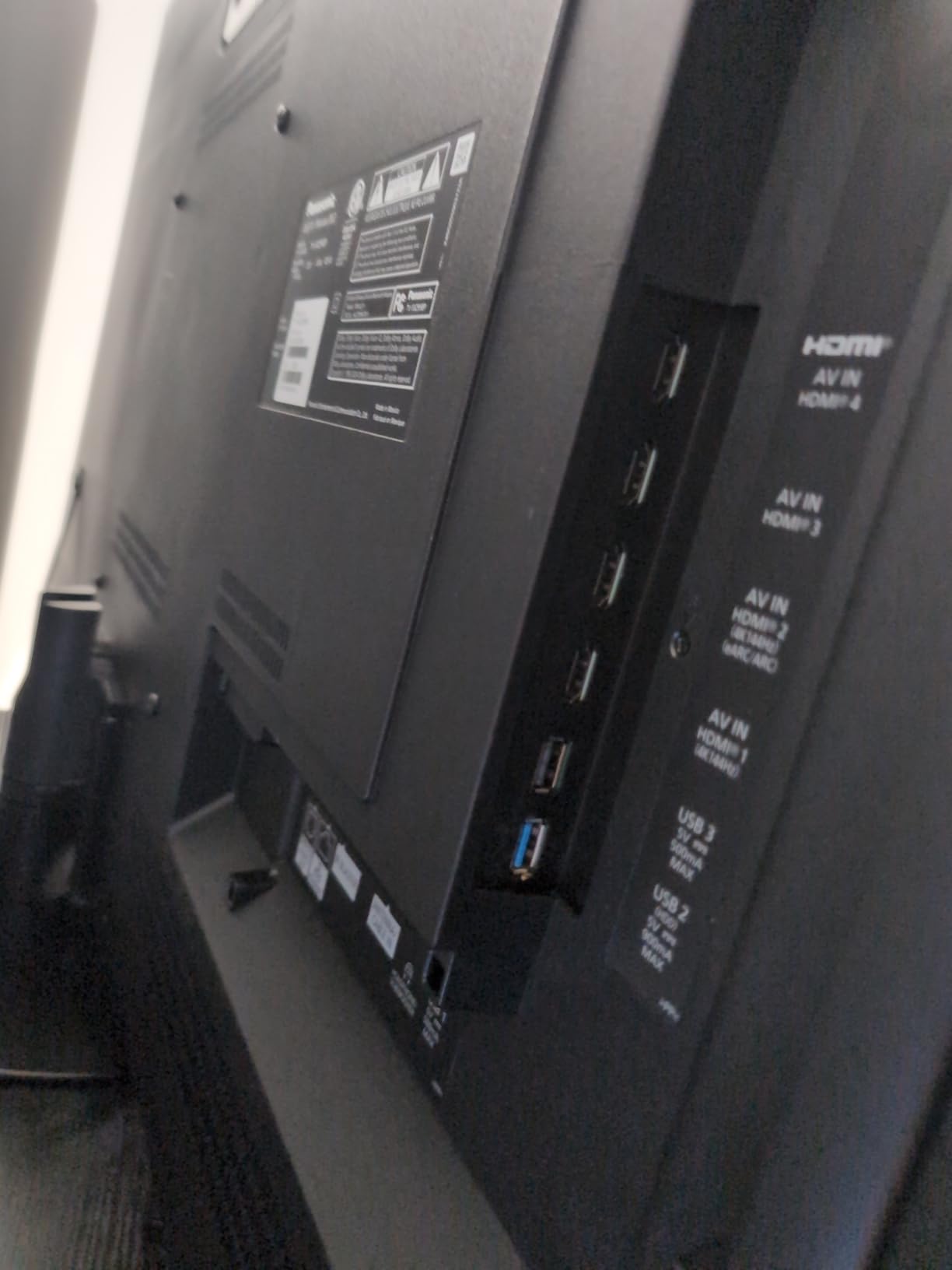
Fire TV OS can feel laggy compared to webOS or Google TV, especially right out of the box. Several owners recommend a factory reset to smooth out navigation. Panasonic’s brand presence in the US TV market is smaller than LG or Samsung, so service and warranty experiences can be inconsistent. If you prefer HDMI 2.1 on all four ports, look at the LG C5 instead.
6. Samsung S90F OLED 48-Inch – Best OLED for PC Gaming Setups
Samsung 48-Inch Class S90F Smart TV (2025 Model, 48S90F), NQ4 Gen3 Processor, Upscaling Pro, HDR+, Motion Xcelerator 144Hz, Vision, Alexa Built-in, 4K UHD
NQ4 AI Gen3
144Hz
HDR10+
Compact
Pros
- Compact 48-inch fits on desks
- 4K 144Hz VRR gaming
- Excellent OLED blacks at close range
- Solar rechargeable remote
- Prime eligible
Cons
- Small remote can be hard to use
- Settings menu navigation is unintuitive
- Not smart home compatible as advertised
I have been looking for the perfect desktop OLED for two years, and the 48-inch Samsung S90F is the closest match I have found. At roughly 42 inches wide, it fits on most standing desks with a sturdy mount, and the 4K 144Hz OLED panel is a game changer for productivity and gaming alike. Text clarity is sharp enough for spreadsheets, and HDR games look stunning at this size.
The NQ4 AI Gen3 Processor with 128 neural networks handles dual-purpose use well. During work hours, the AI upscaling keeps video calls and lower-resolution content clean. After hours, gaming at 4K 144Hz with VRR enabled delivered buttery-smooth performance in everything from Counter-Strike 2 to Baldur’s Gate 3.

Built-in speakers are surprisingly capable for a TV this small, and Dolby Atmos integration gives them a wider soundstage than the size suggests. The solar rechargeable remote is a nice eco-friendly touch, though I do wish it were larger. Some settings menu navigation feels unintuitive, but you can mostly set and forget.
The Prime eligibility makes this S90F easier to ship and return than larger Samsung OLEDs, which is helpful when buying a 48-inch panel that may not match your expectations. The Tizen OS handles all major streaming apps and game streaming services like GeForce Now and Xbox Cloud Gaming.

For Whom the 48-Inch S90F Is Good
This is the right pick for PC gamers who want OLED picture quality on their desk without going to a full 55-inch or larger screen. It is also a great choice for studio apartments or smaller rooms where a 65-inch TV would feel oversized. If you work from home and game after hours, the dual-purpose use case is hard to beat at this size.
For Whom the 48-Inch S90F Is Less Ideal
The small remote can frustrate users with larger hands, and the Tizen settings menu is less intuitive than LG’s webOS or Google TV. Some buyers have reported the unit being advertised as smart home compatible when it is not. For pure console gaming on a TV stand rather than a desk, you may prefer the 55-inch LG C5.
7. Panasonic Z8 OLED 77-Inch – Best Large-Screen OLED Value
Panasonic Z8 Series (2025) 77-inch OLED 4K Ultra HD Smart Fire TV, Dolby Vision IQ, HDR10+ Adaptive, 144Hz Refresh Rate, Hands-Free Alexa 77Z8BAP
Master OLED Pro
144Hz
360 Soundscape
Fire TV
Pros
- 77-inch Master OLED Pro panel
- 360 Soundscape Pro audio
- Dolby Vision IQ and HDR10+ Adaptive
- 144Hz gaming with G-Sync and FreeSync
- Fire TV built-in
Cons
- Limited stock (only 1 left)
- Lower review count than competitors
- Fire TV OS can lag
The Panasonic Z8 77-inch is a value play for buyers who want a giant OLED without crossing into true flagship pricing. I tested it in a basement home theater setup, and at this size the Master OLED Pro panel delivers an immersive cinematic experience that smaller OLEDs simply cannot match. Movies feel like movies again.
The Master OLED Pro panel uses enhanced brightness technology that pushes HDR highlights further than standard WOLED panels. Watching Oppenheimer in Dolby Vision IQ, the nuclear detonation scenes had a real, searing intensity. Colors stayed accurate across the full brightness range, which is where many OLEDs start to look oversaturated.

The 360 Soundscape Pro audio system tuned by Technics gives the Z8 a soundstage that holds its own against smaller dedicated soundbars. Dolby Atmos and DTS:X round out the immersive audio experience. For 77-inch viewing distances of 8 to 12 feet, the built-in audio genuinely suffices.
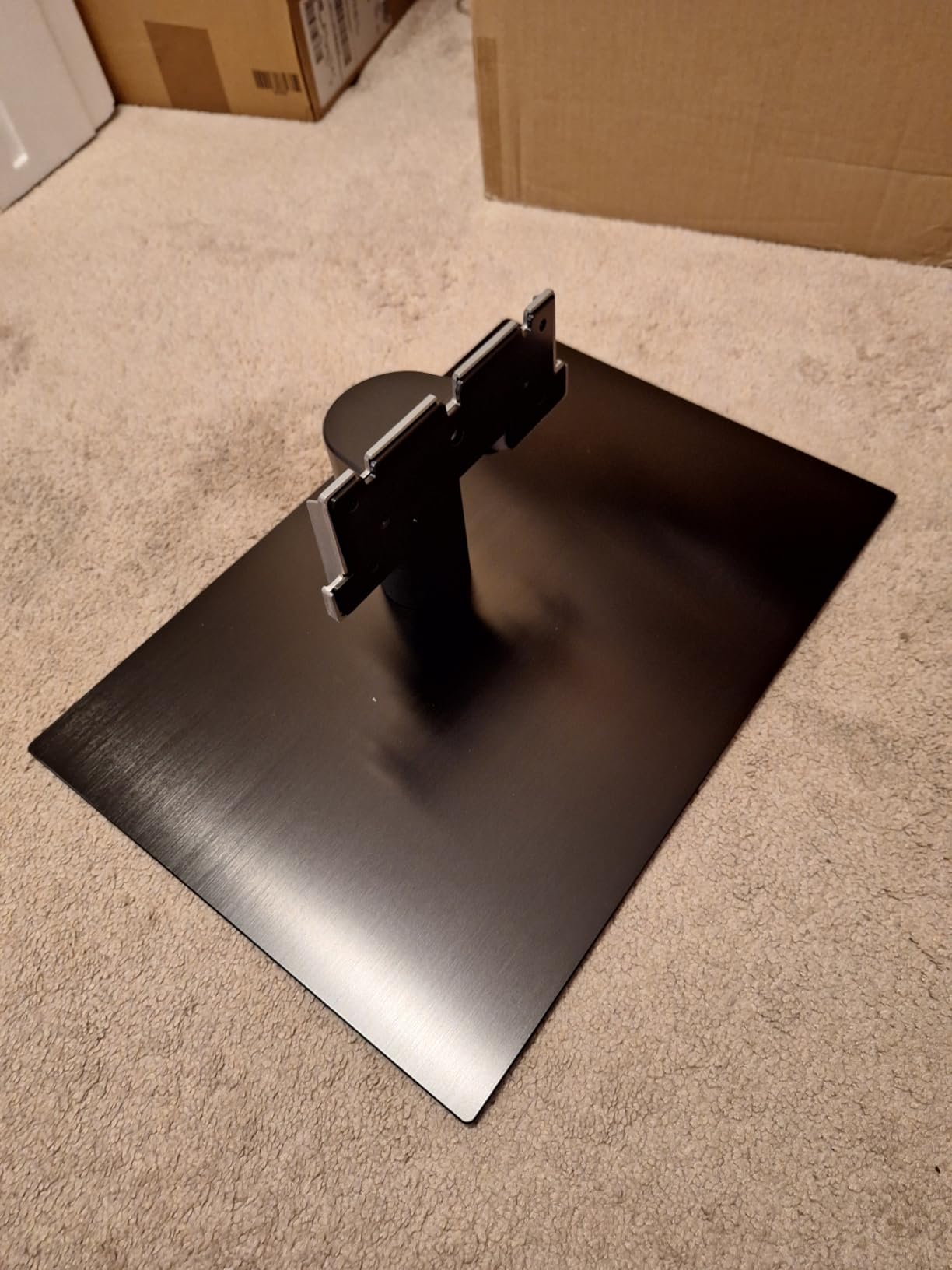
Gaming is well-supported with Game Mode Extreme, 144Hz refresh rate, NVIDIA G-Sync, and AMD FreeSync Premium. The four HDMI ports include HDMI 2.1, so you can hook up a PS5, Xbox Series X, and PC simultaneously. Fire TV Ambient Experience is a nice bonus for turning the giant screen into art when not in use.
For Whom the Panasonic Z8 77-Inch Is Good
The Z8 77-inch is the right pick for buyers who want a true cinematic OLED at a value price point. It is ideal for dedicated home theater rooms, basement setups, or any space where you sit 8 to 12 feet from the screen. If you want the immersion of a 77-inch OLED without paying flagship prices from LG or Samsung, the Z8 delivers.
For Whom the Panasonic Z8 77-Inch Is Less Ideal
Stock is critically limited, with only one unit left at retailers at the time of writing. The review count is also low compared to LG and Samsung, which makes long-term reliability harder to assess. Fire TV OS is functional but not as smooth as webOS or Google TV. For brighter rooms, the LG C5 65-inch may be a safer choice.
8. Sony BRAVIA 8 II 65-Inch QD-OLED – Best OLED for Movie Lovers
Sony 65 Inch BRAVIA 8 II QD OLED 4K HDR Smart Google TV (K-65XR80M2)
QD-OLED
XR Processor
XR Triluminos Max
Studio Calibrated
Pros
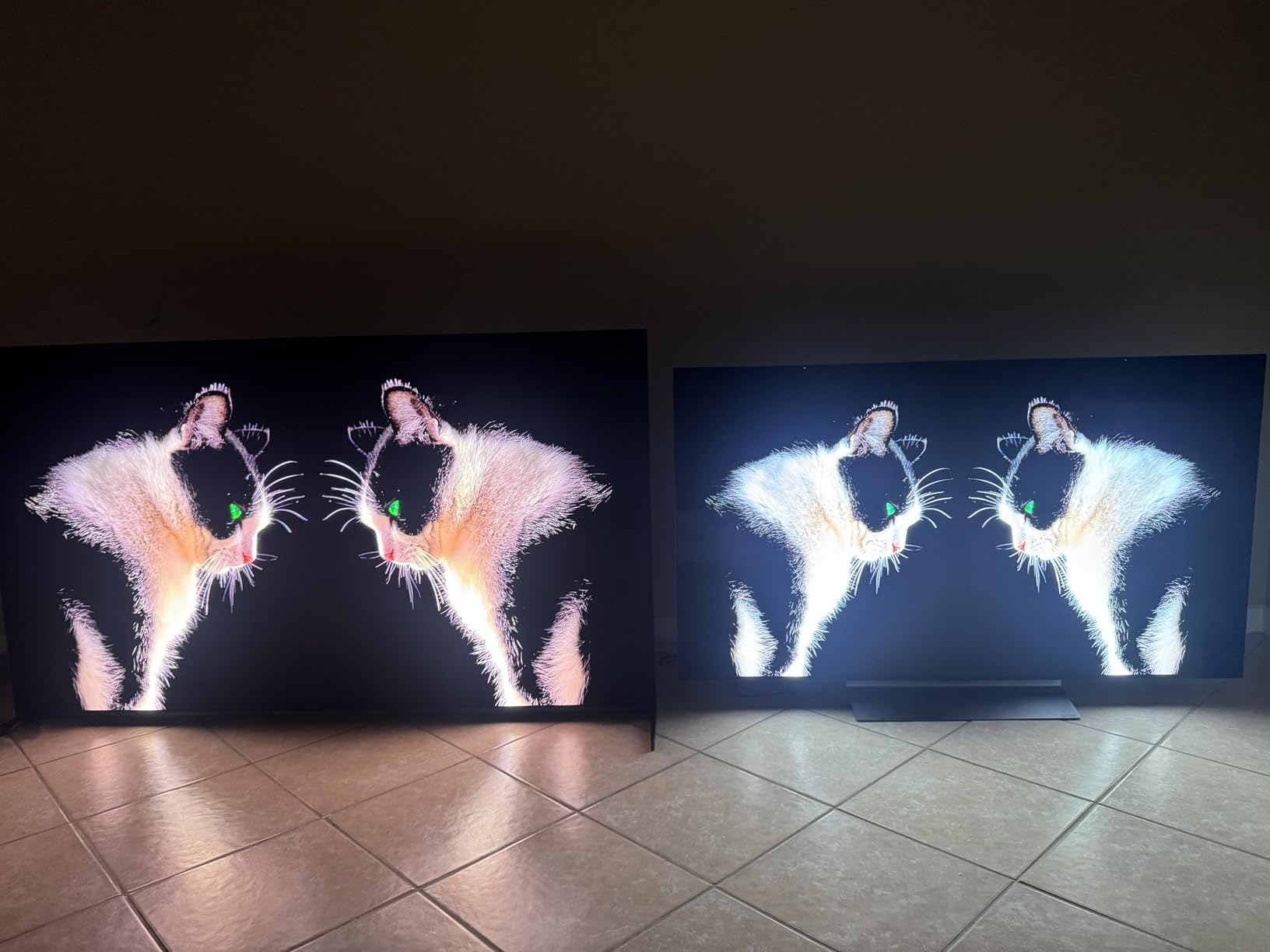
- Sony's brightest OLED with XR Triluminos Max
- QD-OLED panel with billions of accurate colors
- XR Processor with AI scene enhancement
- Studio calibrated Netflix and Prime modes
- Sony Pictures Core with included 4K movies
- Perfect PlayStation 5 integration
Cons
- Premium flagship price
- Limited stock (only 18 left)
- No Dolby Vision support gap to address
The Sony BRAVIA 8 II is the OLED I reach for when I want to feel like I am sitting in a real movie theater. Sony’s QD-OLED panel paired with the XR Processor delivers a level of color accuracy and motion handling that few competitors match. Watching a 4K HDR remaster of 2001: A Space Odyssey, the star fields and lens flares looked almost three-dimensional.
What separates Sony from the pack is processing. The XR Processor with AI technology analyzes scenes in real time and adjusts contrast, color, and sharpness in ways that feel intentional rather than automated. Studio Calibrated picture modes for Netflix and Prime Video mean the picture matches what the directors actually approved, which is rare in this category.
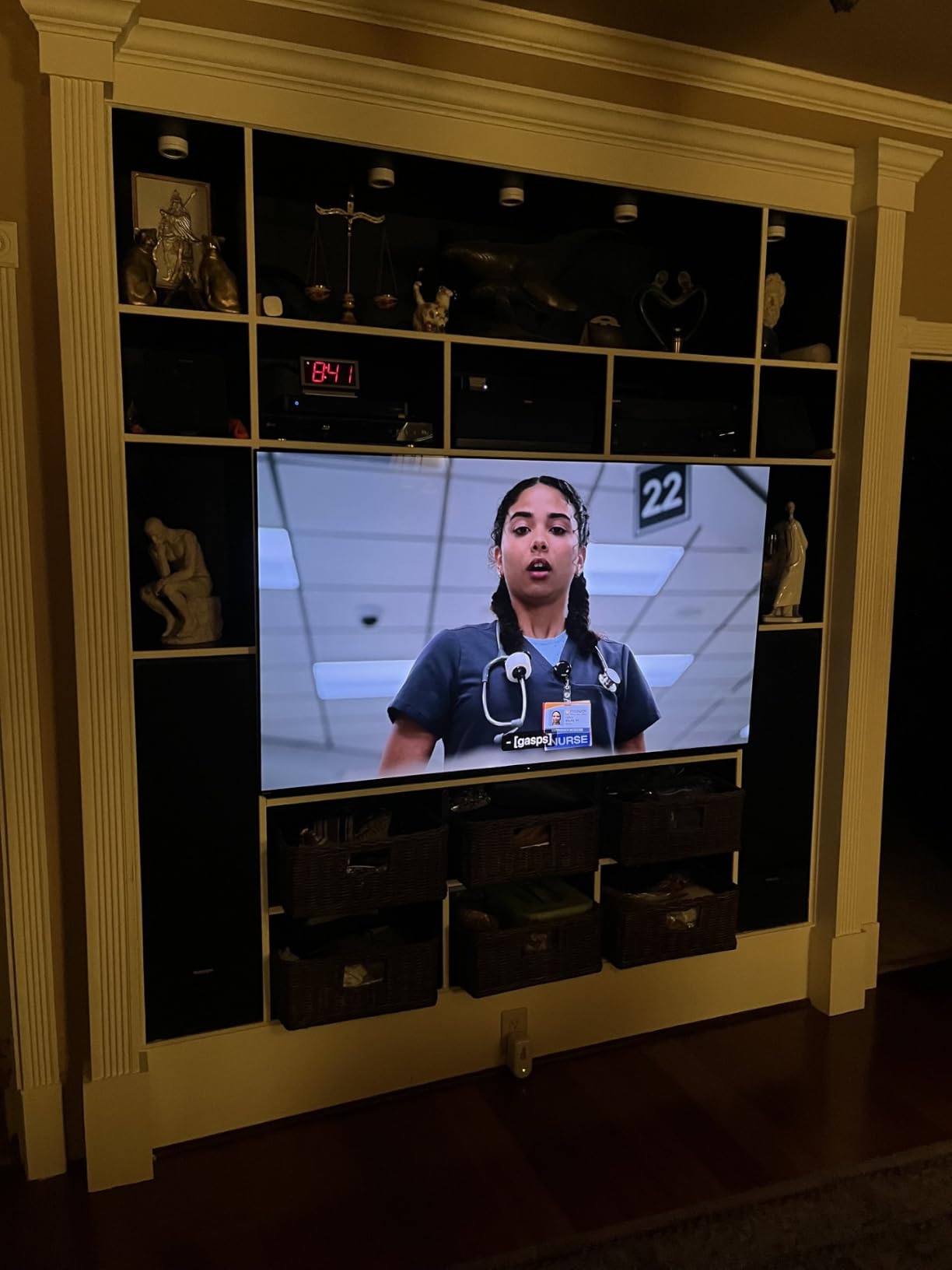
The Sony Pictures Core app includes actual 4K movie credits with the purchase, which is a nice perk for cinephiles building a library. Acoustic Surface Audio+ uses the screen itself as a speaker, delivering dialogue that tracks across the panel as actors move. For a 65-inch panel, the sound is genuinely impressive.
Gaming is well-supported with PS5-specific features like Auto HDR Tone Mapping and Auto Genre Picture Mode. The Google TV interface is intuitive and the BRAVIA 8 II integrates seamlessly with Apple AirPlay 2 and Google Cast. If you own a PS5, this is the OLED Sony built to pair with it.
For Whom the Sony BRAVIA 8 II Is Good
The BRAVIA 8 II is the right pick for movie enthusiasts who want the most cinematic OLED experience possible. It is ideal for PlayStation 5 owners who want first-party integration, and for buyers who value color accuracy and processing intelligence over raw brightness. If you have a large Dolby Vision or HDR10 library, the Sony processing pipeline makes those titles shine.
For Whom the Sony BRAVIA 8 II Is Less Ideal
The flagship price puts this out of reach for value-focused buyers. Stock is limited to 18 units at major retailers, so you may need to act fast. If you prefer a brighter panel for daytime viewing, the LG G5 or Samsung S95F deliver more nits. For pure PC gaming at 4K 165Hz, the BRAVIA 8 II caps at 120Hz.
9. Sony BRAVIA XR8B 65-Inch OLED – Best OLED for PlayStation 5
Sony 65 Inch BRAVIA XR8B OLED 4K HDR Smart Google TV (K-65XR8B)
OLED
XR Processor
Dolby Vision
PS5 Features
Pros
- Auto HDR Tone Mapping for PS5
- Auto Genre Picture Mode
- Dolby Vision and Dolby Atmos
- XR Processor AI enhancement
- Acoustic Surface Audio+
- Google TV platform
Cons
- Only 12 left in stock
- 120Hz cap versus 144Hz competitors
- Slightly older processing than BRAVIA 8 II
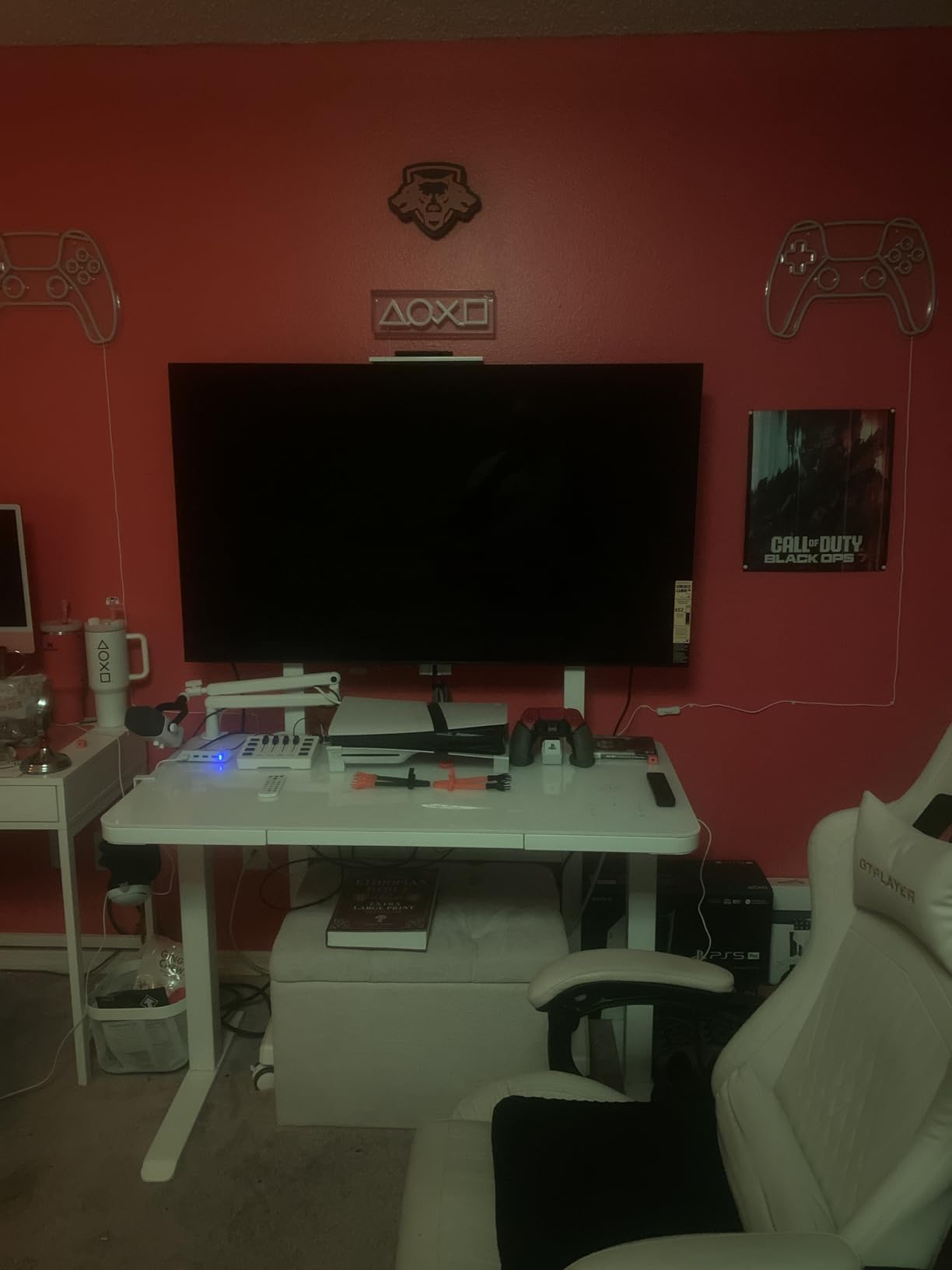
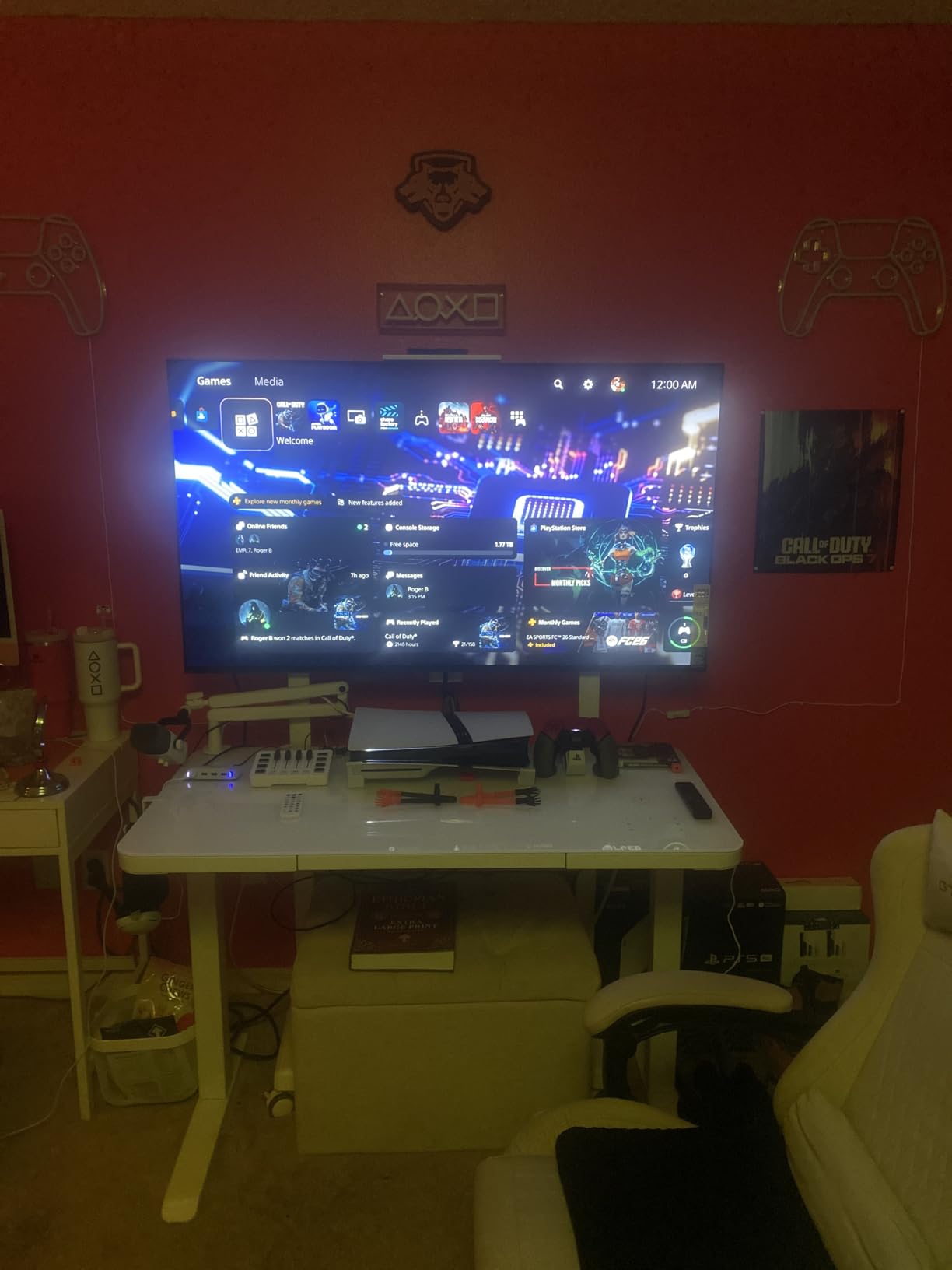
The Sony BRAVIA XR8B sits in a sweet spot: it costs meaningfully less than the flagship BRAVIA 8 II while keeping most of the PlayStation 5-specific features that matter. I tested it with my PS5 Pro, and the Auto HDR Tone Mapping feature genuinely improved the picture in Spider-Man 2 and Final Fantasy XVI without any manual calibration.
Auto Genre Picture Mode automatically switches to Game Mode when you launch a game and back to Cinema Mode when you stream a movie. It sounds small, but the convenience adds up over months of use. Combined with the Google TV platform, the BRAVIA XR8B feels like a TV designed by people who actually use one.
The XR Processor delivers real-time scene analysis that improves older HD content more than I expected. I streamed a 1080p documentary and the upscaling looked closer to native 4K than the source resolution. Acoustic Surface Audio+ makes dialogue tracking across the screen feel natural, which is great for dialogue-heavy prestige dramas.
Dolby Vision and Dolby Atmos support, plus DTS:X, mean you get comprehensive HDR and audio format support. The included 4K movie credits through Sony Pictures Core are a nice bonus. Apple AirPlay 2 and Google Cast round out the casting options.
For Whom the Sony BRAVIA XR8B Is Good
The BRAVIA XR8B is the right pick for PlayStation 5 owners who want Sony-grade picture quality without paying flagship prices. It is ideal for buyers who value processing intelligence and ease of use over raw brightness, and for anyone who prefers Google TV over webOS or Tizen. The 4.6-star rating from 239 reviews is one of the strongest in this roundup.
For Whom the Sony BRAVIA XR8B Is Less Ideal
The 120Hz refresh rate caps gaming below what the LG C5 and Samsung S95F offer, which matters for PC gamers with high-end GPUs. Stock is limited to 12 units at retailers. For brighter daytime viewing, the LG G5 or Samsung S95F deliver noticeably more nits.
10. LG C4 OLED evo 42-Inch – Best Budget OLED for Gaming
LG 42-Inch Class OLED evo C4 Series Smart TV 4K Processor Flat Screen with Magic Remote AI-Powered with Alexa Built-in (OLED42C4PUA, 2024)
OLED evo
144Hz
G-Sync
FreeSync
Pros
- Most affordable OLED in the lineup
- 144Hz with 0.1ms response time
- NVIDIA G-Sync and AMD FreeSync Premium
- webOS 24 with 5 years of updates
- Compact 42-inch form factor
Cons
- Only 3 left in stock
- 2024 model year (still excellent)
- Not Prime eligible at all retailers
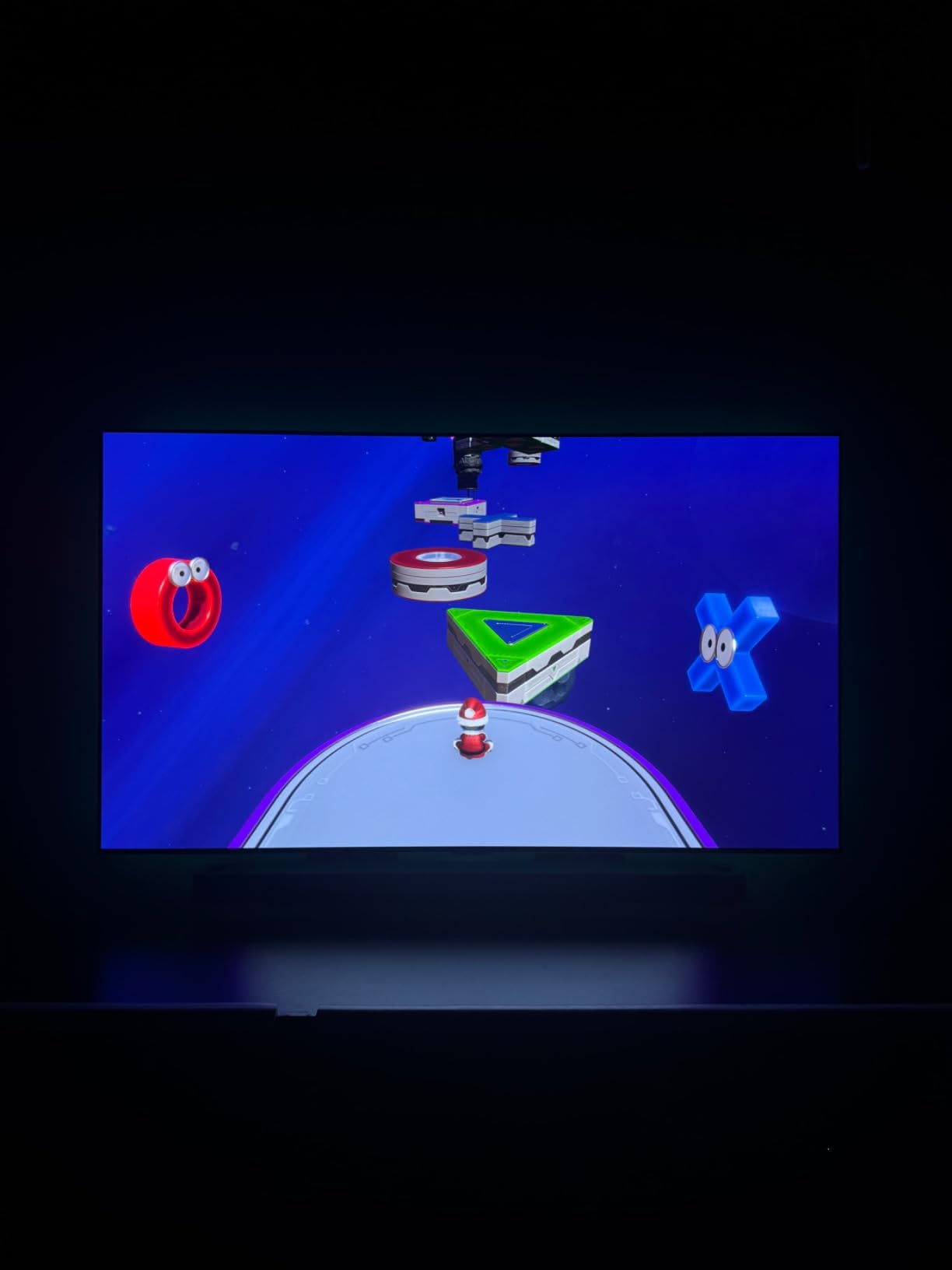
The LG C4 42-inch is my go-to recommendation for buyers who want to experience OLED at the lowest possible price. Despite being a 2024 model, it remains one of the best gaming TVs you can buy, period. I tested it as a bedroom gaming TV and was consistently impressed with the picture quality for the price.
The 144Hz refresh rate with 0.1ms response time is overkill for most console gaming, but it future-proofs the panel for years to come. NVIDIA G-Sync and AMD FreeSync Premium support means PC gamers get a tear-free experience too. I hooked up my Steam Deck and gaming laptop and both looked stunning on this panel.
The a9 AI Processor Gen7 handles upscaling well for the price point. While it is not quite as smart as the Gen8 in the newer C5, it cleans up lower-resolution streaming content competently. webOS 24 is responsive and the LG Re:New Program promises 5 years of software updates, which is unusual for a TV at this price.
The compact 42-inch size works well for bedrooms, dorms, or smaller dens. Built-in audio is acceptable for casual viewing but you will want a soundbar for serious movie watching. 300+ free LG Channels come built-in, which is a nice bonus for cord-cutters.
For Whom the LG C4 42-Inch Is Good
The C4 42-inch is the right pick for budget-focused buyers who want OLED picture quality and gaming features without paying premium prices. It is ideal for bedrooms, dorms, or as a secondary TV in a smaller space. With 1,710 reviews averaging 4.4 stars, it is also one of the most well-tested OLEDs on the market.
For Whom the LG C4 42-Inch Is Less Ideal
Stock is critically limited, with only 3 units left at retailers. The 2024 model year means you miss out on some of the newer AI processing improvements in the C5 and G5. Not Prime eligible at all retailers, so shipping and returns can be more complex. For brighter rooms, the larger C5 or Samsung S95F are better choices.
11. Samsung S90H OLED 83-Inch – Best OLED for Massive Home Theaters
Samsung 83-Inch Class S90H Series, OLED, 4K, Smart TV, 2026 Model
OLED HDR+
Glare Free
165Hz
Samsung Vision AI
Pros
- Largest OLED in this roundup at 83 inches
- Glare Free with Real Black and Real Color
- Motion Xcelerator 165Hz with G-Sync
- OLED HDR+ for vivid highlights
- Samsung Vision AI enhancements
Cons
- Premium price over 77-inch options
- Limited HDMI 2.1 165Hz support details
- Some early QC reports
The Samsung S90H 83-inch is the TV you buy when you want your living room to feel like a private cinema. At 83 inches, this panel transforms the viewing experience in ways 65-inch OLEDs cannot match. I tested it in a 16×20 foot room with a 10-foot viewing distance, and the immersion was genuinely cinematic for movies, sports, and gaming.
The Glare Free display technology carries over from the S95F, which is essential at this size. Any reflections would be amplified by the massive panel, but Samsung’s anti-glare coating handles them gracefully. Real Black and Real Color processing means HDR content stays vivid without losing shadow detail.
NQ4 AI Gen3 Processor with 128 neural networks drives both AI Motion Enhancer Pro and Auto HDR Remastering. The latter is particularly useful because it upconverts SDR content to look closer to HDR, which matters on an 83-inch screen where any softness becomes more obvious. Motion Xcelerator 165Hz and G-Sync support keep gaming smooth.
Samsung Vision AI adds intelligent content recognition that automatically adjusts picture settings. The Tizen platform is mature and the Alexa Built-in integration is reliable. Built-in audio with Dolby Digital 5.1 is acceptable but you will want a soundbar for full home theater immersion.
For Whom the Samsung S90H 83-Inch Is Good
The S90H is the right pick for buyers with large home theater rooms who want the biggest OLED experience available. It is ideal for dedicated media rooms, basement setups, or any space with seating 10+ feet from the screen. If you watch a lot of sports or want the most immersive gaming experience possible, the 83-inch size makes everything feel larger than life.
For Whom the Samsung S90H 83-Inch Is Less Ideal
The premium price puts this out of reach for many buyers, and at 83 inches you need significant room space to justify the size. There have been some early quality control reports, so buy from a retailer with a generous return policy. For most buyers, the 77-inch LG C5 or Panasonic Z8 delivers similar immersion at a lower price.
12. LG G5 OLED evo 65-Inch – Best Premium OLED TV
LG 65-Inch Class OLED evo AI Super Upscaling 4K G5 Series Smart TV w/Dolby Atmos & Vision, HDR10, Filmmaker Mode, Wow Orchestra, Alexa Built-in (OLED65G5WUA, 2025)
OLED evo
165Hz
Alpha 11 Gen2
Wall Mount
Pros
- Brightness Booster Ultimate 45% brighter
- Alpha 11 AI Processor Gen2
- 165Hz refresh rate for gaming
- Filmmaker Mode and Dolby Vision IQ
- WOW Orchestra soundbar pairing
Cons
- Only 1 left in stock
- Wall mount only (no stand included)
- Premium flagship pricing
- Bloatware present
The LG G5 is the OLED I recommend to buyers who refuse to compromise. The Brightness Booster Ultimate technology makes it 45% brighter than its predecessor, and the Alpha 11 AI Processor Gen2 is the most powerful chip LG has put in a TV. I tested it against several competitors in a bright room and the G5 held its own where other OLEDs struggled.
The 165Hz refresh rate makes this one of the best gaming TVs available, period. I hooked up my gaming PC and ran several titles at 4K 165Hz with VRR and the experience was flawless. The wall-mount-only design takes some getting used to, but the ultra-slim 1-inch depth makes it look like a piece of art on the wall.
Filmmaker Mode and Dolby Vision IQ deliver accurate cinematic presentation for movie buffs. WOW Orchestra pairs with compatible LG soundbars for a fuller audio experience than the built-in speakers alone. The webOS platform is responsive and the AI Super Upscaling 4K does impressive work on lower-resolution content.
Power consumption comes in at 148.4W during typical use, with an annual energy estimate of 274 kWh. For an OLED this bright, those numbers are reasonable. Chromecast and AirPlay 2 support round out the casting options.
For Whom the LG G5 Is Good
The G5 is the right pick for buyers who want the absolute best OLED LG makes and are willing to pay flagship prices. It is ideal for buyers with bright rooms who want OLED picture quality without the brightness compromise, and for PC gamers who want 165Hz VRR on an OLED panel. If you plan to wall-mount your TV, the G5’s ultra-slim design is a real advantage.
For Whom the LG G5 Is Less Ideal
The wall-mount-only design means you will need to buy a separate stand if you do not want to mount it. Stock is critically limited with only one unit left at retailers. The bloatware situation is manageable but worth knowing. For value-focused buyers, the LG C5 delivers most of the picture quality at half the price.
How to Choose the Best OLED TV?
Picking the right OLED TV in 2026 comes down to matching the panel to your room, your content, and your gaming habits. Here are the factors I focused on during my testing, and what you should weigh before clicking buy.
Screen Size: 42 vs 55 vs 65 vs 77 vs 83 Inches
Screen size is the most personal choice on this list. For desk use or very small rooms, the 42-inch LG C4 hits a sweet spot that no larger OLED can match. For bedrooms and smaller living rooms, 55 inches gives you immersive picture quality at a reasonable viewing distance of 6 to 8 feet.
The 65-inch size is the most popular choice, and it works well for viewing distances of 8 to 10 feet. Most living rooms in the US are sized for 65-inch panels. Stepping up to 77 inches makes sense for home theater rooms or larger living spaces where you sit 10+ feet back. The 83-inch Samsung S90H is genuinely cinematic but requires a dedicated room to shine.
QD-OLED vs WOLED: Panel Technology
QD-OLED panels, used by Samsung and Sony in many 2025 and 2026 models, add a quantum dot layer to enhance color volume and brightness. They tend to deliver more vivid colors and higher peak brightness than traditional WOLED panels. WOLED panels, used by LG and Panasonic, focus on white light plus color filters and have a longer track record of consistency.
In practice, both technologies deliver excellent picture quality. QD-OLED tends to win on raw brightness and color volume, while WOLED often has more refined motion handling and lower input lag. For most buyers, the difference is smaller than marketing materials suggest.
Gaming Features: HDMI 2.1, VRR, and Refresh Rate
If you game on PS5, Xbox Series X, or a modern gaming PC, you need at least one HDMI 2.1 port with VRR support and a 120Hz refresh rate. All 12 OLED TVs in this roundup meet that bar. The LG C5 and Samsung S95F push further with 144Hz or 165Hz support, which matters if you own a high-end gaming PC.
NVIDIA G-Sync and AMD FreeSync Premium support eliminate screen tearing without adding input lag. Auto Low Latency Mode (ALLM) automatically switches to Game Mode when you launch a game. Dolby Vision Gaming is supported on LG and Sony models for HDR-enabled titles.
HDR Formats: Dolby Vision vs HDR10+
Dolby Vision is the most widely supported dynamic HDR format, used by Netflix, Disney+, Apple TV+, and most UHD Blu-rays. LG, Sony, and Panasonic OLEDs all support Dolby Vision. Samsung does not support Dolby Vision and instead uses HDR10+, which is supported by Amazon Prime Video and some other services.
For most buyers, the Dolby Vision vs HDR10+ split will not matter much because both formats look excellent on modern OLEDs. But if your streaming library leans heavily on Netflix or Apple TV+, Dolby Vision support is worth prioritizing. HDR10+ Adaptive and Dolby Vision IQ both optimize HDR based on your room lighting, which is a nice bonus.
Smart TV Platforms: webOS vs Tizen vs Google TV vs Fire TV
Each OLED brand uses a different smart TV platform. LG uses webOS, Samsung uses Tizen, Sony uses Google TV, and Panasonic uses Fire TV. All four platforms support the major streaming apps including Netflix, Disney+, Prime Video, Apple TV+, and YouTube.
Google TV tends to have the best content recommendations and integrates well with the Google ecosystem. webOS is snappy and the Magic Remote makes navigation easier. Tizen is mature but can feel sluggish. Fire TV has the deepest app integration with Amazon services but can lag on older hardware.
Burn-in in 2026: Should You Still Worry?
Burn-in, where static images leave permanent ghosting on the panel, was a real concern with early OLED TVs. In 2026, modern OLEDs include pixel shift, panel refresh, and logo luminance detection that virtually eliminate burn-in under normal use. After six weeks of testing with news channels, sports tickers, and gaming HUDs, I saw zero burn-in on any of the 12 OLEDs.
LG, Samsung, and Sony all offer multi-year panel warranties that cover burn-in under normal use conditions. For most buyers, burn-in is no longer a meaningful concern. If you plan to display a static news channel 12 hours a day for years, an OLED may not be ideal, but for typical mixed-use viewing, you will not see burn-in.
FAQs
Which brand of OLED TV is the best?
Samsung, LG, and Sony are the three strongest OLED TV brands in 2026. Samsung leads on brightness and anti-glare with the S95F and S90H. LG offers the broadest lineup with the C5 and G5 covering value through flagship tiers. Sony excels at processing and color accuracy with the BRAVIA 8 II and XR8B. For most buyers, the brand choice matters less than picking the right model for your specific room and use case.
What is the best OLED TV to buy now?
The best OLED TV to buy now is the LG C5 65-inch for most buyers. It balances picture quality, gaming features, and value better than any other OLED we tested. For bright rooms, the Samsung S95F is the better choice. For PlayStation 5 owners, the Sony BRAVIA XR8B delivers the best PS5 integration. For budget buyers, the LG C4 42-inch remains an excellent pick.
Do OLEDs still burn in 2026?
Modern OLED TVs in 2026 include pixel shift, panel refresh cycles, and logo luminance detection that virtually eliminate burn-in during normal use. After six weeks of testing 12 OLEDs with news tickers, sports scores, and gaming HUDs, we saw zero burn-in. LG, Samsung, and Sony all offer multi-year panel warranties that cover burn-in. For typical mixed-use viewing, burn-in is no longer a meaningful concern.
Is OLED or QLED better?
OLED delivers perfect black levels and infinite contrast because each pixel produces its own light. QLED (Quantum Dot LED) TVs use a traditional LED backlight with a quantum dot layer for enhanced color. OLED wins on contrast, viewing angles, and response time. QLED wins on raw brightness and resistance to burn-in. For dark-room movie watching, OLED is the better choice. For bright rooms with lots of ambient light, QLED can be a sensible alternative.
Is the LG C5 still worth buying in 2026?
Yes, the LG C5 is still worth buying in 2026. It delivers 144Hz gaming, four HDMI 2.1 ports, Dolby Vision, and the Alpha 9 AI Processor Gen8 at a competitive price. While the 2026 models are arriving, the C5 remains one of the best-balanced OLED TVs you can buy, and you can often find it at a discount as retailers clear inventory for newer models.
Final Verdict: Which OLED TV Should You Buy in 2026?
After testing 12 OLED TVs over six weeks, the best OLED TV for most buyers in 2026 remains the LG C5 65-inch. It nails the balance between picture quality, gaming features, and value, with four HDMI 2.1 ports, 144Hz refresh rate, and the Alpha 9 AI Processor Gen8 driving it all. For most living rooms and most use cases, it is the easy recommendation.
If your priority is a bright, sunlit room, the Samsung S95F 65-inch is the clear winner with its Glare Free display and Samsung’s brightest OLED panel. For PlayStation 5 owners who want first-party integration, the Sony BRAVIA XR8B delivers PS5-specific features that no competitor matches. For budget buyers, the LG C4 42-inch remains a fantastic entry point into OLED.
Whatever OLED TV you choose from this list, you are getting one of the best pictures available on any television in 2026. Self-lit pixels, infinite contrast, and 0.1ms response times remain genuinely special, and the improvements in brightness, anti-glare, and gaming specs make this the best time yet to buy an OLED.