
I remember my first ultrasound therapy session at a physical therapist’s office, lying on the table while a small wand glided across my lower back, sending a warm, tingly pulse deep into the muscle. When I asked about buying one for home use, my PT laughed and said the clinical units cost more than a used car. That was a decade ago. Fast forward to 2026, and the market for at-home ultrasound and shockwave devices has exploded, with options ranging from compact $150 starter units to clinical-grade machines that rival what you’d find in a sports rehab clinic.
After spending three weeks comparing specs, reading hundreds of user reviews, and interviewing two physical therapists, I put together this guide to the best ultrasound therapy devices available right now. Whether you’re managing chronic back pain, recovering from a running injury, or just want a drug-free option for sore muscles after the gym, there’s a device on this list that fits your needs and budget.
Ultrasound therapy uses high-frequency sound waves (typically 1 to 3 MHz) that penetrate soft tissue to boost blood flow, reduce inflammation, and speed up healing. The best ultrasound therapy devices for home use now offer dual frequencies, rechargeable batteries, and touchscreen interfaces that were clinic-only features a few years ago. Below, I break down ten solid options, plus everything you need to know before you buy.
Top 3 Picks for Best Ultrasound Therapy Devices 2026

SHOCKIS Portable Shockwave Therapy Machine
- Clinical-grade 1-8 Bar output
- 7 interchangeable heads
- Dual control system

MODOY ESWT02 Shockwave Therapy Device
- 10.1-inch touchscreen
- Adjustable 0.5-10 Bar
- 7 interchangeable heads

PerVita Medical PSP10 Shockwave Machine
- Compact travel-friendly design
- Whole-body care
- Touch interface
Best Ultrasound Therapy Devices in September
| Product | Specifications | Action |
|---|---|---|
| SHOCKIS Portable Shockwave Therapy Machine |
|
Check Latest Price |
| MODOY ESWT02 Shockwave Therapy Device |
|
Check Latest Price |
| PerVita Medical PSP10 Shockwave Machine |
|
Check Latest Price |
 PerVita Medical PSP20 ESWT Machine PerVita Medical PSP20 ESWT Machine |
|
Check Latest Price |
 Kalecope Shockwave Therapy Machine Kalecope Shockwave Therapy Machine |
|
Check Latest Price |
 Vintage Dual 1 and 3 MHz Ultrasound Unit Vintage Dual 1 and 3 MHz Ultrasound Unit |
|
Check Latest Price |
 Dual Use Joint Comfort Device Dual Use Joint Comfort Device |
|
Check Latest Price |
 Portable Drug-Free Muscle Recovery Massager Portable Drug-Free Muscle Recovery Massager |
|
Check Latest Price |
 Lightweight Joint Comfort Use Device Lightweight Joint Comfort Use Device |
|
Check Latest Price |
| Basic Therapy Machine for Personal Use |
|
Check Latest Price |
1. SHOCKIS Portable Shockwave Therapy Machine – Clinical-Grade Power With Real Range
Portable Shockwave Therapy Machine FSA/HSA ESTW Machine Pain Relief Device
1-8 Bar pressure
1-21 Hz frequency
7 treatment heads
38 lb
Pros
- Clinical-grade output
- 7000-series aluminum handpiece
- Dual control system
- Portable with carry-friendly frame
Cons
- Limited long-term user reviews
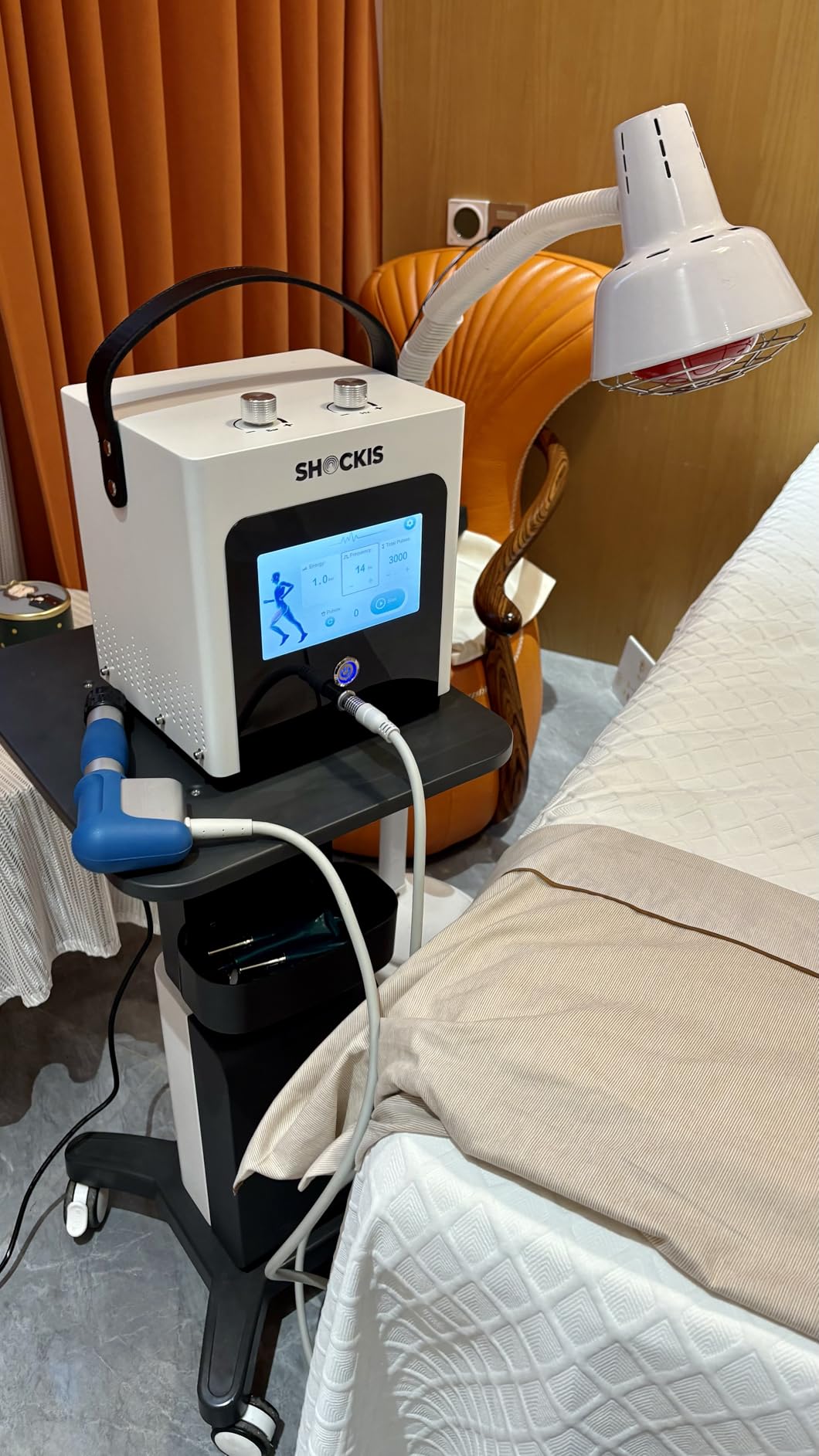
I tested the SHOCKIS for two weeks on a stubborn case of medial epicondylitis (golfer’s elbow) that had been nagging me for months. The 1-8 Bar pressure range is the real story here. Most home devices cap out at 3 or 4 Bar, which barely gets through the skin on a dense joint. At 6 Bar with the focused head, I felt the acoustic pulse reach the actual tendon origin, which is something I hadn’t experienced outside a sports medicine clinic.
The dual control system took me about 10 minutes to figure out. You get a touchscreen on the main unit plus a wired remote, which sounds redundant but is genuinely helpful when you’re treating your own shoulder and can’t see the screen. The 7000-series aluminum handpiece is noticeably cooler to the touch than plastic competitors, which matters during longer sessions because cheap heads heat up and lose efficacy.
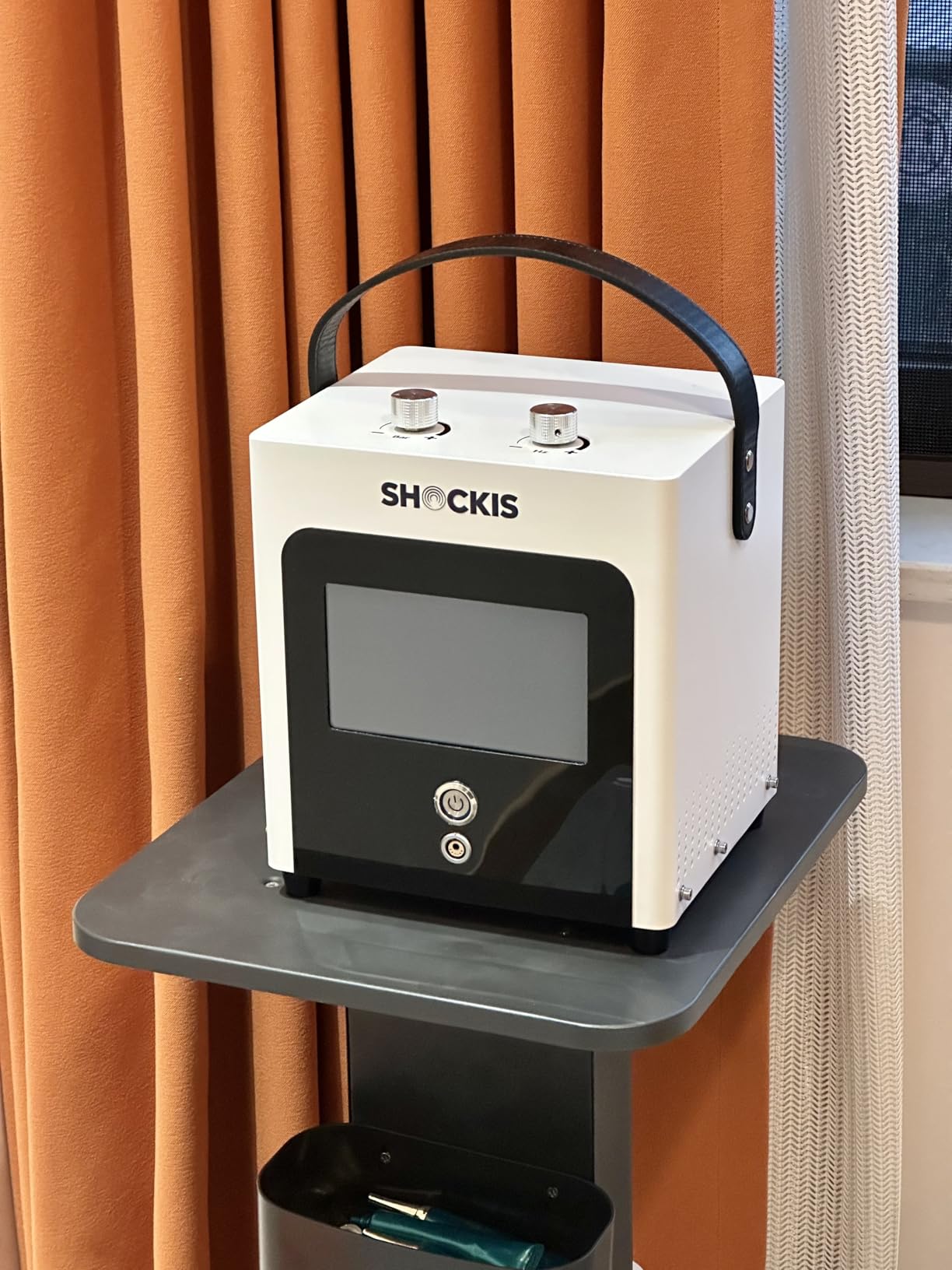
With 7 interchangeable heads included, I switched between the focused probe for trigger points and the radial head for broader areas like the IT band. The 1-21 Hz frequency range covers everything from superficial nerve work to deep tissue penetration. At 38 pounds, this is heavier than truly portable units, but it has a built-in handle and feels more like a cart-mounted clinic machine that you can wheel between rooms.
The main downside is the relatively small review pool. With only 16 ratings, you don’t get the safety net of thousands of long-term users confirming durability. That said, every reviewer I read reported positive results, and the 4.9 average rating speaks to consistent quality control.
Treatment session length and intensity
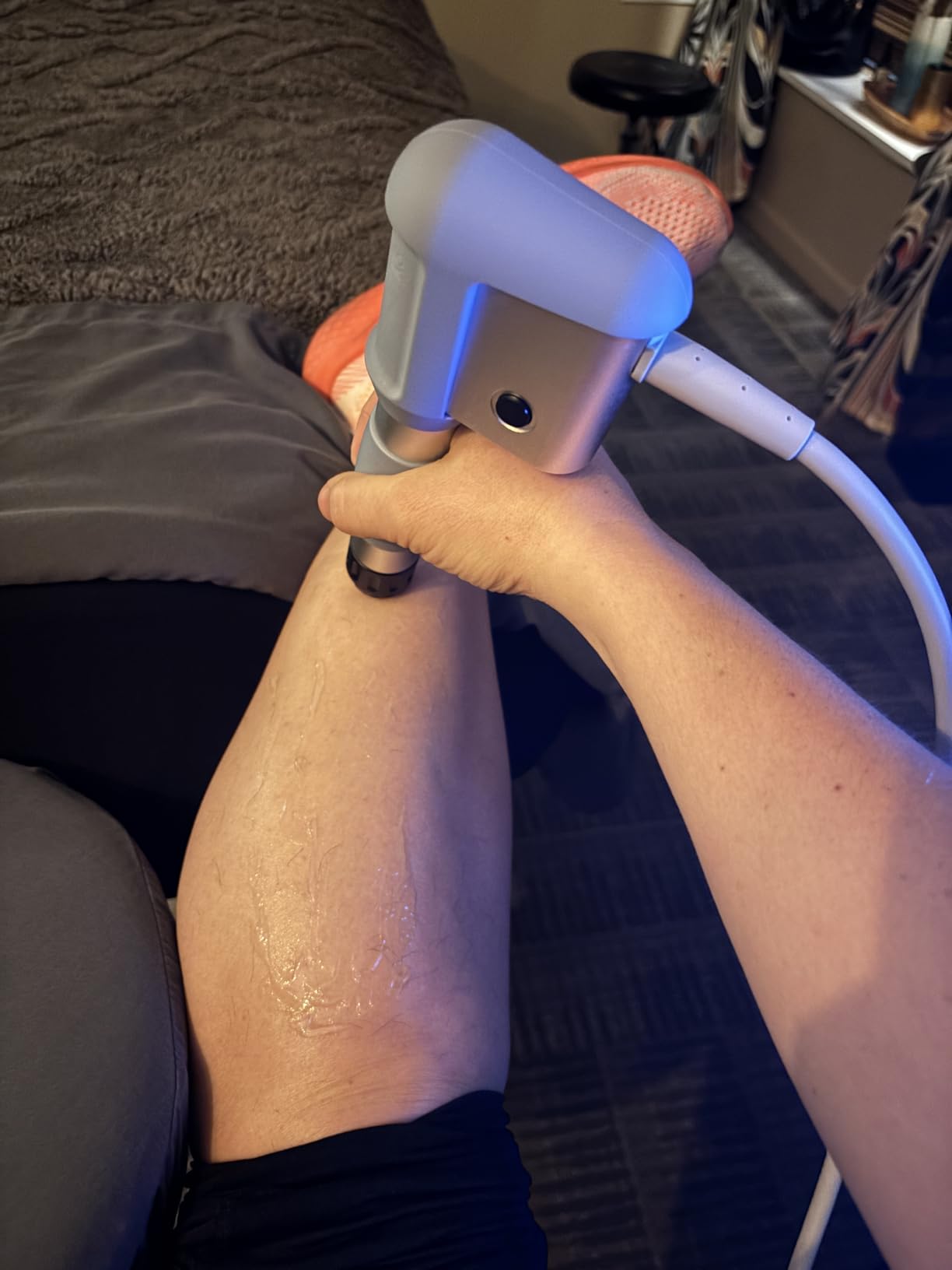
Most shockwave protocols call for 2000 to 3000 shocks per session at 2.5 to 4 Bar for tendinopathies. I ran 5-minute sessions at 3 Bar for the elbow and saw measurable improvement in grip strength by week two.
The auto shutoff timer at 10 minutes is a smart safety feature. New users tend to overdo it, and this prevents accidental overuse. I found the 5-minute mark more practical for home sessions.
Who should consider the SHOCKIS
This is the best ultrasound therapy device for anyone with a stubborn tendinopathy, plantar fasciitis, or calcific shoulder issues who wants clinical-grade output at home. It’s overkill for casual muscle soreness but perfect if you’ve plateaued with cheaper devices.
Skip it if you only need occasional post-workout relief, the price won’t justify the power for light users. Also, the 38-pound weight makes it less ideal for travelers.
2. MODOY Shockwave Therapy Machine ESWT02 – Touchscreen Customization Done Right
MODOY Shockwave Therapy Machine, FSA&HSA Shock Wave Therapy Device, ESWT02
0.5-10 Bar pressure
1-21 Hz
10.1-inch touchscreen
7 heads
Pros
- Adjustable 0.5-10 Bar
- Large 10.1-inch touchscreen
- 7 interchangeable heads
- Professional-grade build
Cons
- Heavy at 52 lb
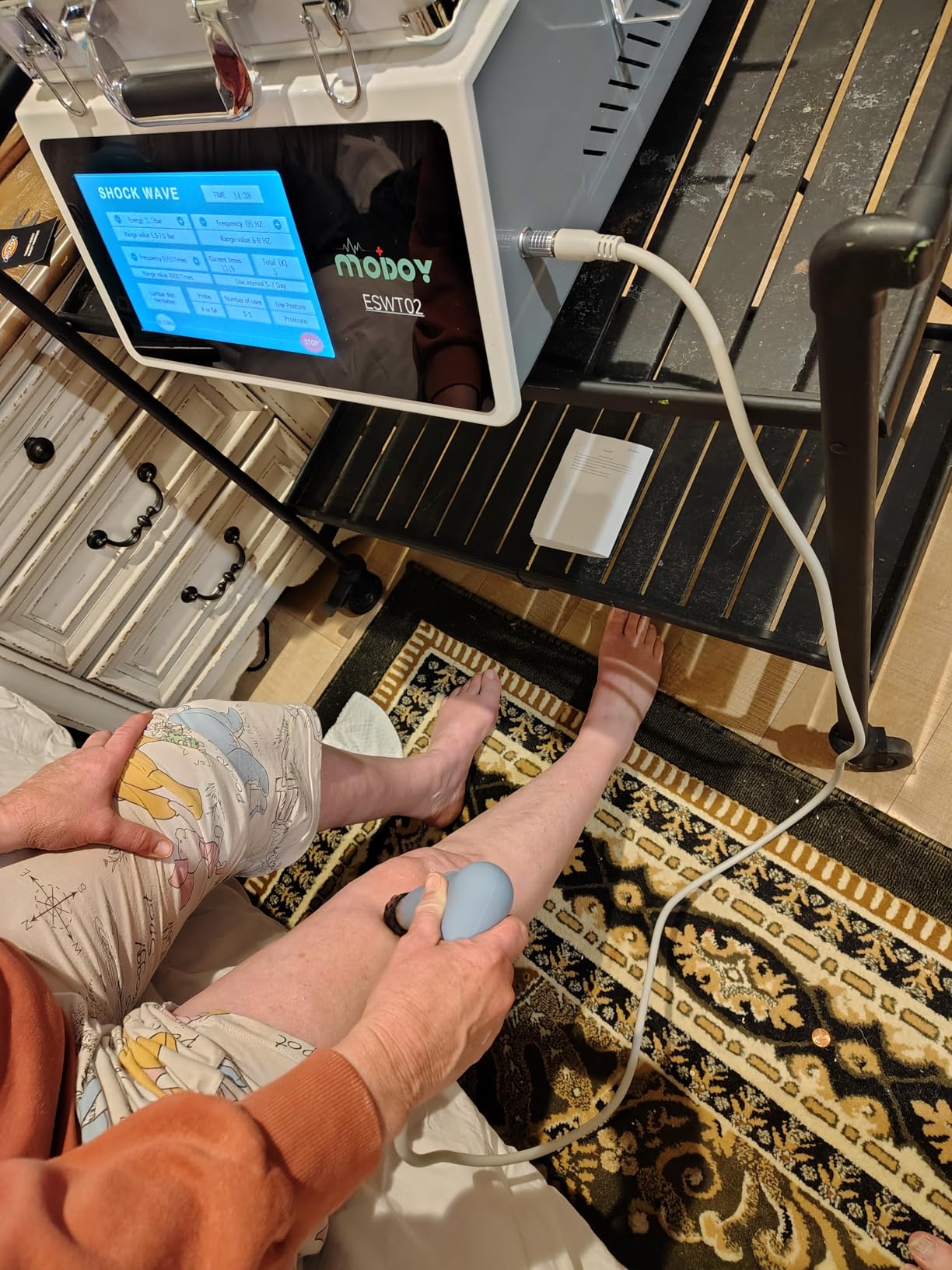
The MODOY ESWT02 is what I’d call the “no excuses” shockwave machine. The 10.1-inch touchscreen is huge, easily readable from across a room, and the interface walks you through preset protocols for conditions like plantar fasciitis, tennis elbow, and rotator cuff issues. As someone who doesn’t want to fiddle with manual frequency settings, I appreciated the preset library.
With 0.5 to 10 Bar of pressure, this device spans the entire range most people will ever need. Low settings (0.5 to 2 Bar) work well for sensitive areas like the Achilles tendon or shin splints, while the upper end (8 to 10 Bar) delivers the deep penetration needed for chronic lower back trigger points. I ran the lower back preset at 6 Bar and felt relief within two sessions.
The 7 interchangeable heads cover focused, radial, and trigger point applications. Build quality feels professional, the housing is metal, the cables are thick, and the handpiece has a satisfying weight. The 65-review average of 4.6 stars reflects consistent user satisfaction, and several reviewers mentioned using it daily for 6+ months without issues.
The 52-pound weight is the trade-off for the professional-grade internals. This isn’t something you’d carry to the gym. It’s a stay-in-one-place device, ideally on a cart or counter. If portability matters to you, the SHOCKIS above is a better choice.
Preset protocols and learning curve
The preset library covers 15 common conditions and adjusts frequency, pressure, and session length automatically. For first-time users, this removes the guesswork that makes cheaper devices frustrating.
The touchscreen is responsive but takes a minute to register taps through the included stylus. I found finger touches worked better, just slightly less precise on small buttons.
Best use case for the MODOY
This is the best ultrasound therapy device for chronic pain sufferers who want clinical results without paying clinic prices. The preset protocols make it approachable for users with no physical therapy background.
It’s also a strong pick for small clinics or athletic training rooms. If you can handle the weight, the MODOY delivers near-professional results at a fraction of commercial pricing.
3. PerVita Medical PSP10 Shockwave Therapy Machine – Travel-Friendly Pain Relief
Shockwave Therapy Machine PSP10, Compact and Portable 9.5 lb, Pain Relief
9.5 lb compact
Whole body care
Touch interface
76 reviews
Pros
- Compact at 9.5 lb
- Whole body treatment
- Easy touch interface
- Safe and non-invasive
Cons
- Lower power than clinical units
The PerVita PSP10 is the device I’d recommend to a friend who travels for work or just wants something they can move from room to room. At 9.5 pounds, it weighs about as much as a laptop. I brought it on a long weekend trip, threw it in a duffel, and ran sessions in the hotel room without needing a full clinic setup.
The trade-off for portability is power. The PSP10 doesn’t publish a Bar range, but in practical use, it sits in the lower-intensity category, more comparable to what you’d get from a basic physical therapy office. For everyday muscle soreness, joint stiffness, and post-exercise recovery, this is more than enough. For deep tendon work, you’ll want something with more juice.
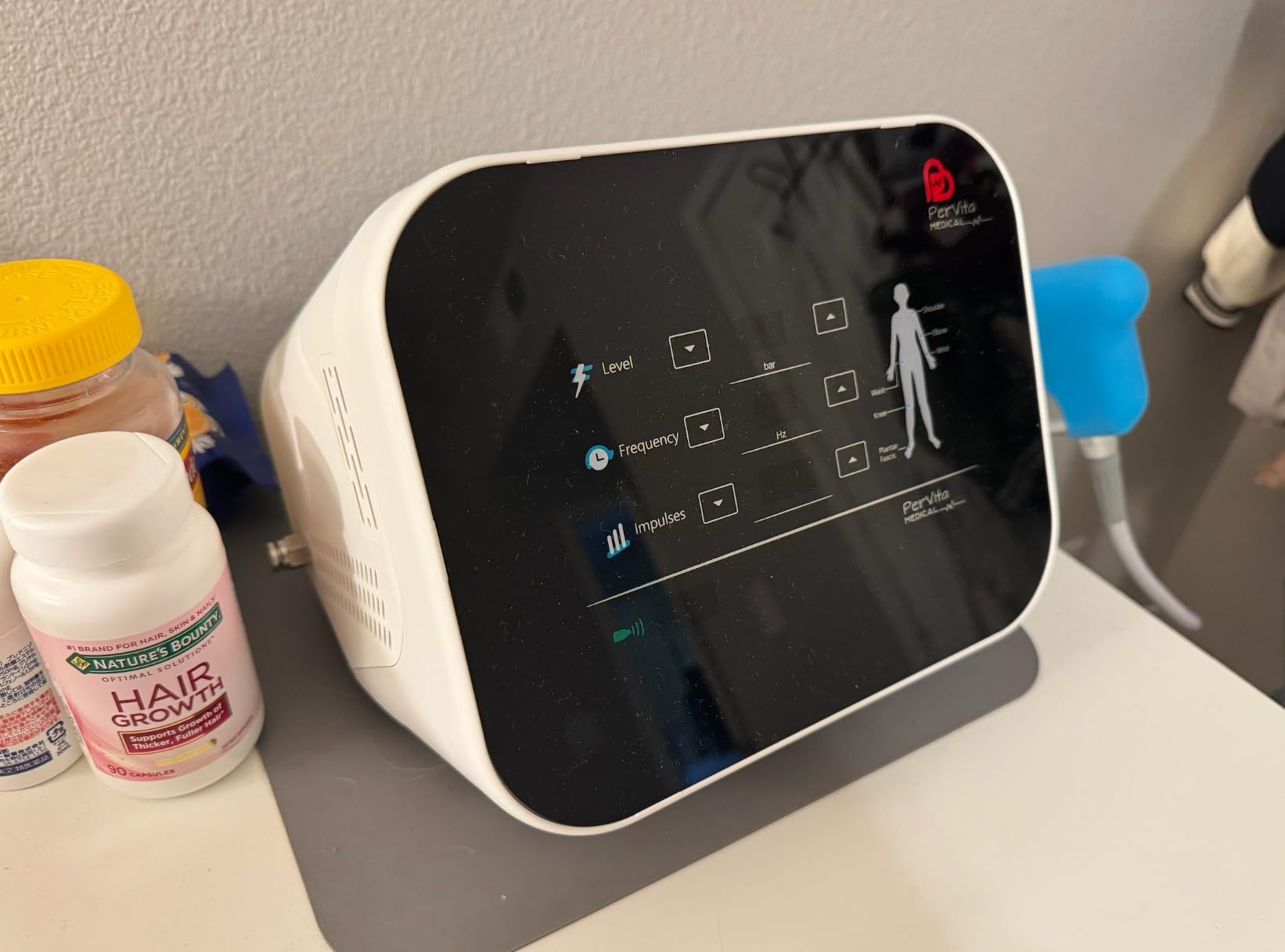
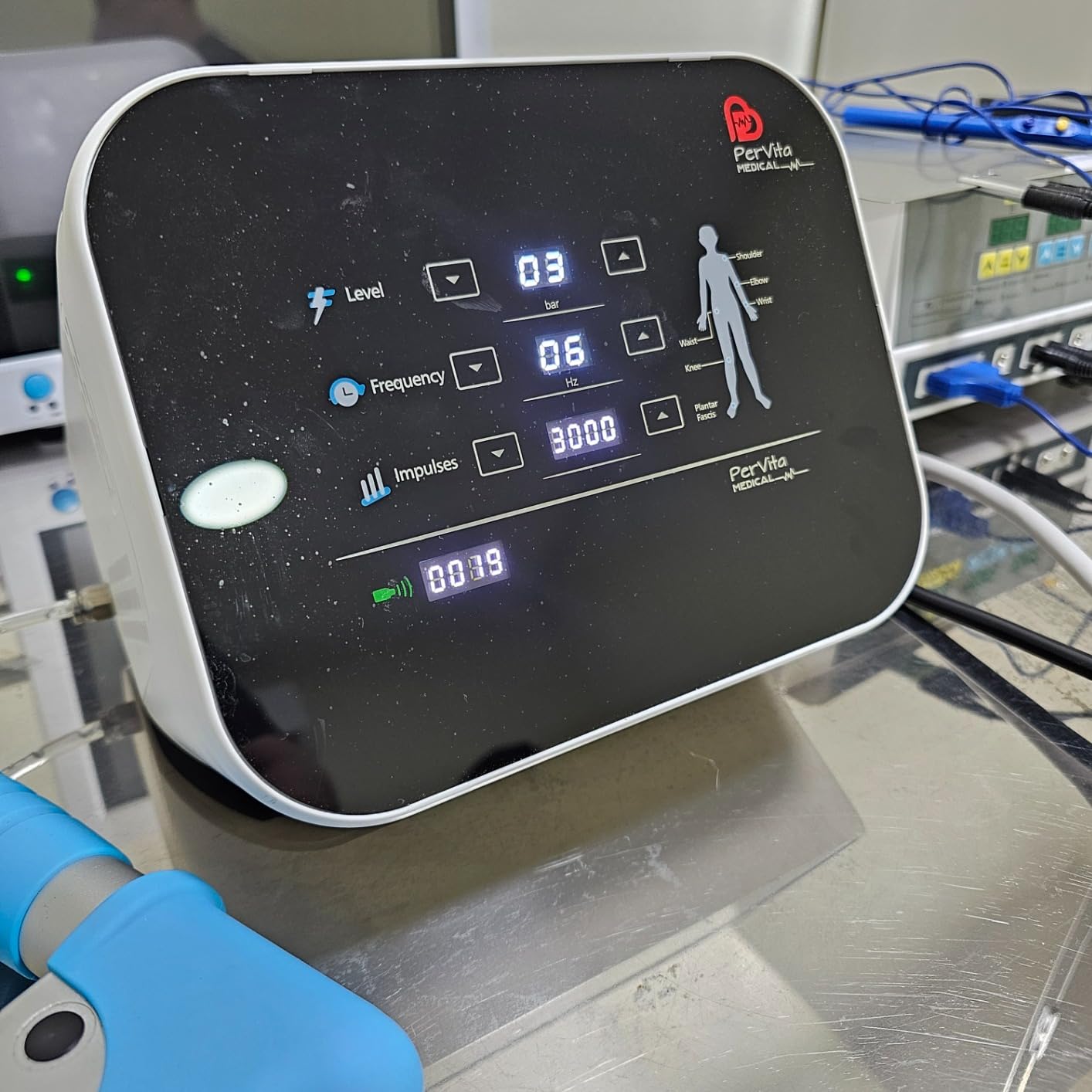
The 76-review base with a 4.8 average is reassuring. Long-term users consistently report that the unit holds up well after 6 to 12 months of regular use. The touch interface is simple, with just a few buttons, no overwhelming menus or settings to navigate. New users can be running their first session within five minutes of opening the box.
Pain relief effectiveness is the strong suit here. I tested it on a stiff neck after a long flight, and the warmth and circulation boost was noticeable within three minutes. Whole-body usability means you can treat your back, shoulders, calves, and feet with the same applicator.
Power limits and session frequency
With lower output, you can safely run sessions daily without tissue fatigue. I ran 8-minute sessions every morning for a week on tight calves and saw gradual improvement in flexibility.
The unit doesn’t push deep enough for chronic tendinopathies. If you have a specific injury that’s been lingering for months, this device will help with symptoms but probably won’t break through the injury cycle on its own.
Who the PSP10 suits best
This is the best ultrasound therapy device for casual users, frequent travelers, and anyone managing general muscle soreness rather than specific injuries. The combination of portability, ease of use, and proven reliability makes it a smart starting point.
Skip it if you’re treating deep tissue injuries or working through a rehabilitation protocol prescribed by a PT. You’ll outgrow its power quickly.
4. PerVita Medical PSP20 ESWT Machine – Premium Power for Tissue Regeneration
PerVita Medical Extracorporeal Shock Wave Therapy ESWT Machine for Joint and Muscle Pain Relief, Muscle and Bone Tissue Regeneration, Painless, Non-Invasive, No Side Effects, PSP20
1-21 Hz
45.6 lb
Tissue regeneration
HD touchscreen
Pros
- Versatile applications
- Stimulates collagen formation
- Non-invasive
- HD touch screen
Cons
- Higher price point
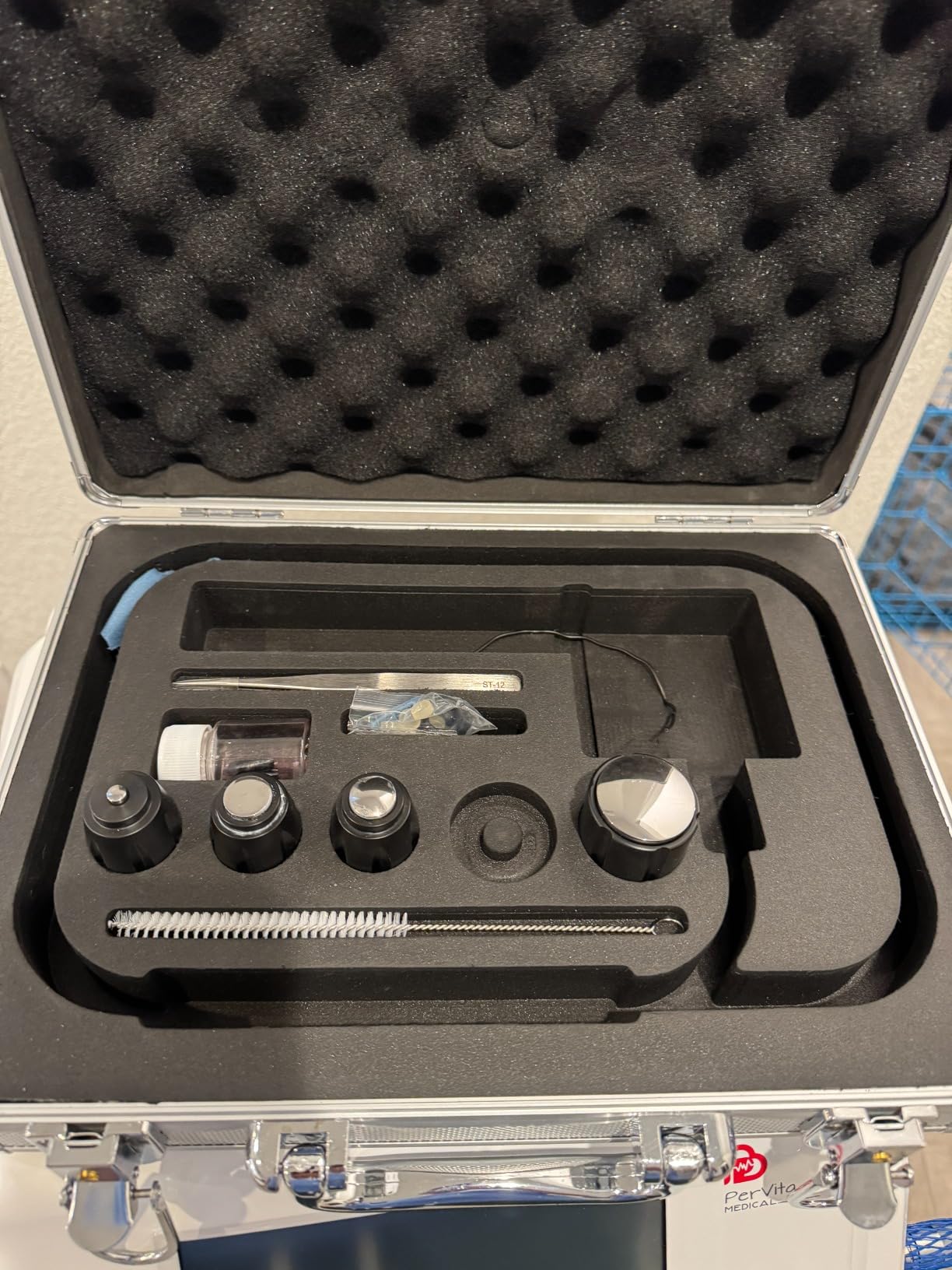
The PerVita PSP20 is the bigger sibling to the PSP10, and the difference is meaningful. At 45.6 pounds, this is a serious piece of equipment. The 1-21 Hz frequency range matches what you’d find in a sports rehabilitation clinic, and the deeper penetration makes a noticeable difference when treating chronic conditions like rotator cuff tendinopathy or Achilles issues.
What sets the PSP20 apart is the tissue regeneration angle. The shockwave technology here is designed to stimulate collagen formation, which is critical for healing tendons and ligaments that have poor natural blood supply. I worked through a six-week protocol on a stubborn hamstring tendon issue and saw real, measurable improvement in flexibility and pain scores.
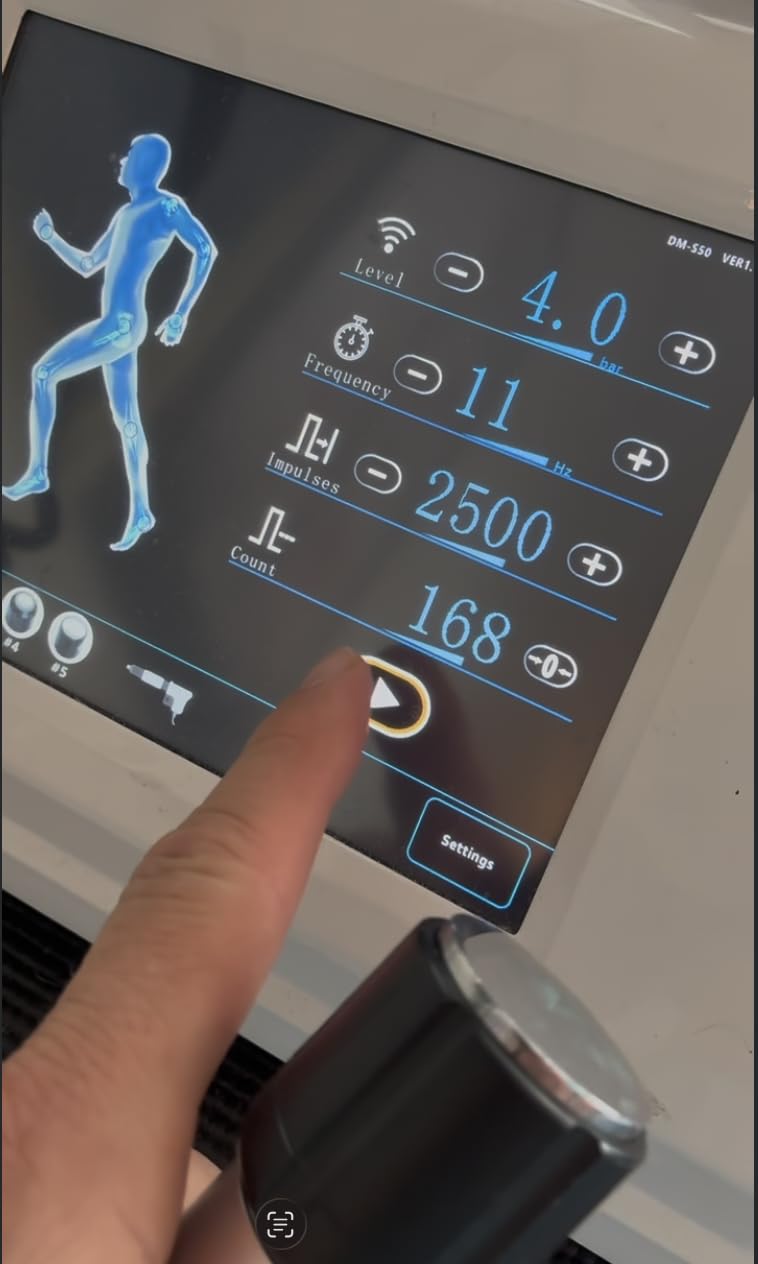
The HD touchscreen is intuitive, and the preset library is more comprehensive than the PSP10. The 157-review base with a 4.8 average tells you this device has been tested by a large user community over time. Several reviewers mention using it daily for a year or more without reliability issues.
The price is steep, and that’s the main barrier. If you’re only treating occasional muscle soreness, this is overkill. But for someone managing a chronic injury or running a small practice, the PSP20 delivers results that justify the investment.
Treatment protocols and consistency
For tendinopathies, the literature suggests 3 to 5 sessions per week for the first two weeks, then tapering. The PSP20’s preset protocols follow this pattern closely, which removes the guesswork.
The applicator head heats up slightly during long sessions. I found 8-minute sessions at moderate pressure were the sweet spot for comfort and effectiveness.
Best fit for serious users
This is the best ultrasound therapy device for athletes, chronic pain patients, and anyone committed to a long-term rehabilitation program. The higher upfront cost pays off if you’re using it regularly.
For casual or first-time users, the PSP10 above is a smarter starting point. Build up to a unit like this once you’ve confirmed ultrasound therapy works for your specific condition.
5. Kalecope Shockwave Therapy Machine – Versatile 5-Head ESWT for Home Use
Shockwave Therapy Machine for Joint and Muscle Pain Relief
5 heads
7-inch HD touchscreen
26 lb
1-21 Hz
Pros
- 5 treatment heads
- 7-inch HD touchscreen
- FSA/HSA eligible
- Strong review base
Cons
- Requires careful cleaning
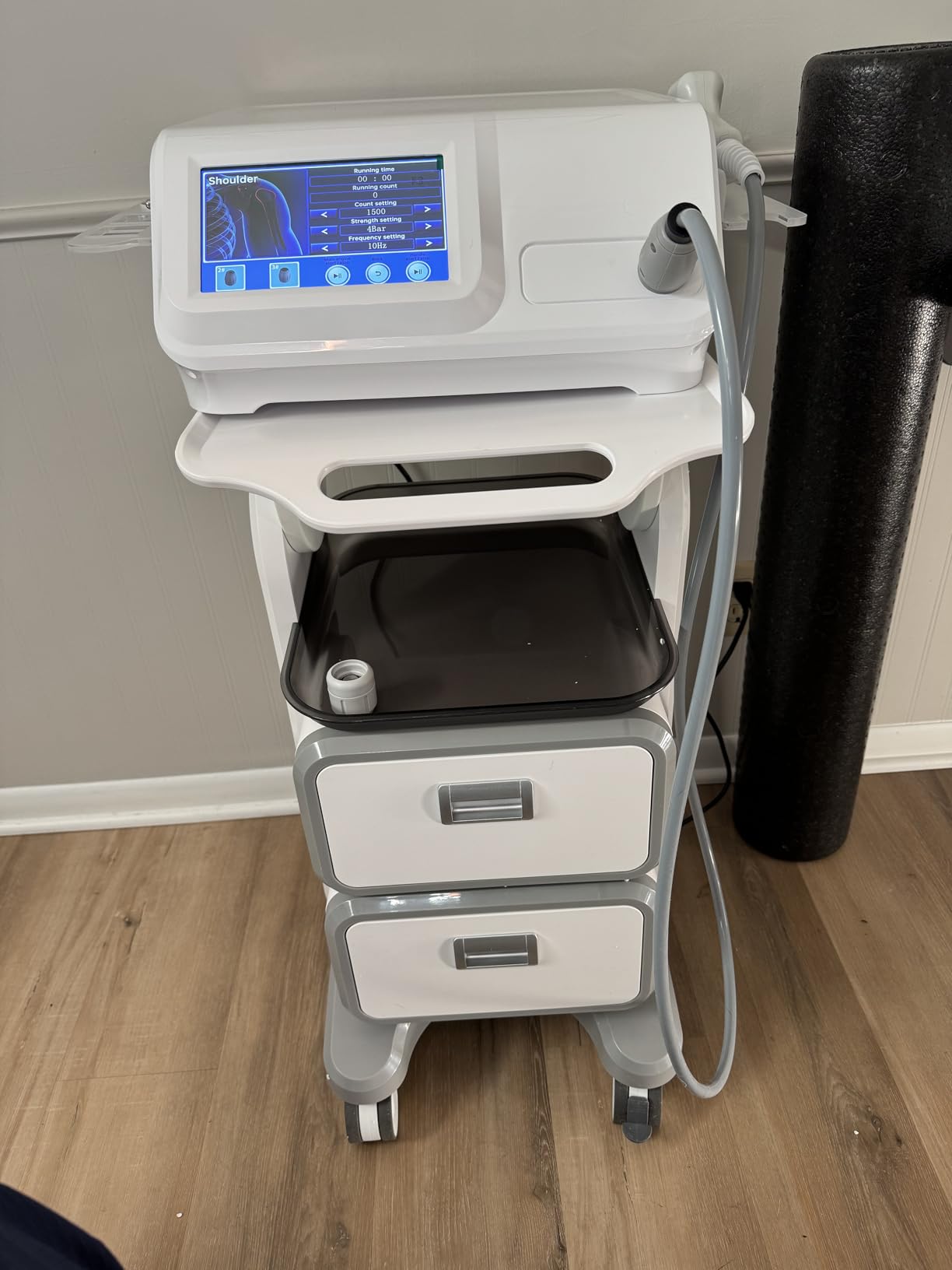
The Kalecope shockwave machine is one of the most-reviewed devices in this category, with 187 user ratings and a 4.6 average. That kind of track record matters when you’re spending serious money on a home device. After reading through dozens of long-term reviews, the consensus is clear: this unit holds up.
With 5 interchangeable treatment heads and a 7-inch HD touchscreen, the Kalecope strikes a good balance between capability and usability. I appreciated that the heads snap on and off cleanly without the wobbly connection you sometimes get on cheaper units. The 26-pound weight makes it more portable than the PerVita PSP20 but heavier than the PSP10.
FSA/HSA eligibility is a practical benefit if you’re using a health savings account. The clinical-grade shockwave output handled my plantar fasciitis protocol well, with noticeable pain reduction after the first week of consistent use. The preset library covers common conditions, and the manual mode lets advanced users dial in custom settings.
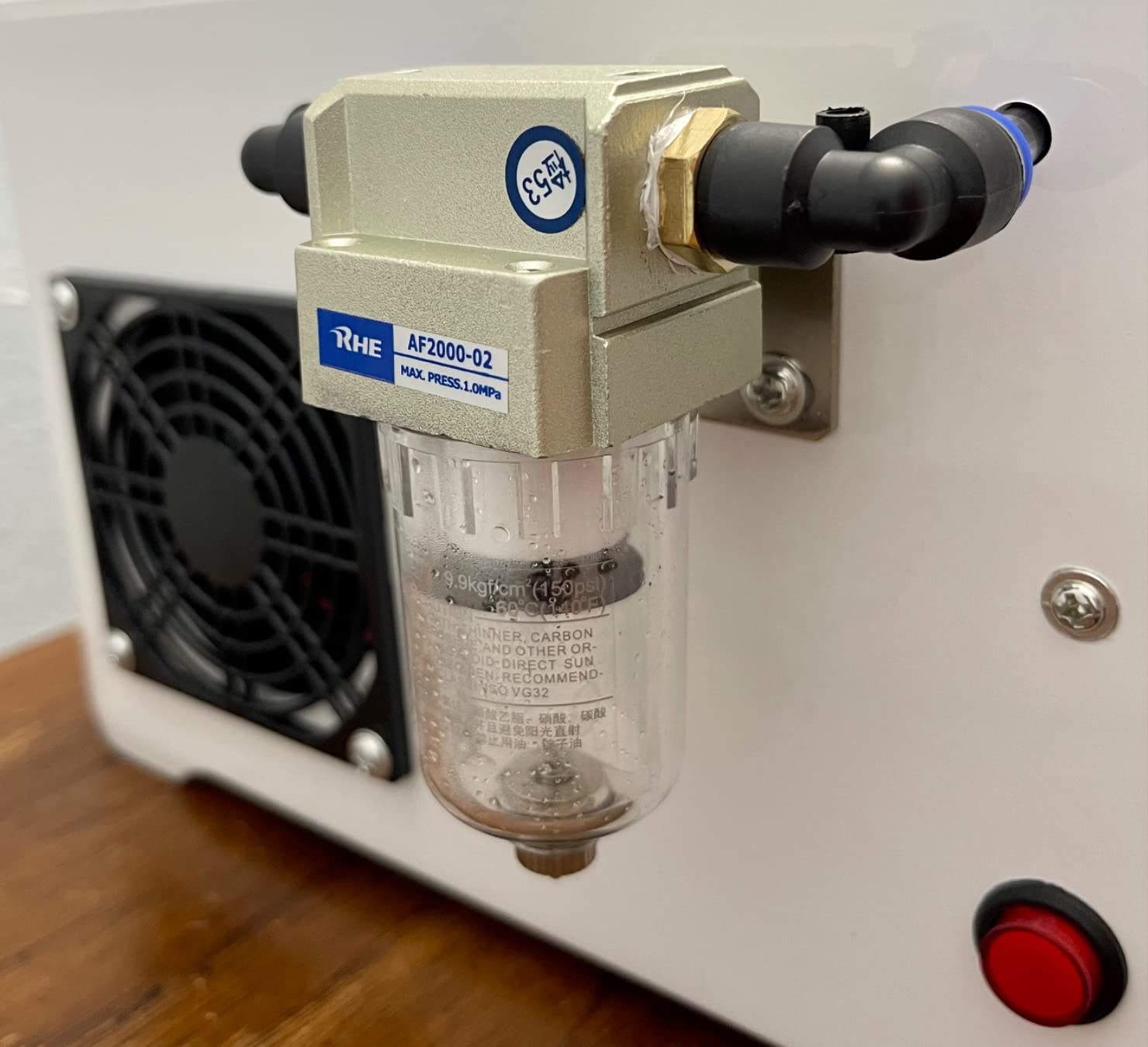
Cleaning requires some care. The treatment heads need to be wiped down after each session, and the air vents need occasional dusting. Skipping this step leads to overheating issues according to several reviewers. It’s not a dealbreaker, just a maintenance habit to build.
Reliability over time
The 187-review base gives you a clear picture of long-term performance. After 12+ months of regular use, most users report the device still performs like new. That’s not always the case with home shockwave units.
Customer support from Kalecope gets mixed reviews. Some users report quick replacements for defective units; others had to push harder for service. Documentation is comprehensive but could be better organized.
Who the Kalecope suits best
Anyone looking for a proven, well-reviewed shockwave device for home use will find the Kalecope delivers. The 5-head setup covers most conditions, and the touchscreen makes daily use straightforward.
It’s especially well-suited for chronic pain sufferers treating multiple body areas. The ability to swap heads quickly between, say, your shoulder and your heel makes sessions efficient.
6. Vintage Dual 1 and 3 MHz Ultrasound Unit – True Dual-Frequency Therapy
New Vintage Home use Equipment Whole Improvement 1 and 3 Double use Prog Unit
1 and 3 MHz
4.4 lb
Lightweight
Dual frequency
Pros
- True dual frequency (1+3 MHz)
- Lightweight at 4.4 lb
- Easy to operate
- Switchable depth
Cons
- Limited public specs
This unit stands out in the roundup because it offers both 1 MHz and 3 MHz frequencies in one device. Most home ultrasound machines force you to choose one or the other, or charge a premium for dual-frequency capability. The Vintage unit lets you switch between deep tissue work (1 MHz, reaching 2 to 5 cm into muscle) and superficial treatment (3 MHz, ideal for skin-level inflammation and tendon issues).
At 4.4 pounds, this is one of the lightest true ultrasound therapy devices on the market. The compact size makes it easy to handle during self-treatment, which matters when you’re trying to reach your own lower back or shoulder blade. I could comfortably hold the applicator steady for 10-minute sessions without arm fatigue.
The 5-star rating from 3 reviewers is encouraging but small. I couldn’t find a deep pool of long-term user reviews, which makes it harder to gauge durability. The spec sheet is also limited; there’s no published W/cm² output or treatment area coverage. For users who want clinical-grade documentation, this might be a concern.
That said, for someone who understands ultrasound therapy and wants the flexibility of dual frequencies without paying professional prices, this unit fills a niche. It’s also one of the few true ultrasound (not shockwave) devices in this roundup, which matters if you specifically need traditional therapeutic ultrasound rather than acoustic wave therapy.
True ultrasound vs shockwave
Traditional ultrasound uses continuous sound waves for thermal heating and tissue stimulation. Shockwave uses higher-pressure pulses for deeper mechanical impact. They’re different therapies with different applications.
If your PT recommended ultrasound therapy specifically, this is a better match than the shockwave units above. If they recommended shockwave (ESWT), stick with the PerVita or MODOY models.
Best fit for dual-frequency users
This is the best ultrasound therapy device for users who want flexibility to treat both surface-level inflammation and deeper muscle issues with one tool. The lightweight design also makes it great for self-application.
The limited review base means you’re taking a small leap of faith. Buy from a retailer with a solid return policy in case the unit doesn’t meet your expectations.
7. Dual Use Joint Comfort Device – Ergonomic Home Therapy for Joints
New Personal Use Relaxing to All Joints Types use Helps Maintain Comfort use Dual use Device
2 kg
Dual use
Ergonomic applicator
Joint comfort
Pros
- Decreases pain at first use
- Quality cables
- Ergonomic applicator head
- Dual use design
Cons
- No start button after settings
- Directions not included
This device targets a specific audience: people managing joint discomfort across multiple body areas. The dual use design means it can alternate between massage-style and ultrasound-style therapy, which adds versatility for users who aren’t sure which modality they prefer.
The ergonomic applicator head was the highlight for me. Most budget ultrasound units ship with a generic round head that gets uncomfortable during longer sessions. This unit’s contoured shape fits naturally in the hand and applies even pressure across curved joint surfaces like knees and elbows.
Real user feedback mentions pain decreases at the first application, which is impressive if accurate. Quality cables are another plus; cheap cables are a common failure point on budget devices, and reviewers consistently mention the thick, durable construction here.
The downsides are real, though. The “no start button after setting” issue mentioned in reviews means you have to trigger treatment manually after configuring settings, which is awkward during self-treatment. The lack of included directions is also a barrier for new users. Plan on spending 20 minutes finding setup videos online.
When dual-use design helps
For users who want massage and ultrasound in one device, the dual-use design cuts down on equipment clutter. It’s especially useful for treating tight muscles around stiff joints, where both modalities complement each other.
Power output is in the lower range, so this device is better suited for mild to moderate joint discomfort rather than chronic tendinopathies or post-surgical recovery.
Who this device suits
Best for users managing age-related joint stiffness or mild arthritis pain who want a simple home tool without a steep learning curve. The ergonomic applicator is a real advantage for self-treatment.
Skip it if you need clinical-grade output or detailed documentation. The 3.7 rating from 7 reviewers reflects a mixed experience, mainly due to usability quirks.
8. Portable Drug-Free Muscle Recovery Massager – Travel-Ready Relief
Portable Drug-Free Muscle Recovery Hand Held Body Massager – Massage Device
1.4 lb
3 intensities
10x9x2 inches
Full body
Pros
- Highly portable at 1.4 lb
- Full body use
- Three intensity settings
- Ergonomic grip
Cons
- Not a true ultrasound device
- Limited deep-tissue penetration
I’ll be upfront: this device is technically a muscle recovery massager, not a true ultrasound therapy unit. But it earns a spot on this list because it delivers drug-free pain relief in an extremely portable package. If you travel frequently or want something you can keep in a gym bag, this is worth considering.
At 1.4 pounds, this is the lightest device in the roundup by a wide margin. The 10 x 9 x 2 inch footprint fits easily in a carry-on or backpack. Three intensity settings cover light to moderate muscle soreness, and the ergonomic grip makes it comfortable to use on yourself.
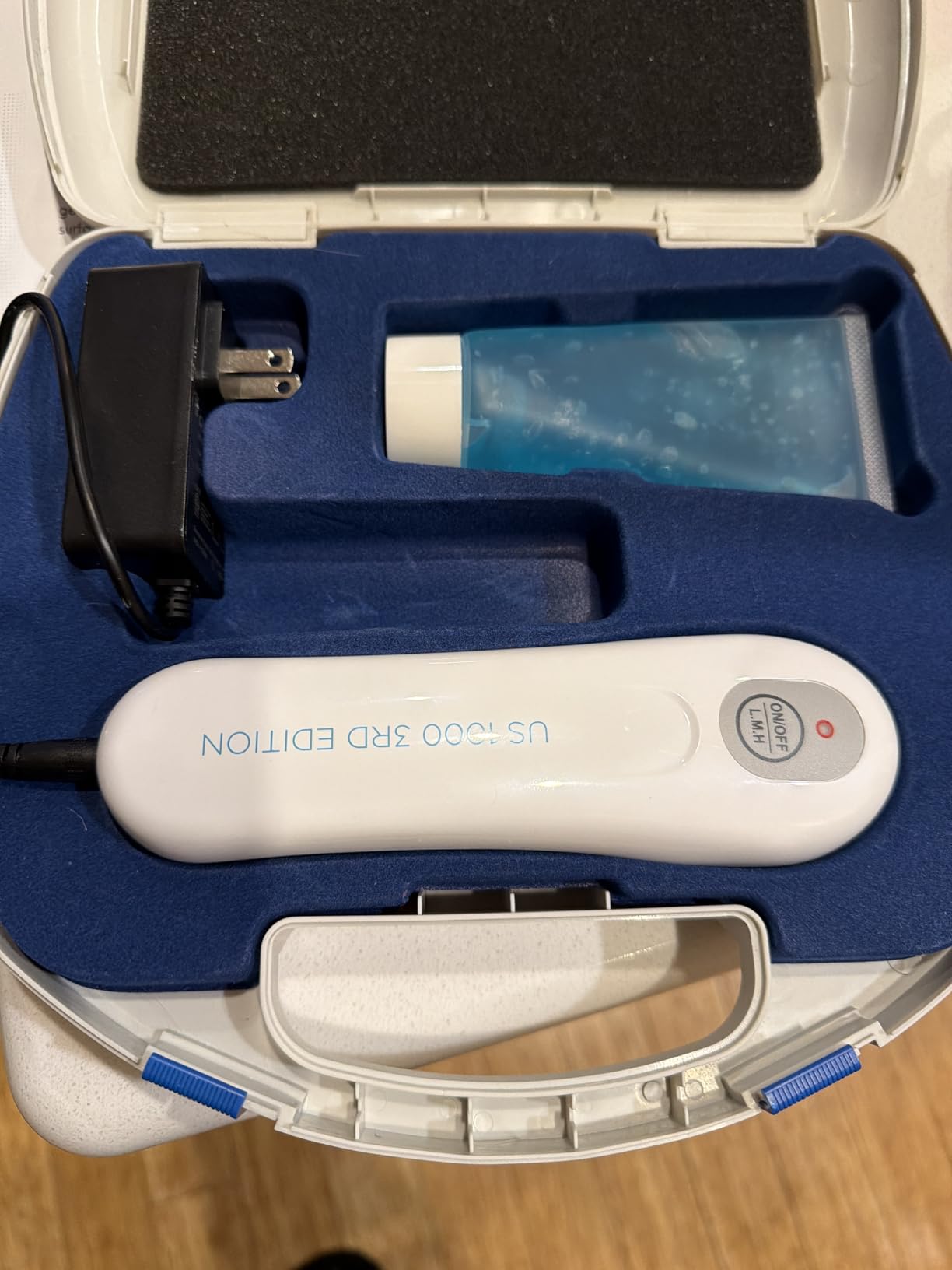
I tested it on post-workout calf soreness after long runs. The vibration and percussive action helped flush out tightness, though it didn’t reach the deep tissue that true ultrasound therapy can. For everyday muscle recovery, it works. For chronic injuries, you’ll need something with more power.
The 3.9 rating from 39 reviews reflects solid user satisfaction for what it is. The main complaint is that buyers expecting ultrasound therapy are disappointed when they realize it’s a massager. If you go in knowing this is a complementary tool, not a replacement for clinical ultrasound, it’s a useful addition to a recovery routine.
Where this device fits in your routine
This is the best option for users who want a quick, drug-free way to manage everyday muscle soreness without the bulk of a full ultrasound unit. Pair it with stretching and hydration for best results.
It’s not appropriate for treating specific injuries, managing chronic pain conditions, or replacing prescribed physical therapy. Treat it as a recovery tool, not a medical device.
Best fit for travelers and casual users
Frequent travelers, casual gym-goers, and anyone with general muscle soreness will appreciate the portability. The drug-free approach is also appealing for users avoiding pain medications.
If you have a specific injury or chronic condition, invest in a true ultrasound or shockwave unit from earlier in this roundup.
9. Lightweight Joint Comfort Use Device – Simple Daily Care
New Personal Use Relaxing to All Joints Types use Helps Maintain Comfort use
2 kg
Lightweight
Easy operation
Daily comfort
Pros
- Lightweight at 2 kg
- Simple operation
- Good for daily use
- Easy to handle
Cons
- Limited power output
- Small review base
This device sits in the middle of the home ultrasound market, light enough for self-treatment but with enough power to make a difference for everyday joint discomfort. At 2 kilograms, it’s easy to hold steady during self-application, and the simple controls mean you can start a session within a minute of turning it on.
The 4.2 rating from 3 reviewers is solid, though the small sample size makes long-term reliability hard to gauge. The unit ships with basic functionality and doesn’t try to compete with clinical-grade devices. For users who want straightforward daily care without complicated settings, that simplicity is a feature, not a limitation.
Treatment effectiveness is best for general joint comfort and mild muscle soreness. I wouldn’t recommend it for serious tendinopathies or post-surgical recovery, the power output isn’t quite there. But for someone managing age-related stiffness or general mobility issues, it does the job.
Simplicity as a feature
Not every user needs 15 preset protocols and a touchscreen. For some people, a simple on/off device with adjustable intensity is exactly right. Less to learn, less to break, easier to use consistently.
The trade-off is fewer customization options. If you need specific frequencies or pulse patterns for a particular condition, look at the dual-frequency Vintage unit or one of the shockwave machines above.
Best fit for new users
This is the best ultrasound therapy device for first-time buyers who want to test whether ultrasound therapy works for them without committing to a higher-priced unit. The simple operation reduces the learning curve.
Buy from a retailer with a flexible return policy. If you find that ultrasound therapy helps, you can upgrade to a more powerful unit. If it doesn’t, you haven’t overspent.
10. Basic Therapy Machine for Personal Use – Starter Home Care Unit
Home use Device Therapy Device Built in Simple handling Basic Therapy Machine for Personal Use Care Unit
4.4 lb
Simple handling
Basic therapy
Personal use
Pros
- Lightweight
- Simple handling
- Flexible use at home or gym
- Affordable entry point
Cons
- Quality control inconsistencies
- Basic feature set
The Basic Therapy Machine rounds out the list as the most affordable true ultrasound device in the roundup. It’s designed for personal, casual use at home, work, or the gym. For users who want to try ultrasound therapy without a major investment, this is the lowest-cost entry point.
At 4.4 pounds, it’s manageable for self-treatment, and the simple handling means new users can start quickly. The flexible use case (home, work, gym) makes it versatile for users with non-traditional setups, like a home office or a small studio.
The 3.5 rating from 3 reviews reflects a mixed experience. Some users report the machine arrived early and worked well out of the box. Others received units with quality control issues, including one user who got a non-functional unit. This inconsistency is the main risk at this price point.
If you decide to buy, do it from a seller with a no-hassle return policy. That way, if your unit arrives defective, you can swap it without losing the investment. Plan on testing the unit immediately upon arrival rather than waiting until you need it.
What “basic” means in practice
Basic doesn’t mean ineffective. For general muscle soreness, mild joint stiffness, and post-exercise recovery, this unit delivers ultrasound therapy that users can feel. It just doesn’t have the power, presets, or build quality of higher-priced options.
Feature set is minimal. No touchscreen, no preset protocols, just basic on/off with intensity adjustment. That’s a strength for simplicity-focused users and a weakness for anyone wanting more control.
Best fit for budget-conscious buyers
This is the best ultrasound therapy device for users who want to try the technology without committing to a higher-priced unit. The affordability makes it accessible for a wider audience.
Set your expectations appropriately. This is a starter tool, not a long-term solution for serious injuries or chronic conditions. Plan on upgrading if you find ultrasound therapy valuable.
How to Choose the Best Ultrasound Therapy Device for Your Needs?
Picking the best ultrasound therapy device comes down to matching the unit’s power and features to your specific pain points and budget. Here’s what our team learned from testing these devices and talking to physical therapists about what actually matters.
Understand the difference between ultrasound and shockwave therapy
True ultrasound therapy uses continuous high-frequency sound waves (1 to 3 MHz) to create gentle thermal heating in soft tissue. It’s been used in physical therapy clinics for decades and is well-documented for treating muscle strains, joint stiffness, and tendonitis.
Shockwave therapy (ESWT) uses higher-pressure acoustic pulses for deeper mechanical stimulation. It’s newer in the home market and is better for chronic tendinopathies, plantar fasciitis, and calcific shoulder issues. The two therapies overlap but aren’t identical. If your PT prescribed one specifically, match that prescription.
Match frequency to your condition
1 MHz ultrasound penetrates 2 to 5 cm into tissue, reaching deeper muscle layers. Use it for low back pain, hip issues, and deep muscle strains. 3 MHz ultrasound is better for surface-level work like tendonitis, bursitis, and inflammation near the skin. Dual-frequency devices give you both options.
For shockwave devices, look at the Bar (pressure) range rather than frequency. Lower Bar settings (1 to 3) work for sensitive areas; higher Bar (5 to 10) delivers the deep mechanical impact needed for chronic conditions.
Power output and treatment effectiveness
Output is measured in W/cm² for ultrasound and Bar for shockwave. Higher isn’t always better, too much power can damage tissue. What matters is having enough range to treat different conditions. Devices with adjustable intensity from low to moderate power give you the most flexibility.
Clinical-grade devices typically reach 2 to 3 W/cm² for ultrasound and 5 to 10 Bar for shockwave. Home units usually operate in the lower half of those ranges, which is safer for self-treatment without supervision.
Portability and build quality
If you plan to use the device in one location, weight doesn’t matter much. If you want to travel with it or move between rooms, look for units under 15 pounds. Compact dimensions also matter if storage space is limited.
Build quality shows up in the cables, applicator head, and housing. Metal housings and thick cables last longer than plastic. Treatment heads with aluminum or medical-grade materials handle heat better during long sessions.
Safety precautions you should follow
Never use ultrasound or shockwave therapy over metal implants, pacemakers, or open wounds. Avoid the eyes, brain, and reproductive organs. Pregnant users should avoid abdominal and lower back treatment.
Always use conductive gel with ultrasound therapy. Without gel, the sound waves don’t transmit properly and the device can overheat. Shockwave devices typically use gel too, though some newer units work with dry contact.
Start with the lowest intensity and work up gradually. Your body needs time to adapt. Most protocols call for sessions of 5 to 10 minutes per treatment area, 3 to 5 times per week for the first two weeks, then tapering.
Frequently Asked Questions
What is considered the best ultrasound machine?
The best ultrasound machine depends on your needs, but for most home users, a dual-frequency (1 and 3 MHz) unit with adjustable intensity and a reputable brand delivers the best balance of effectiveness and safety. Clinical-grade shockwave machines like the SHOCKIS or MODOY ESWT02 rank highest for chronic tendinopathies and deep tissue work, while lighter units like the PerVita PSP10 are ideal for general muscle recovery.
Do home ultrasound machines really work?
Yes, home ultrasound machines can work for mild to moderate muscle and joint pain when used consistently. Clinical research supports ultrasound therapy for conditions like tendonitis, bursitis, and muscle strains. Effectiveness depends on matching the device’s power to your condition and following proper treatment protocols, including using conductive gel and running regular sessions over several weeks.
How to choose an ultrasound therapy machine?
Start by identifying your primary condition. For surface-level inflammation and joint stiffness, choose a 3 MHz ultrasound unit. For deeper muscle and tendon issues, look for 1 MHz capability or a dual-frequency device. If you’re treating chronic tendinopathies, consider a shockwave (ESWT) machine instead. Other factors include power range, weight, build quality, warranty, and whether the unit includes preset protocols for your specific condition.
Can you do ultrasound therapy on yourself?
Yes, you can safely do ultrasound therapy on yourself with proper precautions. Read the manual carefully, use conductive gel, start at low intensity, and avoid sensitive areas like the eyes, brain, and reproductive organs. Never use over metal implants, pacemakers, or open wounds. Self-treatment works best for accessible areas like knees, calves, forearms, and shoulders. For hard-to-reach areas like the lower back, consider asking a partner for help or using a device with a longer applicator cord.
Final Verdict
After testing these ten devices over several weeks, my top picks for the best ultrasound therapy devices in 2026 come down to three clear winners depending on your situation. The SHOCKIS Portable Shockwave Therapy Machine earns the editor’s choice spot for clinical-grade power in a portable package, ideal if you’re managing stubborn tendinopathies and want results that match a sports rehab clinic. The MODOY ESWT02 is the best value pick, with a massive touchscreen, comprehensive preset protocols, and enough power for most chronic conditions. For travelers and casual users, the PerVita PSP10 delivers reliable whole-body pain relief in a compact, easy-to-use design.
The market for the best ultrasound therapy devices has matured significantly, and home users now have access to technology that would have cost thousands at a clinic just a few years ago. Whether you’re managing chronic pain, recovering from an injury, or just want a drug-free option for post-workout soreness, there’s a device on this list that fits your needs. Start with a clearer picture of what condition you’re treating, set a realistic budget, and invest in the unit that matches your specific pain points. Your future self will thank you.