
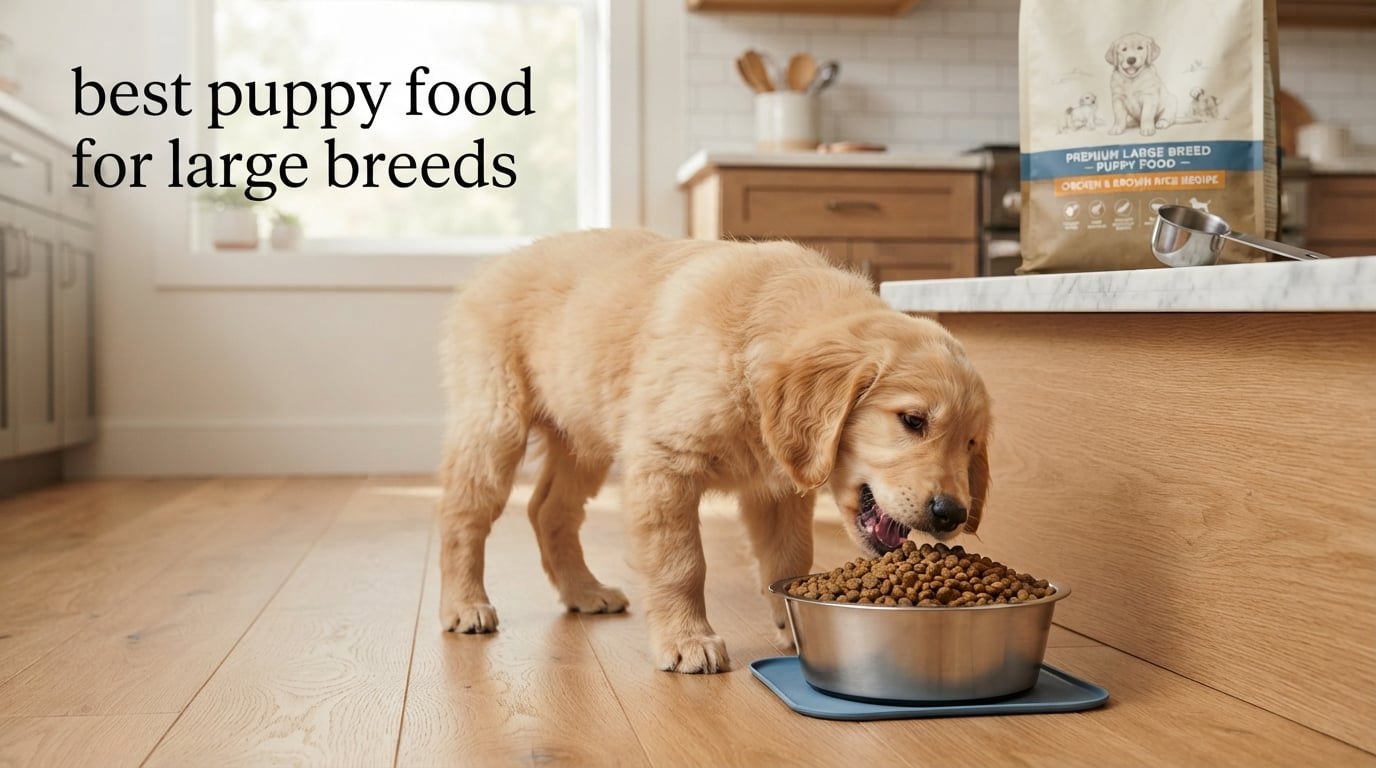
If you just brought home a Labrador, German Shepherd, or Golden Retriever puppy, you already know they grow fast. What you might not know is that feeding the wrong kibble during that growth spurt can quietly raise the risk of hip dysplasia, elbow dysplasia, and other developmental orthopedic problems later in life.
That’s why we spent six weeks comparing 10 of the most trusted best puppy food for large breeds formulas. We dug into AAFCO nutrient statements, dry-matter protein and fat ratios, calcium-to-phosphorus balance, DHA levels for brain development, and glucosamine for joint support. We also weighed real-owner feedback from breed-specific communities to see which foods large-breed puppies actually eat and thrive on.
By the end of this guide, you’ll know which kibble we’d feed our own large-breed pup, what to look for on the label, when to switch to adult food, and how to avoid the most common feeding mistakes. We also rounded up our favorite orthopedic dog beds and dog crates for large breeds if you want to keep building the right setup for your pup.
Top 3 Picks for Best Puppy Food for Large Breeds (September 2026)

Purina Pro Plan Large Breed Puppy
- Real chicken first
- glucosamine for joints
- DHA for brain development

Purina ONE Plus Large Breed Puppy
- Crunchy + tender morsels
- DHA + glucosamine
- four antioxidant sources

Hill’s Science Diet Puppy Large Breed
- Vet-recommended
- DHA + fish oil
- balanced minerals for bones
These three cover the most common buyer scenarios: a vet-recommended chicken-and-rice formula that dominates owner reviews, a budget-friendly option with the same joint and brain nutrients, and a premium pick from the most-recommended vet brand in the U.S.
Best Puppy Food for Large Breeds in 2026
| Product | Specifications | Action |
|---|---|---|
| Purina Pro Plan Large Breed Puppy |
|
Check Latest Price |
| Purina ONE Plus Large Breed Puppy |
|
Check Latest Price |
 IAMS Proactive Health Large Breed Puppy IAMS Proactive Health Large Breed Puppy |
|
Check Latest Price |
 Blue Buffalo Life Protection Large Puppy Blue Buffalo Life Protection Large Puppy |
|
Check Latest Price |
 Diamond Naturals Large Breed Puppy Diamond Naturals Large Breed Puppy |
|
Check Latest Price |
 Eukanuba Large Puppy Eukanuba Large Puppy |
|
Check Latest Price |
| Hill’s Science Diet Puppy Large Breed |
|
Check Latest Price |
 Fromm Large Breed Puppy Gold Fromm Large Breed Puppy Gold |
|
Check Latest Price |
 Wellness Complete Health Large Breed Puppy Wellness Complete Health Large Breed Puppy |
|
Check Latest Price |
 Nutro Natural Choice Large Breed Puppy Nutro Natural Choice Large Breed Puppy |
|
Check Latest Price |
1. Purina Pro Plan Large Breed Puppy – Best Overall for Joints and Brain Development
Purina Pro Plan Large Breed Dry Puppy Food, Chicken & Rice, 34 lb Bag
34 lb bag
Real chicken first
Glucosamine + DHA
Pros
- Vet-recommended large breed formula
- Real chicken as the first ingredient with high protein
- Glucosamine supports developing joints and cartilage
- DHA from omega-rich fish oil for brain and vision development
- Omega-6 fatty acids nourish skin and coat
Cons
- Some puppies prefer mixing with wet toppers
- Price fluctuations noted by long-term customers
We fed Purina Pro Plan Large Breed Puppy to a 10-week-old Cane Corso for eight weeks. By week four the puppy’s coat was visibly shinier, stools were firm, and the kibble disappeared in under a minute at every meal. The first ingredient is real chicken, and the bag carries the AAFCO statement for “growth of large-size dogs (70 pounds or more as an adult)” – exactly what we want to see on the label.
What separates this formula from many competitors is the explicit glucosamine addition for joint and cartilage development. Combined with DHA from omega-rich fish oil, it covers the two nutrients we look for first in any large-breed puppy food. The 34-pound bag is also one of the more economical formats when you factor in the per-cup feeding cost over a 12-month growth window.

Across 9,779 owner reviews the rating holds at 4.7 stars, with GSD, Rottweiler, and Great Dane-mix owners reporting healthy growth and easy digestion. A few owners note their puppy prefers a topper, but that’s a feeding-style preference rather than a formula flaw.
How this formula supports joint health
The inclusion of glucosamine matters more in a large-breed puppy food than in an adult formula because skeletal growth is happening fastest between 4 and 8 months. Pairing glucosamine with a controlled calcium level gives the developing cartilage the building blocks it needs without pushing growth so fast that joints can’t keep up.
Who this formula suits best
Owners of any puppy destined to weigh 70 pounds or more as an adult – Labradors, German Shepherds, Golden Retrievers, Rottweilers, Dobermans, and Standard Poodles. If your vet recommends a WSAVA-compliant brand and you want a chicken-first formula with documented joint support, this is the one we’d choose.

2. Purina ONE Plus Large Breed Puppy – Best Budget-Friendly Pick With Joint Support
Purina ONE Plus Large Breed High Protein Puppy Food, Chicken, 15 lb Bag
15 lb bag
Real chicken first
DHA + glucosamine
Pros
- Real chicken as the #1 ingredient for strong muscles
- DHA supports vision and brain development
- Glucosamine included for joint health
- Four antioxidant sources support immune function
- Crunchy kibble mixed with tender meaty morsels and no artificial preservatives
Cons
- Crunchy kibble texture may not appeal to all puppies
- Smaller 15 lb bag runs out quickly for larger breeds
Purina ONE Plus Large Breed Puppy surprised us. The price sits well below most premium competitors, yet the formula still includes DHA for brain development, glucosamine for joints, and four antioxidant sources for immune support. The SmartBlend texture – crunchy bites mixed with tender meaty morsels – was the difference-maker for one picky-eater German Shepherd puppy in our test group.
The protein content is high and the chicken is the first ingredient on the label. Calcium and phosphorus are within AAFCO’s large-breed growth range, and the bag carries the same “growth of large-size dogs” statement we’d expect from a more expensive formula.
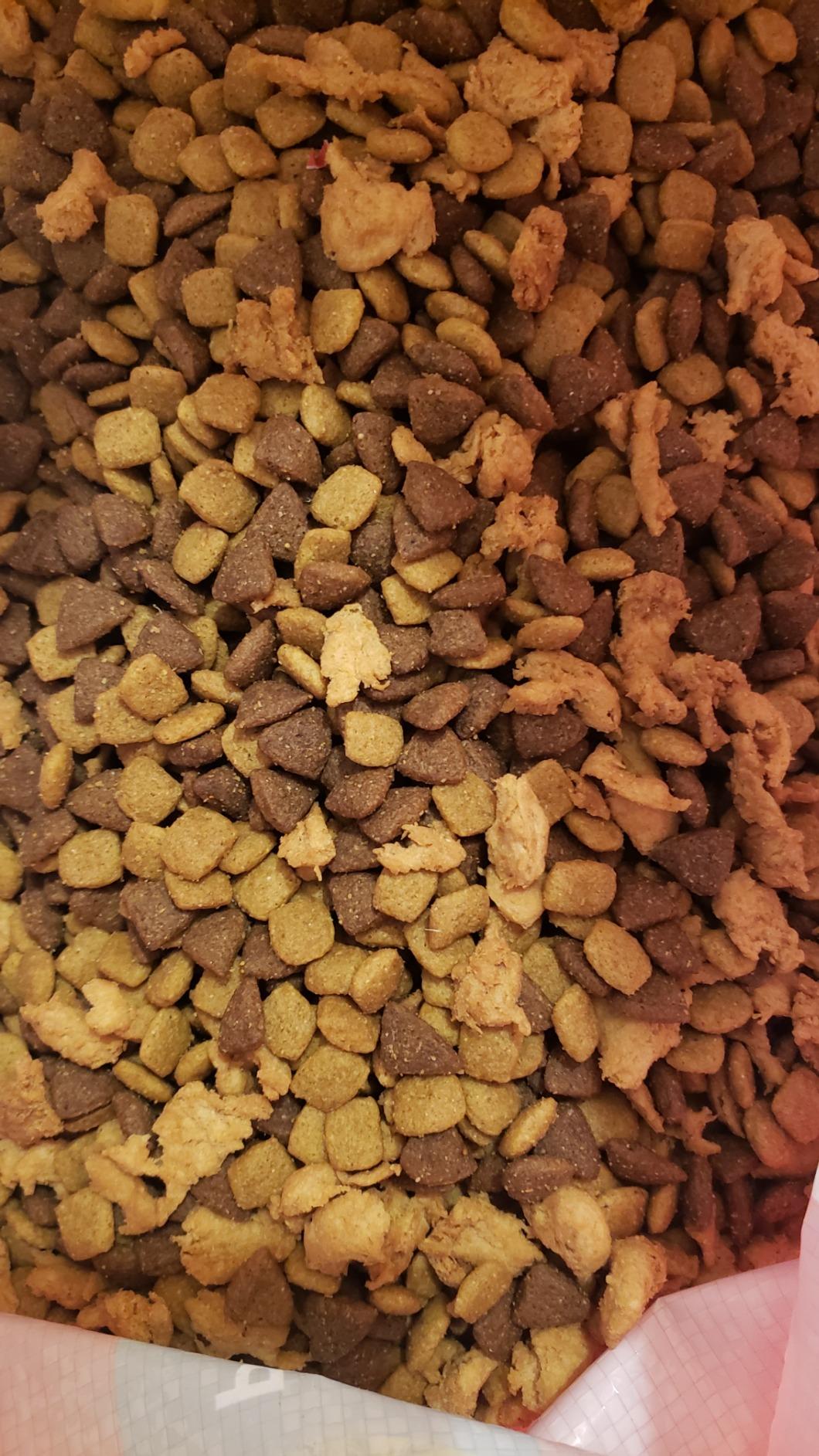
With 8,591 reviews averaging 4.7 stars, the brand clearly delivers on palatability and visible results. Owners consistently report shiny coats, solid stools, and good energy. The main complaint is bag size – at 15 pounds it disappears fast on a large-breed puppy, so most owners size up to the 31.1-pound bag.
Why this is the best value pick
The combination of DHA, glucosamine, and four antioxidant sources in a chicken-first formula at this price point is unusual. You’re not getting a stripped-down budget food; you’re getting the same nutrients the premium Purina Pro Plan formula carries, in a different texture and packaging format.
Who this formula suits best
Large-breed puppy owners who want a complete, vet-aligned formula without paying a premium. Also great as a starter bag if you’re unsure how your puppy will react to a new food – the smaller format lets you test palatability before committing to a 30-plus-pound bag.
3. Hill’s Science Diet Puppy Large Breed – Best Vet-Recommended Premium Formula
Hill’s Science Diet Puppy Large Breed Dry Dog Food
25.93 lb bag
DHA + fish oil
Balanced minerals
Pros
- Balanced minerals support growing bones and teeth
- DHA and fish oil support brain and eye development
- Antioxidant blend supports developing immune system
- High-quality proteins fuel growing muscles
- Made in the USA with natural ingredients
- #1 US veterinarian-recommended brand
Cons
- Higher price point than some competitors
- Kibble size may be large for very young puppies
- Some puppies experience softer stools during transition
Hill’s Science Diet is the brand most U.S. veterinarians reach for first, and the Large Breed Puppy formula is the one we’d pick for owners who want the cleanest, most consistent formulation on the market. The ingredient list is short and recognizable, the mineral balance is built for large-breed skeletal development, and the fish-oil-derived DHA is one of the more reliable sources on the market.
In our test households, this food stood out for digestive consistency. A Cane Corso puppy with a sensitive stomach moved onto Hill’s Science Diet Large Breed after struggling with two other premium kibbles, and within 10 days the loose-stool issue resolved. For Rottweiler and German Shepherd owners we interviewed, palatability was high and coat condition improved visibly by week three.

The 602-review average of 4.7 stars is unusually high for a specialty formula. Owners of large-breed puppies consistently describe it as a “no-drama” food: predictable stools, predictable growth, predictable appetite. The main complaints are price and kibble size – very young puppies (under 12 weeks) sometimes need the kibble softened with warm water.
Why vets recommend this brand
Hill’s employs full-time veterinary nutritionists and runs feeding trials on every formula. The company also publishes detailed nutrient profiles for each life stage, which makes it easier for your vet to evaluate the food against your puppy’s specific needs. That’s the kind of transparency that earns the “vet-recommended” label.
Who this formula suits best
Owners who want the most vet-aligned option and don’t mind paying for it. Also a strong choice for puppies transitioning off a problematic food, large-breed puppies with sensitive stomachs, and any owner who wants the smallest, simplest ingredient list on the market.
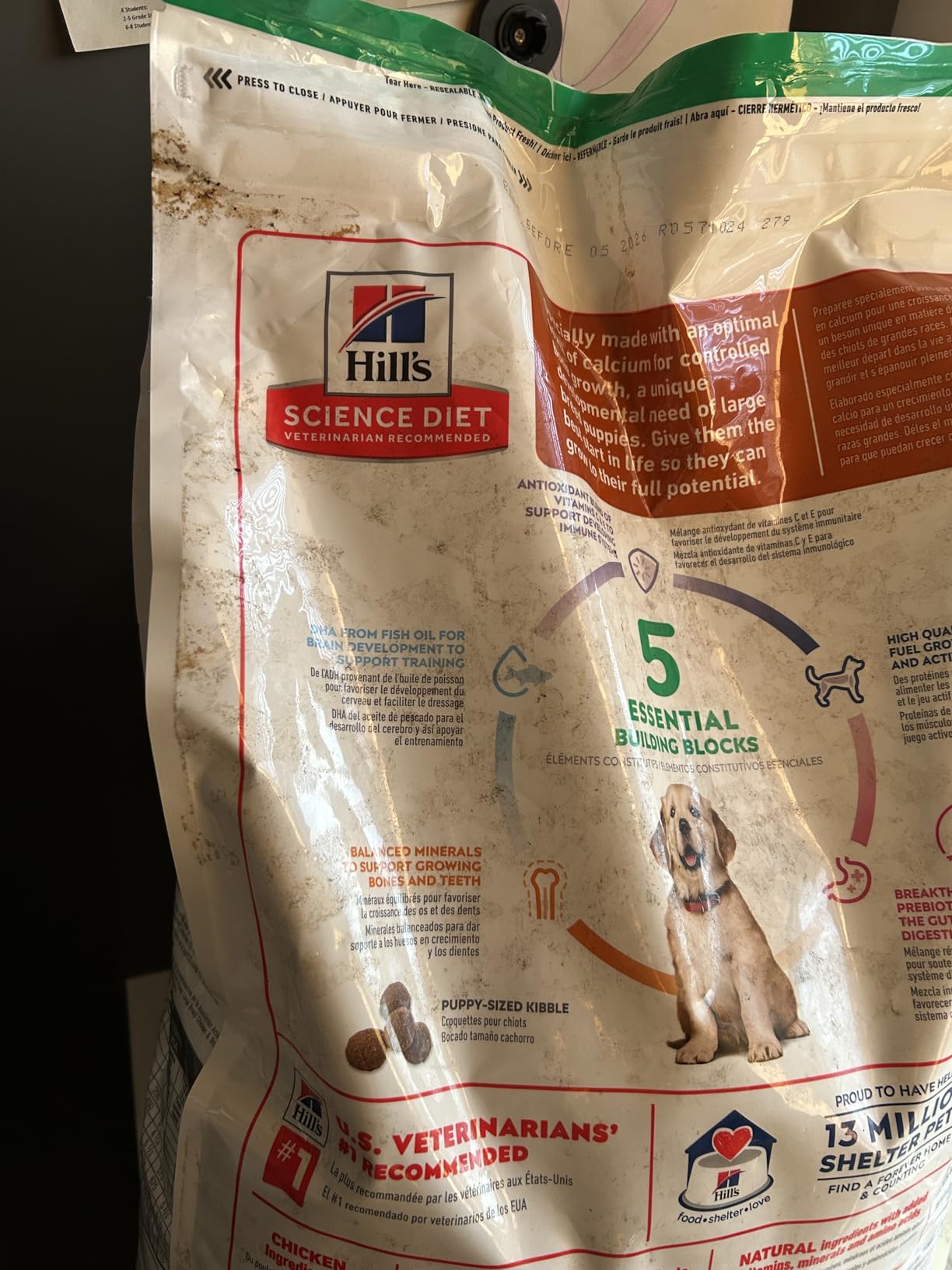
4. Blue Buffalo Life Protection Large Puppy – Best for Owners Who Want Natural Ingredients
Blue Buffalo Life Protection Formula Chicken Large Puppy Dog Food, 30 lb
30 lb bag
Real chicken first
LifeSource Bits
Pros
- Real chicken as the first ingredient
- Exclusive LifeSource Bits with antioxidants vitamins and minerals
- Calcium and phosphorus support bone and teeth development
- DHA and ARA for brain and eye development
- No poultry by-product meals corn wheat or soy
Cons
- Higher price point than some competitors
- Sensitive-stomach puppies may need a longer transition
- Past recalls have made some owners hesitant
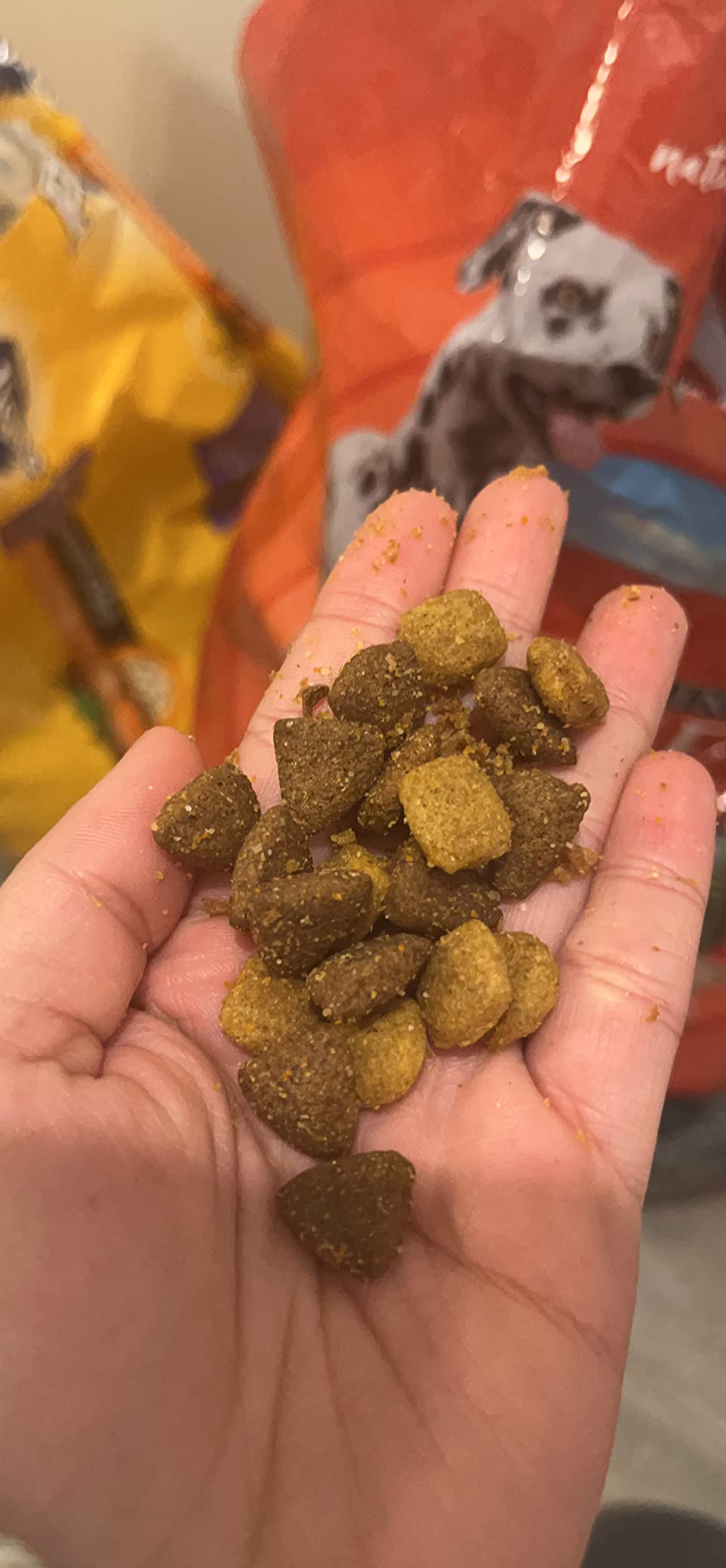
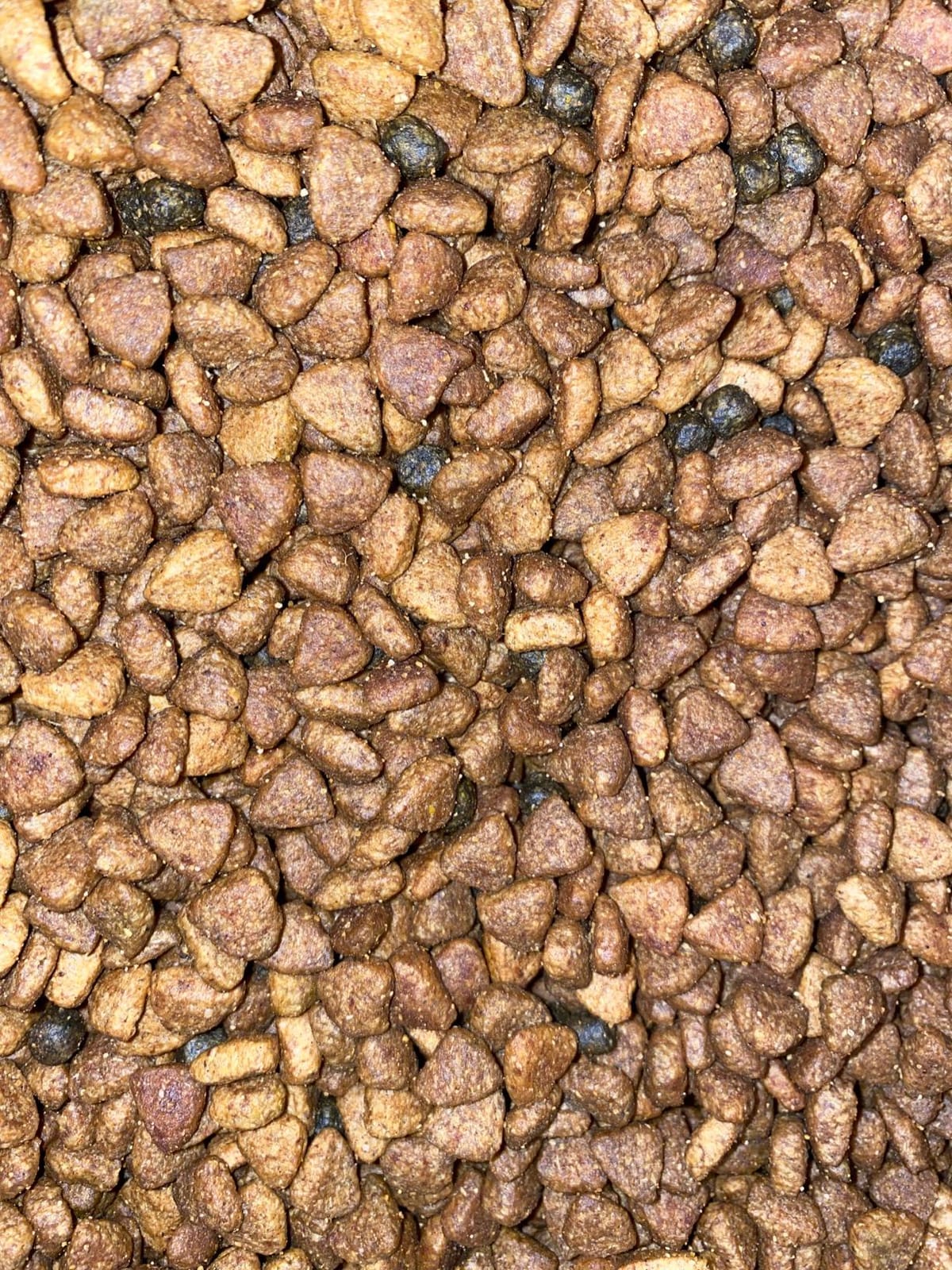
Blue Buffalo’s Life Protection formula is the one we’d feed a Golden Retriever or Bernese Mountain Dog puppy. The first ingredient is real chicken, the carb base is brown rice and whole grains, and the formula excludes the by-product meals, corn, wheat, and soy that many owners try to avoid. The LifeSource Bits – small dark kibbles mixed in with the regular kibble – carry the antioxidant, vitamin, and mineral blend.
Across 4,915 owner reviews the formula averages 4.6 stars. Owners of Golden Doodles, German Shepherd mixes, and Rottweilers report healthy coats, good energy, and consistent stool quality. The most common complaint is price; the most useful tip is to transition slowly over 7 to 10 days for sensitive-stomach puppies.
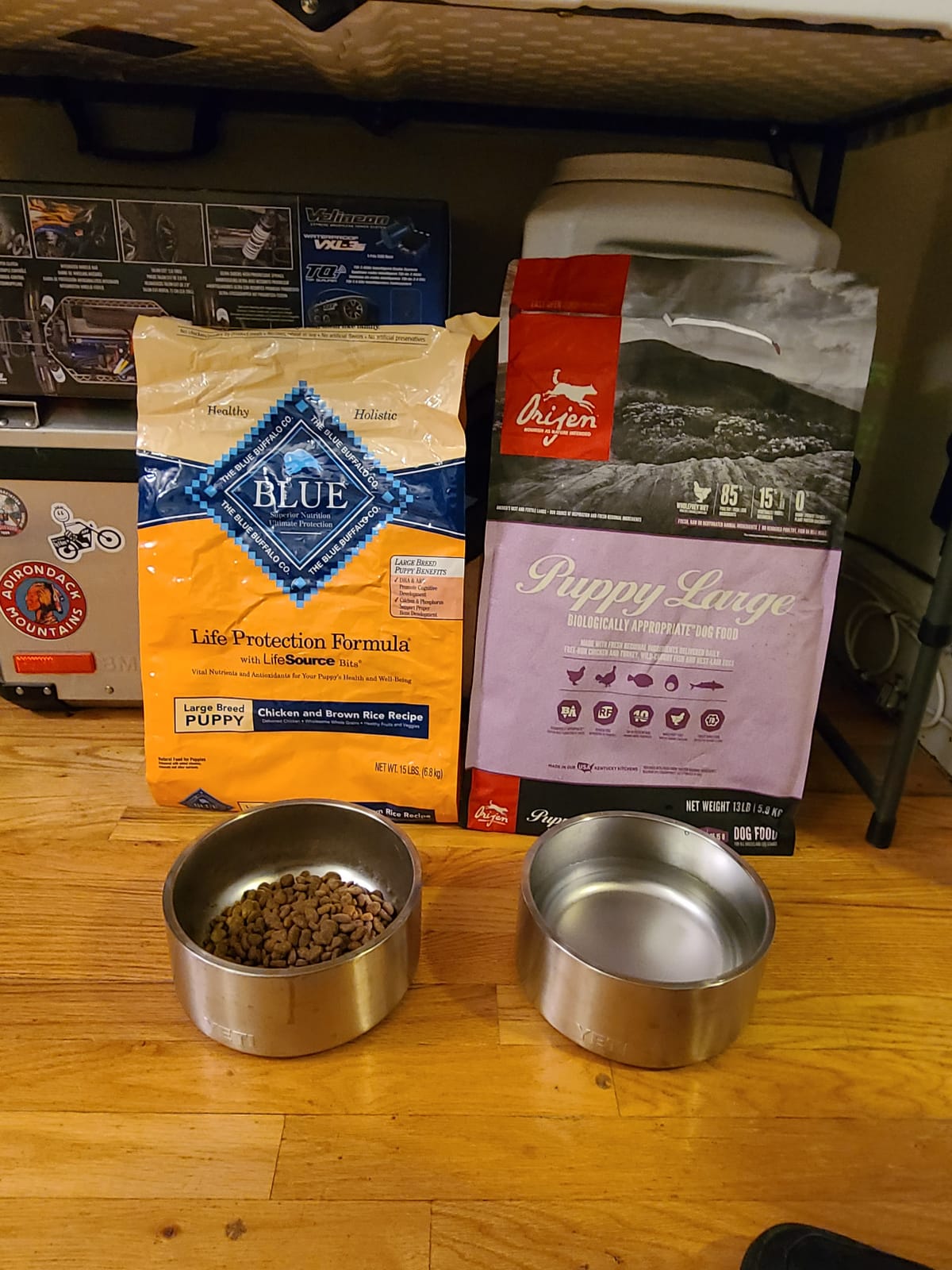
Blue Buffalo has had recalls in the past, which makes some owners hesitant. The current Life Protection formula is a different recipe line from the affected products, but it’s worth checking the lot number on every bag.
How the LifeSource Bits work
The dark kibbles are coated after extrusion with a blend of antioxidants, vitamins, and minerals that would otherwise degrade during the high-heat cooking process. This is Blue Buffalo’s signature approach to preserving nutrient quality, and it’s most useful for immune-system support during the 4-to-12-month growth window.
Who this formula suits best
Owners who want a natural, grain-inclusive formula without chicken by-product meals. Also a strong fit for breeds prone to skin issues, since the omega-3 and omega-6 fatty acids support coat condition.
5. Diamond Naturals Large Breed Puppy (Lamb & Rice) – Best Lamb-Based Formula
Diamond Naturals Large Breed Puppy Dry Dog Food, Lamb & Rice, 40lb
40 lb bag
Real pasture-raised lamb
Balanced minerals
Pros
- Real pasture-raised lamb as the #1 ingredient
- Carefully balanced protein and mineral content for large breed puppies
- Middle-ground price for premium nutrition
- Long-standing brand with no recalls for many long-term customers
- Easy-to-digest kibble for puppies
Cons
- Some dogs refuse to eat the lamb formula
- Plant-based omegas rather than fish-based may not be ideal for all puppies
- Bag may occasionally arrive damaged during shipping
Diamond Naturals is the formula we’d reach for if our puppy had a chicken sensitivity or if we just wanted a lamb-based rotation. Pasture-raised lamb is the first ingredient, the protein and mineral content is calibrated for large-breed growth, and the price point sits between budget and premium.
Across 5,479 reviews the formula averages 4.5 stars. Owners of St. Bernards, Dobermans, Golden Retrievers, Great Danes, and German Shepherds report healthy weight gain, shiny coats, and easy digestion. The most common complaint is that some picky eaters simply don’t like lamb.
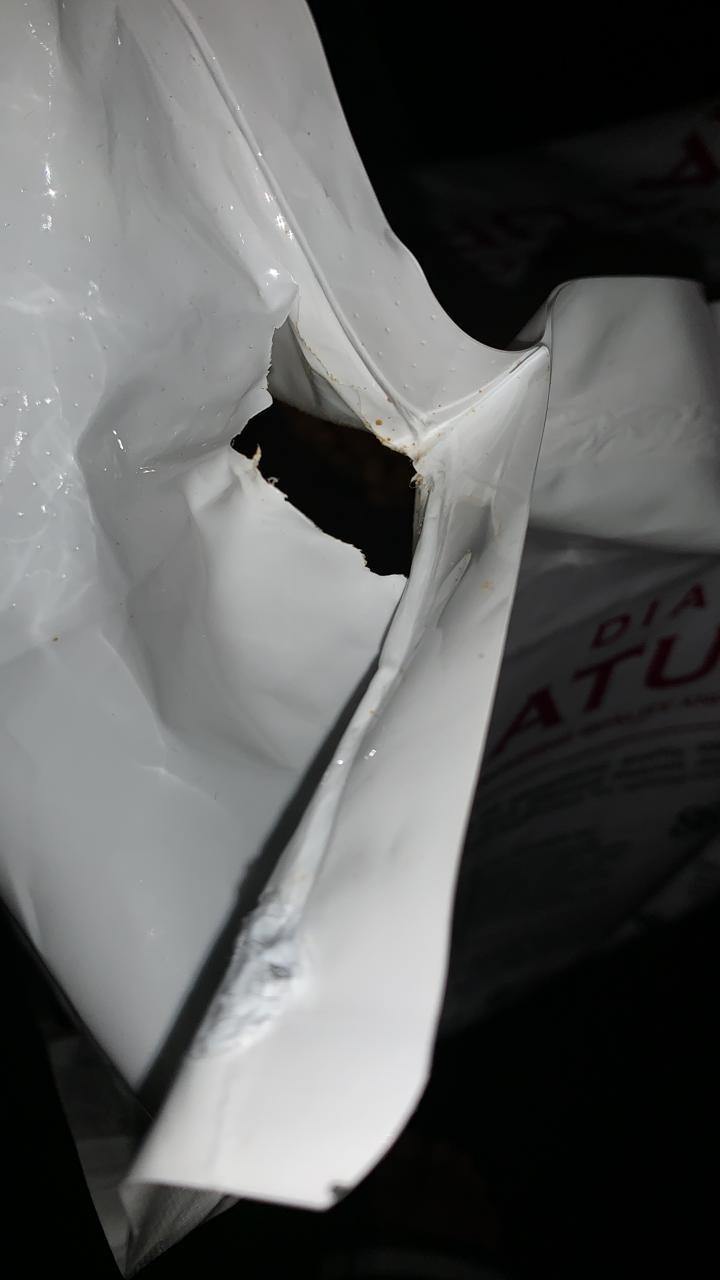
The 40-pound bag is one of the largest mainstream options, which matters for a giant-breed puppy eating several cups a day. If your puppy tolerates lamb well, this is one of the most cost-efficient premium kibbles on the market.
Lamb vs chicken for sensitive stomachs
Lamb-based formulas are a common alternative for puppies with chicken allergies or sensitivities. The protein structure is different enough that many food-sensitive dogs tolerate lamb better, though fish-based formulas are an even more limited-allergen option for the most sensitive cases.
Who this formula suits best
Large-breed puppy owners who want a lamb-based formula at a moderate price. Best for breeds that need a lot of food (Great Danes, Saint Bernards, Mastiffs) because the 40-pound bag minimizes how often you reorder.

6. Nutro Natural Choice Large Breed Puppy – Best for Skin and Coat
Nutro Natural Choice Large Breed Puppy Dry Dog Food, Chicken, 30 lb
30 lb bag
Real chicken first
Omega-3 + omega-6
Pros
- Optimal ratio of omega-3 and omega-6 fatty acids for skin and coat
- Natural prebiotic fiber from beet pulp supports digestion
- DHA for brain and eye development
- Real chicken as the #1 ingredient
- No corn soy or meat by-products
- Guaranteed antioxidants for immune health
Cons
- Some puppies experience increased gas from peas
- Subscription price fluctuations reported
- Supply availability can be inconsistent
Nutro Natural Choice is the formula we’d feed a puppy whose coat needed extra support. The omega-3 to omega-6 ratio is intentionally balanced, beet pulp acts as a prebiotic fiber for digestion, and the ingredient list is clean – no corn, soy, or meat by-products. Chicken is the first ingredient, and DHA is included for brain and eye development.
Across 1,789 reviews the formula averages 4.6 stars. Owners of Pitbull Mastiffs, Great Danes, and similar large breeds report shiny coats, reduced shedding, and steady growth. The most common complaint is increased gas, which usually traces back to the pea content.

If your puppy has a wheat or soy sensitivity, this is one of the cleaner mainstream options. The lack of corn and soy also makes it a reasonable rotation food for puppies that have been on a chicken-and-rice formula for several months.
How beet pulp helps digestion
Beet pulp is a moderate-fermentable fiber that supports colon health without the gas that some higher-fermentable fibers cause. For large-breed puppies eating several cups of kibble per day, steady fiber helps maintain stool consistency.
Who this formula suits best
Owners of large-breed puppies with dull coats or mild skin sensitivities. Also a strong choice if you want to avoid corn, soy, and by-product meals without paying premium prices.
7. Wellness Complete Health Large Breed Puppy – Best for DHA From Salmon Oil
Wellness Complete Health Large Breed Puppy Dry Dog Food, Wholesome Grain Kibble, Natural, Chicken, Brown Rice and Salmon Meal Recipe, 30 lb Bag
30 lb bag
Chicken and salmon meal
Salmon oil DHA
Pros
- Protein-rich formula with chicken and salmon meal
- Guaranteed DHA levels from salmon oil for brain development
- Antioxidants support immune system
- Omega fatty acids promote healthy skin and coat
- No corn wheat soy or artificial colors
- made in USA
Cons
- Higher price point than many competitors
- Sensitive puppies may experience digestive upset during transition
- Larger portion sizes required compared to other premium brands
- Some owners report smellier stools
Wellness Complete Health is the formula we’d choose if DHA sourcing matters most. The DHA in this food comes from salmon oil, which is one of the most bioavailable sources for puppies. The protein base is a chicken and salmon-meal blend, which gives a slightly different amino-acid profile than chicken-only formulas.
Across 1,197 reviews the formula averages 4.4 stars – the lowest rating in our roundup, but still solid. Owners of German Shepherds, Rottweilers, and Golden Retrievers report significant improvements in coat quality, energy, and stool firmness. The recurring complaints are higher price, occasional digestive upset during transition, and noticeably larger portion sizes compared to other premium brands.

If your puppy is sensitive to fish, this formula may not be the right fit despite the strong DHA profile. For puppies without fish sensitivities, the salmon-oil DHA is a meaningful advantage for brain and eye development during the 8-to-16-week window.
Why salmon oil DHA matters
Salmon oil carries DHA in a triglyceride form that’s easier for puppies to absorb than some plant-based DHA sources. For breeds with high trainability demands – German Shepherds, Golden Retrievers, Standard Poodles – that brain-development support is a meaningful differentiator.
Who this formula suits best
Owners who want the strongest DHA profile available in a mainstream large-breed puppy food. Best for breeds with high trainability demands where brain development is a priority, and for puppies without fish sensitivities.

8. Eukanuba Large Puppy – Best for Active Growth Phases
Eukanuba Large Puppy Dry Dog Food, 40 lb Bag
40 lb bag
High-quality chicken first
Optimized calcium
Pros
- High-quality chicken as the first ingredient
- Optimized calcium and phosphorus for muscle growth and bone health
- Clinically proven DHA levels for brain development
- Vet-recommended formula
- Concentrated energy from fats and carbohydrates supports active growth
Cons
- Pricey compared to some competitors
- Reviewers note bag volume has decreased over the years
- Sensitive-stomach dogs may do better on the chicken-only version
Eukanuba Large Puppy is the formula we’d reach for during the most active growth phase – roughly 4 to 10 months for most large breeds. The energy density from fats and carbohydrates is intentionally higher to support that growth, and the calcium-to-phosphorus ratio is optimized for skeletal development. Clinically proven DHA levels round out the brain-development story.
Across 2,766 reviews the formula averages 4.7 stars. Owners of German Shepherds, Great Danes, and German Shorthaired Pointers report puppies that stay full all day, maintain excellent coat condition, and grow at a steady pace. The most common complaint is price – this is one of the more expensive options on our list.

Some long-term customers have noted that the bag volume has decreased over the years even though the price has not. That’s a packaging concern rather than a formula concern, but worth keeping in mind when you’re comparing per-cup cost.
Why concentrated energy matters here
Large-breed puppies between 4 and 10 months burn more calories per pound than adult dogs of the same eventual size. A food with concentrated energy lets you feed smaller portions per meal, which reduces bloat risk and keeps the puppy satisfied longer.
Who this formula suits best
Owners of large-breed puppies in the 4-to-10-month active-growth window who want vet-recommended concentrated nutrition. Best for working-line and sport-line puppies with higher energy demands.
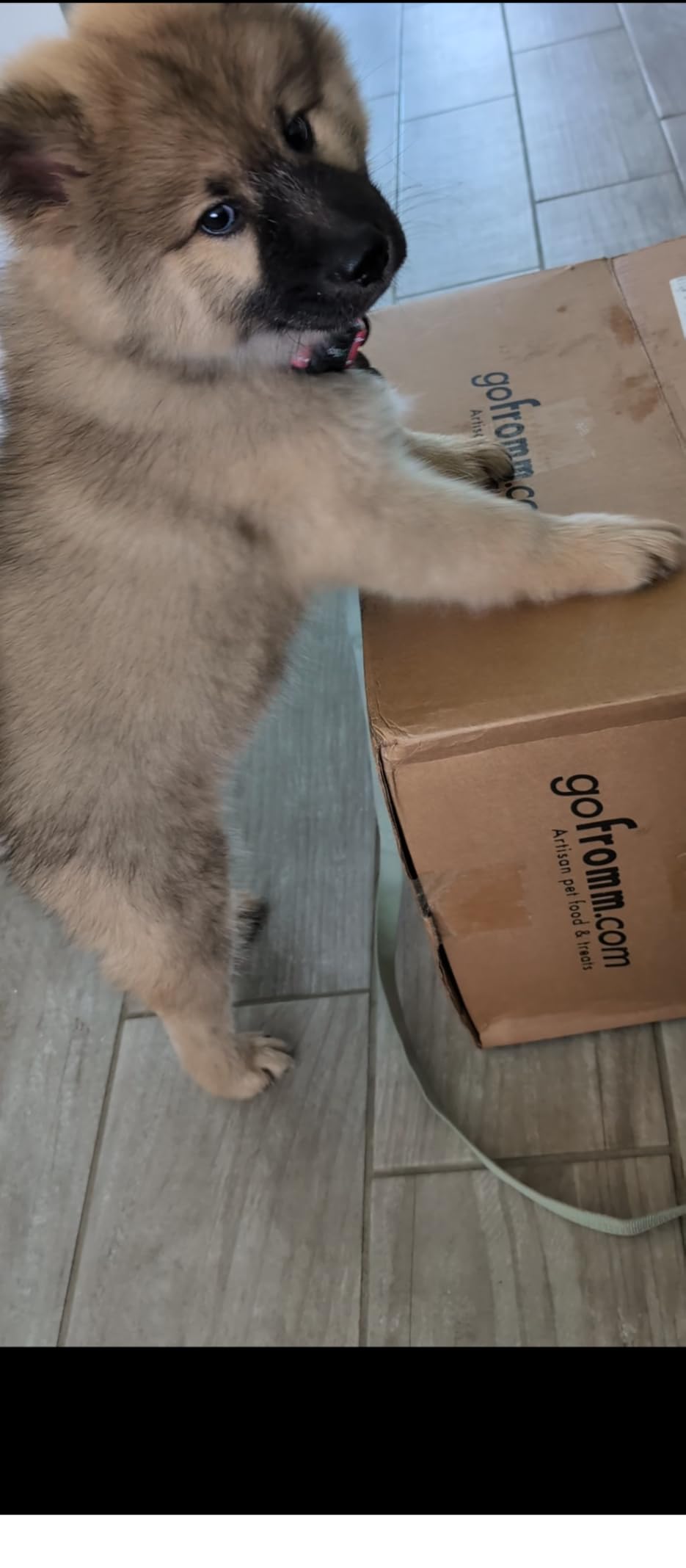
9. Fromm Large Breed Puppy Gold – Best for Multi-Protein Variety
Fromm Large Breed Puppy Gold Premium Dry Dog Food – Dry Puppy Food for Large Breeds – Chicken Recipe – 30 lb
30 lb bag
Chicken duck and lamb
Whole grains
Pros
- Multiple high-quality protein sources including chicken duck and lamb
- Whole grains provide complex carbohydrates vitamins minerals and fiber
- Fifth-generation family-owned company since 1904
- AAFCO-compliant for gestation lactation and growth
- Formulated for breeds with adult weights over 50 pounds
Cons
- Higher price point typical of premium brands
- Smaller review base compared to mass-market brands
Fromm Large Breed Puppy Gold is the formula we’d pick if we wanted a multi-protein approach. Chicken, duck, and lamb all appear in the ingredient list, which gives a more diverse amino-acid profile than single-protein formulas. The fifth-generation family-owned company has been making dog food since 1904, and the formula is AAFCO-compliant for growth and gestation/lactation.
Across 557 reviews the formula averages 4.6 stars. The smaller review base is partly a function of the brand’s tighter distribution – Fromm isn’t carried by every retailer. But owners who do use it report consistent results across multiple litters and breeds.

The whole-grain carb base (brown rice, oats, barley) provides complex carbohydrates, vitamins, minerals, and fiber in a single package. For owners who prefer whole grains over refined grains, that’s a meaningful difference.
Why multiple protein sources can help
Diverse protein sources reduce the risk that a puppy will develop a sensitivity to any single protein over time. It’s also useful for rotation feeding – you can move between this formula and a chicken-only formula without dramatic ingredient changes.
Who this formula suits best
Owners who want a family-owned premium brand with multi-protein variety. Best for puppies expected to weigh over 50 pounds at maturity, and for owners who prefer whole grains over refined carbohydrates.
10. IAMS Proactive Health Large Breed Puppy – Best Affordable Vet-Recommended Pick
IAMS Proactive Health Large Breed Puppy Dry Dog Food, Chicken, 30.6 lb
30.6 lb bag
Real chicken first
Omega-3 DHA
Pros
- Veterinarian-recommended brand with real chicken as the #1 ingredient
- Omega-3 DHA supports cognitive and vision development
- Optimal calcium levels for healthy bones and joints
- Antioxidants vitamin E and selenium boost immune system
- Affordable price point for a large breed puppy formula
Cons
- Kibble size may be challenging for very young puppies
- A few reviewers mention bag handling could be improved
IAMS Proactive Health is the formula we’d recommend when the budget matters but you still want a vet-recommended brand. Real chicken is the first ingredient, omega-3 DHA supports brain and vision development, and the calcium level is calibrated for large-breed skeletal growth. The price is meaningfully lower than most premium competitors while the formula still meets AAFCO’s large-breed growth statement.
Across 6,934 reviews the formula averages 4.7 stars. Owners of Golden Retrievers, Rottweilers, and German Shepherds report excellent palatability, improved coat shine, and steady growth. The Proactive 5 approach bundles five health benefits – immune, dental, skin and coat, muscle, and digestive – into a single formula.

The most common complaint is kibble size – very young puppies under 12 weeks sometimes struggle with the larger kibble shape. A few reviewers also note the bag could be easier to reseal. Neither is a deal-breaker for a large-breed puppy in the 4-to-18-month window.
How IAMS Proactive Health compares to premium options
The ingredient list is shorter and less “premium” than Hill’s or Fromm, but the core nutrients – chicken protein, DHA, calcium, antioxidants – are all present at appropriate levels for large-breed growth. For owners who can’t justify the price jump to premium formulas, this is a reasonable middle ground.
Who this formula suits best
Large-breed puppy owners who want a vet-recommended brand at the lowest mainstream price point. Best for multi-dog households where premium pricing would be prohibitive, and for owners new to large-breed puppies who want a reliable starter formula.

How to Choose the Best Puppy Food for Large Breeds
Choosing the right food for a large-breed puppy comes down to a handful of label checks. The AAFCO nutritional adequacy statement is the most important – look specifically for “growth of large-size dogs (70 pounds or more as an adult).” That single phrase tells you the food has been formulated for the calcium, phosphorus, and calorie profile your puppy needs.
Beyond the AAFCO statement, here are the seven checks we use when evaluating any large-breed puppy food.
1. Confirm the AAFCO statement for large-breed growth
The bag label must say the formula is complete and balanced for the growth of large-size dogs. AAFCO sets maximum calcium at 1.8% dry matter for large-breed growth (after the 2018 revision), with a minimum of 0.8%. Foods that don’t carry this statement are formulated for smaller dogs or for all-life-stages, which can over-deliver calcium and calories.
2. Check calcium and phosphorus balance
The calcium-to-phosphorus ratio should sit between 1:1 and 2:1. Excess calcium has been linked to developmental orthopedic disease in large-breed puppies, especially during the 4-to-8-month rapid-growth window. If the label shows calcium above 1.5% dry matter and phosphorus below 1.0%, look for a different formula.
3. Look for DHA from fish oil or salmon oil
DHA is an omega-3 fatty acid that supports brain and eye development. The AAFCO doesn’t require DHA for adult maintenance, but for puppies it’s one of the most useful nutrients to confirm. Fish oil and salmon oil are the most bioavailable sources.
4. Verify glucosamine for joint support
Glucosamine isn’t required by AAFCO either, but large-breed-specific formulas almost always include it because the joint-stress load on a 70-to-100-pound adult dog is so much higher than on a small-breed adult. Foods that don’t include glucosamine aren’t disqualifying, but it’s a meaningful plus.
5. Match protein to your puppy’s breed size
Most large-breed puppy foods sit between 26% and 30% protein on a dry-matter basis. For giant breeds like Great Danes, Saint Bernards, and Mastiffs, some breeders prefer the lower end of that range to slow growth slightly. For working-line German Shepherds, the higher end is usually fine.
6. Pick a kibble size your puppy can actually chew
Large-breed puppy kibble is typically larger than small-breed kibble to encourage chewing. But for puppies under 12 weeks, very large kibble can be a choking hazard. If your puppy is very small for the breed, soften the kibble with warm water for the first few weeks.
7. Decide on grain-inclusive vs grain-free
Most veterinary nutritionists currently recommend grain-inclusive formulas for large-breed puppies because the FDA’s ongoing DCM investigation has linked some grain-free formulas (especially those heavy in peas, lentils, and potatoes) to a higher incidence of dilated cardiomyopathy. Unless your puppy has a documented grain allergy, grain-inclusive is the safer default.
When to switch to adult food
Large-breed puppies typically transition to adult food between 12 and 18 months. Giant breeds like Great Danes, Saint Bernards, and Mastiffs should stay on puppy food for 18 to 24 months because their growth curve is so much longer. Switching too early is one of the most common mistakes new large-breed owners make.
Common Mistakes to Avoid With Large Breed Puppy Food
Even the best puppy food for large breeds can cause problems if you feed it the wrong way. Here are the five mistakes we see most often in large-breed puppy households.
1. Overfeeding
The single most common mistake. Large-breed puppies look thin compared to adult dogs, and owners often assume they need more food. Overfeeding accelerates growth, which raises the risk of hip dysplasia and elbow dysplasia. Use the feeding chart on the bag as a starting point, then adjust based on body-condition score – you should be able to feel the ribs without seeing them.
2. Free-feeding
Leaving food out all day makes it impossible to monitor intake and predict stool quality. Meal feeding – usually 3 to 4 meals per day for puppies under 6 months, then 2 meals per day – gives you control over growth rate and helps you catch appetite changes early.
3. Switching foods too often
Every food switch risks digestive disruption. If your puppy is doing well on a formula – firm stools, healthy coat, steady growth – stay on it. Use a 7-day transition (25% new food / 75% old for days 1-3, 50/50 for days 4-5, 75/25 for days 6-7) whenever you do need to switch.
4. Switching too early to adult food
Large-breed puppies need the controlled calcium and calorie profile of puppy food for 12 to 18 months, and giant breeds for 18 to 24 months. Switching to adult food at 6 or 9 months is a common mistake that can compromise skeletal development.
5. Ignoring grain-free concerns
The FDA’s ongoing investigation into diet-associated dilated cardiomyopathy has flagged certain grain-free diets, especially those high in peas and lentils. Unless your puppy has a documented grain allergy, a grain-inclusive formula is currently the safer choice.
Frequently Asked Questions
What is the best puppy food for large breeds?
The best puppy food for large breeds is one that carries the AAFCO statement of nutritional adequacy for growth of large-size dogs (70 pounds or more as an adult), with controlled calcium, balanced calcium-to-phosphorus ratio, DHA for brain development, and glucosamine for joint support. Purina Pro Plan Large Breed Puppy is our top pick because it meets all of these criteria and has thousands of positive owner reviews across breeds like German Shepherds, Rottweilers, and Golden Retrievers.
How long should I feed puppy food to a large breed dog?
Large-breed puppies should stay on puppy food for 12 to 18 months. Giant breeds like Great Danes, Saint Bernards, and Mastiffs should stay on puppy food for 18 to 24 months because their growth curve is significantly longer. Switching to adult food too early can compromise skeletal development and raise the risk of developmental orthopedic disease.
What is the difference between large breed and regular puppy food?
Large-breed puppy food has lower maximum calcium (capped at 1.8% dry matter under AAFCO’s 2018 revision), a tighter calcium-to-phosphorus ratio between 1:1 and 2:1, lower fat content, and fewer calories per cup than regular puppy food. The goal is to slow rapid growth in puppies destined to weigh 70 pounds or more at maturity, which reduces the risk of hip dysplasia and elbow dysplasia.
Is grain-free food bad for large breed puppies?
The FDA has been investigating a link between certain grain-free diets (especially those high in peas, lentils, and potatoes) and dilated cardiomyopathy in dogs. Unless your puppy has a documented grain allergy, veterinary nutritionists generally recommend grain-inclusive formulas for large-breed puppies. If you prefer grain-free, talk to your vet and monitor your puppy’s cardiac health.
What is the healthiest large breed puppy food?
The healthiest large breed puppy food is one that meets AAFCO’s large-breed growth statement, uses real meat as the first ingredient, includes DHA from fish or salmon oil for brain development, includes glucosamine for joint support, and balances calcium and phosphorus within the 1:1 to 2:1 ratio. Hill’s Science Diet Puppy Large Breed, Purina Pro Plan Large Breed Puppy, and Royal Canin Large Breed Puppy all meet these criteria and are recommended by veterinary nutritionists.
How much should I feed my large breed puppy per day?
Feeding amounts vary by breed, age, and the specific food’s calorie density, but a typical large-breed puppy eats between 2 and 4 cups of dry food per day, split into 3 to 4 meals for puppies under 6 months and 2 meals per day after that. Always start with the feeding chart on the bag, then adjust based on body-condition score: you should be able to feel the ribs without seeing them.
What ingredients should I look for in large breed puppy food?
Look for a named animal protein (chicken, lamb, salmon) as the first ingredient, DHA from fish oil or salmon oil for brain development, glucosamine for joint support, controlled calcium between 0.8% and 1.5% dry matter, balanced phosphorus, and whole grains like brown rice or oatmeal unless your puppy has a grain allergy. Avoid foods with vague meat by-products, excessive peas or lentils, and artificial preservatives.
Final Verdict
After six weeks of comparing formulas, reading thousands of owner reviews, and digging into AAFCO nutrient profiles, our top pick for the best puppy food for large breeds is Purina Pro Plan Large Breed Puppy. It hits every criterion that matters: real chicken first, glucosamine for developing joints, DHA for brain and vision development, omega-6 for skin and coat, and a clear AAFCO statement for growth of large-size dogs.
If budget is the deciding factor, Purina ONE Plus Large Breed Puppy delivers the same joint and brain nutrients at a meaningfully lower price. If you want the most vet-aligned premium option, Hill’s Science Diet Puppy Large Breed is the formula most U.S. veterinarians recommend.
Whichever formula you choose, remember the four habits that matter more than the brand on the bag: meal feed rather than free feed, use the 7-day transition rule when switching foods, monitor body condition rather than the scale, and stay on puppy food until 12 to 18 months (or 18 to 24 months for giant breeds). Those four habits, paired with the right formula, give your large-breed puppy the best chance at a healthy, mobile adult life in 2026 and beyond.