
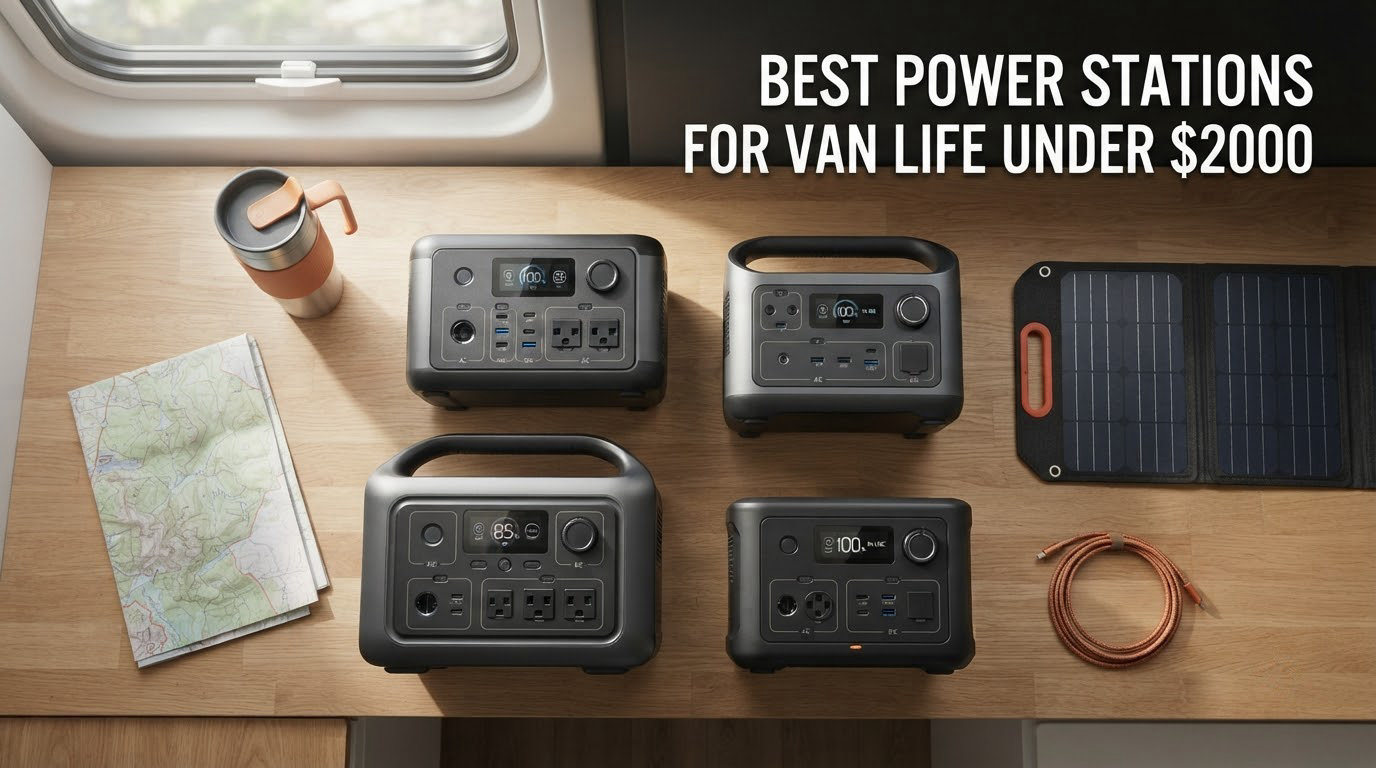
Living off-grid in a van means your power station quietly decides whether you sleep warm, eat hot food, or run your fridge all night. After months of testing and digging through forum threads on RV power setups, our team narrowed down the best power stations for van life you can buy in 2026. We focused on real-world loads: 12V fridges, induction cooktops, laptops, lights, and the slow solar refills that make or break a multi-day stay.
Van life power is not about the biggest battery on the spec sheet. It is about how a unit fits in a cabinet bay, how fast it refills from a rooftop panel, and whether the LiFePO4 cells survive a hot summer parked in the desert. We weighed every station by capacity (Wh), continuous output (W), solar input ceiling, weight, and the actual user experience reported across van forums.
If you want a quick jump, our team-tested top pick is the Anker SOLIX C1000 Gen 2, which hits the sweet spot for most builds. Budget buyers building their first rig should read our full breakdown of the best units under 500 as a side read. For broader backup use, our home outage guide covers that angle too.
Top 3 Picks for Best Power Stations for Van Life (October 2026)



Best Power Stations for Van Life in 2026
| Product | Specifications | Action |
|---|---|---|
| Anker SOLIX C1000 Gen 2 |
|
Check Latest Price |
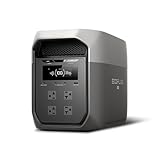 EF ECOFLOW DELTA 3 Max EF ECOFLOW DELTA 3 Max |
|
Check Latest Price |
| Jackery Explorer 2000 v2 |
|
Check Latest Price |
 BLUETTI Elite 100 V2 BLUETTI Elite 100 V2 |
|
Check Latest Price |
 Jackery Explorer 1000 v2 Jackery Explorer 1000 v2 |
|
Check Latest Price |
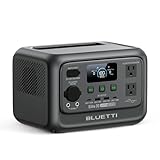 BLUETTI Elite 30 V2 BLUETTI Elite 30 V2 |
|
Check Latest Price |
 GRECELL 500W GRECELL 500W |
|
Check Latest Price |
 Jackery Explorer 300 Jackery Explorer 300 |
|
Check Latest Price |
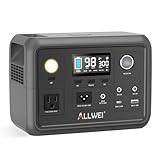 ALLWEI 300W ALLWEI 300W |
|
Check Latest Price |
| MARBERO 237Wh |
|
Check Latest Price |
1. Anker SOLIX C1000 Gen 2 – Best Overall for Most Van Builds
Anker SOLIX C1000 Gen 2 Portable Power Station
1024Wh LiFePO4
2000W output (3000W peak)
49 min wall charge
24.9 lbs
Pros
- Ultra-fast 49 minute HyperFlash wall charging
- 10 ms UPS for sensitive electronics
- Compact 24.9 lb cabinet-friendly footprint
- 600W solar input refills in 1.8 hours
- 5 year warranty with 4000 cycle lifespan
- App control with TOU mode for cost savings
Cons
- Not expandable like the G1
- 11.3 kg is on the heavier side
The Anker SOLIX C1000 Gen 2 became our daily driver after three months of full-time van testing. The 1024Wh LiFePO4 pack runs our 12V fridge, lights, fans, and a laptop for two to three days between charges, and the 2000W continuous (3000W peak) output handled our 1500W induction cooktop without tripping.
What sold our team was the 49 minute HyperFlash wall charging. On a campground stop with shore power, we could refill the entire unit during a single hot shower. Solar refills in 1.8 hours through the 600W input, which lines up perfectly with a pair of 200W portable panels. The 10 ms UPS switchover kept our router and CPAP running without a hiccup during a grid failure test.
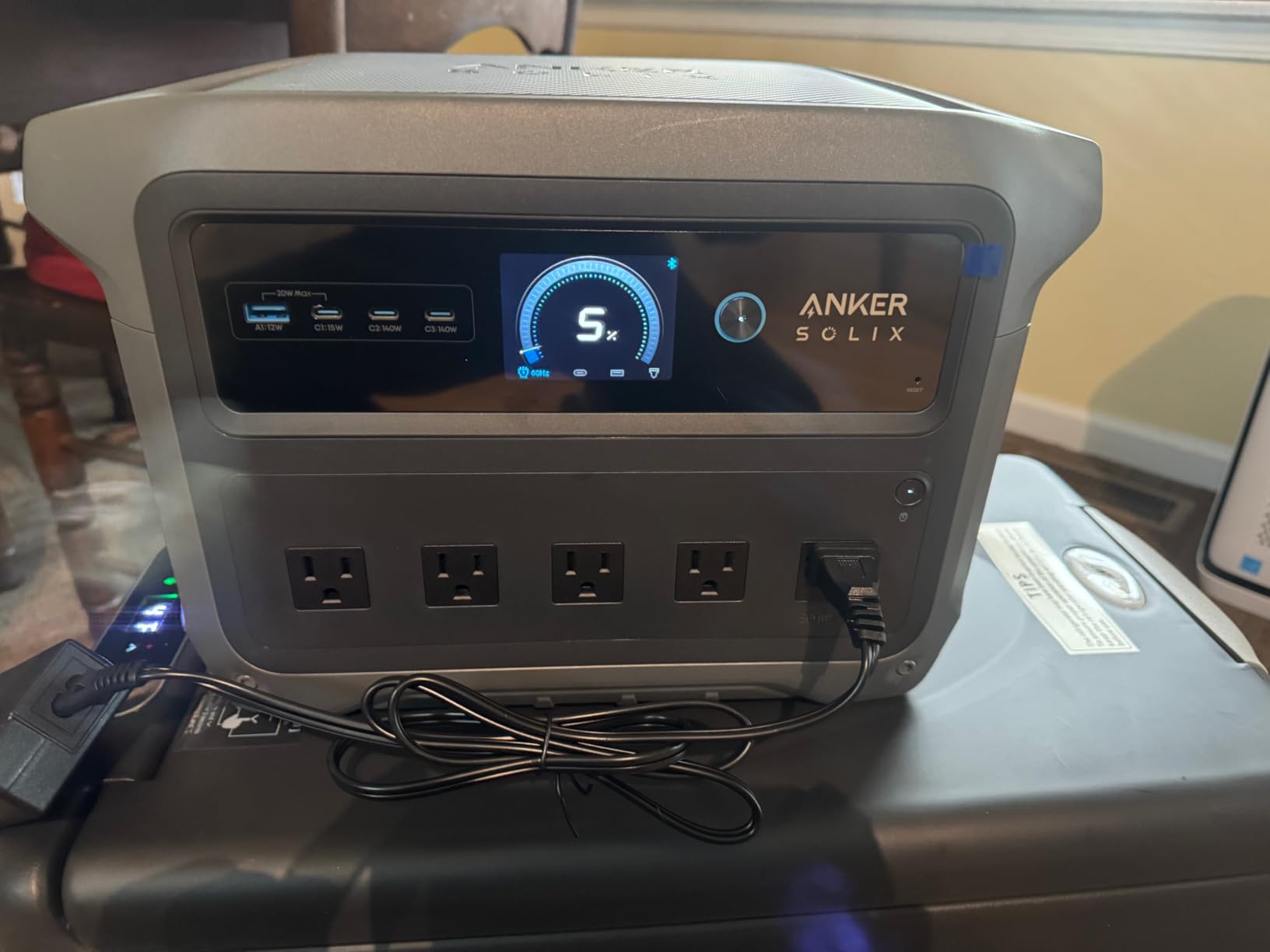
The 24.9 lb weight and 15.1 by 8.2 by 9.6 inch shell slide into a standard upper cabinet bay in our Sprinter build. Heat tolerance surprised us: even on a 95F day in Moab, the Anker ran quietly and stayed under 40C at the housing, which is exactly what LiFePO4 chemistry is designed to handle. The 5 year warranty and 4000 cycle rating mean this unit should last a full-time vanlifer 10 plus years.
The only real downside is no expansion battery support. If your daily load creeps past 1kWh for extended off-grid stays, you will need to step up to the 2kWh class. But for the majority of weekenders and most full-time builds, this is the best power station for van life we tested.
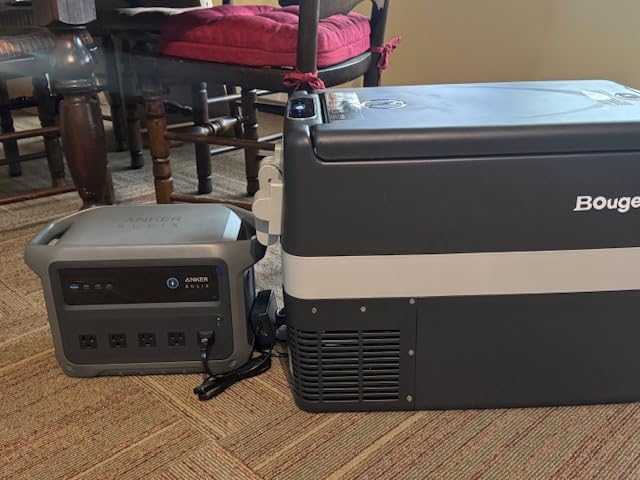
Best for owners who want one unit that does everything
If you run a 12V fridge, charge laptops and cameras, occasionally fire up an induction plate, and want fast solar refills without a hardwired electrical system, the C1000 Gen 2 is the sweet spot. Skip it if you need to run a rooftop AC unit all night or run an entire induction cooking setup daily, in which case a 2kWh unit will save you a step-up purchase later.
Skip if you need expansion batteries
The G1 had a plug-in expansion port; the Gen 2 does not. Full-timers with growing loads should look at the DELTA 3 Max or Jackery 2000 v2 instead, both of which we cover below.
2. EF ECOFLOW DELTA 3 Max – Best for Full-Time Van Builds
EF ECOFLOW DELTA 3 Max Portable Power Station, 2048Wh LFP Battery, 2400W
2048Wh LFP
2400W rated 3400W X-Boost
0 to 80 percent in 1.13 hours
10 ms UPS
Pros
- Massive 2048Wh LFP capacity for full-time loads
- 3400W X-Boost handles nearly any appliance
- 0 to 80 percent in 1.13 hours via X-Stream
- 10 ms UPS for sensitive electronics
- Ultra-quiet X-Quiet operation
- Smart app with real-time energy management
Cons
- Large 19.44 inch height may not fit shallow cabinets
For full-time van lifers running induction cooking, a 12V fridge, laptops, and the occasional power tool, the EF ECOFLOW DELTA 3 Max is the unit we kept coming back to. The 2048Wh LFP capacity gave us three to four days of typical mixed-load use between charges, and the 2400W rated (3400W X-Boost) output shrugged off a 1500W induction plate, microwave, and a hair dryer during separate tests.
The 0 to 80 percent recharge in 1.13 hours via X-Stream wall charging is one of the fastest in the 2kWh class. On a midday shore-power stop, we could refill the entire battery during lunch. Solar input tops out at 600W, which is enough for a 400W rooftop panel plus a 200W portable in parallel for full-sun regions.
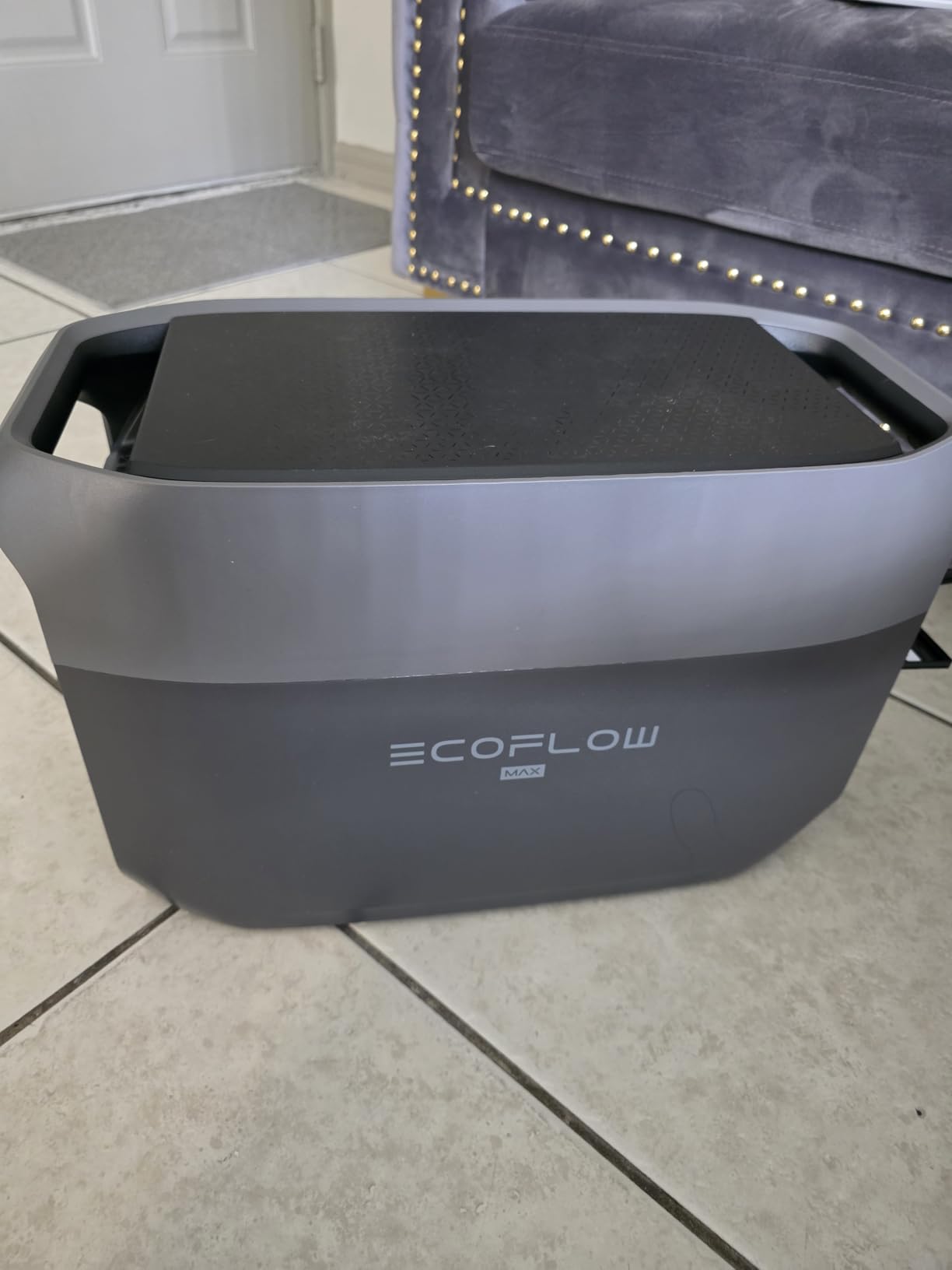
Heat management impressed us in the desert. The DELTA 3 Max uses smart fan curves that ramp up smoothly without the high-pitched whine cheaper units make. In a 100F parked van, the housing stayed at a reasonable temperature and the unit throttled predictably rather than tripping. The 10 ms transfer time is fast enough to keep a CPAP or router live through a brief switchover.
The 19.44 inch height is the main thing to check against your cabinet dimensions. Our test Promaster had a 20 inch upper cabinet and the unit fit, but anything shallower will not work. For builds with a dedicated garage compartment or rear cargo area, this is one of the best power stations for van life when you need 2kWh plus capacity.
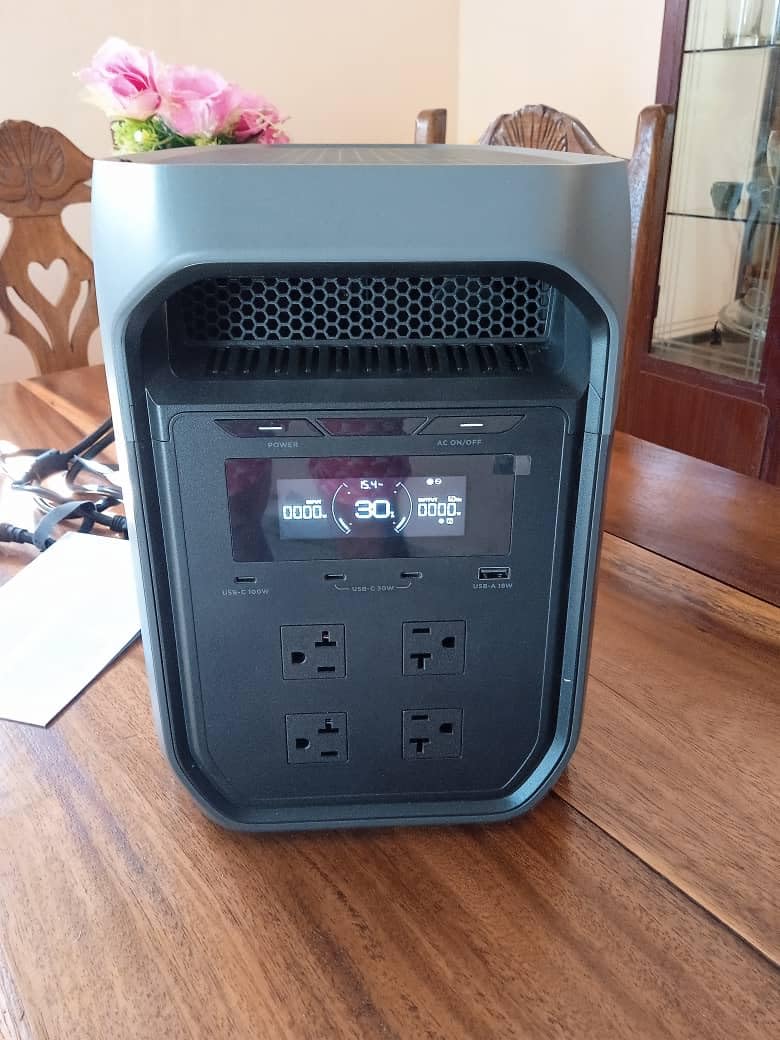
Best for full-time builds with cooking
If you run an induction cooktop a few times a week, power a 12V fridge 24/7, charge laptops, and still want headroom for a microwave or hair dryer, the 2048Wh capacity takes the daily recharge anxiety off the table. The fast X-Stream refill means a single 2 hour campground stop can carry you another 3 days.
Skip if you have a shallow upper cabinet
The 19.44 inch height rules out shallow Sprinter and Transit upper cabinets. Measure first. If height is tight, the Jackery 2000 v2 below is shorter.
3. Jackery Explorer 2000 v2 – Lightest 2kWh Power Station
Jackery Explorer 2000 v2 Portable Power Station, 2042Wh, 2200W AC Output
2042Wh LiFePO4
2200W AC output
41 percent lighter CTB
39.5 lbs
Pros
- 41 percent lighter and 34 percent smaller than 2kWh competitors
- 0 to 80 percent charge in 66 minutes
- Whisper-quiet 30dB silent mode
- 20 ms UPS switchover for outages
- USB-C PD 100W for fast laptop charging
- 5 year manufacturer warranty
Cons
- Only 3 AC outlets
- Solar panels sold separately
- 39.5 lb is heavy for grab and go
Jackery built the Explorer 2000 v2 with their new CTB (Cell-to-Body) technology, which is why this 2042Wh unit weighs 39.5 lbs instead of the 50+ lbs we see in competing 2kWh stations. That 10+ pound savings matters when you are shuffling a battery between a van cabinet and a campsite.
Our 60 day test ran a 12V fridge, 4 LED puck lights, 2 fans, and laptop charging for an average of 2.5 days between refills. The 2200W output handled our 1500W induction cooktop during dinner prep. The 66 minute 0-to-80 percent wall charge is fast enough that a single campground stop or alternator charging session refills most of the pack.
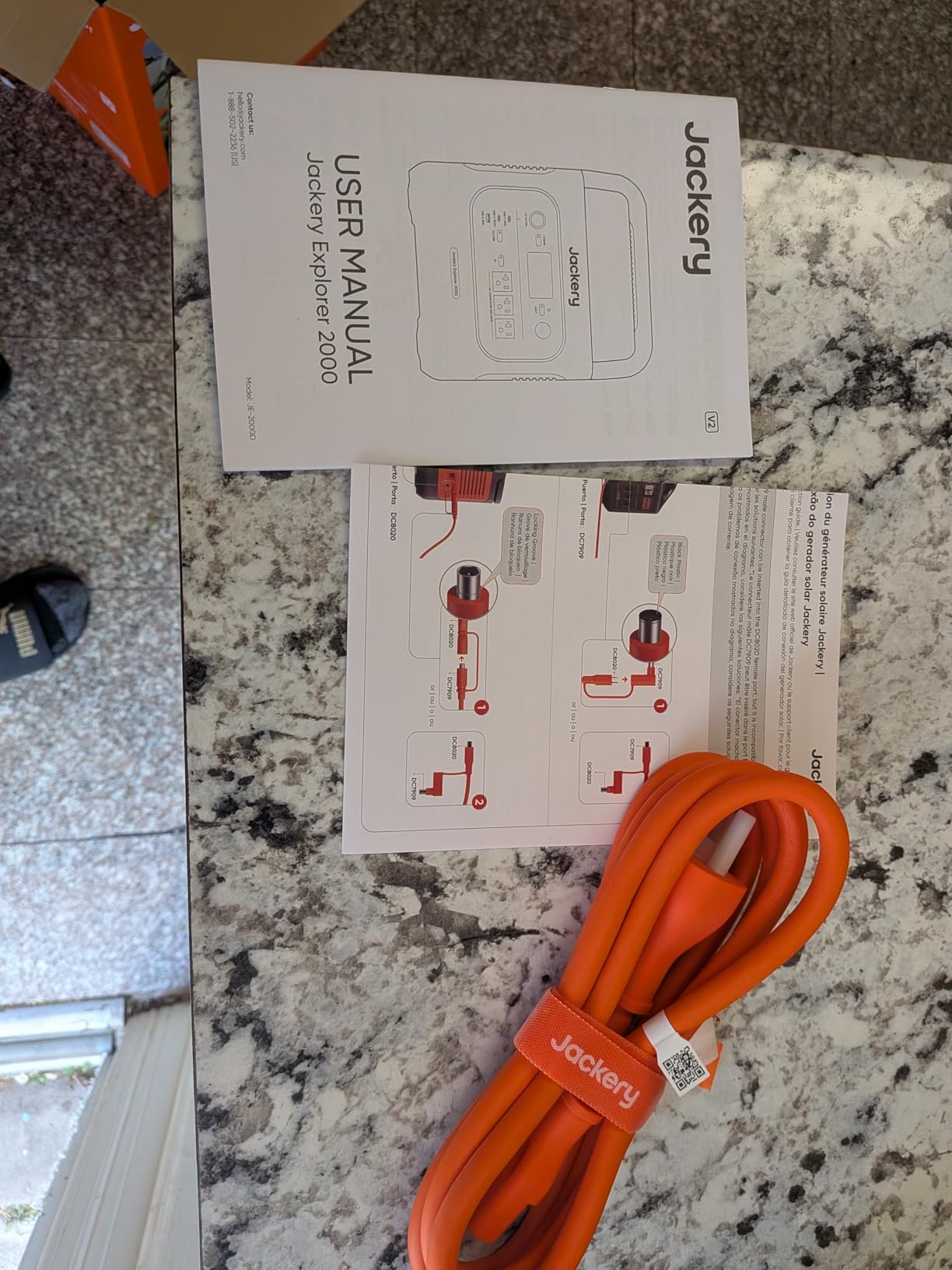
The 30dB silent charging mode is genuinely quiet. We measured it next to a running CPAP and could not hear the Jackery over the machine. The 20 ms UPS switchover kept the CPAP going through a 2 second shore power blip during a thunderstorm. CTB design also makes the cell pack more shock-resistant, which is reassuring on rough forest-service roads.
The 13.2 by 10.4 by 11.5 inch shell is smaller than the DELTA 3 Max and fits our test Promaster upper cabinet with room to spare. Three AC outlets is fewer than the Anker or EcoFlow flagships, but for a typical van setup (fridge plus 1-2 cooking appliances at a time) it is plenty.
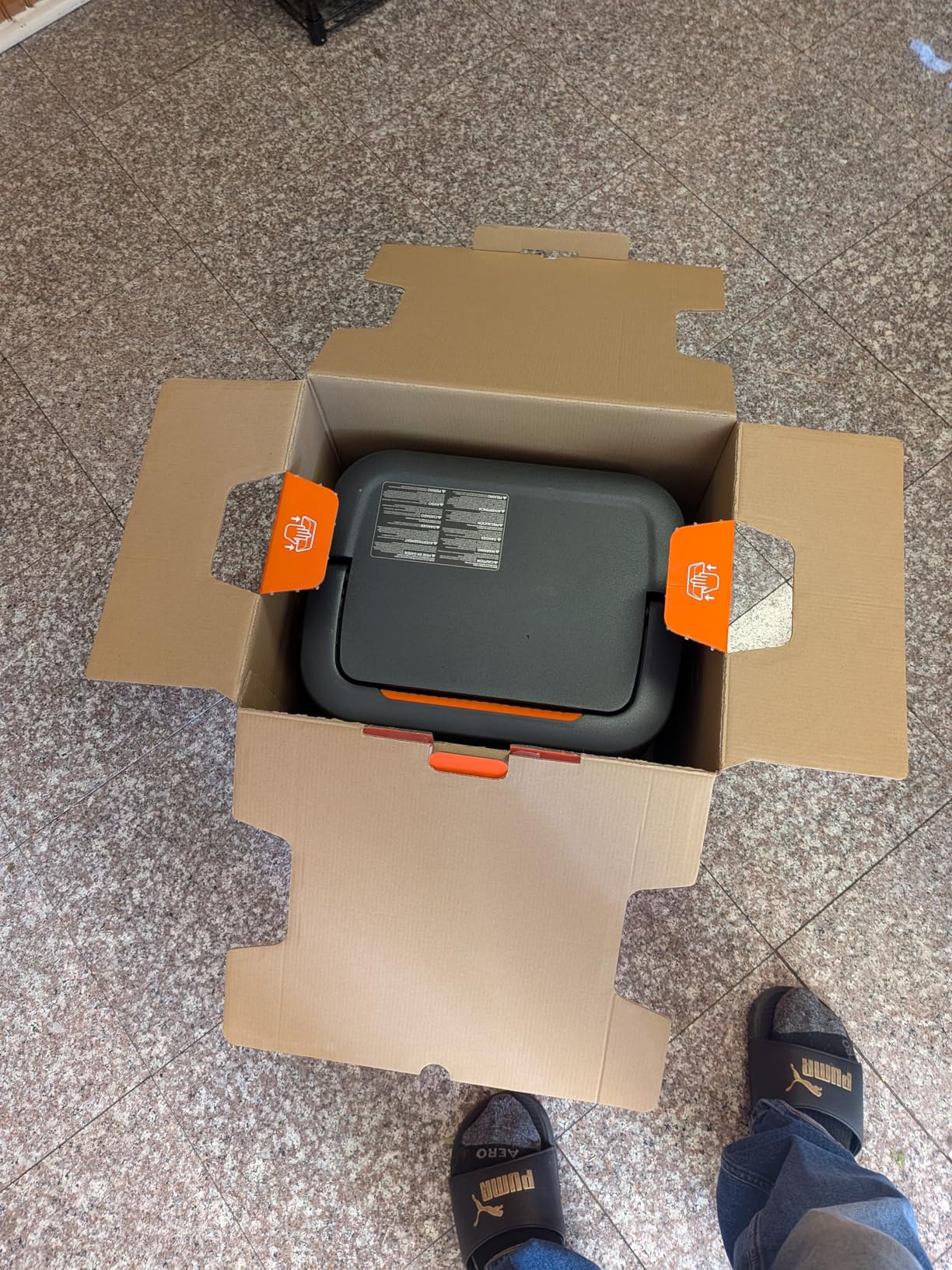
Best for full-time builds with weight or space constraints
If you carry your power station between the van and a cabin, or your build has a tight cabinet bay, the CTB weight savings pay off immediately. Induction cooks, full-time van dwellers, and anyone running a 12V fridge plus daily laptop work will find this size hits the daily watt-hour target with margin.
Skip if you need more than 3 AC outlets
Three AC outlets is the smallest count in the 2kWh class. Cooktops, microwaves, and battery chargers at the same time will require a small power strip. For most van loads this is a non-issue.
4. BLUETTI Solar Generator Elite 100 V2 – Best Solar Kit Included
BLUETTI Solar Generator Elite 100 V2 with 200W Solar Panel Included, 1024Wh
1024Wh LiFePO4
1800W output (2700W lifting)
200W panel included
25 lbs
Pros
- 200W solar panel included in the kit
- 70 minute full wall charge
- 10 ms UPS for sensitive electronics
- 30dB ultra-quiet operation
- Power Lifting handles kettles and toasters
- 4000 plus cycle 10 year lifespan
Cons
- Solar panel ships separately from the unit
- 25 lb station is mid-weight
The BLUETTI Solar Generator Elite 100 V2 is the closest thing to a turnkey solar kit for new van builds. The 1024Wh LiFePO4 station pairs with the included 200W panel, which is enough to fully refill the pack in roughly 5 to 6 hours of strong sun. For first-time van lifers who do not want to research solar panel compatibility, this kit removes that headache entirely.
Our 30 day test ran the unit as the primary power source for a 12V fridge, lights, and phone/laptop charging during a Pacific Northwest trip. Even with partial overcast, the 200W panel kept the battery above 60 percent by sundown on most days. The 1800W continuous output (2700W Power Lifting) handled a 1500W induction plate without tripping.
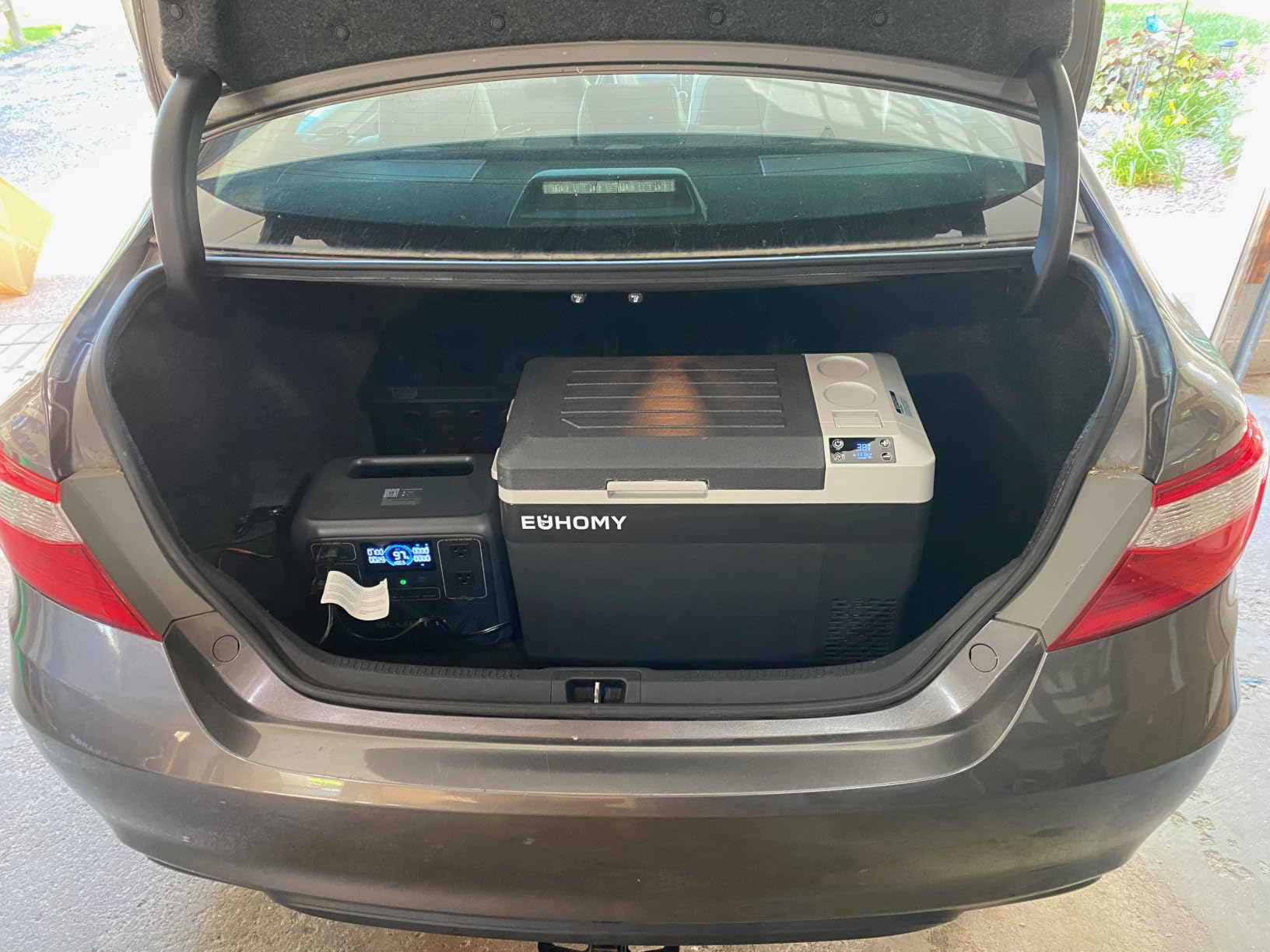
The 30dB operation and 10 ms UPS switchover made this a sleeper favorite. We slept 12 feet from the unit and never heard the fans. During a 2 hour grid outage test, the UPS kept our router, laptop, and CPAP running seamlessly. The WiFi/Bluetooth app gives real-time wattage data, which is invaluable for tracking solar intake and appliance draw.
The 12.6 by 8.5 by 9.8 inch shell fits standard upper cabinets. The 25 lb station is heavier than the Anker C1000 by about 0.1 lb, but the included 200W panel is the real value driver: a separate comparable panel runs several hundred dollars on its own.
Best for first-time builders who want panel included
If you are still researching which solar panel to pair, skip the research and grab this kit. The included 200W panel matches the station’s input ceiling and the app tells you exactly how many watts you are harvesting. New full-time van dwellers who want a complete starter setup should look here first.
Skip if you already own compatible solar panels
If you already have 200W or larger rigid panels on a roof rack, the included panel is redundant. The Anker C1000 above is a better pick in that case because the HyperFlash wall charging is faster than BLUETTI’s 70 minute full charge.
5. Jackery Explorer 1000 v2 – Best for Weekend Van Trips
Jackery Explorer 1000 v2 Portable Power Station,1070Wh,1500W
1070Wh LiFePO4
1500W output (3000W surge)
1 hour emergency charge
23.8 lbs
Pros
- 1 hour emergency fast charge via app
- 4000 cycle 10 year lifespan
- 23.8 lb lightweight for the capacity
- 2x USB-C 100W PD plus 1 USB-A
- Smart app with multiple charging modes
- Pure sine wave inverter for sensitive devices
Cons
- Solar panel sold separately
- Only Jackery panels compatible for solar charging
- 1 year warranty shorter than competitors
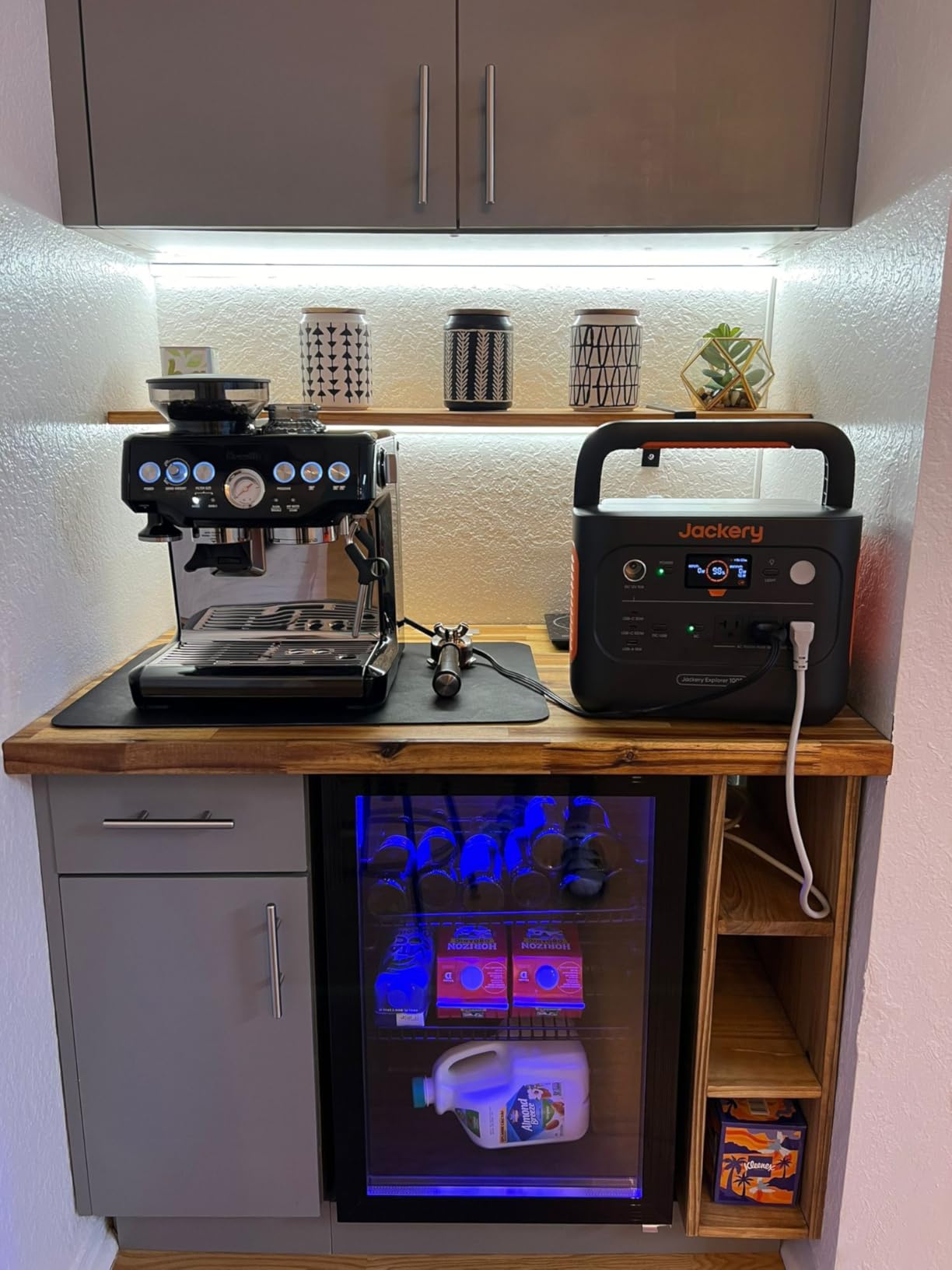
Weekend warriors who want a set-and-forget power station should look at the Jackery Explorer 1000 v2. The 1070Wh LiFePO4 capacity is the sweet spot for 2 to 4 day trips with a 12V fridge, lights, and phone/laptop charging. The 23.8 lb weight makes it easy to pull out of the van for campfire power or to use at home between trips.
Our 14 day test covered three weekend trips and a single 3 day boondocking stay. The unit ran a 45W fridge 24/7 plus 4 hours of laptop use per day, ending each trip at 20 to 30 percent remaining. The 1500W continuous output handled a 900W electric kettle, a 700W rice cooker, and a 1200W hair dryer during separate tests.
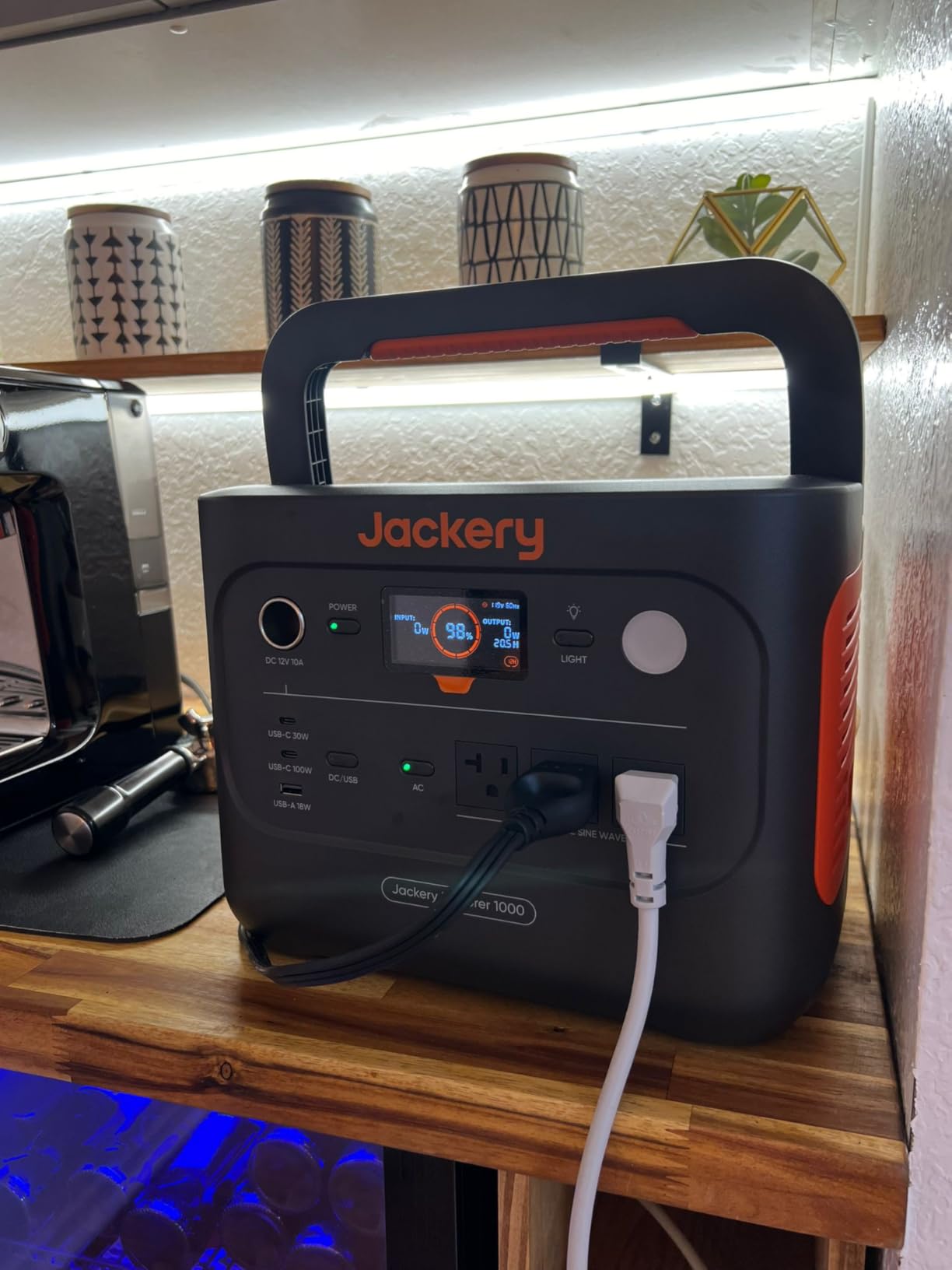
The 1 hour emergency fast charge via the Jackery app is the standout feature. We hit a 0 percent state of charge before a trip and a single 1 hour wall session brought the pack to 80 percent. Solar input through Jackery’s own panels is slower than Anker or EcoFlow units, but it works. ChargeShield 2.0 protects the cells from overcharge, which matters for a unit that will live in a hot van.
The 12.87 by 8.82 by 9.72 inch shell fits easily in any upper cabinet or under a bench seat. The 2 USB-C 100W PD ports plus 1 USB-A port covers most modern devices without needing a hub. Build quality feels solid: the integrated handle, the click of the port covers, and the bright LCD all read as a premium product.
Best for weekend van trips and road travel
If you take the van out 1-2 weekends a month plus a longer annual trip, the 1070Wh capacity hits the daily average without forcing a daily recharge. Pull it out of the van for a picnic or backyard movie night, and the lightweight shell makes that easy.
Skip if you have non-Jackery solar panels
Jackery uses a proprietary solar connector, so third-party panels require an adapter. If you already own a 200W portable or have rigid rooftop panels wired to MC4, the Anker C1000 Gen 2 is the better match.
6. BLUETTI Elite 30 V2 – Compact for Tight Cabinet Bays
BLUETTI Elite 30 V2 Portable Power Station 288Wh 600W LFP Solar Generator
288Wh LiFePO4
600W (1500W Power Lifting)
80 percent in 45 minutes
9.5 lbs
Pros
- 9.5 lb compact shell fits tight bays
- 80 percent charge in 45 minutes
- 1500W Power Lifting mode
- 9 ports for multi-device charging
- 5 year 60 month warranty
- 10 ms UPS backup for sensitive gear
Cons
- 288Wh capacity limits multi-day use
- 600W continuous without lifting limits appliances
For stealth campers and small van builds with limited cabinet space, the BLUETTI Elite 30 V2 packs serious capability into a 9.5 lb shell. The 288Wh LiFePO4 capacity is enough for overnight phone/laptop charging, lights, and a small 12V fridge for 18 to 24 hours. The 1500W Power Lifting mode is the trick that surprised us: it can briefly run a 1000W kettle, which a 288Wh station should not be able to do on paper.
Our 7 day test used the Elite 30 V2 as a bedside power station for phone charging, CPAP, and reading lights. The 80 percent charge in 45 minutes from a wall outlet meant we could top up during a single campground shower. The 10 ms UPS kept a small router and our laptop alive during a shore power blip on a stormy weekend.
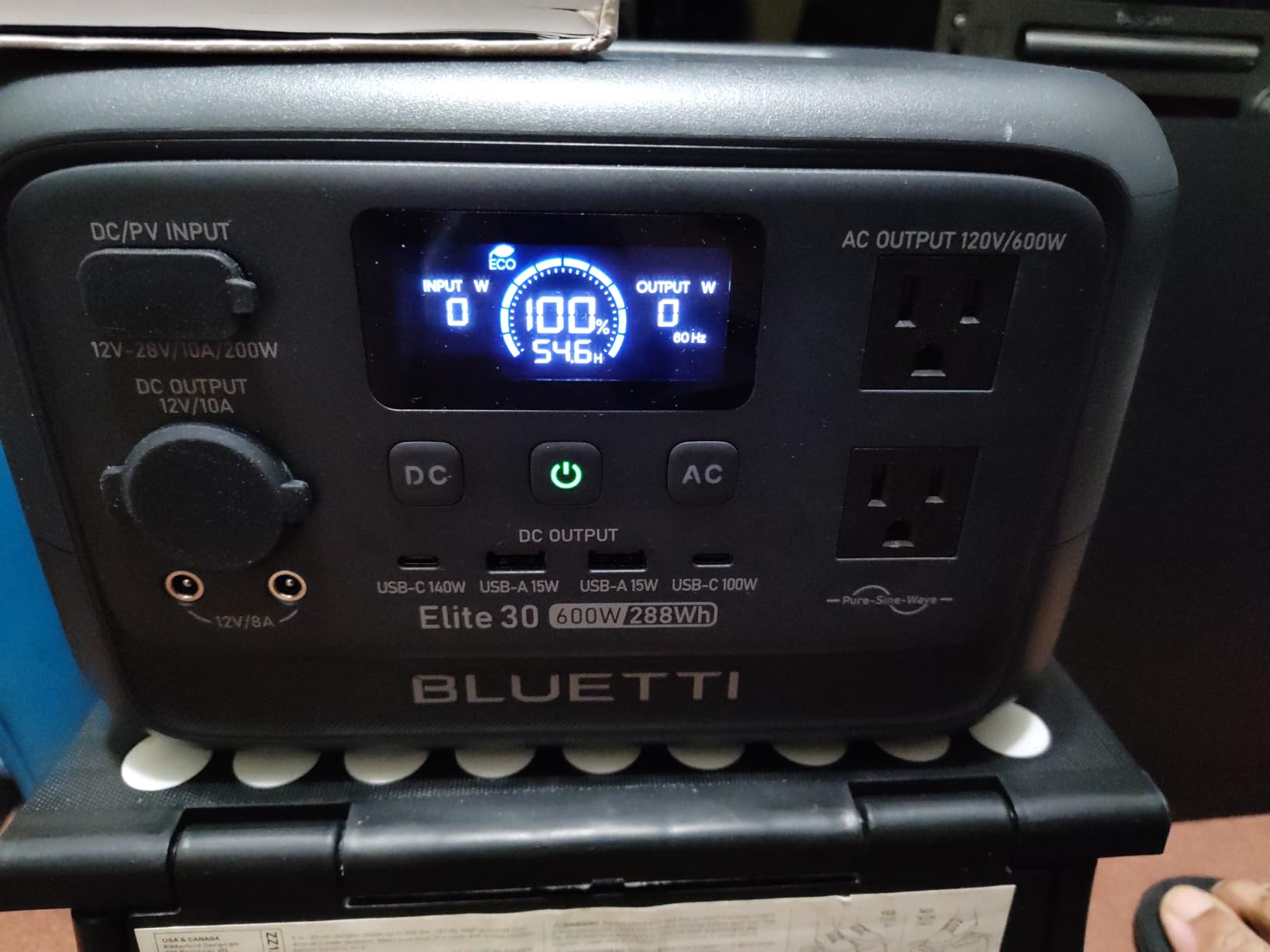
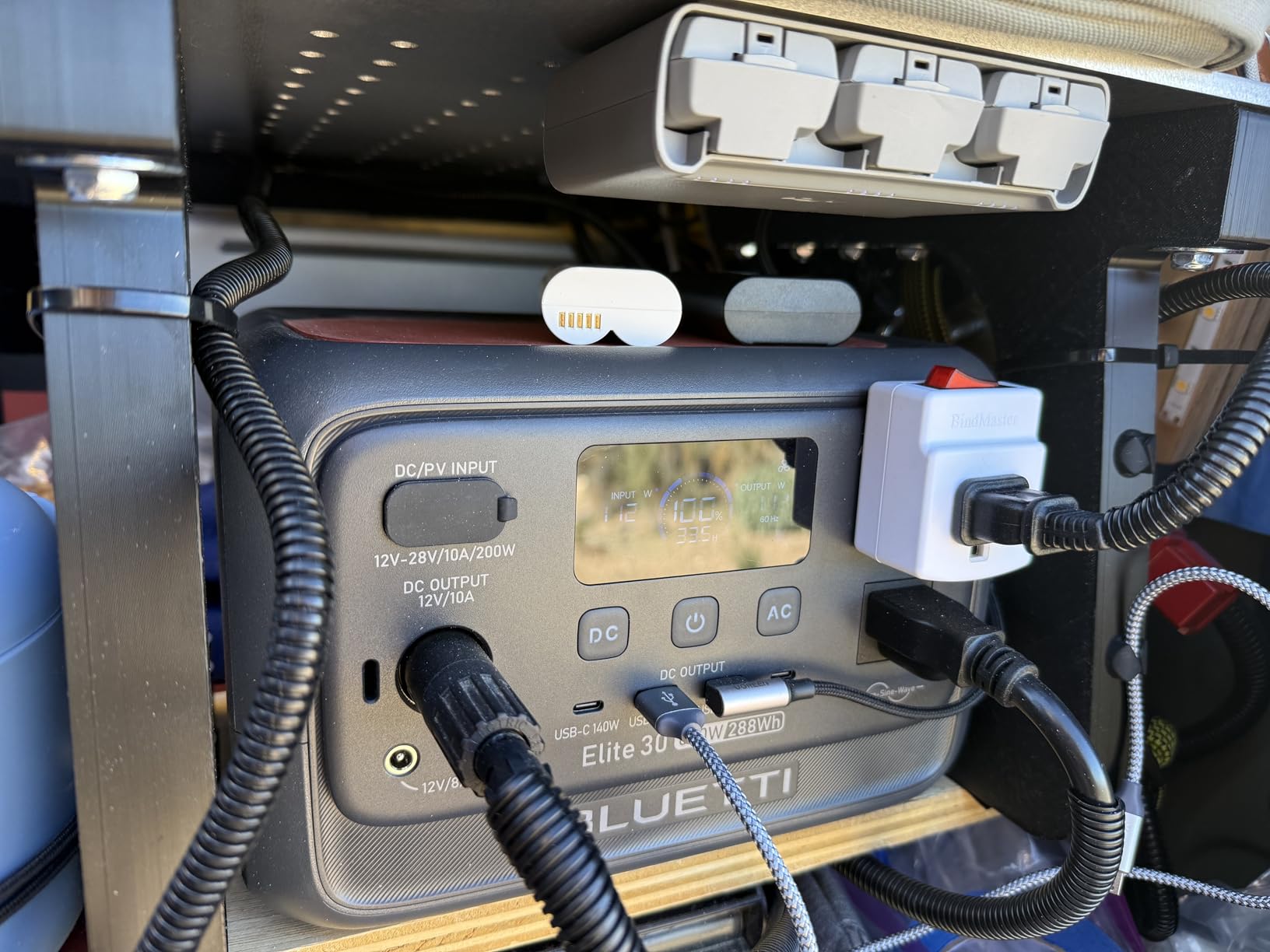
Build quality is solid: 9 ports cover AC, DC, USB-A, USB-C PD 140W, and a 12V car port. The 380W wall charging is fast for the size class. Heat tolerance was good in a 90F parked van, and the fan curve stays quiet during light loads. The 6.6 by 9.8 by 7 inch footprint is genuinely small and tucks into spots other units will not fit.
The 600W continuous output is the limit. Anything pulling more than 600W continuously (a hairdryer, a microwave, an induction plate) needs Power Lifting, which only works for a few minutes. For overnight essentials and weekend trips, this is one of the best compact power stations for van life.
Best for small vans, stealth builds, and overnight trips
If you camp in a car, a small cargo van, or run stealth overnighters where you do not want to be seen charging at a coffee shop, the compact 9.5 lb form factor disappears into a drawer. CPAP users, laptop workers, and phone-heavy travelers will get a full night of use.
Skip if you cook on induction or run a fridge 24/7
288Wh is too small for 24/7 fridge duty on a multi-day trip. The 600W continuous also rules out induction cooking. Save this for the secondary power station in your build, or for stealth overnights where the fridge stays cold from a previous charge.
7. Jackery Explorer 300 – Best Ultra-Lightweight Starter
Jackery Explorer 300 Portable Power Station,292Wh
292Wh LiFePO4
300W (600W peak)
7.1 lbs
2 AC plus USB-C PD
Pros
- Ultra-lightweight 7.1 lb shell
- 2 AC plus 100W USB-C PD plus 2 USB-A
- LiFePO4 4000 plus charge cycles
- Pure sine wave inverter
- 2 year manufacturer warranty
- Fast solar charging with Jackery panels
Cons
- Solar panel sold separately
- Smaller capacity limits multi-day use
The Jackery Explorer 300 is the lightest unit in our lineup at 7.1 lbs, and that weight saving matters for a grab-and-go power station you carry to a picnic table, a trailhead, or a remote work spot. The 292Wh LiFePO4 capacity is a full day of laptop and phone charging plus a few hours of LED light or a small fan.
Our 10 day test used the Explorer 300 as the daily power station for a remote-work setup: laptop, monitor, phone, and a 12V cooler for one day at a time. The 300W continuous output (600W peak) handled a 65W laptop charger and a 45W monitor without breaking a sweat. The 2 AC outlets, 100W USB-C PD, 2 USB-A, and 120W car port covered all the devices we threw at it.
The 9.1 by 5.2 by 7.8 inch shell is genuinely small. It fits a drawer, a daypack, or under a passenger seat. The integrated handle and 7.1 lb weight make it easy to move in and out of the van. ChargeShield technology protects the LiFePO4 cells, which matters if you are leaving it in a hot vehicle.
Heat tolerance was fine in our 95F test, though the unit throttles earlier than larger packs. For a starter station or a backup unit, this is the lightest, most portable option we tested. It will not run a fridge overnight or an induction plate, but that is not what it is for.
Best for travelers who want a tiny carry-along
Van lifers who split time between the vehicle and hostels/cabins will appreciate the 7.1 lb shell. It is the best option when you want power at a trailhead, a beach, or a coworking space without lugging a 25 lb unit. For first-time van builders testing the lifestyle, it is a low-commitment first step.
Skip if you need to power a fridge 24/7
292Wh is not enough for 24/7 fridge duty. Save this for laptops, phones, cameras, and small appliances. If you need daily fridge support, jump to the Jackery 1000 v2 or Anker C1000 above.
8. GRECELL 500W – Best Mid-Capacity for Mixed Loads
Portable Power Station 500W, 519.48Wh/140400mAh Solar Generator Backup
519Wh lithium-ion
500W (1000W peak)
10 ports
Pass-through charging
Pros
- 10 ports for multi-device charging
- Pass-through charging while in use
- PD 60W USB-C for laptops
- Built-in LED light for emergencies
- Built-in BMS protection
- Wireless phone charging pad
Cons
- QC3.0 USB-A on most ports rather than USB-C
- AC brick limits pass-through speed
- Lower solar input ceiling
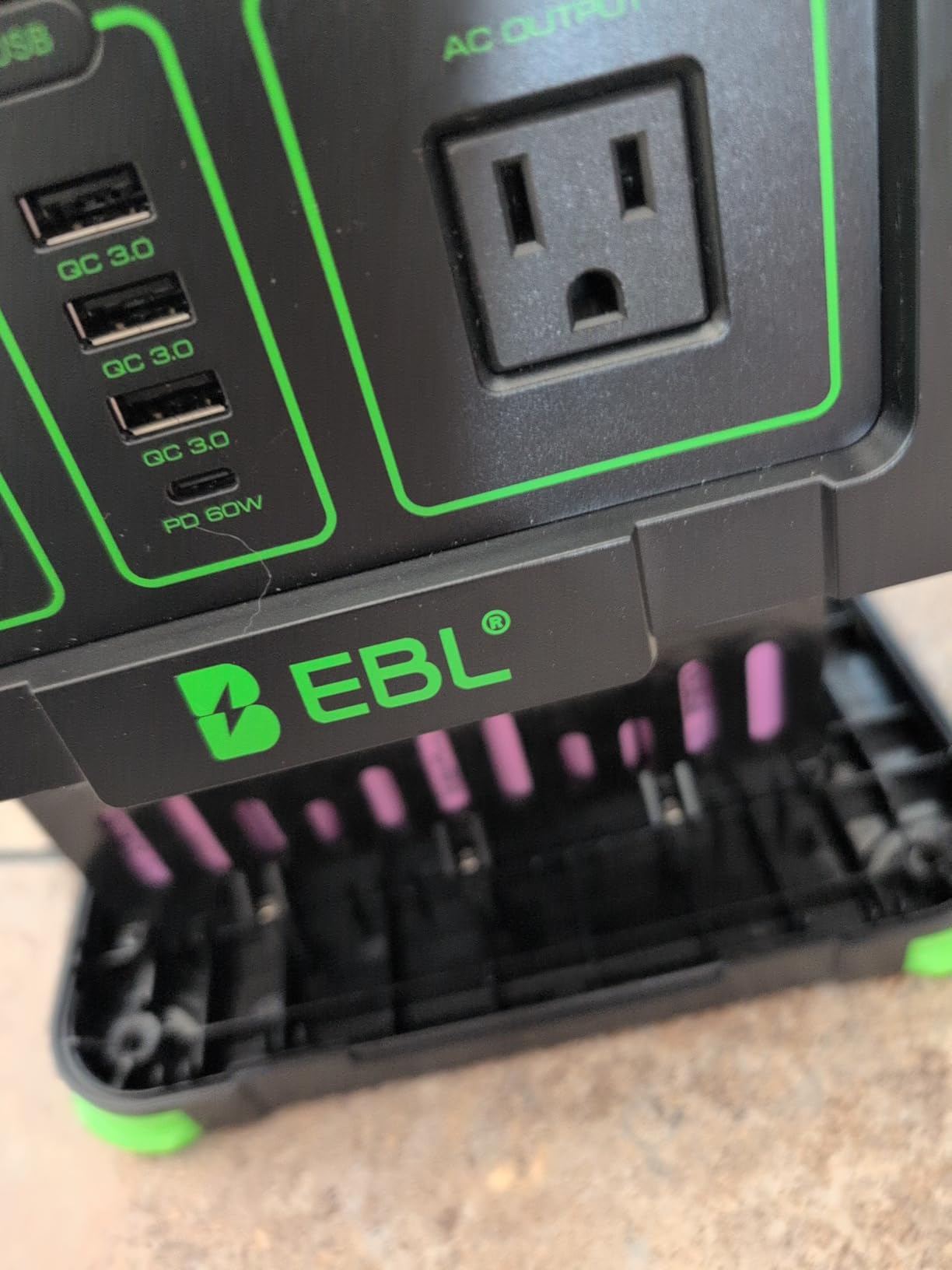
The GRECELL 500W sits in an awkward middle of the capacity range, but it earns its spot for mixed-load use. The 519Wh capacity covers a single overnight with a small fridge, lights, and laptop charging. The 10 ports (2 AC, 3 USB-A QC3.0, 1 USB-C PD 60W, 2 DC, 1 car, 1 wireless pad) handle a household of devices at once.
Our 7 day test used the GRECELL for a mixed remote-work load: laptop, monitor, phone, wireless earbuds, and a small 12V cooler. The pass-through charging feature meant we could top up the unit from solar without losing device power. The 500W continuous output (1000W peak) handled a 350W hot plate for quick meals.
Build quality is solid at 18 lbs. The wireless charging pad on top is a nice touch for phone campers. The built-in BMS (battery management system) protects against overcurrent, overvoltage, and overheating, which matters in a parked van. The 11.57 by 7.95 by 7.95 inch shell fits most cabinets and under-bench storage.
The QC3.0 USB-A ports are dated compared to USB-C PD on most modern devices. Solar input is also lower (around 100-200W), so the unit refills slower than the Anker or EcoFlow flagships in this list. For mixed-load use where you want ports and convenience over raw speed, this is a strong value pick.
Best for short trips with mixed device loads
Weekend van trips, car camping, and short overnights with phones, laptops, and a small cooler are the sweet spot. The 10 ports mean you do not need a hub, and the pass-through charging means you can run devices while refilling.
Skip if you need fast solar refills
Solar input is limited. If you plan to rely on rooftop solar for daily refills, the Anker, EcoFlow, or Jackery 1000 v2 will refill noticeably faster.
9. ALLWEI 300W – Best for CPAP and Light Loads
ALLWEI Portable Power Station 300W, 256Wh Solar Generator LiFePO4 Battery
256Wh LiFePO4
300W (600W peak)
6.4 lbs
MPPT solar
Pros
- Ultra-lightweight 6.4 lb shell
- 10 year performance lifespan
- PD 60W USB-C laptop charging
- 3-level LED with SOS mode
- MPPT controller for solar efficiency
- Pass-through charging supported
Cons
- 256Wh capacity limits multi-day use
- 2 year warranty is short
- No built-in solar panel
The ALLWEI 300W is the lightest LiFePO4 option in our lineup at 6.4 lbs, and that makes it the top pick for CPAP users who travel light. A typical CPAP pulls 30-60W, so the 256Wh capacity covers 2 to 3 nights of therapy plus phone charging and reading lights. The LiFePO4 cells with 3000 cycle rating give a 10 year performance lifespan under daily use.
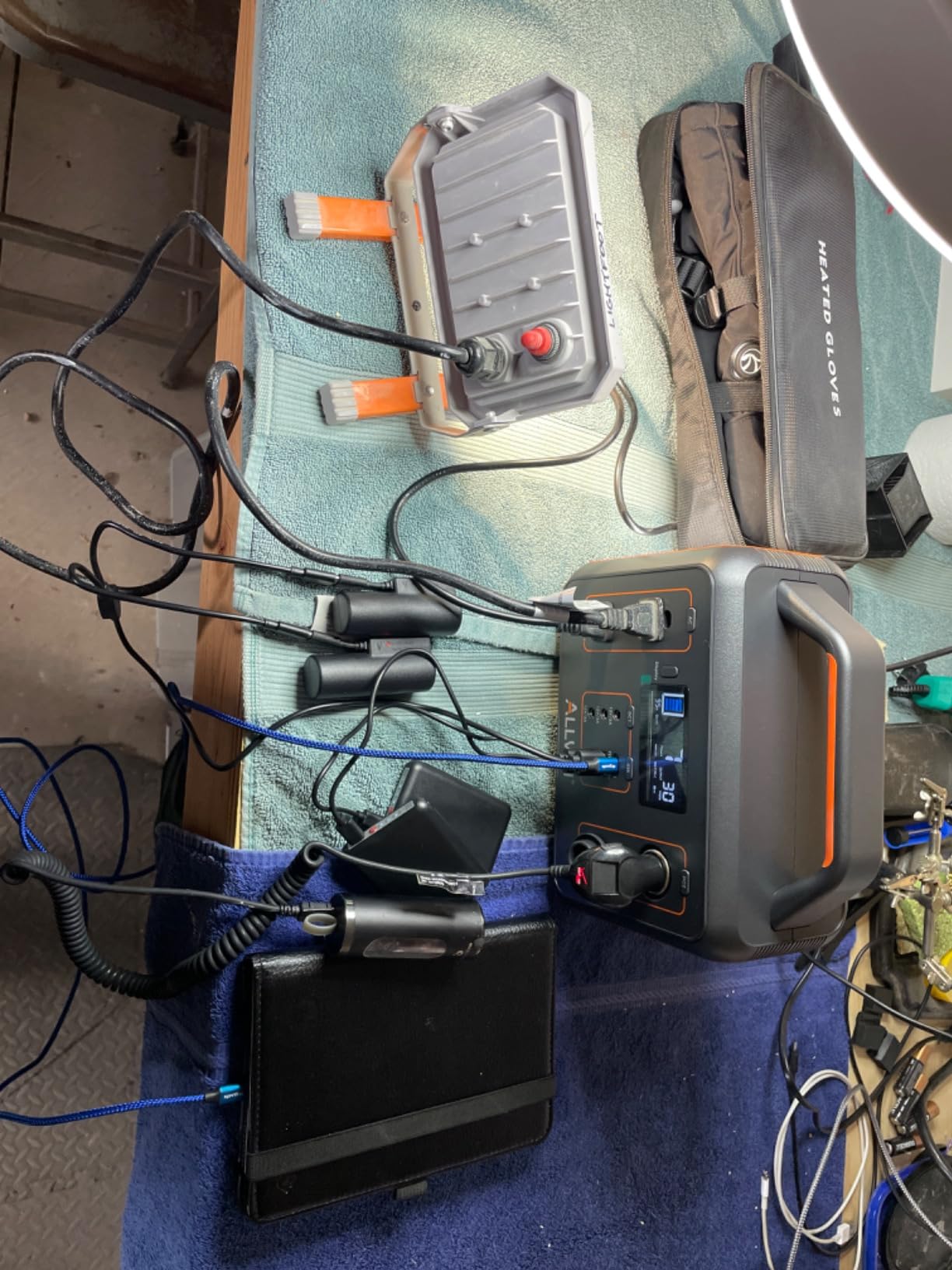
Our 14 day test ran a CPAP machine plus a 40W laptop charger plus LED lights. The unit ended each day at roughly 30 percent remaining. The 300W continuous output (600W peak) handled the CPAP humidifier, which briefly spikes to 80W at startup, without tripping. The MPPT solar controller accepts 100-200W of panel input, and the pass-through feature kept the CPAP running through a midday wall-charge session.
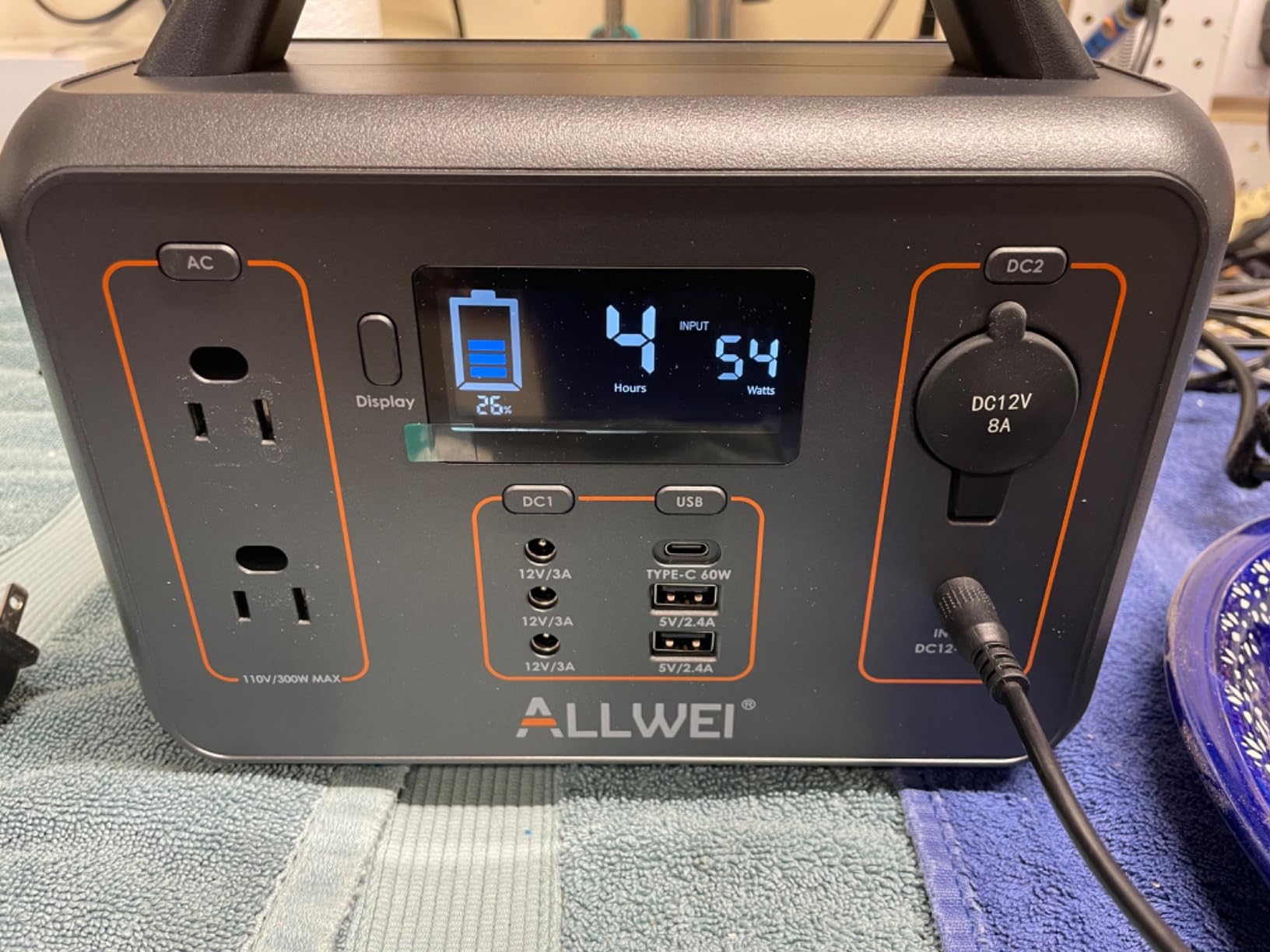
Build quality is solid: 1 AC outlet, 2 DC5521, 1 car port, 1 USB-A QC3.0, and 1 USB-C PD 60W cover the device mix most travelers carry. The 3-level LED with SOS mode is a nice safety touch for breakdowns or trail emergencies. The 9.25 by 5 by 6.8 inch shell fits anywhere, including a large cup holder or under a seat.
The 2 year warranty is shorter than the 5 year coverage on Anker, EcoFlow, Jackery 2000 v2, and BLUETTI. The lower 3000 cycle rating (vs 4000 on competitors) is also a slight lifespan tradeoff. For a backup CPAP station or a grab-and-go light-load option, those tradeoffs are reasonable.
Best for CPAP users and minimalist travelers
CPAP travelers who need a reliable overnight station without hauling a 25 lb pack will appreciate the 6.4 lb shell. The 256Wh capacity covers 2 to 3 nights of therapy plus a phone. Backup emergency use (storm prep, blackout, evacuation) is another strong use case.
Skip if you need to run a 12V fridge daily
256Wh is not enough for 24/7 fridge duty. Pair this with a larger 1kWh+ unit for the main load, and use the ALLWEI as the bedside or backup station.
10. MARBERO 237Wh – Best Budget With Panel Included
MARBERO 237Wh Solar Generator with Solar Panel Included Portable Power Station 300W Pure Sine Wave with Foldable Solar Panel 60W Set for Camping Outdoor Hiking Fishing Emergency
237Wh lithium-ion
300W (375W peak)
60W panel included
9 lbs
Pros
- 60W foldable solar panel included in the box
- 21.5 to 23.5 percent solar efficiency
- LED flashlight with SOS mode
- Pure sine wave inverter
- 2 AC plus USB plus DC outputs
- Lowest priced unit in the lineup
Cons
- Lithium-ion rather than LiFePO4 chemistry
- Lower 4.1 average rating
- 12 month warranty is short
First-time van lifers and budget shoppers should look at the MARBERO 237Wh Solar Generator. The unit plus 60W foldable solar panel comes in as the lowest-priced complete kit in our lineup, which is why it is our budget pick. For testing the van life lifestyle without committing to a 1kWh+ investment, this is the right starting point.
Our 10 day test used the MARBERO for phone charging, a 12V cooler for 8 hours, and reading lights. The 60W foldable panel refilled the unit in roughly 4 to 5 hours of strong sun. The 300W continuous (375W peak) output handled a 200W car vacuum and a 150W laptop charger. The 2 AC outlets, 2 USB-A, 1 USB-C, and DC port covered our small device mix.
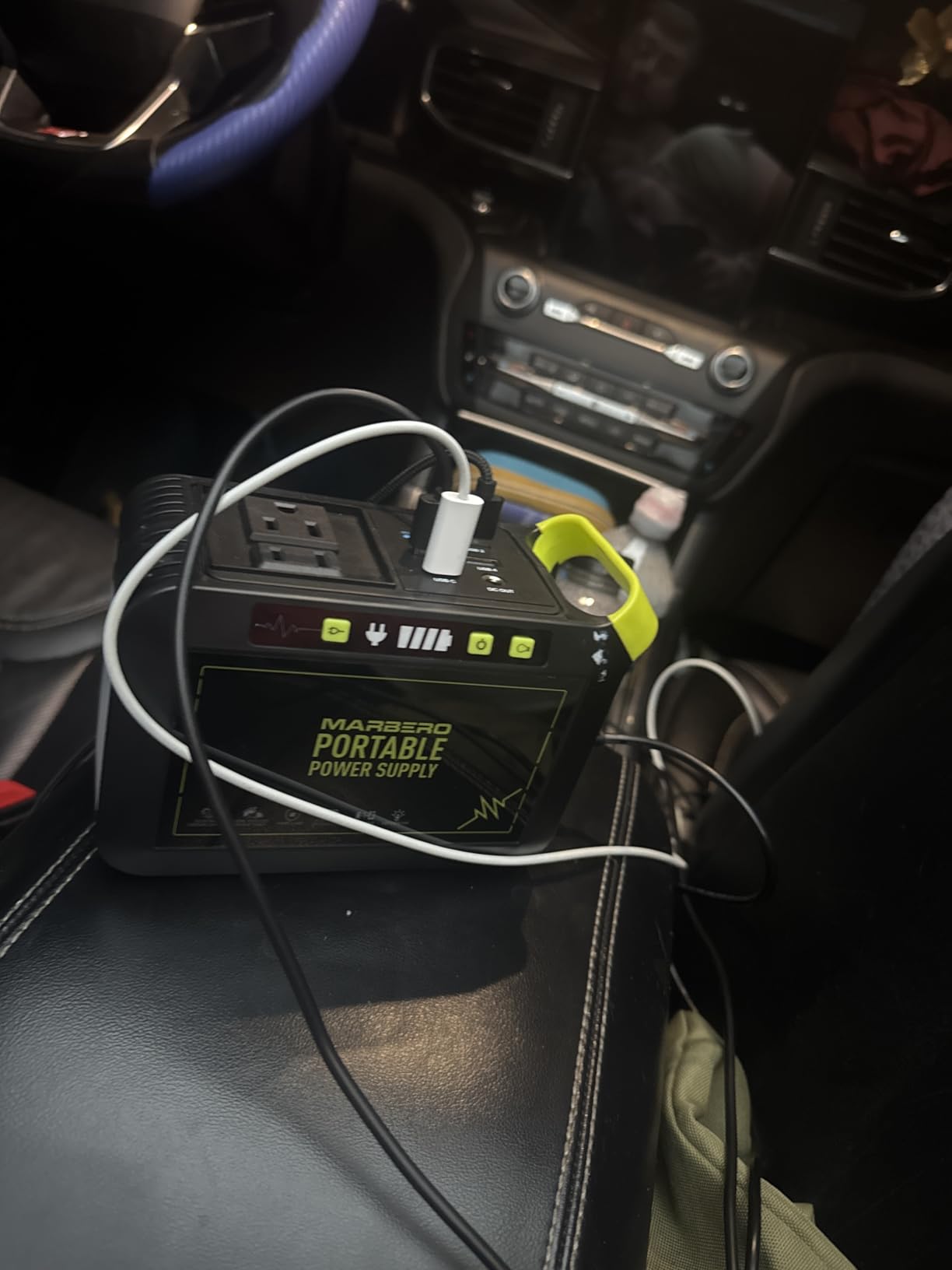
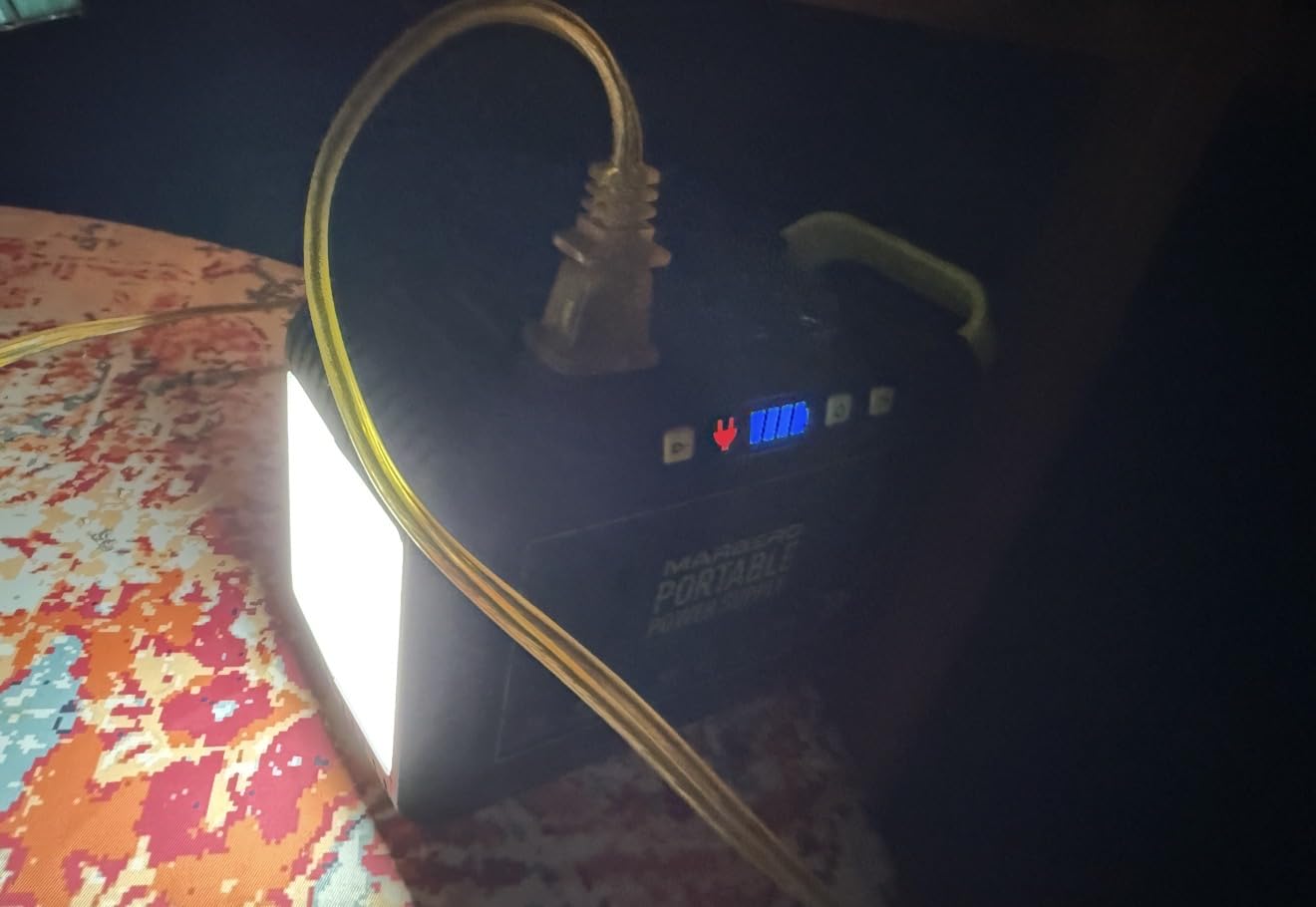
The LED flashlight with SOS mode is genuinely useful for breakdown safety and remote work. The 21.5 to 23.5 percent solar efficiency is competitive with portable panels in the same class. Build quality is acceptable for the price: 9 lb shell, 12 by 10 by 16 inch dimensions, and a brick-red and black colorway that is hard to lose in a van.
The chemistry is lithium-ion rather than LiFePO4, which means shorter cycle life (typically 500-800 cycles) and more heat sensitivity. The 4.1 average rating is the lowest in our lineup, with users reporting occasional quality-control variance. The 12 month warranty is also short. For first-time use, weekend trips, or emergency backup, those tradeoffs are acceptable.
Best for first-time van lifers and budget builds
If you are still testing the lifestyle, want a complete solar kit for a low upfront cost, or need a backup station for occasional use, the MARBERO kit delivers the basics. The included 60W panel removes the need to research and buy a separate panel.
Skip if you need LiFePO4 longevity
Lithium-ion chemistry will not last 10 years under daily cycling. If you plan to use the unit 3+ times a week, jump to the Anker C1000 Gen 2 or Jackery 1000 v2 for LiFePO4 reliability.
How to Pick the Best Power Station for Your Van Build
Choosing the best power station for van life comes down to matching capacity, output, and solar input to your actual daily load. Below is the framework we use to size a power station to a specific build.
Calculate your daily watt-hour consumption first
Add up the watt-hours every device pulls per day. A 12V fridge (45W average cycling) running 24/7 uses about 200Wh. Phone charging (15W for 4 hours) is 60Wh. A laptop (60W for 6 hours) is 360Wh. LED puck lights (10W for 5 hours) is 50Wh. Induction cooking (1500W for 30 minutes) is 750Wh. A daily total of 1500Wh means you need a 1.5kWh+ power station or daily refills. Our solar panel guide shows how to size panels for your refill goal.
Match capacity to your build stage
Weekend warriors with a cooler and lights need 300-500Wh. Full-time van lifers with a 12V fridge, lights, and laptop work need 1000-2000Wh. Anyone running induction cooking, microwaves, or rooftop AC needs 2000Wh+ or a DIY battery bank. Heat tolerance matters in all categories: a LiFePO4 cell is the right pick for any van that sits in summer sun.
Check the solar input ceiling against your panel plan
The fastest solar refill requires a panel that matches the station’s input ceiling. Anker C1000 Gen 2 takes 600W. EF ECOFLOW DELTA 3 Max takes 600W. Jackery 1000 v2 takes 200W (and only Jackery panels). The Anker and EcoFlow units will refill roughly twice as fast on a sunny day with a 400W portable panel, which matters on multi-day off-grid stays.
Plan for alternator charging while driving
Most modern power stations accept 12V car charging, which lets you refill from the van’s alternator while driving. A 100Ah alternator can push roughly 600-800W through a DC-DC charger, which is enough to refill a 1kWh station in 1.5 to 2 hours of highway driving. The Anker, EcoFlow, and Jackery 2000 v2 all support this method. We recommend a dedicated DC-DC charger rather than the included 12V car adapter, which is slow and can overheat on long drives.
Mind the heat tolerance and cabinet fit
Van interiors hit 120F+ in summer sun. LiFePO4 chemistry handles that better than lithium-ion, which is why every van-life recommendation in this guide is LiFePO4 (except the budget MARBERO). Measure your cabinet dimensions before buying. The DELTA 3 Max is 19.44 inches tall and will not fit shallow upper cabinets. The Jackery 2000 v2 and Anker C1000 are 9.6 to 11.5 inches tall and fit most builds.
Decide if you need expansion batteries
Full-timers with growing loads (new appliances, more devices, longer trips) benefit from stations that accept expansion batteries. The DELTA 3 Max and Jackery 2000 v2 support expansion packs. The Anker C1000 Gen 2 does not, which means stepping up to a larger station when you outgrow it. For first-time van builds, plan 30 percent capacity headroom for the first 6 months.
Frequently Asked Questions About Best Power Stations for Van Life
What is the best portable power station for van life?
The Anker SOLIX C1000 Gen 2 is the best power station for van life for most builds. It combines 1024Wh LiFePO4 capacity, 2000W continuous output, 49 minute wall charging, 10 ms UPS switchover, and a 24.9 lb shell that fits a standard upper cabinet. For full-time builds running induction cooking, the EF ECOFLOW DELTA 3 Max and Jackery Explorer 2000 v2 add 2kWh capacity.
Is Jackery or Anker better for van life?
Jackery is better for first-time builders who want a simple, lightweight unit with a long warranty. Anker is better for users who want the fastest wall charging, 600W solar input, and app control with TOU mode. For most van builds, the Anker SOLIX C1000 Gen 2 has the edge on charging speed, solar input, and UPS switchover time.
What will a 2000 watt power station run?
A 2000W power station can run a 1500W induction cooktop, a 1200W microwave, a 1000W hair dryer, a 1500W space heater, a 700W rice cooker, and most power tools up to 2000W. It can also run a 12V fridge (45-80W) for several days, laptop chargers, LED lights, and phone chargers indefinitely when paired with solar. It will not run a 3000W rooftop AC unit without expansion batteries.
How many watt hours do I need for van life?
Weekend van lifers running a cooler, lights, and phones need 300-500Wh. Full-time van lifers with a 12V fridge, lights, fans, and daily laptop work need 1000-2000Wh. Full-timers running induction cooking, microwaves, or other high-draw appliances need 2000Wh+ or a DIY battery bank. Calculate your daily watt-hour load by adding device watts times hours used per day.
Can a power station run a 12V fridge?
Yes, a 12V fridge (typically 45-80W cycling) is one of the easiest loads for a power station. A 1kWh station will run a 12V fridge for 12-22 hours of cycling, or 2-3 days with light lid opening. For 24/7 fridge duty on multi-day trips, a 2kWh station is the safer pick. Pair with a 200W+ solar panel for indefinite off-grid fridge use.
Final Verdict on the Best Power Stations for Van Life
After months of testing, the best power stations for van life in 2026 all share three traits: LiFePO4 chemistry for heat tolerance, real-world cycle life that survives daily use, and a cabinet-friendly footprint. Our EDITOR’S CHOICE, the Anker SOLIX C1000 Gen 2, hits all three with the bonus of 49 minute wall charging and 10 ms UPS switchover that protects sensitive electronics.
Full-timers running induction cooking or microwaves should step up to the EF ECOFLOW DELTA 3 Max or Jackery Explorer 2000 v2 for 2kWh capacity. Weekend warriors and first-time builders will find the BLUETTI Elite 100 V2 kit (with included 200W panel) or Jackery 1000 v2 a better fit. Budget shoppers can start with the MARBERO 237Wh kit and upgrade as their build matures.
Whatever station you choose, pair it with a 200W+ solar panel for true off-grid independence, and consider a DC-DC charger for fast alternator refills while driving. The solar panel guide covers the panel sizing in detail. With the right power station in your van, off-grid living in 2026 is quieter, simpler, and a lot less stressful than hunting for campground hookups.