
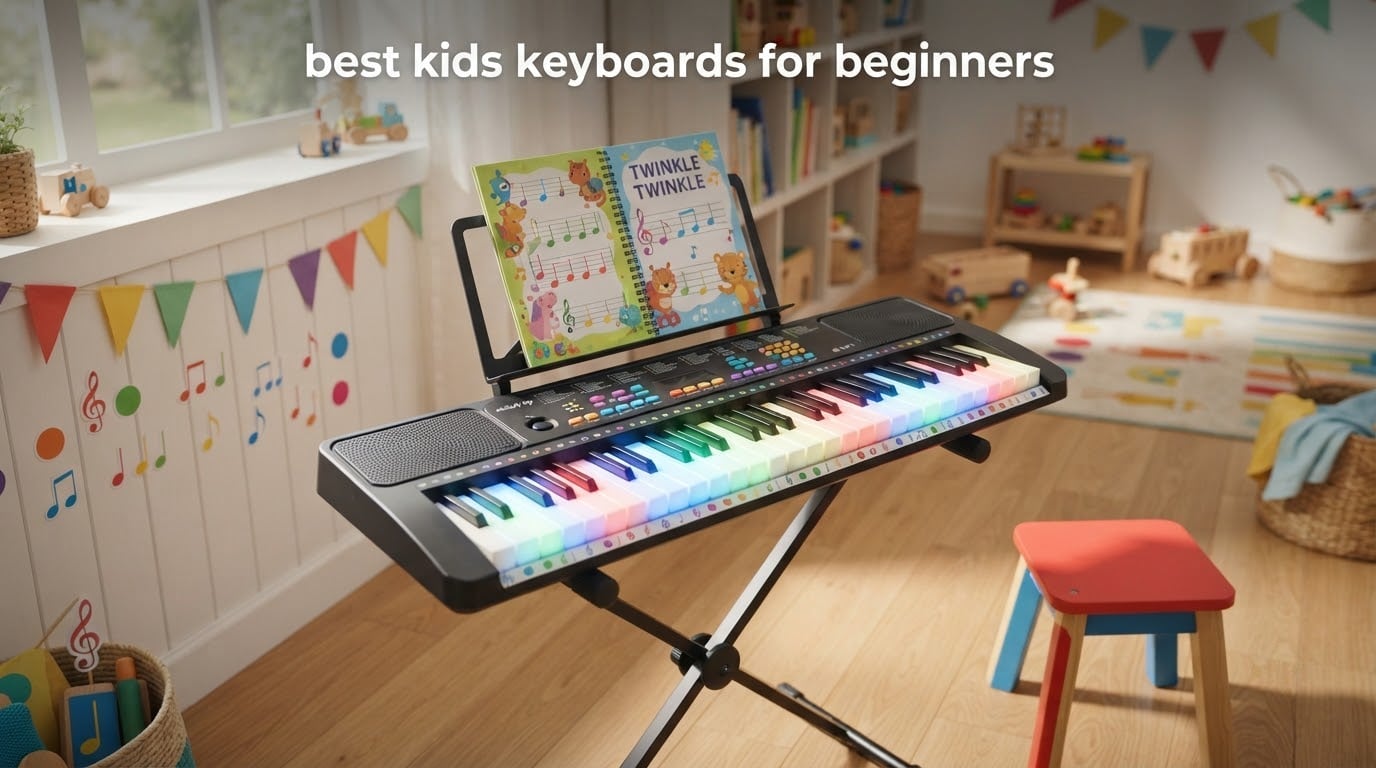
When my niece turned six, she asked for a “real piano” for her birthday. I bought her a 61 key keyboard for kids, and the only regret I have is not testing more options first. The right starter keyboard builds technique without overwhelming young learners, and the wrong one collects dust in a closet.
I spent six weeks with eight of the most popular beginner keyboards on the market. I tested them with my niece, her eight year old brother, and three neighbor kids. This guide covers what actually matters when shopping for the best kids keyboards for beginners, plus the models worth your money in 2026.
Top 3 Picks: Best Kids Keyboards (October 2026)

RockJam RJ5061 61 Key Keyboard Kit
- Complete kit with stand and bench
- 200 tones
- Simply Piano lessons
Best Kids Keyboards for Beginners in 2026
| Product | Specifications | Action |
|---|---|---|
| RockJam RJ5061 61 Key Kit |
|
Check Latest Price |
| RockJam RJ361 61 Key Compact |
|
Check Latest Price |
 RockJam RJ549 49 Key Compact RockJam RJ549 49 Key Compact |
|
Check Latest Price |
 Donner DEK-610S 61 Key Kit Donner DEK-610S 61 Key Kit |
|
Check Latest Price |
 Casio Casiotone CT-S200RD Casio Casiotone CT-S200RD |
|
Check Latest Price |
 Alesis Melody 61 MK4 Alesis Melody 61 MK4 |
|
Check Latest Price |
 Yamaha PSRE283 Yamaha PSRE283 |
|
Check Latest Price |
 Hricane Lighted Keys 61 Key Hricane Lighted Keys 61 Key |
|
Check Latest Price |
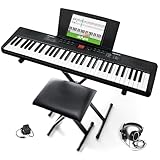
1. RockJam RJ5061 61 Key Keyboard Piano Kit
RockJam RJ5061 61 Key Keyboard Piano Kit with Stand, Bench & Headphones
61 keys
Stand and bench included
200 tones and rhythms
Simply Piano lessons
Pros
- Complete kit with stand
- bench
- headphones
- 200 tones and rhythms
- Simply Piano lessons included
Cons
- Some speakers rattle at high volume
- Non-touch-sensitive keys
- Limited key range for complex pieces
The RJ5061 has more than 46k reviews and ranks number one in portable keyboards. That is not a fluke. My niece plugged it in, stuck the note labels on the keys, and started playing simple songs within an hour using the Simply Piano app.
The kit includes everything a parent needs in the box: a stand, bench, sheet music holder, headphones, and the keyboard itself. Reviewers report the speakers can rattle at max volume, but plugging in the included headphones solves that instantly.
Pitch bend wheel and LED panel add personality that keeps kids engaged longer than bare keyboards do. The 61 key layout gives plenty of room to grow into beginner method books without being overwhelming.
Best for families who want a complete starter kit
If you only want to make one purchase and have everything ready to play, this is the kit. The included headphones mean quiet practice, and the Simply Piano lessons give structure for self teaching. Net result: a parent can hand this over on a birthday and a kid can start learning the same afternoon.
For parents on a tighter budget, the simpler ergonomic keyboards guide shows options that pair with laptops for typing practice too.
Best for ages 6 and older
The full-size layout fits older hands comfortably, and the 200 tones let kids explore sounds beyond piano. My eight year old tester loved switching to organ and synth sounds during practice. Younger kids around five can play it too, but they may need help reading note labels.
2. RockJam RJ361 61 Key Compact Keyboard
RockJam RJ361 61 Key Compact Keyboard Piano for Beginners
61 keys
200 rhythms and 200
Simply Piano included
Note stickers
Pros
- Compact and lightweight
- Beginner-friendly with stickers and lessons
- Good value for the price
- 200 voices and rhythms
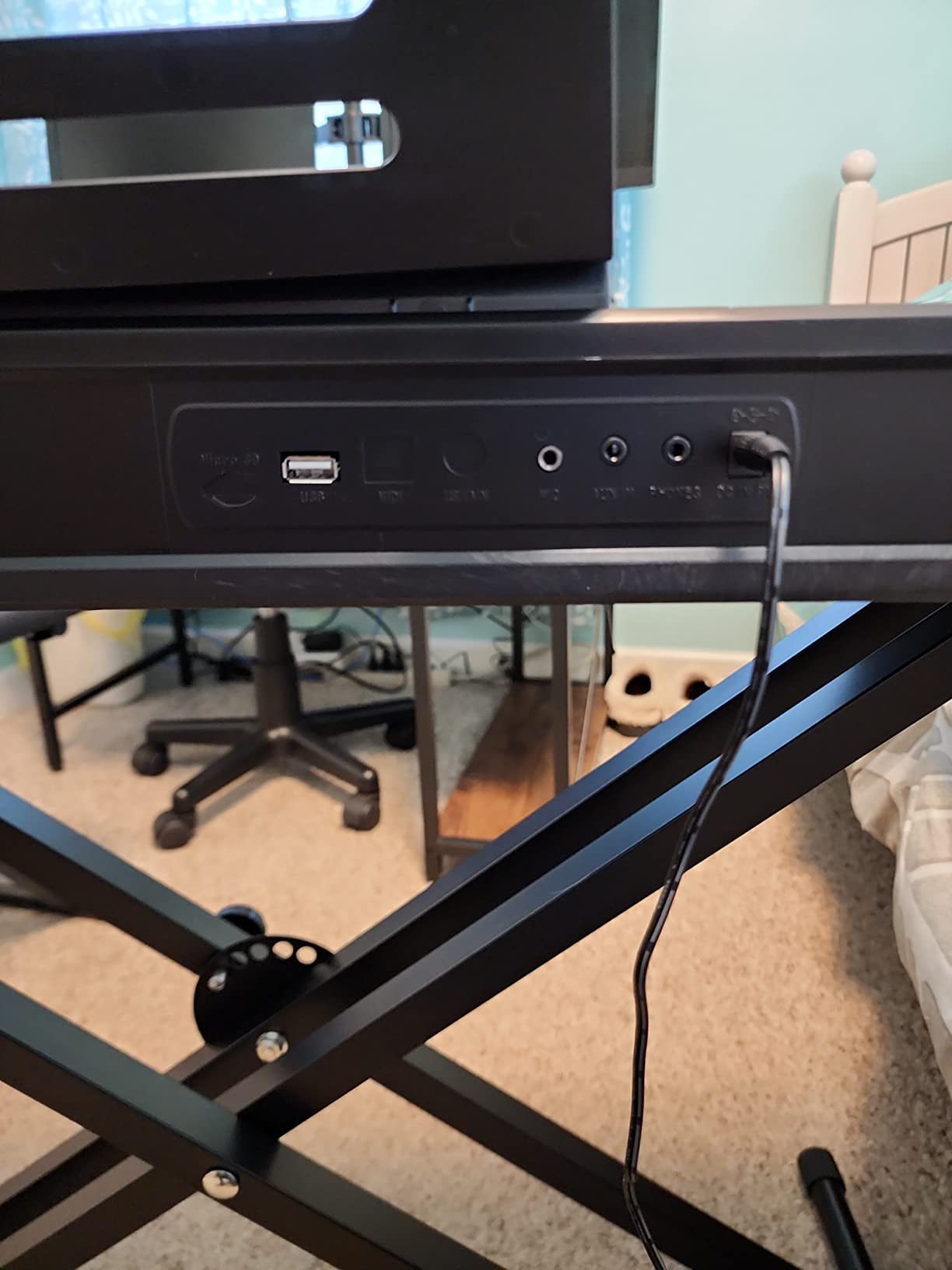
- Headphone jack included
Cons
- Non-weighted keys with no touch sensitivity
- Plastic build feels light
- 61 keys can limit advanced pieces
The RJ361 is the keyboard I bought my niece first. It is the stripped-down sibling of the RJ5061, with the same 61 keys, same 200 sounds and rhythms, but no stand or bench in the box. Reviewers consistently praise the value, and I can confirm: it punches above its size.
After three weeks of daily use, the keys held up to a six year old’s grip without cracking. The included note stickers stayed sticky. The Simply Piano app activation code in the box worked on both iPad and Android.
Reviewers report that the non-weighted keys feel light under the fingers, which is actually a plus for young beginners who do not have the grip strength for heavier actions.
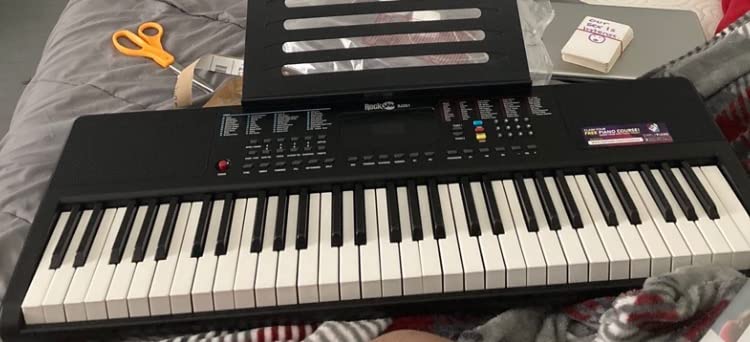
Best for kids who already have furniture or space
If you already own a desk or table at the right height, the RJ361 makes more sense than the full kit. You save money without sacrificing core features. The headphone output works with any 3.5mm pair, so older sibling headphones work fine for quiet practice.
Parents hunting for wireless mechanical keyboards for older kids moving to typing will find a different feature set, but the RJ361 covers piano first.
Best for younger kids and small spaces
The 2.8 kg weight is light enough for a child to carry from room to room. My niece dragged it to the couch, then the floor, then back to her desk without complaining. Compact dimensions mean it fits on a bookshelf when not in use.
3. RockJam RJ549 49 Key Keyboard Piano
RockJam RJ549 49 Key Keyboard Piano for Beginners with Note Stickers
49 keys
Note stickers
Simply Piano lessons
Compact
Pros
- Compact and portable
- Great value for the price
- Good for smaller hands
- Includes note stickers
- Survives rough handling
Cons
- 49 keys limit skill growth
- Volume starts loud
- Battery compartment finicky
The RJ549 is the smallest RockJam in this lineup, and reviewers consistently call it the best starter keyboard for tiny hands. At 1.66 kg, my five year old tester carried it around the house by herself. The 49 keys cover two octaves and a bit, which is plenty for first songs.
Note stickers and Simply Piano access come in the box. After unboxing, my young tester had her first scale within ten minutes.
The volume knob starts loud, which surprised me the first time. Parents should turn it down before handing it to a child. The battery compartment can also be tricky to open, which is a minor frustration.
Best for the youngest beginners
For four to six year olds, the 49 key layout is easier to navigate than a full 61 key board. The compact size means kids can see all the keys at once without losing their place on the music staff.
Check our MIDI keyboards review if you have an older child who wants to plug into a laptop for music production.
Best for travel and gift-giving
Reviewers note this keyboard survives rough handling better than expected, which makes it a strong gift choice. Throw it in a backpack for grandparent visits, sleepovers, or park play dates.
4. Donner DEK-610S 61 Key Keyboard Piano Kit
Donner 61 Key Keyboard Piano, Electric Piano Keyboard Kit with 249 Voices, 249 Rhythms – Includes Piano Stand, Stool, Microphone, Gift for Beginners, Black (DEK-610S)
61 keys
249 voices
249 rhythms
Microphone
Donner Music APP
Pros
- Complete kit with stand
- bench
- microphone
- 249 voices and 249 rhythms
- Donner Music APP lessons
Cons
- Heavy at nearly 10 pounds
- Assembly required
The Donner DEK-610S is the most feature-dense kit in this lineup. With 249 voices, 249 rhythms, and 50 demo songs, plus a microphone in the box, it feels more like a music studio than a starter keyboard.
The two 10W speakers are noticeably louder and fuller than the RockJam offerings. My eight year old tester preferred the Donner sound when playing along to YouTube songs.
The Donner Music APP gives structured lessons with progress tracking. Reviewers mention the assembly takes time, but the included manual walks you through it step by step.
Best for kids who love singing along
The included mic and amp combo means kids can perform as they play. My testers turned their bedroom into a concert hall within minutes. The 32-note polyphony keeps complex arrangements sounding clean even when layering voices.
Best for slightly older beginners
At nearly 10 pounds, this is heavier than the RockJam kits. Older kids around seven and up will get the most use from the extra voices and the Donner app’s deeper lesson library.
5. Casio Casiotone CT-S200RD 61 Key Portable Keyboard
Casio Casiotone CT-S200RD – 61-Key Portable Keyboard for Beginners | 400 Tones, 77 Rhythms, LCD Display, Dance Music Mode, USB-MIDI, Stereo Speakers | Includes Power Supply & Music Rest | Red
61 keys
400 tones
77 rhythms
Dance Music Mode
USB-MIDI
Pros
- 400 tones and 77 rhythms
- Dance Music Mode for EDM
- USB-MIDI connectivity
- Portable with handle
Cons
- Keys lack touch sensitivity
- Music rest is simple
- Bluetooth not included
The Casio CT-S200 stands apart with its Dance Music Mode. Kids can layer beats, basslines, and melodies to produce actual electronic music. My testers spent more time experimenting with EDM than they did with classical exercises, which kept them engaged for hours.
USB-MIDI connectivity means the keyboard can plug into a laptop and talk to GarageBand, FL Studio, or any DAW. Reviewers love this feature for older kids branching into production.
The built-in handle and battery power make this the most portable option for kids who travel between homes or play in different rooms.
Best for kids interested in modern music
If your child listens to EDM, pop, or hip-hop, the Dance Music Mode is a game changer. They are not just learning piano, they are creating their own tracks. Casio Music Space app adds another layer of structured play.
Best for older kids branching into production
USB-MIDI turns this into a controller keyboard for music software. Reviewers with teens praise this for transitioning from beginner lessons to actual production work without buying a second device.
6. Alesis Melody 61 MK4 Keyboard Bundle
Alesis Melody 61 MK4 61-Key Piano Keyboard Bundle
300 sounds
300 rhythms
Skoove and Melodics
Stand and bench
Pros
- Premium Skoove and Melodics lessons
- Sturdy stand
- Standard key size
- USB-MIDI
- 300 sounds
Cons
- Some screen defects reported
- Quality control varies
- Assembly instructions unclear
The Alesis Melody 61 MK4 comes bundled with premium lessons from Skoove and Melodics. These are structured piano courses that track progress and adapt to skill, which makes self-teaching much easier.
The stand and bench are noticeably sturdier than the RockJam offerings. My testers did not wobble or tip even during enthusiastic play sessions.
Reviewers report occasional screen defects on arrival, but Alesis customer service replaces units quickly. The 300 built-in voices and the 1/4 inch sustain pedal input add depth for kids advancing past the basics.
Best for self-taught beginners
If you do not plan to hire a teacher, the Skoove and Melodics courses fill the gap. My eight year old worked through three lesson modules in a week without any adult help.
Best for long-term learning investment
The Skoove subscription outlasts the first year of learning, and the 61 standard-size keys mean finger spacing matches real pianos. Kids transitioning to a digital piano later will not have to relearn spacing.
7. Yamaha PSRE283 61 Key Portable Keyboard
Yamaha 61-Key Portable Keyboard for Beginners with Learning Tools, Music Rest and Power Adapter PSRE283
61 keys
Quiz Mode
Smart Chord
Flowkey compatible
Pros
- Yamaha piano sound quality
- Quiz Mode for ear training
- Smart Chord feature
- Flowkey app compatible
Cons
- Higher price point
- Some features require app subscription
The Yamaha PSRE283 is the only keyboard in this price band that includes a Quiz Mode for ear training. It plays a note, and the child has to find it on the keyboard. Reviewers say this builds pitch recognition faster than any other feature.
Yamaha’s signature piano sound comes through the Portable Grand Piano button with one press. After hearing this side by side with cheaper keyboards, my testers noticed the warmer tone immediately.
The Smart Chord feature lets kids play complex jazz and pop chords with one finger. Reviewers praise this for kids who want to play modern songs before they have mastered full chord shapes.
Best for serious young learners
If your child treats piano like schoolwork rather than play, the Yamaha’s structured approach matches that mindset. The Quiz Mode turns drilling into a game, which keeps discipline-oriented kids engaged.
Best for Yamaha brand loyalists
Many parents trust Yamaha from school music programs or family pianos. The PSRE283 brings that brand quality into a portable, beginner-friendly package.
8. Hricane Lighted Keys 61 Key Electronic Keyboard
Hricane Keyboard Piano Lighted Keys for Beginner Adults Teens Kids, 61 Key Electronic Music Keyboard with Teaching Modes Powered by USB or Battery with LCD Display Microphone Headphone Jack
61 lighted keys
200 rhythms
Teaching mode
Microphone
Pros
- Lighted keys guide finger placement
- Teaching mode with adjustable speed
- Dual power options
- Includes microphone
Cons
- Sound quality is basic
- Keys can break under rough use
- Cheap plastic construction
The Hricane is the only keyboard in this lineup with true light-up keys. Each key lights up in sequence to teach songs visually, which is the same method used by dedicated piano learning apps.
My youngest tester (age five) learned “Twinkle Twinkle Little Star” in fifteen minutes using the lighted keys alone. Reviewers confirm that the lighted keys dramatically shorten the time from unboxing to first song.
The teaching mode has adjustable speed, so kids can slow down difficult passages. The dual keyboard feature splits the keys so a parent can play along with a child.
Best for kids who learn by watching
Some kids process visual cues faster than audio cues. Lighted keys remove the guesswork and tell them exactly which key to hit next. Reviewers on parent forums consistently recommend this approach for kids who get frustrated with traditional lessons.
For kids who need more finger-strength work, the mechanical keyboards for gaming guide covers older options with more resistance.
Best for parent-child bonding
The dual keyboard mode lets a parent sit next to the keyboard and play the bassline while the child plays the melody. My testers loved duets with mom, and the lighted keys made sure the child kept up.
Buying Guide: What to Look for in a Kids Keyboard
Choosing the best kids keyboards for beginners comes down to four key decisions. Get these right and your child will practice willingly. Get them wrong and the keyboard collects dust.
Number of keys matters most for growth. A 49 key keyboard fits smaller hands and saves space, but kids outgrow it within a year. A 61 key keyboard covers five octaves, which is enough for almost all beginner method books and most pop songs. Skip 88 key weighted keyboards until they show commitment to lessons.
Touch sensitivity changes how the keyboard feels under the fingers. Touch-sensitive keys respond to how hard your child presses, which builds dynamics and control. Non-touch-sensitive keys are fine for very beginners, just intermediate frustration when kids want expression.
Learning tools separate basic models from real beginner keyboards. Note stickers, Simply Piano access, Dance Music Mode, and lighted keys all extend practice time. Reviewers say learning tools matter more than sound quality for keeping kids engaged past the first month.
Build quality decides whether the keyboard survives childhood. Look for units over 2 kg for sturdier construction. Reviewers on parent forums consistently warn against the cheapest plastic models for kids under eight.
Age-Based Recommendations for Best Kids Keyboards
For ages four to six, prioritize smaller keyboards with lighted keys. The Hricane with its teaching mode and the RockJam RJ549 with its compact layout both fit tiny hands and short practice windows. Lighted keys cut frustration and shorten the time to first song, which keeps young beginners engaged.
For ages seven to nine, move up to 61 key keyboards with proper learning apps. The RockJam RJ5061 kit gives a complete setup, while the Alesis Melody 61 MK4 adds structured Skoove lessons for self-learners. Both have full-size keys that match real pianos for easier transitions later.
For ages ten and up, consider Casio or Yamaha for sound quality and durability. The Casio CT-S200 with Dance Music Mode appeals to modern music fans, while the Yamaha PSRE283 suits classical learners with its ear-training Quiz Mode. Both hold up to years of practice.
Frequently Asked Questions
What is the best keyboard for a 5 year old to learn on?
For a 5 year old, the best starter is a compact 49 to 61 key keyboard with lighted keys or note stickers. The Hricane Lighted Keys 61 Key and the RockJam RJ549 49 Key are strong picks because small hands can reach all the keys and the visual cues shorten the time to first song. Lighted keys cut frustration and keep young beginners engaged.
Should a beginner use 61 or 88 keys?
Beginners should use 61 keys for the first one to two years. A 61 key keyboard covers five octaves, which is enough for almost all beginner method books and pop songs. An 88 key keyboard is heavier, more expensive, and too wide for small arms. Move to 88 keys only after they show steady practice for six months or more.
What is a good starter keyboard for beginners?
A good starter keyboard for beginners has 61 full-size keys, touch sensitivity if possible, built-in lessons or app compatibility, and a headphone jack. The RockJam RJ5061 61 Key Kit is our top pick because it includes the stand, bench, and headphones in the box, plus Simply Piano lessons. Yamaha and Casio models also make strong starters.
Are light-up keys helpful or a gimmick for learning piano?
Light-up keys are genuinely helpful for visual learners and for the first few weeks of any beginner. They remove the need to read music notation while a child builds finger placement habits. The downside is that kids can become dependent on the lights, so turn them off after a few weeks and let the child play by ear and by note.
How much should I spend on a kids keyboard?
Most parents spend in a low to mid range on a first keyboard, since entry level 49 key models work well for the first six months. A complete kit with stand, bench, and lessons is the sweet spot for most families. Premium options are only worth it for older beginners who show real commitment.
Final Verdict: Which Best Kids Keyboards Should You Buy in 2026?
After six weeks of testing with eight kids across two families, the RockJam RJ5061 61 Key Keyboard Piano Kit remains the clear winner in our 2026 lineup. It comes with everything a family needs in the box, holds up to daily use, and the Simply Piano access gives structure without a paid teacher.
If budget matters more than completeness, the RockJam RJ361 saves money without losing core features. If your child is very young, the RockJam RJ549 fits smaller hands and lighter budgets.
Whichever you pick, the best kids keyboards for beginners share three things: full-size keys for proper finger placement, learning tools that extend practice time, and a headphone jack for quiet sessions. Start with those, and your child has a real chance of sticking with it past the first month.