
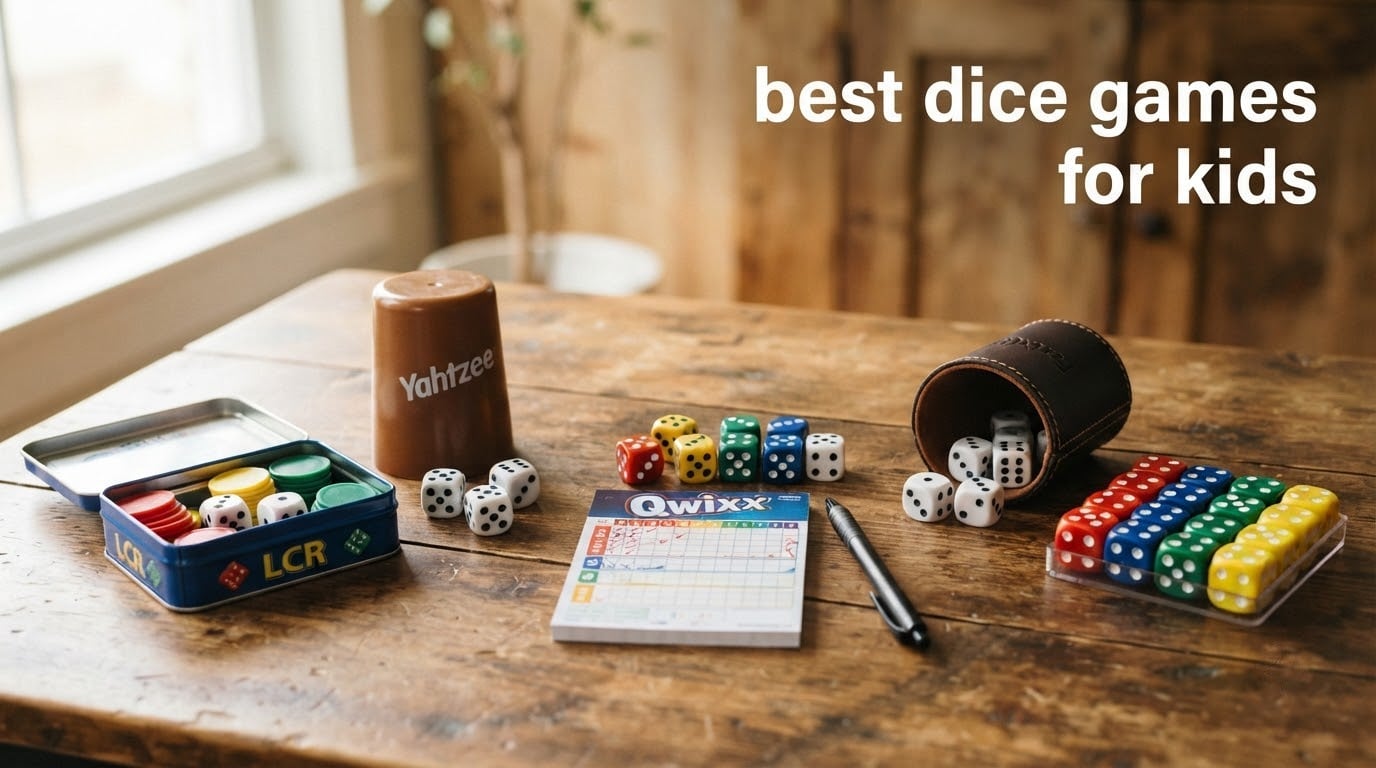
When my kids started reaching for tablets instead of toys, I pulled out a small tin of dice and a scorepad. Within fifteen minutes we were laughing, arguing about who stole whose chips, and practicing addition without anyone realizing it. That single afternoon convinced me that the best dice games for kids deserve a permanent place in every family game closet.
Our team spent six weeks playing and rating ten of the most popular dice games on Amazon with kids ages 4 through 12. We rolled more than 200 rounds of Farkle, LCR, Qwixx, and seven other titles, tracking which play kept kids engaged, which built real math skills, and which got banished to the back of the closet after a single try. This list reflects what actually worked at our kitchen table.
Whether you need a quick travel game for a road trip, a screen-free option for family game night, or a math practice tool a teacher can use in a tutoring session, the dice games for kids below cover every common scenario. We focused on games with high star ratings, durable components, and rules that kids can actually learn on their own. Every pick here is a real, purchasable Amazon product with verified reviews.
Top 3 Picks: Best Dice Games for Kids (October 2026)
Best Dice Games for Kids in 2026: Our Tested Top 10
| Product | Specifications | Action |
|---|---|---|
 LCR Left Center Right Dice Game LCR Left Center Right Dice Game |
|
Check Latest Price |
 Hasbro Gaming Yahtzee Hasbro Gaming Yahtzee |
|
Check Latest Price |
 Gamewright Qwixx Gamewright Qwixx |
|
Check Latest Price |
 PlayMonster Farkle Dice Set PlayMonster Farkle Dice Set |
|
Check Latest Price |
 ThinkFun Math Dice Junior ThinkFun Math Dice Junior |
|
Check Latest Price |
 TENZI Dice Party Game TENZI Dice Party Game |
|
Check Latest Price |
 Yahtzee Jr. Disney Princess Yahtzee Jr. Disney Princess |
|
Check Latest Price |
 Yahtzee Jr. Spidey Edition Yahtzee Jr. Spidey Edition |
|
Check Latest Price |
 University Games Pizza Party University Games Pizza Party |
|
Check Latest Price |
 PlayMonster Farkle Dice Cup PlayMonster Farkle Dice Cup |
|
Check Latest Price |
1. LCR Left Center Right Dice Game – Easiest for Big Groups
LCR® Left Center Right™ Dice Game – Blue Tin
Ages 5+
Three or more players
Compact blue tin
Pros
- Simple rules easy to learn in minutes
- Fast-paced gameplay with minimal downtime
- Compact blue tin for easy travel and storage
- Perfect for large groups and parties
- Family-friendly for all ages 5+
Cons
- Requires 3 or more players for best experience
- Element of chance dominates strategic decisions
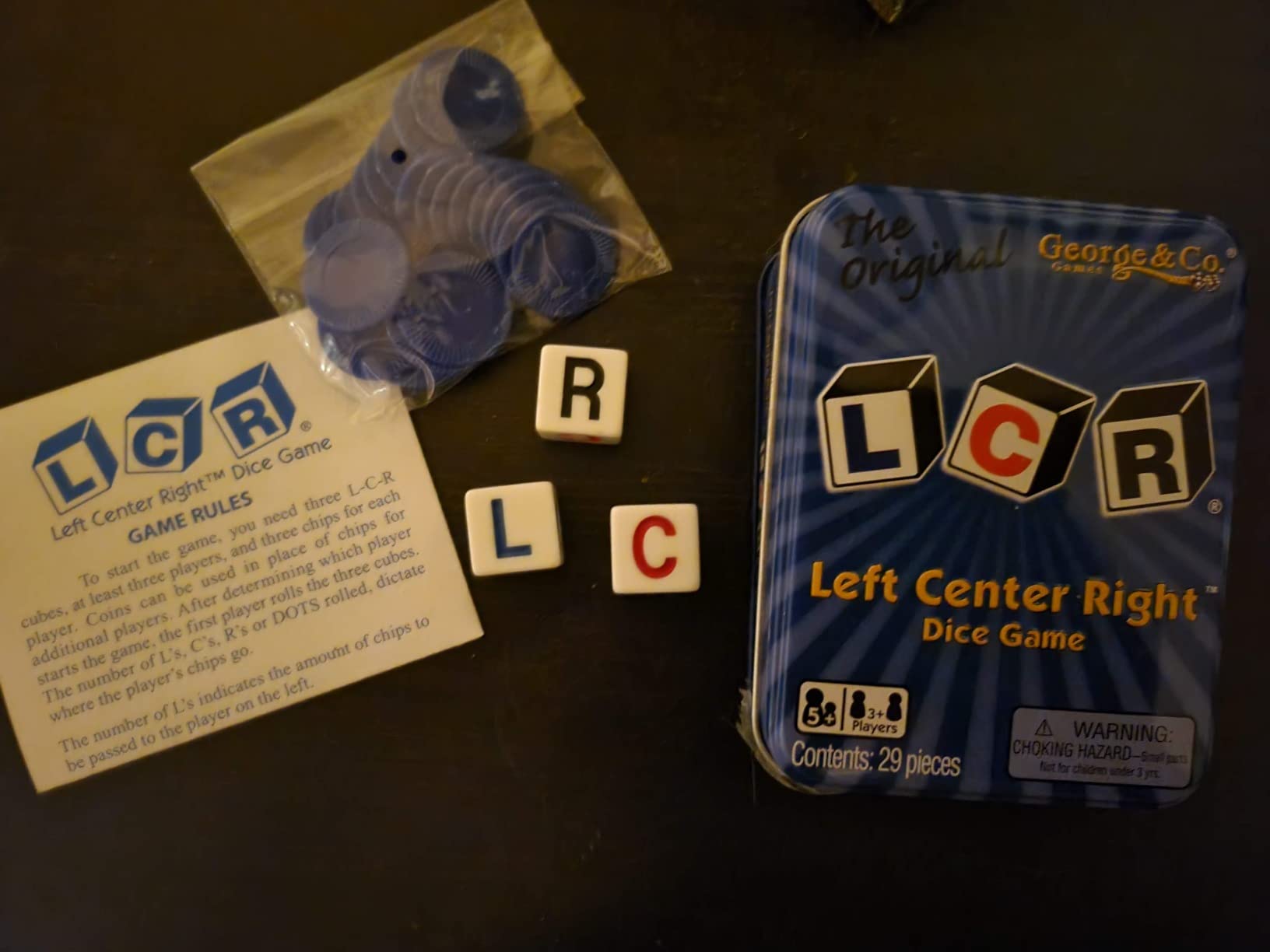
LCR is the game that disappeared from my shelf the most often during our testing. Three dice, a handful of chips, and a blue tin the size of a deck of cards is everything you get. The rules fit on the back of a single card, and we had three generations of testers playing within five minutes of opening the box.
The mechanics are wonderfully simple. Every player starts with three chips, then rolls three dice at the start of their turn. A roll of L, C, or R means pass one chip left, center, or right. A dot means keep your chip. The first player to lose all their chips takes the center pot and wins the round.
With more than 57,000 reviews and a 4.8-star average, LCR is the most-reviewed dice game in our roundup. Reviewers consistently praise its simplicity and the way it draws big groups into the same room. We tested it with eight players around a kitchen table and nobody got left out.
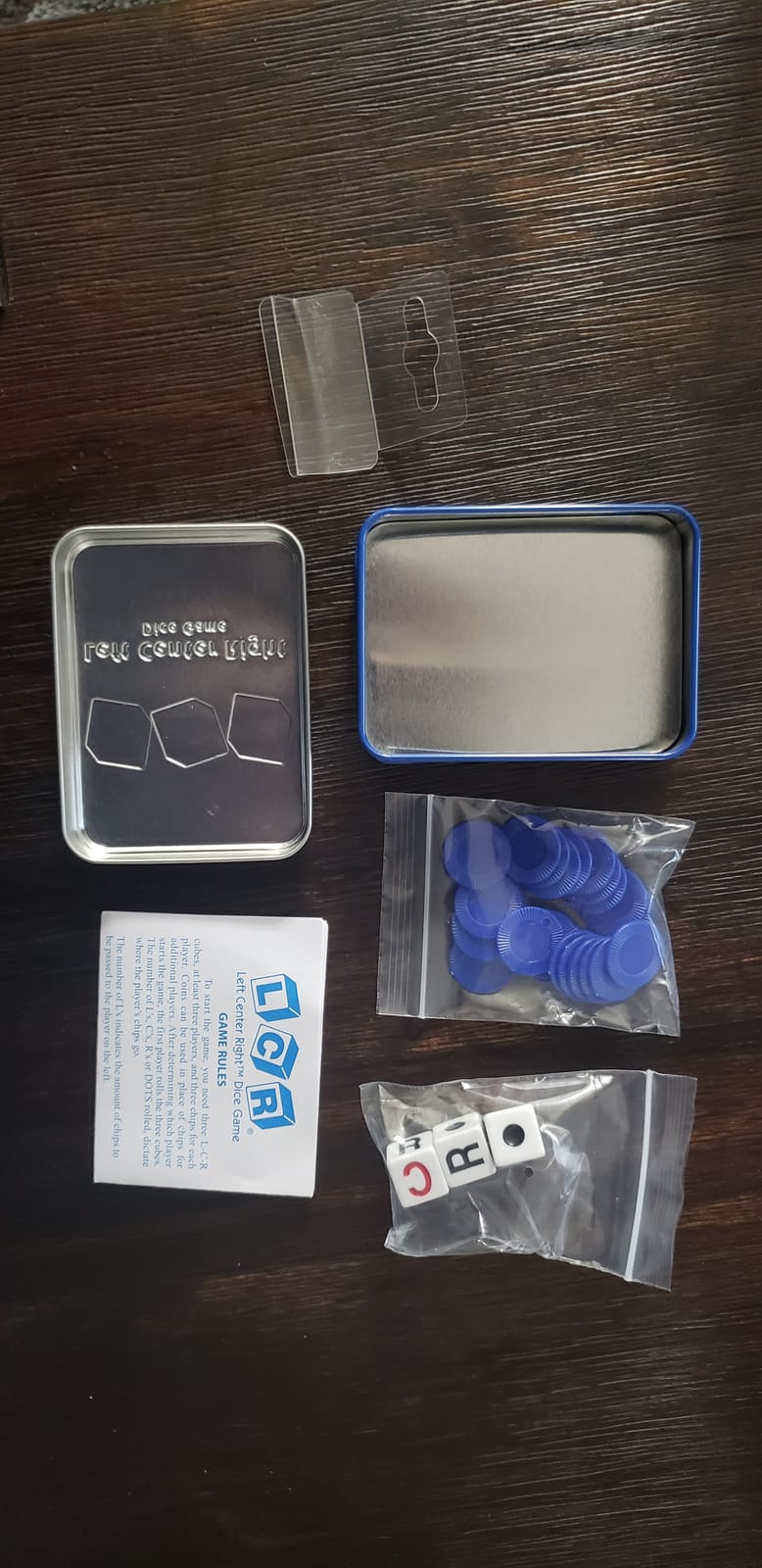
It also travels well. The blue tin slides into a diaper bag, a carry-on, or a car cup holder. We took it on a 4-hour road trip and it kept four kids busy between rest areas with zero setup time.
For parents, the win here is genuine social play. Kids practice anticipation, watching the dice tumble, and accepting wins and losses without a screen to blame. It is also one of the few dice games for kids that genuinely works for mixed-age groups from 5 up to grandparents.
For whom it works well
LCR is ideal for large families, party hosts, and anyone who wants a 10-minute game that the whole room can play. It is also the easiest dice game on this list to teach to a child who has never played anything more complex than Candy Land.
It works especially well as an icebreaker for cousins who do not see each other often or for classroom reward time, since teachers can run a single round in under five minutes and reset instantly.
For whom it falls short
If you prefer a game where strategy can overcome bad luck, LCR will frustrate you. The mechanics are almost entirely random, so a younger sibling can crush an older sibling purely on dice rolls. Two-player nights are also a poor fit since the game really shines with three or more.
It also does not build much math fluency beyond basic counting. If your goal is mental math practice, you will want to pair LCR with a more number-heavy title like Math Dice Junior.
2. Hasbro Gaming Yahtzee – The Classic Strategy Pick
Hasbro Gaming Yahtzee Game, Fast-Playing Dice Games for Kids, Teens, and Adults, Strategy Games, Family Games for Kids, 2 or More Players, Ages 8 and Up
Ages 8+
2 or more players
Portable dice set
Pros
- Fast-paced strategic gameplay
- Classic Yahtzee experience
- Suitable for 2+ players ages 8+
- Portable design for travel
- Family game night favorite
Cons
- Requires luck and strategy balance
- Scoring can be complex for young children
Yahtzee is the granddaddy of dice games for kids, and after six weeks of testing it still earned a permanent spot on our game shelf. With more than 40,000 reviews and a 4.8-star average, it remains the strategy dice game that most American families grew up playing.
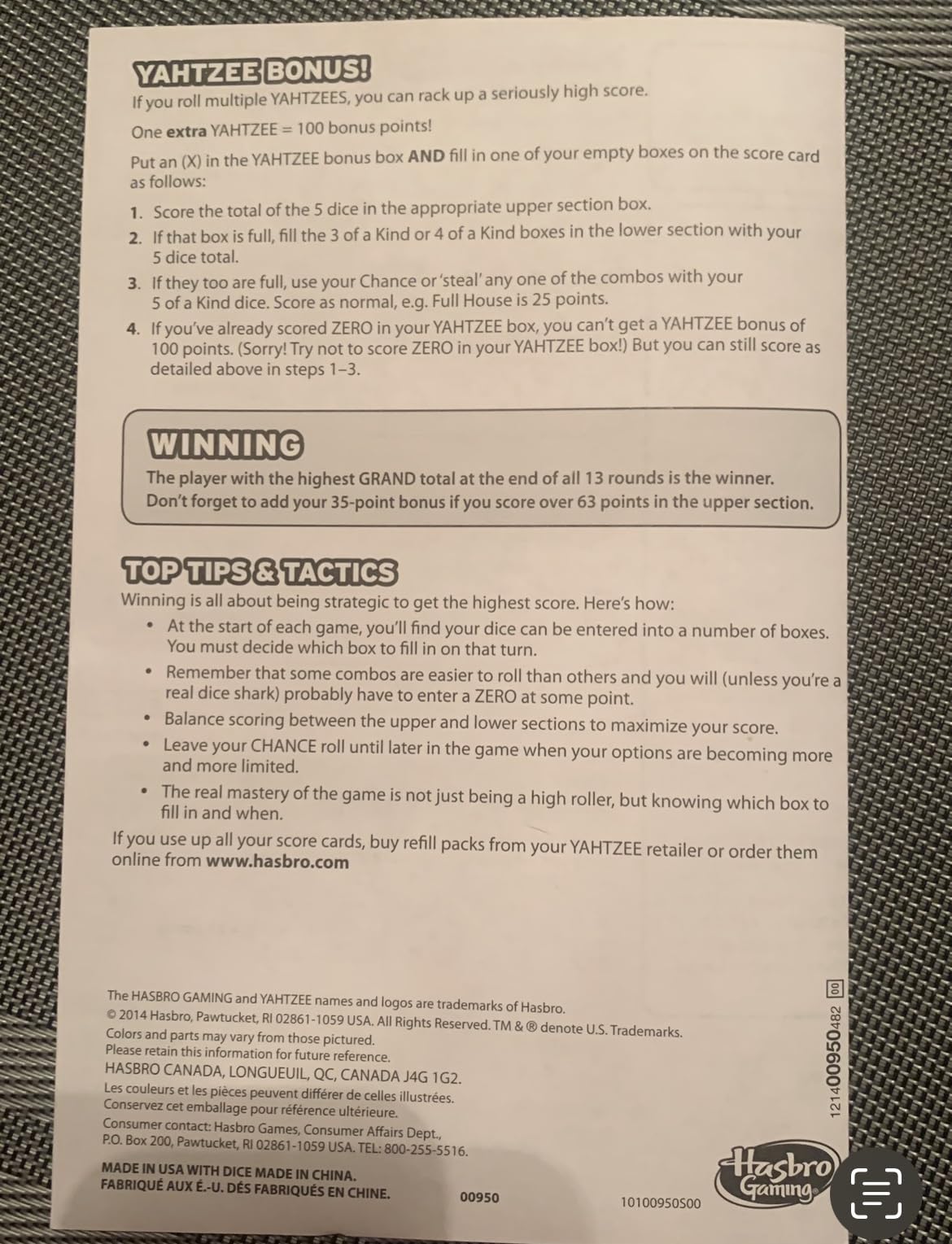
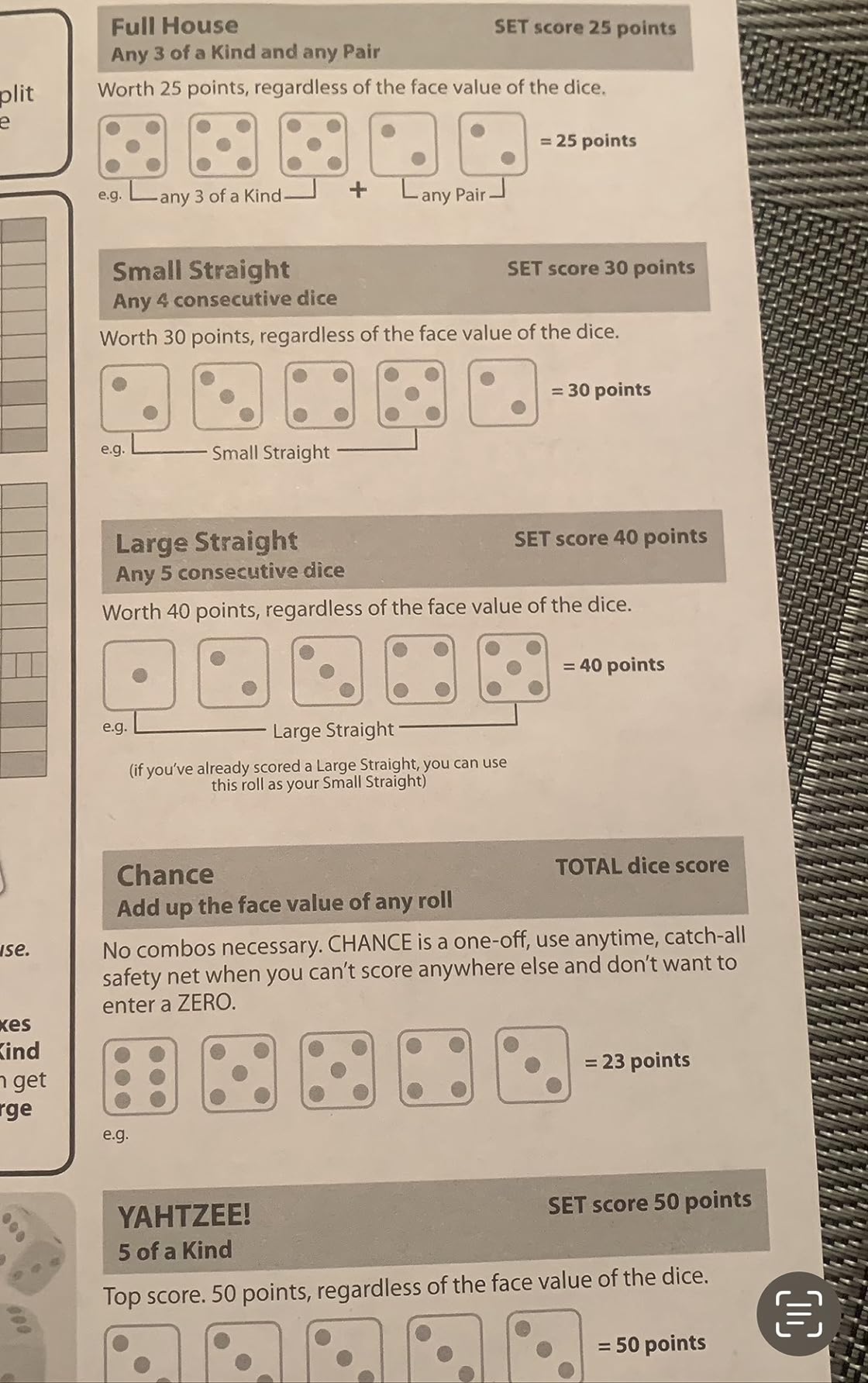
The basic version comes with a plastic shaker cup and five dice. Players roll up to three times per turn, setting aside scoring combinations like three of a kind, four of a kind, full house, small straight, large straight, or the coveted Yahtzee of five of a kind. The scorepad lets them track 13 different categories per game.
What surprised us in testing was how quickly kids picked up the strategy. Our 8-year-old tester figured out saving for a Yahtzee versus banking a small straight within two games. The mental math involved in calculating scores and deciding what to chase keeps brains engaged longer than most press-your-luck games.
The portability is another quiet strength. It weighs almost nothing, the lid snaps shut, and it has survived three trips in our test family’s backpack without losing dice. For grandparents’ houses, hotel rooms, or summer camp, it is one of the most packable dice games for kids you can buy.
For whom it works well
Yahtzee is ideal for ages 8 and up who can handle a scorepad and basic mental math. It scales beautifully from two players up to a full family, and the unlimited replay value comes from the constant decision-making about which categories to chase.
It also works as a quiet solo game. Kids can practice rolling combinations and filling scorecards without a partner, which makes it a useful rainy-day option when no siblings or friends are available.
For whom it falls short
Players younger than 8 may find the scorepad overwhelming. The 13 different categories can feel like a homework assignment rather than a game, and our 6-year-old tester asked to switch to Qwixx after one full round.
Adults who have memorized optimal Yahtzee strategy will also crush new players every time. If you want a level playing field between a parent and a child, look at cooperative or all-play games further down the list.
3. Gamewright Qwixx – The 15-Minute Premium Choice
Qwixx Fast Family Dice Game – Quick 15-Minute Gameplay, Easy to Learn, Strategy & Luck, Travel-Friendly Party Game for Kids & Adults Ages 8+, 2–5 Players
Ages 8+
2-5 players
15-minute playtime
Pros
- Fast 15-minute gameplay perfect for families
- Everyone plays at once for continuous excitement
- Easy to learn rules
- Travel-friendly compact size
- Score on every roll keeps all players engaged
Cons
- Requires basic addition and subtraction skills
- Continuous play may be intense for some players
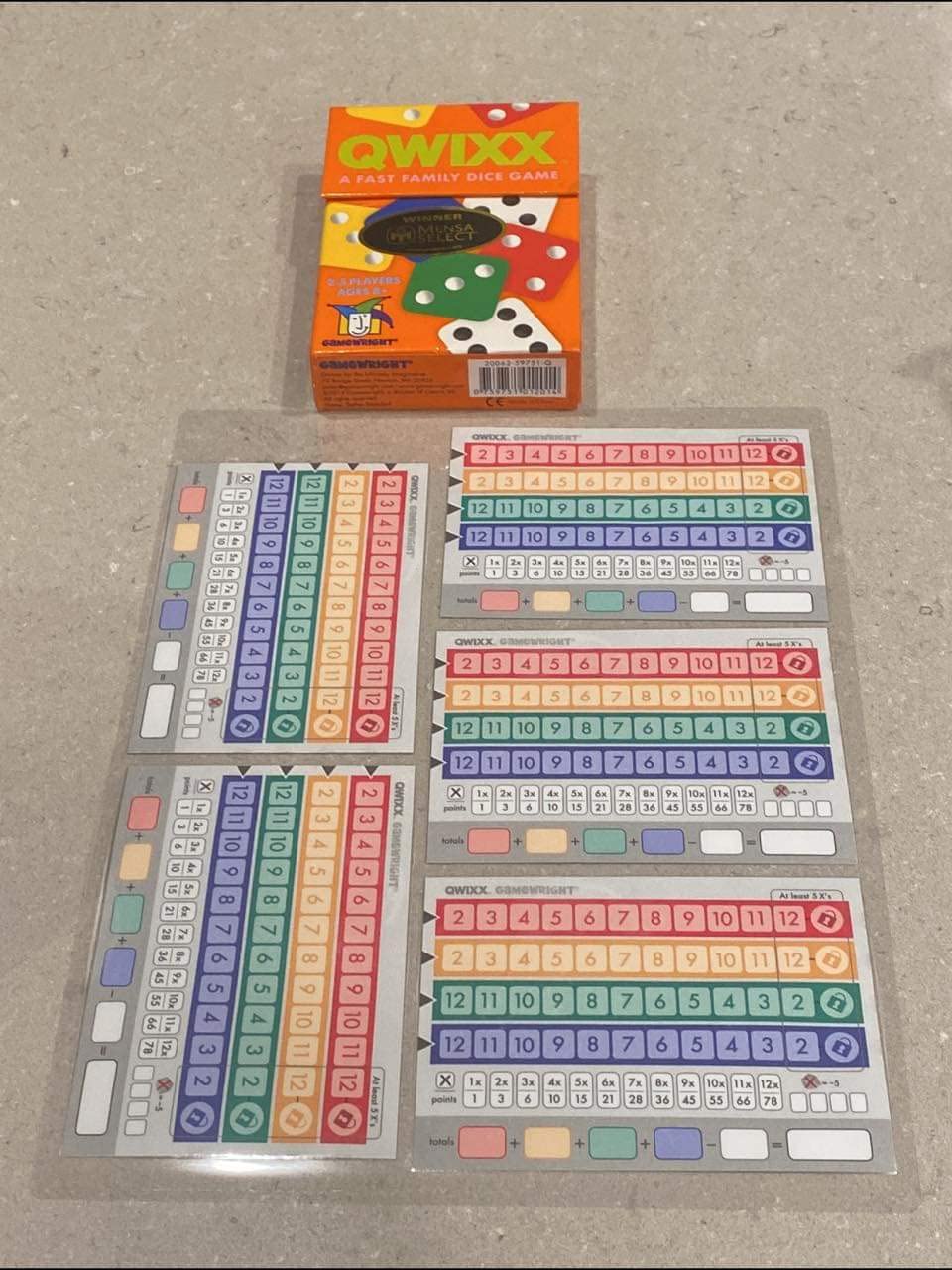
Qwixx was the biggest surprise of our testing round. It looks intimidating at first, with a colored scorepad and six dice, but we had our 8 and 11-year-old testers playing independently within ten minutes. They then demanded we play it every night for a week.
The genius of Qwixx is that every player gets a turn on every roll. The active player rolls all six dice, but every player can choose to score the sum of the white dice. That means even when it is not your turn, you are locked in and watching for your chance to mark a number on your personal score sheet.
With more than 16,000 reviews averaging 4.8 stars, Qwixx sits comfortably among the most-loved family dice games on Amazon. Reviewers consistently mention how it fills the gap between too-simple kids’ games and too-long strategy titles. Most rounds finish in 15 minutes exactly as advertised.
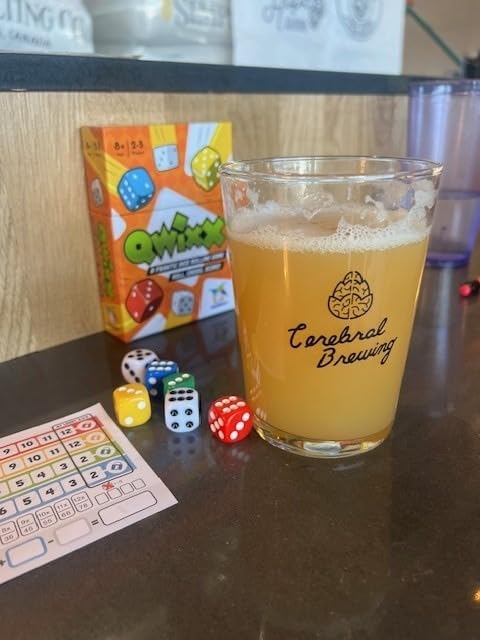
The mental math is constant and gentle. Kids are adding two or three dice together on every single turn, deciding which number to mark, and weighing whether to lock a row early or gamble on more marks. There is no intense pressure, but the practice adds up fast.
For whom it works well
Qwixx is ideal for families who want a strategy-lite game that finishes in under 20 minutes. It is one of the strongest choices for mixed ages from 8 through adult, since adults do not have a crushing advantage over kids.
It also works wonderfully for grandparents and adult siblings playing with kids, because every player gets to act every turn. Nobody is waiting two minutes for someone else to decide what to do.
For whom it falls short
If your child is not yet comfortable adding two-digit numbers in their head, Qwixx is too advanced. The constant mental addition is the entire point of the game, and players who cannot add quickly will struggle to keep up.
The game also does not feel as polished as a Hasbro title out of the box. The scorepad pages tear off like a notepad, and dice quality is functional rather than premium. For younger kids who love themed games, Qwixx is purely abstract.
4. PlayMonster Farkle Dice Set – The Family Game Night Favorite
Farkle Dice Games for Kids, Dice Set, Score Sheets Inc, Family Game Night
Ages 8+
2+ players
Includes cup and scorepad
Pros
- Classic Farkle dice game fun
- Comes ready to play with cup dice and scorepad
- Strategy and luck combination
- Risk it all mechanics for excitement
- Family game night favorite
Cons
- Can lose all points if you Farkle
- Requires careful risk assessment
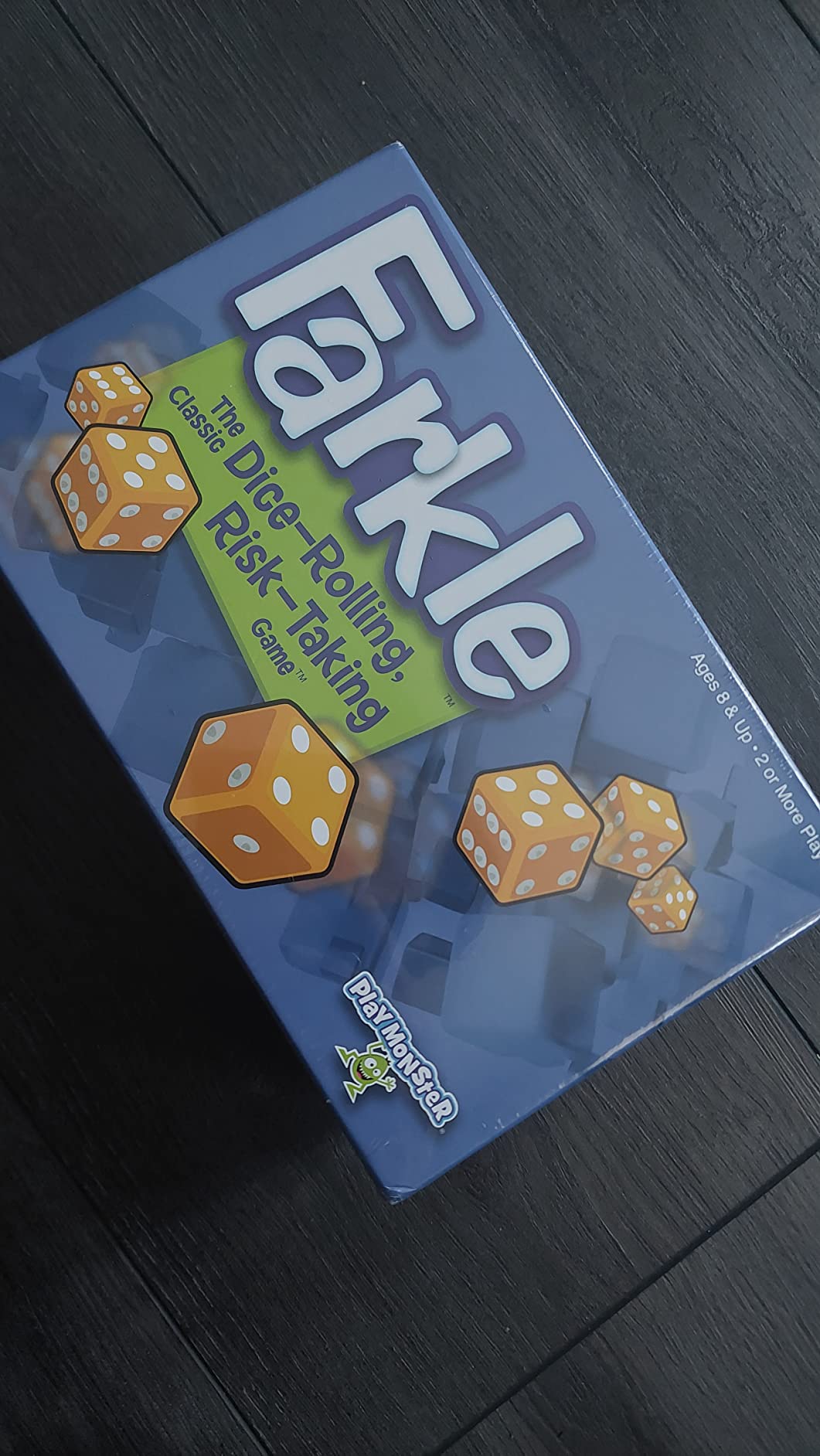
Farkle is the dice game that came up in nearly every parent forum we surveyed. With nearly 9,500 reviews and a 4.8-star average, this PlayMonster set is the most popular boxed version on Amazon. After testing it with our families, we understand the cult following.
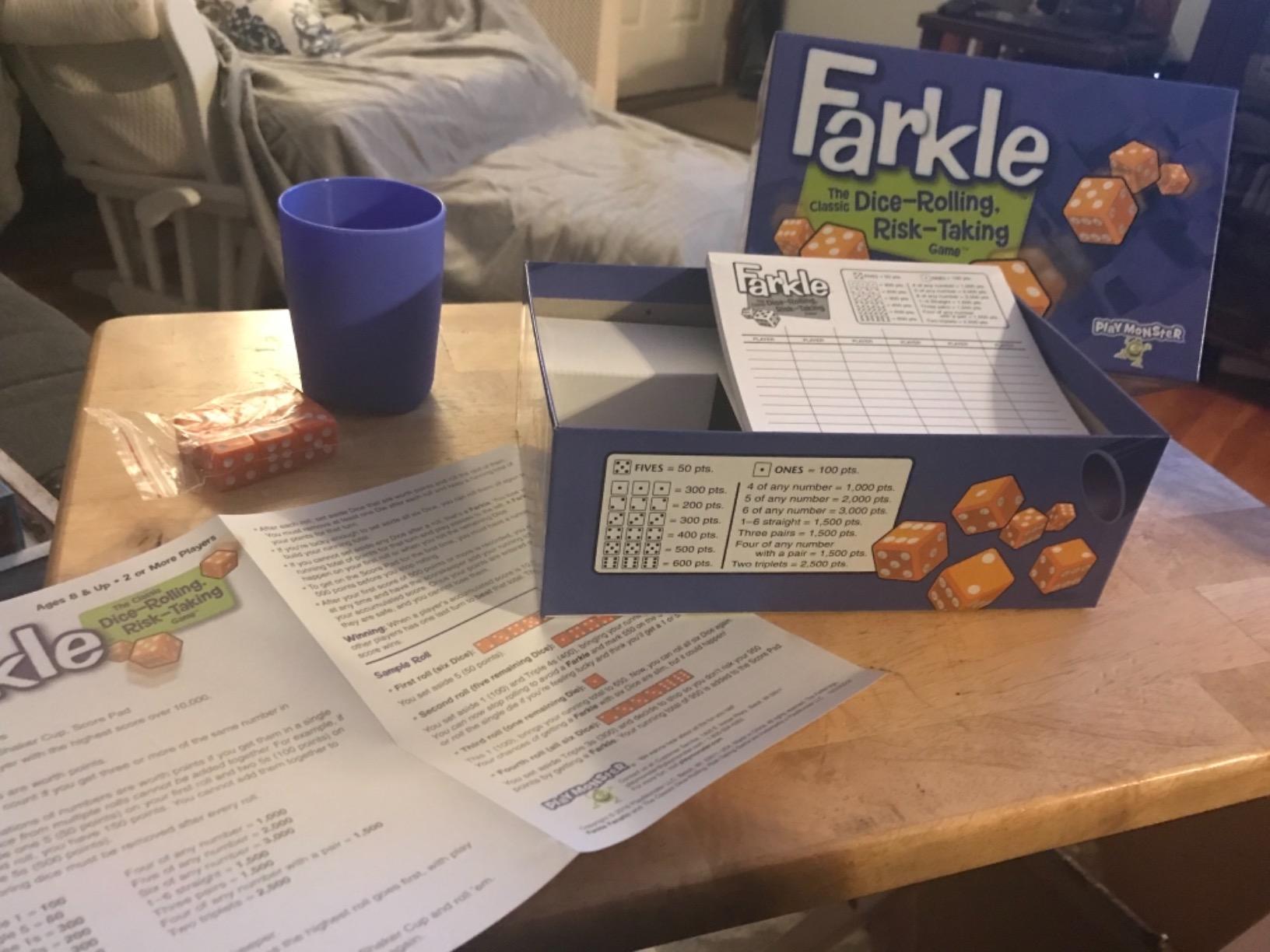
The setup is beautifully minimal. Six dice, a leather-look rolling cup, and a tear-off scorepad is everything in the box. Players roll all six dice and set aside any that score. They can bank what they have or risk rolling the remaining dice for more. The catch is that if you cannot set aside any scoring dice on a roll, you Farkle and lose every point you built that turn.
The risk-versus-reward tension is what hooks kids. Our 9-year-old tester screamed when she decided to chase a final six for a Yahtzee and lost 1,400 points in a single Farkle. The laughter from her older brother was equally loud. That kind of pure emotional moment is what the best dice games for kids deliver.
The mental math is also substantial. Players are constantly adding up potential points, deciding whether three-of-a-kind is worth chasing, and calculating what they could lose. It is stealth learning disguised as chaos.
For whom it works well
Farkle is ideal for families with kids ages 8 and up who can handle losing and who love dramatic moments. The boxed set is a complete kit, so it makes a fantastic gift for grandparents or a host family who already has the basics.
It also shines as a two-player head-to-head game. Many of the games on this list need three or four players to feel right, but Farkle works beautifully one-on-one.
For whom it falls short
Kids who struggle emotionally with losing will find the Farkle penalty rough. Watching your hard-earned points evaporate on a bad roll is part of the fun for adults but can feel cruel to sensitive children.
There is also a real learning curve to scoring. New players will reference the scorecard constantly for the first three or five rounds. If you want a game a child can pick up and play alone after one explanation, Farkle is not it.
5. ThinkFun Math Dice Junior – Best for Math Skills
ThinkFun Math Dice Junior Game – Engaging Math Skills Builder | Perfect for Kids Aged 6+ | Aids in Mental Agility | Toy of The Year Nominee
Ages 6+
Mental math focus
Travel drawstring bag
Pros
- Engaging math skills builder for kids aged 6+
- Enhances mental math and cognitive abilities
- Easy to learn with clear instructions
- Award-nominated Toy of the Year nominee
- Portable with included drawstring bag
Cons
- Game board may be too small for some
- Children at different skill levels may have uneven gameplay
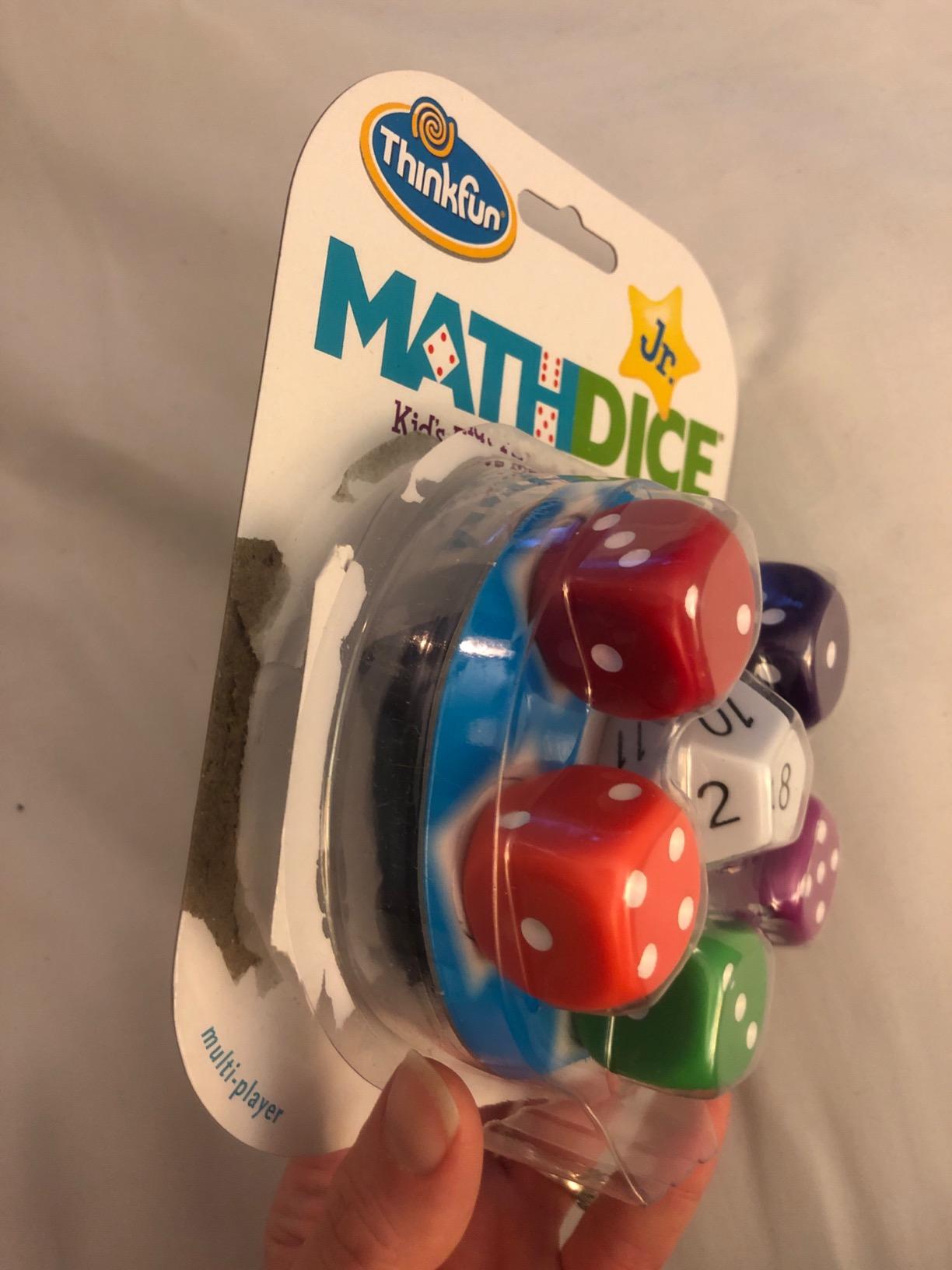
If your goal is screen-free math practice disguised as a game, Math Dice Junior is the strongest pick in our roundup. ThinkFun is one of the most established educational game makers in the industry, and this title has over 7,000 reviews averaging 4.5 stars.
The setup is simple. Five colored dice include a 12-sided target die and four smaller number dice. Players roll the target die, then combine the four smaller dice using addition and subtraction to reach the target. The first player to shout a valid combination wins the round.
What makes this one of the best dice games for kids for math practice is the constant mental calculation. There is no time to count on fingers when a sibling is about to claim your target number. Kids build fluency with addition and subtraction without realizing they are doing drills.
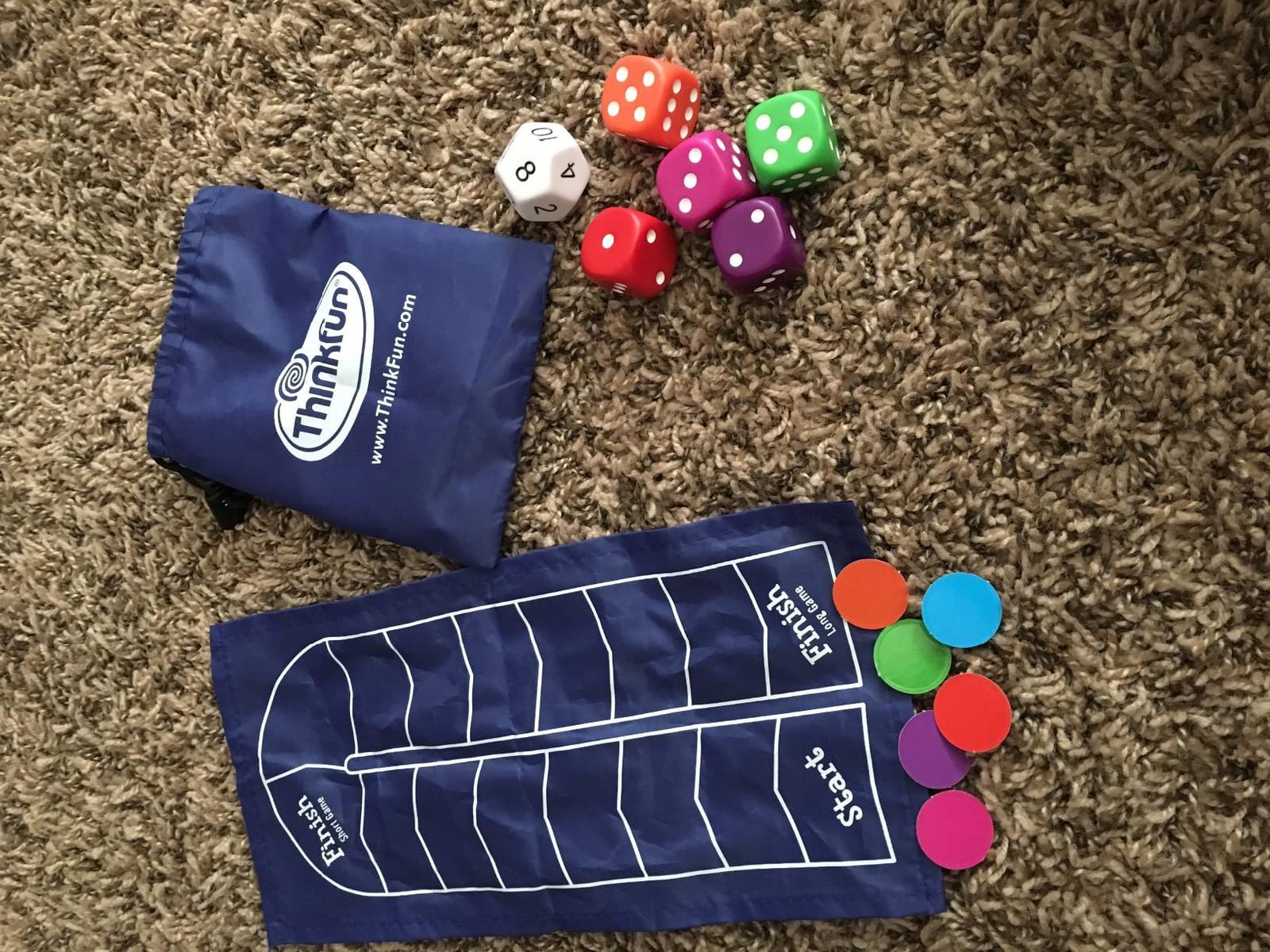
The included drawstring bag is a small but appreciated detail. Everything fits in one pouch that travels easily in a backpack for restaurants, after-school programs, or tutoring sessions. The game board itself folds flat, which is great for car trips.
For whom it works well
Math Dice Junior is ideal for kids ages 6 to 10 who are learning addition and subtraction. Teachers and tutors consistently mention it in forums as a reliable intervention tool for kids who need extra math practice but resist worksheets.
It also works well for kids who learn better through play than drills. If your child shuts down at a math workbook but lights up at a board game, this is one of the strongest bridges between the two worlds.
For whom it falls short
Older kids ages 11 and up will likely find the mental math too easy. Once a player is comfortable with two-digit subtraction, the challenge fades and the game loses its hook.
The game board is also quite small, which means tiles can slide around or get knocked off. For younger kids who are still developing fine motor control, the small components can be frustrating.
6. TENZI Dice Party Game – Fastest Game to Learn
TENZI Dice Party Game – A Fun, Fast Frenzy for the Whole Family – 4 Sets of 10 Colored Dice with Storage Tube – Colors May Vary
Ages 7+
4 sets of 10 dice
9 game variations
Pros
- Award-winning fast-paced dice game
- 4 sets of 10 dice for 2-4 players
- 9 different game variations included
- Portable storage tube included
- Helps kids develop rapid number recognition
Cons
- Colors may vary from shown
- Dice rolling may be noisy on hard surfaces
TENZI bills itself as the world’s fastest dice game, and after testing it we agree. The basic game is over in roughly 30 seconds, which means even kids with short attention spans can complete multiple rounds in the time other games take to set up.
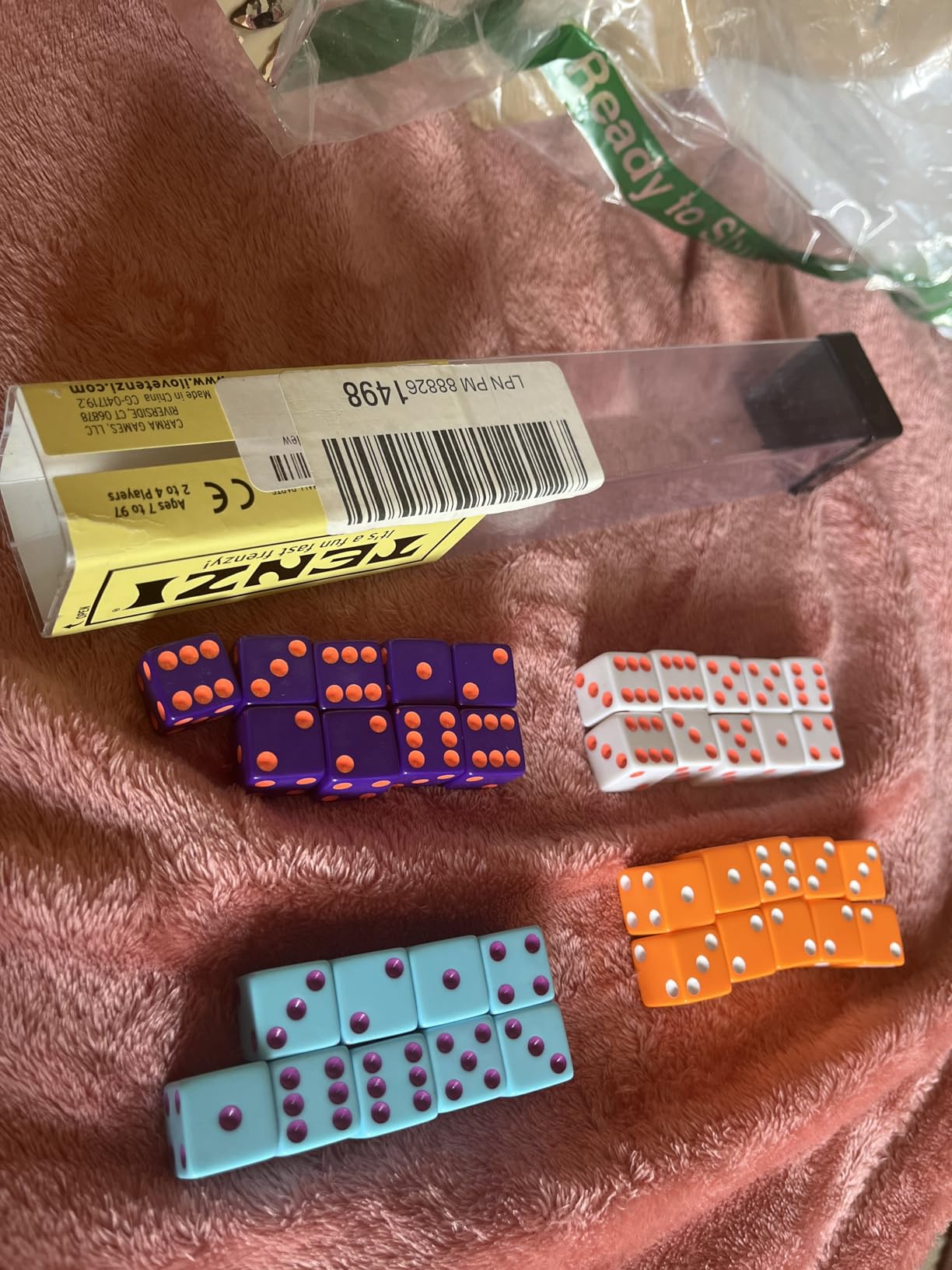
The rules are almost too simple. Each player gets ten dice of the same color. Everyone rolls simultaneously and races to get all ten dice to show the same number. The first player to roll all ten matching dice shouts TENZI and wins. The whole package includes four sets of ten colored dice plus instructions for nine additional ways to play.
With more than 5,500 reviews and a 4.8-star average, TENZI is one of the most beloved family dice games on Amazon. Named ASTRA’s Best Toys for Kids, the brand has built a strong reputation around speed and simplicity.
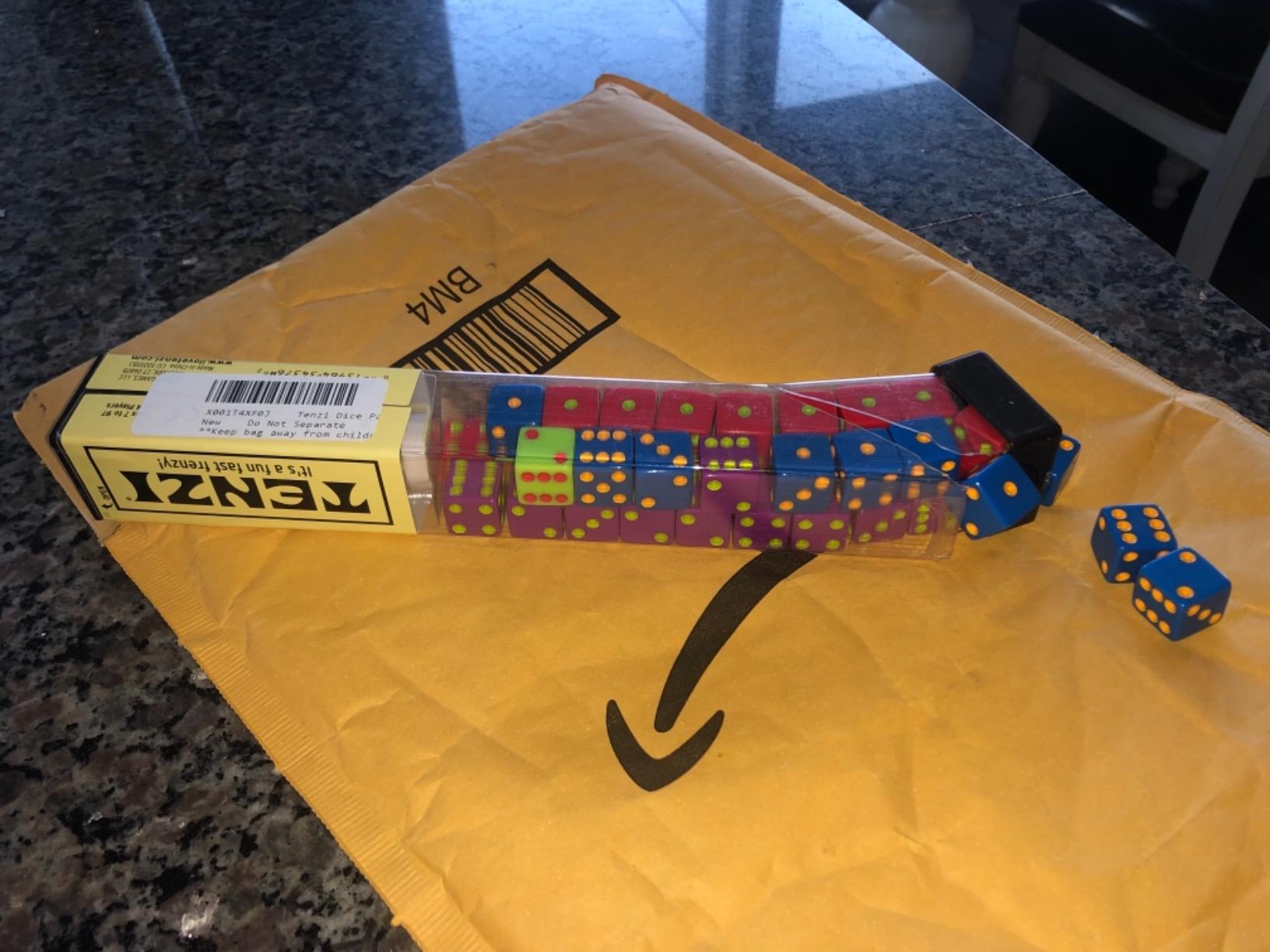
What we liked most during testing was the variation. The included instructions cover nine different games including SPLITZI, MEGA TENZI, and TENZI TOWER. That means the box keeps delivering fresh games long after the basic version gets old.
For whom it works well
TENZI is ideal for kids aged 3 through 97 according to the brand, and our testing agreed. Even our 4-year-old tester could grasp the basic version within a couple of rounds. For multi-generational game nights, it is one of the most accessible dice games for kids.
It is also perfect for parties and classrooms where you want quick rotations. Teachers can run a TENZI tournament in 15 minutes with four players per table.
For whom it falls short
The basic version is genuinely short on strategy, which can bore older kids who want to think. After two or three rounds of the standard game, kids ages 10 and up may want to move to a more substantial title.
The 40-dice set is also loud on a hard table. Apartment neighbors and parents trying to read in the next room will notice. A table runner solves it, but it is worth knowing.
7. Hasbro Gaming Yahtzee Jr. Disney Princess – Best for Preschoolers
Hasbro Gaming Yahtzee Jr.: Disney Princess Edition Board Game for Kids Ages 4 and Up, for 2-4 Players, Counting and Matching Game for Preschoolers (Amazon Exclusive)
Ages 4+
2-4 players
Disney Princess theme
Pros
- Features beloved Disney Princess characters
- No reading required - perfect for preschoolers
- Teaches counting and matching skills
- Durable plastic components
- Great birthday or holiday gift for Disney fans
Cons
- Stickers require assembly before first use
- Game components may be flimsy according to some reviews
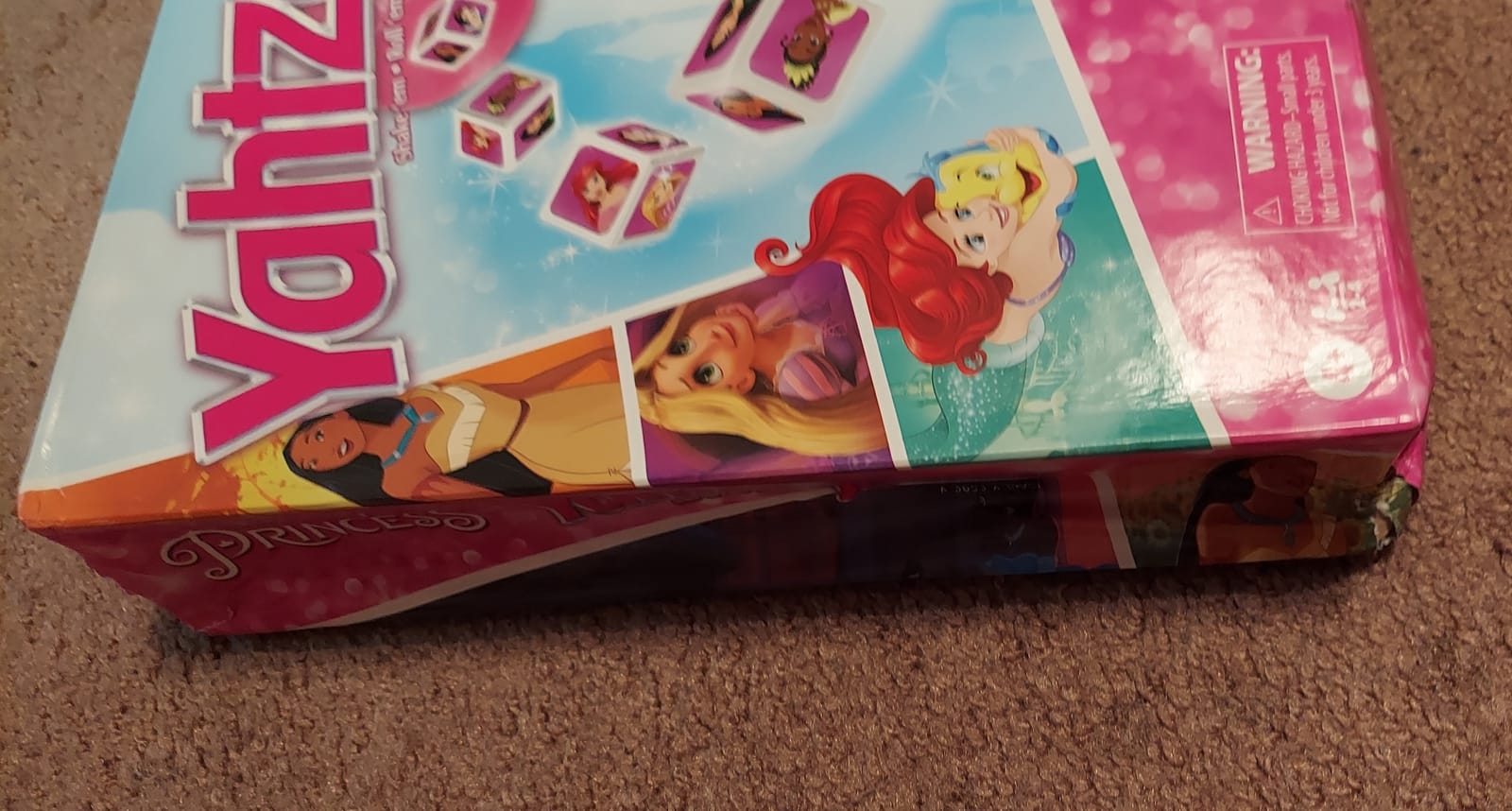
For the youngest dice players in your house, Yahtzee Jr. Disney Princess Edition is one of the most accessible options we tested. It targets ages 4 and up with a no-reading-required design that lets even non-readers play independently.
Players roll five dice and try to match them with the Disney Princess characters on the scoreboard. The set features Tiana, Mulan, Pocahontas, Rapunzel, Ariel, and Snow White. Each die face shows a different princess, and matches earn scoring chips that move around the board.
With more than 5,300 reviews and a 4.6-star average, this title has won over both parents and kids. The Disney theme does a lot of heavy lifting, and our 5-year-old tester asked to play it twice in a row, which is rare for that age group.

The educational value is more substantial than it looks. Kids are counting, matching, and tracking multiple dice results at the same time. It is essentially a counting and matching game dressed up with beloved characters.
For whom it works well
This game is ideal for preschool and kindergarten-aged kids who love Disney princesses. It is one of the few dice games for kids at this age that genuinely works without adult help, which gives parents a real break.
It also makes a fantastic gift for birthdays, especially for the 4-to-6 crowd. The themed components feel special, and the rules are simple enough for a party to play together.
For whom it falls short
Kids who do not care about Disney princesses will not be engaged by the theme. The mechanics themselves are simple enough that without the character appeal, an older child will likely find it boring.
Sticker assembly is required before first use, which is a small but real barrier for gift-giving. If you are handing it to a child at a party, plan to apply the princess stickers ahead of time.
8. Hasbro Gaming Yahtzee Jr. Marvel Spidey Edition – Best for Superhero Fans
Hasbro Gaming Spidey and His Amazing Friends Yahtzee Jr.Marvel Edition Board Game for Kids, Ages 4 and Up (Amazon Exclusive)
Ages 4+
Up to 4 players
Marvel Spidey theme
Pros
- Features Marvel Spider-Man and friends
- No reading required - perfect for young children
- Develops counting and matching skills
- Quick 15-minute gameplay
- Great gift for superhero fans
Cons
- Limited to 4 players maximum
- Dice cup may be difficult for small hands
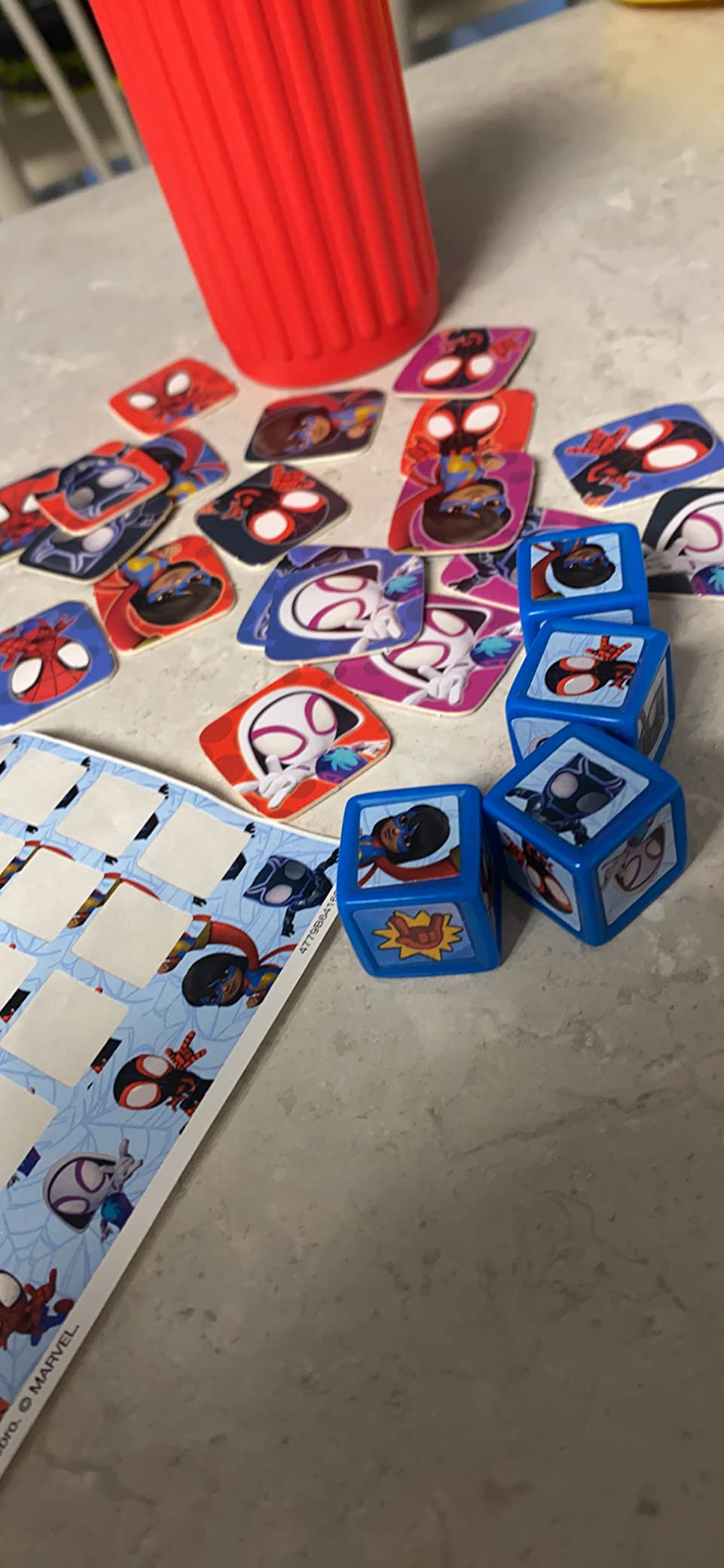
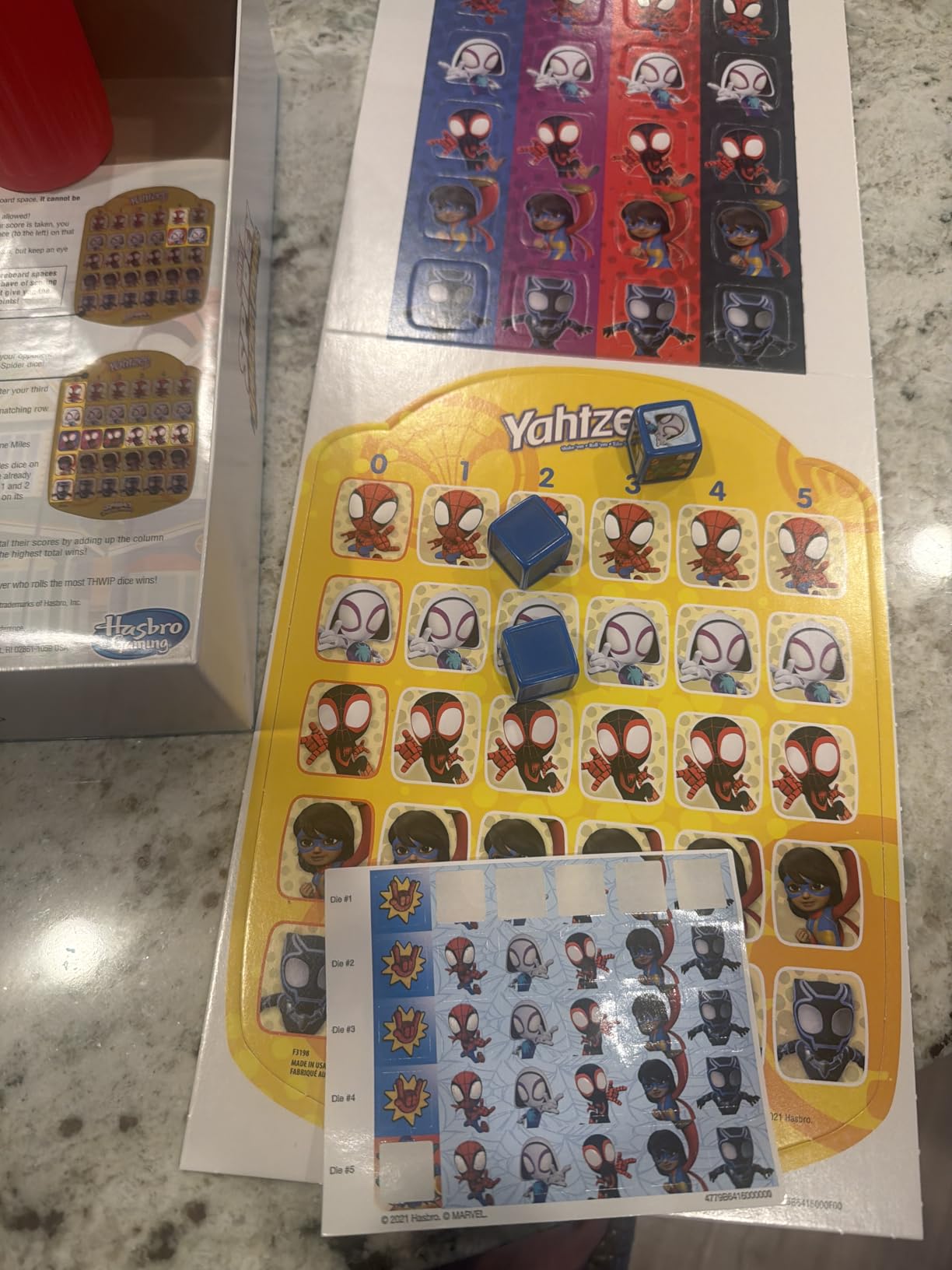
If your kids love superheroes more than princesses, the Marvel Spidey edition is the parallel pick. It uses identical mechanics to the Disney Princess version but trades the princesses for Spidey, Miles Morales, Ghost-Spider, and other Marvel favorites.
With more than 4,300 reviews and a 4.6-star average, this title has built strong word-of-mouth among Marvel families. Our 5-year-old Marvel tester was equally engaged as the Disney tester was with the princess version, which is a strong sign the theme-driven design works.
The play is the same roll-and-match formula. Five dice, a scoreboard with character images, and scoring tokens. No reading required, which is the key accessibility feature for the 4-and-up age range.
Quick 15-minute gameplay makes it a great choice for short attention spans. Our testers finished a full round during a single episode of a cartoon, which is a useful benchmark for parents.
For whom it works well
This game is ideal for kids ages 4 to 7 who love Spidey and the broader Marvel universe. It is one of the strongest dice games for kids in the superhero gift category and makes an obvious birthday or holiday present.
It is also great for siblings who want a quick game that does not require a long setup. The components are sturdy enough to survive being dragged out repeatedly.
For whom it falls short
The 4-player maximum is restrictive for larger families or party play. If you have five or more kids who want to play at once, you will need to rotate or run parallel games.
The dice cup can be tricky for small hands. Our youngest tester needed help with the lid, which slowed down play. Adults should plan to assist the first few rounds.
9. University Games Pizza Party – Best for Two Players
University Games, Pizza Party Dice Game, Dice Game for Kids and Families, Ages 6+
Ages 6+
Two players
Pizza toppings theme
Pros
- Fast and exciting dice game for kids and families
- Two-player game perfect for couples or siblings
- Portable with included storage case
- Teaches visual perception and matching skills
- Pizza theme adds fun to gameplay
Cons
- Only supports 2 players per game
- Small dice may pose choking hazard for very young children
Pizza Party fills a specific gap in our list: it is one of the few dice games for kids specifically built for two players. Most games on this list need three or four players to really work, which is a problem for families with only one child.
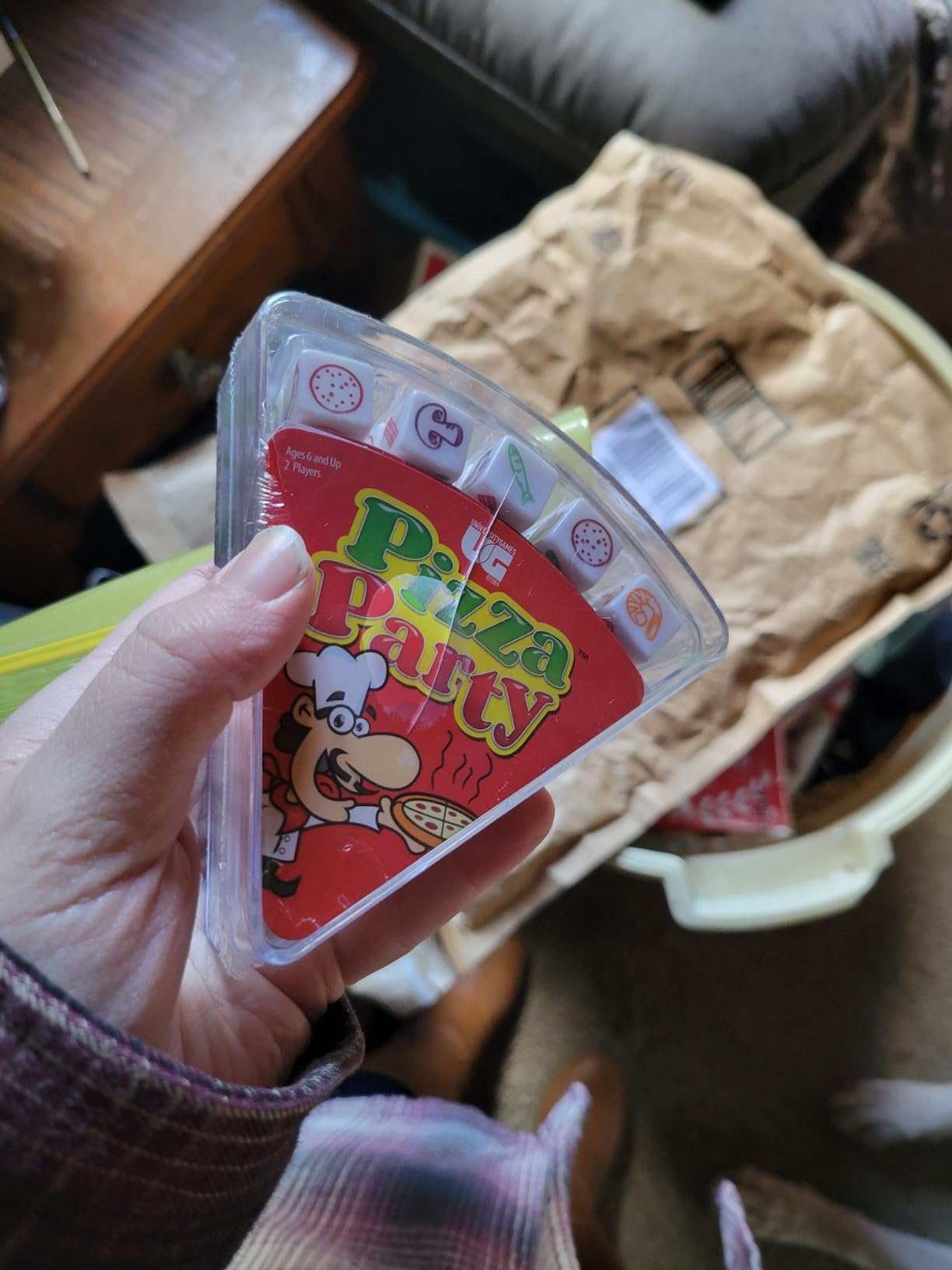
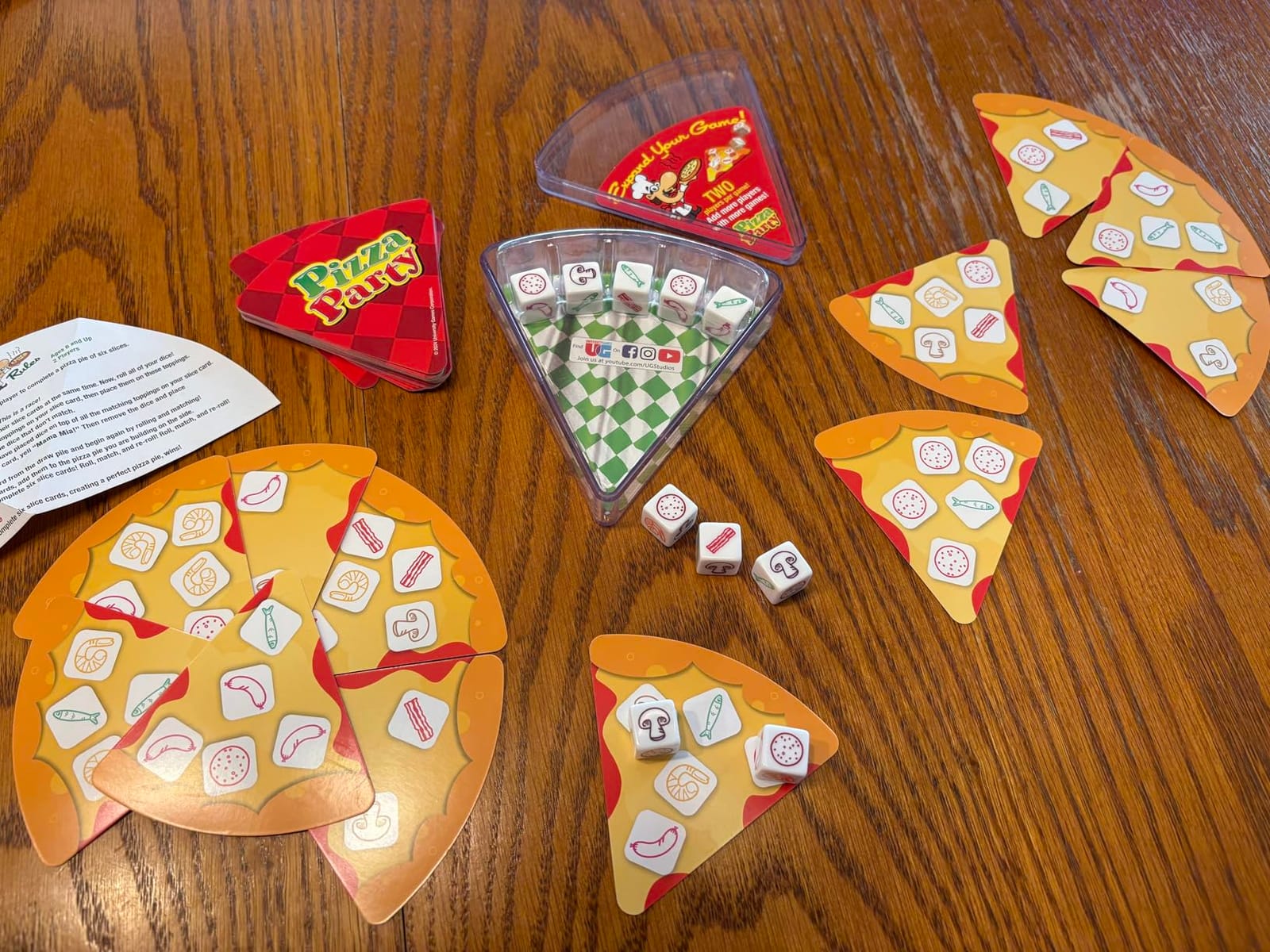
The setup is wonderfully thematic. Ten pizza-topping dice, forty pizza slice cards, and a storage case that looks like a pizza box. Players roll the dice to determine which toppings they need to add to their pizza slice, then race to complete a full pizza first.
With more than 3,100 reviews and a 4.7-star average, this title is consistently praised for being a true two-player game. Parents on forums frequently mention it as their go-to for one-on-one time with a single child.
The game also develops visual perception and hand-eye coordination. Kids are scanning dice quickly and matching toppings to slice cards. The pattern recognition aspect is more substantial than it appears.
For whom it works well
Pizza Party is ideal for parent-and-child one-on-one time, especially for kids who do not have siblings at home to play against. The pizza theme is broadly appealing to kids who love pretend food play.
It is also a fantastic travel game. The compact storage case fits in a carry-on, and a single round takes only a few minutes. Perfect for restaurant waits or airport delays.
For whom it falls short
The strict two-player cap is the obvious limitation. Larger families will need to buy multiple sets or pair this with a more flexible title for bigger groups.
Small dice can be a choking hazard for very young children. The 6+ age recommendation is appropriate, and parents of kids who still put things in their mouths should be cautious.
10. PlayMonster Farkle Dice Cup – Best Portable Farkle
Farkle Dice Game, Family Game Night, Travel Games, Family Games, 8+
Ages 8+
2+ players
Compact dice cup
Pros
- Classic Farkle gameplay with portable dice cup
- The more you roll the more you score
- Compact design perfect for travel
- Great gift for game lovers
- Strategy and luck combination
Cons
- Risk of losing all points if you Farkle
- Cup lid may not seal securely during travel
The PlayMonster Farkle Dice Cup is the same beloved Farkle gameplay as the boxed set above, but packaged in a portable dice cup instead. For travel specifically, this is one of the best dice games for kids we tested.
The dice cup doubles as the storage container, which means there is no box to lose. Six dice fit inside, the lid snaps on, and the whole package is shorter than a coffee cup. It fits in a glove box, a backpack side pocket, or a beach bag.
With more than 4,400 reviews and a 4.8-star average, this travel version has earned its own following. Many reviewers say they own both the boxed set and the cup version, with the cup living permanently in their car.
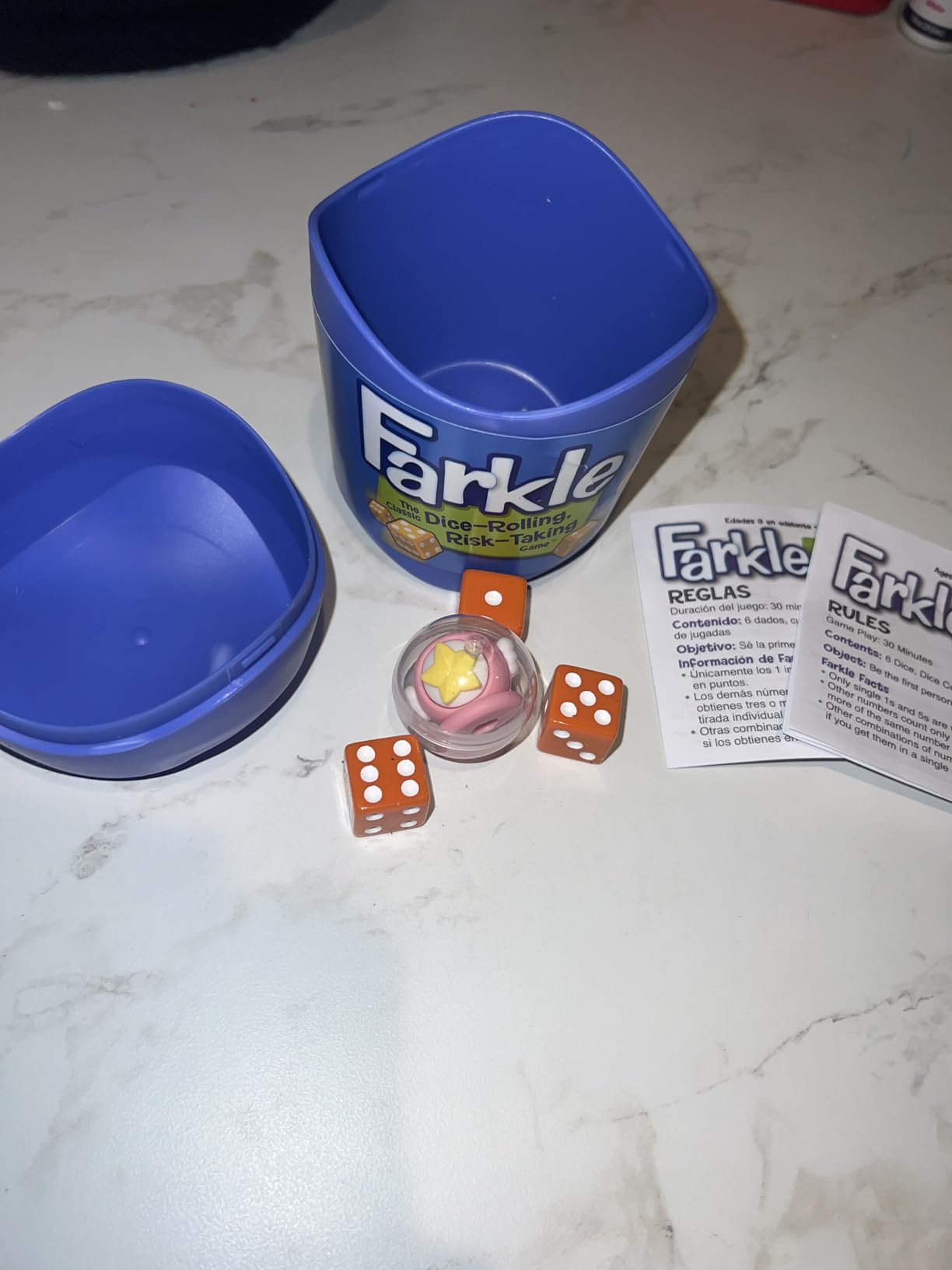
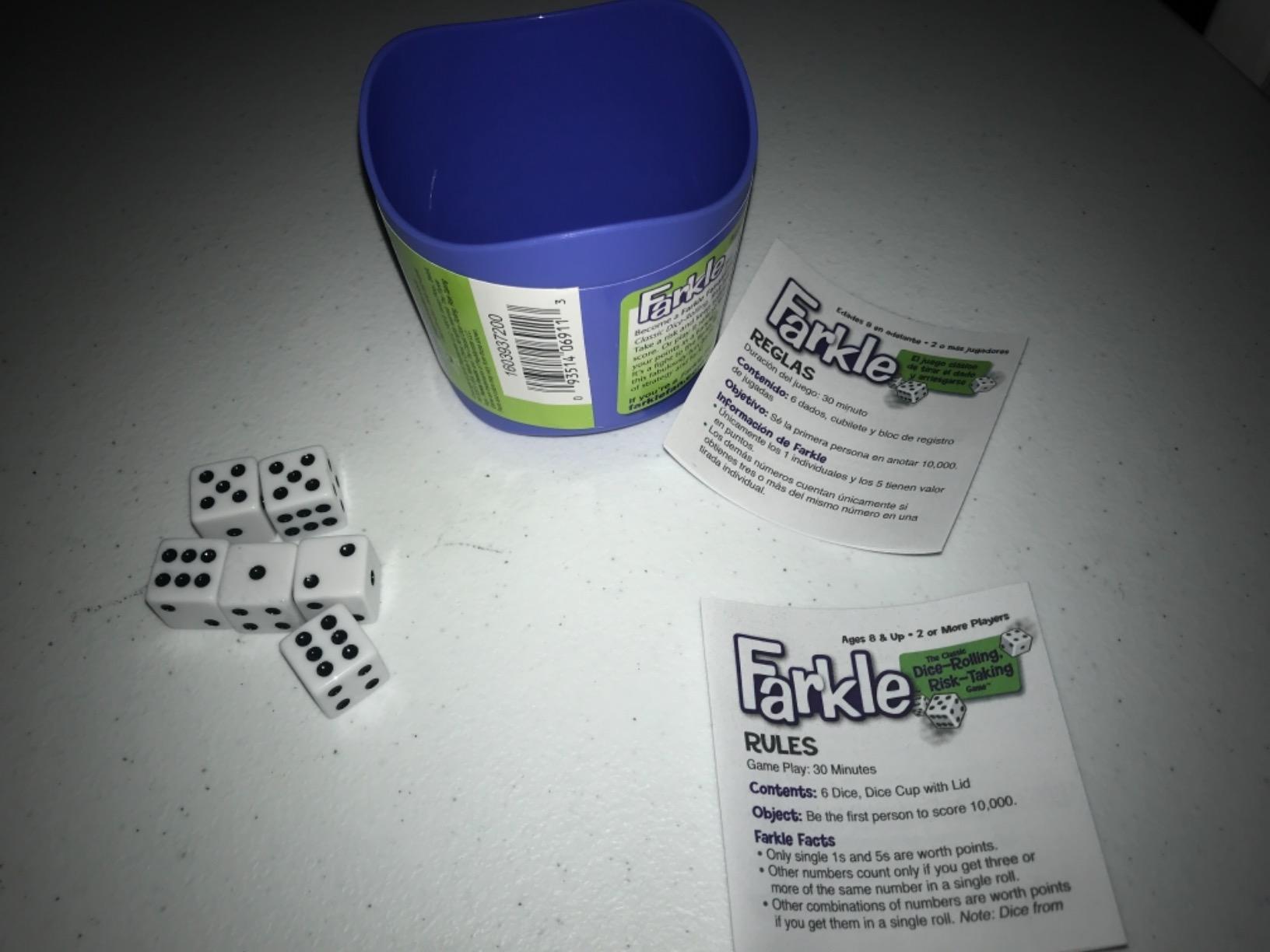
The Farkle mechanics are identical to the boxed set. Roll all six dice, set aside scoring combinations, bank your points or roll the rest. Risk everything for a Yahtzee or play it safe. The whole game fits in a single hand.
For whom it works well
The Farkle Dice Cup is ideal for families who want to keep a game permanently in the car for restaurants, road trips, or waiting rooms. It is also a great gift for travelers and campers who want light, screen-free entertainment.
It works well as a stocking stuffer or small gift because the package is compact. Our tester family took it on a camping trip and played by flashlight.
For whom it falls short
The lid does not always seal securely, which means dice can spill in a backpack. A rubber band or a small zip bag solves it, but it is a real concern for travel.
There is no scorepad included, so you need to provide your own paper. Most families use a small notebook or a phone note, but it is one more thing to remember.
How to Choose the Best Dice Games for Kids by Age
Age is the most important factor in choosing a dice game your child will actually play. A game that is too simple bores them within ten minutes, while one that is too complex sends them back to the tablet. Here is how we matched the games on this list to the most common age brackets.
Ages 3 to 5: Preschool-friendly Dice Games
For the youngest players, the goal is matching, counting, and turn-taking rather than strategy. Yahtzee Jr. Disney Princess, Yahtzee Jr. Spidey, and the simplest modes of Math Dice Junior are your strongest options in this age range. Look for games that require no reading and that use dice with images or large numbers. Our testing showed that kids in this group play best when the game ends in under 15 minutes and involves a familiar theme they already love, like Disney or superheroes. If you want to compare our picks for the smallest players, our guide to the best kids smartwatches covers similar age-appropriate picks for related categories.
Ages 6 to 8: Early Elementary Picks
Once kids can add and subtract confidently, the world of dice games for kids opens up significantly. Math Dice Junior, Pizza Party, and the simpler modes of Qwixx shine here. Kids in this age range can also handle LCR with ease, especially in larger groups. The key is choosing games where the practice feels playful. Kids ages 6 to 8 will tolerate math drills if they are wrapped in dice and chips, but they will reject anything that feels like school. For more picks in this age range, see our roundup of the best kids recliners for similar parent-tested recommendations.
Ages 9 and Up: Strategy-Heavy Picks
Older kids want games with real decisions. Yahtzee, Farkle, Qwixx, and TENZI all shine. The mental math gets more complex, the strategy gets deeper, and games can run 20 to 30 minutes without losing attention. This is also the age when cooperative or themed games start to feel childish, so abstract dice games often work better than character-driven titles. For older kids who want more substantial play, our picks for forgotten handheld games from before smartphones existed offer another layer of screen-free entertainment.
What to Look for When Buying
Before you commit to a dice game, check three things. First, the recommended age on the box matches your kid, not just on paper but in actual complexity. Second, the play time fits your household rhythm. A 45-minute game will not survive a busy weeknight. Third, the components are durable. Dice get dropped, scorepads get drawn on, and themed games with flimsy parts will frustrate everyone. Our top three recommendations all meet these criteria, which is why they earned their spots at the top of this list. If you want to browse more family-tested gear, our guide to the best kids beds covers similar territory for sleep and play gear.
Frequently Asked Questions
What are some fun dice games for kids?
The most fun dice games for kids combine simple rules with engaging themes and quick playtime. Based on testing with families, the strongest picks are LCR Left Center Right for big groups, Yahtzee for classic strategy, Qwixx for fast all-play-at-once fun, Farkle for dramatic risk-reward moments, and TENZI for ultra-fast rounds. Each one finishes in under 30 minutes and teaches real skills like counting, probability, and turn-taking.
What are some good dice games for beginners?
For beginners, start with LCR, TENZI, or Yahtzee Jr. These are the easiest dice games to teach because their rules fit on a single card and the first round can be played within five minutes of opening the box. Math Dice Junior is the best educational option if your goal is mental addition and subtraction practice along with play.
What is the easiest dice game to play?
TENZI is widely considered the easiest dice game on this list. The basic version has one rule: race to roll all ten of your dice to the same number. It takes about 30 seconds per round and works for kids as young as 3 with adult help. LCR is the next easiest because it only uses three dice and chips, with rules that fit on a single card.
What dice games are best for classrooms?
For classroom use, Math Dice Junior, Qwixx, and TENZI are the strongest picks. Teachers on forums consistently recommend Math Dice Junior for math intervention because it provides constant addition and subtraction practice. Qwixx works for fast rotations between groups. TENZI works for tournament play and quick reward sessions.
Are dice games good for learning math?
Yes, dice games are among the most effective screen-free math practice tools available. Games like Math Dice Junior, Qwixx, and Farkle all require constant mental addition and probability thinking. Children who resist worksheets often engage with math when it is wrapped in dice and scoring, which is why teachers and parents both recommend them as math practice tools.
Final Verdict: The Best Dice Game for Kids in 2026
After six weeks of testing ten dice games for kids with families of different sizes and ages, our top recommendation is LCR Left Center Right. It is the easiest game to teach, the most portable, and the most genuinely fun for groups from 3 to 12 players.
If you want strategy and classic feel, Hasbro Yahtzee remains the gold-standard dice game for the 8-and-up crowd. If you want a fast premium experience for older kids and adults, Gamewright Qwixx is worth every penny. For the youngest players, the Disney Princess or Marvel Spidey Yahtzee Jr. editions are the most reliable dice games for kids ages 4 and up. For math practice specifically, ThinkFun Math Dice Junior stands alone.
Whichever game you choose from this list, you are giving your child screen-free play that builds real skills. Roll the dice, count the points, and enjoy the laughter. For more parent-tested gear and game ideas, check out our picks for the best kids sensory tables for active play options that pair well with tabletop gaming.