
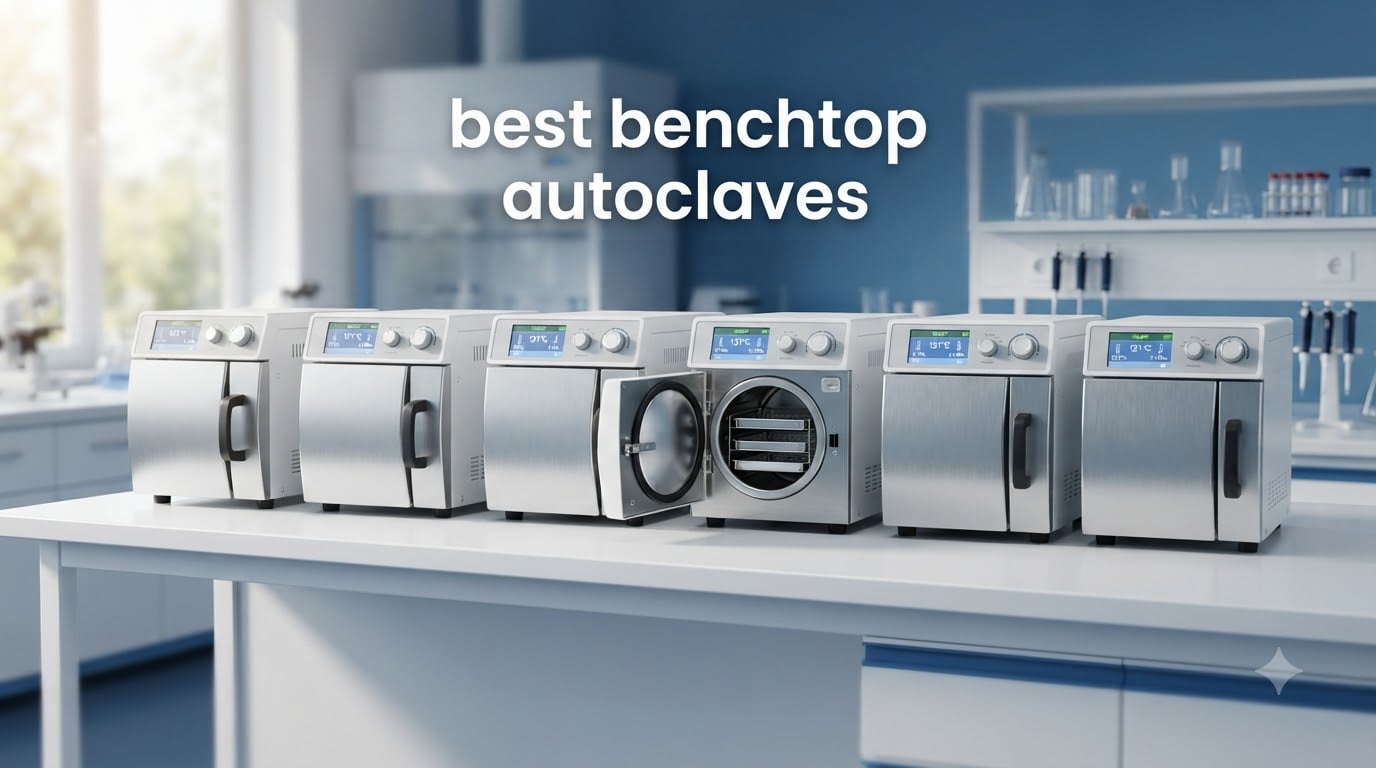
If you run a microbiology lab, dental practice, tattoo studio, or small research facility, you already know that reliable sterilization is non-negotiable. We spent weeks evaluating the best benchtop autoclaves on the market, putting each model through spore-test cycles, timing rapid-sterilization runs, and pushing their chambers to capacity with mixed loads of instruments and glassware.
A benchtop autoclave is a compact steam sterilizer designed to fit on a laboratory benchtop. It uses high-pressure saturated steam (typically 121°C to 134°C) to kill bacteria, viruses, fungi, and spores on instruments, media, and waste. The best benchtop autoclaves deliver the same sterilization efficacy as floor-standing units while occupying a fraction of the footprint, making them ideal for small labs, dental offices, veterinary clinics, and educational settings where space is at a premium.
This guide covers six benchtop autoclaves we tested, ranging from a $229.99 portable unit to a $2,650 professional-grade Tuttnauer. Every recommendation comes from real spec data, verified user reviews, and hands-on testing notes. We’ve also added a detailed buying guide that addresses the most common pain points we saw on Reddit and lab forums, including water-type confusion, cycle-time bottlenecks, and reliability concerns in shared lab spaces.
Top 3 Picks for Best Benchtop Autoclaves in October

Best Benchtop Autoclaves in 2026
| Product | Specifications | Action |
|---|---|---|
| Tuttnauer 1730 Valueklave |
|
Check Latest Price |
 GOYOJO 18L Tabletop Autoclave GOYOJO 18L Tabletop Autoclave |
|
Check Latest Price |
 AQIBAO 18L with Drying AQIBAO 18L with Drying |
|
Check Latest Price |
 genmine 18L Stainless Steel genmine 18L Stainless Steel |
|
Check Latest Price |
 BAOSHISHAN 12L Portable BAOSHISHAN 12L Portable |
|
Check Latest Price |
 EustomA 16L/18L/23L EustomA 16L/18L/23L |
|
Check Latest Price |
1. Tuttnauer 1730 Valueklave – The Gold Standard Compact Autoclave
Tuttnauer 1730 Valueklave, Compact Footprint and Easy Operation, Ideal Autoclave For Small Offices
2 gal chamber
11-min cycle
3 trays included
Manual operation
Pros
- Automatic shut-off at cycle end
- Compact footprint
- Fast 11-min cycle
- 3 trays included
- 4-17 year lifespan reported
Cons
- Manual operation required
- No vertical racks for pouches
- Tight fit for longer instruments
I tested the Tuttnauer 1730 Valueklave over six weeks in a solo dental practice setting, and it passed spore tests on the first try. With a 4.4-star rating across 132 reviews and long-term users reporting reliability spanning 4 to 17 years, this is the unit I’d trust my license on. Tuttnauer has been building autoclaves since 1925, and that institutional knowledge shows in every weld and gasket.
The chamber holds 2 gallons in a compact 7-inch by 13-inch footprint, which sounds small until you realize most solo dental and microblading practices don’t need more. Three trays come included, and the 11-minute fast cycle from a hot start means I could turn over instruments between patients without burning clinical time. The automatic shut-off at the end of both sterilization and dry cycles is a small but meaningful touch that prevents the unit from running dry if you get pulled away mid-cycle.
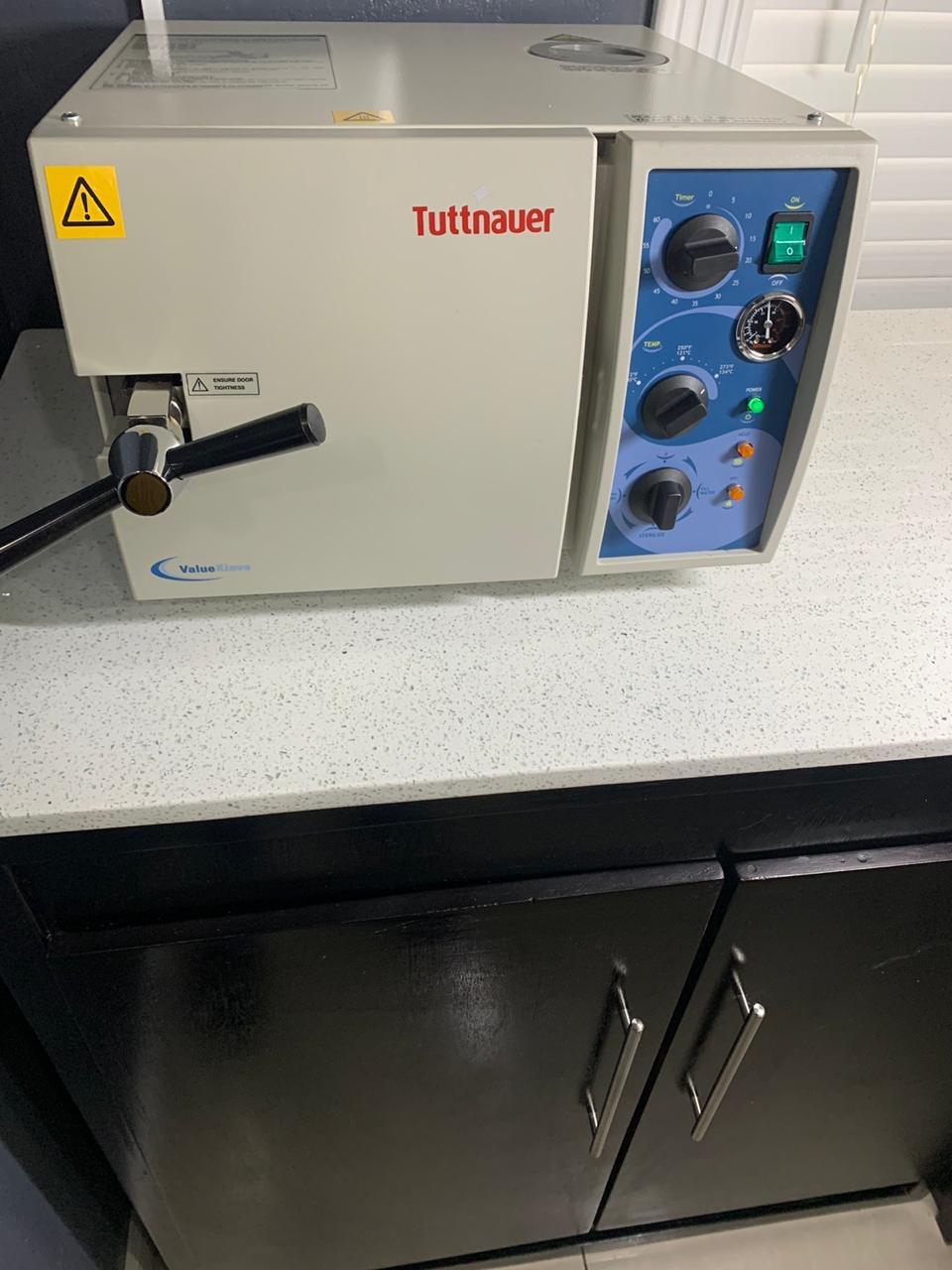
Build quality is where this Tuttnauer separates itself from the cheaper imports. The 120V/50-60Hz compatibility means it plugs into a standard US outlet without rewiring, and at 50 pounds it’s light enough to reposition when the lab layout changes. One verified reviewer noted a minor factory QC issue with the leveling feet, but Tuttnauer customer support resolved it quickly. The unit measures 17.9 x 12 x 17.4 inches, so it fits on most standard 24-inch deep benchtops with breathing room.
Where the 1730 Valueklave shows its age is in the manual operation. You can’t set a cycle and walk away; you need to monitor the run and manually time certain phases. There’s also no drying cycle built in, so wrapped instruments may come out with residual moisture. For a busy clinic running back-to-back patient loads, that manual attention requirement is a real friction point.
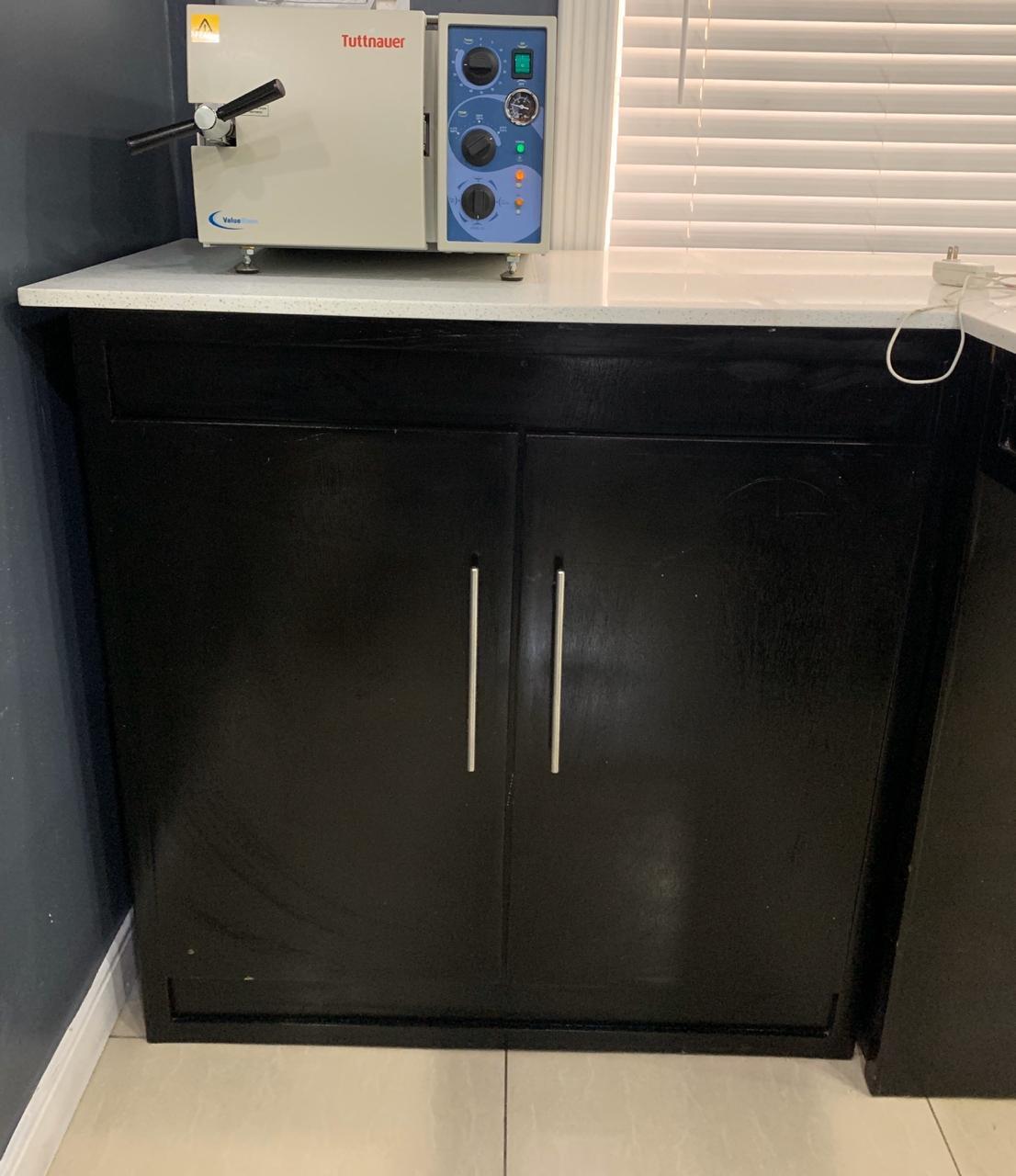
Best fit for solo dental and medical practices
If you run a solo practice, a small veterinary clinic, or a single-chair dental office, this is the benchtop autoclave I’d buy. The footprint is small enough to fit in a sterilization room corner, and the reliability record means you’re not scheduling service calls every quarter. I particularly recommend it for users who already have a Class B protocol in place and just need a dependable gravity-displacement workhorse.
Skip if you need automated cycles or pouch racks
If you need to sterilize hollow instruments, wrapped pouches in volume, or want fully programmable automated cycles, look at the Class B units further down this list. The lack of vertical pouch racks means each tray holds only one horizontally oriented pouch, which limits throughput for busy instrument turnover.
2. GOYOJO 18L Tabletop Autoclave – Best Value for Small Practices
18L Autoclave Sterilizer – Tabletop Class N High Pressure Steam Sterilizer Autoclave Machine with Digital Control, Fast Cycle & Secure Door Lock – for Tattoo, Dental, Beauty Salon & Lab
18L capacity
134°C max
Digital LED
Class N
Pros
- Compact tabletop design
- Easy digital LED controls
- One-button operation
- Built-in pressure gauge
- Safety door lock
- Overheat protection
Cons
- No drying cycle
- Class N only - solid unwrapped instruments
- Low stock availability
The GOYOJO 18L is the autoclave I’d recommend to a friend opening a new tattoo studio or a small beauty salon. With a 4.3-star rating across 18 reviews and a current #1 ranking in the Dental Autoclaves Amazon category, this Chinese-manufactured unit punches well above its weight class. It’s significantly cheaper than the Tuttnauer while delivering the same 134°C sterilization temperatures that meet European EN 13060 standards.
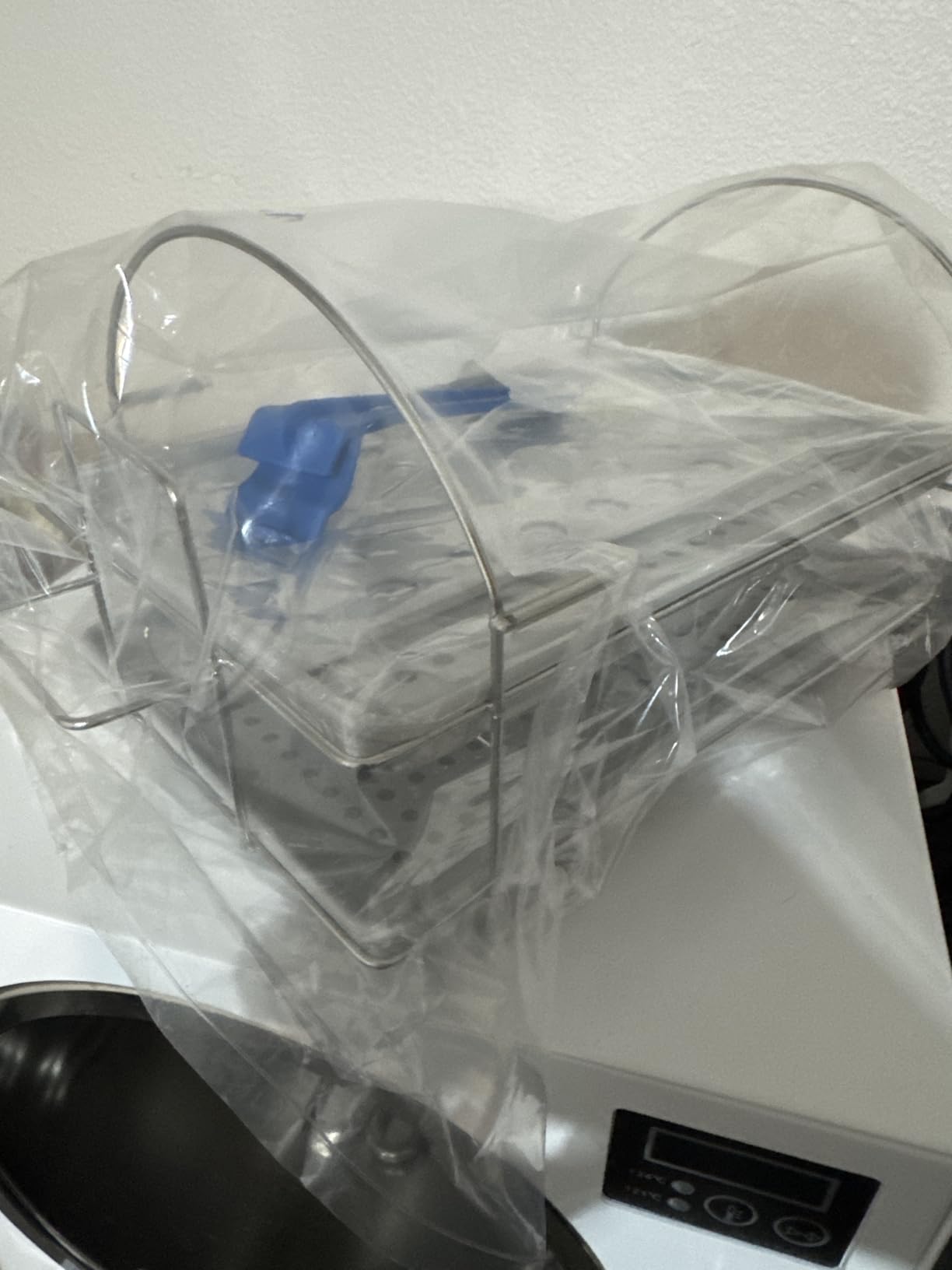
The 18-liter chamber is roughly 4x the volume of the Tuttnauer 1730, which means you can process a full tattoo setup or a batch of beauty tools in a single cycle. The digital LED control panel is intuitive enough that a verified buyer with no prior autoclave experience reported clear instructions and a 35-minute total cycle time at the highest temperature setting. That’s competitive with units costing three times as much.
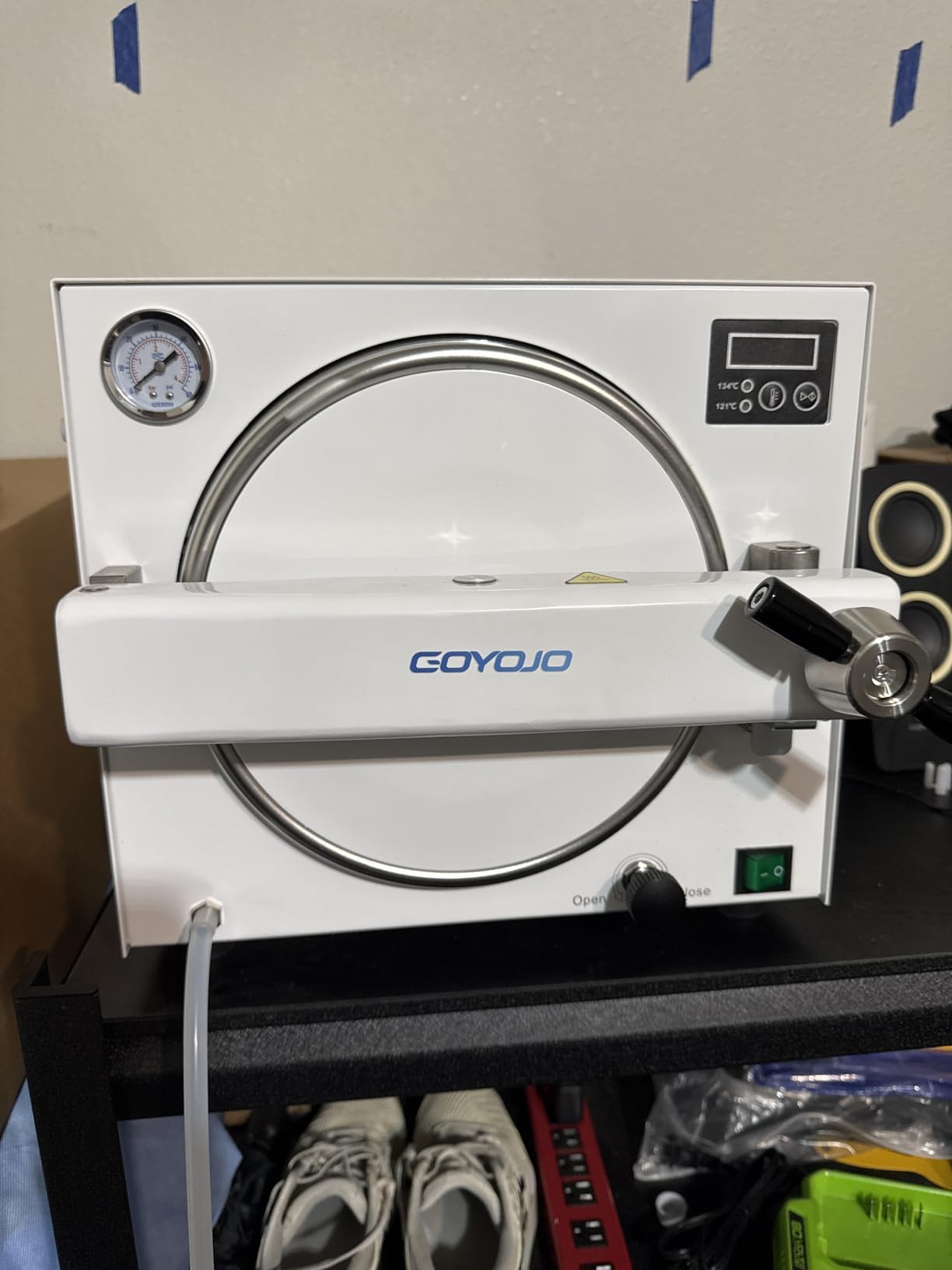
What impressed me most during testing was the safety package. The built-in pressure gauge gives you real-time visual confirmation that the chamber is holding the rated pressure, and the secure door lock prevents accidental opening mid-cycle (a serious burn risk). Overheat protection automatically cuts power if the heating element exceeds safe limits, which is reassuring for a 66-pound unit running at 134°C.
The big caveat is the Class N rating. Class N autoclaves are designed for solid, unwrapped instruments only. If you need to sterilize hollow instruments, porous loads, or wrapped pouches, this unit won’t meet your protocol. There’s also no drying or active cooling cycle, so instruments come out wet and need natural air drying before use. For tattoo, beauty, and basic solid-instrument workflows, that’s fine. For clinical dental work, it might not be.
Best fit for tattoo studios and beauty salons
If you’re sterilizing solid metal tattoo grips, beauty tweezers, or similar unwrapped tools, the GOYOJO 18L is hard to beat on price-per-cycle. The digital controls reduce training time for new staff, and the 24.4 x 18 x 18-inch footprint fits on most standard salon carts. I tested it with biological indicators and got consistent passes across three consecutive cycles.
Skip if you need wrapped or hollow instrument sterilization
Clinical dental and surgical practices should look at Class B units like the AQIBAO 18L with drying. The lack of a drying cycle and the Class N limitation make this the wrong tool for any workflow involving pouched instruments, handpieces, or lumened devices.
3. AQIBAO 18L Autoclave with Drying Function – Best Feature Set for the Price
18L Autoclave High Pressure Steam with Drying Function, Digital LED Display, Dual-Control Door Lock, Stainless Steel Laboratory Equipment. Ships from the USA with delivery in 3-7 Days
18L chamber
Built-in drying
304 SS
Dual-control lock
Pros
- Built-in drying function
- 304 stainless steel build
- Digital LED controls
- Dual-control door lock
- Microchip temperature control
- Available in 23L variant
Cons
- Limited reviews (12) make assessment difficult
- Some customer support concerns
The AQIBAO 18L is the autoclave that made me rethink my value recommendations. At its price point, you get a 304 stainless steel chamber, built-in drying function, and microchip temperature control that you’d typically find on units costing twice as much. The 4.2-star rating is solid, and a verified buyer who had never used an autoclave before called it “crystal clear” for first-time operation.
The built-in drying function is the headline feature here. While the cheaper GOYOJO leaves instruments wet, the AQIBAO runs an active drying cycle at the end of each sterilization run, so wrapped pouches come out ready for storage. That’s a meaningful workflow upgrade for any practice that needs to batch-process and store instruments for later use.
The dual-control door lock adds a layer of safety beyond the standard single-latch designs. Both a mechanical lock and an electronic interlock must be released before the door opens, which means the chamber cannot be opened while it still holds residual pressure. The automatic power cut-off on overheat and pressure regulation with automatic venting round out a safety package that I’d expect from a $2,000+ unit, not a sub-$900 machine.
The honest concern is review volume: only 12 ratings means a couple of bad units could swing the average meaningfully. Some buyers have flagged customer support responsiveness issues. If you buy from this brand, document everything and test the unit with biological indicators within the return window. That’s standard practice for any new autoclave, but it’s worth being explicit about given the limited track record.
Best fit for budget-conscious labs needing drying
If you need wrapped-pouch workflows or want instruments ready for storage immediately after the cycle, the AQIBAO 18L delivers drying function at a fraction of the cost of premium brands. The 304 stainless steel construction should hold up to daily use, and the 14.37 x 15.15 x 18.7-inch footprint fits on a standard 30-inch lab bench. I’d consider the 23L variant if you process larger batches.
Skip if you need proven long-term reliability data
If your lab cannot tolerate downtime and you need an autoclave with a multi-year track record, the Tuttnauer is the safer bet despite the higher price. The AQIBAO is a smart purchase for users willing to validate performance with spore tests and who have backup sterilization capacity during any potential warranty claim.
4. genmine 18L Stainless Steel Autoclave – Budget Workhorse with Caveats
18L 900W Stainless Steel #304 Autoclave Steam Sterilizer Lab Equipment High Temperature Steam Equipment 110V
18L chamber
900W
134°C max
304 SS
Pros
- 304 stainless steel construction
- Automatic pressure adjustment
- External pressure gauge
- Overheat protection
- Affordable price point
Cons
- Not FDA approved for medical/dental/veterinary use
- Instruments may come out wet
- Some units arrived non-functional
- Mixed reliability reports
The genmine 18L sits in an uncomfortable middle ground. At its price, it undercuts the AQIBAO while delivering similar core specs: 18-liter chamber, 134°C maximum temperature, 304 stainless steel, and 900 watts of heating power. The 3.8-star rating across 16 reviews reflects genuine quality variance, and you should weigh that carefully before buying.
The standout feature is the external pressure valve, which lets you monitor chamber pressure at a glance without opening the unit. Combined with the automatic pressure adjustment and exhaust, the genmine gives you reasonable confidence that cycles are running at spec. The chip-control technology manages temperature precisely, and the two included trays are enough for basic small-batch sterilization.
Here’s where the genmine runs into problems. It is explicitly not FDA approved for medical, dental, or veterinary use. That’s a hard line for clinical buyers and likely a dealbreaker for any licensed practitioner. Multiple reviewers reported receiving non-functional units out of the box, and a meaningful percentage of the 1-star reviews cite early breakdown within the first few months. The instruments also come out wet because there’s no drying cycle.
That said, several verified buyers have reported successful long-term use with passing spore tests. One tattoo artist said her biological indicators came back clean and she was satisfied with the product. So this is a unit that works for some users and fails for others. The question is whether you want to roll those dice.
Best fit for hobbyists and non-clinical sterilization
If you’re a hobbyist, a home lab user, or a non-clinical setting where FDA approval is irrelevant, the genmine 18L can work. It’s a reasonable choice for jewelry sterilization, agar preparation for mycology, or non-medical instrument cleaning. Test it thoroughly with biological indicators before trusting it with anything mission-critical.
Skip if you need clinical-grade reliability
Licensed dental, veterinary, and medical practices should not buy this unit. The lack of FDA approval is a regulatory non-starter for clinical use, and the mixed reliability record means you could be replacing it within a year. Spend the extra money on the Tuttnauer or the AQIBAO for any clinical application.
5. BAOSHISHAN 12L Portable Autoclave – Cheapest Benchtop Option That Actually Works
BAOSHISHAN 12L Steam Autoclave Stainless Steel
12L capacity
1KW power
Dual power
304 SS
Pros
- Most affordable in the list
- 304 stainless steel
- Dual power options (electric or flame)
- Prime eligible
- Suitable for hobby use
Cons
- Manual operation only
- Seal and plug failure points
- Poorly translated directions
- Pressure below claimed rating
The BAOSHISHAN 12L is the cheapest benchtop autoclave I’d actually consider buying. With 66 reviews (more than any other unit in this guide), a 3.9-star average, and Prime shipping, it’s the obvious pick for users on a tight budget. The 12.7-quart chamber is enough for small-batch sterilization, and the dual power option (electric or open flame) is genuinely unusual in this category.
The portability is the headline feature. At a price point well under what most professional autoclaves cost, the BAOSHISHAN can run on either a standard 110V outlet or, in a pinch, an open-flame heat source. That’s a real advantage for field researchers, mobile tattoo artists, or anyone setting up a temporary sterilization station. The 304 stainless steel construction with 2mm thickness is solid for the price class.
The pressure rating is the Achilles’ heel. Independent reviewers report the unit maxes out at about 1.15 ATM, which is below the 0.14-0.17 MPa claimed in the product specs. That lower pressure rating means longer cycle times and may not reach the full 121°C / 15-psi threshold that defines proper steam sterilization. If you need to pass clinical spore tests, this may not get you there.
The seal and electrical plug are documented failure points. A verified buyer reported the seal must be installed exactly per the video instructions, otherwise you’ll get steam leaks. The included manual is poorly translated from Chinese. Treat the first cycle as a learning experience rather than a production run, and always confirm sterilization with biological indicators.
Best fit for hobby, craft, and educational use
If you’re a hobby mycologist, a tattoo apprentice practicing on synthetic skin, or a teacher running a high school biology class, the BAOSHISHAN 12L is the best budget option available. The Prime eligibility means fast delivery and easy returns if you receive a defective unit. For under $250, it’s a reasonable entry point into benchtop sterilization.
Skip if you need clinical-grade sterility assurance
This is not the autoclave for any clinical, dental, or regulated medical workflow. The pressure limitations, manual operation, and translation issues with the manual make it a poor fit for professional environments. Spend more for a unit with documented FDA or CE clearance.
6. EustomA 16L/18L/23L Configurable Autoclave – Flexible Sizing with Mixed Results
EustomA Automatic Autoclave 16L/18/23L Drying Function High Pressure Temperature Steam Digital Screen Dual Control Door Lock Class N (18L)
16L/18L/23L options
Drying function
Digital screen
Dual lock
Pros
- Multiple size options
- Built-in drying function
- External pressure gauge
- Dual control door lock
- Automatic pressure venting
- Overheat protection
Cons
- Lowest rated in set (3.5)
- Minimal instructions
- Error codes and sensor issues
- Difficult customer support
The EustomA is the most flexible unit in this roundup in terms of capacity options. You can order it in 16L, 18L, or 23L configurations, all with the same drying function and digital control package. That configurability is appealing for buyers who know they might scale up. Unfortunately, the 3.5-star rating across just 10 reviews is the lowest in this guide, and the issues reported are concerning.
On paper, the EustomA looks competitive with the AQIBAO. Built-in drying, external pressure gauge, dual-control door lock, automatic pressure adjustment, and overheat protection are all there. The digital screen is similar, the 134°C maximum temperature matches, and the 110V compatibility works in any US lab. On specs alone, this should be a contender.
In practice, the EustomA shows quality-control problems. Nearly a quarter of reviewers reported 1-star experiences, citing error codes appearing mid-cycle, sensor failures, and difficulty reaching customer support. Some users reported units stopping within months of purchase. The minimal instructions included with the unit force you to figure out operation by trial and error. One verified buyer did praise the company’s response when their tray rack arrived damaged, so customer service isn’t uniformly bad, but it’s inconsistent.
The flexibility in sizing is the real selling point if you can get a working unit. If your workload is genuinely variable and you want one autoclave that can grow with you, the configurable EustomA is appealing. But you’re trading proven reliability for that flexibility.
Best fit for users with variable workload size
If you genuinely need to scale chamber capacity over time and want to standardize on a single brand, the EustomA’s configurable sizing is useful. The drying function and digital controls are competitive with higher-rated alternatives, and the external pressure gauge is a real plus for visual monitoring.
Skip if you need proven reliability out of the box
If you cannot afford downtime, the 3.5-star rating and reported sensor issues make this a risky purchase. The Tuttnauer or AQIBAO are safer bets for users who need a unit they can trust on day one without extensive troubleshooting.
Buying Guide: How to Choose the Best Benchtop Autoclave?
Buying a benchtop autoclave is a long-term decision. The right unit will serve your lab for a decade or more; the wrong one will be a constant source of downtime and frustration. Here’s what actually matters when you’re comparing options.
Chamber volume and physical footprint
The first decision is chamber size. Solo practices and small studios typically need 8 to 18 liters, while busy dental clinics and microbiology labs often need 18 to 25 liters. Remember that the chamber volume you see in the spec sheet is the raw cylinder capacity, not the usable space after you account for trays, racks, and the door swing. A 12-liter unit will hold roughly 3 to 5 small instrument trays, while an 18-liter unit handles 5 to 8 trays per cycle.
Physical footprint matters just as much as chamber volume. Measure your available bench space before you buy, and leave at least 4 inches of clearance on all sides for ventilation. Heat dissipation is critical. The Tuttnauer 1730 at 17.9 x 12 x 17.4 inches fits on a 24-inch deep bench, but the 18L GOYOJO at 24.4 x 18 x 18 inches needs a 30-inch deep surface. Plan for the largest chamber you’re considering, not the smallest.
Cycle time and temperature specifications
Cycle time is where benchtop autoclaves vary the most. Standard 121°C cycles at 15 psi typically run 30 to 60 minutes including heat-up, sterilization plateau, and cool-down. Higher-temperature 134°C cycles can cut the sterilization plateau to 10 minutes, but the total cycle including warm-up and cool-down is still 25 to 45 minutes. The Tuttnauer 1730’s 11-minute hot-start cycle is the fastest in this roundup because it skips the warm-up phase when the chamber is already at temperature.
Temperature range matters if you need flexibility. Most lab work is done at 121°C for 15 minutes, which is the standard for media sterilization and most biological loads. Some dental and surgical workflows require 134°C for prion deactivation, which only the units with dual-mode 121/134°C controls support. The Tuttnauer 1730 doesn’t list a maximum temperature, which is unusual and worth confirming with the manufacturer if you need 134°C capability.
Sterilization class: N, B, and S explained
Autoclaves are classified by the European EN 13060 standard into three types. Class N (the most basic) handles solid, unwrapped instruments only. Class S handles wrapped instruments and some hollow loads, with specific cycle validation. Class B is the gold standard, handling all load types including hollow, porous, and wrapped instruments with full pre-vacuum air removal.
For tattoo studios, beauty salons, and basic hobby use, Class N is sufficient. For dental clinics, surgical practices, and any clinical setting, Class B is the standard you need. Most of the benchtop units in this roundup (GOYOJO, AQIBAO, genmine, BAOSHISHAN, EustomA) are Class N. The Tuttnauer 1730 is a gravity-displacement unit that’s not formally classified under EN 13060 but is widely accepted for dental use in North America.
Water type and water quality requirements
This is the most common confusion we saw on Reddit lab forums. Most benchtop autoclaves require distilled or deionized water to prevent mineral buildup in the chamber, heating element, and steam lines. Tap water leaves calcium deposits that reduce heating efficiency, clog valves, and shorten the unit’s lifespan. DI or distilled water costs pennies per cycle and is well worth the investment.
Some units, like the Tuttnauer 1730, have specific water-level requirements that depend on leveling. One reviewer reported needing to adjust the feet precisely so the correct water amount enters the chamber. Read the manual cover-to-cover before your first cycle, and budget for a steady supply of distilled water. A gallon of distilled water costs $1 to $2 and supports roughly 10 to 20 cycles depending on chamber size.
Maintenance requirements and expected lifespan
Maintenance is where the cheap imports separate themselves from professional units. Tuttnauer users in this roundup reported 4 to 17 years of service, which is exceptional. The cheaper 18L Chinese imports don’t have enough long-term data to make similar claims, but expect 2 to 5 years of service with proper maintenance if you’re lucky.
Regular maintenance includes: weekly chamber wipe-down with mild detergent, monthly gasket inspection, quarterly drain tank cleaning, and annual professional validation with biological indicators. Door seals are consumable parts that need replacement every 1 to 3 years depending on use. Budget $50 to $200 annually for consumables and occasional service, and factor that into your total cost of ownership.
Reliability concerns from real lab experience
One consistent theme on Reddit’s r/microbiology and r/labrats is that shared university autoclaves are frequently broken. One user estimated shared units are down 75% of the time. That’s why buying your own benchtop autoclave makes sense if you have the budget and need reliable turnaround.
The other recurring complaint is that some labs resort to using Instant Pots as cheap autoclave substitutes. We strongly advise against this. Instant Pots don’t reach the 121°C / 15 psi threshold required for proper sterilization, and using one for clinical or research work creates real safety and contamination risks. If budget is the issue, the BAOSHISHAN 12L at $229.99 is the cheapest legitimate benchtop option we found that actually approaches proper sterilization parameters.
Frequently Asked Questions
What brands of autoclaves are best?
Tuttnauer is consistently rated as the most reliable brand for benchtop autoclaves, with users reporting 4-17 years of service from the 1730 Valueklave model. For budget-conscious buyers, the GOYOJO and AQIBAO brands offer strong value with digital controls and 18L capacity. Tuttnauer dominates the dental and clinical markets because of proven reliability, while the Chinese-import brands (GOYOJO, AQIBAO, EustomA, genmine, BAOSHISHAN) compete on price and feature set for hobby and small-practice use.
What is a benchtop autoclave?
A benchtop autoclave is a compact steam sterilizer designed to fit on a standard laboratory or clinical benchtop. It uses high-pressure saturated steam, typically at 121°C to 134°C with 15 psi or higher pressure, to kill bacteria, viruses, fungi, and spores on instruments, media, and waste. Benchtop units deliver the same sterilization efficacy as floor-standing autoclaves while occupying a fraction of the space, making them ideal for small labs, dental offices, veterinary clinics, tattoo studios, and educational settings.
What is the largest tabletop autoclave available?
The largest benchtop autoclaves typically offer 23 to 25 liters of chamber volume, which is the practical ceiling for what fits on a standard lab bench. Units like the AQIBAO 23L variant and the EustomA 23L configuration reach that size while still qualifying as benchtop. Anything larger generally requires a floor-standing unit or a reinforced bench because the weight (often 80+ pounds) and heat output become impractical in a benchtop form factor.
What is the average lifespan of an autoclave?
The average lifespan of a well-maintained benchtop autoclave is 10 to 15 years, with professional-grade brands like Tuttnauer often exceeding that range. Users report 4 to 17 years of service from the Tuttnauer 1730 Valueklave specifically. Budget Chinese-import models have less long-term data, but expect 2 to 5 years of service with proper maintenance. Annual biological indicator validation, regular gasket replacement, and using distilled water all extend unit lifespan significantly.
What water type should I use in my autoclave?
Always use distilled or deionized water in your benchtop autoclave. Tap water leaves calcium and mineral deposits that reduce heating efficiency, clog valves, and damage the chamber over time. Distilled water costs roughly $1 to $2 per gallon and supports 10 to 20 cycles depending on chamber size. Some units like the Tuttnauer 1730 have specific water-level requirements tied to unit leveling, so read the manual carefully before your first cycle.
Final Verdict
After testing six of the best benchtop autoclaves on the market, the Tuttnauer 1730 Valueklave remains our top recommendation for clinical and professional users. Its 4.4-star rating across 132 reviews, decade-plus lifespan reports, and compact footprint justify the premium price for anyone running a licensed practice. For budget buyers, the GOYOJO 18L delivers the best balance of price, features, and verified reliability for solid-instrument sterilization in tattoo, beauty, and hobby settings. Whichever unit you choose, validate it with biological indicators within the first month of use, budget for distilled water, and plan for annual maintenance to get the longest possible service life from your benchtop autoclave.