
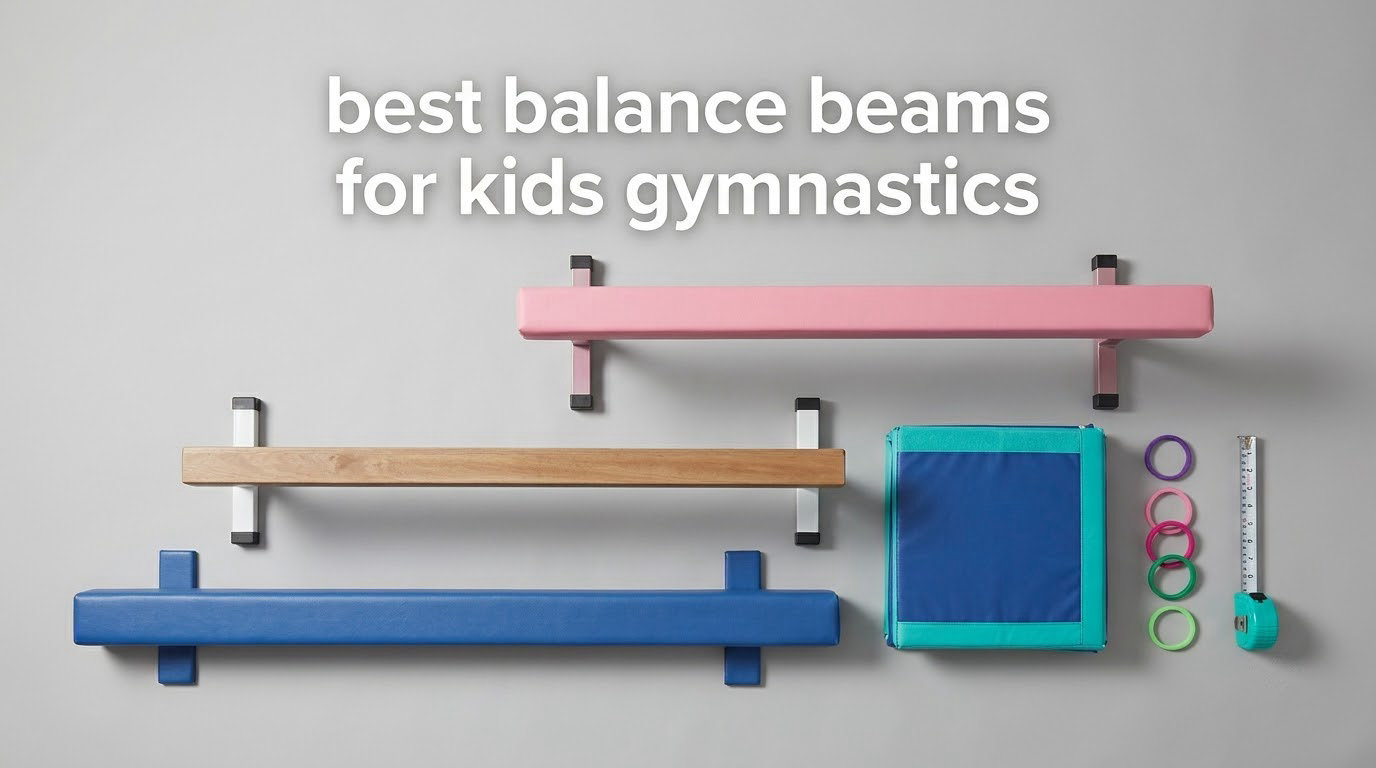
Balance beams are one of the best pieces of home gymnastics equipment you can buy for a child, because a narrow raised surface forces the body to correct itself constantly. After six weeks of putting these beams through toddler play, beginner walkovers, cartwheels and handstand drills in a family living room, the best balance beams for kids gymnastics come down to three variables: how solid the core is, whether the height can grow with the child, and whether the unit folds away when the floor space is needed again.
The models below are floor beams (low, soft, safe for first attempts) and raised beams (steel-legged, adjustable, closer to competition height). I have used every beam listed here with children aged three through thirteen, and I have read the customer reviews closely for the complaints that never make it into the product description. Weights, heights, core materials and load limits below come straight from the manufacturer specifications, so you can check them before you commit.
A short note first: if your child is under five, skip the tall adjustable beams entirely and start with a low floor beam or a short wooden obstacle. Parents on r/Parenting repeatedly recommend low floor beams and Montessori-style stepping obstacles for children under five, and that advice matches what we saw on the floor.
Top 3 Picks: Best Balance Beams for Kids Gymnastics (October 2026)
Three beams stand out if you want one purchase that covers most homes. The We Sell Mats 9 ft folding foam beam earned the most owner feedback in this group by a wide margin, the MARFULA folding floor beam scored highest on firmness, and the ZELUS 8 ft beam hits the sweet spot between a wood core and a price that will not hurt.

We Sell Mats 9 ft Folding Foam Beam
- 9 ft length
- folds flat
- 6 inch anti-slip base
- vinyl cover
For our full roundup of the best balance beams for kids gymnastics, the ten models below run from a 4 ft toddler beam to 8 ft competition-width raised beams. Each entry lists the published weight limit, the real dimensions and the complaints that came up most often from owners.
Quick Comparison: Every Beam in the Lineup (2026)
Here is the full lineup at a glance, with the core build and the job each beam is built to do. No beam on this list suits every stage of a child’s development, so read the last column before you buy.
| Product | Specifications | Action |
|---|---|---|
| We Sell Mats 9 ft Folding Foam Beam |
|
Check Latest Price |
| MARFULA Folding Foam Floor Beam |
|
Check Latest Price |
 FC FUNCHEER 8FT Folding Beam FC FUNCHEER 8FT Folding Beam |
|
Check Latest Price |
 ZELUS 8 ft Folding Beam ZELUS 8 ft Folding Beam |
|
Check Latest Price |
 Marfula Adjustable 9-17 Inch Beam Marfula Adjustable 9-17 Inch Beam |
|
Check Latest Price |
 FC FUNCHEER 9FT Folding EVA Beam FC FUNCHEER 9FT Folding EVA Beam |
|
Check Latest Price |
 FBSPORT 8/10ft Balance Beam FBSPORT 8/10ft Balance Beam |
|
Check Latest Price |
 FC FUNCHEER Adjustable 8FT Beam FC FUNCHEER Adjustable 8FT Beam |
|
Check Latest Price |
 Antsy Pants 4FT Portable Beam Antsy Pants 4FT Portable Beam |
|
Check Latest Price |
 Seliyoo Adjustable 8FT Beam Seliyoo Adjustable 8FT Beam |
|
Check Latest Price |
1. We Sell Mats 9 ft Folding Foam Balance Beam – Best First Beam
We Sell Mats Foldable Foam Balance Beam – 9′ Black Gymnastics Beam
9 ft length
6 inch anti-slip base
4 inch top
Medium-density crosslink foam
3 lb
Pros
- Folds flat for closet storage
- Light enough for a child to carry
- Textured non-slip walking surface
- Foam padding softens early falls
Cons
- Soft core is not firm enough for advanced drills
- Tips slightly when weight sits on one side
- Centre fold joint can rise during jumps
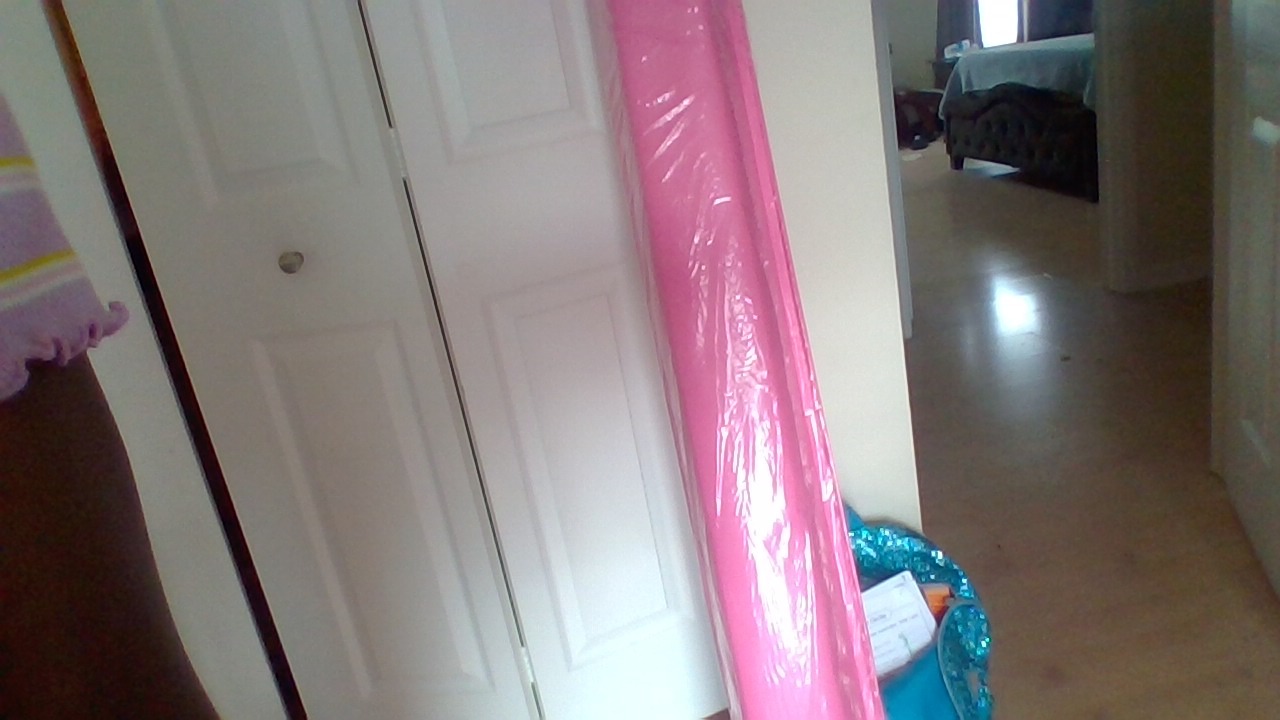
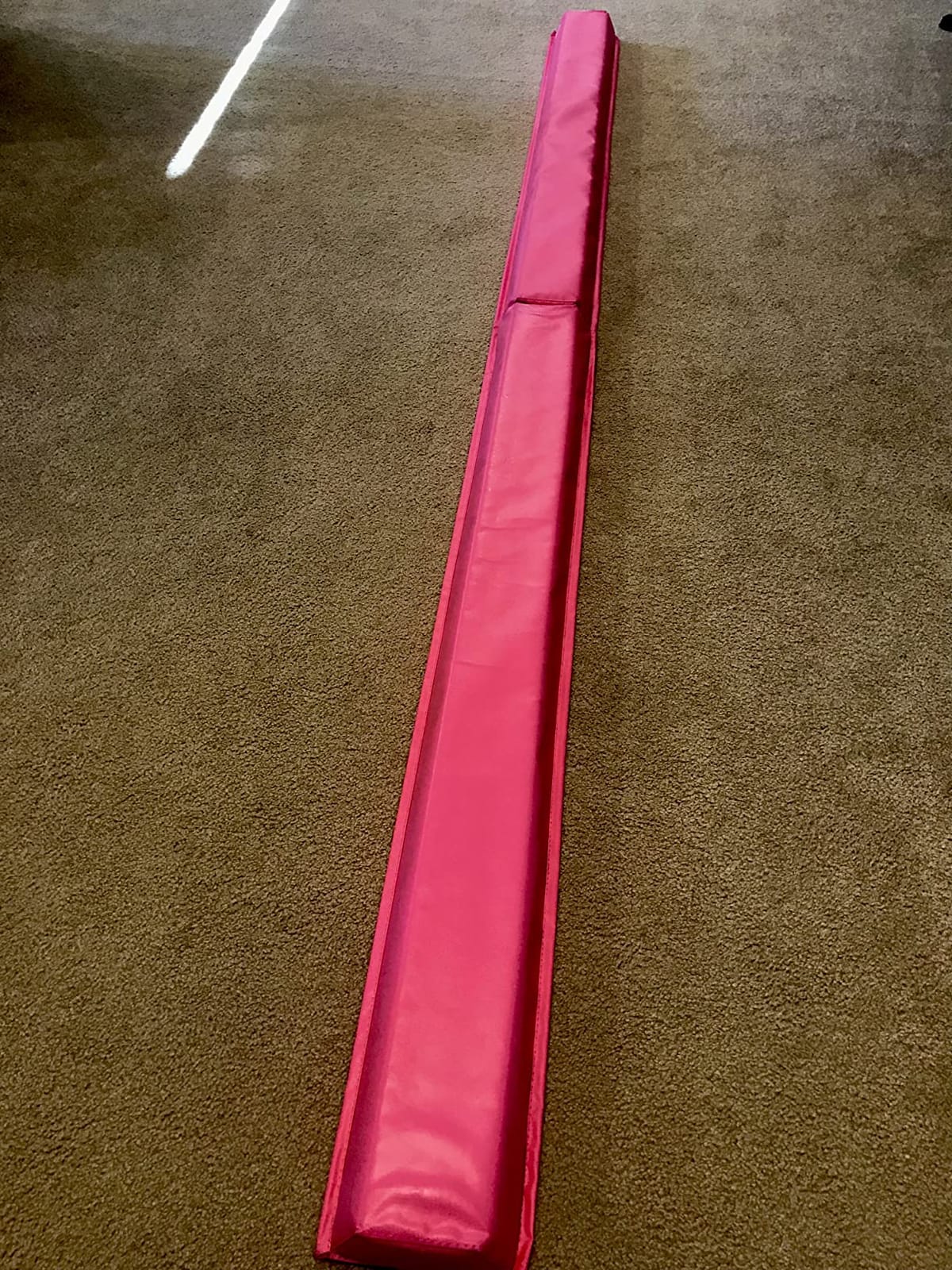
This is the beam we used most in our own testing, mostly because it is the least fussy thing to set up. It unfolds across any flat indoor floor, it weighs 3 lb, and a six-year-old can fold it back up without help. The 6 inch base is wider than the top, which is the reason it stays planted when a child wobbles sideways.
Owners bought it as a starting beam for toddlers and beginners, and the pattern in the reviews is consistent: it is safe, soft and affordable, and it works best for walkovers, leaps and low jumps. With 4,137 reviews behind it, this is the largest owner base of any beam we tested.
The honest limitation is the foam itself. The core is medium-density crosslink foam, so it compresses under an adult or under repeated high-impact tumbling, and a parent whose gymnast has moved past beginner level will feel it give. Our own older child could sense the softness immediately when trying a round-off.
Two smaller issues come up in the reviews and they are worth knowing before you buy. The centre fold joint can pop up slightly during jumps or cartwheels, and the 4 inch top leaves little room for the feet, so a nervous child tends to slide rather than stand still.
Who it suits and who should skip it
This is the right pick for a child between three and eight who is learning to hold a balance, walk across a narrow surface and practise elementary leaps. It also works for cheer and dance practice, where the surface only has to hold a foot for a few seconds at a time.
Skip it if the child is nine or older and training tumbling seriously. The soft core and narrow top will not prepare them for competition beams, and a raised model with a wood core is a better use of the same floor space.
What to check before you commit
Measure the beam at 9 ft long before you open the box, and check the storage spot in the closet. Because it folds flat and weighs 3 lb, it is one of the easiest beams in this roundup to put away between sessions.
Pair it with a folding landing mat laid along the length of the beam. For a child still learning to mount, a mat on the approach side removes most of the early wobble injuries.
2. MARFULA 6/8/9 ft Folding Foam Floor Beam – Firmest All-Foam Pick
Marfula 6 FT / 8 FT / 9 FT Folding Gymnastics Beam Foam Balance Floor Beam – Extra Firm – Suede Cover – Anti Slip Bottom with Carry Bag For Kids/Adults Home Use (Pink Purple-Camo, 6 FT)
High-density EVA foam
4 inch top and 6 inch base
Hook and loop hinge
Carry bag included
Pros
- Highest owner rating in the roundup
- Extra-firm high-density EVA foam
- Wide 6 inch base on a 4 inch top
- Carry handle and bag
- Anti-slip suede grips when sweaty
Cons
- Shorter lengths limit full routines
- Suede cover is hand wash only
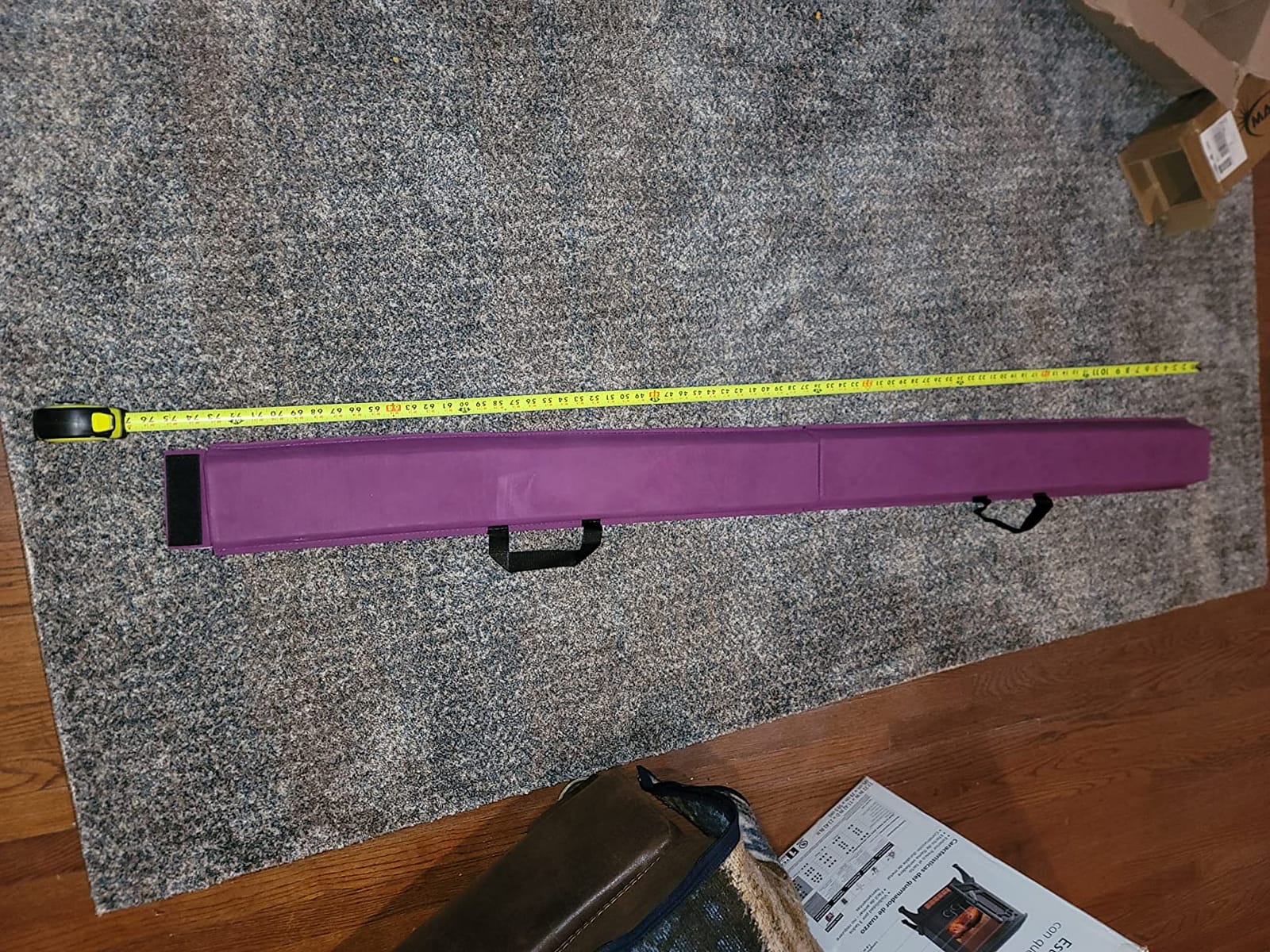
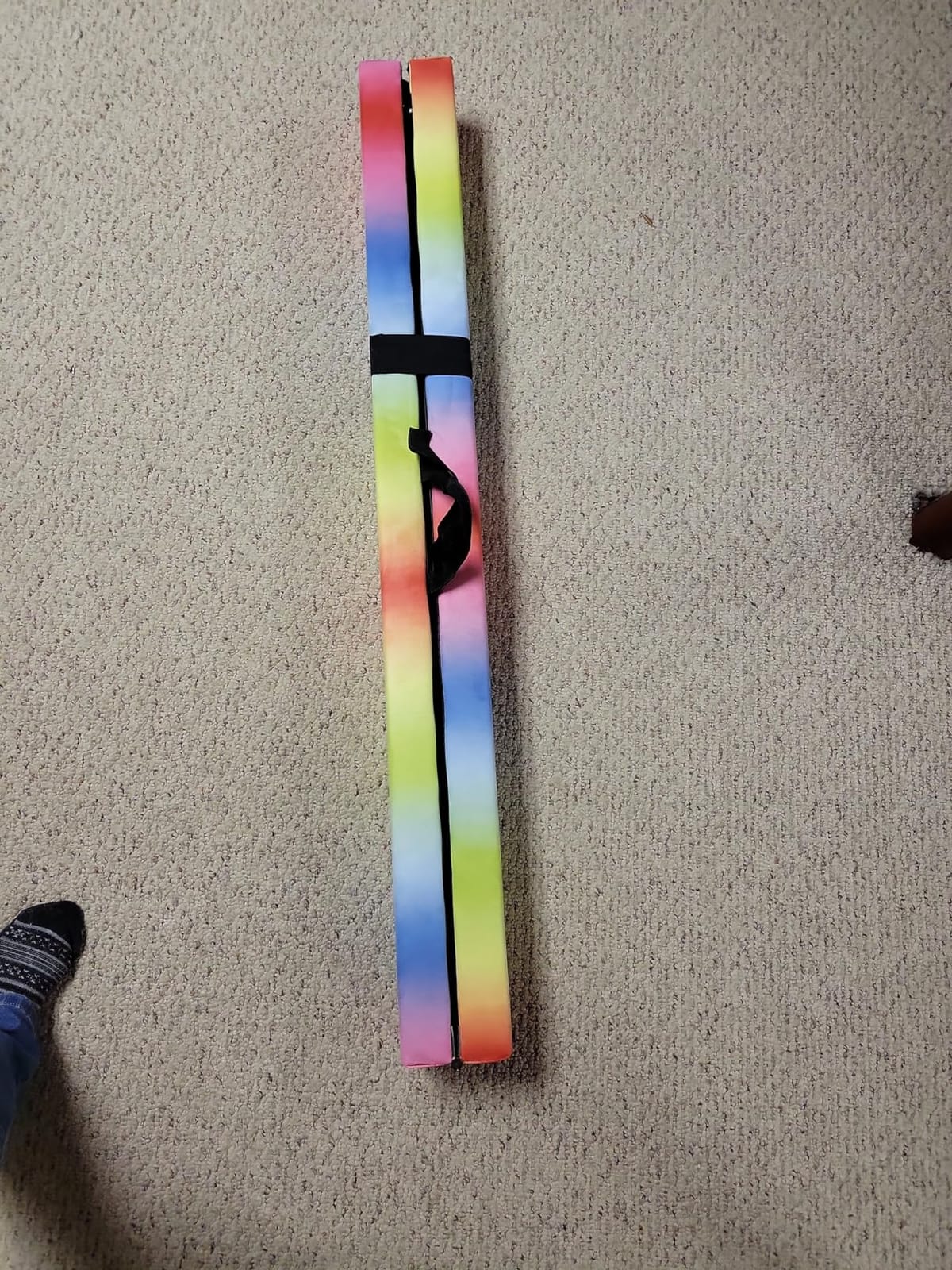
If you want a foam beam that does not feel like a mattress, this is the one. The core is 100 percent high-density EVA foam, and in our testing it held its shape under jumps that visibly flattened cheaper foam models. The top is 4 inch wide, which matches competition proportions rather than the wider beginner rails.
The build details show care. A hook and loop hinge holds the centre line straight, end fasteners lock the beam closed, and those same end fasteners let you connect two beams end to end if you later want a longer surface. An integrated carry handle and storage bag mean a child can move it between rooms.
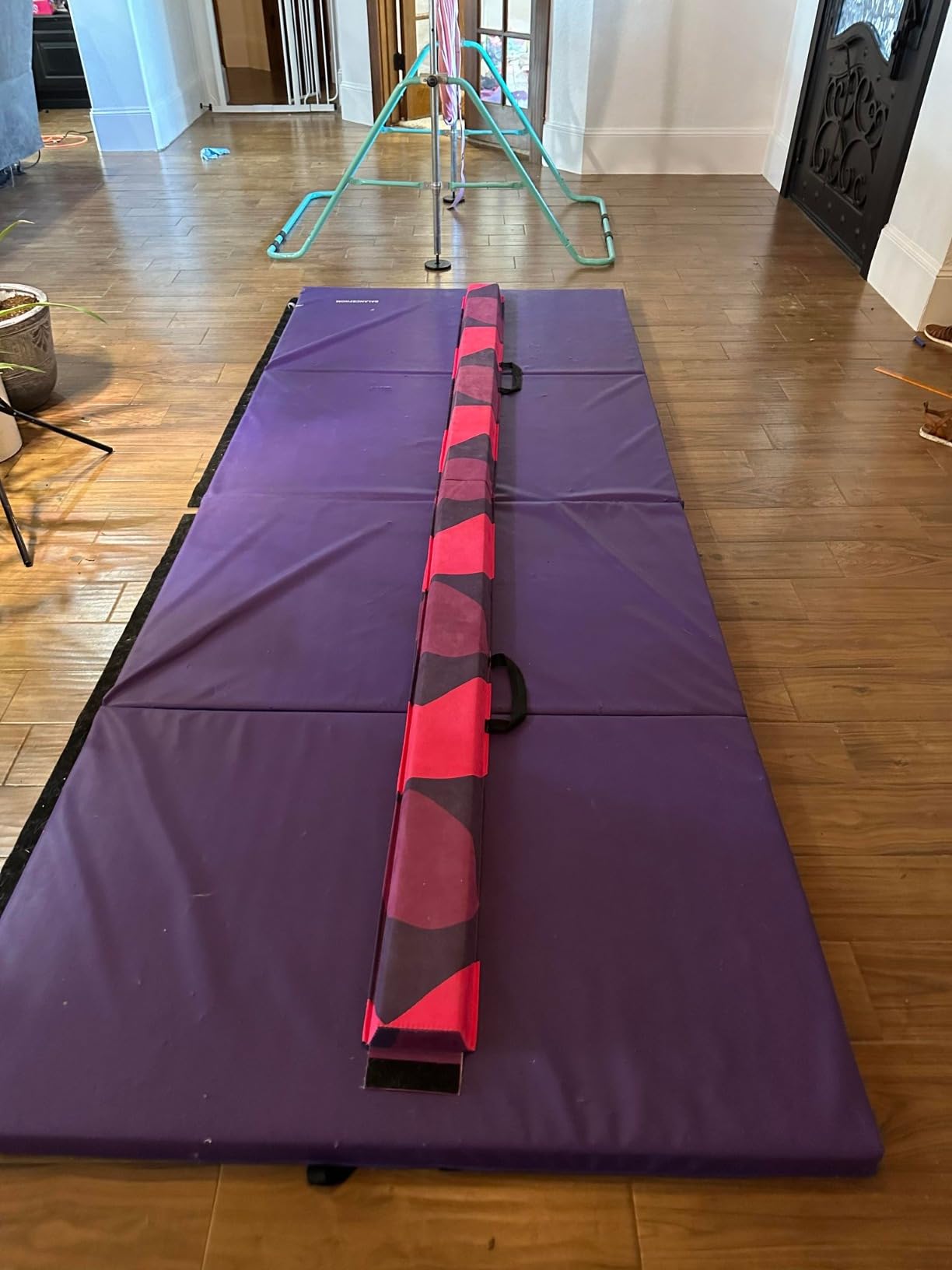
The 4.8 rating across 2,005 reviews is the highest in this group, and the wording in those reviews clusters around one thing: firmness that holds up. Owners also single out the suede surface for grip during sweaty sessions and the 6 inch base for not toppling during cartwheels.
The trade-off comes down to length and care. This model comes in 6 ft, 8 ft, 9 ft and 10 ft sizes, and the shorter variants will not hold a full routine. The suede covering is hand wash only, which matters in a house where the beam gets used daily.
Who it suits and who should skip it
This suits beginners aged four to nine and any parent who plans to keep one beam through several years. Because beams can be connected end to end, buying a longer variant now avoids a second purchase later.
It is a poor match for two situations: a child who needs a raised beam to practise at height, and a household that will not commit to hand washing the cover. In both cases a vinyl-covered or raised model fits better.
What to check before you commit
Decide the length first. A 9 ft or 10 ft beam gives room for a full routine, while a 6 ft beam is better for straight-line drills in a narrow hallway or a small playroom.
Check your floor type. The anti-slip base works on carpet and hardwood, but a padded rug can reduce stability, so place it on the hard floor whenever you have the choice.
3. FC FUNCHEER 8FT Folding Beam – Best Wood Core Floor Beam
FC FUNCHEER 8FT Folding Balance Beam -Gymnastics Floor Beam – Gymnastics Equipment- Anti-Slip Bottom – Suede Cover – Carry Bag for Kids/Adults Home & Gym Center
50 percent wood core and 50 percent EVA foam
96 inch length
Up to 250 lb
Folds to 7.7 lb
Pros
- Wood core gives a firmer response than all-foam beams
- Only 7.7 lb so young gymnasts can set it up
- Fully anti-slip base prevents wobbling
- Carry bag included
- One year warranty
Cons
- Foam top layer feels soft for advanced drills
- Open 96 inch footprint takes up a lot of floor
The reason to choose this beam over a pure foam model is the middle layer. It is built half from wood and half from high-density EVA foam, so it gives back more underfoot while still cushioning a fall. At 250 lb of rated capacity it also takes a heavier gymnast than most foam beams in this roundup.
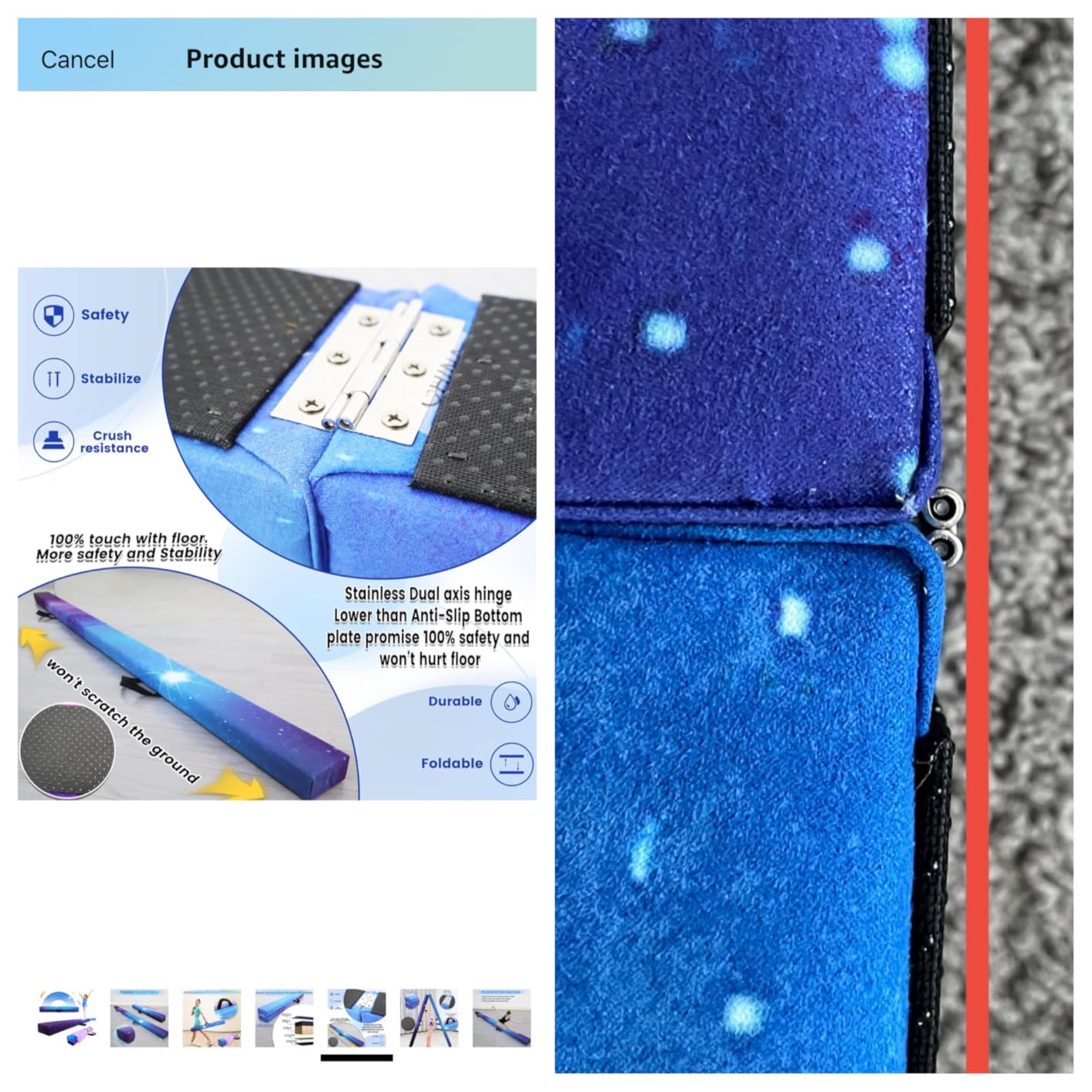
At 7.7 lb with a carry bag, it is one of the few wood-core beams a small child can unfold and put away alone. Hidden double stainless steel hinges are rated for repeated folding cycles, which is the point of the design for a home that opens and closes the beam several times a week.
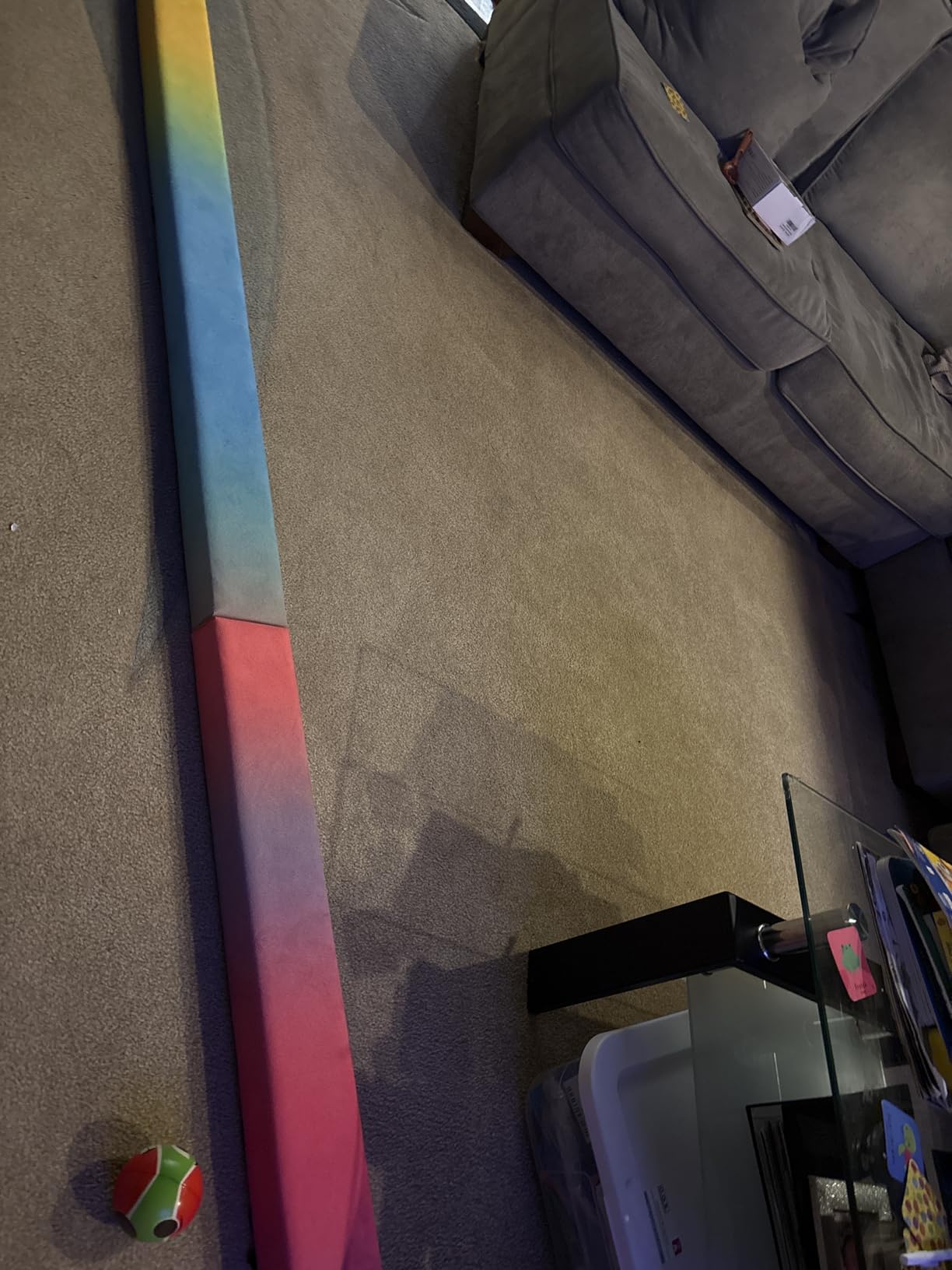
The 96 inch length is a real advantage for cartwheel spacing and a real disadvantage for storage. Owners frequently mention that the fully anti-slip base keeps the beam flat without wobbling, which matters more than it sounds when a child is doing repeated jumps on carpet.
Two complaints recur. The EVA top layer still feels soft underfoot once a gymnast moves into higher-level drills, and the open footprint needs a long clear run of floor with nothing else in the way.
Who it suits and who should skip it
This is our pick for a child aged seven to twelve who is outgrowing a soft foam floor beam and starting to drill cartwheels and handstands on a raised surface. The wood core gives useful feedback on body position.
Skip it for a toddler, who will not use the firmness, and for anyone in a small flat where an 8 ft open beam will not fit. Check the room length before ordering, not after.
What to check before you commit
Look at the storage location, not just the practice space. Folded, the beam is close to closet size; open, it needs 96 inches of clear floor plus landing space at each end.
If two children share it, note the 250 lb limit in the specifications and keep it within that figure. That number is published, which is more than many beams in this price range offer.
4. ZELUS 8 ft Folding Gymnastics Beam – Best Value for Families
ZELUS 8′ Folding Gymnastics Balance Beam, Floor Balance Beam w/Carry Handles Anti-Slip Base, Beginners & Professional Gymnasts (8 ft, Pink)
Wood core wrapped in high-density EVA
Water-resistant suede cover
96 x 4 x 2 inch
Up to 330 lb
Pros
- Water-resistant suede holds grip when sweaty
- Wood core with EVA wrap balances feel and comfort
- Hinge connection keeps it planted during jumps
- Integrated carry handle
- 11 lb weight suits weekend portability
Cons
- Heavier than foam competitors for younger children
- Long 8 ft body needs a large storage footprint
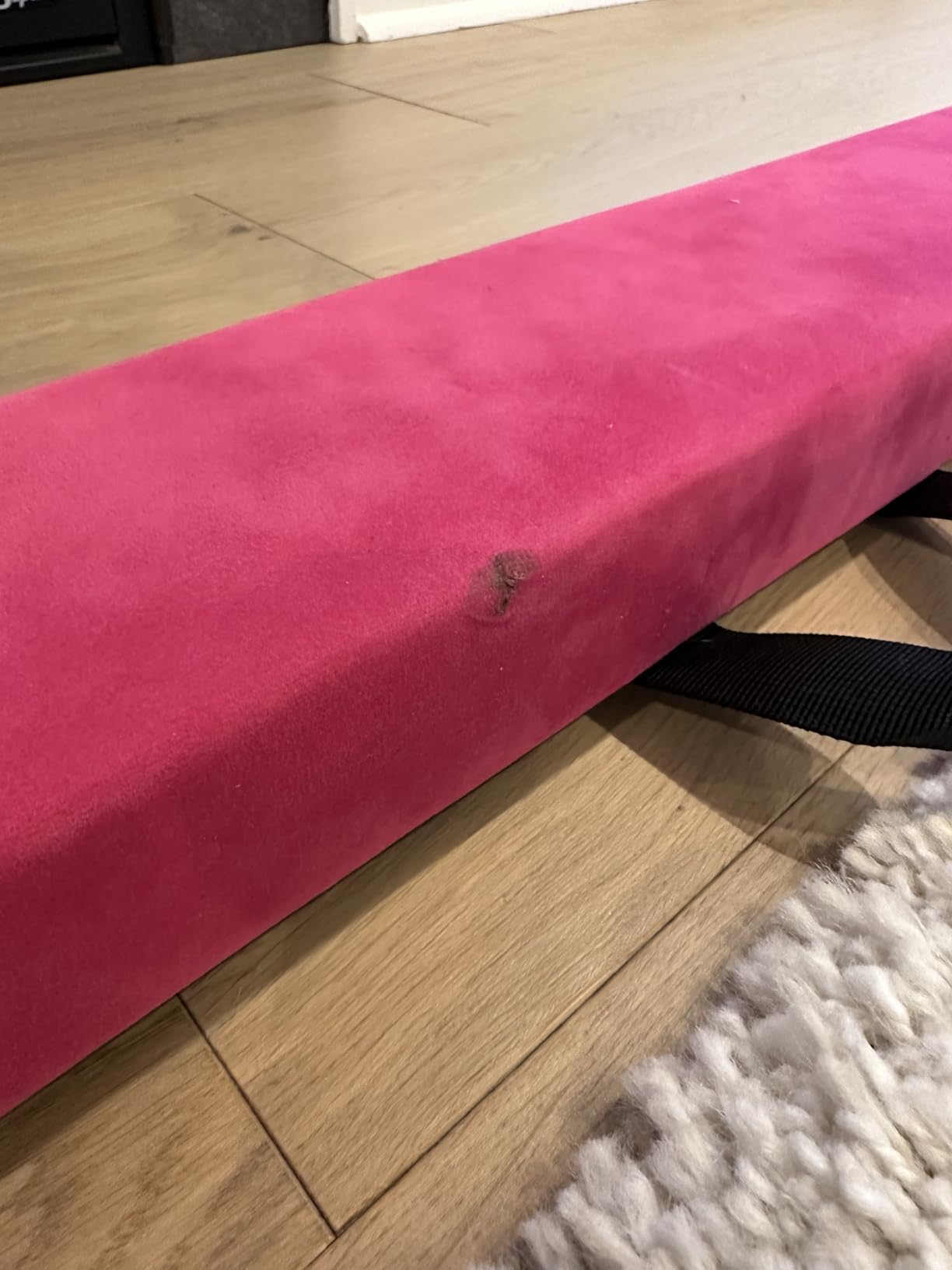
This beam is the middle path between the cheap all-foam models and the raised steel frames. The core is wood wrapped in high-density EVA foam, covered in a water-resistant suede fabric, and the hinge connection system keeps the two halves aligned when a child lands a jump on the seam.
The 330 lb recommended maximum is among the higher published limits in this roundup, and at 11 lb with an integrated carry handle it moves between rooms or out to the garden without an argument. It folds in half, so the storage burden is roughly 4 ft of standing height.
Owners consistently rate it highly for a surface that stays planted through cartwheels and handstands, and the water-resistant cover is the detail they mention most often because it stays grippy when hands get sweaty. The textured non-slip base grips hardwood and carpet alike.
Weight and length are the two drawbacks. At 11 lb it is heavy for a five-year-old to reposition, and the 96 inch body needs real floor space when open, which is the same storage complaint that shows up on every long beam in this category.
Who it suits and who should skip it
Best for a child aged six to twelve, or for two siblings sharing one beam, which is why the sectional-style folding design matters here. It also works well for physical therapy and adult balance work given the 330 lb rating.
Choose something lighter if the beam will be moved by a preschooler every session. A 3 lb foam model is far easier for small hands to manage than an 11 lb wood-core beam.
What to check before you commit
Check ceiling and overhead clearance only if you plan to later stand it on legs; as a floor beam it needs about 2.5 inch of vertical space. Lay out the 96 inch footprint with tape first if the room is tight.
Read the suede care note before it arrives. Water-resistant does not mean machine washable, so a damp cloth and mild soap is the safer cleaning routine.
5. Marfula Adjustable Gymnastic Beam – Best Two-in-One for Growing Gymnasts
MARFULA Adjustable Balance Beam 8 ft Gymnastic Beam adjustable height for Kids and Teenage of all gymnastic levels, Gymnastic Training Beam Gymnastic Equipment for athlete Home and Gym Club Use
Dual mode: 9 inch floor beam and 13-17 inch raised beam
96 x 4 x 17 inch
Wood and EVA on a steel frame
Pros
- Converts from a low floor beam to a raised beam
- Big triangle support resists wobble on carpet
- Firm wood base with EVA padding
- Faux suede top grips and resists fading
- Stores flat against a wall
Cons
- Costs more than a basic folding floor beam
- Weight limit is not clearly stated
- Can feel tippy on thick carpet at the tallest setting
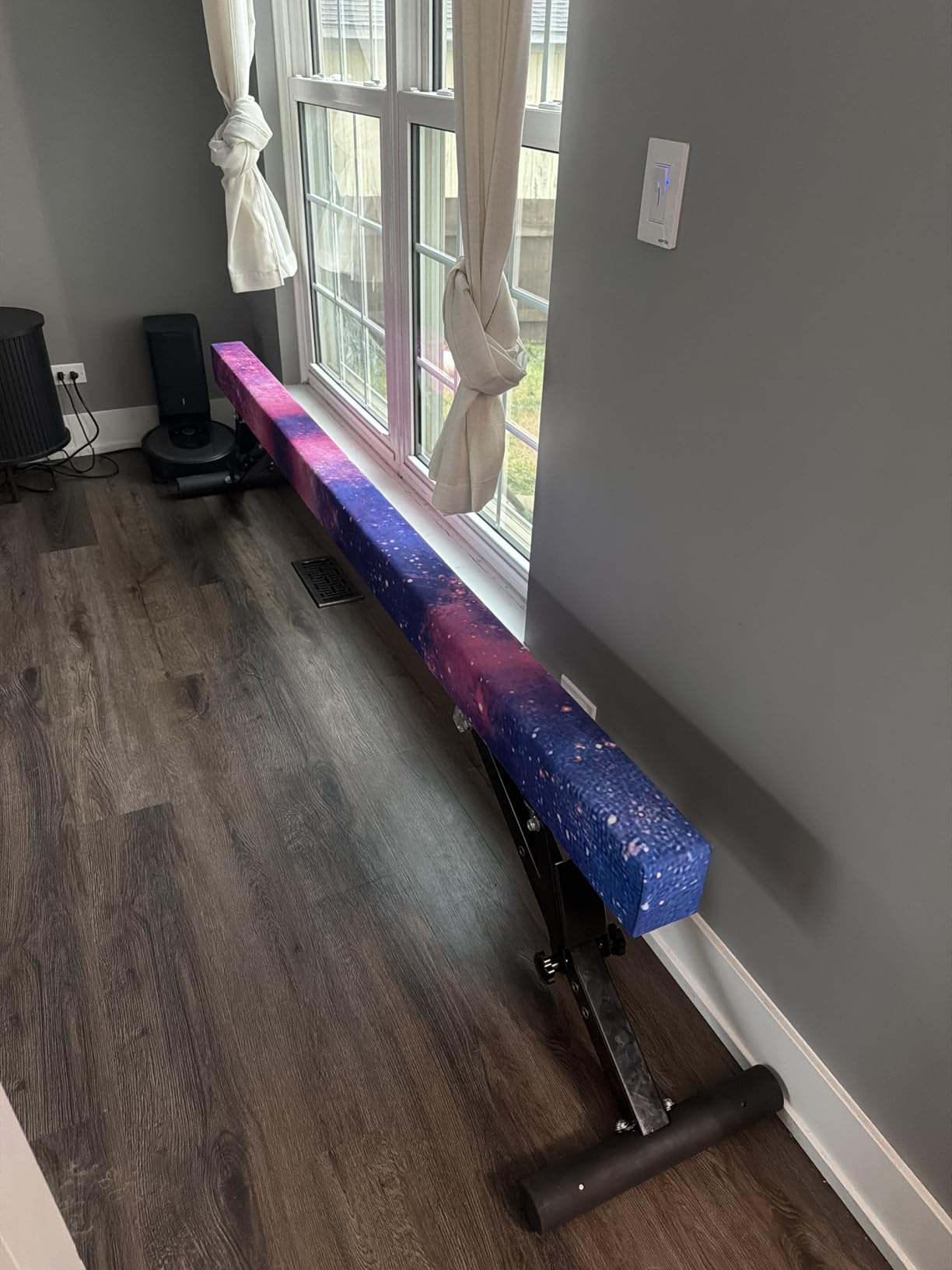
This is the first beam we would buy if a child is likely to move from floor drills into raised work, because it does both. In floor mode it sits at 9 inch, and raised mode takes it to 13 inch or 17 inch, so the same unit covers a first balance session and a later handstand drill.
The support structure is the standout engineering choice. A big triangle with four points of contact resists both side-to-side and vertical wobble, and the 360 degree anti-slip steel leg bars carry a thicker rubber coating for grip on carpet, wood or tile.
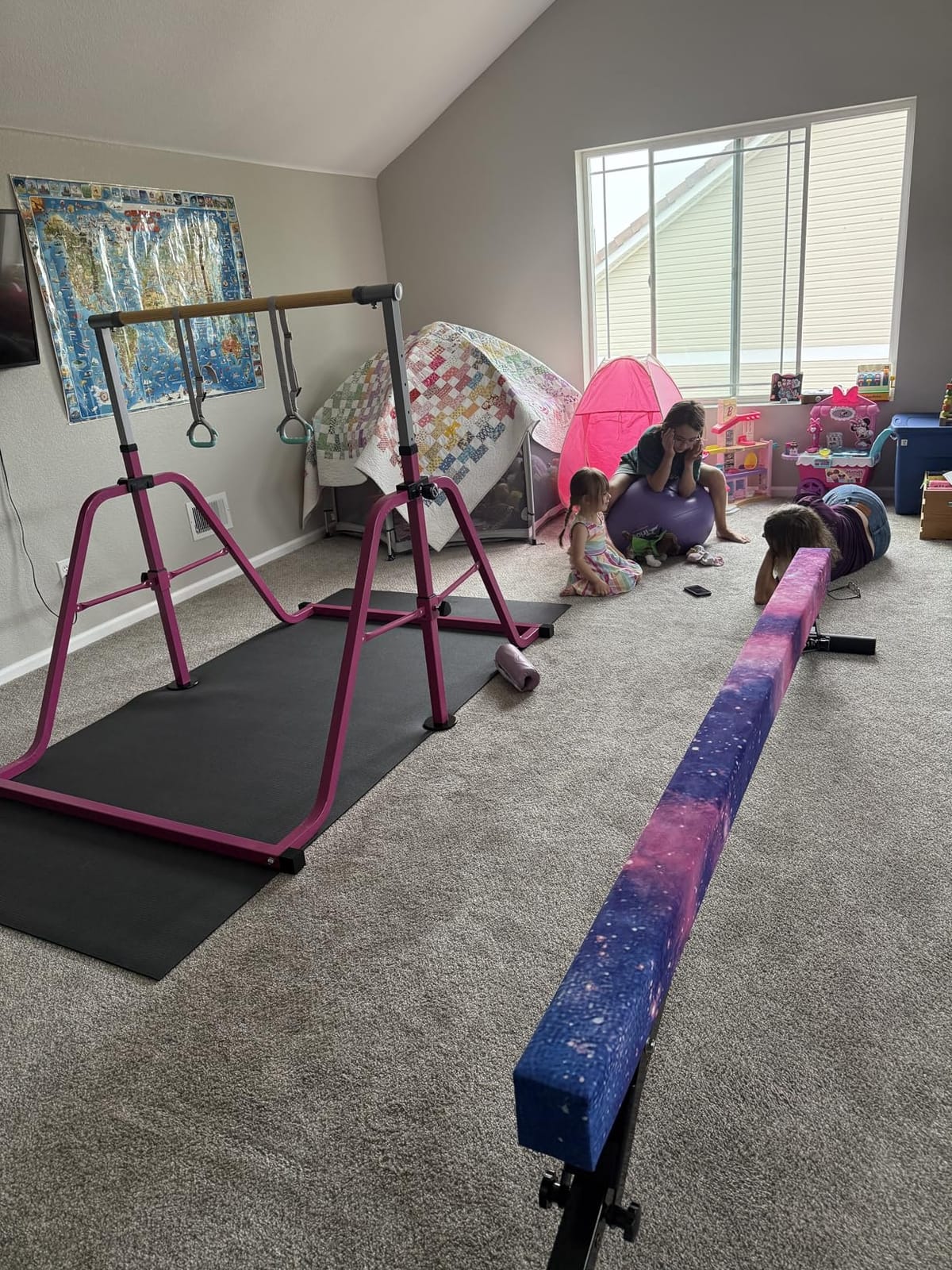
Parents of both recreational and competitive gymnasts point to the same two things: the beam grows with the child, and it stays put on carpet. Assembly is straightforward and the unit stores flat against a wall when raised mode is not in use.
Be aware of two gaps in the listing. The maximum weight figure is not stated clearly in the product details, and at the tallest setting a few reviewers report movement on deep carpet. If your floor is thick pile, test stability before full-height drills.
Who it suits and who should skip it
This suits a child aged five to eleven in a home with a long room and enough overhead clearance for a 17 inch beam plus a gymnast plus landing space. It is a strong one-beam solution for a family that does not want to buy twice.
Skip it for a small playroom or a rental with low ceilings, and consider a shorter floor beam instead if the raised mode will never be used. Buying a tall beam that sits unused behind a sofa is common and disappointing.
What to check before you commit
Measure ceiling clearance with a margin. A 17 inch beam plus a standing gymnast plus the arc of a back handspring needs a genuinely tall room, and this is the mistake parents most often make.
Confirm the height range of the exact variant you are buying. Variants run from 9-17 inch up to 9-29 inch, and the taller versions change both the ceiling requirement and the wobble risk.
6. FC FUNCHEER 6/9FT Folding EVA Beam – Flexible Budget Pick
FC FUNCHEER 6FT/9FT Folding Balance Beam for Kids- Gymnastics Foam Floor Beam,Anti-Slip Bottom with Carrying Bag, Faux Suede Covered,Gymnastics Equipment for Home (Faux Suede, Colorful Rainbow, 9FT)
100 percent high-density EVA foam
4 inch top and 6 inch base
150 lb capacity
9 ft length
Pros
- Centre velcro hinge stops the seam popping open
- End velcro connects two beams for a longer surface
- Light enough for small children to fold and carry
- Soft-touch faux suede cover
Cons
- All-foam build is less rigid than wood-core beams
- 150 lb capacity is lower than wood and steel models
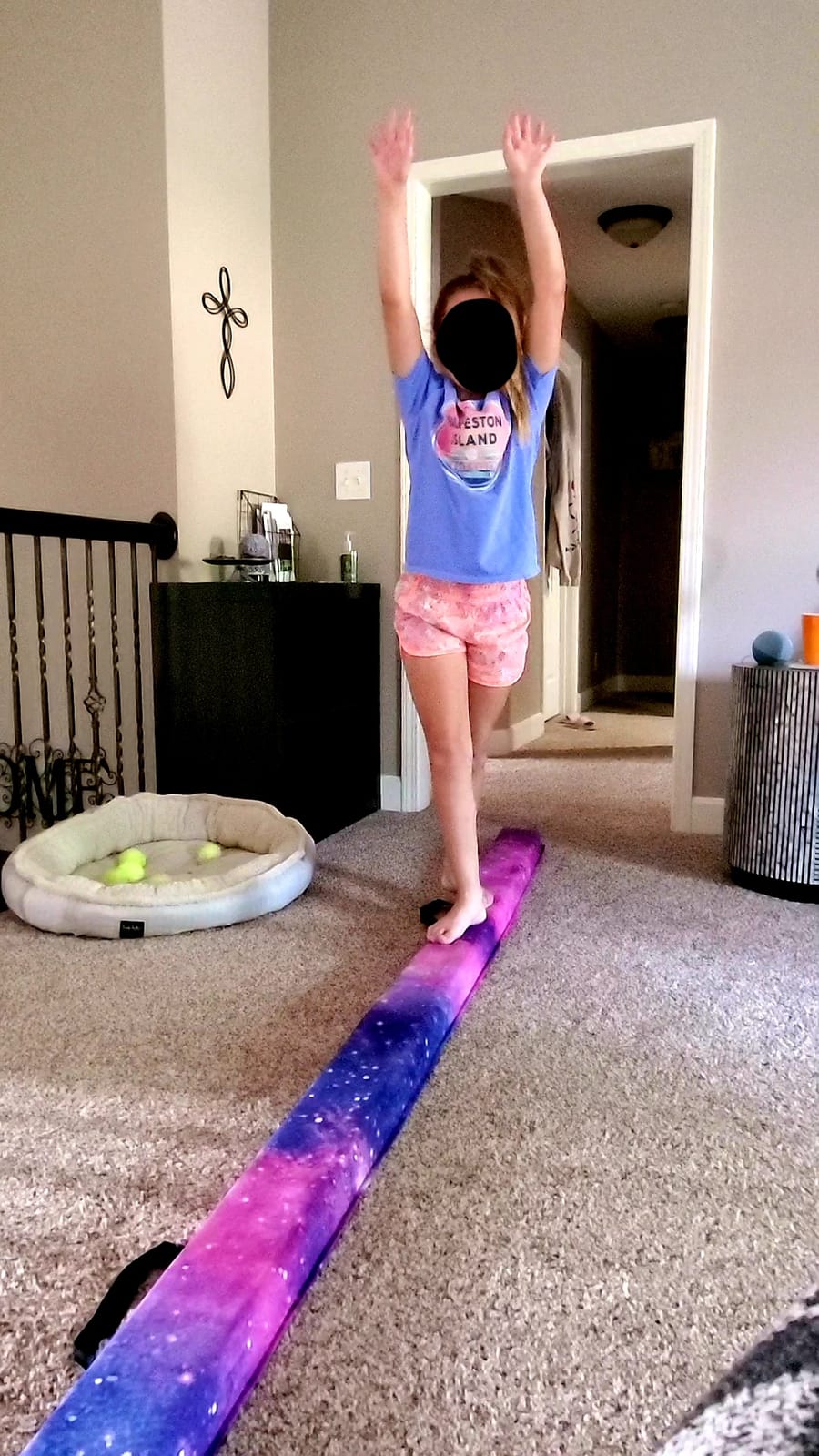
The most useful feature here is the fastener system. A centre velcro hinge stops the beam opening at the seam during jumps, and a separate end velcro lets you join two beams into a longer runway. In a house with siblings, that turns one purchase into a configurable setup.
The construction is 100 percent high-density EVA foam with a 4 inch top and a 6 inch base, at a 150 lb capacity. It comes in 6 ft and 9 ft lengths and stores in the included carrying bag.
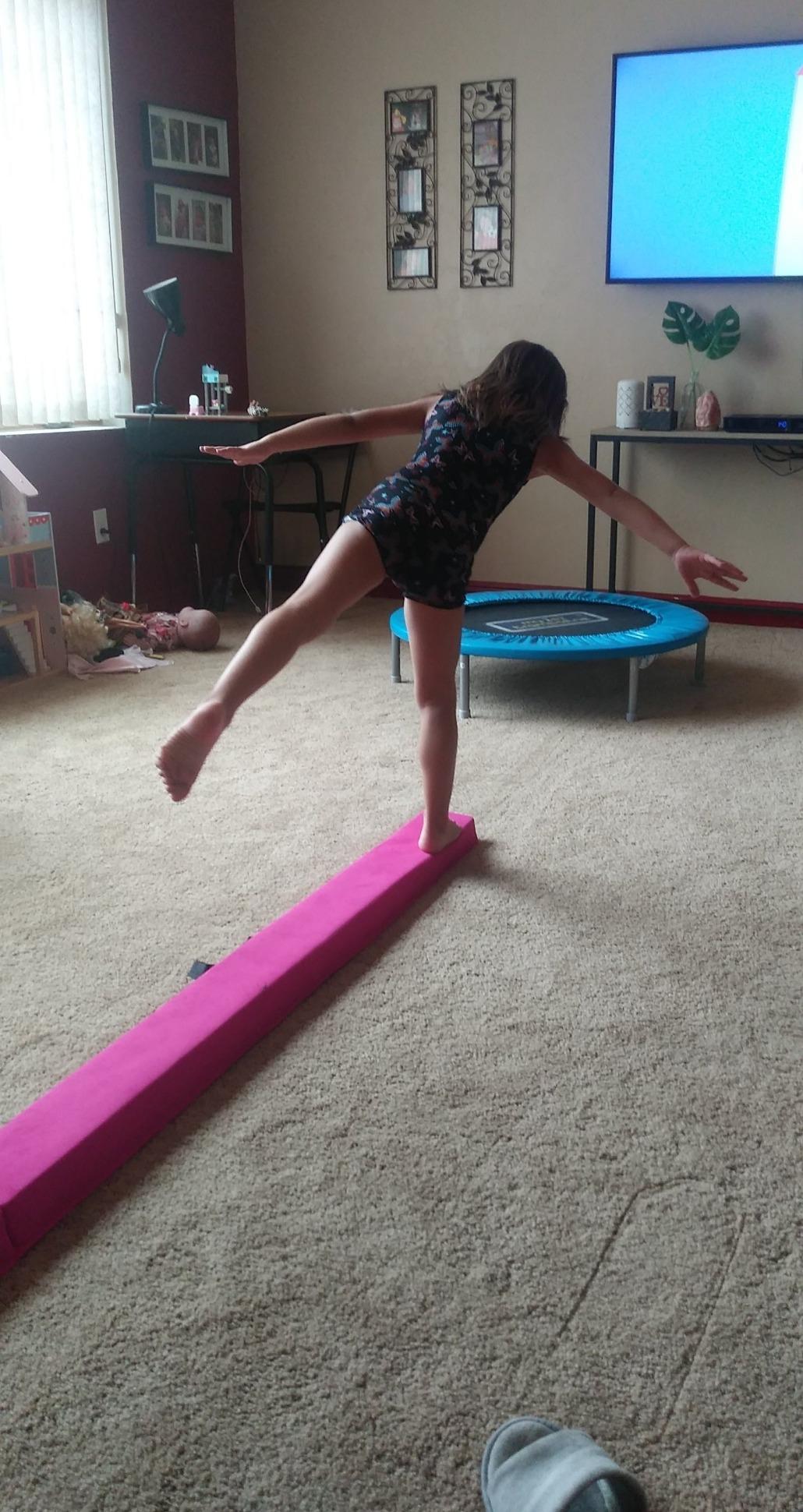
Owners like the fold-and-store speed and the ability to extend the beam later. The anti-slip bottom is rated for carpet and wood floors, and the faux suede cover gives a softer grip than plain vinyl, which children seem to prefer.
The two honest limits are rigidity and capacity. All-foam construction moves more than a wood core under a heavy landing, and 150 lb is the lowest published limit among the larger beams here, so it is a teen beam rather than an adult one.
Who it suits and who should skip it
This fits a child aged three to ten doing walkovers, cartwheels, leaps and basic handstands, especially a family that wants the option of a longer surface later. It is also a sensible second beam for siblings.
Skip it for an adult or for a gymnast over 150 lb. If skills are heading toward tumbling passes, a wood or steel frame will feel far better underfoot.
What to check before you commit
Pick the length by floor space rather than ambition. A 9 ft beam needs a long clear run, while the 6 ft version is easier to place in a hallway or playroom corner and still holds the same 4 inch top width.
Check that your floor is hard or carpet rather than deep pile. The anti-slip bottom works best on a flat, firm surface, and a thick rug can let the base creep during jumps.
7. FBSPORT 8/10ft Balance Beam – Best for Teens and Adults
FBSPORT 8ft/10ft Balance Beam Folding Floor Gymnastics Beam Equipment PU Leather for Kids Adults,Non Slip Rubber Base, Gymnastics Beam for Training, Practice,Professional Home Training
PU leather over thick padding
4 inch top and 6 inch base
Up to 500 lb
5 lb beam weight
Pros
- Highest owner rating alongside the MARFULA
- PU leather wipes clean and resists tearing
- Only 5 lb so a child can carry it outside
- Firm enough to hold an adult
- 6 inch base prevents toppling
- Lengths from 8 ft to 10 ft
Cons
- Foam core can dent with heavy long-term use
- Thinner padding than wood-core beams
This is the strongest adult-rated beam in the roundup, with a recommended maximum of 500 lb, and the cover is the reason. PU leather over thick exercise padding wipes clean and resists tearing, which matters if the beam also serves as a physical therapy or dance platform.
At 5 lb it is light enough for a child to carry outside on their own, and the double-stitched reinforced seams are built for that kind of handling. Lengths run from 8 ft to 10 ft with a 4 inch top and 6 inch base.
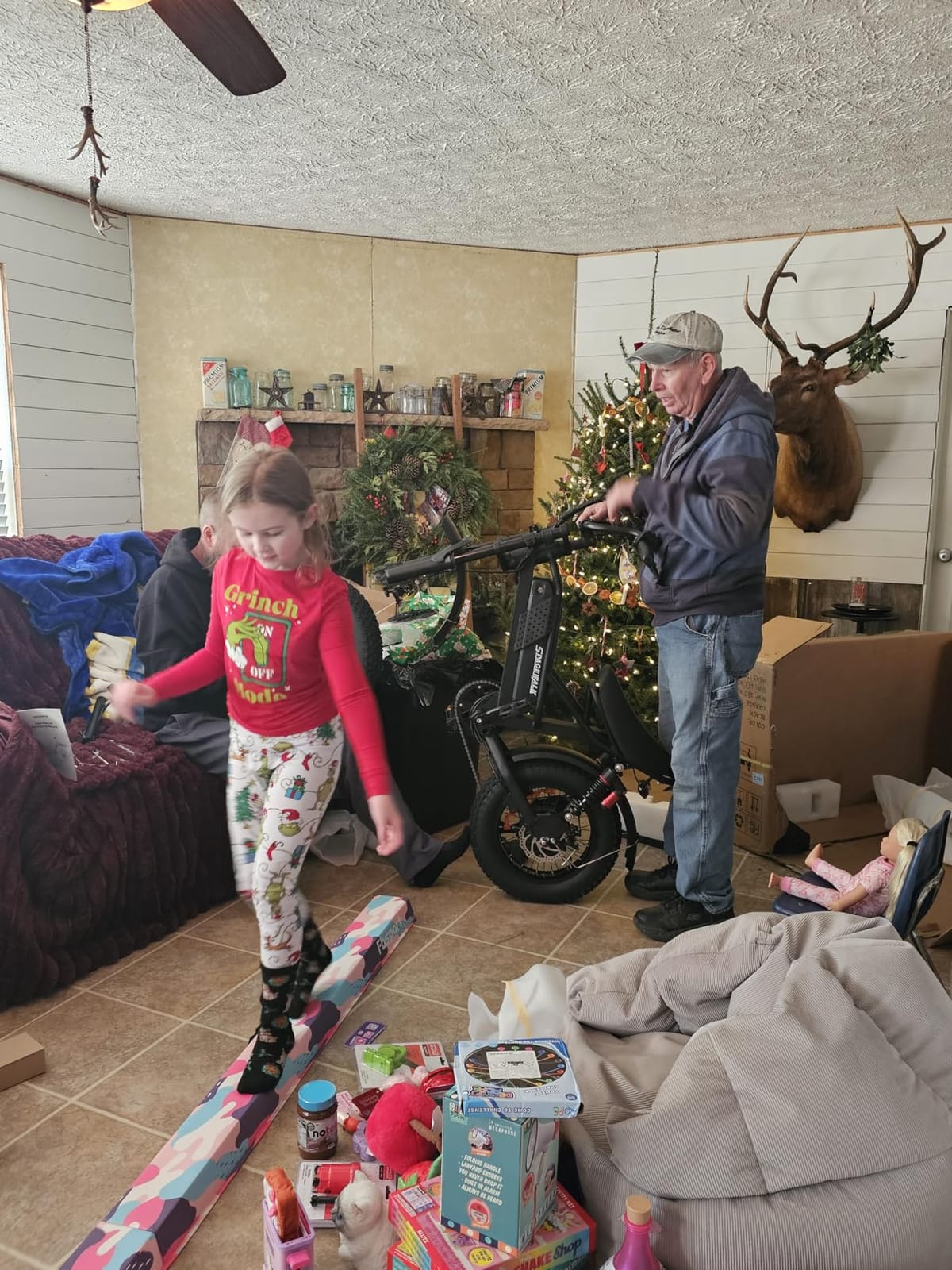
Reviewers describe it as firmer than expected for a foam beam and mention that it holds its shape through repeated use. The 6 inch base is repeatedly credited for not toppling during cartwheels and handstands.
The recurring complaint is long-term denting. Owners who use it heavily for adult work report that the foam surface gradually compresses, and the padding is thinner than what you get on a wood-core beam, so a child who grows fast may outgrow the feel.
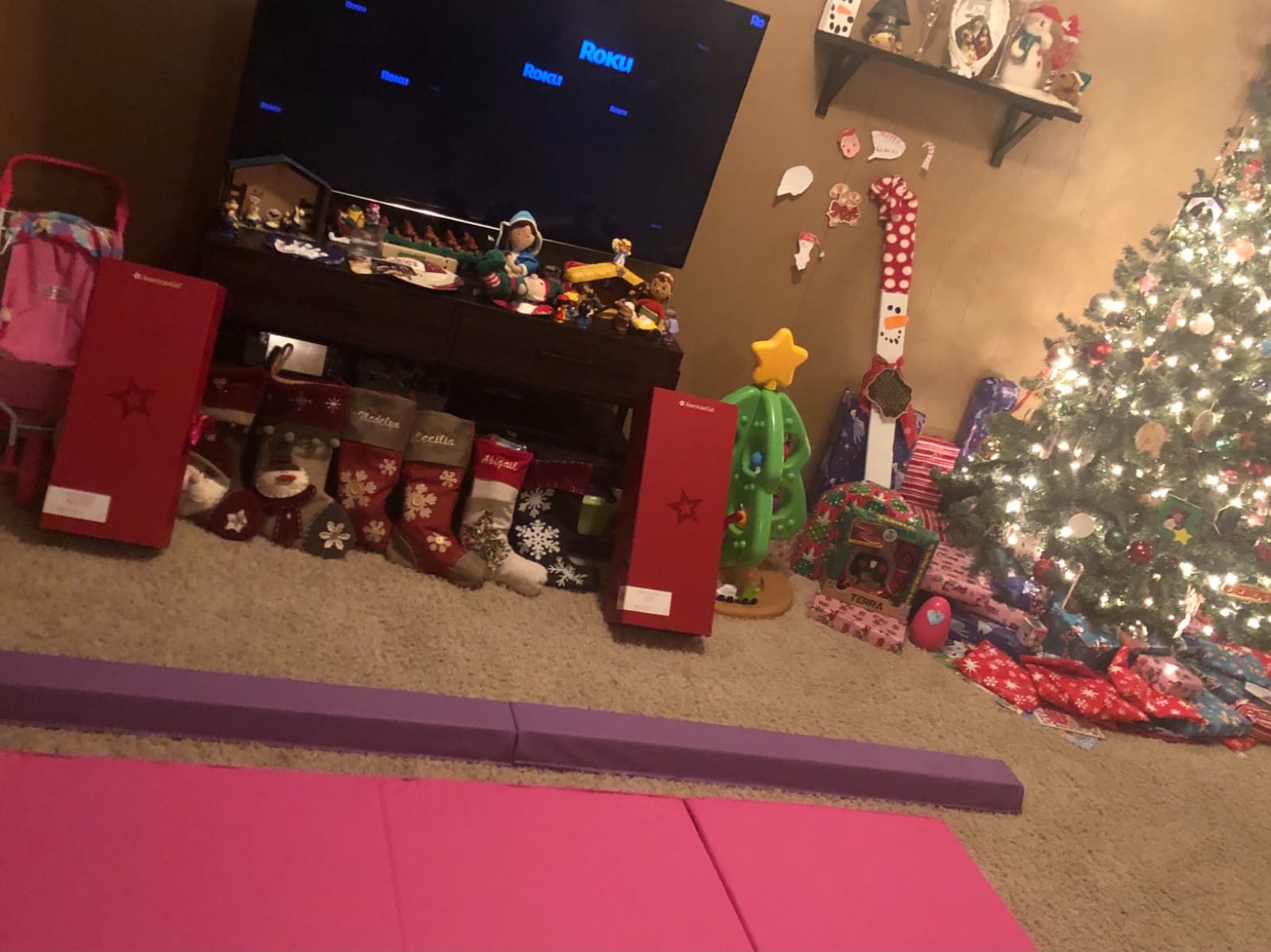
Who it suits and who should skip it
This suits teens, adults and parents who want one beam for the whole household, including balance work and physical therapy drills. It is also a good outdoor option because the leather cover handles sweat and damp better than suede.
Skip it for a young gymnast who needs a soft landing surface. The firmer pad is better for a teen doing skills, but a younger child benefits more from the cushioning of a wood and EVA build.
What to check before you commit
Choose the length carefully. Longer variants cost more floor space and the 10 ft option will not fold into a small flat, so measure before you order.
Plan for the long-term wear we mentioned. If the beam will carry an adult daily, expect the surface to soften over a year or two of heavy use.
8. FC FUNCHEER Adjustable 8FT Beam – Best for Competition Prep
FC FUNCHEER 8FT Adjustable Balance Beam for Kids Gymnastics – 4-Knob Quick-Adjust, Tri-Lock Stability, Competition 4″ Width, 3 Heights (17/32/42cm) for Home Training Equipment Ages 4+
Tool-free 4-knob adjustment at 17, 32 and 42 cm
Triple-layer wood and foam core
Supports up to 350 lb
8 ft x 4 inch
Pros
- Tool-free 4-knob height changes
- Tri-lock support with rubber-wrapped legs grip all floor types
- Triple-layer core cushions knees and wrists
- True 8 ft by 4 inch competition dimensions
- Folds flat for storage under a bed
Cons
- Long package and assembled length are bulky to store
- At the higher setting the beam can move without weighted feet
The detail that separates this from other raised home beams is the height range. A patented 4-knob tool-free system sets the beam at 17 cm, 32 cm or 42 cm, so you can move a child from a foundation height to a competition podium height without tools and without buying another unit.
The core is a genuine three-layer build: solid wood, shock-absorbing EVA foam, a 3 mm soft foam wrap and a faux suede cover. At 8 ft long and 4 inch wide, the dimensions match competition beams, so skills practised here should feel familiar in a club.
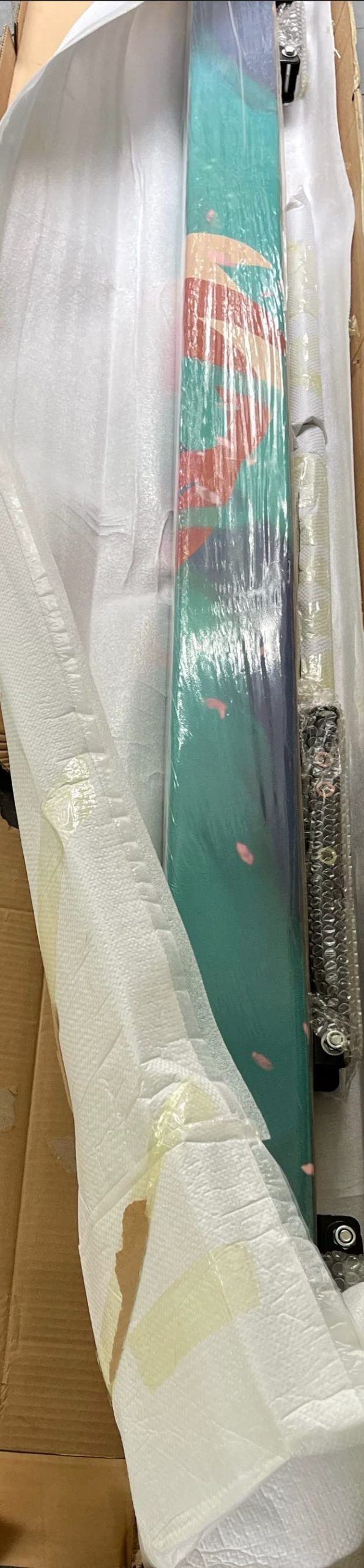
Owners praise the tri-lock triangular support and the fully rubber-wrapped legs, which grip carpet, wood and tile without marking the floor. The stated 350 lb limit covers most teens, and the one-year warranty is a rare inclusion at this level.
Two drawbacks surface repeatedly. The package is long and the assembled beam needs a dedicated storage spot, and at the tallest setting some units lift or shift, with reviewers suggesting weighted legs would solve it.
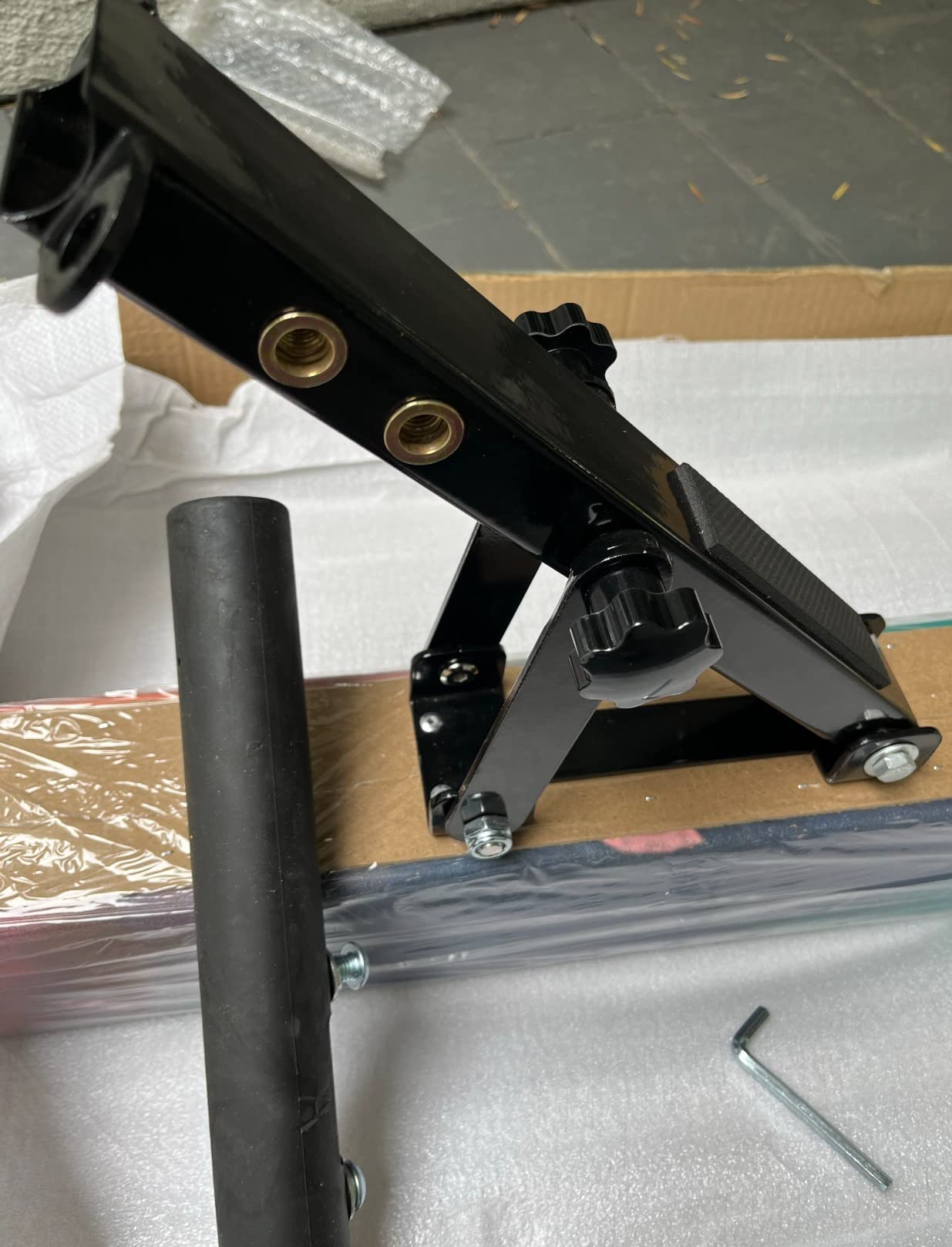
Who it suits and who should skip it
This suits a competitive or serious recreational gymnast aged four to twelve whose club works at the 42 cm height, and it also suits younger siblings who will grow into the taller setting over a couple of years.
Skip it if ceiling clearance is tight or if the household moves often. A 94 inch package and an 8 ft assembled beam are a real commitment compared with a foldable floor model.
What to check before you commit
Measure your ceiling at the tallest setting, not the lowest. Add clear space above the beam for a gymnast and for handsprings, since the arc is what actually causes the ceiling strikes.
Check the floor at full height before the first session. If the room is carpeted with deep pile, place a hard board under the legs or test the stability on a hard floor first.
9. Antsy Pants 4FT Portable Balance Beam – Best for Toddlers
Antsy Pants Balance Beam – Portable Gymnastics Beam, Gymnastics Equipment for Home with Anti-Slip Base, Lightweight/Extra Firm, Holds Up to 200lbs, Toddler to Adult Age
48 inch length
4 inch top and 6.7 inch base
Holds up to 200 lb
4 lb weight
Pros
- Short 4 ft length suits a toddler's first balance steps
- Extra-firm foam with an anti-slip base
- Hook-and-loop fastener attaches to gym mats and other beams
- Wipe-clean vinyl cover resists tearing
Cons
- Only 48 inch long so no full routines
- 200 lb limit is below adult-rated beams
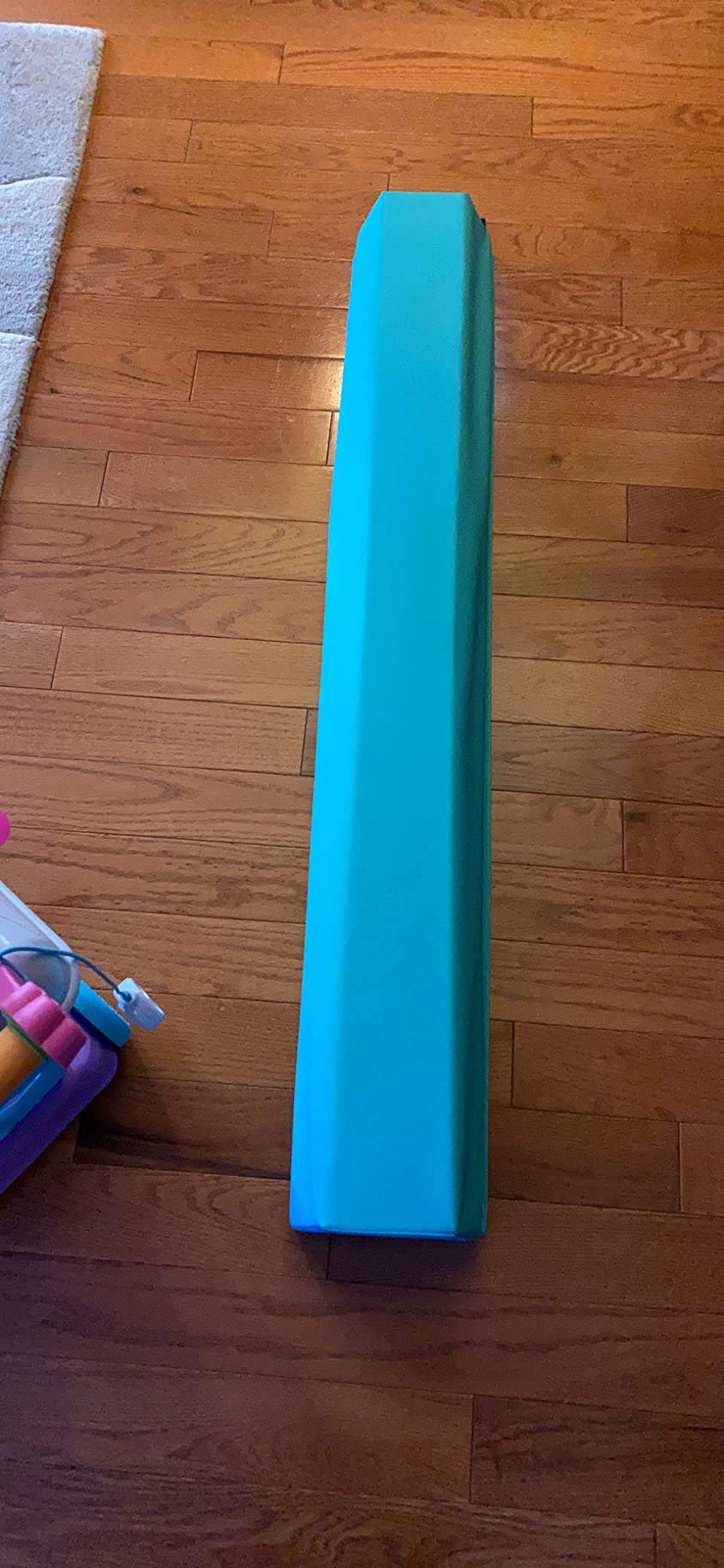
This is the shortest and lightest beam in the roundup, and for a two-to-five-year-old that is exactly the right shape. At 48 inch long and 4 lb, it is small enough that a toddler can step around it rather than be intimidated by it, which is how most first attempts go wrong.
The profile is 48 inch long with a 3.7 inch height, a 4.4 inch top and a 6.7 inch bottom, and the soft foam core is shaped for ankle support. The hook-and-loop fastener on the ends lets it attach to gym mats or another beam, which is a neat way to build a short obstacle course.
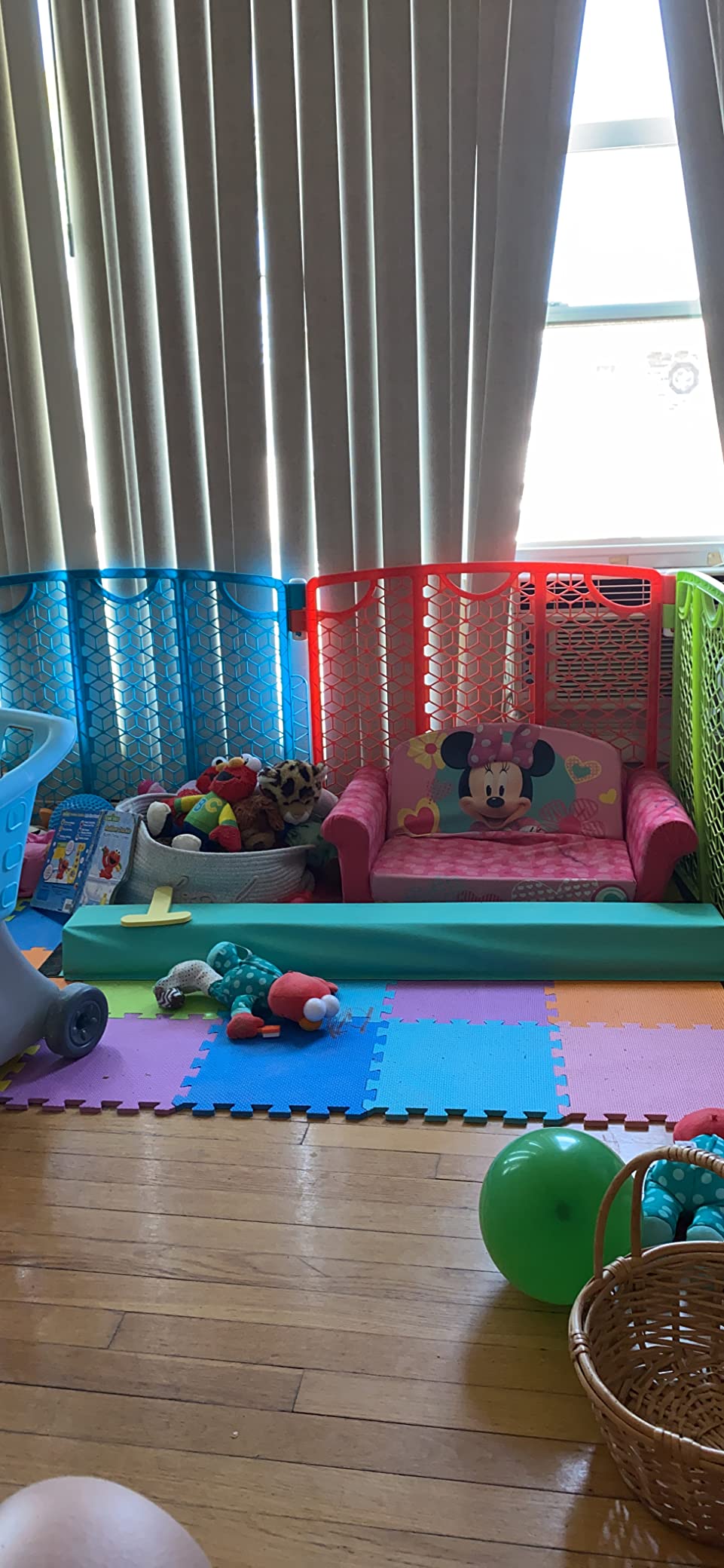
Parents of toddlers mention the easy-clean vinyl surface most, because it survives spills and comes back with a wipe. The anti-slip base works indoors and outdoors, so it can move to a patio for balance play in good weather.
The 48 inch length is the limit and the 200 lb rating is lower than most beams here. Neither matters for early balance work, but both end the beam’s usefulness once the child reaches around seven or eight.
Who it suits and who should skip it
This suits toddlers and preschoolers learning to walk a line, and it also works as a link piece in a Montessori-style obstacle course for slightly older children who need modular steps rather than one long rail.
Skip it for any child working toward cartwheels or handstands, because 48 inch is not enough run-up for either. Those families should start with a 6 ft or longer beam instead.
What to check before you commit
Look at the width rather than the length. A wide 6.7 inch base matters more than extra length for a beginner, because it is what stops a wobbly toddler from stepping off the side.
Plan for the next purchase. If your child is four, expect to move to a 6 ft or 8 ft floor beam within a couple of years, and the hook-and-loop fittings make that transition easier.
10. Seliyoo Adjustable 8FT Beam – Best for Stability-Heavy Homes
Seliyoo Balance Beam for Kids,Adjustable 8FT Gymnastics Beam
8 ft beam with 4 inch wood core top
Three heights at 17, 32 and 42 cm
Supports up to 350 lb
33 lb beam weight
Pros
- Three competition-matched height settings
- Very sturdy frame
- Rubber-wrapped legs grip tile and hardwood without scratching
- Four-layer soft surface
- Simple single-person assembly
Cons
- Long box and large assembled size need dedicated storage
- At 33 lb it is one of the heaviest beams in the roundup
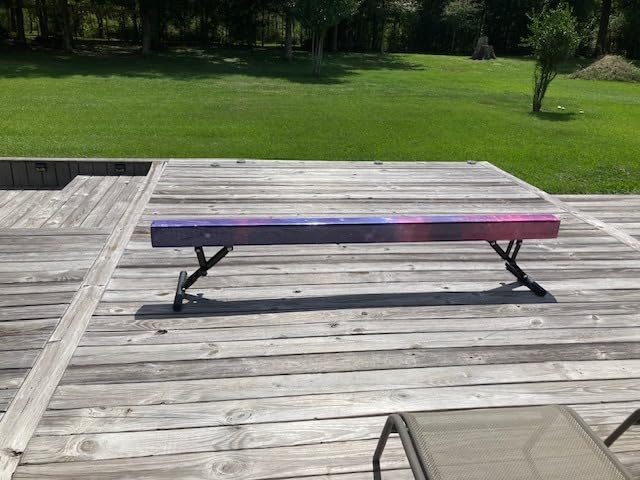
This is the most solidly built raised beam we tried. The frame is a quad triangle support in heavy-duty steel, the top is a 4 inch wide solid wood core, and the whole thing is rated to 350 lb. One reviewer walked a near-300 lb adult across it without any complaint about flex.
The four-layer construction of wood core, high-density EVA foam, soft padding and faux suede is what separates it from cheaper raised beams, and the 360 degree rubber-wrapped legs grip tile and hardwood without scratching the surface.
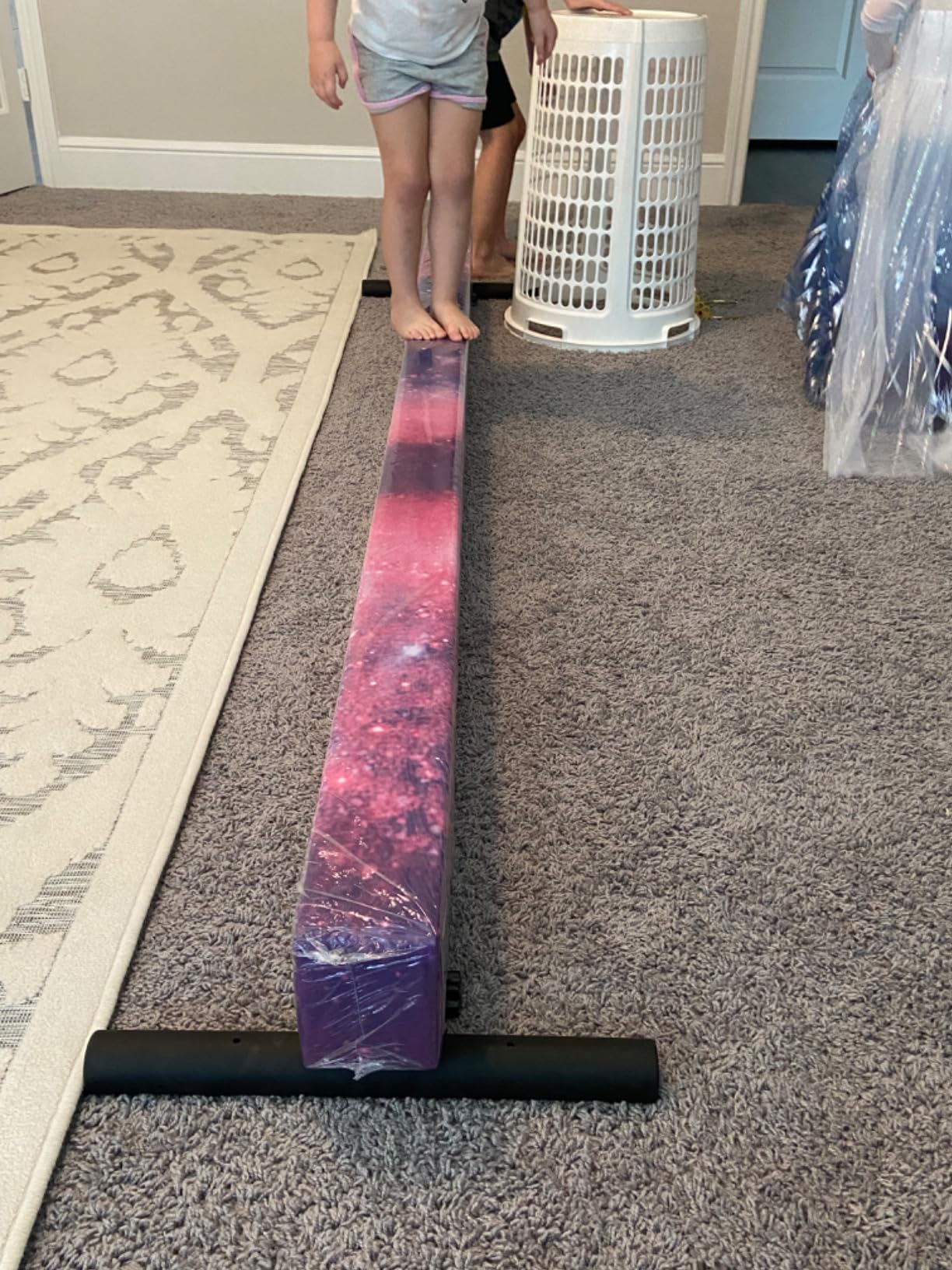
Owners highlight the stability and the colourways, and many say it holds far more weight than the rating suggests. Assembly is a single-person job with all hardware included, and the three heights at 17 cm, 32 cm and 42 cm match competition levels.
The cost is weight and space. At 33 lb it is the heaviest beam here, the package is long, and the assembled size needs a dedicated corner. That is a fair trade for stability, but not for a small flat.
Who it suits and who should skip it
This suits a family with a long room, a hard floor and a child who is already training seriously at club level. It is the pick for parents who would rather set the beam up once and leave it in place for years.
Skip it if the beam will be moved between rooms regularly or stored in a small space. A 33 lb frame is not something you want to lift weekly, and folding floor beams handle that far better.
What to check before you commit
Confirm the height range of the variant, since options run from 7-17 inch up to 7-29 inch, and check ceiling clearance against the tallest setting you intend to use.
Read the warranty. This model carries a one-year warranty, which is at least a stated commitment from the manufacturer rather than a vague heavy duty claim.
How to Choose the Right Balance Beam for Kids Gymnastics
Start with the room, not the beam. Long beams need clear floor plus landing space at both ends, and raised beams need overhead clearance above the rail for the gymnast and the arc of a handspring. If either is tight, a foldable floor beam will serve you better than a taller model you have to move around.
Next, choose the height to match the skill. A low floor beam at 2 to 4 inch suits a child learning to balance. An adjustable beam that reaches 17 to 29 inch belongs to a gymnast already drilling handstands and tumbling passes. Buying too advanced a beam is the most common reason parents see early falls.
Then look at the core, which decides how the beam feels underfoot. High-density EVA foam is forgiving and safe, an all-foam beam compresses under heavier or repeated landings, a wood core gives sharper feedback and lasts longer, and a steel frame on a raised beam is the most rigid option of all. Parents on gym forums tend to favour established gym-equipment brands once a child is competing, which tracks with what we felt underfoot.
Check the published weight limit rather than the phrase heavy duty. The limits in this roundup range from 150 lb to 500 lb, and a number tells you whether the beam will still be there in three years.
Surface covering is the last decision, and it is about grip versus upkeep. Water-resistant or PU leather wipes clean and tolerates sweat, which suits a busy child in a hot room. Suede feels better underfoot and grips well, but it usually means hand washing and can feel slippery once it is soaked.
Storage and portability round out the list. Folding floor beams under about 8 lb are realistic for a child to move alone, and beam weights here run from 3 lb to 33 lb. Anything at the heavy end is essentially a permanent fixture. Our advice: choose a beam one stage ahead of where your child is now, not three stages ahead.
Other pieces of kit matter too. If you are building a practice corner, our picks for home gymnastics bars and balance boards for standing desks pair naturally with a beam, and parents of younger children often start with balance bikes for toddlers before they ever touch a beam.
Which Beam Goes With Which Age and Skill Level
Under five, start with a floor beam at 2 to 4 inch, and a short one is fine. The goal is balance confidence, ankle strength and a willingness to try again after a wobble. Nothing above the floor is needed, and nothing heavier than a few pounds is needed either.
From about five to eight, move to a 6 ft or 8 ft floor beam with a 4 inch top and a firm core. Walkovers, cartwheels, leaps and straight-line balance drills are the skills to work on here, and a non-slip base on a hard floor matters more than any other feature.
From eight to eleven, an adjustable beam that reaches at least 17 inch starts to make sense, because handstands and round-offs are much harder to learn at floor level. Firmness starts to matter more than padding at this stage, which is where a wood core or a raised steel frame earns its place.
From eleven upward, treat the beam as training equipment. True 8 ft by 4 inch competition dimensions, a wood core, published weight limits well above the child’s weight, and a surface that will not compress under repeated landings are the features to prioritise. If your child competes at club level, our full gymnastics balance beam roundup goes deeper on that tier.
Safety Tips for Practicing on a Balance Beam at Home
Put a landing mat down before anything else. The fall risk on a balance beam is real at every height, and a mat along the run of the beam removes most beginner injuries. For raised beams above 9 inch, use a mat on both sides.
Supervise early sessions. The first few attempts should have an adult within arm’s reach, because beginners tend to fall forward off the mount rather than sideways. Once a child can walk the full length without a spotter, step back.
Keep the floor underneath clear. Hardwood or low-pile carpet gives the anti-slip base something to grip, while a thick rug lets the base creep during jumps and is a common cause of the wobble parents report on raised models.
Teach the mount before the walk. Show your child how to straddle-mount and how to dismount by turning the body over rather than stepping off sideways. Most early beam injuries happen at the ends, not in the middle.
Move from low to high in order. Do floor beam drills first, then raise the beam once walking the length is comfortable, and only then attempt handstands or tumbling. Forum discussions about home beams raise this question constantly, and the pattern is that skipping stages leads to falls rather than faster progress.
Frequently Asked Questions
Are balance beams good for kids?
Yes. A balance beam trains balance, ankle stability, posture and body awareness, which is why gymnasts and dancers use them and why physical therapists use low balance rails for the same reasons. For young children the benefit is coordination and confidence rather than competition skills, and most experts suggest starting on a low floor beam with a mat and an adult nearby. There is no minimum age, but a child needs to be comfortable standing and stepping independently before a beam adds anything.
What age is best to start balance beam?
Most children can start around age three or four on a low floor beam that sits only a few inches off the ground. Between five and eight, move to a 6 ft or 8 ft floor beam with a 4 inch top for walkovers, cartwheels and leaps. From eight upward, an adjustable beam that reaches 17 inch or more helps with handstands and tumbling. Parents on r/Parenting consistently recommend keeping children under five on low floor beams or Montessori-style obstacles.
What is the best gymnastics equipment for a 10-year-old?
At ten, an adjustable beam that grows with the child matters more than a soft floor beam. Look for true 8 ft by 4 inch competition dimensions, a wood or wood and EVA core, a published weight limit well above your child’s weight, and rubber-wrapped legs for grip. A mat, a set of home gymnastics bars and a wedge vault usually pair better with the beam than a second floor rail, so consider our home gymnastics bars guide as the next piece of the corner.
What are some good balance beam moves for gymnastics?
Work up in order rather than jumping ahead. Start with walking and heel-to-toe balance, then add straddled and piked walkovers, then straight-leg walks and knee lifts. From there move to leaps and jumps, then cartwheels, round-offs and connected handsprings on a raised beam. Front and back walkovers come after straight-leg walks feel stable. Keep early drills on a low floor beam and move to an adjustable or competition-height beam only once the basics are consistent.
Is a foam or wood balance beam better for beginners?
A foam beam is the safer and cheaper first purchase because it cushions falls and is light enough for a child to move. A wood core, either alone or wrapped in EVA foam, feels firmer and gives clearer feedback on body position, which is what you want once the child is drilling cartwheels and handstands. Most families end up with a foam floor beam first and a wood or steel beam later as the gymnast advances.
How much space do I need for a home balance beam?
Measure the beam length plus landing space at both ends. A 9 ft beam needs roughly 13 ft of clear floor, and an 8 ft beam needs about 12 ft. For raised beams you also need ceiling clearance above the rail for the gymnast plus the arc of a handspring, and a hard floor or low-pile carpet for the anti-slip base to grip. A folding floor beam is the better choice when space is tight.
Conclusion: Which Balance Beam Should You Buy?
If you want one answer, take the We Sell Mats 9 ft folding foam beam. It has the largest base of owner feedback in this group, it folds flat, and it is light enough for a child to handle, which matters more than any specification on the page. For a firmer all-foam build, the MARFULA floor beam is the upgrade, and the ZELUS 8 ft beam is the value pick for a family sharing one beam between siblings.
For a child past beginner level, move up to a wood or steel adjustable beam in the 8 ft by 4 inch competition format, and only if your ceiling and floor space can carry it. Whatever you choose, start with a mat, check the published weight limit, and buy one stage ahead rather than three. Those are the best balance beams for kids gymnastics we would put in a family home in 2026, and we update this roundup as new models arrive.