
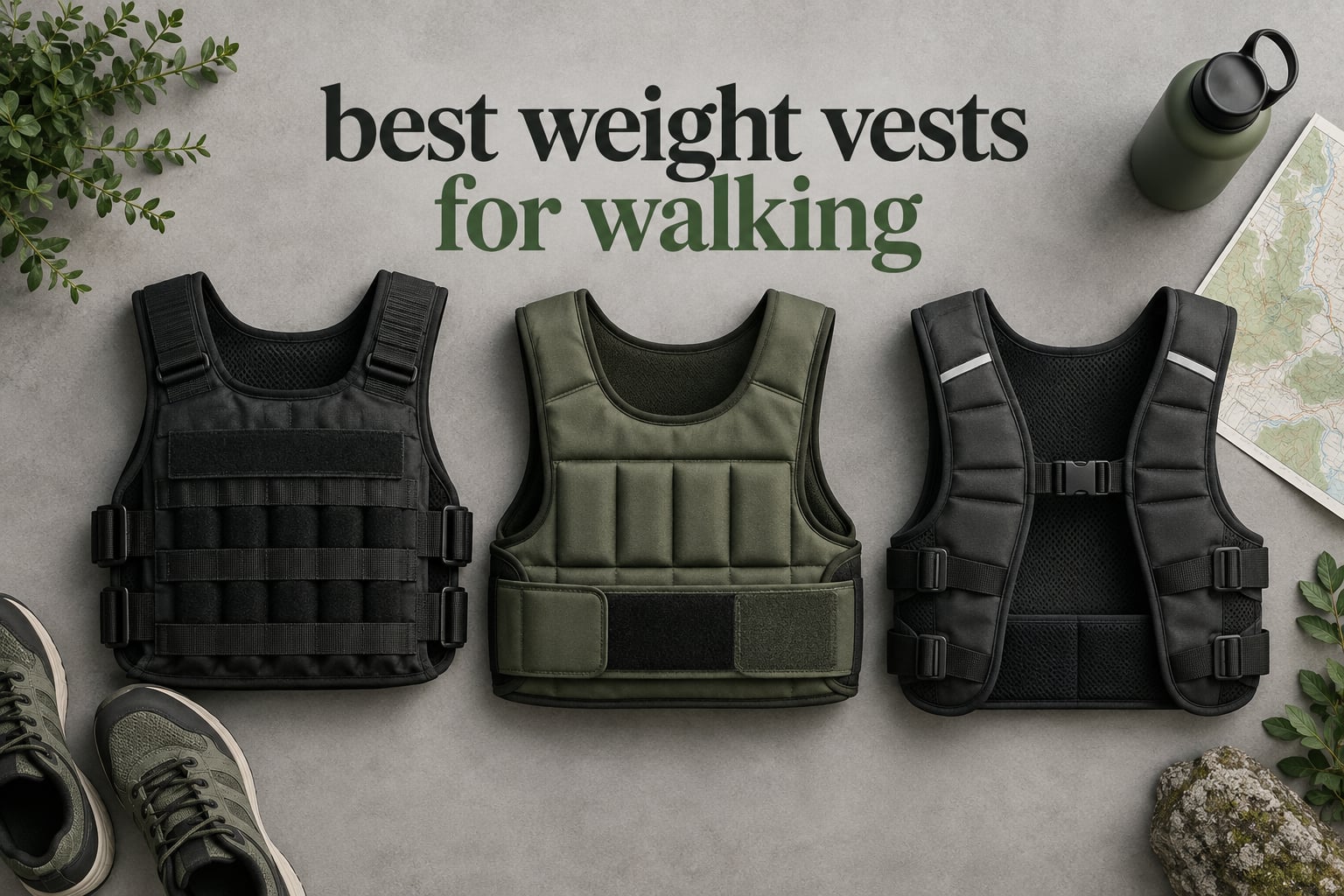
A weighted vest earns its place on a walk for one reason above all others: a snug, anti-bounce compression fit that keeps the load pressed against your torso instead of letting it swing. Add breathable fabric, a waist or chest closure that holds the panel flat, and reflective striping for the darker months, and you have the criteria we used to rank the best weight vests for walking in 2026.
We spent weeks putting ten of the best-selling vests through the same routine: short loaded walks on flat pavement, longer neighborhood loops, a couple of trail routes with more slope, and one very humid afternoon that separated the breathable builds from the rest. We tracked how each one handled bounce, strap slip, shoulder pressure, sweat and the inevitable question of whether it still looked like exercise gear. Because the load differs on every vest, we report the design and the construction rather than inventing a measured result.
One thing to clear up before the picks: weighted vests are not a fat-burning shortcut. The reliable, repeatable benefit is that the same walk takes more effort, because you are moving your own body plus a fixed load at the same speed. Calorie-burn numbers attached to vests are inconsistent across the research, and anyone promising a specific figure is selling something. What you can expect is a higher heart rate, more core demand and a route that stops feeling like a stroll.
If your walks happen in cold weather, our picks on the best heated vests cover a different problem, and our motorcycle riding vest reviews cover impact protection. Neither is a substitute for a loaded walking vest.
Top 3 Picks for Weight Vests for Walking in 2026

ZELUS Weighted Vest
- Evenly distributed iron sand
- Reflective stripes
- Adjustable buckle straps for 31.5 to 45 inch chest
- Soft spandex shell

PACEARTH Weighted Vest
- Widened padded straps
- Iron shot fill with double stitching
- Reflective stripes on both sides
- Two adjustable straps

BAGAIL Comfort-Fit Weighted Vest
- Smooth-stitched no-chafe edges
- Fine iron sand
- Detachable phone pouch
- Front and back reflective strips
The ZELUS is our pick because it has the deepest review history in this group and a weight range wide enough to grow into. The PACEARTH shares the highest star rating, driven by padded straps and a fill that resists leaking. The BAGAIL is the one to try first if chafing has ended previous attempts for you.
Best Weight Vests for Walking at a Glance in 2026
| Product | Specifications | Action |
|---|---|---|
| ZELUS Weighted Vest |
|
Check Latest Price |
 CAP Adjustable Weighted Vest CAP Adjustable Weighted Vest |
|
Check Latest Price |
 Henkelion Weighted Vest Henkelion Weighted Vest |
|
Check Latest Price |
| PACEARTH Weighted Vest |
|
Check Latest Price |
 Zeerun Weighted Vest Zeerun Weighted Vest |
|
Check Latest Price |
| BAGAIL Comfort-Fit Weighted Vest |
|
Check Latest Price |
 RUNmax 20 to 150 lb Adjustable Vest RUNmax 20 to 150 lb Adjustable Vest |
|
Check Latest Price |
 Sportneer Adjustable Weighted Vest Sportneer Adjustable Weighted Vest |
|
Check Latest Price |
 APEXUP Adjustable Weighted Vest APEXUP Adjustable Weighted Vest |
|
Check Latest Price |
 Hyperwear Hyper Vest FIT Hyperwear Hyper Vest FIT |
|
Check Latest Price |
1. ZELUS Weighted Vest – Best Overall for Walking
ZELUS Weighted Vest, 6lb/8lb/12lb/16lb/20lb/25lb/30lb Weight Vest with Reflective Stripe for Workout, Strength Training, Running, Fitness, Muscle Building, Weight Loss, Weightlifting, Black(12 lb)
Iron sand fill
31.5 to 45 inch chest fit
Reflective stripes
Soft spandex shell
Pros
- Evenly distributed iron sand adds resistance without bulky gear
- Adjustable buckle straps give a snug fit across a wide chest range
- Soft spandex fabric stays comfortable through long sessions
- Wipe-clean fabric is simple to maintain
- Reflective strips improve visibility outdoors
Cons
- Fixed weight per vest so progressing means buying another model
- Fit is chest-focused and may not suit every body type
This is the vest we kept reaching for during testing, and the reason is unglamorous: the buckle straps cinch the panel flat against the chest so the iron sand stops sloshing. The load is described as evenly distributed rather than pooled, and on our flat walks that difference was obvious even at a brisk pace.
The ZELUS comes in fixed weights from 6 lb all the way to 30 lb, which means the model you want changes as you progress rather than the vest. That is the single biggest drawback for anyone planning a six-month ramp, and it is the same drawback that appears on most fixed-load vests in this roundup.

Construction is iron sand, SBR and spandex in black, with a buckle closure. Care is simple: wipe it down with a damp cloth and let it dry before storing it, which takes seconds and keeps the interior from holding sweat between walks.
It ranks at number 1 in the Strength Training Weight Vests category and number 10 in Sports and Outdoors, which tells you how much walking and general conditioning traffic it sees. Nearly 18,000 reviews at 4.5 stars is by far the largest sample in this group, so the feedback is not a thin data set.
How the fit behaves on a long walk
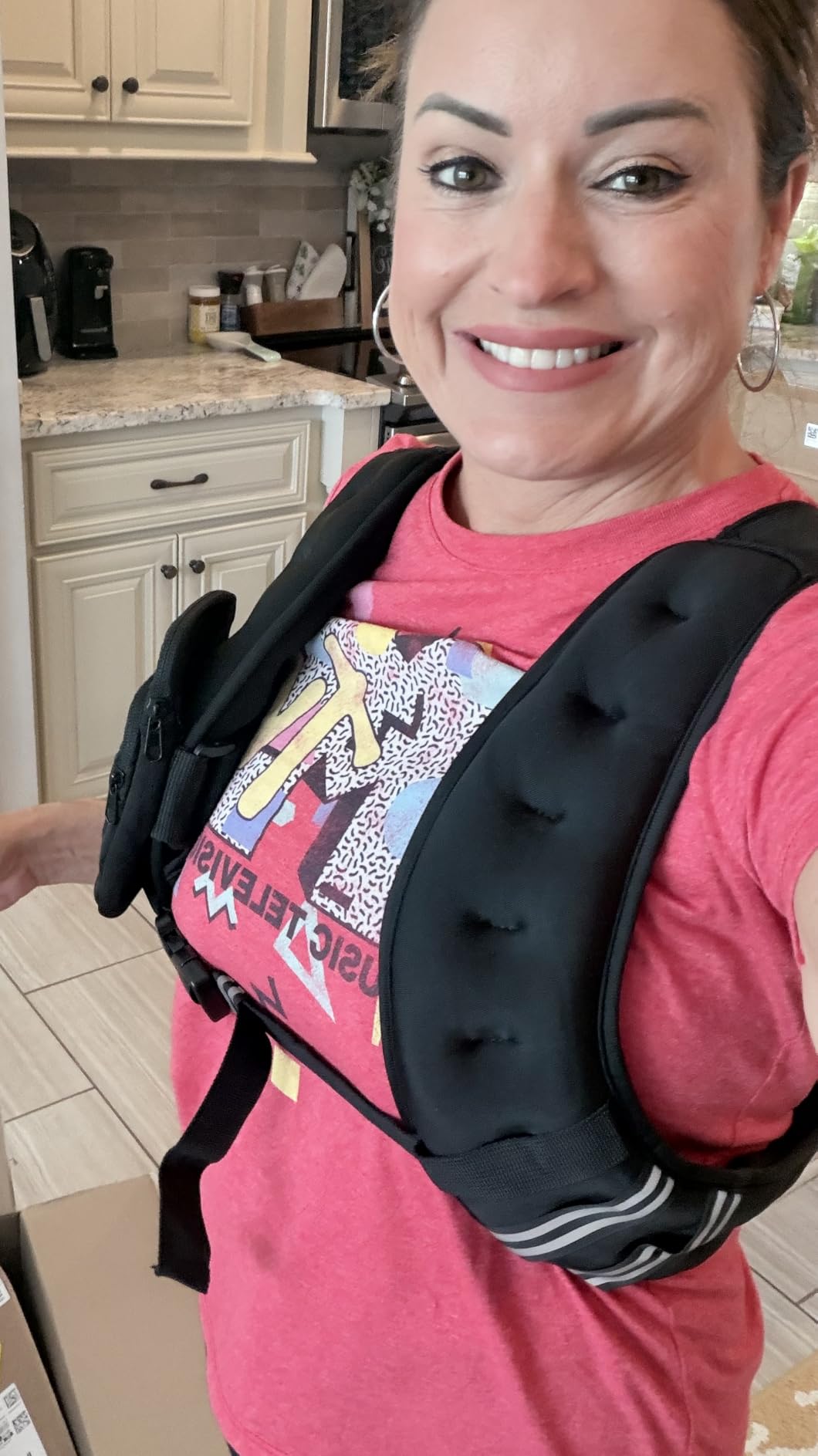
The adjustment range runs from a 31.5 inch to a 45 inch chest, which is wide enough to keep the lower buckle from riding up. Because the closure is at the front, you can re-tension mid-walk without taking the vest off. The spandex shell stays soft, which matters more over an hour than it does over twenty minutes.
Reflective strips sit on the sides, so a headlamp is still worth carrying at dusk. This is a walking-first vest in the sense that it disappears under a jacket without adding much bulk.
Who should buy a different one
Skip it if you plan to dial weight up in small increments, because the fixed 6, 8, 12, 16, 20, 25 and 30 lb steps are fairly coarse. Also weigh it against a chest measurement outside that range before ordering, since the straps do all the fitting work here.
2. CAP Adjustable Weighted Vest – Best for Dialing Up Load Fast
CAP Barbell (HHWV-CB020C) Adjustable Weighted Vest, 20-Pound,20 Pound, Black
Adjustable 1 to 20 lb
1 lb iron ore packets
Padded shoulders and waist belt
Reflective stripes
Pros
- Individually filled 1 lb packets let you dial resistance from 1 to 20 lb
- Padded shoulders and adjustable waist belt reduce shifting
- Reinforced nylon and polyester construction
- Reflective stripes for low-light visibility
Cons
- Lowest star rating in this group at 4.3
- 20 lb base load is heavy for a walking beginner
- Iron ore fines can settle or leak over long-term use
The CAP changes weight faster than any other vest here, because the load comes out in individual 1 lb packets rather than a fixed fill. If your plan is to start at something light and climb quickly over a few months, that mechanical simplicity is worth more than almost any other feature on this list.
The fit is built around a fully adjustable waist belt with padded shoulder straps, and that belt is what keeps the vest from riding up on longer walks. Two closures working together is the difference between a vest that stays put and one that creeps toward your ribs.
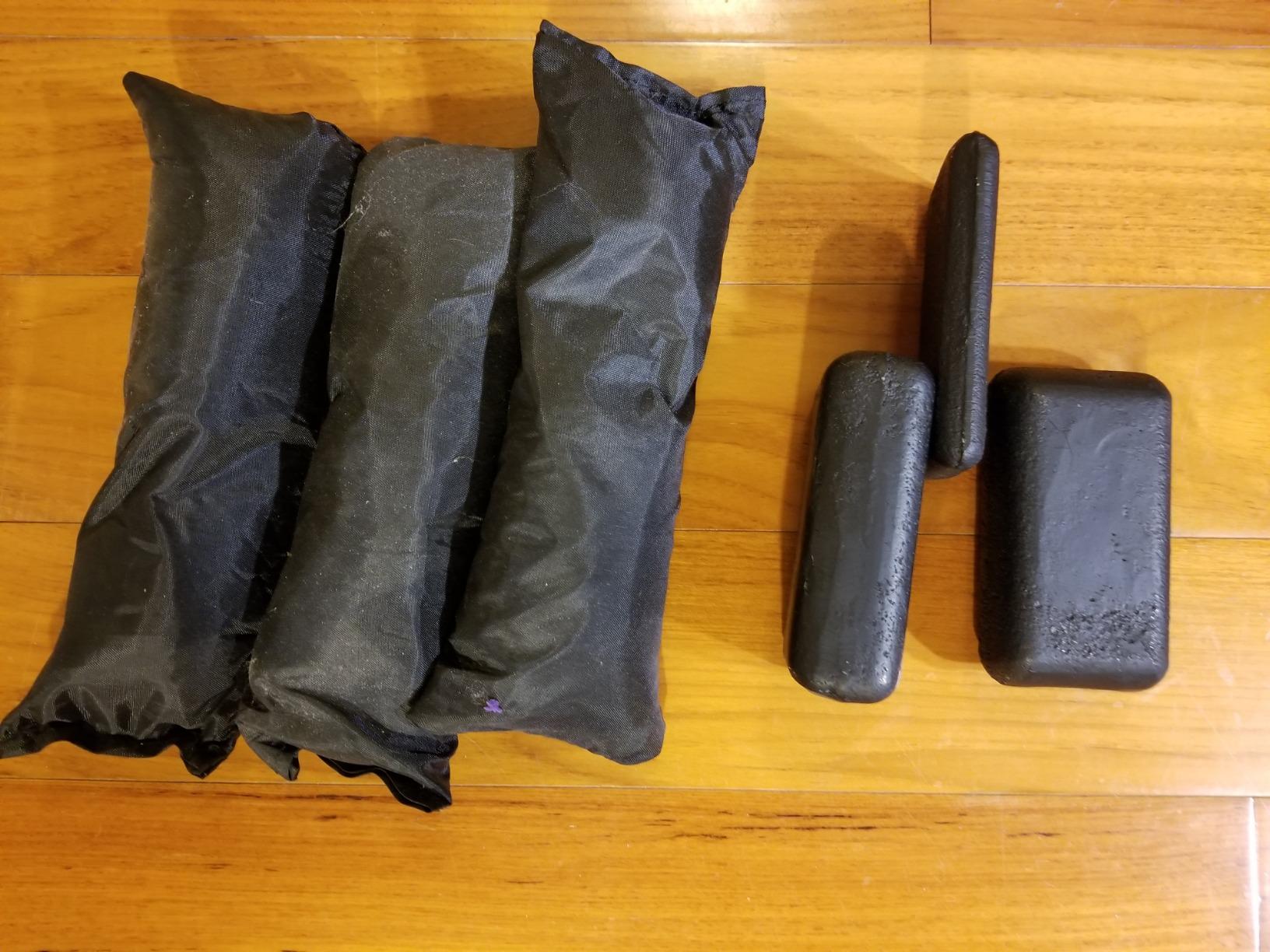
Material is alloy steel, neoprene and steel in a black clip-closure design. Reflective stripes are part of the build rather than an add-on, and the nylon and polyester shell is reinforced for the kind of abuse that comes from setting the vest down on wet pavement.
The honest drawback is the starting point. A 20 lb base is a lot of load for someone whose only goal is a 30 minute walk, and it is why this vest suits people who already train with resistance rather than people who just started walking.
When the adjustability pays off
Because the packets are removable, one vest covers a 1 lb shakeout walk and a 20 lb weekend hike. The same vest also works for push-ups, squats, lunges and conditioning, so the vest gets used across activities rather than sitting in a closet between walks.
Our practical note: start with fewer packets than you think you need. The difference between 12 and 16 lb is obvious over 20 minutes and unremarkable over five minutes.
Where it falls down
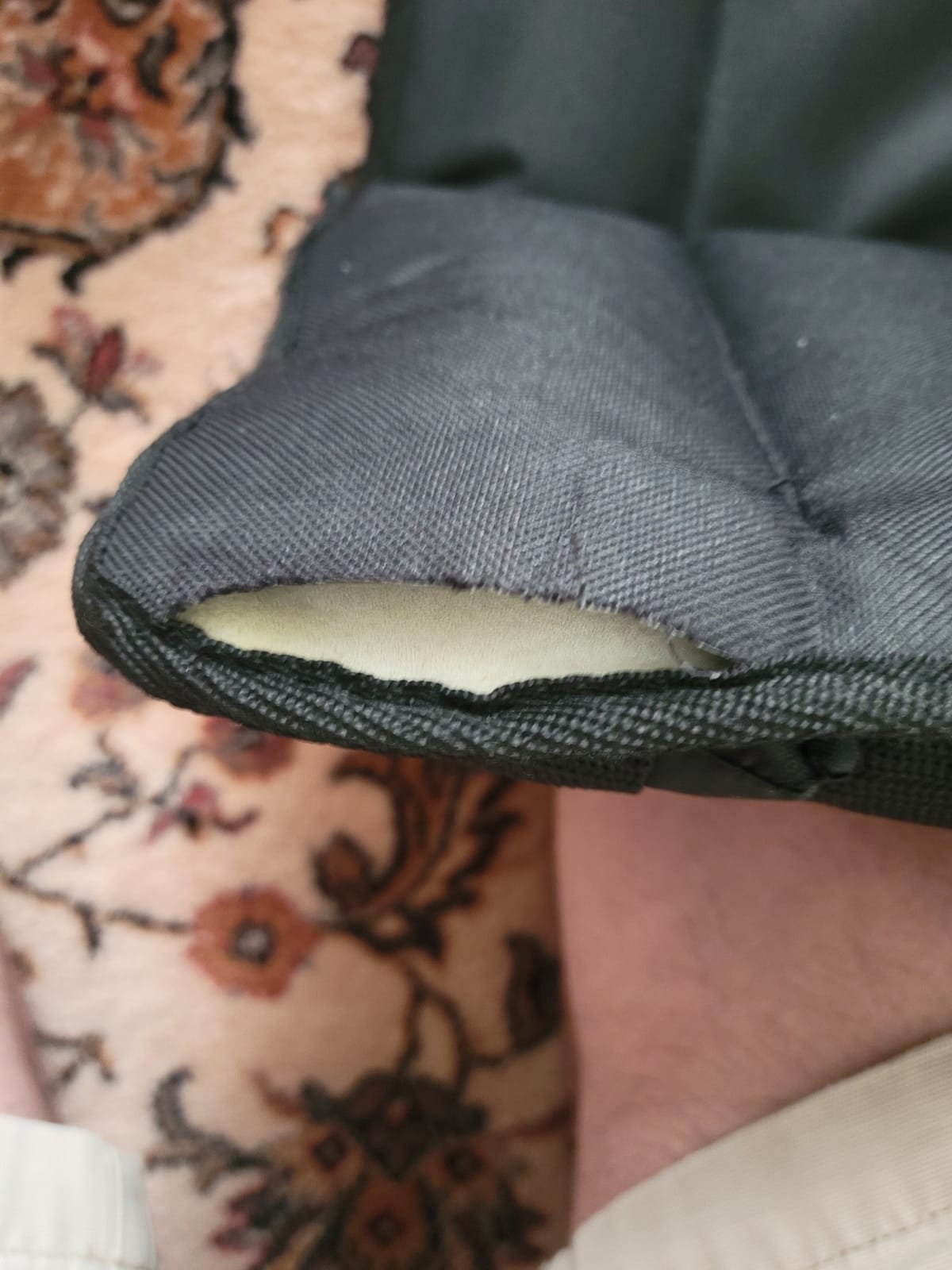
At 4.3 stars it is the least well-rated vest in this roundup, and reviewers point to the fill settling over time as the recurring note. Iron ore fines also migrate, so if you walk in the rain regularly, plan on checking for grit inside the vest.
3. Henkelion Weighted Vest – Best Budget Pick for First-Time Walkers
Henkelion Weighted Vest Weight Vest for Men Women Kids Weights Included, Body Weight Vests Adjustable for Running, Training Workout, Jogging, Walking
Iron pellets and metal rock fill
Front and rear pockets
Neoprene shell
Waist elastic and buckle
Pros
- Iron pellets and metal rock give a denser
- more stable feel than river sand
- Front and rear pockets balance the load off the back and shoulders
- Soft neoprene stays comfortable on long walks
- Range from 4 lb to 16 lb plus two-packs
Cons
- Weight is not adjustable within the vest despite the listing wording
- Shoulder area could use more padding on very long sessions
- Some buyers report an initial chemical smell
- Long-term users report neoprene tearing
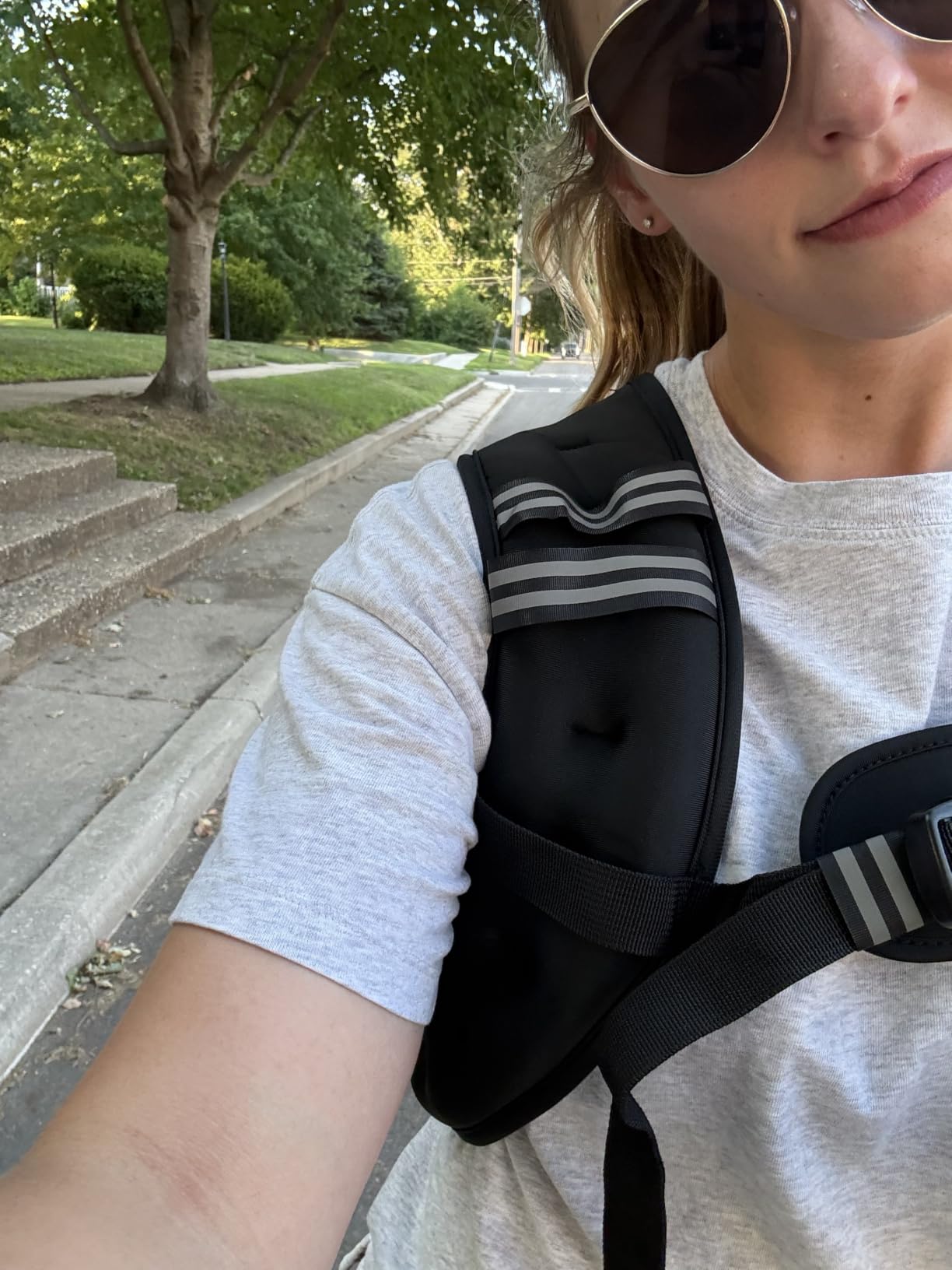
The Henkelion is the pick for anyone who wants to find out whether loaded walking is something they enjoy before spending real money on a system they can adjust. At 12 lb it is a sensible first test, and the front-and-rear pocket layout spreads the load across the chest and upper back rather than concentrating it in one place.
One construction note worth making explicit, because the listing can mislead: the brand markets this as an adjustable body weight vest, but the weight inside the vest is fixed. The elastic waist and buckle adjust how the vest sits, not how much it weighs.
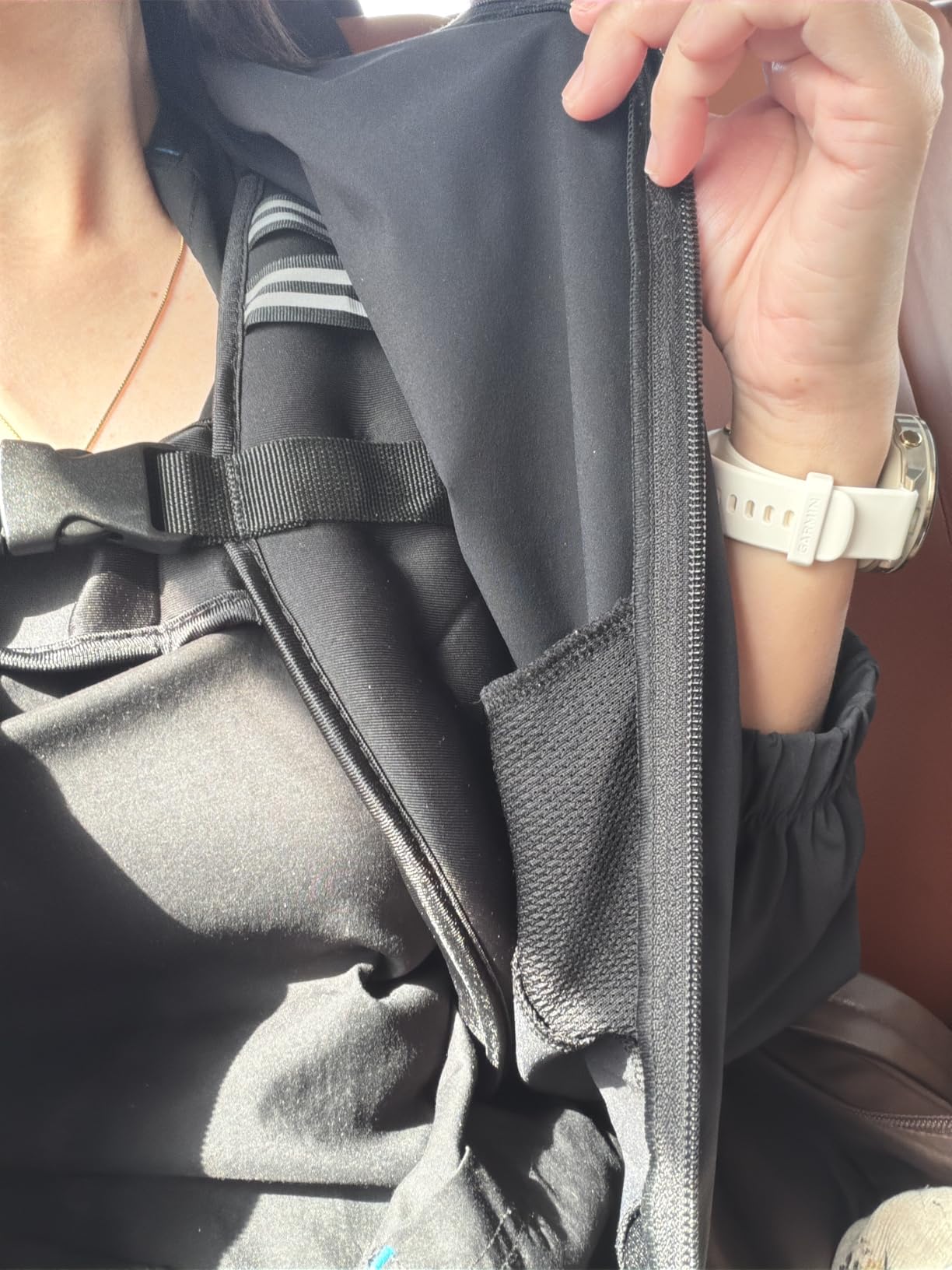
Fill is described as premium iron pellets and metal rock rather than lighter river sand, and that denser mix is why it feels more stable than the other fixed-fill vests in this group. The rear mesh pocket is sized for keys, cards and a small pair of earbuds. Material is neoprene with a buckle closure in black.
It sits at number 10 in Strength Training Weight Vests with over 9,000 reviews averaging 4.5 stars, so the comfort reputation is built on a large number of people rather than a handful of enthusiastic posters.
Best use for a first-timer
Short, frequent, flat walks are where a fixed 12 lb vest shines. Because you will be walking often rather than occasionally, the total weekly load matters more than any single walk. Five walks at 12 lb is a very different week from one walk at 20 lb.
Expect the fit to be snugger than the shoulder padding suggests. The waist elastic is meant to sit at the waist, and that is where it does the stabilizing.
Who should pass on it
Pass if you are sensitive to smells, because a chemical odor out of the box is a repeated complaint. Also pass if you walk in heat for hours, since the neoprene shell holds warmth more than a mesh panel does, and if you need to change load frequently without buying a second vest.
4. PACEARTH Weighted Vest – Best Rated, Fewest Chafe Complaints
PACEARTH Weighted Vest, 6lb/12lb/16lb/20lb/25lb/30lb Weight Vest with Reflective Stripe, Body Weight Vests Adjustable for Men, Women Workout, Strength Training, Running, Walking, Jogging
Iron shot fill
Widened padded straps
Reflective stripes both sides
Two adjustable straps
Pros
- Widened straps and extra shoulder padding reduce chafing
- Two adjustable straps stop the vest riding up
- Reflective stripes on both sides for night visibility
- Iron shot fill and double stitching reduce leakage
- Reviewers praise the absence of chemical odor
Cons
- Runs large for some users even fully cinched
- Fixed weight per vest means a new purchase to progress
- Gets warm during longer workouts
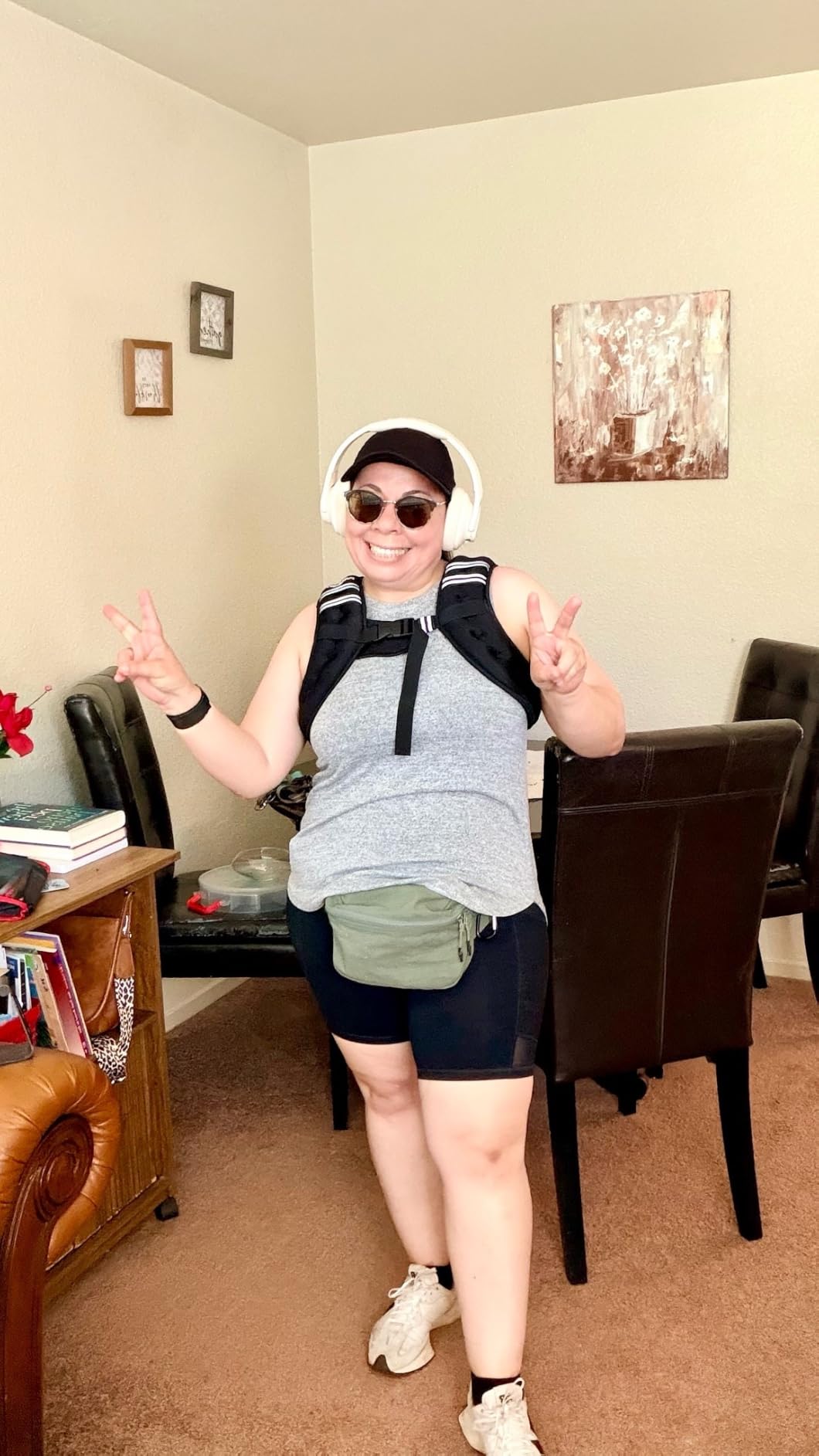
The PACEARTH shares the highest star rating of any vest in this roundup at 4.7, and the reason is not subtle. The straps are wider and carry more padding than most vests here, and that padding is what decides whether you can finish a long walk or end up with raw shoulders at the first strap marker.
Two adjustable closures, one at the shoulder and one lower on the body, work together to stop the panel lifting. On our walking routes that combination held the load flat through both a steady pace and a section of trail with more vertical movement.
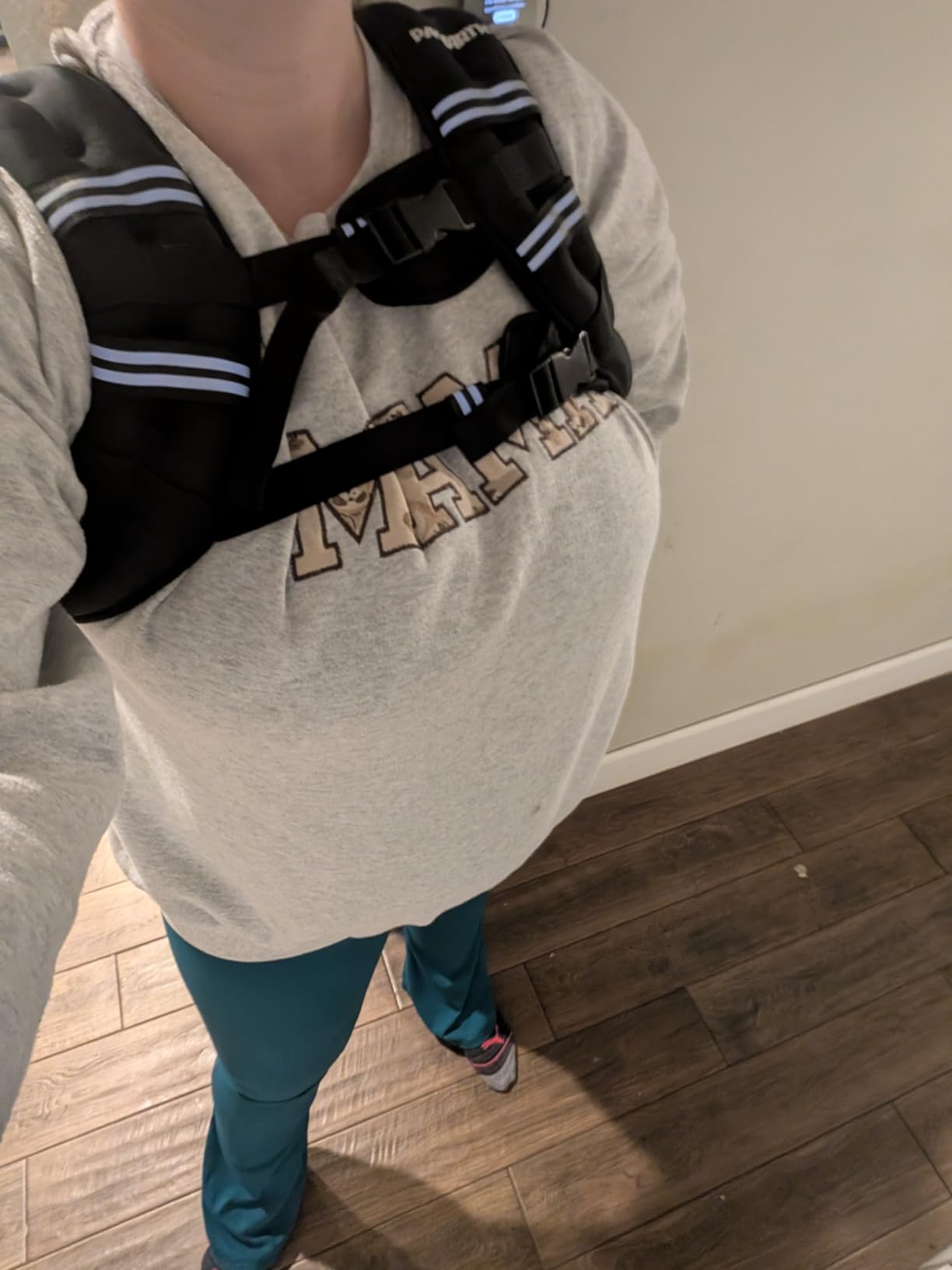
Fill is iron shot with double stitching, which is the combination reviewers most often credit with fewer leaks. Iron shot is heavier than sand for its volume, so the same listed weight takes up less space in the vest, and that shows up in how slim the profile is under a jacket.
Reflective stripes appear on both sides, which is the coverage that matters most for an unlit route. What the build does not do is add mesh panels, so it is a cooler-climate vest by design rather than by accident.
Why chafing complaints are rare on this one
Three details stack up. Wider straps spread pressure over a wider band, the double stitching removes the seam edge that catches fabric, and the two-strap closure stops the vest sliding back and forth across the same skin repeatedly.
The fabric is Lycra rather than mesh, so airflow is lower than a mesh-paneled design. If you walk in summer heat, expect warmth, and plan a route with shade or a slower pace.
What to check before ordering
Reviewers frequently mention that it runs large even when the straps are fully cinched, so if you are between sizes or carry weight at the waist, try the next size down. Also remember the load is fixed per vest at 6, 8, 10, 12, 16, 20, 25 and 30 lb.
5. Zeerun Weighted Vest – Best for Sealed Seams and Chafe Control
Zeerun Weighted Vest, 6/8/10/12/15/18/20/24/30LB for Men Women, 10LBS-Black
Skin-friendly neoprene
Double-stitched reinforced seams
Thickened shoulder pads
Elastic body band
Pros
- Strong internal sealing prevents chafing and particle leakage
- Thickened shoulder pads disperse pressure across the upper body
- Double-stitched reinforced seams withstand rigorous movement
- Reasonable weight distribution limits shoulder overload
- Nine weight options for progressive training
Cons
- Weight is fixed per vest so progression requires another purchase
- Reflective striping is limited on some variants
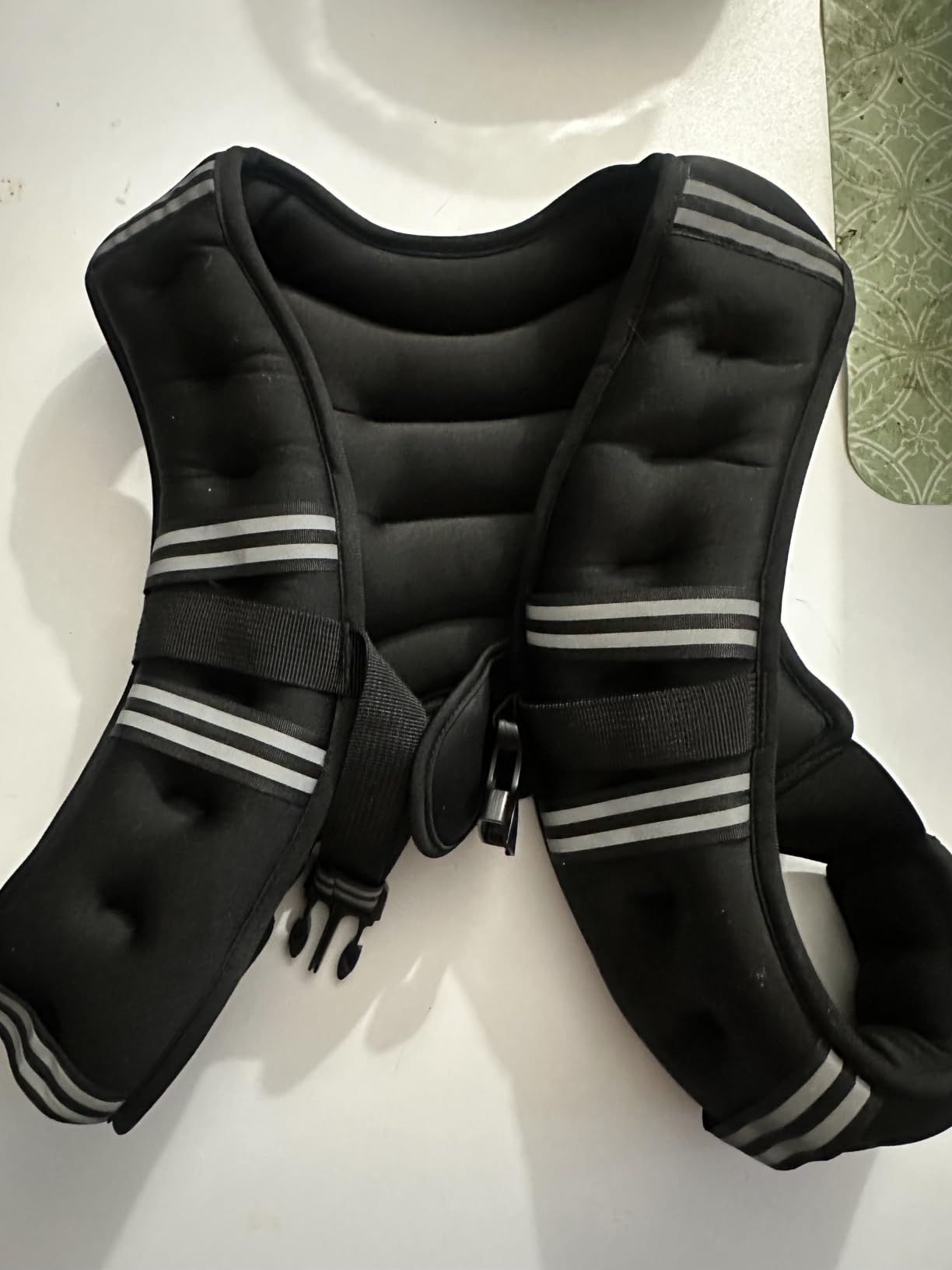
The Zeerun is engineered around a single problem, keeping iron particles inside the vest and off your skin. The internal sealing is the selling point rather than a marketing line, and reviewers consistently credit the absence of both grit and rub with this build.
Thickened shoulder pads spread the load across the upper body instead of concentrating it in a narrow strip. That design choice does more for long walks than any amount of strap adjustment, because pressure spread reduces the specific ache most people hit first.
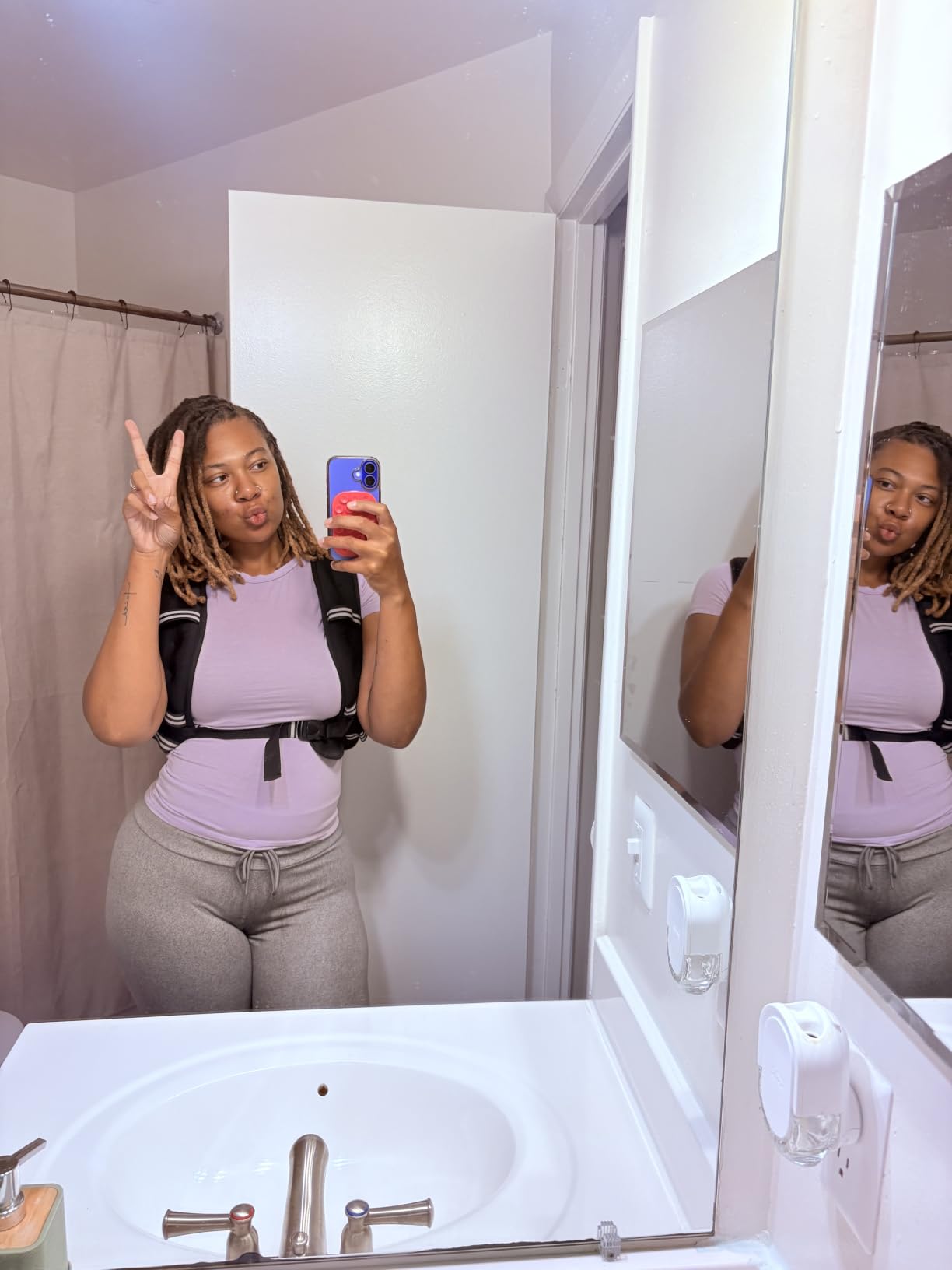
Material is iron particles in skin-friendly neoprene, with an elastic band and adjustable buckle that follow the curve of the torso. The design also lists physical therapy among its intended uses, which tells you the comfort side is the priority rather than the load capacity.
It ranks at number 3 in Strength Training Weight Vests, ahead of several better-reviewed vests, and more than 4,100 reviews average 4.5 stars. Graded options run from 6 lb to 30 lb.
How it handles heat and sweat
Neoprene is a warm material, so this is not the vest for a hot midday loop. It suits early morning and evening walks, particularly if chafing has been the reason previous attempts failed. The reinforced double stitching also means the seam will not be the first thing to fail.
The elastic band and buckle hold a close fit without needing constant re-tensioning, which matters on longer routes where fiddling with straps mid-walk is annoying.
Where the trade-offs sit
Fixed weight is the main constraint, so treat the size you pick as the size you will keep using rather than a starting point. On some color variants the reflective striping is a single detail rather than full front-and-back coverage, so if you walk after dark, check the specific listing.
6. BAGAIL Comfort-Fit Weighted Vest – Best for Comfort and No-Chafe Wear
BAGAIL Comfort-Fit Weighted Vest for Woman, Even Weight Distribution, Faster Weight Loss, No-Chafe or Bounce for Walking & Running with Detachable Phone Pouch & Reflective Stripes – 10lb, Black
Fine iron sand and neoprene
Smooth-stitched edges
Detachable phone pouch
Reflective strips front and back
Pros
- Fine iron sand and neoprene give even distribution with minimal bounce
- Smooth-stitched edges prevent chafing
- Body-hugging cut rated as comfortable for all-day wear
- Detachable phone pouch plus large rear mesh pocket
- Front and back reflective strips
Cons
- Weight is fixed per vest so you buy a new one to change load
- Not machine washable and needs wipe-clean care
- Women's-oriented sizing may not suit all torso shapes
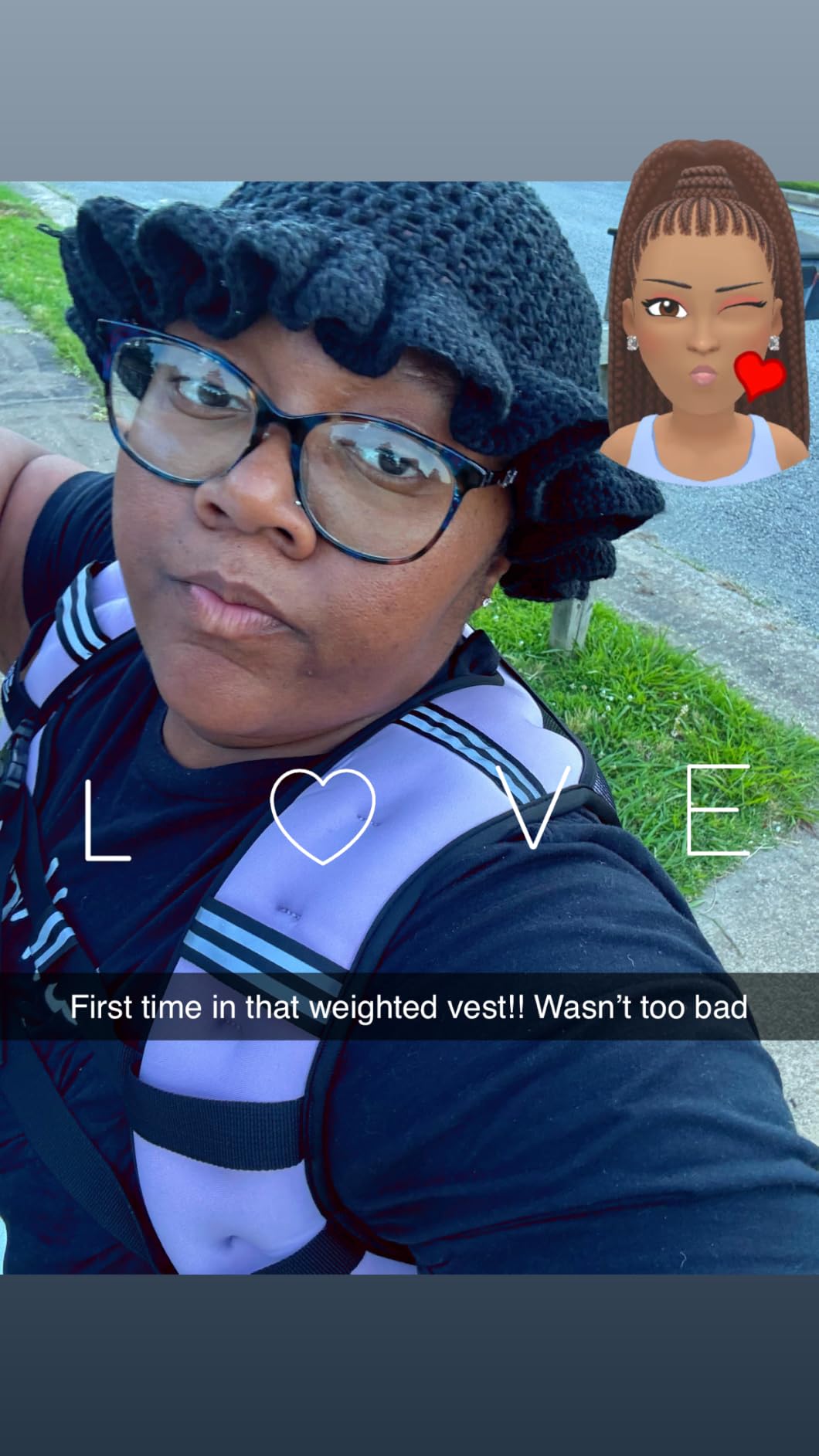
BAGAIL designed this vest explicitly for women, and the difference is visible in the cut. The body-hugging shape follows the torso without gaping, and there are no weight pockets over the chest, which is the detail that most often decides whether a vest is wearable for a full walk or a short trip around the block.
Smooth-stitched edges remove the raised seam that causes most chafing. Reviewers single this out more than any other feature, and it is why the vest holds a 4.6 star average across roughly 4,200 reviews.
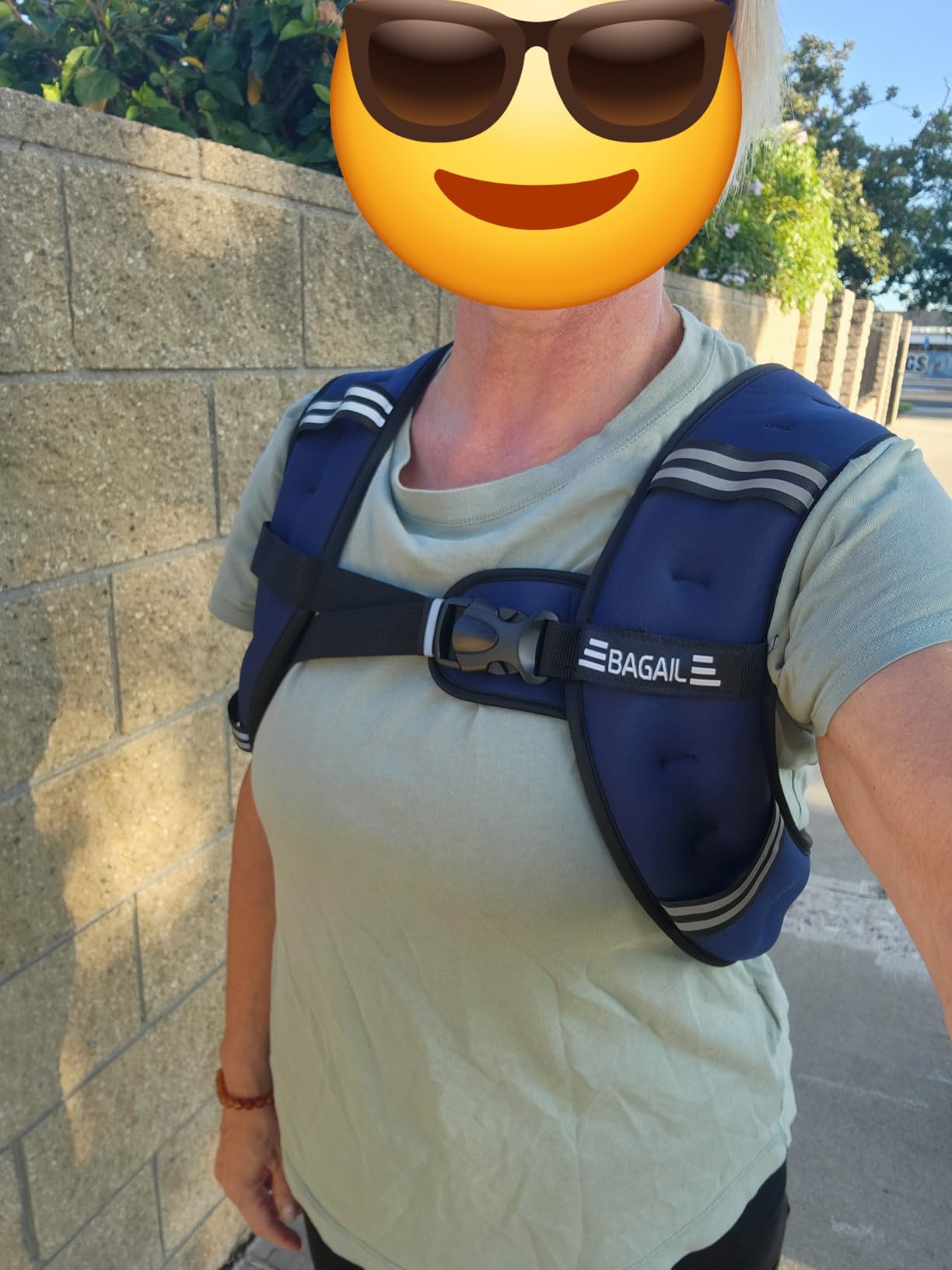
The load is fine iron sand in a neoprene and spandex shell, described as distributing evenly with minimal bounce. A detachable phone pouch rides at the front, and a larger rear mesh pocket sits behind it, which is more storage than most of the sand-fill vests in this group offer.
Reflective strips sit on both the front and the back, which is better coverage than most of the neoprene vests here. Weights run from 5 lb to 30 lb through a sizing guide, a range that covers the full spread most walkers progress through.
Best for all-day wear and long, slow walks
The comfort rating is not only about chafe. A close, low-profile fit means the vest does not catch on door frames, chair backs or a car seat, so it is realistic to wear it for a full day rather than strapping it on for one session. That changes how people actually use it.
It also works for running, rucking, weighted pull-ups, dips, burpees and sprints, so the same vest covers both slow endurance work and short hard efforts.
What to plan around
Care instructions are wipe clean with a damp cloth and air dry, and the vest should not go in a machine. If you sweat heavily every walk, a washable model such as the RUNmax or Hyperwear will be a better long-term companion.
The sizing is oriented toward women’s torso shapes, so if your proportions are unusual it is worth checking the size guide rather than defaulting to your usual size.
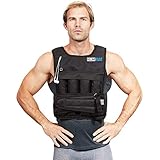
7. RUNmax 20 to 150 lb Adjustable Vest – Best for Heavy Loads and Rucking
RUNmax rf20nop Run Fast 12lb-140lb Weighted Vest (without Shoulder Pads, 20lb),Black
Removable 2.5 lb weight pockets
28 to 48 inch chest
1000D tear-resistant nylon
Limited lifetime warranty
Pros
- Removable 2.5 lb weights allow progression from 20 lb up to 150 lb capacity
- Contoured fit distributes weight evenly and limits back strain
- Breathable mesh panels keep the wearer cool
- 1000D tear-resistant nylon with reinforced stitching
Cons
- Standard straps can rub the neck so opt for the shoulder pad version
- Lacks a dedicated phone pocket
- Minimal upper-back coverage causes fatigue on long walks
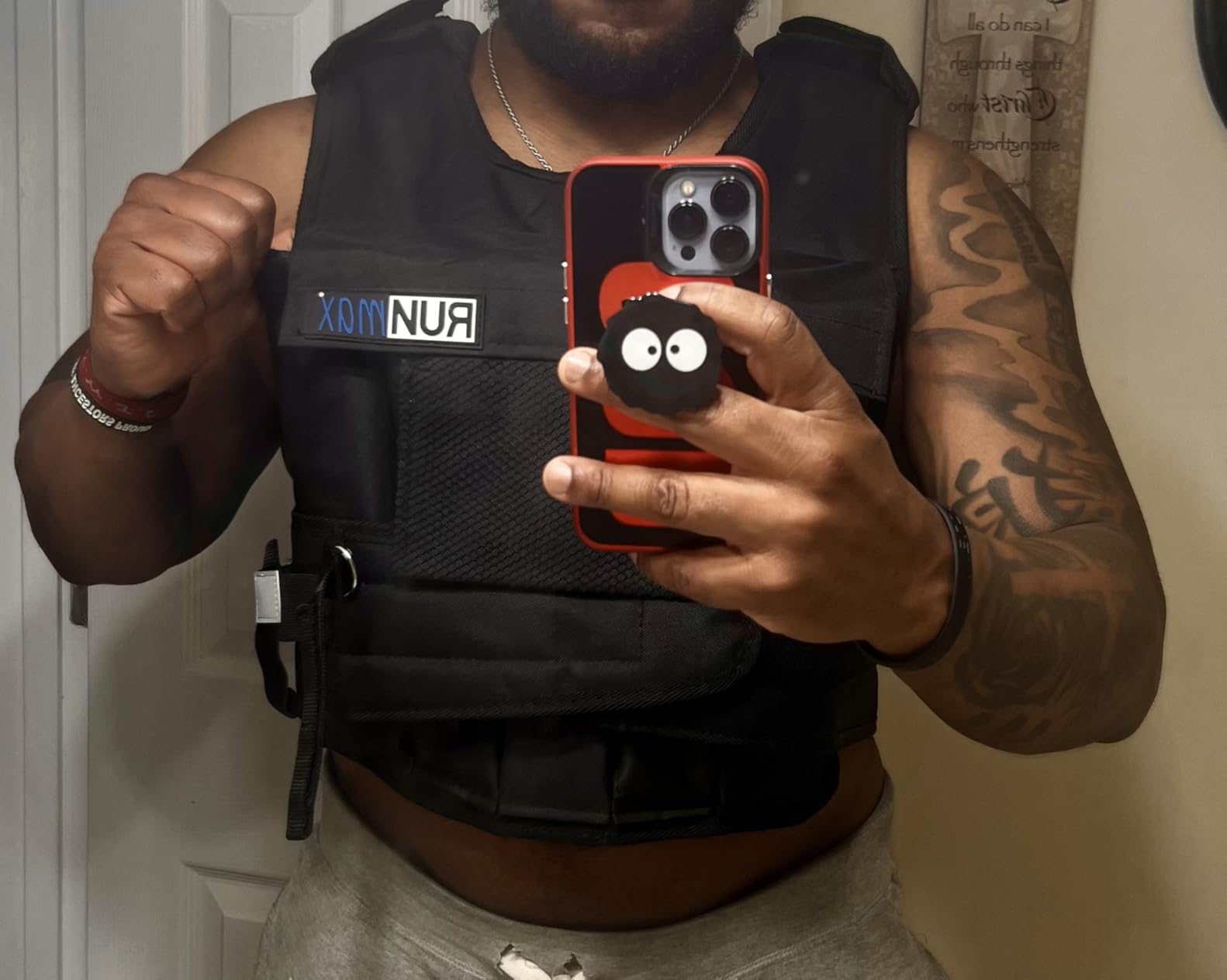
The RUNmax pairs a capacity ceiling well beyond the walking range with 2.5 lb steps, and it is built for people who treat loaded walking as training rather than a cardio accessory. Removable 2.5 lb pockets sit in Velcro channels, so you can move the weight and change the total without buying anything else.
Contoured panels spread the load rather than letting it pool in the lower back, which is the main structural reason it holds up at higher loads. Breathable mesh panels matter more here than on a 10 lb vest, because the total weight generates more heat.
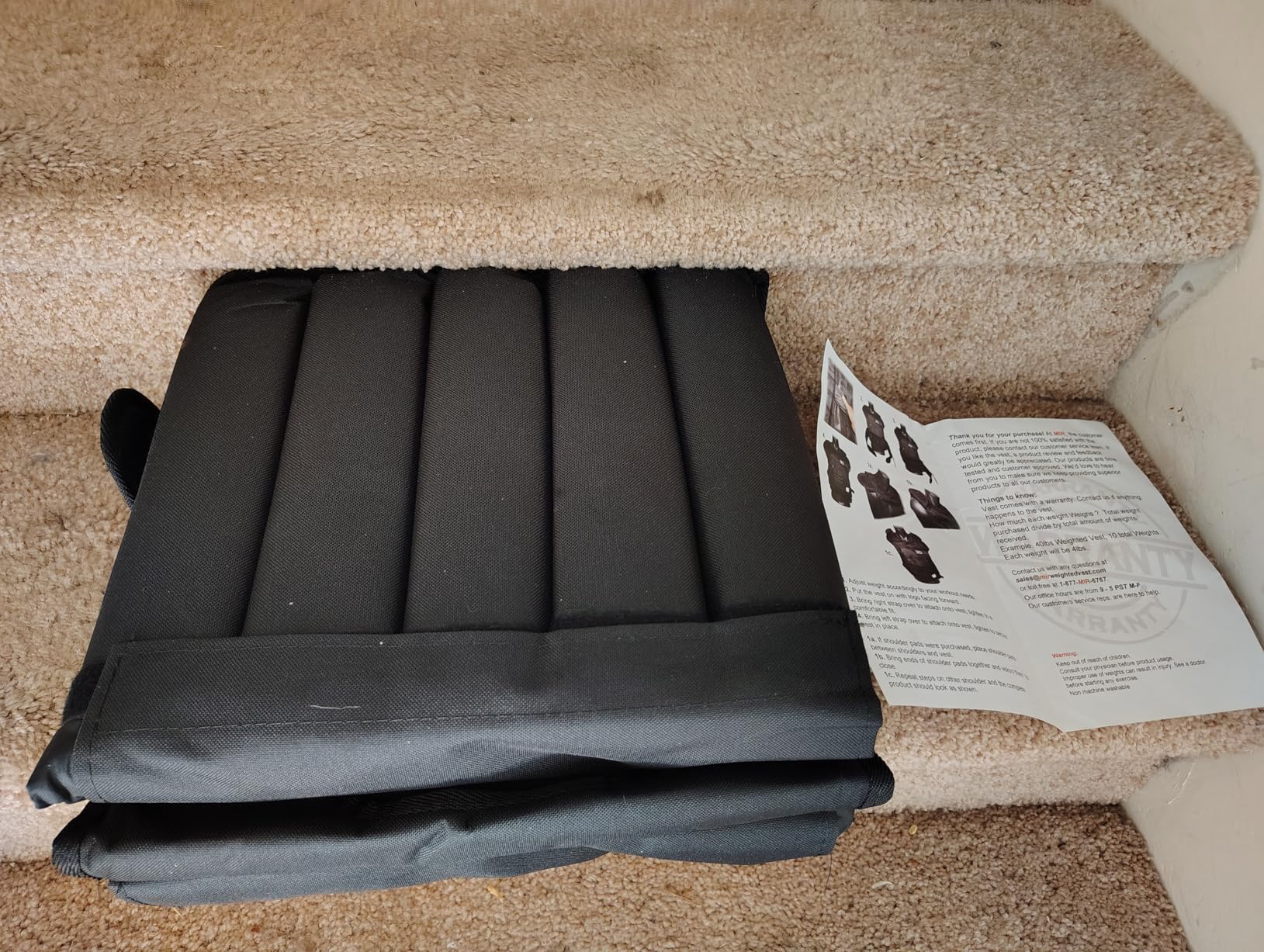
The exterior is 1000D tear-resistant nylon with reinforced stitching at stress points, quick-release buckles for the body closure and reflective strips for early starts. Chest fit runs from 28 to 48 inch, the widest range in the roundup, and the warranty is limited lifetime.
At 4.7 stars across more than 2,100 reviews, it matches the highest rating in the group, though on a smaller sample than most. The recurring recommendation from buyers is to choose the shoulder pad option over the standard straps.
When the extra capacity is actually useful
Most walking vests cap out around 20 to 30 lb, which is enough for a hard walk but not enough to progress indefinitely. This one scales past that, which makes it the pick for walkers who will increase load every few weeks over many months rather than settling on one number.
It also suits calisthenics and CrossFit, where the same pockets absorb weight for weighted pull-ups, dips and squats.
What to watch out for
The shoulder pad option is not optional in our view. Without it, wide straps can rub the neck, and that is the single most common complaint in the reviews. There is no dedicated phone pocket, so plan on a watch or a pocket, and minimal upper-back coverage leaves some users with upper-back fatigue on very long walks.
8. Sportneer Adjustable Weighted Vest – Best Washable Adjustable Load
Sportneer Adjustable Weighted Vest Weights: 2-18 lbs Washable Weight Vest for Walking 16 In 1 Fast Adjust Rucking Vest for Women and Men Home Gym Running Jogging Strength Training Vests
16 weight combinations
2 to 18 lb removable packs
Shoulder and waist double locks
Front and back reflective strips
Pros
- 16 weight combinations from 8 two-lb packs and one 1 lb pack
- Double locks at shoulder and waist prevent shifting
- Full zipper makes it easy to put on and remove
- All weights extract for cleaning
- Front and back reflective strips
Cons
- Straps need manual adjustment before every use
- 18 lb ceiling is modest for long-term progression
The Sportneer solves the problem that defeats most fixed-load vests. It ships with eight 2 lb packs and one 1 lb pack, spread across nine positions with four in front and five at the back, which produces 16 usable combinations between 2 and 18 lb from a single vest.
Being able to extract every weight pack is the feature most reviewers mention first. A washable vest is not a small detail when you plan to wear one several times a week in warm weather, because odor is the reason most people quietly stop using theirs.
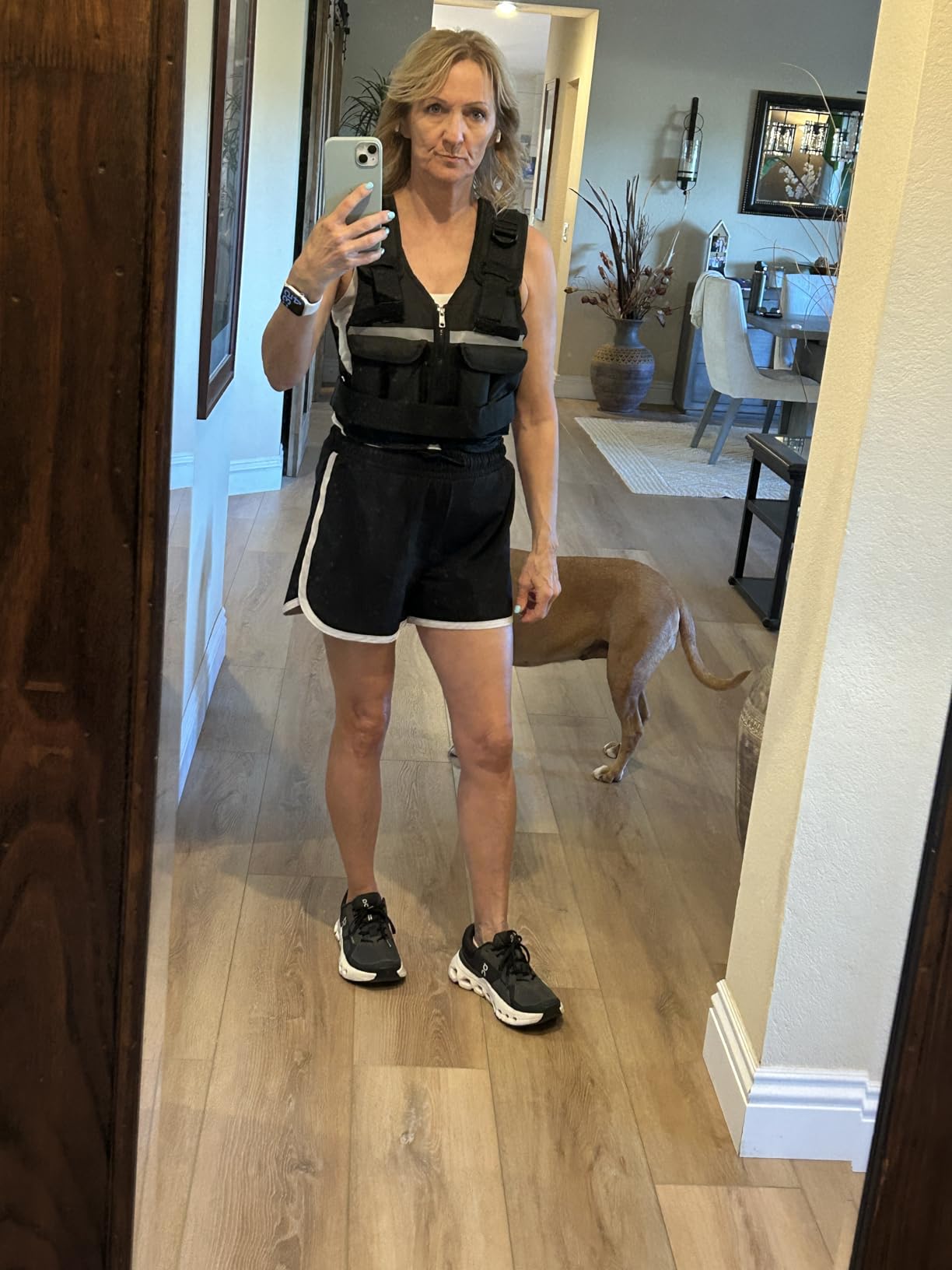
Closure is a full zipper, which makes it far easier to get into than buckle or hook designs when you are layering over a coat. The build is iron sand in polyester with sweat-absorbent neoprene, and it is designed with a body-friendly fit intended to work for women as well as men.
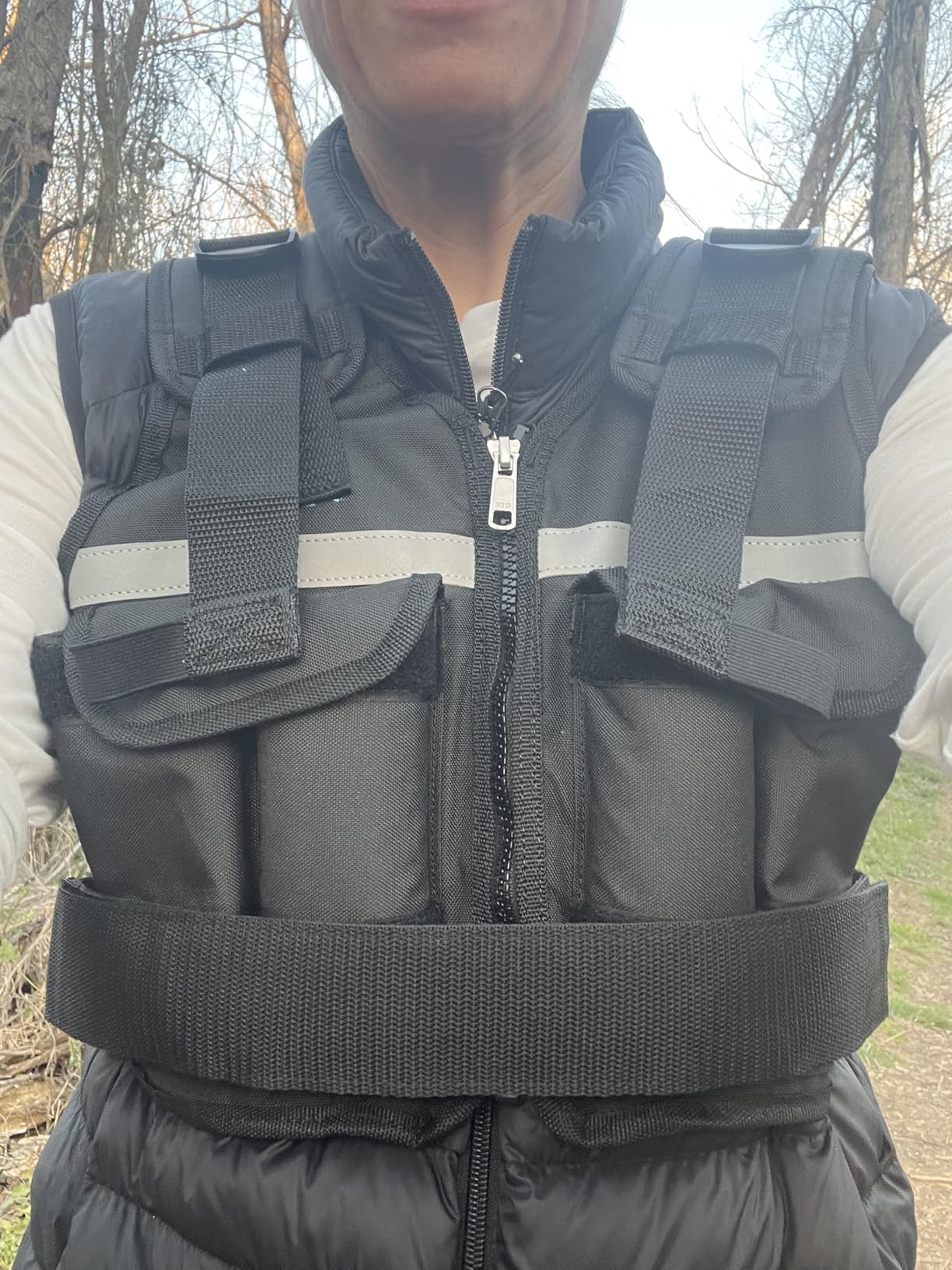
Double locks at the shoulder and waist are the anti-shift mechanism, and they are effective. They are also the reason this vest demands a moment of setup before every walk, which is the honest cost of the design.
Why the guidance on the label matters
The manufacturer recommends the vest at 8 to 20 percent of body weight and for no more than two hours at a stretch. Those numbers sit above the conservative start we use in our buying guide, so treat them as a ceiling rather than a target, especially in the first month.
A wider 2 to 42 lb version of the same vest exists, so anyone who outgrows 18 lb has a path without changing brand.
Who should look elsewhere
If cost is the first consideration, this vest sits above most of the fixed-load options in this roundup, and the weight ceiling is modest. The double-lock system also needs re-adjusting at the start of every session, which is a small friction that some walkers find irritating on a quick doorstep workout.
9. APEXUP Adjustable Weighted Vest – Best for Fine Weight Adjustment
APEXUP Adjustable Weighted Vest, 4-10lb/12-18lb/20-32lb Vest with 6 Ironsand Weights and Large Pocket, Weight Vest for Men Women Strength Training, Running, Walking (4-10lb, Black)
Base vest plus 6 ironsand bags
4 to 10 lb light range
Front mesh pocket
Reflective straps
Pros
- Base vest plus 6 ironsand bags gives fine-grained adjustment in one purchase
- Soft neoprene with even iron sand distribution reduces pressure points
- Reinforced stitching and reflective straps
- Spacious front mesh pocket holds a phone and keys
Cons
- Weight ranges are fixed per variant so switching needs a different vest
- Bulkier than slim-profile vests under a jacket
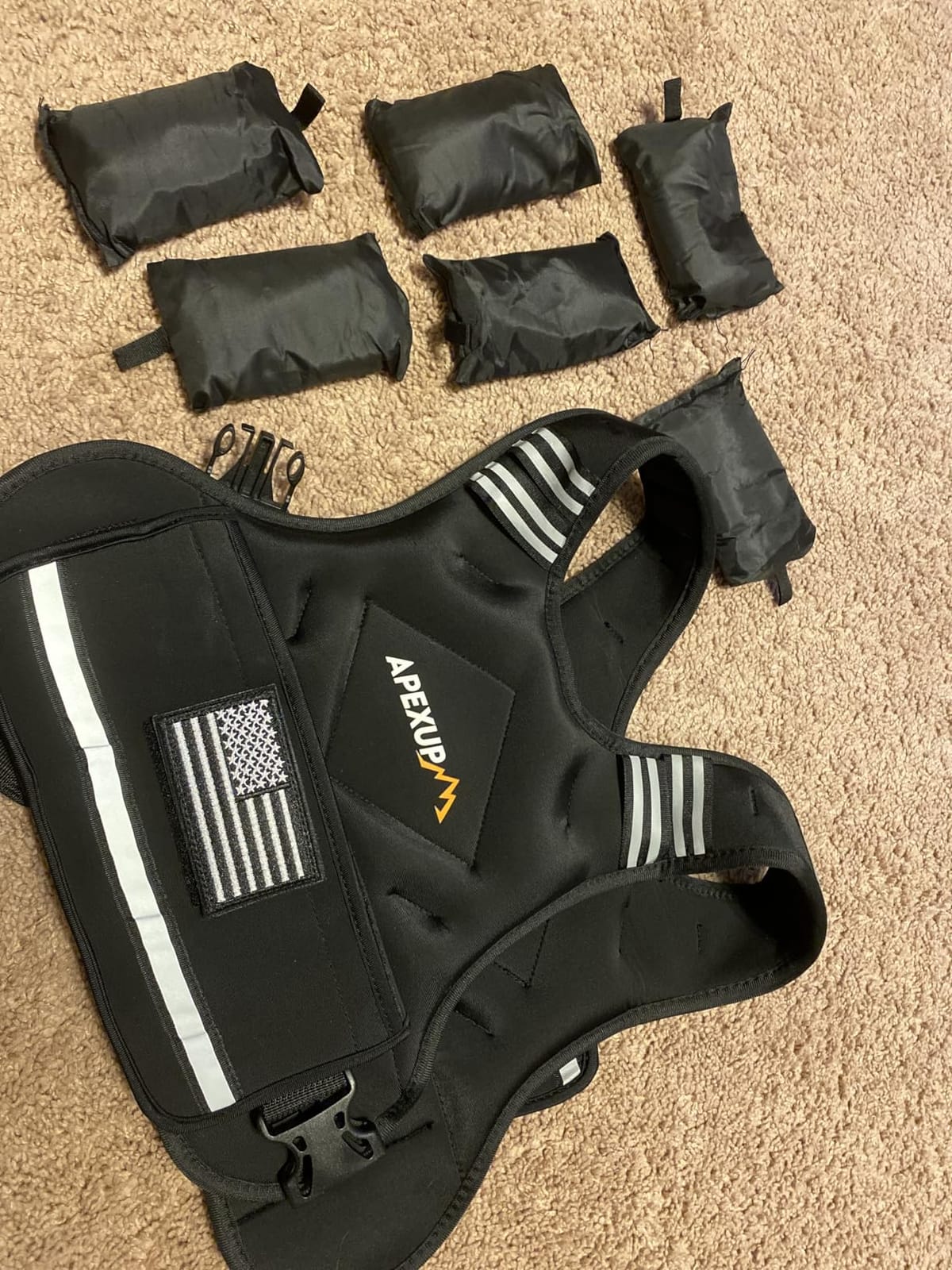
The APEXUP is the middle ground between a fixed sand vest and a fully modular plate system. You get a base vest plus six ironsand bags, and adding or removing a bag moves the load in increments small enough to feel like a real progression rather than a jump.
That makes it a good fit for a walker who has decided loaded walking is for them but has not yet settled on a target weight. The 4 to 10 lb variant covers the entire beginner range in one purchase.
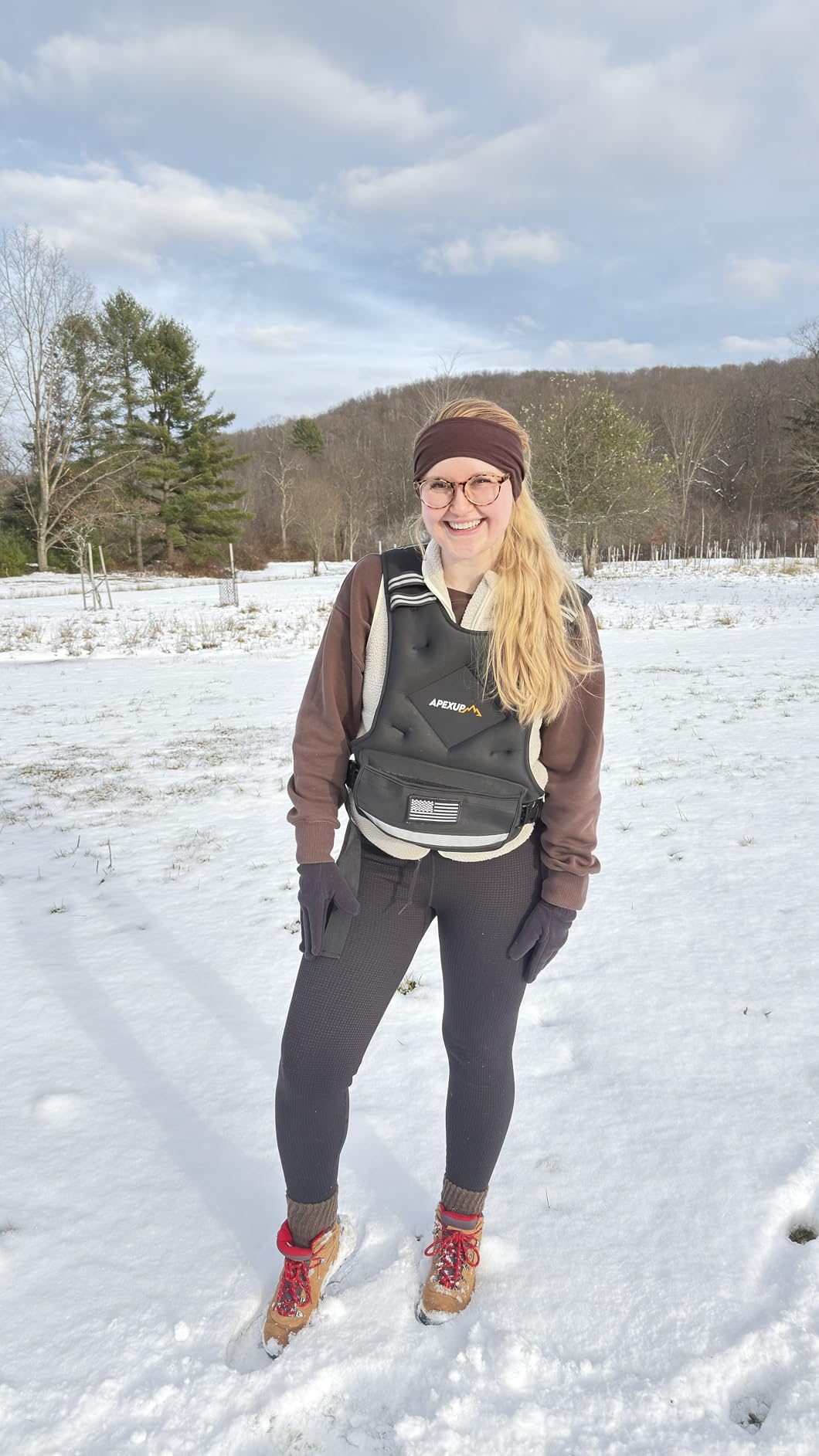
Material is ironsand in neoprene with a buckle closure, in black. Reviewers consistently note that the fit does not dig into the shoulders, which is notable for a vest at this level because the sand is distributed evenly rather than pooling.
The front mesh pocket is genuinely large and holds a phone, keys and a wallet, and there is a detachable patch measuring 3.2 by 2.2 inch. Reinforced stitching and reflective straps round out the build.
When a small range is enough
Four to 10 lb covers a full first four weeks for most people and a good part of a slow six-month ramp. You are not going to carry a serious rucking load, but you are not going to run out of headroom either.
The one-piece construction also wears well under a light jacket for cycle commutes and yoga, which broadens its use beyond walking.
What to know before you order
The three ranges are separate variants rather than one continuous adjustment, so pick the band that matches your goal rather than the lightest one. It is also bulkier under clothing than slim neoprene vests, which matters if you plan to wear it over a work shirt.
10. Hyperwear Hyper Vest FIT – Best for Discreet, Low-Profile Wear
Hyperwear Hyper Vest FIT Weighted Vest for Women, Carbon Black, S, 10 lb
0.5 lb steel shot increments
1 to 10 lb range
Women's-specific cut
Machine washable CORDURA
Pros
- Machine washable CORDURA with satin lining avoids permanent odor
- Steel shot containers instead of iron sand leave no grit
- Women's design with no weights over the chest
- Elastic side lacing keeps the vest snug with no bounce
Cons
- Costs more than every other vest here
- 10 lb maximum load limits progression
- Smallest review base at 627
The Hyper Vest FIT is the one we recommend when the vest has to be invisible. It is slim enough to wear under a jacket or hoodie without adding a tactical outline, and the CORDURA shell looks like outerwear rather than equipment. If the sight of a vest on your morning walk embarrasses you, this solves it.
Weight comes in removable 0.5 lb steel shot containers with a range from 1 lb to 10 lb. Half-pound increments are the finest adjustment in this roundup, and for a first-time walker that granularity is worth more than a higher ceiling.
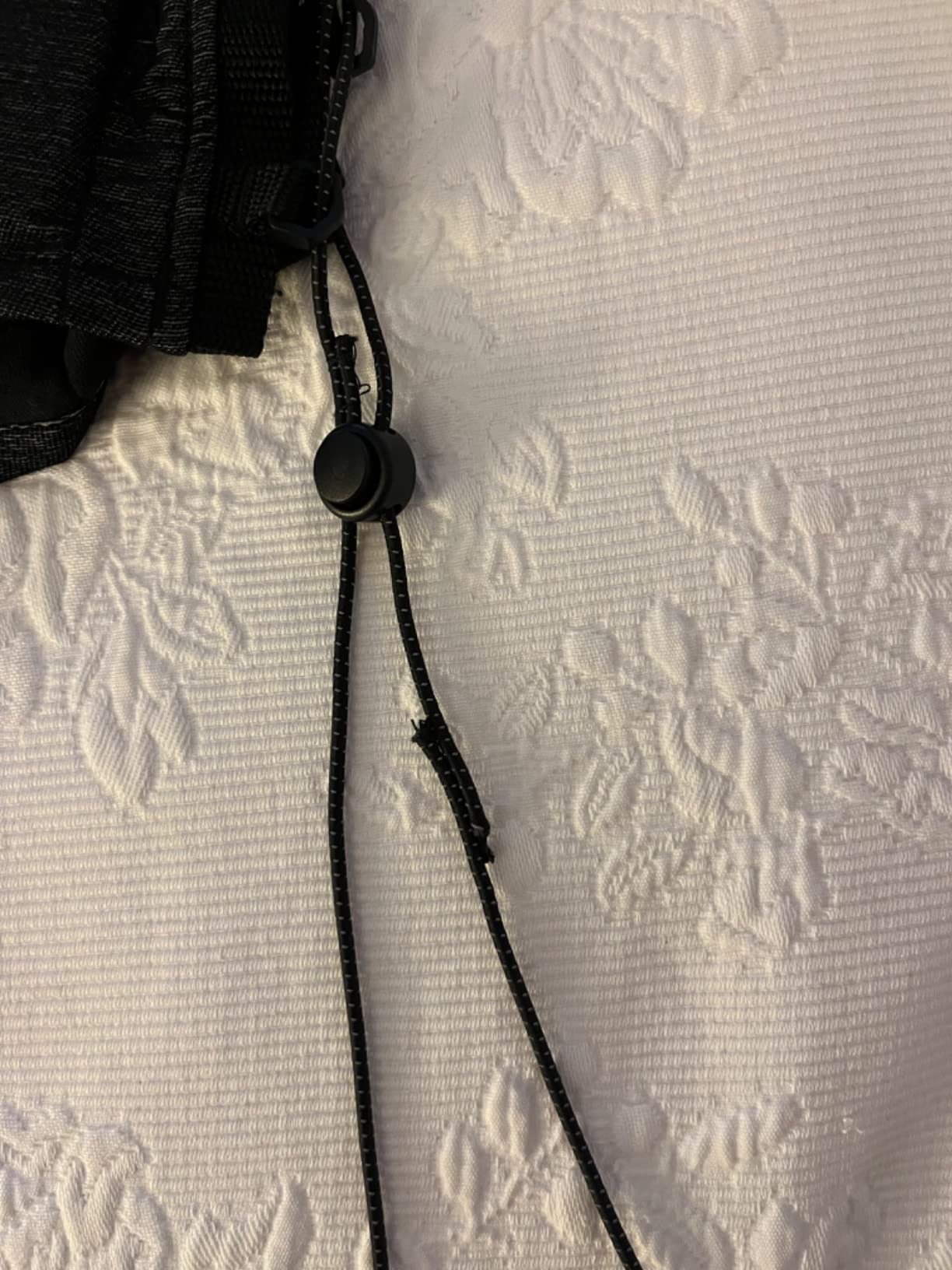
It is a women’s-specific design with no weights crossing the chest, offered in small, medium and large. Closure is elastic side lacing plus a front zipper, and the combination is what produces the no-bounce profile reviewers mention when they describe it as usable for jogging rather than just walking.
Care instructions are specific and helpful: machine wash cold, gentle cycle, line dry, and remove the weights first. A satin lining is the detail that stops odor setting into the fabric, which is the failure mode that ends most vest ownership.
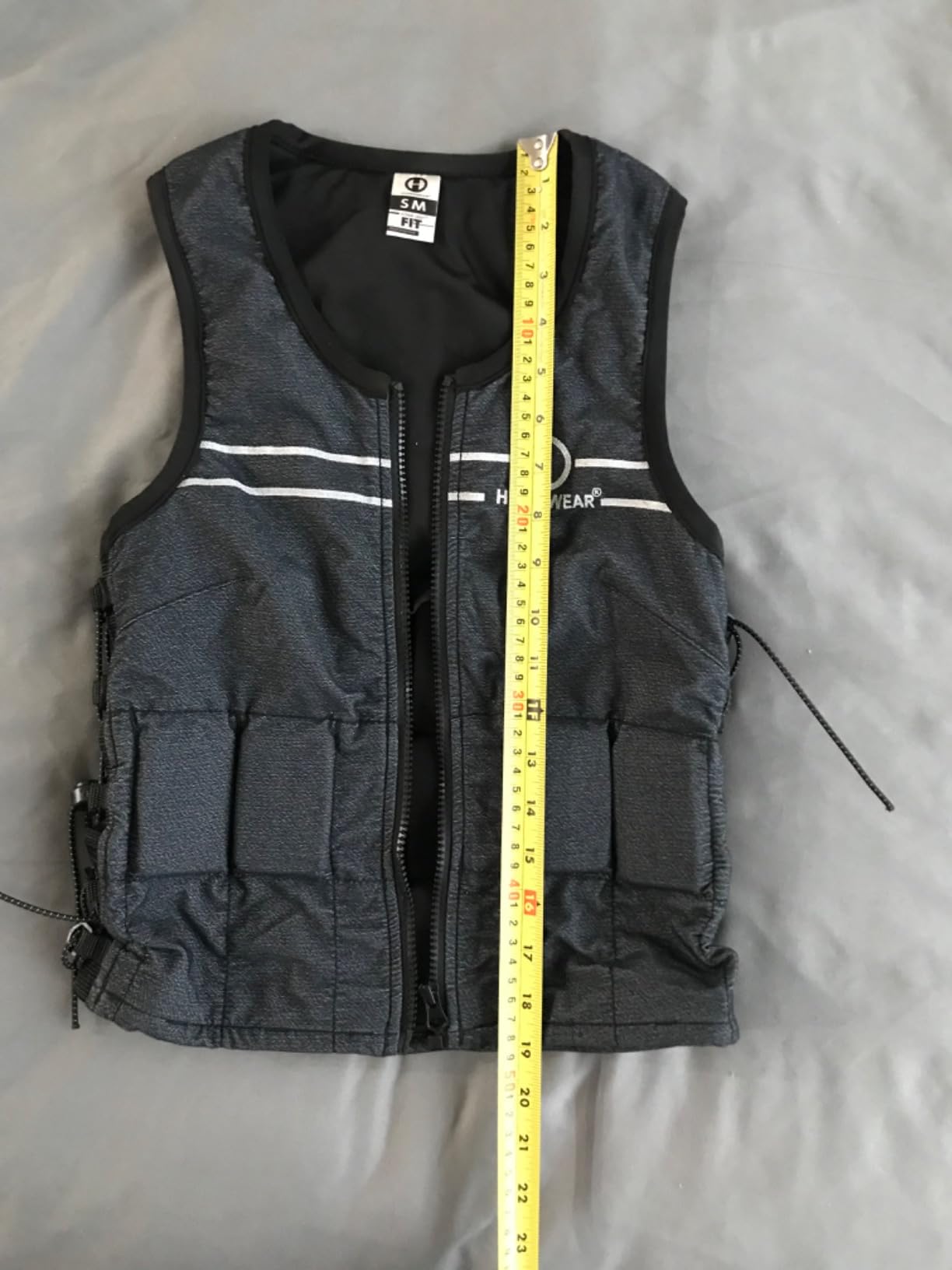
Best for discreet, low-profile walking
Of everything we handled during testing, this is the one that disappears rather than announces itself. That is the whole case for it, and it is why people who want loaded walking in work clothes or under a hooded coat keep this one by the door.
Reflective details are part of the build, and the light profile means it adds almost nothing to a silhouette while walking before sunrise.
What the premium buys and costs
This vest costs more than every sand-fill option here, and at 627 reviews it has the smallest sample in the roundup, so long-term feedback is thinner. The 10 lb ceiling is the real limitation: it is an excellent tool for building up to a solid walking load, and a poor tool for anyone planning to ruck.
How to Choose a Weight Vest for Walking in 2026
The order below is deliberate. Dosing comes first because it determines whether you enjoy this at all, and fit comes before every other consideration because a vest that shifts is a vest you will not keep wearing.
How much weight should you carry
Community advice on this question is genuinely inconsistent, which is why you will find 3 to 5 percent of body weight quoted as expert consensus, 5 to 10 percent suggested for beginners, around 10 percent recommended by long-distance walking communities, and a rough ceiling of one third of body weight mentioned as an absolute limit. Here is how to read that spread.
Start at 3 to 5 percent of body weight. That is a 10 lb vest for a 200 lb person and a 7.5 lb vest for a 150 lb person. Walk at your normal pace for 20 to 30 minutes, and only move up when the load stops feeling like work.
Once you have trained for a few weeks without pain, progress toward 5 to 10 percent. Treat anything above 10 percent as a training specific goal rather than a default, and treat roughly one third of body weight as a hard ceiling that applies to rucking and loaded calisthenics rather than to walking. One r/walking user described collecting 10,000 steps in a 17 lb vest straight after waking up, which is a good illustration of a well-tolerated load. Another acclimated to a 12 lb vest and reported it changed their walks entirely.
Iron sand, steel shot or plates: which fill suits long walks
Iron sand is cheap, moldable and settles into the shape of the vest, which makes for a comfortable fit. It is also heavier for a given volume and can migrate or leak, so a sand vest needs more care over years of use. Steel shot is denser, so a listed weight takes up less space, which is why the shot-fill vests in this roundup sit flatter under a jacket.
Plate-style and steel-pocket designs suit high loads, because rigid components do not compact and they keep a predictable shape at the top of the range. For walking, sand and shot fills are usually the more comfortable answer, while pockets make sense only if you plan to go heavy.
Fit, bounce and posture are the test that matters most
A vest that bounces is not a lighter vest, it is a distracting one. Compression fit means the panel is held flat against the torso by a waist belt, a chest strap or both, so the load moves with your body rather than inside it. That is why nearly every write-up above mentions a second closure point.
Posture is the other half. A vest that pulls the shoulders forward will shorten your stride and load the upper back even on flat ground. If you cannot walk 30 minutes and still feel tall and loose through the shoulders, the fit is wrong rather than the weight being too high.
To test-fit before buying, wear the vest and walk briskly for three or four minutes indoors, then check the shoulder position with your hands on your hips and the panel still flat. If you can slide a hand between the vest and your chest, the fit is too loose.
Your first four weeks
Week one is the lightest load you can select, on a flat route, for 15 to 20 minutes. Weeks two and three extend the time before adding any weight, working up toward 30 to 45 minutes, which is also the range where a 10,000-step goal becomes realistic.
From week four onward, add a single increment when the current load no longer raises your heart rate or makes you breathe harder. Holding steady for two or three weeks before the next increase is normal and much more durable than jumping every week.
How long should you wear a vest in one session? A general rule of thumb is that a 30 minute walk with a moderate vest is well within normal training volume, and longer sessions are better done at a lower weight.
Chafing, sweat and skin care
Chafing is the most common reason people abandon a vest, and it is entirely preventable. Wear a moisture-wicking base layer with flat seams, keep the strap tension firm enough that the vest cannot slide, and treat any hot spot early rather than pushing through it.
Fit for chafe control means smooth-stitched internal edges, sealed seams and padded shoulder contact. The PACEARTH, Zeerun and BAGAIL are the builds here that reviewers most often credit with chafe control.
For sweat, washable wins. Vests whose weights all remove can go in a machine cold and air dry, which is the difference between a vest you keep using for years and one that ends up in a cupboard because of the smell. If you cannot wash yours, wipe it with a damp cloth after every session and let it dry fully before storing it.
Reflective strips and walking before dark
Reflective striping is a safety feature, not styling, and the coverage differs more than the product pages suggest. Some vests put reflective material on the sides only, some cover front and back. For dawn and night walks, check where the reflective sits before you buy, and pair it with a light source rather than relying on reflection alone.
The BAGAIL and Sportneer both specify front and back reflective strips, which is the coverage you want if your route includes roads or unlit paths.
Weighted vest vs weighted backpack for walking
This is the most-asked question in walking communities and the one the major roundups ignore. The difference comes down to where the load sits. A backpack hangs from your shoulders and swings, which creates bounce and pulls the shoulders into a forward position. A vest wraps the torso and keeps the mass against your core.
For long walks, a vest wins on distribution and on the fact that it stays put at pace. A backpack wins on capacity, on cost, and on being something you can also carry books or a laptop in. Our recommendation for walking specifically is the vest, and for anyone who wants one bag to do both jobs, the backpack.
For reference on heavier load carriage in other contexts, our best hunting vests cover pocket-heavy designs built for carrying gear on foot, and our heated vests for hunting cover the temperature problem on cold long routes.
Who should not carry a weighted vest
Do not use one if you have an existing back, hip or knee issue, because the load increases joint compression rather than removing it. Anyone who is pregnant should speak to a clinician first. People with osteoporosis or other bone-density goals should get professional guidance rather than self-prescribing a load, and anyone completely new to exercise is better off walking unloaded for a few weeks first.
Stop immediately if you feel sharp pain rather than muscle effort, if you get short of breath earlier than you should, or if your gait changes. Muscular effort in the legs and core is expected. Anything that feels like injury is not.
Frequently Asked Questions
Are weighted vests actually good for walking?
Yes, for one specific and reliable reason: they make the same walk take more effort. Loading your torso raises the work your legs, core and heart do at a given speed, so a route you have walked for years becomes a moderate session. The dramatic weight-loss and bone-density claims are not well supported, so do not buy a vest for those reasons. Expect a higher heart rate and more core demand, not a shortcut.
What type of weighted vest is best for walking?
A snug, low-profile vest with a waist belt and a second closure point, filled with iron sand or steel shot, is the best type for walking. The compression fit is what stops bounce, and granular fills sit flatter than rigid plates. Plate-style and high-capacity designs suit rucking, where loads run far heavier. For most walking, prioritize padding, sealed seams and a fit that does not pull the shoulders forward.
How heavy should my weighted vest be for walks?
Start at 3 to 5 percent of your body weight, which is about 10 lb for a 200 lb person. After a few weeks of pain-free walking, progress toward 5 to 10 percent. Treat roughly one third of body weight as an absolute ceiling and a rucking number rather than a walking one. Increase only when the current load stops raising your heart rate.
Is a 30 minute walk with a weighted vest good?
A 30 minute loaded walk is a solid, sustainable session and sits comfortably inside normal training volume. It is long enough to build cardiovascular fitness and long enough for the vest to feel purposeful without straining your shoulders. Beginners should reach 30 minutes unloaded first, then add a light vest. If you plan longer walks, reduce the weight rather than extending the session at the same load.
How many lbs should my weighted vest be for walking?
For most adults, 8 to 12 lb is a sensible first weight and 15 to 20 lb is a reasonable target once you have trained for several weeks. The percentage rule is the better guide than a fixed number: 3 to 5 percent of body weight to start, 5 to 10 percent to progress. A 20 lb vest is well within reach for a 200 lb person but genuinely heavy for someone at 130 lb.
Is a 20 lb weighted vest too heavy?
It depends almost entirely on your body weight. Twenty pounds is 10 percent of a 200 lb person, which fits the standard progression range, but it is 15 percent of a 130 lb person and closer to a rucking load. Judge any vest by percentage rather than by reputation. If 20 lb is your ceiling, buy a vest with 2.5 lb or 0.5 lb increments so you can dial down.
Is it okay to walk 10,000 steps with a weighted vest?
Yes, provided the weight is within your progression range. A 10,000-step walk typically takes 45 to 60 minutes, which is inside a normal session. One walker reported collecting 10,000 steps in a 17 lb vest shortly after waking up. If your step goal is the priority, keep the load lighter and the duration longer, and treat the step count as the main metric.
Weighted vest vs weighted backpack for walking, which is better?
For walking, a vest wins because the load wraps the torso and stays put, while a backpack hangs and swings at pace. Backpacks win on capacity, on cost, and on doubling as a general-purpose bag. If you walk on roads with a bag of books in it, the backpack is more practical. If your walk is about training and posture, choose the vest.
The Best Weight Vest for Walking, Verdict
The ZELUS Weighted Vest is our pick for the best weight vests for walking in 2026, on the strength of the largest review base in the group, an iron sand fill that stays put under a buckle fit, reflective striping and a 6 to 30 lb range. Buy the PACEARTH if chafing has ended your previous attempts, the BAGAIL if you want a vest designed around a women’s fit, and the RUNmax if you plan to keep increasing load well past what most walking vests allow.
Whatever you pick, start at 3 to 5 percent of your body weight, walk a flat route for 20 to 30 minutes, and add weight only when the current load stops being work. That single habit does more for progress than the model you choose, and it is the difference between a vest you still own next year and one in a cupboard.