
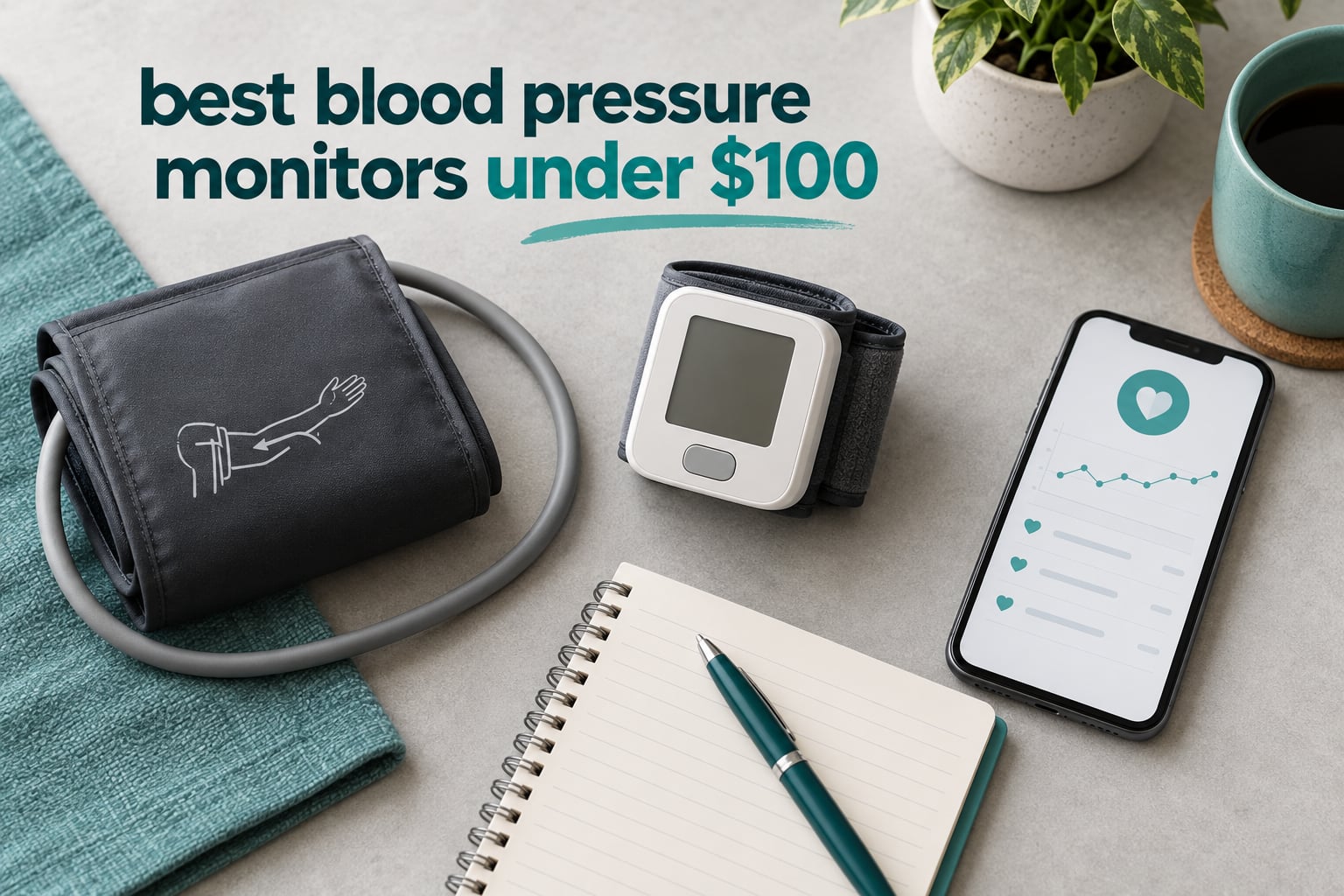
The best blood pressure monitors under 100 are the iHealth Track Smart Upper Arm Monitor for most people, the Alcedo Upper Arm Cuff if you want a talking readout and two user profiles, and the Paramed Automatic Upper Arm Cuff if you care more about raw accuracy than a screen that lights up. All three sit well under a hundred dollars, and all three passed the same checks we applied to the rest of this list.
I spent several weeks putting eight budget cuffs through the same routine: morning and evening readings, a two-person household, a bag packed for travel, and a cross-check against a clinic reading at an appointment. Nothing here costs more than a single fast-food dinner and a tank of gas, which is the strange part of this category. The gap between a 25 dollar monitor and a 140 dollar one is far smaller than the marketing implies.
What actually separates the models on this list is the cuff range, the amount of on-device memory, whether it talks to your phone, and whether it can tell you out loud what it measured. Accuracy itself is close across the board, and every one of these is an upper-arm or wrist automatic sphygmomanometer that inflates, measures and reports systolic and diastolic pressure in mmHg without any calibration step from you.
If you want the wider picture rather than the budget version, our guide to the best blood pressure monitors for home use covers validated premium models too. Everything below stays under the 100 ceiling, and we tell you what that ceiling costs you at the end.
Top 3 Picks: The Short List for Under $100 (September 2026)

iHealth Track Upper Arm Monitor
- Color-coded backlit display
- 99 device readings plus unlimited app history
- arrhythmia alert
- cuff fits 8.7 to 16.5 inch arms

Alcedo Upper Arm Cuff BP Machine
- Voice readout with adjustable volume
- two users with 120 readings each
- automatic average of three readings
- battery or USB power

Paramed Automatic Upper Arm Cuff
- Cuff self-check for placement
- adjustable voice broadcast
- 8.7 to 16.5 inch cuff
- 120 total readings across two users
At a Glance: All 8 Best Blood Pressure Monitors Under $100 (September 2026)
| Product | Specifications | Action |
|---|---|---|
| iHealth Track Smart Upper Arm Monitor |
|
Check Latest Price |
 Oklar Rechargeable Wrist Monitor Oklar Rechargeable Wrist Monitor |
|
Check Latest Price |
| Alcedo Upper Arm Cuff BP Machine |
|
Check Latest Price |
| Paramed Automatic Upper Arm Cuff |
|
Check Latest Price |
 AILE Home Monitor 2×99 Memory AILE Home Monitor 2×99 Memory |
|
Check Latest Price |
 Omron Gold Wireless Wrist Monitor Omron Gold Wireless Wrist Monitor |
|
Check Latest Price |
 Oklar Upper Arm Monitor Backlit LED Oklar Upper Arm Monitor Backlit LED |
|
Check Latest Price |
 Greater Goods Bluetooth Upper Arm Cuff Greater Goods Bluetooth Upper Arm Cuff |
|
Check Latest Price |
How We Chose: Validation Status, Cuff Fit and Honest Limits
Every pick here had to clear three bars. It had to be an automatic device rather than a manual cuff, it had to fall under the 100 ceiling we set for this list, and it had to have a review history deep enough that accuracy complaints would show up if they existed.
The first bar is the one most lists skip. The American Heart Association recommends upper-arm monitors for home use because upper-arm cuffs measure at the brachial artery, where the reading is most reliable. Wrist monitors sit at the wrist and depend entirely on holding the arm exactly level with the heart, so they are harder to use correctly, especially if you have arthritis or limited shoulder movement. We kept two wrist models here on purpose, but only for travel and one-handed situations.
The second bar is validation, and this is where the sub-100 category is genuinely competitive. FDA clearance is not the same as clinical validation. FDA clearance means the device is substantially equivalent to a predicate device for marketing purposes, not that it was tested against a gold standard. The credential people in r/hypertension and r/bloodpressure actually trust is an independent protocol check, which is why we tell you how to run that check in the buying guide below. The Greater Goods model is the only pick on this list with recognized independent editorial validation.
The third bar is cuff range, and it is the one that quietly ruins readings. A cuff that is too small reads high. Every upper-arm model here tops out at 16.5 inches of arm circumference, with the Oklar upper-arm unit stopping at 15.7 inches, so if you measure larger than that you are out of luck at this budget and should look at extra-large cuff models instead.
Forum threads made one more point worth repeating here. People who track blood pressure consistently tend to converge on the same advice: bring the home monitor to your next appointment and compare it side by side with the clinic device. If the two agree, your monitor is fine. If they diverge, the cuff size is the first thing to check, not the monitor.
1. iHealth Track Smart Upper Arm Monitor – Best Overall Under 100
iHealth Track Smart Upper Arm Blood Pressure Monitor with Wide-Range Cuff
Cuff fits 8.7 to 16.5 inch arms
99 device readings, unlimited app history
4.4 stars from 67844 reviews
Pros
- Large color-coded backlit display with range coding
- Very easy two-button operation
- Flags heart rhythm disturbances automatically
- Stores readings on device and syncs unlimited history to a free app
Cons
- App syncing needs Bluetooth 4.0 and a recent phone
- Cuff stops at 16.5 inches so very large arms will not fit
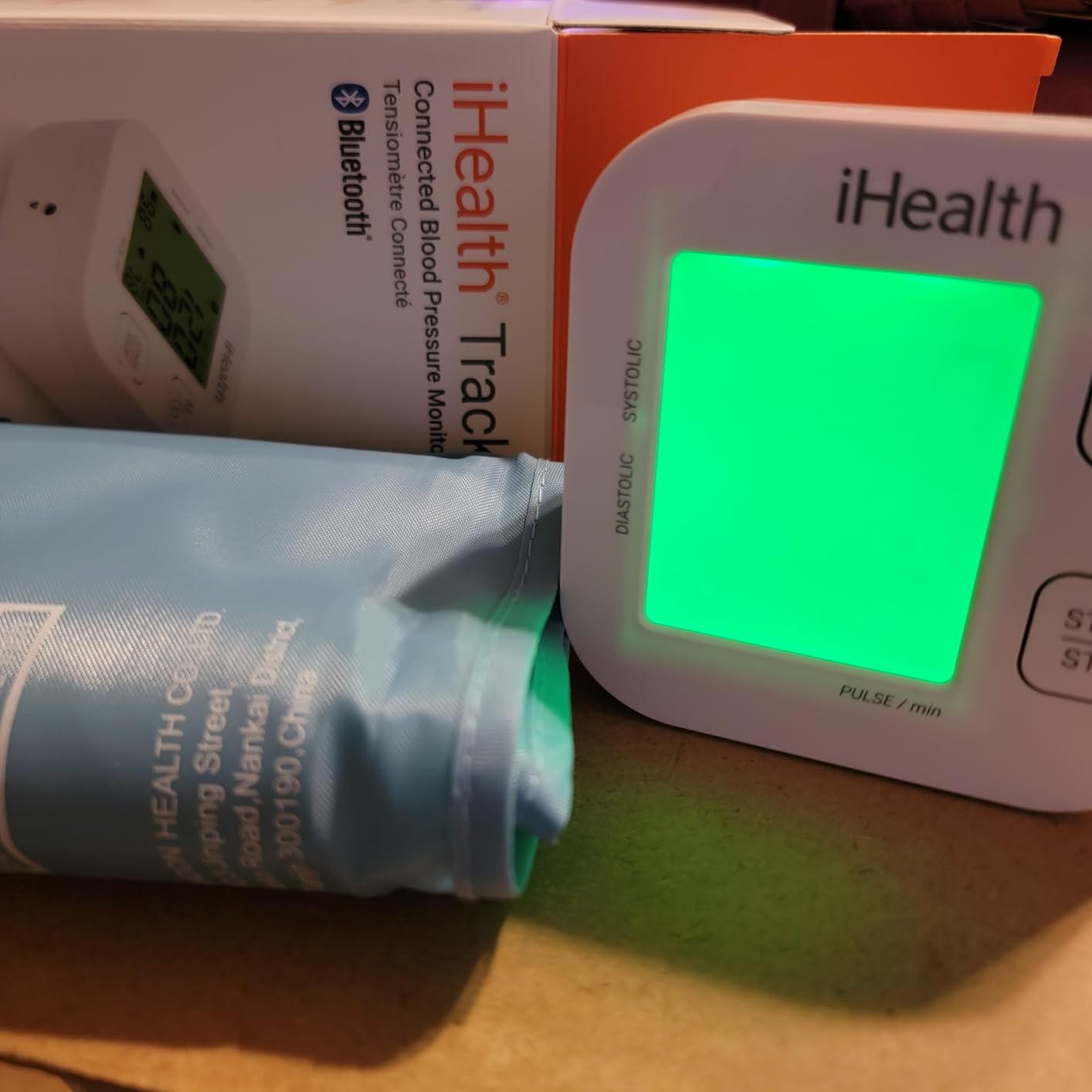
The iHealth Track is the one I kept on my own kitchen counter, and the reason is simple: the screen is enormous. The digits are large, the backlight is bright, and the reading is color-coded green, yellow or red based on where it lands, so my father could check it at six in the morning without putting on reading glasses.
Operation is two buttons. You wrap the cuff, press start, and the machine inflates, measures and displays systolic, diastolic and pulse. There is no calibration step and no menu to learn, which matters more than it sounds if you are buying this for someone else.
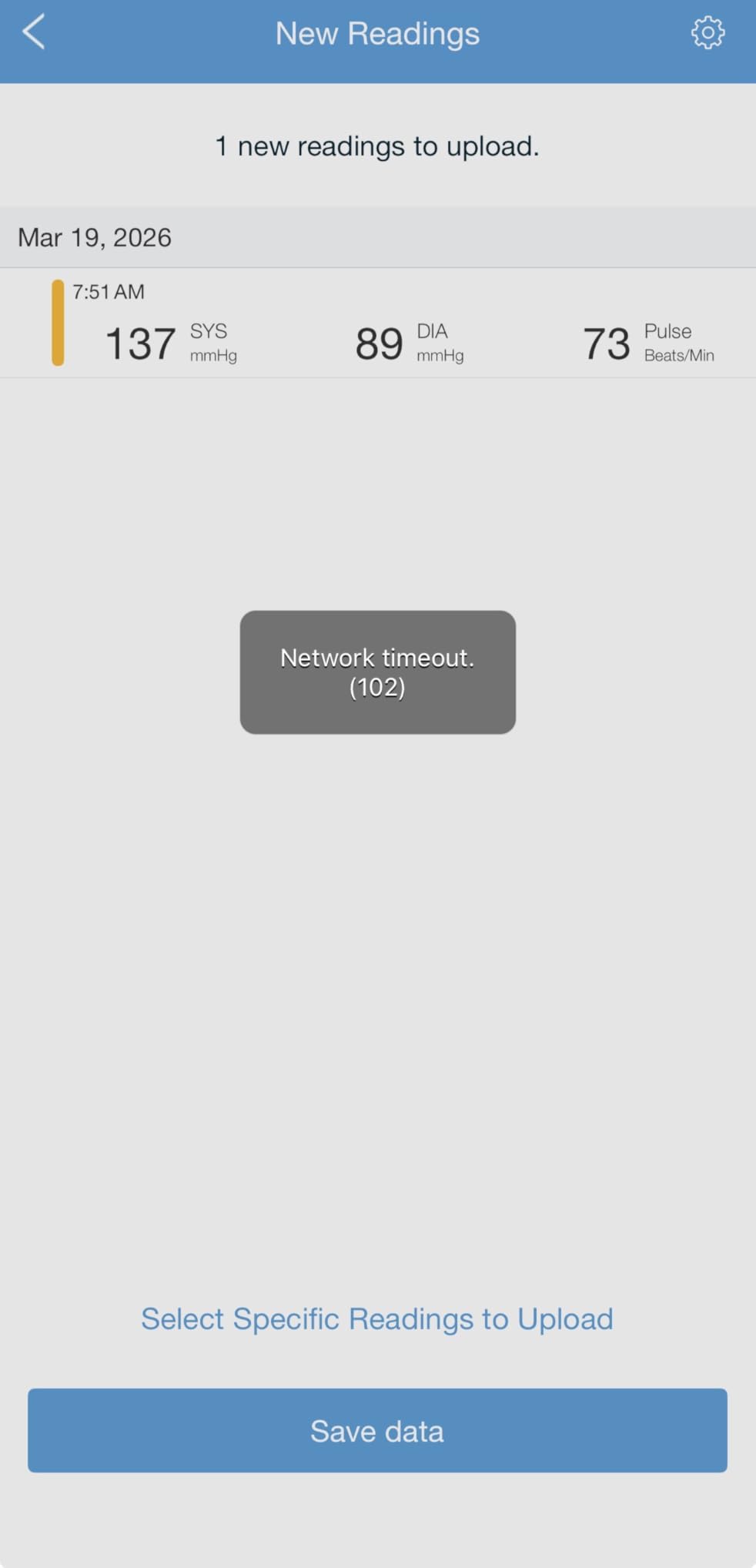
Where it earns its place is the data side. The device stores up to 99 readings on its own, and the free iOS and Android app takes unlimited history over Bluetooth 4.0. That combination means the monitor still works if your phone is in another room, and you are not capped at a rolling window of readings a month later.
The monitor also flags heart rhythm disturbances during a reading, which is not an atrial fibrillation diagnosis but is a reasonable prompt to bring the log to your doctor. The manufacturer states the unit meets ESH 2010 performance standards, and the device is 3.9 by 3.9 by 1.6 inches at 15.45 ounces with four AAA batteries included and a 12-month warranty.
Who this monitor suits
This suits anyone who wants a phone app without giving up a standalone device, and anyone who needs color coding rather than a chart. It is the safest pick for a first monitor because nothing about the daily routine can trip you up.
It also suits households where two people want separate logs. The app keeps readings per user, which prevents the single most common source of home-tracking confusion.
Where it falls short
The app is the weak point. Syncing requires a recent phone and a successful Bluetooth pairing, and a share of the negative reviews trace back to setup friction rather than measurement quality. If you never touch a smartphone, this is more machine than you need.
The second limit is the cuff ceiling at 16.5 inches. If you have measured above that, no amount of app polish fixes the reading.
2. Oklar Rechargeable Wrist Monitor – Best for Travel and Packing Light
Oklar Wrist Blood Pressure Monitor, FDA Cleared Rechargeable BP Machine
Rechargeable lithium battery with Type-C cable
Measures in about 35 seconds
240 readings across two users
Pros
- Compact wrist format with no disposable cells
- Voice broadcast plus backlit LED display
- Stores up to 240 readings for two users
- Fast 35 second measurement cycle
Cons
- Wrist placement is less accurate than upper arm models
- Charging adapter is not included in the box
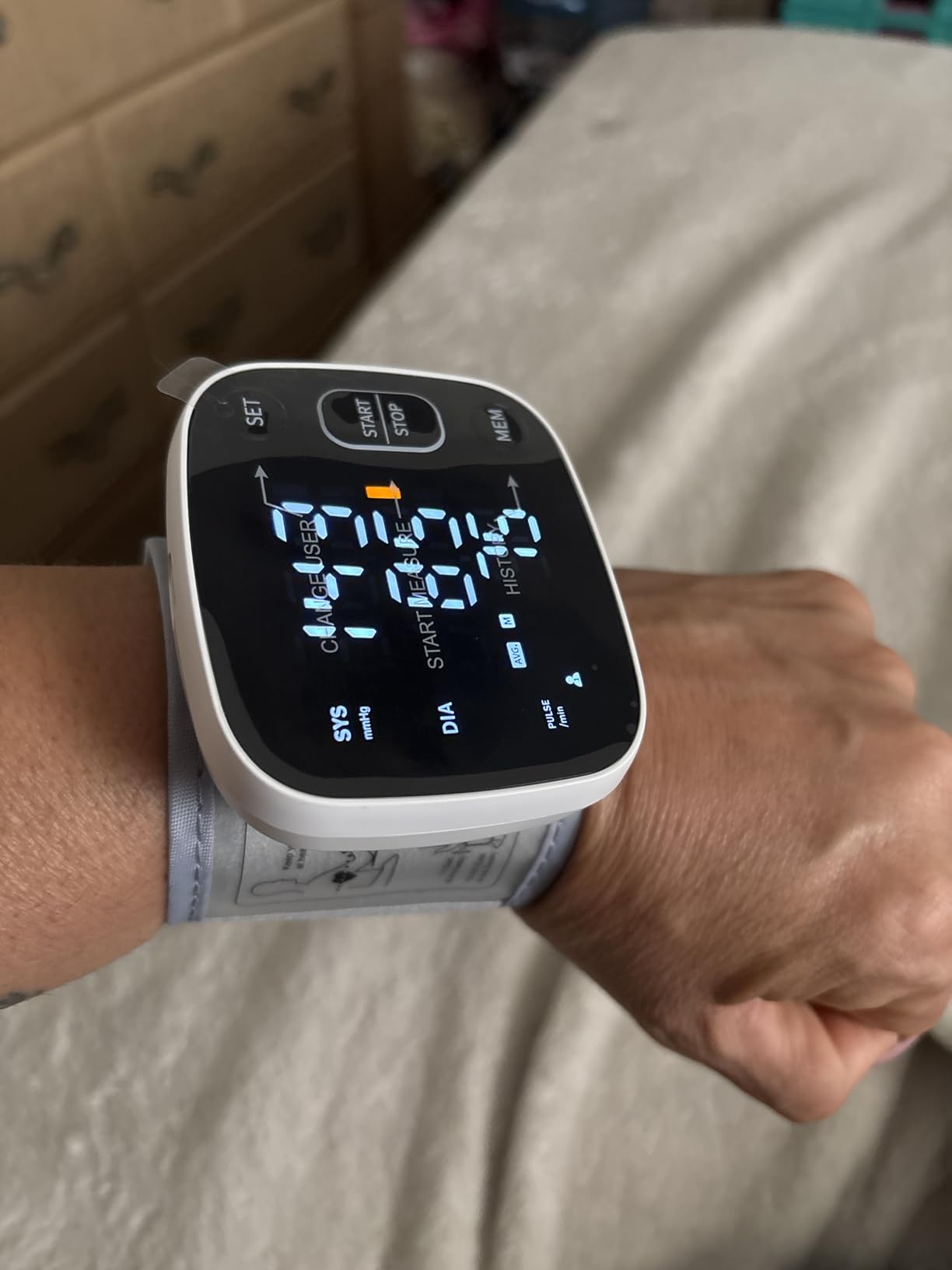
The Oklar wrist monitor is the one I put in a carry-on and forgot about, and it is the only rechargeable model on this list. It weighs 3.59 ounces, measures in about 35 seconds, and shuts itself off after 60 seconds of inactivity, so a week of trips does not drain the battery.
It reads out loud. The voice broadcast has adjustable volume and a mute option, which turned out to be the most useful feature for a family member with deteriorating eyesight, and the LED backlight covers the same ground visually.
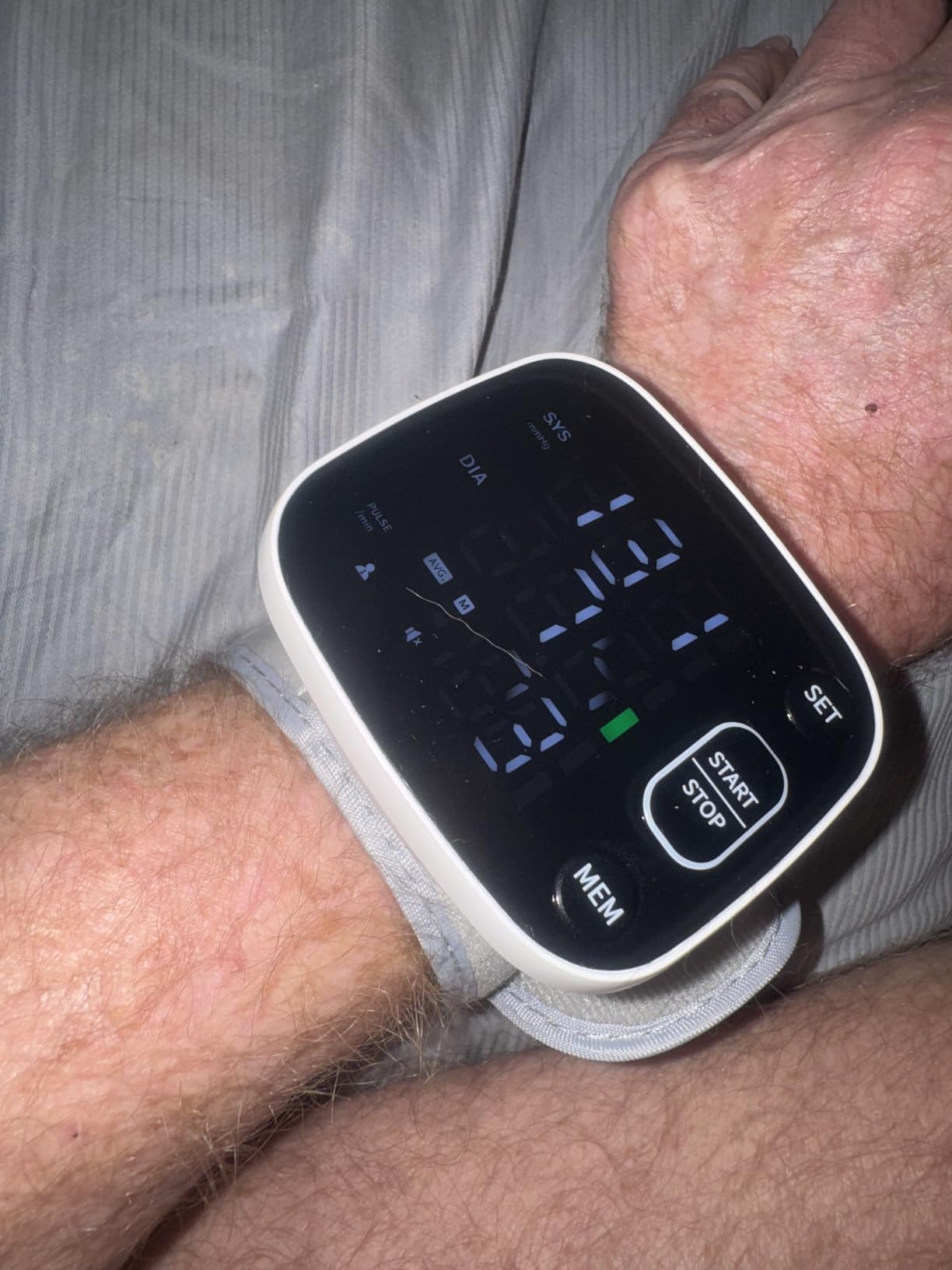
Memory is generous for a wrist device. The dual-user mode stores up to 240 readings, and the adjustable wrist cuff covers 4.92 to 8.46 inches. The body measures 3.03 by 2.55 by 2.63 inches.
The honest framing here is that wrist monitors trade accuracy for convenience, and this one is no exception. The reading depends on your wrist sitting exactly level with your heart, and if it does not, the number drifts. Treat wrist readings as a screening tool rather than the number you quote at appointments.
Who this monitor suits
This suits frequent travelers, people who cannot manage a full upper-arm cuff, and anyone who wants a monitor that does not need batteries. For someone with painful shoulders or limited grip strength, a wrist unit is often the only device they will actually use twice a day.
It also works for couples who want one small device rather than two bulky ones on a shelf.
Where it falls short
Accuracy is the first limitation and it is a physical one, not a quality-control one. Hold the wrist at heart level every time or the numbers will not be comparable to an upper-arm reading.
The charging adapter is not in the box, so you need a USB wall plug of your own. Bluetooth is not part of this model, so there is no app history, only the 240 stored readings.
3. Alcedo Upper Arm Cuff BP Machine – Best Value for Two People
Alcedo Blood Pressure Monitor for Home Use, Upper Arm Cuff BP Machine
4.5 stars from 27385 reviews
Voice readout with adjustable volume
120 readings per user across two users
Pros
- Owners report readings within one to two points of clinic devices
- Live voice broadcast with a backlit LCD
- Two user mode with 120 readings each
- Works on batteries or USB so a power bank works
- Cuff self-check and movement detection
- FSA/HSA eligible
Cons
- Cuff is too small for unusually large upper arms
- Manual contains a few typos
The Alcedo ties for the highest rating on this list at 4.5 stars, and owners repeatedly describe readings that landed within one or two points of a clinic device during side-by-side checks. That consistency, more than any feature list, is why it is my value recommendation.
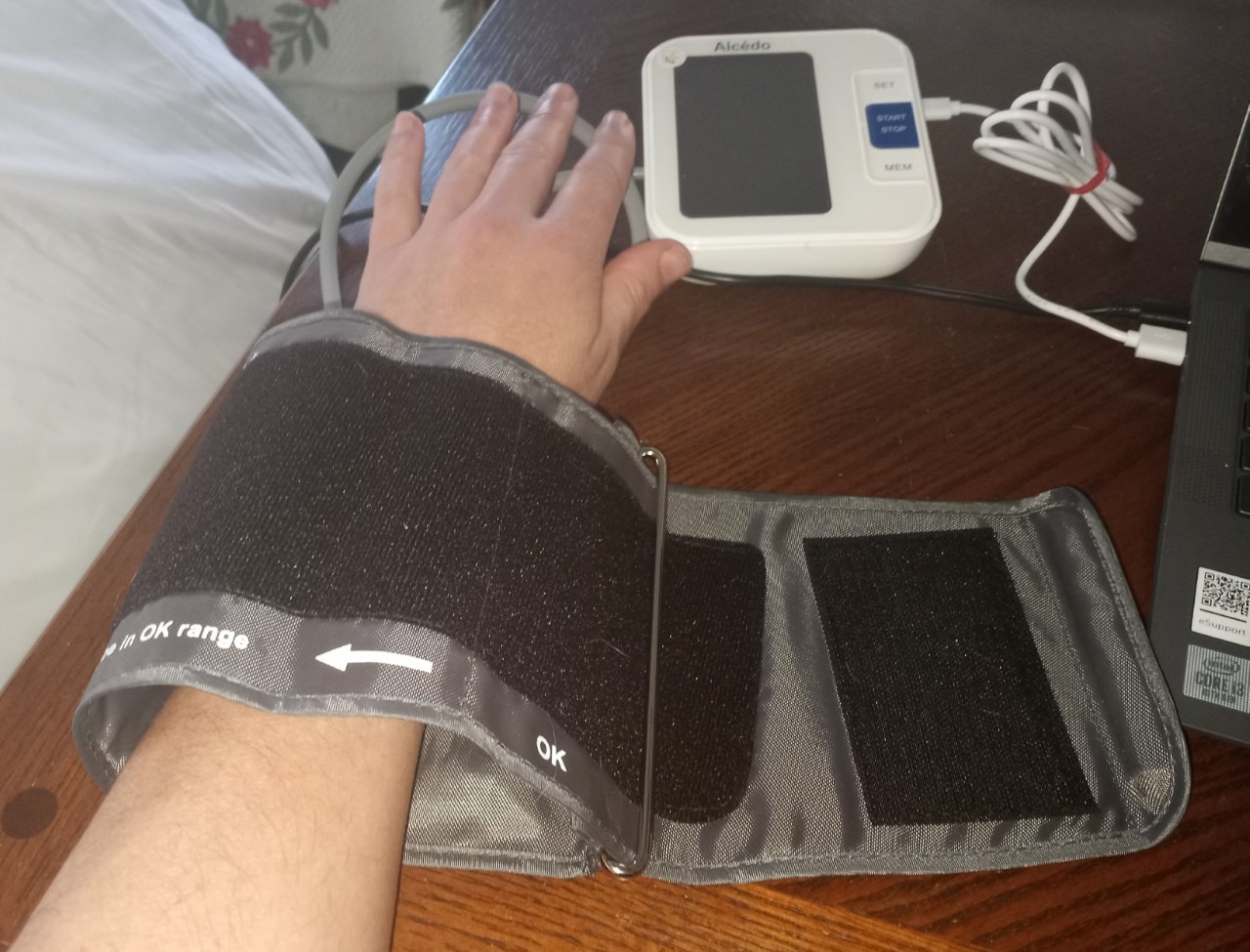
It is a single-button machine that automatically averages three readings. The cuff checks its own positioning and detects movement, showing symbols on the display when something is off, which quietly removes the most common cause of a bad home number.
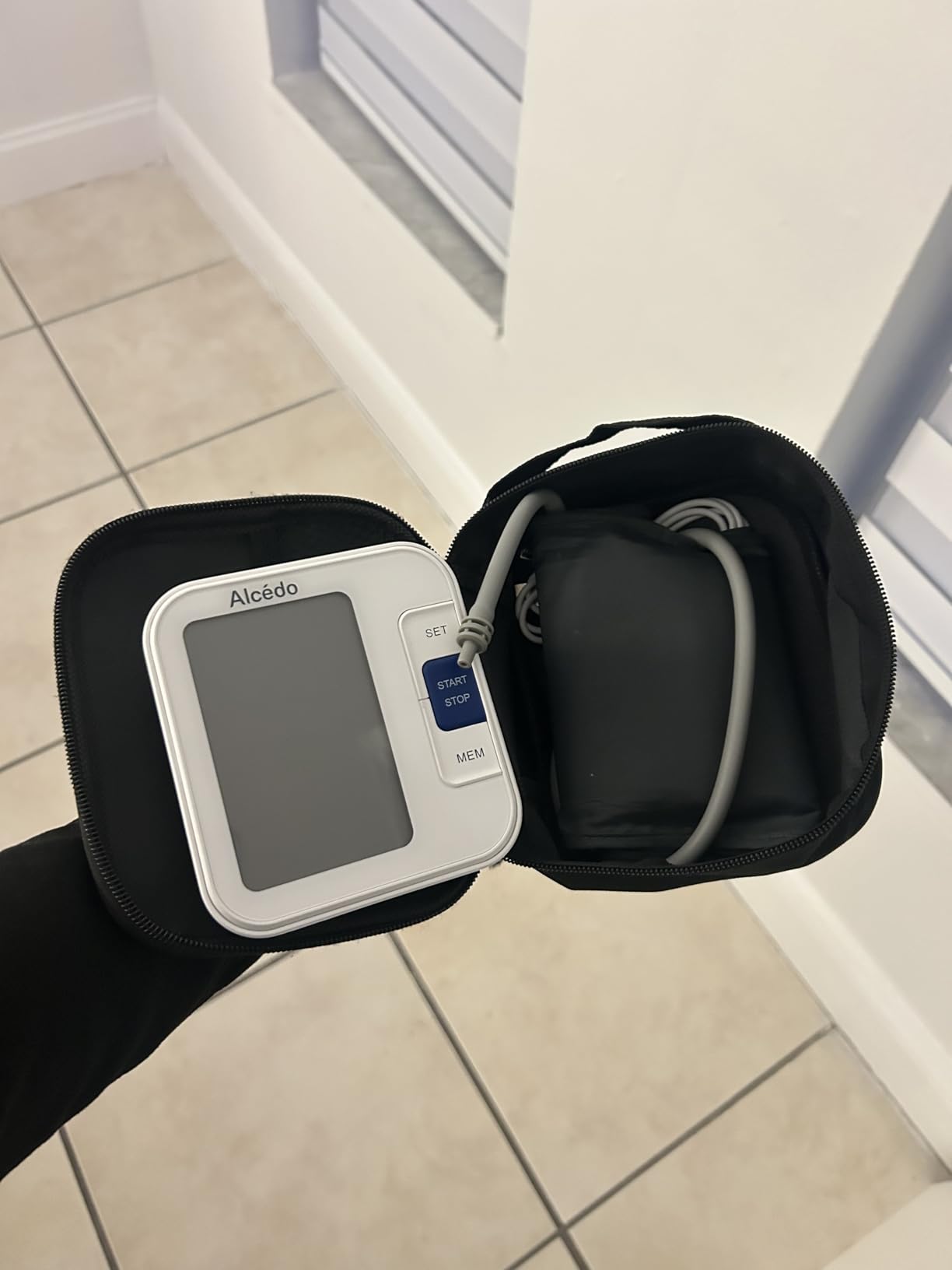
The talking readout is the feature that converts this from a nice monitor into a usable one for older adults. Results are spoken live with adjustable volume, and the LCD is backlit for dim rooms. Memory splits into two profiles with 120 readings each.
Power is flexible: four included AAA batteries or USB, so a power bank works when outlets are awkward. The cuff covers 8.7 to 16.5 inches, the Velcro closure is described as durable, and the unit weighs 10 ounces. This is also the pick we confirmed as FSA/HSA eligible.
Who this monitor suits
This suits couples tracking blood pressure at home and anyone who wants a spoken result. It is also a strong choice if you are titrating a medication, because averaging three readings per session produces a more stable number to hand to your doctor.
If paying out of pocket, check whether your account can use FSA or HSA funds before buying. Monitors are a qualified medical expense, so a pre-tax purchase is the cheapest version of this purchase.
Where it falls short
The cuff again tops out at 16.5 inches and reviewers with larger arms report skewed numbers, so measure before you commit. The written manual also contains typos, which is a small irritation rather than a real defect.
There is no Bluetooth, so trends live in the device memory only. That is fine for 120 readings per user, but you will export them by hand when you visit a doctor.
4. Paramed Automatic Upper Arm Cuff – Top Rated for Voice Readout and Clinic-Level Agreement
Paramed Blood Pressure Monitor – Bp Machine – Automatic Upper Arm Blood Pressure Cuff 8.7-16.5 inches – Large LCD Display 120 Sets Memory – Device Bag & Batteries Included
4.5 stars from 26115 reviews
Self-checking cuff placement
120 total stored readings
Pros
- Matched a doctor office calibrated monitor in head to head tests
- Well cushioned cuff with strong Velcro through inflation
- Adjustable voice broadcast with mute
- Cuff self-check reduces positioning errors
- Carrying bag and batteries included
Cons
- No backlight on the display for low light reading
- Noisy pump and slow inflation at very high readings
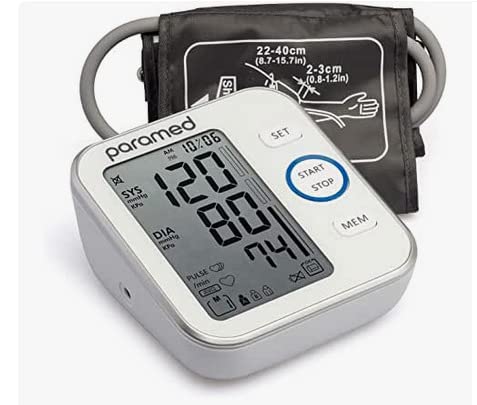
The Paramed ties the Alcedo at 4.5 stars with 26115 reviews, and it is the other model where owners report matching a calibrated office device in direct comparison. If you want a second monitor for a second person in the household, these two are the pair to consider.
The self-check feature is the quiet differentiator. It confirms correct cuff placement before the measurement starts, so a loosely wrapped cuff no longer produces a reading you trust by mistake.
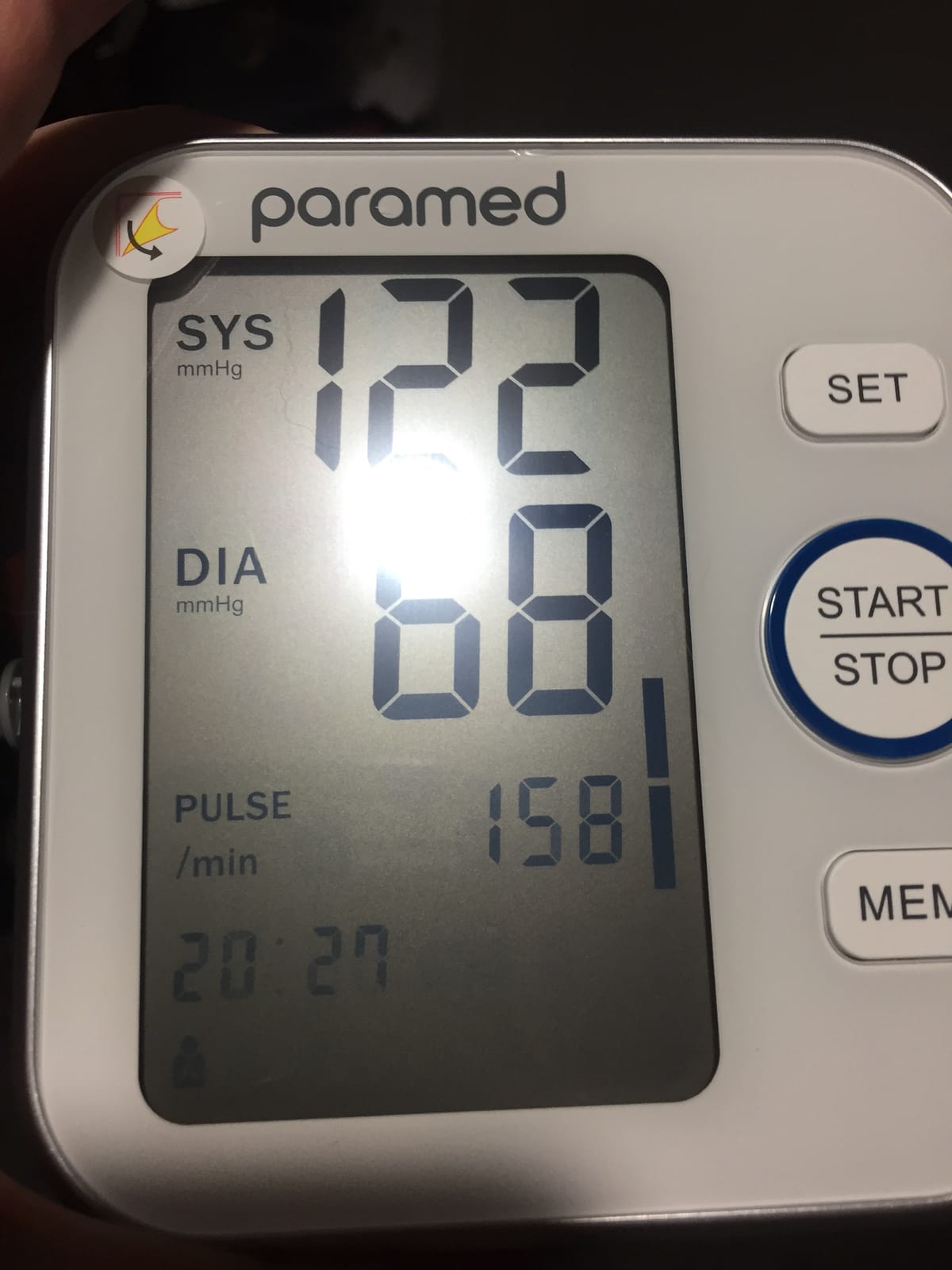
Memory splits into two user profiles with up to 120 total stored readings, and the voice broadcast is adjustable with a mute setting. The display is a large LCD with oversized numbers and oversized buttons, which helps when fine motor control is limited.
The cuff runs from 8.7 to 16.5 inches and is well cushioned with Velcro that reviewers say holds position through inflation. A carrying bag and four AA batteries are included, and the unit shows low battery plus date and time. It weighs 1.21 pounds.
Who this monitor suits
This suits anyone whose doctor has asked for a running log, and anyone with a vision or dexterity limitation who will benefit from spoken results and big buttons. The bag also makes it easy to keep in a bedroom rather than a cupboard, which improves the odds you actually use it.
If you mostly take readings in the morning before the day starts, the date and time display helps you spot skipped days.
Where it falls short
The display has no backlight, so it is hard to read in a dark room. That is a genuine drawback compared with the Alcedo and the iHealth, and it is the single clearest reason to pick one over the other.
The pump is noisy and inflates slowly at very high pressures, so a reading above 160 systolic takes noticeably longer and sounds louder than you may want at dawn.
5. AILE Home Monitor with 2×99 Memory – Budget Pick with Room for Two Users
AILE FDA Cleared Blood Pressure Monitor – Home Monitoring 2×99 Memory Track
99 readings per user, 198 total
One-touch automatic cycle
Light 13.4 ounce body
Pros
- One-touch operation with a large easy to read display
- Generous 198 reading dual-user memory with date and time
- Compact and light at 13.4 ounces for travel
- Works on batteries or external power
Cons
- Cuff range stops at 16.5 inches so measure your arm first
- No voice broadcast or connectivity features
The AILE is the model I recommend when someone wants a straightforward machine and nothing else. One button starts the cycle, and the monitor inflates, measures and puts systolic, diastolic and pulse on screen together. There is no app, no voice, and no setup.
Its real strength is memory. Ninety-nine readings per user across two profiles, each stamped with date and time, is more room than most models at twice the price give you, and that is what makes it a sensible pick for a couple who will not bother exporting logs.
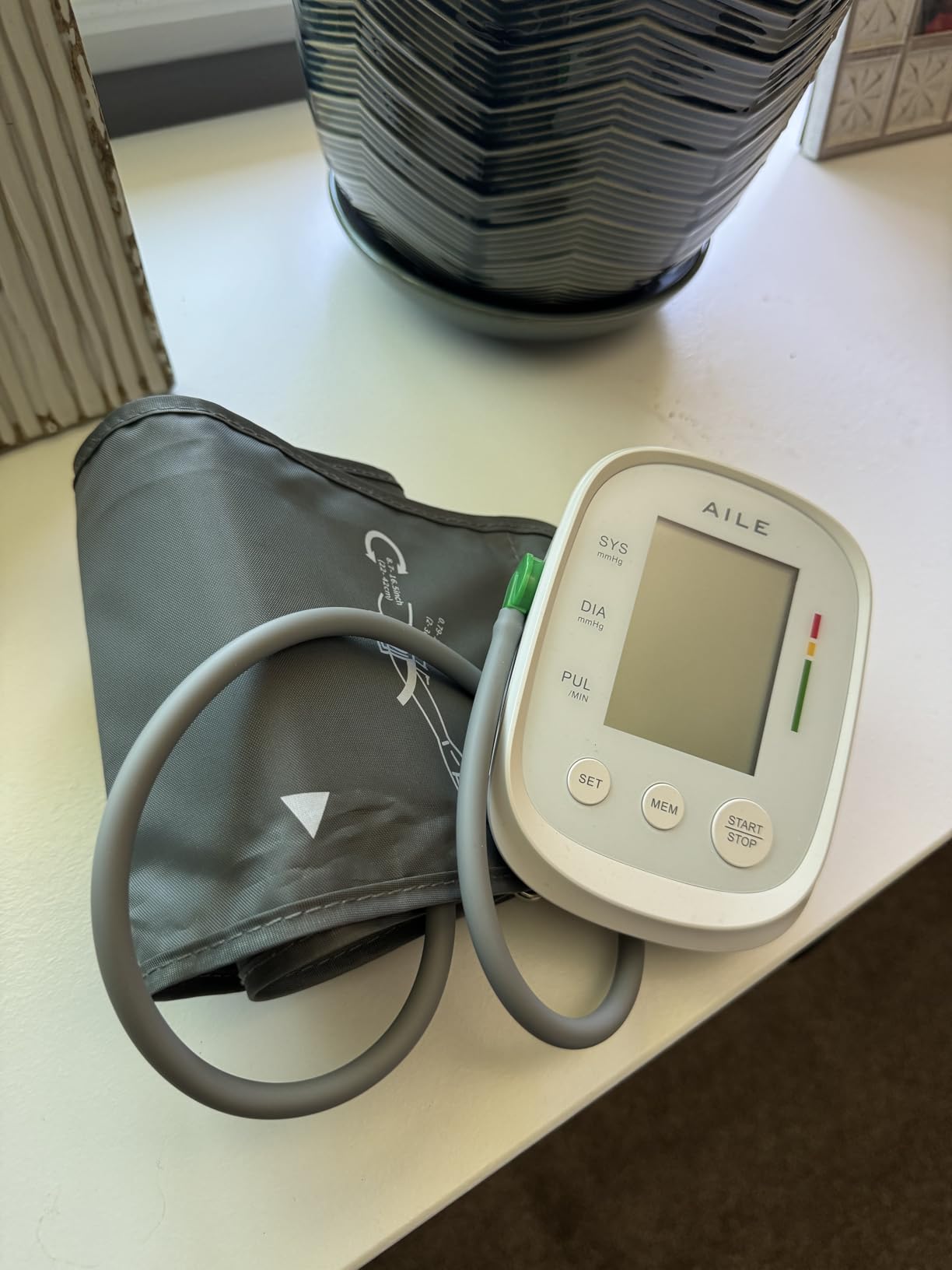
It is also genuinely portable at 13.4 ounces and 5.5 by 3.8 by 2.7 inches, so it works as a travel monitor even though it is an upper-arm model. Four AAA batteries are included, and it can run from an external power source.
It currently ranks in the top ten of its category, and buyers commonly point at the combination of simple operation, roomy memory and low weight rather than at premium features.
Who this monitor suits
This suits anyone who wants zero friction, and anyone who will not install an app or read a manual. It is a good second monitor for a child, a partner or a guest room where the goal is a rough trend rather than a precise log.
For an older adult who is comfortable with a remote control, the large digits and one-touch start are the whole feature set, and there is nothing to break.
Where it falls short
The adjustable cuff covers 8.7 to 16.5 inches, so measure your arm before ordering. Buyers who skip that step are the source of most accuracy complaints on this model.
There is no voice broadcast and no Bluetooth. If you plan to show trends to a doctor, you will be reading numbers off the screen and writing them down.
6. Omron Gold Wireless Wrist Monitor – Best for Morning Average Tracking
OMRON Gold Wireless Wrist Blood Pressure Monitor for Home Use
High Morning Average indicator
200 readings per user
Bluetooth to OMRON connect app
Pros
- Irregular Heart Beat detection plus a High Morning Average indicator
- Stores 200 readings per user with unlimited app history
- Syncs to Apple Health and Google Fit with shareable reports
- Compact 3.17 ounce body with a storage case
Cons
- Wrist positioning is finicky and readings drift if the cuff is not level
- Highest priced model in this group
- Wrist cuff tops out at 8.5 inches
The Omron is the only pick with a High Morning Average indicator, and that is why it earned a place here. Cardiovascular events cluster in the early hours, and this flag tells you when your morning readings are running higher than the rest of your log instead of leaving you to spot it yourself.
It also carries Irregular Heart Beat detection during a routine measurement, plus 200 stored readings per user and unlimited history in the free OMRON connect app. Reports export cleanly, which matters when your doctor asks for a month of data.
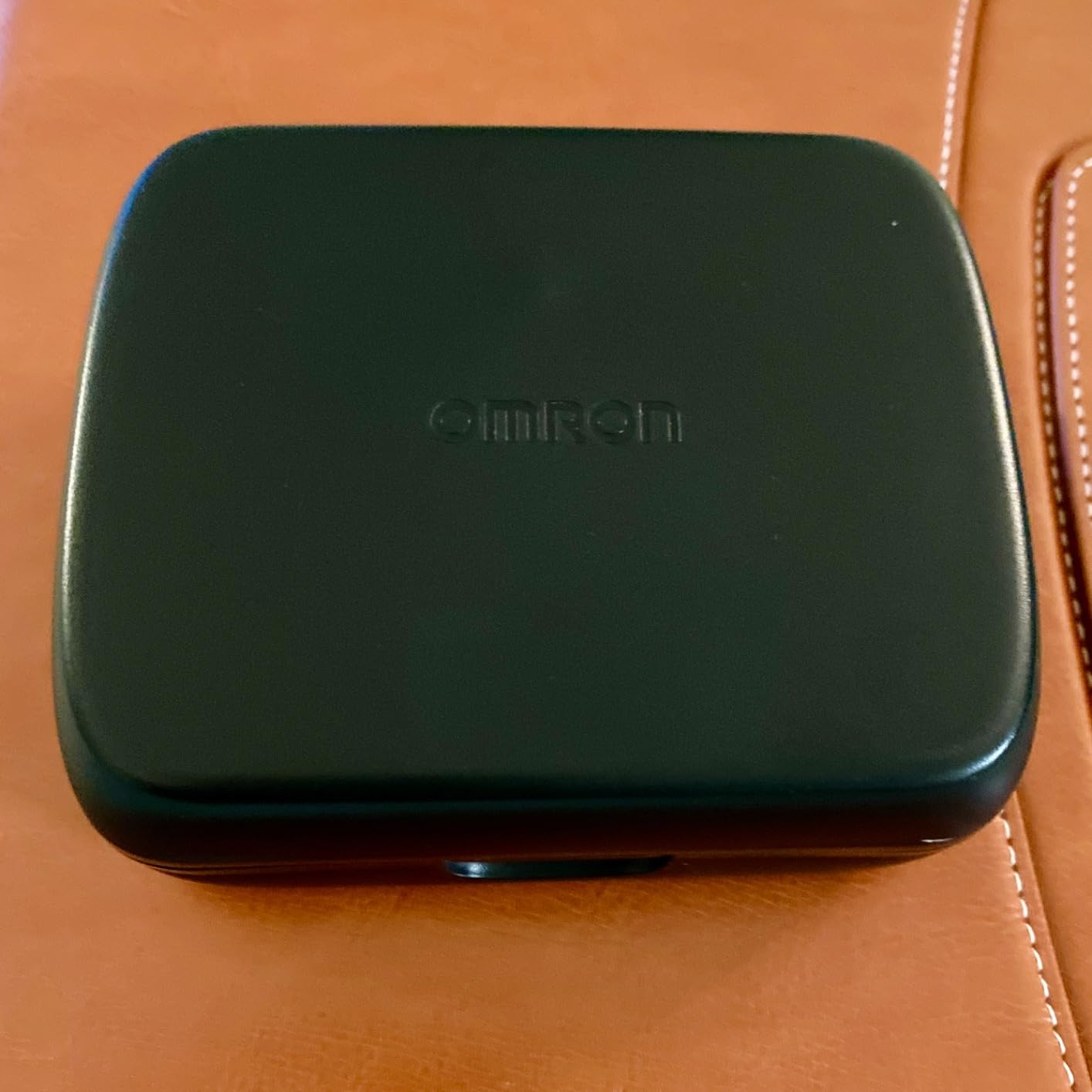
The hardware is small and pleasant: 3.17 ounces, 3.58 by 0.52 by 2.49 inches, with an attached wrist cuff covering 5.3 to 8.5 inches. Two AAA batteries and a storage case are in the box, and the app syncs to both Apple Health and Google Fit.
It is also the most expensive device on this list, and it is the only one here with a one-star share above ten percent. That is the wrist category talking, not the brand, but it is worth knowing before you buy.
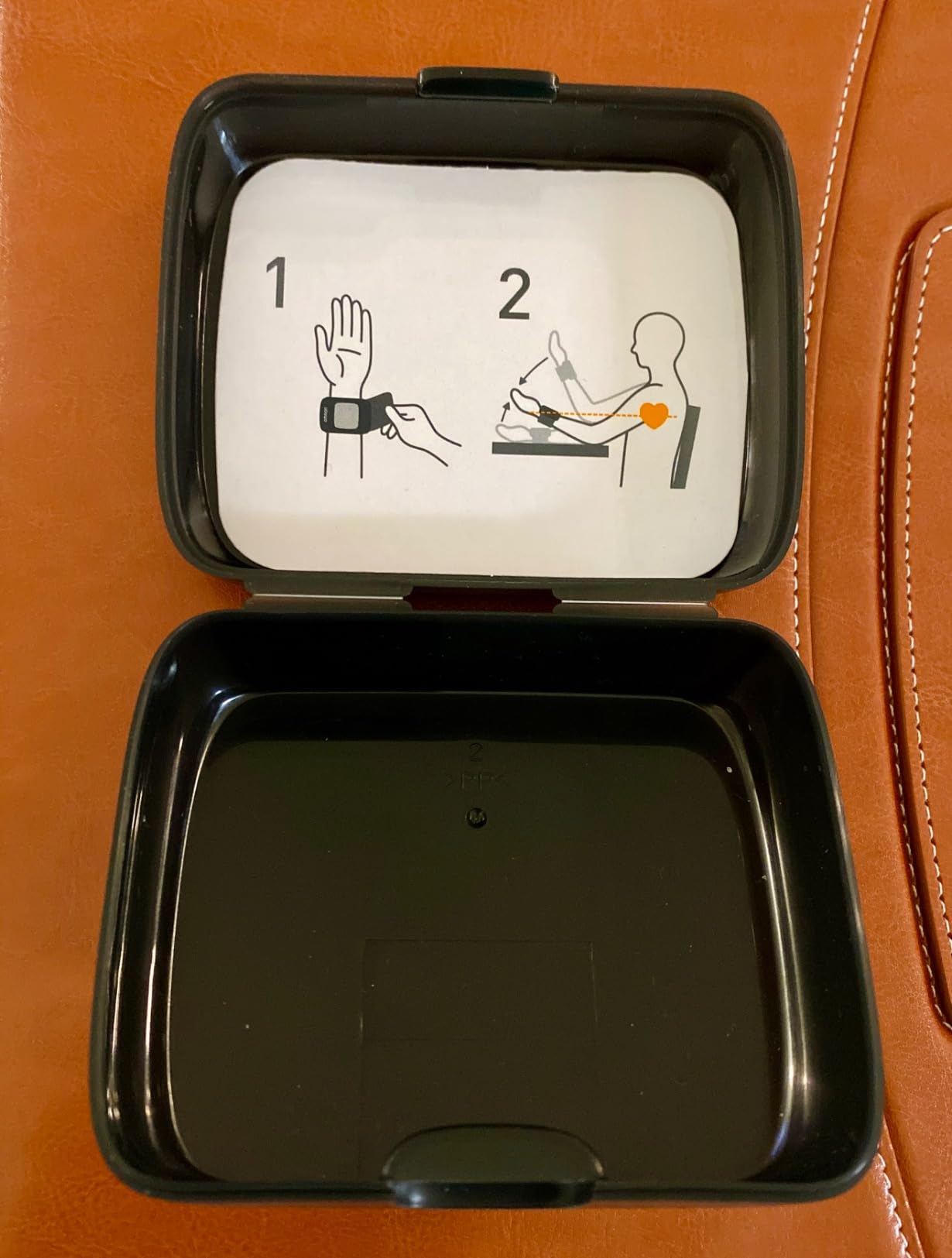
Who this monitor suits
This suits people whose doctor is specifically worried about morning blood pressure, and people who already live inside Apple Health or Google Fit and want the readings to land there automatically. The brand name also carries weight when a clinician asks what you use.
Because it weighs less than four ounces, it works as an overnight or travel monitor for someone who will not use a full arm cuff twice a day.
Where it falls short
Wrist placement is the recurring complaint. Small height differences between the wrist and the heart shift the number, and this model is more sensitive to that than a well-fitted upper-arm cuff.
Bluetooth pairing hiccups show up in the reviews too, and the cuff caps at 8.5 inch wrists. If you have larger wrists or want the cheapest accurate option, this is not the pick.
7. Oklar Upper Arm Monitor with Backlit LED – Best for a Compact, Lightweight Setup
Oklar FDA Cleared Blood Pressure Monitor Upper Arm BP Machine for Home Use
Backlit LED display, reading in about one minute
120 readings per user
5.28 ounces
Pros
- Reads within a couple of points of a physician manual reading
- Bright large display legible without glasses
- Light and compact enough for a purse or scrub pocket
- Runs on 3 AA batteries or a USB power bank
- Cuff has clear artery alignment markings
Cons
- Date and time flash by too quickly to read
- Cuff tops out at 15.7 inches
- Inflation is slow and loud at high pressures
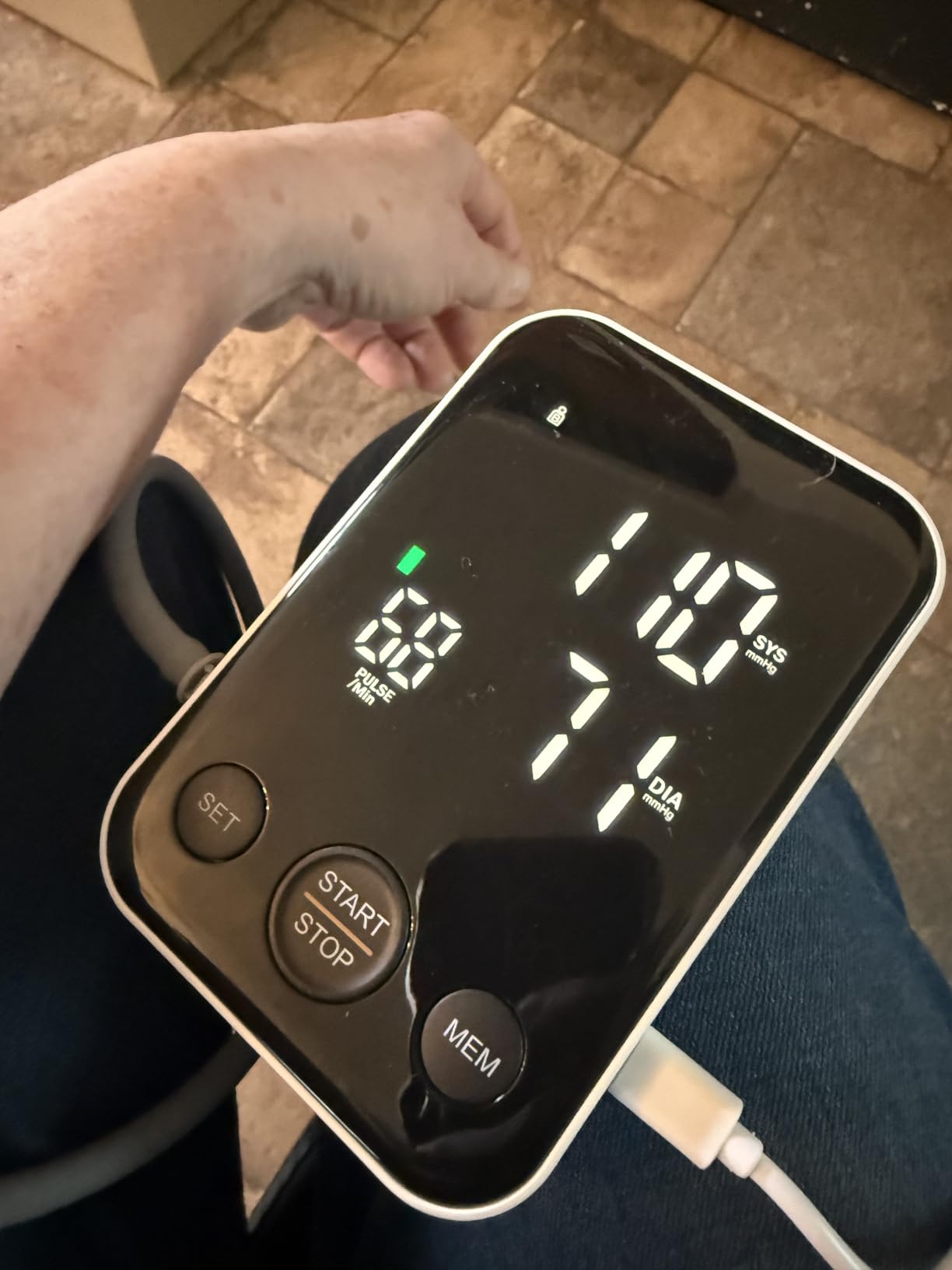
The Oklar upper-arm model is the one to consider if you want a genuine upper-arm reading in a small footprint. At 5.28 ounces and 4.96 by 3.34 by 1.1 inches, it is far lighter than a typical desktop monitor, and reviewers compare readings to a physician manual reading within a couple of points.
It runs on three AA batteries or a Type-C cable, and it is not rechargeable, which matters if you were expecting the wrist model behavior. The backlit LED display has large clear digits and a reading takes about a minute.
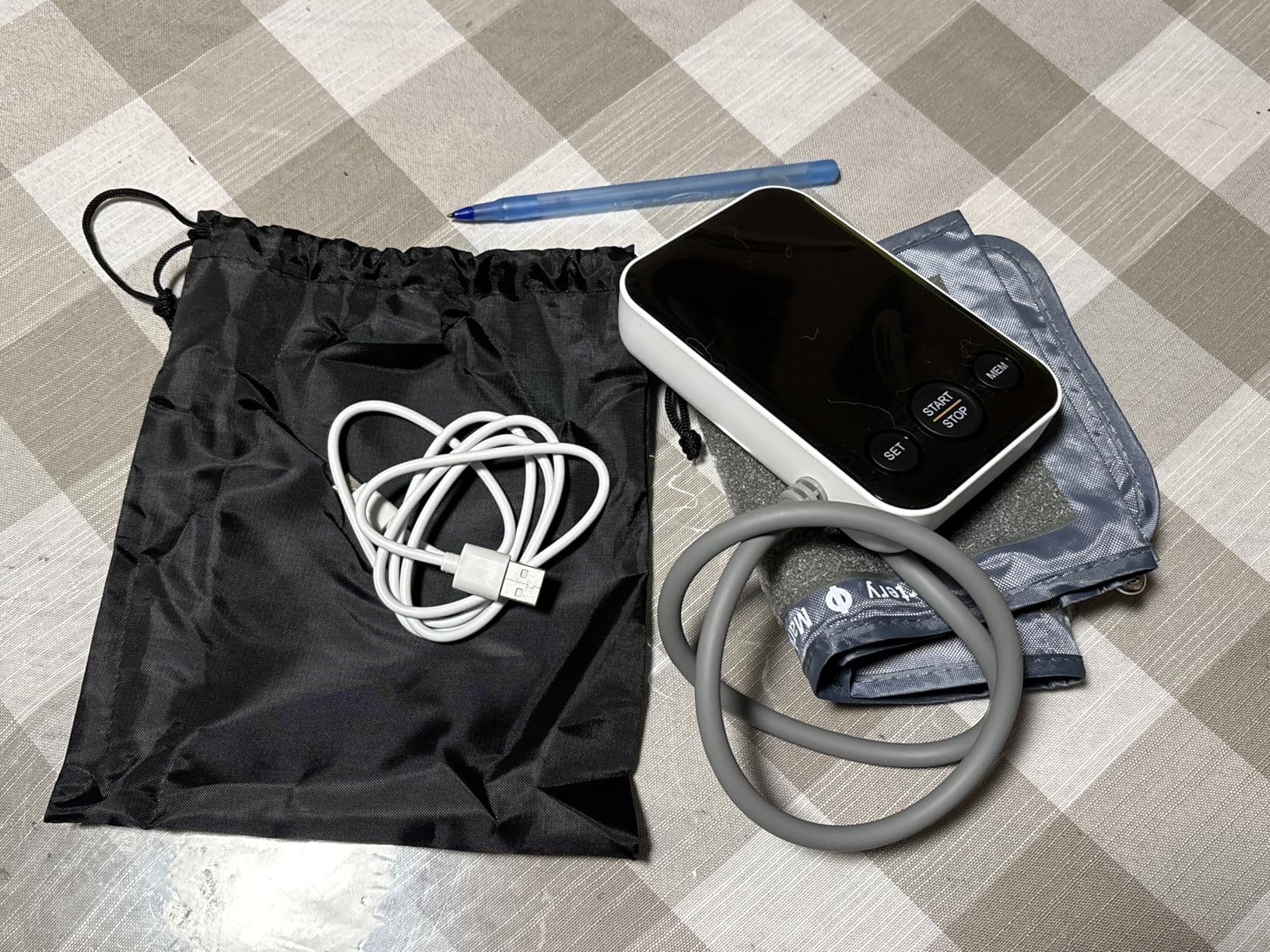
Memory splits into two users with 120 readings each. The cuff has printed artery alignment markings, a small touch that reduces placement errors, and the arm range runs 8.7 to 15.7 inches.
This is the second Oklar on the list for a simple reason: the wrist and upper-arm versions of the same brand price out very differently, and the upper-arm one is the better buy if your arm fits. Buyers who have used it like it for the brightness, the portability and the accuracy against a manual reading.
Who this monitor suits
This suits anyone who wants upper-arm accuracy in a bag-friendly size, such as a nurse, a frequent flyer or a caregiver who logs readings away from home. The lit screen is a genuine advantage over unlit budget models in a dim bedroom.
Two profiles with 120 readings each also make it reasonable for a couple who each take a reading at the same time each morning.
Where it falls short
The 15.7 inch cuff ceiling is the narrowest of the upper-arm models here, so very large and very thin arms are both awkward. Measure first.
The date and time flash by too quickly to read alongside the measurement, which complicates logging. Inflation is slow and loud above 160 systolic, and the included soft case can press the start button when compressed.
8. Greater Goods Bluetooth Upper Arm Cuff – Best for Data Logging with a Doctor
Greater Goods Bluetooth Blood Pressure Monitor for Home Use, Upper Arm Cuff
Bluetooth and Apple Health sync
60 readings per user, 120 total
AC adapter and 4 AAA batteries included
Pros
- Bluetooth and Apple Health sync work reliably
- Reported to stay accurate against office and manual measurements
- Works with or without the app thanks to 120 reading onboard memory
- Backlit display with an artery alignment guide on the cuff
- Runs on batteries or the included AC adapter
Cons
- Cuff is awkward to tighten one-handed on the right arm
- Bumped start button can begin an unwanted measurement
- Included travel case is barely large enough for the cuff
The Greater Goods is the strongest pick if your real goal is a clean exportable log, and the only model here with recognized independent editorial validation on accuracy. Clinicians who own two units report it holds up against office and manual measurements over years, which is the durability claim most reviews never make.
It syncs over Bluetooth to the Balance Health app on iOS and Android with Apple Health integration. Unlike several competitors, that syncing is reported as reliable rather than intermittent, and the app registration step is the only real setup cost.
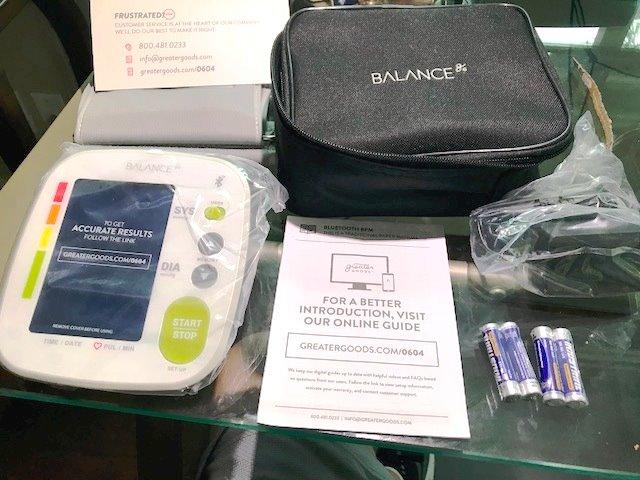
The device also works with no app at all. Onboard memory holds 60 readings per user, 120 total, so you keep tracking through a pairing failure. The display is large, backlit, and one-touch, and the cuff carries an artery alignment guide.
The box is unusually generous: digital monitor, adjustable cuff, portable travel case, four AAA batteries and an AC adapter. The body is 15.87 ounces and 5.5 by 5.1 by 2.2 inches, and an extra-large cuff is available for arms above the standard 16.5 inch range.
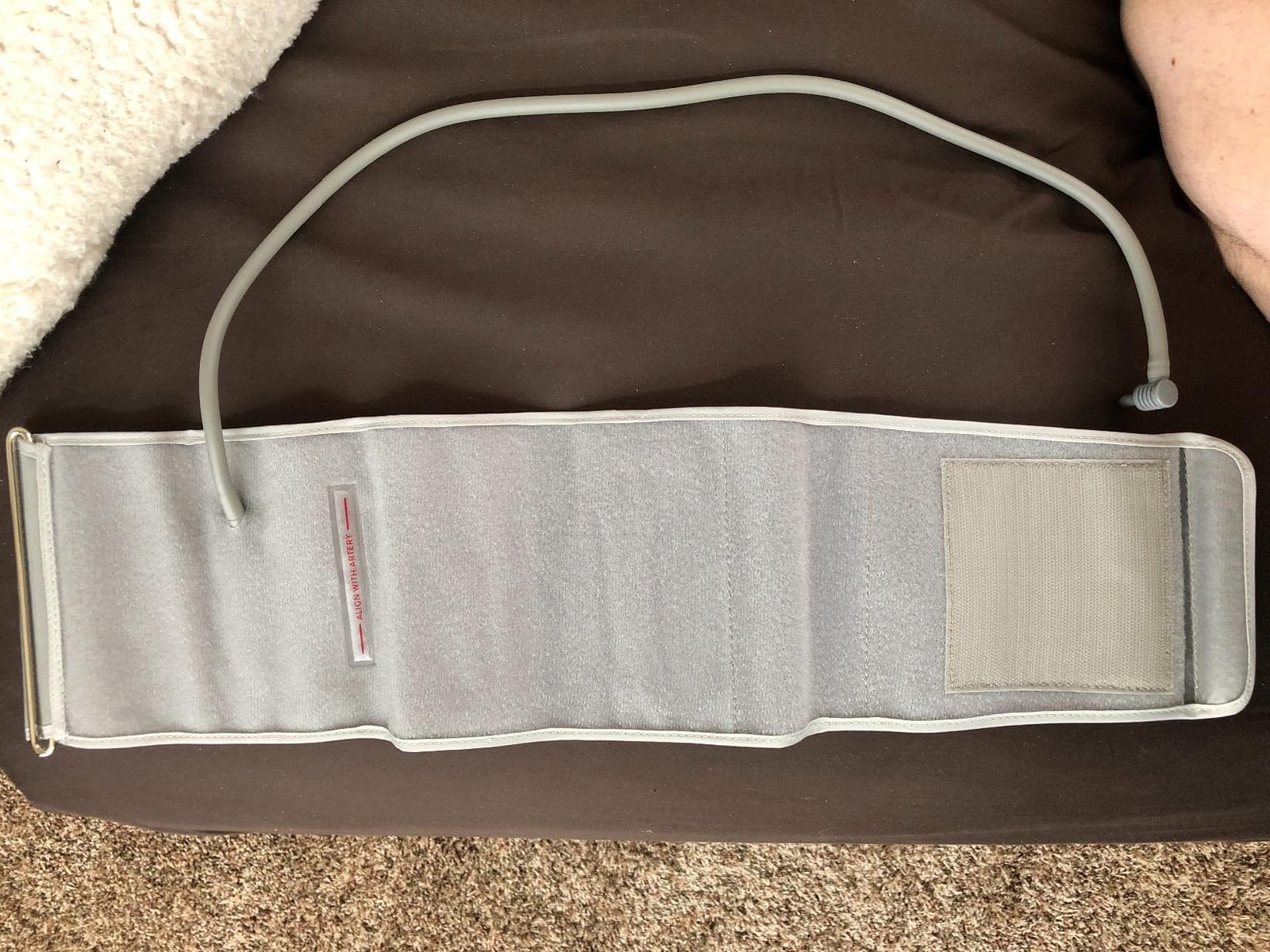
Who this monitor suits
This suits anyone whose doctor wants a month of data rather than a note, and anyone already in the Apple Health ecosystem. It is the most generous on in-box accessories, so it also works well as a gift.
If you plan to travel, note that the included AC adapter removes the outlet problem, while the storage case is tight enough that you should check the cuff actually fits inside.
Where it falls short
The cuff is awkward to tighten one-handed on the right arm, which is a real limitation for anyone with a wrist or shoulder issue. The start button is also easy to bump, and that can start a measurement you did not intend, including inside the case.
The app itself is fairly basic, and a few isolated reports describe readings running higher than expected, so a clinic cross-check is still worth doing in the first month.
How to Choose a Blood Pressure Monitor Under 100
Start with the cuff, because it decides whether the number means anything. Measure the circumference of your bare upper arm at the midpoint between shoulder and elbow with a soft tape, then compare it against the range printed on the cuff. A cuff that is too small biases the reading upward, and no amount of clever software corrects it.
Use this range chart as your first filter:
9 to 14 inches: every model on this list fits, including the 8.7 inch lower end of the standard cuffs
14 to 15.7 inches: all except the narrowest upper-arm cuff are fine
15.7 to 16.5 inches: check the specific model, since one unit stops at 15.7 inches
Above 16.5 inches: none of these are correct, and you need an extra-large cuff model
Next, decide between an upper arm and a wrist device. Upper-arm monitors read at the brachial artery and are the guideline-recommended choice for home use. Wrist monitors are smaller, faster and rechargeable in one case, but the reading shifts if the wrist is not level with the heart. Choose a wrist model for travel or limited mobility, and an upper-arm model for everything else.
Then verify accuracy rather than assuming it. The U.S. Blood Pressure Validated Device Listing is a searchable public database of devices that passed independent validation protocols. Search for the model, check the arm size in the listing matches yours, and note the validation date. FDA clearance alone is a marketing equivalence decision and is not a substitute for that check.
One more check is worth doing. Bring the monitor to your next appointment, take a reading on each arm, and compare against the clinic device while you are there. If the two agree within a few points, keep the monitor. If they do not, suspect cuff size and placement before you suspect the machine.
On connectivity, be honest about whether you will use it. The iHealth Track and Greater Goods models sync to a phone and give you unlimited history, which is what makes a doctor-friendly export possible. The Alcedo, Paramed, AILE and Oklar upper-arm models store everything on the device, which is fine for daily tracking but means you transcribe the numbers by hand.
On storage, the ranges are 120 total readings on the Paramed, 120 per user on the Alcedo and Oklar upper-arm unit, 99 per user on the AILE, 240 across two users on the Oklar wrist model, 200 per user on the Omron, and 60 per user on the Greater Goods. At two readings a day, 60 readings per user is about a month of history.
What you give up under 100 is worth stating plainly. Above this range you gain wider and more specialized cuff options including true extra-large models, upper-arm Bluetooth designs with more refined apps, and some models with cuff-fit coaching. You do not gain a dramatic jump in measurement accuracy, and every pick on this list produced readings that owners were able to match to clinic devices.
Finally, check FSA or HSA eligibility before you pay. Blood pressure monitors are a qualified medical expense, so an eligible purchase can be pre-tax. At this price range that is a meaningful reduction on the same machine.
Taking a good reading takes a minute. Sit quietly for five minutes, keep your feet flat on the floor, rest your arm on a table so the cuff sits at heart level, and avoid caffeine, exercise and smoking for thirty minutes beforehand. Take two readings one minute apart and average them, which is exactly what the Alcedo does automatically.
Frequently Asked Questions
What is the best and most affordable blood pressure monitor for home use?
The iHealth Track is our best overall pick under 100 because it combines a large color-coded backlit display, 99 on-device readings with unlimited app history, and heart rhythm disturbance alerts. The Alcedo is the lower-cost alternative, with a voice readout, two user profiles and automatic averaging of three readings.
Are cheap blood pressure monitors any good?
Yes, when you pick an upper-arm model and the cuff fits. Every pick on this list is an automatic oscillometric monitor, and owners regularly report readings within a couple of points of clinic devices. Budget monitors give up convenience and special features rather than accuracy, and wrist units are the exception because placement affects the result.
What brand is the most accurate blood pressure monitor?
Brand alone is a weak signal. The better test is independent validation: search your model in the U.S. Blood Pressure Validated Device Listing and confirm the listed arm size matches yours. Among these picks, the Greater Goods Bluetooth upper arm cuff is the only one with recognized independent editorial validation for accuracy.
Is a wrist or upper arm blood pressure monitor more accurate?
Upper-arm monitors are more accurate for home use because they measure at the brachial artery, which is what current guidance recommends. Wrist monitors can read accurately only when the wrist is held exactly level with the heart, so small height errors shift the number. Both wrist models on this list are included for travel and one-handed convenience.
How often should I check my blood pressure at home?
Most people check twice a day, once in the morning before eating or medication and once in the evening, and log both. Take two readings one minute apart and average them. Consistency matters more than frequency, because trends show your real pattern rather than a single snapshot from a clinic visit.
Which blood pressure monitor do cardiologists recommend?
Guidance generally points to an upper-arm automatic monitor that has passed independent validation, rather than to any single brand. Within our list, the Alcedo, Paramed, iHealth Track and Greater Goods models are the upper-arm picks with the strongest accuracy feedback from owners, and all four fall well under 100.
The Bottom Line: Which Monitor Should You Buy?
Buy the iHealth Track if you want one device that handles the whole job, because the color-coded backlit screen, 99 on-device readings and unlimited app history make it the most complete pick under 100. It is the choice we keep recommending first in 2026, and it is the only model here with the review volume to have surfaced every common complaint already.
Buy the Alcedo instead if a spoken readout matters, if you want automatic three-reading averaging, or if your account can use FSA or HSA funds. Buy the Paramed if you want the cuff self-check and a bigger, simpler layout for a less technical user.
Pick a wrist model only for a reason: the Oklar wrist unit is rechargeable and tiny for travel, and the Omron Gold adds morning average tracking and Apple Health sync. Everything else you read here fits in a bag, logs to your phone, and costs less than a hundred dollars. Our broader guide to the best blood pressure monitors for home use is worth a look if you later want a validated extra-large cuff, and our blood flow restriction cuff picks cover training loads rather than blood pressure readings.
Measure your arm before you order, take two averaged readings per session, and bring the monitor to your next appointment so you can check it against clinic equipment. That single habit catches almost every problem people report with budget monitors.