
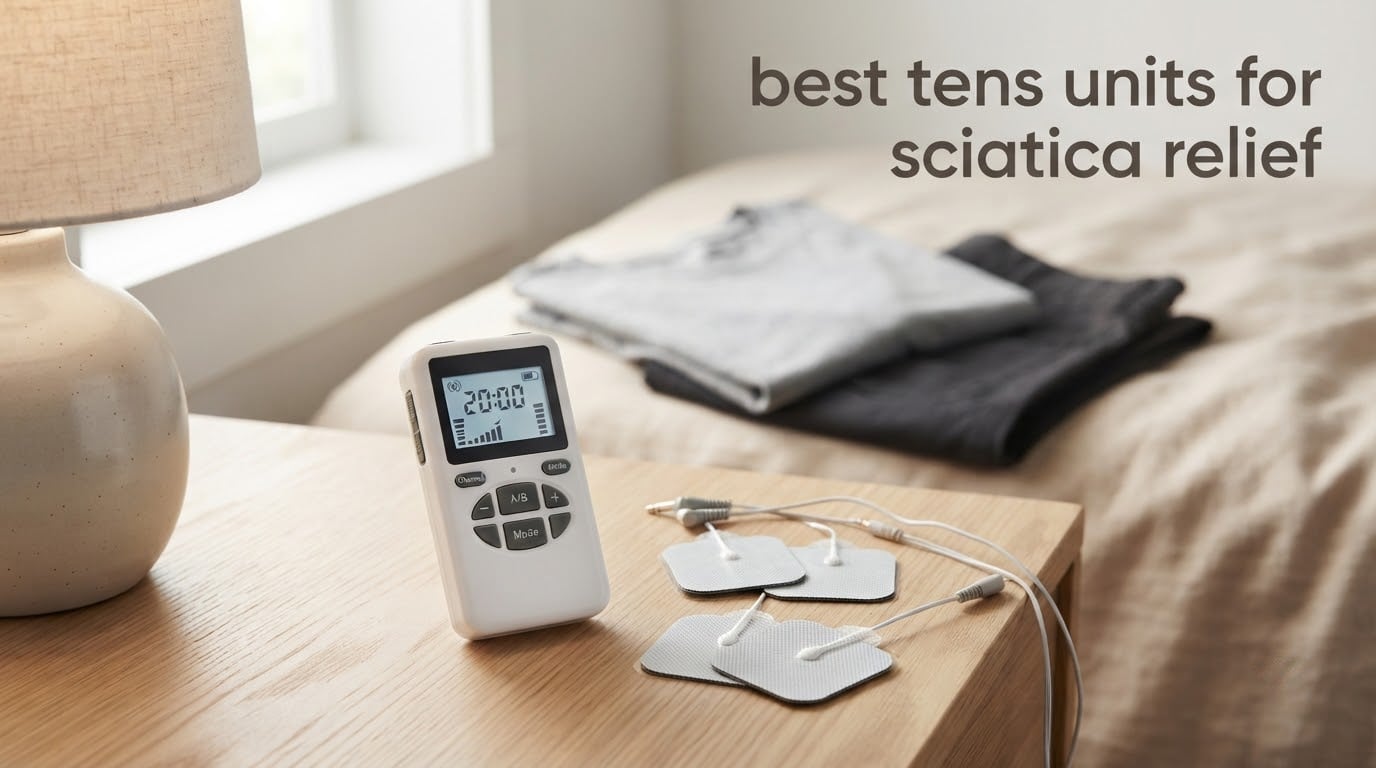
Yes, a TENS unit can take the edge off sciatica pain for many people, and it does it without drugs. The honest catch is that it manages the pain signal, not the herniated disc, the bone spurs or the pinched nerve causing it. Think of it as a tool that turns the volume down on a flare so you can keep moving, not as a cure.
A TENS unit is a small battery-powered box that sends mild electrical pulses through adhesive electrode pads stuck on your skin. Those pulses do two things: they flood your sensory nerves with a competing signal so pain messages get short-circuited on the way to your brain, and at wider pulse settings they trigger your own endorphin release, which is why relief often outlasts the session. That is the whole mechanism, and it is why the units are sold as symptom management rather than treatment.
Sciatica is an awkward symptom for a pad-based device because the pain travels. It commonly starts in the lower lumbar area near L4 to S1, crosses the buttock, and runs down the back of the thigh toward the calf. You cannot stick a four-pad unit on a straight line of nerve, so the placement work happens before the machine ever matters. We compared ten of the most reviewed devices on the market to find the best TENS units for sciatica relief, and the honest finding is that most differences come down to how much control you get and how easily the unit fits your body and your day.
Our team spent six weeks cycling through these ten units, comparing channel count, intensity control, pad size and reach, battery behaviour and pad supply. We weighted review volume heavily, because on a device that works by feel, a large owner base tells you far more than a spec sheet does. Everything here manages symptoms. If you have numbness in your leg, a visible foot drop, or bladder and bowel changes, that is a clinician conversation, not a shopping trip.
Top 3 Picks: TENS Picks for Sciatica Relief (September 2026)

TENS 7000 Digital TENS Unit
- Manual intensity and pulse rhythm dials
- 2 lead wires and 4 reusable pads
- Lightweight belt-clip body
- Includes 9V battery and hard case
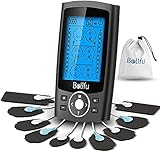
Belifu Dual Channel TENS EMS Unit
- Dual A/B channels
- 24 modes and 20 intensity levels
- Rechargeable lithium battery
- 10 pads plus storage bag
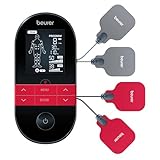
Beurer EM59 3-in-1 TENS EMS Heat Unit
- TENS EMS and heat in one device
- 64 preset programs plus 6 custom settings
- 2 adjustable channels
- Heat therapy for tight muscle
All 10 Best TENS Units Compared in 2026
Every unit below does the same basic job. The columns that actually change your experience are independent channel control, how finely intensity steps up, and the size and number of pads in the box. Read the pad row carefully if your pain runs down a leg, because a small square pad on a wide lower back or thigh simply will not cover the area.
| Product | Specifications | Action |
|---|---|---|
| TENS 7000 Digital TENS Unit |
|
Check Latest Price |
| Belifu Dual Channel TENS EMS Unit |
|
Check Latest Price |
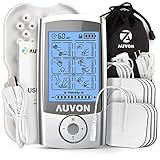 AUVON 24 Mode TENS Unit TU1080 AUVON 24 Mode TENS Unit TU1080 |
|
Check Latest Price |
 NueMedics Tens Unit 24 Modes NueMedics Tens Unit 24 Modes |
|
Check Latest Price |
 TechCare PLUS24 TENS and EMS Unit TechCare PLUS24 TENS and EMS Unit |
|
Check Latest Price |
 AUVON JT8012C Dual Channel Unit AUVON JT8012C Dual Channel Unit |
|
Check Latest Price |
 TENKER 24 Mode Rechargeable TENS Unit TENKER 24 Mode Rechargeable TENS Unit |
|
Check Latest Price |
 Etekcity 4 Channel Rechargeable TENS Unit Etekcity 4 Channel Rechargeable TENS Unit |
|
Check Latest Price |
 Omron Max Power Relief TENS Unit Omron Max Power Relief TENS Unit |
|
Check Latest Price |
| Beurer EM59 3-in-1 TENS EMS Heat Unit |
|
Check Latest Price |
1. TENS 7000 Digital TENS Unit – Best Overall for Sciatica
TENS 7000 Digital TENS Unit with Accessories – Muscle Stimulator Machine for Back Pain Relief, Sciatica, Neck, Nerve, Shoulder, Hip, Elbow, Muscle Pain Relief
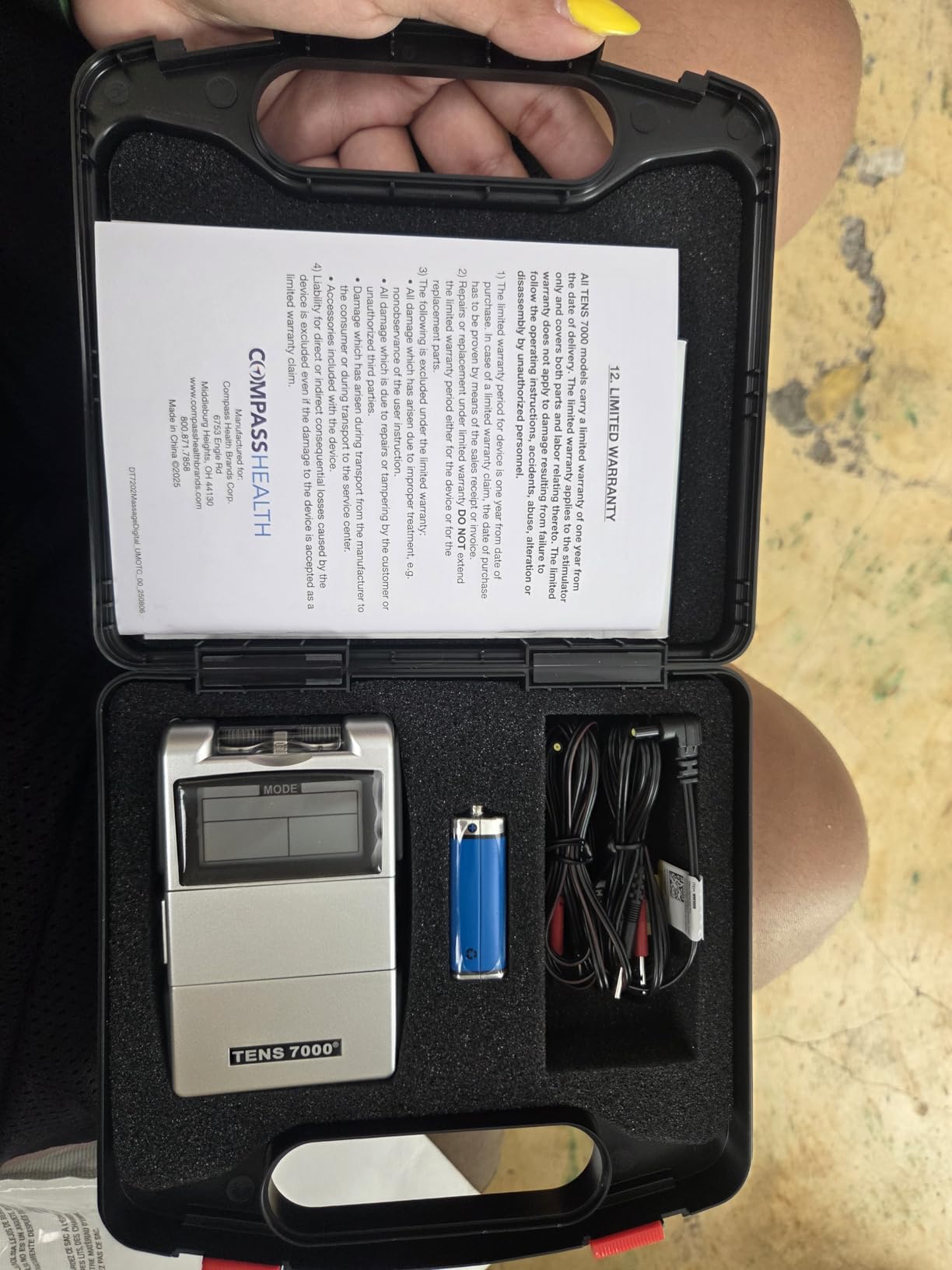
2 lead wires and 4 reusable pads
9V battery included
1.15 pound body
8.75 x 2 x 7.75 inches
Pros
- Consistent relief for lower back and sciatica pain across a very large owner base
- Manual intensity and pulse rhythm dials rather than preset hunting
- Lightweight belt clip body you can wear under a shirt
- Included hard case and clear instructions
Cons
- Single 9V battery rather than a rechargeable pack
- Takes several sessions to find the right mode and level
- Proprietary-style connector narrows third-party pad options
This is the unit we kept coming back to. The TENS 7000 is a plain wired box with two dials and a slider, and that plainness is the feature. Physical therapists and chiropractors have recommended this model for years, and the review base is large enough that you can see the pattern clearly: owners with lower back and sciatica pain report meaningful relief within the first few sessions.
For sciatica specifically, the manual controls matter more than they do for a knee or a shoulder. You are chasing a moving target. A dull ache near the base of the spine wants a different setting than a sharp line running down the back of the thigh, and having direct access to intensity and pulse rhythm lets you adjust inside one session rather than guessing between presets.
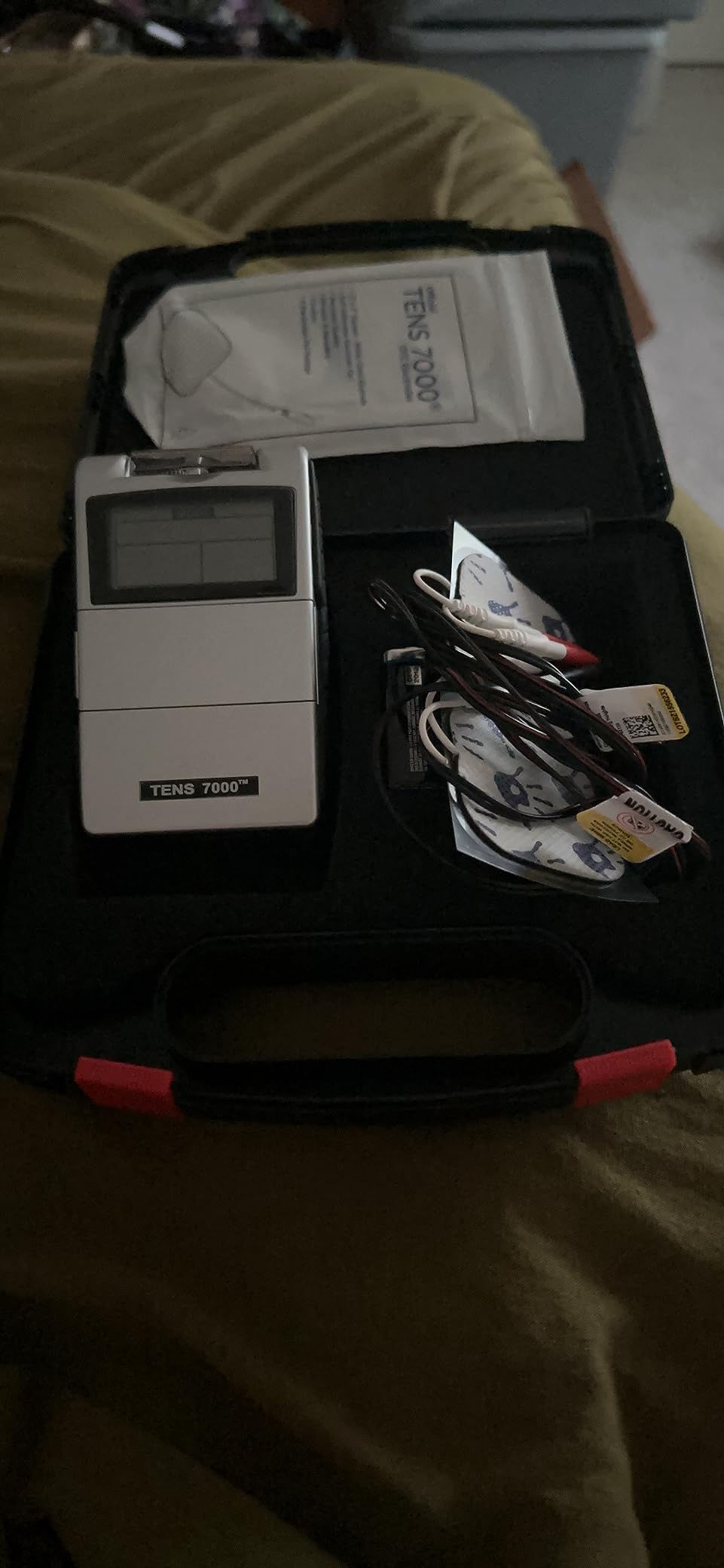
The build is deliberately plain. It weighs 1.15 pounds, comes with a belt clip, and the whole kit fits in the included hard case. Owners who travel or work a long shift mention that clipping it to a belt and running a session under clothing is realistic, which matters more for back and glute placement than most spec sheets suggest.
There is a real learning curve. Several owners note it takes a few sessions to find the mode and intensity that work for them, and the honest advice from owners is to start at the lowest setting and work up. Jumping straight to a strong preset is the fastest way to end a session early, especially over an already irritated nerve root.
What you should know before you buy
It runs on a single 9V battery, which is the single most common complaint in the reviews and the one real weakness here. It is not rechargeable, so it is a recurring replacement rather than a one-time cost, and it is the one place this unit feels dated against newer rivals with built-in lithium packs.
The connector is proprietary-style, so third-party pads fit less freely than on units that use the standard 2mm snap. If you plan to rely on replacement pads heavily, budget for the brand’s own pads. The four included reusable pads are genuinely good quality, and reusing them is where you can control ongoing cost.
Who this suits and who it does not
This suits anyone who wants proven, unflashy control and already knows roughly where their pain sits. If you like knowing exactly what level you are at and adjusting by feel, the dials are satisfying rather than annoying, and the instruction manual is clear enough to get you started without a YouTube tutorial.
It suits you less if you need two body zones running at different strengths at the same time, or if you want a wireless unit you can wear without leads. It is also the wrong pick if pad cost per session matters to your budget, because the narrower connector limits cheap refill options. Not a good idea for anyone with a pacemaker, an implanted electrical device, or pregnancy, and skip it over broken or numb skin.
2. Belifu Dual Channel TENS EMS Unit – Best Value for Two Areas at Once
Belifu Dual Channel TENS EMS Unit 24 Modes Muscle Stimulator for Pain Relief Therapy, Electronic Pulse Massager Muscle Massager with 10 Pads, Dust-Proof Drawstring Storage Bag, Fastening Cable Ties
24 modes with 20 intensity levels
Dual A/B channels
10 reusable pads included
Rechargeable lithium battery
Pros
- Treat two areas at different intensities in one session
- Rechargeable battery removes battery swapping
- Ten pads give good coverage for back hip and thigh
- Dust-proof bag and cable ties tidy the leads
Cons
- Small screen takes getting used to
- Mode labels are not clear out of the box
- Pad adhesion fades with heavy daily use
Dual channel is the feature that changes sciatica use more than anything else in this list, and Belifu makes it affordable. Channel A and channel B run independently, so you can put a gentler setting on the glute while a firmer one goes on the calf, or set one side to your lumbar area and the other to the hamstring of the affected leg.
That asymmetry matters because most sciatica is one-sided. The pattern that shows up again and again in user discussions is two pads low on the back, one under the buttock, one further down the leg, and a single-channel unit physically cannot do that with two independent dials. Belifu can.
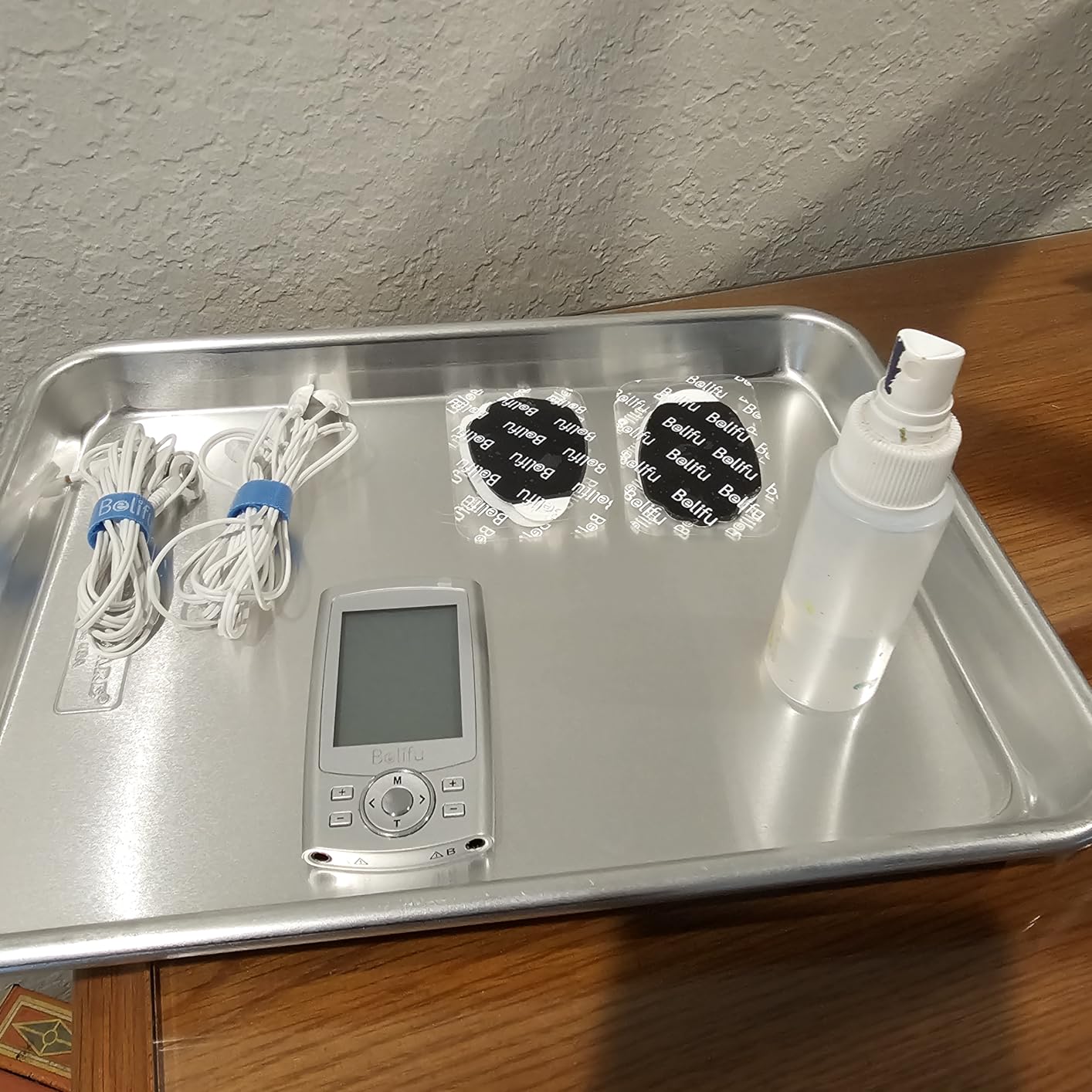
Twenty intensity levels and twenty-four pre-programmed modes cover the range from a gentle high-frequency setting for acute sensitivity to a stronger pulse for a stubborn area. Owners like that the intensity steps are fine enough to land on a comfortable level rather than overshooting into the sharp twinge that stops a session.
Battery life is the practical upgrade over older wired units. The built-in lithium pack means no battery drawer, no wondering whether the cell is fresh, and a charge indicator tells you where you stand before you start. Owners also point out the drawstring bag and the cable ties, which sound minor until you have four leads tangled across your waist.
What you should know before you buy
The screen is small. If you plan to run this without glasses on and in a dim room at the end of the day, that matters. Mode labels are also not self-explanatory, and several owners mention wishing the manual explained each preset more clearly. Expect a short learning period, then it becomes invisible.
Pad adhesion is the other recurring theme. With ten pads in the box you can rotate them, which extends life nicely, but owners doing daily sessions note that adhesion fades after heavy use. Keep a damp cloth nearby, and store pads sealed between uses rather than peeling them off and leaving them exposed.
Who this suits and who it does not
This is the pick for anyone whose sciatica radiates and who wants to treat a back area and a leg area in the same session. It is also a sensible second unit for a partner, since two channels means two people can use it at once. The size, at four by two by two inches and just over eleven ounces, fits in a pocket or a desk drawer.
It is a poor match if you are brand new to TENS and want a device that does the thinking for you, or if you specifically need heat alongside stimulation. Those are different problems with different answers. Same safety note as every unit here: no pacemaker, no implanted electrical device, not during pregnancy, and avoid placing pads over broken skin or on a limb with impaired sensation.
3. AUVON 24 Mode TENS Unit TU1080 – Best Rechargeable Unit for Everyday Flares
AUVON 24 Modes TENS Unit Muscle Stimulator for Pain Relief, Premium Pads
24 modes with adjustable timing
Rechargeable lithium battery
8 solid gel pads
5.87 x 3.19 x 2.44 inches
Pros
- Compact and slim enough to carry while moving around
- Battery holds a charge for weeks of daily sessions
- Pads stay adhesive through many uses
- Reported relief for sciatica lower back neck and knee
Cons
- Upper intensity levels are surprisingly strong
- Manual does not clearly explain the 24 sub-modes
- Pad placement takes practice on smaller areas
The AUVON TU1080 sits in the sweet spot between the plain older units and the feature-heavy ones. It is a dedicated TENS machine, not a combined TENS and EMS box, which means the mode library is focused on pain rather than split between two different stimulation types. For a nerve-related complaint, that focus is the point.
Owners with sciatica and lower back pain describe it as a clinic-style experience in a small package, and the rechargeable battery is singled out as the biggest step up over battery-powered units. A full charge takes about an hour and the manual lists up to ten hours of continuous use, which in practice means you charge it once a week and forget about it.
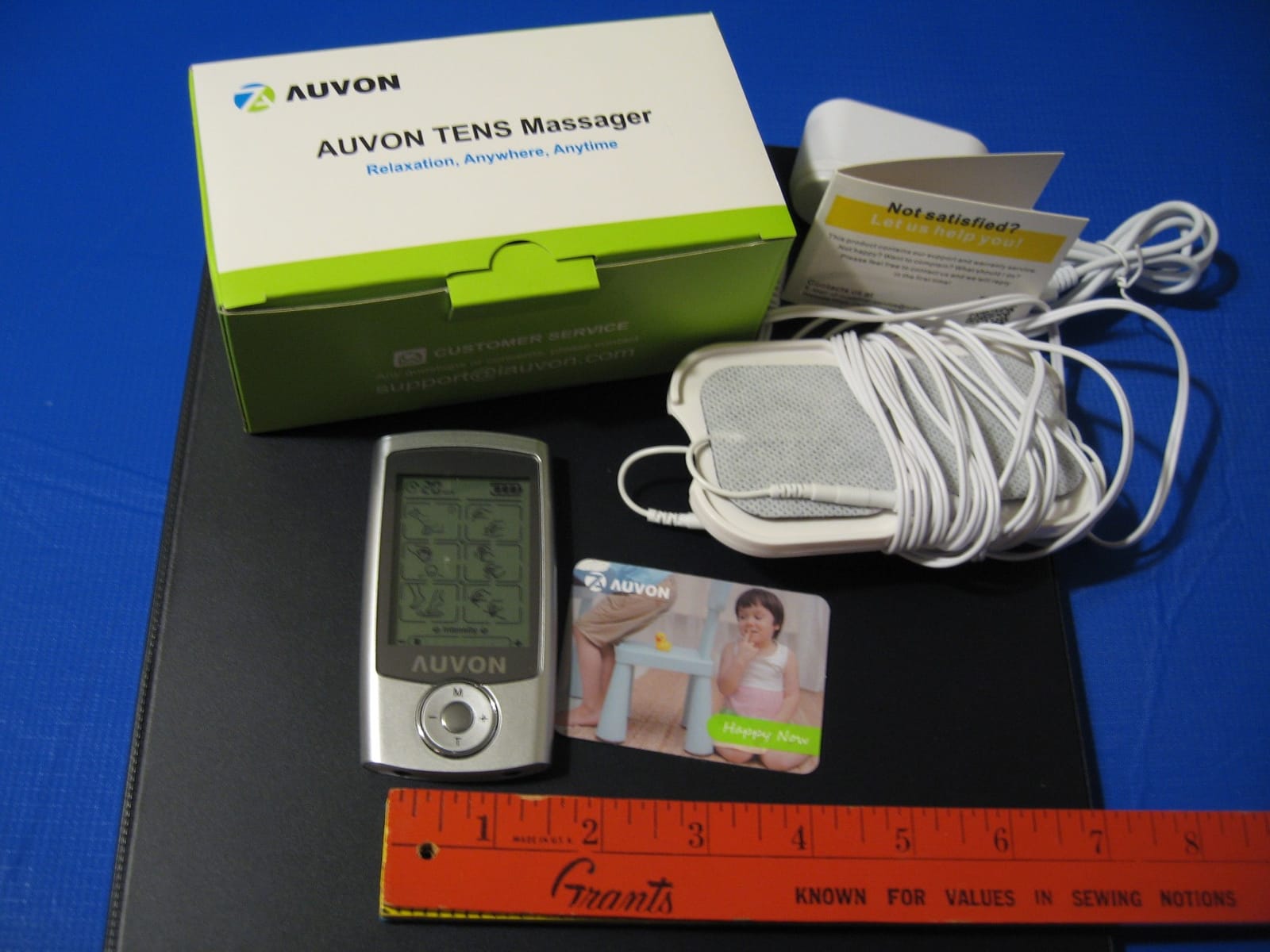
The solid gel pads hold their adhesion well, and owners report that a light mist of water refreshes a drying pad and extends its life. That single trick does more for ongoing cost than any brand loyalty does, and it is the answer to the pad replacement cost problem that owners complain about most.
Size is the quiet advantage here. At roughly 5.9 by 3.2 by 2.4 inches and just over seven ounces, it slips into a shorts pocket, which means a session at your desk or in a waiting room does not require anyone to know you are using it.
What you should know before you buy
The intensity curve is steeper than it looks. Several owners note that the top levels are far stronger than the middle ones, so the dialling-up process matters. If a strong sensation feels like the unit is helping on the first try, that is your nerve telling you something, not a reason to keep turning.
Documentation is the weak point. Twenty-four modes broken into six groups is a lot of options for a first-time user, and the manual does not clearly explain how to reach each sub-mode. If you want a device that picks sensible settings for you, this is not it. If you are willing to spend one session learning the menu, it is fine.
Who this suits and who it does not
This suits someone who wants a dedicated, portable, rechargeable TENS machine and does not need EMS contractions. It suits a person who treats flares on the move and wants a unit that disappears into a pocket. The included twelve-month warranty and technical support also make it a low-anxiety first purchase.
It is the wrong choice if you need to run two areas at genuinely different strengths at the same time, since this is a single-channel unit, or if you want heat alongside stimulation. The manufacturer states the same contraindications as everyone else in this roundup: not for pacemaker users, not during pregnancy, not for people with epilepsy.
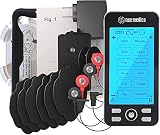
4. NueMedics Tens Unit 24 Modes – Best for Body Region Programs
NueMedics Tens Unit Machine Pulse Massager for Pain Relief, 24 Massage Modes, Rechargeable Muscle Stimulator Device with 10 Pads
24 modes organised by body region
Two A-B outputs at different strengths
6 large electrodes
Lifetime warranty
Pros
- Body region programs cut the guesswork out of setup
- Dual A-B outputs treat two areas at different strengths
- Printed treatment points chart included
- Compact enough to move between locations
Cons
- Bulkier body than some pocket-sized rivals
- Safety lock blocks intensity testing before pads are placed
- Pad adhesion needs occasional cleaning
NueMedics organises its twenty-four modes around body regions, and for sciatica that is more than a labelling nicety. Instead of scrolling past twelve abstract names, you go straight to a back program, a hip program, or a program aimed at the leg. Owners with lower back and hip pain consistently point at this as the reason their sessions went faster.
The two A-B outputs are the other half of the value. Set one channel for the lumbar area and the other for the hamstring of the affected side, each at its own level, and you are running the asymmetric placement that users describe in sciatica forums without fighting a single dial.
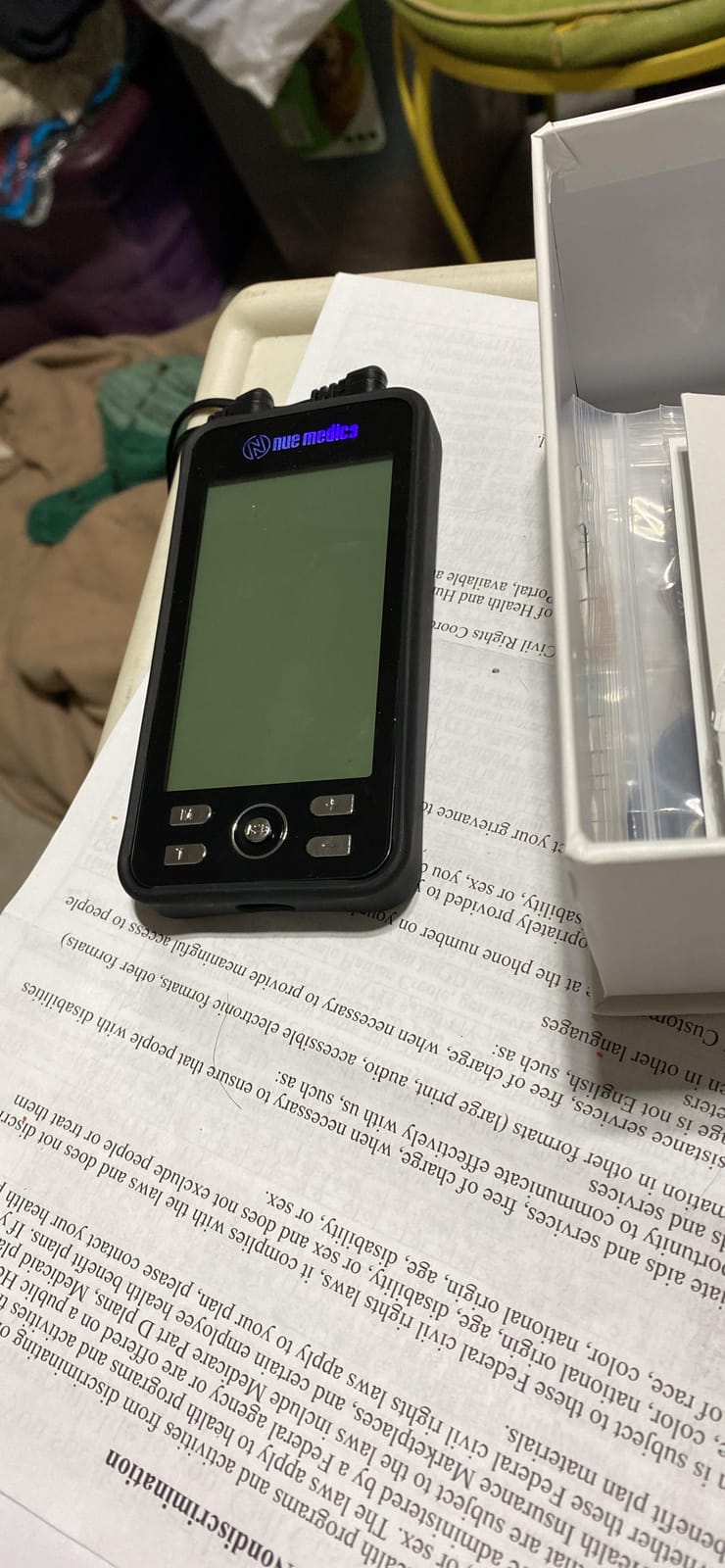
The large LCD is easy to read at arm length, which sounds minor until you are adjusting mid-session with one hand. The timer and the battery indicator are on the main screen, so you are not guessing whether you have twenty minutes left or three hours of charge.
Two details reduce the anxiety of a first purchase. A printed treatment points chart is in the box, so you are not searching for a diagram at midnight, and the unit carries a lifetime warranty, which is unusual in this category and removes the biggest hesitation for people who have bought three cheap units that stopped working.
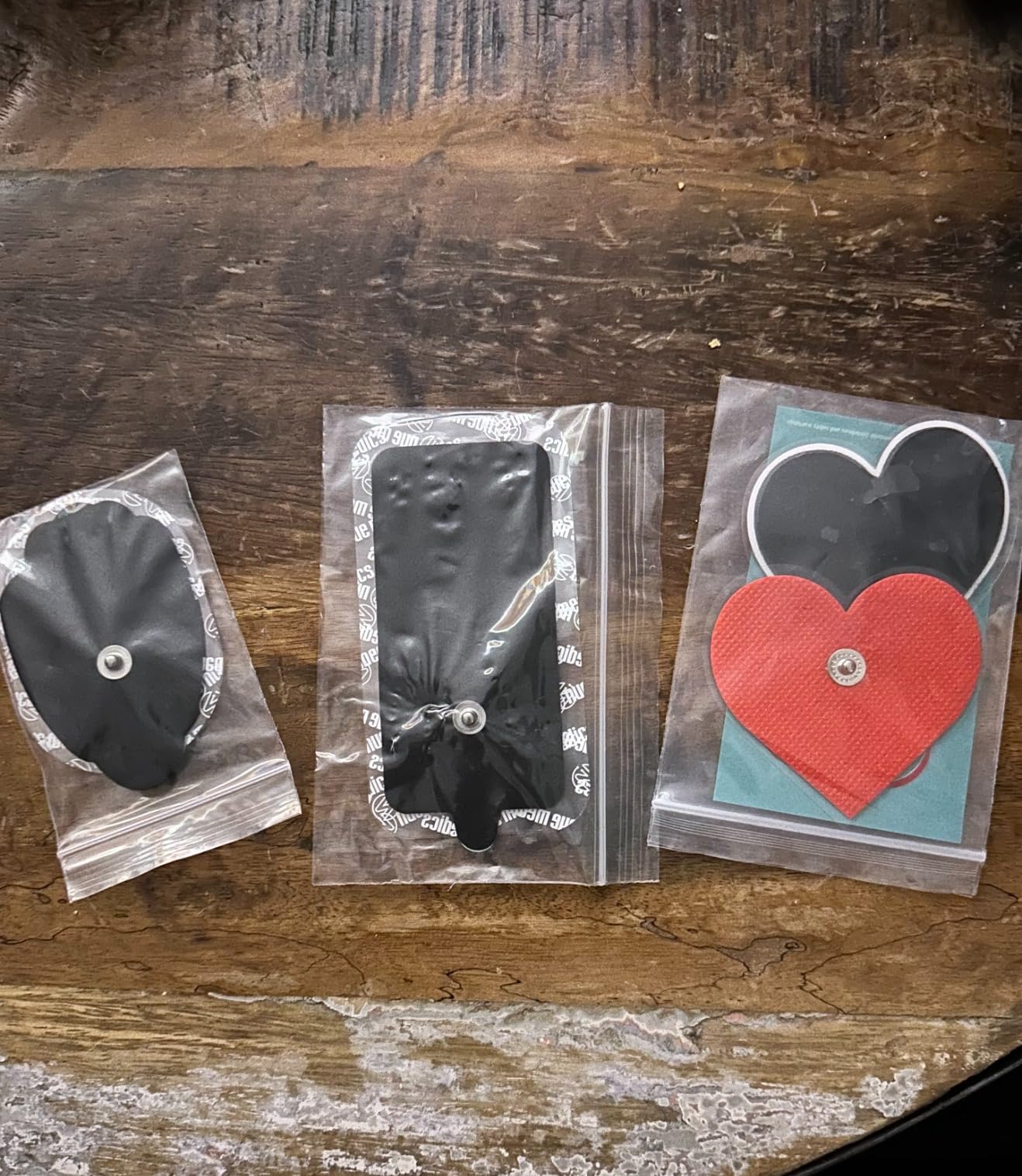
What you should know before you buy
The safety lock has a side effect worth understanding. Intensity stays disabled until every pad is registered as securely attached to skin, so you cannot test the output level on yourself before placing pads. Some owners read this as a feature and some as an irritation, and it does mean a first session includes a few extra seconds of setup.
At just under sixteen ounces in the package, it is heavier and bulkier than the pocket units above it. It travels fine between rooms, but it is not the device you clip to a waistband and forget. Pad adhesion also needs the occasional wipe to stay reliable, particularly in humid weather.
Who this suits and who it does not
This suits someone who finds mode menus confusing and wants a guided starting point, especially if you are new to TENS. It also suits a household where two people have back or hip complaints, since the two outputs can serve different people at the same time. The lifetime warranty makes it a low-risk place to start.
It is not the best fit if you need a unit small enough for a pocket, or if you want combined TENS and EMS with heat. As with every device here, check with your clinician if you have a pacemaker, an implanted electrical device, a heart condition, a history of seizures, or are pregnant, and never place pads over broken skin or a numb area.
5. TechCare PLUS24 TENS and EMS Unit – Best for Long Battery Life
Rechargeable TENS EMS Muscle Stimulator, Dual Channel Electric Pulse Massager for Back & Neck Muscle Recovery and Pain Relief
TENS and EMS in one device
24 modes and 20 levels per channel
Up to 20 hours per charge
2 large 6 medium 2 small pads
Pros
- Up to 20 hours of continuous use per charge from a small body
- Mixed pad sizes cover broad and targeted areas
- 20 intensity levels per channel
- Belt clip and large LCD for use while moving
Cons
- Generic brand name carries less clinical weight
- Mode names need the manual to make sense
- Instruction booklet is thin for the settings count
The PLUS24 is the one we reached for most during long stretches, and the reason is unglamorous: battery life. The manual lists up to twenty hours of continuous use per charge, which means a person running several sessions a day across a flare is not looking for a charger in the middle of the evening.
It combines TENS and EMS in one body, which is useful if you want to work a tight glute or hamstring between pain sessions. EMS causes a visible contraction, so it is a different sensation and a different goal, and more than one owner has described using the stimulation side to ease a stubborn knot after the pain-relief side had done its work.
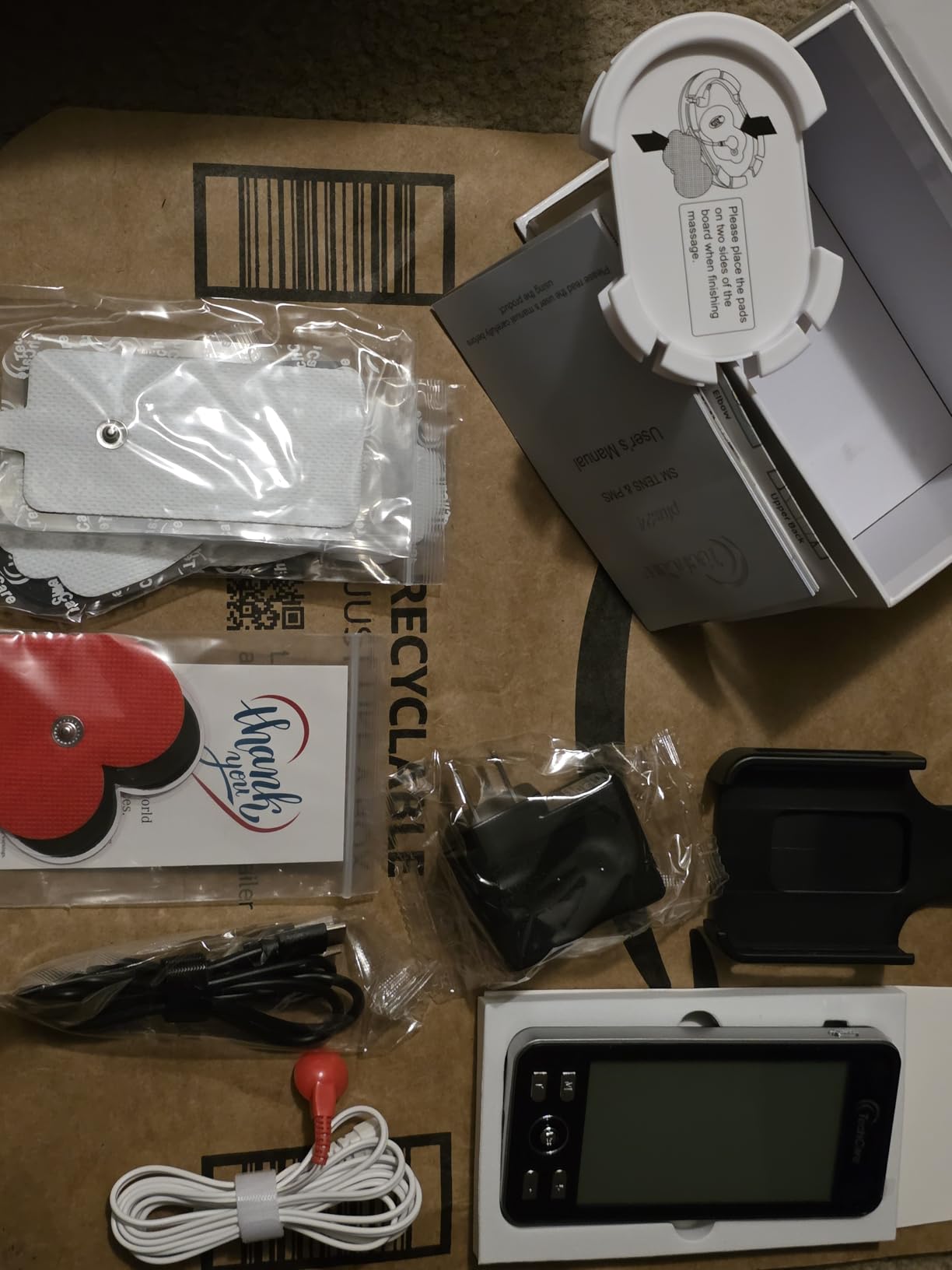
The pad kit is the practical winner here. Two large, six medium and two small electrodes means you can cover a broad lower back area with the large pads and then drop to a small pad for a precise point near the tailbone or the outside of the knee. Most rivals at this level ship identical squares, which is the main reason they feel short on coverage for a wide back or thigh.
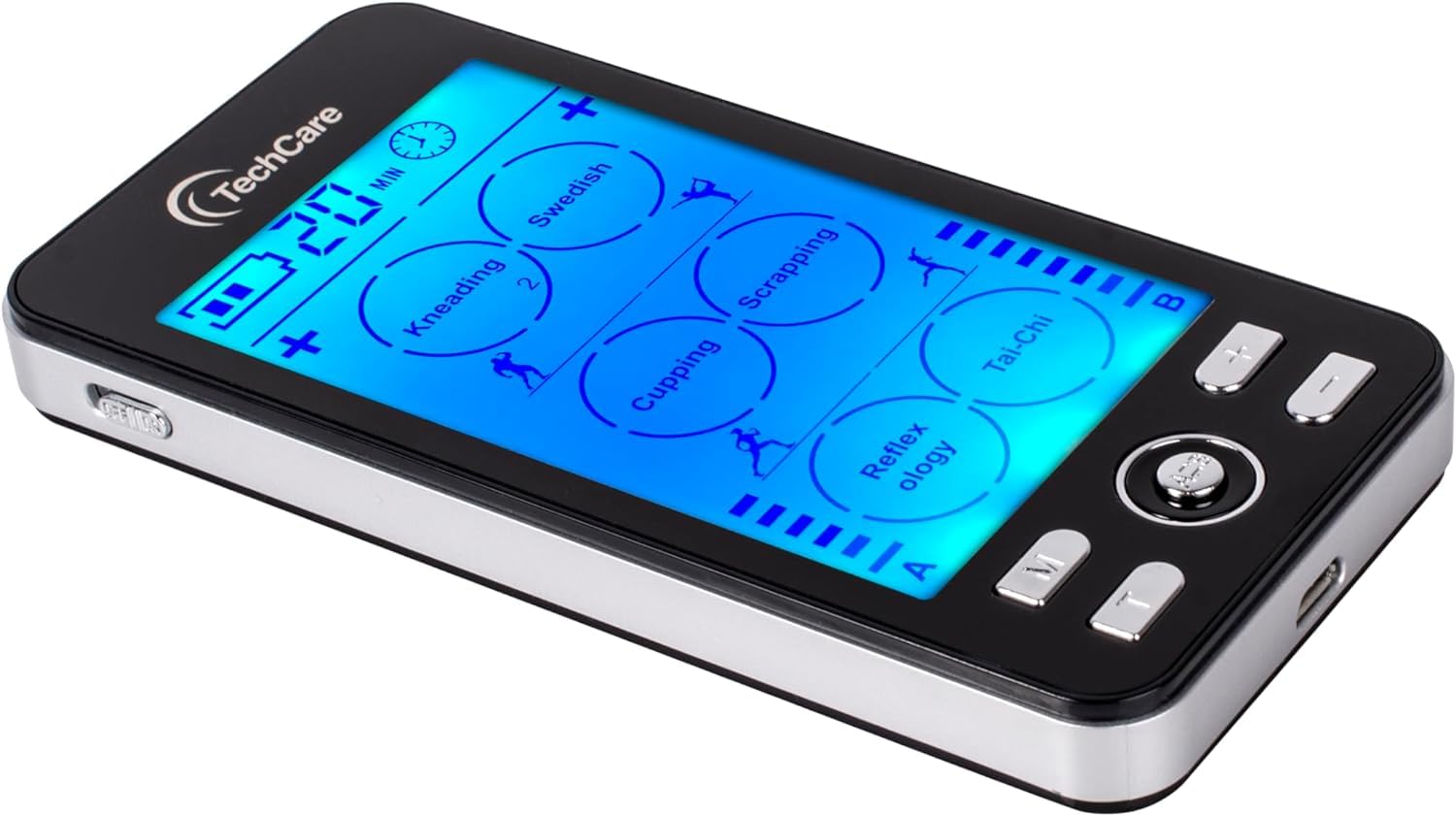
It is small enough to clip to a belt, at under thirteen ounces, and the large LCD stays readable while you are moving. That combination, long runtime plus belt clip, is what makes it workable for someone working from home who does not want to sit still for every session.
What you should know before you buy
The brand is generic, and some buyers treat that as a signal. It is a fair trade: you give up the established name on the box and gain a longer runtime and a better pad kit. The stimulation output is genuinely strong enough that owners working with sciatica report good results, but you should expect to spend time in the menu on day one.
Mode names on the device are not intuitive without the manual, and the booklet itself is thin for a device with twenty-four modes. The two A-B channels are independently controlled, which is the feature to learn first, because it is the one that changes what you can do with the unit.
Who this suits and who it does not
This suits someone who runs multiple sessions a day, who does not want to think about charging, or who wants one device to handle both nerve pain and tight muscle. The mixed pad sizes suit wide treatment areas, which is exactly the geometry of a lower back and the top of the thigh.
It is a weaker choice for a first-time buyer who wants a guided experience, since the mode library is large and the documentation is thin. If heat is what you actually want, this does not have it. The usual safety rules apply, and if your leg is numb rather than painful, sensation-based feedback is not a safe way to judge intensity, so ask your clinician first.
6. AUVON JT8012C Dual Channel Unit – Best Pad Supply and Standard Connectors
AUVON Dual Channel TENS Unit 24 Modes Muscle Stimulator for Pain Relief,Rechargeable TENS Machine Massager with 12 Pads, ABS Pads Holder, USB Cable and Dust-Proof Storage Bag
Independent dual channel
24 modes 20 levels 90 minute timer
12 electrode pads included
Standard 2mm lead connectors
Pros
- Twelve pads in the box
- the largest supply in this roundout
- Independent dual channel for two different areas
- Standard 2mm connectors accept third-party pads
- About 10 hours of use per charge
Cons
- Timer tops out at 90 minutes
- Controls are functional rather than refined
- 5cm square pads suit small trigger points more than broad areas
The AUVON dual-channel JT8012C comes up repeatedly in sciatica communities as a solid recommendation, and the reason is straightforward value: twelve pads in the box and standard connectors. Twelve pads means you can rotate them, and rotation is the single best way to keep a pad going, because each pad dries out faster from repeated peeling than from total hours of use.
Independent dual channel is where this earns its place for sciatica. Set a gentler mode on one side and a firmer one on the other, and you can follow the asymmetric pattern users describe in forums: two pads low on the back, one under the buttock, one lower on the leg, all with their own levels.
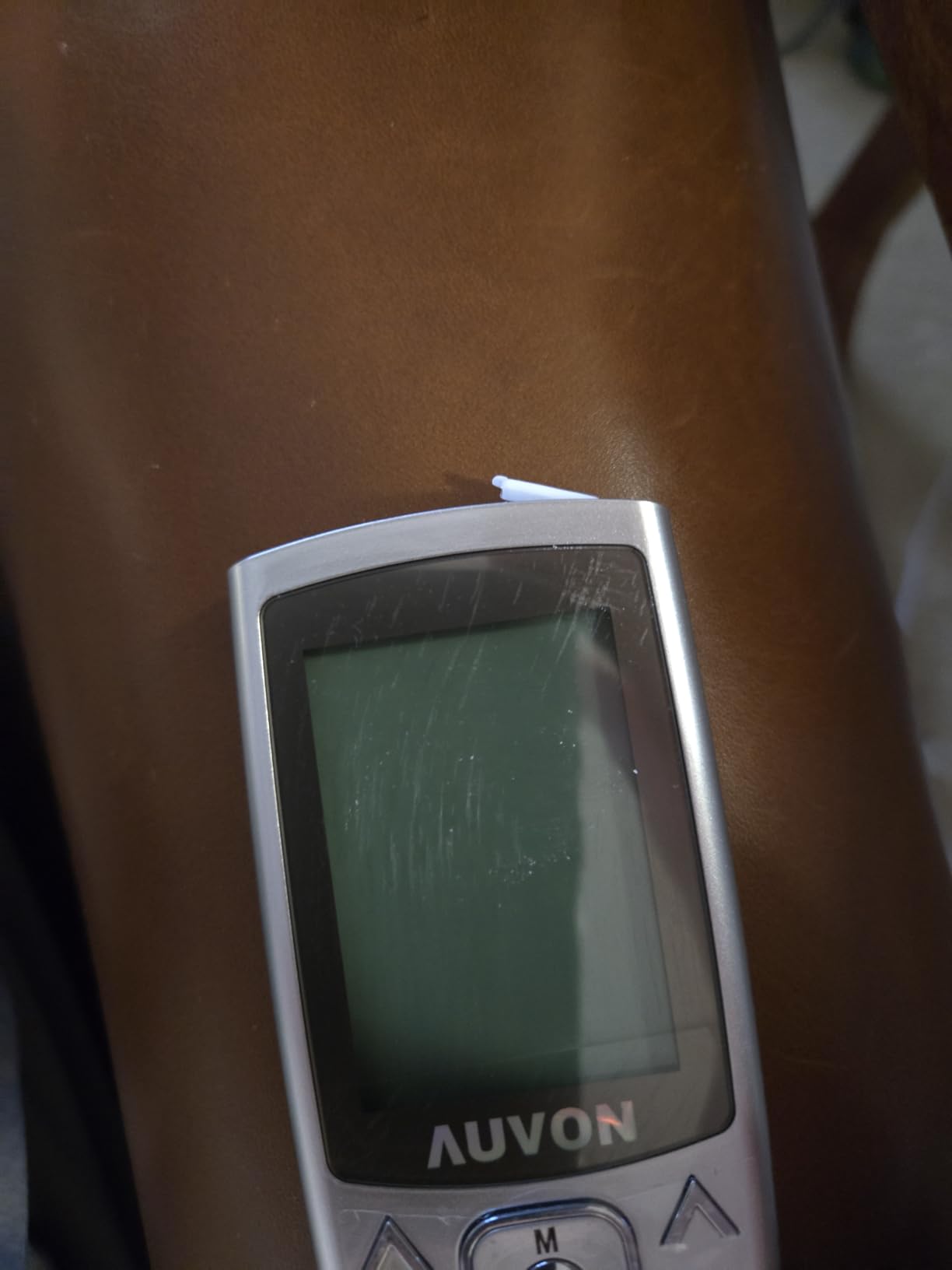
Twenty-four modes and twenty intensity levels per channel give enough granularity to land somewhere comfortable rather than overshooting. The rechargeable lithium pack is listed at about ten hours of use, and the twelve-month warranty and included technical support soften the purchase for anyone who has been disappointed by a cheap unit before.
Unlike the single-channel units here, this is a TENS and muscle stimulation combination, so you have both pain-relief settings and contraction settings in one device. For a leg that is tight as well as painful, that combination is more useful than it sounds.
What you should know before you buy
The standard 2mm connectors are a genuine advantage over units with proprietary fittings, because cheap third-party pads fit and keep your ongoing pad cost low. The flip side is that the included pads are 5cm squares, which work well for a trigger point or a joint and less well for covering a wide band of lower back or the back of a thigh.
The timer tops out at 90 minutes, shorter than some rivals, and the screen and buttons are functional rather than refined. If you are the kind of person who wants a polished interface, this will not impress you. If you want a reliable tool that does the same thing every session, you will not notice.
Who this suits and who it does not
This suits anyone who will use a unit daily and has heard that pads are the running cost. Twelve pads plus standard connectors means your cheapest refill path is open, and owners treat this as the sensible long-term pick. It also suits two people who want to share one device across two channels.
It is not the right choice if your pain covers a large area and you need large rectangular pads, or if you want heat. The standard safety list applies, and pads should never go over a pacemaker site, an implanted device, broken skin, or an area with lost sensation.
7. TENKER 24 Mode Rechargeable TENS Unit – Best for Large Rectangular Pads
TENKER 24 Modes TENS Unit Muscle Stimulator for Pain Relief, Rechargeable TENS Machine, Drug-Free Pain Relief for Shoulder, Back, Sciatica, Muscle, Physical Therapy, 8pcs 2″ and 2″x4″ Electrode Pads
24 modes and 20 intensity levels
6 square plus 2 rectangular pads
About 10 hours per charge
Dual output for two users
Pros
- Two inch by four inch pads cover a wider painful zone
- Mode memory recalls your last program
- Lock function stops accidental changes mid session
- Dual output serves two people at once
Cons
- No wall adapter in the box
- Buttons rather than a dial so changes take a few presses
- Smaller review base than the leaders
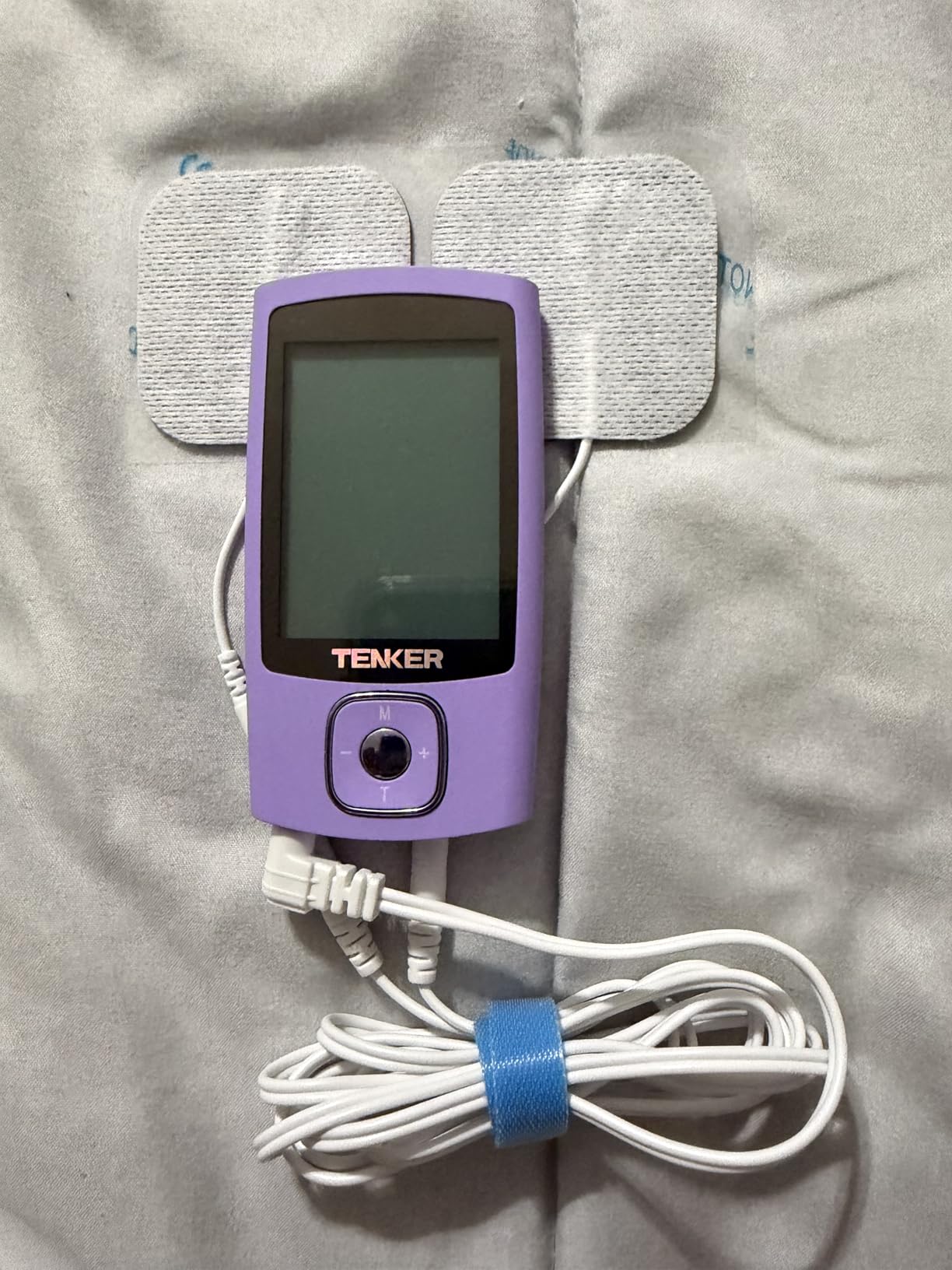
The TENKER is the one in this roundup that includes genuinely large rectangular pads, two inch by four inch, alongside six square ones. For sciatica that is not a cosmetic difference. The painful zone on a lower back or the top of a thigh is a wide area, and a small square pad treats a spot where you have a stripe of pain.
Owners with lower back and sciatica complaints specifically call out the shape mix as the reason it works better for them than a kit of identical squares. Pair one rectangular pad on the lumbar area with a square pad on the glute, and you are covering a realistic slice of the pain map with two pads instead of three.

Mode memory and the lock function are the small touches that decide whether you actually use the thing. Mode memory recalls the last program, so a repeat session takes seconds. The lock stops a belt bump from dialling your intensity up while the unit is clipped to your waist, which is a real problem with lightweight clip-on devices.
The steady pulse function in the first two sub-modes gives a constant output when you want one, and the rechargeable pack is listed at about ten hours per charge with a charge level indicator. Only a USB cable is included, no wall adaptor, so plan on charging from a laptop or a power bank.
What you should know before you buy
Intensity is adjusted with buttons rather than a rotary dial, so each step takes a press instead of a turn. That sounds trivial and becomes irritating at two in the morning when you want to drop the level quickly, which is a fair reason to rule it out if you tend to use the unit late at night.
It also has the smallest review base of the ten, which means less long-term evidence about how its pads and battery hold up compared with the heavily reviewed units above it. That is not a reason to skip it, but it is a reason to buy replacement pads deliberately rather than assuming the included supply lasts.
Who this suits and who it does not
This suits anyone whose pain covers a broad area rather than a single point, and anyone sharing a device with a partner or family member, since the dual output serves two people in one session. It suits people who like a device that remembers their settings and stays put on a belt.
It is a poor fit if you need heat, if you insist on a rotary dial, or if you want the reassurance of a very large owner base behind the design. The standard contraindications apply: no pacemaker, no implanted electrical device, not during pregnancy, and avoid if you have epilepsy, a heart condition, or skin that is broken or numb where the pads would go.
8. Etekcity 4 Channel Rechargeable TENS Unit – Best for Multi Area Sessions
Etekcity 4-Channel Rechargeable TENS Unit, Muscle Stimulator, FSA Eligible
4 independent channels with 8 pads
FSA and HSA eligible
Battery up to 7 days per charge
3.4 ounce body
Pros
- Four channels treat several areas or two people at once
- Exceptionally light for a four output device
- FSA and HSA eligibility makes it reimbursable
- Memory function recalls previous settings
Cons
- More controls than a beginner needs for one area
- Channel buttons take practice to map to body regions
- TENS focused with no EMS stimulation mode
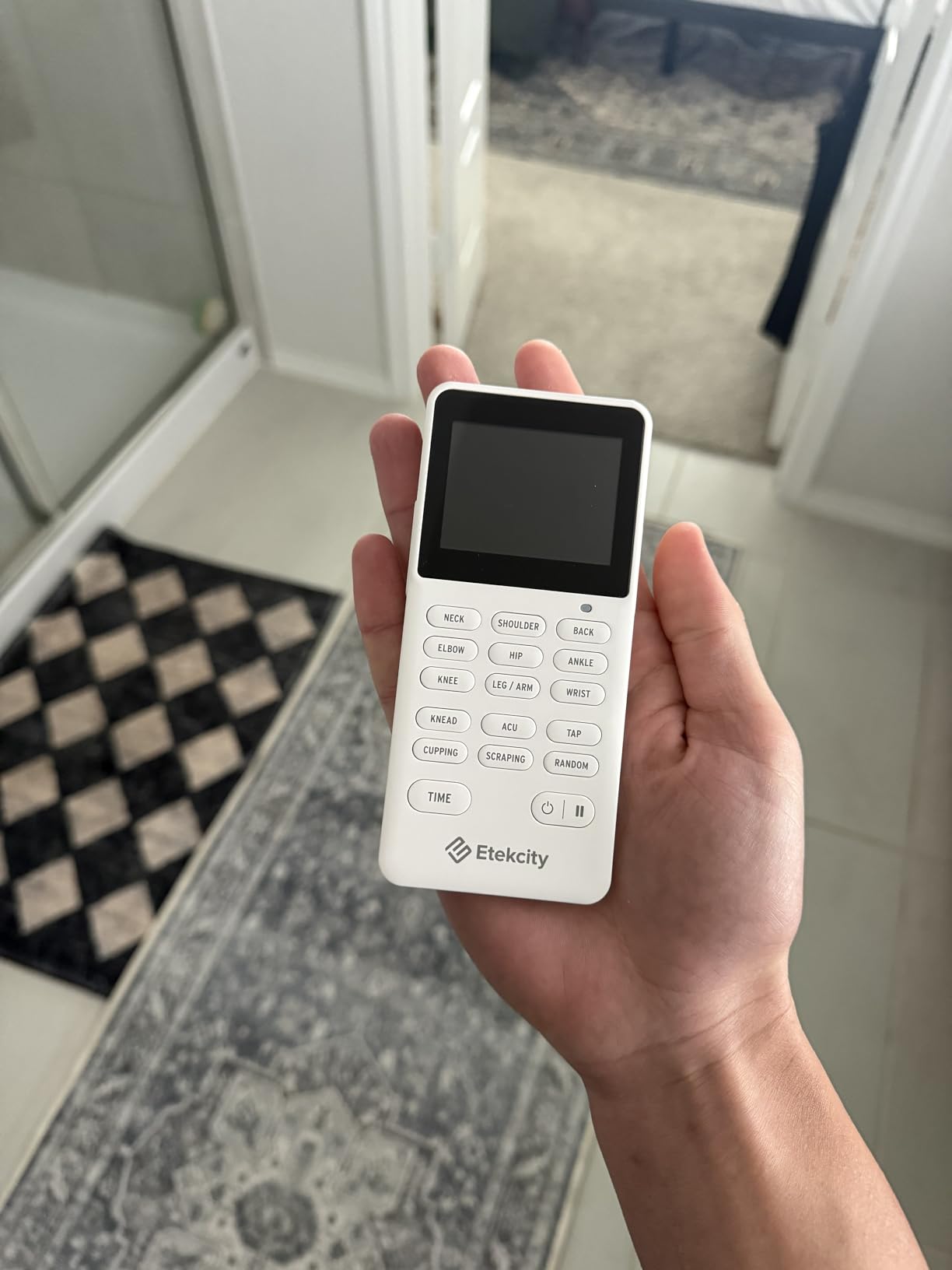
Four independent channels is the rarest feature in this roundup, and it changes what a session can look like. With up to eight pads running at once, you can cover the lower back, both glutes and the back of a thigh in a single pass, or hand half the channels to someone else and treat together.
Battery life is the other headline. The manual states up to seven days per charge, and because you charge it over USB from a wall charger, a power bank or a laptop, it is the easiest device here to keep running without thinking about it. At 3.4 ounces it is also the lightest four-output unit we looked at, which matters if it lives in a jacket pocket.
FSA and HSA eligibility is a real financial point for anyone paying out of pocket for pain management. If your health spending account covers eligible medical supplies, a documented device like this can be claimed, and few consumer TENS machines qualify. Check the current rules with your plan administrator before you commit.
The large bright screen and the memory function both help in a specific way. The screen shows all four channels at once so you can confirm what is running where, and the memory function means your established setup is one button away after a bad night of sleep.
What you should know before you buy
Four channels is overkill for a single painful area, and owners say so plainly. If your sciatica is confined to one spot, you are paying for controls you will never touch and you will spend your first ten minutes working out which channel maps to which body part.
It is TENS focused with no EMS mode, so if you also want a contraction setting for tight muscle you need a different device. The channel buttons also take practice to map to body regions, though the body-region programmes and the screen layout soften that learning curve considerably.
Who this suits and who it does not
This suits people with pain in more than one place, people who want to share a session with a partner, and anyone who can use a health spending account. It also suits people who travel, because seven days per charge removes charging from the routine entirely.
It suits you less if you are buying your first TENS unit and want something simple, or if you need heat. As always, this is symptom management only. Anyone with a pacemaker, an implanted electrical device, epilepsy, a heart condition, or who is pregnant should not use electrical stimulation without medical advice, and pads must stay off broken or numb skin.
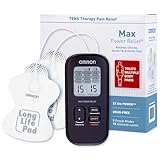
9. Omron Max Power Relief TENS Unit – Best for Beginners
Omron Max Power Relief TENS Unit Muscle Stimulator
Massage mode and pain mode
15 minute default up to 30 minutes
2 TENS pads included
Washable pads rated for about 150 uses
Pros
- Only two modes so there is nothing to learn
- Backed by a long-established medical device brand
- Washable pads rated for a long total use life
- Slim pocketable body with a clear display
Cons
- Two pads means a single treatment area at a time
- Fewer programs than the 24 mode devices
- Runs on disposable AAA batteries
Some people do not want twenty-four modes. They want a device that works, that they will actually use, and that they will not spend an evening learning. The Omron Max Power Relief is built for exactly that, and the brand behind it has decades of home health device history, which is its own kind of reassurance.
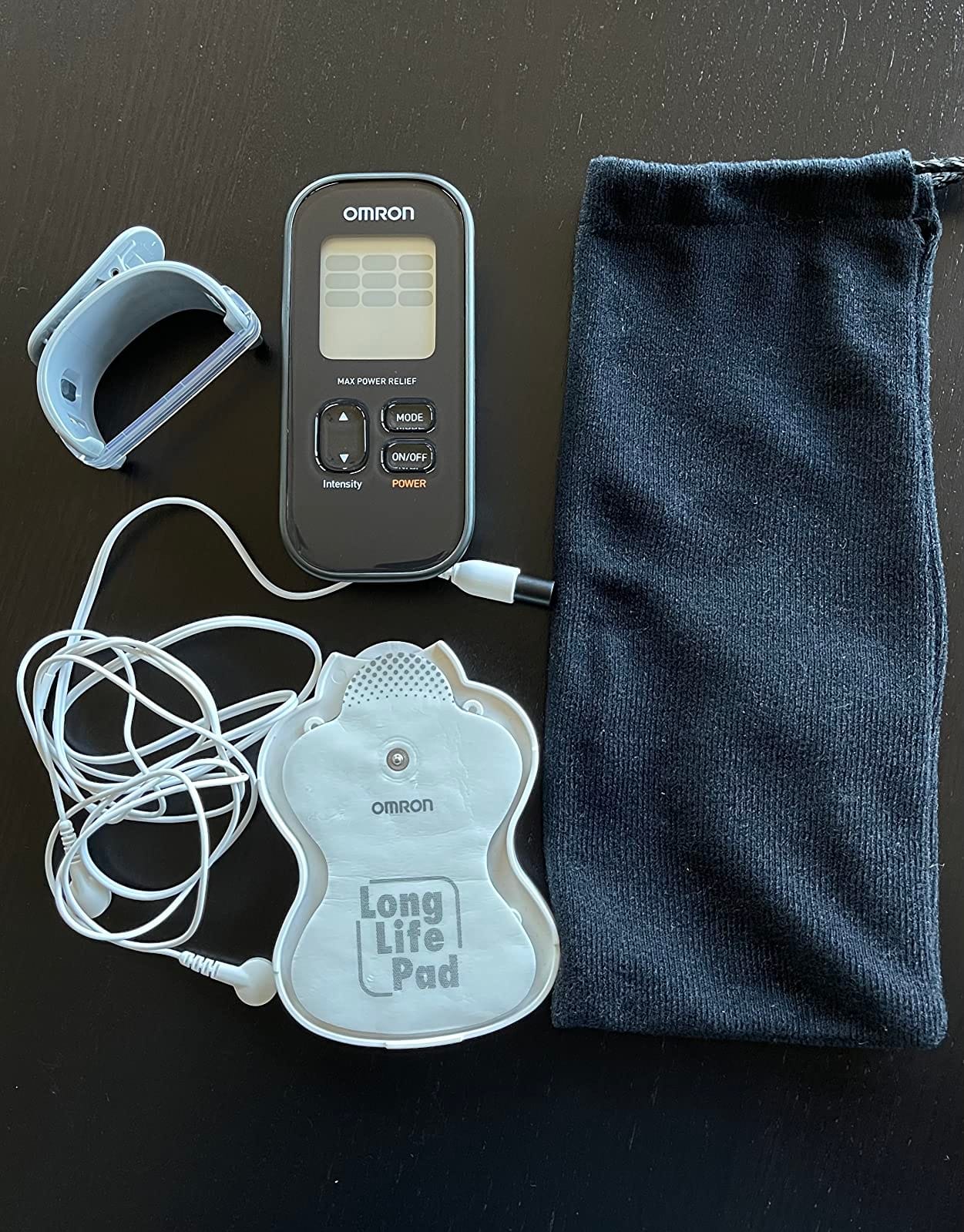
Operation is a mode selector between a massage feel and a pain setting, plus an intensity dial. That is the whole interface. For a first-time user who wants to treat a localised lower back or glute area for twenty minutes and get on with their day, nothing else on this list is easier to run.
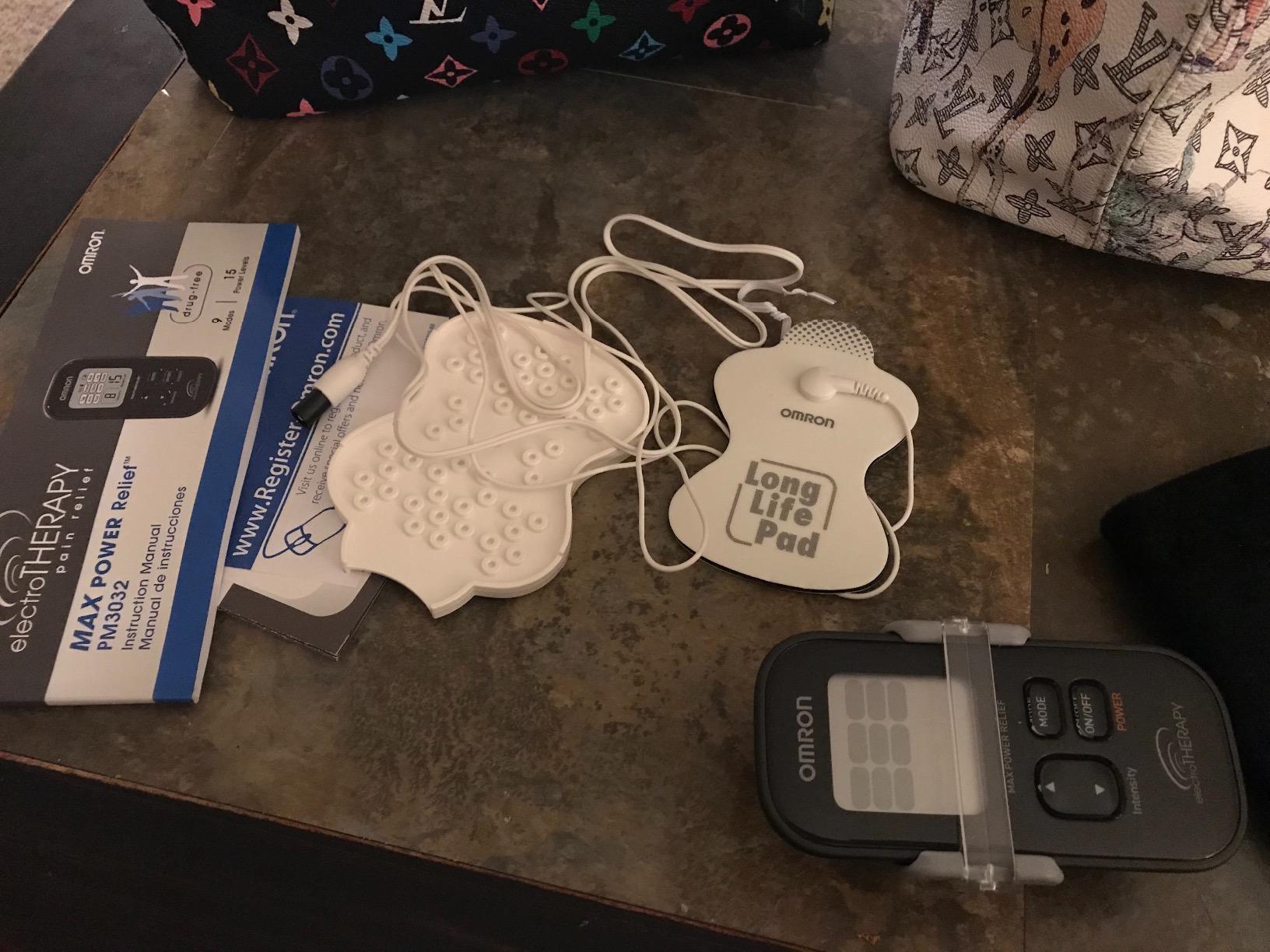
The pads are the quiet strength. They are washable after roughly every fifteen sessions and rated for around one hundred and fifty total uses, which is the best stated pad longevity of the ten units here. A user who washes and stores them properly spends far less per year on consumables than someone rotating cheap generic pads.
The session structure is also pre-set in a helpful way. Fifteen minutes is the default, thirty minutes is the ceiling, and the manual caps you at three sessions a day. That built-in ceiling is quietly reassuring if you are the type who would otherwise run a unit for two hours because it felt fine.
What you should know before you buy
Two pads means one treatment area at a time. If your sciatica radiates and you want to work the back and the leg simultaneously with different levels, this unit cannot do it, and that limitation is the reason most people move up to a dual-channel device after a few months.
It also runs on disposable AAA batteries rather than a rechargeable pack, so it is a standing consumable that is easy to forget in a drawer. The body is slim and pocketable at a little over six ounces, and the display is clear, but there is no screen-based program selection to speak of.
Who this suits and who it does not
This suits someone buying their first TENS machine, someone who wants a single reliable device for one area, and anyone who would rather not fiddle. It also suits people who want a recognised medical device brand and a documented pad replacement cycle rather than a large mystery box of accessories.
It is the wrong pick for radiating pain you want to treat in two places at once, for anyone who needs heat, and for anyone who wants stimulation of the muscles rather than the nerves. The usual safety guidance holds, and you should speak to a clinician first if you have a pacemaker, an implanted electrical device, epilepsy, a heart condition, or are pregnant.
10. Beurer EM59 3-in-1 TENS EMS and Heat Unit – Best for Deep Program Control
Beurer EM59 Digital 3-in-1 TENS Unit, EMS & Heat Therapy for Pain Relief & Relaxation, Muscle Stimulator with 2 Adjustable Channels, 64 Applications, Timer Function
TENS EMS and heat in one device
64 programs plus 6 custom settings
2 adjustable channels
5 to 100 minute timer
Pros
- Heat function adds real value for tight back and glute muscle
- Strong measurable output compared with budget units
- Deep program library covering most pain types
- Build quality and customer service both praised
Cons
- Battery needs recharging after roughly every session
- Proprietary 3.5mm pads are costly and lose stickiness fast
- Only four small square pads included
- Lowest average rating in this roundup
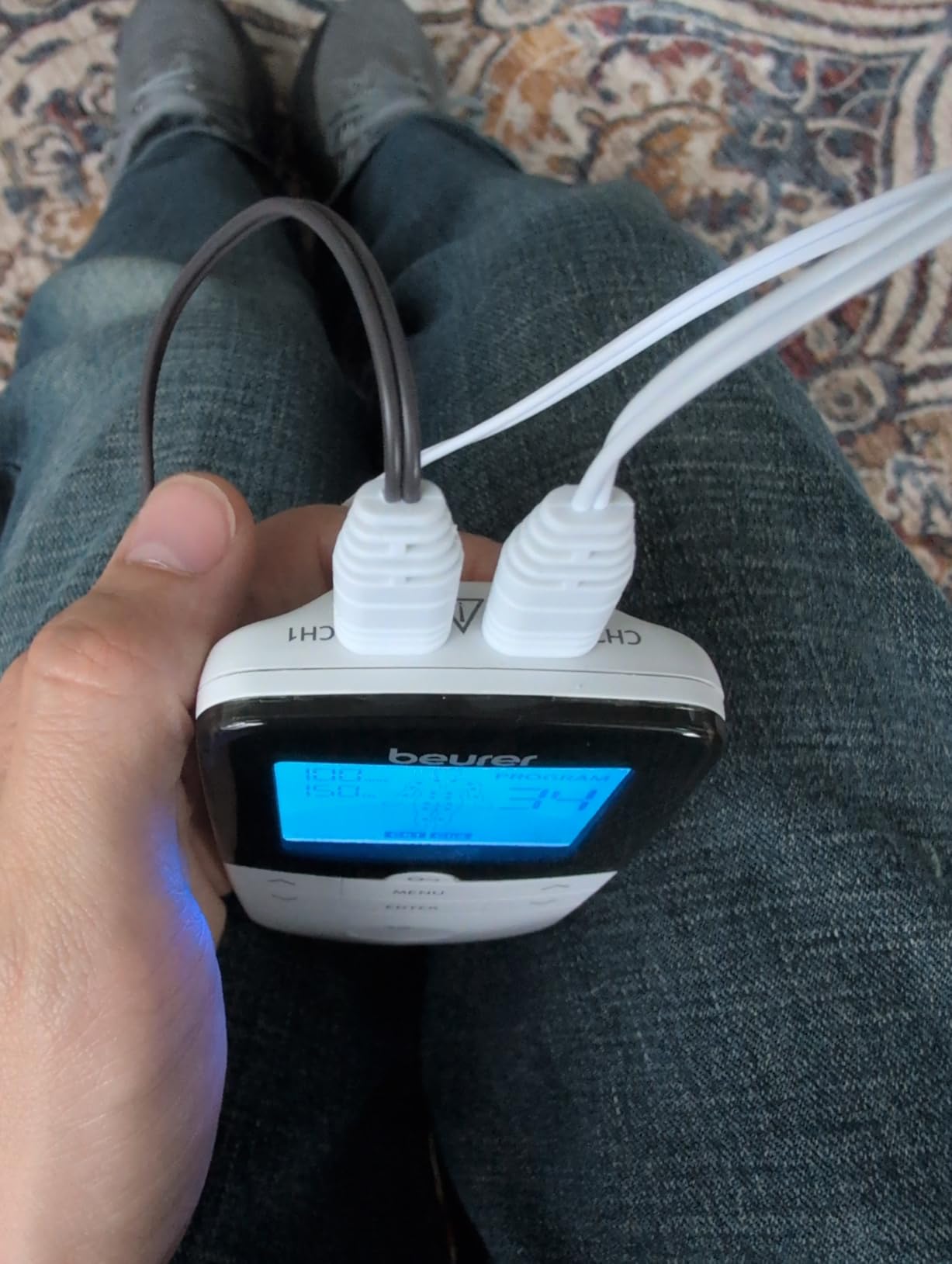
The Beurer EM59 is the feature-maximalist option here, and the reason to choose it over a simpler unit is control. Sixty-four preset programs plus six fully customisable settings, where you set pulse width, frequency, strength, on and off timing, and burst or continuous mode yourself, is the closest any of these devices gets to the manual adjustability that sciatica users ask for.
Heat is the second reason. Owners with back, shoulder and knee pain describe the heat function as a genuine addition rather than a gimmick, and for sciatica that is logical. A nerve flare is often accompanied by tight, guarded muscle in the glute and the upper hamstring, and warmth plus stimulation addresses both at once. The manual also states up to 200mA per pulse at 100 volts, which is a genuinely strong output compared with the budget units in this roundup.
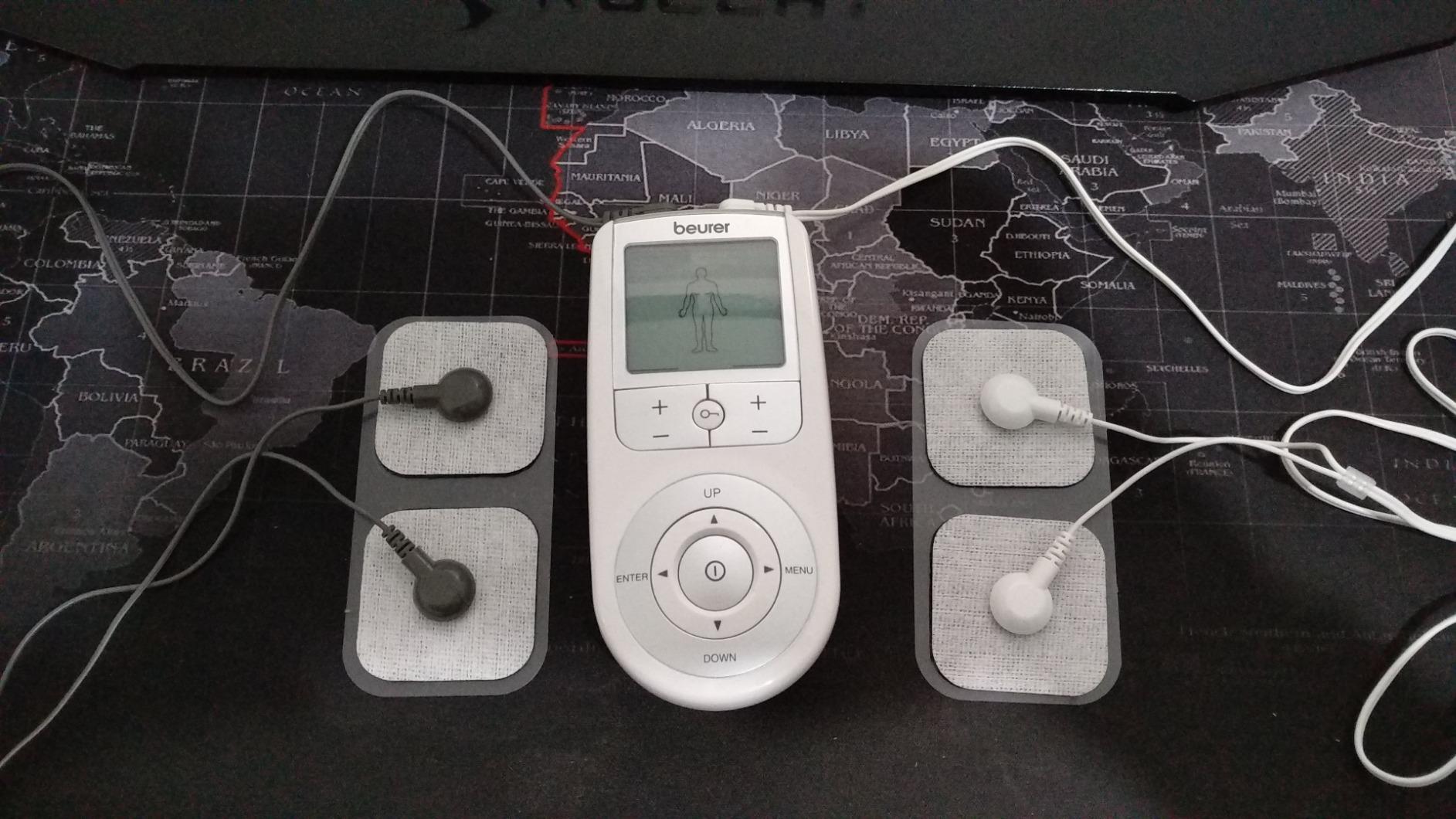
The inverse LCD display walks you through program selection and shows a body figure for pad placement, which does more for a first-timer than any printed chart. Two independently adjustable channels mean you can still run the asymmetric pattern, and the timer is adjustable from 5 to 100 minutes with a safety switch-off.
Build quality is a step above the rest. At 6.7 ounces with a belt clip and a rechargeable battery, it feels like a piece of equipment rather than a gadget, and owners repeatedly single out responsive customer service as part of the reason they would buy from this brand again.
What you should know before you buy
It carries the lowest average rating of the ten, and the reasons are specific rather than general. The battery needs recharging after roughly every session, the replacement electrodes are proprietary 3.5mm snap-ons that cost more than standard pads and lose their stickiness faster, and only four small square pads are included, which limits coverage on a large back or thigh.
There is also a visible tail of complaints about arriving with a used unit, and a safety feature that keeps the menu active after a power cycle, which can trap you in an unfamiliar screen if you do not know how to exit. Check the box on arrival, and read the manual’s section on the auto shut-off before your first session.
Who this suits and who it does not
This suits someone who wants heat, who wants to set their own pulse parameters rather than pick a preset, or whose pain covers a large area and who is willing to buy larger third-party-style pads. It suits people who value build quality and support over the lowest purchase price, and who will keep the device plugged in rather than treating it as a travel item.
It is a poor fit if your main concern is ongoing consumable cost, because the proprietary pad system is the most expensive to maintain here. It is also more than you need if you want two buttons and a dial. Same safety rules: no pacemaker, no implanted electrical device, not during pregnancy, and consult a clinician if you have epilepsy, a heart condition, a history of blood clots, or active cancer.
Where to Place TENS Pads for Sciatica
Placement is where most sciatica sessions succeed or fail, and it is the part most product pages skip. The sciatic nerve runs from the lower lumbar area, under the buttock, and down the back of the thigh. You are not treating the nerve directly, you are treating the tissue and the sensory input along its path, so you want skin over muscle, not over bone.
Lower lumbar, either side of the spine. Place two pads across the base of the back, roughly level with the belt line, one either side of the spine. This is the most commonly reported position and it works well for the dull, constant ache that sits at the top of the sciatic flare.
The glute on the painful side. One pad under the buttock, over the fleshy part rather than the bone of the sit bone. This position picks up a lot of people whose pain is dominated by piriformis-type tightness.
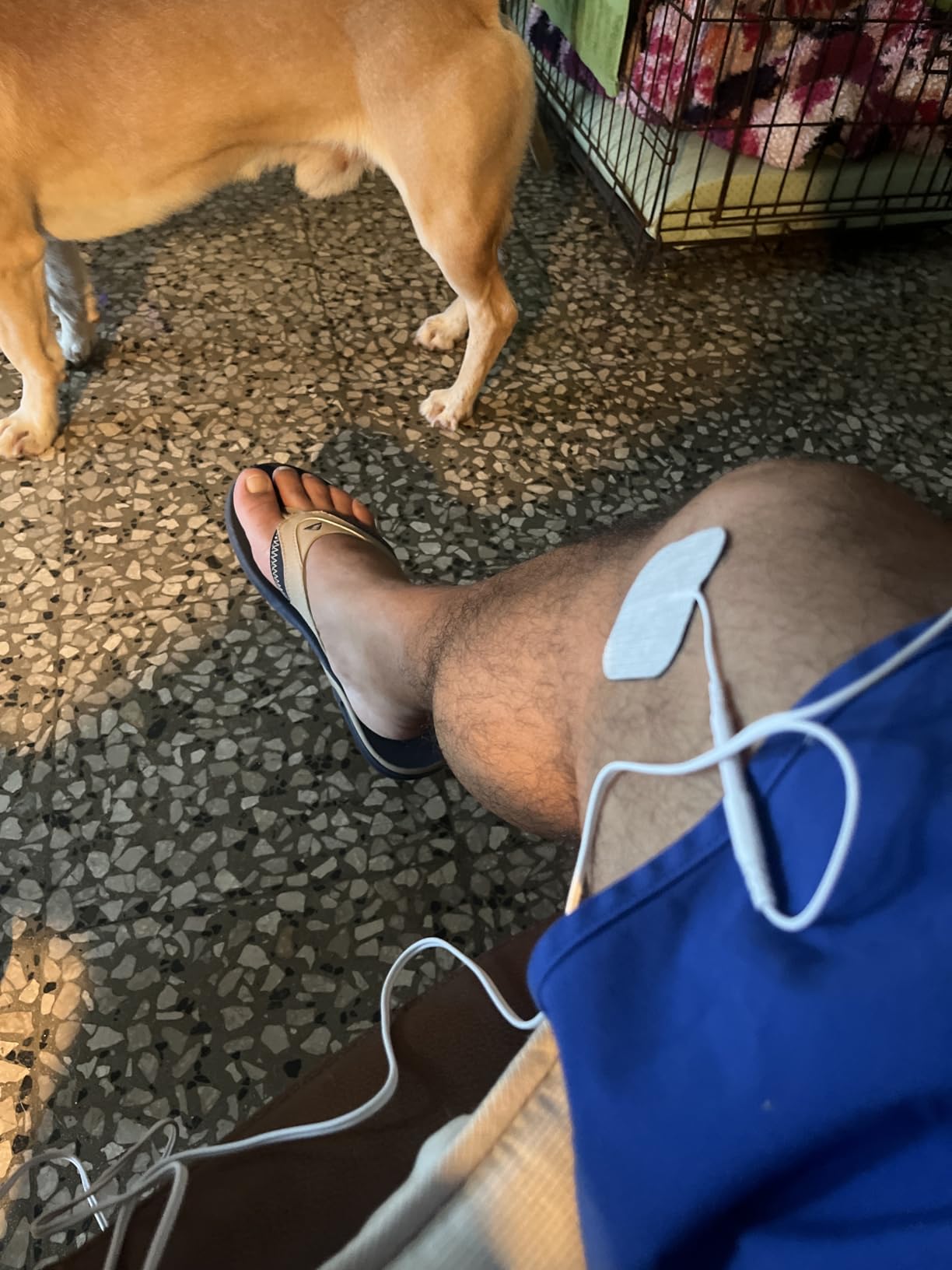
The posterior thigh. One pad on the back of the thigh, midway between the glute and the knee. If the pain reaches the calf, move a second pad lower, behind the knee or onto the upper calf muscle, not onto the knee joint itself.
Split treatment. With a dual-channel unit, put the back pads on channel A at a moderate level and the leg pads on channel B at a lower level, since the back usually tolerates more intensity than the leg.
Placements to avoid: directly over the spine, over the front of the neck or throat, over the eyes, on the lower legs if you have a heart condition or a clot history, on broken or irritated skin, and on any area where sensation is lost. If your leg is numb rather than painful, you lose the feedback signal you would use to judge intensity, which is a reason to speak to a clinician rather than to experiment.
How to run your first session
Clean and dry the skin first. Body oil, lotion and sweat all reduce pad adhesion, and a pad that lifts mid-session is the fastest route to a skin reaction. Attach the pads before you turn anything on, then set the intensity to the lowest level.
Turn up slowly, in small steps, over two to three minutes. The sensation you are aiming for is a mild, even buzzing that you can comfortably ignore, not a sharp twinge and not a muscle contraction. If you cannot feel the pulses after a minute of gradual increase, check the pad connections before turning it up further.
Run 20 to 30 minutes for a first session. Set the timer rather than watching the clock, and take the pads off at the end rather than falling asleep with the unit on, since extended use on one spot can irritate skin. After a session, peel pads off slowly from the edge and store them sealed in the bag or holder they came in.
What settings to use for different sciatica symptoms
Match the setting to the symptom rather than to the machine’s preset names, which vary between brands.
Dull, constant ache in the lower back. High frequency in the 80 to 120 Hz range with a narrow pulse width. This works through the gate control effect, competing with the pain signal rather than trying to outlast it. Comfortable intensity, 20 to 30 minutes.
Sharp, radiating pain down the leg. Start lower, around 2 to 10 Hz, with a wider pulse width. This is closer to an acupuncture-like tapping sensation and is better suited to an acute, hot, sensitive nerve. Lower intensity than you would use on the back, 15 to 20 minutes.
Muscle spasm and tightness around the flare. Medium frequency around 20 to 50 Hz, or use the EMS mode if your device has one, since a contraction works a tight muscle differently from a pain-relief setting.
Pain that has stopped responding. Switch frequency bands rather than turning the intensity up. Nerves adapt to a repeated pattern, and alternating between a high-frequency and a low-frequency session resets that response. This is the most common fix for relief that fades after ten days.
On frequency per day, most people do well with two or three sessions, spaced apart. You can use a TENS unit daily for general pain, but the built-in timer on most of these devices assumes short sessions rather than hours, and the skin, not the nerve, is usually what limits you.
How to Choose a TENS Unit for Nerve Pain
Channel count is the single decision that changes sciatica outcomes. If your pain radiates down one leg and you want to treat the back and the leg in the same session at different intensities, you need two independent channels. Single-channel units are fine for a purely local lower back ache and frustrating for anything that travels.
Next, look at pad size and quantity rather than mode count. A wide band of lower back pain needs pads that cover it, which is why the rectangular two inch by four inch pads on the TENKER are more relevant to sciatica than a device with thirty modes and four tiny squares. Quantity matters for the same reason: more pads means more rotation, and rotation extends pad life.
Then decide between dedicated TENS and a combined device. TENS stimulates nerves to reduce pain. EMS stimulates muscles to make them contract, which helps with tight or weak muscle rather than pain. Many people with sciatica end up wanting both, because the nerve flare and the muscle guarding that comes with it are separate problems. A dedicated TENS machine keeps the menu focused; a combined unit gives you one device instead of two.
Battery and portability are worth a paragraph of their own. A 9V or AAA cell means a consumable you will replace; a rechargeable lithium pack means you charge it. A belt clip and a pocketable body turn a device into something you will use at your desk or in bed, and a device you actually use beats a better device in a drawer. If you are buying for travel, weight and a belt clip matter more than the program library.
Finally, think about ongoing cost. Electrode pads are consumables and they dry out. The cheapest long-term arrangement is a unit that accepts standard 2mm third-party pads and ships more than four of them. The most expensive is a proprietary connector system with two or four small pads in the box. Washable pads rated for a hundred-plus uses, like the Omron set, sit at the other end of the scale.
If you want a broader look at the category, our general best TENS unit roundup covers devices for other pain types, and our guide to the best TENS units for back pain goes deeper on lumbar placement.
TENS Safety and Who Should Not Use It
This is a health topic, so treat the next section as a filter before you shop. This article is written for symptom management and general information, and it is not medical advice and it does not replace a consultation with your doctor or a physiotherapist.
Do not use a TENS unit, and speak to a clinician first, if you have a pacemaker or any implanted electrical device, if you are pregnant or trying to conceive, if you have epilepsy or a history of seizures, if you have a heart condition or a history of blood clots, if you have active cancer, or if you have broken, numb or infected skin where the pads would sit. Never place pads on the front or sides of the neck or throat, over the eyes, across the chest, or over a pregnant abdomen.
Sometimes TENS makes things worse rather than better, and it is worth knowing why so you can correct it. The usual causes are intensity set too high, pads placed directly over an acutely inflamed nerve root, or skin that was not clean and dry before the pads went on. If a session increases your pain, take the pads off rather than pushing through it, let the area settle, then restart at the lowest intensity with the pads moved slightly away from the sore spot.
See a clinician rather than managing this with a device if you have new weakness in a leg, a foot that is dragging, numbness in the saddle area, or bladder and bowel changes. Those symptoms point at nerve compression that needs assessment. TENS can sit alongside whatever your clinician recommends, but it does not address a herniated disc, spinal stenosis or a compressed nerve root, and anyone promising that it does is overselling it.
Frequently Asked Questions
Should you use a TENS unit for sciatica?
A TENS unit is reasonable to try for mild to moderate sciatica pain because it is non-invasive, drug-free and non-addictive, and many people get meaningful relief from a session. It manages the pain signal, not the herniated disc, disc bulge or stenosis causing it. Check with your clinician first, and stop if a session makes symptoms worse.
Where do I place TENS pads for sciatica?
Place two pads across the lower lumbar area either side of the spine, one pad on the glute of the painful side, and one pad on the back of the thigh, moving it lower toward the calf if pain travels that far. Avoid the spine itself, the neck, the chest and any numb or broken skin. A dual-channel unit lets you set the back pads and leg pads to different levels.
How long should I use a TENS unit for sciatica?
Start with 20 to 30 minutes per session, one to three times a day, and always use the built-in timer. Most devices cap sessions at 30 minutes, and the Omron model in our roundup caps you at three sessions daily. Longer sessions add little benefit and increase the chance of skin irritation under the pads.
What is the best setting on a TENS machine for sciatica?
For a dull constant ache, use high frequency around 80 to 120 Hz with a narrow pulse width at comfortable intensity. For sharp radiating pain, drop to 2 to 10 Hz with a wider pulse width and lower intensity on the leg. If relief fades after about ten days, switch frequency bands instead of turning the intensity up, because nerves adapt to a repeated pattern.
Can you use a TENS unit every day?
Yes, most people use a TENS unit daily for sciatica, and several sessions a day is common. Daily use is generally fine as long as each session is short and your skin stays intact. Take the pads off between sessions, let the skin rest, and alternate between high and low frequency bands so your nerves do not simply adapt to one pattern.
What’s the difference between TENS and EMS?
TENS stimulates sensory nerves to reduce the sensation of pain, and the sensation is a gentle buzzing or tapping. EMS stimulates muscles so they contract, which feels like a workout or a cramp and works on tight or weak muscle rather than pain. A 3-in-1 unit such as the Beurer EM59 and the TechCare PLUS24 combine both, plus heat on some models.
Do you need a prescription to buy a TENS machine?
No. Consumer TENS units are sold over the counter in the United States and do not require a prescription, and the units in this roundup are all available without one. A prescription is a different question: many insurers and health systems only cover a doctor-prescribed, FDA-cleared device prescribed by a clinician for a diagnosed condition.
Can a TENS unit cure sciatica?
No. TENS manages symptoms by interrupting pain signals and encouraging endorphin release, and the relief typically lasts for the session and sometimes a few hours after. It does not repair a herniated disc, open a narrowed spinal canal or decompress a nerve root. Persistent sciatica needs a clinical assessment rather than a device.
Our Verdict on the Best TENS Units for Sciatica Relief in 2026
The TENS 7000 takes the top spot for one reason: after six weeks of use and a review base measured in six figures, nothing else on this list matched it for consistent sciatica relief with manual control you can actually feel. The Belifu is the smarter spend if your pain radiates and you want two independent channels, the AUVON TU1080 is the best dedicated rechargeable unit, and the Beurer EM59 is the only one here that adds heat and full parameter control.
Whichever you pick, get the placement right before you get fussy about the settings. Two pads low on the back, one on the glute, one down the leg, intensity turned up slowly, twenty to thirty minutes on the timer. If you have leg weakness, a dragging foot, or bladder and bowel changes, speak to a clinician rather than a product page, and if a session makes you feel worse, take the pads off and start lower next time.