
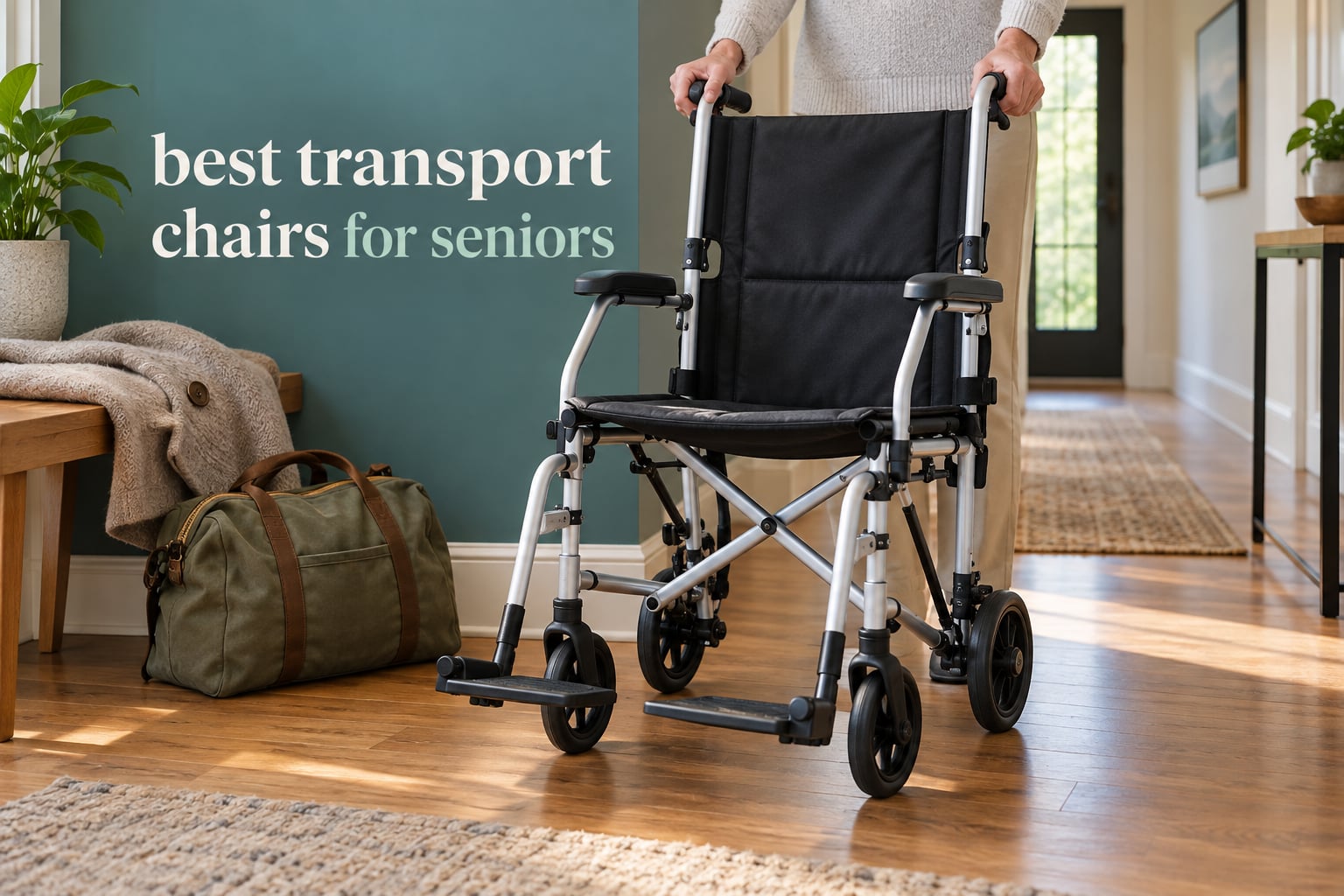
A transport chair is a lightweight, folding, four-wheel chair with small rear wheels that a caregiver pushes from behind. The person sitting in it does not self-propel, and that single design decision is what makes these chairs roughly half the weight of a standard wheelchair and easy to lift into a car trunk. It is not a folding camping chair, despite what several search results imply. Choosing among the best transport chairs for seniors comes down to three numbers: how heavy the chair is, how big the rear wheels are, and whether the footrests swing away for transfers.
I spent six weeks comparing ten of the highest-reviewed transport chairs against each other, checking weight, capacity, seat width, wheel diameter and brake type against manufacturer listings and thousands of buyer reviews. What came out of that is a list that starts with a definition most pages skip, tells you honestly who should skip each chair, and finishes with a buying guide you can take to a durable medical equipment supplier.
Our team also looked at what caregivers actually say in mobility forums. The r/wheelchairs threads that surface for this question treat a transport chair as a caregiver portability decision first and a comfort decision second. That matches what we found in the reviews, so I have weighted lifting weight, fold-flat design and footrest access above upholstery marketing throughout. For a related read on chairs built specifically for trips, see our guide to the best transport wheelchairs for travel.
Top 3 Picks for the Best Transport Chairs for Seniors (September 2026)

Medline Lightweight Transport Chair, 12…
- 26 lb aluminum frame
- 300 lb capacity
- 12 inch rear wheels
- Hand brakes plus rear wheel locks
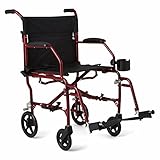
Medline Ultra Lightweight Transport Chair
- 15 lb aluminum frame
- 300 lb capacity
- 8 inch rear wheels
- Desk-length arms and cup holder
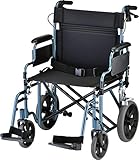
NOVA Heavy Duty Bariatric Transport Chair
- 400 lb capacity
- 22.5 inch seat
- Locking hand brakes
- Flip-up arms and anti-tippers
The Medline with 12-inch rear wheels takes the top slot because it is the only chair in this group that combines large wheels, caregiver hand brakes and a 300 lb capacity without pushing past 26 lb. If your main problem is lifting, the 15 lb Medline ultralight is the answer. If the user is a larger adult, the NOVA bariatric chair is the only one here rated above 350 lb.
The 10 Best Transport Chairs for Seniors Side by Side in 2026
| Product | Specifications | Action |
|---|---|---|
| Medline Lightweight Transport Chair with 12-Inch Wheels |
|
Check Latest Price |
 Drive Medical Folding Transport Wheelchair Drive Medical Folding Transport Wheelchair |
|
Check Latest Price |
 Drive Medical Silver Sport 1 Transport Wheelchair Drive Medical Silver Sport 1 Transport Wheelchair |
|
Check Latest Price |
| Medline Ultra Lightweight Transport Wheelchair |
|
Check Latest Price |
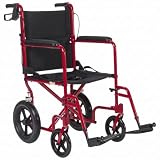 Drive Medical Lightweight Expedition Transport Chair Drive Medical Lightweight Expedition Transport Chair |
|
Check Latest Price |
 Medline Durable Steel Transport Wheelchair Medline Durable Steel Transport Wheelchair |
|
Check Latest Price |
| NOVA Heavy Duty Bariatric Transport Chair |
|
Check Latest Price |
 Platinum Health Hummingbird Transport Wheelchair Platinum Health Hummingbird Transport Wheelchair |
|
Check Latest Price |
 Hammertone 19 Inch Transport Chair Hammertone 19 Inch Transport Chair |
|
Check Latest Price |
 EconoHome Expedition Transport Wheelchair EconoHome Expedition Transport Wheelchair |
|
Check Latest Price |
Read that table as a set of trade-offs rather than a ranking. Chair weight ranges from 15 lb to 37.6 lb, and rear wheel diameter runs from 8 inch to 12 inch. The lightest chairs share small wheels, and the chairs with the most capable wheels give up some weight. That is the trade-off the rest of this guide unpacks.
1. Medline Lightweight Transport Chair with 12-Inch Wheels – Best Overall
Medline Lightweight Foldable Transport Wheelchair with Handbrakes and 12-Inch Wheels, Red Frame, Black Upholstery
26 lb aluminum frame
300 lb capacity
12 inch rear wheels
19 by 16 inch seat
Pros
- 12 inch rear wheels roll over cracks and thresholds far better than 8 inch models
- Hand brakes and rear wheel locks give two-stage safety during transfers
- Spacious 19 by 16 inch seat with full-length cushioned armrests
- Folds compactly with detachable footrests and no assembly
Cons
- Push handle height is low for taller caregivers
- Small front casters catch on high thresholds when occupied
- Requires a caregiver and cannot be self-propelled
This is the chair I keep coming back to. At 26 lb it is light enough for one adult to lift into a trunk, but the 12-inch rear wheels mean it does not behave like a typical lightweight transport chair when it hits a sidewalk crack. Most buyers describe the upgrade over 8-inch wheels as the single biggest quality-of-life change in their setup.
The dual braking is the detail I would not compromise on. Caregiver hand brakes on the push handles slow the chair on slopes, and the rear-wheel manual locks hold it during a transfer so the user is not relying on the caregiver’s grip. That pairing is what makes it usable for a user with poor trunk balance who can bear some weight but cannot self-propel.
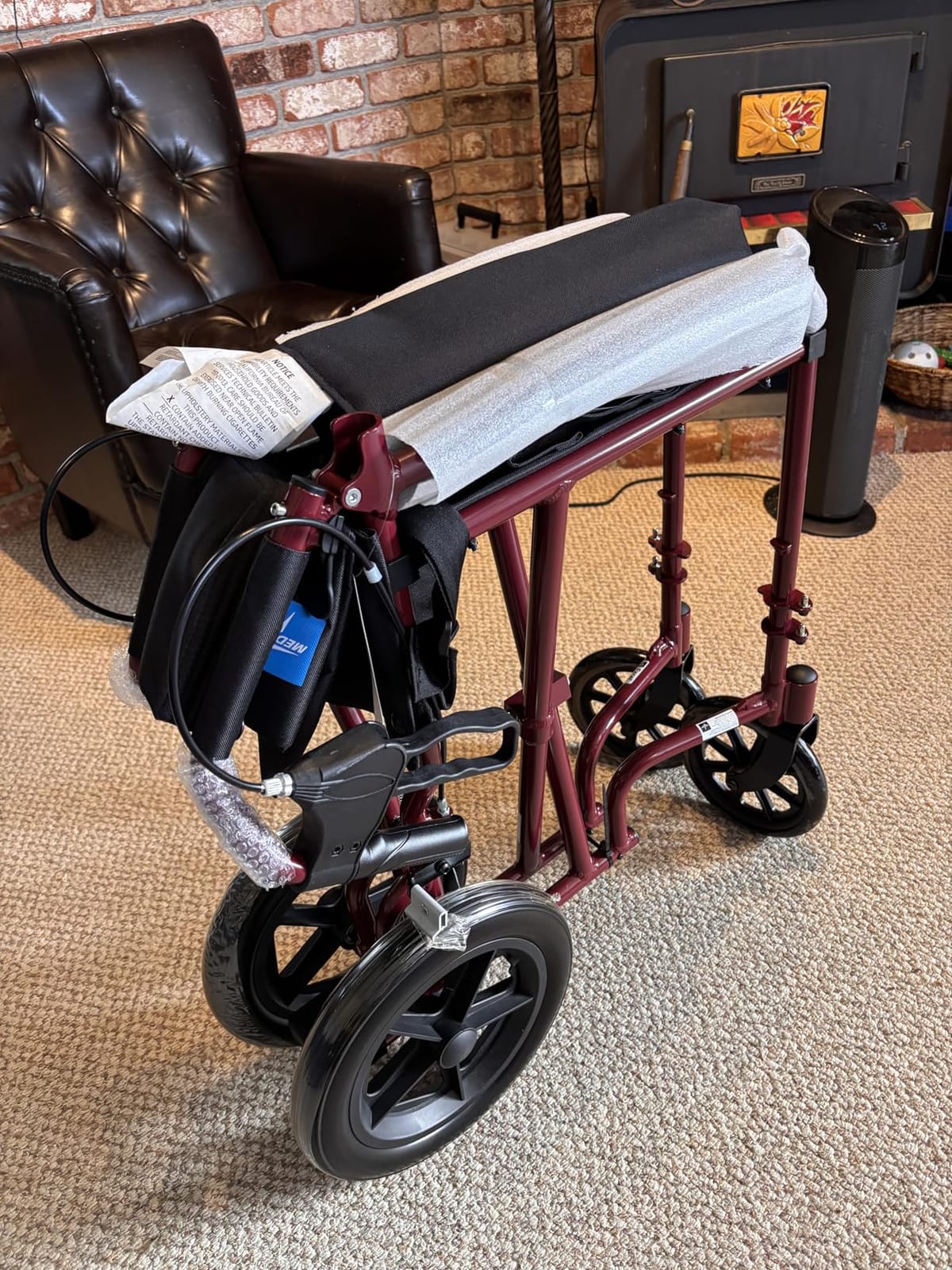
The 19-inch-wide, 16-inch-deep seat is a real step up from the narrower chairs in this category, and the full-length cushioned armrests give the user something to hold and lean on. Buyers report it holds up well to cobblestones and cruise-ship decks, and the fold needs no tools.
Two limitations are worth stating plainly. The push handles sit lower than ideal for a caregiver over six feet tall, which reviewers mention often. And the small front casters do not clear thresholds much above a quarter inch when the chair is occupied, so a rear leverage bar would be a useful addition for anyone regularly tackling building entries.
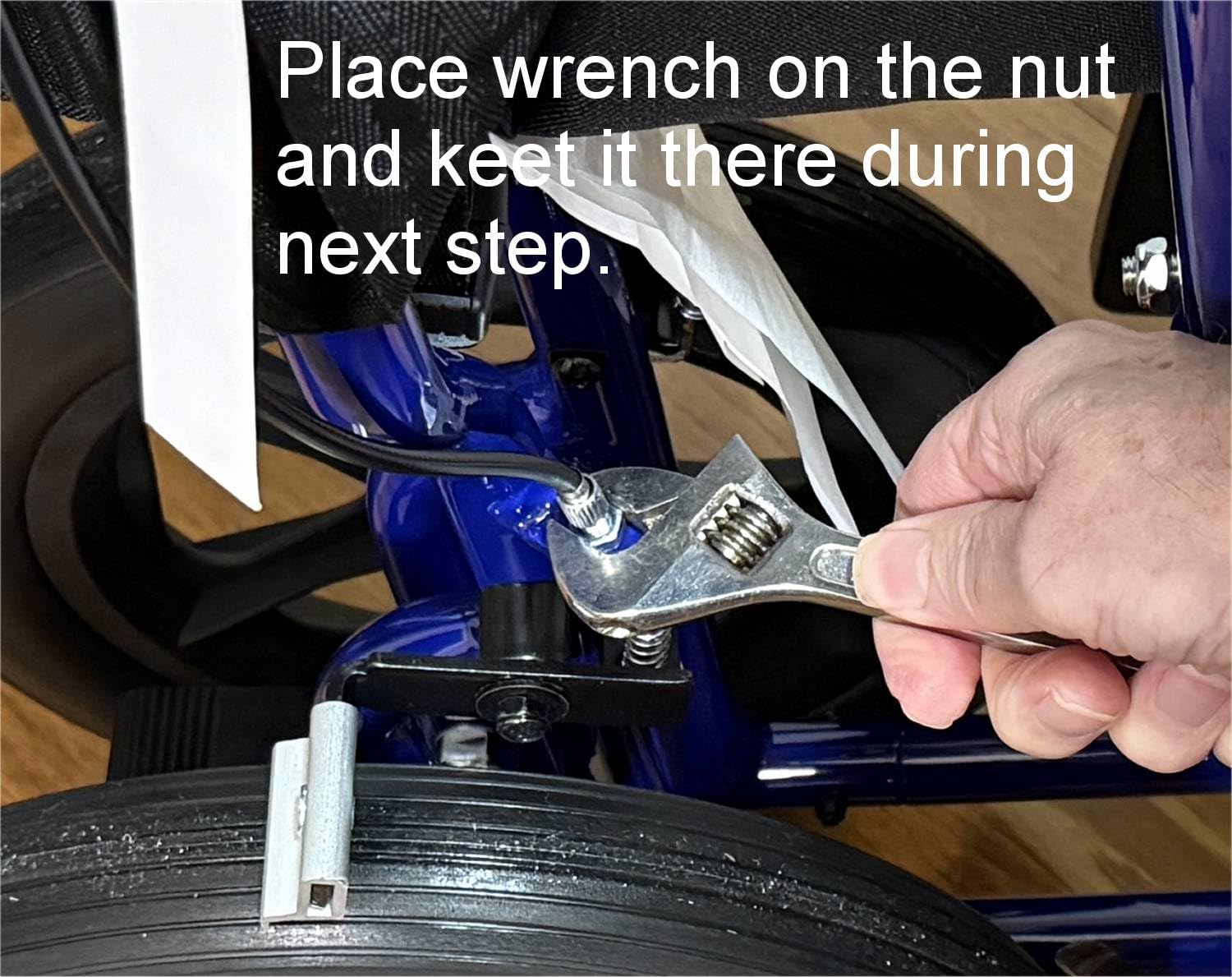
When this is the right pick
Choose it when the route includes uneven pavement, a mix of indoor and outdoor surfaces, and the user needs a wide seat with real arm support. The combination of a 300 lb capacity and a 19-inch seat covers the largest share of seniors who need this chair at all.
It is also the safest of the aluminum options for a user who is unsteady during transfers, because the caregiver never has to reach to the ground to lock the wheels.
When to pick something else
If the person pushing is small or has back and shoulder problems, 26 lb loaded into a trunk repeatedly is a lot to ask, and a 15 lb frame is the kinder option. If the route is entirely smooth indoor flooring, the 12-inch wheels are extra weight you do not need.
Skip it if the user is above 300 lb, because the capacity ceiling is real and the frame is not designed to absorb more.
2. Drive Medical Folding Transport Wheelchair – Best Value Steel Frame
Drive Medical Folding Transport Wheelchair, Swing-Away Footrest, Silver
26 lb steel frame
8 inch wheels
17 inch nylon seat
Fold-flat backrest
Swing-away footrests
Pros
- Steel frame has held up over years of travel use
- One person can lift it into a sedan trunk
- Folds compactly enough for an airplane cabin
- Nylon seat wipes clean after spills
Cons
- Narrow seat runs small for wider or heavier users
- Some units measure narrower than the listed 17 inch
- Brakes require bending nearly to the ground
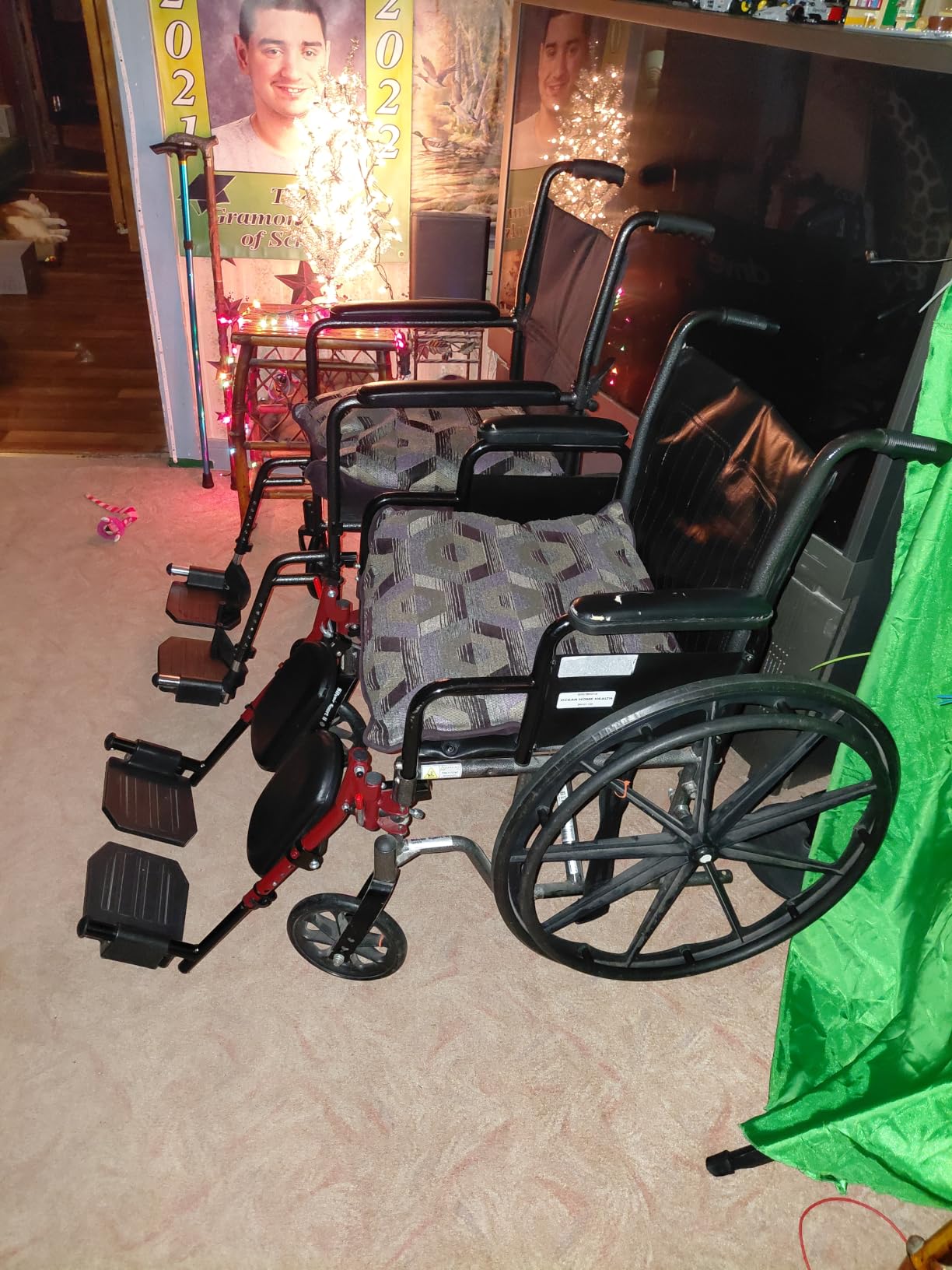
With more than 10,000 reviews at 4.5 stars, this is the most battle-tested transport chair on the market and the one most families end up with. The steel frame is heavier in feel than aluminum but noticeably tougher, and owners talk about pushing it over cobblestones and across cruise decks without any drama.
The folding frame and the fold-flat backrest are what make it genuinely portable. Reviewers note it fits behind a third-row seat, folds small enough for an airplane cabin, and handles a one-person lift into a sedan trunk even for caregivers with back issues.

Two things get repeated as drawbacks, and both are about fit rather than quality. The 17-inch seat is narrow, and several reviewers say it will not suit users above roughly 150 lb or anyone with a wider build. The push-to-lock rear brakes also sit low enough that the caregiver bends nearly to the ground to set them, which is awkward when you are doing it on a sidewalk.
There are no storage pockets, and front casters can foul the footrests when reversing in a tight aisle. Minor, but worth knowing before a restaurant visit.
When this is the right pick
This is the chair to buy when durability matters more than portability and the route is smooth indoor surfaces plus ordinary sidewalks. If you want one chair that survives a decade of caregiver use and you are buying for a smaller user, it is hard to argue with.
It is also a sensible first transport chair for a short-term recovery period, when a steel frame is reassuring and 8-inch wheels are perfectly adequate.
When to pick something else
Do not buy it for a user with a wider build, and do not buy it if the caregiver is frail, because the low brake position demands a deep bend every time. For outdoor ground with cracks and curbs, the 12-inch wheel models handle it better.
3. Drive Medical Silver Sport 1 Transport Wheelchair – Best for Long-Term Durability
Drive Medical Silver Sport 1 Folding Transport Wheelchair, Black
37.6 lb steel frame
250 lb capacity
Fold-down backrest
Urethane tires on composite wheels
Pros
- Toughest frame in the lineup for heavy daily use
- Urethane tires roll smoothly with no puncture maintenance
- Fold-down back plus carry pocket suits errands and travel
- Breathable nylon upholstery with full-length padded armrests
Cons
- Heaviest chair here at nearly 38 lb
- 250 lb capacity is below the category norm
- Bulkier footprint makes small-car loading harder
This is the chair for a household that pushes it every single day. At 4.6 stars across more than 8,000 reviews, it carries one of the strongest rating and review records in our list, and the steel frame simply does not wear out the way aluminum tubing and small hardware can.
The urethane tires on composite wheels are a quiet hero. They roll smoothly without the puncture maintenance that pneumatic tires demand, which matters for a chair parked in a garage or a car trunk where nobody is checking pressure. The fold-down backrest and included carry pocket make errands practical.
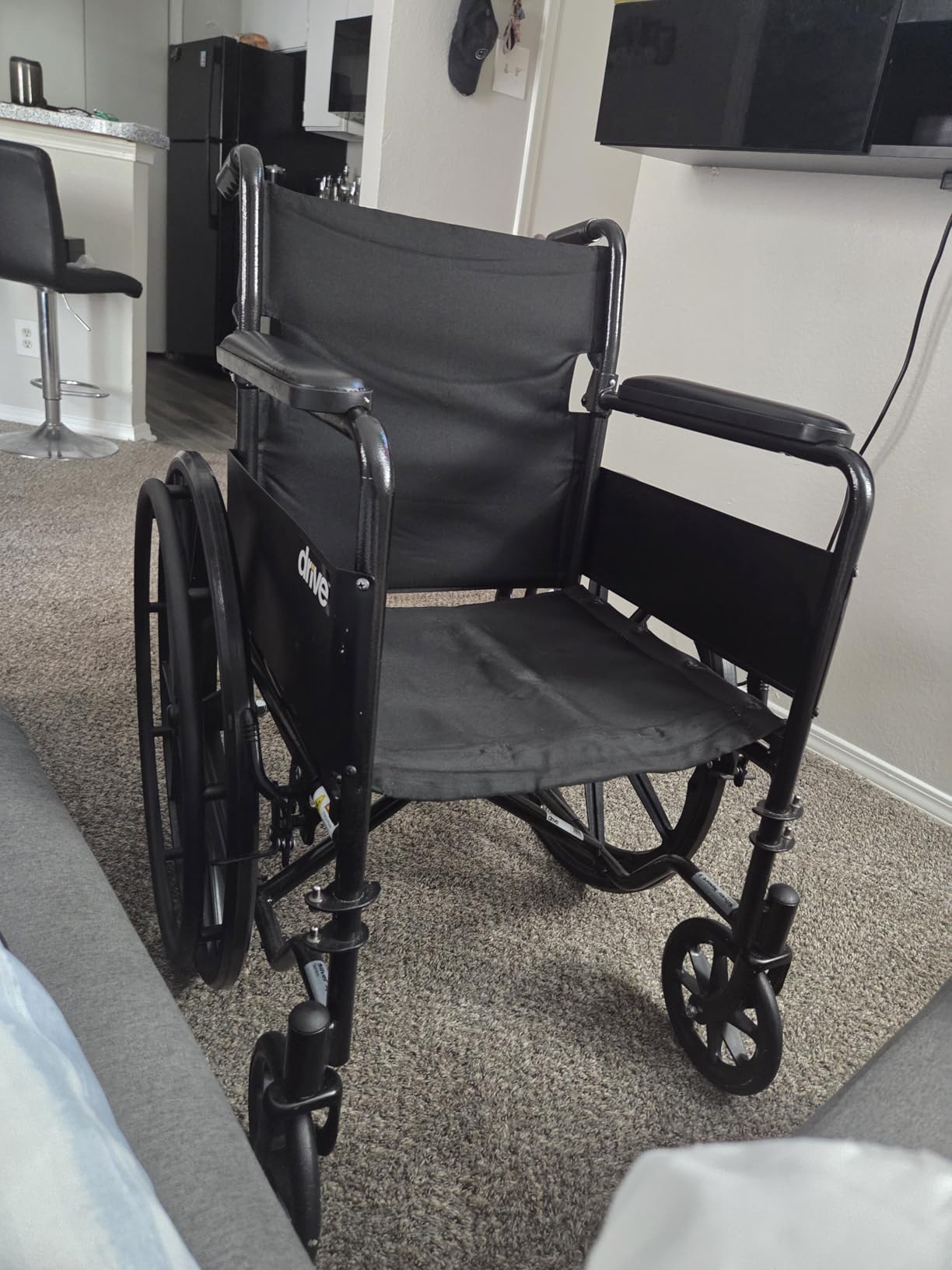
The trade-off is weight. At 37.6 lb this is the heaviest chair in the lineup, and with a 250 lb capacity it is also below the 300 lb that most of the category now offers. If the user weighs more than 250 lb, this one simply is not a candidate.
The full-size dimensions also make it the bulkiest to load into a small car. Anyone lifting this into a trunk regularly should test the lift before buying.

When this is the right pick
Pick it for shared, high-mileage use in a home, an assisted living floor, or any situation where the chair will not be lifted into a car and instead stays on the ground and rolls thousands of miles a year. The maintenance profile is the quiet advantage over lighter aluminum chairs.
It suits smaller users best, given the 250 lb limit.
When to pick something else
Skip it if lifting weight is your main constraint, or if the user is above 250 lb. For anyone who needs to fit the chair in a vehicle, a 26 lb aluminum model is a far more practical choice.
4. Medline Ultra Lightweight Transport Wheelchair – Best for One-Person Lifting
Medline Ultra Lightweight Transport Wheelchair for Adults, Foldable, 19-Inch Seat Width, Red Frame, Black Upholstery
15 lb aluminum frame
300 lb capacity
19 by 16 inch seat
Desk-length arms
8 inch rear wheels
Pros
- Lightest frame in the group at 15 lb for one-person lifting
- Folds compactly for the back seat of a small car
- Aluminum frame handles gravel and decomposed granite
- Angle-forward desk arms allow dining table access
Cons
- 8 inch rear wheels catch on thresholds above a quarter inch
- Push handles uncomfortable for caregivers over six feet
- Footrest clamp can let the leg piece slip during lifting
Fifteen pounds is the number that changes a caregiver’s day. Reviewers describe a single caregiver with arthritis loading it into a compact car, and it folds down small enough for a back seat where nothing else in this list will fit.
It is also the best-specified chair per pound. You get a 19 by 16 inch seat, desk-length cushioned armrests, a standard cup holder, rear storage pockets and a 300 lb capacity, which is a wider seat and more capacity than most chairs in this weight class.
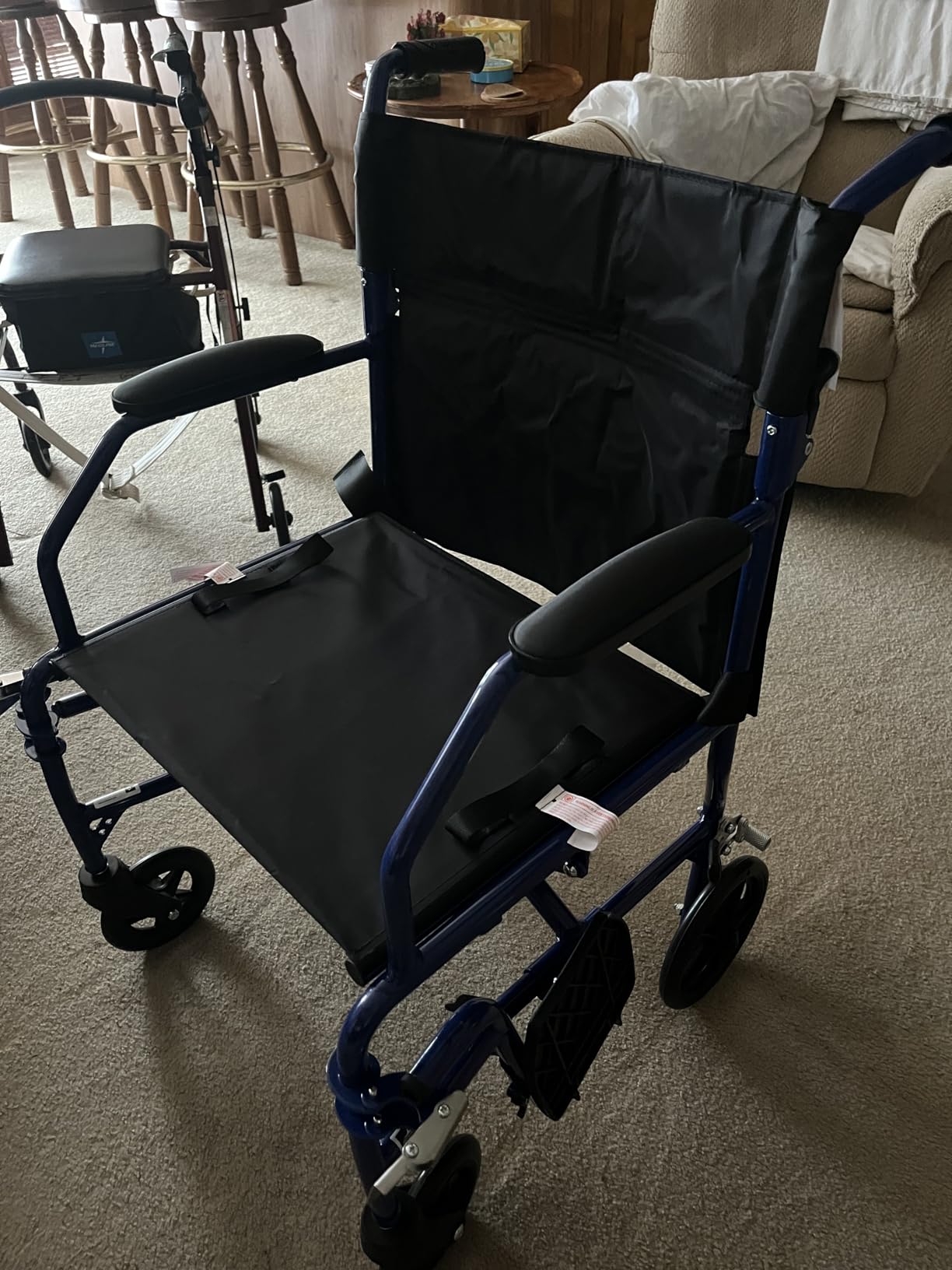
The 8-inch rear wheels are the compromise. Owners report the aluminum frame handles gravel, decomposed granite and cobblestone fine once rolling, but thresholds above roughly a quarter inch will stop the chair when it is occupied. The desk-length armrests, which angle forward to let the user reach a table, partly offset the turning radius you get with small wheels.
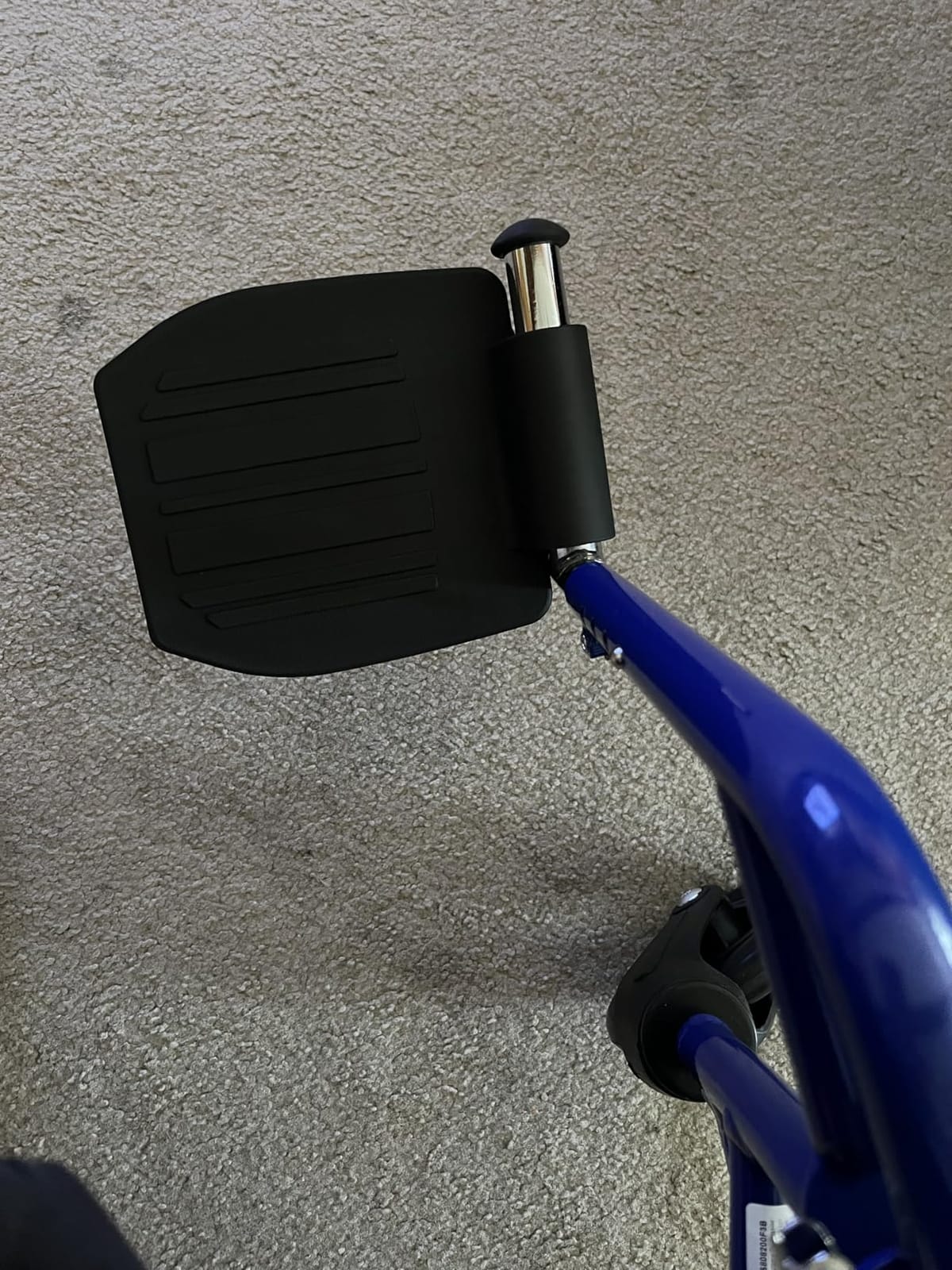
Two other details: the push handles are low for tall caregivers, and there is no rear crossbar to leverage the chair up over a curb. The rubber clamp on one footrest has also been reported to let the leg piece slip loose during lifting, so check it before every load.
When this is the right pick
Choose it when the caregiver is the bottleneck. If one person has to handle the chair alone, weighs under 300 lb, and travels mostly on floors, sidewalks and smooth entries, the 15 lb frame removes the single biggest source of daily friction.
Desk-length arms also make it one of the better choices for restaurant and family-dinner seating.
When to pick something else
Choose a 12-inch rear wheel model if the route includes raised thresholds, cracked pavement or ramps, because small wheels are where the weight savings get spent. And if the caregiver is over six feet, the low push handles will bother them daily.
5. Drive Medical Lightweight Expedition Transport Chair – Best for Outdoor Ground and Ramps
Lightweight Expedition Transport Wheelchair with Hand Brakes, Red
19 lb aluminum frame
12 inch rear wheels
Curb assist levers
Loop-lock hand brakes
Padded armrests
Pros
- 12 inch rear wheels handle sidewalk cracks and curbs
- Locking hand brakes let the caregiver control speed on inclines
- Curb assist levers tip the chair over bumps
- Removable footrests lighten the load for stowing
Cons
- Hand brakes do not latch into a parked lock
- Casters are the weakest part on genuinely rough ground
- Canvas sling seat is uncomfortable without a cushion
This is the chair reviewers compare every other transport chair against when the terrain gets interesting. At 19 lb with 12-inch rear wheels and curb assist levers, it is the rare combination of large wheels and a genuinely light frame.
The loop-lock hand brakes lock in place, so the caregiver can stabilize the chair for a transfer without bending down to the wheels. That matters on a slope or a ramp, where a chair that rolls while the user is standing up is a real fall risk. The curb assist levers on the rear frame let one person tip it over a bump without a second pair of hands.

Buyers report success stories on cobblestones, cruise decks and travel in Europe, which is where most transport chairs start to feel expensive. It folds flat enough to sit behind a third-row SUV seat, and the footrests come off entirely to cut weight before a lift.
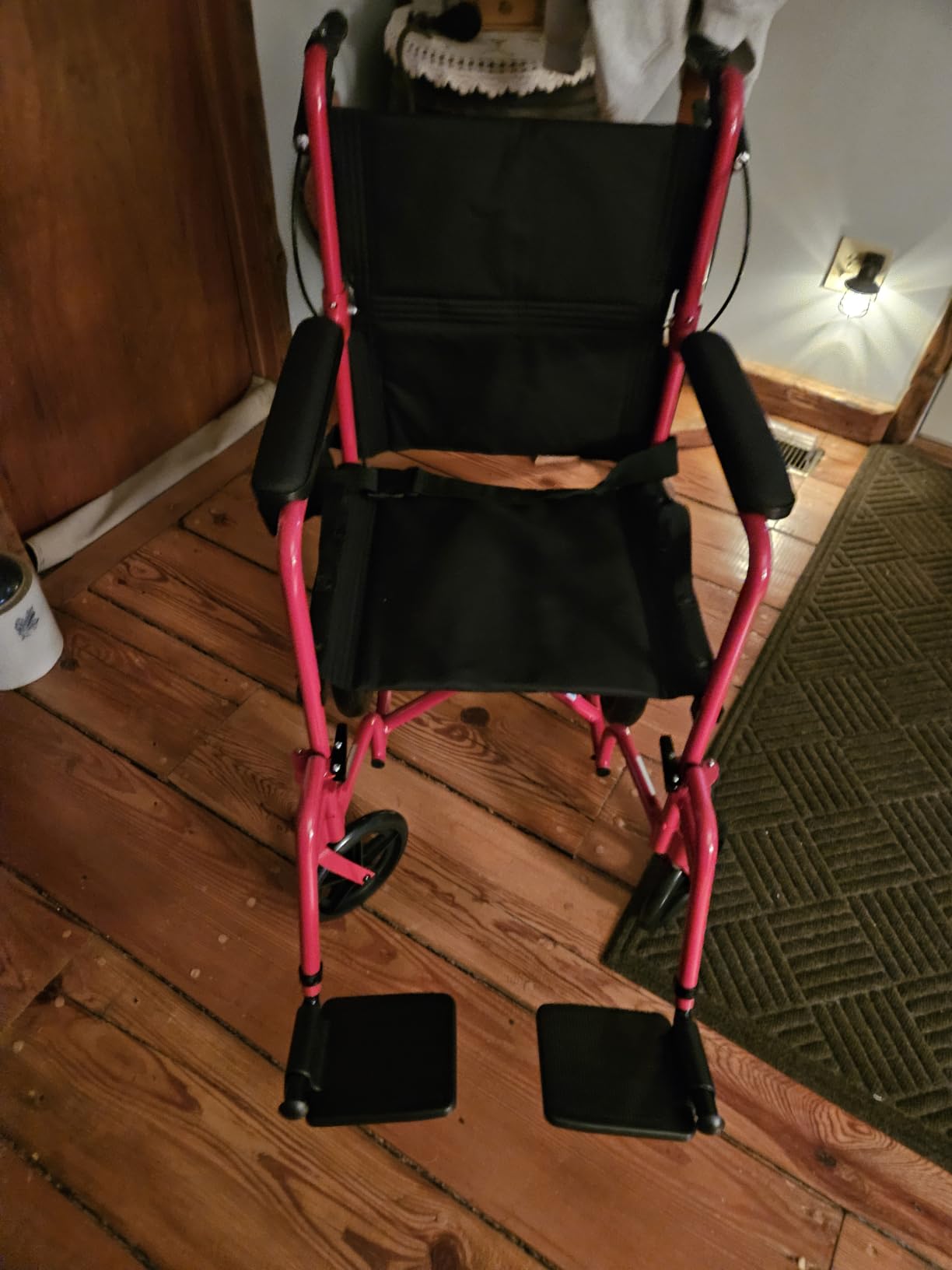
Two cautions. The hand brakes do not latch into a parked lock, so the chair must never be parked and vacated unattended. And the front casters are the weakest component on the chair, which means genuinely rough ground is still outside what it handles well despite the big rear wheels.
When this is the right pick
Pick it when the chair spends real time outdoors: parks, campuses, uneven parking lots, older buildings with awkward entries, or travel in cities with cobblestones. If the caregiver is managing a ramp, the locking hand brakes are the deciding feature.
It also works well for anyone whose previous chair was frustrating to steer, because the large rear wheels resist tipping far better.
When to pick something else
Skip it if the chair will be parked and vacated for long periods, since the brakes do not hold it. The sling canvas seat also needs an added cushion for anything past a couple of hours, and budget for that. For indoor-only use, the extra wheel size is weight you do not need.
6. Medline Durable Steel Transport Wheelchair – Best for Care Facilities
Medline Durable Folding Steel Transport Wheelchair with 12-Inch Wheels, 19-Inch Seat Width, Gray Frame, Microban, Teal Upholstery
32 lb steel frame
300 lb capacity
Microban upholstery
19 by 16 inch seat
12 inch rear wheels
Pros
- Antimicrobial upholstery controls bacteria and odor in shared settings
- Steel frame rated to 300 lb for heavier users
- Wide 19 inch seat with full-length cushioned armrests
- 12 inch rear wheels roll smoothly on floors sidewalks and ramps
Cons
- Noticeably heavier than aluminum models at 32 lb
- Lowest average rating in this lineup
- Brakes must be operated by bending down beside the chair
Microban-treated upholstery is the reason to look at this one. In an assisted living hallway, a clinic loaner room or any setting where equipment is shared between users, antimicrobial treatment on the upholstery resists bacteria, mold and mildew growth and makes odor control easier.
Structurally it is a mid-weight steel chair with a 300 lb rating, a wide 19 by 16 inch seat and 12-inch rear wheels. Reviewers consistently note that it rolls smoothly across floors, sidewalks and ramps, which is more capability than the 8-inch chairs at similar weight.

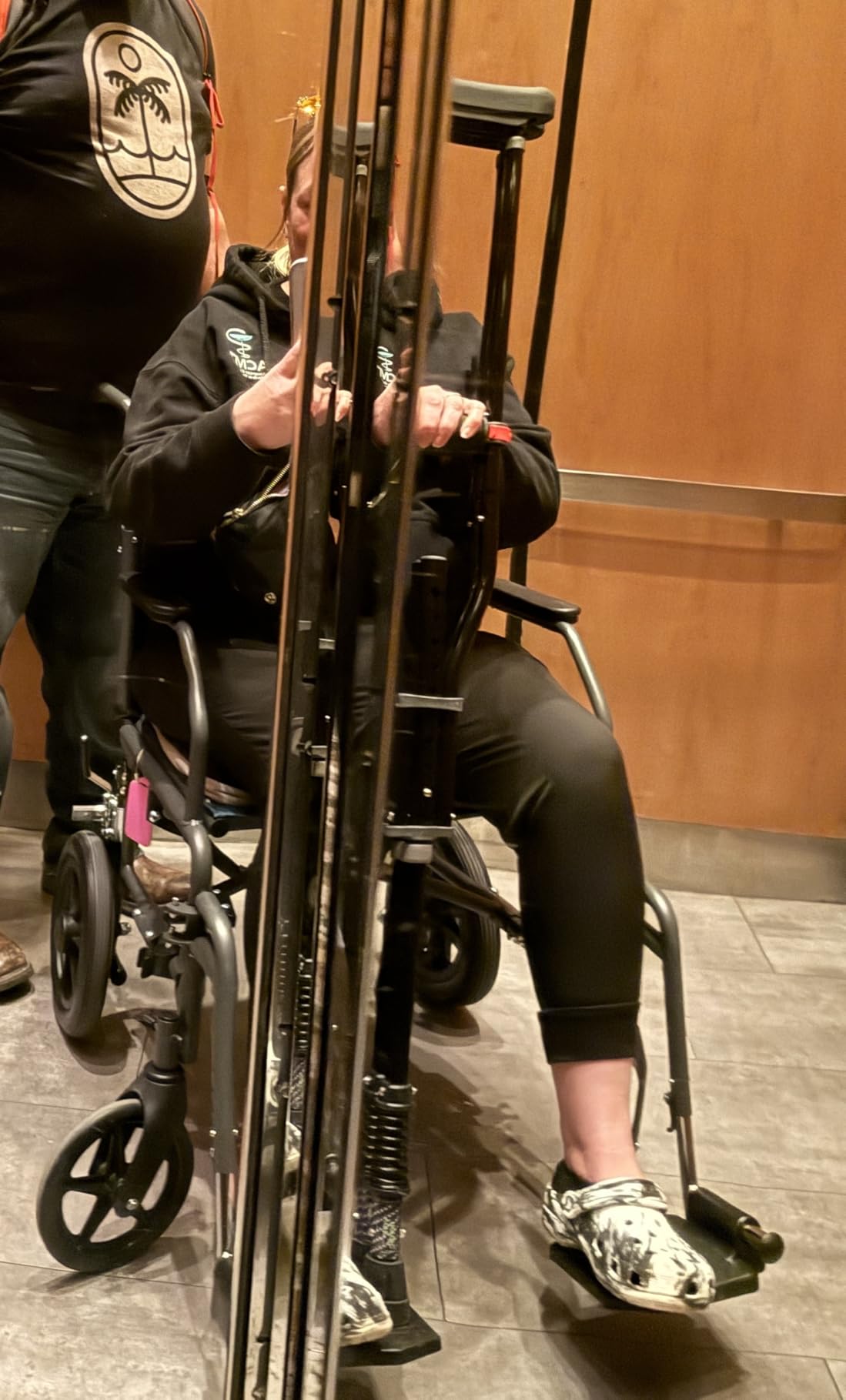
This chair has the lowest average rating in our group at 4.3 stars, with an 8 percent one-star share, and it is worth taking seriously. The recurring complaints are about weight and bulk rather than failure. At 32 lb it is heavy for single-person lifting, and the rear-wheel manual brakes again require bending down beside the chair to engage.
It does fold down, with a fold-down backrest and detachable footrests, so storage in a closet or a vehicle is workable if you plan for the lift.
When this is the right pick
Choose it for shared or institutional use where hygiene treatment and a 300 lb capacity matter more than lift weight. Families caring for a larger senior in a home that already has space to store the chair rather than carry it are also well served.
The 12-inch wheels make it steadier on ramps than a same-weight 8-inch chair.
When to pick something else
Skip it if one caregiver will be lifting it into a car several times a day. At 32 lb, that is the hardest chair here to load solo, and the 15 lb and 19 lb aluminum models are dramatically easier. The low brake position is also a daily annoyance rather than a one-off.
7. NOVA Heavy Duty Bariatric Transport Chair – Best for Heavier Users
NOVA Heavy Duty Bariatric Transport Chair with 400 lb. Weight Capacity, 22” Extra-Wide Seat with Locking Hand Brakes, Flip Up Arms (for Easy Transfer), Anti-Tippers, 12” Rear Wheels, Color Blue
400 lb capacity
22.5 inch seat between arms
Locking hand brakes
12 inch rear wheels
Pros
- Only chair rated to 400 lb
- 22.5 inch seat width gives genuine room
- Locking hand brakes give real speed control on inclines
- Flip-up padded desk arms make bed and car transfers workable
- Removable anti-tippers and secondary wheel locks add safety
Cons
- Heaviest and largest chair in this group
- 28.25 inch open width will not fit narrow doorways
- Not a one-person lifting option
If the user is above 300 lb, the short answer is that most of this category simply does not apply, and this is the chair that does. A 400 lb capacity with a reinforced frame is the single most important spec here, and the 22.5-inch seat width between arms is the first genuinely wide seat we found.
The flip-up padded desk arms are what make transfers workable. A caregiver can flip an arm out of the way, move the user laterally from a bed, a car seat or a dining table, and flip it back. For larger adults, that is not a convenience feature, it is the difference between an independent transfer and a two-person lift.
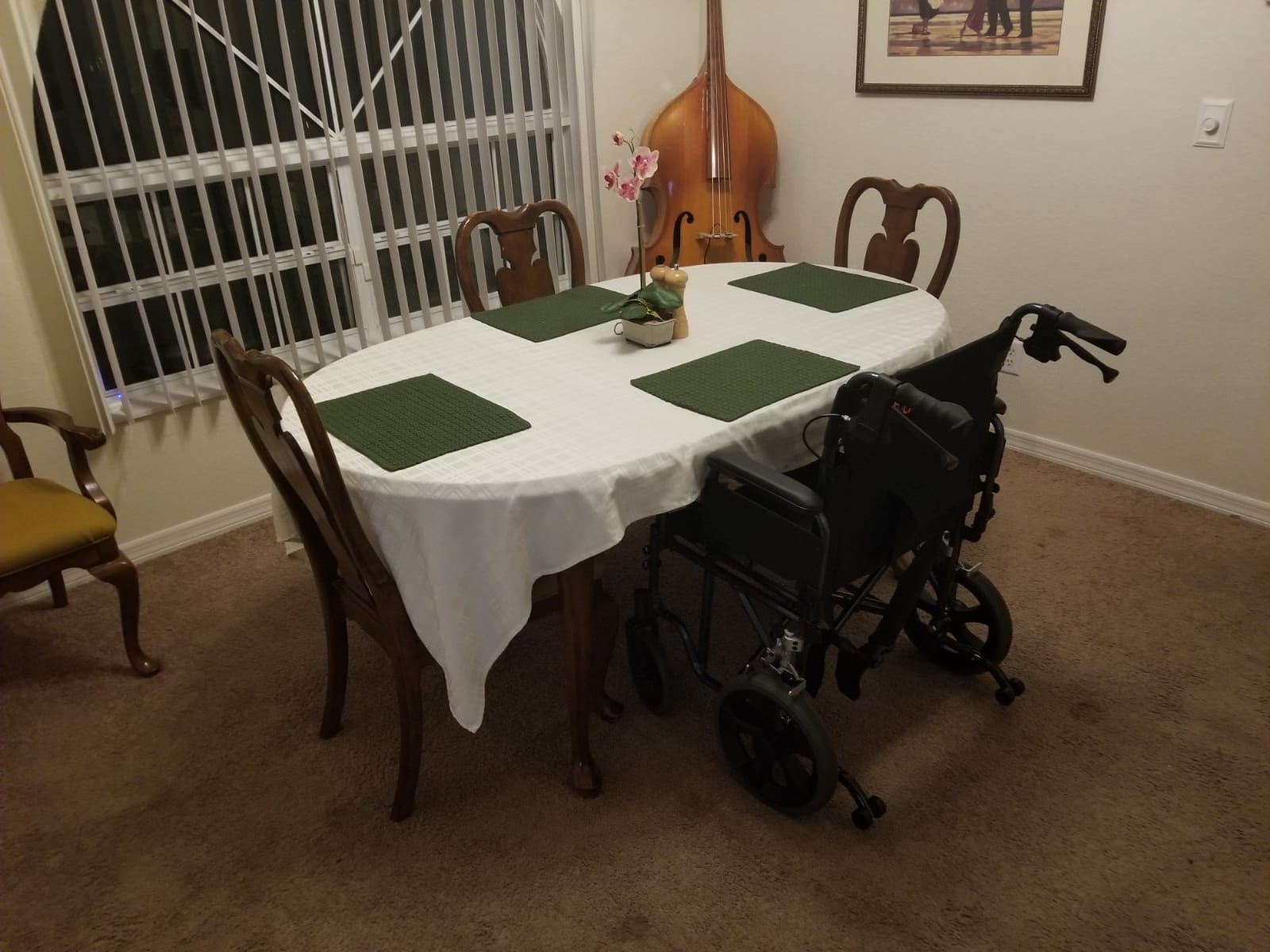
Safety is layered here in a way it is nowhere else in the list. Patented locking hand brakes give the caregiver genuine speed control on inclines, the adjustable seat belt runs up to 41 inches, and the removable anti-tippers plus secondary wheel locks keep a heavier chair from running away on a slope.
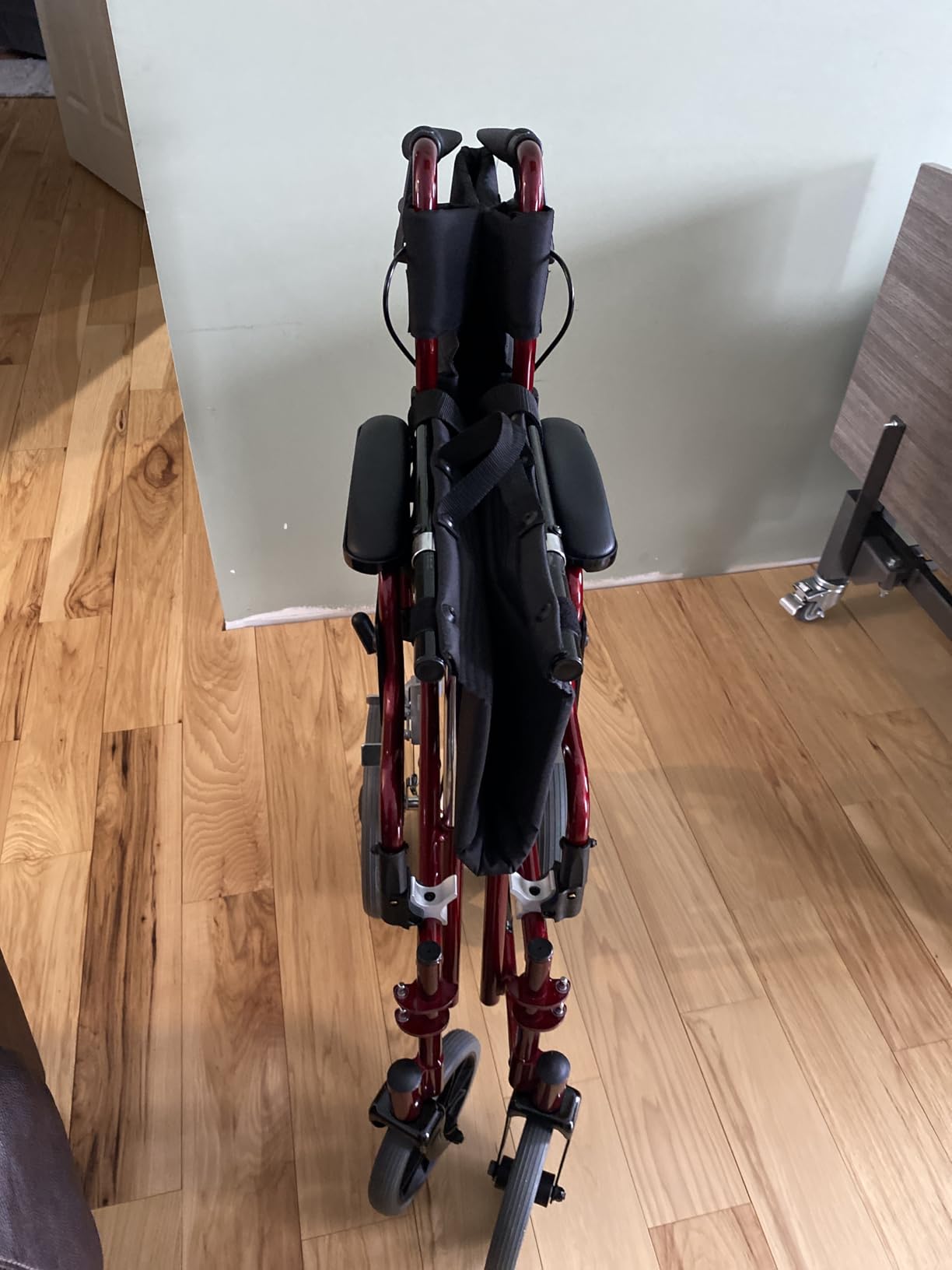
The trade-offs are size and weight. It folds to 11 inches wide but the open width of 28.25 inches will not clear a narrow doorway, and at nearly 37 lb it is not something one person loads into a car without planning.
When this is the right pick
Pick it when the user is over 300 lb, when the seat width in a standard chair is causing pressure or posture problems, or when transfers currently require two people and you want them to take one. The flip-up arms and anti-tippers are the features to point your caregiver at.
It is also the most stable chair in this list on a slope, which matters if the route involves ramps or an inclined garage.
When to pick something else
Skip it in a home with narrow doorways or tight hallways, and skip it if vehicle lifting is part of the routine. It also has a much smaller review base than the rest of this list, so long-term durability evidence is thinner, and that is a real consideration for a chair expected to last years.
8. Platinum Health Hummingbird Transport Wheelchair – Best for Meals and Desks
Platinum Health Hummingbird™ Ultra-Lightweight Foldable Transport Wheelchair, Handbrakes,12-Inch Rear Wheels, Extra-Wide Seat. Convenient Table-Length Padded Armrests. (Sky Blue)
Rated to 350 lb
18 by 16 inch seat
12 inch rear wheels
Table-length padded arms
Pros
- Table-length armrests let the user roll right up to a dining table or desk
- Extra-wide 18 inch seat rated for users up to 350 lb
- 12 inch rear wheels make threshold crossings safer
- Hand brakes plus rear wheel locks give two-stage safety
Cons
- Heaviest of the aluminum options despite the branding
- Lowest review count in the group at 173
- Higher four-star share hints at mixed feedback
Table-length padded armrests solve a problem that most transport chairs create. Full-length armrests stop the user from getting close enough to a dining table, which turns every family meal into an awkward arrangement. This chair is built so the user can roll right up to the table with the arms underneath.
The rest of the specification is unusually sensible for a chair in this class. An 18 by 16 inch seat rated to 350 lb is above the category norm, 12-inch rear wheels improve threshold crossings, and the hand brakes plus rear-wheel manual locks give two-stage safety during transfers. Built-in carry handles and removable footrests simplify the lift.
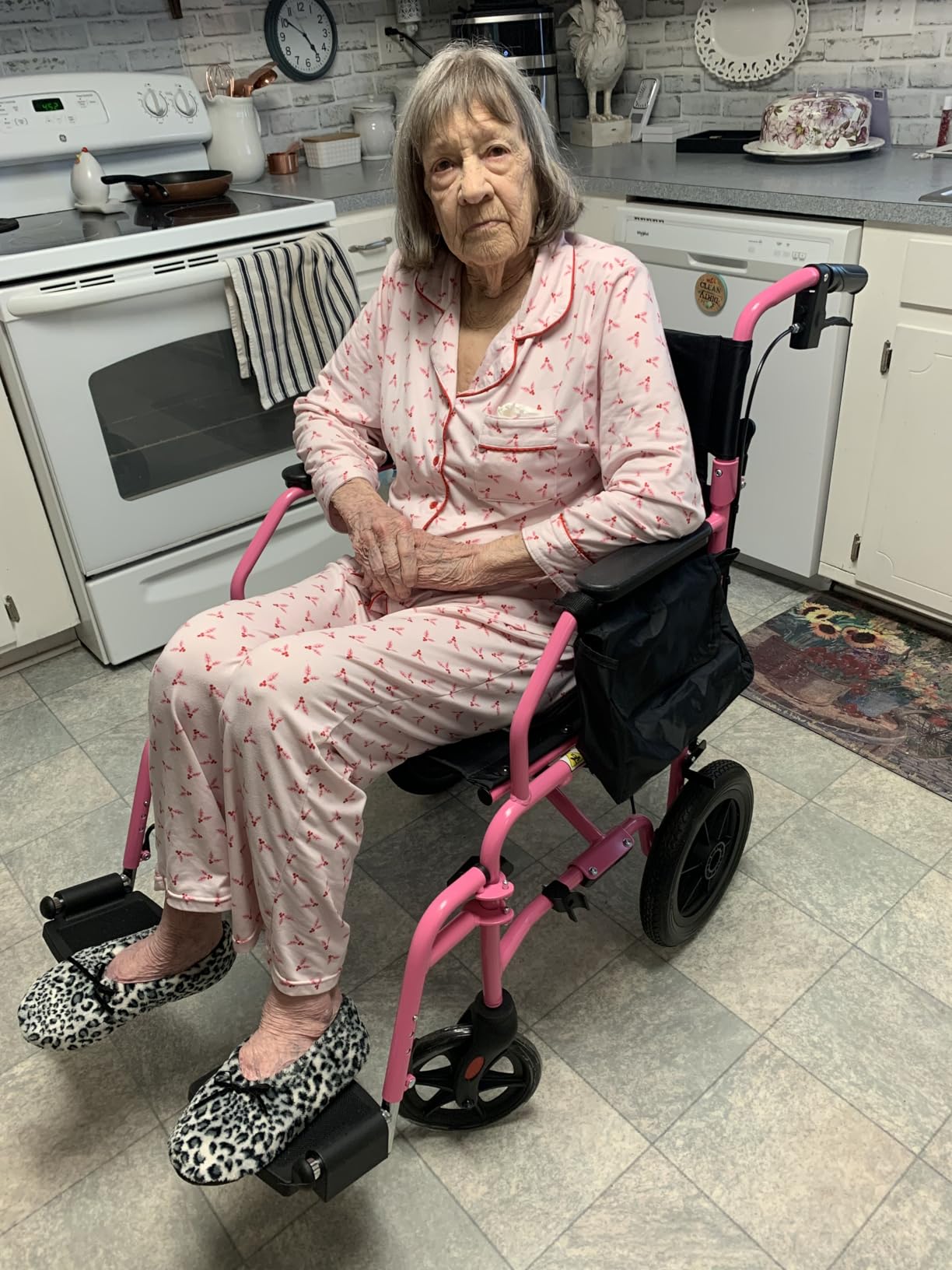
It folds to 33 by 23 by 9.5 inches, which is compact for its capability, and a storage pouch is included. The overall width of 24 inches is wide enough to feel stable and narrow enough for most doorways.
The honest caveat is the small evidence base. With 173 reviews on a listing that only arrived on the market recently, there is far less long-term durability data behind it than the established models here, and its 4.3 average with a 17 percent four-star share suggests some mixed experiences. At 32 lb it is also the heaviest aluminum option in the group, despite the ultra-lightweight branding on the listing.

When this is the right pick
Choose it when shared meals and desk work are a large part of the week, when the user is between 300 and 350 lb, or when you want one chair that handles both indoor tables and outdoor pavement. The armrests and the 12-inch wheels together are unusual and useful.
It is a good second chair for a household that already owns a lighter one for short trips.
When to pick something else
Skip it if you need decades of proven durability from a heavily used chair, since the review history is short. And if a single caregiver has to lift it into a vehicle daily, the 32 lb weight works against you when a 19 lb or 22 lb chair would not.
9. Hammertone 19 Inch Transport Chair – Budget Pick for Smooth Indoor Floors
Black Hammertone Transport Chair, 19inch Seat, 300lbs Weight Capacity, Lightweight
25 lb carbon steel frame
300 lb capacity
19 by 16 inch seat
8 inch wheels
Folding back
Pros
- Highest average rating in the group at 4.7 stars
- Light at 25 lb despite a 300 lb capacity
- Roomy 19 by 16 inch seat for the class
- Folding back and removable footrests simplify storage
Cons
- Only 8 inch wheels so it is best on smooth surfaces
- Generic brand with no named manufacturer for support
- Fixed armrests cannot flip up for transfers
A 25 lb carbon steel frame supporting 300 lb is a genuinely good ratio, and this chair has the highest average rating of anything we reviewed. The 19 by 16 inch seat is roomy for the class, and the full-length permanent padded armrests and seat belt are the right safety basics.
It is also the simplest chair here to fold away. The back folds flat and the swing-away footrests come off, so it disappears into a closet when it is not in use.
Where it falls short is wheels and adjustability. Eight-inch front and rear wheels mean it is only really at home on smooth indoor flooring, which is exactly why it suits a short-term recovery period in a house or an apartment rather than outdoor trips. The armrests are fixed and cannot flip up, so lateral transfers need a different approach.
Two more things to know. The listing is a generic brand with no named manufacturer for support, and the manufacturer itself recommends an anti-tip device, which is sold separately rather than included. The wheel specification is also listed as pneumatic, which means more upkeep than composite or urethane wheels if that holds for the unit you receive.
When this is the right pick
Choose it for a short-term recovery period indoors, for a small user under 300 lb who does not need to go outdoors, or as a backup chair for a home that already owns a main transport chair. The 19-inch seat and the light steel frame make it better built than the low-cost image suggests.
When to pick something else
Skip it for any outdoor use, for slopes and ramps, or for a caregiver who needs support on rough ground, because the small wheels are the limiting factor. With 132 reviews, the long-term record is also the thinnest evidence base here. Anyone needing flip-up arms for lateral transfers should look elsewhere.
10. EconoHome Expedition Transport Wheelchair – Best Ready-to-Use Starter Chair
EconoHome Light Weight Wheelchair – Expedition Folding Transport Wheelchairs for Adults with Hand Brakes – Portable Ultra Lightweight Wheel Chair – Fully Assembled, Cover Included – 300 lb Capacity
22 lb fold-flat aluminum frame
300 lb capacity
Arrives fully assembled
Waterproof cover
Pros
- Arrives fully assembled with a protective cover included
- 22 lb fold-flat aluminum frame is easy to lift and store
- Larger rear wheels reduce tipping and threshold catching
- Hand brakes seat belt and padded armrests cover the basics
Cons
- Narrow seat space relative to the stated 300 lb capacity
- No user manual or care instructions in the box
- Brakes lock by pushing the handles down which is not self-evident
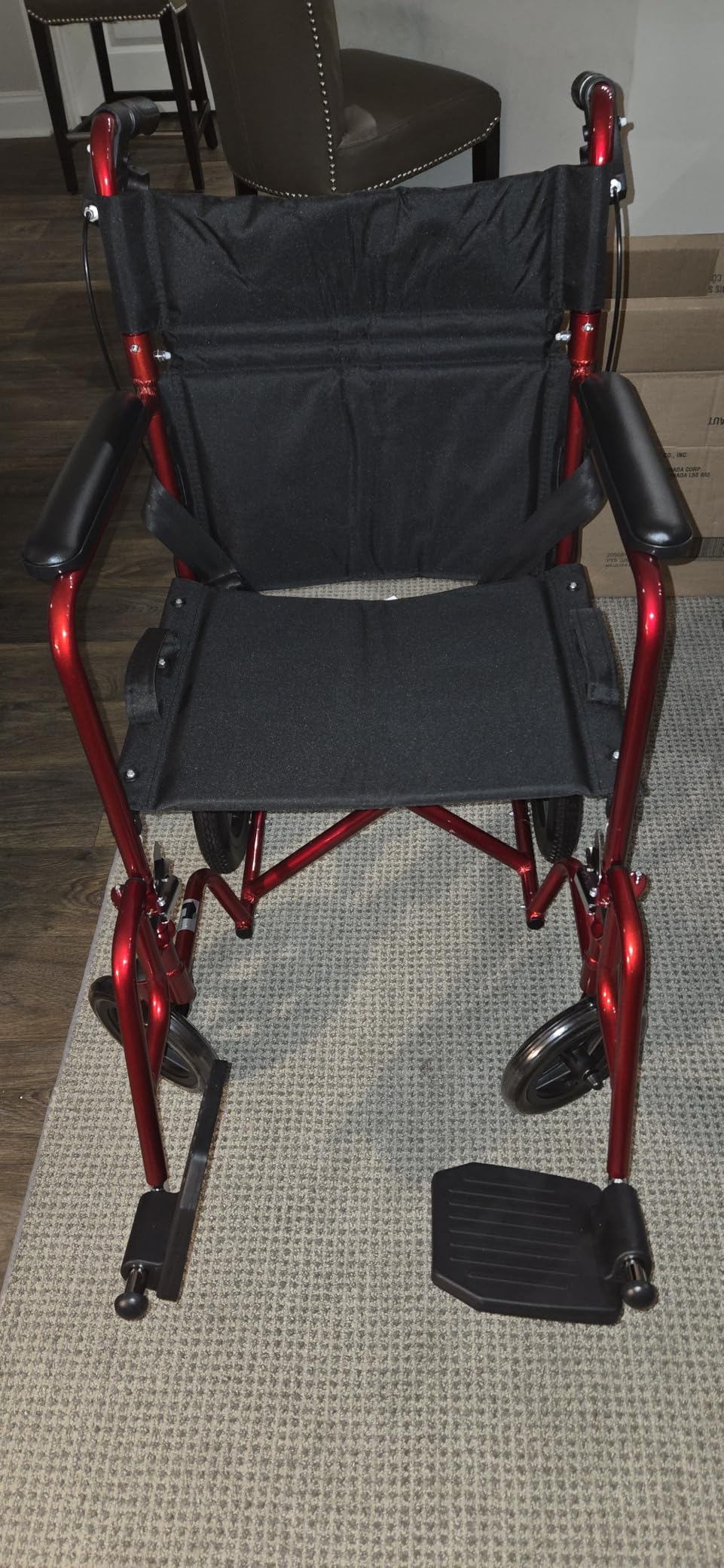
The simplest purchase here. It arrives fully assembled with a waterproof cover in the box, so there is no assembly, no tools and no setup. For a family that just brought someone home from the hospital, that is worth more than a spec on a list.
Underneath, it is a 22 lb fold-flat aluminum frame rated to 300 lb with companion-activated hand brakes, a seat belt, padded armrests and swing-away footrests. Reviewers like the larger rear wheels because they reduce the chance of catching on small door thresholds and tipping.

There are two things I would want to see handled before relying on it for daily use. One reviewer reported a left footrest that would not stay attached and a rivet failing within three months, which is a small-sample durability signal rather than a pattern. And no user manual or care instructions ship in the box, so you are learning the brake design on your own.
The brake lock is worth practicing: it engages by pushing the handles down, which is not obvious from the levers alone. Seat sizing suits shorter users less well, and the seat space is narrow relative to the 300 lb rating.
When this is the right pick
Choose it for a first transport chair, a post-surgery recovery period, or a household that wants something usable within an hour of delivery without a setup session. The included cover is a nice touch for a chair that will live in a car.
It is also a sensible low-commitment way to find out how a transport chair fits into your routine before buying a heavier, more specialized chair.
When to pick something else
Skip it for all-day daily use on rough ground, or if the user is a larger adult who needs a wide seat, because the seat space is narrow. If your household tends to lose paperwork, note that no care instructions are included, so research upkeep before the wheels and brakes need attention.
Transport Chair vs Standard Wheelchair: Which One Fits Your Situation
Pick a transport chair when a caregiver is always present and portability decides everything. Pick a self-propelled manual wheelchair when the user needs to move independently or sit for long stretches. That single rule resolves most of the confusion in this category, and it is the distinction the mobility forums keep circling back to.
In practice a transport chair is lighter, folds smaller, steers in straight lines and fits through narrow doorways, but it gives the user no control over speed or direction and offers less stability on slopes because of the small rear wheels. A standard wheelchair lets the user self-propel and brake independently, at the cost of more weight for the caregiver to push.
Users on r/wheelchairs describe a related frustration worth naming: owning a transport chair, a rollator and a full wheelchair, and never knowing which to bring on any given trip. If that is your household, buy the chair that covers the most of your trips, and rent or borrow the rest for the days you need something else.
When the route is the deciding factor, the wheel size is what actually changes the experience. Eight-inch rear wheels handle floors and smooth sidewalks. Twelve-inch rear wheels handle cracks, curbs, older building entries and parking lots. A hand brake gives the caregiver speed control on a ramp, and no amount of chair weight compensates for lacking one.
One more case where a transport chair is the wrong buy: if the user can walk short distances with a cane or walker and mainly needs a seat for long outings, a combination rollator transport chair serves both needs. Seniors who are not permanently chair-bound but want to keep walking while resting are the group AgingCare discussions repeatedly ask about.
How to Choose a Transport Chair in 7 Steps
1. Confirm the user will be pushed. A transport chair has no self-propulsion and no user-controlled brakes. If the user will be alone or needs to steer independently, you want a self-propelled manual wheelchair instead.
2. Decide the weight one person has to lift. This is the number caregivers ask about first, in every thread we read. In this list it ranges from 15 lb to 37.6 lb. A 15 lb to 22 lb aluminum chair can be loaded into a car by one person; a 32 lb to 38 lb steel chair generally cannot, at least not comfortably.
3. Match the weight capacity with headroom. Standard transport chairs run 250 to 300 lb. Heavy-duty options reach 350 lb, and bariatric chairs go to 400 lb and beyond. A 300 lb chair with a 19-inch seat works for most adults; above 300 lb you should be looking at a wider frame rather than trusting a rating near the limit.
4. Check the seat width before anything else. Most chairs are 17 to 19 inches wide, and the NOVA bariatric chair is 22.5 inches between arms. A too-narrow seat is not just uncomfortable, it forces slouching, which is exactly the complaint that shows up repeatedly about sling seats on long outings.
5. Size the rear wheels to the terrain. Eight-inch rear wheels are for smooth indoor floors and paved sidewalks. Twelve-inch rear wheels are the right call for cracked pavement, curbs, ramps, gravel, cobblestones and older buildings. This is the upgrade people most often regret skipping.
6. Decide between aluminum and steel. Aluminum buys you weight, which matters when a single caregiver is lifting daily. Steel buys you durability, which matters when the chair rolls thousands of miles a year and stays on the ground. Urethane or composite wheels need no tire pressure maintenance, which is a quiet long-term saving.
7. Look at the arms, brakes and footrests. Desk-length or table-length armrests let the user sit at a restaurant or desk. Locking caregiver hand brakes make transfers on a slope safe, and rear-wheel locks are the fallback. Swing-away or removable footrests are close to essential, because a fixed footplate makes getting in and out much harder.
On coverage, transport chairs can qualify as durable medical equipment under Medicare Part B when a doctor documents the mobility limitation and medical necessity, the supplier is Medicare-enrolled, and the beneficiary pays the standard deductible and coinsurance. Eligibility rules differ, so confirm your specific coverage with the supplier before buying.
On maintenance, the wear items are tires, brakes and upholstery. Urethane and composite wheels generally last longest with the least attention. A note worth repeating from retailer reviews is that cheap steel chairs can go through a set of tires in about a year of heavy use, while a heavier, better-built chair can stay in service for a decade, so factor replacement parts into the long-term picture.
Finally, weigh buying against renting. A short post-surgery recovery of a few weeks is a strong case for renting, which costs far less and avoids owning a chair that will sit unused. A chair needed daily for years is a case for buying, where you amortize the cost and control the choice. Buying from a local DME supplier adds a fitting appointment and the ability to try the chair, while buying online is quicker and easier to compare, which matters when you already know your exact specs.
Frequently Asked Questions
Does Medicare cover transport chairs for seniors?
Yes, a transport chair can qualify as durable medical equipment under Medicare Part B when a doctor documents the mobility limitation, states that the chair is medically necessary, and you purchase it from a Medicare-enrolled supplier. After the annual deductible, you typically pay 20 percent coinsurance on the chair. Wheelchairs and transport chairs fall under the same benefit category, so a lighter companion-pushed model is generally covered the same way. Confirm your specific situation with the supplier before you buy.
What is better, a transport chair or a wheelchair?
A transport chair wins when a caregiver is always present and portability dominates, because it weighs roughly half as much, folds smaller and fits in a car. A self-propelled manual wheelchair wins when the user needs to move independently, control their own speed or sit for long stretches. The decision rule is simple: if someone is always pushing, buy the lighter chair.
Which is easier to push, a wheelchair or a transport chair?
A transport chair is easier to push in straight lines and through tight spaces because it is lighter and has a narrower turning circle. A standard wheelchair gives the user more control but is heavier to push. Terrain decides the answer: small rear wheels make a transport chair harder on slopes and rough ground, and locking caregiver hand brakes are what restore control on inclines.
What is the most comfortable chair for an elderly person?
Comfort comes from seat width, not from upholstery. Look for 18 to 20 inches of width for a standard adult and 22 inches or more for a larger user, a padded or contoured cushion rather than a bare sling seat, supportive back height, and desk-length armrests that let the user pull up to a table. Duration matters most: transport chairs are comfortable for appointments, not for full days.
How heavy should a transport chair be for a caregiver to lift?
For one person loading it into a car regularly, stay under 25 lb. The lightest options in this category are 15 to 22 lb aluminum frames, which one caregiver can lift into a trunk without strain. Steel frames run 32 to 38 lb and are better for daily rolling on flat ground, but they are a two-person load or a planning problem in most homes.
Are transport chairs comfortable for all-day use?
Generally no, and setting that expectation early prevents a lot of disappointment. Transport chairs are built for appointments, outings and travel, not for sitting in for a full day. Their sling-style seats and upright posture are fine for a few hours. For all-day seating, a contoured cushion and a supportive back matter, and a lightweight self-propelled wheelchair is usually the better long-session choice.
Conclusion: The Best Transport Chairs for Seniors in 2026
After six weeks of comparing specs, reviews and caregiver feedback, the Medline Lightweight Transport Chair with 12-inch rear wheels is our pick for the best transport chairs for seniors, because it is the only chair in this group that gives you large wheels, caregiver hand brakes and a 300 lb capacity in a 26 lb frame. If lifting weight is the binding constraint, the 15 lb Medline ultralight is the answer. If the user is over 300 lb, the NOVA bariatric chair is the only real option, and the 22.5-inch seat and flip-up arms are why.
Before you buy, measure the narrowest doorway on the route, weigh whoever will be lifting the chair, and check the push handle height against the caregiver who will actually use it. Those three checks eliminate more bad purchases than any feature list. And if the chair will mainly live in a car, look at our best lift chairs for seniors and best office chairs for seniors guides for the seating options that fit around a home rather than on the move.