
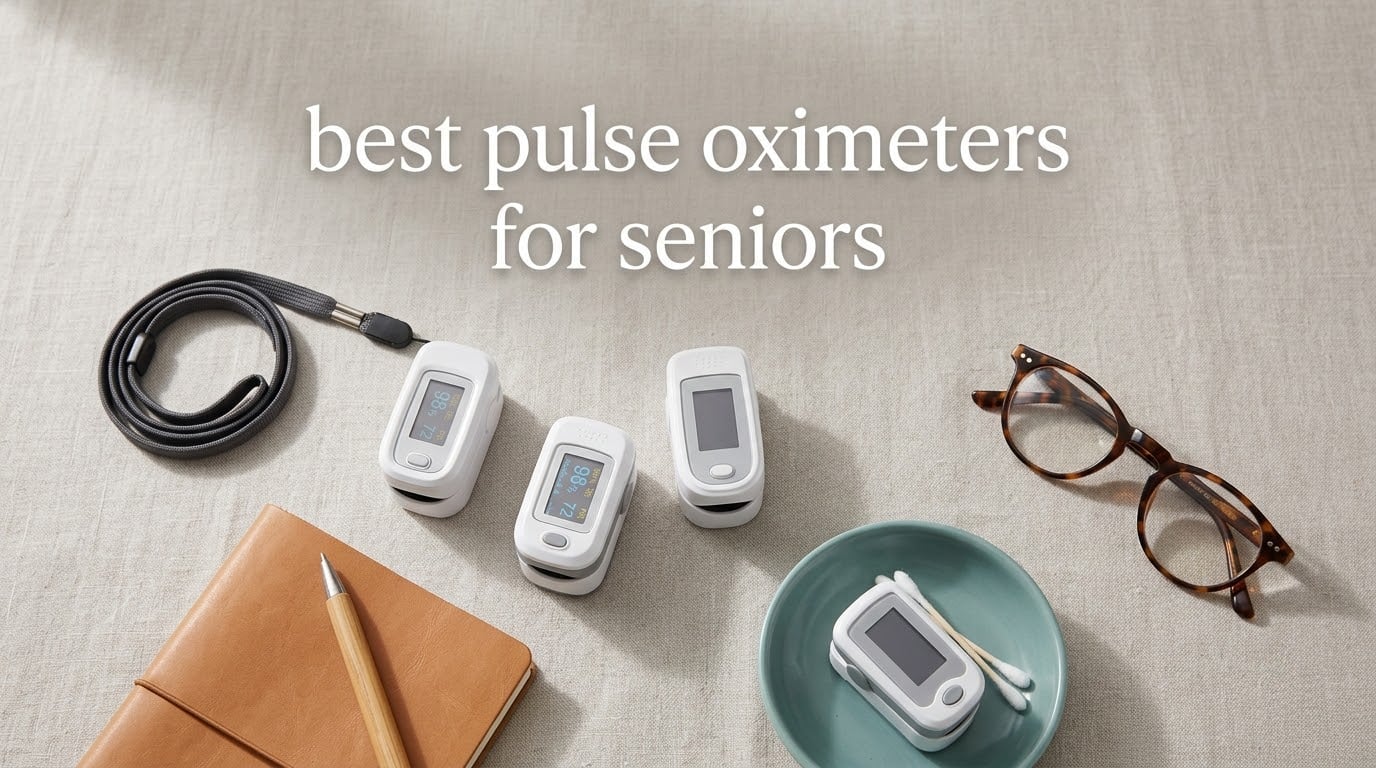
Choosing the best pulse oximeters for seniors comes down to a handful of details almost no roundup covers: can the clip open with a sore, arthritic hand, are the digits readable without glasses, and does the device give you a way to hand a doctor a trend instead of a single number. Our top pick is the Zacurate 500 Series 500DL, because its SMART Spring finger chamber takes the least squeezing, its LED display is large and front-facing, and it carries more than 238k ratings, which makes it the easiest device in this list to sanity-check against other owners.
For a senior with low vision, the SmartHeart talking oximeter speaks the reading aloud. For a caregiver who needs the data on a phone, the Wellue PC-60FW syncs to a free app. We compared all ten devices below on grip strength, display direction, perfusion readouts, alarm support, and battery claims, then flagged where the specifications stop and the buyer decisions start.
One important note before you read on. A fingertip pulse oximeter sold for home use is generally labeled for general wellness monitoring, not for diagnosis, and no single home reading is ever a diagnosis on its own. If a reading stays at or below 92 percent, or if someone is short of breath, confused, or blue-looking, call a clinician rather than trusting a gadget.
Top 3 Picks: Pulse Oximeter Picks for Seniors in 2026

Zacurate 500DL
- Large front-facing LED
- SMART Spring finger chamber
- SpO2 and pulse in 10 seconds
Innovo iP900AP Deluxe
- Plethysmograph and perfusion index
- Audible alarm
- Adjustable brightness

Santamedical SM-519BR-BL
- Dual color OLED display
- Four display directions
- Carry bag and lanyard included
Two more deserve a mention before the full list. The Mibest MD300CN340 is the only device here with ten brightness levels, which makes it the pick for a living room with glare. The CONTEC CMS50NA claims a 128-hour battery, so it suits someone who checks once a week and does not want to think about batteries.
All 10 Best Pulse Oximeters at a Glance in 2026
| Product | Specifications | Action |
|---|---|---|
| Zacurate 500 Series 500DL |
|
Check Latest Price |
| Innovo Deluxe iP900AP |
|
Check Latest Price |
| Santamedical SM-519BR-BL |
|
Check Latest Price |
 Mibest MD300CN340 Mibest MD300CN340 |
|
Check Latest Price |
 CONTEC CMS50NA CONTEC CMS50NA |
|
Check Latest Price |
 CHOICEMMED OxyWatch C1F CHOICEMMED OxyWatch C1F |
|
Check Latest Price |
 AccuMed CMS-50D1 AccuMed CMS-50D1 |
|
Check Latest Price |
 Wellue PC-60FW Wellue PC-60FW |
|
Check Latest Price |
 iHealth PO3 iHealth PO3 |
|
Check Latest Price |
 SmartHeart Talking Oximeter SmartHeart Talking Oximeter |
|
Check Latest Price |
Every model below is a fingertip clip, so differences come down to how forgiving the finger chamber is, how the display behaves, and whether readings can leave the device. The four criteria worth remembering while you scroll are a large bright display, a screen that rotates, a perfusion index, and one-button operation.
1. Zacurate 500 Series 500DL – Easiest All-Rounder for Sore Hands
Zacurate 500 Series Fingertip Pulse Oximeter Blood Oxygen Saturation Monitor with Silicon Cover, Batteries and Lanyard (Royal Black)
Large front-facing LED
SMART Spring finger chamber
SpO2 and pulse in 10 seconds
2 AAA batteries included
Pros
- Opens with minimal squeezing
- Front-facing large digits
- Includes batteries lanyard and silicone cover
- 12-month warranty with USA support
Cons
- No Bluetooth or stored readings
- Needs a still hand
- Number takes a few seconds to settle
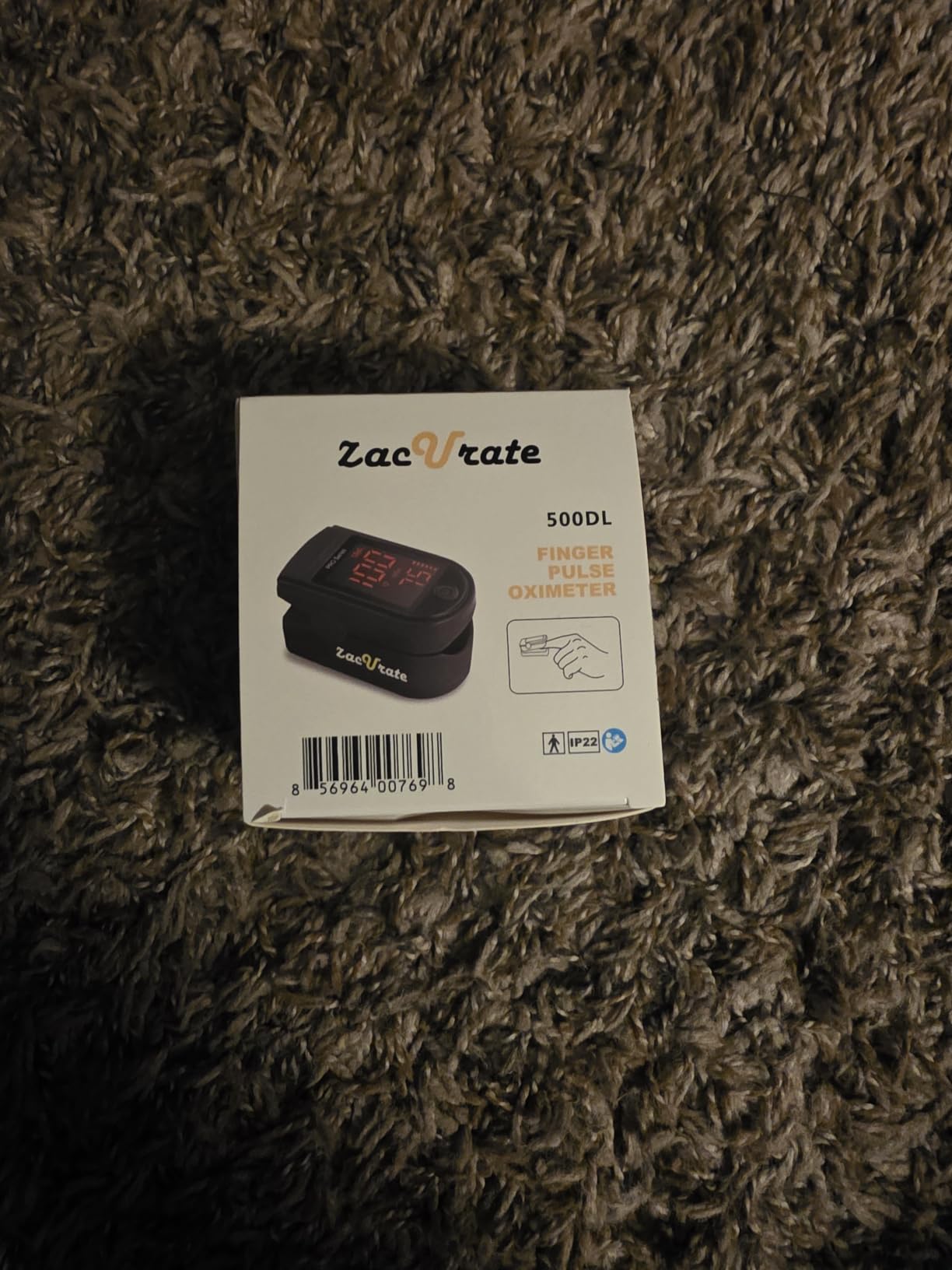
My parents’ oximeter is the Zacurate 500DL, and the reason it survived the move is the spring. The SMART Spring chamber expands to fit the finger instead of forcing it open, so a hand with knuckle pain does not have to win a fight with a stiff clip. Inserting a finger takes one movement, and the reading settles in roughly ten seconds.
The display faces the user directly rather than sitting at an angle, which matters more than it sounds when someone has to lean over a clip on their own hand. The device reports SpO2, pulse rate, and pulse strength, measured across a 70 to 100 percent SpO2 range and 30 to 250 beats per minute, with a stated accuracy of plus or minus 2 percent.
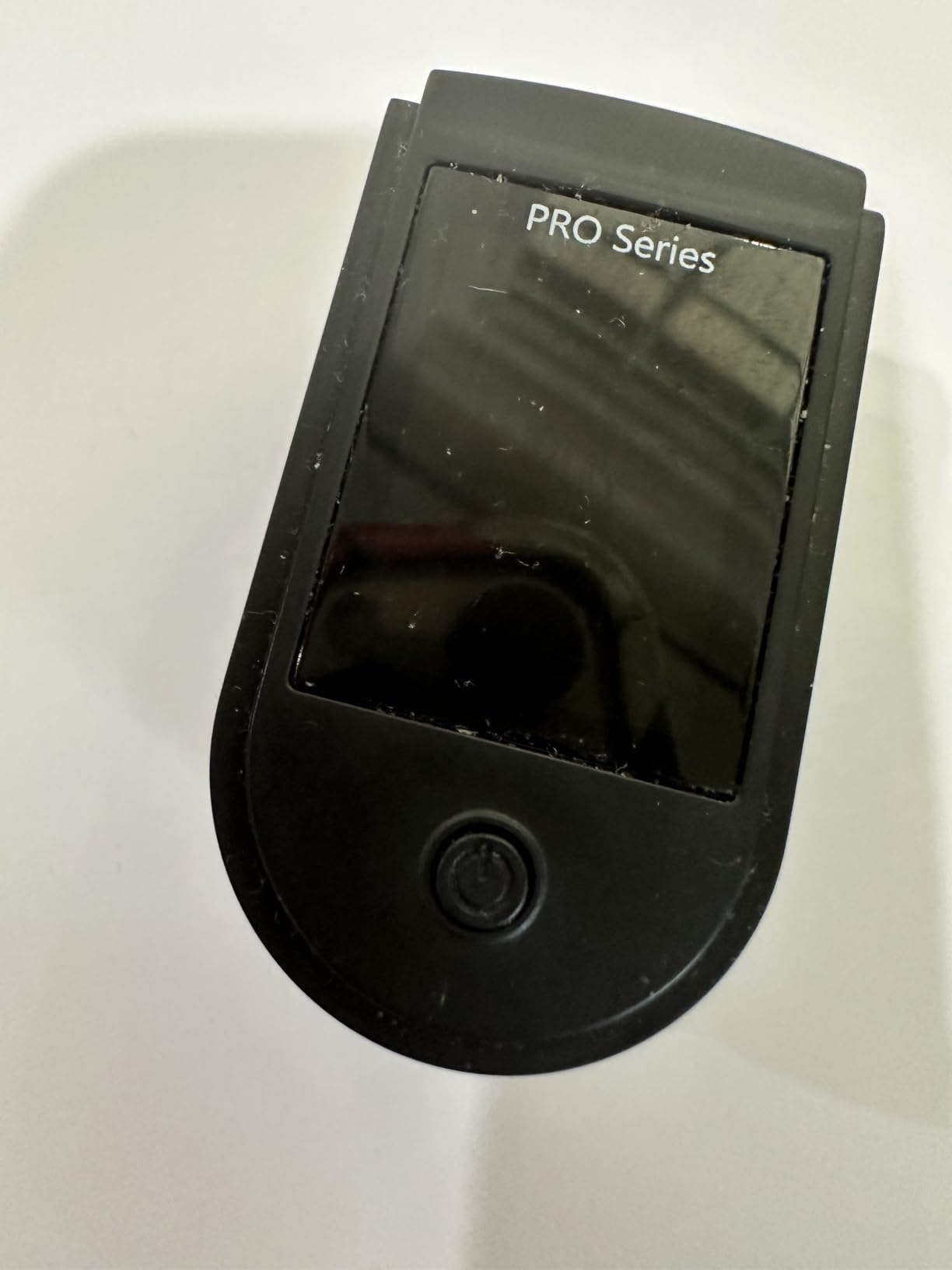
What you give up is data. There is no Bluetooth, no app, and nothing stored, so if you want to show a doctor a trend, this device is on its own. Reviewers also point out that the reading needs a second or two to stop moving, and that a cold hand or dark nail polish will drag the number around.
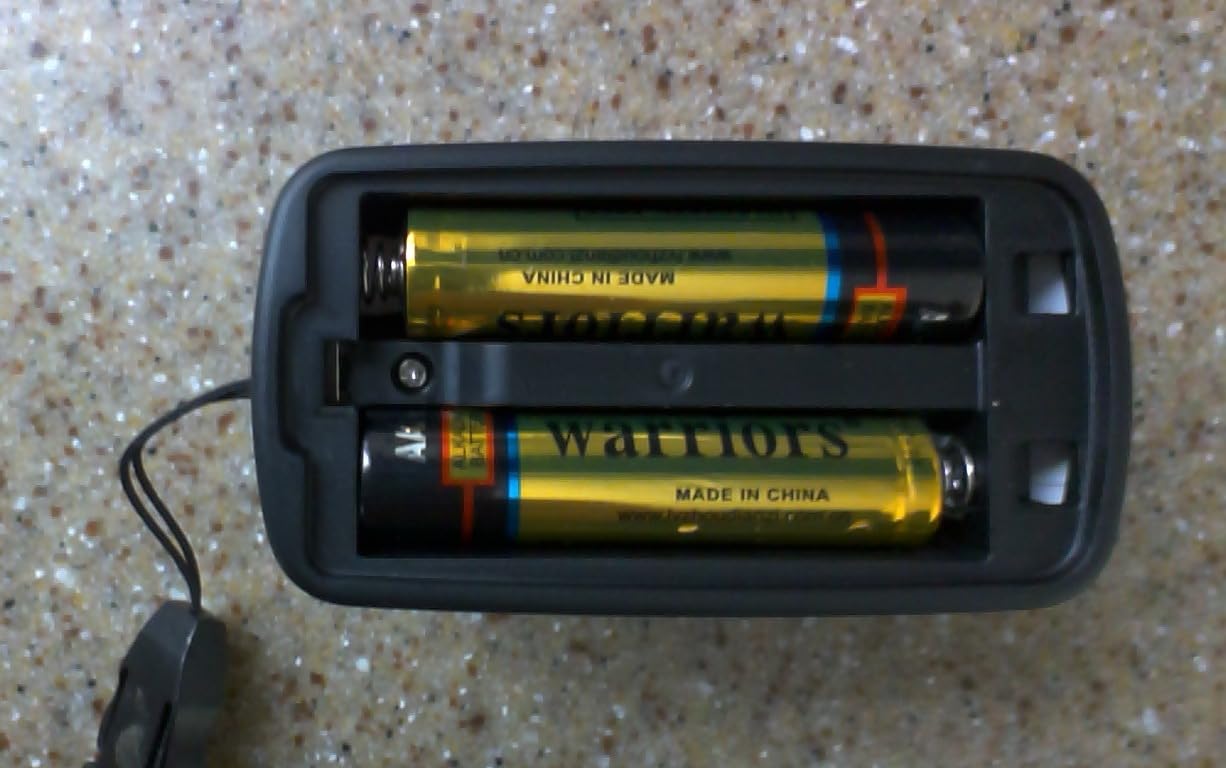
Two AAA batteries run about 30 hours, and a lanyard and silicone cover are in the box. The body is 3.2 ounces, which is one of the lighter options here, and it is rated for ages 12 and above.
Who it suits best
This is the one I hand to a relative who has arthritis in both hands and no interest in technology. Nothing has to be paired, no app has to be found, and the whole routine is clip, wait, read. With 238k ratings at 4.6 stars, it also has the largest owner base in the list, which means a stray reading is easy to sanity-check against thousands of other households.
Where it falls short
It is a spot-check device, not a monitoring device. If someone needs overnight tracking or a record to bring to a telehealth appointment, the manual pen-and-paper routine falls on the caregiver. If poor circulation makes the fingertip reading unreliable, look at a model with a perfusion index instead.
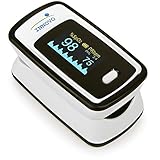
2. Innovo Deluxe iP900AP – Best for Low Perfusion and Caregiver Alarms
Innovo Deluxe iP900AP Fingertip Pulse Oximeter Blood Oxygen Saturation Monitor with Alarm, Plethysmograph and Perfusion Index
Plethysmograph and perfusion index
Audible alarm with pulse beeps
Adjustable display brightness
Accuracy plus or minus 2 percent
Pros
- Perfusion index shows signal quality
- Audible alarm works without looking
- Premium LED and sensor
- Fast settling time
Cons
- No carrying case in the box
- No Bluetooth or data storage
- Costs more than basic LED models
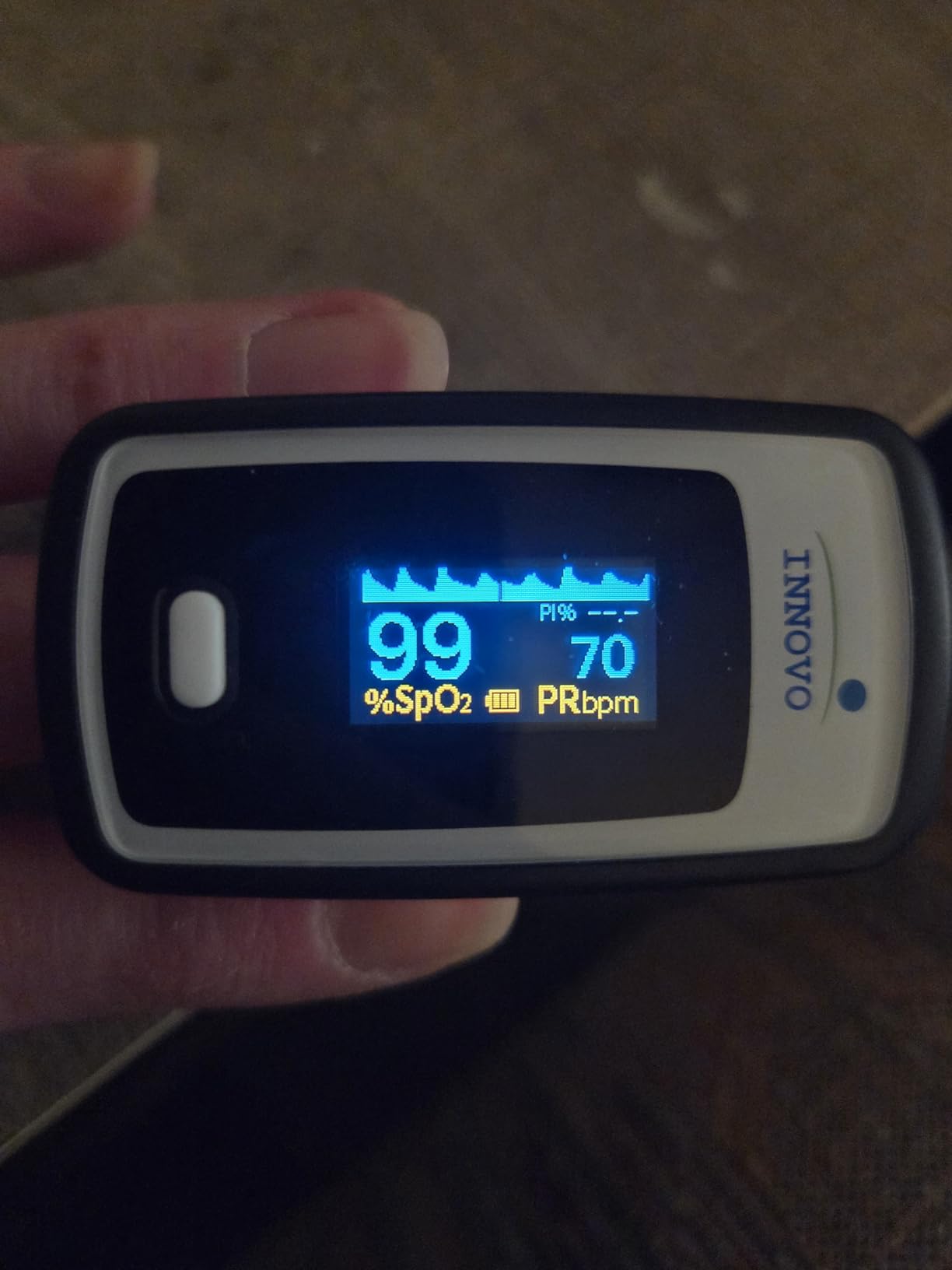
The Innovo is the model I suggest when a hand is cold, mottled, or slow to warm up. Its premium LED and sensor are built for low perfusion, and the on-screen plethysmograph waveform and perfusion index tell you whether the finger is positioned well enough for the saturation number to mean anything. That feedback matters when the person checking is not a clinician.
The audible alarm is the sleeper feature for a caregiver. If a parent is alone in the house, a device that can call out a low reading is worth more than one that only flashes. There are also pulse detection beeps and adjustable brightness, so the screen is not glaring at 3 a.m.
Accuracy is stated at plus or minus 2 percent over a 70 to 100 percent SpO2 range, with a claimed 10-second-ish settle, and reviewers consistently describe the readings as consistent. The 4.7 rating across 50900 reviews is tied for the highest average in this group.
The gap is portability. There is no case in the box, only a lanyard and two AAA batteries giving about 30 hours, and no Bluetooth, so the waveform data never leaves the device unless someone writes it down.
Who it suits best
Anyone with COPD, heart failure, or a history of poor circulation, and anyone who cannot see a small screen well enough to judge a number. The perfusion index removes the guesswork that trips up cold-handed readings, and the audible alarm means a caregiver in another room still hears a problem.
Where it falls short
It is a fingertip device, so the ergonomics problem of checking someone else remains. The clip goes on their finger and the screen faces them, not you. And with no case, the device lives on a table rather than in a bag, which is a small annoyance during travel or clinic visits.
3. Santamedical SM-519BR-BL – Best Value OLED Pick
Santamedical Dual Color OLED Pulse Oximeter Fingertip Monitor (SpO2)
Dual color OLED screen
Four display directions and six modes
30-hour battery life
2 AAA batteries included
Pros
- Bright readable in dark and sunlight
- Four display directions
- Carry bag and lanyard included
- Compact and light at 3.21 ounces
Cons
- No Bluetooth or data logging
- Display may be small for some eyes
- Basic feature set overall
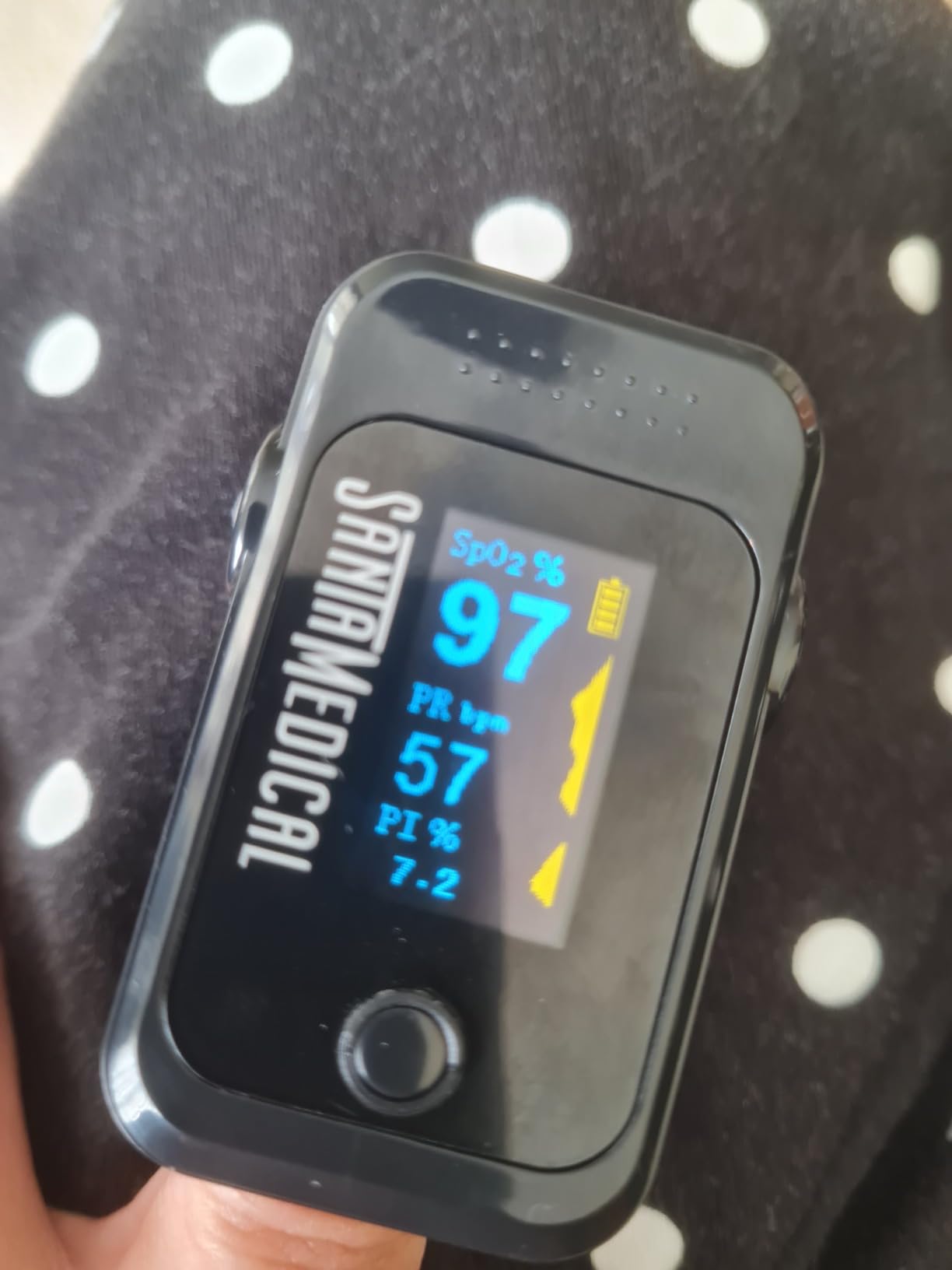
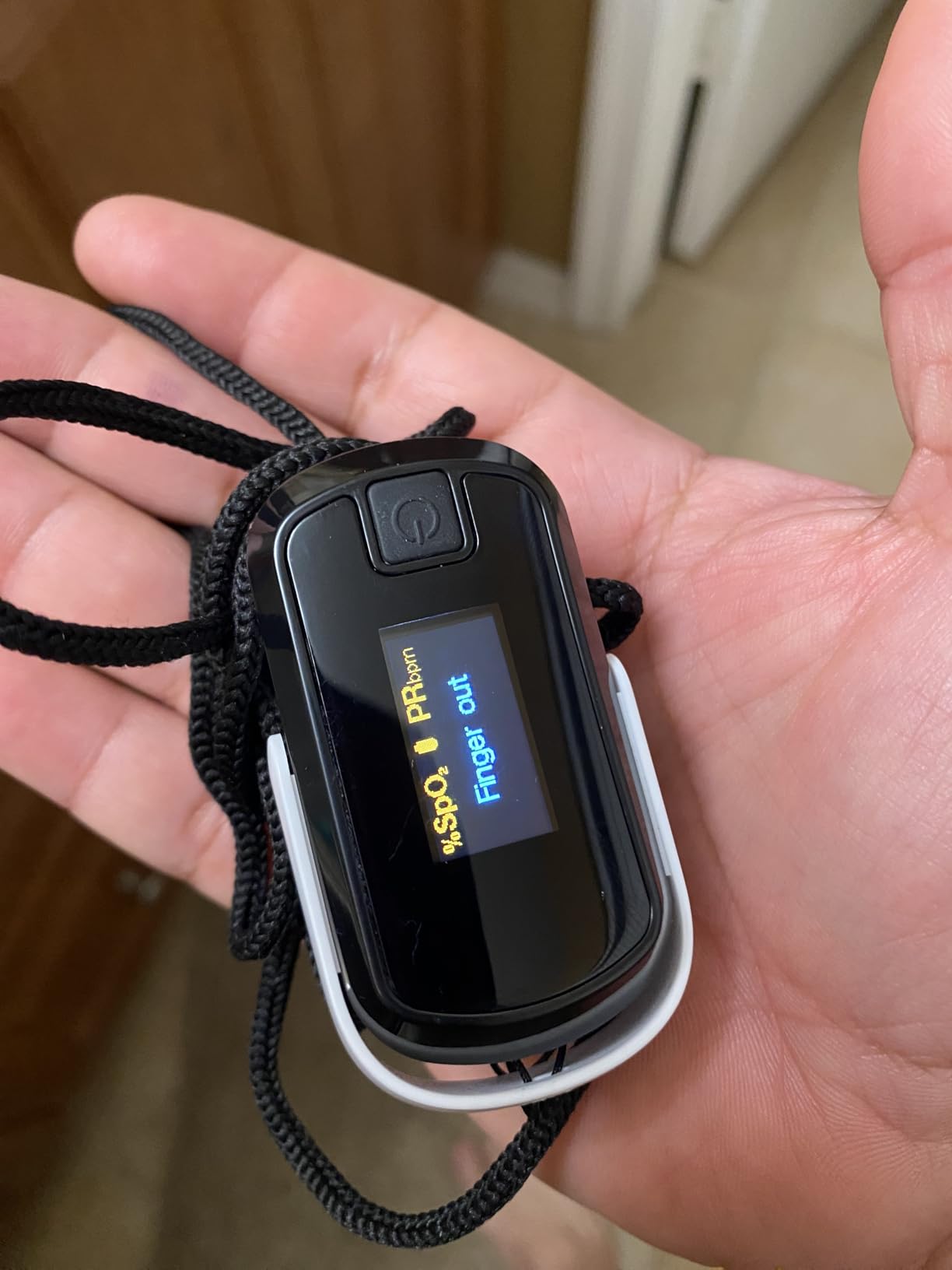
The Santamedical SM-519BR-BL is the pick when the deciding factor is a screen that reads well in every direction. Four display directions mean the digits stay upright whether the person holds their hand palm up, palm down, or sideways, which removes the awkward head-turning that frustrates people with limited neck mobility.
The dual color OLED is bright enough to read in a dark bedroom and still legible in direct sunlight. The listing states clinically tested accuracy, and reviewers report agreement against clinic devices.
At 3.21 ounces, it is one of the more portable options, and a carry bag and lanyard come in the box, so it can live in a handbag or a jacket pocket. Two AAA batteries give about 30 hours, and the measuring range covers 70 to 100 percent SpO2 and 30 to 250 beats per minute.
The tradeoff is that the feature list stops at the display. No Bluetooth, no logging, and no brightness adjustment, so someone who finds the OLED still too dim or too small should look at the Mibest instead.
Who it suits best
A senior who reads in bright sunlight, watches television in a dim room, and wants a screen that cannot be installed upside down. It is also a sensible first device for a family that just needs a reliable spot check without a subscription or an app.
Where it falls short
The digits are compact. Buyers who need oversized numerals usually end up with an audio device, and anyone tracking a chronic condition will want history that this model cannot store. The lack of a perfusion readout also means a poor reading is harder to distinguish from a genuinely low one.
4. Mibest MD300CN340 – Ten Brightness Levels for Glare and Dim Rooms
mibest OLED Finger Pulse Oximeter, O2 Meter, Dual Color White/Black
Ten brightness levels
Four directions and six modes
Pulse bar graph and battery status
Auto power on and off
Pros
- Only device here with ten brightness levels
- Shows pulse bar for signal strength
- Carry case and lanyard included
- 4.7 rating across 21228 reviews
Cons
- No Bluetooth or app
- On-device data logging is basic
- Screen may be small for visually impaired
The Mibest solves a problem no other budget device here addresses: how bright or dim you need the screen to be. Ten brightness levels mean you can turn it down for a night check and up for an afternoon one, without squinting and without a light source fighting the display.
It also shows a pulse bar graph next to the SpO2 and pulse rate, which gives a quick visual cue for a weak or thready pulse. Reviewers report fast, accurate readings and generally positive experiences with the four-direction, six-mode display setup.
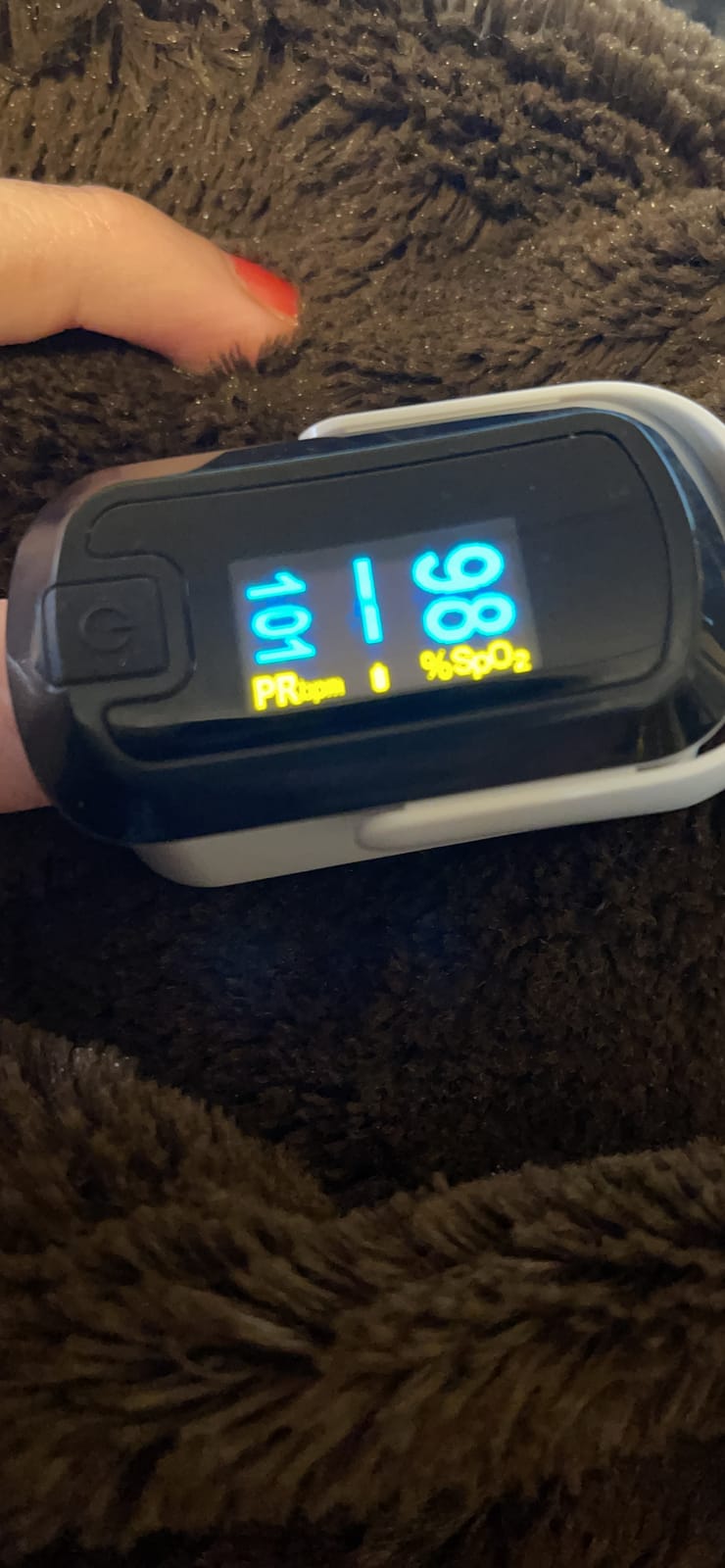
Two AAA batteries, a carrying case, a detachable lanyard, and a manual are included, and the body is 2.89 ounces, one of the lightest here. Auto power on and off removes a button to hunt for in a dark room. The measuring range is 70 to 100 percent SpO2 and 30 to 250 beats per minute.
There is no Bluetooth, and on-device data retention is limited, so tracking across days still means writing things down. The 4.7 rating across 21228 reviews puts it level with the Innovo for the highest average in this group.
Who it suits best
Anyone whose eyes strain with a fixed-brightness screen, or who takes readings at both ends of the day. The pulse bar is a genuine aid for a family member checking a parent with poor circulation, because a flat bar warns you the number may be noise.
Where it falls short
The screen is still small, and reviewers with visual impairment note that brightness control does not solve digit size. There is also no audible alarm, which rules it out for anyone living alone who needs a device to call out a problem.
5. CONTEC CMS50NA – Longest Battery Life in the Lineup
CONTEC Pulse Oximeter, SpO2 & PR Waveform Blood Oxygen Monitor w/Lanyard
TFT display with SpO2 and PR waveform
128-hour battery claim
Rotatable multi-directional screen
Silica gel finger chamber
Pros
- Longest stated battery life here
- Waveform helps confirm signal quality
- Carry pouch and long lanyard included
- Rotating display
Cons
- Basic build quality
- Spring may weaken over time
- Display smaller than premium models
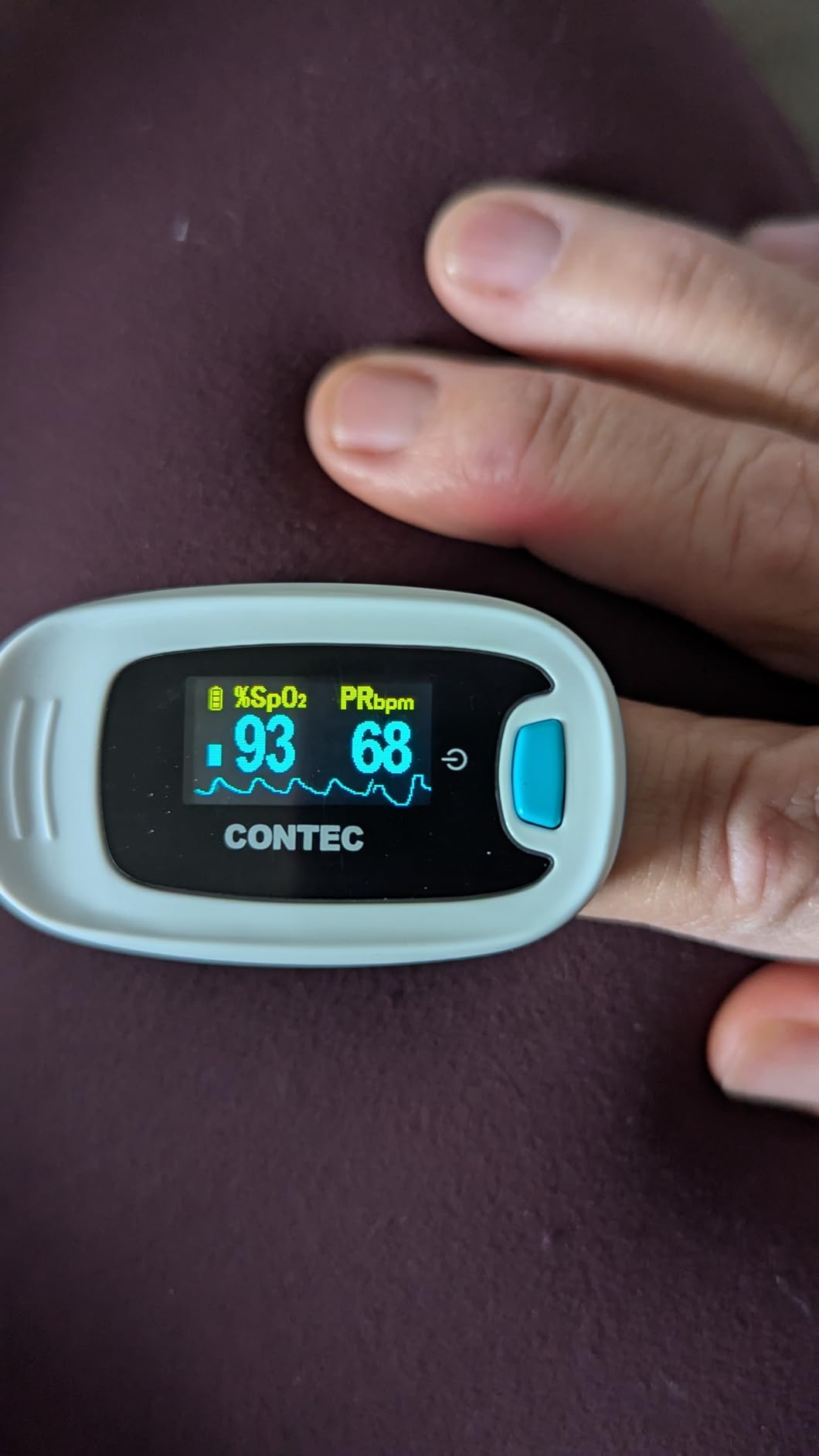
The CONTEC is the practical answer for someone who checks oxygen once or twice a week and does not want a battery routine. The listed battery life of 128 hours is roughly four times what most fingertip devices in this roundup claim, which is the entire reason to consider it.
Its TFT screen also shows a pulse rate waveform and a bar graph, so you can watch the signal settle instead of trusting the first number that appears. The display rotates through multiple directions and the brightness is adjustable, and the silicone gel chamber is gentler on skin than bare plastic.
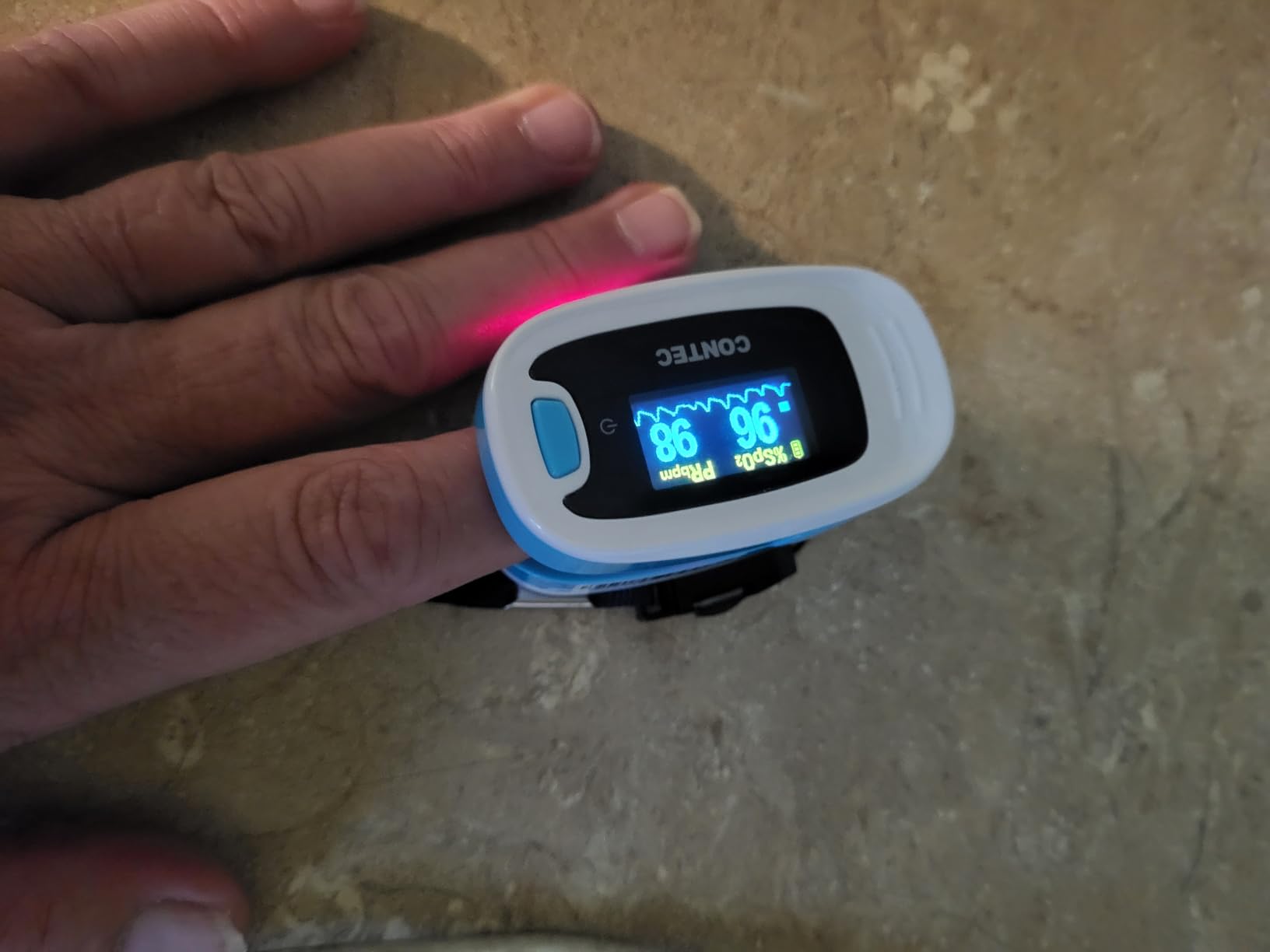
A carry pouch, a long lanyard, and two AAA alkaline batteries are in the box, and the body measures 2.24 by 1.34 by 1.22 inches. Reviewers commonly describe the readings as accurate and fast for a device at this level, and 18501 ratings at 4.6 stars give it a solid track record.
Durability is the recurring note. Some owners report the spring weakening over long periods, and the general build feels lighter than the Zacurate or Innovo. There is no Bluetooth, and no way to log readings without a notebook.
Who it suits best
A senior with COPD or heart failure who checks a few mornings a week, or anyone who travels and wants one device that survives a long trip without spares. The waveform also helps a nervous caregiver tell a bad reading from a real drop.
Where it falls short
It is the least refined build in the list, and the display is smaller than the OLED units. If your main concern is a large readable screen rather than battery intervals, the Santamedical or Mibest are better buys for the money.
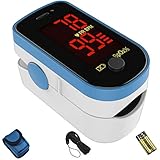
6. CHOICEMMED OxyWatch C1F – Simplest One-Button Design
CHOICEMMed Finger Pulse Oximeter, Blood Oxygen Saturation Monitor, Fingertip O2 Sensor with LED Display, Pulse Rate Reader, Portable SpO2 Monitor with Batteries, Carry Case & Lanyard, Blue
Single button operation
LED display with pulse strength bar
40-hour battery with auto power-off
Accuracy plus or minus 2 percent
Pros
- Genuinely one-button operation
- Carry case and lanyard included
- 40-hour battery life
- Accurate spot readings in about 10 seconds
Cons
- Fixed display orientation
- Basic LED rather than OLED
- No Bluetooth or data logging
The OxyWatch C1F has one job and one button. That is its selling point for a senior who finds menus confusing, and the LED display includes a pulse strength bar so you can see at a glance whether the reading is trustworthy. The manufacturer states plus or minus 2 percent accuracy across a 0 to 100 percent SpO2 range.
Auto power-off kicks in after a few seconds of no use, so there is no lingering drain and no switch to hunt for. Two AAA batteries give about 40 hours of run time, which is longer than most of the LED units here.
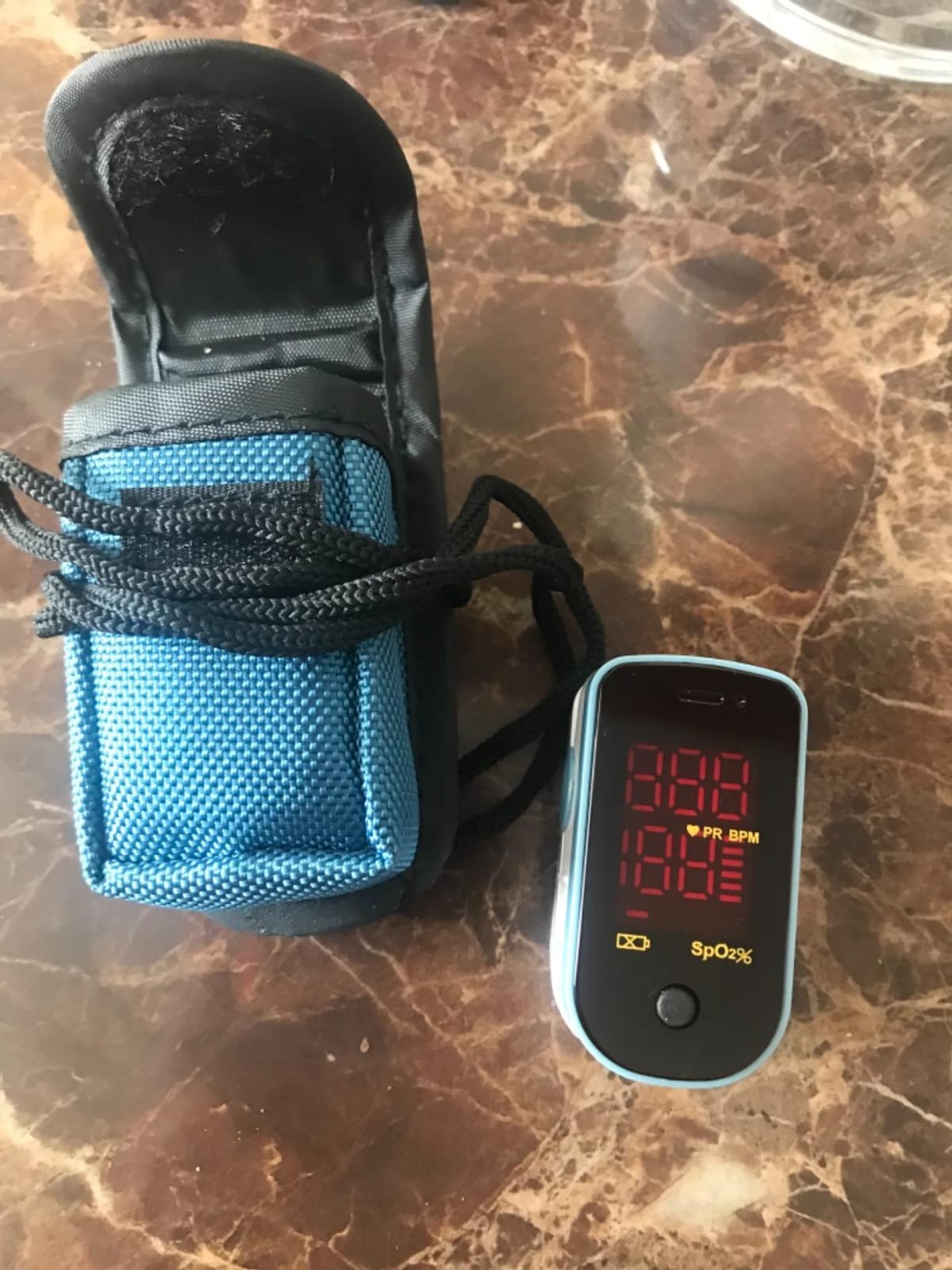
The package includes a neck lanyard, batteries, instructions, and a carrying case, so it is ready to live by the phone. Reviewers call the readings accurate and the operation straightforward, and 13042 ratings at 4.6 stars reflect that consistency.
The display does not rotate, and there is little brightness adjustment, so reading it from an odd angle or in bright sun is harder than with the OLED models. No Bluetooth and no logging means the reading exists only for as long as you hold it in mind.
Who it suits best
A first-time user, or an older adult with mild cognitive impairment who needs a device with no settings to mis-set. The carrying case also makes it easy for a caregiver to bring to appointments without a loose device in a bag.
Where it falls short
Fixed orientation and a plain LED make it a poor fit for low vision or for a caregiver reading someone else’s hand from an angle. And for a chronic condition, having no record is a real limitation when the doctor asks what the readings looked like last month.
7. AccuMed CMS-50D1 – Lightest Body and Long-Term Reliability
AccuMed CMS-50D1 Fingertip Pulse Oximeter Blood Oxygen Sensor SpO2 for Sports and Aviation. Portable and Lightweight with LED Display, 2 AAA Batteries, Lanyard and Travel Case (White)
50 gram body
Auto-rotating LED display
Readings in 8 to 10 seconds
Fits ages 4 and up
Pros
- Lightest device in the lineup
- Auto-rotating display
- Travel case and lanyard included
- Owners report multi-year durability
Cons
- Only 20 hours of stated battery life
- Manual lists a weight range not shown in the listing
- May struggle on very thin or cold fingers
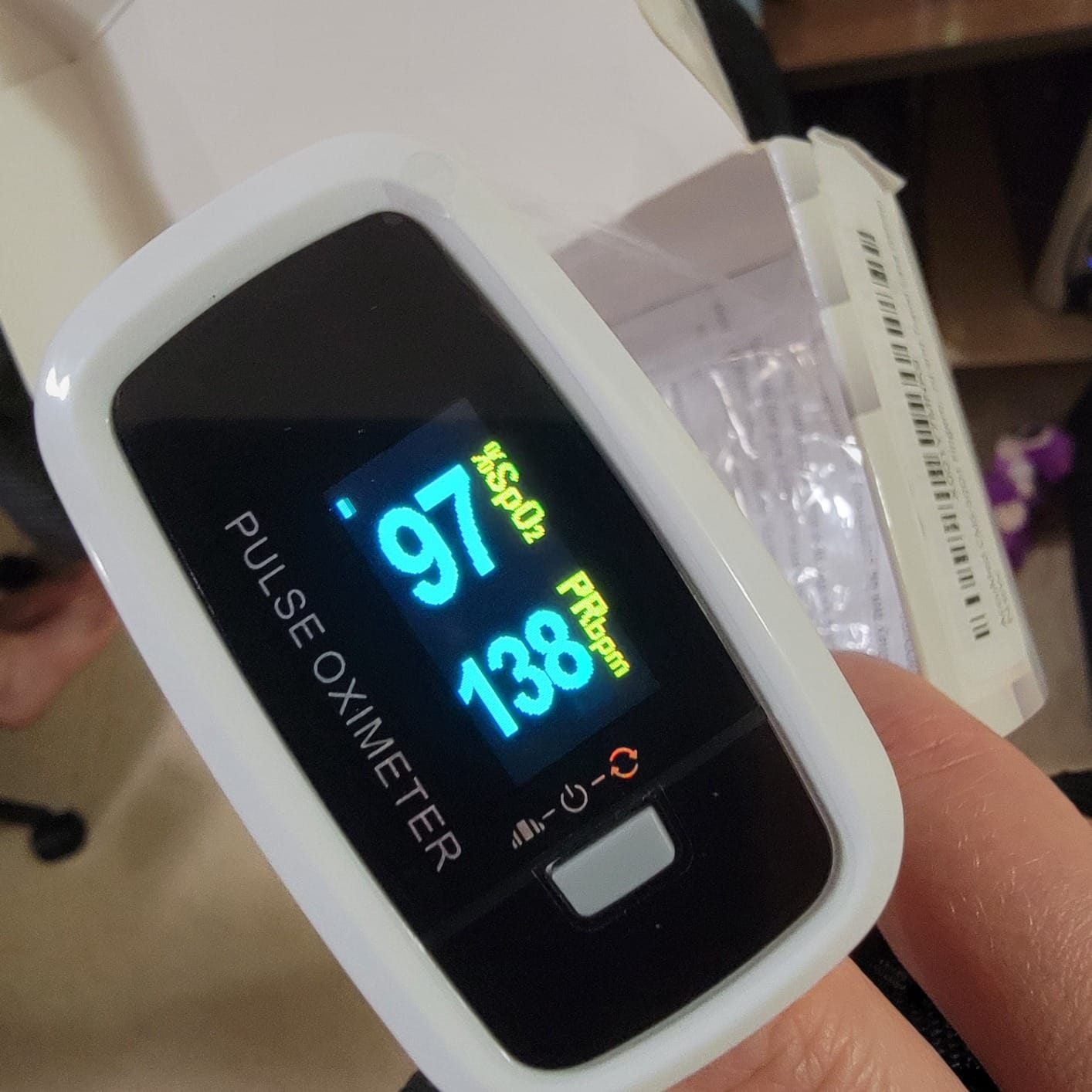
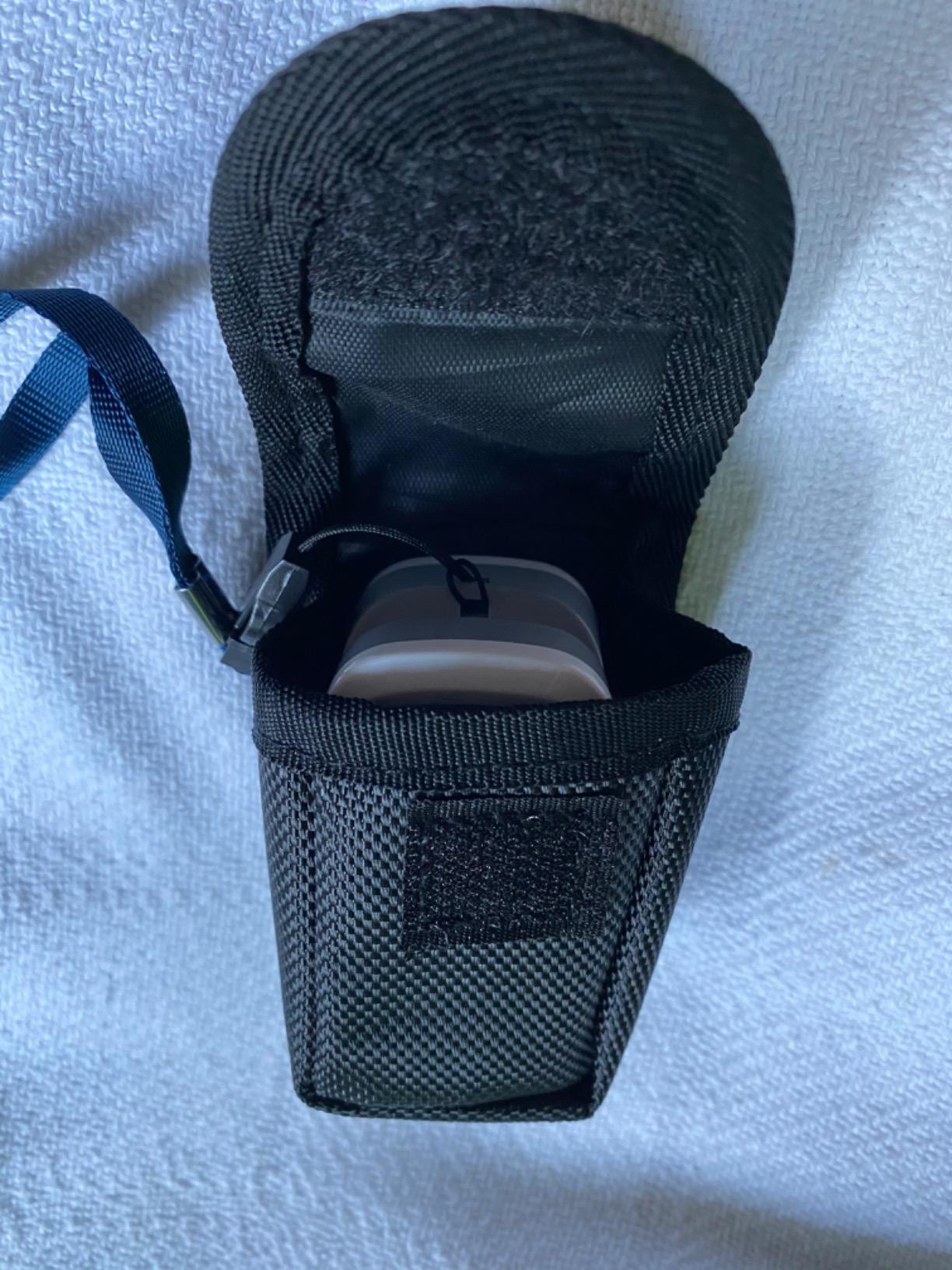
At 50 grams, the AccuMed CMS-50D1 is the device I would put in a jacket pocket for a hospital or clinic visit. The auto-rotating LED display flips between portrait and landscape, so the digits stay upright no matter which way the hand is lying, which matters when a clinician is reading the number over a shoulder.
Readings arrive in 8 to 10 seconds, and the finger chamber fits a wide range of sizes starting from children aged four upward. Reviewers frequently report that this specific model has kept working for years, and several compare its readings favorably against devices they were given in clinic.
Two AAA batteries, a lanyard, and a travel case come in the box, and auto power-off handles the rest. The 4.6 rating across 9767 reviews is a solid sample, and owners tend to describe the unit as consistent rather than exciting.
Stated battery life is 20 continuous hours, the shortest among the AAA devices here. The manual also carries a weight range of 88 to 242 pounds that does not appear in the listing, so a very small or very large adult should check the manual before buying.
Who it suits best
Anyone who wants a device they will actually carry, and anyone who has been burned by a cheap clip that stopped working after a season. The wide age range also makes it a sensible one-device solution for a household with both a grandparent and a grandchild.
Where it falls short
Owners note that it can struggle with very thin or cold fingers, the same low perfusion problem that the Innovo was built to solve. The LED is not as bright or colorful as the OLED units, and the unlisted weight restriction deserves a check.
8. Wellue PC-60FW – Best Companion App for Sharing Readings
Wellue Bluetooth Pulse Oximeter Fingertip, Blood Oxygen Saturation Monitor with Free APP, Batteries, Carry Bag & Lanyard
Bluetooth sync to the free ViHealth app
Memory for 12 reading groups
Smart audible and visual alarms
Color OLED with perfusion waveform
Pros
- Readings sync to a phone for a doctor visit
- Memory stores 12 groups of data
- Alerts when oxygen or pulse crosses a limit
- FSA and HSA eligible
Cons
- Short stated battery life
- Screen stays bright during overnight use
- App must be open for continuous logging
The Wellue PC-60FW is the one I would pick if the doctor is going to ask for a history rather than a single number. It pairs over Bluetooth with a free ViHealth app, syncs readings in real time, and keeps up to 12 groups of data on the device itself, so a trend can be pulled up at a telehealth appointment instead of reconstructed from memory.
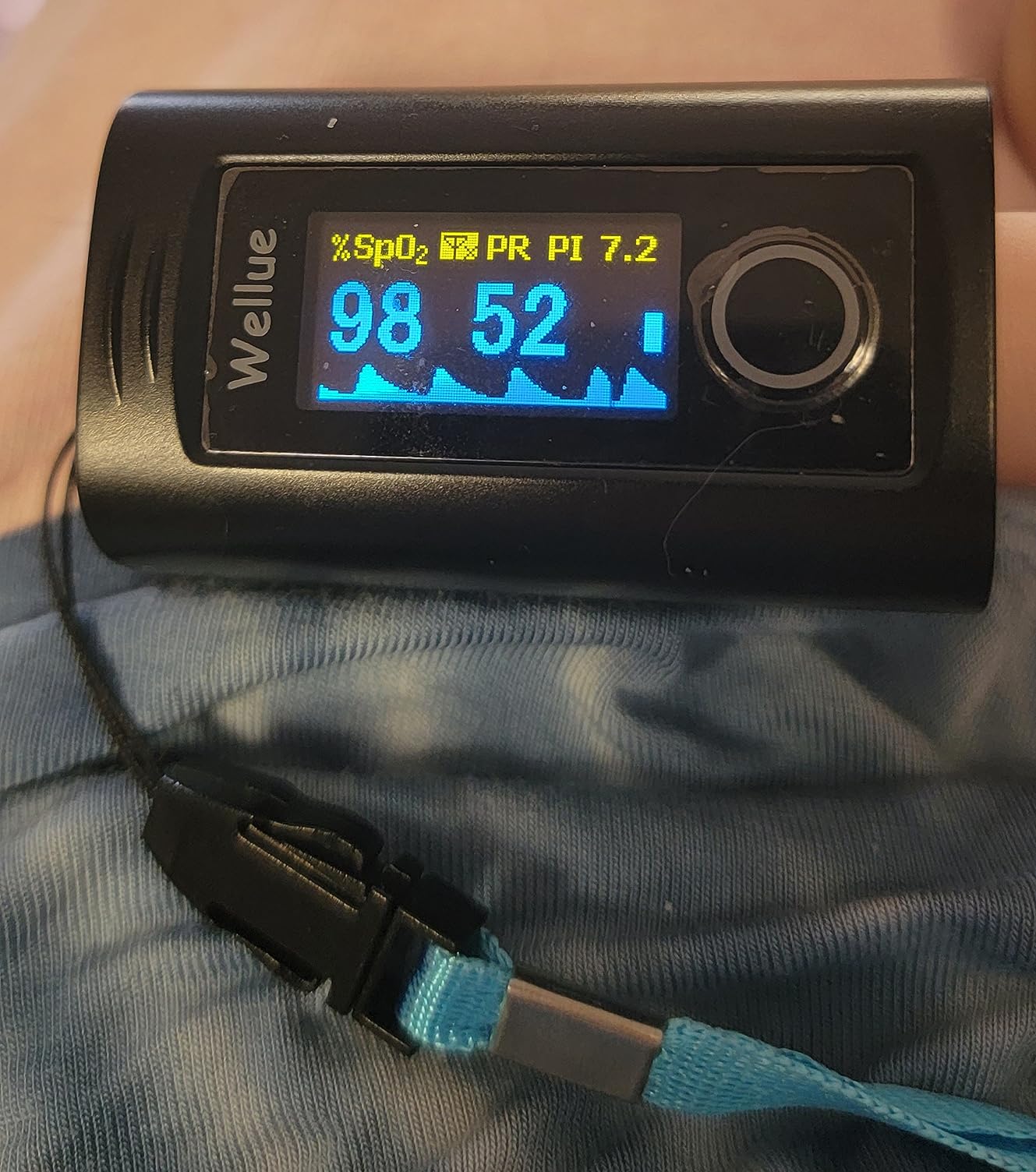
The smart reminder system beeps and flashes if oxygen or pulse crosses a preset limit, which makes it useful for someone living alone or for overnight checks. The color OLED shows a perfusion waveform, and the stated accuracy is 2 percent or better across a 70 to 100 percent SpO2 range.
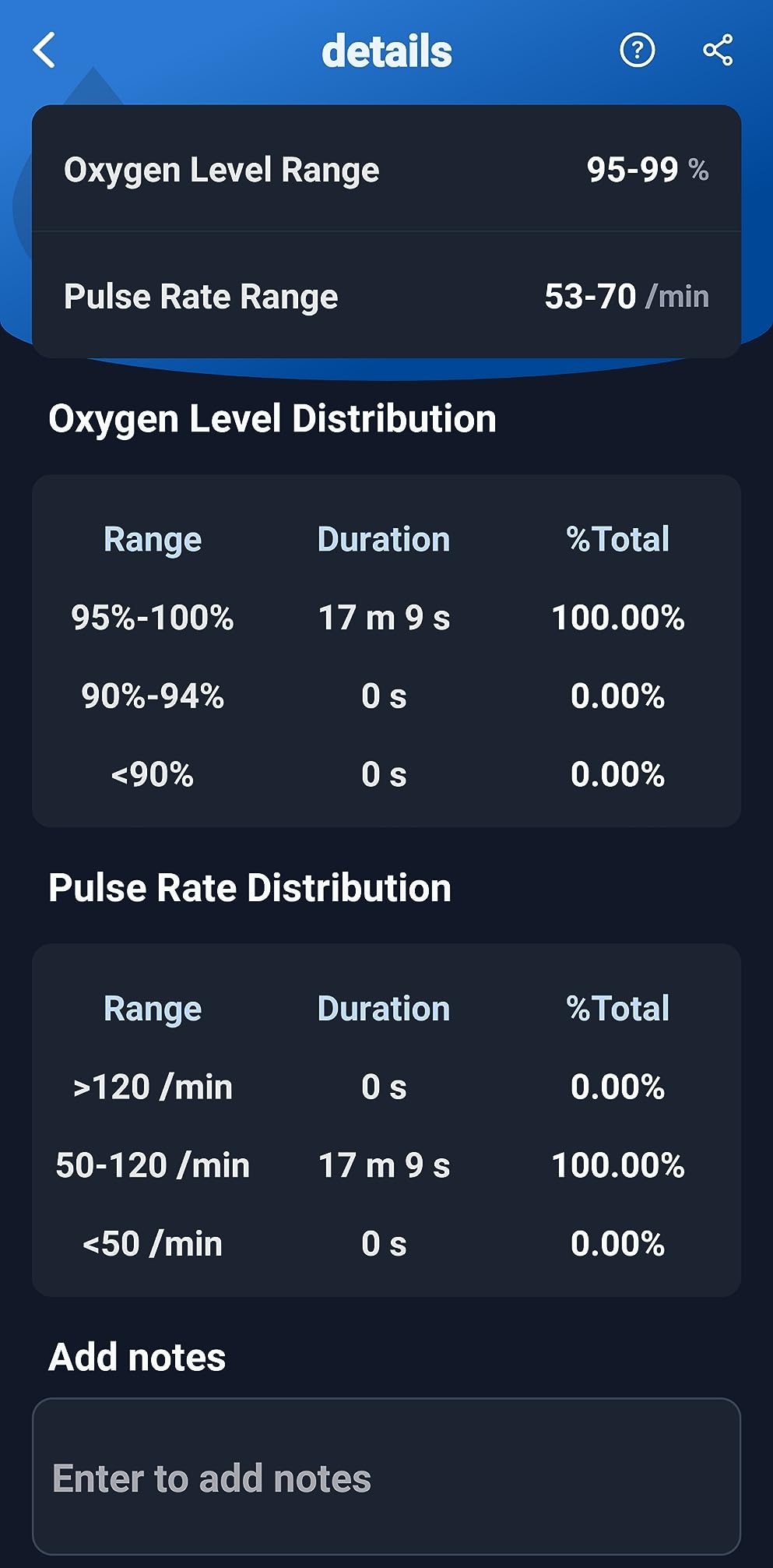
Reviewers note that the app is the reason they bought it and that data export is the feature they show the doctor. The device is also FSA and HSA eligible, which can matter for anyone buying with pre-tax health funds.
There are real limits. Stated battery life is only about 2 hours, the app needs to be open for continuous logging, and the screen stays bright during overnight use. It also has no finger strap, so it is not a wearable for all-night tracking on its own. A lanyard and carry pouch are included with two AAA batteries.
Who it suits best
A caregiver who lives apart from a parent and wants the readings to arrive on a phone, or anyone whose clinician wants a written trend. The threshold alarms also suit a person with a history of episodes who should be told rather than have to remember to look.
Where it falls short
It asks more of the user than the others. Someone uncomfortable with phones will not get value from the app, and a night-time user is fighting a bright screen. If sleep tracking is the goal, our guide to wi fi connected pulse oximeters with alerts covers the connected options built for that job.
9. iHealth PO3 – Rechargeable Battery and Multi-User Tracking
iHealth Rechargeable Bluetooth Fingertip Pulse Oximeter with SpO2, PR & PI
Rechargeable battery with 300 uses per charge
Bluetooth sync to the MyVitals app
Plethysmograph and perfusion index display
Accuracy plus or minus 2 percent
Pros
- No disposable batteries to keep track of
- App supports multiple users and trend views
- Shows plethysmograph and perfusion index
- Large LED display
Cons
- Mixed accuracy reports from some owners
- Only about 3 hours of continuous use per charge
- Fixed screen orientation and a bright green LED
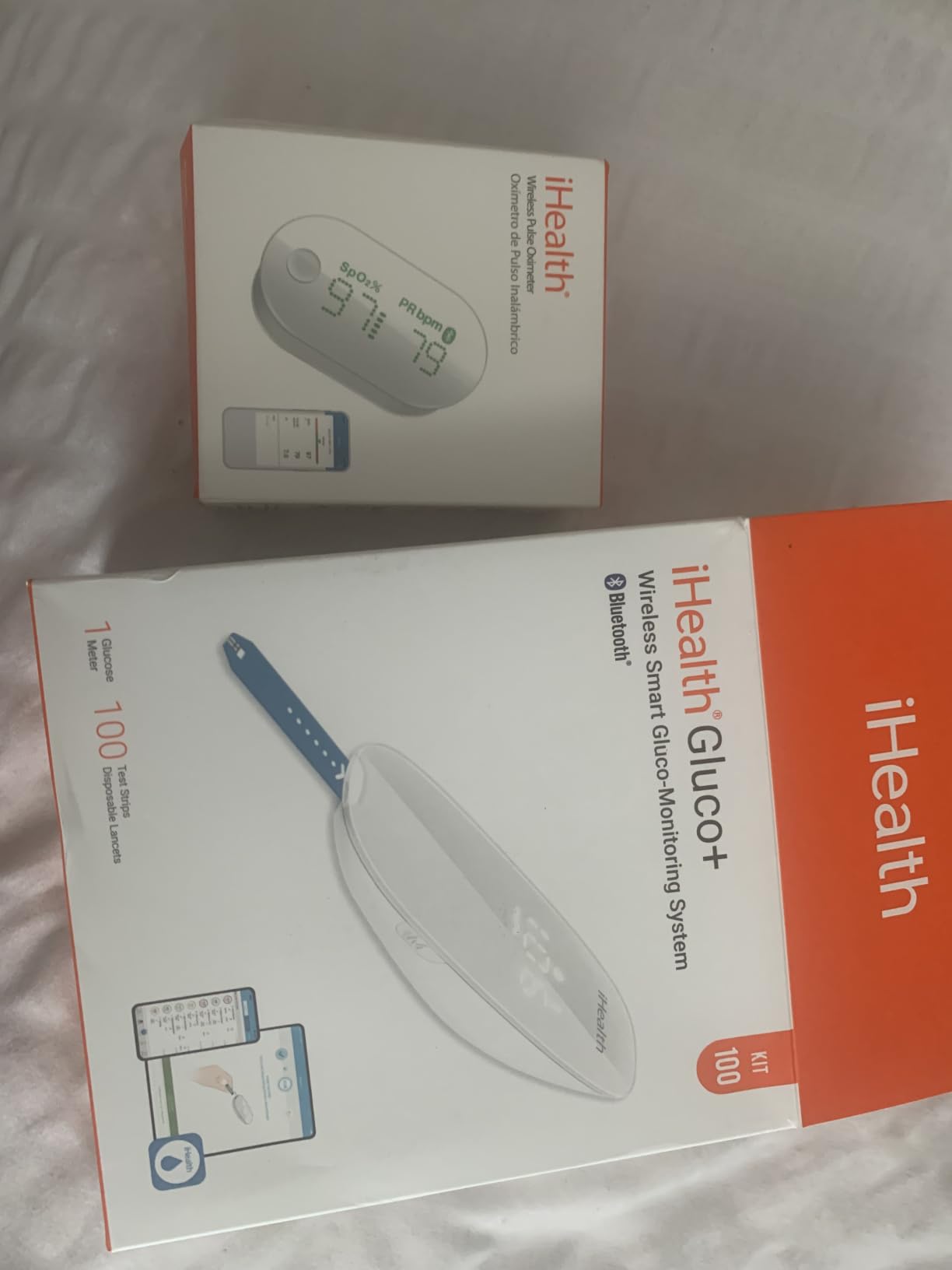
The iHealth PO3 removes the battery guesswork entirely. A built-in rechargeable lithium polymer cell gives up to 300 uses from a roughly three-hour charge, and the micro-USB cable is in the box. For someone already juggling several devices, that is a genuine convenience rather than a gimmick.
It syncs to the iHealth MyVitals app with multi-user support, so one account can hold a parent and a child, with trend views by hour, day, week, and year. The display shows a plethysmograph and perfusion index alongside a large LED screen, which is more diagnostic feedback than most fingertip devices provide.
Accuracy is stated at plus or minus 2 percent over a 70 to 99 percent SpO2 range. The 4.3 rating across 3978 reviews is the lowest average in this group, and the reason is visible in the reviews: some owners report inconsistent results compared with medical devices.
Other complaints cluster around the same three points. The battery gives about three hours of continuous use, the screen does not rotate, and the green LED stays bright at night. The body is also noticeably heavier than the rest of this list at 228 grams.
Who it suits best
A household sharing one device between two or more people, and anyone who prefers charging a device over finding spare cells. The perfusion index and waveform are a good match for a senior with slow circulation.
Where it falls short
The accuracy complaints are the reason this is not higher in the list. The mixed reports are not universal, but if a reading will drive a real health decision, the mixed reviews are a reason to verify against a clinic device before trusting it. Its weight and fixed screen also work against portability.
10. SmartHeart Talking Oximeter – Reads the Number Out Loud
SmartHeart Talking Fingertip Pulse Oximeter
Spoken SpO2 and pulse rate readout
Illuminated live display
One-button operation
Fits finger circumferences 20 to 75mm
Pros
- Speaks results aloud for low vision
- Clear and loud voice announcements
- Illuminated display with live reading
- Auto shut-off saves batteries
Cons
- Some owners report readings 2 to 3 percent low against clinical devices
- English audio only
- Bulkier 3 inch cube body
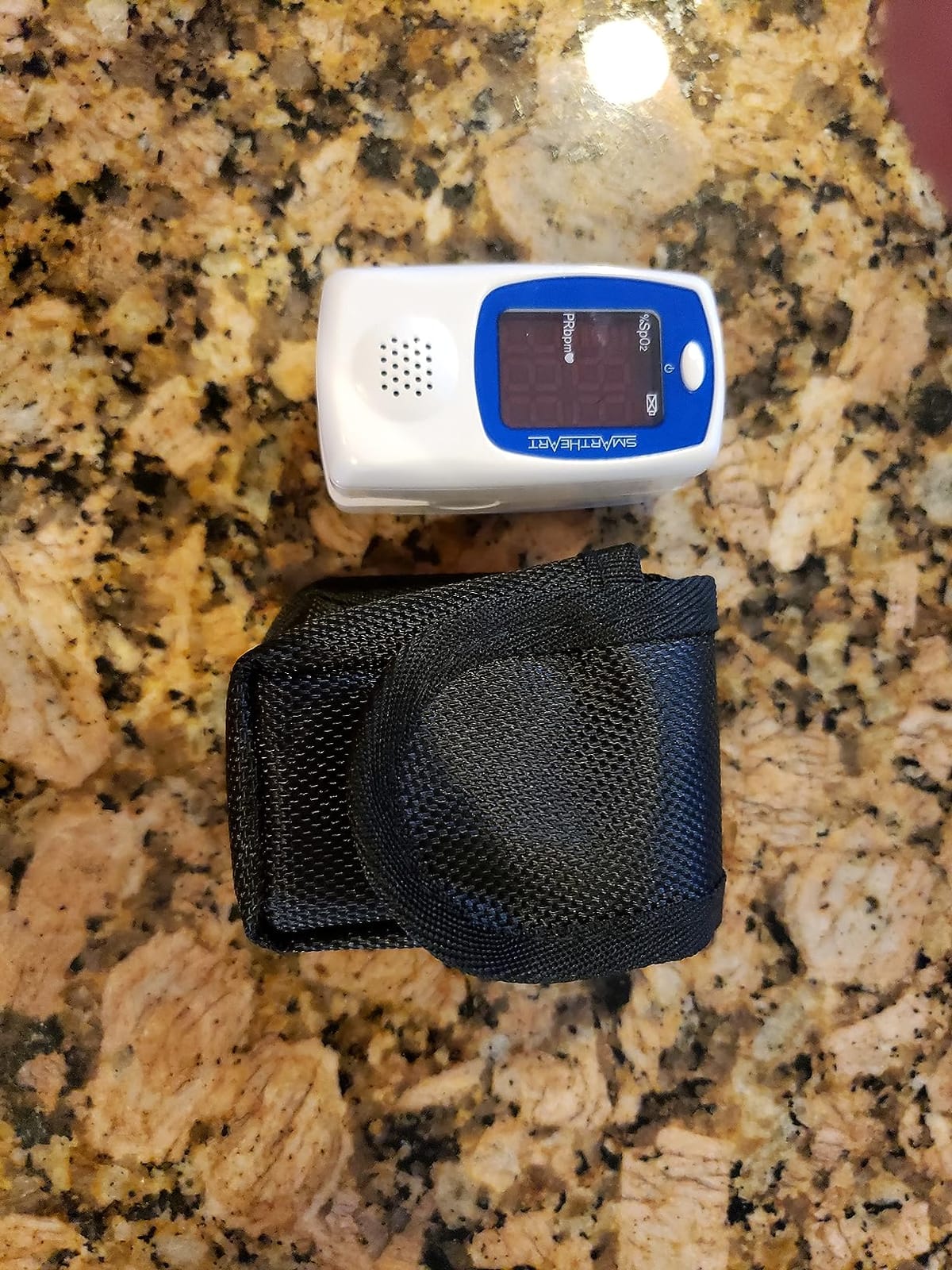
The SmartHeart is the only device in this roundup that talks. After a reading, it announces the SpO2 value and the pulse rate out loud, which makes it genuinely usable for a person with low vision who cannot read a small screen at a glance. The display is also illuminated, so it still works as a visual check for a sighted caregiver.
Operation is one button, the finger chamber spans 20 to 75 millimeters of circumference, and auto shut-off protects the two AAA batteries. Instructions come in English and Spanish, and the housing is latex-free with recyclable packaging. There is a one-year limited warranty.
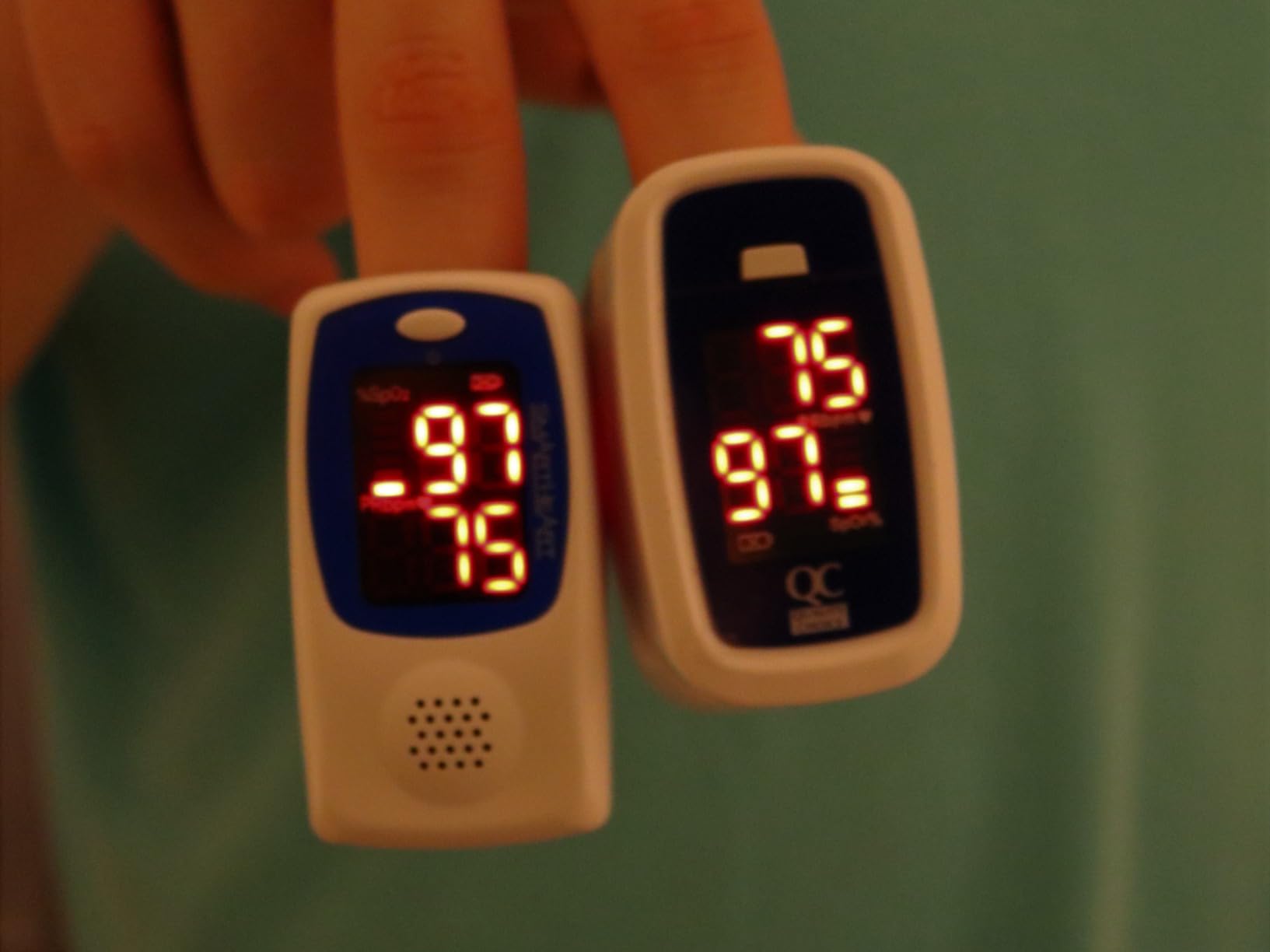
The honest limitation is the sample size. 203 reviews at a 4.2 average is thin next to devices with tens of thousands of ratings, and the accuracy feedback is mixed, with some owners reporting readings 2 to 3 percent lower than clinical devices. The voice is English only.
The body is a 3 inch cube at 2.08 ounces, so it is bulkier than the slim fingertip clips and harder to fit in a small bag. A lanyard and two AAA batteries are included.
Who it suits best
A person with age-related macular degeneration, diabetic retinopathy, or any other low-vision condition who still wants to check their own oxygen. It also works as a caregiver aid, since the answer can be heard from across a room.
Where it falls short
Reported readings running a few points low is the concern, because a device used for reassurance can also produce unnecessary worry. With English-only audio and a small review base, this is a specialist choice rather than a general recommendation, and it should be checked against a clinic device before it is trusted.
What SpO2 Numbers Mean for Older Adults
A fingertip pulse oximeter estimates the percentage of your blood carrying oxygen, shown as SpO2, and reads your pulse rate at the same time. Most healthy adults at rest sit between 95 and 100 percent. Somewhere between 90 and 92 percent is the range most clinicians treat as a reason to make a call rather than wait.
Age itself changes the numbers only slightly. Many healthy people in their seventies and eighties run a little lower than younger adults, and some long-term conditions, particularly COPD, set a personal baseline that is below 95 by design. That is why a doctor who knows the history matters more than any single number.
Below 90 percent, and especially below 88 percent, most guidance treats the reading as urgent. The more useful warning signs are physical rather than numeric: increasing breathlessness at rest, difficulty speaking in full sentences, new confusion, blue or grey lips, and a pulse rate that is much higher than usual for that person.
One point on labelling. Most fingertip oximeters sold for home use carry a general wellness statement, which means they are not cleared to diagnose a condition, and they are not a replacement for a doctor’s equipment. A home device earns its place by showing change over time, not by replacing a clinic test.
How to Take an Accurate Reading on an Older Adult’s Hand
Warm the hand first. Cold fingers are the most common cause of a falsely low or unreadable result, because the sensor cannot get a strong enough signal. A warm cup of tea, a few minutes under a blanket, or rubbing the palms together fixes more bad readings than any device change.
Remove nail polish, or move to an unpainted finger. The sensor measures light passing through the nail bed, and any polish blocks or skews it.
Use the index or middle finger. These carry the thickest tissue and the most reliable blood flow. Avoid the thumb, the little finger, and any finger with a callus, a ring, or a bandage.
Insert the finger fully and keep still. The fingertip should be at the end of the chamber, and a tremor or conversation will move the reading.
Wait for the steady number, then repeat. Let the display settle before you write anything down, then take two more readings and compare. A wide spread between attempts means a technique problem, not a health change.
Perfusion index, shown as a percentage on several of the devices above, is the quickest signal that a reading is not usable. Anything under three percent suggests the finger is too cold or poorly positioned, and the number should not be recorded until it settles higher.
Reading someone else’s hand has its own awkwardness. The clip goes on their finger while the screen faces them, so the caregiver has to look at the display from the other side or ask them to read it back. A talking device removes that problem entirely, which is why it appears on this list despite a much smaller review base.
For anything beyond spot checks, the wider fitness and recovery context matters too. Senior strength work in general is covered in our guide to the best resistance bands for seniors, and staying active is part of keeping circulation strong enough to get a clean reading in the first place.
Buying Guide: Features That Matter Most for Seniors
Grip strength and the finger chamber
This is the feature that decides whether a device gets used at all. Look for a self-adjusting spring chamber, such as the SMART Spring system on the Zacurate, or a wide silicone insert that fills the gap left by thin fingers. A stiff narrow clip is the fastest way to get a device that stays in a drawer.
Display size, brightness, and direction
Digits matter more than resolution. A large front-facing LED, like the Zacurate’s, beats a smaller side-angled screen every time. Rotation is the underrated half of this, and four display directions, as found on the Santamedical and Mibest, let the digits stay upright whatever the hand is doing. Adjustable brightness levels matter more than most buyers expect, particularly for a bedroom check at night.
Perfusion index and waveform
A perfusion index tells you whether the finger is positioned well enough for the saturation number to be trusted, and a plethysmograph waveform shows whether the signal is clean. Both turn an ambiguous reading into an explainable one, which is what you need when a number will drive a call to a doctor.
Alarms and audible output
An audible alarm is worth more than most people expect, particularly for someone living alone. The Innovo has a set alarm with pulse beeps, the Wellue adds a threshold reminder synced to its app, and the SmartHeart reads results out loud for anyone who cannot see the screen.
Battery and charging
Ranges run from about 2 hours of continuous use on the Wellue to a claimed 128 hours on the CONTEC, with most AAA devices landing around 20 to 40 hours. Someone checking once a week cares about the long end of that range, while someone monitoring overnight cares about the short end and should plan for a spare cell nearby.
Getting data to a doctor
If a clinician is involved, the ability to show a trend matters. Bluetooth app export, as on the Wellue and iHealth, turns a clip into a record, and a written log of date, time, and reading works nearly as well at an appointment. If daily movement and general wellness are part of the same conversation, our treadmill and elliptical roundups for seniors cover the cardio side of that picture.
FDA clearance and skin tone
Understanding the labelling removes a lot of confusion. Some devices are cleared for specific medical uses, while many fingertip models state that they are for general wellness use and not for diagnosing a condition. Ask about the clearance if COPD, heart failure, or sleep apnea is involved rather than assuming every device is equivalent.
Accuracy is also not identical across skin tones. A recent prospective multicentre study in the BMJ, using spectrophotometer-measured skin tone, found that oximeters can overestimate oxygen levels and miss hypoxemia more often in darker skin. The practical takeaway for a home user is simple: a single reassuring reading is weak evidence, so a falling trend across several days deserves more weight than one number.
Where smartwatches fit, and where they do not
Wrist wearables can follow trends over days and are excellent for spotting a shift, and some are excellent low-impact ways to keep circulation moving. They are not a substitute for a fingertip measurement when a specific number will inform a clinical decision, and none of them replaces a doctor’s equipment.
Frequently Asked Questions
Which brand of pulse oximeter is the most accurate?
No brand wins outright, because accuracy depends on the hand it is used on. The Innovo iP900AP and the iHealth PO3 show a perfusion index and waveform, which tell you whether the reading is trustworthy rather than just reporting a number. For a general answer, the Zacurate 500DL has the largest review base at more than 238k ratings and a stated accuracy of plus or minus 2 percent. Check any new device against a clinic unit before trusting it for a real health decision.
Which finger gives the most accurate reading for a pulse oximeter?
The index or middle finger gives the most accurate reading. These fingers have thicker tissue and stronger blood flow than the thumb or little finger, which produces a cleaner signal. Avoid fingers with calluses, rings, bandages, or nail polish, because all of them distort the light the sensor measures.
What is a normal oxygen level for a 70-year-old person?
Most healthy adults, including people in their seventies, sit between 95 and 100 percent SpO2 at rest. Age on its own does not lower oxygen saturation much, though some people with COPD have a baseline below 95 by design. A reading at or under 92 percent is a good reason to contact a clinician.
What is the best medical grade pulse oximeter for home use?
For general home spot checks, the Zacurate 500DL is the strongest all-rounder because its spring chamber takes the least squeezing and its display faces the user. For a chronic condition, the Innovo iP900AP adds a plethysmograph, perfusion index, and audible alarm, which matter most for cold or poorly perfused hands. Check the specific clearance label for any device you consider.
Can fingernail polish affect pulse oximeter readings?
Yes. The sensor measures light passing through the nail bed, and nail polish blocks or absorbs some of that light. Dark polish in particular can push the displayed saturation lower than the real value. Either remove it or simply use a different, unpainted finger.
Do cold fingers affect pulse oximeter readings?
They do, and they are the most common cause of a poor reading. A cold finger gives the sensor too weak a signal, which can produce a falsely low number or no reading at all. Warm the hand for several minutes first, and check the perfusion index if your device shows one. Anything under about three percent means the reading is not usable yet.
How can dark fingernail polish cause a falsely low SpO2 reading?
An oximeter sends two wavelengths of light through the fingertip and compares how much is absorbed by oxygenated and deoxygenated blood. Nail polish adds a layer that absorbs extra light, which the device misreads as more deoxygenated blood. The result is a displayed number lower than the true saturation. Removing the polish or using another finger fixes it.
When should I be concerned about an oxygen level?
Contact a clinician for a reading at or below 92 percent, and treat anything under 90 percent as urgent. Physical signs matter too: breathlessness at rest, blue or grey lips, new confusion, or a pulse rate well above that person’s usual. A falling trend over several days is more meaningful than a single number, and no home device is a diagnosis.
The Bottom Line on the Best Pulse Oximeters for Seniors in 2026
The Zacurate 500DL is the best pulse oximeter for seniors overall, because the spring chamber and front-facing display solve the two problems that stop most older adults from using a clip consistently. The Innovo iP900AP is the better choice for a chronic condition where perfusion feedback and an audible alarm matter, and the Wellue PC-60FW wins when a doctor needs a trend rather than a single number.
Whichever you pick, warm the hand, use an unpainted index or middle finger, repeat the reading twice, and treat a result at or under 92 percent as a reason to call someone. And if you are still building a home setup, our recumbent bike roundup for seniors covers the low-impact exercise that keeps circulation strong enough to make those readings meaningful.