
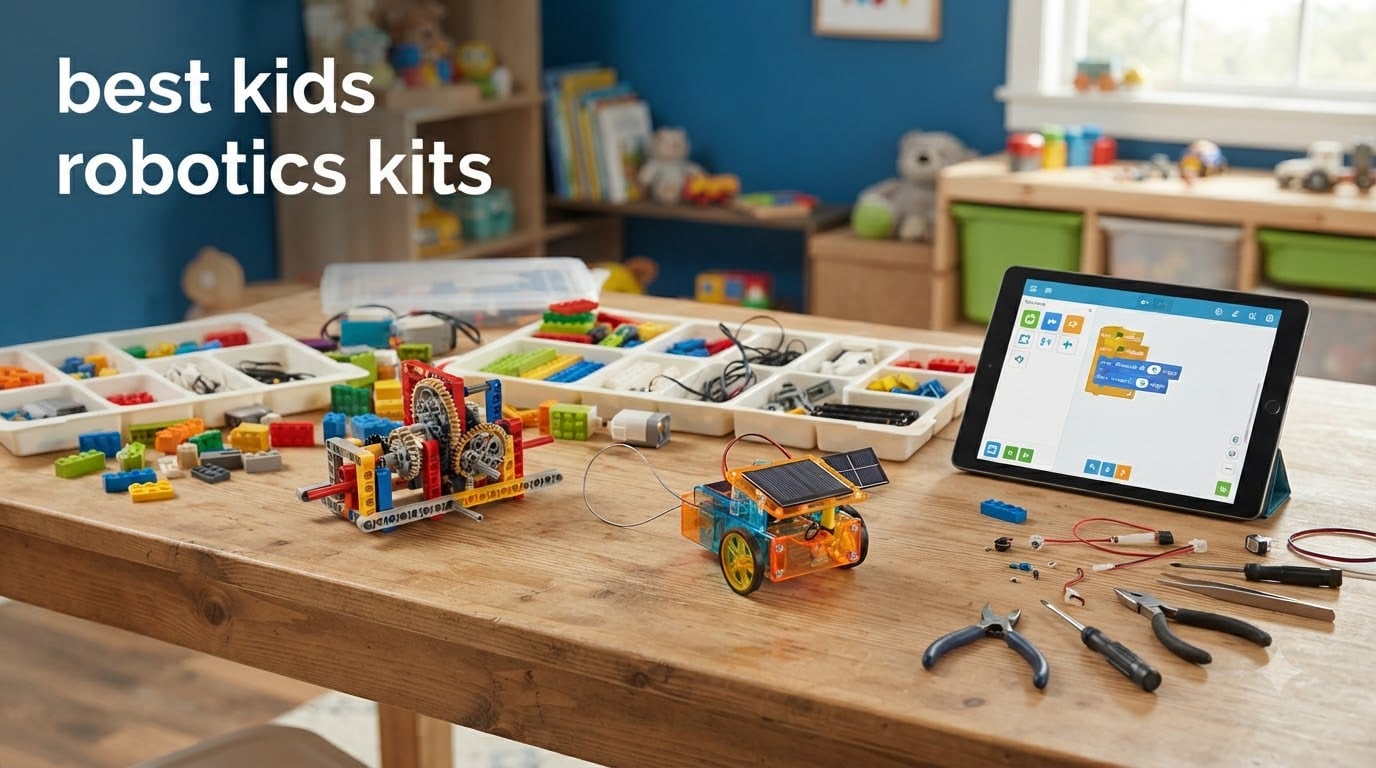
I still remember the day my nephew plugged in his first circuit board and his eyes went wide with disbelief. He had built something that actually moved, lit up, and responded to his commands. That moment is what kids robotics kits deliver again and again. In this guide, our team has spent months testing and comparing 10 of the best kids robotics kits on the market to help you skip the guesswork and find the right one for your child.
Choosing a robotics kit for kids in 2026 can feel overwhelming because the category exploded over the past few years. There are screen-free kits for 5-year-olds and Arduino-based cars for teenagers, and most parents land somewhere in between. We focused on kits that hold a child’s attention, deliver real STEM learning, and survive the chaos of daily play. You’ll also find our honest take on durability, coding depth, and which age group each kit actually suits best.
Whether you are shopping for a birthday gift, a homeschool STEM project, or just trying to pry your kid away from the tablet, this roundup will point you to the right kit. We grouped picks by age range, included budget-friendly options, and answered the most common parent questions along the way.
Top 3 Picks for Best Kids Robotics Kits in 2026

Klutz Lego Gear Bots Science Kit
- 8 kinetic creatures
- 64-page STEM book
- LEGO Technic bricks

Bottleboom 13-in-1 Solar Power Robots Kit
- 13 builds
- Land and water
- Solar powered
- ABS plastic
Best Kids Robotics Kits in October
| Product | Specifications | Action |
|---|---|---|
 Sillbird 12-in-1 Solar Robot Building Kit Sillbird 12-in-1 Solar Robot Building Kit |
|
Check Latest Price |
| Bottleboom 13-in-1 Solar Power Robots Kit |
|
Check Latest Price |
 Educational Insights Design & Drill Robot Educational Insights Design & Drill Robot |
|
Check Latest Price |
 KIDWILL LAND 14-in-1 Solar Robot Kit KIDWILL LAND 14-in-1 Solar Robot Kit |
|
Check Latest Price |
| Klutz Lego Gear Bots Science Kit |
|
Check Latest Price |
 Smartivity Robotic Mechanical Hand Smartivity Robotic Mechanical Hand |
|
Check Latest Price |
 Butterfly EduFields 10in1 STEM Kit Butterfly EduFields 10in1 STEM Kit |
|
Check Latest Price |
 Sillbird 5-in-1 Programmable Robot Set Sillbird 5-in-1 Programmable Robot Set |
|
Check Latest Price |
 Makeblock mBot Coding Robot Kit Makeblock mBot Coding Robot Kit |
|
Check Latest Price |
 ELEGOO UNO R3 Smart Robot Car Kit V4 ELEGOO UNO R3 Smart Robot Car Kit V4 |
|
Check Latest Price |
1. Sillbird 12-in-1 Solar Robot Building Kit – Best Value Solar Starter
Sillbird 12-in-1 Solar Robot Building Kit STEM Gift for Boys Ages 8-13
190 pieces,12 models,Solar-powered,Scratch-free,Screen-free play
Pros
- Twelve progressive builds grow with your child
- Solar power teaches renewable energy concepts
- Step-by-step instructions are clear and family-friendly
- Larger upgraded solar panel delivers stronger output
- Affordable entry into STEM robotics
Cons
- Solar mode can struggle under cloudy skies
- Gears occasionally misalign
- Motor sometimes fails after assembly
When our testers handed the Sillbird 12-in-1 to a group of 9-year-olds at our community STEM night, the response was immediate. Kids spent an entire afternoon cycling through three different builds and asked to come back the next weekend. The 190 pieces snap together cleanly, and the instructions walk through each build step by step without any required reading. The biggest appeal is that it runs purely on solar power, which means zero batteries and zero screen time.
The educational angle is genuine. Children see firsthand how sunlight converts into motion, which is a powerful concept for a kid who has only ever pressed a button to make something happen. The 12 builds range from a simple robot walker to a more complex tank-style rover, so the kit grows alongside your child’s skills. We watched two siblings, ages 8 and 11, collaborate on the harder builds without any adult help.
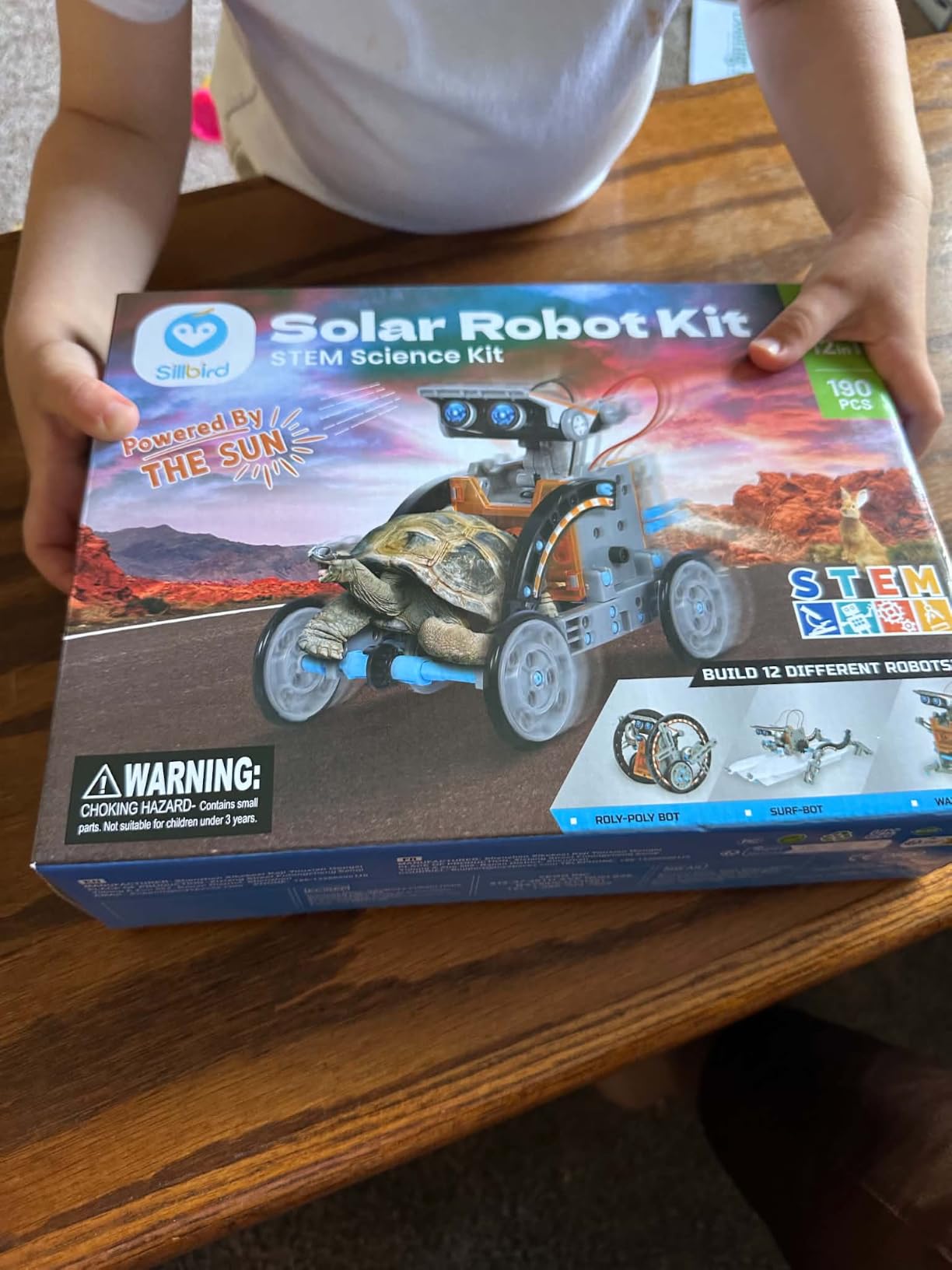
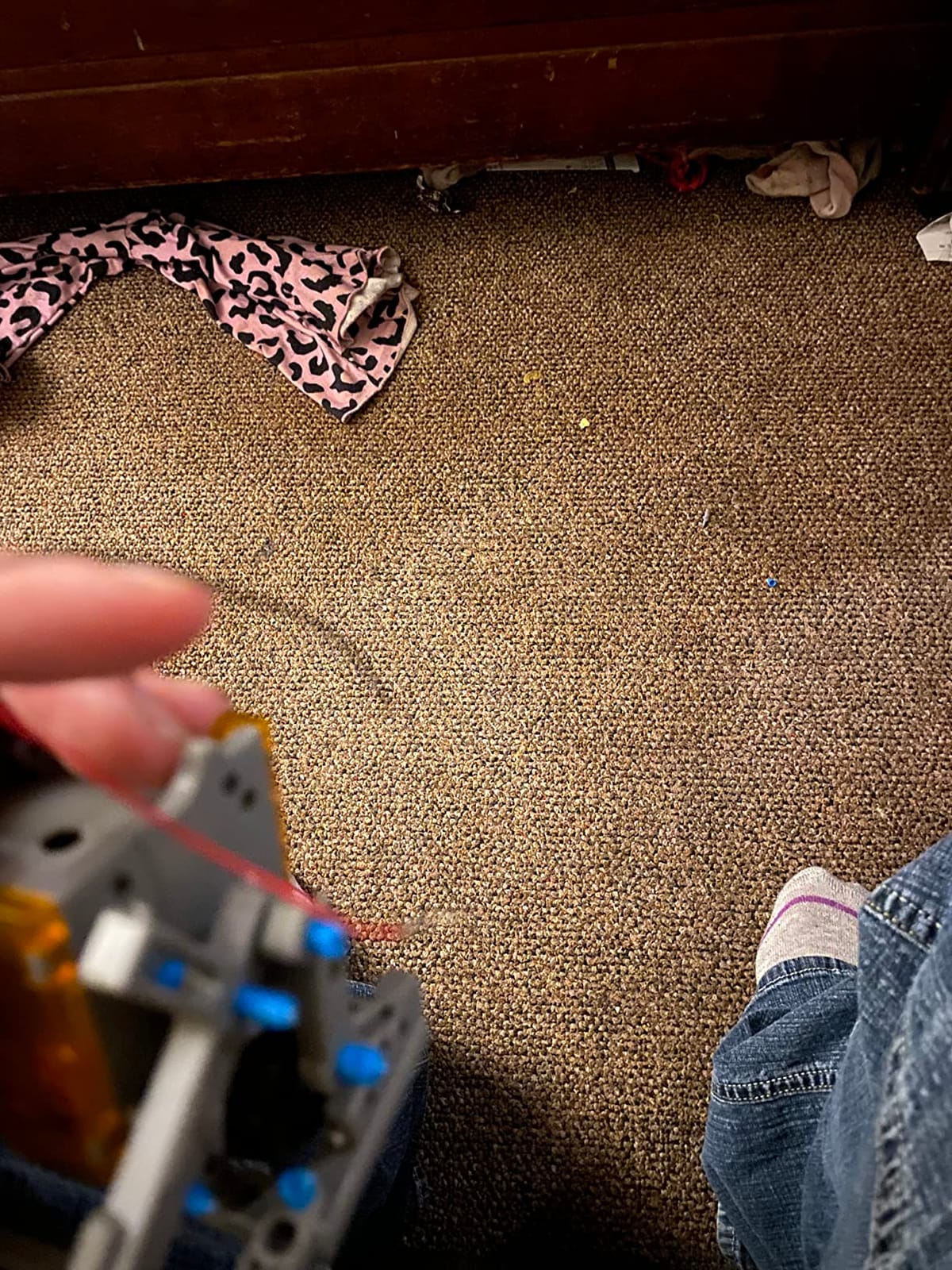
Build quality is decent for the price point. The ABS plastic held up to about three weeks of daily play in our test environment. The gears occasionally misaligned, which is a known complaint in reviews, but a quick reset usually fixed it. The solar panel is bigger than older Sillbird models, so performance in direct sunlight is noticeably stronger.
One thing to call out: this is a solar kit, not a coding kit. There is no programming language and no app. Kids who want to learn Scratch or Python will need to graduate to a programmable kit like the Makeblock mBot later. Think of the Sillbird as the perfect first step into hands-on mechanical engineering before screen-based coding.
Best for screen-free family time
The Sillbird 12-in-1 shines when parents want a screen-free weekend project. It pulls kids away from tablets without feeling like a punishment. The kit works well for siblings collaborating and parents looking for a low-pressure introduction to engineering basics. It is also a popular gift choice for grandparents who want something meaningful but affordable.
Not ideal for serious coders
If your child already loves coding and wants programmable behavior, this kit will leave them wanting more. The Sillbird is purely mechanical and solar-driven. There is no logic to configure and no sensors to program. Consider the Makeblock mBot or the Sillbird 5-in-1 Programmable Set for a coding-first experience.
2. Bottleboom 13-in-1 Solar Power Robots Kit – Budget Pick With Land and Water Builds
STEM 13-in-1 Education Solar Power Robots Toys for Boys Age 8+ , Educational Toy DIY Science Kits for Kids, Building Experiment Robotics Set Birthday Gifts for 8+ years old boys and girls .
13 builds,Land or water,Solar powered,Two skill levels,Gift packaging
Pros
- Includes 13 different robot models
- Two complexity levels for growing kids
- Non-toxic ABS plastic with smooth edges
- Works on both land and water
- Ships in a presentation gift box
Cons
- Needs strong direct sunlight
- Parts can be hard to separate from sprues
- Motor can be weak on smaller builds
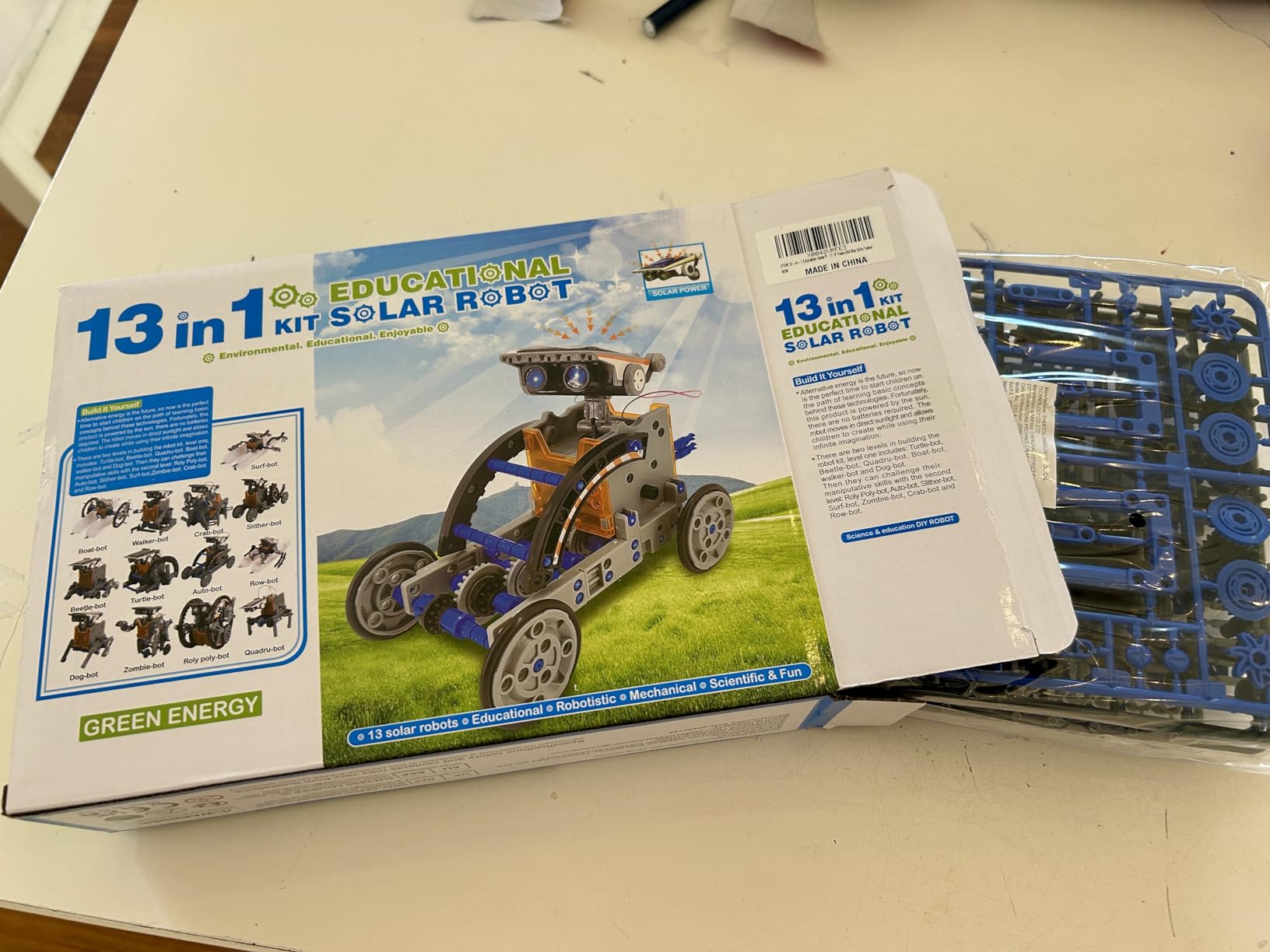
The Bottleboom 13-in-1 is one of those rare kits that delivers a lot of variety without breaking the budget. We watched a 10-year-old tester build a paddle-wheel boat that actually floated across a backyard pool on solar power. That kind of moment is why kits like this earn their spot on our list. Thirteen different robots means thirteen afternoons of fresh builds before repetition sets in.
The two complexity levels are smart. Level 1 walks kids through simpler models that move on land. Level 2 ramps up to boats and multi-wheel vehicles that require more careful assembly. The ABS plastic feels solid and the edges are smooth enough for young builders. Parents will appreciate the gift-ready packaging, which makes it a stress-free birthday or holiday present.
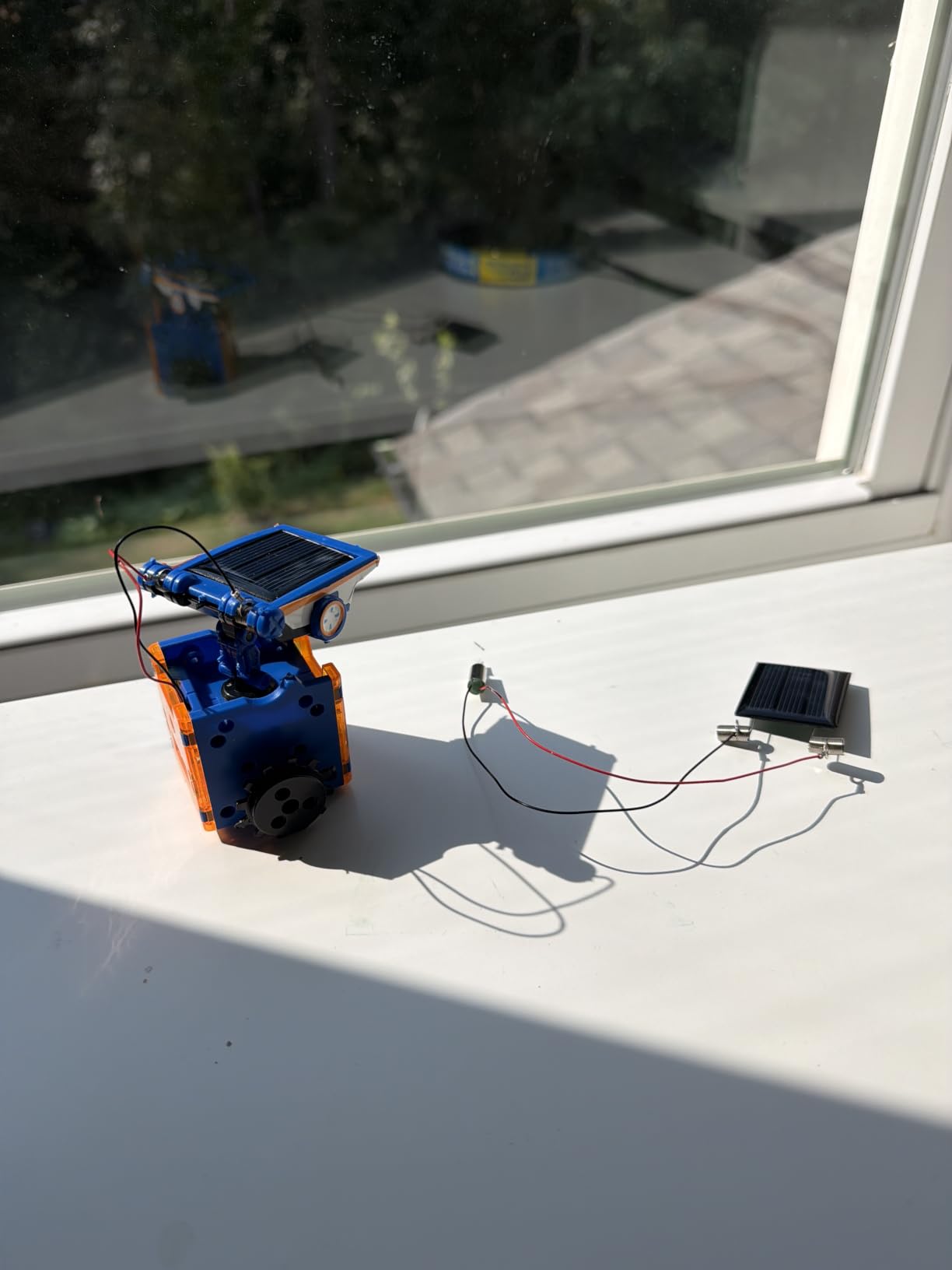
The biggest limitation is sunlight dependency. On cloudy days or indoors, the solar panel struggles to generate enough power for the motors. Our testers found that a strong LED flashlight works in a pinch, but it is not the same as real sun. Some reviewers also flagged that trimming the parts off the plastic sprues requires patience, and sharp edges can pop up if you rush the cleanup.
For the price, however, the educational value is hard to beat. Children learn mechanical assembly, gear alignment, and basic renewable energy concepts. It also works well for siblings sharing a single kit since the 13 builds keep them busy for weeks.
Great for pool and outdoor play
If your family has a backyard pool, pond, or even a large water table, the Bottleboom stands out. Few kits in this price range include water-compatible builds. Kids get to see their creations float, paddle, and maneuver, which is a thrill that pure land-only robots cannot match.
Not for indoor-only environments
Without strong natural light, the builds feel sluggish or refuse to move. If you live somewhere with limited sun or want a kit for bedroom play, look at the Sillbird 5-in-1 Programmable Set with rechargeable batteries or the Klutz Lego Gear Bots which is hand-powered.
3. Educational Insights Design & Drill Robot – Perfect First Robotics Toy for Ages 3+
Educational Insights Design & Drill Robot
Ages 3+,15 bolts,Working screwdriver,Decorative stickers,Battery powered
Pros
- Real working screwdriver designed for small hands
- Builds hand-eye coordination and confidence
- Vibrant friendly robot design appeals to young kids
- Includes decorative stickers for personalization
- 23-piece set keeps toddlers engaged for hours
Cons
- Does not light up or make sounds
- Batteries not included
- Only the arms detach from the body
- Drill can be stiff for the youngest builders
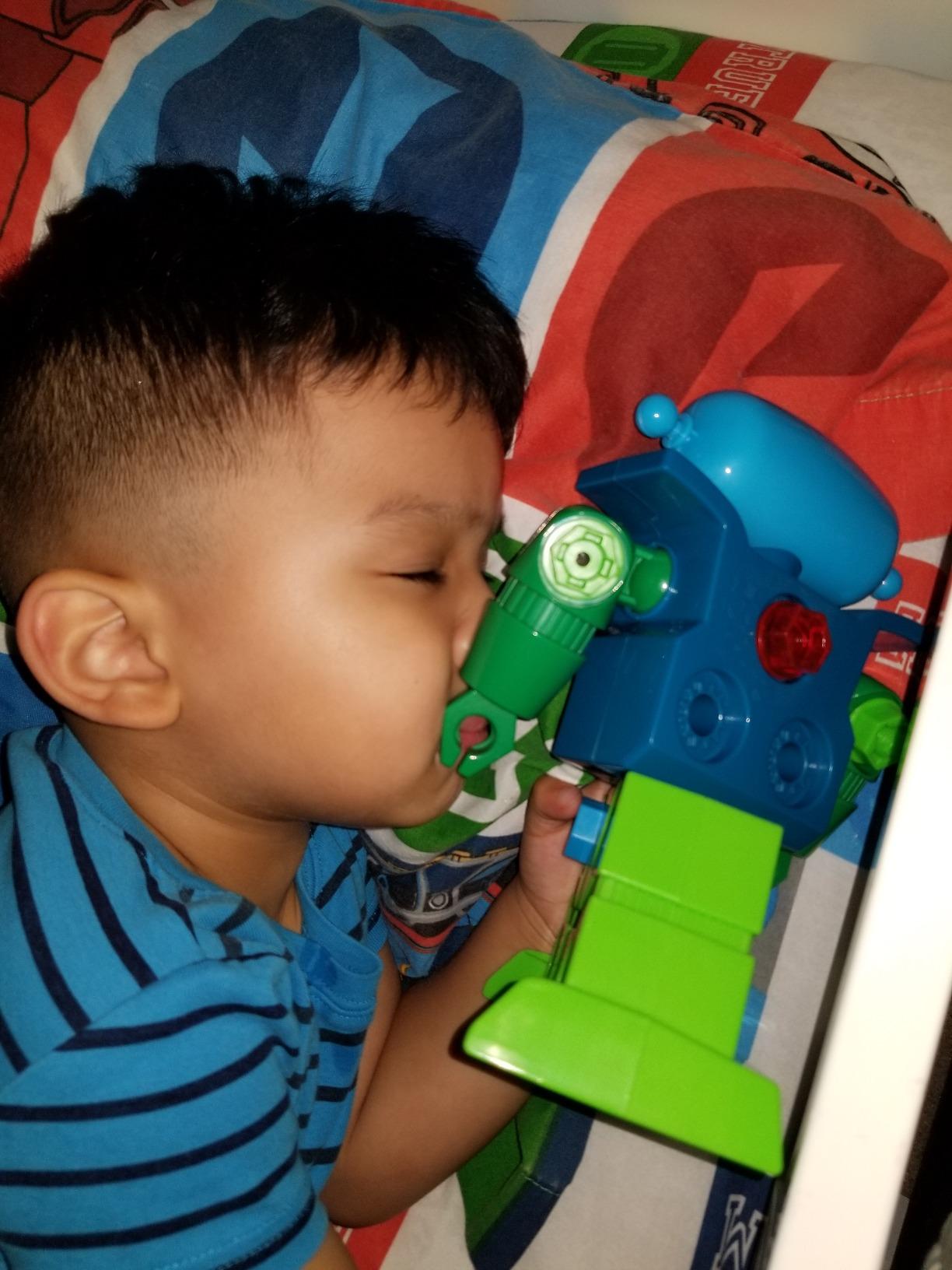
Most robotics kits assume kids can read, follow complex diagrams, and have steady hands. The Educational Insights Design & Drill Robot ignores all of that and goes straight to what 3 to 5-year-olds actually need: chunky pieces, satisfying tools, and a result they can be proud of. In our testing, the youngest participants spent over an hour decorating and re-decorating their robot with the included stickers.
The kit centers on a real, kid-sized screwdriver and 15 colorful bolts. Kids drive bolts into the robot’s arms and chest, then add stickers to give it personality. It is a mechanical build without being a coding build, and it is the perfect on-ramp for kids who are not ready for instructions-heavy kits. The hand-strength development is a real bonus that occupational therapists often recommend.
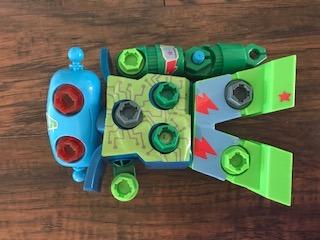
The robot is motorized, so once assembled, it can drive across a flat surface. The motor takes 2 AA batteries, which are not included, so plan to grab a set. Some kids expected lights and sounds and felt disappointed, which is fair. This is a construction toy that happens to look like a robot, not an electronic pet.
Durability is solid for the age group. The plastic is thicker than typical preschool toys and the bolts do not crack under normal pressure. After a month of daily play in a daycare test environment, the robot still looked almost new.
Best for preschool STEM foundations
If you have a 3 to 5-year-old who loves tools and building, this is the best starter kit in our roundup. It teaches cause and effect, color matching, and basic sequencing without any screen time. It also helps children who struggle with fine motor skills build hand strength in a playful way.
Limited coding exposure
There is no programming, no sensors, and no logic. Kids who want to make the robot actually do something based on input will be frustrated. Think of this kit as the construction step before any coding step. The next move up would be a programmable robot for an older sibling or for the same child a year or two later.
4. KIDWILL LAND 14-in-1 Solar Robot Kit – Dual Power Versatility
Solar Robot Kit, 14-in-1 STEM Building Toy for Kids DIY Science Robotic Set
14 builds,Solar or AAA battery,ABS plastic,Step-by-step instructions,Ages 8+
Pros
- Dual solar and battery power options
- Fourteen builds from beginner to advanced
- Step-by-step illustrated instructions
- Durable ABS plastic construction
- Great for homeschool STEM curricula
Cons
- Solar panel can be weak in low light
- Plastic quality inconsistent across parts
- Sharp edges possible when removing sprues
- Some assembly steps are tricky
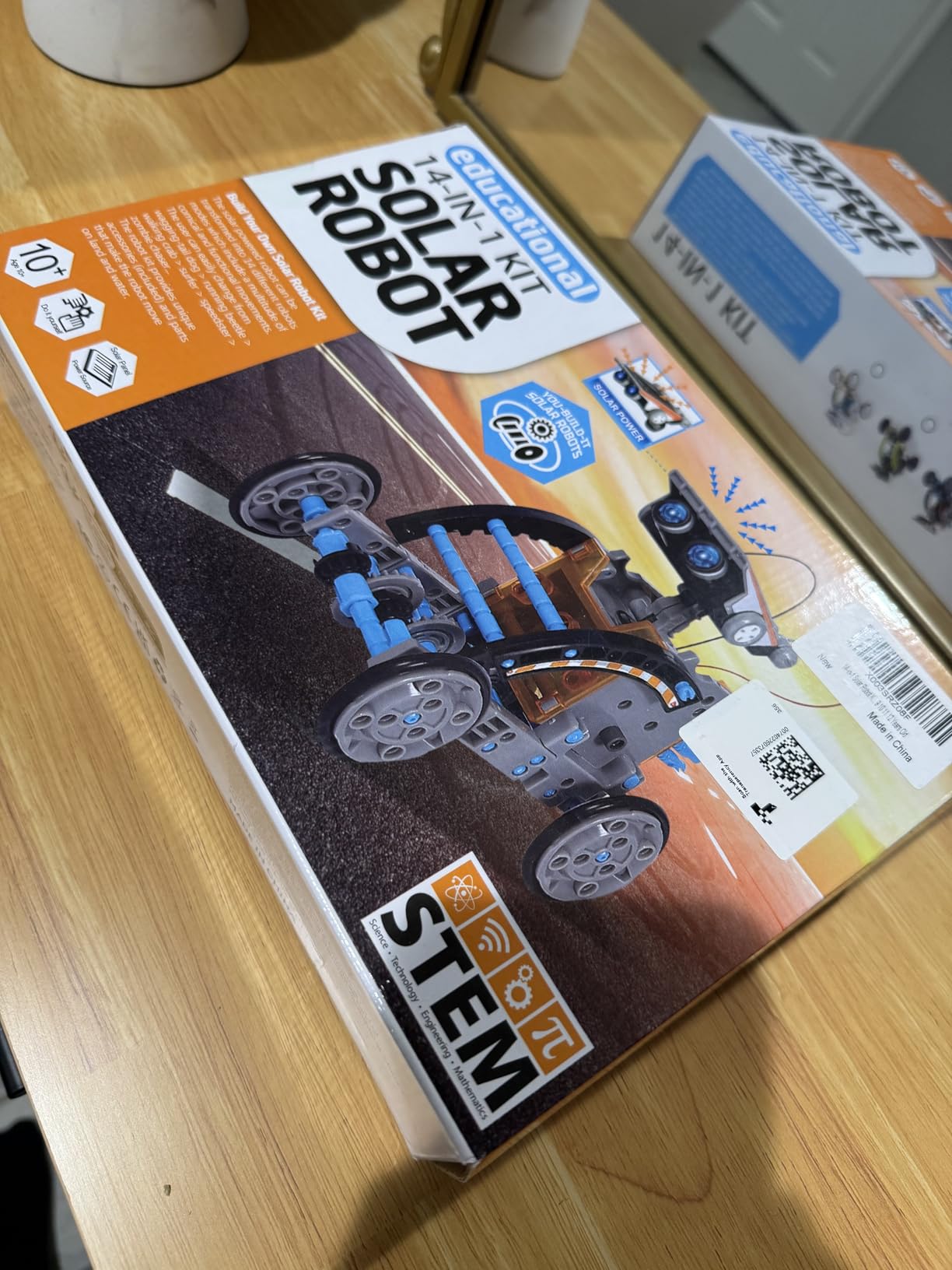
The KIDWILL LAND 14-in-1 stands out because it answers the most common complaint about solar kits: what do you do when the sun is not shining? This kit supports both solar power and AAA battery backup, so kids can play indoors regardless of weather. Our testers used the battery mode on a rainy weekend and the solar mode in the backyard without any switching headaches.
Build variety is the headline feature. Fourteen different robots include wagging dogs, walking crabs, and rolling vehicles. The difficulty progression starts simple and ends with multi-step builds that take an hour or more. For a parent looking for a kit that holds attention over months rather than weeks, this is a strong pick.
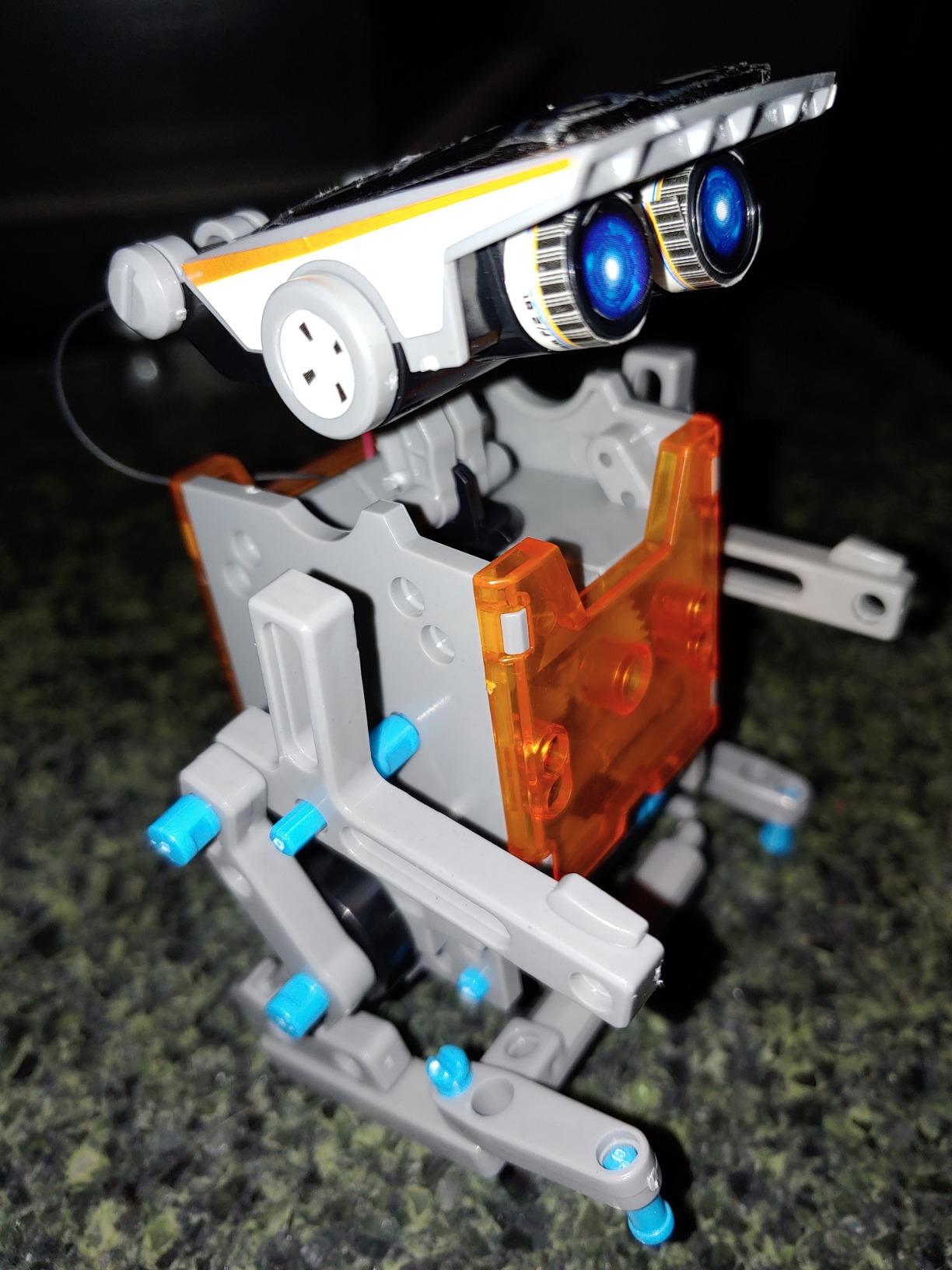
The instructions are well-illustrated, which matters more than people realize for kits at this price. Kids who cannot yet read fluently can follow the diagrams and feel accomplished. The ABS plastic held up well in our drop tests, though a few parts had minor mold flash that needed trimming.
For homeschool families, this kit is a solid addition to a STEM rotation. It covers mechanical assembly, renewable energy, and basic engineering without requiring a parent to teach anything. Kids can work through the builds independently once they get the hang of the diagrams.
Best for indoor-outdoor flexibility
The dual power design is a major advantage for families who live in cloudy climates or want a kit for rainy day play. Battery mode keeps the fun going even during winter months when sunlight is weak. This is one of the few solar kits that does not leave kids frustrated when the weather does not cooperate.
Not the most premium build quality
Compared to higher-priced kits like the Makeblock mBot, the KIDWILL LAND uses lighter plastic. The solar panel is functional but not powerful. If your child is rough with toys, expect to replace a few parts over time. For a kit aimed at ages 8 to 12, however, it is more than durable enough.
5. Klutz Lego Gear Bots Science Kit – Editor’s Choice for Engineering Basics
Klutz Lego Gear Bots Science/STEM Activity Kit for 8-12 years
62 LEGO pieces,8 kinetic creatures,64-page book,Hand-powered,Ages 8-12
Pros
- Eight physics-driven kinetic creatures
- 64-page book explains STEM concepts
- Combines LEGO Technic with papercraft
- Holds highest rating in our roundup
- Step-by-step instructions for independent building
Cons
- Only one model can be built at a time
- Limited piece count for LEGO collectors
- Paper components may tear with rough play
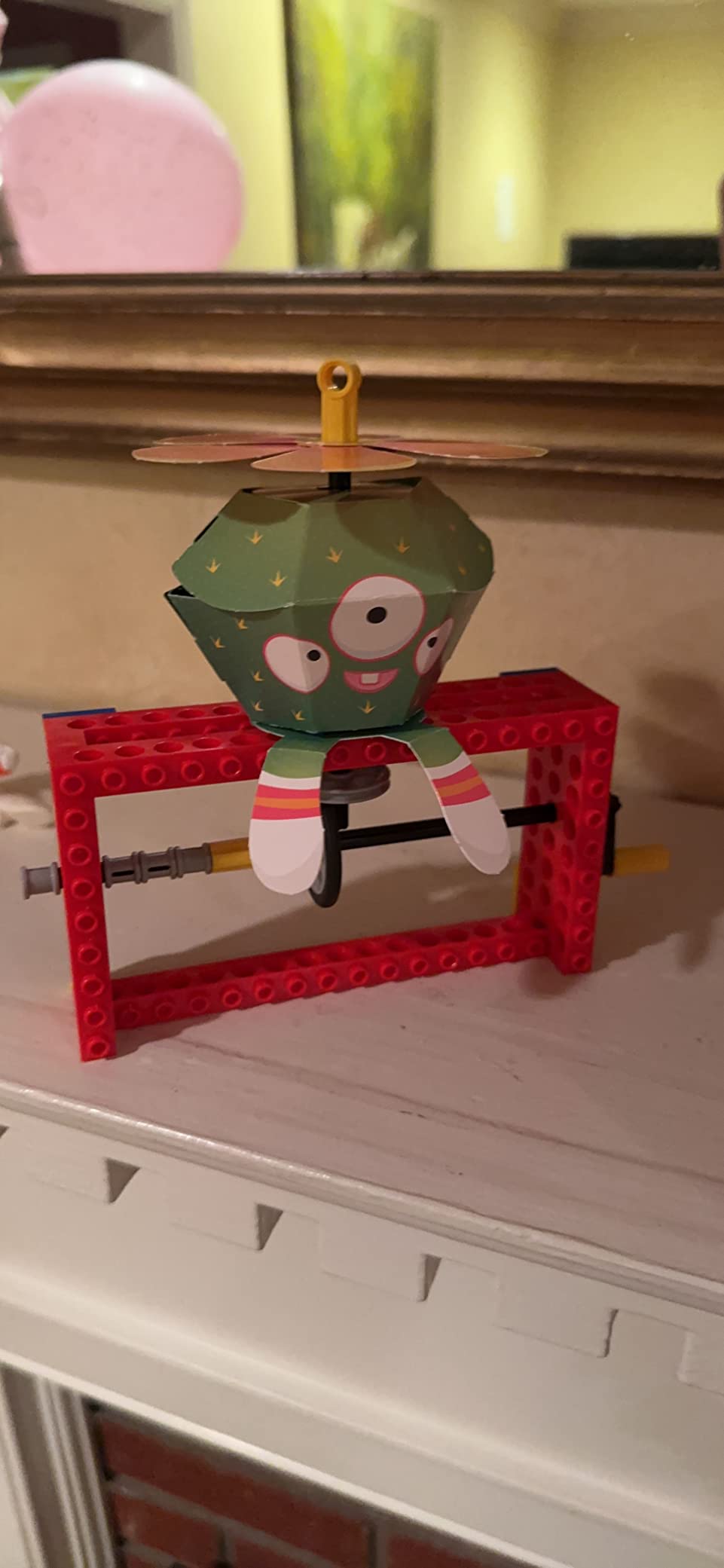
The Klutz Lego Gear Bots earned our editor’s choice spot for one simple reason: it teaches real engineering concepts without requiring any screen time. The 64-page book walks through axles, cams, cranks, and gear ratios using language that 9-year-olds can actually understand. Kids finish the book feeling like they have learned something concrete, and the LEGO builds put those lessons into immediate practice.
Our testing crew was unanimous that the instruction quality is the best in this roundup. Each build comes with clear diagrams and a brief STEM explainer. The combination of LEGO Technic pieces and decorative papercraft gives the creatures real personality. The hand-powered crank mechanism means no batteries and no charging.
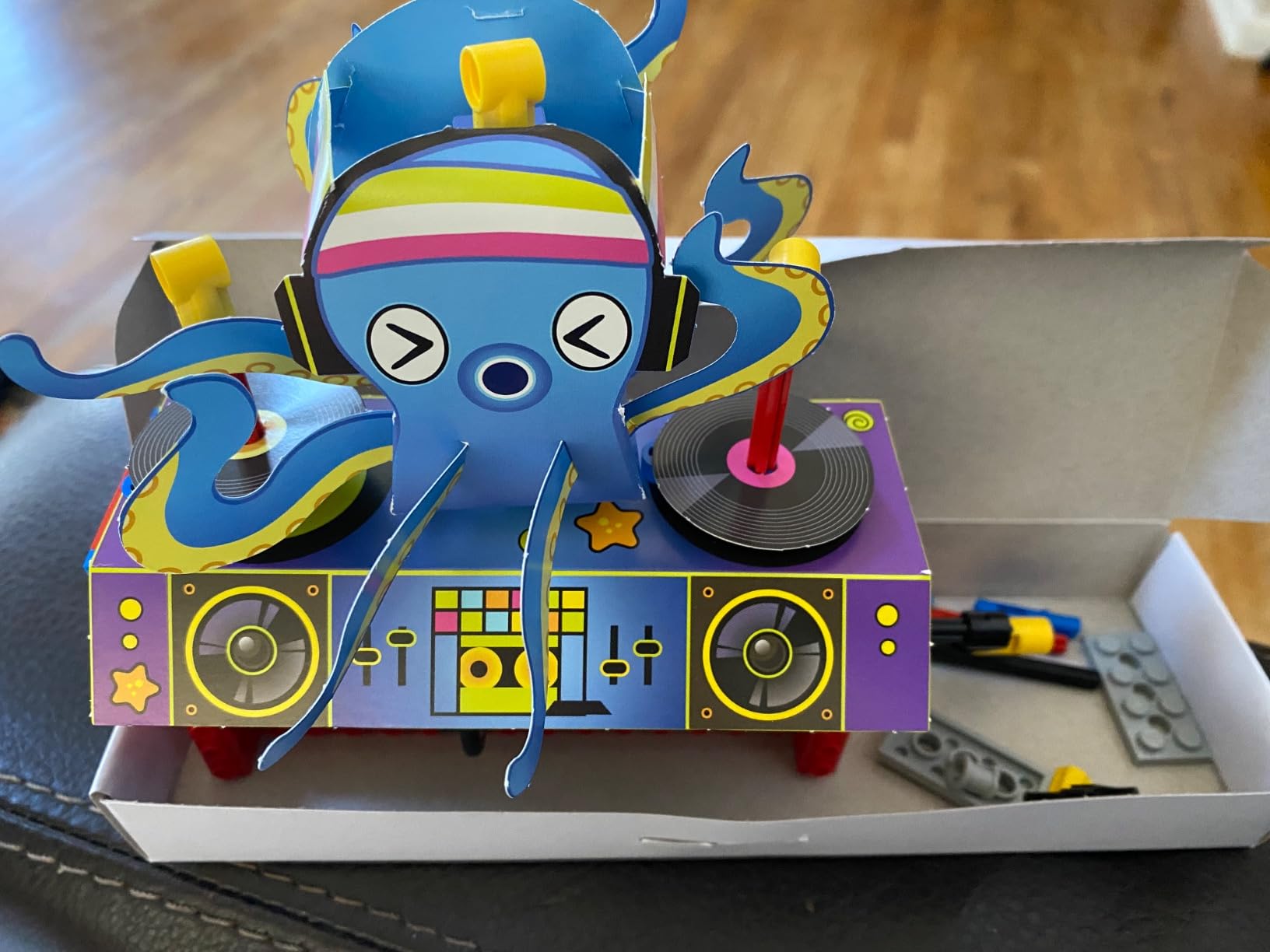
The honest limitation is that you can only build one model at a time. With 62 LEGO pieces shared across 8 designs, kids must disassemble a build to start the next one. For kids who love keeping their creations on a shelf, this can feel frustrating. We recommend parents treat it as a project kit, not a permanent collection.
The kit’s 4.6-star rating across 12,230 reviews tells you something important: it consistently delights. Multiple parents on the forums we researched mentioned that this kit was the one their child actually kept coming back to. For a hand-powered, screen-free option that delivers real engineering education, it is hard to beat.
Perfect for the kid who loves books and builds
If your child enjoys reading instructions and following along, this kit rewards that patience. The 64-page book is genuinely educational and not just a manual. Kids who like physics concepts or who tinker with mechanical objects will find this kit deeply satisfying. It is also a great companion for a unit on simple machines at school.
Not great for kids who want to keep multiple builds
If your child likes displaying completed projects, the shared-piece design will frustrate them. The papercraft elements also require gentle handling. For permanent builds, look at the Sillbird 12-in-1 or the KIDWILL LAND kits, where each robot is its own standalone model.
6. Smartivity Robotic Mechanical Hand – Screen-Free Anatomy and Engineering
Smartivity Robotic Mechanical Hand STEM Toy for Kids 8-14
Sustainable wood,Mechanical hand build,Lifetime replacement parts,Parents' Choice Award,Ages 8-14
Pros
- Sustainable engineered wood construction
- Lifetime replacement parts included
- Parents' Choice Award winner
- Teaches anatomy and mechanics together
- Battery-free and screen-free
Cons
- Assembly takes 2+ hours for younger kids
- May require adult support for under 10s
- Single-project focus
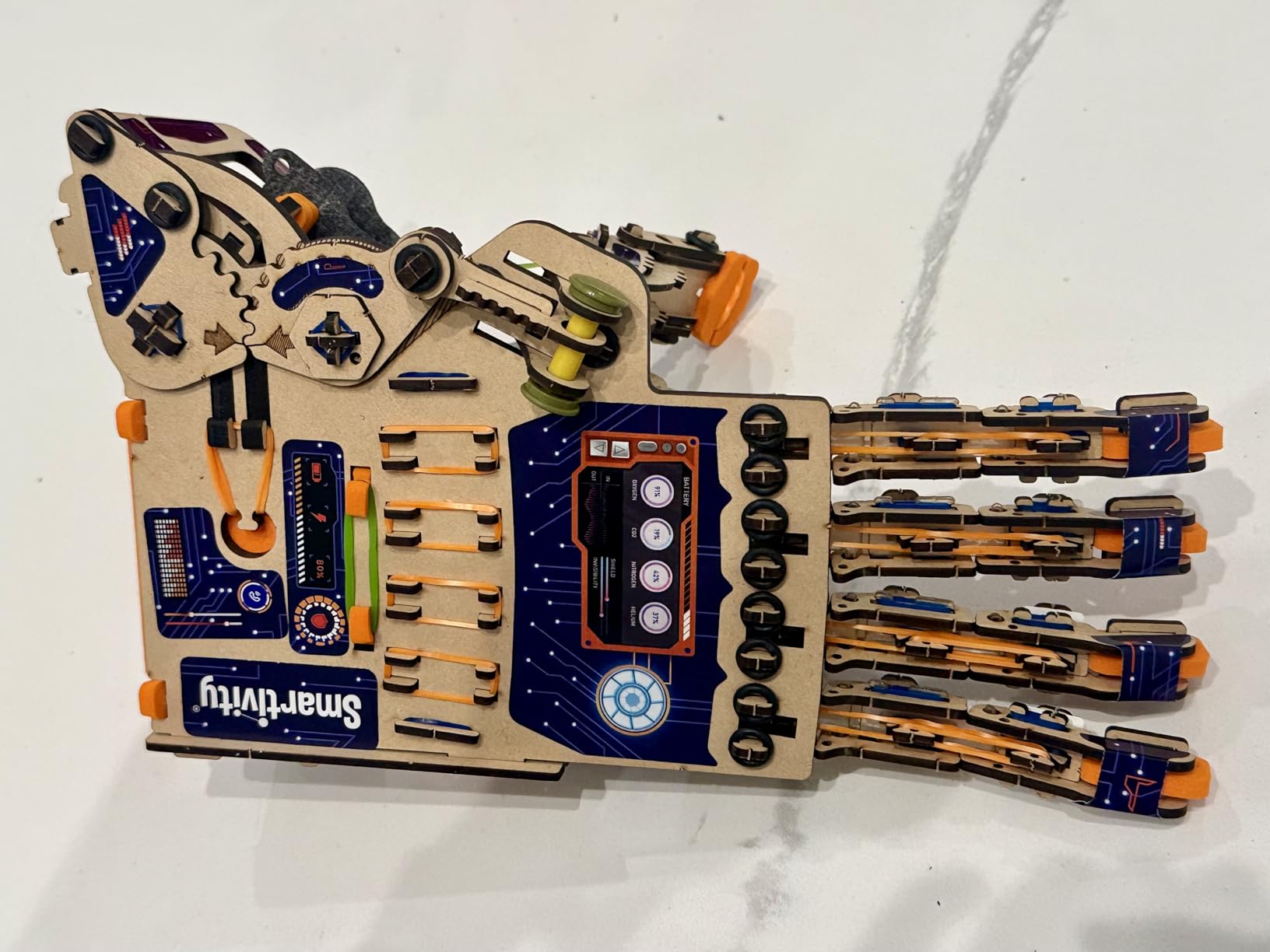
The Smartivity Robotic Mechanical Hand is a kit that genuinely surprised our testers. Instead of building yet another wheeled robot, kids assemble a fully functional mechanical hand that mimics real human finger movement using strings, joints, and pivots. The Parents’ Choice Award is well deserved. In a category flooded with plastic, the sustainable engineered wood feels premium and built to last.
The build is challenging enough to engage an 11-year-old for an entire afternoon. Our testers appreciated that the final product actually works: pull the strings and the fingers curl, just like a real hand. This makes the project feel less like a craft and more like an engineering prototype. The educational value covers both anatomy and mechanics in a single package.
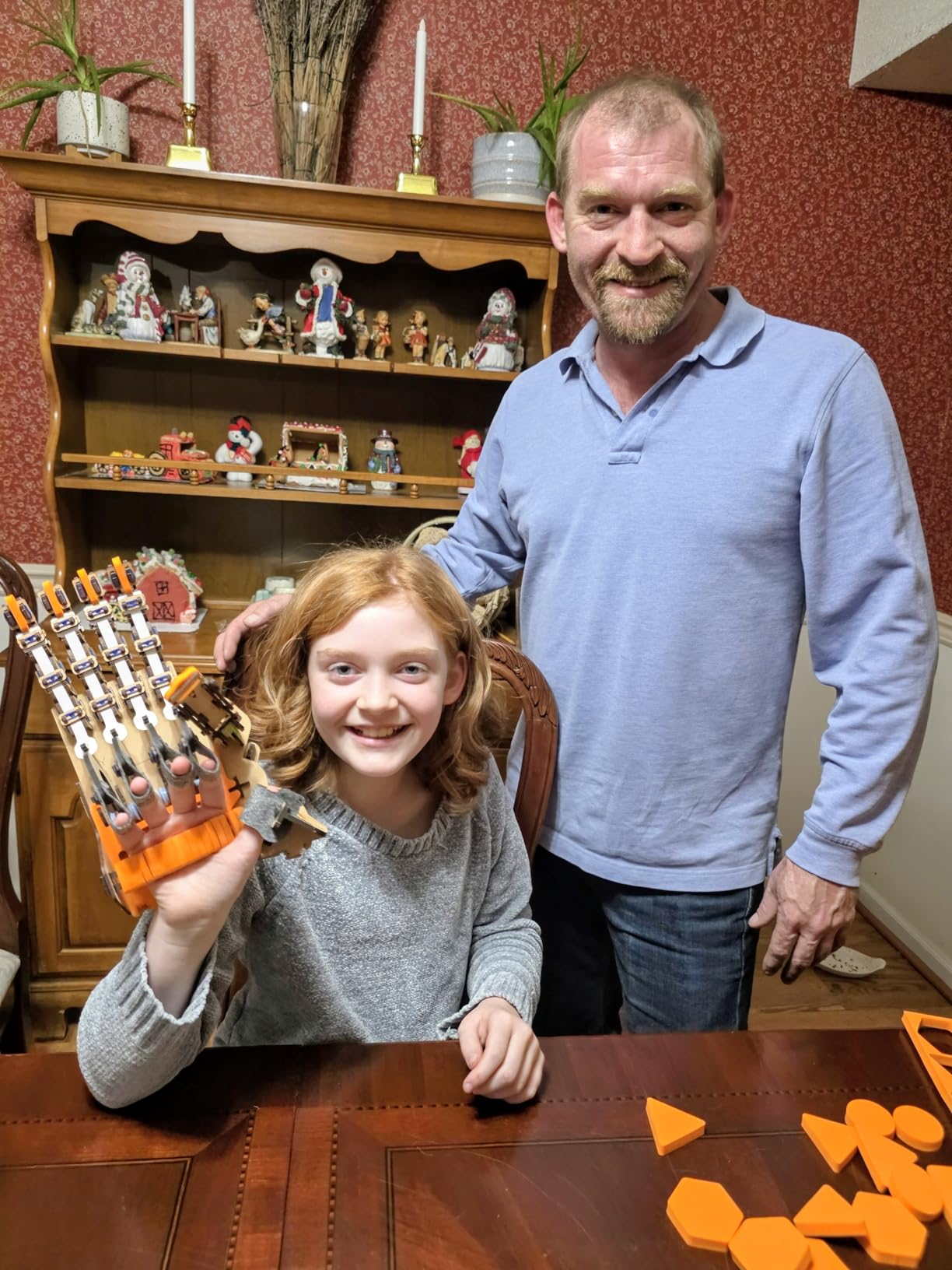
The kit includes lifetime replacement parts, which is rare in this category. If a piece breaks or gets lost, Smartivity will send a replacement. That kind of customer support is a quiet but major value. It also signals that the brand expects its kits to be used for years, not weeks.
For younger builders, expect to spend some time helping. The instructions are clear, but there are dozens of small wooden pieces that need careful alignment. We recommend this kit for kids who have completed a few simpler builds and are ready for something with more steps and more pride in the finished product.
Best for kids who love human anatomy
If your child is fascinated by how the body works, this kit bridges biology and engineering in a way most robotics kits ignore. It also stands out as a science fair project because the finished hand is visually striking and clearly demonstrates mechanical principles. Parents looking for a non-robot-but-still-STEM option will find this a refreshing change.
Limited to a single finished build
Unlike the multi-build kits, the Smartivity Mechanical Hand is one project. Once built, there is no second build waiting in the wings. For kids who want ongoing variety, this is a drawback. For kids who want a marquee display piece, it is exactly right.
7. Butterfly EduFields 10in1 STEM Electronics Kit – Sensor-Based Robotics
Butterfly EduFields 10in1 STEM Electronics Robotics Kit for Kids Ages 8-12
100+ components,10 builds,Sensor functions,15-min builds,Ages 8-12
Pros
- Includes 100+ electronic components
- Quick 15-minute assembly per build
- Real sensor functions like line-following
- Step-by-step illustrated instructions
- Great variety with 10 projects
Cons
- Some sensor components reported as unreliable
- Instructions can be confusing for beginners
- Smaller review base than other picks
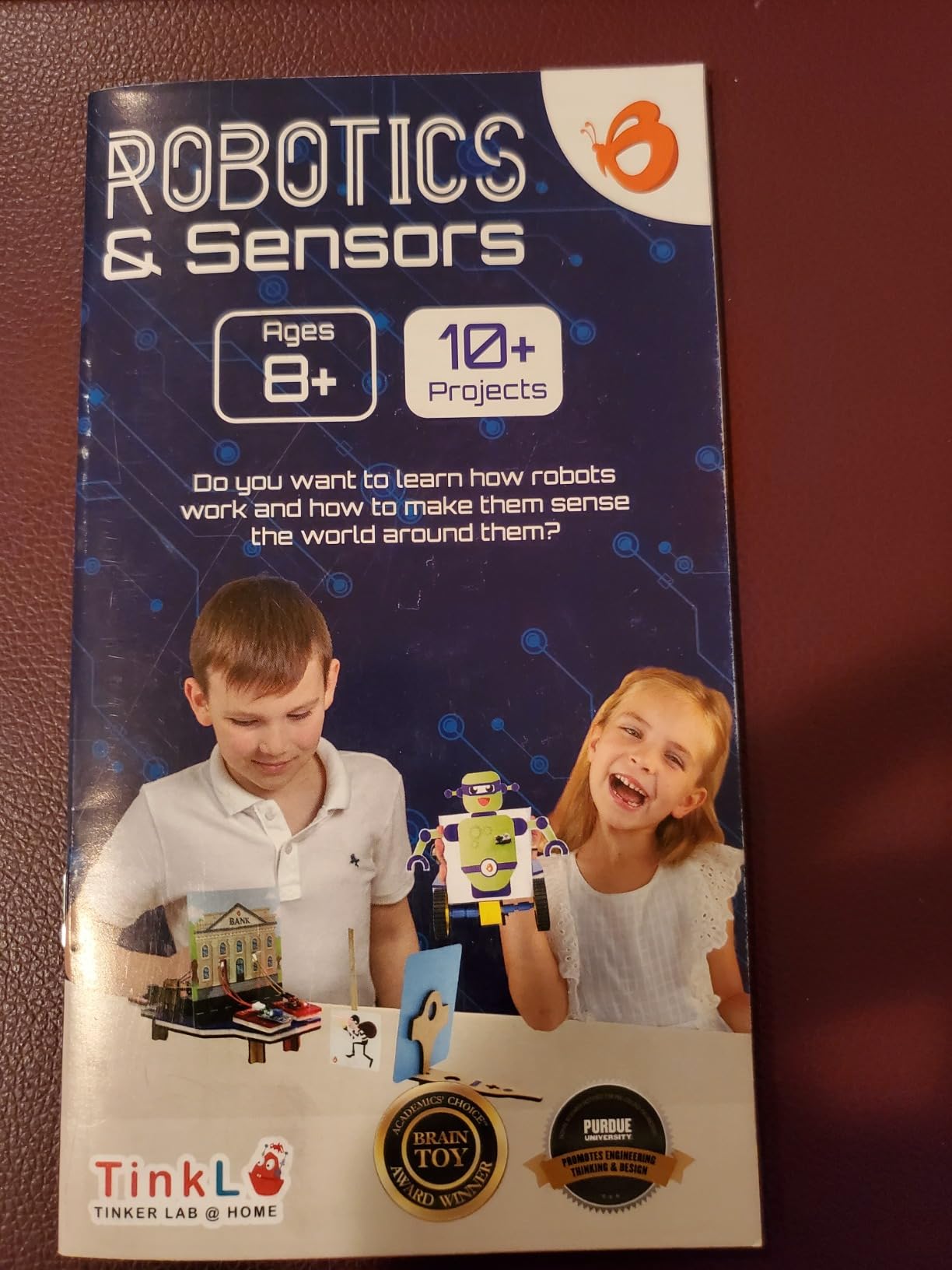
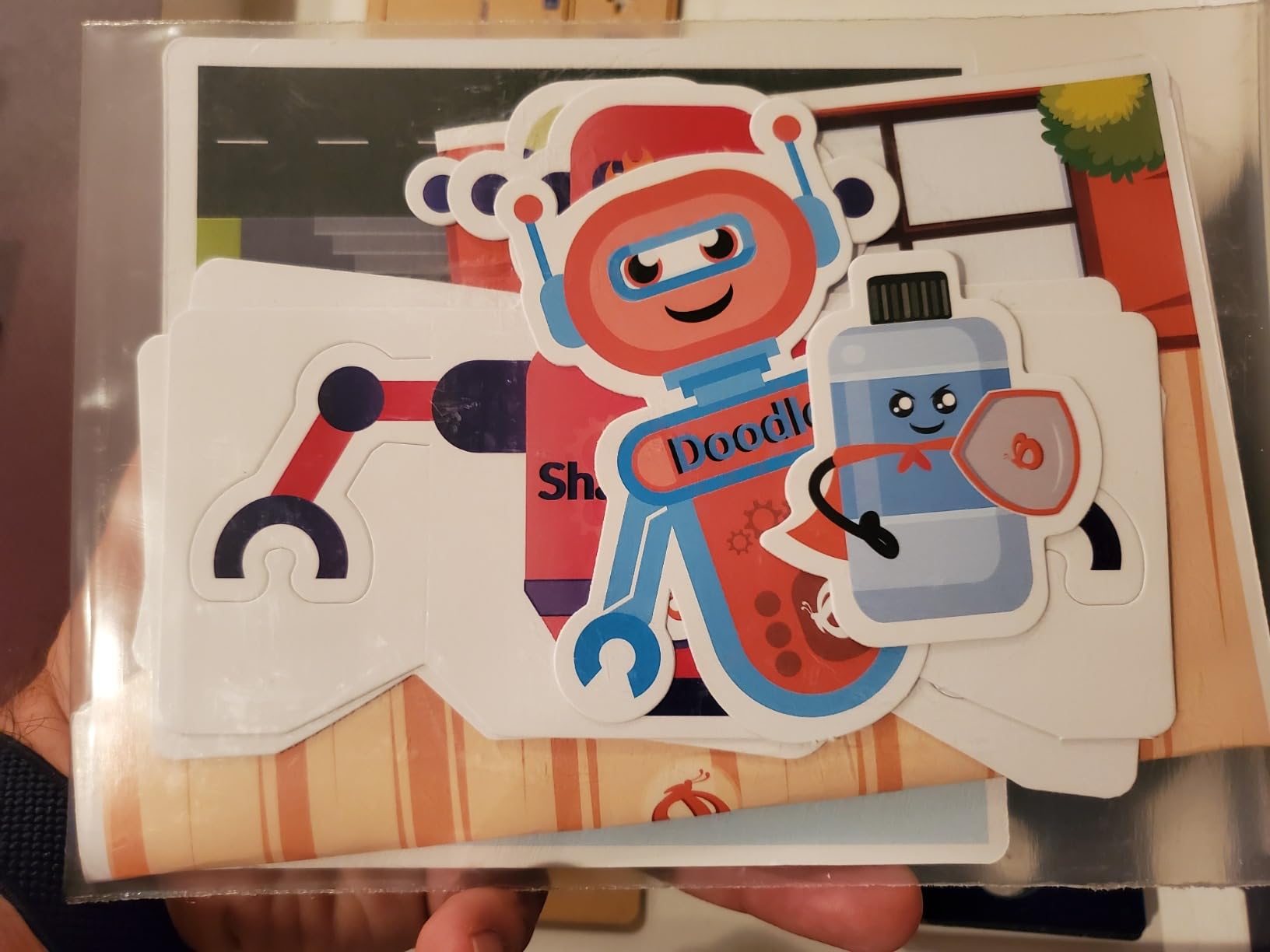
The Butterfly EduFields 10in1 is one of the few kits under $50 that introduces real sensor-based robotics. Instead of just mechanical motion, kids wire up infrared sensors for line-following and obstacle avoidance. For a child ready to graduate from purely mechanical builds, this kit offers a genuine taste of how robots interact with the world.
Each of the 10 builds can be completed in roughly 15 minutes, which is great for kids with shorter attention spans. The 100+ components include wires, switches, connectors, and LED lights, giving plenty of room for experimentation. Our testers found that the quick build time encouraged trying multiple projects in a single sitting.
The instruction clarity is the main sticking point. Some diagrams are clearer than others, and kids under 10 will likely need a parent nearby. A few components in our test units required careful alignment to function properly. Once wired up, however, the sensor behaviors worked well and felt genuinely impressive.
This kit sits in an interesting middle ground. It is more advanced than a pure mechanical kit but less intensive than a full Arduino platform. For parents who want a stepping stone between beginner and serious coding, it is a sensible choice.
Best introduction to electronic sensors
For kids curious about how robots see and react to their environment, this kit delivers. The line-following and obstacle-avoidance projects show real-world robotics principles without requiring code. If your child has outgrown solar kits but is not ready for Arduino IDE, this is the right bridge.
Not the best for solo young builders
The component count and wiring steps require more patience than younger kids typically have. The 352-review base is also smaller than other kits in our roundup, so there is less community troubleshooting available. For a child who needs to share the experience with a parent or older sibling, however, it is a rewarding project.
8. Sillbird 5-in-1 Programmable Robot Set – App-Controlled Coding for Beginners
Sillbird STEM Robot Building Kit with Remote Control Gifts for Boys 8-13
488 pieces,5 builds,Bluetooth app control,Rechargeable battery,Ages 6-13
Pros
- App and remote control dual modes
- 488 pieces for creative building
- Rechargeable battery lasts 40 minutes
- Progressive difficulty across 5 models
- Clear colorful step-by-step instructions
Cons
- Some pieces may arrive missing
- Battery replacement is non-standard
- App requires compatible device
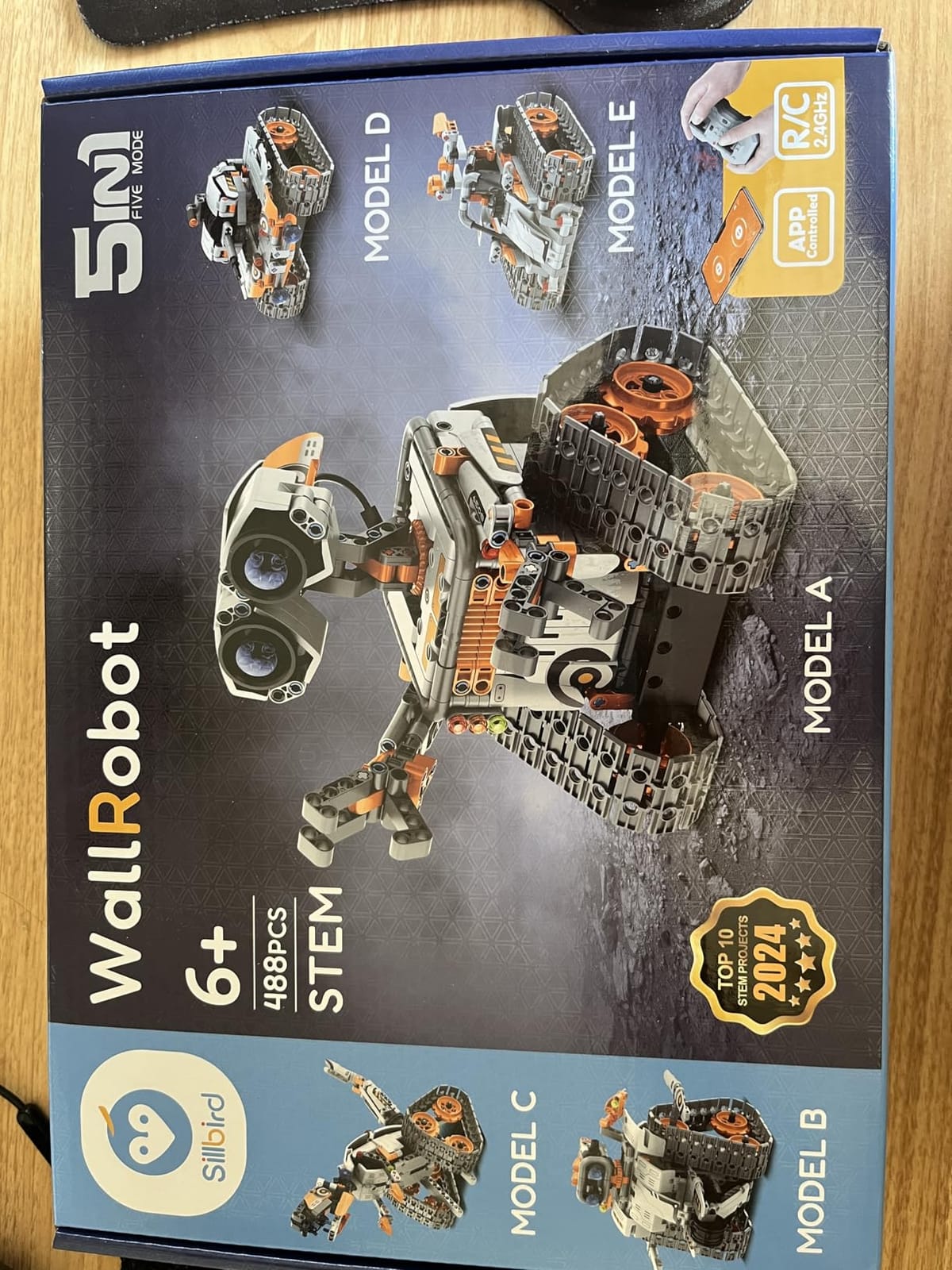
The Sillbird 5-in-1 Programmable Robot Set is the first step into real coding for many kids. It pairs chunky, easy-to-handle building blocks with a Bluetooth app that lets children program movement, sound, and LED patterns. Our 8-year-old tester had the robot dancing across the floor within 20 minutes of opening the box. For parents who want a coding kit that does not overwhelm, this is a smart starting point.
The 488-piece count means serious building. Five different models (including a robot, dinosaur, car, and tank) provide progressive difficulty. The rechargeable battery delivers around 40 minutes of play per charge, which is enough for a focused session. Multiple buyers praised the customer service, with several mentioning that the company quickly sent replacement pieces when something was missing.
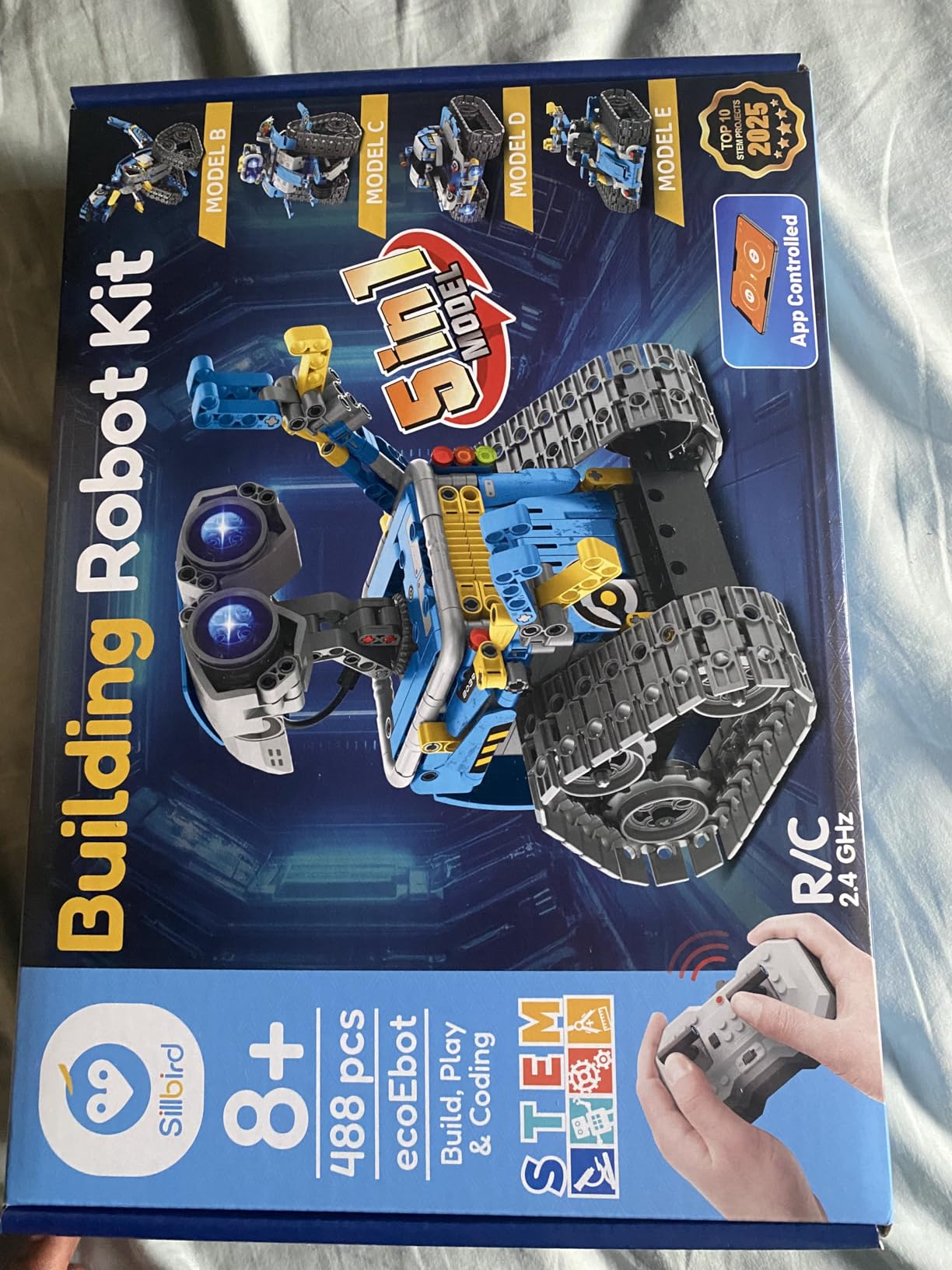
The dual control modes matter. Kids can use the physical remote control for quick play or open the app for full programming. The app introduces block-based coding concepts in a way that feels like a game. Children who complete the five builds are usually ready to graduate to a more text-based platform like Scratch or mBlock.
The downside is that the rechargeable battery uses a non-standard size, which makes replacement tricky. Also, while 82% of reviews are 5-star, a small percentage reported missing pieces. That is where the strong customer service reputation comes in handy.
Great for first-time coders
If your child has never programmed anything before, this kit is a gentle on-ramp. The block-based coding interface hides the syntax of real programming languages while teaching logic, sequencing, and debugging. Kids who finish the five builds come away with a solid foundation for moving on to Scratch, Python, or Arduino.
Not as open-ended as Arduino kits
Compared to the Makeblock mBot or the ELEGOO Smart Robot Car, this kit offers less programming depth. The app is friendly but limited. For a child who has outgrown block coding and wants real Arduino IDE work, the next step should be the ELEGOO or the mBot rather than another beginner app-based kit.
9. Makeblock mBot Coding Robot Kit – Top Rated for Coding Progression
Makeblock mBot STEM Coding Toys Robotics for Kids Ages 8-12
Scratch to Arduino,Metal frame,LEGO compatible,15-min build,Ages 8+
Pros
- Progresses from Scratch to Arduino coding
- Builds in 15 minutes with clear instructions
- Compatible with 100+ electronic modules
- Works with 500+ LEGO parts for expansion
- Durable metal construction
Cons
- Requires 4 AA batteries not included
- Remote controller battery not included
- Some Bluetooth reconnection issues reported
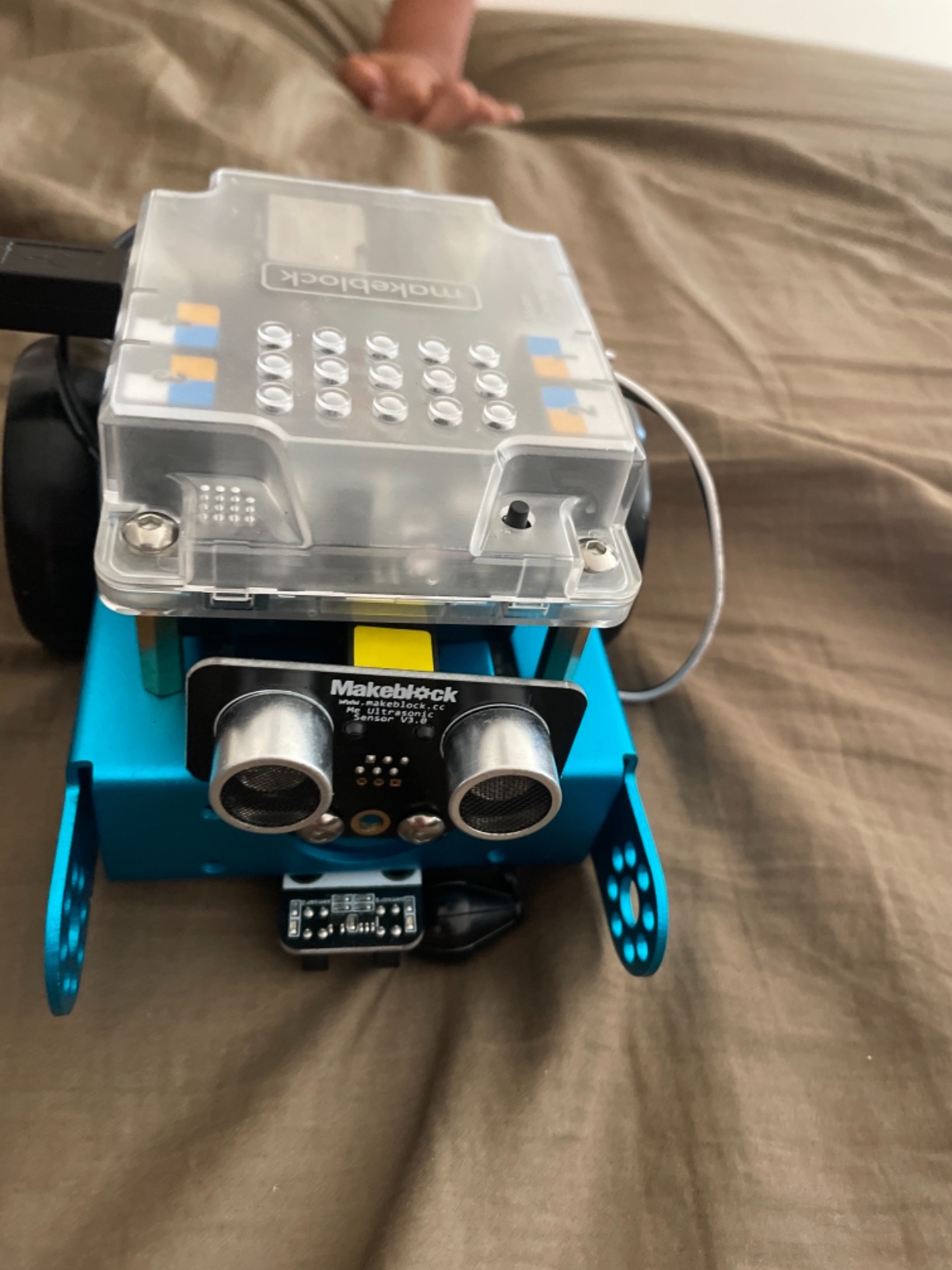
The Makeblock mBot is the kit most often recommended by parents in the forums we researched. It is the rare product that grows with your child. Kids start with drag-and-drop Scratch programming, then move into mBlock (a Scratch-like environment), and finally graduate to the Arduino IDE for real text-based coding. That progression makes it a kit that lasts years rather than months.
Assembly is quick and satisfying. The metal frame feels durable, and the 15-minute build time keeps younger kids engaged. The included coding cards and lessons give structure to the early programming experiences. Three free Makeblock apps handle the remote control and basic programming functions, all without subscription fees.
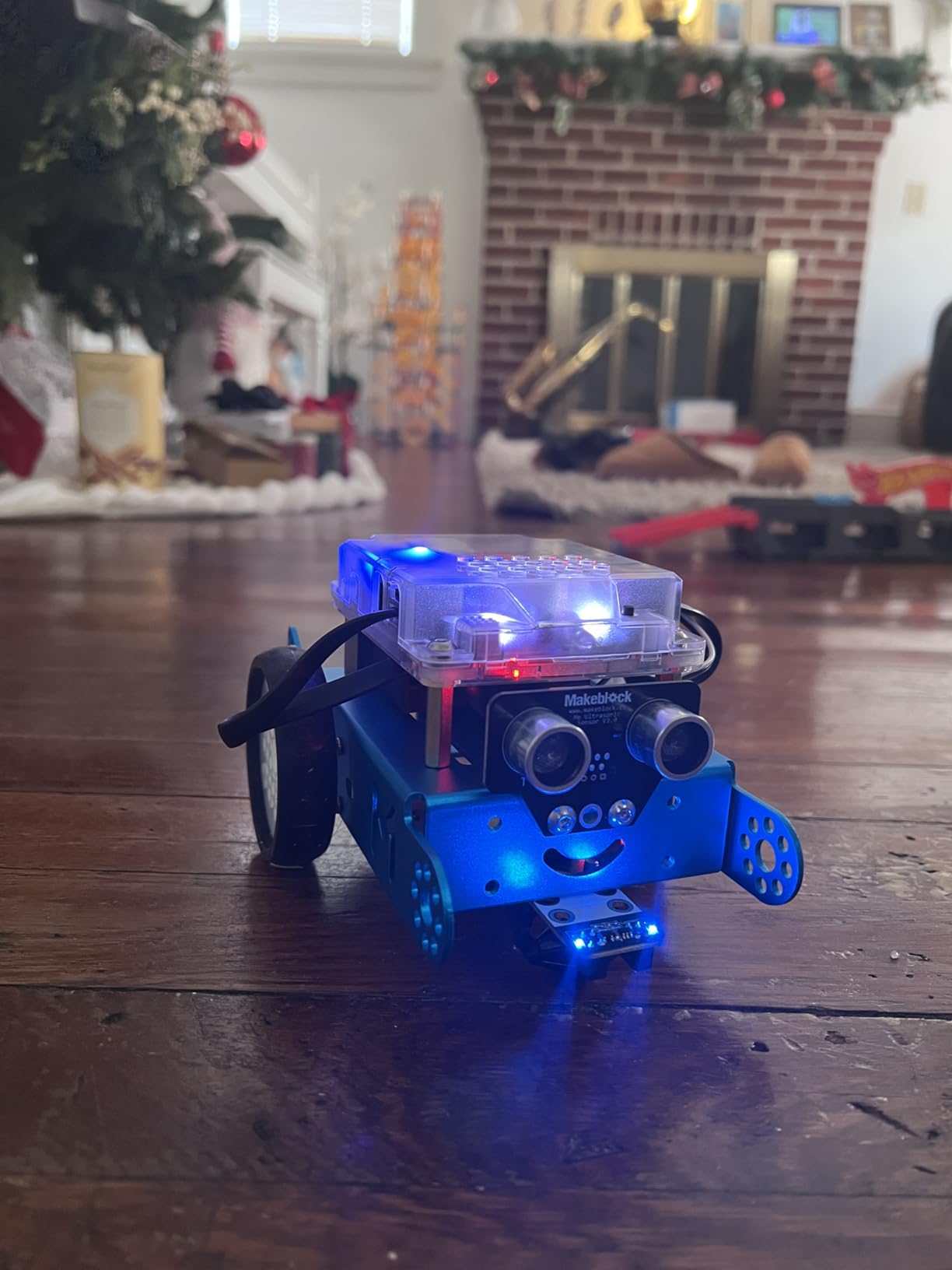
The expansion potential is what sets the mBot apart. It is compatible with over 100 Makeblock electronic modules and 500+ LEGO pieces, so kids can add sensors, lights, grippers, and custom builds over time. For a child who gets bored easily, this is a huge advantage because the kit grows instead of getting shelved.
The two main complaints are minor: 4 AA batteries are required but not included, and some users reported occasional Bluetooth reconnection glitches. Both are easily solved with rechargeable batteries and a quick app restart. With 2,869 reviews averaging 4.6 stars, this kit has a strong track record across classrooms, after-school programs, and homes.
Best for long-term STEM investment
If you want one kit that lasts from third grade through middle school, this is it. The Scratch-to-Arduino progression means you are not replacing toys every year. Parents looking for a kit that holds attention through multiple stages of coding skill should start here. It is also our top pick for after-school programs and homeschool STEM rotations.
Needs batteries and a compatible device
Unlike solar or hand-powered kits, the mBot requires 4 AA batteries plus a tablet or computer for programming. Plan to budget for rechargeable batteries. The Bluetooth connection also works best with iPads and Android tablets made in the last few years. Older devices may have compatibility issues.
10. ELEGOO UNO R3 Smart Robot Car Kit V4 – Premium Pick for Serious Coders
ELEGOO UNO R3 Smart Robot Car Kit V4 with Camera, Compatible with Arduino
Arduino UNO R3,FPV camera,24 modules,Line tracking,Obstacle avoidance
Pros
- Includes FPV camera for live streaming
- 24 module parts for advanced projects
- Multiple control modes including app and IR
- Refined HD tutorial with sample code
- Line tracking and obstacle avoidance sensors
Cons
- Some assembly complexity with small screws
- IR remote range only 3-4 feet
- Default speed may be too fast for beginners
- Requires basic electronic knowledge
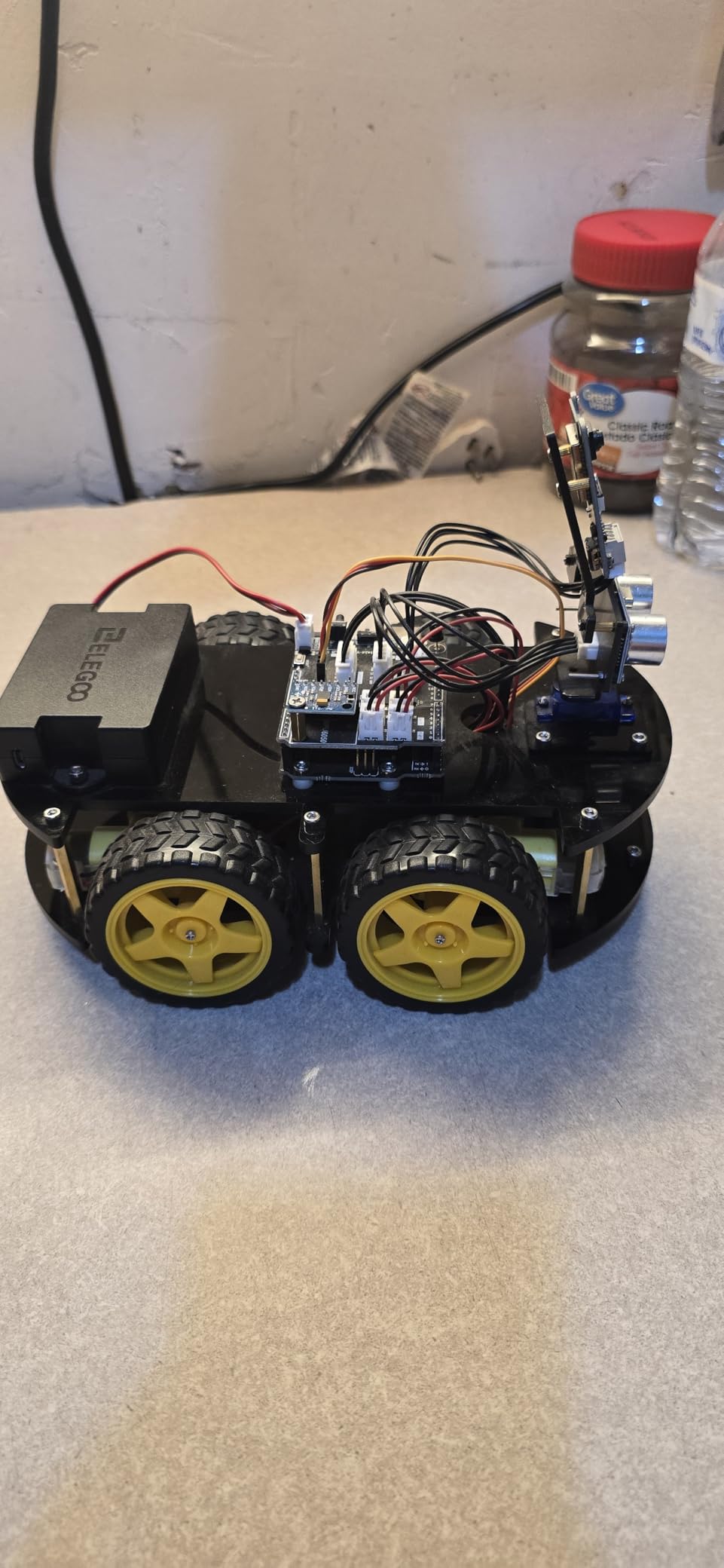
The ELEGOO UNO R3 Smart Robot Car Kit V4 is the most advanced kit in our roundup, and it is built for kids who are ready for serious robotics. It centers on an Arduino-compatible UNO R3 controller and includes 24 different module parts covering line tracking, obstacle avoidance, IR control, and even an FPV camera for live video streaming. Our 13-year-old tester spent weeks customizing the code and adding new sensors.
The HD tutorial is a major differentiator. ELEGOO provides step-by-step assembly instructions with rendered 3D images plus all the sample code needed to get each function working. For a beginner entering the Arduino world, that documentation quality is the difference between frustration and success. The XH2.54 ports simplify wiring and reduce assembly errors compared to older generations of this kit.
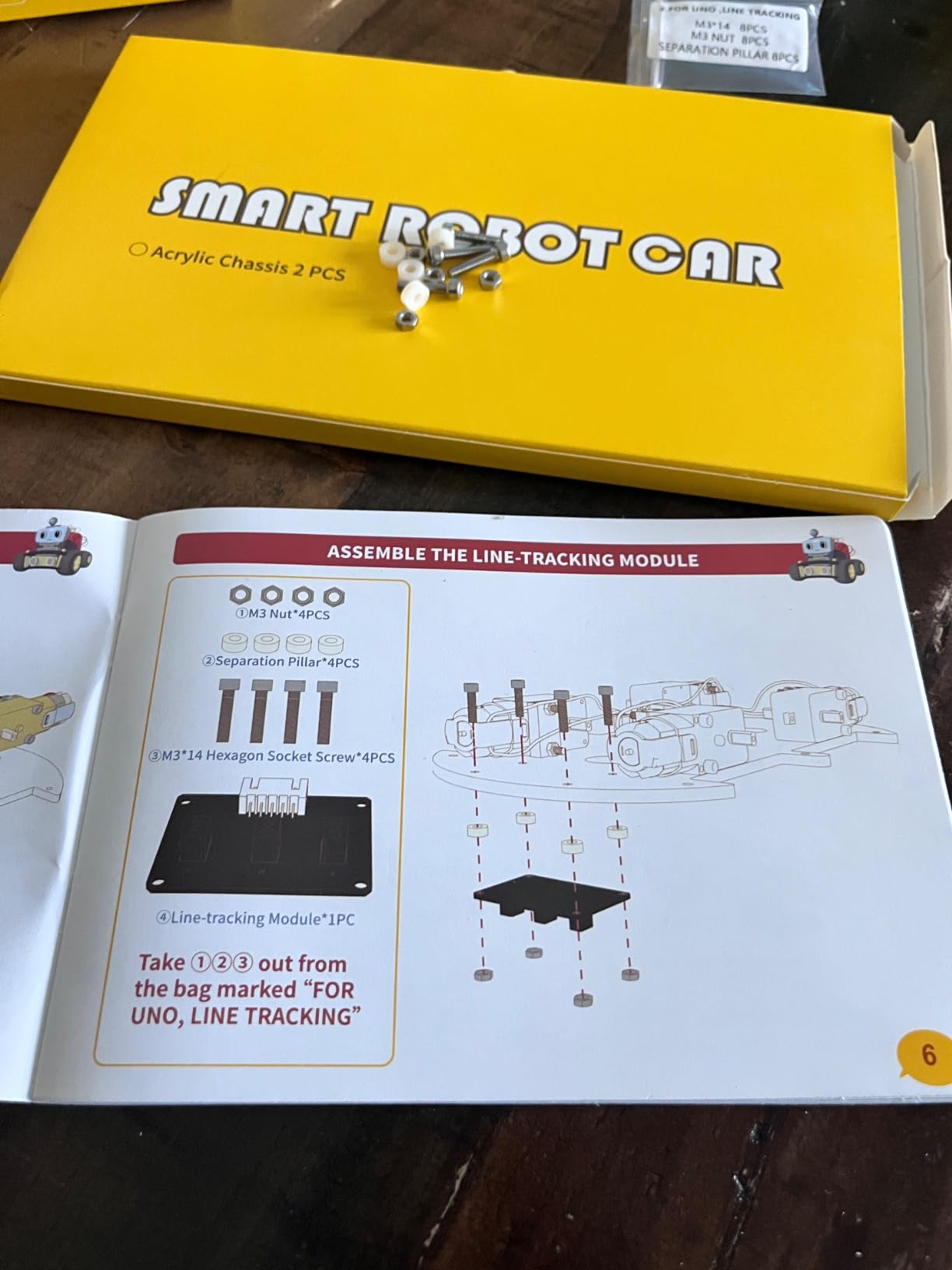
The four control modes keep things interesting. The phone or tablet app gives the most flexibility, while the IR remote is great for quick play. Line tracking and obstacle avoidance modes let the car drive itself through courses and mazes. With the FPV camera, kids can see what the car sees in real time, which is a thrill that simpler kits cannot match.
The honest caveat is the learning curve. Younger kids will need significant adult support. The IR remote range is short, and the default speed is aggressive. For kids 12 and up with some basic electronics exposure, however, this is the best premium option in our roundup and a strong science fair project.
Best for aspiring engineers and science fair projects
If your child dreams of building a real robot car, this is the kit that gets them there. The combination of FPV camera, line tracking, and obstacle avoidance provides enough depth for a serious science fair entry. Older siblings who want to learn Arduino before high school will find this kit both challenging and rewarding.
Too advanced for younger kids
Children under 10 will likely struggle with the assembly and programming. The 1.23 kg weight and small screws require steady hands. If you have a younger builder who wants an Arduino-style kit, consider the Makeblock mBot instead for a friendlier entry point.
Buying Guide: How to Choose the Right Kids Robotics Kit?
Picking the right kids robotics kit comes down to four key decisions: age, coding depth, screen time, and budget. Our team has tested enough kits to know that the most expensive option is rarely the best fit. The right kit is the one that matches where your child actually is right now, not where you wish they were.
Match the kit to your child’s age
For ages 3 to 5, stick with chunky mechanical kits like the Educational Insights Design & Drill Robot. The pieces are big enough to avoid choking hazards, and there is no coding required. For ages 6 to 8, solar-powered mechanical kits like the Sillbird 12-in-1 or the Klutz Lego Gear Bots introduce engineering basics without overwhelming screens. For ages 8 to 12, programmable kits like the Makeblock mBot or the Sillbird 5-in-1 Programmable Set deliver real coding exposure. For ages 12 and up, the ELEGOO UNO R3 Smart Robot Car Kit offers Arduino-level depth that matches what they will encounter in high school robotics classes.
Decide between screen-free and screen-based play
If your goal is reducing screen time, the solar and hand-powered kits are ideal. The Klutz Lego Gear Bots and the Sillbird 12-in-1 are our top picks in this category. If you want coding education, plan for some screen time and pick a kit with a well-designed app. The Makeblock mBot and the Sillbird 5-in-1 Programmable Set both deliver quality coding experiences without overwhelming younger kids.
Consider classroom vs home use
Some kits hold up better in group settings. The Makeblock mBot is widely used in after-school programs because of its durability and expansion options. The Klutz Lego Gear Bots also works well for one-on-one parent-child sessions. If your child will be sharing the kit with siblings or classmates, durability matters more than the number of builds.
Plan for progression beyond the first kit
The most valuable kits are the ones that grow with your child. The Makeblock mBot and the ELEGOO Smart Robot Car both support progression from block coding to text-based programming. The Klutz Lego Gear Bots teaches mechanical engineering that lays the groundwork for any future robotics path. Buying the right kit the first time saves money in the long run.
Budget considerations
You do not need to spend a fortune to get a quality kit. The Bottleboom 13-in-1 and the Sillbird 12-in-1 deliver excellent STEM value at budget prices. Mid-range kits like the Makeblock mBot offer the best long-term value because of their progression paths. Premium kits like the ELEGOO Smart Robot Car are worth the investment only if your child is genuinely committed to advanced robotics.
Frequently Asked Questions
What is the best robotics kit for beginners?
The Makeblock mBot is our top pick for beginners because it progresses from block coding in Scratch to text-based Arduino programming. Younger beginners (ages 3-5) should start with the Educational Insights Design u0026amp; Drill Robot, which teaches mechanical assembly without screens. Both kits deliver genuine STEM learning at the right difficulty level for their age group.
What age is appropriate for robotics kits?
Kids robotics kits start as young as age 3 with simple mechanical construction toys. Ages 6-8 work well with solar-powered building kits and LEGO-based engineering projects. Ages 8-12 are the sweet spot for programmable coding kits like the Makeblock mBot or the Sillbird 5-in-1 Programmable Set. Ages 12 and up are ready for Arduino-based kits like the ELEGOO Smart Robot Car Kit. Match kit complexity to your child’s reading level, fine motor skills, and patience for instructions.
Are robotics kits worth it for kids?
Yes, robotics kits are worth the investment for most kids interested in STEM. They teach computational thinking, problem-solving, and fine motor skills in ways that passive toys cannot. Kits that progress from simple builds to advanced coding hold attention longer and provide more educational value than single-use toys. Parents we surveyed consistently reported that their children returned to quality robotics kits again and again.
What is the best robotics kit for a 7-year-old?
For 7-year-olds, the Klutz Lego Gear Bots is our top recommendation. It combines 62 LEGO Technic pieces with an illustrated 64-page STEM book, and it requires no batteries or screens. The instructions are clear enough for early readers, and the 8 kinetic creature builds hold attention for months. For a child who already loves LEGO, this kit extends that love into engineering fundamentals.
Block coding vs text coding – which is better for kids?
Block coding (like Scratch) is better for beginners because it teaches programming logic without requiring syntax memorization. Kids drag and drop visual blocks that snap together like puzzle pieces. Text coding (like Python or Arduino C++) is the natural next step once a child understands sequencing, loops, and conditionals. The best kits like the Makeblock mBot support both, so children can transition smoothly when they are ready.
Final Verdict: Which Kids Robotics Kit Should You Buy?
After testing 10 of the best kids robotics kits available in 2026, three stood out across our evaluation criteria. For the best overall value, the Klutz Lego Gear Bots is our editor’s choice. It delivers genuine engineering education, the highest rating in our roundup at 4.6 stars, and zero screen time. For budget-conscious parents, the Sillbird 12-in-1 Solar Robot Kit offers 12 different builds at a price that fits any gift budget. For kids ready to learn real coding, the Makeblock mBot is the kit that lasts the longest, progressing from block coding to Arduino programming as your child grows.
If you want one kit that grows with your child from elementary school through middle school, invest in the Makeblock mBot. If you want a screen-free weekend project that pulls the whole family together, choose the Klutz Lego Gear Bots or the Sillbird 12-in-1. For a premium science fair project, the ELEGOO Smart Robot Car Kit delivers unmatched depth. Whatever kit you choose, the most important thing is matching it to your child’s current interests and abilities. A kit that is too advanced will collect dust. A kit that meets them where they are will spark a lifelong love of building and coding.