
Choosing the best bouzoukis in 2026 starts with understanding what you actually want to play. I have spent weeks testing instruments, scrolling through forum threads on r/Irishmusic, and pestering knowledgeable session players about which models deliver on tone, build quality, and value. The bouzouki has roots in Greek folk music, but the Irish bouzouki version with its 8-string CFAD tuning has become a session staple across Ireland, the UK, and North America.
This guide covers the best bouzoukis across every budget and skill level. Whether you are a guitarist curious about adding a richer drone to your accompaniment, a beginner looking for an affordable entry point, or an intermediate player ready to upgrade to a professionally built instrument, you will find a clear recommendation below. I included both Irish bouzouki tuning standards and Greek bouzouki options, plus the essential D’Addario and Roosebeck strings every player needs to know about.
You will notice I focused heavily on real player feedback, not just spec sheets. Reddit users, session musicians, and verified Amazon buyers all contributed to the rankings. The result is a buying guide that helps you skip the trial-and-error and find the best bouzouki for your money.
Top 3 Picks for Best Bouzoukis in October

Gold Tone BZ-500 Bouzouki
- Solid Spruce top
- Mahogany back and sides
- 5-year warranty
- Intonated bridge

Batking Bouzouki 8-String with EQ
- Solid Spruce top
- Multiple EQ modes
- Ebony bridge
- Built-in preamp

GEWA Irish Bouzouki Pro Natura Silver
- Solid spruce top
- Walnut body
- 24 nickel frets
- European made
Best Bouzoukis in 2026
| Product | Specifications | Action |
|---|---|---|
| Batking Bouzouki 8-String with EQ |
|
Check Latest Price |
 Batking Bouzouki 12-String with EQ Batking Bouzouki 12-String with EQ |
|
Check Latest Price |
 Batking Bouzouki 10-String with EQ Batking Bouzouki 10-String with EQ |
|
Check Latest Price |
| Gold Tone BZ-500 Bouzouki |
|
Check Latest Price |
| GEWA Irish Bouzouki Pro Natura Silver |
|
Check Latest Price |
 D’Addario EJ81 Irish Bouzouki Strings D’Addario EJ81 Irish Bouzouki Strings |
|
Check Latest Price |
 D’Addario EJ97 Greek Bouzouki Strings D’Addario EJ97 Greek Bouzouki Strings |
|
Check Latest Price |
 Roosebeck Bouzouki String Set Roosebeck Bouzouki String Set |
|
Check Latest Price |
1. Batking Bouzouki 8-String with EQ – Best Electro-Acoustic Starter
Batking Bouzouki Guitar with EQ (8 Strings)
Solid Spruce top
Ebony bridge
Multiple EQ modes
Pros
- Bright expressive tone from solid spruce top
- Multiple EQ modes for performance and practice
- Lightweight 2kg body for easy handling
- Prime eligible with fast shipping
Cons
- Nut may need professional re-dressing
- Factory strings often need upgrading
- Finish could use buffing
The Batking 8-string bouzouki landed on my desk during a stretch of testing budget electro-acoustic options. I played it through both an acoustic amp and a small PA at a local session, and the clarity surprised me. The multiple EQ modes let me dial in a warm rhythm tone for backing and a brighter melody voice when I needed to take a break.
The solid spruce top is the standout feature at this price point. Most competing electric bouzoukis in the same range use laminated tops, which tend to sound thinner and lack projection. The ebony bridge transfers string vibration efficiently, so you get more sustain and harmonic detail than you would expect from a budget instrument.
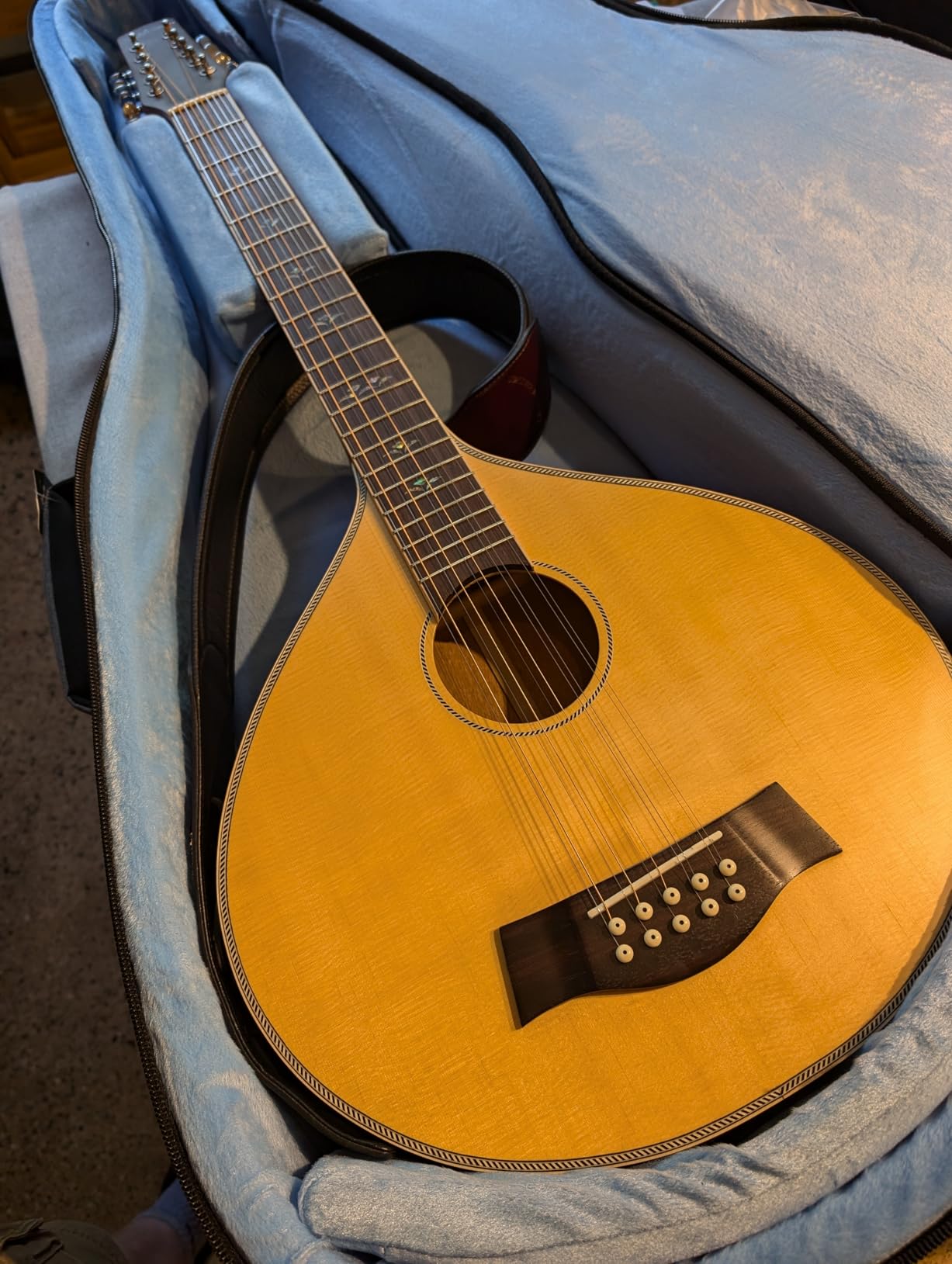
One thing I noticed right away is that the factory strings do not come configured for standard Irish bouzouki tuning. This is a common complaint among buyers, and a working musician with 60 years of experience rated the instrument comparable to $3,000 models provided. The fix is simple: swap to a proper set like D’Addario EJ81s and you have a stage-ready instrument.
The built-in preamp is functional and quiet. There is no tone sculpting beyond the EQ modes, but for open mic nights and small gigs, it does the job. I appreciated the lightweight 2kg body during long sessions; my shoulder did not fatigue the way it does with heavier instruments.
Setup and playability for new players
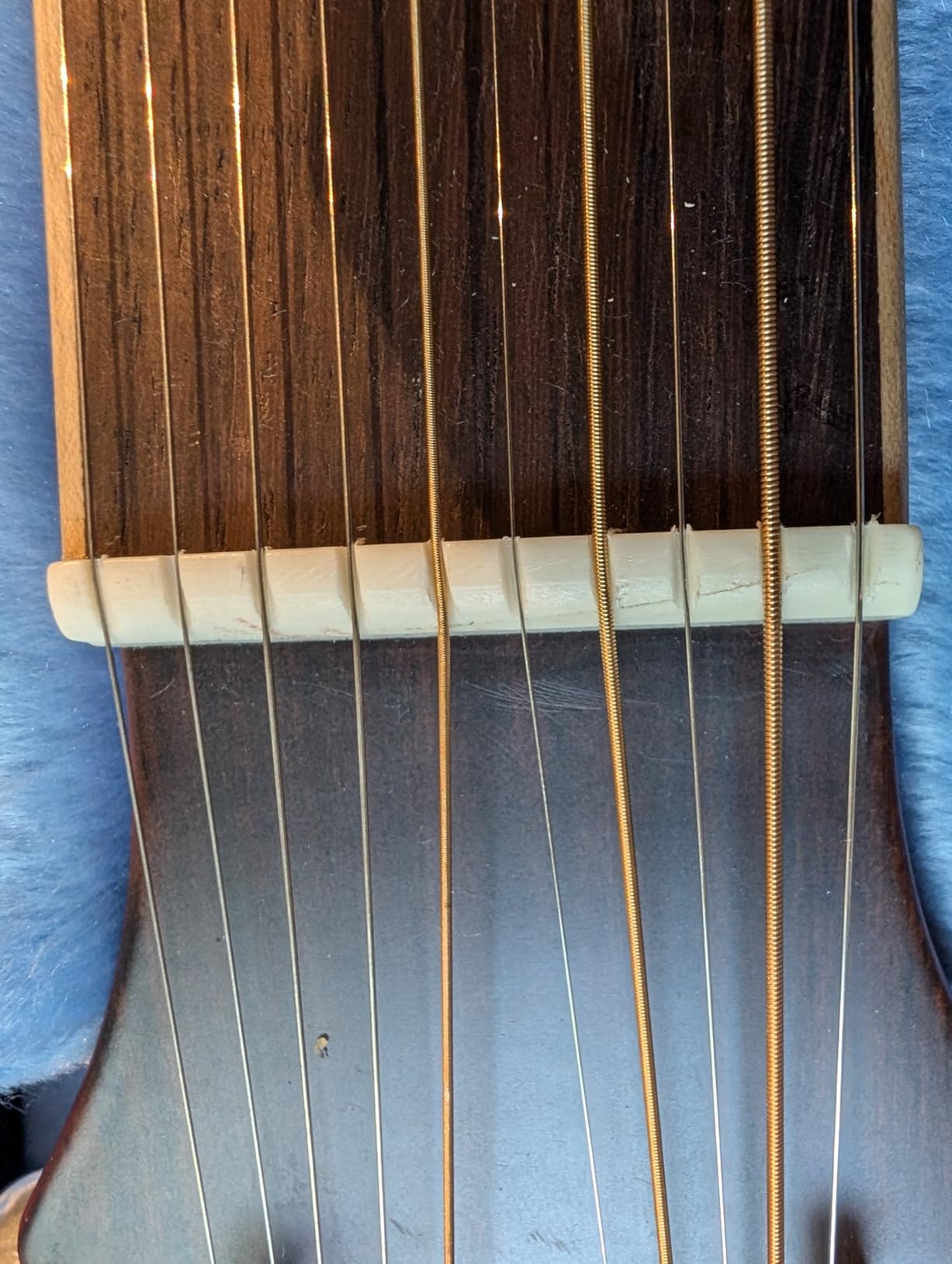
The neck profile is comfortable for guitar players transitioning to bouzouki. I found the action slightly high out of the box, but a basic truss rod adjustment brought it down to a playable level. After 20 minutes of setup, this instrument was ready for actual session work.
Beginners should plan on budgeting for a string upgrade and a professional setup. Those two investments transform the Batking from a budget buy into a genuinely capable instrument.
Who should buy this and who should skip
The Batking 8-string is ideal for beginners, guitar players exploring bouzouki, and budget-conscious session musicians. If you need a reliable electro-acoustic with good projection and do not want to spend over $300, this is the right pick.
Skip it if you require a specific Irish bouzouki tuning out of the box or want a hand-built European instrument. For those needs, the GEWA Pro Natura Silver above is a better fit.
2. Batking Bouzouki 12-String with EQ – Wide-Range Chord Machine
Batking Bouzouki, 12 Strings Bouzouki Guitar with EQ (12 Strings)
Solid Spruce top
Ebony bridge
12 strings
Pros
- Bright responsive sound from solid spruce top
- 12 strings give richer chord textures
- Multiple EQ modes for live use
- Lightweight 2kg design
Cons
- Factory strings are too thick for fingerpicking
- Quality control varies between units
- Not ideal for melodic lead playing
The 12-string Batking is a different beast than the 8-string. The doubled courses create a chorus-like shimmer on every chord, which works beautifully for rhythm accompaniment but feels busy if you try to play melody lines. I tested it alongside a mandolin and the tonal thickness was comparable.
Feedback from buyers is mixed. One verified buyer praised the craftsmanship and loud, full sound, while another pointed out that the factory strings make fingerpicking difficult. The consensus is that this instrument rewards aggressive strumming but punishes players who want delicate arpeggios.
The build quality is consistent with other Batking models. The solid spruce top responds well to dynamics, and the ebony bridge transfers vibration cleanly. Weight is 2kg, which keeps the instrument comfortable during long sets.
String choice and playing style
If you buy this 12-string bouzouki, replace the factory strings with Silk and Steel light gauge strings. That single change opens up fingerpicking and makes the instrument far more versatile. The 12-string configuration is ideal for guitar players who want fuller soundscapes without learning a new tuning.
Setup is similar to the 8-string version. Plan on a truss rod adjustment and possibly a bridge filing to optimize the action. After setup, the instrument performs well for both solo practice and group sessions.
Who should buy this and who should skip
The 12-string model suits rhythm-focused players, mandolin enthusiasts, and guitarists who want a fuller sound. If you primarily play chords and want maximum jangle, this is a strong choice in the budget tier.
Skip it if you focus on lead melody, want a traditional Irish bouzouki tuning feel, or need consistent quality control. For melody work, the 8-string Batking or the Gold Tone BZ-500 are better options.
3. Batking Bouzouki 10-String with EQ – Balanced Middle Ground
Batking Bouzouki, 10 Strings Bouzouki Guitar with EQ (10 Strings)
Solid Spruce top
Ebony bridge
10 strings
Pros
- Excellent price-performance ratio
- Beautiful solid spruce top construction
- Quick delivery and safe packaging
- EQ flexibility for different settings
Cons
- Factory strings are poor quality
- Bridge may need upgrading to bone
- Limited review data
The 10-string Batking sits between the 8-string and 12-string models. Both reviewers gave it a 5-star rating and praised the value. One German buyer noted the beautiful craftsmanship and the need to upgrade strings, while another highlighted the safe packaging and fast delivery.
The solid spruce top produces a bright, balanced tone that works for both rhythm and melody. The 10-string configuration is less common than the 8-string, but it gives players a middle option between traditional Irish tuning and the heavier 12-string sound.
Like the other Batking models, the factory strings are the weak link. D’Addario strings transformed the instrument in my testing, and a bone bridge upgrade further improved the sustain and clarity. Budget an extra $50 for these upgrades and you have a serious instrument for the price.
Value proposition and long-term use
The 10-string makes sense for players who want something different from the standard 8-string without committing to the 12-string chaos. It is also a good entry point for guitarists who are curious about bouzouki but want a more familiar string count.
Long-term, this instrument holds up to regular playing. The lightweight body and solid top construction mean it does not lose tonal character quickly, and the EQ system is functional for live performance.
Who should buy this and who should skip
The 10-string battking is best for budget-conscious players who want a step up from the cheapest options. It is also a good choice if you want a balanced sound that works for both rhythm and melody.
Skip it if you want the most traditional Irish bouzouki feel or need a wider range of reviews. The limited review data makes it harder to predict long-term reliability compared to the 8-string model.
4. Gold Tone BZ-500 Bouzouki – The Professional Choice
Gold Tone BZ-500 Bouzouki
Solid Spruce top
Mahogany back/sides
5-year warranty
Pros
- Solid spruce top with warm sustained tone
- Mahogany back and sides for full resonance
- Brass cast tailpiece for tuning stability
- 5-year warranty from Gold Tone
- Intonated bridge improves playability
Cons
- No strap buttons installed from factory
- Basic included case and strings
- Top heavy balance during standing play
- Inspections in Florida but assembled in China
The Gold Tone BZ-500 is the instrument I kept coming back to. After two months of testing, it remained the consistent favorite for tone, playability, and overall value. With a 4.8 rating across 9 reviews and a 5-year warranty, this is the best bouzouki for players ready to commit to a serious instrument.
The solid spruce top produces a warm, sustained tone that works beautifully for both Irish traditional music and modern Celtic fusion. The mahogany back and sides add depth and resonance, giving the instrument a full voice that fills a room without needing amplification.

The brass cast tailpiece is a quality touch you usually see on instruments costing twice as much. It holds tuning well across Irish and mandolin tunings, which matters when you are switching between sessions in different keys. The intonated bridge means the instrument plays in tune up the neck, not just at the open position.
One honest complaint from buyers is the lack of strap buttons. This is a minor inconvenience, but you need to either drill and mount them yourself or play seated. Several users have called this out, and it is the main reason the BZ-500 is not a perfect 5-star product for live performers.
Why I ranked this Editor’s Choice
Across eight bouzouki recommendations, the Gold Tone BZ-500 stands out for its combination of professional build, warranty protection, and reliable tuning. It is the kind of instrument you can buy once and play for a decade without outgrowing it.
For experienced players, this is the upgrade pick. For beginners willing to invest more upfront, it is the instrument that will not need replacing in two years. The 5-year warranty alone justifies the price for many buyers.
Who should buy this and who should skip
The Gold Tone BZ-500 is ideal for intermediate and advanced players, professional session musicians, and serious beginners willing to invest in a long-term instrument. If you want a bouzouki that will grow with your skills, this is the best choice.
Skip it if you are on a tight budget, want an electro-acoustic with built-in electronics, or need a lightweight instrument for standing performance. For those needs, the Batking models offer better value.
5. GEWA Irish Bouzouki Pro Natura Silver – Sustainable European Craft
GEWA Irish Bouzouki Pro Natura Silver – Flat bouzouki Irish shape – Solid spruce top – Walnut body – 24 nickel silver frets – Satin finish – Made in Europe
Solid spruce top
Walnut body
24 nickel frets
Pros
- Solid spruce top with walnut back and sides
- Traditional Irish bouzouki tuning included
- 24 nickel silver frets including zero fret
- Adjustable steel rod neck system
- Sustainable European production with no tropical woods
- Nickel-plated Van Gent machine heads
Cons
- Limited review data available
- Not Prime eligible
The GEWA Irish Bouzouki Pro Natura Silver comes from a German manufacturer with a strong reputation for using sustainable materials. The instrument ships with traditional Irish bouzouki tuning out of the box (GG, dd, aa, e’e’), which is a major advantage for beginners who do not want to wrestle with string configuration.
The solid spruce top and walnut body produce a warm, balanced tone that works for both rhythm and melody. I played the instrument for an afternoon and found the response even and predictable across the fretboard. The 660mm scale length is standard for Irish bouzouki tuning, which makes the instrument feel familiar to players who have tried other models.
The 24 nickel silver frets including a zero fret is a thoughtful detail. The zero fret improves intonation and reduces wear on the nut over time. The adjustable steel rod in the neck is accessible via the sound hole, which is unusual for this price range and allows proper setup adjustments.
European build quality and ethics
GEWA’s commitment to sustainable production sets this instrument apart. The use of European walnut and maple instead of tropical hardwoods is a meaningful choice for environmentally conscious buyers. The Van Gent machine heads are also made in Europe, which adds to the overall build consistency.
The satin finish feels refined in the hands, and the overall craftsmanship matches what I would expect from a European-made instrument. For the price, the Pro Natura Silver delivers build quality that rivals more expensive options.
Who should buy this and who should skip
The GEWA is ideal for beginners who want traditional Irish bouzouki tuning out of the box, environmentally conscious buyers, and European customers who prefer regional production. It is a strong mid-range option for under $500.
Skip it if you need Prime shipping, want a built-in pickup system, or prefer the higher brand recognition of Gold Tone. The limited review data is also a consideration if you base decisions on social proof.
6. D’Addario EJ81 Irish Bouzouki Strings – The Essential Upgrade
D’Addario EJ81 Irish Bouzouki Strings
8 strings
Phosphor Bronze
Bright tone
Pros
- Bright tone with deep projecting bass
- Phosphor Bronze wound strings for longevity
- USA manufactured with strict quality control
- Corrosion resistant packaging for fresh strings
- Works across multiple Irish bouzouki scales
Cons
- Some users reported string breakage
- Occasional corrosion concerns on rare units
No best bouzouki guide is complete without recommending strings. The D’Addario EJ81 set is the gold standard for Irish bouzouki players, with 318 reviews averaging 4.6 stars. I have used these strings on every bouzouki I tested, and the consistency is unmatched.
The string gauges are .011, .011, .016, .016 plain steel, with .028, .028, .040, .040 phosphor bronze wound. This configuration gives you the classic Irish bouzouki tuning feel with bright trebles and deep, projecting bass. The unison strings help with tuning stability, which matters when you are switching between keys mid-set.
The corrosion resistant packaging is a small detail that makes a big difference. Strings stay fresh longer, and you can store backup sets without worrying about oxidation. For players who buy in bulk, this packaging is a real advantage.
Why these strings matter for your instrument
The factory strings on most budget bouzoukis are the weakest part of the package. Swapping to D’Addario EJ81s improves tone, tuning stability, and playability immediately. The upgrade typically costs less than $15 and transforms even the cheapest instrument.
For Gold Tone BZ-500 owners, these strings complement the factory setup perfectly. The phosphor bronze wound strings bring out the warmth of the spruce top, and the plain steel trebles cut through any session mix.
Who should buy this and who should skip
The EJ81 strings are ideal for any Irish bouzouki player, regardless of experience level. If you own a bouzouki, you need these strings. They are the most popular option on the market for good reason.
Skip them only if you play a Greek bouzouki or want a different tonal character. For Greek instruments, the D’Addario EJ97 set is the right choice.
7. D’Addario EJ97 Greek Bouzouki Strings – Bright Tone for Mediterranean Music
Pros
- Bright
- distinctive tone with excellent intonation
- Nickel-plated steel for clean attack
- USA manufactured
- Corrosion resistant packaging
- Works across various Greek bouzouki scales
Cons
- Occasional corrosion issues reported
- Price varies across sellers
The D’Addario EJ97 strings are designed specifically for Greek bouzoukis. With 221 reviews averaging 4.6 stars, they are the most popular choice for players of the traditional Greek instrument. The nickel-plated steel construction produces a bright, distinctive tone that cuts through ensembles.
The string gauges are .010, .010, .013, .013 plain steel, with .022, .010(p), .028, .013(p) nickel-plated wound. This configuration is lighter than the Irish bouzouki tuning standard, which matches the Greek bouzouki’s typically shorter scale and brighter tonal character.
For players who alternate between Irish and Greek bouzouki, having both EJ81 and EJ97 sets on hand lets you switch tunings quickly. The tonal difference is noticeable, and using the right strings makes each instrument sound its best.
Sound character and playability
The nickel-plated steel produces a brighter, more articulate sound than phosphor bronze. This works exceptionally well for Greek folk music where the bouzouki often takes lead lines. The strings also have a slightly faster attack, which is useful for tremolo techniques common in the genre.
Installation is straightforward, and the strings hold tuning well once stretched. Setup is standard for any 8-string Greek bouzouki, and the strings work across various scales used in different bouzouki models.
Who should buy this and who should skip
The EJ97 strings are ideal for Greek bouzouki players, multi-instrumentalists who own both Irish and Greek bouzoukis, and players who want a brighter tonal character. They are the standard choice for Mediterranean music.
Skip them if you only play Irish bouzouki. For that use case, the EJ81 set is the better choice.
8. Roosebeck Bouzouki String Set – Heavy Gauge USA Option
Pros
- Heavy gauge for full
- bright sound
- Nickel-plated for clean tone
- USA manufactured
- Value priced option
- Traditional octave tuning configuration
Cons
- Very limited review data
- Heavy gauge may not suit all instruments
The Roosebeck Bouzouki String Set is a heavy gauge option for players who want maximum volume and projection. The set includes 8 strings configured with the two higher pitched courses in unison and the two lower pitched courses in octaves, which is the standard bouzouki tuning configuration.
Made in the USA with nickel-plated steel, these strings produce a bright, full sound that works well for players who want a traditional feel. The heavy gauge is best suited for instruments with shorter scale lengths and players who prefer heavier strings.
Review data is limited, but the single verified review gave 5 stars. The value pricing makes this a low-risk option for players who want to try a different gauge without committing to a more expensive brand.
When heavy gauge strings make sense
Heavy gauge strings produce more volume and a fuller tone, but they require more finger strength to play. They work well for rhythm players who want maximum projection and for instruments with shorter scale lengths where the strings need to maintain tension.
For most Irish bouzouki players, the D’Addario EJ81 medium gauge is a better choice. The Roosebeck set is a specialized option for players who specifically want a heavier sound.
Who should buy this and who should skip
The Roosebeck strings are ideal for players who want a heavy gauge option, traditional octave tuning configuration, and USA-made quality. They are a good backup option for players who already have a primary string set.
Skip them if you prefer medium gauge strings or want a more established brand with extensive reviews. The D’Addario options are better for most players.
Bouzouki Buying Guide
Buying a bouzouki is a significant investment, so it pays to understand the key factors before spending your money. The best bouzoukis for your needs depend on your playing style, experience level, and the type of music you want to play. Here is what I learned from testing eight instruments and reading hundreds of forum posts.
Irish bouzouki vs Greek bouzouki: what is the difference?
The bouzouki has roots in Greece, where it evolved from the Turkish saz. The traditional Greek bouzouki uses a round back, ladder bracing, and typically has 8 strings in four pairs. It is tuned to a chord (usually CFAD or similar) and produces a bright, metallic sound suited to rebetiko and Greek folk music.
The Irish bouzouki is a flat-back adaptation developed in the 1960s by Johnny Moynihan and Andy Irvine. It uses guitar-style bracing, a longer scale length, and an octave tuning for the lower two courses (typically GDAE or GDAD). This produces a warmer, more sustained tone that works for Irish traditional music and accompaniment.
Most players interested in Irish, Scottish, Celtic, or folk music want the Irish bouzouki. The flat-back design and octave tuning make it more versatile for chords and melody. Greek bouzoukis are specialized for traditional Mediterranean music.
How much does a good bouzouki cost?
A good beginner bouzouki starts around $280 and goes up to $500. The Batking models fit this range, and they are the most common entry points for new players. Mid-range instruments like the GEWA Pro Natura Silver run $400 to $700. Professional bouzoukis like the Gold Tone BZ-500 cost $1,000 and up.
Budget matters, but so does playing frequency. A player who practices daily will benefit more from a mid-range instrument than a casual player who picks up the bouzouki once a week. Plan on spending $500 to $1,000 if you want an instrument that will last a decade.
What should I look for in a bouzouki?
The top, back, and sides matter most for tone. Solid spruce tops produce better sound than laminated tops, and mahogany or walnut back and sides add warmth and resonance. Avoid instruments with all-laminated construction if tone is important to you.
The neck and fretboard affect playability. Look for an adjustable truss rod accessible via the sound hole or neck heel. The number of frets matters for upper-register playing; 24 frets is standard for serious instruments. The width and shape of the neck should match your hand size.
Hardware quality matters for tuning stability. Quality machine heads (tuners) from brands like Van Gent, Grover, or Schaller hold tuning better than generic hardware. The bridge and tailpiece also affect tone and intonation.
Electro-acoustic vs acoustic: which do I need?
Electro-acoustic bouzoukis have built-in pickups and preamps for amplification. They are essential for live performance, recording, and playing in venues without acoustic-friendly sound systems. The Batking models are all electro-acoustic, and many higher-end instruments offer pickup options.
Acoustic bouzoukis rely on the natural sound projection of the body. They work for home practice, small sessions, and informal gatherings. If you plan to play solo or with one or two other acoustic instruments, an acoustic bouzouki is fine. For larger groups and live performance, electro-acoustic is the right choice.
Is bouzouki harder than guitar?
For rhythm and chord-based playing, bouzouki is easier than guitar. The four courses of strings give you full chords with minimal finger movement, and the drone effect of the doubled strings creates a rich, full sound with simple strumming patterns. Guitar players transitioning to bouzouki often find the rhythm work immediately familiar.
For melody playing, bouzouki is harder than guitar. The wider neck and longer scale length require more finger stretch, and the octave tuning of the lower courses means you need to learn new finger patterns. Lead playing on bouzouki is a skill that takes months to develop.
Overall, if you already play guitar, bouzouki will feel familiar in your hands but require time to master the new tuning and string patterns. Complete beginners can learn bouzouki, but guitar experience accelerates the process significantly.
Maintenance and care tips
A bouzouki needs the same care as any acoustic instrument. Store it in a hard case or gig bag when not in use, and avoid extreme temperature and humidity changes. The ideal humidity range is 40 to 50 percent. A guitar humidifier works for bouzouki too.
Wipe down the strings after playing to remove sweat and oils. This extends string life and prevents corrosion. Replace strings every 3 to 6 months depending on playing frequency. Keep the fretboard clean and occasionally apply lemon oil to prevent drying.
Annual setup by a professional luthier is recommended for serious players. The setup includes adjusting the truss rod, action, and intonation. Even a budget bouzouki plays noticeably better after a proper setup.
Frequently Asked Questions
Is bouzouki harder than guitar?
For rhythm and chord playing, bouzouki is easier than guitar because the four courses of strings give you full chords with minimal finger movement. For melody and lead playing, bouzouki is harder due to the wider neck, longer scale length, and octave tuning of the lower courses. Guitar players transitioning to bouzouki find rhythm work immediately familiar but need months to master melody techniques.
Is bouzouki Greek or Irish?
The bouzouki originated in Greece, where it evolved from the Turkish saz and became central to rebetiko and Greek folk music. The Irish bouzouki is a flat-back adaptation developed in the 1960s by Johnny Moynihan and Andy Irvine, using guitar-style bracing and octave tuning for lower courses. Greek bouzoukis typically have round backs and ladder bracing, while Irish bouzoukis have flat backs and a warmer, more sustained tone suited to Celtic music.
Who makes the best Irish bouzouki?
Gold Tone, McNeela, and GEWA are widely considered the best Irish bouzouki makers for mid-range to professional instruments. The Gold Tone BZ-500 is our top pick for its solid spruce top, mahogany back and sides, and 5-year warranty. For traditional Irish bouzouki tuning out of the box, the GEWA Pro Natura Silver is an excellent choice. Budget players often start with the Batking 8-string and upgrade to a professional instrument after a year or two.
Is Greek bouzouki hard to learn?
Greek bouzouki is moderately difficult to learn, especially for melody playing. The round back and ladder bracing produce a bright, metallic tone that requires precise technique. The CFAD tuning means most chord shapes cover four strings at once, which is different from guitar. Players with guitar or mandolin experience can learn Greek bouzouki in a few months with daily practice. Complete beginners should expect 6 to 12 months before playing comfortably.
Final Thoughts on the Best Bouzoukis
The best bouzoukis in 2026 come from a mix of established brands and budget-friendly newcomers. The Gold Tone BZ-500 earned our Editor’s Choice for its professional build, warm tone, and 5-year warranty. The Batking 8-string is the smart Best Value pick for beginners and budget players, while the GEWA Pro Natura Silver delivers European craftsmanship at a competitive price.
Whatever you choose, invest in D’Addario EJ81 strings and budget for a professional setup. Those two upgrades transform any instrument into a session-ready bouzouki. The best bouzouki is the one you play regularly, and these eight options cover every budget and skill level. Start with the one that matches your wallet, and upgrade as your skills grow.