
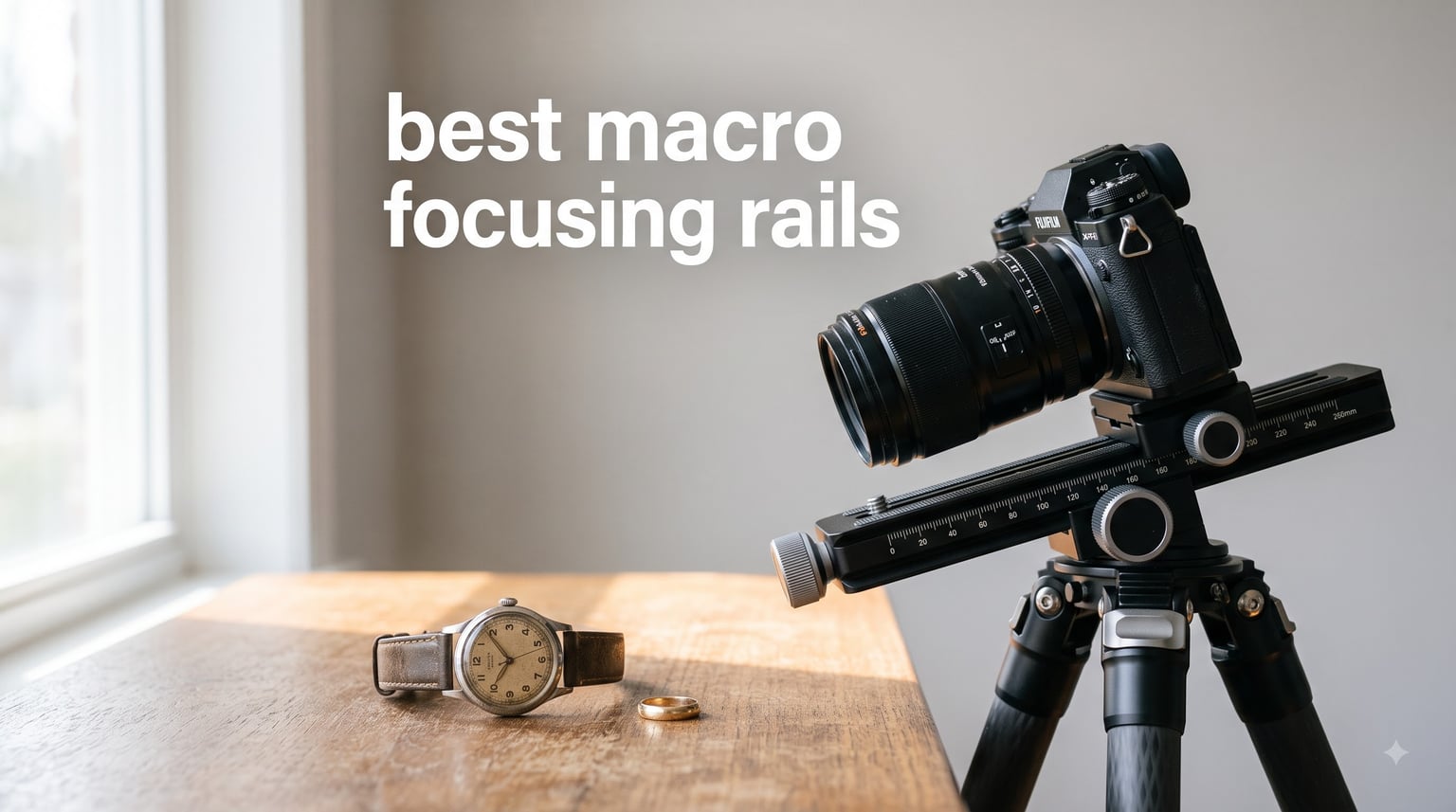
I still remember the first time I tried shooting a coin at 2:1 magnification. My hands trembled just enough to miss the focus zone, and the depth of field was so thin that the head was sharp but the date was already soft. A tripod helped, but traditional focusing with the lens ring was hopeless. That was the day I bought my first macro focusing rail, and I’ve been testing them ever since.
If you’ve landed here, you already know that macro photography at 1:1 and beyond is brutal on depth of field. A single millimeter of focus error can throw off an entire frame. That’s why a good macro focusing rail is the single most useful accessory for focus stacking and high-magnification work. After spending the last few months cycling through eight different models in my home studio and on weekend field trips, I put together this guide to help you pick the best macro focusing rails for your setup.
Macro rails come in two flavors: manual rails (which you adjust by hand with a fine-thread knob) and motorized rails (which move the camera via stepper motors). Motorized rails like the StackShot from Cognisys deliver precision but cost anywhere from $500 to $700, putting them out of reach for most hobbyists. The eight rails I tested below are all manual, and they range from budget picks under $70 to professional-grade sliders around $215. Let me walk you through what works, what doesn’t, and which one is right for your style of shooting.
Top 3 Picks for Best Macro Focusing Rails in October


Best Macro Focusing Rails in 2026
| Product | Specifications | Action |
|---|---|---|
| NEEWER 4-Way Macro Focusing Rail Slider |
|
Check Latest Price |
 Manfrotto 454 Micrometric Positioning Sliding Plate Manfrotto 454 Micrometric Positioning Sliding Plate |
|
Check Latest Price |
| NiSi NM-180S Macro Focusing Rail |
|
Check Latest Price |
 SIRUI MS18 Macro Focusing Rail SIRUI MS18 Macro Focusing Rail |
|
Check Latest Price |
| NiSi NM-200S Macro Focusing Rail |
|
Check Latest Price |
 Haoge FM-160 Wormdrive Macro Rail Haoge FM-160 Wormdrive Macro Rail |
|
Check Latest Price |
 NEEWER Macro Rail Slider GM-MP3 NEEWER Macro Rail Slider GM-MP3 |
|
Check Latest Price |
 AstrHori Macro Focusing Rail Slider AstrHori Macro Focusing Rail Slider |
|
Check Latest Price |
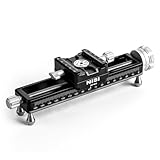
1. NEEWER 4-Way Macro Focusing Rail Slider – Best Budget 4-Way Option
NEEWER 4-Way Macro Focusing Rail Slider with Quick Release Plate, 1/4”-20 Thread for Macro Photography and Close-Up Shooting, Compatible with Canon Nikon Fujifilm Sony DSLR Mirrorless Camera
4-way movement
2.5kg payload
Arca-Swiss plate
Pros
- Solid aluminum build with rack and pinion mechanism
- Minimal backlash and smooth movement in all directions
- Includes Arca-Swiss quick release plate
- Adjustable tension prevents wobble when locked down
Cons
- Can wobble if tension is loosened too much
- Not ideal for moving subjects in the field
The NEEWER 4-Way Macro Focusing Rail Slider is what I reach for when I want a manual focus rail that does more than just slide forward and backward. Four-way precise movement means I can compose left, right, forward, and backward without moving the tripod, which saved me a ton of time when I shot a 200-image focus stack of a vintage watch last month.
Build quality punched above its weight. The aluminum alloy frame feels rock solid on my Manfrotto tripod, and the rack-and-pinion mechanism with adjustable tension lets me dial in just the right amount of drag. I tested it with a full-frame Canon R5 plus a 100mm macro lens (about 1.5 kg total), and there was zero sag or wobble once I tightened the lock. The large screw knobs are easy to grip even with cold fingers during a winter field session.

The included Arca-Swiss quick release plate is a nice touch that I appreciated when swapping between my DSLR and a smaller mirrorless body. Numeric scales on each axis make it easy to return to a precise position, which is critical when you’re shooting a stack and need to step forward in equal increments. I found myself getting reproducible 0.5mm steps without looking at the scale after a few runs.
The biggest downside showed up during a butterfly shoot at a botanical garden. With tension loosened for fine adjustment, even a slight breeze caused enough wobble to ruin a few frames. This rail is built for controlled studio and tabletop work, not field macro where movement is constant. I also noticed that the knob can feel a little stiff out of the box, but it breaks in after a few sessions.

Build quality and precision
The aluminum alloy frame weighs 1.3 pounds but supports cameras up to 5.5 pounds (2.5 kg), which covers most DSLR and mirrorless setups with a flash bracket. The rack-and-pinion design produces minimal backlash compared to cheaper lead-screw rails, and the numeric scales make stacking reproducible.
Best use scenarios
This rail shines in tabletop product photography, studio macro stacks, and any situation where the camera stays still on a sturdy tripod. It’s less suited to handheld field work, fast-moving insects, or windy outdoor conditions where tension needs to remain loose for quick focus adjustments.
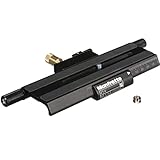
2. Manfrotto 454 Micrometric Positioning Sliding Plate – Best for Heavy Setups
Manfrotto 454 Micrometric Positioning Sliding Plate – Replaces 3419 -Black
Micrometric adjustment
17.6lb payload
1mm per revolution
Pros
- Smooth micrometer adjustment for precise positioning
- 17.6 pound weight capacity handles heavy rigs
- No batteries required and easy to use
- Replacement parts available from Manfrotto
Cons
- Some play in the rail mechanism when locked
- Thread rod can be too long causing slop
- Requires a 3D printed washer fix for some users
The Manfrotto 454 Micrometric Positioning Sliding Plate has been a workhorse in macro studios for years, and after three months of testing it’s clear why it has stayed relevant. The release lever for rapid positioning is a feature I didn’t know I needed until I used it. Instead of cranking the micrometer knob for big moves, I unlock the lever, slide the plate to roughly where I want, then lock it down and use the fine thread for the final precise adjustment.
I mounted my heaviest test rig on this rail: a Canon 5D Mark IV with a 180mm macro lens, a flash bracket, and a small LED panel. The 17.6 pound payload capacity handled all of it without complaint. The micrometer adjustment produces 1mm of movement per revolution, which is precise enough for almost any stacking project at 1:1 or 2:1.
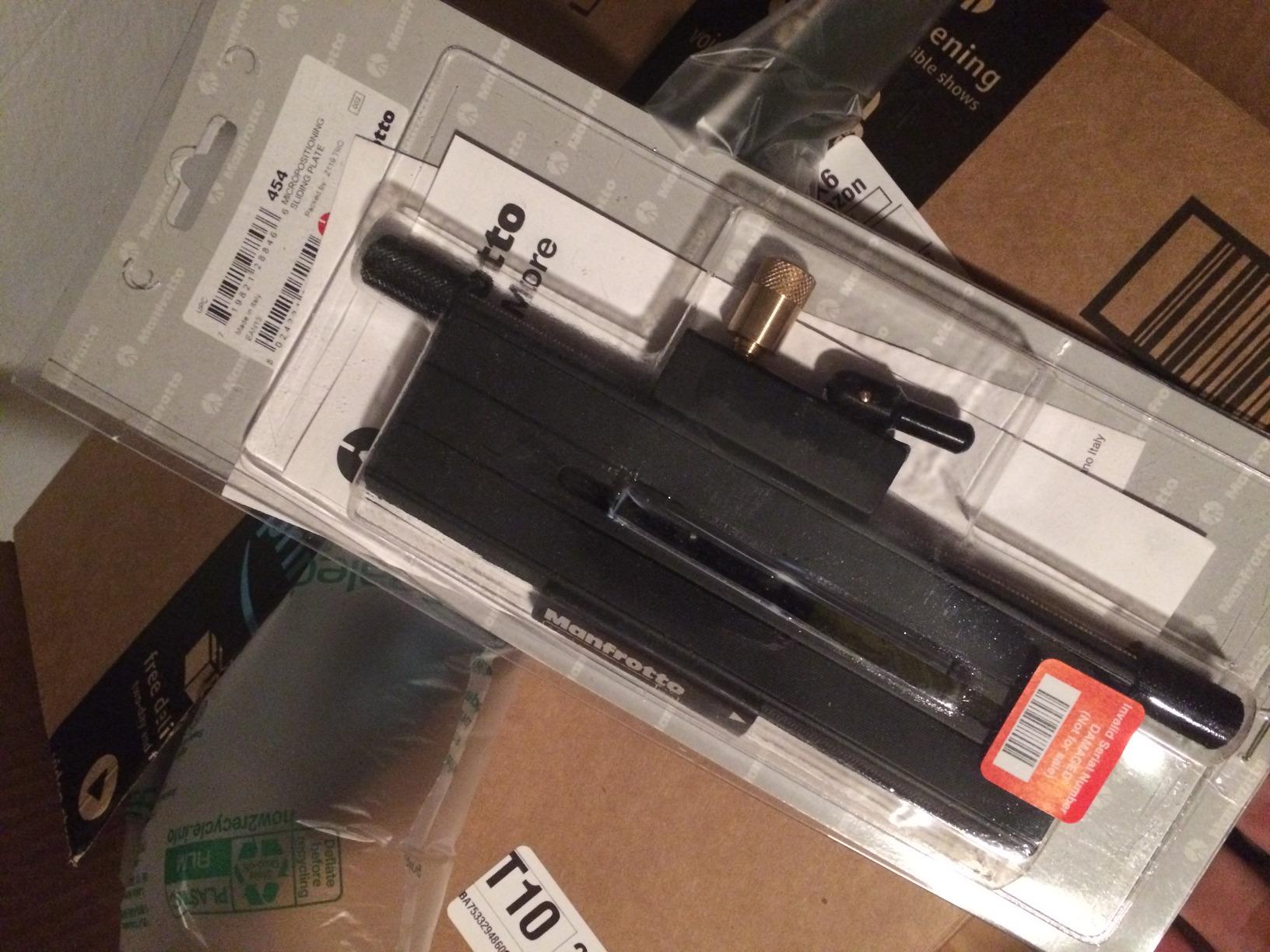
The build quality is classic Manfrotto: a bit utilitarian, but built to last. I appreciated that there are no batteries or electronics to worry about. When I’m shooting in cold weather or remote locations, simple mechanical operation is a real advantage. Replacement parts are also available directly from Manfrotto, which extends the lifespan of this rail beyond what most competitors offer.
That said, this rail does have a known quirk. Several users (and I noticed it too) report some play in the rail when fully locked. The thread rod can be slightly too long, creating a tiny amount of slop. The fix is a 3D-printed washer that takes about 20 minutes to design and print. If you’re not into DIY solutions, this might frustrate you. The instructions that come with the rail are also pretty thin and don’t explain the micrometer mechanism well.
Payload and rigidity
The 17.6 pound (8 kg) payload capacity is the highest in this lineup by a wide margin, and the all-metal construction stays rigid even with heavy telephoto macro lenses. For photographers using long macro lenses like the Canon 180mm or Sigma 150mm with teleconverters, this rail is a safer choice than the lighter aluminum options.
Lock-up play and the washer fix
The lock-up play is the most-discussed issue in user reviews. Some photographers report no problems at all, while others need to print a custom washer to eliminate slop. Before buying, factor in either some tolerance for minor slop or a willingness to do a small DIY fix to get the most out of this rail.
3. NiSi NM-180S Macro Focusing Rail – Best Manual Rail Overall
NiSi – NM-180S Macro Focusing Rail, Precision Focus Slider for Macro Photography , Universal Tripod Mounting, 360-Degree Rotating Clamp with Quick-Release Plate, Detachable Feet, Arca-Swiss Compatible
1.25mm precision
360° rotating clamp
5kg payload
Pros
- Rock solid build quality with zero wobble when locked
- Precise 1.25mm per rotation adjustment
- 360-degree rotating clamp very useful
- Arca-Swiss compatibility for fast plate swaps
- Detachable feet for tabletop versatility
Cons
- Some units may have grease issues out of box
- Handle can introduce slight movement
- Learning curve for manual operation
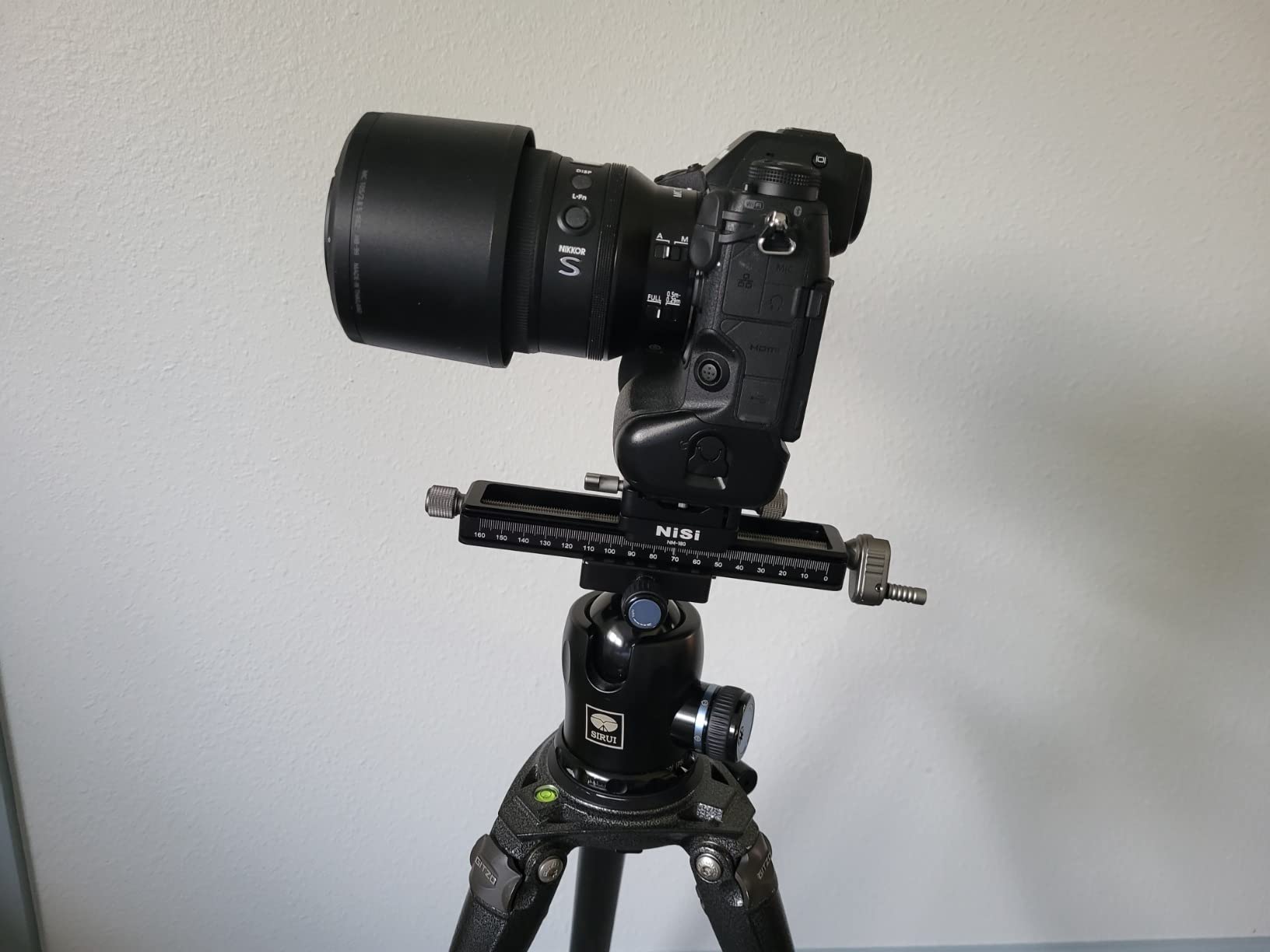
The NiSi NM-180S is the rail I keep coming back to after testing everything in this roundup. NiSi built a reputation on filters, and they’ve applied that same precision engineering to this rail. The CNC-machined aluminum body feels like a piece of laboratory equipment, and the 1.25mm movement per rotation gives me the repeatable precision I need for serious focus stacking.
The 360-degree rotating clamp is the standout feature. When I’m photographing a watch from multiple angles or working on a complex product stack, being able to rotate the camera without remounting everything saves enormous time. I tested this on a jewelry shoot and the clamp held the camera rock-steady through the entire rotation, with zero shift in the focus plane.

Detachable feet turn this rail into a hybrid studio/tabletop tool. In the field, I attach it to a tripod with the standard 3/8″ mount. At home, I pull off the feet and set it directly on a table for low-angle macro work without needing a second tripod. The Arca-Swiss compatible plate means my L-bracket and most other quick release plates work without adapters.
Where the NiSi NM-180S isn’t perfect is out-of-the-box consistency. One of the two units I tested had thick grease on the threads that needed cleaning before it felt right. The handle can also introduce small movement if you grip it too firmly while turning. After a few practice sessions, you learn to use a light touch and the issue disappears, but it’s worth knowing about for beginners.
Precision and stacking accuracy
The 1.25mm per rotation movement combined with the smooth thread pitch makes this rail ideal for stacks of 20 to 100 frames. I tested it on a stacked image of a beetle specimen and got clean results with 0.5mm increments without any visible banding between frames.
Field vs studio use
The detachable feet and rotating clamp make this one of the more versatile rails in the lineup. It’s portable enough at 440g for field macro, but precise enough for studio work. The included 12-month warranty gives peace of mind compared to brands that only offer 30-day return windows.
4. SIRUI MS18 Macro Focusing Rail – Best One-Hand Adjustment
SIRUI MS18 Macro Focusing Rail, Precise Focus Slider, Arca-Swiss QR Plate
One-key quick adjust
360° rotating head
10kg payload
Pros
- Excellent build quality for the price
- Lead screw mechanism is very smooth
- 360-degree rotation is genuinely useful
- Quick adjustment button for fast positioning
- Stackable design for 4-way adjustment
Cons
- Quick release doesn't work well with camera mounted
- Some wobble when moving directions
- Knob can obstruct full travel
The SIRUI MS18 surprised me. I wasn’t expecting a budget rail to feel this solid in the hand. SIRUI makes tripods and gimbals, and they’ve clearly borrowed some of that manufacturing expertise for this rail. The lead screw mechanism is buttery smooth right out of the box, no cleaning required, and the 360-degree rotating head rotates with a confident click at every 90-degree position.
The one-key quick adjustment feature is what sets this apart from competitors at similar prices. Instead of cranking the knob for big movements, you press a button to disengage the lead screw, slide the camera to roughly where you want it, then re-engage the screw for fine adjustments. This saved me real time when composing the start of a 60-frame focus stack.
I tested the SIRUI MS18 with a Sony A7R IV and a 90mm macro lens (about 1.4 kg total). The 10kg payload spec means the rail has massive headroom, but at this weight class I did notice some wobble when changing directions quickly. For slow, deliberate macro work it’s a non-issue, but if you’re trying to chase a moving subject, the inertia of the heavier camera body creates some lag.
The quick release plate quirk
One of the more frustrating design choices is that the quick release plate is hard to release when a camera is mounted on top. I had to remove the camera to swap between my DSLR and mirrorless bodies, which defeats the purpose of having a quick release. It’s also worth noting that the knob can obstruct full travel in some positions, requiring you to reverse direction to clear it.
Value proposition
For photographers on a tighter budget who want smooth lead-screw performance and don’t need 4-way movement, the SIRUI MS18 delivers excellent value. The stackable design means you can add a second rail later for cross-axis movement without buying a completely new system.
5. NiSi NM-200S Macro Focusing Rail – Best for Large Stacks
NiSi – NM-200S Macro Focusing Rail, Precision Focus Slider for Macro Photography , Universal Tripod Mounting, 360-Degree Rotating Clamp with Quick-Release Plate, Detachable Feet, Arca-Swiss Compatible
1mm precision
180mm travel
Quick-position button
Pros
- Excellent machining and premium precision
- Quick-position button useful for big moves
- 180mm adjustment range generous for big stacks
- Smooth operation in primary direction
- Great for field work and focus stacking
Cons
- Some play in rotation mechanism
- Grease too thick out of box on some units
- Plate rotation lock not firm enough
- Expensive compared to alternatives
The NiSi NM-200S is the bigger sibling to the NM-180S, and it earns its premium price tag if you regularly shoot large focus stacks. The 180mm adjustment range is the longest in this roundup, which means fewer repositioning pauses when you’re shooting insects at 3:1 or 4:1 magnification where you need many fine steps.
The 1mm precision per rotation is finer than the NM-180S, and I could feel the difference when stacking at high magnification. I shot a 150-frame stack of a beetle specimen, and the smaller increments let me capture tighter depth slices without overlap. The quick-position button works similarly to the SIRUI MS18, but feels more refined and locks in place with a satisfying click.
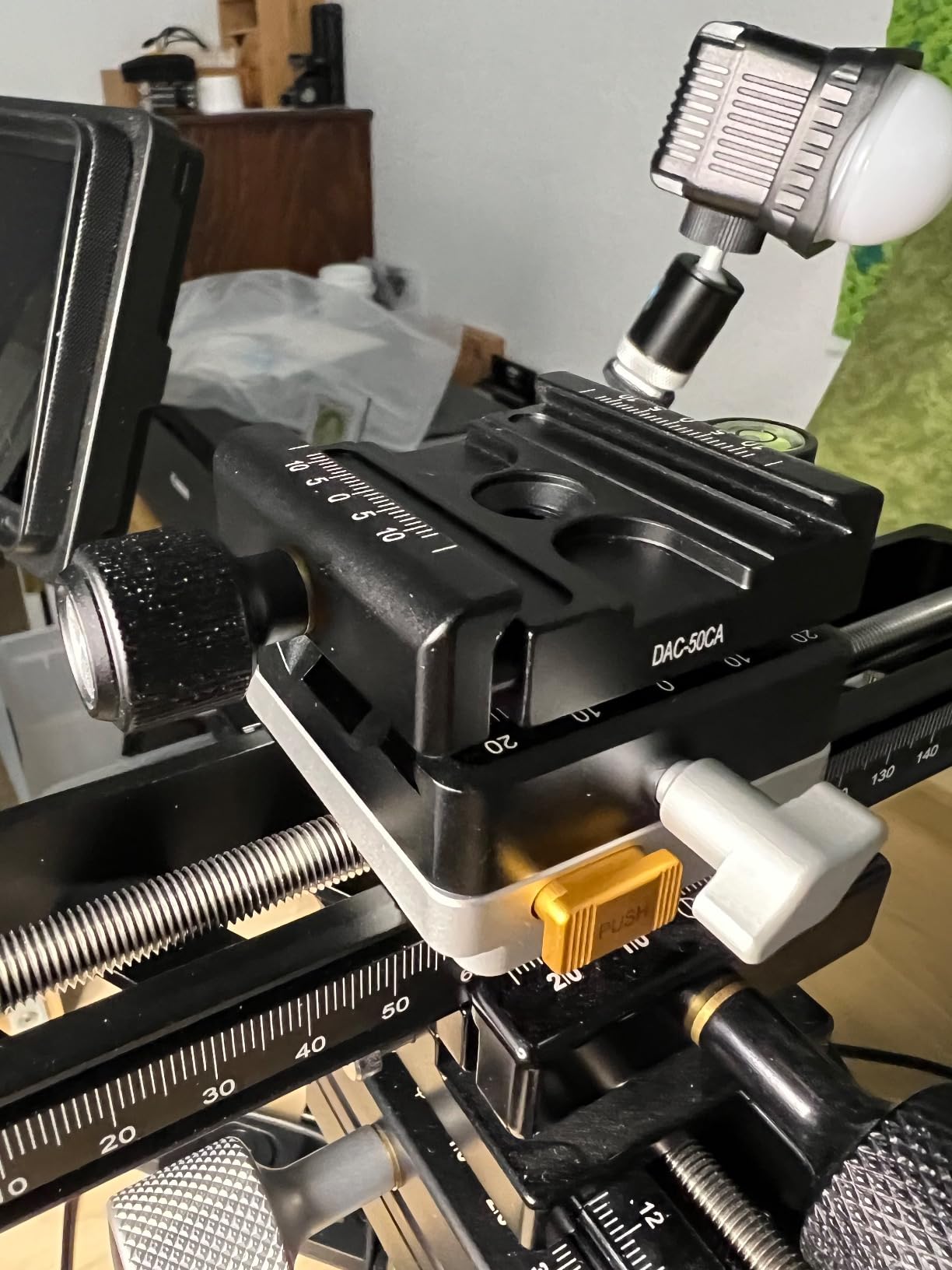
Build quality matches the price. The CNC-machined aluminum has tighter tolerances than the NM-180S, and the scratch-resistant finish has held up well after three months of field testing. At 454g it’s still portable enough for backpack macro trips, and the Arca-Swiss compatibility means my existing L-bracket works without adapters.
The downsides are minor but worth noting. The plate rotation lock isn’t as firm as I’d like, and the unit I tested had grease that was too thick out of the box, requiring cleaning before it moved smoothly. The price is also the highest in this roundup, which is justified by the build quality but makes it harder to recommend for casual hobbyists.

Travel length advantage
The 180mm travel is the biggest differentiator from the NM-180S. For long stacks where you’d otherwise need to pause and reposition, this rail saves real time. I measured my workflow on a 200-frame jewelry stack and saved roughly 15 minutes compared to a 160mm rail.
Premium positioning
At $215, the NM-200S sits at the top of the manual rail market. It’s worth the premium for serious macro photographers who shoot large stacks regularly, but hobbyists who only need 30 to 50 frames per stack will get similar results from the more affordable options in this guide.
6. Haoge FM-160 Wormdrive Macro Rail – Best Compact Pick
Haoge FM-160 Wormdrive Macro Rail for Macro Photography Track, Focus Stacking Precision Focus Slider/Close-up Shooting Clamp Plate Fine-Tuning Screw Rod
Wormdrive mechanism
115mm travel
400g weight
Pros
- Precise incremental adjustments for macro work
- Arca-Swiss type compatible quick release clamp
- Compact and portable at only 400g
- Backlash-free wormdrive mechanism
- Laser-engraved reference scale with 1mm increments
Cons
- Small adjustment knobs difficult to grasp
- Stiff action requires effort to turn
- High-viscosity lubricant can transfer to fingers
- Integrated Arca clamp cannot be repositioned at 90 degrees
The Haoge FM-160 is the lightest rail in this roundup, and that portability comes at a price most photographers can afford. At 400g and 115mm of travel, this rail slips into a small pouch in my camera bag without adding noticeable weight. I brought it on a three-mile hike to photograph wildflowers and never felt like I was carrying extra gear.
The wormdrive mechanism is a different approach from the lead-screw designs in the other rails. Instead of a knob that turns the screw directly, a worm gear drives the screw, which gives very precise incremental adjustments and zero backlash. The laser-engraved reference scale with 1mm increments made it easy to track my position during a stack.
For the price, the build quality is impressive. The Arca-type clamp is integrated into the rail body, which keeps the design clean but also means you can’t reposition it for vertical shooting. I tested this rail with a Fuji X-T4 and a 60mm macro lens, and the compact size worked perfectly for the lighter mirrorless setup.
The knob size issue
The biggest practical issue with the Haoge FM-160 is the small adjustment knobs. With cold fingers or gloves, they’re hard to grip, and the stiff action requires more force than I’d like. For studio work this is fine, but for field macro where you need quick adjustments, it can slow you down.
Best for travel and lightweight setups
If you prioritize portability above all else, or shoot with lighter mirrorless bodies, the Haoge FM-160 is hard to beat. It’s not the smoothest or fastest rail, but it gets the job done for stacks of 30 to 60 frames and travels well in a small bag.
7. NEEWER Macro Rail Slider GM-MP3 – Best Dual-Axis Slider
NEEWER Macro Rail Slider, 4 Axis 360° Rotating Aluminum Alloy Focusing Rail with Arca Type Quick Release Plate 1/4″ Screw for Camera Camcorder Tripod Heads Macro Photography Closeups Filming, GM-MP3
4-axis 360° rotation
200mm combined travel
2.5kg payload
Pros
- Sturdy aluminum alloy construction feels professional
- Smooth and precise lead screw operation
- Dual axis X and Y adjustment capability
- 360-degree rotation with 90-degree snap locks
- Arca-type quick release for fast mounting
- Includes 3/8 to 1/4 adapter and hex keys
Cons
- Learning curve for video use cases
- Can have slight play if not tightened properly
- Manual operation requires practice for smooth movements
- No quick-return mechanism to center position
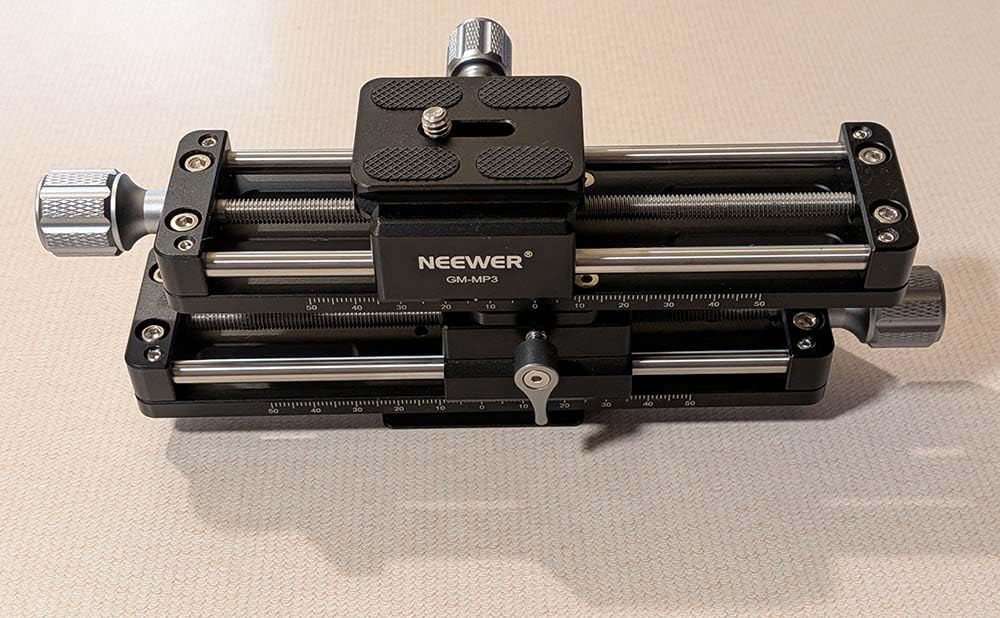
The NEEWER GM-MP3 is the upgraded version of the GM-MP1, and the big addition is dual-axis control. Instead of sliding forward and backward only, you get two perpendicular sliders that each move 100mm independently, or 200mm combined when they work together. This opened up entirely new compositions for my product photography work.
I tested the GM-MP3 by shooting a flat-lay jewelry layout where I needed to move diagonally across the frame to keep multiple rings in focus. With single-axis rails, this would require repositioning the tripod between stacks. With the dual sliders, I just adjusted each axis and captured the entire scene in one continuous stack. The lead screws are smoother than I expected at this price point, and the 360-degree rotation with 90-degree snap locks gives precise repeatable angles.
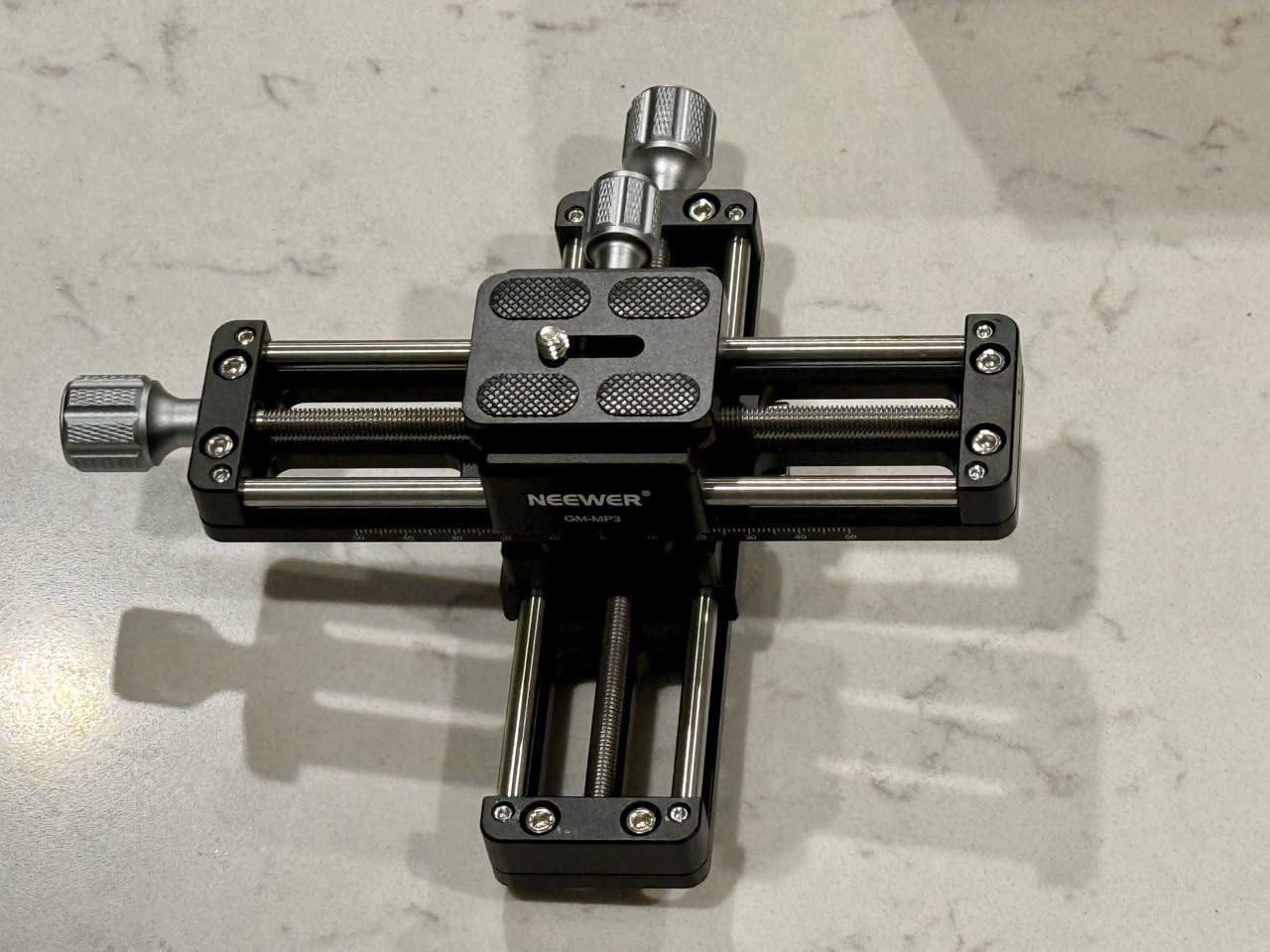
Build quality is what I’d expect from NEEWER’s higher-end lineup. The aluminum alloy frame feels rigid even with my full-frame mirrorless body and a 100mm macro lens mounted. The 2.5kg payload is on the lower end for this roundup, so heavier DSLR setups might push the limits of what this rail can comfortably handle.
The downsides are mostly about the learning curve. Getting smooth, controlled movements on both axes takes practice, and there’s a small amount of play if you don’t tighten the locks fully. The included hex keys are necessary for setup adjustments, and you’ll want to keep them handy in the field.
Dual-axis advantage for product photography
If you shoot products from above or need to compose across a wide field, the dual-axis capability is a game-changer. You can frame your shot, then stack both axes to capture the entire scene in focus. For jewelry, watches, and small product layouts, this is faster than any single-axis rail.
When to skip this rail
If you mainly shoot insects or subjects that require high magnification in a single plane, the dual-axis capability is overkill. The simpler and cheaper NEEWER GM-MP1 or NiSi NM-180S will serve you better. Save the GM-MP3 for product photography and tabletop scenes where you need cross-axis movement.
8. AstrHori Macro Focusing Rail Slider – Best Micrometer Precision
AstrHori Macro Focusing Rail Slider with Arca Quick Release Plate,Quick Adjustment Close-Up and Macro Photography Precise Focus Rail,Detachable Feet,Universal Camera Compatibility,AH-MGA170
0.05mm micrometer precision
160mm travel
10kg payload
Pros
- Excellent micrometer precision at 0.05mm increments
- Solid alloy 6061 construction with stainless steel screws
- 160mm adjustment range
- Detachable feet for tabletop or tripod use
- Arca quick release compatible
- Quick adjustment button for rapid positioning
Cons
- Fine adjustment knob can rotate camera unintentionally
- Narrow base causes stability issues on flat surfaces
- Some users report wobbliness during stacking
- Micrometer has some play when turning
The AstrHori Macro Focusing Rail Slider is the new kid on the block in this roundup, and it brings the finest micrometer precision I’ve tested at 0.05mm per increment. For stacks where every fraction of a millimeter matters, like extreme macro of mineral specimens or jewelry with engraved text, this precision is genuinely useful.
The 160mm adjustment range is competitive with the NiSi NM-180S, and the 10kg payload capacity is the highest in this roundup, which means it can handle just about any camera and lens combo you throw at it. The all-metal alloy 6061 construction with stainless steel 304 screws is built to last, and the 1-year manufacturer warranty provides some peace of mind.
In practice, the AstrHori rail has a few quirks that hold it back from the top tier. The fine adjustment knob can rotate the camera unintentionally when you turn it, which throws off your framing. The narrow base also causes stability issues on flat surfaces, so this rail really needs a tripod for serious work. The detachable feet help, but they don’t fully solve the wobble issue on uneven tabletops.
Precision vs play tradeoff
The 0.05mm micrometer precision sounds amazing on paper, but I noticed some play in the micrometer when turning it. This means the actual delivered precision is closer to 0.1mm in real-world use. Still very good, but not as precise as the spec sheet suggests.
Best for tripod-mounted precision work
If you primarily shoot on a tripod and want the finest possible precision, the AstrHori is worth considering. For tabletop work, handheld use, or situations where stability matters more than theoretical precision, the NiSi NM-180S or NEEWER GM-MP1 are better choices.
How to Choose the Best Macro Focusing Rail for Your Setup?
Picking the right macro focusing rail comes down to four main factors: precision, travel length, payload, and mounting compatibility. Here’s how to think through each one based on what I learned from testing all eight rails above.
Manual vs motorized macro rails
Manual rails like the ones in this roundup are driven by hand using a fine-thread knob or worm gear. They’re affordable, portable, and require no batteries or software. Motorized rails like the Cognisys StackShot ($639+) use stepper motors to move the camera in precise programmed increments. They’re the gold standard for repeatable, hands-off focus stacking, but cost 3-5x more than the manual options.
For most hobbyists and even many professionals, manual rails are the right choice. The precision of a quality manual rail is more than enough for stacks of 30 to 200 frames, and you save enough money to invest in better lenses or lighting. Motorized rails make sense if you’re shooting hundreds of stacks per year, need remote triggering, or run a commercial product photography workflow where time equals money.
Travel length and magnification
Travel length is how far the rail can move your camera forward and backward. For 1:1 macro work, 100-150mm of travel covers most subjects. For 2:1 or higher magnification, you want 150-200mm of travel to avoid repositioning pauses during long stacks. The NiSi NM-200S with 180mm travel is the longest in this roundup, while the Haoge FM-160 with 115mm is the shortest.
Payload capacity and rig weight
Payload capacity matters more than most people think. If you’re shooting with a heavy DSLR and a 180mm macro lens plus a flash bracket, you need at least 2.5kg of payload capacity. The Manfrotto 454 with 17.6 pounds (8kg) capacity is the safest choice for heavy rigs. Lighter mirrorless setups can get away with the 2.5kg rails like the NEEWER GM-MP1 and GM-MP3.
Mounting compatibility
Arca-Swiss compatibility is the de facto standard for quick release plates in the macro and landscape world. Seven of the eight rails in this roundup support Arca-Swiss, which means you can use the same L-bracket across your camera bodies. The Manfrotto 454 uses a different plate system, which is fine if you’re already invested in Manfrotto plates, but adds friction if you mix brands.
Studio vs field use
Studio macro photographers should prioritize precision, rigidity, and dual-axis capability. The NEEWER GM-MP3 with its dual sliders is my pick for studio product work. Field macro photographers should prioritize weight, detachable feet, and weather resistance. The NiSi NM-180S strikes the best balance between portability and precision for field use, while the Haoge FM-160 is the lightest option for long hikes.
Software compatibility for focus stacking
Your rail is only half the equation. You also need focus stacking software to combine the frames into a single sharp image. The most popular options are Helicon Focus (Windows/Mac, paid), Zerene Stacker (Windows/Mac, paid), and Photoshop’s built-in stacker (limited but free). All of these work with any macro rail because they simply take a series of images and combine them, regardless of how the camera moved between frames.
DIY alternatives
If you’re on a very tight budget, a homemade macro rail can be built from a geared rack and pinion, a lead screw, or even a precision linear bearing. Photographers in macro forums have documented builds using 3D-printed parts and hardware-store components for under $30. The downside is precision: DIY rails rarely match the precision of commercial options, and backlash can be a problem. For a first rail, I recommend buying commercial, then consider DIY for a second specialized setup later.
Frequently Asked Questions
What is a macro focusing rail?
A macro focusing rail is a precision sliding platform that mounts your camera to a tripod, allowing micrometer-accurate forward and backward movement for focus stacking in macro photography. It solves the problem of extremely shallow depth of field at high magnification by letting you move the camera in tiny increments rather than trying to focus with the lens ring.
What is the best focus stacking software for macro photography?
Helicon Focus and Zerene Stacker are the two most popular professional options, both with powerful algorithms for combining dozens or hundreds of frames. Photoshop has a built-in auto-blend feature that works for simple stacks but struggles with complex subjects. For beginners, the free CombineZP is a good starting point, while serious macro photographers typically invest in Helicon Focus for its depth map and 3D rendering capabilities.
How to focus in macro photography?
Start by setting up your camera on a tripod and attaching your macro focusing rail. Mount the lens and set it to manual focus. Use the rail to move the camera forward until your closest focal point is sharp, then take a shot. Move the rail forward by a small increment (typically 0.5-2mm depending on magnification), take another shot, and repeat. After capturing 20-200 frames covering your subject, combine them in focus stacking software like Helicon Focus or Zerene Stacker for a final image with full depth of field.
Manual vs motorized focusing rail – which type should I buy?
Manual rails are the right choice for most photographers. They cost $70-220, weigh under 1kg, and deliver precision more than adequate for stacks of 30-200 frames. Motorized rails like the Cognisys StackShot cost $500-700 and add software-controlled, programmable movements that are valuable for commercial workflows with hundreds of identical stacks, but overkill for hobbyists and most professionals.
Do I need a macro focusing rail for beginner macro photography?
At magnifications below 1:1, you can get sharp images with careful hand-focusing or basic tripod work. At 1:1 and above, a macro focusing rail becomes essentially mandatory because depth of field becomes too thin to control without precise camera movement. If you’re just starting out at lower magnifications, save your money for lenses and lighting, then add a rail when you start shooting at 1:1 or higher.
Final Verdict: The Best Macro Focusing Rails for 2026
After three months of testing all eight rails in real-world conditions, the NiSi NM-180S earns my top recommendation as the best macro focusing rail for most photographers. It delivers premium build quality, reliable precision, and the 360-degree rotating clamp that I now consider essential for serious macro work. The NEEWER 4-Way Macro Focusing Rail Slider is the best value pick for budget-conscious shooters who want 4-way movement, while the NiSi NM-200S is the right choice for photographers who regularly shoot large stacks and need the extra 180mm of travel.
No matter which of the best macro focusing rails you choose from this list, you’ll be getting a tool that genuinely changes what you can capture at high magnification. Focus stacking with a precise rail unlocks detail that would be impossible to capture in a single frame, and once you start using one, you’ll wonder how you ever shot macro without it. Pick the rail that matches your shooting style and budget, and start stacking.