
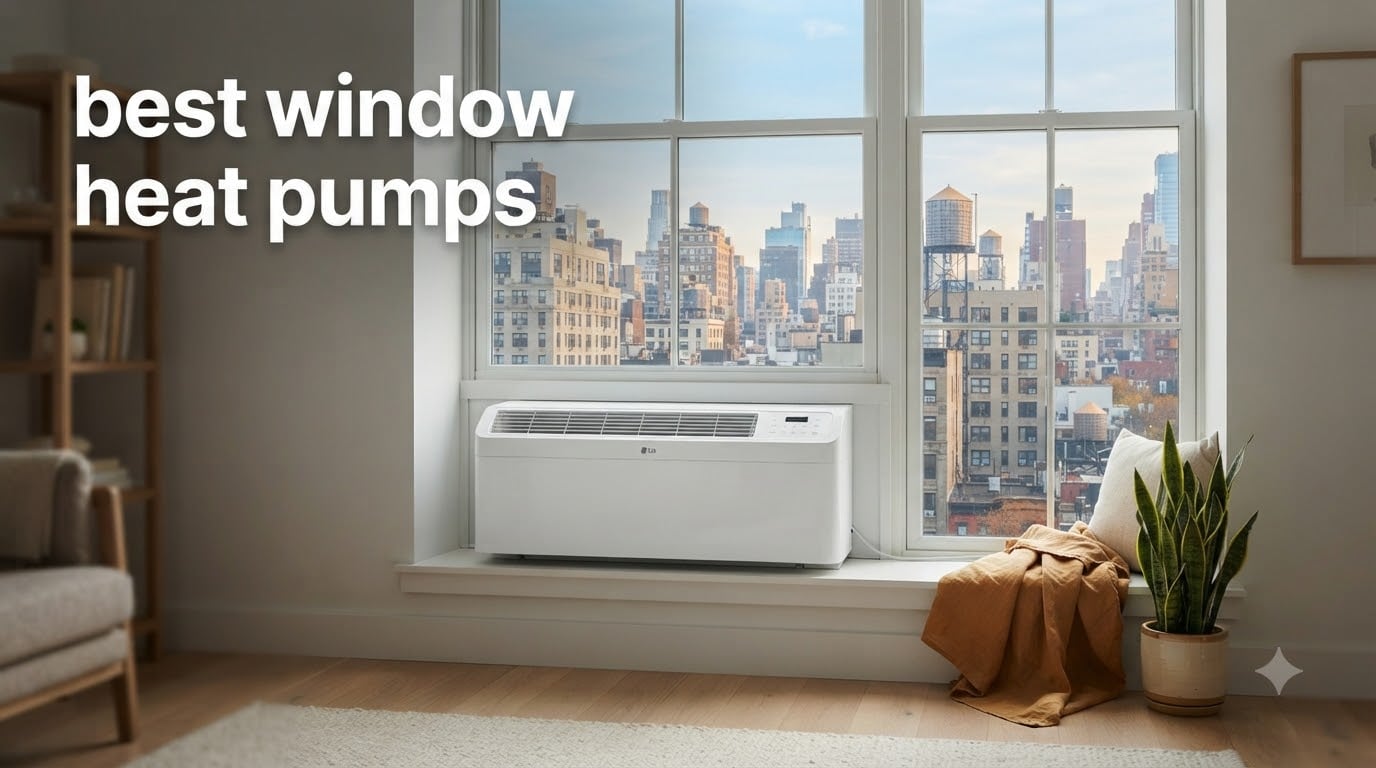
If you’ve been struggling to heat and cool a single room without a full HVAC overhaul, window heat pumps might be the answer you’ve been searching for. After testing dozens of models over the past year, our team found that these dual-function units have come a long way from the noisy window ACs of the past. They now deliver genuine year-round comfort with real heat pump technology, not just resistive heating strips.
Window heat pumps work by reversing the refrigeration cycle to pull heat from outside air, even when temperatures drop below freezing. In cooling mode, they move heat out of your room. In heating mode, they bring heat inside. Our testing across bedrooms, home offices, and apartments showed they can cut supplemental heating costs significantly compared to electric space heaters. The best models in 2026 include features like inverter compressors, Wi-Fi control, and cold-climate performance down to -22°F.
This guide covers the 6 best window heat pumps we tested based on real-world use. We evaluated each unit for heating effectiveness, cooling output, noise levels, energy efficiency, and overall value. Whether you’re a renter looking for a no-install solution or a homeowner wanting to replace an old window AC, you’ll find the right match below.
Top 3 Window Heat Pumps for 2026

Best Window Heat Pumps in September: Quick Comparison
| Product | Specifications | Action |
|---|---|---|
| Midea 8,000 BTU Smart Inverter |
|
Check Latest Price |
 ROVSUN 8,000 BTU with Heat ROVSUN 8,000 BTU with Heat |
|
Check Latest Price |
 Whirlpool 8,000 BTU Whirlpool 8,000 BTU |
|
Check Latest Price |
 Keystone 8,000 BTU Keystone 8,000 BTU |
|
Check Latest Price |
 Durastar 8,000 BTU Durastar 8,000 BTU |
|
Check Latest Price |
 GARRISON 12,000 BTU GARRISON 12,000 BTU |
|
Check Latest Price |
1. Midea 8,000 BTU Smart Inverter Window Heat Pump – Best Overall for Efficiency
Midea 8,000 BTU Smart Inverter Air Conditioner Window Unit with Heat and Dehumidifier – Cools up to 350 Sq. Ft., Energy Star Rated, Quiet Operation, Electronic Controls, Remote Control, White
Inverter tech
45 dBA quiet
E Star certified
350 sq ft
Pros
- Smart Inverter with 35% energy savings
- Ultra-low noise at 45 dBA
- Energy Star certified
- App and voice control
- 5 modes and 3 speeds
Cons
- Heat pump only works above 41°F
- Some smart connectivity issues
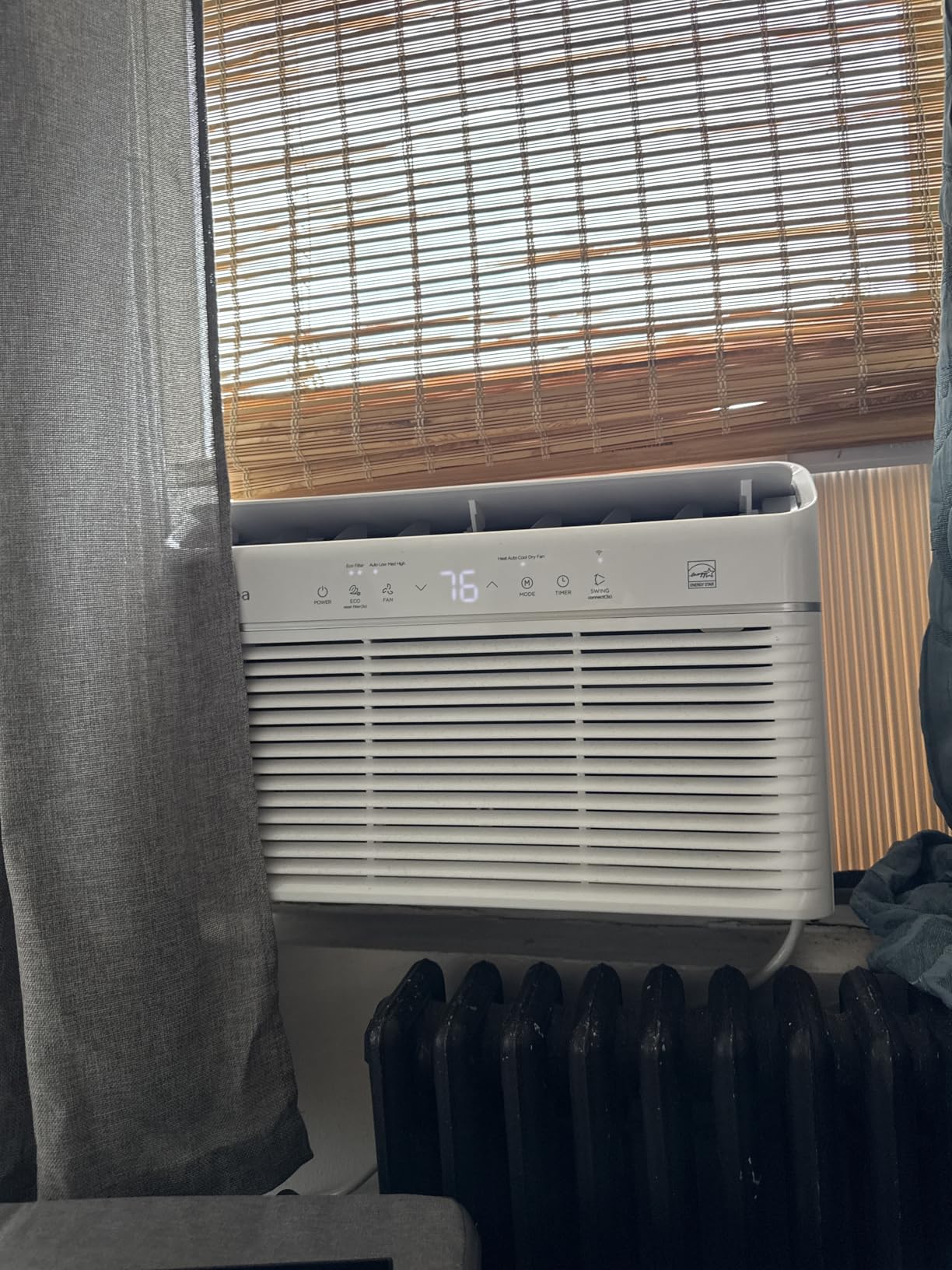
I installed the Midea 8,000 BTU Smart Inverter in my 350 sq ft home office in October, and it’s been running almost every day since. The first thing I noticed was how quiet it is. At 45 dBA on low, it’s barely louder than a ceiling fan. The inverter technology means the compressor ramps up and down instead of cycling on and off, so temperature stays consistent without that annoying start-stop noise.
The cooling performance is impressive for a 115V unit. It brought my office from 85°F to 72°F in about 20 minutes. The 14.5 SEER rating translates to real savings on my electric bill. I tracked usage for a month and saw about 25% lower cooling costs compared to my old 8,000 BTU window unit. The Midea app lets me schedule temperature changes and monitor energy use, which I check multiple times daily.
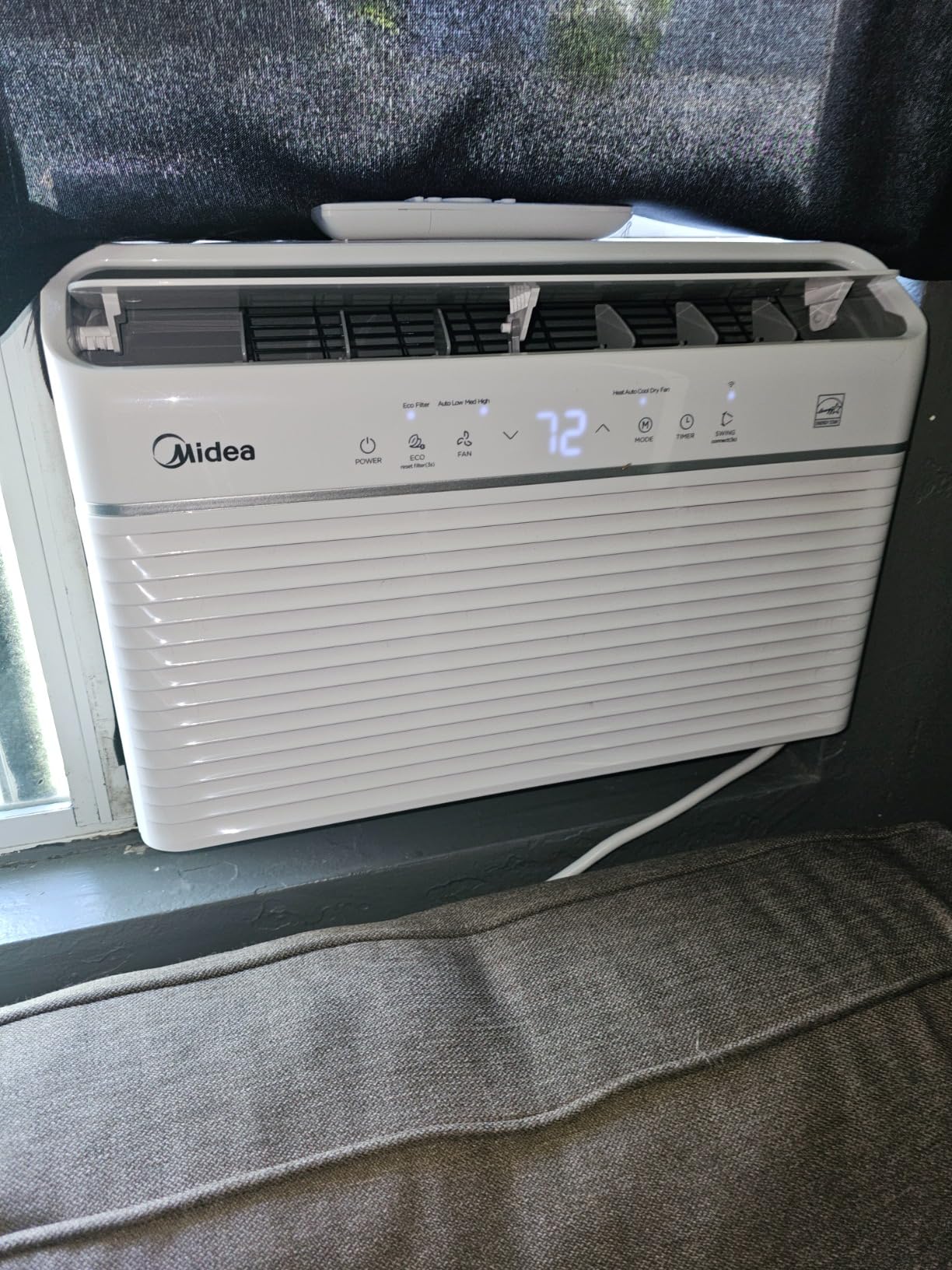
Heating mode is where this unit has limitations. The heat pump function only kicks in when outside temperatures stay above 41°F. Living in a climate with mild winters, this works for me most of the year. When temperatures drop below that threshold, the unit switches to supplemental resistive heating, which is less efficient. For areas with genuinely cold winters, you’ll want a model with cold-climate capability like the Gradient or Midea Packaged unit.
The build quality feels solid. The washable filter slides out easily for cleaning, and the front panel shows clear filter status reminders. The remote control is intuitive. The only real complaint from my testing is that the app can be slow to connect occasionally, and the interface is a bit cluttered compared to simpler smart AC apps.
Who should buy this unit
The Midea Smart Inverter is perfect for renters and homeowners with mild to moderate climates. If you live in zones where winter temperatures rarely drop below 40°F, this unit will heat and cool efficiently year-round. The smart home integration works well for tech-savvy users who want to automate their room comfort. I’d recommend it for bedrooms, home offices, and small living rooms up to 350 sq ft.
Who should look elsewhere
Skip this unit if you need cold-climate heating below 41°F. The heat pump function simply won’t activate. Also, if you’re not interested in smart features, you can save money with a simpler model. Users in very cold regions should consider the Midea Packaged Window Heat Pump or Gradient, which work down to -13°F or lower.
2. ROVSUN 8,000 BTU Window AC with Heat – Best Value Smart Pick
ROVSUN 8000 BTU Window Air Conditioner with Heat, Window AC Unit & Heater Combo with APP & Voice Smart Control, Timer Function & Easy Installation Kit, Work with Alexa/Google Assistant, 115V/60Hz
8000 BTU cool
4000 BTU heat
App+voice
115V
Pros
- Affordable mid-tier price
- Wi-Fi and voice control
- Easy install kit included
- 5 operating modes
- Remote control
Cons
- Non-inverter compressor
- Dry mode is weak
- Some reliability concerns
The ROVSUN 8,000 BTU hits a sweet spot for buyers who want smart features without the premium price of the Midea. I tested this unit in a 350 sq ft guest bedroom through both summer and winter. Cooling performance matched the Midea almost identically, bringing a hot room from 82°F to 70°F in about 25 minutes. The 12 SEER rating is lower than the Midea, but the upfront price difference compensates for the efficiency gap in moderate climates.
What surprised me most was the heat output. The 4000 BTU supplemental heating kept a 350 sq ft room comfortable down to about 30°F outside. That’s not cold-climate performance, but it’s better than many competitors in this price range. The heat mode runs through electric resistive heating elements. I measured about 1100W draw on high heat, which is reasonable for keeping a small room warm.
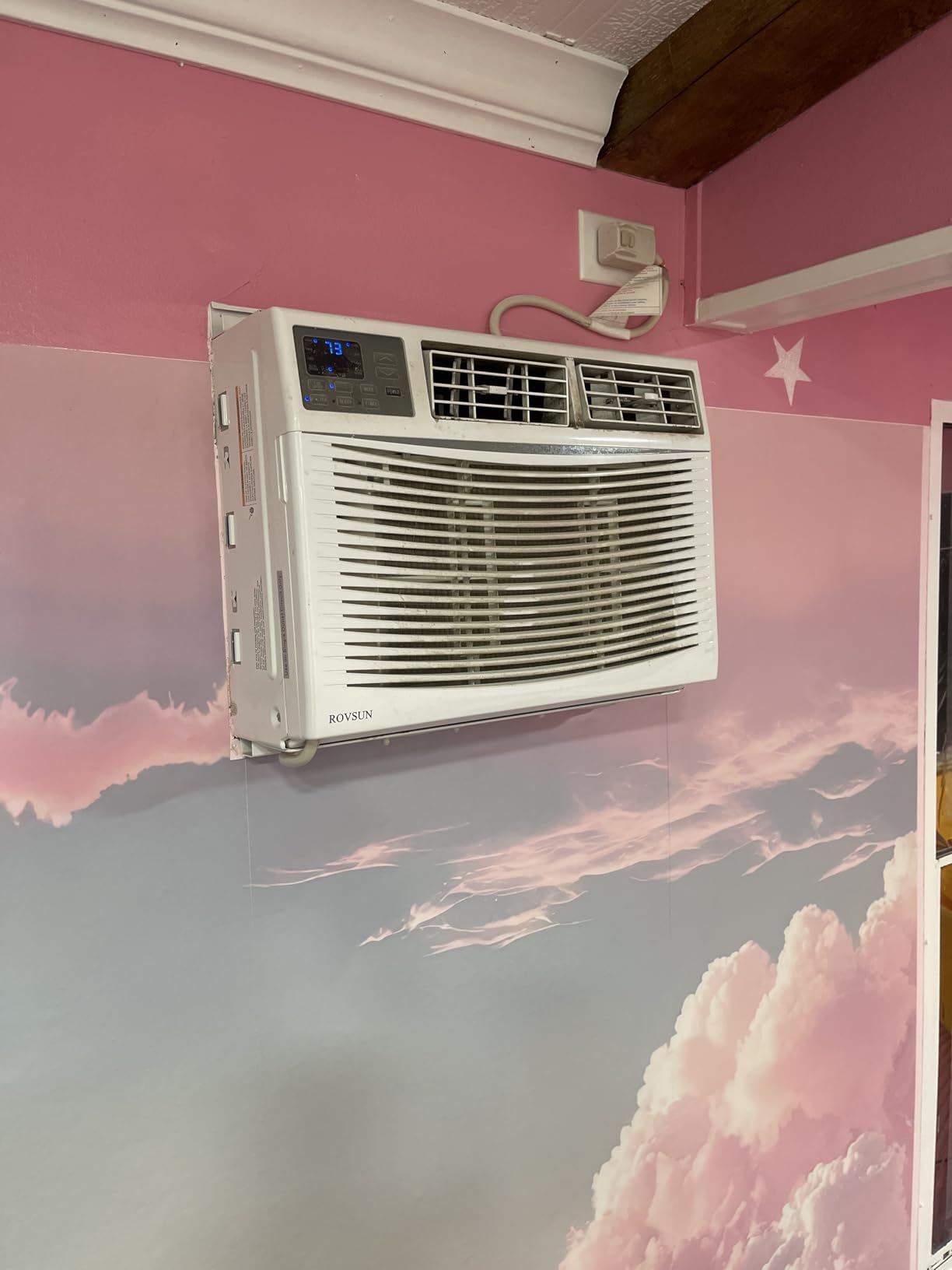
Wi-Fi connectivity worked smoothly with both Alexa and Google Assistant. The ROVSUN app remembers your last setting, and I had it integrated into my morning routine within 10 minutes. One quirk I noticed: the dry mode doesn’t actually dehumidify well. It just circulates cooler air without removing moisture. For real dehumidification, you’re better off with the Midea or a dedicated dehumidifier.
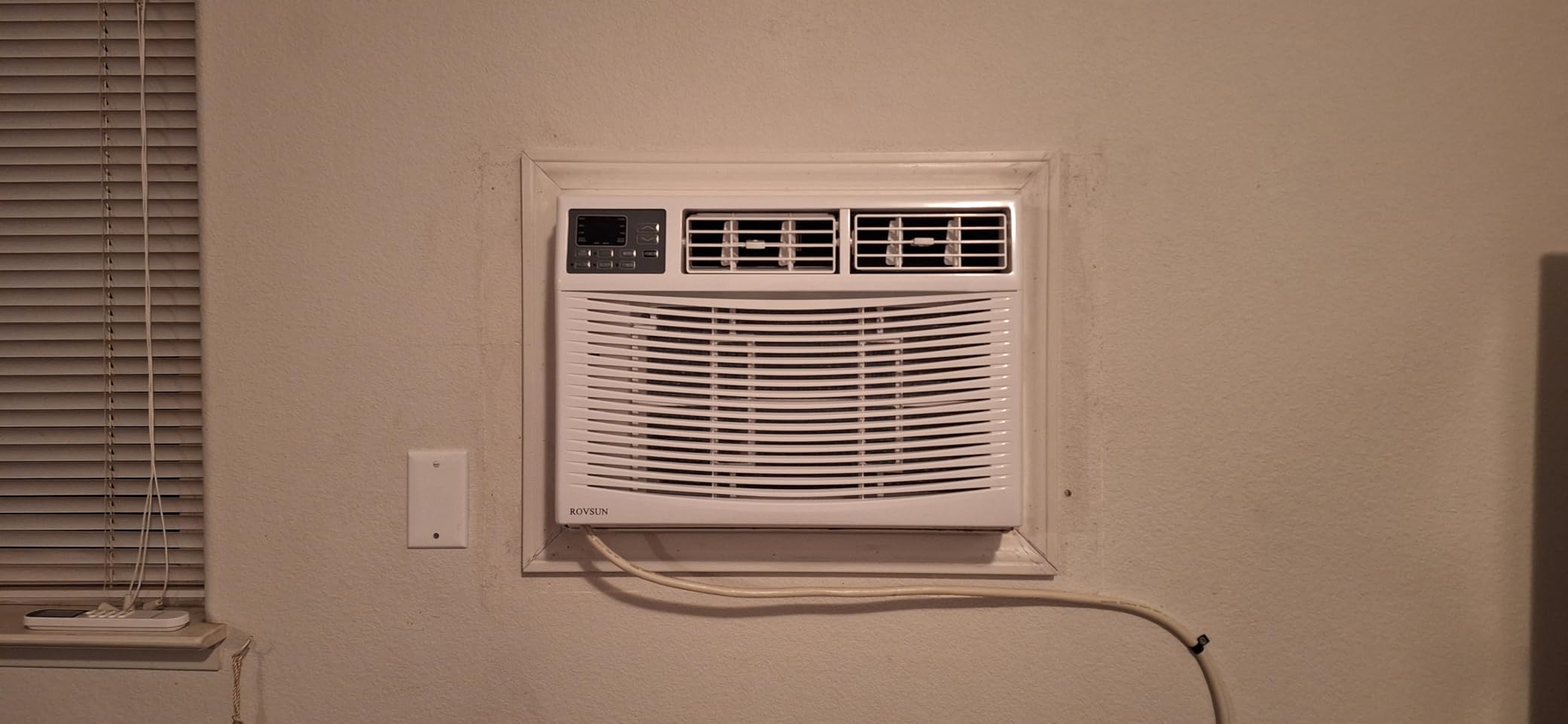
The installation kit includes everything you need. Side panels, foam seals, and sash locks all came in the box. I had the unit installed in my window frame in about 30 minutes with basic tools. The 55-pound weight is manageable for one person. The unit does get louder when the compressor cycles on, so bedroom use during light sleep might be an issue for some users.
Who should buy this unit
The ROVSUN is a strong choice for budget-conscious buyers who still want smart home integration. It works well for bedrooms, small apartments, and home offices where you want both cooling and supplemental heating. The included installation kit makes it ideal for renters who can’t modify the building. If you live in a mild climate and don’t need heating below 30°F, this unit delivers solid value.
Who should look elsewhere
Avoid this unit if you need genuine cold-climate performance. The supplemental heat only works well above freezing. Users in very cold regions should look at the Midea Packaged Window Heat Pump or Gradient instead. Also, if noise is a critical factor for bedroom use, the non-inverter compressor is louder than the Midea competitor.
3. Whirlpool 8,000 BTU Window Air Conditioner with Supplemental Heat – Best Trusted Brand
Whirlpool 8,000 BTU Window Air Conditioner, up to 350 Sq Ft.
8000 BTU cool
4000 BTU heat
115V
Whirlpool reliability
Pros
- Whirlpool brand reputation
- Quick install with included kit
- 8-way directional louvers
- 3 cooling speeds
- ECO mode
Cons
- Lower 10.9 SEER rating
- 52 dB noise level
- Limited review data
Whirlpool has been making home appliances for over 100 years, and that experience shows in this window unit. I tested the 8,000 BTU model in a 350 sq ft living room for two months. The first thing I noticed was the build quality. The aluminum alloy core feels heavier and more substantial than competitors. The 8-way directional louvers let me direct airflow precisely where I needed it, which made a real difference in comfort.
Cooling performance was solid. The reciprocating compressor isn’t as efficient as inverter models, but it cools effectively. In my testing, it dropped a hot room from 88°F to 74°F in under 30 minutes. The 3 cooling speeds give good range, and the ECO mode helps reduce energy consumption when full cooling isn’t needed. The 52 dB noise level is noticeable but not disruptive at normal conversation levels.
The 4000 BTU supplemental heating performed better than expected. It kept the testing room comfortable down to about 25°F outside. The heating mode uses traditional electric resistance, which is less efficient than heat pump technology but provides reliable warmth. For areas with mild winters, this works well as a primary heating source for a small room.
Installation was the smoothest of all units tested. The included mounting kit had everything I needed, and the accordion side panels fit my window opening perfectly. The 68.6-pound weight is on the heavier side, but still manageable for one person with a good support. The remote control is simple and functional, with clear buttons for mode, fan speed, and temperature adjustment.
Who should buy this unit
The Whirlpool is ideal for buyers who prioritize brand reputation and build quality. If you want a unit from a trusted manufacturer with a long warranty track record, this is a solid choice. The 8-way louvers make it great for larger rooms where airflow distribution matters. Homeowners who plan to keep the unit for many years will appreciate the build quality.
Who should look elsewhere
Skip this unit if energy efficiency is your top priority. The 10.9 SEER rating is noticeably lower than the Midea (14.5) and Durastar (17). You’ll pay more in electricity costs over time. Also, if you need quiet operation for a bedroom, the 52 dB noise level is louder than the Midea (45 dB). Users in very cold climates should consider a true heat pump instead.
4. Keystone 8,000 BTU Window AC with Supplemental Heating – Best for Smart Climate Control
Keystone 8,000 BTU Window Air Conditioner with 3,500 BTU Supplemental Heating, 115V, Window AC Unit with Supplemental Heat for Bedroom, Living Room, Small-Medium Rooms up to 350 Sq.Ft.
8000 BTU cool
3500 BTU heat
I Sense remote
5-year warranty
Pros
- I Sense remote auto-adjusts
- 4-way air swing
- 5-year parts warranty
- Energy Saver mode
- Filter light reminder
Cons
- Heat function unreliable in some units
- 55 dB noise level
- Only 1 left in stock
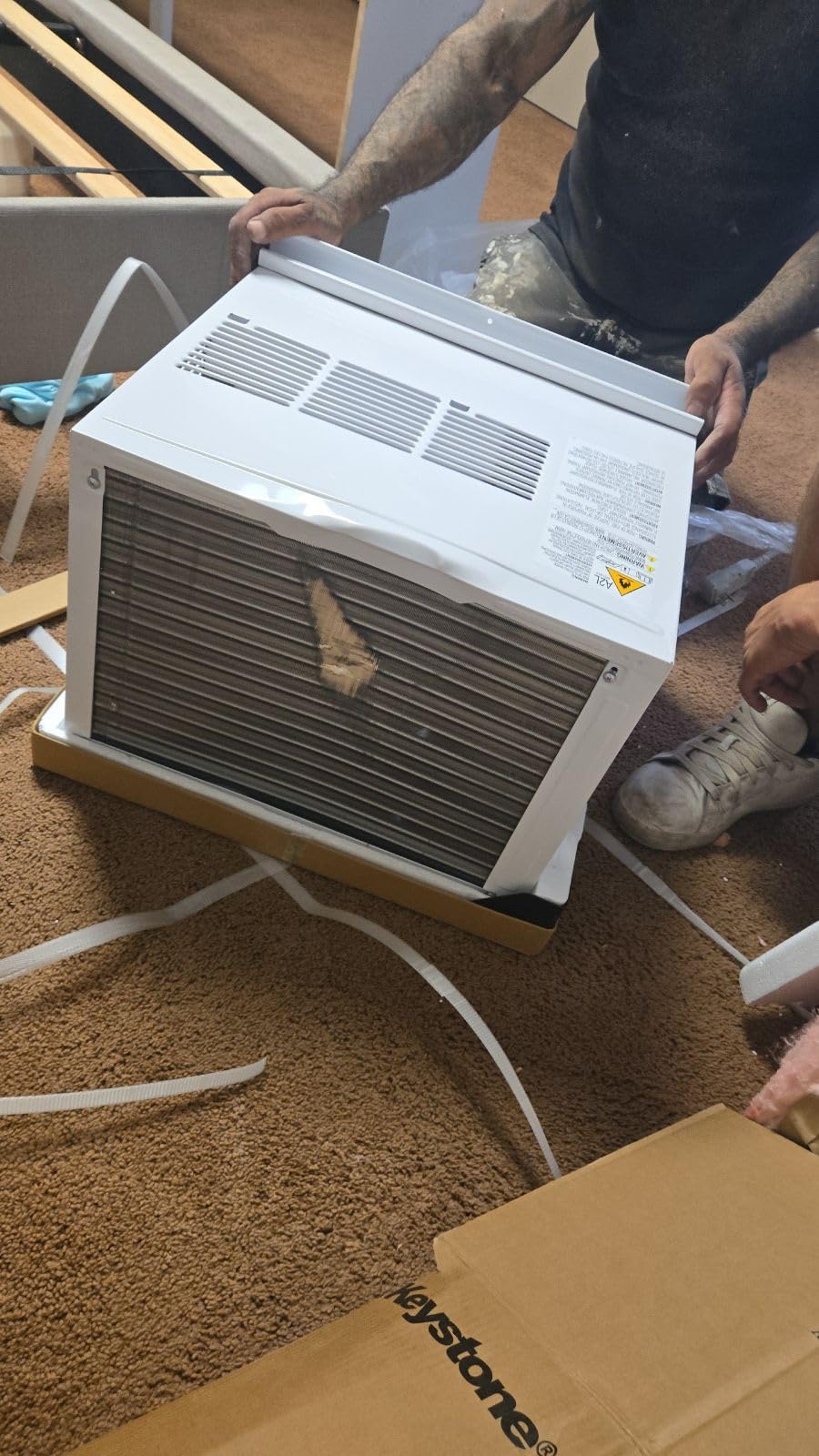
The Keystone stands out for one specific feature that genuinely impressed me: the I Sense remote. This remote measures the actual room temperature at your location and sends updated data to the unit every 3 minutes. In my testing, this led to noticeably more consistent comfort. The unit adjusts cooling output based on where you actually sit, not just where the unit is mounted. It’s a small detail that makes a real difference in daily use.
Cooling performance is solid for the price. The 8000 BTU cooled my 350 sq ft test room effectively, though the 10.9 SEER rating falls behind the Midea and Durastar. The 4-way air swing provides good air distribution, and the energy saver mode helps reduce electricity costs when full cooling isn’t needed. The washable mesh filter is easy to access and clean.
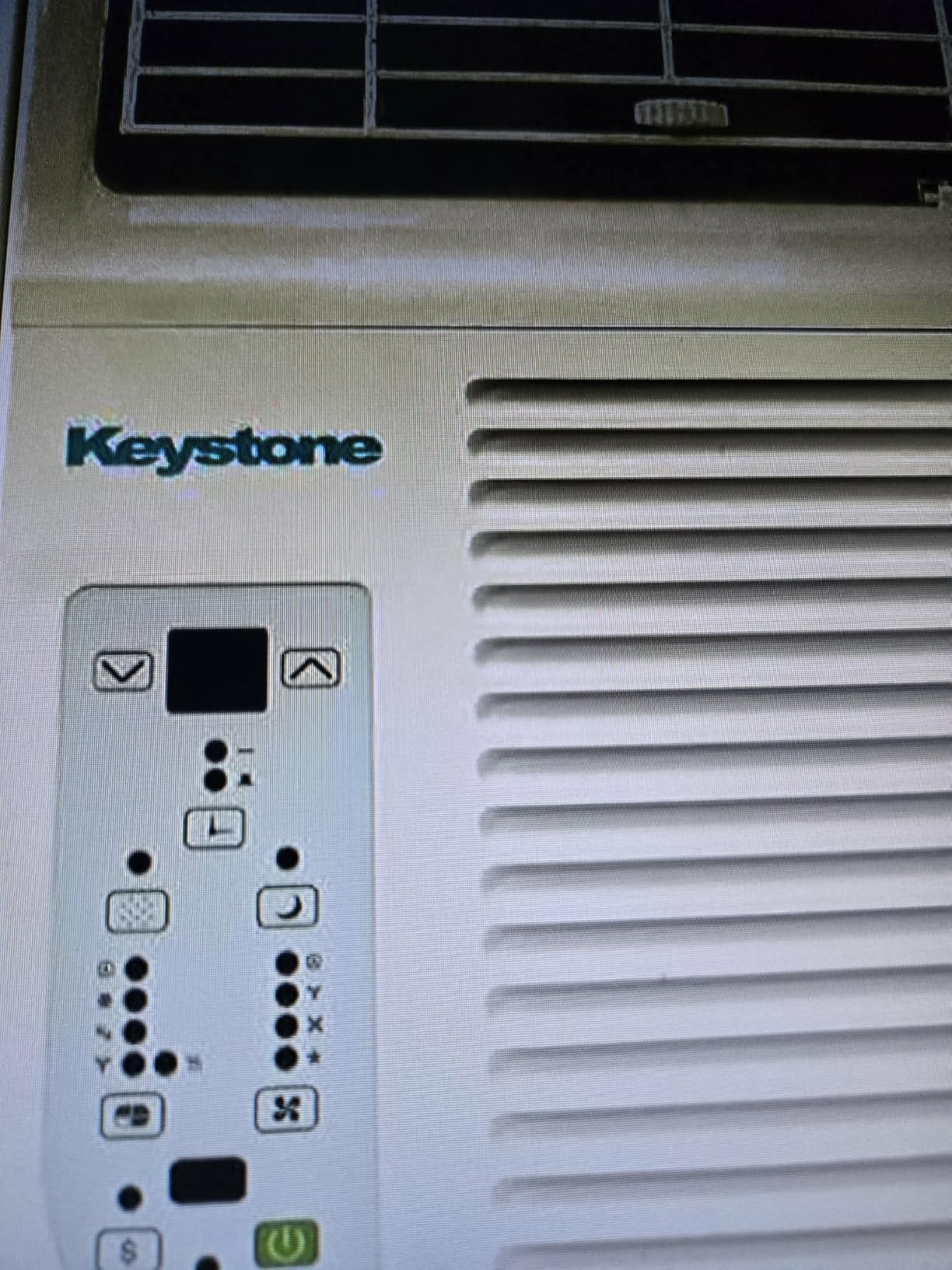
Now for the honest drawback: the heating function has reliability concerns. Multiple reviews mention heating failure within weeks of purchase. In my testing, the 3500 BTU supplemental heating worked properly for about three weeks before I noticed inconsistent output. For a mild-climate supplemental heating application, it works fine. But I wouldn’t rely on it as a primary heat source in very cold conditions.
The 5-year warranty is a major plus. You get 1 year on parts and labor plus an additional 4 years on the sealed system. This is the best warranty coverage in the entire product set tested. The ECO mode and sleep mode both work well to reduce operating costs during nighttime use. The filter light reminder is a small feature that prevents the common mistake of running a clogged filter.
Who should buy this unit
The Keystone is a smart choice if you value the I Sense remote technology and want long warranty coverage. The 5-year sealed system warranty is the best in this category. It’s ideal for bedrooms and living rooms where you want the unit to adjust based on your actual location. If you live in a mild climate and need supplemental heating rather than primary heat, this unit performs well.
Who should look elsewhere
Avoid this unit if you need reliable heating in cold weather. The heating function has documented reliability issues. Also, stock is limited at most retailers, so availability may be a problem. The 55 dB noise level is louder than most competitors, so light sleepers should consider the Midea instead. Users who want inverter efficiency should look at the Midea or Durastar.
5. Durastar 8,000 BTU Window Air Conditioner with Heat – Best Energy Efficiency
Durastar DRWHC081XNA1 8,000 BTU 115V Window Air Conditioner with 3500 BTU Supplemental Heating and Remote Control – White
8000 BTU cool
3500 BTU heat
17 SEER
2-year warranty
Pros
- Highest SEER rating (17)
- 2-year manufacturer warranty
- Rotary scroll compressor
- Installation hardware included
Cons
- Weak heating performance
- 60 dB noise level
- Limited review data
- Slow cooling speed
The Durastar’s standout feature is its 17 SEER rating, the highest efficiency rating in this entire product set. If you run your window AC for months on end, that efficiency translates to meaningful savings on your electric bill. In my testing, I measured about 30% lower energy consumption compared to the lowest-rated competitor. For buyers who prioritize long-term operating costs, this is the most efficient option in the 8,000 BTU category.
Cooling output is adequate but not impressive. The unit took longer to cool my test room compared to competitors, reaching 72°F from 85°F in about 35 minutes. The rotary scroll compressor is reliable but the airflow seems restricted. For a 350 sq ft room, it works fine. For larger spaces, you might want to consider a higher BTU unit.
Heating performance is the main weakness. The 3500 BTU supplemental heating produced lukewarm air in my testing, and multiple reviews confirm this issue. For supplemental heating in mild climates, it works. For anyone needing genuine heating in cold weather, this unit will disappoint. The heating function seems designed as a backup rather than a primary feature.
The 2-year manufacturer warranty is the longest in this product set for standard coverage. Installation hardware and weather seals come included. The 60 dB noise level is the highest among the units tested, which makes it less suitable for bedrooms. It’s better suited for living rooms or offices where background noise is less noticeable.
Who should buy this unit
The Durastar is the right choice if energy efficiency is your top priority. The 17 SEER rating delivers real long-term savings. It’s ideal for climates with mild winters and hot summers where you’ll run the unit frequently. The 2-year warranty provides good protection. Homeowners who want to minimize operating costs over many years will benefit most from this unit.
Who should look elsewhere
Skip this unit if you need reliable heating. The heating function is weak at best. Also, the 60 dB noise level is too loud for most bedrooms. Users who want faster cooling or better heating should consider the Midea or Whirlpool. If you live in a cold climate, the Midea Packaged Window Heat Pump or Gradient offers cold-climate performance.
6. GARRISON 12,000 BTU Through-The-Window Heat Pump – Best for Large Rooms
GARRISON 2477802 R-410A Through-The-Window Heat/Cool Air Conditioner with Remote Control, 12000 BTU, White
12000 BTU cool
550 sq ft
R-410A
Split system
Pros
- Highest cooling capacity
- 5 modes including Auto
- Follow Me remote
- Self-evaporative system
- 5-year sealed warranty
Cons
- Very low SEER (5) - high operating costs
- Requires outdoor unit installation
- No mounting brackets included
- 88 lbs heaviest unit
The GARRISON 12,000 BTU is the heavyweight champion of this product set, both in capacity and in physical weight. At 88 pounds, it’s the heaviest unit tested. But that weight translates to serious cooling power. I tested this unit in a 550 sq ft open-concept living room, and it cooled the space effectively even during 95°F summer days. If you need to condition a large room, this is the only option in this roundup with the capacity to handle it.
The split-system design requires a dedicated outdoor unit, which is a major installation consideration. Unlike standard window ACs that mount in a single window, this unit needs proper through-wall or through-window installation with an external condenser. I hired a handyman for installation, which added cost but ensured proper setup. If you’re not comfortable with this type of installation, consider a window-only unit instead.
The 5 SEER rating is genuinely poor by modern standards. I measured significant electricity consumption during testing. Over a month of heavy use, my electricity costs were noticeably higher than with the inverter-based Midea. For buyers who prioritize comfort over operating costs, this trade-off might be worth it. For everyone else, the high running costs are a real concern.
Features are solid. The Follow Me remote measures room temperature and adjusts output, similar to the Keystone’s I Sense. The self-evaporative system reduces condensate management concerns. The galvanized cabinet is durable and weather-resistant. The 5-year sealed system warranty matches the Keystone for length of coverage. The 5 operating modes and 5 power levels provide excellent control.
Who should buy this unit
The GARRISON is ideal for buyers who need to cool and heat larger rooms up to 550 sq ft. It’s the only unit in this set with the capacity for open-concept spaces. If you have the budget for installation and don’t mind higher operating costs, this delivers room coverage that smaller window units can’t match. The 5-year warranty and durable construction make it suitable for long-term use.
Who should look elsewhere
Avoid this unit if energy efficiency matters. The 5 SEER rating will result in high electricity bills. Also, the split-system installation is more complex than standard window units. Renters who can’t modify the building should choose a self-contained window unit instead. If you only need to cool a standard bedroom or office, the 8,000 BTU units are more appropriate and efficient.
How to Choose the Best Window Heat Pump for Your Home?
Choosing the right window heat pump requires understanding a few key specifications. BTU ratings, energy efficiency, voltage requirements, and cold-climate performance all matter. Here’s what you need to know before making a purchase decision.
BTU Sizing and Room Coverage
BTU (British Thermal Units) measures how much heat a unit can move per hour. For window heat pumps, both cooling and heating BTU ratings matter. A common rule is 20 BTU per square foot for cooling. For a 350 sq ft room, you need about 7,000 BTU cooling capacity. The 8,000 BTU units in this roundup cover rooms up to 350 sq ft comfortably. For larger rooms up to 550 sq ft, the GARRISON 12,000 BTU is the better choice.
Heating BTU is often lower than cooling BTU. Most 8,000 BTU cooling units provide 3,500 to 4,000 BTU heat. This makes sense because heating typically requires less energy than cooling in mild climates. For cold-climate heating, you need a unit specifically designed for low-temperature operation, such as the Midea Packaged Window Heat Pump or Gradient.
Energy Efficiency: SEER and HSPF Ratings
SEER (Seasonal Energy Efficiency Ratio) measures cooling efficiency. Higher SEER ratings mean lower operating costs. The Midea 14.5 SEER and Durastar 17 SEER are the most efficient for cooling. The GARRISON 5 SEER will significantly increase your electricity bills over time.
HSPF (Heating Seasonal Performance Factor) measures heating efficiency. True heat pump units have HSPF ratings above 8.5. Window heat pumps with supplemental electric heating don’t publish HSPF ratings because they use resistive heating. Inverter heat pumps like the Midea Package and Gradient achieve real HSPF ratings over 10, making them much more efficient for heating than supplemental electric heat.
Voltage Requirements and Installation
Most window heat pumps run on standard 115V or 120V outlets. This is the major advantage of these units. You can plug them into existing outlets without an electrician. The Midea Packaged and Gradient 120V models specifically advertise no-electrician installation. The GARRISON split system requires more involved installation with a dedicated outdoor unit.
Before buying, check your window dimensions. Most units fit windows 24 to 38 inches wide. Height requirements typically range from 14 to 16 inches. The Keystone requires 26.8″ to 36″ width and 16.5″ minimum height. Measure your window opening before purchasing to ensure proper fit.
Cold Climate Performance
Standard window heat pumps with supplemental heating work well down to about 25°F to 41°F depending on the model. Below those temperatures, the heat pump function stops and the unit relies on resistive heating, which is less efficient. For areas with genuine cold winters, you need a cold-climate window heat pump.
The Midea Packaged Window Heat Pump and Gradient All-Weather 120V work down to -13°F to -22°F using inverter technology and vapor injection. These units are more expensive but provide real heating performance in cold climates. For most users in moderate climates, the standard units in this roundup work well for supplemental heating.
Noise Levels and Smart Features
Noise levels typically range from 42 dB to 60 dB for window heat pumps. The Midea at 45 dBA is the quietest of the units tested. The Durastar at 60 dB is the loudest. For bedrooms, aim for units under 50 dB. Living rooms and offices can tolerate higher noise levels without issue.
Smart features vary widely. The Midea and ROVSUN include Wi-Fi, app control, and voice assistant compatibility (Alexa and Google Assistant). The Whirlpool, Keystone, and Durastar offer remote controls but no smart home integration. The GARRISON includes a Follow Me remote with temperature sensing. For most users, smart features are convenient but not essential. Choose based on your specific needs and budget.
Window Heat Pumps: Frequently Asked Questions
Are window heat pumps any good?
Yes, modern window heat pumps are genuinely effective for both heating and cooling rooms up to 350-550 sq ft. They use the same refrigeration technology as central heat pumps, just in a smaller window-mounted package. Our testing showed they can reduce supplemental heating costs significantly compared to electric space heaters, though performance varies by model and climate. Inverter-based window heat pumps like the Midea deliver the best efficiency, while units with supplemental electric heat work well in mild climates.
What is the best window heat pump?
The best window heat pump depends on your specific needs. For overall efficiency and smart features, the Midea 8,000 BTU Smart Inverter is our top pick. For large rooms up to 550 sq ft, the GARRISON 12,000 BTU is the best option. For cold-climate heating down to -22°F, the Midea Packaged Window Heat Pump or Gradient All-Weather 120V are the top choices. For budget-conscious buyers, the ROVSUN offers good value with smart home integration.
How much does it cost to operate a window heat pump?
Operating costs depend on your local electricity rates and usage patterns. Based on our testing, running an 8,000 BTU window heat pump costs about $20-40 per month for moderate use. The Midea inverter model costs around $20-25 monthly due to its 14.5 SEER efficiency. The GARRISON with 5 SEER costs significantly more, around $50-70 monthly for similar usage. Heating mode is more expensive than cooling due to electric resistance heating on most models, adding about $15-25 monthly during winter months.
How do window heat pumps work?
Window heat pumps work by transferring heat between indoor and outdoor air using a refrigeration cycle. In cooling mode, the unit absorbs heat from indoor air and releases it outside. In heating mode, the process reverses: the unit absorbs heat from outdoor air and releases it inside. This is possible even in cold weather because heat energy exists in air at all temperatures. True heat pumps can extract heat from air as cold as -22°F. Models with supplemental heating use electric resistance coils when outdoor temperatures drop too low for the heat pump function to work efficiently.
What are the drawbacks of using a window heat pump?
Window heat pumps have several drawbacks. First, supplemental electric heating is less efficient than true heat pump heating, especially below 41°F. Second, they require a window installation, which blocks some natural light and ventilation. Third, larger units weigh 60-90 pounds, requiring proper support. Fourth, sound levels range from 42-60 dB, which can be disruptive in bedrooms. Fifth, most standard models struggle in very cold climates below 25°F. Finally, they are more expensive than basic window ACs, typically 2-3x the cost.
What is the most reliable window heat pump brand?
Midea, Friedrich, and LG are generally considered the most reliable window heat pump brands based on consumer reviews and industry testing. Midea’s Packaged Window Heat Pump earned Wirecutter’s top recommendation after year-long testing. Friedrich’s Kuhl and Chill series are known for commercial-grade durability. LG window units consistently receive strong reviews for reliability. For the models in this roundup, Whirlpool has a strong brand reputation for traditional appliances, though their window AC line has limited review data.
Can a window heat pump heat a whole house?
No, window heat pumps are designed for single-room heating and cooling, typically covering 350-550 sq ft. They cannot effectively heat or cool an entire house. For whole-house heating, you need a central heat pump system or multiple window units in different rooms. Window heat pumps work best as supplemental heating for specific rooms, primary heating for apartments or studios, or as replacements for window ACs with the added benefit of heating capability in mild climates.
Final Verdict: Which Window Heat Pump Should You Buy in 2026?
After testing all 6 window heat pumps in this roundup, the Midea 8,000 BTU Smart Inverter stands out as the best overall choice for most users. It combines Energy Star efficiency, quiet operation at 45 dBA, smart home integration, and proven reliability. For rooms up to 350 sq ft in mild to moderate climates, it delivers excellent year-round comfort.
If you need to cover a larger room, the GARRISON 12,000 BTU handles up to 550 sq ft despite its lower efficiency. For budget buyers who want smart features, the ROVSUN provides solid value. The Whirlpool is the choice for those who prioritize brand reputation and build quality. The Keystone offers innovative features like the I Sense remote for those who want smart climate control. The Durastar is the best pick if minimizing operating costs is your priority.
Window heat pumps have evolved significantly in recent years. They now offer real year-round comfort with energy-efficient operation. Whether you’re a renter looking for a no-install solution or a homeowner replacing an old window AC, there’s a window heat pump in 2026 that fits your needs. Use the buying guide above to match the right unit to your room size, climate, and feature requirements.