
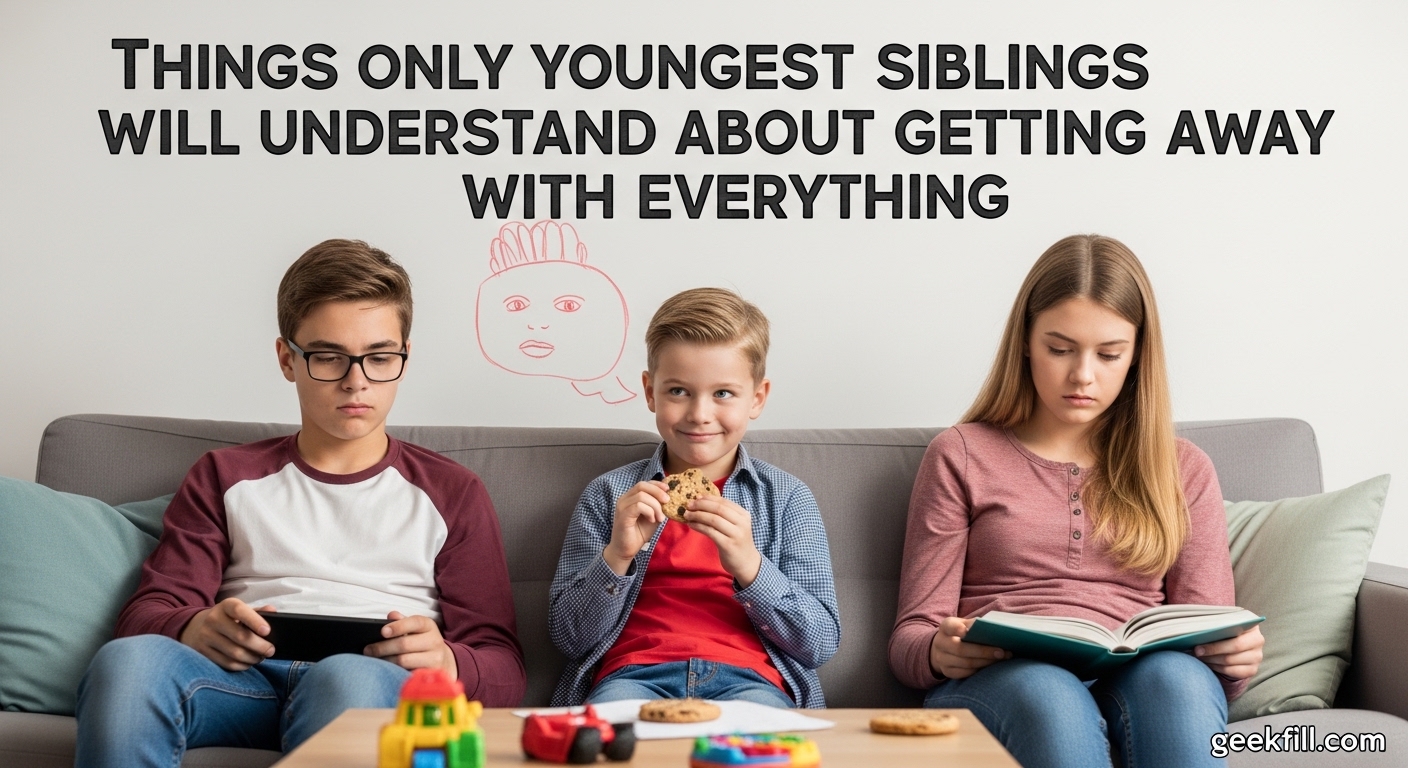
Your older sibling got grounded for a week when they came home ten minutes past curfew. You stumbled through the front door at 1 AM smelling like bonfire smoke and received a sleepy “glad you’re safe” from your parents. If this scenario makes perfect sense to you, welcome to the exclusive club of youngest siblings who somehow get away with everything while watching their older brothers and sisters suffer through strict rules.
I spent years observing this phenomenon from the front row of my family dinner table. My oldest brother practically needed a legal contract to borrow the car. By the time I turned sixteen, my dad tossed me the keys and said “be back when you’re back.” This is the reality for the baby of the family, and it’s a wild ride that comes with both secret privileges and hidden struggles that only fellow youngest children truly understand.
In this guide, we’re diving into the things only youngest siblings understand about getting away with everything. Whether you’re the baby of your family seeking validation or an older sibling looking for proof that life isn’t fair, these twelve experiences will resonate deeply.
Table of Contents
Things Only Youngest Siblings Understand About Getting Away With Everything
1. The “Baby Factor” Gets You Out of Basically Everything
There’s this invisible shield that surrounds youngest siblings called the “baby factor.” Parents look at you and still see the toddler who spilled juice on the carpet, no matter that you’re now a full adult paying rent and filing taxes.
When you break a rule, the punishment somehow shrinks. I watched my sister lose phone privileges for a month after failing a test. When I did the same thing two years later, my mom sighed and said “you’ll do better next time” before asking what I wanted for dinner. The baby factor means you’re perceived as needing guidance rather than discipline.
This phenomenon isn’t just in your head. Parents genuinely soften their approach with each child they raise. By the time you arrived, they had already survived the sleepless newborn phase and teenage rebellion twice over.
2. Curfews Are More Like Helpful Suggestions
My brother had to be home by 10 PM on weekends throughout high school. He missed the endings of movies, left parties early, and spent his senior year watching the clock. When I became a senior, my parents told me to “use good judgment” about when to come home.
There’s something almost comical about this double standard. I once walked in at midnight and found my mom asleep on the couch. She woke up, asked if I had fun, and went to bed. No lecture. No punishment. No “wait until your father hears about this.” Just pure, unearned trust that my older siblings would have traded their gaming consoles for.
This leniency extends beyond curfews into every area of social life. Going out on school nights, attending concerts on weeknights, and hosting friends when parents are away all become negotiable when you’re the baby of the family.
3. You Can Take the Car Without the Third Degree
Borrowing the family car as the oldest child required detailed itineraries, check-in calls, and a full accounting of passengers. As the youngest, I grabbed the keys, shouted a destination over my shoulder, and received a casual “drive safe” in response.
The interrogation phase of parenting simply expires by the time the last child needs transportation. Parents have already worried through every possible scenario with the older kids. They know accidents happen regardless of preparation. They understand that constant check-ins create anxiety rather than safety.
This automotive freedom represents a broader pattern of trust that youngest siblings enjoy. The mental load of monitoring another teenager simply becomes too heavy for parents who have already shepherded multiple children through high school.
4. Hand-Me-Downs Become Your Signature Style
Your wardrobe arrives pre-worn, pre-washed, and occasionally pre-ripped. While oldest siblings got brand-new clothes for every season, youngest siblings develop a unique fashion sense born from necessity and creativity.
I learned to sew at twelve because I needed to make my sister’s too-big jeans fit my frame. I discovered that vintage band t-shirts from my brother’s high school days actually looked cooler than anything at the mall. This forced creativity often results in youngest siblings developing more distinctive personal styles than their older counterparts.
The hand-me-down experience teaches resourcefulness that serves youngest children well into adulthood. You learn to work with what you have, see potential in overlooked items, and build something original from inherited materials.
5. Older Siblings Are Your Built-In Babysitters
My parents never hired a babysitter during my entire childhood. Instead, they paid my older siblings in pizza and movie rentals to supervise me while they enjoyed nights out. This arrangement meant I grew up under the authority of teenagers who resented having their Friday nights hijacked.
Being watched by older siblings creates a strange dynamic where you’re simultaneously the bossed-around little kid and the leverage your siblings use to negotiate with parents. My sister once made me promise to clean her room for a month in exchange for her not telling our parents about something I broke.
This built-in childcare system shapes youngest siblings in unexpected ways. You learn to negotiate early, develop thick skins against bossiness, and become surprisingly independent since your teenage babysitters were more interested in their phone conversations than your wellbeing.
6. You’re the Family Scapegoat When Things Go Wrong
Here’s a secret superpower youngest siblings possess. When something breaks, disappears, or malfunctions, blame automatically flows toward you because you’re the “cute” one who can get away with admitting fault.
I accidentally shattered a ceramic vase at age eight and immediately confessed. My mom hugged me and said accidents happen. Two years later, my brother dented the car and spent weeks defending himself against suspicion. The youngest child’s ability to absorb blame without consequence becomes a running family joke that actually serves a purpose.
This scapegoat status extends into adult family dynamics. At reunions, youngest siblings often take playful blame for missing food, broken appliances, or scheduling conflicts because everyone knows they won’t face real consequences.
7. You Learn From Everyone Else’s Mistakes First
Being the youngest means having front-row seats to every disaster your older siblings create. You watch them fail tests, date the wrong people, choose terrible majors, and make every mistake a teenager can make.
This observational learning creates a significant advantage. I knew which teachers gave impossible tests because my brother warned me. I understood which social circles caused drama because I watched my sister navigate them. By the time I faced these challenges, I had years of data about what not to do.
Parents also become more experienced guides by the time you need advice. They’ve already helped multiple children through college applications, first jobs, and relationship drama. Their guidance is refined, practical, and informed by actual failures rather than theoretical concerns.
8. Photo Evidence of Your Childhood Is Sparse
My parents have albums filled with my oldest sibling’s first steps, first words, first day of school, and first everything. By the time I arrived, the camera only emerged for birthdays and major holidays.
This photo shortage creates a strange phenomenon where youngest siblings feel simultaneously less documented and more free. Without constant camera attention, you can explore, make mistakes, and develop without the pressure of being the family’s documentary subject.
Many youngest siblings report feeling slightly invisible in family history while also appreciating the privacy this invisibility provides. You exist in fewer framed photos but enjoy more unobserved moments to simply be yourself without documentation expectations.
9. You’re Compared to Your Siblings Constantly
Teachers greeted me on the first day of school with expectations based on my older siblings’ performance. Relatives compared my achievements, appearance, and personality to the standards my siblings had already set.
This constant comparison creates pressure that shapes youngest children in complex ways. You either rebel completely to establish difference or work desperately to meet established standards. I chose a middle path, acknowledging my siblings’ accomplishments while deliberately developing skills they never pursued.
The comparison game continues into adulthood. Family gatherings inevitably include mentions of how you resemble or differ from your older siblings. Learning to navigate these comparisons gracefully becomes an essential youngest sibling skill.
10. You’ll Always Be Treated Like a Child
At twenty-eight, with a mortgage and professional career, my mother still asks if I remembered to eat breakfast. My older siblings receive questions about their investment portfolios while I get inquiries about whether I’m dressing warm enough for the weather.
This eternal baby treatment stems from parents’ inability to update their mental image of you. They watched your siblings grow into adults gradually, but you remained the little one even as you matured. The family narrative keeps you frozen as the child who needs protection.
While occasionally frustrating, this perpetual childhood status comes with unexpected benefits. Family members continue offering help, advice, and support that older siblings stopped receiving years ago because everyone assumes they have everything figured out.
11. You Had to Fight Harder to Be Taken Seriously
Being the youngest means your opinions get dismissed with phrases like “you’ll understand when you’re older” or “the grown-ups are talking.” I spent years trying to prove I had valid perspectives worth hearing.
This struggle for credibility often pushes youngest siblings to overachieve. We accumulate degrees, credentials, and accomplishments partially to demonstrate that we’re not just the cute little one anymore. The drive to be taken seriously can become a powerful motivation.
Paradoxically, this initial dismissal often results in youngest siblings developing stronger communication skills. We learn to articulate arguments clearly, provide evidence for our positions, and advocate for ourselves in ways that older siblings never needed to master.
12. You Developed a Unique Confidence and Creativity
All these experiences combine to shape youngest siblings into particular kinds of people. Research consistently shows that youngest children tend to be more creative, confident, and socially skilled than their older counterparts.
Having to negotiate with older siblings teaches diplomacy. Learning to stand out in a crowded family develops creativity. Getting away with things builds confidence. Being underestimated creates determination. These traits serve youngest siblings throughout their lives.
While oldest siblings often become responsible leaders and middle children develop peacemaking skills, youngest siblings frequently emerge as innovators and risk-takers. Our upbringing rewards charm, adaptability, and thinking outside established patterns.
The Psychology Behind Why Youngest Siblings Get Away With Everything
There’s actual science behind the privileges youngest siblings enjoy. Understanding the psychology helps explain family dynamics and validates experiences that might otherwise feel imagined.
Parental Fatigue Is Real
By the time parents reach their youngest child, they’ve already enforced rules, monitored curfews, and worried through countless sleepless nights with older siblings. This exhaustion creates what psychologists call “parental fatigue.”
Parents simply have less energy for strict enforcement with each subsequent child. They’ve learned which battles matter and which don’t. They understand that teenagers generally turn out fine regardless of minor rule-breaking. This accumulated wisdom translates into leniency for the baby of the family.
The “Baby Factor” in Birth Order Theory
Alfred Adler’s birth order theory suggests that youngest children occupy unique psychological positions. Parents view them through the lens of nostalgia and protection, making discipline feel inappropriate against someone perceived as vulnerable.
This perception persists even as youngest children grow into adults. The family system maintains the youngest as the protected, slightly helpless member regardless of actual capability or age. This role assignment explains why youngest siblings continue getting away with things long into adulthood.
Youngest Child Syndrome Explained
“Youngest child syndrome” describes the combination of traits that develop from this special position. It includes heightened creativity from needing to stand out, confidence from getting away with things, and occasional struggles with responsibility from having less accountability.
This isn’t a clinical diagnosis but rather a pattern of characteristics that emerge consistently across families and cultures. Understanding this syndrome helps youngest siblings recognize their strengths while addressing potential weaknesses like difficulty with independence or conflict avoidance.
Conclusion: The Beautiful Chaos of Being the Baby
Being the youngest sibling means living in a unique space between privilege and struggle. You get away with things your older siblings never could while fighting to be seen as capable and grown. You enjoy lenient rules while dealing with constant comparisons. You absorb less punishment while receiving less recognition.
These twelve things only youngest siblings understand about getting away with everything represent shared experiences that create instant bonds between babies of families everywhere. We recognize each other through knowing glances when someone mentions lenient curfews or sparse childhood photos.
The next time you walk through your parents’ door as a full adult and someone asks if you need help carrying your bags, remember that this treatment comes from love, exhaustion, and the unchangeable fact that you’ll always be their baby. Embrace the privileges, accept the struggles, and know that being the youngest shaped you into someone creative, confident, and uniquely equipped to navigate life’s challenges.
And if you’re an older sibling reading this with rising indignation, yes, life is unfair. But take comfort knowing that your youngest sibling probably still can’t change a tire without calling you for help. Some skills only come from being first.
Frequently Asked Questions About Youngest Siblings
Why does the youngest sibling get away with everything?
Youngest siblings often get away with more due to parental fatigue and the baby factor. By the time parents reach their last child, they’re less strict about rules and view the youngest as needing more protection and forgiveness. This psychological perception persists even as youngest children grow into adults.
What is the youngest sibling theory?
The youngest sibling theory, based on Alfred Adler’s birth order research, suggests that youngest children develop unique traits including creativity, confidence, and social skills. They learn by observing older siblings’ mistakes and often become more innovative and risk-taking because they must find ways to stand out in an already established family system.
What is younger sibling syndrome?
Younger sibling syndrome describes the combination of characteristics that develop from being the baby of the family, including heightened creativity, strong social skills, confidence from lenient treatment, and occasional struggles with independence or responsibility. It’s not a clinical condition but a recognizable pattern of traits.
Which sibling is hardest to be?
Each birth position has unique challenges. Oldest siblings face high expectations and pressure to succeed. Middle children often feel overlooked and must work harder for attention. Youngest siblings struggle with being taken seriously and constant comparison to older siblings. The difficulty depends on individual family dynamics rather than birth order alone.
Do youngest children develop differently?
Research suggests youngest children often develop stronger social skills, creativity, and confidence than older siblings. They learn through observation, become skilled negotiators from dealing with older siblings, and frequently develop risk-taking tendencies. However, they may also struggle more with independence since they receive less early responsibility.