
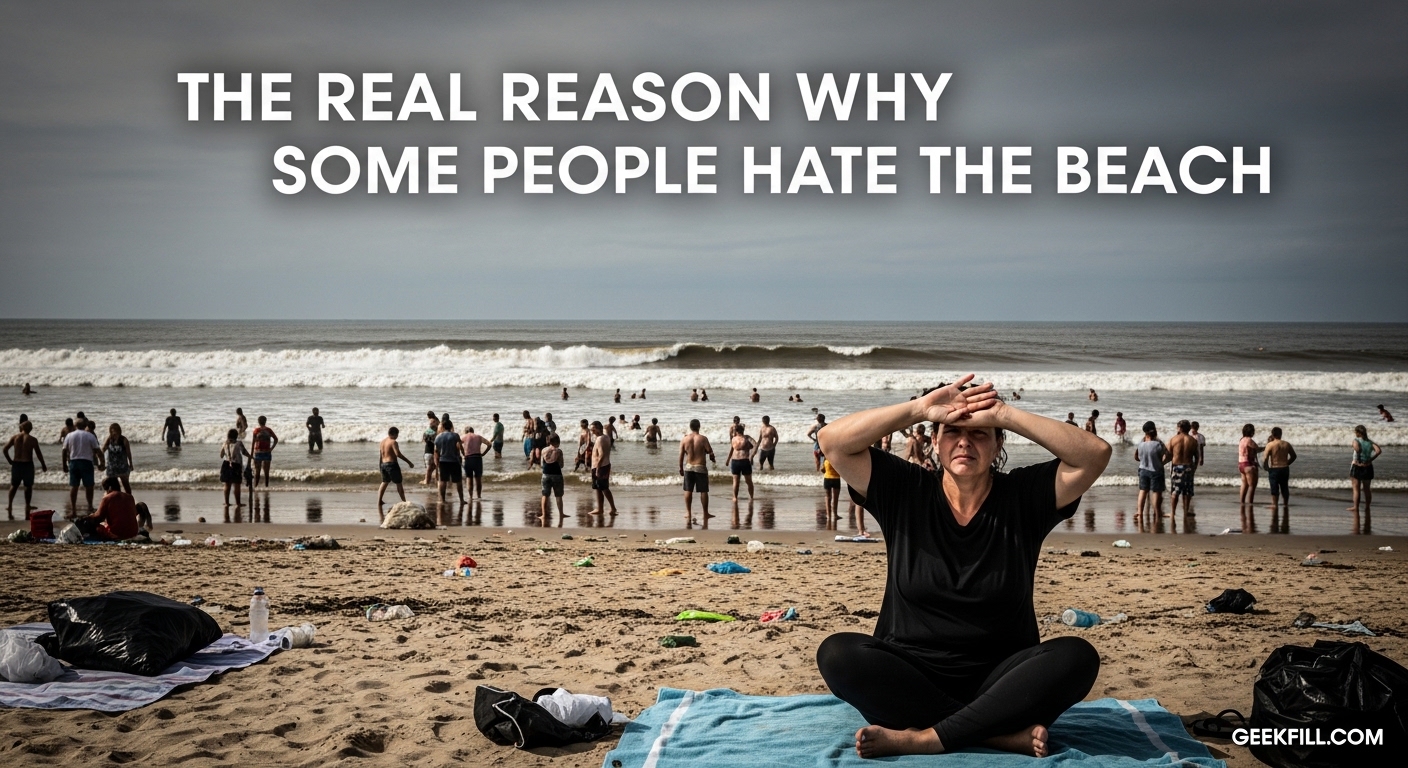
Not everyone dreams of sunset walks on the sand. While millions flock to coastal destinations every summer, a significant percentage of the population would rather do almost anything than spend a day at the beach. If you have ever felt like the odd one out for hating the beach, you are not alone. The real reason why some people hate the beach goes far beyond simple preference. It involves psychology, sensory processing, physical discomfort, and social pressures that create a perfect storm of misery for certain individuals.
I spent years thinking something was wrong with me. Every summer, friends would plan beach trips, and I would find excuses to stay home. The sand, the heat, the crowds, it all felt like torture disguised as leisure. Through research and conversations with psychologists, I discovered that beach aversion has legitimate scientific explanations. Understanding why some people hate the beach can validate your experience and help you stop feeling guilty about skipping the shoreline.
Table of Contents
Why Do Some People Hate the Beach? The Psychology Explained
The beach assaults multiple senses simultaneously. Bright sunlight reflects off water and sand, creating glare that overwhelms sensitive eyes. Waves crash with unpredictable timing, creating noise that interrupts thought and conversation. Sand provides constant tactile input with every step. Salt hangs in the air, mixing with sunscreen smells and ocean brine. For people with certain neurological profiles, this combination triggers genuine distress rather than relaxation.
ADHD and the Beach: A Complicated Relationship
People with ADHD often struggle at the beach in ways that seem contradictory. The same environment that promises relaxation for neurotypical individuals can create frustration and boredom for ADHD brains. Sitting still on a towel for hours feels impossible. The lack of structured activity leaves the ADHD mind searching for stimulation that never arrives. Beach haters with ADHD frequently report feeling restless, irritable, and ready to leave within minutes of arriving.
The sensory chaos also plays a role. While some ADHD individuals crave stimulation, others become overwhelmed when too many sensory inputs compete for attention simultaneously. The beach demands you process visual glare, tactile sand, auditory waves, and thermal heat all at once. This overload can trigger the same stress response that makes crowded malls or noisy restaurants unbearable. For ADHD beach haters, the shoreline represents a paradox: too boring to engage the mind, too stimulating to allow rest.
Research from ADDitude magazine confirms that vacation environments like beaches can actually increase anxiety for ADHD individuals rather than reducing it. The lack of routine, the unstructured time, and the sensory bombardment combine to create an experience opposite to relaxation. Understanding this connection helps explain why some people hate the beach despite wanting to enjoy it like everyone else.
Sensory Processing Disorder and Beach Overstimulation
Sensory processing differences affect how the brain interprets environmental input. For individuals with sensory processing disorder or autism spectrum traits, the beach presents a hostile sensory landscape. Sand texture alone triggers extreme reactions in texture-sensitive individuals. The gritty, shifting, sticking sensation of sand between toes or against skin can cause physical discomfort that registers as pain rather than mild annoyance.
The auditory environment compounds the problem. Ocean waves create unpredictable, rhythmic noise that some brains process as threatening. Seagulls scream overhead. Children shriek in the distance. Music blares from nearby speakers. Each sound demands processing resources, draining cognitive energy rapidly. For sensory-sensitive beach haters, this noise pollution creates a fight-or-flight response that makes relaxation impossible.
Visual stimulation adds another layer. The bright sun creates glare that requires constant squinting or sunglasses adjustment. Light reflecting off water dances in patterns that can trigger headaches or visual overwhelm. Sand provides high-contrast texture everywhere you look. The combination of intense visual, auditory, and tactile input explains why the beach feels like an assault rather than a retreat for people with sensory processing differences.
Introverts and the Energy Cost of Beach Environments
Introverts recharge through solitude and quiet environments. The beach offers neither. Public beaches function as open-air social spaces where personal boundaries shrink dramatically. Strangers settle their towels inches away. Conversations carry across the sand with no privacy. The constant awareness of other people creates a background social pressure that drains introvert energy reserves.
Unlike a quiet park or a private backyard, beaches rarely provide retreat spaces. Once you commit to a beach day, you are exposed to social interaction for hours with no escape route. The bathroom requires navigating crowds. Getting food means standing in lines. Even reading a book feels exposed when surrounded by strangers. For introverted beach haters, the shoreline represents an exhausting social performance rather than restorative downtime.
Many introverts report feeling guilty about their beach aversion. Society frames beach-going as the ultimate vacation activity, making those who dislike it feel like they are doing relaxation wrong. The reality is that introverts process social environments differently, and crowded beaches create the exact conditions that deplete their mental resources. Understanding this dynamic helps explain why some people hate the beach on a fundamental neurological level.
The Physical Discomforts That Make Beaches Miserable
Beyond psychological factors, beaches present genuine physical challenges. Sun exposure, temperature extremes, and environmental irritants create measurable discomfort. For fair-skinned individuals, people with heat sensitivity, or those prone to headaches, the beach environment poses real health risks. These physical factors combine to create an experience that feels more like endurance than enjoyment.
Sand: The Gritty Truth About Why It Bothers People
Sand represents the most universal beach complaint among beach haters. It gets everywhere. Between toes, inside shoes, in hair, coating sunscreened skin, and eventually finding its way into bags, cars, and homes. The cleanup effort alone makes some people hate the beach before they even arrive. Reddit users frequently describe finding sand in their ears, mouths, and clothing days after a beach visit.
The texture itself causes problems for sensitive individuals. Sand ranges from powder-fine to coarse and shell-studded, creating unpredictable tactile experiences. Hot sand burns feet during midday walks. Wet sand clings to skin with an adhesive quality that requires aggressive scrubbing to remove. The constant awareness of sand touching skin creates a low-grade irritation that builds over time. For people with texture sensitivities, sand represents the primary reason they avoid beaches entirely.
The practical burden of sand management adds stress to beach visits. Towels become gritty and uncomfortable within minutes. Food tastes sandy no matter how carefully you eat. Electronics require protective measures. Cars need professional cleaning after transporting beach gear. This constant battle against an invasive substance explains why some people hate the beach on purely practical grounds.
Heat and Sun: When the Beach Becomes a Health Hazard
Direct sun exposure creates serious risks for many individuals. Sunburn occurs even with diligent sunscreen application, especially for fair-skinned or red-haired people who burn within minutes. The heat radiating from sand amplifies ambient temperature, creating conditions that trigger heat exhaustion or heat stroke. Dehydration develops quickly when water supplies run low or when the walk back to coolers feels too long.
Headaches plague heat-sensitive beach haters. The combination of bright light, high temperature, and physical exertion triggers migraines in susceptible individuals. Some people experience sun headaches within an hour of beach arrival, forcing them to retreat to shaded areas or leave entirely. The physical toll of sun exposure makes beach days feel like medical endurance tests rather than leisure activities.
Sunscreen creates its own problems. The greasy, oily texture feels unpleasant on skin and attracts sand. Reapplication interrupts activities and requires finding shade. Some individuals develop skin reactions to sunscreen ingredients, creating rashes or irritation. For beach haters with sensitive skin, the sun protection requirements alone make beach visits unpleasant before considering any other factors.
Salt Water: Burning Eyes, Sticky Skin, and Other Irritations
Ocean water creates unique physical discomforts. Salt burns eyes with surprising intensity, creating redness and irritation that lasts hours. The sting of salt water in small cuts or scratches transforms minor injuries into painful distractions. Swallowing ocean water produces nausea and an unpleasant taste that lingues. These salt water irritations accumulate throughout a beach day, wearing down patience and comfort.
The aftermath of ocean swimming creates its own challenges. Salt water dries skin and hair, leaving a stiff, crunchy texture that requires extensive showering to resolve. The sticky residue attracts sand, creating a coating that feels disgusting to touch. Some individuals experience skin reactions to ocean minerals or pollutants, developing rashes or itching after swimming. The physical toll of salt water exposure adds another layer of discomfort for beach haters.
Fear of ocean creatures affects many beach visitors. Jellyfish stings create immediate pain and lasting anxiety about entering the water. Shark sightings, though statistically rare, generate primal fear responses that make swimming stressful. Seaweed brushing against legs triggers disgust reactions in many individuals. These environmental factors create a low-grade threat awareness that prevents true relaxation for beach haters.
Crowds, Noise, and Social Pressure at the Beach
Popular beaches function as social arenas where hundreds or thousands of people compete for limited space. This crowd density creates stress for people who value personal space or privacy. The social dynamics of beaches add psychological pressure that compounds physical discomforts. Understanding these social factors helps explain why some people hate the beach despite enjoying other outdoor activities.
The Crowd Problem: When Personal Space Disappears
Peak season beaches offer minimal personal territory. Beachgoers settle towels within feet of strangers, creating crowded conditions that trigger anxiety in people who need space. The noise from nearby conversations eliminates privacy. Children run between blankets without regard for boundaries. Beach balls and frisbees fly through airspace that feels threatening to people with spatial anxiety.
Leaving belongings unattended creates constant low-level stress. Trips to the water require trusting that phones and keys remain safe on crowded sand. Walking to restrooms means navigating through dense crowds while wet and uncomfortable. Every basic beach activity becomes complicated by the presence of strangers. For people with social anxiety or privacy needs, these crowd dynamics make beaches feel threatening rather than relaxing.
Arrival logistics create barriers before the beach day even begins. Parking requires early arrival and long walks with heavy gear. Popular beaches face capacity limits that turn away late visitors. The planning required to secure a decent spot adds stress that eliminates spontaneity. For beach haters, these practical complications make beach days feel like military operations rather than leisure activities.
Beach Body Pressure and Body Image Anxiety
Beach culture emphasizes physical appearance in ways that trigger body image issues. Swimwear requirements expose more skin than everyday clothing, creating vulnerability for people uncomfortable with their bodies. The phrase “beach body” implies a standard that many people feel they fail to meet. This social pressure makes beaches feel like judgment zones rather than inclusive spaces.
Comparison happens constantly at the beach. Bodies of all types are on display, creating an environment where self-consciousness thrives. People who struggle with weight, scars, or physical differences may feel exposed and judged. The beach uniform of minimal clothing removes the armor that everyday outfits provide. For beach haters with body image concerns, this exposure creates anxiety that outweighs any potential enjoyment.
Social media amplifies beach body pressure. Instagram-worthy beach photos create expectations that real beach experiences rarely match. The pressure to document and share beach visits adds a performative element that stresses some individuals. For people who prefer privacy or who dislike photography, beach culture feels intrusive and demanding.
Environmental Concerns: Pollution and Marine Life
Water quality issues affect beach enjoyment for health-conscious individuals. Bacteria levels spike after rainstorms, creating infection risks for swimmers. Pollution from boats, runoff, and trash creates visible contamination that ruins the experience. The question of whether beaches or pools are dirtier has legitimate scientific backing, with research showing beaches often harbor more harmful bacteria than properly maintained pools.
Marine life encounters range from annoying to dangerous. Seagulls steal food aggressively, creating chaotic scenes that disturb peaceful meals. Jellyfish blooms render swimming impossible during certain seasons. Shark sightings, though rare, create lasting fear that affects water comfort. Even harmless seaweed triggers disgust reactions when it brushes against legs or washes up on shore in decaying piles.
Environmental awareness creates guilt for some beach visitors. Seeing plastic waste, dead marine animals, or eroded shorelines transforms beach visits into depressing environmental observations. The contrast between idealized beach imagery and real coastal conditions disappoints people who care about ocean health. For environmentally conscious beach haters, the reality of modern beaches feels sad rather than restorative.
Frequently Asked Questions About Beach Aversion
Do people with ADHD like the beach?
People with ADHD have mixed relationships with beaches. Some find the sensory stimulation engaging, while others experience the combination of bright sun, loud waves, and hot sand as overwhelming. The lack of structure at beaches often frustrates ADHD individuals who need organized activities. Many report feeling restless and ready to leave quickly rather than experiencing relaxation.
What’s dirtier, the beach or the pool?
Pools are generally cleaner than beaches when properly maintained. Beaches contain natural bacteria, animal waste, pollution runoff, and marine microorganisms that create health risks. Pool water undergoes chemical treatment and filtration that eliminates most harmful contaminants. However, poorly maintained pools can become breeding grounds for bacteria, while pristine remote beaches may have cleaner water than crowded public pools.
Why do they say ‘never turn your back to the ocean’?
The warning exists because sneaker waves and rip currents can appear without warning. Waves travel in sets, and the ocean between sets appears calm before larger waves strike suddenly. Turning your back eliminates the visual warning that allows you to brace or move. Rip currents can pull swimmers away from shore in seconds. Staying aware of ocean conditions at all times prevents dangerous surprises.
Does the beach lower cortisol?
Research shows mixed results on cortisol and beach environments. For people who genuinely enjoy beaches, the sound of waves and visual of blue water may lower stress hormones. However, for people who find beaches stressful, cortisol levels may actually increase due to sensory overload, social anxiety, or physical discomfort. The cortisol response depends entirely on individual preference and comfort with beach conditions.
Is it normal to hate the beach?
Yes, hating the beach is completely normal and more common than social media suggests. Millions of people prefer mountains, cities, or indoor activities over beach vacations. Sensory processing differences, physical comfort needs, and social preferences all create valid reasons to avoid beaches. There is no requirement to enjoy any particular environment, including beaches.
Why does sand feel gross to some people?
Sand texture triggers disgust or discomfort responses in people with sensory processing sensitivities. The gritty, shifting, sticking quality of sand creates unpredictable tactile input that some brains interpret as threatening. Sand also gets everywhere, creating a constant cleanup burden that adds stress to the experience. For texture-sensitive individuals, sand represents an unavoidable irritant that ruins beach visits.
Embracing Your Beach Preferences Without Guilt
The real reason why some people hate the beach involves a complex mix of psychology, sensory processing, physical discomfort, and social factors. Understanding these mechanisms validates beach aversion as a legitimate preference rather than a character flaw. You are not broken for disliking sand, crowds, or sun exposure. Your brain and body are simply responding to environmental conditions in ways that differ from beach lovers.
If you hate the beach, you have permission to skip it without apology. Mountains, forests, cities, and indoor spaces offer equally valid forms of rest and recreation. The cultural pressure to enjoy beaches reflects marketing and geography, not universal human nature. Finding environments that genuinely restore you matters more than forcing yourself into spaces that deplete your energy.
For families and friends trying to accommodate beach-averse loved ones, understanding these reasons helps planning. Offering alternatives like pool visits, lake trips, or non-beach vacations shows respect for different needs. The goal of time off is restoration, not endurance. In 2026, let us normalize hating the beach as just another preference in a world full of valid choices.