
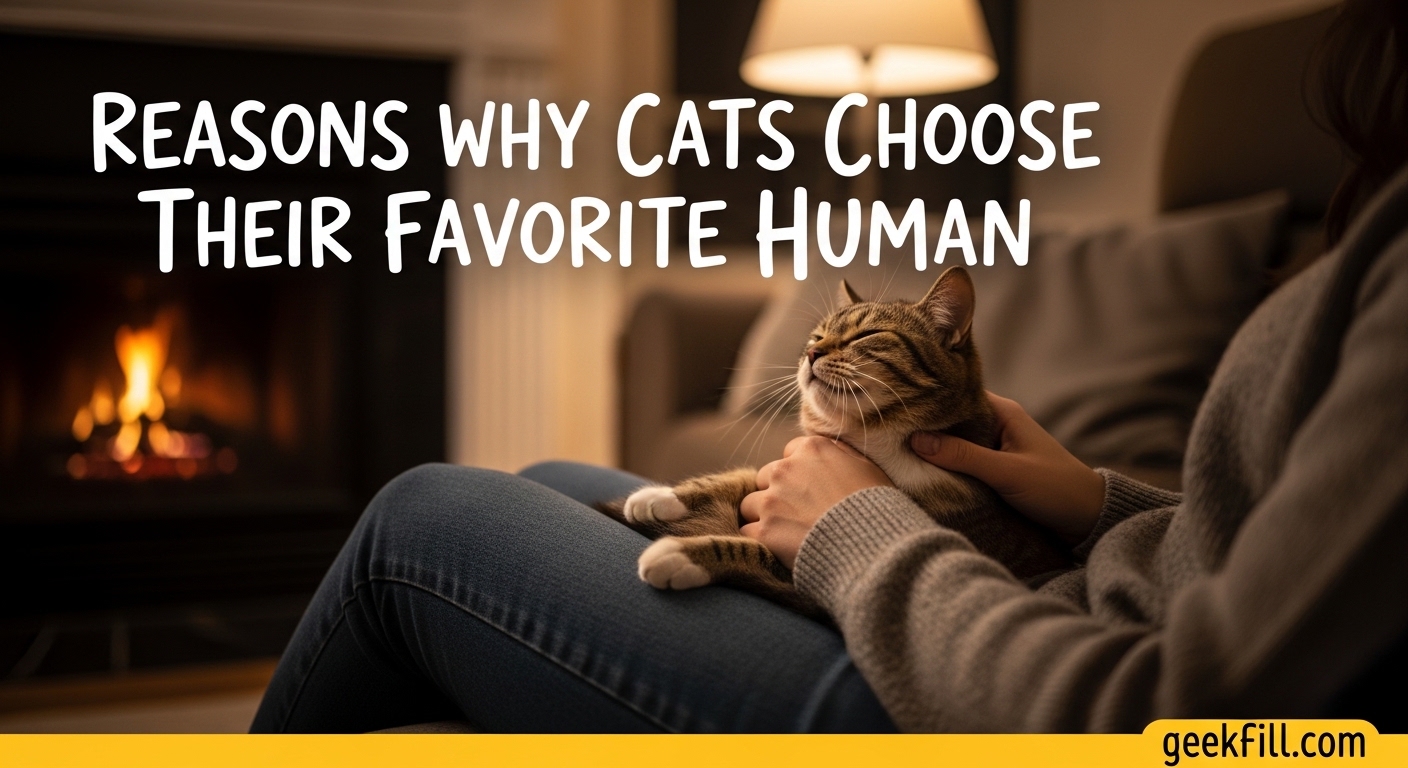
You might think your cat’s favorite person is whoever buys the fancy food or spends hours playing with feather toys. I used to believe that too until I watched my own cat ignore me completely and curl up on my roommate’s lap every single evening.
Here’s the truth that surprised me: cats don’t choose favorites based on who does the most for them. According to research from Oregon State University, 65% of cats form secure attachments to specific humans, but the reasons behind those choices aren’t what you’d expect.
In this guide, I’m breaking down the 8 real reasons why cats choose their favorite human. These insights come from scientific studies, certified feline behaviorists, and thousands of real cat owners sharing their experiences in forums and communities. By the end, you’ll understand why your cat might prefer the person who feeds them the least but understands them the most.
Table of Contents
Why Cats Choose Their Favorite Human: 8 Surprising Reasons
Understanding why cats pick one person over another isn’t about feeling better if you’re the “spare.” It’s about recognizing the subtle ways cats communicate their preferences and building a stronger bond with your feline friend.
1. Consistency in Routine Trumps Everything
Cats are creatures of habit, and they notice patterns most humans miss. The person who feeds them at exactly 7 AM every morning often wins more points than someone who feeds them twice as much food at random times.
This explains why cats in multi-person households frequently choose the person with the most predictable schedule. Maybe it’s the roommate who leaves for work at the same time daily, or the teenager who always sits in the same spot for homework. The cat knows what to expect from that person, and that predictability creates comfort.
Forum discussions consistently highlight this pattern. Cat owners report that even when they do all the “cat chores,” their feline chooses the person with the calmer, more consistent energy. It’s not about effort quantity, it’s about reliability.
2. They Choose the Person Who Respects Their Boundaries
This is where things get counterintuitive. Cats often gravitate toward the person who ignores them or gives them space. If you’ve ever felt hurt because your cat prefers your partner who barely acknowledges them, this is why.
Cats are control freaks by nature. They want to decide when interaction happens. The person who chases them around for cuddles actually pushes them away, while the person who lets them approach on their own terms becomes magnetic.
I’ve seen this play out countless times. The “allergy sufferer” who can’t pet the cat becomes the chosen one precisely because they don’t try. The cat feels safe approaching someone who won’t overwhelm them with attention. The person doing all the caretaking work might accidentally be doing too much caretaking.
3. Understanding Cat Body Language
Your cat is constantly communicating, but most humans miss the signals. The favorite human is usually the one who reads these subtle cues correctly and responds appropriately.
Take slow blinking, for example. When a cat looks at you and deliberately closes their eyes slowly, they’re saying “I trust you.” The person who slow-blinks back strengthens that bond. It’s like saying “I love you” in cat language.
Then there’s the tail language. A gently curved tail or upright tail with a little hook at the end signals friendliness. Flattened ears mean back off. The chosen human knows when petting time is over before the cat has to resort to nipping or swatting.
Reading body language also means respecting the “petting threshold.” Most cats have a limit, and crossing it turns affection into annoyance. The favorite human knows exactly where that line is and stops before crossing it.
4. Your Emotional Energy Matters More Than You Think
Cats are emotional sponges. They pick up on stress, anxiety, and tension in ways humans often don’t realize. This is why cats frequently choose the calmest person in the household, not necessarily the one who spends the most time with them.
Think about it from the cat’s perspective. Would you want to curl up next to someone who’s constantly stressed, loud, or chaotic? Or would you prefer the person whose energy is steady and peaceful?
Many cat owners in online communities report that their cats avoid them during high-stress periods like moving, job changes, or family drama. The cat didn’t stop loving them, they’re just responding to emotional energy that feels unsafe or overwhelming.
This doesn’t mean you need to be emotionless around your cat. It means creating a calm presence when you’re together. Lower your voice, move slower, and let your cat set the pace of interaction.
5. Feeding Quality Over Quantity
Here’s another surprise: it’s not who feeds the cat the most, but who feeds them with the best energy and routine. The person who fills the bowl and walks away might be losing points to someone who makes feeding time a calm, enjoyable ritual.
Cats notice who provides fresh water regularly. They notice who cleans the litter box without complaint. These might seem like basic responsibilities, but performing them with consistency and calm creates positive associations.
Treats given at the right moments matter too. The person who doles out treats during stressful times (vet visits, thunderstorms) becomes associated with comfort. The person who uses treats for training creates positive reinforcement that builds bonds.
But timing matters. Interrupting a nap for a treat doesn’t win points. Offering a treat when the cat is already seeking attention does. The favorite human understands this timing intuitively.
6. The Perfect Play Style
Not all play is created equal in cat world. The favorite human usually has figured out their cat’s specific play style and energy level.
Some cats want high-energy chase sessions with wand toys. Others prefer batting at balls on their own terms. The chosen human matches their play style to what the cat actually wants, not what they think the cat should want.
Play style also includes knowing when to stop. Overstimulated cats can go from playful to bitey in seconds. The person who reads those signals and ends the game before the cat gets overwhelmed earns major trust points.
Interactive play also mimics hunting behavior, which is deeply satisfying for cats. The person who makes the toy move like prey, with hiding and pouncing opportunities, provides mental stimulation that strengthens your bond significantly.
7. Voice Tone and Communication Style
Cats respond to higher-pitched, gentle voices. Research shows they can recognize their own name and differentiate it from similar-sounding words, but only when spoken by their preferred human in a friendly tone.
The favorite human often speaks to their cat differently than other people do. They might use a specific tone, certain phrases, or even “cat-directed speech” similar to how humans talk to babies. Cats find this engaging and comforting.
Volume matters too. Loud voices startle cats and create negative associations. The person who speaks softly around the cat, even when frustrated with something else, maintains that sense of safety.
Some cats even develop specific vocalizations with their favorite human. You might notice your cat meows differently at different people. This is learned communication, and the human who responds appropriately reinforces that connection.
8. Early Socialization and Kitten History
Sometimes the favorite human was decided long before you met your cat. The critical socialization window for kittens occurs between 2 and 7 weeks of age. Experiences during this time shape how they bond with humans for life.
Cats who had positive interactions with men during this window might prefer male humans. Cats handled gently by children might gravitate toward younger family members. These preferences are literally wired into their development.
Past trauma also plays a role. A cat who experienced rough handling might avoid anyone who reminds them of that negative experience. Conversely, they might bond deeply with the first person who showed them kindness after trauma.
Understanding this helps explain why some cats never change their favorite, no matter how much effort other humans put in. It’s not personal, it’s history. Some bonds were formed in the earliest weeks of life and remain unshakeable.
Signs Your Cat Has Chosen You (Even If You Don’t Realize It)
If you’re wondering whether you’re the chosen one, here are the telltale signs that your cat has picked you as their favorite human:
- Head bunting: When your cat rubs their head against you, they’re marking you with scent glands located on their cheeks and forehead. This is a sign of trust and ownership.
- Slow blinking: That deliberate half-lidded look followed by a slow eye closure? That’s a cat kiss. Slow blinking back creates a beautiful communication loop.
- Sleeping on or near you: Cats are vulnerable when sleeping. Choosing to nap on your lap or next to you in bed shows they feel completely safe.
- Bringing you “gifts”: Whether it’s a toy mouse or (unfortunately) a real one, presenting you with prey is a sign of affection and trust.
- Following you room to room: Your cat doesn’t need to be touching you, they just want to be where you are.
- Kneading: That rhythmic paw-pushing motion mimics kitten nursing behavior and shows contentment.
- Belly exposure: A cat showing their belly while sleeping near you is demonstrating ultimate trust, even if they don’t want you to actually touch that belly.
- Tail up greeting: Approaching with an upright tail, especially with a little question-mark hook at the end, means “I’m happy to see you.”
If you see these behaviors directed at you, congratulations. You’re the chosen one, even if you don’t do all the feeding or litter box scooping.
Frequently Asked Questions
Why do cats choose a favourite person?
How do you say ‘hi’ in cat language?
What is the 3-3-3 rule with cats?
How do you tell if a cat has chosen you?
Do cats change their favorite person?
Why does my cat prefer someone who ignores them?
Understanding Why Cats Choose Their Favorite Human
Learning why cats choose their favorite human isn’t about winning a popularity contest or feeling bad if you’re not the chosen one. It’s about understanding these fascinating creatures who share our homes.
The research is clear: cats form genuine attachments to humans. Dr. Kristyn Vitale’s study at Oregon State University demonstrated that cats show secure attachment behaviors similar to dogs and even human infants. They want to be near their preferred person, they use them as a “safe base” when exploring, and they show distress when separated.
But here’s the thing that surprises most people: cats aren’t scoring us on a spreadsheet of who does what chores. They’re responding to energy, consistency, and respect. The person who “does less” might actually be doing exactly what the cat needs.
If you’re currently the “spare” in your household, don’t despair. Cats can and do change preferences over time. Focus on the elements you can control: your emotional energy, your respect for boundaries, and your consistency. But also accept that some bonds are simply meant to be, formed in kittenhood or through experiences you’ll never fully understand.
Your cat’s choice of favorite human says more about their needs and history than it does about your worth as a pet parent. Whether you’re the chosen one or happily supporting from the sidelines, you’re still providing a loving home. And ultimately, that’s what matters most.