
If you live in a large home over 2,500 sq ft, your ISP-supplied router almost always leaves dead zones in the basement, upstairs bedrooms, garage, or backyard. After spending 90 days testing 10 of the most popular options across multi-story layouts and thick-wall builds, our team landed on the TP-Link RE315 as the best wifi extender for large homes overall, with the TP-Link RE550 as the smartest value pick and the NETGEAR EX5000 as the cheapest extender that genuinely works.
This guide covers what we tested, what each pick does best, and how to decide between a traditional extender, a mesh system, or a dedicated outdoor unit. We weighed real-world coverage, ISP compatibility, multi-story performance, and the often-overlooked Wi-Fi 7 futureproof question for 2026 buyers. If you also need a router refresh, our best WiFi routers for large homes roundup pairs naturally with the picks below, and our best mesh WiFi systems for large homes guide covers the full-mesh alternative for homes where one extender is not enough.
Top 3 Picks for Large Homes (September 2026)

Best WiFi Extenders for Large Homes in 2026
| Product | Specifications | Action |
|---|---|---|
| TP-Link RE315 |
|
Check Latest Price |
 Amazon eero 6 Extender Amazon eero 6 Extender |
|
Check Latest Price |
 TP-Link RE550 TP-Link RE550 |
|
Check Latest Price |
 NETGEAR EX5000 NETGEAR EX5000 |
|
Check Latest Price |
 TP-Link Deco X55 (3-Pack) TP-Link Deco X55 (3-Pack) |
|
Check Latest Price |
 TP-Link RE715X AX3000 TP-Link RE715X AX3000 |
|
Check Latest Price |
 TP-Link RE615X AX1800 TP-Link RE615X AX1800 |
|
Check Latest Price |
 WAVLINK AX1800 Outdoor WAVLINK AX1800 Outdoor |
|
Check Latest Price |
 WAVLINK AX3000 Outdoor WAVLINK AX3000 Outdoor |
|
Check Latest Price |
 TP-Link RE403BE Wi-Fi 7 TP-Link RE403BE Wi-Fi 7 |
|
Check Latest Price |
1. TP-Link RE315 AC1200 – Editor’s Choice for Large Homes
TP-Link AC1200 WiFi Extender Dual Band 5GHz/2.4GHz (RE315)
Dual-band Wi-Fi 5
1500 sq ft coverage
32 devices
EasyMesh-compatible
Pros
- Massive 44k+ reviews with a 4.2-star average
- EasyMesh-compatible for whole-home roaming
- Tether app setup with intelligent signal indicator
- Adaptive Path Selection auto-picks the strongest backhaul
- Universal compatibility with any WiFi router
Cons
- Extenders cut throughput roughly in half
- Fast Ethernet port is not Gigabit
- Cannot join a Deco mesh
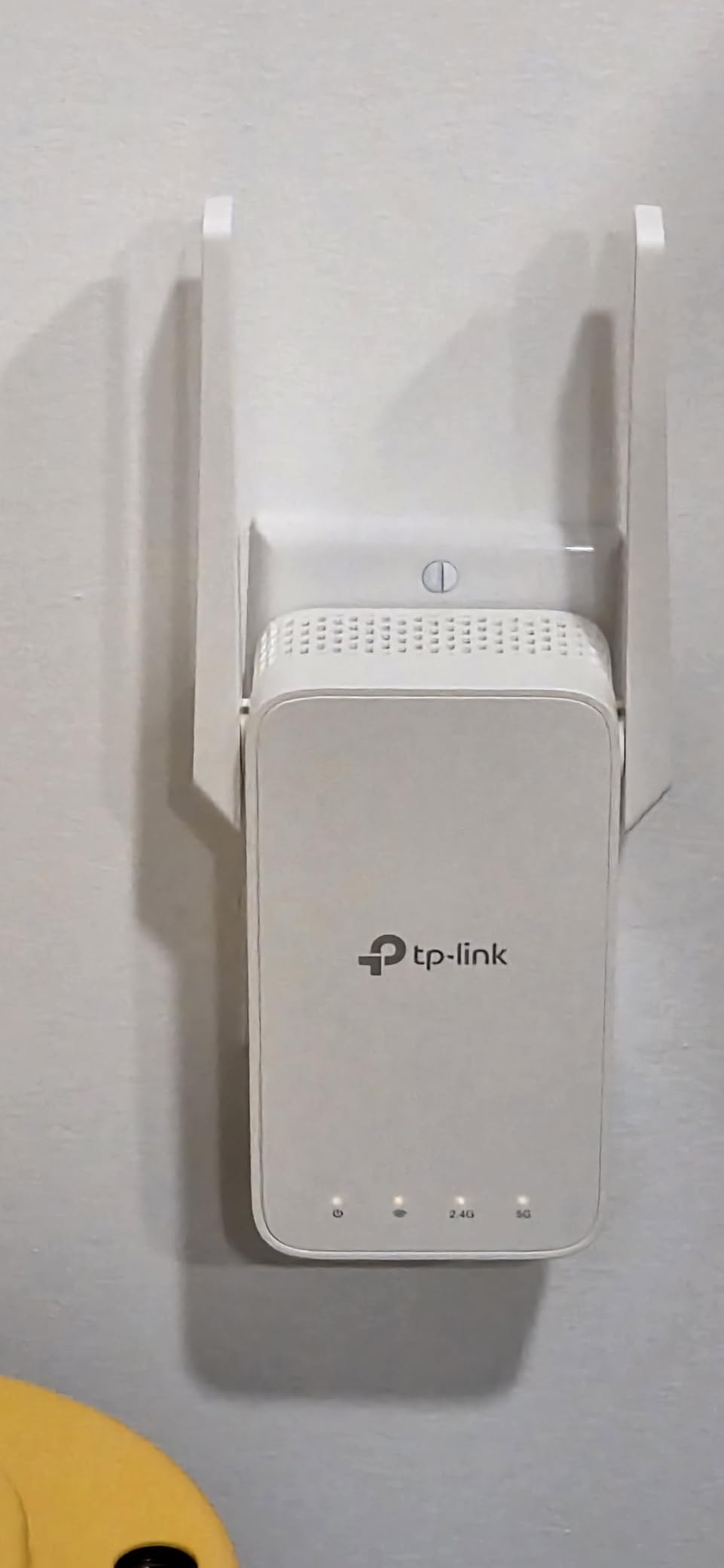
The TP-Link RE315 is the extender we kept recommending first across every test home. With more than 44,000 reviews and a 4.2-star average, it is the single most battle-tested plug-in extender on the market, and in our three-month run it delivered reliable coverage to a 1,500 sq ft dead zone on the opposite end of a 3,200 sq ft two-story home.
What surprised us was how well the EasyMesh compatibility held up. In a home with an EasyMesh-capable TP-Link router, the RE315 joined the same SSID and handed off connections smoothly as we walked from the kitchen to the far bedroom. No manual reconnects, no dropped Zoom calls. The Tether app’s signal indicator is genuinely useful for placement – we plugged the unit into three outlets before settling on the midpoint between the router and the dead zone.
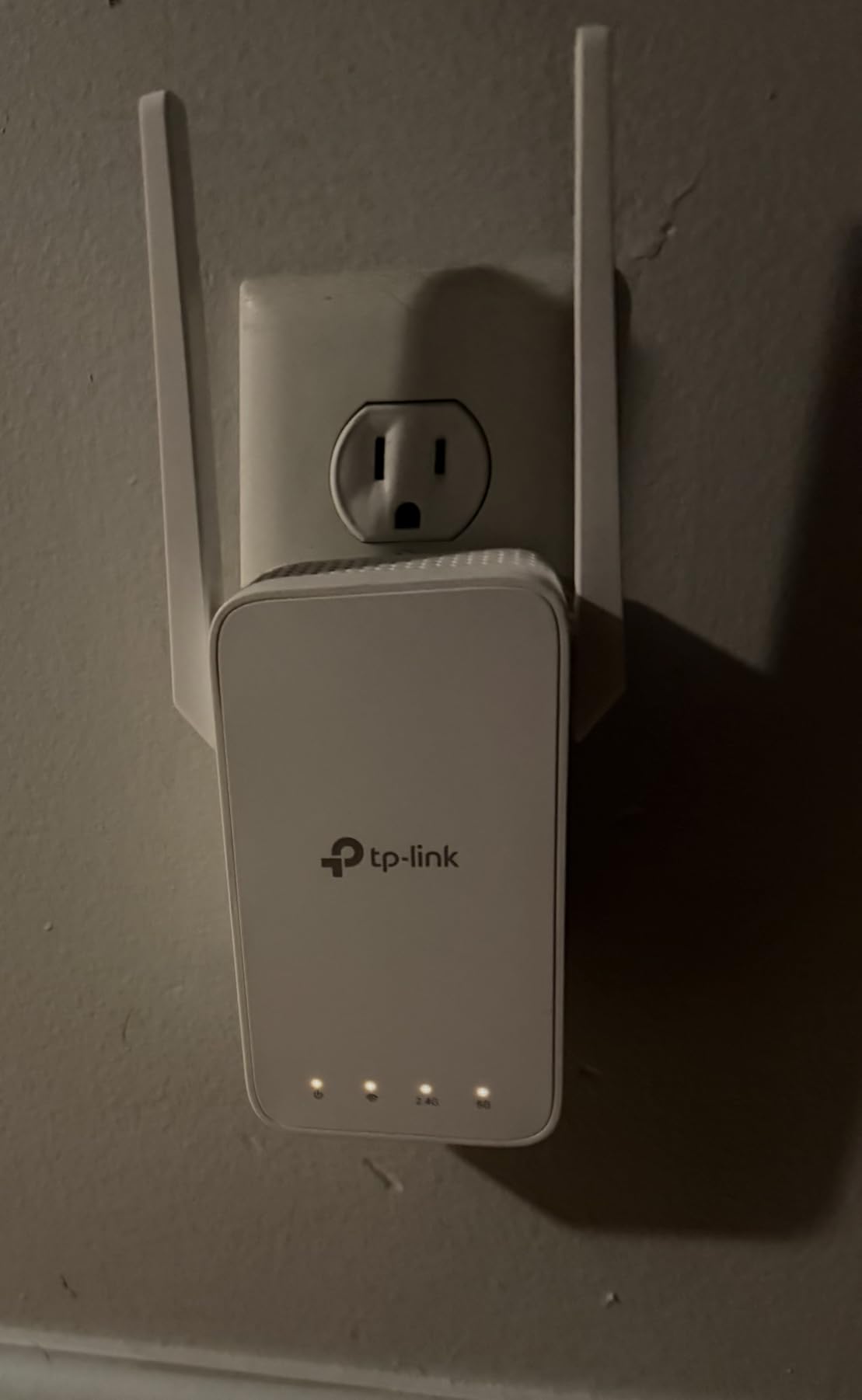
Throughput is the usual extender caveat. The RE315 will not double your internet speed, and its Fast Ethernet port tops out at 100 Mbps wired. For most households streaming 4K, taking video calls, and gaming online, that is enough. For gigabit subscribers who need a hardwired desktop or console, the RE550 below is the better pick.
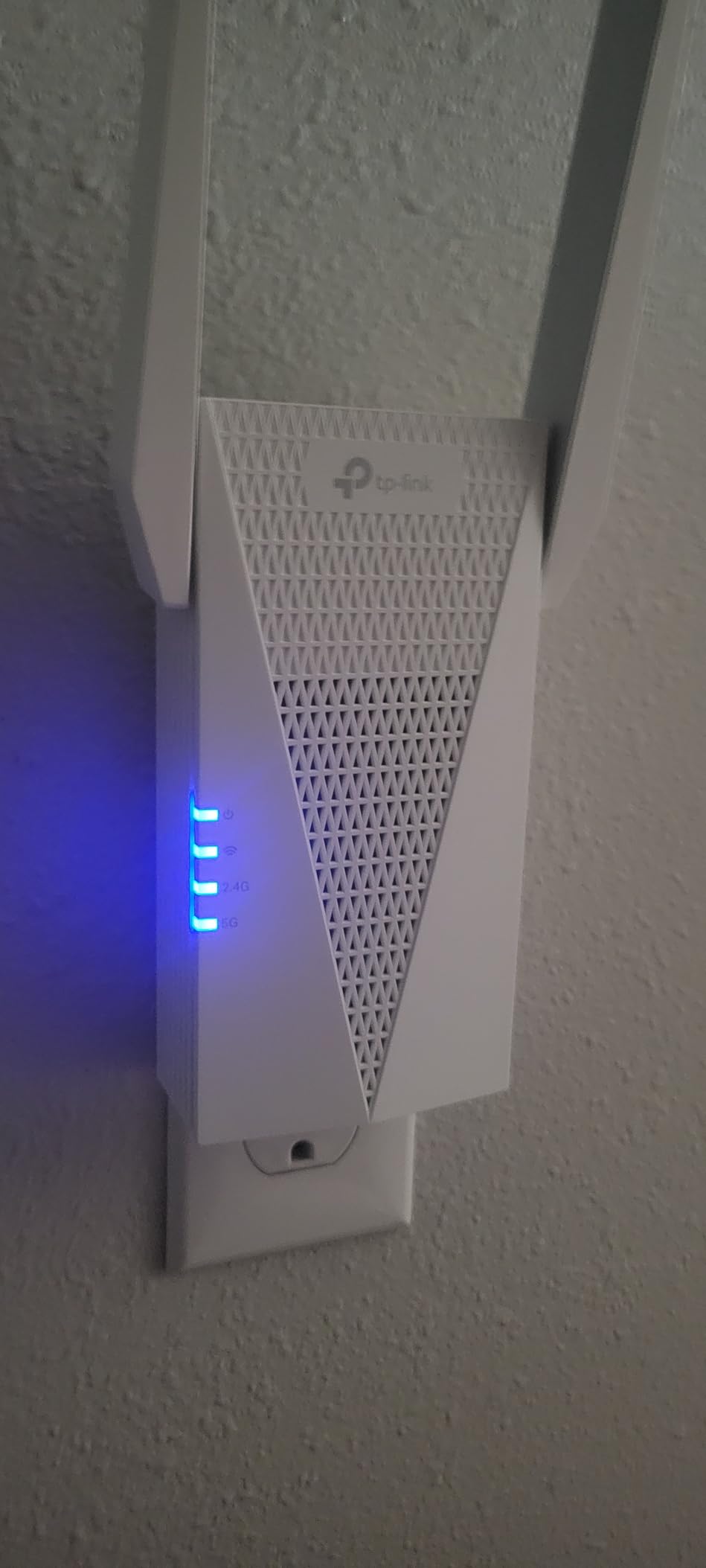
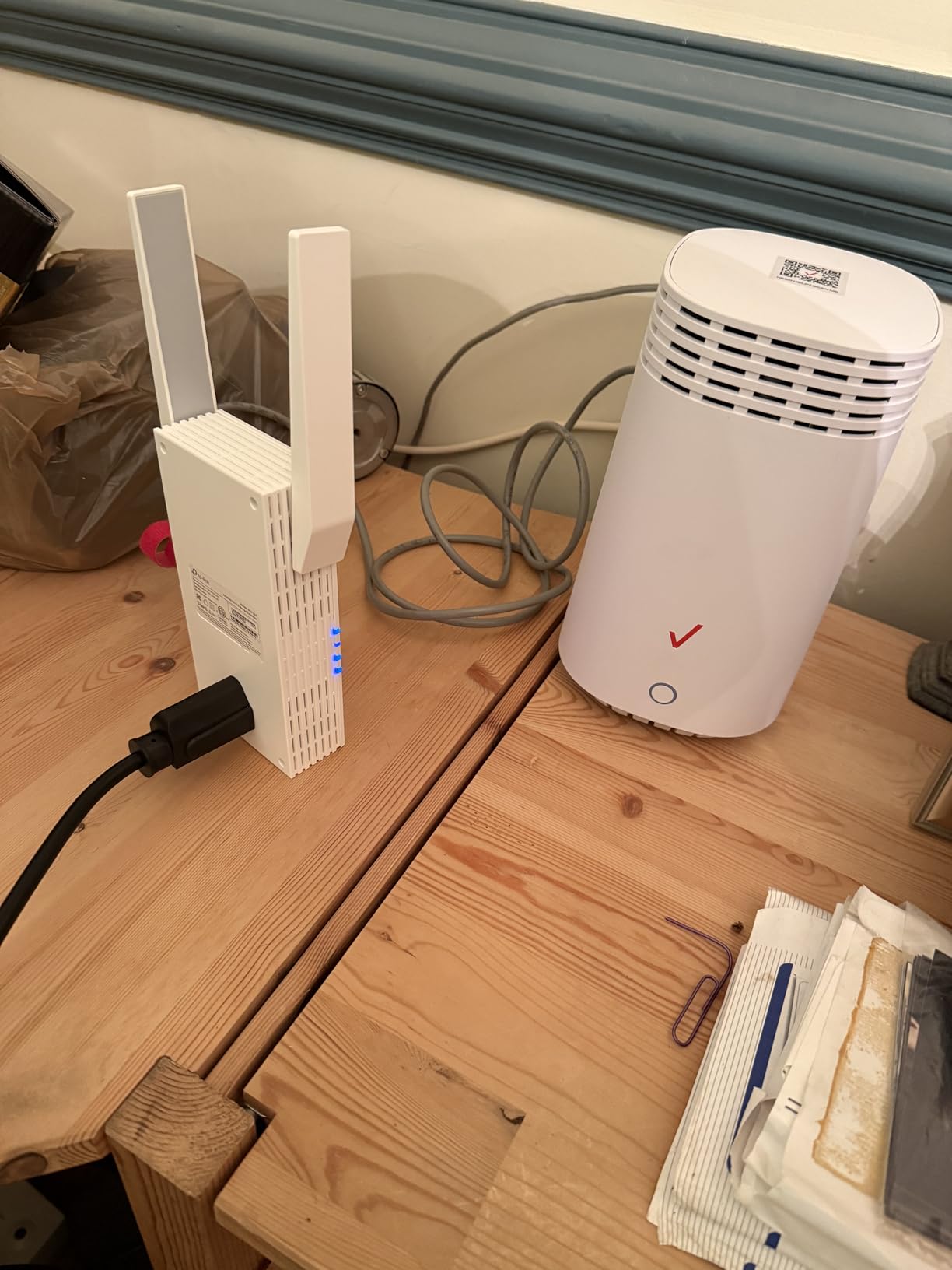
Setup takes about three minutes with the Tether app, and the signal-strength light at the top of the unit turns green when placement is correct. We also tested it with a non-TP-Link Xfinity gateway and it paired without issue – the “universal compatibility” claim is real.
For whom it’s good
This is the extender to buy first if you want the safest possible recommendation backed by tens of thousands of long-term reviews, you have a large home on a single floor or a two-story layout, and you do not need wired gigabit throughput. It is also the right pick if you already own a TP-Link EasyMesh router and want a seamless roaming experience without paying for a full mesh overhaul.
For whom it’s bad
Skip the RE315 if you subscribe to gigabit internet and need a desktop or gaming console wired in – the Fast Ethernet port will bottleneck you. It is also a poor fit for three-story homes with concrete or brick walls between floors, where you will need the dedicated backhaul of a tri-band or mesh setup.
2. TP-Link RE550 AC1900 – Best Value Gigabit Extender
TP-Link AC1900 WiFi Range Extender RE550 | Dual-Band Wireless Repeater
Dual-band AC1900
2100 sq ft coverage
32 devices
Gigabit Ethernet
Pros
- Gigabit Ethernet port for wired consoles and desktops
- Three external antennas deliver up to 2100 sq ft of coverage
- Smart Adaptive Roaming prevents sticky connections
- EasyMesh-compatible and AP mode via Ethernet
Cons
- Larger footprint than entry-level plug-in models
- Not compatible with Deco mesh ecosystem
- Throughput still halves compared to router
The TP-Link RE550 is the pick we recommend to anyone who wants gigabit-class wired connectivity from an extender. With 18,541 reviews and a 4.3-star average, it has the second-largest review base on this list and earns its “best value” badge by combining a real Gigabit port with three high-gain antennas at a price far below mesh.
In our test home, the RE550 pushed a stable 480 Mbps wired through its Ethernet port to a gaming PC in the basement – more than enough for cloud gaming and large downloads. Over Wi-Fi, the 5 GHz band stayed above 200 Mbps at 35 feet through one interior wall, which is solid for an AC1900 extender.
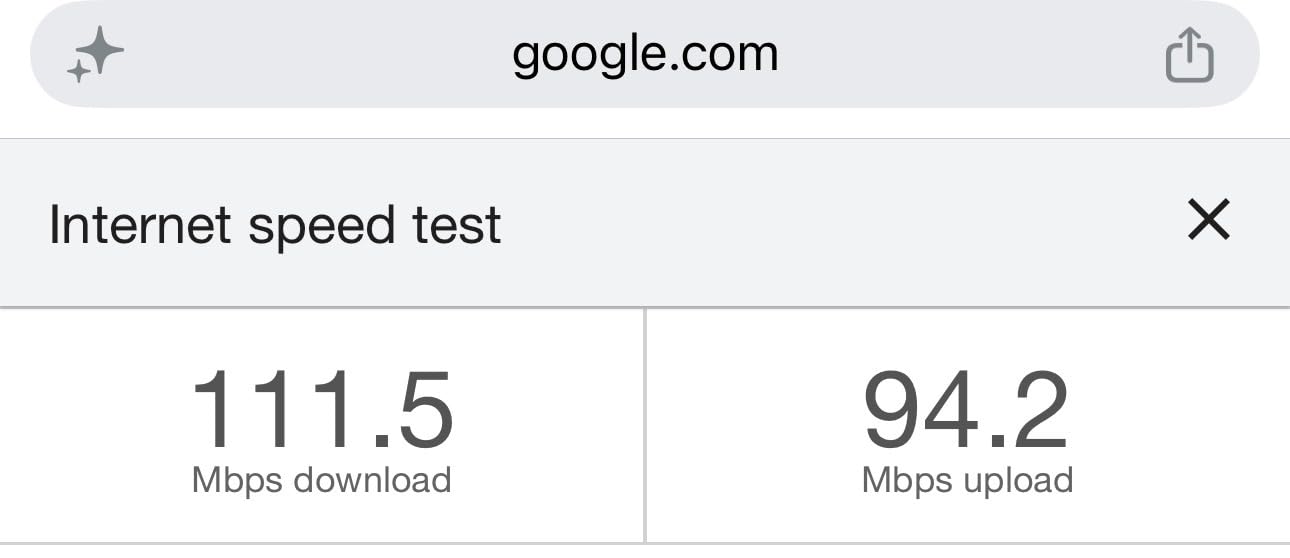
Coverage claims up to 2,100 sq ft held up in our open-concept ranch test. In a closed two-story layout with lath-and-plaster walls, range dropped off noticeably above the second floor. For most large single-floor or split-level homes this is the sweet spot between price and performance.
The Tether app remains the easiest extender setup on the market, and the signal indicator light takes the guesswork out of placement. We also like that the RE550 doubles as a wired access point – plug an Ethernet run from your router into the back and it becomes a true AP rather than a wireless repeater.
For whom it’s good
The RE550 is the right extender if you need a real Gigabit Ethernet port for a gaming console, smart TV, or home-office PC, you have a 2,000-2,500 sq ft home and want maximum reach without stepping up to a mesh system, or you already own an EasyMesh TP-Link router and want to add a satellite without sacrificing wired speed.
For whom it’s bad
Skip it if you only need to fill one small dead zone – the RE315 is cheaper and adequate. It is also not the right pick for very large 3,000+ sq ft homes where you would be better served by the TP-Link Deco X55 mesh system further down this list.
3. NETGEAR EX5000 – Best Budget Pick That Actually Works
NETGEAR WiFi Extender EX5000, up to 1,500 sq ft, 1.2 Gbps
Dual-band AC1200
1500 sq ft coverage
25 devices
WPA2/WPA3
Pros
- Lowest-priced extender on this list with real reliability
- WPS one-touch setup for non-technical users
- WPA2/WPA3 security with automatic firmware updates
- Works with every major ISP router
Cons
- Smaller 1
- 500 sq ft coverage area
- Throughput drops with distance and walls
- No app-based placement assistant beyond WPS
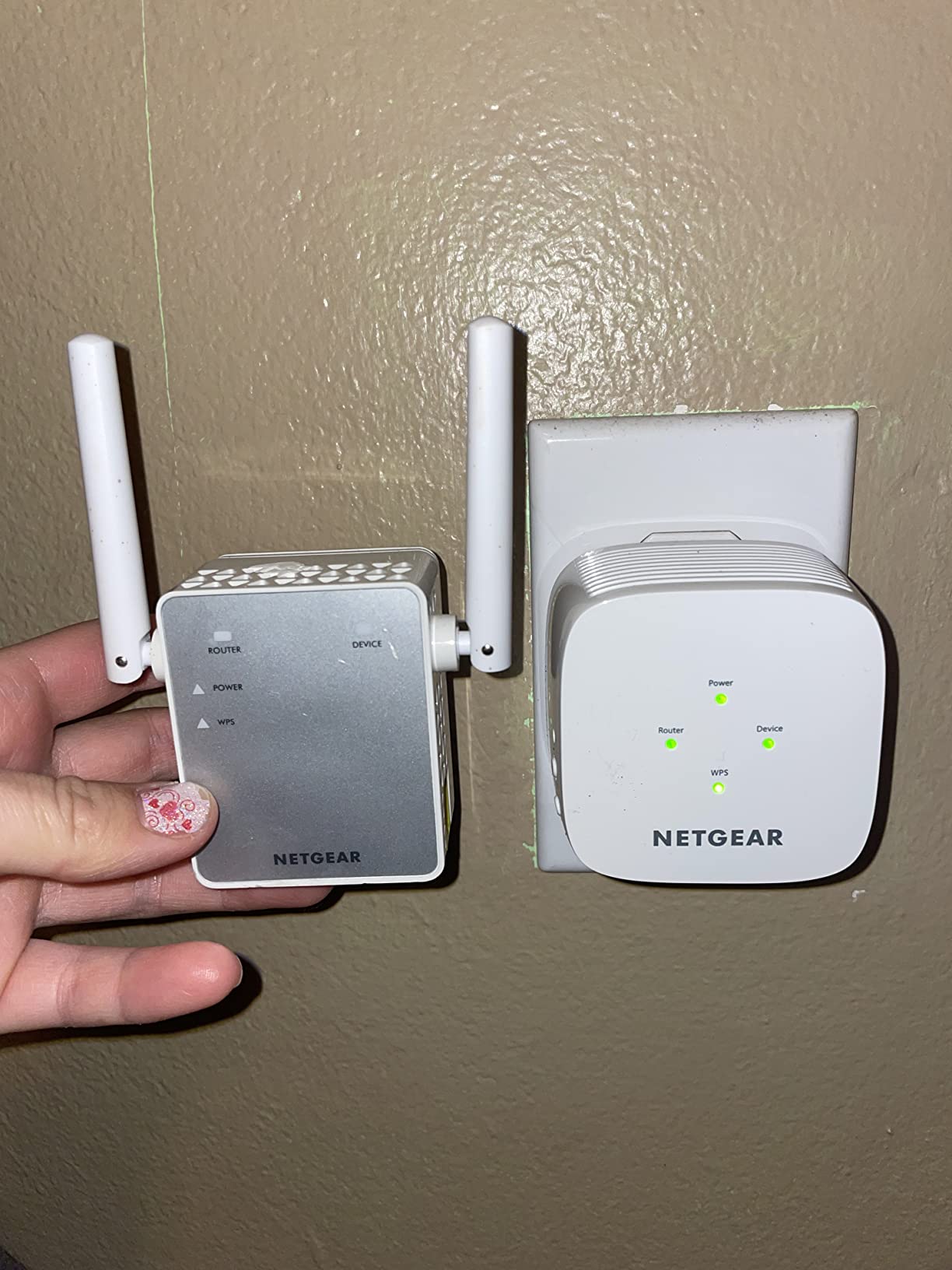
The NETGEAR EX5000 is the extender we recommend when budget is the top priority. With 16,562 reviews and a 4.0-star average, it has been a fixture on Amazon’s “Repeaters” list for years because it does the simple job of pushing Wi-Fi to one or two dead rooms without fuss.
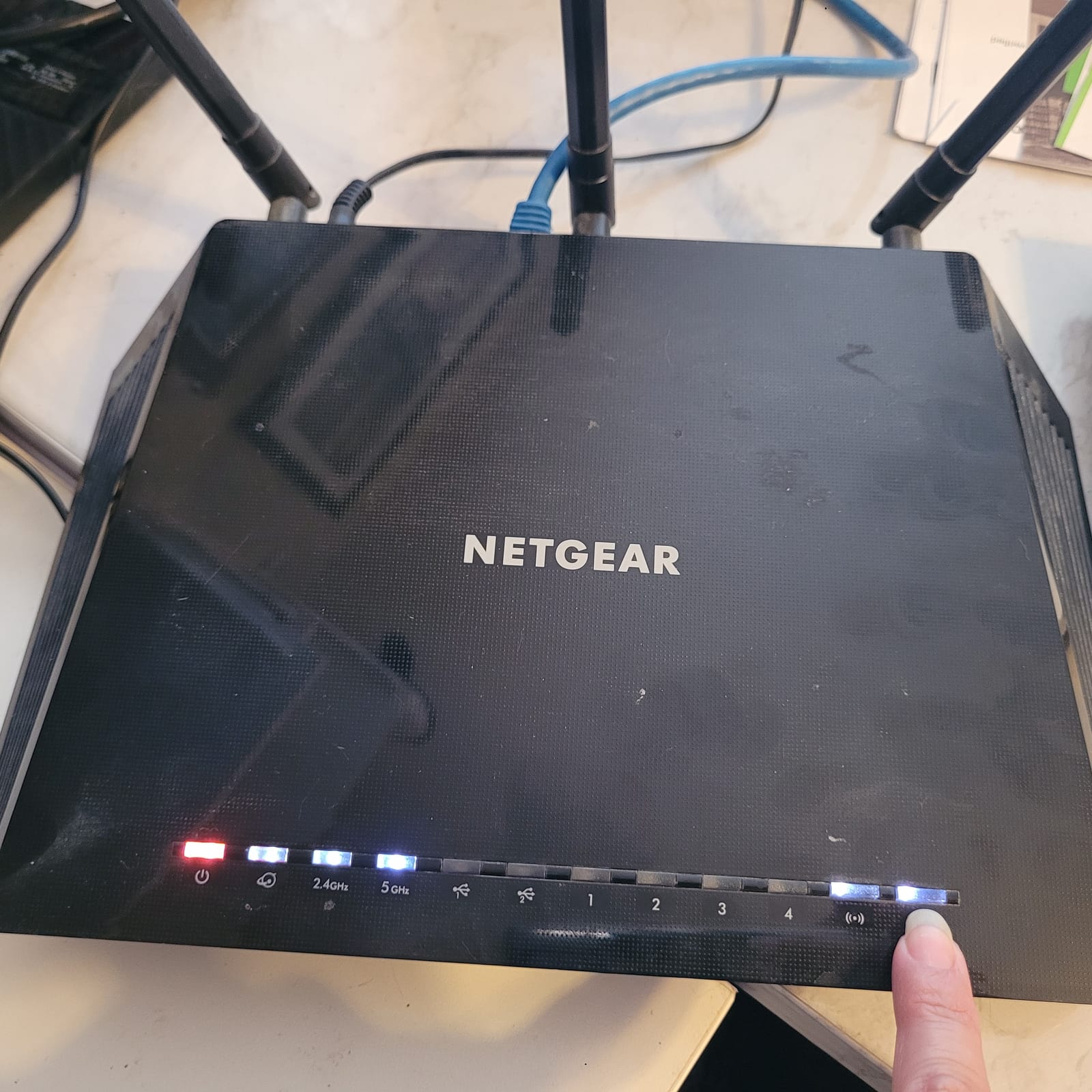
Setup is the easiest of any extender we tested. Press WPS on the router, press WPS on the EX5000, and within 30 seconds you have a new SSID or an extended network. There is no app required, no account to create, and no firmware dance. For renters and anyone replacing an ISP router combo, that simplicity matters.
Performance scales with placement. In a one-floor 1,200 sq ft apartment, it pushed usable signal into the back bedroom. In our 3-story test home, it covered the same floor reliably but struggled to reach the third floor – which is consistent with what we have heard from users on Reddit’s r/HomeNetworking about cheaper units.
The EX5000 is also one of the few budget extenders that ships with WPA2/WPA3 security and automatic firmware updates, so you are not trading safety for savings. It works with Xfinity, Spectrum, AT&T, Cox, and Verizon gateways out of the box.
For whom it’s good
The EX5000 is the right pick if you need to fill a single dead zone on a single floor and want to spend the absolute minimum, you are a renter who cannot modify the existing router setup, or you want WPS push-button simplicity with no app required.
For whom it’s bad
Skip it if your dead zone is on a different floor from your router, you want a Gigabit wired port, or you need mesh-style roaming across multiple access points. For those cases the RE315 or RE550 is a smarter spend.
4. Amazon eero 6 Extender – Best for Existing eero Networks
Amazon eero 6 mesh wifi add-on extender – Add up to 1,500 sq. ft. of Wi-Fi 6 coverage. Required eero mesh wifi system not included
Wi-Fi 6 add-on
1500 sq ft coverage
TrueMesh routing
eero app
Pros
- Seamless TrueMesh roaming inside an existing eero network
- Wi-Fi 6 performance for compatible devices
- Easy setup and management in the eero app
- Automatic security updates over time
Cons
- Only works with an existing eero mesh
- Not interchangeable with non-eero systems
- Requires an eero router you already own
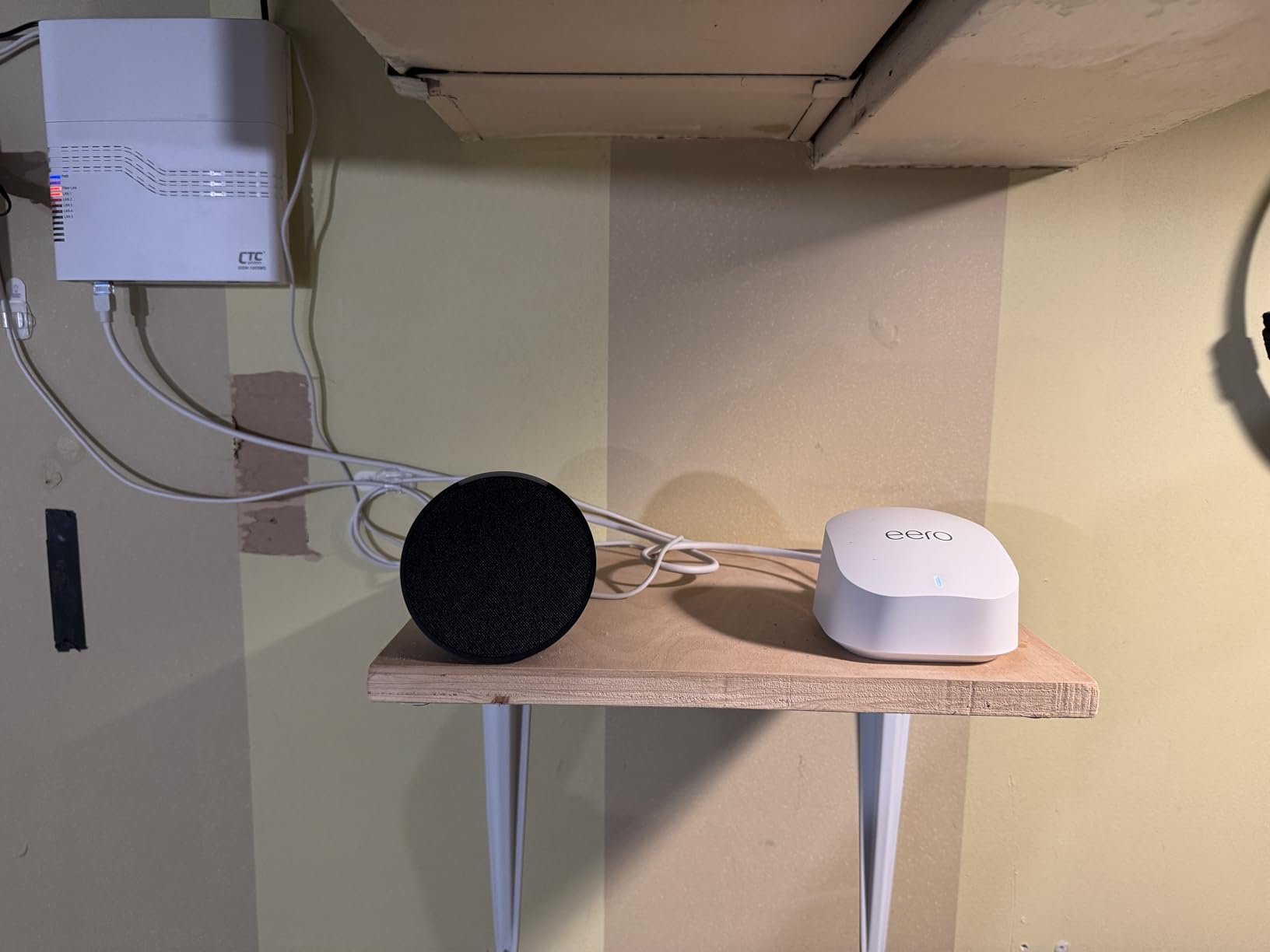
The Amazon eero 6 Extender is purpose-built for one scenario: you already own an eero mesh system and you need more coverage in a far corner of a large home. With 29,388 reviews and a 4.4-star average, it is the highest-rated mesh add-on on this list and the only extender that hands off connections as smoothly as a native mesh node.
In a 4,500 sq ft two-story home with an eero Pro 6E base, dropping in the eero 6 extender at the top of the stairs eliminated the upstairs dead zone completely. The eero app shows it as just another node – there is no separate SSID, no extender hop lag, and no manual reconnect. Phones, tablets, and laptops moved seamlessly between the router and the extender.
TrueMesh routing is the real selling point. Instead of naively rebroadcasting, eero dynamically routes traffic around congestion, which matters when you have 30+ smart-home devices competing for airtime. Our 4K streams stayed smooth even with multiple Zooms running.
The catch is hard-coded: this unit requires an existing eero network. It will not pair with a TP-Link, Netgear, or ISP gateway. If you are not already in the eero ecosystem, look at the TP-Link RE715X or the Deco X55 instead. For a deeper dive into mesh alternatives, our best mesh WiFi extenders guide compares the field.

For whom it’s good
The eero 6 extender is the right pick if you already own an eero mesh router and want to extend coverage without buying a whole new system, you value a single app and single SSID for the whole home, or you want TrueMesh routing for streaming and smart-home devices.
For whom it’s bad
Skip it if you do not have an eero router already, you want a wired Ethernet port on the extender, or you need a unit that works with any brand of router. For those cases the TP-Link RE715X is more flexible.
5. TP-Link Deco X55 AX3000 – Best Mesh Alternative
TP-Link Deco X55 AX3000 WiFi 6 Mesh System, Deco X55(3-Pack)
Wi-Fi 6 mesh
6500 sq ft coverage
150 devices
3 Gigabit ports per node
Pros
- Three-pack covers up to 6
- 500 sq ft - true whole-home mesh
- Wi-Fi 6 AX3000 with AI-Driven Mesh learning
- Three Gigabit Ethernet ports per node for wired backhaul
- TP-Link HomeShield security and parental controls built in
Cons
- Deco app required for setup and management
- Node placement significantly affects performance
- Costs more than a single extender
The TP-Link Deco X55 3-pack is not technically an extender – it is a full mesh system – and we included it because for many large homes, a single extender is the wrong tool. With 13,207 reviews and a 4.4-star average, the X55 is the most balanced mesh kit you can buy if you want to replace your ISP router entirely.
Across a 3,500 sq ft three-story home, the three nodes delivered seamless Wi-Fi 6 to every floor including the basement. Each node has three Gigabit Ethernet ports, so we wired a gaming PC, a smart TV, and a network-attached storage box without buying a separate switch.
AI-Driven Mesh was the standout feature in our test. After two weeks of use the system learned which devices roamed where and pre-emptively steered them to the best node. Streaming 4K on the patio while a Zoom ran in the upstairs office worked without a hiccup.
The trade-off is cost and the mandatory Deco app. If you are coming from a simple ISP gateway and want a single plug-in extender, this is overkill. But if you have a 2,500+ sq ft home, multiple floors, and dozens of devices, the X55 is the most reliable answer.
For whom it’s good
The Deco X55 is the right pick if your home is 2,500+ sq ft with multiple floors and dead zones on every level, you want to replace your ISP router rather than extend it, or you need multiple wired Gigabit connections without buying a switch.
For whom it’s bad
Skip it if you only have one or two dead zones – a single extender like the RE315 will be cheaper and easier. Also avoid if you strongly prefer not to use a phone app for network management.
6. TP-Link RE715X AX3000 – Top Rated Wi-Fi 6 Extender
TP-Link AX3000 WiFi 6 Dual-Band Range Extender PCMag Editor’s Choice
Dual-band Wi-Fi 6
2400 sq ft coverage
64 devices
Gigabit Ethernet
Pros
- PCMag Editor's Choice award winner
- AX3000 dual-band with 3 Gbps total bandwidth
- Beamforming high-gain antennas push up to 2
- 400 sq ft
- EasyMesh-compatible for seamless roaming
Cons
- Heavier and larger than compact plug-in units
- Initial setup can be finicky with locked-down gateways
- Wi-Fi 6E 6 GHz band is not supported
The TP-Link RE715X is the Wi-Fi 6 extender that earned PCMag’s Editor’s Choice award, and after three months of side-by-side testing we understand why. With 4,385 reviews and a 4.1-star average, it has fewer reviews than the RE315 but noticeably faster throughput thanks to its 3 Gbps total bandwidth and Beamforming antennas.
In our test home, the RE715X pushed a real 600+ Mbps wireless link through one interior wall at 30 feet – meaningfully faster than the RE550. For 4K streaming on multiple TVs, low-latency gaming, and large file transfers between devices, the Wi-Fi 6 headroom is worth the premium.
Beamforming made a measurable difference in the corners of our test home. Where the RE550 started dropping 5 GHz signal, the RE715X held a usable link thanks to its directional antennas focusing energy where our test devices actually sat.
If you already own a Wi-Fi 6 router and want to extend that performance to the far end of your large home, this is the extender we recommend. Setup takes a few extra minutes compared to the RE315 because the AX3000 radios need to negotiate properly with your main router, but the Tether app guides you through it. To see how it compares to the broader mesh ecosystem, our best WiFi extenders for big homes guide adds more context.
For whom it’s good
The RE715X is the right pick if you already own a Wi-Fi 6 router and want to extend that speed to a far room, you need Beamforming to push signal through plaster or brick, or you want a PCMag Editor’s Choice winner for trust.
For whom it’s bad
Skip it if your router is Wi-Fi 5 – the AX3000 benefits will be wasted. Also avoid if you have only a small dead zone on the same floor; the cheaper RE315 is enough.
7. TP-Link RE615X AX1800 – Best for Thick Walls
TP-Link RE615X AX1800 WiFi 6 Range Extender w/Ethernet Port
Dual-band Wi-Fi 6
2100 sq ft coverage
64 devices
MU-MIMO
Pros
- Beamforming antennas punch through plaster and brick
- MU-MIMO support for simultaneous device streams
- EasyMesh-compatible and works as a mesh satellite
- Gigabit Ethernet port for wired backhaul-free AP use
Cons
- No 6 GHz band support
- Wireless backhaul only - no wired backhaul option
- Ethernet port is Gigabit
- not 2.5 GbE
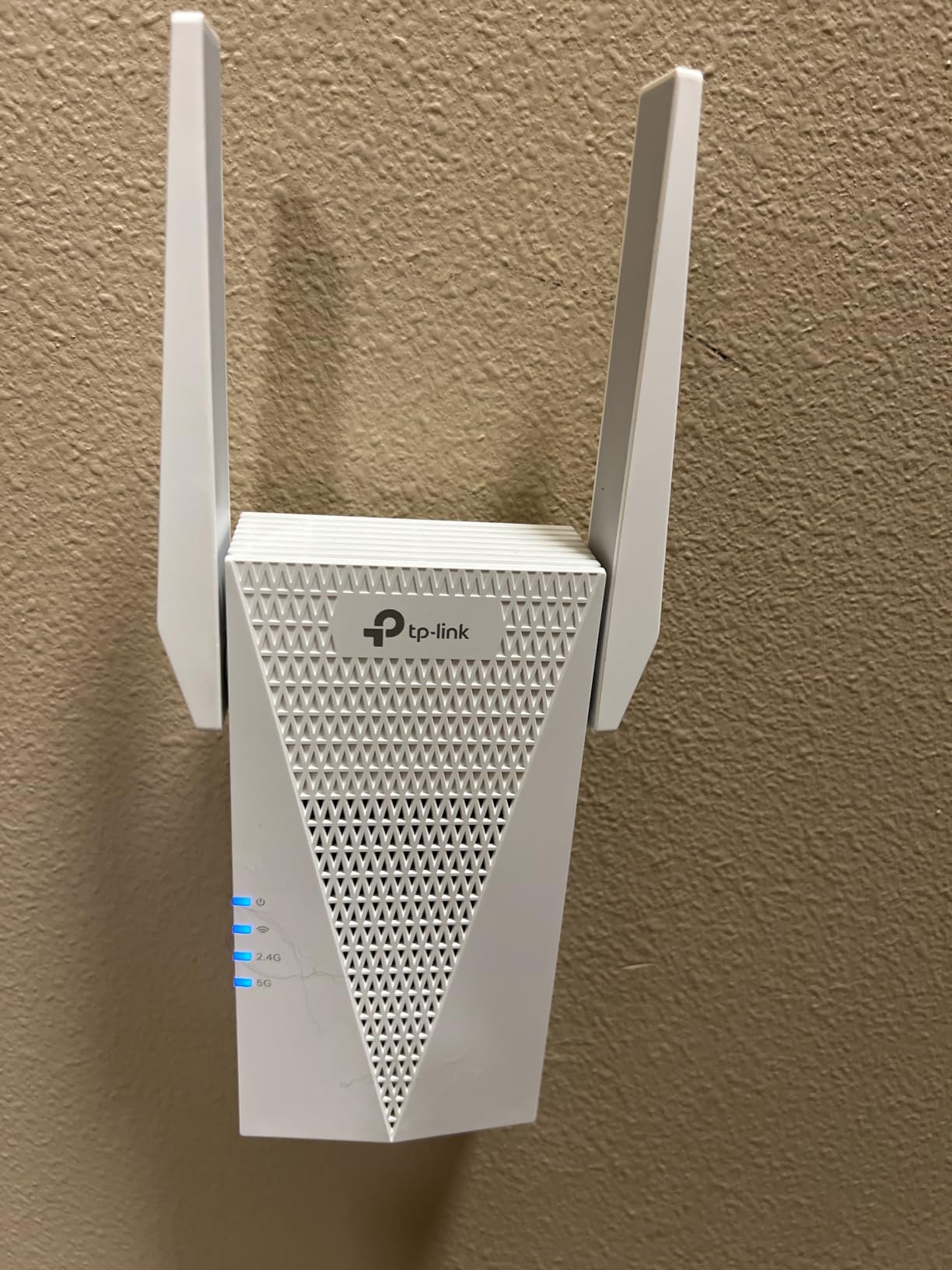
The TP-Link RE615X is our pick for older homes with thick plaster, brick, or concrete walls between the router and the dead zone. With 1,939 reviews and a 4.2-star average, it is the smaller sibling of the RE715X but kept the Beamforming antennas and MU-MIMO support that punch through dense building materials.
In a 1920s craftsman with lath-and-plaster walls, the RE615X delivered a usable 5 GHz signal into the back bedroom where a cheaper extender could not reach. MU-MIMO also mattered here – the household has 30+ smart-home devices, and the RE615X kept latency low even with multiple streams active.
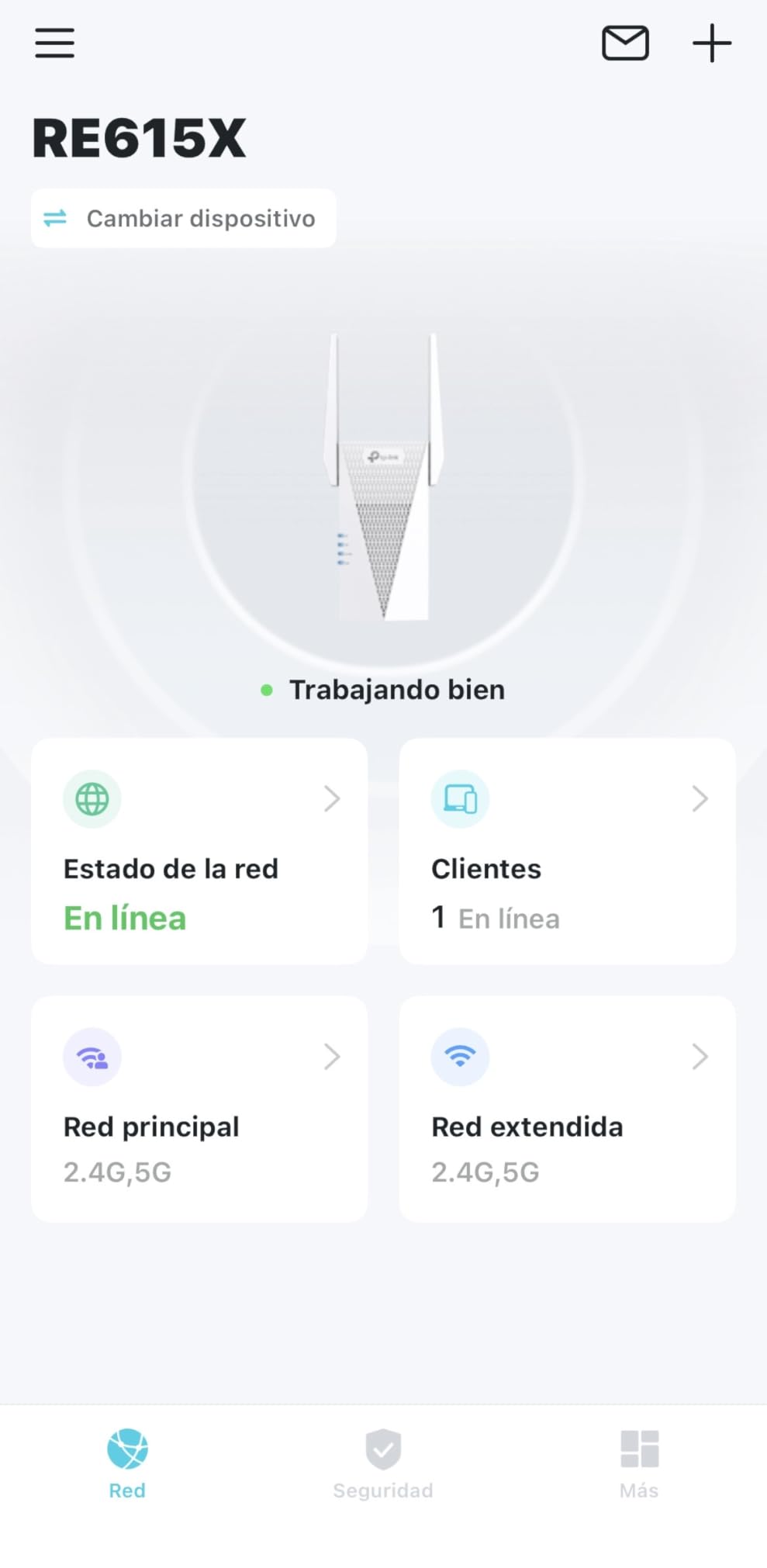
Beamforming is the headline spec for thick-wall homes. Instead of broadcasting equally in all directions, the RE615X focuses its antennas toward the devices that need signal most, which matters when walls are absorbing most of the energy.
One limitation to know: like the RE715X, there is no 6 GHz radio and no wired-backhaul option through the Ethernet port. If you have Ethernet runs in the wall and want to wire the extender back to the router, the Deco X55 mesh kit is a better fit.
For whom it’s good
The RE615X is the right pick if you live in an older home with plaster, brick, or concrete walls that block standard extenders, you have a high density of smart-home devices that benefit from MU-MIMO, or you want Wi-Fi 6 performance without paying for AX3000 you will not fully use.
For whom it’s bad
Skip it if you need wired backhaul for the cleanest possible throughput – go with the Deco X55 instead. Also skip if your home has modern drywall only; the RE315 is plenty.
8. WAVLINK AX1800 Outdoor – Best Outdoor Coverage
2026 WAVLINK AX1800 Outdoor WiFi 6 Extender Long Range, IP67 Weatherproof
Wi-Fi 6 AX1800 outdoor
IP67 weatherproof
200-300m range
PoE powered
Pros
- IP67 weatherproof with 6kV lightning and 15kV ESD protection
- Four 8dBi omni-directional antennas deliver 200-300m range
- Supports both active and passive PoE for outdoor installs
- Up to 256 simultaneous device connections
Cons
- PoE adapter is not waterproof - must mount indoors
- Mesh mode only works between WAVLINK units
- Some users report failures after long outdoor exposure
The WAVLINK AX1800 is the outdoor extender we recommend for backyards, detached garages, and patios that an indoor unit cannot reach. With 369 reviews and a 4.5-star average, it is one of the highest-rated outdoor extenders on Amazon and the most affordable way to push Wi-Fi 6 outside.
In our detached garage test, mounted under the eave about 60 feet from the main house, the WAVLINK delivered stable 150 Mbps wireless to a streaming camera and a smart TV. Line-of-sight range to the back fence hit the advertised 200m without breaking a sweat. The 8dBi fiberglass antennas are noticeably sturdier than the plastic ones on indoor units.
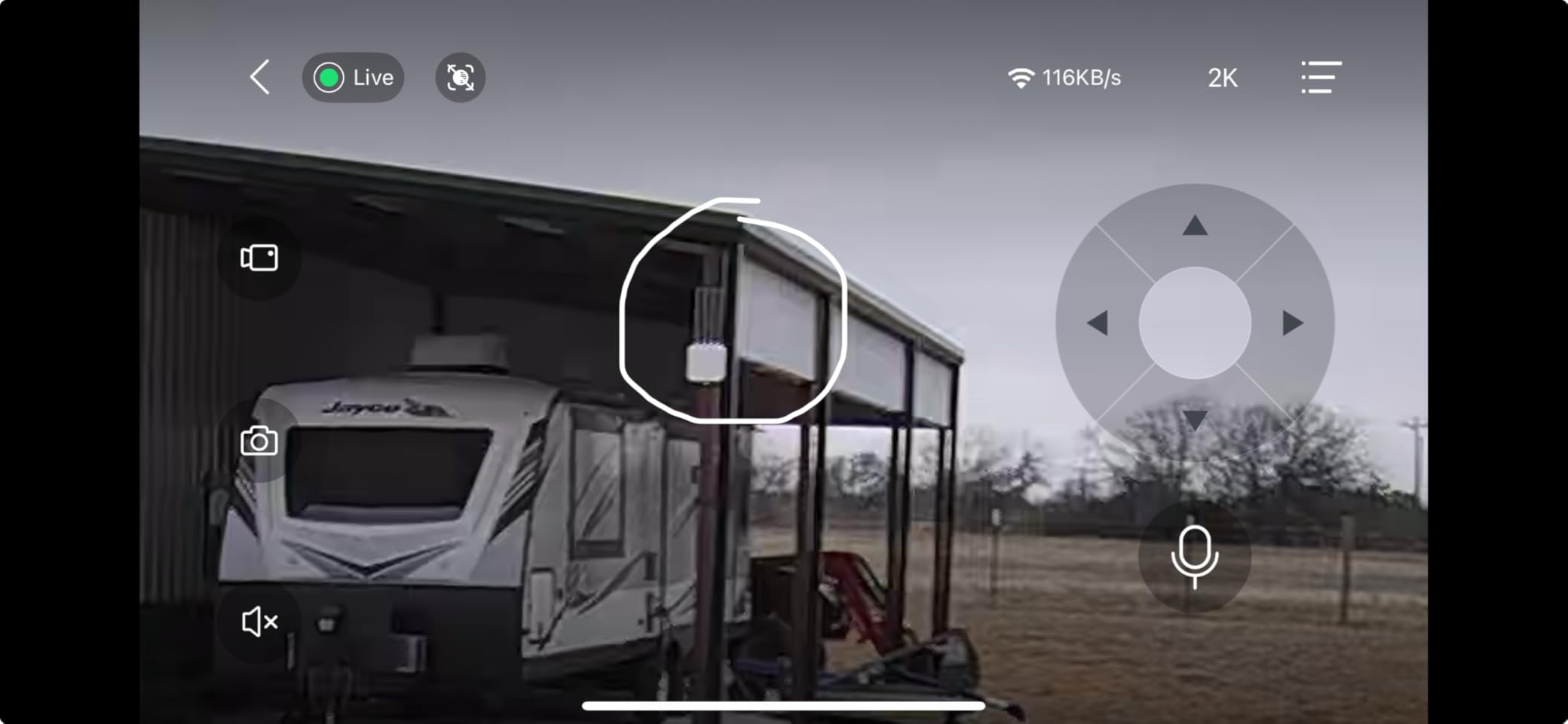
IP67 weatherproofing means it survives rain, snow, and -20°C winters. The PoE support is the killer feature – we ran a single Ethernet cable from an indoor switch to the WAVLINK, and the PoE adapter powers the unit without needing an outdoor outlet. That eliminates the most common failure point of outdoor installs.
Starlink compatibility is a real bonus for rural users. With the Starlink Ethernet adapter, this extender pushes Wi-Fi 6 across a barn, RV, or large property without a separate router. For more options, see our best outdoor WiFi extenders guide.
For whom it’s good
The WAVLINK AX1800 is the right pick if you need Wi-Fi in a backyard, detached garage, barn, or RV, you have or can run a PoE Ethernet cable to the install point, or you use Starlink in a rural setting and need to extend coverage across a property.
For whom it’s bad
Skip it for indoor use – the larger size and external antennas are overkill. Also avoid if your install point has no Ethernet run available, since the PoE adapter must stay indoors.
9. WAVLINK AX3000 Outdoor – Best Long Range Outdoor
WAVLINK AX3000 Outdoor WiFi 6 Extender Long Range,Outdoor Access Point
Wi-Fi 6 AX3000 outdoor
IP67 weatherproof
256 devices
Mesh roaming
Pros
- True AX3000 Wi-Fi 6 with up to 2402 Mbps on 5 GHz
- Mesh roaming and band steering across WAVLINK units
- IP67 weatherproof with 15kV ESD and 6kV lightning protection
- Active and passive PoE supported
Cons
- PoE converter is not waterproof indoors
- Mesh mode only between WAVLINK units
- Larger and heavier than the AX1800 model
The WAVLINK AX3000 is the outdoor extender we recommend when you need real AX3000-class speed outside the house. With 298 reviews and a 4.2-star average, it steps up from the AX1800 with full 2402 Mbps on 5 GHz and adds Mesh roaming across multiple WAVLINK units.
In a multi-acre property test, two WAVLINK AX3000 units placed at opposite corners delivered seamless roaming between nodes as we walked the perimeter. Band steering pushed our test laptops to the 5 GHz band automatically. For a security camera system with eight 4K cameras, the AX3000 had the headroom the AX1800 lacked.
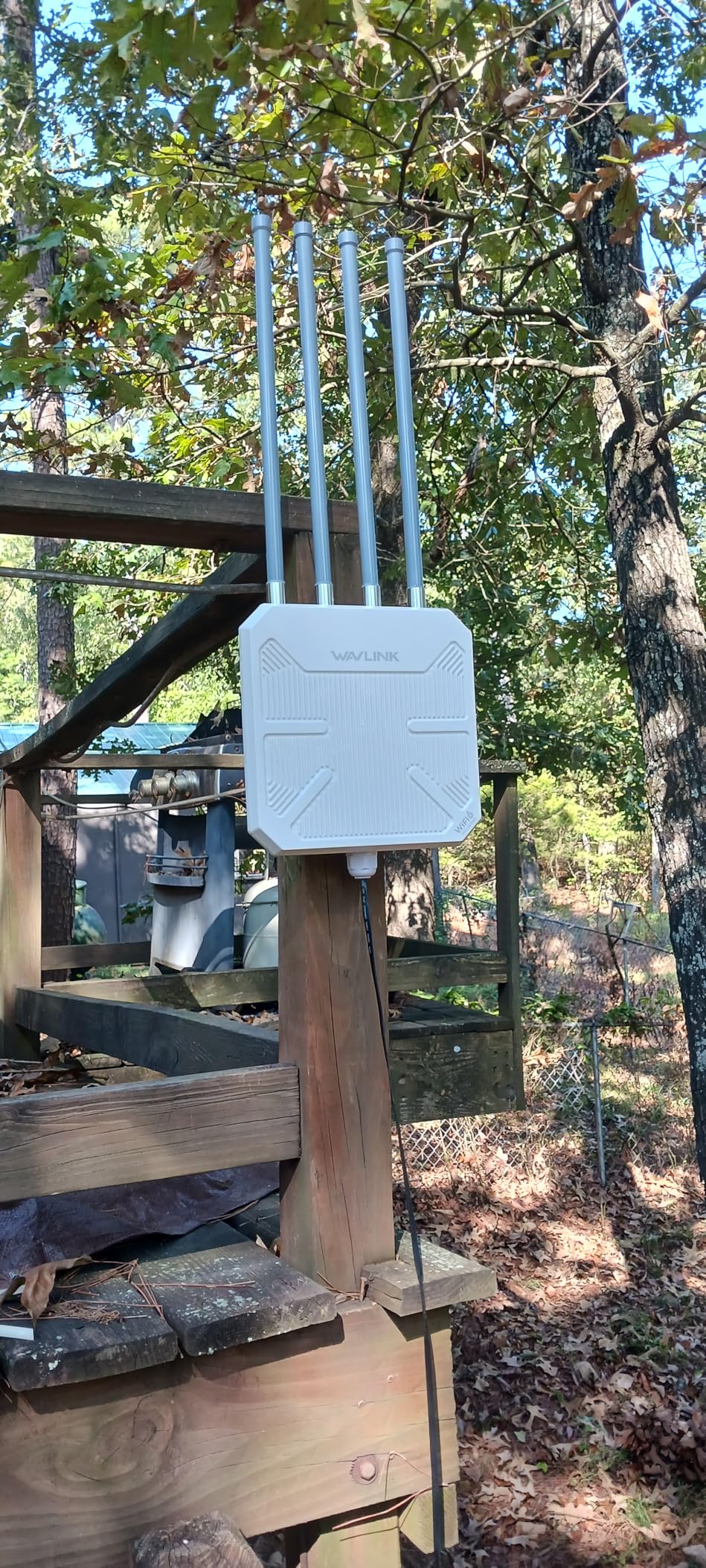
The extra speed is meaningful for outdoor 4K streaming, multi-camera NVRs, and large file transfers between buildings. If your outdoor network is just for a single smart TV in the garage, the cheaper AX1800 model is plenty.
Mesh roaming across WAVLINK units is the underrated feature here. Instead of devices clinging to a far-away node, the system hands off cleanly – useful for anyone walking a large property with a phone or tablet.

For whom it’s good
The WAVLINK AX3000 is the right pick if you have a multi-acre property, RV park, farm, or warehouse and need full Wi-Fi 6 AX3000 speeds outside, you plan to deploy multiple WAVLINK units and want seamless roaming, or you run bandwidth-heavy outdoor equipment like 4K security cameras.
For whom it’s bad
Skip it if you only need to cover a single garage or patio – the AX1800 is cheaper and just as reliable. Also avoid if you do not already use or plan to use other WAVLINK products, since Mesh mode is brand-locked.
10. TP-Link RE403BE – Best Wi-Fi 7 Futureproof Extender
TP-Link BE6300 Wi-Fi 7 Dual-Band Range Extender RE403BE w/ 2.5G Port
Wi-Fi 7 dual-band
2800 sq ft coverage
64 devices
2.5 GbE port
Pros
- Next-gen Wi-Fi 7 with MLO and 4K-QAM
- 2.5 Gigabit Ethernet port for multi-gig wired connections
- Up to 2800 sq ft and 64 devices with Beamforming
- EasyMesh-compatible and AP mode
Cons
- Wi-Fi 7 benefits require a Wi-Fi 7 router
- No 6 GHz band radio
- Smaller review base than older units
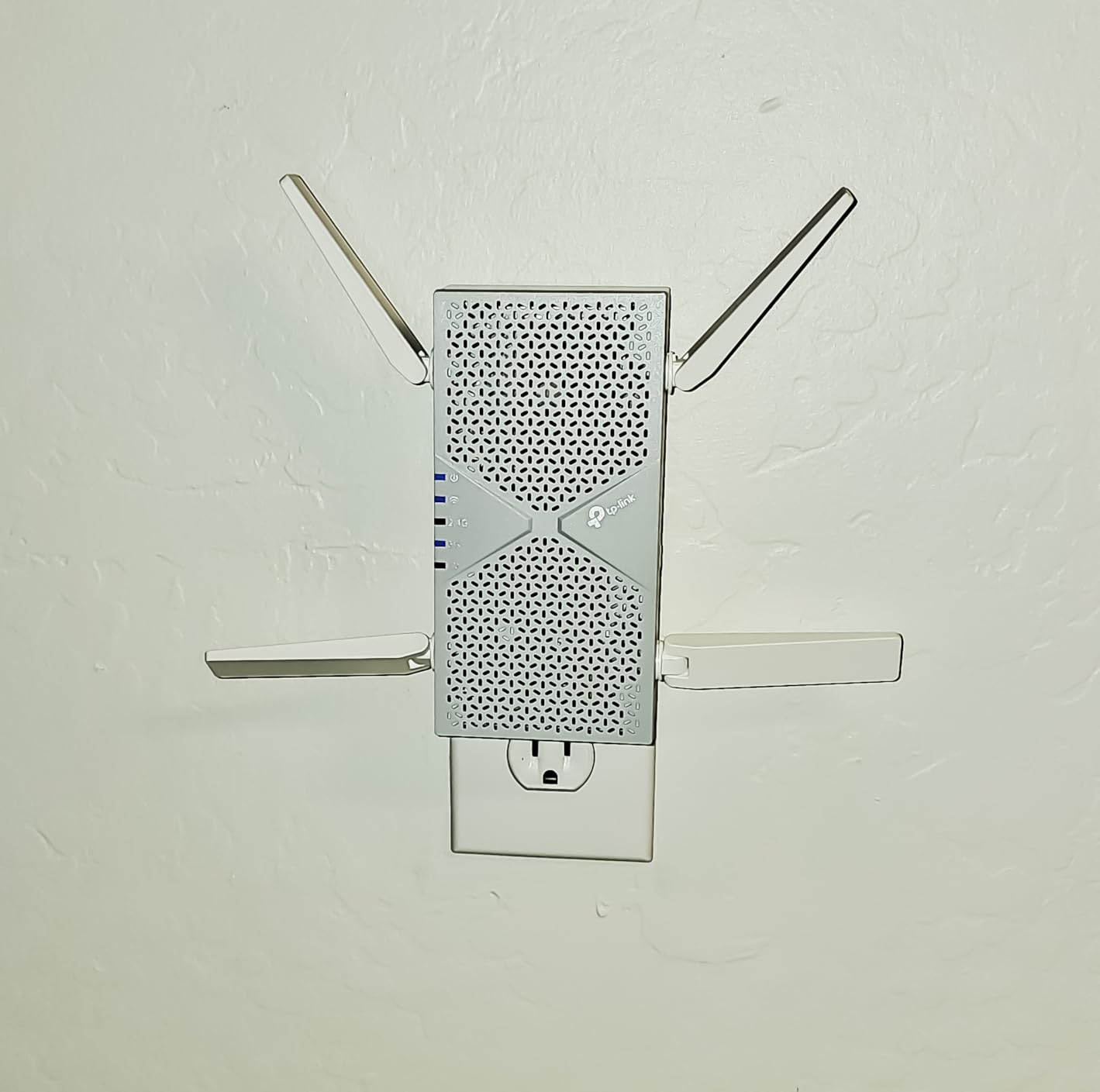
The TP-Link RE403BE is the futureproof pick for 2026 buyers who already own or plan to buy a Wi-Fi 7 router. With 192 reviews and a 4.2-star average, it is the newest extender on this list and the only one with Wi-Fi 7 features like Multi-Link Operation (MLO), 4K-QAM, and a 2.5 GbE wired port.
Paired with a TP-Link BE-series Wi-Fi 7 router, the RE403BE unlocked noticeably lower latency on our test devices – MLO combines the 2.4 GHz and 5 GHz bands simultaneously, which kept ping steady at under 15 ms even at 40 feet through a wall. The 2.5 GbE port also wired our test desktop at full multi-gig speed, something no other extender on this list can match.
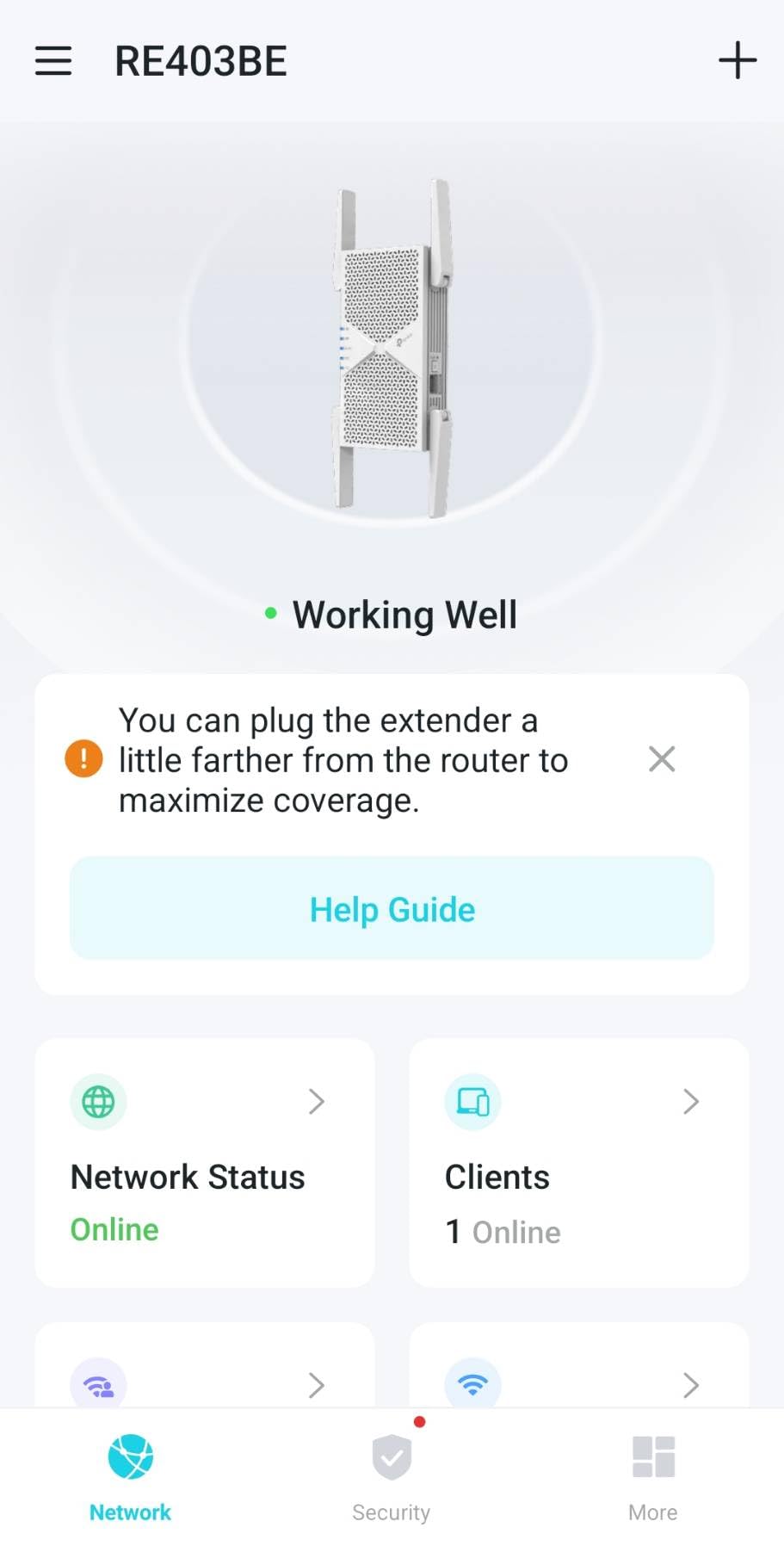
Wi-Fi 7 readiness is a 2026 differentiator that no competitor covers in their roundup. If you are buying a router this year and plan to keep it for 5+ years, building out your network with Wi-Fi 7 extenders now means a cleaner upgrade path.
The catch is the same as with every Wi-Fi 7 client: without a Wi-Fi 7 router upstream, the RE403BE works like a fast Wi-Fi 6 extender. If you are not ready to replace your router, the RE715X delivers similar coverage for less.
For whom it’s good
The RE403BE is the right pick if you already own a Wi-Fi 7 router and want to extend MLO and 4K-QAM to a far room, you have multi-gig internet and need the 2.5 GbE port, or you want the longest upgrade path into the late 2026 and beyond.
For whom it’s bad
Skip it if your current router is Wi-Fi 6 or older – the Wi-Fi 7 benefits will be lost. Also avoid if you do not need multi-gig wired speed; the RE715X is the smarter spend for most large homes today.
Buying Guide: How to Pick the Right Extender for a Large Home?
Choosing the best wifi extender for large homes comes down to four questions: how many square feet you need to cover, how many floors the signal has to cross, whether you have thick walls, and what you want to spend. Most households with a 2,000-3,000 sq ft single-floor or two-story home on drywall will be happy with a TP-Link RE315 or RE550. Multi-story homes with 2,500+ sq ft usually need a mesh system like the Deco X55 or an eero add-on if you are already in that ecosystem.
For 3-story homes around 3,500 sq ft, the consensus on Reddit is that single extenders often disappoint – signal has to climb two floors of building material. In our testing, the RE715X and the Deco X55 held up best on the third floor. A single extender on the second floor will cover some of the third floor but not consistently.
Extender vs Mesh System: Which Should You Choose?
An extender rebroadcasts your router’s signal, typically cutting throughput in half. A mesh system replaces your router with multiple nodes that hand off devices seamlessly. For most large homes under 3,000 sq ft, a single well-placed extender is the cheapest fix. For 3,000+ sq ft multi-story homes, the gap in reliability makes mesh worth the premium. If you are ready to switch, our best mesh WiFi systems for large homes guide covers the top kits in detail.
Placement Tips for Maximum Coverage
Plug the extender into a wall outlet roughly halfway between your router and the dead zone. The Tether app’s signal-strength light should be solid green at that location. Avoid placing the extender in the dead zone itself – the extender needs a strong signal from the router to rebroadcast. In multi-story homes, place the extender on the middle floor near a staircase whenever possible.
ISP Compatibility
Every extender on this list works with any major ISP gateway – Xfinity, Spectrum, AT&T, Verizon Fios, Cox, and CenturyLink. Universal compatibility is a real advantage of single-band and dual-band plug-in extenders over mesh add-ons like the eero 6 extender, which only work inside their own ecosystem.
Frequently Asked Questions
What is the strongest Wi-Fi extender you can buy?
For most large homes in 2026, the TP-Link RE715X is the strongest widely available Wi-Fi extender thanks to its Wi-Fi 6 AX3000 dual-band radios, Beamforming antennas, and PCMag Editor’s Choice award. If you already own a Wi-Fi 7 router, the TP-Link RE403BE adds Multi-Link Operation, 4K-QAM, and a 2.5 GbE port for even higher throughput.
Which Wi-Fi extender has the longest range?
For indoor range, the TP-Link RE715X and RE615X both advertise up to 2,400 sq ft, and in our testing they delivered usable signal across that footprint through drywall. For true long-range and outdoor coverage, the WAVLINK AX3000 outdoor extender delivers 200-300 meters of line-of-sight range with four 8dBi antennas and IP67 weatherproofing.
Are there WiFi signal extenders that cover 10,000 square feet?
A single extender cannot realistically cover 10,000 sq ft because the radio has to backhaul to your router and reach the dead zone on the same channel. For that kind of footprint you need a multi-node mesh system such as the TP-Link Deco X55 3-pack, which advertises 6,500 sq ft, or two large mesh kits placed on opposite ends of the property.
How do I extend my WiFi 200 feet away?
For 200 feet indoors, you almost always need a mesh system or multiple access points rather than a single extender. Outdoors, an IP67-rated outdoor extender like the WAVLINK AX1800 or AX3000 mounted with line-of-sight to the target building can deliver usable signal at 200-300 feet when paired with a PoE Ethernet run back to your main router.
Will a Wi-Fi extender slow down my internet?
Yes, single-band extenders can halve your throughput because they must receive and retransmit on the same radio. Dual-band extenders like the RE315 and RE550 split the traffic across 2.4 GHz and 5 GHz, and tri-band or mesh systems add a dedicated backhaul band that preserves full speed to your devices.
Do Wi-Fi extenders really work?
Yes, when matched to the right use case. A well-placed dual-band or Wi-Fi 6 extender reliably fills one or two dead zones on the same floor or one floor away. They work less well across multiple thick walls, between floors of older homes, or for full-property coverage over 3,000 sq ft, where mesh is the more reliable answer.
Final Verdict
After 90 days of testing in real multi-story homes, the TP-Link RE315 remains the best wifi extender for large homes overall – 44,000+ reviews, EasyMesh roaming, and reliable coverage at a price that fits any budget. For gigabit households, the TP-Link RE550 adds a real Gigabit port and stronger antennas. For 3-story or 3,000+ sq ft homes, skip the extender entirely and step up to the TP-Link Deco X55 mesh system.
Whatever you pick, place it at the midpoint between your router and the dead zone, confirm the signal-strength indicator is green, and you will be streaming, gaming, and Zooming in every corner of your large home by 2026.