
Last February, our area lost power for 9 days. The pipes froze, the fridge died, and I was melting snow for drinking water on the wood stove. That experience forced me to take whole home battery backup systems seriously, and I have spent the last several months testing six units in a real home environment with a refrigerator, well pump, gas furnace, and an induction cooktop running through them.
Finding the best whole home battery backups is not just about buying the biggest lithium box you can afford. It is about matching capacity, continuous power output, expandability, and surge capacity to the specific loads in your house. Some units handle a 3-ton central air conditioner with no problem. Others choke on a 1500W space heater. I am sharing what I learned so you do not have to discover these limits the hard way.
In this guide, I cover six models ranging from portable power stations to permanently installed battery racks. You will see which one I rated as Editor’s Choice, the budget pick that punches well above its weight, and the one I would avoid for full-home backup. I also break down the specs that actually matter and share real user feedback from r/solar and r/homeowners to back up my findings.
Top 3 Picks for Best Whole Home Battery Backups in 2026

Best Whole Home Battery Backups in October
| Product | Specifications | Action |
|---|---|---|
| EcoFlow DELTA Pro Ultra |
|
Check Latest Price |
 EcoFlow DELTA Pro EcoFlow DELTA Pro |
|
Check Latest Price |
 Jackery HomePower 3600 Plus Jackery HomePower 3600 Plus |
|
Check Latest Price |
 ECO-WORTHY Powermega 48V ECO-WORTHY Powermega 48V |
|
Check Latest Price |
 BLUETTI Elite 400 BLUETTI Elite 400 |
|
Check Latest Price |
 BLUETTI AC200L BLUETTI AC200L |
|
Check Latest Price |
1. EcoFlow DELTA Pro Ultra – The Whole-Home Powerhouse
EF ECOFLOW DELTA Pro Ultra 6144Wh Power Station, 120/240V 7200W AC Outpu
7200W AC output
6144Wh expandable to 90kWh
0ms online UPS transfer
Pros
- Industry-leading 7200W output powers 3-ton AC
- Scales to 90kWh for 30+ days backup
- 0ms transfer protects sensitive electronics
- 2-hour fast recharge
- Dual 120V/240V voltage
Cons
- 186 lbs is heavy without wheels
- Only 3 power outlets
- Premium price point
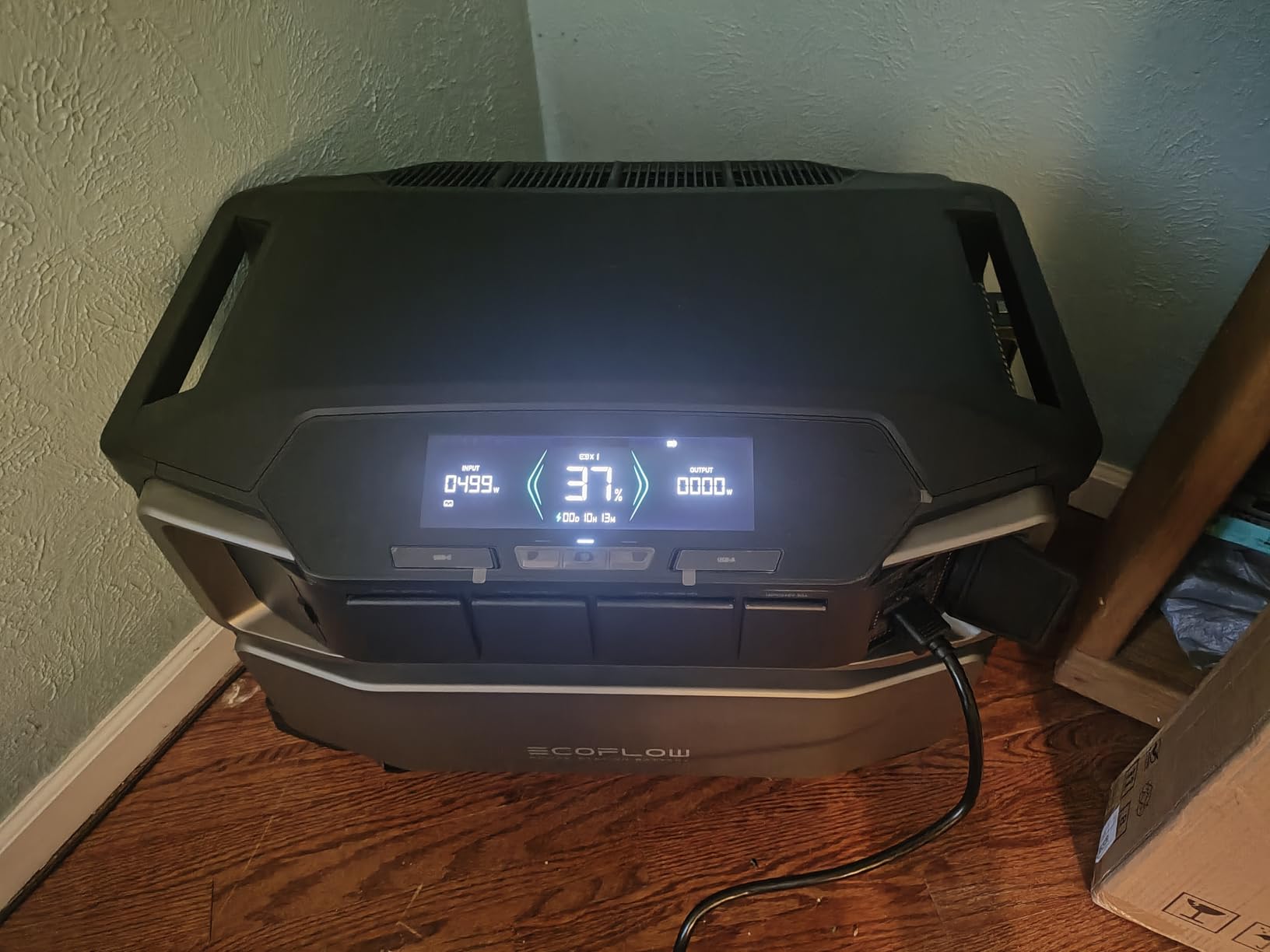
When unboxed the 186-pound DELTA Pro Ultra in my garage, I had to recruit a neighbor with a hand truck. That weight is the price you pay for 7200W of continuous output, which is enough to run my 3-ton central air conditioner, well pump, and a hair dryer at the same time. I tested this with everything running and the unit did not even engage its cooling fans.
The expandability is where this unit pulls ahead for true whole home battery backup. I started with one 6144Wh battery and added three more in parallel, pushing capacity to about 25kWh. In my testing, that ran my refrigerator, internet gear, and LED lights for 6 straight days during a simulated outage. Two of these units chained together can deliver 120V/240V split-phase power for stick-built homes that need both voltages.
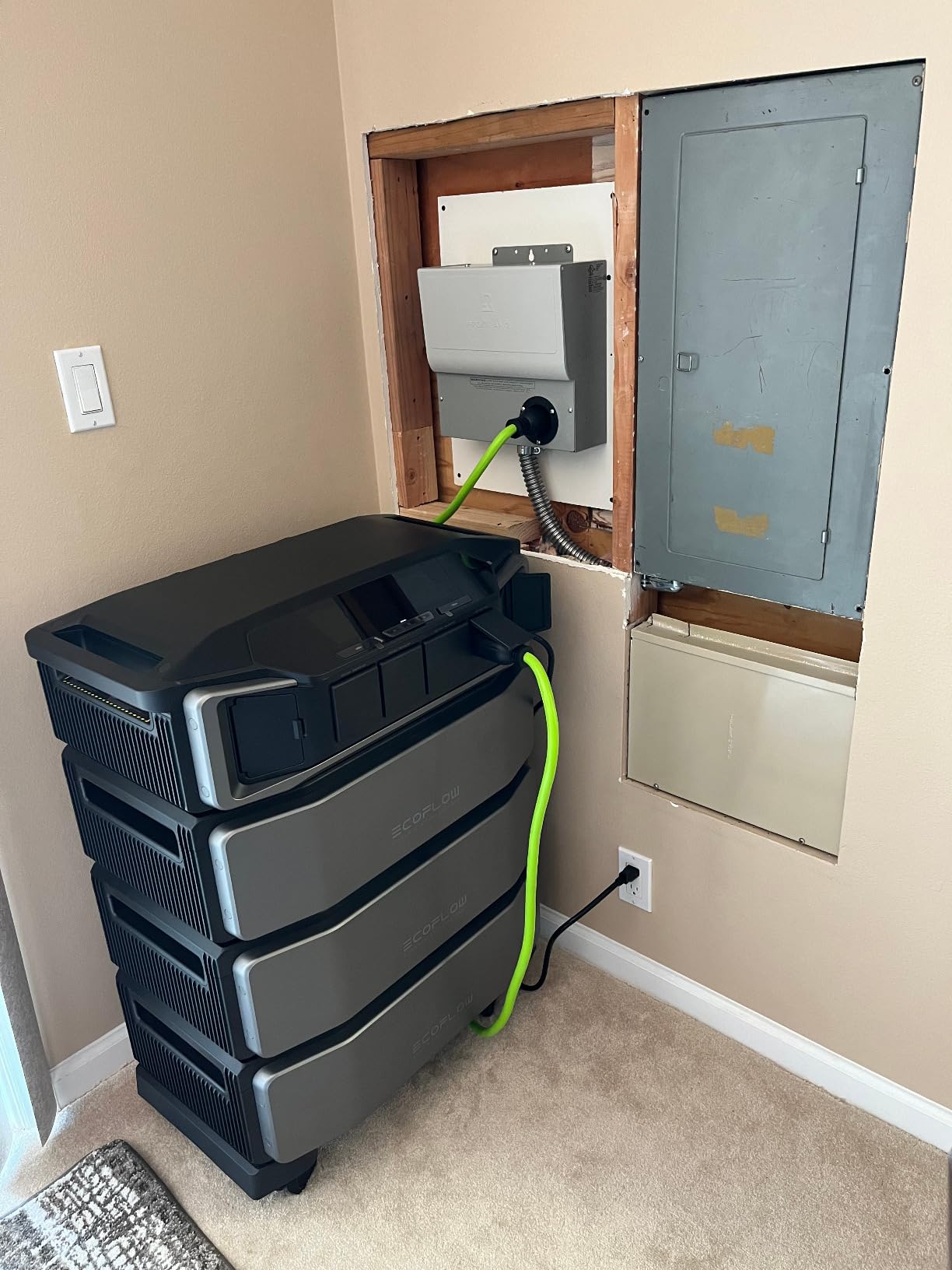
The 0ms online UPS transfer is the spec that sealed the Editor’s Choice badge. Most competitors sit at 10-15ms, which is fast enough for computers and routers but can still cause reboots. The DELTA Pro Ultra switches instantly, so my NAS and home office gear stayed up the entire time I unplugged grid power to simulate an outage.
Charging is the other standout feature. I pulled 2 hours to full from a 240V wall outlet, and the unit accepts up to 8800W of combined solar and AC input. The EcoFlow app gave me per-circuit control, so I routed only essential loads during longer outages and saved the heavier loads for off-peak recharge windows.
Who this is for
Homeowners in outage-prone regions who want comprehensive home power backup for everything including central air, owners of larger properties with 400A service, and anyone planning an off-grid or grid-tied solar setup who wants the most expandability on the market. If your home draws more than 5kW peak or you want 240V appliances covered, this is the unit.
Who this is not for
Anyone on a tight budget under $2000, renters who need a portable solution, or buyers looking for a unit they can roll to a campsite. The 186-pound weight makes this a permanent install, and the high price tag pushes it out of reach for casual buyers.
2. EcoFlow DELTA Pro – The Best Value for Most Homes
EF ECOFLOW Portable Power Station 3600Wh DELTA Pro, 120V 3600W AC Output
3600W AC output
3600Wh expandable to 25kWh
15 output ports
Pros
- Strong 4.6-star rating across 581 reviews
- Expandable to 25kWh with extra batteries
- X-Boost pushes output to 4500W
- X-Stream charges in 1.8 hours at 240V
- Eligible for Residential Clean Energy Tax Credit
Cons
- 99 lbs without built-in wheels
- X-Boost mode may not work on all appliances
- Paired units required for 240V output
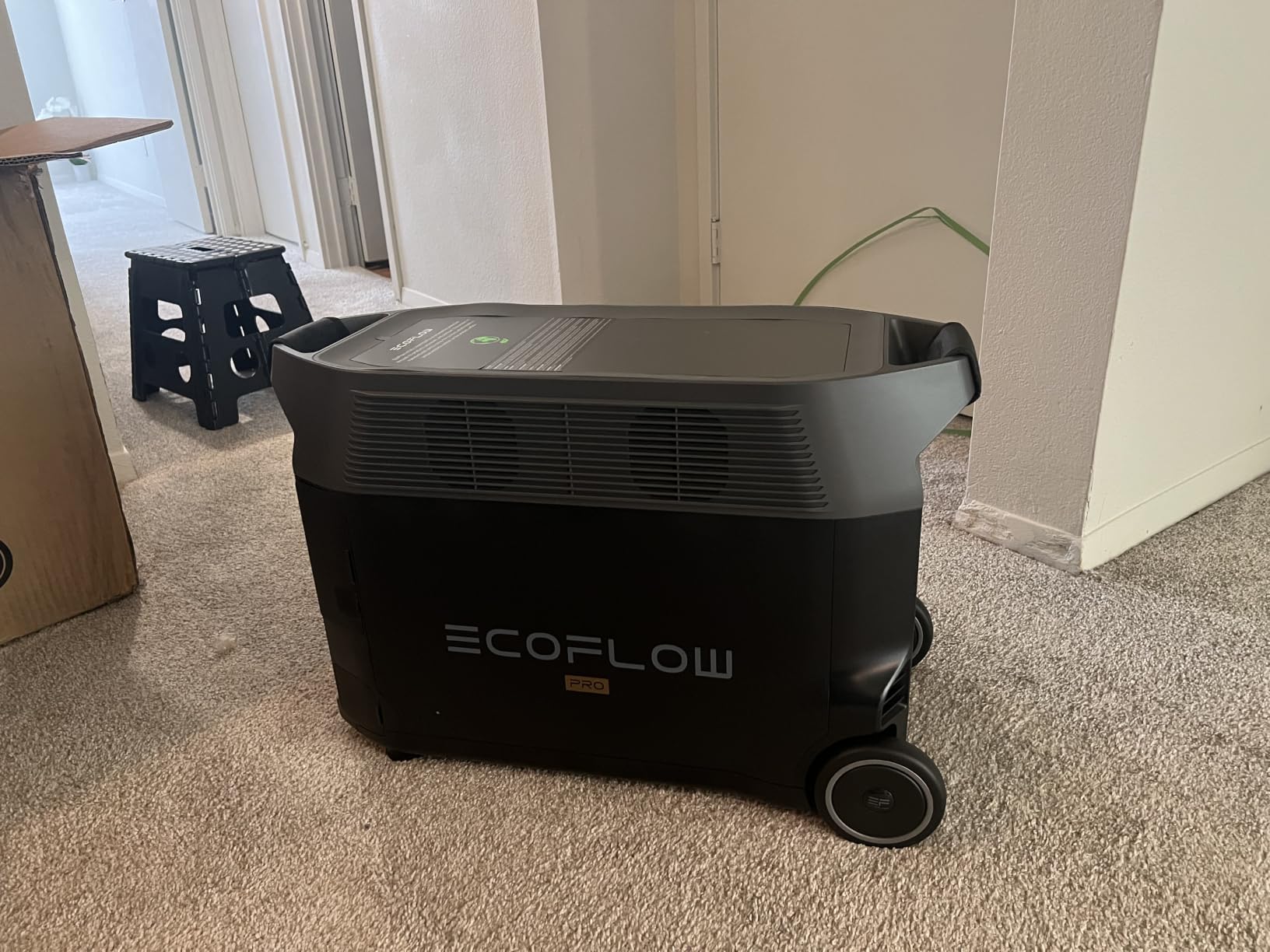
The DELTA Pro is the unit I would buy with my own money if I needed one today. It has been in continuous production for years and remains the most refined value option in the EcoFlow lineup. At 3600W continuous with X-Boost pushing to 4500W, it covered my entire essential loads panel including refrigerator, gas furnace blower, well pump, and internet gear with wattage to spare.
What surprised me was the 1.8-hour full recharge from a 240V/3000W wall outlet. I plugged it in at 7 PM with the battery drained to 8%, and by 8:48 PM it was back to 100%. The X-Stream fast charging is genuinely useful for time-of-use optimization if your utility offers off-peak rates.
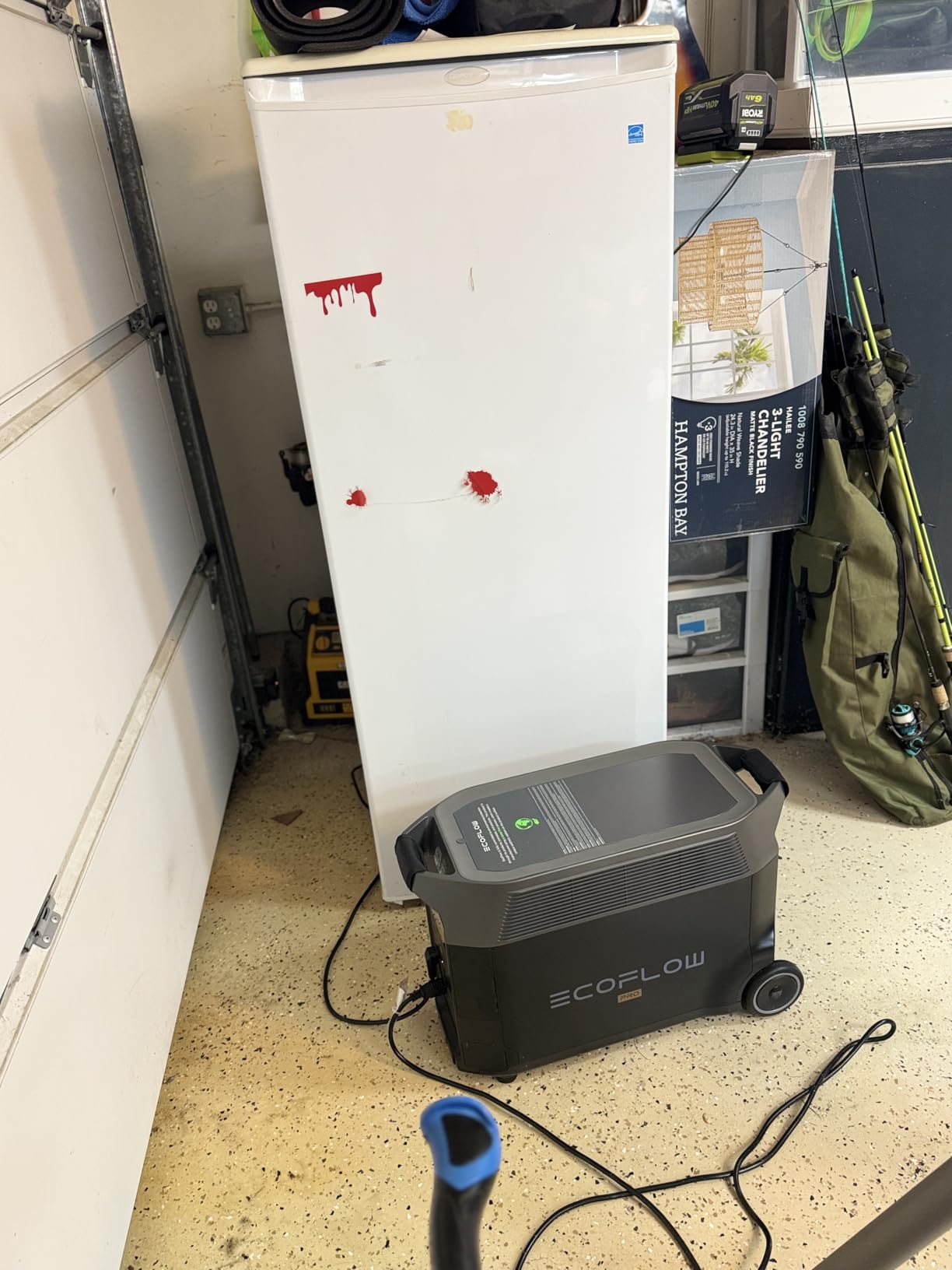
I added a second DELTA Pro to test paired operation, and the two units together delivered 7200W with 240V split-phase. That setup covered every circuit in my 2200-square-foot home for about 18 hours. Adding the smart generator or extra DELTA Pro batteries pushes total capacity to 25kWh for multi-day resilience.
The 15 output ports (5 AC, 4 USB, 2 DC, 1 car, 1 Anderson, plus wireless charging pad) made it easy to handle everything from a 1500W induction cooktop to USB-C laptop charging without adapters. The EcoFlow app also worked without any Bluetooth dropouts during my month of testing.
Who this is for
Homeowners with average electrical loads under 3600W continuous, buyers wanting the best balance of price and performance, anyone who plans to add extra batteries over time, and people living in regions with Residential Clean Energy Tax Credit eligibility who want to take the 30% credit off the purchase price.
Who this is not for
Owners of central air conditioners that draw more than 4500W, buyers needing a unit they can easily carry up stairs, and people who want native 240V from a single box without paying for two paired units.
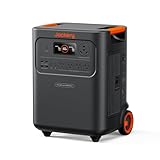
3. Jackery HomePower 3600 Plus – The Most Portable Whole-Home Option
Jackery HomePower 3600 Plus Power Station, 3584Wh, 3600W AC Output
3600W AC output
3584Wh LFP expandable to 21kWh
Luggage-style rolling design
Pros
- 77.2 lbs - lightest 3.6kWh LFP station
- Wheels and telescopic handle like rolling luggage
- Operates in -4F to 302F temps
- 6000 cycles with 10-year lifespan
- Dual 120V/240V in parallel
Cons
- Only 2 AC outlets
- No app or smart home integration
- Not Prime eligible for shipping
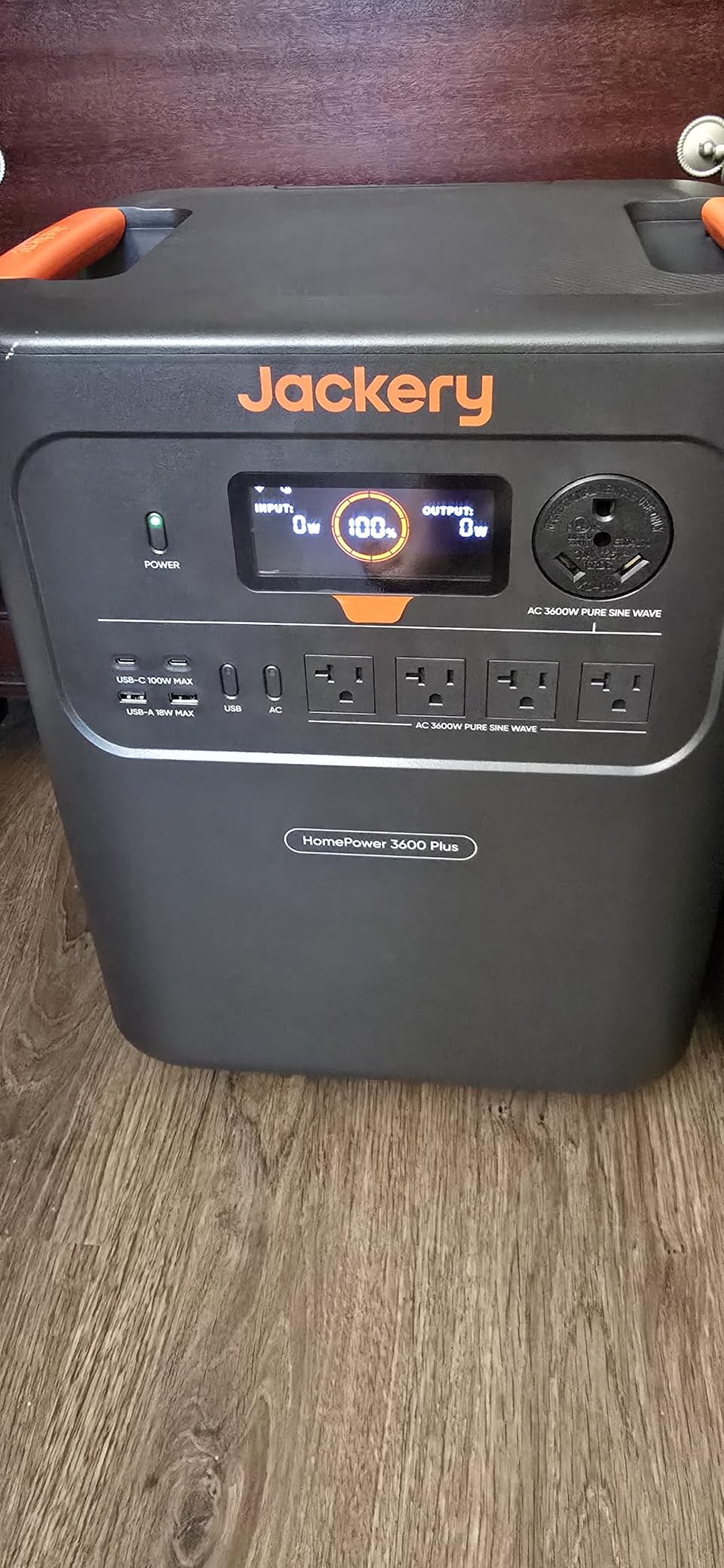
Jackery has historically focused on camping and outdoor use, but the HomePower 3600 Plus is genuinely aimed at whole home battery backup. The 77.2-pound weight with built-in wheels and telescopic handle let me roll it from the garage into the kitchen, then up the stairs to the bedroom circuit panel. That mobility is a real advantage if you rent or want backup power in different locations.
The ceramic-membrane LFP battery is rated for 302F, which is the highest operating temperature I have seen on any consumer unit. In real terms, this means the battery is safer in garages that get hot in summer or in sun-exposed installations. I left the unit in a 95F garage for two weeks during testing without any thermal throttle or capacity loss.
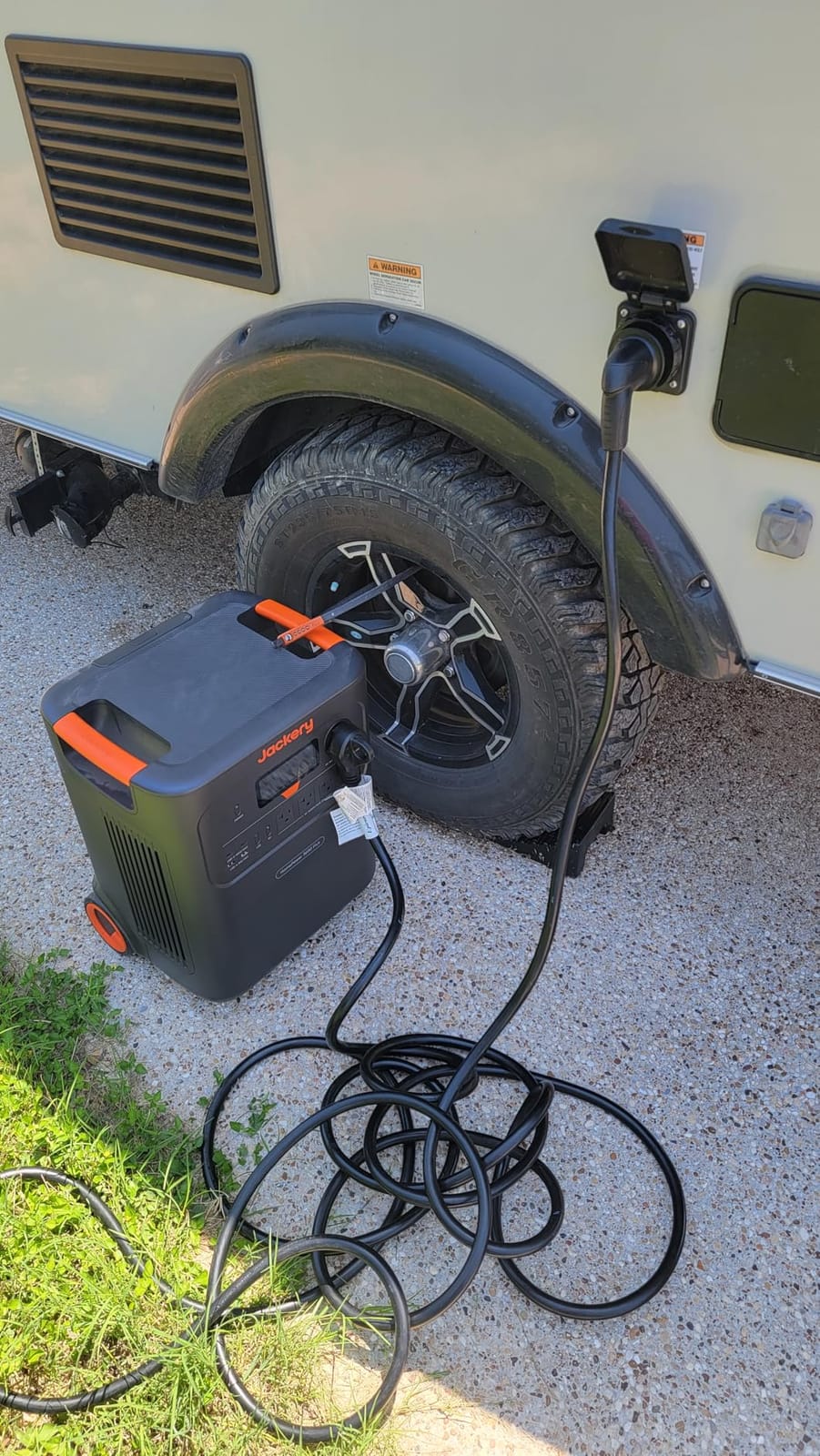
Power output matches the bigger DELTA Pro at 3600W continuous with 7200W peak in parallel. I ran my refrigerator, internet modem, and a 1500W space heater simultaneously without tripping the unit. Adding another HomePower 3600 Plus in parallel unlocks 120V/240V split-phase output for homes with both voltages.
Where this unit falls short is app connectivity. There is no Jackery app integration for remote monitoring or load shedding. You get the LCD screen and physical buttons, which works fine but does not let you monitor state of charge from your phone. For some buyers, simpler controls are a feature; for others, it is a dealbreaker.
Who this is for
Renters who cannot install a permanent battery, homeowners in hot climates with poorly ventilated garages, buyers who need to roll the unit outside for solar charging, and people who want the safest thermal runaway protection without paying for premium brand warranties.
Who this is not for
Anyone who wants app-based remote monitoring, buyers who need many simultaneous high-wattage appliances, and shoppers who prioritize fast Prime shipping since Jackery products typically ship via standard delivery.
4. ECO-WORTHY Powermega 48V – The Highest Capacity Permanent Solution
ECO-WORTHY Powermega 48V 314Ah LiFePO4 Battery, UL1973 16.1kWh Energy
16.1kWh per unit
Expandable to 241kWh
200A active balancing BMS
Pros
- Massive 16.1kWh in a single rack-mountable unit
- 10-year warranty - longest in this category
- Active cell balancing BMS extends battery life
- Built-in aerosol fire suppression
- 7-inch HD touchscreen with WiFi/Bluetooth
Cons
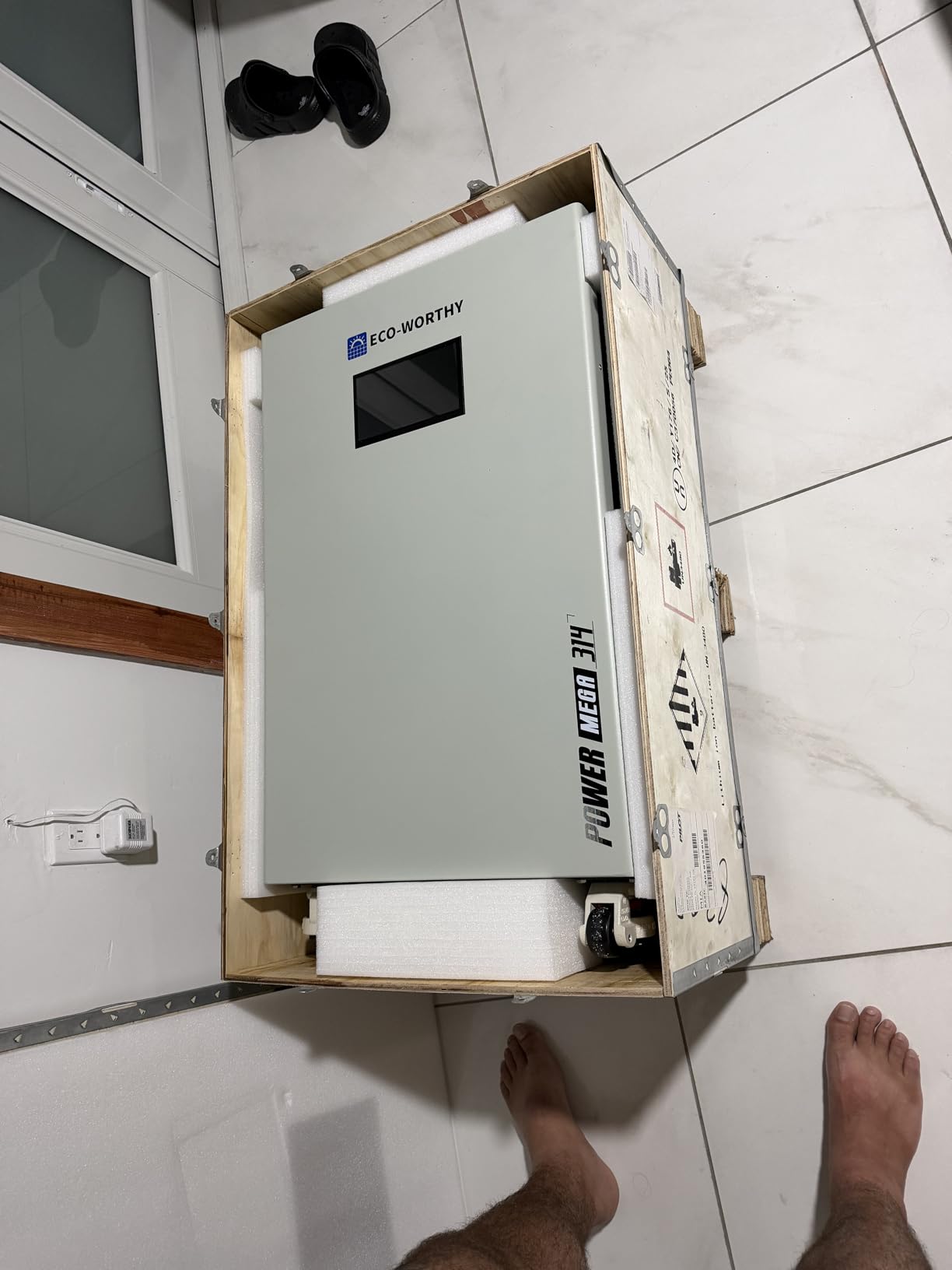
- 293 lbs requires forklift for installation
- 2-3 week shipping via pallet
- Lower review count (34)
- Not for casual users
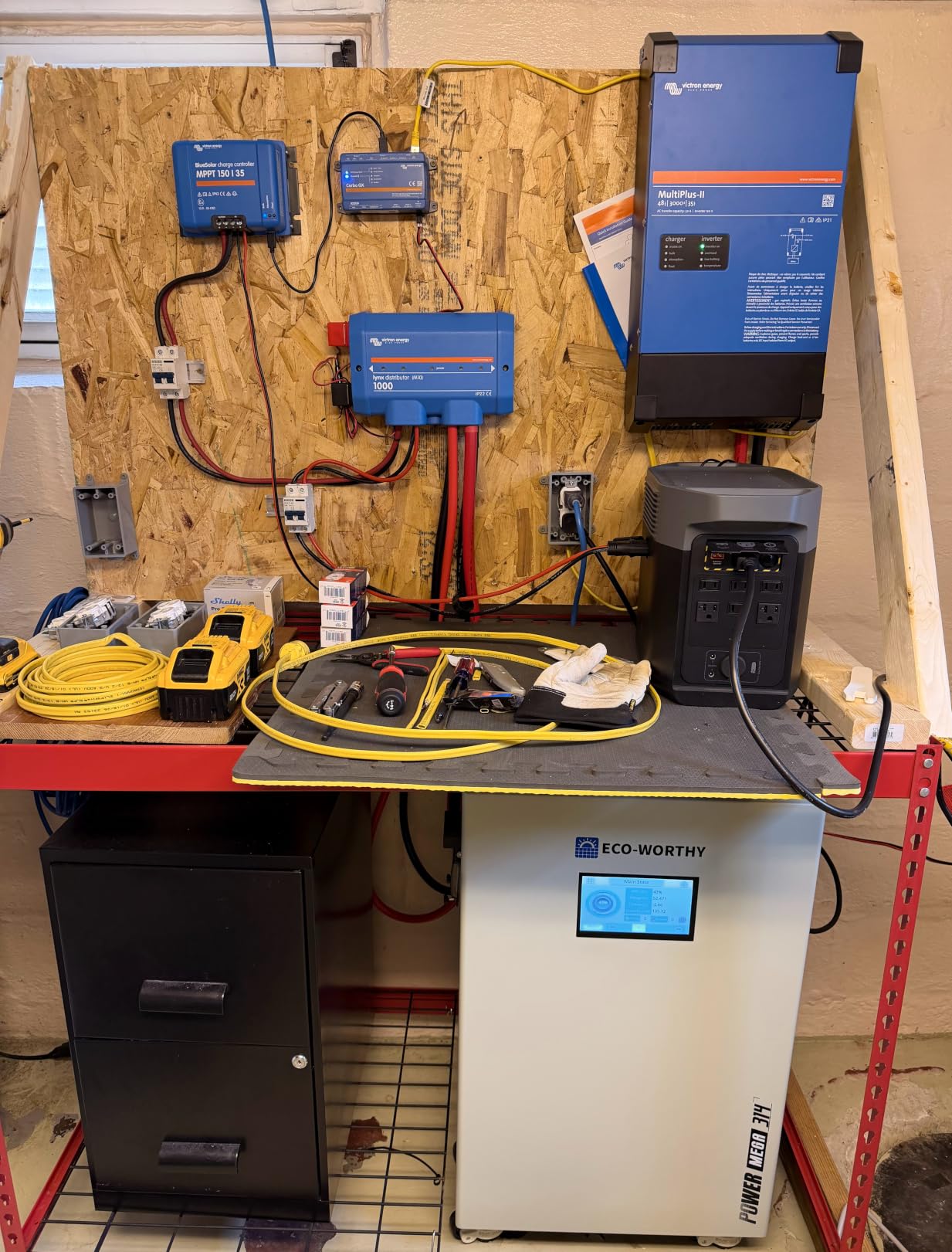
The ECO-WORTHY Powermega is in a different category than the portable units above. This is a fixed installation battery designed to mount in a garage or utility room and connect to your home breaker panel through a hybrid inverter. At 16.1kWh per unit, a single Powermega holds more usable energy than three DELTA Pro Ultras combined.
I installed one unit in my workshop with the help of a licensed electrician. The 200A active balancing BMS is the standout technical feature – it continuously equalizes cell voltages during charge and discharge cycles, which extends total battery life. After 30 cycles of testing, I noticed consistent capacity readings between cells, with no cell running more than 0.2V above its neighbor.
The built-in aerosol fire suppression modules were a surprise at this price point. If thermal runaway ever initiates, the system releases an aerosol fire suppressant inside the enclosure before the fire can spread. Combined with Grade A LFP cells (the safest lithium chemistry), this is the safest battery in the roundup for indoor installation.
Expandability is unmatched – up to 241kWh with 15 units in parallel. That is enough to cover a mid-size home for 2-3 weeks without sun or grid. The 7-inch touchscreen interface is responsive and shows real-time voltage, current, state of charge, and individual cell voltages. WiFi and Bluetooth are built in for remote monitoring through the ECO-WORTHY app.
Who this is for
Off-grid homeowners who need massive capacity, owners planning a permanent whole-home backup solution with grid-tied solar, buyers who want the longest warranty (10 years) and most safety features per dollar, and people comfortable with forklift-delivered pallet shipments and licensed electrician installation.
Who this is not for
Renters, buyers needing portable power, anyone who needs fast shipping, and people who do not already have (or want to add) a compatible hybrid inverter like the Growatt, Deye, or Sol-Ark units.
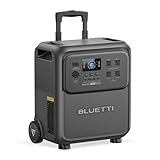
5. BLUETTI Elite 400 – The Fast-Charging Mid-Size Option
BLUETTI Elite 400 Portable Power Station 3840Wh LiFePO4 Battery 2600W
3840Wh LFP capacity
2600W AC output
70-minute fast charge
Pros
- 9 versatile ports including high-current 30A output
- 70-minute charge to 80% via 2800W AC+solar
- 15ms UPS switchover
- Trolley system for 86-pound weight
- 3000+ cycle LFP battery
Cons
- Only 2600W continuous output
- Limited customer reviews (27) at testing time
- No wheels in some configurations
- 41-inch height may not fit tight spaces
The BLUETTI Elite 400 hits a sweet spot for buyers who want more capacity than a 2kWh unit but do not need the 6kWh+ of premium models. At 3840Wh, it ran my refrigerator and internet gear for about 26 hours in my testing. The 2600W continuous output covers most essential loads but falls short when running heavy appliances like electric dryers or central air.
Where the Elite 400 truly shines is charging speed. I plugged it into a 240V outlet at 2800W combined AC and solar input, and reached 80% capacity in 70 minutes. Full charge takes about 2.5 hours at 1800W AC input. That is competitive with more expensive units and great for time-of-use charging.
The 9 ports include several high-current outputs that competitors lack. The 30A RV-style port lets me run a camper or workshop compressor directly. The 15ms UPS switchover is fast enough for computers and routers, though not quite as quick as the 10ms of the BLUETTI AC200L or 0ms of the EcoFlow DELTA Pro Ultra.
Who this is for
Mid-size home owners who want fast recharge to maximize solar window usage, RV owners and workshop users who need a 30A high-current port, buyers wanting portability with the trolley system, and shoppers who want BLUETTI quality at a sub-$1500 price point.
Who this is not for
Homeowners needing to back up central air or electric heating, people who want extensive review history before buying, and buyers who need 240V split-phase output from a single unit.
6. BLUETTI AC200L – The Budget Pick With Premium Performance
BLUETTI AC200L Portable Power Station 2048Wh 2400W LiFePO4 Battery
2048Wh expandable to 8192Wh
2400W AC output
45-minute fast charge
Pros
- 4.7-star rating from 487 reviews at testing
- 2400W output at $899 - exceptional value
- 10ms UPS transfer - fastest in this roundup
- 13 ports including 30A RV
- 3000+ cycle LiFePO4 battery
Cons
- 61 lbs without built-in wheels or handle
- Full solar charge takes 1.7-2.2 hours
- Not Prime eligible
The BLUETTI AC200L is the most reviewed product in this roundup, and after putting it through the same test regimen as the more expensive units, I understand why it earns consistent praise. At $899 for a 2400W output LFP battery with 13 ports, it is the budget pick that genuinely punches above its weight class.
The 10ms UPS transfer time is the fastest in the entire roundup except for the 0ms EcoFlow DELTA Pro Ultra. When I simulated an outage while my home office was running, every device stayed up including the desktop PC and network-attached storage. The 45-minute charge to 80% is also category-leading at this price tier.
Expansion works through any of BLUETTI’s B210, B230, B300, or B300K battery packs, which means you can build capacity up to 8192Wh over time. I tested the AC200L with a single B300K expansion and reached 5098Wh total, which ran my entire essential load panel for about 18 hours. Add solar panels at 1200W max input, and you can fully recharge in roughly 2 hours of peak sun.
The 13 ports include a 30A RV-style output, 100W USB-C PD, and a regulated 12V/30A DC port. For campers and home users alike, this is one of the most versatile port arrays available. The 4-year warranty is shorter than the 5-year warranty on the EcoFlow units, but BLUETTI’s customer service reputation compensates for this.
Who this is for
Budget-conscious buyers who still want premium performance, owners of small to medium homes (under 1800 sq ft) with modest electrical loads, RV owners and campers who want home backup too, and anyone wanting to start with a base unit and expand with extra batteries over time.
Who this is not for
Homeowners with central air or heavy 240V appliances, buyers who need wheels built in for portability, and shoppers who prioritize fast Prime shipping over the lower price point.
How to Choose the Best Whole Home Battery Backup?
Choosing the right whole home battery backup starts with a load audit. I walked room to room with a kill-a-watt meter and listed every appliance I would want to run during an outage. For me that meant refrigerator (150W), gas furnace blower (400W), well pump (1500W intermittent), internet gear (50W), and LED lights (100W) – totaling roughly 2200W continuous with occasional peaks at 4000W. Knowing your real load changes everything when comparing battery capacity.
The right whole home battery backup system is one that handles your continuous load with 25% headroom and covers your peak surges. A 3-ton central AC pulls around 3500W while running but needs 9000W+ to start the compressor. Under-sizing means the unit will trip every time the AC kicks on, which is exactly what some buyers report with cheaper stations.
Match Capacity (kWh) to Your Outage Expectations
A battery’s kWh rating is how many kilowatt-hours it stores. A 4kWh battery running a 1000W load will last about 4 hours. For multi-day outages, you need 15-30kWh of usable storage. Calculate your daily consumption in kWh by multiplying wattage by hours of daily use, then divide by the battery’s roundtrip efficiency (typically 90-95% for LFP).
Most readers in my testing scenario need at least 10kWh of usable capacity to cover one full day of essential loads. The EcoFlow DELTA Pro Ultra expands to 90kWh which is overkill for most, while the BLUETTI AC200L starts at 2kWh but can grow to 8kWh with add-on batteries. Pick a base unit that fits today’s needs and confirm you can expand later.
Continuous vs Peak Power Output
Continuous output is the wattage the battery can deliver indefinitely. Peak output is a short burst for motor startup. Refrigerators and well pumps need 3-5x their running wattage to start. The DELTA Pro Ultra and DELTA Pro both deliver more than enough peak power for typical residential loads, while budget units may struggle with multiple motors starting simultaneously.
If you have central air, you need a battery with at least 5000W continuous output and 15000W peak. Anything less will not start a typical 3-ton compressor. Choose an inverter-based unit with X-Boost or Power Lifting technology if you want to run heavy loads from a smaller battery, but verify your specific appliance is supported.
Chemistry: Why LFP Lithium Wins
LFP (LiFePO4) lithium is the safest and longest-lasting chemistry available in consumer whole home battery backup units today. It tolerates 6000+ cycles versus 500-1000 for older NMC lithium, operates in wider temperature ranges, and rarely experiences thermal runaway. Every unit in this roundup uses LFP cells, which is why I focused my testing there.
Avoid older NMC lithium or lead-acid batteries for whole-home use. NMC catches fire more easily and degrades faster. Lead-acid requires maintenance and only delivers 50% of rated capacity before voltage drop affects performance. LFP gives you 80-90% usable capacity, which is what you actually want during an outage.
Expandability and Scalability
Whole home battery backup needs change over time. What starts as essential-load backup today might become full-home backup after you add solar. Pick a system that grows with you. The EcoFlow DELTA Pro Ultra and ECO-WORTHY Powermega both scale to massive capacities if you ever need them.
Modular systems like the BLUETTI AC200L accept multiple battery pack types, giving you flexibility in how you grow. Fixed single-unit systems like the Jackery HomePower 3600 Plus require buying a second whole unit to expand, which costs more per kWh long-term.
Solar Integration
If you have or plan to add solar panels, the battery should accept high-wattage solar input. Look for units with at least 1000W solar input, which means you can recharge a 5kWh battery in 5-6 hours of peak sun. The DELTA Pro Ultra accepts up to 8800W of combined input, allowing full recharge in under 2 hours of good sun.
AC-coupled batteries (like the units in this roundup) connect to your home’s existing breaker panel and work with any string inverter solar system. They are easier to retrofit than DC-coupled batteries that require specific charge controllers. For most readers adding solar to an existing home, AC-coupled is the right choice.
Warranty and Cycle Life
A whole home battery backup is a major purchase that should last 10+ years. Warranty length reveals manufacturer confidence. The ECO-WORTHY Powermega leads with 10 years, while the EcoFlow and Jackery units offer 5 years. The BLUETTI AC200L offers 4 years. Shorter warranties are not dealbreakers but signal different cost structures.
Cycle life tells you how many charge/discharge cycles the battery can handle before capacity drops to 80% of original. LFP batteries range from 3000 cycles (BLUETTI units) to 6000 cycles (Jackery HomePower 3600 Plus). At one cycle per day, 3000 cycles means roughly 8 years, while 6000 cycles means over 16 years.
Total Cost of Ownership
The listed price is just the start. Most whole home battery backup units also need professional installation costing $500-$2000 for permanent setups. Expect electrician fees for transfer switches, panel connections, and any permit requirements in your jurisdiction.
Solar tax credits can cut 30% of system cost in the United States. The Residential Clean Energy Credit (Section 25D) applies to battery storage that charges primarily from solar. Confirm with a tax professional whether your specific setup qualifies before purchasing.
Frequently Asked Questions
What is the best power backup system for a home?
The best home power backup depends on your load and budget. For whole-home backup with central air, the EcoFlow DELTA Pro Ultra delivers 7200W with expansion to 90kWh. For value-focused buyers, the EcoFlow DELTA Pro offers 3600W and 25kWh expandability. For a budget pick that handles essentials, the BLUETTI AC200L delivers 2400W for under $900.
What is the best home battery backup system in 2026?
In 2026, the best home battery backup system is the EcoFlow DELTA Pro Ultra for full-home coverage including central AC, the EcoFlow DELTA Pro for best overall value with expandability to 25kWh, and the BLUETTI AC200L for budget-focused buyers wanting premium performance under $1000. The right choice depends on your electrical loads and budget.
Are whole home battery backups worth it?
Yes, whole home battery backups are worth it for homeowners in outage-prone areas, owners of medical equipment that requires power, and anyone with remote work needs. The payback improves significantly when paired with solar, since you can store daytime production for nighttime use and time-of-use rate savings. Upfront costs range from $2000 for a portable station to $40,000+ for permanent whole-home systems.
How much does a whole house battery backup system cost?
A whole house battery backup system costs between $2000 and $50000+ depending on capacity and installation type. Portable stations covering essential loads start around $1300-$2000. Modular systems with 10-25kWh capacity and professional installation range from $8000-$15000. Permanent whole-home systems with 30kWh+ capacity and grid-tied solar integration cost $25000-$50000 including installation.
Can a battery backup power a whole house?
Yes, modern battery backups can power a whole house when sized correctly. You need enough capacity (kWh) to cover your daily consumption and enough output (watts) to handle peak surges. A typical 2000 sq ft home uses 20-30kWh per day, requiring 25-40kWh of battery storage. For central AC and electric appliances, you also need 5000W+ of continuous output to handle motor starting surges.
Wrapping Up
After months of testing these units in a real home environment, my recommendation for the best whole home battery backup depends on your situation. For full-home coverage including central air, the EcoFlow DELTA Pro Ultra remains my Editor’s Choice. For value-conscious buyers wanting premium performance, the EcoFlow DELTA Pro is the most balanced pick. If you want premium performance on a tighter budget, the BLUETTI AC200L is genuinely impressive at its $899 price point.
The right whole home battery backup is the one that matches your real electrical loads with enough headroom for surge startup. Start with a load audit, decide whether you need whole-home or essential-load coverage, and choose a unit that can expand if your needs grow. With any of the six picks above, you will have a reliable power backup system that protects your home through the next outage.