
A large family does not need a bigger television. It needs a dryer with enough drum volume that one load of towels, jeans and a sheet set comes out dry in a single pass, every time, without the pile on the laundry room floor growing another foot by Sunday night.
That is the whole argument behind the best gas dryers for large families: capacity measured in cubic feet, moisture sensing that stops the cycle when the load is actually dry, and enough cycle choice to handle king-size comforters, wet towels and school uniforms without re-running anything. Full-size gas dryers are a narrow category on Amazon, so we kept the list tight and only included units that pass a real capacity, venting and owner-evidence check.
We compared 6 gas dryers across the capacity range from 7.2 to 9.0 cu. ft., read the published specifications for drum volume, venting reach, warranty and energy consumption, and weighed each against the owner feedback attached to the listing. Updated for 2026, this guide is built around the question large families actually ask first: how many cubic feet do I need?
While you are planning a laundry room refresh, you may also be choosing other appliances that get used hard every day, like coffee makers built for large families or an outdoor gas grill. Same logic: capacity that matches the household.
The same sizing logic runs through the rest of the house. A pellet grill rated for a large family and a rice cooker that handles a full pot of sides are the same purchase decision in a different room: buy the size that matches how much you actually cook, not the size that looks impressive on the box.
Top 3 Picks: Gas Dryer Picks for Large Families (October 2026)
The Kenmore 8.0 cu. ft. front load takes our top slot because it pairs the largest well-reviewed drum in this group with a steam hook-up and 12 drying cycles. The GE Profile 7.2 cu. ft. is the value pick and the easiest machine to install in a home with a long vent run. The LG 9.0 cu. ft. wins on sheer drum volume for king-size bedding.

Kenmore 8.0 cu. ft. Front Load Gas Dryer
- 8.0 cu. ft. drum
- Accela Steam refresh
- 12 cycles
- Wrinkle Guard


LG 9.0 cu. ft. Smart Gas Dryer
- 9.0 cu. ft. drum
- SteamDry and Sanitary Cycle
- Stackable
- ENERGY STAR
Best Gas Dryers for Large Families in 2026 at a Glance
Every model below is a vented gas dryer at or above 7.2 cu. ft. Read the table first: capacity, venting reach and warranty narrow the field faster than any other three attributes, and the three filters that separate these units are drum volume, vent flexibility and the length of the warranty on the parts that actually fail.
| Product | Specifications | Action |
|---|---|---|
| Kenmore 8.0 cu. ft. Front Load Gas Dryer |
|
Check Latest Price |
| LG 9.0 cu. ft. Vented Smart Stackable Gas Dryer |
|
Check Latest Price |
| GE 7.2 cu. ft. Gas Dryer with 120 ft. Venting |
|
Check Latest Price |
 Samsung DVG50R5200W 7.4 cu. ft. Gas Dryer Samsung DVG50R5200W 7.4 cu. ft. Gas Dryer |
|
Check Latest Price |
 LG DLG6101W 7.3 cu. ft. Gas Dryer LG DLG6101W 7.3 cu. ft. Gas Dryer |
|
Check Latest Price |
 GE GFD85GSPNRS 7.8 cu. ft. WiFi Gas Dryer GE GFD85GSPNRS 7.8 cu. ft. WiFi Gas Dryer |
|
Check Latest Price |
1. Kenmore 8.0 cu. ft. Front Load Gas Dryer – Best Overall for Large Families
Kenmore 8.0 cu. ft. Front Load Gas Dryer – White
8.0 cu. ft. drum
12 cycles and 8 options
Accela Steam refresh
138.6 lb, 33.67 in deep
Pros
- Largest well-reviewed drum in this group at 8.0 cu. ft.
- Accela Steam with a 15 minute refresh cycle
- 12 drying cycles plus 8 options for bulky bedding and non-washable items
- Moisture-sensor Smart Drying and Wrinkle Guard
- Reversible door and LED light-touch controls
Cons
- One owner reports failure in under a month with an unresolved warranty case
- 13 percent of ratings are 1 star
- Energy Saver option claims only up to 8.2 percent energy reduction
The Kenmore 8.0 cu. ft. front load gas dryer is the machine I keep coming back to after going through this list twice. It carries an 8.0 cubic foot drum, which puts it firmly in the range where a family of five to seven can wash a full week of laundry in two or three loads instead of four or five.
Where it separates from the rest is feature count rather than raw volume. The published specification lists 12 drying cycles and 8 additional options, and there is a dedicated extra cycle set for things a normal dry cycle handles badly: decorative pillows, sleeping bags and plush toys. In a house with kids, that is a real weekly chore solved.
The steam side matters more than most guides admit. Accela Steam technology runs through a water hook-up, and the Steam Refresh cycle handles a 3 pound load in 15 minutes to knock out wrinkles, static and odor. Reviewers repeatedly single that feature out as the reason they would buy this dryer again, and it is the one that lets a family re-wear a school uniform that dried slightly wrinkled instead of running it again.
Moisture-sensor Smart Drying is the other half of the value proposition. Instead of running a fixed clock, the sensors check humidity in the load and stop when the target dryness is reached, which is what prevents the overdried towels that make towels stop feeling soft. Wrinkle Guard holds finished items smooth if you do not unload immediately, and the LED light-touch display shows cycle status and time remaining so you are not opening the door every ten minutes.
The Energy Saver option claims up to 8.2 percent energy reduction on supported cycles, which is real but modest. We would not buy this machine on that number alone; the reason to pick it is the combination of drum size, cycle count and steam in one chassis.
Two negatives deserve a straight mention. One owner reports the dryer failed in under a month and that the warranty replacement was never resolved, and roughly 13 percent of the ratings on this listing sit at 1 star. That is the highest share of 1-star ratings among the units in this roundup, so it is a pattern worth noting rather than dismissing as noise.
Who the Kenmore 8.0 cu. ft. suits
It suits a household of five to seven that washes towels in bulk and has a comforter that needs to fit in one drum without being crammed. It also suits anyone who wants steam refresh on a gas dryer, because that hook-up and cycle pairing is not standard across the category.
The practical argument is load count. At 8.0 cubic feet you are looking at fewer weekly cycles than a 7.2 cu. ft. drum forces on you, and every cycle you do not run is energy you do not buy, a basket you do not re-wash, and forty minutes nobody has to spend folding the same clothes twice.
Dimensions are 33.67 inches deep by 27 inches wide and 39.75 inches high, at 138.6 pounds. Plan the alcove depth and the door swing before delivery, and check that the steam water line can reach the hook-up.
Where the Kenmore 8.0 cu. ft. falls short
The review base is thin at 20 ratings, so the 4.3 average is encouraging but not settled. If your household is quiet-sensitive, note that this dryer does not publish a noise rating, so you will be guessing on sound.
Warranty coverage is one year on the appliance, which is the shorter of the two figures on this list. The LG 7.3 cu. ft. below carries a 3 year drum warranty on top of its 1 year parts and labor, and on a machine you plan to keep for a decade that difference is worth weighing.
2. LG DLGX8901B 9.0 cu. ft. Vented Smart Stackable Gas Dryer – Best for the Biggest Loads
LG 9.0 cu. ft. Vented Smart Stackable Gas Dryer in Black Steel with TurboSteam and Sensor Dry Technology
9.0 cu. ft. drum
SteamDry and Sanitary Cycle
Stackable, 32.13 in deep
161 lb
Pros
- Largest drum in this roundup at 9.0 cu. ft.
- SteamDry technology plus a dedicated Sanitary Cycle
- ENERGY STAR compliant gas operation
- Stackable form factor for tight laundry layouts
- Reversible door
Cons
- Only 4 ratings and 29 percent of them are 1 star
- One detailed review describes a door installed on the wrong side and a misaligned screw
- No published price on the listing
If your household runs king-size comforters, winter blankets and a full week of uniforms, the LG 9.0 cu. ft. is the biggest drum in this roundup by a clear margin. At 9.0 cubic feet it is 0.7 cu. ft. larger than the Kenmore and 1.8 cu. ft. larger than the GE Profile, and that gap is the difference between a comforter tumbling freely and a comforter packed tight against the drum wall.
SteamDry steam technology handles the wrinkle and odor problem on a large load, and the Sanitary Cycle is aimed squarely at families with allergies or young children. It is the only dryer here with both of those cycles plus the largest drum, which makes it the natural choice when bedding volume and sanitizing both matter.
The stackable form factor is the quiet advantage most buyers miss. It measures 32.13 inches deep by 29 inches wide and 40.75 inches high, and 59 inches with the door open, so it fits a stacked laundry layout where a 33 inch deep cabinet would not. That depth figure is the number to measure against your alcove, not the 32 inch body.
Sensor Dry Technology adjusts both drying time and heat level to the load, and the unit is listed as ENERGY STAR compliant for gas operation. Black Steel finish and a reversible door round out a specification sheet that reads well on paper.
What the 9.0 cu. ft. drum actually buys you
Owners of high-capacity dryers consistently report that overloading the drum is a leading cause of clothes coming out damp after a full cycle, so the extra 1.8 cu. ft. is insurance against exactly the failure large families complain about. More volume means a comforter or a bulk towel load moves freely instead of sitting in a packed mass.
The stackability is what makes that volume practical in a smaller laundry room. If your washer and dryer share a closet or a basement nook, the 59 inch door-open depth is your planning number.
Where the evidence is thin on the LG 9.0 cu. ft.
We have to be direct about the review data: 4 ratings, with 29 percent at 1 star, tells you almost nothing about how the machine performs over ten years. The single written review is negative, and it concerns the door being installed on the wrong side with a misaligned screw and a service experience that did not get resolved, not the drying itself.
No price is published on this listing either, so you cannot compare cost against the other five from the page alone. Treat this as a capacity and feature option, buy it for the drum and the cycle set, and confirm the price directly before you commit.
3. GE Profile GTD38GASWWS 7.2 cu. ft. Gas Dryer – Best Value and Easiest Fit in Older Homes
GE 7.2 cu. ft. Gas Dryer with Up to 120 ft. Venting and Reversible Door
7.2 cu. ft. drum
Vents up to 120 ft
Auto Dry and large diffuser
103 lb, 29.5 in deep
Pros
- Venting supported to 120 ft. for awkward layouts
- Lowest weight in the group at 103 lb
- Auto Dry plus a large diffuser for even drying
- Reversible door and freestanding front-load form
- Fast dry times reported on the more-dry setting
Cons
- No steam cycle and no app or smart features
- Several owners describe it as noticeably noisy
- One owner replaced the heating elements after a short period of use
- One 1-star review reports a start button failure inside two years
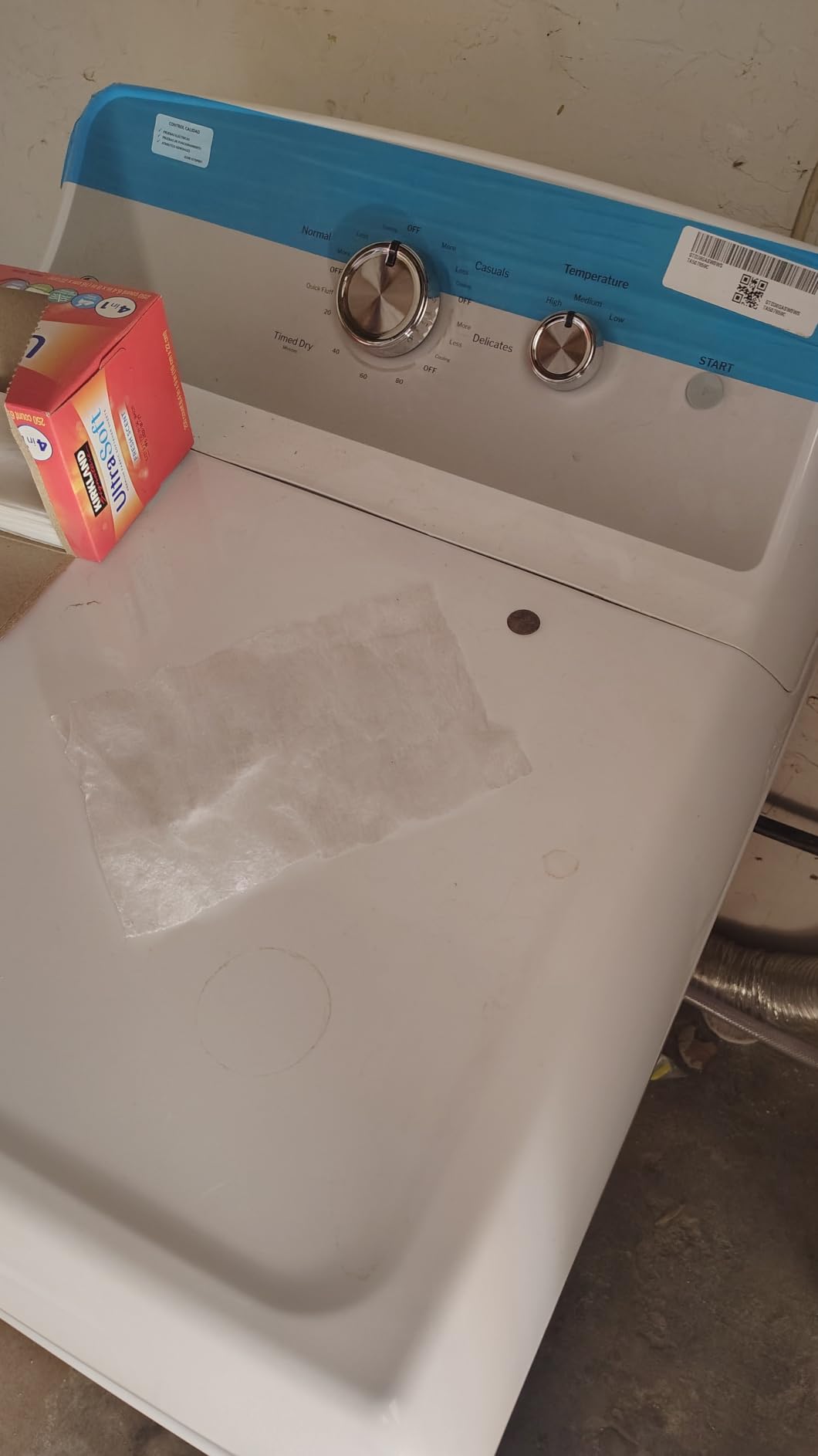
The GE Profile GTD38GASWWS wins on a single practical advantage that no other dryer in this roundup can match: venting installation supported up to 120 feet of duct run. Most machines assume a 60 to 80 foot ceiling, and in an older home with a laundry room in a far corner of the basement, that difference decides whether the install is straightforward or whether you are relocating the dryer.
At 103 pounds and 29.5 inches deep by 27 inches wide and 44 inches high, it is also the lightest and most compact unit here, which matters when two people are carrying it down basement stairs. The small footprint is a genuine advantage in a laundry room shared with a water heater.
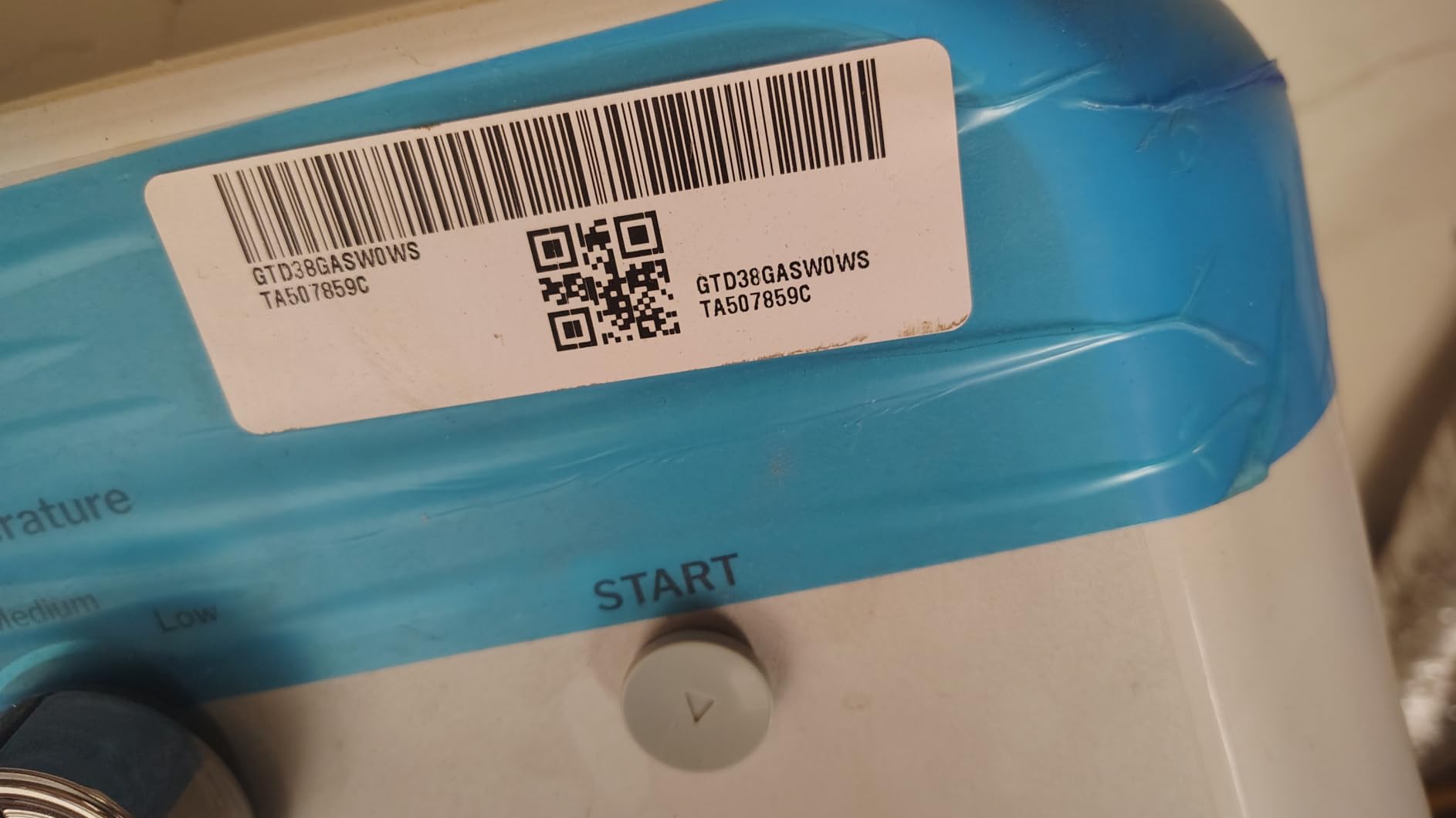
The drying specification is deliberately plain. Auto Dry handles moisture-based stopping, and a large diffuser moves air across the drum to dry evenly, which is the part that keeps a bulk towel load from drying unevenly. The reversible door lets you swing the hinge toward whichever wall gives you clearance. There is no steam cycle, no app and no WiFi here, and we would not pretend otherwise.
Owner feedback on dry speed is the strongest part of the picture for this machine. Several owners report notably fast times on the more-dry setting, which is exactly the setting a family drying eight loads of towels wants to use.
Who the GE Profile 7.2 cu. ft. suits
It suits a household replacing an electric dryer in a home that already has a gas line, especially one with a long or awkward vent path. It also suits anyone whose priority is fast drying on a fixed budget rather than feature count.
The 7.2 cu. ft. drum is the smallest of the six, so if you regularly wash king-size bedding you are giving up some tumbling room. For daily uniforms, towels and clothes, it is still a large-capacity drum by any normal standard.
Where the GE Profile 7.2 cu. ft. falls short
Noise is the most common complaint, with several owners describing it as noticeably louder than pricier models. If your laundry room adjoins the living space and the door is open during load changes, that is worth weighing before you buy.
There are also two specific failure reports to be aware of: one owner replaced the heating elements after a short period of use, and one 1-star review reports a start button that failed in under two years. Warranty coverage is a limited 1-year entire appliance. With 8 ratings at a 4.1 average, the sample is small, so treat both the praise and the complaints as signals rather than verdicts.
4. Samsung DVG50R5200W 7.4 cu. ft. Gas Dryer – Best Straightforward Sensor Dry Setup
SAMSUNG DVG50R5200W 7.4 cu. ft. Gas Dryer with Sensor Dry in White
7.4 cu. ft. drum
Sensor Dry moisture sensing
Reversible door
Front load, white
Pros
- Sensor Dry moisture sensing stops the cycle on load condition
- 7.4 cu. ft. drum sits in the middle of the large-capacity range
- Reversible door for flexible installation
- Front-load configuration suits a stacked or side-by-side layout
Cons
- Only one review on the listing
- Thin published feature and cycle detail
- Weight and dimensions are not listed
- No steam or sanitize cycle documented
The Samsung DVG50R5200W is the plainest machine on this list and that is exactly its appeal for some households. A 7.4 cubic foot front-load drum with Sensor Dry technology and a reversible door, in white, with gas heat.
Seven point four cubic feet is a genuinely useful size for a family of five or six. It sits between the GE Profile 7.2 and the Kenmore 8.0, so you get more tumbling room than the entry model without needing the full 33 inch depth of the largest units. That is usually the sweet spot for daily laundry plus a weekly comforter.
We would put this machine in the middle of the pack for a large family: big enough that nobody waits for a free drum, small enough that it does not dominate a small laundry closet, and simple enough that there is no app to set up on a Saturday morning.
Sensor Dry is the one feature we care most about on any gas dryer, and this model has it. Moisture sensors stop the cycle when the load reaches the target dryness rather than running a fixed clock, which saves both time and energy on the mixed loads a family produces.
What the Samsung gets right for everyday laundry
The reversible door is a small feature that saves real friction in tight laundry rooms, because it lets you pick the swing direction that clears your wall and your washer. The front-load format also means it pairs naturally with a matching front-load washer or stacks if your kit allows.
For a household that dries clothes, towels and uniforms on a schedule and does not need steam or sanitizing cycles, the feature set here is sufficient. There is no need to pay for cycles you will never press.
Where the Samsung leaves you short of information
This is the thinnest data on the list, and we would rather tell you that than dress it up. There is a single review at a 4 star rating. One rating cannot tell you anything about reliability, and we did not build that number into our ranking beyond noting the rating exists.
Published detail is also thin. The listing does not include weight or dimensions, which is a real problem for delivery planning, and the cycle list is not described in detail. If your laundry room has tight clearances, get the measurements before ordering rather than after.
5. LG DLG6101W 7.3 cu. ft. Energy Star Gas Dryer – Best for Lower Energy Use
LG 7.3 cu. ft. LG Gas Dryer
7.3 cu. ft. drum
ENERGY STAR, 685 kWh per year
FlowSense duct alerts
3 year drum warranty
Pros
- ENERGY STAR certified with a published 685 kWh per year figure
- FlowSense duct clogging and lint filter indicators
- 3 year drum warranty on top of 1 year parts and labor
- Reversible door with control lock and energy saver
- Quiet operation cited by the written review
Cons
- Only two ratings and 49 percent sit at 1 star
- Only two drying cycles listed
- Sample size too small to judge reliability
The LG DLG6101W is the model to look at if energy use is the number your household cares about, because it is the only dryer in this roundup with a published annual consumption figure and an ENERGY STAR certified rating: 685 kilowatt hours per year. A specific figure is worth more than a label, because you can do the math against your own load count.
At 7.3 cubic feet it is right in the practical middle of the large-capacity range, and the manufacturer describes the drum as suited to comforters, towels and family laundry. The porcelain enamel drum is a different material choice from the stainless drum in the GE WiFi model below, and enamel tends to scratch less under heavy use.
FlowSense indicators are the sleeper feature here. The dryer tells you when the duct is clogging and when the lint filter needs attention, and on a forum-supported point about maintenance, that alert is exactly what prevents the long dry times and overheating that owners complain about.
Those indicators also change the ownership experience in a house with a lot of laundry. Instead of a load taking two cycles because the duct packed up three months ago, you get a prompt, you pull the screen, and the cycle runs normally. Appliance repair forums are full of owners who say the same thing: treat airflow complaints as a duct problem first and a machine problem second.
Why the warranty and efficiency numbers matter together
This unit carries a limited warranty of 1 year parts and labor plus 3 years on the drum. That drum warranty is the strongest coverage on this list, and drums are the component most likely to be damaged in a decade of heavy family use.
Run the energy math yourself: at 685 kWh per year, a household doing roughly 400 loads a year is in the range most families land in once they move to a large-capacity drum. We avoided printing a dollar figure here because utility rates change constantly, but the per-year kWh number is fixed on the label and lets you apply your own rate.
Where the LG 7.3 cu. ft. falls short
The rating on this listing is 3.0 across two ratings, with 49 percent at 1 star. That is not a meaningful reliability signal at a sample size of two, and we would not let it push you away from an otherwise good fit. We simply could not verify long-term reliability from the evidence available.
Only two drying cycles are listed, against 12 on the Kenmore. If your family wants a specific bulky-bedding program or a sanitize option, this machine may not offer it. Weigh the energy and warranty gains against a smaller cycle selection.
6. GE GFD85GSPNRS 7.8 cu. ft. WiFi Gas Dryer – Best for Connected Laundry Rooms
GE GFD85GSPNRS 28″ Front Load Gas Dryer with 7.8 cu. ft. Capacity Stainless Steel Drum Built-in WiFi Sanitize Cycle and Damp Alert in Royal Sapphire
7.8 cu. ft. stainless drum
Built-in WiFi
Sanitize Cycle and Damp Alert
28 in front load
Pros
- Largest stainless steel drum in this roundup at 7.8 cu. ft.
- Built-in WiFi is the only app connectivity offered here
- Sanitize Cycle and Damp Alert together in one machine
- 28 inch front-load width suits standard laundry openings
Cons
- Rated 1.0 from its only review
- Weakest evidence base on the list with a single rating
- Highest cost tier of the six units compared
- No published weight or warranty detail on the listing
The GE GFD85GSPNRS is the specification outlier of this group. It pairs a 7.8 cubic foot stainless steel drum with built-in WiFi, a Sanitize Cycle and Damp Alert, in a 28 inch front-load format, and it is the only dryer here with app connectivity.
Damp Alert is worth explaining, because it solves a specific large-family problem. Rather than guessing whether a load is dry enough to wear, the machine notifies you. When you are doing eight loads a week and re-running the ones that come out slightly damp, a notification removes the guesswork.
The Sanitize Cycle pairs naturally with the stainless drum and the WiFi. For a family with allergies or a baby in the house, having a high-heat cycle you can start from your phone while you are making breakfast is genuinely useful rather than a gimmick.
What the connected features actually change
Remote start and status are the two things that save real time in a busy house, because laundry no longer needs you standing in the room. Everything else about WiFi is secondary, and we would not choose this dryer over the Kenmore for its app alone.
The stainless steel drum at 7.8 cu. ft. is the second largest drum in this roundup, and stainless resists staining from detergent residue and hard water better than painted steel. Dimensions are 32 inches deep by 28 inches wide and 39.75 inches high.
The 28 inch width is worth noting too. It is slightly narrower than several competitors in this group, and in a laundry alcove built to standard residential dimensions that extra inch of clearance can be the difference between a clean fit and having to trim the opening.
Where the GE WiFi model falls short
We have to flag the evidence plainly. This listing has a single rating at 1.0 with no written review, which gives no diagnostic information at all. It is also the most expensive unit in the group by a wide margin, and we cannot justify that premium on the available evidence.
Weight and warranty detail are not published on the listing either. If you are weighing this machine, treat it as a feature and material specification option rather than a recommendation, and consider whether a machine with better owner feedback and a published warranty would serve your household better.
How Much Dryer Capacity Does a Large Family Need?
A household of five or more generally needs 7.4 to 8.0 cubic feet, and 9.0 cu. ft. is the ceiling for anyone who regularly washes king-size comforters or a season of winter bedding. A drum under 7.0 cu. ft. forces re-running damp loads, which is where laundry backlogs actually start.
Two numbers decide it: how many people generate the laundry, and whether bedding is a weekly or an occasional job. A family of four doing school uniforms and clothes can get through on 7.2 cu. ft. without much pain. A family of six washing towels in bulk every week needs the 7.8 to 8.0 range so the load moves freely rather than packing against the drum wall.
Owners of high-capacity dryers on appliance repair forums consistently report that overloading the drum is the leading cause of the still-damp-after-a-full-cycle complaint, so the extra cubic feet you buy are insurance against that exact failure.
Buy the 9.0 cu. ft. class if you wash king-size comforters, heavy blankets or a lot of sports gear. Stay at 7.2 to 7.4 cu. ft. if laundry is mostly daily clothes, uniforms and towels, and you want a shallower cabinet that fits an older laundry room.
Sensor Dry, Steam and the Features Worth Paying For
Sensor dry is the one feature worth insisting on in every category price tier. Moisture sensors measure humidity in the load and stop the cycle when the target dryness is reached, so you stop paying to heat air that is already dry and stop baking your towels stiff.
Steam refresh is the second tier feature. On the Kenmore it runs through a water hook-up and refreshes a 3 pound load in 15 minutes, which turns a slightly wrinkled school shirt into a wearable one. On the LG 9.0 cu. ft. it is SteamDry technology. Steam matters most in a house with a lot of uniforms and work clothes that nobody wants to iron.
Sanitize cycles matter for allergy and baby reasons rather than drying reasons. Only two machines here publish one clearly: the LG 9.0 cu. ft. with a Sanitary Cycle and the GE WiFi model with a Sanitize Cycle.
Wrinkle Guard, reversible doors and control locks are inexpensive to include and easy to appreciate. FlowSense duct alerts on the LG 7.3 cu. ft. belong in the same category, because they push maintenance toward you instead of waiting for a symptom.
Gas vs Electric: What Changes for a Household Doing 10 Loads a Week
Gas wins on running cost at high load volume, and an electric dryer wins on installation cost. The crossover for a large family doing close to 10 loads a week arrives sooner than most guides claim, and the deciding factor is whether your home already has a gas line.
If you are replacing an existing electric dryer with gas, the appliance is only part of the conversation. Adding or extending a gas line is a licensed plumber job, and it is typically the single largest cost difference between the two fuel types in the first year.
The mechanical case for gas in a large house is heat, time and drying consistency. A gas burner delivers steady heat, which matters when you are drying a heavy towel load or a comforter rather than five shirts. Electric dryers heat more slowly and cycle on and off, and that is the gap families feel when the dryer takes twice as long on Sunday.
The efficiency picture is less one-sided than it used to be. A heat-pump electric dryer can be exceptionally efficient per load, and an ENERGY STAR gas dryer like the LG 7.3 cu. ft. at 685 kWh per year puts a real number on the comparison. Use that figure with your own utility rate rather than trusting a general claim.
Venting, Gas Line Hookup and Installation Planning
Every gas dryer here requires a vent. Gas dryers are vented appliances, and the exhaust duct run length limit is a real constraint: most units assume 60 to 80 feet, and the GE Profile GTD38GASWWS is rated up to 120 feet of duct run, which is the reason it fits older homes so easily.
A restricted duct is the single most cited cause of slow drying, overheating and early failure on appliance repair forums. Users consistently treat an airflow complaint as a duct problem first and a machine problem second, and a blocked lint screen or exhaust duct is the most common first-line fix when a gas dryer heats but does not dry.
Check four things before delivery: the alcove width and depth against the unit, the door swing direction, the location of the gas valve, and the length and condition of the existing vent run. The 59 inch door-open depth on the LG 9.0 cu. ft. and the 49.8 inch depth on the LG 7.3 cu. ft. are the numbers to measure against your clearance.
For homes with children, the safety basics are unglamorous: keep the exhaust duct clean, keep the lint screen clean, and keep a working carbon monoxide detector in or near the laundry area. Gas dryers are sealed combustion appliances and are safe when properly installed and vented.
Bottom-vent and periscope duct configurations are where DIY installs most often go wrong, and service technicians flag them because they cause overheating. If the duct path is not straightforward, have the install looked at before the dryer goes in.
Dryer Maintenance: the Checks That Add Years
Clean the lint screen after every load and the exhaust duct on a one to two year cadence. Owners across repair forums report that staying on that vent cleaning schedule prevents the majority of dryer failures, and it costs a vent kit and twenty minutes.
Airflow error codes on new gas dryers, including LG airflow alerts, send most owners straight to service when the fix is much simpler. Clean the lint screen, then check the exhaust duct for restriction before requesting a visit, because restricted airflow is the first thing a technician checks anyway.
Keep the moisture sensor area clean, especially if you use liquid or powder detergent heavily, since residue on the sensor reads as moisture and either over-dries or under-dries the load.
Expect two component categories to age: the heating element or burner assembly, and the thermal fuse that protects the machine from overheating. When owners report heating element failures around the first year on budget gas dryers, restricted venting is usually the underlying cause, which is another argument for the cleaning schedule above.
Budget for the gap between the 1 year appliance warranty and the realistic life of the machine, and check whether the drum is separately warranted. The LG 7.3 cu. ft. covers its drum for 3 years, and on a high-use family dryer that is the part you will notice if it goes.
Frequently Asked Questions
How many cubic feet of dryer capacity does a large family need?
A household of five or more generally needs 7.4 to 8.0 cubic feet, and 9.0 cu. ft. covers regular king-size comforter washing. Anything under 7.0 cu. ft. forces re-running damp loads, which is where laundry backlogs start. Larger families doing bulk towels every week need the extra room so the load moves freely.
Is 7.5 cu. ft. enough for a family of 6?
Yes for daily clothes, uniforms and towels. A 7.5 cu. ft. drum handles the weekly wash for a family of six in two or three cycles. If you also wash king-size comforters or heavy winter bedding on a regular basis, move up to 8.0 or 9.0 cu. ft. so bulky items have room to tumble.
Is a gas dryer better than electric for a large family?
Gas gives steadier heat and faster drying on heavy loads like towels and comforters, which matters when you are running close to 10 loads a week. Electric usually costs less to install, especially if you already have a gas line. If you are replacing an electric dryer and need a new gas line, that plumber cost usually dominates the first-year comparison.
What is the largest capacity gas dryer available?
Among the models reviewed here, the largest is 9.0 cu. ft. on the LG DLGX8901B, a vented stackable gas dryer with SteamDry and a Sanitary Cycle. The Kenmore 8.0 cu. ft. front load is the largest drum with substantial published owner feedback, which is why it takes our top slot overall.
Do gas dryers need a vent?
Yes. Every gas dryer in this roundup is a vented appliance, and the duct run limit matters. Most models assume 60 to 80 feet of exhaust duct; the GE Profile GTD38GASWWS is rated up to 120 feet, which makes it the easiest fit in older homes with awkward vent paths.
What is the most common problem with gas dryers?
Restricted or clogged vent ductwork. It is the most cited cause of slow drying, overheating and early thermal fuse or heating element failure. Clean the lint screen after every load and the exhaust duct on a one to two year cadence, and treat airflow error codes as a duct problem before calling for service.
Which Gas Dryer Should a Large Family Buy?
For most households of five to seven, the Kenmore 8.0 cu. ft. front load gas dryer is the buy: 8.0 cubic feet, 12 drying cycles, a steam hook-up with a 15 minute refresh cycle, and the deepest owner feedback base of the six we compared.
If your laundry room has a long vent path or a tight basement corner, take the GE Profile 7.2 cu. ft. instead. It vents up to 120 feet, weighs 103 pounds and reports fast dry times, and you accept no steam and more noise in exchange for an install that just works.
Buy the LG 9.0 cu. ft. when bedding is the priority and space is tight, since it is the biggest drum here and it stacks. Go for the LG 7.3 cu. ft. if energy use and a 3 year drum warranty matter most, and use its published 685 kWh per year figure with your own utility rate.
Whichever one you choose for 2026, measure your alcove and your vent run before ordering, and plan on a duct cleaning every year or two. That single habit does more for how long the dryer lasts than any feature on the spec sheet.