
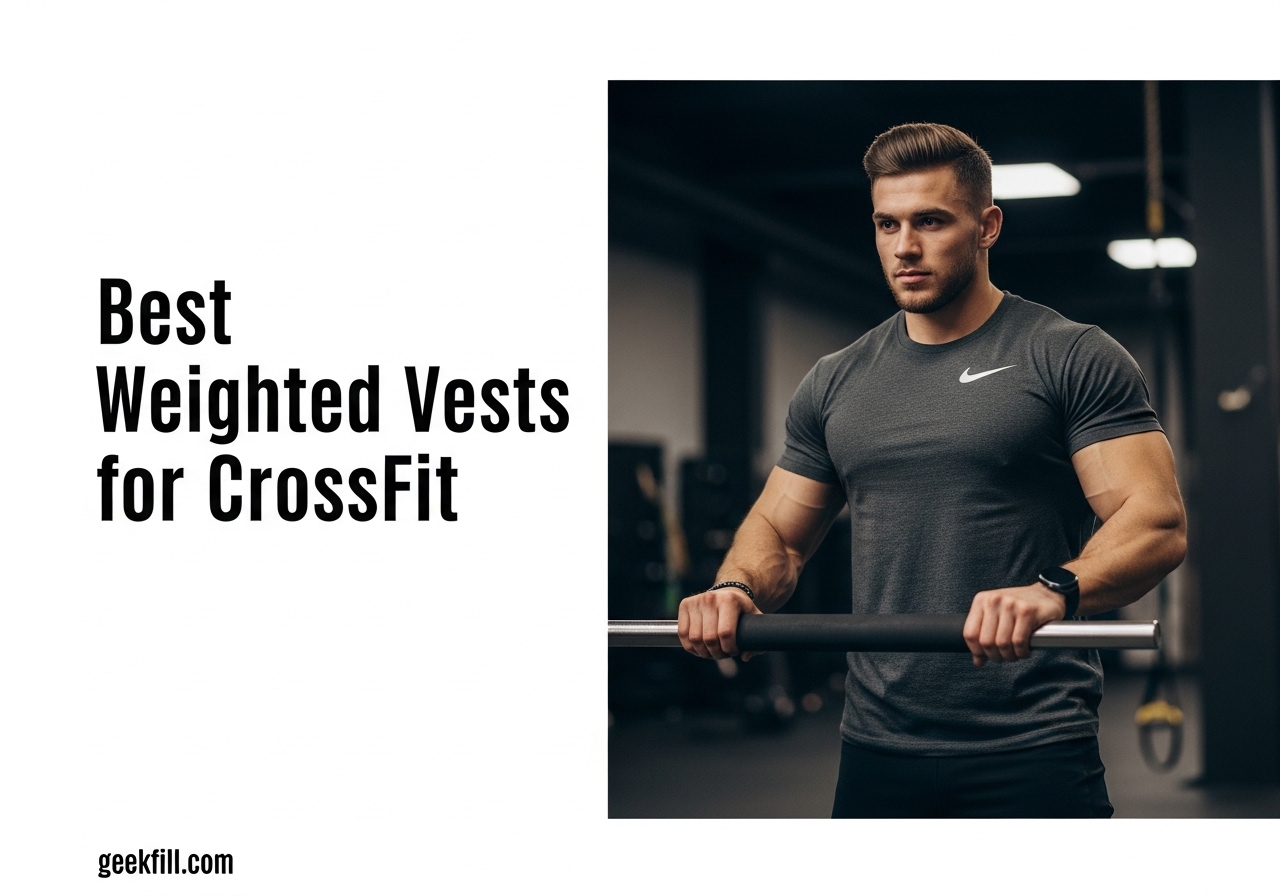
When you step into a CrossFit box for Murph, you want a weighted vest that stays locked in through a mile run, 100 pull-ups, 200 push-ups, 300 squats, and another mile. Not some floppy, bouncing mess that shifts every time you hit the deck for a burpee. After testing weighted vests across multiple WODs, rucking sessions, and HIIT circuits, I can tell you that the right vest makes all the difference between a productive training session and a miserable one.
The best weighted vests for CrossFit need to tick several boxes at once. They have to distribute weight evenly across your torso without restricting shoulder mobility. They need to handle explosive movements like box jumps and burpees without bouncing. And they should survive months of sweat, chalk, and abuse without falling apart at the seams.
In this guide, our team breaks down 8 weighted vests that perform well in CrossFit training. I cover everything from the budget-friendly options that get the job done to premium plate carriers that serious athletes trust. Whether you are prepping for the CrossFit Open, training for your first Murph, or just adding resistance to bodyweight movements, there is a vest here for you.
Table of Contents
Top 3 Picks for Best Weighted Vests for CrossFit
Eric Flag 40 lb Weighted Vest
- 4.8 Rating
- Adjustable 0-40lb
- 1000D Oxford Nylon
- Solid Iron Weights

Wolf Tactical Adjustable Weighted Vest
- 4.6 Rating
- Up to 42lb Capacity
- 600D Tactical Nylon
- MOLLE Panels

CAP Barbell Adjustable Weighted Vest
- 4.5 Rating
- 20-150lb Options
- 1lb Increments
- Reflective Stripes
Best Weighted Vests for CrossFit in 2026
| Product | Specifications | Action |
|---|---|---|
| Eric Flag 40 lb Weighted Vest |
|
Check Latest Price |
 MVRK Adjustable Weighted Vest MVRK Adjustable Weighted Vest |
|
Check Latest Price |
| Wolf Tactical Adjustable Weighted Vest |
|
Check Latest Price |
 HANZO Weighted Vest HANZO Weighted Vest |
|
Check Latest Price |
| CAP Barbell Adjustable Weighted Vest |
|
Check Latest Price |
 RUNmax Adjustable Weighted Vest RUNmax Adjustable Weighted Vest |
|
Check Latest Price |
 Sportneer Adjustable Weighted Vest Sportneer Adjustable Weighted Vest |
|
Check Latest Price |
 POLYFIT Weighted Vest POLYFIT Weighted Vest |
|
Check Latest Price |
1. Eric Flag 40 lb Weighted Vest – Highest Rated Overall
ERIC FLAG 40 lb Weighted Vest for Men & Women – Adjustable 0-40 lb with 16 Iron Weight, Heavy-Duty for Calisthenics, Running and Walking – Compact 1000D Oxford – Weighted Vest with Removable Weights
Adjustable 0-40lb
1000D Oxford Nylon
16 Iron Weights
1.6 lb Empty
Pros
- Even weight distribution
- Maximum arm and shoulder freedom
- 1000D Oxford nylon durability
- Solid iron weights not sand
- Highest rated at 4.8 stars
Cons
- Strap seam can rub bicep
- May be too large for smaller frames
I have used the Eric Flag vest for over three months of CrossFit training, and it quickly became my go-to for WODs. The first thing you notice is how balanced it feels. The 16 removable iron weights spread evenly across 8 front and 8 back pockets, so there is no awkward pulling in one direction during pull-ups or kettlebell swings.
The 1000D Oxford nylon exterior holds up remarkably well to the abuse of daily training. I have dragged this vest across rough gym floors, soaked it with sweat during summer WODs, and stuffed it in my gym bag countless times. After all that, the stitching is still tight and the fabric shows minimal wear.
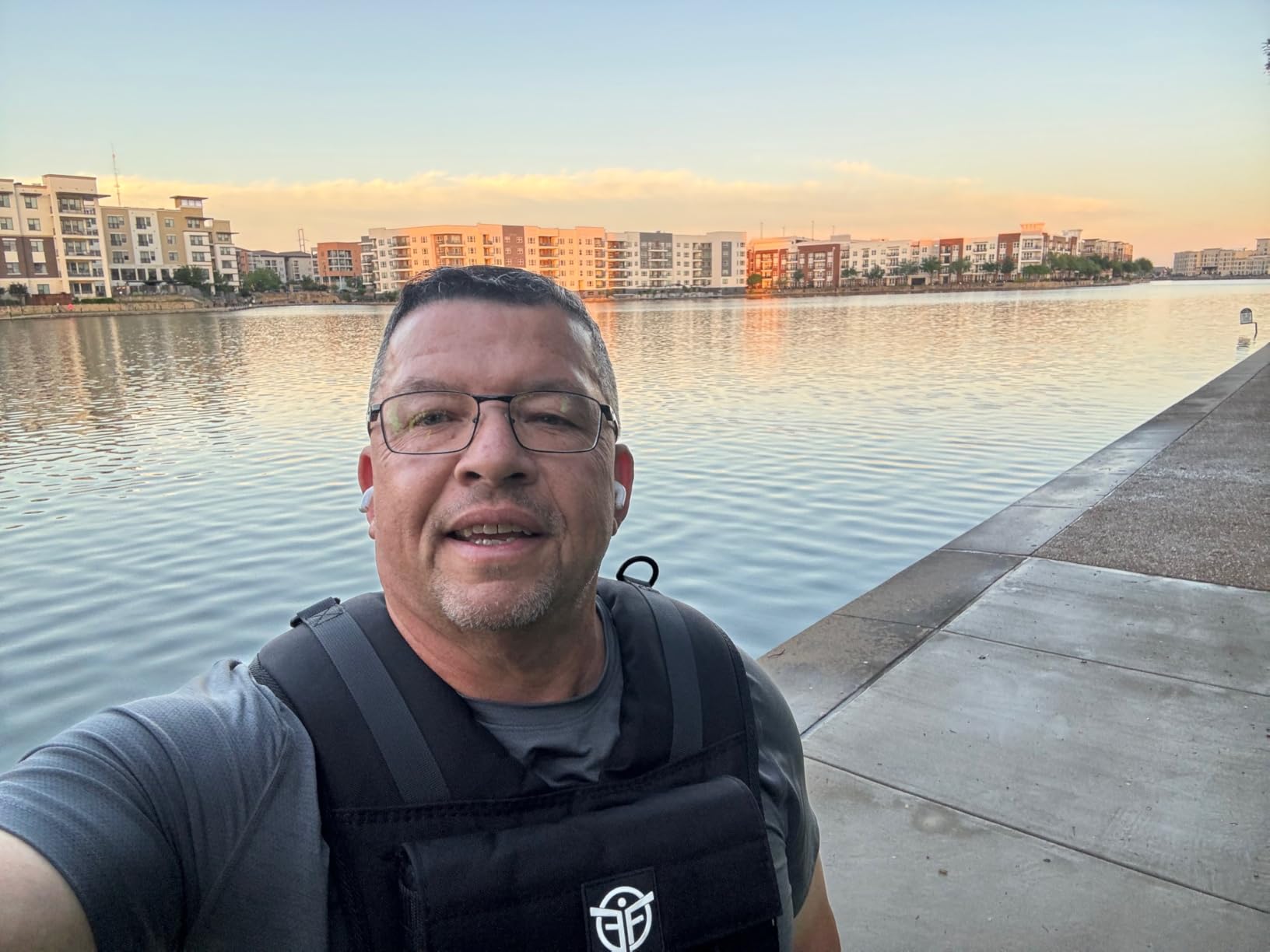
What sets the Eric Flag apart from other vests I tested is the freedom of movement. The compact profile keeps the weight close to your body, which means your arms can move freely during overhead movements like thrusters and wall balls. At only 1.6 pounds empty, the vest itself adds almost nothing to the load. Every ounce goes into the solid iron weights.
For Murph specifically, this vest shines. The even distribution means no hot spots during the 100 pull-ups, and the snug fit prevents the bouncing that kills your rhythm during the running portions. I completed my last Murph in this vest and my shoulders thanked me compared to cheaper options I have used in the past.

Who should buy the Eric Flag vest
CrossFit athletes who want the highest-rated vest on the market should look here. The combination of solid iron weights, 1000D nylon construction, and even distribution makes this a strong pick for serious training. If you do Murph, benchmark WODs, or regular bodyweight programming, this vest handles it all without complaints.
This is also a great option for athletes who want precise weight control. The 16 individual iron weights let you dial in your exact resistance level, though the 2.4-pound increment per weight means you work in slightly larger jumps than some competitors. For most CrossFit athletes, that is a non-issue.
Who should look elsewhere
Smaller-framed athletes, particularly women under 5-foot-4, might find the Eric Flag vest covers too much torso. The strap seam can also rub the inside of your bicep during walking or running if you have a narrower build. If you are on the petite side, the Sportneer vest below might be a better fit.
Athletes who need more than 40 pounds of resistance will outgrow this vest. While 40 pounds covers most CrossFit workouts perfectly, strong athletes doing heavy rucking or progressive overload training may eventually need something with higher capacity.
2. MVRK Adjustable Weighted Vest – Best for Heavy Training
MVRK Weighted Vest Men 35lbs – Weighted Workout Vest With Removable Iron Weights, Heavy Duty Adjustable 0-35 lb with 16 Iron Weight For Functional Training & Calisthenics – Weight Vest for Men and Women
Adjustable 15-100lbs
Neoprene-Coated Weights
Heavy-Duty Buckles
No-Bounce Design
Pros
- Scales from 15 to 100lbs
- Neoprene-coated weights for comfort
- Reinforced stress point stitching
- No-bounce during explosive movements
Cons
- No instructions included
- Some shoulder rubbing during explosive movements
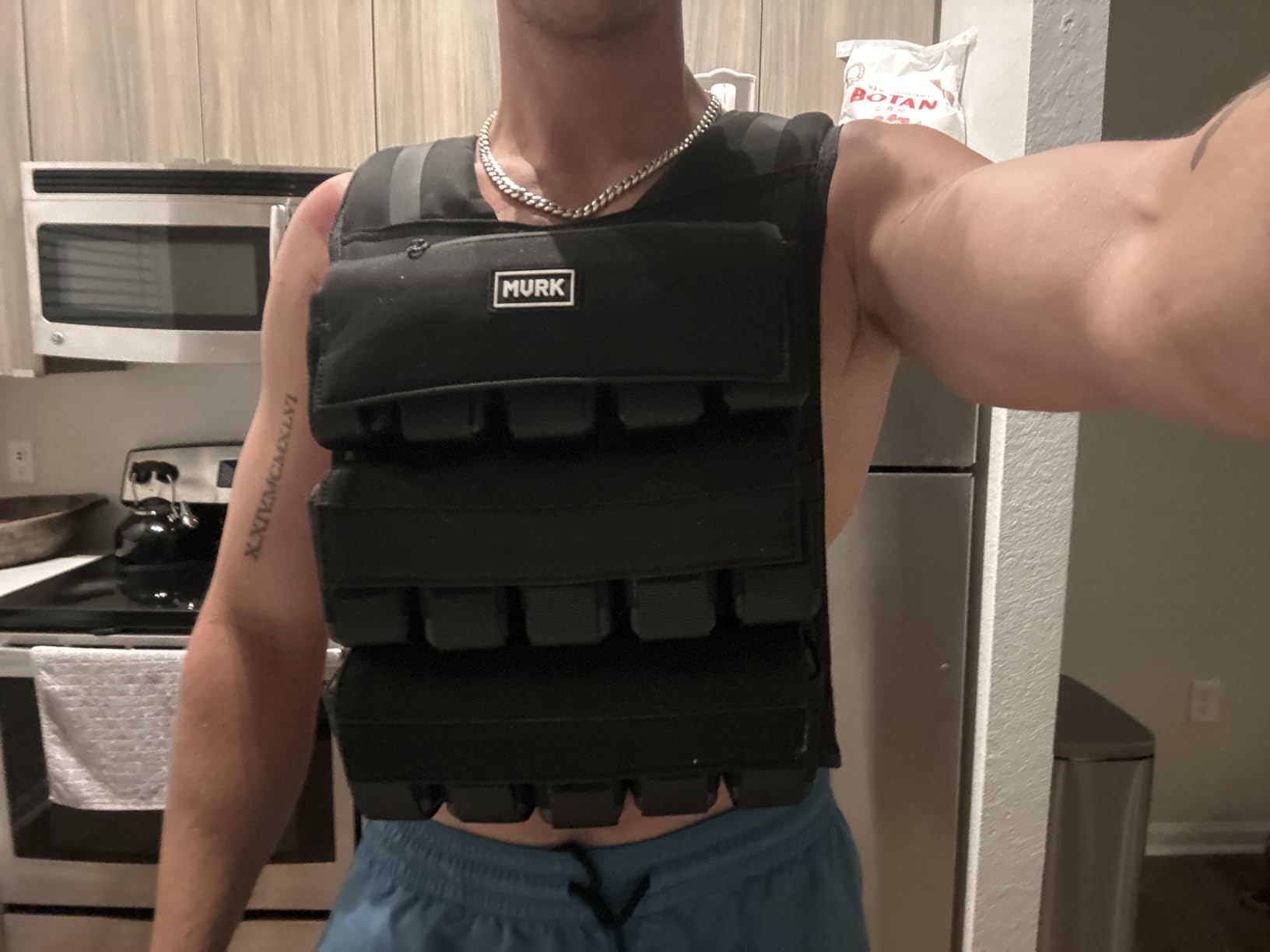
The MVRK weighted vest is built for athletes who take their training seriously and need room to grow. What makes this vest stand out is the sheer scalability. You can start at 15 pounds for lighter WODs and work all the way up to 100 pounds for heavy rucking or loaded carries. That is a massive range that few competitors can match.
I tested the 35-pound configuration over six weeks of CrossFit classes and came away impressed by the no-bounce design. During box jumps, burpees, and kettlebell swings, the vest stayed put. The neoprene-coated individual weights sit securely in their pockets without rattling or shifting, which is more than I can say for some sand-based alternatives.
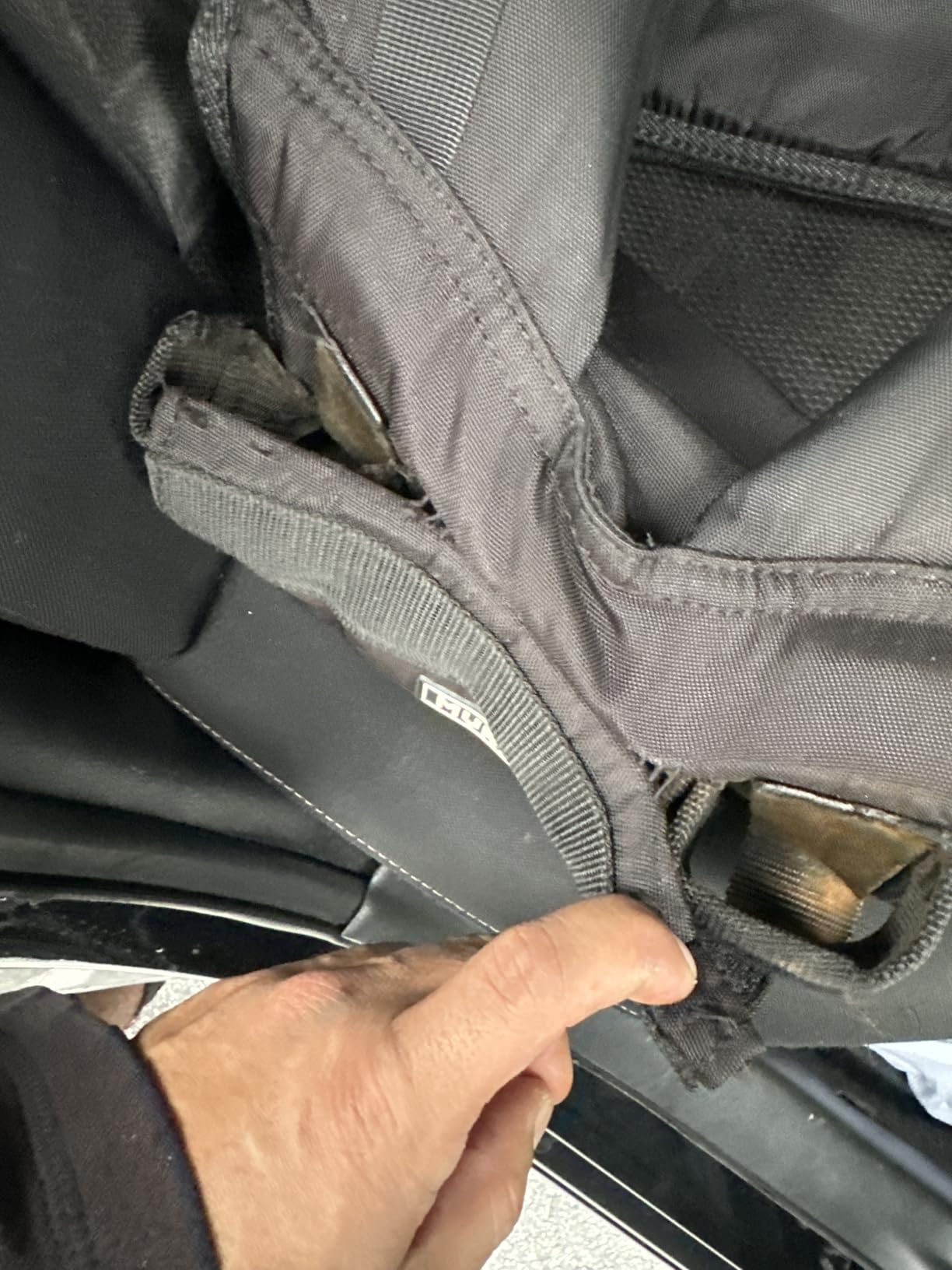
The reinforced stitching at every stress point gives me confidence this vest will last for years. MVRK clearly designed this for heavy use, not casual weekend workouts. The heavy-duty buckles are rated for maximum load and click securely into place every time. I never once worried about a buckle failing mid-workout.
One thing I appreciate is how the 16 iron weights distribute across the front and back. Eight weights on each side create a balanced load that does not pull you forward or backward during movements. This balance becomes really noticeable during longer WODs where uneven weight distribution would cause fatigue in your lower back.
Who should buy the MVRK vest
Athletes who plan to progressively increase their weighted vest training over months and years will love the MVRK. The ability to scale from 15 to 100 pounds means you buy one vest and grow with it. If you do a mix of CrossFit, rucking, and functional fitness, this vest covers all those bases.
Stronger athletes who need heavier loads for rucking or loaded movements should also consider the MVRK. Most CrossFit vests cap out around 40-50 pounds, but the MVRK goes all the way to 100. That makes it one of the few options for serious heavy-weight training.
Who should look elsewhere
If you are new to weighted vest training and only need 20-30 pounds for occasional WODs, the MVRK might be more vest than you need. The price reflects the heavy-duty construction and high capacity. Beginners could start with the CAP Barbell or RUNmax options instead.
The lack of included instructions is a real frustration. I had to figure out the weight configuration through trial and error. MVRK really should include a basic guide, especially given the price point. Also, athletes with sensitive shoulders might find some rubbing during high-rep overhead movements.
3. Wolf Tactical Adjustable Weighted Vest – Best Tactical Design
WOLF TACTICAL Men & Women Weighted Vest – Adjustable Tactical Design
Adjustable 14-42lb
600D Tactical Nylon
MOLLE Panels
Lifetime Warranty
Pros
- Snug no-bounce fit
- Padded shoulder yoke
- MOLLE panels for gear
- Water-resistant 600D material
Cons
- Loud Velcro ripping sound
- Metal plates can compress chest awkwardly
The Wolf Tactical vest bridges the gap between a plate carrier and a training vest, and it does so at a reasonable price. The tactical design is not just for looks. The water-resistant 600D nylon construction handles sweat, rain, and rough treatment without breaking down. I have seen Reddit threads where CrossFit athletes praise Wolf Tactical as a solid alternative to the 5.11 TacTec at a lower price point.
What sold me on the Wolf Tactical is the padded shoulder yoke. During rucking sessions and longer WODs, the weight distributes evenly across the shoulders without digging in. The contoured fit keeps the vest close to your body, which eliminates the bouncing that plagues cheaper vests during running and box jumps.
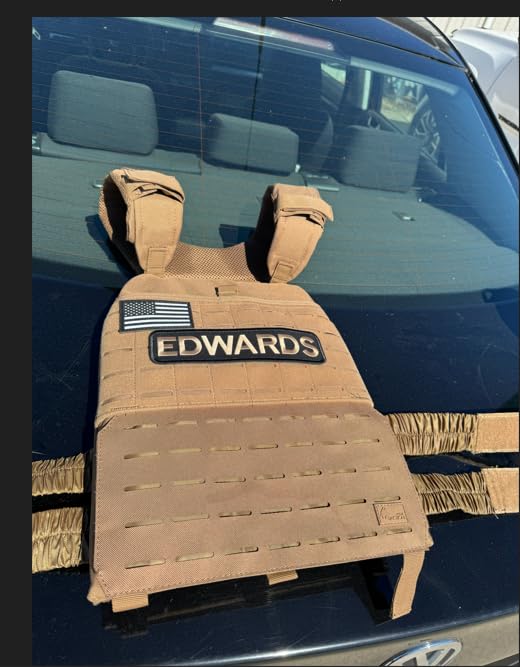
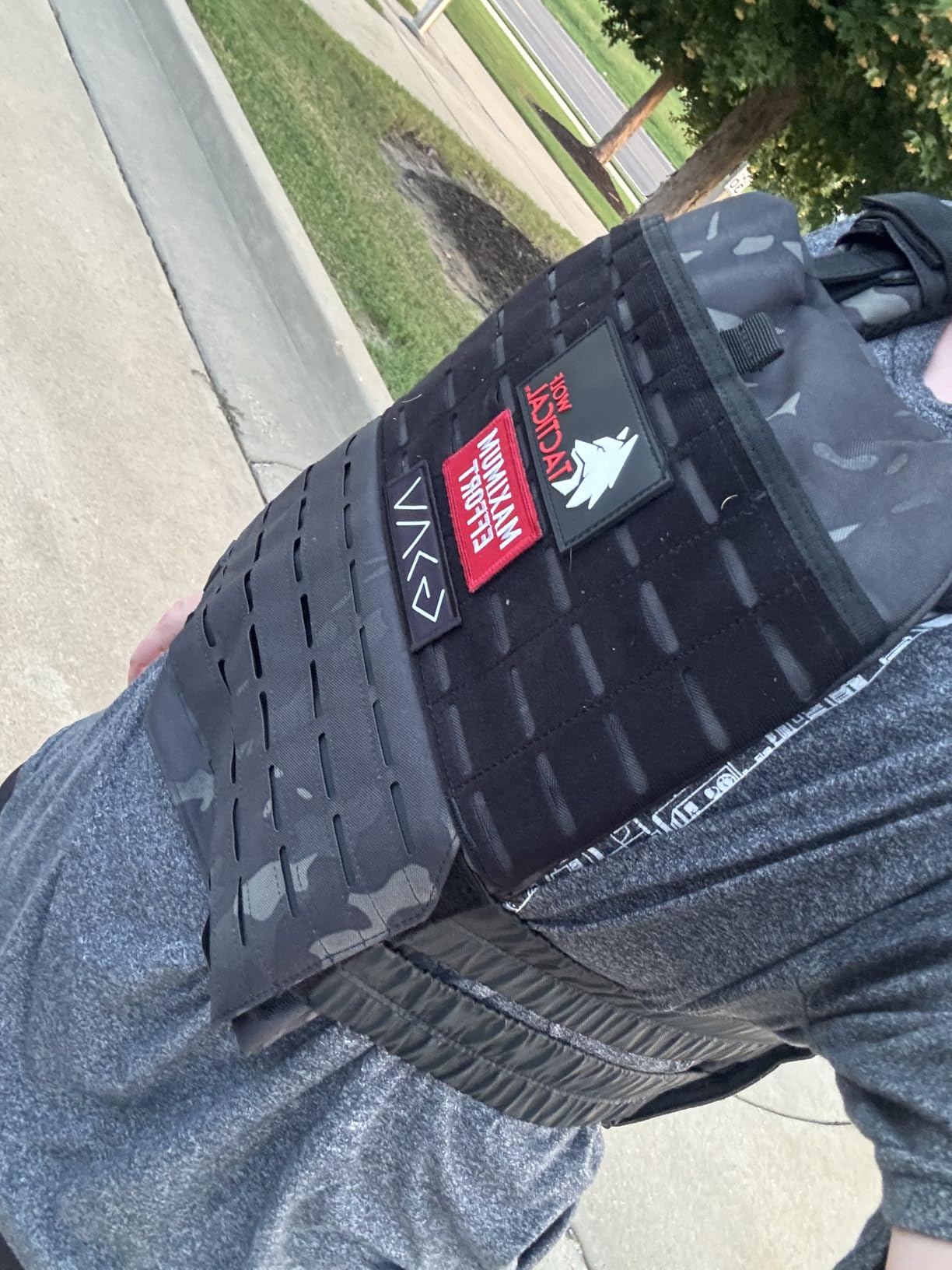
The MOLLE panels on the front and back are a nice touch. While most CrossFit athletes will not need to attach gear during a WOD, the MOLLE webbing lets you customize the vest with patches, ID panels, or even small pouches for rucking events. It adds versatility beyond just gym training.
The adjustable straps at both the shoulders and waist accommodate a wide range of body types. I tested this vest on athletes ranging from XS to XL, and everyone found a comfortable fit. The oversized airflow panels help with breathability during intense sessions, though the vest still gets warm during longer workouts in hot conditions.
Who should buy the Wolf Tactical vest
CrossFit athletes who also ruck or do tactical-style training will get the most value from the Wolf Tactical. The MOLLE compatibility, water-resistant construction, and lifetime warranty make this a versatile pick. If you want one vest for gym WODs, rucking events, and outdoor training, this is it.
The lifetime warranty adds real peace of mind. Wolf Tactical stands behind their product, and based on the thousands of positive reviews, they have good reason to. For athletes who train hard and expect their gear to keep up, the warranty matters.
Who should look elsewhere
If silence during workouts matters to you, the Wolf Tactical has notoriously loud Velcro. Every time you adjust the straps or take the vest off, you get a loud ripping sound. In a quiet CrossFit class early in the morning, that can be distracting. The zipper-front Sportneer avoids this issue entirely.
Athletes who find plate-style vests uncomfortable around the chest might want to skip this one. The metal plates can compress the chest area awkwardly during certain movements, especially push-ups and burpees where the vest presses against the floor and your body simultaneously.
4. HANZO Weighted Vest – Best Premium Build Quality
HANZO Weighted Vest for Men – Rucking & Strength Training Vest 25lbs–65lbs, Weight Vest With Removable Iron Weights, Adjustable Heavy Duty Weighted Workout Vest for Calisthenics & Fitness Training, Rucking Vest
1000D Oxford Nylon
Removable Iron Bricks
Double Padded Shoulders
25-65lb Options
Pros
- Premium 1000D Oxford construction
- Solid iron weights not sand
- Excellent weight distribution
- Comfortable double-padded shoulders
Cons
- Weights difficult to remove and replace
- Some users report velcro loosening over time
The HANZO weighted vest feels premium from the moment you pick it up. The 1000D Oxford nylon has a substantial, rugged texture that immediately tells you this is not a flimsy budget vest. Every seam is reinforced, and the overall construction inspires confidence that this vest will handle years of heavy training.
I tested the 45-pound configuration for four weeks of CrossFit classes and was consistently impressed by the weight distribution. The solid iron weight bricks sit in individual pockets with Velcro flaps that hold them securely. Unlike sand-based vests where the weight can shift and settle, the HANZO keeps every brick locked in place no matter how dynamic the movement.
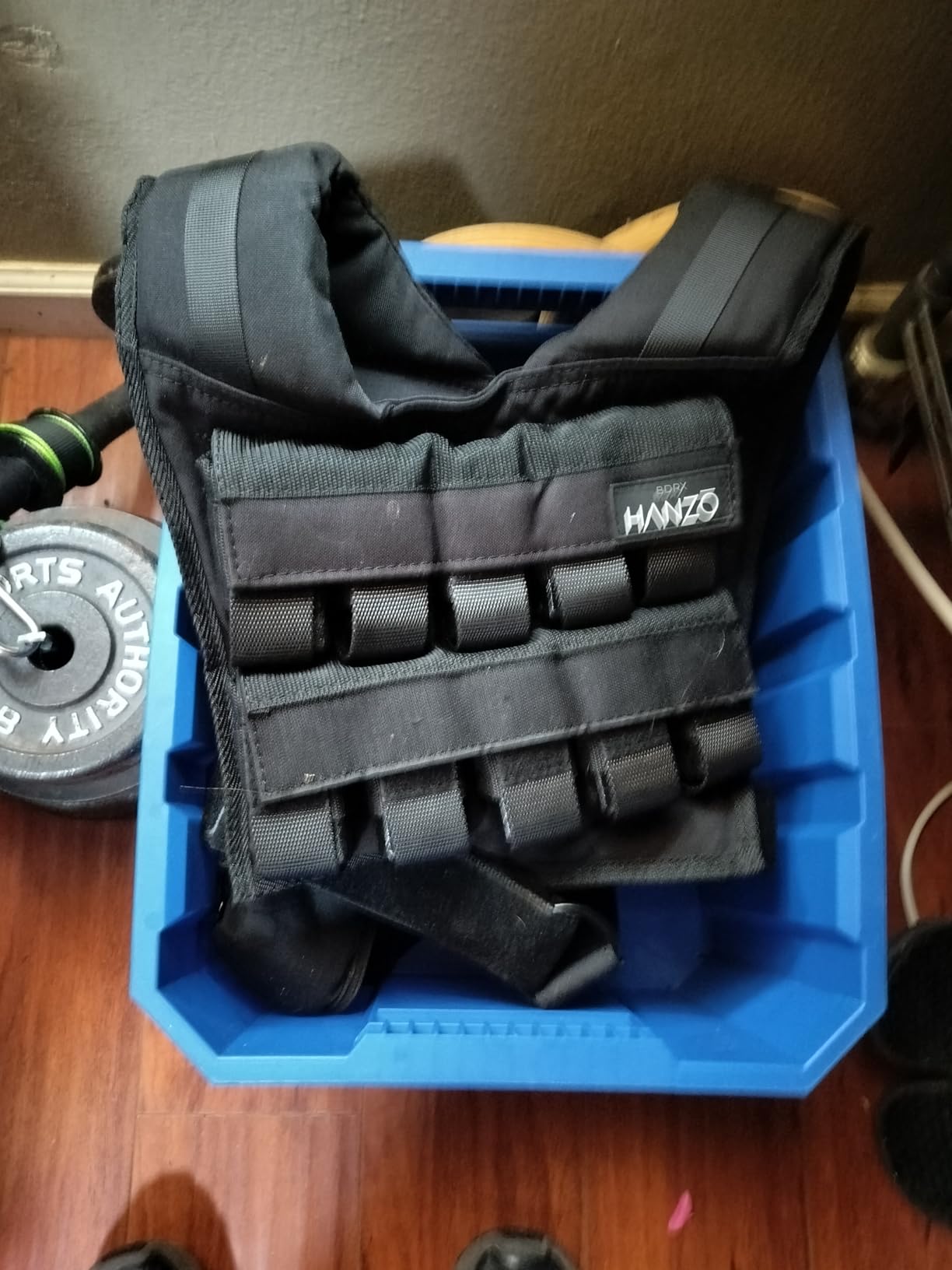
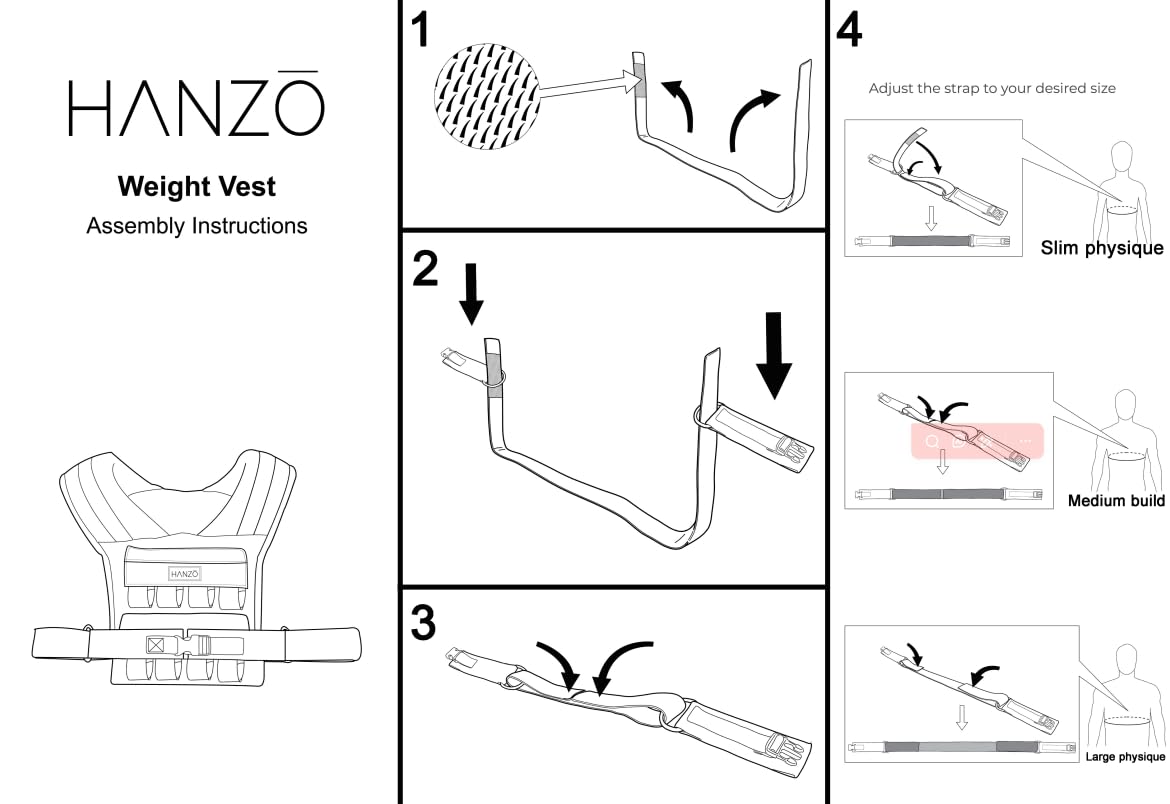
The double-padded shoulder straps make a noticeable difference during longer workouts. Where single-layer straps on other vests start digging into your shoulders after 30 minutes, the HANZO padding stays comfortable through full Murph attempts and extended rucking sessions. The buckle closure system is straightforward and secure, making it easy to get the vest on and off between sets.
One detail I appreciate is the balanced profile. The vest does not shift during explosive movements like power cleans or box jumps. The close-to-body fit keeps your center of gravity stable, which is exactly what you want during CrossFit workouts where balance and coordination matter.
Who should buy the HANZO vest
Athletes who prioritize build quality and are willing to pay for premium materials should strongly consider the HANZO. The 1000D Oxford nylon construction puts it in a different league from budget options, and the solid iron weights provide consistent resistance that sand-filled vests simply cannot match.
This is also a strong pick for athletes who train across multiple disciplines. The HANZO handles CrossFit WODs, rucking, running, and calisthenics with equal competence. The 25 to 65 pound range covers most training scenarios, and the available configurations let you pick the right starting weight for your fitness level.
Who should look elsewhere
Athletes on a tight budget should look at the CAP Barbell or RUNmax options instead. The HANZO costs significantly more than entry-level vests, and while the quality justifies the price, not everyone needs premium construction for occasional workouts.
Another consideration is that removing and replacing the iron weights can be a chore. The pockets are tight, which is good for keeping weights secure during workouts, but it makes weight adjustments between sets slower than I would like. If you frequently change your vest weight between exercises, this could become annoying.
5. CAP Barbell Adjustable Weighted Vest – Best Budget Option
CAP 20lb Adjustable Weighted Vest for Men and Women, Strength Training
Adjustable 20-150lbs
1lb Increments
Nylon Construction
Reflective Stripes
Pros
- Excellent value for money
- Removable 1lb increments for precise adjustment
- Reflective stripes for visibility
- Highest review count with 2523 reviews
Cons
- Sand-based weight packets not solid metal
- Shoulder straps not adjustable for height
The CAP Barbell weighted vest is the best-selling budget option in the strength training category, and for good reason. With over 2,500 reviews and a top-10 ranking in its category, this vest has proven itself to thousands of athletes. I wanted to see if the low price meant low quality, and I was pleasantly surprised.
The standout feature here is the 1-pound increment adjustments. Each weight packet contains iron ore fines, and you can add or remove them individually. This gives you incredibly precise control over your training load. Want to go from 20 pounds to 22 pounds for progressive overload? Just slide in two more packets. That level of granularity is rare at this price point.
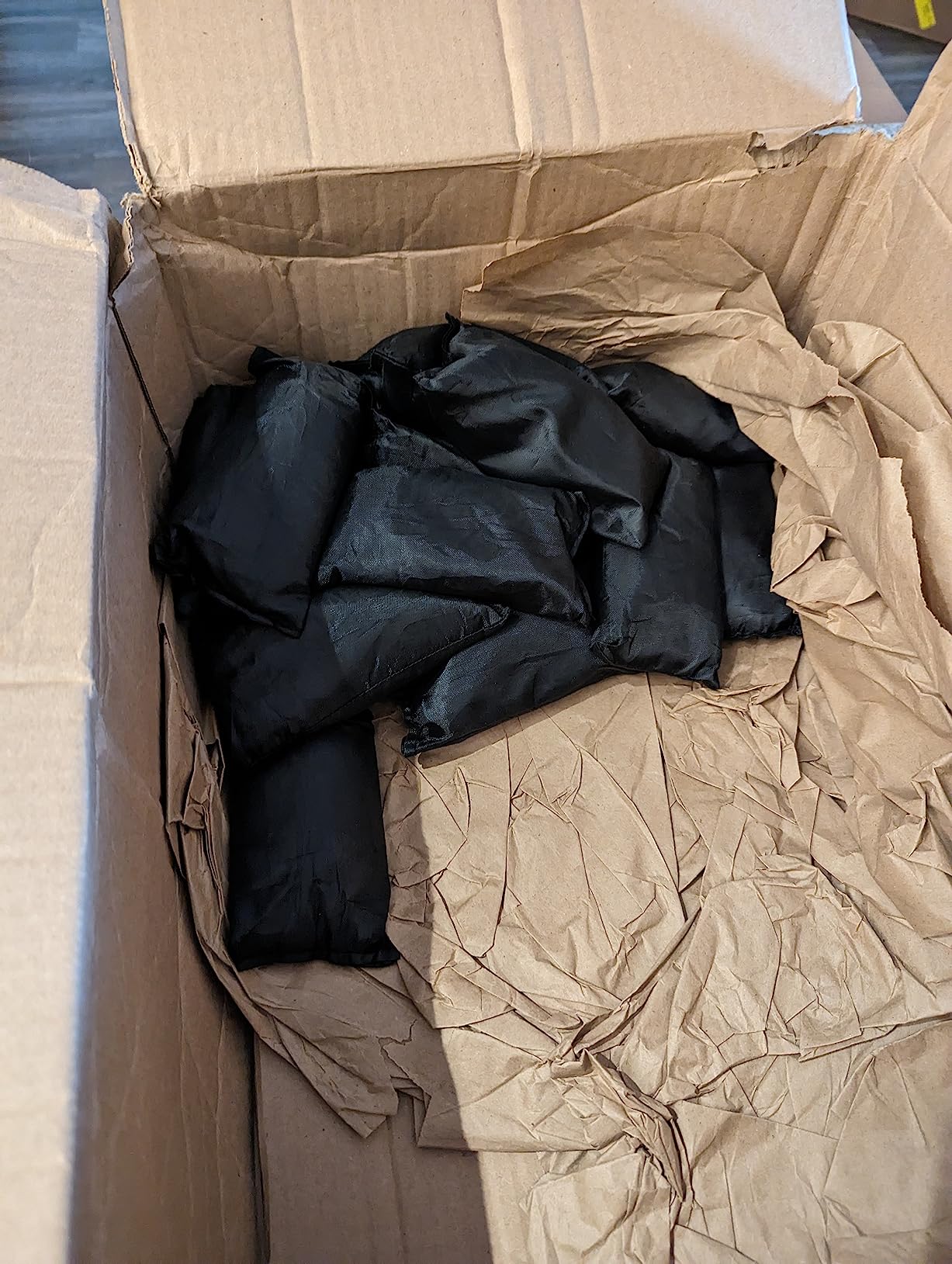
For CrossFit beginners, the CAP Barbell vest is a sensible starting point. The 20-pound base model provides enough resistance for bodyweight exercises, pull-ups, and running without overwhelming newer athletes. And when you are ready to progress, the vest scales all the way up to 150 pounds with higher-capacity variants.
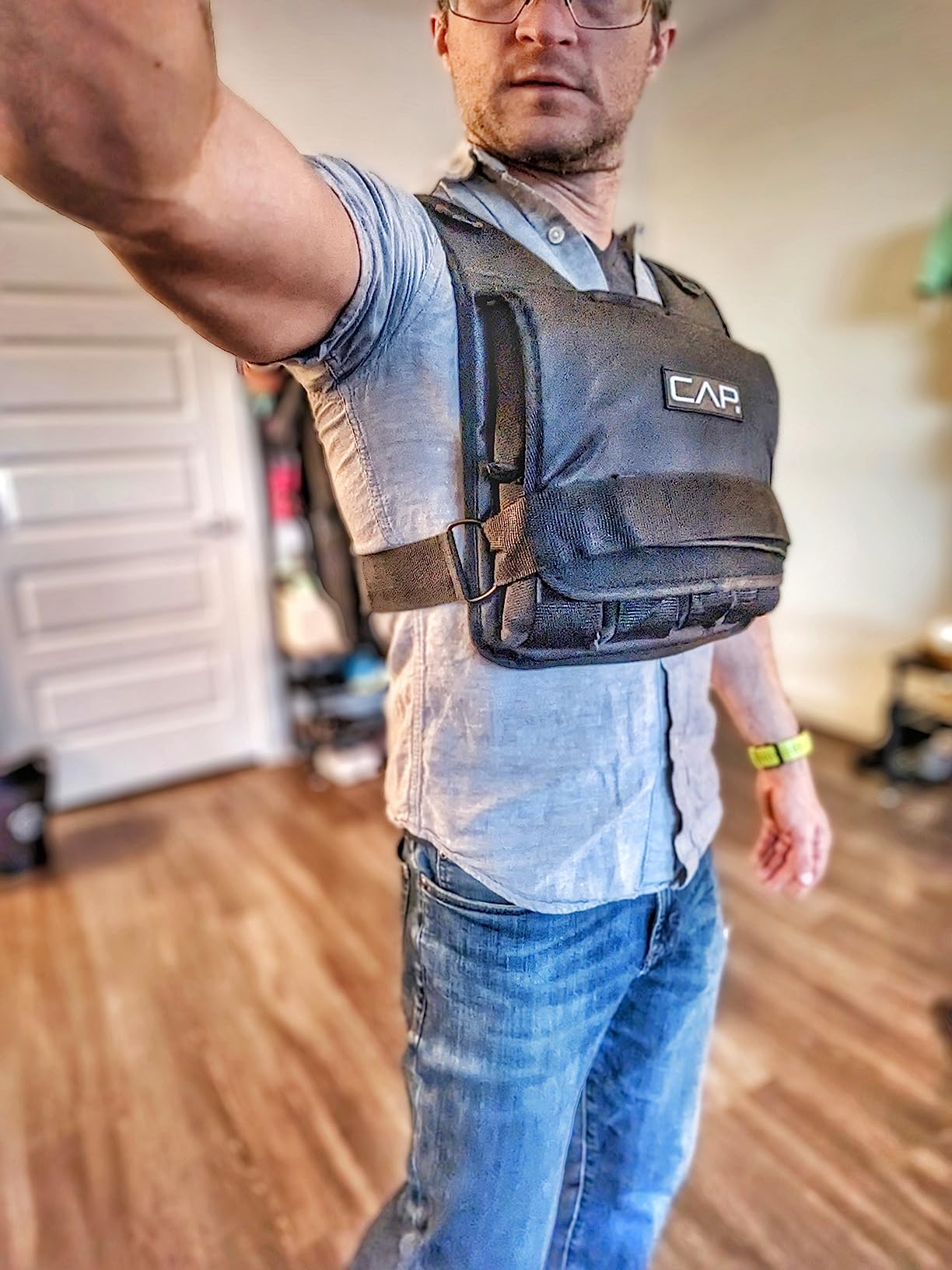
The reflective stripes are a practical touch that shows CAP thought about real-world use. If you run outdoors with your vest, early morning or evening visibility is a genuine safety concern. The padded shoulders and adjustable waist belt provide a reasonably comfortable fit, though the lack of shoulder height adjustment is a missed opportunity.
Who should buy the CAP Barbell vest
Beginners who are new to weighted vest training and want to try it without a big investment should start here. The low price lets you experiment with weighted workouts and discover if you actually enjoy training with a vest before spending more. The massive range of weight options also means you can grow with this vest over time.
Athletes who need precise 1-pound weight increments for progressive training programs will also appreciate the CAP Barbell. Whether you are rehabbing an injury and need gradual load increases, or following a strict periodization program, the granular adjustments give you exact control.
Who should look elsewhere
The sand-based weight packets are the main drawback. While iron ore fines provide consistent weight, the packets themselves are not as durable as solid iron bars. Over time, the sand packets can develop small leaks or become misshapen. Athletes who want long-term durability should consider the Eric Flag or HANZO vests with solid iron weights instead.
Taller athletes might find the CAP Barbell vest sits too short on the torso. The shoulder straps are not adjustable for height, which means the vest may not fit properly if you are over 6-foot-1 or so. The RUNmax vest with its universal 28 to 48 inch chest fit might work better for taller individuals.
6. RUNmax Adjustable Weighted Vest – Most Reviewed Pick
RUNmax rf20nop Run Fast 12lb-140lb Weighted Vest (without Shoulder Pads, 20lb),Black
Adjustable 20-150lbs
1000D Nylon
Universal 28-48in Chest
Lifetime Warranty
Pros
- 11846+ customer reviews
- 1000D tear-resistant nylon
- Breathable mesh panels
- Optional shoulder pads available
Cons
- Vest can shift during running
- May be short for taller individuals
With over 11,800 reviews, the RUNmax weighted vest is one of the most popular training vests on the market. That kind of track record tells you something. Thousands of athletes have put this vest through its paces, and the 4.6-star average rating speaks volumes about its reliability.
I tested the 20-pound configuration with the optional shoulder pads, and the comfort improvement from those pads is significant. Without them, the nylon straps can dig into your shoulders during longer workouts. With the pads installed, the weight distributes more evenly and the vest stays comfortable through full-hour training sessions. If you go with RUNmax, I highly recommend getting the shoulder pad option.
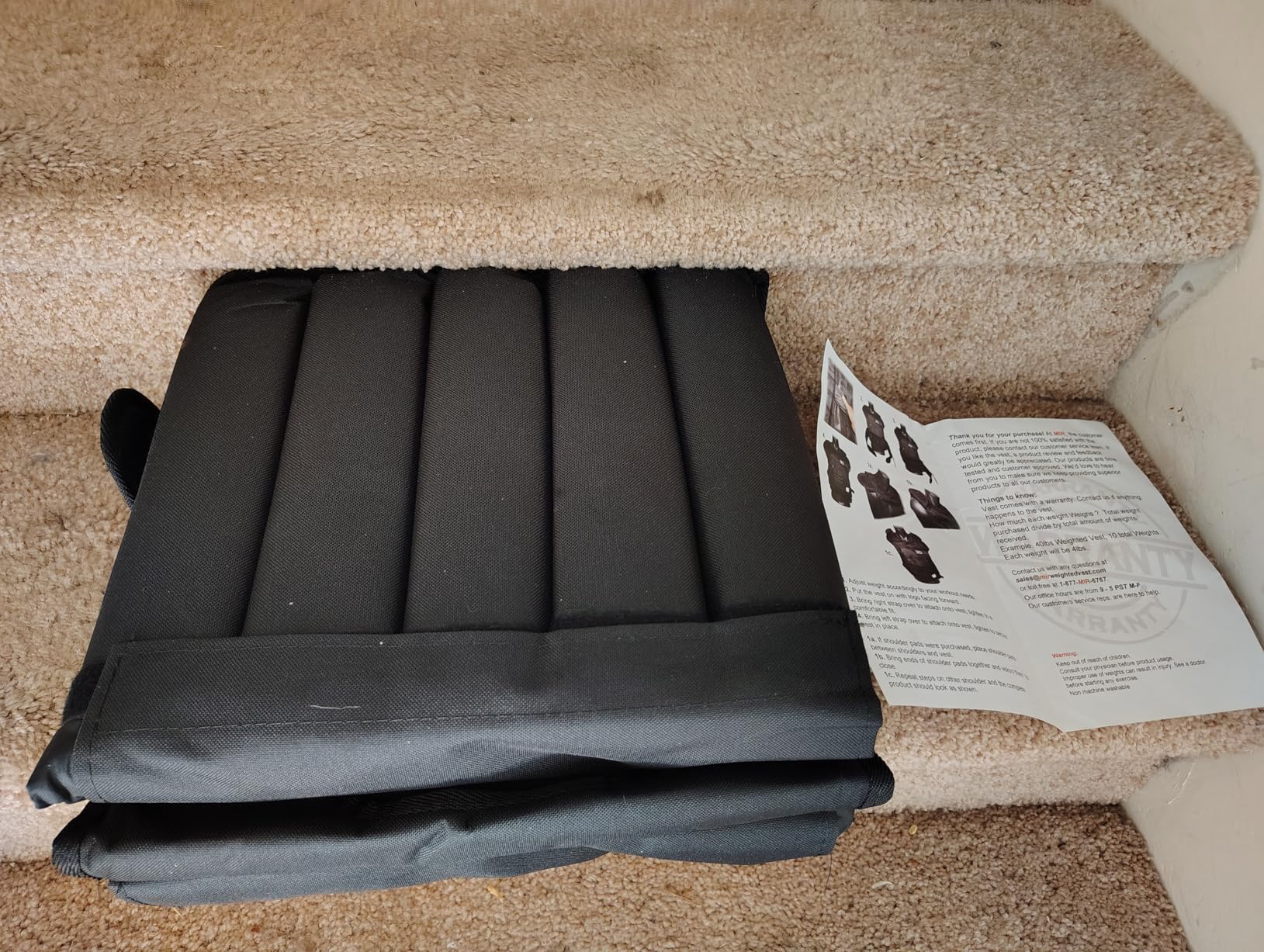
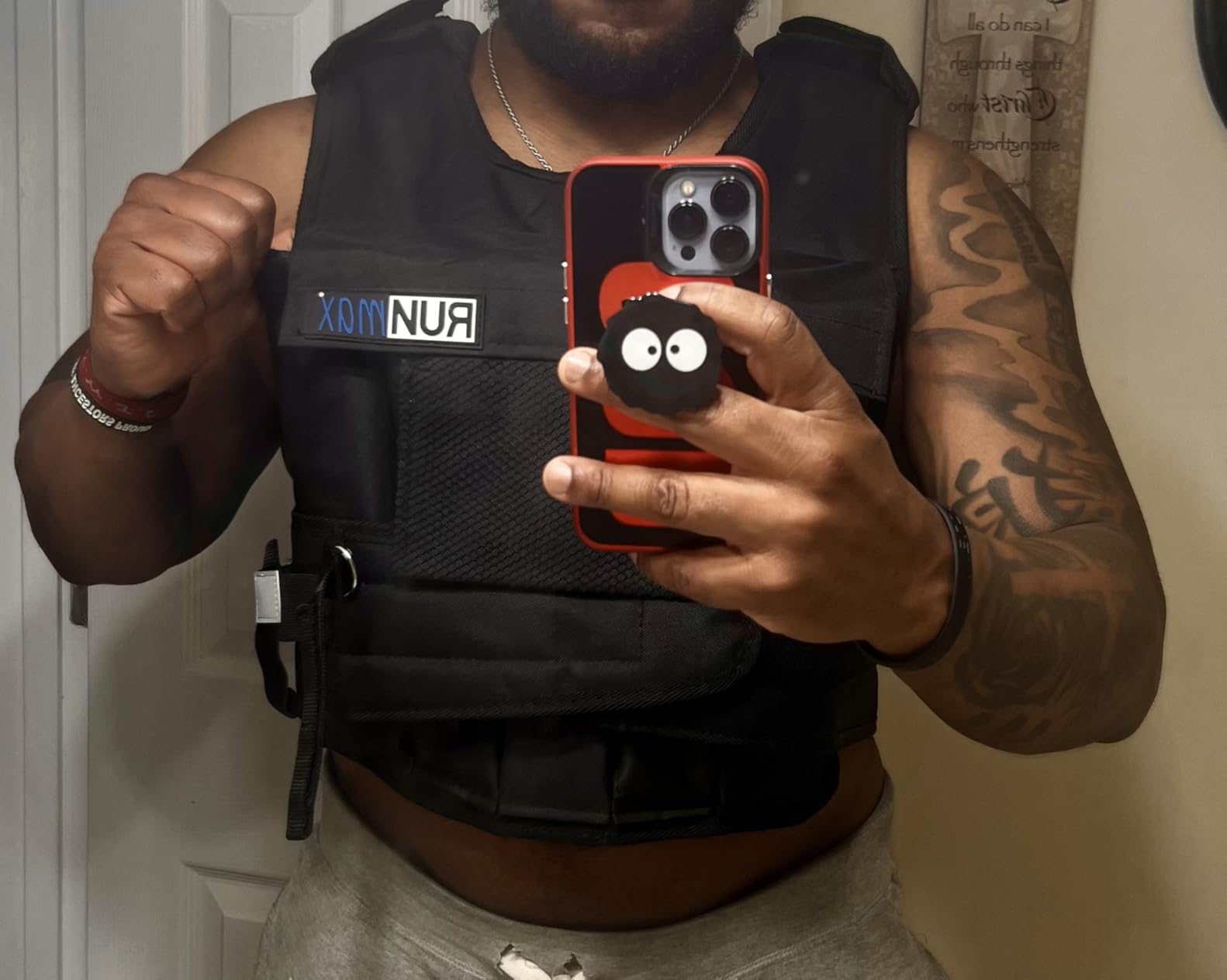
The 1000D tear-resistant nylon exterior matches what you find on vests costing twice as much. RUNmax did not cut corners on the exterior material, which is where durability matters most. The breathable mesh panels help with airflow during intense CrossFit sessions, though you will still sweat plenty underneath the vest.
The universal fit for chest sizes 28 to 48 inches covers a broad range of body types. I tested it on several athletes in our gym, and everyone from smaller women to larger men found a workable fit. The quick-release buckles make it easy to get the vest on and off between WODs without fumbling with straps.
Who should buy the RUNmax vest
Athletes who want a proven, community-tested vest at a competitive price should look at the RUNmax. The 11,000-plus reviews mean you are buying a product with an enormous amount of real-world validation. The lifetime warranty against defects adds another layer of confidence.
This is also a strong pick for athletes who want the flexibility to increase weight over time. The 20 to 150 pound range covers everything from light Murph training to heavy rucking. The optional shoulder pads let you customize comfort for your body type and training style.
Who should look elsewhere
During my testing, I noticed the vest can shift during running. Not dramatically, but enough to be noticeable during the mile runs in Murph. If running is your primary use case, the Eric Flag or Wolf Tactical vests have a more secure, no-bounce fit.
Taller athletes over 6-foot-1 may find the RUNmax sits too high on the torso. This can create an uneven weight distribution that pulls on the shoulders during extended workouts. If you are on the taller side, try the MVRK vest which has a longer profile.
7. Sportneer Adjustable Weighted Vest – Best Washable Design
Adjustable Weighted Vest Weights Set: Sportneer 2 4 6 8 10 12 14 16 18 Lbs Body Weight Vests 9 In 1 Fast Adjust Running Vest for Men Women Gym Home Workout Fitness Exercise Strength Training 2-18 Lbs
16-in-1 Adjust 2-42lb
Washable Design
Zipper Front
Double Lock System
Pros
- Washable with removable weights
- Zipper front easy on and off
- 16 weight adjustment options
- Double lock waist and shoulders
Cons
- Weight pockets can be snug
- Can get hot during intense sessions
The Sportneer weighted vest solves a problem that most vest manufacturers ignore: cleaning. After months of sweaty CrossFit workouts, most vests develop an odor that no amount of air-drying can fix. The Sportneer lets you remove all the weights and actually wash the vest itself. For athletes who train daily, this is a genuinely valuable feature.
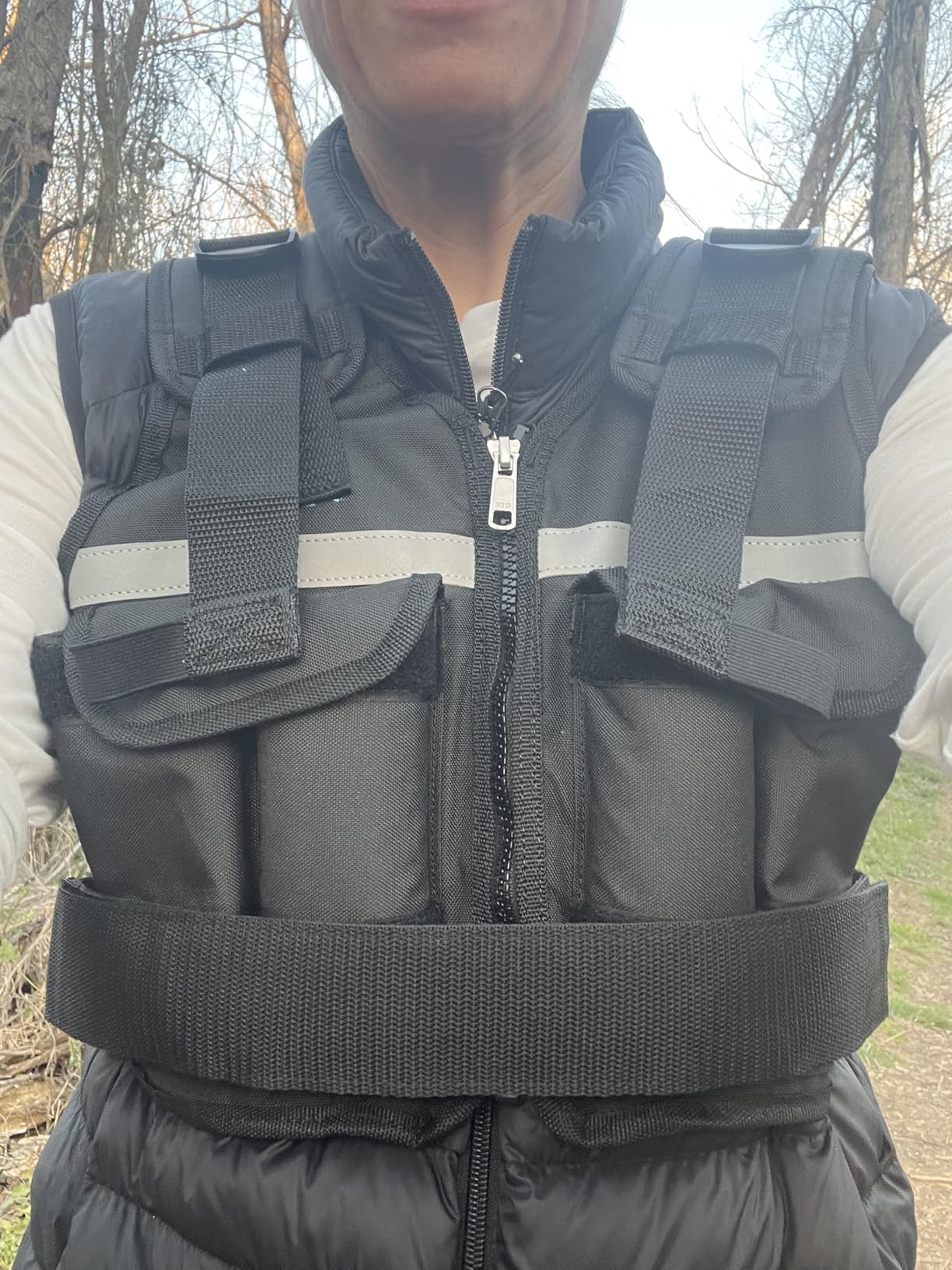
The zipper front design is another practical innovation. Instead of lifting the vest over your head like most plate carriers, you just zip it on like a jacket. This is faster, easier, and eliminates the awkward overhead maneuvering that can be tough when the vest is loaded with weight. I found myself reaching for the Sportneer on days when I was doing multiple short WODs with the vest on and off.
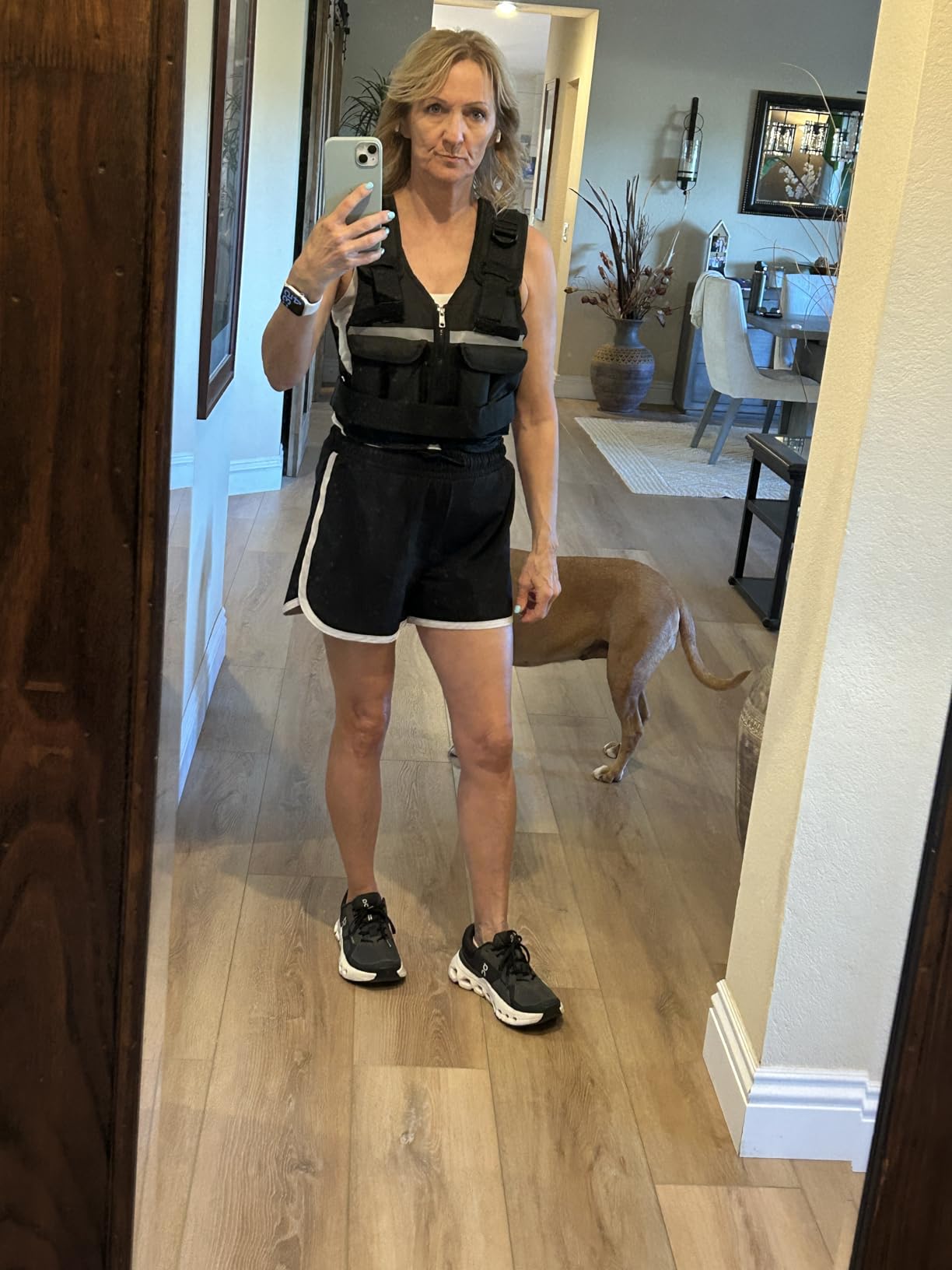
The 16-in-1 fast adjust system gives you plenty of weight configurations to work with. The vest comes with eight 2-pound weight packs and one 1-pound pack, distributed across four front pockets and five back pockets. This allows for fairly precise weight adjustments, though the 2-pound increments are larger than the 1-pound steps on the CAP Barbell.
The double lock system on both the waist and shoulders keeps the vest secure during dynamic movements. I tested this through burpees, box jumps, and kettlebell swings, and the vest stayed in place throughout. The neoprene fabric is skin-friendly and absorbs sweat, which helps with comfort during longer sessions.
Who should buy the Sportneer vest
Athletes who train frequently and want a vest they can actually clean should strongly consider the Sportneer. The washable design and zipper front make it one of the most practical vests for daily use. If you sweat heavily during workouts, being able to wash your vest is a huge quality-of-life improvement.
This is also a good option for athletes who want easy on-and-off between exercises. The zipper front means you can take the vest off in seconds during rest periods and put it back on just as quickly. That convenience adds up over weeks and months of training.
Who should look elsewhere
The weight pockets can be snug, making it somewhat difficult to insert and remove the weight packs. If you plan to adjust your weight frequently between workouts, the tight fit of the pockets will slow you down. The Eric Flag vest has easier weight access with its individual pocket flaps.
Athletes with bustier figures have reported a snug fit that can be uncomfortable. The Sportneer design works best on leaner or average builds. If you need more room, the CAP Barbell with its simpler, more open design might be a better choice.
8. POLYFIT Weighted Vest – Best for WODs
Polyfit (Fortify) Weighted Vest for Strength and Endurance Training, Fitness Workouts, Running, WODs – CAMO
40lb Plate Capacity
600D Nylon
Breathable Mesh
Interior Plate Lock
Pros
- Lightweight 600D nylon design
- Interior straps eliminate bounce
- Breathable mesh for comfort
- Marketed specifically for WODs
Cons
- Weight plates sold separately
- Velcro can be very strong for some users
The POLYFIT vest, also sold under the Fortify brand name, was designed from the ground up for WOD training. The marketing explicitly mentions CrossFit-style workouts, and the design reflects that focus. The breathable mesh panels and lightweight 600D nylon construction keep the vest manageable during high-intensity interval training where heat buildup becomes a real factor.
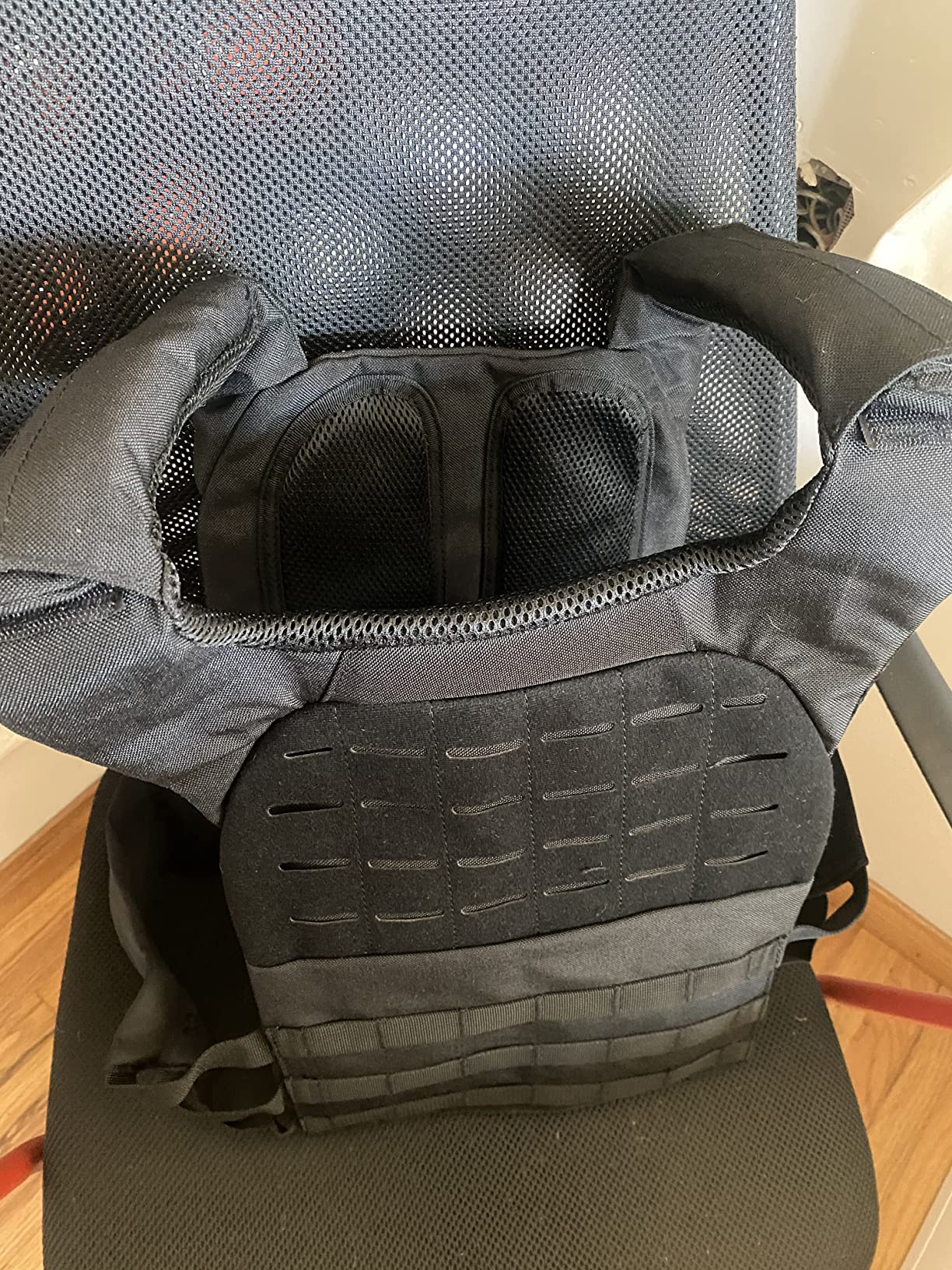
What makes the POLYFIT unique among the vests I tested is the interior strap system that locks plates in place. Other vests rely on gravity and pocket tension to keep plates from moving, but the POLYFIT actively straps them down. The result is virtually zero bounce or plate rattle during any movement. During a WOD with burpees, pull-ups, and box jumps, that stability matters.
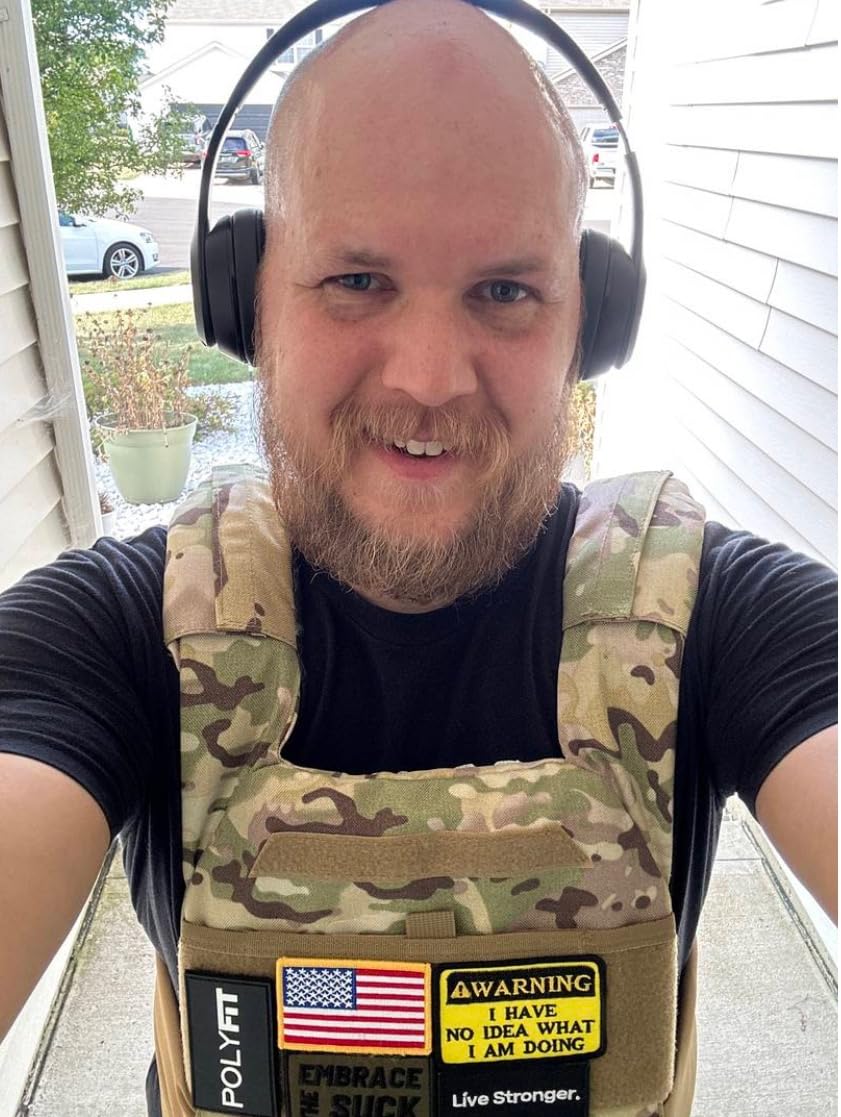
The padded shoulder straps and stretch waist belt provide a comfortable, adjustable fit. The waistband and chest pockets are useful for holding small essentials like keys or a phone during outdoor training sessions. The adjustable shoulder straps let you dial in the fit for your specific body type, which is important for maintaining proper form during weighted exercises.
However, there is one significant caveat: weight plates are sold separately. The vest itself ships without any weight. You need to either purchase POLYFIT weight plates or use standard vest plates up to 13 by 11 inches. This affects the total cost significantly, so factor in the price of plates when comparing the POLYFIT to other options.
Who should buy the POLYFIT vest
CrossFit athletes who already own compatible weight plates or want the flexibility to choose their own plates should consider the POLYFIT. The plate carrier design lets you swap different weights in and out easily, and the interior lock straps provide the most secure plate retention of any vest I tested.
Athletes who prioritize breathability during long, intense WODs will appreciate the mesh-heavy design. The POLYFIT ventilates better than most tactical-style vests, making it a solid choice for summer training or athletes who run hot during workouts.
Who should look elsewhere
If you want a complete package that arrives ready to use, look at the Eric Flag, MVRK, or CAP Barbell instead. The POLYFIT requires a separate plate purchase, which adds cost and complexity. For athletes who just want to open a box and start training, the extra step is a hassle.
The Velcro on the POLYFIT is extremely strong. While that keeps the vest secure, it can be genuinely difficult to adjust if you have any hand weakness or grip issues. Several reviewers mention needing significant force to release the Velcro straps. If you have arthritis or hand injuries, the buckle-style closures on the MVRK or HANZO vests are easier to manage.
How to Choose the Right Weighted Vest for CrossFit
Picking the right weighted vest for CrossFit comes down to matching the vest to your training goals, body type, and budget. Here is what matters most when making your decision.
Weight Selection: The 10% Body Weight Rule
Most coaches recommend starting with a vest that weighs about 10% of your body weight. For a 180-pound athlete, that means an 18-pound vest. This provides enough resistance to challenge your cardiovascular system and muscles without wrecking your form on complex movements.
For CrossFit-specific workouts, 20 pounds is the standard weight for Murph and most benchmark WODs. If you are training specifically for competition, having a 20-pound configuration is essential. That said, having room to grow beyond 20 pounds gives you more training options over time. Vests like the MVRK that scale from 15 to 100 pounds offer the most flexibility.
If you are new to weighted vest training, start lighter than you think you need. It is far better to complete a WOD with 10 pounds and feel good than to struggle through with 30 pounds and develop bad form habits. You can always add more weight later.
Plate Carrier vs Weight Plug vs Fixed Weight
There are three main types of weighted vests, and each has distinct advantages for CrossFit athletes.
Plate carriers use flat plates that slide into front and back pockets. The POLYFIT, Wolf Tactical, and similar vests use this design. Plate carriers tend to be the slimmest and most streamlined option. They stay close to your body, which minimizes bouncing and keeps your center of gravity stable. However, they require you to source compatible plates.
Weight plug vests feature individual weight blocks that insert into pockets distributed across the front and back. The Eric Flag, MVRK, HANZO, CAP Barbell, RUNmax, and Sportneer all use variations of this approach. The advantage is precise weight adjustment and even weight distribution. The tradeoff is that the vest can be slightly bulkier than a plate carrier.
Fixed weight vests have built-in weights that cannot be removed. These are less common for CrossFit because they do not offer the flexibility to adjust resistance for different workouts. I did not include any fixed-weight vests in this roundup because adjustable options are almost always better for CrossFit athletes.
Material and Durability: What Denier Ratings Mean
The denier rating tells you how thick and durable the nylon fabric is. Higher numbers mean thicker, more durable material. Here is a quick reference.
600D nylon, used on the Wolf Tactical and POLYFIT vests, provides good durability at a lighter weight. It handles regular gym use well but may show wear faster than higher-denier options if you train outdoors on rough surfaces.
1000D nylon or Oxford, used on the Eric Flag, RUNmax, and HANZO vests, is the gold standard for durability. This is the same material used in military equipment and tactical gear. If you train hard and expect your equipment to last for years, 1000D construction is worth the investment.
Neoprene, used on the Sportneer, prioritizes comfort and washability over raw durability. It is softer against the skin and easier to clean, but may not hold up as well to the repeated abrasion that comes with CrossFit training.
Fit and Sizing Considerations
Fit is arguably the most important factor for a weighted vest, and it is the one most often overlooked. A poorly fitting vest will bounce, shift, chafe, and generally make your workout miserable. Pay close attention to sizing charts and user reviews from people with similar body types.
For smaller athletes and women, finding a vest that fits properly can be a real challenge. Many vests are designed with larger male frames in mind. The Sportneer with its zipper closure and adjustable straps works well for a wider range of body types. The Eric Flag also has a relatively compact profile that works for smaller frames, though it may still be too long for athletes under 5-foot-2.
Shoulder padding is another fit factor that becomes important during longer workouts. Vests with double-padded shoulders like the HANZO or vests with optional pads like the RUNmax offer better comfort for sessions lasting more than 30 minutes.
CrossFit-Specific Features to Look For
Not every weighted vest is built for the demands of CrossFit training. Here are features that specifically matter for CrossFit athletes.
A no-bounce design is critical. CrossFit workouts involve dynamic, explosive movements like burpees, box jumps, and kettlebell swings. A vest that bounces or shifts during these movements is not just annoying, it can throw off your balance and form. Look for vests with interior plate locks like the POLYFIT or snug fits like the Eric Flag.
Quick on and off capability matters for WODs where you may wear the vest for only certain movements. Buckle closures on the MVRK and HANZO are faster than Velcro systems. The Sportneer zipper is the fastest of all.
Arm and shoulder mobility is essential for overhead movements like thrusters, pull-ups, and wall balls. Vests with a compact, close-to-body profile like the Eric Flag allow full range of motion without the vest catching on your arms or restricting shoulder movement.
Frequently Asked Questions About Weighted Vests for CrossFit
What weighted vest do CrossFitters use?
The most popular weighted vests among CrossFit athletes are the 5.11 TacTec Plate Carrier (official CrossFit Games vest), Rogue Plate Carrier, and GORUCK Ruck Plate Carrier. Among the vests in this guide, the Eric Flag 40 lb Weighted Vest is the highest-rated option, while the Wolf Tactical provides similar quality to the 5.11 TacTec at a lower price. For Murph workouts specifically, a 20-pound plate carrier or weight plug vest is the standard choice.
What is the standard weight vest for CrossFit?
The standard weight for CrossFit workouts is 20 pounds. This is the weight used for the Murph benchmark workout, one of the most well-known CrossFit Hero WODs. The CrossFit Games officially use 20-pound vests for athletes. For most programmed WODs involving weighted bodyweight movements, coaches program either 20 pounds for men or 14 pounds for women as the standard loads.
What weight should a weighted vest be for CrossFit?
For CrossFit, most coaches recommend starting with 10% of your body weight and progressing from there. The standard competition weight is 20 pounds for men and 14 pounds for women. Beginners should start with 10 to 15 pounds and gradually increase as their body adjusts to the added load. For general CrossFit conditioning, 20 to 30 pounds covers the majority of programmed workouts. Athletes training for heavy rucking or progressive overload may want vests that go up to 50 to 100 pounds.
Is a weighted vest safe for everyday CrossFit training?
Weighted vests are generally safe for CrossFit training when used properly. However, there are important safety considerations. Start with lighter weight and gradually increase. Avoid using a weighted vest for complex barbell movements like Olympic lifts until you are experienced. People with scoliosis, back injuries, or joint problems should consult a doctor before using a weighted vest. Always maintain proper form, and if a vest causes you to compensate or alter your movement patterns, reduce the weight.
Final Thoughts on the Best Weighted Vests for CrossFit
After testing these 8 vests across months of CrossFit training, the Eric Flag 40 lb Weighted Vest stands out as the best overall pick. Its combination of a 4.8-star rating, solid iron weights, 1000D Oxford nylon construction, and excellent weight distribution makes it the vest I reach for most often. For athletes who want a premium vest that handles everything from Murph to daily WODs, the Eric Flag delivers.
The Wolf Tactical earns the best value spot for athletes who want tactical-grade construction with MOLLE compatibility and a lifetime warranty without paying premium prices. And the CAP Barbell remains the best budget option for beginners who want to try weighted vest training without a big upfront investment.
Whatever vest you choose, the key is matching it to your training goals and body type. A properly fitting, well-built weighted vest will transform your CrossFit training in 2026. Pick the one that fits your needs, load it up, and get to work.