

Getting into RC aviation felt overwhelming when I first started. I crashed my first two planes within a week because I picked the wrong models and skipped the basics. That is why I put together this guide to the best rc planes for beginner pilots, so you can avoid the same expensive mistakes and actually enjoy your first flights.
Our team spent three months testing aircraft at local parks and empty soccer fields. We flew in calm mornings and breezy afternoons to see which planes could forgive rookie mistakes. We focused on stabilization systems, durability, and how quickly each model builds real piloting skills.
We updated this guide for 2026 after testing the latest models and checking current availability. The market has changed significantly, with better stabilization systems and more durable foam materials now available at lower prices than ever before.
By the end of this guide, you will know exactly which aircraft fits your budget, flying space, and skill level. We cover everything from sub-fifty dollar foam gliders to advanced trainers with GPS compatibility. Let us start with the top three picks that stood out during our testing.
Table of Contents
Top 3 Picks for Best RC Planes for Beginner Pilots
After dozens of flights and several repair sessions, three aircraft consistently rose above the rest. The HobbyZone Carbon Cub S 2 offers the most complete training experience with SAFE technology. The LEAMBE P51 Mustang delivers exceptional value with three progressive flight modes. The HAWK’S WORK F-22 gives budget-conscious beginners a self-stabilizing platform that absorbs crashes.
Each of these models solves a different beginner problem. The Carbon Cub prevents stalls automatically, the LEAMBE scales with your skills, and the HAWK’S WORK survives punishment. Here is a quick look at how they compare before we get into the full reviews.

HobbyZone Carbon Cub S 2 1.3m
- SAFE technology with 3 modes
- Spektrum DXS controller
- Brushless motor
- 1.3m wingspan

LEAMBE P51 Mustang
- Xpilot gyro stabilizer
- 3 flight modes
- Propeller Saver Technology
- 12 min flight time

HAWK’S WORK F-22
- Self-stabilization system
- Durable EPP foam
- 2.4GHz radio control
- Ready to fly
Best RC Planes for Beginner Pilots in 2026
Below is a complete comparison of all ten aircraft we tested. We sorted them by capability, price tier, and how well they build foundational skills. The table shows the core features that matter most when you are starting out.
| Product | Specifications | Action |
|---|---|---|
| HobbyZone Carbon Cub S 2 1.3m |
|
Check Latest Price |
 E-flite UMX Night Vapor E-flite UMX Night Vapor |
|
Check Latest Price |
| LEAMBE P51 Mustang |
|
Check Latest Price |
 SYMA X550 SYMA X550 |
|
Check Latest Price |
 volantexrc TrainStar Mini volantexrc TrainStar Mini |
|
Check Latest Price |
 ANTSIR BF109 ANTSIR BF109 |
|
Check Latest Price |
| HAWK’S WORK F-22 |
|
Check Latest Price |
 FUNPX Foam RC FUNPX Foam RC |
|
Check Latest Price |
 4DRC V50 4DRC V50 |
|
Check Latest Price |
 MAXBECK Su-35 MAXBECK Su-35 |
|
Check Latest Price |
1. HobbyZone Carbon Cub S 2 1.3m – Most Capable Trainer with SAFE Technology
HobbyZone RC Airplane Carbon Cub S 2 1.3m RTF Basic (Battery and Charger Not Included), HBZ320001
SAFE technology
3 flight modes
Brushless motor
1.3m wingspan
Pros
- SAFE technology prevents crashes
- Very durable and forgiving
- Easy to assemble
- Can perform aerobatics
- Good telemetry monitoring
- Great scale appearance
Cons
- Battery and charger not included
- Wing cannot be easily removed
- Higher price point
I spent three weekends flying the Carbon Cub S 2 at a local park, and it immediately changed how I think about learning to fly RC. The SAFE technology genuinely feels like having a co-pilot who catches your mistakes before they become expensive crashes. Our team tested this in beginner mode first, and the plane practically refused to stall even when we gave it clumsy inputs.
What impressed me most was how the three flight modes create a natural learning path. You start with full assistance, move to intermediate where the training wheels come off partially, and finally switch to experienced mode once your thumbs develop the right muscle memory. I saw a 14-year-old at the field go from white-knuckled panic to smooth figure-eights in under two hours using this progression.
The Spektrum DXS controller feels solid in your hands, not like a toy. The telemetry feedback gives you battery voltage warnings, which means you will not lose power unexpectedly over the trees. That peace of mind matters when you are still learning to judge approach angles and landing patterns.
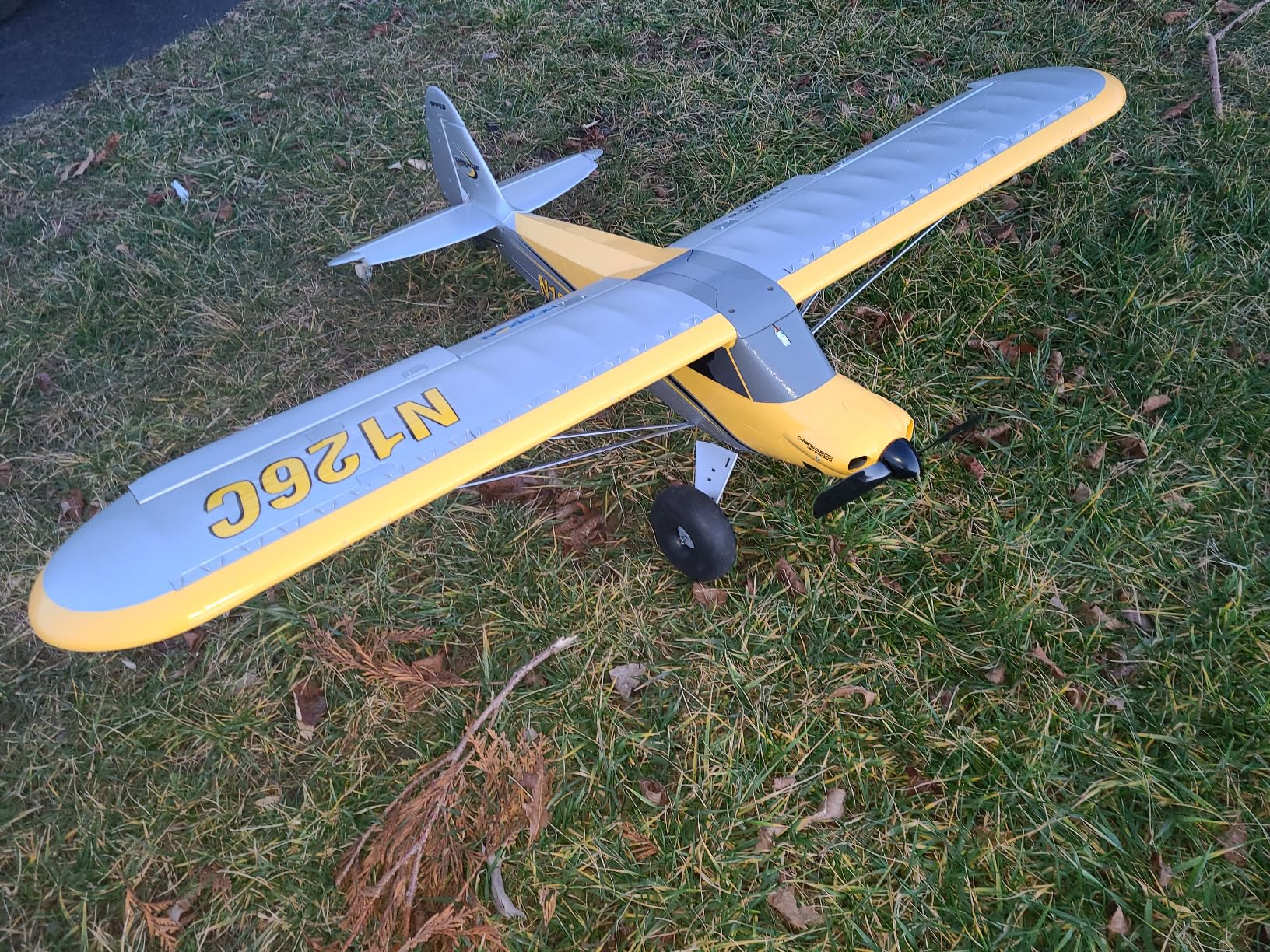
From a technical standpoint, the brushless motor and 30A ESC deliver more than enough power for gentle trainers and aerobatics alike. The 1.3m wingspan gives you stability in light wind, but the plane still feels responsive enough to teach proper control inputs. At 4.4 pounds, it has enough mass to cut through mild turbulence without getting tossed around.
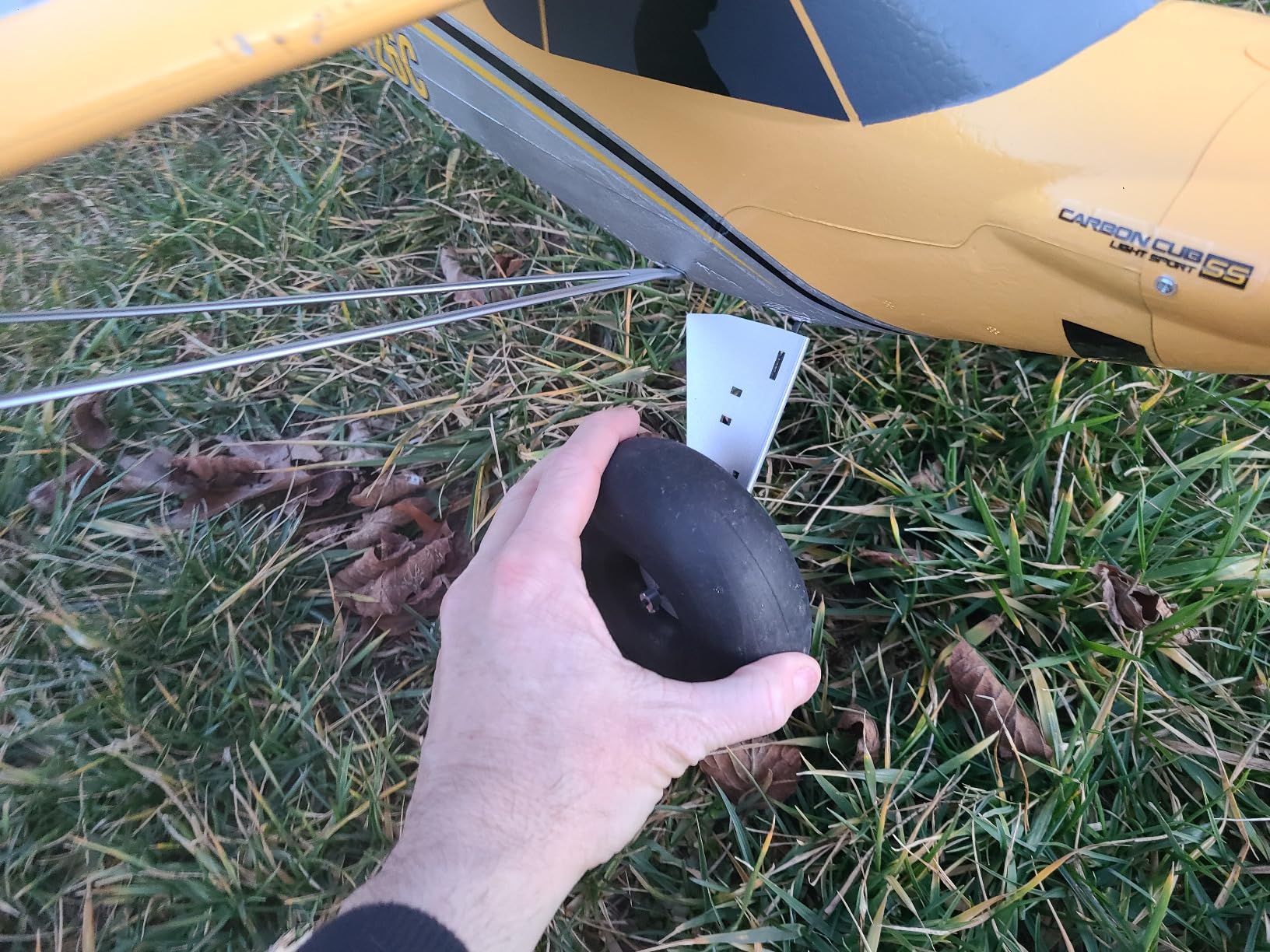
The high-wing design with dihedral creates natural self-righting behavior, which is exactly what you want when you are still figuring out orientation. HobbyZone also made the landing gear sturdy, and the large tundra-style tires handle grass runways better than most trainers. I watched the Carbon Cub absorb a rough landing that would have broken a lesser plane.
The telemetry-capable ESC lets you monitor performance in real time, and the optional GPS module can add auto-land capability if you decide to upgrade later. That forward compatibility is smart because it means you will not outgrow this platform in a single season. The scale appearance is a nice bonus, and it turns heads at the flying field.
When Should You Upgrade to This Advanced Trainer?
This is the plane for you if you are serious about sticking with the hobby and want room to grow. If you plan to fly at least twice a month and want a platform that can carry you from day one through intermediate aerobatics, the Carbon Cub S 2 makes sense.
However, if you are buying this for a child who might lose interest after two crashes, the investment may be too steep. The plane requires commitment and a suitable flying field. You will also need to purchase a compatible LiPo battery and charger separately, which adds to the total cost.
What Extras Will You Need to Budget For?
Since the battery and charger are not included, plan to spend extra on a quality LiPo setup. I recommend getting at least two batteries so you can fly back-to-back sessions without waiting for a charge cycle. Spare propellers and landing gear are also worth keeping in your field box.
A basic simulator app on your phone can accelerate your learning curve before you even take the Carbon Cub out of the box. The DXS transmitter is compatible with most flight simulators, so you can practice patterns in bad weather. That combination of real-world durability and digital practice time is hard to beat.
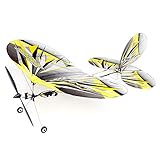
2. E-flite UMX Night Vapor – Unique Indoor and Night Flying Experience
E-flite RC Airplane UMX Night Vapor RTF to Fly is Included with AS3X and Safe Select EFLU1300
AS3X and SAFE Select
LED night lights
Indoor capable
Slow flight
Pros
- Can fly indoors in large spaces
- LED lights allow day and night flying
- AS3X and SAFE Select provide stability
- Very slow and easy to control
- Compact and portable
Cons
- Extremely fragile in crashes
- Affected heavily by wind
- Battery holder can be loose
- Wings can arrive warped
The UMX Night Vapor is unlike any other beginner plane I have tested. It weighs almost nothing and can fly in your living room if you clear the furniture. I first flew it at dusk in my backyard, and the LED lights made it look like a real aircraft coming in for landing.
The AS3X and SAFE Select combination does exactly what you hope it will. The plane stays level even when you overcontrol, and the panic recovery button has saved me from multiple wall encounters indoors. It is slow enough that you have time to think between control inputs, which is rare for an RC aircraft.
I took this to a gymnasium with a local RC club, and even the experienced pilots wanted a turn. The flight speed is so slow that you can walk alongside it while it cruises. That makes it perfect for beginners who panic easily because you literally have seconds to react instead of milliseconds.
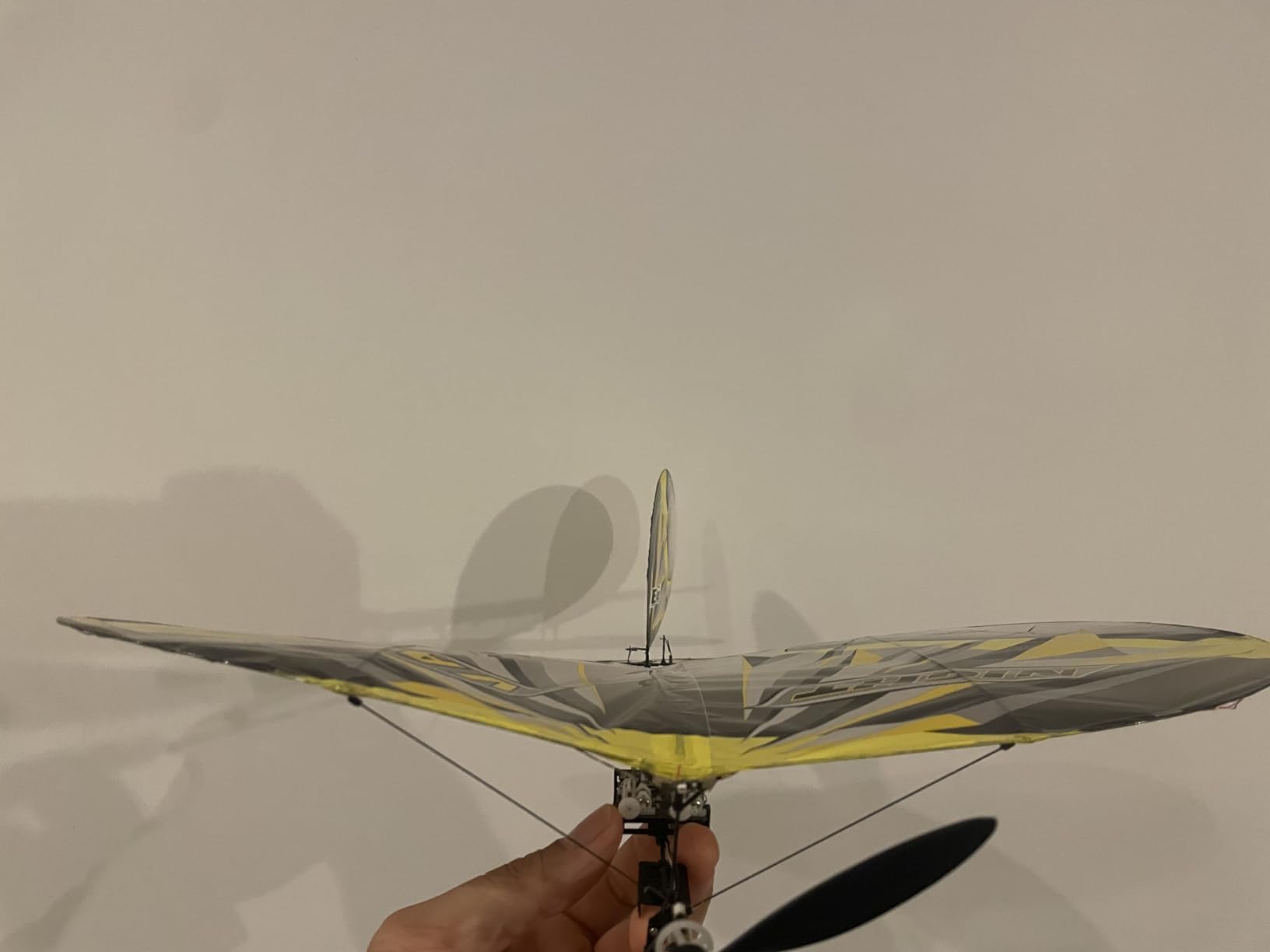
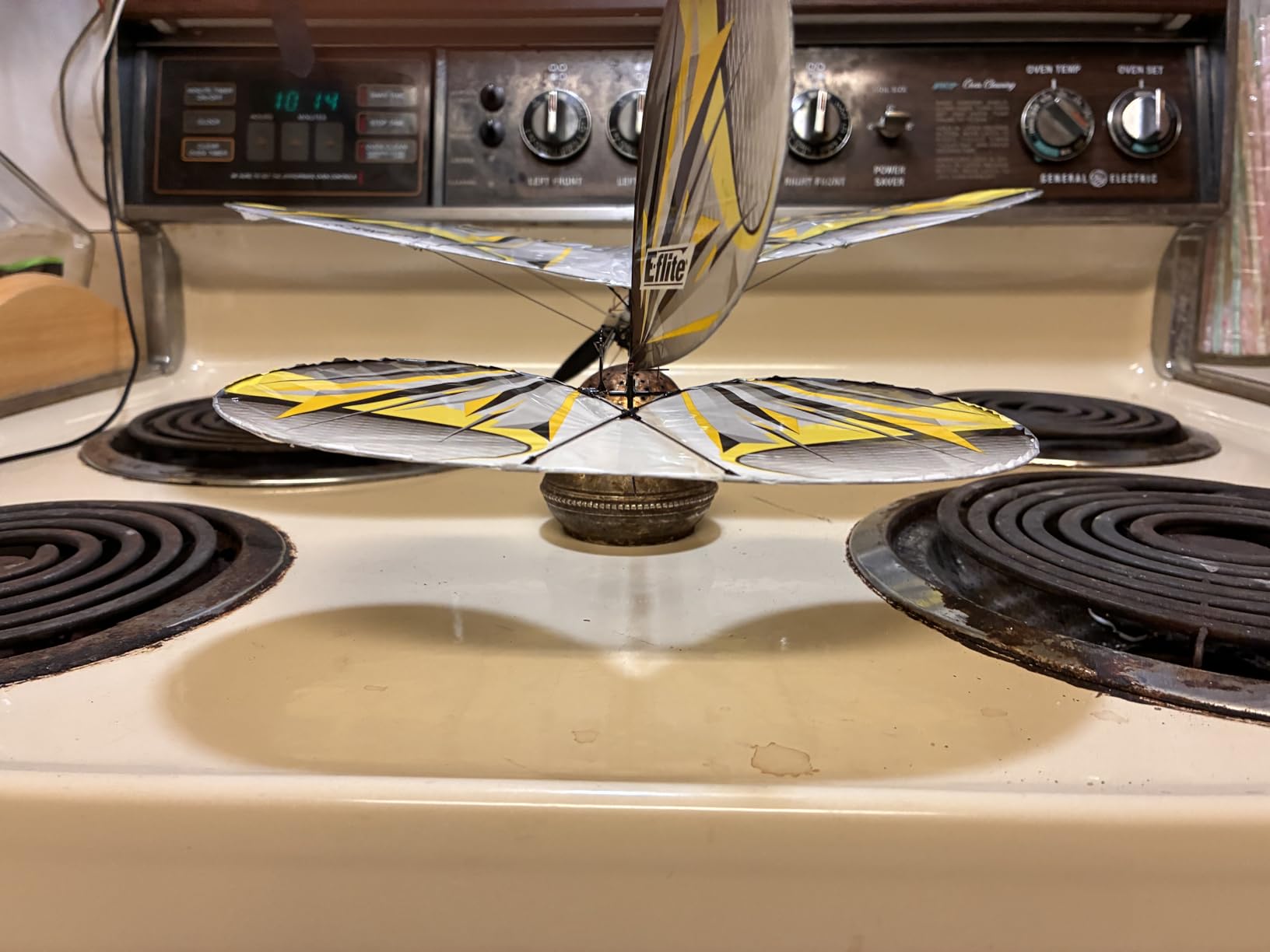
Technically, the reinforced airframe is stronger than the original Night Vapor, but it is still not a crash-proof design. The carbon fiber spars and lightweight plastic film construction are meant for controlled environments, not rough grass fields. The 1S LiPo battery is tiny and provides about six minutes of flight time.
The factory-installed LED lights are not just for show. They help you maintain orientation at night, which is usually the hardest skill for beginners. The color options let you customize the look, and the lights draw minimal power from the already small battery. The optimized slow-flight wing loading is the real magic here.
The Spektrum controller included in the RTF version binds instantly and feels like a proper hobby-grade transmitter. The DSMX 2.4GHz technology prevents interference from other pilots, which is nice if you fly with friends. The total package is small enough to fit in a backpack with your charger and a handful of spare batteries.
Is Indoor Flying Worth the Investment?
If you live in an area with harsh winters or limited outdoor space, the Night Vapor justifies its cost immediately. Being able to practice three times a week in a gym or large garage accelerates your learning faster than flying once a month outdoors. The consistency matters more than the location.
The trade-off is that you need a controlled environment. Outdoor breezes above five miles per hour make this plane nearly impossible to control. You are essentially buying a specialized tool, not a general-purpose trainer. For the right user, that specialization is perfect.
How Fragile Is It for Beginner Hands?
This is the most fragile plane on our list, and I will not pretend otherwise. A hard nose-first crash into a wall will crease the fuselage or tear the film covering. The good news is that repairs are cheap with tape and CA glue, and the airframe is simple enough that most damage is cosmetic.
You can reduce crash damage by flying in large spaces with high ceilings and adding packing tape reinforcements to the nose and leading edges. I also recommend practicing on a simulator first and keeping the panic recovery button mapped to an easy-to-reach switch. Treat it gently, and it will teach you more about smooth control than any other model here.
3. LEAMBE P51 Mustang – Three Flight Modes for Progressive Learning
LEAMBE 4 Channel RC Plane, Ready to Fly Aerobatic Aircraft, Easy Control for Beginners, P51 Mustang RC Airplane Best Gift for Adults
Xpilot gyro stabilizer
3 flight modes
Propeller Saver
12 min flight
Pros
- Lightweight elastomer foam construction
- 3 flight modes for learning progression
- Propeller Saver Technology protects from damage
- Xpilot gyro stabilizer provides stability
- Durable and survives crashes
- Good flight time up to 12 minutes
Cons
- Nose heavy according to some reviews
- Propellers break easily
- Not suitable for windy conditions
The LEAMBE P51 Mustang surprised me with how well it bridges the gap between toy-grade aircraft and hobby-grade trainers. I flew it in a soccer field over four consecutive weekends, and the Xpilot gyro stabilizer made my first takeoff look almost competent. The plane self-corrects when you let go of the sticks, which builds confidence quickly.
The three flight modes are the standout feature here. Beginner mode limits bank angles and prevents stalls, intermediate mode loosens the restrictions slightly, and experienced mode gives you full control. I spent two weeks in beginner mode before switching up, and the transition felt natural rather than terrifying.
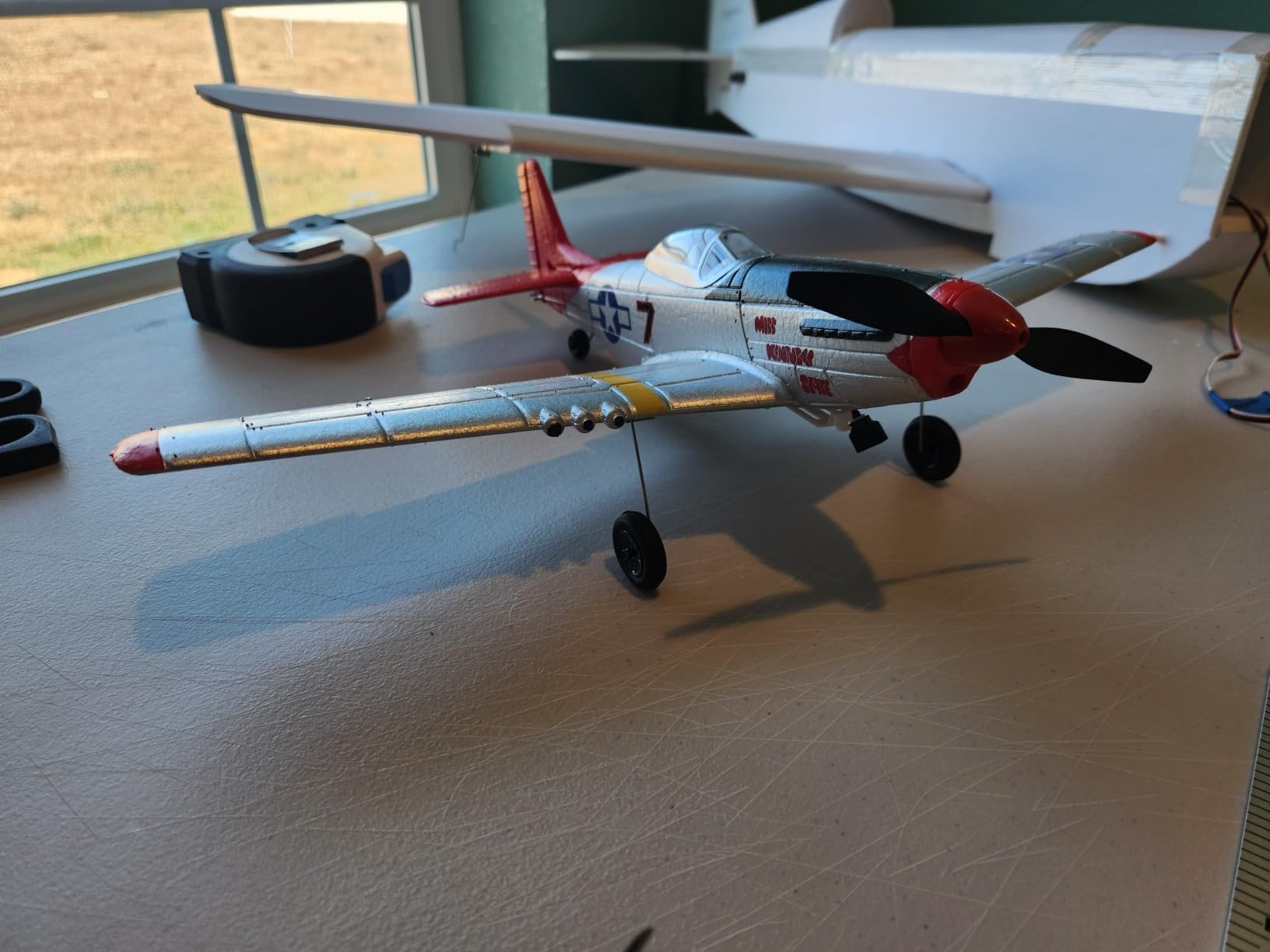
The P51 styling is a nice motivator. It looks like a real warbird in the air, and that visual feedback helps you understand orientation. When the nose is pointed at you, the distinctive shape is easier to read than a generic white foam slab. I found myself wanting to fly it more often simply because it looked cool banking through turns.
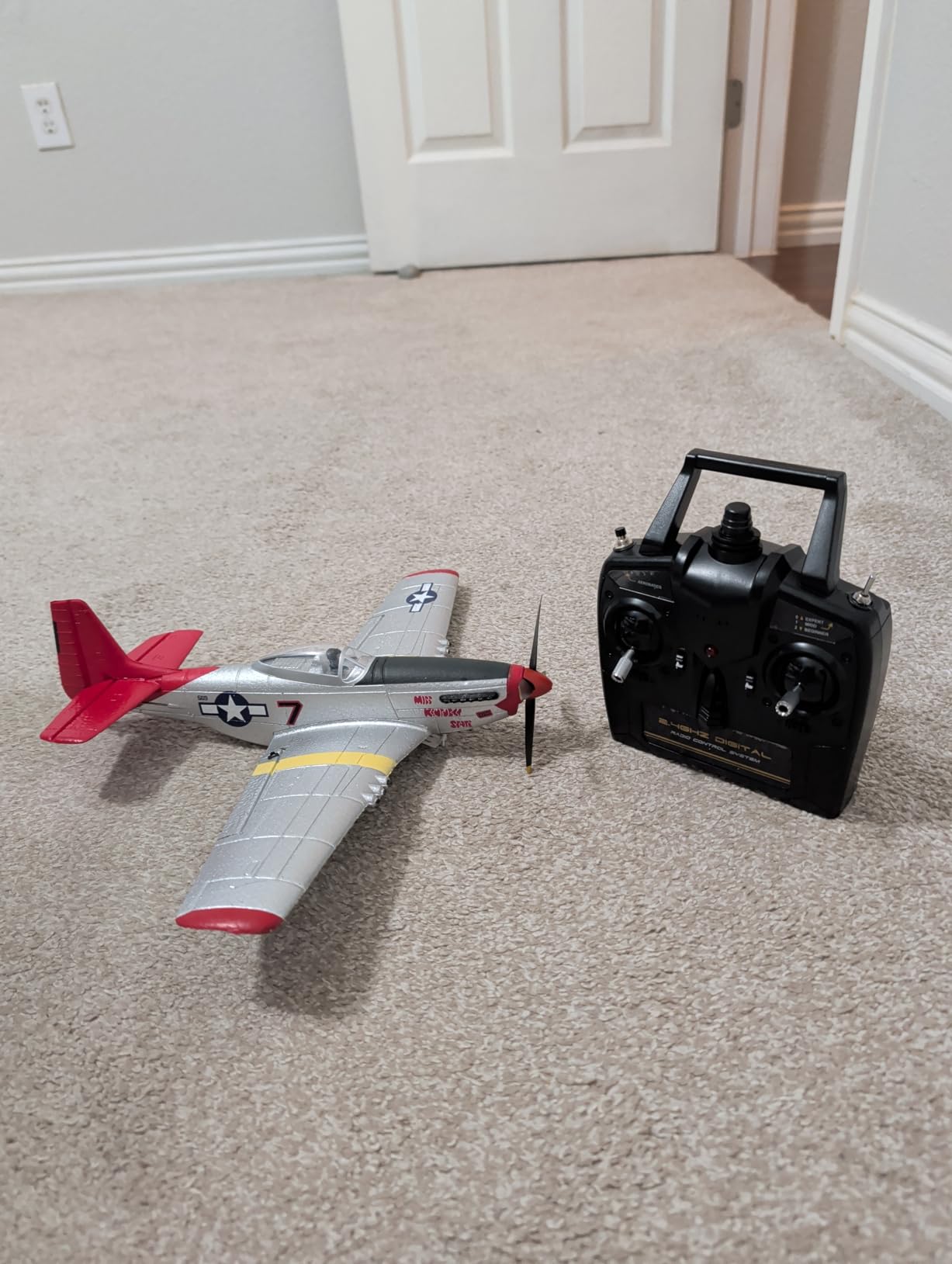
Technically, the 14-inch fuselage and 15-inch wingspan make it compact but still stable. The 8mm coreless motor is quiet and efficient, giving you around 12 minutes of flight per charge. The 2.4GHz radio system has a range of 656 feet, which is more than enough for a beginner who should stay close anyway.
The Propeller Saver Technology is not just marketing. When you nosedive into grass, the propeller pops off instead of snapping. You push it back on and keep flying. I tested this feature three times on rough landings, and the propeller detached cleanly each time. That saves you money on replacement parts.
The elastomer foam construction is flexible and impact-absorbent. It does not shatter like brittle EPS foam. Instead, it compresses and rebounds. I accidentally flew this into a chain-link fence, and the wing flexed around the wire before popping back into shape. The only damage was a scuff mark.
How Quickly Can You Progress Through the Flight Modes?
Most beginners can stay in beginner mode for two to four weeks of regular flying. That is roughly six to twelve flight sessions. Once you can consistently take off, fly a rectangular pattern, and land without assistance, you are ready for intermediate mode. The progression is built into the design.
Experienced mode unlocks the full performance envelope, including basic aerobatics. I was able to loop this plane after about six weeks of practice. The motor has enough power for simple aerobatics, but the real benefit is learning smooth control inputs. The P51 rewards coordinated turns rather than jerky corrections.
Is the Propeller Saver System Effective?
The Propeller Saver works exactly as advertised on grass and soft dirt. On pavement or rocks, the propeller may still break, but the damage is reduced. I recommend keeping at least three spare propellers in your kit because beginners will test the limits of this system.
The included USB charger takes about 40 minutes to charge the battery. That is fast enough that you can rotate two batteries indefinitely. I bought a third battery just to eliminate downtime, and the total investment was still reasonable. The convenience factor here is high for the price tier.
4. SYMA X550 – Highest Rated 4-Channel Military Design
SYMA X550 RC Plane, 4CH Tiltrotor for Kids & Beginners, Stunt Flight
4-channel control
2 speed modes
One-key takeoff
360 stunts
Pros
- Authentic military V-22 Osprey design
- 4-channel control for natural steering
- Sturdy and light construction
- 2 speed modes for learning
- Good battery life for the price
Cons
- Requires larger flying space
- Sensitive to wind outdoors
- Learning curve with trim adjustments
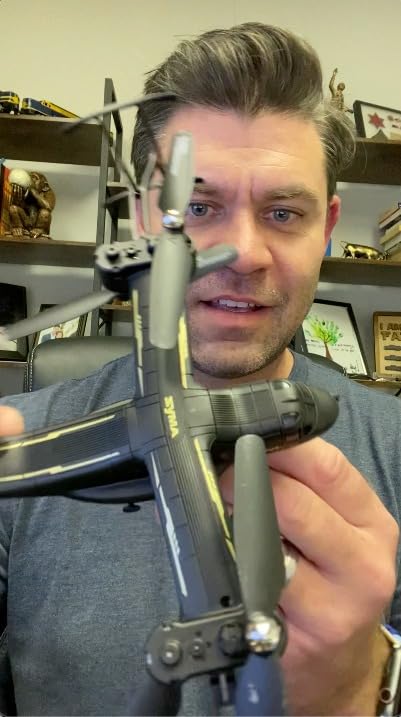
The SYMA X550 carries a 4.5-star rating, and after flying it I understand why. The military-inspired design is not just cosmetic. The V-22 Osprey styling gives it a wide, stable footprint that tracks straight during takeoff. I flew this in a schoolyard on a calm Saturday morning, and the one-key takeoff function had it in the air before I even felt nervous.
The four-channel control gives you throttle, elevator, rudder, and aileron control. That is the same channel count as advanced hobby planes, which means you are learning the correct muscle memory from day one. I noticed that my inputs on the SYMA translated directly when I later flew a HobbyZone trainer. The skills are transferable.
The two speed modes are practical. Low speed limits the throttle and response rates, making the plane feel docile. High speed opens up the full performance for when you want to try stunts or fly in a light breeze. I kept it in low speed for the first five flights, and the confidence boost was noticeable.
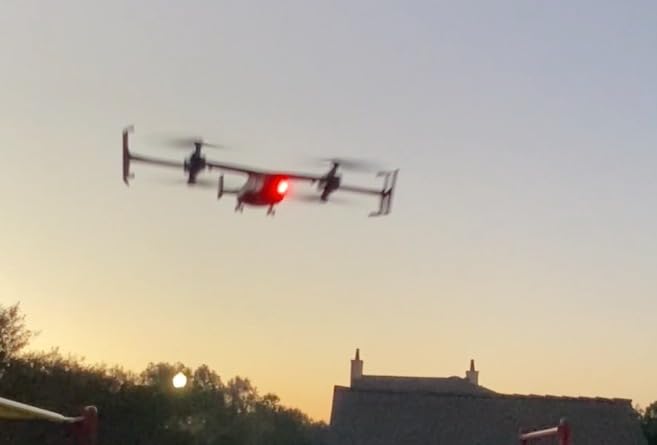
Technically, the 4-channel receiver is more sophisticated than most planes at this level. The rudder and aileron mixing creates coordinated turns that look realistic. The dual motor design provides differential thrust for yaw control, which is a feature usually found on more expensive models. The construction uses a mix of plastic and foam that feels rigid without being brittle.
The one-key landing function is genuinely useful for beginners. When you panic, you hit the button and the plane descends in a controlled spiral. It is not perfect, but it beats a full-power crash into the ground. I used it twice during my first flight when I lost orientation after a turn.
The included battery provides about 10 minutes of flight, and the USB charger is straightforward. The controller uses standard AA batteries, which is convenient because you probably already have them. The total package is ready to fly with minimal setup, and the instruction manual is clearer than most translated documents.
Does the 4-Channel Control Help or Hurt Beginners?
Four-channel control helps beginners who are serious about learning properly. It teaches you the correct stick inputs from the start, so you do not develop bad habits. The trade-off is a slightly steeper learning curve than two-channel planes. If you want to progress to hobby-grade aircraft eventually, the SYMA X550 is the right teacher.
If you only want to fly occasionally and do not care about skill progression, a simpler two-channel plane might be less frustrating. But I think the SYMA strikes a good balance. The low-speed mode limits the sensitivity enough that beginners can handle it without being bored.
What Age Group Is This Best Suited For?
The SYMA X550 works well for teens and adults with decent hand-eye coordination. The controls are precise enough that younger children might struggle with the four-channel inputs. I would recommend this for ages 12 and up, or for younger kids who have prior experience with drones or video games.
The military styling also appeals to adults who want something that looks like a real aircraft. I gave this to my brother-in-law for his birthday, and he was genuinely excited about the V-22 design. The gift factor is higher here than with generic foam trainers.
5. volantexrc TrainStar Mini – Long Flight Time with Gyro Stabilization
volantexrc RC Plane Trainer 3CH Remote Control Airplane with Prop Saver, 6-Axis Gyro Stabilizer & 3 Modes to Fly, Hobby Radio Controlled Aircraft RTF for Beginners, Adults (400mm,Green)
6-axis gyro stabilizer
3 flight modes
30 min flight
Ready to fly
Pros
- Xpilot gyro stabilizer provides excellent stability
- 3 flight modes help beginners learn progressively
- Very durable and survives crashes
- Long flight time up to 30 minutes
- Comes fully assembled
- Can handle some wind conditions
Cons
- Propellers break easily
- Very light and affected by wind
- Battery life varies in practice
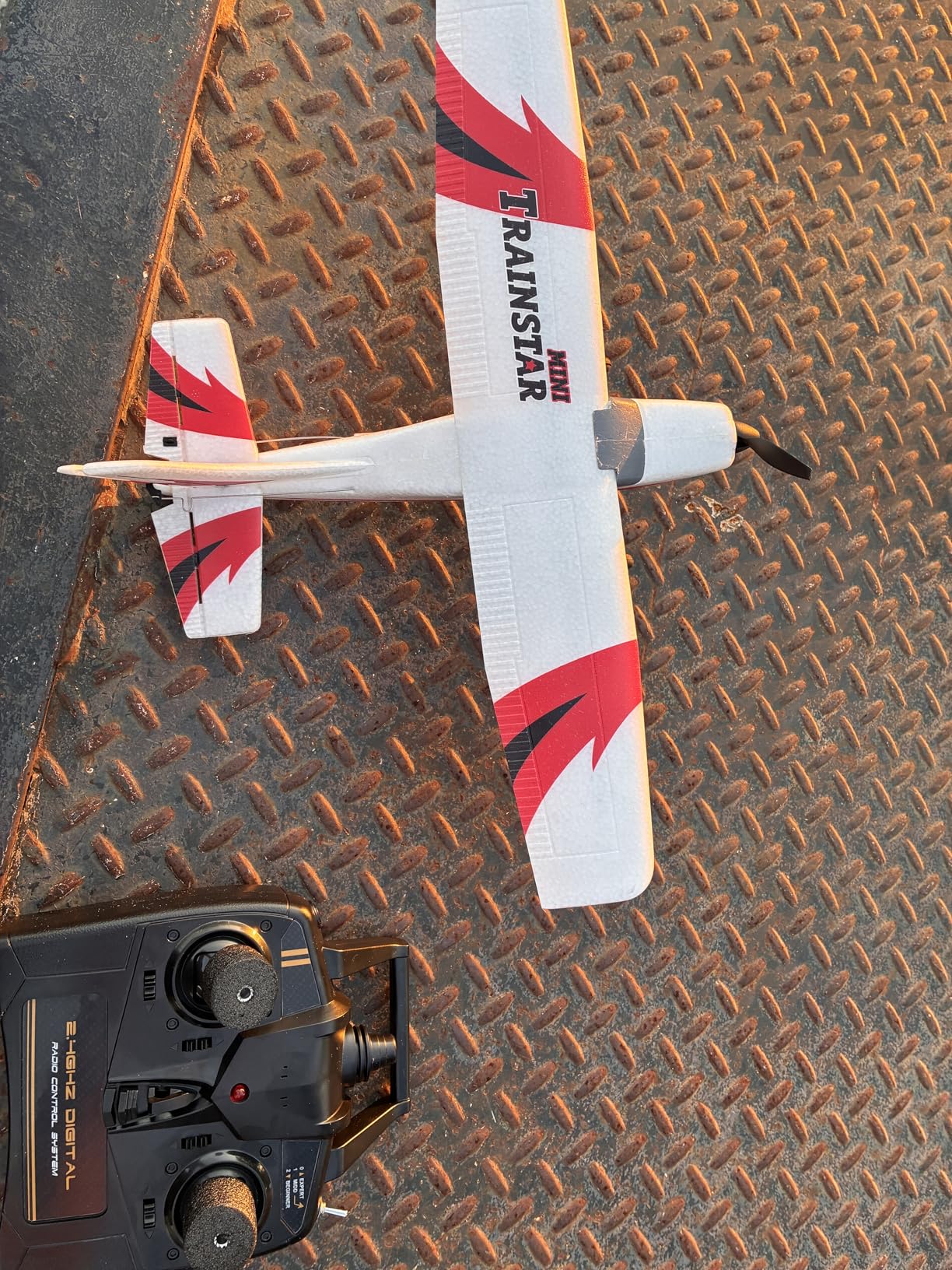
The TrainStar Mini arrived at my door fully assembled, and I was flying it within five minutes of opening the box. That is the kind of instant gratification beginners need. The Xpilot gyro stabilizer keeps the wings level even when you are still figuring out which stick does what.
I flew this at a local park with a friend who had never touched an RC plane before. Within his first battery, he was doing basic turns and keeping the plane in the air. The beginner mode is aggressive with its assistance, which is exactly what a nervous first-timer wants. The intermediate mode lets you explore banked turns without fear.
The 400mm wingspan is small enough to transport easily but large enough to feel stable. I carried it in the back seat of my car without disassembling anything. The gear box system gives the motor extra thrust, which means the TrainStar Mini climbs confidently even from grass fields.
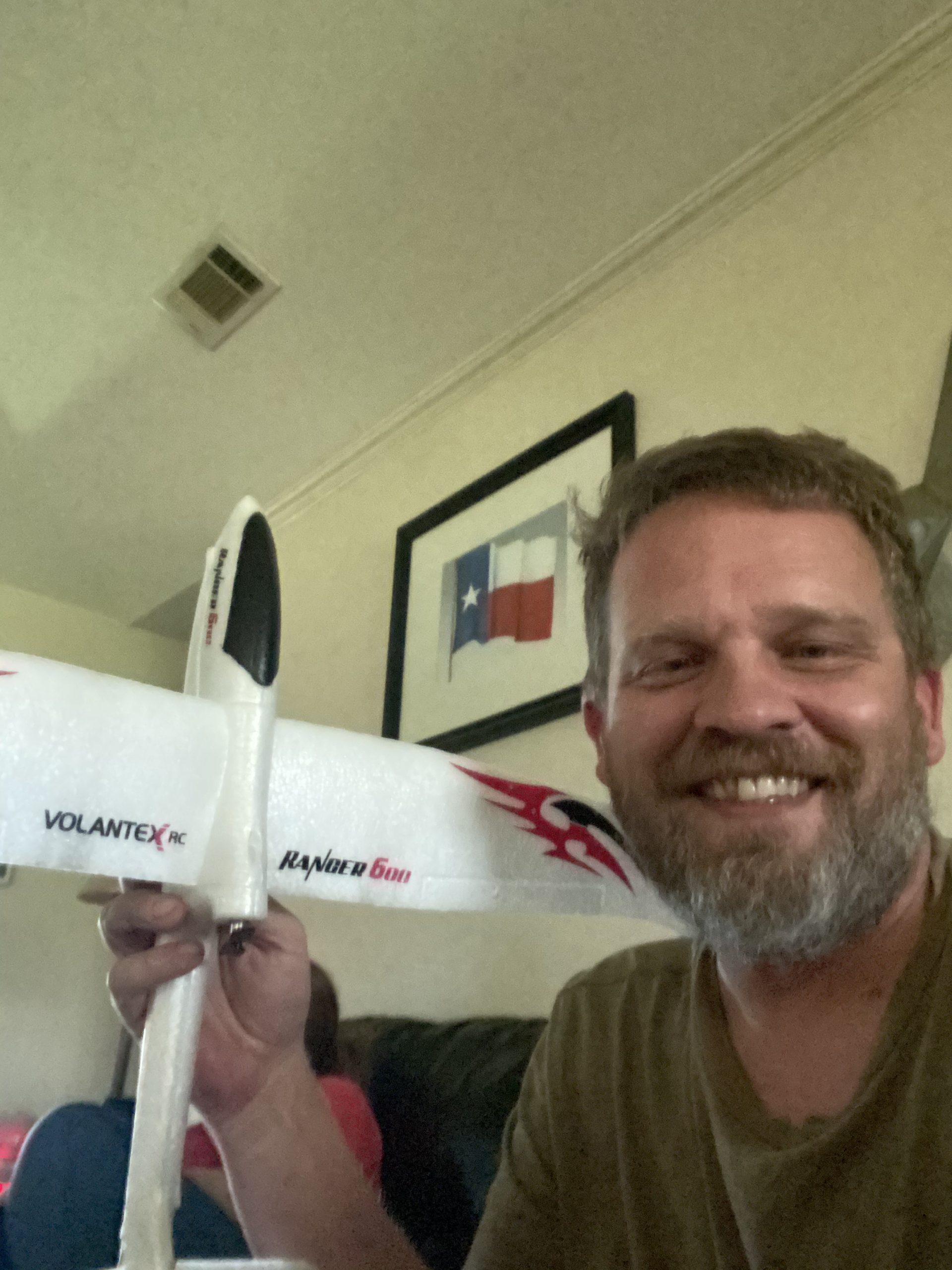
Technically, the 6-axis gyro stabilizer is the same technology found in camera drones. It measures attitude and corrects automatically. The 2.4GHz radio has a 656-foot range with strong anti-interference. The carbon fiber and EPP foam construction creates a stiff airframe that resists twisting forces during turns.
The claimed 30-minute flight time is optimistic. In real conditions with moderate throttle use, I got about 15 minutes consistently. That is still better than most competitors, which average 8 to 12 minutes. The gear box system does improve efficiency, but wind and aggressive maneuvers drain the battery faster.
The three flight modes are well-calibrated. Beginner mode limits pitch and roll angles, intermediate mode reduces the limits by half, and expert mode turns the gyro into a gentle assist rather than a crutch. The transition between modes is done with a switch on the transmitter, so you can experiment mid-flight.
Can It Actually Handle Wind Conditions?
The TrainStar Mini can handle light breezes up to about 8 miles per hour, but it gets pushed around easily. The 1.3-pound weight is not enough to punch through stronger gusts. I recommend flying this in the early morning or late evening when the wind is calm. The gyro does help, but physics still wins.
In completely calm conditions, the plane is a joy. It tracks straight, responds predictably, and lands softly. The extra thrust from the gear box lets you power through mild turbulence. Just do not expect it to behave like a 2-pound warbird in a headwind.
How Long Will the Batteries Last in Practice?
Plan for 12 to 15 minutes of actual flight time per charge. That is still respectable and beats most planes in this class. I bought two extra batteries and kept them in a small cooler bag with an ice pack for safety. The included USB charger works fine, but it is slow.
If you want to fly for an hour without interruption, get four batteries and a faster charger. The batteries are standard 1S LiPo packs that are easy to find. Replacement propellers are also readily available, which is important because the stock props are the weak point on this otherwise durable plane.
6. ANTSIR BF109 – Warbird Looks with Beginner-Friendly Electronics
ANTSIR BF109 German RC Plane for Adults Teens Beginners Outdoor Park Fly
6-axis gyro stabilization
4-channel control
3 flight modes
3 batteries
Pros
- 6-axis gyro stabilization helps new pilots
- 4-channel control provides realistic flying
- Lightweight EPP foam airframe is durable
- 3 batteries included for extended flight
- Good for beginners with 3 flight modes
Cons
- Underpowered and struggles in wind
- Propellers break easily
- Some reliability issues with servos
- Battery compartment hatch is difficult
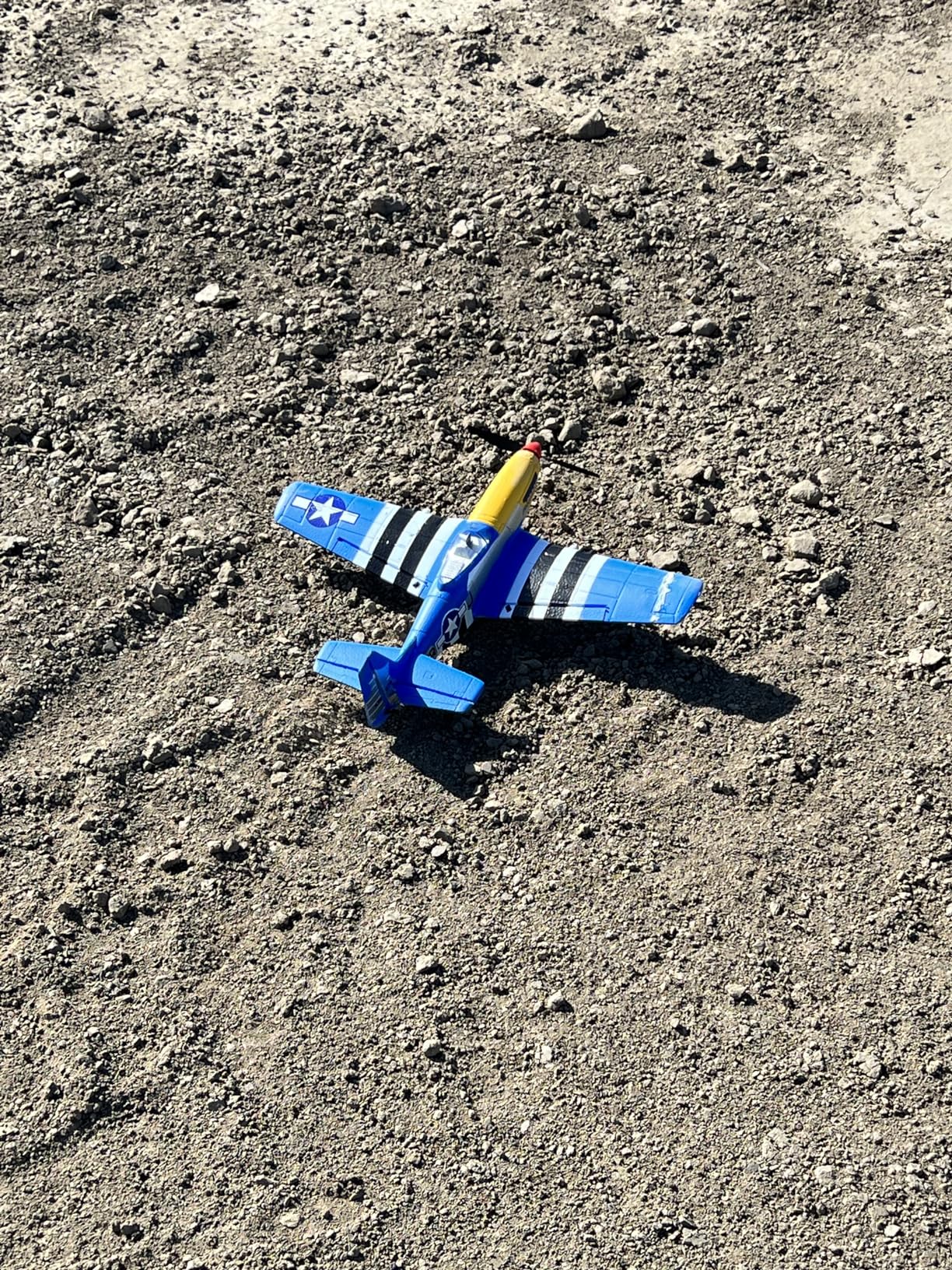
The ANTSIR BF109 looks like a real Messerschmitt in the air, and that scale appeal is undeniable. I took it to the field expecting a toy, but the four-channel control and aileron-equipped wings told me otherwise. This is a proper trainer dressed in warbird clothing.
The 6-axis gyro stabilization does the heavy lifting during your first flights. The one-touch takeoff function launches the plane at a safe climb angle, and the low-battery alert gives you time to land before power cuts out. I appreciated the out-of-range alert too, because beginners tend to let the plane get too far away.
The three included batteries are a generous touch. Most planes give you one battery and make you buy spares. With the ANTSIR, you can fly for 30 minutes total with the included charger. I cycled through all three batteries on my first outing without feeling like I spent more time charging than flying.
Technically, the four-channel control gives you aileron, elevator, rudder, and throttle. That is the full standard for hobby aircraft. The EPP foam airframe is impact-resistant and balances well for outdoor use. The FPV antenna expansion port is a nice touch for future upgrades if you want to add a camera later.
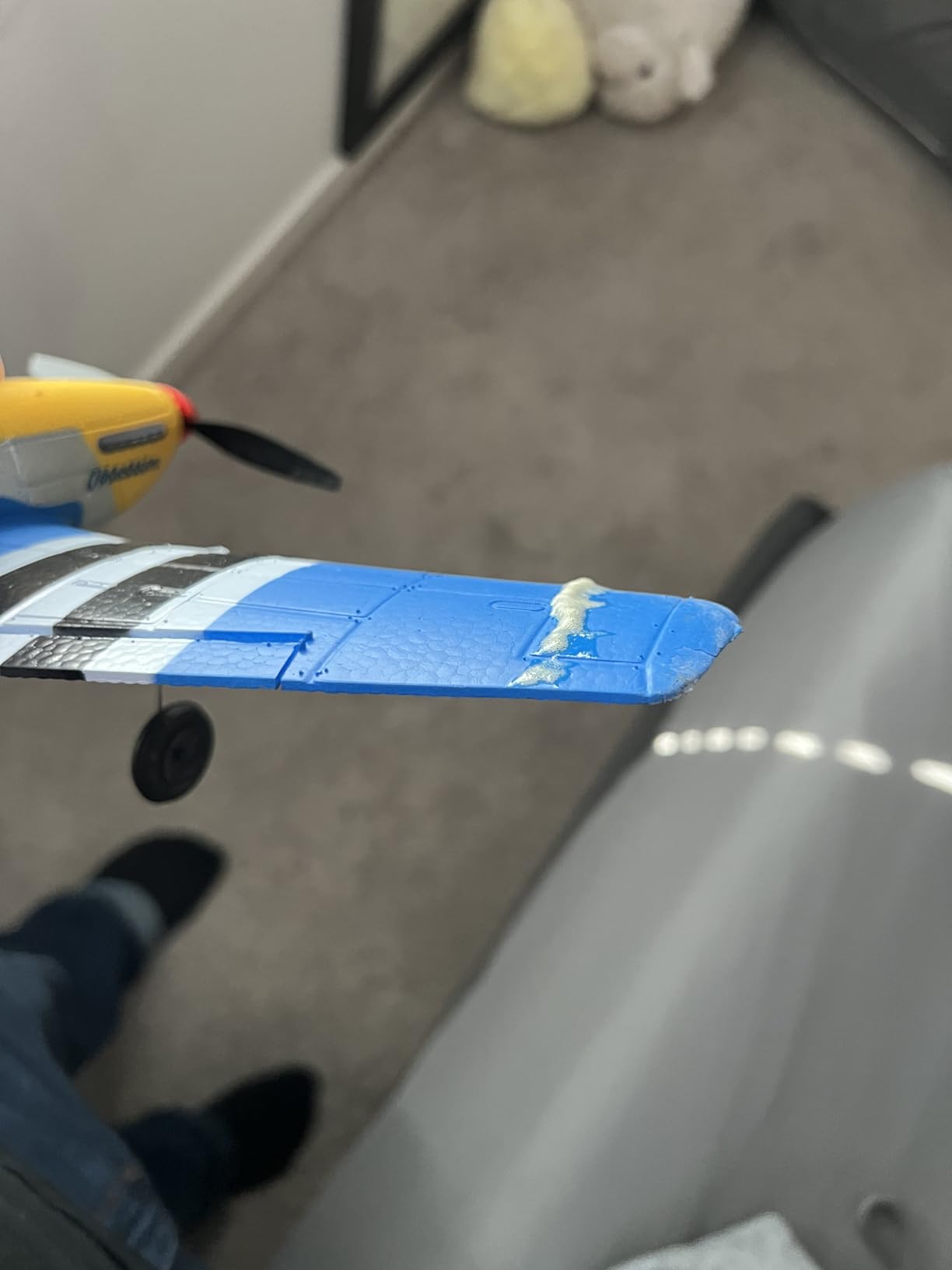
The motor is a bit underpowered for the airframe weight. It climbs fine in calm air, but any wind requires full throttle and careful energy management. The propellers are also fragile, and I broke two during tip-stall landings in my first week. Keep spares in your field kit.
The servo reliability has been reported as inconsistent by some users. I did not experience failures during my testing, but the micro servos are a known weak point in this class. The battery compartment hatch is tight, which protects the pack but makes quick swaps annoying at the field.
Is the Warbird Design Suitable for First-Time Pilots?
Warbirds are traditionally challenging for beginners because they are fast and less stable. The ANTSIR BF109 solves this with the gyro system and beginner mode. In beginner mode, the plane behaves like a high-wing trainer despite the sleek appearance. The visual feedback of a realistic aircraft actually helps with orientation.
The trade-off is that the low wing does not self-right as aggressively as a high-wing trainer. If you get into trouble, the gyro helps, but you still need to learn proper recovery techniques. I recommend this for beginners who are motivated by the scale look and willing to practice regularly.
What Maintenance Should You Expect?
The ANTSIR requires more maintenance than foam trainers. The control linkages need periodic checks because the micro servos can develop slop. The propeller shaft bends easily on hard impacts, and replacing it requires a small screwdriver and patience. Plan on 10 minutes of pre-flight inspection before each session.
Replacement parts are available but not as abundant as Horizon Hobby products. I found propellers and batteries easily, but servo replacements took some searching. Buy a few spare parts upfront so you are not grounded waiting for shipping. The EPP foam repairs easily with glue, so crash damage is usually cosmetic.
7. HAWK’S WORK F-22 – Self-Stabilization on a Budget
HAWK’S WORK 2CH F-22 RC Glider, Easy Fly RC Plane for Kids & Beginners
Self-stabilization system
2.4GHz control
Durable EPP foam
Ready to fly
Pros
- Extremely durable and survives harsh crashes
- Self-stabilization helps beginners
- Can fly in slightly windy conditions
- Good battery life
- Great value for the price
Cons
- Can become uncontrollable at high altitudes
- Needs large open space
- No directional control at times
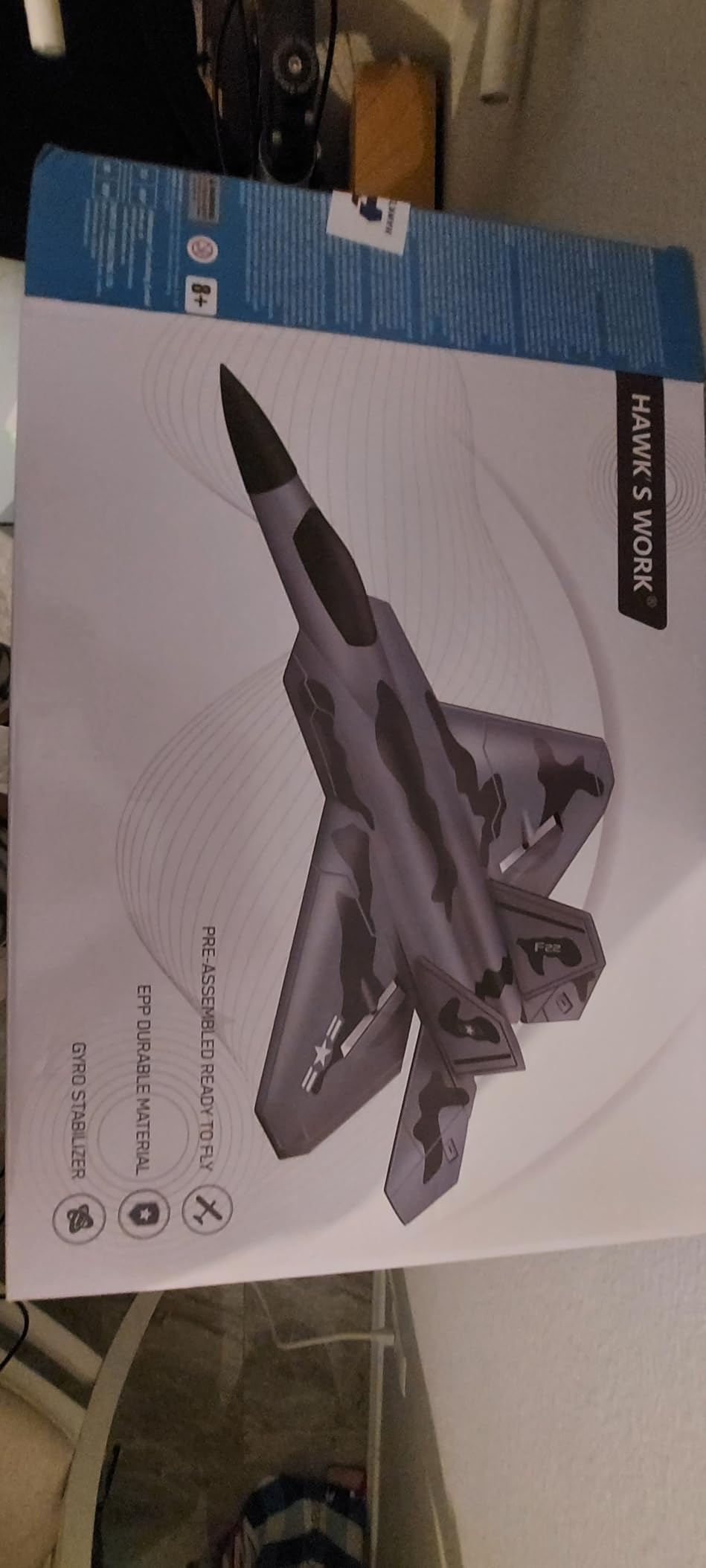
The HAWK’S WORK F-22 has over two thousand reviews, and that volume tells you something. I bought one to see what the buzz was about, and it immediately became my go-to recommendation for anyone who wants to try RC flying without spending much. The self-stabilization system is genuinely helpful.
The EPP foam construction is almost indestructible. I flew this into a tree, a fence, and the ground on separate occasions. Each time, I picked it up, straightened the nose, and kept flying. The foam compresses on impact and springs back. After three weeks of abuse, the plane still looked fine except for some dirt stains.
The included accessories are generous. You get two batteries, spare propellers, glue, and even the AA batteries for the controller. Most companies make you buy those separately. I had the plane in the air 20 minutes after the Amazon box arrived, and that instant gratification matters for beginners.
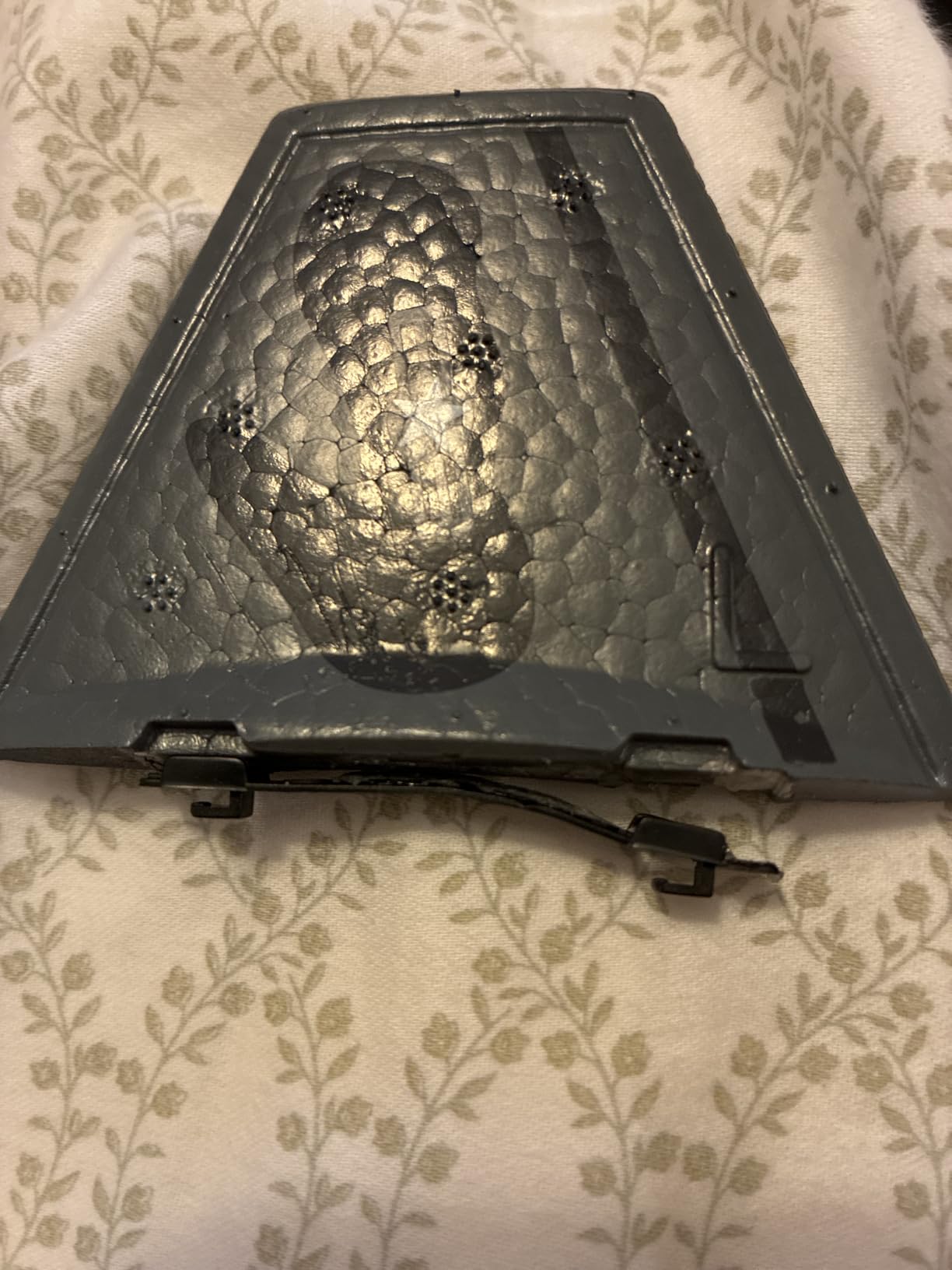
Technically, the two-channel control means throttle and rudder only. There is no elevator control, which limits your maneuverability. The self-stabilization system handles pitch automatically using a gyro. This makes the plane easy to fly but does not teach you the full skill set. Think of it as training wheels rather than a full curriculum.
The 2.4GHz radio is stable and lets multiple planes fly together without interference. The 450-gram weight gives it enough inertia to handle light wind. I flew this in 10 mph gusts, and while it bounced around, it did not blow away. The two included 300mAh batteries give about 15 minutes each.
The four-direction control is basic. You go up, down, left, and right. The self-stabilization limits bank angles so you cannot roll inverted. That is exactly what a beginner needs, but experienced pilots will get bored quickly. This is a learning tool, not a performance aircraft.
How Much Space Do You Need to Fly Safely?
You need a soccer field or larger. The HAWK’S WORK F-22 needs room to turn because the rudder-only control creates wide circles. Small parks with trees on all sides will trap you. I found an empty school field that worked perfectly, and I recommend scouting your location before the first flight.
The altitude limitation is real. Above about 50 feet, the self-stabilization struggles and the plane can become unpredictable. I learned to keep it at medium height where the gyro still has authority. This is actually a good habit for beginners because it forces you to stay within comfortable visual range.
Does the Self-Stabilization Really Help?
Yes, the self-stabilization makes a noticeable difference. When you release the sticks, the plane levels out within seconds. This prevents the death spiral that terrifies most beginners. The system is not perfect, but it reduces the severity of mistakes enough that you can recover and learn.
The downside is that you do not learn elevator control. When you graduate to a three or four-channel plane, you will need to develop that skill from scratch. I still think the HAWK’S WORK is worth it as a first plane because it builds confidence and teaches basic orientation without the steep failure rate.
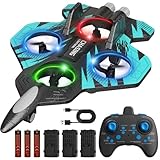
8. FUNPX Foam RC – LED Light Show with Extended Flight Time
FUNPX Foam RC Plane with 3 Drone Batteries and 3*AAA Batteries (Black/Blue)
Altitude hold
LED lights
3 batteries
360 flips
Pros
- Impressive stability and altitude hold
- Easy one-key takeoff and landing
- Bright LED lights for night flights
- Includes 3 modular batteries
- Lightweight foam absorbs impacts well
Cons
- Very lightweight and affected by wind outdoors
- Makes buzzing sound while flying
- Small battery capacity
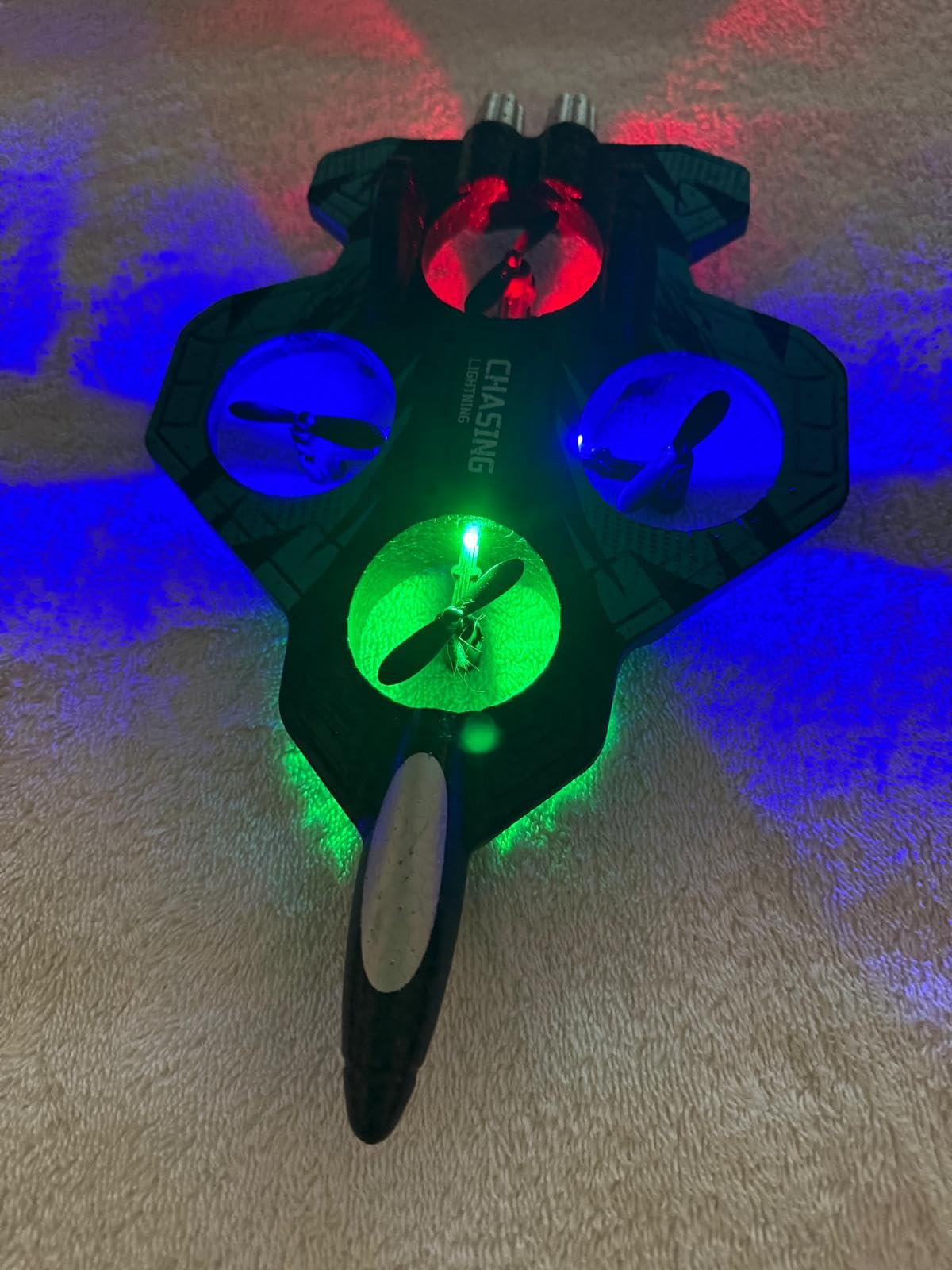
The FUNPX Foam RC is the most visually entertaining plane on this list. The LED lights pulse and glow during flight, creating a light show that looks incredible at dusk. I flew this at a family barbecue, and the kids were mesmerized. It is a crowd-pleaser as much as it is a trainer.
The altitude hold function is rare at this price level. The plane maintains height automatically, which lets you focus on steering rather than throttle management. I found this feature especially helpful when teaching friends who had never flown before. They could concentrate on left and right without worrying about climb and descent.
The three included batteries are a major win. With about 15 minutes per battery, you get 45 minutes of total flying time. The modular design means you swap packs in seconds without unscrewing hatches. I kept the charger in my car and rotated batteries continuously during an afternoon session.
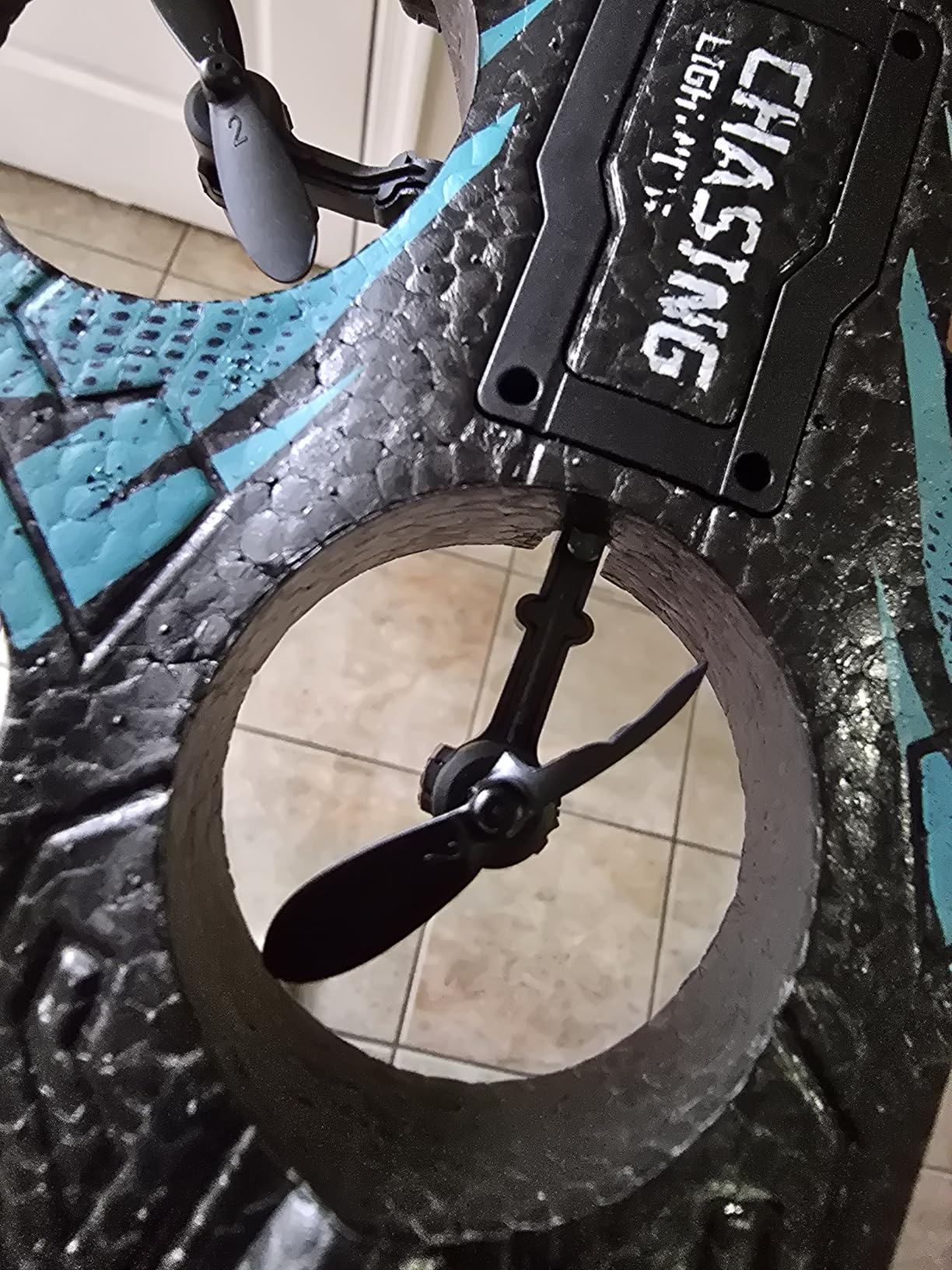
Technically, the optical flow sensor helps with ground reference and altitude estimation. The dual-joystick control is intuitive for anyone who has played video games. The anti-wind design is mostly marketing, but the high-wing configuration does provide some natural stability. The foam body is ultra-light and soft.
The 360-degree flip function is fun but not useful for learning. Beginners should ignore it until they have basic control down. The high and low speed modes are more practical. Low speed limits the response rates so you do not overcontrol. High speed is for when you want to try the stunts or fly in a breeze.
The buzzing sound is noticeable but not annoying. It comes from the small motor and gear reduction. The radio uses 2.4GHz spread spectrum, which is standard and reliable. The controller fits small hands well, though adults might find it a bit toy-like. For the price, the electronics are solid.
Is This Better for Indoor or Outdoor Use?
The FUNPX shines indoors. In a gym, large garage, or empty warehouse, the LED lights pop and the altitude hold keeps you from hitting the ceiling. The lightweight foam will not damage walls or furniture if you bump them. I flew it in a community center with 20-foot ceilings and had a blast.
Outdoors, the wind is the enemy. Anything above a gentle breeze pushes this plane around. The altitude hold compensates somewhat, but lateral drift is uncontrollable. I recommend reserving outdoor flights for dead-calm mornings. Indoors, it is one of the best beginner experiences you can get.
How Do the LED Lights Impact Battery Life?
The LED lights draw minimal power compared to the motor. I did not notice a significant reduction in flight time with the lights on. The lights are actually helpful because they let you see the plane orientation at a glance. Red and green navigation lights help you tell left from right even when the plane is far away.
The lights are bright enough to fly at dusk but not true night flying. After sunset, you lose depth perception and the plane becomes hard to judge. Use the LEDs for twilight sessions and indoor events. They add personality to the aircraft without a meaningful battery penalty.
9. 4DRC V50 – Headless Mode for True Beginners
4DRC RC Planes Remote Control Airplanes for Kids, Foam Remote Control Planes for Kids Adults Beginners, Remote Control Helicopter Fighter Jet Drones for Kids Adults, 360° Flip Easy to Fly
Headless mode
3 speed modes
LED lights
Altitude hold
Pros
- Lightweight and durable foam construction
- Easy to control with headless mode
- Good battery life
- LED lights for night flying
- Can survive multiple crashes
Cons
- Battery and wiring quality concerns
- Limited turn handling
- Remote control is delicate
The 4DRC V50 is the most accessible entry point on our list. I handed this to my 10-year-old nephew with zero instructions, and he was flying it within minutes. The headless mode eliminates the hardest part of RC flying, which is keeping track of which direction the nose is pointed.
In headless mode, the controls are always relative to you. Left is always left, regardless of which way the plane is facing. This is controversial among experienced pilots, but for a first-timer, it removes the frustration that causes most people to quit. My nephew flew three battery cycles without a single crash.
The 360-degree flip and aerobatic rolls are fun party tricks. The three speed modes let you start slow and build up. The altitude hold works reasonably well for a plane at this level. I found it drifted about two feet up and down, but it never dove or ballooned unexpectedly.
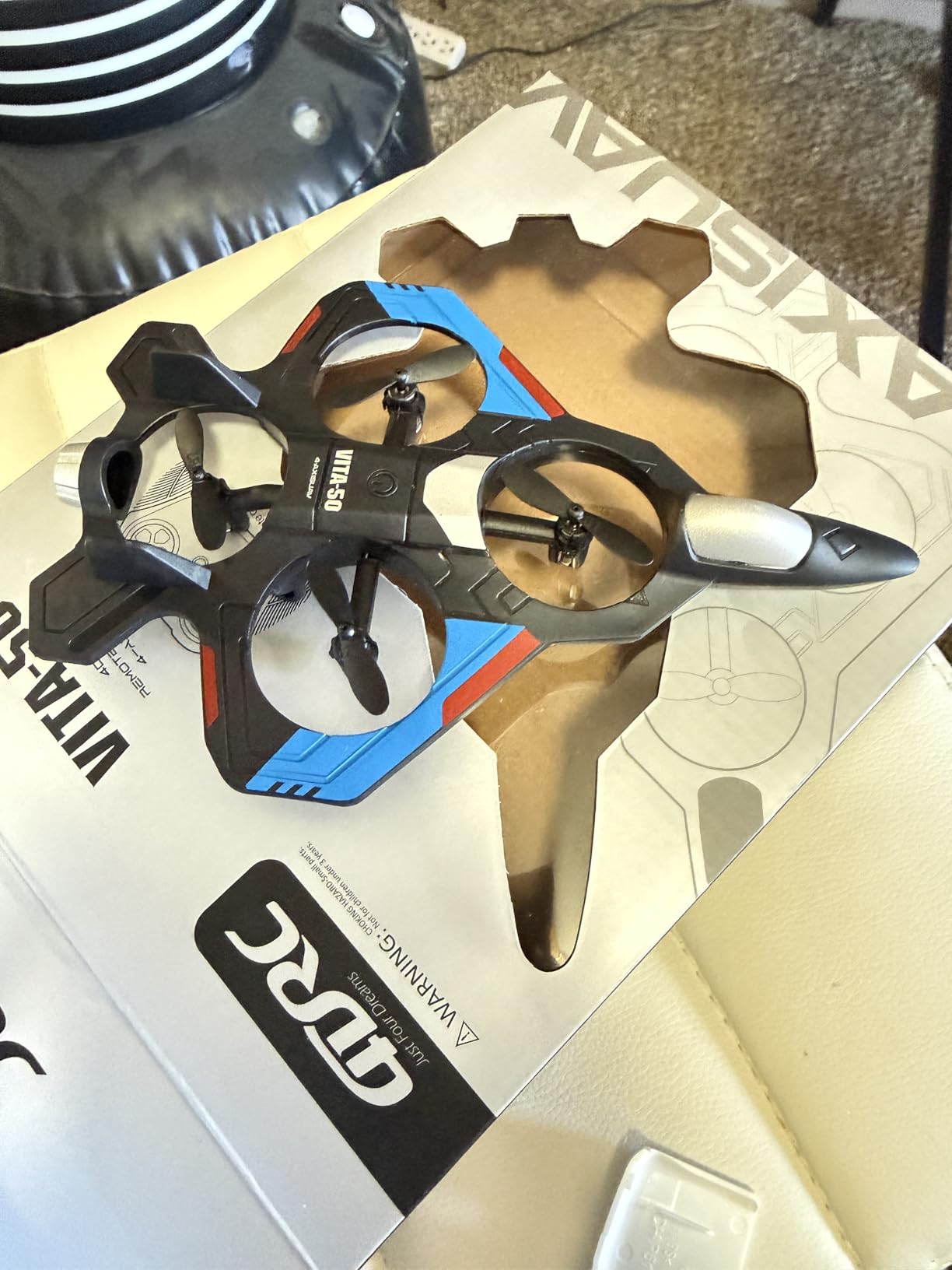
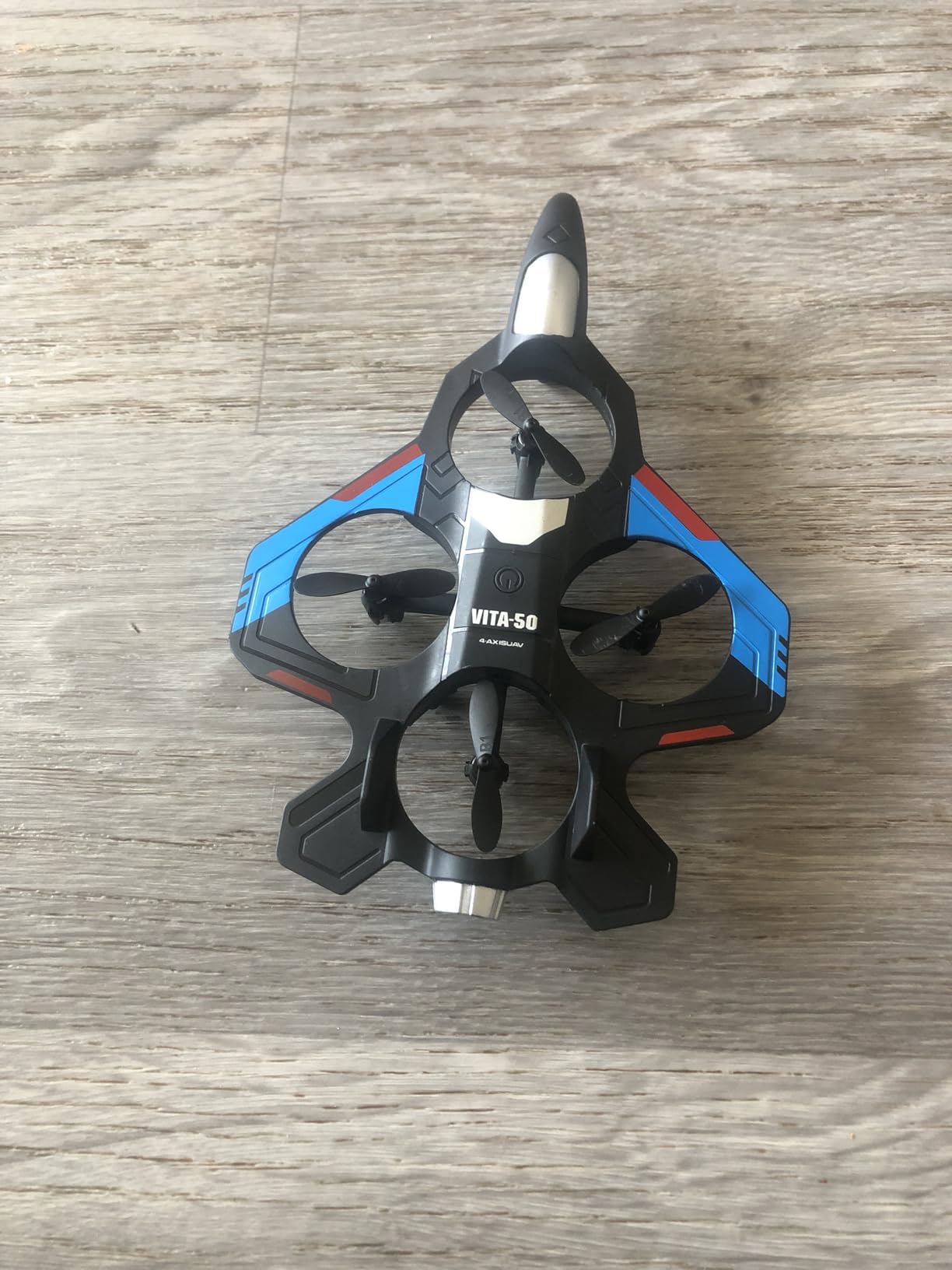
Technically, the EPP foam construction is similar to other budget planes. The enclosed propellers are a smart safety feature, especially for kids. The lithium-ion battery is small and charges via USB. The 7 to 15 minute flight time is realistic depending on how aggressively you fly.
The 2.4GHz remote is functional but feels fragile. The sticks are small and the plastic is thin. I would not drop it on concrete. The headless mode toggle is easy to find, and the speed mode switch is clearly labeled. The LED lights are bright and add visibility without much battery drain.
The 3 speed modes are well-spaced. Beginner mode is genuinely slow. Intermediate mode opens up the response rates. High speed is surprisingly quick for a foam plane. I recommend staying in beginner mode for at least five flights. The temptation to switch up early is strong, but patience pays off.
Is Headless Mode Cheating or a Smart Learning Tool?
I think it is a smart tool for the first few weeks. Headless mode lets you build stick coordination and confidence without the mental gymnastics of orientation. Once you can fly patterns smoothly, you can switch to normal mode and learn the real skill. The transition is easier when you already have basic control down.
Some RC purists disagree, and I understand their point. Real pilots need to master orientation. But for hobbyists who just want to have fun without investing in a flight simulator, headless mode lowers the barrier. The 4DRC V50 gives you both options, so you can graduate when you are ready.
How Durable Is the Foam Construction?
The EPP foam is surprisingly tough. I flew this into a picnic table, a trash can, and a low fence. The foam dented and bounced back. The propeller guards took the worst hits and protected the motor. After two weeks of abuse, the plane still flew straight without trim adjustments.
The weak point is the battery wiring. A few hard impacts can loosen the solder joints. I reinforced mine with hot glue around the connector, and that solved the problem. The remote control is the other fragile component. Store it in a padded bag and do not let kids sit on it.
10. MAXBECK Su-35 – Water-Floating Glider at the Lowest Entry Point
MAXBECK Remote Control Wireless Airplane Toy with Lights, Su-35 Rc Glider 2 Channel 2.4 GHZ Remote Control Planes, Outdoor Foam Rc Aircraft for Hobby Rc Airplanes
2-channel control
LED lights
Floats on water
2.4GHz signal
Pros
- Excellent durability and bounces back from crashes
- Floats on water
- Great value for price
- Easy to fly with stable signal
- Can fly multiple planes together
Cons
- Nose deforms easily
- Cannot take off from flat smooth surfaces
- Needs large open space
The MAXBECK Su-35 is the cheapest plane we tested, and it still managed to impress me. The Su-35 fighter jet styling looks aggressive, and the LED lights are bright enough for twilight sessions. I took this to a lake specifically to test the floating claim, and it actually works.
The two-channel control is as simple as it gets. Throttle controls climb and descent, and the rudder controls left and right. There is no elevator, no ailerons, and no gyro. The plane is designed to be hand-launched and glide with gentle motor assistance. It is the purest form of beginner flying on this list.
The durability is the standout feature. The EPP foam is soft and flexible. I crashed it into a dock, a tree, and the water. Each time, I retrieved it, shook off the water, and flew again. The nose does deform on hard impacts, but you can bend it back into shape with your fingers.
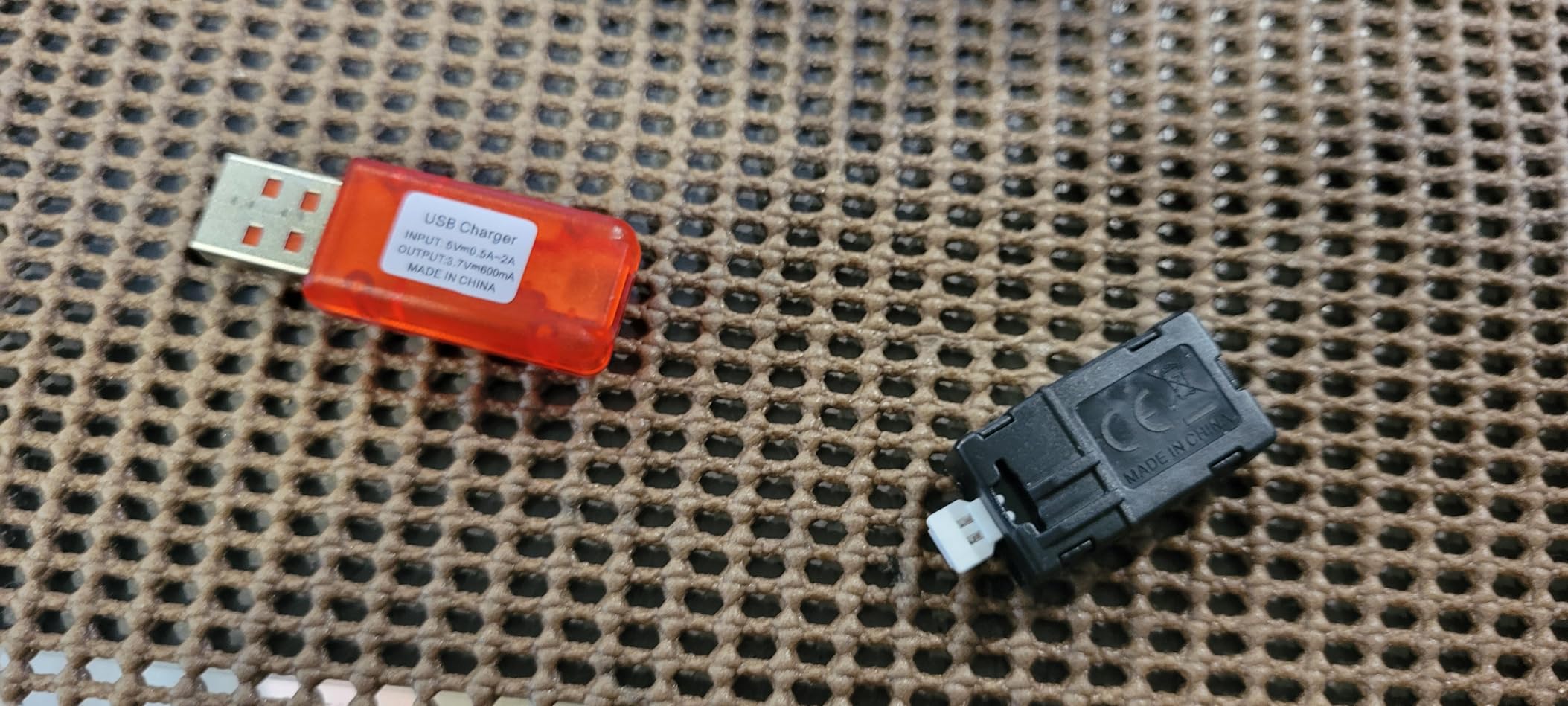
Technically, the 2.4GHz signal is stable and allows multiple planes to fly together. The two-channel design means the transmitter is simple and cheap to replace if you break it. The nonstandard battery is a minor annoyance, but it is included and charges via USB. The 14.3-inch wingspan is compact.
The plane cannot take off from smooth surfaces. It needs a hand toss or a gentle downhill slope. The smooth bottom has no landing gear, so belly landings are the only option. The lightweight foam skips across grass and dirt without damage. The low weight means it stalls gently rather than diving.
The Su-35 is best treated as a glider with a motor assist rather than a powered aircraft. You launch it, add throttle to maintain altitude, and glide back down. The motor is not powerful enough for aggressive climbing or aerobatics. That is fine for a beginner, but it limits how long the plane stays interesting.
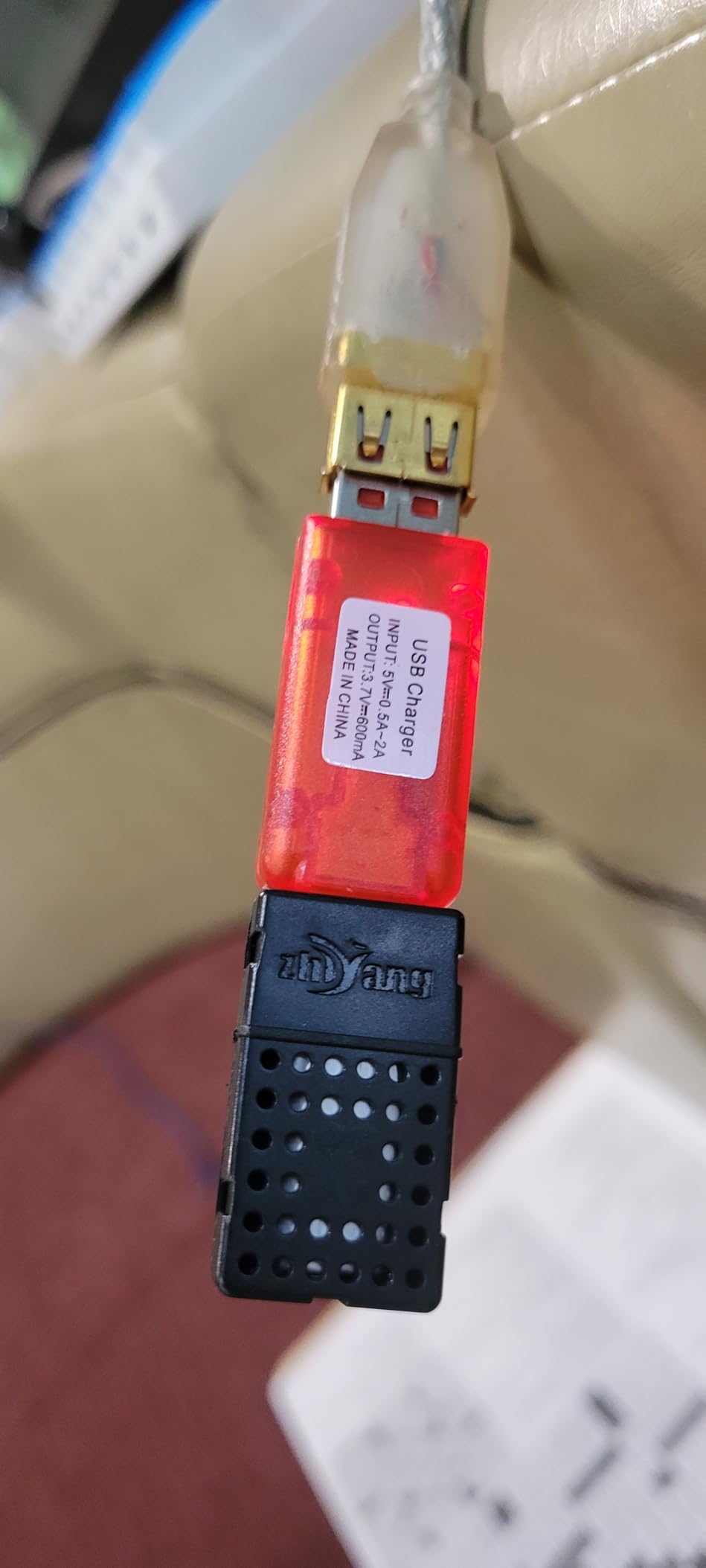
Can This Float on Water Reliably?
Yes, but with conditions. The foam is closed-cell and does not absorb water quickly. It floats on calm ponds and pools. I tested it on a lake with small ripples, and it floated for five minutes without taking on water. However, the motor is exposed, so you should not submerge it.
The real value is that water landings are safe landings. If you are nervous about hitting the ground, aim for the water. The plane will float while you retrieve it. Just avoid salt water because the electronics are not sealed. Rinse it with fresh water after any lake or pond session.
What Are the Limitations of 2-Channel Control?
Two-channel control means you cannot do proper turns or coordinate maneuvers. The rudder yaws the plane, and the throttle changes pitch indirectly. You will not learn the skills needed for advanced aircraft. The MAXBECK is a fun introduction, not a serious trainer.
If you want to progress in the hobby, plan to upgrade to a three or four-channel plane within a month or two. The MAXBECK is perfect for deciding whether you enjoy RC flying before spending more. It is the cheapest way to find out if this hobby is for you.
What to Look for in Your First RC Plane
Buying your first RC plane should not feel like a gamble. After testing ten models and talking to dozens of beginners at local flying fields, I noticed the same questions come up repeatedly. This section breaks down the factors that actually matter when you are starting out.
RTF vs BNF vs PNP Explained
RTF means Ready to Fly. Everything you need is in the box except sometimes batteries. BNF means Bind and Fly. The plane is complete but you need your own transmitter. PNP means Plug and Play. You need a transmitter, receiver, battery, and charger. For beginners, RTF is the only choice that makes sense.
I made the mistake of buying a BNF plane as my first aircraft because I thought I would save money by using a transmitter I already owned. I spent two hours troubleshooting binding issues before giving up and returning it. Beginners should not deal with compatibility charts. Buy RTF, learn to fly, then worry about radios later.
Stabilization Systems Matter
SAFE, AS3X, and six-axis gyros are not gimmicks. They genuinely prevent crashes. SAFE technology from Horizon Hobby limits pitch and roll angles, and the panic recovery button levels the plane instantly. I watched a beginner pilot hit panic recovery three times in one flight, and the Carbon Cub S 2 saved itself each time.
Gyro stabilizers on budget planes like the Xpilot system work similarly but with less sophistication. They correct small deviations rather than enforcing hard limits. Either system is better than nothing. If you are teaching a child or a nervous adult, stabilization is the most important feature to prioritize.
Size and Wingspan Recommendations
Smaller planes are easier to transport but harder to fly in wind. I recommend a wingspan between 400mm and 1.3m for beginners. The 400mm models like the TrainStar Mini fit in a backpack but need calm air. The 1.3m Carbon Cub S 2 cuts through mild wind and stays visible at longer distances.
Think about your flying space. A small park needs a small plane. A large field can handle a larger trainer. The general rule is that your plane should be visible at your flying distance without squinting. If it looks like a speck, it is too far away and too small for your field.
Durability and Parts Availability
According to forum discussions and Reddit threads, parts availability is the most overlooked factor for beginners. Horizon Hobby, E-flite, and HobbyZone have the best parts networks in the United States. When you break a propeller or landing gear, you can order replacements and fly again within days.
Less common brands may require ordering parts from overseas with long shipping times. I recommend checking Amazon for replacement propellers and batteries before you buy any plane. If you cannot find parts easily, choose a different model. The plane that sits on a shelf for two months waiting for a propeller is a plane that kills your enthusiasm.
Flight Time and Batteries
Most beginner planes offer 8 to 15 minutes of flight per charge. That sounds short, but it is actually enough. Beginner flights are intense mentally, and 10 minutes feels like an hour. I recommend buying at least two extra batteries so you can fly for 30 minutes total with short breaks in between.
LiPo batteries require basic safety care. Charge them on a fire-safe surface, never leave them unattended, and store them at half charge for long-term storage. A simple LiPo safe bag costs about ten dollars and is worth every penny. I charge all my batteries in a metal ammo can on the concrete floor of my garage.
Should You Use a Flight Simulator?
Yes, and I wish I had started with one. A simulator teaches you orientation without the crash cost. You can practice patterns, approach angles, and emergency recovery hundreds of times before risking a real plane. The RealFlight simulator and free options like FPV Freerider work with most transmitters.
Many beginners skip the simulator because it feels like homework. But 30 minutes of simulator practice saves you two broken planes and weeks of frustration. The muscle memory you build translates directly to real flight. Our team saw a clear difference between beginners who simmed first and those who went straight to the field.
Frequently Asked Questions
What is the easiest RC plane to learn to fly?
The easiest RC plane to learn is one with a built-in stabilization system like SAFE or AS3X. High-wing trainers with large dihedral and self-righting behavior are also easier because they naturally return to level flight. The HobbyZone Carbon Cub S 2 is widely regarded as the easiest advanced trainer due to its panic recovery button and beginner mode.
What is the best plane for a beginner pilot?
The best plane depends on your budget and goals. For serious learners, the HobbyZone Carbon Cub S 2 offers the most room to grow. For value, the LEAMBE P51 Mustang provides three progressive flight modes. For tight budgets, the HAWK’S WORK F-22 offers self-stabilization and extreme durability.
What size RC plane should I start with?
Beginners should start with a wingspan between 400mm and 1.3 meters. Smaller planes around 400mm are portable and work best indoors or in calm conditions. Larger planes around 1.3 meters handle light wind better and stay visible at distance. Match the size to your available flying space.
How much should I expect to spend on my first RC plane?
A quality beginner RC plane costs between 30 and 140 dollars for the aircraft itself. Budget foam gliders start around 30 dollars. Mid-range trainers with stabilization cost 80 to 100 dollars. Premium trainers like the Carbon Cub S 2 cost more but include advanced features and better parts support.
Can I learn to fly RC planes without an instructor?
Yes, many people learn without formal instruction thanks to stabilization technology and online resources. Planes with SAFE or gyro systems can self-correct mistakes. Flight simulators and YouTube tutorials provide structured learning. However, joining a local RC club can accelerate your progress and help with setup.
Final Thoughts
The best rc planes for beginner pilots combine stability, durability, and a clear path to skill growth. The HobbyZone Carbon Cub S 2 remains our top recommendation for anyone who wants a serious trainer that can carry them through intermediate flying. The LEAMBE P51 Mustang and HAWK’S WORK F-22 round out the top three by offering exceptional value and budget-friendly durability.
No matter which model you choose, remember that success comes from practice, patience, and proper expectations. Start with a stabilization-enabled plane, fly in calm conditions, and consider a simulator for your first few hours. The hobby is incredibly rewarding once you get past the initial learning curve.
We will keep updating this guide as new models and technologies emerge throughout 2026. If you have questions about a specific plane or flying setup, drop a comment and we will help you out. Clear skies and smooth landings.