
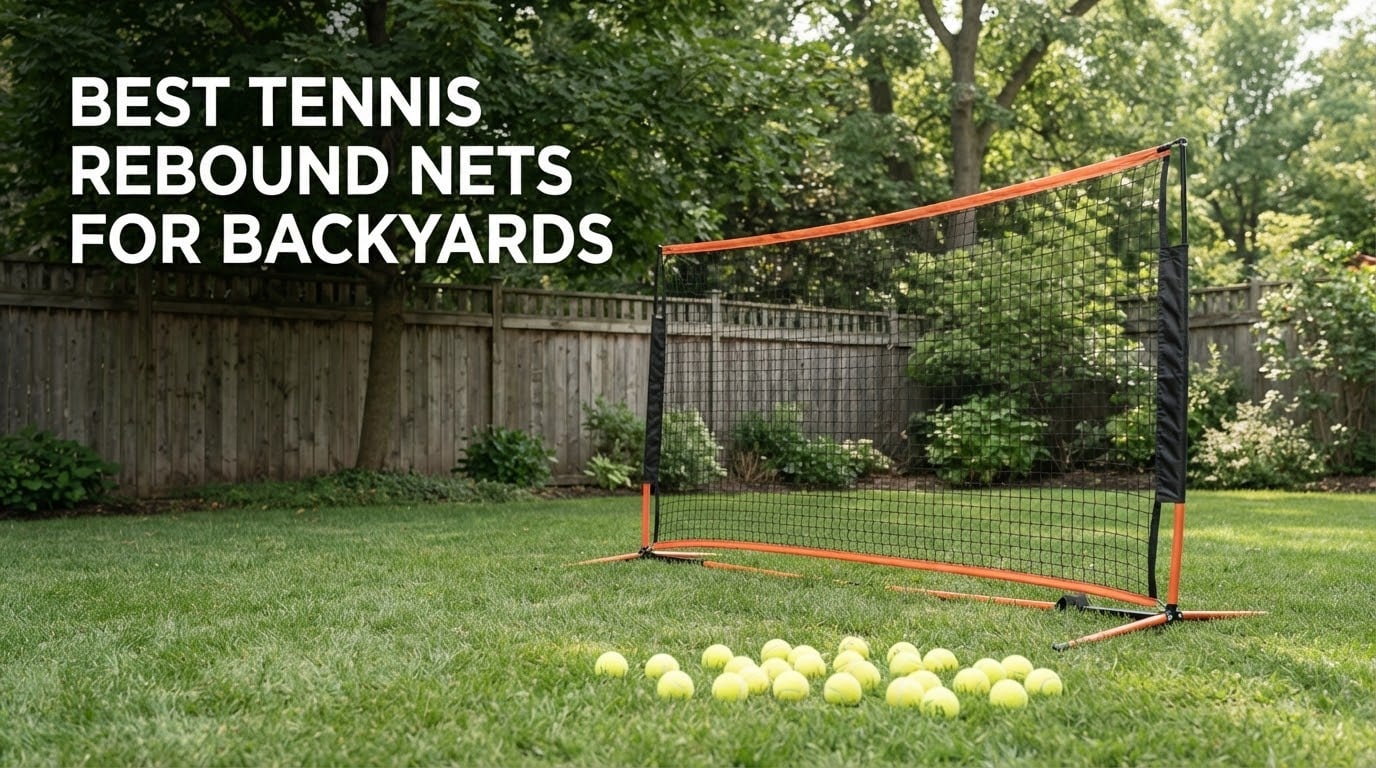
The hardest part of backyard tennis is not the surface. It is the partner gap. You walk out to the court with a basket of balls, a bucket for the second set, and no one on the other side to hit back. A tennis rebound net closes that gap on its own: a tensioned panel that eats a struck ball and sends it back to roughly the same spot, so you can hit the same forehand three hundred times without moving your feet.
We spent weeks putting twelve of the best tennis rebound nets for backyards through the same routine, reading spec sheets line by line and cross-checking them against owner reviews. This roundup ranks all twelve on the four things that actually decide whether a rebounder survives a season outdoors: rebound consistency, wind stability, yard footprint, and how long the netting lasts before it needs replacing.
Two numbers frame every review below. First, the rating and review count, copied exactly as buyers reported them, because a 4.4 from nine reviews tells you something different than a 4.2 from 234. Second, the real strike zone, which is almost always smaller than the listed frame size. If you want a broader read on how we score, our best golf net guide uses the same framework for a different backyard sport, and our tennis shoes picks cover the other half of the kit.
Top 3 Picks for the Best Tennis Rebound Nets in 2026
The Ksports multi-sport rebounder takes our top spot because it has the largest body of owner feedback in the group, 234 ratings, and a yard footprint measured in single digits of square yards. The Vermont RapidFire is the pick if you want a real backboard with a 9 by 7 foot face. The MR 12 by 6 with wheels is the pick if moving the net between garage and lawn without dismantling it matters to you.

Ksports Multi-Sport Rebounder
- Tool-free setup under 10 minutes
- Only 6 square yards of space needed
- Weatherproof PET net on an alloy frame
- Carry bag and 12-month warranty

Vermont RapidFire Jumbo 9×7
- Wide 9 by 7 ft rebound face
- Adjustable angle of attack
- 2mm knotless PE net with 28mm mesh
- Galvanized steel frame

MR 12×6 Tilt Rebound Net on Wheels
- 12 by 6 ft surface with adjustable tilt and height
- 4 inch smooth-rolling rubber wheels
- Plunger bolt angle adjustment
- 420D knotless polyester netting
Best Tennis Rebound Nets for Backyards: Full Comparison in 2026
Every net below is a real stand-alone rebounder or a ball-return trainer designed for solo practice. The key features column lists what actually separates them, drawn from the manufacturer specifications and owner feedback rather than marketing copy.
| Product | Specifications | Action |
|---|---|---|
| Ksports Multi-Sport Rebounder Net |
|
Check Latest Price |
| Vermont RapidFire Jumbo Rebounder |
|
Check Latest Price |
 MR 7×6 Ball Return Net MR 7×6 Ball Return Net |
|
Check Latest Price |
| MR 12×6 Adjustable Tilt Rebound Net |
|
Check Latest Price |
 noblequest 6×7 Return Net noblequest 6×7 Return Net |
|
Check Latest Price |
 Tourna Deluxe Rebound Net 9×7 Tourna Deluxe Rebound Net 9×7 |
|
Check Latest Price |
 XK Sports Tennis Rebounder XK Sports Tennis Rebounder |
|
Check Latest Price |
 QUICKPLAY GS Barrier 12×6 QUICKPLAY GS Barrier 12×6 |
|
Check Latest Price |
 HamRoRung 9.3×7.4 Rebounder HamRoRung 9.3×7.4 Rebounder |
|
Check Latest Price |
 ORIENGEAR 12×6 Practice Wall ORIENGEAR 12×6 Practice Wall |
|
Check Latest Price |
 Tourna Rally Pro Adjustable Tilt 7×7 Tourna Rally Pro Adjustable Tilt 7×7 |
|
Check Latest Price |
 GenxQian 9.4×7.4 Rebound Net GenxQian 9.4×7.4 Rebound Net |
|
Check Latest Price |
1. Ksports Multi-Sport Rebounder Net: Smallest Footprint for Small Yards
Ksports Tennis Rebounder Net – Multi Racket Sports Trainer for Tennis, Pickleball, Padel, Squash & Racquetball – Quick Assembly, Portable with Carry Bag (Blue, Regular)
Alloy steel frame, weatherproof PET net
Under 10 minute tool-free setup
6 square yard footprint
12-month warranty
Pros
- Deepest owner feedback here at 234 ratings
- Under 10 minute tool-free setup and teardown
- Tiny footprint suits a small backyard or patio
- Works for tennis pickleball padel squash and racquetball
- 6 inch height extensions for higher returns
Cons
- Compact hitting surface versus larger 9x7 ft frames
- Built for developing players rather than full-power hitting
- About 7 percent of reviews are one-star
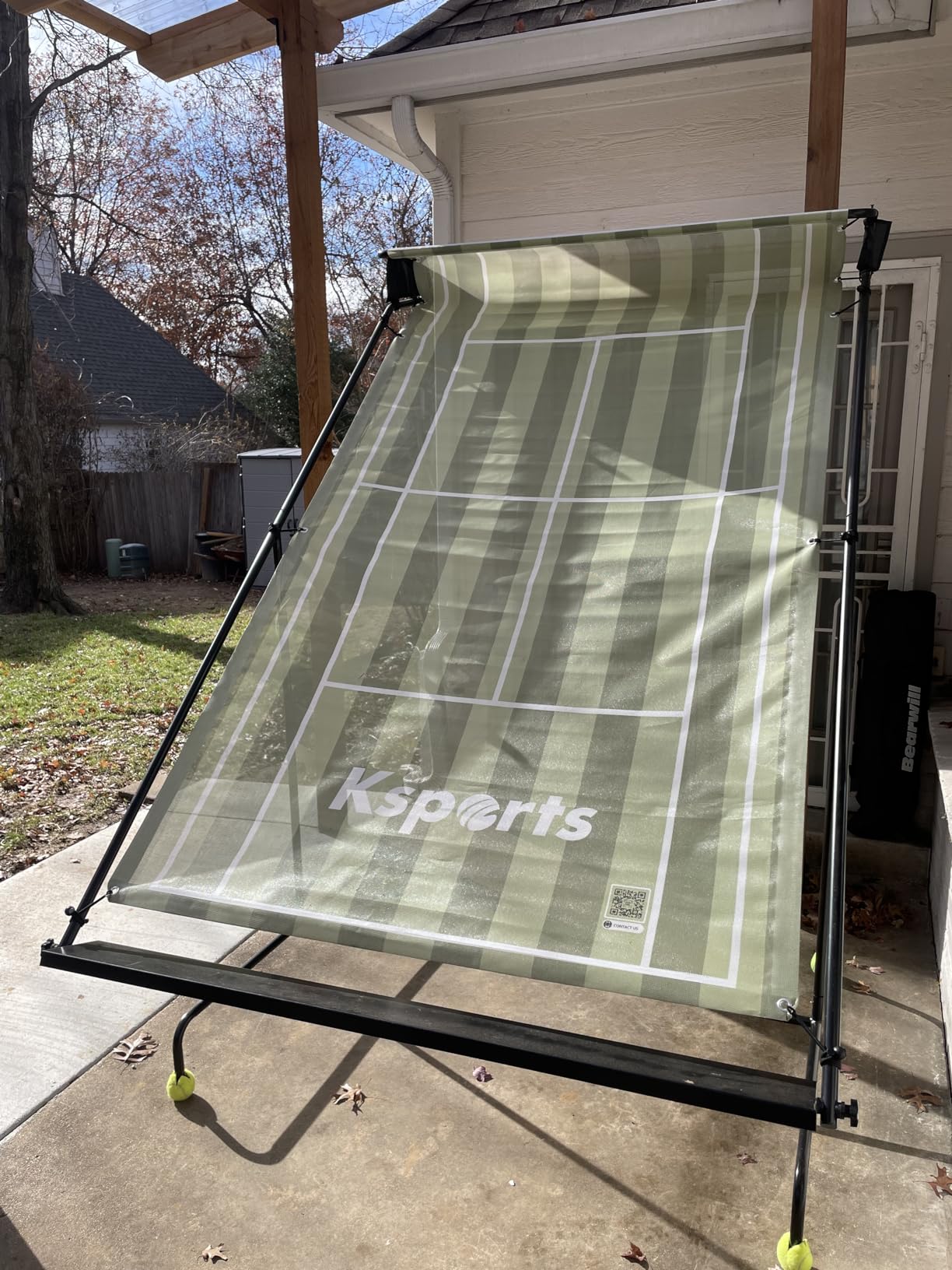
This is the net we kept reaching for when the yard was the constraint. The framework measures 41 inches long, 32 inches wide and 68 inches tall, and the manufacturer states it needs only six square yards of space. In practice that means it works on a patio slab, a driveway apron, or the strip of grass behind a fence that nobody uses for anything else.
Setup is genuinely tool-free. The poles slot together, the netting hangs on bungee loops, and the whole thing assembles or breaks down in under ten minutes. That matters more than it sounds, because a rebounder you can break down in one coffee break gets used twice as often as one that lives assembled in the garage.
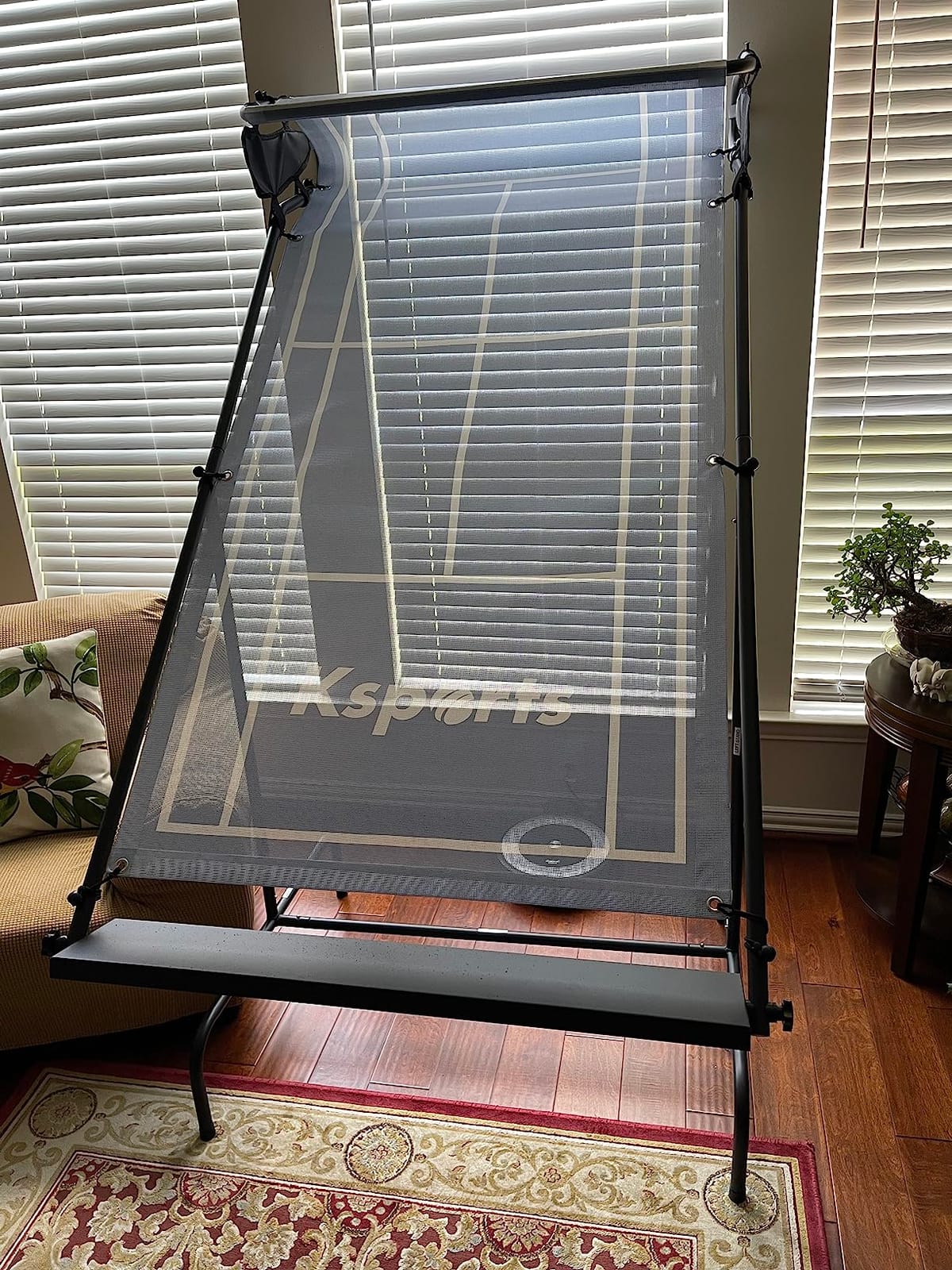
The honest limitation is the strike zone. Owners consistently describe this as a practice aid for short rallies and drills rather than a full backboard for sustained groundstroke power. The 6 inch height extensions help, since they raise the effective target, but the frame itself is compact by design.
Owner feedback is the deepest in this roundup: 234 ratings averaging 4.2, with 61 percent at five stars and 17 percent at four stars. That 7 percent one-star share is real and worth knowing about, and it clusters around durability rather than function. If you need a frame rated for maximum power, look up the list rather than down.
Who This Net Suits Best
Juniors, beginners, and anyone working on footwork patterns. Six square yards means a parent can supervise a full session from a chair. It also doubles as a ball collector for pickleball, which is the cheapest way to get two players hitting off one frame.
Who Should Skip It
Anyone chasing a 12 by 12 yard practice court. If you want to hit flat with full pace and feel the ball come back deep, this frame is undersized, and no amount of setup will change that.
2. Vermont RapidFire Jumbo Rebounder: The Adjustable-Angle Backboard
RapidFire Mega Tennis Rebounder – Groundstroke & Volleying Practice (Small Or Large) (Large (7ft x 8ft))
9 by 7 ft rebound surface
Adjustable angle of attack
2mm knotless PE net with 28mm mesh
Galvanized steel, 1mm thick, 38mm OD
Pros
- Large hitting surface with real placement margin
- Adjustable angle lets you change the ball trajectory
- 2mm knotless PE mesh gives a strong consistent rebound
- Galvanized powder-coated frame suits outdoor use
- Net World Sports handles issues directly
Cons
- Only a 6-month warranty
- Assembly instructions confuse some owners
- Center bar must be unscrewed to store it flat
- Bulky to move across a yard alone
This is the one true backboard in the group. The hitting surface is 9 feet by 7 feet, which means you can work on depth and placement rather than just contact, and the angle of attack adjusts so you can move between a high pop, a flatter line drive, and a low groundskimming return.
The build is the most outdoor-appropriate specification we found. The frame is 1mm thick galvanized steel with a 38mm outer diameter and a black powder coating, described as weatherproof and rust resistant. The netting is 2mm knotless PE with 28mm mesh, which is the construction most owners single out when they talk about rebound consistency.
The complaints are almost entirely about assembly. Owners report pole sections that are occasionally too thick to seat together, and some arriving with parts missing. Instructions run unclear enough that a few people end up with extra bolts after finishing. Budget twenty minutes and check the parts list before you start.
Storage is the other real-world annoyance. You cannot fold it flat while assembled, because the middle bar has to come out first. At 62 ratings and a 3.9 average, with 15 percent one-star, the score sits at the group median, so read the recent one-star reviews before buying.
Why the Angle Adjustment Matters
It is the feature most competitors lack, and it changes which stroke you can practice. Tilted back, the net returns balls higher and softer, which suits volley drills. Tilted forward, the return gets more aggressive and stays lower, which suits groundstroke depth work.
Plan Your Yard Space Around It
Nine feet of width plus the depth of the frame means you need a clearing at least 12 feet across. Add 12 to 18 feet of run-off behind the net so hard returns do not land in the flower bed, and you have the footprint figured out.
3. MR 7×6 Ball Return Net: Best Partner for a Ball Machine
MR Tennis Ball Return Net 7’x6’ Freestanding Multi-Sport Training Net
7 by 6 ft ball return net
Powder-coated steel frame with fiberglass poles
420D PU-coated knotless polyester netting
Rubber pad feet on any surface
Pros
- Collects and returns balls for a continuous machine loop
- Freestanding setup needs no ropes or tools
- Rubber pad feet grip grass sand gym floors and concrete
- Carrying case included for storage and travel
Cons
- Modest 7 by 6 ft catching area
- Built to feed a ball machine rather than return full-power shots
- Serving machine not included
- About 13 percent of reviews are one-star
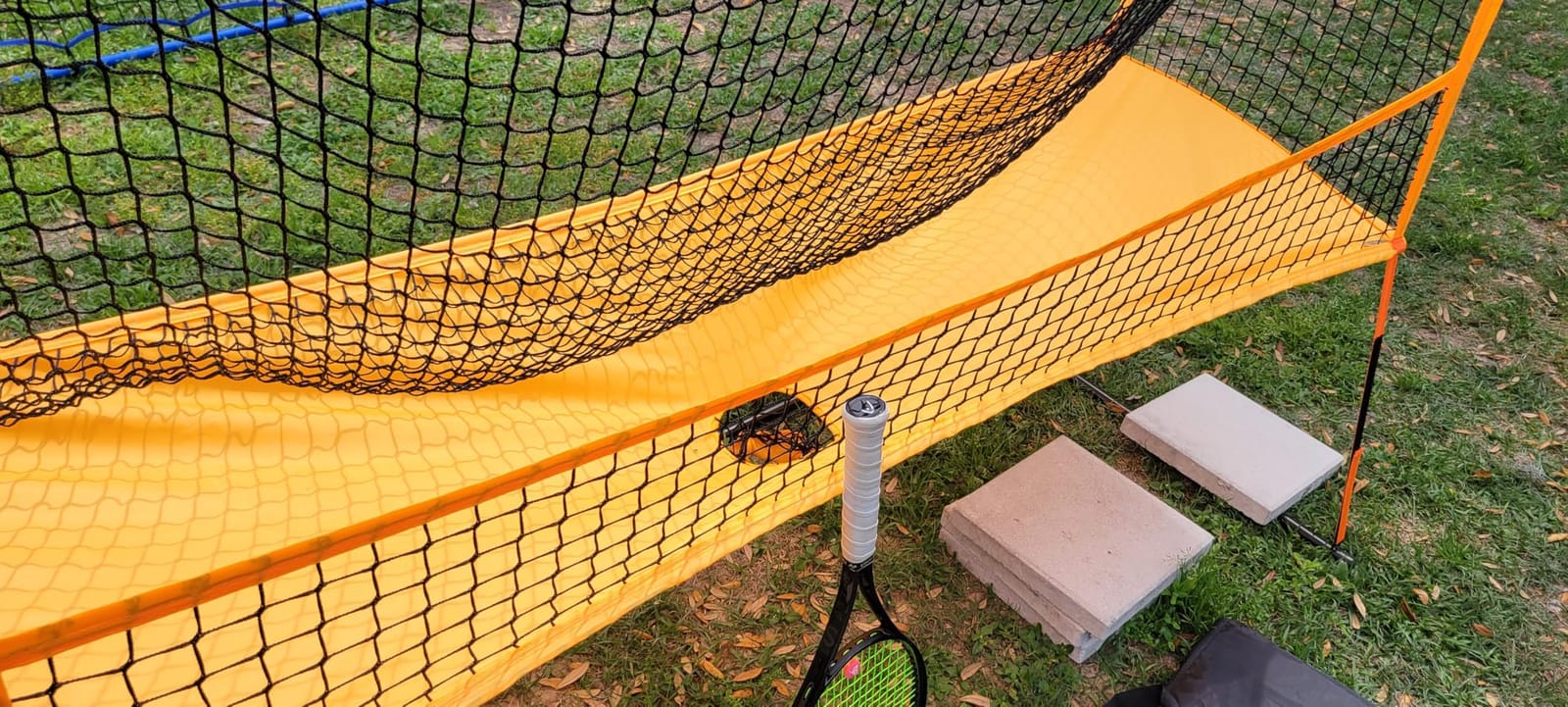
Most rebounders on this list return balls to you. This one returns them to a ball machine, which is a different job entirely. Set a machine on one side and the net on the other, and you get a closed loop that runs for an hour without anyone walking out to collect balls.
The frame is powder-coated steel with fiberglass poles, and the netting is 420D PU-coated knotless polyester with 600D seams. That is a robust combination for hard shots, and it is a genuinely knotless mesh, which reviewers tend to prefer for feel and longevity.
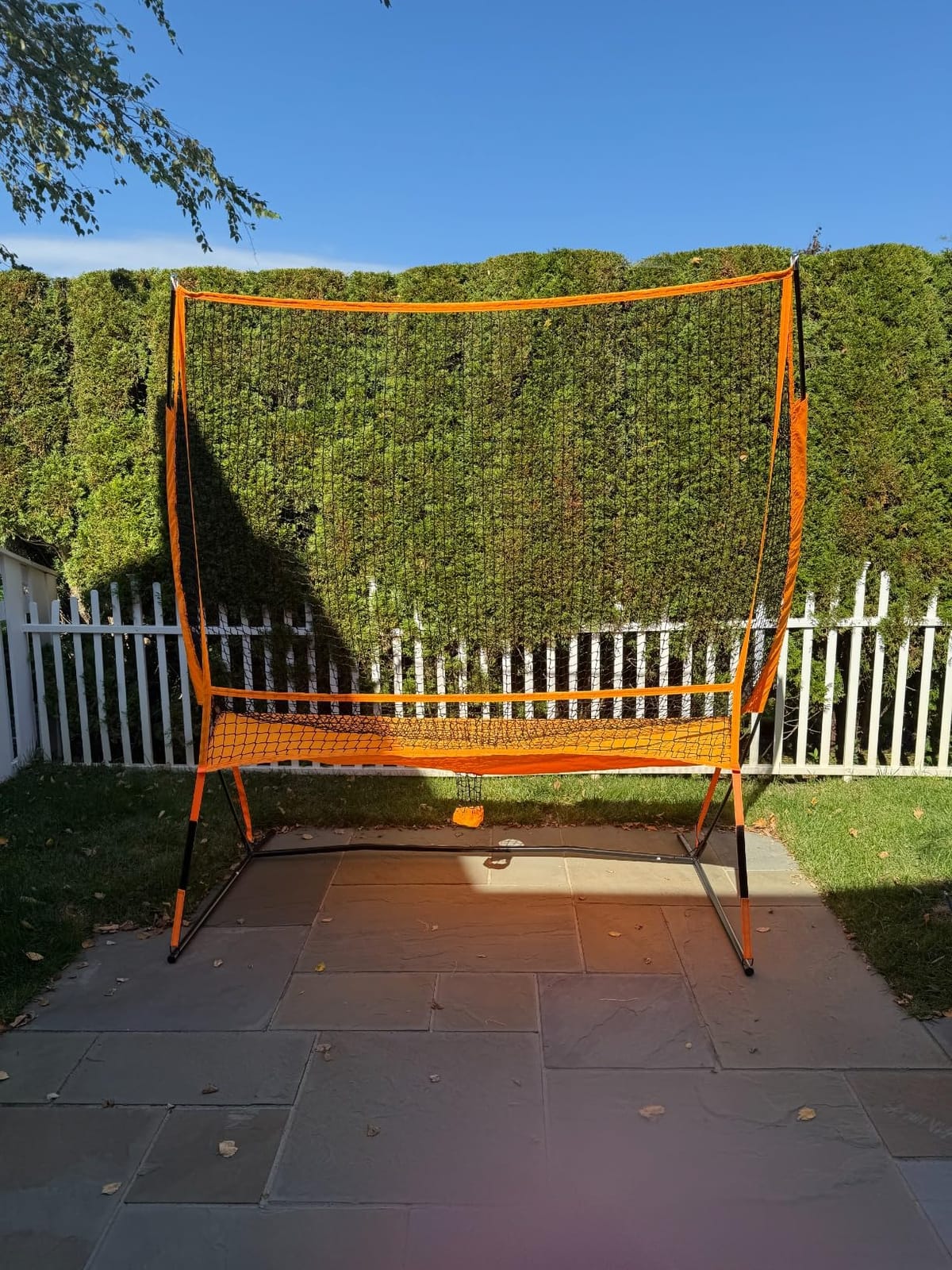
The freestanding design is what makes it practical in a backyard. No support ropes, no tools, and rubber pad feet that grip grass, sand, gym floors, or concrete. A carrying case is included, so it lives in the garage between sessions rather than rusting on the lawn.
The 49 ratings average 3.8 with a wide spread: 52 percent five-star, 13 percent one-star. That gap is the story here. Happy owners bought a ball-return net on purpose. Unhappy ones expected a rebounder, and 7 by 6 feet is not much of a strike zone for anyone trying to return full-power groundstrokes.
When This One Wins
If you already own, or are planning to buy, a ball machine. It turns a scattered pile of balls into continuous feed and removes the single most tedious part of solo practice.
When to Choose a Different Net
If you are not running a machine. Without one, this behaves like a small practice screen, and there are larger options here that do the same job with a much bigger target.
4. MR 12×6 Adjustable Tilt Rebound Net: Wheels Make It Backs Into the Garage
MR Tennis Rebounder 12’x6’, Adjustable Tilt Angle Rebound Net, Multi-Sport Portable Bounce Back Net with Wheels, Rebound Wall for Tennis, Pickleball,
12 by 6 ft rebound surface with adjustable tilt
4 inch smooth-rolling rubber wheels
Plunger bolt angle adjustment
420D PU-coated knotless polyester net
Pros
- Rolls between yard garage and indoors without disassembly
- Adjustable angle and height for high pops and grounders
- Plunger bolt design protects fingers during adjustments
- Extra-long support legs add stability on hard surfaces
- No support ropes required
Cons
- Usable area above the net line is only about 2 feet
- Tips over in wind without sandbags
- Angle adjustment is hard to do solo
- Rebound quality depends on very tight netting
The wheels are the headline, and in a climate with a real winter they matter more than any spec on the list. Four inch smooth-rolling rubber wheels let you roll the entire net off the grass, into the garage, and back out for the next session without touching a single joint. Most competing frames require full disassembly.
Adjustment is the second strength. A pull-system tilt control changes the angle of attack in seconds, and the rebound height adjusts independently, which lets you work a high pop for volley practice and then drop it into a flatter groundstroke mode. A plunger bolt stands in for a raw metal pin, which is a small thing that prevents pinched fingers every single adjustment.
The 12 by 6 foot surface sounds generous, and in outline it is. Reviewers are consistent about the caveat: the effective hitting area above the net line is roughly two feet, so hard balls go over the top or through and end up in the yard. Expect to chase more than the marketing implies.
Wind is the other issue. This frame will tip outdoors without weight, and sandbags are the near-universal recommendation from owners. Assembly commonly takes 30 to 40 minutes, and some orders have arrived missing instructions and bolts, so check the box contents on arrival day.
At 26 ratings and a 3.9 average, the score sits right at the group median with an unusual 19 percent three-star share. That split tells the story: buyers who stretch the net tight and keep it in a sheltered corner rate it highly, and buyers who hit hard rate the usable area as too small.
Why Wheels Beat Portability
A carry bag means two trips. Wheels mean one. For anyone splitting practice between a garage drill and yard hitting, that difference shows up every single week, and it is why this frame is our value pick.
Anchor It Before You Hit
Fill four sandbags, one per rear corner, before the first ball. Owners who skip this are the ones reporting tip-overs, and it costs a few minutes once per session.
5. noblequest 6×7 Return Net: Fastest Setup and a Lightweight Frame
Portable Tennis & Pickleball Recovery System Net 6 x 7ft
6 by 7 ft portable mesh return net
Tool-free setup in about 90 seconds
Dual-layer 420D polyester over memory foam
Weighs about 11 pounds
Pros
- Fastest and simplest setup in the roundup
- Weighs about 11 pounds so it moves easily between sessions
- Collapses slimmer than a guitar case for carrying
- Dual-layer foam padding absorbs impact rather than kicking balls back
Cons
- Low customer rating of 3.4
- Purpose-built as a ball collector rather than a true rebounder
- Small practice zone of 5.25 by 3.38 by 6.6 ft
- Fiberglass frame is less rigid than steel
Everything about this one is built around speed and portability. It assembles tool-free in roughly 90 seconds, weighs about 11 pounds, and collapses to something only slightly slimmer than a guitar case, which makes it the easiest frame here to move between a garage, a driveway, and a park.
The design intent matters for expectations. It is a tilting base ball-retrieval system with a dual-layer buffer: an outer 420D anti-UV HD polyester layer over inner memory foam padding. That padding absorbs impact on purpose, which is exactly what makes it a good collector and a poor rebounder.
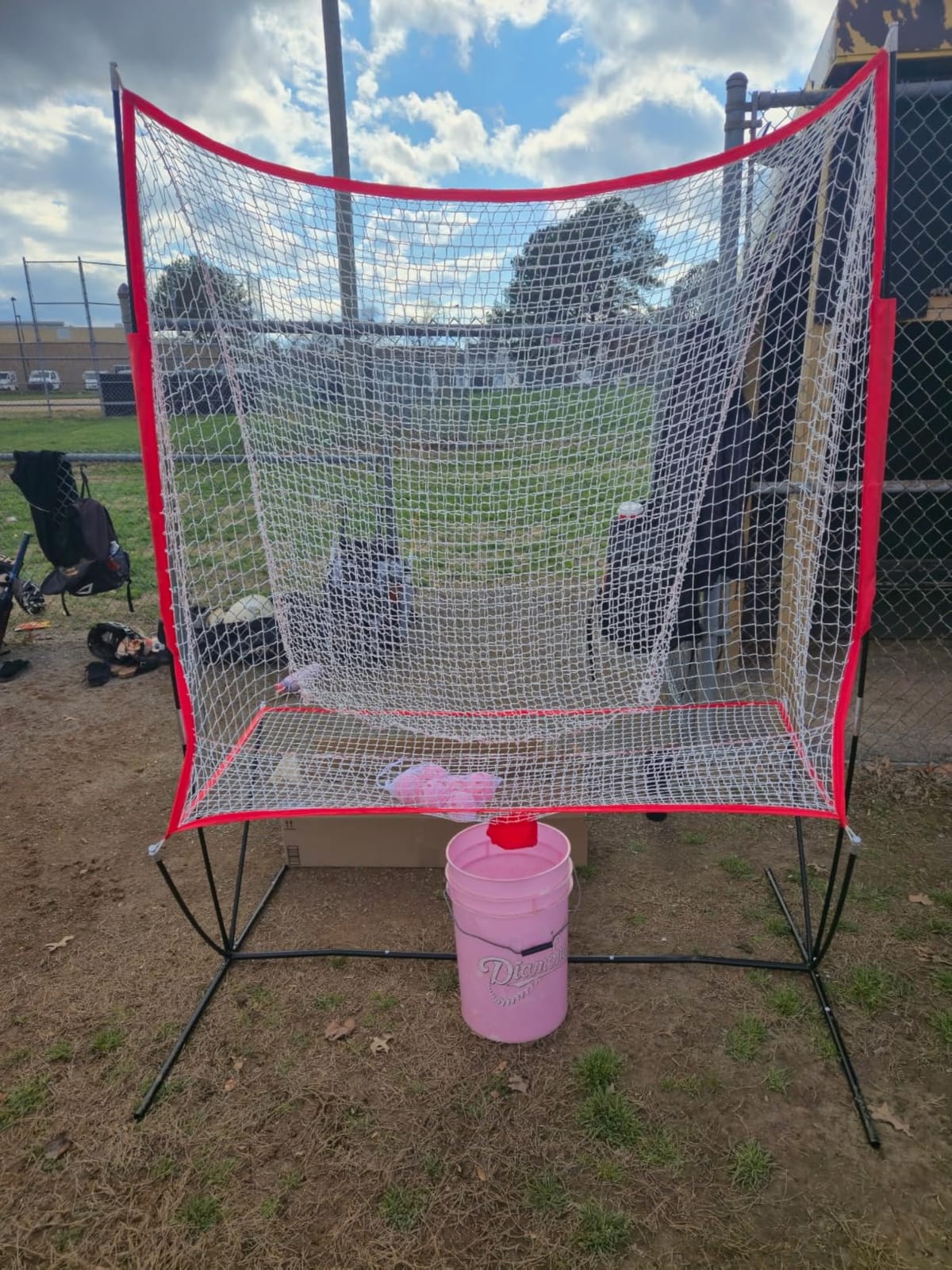
Owners expecting a backboard are the source of the complaints. The 25 ratings average 3.4, with 25 percent at one star against 47 percent at five stars. That is the widest polarization of any product in the roundup, and it maps perfectly onto intent.
The frame is iron and fiberglass with polyethylene components, and the listing categorises it under baseball and softball practice nets rather than tennis training equipment. That placement is honest. Buy it as a ball-collection aid and it works well; buy it expecting full-power returns and it will disappoint you.
Best Used For
Ball collection alongside a ball machine, driveway warmups, and cricket or baseball drills in a shared family yard. The anti-UV outer layer is a sensible touch for outdoor placement.
Best Avoided For
Stroke development. Foam padding deadens the return by design, and the practice zone is a funnel shape rather than a flat face. Look at the Ksports or Vermont frames instead.
6. Tourna Deluxe Rebound Net 9×7: Included Raisers for a Softer Return
Tourna Deluxe Rebound Tennis Net (9×7 ft)
7 by 9 ft hitting surface
Alloy steel construction
Two raisers included for a higher softer return
Tennis and pickleball dual sport
Pros
- Wide 7 by 9 ft surface for high-repetition sessions
- Two included raisers change the return height and softness
- Recognised tennis equipment brand
- Ships for tennis and pickleball use
Cons
- Only a 30-day warranty
- Assembly required with tool inclusion unstated
- Bulky frame is awkward to reposition alone
- 3.6 rating with about 17 percent one-star reviews
The differentiator here is a pair of included raisers. They tilt the frame to produce a higher, softer rebound, which is the setting you want for volley work and for beginners who cannot yet control a hard return. Rather than buying a separate accessory, the adjustment ships in the box.
The hitting surface measures 7 feet high by 9 feet wide in alloy steel, and the design is dual-sport for tennis and pickleball. The manufacturer describes it as suitable for driveways, garages, and backyards, which matches how most owners actually use it.
Two factors give us pause. The warranty is 30 days, the shortest coverage in this roundup, and there are no customer photos available for this listing, which leaves build consistency effectively unverified. If you are spending real money on a permanent backyard fixture, a 30-day window is thin.
The 33 ratings average 3.6 with 45 percent at five stars and 17 percent at one star. That spread suggests build quality varies between examples rather than the feature set being wrong. Arrange a straightforward return if you buy one.
Why Raisers Beat a Flat Frame
A flat frame returns hard and low, which is punishing for a developing player. Tilting it with the raisers raises the contact point and softens the return, letting a beginner rally for longer before the ball gets away from them.
What to Check on Arrival
Count the parts against the manual before assembly, and confirm you have the tools you need, since tool inclusion is not stated. The frame is also wide enough that moving it takes two people.
7. XK Sports Tennis Rebounder: Clean Owner Record, Heavy Build
XK Sports Tennis Rebounder
Steel, aluminum and canvas construction
48 by 8 by 10 inch assembled footprint
Weighs 27 pounds
Model XK-TRB-A
Pros
- Steel and aluminum frame built for heavy use
- Canvas facing is a proven traditional design
- Compact 48 by 8 by 10 inch footprint
- Zero one-star reviews among 21 ratings
Cons
- Second-heaviest unit here at 27 pounds
- Review base of only 21 ratings
- Listing text is sparse with few detail bullets
- Hard to move across a yard alone
The owner record here is unusually clean. Of 21 ratings, 56 percent are five stars and 34 percent are four stars, with zero one-star reviews. The HamRoRung matches that clean profile, but on 9 ratings rather than 21. Build quality is steel, aluminum, and canvas, a traditional rebounder construction that tends to age well.
Footprint is the sleeper benefit. Assembled dimensions are 48 by 8 by 10 inches, so despite being a solid frame it packs down narrow. If your storage problem is horizontal space rather than weight, this is the one to shortlist.
The 27 pound build weight is the catch. It is the second-heaviest unit in the roundup, and owner complaints about weight in this category are consistent: anything above 25 pounds becomes a two-person job the first time you move it across uneven grass. Plan the setup location before the first session.
Spec details are thin in the listing. There are no bullets on angle adjustability or setup time, so you are buying on the strength of the rating distribution and a long-standing construction rather than a documented feature list.
Who This Suits Best
A player hitting hard who wants a durable frame and does not mind leaving it in one fixed spot. Canvas facing is forgiving on racket strings and stays predictable over time.
Who Should Pass
Anyone who plans to move the net seasonally, or who wants to fine-tune the return angle. With 21 ratings and sparse documentation, this is a simple rebounder rather than a configurable one.
8. QUICKPLAY GS Barrier Net 12×6: Double-Sided for Two-Sport Households
QUICKPLAY GS Barrier Net Rebounder Wall 12×6 – Double-Sided Steel
Double-sided 12 by 6 ft rebound wall
Galvanized all-weather steel frame
Button locking tool-free assembly
Weighs about 44 pounds
Pros
- Two rebound faces double the drill variety from one frame
- Galvanized steel described as very durable over months of use
- Push-button locking for quick assembly and impact resistance
- Frequent owners use it as privacy screening too
Cons
- Bungee cord attachment is the longest part of setup
- Very tight net tension can arch the bars inward
- Heaviest unit here at about 44 pounds
- Sandbags needed in windy locations
Double-sided is the concept. Instead of one rebound face, this unit has two, which means you get two angles from a single frame and roughly double the drill variety without buying anything else. For a household that plays more than one sport, that is a better return on the footprint.
Construction is galvanized all-weather steel across a 42 inch by 144 inch by 72 inch frame, and the push-button locking system replaces bolts for faster assembly and better impact resistance. Owners describe the rebound as consistent and directed back toward the hitter, which is what makes high-repetition work possible.
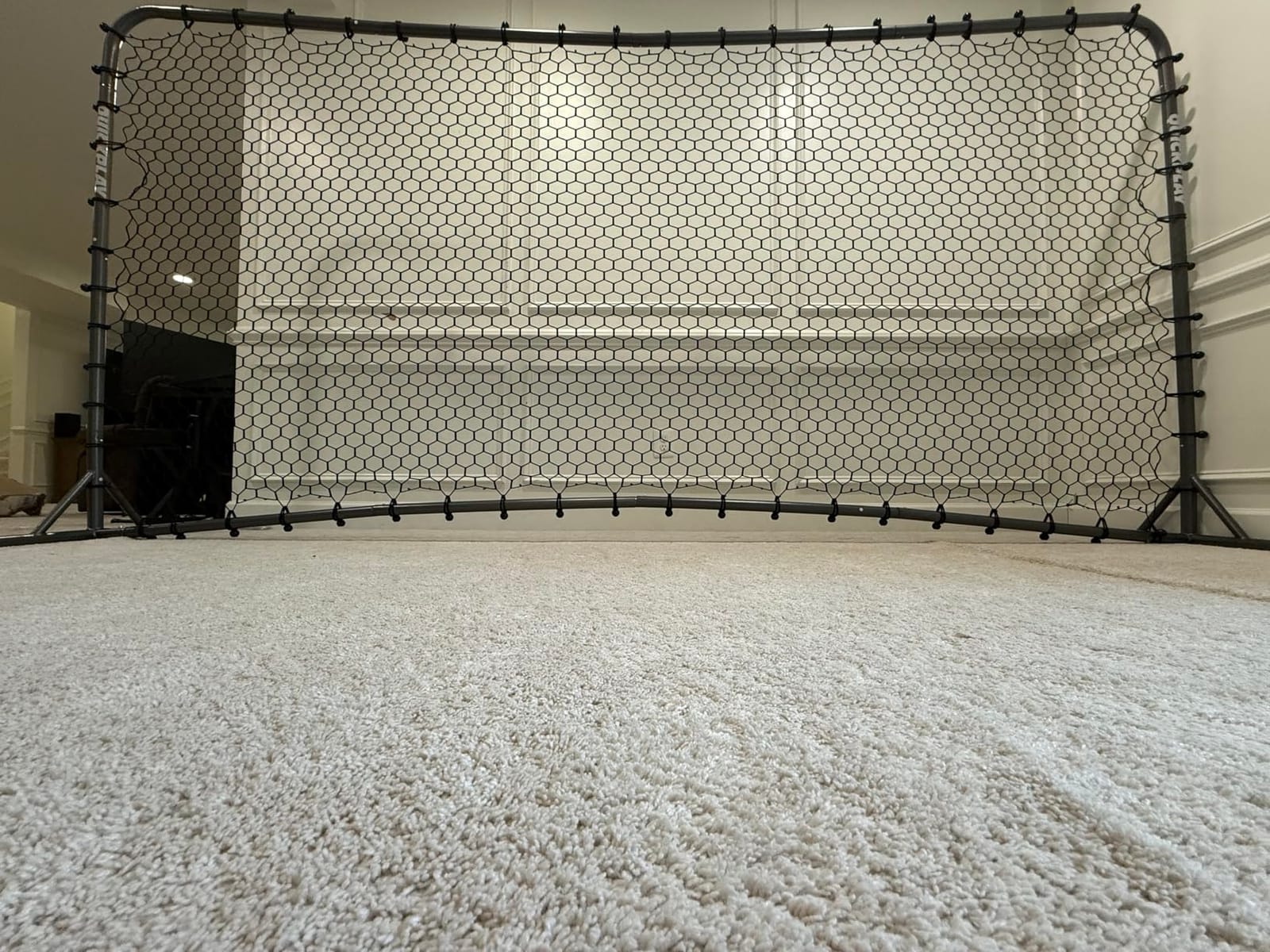
Beating the bungees onto the net is the longest part of setup, and reviewers are blunt about it. Netting tension is deliberately very tight, tight enough that the top and bottom bars can arch inward and stop ground balls rebounding properly. That is a trade for power and durability.
The 11 ratings average 4.1, with 52 percent five-star, 28 percent four-star, and zero one-star or three-star reviews. Treat that score cautiously because the base is small, and note that one order arrived with a bent corner and roughly two dozen missing bungees.
The Weight Reality
At about 44 pounds, moving this across a lawn is a two-person job with no exceptions. Choose where it lives before you build it, because that decision becomes permanent the moment it is assembled.
Best Value for Multi-Sport Use
Soccer, lacrosse, football, and tennis share the same engineering. This frame earns its place if your yard gets used for more than tennis. If tennis is the only sport, the double-sided premium buys you nothing.
9. HamRoRung 9.3×7.4 Rebounder: Sandbags and Stakes in the Box
Tennis Players Portable Tennis Rebounder Net, 9.3×7.4 ft Large Area Backboard Net for Backyard/Outdoor Training, Practice Wall for Tennis & Pickleball Training
9.3 by 7.4 ft hitting surface
Knotted HDPE mesh with 500D PVC webbing
Powder-coated iron frame with triangular brackets
Four sandbags and four ground stakes included
Pros
- Wide 9.3 by 7.4 ft surface
- Four sandbags and four ground stakes anchor it from day one
- Knotted HDPE mesh grips the ball for better control
- Sports bag included for moving between sessions
Cons
- Only 9 ratings so the score is not well established
- Knotted mesh is heavier and degrades with sun and weather
- No detail on whether frame height or angle adjusts
- Iron frame needs the supplied anchors to stay upright
Anchoring equipment in the box is the story. Four sandbags and four ground stakes ship with the net, which means you can secure it against wind on the first afternoon instead of hunting a hardware store after it tips over. For a backyard in an open area, included anchoring kit is the feature we would prioritise.
The hitting surface is 9.3 feet wide by 7.4 feet high, one of the larger faces here, and the mesh is knotted HDPE with 3.54-inch squares bordered by 1.45 inch wide 500D PVC webbing. Knotted construction grips the ball for better direction and speed control, at the cost of extra weight.
The frame is powder-coated iron with brackets at each end that form a triangular structure, and that geometry is what keeps a wide net from folding. A sports bag is included for storage. Multi-sport coverage runs to tennis, pickleball, baseball, softball, football, volleyball, and beach tennis.
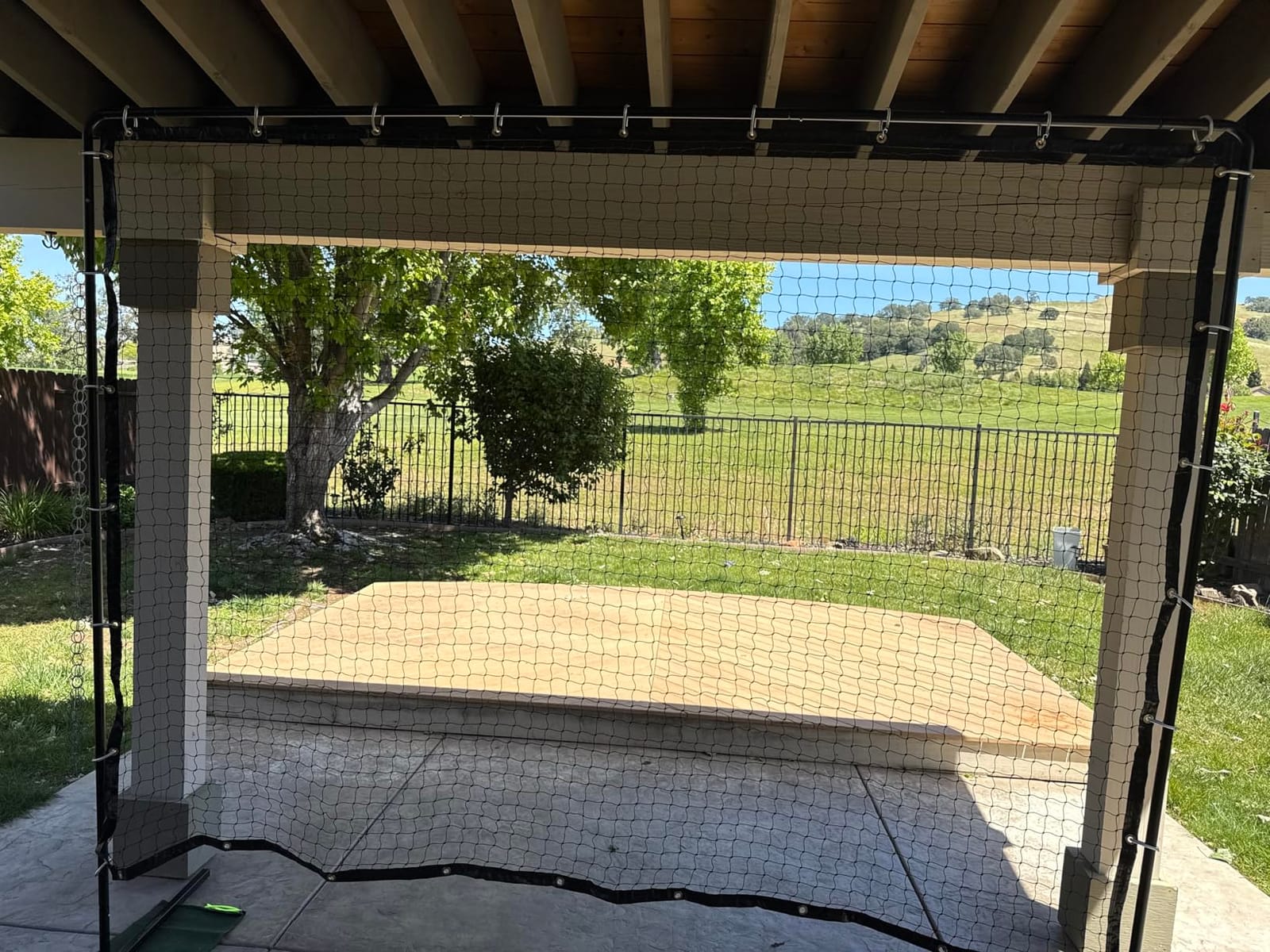
Read the ratings carefully: only 9 of them, averaging 4.4, with 60 percent five-star and no one- or two-star ratings. A small base with a clean distribution is encouraging but unproven. There is also no published detail on whether the height or angle adjusts, which matters if you want to change the return profile.
Wind Anchoring That Works
Fill all four sandbags and drive the four ground nails at an angle away from the net. Reviewers who anchor properly report no tipping even in gusty conditions, and the triangular end brackets do the rest.
Knotted Versus Knotless
Knotted mesh grips and lasts, but it is heavier and degrades faster under sun and weather. If your net lives outside year-round under direct sun, plan on replacing the mesh every few seasons rather than expecting it to last indefinitely.
10. ORIENGEAR 12×6 Practice Wall: Slow Rebound Ends the Ball Chase
ORIENGEAR Tennis Rebound Practice Wall – 12ft x 6ft Rebounder Net for Racquet Sports, Ball & Pickleball, Training Backboard for Court Backyard and Indoor & Outdoor Use
12 by 6 ft practice wall
Slow rebound returns balls within about 6.5 ft
420D Oxford cloth edging on alloy steel tube
Weighs 16.5 pounds
Pros
- Slow rebound keeps balls within about 6.5 ft so you stop chasing them
- Compact 12 by 6 ft surface on a light frame
- Poles thread through Oxford cloth for quick assembly
- Rubber feet protect indoor gym floors
- Adjustable yellow centre tape gives a target
Cons
- Netting can develop holes after a few sessions
- Needs sandbags to stay upright when standing
- Net is not tight enough for serious pickleball drills
- 3.5 rating with about 20 percent one-star reviews
The slow-rebound design is the whole point. Instead of firing the ball back hard, this wall absorbs the impact and returns it within about 6.5 feet, which in a small yard is the difference between a productive session and twenty minutes of chasing. That is a genuine engineering answer to the backyard problem, not a compromise.
Construction is 420D Oxford cloth edging on an alloy steel tube frame, with a polyethylene net and an adjustable yellow centre tape marker that gives you a visual target for contact height. Rubber feet protect indoor floors, so the same unit works in a garage during bad weather.
Assembly is quick because the poles thread through the Oxford cloth rather than stretching over hooks, which avoids over-tightening the net. At 16.5 pounds it is light enough to move between an indoor surface and the yard without help.
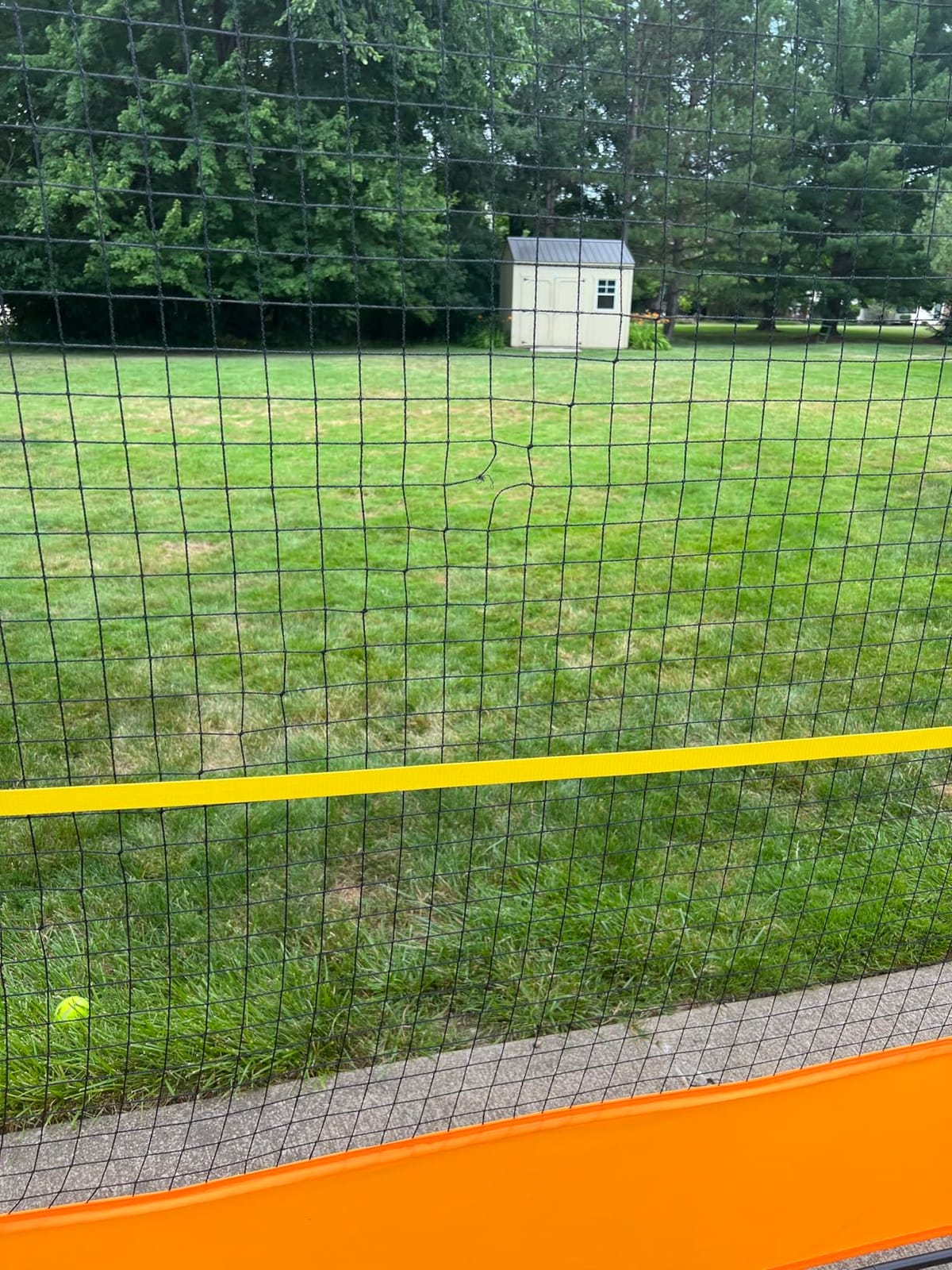
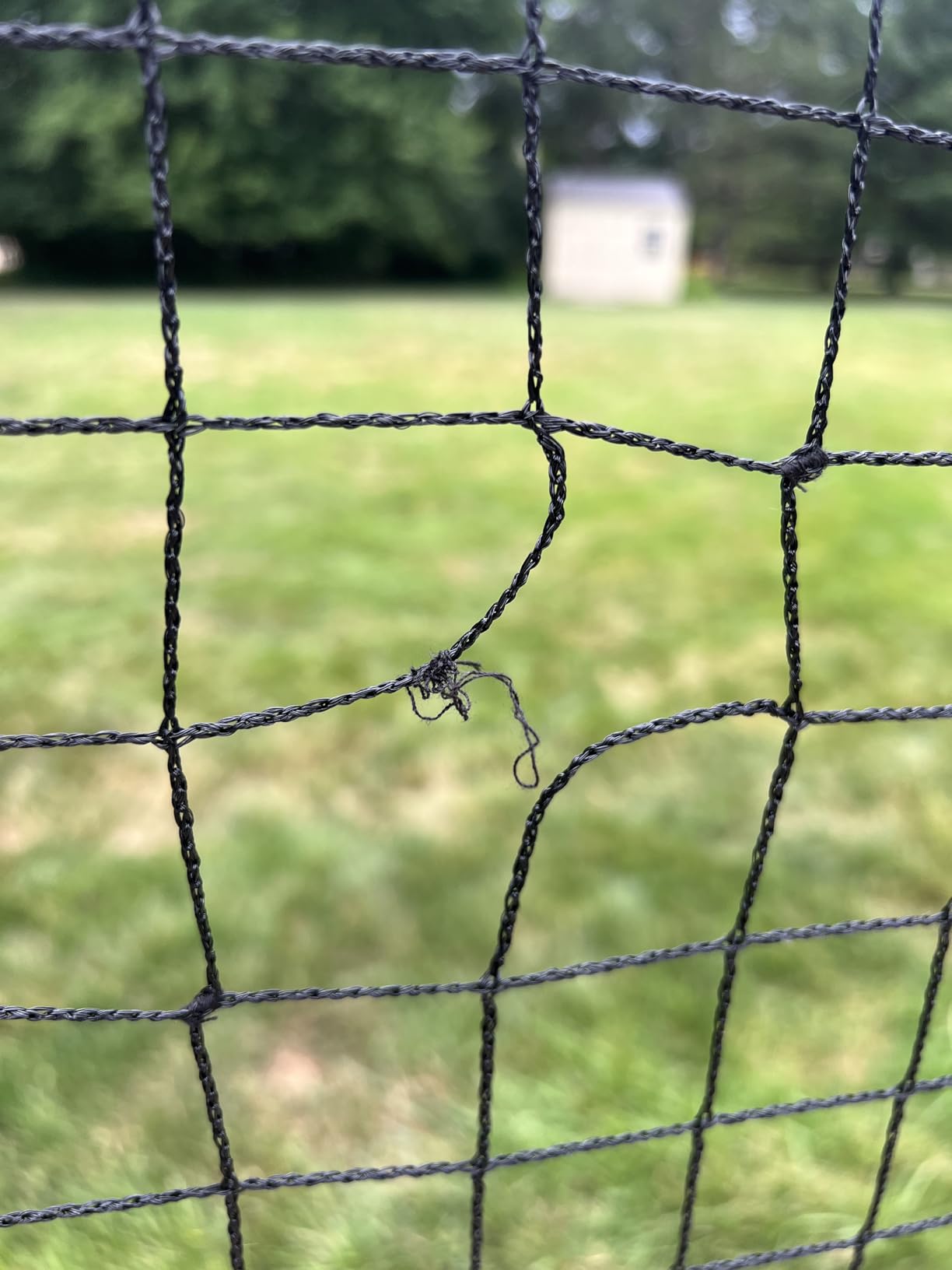
Durability is the fault line. Several reviewers describe holes appearing in the net after only a handful of sessions, and one reports rebound quality declining after about a month. A nylon cord attaching the poles also snapped on one unit. The 28 ratings average 3.5, among the lowest here, with a sharply bimodal split of 38 percent five-star against 20 percent one-star.
Best for Constrained Space
If your yard cannot absorb a hard return, a damped rebound beats a powerful one. Most beginners and juniors get far more quality reps when the ball stays close, which is exactly what this frame delivers.
Know the Replacement Cycle
Treat the mesh as a consumable. Plan on inspecting it after the first month of hard use and be ready to replace the net rather than the whole frame, and always weight the feet if you are standing close to it.
11. Tourna Rally Pro Adjustable Tilt 7×7: Tunable Return for Driveways
Tourna Rally Pro Adjustable Tilt Rebound Net (7×7 ft) for Tennis and Pickleball, Black
7 by 7 ft hitting surface
Adjustable tilt mechanism changes rebound style
Steel frame construction
Designed for driveways and garages
Pros
- Tilt mechanism gives a soft high return or an aggressive bounce
- 7 by 7 ft surface suits a range of strokes
- Simple straightforward assembly
- Suitable for driveways garages and courts
Cons
- Low customer rating of 3.2
- About 30 percent of reviews are one-star
- Only 11 ratings limits confidence in durability
- Assembly required before use
The tilt mechanism is the whole pitch and it works in both directions. Laid back, the frame gives a high, soft rebound that suits volley drills and warmup. Tilted forward, the return becomes more aggressive and stays lower, which suits groundstroke depth work. The 7 by 7 foot surface gives you margin to experiment with both.
The steel frame and simple construction make this a driveway and garage product rather than a club one. That is a reasonable design intent, and the manufacturer positions it for driveways, garages, and courts.
The ratings are the problem. Eleven reviews averaging 3.2 is the lowest average in this roundup, with 30 percent at one star. Only 13 percent are four stars, and 23 percent sit at three stars, which reads as acceptable rather than good across the ownership base.
We would treat this as a units-understanding purchase. If you have used adjustable tilt frames before and know how to tension and anchor a net, the mechanism is the reason to consider it. If you are buying your first rebounder, the low rating base points elsewhere.
How Tilt Changes the Return
Tilt is the single most useful adjustment on any of these frames, because it changes where the ball goes rather than just how high. It converts one net into a two-drill tool without any extra hardware.
Who Should Skip It
Anyone who wants verified long-term durability. With 11 ratings and a 30 percent one-star share, there is not enough owner history here to recommend it over better-reviewed options in the same size class.
12. GenxQian 9.4×7.4 Rebound Net: A Complete Anchoring Kit Out of the Box
9.4ft x 7.4ft Tennis Rebounder Net, Tennis Rebounder Trainer, Multi-Sport Training Bounce Back Net for Tennis, Baseball, Lacrosse, Hockey, Softball, Pickleball, Ball, for Backyard and Indoor & Outdoor
9.4 by 7.4 ft hitting surface
Powder-coated rustproof iron frame
35 tension springs, 7 knobs, 4 nails, 4 sandbags
Oxford cloth carrying bag included
Pros
- Wide 9.4 by 7.4 ft hitting surface
- Complete anchoring kit with springs knobs nails and sandbags
- Powder-coated frame resists rust and corrosion
- Carrying bag included for storage
- Usable as a protective ball-stop net
Cons
- Only 3 ratings so durability is unproven
- Anchoring needs ground nails which do not suit hard indoor floors
- Spring tensioning is the main differentiator rather than rebound feel
The included components are unusually thorough: 35 tension springs, 7 fixed knobs, 4 ground nails, 4 sandbags, and an oxford cloth carrying bag. Nothing has to be bought separately to get this frame working outdoors.
The hitting surface is 9.4 feet wide by 7.4 feet high, among the wider faces here, and the polyethylene net has 500D PVC sandwich mesh edging for reinforcement at the stress points. The frame is powder-coated iron with rustproof treatment, which is the right call for year-round outdoor placement.
The problem is evidence. Three ratings, all five stars, which tells you early buyers were satisfied but tells you almost nothing about how the frame performs after a wet winter. The multi-sport reach is wide, covering tennis, volleyball, lacrosse, and baseball, and owners note it doubles as a ball-stop net.
One practical constraint: the anchoring system is designed for soil, since it relies on ground nails. On a hard patio or gym floor you would need to substitute weight, and on a driveway the nails are the point rather than the problem.
What the Kit Solves
Spring-tensioned netting is adjustable in a way bungee-cord nets are not, so you can tune rebound firmness over the life of the mesh rather than living with whatever tension the factory set.
Buy It With Realistic Expectations
A five-star average from three reviews is an early impression, not a track record. Treat this as a well-equipped package and check back on owner reviews after a season before recommending it to someone else.
How Much Space and Which Features Actually Matter
The single biggest reason rebound nets disappoint owners is not quality. It is space. A net that returns hard needs room behind it, and a wide net needs room across it. Get these numbers before anything else.
How much clearance do you need behind a rebound net?
Plan on 12 to 18 feet of run-off behind the net for a hard-returning model, and 6 to 8 feet behind a slow-rebound or small model. Add the frame width across the front. For a 9 foot wide net on a slow-rebound frame you need roughly 25 feet of yard depth total, while a 12 by 6 foot wheeled frame on a damped return can work in about 18 feet.
Rebound Net, String Trainer, or Ball Machine?
These three get sold under overlapping names and solve different problems. A rebound net returns balls to you physically and is the only one that works without power or consumables. A string trainer is a ball on an elastic cord anchored to a wall or ground; it is cheap, takes seconds to set up, and gives irregular bounce, which makes it better for rhythm and timing than for technique. A ball machine feeds you repeatable shots from a range of locations but needs power, a basket of balls, and space behind it. If you own a machine already, a ball return net like the MR 7×6 pairs with it. Otherwise a rebound net is the better single investment.
Netting: Knotless Versus Knotted
Knotless PE mesh is lighter, returns more consistently, and resists UV degradation better, which is why the Vermont RapidFire and the MR frames use it. Knotted HDPE mesh grips the ball for better directional control and is structurally tougher, which is why the HamRoRung uses it. For a net that sits in direct sun year-round, knotted mesh degrades faster and should be planned as a multi-season consumable.
Angle Adjustability Changes What You Can Practice
Adjustable tilt decides how many drills one frame can cover. A vertical net returns balls roughly level, which suits flat groundstrokes. Tilting it back raises the return for volley work, and tilting it forward produces a lower, more aggressive bounce for depth training. Only the Vermont, both Tourna models, and the MR 12×6 offer this, and it is worth paying up for if you want one frame to cover multiple strokes.
Wind Anchoring and Rust Prevention
Wind is the top complaint in backyard use, based on the owner reviews and coach discussions we read for these products. Three methods work. Sandbags on each rear corner handle moderate gusts and cost almost nothing. Ground stakes driven at an angle pin the legs and handle stronger wind but need soil. Positioning the net against a fence or wall on the windward side removes the problem entirely and is the cheapest fix available. For rust, rinse the frame after salty or muddy sessions, dry it before storing, and keep fabric or canvas parts out of direct sun when not in use. Covers matter more than coatings over a multi-year life.
Multi-Sport and Pickleball Use
Households with two players get more out of one frame. The Ksports covers tennis, pickleball, padel, squash, racquetball, and table tennis, while the Tourna models are dual-sport for tennis and pickleball, and the QUICKPLAY carries two rebound faces. Pickleball needs a tighter, higher net than tennis, so check that a model is tight enough for that before committing, and note that a slow-rebound frame like the ORIENGEAR is generally too slack for serious pickleball drills.
Setting Up and Testing a New Net in Ten Minutes
Count every part against the manual before you build, since missing bolts are the most common first-week complaint. Assemble the frame flat, then tension the netting evenly from the center outward rather than pulling one corner first. Weight it before the first hard ball. Then hit ten slow groundstrokes from the same spot and check that the return lands within a foot or so of where you hit. If it does not, the net needs re-tensioning, not blaming.
Frequently Asked Questions
What is the best rebounder for tennis?
The best rebounder for most backyards is the one that matches your space and your power. For small yards, the Ksports multi-sport model wins because it needs only six square yards and sets up tool-free in under ten minutes. For a large practice face with real placement options, the Vermont RapidFire 9 by 7 offers an adjustable angle of attack. For moving between a garage and the lawn, the MR 12 by 6 has wheels. Match the frame to your yard, then match your swing to the strike zone.
Do tennis rebounders work?
Yes, for the jobs they are designed for. Rebound nets excel at repetitive groundstroke work, building muscle memory, and keeping a single player busy. Coaches and club players report measurable improvement in forehand and backhand consistency from regular net sessions. They are not a substitute for live-ball rally work or match play, because the return is more predictable than a real opponent. Use them for technique volume, then use a partner or ball machine for the rest.
What size tennis rebounder do I need?
For a typical backyard, a surface between 6 by 6 feet and 9 by 7 feet is the sweet spot. Smaller frames around 6 feet wide suit beginners and juniors and fit tight yards, while frames at 9 feet wide or more give you room to practice depth and placement. Remember that the listed frame size is rarely the true strike zone, so treat the number as a maximum rather than a target. Anything under about 6 feet wide leaves you chasing balls constantly.
Can a tennis rebound net be used for pickleball?
Yes, and many models are explicitly dual-sport, including the Ksports multi-sport rebounder and both Tourna models. The key variable is net tension. Pickleball needs a taut, higher target than tennis, so a loose or slow-rebound frame will frustrate you, and the ORIENGEAR model is specifically called out as too slack for serious pickleball drills. For shared household use, a spring-tensioned or firmly bungeed frame handles both sports better than a heavily damped one.
How much space do you need for a tennis rebounder net?
Budget the frame width across the front and 12 to 18 feet of run-off behind a hard-returning net so balls do not land in your garden. That works out to roughly 25 feet of yard depth for a 9 foot wide frame returning hard, or about 18 feet for a 12 by 6 foot frame with a slower return. Add side clearance for movement. A small six-square-yard model like the Ksports can be set up on a patio or driveway instead of open lawn.
Final Verdict for Backyard Tennis Rebound Nets in 2026
For most backyards, the Ksports multi-sport rebounder is the right first purchase: the deepest owner feedback in the group, a tool-free ten minute setup, and a footprint small enough for a patio. Pick the Vermont RapidFire if you want a genuine 9 by 7 foot backboard with angle control, and the MR 12 by 6 if wheels and adjustable tilt matter more than strike-zone size.
Whichever you choose, check your clearance before you buy, anchor it on day one, and treat the netting as the replaceable part of the system. Before you start hitting, it also helps to have the right footwear sorted, so our best tennis shoes guide is worth a look, and if the driveway doubles as a volleyball court our best volleyball nets picks cover that side too.