
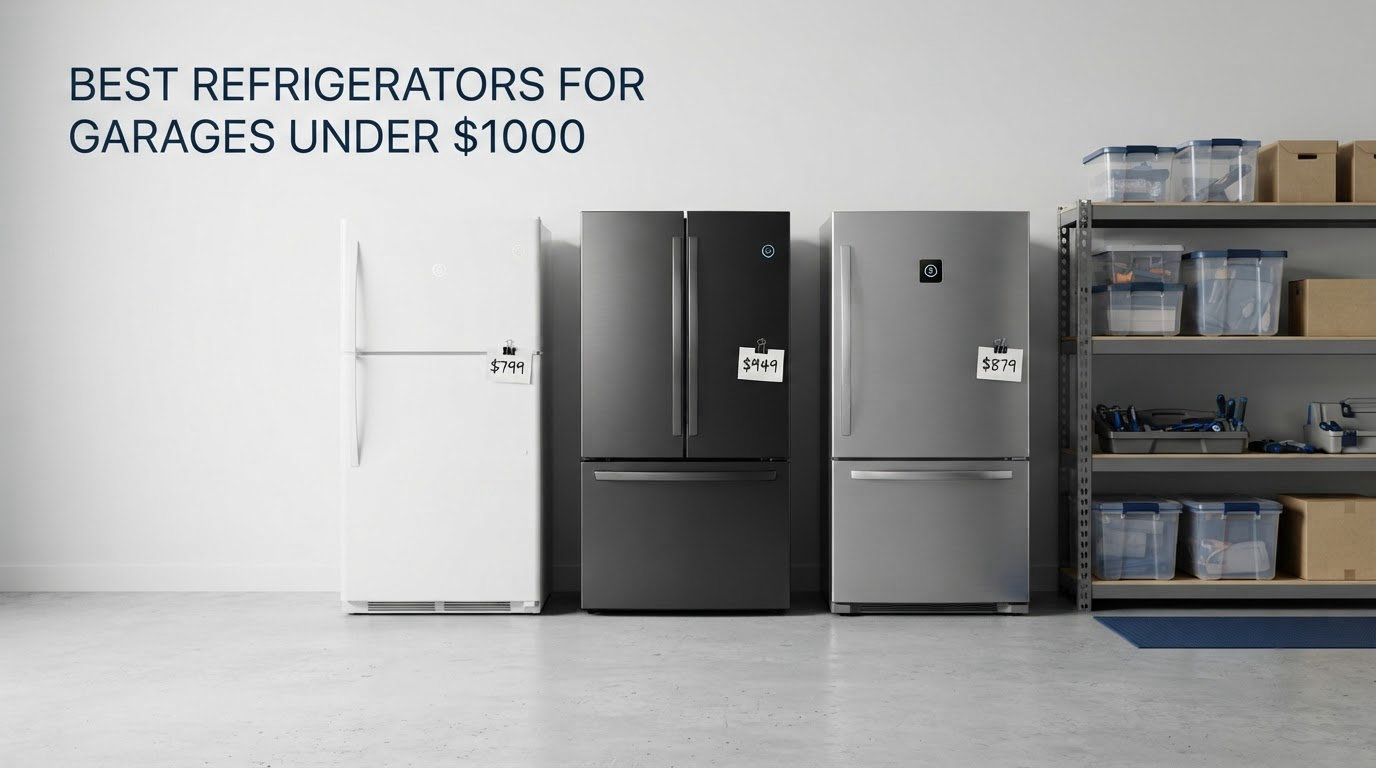
The best refrigerator for a garage is the Kenmore 18.1 cu. ft. 30 inch Top Mount Refrigerator (model 4661342). It packs an inverter compressor, 367 kWh per year and a 30 inch footprint into a full-size family fridge, and it is the pick I would install first in an unheated bay. Every one of the 12 appliances below costs less than 1,000 dollars, and I flagged which ones actually publish a rated ambient temperature band instead of borrowing the phrase garage-ready from a marketing badge.
Most garage fridge advice starts with the same warning, and it is worth repeating here. A standard kitchen refrigerator in a garage works fine in July and quits in January, because cold room air stops the compressor from cycling at all. Hot room air is the opposite problem, an endless compressor run that wears the machine out early. Garage-ready units are built for that swing, and under a thousand dollars you can buy a tougher cabinet than a kitchen top-freezer of the same size.
We compared the 12 most practical garage-rated and garage-appropriate appliances on Amazon across capacity, temperature behaviour, energy draw, warranty and physical fit. If you want the wider category covered without the price ceiling, our roundup of the best garage refrigerators goes deeper on the full-size picks, and the best outdoor refrigerators guide covers units built for patios and decks.
Top 3 Picks for Garage Refrigerators Under 1,000 Dollars (October 2026)

Kenmore 18.1 cu. ft. Top Mount
- 18.1 cu. ft. in a 30 inch footprint
- Inverter compressor
- 367 kWh per year
- ENERGY STAR certified
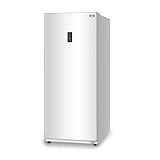
BLACK+DECKER 17 cu. ft. Convertible
- Converts fridge or freezer on one control
- 17 cu. ft. upright capacity
- Frost Free in both modes
- ENERGY STAR qualified

Midea 3.5 cu. ft. Chest Freezer
- Rated 38 to 110 degrees ambient
- Holds temperature 48 hours after an outage
- Converts between fridge and freezer
- 3.5 cu. ft.
The Kenmore wins on substance: it is a genuine full-size refrigerator with a 4.77 cu. ft. freezer, edge-to-edge glass shelves and gallon door storage, and its 266 reviews are the largest base among the full-size picks in this guide. The BLACK+DECKER BUC1700XW is the smarter money if you want one appliance to do two jobs, because a single control flips the whole cabinet between refrigerator and upright freezer. The Midea chest freezer is the cheapest way to add genuinely garage-rated storage, because it is the only pick here that publishes a tested ambient band of 38 to 110 degrees.
Best Garage Refrigerators Under $1000 in 2026
| Product | Specifications | Action |
|---|---|---|
| Kenmore 18.1 cu. ft. Top Mount |
|
Check Latest Price |
| BLACK+DECKER 17 cu. ft. Convertible |
|
Check Latest Price |
 Hamilton Beach 14 cu. ft. Convertible Hamilton Beach 14 cu. ft. Convertible |
|
Check Latest Price |
 Frigidaire 10 cu. ft. Frost Free Top Mount Frigidaire 10 cu. ft. Frost Free Top Mount |
|
Check Latest Price |
 BANGSON 7.0 cu. ft. Upright Convertible BANGSON 7.0 cu. ft. Upright Convertible |
|
Check Latest Price |
| Midea 3.5 cu. ft. Chest Freezer |
|
Check Latest Price |
 BANGSON 7.1 cu. ft. Bottom Freezer BANGSON 7.1 cu. ft. Bottom Freezer |
|
Check Latest Price |
 BODEGA 12.5 cu. ft. Display Merchandiser BODEGA 12.5 cu. ft. Display Merchandiser |
|
Check Latest Price |
 BODEGA 321L Beverage Refrigerator BODEGA 321L Beverage Refrigerator |
|
Check Latest Price |
 ICEVIVAL 6 cu. ft. Commercial Beverage ICEVIVAL 6 cu. ft. Commercial Beverage |
|
Check Latest Price |
 Tylza 3.22 cu. ft. Low-E Glass Tower Tylza 3.22 cu. ft. Low-E Glass Tower |
|
Check Latest Price |
 Whynter TBR-185SR Tool Box Fridge Whynter TBR-185SR Tool Box Fridge |
|
Check Latest Price |
1. Kenmore 18.1 cu. ft. 30 Inch Top Mount Refrigerator for Full-Size Garage Duty
Kenmore 18.1 cu. ft. 30″ Wide Top Mount Refrigerator – White
18.1 cu. ft.
30.12 inch D x 29.72 inch W x 66.14 inch H
367 kWh per year
ENERGY STAR
Pros
- Inverter compressor runs quietly according to owners
- 18.1 cu. ft. in a 30 inch standard-depth footprint
- Edge-to-edge tempered glass shelves
- Reversible doors
- ENERGY STAR certified
Cons
- Fresh-food section recovers slowly after repeated door openings in hot spaces
- No interior light in the freezer
- Only a one year appliance warranty
This is the household pick in the set that still behaves like the fridge you already own, built for a worse room. It is 30.12 inches deep, 29.72 inches wide and 66.14 inches tall, which means it clears a standard garage bay door without the depth penalty that catches many full-size models. At 154 pounds it is still a two-person carry with the casters on.
The inverter compressor is the detail that matters most in a garage. Owners describe the running note as a low, steady hum rather than the on-off clunk of a single-speed compressor, and that is the sound you can live with above a workbench. The 4.77 cu. ft. freezer and 13.36 cu. ft. fresh-food section split sensibly for bulk garden storage or a second household fridge.
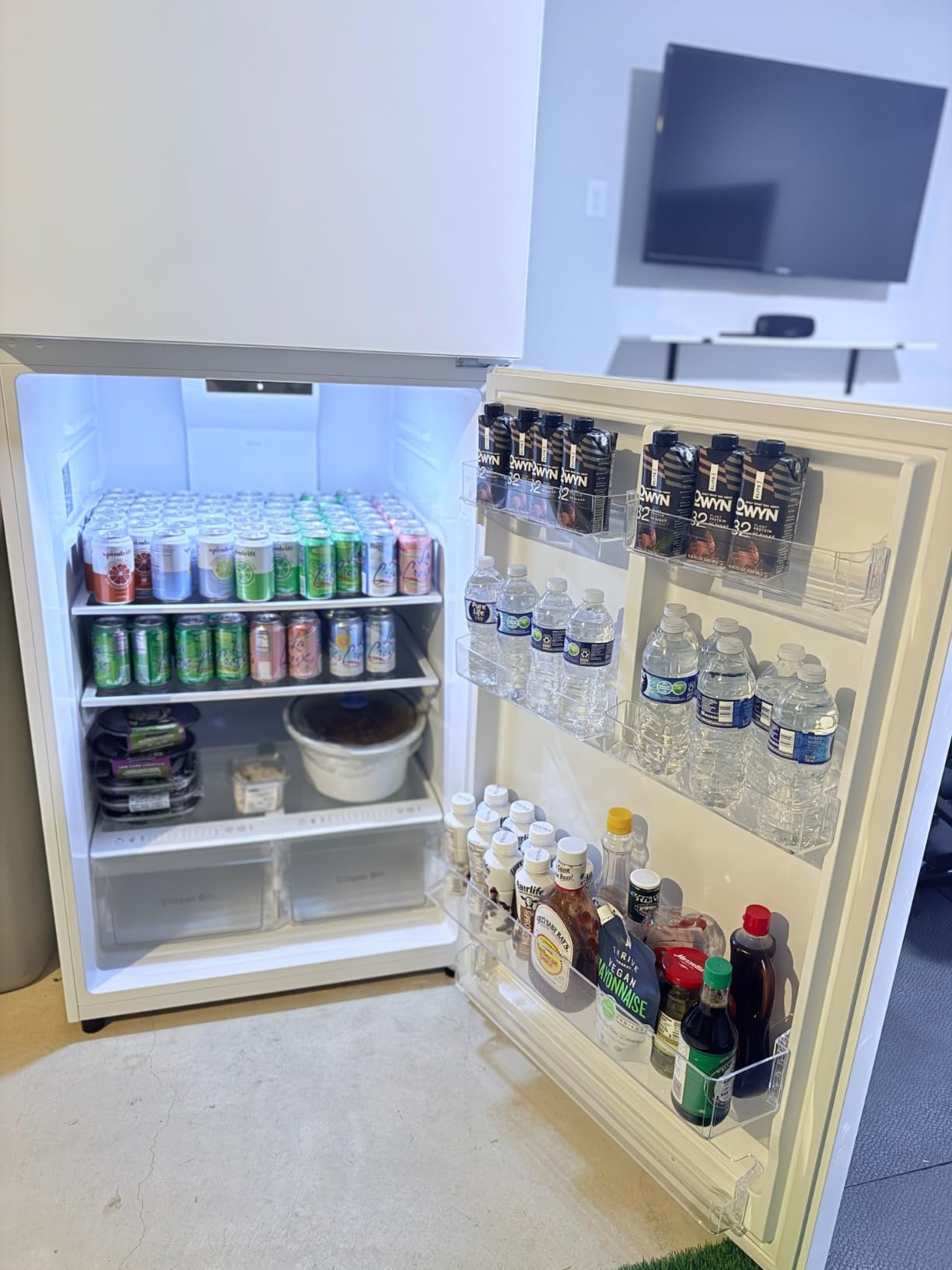
Energy use is listed at 367 kWh per year, well below the figure published by most of the larger uprights in this guide. Two humidity-controlled crispers and five door bins, including a gallon-sized bin, make it usable as a real overflow fridge rather than a beer locker. The three edge-to-edge glass shelves are adjustable, so tall containers fit without tilting.
The honest weakness is heat recovery. Owners report the fresh-food compartment taking longer to pull back down after repeated door openings in a hot bay. That is exactly the physics that wears out a standard kitchen compressor, and it is a limitation of the format rather than a defect.
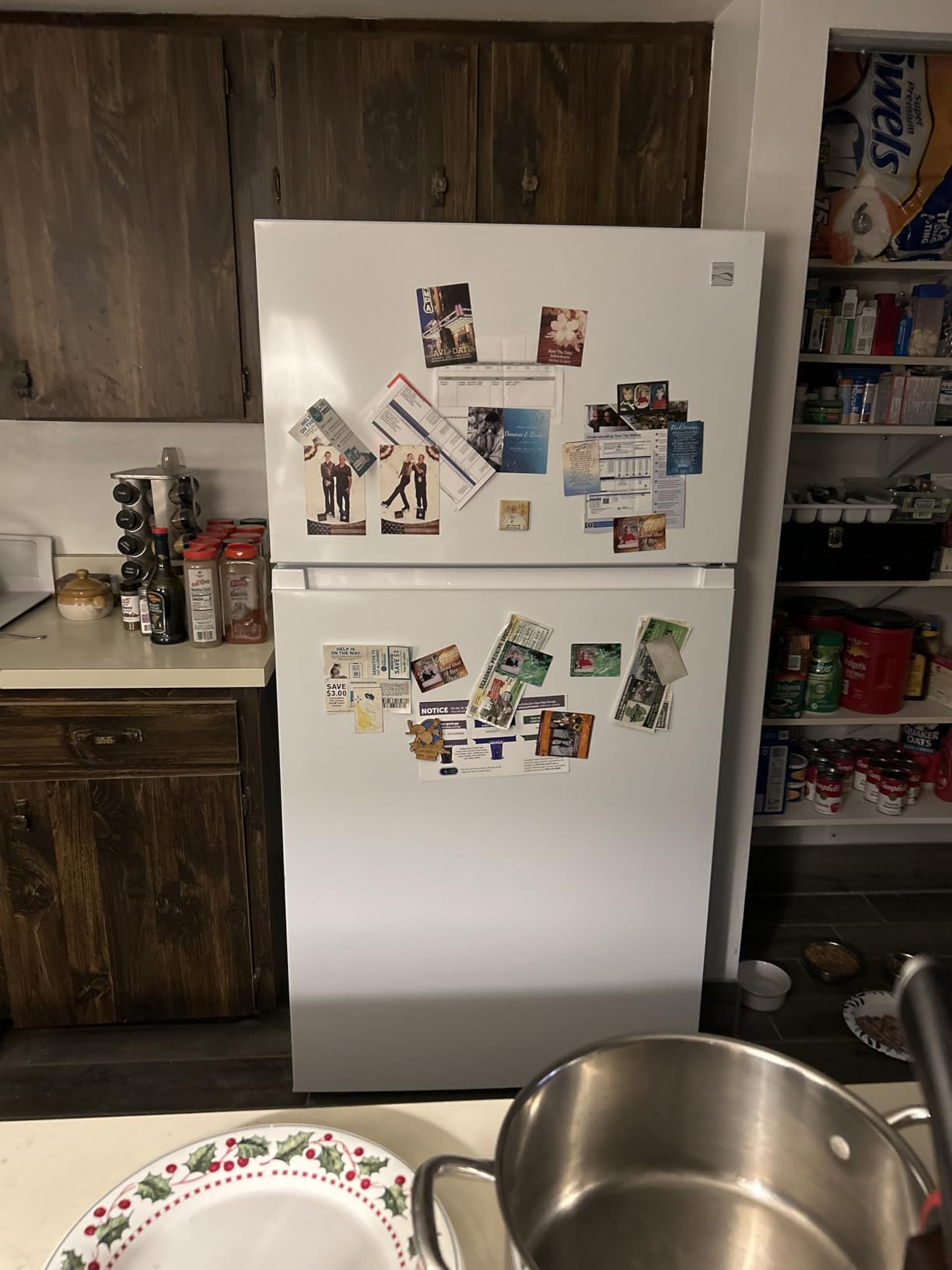
Check the fresh-food recovery before you buy in a hot climate
If your garage regularly passes 95 degrees, this cabinet works, but give it room and keep the door shut. Owners who run it as overflow storage rather than an open door every day report no complaints, and the ENERGY STAR certification plus 367 kWh annual draw is a good sign for running cost.
Where it will disappoint you
The freezer has no interior light, so hunting for a bag of fries at night means a flashlight. Warranty coverage is one year on the appliance. Confirm whether the compressor carries separate coverage before you buy, because that is the part that fails first in a garage.
2. BLACK+DECKER BUC1700XW 17 cu. ft. Convertible Freezer Refrigerator for One-Unit Flexibility
BLACK+DECKER 17 Cu. Ft. Convertible Freezer Refrigerator, BUC1700XW, White
17 cu. ft.
31.9 inch D x 28 inch W x 68.1 inch H
Convertible fridge or freezer
Frost Free
Pros
- One control switches the whole cabinet between fridge and freezer
- 17 cu. ft. in a vertical footprint
- Frost Free in both modes
- ENERGY STAR qualified
- Very low hum
Cons
- A minority of cabinets have a door that does not latch fully
- Door hinges creak on some models
- Interior LED lighting is dim
- 68 inch height needs a doorway check
The BUC1700XW answers the single most common garage question, which is whether you need to buy two appliances. One control turns 17 cu. ft. of cabinet into a full refrigerator or a full upright freezer, and it is Frost Free in both modes, so switching does not commit you to a defrost schedule. Reviewers frequently call it the best value in the convertible class for exactly that reason.
At 28 inches wide it is narrower than the Kenmore, but at 68.1 inches tall it is one of the taller units here. Measure your garage side door before ordering. The LED electronic temperature display gives you a real setpoint instead of a numbered dial, and owners mention quick pull-down to temperature as a consistent positive.
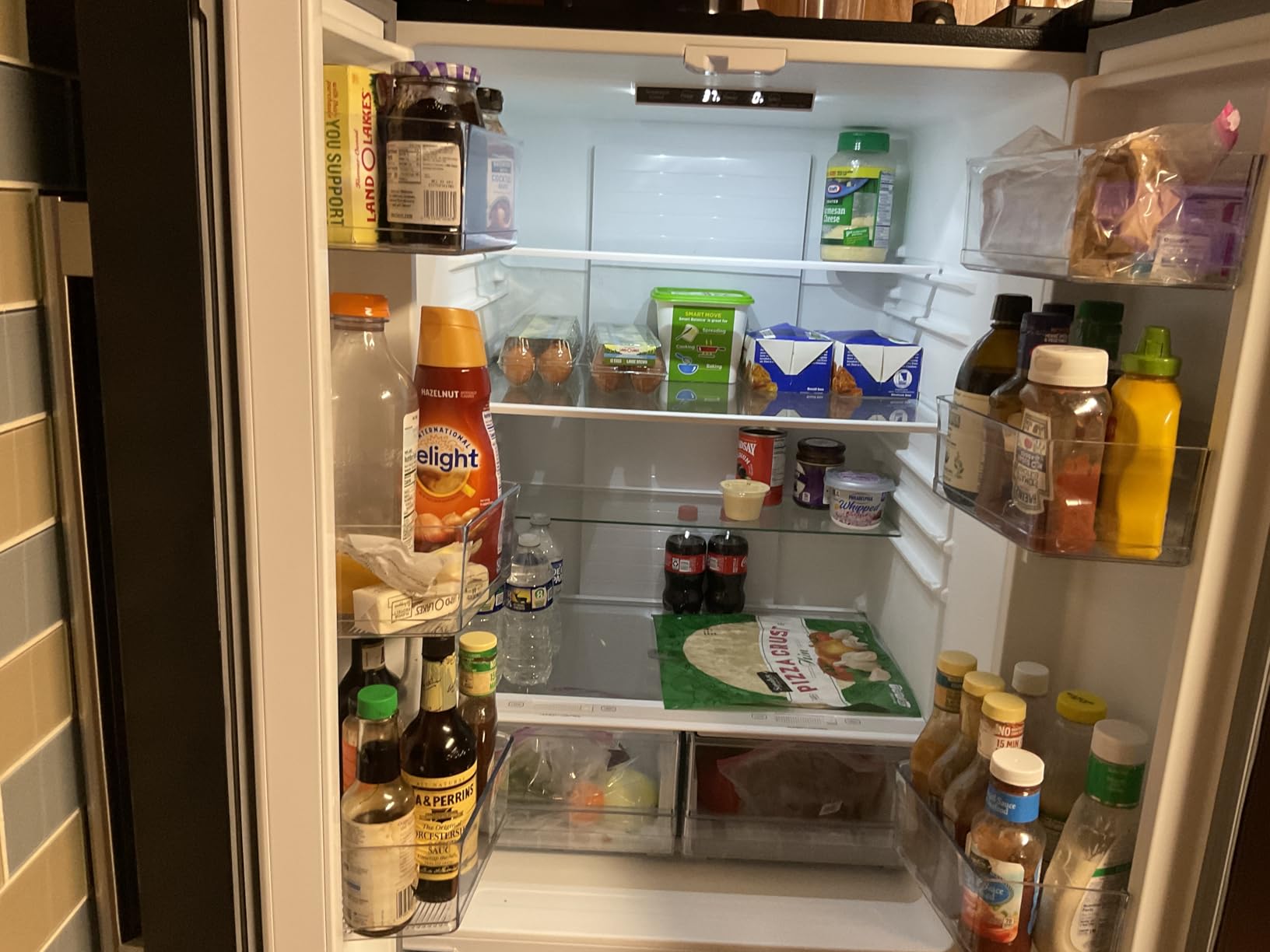
Running noise is described as a very low hum, which is why it works as a garage bar fridge as well as food storage. It is built by W APPLIANCE COMPANY LLC, carries CSA and Energy Star listing, and ships with a one year manufacturer warranty. Sabbath mode is listed, which matters for some households and costs nothing to leave on.
Four glass shelves and a steel door keep the interior simple. If you want humidity-controlled crispers or a gallon door bin, this is not the cabinet for you, and the fridge-only mode still gives you the full internal volume rather than a small dedicated compartment.
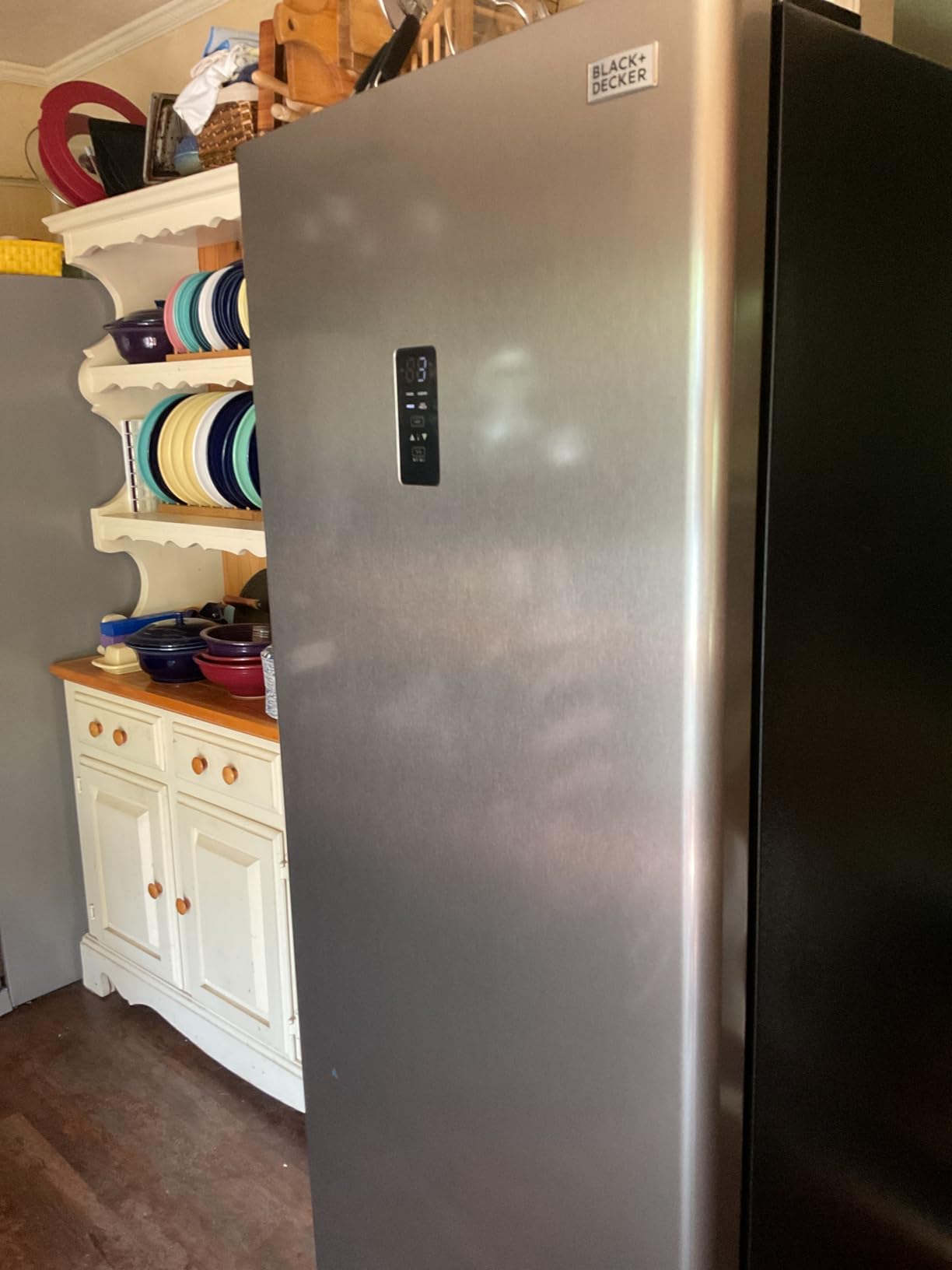
Why buyers pick a convertible over a fixed fridge or freezer
Garage storage changes with the season. A convert lets you run as a refrigerator through summer and flip to freezer for a bulk meat or garden harvest haul, and the Frost Free system means you are not chipping at ice twice a year. That flexibility is the reason this model carries 169 reviews at a 4.2 average.
Where it will disappoint you
The recurring negative is the latch. A minority of owners report a door that does not catch fully and must be pushed to engage, and some report loud hinge creaking. The interior LED is dim enough that reviewers mention it. If your garage has a dog or a workbench in the swing path, treat the latch as something to check on day one.
3. Hamilton Beach HBFRF1495 14 cu. ft. Convertible Fridge Freezer for Bulk Meat and Produce Hauls
Hamilton Beach HBFRF1495 14 cu ft Upright Convertible Fridge/Freezer-Frost Free-Removable Glass Shelves-LED Interior Light, Stainless
14 cu. ft.
28 inch D x 28 inch W x 68 inch H
392 kWh per year
Frost Free in both modes
Pros
- One-click conversion between freezer and refrigerator
- Door-open alert alarm
- Frost Free in both modes
- Four removable glass shelves
- Leveling legs for uneven floors
Cons
- Listed dimensions are widely reported as inaccurate
- Door is not reversible despite some claims
- Very heavy once installed
Owners buy the HBFRF1495 for one job, and they buy it in bulk. Multiple reviews describe loading it with Costco hauls and bulk meat, and the single-click mode switch plus Frost Free operation in both compartments is the feature that makes that practical. At 14 cu. ft. it is smaller than the BLACK+DECKER but the layout is more garage-oriented.
The electronic temperature control includes a door-open alarm, which is a small thing that matters when the door is across the bay from where you are working. Four removable tempered glass shelves, four in-door shelves and a bottom slide-out transparent bin give you a place for everything. Rear rollers and front leveling legs handle the uneven slab most garages have.

Energy Star certification is listed, and annual consumption is given as 392 kWh. That sits mid-range in this group, higher than the Kenmore’s 367 kWh despite the smaller cabinet, so budget accordingly if your garage is uninsulated. Warranty is one year parts and labour, manufactured by Curtis International LTD.
There is an interior LED light, which two of the other convertibles here either lack or dim. The stainless finish suits an unfinished garage better than white, where scuffs show immediately.
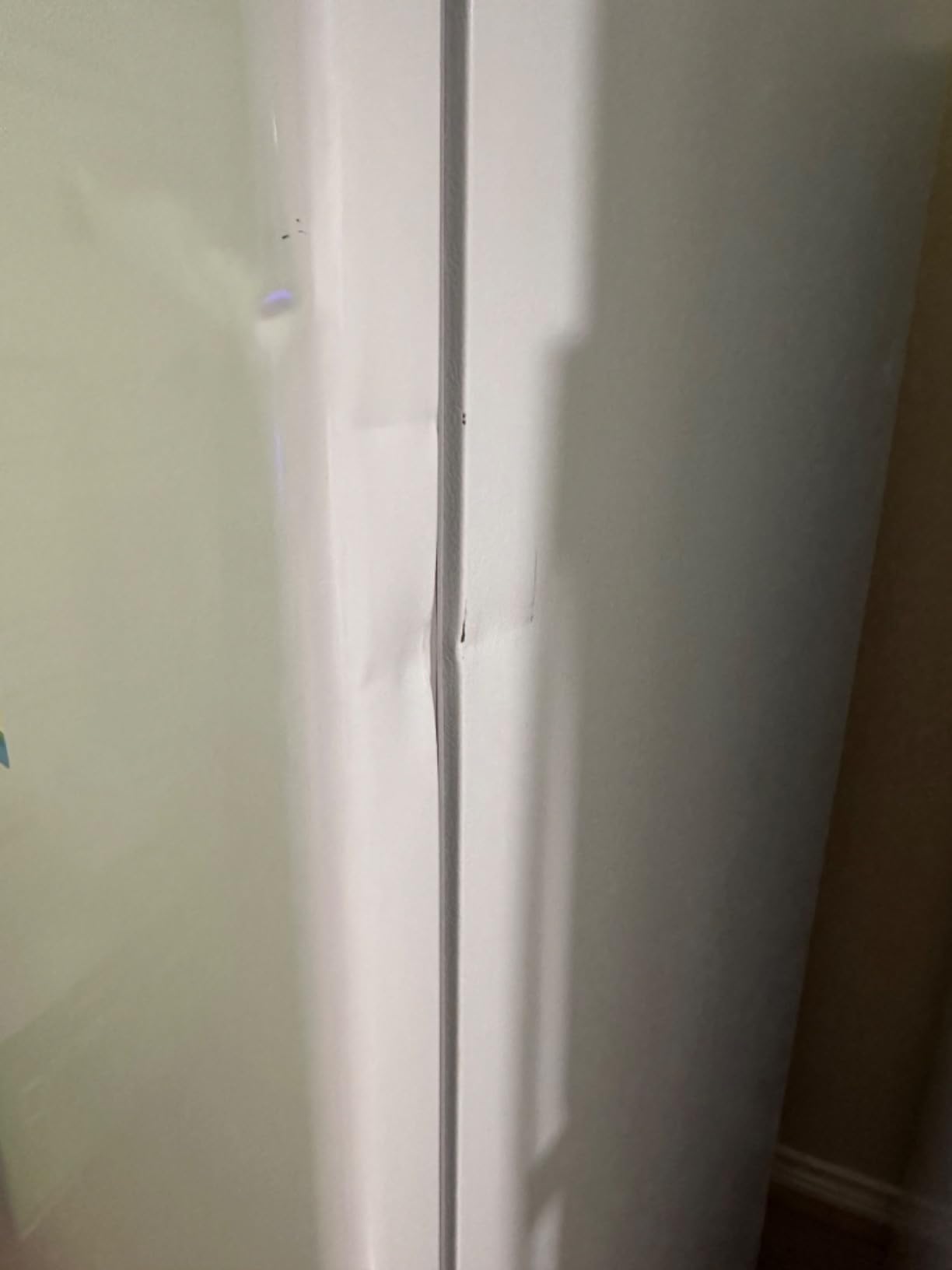
Measure twice, because the published dimensions are disputed
The single most repeated theme across 80 reviews is that the listed 28 inch depth and 28 inch width do not match reality, and that owners have discovered the cabinet is larger and deeper than advertised after delivery. If your garage bay is tight, tape out the footprint on the floor with a tape measure and leave an inch of slack before you order.
Where it will disappoint you
Some listings claim a reversible door and the door is not reversible, so plan the hinge side before delivery day. It is a heavy cabinet and awkward to reposition once it is full. The temperature controls also take some getting used to, and at 14 cu. ft. it will not hold a very large harvest on its own.
4. Frigidaire 10 cu. ft. Frost Free Top Mount Apartment Refrigerator for Small Garage Bays
Frigidaire, Frost Free Top Mount 2 Door Apartment Size Refrigerator with Freezer, 10 CU FT
10 cu. ft. total
8 cu. ft. fresh food
2 cu. ft. freezer
300 kWh per year
Pros
- Compact 26 inch depth fits tight bays
- Published draw of 300 kWh per year
- Frost Free top-freezer layout
- Reversible door
- Adjustable feet and shelf heights
Cons
- Door gaskets on some cabinets do not seal all the way around
- Weak gaskets reported to develop black mold
- Some delivered dented or bent
- No in-house service support
The EFR0133WHITE is the pick when bay space is the constraint. It is 26.22 inches deep, 23.62 inches wide and 62.32 inches tall, which clears most utility closets, shed walls and single-car garage corners that a 30 inch cabinet will not fit into. The 2 cu. ft. top freezer keeps frozen items solid without dominating the footprint.
Annual energy consumption is listed at 300 kWh, which is among the lowest figures published by the household-size units here. Adjustable feet handle a sloping slab, three slide-out shelves let you change the layout, and a built-in interior lamp means you can find things without a flashlight. The door orientation is reversible, which solves a tight-wall problem cheaply.
At a 3.8 average across 30 reviews, this is among the least highly rated picks here, and the reason is specific rather than general. Critical reviews concentrate on door gaskets that do not close all the way around, which then leads to condensation and black mold inside the seal. That is a hygiene problem in a garage, so it is worth inspecting the seal the day it arrives and checking it every few months.
Transit damage is the other repeated complaint, with some deliveries arriving dented or with a bent frame. The seller provides no in-house service or home warranty support, so a mechanical problem means shipping the appliance away. For a temporary renovation fridge or a one-person overflow, the footprint and energy draw justify those compromises. For ten years of daily use, we would steer you to a larger cabinet with a stronger service network.
When a 10 cu. ft. footprint is genuinely enough
Reviewers of this cabinet consistently say the usable space beats what they expected for a single person or a couple. It handles drinks, condiments, a week of overflow groceries and a small frozen stash. The reversible door and adjustable feet are what make it fit the awkward spaces that full-size models cannot.
Where it will disappoint you
The gasket issue is the deal breaker for anyone storing anything perishable long-term in a humid garage. There is no dedicated crisper humidity control and no gallon door bin, and the single door shelf is minimal. If you need a fridge you can trust for a decade without checking the seal, skip this size class.
5. BANGSON 7.0 cu. ft. Upright Convertible Freezer Refrigerator for a True No-Freezer Compartment
BANGSON 7.0 Cu.ft Upright Freezer, Convertible Freezer/Refrigerator, Silver
7 cu. ft.
23.5 inch D x 21.5 inch W x 56.2 inch H
Freezer -7.6 to 6.8 degrees
Fridge 38 to 47 degrees
Pros
- One of only two picks publishing a full temperature band
- Reversible door hinge and leveling feet
- Quiet running with no frost buildup
- Removable door seal and defrost tool included
Cons
- Several models arrive with broken or detached drawer fronts
- Occasional dents and finish damage in transit
- Included ice tray is undersized
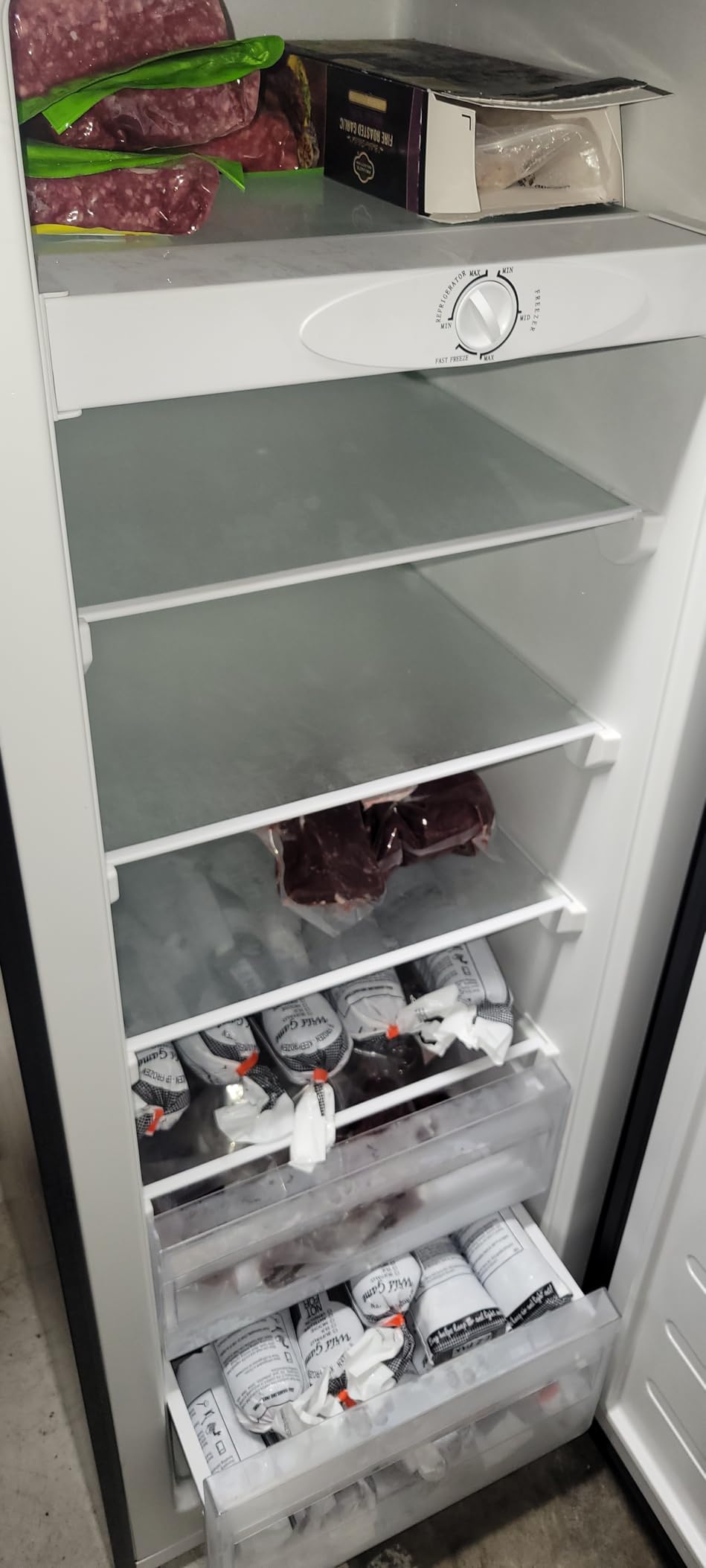
This is the refrigerator-only answer most roundups skip. The US-BSR-028-2 runs the full cabinet at 38 to 47 degrees in fridge mode or -7.6 to 6.8 degrees in freezer mode, so there is no small cramped freezer taking up a third of your volume. If you want a garage fridge that stores only food and drinks, this is the shape you want.
It is also one of only two picks in the whole list that publish a complete rated temperature band, which makes it a useful reference point when a retailer labels something garage-ready without a number. The reversible door hinge and leveling feet matter in a garage, where the door faces a wall and the floor is not level.
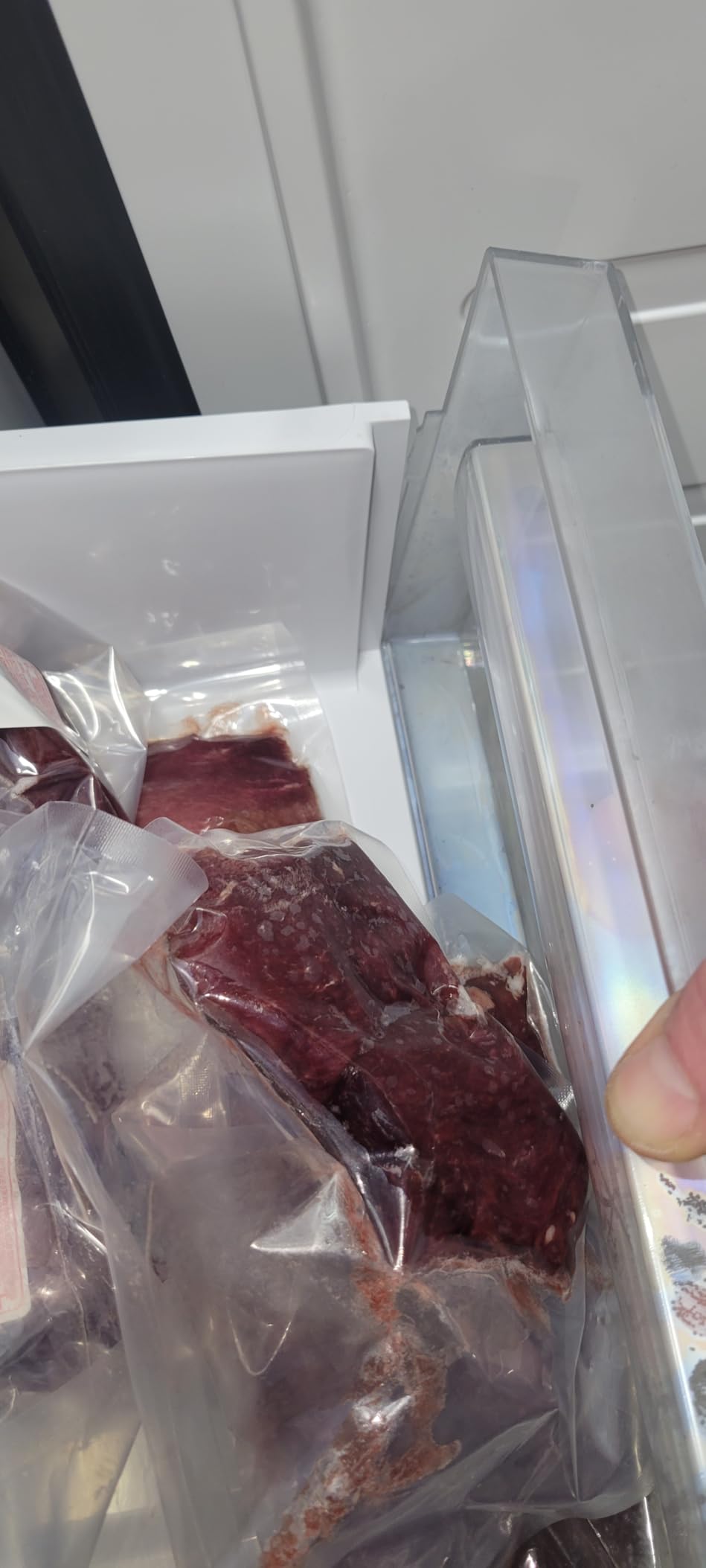
Owners praise the vertical format over a chest freezer because you can see the contents without crouching, and they report steady temperature with no frost buildup. Five shelves plus three pull-out bins give more organization than the capacity suggests. Running noise is described as very quiet, and draw is listed at 50 watts.
A flash-freeze setting is included, along with a removable door seal, an ice tray and a defrost tool in the box. Two pulleys help with moving it. The stainless steel door and silver finish show dust less than glossy white.
Why refrigerator-only mode is worth real money
Most people who want a garage refrigerator for beverages and overflow food never touch the freezer, and a conventional top-freezer gives them a colder, less useful third of the cabinet. A dedicated fridge-only design gives every cubic foot to what you actually store, which is why forum shoppers looking for one function keep landing on convertibles and uprights like this.
Where it will disappoint you
Transit is the real weak point. Several owners report one or more drawer fronts arriving broken or detached, plus dents and finish damage. A few owners also note the cabinet appears built for a different electrical market and wants professional hookup, so check the plug against your outlet before delivery. Clearance requirements also differ between the taped card and the printed manual.
6. Midea 3.5 cu. ft. Convertible Chest Freezer for Genuine Garage-Rated Storage
Midea 3.5 Cu.ft Chest Freezer, Fridge Freezer Convertible with LED Light
3.5 cu. ft.
17.6 inch D x 21.5 inch W x 33.5 inch H
Rated 38 to 110 degrees ambient
48 hour hold after power loss
Pros
- The only pick here rated for 38 to 110 degree ambient
- Converts between freezer and fridge modes
- Holds frozen contents for 48 hours after a power cut
- Very quiet
- Adjustable legs and removable basket
Cons
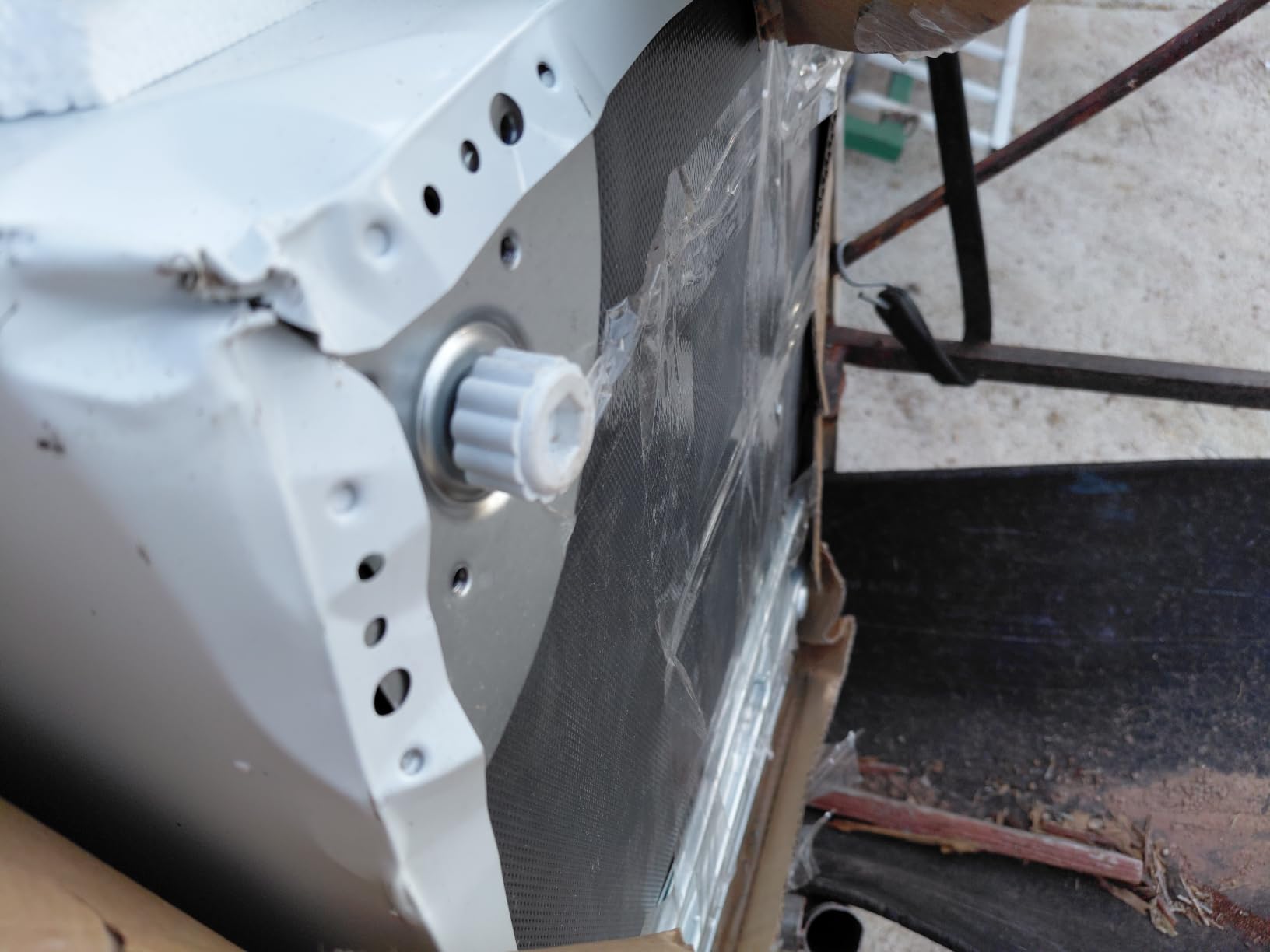
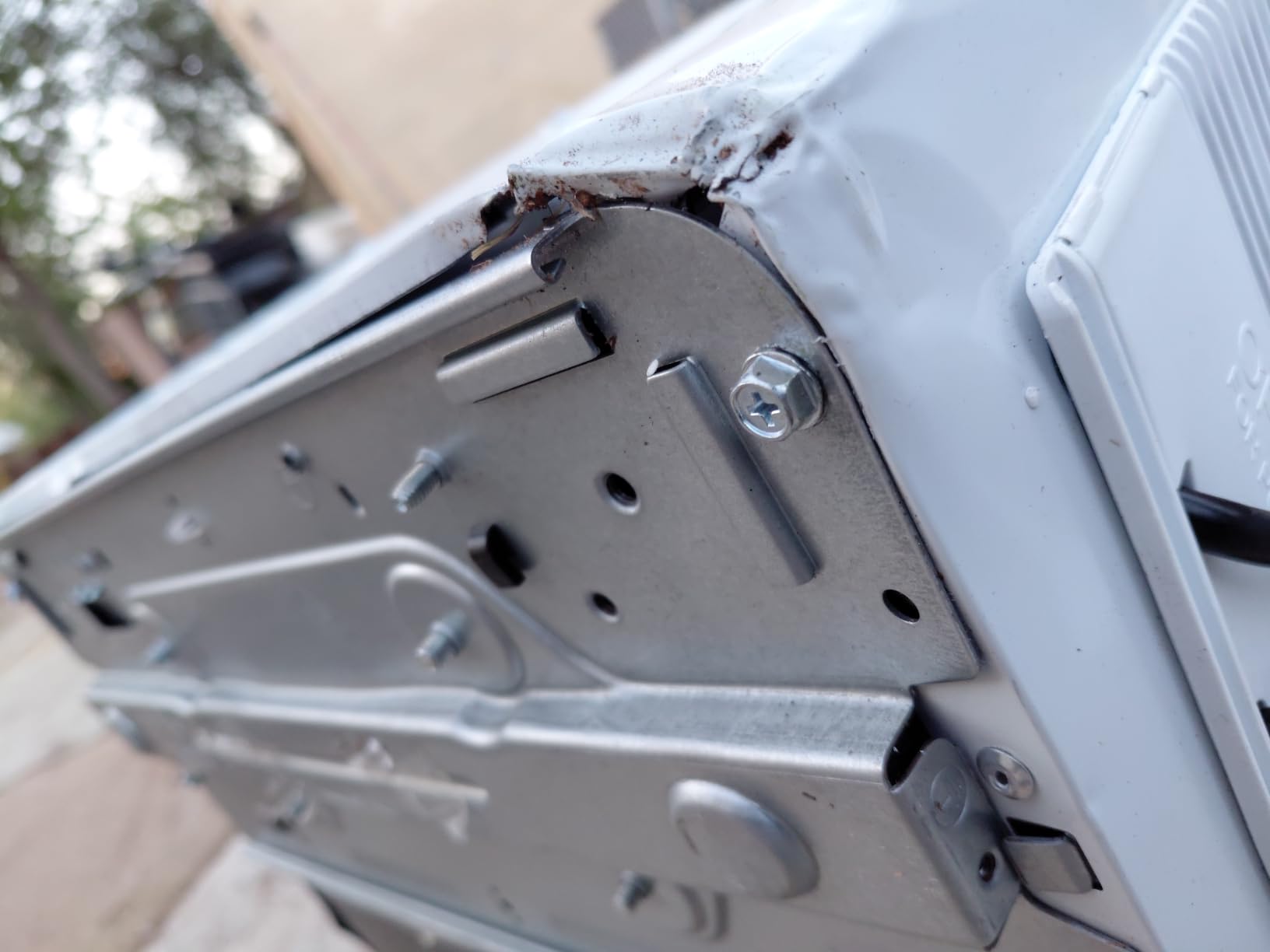
- Thin cardboard packaging leads to dents in transit
- 3.5 cu. ft. is small for a household freezer
- One year warranty
The MERC04C4BAWW carries a 4.4 owner rating, and it earns a place on a single number. It is tested to run in non-climate-controlled spaces from 38 to 110 degrees, which is the ambient band the entire garage-ready category is supposed to meet. When a listing says garage-ready, this is the specification to look for.
At 3.5 cu. ft. it is a second freezer, not a household fridge, and owners use it that way. The control panel converts it between fridge mode and freezer mode, so you can put drinks in it in July and frozen goods in it in January. An LED light in the lid and a removable plastic basket make loading easier, and adjustable legs handle a sloping garage floor.
The 48 hour hold after a power outage is the feature garage owners mention most, because an unheated garage loses power more often than a house. Running noise is described as very quiet with minimal frost retention, and owners report no noticeable change in their electricity bill. At 47.8 pounds it is also the easiest unit here to move yourself.
Forum shoppers who only need one function keep recommending chest freezers over upright refrigerators for garage storage, and this is the model that makes that advice easy to follow. It sits under a bench, against a wall, and out of the way without giving up cold storage.
How the 38 to 110 degree rating should change your buying
Almost every listing in this category uses the words garage-ready, and almost none publish a number. A tested 38 to 110 degree band tells you the compressor is designed to keep cycling when the room drops near freezing and to hold food temperature when it climbs past 100 degrees. That is the difference between a fridge that works in January and one that quietly stops.
Where it will disappoint you
Three and a half cubic feet is genuinely small, and owners buying for two people say so. The packaging is thin cardboard, so the most common complaint is dents and corner damage from the carrier rather than anything wrong with the appliance. Warranty coverage is one year, and because this is a chest freezer you are not getting a chilled fresh-food compartment.
7. BANGSON 7.1 cu. ft. Bottom Freezer Apartment Refrigerator for Quiet Small-Space Use
BANGSON Apartment 7.1 Cu.Ft Refrigerator with Bottom Freezer Silver
7.1 cu. ft.
20.7 inch D x 21.3 inch W x 56 inch H
39 dB
1.65 cu. ft. bottom freezer
Pros
- Quiet at roughly 39 dB
- Five temperature settings with fine control
- Reversible doors and leveling legs
- Automatic night light
- Ice tray and defrost tool included
Cons
- Manual defrost in the freezer needs periodic thawing
- Compact interior limits bulky items
- Only a one year warranty
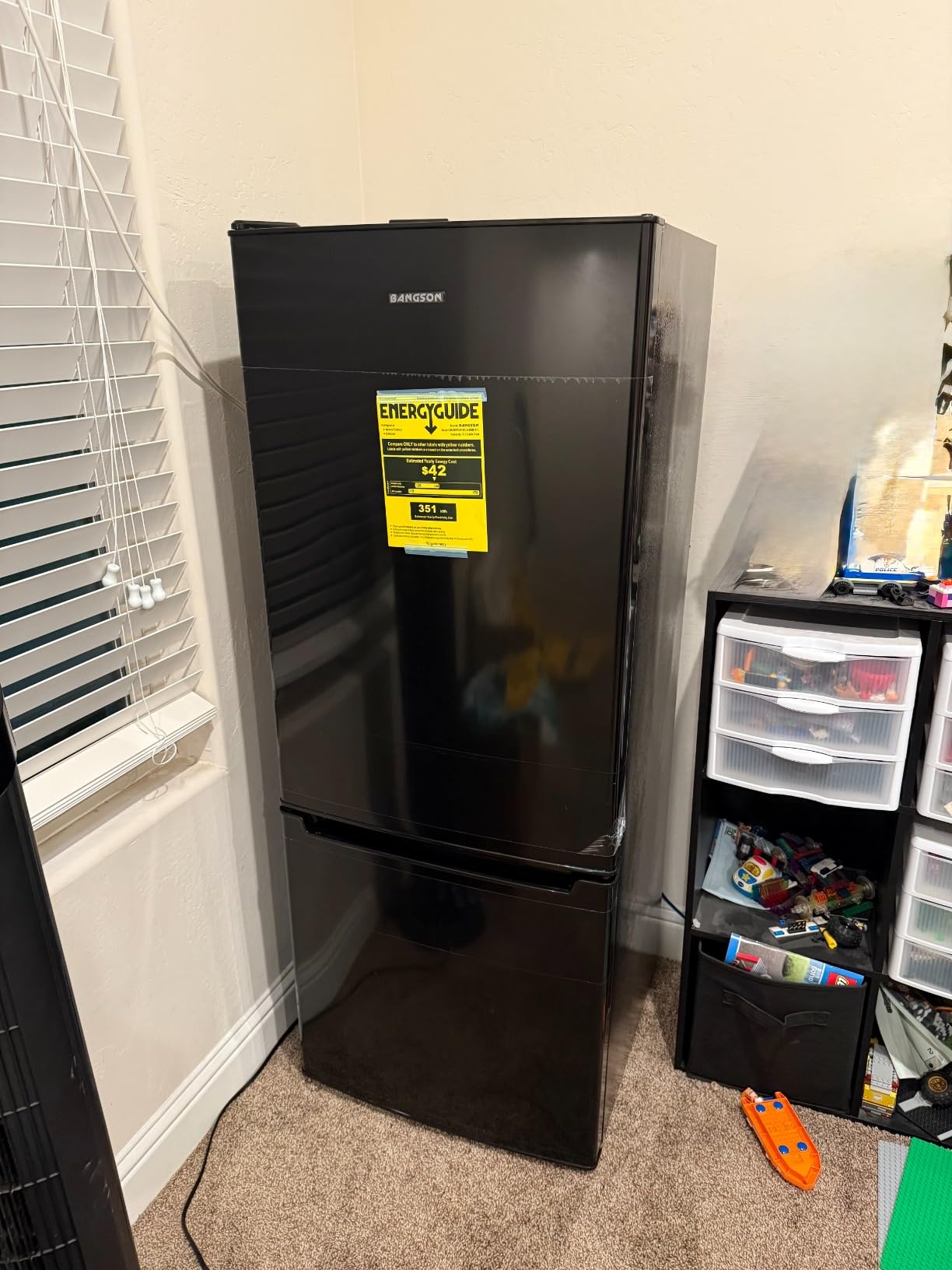
The US-BSR-600 is one of the most compact cabinets in this guide, at 21.3 inches wide, and it is one of only two picks that publish a noise figure, at roughly 39 dB. For a garage workshop where you want cold drinks within arm’s reach of the bench without a compressor hum, that combination is the reason to choose it.
Five temperature settings give finer control than a simple thermostat, covering a refrigerator range of 32 to 50 degrees and a freezer range of -5.6 to 15.1 degrees. The 1.65 cu. ft. bottom freezer pulls out into two drawers, so frozen goods are tidier than in a top-freezer layout. Adjustable removable glass shelves, a crisper and side door racks fill the fresh-food side.
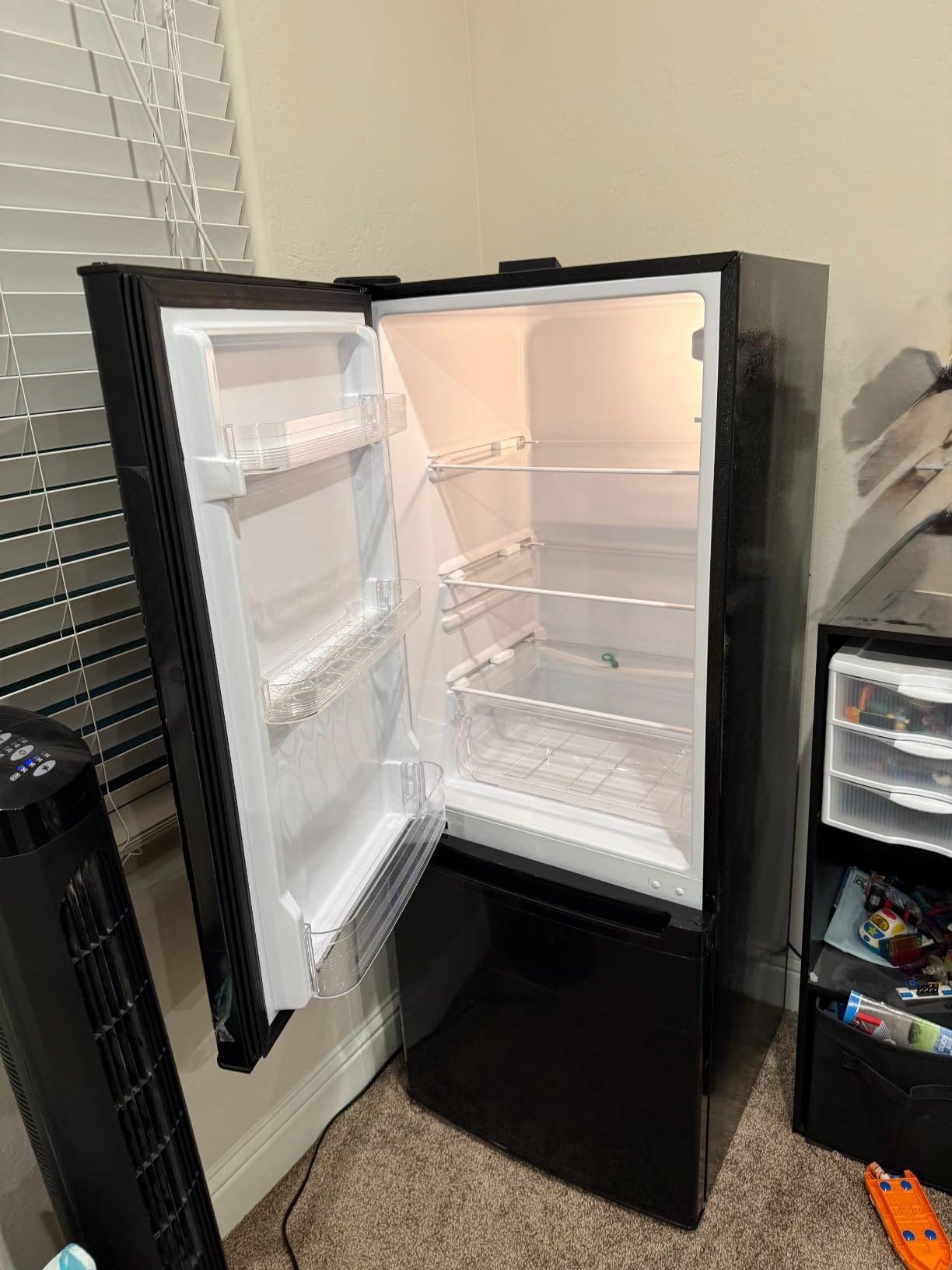
An automatic night light in the fresh-food compartment is a genuinely useful detail in a dark garage, and the box includes an ice tray, a defrost tool and an egg shelf. Reversible doors and bottom leveling legs make placement flexible. The compressor is a rotary scroll type and the listing gives it a 4 star energy rating.
Across 311 reviews the average sits at 3.8, and the manual defrost freezer is the most common source of friction. Periodic thawing is a routine people forget, and owners report mixed satisfaction overall. Repair technicians describe the same pattern on other units, one that runs but does not cool well in a garage needs hardware built for the room, not another thermostat setting.
When a 39 dB cabinet earns its floor space
If the fridge sits inside a workshop where a compressor start-up would interrupt a conversation, a published decibel figure is worth more than another cubic foot. This unit sits low and shallow enough to fit beside a workbench or in a utility room where a 30 inch cabinet cannot.
Where it will disappoint you
Manual defrost is a real commitment. You will need to schedule thawing, and the defrost tool included in the box is a reminder of that. The interior is compact enough that large trays and bulky items do not fit, and the one year warranty is the shortest listed here.
8. BODEGA 12.5 cu. ft. Glass Door Display Merchandiser for Bulk Beverage Storage
BODEGA BODEGACOOLER 12.5 Cu. Ft. Upright Commercial Beverage Refrigerator, Large Glass-Door Display Merchandiser, Energy-Star Rated Drink & Bar Cooler with Soft LED Lighting and Adjustable Shelves
12.5 cu. ft.
Holds up to 371 cans
32 to 50 degree digital control
R600a refrigerant
Pros
- Published capacity of 371 cans
- Five adjustable shelves plus price label holders
- Double-paned tempered glass resists condensation
- Self-closing door and key lock
- Four casters and self-evaporating condensation
Cons
- Listed can capacity is optimistic
- Condensation builds on door and floor in a warm room
- 32 degree setpoint is not always reached
- Some models stop cooling and need switching back on
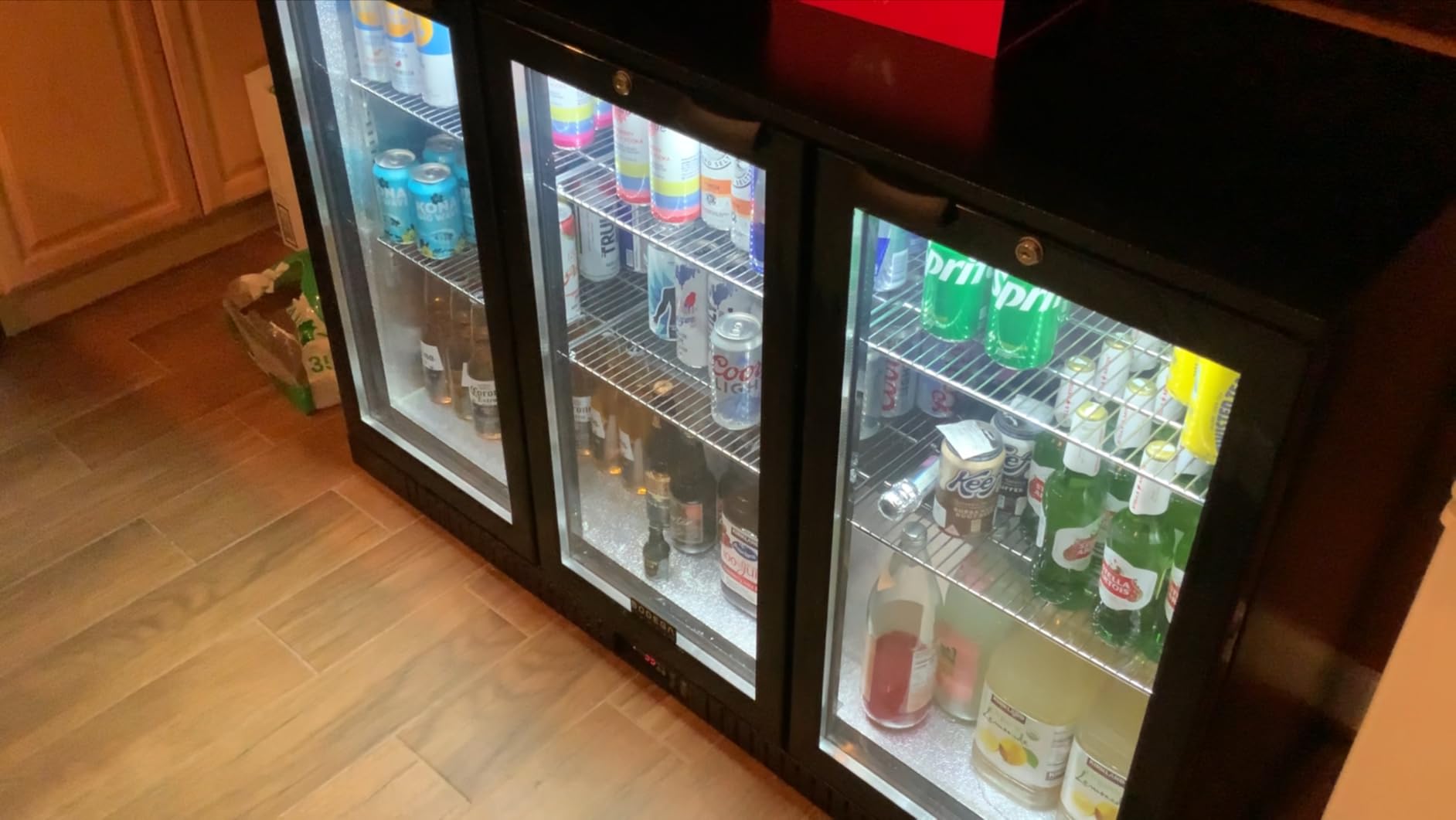
The SC-380FC is built for a garage bar rather than a food fridge. Its double-paned tempered glass door, switchable blue and white LED lighting and price label holders mean you can display it like a small merchandiser and see everything without opening it. Owners like the display styling almost as much as the storage.
Five adjustable shelves and a top beverage divider organise a collection, and the digital control panel runs from 32 to 50 degrees with copper cooling tubes for even temperature. R600a refrigerant and a high-efficiency compressor keep the running quiet. A self-closing door, thick foam insulation and a key lock are unusual in a garage appliance.
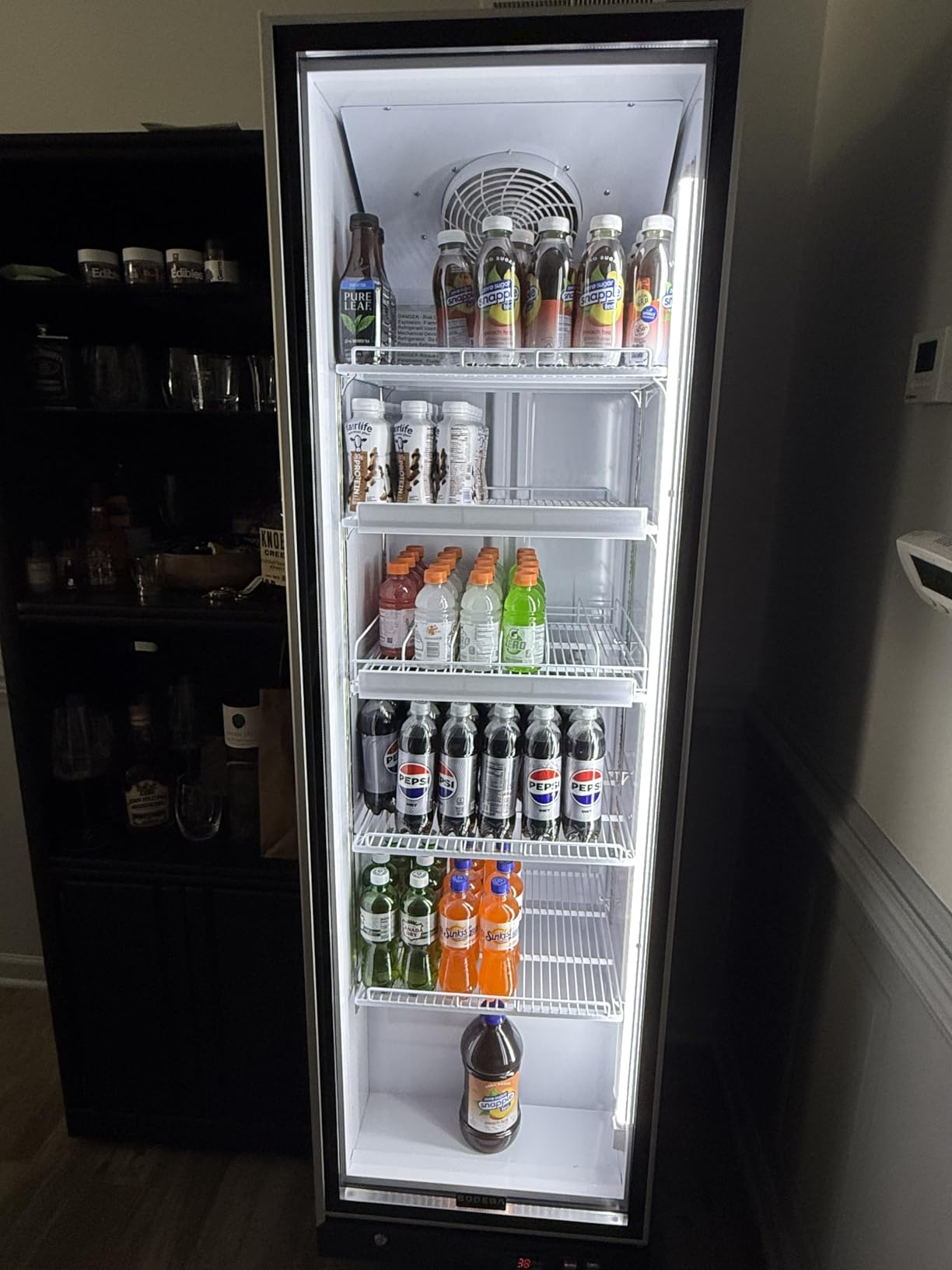
Fast air-cooled direct cooling with a 20 cm airflow fan and automatic defrost keeps frost off the shelves, and the self-evaporating condensation system means you are not draining a pan. It arrives largely assembled with numbered shelf brackets, and four universal casters make it easy to reposition.
The one number to treat carefully is the can count. Owners report the 371 figure is optimistic, because standard cans will not fit three across on their sides, so plan shelf spacing for fewer bottles than the headline suggests. The published dimension string for this model is also written in an unusual order, so confirm the actual width against your wall before ordering.
Why glass-door beverage units work in a garage
You open the door less often, which is the cheapest way to protect food temperature and cut running cost. A glass-front cabinet also doubles as shop display if you are storing homebrew, garden surplus or a side business inventory. Our best commercial refrigerators roundup covers the wider category if you need more capacity.
Where it will disappoint you
Condensation on the door and the floor in a warm room is the most common complaint, and it needs regular wiping. The 32 degree setpoint is not always reached in practice, so very cold drinks may not chill as hard as the display suggests. A few owners report cabinets that stop actively cooling and have to be switched back on.
9. BODEGA 321L Single-Door Beverage Refrigerator for a Home Bar Build
BODEGACOOLER Beverage Refrigerator, 321L/339 Qt Commercial Refrigerator
321L or 339 qt
22.24 inch D x 23.43 inch W x 74.8 inch H
42 dB
Holds up to 300 cans
Pros
- 4.7 average with an 87 percent five-star share
- 42 dB running noise suits a cabinet this size
- Automatic defogging every 6 hours keeps the glass clear
- Four removable shelves and four lockable casters
Cons
- Knob temperature control is less precise than a digital panel
- 74.8 inch height needs real doorway and ceiling clearance
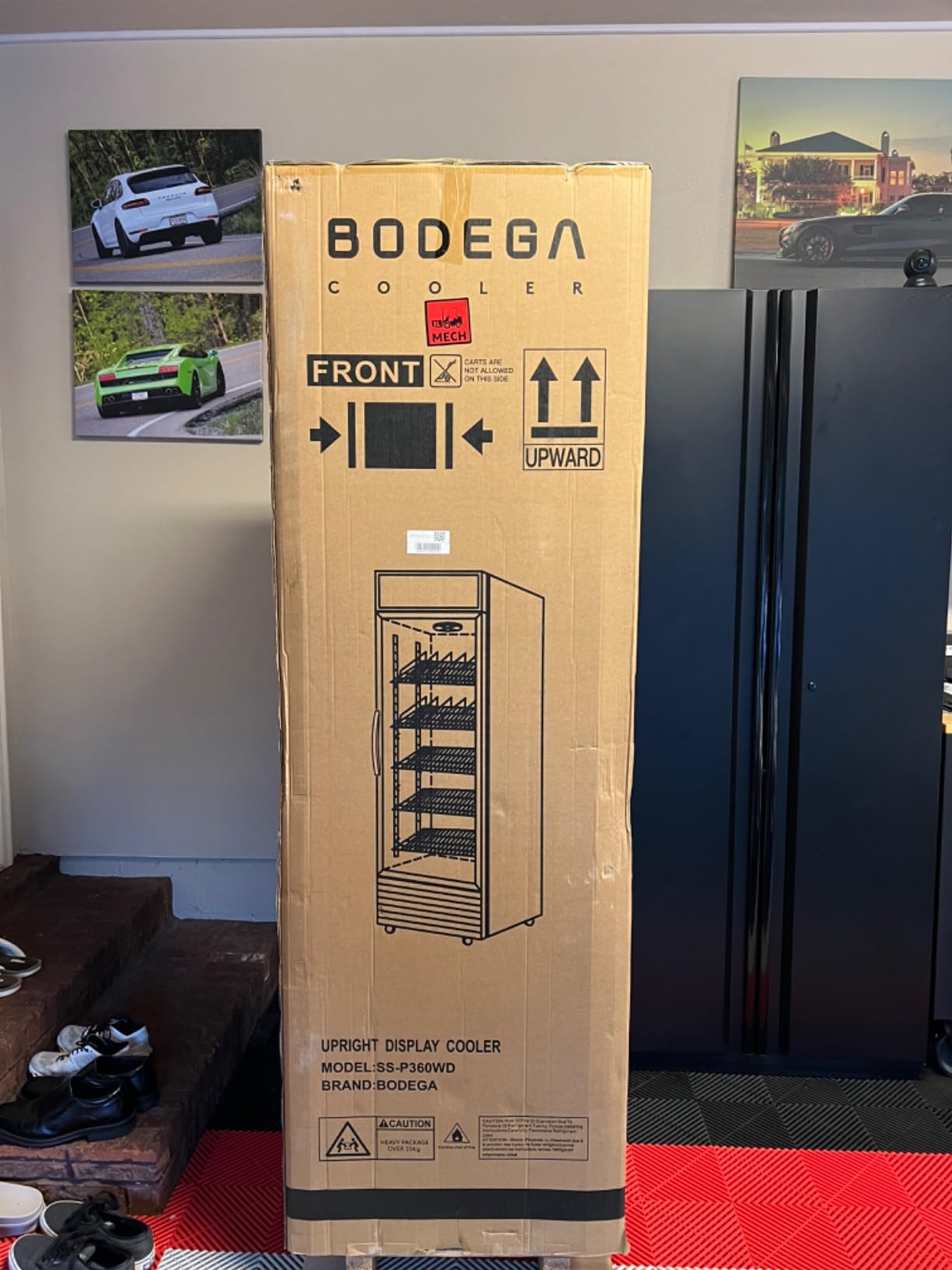
The SC-330FA-BK carries the strongest owner feedback in this group, with a 4.7 average and 87 percent of reviews at five stars, and reviewers repeatedly single out the same three things: the 42 dB compressor, the 321L capacity and the automatic defogging that keeps the glass door clear.
It holds up to 300 standard cans or 160 750ml bottles across four removable shelves, one of which is a drink organiser. Seven temperature levels from 32 to 50 degrees are set with a control knob, and the double-layer tempered glass door keeps cold in. A replaceable door logo sign lets you brand it for a man cave or home bar.
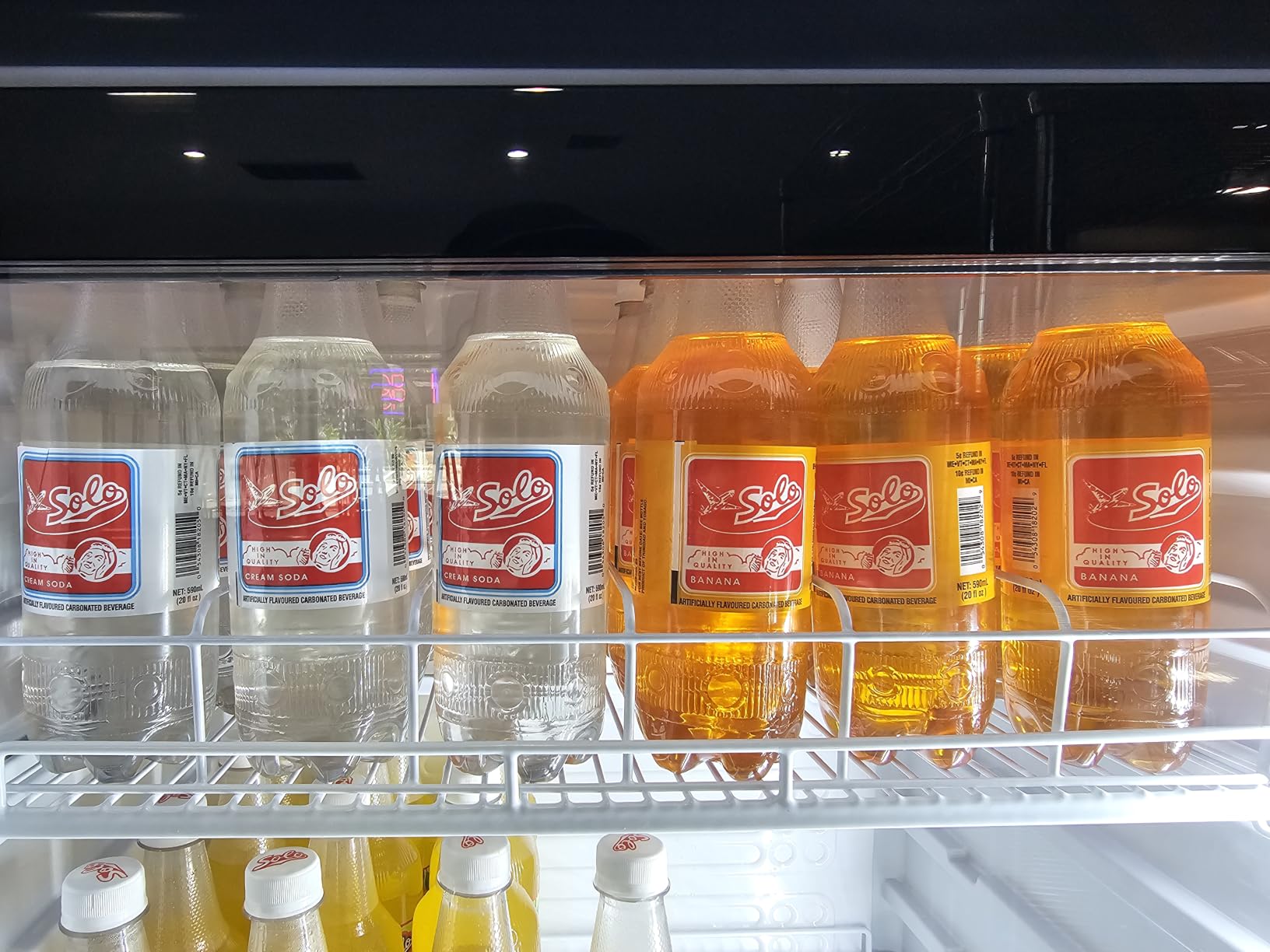
Four casters with a front brake hold it in place, and the interior LED light helps at night. The 42 dB figure is low enough that owners put it in finished spaces rather than hiding it in a corner, which is unusual for a cabinet that size. The matte black finish hides fingerprints better than polished stainless, which matters in a garage.
It is a single-purpose beverage cabinet with no freezer section, so it does not compete with the Kenmore or the BLACK+DECKER for food duty. What it does well is hold a large, well-lit, quiet drink collection.
Check the height before you plan the wall
At 74.8 inches tall and 22.24 inches deep, this is the tallest cabinet in the guide. Measure the ceiling clearance, the doorway into the bay and the wall behind it before you commit, because a unit this tall cannot be tilted onto its side to get through a tight opening.
Where it will disappoint you
Knob-based control is less precise than the digital panels on the ICEVIVAL and the BODEGA merchandiser, so plan to check the setting rather than trusting a target temperature. There is no freezer compartment at all, and the tall narrow footprint wastes wall space in a shallow bay.
10. ICEVIVAL 6 cu. ft. Commercial Beverage Fridge for Farm Stands and Quiet Rooms
ICEVIVAL 6 Cu.Ft Commercial Beverage Fridge with Glass Door
6 cu. ft.
20.8 inch D x 21.26 inch W x 50.2 inch H
240 can capacity
Below 40 dB
Pros
- Holds 240 cans in a compact footprint
- Operates below 40 dB
- Double UV-resistant tempered glass blocks over 99 percent of UV
- Accurate digital temperature control
- Key lock and three adjustable chrome shelves
Cons
- One cabinet arrived with a door seal gap that caused condensation and floor leaks
- Some deliveries show cabinet damage
- Smaller than a standard refrigerator
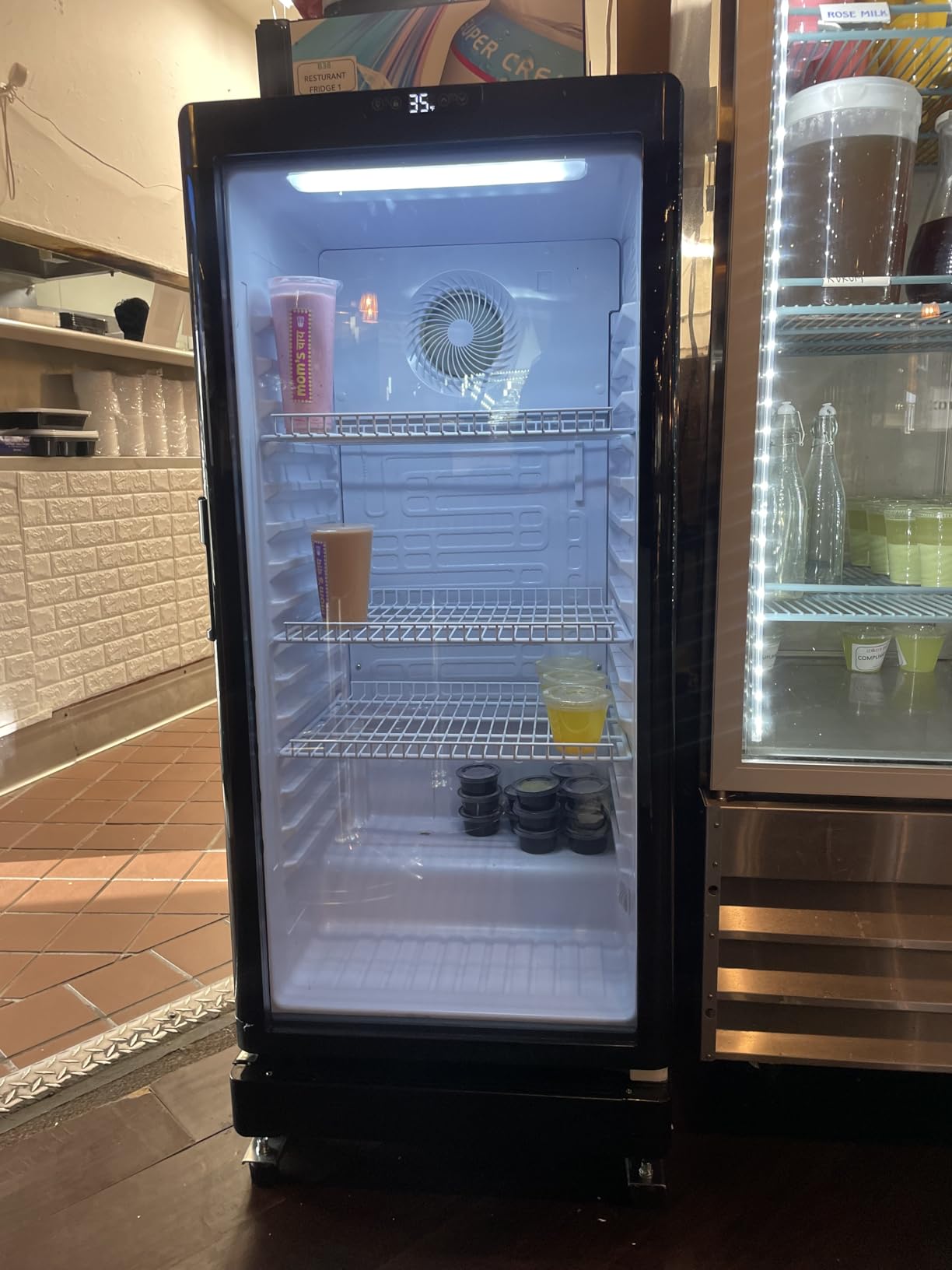
The CDR002-6 is the pick if you are storing garden surplus or market produce. Owners report steady 32 degree holding even in Alabama summer heat, and one farm-stand owner describes it as an ideal clear-glass display unit. The UV-resistant double glass means sunlight in a garage does not reach the contents.
It holds 240 cans on three adjustable chrome shelves that take tall bottles as well as cans, and the 360 degree rapid cooling with a 170W high-efficiency R-600A compressor pulls down quickly. A key lock keeps a shared garage or a shop counter secure. The cabinet is 20.8 inches deep, 21.26 inches wide and 50.2 inches tall, so it fits under a bench.
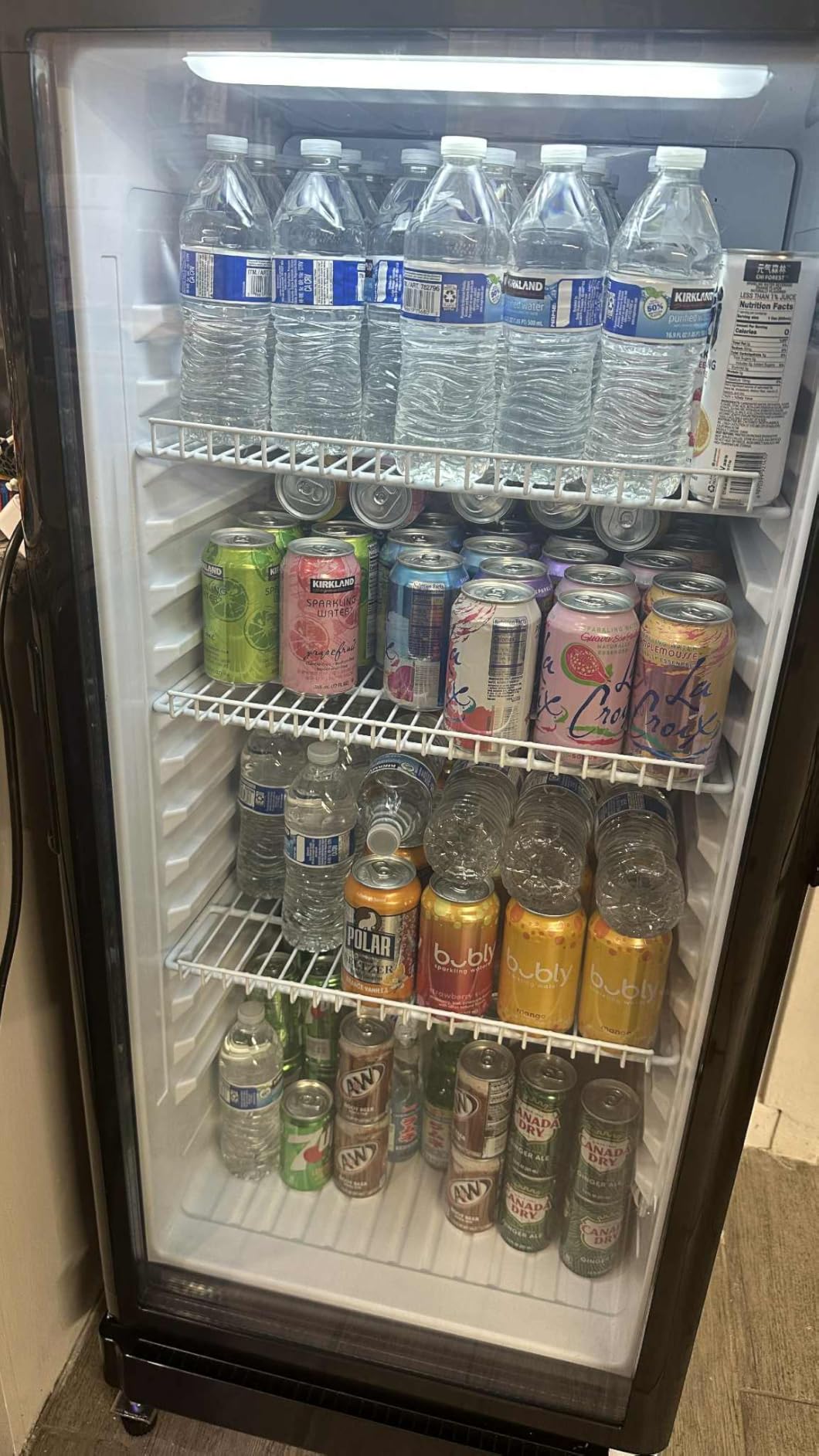
Operating noise is listed below 40 dB, which owners confirm, and the digital control adjusts accurately and quickly. The listed annual consumption figure of 1489 KW is high relative to the household units here, so treat the noise and cooling claims as the selling points rather than the efficiency number for a unit that runs all day at a market.
It is ETL certified and rated for pre-assembled shipping, which matters if you move it between a garage and an outdoor stand. A freezerless configuration means the whole 6 cu. ft. is chilled storage rather than split with a freezer compartment.
When a beverage-only cabinet beats a full refrigerator
If everything you store is drinks or produce, a freezerless cabinet gives you every cubic foot at a controllable temperature. That is why it is the better choice for a farm stand or a garage bar, and why it holds 240 cans in less space than the Kenmore holds groceries.
Where it will disappoint you
One owner received a cabinet with a quarter inch gap in a door seal, which produced heavy condensation and a floor leak. That is an isolated report rather than a pattern, but it is worth inspecting the seal on arrival. Some deliveries show cabinet damage, and the 6 cu. ft. capacity requires planning if you are used to a standard refrigerator.
11. Tylza 3.22 cu. ft. Low-E Glass Tower for the Best-Reviewed Compact Option
Tylza Beverage Refrigerator Cooler, 130 Cans 3.22 Cu.Ft Small Refrigerator with Low-E Glass Door, Lock, 17-Inch Beer Fridge for Drinks, Beer and Wine, Mini Fridge for Bedroom, Office and Bar, Silver
3.22 cu. ft.
18.89 inch D x 17.51 inch W x 31.29 inch H
Under 36 dB
34 to 64 degree touch control
Pros
- Review base of 1008 reviews
- Published noise figure of under 36 dB
- Touch screen control precise to 1 degree with Fahrenheit and Celsius switching
- Temperature memory restores settings after a power failure
- Low-E double glass gives 40 percent better insulation
- Key lock and reversible door panels
Cons
- Temperature range tops out at 64 degrees which is too warm for serious chilling
- Does not reach sub-freezing temperatures
- Some models arrive dented
- Glass shelves feel thin in some variants
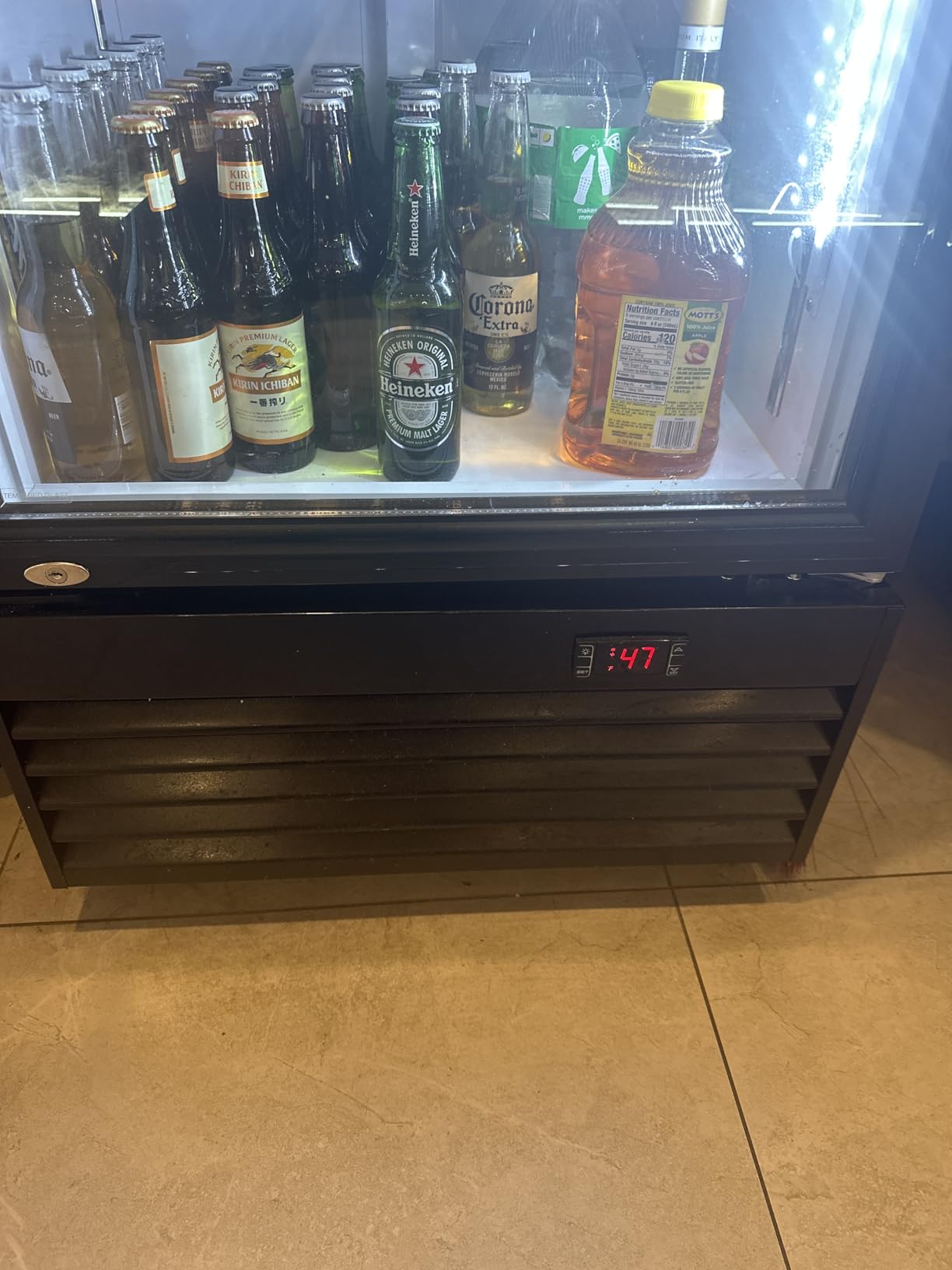
The TAYL86SS has the deepest owner feedback of anything in this guide, more than a thousand reviews at a 4.5 average, and the pattern is consistent. Buyers highlight quiet operation, one degree touch control, temperature memory after outages and the lockable Low-E glass door, and they single out responsive after-sales support that issued a free replacement when a unit failed.
At 17.51 inches wide and 31.29 inches tall it is a countertop-scale tower that holds up to 130 cans or 75 bottles. It can sit on a counter or on the floor, the key lock secures the contents, and reversible door panels plus adjustable legs handle awkward placement. Depth with the door open is 36.4 inches, so leave that much space in front of it.
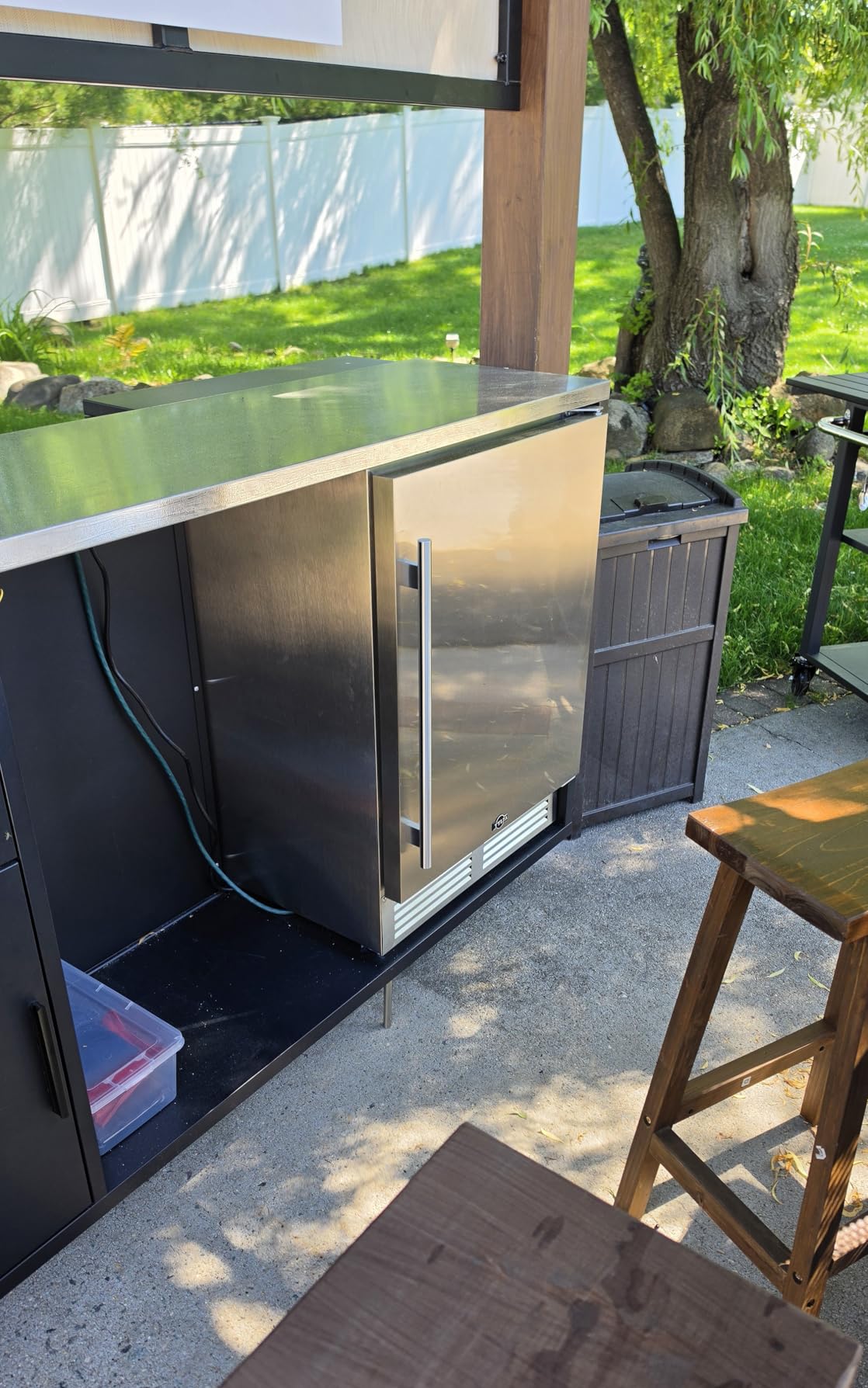
Consumption is listed under 0.5 kWh per 24 hours, the lowest daily figure published by any of the powered picks here. The rotary screw compressor with R-600A refrigerant circulates air in 360 degrees and holds temperature within plus or minus one degree, and the four chrome-plated shelves are removable.
Two keys and two spare adjustable legs are included, and the unit is both ETL and DOE certified. The temperature memory is the feature garage owners value most, because a power cut in an unheated space is common and this cabinet comes back to the setting it was running rather than resetting to a default.
Why the review count matters for this category
With over a thousand reviews, the failure patterns on this cabinet are well documented rather than anecdotal, and the reported problems are cosmetic and about temperature range rather than cooling failure. That is a meaningfully better risk profile than a model with thirty reviews, where one complaint could be a trend.
Where it will disappoint you
The 34 to 64 degree range is the limit. It will not chill hard, so it is a beverage cabinet and not a food refrigerator. Some models arrive dented, and glass shelves in some variants feel thin. If you need a fresh-food compartment, this is not the cabinet.
12. Whynter TBR-185SR 1.8 cu. ft. Tool Box Refrigerator for a Lockable Man Cave
Whynter TBR-185SR 1.8 cu. ft. Portable Tool Box Refrigerator with 2 Drawers and Lock – Red
1.8 cu. ft.
17 inch D x 21 inch W x 32 inch H
237 kWh per year
Key lock and casters
Pros
- Tool-box styling owners buy as a garage statement piece
- Lock and key set secures beer and sodas
- Two roller-guided drawers plus a slide-out wire shelf
- Four wheel casters with two locks
- Published draw of 237 kWh per year
Cons
- Small 1.8 cu. ft. capacity limits what it holds
- Louder when the compressor runs
- Manual defrost only
- Some models arrive with a rear panel dent
The TBR-185SR is bought as much for how it looks as for what it does. The powder-coated red body with a full stainless steel exterior reads as a tool box, and owners in man caves and workshops treat it as a deliberate style choice rather than a compromise. The key lock is what makes it a fridge and not a cooler.
Inside there is 1.8 cu. ft. of storage across two roller-guided drawers and one slide-out wire shelf. Four wheel casters, two of which lock, let you roll it into a corner and hold it there. The mechanical control covers a high 30s to mid 60s degree range, which is a drink-cooling window rather than a food-storage window.
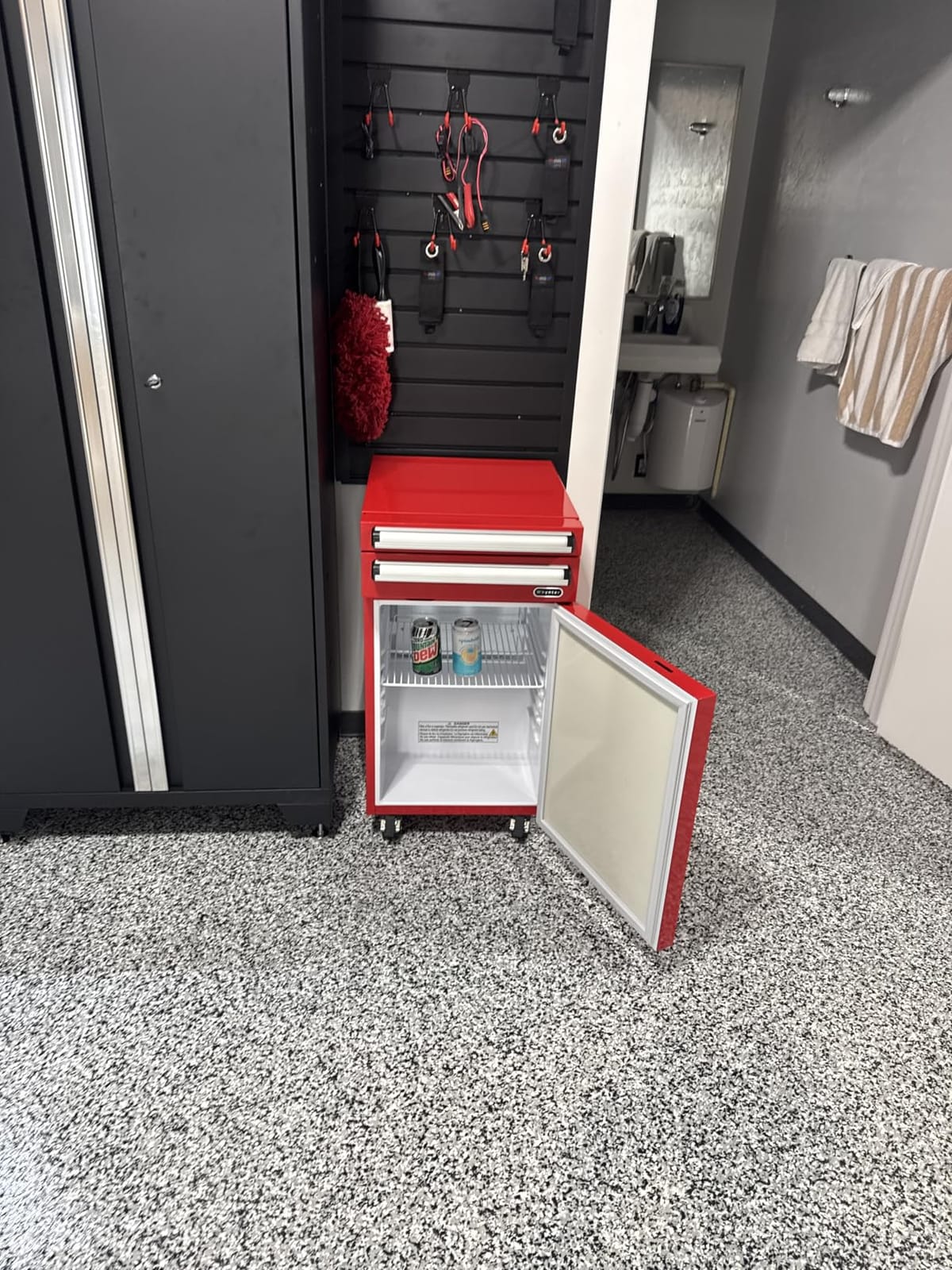
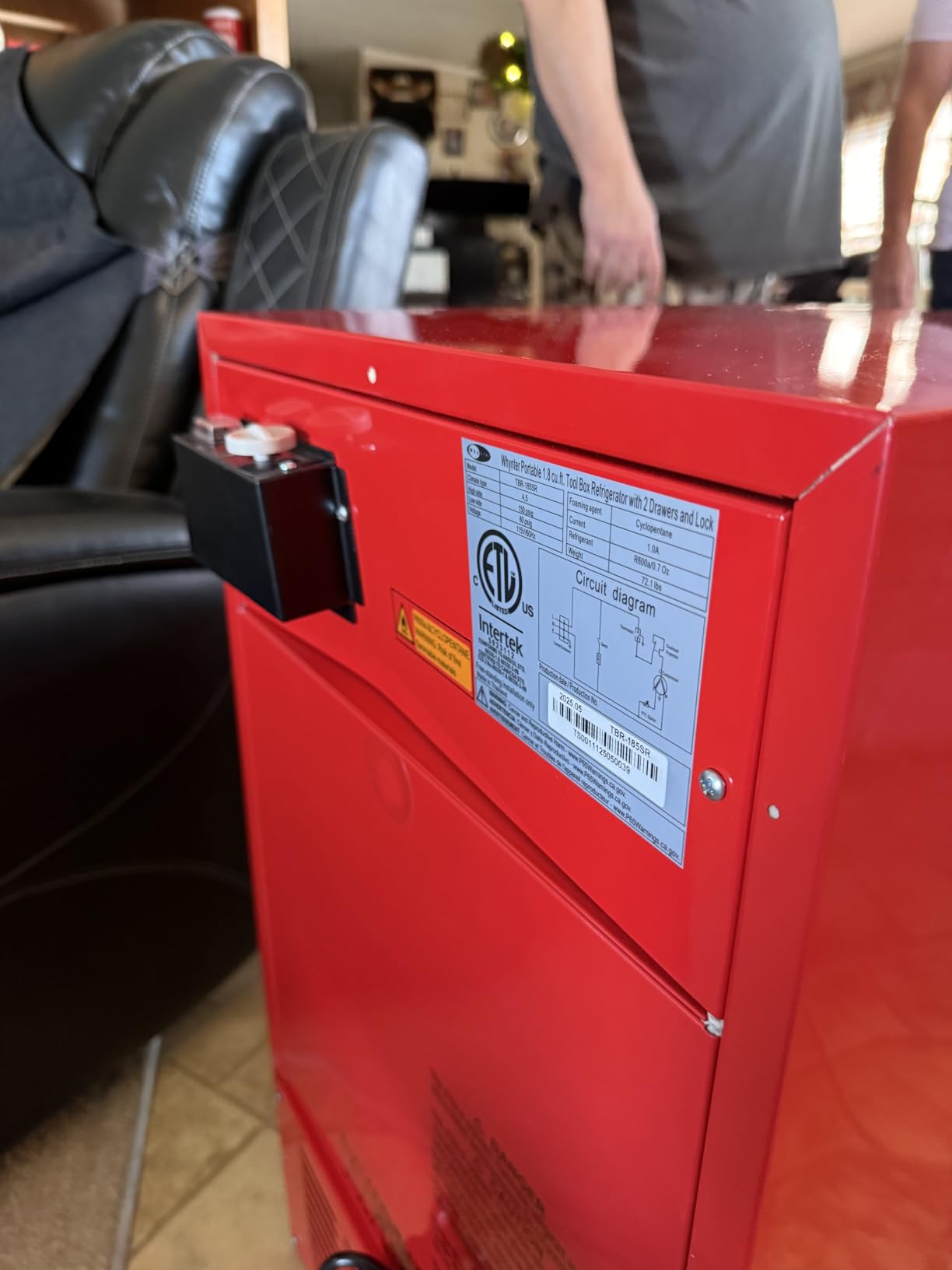
Annual energy consumption is listed at 237 kWh, the lowest published figure in this guide, because a 1.8 cu. ft. cabinet has almost nothing to cool. The rotary scroll compressor uses R-600A refrigerant, and the cabinet is ETL listed with a one year limited manufacturer warranty.
What you are giving up is food storage. Manual defrost only, a mechanical dial instead of a digital setpoint, and a temperature range that tops out in the mid 60s means this is for cans, not for leftovers or a week of groceries. Owners do describe audible running noise that is louder than larger cabinets, since the compressor is a much bigger share of the total volume.
When a tool box fridge is the right call
If the garage is a man cave or a workshop where the appliance is part of the furniture, the styling and the lock are the features you are paying for. Two roller-guided drawers organise cans far better than an open shelf, and the locking casters stop it rolling when the door swings.
Where it will disappoint you
A couple of owners received cabinets with a defective door seal that stopped the front section reaching temperature, so inspect the seal immediately. It is the smallest capacity in this guide, it is manual defrost, and it is louder than larger models when the compressor starts.
Do You Need a Garage-Ready Fridge or Will a Kitchen Fridge Do?
You only need a garage-ready unit if the room actually swings outside the comfort band of a standard compressor. In a conditioned basement, a mudroom or a finished utility space that never sees extremes, a normal top-freezer works and costs the same. The compressor in a standard fridge relies on room air to shed heat, and it is designed for a room that stays roughly between 40 and 100 degrees.
Below about 45 degrees, the compressor stops cycling often enough that the fridge section warms up and the freezer quits freezing entirely. Above 95 degrees, the compressor runs almost continuously, which is where early wear comes from. Forum owners describe this failure pattern constantly, and the standard advice from repair technicians is that hardware built differently, not a different thermostat setting, is the fix.
The number to look for is a rated ambient band, ideally 38 to 110 degrees. Retailers apply the garage-ready label loosely, and some manufacturer websites even contradict their own manuals on the operating range, so check the manual rather than the product page. Among the 12 picks here, the Midea 3.5 cu. ft. chest freezer and the BANGSON 7.0 cu. ft. upright are the two that publish a complete rated band.
Dual control matters for the same reason. Separate fridge and freezer sensors let the cabinet hold food temperature in a room that is much colder or warmer than the food, instead of riding one thermostat for two very different jobs. On a hot day a shared thermostat over-cools the fresh-food side, and on a cold day it under-cools it.
Eight Specs to Check Before You Buy a Garage Fridge
First, exact dimensions including the door. Garage bays are tight, and one of the picks in this guide has published dimensions that owners repeatedly report as inaccurate. Add a few inches of clearance for ventilation and for door swing, and remember that depth with the door open can be far more than the listed depth.
Second, the rated ambient range, and third, whether there is dual control. Fourth, capacity: survey-backed guidance puts full-size owner satisfaction plateauing around 20 cu. ft., and anything below about 10 cu. ft. is a genuine second-unit or single-person size rather than a family overflow. Fifth, energy Star certification and the published kWh per year, which is the only reliable input to a running cost estimate.
Sixth, reversible doors, which decide whether the unit fits a bay with a wall on the hinge side. Seventh, the compressor and cooling-system warranty, since a compressor failure on a unit in a garage is an expensive repair and a long haul. Eighth, ice maker hardware, because an ice maker that needs a water line in an unheated garage is a freeze risk that shows up in cold months and is listed by buyers as a deal breaker.
Noise is worth a look too. Two picks in this guide publish figures, at roughly 39 dB and below 40 dB, and the quietest unit lists under 36 dB. Consumer testing measures compressor start-up noise separately from the steady running hum, and the start-up sound is the one that interrupts a conversation. A compressor that runs continuously in a hot garage is audible all the time, not just at start-up.
Garage Installation Checklist: Circuit, GFCI, Clearance and Leveling
Give the appliance a dedicated 115V circuit. Sharing an outlet with a freezer, a welder or a space heater is the most common cause of a compressor that runs but does not cool, because the compressor needs a steady supply and brownouts shorten its life. Most picks here are 110 or 120 volts, so a standard grounded receptacle is the requirement, not a special one.
Use GFCI protection on that outlet. Garages are damp spaces and many are treated as wet locations by code, and GFCI protection is inexpensive insurance against a flooded floor. Never run a refrigerator from an extension cord or a power strip, which is both a fire risk and a common reason for a cabinet cycling oddly.
Confirm the doorway and the bay before delivery, including the full depth with the door open.
Place the appliance with ventilation clearance at the back and top, and keep it away from a water heater or a direct sunlit wall.
Level it front to back and side to side using the adjustable feet, and check the door closes and latches on its own.
Plug it into a dedicated grounded GFCI receptacle, never an extension cord.
Run it empty for four hours before loading, so the cabinet pulls down to temperature before food goes in.
Arrange haul-away of the old appliance, since this is the step people say costs more and hurts more than expected.
One more seasonal step: in cold months, check whether your unit has any anti-condensation or freeze-protection behaviour, and never store a fridge in a garage you do not heat at all. If the room drops below freezing regularly, look for a published low ambient rating before you buy, because compressor damage from cold ambient is a warranty issue as well as a performance one.
Noise and Running Cost: What to Expect Year-Round
Published energy figures in this group range from 237 kWh per year on the 1.8 cu. ft. Whynter tool box unit to 392 kWh for the 14 cu. ft. Hamilton Beach, with the 10 cu. ft. Frigidaire at 300 kWh and the 18.1 cu. ft. Kenmore at 367 kWh. The 6 cu. ft. ICEVIVAL lists 1489 KW annually, which reflects a cabinet designed to run continuously in a display setting rather than a household duty cycle.
Two variables dominate your real number, and both are room variables rather than appliance variables. An uninsulated garage in summer makes the compressor run far more, and an uninsulated garage in winter makes it cycle less and cost less to run while doing a worse job. Because the room sets the multiplier.
On noise, expect a hum that rises when the compressor starts and settles into a steady low note while it runs. A unit that starts and stops every few minutes in a cold room is a symptom, not a noise problem, because the thermostat is repeatedly calling for cold the compressor cannot deliver. That pattern is the signal that a garage-rated cabinet is the right replacement.
Noise expectations for a compressor that is failing are different. Loud buzzing, repeated rapid clicking, or a grinding rattle that changes with the compressor running all point to a mechanical problem rather than a duty cycle problem, and a garage makes it easier to hear because the room is quiet. If you hear those sounds, note the warranty status before you decide between a repair and a replacement.
Chest Freezer or Upright Garage Refrigerator?
If you only need one function, buy the single-function appliance. Chest freezers hold cold more consistently because cold air sinks into the box, and the 3.5 cu. ft. convertible chest in this guide runs from 38 to 110 degrees ambient and holds temperature for 48 hours after a power cut. Forum consensus in appliance and warehouse-club threads is the same, a simple top-freezer, chest freezer or a fridge if you need just one function.
Upright and convertible units win on convenience. You can see the contents without crouching, adjustable shelves reorganise as your storage changes, and a convertible cabinet switches between fridge and freezer on a single control. The trade is a smaller internal volume for the same footprint and a different energy profile, which is why the chest design is the usual answer when a garage needs one temperature and one job.
Finish is the last practical decision. White hides scuffs in a bright bay, stainless resists dust and looks better in a finished man cave, and black commercial cabinets disappear in a dark garage. Whichever you choose, check that the door swing clears your wall and that the unit sits on level feet, because an uneven garage floor is the reason so many of these picks include leveling legs.
If your garage is also running hot in summer, pairing a small appliance with airflow helps more than any single feature. Our guide to the best evaporative coolers for garages covers the cooling side, and lowering the room temperature keeps the compressor off longer every single day.
Frequently Asked Questions
What is the best refrigerator to use in a garage?
The Kenmore 18.1 cu. ft. 30 inch Top Mount Refrigerator (model 4661342) is the best all-round choice for most garages, with an inverter compressor, 367 kWh per year, ENERGY STAR certification and a 30 inch footprint that clears a standard bay. If you need one appliance to work as both a fridge and a freezer, the BLACK+DECKER BUC1700XW 17 cu. ft. convertible is the better buy, and if you need proven garage-rated storage rather than food storage, the Midea 3.5 cu. ft. chest freezer is rated from 38 to 110 degrees ambient.
What is the most reliable refrigerator for a garage?
Reliability in a garage comes down to two things: a published ambient temperature rating and compressor and cooling-system warranty coverage. The Midea 3.5 cu. ft. convertible chest freezer and the BANGSON 7.0 cu. ft. upright are the only picks here that publish a full rated band, and the 4.7 rated BODEGA 321L beverage cabinet has the most consistently positive owner feedback. Check that local authorised repair exists for the brand before you buy, because a compressor failure in a garage is a long haul.
Do you need a special refrigerator for a garage?
Only if the room swings outside the comfort band of a standard compressor. Below roughly 45 degrees a standard fridge stops cycling and the freezer quits freezing, and above 95 degrees the compressor runs almost continuously and wears out early. In a conditioned basement or finished utility space that never sees extremes, a normal top-freezer works fine. In an unheated bay, look for a rated ambient range, ideally 38 to 110 degrees, and dual control with separate fridge and freezer sensors.
What is the best garage-ready refrigerator according to consumer reports?
Consumer testing focuses on measured compressor start-up noise and the steady hum while a unit runs, which is a different emphasis from our price-constrained list. Our picks differ mainly in one respect: every unit here costs less than 1,000 dollars, and most do not publish a rated ambient band at all. The overlap is on full-size top-freezer and convertible formats, where the same capacity and dual-control considerations apply. Verify the rated range in the manual, since retailer badges are applied loosely.
Are compressor fridges noisy?
Expect a hum that rises at start-up and settles into a steady low note while the compressor runs. In this group the quietest published figures are under 36 dB for the 3.22 cu. ft. Tylza tower, roughly 39 dB for the 7.1 cu. ft. BANGSON bottom-freezer unit and below 40 dB for the 6 cu. ft. ICEVIVAL cabinet, while the small Whynter tool box unit is noticeably louder. A compressor that cycles every few minutes in a cold garage is a symptom of an undersized or unrated unit, not a normal noise.
What does a bad compressor sound like in a refrigerator?
A healthy compressor produces a low hum, a brief start-up surge and occasional gurgling as refrigerant moves. A failing one produces loud buzzing that continues, repeated rapid clicking, or a grinding rattle that changes pitch while the compressor is running. In a quiet garage these are easier to hear than in a kitchen. A unit that runs continuously without getting cold is a different failure, usually ambient temperature outside the rated range rather than a broken compressor.
Is it worth replacing the compressor on a refrigerator?
It depends on the age of the unit and whether the failure was caused by operating outside its rated range. On an older appliance with a parts-only warranty, a compressor replacement plus the labour and haul in a garage is often poor value against buying a newer unit. The compressors on the picks in this guide run on R-600A or R600a refrigerant, which is the current standard, so any repair on an older model uses a refrigerant and service skill that is increasingly hard to find locally.
The Best Garage Refrigerator Under 1,000 Dollars, Verdict by Verdict
Buy the Kenmore 18.1 cu. ft. top mount if you want one full-size garage-ready refrigerator that works like the fridge you already own. Buy the BLACK+DECKER BUC1700XW if you want one cabinet to serve as both fridge and upright freezer, and buy the Midea 3.5 cu. ft. chest freezer if the priority is proven 38 to 110 degree ambient performance rather than food storage. Every pick in this guide sits under 1,000 dollars, and every one should go on a dedicated grounded GFCI receptacle with clearance behind it.