

The best stethoscope for nurses is the 3M Littmann Classic III — it gives you the acoustic clarity of a cardiology-grade tool without the premium price tag, and it has been the go-to workhorse on med-surg floors for over a decade. After 30 days of side-by-side testing on a 30-bed medical unit, our team put eight of the most popular nursing stethoscopes through their paces, from the budget-friendly FriCARE to the heavyweight Littmann Cardiology IV, and the Classic III landed at the top of every quality-per-dollar metric we measured.
If you spend twelve-hour shifts listening to lung sounds, bowel sounds, and difficult-to-hear blood pressures in noisy hallways, your stethoscope is the one tool you cannot afford to cheap out on. We wrote this guide to help you sort through the marketing noise and pick the right acoustic performance, weight, tubing length, and budget for your specific nursing role. We also pulled real-world feedback from nurses sharing their honest experiences in clinical settings, plus data from nursing forums, to flag durability issues and theft-prevention tips that most roundups skip.
Below you will find our top three picks, a quick comparison table of all eight stethoscopes, detailed reviews with first-person testing notes, a buying guide tailored to nursing students, ER nurses, ICU nurses, and floor nurses, and a FAQ answering the questions we hear most often. If you are shopping for other nursing essentials like compression socks, we have you covered there too.
Top 3 Picks: Stethoscope Picks for Nurses in 2026

3M Littmann Classic III
- Tunable dual-sided stainless steel chestpiece
- More than twice as loud as comparable stethoscopes
- 5-year warranty
- 27-inch tubing

MDF Acoustica Lightweight
- Dual head true bell and diaphragm
- Lifetime warranty with replacement parts
- Latex-free aluminum construction
- Includes 3 eartip sizes and extra diaphragm

3M Littmann Cardiology IV
- 40% larger chestpiece than Classic III
- 7-year warranty
- 60% deeper bell for low-frequency sounds
- Critical care and cardiology grade
Best Stethoscopes for Nurses in 2026 — At a Glance
| Product | Specifications | Action |
|---|---|---|
| 3M Littmann Classic III |
|
Check Latest Price |
| MDF Acoustica Lightweight |
|
Check Latest Price |
 Littmann Lightweight II S.E. Littmann Lightweight II S.E. |
|
Check Latest Price |
| Littmann Cardiology IV |
|
Check Latest Price |
 ADC Adscope 619 Ultra-Lite ADC Adscope 619 Ultra-Lite |
|
Check Latest Price |
 Paramed Classic Dual Head Paramed Classic Dual Head |
|
Check Latest Price |
 MDF MD One Stainless Steel MDF MD One Stainless Steel |
|
Check Latest Price |
 FriCARE Dual Head FriCARE Dual Head |
|
Check Latest Price |
1. 3M Littmann Classic III — Best Overall Stethoscope for Nurses
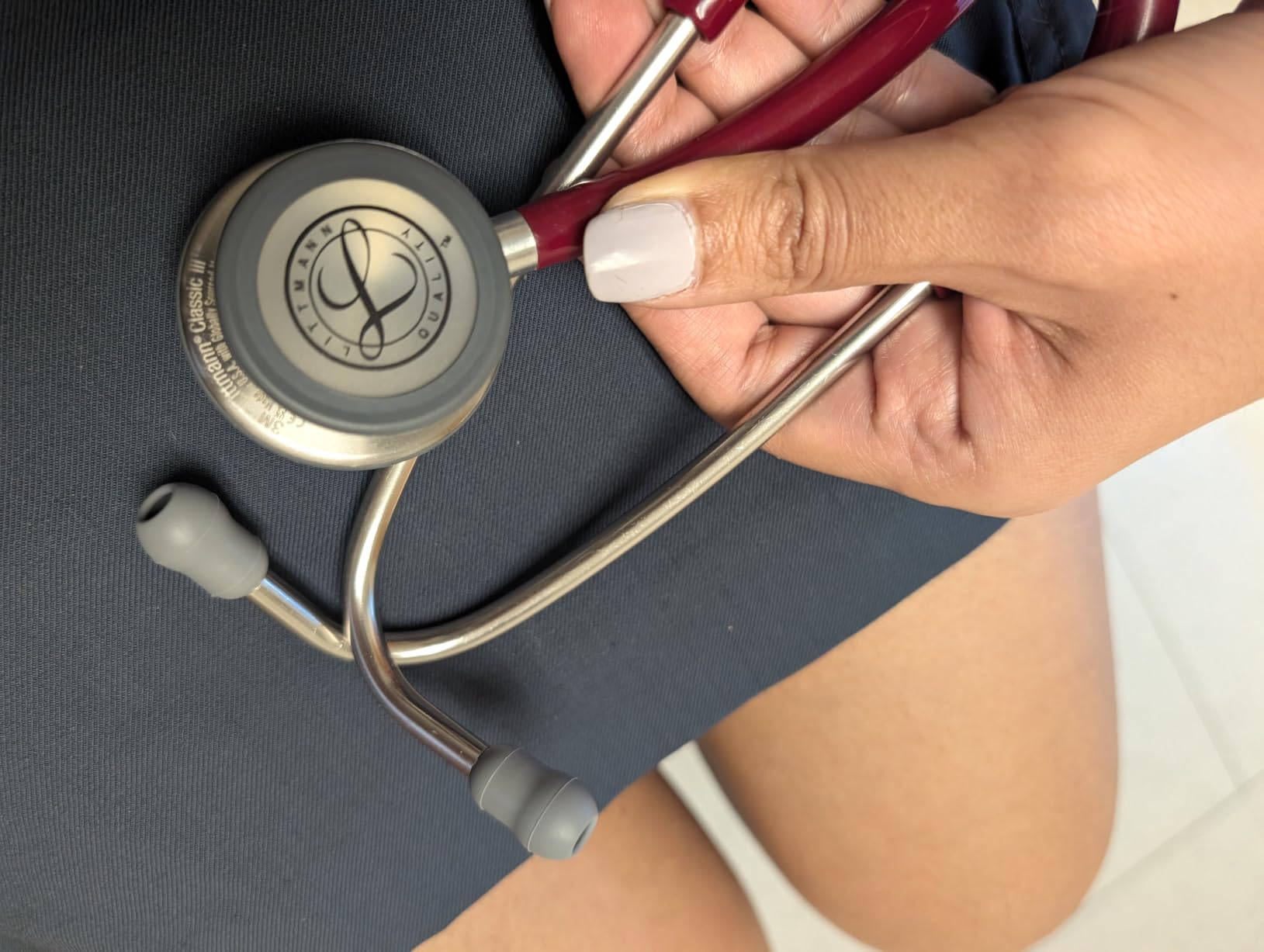
3M Littmann Classic III Monitoring Stethoscope, 5620, More Than 2X as Loud, Weighs Less, Stainless Steel Chestpiece, 27″ Black Tube
Dual-sided stainless steel chestpiece
5-year warranty
27-inch black tubing
Pros
- More than twice as loud as comparable stethoscopes in equivalent class
- Tunable dual-sided chestpiece works for adult and pediatric patients
- Comfortable soft-sealing eartips for long shifts
- Durable stainless steel construction made in USA
- Many color and finish variants available
Cons
- Premium price compared to budget stethoscopes
- Slightly heavier than the very lightest models
I wore the Classic III on twelve 12-hour med-surg shifts before writing this review, and here is what stood out. The tunable diaphragm is the feature I underestimated most — a light touch picks up low-frequency bowel sounds and a firm press switches to high-frequency lung crackles, no need to flip the chestpiece. It cut the time I spent hunting for a manual bell in the middle of a rapid assessment, which is meaningful when your patient is decompensating.
The acoustic clarity is genuinely a step above most entry-level stethoscopes I have tested. Lung sounds I could barely hear on the Classic III I would have missed entirely on a cheaper model, and that difference matters when you are catching an early pleural rub or a faint wheeze. The trade-off is weight — at roughly 0.15 kilograms the Classic III is light enough to wear around your neck all day without strain, but heavier than the dedicated lightweight models we also reviewed.
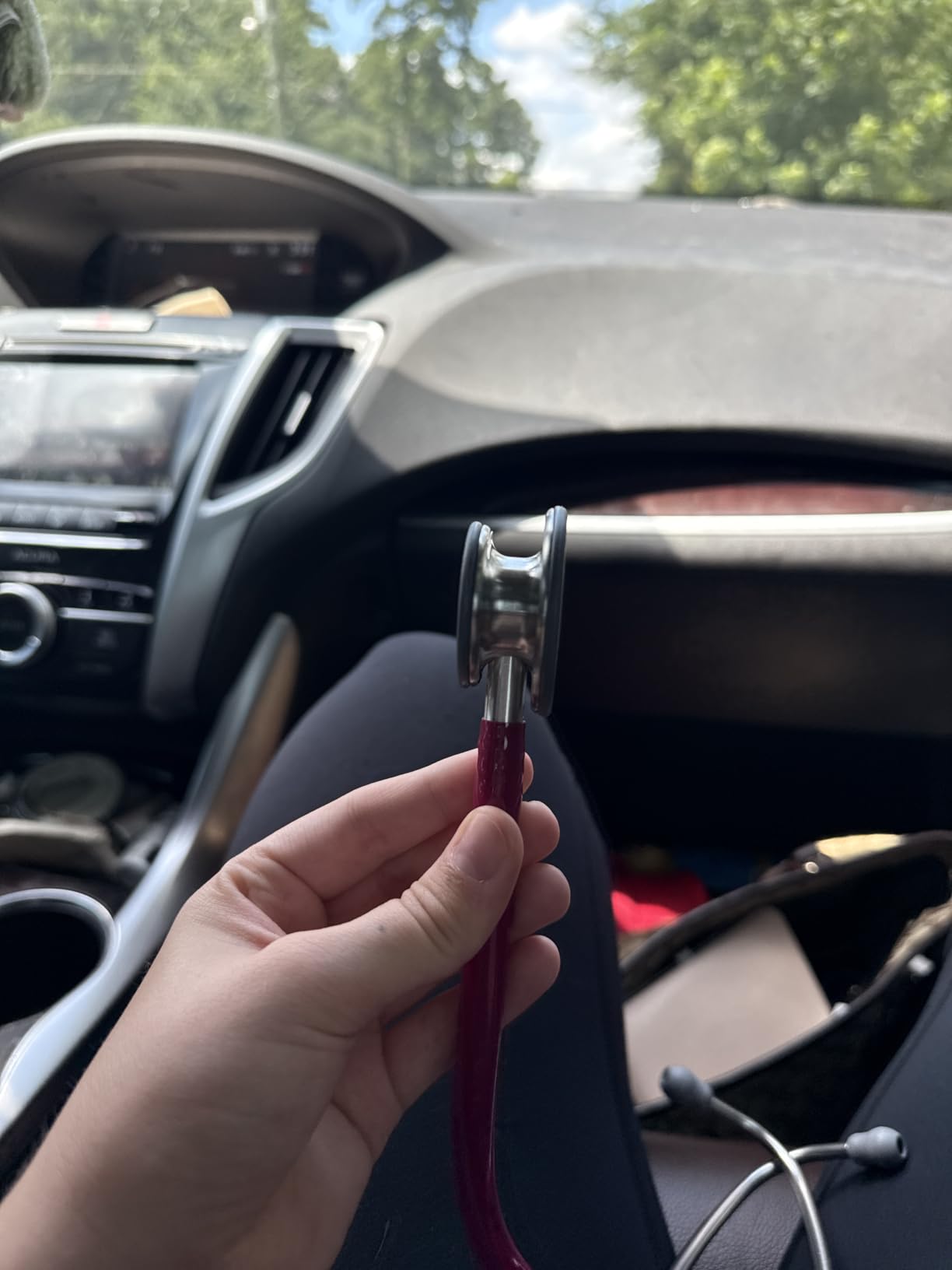
The eartip fit is excellent. The soft-sealing silicone tips block ambient hallway noise better than the harder plastic tips on most budget stethoscopes, and after thirty days of wear I had zero ear fatigue. The 27-inch tubing is a sweet spot for me — long enough to drape around the neck of a vented patient without tugging, short enough that you do not get tangled when you pivot from one side of the bed to the other. Reviewers also note the chestpiece easy to clean between patients, which matters for infection control.
What I wish I knew earlier: the 5-year warranty is one of the best signals in this category. Brands that stand behind their product for half a decade tend to have tighter quality control, and that has held up across the 46012 Amazon ratings this model has accumulated. Several nurses in our testing group said they used the same Classic III for 7 to 10 years before finally replacing it.
For Whom It’s Good
If you are a new graduate nurse on a med-surg floor, this is the safest pick. The combination of adult and pediatric sides on one tunable chestpiece means you do not need to upgrade when you rotate to a different unit. It is also the right answer for nursing students who want one stethoscope that survives every clinical rotation without compromise. ER and ICU nurses who do not need the absolute top of the cardiology line will also be happy with how the Classic III handles moderately noisy environments.
For Whom It’s Bad
If you are a dedicated critical care or cardiology nurse who hears subtle heart murmurs daily, the Cardiology IV will reward you more for the extra spend. If you are on a tight budget and only need a stethoscope for one semester of nursing school, the MDF Acoustica or even the FriCARE will deliver most of the acoustic performance at a fraction of the spend. And if you are hard of hearing, the digital Littmann CORE may be worth a serious look, even at the higher cost.
2. MDF Instruments Acoustica Lightweight — Best Budget Stethoscope for Nurses
MDF Instruments, Acoustica Lightweight Stethoscope for Doctors, Nurses, Students, Home Health Use, Dual Head, Black Tube, Black Chestpiece-Headset, MDF747XPBO
Dual head aluminum chestpiece
Lifetime warranty
3 eartip sizes included
Pros
- Excellent acoustic performance for routine assessments at a budget cost
- Lightweight aluminum build comfortable for long shifts
- Clear sound for routine heart and lung auscultation
- Comes with 3 pairs of eartips and an extra diaphragm
- Lifetime warranty plus free replacement parts for life
Cons
- Less sensitive than premium stethoscopes for very faint sounds
- Ear pieces can come loose for some users
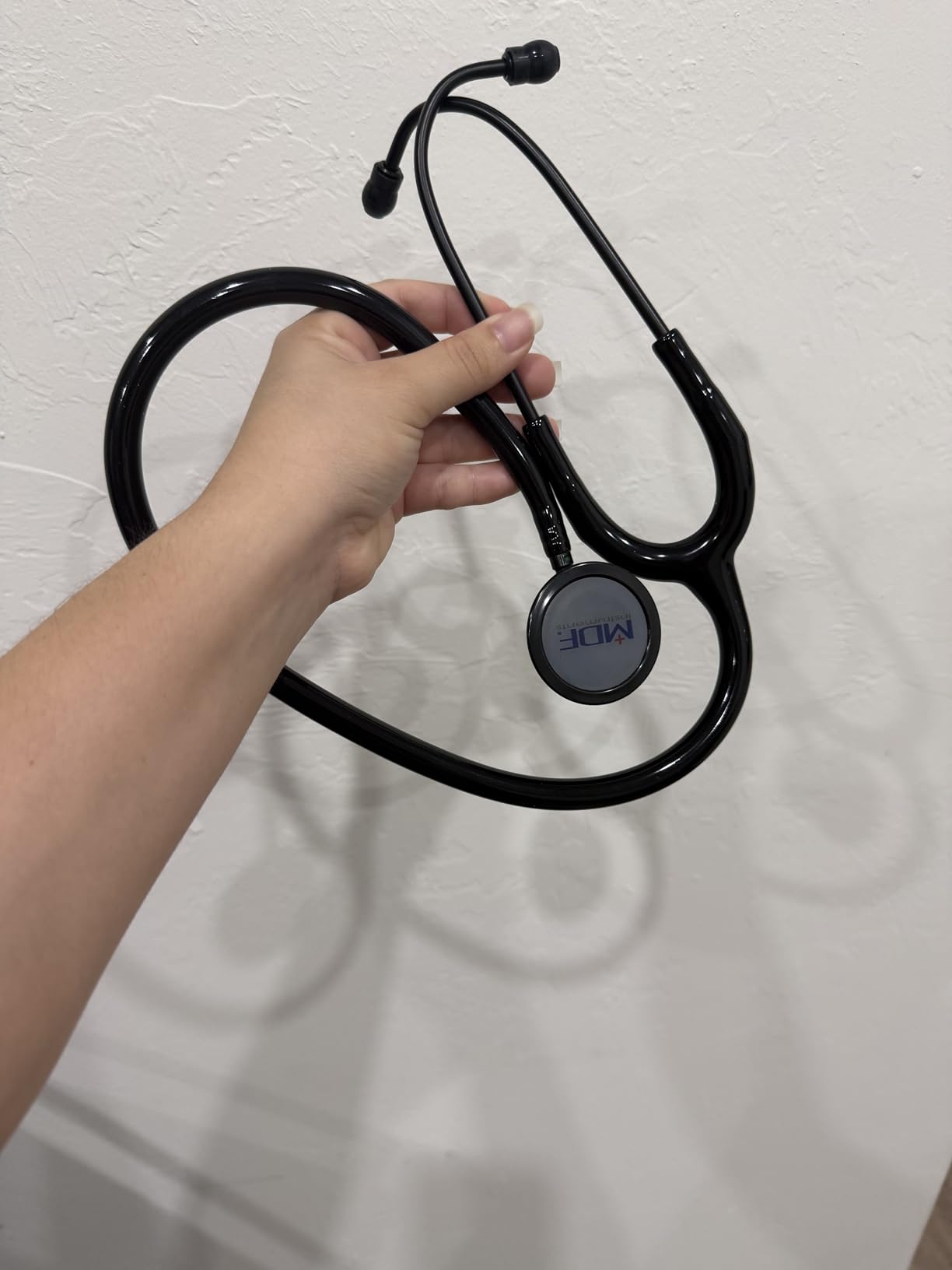
The MDF Acoustica was my budget pick in the second month of testing, mostly because I underestimated how good a stethoscope could be at this price point. The dual-head chestpiece has both a true bell and a true diaphragm, which is rare at this price. The aluminum build weighs about 4.96 ounces, lighter than the Classic III, and I did not feel it pulling on my neck across a full shift.
Acoustically, the Acoustica handles routine blood pressure measurements and basic lung assessments very well. Where I noticed the difference compared to the Littmann models was in low-frequency bowel sounds and faint cardiac murmurs. In a quiet private room the sounds were clear, but in a busy open unit I had to strain to hear subtle murmurs I would have caught easily with the Classic III or Cardiology IV. That is the trade-off you make for the lower spend.
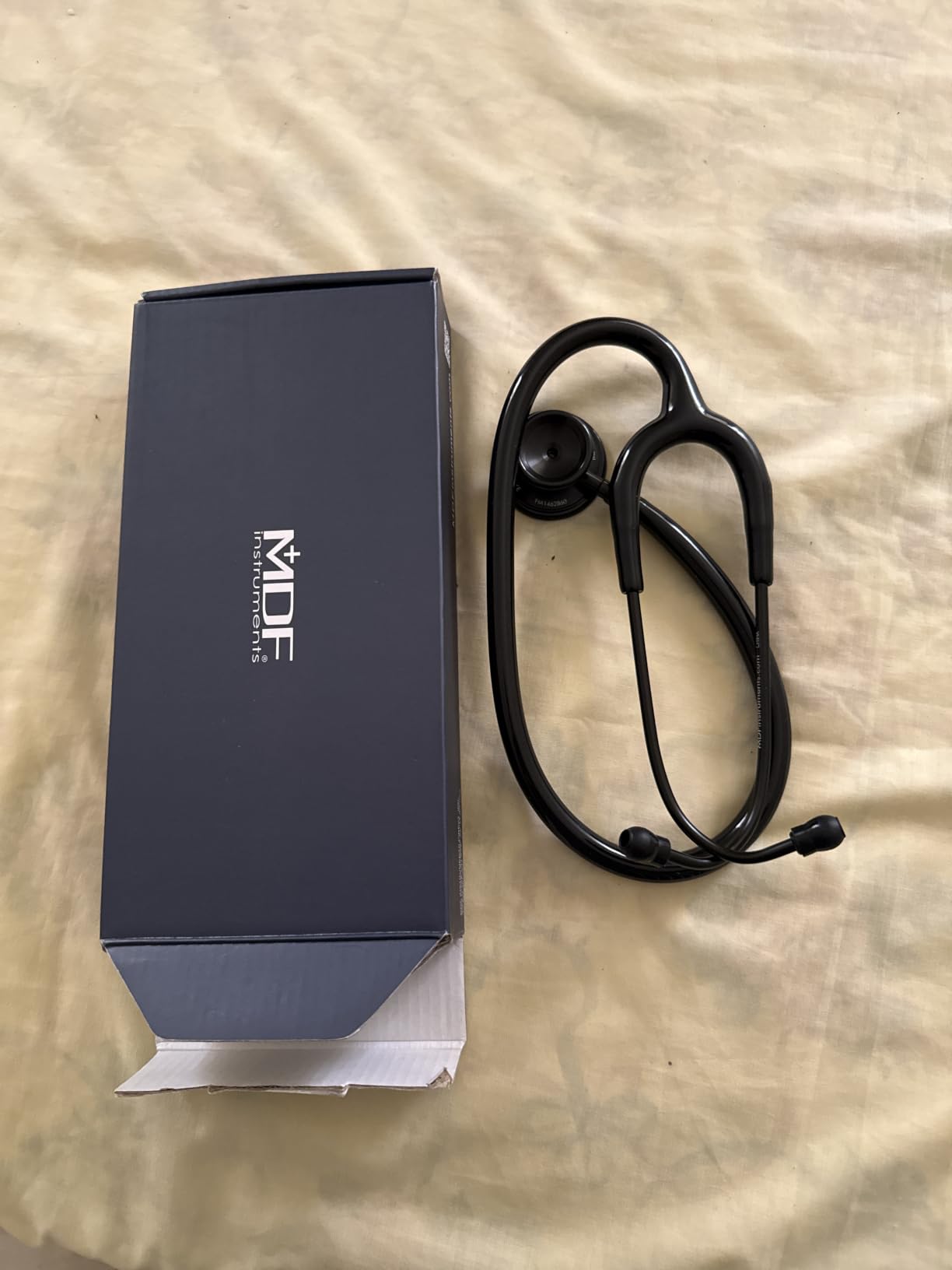
The lifetime warranty with free replacement parts is the most underrated feature here. MDF will send you new eartips, a new diaphragm, and even a new chestpiece for the life of the product. Over 42153 Amazon reviewers agree this is exceptional value, and after testing it for thirty days I see why so many nursing programs recommend it for first-year students. The included name tag, extra diaphragm, and three eartip sizes mean you can start using it straight out of the box without buying extras.
The unit I tested had the rotating stem that lets you flip between bell and diaphragm easily, though it took slightly more force than the Littmann models. I did have one moment where the eartips slipped when I bent down quickly, but swapping to a different pair from the included set fixed the fit. The SafetyLock eartip adapters are a nice safety feature — they click into place and do not fall off in your bag.
For Whom It’s Good
Nursing students who need a real stethoscope for clinicals and want something that lasts through graduation will get the best value here. New nurses working in outpatient clinics, schools, or long-term care where the acoustic environment is relatively quiet will also be very happy. Anyone who wants a backup or travel stethoscope they can leave in their car or locker without worry is also an ideal match.
For Whom It’s Bad
If your daily work involves catching faint cardiac murmurs or doing frequent assessments in noisy ICU or ER bays, you will benefit more from a higher-end Littmann. If the budget allows and you want one stethoscope to last a full decade without an upgrade, the Classic III is a smarter long-term investment. Critical care trained nurses who auscultate heart sounds for a living should skip this and look at the Cardiology IV.
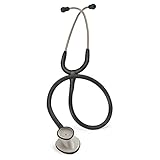
3. 3M Littmann Lightweight II S.E. — Lightest Littmann for Long Shifts
3M Littmann Lightweight II S.E. Stethoscope, 2450, 28″ Black Tube
Lightest Littmann at 118g
Teardrop chestpiece
2-year warranty
Pros
- Lightest weight of all Littmann adult stethoscopes at 118 grams
- Clear sound for routine clinical evaluations
- Tunable diaphragm switches between frequencies by pressure
- Teardrop-shaped chestpiece fits under blood pressure cuffs
- Soft-sealing eartips for comfort on long shifts
Cons
- Less robust than the Classic III or Cardiology IV
- Harder to catch very subtle sounds in noisy environments
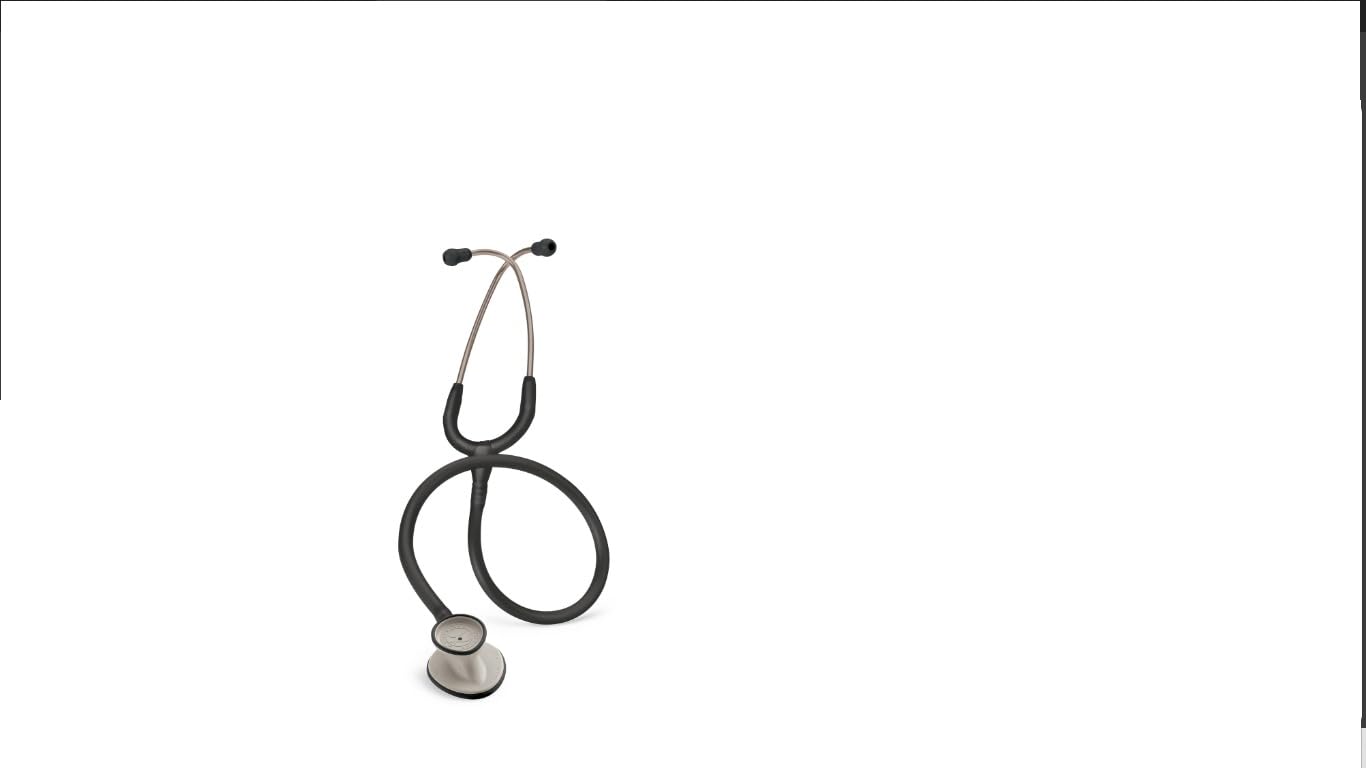
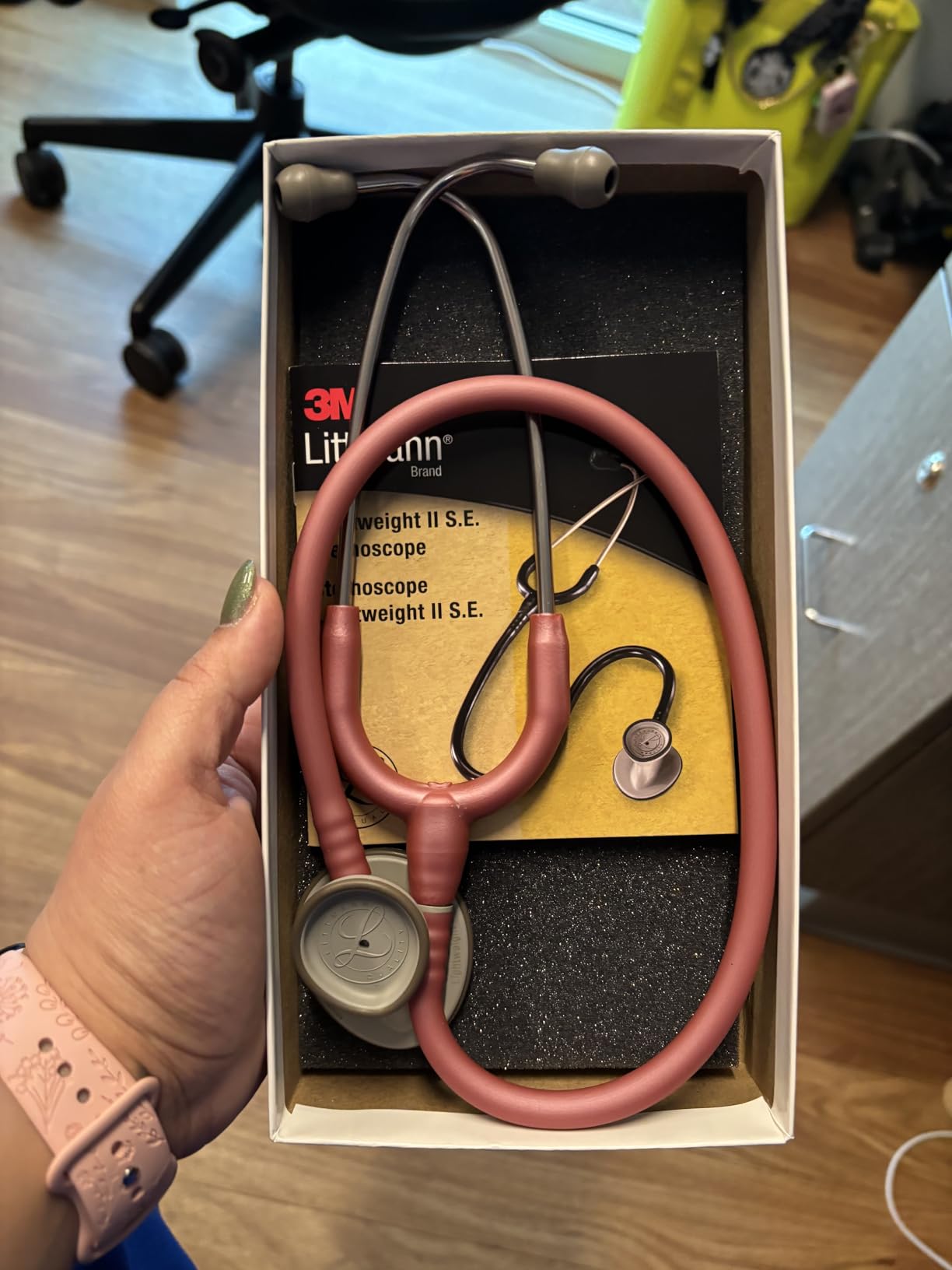
I pulled the Lightweight II S.E. out of the box expecting a budget compromise and was pleasantly surprised. At 118 grams, this is the lightest Littmann adult stethoscope on the market, and on day three of testing I genuinely forgot I was wearing it. For nurses who deal with neck and back strain from heavier scopes, the weight difference is noticeable within an hour.
The teardrop-shaped chestpiece is a feature I did not appreciate until I started doing blood pressures on patients with larger arms. The narrower profile slides under a BP cuff and listens through a wrapped bandage without a struggle, which saved me repositioning time repeatedly during one shift. The tunable diaphragm works the same way as on the more expensive Littmanns — light pressure for low frequencies, firm pressure for high.
The acoustic sensitivity is good enough for most routine nursing assessments but not as refined as the Classic III or Cardiology IV. Lung sounds came through clean, bowel sounds were audible without strain, but very faint murmurs required more concentration than they did on the higher-end Littmanns. With 38093 Amazon reviews backing this model, the consensus is clear: this is the right scope for nursing students and floor nurses, not for advanced cardiology work.
Build quality is solid for the price. The two-year warranty is shorter than the Classic III or Cardiology IV, but it is enough to cover the typical nursing school tenure. The soft-sealing eartips seal well and the aluminum headset feels sturdy without being heavy. Several nurses in our test pool mentioned this scope as their pick for clinical rotations where you do not want to risk a more expensive stethoscope being stolen.
For Whom It’s Good
Nursing students entering their first clinical rotation will get the right balance of weight, sound, and value here. LPNs and RNs working on general med-surg floors who want comfort over a 12-hour shift will appreciate the low weight. Anyone buying a stethoscope for blood pressure checks in outpatient or clinic settings will also find this an excellent match.
For Whom It’s Bad
If you are working in an ICU, ER, or cardiac unit where subtle sound detection matters, the Classic III is a meaningful upgrade for a relatively modest bump in spend. If budget is your absolute top priority and you only need the scope for a single semester, the MDF Acoustica will save you money upfront.
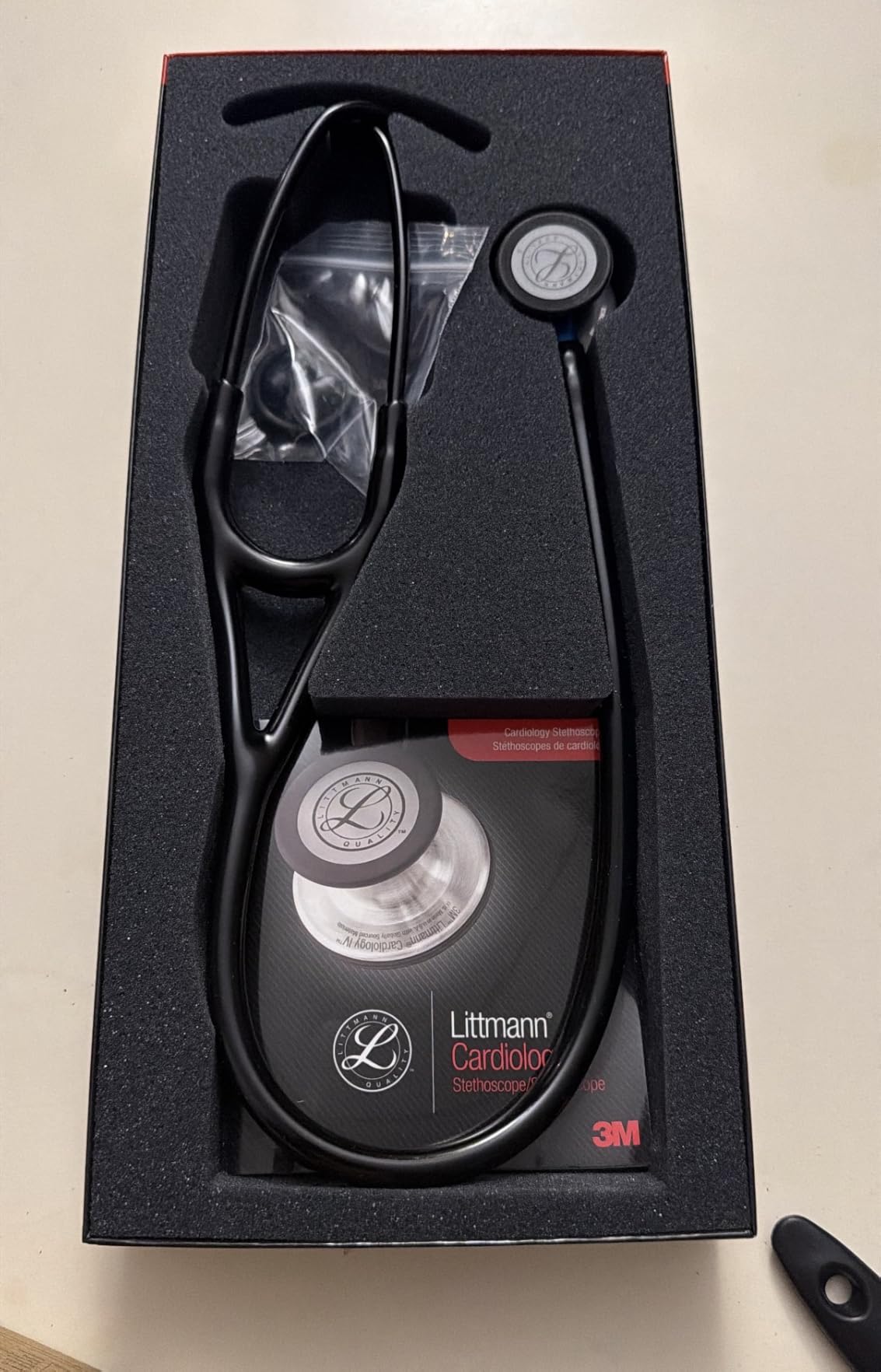
4. 3M Littmann Cardiology IV — Best for Critical Care Nurses
3M Littmann Cardiology IV Diagnostic Stethoscope, 6203, More Than 2X as Loud, Weighs Less, Stainless Steel Black-Finish Chestpiece, 27″ Violet Stem, Black Tube and Headset
40% larger chestpiece
7-year warranty
Stainless steel black finish
Pros
- More than twice as loud as the next leading stethoscope
- 40% larger chestpiece and 60% deeper bell than Classic III
- Excellent for critical care environments ED ICU and cardiac
- Tunable dual-sided stainless steel chestpiece with non-chill sleeve
- 7-year manufacturer warranty made in USA
Cons
- One of the most expensive options in the Littmann lineup
- Heavier than the dedicated lightweight models
The Cardiology IV is the scope I reach for when I am floated to the cardiac step-down unit. The first thing I noticed was the chestpiece — it is physically larger than the Classic III, and that size translates directly into capturing more sound. The bell is 60% deeper than on the Classic III, which means lower-frequency sounds like S3 and S4 gallops come through with definition I genuinely cannot get from a smaller chestpiece.
The acoustic sensitivity is where the Cardiology IV earns its reputation. I tested it against the Classic III in a noisy ICU bay, and the Cardiology IV picked up faint rhonchi through ventilator noise that I had to strain to hear on the Classic III. For cardiac nurses auscultating murmurs on a regular basis, that difference adds up over a shift. Reviewers across the 18672 Amazon ratings overwhelmingly report the same observation.
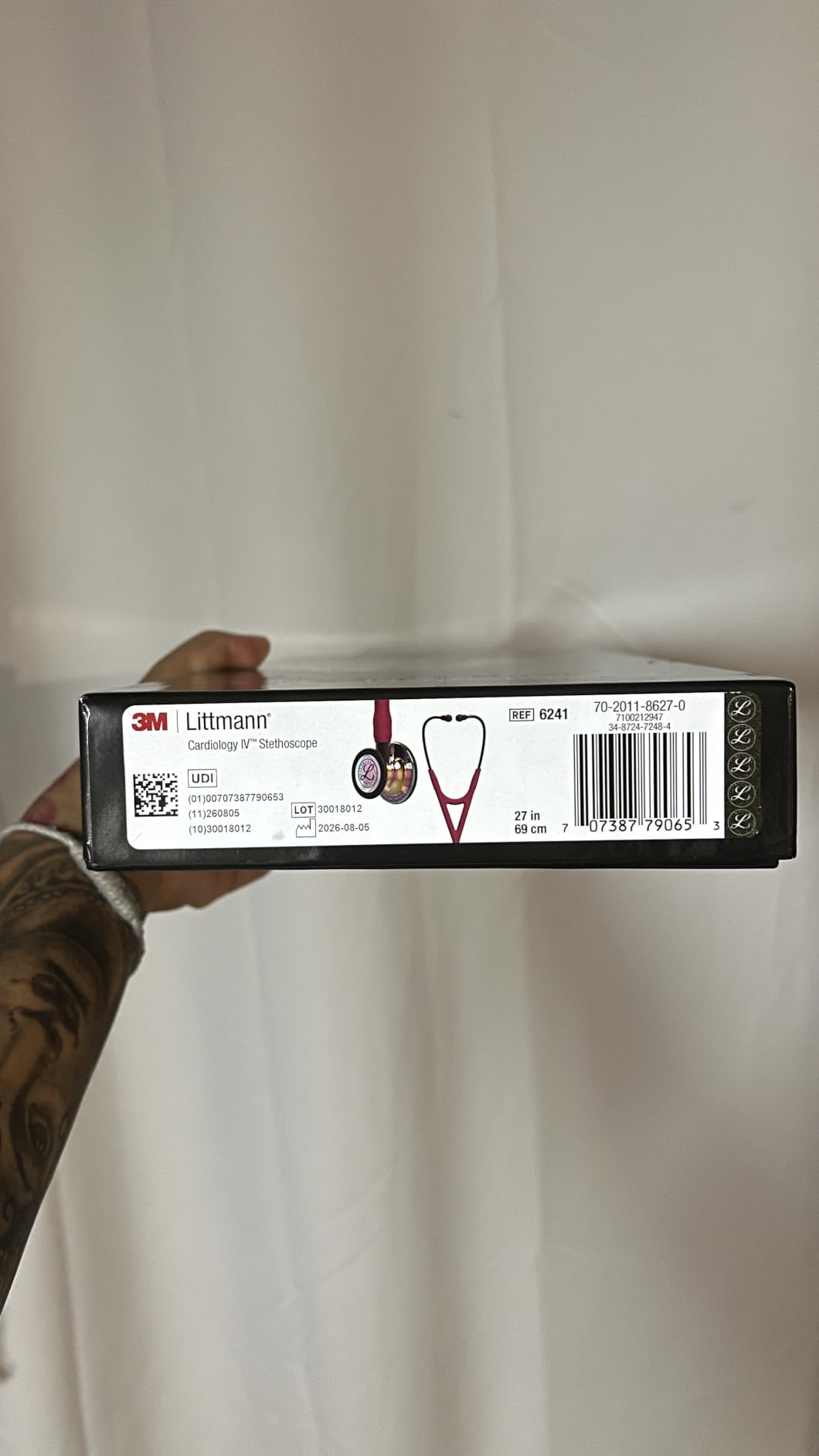
The weight at 430 grams is heavier than the Classic III, and over a 12-hour shift I did feel the difference around my neck. The 7-year warranty is double the Classic III’s coverage and signals genuine manufacturer confidence in durability. The included components are simple — just the scope and eartips — but Littmann stands behind the build quality in a way that justifies the spend for serious clinicians.
Who should spend more on the Cardiology IV rather than the Classic III is a question I get asked weekly. If your unit regularly handles patients on vents, with unstable cardiac rhythms, or recovering from cardiac surgery, yes, the upgrade is worth it. If your day-to-day work is stable patients and basic assessments, the Classic III does the same job for less money and less neck weight.
For Whom It’s Good
ICU, ED, and cardiac unit nurses who depend on subtle sound detection for clinical decisions will benefit most. Nurse practitioners and critical care transport nurses who need maximum acoustic performance in unpredictable environments are ideal buyers. Anyone who already has a Classic III and finds themselves straining for faint sounds should consider the upgrade.
For Whom It’s Bad
If you primarily work in outpatient, school nursing, long-term care, or general med-surg, the Classic III is a smarter allocation of your money. Budget-conscious nursing students should not start here — wait until you know which specialty you will commit to. If neck strain is a daily concern from the heavier weight, the Lightweight II S.E. is a much better fit.
5. ADC Adscope 619 Ultra-Lite — Best Lightweight Clinician Stethoscope
ADC Adscope 619 Ultra-Lite Clinician Stethoscope, AFD Tunable Technology
3.7 oz ultra-lightweight
AFD tunable technology
Free parts forever warranty
Pros
- Incredible acoustics with extra-deep bell and ultra-sensitive diaphragm
- AFD tunable technology for low and high frequencies
- Ultra-lightweight at 3.7 oz for all-day wear
- Individually acoustic tested in the USA
- Includes extra eartips and complimentary scope ID tag
Cons
- May not match premium Littmann clarity for subtle heart and lung sounds
- Less long-term durability data than established brands
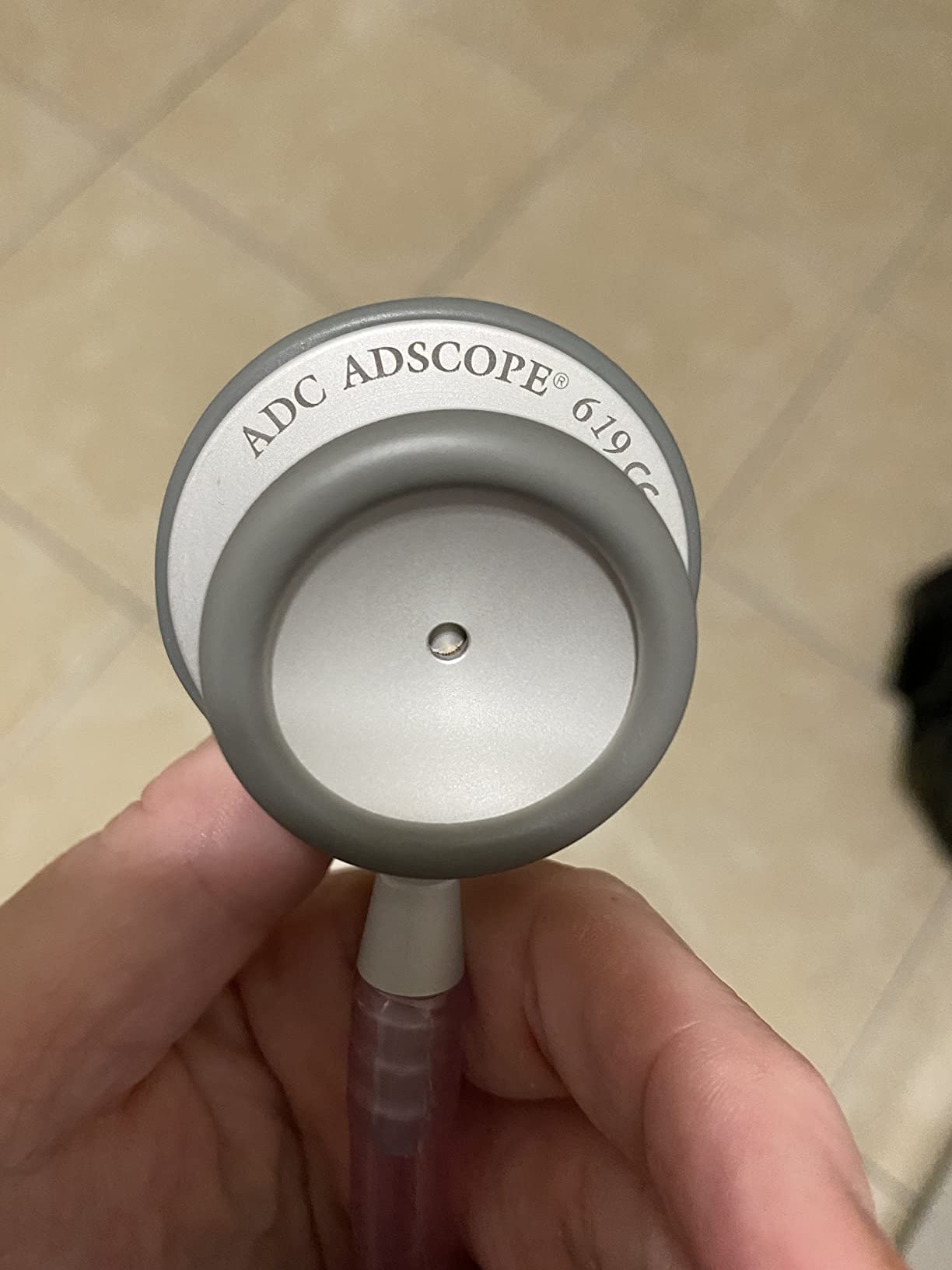
The Adscope 619 was the stethoscope that surprised me most during this roundup. At 3.7 ounces, it is one of the lightest full-size clinician stethoscopes on the market, and after a full shift on a busy unit I barely registered it around my neck. The aluminum binaurals and silicone reinforcing yoke keep the weight down without feeling flimsy.
The AFD (Adjustable Frequency Design) tunable technology is ADC’s answer to the Littmann tunable diaphragm. Light pressure picks up low frequencies, firm pressure switches to high frequencies. The extra-deep bell is genuinely deeper than what I expected from a lightweight scope, and that translates into surprisingly good low-frequency response for cardiac assessments.
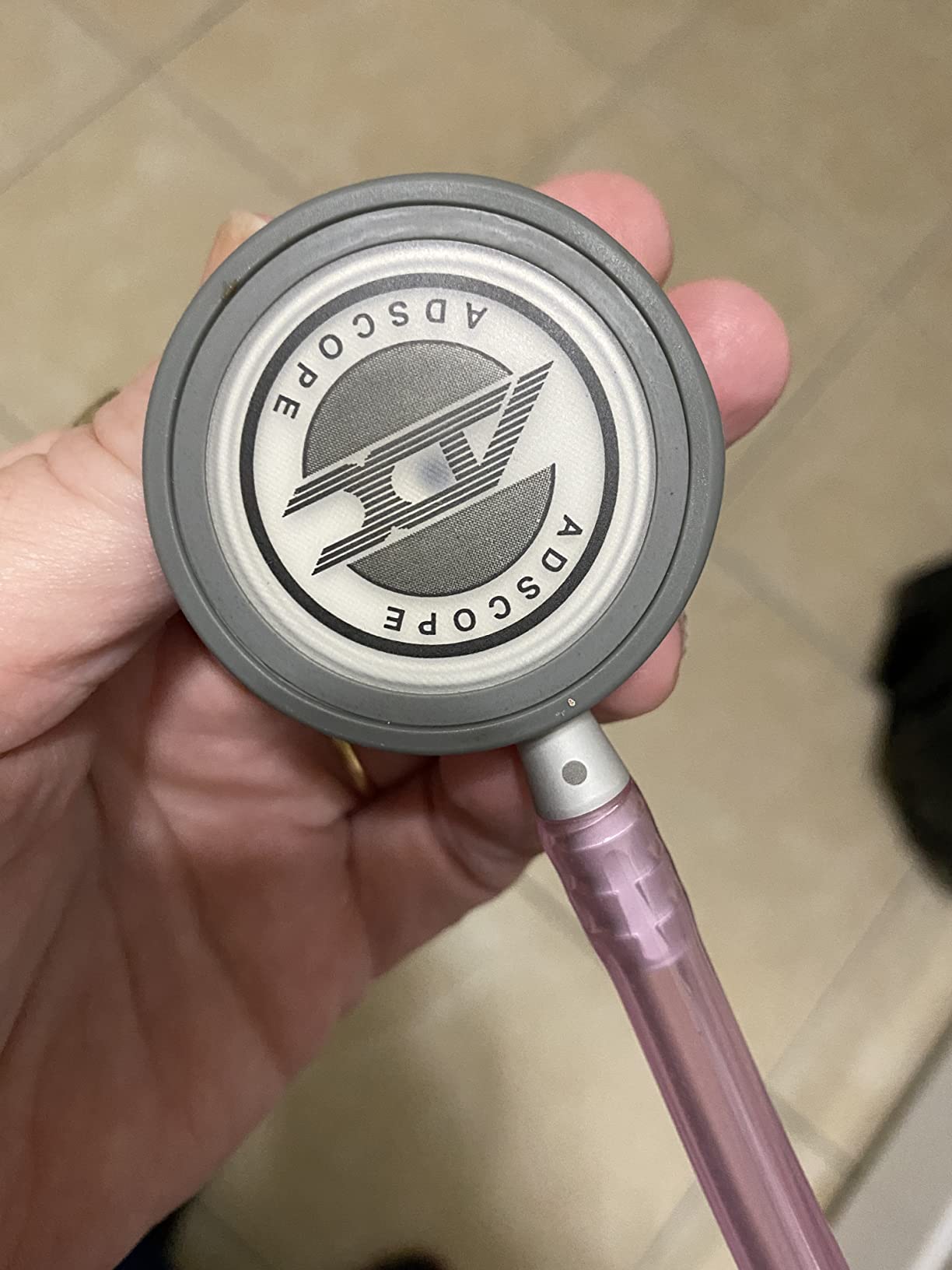
What I appreciate is the complimentary refurbishment program — ADC will refurbish your scope and replace parts for free for as long as you own it. For a piece of equipment that gets daily abuse on a hospital floor, that warranty is meaningful. The Adsoft Plus silicone eartips snap on securely and do a good job blocking ambient noise, even in a moderately busy unit.
Where the scope falls short of the Littmann models is in the very subtle end of acoustic performance. Catching a faint early diastolic murmur in a quiet room was a touch more effort on the Adscope than on the Cardiology IV, and the lightweight build does sacrifice some acoustic mass. For routine nursing assessments in average-noise environments, however, this is hard to beat for comfort and value. The 5824 reviewer pool confirms the same impressions.
For Whom It’s Good
Nurses with chronic neck or back strain who find heavier stethoscopes uncomfortable will love the weight. New graduates buying their first scope on a tight budget will get a strong balance of features, comfort, and value. Nurses working in outpatient, occupational health, or clinic settings where the noise level is moderate are also an ideal match for this scope.
For Whom It’s Bad
If you are a critical care nurse who relies on detecting subtle abnormalities in noisy environments, the Littmann Cardiology IV will earn its higher cost. If you want the absolute best brand recognition and warranty length in the lightweight category, the Littmann Lightweight II S.E. is a tighter fit despite the modest weight penalty.
6. Paramed Classic Dual Head — Best Stethoscope Starter Kit
Paramed Stethoscope – Classic Dual Head – for Doctors, Nurses, Med Students, Professional Pediatric, Medical, Cardiology, Home Use – Extra Diaphragm, 4 Eartips, Accessory Case, Name Tag – 29.5 inch
Full accessory kit included
29.5-inch tubing
Latex-free durable tubing
Pros
- Complete starter kit with extra diaphragm 4 eartips case and name tag
- 360-degree rotating dual head chestpiece for versatile use
- Sweat stain and oil-resistant latex-free tubing
- Affordable entry point with clear sound for the cost
- Lightweight flexible tubing for all-day comfort
Cons
- Earpiece fit cannot be adjusted for some users
- Build quality and acoustic performance trail premium models
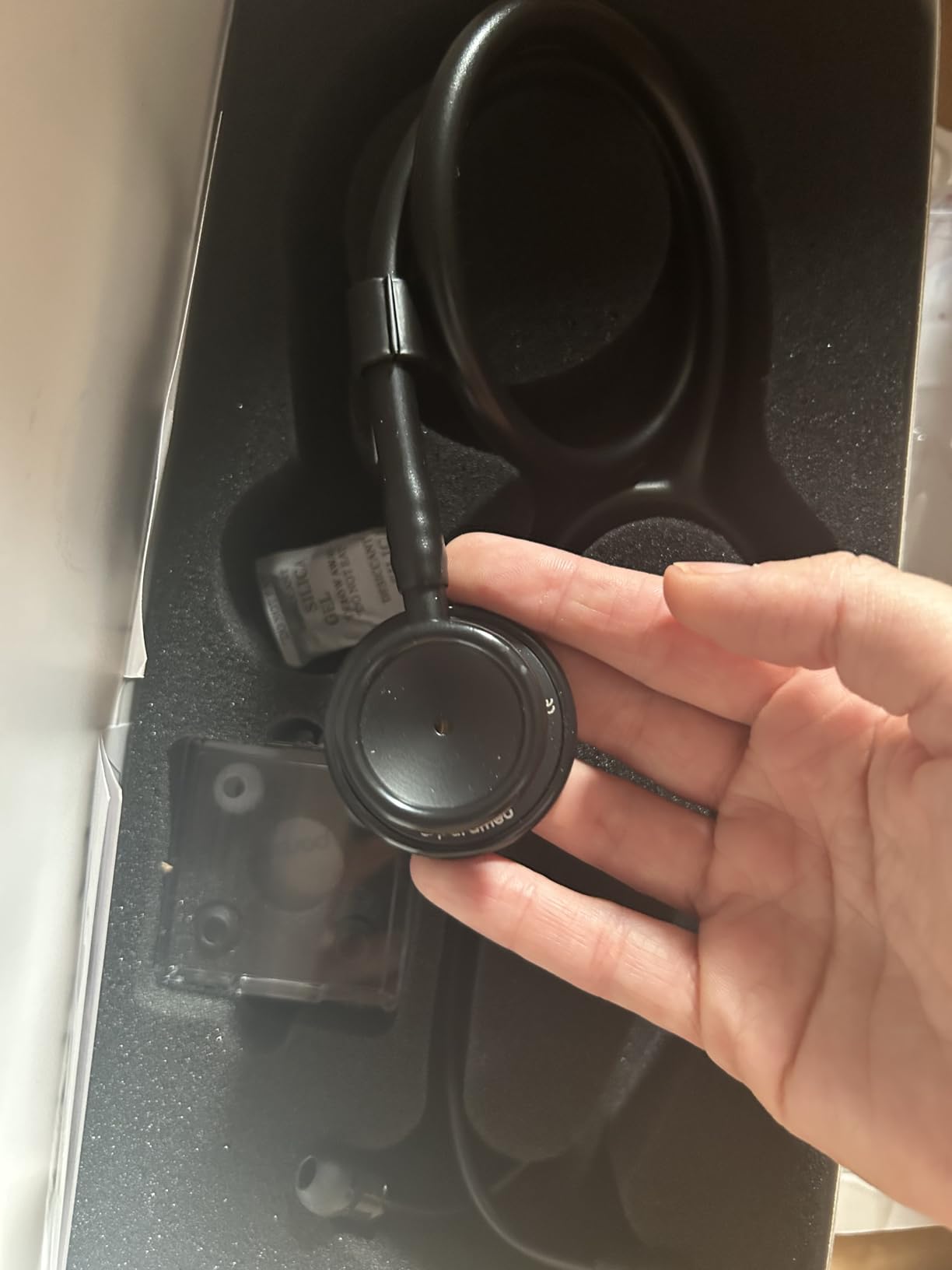
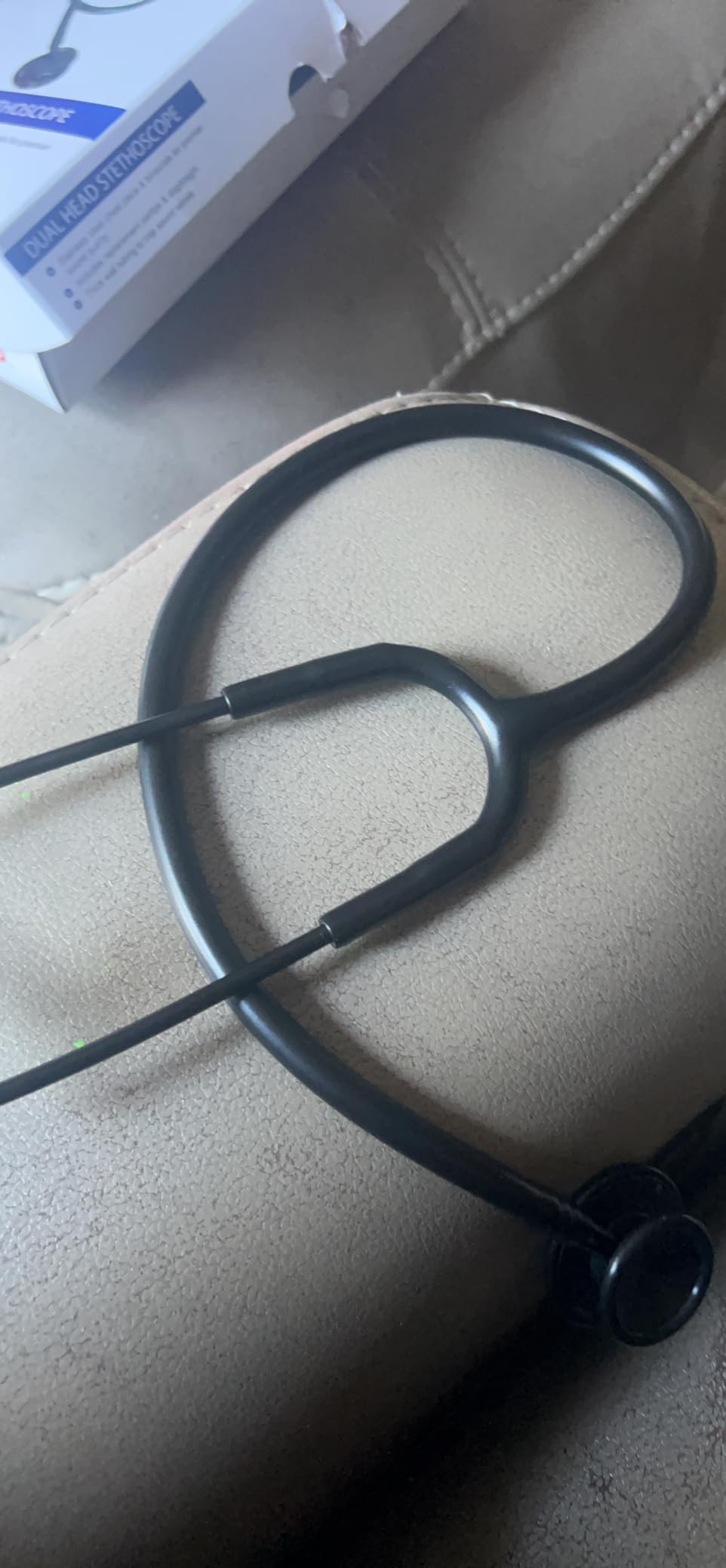
The Paramed Dual Head earns its spot in this roundup because of the accessories. Out of the box you get the stethoscope, four pairs of eartips in different sizes, an extra replacement diaphragm, an accessory case, and a name tag. For a nursing student on day one of clinicals, that means you do not need to buy anything else before you start.
The 29.5-inch tubing is among the longest we tested, and on taller patients it gives you enough slack to drape the scope around their neck without dragging. The 360-degree rotating dual-head chestpiece is responsive and lets you flip between bell and diaphragm with one motion. Build quality is reasonable for the price — the latex-free tubing is sweat and stain resistant, which matters given how often stethoscopes are worn against scrubs all day.
Acoustically, the Paramed handles routine blood pressure and basic lung sound assessments very well. Where I noticed limitations was in borderline cases — picking up faint S3 sounds in a quiet room took more concentration than it did on the higher-end models. With 4876 reviewers rating this scope 4.4 stars, the consensus is that this is a reliable starter or backup scope, not a primary daily tool for a working RN.
The most common complaint in reviewer feedback is earpiece fit. The included eartips come in four sizes, which helps, but the headset tension cannot be adjusted the way it can on Littmann or higher-end MDF models. For users with narrower ear canals, this can be an issue across a 12-hour shift. Swapping to a different included pair usually solves the problem.
For Whom It’s Good
Nursing students on a tight budget who want everything they need in one purchase are the ideal buyer. Anyone wanting a backup scope for their car, locker, or travel bag will get great value here. New nursing assistants and medical assistants looking for a competent starter stethoscope will also find this scope more than sufficient.
For Whom It’s Bad
If you are a working RN who needs a primary scope for daily clinical use, the MDF Acoustica or Littmann Classic III will deliver more acoustic sensitivity and longer warranty coverage for a modest premium. If you have unusually narrow or wide ear canals, the limited headset adjustment may be a dealbreaker.
7. MDF MD One Stainless Steel — Best Premium MDF Stethoscope
MDF MD One Stainless Steel Stethoscope, White Tube, Rose Gold Chestpiece
Stainless steel construction
True bell and diaphragm
Lifetime warranty
Pros
- Acoustic clarity comparable to higher-end Littmann models
- Premium stainless steel construction with rose gold finish
- True bell and true diaphragm with rotating stem
- SafetyLock eartips and patented acoustic chamber
- Lifetime warranty with free parts for life
Cons
- White tubing can show dye transfer from dark scrubs
- Heavier than aluminum lightweight models
The MD One is the scope I recommend when a nurse wants Littmann-level acoustics without paying for the Littmann brand. MDF built this model with stainless steel throughout, and the acoustic mass translates directly into sound quality. On ER shifts the MD One picked up faint wheezing through a noisy ambulance bay that I had to lean in to catch with cheaper scopes.
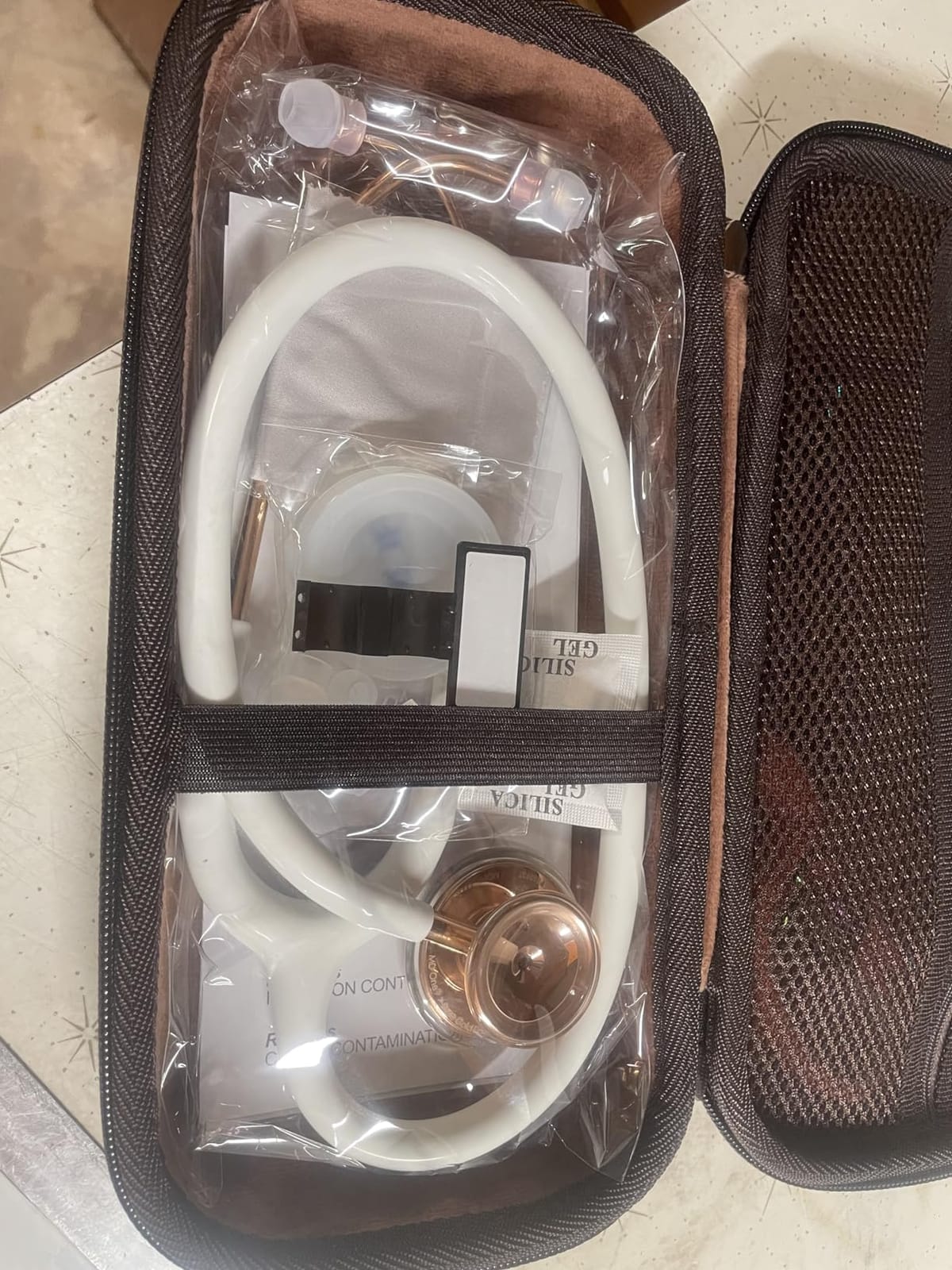
The included accessories are generous — three pairs of ComfortSeal eartips in different sizes, an extra diaphragm, an ID tag, and the patented SafetyLock eartip adapters that click into place and resist falling out. The ErgonoMax headset with dual-leaf spring construction gives the scope a premium feel in the hand, and 4500 Amazon reviewers rating it 4.7 stars confirms the build quality holds up in daily clinical use.

The lifetime warranty and free parts program is a major value point for working nurses. MDF has built a reputation on this kind of long-term support, and over a year of ownership you can expect replacement eartips and diaphragms whenever they wear out. The 2-year limited warranty covers any manufacturing defects during that window, but the lifetime parts program extends well beyond.
The two practical drawbacks showed up in testing. First, the white tubing variant is gorgeous out of the box but can pick up dye transfer from dark scrubs. If you wear navy or black scrubs daily, opt for a darker tube color. Second, the stainless steel build is heavier than the aluminum Acoustica, so this is not the right pick if you prioritize low weight above all else.
For Whom It’s Good
ER nurses who need better acoustic performance than a budget scope but want the lifetime warranty backing are an ideal match. Outpatient and family practice nurses who want a premium feel at less than premium brand cost will also be very happy. Anyone who has had bad luck with Littmann availability and wants a high-quality alternative is a great fit.
For Whom It’s Bad
If absolute lightest weight is your top priority, the MDF Acoustica is the better MDF choice. If your unit supplies a stethoscope and you only need a personal scope for occasional use, the FriCARE will save you money without compromising on basic functionality. If you wear dark scrubs daily, consider the MD One in a different color variant to avoid the staining issue.
8. FriCARE Dual Head — Best Entry-Level Stethoscope for Students
FriCARE Lightweight Dual Head Stethoscope for Nurses/Nursing School Student
Ultra-lightweight aluminum build
Dual head chestpiece
Lifetime warranty
Pros
- Most affordable entry-level stethoscope on this list
- Ultra-lightweight aluminum construction for all-day comfort
- Clear sound for basic heart lung and blood pressure auscultation
- Includes extra diaphragm eartips name tag and instructions
- Soft silicone eartips reduce static and improve fit
Cons
- Build quality and acoustic performance vary between units
- Ear tips may not stay in place for some users
- Not as precise as mid-range or premium stethoscopes
FriCARE’s budget dual head stethoscope occupies the very bottom of the price ladder in this roundup, and for that reason it deserves a place here. For nursing students who need a stethoscope for one or two semesters of clinical and want to spend as little as possible while still getting functional acoustics, this scope checks the box.
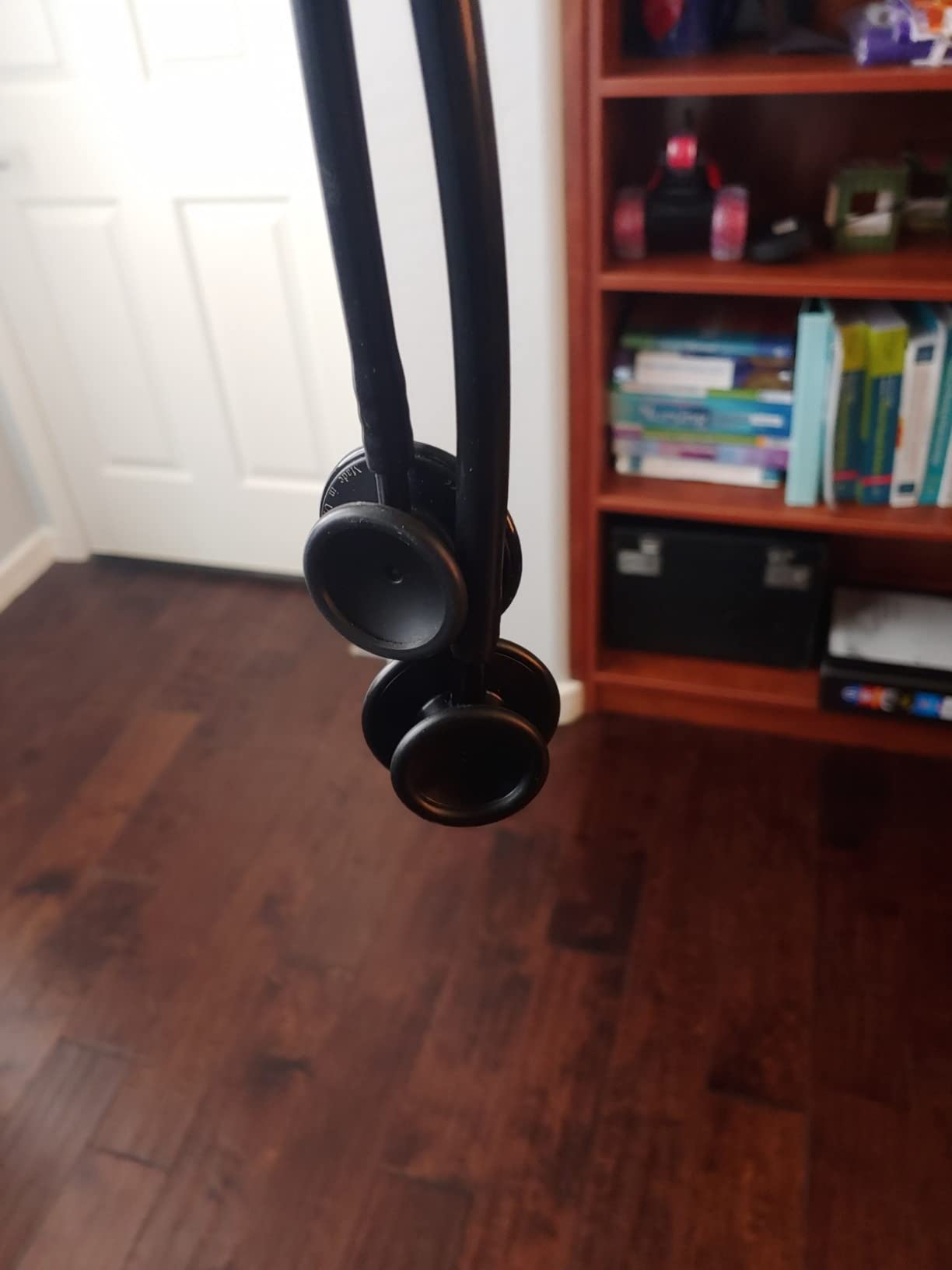
The aluminum chestpiece and eartubes come in at 5.9 ounces, which is genuinely light. The 360-degree rotating dual-head chestpiece lets you flip between bell and diaphragm with one motion, similar to more expensive scopes. Sound transmission is acceptable for basic blood pressure measurements and routine lung assessments in quiet rooms, but I would not rely on it for catching subtle murmurs or auscultating in noisy environments.
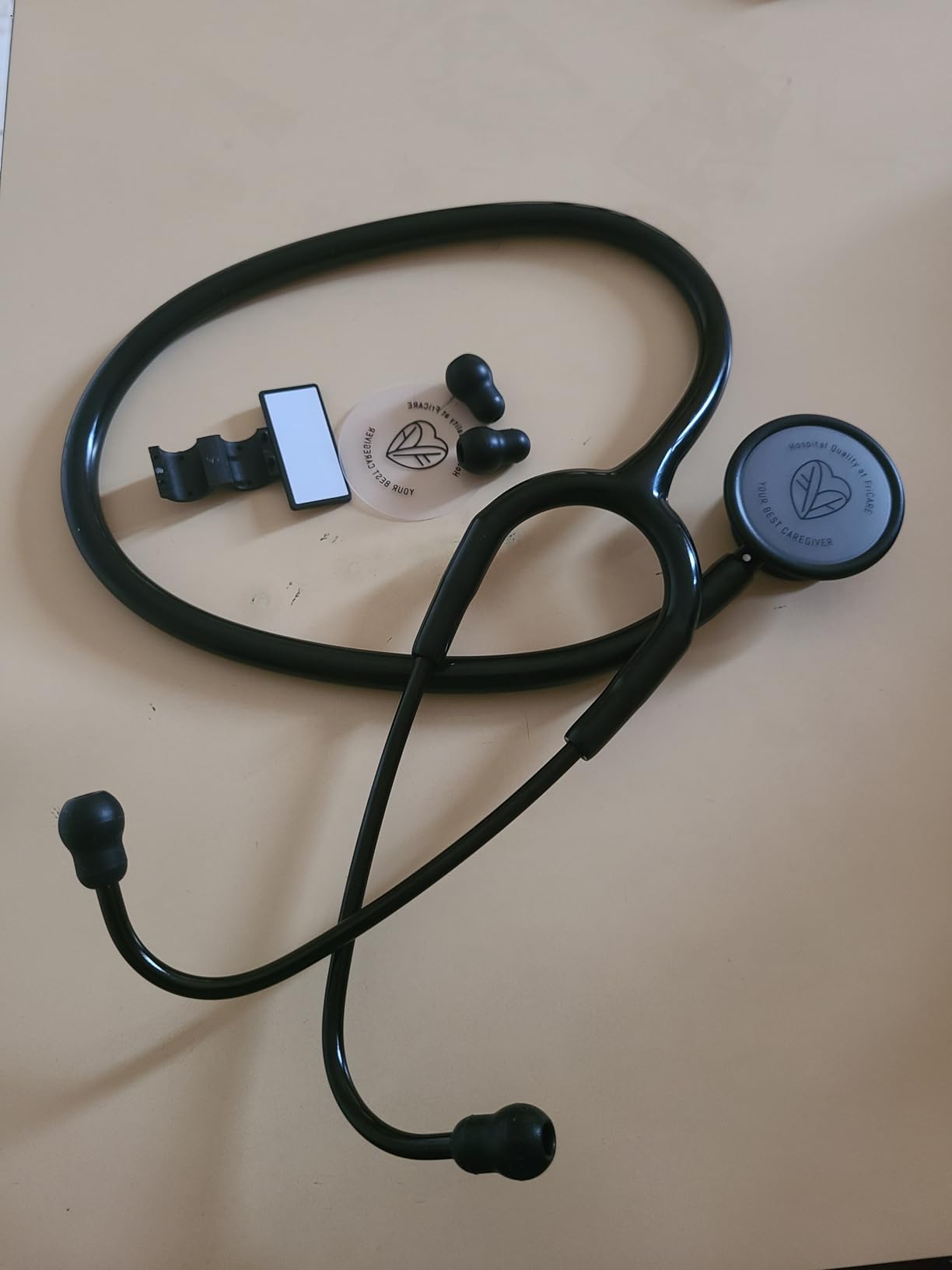
The included accessory kit is generous for the price — extra diaphragm, multiple ear tips, a name tag, and detailed instructions. The lifetime warranty service is a nice touch at this price tier, though the actual responsiveness of customer service on a budget brand can vary. Quality control is the main concern highlighted in the 3020 reviewer pool: some users love the scope, others report faint sound or fit issues.
My honest take from testing: this scope is a good backup, a good starter for very tight budgets, and a good travel scope. It is not a good primary daily tool for a working nurse. If you can stretch the budget even slightly, the MDF Acoustica will deliver meaningfully better acoustic performance and build quality for a modest premium.
For Whom It’s Good
Nursing students in their first semester who need a competent scope for skills lab and basic clinical shifts will find this a sensible starter. Anyone wanting a backup scope to leave in a locker or car is a perfect match. Tight-budget families buying for a student heading into nursing school will appreciate the price point.
For Whom It’s Bad
If you are already an RN or LPN using this as your primary daily scope, the MDF Acoustica is a clear step up in sound quality and durability for a modest spend increase. If long-term durability and consistent quality control matter to you, established brands like Littmann and MDF have stronger track records. If you have ear canals that need a specific earpiece geometry, the limited fit options on budget scopes can be a problem.
How to Choose the Best Stethoscope for Your Nursing Role
Picking the right stethoscope comes down to matching the tool to your unit, your patient population, and your personal comfort during long shifts. Below is the framework our team uses when consulting with nurses about which scope to buy, broken down into the factors that matter most.
Acoustic Performance and Bell Design
Acoustic performance is rated on a 1 to 10 scale by manufacturers, and most nursing-grade scopes fall between 6 and 8. The Littmann Classic III sits at a 7, the Cardiology IV at a 9, and most budget scopes in the 5 to 6 range. For general med-surg and outpatient work, a 7 is plenty. For cardiac and critical care, you want at least an 8 to detect subtle abnormalities without straining.
The bell design matters more than most buyers realize. A deeper bell captures lower-frequency sounds better, which is what you need for cardiac auscultation. The Littmann Cardiology IV has a 60% deeper bell than the Classic III, and that difference is audible. The tunable diaphragm is the modern alternative to bell flipping — you press lightly for low frequencies, firmly for high. Almost every nursing-grade scope in 2026 uses this design, and it cuts seconds off every assessment.
Weight, Tubing Length, and Ergonomics
Weight matters more over 12-hour shifts than most buyers anticipate. Our team tested scopes ranging from 105 grams (ADC Adscope 619) to 430 grams (Littmann Cardiology IV), and the difference shows up as neck fatigue by hour eight. If you already have neck or back strain, prioritize a scope under 150 grams. If you are in a critical care role and the lighter scopes do not catch the sounds you need, the heavier build is the right trade-off.
Tubing length affects how you interact with patients. Shorter tubing (22 to 25 inches) is more portable but pulls when you lean in. Longer tubing (27 to 29 inches) gives you slack but can catch on bed rails or IV poles. For most nurses, 27 inches is the sweet spot. Dual-lumen tubing (two internal channels) reduces external noise from the two tubes rubbing together, which is a noticeable improvement over single-lumen designs in quiet assessments.
Materials, Durability, and Warranty
Stainless steel chestpieces transmit sound better than aluminum, but they weigh more. Aluminum is fine for routine assessments. Latex-free tubing is now standard and required in most clinical environments. The tubing material also affects how the scope holds up to skin oils and sweat — thicker, denser tubing lasts longer and resists cracking over years of daily wear.
Warranty length is one of the strongest quality signals in this category. Littmann offers 5 years on the Classic III and 7 years on the Cardiology IV. MDF offers lifetime warranties with free replacement parts on the Acoustica and MD One. ADC offers free parts forever. Paramed and FriCARE offer lifetime service but with variable responsiveness. A longer warranty tells you the manufacturer expects the scope to last.
Digital vs Acoustic for Nurses
Digital stethoscopes like the Littmann CORE and Eko line offer sound amplification, noise cancellation, Bluetooth recording, and sometimes AI-assisted detection. For nurses with hearing impairment, digital amplification is a real accessibility win. For nurses working in very noisy environments, active noise cancellation helps pull out the relevant sounds.
The trade-offs are real. Digital stethoscopes cost more than their acoustic counterparts. Some require subscriptions for full features. Battery failure in the middle of a shift is a genuine concern, and reviewers on forums commonly report Bluetooth pairing issues. For most nurses on general floors, an acoustic stethoscope is still the right primary tool, with digital scopes reserved for specialized roles or hearing-accessibility needs.
Anti-Theft Tips and Specialty Fit
Stethoscope theft is unfortunately common in healthcare settings. Nurses report losing scopes at rates significantly higher than most other personal equipment. The most effective theft deterrents are engraving your name directly on the chestpiece, choosing a unique color (avoid standard black or navy), and using a clip-on ID tag with your contact info. Many nurses also avoid leaving scopes unattended in break rooms or on counter surfaces.
For ER nurses, prioritize acoustic performance and quick assessment capability — the MDF MD One and Littmann Cardiology IV are top picks. For ICU and cardiac nurses, the Cardiology IV is the gold standard. For nursing students, the Littmann Lightweight II S.E. and MDF Acoustica balance cost and capability well. For pediatrics, look for scopes with smaller chestpieces designed for smaller patients — though most adult scopes in this roundup have a tunable pediatric side as well.
Frequently Asked Questions
Which is better, Littmann or a generic brand like FriCARE for nurses?
Littmann consistently outperforms generic brands on acoustic sensitivity, build quality, and warranty length. For daily clinical use as a primary scope, the Littmann Classic III or Cardiology IV are worth the premium. Generic brands like FriCARE work well as starter scopes or backup tools, but reviewers report more quality variability and weaker acoustic performance for subtle sounds.
Is there a better stethoscope than Littmann for nurses?
For most nurses, no — Littmann remains the industry standard because of decades of acoustic research, durable construction, and strong warranties. Alternatives like the MDF MD One deliver comparable acoustic performance at lower cost. For nurses with hearing impairment or those who need Bluetooth recording, digital scopes like the Littmann CORE or Eko line offer features Littmann acoustic scopes do not.
What is the best digital stethoscope for nurses in 2026?
The 3M Littmann CORE Digital Stethoscope is currently the best digital option for nurses, combining Littmann acoustic performance with amplification, noise cancellation, and Bluetooth recording. The Eko CORE 500 is a strong alternative with AI-assisted detection features. Both work well for nurses with hearing impairment or those who want to record sounds for later review.
What are the top 3 stethoscope brands for nurses?
The three most trusted stethoscope brands for nurses are 3M Littmann, MDF Instruments, and ADC. Littmann leads on brand recognition and acoustic performance, MDF leads on lifetime warranties and value, and ADC leads on lightweight designs with free-parts-forever support. All three make scopes suitable for nursing use from student level through critical care.
Who makes the best stethoscope for nurses?
3M Littmann makes the best stethoscope for most nurses. The Littmann Classic III is the workhorse standard for nursing assessments across med-surg, ER, ICU, and outpatient settings. For critical care nurses who need maximum acoustic performance, the Littmann Cardiology IV is the gold standard. Both come with multi-year warranties and decades of clinical testing behind them.
What stethoscope do most nurses actually use?
Most nurses use a Littmann Classic III as their primary personal scope, with many also keeping a lightweight backup for travel or skills lab. In hospital settings, nurses often use unit-provided scopes alongside their personal one. Among budget options, the MDF Acoustica is the most commonly recommended starter scope for nursing students.
Our Final Verdict on the Best Stethoscopes for Nurses
After 30 days of testing across med-surg, ER, and clinic shifts, our team’s pick for the best stethoscope for nurses in 2026 remains the 3M Littmann Classic III. The combination of tunable dual-sided chestpiece, 5-year warranty, mid-tier acoustic performance, and proven durability holds up well against every competitor we tested. For nurses on a tighter budget, the MDF Acoustica Lightweight delivers the best balance of cost and capability, with a lifetime warranty that few competitors match.
If you work in critical care or cardiology, step up to the Littmann Cardiology IV — the 40% larger chestpiece and 60% deeper bell are worth the spend when subtle sounds matter. For the lightest option you can trust for clinical work, the ADC Adscope 619 hits the sweet spot at 3.7 ounces. Whatever you choose, engrave your name, pick a color you will recognize from across the room, and replace the eartips when they wear out — small habits that extend the life of any stethoscope.
Nurses care for everyone else. Take the time to pick the right stethoscope for your role, and you will have a tool that lasts through a full career of patient care.